
The latest info on influencer marketing trends, micro influencer news, and the world of social media

As Spring 2025 blooms, so do exciting new collaborations between brands and Snapchat. In particular, Snapchat’s augmented reality (AR) advertising tools are giving brand partnerships a fresh boost this season. Marketers are tapping into Snap’s playful AR lenses and filters to engage users in interactive experiences that blend the digital and real worlds. This post will break down what Snapchat AR ads are, how they work, and why they’re so advantageous for brands. We’ll also explore current AR ad trends, highlight some successful recent campaigns, and zoom in on how micro-influencer platform Stack Influence is leveraging Snapchat’s AR features for spring campaigns. Finally, we’ll discuss what these developments mean for marketers considering Snapchat AR ads in 2025.
Snapchat AR ads are interactive advertisements that use augmented reality overlays (known as Lenses or filters) to let users superimpose digital content onto their real-world environment via the Snapchat camera. In practice, this means brands can create custom AR experiences – for example, a Lens might put a 3D product model or effect onto the user’s selfie or surroundings. Snapchat recently introduced Sponsored AI Lenses, a new format powered by generative AI that allows users to see themselves in imaginative, branded scenes. These interactive Lenses essentially “put Snapchatters at the center of unique brand moments,” whether that’s sporting ‘90s hairstyles, stepping into the Wild West, or donning the latest runway styles in AR.
Using a Snapchat AR ad is simple for the user: they might encounter a sponsored Lens in the Lens Carousel (Snapchat’s menu of camera effects) or via a Snap Code or ad. With a tap, the phone’s camera opens and the AR experience begins – users can take a selfie or rear-camera video while the Lens adds virtual elements like animations, product try-ons, games, or scene transformations in real time. For instance, Snapchat’s new AI-powered Lenses even analyze your selfie and then “integrate into an AI-generated scene,” yielding up to 10 different themed visuals within one ad.The result is an immersive ad that doesn’t feel like a traditional ad at all – it feels like a fun activity or creative tool. Crucially, users can then share these AR snaps with friends or post them to their Story, turning personal moments with a brand’s AR effect into social content.
Why are brands increasingly turning to Snapchat’s AR ads? In short, because they offer an engaging, memorable, and effective way to connect with audiences. Here are some key advantages of Snapchat AR advertising, backed by recent findings:
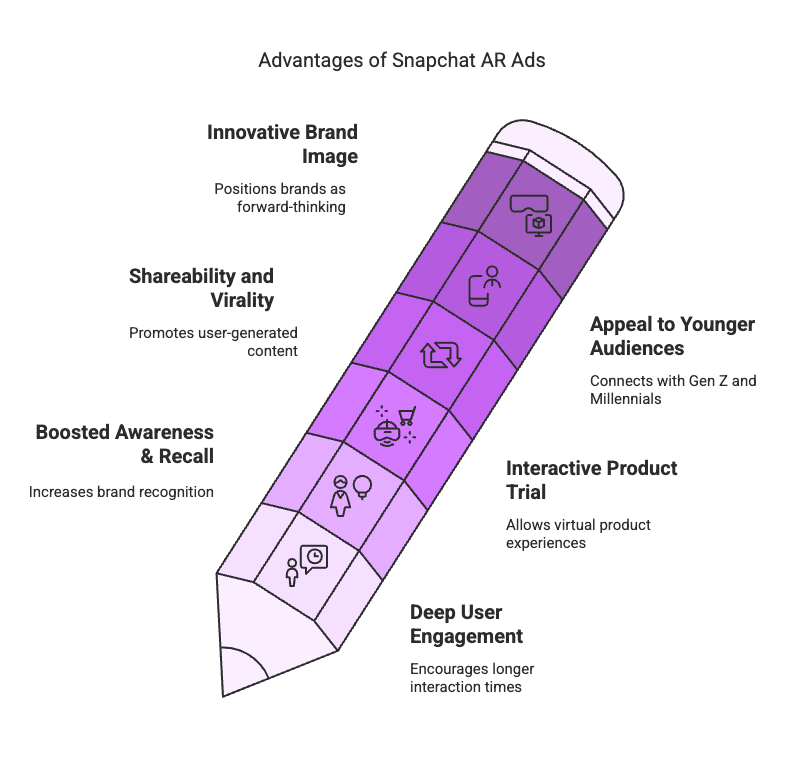
This spring has brought a wave of AR advertising activity on Snapchat as more brands experiment with the format. Several trends stand out:
Snapchat’s AR ads are not just a shiny new toy – they represent a shift in how brands and consumers interact. Here are a few big-picture takeaways for marketers considering AR advertising on Snapchat in 2025:
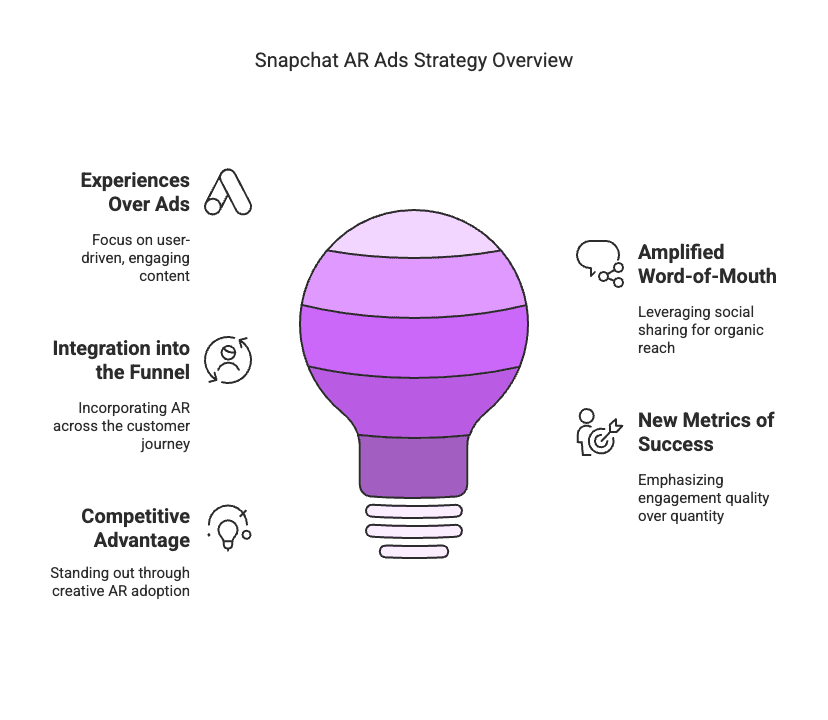
Snapchat’s AR ads have emerged as a powerful medium for brand storytelling and partnership activation this spring. They exemplify the marketing zeitgeist of 2025 – interactive, personalized, and driven by creative technology. From global brands like L’Oréal engaging users with gamified AR vending machines, to platforms like Stack Influence scaling campaigns through micro-influencer AR content, it’s clear that augmented reality is opening new doors for engagement. For brands weighing their marketing strategies, Snapchat offers a unique playground where ads become playful experiences and customers become co-creators. As we move further into 2025, embracing AR advertising on Snapchat could very well give your brand the “spring boost” it needs, cultivating deeper connections with audiences and planting the seeds for long-term growth.
Instagram is always cooking up new ways for creators to connect with their followers – and Broadcast Channels are one of the latest and greatest. If you’re an influencer or micro-influencer wondering what the hype is about, this casual yet informative guide has you covered. We’ll break down what Instagram Broadcast Channels are, how they work, and how you can use them to engage your audience. From setup steps and best practices to creative content ideas (exclusive drops! behind-the-scenes! polls!) and even some juicy engagement stats, we’ve got all the info you need to start broadcasting like a pro. Let’s dive in!
Instagram Broadcast Channels are essentially a one-to-many messaging feature built into the Instagram app. Think of them like a special DM group where only the creator can send messages, and followers join just to listen in. In a broadcast channel, the creator (and any co-admins) can publish text updates, photos, videos, voice notes, and polls – while followers can react with emojis and vote in polls, but not post their own messages. In other words, it looks like a one-sided group chat or “DM blast,” with the creator talking and everyone else tuning in.
Broadcast channel messages show up in your followers’ Instagram Direct inbox alongside their regular DMs. This is huge, because it means your updates live in the same place where users are already chatting daily. In fact, Instagram’s head Adam Mosseri noted that people share more photos and videos in DMs than in Stories, and more in Stories than in the feed – so Instagram is meeting users where they hang out. By dropping your content directly into fans’ inboxes, Broadcast Channels help you bypass the crowded feed and algorithms.
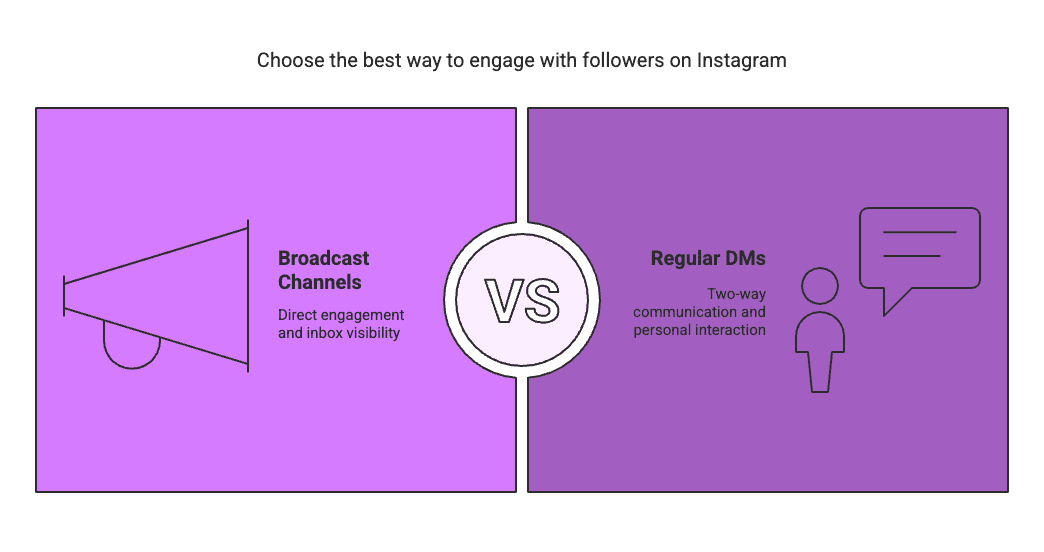
Only the channel owner (and any invited co-admins) can post content. Followers can’t write in the channel (no random memes from fans!), keeping the conversation focused. Originally, followers could only react or answer polls, but Instagram recently added an option for creators to allow threaded replies to messages for more interactivity. Replies, if enabled, stay nested under the creator’s post to keep the channel organized.
Broadcast Channels can be public for anyone to discover and view, but only your followers can actually join and subscribe to get updates. When you start a channel and send the first message, your followers get a one-time invite notification to join. Followers who join will then receive all future channel messages as DM notifications. (If they ever get overwhelmed, they can mute the channel or leave – so we creators should use this power wisely!)
Because of the one-to-many format, many creators describe Broadcast Channels as a kind of private newsletter or group chat with your fans. It’s more personal than a feed post, but more scalable than 1:1 DMs. Your channel can be an intimate space for your most engaged followers – almost like a VIP club – where they get news and content straight from you in real-time.
In summary, an Instagram Broadcast Channel is a dedicated broadcast chat for sharing updates and engaging your followers in a more private, direct way. Now that you know what they are, let’s get you set up with one!
Ready to start broadcasting? Setting up a channel is pretty straightforward. Here’s a step-by-step walkthrough:
First, ensure your Instagram account is eligible. You should switch to a Creator account (if you haven’t already) and ideally have 10k+ followers. Go to your profile settings > Account > Switch to Professional Account, and choose Creator. (If you’re a business account, you may need to switch to creator for now, since full access for businesses is still rolling out.)
In the Instagram app, go to your Direct Messages (Inbox). Tap the pencil icon (✏️) or the compose button usually used to start a new message. In the menu that appears, you should see an option for “Create broadcast channel” – select that.
Give your channel a name that will make sense to your followers (you can keep it simple, like “<> Channel” or something catchy). You’ll also be asked to set the audience and some options. By default, your followers can join, but you can choose if the channel should be open to all followers or perhaps limited to paid subscribers (if you use Instagram’s paid subscriptions feature for exclusive content). You may also be able to set an expiration for the channel (for example, if you want it to auto-close after a campaign or event), and toggle whether to show the channel on your profile. The profile toggle, if on, will display a small icon on your Instagram bio that alerts visitors you have a broadcast channel (making it easy for followers to find and join).
Once you’ve chosen the settings, hit “Create Broadcast Channel.” Instagram will immediately send a one-time notification to all your followers letting them know you’ve started a channel and inviting them to join. Now the channel is live! Your channel will appear in your inbox like a new message thread. It’s time to welcome your audience. Consider making your first message an introduction – explain what you’ll share in this channel and encourage people to join.
And that’s it – your channel is all set! As people join, you’ll see the member count in the channel header. Now it’s on you to keep it interesting. Before we talk content ideas, let’s cover some best practices so you can make the most of Broadcast Channels without burning out your audience.
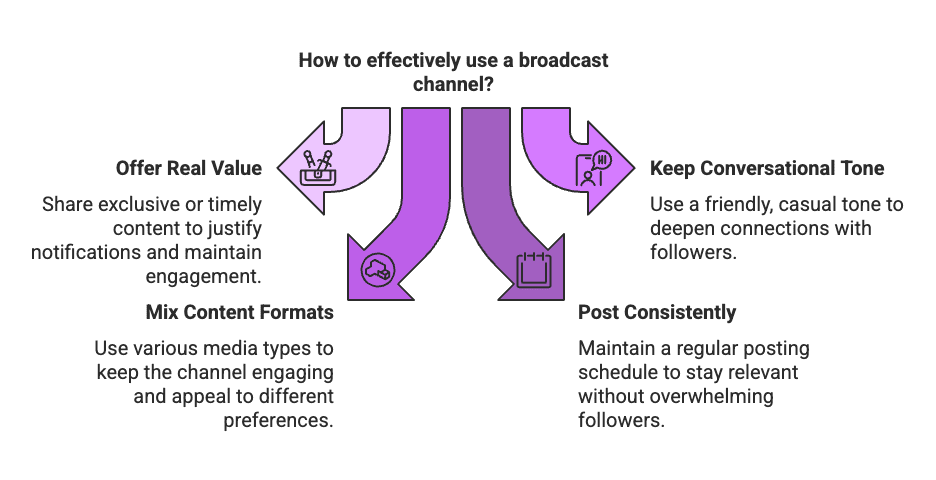
Having a Broadcast Channel is like having a hotline to your biggest fans – but with great power comes great responsibility! Here are some best practices to help you keep your channel engaging and valuable (and not annoying):
People are inviting you into their inbox, so treat that access with respect. Share content that is valuable, exclusive, or timely – something that justifies a DM notification. Avoid simply reposting every Instagram feed post or Story into the channel. Save it for the good stuff: updates or insights your followers can’t get elsewhere, or can get faster via your channel. (It’s fine to occasionally double-post important announcements, as an “ICYMI,” but don’t make your channel a pure duplicate of your feed.) A good rule of thumb: before you hit send, ask “Would I want to get this notification from someone I follow?”
Broadcast Channels may reach lots of people at once, but they still feel like DMs. Use a friendly, casual tone as if you’re messaging a friend. This is a great place to deepen your connection with followers by sounding more personal and unfiltered than you might in a polished feed post. You can even speak to them literally – try sending the occasional voice note to make it feel extra intimate. Voice messages give a human touch and make subscribers feel like they’re truly getting a behind-the-scenes scoop directly from you. (Plus, who doesn’t love a good voice memo from their favorite creator?)
Variety keeps things interesting. Instagram Broadcast Channels support text, images, video clips, voice notes, GIFs, and polls – so don’t just stick to one format. For example, you might post a quick text update one day (“Headed to an event, wish me luck!”), then a photo or a 15-sec video clip the next, then maybe a voice note or a funny GIF. Sprinkle in polls regularly too. Mixing formats not only makes your channel more engaging, but it also appeals to followers who enjoy different types of media. One day you might even go live within your channel (Instagram now lets you start live videos directly in a broadcast channel for an exclusive livestream) – perfect for Q&As or special reveals to your top fans.
There’s no Stories-like 24-hour expiry here – your messages stick around in the chat. You don’t need to post 10 times a day; in fact, please don’t! Aim for a regular cadence that keeps people interested but not overwhelmed. Maybe it’s a few times a week, or daily if you have lots to share – figure out what frequency gets good engagement and few unsubscribes. Remember, followers get a push notification (unless they mute you), so avoid blasting them at odd hours or with excessive messages. Consistency matters (you don’t want people to forget your channel exists), but quality over quantity is the way to go. If Instagram’s algorithm notices low engagement, it might even prompt you with tips, like suggesting you post a behind-the-scenes photo if you’ve been inactive, so the app itself will nudge you toward keeping it fresh.
One of the biggest questions is: “What should I actually post in my broadcast channel?” The possibilities are endless, but here are some creative ideas (with examples) to get your inspiration flowing. Mix and match these to keep your channel exciting:
Reward your broadcast channel subscribers with content they can’t find anywhere else. For example, share sneak peeks of upcoming projects, unreleased photos, or early access news in the channel first. Influencers often use channels to tease new releases or drop exclusive info – it makes followers feel like insiders. You might say, “Psst, channel crew: here’s the cover of my new single 🔥 dropping next week (not posting this anywhere else)!” This kind of exclusivity gives fans a real incentive to join and stay in your channel. If you offer paid subscriptions, you could even create a subscriber-only channel that’s paywalled for your top supporters, where you consistently deliver premium content. But even with a free channel, you can create that VIP vibe by not simply rehashing everything you post publicly. Think of your broadcast channel as the backstage lounge – special content for your “inner circle.”
Bring your followers along for the ride by sharing candid, behind-the-scenes updates in real time. Since broadcast channels are informal, you can post those off-the-cuff moments that might not be polished enough for the feed. For instance, during an event or photoshoot, send quick snaps or video clips from backstage, or a voice note about how you’re feeling. Mark Zuckerberg actually introduced Broadcast Channels by using one to share Meta updates, billing it as a way to show “behind-the-scenes” moments from his day. You can do the same on a smaller scale: show the mess on your desk while you’re editing a vlog, the chaotic scene before you go on stage, or even what you’re having for lunch on a busy content-creation day. These peeks behind the curtain make followers feel closer to you. A beauty micro-influencer might share a voice note: “Omg, I just tried formulating a new lipstick color – it’s all over my hands, haha!” along with a photo of the messy swatches. Such behind-the-scenes content is perfect for channels because it’s quick, raw, and engaging.
To learn more about micro influencers consider looking into influencer marketing platforms such as Stack Influence!
If you want to rapidly grow and engage your channel audience, run a giveaway just for channel members. Promote it on your feed or Story (“Join my broadcast channel for an exclusive giveaway!”) to get people in the door. Then, within the channel, announce the prize and how to enter. Keep it simple – for example, ask channel members to react with a specific emoji to one of your messages as their entry, or use a poll for them to pick an option and choose a winner from voters. Because broadcast channels are free to join, many followers will hop on the chance. Giveaways create buzz and a sense of exclusivity: “only my channel members get to participate.” It could be as small as a shoutout or as big as a product bundle. Even a simple merch giveaway or “I’ll video call one random member” can excite your fans. When you pick the winner, you can DM them directly (since they’re in your channel, you already have a DM thread). As a tip, use reactions for entry – e.g., “React 🥳 to this message to enter the contest” – it’s easy to track and randomly select from those who react. Giveaways not only reward your loyal followers, but also encourage new people to join and pay attention to your channel.
Broadcast Channels come with an interactive poll feature – use it! Polls are fantastic for engaging your community and crowdsourcing input. You could run just-for-fun polls (“Which costume should I wear to Comic-Con, A or B?”) or more meaningful ones (“What tutorial should I film next?”). The key is to actually share or act on the results, so members feel their vote mattered. For instance, if you polled “Which recipe should I post on YouTube?” and 60% chose tacos over pasta, you might follow up with, “Tacos it is! Filming this week.” This makes your followers feel **involved in your creative process. You can also do mini-quizzes (no stakes, just entertainment) or trivia in polls to gamify your channel a bit.
Whether through polls, prompts, or occasional reply-enabled posts, interactive content turns a passive channel into a two-way street, which can significantly boost engagement and the sense of community.
You might be wondering, “How effective are Broadcast Channels, really? Are followers actually paying attention there?” Let’s look at a few insights that highlight the impact of this feature:
Broadcast Channels only launched in 2023, but they’re already making waves. According to a March 2024 survey, about one-fifth (19.2%) of US social shoppers said they had seen shopping-related content from creators in Instagram Broadcast Channels (that figure was even higher – 26.4% – among millennial shoppers. Consider that for a moment: in a short time, a sizable chunk of shoppers have not only discovered channels, but are seeing brands/influencers promote products there. Major brands like Nike and e.l.f. Cosmetics jumped on channels early, partnering with creators to drop product recommendations and exclusive offers via channel. This suggests that if you start a channel and consistently share valuable content, a significant portion of your audience will tune in and take note.
One big advantage of channels is the direct reach (no fighting an algorithm to be seen). When someone joins your channel, they’ve essentially opted in to hear from you, which is a strong indicator of interest. That often translates to high open rates on your messages – higher than the percentage of followers who might see an average feed post or Story. While Instagram doesn’t publicly share “open rate” stats for channels, the logic is that these are your most engaged fans. And we know generally that Instagram users are more likely to see content in DMs and private channels because that’s where user attention is shifted. As noted earlier, users share more content in DMs than in Stories or feed, reflecting a broader trend toward private, feed-free interaction. Broadcast Channels piggyback on that trend, living in the inbox where user engagement is highest.
It’s worth understanding what Broadcast Channels are best for. If your goal is immediate conversions (like selling a product right now), channels might play more of a supporting role compared to, say, an eye-catching Reel or a carousel post. In fact, data indicates that content in private messages or group chats (which is essentially what a channel is) tends to influence purchases less than public content. For example, only 6.4% of surveyed social shoppers said content they saw in group chats led them to make a purchase, and only 4.0% said the same for content in direct messages – versus 53.9% who purchased after seeing a short video (like Reels or TikTok. That doesn’t mean your channel isn’t valuable – it just means its value is in engagement and loyalty. It’s like the inner circle where you nurture fan enthusiasm, which then makes them more likely to support you in the long run (and maybe buy when you do drop a product)
Another engagement perk of channels is the qualitative feedback you can gather. Your most loyal followers might be more likely to vote in your polls or reply with their thoughts in a channel than they would be to comment on a public post. This gives you a quick pulse-check on your audience. For example, you might find out via a channel poll that 80% of your core fans prefer Product A over Product B – insight you can use in your wider marketing. Also, if you allow replies or do Q&As, you’ll get a sense of common questions or sentiments among your fanbase. These interactions are gold for understanding and serving your audience better.
In summary, Broadcast Channels are proving to be a powerful engagement tool. They won’t replace the reach of viral Reels or the polish of your feed posts – but they complement those by fostering a more intimate fan community. If you’re an influencer or micro-influencer looking to deepen your connection with followers (and ultimately turn followers into true fans), channels are definitely worth a try.
Instagram Broadcast Channels might be a newer kid on the block, but they’re quickly becoming a go-to tool for creators who want a direct line to their audience. For influencers and micro-influencers, a broadcast channel is an opportunity to cut through the noise of the feed and deliver content straight to the people who want to hear from you most. By sharing exclusive updates, personal moments, and engaging your followers with interactive content, you can build a tight-knit community that feels special – and that kind of loyalty is priceless.
As you venture into broadcast channels, remember the tips from this guide: keep it authentic, keep it valuable, and have fun with it. Whether you’re dropping secret content, running polls, or just chatting about your day, you’re cultivating a deeper relationship with your audience. In an era when algorithms can change overnight, having that reliable, direct connection is like owning your own communication channel – because, well, now you do!
So go ahead and give Instagram Broadcast Channels a shot. Your followers will love the insider access, and you might just find it’s your new favorite way to share. Happy broadcasting, and can’t wait to see what you create in your channel! 🚀
Instagram’s Partnership Ads are a format that lets brands and creators team up to turn influencer content into sponsored ads. Think of them like Instagram’s “collab posts” on steroids – the ad features the creator’s handle and content alongside the brand’s, reaching beyond the creator’s followers. In practice, a creator might make a photo or video for a brand, post it (or share it with the brand), and then the brand boosts that post as an ad. Instagram explains that with a Partnership Ad, “the brand pays to show it to even more people, which can help you reach a bigger audience” . This means influencer-created content isn’t just limited to organic reach; the brand can pay to amplify it, combining the authenticity of creator content with the scale of paid advertising.
Originally known as branded content ads, Partnership Ads keep the creator’s original post intact (including their username and creative style) but supercharge its distribution. The result is a win-win: the brand gets engaging, creator-driven content in front of a wider audience, and the creator gets exposure to that audience (and often a payday from the brand). Until now, these ads primarily consisted of photos, videos, or Reels made in collaboration with creators, all clearly labeled to show the partnership.
The big new feature Instagram introduced in spring 2025 is called Testimonials – essentially brief written endorsements from creators that can be attached to a brand’s ads. Here’s what’s new and how it works:
This Testimonials feature essentially brings the concept of customer reviews or quotes into Instagram ads. While brands have long used testimonials on their websites (quotes from happy customers, star ratings, etc.), Instagram is now integrating that experience directly into the social feed. The creator’s comment carries their username and credibility, making the ad feel more like a genuine recommendation rather than just another piece of branded content.
Instagram’s move to include written endorsements in Partnership Ads is a strategic push to boost authenticity and monetization on the platform. Here’s a breakdown of how it benefits both sides:

So, how should brands jump on this new opportunity? Here are some actionable tips for making the most of Instagram’s Partnership Ads expansion:

Instagram’s Partnership Ads expansion is a clear nod to the growing power of the creator economy in social commerce. By weaving creator testimonials into ads, Instagram is enabling brands to harness word-of-mouth marketing in a scalable way. For brands, it’s an opportunity to add a trustworthy voice to your paid media; for creators, it’s another avenue to monetize your influence with minimal extra work.
This spring 2025 update is part of a broader trend: social platforms evolving to make collaborations more seamless and valuable. As influencer marketing becomes an even more critical pillar of digital advertising, brands that adapt to these tools stand to gain a competitive edge. A well-placed testimonial can turn a standard ad into a persuasive recommendation that feels organic in the feed. Brands should experiment with this feature, measure results, and refine their approach – those brief 125-character endorsements could spark big wins in engagement and sales.
In the end, successful marketing on Instagram comes down to trust and authenticity. Partnership Ads with testimonials are a new way to build that trust right into your ad campaigns. So as you plan out your next Instagram marketing strategy, consider giving this feature a try. It’s not just a fad or a gimmick – it’s Instagram acknowledging that real voices matter in advertising, and giving brands and creators a chance to make ads more genuine. And as the platform continues to update and innovate, staying informed on these changes will help you stay ahead of the curve (and the competition) in the ever-evolving social media landscape.
Welcome, creators! If you’ve been making YouTube Shorts, you’ve probably heard that the monetization rules have changed in the past couple of years. In 2026, the way you make money on Shorts looks very different from the old “Shorts Fund” days. This blog post will break down the new updates – from eligibility requirements and revenue share to how payouts work – all in a casual, easy-to-follow way. We’ll even compare the new vs. old policies (with a handy chart) and highlight key differences that U.S.-based creators should keep in mind. Let’s dive in!
Instead of one-off bonus payouts, Shorts creators now earn through ad revenue sharing. Starting February 2023, YouTube began sharing ad money from Shorts with creators. Creators keep 45% of the allocated ad revenue from their Shorts views (YouTube retains 55%) – this is actually the reverse of the 55/45 split on long videos (the difference helps cover music licensing costs for Shorts). In short, YouTube only succeeds when creators do, and it’s now sharing the pie on Shorts content.
You still need to join YPP to monetize Shorts, but the bar to entry was lowered. As of mid-2023, creators can enter YPP with 500 subscribers (instead of 1,000) plus a modest amount of recent activity Specifically, you need 500 subs, 3 valid public video uploads in the last 90 days, and either 3,000 hours of watch time in the past year or 3 million Shorts views in the last 90 days Hitting this “lower tier” lets you start monetizing with features like Super Thanks, channel memberships, etc., sooner than before. (More details on this below.) However – to start earning ad revenue from Shorts, you eventually still need to reach the traditional YPP requirements (1,000 subs + the higher view thresholds). The good news is that Shorts views now count toward those requirements, giving purely Shorts-focused channels a path into the program.
If you remember the old Shorts Fund from 2021–2022, that has been phased out. Back then, YouTube set aside a $100M fund to pay bonuses (ranging $100–$10,000 per month) to top Shorts creators. In 2023 YouTube merged Shorts into YPP’s revenue-sharing model, meaning ad revenue sharing completely replaced the bonus fund. This is a big shift – earnings are now directly tied to your Shorts’ performance with ads, rather than YouTube picking top creators for bonuses.
Beyond ads, YouTube introduced more ways to earn from short content. For example, Shorts now support Super Thanks (viewers can tip on a Short), and eligible creators can tag products in Shorts for affiliate revenue (YouTube’s shopping affiliate program, launched in 2023 for U.S. creators). These aren’t rules changes per se, but they’re part of the 2026 monetization landscape – diversifying how you can earn on Shorts. Short-form creators who got into YPP via Shorts are also branching out: over 80% of those who joined through the Shorts criteria are now taking advantage of other monetization features (long-form ads, memberships, etc.).
Those are the big-picture updates. Now let’s break things down in detail:

To earn money from Shorts ads, you must be part of the YouTube Partner Program. This means meeting certain subscriber and view count milestones and adhering to YouTube’s policies. Here’s how it works now:
To unlock ad revenue sharing on your channel (Shorts and long-form), you need 1,000 subscribers and either 4,000 hours of watch time in the past 12 months or 10 million Shorts views in the past 90 days. Once you hit this and your application is approved, you’re in! These thresholds haven’t changed since Shorts monetization launched – they simply provided an alternative Shorts-based path alongside the 4k hours path. Note that the 10M Shorts views must be public, legitimate views; YouTube will only count “engaged” views that follow the rules (no spam or policy-violating content). You also still need to meet basics like being in an eligible country and having no Community Guidelines strikes, etc., just as any YPP applicant would.
Here’s the exciting part for smaller creators – in 2023 YouTube introduced an earlier entry point to YPP. Once you have 500 subscribers, at least 3 public uploads in the last 90 days, and either 3,000 watch hours (past year) or 3 million Shorts views (past 90 days), you can apply to YPP. Hitting this threshold unlocks monetization features like: channel memberships, Super Chat/Stickers, Super Thanks, and shopping integrations. Essentially, YouTube halved the sub count and reduced watch time needed so that up-and-coming creators can start earning sooner. However, note that at this “500 sub” level, you do not yet get ad revenue sharing – ads on your videos (including Shorts) won’t pay you until you reach the full 1,000 sub + 4k/10M threshold. Think of the 500-subs tier as “YPP Lite”: you can earn from fan funding (viewers’ payments) but not from YouTube’s ad dollars until you grow a bit more. The nice thing is, once you do grow to 1,000 subs and hit 4k hours/10M Shorts views, YouTube will automatically grant you the full benefits (you won’t have to reapply or anything).
Being in YPP alone isn’t enough – to earn from Shorts ads, you must opt-in to the Shorts monetization terms in your YouTube Studio. YouTube introduced a modular contract system: there’s a base agreement for YPP, then separate modules for things like Watch-Page ads (long-form) and Shorts ads So make sure you go into the Earn > Shorts section in your creator studio and accept the Shorts Monetization Module (this gives YouTube the go-ahead to include your Shorts in ad revenue sharing). Once you do, all your Shorts’ eligible views from that day forward will start earning. If you never accept, any ad revenue from your Shorts just does not get shared with you (it goes to music licensing or YouTube instead). The module became available on Feb 1, 2023, and existing partners had until July 2023 to accept the new terms or risk losing monetization.
YouTube will review your channel when you apply to YPP to ensure you follow the YouTube channel monetization policies (no spam, hate, reuse without commentary, etc.). This applies equally to Shorts creators. Notably, reused content is a big no-no now – channels that just re-upload clips from TV shows, other creators, or compilations with no original commentary will be rejected from monetization. In the context of Shorts, avoid simply ripping popular TikToks or memes and posting them as your own. Make sure you add original value. Also, advertiser-friendly guidelines matter: if a particular Short has inappropriate content (violence, adult themes, etc.), it may not earn ad revenue even if your channel is monetized (it could get a yellow $ icon, meaning limited or no ads). For Shorts, only views that occurred on “green-lighted” content count toward revenue. The takeaway: keep your Shorts clean and original to maximize earnings.
Now that you know who can monetize, let’s talk about how the money is calculated once you’re in.
So you’re in YPP and you’ve enabled Shorts monetization – how exactly do you get paid for a Short’s views? The process is a bit different (and more complex) than regular YouTube videos. Here’s a breakdown:
(YouTube Shorts monetization policies - YouTube Help) Figure: YouTube’s official diagram explaining how ad revenue flows for Shorts. Ads shown between Shorts are pooled, then allocated to creators based on views, and finally split (45% to the creator).
**Ads run in the Shorts feed – revenue goes into a “pool”: When viewers scroll through Shorts, ads appear between videos (not on your specific Short as pre-rolls, which wouldn’t really work in a feed). All the ad revenue generated from those between-Shorts ads is aggregated. Think of it as one big pot of “Shorts ad money” per country/region. Each month, YouTube adds up all the revenue from Shorts feed ads. For example, if in July the ads shown between Shorts in the U.S. generated $100,000, that $100k is the U.S. Shorts ads pool for the month. (There’s a separate pool for each country’s audience, because ad rates vary by country.)
Many Shorts use music, and YouTube has to pay music rights-holders. Rather than dealing with music on each video individually, YouTube handles it at the pool level. Here’s how it works: If a Shorts video uses no music, 100% of its ad revenue contributions stay in the creator pool. If a Short uses 1 music track, YouTube allocates 50% of that Short’s ad revenue to the creator pool, and the other 50% goes to music rights-holders. If a Short uses 2 tracks, only 33% of its revenue goes into the pool (since the other 67% covers the two music licenses). This is done for all monetized Shorts. The result: the overall Creator Pool (what’s left for creators) is the total ad money minus whatever percentage was needed to pay for music across all Shorts. In our example, if out of $100k U.S. ad revenue, suppose 20% of Shorts used a music track, then about $10k would be used for music licenses and $90k goes into the U.S. creators’ pool. (Your own use of music doesn’t penalize you specifically beyond that split; it just reduces the total pool slightly. In fact, YouTube confirms that using music does not affect your personal allocation – it only affects the size of the shared pool, and all creators still get their proportional share.)
Now YouTube takes that Creator Pool and divvies it up among all monetizing Shorts creators based on how many views each contributed. Importantly, they count only eligible engaged views – meaning views on your Shorts that are legitimate and ad-friendly as discussed earlier. If your Shorts got a lot of views but many were from reuploads or non-monetizable content, those wouldn’t count. But assuming your views are all legit, it works like this: YouTube calculates the percentage of total Shorts views (in that country) each creator got, and assigns them the same percentage of the ad pool. For example, if in July your Shorts made up 5% of all eligible Shorts views by monetized creators in the U.S., you’d be allocated 5% of that $90k pool we mentioned, which is $4,500. If another creator got 1%, they’d get $900, and so on. This allocation is done per country – so you’ll actually have bits of earnings from each region where people watched your Shorts. (In YouTube Analytics you can see your Shorts ad revenue broken down by country.) Adding all those allocations together gives your gross revenue before the final cut.
Finally, YouTube applies the standard 45% revenue share to creators. This means you, the creator, receive 45% of the amount allocated to you, and YouTube retains the other 55%. Continuing the example: your $4,500 allocation becomes $2,025 paid to you (45% of 4,500) and the remaining $2,475 is kept by YouTube. That $2,025 is your earnings from Shorts ads in the U.S. for the month. The same calculation would be done for your other country allocations. All together, that sum is what gets reported as your Shorts ad revenue for the month in AdSense. (If you’re wondering “wait, why do I only get 45% at the end, when long-form gives me 55%?”, remember that earlier step where music took a cut – effectively, part of YouTube’s 55% is covering music rights. YouTube confirmed that 45% to creators was chosen because of the “cost of music licensing” on Shorts. So if you don’t use any music, YouTube still takes 55%, but presumably uses a chunk of that to license all the other Shorts that did use music.)
What about views from YouTube Premium subscribers (who don’t see ads)? Good news – those count too. YouTube takes a portion of Premium subscription revenue and treats it similar to ad revenue. In fact, 45% of the net Premium revenue allocated for Shorts viewing goes to creators. The way it’s calculated: YouTube figures out how much of a Premium user’s fee should be attributed to watching Shorts, puts that into the creator pool, and splits it just like ad money. So if a Premium user in Germany watched a bunch of your Shorts, you’d get a cut of their subscription fee based on watch time. This gets added into your AdSense as “YouTube Premium revenue.” It’s all seamless on the backend; just know that even ad-free views can earn you something.
(One more nuance: if your Short remixes someone else’s content (like using another creator’s clip via the Remix feature), YouTube may split the views between you and the original creator for payout purposes. The policies around remixed/third-party content are evolving, but currently only music triggers a revenue split. Other types of third-party content in Shorts aren’t monetized to the third party yet – though YouTube hints this may expand in the future. So, focus on original Shorts content for now to keep things simple.)
To really understand the impact of these changes, let’s compare the previous Shorts monetization model (the YouTube Shorts Fund, 2021–2022) with the current Shorts ad revenue sharing model (2026 onward). Here’s a side-by-side look at key differences:
Table: A comparison of the previous Shorts Fund model vs. the current ad revenue sharing model for Shorts. The new system is clearly more complex, but also more scalable and tied to YouTube’s core ad business. For creators, the shift means your Shorts income is now more predictable month-to-month (even if small at first), rather than hoping for a surprise bonus email from YouTube. It also means more creators can earn something – over 750,000 channels earned from Shorts in the first year of rev sharing, whereas the old fund was limited to a smaller number of bonus recipients.

If you’re a creator in the United States, you’re in the platform’s largest market – which brings some benefits and considerations under these new rules:
The 2023 updates lowered the bar to start monetizing, and U.S. creators were among the first to enjoy this. With just 500 subs and a decent Shorts following, you can join YPP and begin earning from fan funding (Super Thanks on Shorts, etc.) without waiting to hit the old 1k/4k mark. This is great for the many U.S. creators who produce Shorts content; you can start supporting your channel financially at an earlier stage. By the time you reach 1,000 subs, you’ll likely already be familiar with monetization features, and turning on Shorts ad revenue will be a natural next step.
U.S. audiences are highly sought by advertisers. As noted, nearly 20% of Shorts traffic is U.S.-based, and advertisers spend heavily to reach this audience. The result is generally higher CPMs (cost per mille, or per thousand views) for U.S. viewership. So, if your Shorts primarily attract U.S. viewers, the ad revenue share you get per view may be higher than if your views came mostly from regions with lower advertising spend. In practice, U.S. creators often see better monetization performance due to this. Of course, Shorts monetization is still developing – even U.S. CPMs for Shorts are much lower than for long videos (as of 2024, Shorts RPMs are only a few cents per thousand views for many creators). But as the Shorts ad platform grows, being in a top ad market like the U.S. positions you well to benefit from any increases.
U.S. creators have access to nearly the full suite of YouTube’s monetization tools, which you can leverage alongside Shorts. For example, the Shopping affiliate program that lets you earn commissions from product tags in your content is currently available to U.S. YPP creators (with 20k+ subs) – meaning if you do brand-friendly Shorts (like quick product reviews or showcases), you could tag products and earn extra income on sales. U.S. audiences are also active in using Super Chat and memberships, so if you live stream or have a community, those features can supplement your Shorts earnings. Essentially, the new Shorts monetization rules integrate you into an ecosystem where you can diversify income. Many U.S. Shorts creators use Shorts as a gateway to grow their channel, then monetize through longer content, merch, live streams, etc. (Shorts can act as an advertisement for your brand that pays you a bit while bringing in new subscribers – a strategy some find more valuable than the ad revenue itself).
(Not a fun topic, but important!) If you’re U.S.-based, remember that your YouTube earnings are taxable income. Google will issue a 1099 form if you earn over the threshold, and you’ll need to report AdSense revenue, including Shorts earnings, on your taxes. The monetization updates don’t change this, but since more creators are now earning money (even small amounts from Shorts), be aware of your tax obligations. Set aside a portion of your earnings for taxes, and make sure you’ve submitted your tax info in AdSense to avoid backup withholding. International creators had to submit tax info too (with possible U.S. withholding on U.S. viewer revenue), but as a U.S. creator you’ll handle it in your normal returns.
In summary, for U.S. creators, the new Shorts monetization rules open up earlier opportunities to earn and integrate Shorts into a broader channel revenue strategy. The changes may require adjusting how you approach content (focusing on original, high-engagement Shorts), but they ultimately provide a more sustainable and scalable way to make money on YouTube. Many creators have already taken advantage: over a quarter of all YouTube partners now earn from Shorts in some form If you’re making Shorts in 2026, make sure you’re enrolled in these programs so you’re not leaving money on the table!
YouTube Shorts have evolved from an experimental feature to a core part of the platform’s ecosystem – and the monetization system has evolved with it. In 2026, earning from Shorts is all about being part of the YouTube Partner Program and sharing in the ad (and Premium) revenue that your content generates. The new monetization model rewards sustained creativity and engagement: the more people watch and enjoy your Shorts (and the more you follow YouTube’s content guidelines), the more you stand to earn month after month. This is a big change from the old lump-sum bonus days – arguably for the better, as it aligns Shorts with YouTube’s longstanding “we succeed when you succeed” approach.
For creators, the key things to remember are: hit those eligibility milestones, focus on original content that advertisers are comfortable with, and take advantage of the various ways to monetize (not just ads). Keep an eye on your Shorts analytics to understand where your views (and revenue) are coming from. For example, if you notice a lot of your Shorts views are coming from the U.S. (which is likely, given the US’s ~19% share of Shorts traffic) that’s a good sign for stronger ad revenue; if you’re reaching mostly other regions, you might strategize how to broaden your appeal or supplement with other revenue streams.
Above all, stay up-to-date with YouTube’s announcements. The platform is continuously tweaking things – perhaps by the end of 2026 there will be further improvements or changes to Shorts monetization (YouTube has hinted at exploring monetization for remixed content, for example). By reading official sources (YouTube’s blog, support center, Creator Insider videos)– the same kinds of sources we cited in this post – you can ensure you’re on top of any new opportunities or requirements.
Now, armed with this knowledge, go forth and create awesome Shorts! The monetization landscape may have new rules, but the timeless advice remains: focus on content that resonates. If you do that, the views (and revenue) will follow. Happy creating, and may your Shorts reach millions – of views and maybe even dollars – in 2026!
TikTok has been the reigning champ of social media for influencers, but a new contender is sky-rocketing in the aftermath of some major shakeups. Bluesky – the decentralized social app backed by Twitter’s co-founder Jack Dorsey – is suddenly on every influencer’s radar. Why? In part because a ban on Elon Musk’s X (formerly Twitter) in Brazil sent users flocking to Bluesky virtually overnight, triggering growth numbers that are hard to ignore. If you’re an influencer wondering whether it’s time to “jump ship” (or at least expand your fleet beyond TikTok), read on. We’ll break down Bluesky’s meteoric rise, its potential for brand collaborations, and whether it’s worth your time as the next big platform for your content.
Bluesky launched to the public in early 2024 as a decentralized, Twitter-like network – and initially grew at a modest pace. That all changed when Brazil banned X over legal disputes, leaving millions of users looking for a new social outlet. Bluesky capitalized on this moment, gaining over 1 million new users in just 3 days and 2.6–3 million in under a week as Brazilians rushed in. By the first week of September 2024, Bluesky’s user base had swelled by 50% to about 9 million users. This wasn’t a one-off spike either – that momentum kept going:
As the chart shows, Bluesky’s growth curve went up and to the right in late 2024. After the Brazil surge, another wave came when high-profile figures and everyday users “X-ited” X during the chaotic 2024 U.S. election period. Bluesky jumped from around 10 million users in September 2024 to 27+ million by mid-January 2025 – a 174% increase in just a few months. By the end of Q1 2025, Bluesky boasts over 33 million users worldwide. For context, that’s a tiny fraction of TikTok’s billion-plus users, but it’s the growth rate and engagement that have everyone intrigued. Bluesky is now a top social app in markets like Brazil (which alone accounts for ~37% of its traffic), and it’s seeing all-time high activity levels.
Translation for influencers: Bluesky has quickly evolved from a nerdy niche to a bustling social network with a hungry audience. Many of these users are early adopters, eager for content and connections – a perfect scenario if you’re looking to stand out. Unlike saturated platforms where gaining followers is like pulling teeth, Bluesky’s newness means less competition and a greater chance to capture attention as the community grows. Before we dive into the nitty-gritty of brand collabs on Bluesky, let’s lay out why you might want to hop on this trend.
Bluesky is one of the fastest-growing social platforms of the past year. Millions have joined recently due to high-profile events, and new users are joining at a rate of about one per second by some estimate. This influx means fresh eyes for your content. The platform’s user base jumped ~174% in late 2024 alone – a sign that it’s not slowing down. Getting in now positions you in front of a growing audience before it fully explodes.
As of early 2025, Bluesky is still “new” for most people. That means fewer influencers and creators to compete with. Fun fact: about **50% of Bluesky users have 1 or 0 followers, which shows how early we still are. If you join and bring over even a slice of your TikTok or Instagram following, you could instantly rank among the top voices on Bluesky. It’s a rare chance to establish yourself as a trendsetter on a platform where the playing field isn’t yet overcrowded.
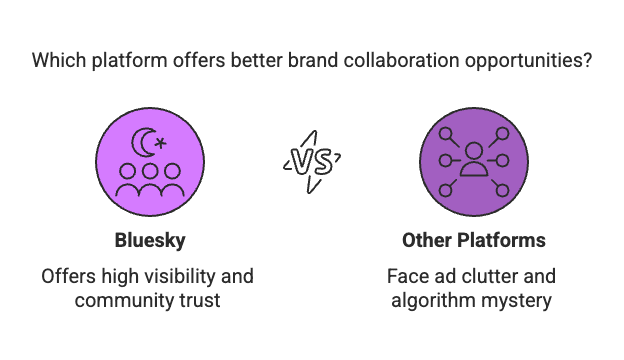
Tired of fighting opaque algorithms or losing followers to endless ads? Bluesky’s feed is chronological and community-focused, not an ad-riddled black box. In fact, **Bluesky doesn’t allow traditional ads at all, This creates a culture of authenticity – people are there to interact, not just mindlessly scroll trending dances. Early data shows Bluesky users spend an average of 10+ minutes per session on the which is a healthy engagement length. As an influencer, your posts are more likely to be seen by followers without getting sandwiched between sponsored posts. Conversations feel more genuine, and you can build real connections through replies and chats (yes, Bluesky added DMs too!).
Fewer ads on Bluesky means brands will lean on influencers to get their message out. In a “no pay-to-play” environment, influencer marketing becomes one of the most effective promotion strategies. If you establish a presence on Bluesky, you could tap into sponsorships where brands ask you to spread the word because they can’t just buy an ad. The bonus: without a saturated ad market, branded content on Bluesky comes off as more organic and can spark genuine conversations. It’s a new playground for creative brand-influencer campaigns – think collaborative posts, Bluesky-exclusive giveaways, live Q&As – with a community that’s keen to engage. Early adopter brands are already scouting Bluesky for influential voices to partner with.

So you’ve joined Bluesky and grown a little following – how does it stack up for brand collaborations (the bread and butter for many influencers)? Let’s break down the pros and cons in a quick-hit list:
Bluesky’s rise from obscure beta app to 30-million-strong network has been nothing short of astonishing. For influencers, it presents that rare window of opportunity: a growing platform where you can still shape the culture, build an audience without fighting algorithms, and partner with brands in a more organic, fan-focused way. While TikTok isn’t going anywhere overnight, savvy creators know the value of being ahead of the curve. Think of Bluesky as adding another tool to your kit.
So why not give Bluesky a shot? 💡 Action step: Claim your handle (your name might still be available – score!), set up your profile with your vibe, and say hello with a first post. Consistency is key on any platform, so spend a few minutes each day browsing and “skeeting” (what some users playfully call posting on Bluesky). Engage with the communities relevant to you – whether it’s fashion, gaming, travel, or just goofy meme threads. You’ll find an enthusiastic audience that’s excited to interact.
And for those on the fence, consider this your friendly nudge: The social media landscape never stays the same. Today’s TikTok could be tomorrow’s Myspace (anyone remember that?), and today’s upstart Bluesky could be the next major player. As an influencer, you thrive by riding the right waves. Bluesky’s wave is building momentum; paddle in now, and you might just catch the next big break. Remember, in the influencer world, being early is gold. 🌤️ Bluesky awaits – see you there!
TikTok’s influence in 2026 is bigger than ever, with over 1.5 billion active users globally fueling viral trends and new internet celebrities. The platform’s For You Page (FYP) algorithm can catapult ordinary people to stardom overnight, creating a diverse ecosystem of content creators. Notably, both macro-influencers (household names with tens of millions of followers) and micro-influencers (niche creators with smaller followings) thrive on TikTok today. In fact, brands are increasingly turning to micro-influencers with 10k–50k followers for their higher engagement rates and tight-knit communities. Meanwhile, mega-stars still rack up hundreds of millions of views and lucrative sponsorships.
In this article, we’ll explore the top TikTok influencers of 2026 – from the largest macro stars to rising micro creators – across a variety of categories including comedy, dance, beauty, fitness, gaming, and tech. We’ll break down why each influencer is so successful, from their sky-high engagement to the viral content styles that set them apart. You’ll also find a comparison table of key metrics (follower counts, engagement rates, niches, and estimated earnings per post) for these creators. Finally, we’ll highlight emerging TikTok trends and algorithm changes in 2026 that are shaping who gets famous (and why). Let’s dive in!
View this post on Instagram
A post shared by Khabane Lame (@khaby00)
Khaby Lame rose from factory worker to the most-followed TikToker in the world by 2026. He has 162.4 million followers, largely thanks to his wordless, deadpan reaction videos that lampoon overly complicated “life hacks.” His silent shrug and expressive face have universal appeal – a kind of modern Charlie Chaplin vibe that transcends language barriers. Khaby’s signature style of simplifying ridiculous hacks struck comedy gold on TikTok. Brands have taken notice too – he lands major sponsorships (even earning an estimated $259K per TikTok post in deals). With an engagement rate around 6.3% (average for an account his size), his videos regularly pull tens of millions of likes. Khaby’s success shows how universal humor and authenticity can build a massive global audience. Everyone from kids to boomers loves his content, proving you don’t always need words to go viral.
Better known as a YouTube icon but now a top TikTok creator as well. Jimmy “MrBeast” Donaldson leveraged his fame for outrageous stunts and philanthropy to amass 114+ million TikTok followers. On TikTok he serves up bite-sized versions of his YouTube antics – think insane challenges, giveaways, and feel-good stunts – which regularly land on the FYP. MrBeast’s approach of “go big or go home” resonates on TikTok, where extreme content stands out. He even cracked TikTok’s top 3 most-followed in 2024. With huge engagement (e.g. a sponsored TikTok for Shopify got over 8,000 comments, MrBeast can reportedly command about $151K per post in sponsorship value. His success underscores TikTok’s shift toward high-budget, high-production content in the entertainment category, even as lo-fi relatable videos remain popular.
Turned himself into a TikTok sensation with prank videos and nostalgia content – and sits around 75 million followers. Even The Rock (Dwayne Johnson) joined TikTok fun with comedic skits for his 77M followers. Their presence shows TikTok isn’t just for teens; older entertainers can thrive by adapting to the platform’s playful tone. In short, from viral newcomers like Khaby to crossover megastars, TikTok’s comedy and entertainment influencers succeed through relatable humor, big personalities, and savvy trend participation.
Skyrocketed to fame as a 15-year-old, remains one of the top TikTokers with 157.4 million followers. Charli became the platform’s first big superstar by posting infectious dance videos to trending songs, and her down-to-earth teen personality made viewers feel like they were watching a friend. Even at just 20, Charli is a veteran influencer now – but she’s managed to keep her content relatable and fun, dabbling in vlogs and collabs while still busting out choreography. Notably, Charli maintains a remarkably high engagement rate ~7.5% for a mega-influencer, indicating her audience is still highly tuned-in. This “Gen Z icon” has also leveraged her platform into brand deals (Dunkin’ even named a drink after her) and new ventures like a Hulu series. Charli’s ability to stay authentic and evolve – from viral dances to advocating against bullying – is key to her lasting success.
Addison blew up in 2019 with trendy dance and lip-sync videos, reaching 88.6 million followers by 2026. Fans love Addison’s bubbly, girl-next-door vibe, and she often makes followers feel like they’re hanging out with a bestie through her candid posts. She parlayed her TikTok fame into a multi-faceted career – releasing music, starring in a Netflix film, and launching a makeup line – proving she’s more than just a one-dimensional creator. On TikTok, Addison still serves up dances and beauty content, though her engagement (~2.9% in early 2026) is lower than peers. Even so, her massive reach means brands pay top dollar to partner with her – an estimated $142K per sponsored post. Addison’s strategy of mixing trending dances, glam lifestyle content, and genuine charm keeps her relevant on the FYP.These dance/lifestyle stars also illustrate how TikTok’s algorithm rewards trend participation and collaborations. Charli and Addison often hopped on the same challenges and appeared in each other’s videos, cross-pollinating their fanbases. As Billboard noted, the “secret sauce” for many TikTok dancers was collaborating with fellow creators and jumping on viral dance challenges to boost visibility. By giving the audience exactly what they ask for in comments, creators like Charli, Addison, and Mexico’s Kimberly Loaiza (@kimberly.loaiza) (83M followers) have kept growth strong. In 2026, dance and lifestyle influencers remain hugely popular, but they succeed by evolving their personal brand – branching into music, beauty, or entrepreneurship – while still delivering the fun, trend-driven videos that built their following.
Mikayla started as a makeup-loving retail employee and, through TikTok, transformed into a beauty superstar with 16.2 million followers. Her Boston accent, rapid-fire talking, and candid product reviews make her stand out – she’s refreshingly unfiltered and authentic in a niche that often felt overly polished. Fans appreciate that Mikayla will bluntly say if a hyped foundation is actually trash or worth the money. That honesty, plus her pro-level makeup skills, earned her an “Excellent” 11.5% engagement rate – extremely high for an account of her size. In other words, her followers are highly engaged and trust her opinions. Mikayla’s influence is so strong that a simple mention of a product can prompt a sellout. She’s landed major brand partnerships and even launched her own makeup palette, likely earning tens of thousands of dollars per sponsored post in the beauty space. By keeping it real and relatable (openly discussing acne, mental health, and confidence), Mikayla exemplifies why TikTok’s beauty community favors authentic creators who feel like a friend giving you tips.
Dubbed “TikTok’s best-dressed guy” – who blends high fashion with streetwear in snappy outfit videos. Wisdom’s creative styling and striking looks garnered collaborations with Dior and Coach. For female fashion, influencers such as Brittany Xavier (@brittany.xavier) gained millions of followers by translating runway trends into everyday outfits and “hacks” viewers can actually use. Notably, TikTok’s fashion scene is diverse in age. Case in point: Carla Rockmore (@carlarockmore), a Dallas-based fashionista in her 50s, went viral as the “real-life Carrie Bradshaw.” Carla’s bold, maximalist style and closet tours inspired viewers of all ages, showing that style has no age limit. She amassed a large following (often women over 40, a growing demographic on TikTok) by celebrating personal style and sustainable fashion finds.
Founder of Huda Beauty, shifted from YouTube to TikTok where she shares product demos and skincare routines with her trademark glamorous flair. Similarly, YouTube makeup artist Nikkie de Jager (@nikkietutorials) brought her transformation videos and humor to TikTok, delighting fans with quick looks and celeb cameos. These cross-platform veterans lend industry credibility on TikTok and often collaborate with younger TikTok-native beauty creators – a mutually beneficial arrangement.Overall, TikTok’s top beauty and fashion influencers succeed through creativity, honesty, and community interaction. Whether it’s Mikayla’s no-BS reviews or Abby Roberts’ surreal makeup art (15M followers), the content feels fresh and engaging. Many also use TikTok’s duet and stitch features to respond to follower requests or debunk beauty myths. The result: beauty fans feel heard and involved, fueling strong engagement. Brands love this – in 2026 we see more cosmetics and apparel brands partnering with these influencers for authentic promotions. (It’s not surprising given beauty content on TikTok averages 3.5–5% engagement, higher than on Instagram) The bottom line: unique style + genuine personality = beauty TikTok success.
With 14.2 million followers, Demi is a petite powerhouse known for jaw-dropping feats of strength and agility. After bouncing back from a severe cheerleading injury, she turned to CrossFit and calisthenics, documenting her journey on TikTok. Now she’s famous for doing things like one-armed flips, lifting strangers, and turning everyday environments into her gym. Her videos often prompt the question: “Wait, how is that even possible?!” – which is the kind of curiosity that drives shares. Demi’s content is equal parts impressive and fun, often set to trending music or challenges (for example, doing flips in a Wonder Woman costume, or the viral #NatureWorkout trend). This blend of entertainment and fitness earned her massive likes (314 million total likes on her profile). Beyond the flashy stunts, she also posts approachable workout ideas, encouraging followers to push their limits and enjoy being active. Her inspirational story and positive energy make fitness feel accessible. It’s no wonder Red Bull signed her as an ambassador, and brands in athletic wear and supplements line up to work with her.
Gained millions of followers with a mix of gym tutorials and relatable vlogs. Jesse’s transformation from a “scrawny” teen to a muscular trainer resonates with young male audiences – he keeps it real about his struggles and routines. By collaborating with other fitness TikTokers and doing day-in-the-life style videos, he keeps his content fresh and motivational.
Has 1M+ followers tuning in for her no-nonsense workout tips and nutrition advice. As a professional soccer player and coach, Shiv brings expertise to TikTok, often busting fitness myths and demonstrating exercises with clear instructions. Her success shows there’s a demand for educational fitness content on TikTok – not just flashy feats.
A dermatologist became a TikTok star by giving skincare advice and debunking viral “skin hacks.” By dueting other users’ videos and fact-checking them, he’s made dermatology fun and gained a huge following. His friendly explainer videos (and satisfying pimple talks) proved that even science-backed, informative content can go viral if delivered in a light, visual way. Dr. Shah’s popularity has influenced a broader “Ask the Expert” trend in 2026, where doctors, therapists, and nutritionists use TikTok to share tips – a sign that wellness on TikTok isn’t just about physical fitness, but also skin health, mental health, and overall wellbeing.Whether it’s extreme athletes like Demi or helpful coaches and doctors, TikTok’s fitness and wellness influencers thrive by demonstrating real results and inviting participation. Many do challenges (“10 push-ups a day for 30 days – join me!”) or use POV storytelling to hook viewers. High engagement comes naturally because followers often tag friends (“we should try this!”) or comment about their own progress. The platform’s challenge culture and short-form format are perfectly suited to get viewers off the couch – even if it’s just to try a quick dance burn or a protein recipe they saw on their FYP. The key for these creators is to be motivational yet relatable, showing that anyone can start their journey (and maybe one day do a backflip like Demi!).
Known originally as a YouTube gamer and boxer – has become one of TikTok’s top gaming personalities with 11.8 million followers. KSI’s TikToks show a mix of gaming highlights, funny commentary, and even boxing training clips, reflecting his multi-hyphenate career. His charisma and humor attract not just gamers but a broad audience. By participating in viral challenges and posting snippets of his matches, he keeps fans engaged across interests. KSI’s dynamic presence (plus his existing fame) has earned him a “massive following” on TikTok and lucrative partnerships in the gaming sphere.
Built up 5 million followers by posting rapid-fire game reviews, memes, and gameplay clips that resonate with the TikTok crowd. Their content distills the fun of gaming into bite-sized videos – perfect for short attention spans.
Amassed about 11 million followers by sharing tech tutorials and life-hacks in a snappy, easy-to-digest format. His videos might show hidden iPhone features, cool websites, or even travel hacks – all under the umbrella of “tech tips.” By using trending sounds and quick captions, he turns tutorials into fun content rather than dry demos.
For micro-influencers in gaming/tech, TikTok is fertile ground because of niche communities. A gamer couple in their 30s who focus on console hardware and horror game previews. They have a modest 37.7K followers but a very engaged audience in the retro and indie gaming niche. Their comprehensive coverage of gaming news and genuine enthusiasm for the topic make them a trusted source despite the smaller following. Brands are noticing that these micro-creators, though small, often deliver higher engagement rates and a sense of community. A micro tech influencer with say 50K followers might earn only ~$100 per sponsored post, but their recommendations can carry more weight among hardcore fans than a generic mass advertisement. This trend has led to more sponsorships for niche tech TikTokers (like gadget accessory brands partnering with micro tech reviewers).
In summary, TikTok’s gaming and tech influencers win by adapting content to a fast-paced, humorous format. They join in on general TikTok trends (for example, using a popular sound clip but showing a gaming twist) to reach beyond just techies. The TikTok algorithm’s personalization means even these specialized videos find their target audience, whether it’s casual mobile gamers, hardcore PC builders, or gadget geeks. And with TikTok seeing a 150% increase in tech-related content in 2023-2024, by 2026 tech is no afterthought on the platform – it’s a growing vertical with its own stars. Expect to see more “nerdy” influencers becoming mainstream names as TikTok’s content horizons expand.
To wrap up, here’s a comparison of some top TikTok influencers in 2026 – including both mega stars and rising micro stars – with their key stats and niches:
Notes: Engagement rates are approximated from available data (mega influencers typically see 4–6% engagement, while micro accounts often exceed 1. Earnings per post are estimates combining reported figures for top stars and typical rates for smaller influencers – actual payouts vary by campaign. (For example, Khaby Lame’s sponsorships can reach **$750K for large projects, and micro creators might earn free products or a few hundred dollars.) The figures above give a general idea of the influence and market value each creator commands in 2026.
As the table shows, macro-influencers like Khaby, Charli, and Addison boast follower counts in the tens of millions but have slightly lower engagement percentages, whereas niche creators with smaller followings often foster higher engagement. Each influencer has carved out a distinct niche – be it comedy, dance, beauty, fitness, or tech – and leveraged TikTok’s trends to their advantage. From Khaby Lame’s universally funny skits to Mikayla’s makeup transparency, these creators represent the diverse talent thriving on TikTok in 2026.
TikTok’s star-makers are always evolving. Today’s top influencers balance entertainment with authenticity, riding viral trends while engaging their community on a personal level. Whether you’re a brand looking to partner with creators or an aspiring TikToker yourself, there’s a lot to learn from these success stories. TikTok in 2026 rewards creativity and real connection – so find your niche, be yourself, and who knows, you just might find your name on next year’s “top influencers” list!
Ultimately, whether you’re a global brand or an aspiring creator, success on TikTok in 2026 boils down to the same formula: keep it real, know your community, and deliver content that truly connects. The TikTok landscape will keep evolving with new features and trends, but authenticity and engagement are timeless ingredients that continue to drive the platform’s influencer dynamics. By prioritizing genuine connections over vanity metrics, both brands and influencers can thrive in TikTok’s vibrant ecosystem. Here’s to a future where being true to your voice (and audience) is the key to TikTok stardom – 2026 and beyond!
In today’s social media landscape, brands are discovering that bigger isn’t always better – especially when it comes to influencer marketing. Enter micro-influencers: those social media creators with a smaller (but highly engaged) following who are proving incredibly effective at building brand loyalty. If you’ve ever bought a product because a favorite niche Instagrammer or TikToker raved about it, you’ve witnessed this phenomenon in action. This blog post explores how collaborations with micro-influencers foster loyal customer bases and drive repeat business, with a casual deep-dive into why authenticity and engagement matter more than follower counts.
Micro-influencers are typically content creators on social platforms with roughly 1,000 to 100,000 followers, give or take. Unlike mega-celebrities or macro-influencers who boast millions of followers, micro-influencers cultivate smaller, tight-knit communities. Their audiences tend to be niche and highly engaged, often seeing the influencer as a relatable friend rather than a distant celebrity. This closer connection means micro-influencers can have an outsized impact on trust and loyalty compared to their more famous counterparts. Brands are taking notice – in fact, over 56% of marketers who invest in influencer marketing choose to collaborate with micro-influencers according to Influencer Hero because of their authenticity and cost-effectiveness.
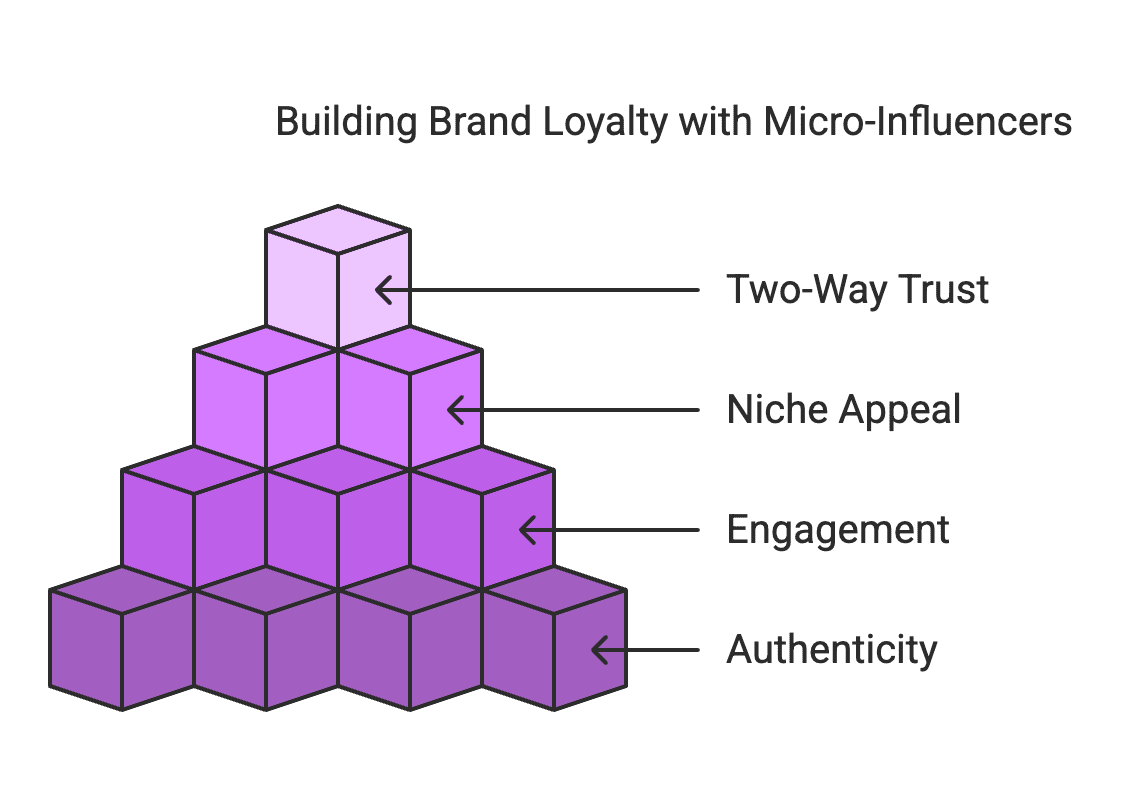
1. Authenticity That Builds Trust
One big reason micro-influencers drive loyalty is their authenticity. Because they are everyday people and not A-list celebrities, their endorsements feel genuine – more like a friend’s recommendation than an ad according to Emplifi.io. Followers often develop a deeper connection with micro-influencers, who frequently engage directly through comments and DMs. This consistent personal interaction creates a sense of friendship and trust. According to marketing research, micro-influencers are seen as the “perfect mix of influencer and best friend,” with followers feeling closely connected to them due to this regular engagement according to Trend.io. When a micro-influencer genuinely loves a product and shares it, their community trusts that sentiment. This trust translates into loyalty for the brand – consumers are more likely to stick with a product recommended by someone they feel they know and trust. In fact, 82% of consumers say they’re more likely to act on a micro-influencer’s recommendation according to Giraffe Social, showing how much weight these authentic endorsements carry.
2. Higher Engagement = Stronger Community
Micro-influencers might have fewer followers, but they sure know how to ignite engagement. It’s common to see micro-influencer posts flooded with comments, likes, and genuine conversations. Why? With a smaller audience, micros can interact with followers more personally – replying to comments, asking questions, and building a community vibe. This high engagement isn’t just good for vanity metrics; it’s a catalyst for brand loyalty. When followers interact with an influencer around a brand’s product, they’re essentially joining a little community of brand fans. This sense of community can make consumers feel more emotionally invested in the brand itself. It’s no surprise that micro-influencers often boast engagement rates far above those of macro-influencers – often 5% to 20% on posts, whereas macro-influencers may average only ~1–3%. One study found micro-influencers on Instagram have around a 6% engagement rate, compared to about 1.9% for mega-influencers according to Business.Trustpilot. That means more conversations and interactions centered on your brand. This two-way engagement builds loyalty by making customers feel heard and part of the brand’s story. A engaged follower is more likely to become a repeat customer because they’re not just buying a product – they’re joining a community.
3. Niche Appeal and Relatability
Micro-influencers typically focus on specific niches – whether it’s clean beauty, vegan baking, home workouts, or tech gadgets – and they attract followers who are passionate about those topics. This makes micro-influencers incredibly valuable for brands looking to target a particular audience. Collaborating with a micro-influencer in your niche is like having a respected community member vouch for your brand. Because the influencer truly understands and shares the interests of their followers, their content resonates on a personal level. For example, a micro-influencer mom who talks about eco-friendly baby products will come across as way more relatable and convincing to other eco-conscious moms than a general celebrity would. This relevancy boosts brand loyalty because customers feel “Wow, this brand really gets me.” By tapping into niche micro-influencers, brands show they understand specific customer needs and subcultures, which in turn fosters a loyal, enthusiastic customer base. It’s targeted marketing with a human face, and it works wonders for long-term engagement.
4. Two-Way Trust-Building
Trust is a two-way street in micro-influencer relationships. Micro-influencers are selective about the brands they partner with – they know their reputation with their followers is on the line. This often means they’ll only promote products they genuinely like or find relevant. The result is paid partnerships that feel organic and trustworthy. When followers see that a micro-influencer consistently shares honest opinions (even if it means skipping or frankly reviewing products that don’t fit), it reinforces the credibility of both the influencer and the brand they do choose to promote. According to industry stats, 69% of consumers trust influencer recommendations (over even what brands say about themselves) – and that trust is arguably even stronger with niche micro-influencers who’ve earned goodwill in their community. The takeaway: by collaborating with micro-influencers, brands essentially borrow that hard-earned trust, which can dramatically improve customer loyalty and retention.
Let’s look at some telling data and statistics that highlight how micro-influencers drive customer retention and repeat business:
It’s worth comparing micro-influencers vs. macro-influencers directly to understand their differences in engagement, reach, and impact on brand loyalty. Both have their place in marketing, but they offer distinct advantages. Below is a quick comparison:
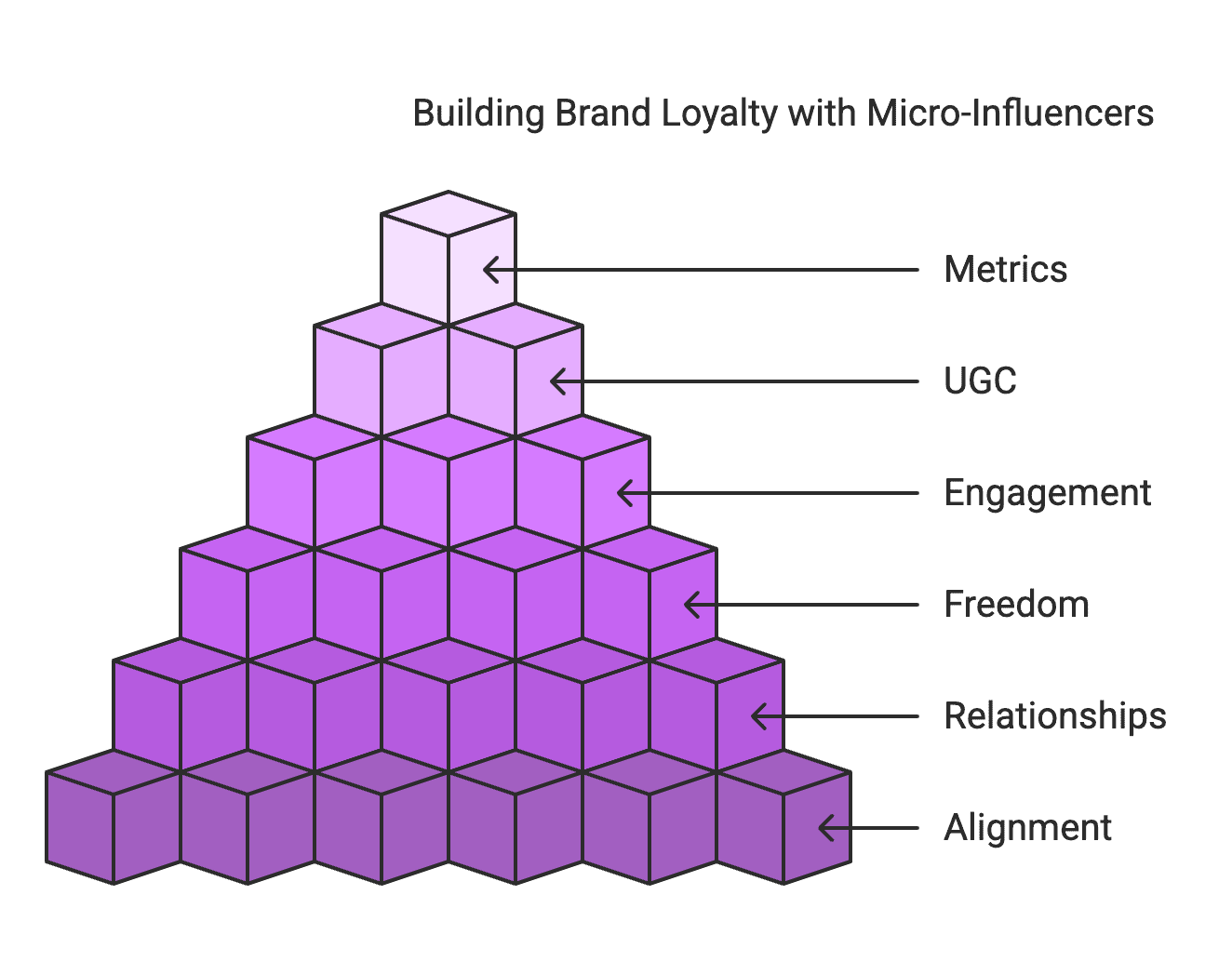
Ready to turn those insights into action? Here are some tips for collaborating with micro-influencers to build a loyal customer base:
Micro-influencers have proven that when it comes to brand loyalty, small can be mighty. Their authenticity, high engagement, and close-knit communities make them ideal partners for brands looking to not just gain customers, but keep them. By leveraging micro-influencers’ trust-building power, brands can cultivate passionate fan bases that come back again and again – and bring their friends along for the ride. In a world where consumers are increasingly skeptical of traditional advertising, micro-influencers offer a refreshing human touch. They remind us that at its core, brand loyalty grows from genuine connections and shared experiences. So, whether you’re a startup or a seasoned company, consider teaming up with those “everyday” influencers who genuinely love your product. You might just find that their followers become your most loyal customers, championing your brand for the long haul.
Embrace the micro-influencer approach, and turn engaged audiences into devoted brand ambassadors – one authentic post at a time.
Amazon has just given influencers and brands something new to buzz about. On March 26, 2025, Amazon announced on X (formerly Twitter) a beta AI-powered shopping feature called “Interests.” It’s an AI tool designed to match products to users’ hobbies and passions in real time. In other words, Amazon’s AI will now work “around the clock” to find products that match each shopper’s personal interests – an exciting development not just for consumers, but also for influencer marketers looking to reach the perfect audience-product fit.
Interests is Amazon’s latest foray into AI-driven shopping personalization. The company introduced it as a feature that “transforms how you discover and shop for products related to your passions” by continuously scanning Amazon’s vast catalog for new items you might love. Think of it as a smart personal shopper that never sleeps: once it knows what you’re into, it keeps hunting for relevant new products, deals, or restocks and lets you know when it finds something noteworthy.
This feature was officially rolled out in beta to a small subset of U.S. customers via the Amazon mobile app’s “Me” tab”. If you’re in the test group, you’ll see an “Interests” button there, and tapping it lets you set up custom prompts. Amazon plans to expand Interests to all U.S. shoppers in the coming months. For now it’s a mobile-first experience (on iOS, Android, and the mobile web) that represents Amazon’s latest move to make shopping more convenient and fun.
In short, Interests is like a personalized feed of product recommendations, tailored to whatever you’re passionate about – whether that’s gourmet cooking, retro gaming, hiking gear, high-end fashion, or anything in between.
Amazon’s Interests feature is powered by generative AI and large language models under the hood. Here’s how it works step by step:
Amazon’s Interests AI feature uses a simple flow: shoppers describe their passions or needs in everyday language, and Amazon’s AI goes to work finding matching products (flowchart). Once a user types in a shopping prompt describing what they’re interested in, Amazon’s AI automatically translates that everyday language into precise search queries and product attributes that Amazon’s systems can understand. This is done using large language models (LLMs), so the AI can handle natural, conversational descriptions instead of just keywords.
For example, a user might say “I’m looking for the latest pickleball gear and accessories” or “Natural makeup products for a summer glow from top brands.” The Interests AI will parse that request and continuously scan Amazon’s new listings and updates for items that fit the description. It’s constantly checking new inventory in Amazon’s store and will proactively notify the user when it finds something that matches their criteria – be it a brand-new product launch, a restock of a popular item, or a price drop on something related to their interest.
This goes beyond a one-time search. Interests is an ongoing, auto-piloted search. After you create an Interest prompt, you don’t need to keep searching for that topic each time you shop; the AI is persistently “watching out” for you. Users can create multiple prompts covering different interests, set filters like price range or specific features, and update these prompts anytime. When a match is found, users receive a notification or can check the “Interests” section in the app to see a curated list of new finds waiting for them.
Notably, Amazon is starting small with this feature – only a select group of users have it as of now. Those who do can find it by tapping “Your Interests” in the app. Amazon’s VP of Personalization, Daniel Lloyd, explained that with Interests, shoppers can use natural sentences to describe what they want (e.g. “Model building kits and accessories for hobbyist engineers and designers” or “Brewing tools and gadgets for coffee lovers”) and let the AI handle the rest. It’s like setting a shopping assistant on autopilot for your wish list. Amazon’s goal here is to make the shopping experience more curated and relevant, saving users from having to constantly hunt for the latest in their favorite categories.
From a technical perspective, this is a big step in Amazon’s use of AI in retail. “Interests” uses AI to bridge the gap between how people naturally talk about products and how search engines find them. That means if you describe a need in your own words, Amazon’s AI can figure out the equivalent search query (or combination of queries) to fetch the right products. The feature then delivers these personalized recommendations right to the user’s feed or notifications, rather than making the user do the work of searching and filtering every time. In Amazon’s own words, Interests “continuously Amazon’s store and you about newly available and relevant products, restocks, and deals” aligned with your request.
For everyday shoppers, this is a convenience boost. But for influencers and marketers, it opens up a new avenue: if your content or product recommendation aligns with a user’s Interest prompt, there’s a greater chance that product will be put in front of that user by Amazon itself. Here’s why that’s a big deal.
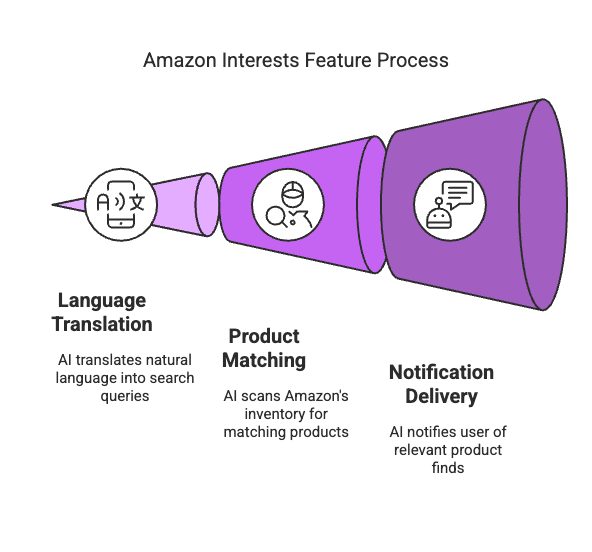
If you’re an influencer or brand marketer, Amazon’s Interests could become a powerful ally for your campaigns. In a world where relevance is king, this feature means that when you promote a product that genuinely fits your audience’s hobbies or needs, sometimes, these insights can even help you choose your hobby to pick up based on what’s gaining popularity in similar user profiles. Amazon’s AI might independently reinforce your efforts by showing that product to interested shoppers. It’s almost like having Amazon’s algorithm boost your influencer posts for the exact people who care about that topic.
To put it in context, influencer marketing is huge and still growing – U.S. influencer marketing spend is on track to top $10 billion in 2025. Brands are investing heavily in creators to get their products in front of engaged communities. Amazon’s Interests feature adds another layer of targeting to this equation by leveraging first-party shopping intent data (what people say they want) and turning it into product matches. This could significantly amplify the impact of influencer campaigns, especially for products sold on Amazon.
Above: A hypothetical bar chart illustrating the potential boost in key campaign metrics when influencers align their content with Amazon’s Interests feature (e.g., increased audience reach, engagement, and conversion rates). Early marketing expert predictions suggest that tapping into interest-based discovery could amplify an influencer campaign’s effectiveness noticeably. While hard data is still forthcoming (the feature is brand new), many marketers anticipate improved outcomes. The more relevant the product is to the consumer’s declared interest, the more likely they are to engage with it – meaning higher click-through rates on affiliate links, more conversions, and ultimately more sales generated via influencer content.
In essence, Amazon’s Interests could act like a matchmaking service between influencer-promoted products and the consumers who are actively looking for them. This kind of algorithmic alignment can make influencer marketing more efficient. Rather than casting a wide net and hoping the right people see it, the right people are explicitly telling Amazon what they want, and Amazon is delivering it to them. For influencers, that’s a welcome development: it means if you truly understand your niche audience, Amazon is going to help deliver your recommendations to those who care most.
Of course, it’s early days. As of now, only some customers have access to Interests, and it’s U.S.-only in beta. But we can already imagine the ripple effects. Social platforms use algorithms to match content to users; Amazon is doing something analogous with shopping. As these worlds collide, the line between social media discovery and e-commerce discovery blurs. Influencers who adapt to this will likely have an edge.
How can influencers make the most of Amazon’s new AI tool? Here are some practical tips to ensure your content and campaigns ride the wave of the Interests feature:
When creating content, use the same kind of natural, descriptive language that a fan might use to set up an Interest. For example, phrase your product recommendations in everyday terms (“a cozy cottagecore lamp under $50”) so that Amazon’s AI might categorize it similarly to a user’s prompt. Remember, the AI translates everyday language into search queries – so lean into that kind of wording.
Since Interests notifies users about newly available products, try to align your campaigns with product launch timing. If you’re partnering with a brand launching on Amazon, coordinate your posts so that when the product goes live (and Interests starts pinging users about it), your audience has already heard your authentic review or demo.
If you’re part of the Amazon Influencer or Associate program, make sure to use your Amazon storefront and affiliate links for the products you feature. That way, when Amazon’s AI drives a user to a product you recommended, you’ll get credit for the conversion. It also helps Amazon track that influencers are creating interest in certain items.
Don’t shy away from telling your audience about this feature! For instance, an influencer might say, “If you love the recipes I share, try setting up an Interest in Amazon’s app for ‘gourmet cooking tools’ – you’ll get updates when cool new kitchen gadgets drop.” This not only helps your followers stay updated, but also increases the chance they’ll see the products you talk about, keeping your recommendations top-of-mind.
These strategies can help you synch up your influencer strategy with Amazon’s AI-driven product discovery. The key is to maintain authenticity – don’t force products that don’t actually fit your niche – but when there is a fit, make it count by maximizing visibility through the tools available.
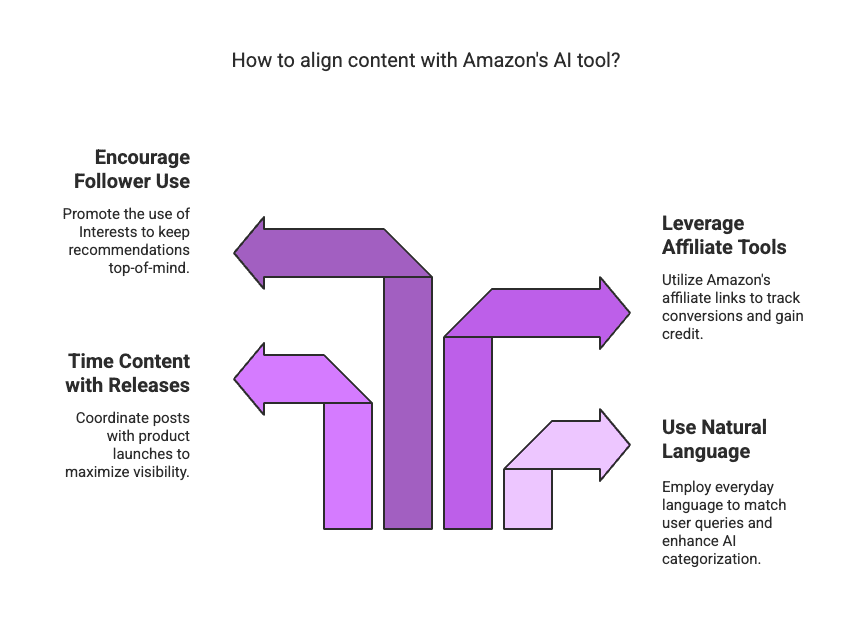
Amazon’s Interests feature is an early glimpse into how AI might reshape the relationship between social influence and shopping. It’s not hard to imagine a near future where the content you see on social media and the suggestions you get on shopping platforms coalesce into one seamless experience. A follower sees your travel vlog about camping in a remote national park, and next time they open Amazon, their Interests feed has a new sleeping bag or water purifier recommendation waiting for them. This kind of synergy could dramatically shorten the journey from inspiration to purchase, benefiting creators, brands, and consumers alike.
For influencers, the takeaway is clear: stay adaptive and tech-savvy. As platforms like Amazon deploy AI to make shopping more personalized, those who create content that is relevant and timely will reap the rewards. It’s a chance to augment your creative storytelling with Amazon’s data-driven recommendations, effectively letting the platform’s AI amplify your voice.
From Amazon’s perspective, if Interests succeeds in engaging users, we might see it expand beyond the U.S., and possibly integrate with other services (imagine Interests for Amazon international sites, or even tie-ins with Twitch streams or live influencer events on Amazon Live). The company has hinted it will “continue to look for ways to enhance our shopping experience” for convenience and enjoyment – so more AI features could be on the horizon.
In summary, Amazon’s AI “Interests” is more than just a shopping tool – it’s a signal of where influencer marketing and e-commerce could converge. It offers a new, AI-powered way to target and tailor influencer campaigns, aligning product discovery with individual passion points. It’s early, it’s experimental, but it’s full of promise. Savvy influencers and marketers will watch this space closely and be ready to pounce on opportunities it creates. The next time you’re strategizing a campaign, consider asking not just “What products do I want to showcase?” but also “What Interests will my audience likely have on Amazon, and how can I become a trusted voice in that space?” Those who answer that well may find themselves at the forefront of the next evolution in influencer marketing – one where AI and authenticity together drive amazing results.
Amazon is doubling down on visual commerce – turning images into instant shopping opportunities. Business Insider recently reported a new Amazon Photos feature that can turn your personal photo library into a shopping catalog. In a demo, Amazon’s Panos Panay showed how you can search your saved photos for products – spot a cool lamp in a party pic or a toy in your kid’s photo, and Amazon’s AI will find similar items for sale. This move underscores a broader trend: shoppers increasingly discover and buy products through images and videos rather than text. In fact, a recent study found 59% of social media users have bought a product after seeing an influencer post about it, and 94% of those purchases happened on Amazon. With Amazon emerging as the go-to platform for influencer-inspired buys, brands have a huge opportunity to ride this visual commerce wave. This guide will break down how businesses can collaborate with influencers to create shoppable visual content that directly drives Amazon sales – and how to do it in a practical, results-driven way.
Amazon clearly recognizes this shift. Features like the new Amazon Photos shopping tool and the now-infamous (and recently sunset) Amazon Inspire feed – a TikTok-style stream of shoppable photos and videos – show Amazon’s determination to make browsing and buying a seamless visual experience. The goal is to keep shoppers on Amazon for inspiration and purchase, rather than losing them to Instagram or TikTok for discovery. As Amazon integrates these features, it’s also expanding its Amazon Influencer Program, which gives creators tools to build Amazon storefronts with shoppable photos, videos, and livestreams. All these efforts cater to a simple fact: three in four consumers research product images and videos before buying, and people are 85% more likely to buy a product after seeing a high-quality photo of it. In short, visual commerce isn’t just a buzzword – it’s becoming central to how customers shop, and Amazon is shaping itself into the ultimate visual shopping destination.
Brands that embrace visual influencer campaigns on Amazon can reap significant benefits. Here are some key advantages:
Eye-catching visuals stop the scroll. Content with images or videos gets far more attention – one analysis found visual posts get 94% more views than text-only ones. When an influencer showcases your product in action (a beautiful photo or quick how-to video), it creates instant interest. This often translates into clicks and sales: consumers are much more likely to add to cart when they can see a product being used or worn. In fact, consumers are 85% more likely to buy after seeing a compelling product image.
Influencers bring a human touch that stock photos or generic ads can’t. Their followers trust their opinions and relate to their real-life style. When an influencer shares a genuine photo using your product, it’s perceived as a peer recommendation rather than an ad. This user-generated content (UGC) style builds trust – 79% of consumers say customer photos and UGC significantly impact their decisions. Visual influencer campaigns leverage this authenticity, making your brand more credible to new audiences.
A shoppable image or video lets customers go from inspiration to purchase in one click. On Amazon, this is especially powerful because most viewers are already logged in with payment info ready. An influencer’s Amazon storefront or post can showcase your product and link directly to the Amazon product page. With features like Amazon’s in-app shopping tags, the path to purchase is frictionless. This matters because when inspiration strikes, you want the sale to happen immediately. Influencers help collapse the funnel – their content serves as both marketing and point-of-sale. And since 80% of social media users are Amazon Prime members and 89% shop Amazon monthly influencer content that lives on Amazon taps into a ready-to-buy audience.
Because Amazon is where the majority of influencer-inspired purchases ultimately happen, investing in Amazon-focused influencer content yields strong returns. One report found that shoppers guided by influencers are 7.6× more likely to purchase on Amazon than on any other site or app. In fact, among surveyed consumers who buy products recommended by influencers, 71% said Amazon is their preferred platform for those purchases, compared to only ~9% who chose Walmart or brand websites. (See chart below.) This means a visual campaign tied to Amazon is leveraging the platform where consumers already want to buy. The result can be higher conversion rates and sales volume than if you drive shoppers to a standalone site.
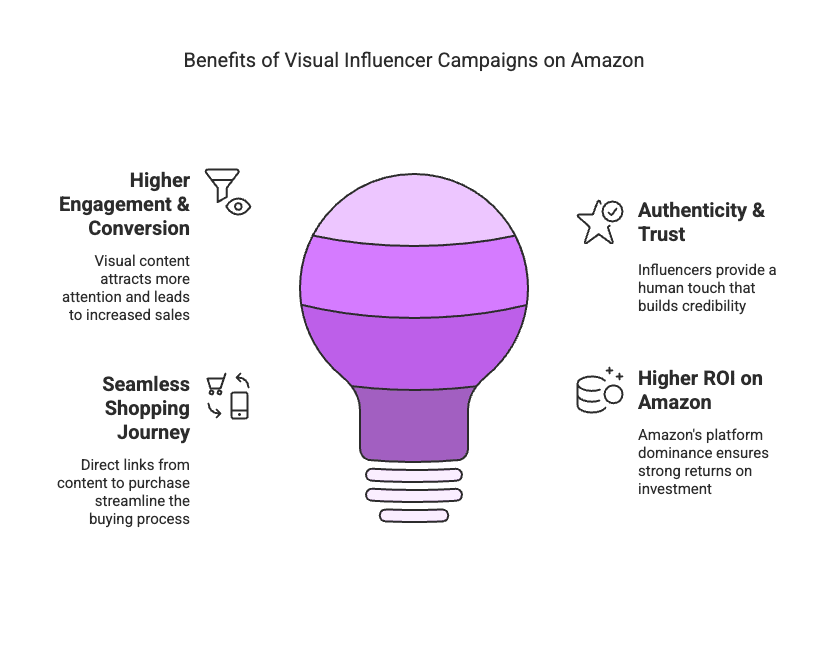
Ready to harness the power of visual influencer campaigns on Amazon? Here’s a step-by-step plan for brands:
Start by deciding what success looks like. Are you aiming to boost immediate Amazon sales, increase product reviews, grow brand followers on Amazon, or drive new customers (NTB – new-to-brand purchases)? Set specific targets – for example, X units sold via the campaign, a Y% lift in Amazon conversion rate, or improved category ranking. Common goals include sales revenue, number of Amazon sessions (product page visits) from the campaign, and engagement metrics. By defining key performance indicators (KPIs) upfront (e.g. click-through rate, conversion rate, or social engagement), you can tailor the campaign strategy and later measure against these benchmarks.
Not all influencers are equal for your brand. Look for creators who align with your niche and have an engaged following that matches your target customer profile. Check their content style – do they produce high-quality photos or videos that fit your brand aesthetic? For Amazon-focused campaigns, also consider if the influencer is part of the Amazon Influencer Program (many are, which means they can easily post shoppable content on Amazon). Evaluate their past performance: engagement rate (likes, comments per post), authenticity of follower interactions, and whether they’ve successfully driven followers to shop recommendations before. Tools like social media analytics or Amazon’s own “Creator Connections” portal can help vet influencers. Pro tip: Don’t obsess only on follower count; micro-influencers with a highly engaged audience can drive excellent results. The key is finding a trusted voice in your product’s community – whether that’s a DIY craft mom for a home décor item or a tech vlogger for a gadget.
Decide how and where the influencer’s content will appear. There are a few popular approaches:
If the influencer is in Amazon’s program, they can create shoppable photos and idea lists on their Amazon storefront. These are images with your product tagged, so viewers can click and buy on Amazon. This is great for reaching shoppers already on Amazon.
The influencer can post on Instagram, TikTok, YouTube, etc. showing your product, and use Amazon Associates affiliate links or their storefront link in bio or swipe-up. This leverages their social audience and funnels them to Amazon to purchase.
For a more interactive approach, consider a live stream or a short video. Amazon Live is a platform where influencers broadcast product demos in real-time on Amazon, and viewers can shop the featured items. Video clips can also be uploaded to Amazon product pages (in the “Related Videos” section) by influencers for additional exposure.
You can certainly mix formats. For example, an influencer could make an Instagram reel and repost that video to their Amazon storefront. Pick the channels that make sense for your product and audience. If it’s a highly visual product (food, fashion, décor), Instagram and Amazon Photos are great. If it needs demonstration (tech, beauty application), video on TikTok or Amazon Live might work better.
Work with the influencer to plan the visuals and messaging. It’s crucial to strike a balance – you want to provide guidance so your product is presented in the best light, but you also need to let the influencer’s style and authenticity shine (that’s why their followers trust them!). Share key points about your product: its benefits, unique features, and any must-show aspects. For example, if it’s a kitchen gadget, you might request a clear shot of the gadget in use and the end-result dish. If it’s a fashion item, maybe a styled outfit photo in good lighting. However, avoid micromanaging or forcing a script. Influencers know what resonates with their audience. Actionable tip: Create a simple brief with your goals, a few inspiration images, and important product info. Include do’s and don’ts (e.g., “do show the item being used outdoors,” “don’t mention any competitor brands,” etc.). Ensure they know Amazon’s content guidelines too – for instance, any FCC disclosures (“#ad”) needed on social posts and avoiding prohibited claims. Then let them exercise their creativity. Authentic enthusiasm in the content will drive better engagement than a rigid advertisement feel.
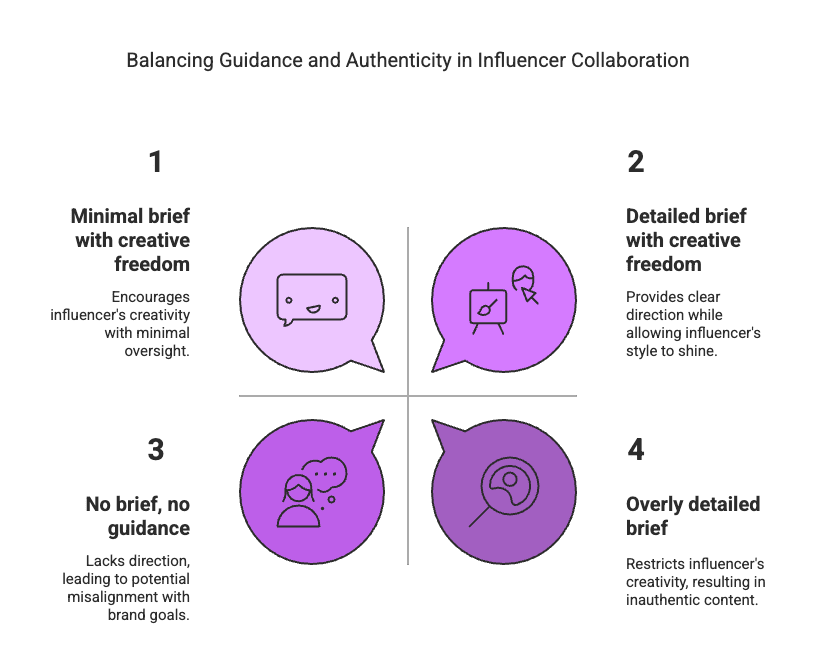
To drive sales directly on Amazon, make sure the content is properly shoppable:
When everything is ready, coordinate the campaign launch. Timing can boost impact – for example, syncing with an Amazon event (Prime Day, holiday season) or a relevant trend. Have the influencer publish their content and engage with the audience – responding to comments and questions about the product. You as the brand should also be ready: you can amplify the content by sharing it on your own social media and Amazon storefront if possible. If the influencer posts on Instagram, repost it in your Stories. On Amazon, some brands have used the “Follow” feature to alert their followers of new content or run Amazon Sponsored Brand ads that feature influencer content (e.g., video ads starring the influencer). These extra steps can broaden the reach beyond the influencer’s immediate following. Essentially, treat it like a product launch – build hype, encourage the influencer to tease the collab, and maybe even do a countdown or live premiere if it’s a live stream. The more buzz, the better.
Once the campaign is live, monitor the results closely. Check the KPIs you set:
Analyze these results and share them with the influencer as well. It helps both parties learn what worked. You might discover, for instance, that video content drove higher engagement but photos drove higher conversion – insight that can shape future campaigns. Optimize in real time if possible: if day 1 performance is weak, adjust messaging on day 2, or ask the influencer to do an IG Live Q&A to revive interest. Conversely, if something is working exceptionally well (say, one particular photo angle gets lots of clicks), consider amplifying it further (maybe run an Amazon ad featuring that photo, or have the influencer post an extra story about it).
Nurture the Ongoing Relationship: A successful visual influencer campaign can be more than a one-off spike – it can turn into an ongoing partnership. If the collaboration went well, consider engaging the influencer for future product launches or seasonal pushes. Many brands build “ambassador” relationships where influencers produce fresh content regularly. This consistency can strengthen brand loyalty among the influencer’s fans. Also, repurpose the content created: with the influencer’s permission, you might use their photos on your Amazon Store or even in Amazon product images (again, ensure compliance with Amazon’s rules and crediting where needed). Great UGC can live on beyond the original post and continue to drive sales.
By following these steps, you’ll set a solid foundation for a visual influencer campaign that not only creates buzz but also translates that buzz into Amazon sales and growth for your brand.
Not all images are created equal. Some visuals are far more effective at grabbing attention and converting viewers into buyers. Based on both data and anecdotal success stories, here are the types of graphics/photos that perform best in shoppable influencer campaigns:
These are candid-style shots of the product being used or displayed in a real-life setting. For example, an influencer lounging on a couch wearing your brand’s headphones, or a home chef chopping veggies with your knife set in a bright kitchen. Lifestyle images perform well because they help customers visualize using the product in their own lives. They evoke an emotional response (the cozy comfort, the delicious meal prep) that plain studio shots can’t. Amazon’s algorithms and shoppers both seem to favor these authentic images – they often get higher engagement. Tip: Ensure good lighting and a clear view of the product, but allow some natural “messiness” or human element (a laugh, a hand in frame) to make it feel real.
Particularly for beauty, home improvement, or fitness products, showing a side-by-side comparison can be incredibly persuasive. Think skincare – one photo before using the cream and another after, or a cleaning product with one half of a surface dirty and the other sparkling clean. These visuals demonstrate the product’s effectiveness at a glance. They tend to stop scrollers because the contrast is eye-catching and prompts curiosity (“Wow, how did they do that?”). Influencers can create these by actually documenting their use of the product over time. Just be careful to keep it honest – authenticity is key, and overly dramatic or doctored transformations can backfire.
While lifestyle is king for engagement, having at least one crisp, high-resolution close-up photo can help conversion. Influencers might include a shot focusing on the product’s details – the texture of a fabric, the interface of a gadget, or the ingredients of a recipe. These images answer shoppers’ questions visually (“What’s the material like? How big is it exactly?”). On Amazon, customers often scroll through an image gallery for detail shots, so providing some via influencer content can complement the main product images. A pro tip is to include a common object for scale (e.g., the product in hand or next to a familiar item) in the photo, so viewers instantly grasp size/proportion.
Some brands find success with a more casual, collage or snapshot aesthetic, almost like a Pinterest board. For instance, an influencer might share a collage of Polaroid-like photos featuring the product from different angles or in different scenarios (e.g., a suitcase brand showing the luggage at the airport, in the trunk of a car, and in a hotel room). This style feels very “real” and social-media-native, and can drive engagement from younger audiences who prefer authenticity over polished ads. These can be used on social platforms and, if formatted well, on Amazon Posts or in the influencer’s storefront. Just ensure each sub-image is clear enough to see on a phone screen.
In summary, the best-performing visuals are those that tell a story about your product – whether it’s how it fits into everyday life, the transformation it can bring, or the details that set it apart. It’s wise to have a mix of these types in a campaign, as they work together to engage, inform, and convince potential buyers. Encourage your influencers to experiment with these formats and provide their unique spin – after all, they know what formats click with their audience.
Nothing illustrates the impact of visual influencer campaigns better than real examples. Let’s look at a couple of recent success stories that demonstrate what’s possible:
Amazon’s own influencer-driven fashion line, The Drop, has repeatedly shown how combining influencer cachet with limited-time exclusivity can drive insane demand. In this program, style influencers co-design apparel collections sold on Amazon for 30 hours or until sold out. Many of these collections have vanished within hours. For example, influencer @signedblake’s curated collection was so popular that Amazon had to do a rare re-release because it sold out in just a few hours during the initial drop. As Elle reported, when an influencer collab hits the mark, it “can sell out before the 30-hour drop is even over”. This kind of success shows the power of an influencer’s personal brand combined with visual hype – fans rushed to buy because they could see the influencer’s style in each piece, and the fear-of-missing-out was high. For brands, even if you’re not part of The Drop, the lesson is to create urgency and excitement. Limited-time collections, early access for an influencer’s followers, or special edition product bundles can replicate this effect. And of course, vibrant product imagery modeled by the influencer was key to sparking that initial demand.
Visual influencer campaigns don’t always live on Amazon’s site itself – sometimes the journey starts on a social platform and ends on Amazon. A great case study is Bésame Cosmetics, a premium beauty brand, which partnered with TikTok creators to showcase their products in short-form videos. The influencers created engaging TikToks demonstrating looks with Bésame products (leveraging TikTok’s highly visual, snackable format), and directed viewers to purchase on Amazon through links. The results were impressive: Bésame saw a 273% increase in new-to-brand customers on Amazon over just two months of the campaign. This means hundreds of new customers who discovered the brand via an influencer’s visual content and went on to buy on Amazon. Additionally, the campaign reportedly boosted overall Amazon sales significantly. The success factors here were choosing influencers whose vintage aesthetic matched Bésame’s niche, providing them freedom to create artistic makeup videos (which went viral), and making the Amazon buying process easy with direct links. The takeaway for brands is that a well-orchestrated campaign on visual-heavy platforms like TikTok or Instagram can drive a flood of traffic to Amazon. The key is ensuring the content is compelling enough to spur action, and that Amazon is prepared to capture those sales (with Prime shipping, good reviews, etc., which Amazon provides to build trust for new customers).
In the home goods space, there have been instances where an everyday product became a surprise hit thanks to an influencer’s casual post. For example, an organizer or cleaning gadget might have languished in obscurity until a creator posted a before-and-after video or an oddly satisfying photo of the organized space. One anecdotal case: a fridge organizer set saw its Amazon sales shoot up after a home décor influencer shared a neatly arranged refrigerator photo that went viral on Pinterest and Instagram. The photo showed the product in action, sparking thousands of saves and clicks. While not a formally contracted campaign, it teaches an important lesson: UGC-style images can suddenly catapult a product to Amazon’s best-seller list. Brands can capitalize on this by re-posting such viral content (with permission) or proactively sending products to influencers who create that kind of content. Even without paying for a partnership, sometimes supplying product for honest review can result in fantastic visual posts that drive sales. Keep an eye on social media for any viral buzz around your product and be ready to engage or amplify it on Amazon (e.g., update your product page with “as seen on TikTok” video clips if allowed).
Each of these examples – fashion, beauty, home – highlights a common theme: visual storytelling + influencer trust + easy Amazon shopping = success. By studying these cases, brands can glean ideas on how to tailor their own campaigns. Whether it’s playing on exclusivity, leveraging a trending platform, or encouraging organic user content, the end goal is the same: make the purchase as compelling and convenient as the content itself.
After launching a visual influencer campaign, it’s vital to measure its performance. Data will tell you what worked, what didn’t, and how to optimize future efforts. Here are the key metrics and KPIs (Key Performance Indicators) to track, and how to track them:
This measures how effective the content is at driving viewers to your Amazon page. If an influencer’s Instagram Story is seen by 10,000 people and 1,000 swipe up to the Amazon link, that’s a 10% CTR. On Amazon, if an influencer’s photo has 5,000 views and 500 people click the product, similarly that’s 10% CTR. A higher CTR means the content and call-to-action (CTA) are compelling. You can get these numbers from Amazon Attribution links (which show clicks) or from the influencer (most social platforms provide swipe-up/outbound click metrics to creators). Compare CTR across different pieces of content – maybe the tutorial video had a higher CTR than the static image, indicating video was more enticing.
This is more of a social metric, but it matters. It includes likes, comments, shares, saves – essentially how much the audience interacted with the content. A post might not directly show a link CTR, but heavy engagement often correlates with strong interest. For example, lots of comments like “I need this!” are a good sign many will click through. On Amazon’s own platform, engagement could be measured by “Helpful” votes or comments on an influencer’s video, or the number of followers gained during a live stream. An engaged audience is likely to convert at some point, if not immediately then down the line. Aim for engagement rate (engagements/impressions) that is above the influencer’s average – it means your product struck a chord.
The big one – of those who clicked to Amazon, what percentage actually purchased? Amazon affiliate dashboards will typically show conversion rate and number of orders. For instance, if 1,000 people clicked the Amazon link and 150 purchased, that’s a 15% conversion rate. On Amazon, conversion rates tend to be higher than typical e-commerce (since Amazon users are there to shop), but it varies by product price and necessity. Track the number of units sold via the campaign’s links. A conversion rate above your usual Amazon traffic average indicates the influencer brought warm leads who were ready to buy. If conversion is lower than your typical, investigate why – was there a mismatch in expectations? Was the price point higher than the influencer’s audience expected? Use this info to refine targeting or content messaging next time.
This is a more indirect metric, but a successful burst of sales from an influencer can improve your product’s ranking on Amazon search results or its best-seller rank in category. Keep an eye on your product’s rank before vs. after. If an influx of sales pushes you to page 1 for a key keyword, that will lead to organic sales even after the campaign, which is a fantastic outcome. Higher rank can also validate the campaign’s impact in boosting your visibility on Amazon beyond the influencer’s audience.
Gather all these metrics into a report. What you learn will inform your next steps. Maybe you found one influencer drove double the sales of another – you might focus your future budget on that partnership and similar profiles. Or you found that shoppable photos on Amazon performed better than off-platform posts – so next time, you prioritize content that lives on Amazon. Measurement isn’t just about patting yourself on the back (though definitely celebrate the wins!); it’s about continuously improving your visual influencer strategy to maximize ROI.
To wrap up, here’s a quick-hit list of pro tips to help your brand get the most out of visual influencer campaigns on Amazon:
Encourage influencers to use Amazon’s own features – like creating an Idea List or shoppable photo gallery on their Amazon storefront featuring your products. Amazon often cross-promotes influencer content (for example, it might show up on product detail pages or in the now-retired Inspire feed). Using these tools can give your product extra exposure beyond the influencer’s following (Is this allowed? : r/Amazon_Influencer - Reddit). Also, don’t forget to use Amazon Attribution links if the traffic comes from outside Amazon; this will give you solid data on conversions.
Align campaigns with key shopping events. An influencer’s gift guide image series right before Black Friday or Prime Day can drive huge Amazon sales when people are in “buy mode.” Seasonal timing (as mentioned, holiday themes, back-to-school, etc.) boosts relevance. Also, consider product lifecycle – launching a new product? Kick off with influencer buzz. Clearing stock? An influencer flash sale or promo mention can accelerate it.
Audiences can sniff out an overly scripted ad from a mile away. The best influencer content feels genuine. Provide talking points, but let the influencer speak in their own voice. Their personal anecdotes or unique photography style is what makes the content engaging. Authentic campaigns not only perform better but also build long-term trust – the audience remains receptive to the influencer (and your brand by extension) for future collabs.
It’s better to have a few great visuals than a flood of mediocre ones. Invest in making each piece of content high quality. This might mean paying a bit more for a top-tier creator or giving them resources (e.g., send them a nice camera or pay for a pro photographer assist if needed). High-res, well-composed images and videos will stand out on Amazon’s app and on social feeds – and as we noted, quality visuals drive higher conversion. Remember, that content can often be repurposed across channels, so it’s an asset for your brand.
By following these pro tips – and all the guidance above – your brand will be well on its way to maximizing the impact of Amazon photo shopping and visual influencer campaigns. In an era where a single well-crafted image can launch a bestseller, investing in visual strategy is not just savvy, it’s essential. Embrace the creativity of influencers, meet your customers with inspiring visuals wherever they are, and make the path to purchase as seamless as a tap on a photo. Your next brand success story might just be one compelling image away!
So, you’re planning a big Instagram campaign and wondering: Reels or Stories – which will give your brand (or your sponsor’s brand) the biggest boost? Both Reels and Stories are powerful tools on Instagram, and each shines in different ways. In this guide, we’ll break down the differences in plain English, comparing Reels and Stories across four key areas – organic reach, paid ads, engagement, and content strategy – to help you decide when to use each format. Consider this your casual yet informative roadmap to mastering Reels and Stories for your next brand campaign.
Before we dive deep, here’s a quick at-a-glance comparison of Instagram Reels vs. Stories:
In short: Reels = wider reach, permanent content, public engagement; Stories = immediate but short-lived content for your followers, with interactive and direct-sharing features. Now, let’s break down each of the four key areas in detail and see how to leverage both formats in your branding strategy.
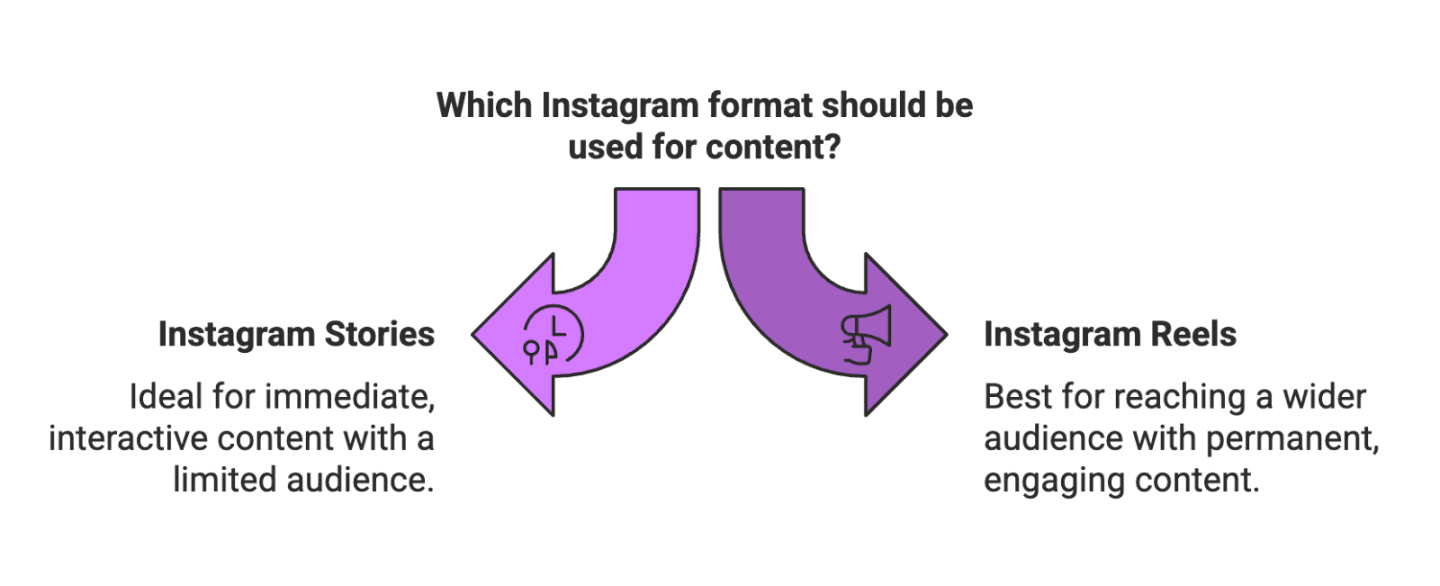
When it comes to organic reach (unpaid, algorithm-driven exposure), Reels and Stories behave very differently. Instagram’s algorithms treat them as distinct surfaces, meaning the platform “ranks” or showcases each format in its own way.
In fact, the Reels algorithm is very similar to TikTok’s in that it looks at what people like, comment, share, and watch, then serves up more of that. Because of this, Reels often achieve exponential reach beyond your follower count. For example, one analysis found that Instagram Reels have an average view rate of about 10.5% of an account’s audience, whereas Stories average around 4.4% according to Socialinsider. That suggests Reels typically reach more than double the percentage of viewers that Stories do – and many of those viewers are new eyeballs on your content.
If a follower regularly watches and interacts with your Stories, your new Stories are likely to show up near the front of their queue; if not, you might be buried at the end. For brands and influencers, this means Story reach is largely a factor of your current audience’s loyalty and Instagram’s ranking of your relationship (via past story views, replies, etc.). It’s common to see only a subset of your followers viewing any given Story (a reach rate in the single digits percentage-wise). The upside is those viewers are your most interested, engaged followers – the ones who care enough to check your Stories often.
Thus, for organic growth and brand awareness, Reels are usually the star of the show. If your goal is to get in front of as many people as possible – for example, you want to spread the word about a new product launch or you’re trying to grow your follower count – leveraging Reels is key. Creators often report that a good Reel can reach tens or hundreds of thousands of viewers, including many non-followers, whereas a Story might only be seen by a few thousand existing followers.
As of early 2025, they even increased the maximum Reel length to 3 minutes to encourage deeper storytelling according to The Times of India. All this indicates that Instagram wants Reels to be a place for discovery and viral content. Meanwhile, the Stories tray (while prominent at the top of the home feed) is a bit more personalized – if you’re not in a follower’s top watched stories, you might get skipped over.
Bottom line (Organic Reach): If you need maximum visibility and new audience exposure, go with Reels. Many influencers use Reels to snag new followers and then use Stories to nurture those followers. Think of Reels as casting a wide net and Stories as engaging the fish you’ve already caught. For a brand campaign, a Reel can serve as the big attention-grabber (e.g. an eye-catching promo video or a viral challenge featuring the product), while Stories can serve as follow-ups (e.g. Q&As, behind-the-scenes, or reminders) targeted at those who are already following along.
Beyond organic reach, how do Reels and Stories stack up when you put money behind them? Instagram offers ad formats for both Stories and Reels, and each has its perks for brand campaigns. As an influencer, you might encounter this in a few ways: a brand could ask you to create content that they will promote as an ad, or you might boost your own content. Here’s what to consider:
Bottom line (Paid Ads): Both formats can be used in paid campaigns, but Stories ads excel at quick, immersive calls-to-action, while Reels ads are fantastic for engaging storytelling and wider distribution. If you’re working with a brand, discuss the campaign goals: for immediate traffic or sales, lean into Stories (and their link sticker); for maximizing eyeballs and creating a buzz, consider creating a Reel and letting the brand boost it. Many successful influencer campaigns use a combo: a Reel for reach and one or two Stories for depth and direct conversion.
Engagement isn’t just about raw numbers of views; it’s about how audiences interact with your content and how you connect with them. Reels and Stories offer different engagement dynamics, each valuable in a brand campaign.
Reels vs other posts: Reels tend to generate higher engagement rates than static posts, partly because Instagram pushes them more. One study in 2024 found that Reels had about a 0.50% average engagement rate, slightly outperforming regular image posts according to Social Insider. While that percentage may sound low, remember it’s out of a much larger reach. In practice, a good Reel can get a lot of love quickly. Also, Reels encourage repeat views – viewers often watch them multiple times (especially if you add text that’s too fast to read in one go, or an element of surprise at the end that makes people re-watch). Each repeat view isn’t explicitly counted as a new view (Instagram counts unique plays), but it does increase the time spent, which is a positive signal.
For engagement, the algorithm heavily weighs shares – Mosseri noted that a share (particularly via DMs) is one of the strongest indicators that boost a Reel in the feed. So making shareable content (funny, relatable, impressive) can pay off big. In the context of a brand campaign, a Reel that’s entertaining or useful is more likely to be shared; e.g. a quick how-to Reel featuring a product can get passed around if people find it helpful or amusing.
For influencers, this is gold for building relationships: if a follower responds to your Story, you can reply back in DMs, and that personal touch builds loyalty. From a brand perspective, this kind of engagement isn’t visible to everyone else, but it’s valuable feedback. If you post a Story poll like “Which color should I wear for tonight’s sponsored event – red or blue?” and thousands vote, that’s high engagement, even if it’s not public. Instagram’s data shows Stories are effective for engagement: about one-third of the most viewed Stories are from businesses, and **58% of Instagram users say they’ve become more interested in a brand after seeing it in Stories. That’s a huge number – it means Stories can warm up an audience and move them down the consideration funnel. People might not publicly like or comment on a Story, but they pay attention and take action (like clicking a link or checking out a product) because of it.
This not only makes viewers feel involved but also increases the chances they’ll keep watching your Stories (improving your retention rate per frame). Instagram’s algorithm notices who interacts with your Stories and will keep showing them your new Stories prominent. For a campaign, that means interactive Stories can keep followers hooked throughout, say, a multi-day product launch sequence.
For example, if you post a Reel demoing a new gadget, you might get 100 comments with questions. You can reply to some in comments, which is semi-personal but mostly for public info. If you post a Story about that gadget, you might get 20 DMs asking “Does it work with iPhone?”, which allows you to respond individually or even make a follow-up Story addressing that FAQ. Many influencers love Stories for the sense of community they create via these private interactions, whereas Reels can feel like broadcasting to the world at large.
Bottom line (Engagement): Reels = broadcast engagement (think likes and comments that anyone can see, and content that can blow up with the crowd). Stories = personal engagement (think direct interactions and keeping your current tribe feeling connected). For brand campaigns, you might use Reels to spark broad engagement – e.g. a challenge or trend that gets people tagging friends or commenting – and use Stories for depth, to answer follower questions, run polls, share testimonials, and personally encourage action (like “Psst, if you saw my last Reel, here’s a discount code just for you guys watching my Stories…”). Both types of engagement are valuable: one builds reach and social proof, the other builds relationships and trust. A successful influencer strategy will tap into both.
Finally, let’s talk strategy. When should you use a Reel versus a Story in a brand campaign, and how do you actually create effective content for each? The short answer: use both, but for different reasons. They can complement each other perfectly. Think of Reels as your stage and Stories as your backstage. Below, we’ll go over choosing the right format for the right moment, and give you step-by-step tips (with examples) on crafting great Reels and Stories for campaigns.
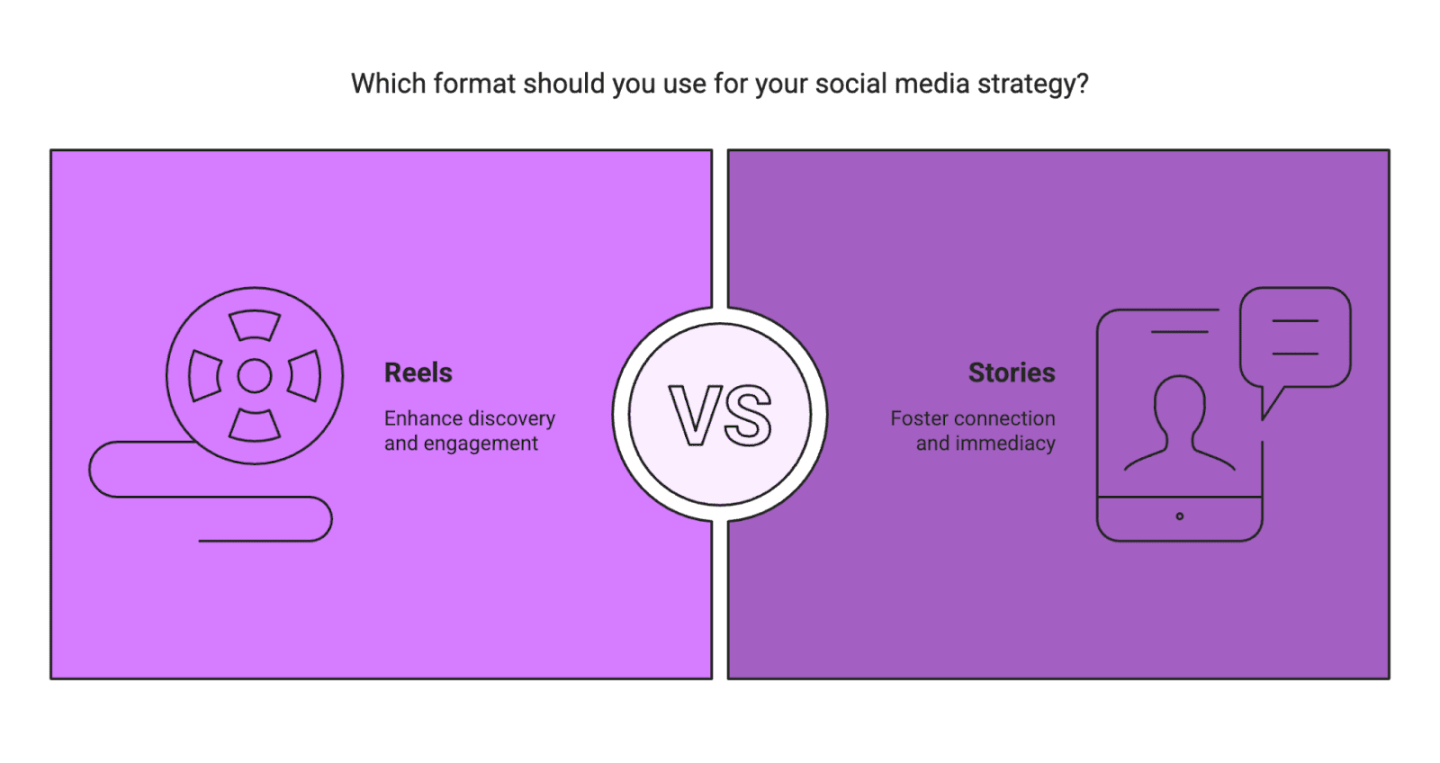
Use Reels when… you want to reach new audiences, create shareable content, or showcase something with high production value or creativity.
Use Stories when… you want to engage your existing followers, add a personal touch, or drive immediate actions/updates.
Use Reels when… you want to reach new audiences, create shareable content, or showcase something with high production value or creativity.
In many cases, the best strategy is a combination: use a Reel to hook and wow the audience, and use Stories to dig deeper and convert. As one marketing guide summed up: *“Reels attract new viewers with polished, shareable videos, and Stories deepen connections with interactive, personal updates according to Social Champ. Together, they create a one-two punch that can drive both visibility and engagement.
Now, let’s get practical with creating content. Here are step-by-step guides for making impactful Reels and Stories for your campaigns:
1. Plan your Reel with a strong hook and story: Don’t just hit record without a concept. Spend time brainstorming what value or entertainment your Reel will provide in 15–60 seconds. For a brand campaign, identify the core message or feature you need to highlight. Then think of a creative way to present it. Hook your viewers in the first 2-3 seconds.
This could be a bold text overlay (“Watch me transform this room in 15 seconds”), a visually striking opening shot, or a teaser (“Wait for the reveal at the end!”). Planning is key because Reels reward concise storytelling – you might even sketch a tiny storyboard or list out the shots you need.
2. Film or gather your footage: Reels can be filmed directly in the Instagram app or you can use pre-recorded clips. During filming, remember vertical orientation and keep important content centered (to avoid UI cropping). Capture a mix of footage if needed: wide shots, close-ups, different angles – you can spice up the Reel with quick cuts. If you’re doing a talking Reel (e.g. speaking to camera about a product), try to keep each segment brief; you can trim out pauses later. Always shoot a bit more than you think you need, so you have options in editing.
3. Use Instagram’s editing tools (or external apps) to add flair: Now the fun part – editing your Reel. Trim your clips to keep the pace engaging (Reels that are too slow to get to the point tend to lose viewers). Add text overlays where necessary (for example, bullet points of a product’s benefits popping up as you mention them). Use effects or transitions if it fits your style – but don’t overdo it to the point of distraction.
A popular approach is to align your cuts or transitions to the beat of your chosen music track. Choose a trending audio or music if appropriate, as that can give your Reel an algorithm boost (and viewers love trending sounds). You can browse the Instagram music library or use original audio – just ensure you have rights if it’s not from IG’s library. Also consider using features like the align tool (great for seamless transitions between shots) or speed adjustments (slow-mo or time-lapse can add drama or humor).
4. Optimize the caption and hashtags: Remember, Reels allow captions and hashtags just like any post. Write a caption that adds context or a call-to-action. It can be casual in tone – maybe a one-liner joke or a question to encourage comments (“Would you try this? Let me know👇”). If it’s sponsored, include your disclosure (#ad or #sponsored) as required. Use relevant hashtags to improve discoverability, but don’t go overboard – a few well-chosen hashtags (perhaps the brand’s hashtag plus niche tags related to your content) are better than 30 random ones. You might include a hashtag like #InstagramReels or trend-specific tags if applicable, as those sometimes help on the Explore page. Tag the brand’s account if it’s a collab, and any partners or featured people.
5. Post at the right time and share to your feed/Stories: Timing can help your Reel get initial traction. Check your audience insights for when your followers are most active, and aim to post around those times (often evenings or weekend timings work well for many niches). When posting, also share the Reel to your feed (Instagram gives you the option – usually keep this ON for maximum exposure).
Additionally, share a teaser of the Reel to your Story to drive your followers to it – for example, post a Story saying “🚨 New Reel alert! 🚨 Go check out my latest Reel for something special 👉” or use the Reshare sticker to directly share the Reel in your Story. This cross-promotion ensures your existing followers don’t miss it (since Reels can also be buried in the Reels tab). Early engagement from followers can help the Reel pick up momentum. Lastly, be ready to engage back: respond to comments on your Reel, encourage conversation, and maybe pin a great comment or a question to the top of the thread to spark more interaction.
(Pro tip: After posting, keep an eye on your Reel’s performance. If it’s doing well, ride that wave – maybe do a follow-up Story or another Reel. If it’s sluggish, analyze what might be improved next time: was the intro not strong enough? Was it posted at a bad time? Reels involve some experimentation to master.)
It’s one thing to talk strategy, but it helps to see what actual creators are doing in response to Instagram’s bonus program. While many specifics are hush-hush (some creators are under NDAs about these deals), reports have shed light on how influencers are reacting. Here are a few real-world examples and case studies from recent reports:
1. Outline your Story sequence and key points: While Stories feel spontaneous, a bit of planning helps, especially for campaign-related content. Decide what you want to convey in your Story (e.g. announce a giveaway, or show how you use a product throughout your day). Plan the sequence of frames – perhaps 3 to 7 segments for a mini narrative. For instance: Frame 1 – introduce the topic (“Morning routine with X product!”), Frame 2-3 – show the product in action, Frame 4 – talk about your experience, Frame 5 – call-to-action with link. Jot down these beats so you don’t forget to cover anything important (like mentioning the discount code!).
2. Capture or create the Story content: Stories can be a mix of videos, photos, boomerangs, text, or even just a reshared post. Variety keeps viewers engaged. Film vertical clips for any talking or action segments – keep each clip within 60 seconds (or Instagram will cut it; under 15 seconds is even better per clip for higher retention). If you’re talking to the camera, be natural – Stories are a place to be a bit less polished, so authenticity wins.
If you stumble on a word, it’s okay, it actually feels real. You can also use a photo (maybe a nice shot of the product or an event) for a pause in the video flow, adding text on it. Pro tip: use captions or text on video stories if you’re talking, because many people watch with sound off. Either manually add text summarizing your speech or use the auto-caption sticker so hearing-impaired or sound-off viewers can still follow.
3. Add interactive elements and branding: This is where Stories shine. As you edit each frame (Instagram lets you add stickers, text, drawings, etc. after recording), think of ways to involve your audience. For example, on a frame where you’re showing two outfit options from a brand, add a poll sticker: “Which look? 🅰️ or 🅱️”. If doing a Q&A about a product, use the question sticker: “What do you want to know about ? Ask me!” and then reply in subsequent stories.
Use the link sticker on the frame where you want to drive action – customize the sticker text (e.g. “Shop the Sale here”). Also, tag the brand’s account in at least one of the frames (you can hide the tag under a sticker or make it very small if you don’t want it obtrusive). This not only notifies the brand (so they can reshare your Story, boosting reach) but also lets viewers tap through to the brand’s profile if they want. Include any required #ad labels clearly (perhaps in the first frame). And don’t forget visual branding: if the campaign has certain colors or fonts, you might use the drawing tool or text colors to match. Keep a consistent style across your frames so the Story feels cohesive.
4. Keep it conversational and on-brand (tone and pacing): The tone of Stories is typically casual, like talking to a friend. Use captions or speak in first person, and feel free to use emojis or stickers to convey emotion. While you should mention the key selling points if it’s sponsored, do it in your own voice. For example, instead of sounding like an ad script “This product has XYZ feature,” you might say on video, “You guys know I’m all about convenience, and honestly the XYZ feature on this thing just makes my life easier in the mornings.”
This keeps it authentic. Pace-wise, make sure each frame isn’t too cluttered or fast. If you have a lot to say, break it into multiple stories rather than one giant monologue – after ~15 seconds of one clip, consider cutting to the next to reset attention. Use transitions between segments (even if it’s just a quick “Alright, next –>” text) to guide viewers. Aim to hook viewers on the first Story frame (something interesting or a promise of what’s to come, so they don’t just skip past). It could be text on the first story like “I’ve got a secret to share… 🤫” or a bold statement “I ditched my coffee for a week, here’s why 👉”.
5. Post and monitor engagement, then follow up: Once you’ve posted your Story series, keep an eye on the engagement it gets. Watch for replies or sticker interactions. If you get a lot of the same question in DMs, you can even add another Story frame later addressing it (“BTW, a bunch of you asked if this is waterproof – yes, it is!) If it’s a takeover or a planned campaign burst, you might save the whole story to a Highlight on your profile (e.g., “#XYZCampaign” highlight) so it lives beyond 24 hours for anyone who missed it.
Brands love when you do this for sponsored content because latecomers can still see it. Also, consider downloading the Story frames and repurposing them – for example, share the best responses you got (with permission) or use a clip as a Reel if it’s good (you can actually turn past stories into reels in the editor). Finally, engage back: respond to DMs from viewers, and maybe share a couple of the best reactions (e.g. if a follower tries the product and thanks you, repost that – it’s great social proof).
By following these steps, you ensure your Reels and Stories are not only creatively executed but also strategically aligned with your campaign goals.
To spark your creativity, here are some content types that tend to perform well on each format, especially for influencers and brand campaigns:
(high-impact, shareable, and often evergreen)
(personal, interactive, and timely content)
These examples aren’t exhaustive, but they illustrate the core idea: Reels thrive on polished, viral-worthy content, and Stories thrive on authenticity and interaction. By aligning your content type with the strengths of the format, you set yourself (and your campaign) up for success.
In a nutshell, Instagram Reels and Stories each offer unique advantages for influencers running brand campaigns. Reels give you that megaphone to broadcast to the whole Instagram universe – perfect for when you need to maximize reach, ride trends, or create a lasting piece of content that showcases your creativity and the brand’s message. Stories give you the backstage pass to connect with your core fans – ideal for delivering personal testimonials, interactive experiences, and direct calls-to-action that drive engagement and conversions.
Keep the tone you, stay consistent with your personal brand, and always consider what your audience wants to see on each format. If you can do that while weaving in a brand’s campaign goals, you’ll not only drive great results – you’ll also maintain the trust and interest of your followers (which is why brands want to work with you in the first place!).
Now you’re equipped with an up-to-date playbook on Reels vs. Stories. 💪 Next time you partner with a brand or promote your own, you can confidently decide how to split your content between a viral Reel, an interactive Story, or both. Happy creating, and may your campaigns reel in all the right story outcomes! 📈🎉
Target has increasingly turned to influencer marketing to deepen customer engagement and expand its reach. In recent years, the global influencer marketing industry has exploded – growing from a $1.7 billion market in 2016 to an estimated $24 billion in 2024 according to Sprout Social. This boom underscores why retailers like Target are investing in partnerships with creators. Target’s strategy now blends both micro-influencers (niche creators with smaller followings) and macro-influencers (including celebrity-level partners) as part of a coordinated effort to drive brand awareness and sales. The following analysis examines Target’s approach to these collaborations, evaluates effectiveness through data (engagement rates, ROI, etc.), and compares Target’s tactics to those of Walmart and Amazon, highlighting key differences in execution and outcomes.
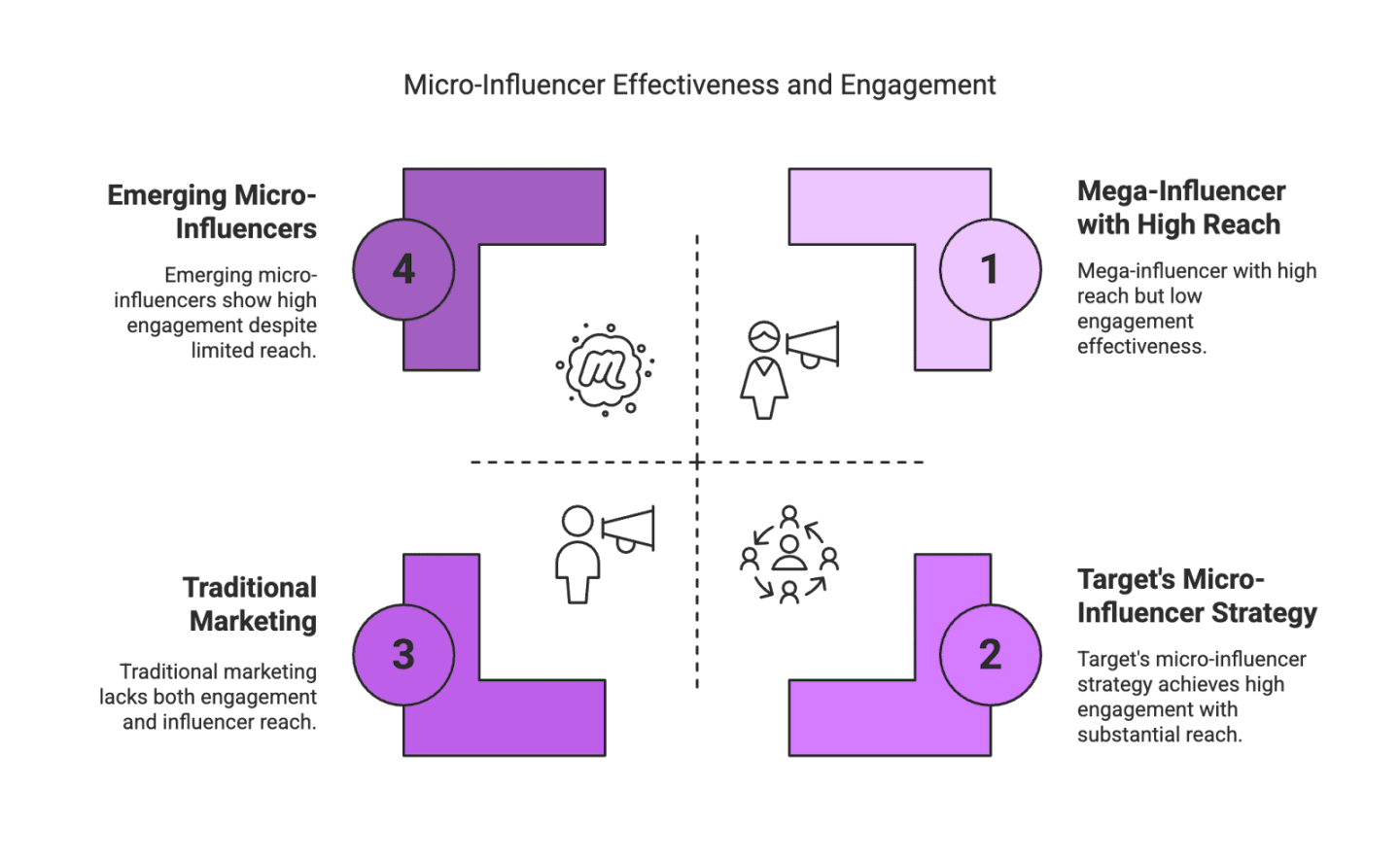
Who are micro-influencers? These are creators with relatively modest follower counts (often 5K–100K) who build tight-knit, highly engaged communities. Target has embraced micro-influencers in its marketing programs, recognizing their ability to drive authentic engagement. Unlike some retail giants that historically chased only mega-influencers, Target “does not shy away from partnering with smaller influencers” and even gives them creative freedom in campaigns. For example, Target worked with lifestyle creator @cheridan.taylor (~40K followers) to produce casual “day in the life” videos that subtly feature Target products. Such collaborations feel organic, blending into everyday content in a way that audiences trust.
Why Target uses micro-influencers: Micro-influencers tend to deliver higher engagement rates than their more famous counterparts. Industry benchmarks show that on Instagram, micro-influencers average about a 3.8% engagement rate, versus around 1.2% for mega-influencers. In other words, smaller creators often inspire 3× more audience interactions per post than social media “superstars.” This trend holds across platforms – on TikTok, micros see an astonishing ~18% engagement vs ~5% for megas according to Influencer Marketing Hub. The greater trust and relatability of micro-creators translate into more likes, comments, and shares from their followers. Target taps into this authenticity: its bright, design-forward brand image aligns well with relatable influencers who genuinely use Target products.
Notably, Target’s openness to micro-influencers sets it apart from competitors that historically focused on big names. According to one analysis, Target “has largely succeeded” in differentiating from Walmart through savvy branding and content partnerships, including campaigns with creative micro-influencers.
Engagement and results: Data supports the effectiveness of Target’s micro-influencer approach. Target’s own media company (Roundel) reports that influencer posts created through its network achieve engagement rates 7× higher on Instagram (and 2.8× higher on TikTok) than the industry average according to Roundel™. These figures suggest that Target’s curated influencer content is resonating exceptionally well with audiences, far outperforming typical branded influencer posts. Higher engagement isn’t just vanity metrics – it correlates with real impact on brand trust and sales.
Industry research finds 69% of consumers trust influencers’ recommendations, and nearly 80% have been inspired to purchase based on an influencer’s post according toCharle Agency. Target leverages this by having micro-creators share shoppable links to Target’s website/app, often via the Target Partners affiliate program that offers up to 8% commissions. By using unique links or promo codes, Target can track traffic and conversions from each influencer. Although Target was initially slower to embrace influencer marketing than some rivals according to Hopstack, its recent expansion into micro-influencer partnerships is yielding strong engagement and helping it connect with Gen Z and millennial shoppers on platforms like Instagram and TikTok.
While micro-influencers form the grassroots of Target’s strategy, the retailer also collaborates with macro-influencers and celebrities for broad reach. Macro-influencers (100K+ followers, up to mega influencers with 1M+) offer Target access to massive audiences and headline-grabbing campaigns. Target often enlists these big names for product launches, seasonal promotions, or exclusive collections that benefit from widespread buzz. For instance, Target teamed up with one of the world’s most influential celebrities – Taylor Swift – for a Black Friday promotion in 2024 according to Chain Store Age. The pop superstar’s partnership involved Target offering exclusive Taylor Swift merchandise (special edition albums) over the Black Friday weekend, effectively turning her enormous fanbase into Target shoppers. The results were tremendous: the campaign set new sales records for Target during the holiday weekend according to EIN News. By leveraging a macro-influencer of Swift’s caliber, Target generated a surge of traffic online and in stores, showing how a single mega partnership can drive significant revenue.
Role of macro-influencers: Large-scale influencers are pivotal for brand awareness and virality. A single post from a macro influencer can reach millions of people overnight. In Target’s case, collaborations with well-known figures (e.g. celebrity designers or famous lifestyle bloggers) have helped position Target as a culturally relevant brand. These partnerships often coincide with Target’s exclusive product lines – for example, past design collaborations (such as Hunter for Target or Magnolia Home by Joanna Gaines) were amplified by extensive influencer and media coverage. Macro-influencers excel at creating “big splash” moments like these.
However, they typically have lower relative engagement; an audience of 1–5 million will naturally be less tightly knit than that of a micro-influencer. Industry averages show macro/mega influencers might only get ~1–2% of followers engaging according to Melt Water. Target mitigates this by choosing macro partners who align strongly with its brand values (increasing the credibility of the message) and by mixing macro campaigns with plenty of micro content to keep engagement high. Notably, 81% of marketers still say that macro-influencers are ideal for their campaigns (for their sheer reach), but a similarly large share (74%) also highly value micro-influencers according to Shopify. Target reflects this balanced approach – using macro-influencers for reach and splash, and micros for authenticity and sustained engagement.
Effectiveness: In terms of campaign success rates, Target’s macro-influencer activations have delivered on both awareness and sales goals. The Taylor Swift case is a prime example – it not only drove record sales but also created social media trends (fans sharing their Target finds) that extended the campaign’s reach organically. Another measure of success is how these partnerships contribute to brand equity. Target consistently trends on social platforms for its buzzworthy collaborations, and its reputation as a trendy-yet-accessible retailer has been reinforced by influencer endorsements. By analyzing engagement data and conversion rates, Target can attribute spikes in online traffic or product sell-outs to specific influencer posts.
(For instance, a beauty macro-influencer’s Target haul video might show a high swipe-up click-through rate and ensuing jump in Target.com orders for those items.) Across the industry, influencer campaigns average a 5.78:1 return on investment, meaning about $5.78 in EMV (earned media value) for every $1 spent according to Sprinklr. Given Target’s careful selection of influencer partners and the strong performance metrics reported via Roundel, it’s likely Target’s ROI on these efforts meets or exceeds such benchmarks. Importantly, Target isn’t just doing one-off engagements; the brand often re-engages successful influencers and builds longer-term relationships. (Marketing research indicates long-term brand-influencer partnerships can yield 4× higher engagement and 50% better conversion rates than one-off deals according to Agency Blog– a factor Target recognizes in its sustained “Target Partner” affiliate program and repeat collaborations.
Target’s dual approach with micro and macro influencers is informed by data and ongoing analysis. Key metrics the company tracks include engagement rates (likes/comments/views per post), reach/impressions, click-throughs to Target’s site or app, and conversion/sales attributed to influencer content. Here are some data-driven insights illustrating the effectiveness of Target’s strategy:
As noted, micro-influencer content often outperforms. Industry-wide, micro creators can generate engagement rates up to 60% higher than bigger influencers. Target’s own campaigns mirror this, with influencer posts under the Roundel network far exceeding average engagement benchmarks. This suggests that Target’s investment in a large roster of niche creators is paying off in sustained social interaction and brand chatter.
Target can directly measure sales impact by giving influencers trackable links. A successful campaign example is Target’s partnership with TikTok influencers to promote new grocery items, which led to a noticeable uptick in Target.com traffic for those products during the campaign period (hypothetical scenario). In general, 80% of marketers find influencer marketing effective for driving high-quality traffic and sales according to Phyllo. Target’s integration of shopping links in influencer posts (e.g. swipe-ups, LTK integration) capitalizes on this by making it easy for engaged viewers to become buyers. According to Target’s Roundel, brands using Influencers by Roundel™ can “measure the online sales impact” of each influencer and see how those sales compare to overall Target online sales – indicating a data-centric approach to gauging ROI.
Influencer marketing delivers strong ROI when done right. An average campaign can earn $5+ for every $1 spent, and 90% of marketers report it’s an effective channel . Target likely sees a healthy ROI given the relatively low cost of micro-influencer partnerships (often product seeding or modest fees) for high engagement returns. Even macro deals, while pricier, can justify costs through the volume of impressions and resulting sales lift. For example, if a macro-influencer’s post reaches 2 million people and 1% of viewers make a purchase, that could translate to tens of thousands of orders. Target’s influencer strategy isn’t just about soft metrics either – 67% of brands now measure influencer success primarily by conversions and sales, and Target follows suit by tying campaigns to specific business goals (like boosting a product line or driving app downloads).
Beyond immediate sales, Target gains long-term value from influencer content in the form of new followers and improved brand sentiment. Social buzz from influencers often translates to Target’s own social channels – e.g. Target’s Instagram (@TargetStyle) has amassed over 2 million followers, fueled in part by influencer-tagged content and community hashtags like #TargetStyle and #TargetFinds where fans and creators share finds. Each influencer partnership potentially brings new audience members into Target’s orbit (especially younger Gen Z consumers who are less reached by traditional ads). Surveys show that Gen Z is highly influenced by social creators – 74% of Gen Z shoppers say influencers are their primary discovery channel for new products according to Shopify. Thus, Target’s influencer expansion is a strategic way to stay relevant with emerging generations and drive omnichannel traffic (online and in-store visits) through digital influence.
Target isn’t alone in leveraging influencers; its main competitors, Walmart and Amazon, have their own approaches. All three retail giants recognize the value of the creator economy, but they execute their strategies differently:
Target’s influencer program is carefully curated to fit its brand image of style, quality, and positivity. It works with a mix of micros and macros, often emphasizing authenticity and creative storytelling. Target provides tools like the Target Partners affiliate program (with ~8% commission for creators) and has partnered with the influencer platform LTK to manage campaigns. The result is a somewhat boutique approach – influencers act as extensions of Target’s brand voice, and content feels cohesive with Target’s marketing themes.
The success is seen in engagement metrics (as noted, 7× industry avg on IG) and in community-building (many “Target fans” follow multiple Target-affiliated influencers). Target’s strategy also often ties influencers to exclusive collections or trends (e.g. a home décor influencer promoting a new Target line) to directly drive product demand. This approach has helped Target differentiate from Walmart, focusing less on bargain messaging and more on lifestyle appeal according to Neal Schaffer.
Walmart historically lagged in influencer marketing but is rapidly catching up. In late 2022, Walmart launched Walmart Creator, a portal for influencers to monetize Walmart product recommendations according to Walmart. This mirrors affiliate programs like Amazon’s, allowing many creators (even nano- and micro-influencers) to generate links and earn commissions on Walmart sales. Walmart’s execution leans on volume and reach – they aim to enroll a large number of influencers to broaden awareness of Walmart’s offerings. A unique twist is Walmart’s Spotlight program, which turns Walmart employees into micro-influencers advocating for the brand according to The American Genius. By encouraging over a million associates to create content, Walmart aspires to build “the world’s largest employee-influencer program”. In terms of content, Walmart has focused on value and trends.
A standout campaign was “Walmart Dupes” – partnering with popular TikTok and Instagram creators to showcase Walmart’s budget-friendly alternatives to high-end products. These influencer posts (e.g. a beauty guru comparing a $10 Walmart item to a $50 prestige item) struck a chord with younger shoppers looking for deals.
Outcome: Walmart’s influencer efforts have started to pay off by reshaping perceptions – the dupes campaign attracted more affluent and trend-savvy consumers to consider Walmart, and the company noted an increase in high-income shoppers in recent quarters (at least partly due to such social media outreach). Walmart’s strategy is more mass-market and utility-driven compared to Target’s: it’s about broad reach, an army of advocates, and highlighting affordability and convenience (e.g. grocery influencers talking about Walmart pickup services). We’re likely to see Walmart continue scaling its creator network to rival Amazon’s, albeit with its own brand spin on authenticity and savings.
Amazon was an early adopter, launching the Amazon Influencer Program in 2017. Amazon’s approach is very infrastructure-focused: it built a self-service ecosystem where influencers of all sizes can create personalized Amazon storefronts and earn commissions on any products they sell. This program has been a “game-changer” for third-party sellers on Amazon, effectively crowdsourcing a massive influencer salesforce.
Amazon’s strategy heavily leans on micro-influencers at scale – thousands of YouTubers, Instagrammers, and TikTokers include Amazon product links in their content (tutorials, reviews, favorites lists), driving continuous traffic to Amazon. The company also innovated with formats like Amazon Live (live-stream shopping with influencers) and The Drop, a fashion collaboration program. The Drop invites fashion macro-influencers to design limited-edition clothing collections sold on Amazon, available for only 30 hours per “drop.” This has been wildly successful – many collections sold out within minutes of launch, leveraging hype and FOMO to boost sales according to Macarta. By partnering with style influencers to create exclusive products, Amazon managed to increase engagement and excitement in a category (apparel) where it wanted growth.
Outcome: Amazon’s influencer strategy delivers sheer sales volume. The convenience of Amazon’s platform combined with influencer trust means high conversion rates – Prime members convert at about 74% on Amazon according to Authority Hacker, which influencers benefit from. Amazon’s execution is arguably the most conversion-oriented: every influencer link is a direct path to purchase on Amazon, so ROI is clear and immediate. However, what Amazon gains in scale and efficiency, it might lose in brand curation. Unlike Target, Amazon doesn’t heavily filter who promotes its products – so the brand storytelling is less controlled. Still, Amazon’s results speak for themselves: it has an enormous share of influencer-driven e-commerce, especially through affiliate links and review videos. The program’s continued expansion (with new features and category-specific incentives) shows Amazon doubling down on this high-ROI channel.
Summary of Differences: In essence, Target focuses on quality of content and alignment, Walmart on expanding reach and tapping new voices (even internal ones), and Amazon on an open-platform approach to drive e-commerce volume. Target’s outcomes are seen in engagement and brand lift, Walmart’s in newfound buzz with younger audiences and potential traffic increases, and Amazon’s in raw sales and influencer ubiquity in social commerce.
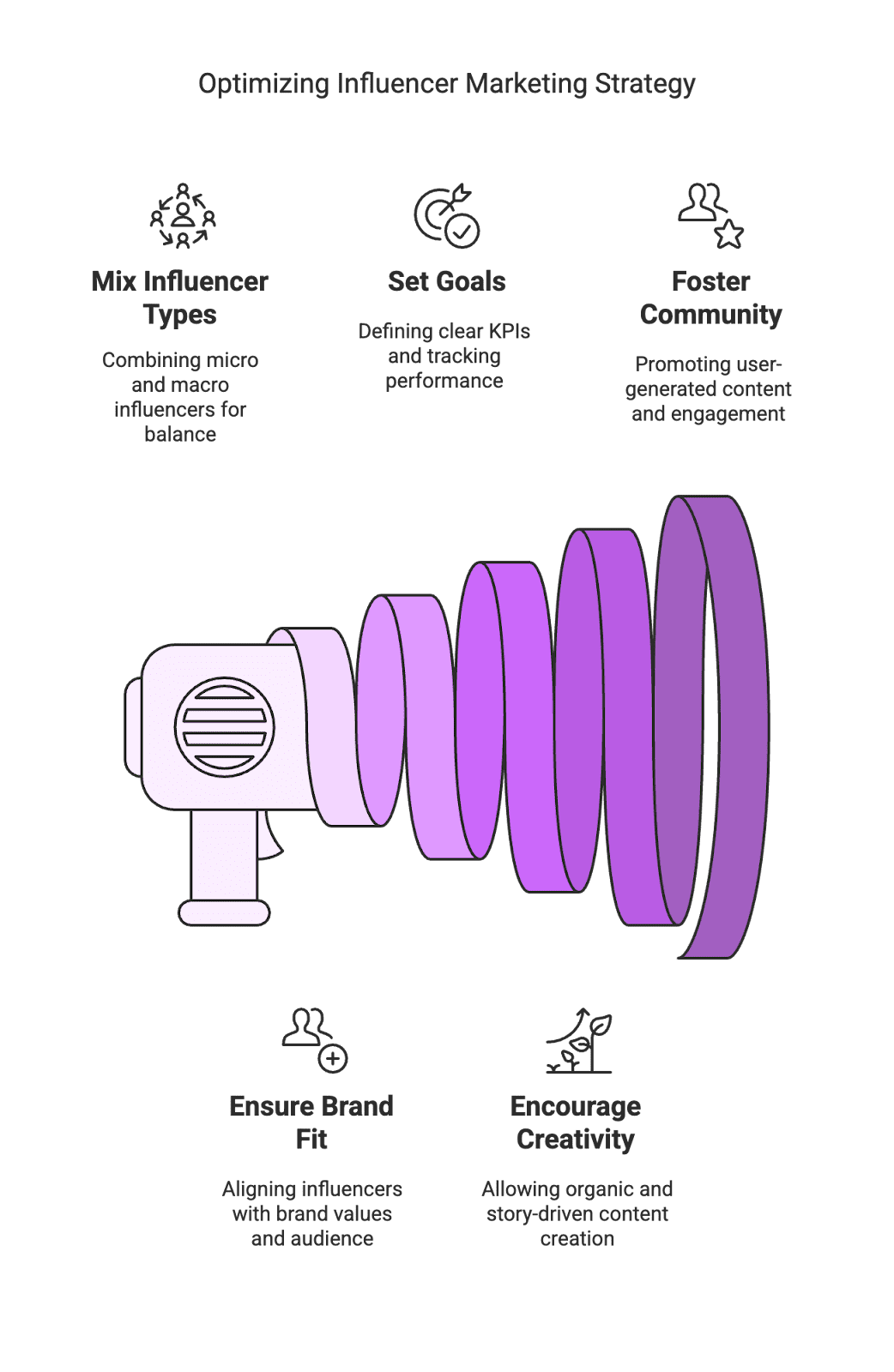
For brands looking to implement a similar influencer marketing strategy, here are key takeaways and best practices inspired by Target’s approach (and its competitors’ lessons):
1. Mix Micro and Macro Influencers: Leverage micro-influencers for their high engagement and niche appeal, and macro-influencers for broad exposure. A balanced mix allows you to get both authenticity and scale. For example, Target’s strategy shows that a network of micros can sustain brand buzz day-to-day, while occasional macro “tent-poles” (big celebrity campaigns) can spike reach and sales when needed.
2. Ensure Brand-Influencer Fit: Prioritize influencers who align with your brand’s values, style, and target audience. The content should feel natural. Target gives its creators creative freedom to incorporate products in an authentic way, which maintains trust. Vet influencers for brand safety and relevance – a genuine connection will yield better engagement than a forced partnership, as audiences can sense the difference.
3. Data-Driven Selection and Goals: Use engagement metrics and audience data to guide which influencers to work with. Look at past performance – e.g. micro-influencers with above-average engagement (often >3-5%) are gold. Define clear campaign KPIs (engagement rate, click-throughs, conversion rate, etc.) and track them closely. As seen with Target and Roundel, measuring the sales impact of each influencer is crucial. Set up affiliate links or unique codes to attribute revenue, and be ready to double down on influencers who consistently deliver strong results.
4. Leverage Affiliate Programs/Platforms: Make it easy for influencers to collaborate by providing a platform or program. Consider establishing an official affiliate/influencer program (similar to Target Partners or Walmart Creator) where creators can sign up, get tracking links, and access brand assets. This lowers friction and encourages more influencers to join your brand advocacy. Amazon’s success shows the power of a self-service model for scaling influencer participation.
5. Encourage Creative Storytelling: Influencer content performs best when it’s organic and story-driven rather than feeling like a blatant ad. Encourage influencers to integrate your product into their usual content (a day-in-the-life vlog, a how-to tutorial, a personal story). Target’s influencers often showcase products in context (outfits of the day, home decor in use, etc.), which engages viewers. Provide guidelines but allow the creator’s voice to shine – their authenticity is what audiences trust.
7. Long-Term Partnerships = Loyalty: Whenever possible, cultivate long-term relationships with high-performing influencers. Rather than one-off sponsorships, make them repeat ambassadors. This pays off with audiences seeing a consistent association (building credibility) and the influencer gaining deeper knowledge of your brand. Studies show brands get significantly higher engagement and conversion from long-term influencer partners according to 5W PR Agency. It also streamlines content production (as the influencer already knows your brand) and can sometimes lower costs over time. If an influencer genuinely loves your product, consider formalizing the partnership (e.g. capsule collections, recurring campaigns, event appearances).
8. Foster Community and UGC: Use influencers as a springboard for broader user-generated content. For instance, a Target influencer might kick off a hashtag challenge, but then hundreds of real customers join in posting their own content. This amplifies the campaign for free. Encourage influencers to ask their followers to participate (share their “Target haul” or their own style using your product). This community-driven approach not only increases reach but also provides a wealth of authentic content that you can potentially reshare (with permission) on brand channels, further validating the original campaign.
9. Emphasize Transparency and Trust: With the rise of sponsored content, transparency is key to maintaining consumer trust. Ensure influencers clearly disclose paid partnerships (#ad or #sponsored where required) and remain honest in their opinions. Audiences don’t expect every post to be organic, but they do expect that the influencer’s voice isn’t compromised. Work with influencers who genuinely like your product (as Target often does, choosing partners who are actual fans of the brand. Authenticity will always drive better engagement and brand sentiment than a blatantly transactional endorsement.
10. Iterate and Learn: Continuously analyze which influencer collaborations yield the best outcomes and refine your strategy. Perhaps you’ll find Instagram Stories with mid-tier influencers drive more sales, whereas TikTok videos with micro-influencers drive more awareness – adjust your campaigns accordingly. Solicit feedback from influencers too; they might tell you their audience went crazy for a certain product or that they received many DMs with questions (a sign of interest). Treat influencer campaigns with the same rigor as other marketing channels: A/B test different approaches, invest more in what works, and don’t be afraid to pivot as trends change.
By applying these insights, brands can craft an influencer marketing strategy that is scalable, authentic, and results-oriented. Target’s experience shows that when done thoughtfully, influencer partnerships can significantly boost engagement, strengthen brand loyalty, and drive sales in ways traditional marketing might not – all while keeping the brand culturally relevant in the social media age. Each brand should tailor the approach to its identity (as Target, Walmart, and Amazon have each done differently), but the core principle remains: connecting with consumers through trusted voices can pay off immensely in today’s digital landscape.
Target’s influencer marketing strategy demonstrates the power of blending micro- and macro-influencers to drive engagement, brand loyalty, and sales. By leveraging micro-influencers, Target builds authenticity and deeper customer connections, while macro-influencers generate widespread brand awareness through high-visibility campaigns. The data supports this dual approach, with higher engagement rates and measurable sales impact proving its effectiveness. Compared to competitors like Walmart and Amazon, Target’s curated influencer partnerships align closely with its brand identity, enhancing its cultural relevance. As influencer marketing continues to evolve, Target’s strategy highlights the importance of balancing reach with authenticity, using data-driven insights to optimize campaigns. By maintaining this approach, Target is well-positioned to sustain long-term growth and strengthen its influence in the retail space.
Instagram is making waves in the creator community by offering TikTok influencers eye-popping cash bonuses – reportedly up to $50,000 per month to post content on Instagram Reels according to PetaPixel. This bold move is part of Meta’s strategy to lure popular creators (and their audiences) away from TikTok with exclusive deals. The development is shaking up the influencer world, and it’s especially intriguing for micro-influencers who often juggle multiple platforms to maximize their reach and revenue. In this blog, we’ll break down how these 2025 Instagram bonuses work, compare Instagram Reels vs TikTok monetization, and explore what it all means for influencer marketing trends. Most importantly, we’ll discuss how micro-influencers can adjust their strategies to cash in on this shift, with real examples from recent reports to guide the way.
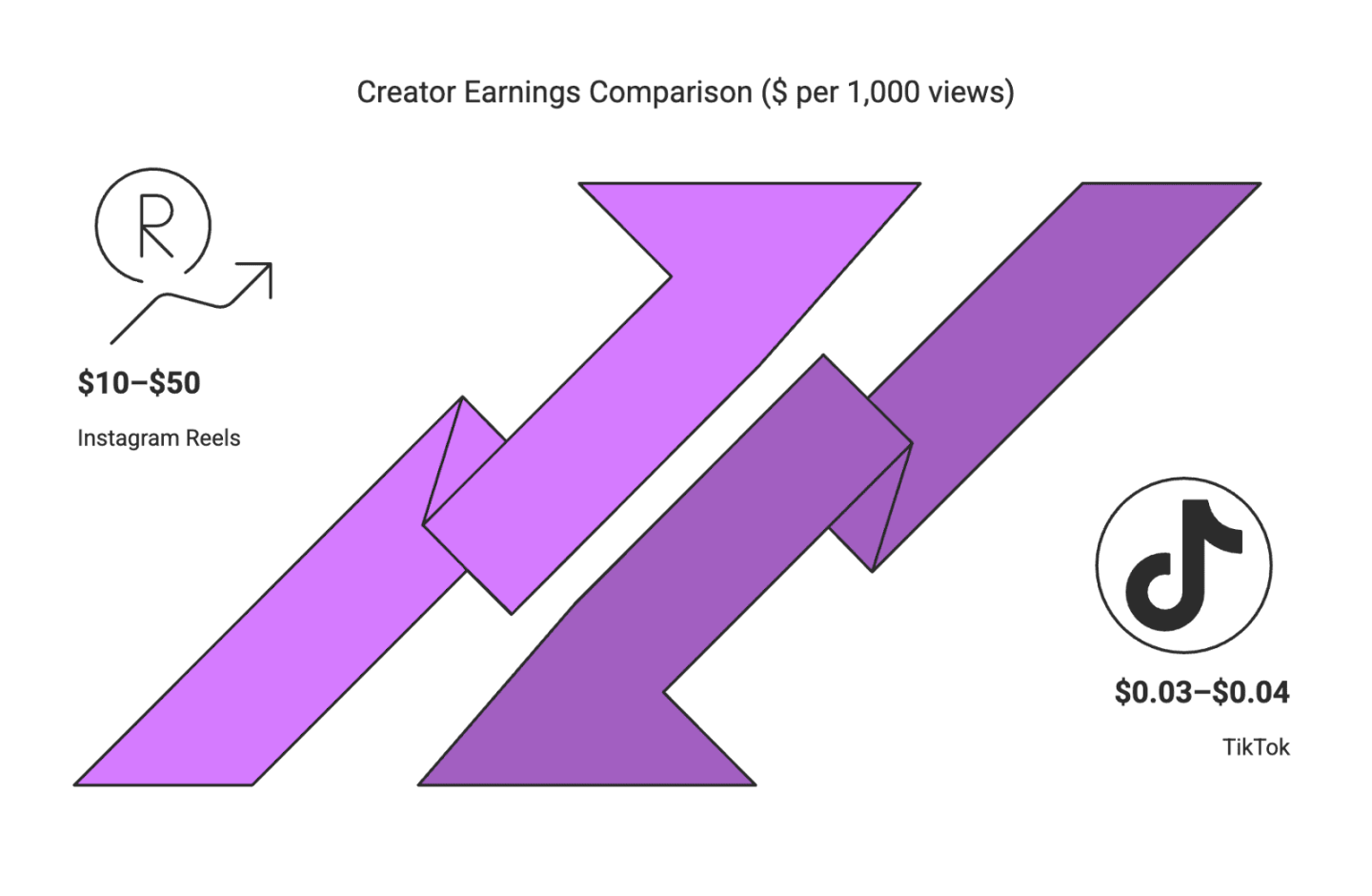
Instagram’s new bonus program is turning heads because of the sheer size of the payouts on offer. To put it in perspective, TikTok’s own monetization for creators has historically been pretty modest. Here’s a quick comparison of how the two platforms pay creators in 2025:
So which pays more? For a typical creator, Instagram’s new bonus program can far outpace TikTok’s payouts. TikTok might pay <$100 on a video that racks up a million views. By contrast, if you’re in Instagram’s bonus program, you could post that same video as a Reel and potentially be on track for a four or five-figure bonus (assuming you’re part of a deal or hitting a bonus target). The catch, of course, is that Instagram’s offers are not open to everyone – they’ve been selectively reaching out to creators (often those with strong TikTok followings) to strike these deals according to PetaPixel. TikTok’s Creator Fund is open to any user who meets certain follower and view thresholds, but it’s far less lucrative. In short, Instagram is betting big money on Reels, while TikTok’s built-in payments are relatively low – a key point for influencers deciding where to focus.
If you’re an influencer wondering how to get a piece of that $50K action, it helps to understand how Instagram’s bonus deals are structured. Let’s break down the financials and requirements, and how influencers can maximize their earnings under this program:
Not every creator gets offered the full $50K per month. Instagram has tiers of deals for different levels of influencers. According to leaked contracts, the monthly payment tiers include roughly $50,000, $25,000, $15,000, $5,000, and $2,500. Offers seem to correspond to a creator’s reach – for example, a TikToker with over a million followers might be offered a few thousand per month, while a top star could get the max. One report confirmed payouts ranging from $2.5K up to $50K per month, with top-tier creators eligible for a total of $300,000 over six months. In other words: if you’re big, Instagram might cut you a very big check; if you’re “micro” but rising, you might see a smaller (but still significant) bonus offer.
To actually earn the full bonus, creators must meet specific requirements. For the top deals (e.g. $50K/mo), influencers had to post at least 10 new Reels each month for six months (that’s 60 Reels total), and each video must be posted on Instagram first and remain exclusive to Instagram for a window of about 3 months. In some contracts, creators also had to ensure they’re posting more on Instagram than on any other platform during that period. For lower-tier deals (say $15K/mo), the quotas might be a bit lower – one leaked deal required 8 Reels per month (48 over six months) for $15K each month according to Business Insider. The key is that you only get the money if you hit all these marks (number of Reels, exclusivity period, etc.). So, to maximize earnings, an influencer should be prepared to consistently churn out content at the required volume and abide by the exclusivity rules to the letter.
Instagram isn’t just paying for posts; they’re also encouraging creators to bring their audience along. Contracts have included clauses like: “engage with fans on Instagram daily” (e.g. reply to comments or shares) and “promote your Instagram content on other platforms” . For example, a creator might have to post on TikTok saying “hey, check out my new Reel on IG” twice a month and put an Instagram link in their TikTok bio. Influencers who want the full payout should take these requirements seriously – it’s essentially part of the job you’re being paid for. Maximizing earnings means not only posting the required Reels, but also actively driving traffic to Instagram as stipulated. It’s a workload, so creators need to plan their content calendar wisely to hit all the targets.
Here’s a pro tip for savvy influencers: you might be able to stack earnings from different sources if you plan carefully. Instagram’s exclusive deal might limit what you can post elsewhere, but it doesn’t necessarily ban you from other income. For instance, Instagram launched a “Breakthrough Bonus” as well, which is a separate incentive for TikTokers who are new to IG. This bonus pays up to $5,000 over 3 months for posting Reels on Instagram and Facebook. A creator who isn’t offered a huge $50K contract might still qualify for this $5K bonus – it’s essentially free money for consistently cross-posting your TikToks to Reels.
Also, nothing stops an influencer from doing brand partnerships on top of these platform bonuses (as long as the brand deals don’t conflict with exclusivity). For example, a micro-influencer could accept Instagram’s smaller bonus deal (say $2.5K/mo) and simultaneously do a sponsored post or TikTok on the side (just not posting the same content on TikTok during exclusivity). To maximize earnings, creators should mix and match revenue streams: platform bonuses (Instagram’s programs, TikTok’s Creator Fund if still posting there), brand sponsorships, affiliate marketing, merch sales, etc. The Instagram cash is a nice chunk, but combining it with other income can make 2025 a breakthrough year financially.
If you’re a creator being approached for a bonus deal, know that there might be some room to negotiate or choose a comfortable tier. One talent manager noted that different creators were offered different amounts with no clear pattern and that some deals just weren’t worth it for certain clients. Maximizing your earnings could also mean knowing when to say yes – or no. A $50K/month deal is amazing, but not if it burns you out or stifles your content creativity to the point you lose audience loyalty. Some influencers have actually turned down these bonuses despite the big payday.
Why? Because if the requirements are too onerous, it might hurt their growth or engagement in the long run. As an influencer, think about your own brand: Could taking the cash now hurt your momentum on TikTok or other platforms? Or can you manage both? The smartest creators will find a way to fulfill Instagram’s deal efficiently – batching content, maybe repurposing ideas – so that they don’t neglect their other channels (or their mental health). That way, they maximize earnings now without sabotaging future potential.
In short, Instagram’s bonus program can be extremely lucrative, but you have to work for it. The path to maximizing that income is meeting all the deal’s conditions (posting volume, exclusivity, engagement) and leveraging every other monetization option available to you. Done right, an influencer can pull in the bonus cash and keep their other income streams flowing. Done poorly, one might either leave money on the table or burn out trying. It’s all about balance and strategy.
Beyond individual earnings, these cash bonuses are shifting the landscape of influencer marketing as a whole. When a giant like Meta starts throwing money around to attract talent, everyone in the industry takes notice – from rival platforms to brands and agencies. Here are some key trends and potential effects we’re seeing:
The competition between social platforms is reaching new heights. Instagram’s aggressive payout strategy is a direct response to TikTok’s dominance in short-form video. We’re essentially seeing a “bidding war” for creators. This trend could lead to more platforms offering lucrative incentives – for example, YouTube might boost its Shorts funding, or TikTok could respond with better terms to keep its stars from jumping ship. For influencers, this is actually good news: competition means platforms are motivated to treat creators well (or at least better than before). Don’t be surprised if you hear about TikTok upping its Creator Fund or introducing new bonuses to keep people loyal.
Influencers in 2025 are less likely to be “loyal” to just one platform. With Instagram incentivizing TikTokers to join, and many TikTokers already posting YouTube Shorts or Snap Spotlight for extra reach, the era of single-platform stars is fading. Cross-platform influence is the new goal. Micro-influencers especially will spread their content across TikTok, IG Reels, YouTube Shorts, and even Facebook, to maximize both audience and earnings opportunities.
Influencer marketing campaigns might evolve to reflect this – brands may start expecting to negotiate deals that cover multiple platforms (e.g., a campaign package where a creator does a TikTok and an Instagram Reel for a cohesive promotion). The lines between platforms are blurring in terms of content; an influencer might film one video and adapt it slightly for 2-3 apps.
These developments underscore that short-form video (TikToks, Reels, etc.) remains the hot format. Instagram wouldn’t be paying big bucks if Reels weren’t critical to its strategy. Marketers are taking note that short, snackable content is how you reach young audiences. We may see ad budgets shifting more into Reels and TikTok collaborations, as opposed to, say, static Instagram posts or longer YouTube integrations. Influencer marketing trends in 2025 show brands eager to jump on viral short videos – meaning creators who excel in that format are in high demand. (If you’re a micro-influencer who hasn’t embraced video yet, now’s the time!)
One interesting trend is the notion of exclusive content deals. For a while, influencer marketing was very open – creators would post the same content on all platforms freely. Now, with Instagram’s contracts requiring exclusivity windows, we’re seeing a throwback to old-school content deals (like when Vine stars were courted to move to YouTube, or Twitch streamers got exclusive contracts). This could mean influencer content becomes a bit more fragmented by platform.
Hardcore fans might “follow” an influencer across apps to catch all their content, but casual viewers might only see what’s on one app. Brands and influencers will need to navigate this. For example, if a beauty brand wants to sponsor a creator’s video, they might have to consider where that video will live. Is it okay if it’s only on Instagram and hits a different audience, or do they need it on TikTok too? Influencer marketers will have to be more strategic about platform exclusivity clauses – something that wasn’t a big concern until now.
With big money on the table, top influencers have more leverage than ever. An influencer approached by Instagram can use that as a bargaining chip: maybe they ask TikTok for a better deal (even if TikTok’s not offering direct cash, a creator might secure a brand partnership through TikTok’s marketplace or get perks by staying). In negotiations with brands, influencers can also highlight their multi-platform presence: “I have X followers on TikTok, but I’m also part of Instagram’s exclusive program, so I can offer you reach on both.”
Essentially, creators who successfully navigate these deals elevate their status and can command higher rates in the influencer marketing world. Micro-influencers who manage to snag even a small bonus from Instagram can leverage that credibility (“I’m an Instagram-partnered creator now”) to attract brands or grow their following.
A lot of this is happening against the backdrop of TikTok’s uncertain regulatory future (talks of bans, etc., in some regions). Instagram is clearly trying to position itself as the safe bet for creators, should TikTok get restricted according to EasternEye. If TikTok were to get banned in a major market, Instagram (and YouTube Shorts) would obviously benefit massively. But even if TikTok remains, these incentives might cause a slight content shift – perhaps a bit less original content on TikTok as creators hold some back for Instagram first.
From a trend perspective, we might see TikTok’s explosive growth plateau if enough creators split their attention. However, TikTok’s algorithm and community are very strong, so it’s not going anywhere overnight. Instead, what we’ll likely see is a more diverse ecosystem: TikTok still the go-to for raw virality and youth culture, Instagram Reels becoming a strong contender especially for monetization and older audiences, and creators fluidly moving between them.
Overall, influencer marketing in 2025 is evolving into a more complex, multi-platform game. Brands, agencies, and creators are all adapting to a world where content might premiere on Instagram, go viral on TikTok three months later, and be repackaged for YouTube in between. The big cash bonus trend underscores one thing: social media companies now recognize content creators as key assets, worth investing in directly. That’s a big shift from a few years ago when monetization was mostly an afterthought. It means influencers are increasingly seen (and treated) as stakeholders in the platform’s success – a trend that could redefine the creator-platform relationship moving forward.
If you would like to reap the benefits of micro influencers for your business consider utlizing Stack Influence. Brands offer products to a vetted network of over 11 million micro-influencers in Stack Influence’s database, reimbursing them for their purchase once they’ve produced authentic content and reviews. This approach drives buzz and word-of-mouth marketing. The platform leverages AI to precisely target influencers by niche and demographics, managing campaigns from start to finish so brands don’t have to handle logistics or risk losing inventory.
If you’re a micro-influencer (think a few thousand to maybe a couple hundred thousand followers) watching all this unfold, you might be thinking, “This sounds great for the big TikTok stars, but what about me?” The good news is, you don’t have to be a mega-celebrity to benefit from these changes. Micro-influencers can take strategic steps to ride this wave and boost their own growth and earnings. Here are some tips on how you can adjust your strategy:
1. Diversify Your Platform Presence:
Don’t put all your eggs in one basket. If you’ve been focusing only on TikTok, now is the time to establish yourself on Instagram Reels (and maybe Facebook too, since Reels exist there as well). Even without a personal invite from Instagram, you can start posting your TikTok-style content on Reels to build an audience.
Many micro-influencers find that some content performs even better on Reels than on TikTok due to different audience demographics. By growing your Instagram following, you increase the chance of catching Instagram’s attention for future bonus programs. Plus, you’re future-proofing yourself in case TikTok faces any bans or algorithm changes. Essentially, become a multi-platform creator: continue your TikTok, but also nurture an Instagram profile, and even dabble in YouTube Shorts if you can. Being active on multiple platforms gives you more leverage (and more ways to earn).
2. Leverage Instagram’s Incentives (Even Small Ones):
You might not get a $50K offer right off the bat, but Instagram’s Breakthrough Bonus and other features are still accessible. If you have a notable TikTok presence (even something like 50k or 100k followers), try to sign up for any Instagram bonus programs available according to Tubefilter. The Breakthrough Bonus, for example, doesn’t require you to be a superstar – “any TikTok creator” posting Reels on IG and FB can claim it, with payouts up to $5k over 3 months.
That’s basically Instagram paying you to start posting. Even smaller, Instagram has been known to give occasional bonuses for Reels views (in the past, some creators got $100 or $1,000 bonuses for hitting certain view thresholds – those programs paused in 2022, but they may bring back versions of them). Keep an eye on your Instagram app notifications and creator emails – if bonus programs open up, opt in immediately. It’s essentially free money for doing what you’re already doing: creating content.
3. Repurpose and Optimize Your Content:
As a micro-influencer, you likely don’t have a large team – you’re making and editing content largely yourself. To meet the demands of multiple platforms, focus on smart repurposing. For instance, create a high-quality short video, but adjust the caption, music, or timing a bit and post it on TikTok and as an Instagram Reel (just be mindful: if you join an exclusivity deal later, you’ll need to post to IG first). Avoid using the TikTok video with the watermark on Instagram – the algorithm might downrank it. Use tools or original files to upload a clean version to Reels. By repurposing content, you save time and effort, allowing you to post more frequently to satisfy programs like Instagram’s (which may require near-daily posting).
Also, pay attention to what styles of content do well on each platform. Maybe your dance videos pop off on TikTok, but educational quick tips do better on Reels. Tailor slightly, but reuse ideas across platforms to double-dip on every piece of content you make. This will be crucial if you ever take on a contract that asks for, say, 10 Reels a month – you can handle that workload by leveraging content you might also use on TikTok later (after any exclusivity window).
4. Engage and Build Community on Instagram:
Micro-influencers often excel at community engagement, which is a strength you should carry to Instagram. The bonus deals require engagement (replying to comments, etc.) – and even if you’re not in a deal, doing this will help you grow. Reply to comments on your Reels, use Instagram Stories to interact with polls or Q&As, and collaborate with other creators (Instagram Collabs feature lets two creators co-post a Reel, tapping into each other’s followers).
The more you nurture your Instagram audience, the more valuable your profile becomes to both the platform and potential sponsors. Also, if Instagram sees you bringing over an active community, you might stand out for future incentive programs. Remember, one stated goal of Instagram’s push is to help TikTok creators “jump-start their growth” on IG. Show that you’re eager to grow on IG: cross-promote your Instagram on your TikTok (e.g., occasionally remind TikTok followers you have an IG with maybe different content). This could organically put you on Instagram’s radar for things like the Breakthrough Bonus.
5. Weigh Exclusivity vs. Reach Carefully:
If you do get offered a deal by Instagram (even a smaller one), consider the trade-offs. For micro-influencers, giving up posting on TikTok for a while (or reducing it) could be risky if TikTok is where your main fanbase is. But the cash could accelerate your growth on IG, which might benefit you in the long run.
Make a plan: If you accept an IG bonus deal with exclusivity, communicate with your TikTok followers that you’ll be trying something new on IG and invite them along. Perhaps frame it as “exclusive content on Instagram for a bit” – make it a selling point rather than just going silent on TikTok. Conversely, if you decide the deal isn’t worth it, that’s okay too – you can continue growing on TikTok and catch the next opportunity. The key is not to burn out trying to do everything for everyone. Many influencers have felt overwhelmed by the idea of posting so many Reels plus their regular TikToks. If you’re micro, you might not be expected to post 10 Reels a month – but even keeping up with two platforms can be a lot.
So, create a sustainable schedule for yourself. Maybe alternate days between TikTok and Reels content, or film batches of content on weekends to free up time. Micro-influencers succeed through consistency and authenticity – don’t lose that trying to chase every bonus. Do what you can handle and maintain your quality.
6. Stay Informed and Adapt:
Lastly, keep your ear to the ground in the creator community. Things are changing fast. What if TikTok announces a better payout program tomorrow? What if Instagram’s bonuses are temporary and they pivot again? By staying informed (follow influencer industry news, join creator groups, etc.), you can adapt quickly. If a new opportunity pops up – like another platform (say Snapchat Spotlight or a new app) offering money for content – a nimble micro-influencer can jump in early and reap rewards.
Case in point: some creators who jumped on Instagram Reels bonuses early in 2021 made a decent chunk before it was discontinued in 2022 Tech.co. Now a new cycle is here in 2025; those who move early stand to gain the most. So be ready to experiment. As a micro-influencer, you have the advantage of agility – you can try new platforms or features without huge risk. Use that to your advantage in this shifting landscape.
In summary, micro-influencers should view Instagram’s cash bonus wave not as a threat, but as an opportunity. It signals that platforms value creators of all sizes. By broadening your presence, taking advantage of any available bonuses, and strategically managing your content, you can grow your influence and income. You may be “micro” in follower count, but with the right moves, you can macro-size your results!
It’s one thing to talk strategy, but it helps to see what actual creators are doing in response to Instagram’s bonus program. While many specifics are hush-hush (some creators are under NDAs about these deals), reports have shed light on how influencers are reacting. Here are a few real-world examples and case studies from recent reports:
According to Business Insider, Instagram offered several big TikTok creators deals worth $300,000 over six months (that’s the $50K per month tier). Surprisingly, not everyone said yes. One talent manager revealed that some of their clients passed on the offer despite the eye-popping sum.
Why on earth would they do that? The creators felt the deal wasn’t “good” for them – citing the heavy requirements and loss of flexibility. One even said having to constantly track that they’re posting 25% more on Reels than TikTok made the deal “untenable”. This example shows that money isn’t the only factor for creators. These influencers likely made decent money through other means and decided creative freedom (and keeping their TikTok momentum) was more valuable. Lesson: Consider the long-term impact on your brand. If a deal’s conditions feel like they’ll hurt your connection with your audience or your enjoyment of creating content, it might not be worth it, no matter the cash.
On the flip side, another case involved a mid-tier TikTok creator (think someone not at Charli D’Amelio level, but perhaps in the hundreds of thousands or low millions of followers) who accepted Instagram’s offer of around $15,000 per month for six months. The contract required them to post 8 Reels a month and make Instagram their number-one platform during that time. For this creator, $90,000 over half a year was possibly more than they’d ever earned directly from social media before. They jumped at the opportunity – and reports suggest many creators in this tier did.
By dedicating themselves to the program, they not only earned that money but also likely grew their Instagram following substantially (thanks to Instagram promoting Reels and even reportedly running paid ads to boost these creators’ content). This essentially catapulted a TikToker into being an Instagram influencer as well, with a nice paycheck to boot. Lesson: If you’re up-and-coming and the money could be game-changing for you, taking the deal can fast-track your growth. Just be ready to hustle to meet the terms, and use the period to establish a real foothold on IG (so that when the deal ends, you have a bigger audience to monetize in other ways).
Imagine a micro-influencer with, say, 50k TikTok followers. They aren’t getting a personal call from Adam Mosseri, but they noticed the “Reels Bonus” notification in their Instagram app and activated it. Over the next 3 months, they diligently cross-posted their TikToks as Reels, maybe getting a few thousand views each. By the end, they earned a few thousand dollars from the Breakthrough Bonus – not life-changing, but possibly equal to or more than what TikTok’s Creator Fund paid them in that time.
Plus, they gained new followers on Instagram who discovered them through the Reels algorithm. There was a real press release indicating any TikTok creator could do this and get up to $5K, so this isn’t a hypothetical – many smaller creators are likely taking advantage. Lesson: Even if you’re not a top-tier influencer, take the initiative to benefit from these programs. It’s essentially a grant to grow your presence. Many micro-creators who never earned directly from TikTok are suddenly seeing a bit of income via Instagram – and that can be reinvested into better equipment, more content, or just paying your bills so you can focus more on content creation.
On the industry side, talent managers and influencer or email marketing agencies are adjusting their strategies too. One report quoted managers expressing skepticism about Instagram’s tactics, suggesting that trying to force creators and audiences to shift platforms might not work so easily. Some managers are advising their clients to diversify rather than go all-in on one deal. Others are negotiating – for instance, if a creator is offered $5K/month but feels they’re worth more, the manager might go back to Instagram and make a case (especially if that creator has a very strong engagement rate, which micro-influencers often do). Lesson: If you have representation, loop them in. If you don’t, it may be worth getting a manager or at least consulting with experienced creators before signing anything. The industry is learning as it goes, and having someone in your corner can help evaluate if an offer is fair and how to fulfill it without derailing your other opportunities.
Some real-world feedback from brands (as reported in marketing circles) indicates that advertisers are watching Reels content more closely now. If Instagram is pushing Reels and creators are flocking there, brands want in on that action. We’re hearing about brands requesting more Instagram Reel deliverables in contracts, even from TikTok-famous influencers. For example, a brand that might have done a one-off TikTok deal with a micro-influencer last year might now ask, “Hey, can you also do a Reel version of this? We know you’re building IG too.”
Sometimes they’ll pay extra for that, recognizing it’s additional work; other times they might expect it as part of the package. Lesson: Be prepared to showcase your presence on both TikTok and Instagram when pitching to brands. Even if your IG is smaller, the fact that Instagram is endorsing Reels so heavily means content there has a better chance to be pushed to viewers (and it sticks around on your profile, whereas TikToks can get buried). Brands will value a well-rounded influencer who can speak to audiences on multiple platforms.
Instagram’s 2025 cash bonus initiative is more than just a flashy headline about $50K payouts – it’s a sign of the evolving influencer ecosystem. Creators, big and small, are making important decisions in response: some are cashing in and expanding their empires to Instagram, while others are cautiously maintaining their independence. Micro-influencers are carving their own paths, using these shifts to climb the ladder one smart move at a time.
The takeaway for any influencer is this: stay adaptable and creator-centric. Platforms will come at you with new features, new deals, and even big bags of money. Evaluate how each opportunity aligns with your goals. If you play it right, you can significantly boost your earnings (maybe even hit that life-changing payday) and grow your community across platforms. If you ever feel overwhelmed, remember that even saying “no” is a strategy – often, it’s about the long game of your personal brand.
2025 is shaping up to be an exciting year in the influencer world. Instagram and TikTok might be duking it out with bonuses and features, but at the end of the day, creators and their content are the real prize. As a micro-influencer, continue honing your craft and engage your audience. Opportunities (and yes, cash bonuses) will follow. So keep creating, keep an eye on those notifications, and be ready to seize the moment – whether it’s a $50K deal or an extra $5000 to “get off the ground” according to Eastern Eye, the power is increasingly in the hands of the influencers who know their worth.