




Choosing ecommerce affiliate software is not a simple feature comparison. A Shopify seller turning customers into ambassadors, an Amazon FBA brand recruiting publishers, and a DTC team coordinating creators need different infrastructure. A platform can track links perfectly while leaving the real bottleneck, partner recruitment, product sampling, content production, or payout operations, untouched.
This guide compares nine current platforms and shows ecommerce sellers how to evaluate channel coverage, partner supply, activation, attribution, payouts, economics, and workload. It also explains where affiliate tracking ends, where creator activation begins, and how to run a 30-day pilot before committing to a larger program.
Key Takeaways
- Choose by bottleneck: The right platform solves the weakest part of your program, whether that is recruitment, creator activation, attribution, payouts, or reporting.
- Separate software categories: Affiliate trackers, affiliate networks, customer-referral apps, and creator-activation platforms perform different jobs.
- Model total economics: Subscription prices are only one cost. Include performance fees, commissions, product costs, payout expenses, returns, fraud, and internal labor.
- Connect every data layer: Affiliate reporting should be reconciled against Shopify, Google Analytics 4, Amazon Attribution, or another source of transaction data.
- Pilot before scaling: A controlled 30-day launch can expose tracking, code leakage, margin, payment, and partner-activation problems early.
What Is Ecommerce Affiliate Software?
Ecommerce affiliate software helps an online seller recruit or onboard partners, create trackable links or codes, attribute orders, calculate commissions, approve conversions, and organize payouts. Some products focus on tracking, while others add partner marketplaces, customer referrals, creator management, product seeding, or marketplace integrations. The workflow differences matter more than the feature count.
Affiliate software generally falls into three categories:
- Program infrastructure: Tracks clicks, codes, orders, commissions, reversals, and payouts.
- Partner access: Connects brands with publishers, affiliates, creators, or existing customers who may promote products.
- Partner activation: Coordinates sampling, outreach, briefs, creator communication, content production, and completion.
Some platforms cover more than one category, but few handle every function equally well. Understanding the broader benefits of affiliate marketing for ecommerce sellers helps clarify which functions are essential for your particular program.
A seller with 500 willing ambassadors may primarily need tracking and payouts. A seller with no active partners may need recruitment and creator activation before advanced attribution provides meaningful value.
The Bottleneck-First Affiliate Operations Stack
The Bottleneck-First Affiliate Operations Stack evaluates software according to the operational problem it removes. Instead of starting with a vendor list, map the five layers required to turn a prospective partner into profitable ecommerce revenue.
- Partner Supply: Find customers, creators, publishers, educators, media companies, and other affiliates who match the product and audience.
- Activation: Give partners a compelling offer, useful products, clear instructions, creative assets, promotional links, and reasons to publish.
- Attribution: Connect links, coupon codes, landing pages, UTMs, Amazon Attribution tags, and transaction records to the correct partner.
- Settlement: Review conversions, account for cancellations and refunds, calculate commissions, manage tax requirements, and deliver payouts.
- Optimization: Compare partner cohorts, customer quality, content output, contribution profit, and incremental value to improve future recruitment.
The weakest layer limits the performance of the entire program. Better tracking cannot rescue an inactive partner base, while a large creator network becomes difficult to monetize without reliable attribution and settlement.
This is also why affiliate marketing automation should be evaluated as a connected workflow. Automating commission calculations is helpful, but automating the wrong process does not resolve weak recruitment, poor creative direction, or an unprofitable offer.
9 Ecommerce Affiliate Software Platforms for 2026
The following platforms support different combinations of affiliate tracking, creator partnerships, referrals, product seeding, marketplace recruitment, and payouts. They are organized by workflow rather than presented as a universal ranking.
The comparison considers:
- Ecommerce and marketplace coverage
- Partner discovery and recruitment
- Product sampling and creator activation
- Link, code, and conversion tracking
- Commission and payout operations
- Published pricing structure
- Internal workload required
Published prices reflect the vendors’ public pages when this article was researched. Sellers should confirm current pricing, usage limits, transaction fees, and contract terms before purchasing.
Stack Influence

Stack Influence supports the creator-activation layer of an ecommerce affiliate program. The platform is built around gifted-first product seeding, vetted micro-influencer participation, campaign coordination, user-generated content, and completed-post accountability. Stack Influence works with roughly 600,000 vetted creators, approximately 78% of whom are female.
The platform moves beyond profile discovery by helping brands coordinate creators through its product-seeding workflow. Products are placed with relevant creators, campaign requirements are managed, and platform fees are tied to completed posts through a completions-only model. Brands can then identify creators whose content, audience response, or attributed traffic makes them appropriate for longer-term affiliate relationships.
Best-Fit Workflow: Stack Influence is especially practical when the immediate constraint is activating micro-influencers, producing authentic UGC, and managing creator participation through completion. It can complement affiliate tracking software, Amazon Attribution, or a Shopify ambassador program by supplying the content and creator activity those systems measure.
impact.com
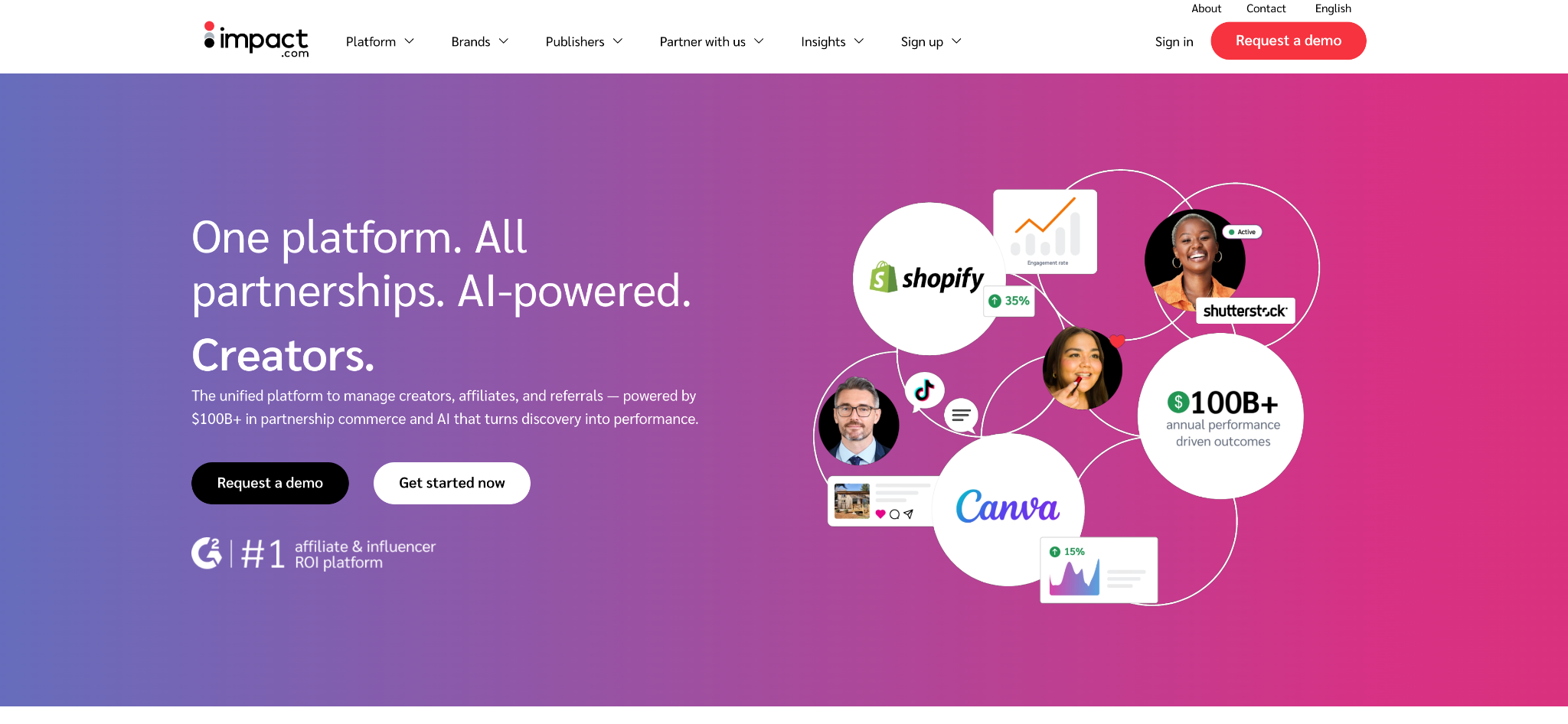
impact.com combines affiliate, creator, referral, and broader partnership management within one platform. Its capabilities include partner recommendations, contracting, link and promotional-code tracking, product feeds, payments, fraud controls, and reporting. The Essentials tier adds access to a marketplace that impact.com says contains 90,000 partners, while higher tiers add cross-device tracking, API-based tracking, customized analytics, and advanced attribution controls.
The company’s published partnership plans begin at $30 per month for Starter, $500 per month for Essentials, and $2,500 per month for Pro. A 2.5% fee applies to partner-driven transactions, and a one-time implementation fee may depend on onboarding requirements. The tradeoff is that advanced recruitment, automation, and attribution features require a larger budget and potentially more technical implementation.
Refersion
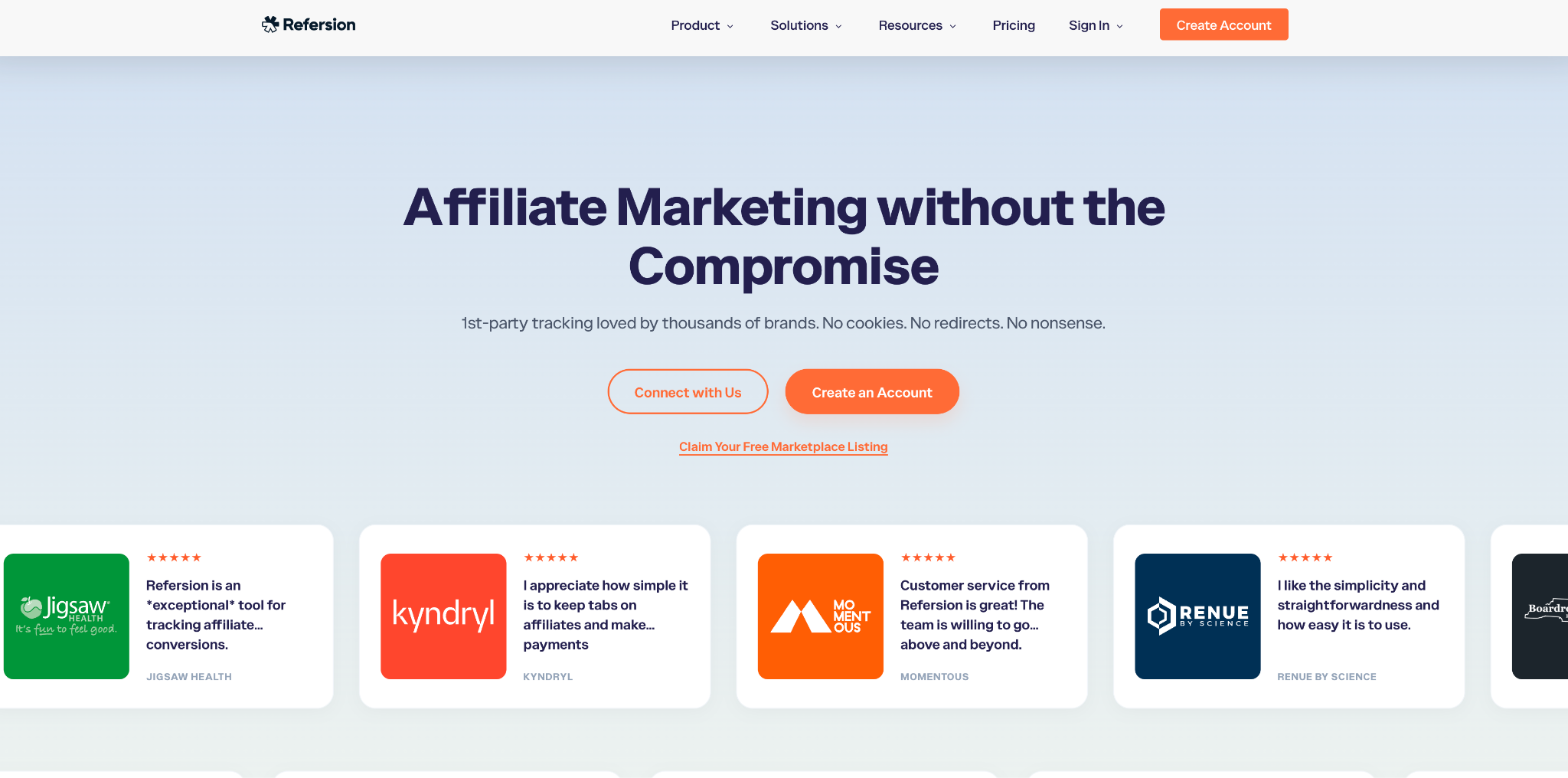
Refersion is an ecommerce-focused affiliate management platform covering recruitment, applications, first-party tracking, links, coupon codes, commissions, conversion approvals, payments, and reporting. Its marketplace and personalized partner recommendations help brands supplement their own recruitment, while product-level and customer-level commission controls support more detailed program economics.
Refersion’s current affiliate-management pricing combines a subscription with a percentage of affiliate-driven sales on its lower tiers. Launch applies a 3% performance fee, Growth applies 2%, and its sales-led Scale tier uses a flat subscription model. Sellers should compare those variable fees against expected affiliate revenue because a low starting subscription can become a larger expense as the program grows.
Social Snowball
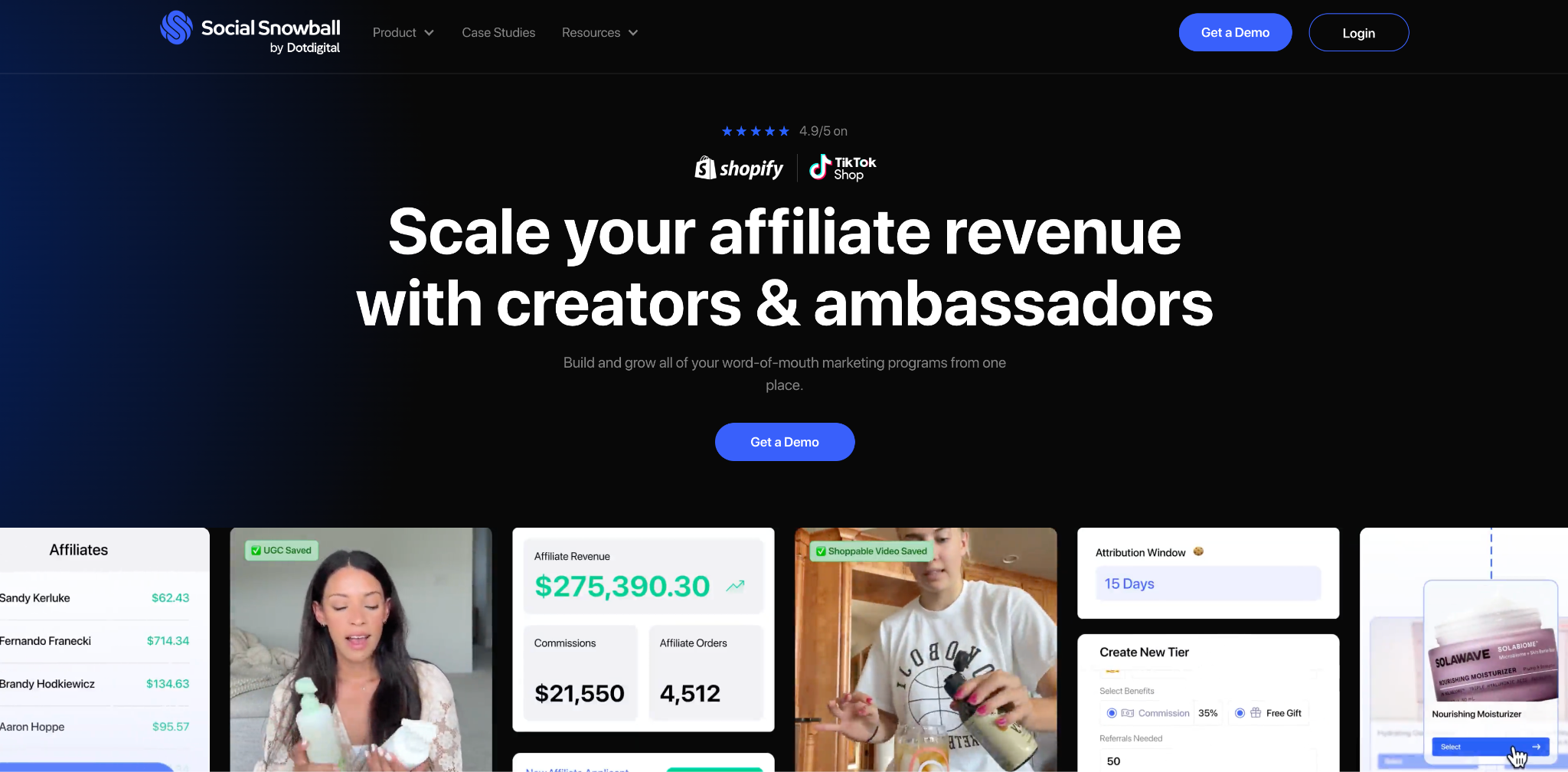
Social Snowball is a Shopify-focused platform for affiliate, influencer, referral, and customer-ambassador programs. A notable workflow automatically turns customers into affiliates after purchase, giving DTC brands a way to recruit from people who have already experienced the product. The platform also supports influencer management, payouts, tiered rewards, fraud prevention, code-leak controls, and post-purchase referrals.
According to its Shopify App Store listing, the Snow Day plan starts at $249 per month plus 3% of affiliate revenue. The Blizzard tier begins at $899 per month and adds TikTok Shop support, creator search, outreach, social listening, UGC tools, and no usage charges. Its Shopify-centered workflow is well aligned with DTC brands, but sellers operating primarily through Amazon or another marketplace would need additional infrastructure.
Tapfiliate
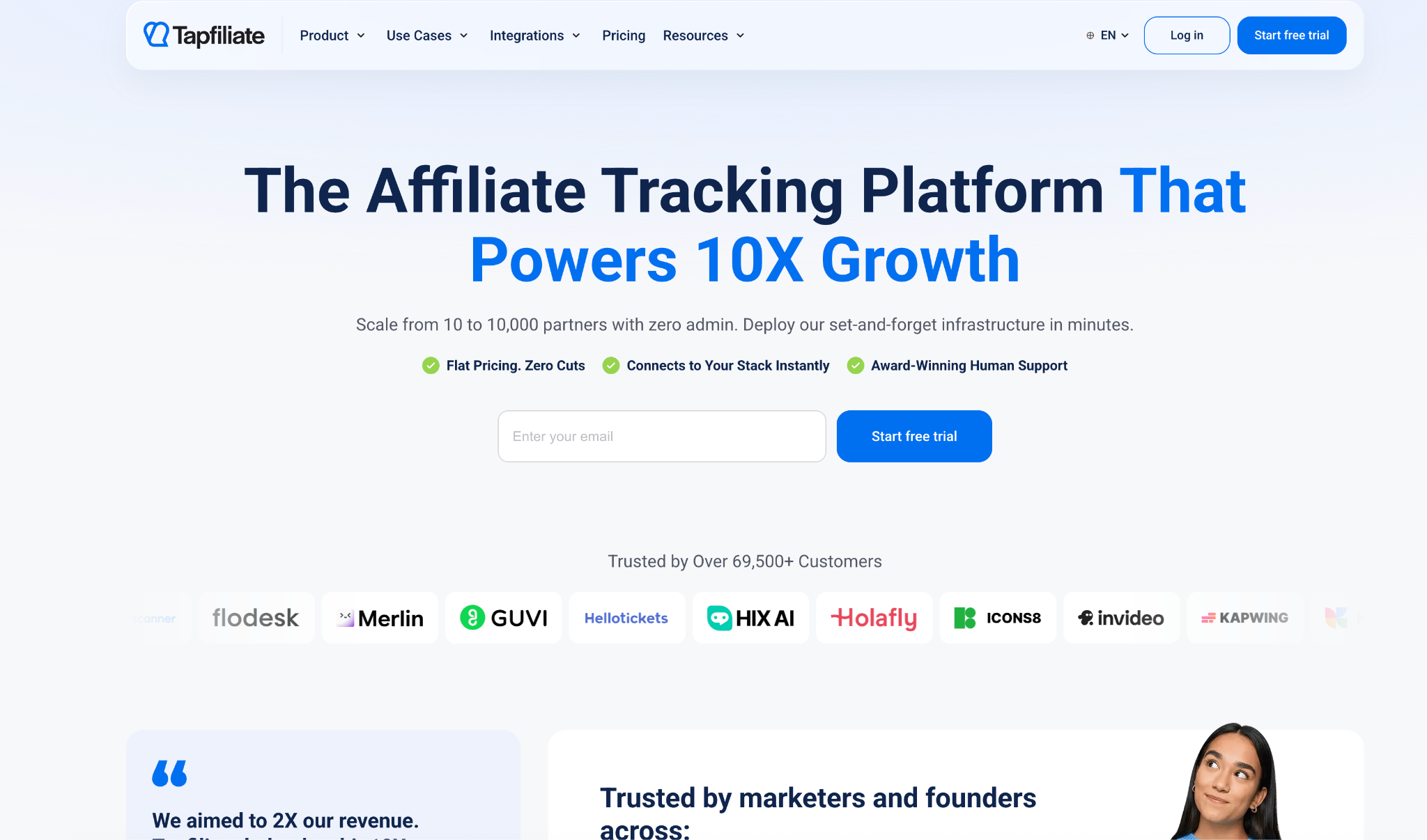
Tapfiliate is a self-managed affiliate tracking platform supporting integrations with Shopify, BigCommerce, WooCommerce, Magento, Stripe, and other commerce systems. It provides real-time reporting, recurring commissions, coupon tracking, deep links, product feeds, payment integrations, webhooks, REST API access, and server-to-server tracking.
Tapfiliate’s current plans list Launch at $89 per month and Scale at $179 per month. Launch includes 50 affiliates, 5,000 monthly clicks, and 500 monthly conversions, while Scale raises the included volumes and removes the affiliate limit. Sellers should account for click and conversion overage fees, and they will still need a deliberate recruitment and partner-activation process because the software’s core strength is program infrastructure.
GoAffPro
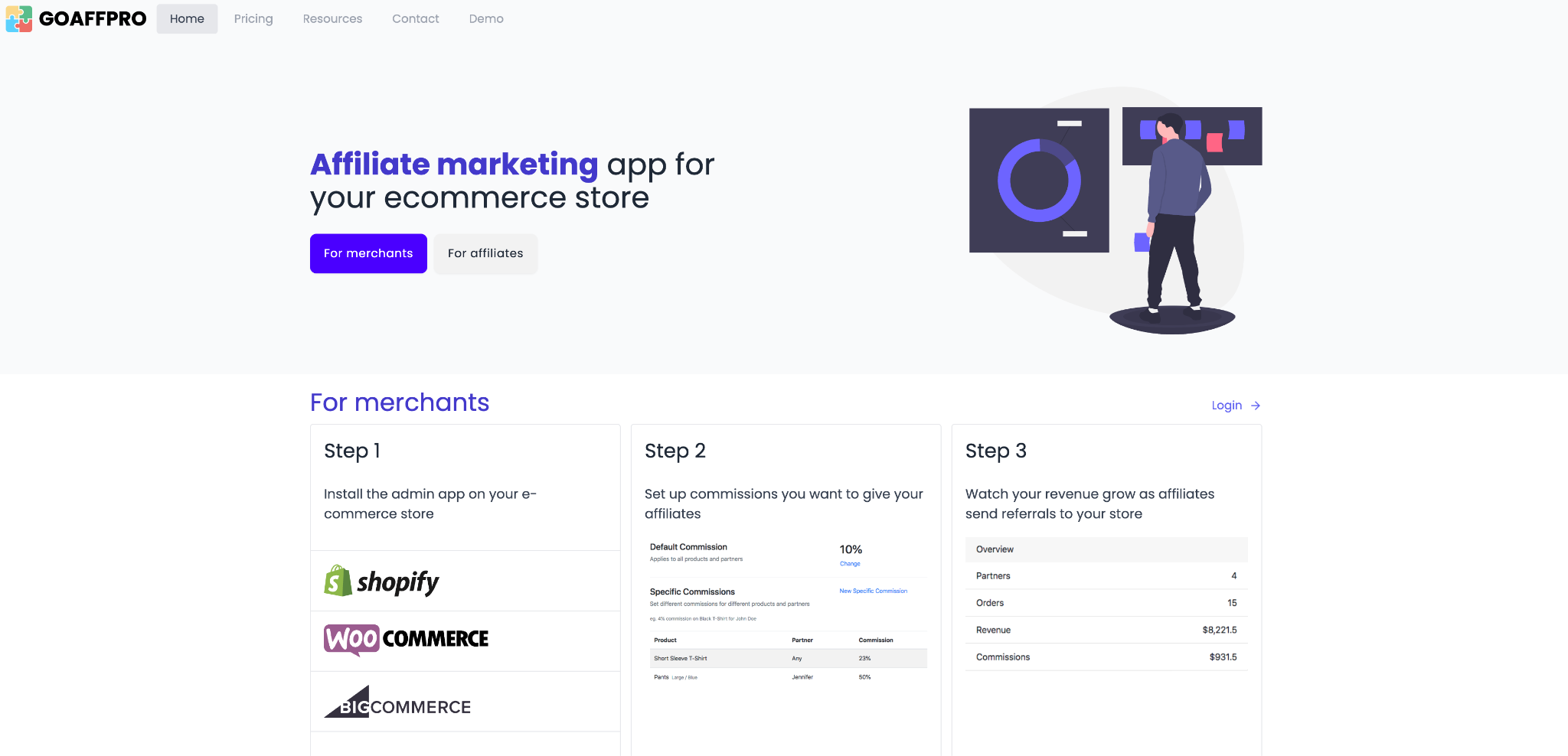
GoAffPro is a Shopify affiliate and referral app with a free starting plan. The free tier includes unlimited affiliates, unlimited attributed revenue, a branded portal, analytics, welcome emails, and a post-checkout recruitment prompt. This makes it useful for testing whether an affiliate program can attract participation before taking on a larger software expense.
The Premium tier is listed at $49 per month in its Shopify App Store pricing and adds functions such as multi-level structures, advanced analytics, bulk email, portal customization, and a custom domain. Its self-service model gives sellers considerable control, but recruitment, partner communication, campaign design, and content activation remain responsibilities the internal team must organize.
Levanta
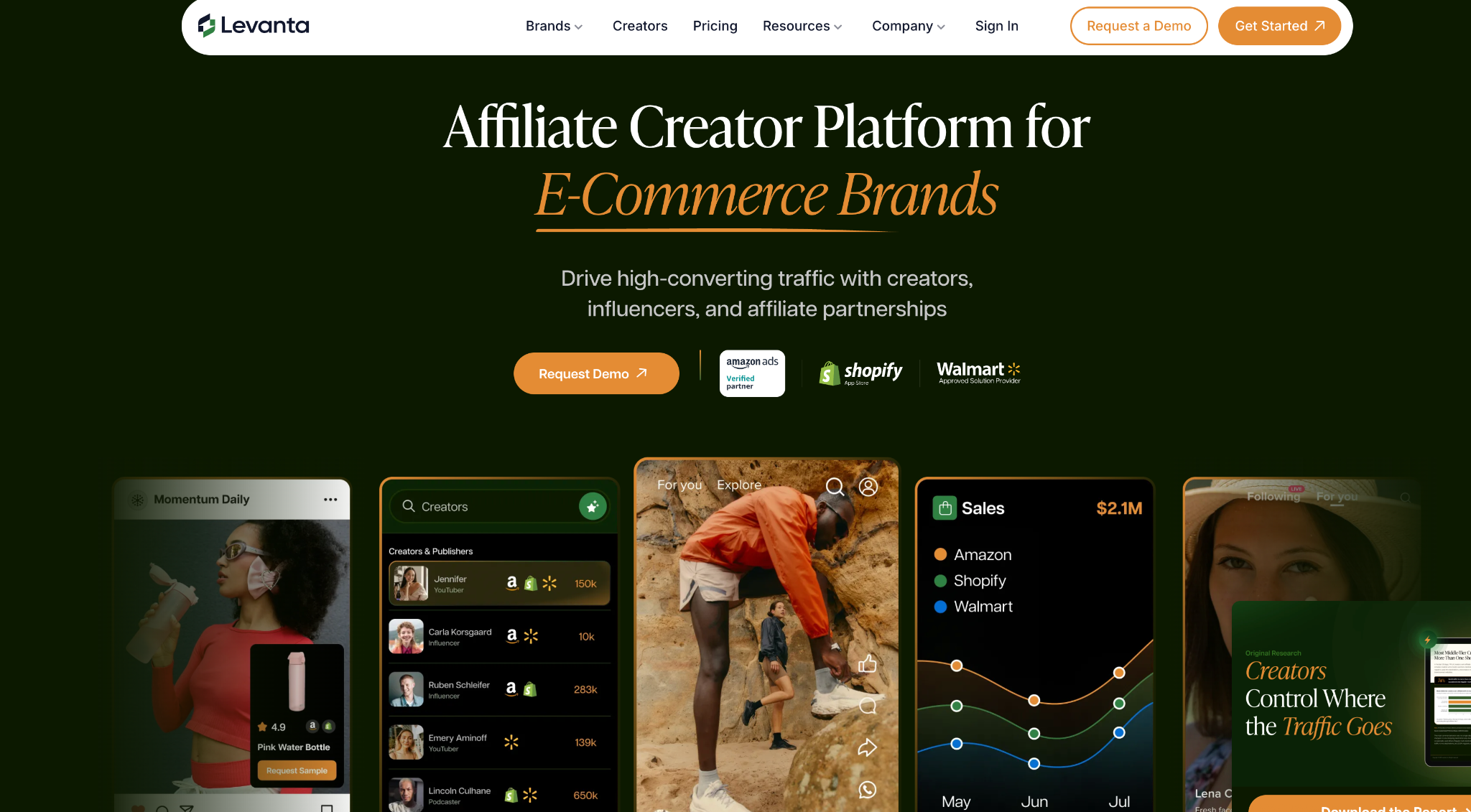
Levanta is a creator-affiliate platform built for brands selling through Amazon, Shopify, and Walmart. It combines creator discovery, custom commission offers, product sampling, performance tracking, creator payouts, and tax reporting. This cross-channel structure is particularly relevant to Amazon sellers that also operate a DTC store and want one partner program spanning multiple purchase destinations.
Levanta’s cross-channel brand platform supports Amazon, Shopify, and Walmart integrations. Its published brand pricing lists Levanta Gold at $750 per month plus 3.5% of affiliate sales revenue, while Enterprise pricing is customized. The economics and workflow are oriented toward established marketplace or omnichannel programs, so sellers should validate expected affiliate volume, margin, and partner recruitment needs before committing.
Comparative Workflow Summary
- Stack Influence: Managed micro-influencer activation, product seeding, UGC production, and completed-post accountability.
- impact.com: Multi-partner programs requiring a broad marketplace, contracting, automation, and advanced reporting.
- Refersion: Ecommerce affiliate tracking with first-party attribution, flexible commissions, and marketplace recruitment.
- Social Snowball: Shopify customer-to-affiliate conversion, referral automation, and creator-program operations.
- Tapfiliate: Multi-platform, self-managed affiliate tracking for teams that already have a recruitment strategy.
- GoAffPro: Low-cost testing and self-service affiliate administration for Shopify sellers.
- Levanta: Creator-affiliate partnerships across Amazon, Shopify, and Walmart.
How Should Ecommerce Sellers Choose Affiliate Software?
The right ecommerce affiliate software is the platform that removes the seller’s biggest operating constraint without creating unacceptable margin or workload pressure. Start with channel fit, then score partner supply, activation, attribution, payouts, integrations, economics, and team capacity. A feature-rich system is still a weak choice when the program cannot recruit or support active partners.
Use a one-to-five score for each of these factors:
- Channel Fit: Does the platform support Shopify, Amazon, Walmart, subscriptions, international stores, or multiple storefronts as required?
- Partner Supply: Does it provide a marketplace or creator network, convert customers into affiliates, or assume the brand already has partners?
- Activation Capability: Can it manage outreach, products, gifts, briefs, content, reminders, approvals, and creator communication?
- Attribution Depth: Does it support links, codes, first-party tracking, cross-device behavior, product-level reporting, and new-versus-returning customers?
- Settlement Operations: Can it manage conversion approvals, cancellations, returns, commissions, taxes, multiple currencies, and payouts?
- Program Economics: What are the subscription, setup, performance, overage, payout, commission, and product costs?
- Team Capacity: How much recruitment, communication, troubleshooting, reporting, and payment work remains with the seller?
Shopify sellers should also consider whether the affiliate program will operate independently or as part of a broader Shopify influencer marketing playbook. A creator producing reusable content may create value beyond directly tracked orders, while a coupon publisher may create measurable transactions without producing brand-owned creative assets.
Calculate the complete cost before comparing platforms:
Total program cost = software subscription + setup fees + performance fees + affiliate commissions + product costs + payout expenses + internal labor + leakage and refund costs
Next, calculate contribution profit after discounts, cost of goods sold, fulfillment, returns, commissions, and platform expenses. Attributed revenue alone can make an uneconomical program appear successful.
How Should Affiliate Performance Be Measured?
Measure affiliate performance as a chain from partner activity to contribution profit, not as a single revenue number. Track delivery, traffic, conversion, and economics separately, then reconcile the affiliate platform against Shopify, GA4, Amazon, or another transaction source. Use a consistent attribution window and treat marketplace or ranking changes as correlated outcomes rather than automatic proof of causation.
The Four-Layer Affiliate Measurement Stack separates leading indicators from financial outcomes.
1. Delivery Metrics
Delivery metrics reveal whether the program is producing activity:
- Affiliates recruited
- Applications approved
- Active affiliates
- Partners publishing content
- Links and codes distributed
- Products or samples delivered
- Completed creator posts
- Time from approval to first promotion
Recruitment totals are not enough. The active-affiliate rate and time to first promotion show whether partners are actually moving through the activation process.
2. Traffic Metrics
Traffic metrics show whether partner activity produces qualified visits:
- Link clicks
- Unique visitors
- Product-detail-page views
- Landing-page engagement
- New visitor rate
- Traffic by partner and content type
Shopify explains that its marketing reports attribute sales only when traffic can be connected to a trackable marketing effort, including externally managed campaigns using UTM parameters. This is one reason Shopify revenue reports and affiliate dashboards may not match exactly.
3. Conversion Metrics
Conversion metrics connect traffic to customer behavior:
- Product views
- Add-to-cart actions
- Checkout starts
- Purchases
- Units sold
- Average order value
- New-versus-returning customers
- Cancellations and refunds
Google’s recommended ecommerce events for GA4 include view_item, add_to_cart, begin_checkout, purchase, and refund. Consistent event implementation makes it easier to identify where affiliate traffic drops out of the purchase journey.
4. Economics Metrics
Economics metrics determine whether attributed activity creates profitable growth:
- Gross profit
- Affiliate commission
- Software and performance fees
- Product or sampling cost
- Fulfillment expense
- Refund-adjusted revenue
- Contribution profit
- Cost per new customer
- Customer repeat-purchase value
Delivery and traffic are leading indicators. Contribution profit and customer value are outcome metrics. A program can generate impressive clicks and attributed revenue while losing money after discounts, commissions, returns, product costs, and software fees are deducted.
Amazon Attribution, Brand Referral Bonus, and Creator Links
Amazon sellers need an attribution layer that can measure activity occurring outside Amazon. Amazon Attribution is a free measurement product for eligible advertisers that tracks how non-Amazon search, social, display, video, email, affiliate, and influencer campaigns contribute to Amazon engagement and purchases. Amazon currently reports a 14-day attribution window and metrics including clicks, detail-page views, add-to-cart actions, purchases, units, product sales, and new-to-brand orders.
Eligible brands can also review Amazon’s Brand Referral Bonus, which may return a portion of qualifying sales generated through non-Amazon marketing. Because eligibility, attribution, and bonus terms can change, Amazon sellers should confirm current program rules inside Seller Central before building the incentive into campaign forecasts.
The Amazon Influencer Program serves a different participant. It is an extension of Amazon Associates for qualifying creators and gives each approved influencer an Amazon page, commonly called an Amazon storefront, where recommended products can be organized. It does not replace the seller’s creator-recruitment, product-seeding, or campaign-management workflow.
Brands connecting external creators with marketplace sales can combine Amazon influencer marketing solutions with a carefully structured Amazon Attribution and Brand Referral Bonus guide. Each creator, channel, campaign, or creative variation should receive a distinct tag when practical, allowing the seller to compare outcomes without combining every promotion into one attribution bucket.
Where Attribution Breaks Down
No affiliate dashboard provides a complete causal record of customer behavior. Common gaps include:
- Customers switching devices or browsers
- Mobile app transitions
- Coupon codes copied to deal sites
- Affiliates entering late in an existing customer journey
- Multiple partners influencing the same order
- Cookie restrictions or deleted identifiers
- Returns recorded after the reporting period
- Direct traffic following an earlier untracked exposure
- Marketplace rank or organic sales changes occurring alongside other marketing
For that reason, sellers should reconcile partner-level data weekly and evaluate cohorts over longer periods. A seven-day view can diagnose broken links or inactive partners, while 30-day and 60-to-90-day views provide better evidence about refunds, repeat purchases, content reuse, and broader marketplace movement.
The Hidden Failure: Tracking Without Activation
The most overlooked affiliate-program failure is not inaccurate tracking. It is having too few relevant partners producing useful promotion. A technically perfect dashboard creates no value when approved affiliates never publish, creators receive no product, or the offer gives partners little reason to participate.
This distinction is central to affiliate versus influencer marketing. Traditional affiliate programs usually begin with measurable transactions, while creator programs may begin with product experience, content, trust, and audience exposure. The strongest ecommerce workflows can connect the two by using creator campaigns to identify partners who later earn performance-based commissions.
Activation depends on several operational inputs:
- A product partners can understand and demonstrate
- A clear audience and creator profile
- Competitive and financially viable incentives
- Reliable product or sample delivery
- A concise content brief
- Required advertising disclosures
- Follow-up and completion tracking
- Reusable content rights where appropriate
- Accurate, dependable payouts
This is why gifted influencer campaigns can serve as an affiliate-development pipeline. Product seeding lets creators experience the item before recommending it, while campaign completion data helps a brand identify which partners are responsive, credible, and capable of producing useful content.
A verified Stack Influence case study provides one operational example. During a three-month new-product campaign for Targus, 120 creator promotions generated 275,560 social impressions and 4,323 engagements. Average monthly unit sales increased from 56 to 221, while Amazon Best Seller Rank improved from #151,547 to #47,811 during the measured period.
Those figures do not establish that creator activity alone caused every marketplace change. They show why campaign delivery, content production, traffic, sales, and marketplace metrics should be evaluated together instead of reducing performance to the affiliate dashboard’s final revenue total.
How Do You Launch a 30-Day Affiliate Software Pilot?
Launch with a controlled partner cohort, a limited product set, tested tracking, and preapproved economics. The first 30 days should confirm that links, codes, commissions, cancellations, disclosures, payouts, and reporting work before the program expands. Measure activation and contribution profit, then scale only after the complete operating loop is reliable.
Days 1 to 7: Define the Economics
Select a small group of suitable products and calculate the maximum sustainable commission. Account for discounts, cost of goods sold, fulfillment, returns, software charges, performance fees, and partner payouts.
Document:
- Included and excluded products
- New-customer and repeat-customer rules
- Commission rates
- Coupon restrictions
- Attribution window
- Conversion-approval process
- Return and cancellation treatment
- Payment timing
- Program terms
Days 8 to 14: Test Attribution
Create test affiliates and complete controlled orders across the devices and purchase paths customers are likely to use. Confirm that links, discount codes, product-level commissions, taxes, refunds, and cancellations appear correctly in both the affiliate platform and the store’s transaction records.
Test at least:
- Desktop and mobile links
- Standard and discounted orders
- Multiple products in one cart
- Canceled orders
- Refunded orders
- Existing and new customers
- Coupon-only conversions
- Amazon Attribution tags when applicable
Days 15 to 23: Recruit and Activate Partners
Begin with a manageable cohort rather than opening the program to anyone who applies. Give each partner a concise brief, approved brand assets, product information, tracking instructions, and a clear explanation of how and when commissions are paid.
Brands working with creators should incorporate the FTC endorsement guidance into the brief. The FTC states that material relationships between advertisers and endorsers should be disclosed clearly, including relationships involving payment or free products.
Days 24 to 30: Reconcile and Improve
Compare recruited partners with active partners, then trace each promotion through clicks, conversions, refunds, commissions, and contribution profit. Interview several active and inactive partners to understand where onboarding or activation broke down.
Use the results to:
- Remove confusing instructions
- Correct tracking errors
- Refine commission tiers
- Improve product and creative assets
- Identify code leakage
- Segment high-potential partners
- Establish a reporting cadence
- Decide whether to expand the cohort
Programs using pay-for-performance affiliate deals should resist judging the pilot on attributed revenue alone. Some conversions may still be inside a return window, and creator content may continue producing traffic after the first 30 days.
Choosing the Right Ecommerce Affiliate Software
Choosing ecommerce affiliate software is a bottleneck decision, not a contest to find the dashboard with the longest feature list. Sellers first need to determine whether the program lacks partners, activation, attribution, payout infrastructure, cross-channel visibility, or internal management capacity.
Map those needs against the Bottleneck-First Affiliate Operations Stack, calculate the full program economics, and shortlist the platforms that solve the most important constraint. A controlled pilot can then reveal which option produces active partners, reliable data, and sustainable contribution profit.
For brands whose central challenge is creator activation rather than link generation, the logical next step is to evaluate a managed product-seeding workflow that connects vetted creators, authentic content, campaign coordination, and completed-post accountability.