




An engaging product video can still sit unused. The footage may show the wrong variant, arrive without the rights your ads need, or depend on an Amazon publishing route nobody agreed to manage. None of those problems appears in a creator’s highlight reel.
For ecommerce sellers comparing Amazon UGC services, the buying decision starts with where the content needs to appear and who will put it there. This guide compares seven providers, explains the costs that headline prices miss, and gives you an acceptance test for buying usable content rather than an impressive-looking delivery count.
Key Takeaways
- Match the service to the deliverable: brand-owned video files, creator social posts, and Amazon influencer uploads are separate purchases.
- Compare total project cost per accepted, licensed asset, not just price per delivered video.
- Confirm publishing responsibility, permitted uses, license timing, and revision terms before products leave your inventory.
- Measure content delivery separately from sales, and never make Amazon customer reviews a compensated campaign requirement.
The Amazon-Ready Acceptance Test
Amazon UGC services help brands source creator-made product content and, depending on the package, coordinate production, licensing, or publication. In commercial buying, “UGC” often means commissioned creator content, not an unsolicited customer contribution.
Use the Amazon-Ready Acceptance Test to define four requirements before comparing quotes:
- Destination: Name the exact placement and account responsible for publishing. A seller-uploaded product video, an influencer storefront upload, and an off-Amazon social post are different tasks.
- Product Proof: Identify the buying question the footage must answer, the correct product variant, and the demonstration needed to answer it.
- Permission: Specify allowed channels, advertising use, editing permissions, relevant third-party rights, and the license’s start and end dates.
- Handoff: Define file requirements, revision rounds, delivery deadlines, approval responsibility, and who fixes a rejected submission.
Amazon’s product-video guidance describes seller-uploaded videos and video modules available through eligible Premium A+ Content. Check the publishing tools available in your account before commissioning content for a particular placement.
A creator’s Amazon storefront is a separate route. Amazon’s influencer video-upload documentation explains that eligible creators can publish approved videos to their storefronts and that qualifying videos may appear on relevant product pages. Buying an upload does not buy a guaranteed carousel position.
Apply the test to a food-storage container. “Make an authentic video” leaves the result open to interpretation. “Show the correct container size, demonstrate the lid fastening, and show how it stacks in a cabinet” gives the creator a concrete assignment and the seller an observable acceptance standard.
A video passes the test when it meets the agreed creative, technical, and licensing requirements. Passing your acceptance test does not replace Amazon’s own review or guarantee distribution.
How Much Do Amazon UGC Services Cost?
Amazon UGC services use different pricing models, including per-video charges, completed-post fees, and subscriptions with separate creator payments. The useful comparison is the complete cost of an equivalent scope, not a supposed universal market rate.
Ask each provider to separate creator compensation, platform fees, product costs or reimbursements, shipping, editing, additional versions, usage rights, and publication. Also identify work your own team must perform after delivery.
For production-only comparisons, calculate:
Cost per Amazon-ready asset = total project cost ÷ assets passing the agreed acceptance test.
Consider an illustrative scenario with three hypothetical packages, each delivering 12 videos. Assume each total includes all production, product, shipping, platform, editing, and agreed licensing costs, but excludes social distribution and paid media spending:
- Package A: $1,800 total, or $150 per delivered video; six accepted assets produce a $300 cost per accepted asset.
- Package B: $2,160 total, or $180 per delivered video; nine accepted assets produce a $240 cost per accepted asset.
- Package C: $2,640 total, or $220 per delivered video; 12 accepted assets produce a $220 cost per accepted asset.
These are assumed outcomes, not provider quotes, industry rejection rates, or Stack Influence campaign results. They illustrate why the lowest delivery price can become the highest usable-content cost, not why expensive providers necessarily perform better.
Before purchasing, ask how acceptance problems are resolved. After the pilot, replace assumed acceptance counts with your actual results. Keep social-post distribution charges separate when comparing a content-only package with an influencer campaign.
Seven Amazon UGC Services to Evaluate
The providers below cover different parts of the content workflow. This comparison is published by Stack Influence and draws on provider documentation, not a standardized hands-on performance test; listing order is not a performance ranking. Provider details and public pricing were checked on September 10, 2026.
For sellers evaluating broader affiliate and campaign software, the Amazon influencer marketing platform comparison addresses a different purchase. Here, the focus is commissioning content and getting it ready for an intended use.
Stack Influence
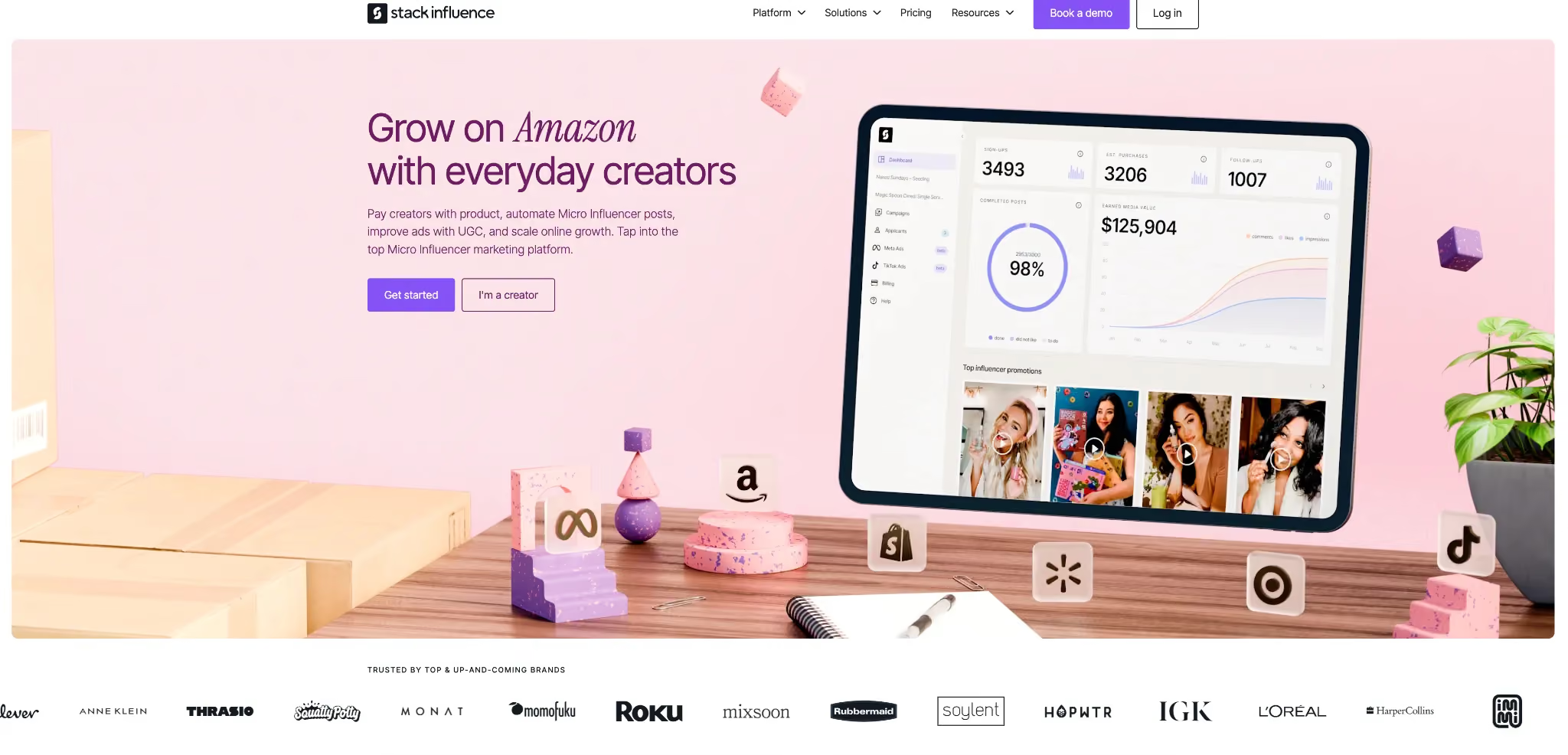
Stack Influence is a micro-influencer marketing platform built around gifted-first product seeding, vetted creator activation, and managed campaign execution. Its UGC workflow connects creator participation, product coordination, content collection, and completed-post accountability rather than leaving brands to assemble those tasks independently.
The distinction matters when a seller wants both creator participation and reusable content. The completions-only campaign model ties completed-post charges to creators finishing the agreed deliverable; product funding and the full campaign scope still belong in the budget. This is operational accountability, not a promise that every post will generate sales.
Its Amazon-focused campaign workflow is relevant when product seeding, social content, and marketplace traffic need to work together. Best-Fit Workflow: ecommerce teams that want vetted micro-influencer campaigns coordinated through completion while building a usable content library. Put the acceptance test into the campaign scope so that the intended placements, content formats, and usage terms are explicit from the beginning.
JoinBrands
JoinBrands provides an explicit Amazon shoppable-video campaign workflow. Its Amazon campaign documentation lets brands select “Content + Posting,” specify target ASINs, and have creators publish to their Amazon Influencer accounts. Brands can use direct shipping or product reimbursement, and campaign costs include job payments plus applicable platform fees.
This is a meaningful distinction for sellers buying creator publication rather than files alone. The documentation requires the video to remain live on the creator’s account for at least 14 days before the job is completed. Confirm the required live period, delivery timing, and permissions for brand reuse; that minimum storefront commitment is not a guarantee of ongoing product-page placement.
Billo
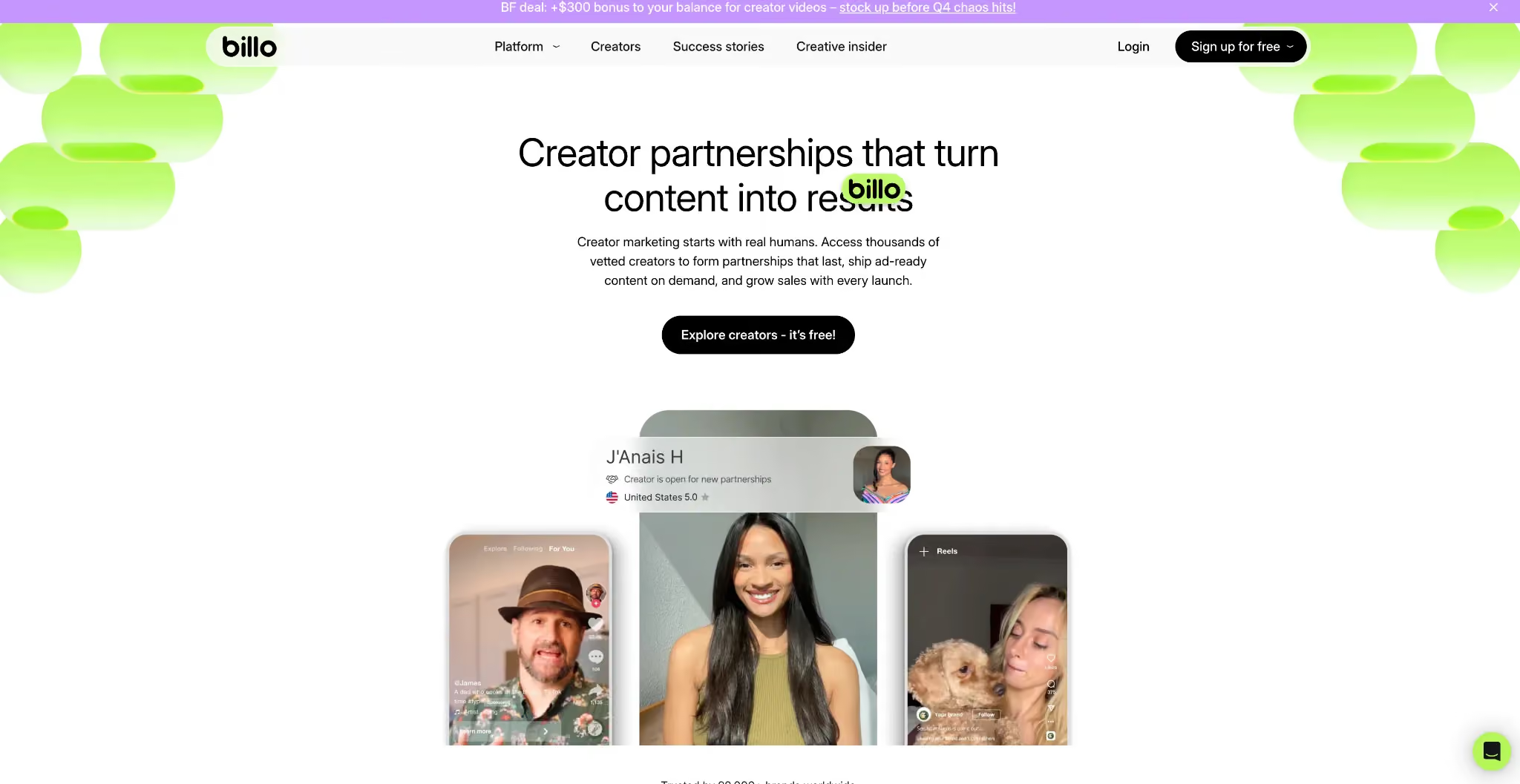
Billo’s Partnerships Hub connects brands with vetted creators and offers optional editing, organic Instagram or TikTok posting, and paid partnership services. Brands purchase packs that fund an account balance, then use that balance for orders. Its workflow is useful for commissioning demonstrations and producing different cuts from creator footage.
The practical tradeoff is scope: editing, additional crops, and creator posting are selectable services rather than interchangeable meanings of “a video.” An Amazon seller should specify the intended Amazon export separately from social-ad versions. Billo describes a transfer of content intellectual-property rights to the brand, but the order should still identify exactly which files and services are being purchased.
Insense
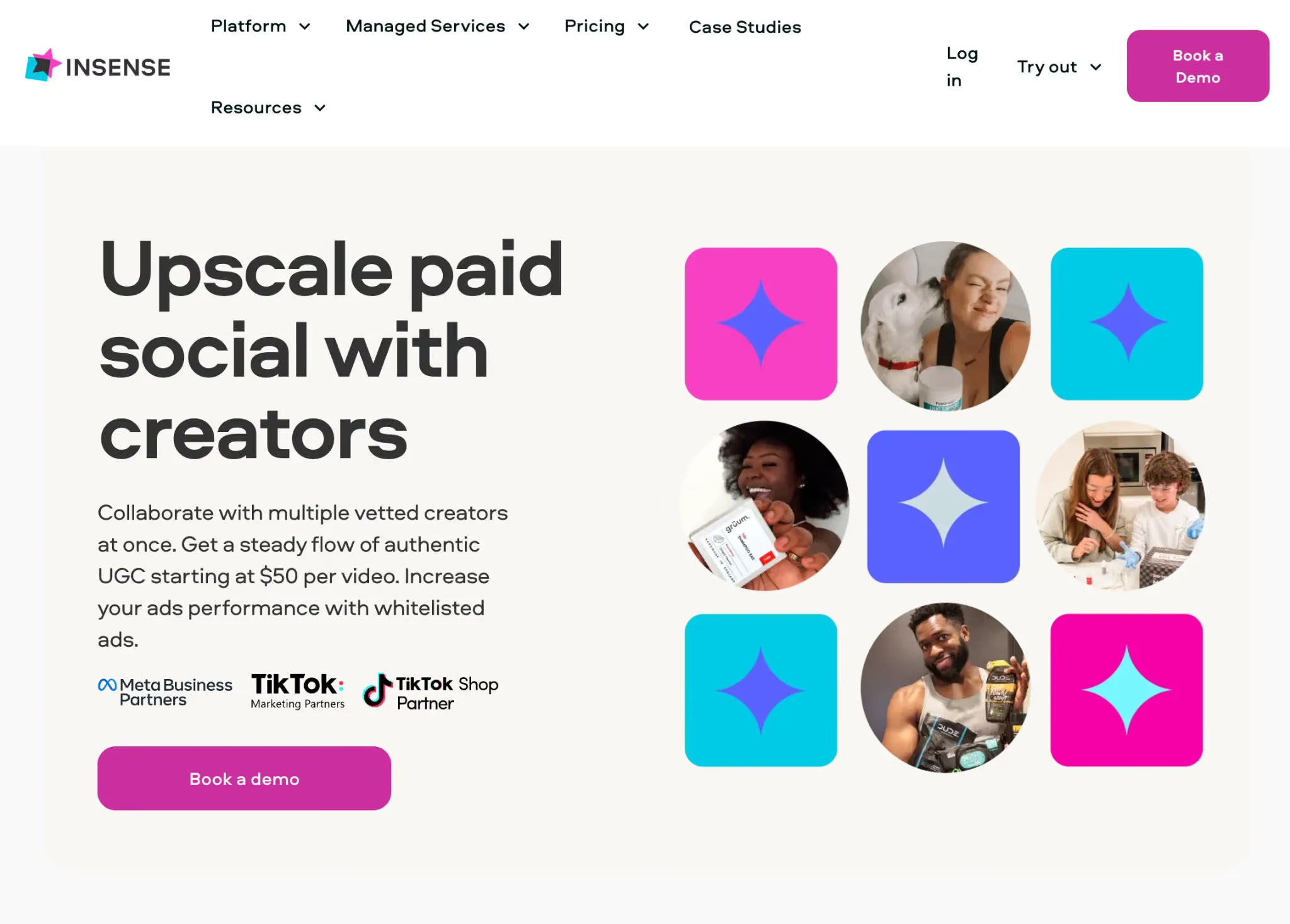
Insense combines UGC sourcing with creator collaboration and workflows for Meta Partnership Ads and TikTok Spark Ads. It is relevant when a seller wants creator footage for paid social campaigns alongside content for other commerce channels, rather than an isolated product-video order.
The budget distinction is important: Insense’s pricing separates platform subscriptions from creator payments and identifies additional marketplace fees. Teams should compare the full subscription period and creator spending against their planned production volume. The advertising integrations do not, by themselves, establish an Amazon publishing deliverable, so specify Amazon files, permissions, and publishing ownership in the brief.
soona
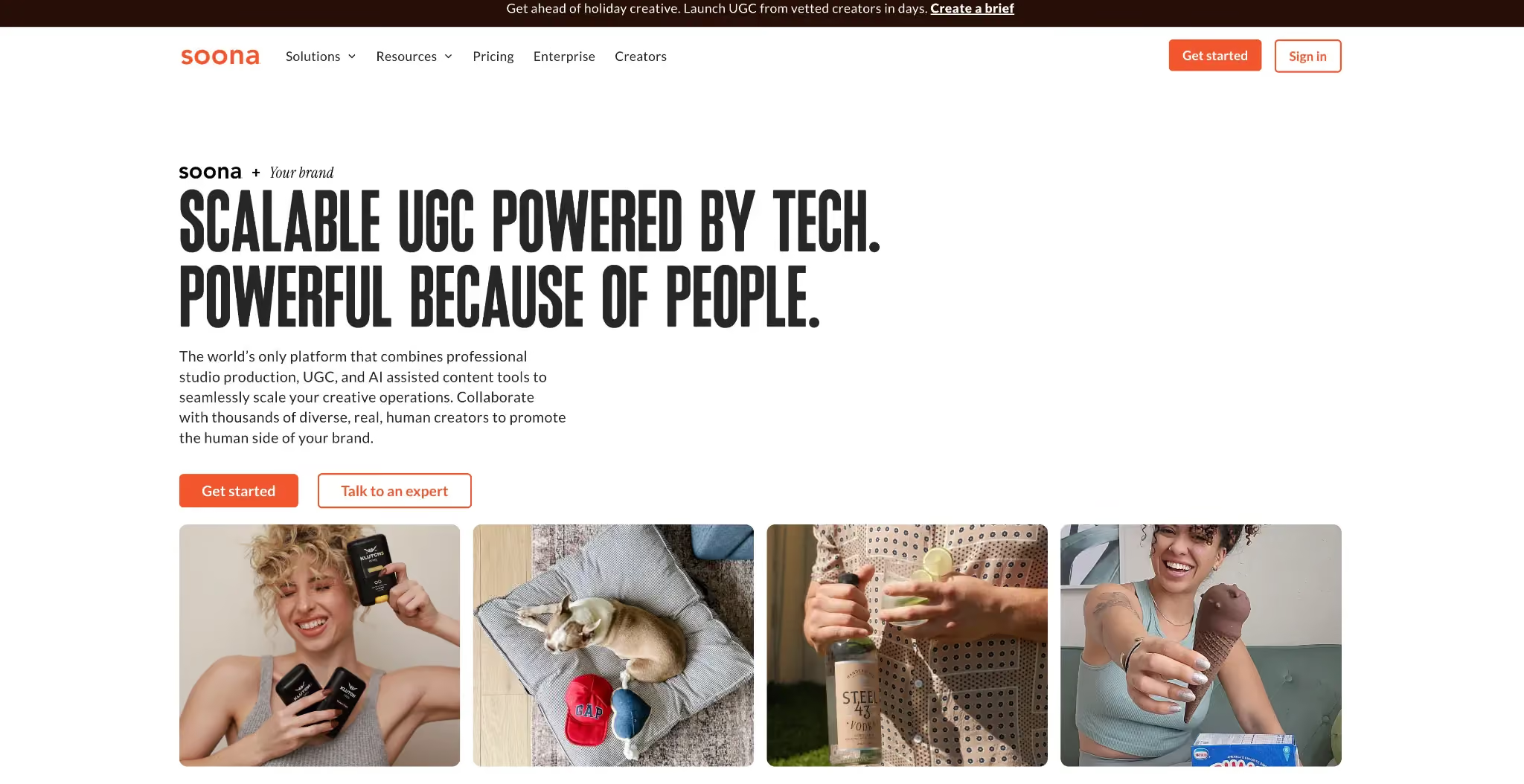
soona’s UGC offering sits alongside its studio-production services and uses a creator application-and-approval workflow. Its public page lists video prices from $89 to $259, depending on creator level, and describes an unlimited worldwide content license that includes Amazon use. Those are soona’s published terms, not an industry-wide price or licensing standard.
The operational tradeoff is that brands review or invite creators, ship products directly, collaborate, and approve the results. That can suit teams wanting direct involvement in content selection, but the shipment and approval workload still needs an owner. A completed production order should not be treated as an included Amazon storefront-posting service unless the scope expressly says so.
Collabstr
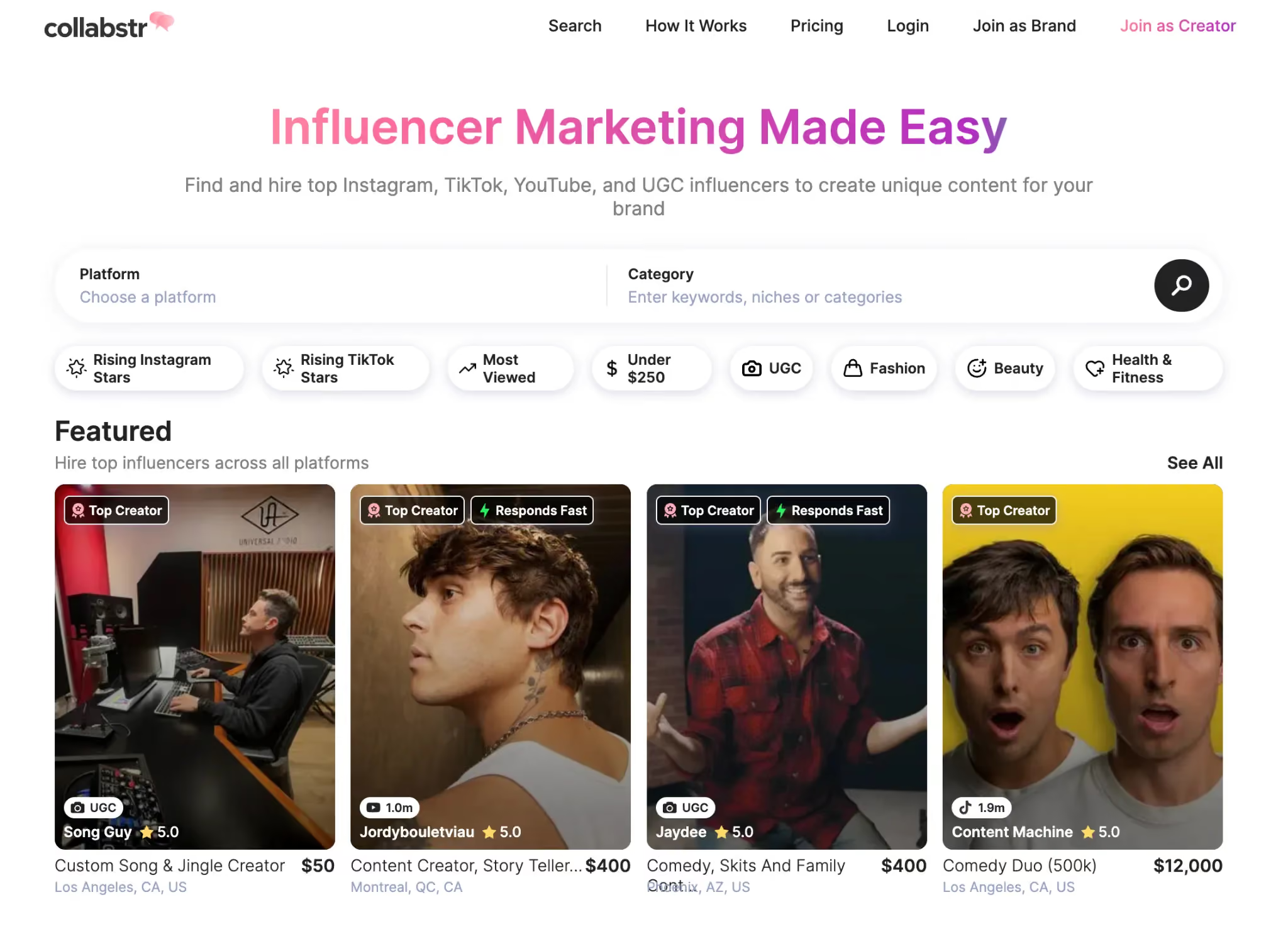
Collabstr lets brands search creators, evaluate packages, negotiate deliverables, and manage payment through the marketplace. Its categories include UGC and Amazon creators, making it relevant for sellers who want to compare individual portfolios and discuss a specific production or posting assignment before ordering.
The flexibility also creates a specification burden. A creator’s quoted package is not necessarily comparable with another creator’s package, particularly when usage rights, editing, or publication differ. Use the same acceptance test in each conversation and obtain a written scope before funding the order. The marketplace’s approval-based payment workflow is useful, but clear acceptance criteria remain the buyer’s responsibility.
Fiverr
Fiverr’s Amazon UGC marketplace contains individual service listings for product demonstrations, unboxing videos, and related creator work. The gig-based model makes it possible to purchase a narrowly defined assignment without treating the transaction as an ongoing influencer-management program.
The constraint is variation between sellers and packages. A starting price may cover a different duration, number of revisions, or deliverable from the next listing, so compare written inclusions rather than search-card prices. Ask for relevant product-demo samples and distinguish content production from creator posting. Reject any scope that makes compensated Amazon customer reviews part of the purchase.
Match the Provider to the Work
- Stack Influence: Managed product seeding, vetted creator activation, completed posts, and reusable ecommerce content.
- JoinBrands: Amazon shoppable-video jobs with an explicit creator-posting workflow.
- Billo: Creator video production with optional editing, social posting, and paid partnership services.
- Insense: Recurring creator production connected to paid-social campaign workflows.
- soona: Creator-produced assets alongside studio services, with published per-video pricing.
- Collabstr: Individually negotiated creator packages and marketplace-managed transactions.
- Fiverr: Discrete production assignments purchased through individual service listings.
The Hidden Cost of a License That Starts Too Early
A finite content license can lose useful campaign time before the first shopper sees the video. Treat the license start date as an operational requirement, not a detail to resolve after production.
Consider a separate illustrative scenario: a 90-day license begins on file delivery, cannot be extended, and allows publication only during that fixed term. A launch on delivery day leaves 90 licensed days available; delays of 14, 30, and 60 days leave 76, 60, and 30 days respectively. These are hypothetical contract assumptions, not default terms for the providers above.
The calculation is straightforward: remaining licensed days equal the greater of zero or 90 minus the publication delay. This measures available time, not the performance the content will produce during that time.
Before signing, ask whether the clock starts on delivery, acceptance, first publication, or another agreed event. Clarify renewal costs, the treatment of existing posts at expiry, and whether separately edited versions share the same term. Where a provider offers perpetual rights, a finite-license countdown may not apply, but the precise rights grant still matters.
Keep a content register with the asset owner, approved placements, license dates, and renewal contact. For Amazon and DTC brands reusing footage across channels, that register helps prevent a successful asset from becoming an unexpected permissions problem.
Keep Creator Content Separate From Customer Reviews
Pay for the agreed content or promotional deliverable, not an Amazon customer review. Amazon’s explanation of its customer-review policy prohibits incentivized customer reviews outside its permitted exceptions, including the separately administered Vine program. Calling a compensated review “honest” does not make it an acceptable campaign requirement.
Disclosure is a separate obligation. The FTC’s Disclosures 101 guidance explains that money, free products, and other material connections can require disclosure; for video endorsements, the disclosure should appear in the video rather than only in its description. The guidance also requires truthful representations of the creator’s experience.
Build disclosure and claim checks into approval. A reimbursed product purchase is not an independent customer testimonial simply because the creator completed a normal checkout, and a disclosed social endorsement is not permission to submit a compensated customer review.
Run a Small Content Test Before Expanding
Start with one product and a small set of distinct buying questions. For a storage-container launch, one creator could demonstrate capacity, another the lid mechanism, and another cabinet stacking. This is a suggested pilot structure, not a performance benchmark or a required campaign size.
Choose creators using demonstrated product-explanation skills. Clear close-ups, understandable speech, and the ability to show a feature matter more than follower count when you are buying files for brand-owned placements. For campaigns that also include distribution, add audience relevance and posting evidence; the guide to finding Amazon influencers explains an evidence-led approach to qualification.
Give each creator the correct variant, a factual product sheet, the assigned buying question, required demonstration shots, and prohibited claims. Specify the final file’s destination and format, and request any needed music-free or text-free version in advance. Do not assume an edited social post includes the separate files your publishing team needs.
For a managed product-seeding workflow, map product receipt, content completion, and reimbursement responsibilities before launch. Confirm that the retail listing and inventory are ready before activating traffic; content delivery and stock availability are separate dependencies.
Use one approval owner and a consolidated revision request. Distinguish an objective failure, such as the wrong variant or a missing agreed demonstration, from a new creative preference introduced after filming. At handoff, record which assets passed the acceptance test, which were published, and which still need work before authorizing the next production batch.
Measure Content Use and Amazon Sales Separately
Use two linked scorecards: one for content operations and one for commercial outcomes. Combining them into a single “UGC ROI” number too early makes it difficult to tell whether a campaign has a production problem, a distribution problem, or a conversion problem.
Content Operations
Track delivered assets, accepted assets, published assets, revision workload, and cost per accepted asset. Delivered and accepted counts are leading indicators; publication confirms that the content has reached an intended destination. Review the register weekly during production, then check license status while content remains in use.
Stack Influence’s published Targus campaign example recorded 120 creator promotions during a three-month new-product campaign. That is evidence of campaign activity, not a count of 120 unique, licensed Amazon listing videos. Ask for the asset-level breakdown before converting any provider’s promotion total into a content-library estimate.
Commercial Outcomes
For qualifying off-Amazon traffic, Amazon Attribution is a free measurement tool for eligible advertisers and uses a 14-day, last-touch model. Track clicks and detail-page views as engagement indicators, then purchases, attributed sales, and contribution profit as outcomes. Use distinct placement tags and let the attribution window mature before evaluating a final click cohort. The Amazon Attribution setup guide provides implementation context.
Amazon also describes a Brand Referral Bonus averaging 10% on qualifying sales for participating US seller brand owners. Confirm enrollment and eligibility rather than treating the average as an automatic discount on every campaign sale.
For creator content discovered inside Amazon, Amazon’s onsite-commission explanation describes a separate earning and reporting route. Request the reporting a creator can share; an off-Amazon attribution tag is not a substitute for evidence of onsite exposure.
For brand-owned listing videos, compare performance over matched periods while documenting changes in price, inventory, ads, and promotions. Use a controlled test where a suitable tool supports the intended placement; otherwise, describe the result as directional. The broader influencer measurement guide helps keep campaign metrics tied to their actual definitions.
Do not add overlapping affiliate and attribution sales as though they were separate orders. Attribution assigns credit under a model; it does not establish incremental sales caused by a video. Calculate profitability using the complete campaign cost and product contribution, not revenue alone.
Buy a Publishable Outcome, Not a Folder
The right Amazon UGC services connect a clear buying question with an agreed content deliverable, usable permissions, and a responsible publishing owner. A low quote loses its advantage when the resulting footage needs unexpected revisions or cannot run where you intended.
Start by writing the Amazon-Ready Acceptance Test for one product. Compare providers against the same scope, test a manageable batch, and expand from accepted content and measured results. For a coordinated product-seeding and creator-content campaign, use that brief to discuss a Stack Influence workflow that reduces follow-up work while building a content library your team can put to use.