


.avif)
The wrong influencer software can create more work than it removes. A seller may buy a huge creator database, then discover that outreach, product fulfillment, content approvals, usage rights, payments, and attribution still live in separate spreadsheets. A content creator may join several marketplaces, yet receive few relevant opportunities because the platforms use different participation models.
This guide compares nine of the best influencer marketing tools for ecommerce sellers and content creators in 2026. It explains what each platform actually owns, how creators gain access, where product seeding and UGC fit, what current pricing signals reveal, and how to measure a tool beyond its headline creator count.
Key Takeaways
- The strongest tool is the one that owns your operational bottleneck, not the one with the longest feature list.
- Creator database size is not directly comparable across platforms because an opted-in network, a vetted profile set, and a public social index represent different kinds of access.
- Ecommerce sellers should evaluate discovery, activation, fulfillment, rights, payments, and attribution as one connected workflow.
- Content creators should compare opportunity relevance, compensation structure, disclosure requirements, usage rights, payment timing, and repeat-partnership potential.
- Entry subscription prices rarely represent total program cost because internal labor, products, commissions, rights, and payment fees can exceed the software charge.
What Is an Influencer Marketing Tool?
An influencer marketing tool is software, a marketplace, or a managed platform that helps brands and creators complete one or more parts of a partnership workflow. Typical functions include creator discovery, outreach, product seeding, campaign management, content approval, UGC storage, affiliate tracking, payments, reporting, and relationship management.
The category includes several different products. Discovery databases help teams build shortlists, while creator marketplaces let brands and creators opt into opportunities. Campaign platforms organize briefs, contracts, approvals, content, and reporting.
Affiliate tools connect creator activity to sales. Managed platforms take responsibility for more of the execution rather than only supplying software.
That distinction matters because a seller learning how to hire influencers systematically may need an end-to-end operating layer, while an experienced creator manager may only need better discovery or analytics. Content creators face the same decision from the other side: some tools expose open campaigns, while others primarily support brand-led outreach.
The Campaign Ownership Test
The Campaign Ownership Test evaluates an influencer tool by the handoffs it controls. Instead of asking whether a platform has “AI discovery” or “analytics,” map who performs each action, what evidence confirms completion, and where the next person receives the information.
Use six layers:
- Source: Where do creator profiles come from, how current is the data, and are creators actively opted into partnerships?
- Activate: Does the tool support applications, direct invitations, outreach, negotiation, or managed matching?
- Fulfill: Who handles product selection, shipping, marketplace purchases, reimbursements, discount codes, and exceptions?
- Govern: Where do briefs, agreements, content approvals, usage rights, disclosure rules, and revision history live?
- Measure: Can the team connect delivered content to reach, clicks, affiliate sales, Amazon activity, Shopify orders, and reusable assets?
- Repeat: Does the system handle payments, creator history, performance tiers, reactivation, and ambassador or affiliate progression?
Governance is not optional. The FTC's disclosure guidance says creators should disclose material connections, including free or discounted products, and place the disclosure where people can notice it. A useful platform should make the requirement visible in the brief and review process rather than treating compliance as a final reminder. (Federal Trade Commission)
For creators, the same test reveals whether a platform supports a real working relationship or only stores a profile. A strong creator experience makes the offer, deliverable, compensation, rights, approval process, and payment trigger understandable before work begins.
Database Size Is Not Creator Access
Published creator-universe figures vary dramatically. Stack Influence's supplied company data lists roughly 600,000 vetted creators; GRIN reports 700,000-plus active creators; Upfluence describes 14 million-plus vetted creator profiles; CreatorIQ publishes 20 million profiles; HypeAuditor lists a 227.2 million-plus database; and Modash indexes 380 million-plus public Instagram, TikTok, and YouTube profiles with more than 1,000 followers. (GRIN - Influencer Marketing Software)
Those numbers should not be ranked as though they measure the same asset. An opted-in creator network indicates potential willingness to collaborate, while a public-profile index maximizes research coverage but does not guarantee that a creator will reply, accept a product, or complete a campaign. Compare the access definition, freshness, filters, activation method, and completion workflow before treating the largest number as the strongest option.
9 Best Influencer Marketing Tools for Ecommerce Sellers and Creators
These tools were selected for active 2026 availability, ecommerce relevance, verifiable official documentation, and a meaningful role in the brand-to-creator workflow. This is not a universal scorecard. The reviews are organized around workflow specialization because a managed product-seeding platform, a public discovery database, an enterprise operating system, and a native commerce program solve different problems.
Stack Influence
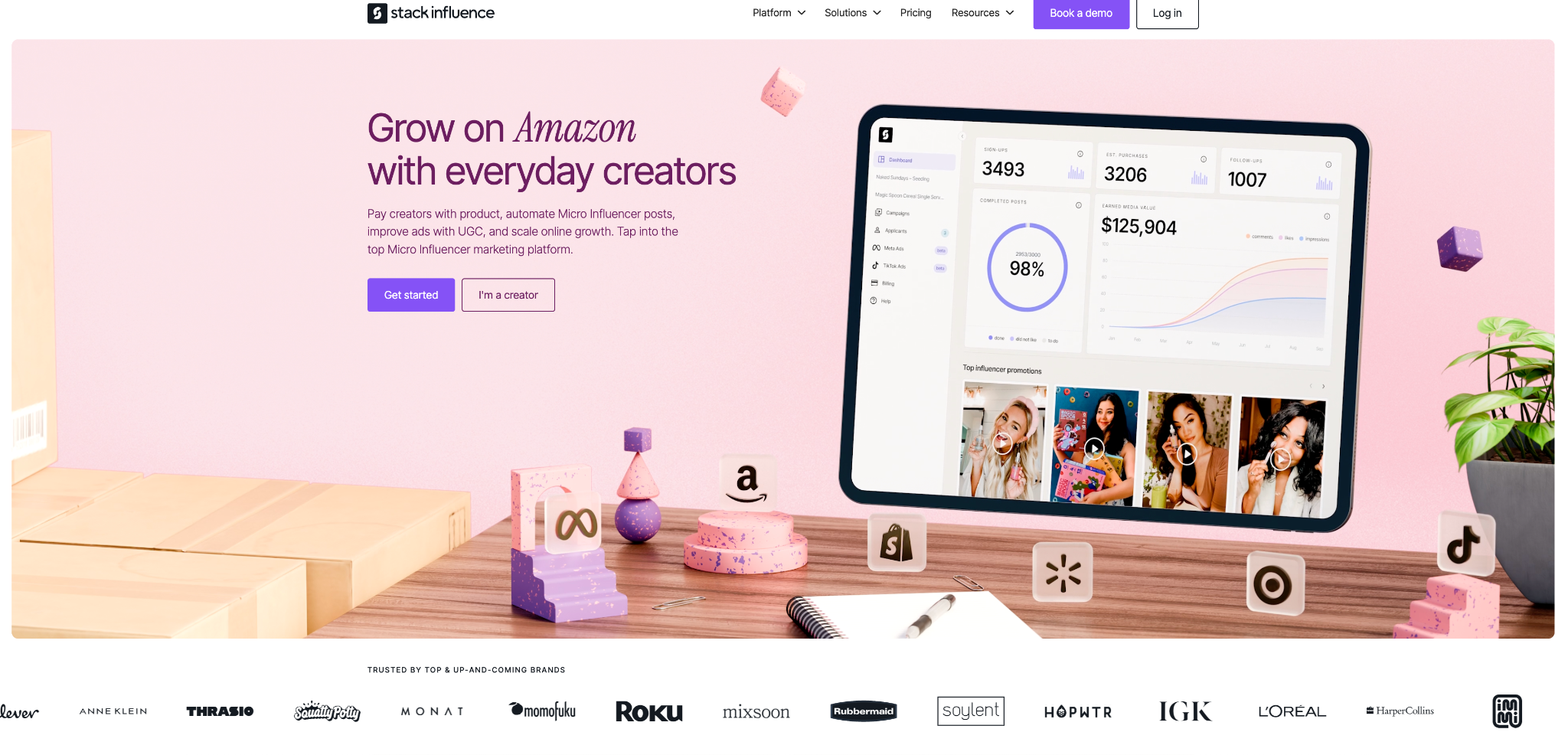
Stack Influence's platform overview describes a micro-influencer workflow built around creator sourcing, vetting, campaign coordination, product seeding, promotion verification, and content tracking. Its automated product-seeding workflow has creators purchase products through the brand's ecommerce store or marketplace listing, then validates the agreed social post before triggering reimbursement. This connects product movement, creator communication, completed-post accountability, and campaign visibility in one operating process.
The platform is designed for ecommerce brands that want more than a list of creator names. Brands can use the resulting UGC workflow to collect creator assets for broader marketing use, subject to the campaign's rights terms. The supplied company data identifies roughly 600,000 vetted creators and a gifted-first, completions-only model, commonly described as influencer insurance because platform spend is tied to completed creator posts rather than incomplete participation.
A verified Stack Influence case study for NYK1 recorded 483 creator promotions, 2.15 million social impressions, and 83,471 engagements during a six-month campaign. Over the measured campaign period, average monthly unit sales increased from 482 to 2,965 and Amazon Best Seller Rank moved from #9,223 to #743. The case is an operational example, not a forecast, and it does not prove that creator activity alone caused every marketplace change.
- Best-Fit Workflow: Managed micro-influencer activation, gifted-first product seeding, ecommerce UGC generation, creator coordination, and completed-post accountability for Amazon, Shopify, and DTC campaigns.
GRIN
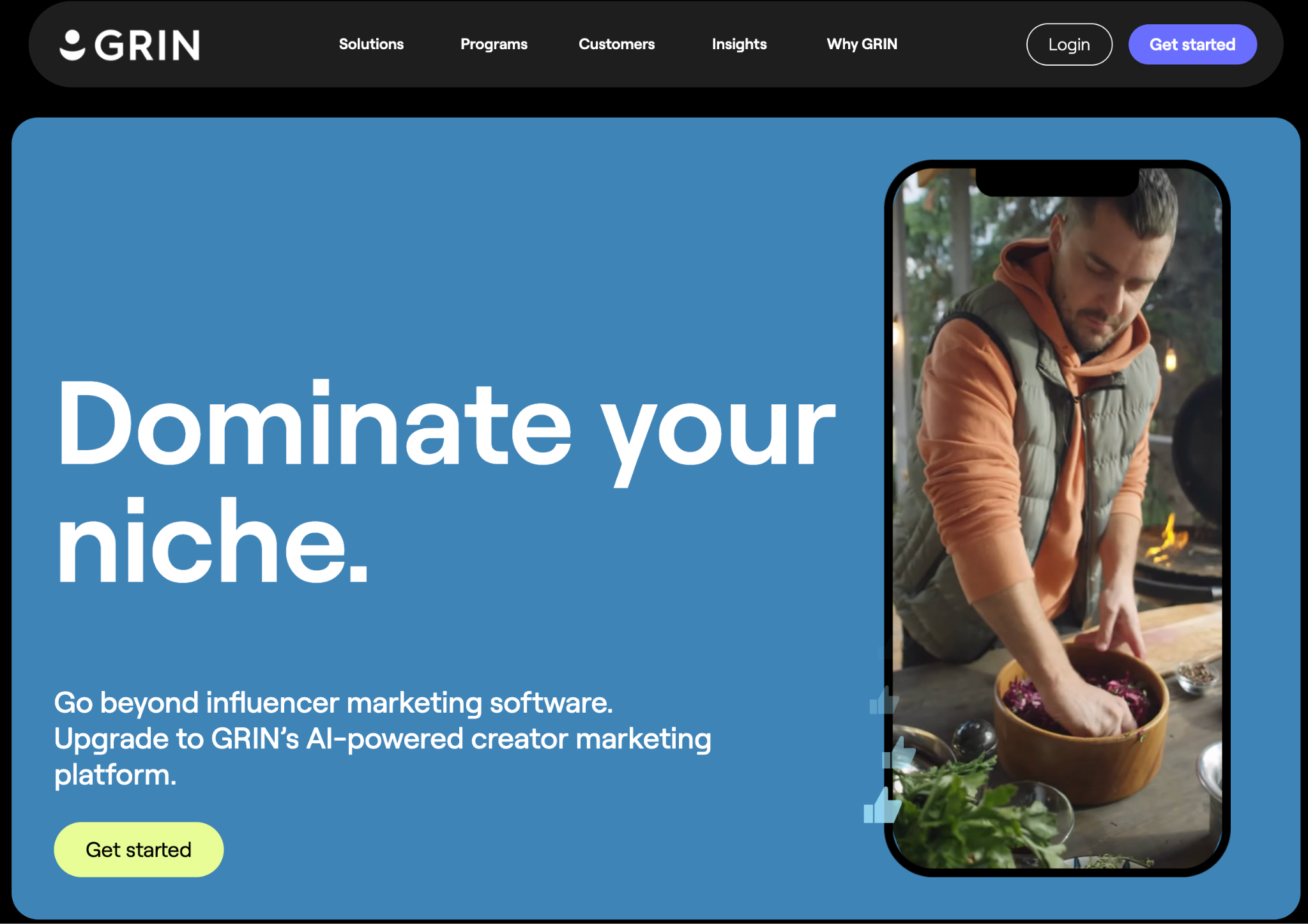
GRIN with Gia now presents itself as an AI-operated creator marketing platform. Its connected workflow covers finding creators, launching campaigns, negotiating, paying, tracking, and reporting, while the brand team approves higher-value decisions. That is a meaningful shift from software that only gives a team another dashboard to operate.
GRIN reports an opted-in network of more than 700,000 creators, a free creator app, and no commissions for simple affiliate programs. Paid plans start at $200 per month, while more advanced Gia work supports tasks such as gifting workflows and managed partnership activity. The practical tradeoff is governance: brands should configure approval thresholds, offer rules, and payment triggers carefully because the product is designed to move work forward automatically.
Aspire
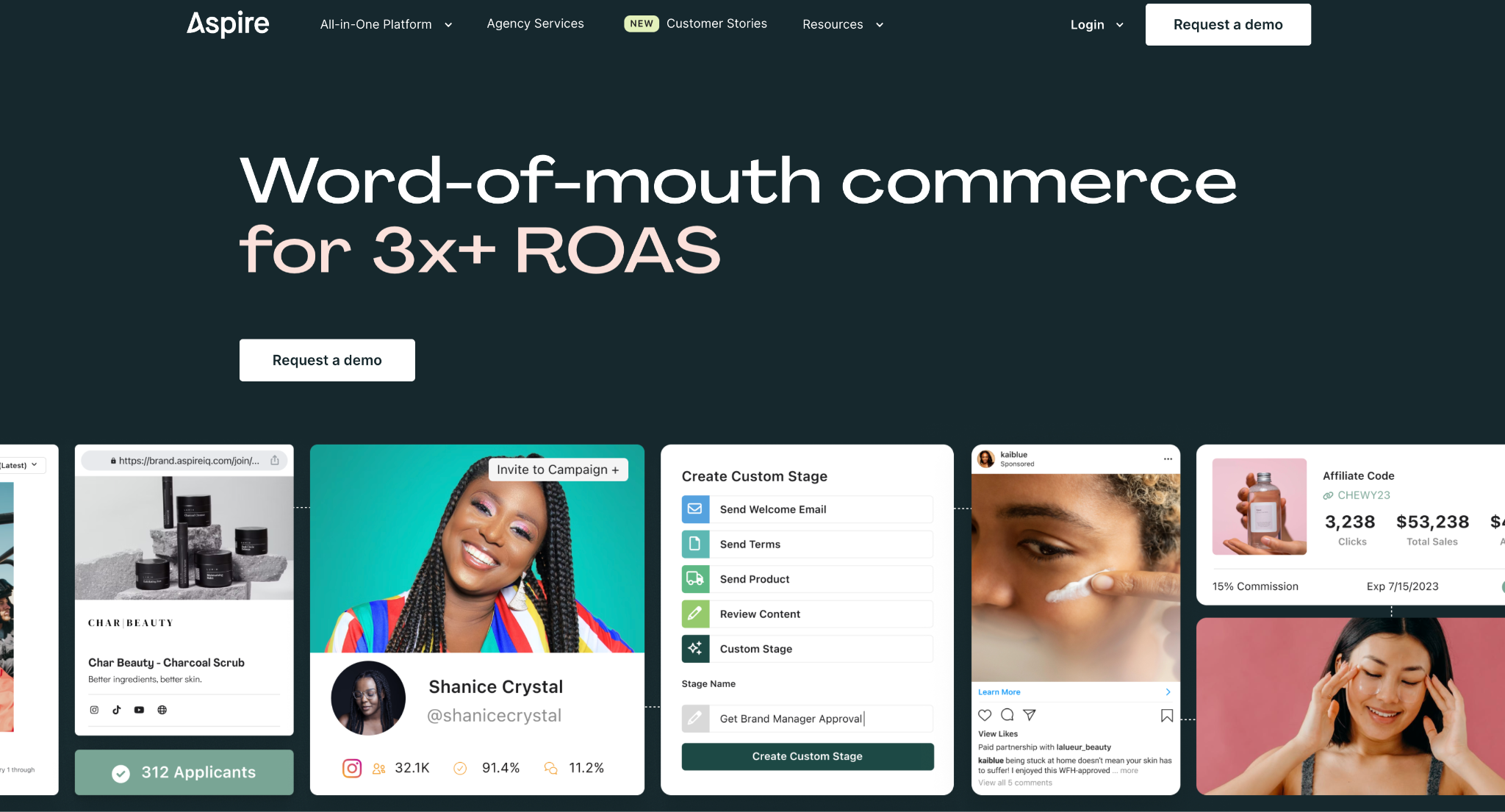
Aspire combines creator discovery, a marketplace, contact management, briefs, agreements, content approval, workflow automation, Shopify fulfillment, affiliate links, promo codes, commissions, payments, paid-media permissions, and reporting. It can therefore support product seeding, paid influencer campaigns, affiliate programs, ambassador relationships, and UGC libraries within one broad system.
The Aspire creator marketplace gives creators a path to browse and manage brand opportunities, while brands can combine inbound applicants with direct discovery. Standard subscription tiers were not displayed on the official product pages reviewed, which route buyers toward a demo. Because the feature set is broad, ecommerce teams should scope which modules, integrations, approvals, and services they will actually operate before evaluating the commercial proposal.
Modash
The Modash discovery engine indexes more than 380 million public profiles across Instagram, TikTok, and YouTube, including public accounts with more than 1,000 followers. The broader platform adds creator evaluation, contact data, an inbox, relationship management, content tracking, Shopify gifting, affiliate functions, and payments, making it useful for teams that want a research-led self-service workflow.
Modash's coverage is a public social index rather than an exclusively opted-in marketplace. That expands the research universe, but it also means the brand still owns the work of turning a profile into a responsive, qualified partner. For creators, the operational lesson is to keep public bios, contact details, niche signals, and recent content accurate because those public signals determine whether discovery systems can surface the profile.
Upfluence
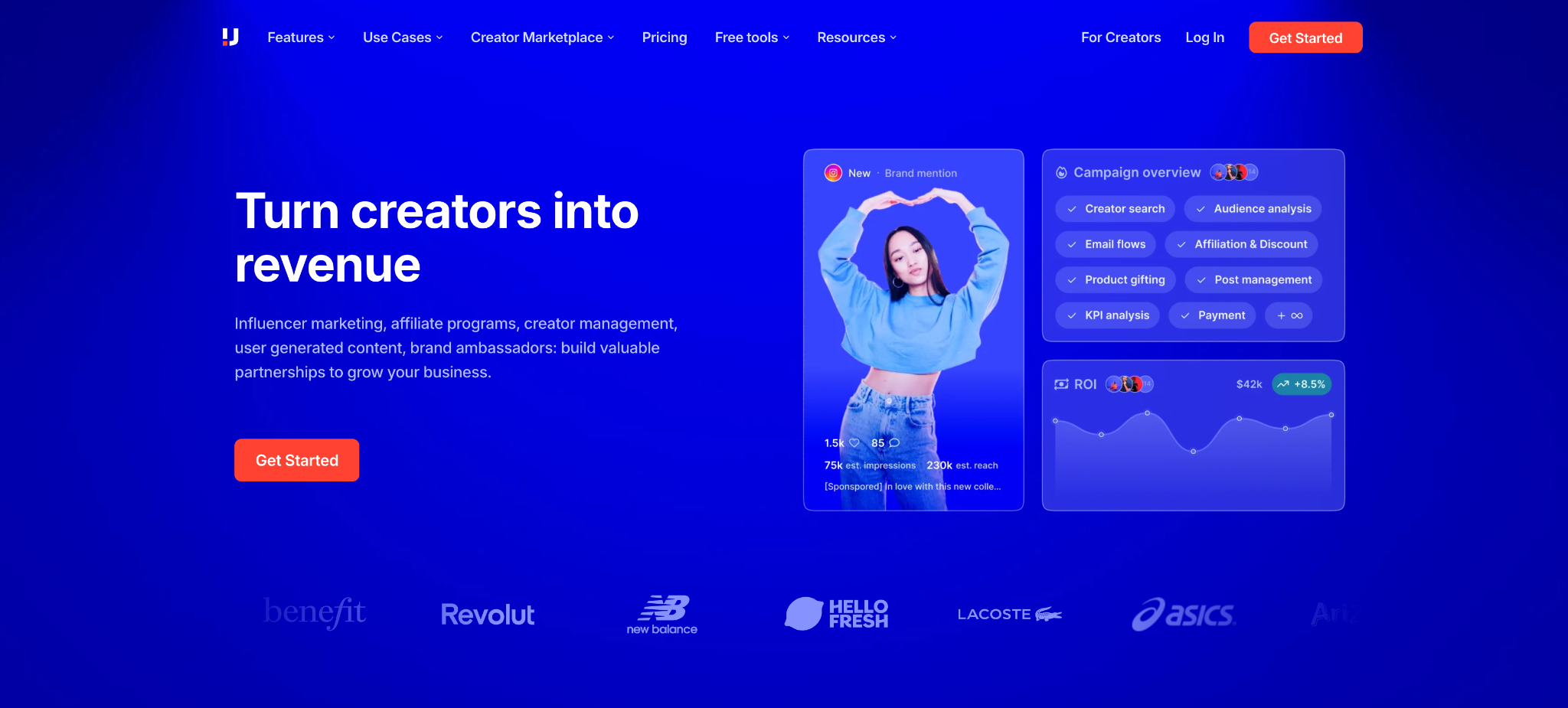
The Upfluence feature set combines creator search, outreach, campaign status tracking, product gifting, promo codes, affiliate links, payments, and sales reporting. Its ecommerce positioning is especially visible in integrations for Shopify and other stores, while its Amazon Attribution integration supports creator deep links, product sending, fixed or percentage incentives, and marketplace conversion metrics.
Upfluence uses modular, custom-quoted pricing across Find, Scale, and Autopilot, with a fixed platform fee and no percentage of sales. That structure can let brands buy around a particular operating need, but teams should confirm which discovery, management, automation, payment, and data volumes are included in the proposed configuration. Its separate creator API also illustrates how the platform can serve companies building a customized creator-data layer.
Shopify Collabs
Shopify Collabs is a marketplace-style affiliate tool inside the Shopify ecosystem. Merchants can send direct invitations, accept applications, create open-access commission offers, send gifts and codes, track affiliate sales, and pay creators. Existing creators can search for products, build commission links, and participate in merchant programs from the same system.
The app is free to install for eligible Shopify merchants, with a 2.9% merchant processing fee on creator commission payments. A material current constraint is that Shopify was not accepting new creator signups when its help center was checked on August 29, 2026, although existing creators can continue and merchants can still invite creators or accept applications. The workflow is therefore strongest as a Shopify-native affiliate and ambassador layer, especially when the merchant already knows whom it wants to recruit.
CreatorIQ
CreatorIQ is an enterprise creator-marketing operating system focused on discovery, creator evaluation, campaign execution, measurement, brand safety, global governance, and compliance. Its official pricing overview describes 20 million profiles, creator onboarding, campaign management, payments, ecommerce and affiliate integrations, ad permissions, and organization-wide reporting.
The platform is designed for brands and agencies that need standardized creator data and workflows across teams, markets, and business units. Pricing is request-based rather than a public self-service tier. Smaller ecommerce teams should therefore evaluate not only feature access but also implementation scope, governance needs, integrations, and the internal team that will own the system after launch.
HypeAuditor
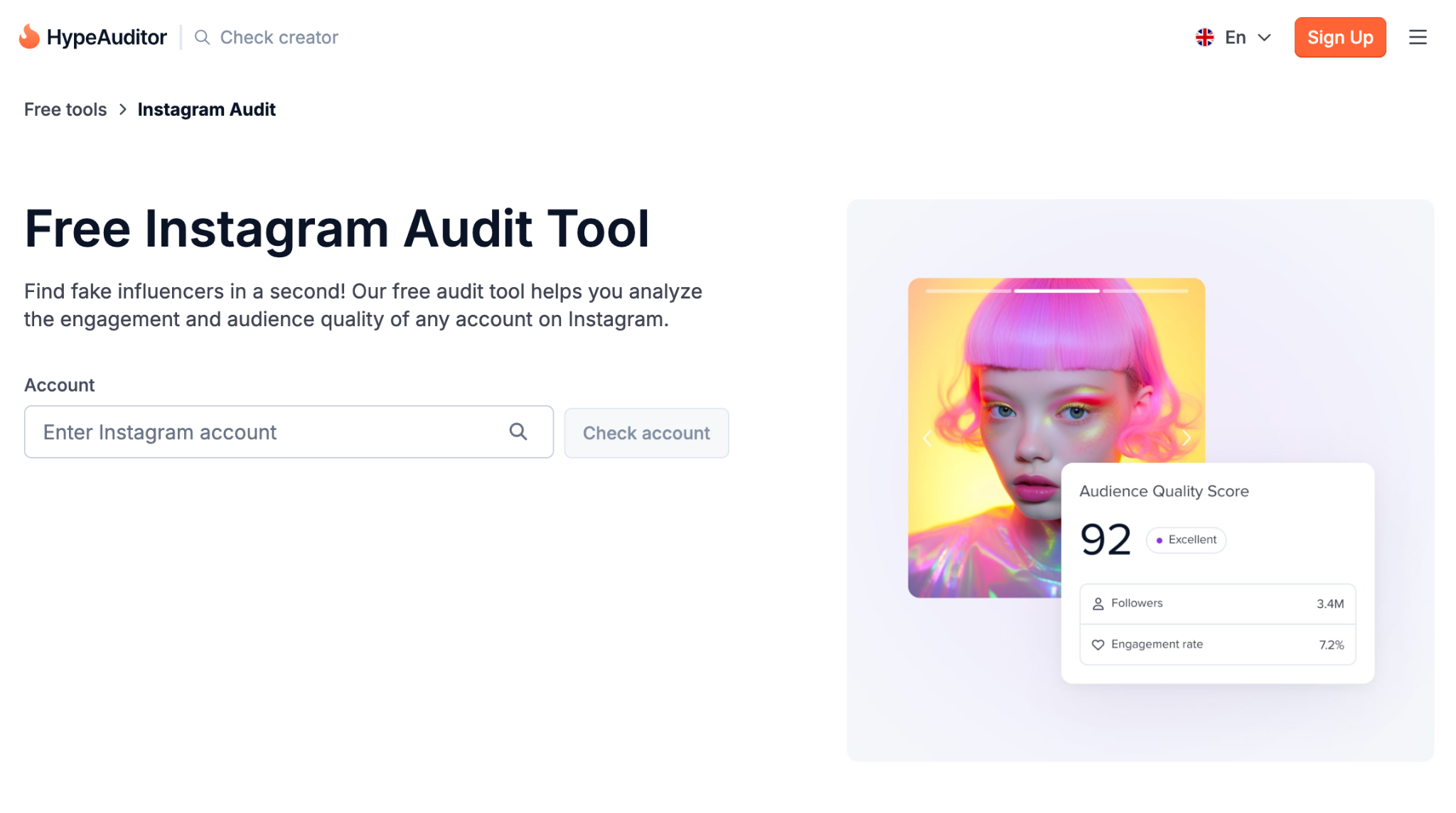
HypeAuditor combines a 227.2 million-plus creator database with audience analysis, fraud indicators, outreach, CRM, media planning, campaign tracking, ecommerce measurement, payments, competitor analysis, and professional services. It is particularly practical when creator vetting and audience quality are central to the buying decision, but the current platform extends beyond analytics into campaign execution.
HypeAuditor's Basic plan starts at $299 per month when billed annually, with higher tiers increasing access to advanced filters, recruitment tools, data volume, and market analysis. Free media plans and campaign-management access are available in a limited form. Buyers should compare usage limits, exports, contact allowances, and required modules against expected campaign volume rather than assuming that every advertised capability has unlimited access.
Amazon Creator Connections
Amazon Creator Connections is a native Amazon service that connects brands selling on Amazon with eligible Amazon creators. Brands create campaigns by setting a budget, commission rate, and duration; creators choose relevant opportunities; and Amazon provides aggregate campaign performance in the portal. This makes the tool useful for commission-led creator activity close to the Amazon transaction.
Creators generally need participation in the Amazon Influencer Program and the relevant Creator Connections eligibility. The tradeoff is specialization: Creator Connections is an Amazon-native commerce program, not a general multi-channel creator CRM, product-seeding operation, or UGC-rights library. Sellers comparing it with broader platforms should separate native affiliate reach from the creator sourcing, fulfillment, content, and relationship work explained in this guide to finding Amazon influencers.
Which Tool Is Best for Each Workflow?
The best choice depends on which part of the creator program needs an owner. Stack Influence centers managed product seeding and completed content; GRIN emphasizes AI-operated program work; Aspire and Upfluence connect broad ecommerce workflows; Modash and HypeAuditor emphasize discovery and analysis; CreatorIQ serves enterprise governance; Shopify Collabs and Amazon Creator Connections provide commerce-native programs.
- Stack Influence: Best for managed micro-influencer product seeding, ecommerce UGC, and completion accountability.
- GRIN: Best for teams that want an AI operator connected to creator CRM, campaigns, affiliate work, payments, and reporting.
- Aspire: Best for broad ecommerce creator programs spanning marketplace recruitment, gifting, UGC, affiliate sales, and paid amplification.
- Modash: Best for self-service discovery across a very large public profile index, followed by outreach, tracking, gifting, and payments.
- Upfluence: Best for modular influencer and affiliate operations with strong ecommerce and Amazon measurement connections.
- Shopify Collabs: Best for Shopify-native creator invitations, gifts, links, codes, commission tracking, and payouts.
- CreatorIQ: Best for global organizations that need governance, safety, compliance, integrations, and standardized reporting.
- HypeAuditor: Best for analytics-led discovery, audience authenticity, competitive intelligence, and campaign measurement.
- Amazon Creator Connections: Best for Amazon-native commission campaigns between marketplace brands and eligible Amazon creators.
Content creators should also compare how opportunities arrive. An open marketplace rewards a complete, searchable profile; direct-outreach systems reward strong public contact signals; and managed product-seeding programs emphasize niche and campaign eligibility. The micro-influencer platform guide for creators explores that creator-side decision in more depth.
What Most Tool Lists Miss: Operating Ownership
Feature lists hide the largest source of tool regret: the work that remains outside the software. Two platforms may both advertise discovery, campaigns, and analytics, yet one still expects the brand to recruit every creator, solve product issues, chase late content, document rights, and reconcile payments manually.
Use four operating models to clarify ownership:
- Research-owned: The tool improves discovery and vetting, while the brand owns outreach, negotiation, and most execution.
- Program-owned: Software centralizes relationships, campaigns, approvals, links, payments, and reporting, but the brand team operates the program.
- Commerce-native: The retailer or ecommerce platform connects creators to products, commissions, and native transaction data inside one ecosystem.
- Managed execution: The platform or service takes responsibility for more creator activation, fulfillment coordination, follow-up, verification, and completion.
None of these models is automatically superior. The right model depends on whether the team wants software leverage, native commerce access, or execution capacity. A low subscription can still produce a costly program when internal labor is high, while a higher-service model may replace work that would otherwise require several people and tools.
Creators should perform the same ownership check before accepting an opportunity. Confirm who answers product questions, who approves drafts, whether revisions are limited, how long usage rights last, what event triggers payment, and whom to contact when a shipment, link, or deliverable fails.
How Much Do Influencer Marketing Tools Cost?
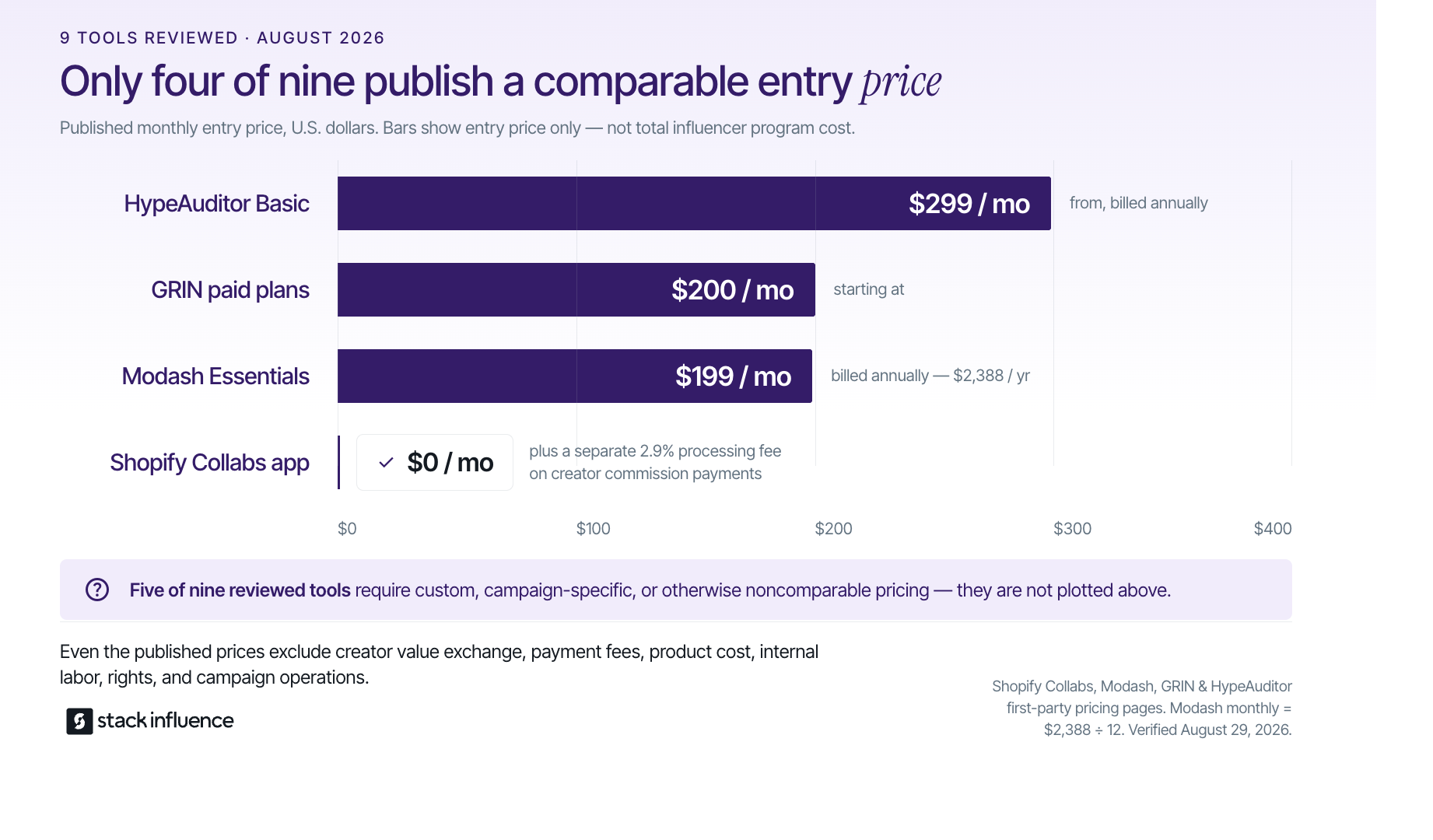
Influencer marketing tools use several pricing models, including free commerce apps, monthly subscriptions, annual contracts, custom enterprise quotes, creator commissions, payment-processing fees, campaign budgets, and managed-service economics. Compare the total cost of operating the program, not only the lowest advertised software price.
As of August 29, 2026, four of the nine reviewed tools published a directly comparable self-service entry signal. Shopify Collabs' published pricing shows a $0 app subscription plus a 2.9% processing fee on creator commission payments; Modash Essentials pricing starts at $199 per month when paid annually; GRIN's published starting price is $200 per month for paid plans; and HypeAuditor's Basic plan starts at $299 per month when billed annually.
The other five tools did not present a directly comparable standard monthly entry price for this review. Some use custom quotes, some use campaign-specific economics, and some combine software with execution or native marketplace structures. That does not mean they are more expensive; it means buyers need a scoped proposal before making a valid comparison.
Calculate total program cost as the sum of:
- Platform access: Subscription, campaign, or managed-service fees.
- Internal labor: Sourcing, outreach, briefing, approvals, follow-up, support, reporting, and finance time.
- Creator value exchange: Cash fees, product cost, affiliate commission, bonuses, or a hybrid offer.
- Operations: Shipping, reimbursements, returns, replacement products, taxes, and payment processing.
- Content economics: Editing, paid-media permissions, licensing extensions, storage, and repurposing.
- Measurement: Tracking setup, integrations, data cleanup, analysis, and experiment design.
A useful influencer marketing platform pricing guide should therefore be treated as a model comparison, not as a single price leaderboard. Ask every vendor for the same campaign scenario, creator volume, channels, rights period, integrations, support level, and payment assumptions.
How Should Ecommerce Brands Measure Tool Performance?
Measure an influencer tool from delivery through business outcomes. The platform should reduce operational friction, produce usable creator content, create attributable traffic or sales where possible, and improve the team's ability to repeat strong partnerships. Reach and engagement are useful leading indicators, but they are not substitutes for delivery quality, economics, or incrementality.
Use the Delivery-to-Profit Metric Stack:
- Delivery metrics: Accepted creators, activated creators, products obtained, on-time posts, completion rate, revision rate, and unresolved exceptions.
- Content metrics: Approved assets, video share, cost per usable asset, usage-rights coverage, creative themes, and repurposing rate.
- Attention metrics: Reach, impressions, views, watch time, saves, shares, comments, and audience quality.
- Traffic metrics: Tracked clicks, landing sessions, Amazon detail-page views, add-to-carts, and code usage.
- Commerce metrics: Orders, units, product sales, new-customer share, returns, gross margin, commission cost, and contribution profit.
- Relationship metrics: Creator response rate, repeat participation, reactivation, payment time, creator retention, and progression into affiliate or ambassador partnerships.
For Amazon sellers, Amazon Attribution measures non-Amazon marketing channels with a 14-day attribution window and reports clicks, detail-page views, add-to-carts, purchases, units sold, product sales, and new-to-brand activity. Those metrics can connect creator links to marketplace behavior, but they still reflect the attribution model rather than perfect causality.
Shopify and DTC teams can combine unique links, discount codes, UTMs, store analytics, and affiliate reporting. Sellers building a broader commission layer can compare ecommerce affiliate software, while teams designing a full store workflow can use the Shopify influencer marketing playbook to connect recruitment, content, and revenue measurement.
Attribution breaks when shoppers switch devices, use untracked search, share a code, convert after the reporting window, encounter several creators, or buy after seeing reused UGC in ads or email. Review delivery weekly, reconcile attributed outcomes after the platform's conversion window, and run a separate 30- to 90-day review of content reuse, creator retention, branded search, marketplace movement, and repeat purchases. Treat simultaneous sales or ranking movement as an observed outcome unless the campaign design isolates incrementality.
Creators need their own performance view. Track approval rate, effective earnings per deliverable, payment speed, affiliate conversion, repeat invitations, content rights granted, revision burden, and the share of partnerships that produce portfolio-quality work. A creator who measures only follower growth may miss the signals brands use to renew partnerships.
A 30-Day Tool Evaluation Plan
A controlled evaluation is more informative than a long feature demo. Test one real workflow with consistent assumptions, then compare completed work, team effort, creator experience, content quality, attribution, and cost.
- Week 1, define the bottleneck: Choose one primary problem, such as finding niche micro influencers, completing product seeding, producing UGC video, building an affiliate program, or measuring Amazon traffic. Document the current steps, owners, time, failure points, and baseline cost.
- Week 2, verify the operating path: Test search quality, creator eligibility, outreach, briefs, rights, product logistics, integrations, approvals, disclosures, payments, exports, and support. Use a real product and a limited test group rather than only sample dashboards.
- Week 3, run a small pilot: Activate a deliberately limited creator cohort, such as 10 to 25 qualified creators when product economics support it. Record every manual touch, exception, response, approval, completed asset, tracking link, and payment event.
- Week 4, reconcile value: Compare completion, usable content, total labor, creator satisfaction, attributable commerce, and unresolved work. Decide whether to expand, change the workflow, combine tools, or reject the operating model before committing more budget.
Content creators can run a parallel test by completing one profile, applying only to relevant opportunities, and recording response time, offer clarity, deliverable burden, rights, payment timing, and repeat potential. A social media analytics dashboard for creators can keep content performance and partnership economics in the same decision system.
Choose the Tool That Owns Your Bottleneck
The best influencer marketing tools are not interchangeable. A seller that needs 500 profiles has a different problem from a brand that needs 100 completed product-seeding posts, an enterprise team that needs global governance, or a creator seeking transparent, repeatable brand opportunities.
Start with the Campaign Ownership Test, identify the handoff that fails most often, and evaluate platforms using one real campaign scenario. The right next step is the one that removes measurable friction while improving creator experience, usable content, attribution, and the economics of the program.