
The latest info on influencer marketing trends, micro influencer news, and the world of social media

E-commerce marketing in 2026 is more dynamic than ever. Online brands are leveraging a suite of powerful tools – from influencer marketing platforms to AI-driven analytics – to engage customers and boost sales. At the same time, new trends are reshaping how businesses reach shoppers, from the rise of social commerce to the dominance of personalization. In this article, we’ll break down the best eCommerce marketing tools of 2026 across key categories (influencer marketing, email automation, SEO, PPC, analytics, and social media) and dive into the top eCommerce marketing trends shaping the year. We’ll highlight each tool’s pros, cons, pricing, and ideal use cases, with data and expert insights to back up the major trends. Grab a coffee and let’s explore what 2026 has in store for e-commerce marketers!

Staying competitive means using the right tools for the job. Below, we cover leading marketing tools in each category and how they can supercharge your e-commerce efforts.
Influencer collaborations and user-generated content are key drivers for brand awareness in 2026. Dedicated platforms can help you find the right creators and manage campaigns at scale. Here are two top influencer marketing tools to consider:
View this post on Instagram A post shared by Stack Influence (@stackinfluence)
Stack Influence is a micro-influencer marketing platform that connects brands with everyday content creators to automate product seeding campaigns. It specializes in managed micro-influencer campaigns for e-commerce, particularly for Amazon Marketplace sellers. Brands offer products to a vetted network of over 11 million micro-influencers in Stack Influence’s database, reimbursing them for their purchase once they’ve produced authentic content and reviews. This approach drives buzz and word-of-mouth marketing. The platform leverages AI to precisely target influencers by niche and demographics, managing campaigns from start to finish so brands don’t have to handle logistics or risk losing inventory.
A pivotal aspect of Warby Parker’s success and virality in the digital age is its collaboration with pop culture icons, notably Emma Chamberlain. Chamberlain, a YouTube sensation and trendsetter, partnered with Warby Parker to release a special collection that blends her unique aesthetic with the brand’s classic design philosophy. This collaboration not only introduced Warby Parker to Chamberlain’s vast audience but also cemented the brand’s status as a culturally relevant and fashion-forward label. The partnership is emblematic of Warby Parker’s strategy to engage with younger demographics through authentic and resonant collaborations.
Email remains a high-ROI marketing channel in 2026, especially for nurturing customers and driving repeat sales. Modern email tools offer automation, segmentation, and personalization that can significantly boost an online store’s revenue. Here are two leading email marketing platforms for e-commerce:
Mailchimp is a veteran in email marketing and has evolved into a comprehensive marketing platform. It’s known for an easy-to-use interface and a rich set of features that cater to businesses of all sizes. With Mailchimp, you can design emails with a drag-and-drop editor, segment your audience, run A/B tests, and even create landing pages or basic online stores. It offers hundreds of integrations – from Shopify and WordPress to CRMs and ad platforms – making it easy to connect Mailchimp to the rest of your tech stack.
Klaviyo has quickly become the gold standard for email marketing in the e-commerce world. It’s built specifically for online stores, with deep integrations into platforms like Shopify, BigCommerce, and Magento. Klaviyo excels at turning customer data into personalized, automated communications that drive revenue. It allows you to segment customers based on behavior (e.g. browsed product X but didn’t buy, or placed 3+ orders, etc.), and send highly targeted email or SMS campaigns. The platform provides a rich customer profile for each subscriber, tracking their browsing, purchase history, and even predictive analytics like their expected lifetime value. All of this data can trigger automated flows – for example, a post-purchase thank you email, a win-back campaign for lapsed customers, or a product recommendation email tailored to what they browsed.
SEO is crucial for e-commerce – ranking higher on search engines means more organic (and free) traffic to your store. Whether it’s optimizing product pages or researching keywords, SEO tools help you understand how to improve your visibility on Google. The industry is dominated by a few powerful platforms. Here are the key SEO tools to consider:
Ahrefs is widely regarded as one of the best SEO tools on the market. It started out primarily as a backlink analysis tool and has arguably the most comprehensive index of live backlinks on the web. Over time, Ahrefs expanded into a full SEO suite: you can do keyword research, track rankings, audit your website for SEO issues, and spy on competitors – all within Ahrefs. Its strength in backlink data is a major differentiator: many SEO professionals use Ahrefs to see who’s linking to what site, find backlink opportunities, and monitor new links or lost links for their own domains. Ahrefs also has a popular Content Explorer (a search engine for the most popular content on any topic, useful for content marketing) and robust competitive analysis features. If you’re looking for best Ahrefs alternatives, tools like Semrush and SE Ranking provide competitive features for keyword tracking, site audits, and backlink analysis at different price levels.
Ecomtent is a specialized SEO tool focused specifically on optimizing content for AI-powered search engines like ChatGPT or Amazon Rufus, pioneering the emerging field of AI search optimization (or Generative Engine Optimisation). The platform helps e-commerce businesses create content that performs well in conversational AI environments, which 60% of US shoppers are now using for product discovery.
View this post on Instagram A post shared by Semrush (@semrush)
Semrush (often styled SEMrush) is another top-tier tool that offers a comprehensive set of features for SEO, PPC, and digital marketing. It’s often considered alongside Ahrefs as a main competitor – in fact, many agencies use both. Semrush originally started as a keyword research and Google Ads competitor analysis tool and has since expanded massively. With Semrush, you can do keyword research, track rankings, perform site health audits, analyze backlinks, and also get a ton of insights on paid search (Google Ads) and even social media performance. One of Semrush’s unique perks is its ability to research competitors’ PPC campaigns and keywords – it can show you what keywords your rivals are bidding on and even suggest ad copy examples. It also features an On-Page SEO checker that analyzes your pages and gives optimization ideas (like which keywords to add to improve relevance.
Pay-per-click (PPC) advertising is a cornerstone of e-commerce marketing, allowing you to get immediate visibility on search engines and other platforms. The term “PPC tools” can include the ad platforms themselves and third-party software to help manage or optimize campaigns. In 2026, the two dominant PPC avenues for e-commerce are search engine ads (Google, Bing) and marketplace ads (especially Amazon). Below we highlight the primary tools and platforms for PPC:

Google Ads (previously Google AdWords) is the platform for search engine marketing, controlling the lion’s share of search ad spend globally. If you want to show your product at the top of Google search results (above the organic results), Google Ads is how you do it. For e-commerce, Google Ads offers multiple campaign types: Search ads (text ads that appear when users search keywords), Shopping ads (product listings with images and prices that appear in Google’s Shopping results or integrated in search), Display ads (banner ads on the Google Display Network), YouTube video ads, and the newer Performance Max campaigns which automatically run ads across all Google channels. Google Ads is powerful but can be complex – you bid on keywords, set daily budgets, and optimize for conversions or ROI. When optimized well, it’s extremely effective: on average, businesses make an $8 return for every $1 spent on Google Ads. In fact, about 18% of all e-commerce revenue can be directly attributed to Google Ads, showing how much it drives sales.
Zoviz is a powerful, AI-driven e-commerce logo maker that lets you create unique, professional eCommerce logos in any language. Perfect for businesses targeting global markets, Zoviz offers custom logo design with expert reviews, ensuring high-quality results. Additionally, Zoviz provides complete brand kits, including business cards, social media covers, and more, all in scalable vector formats.
For e-commerce sellers, especially those who operate on Amazon’s marketplace, Amazon’s advertising platform is extremely important. Amazon Advertising allows you to promote your products within Amazon’s search results and product pages. These are the Sponsored Products, Sponsored Brands, and Sponsored Display ads you see on Amazon. Given that a huge portion of product search now starts on Amazon directly, being visible there is crucial for brands selling on Amazon. Amazon’s ads run on a PPC model as well – you bid on keywords (or target products/interests), and you pay when shoppers click your sponsored listing. The primary goal is often to boost product sales and improve organic ranking on Amazon. The conversion rate on Amazon tends to be high because people on Amazon are in a buying mindset – the average conversion rate for Amazon PPC is around 9.7% (much higher than typical website e-commerce). Amazon’s ad business has been growing rapidly (25% YoY growth in recent years, outpacing Google’s growth), which shows more brands are investing here.
The digital marketing landscape is always evolving, and 2026 is no exception. Here are some of the most important e-commerce marketing trends, backed by data and expert insights, that are influencing how brands engage with customers this year:
Artificial intelligence (AI) has transitioned from a buzzword to a daily reality for marketers. In 2026, AI is deeply embedded in e-commerce marketing – from AI-driven product recommendations and predictive analytics to content creation and customer service chatbots. A whopping 88% of marketers say they use AI in their day-to-day roles, highlighting just how mainstream it’s become. AI helps brands analyze large datasets (like customer behavior or campaign performance) and automatically optimize campaigns. For example, AI can personalize email send times for each subscriber, or dynamically adjust PPC bids based on the likelihood of conversion.
One area AI is shining is customer experience: chatbots and virtual assistants have gotten much smarter thanks to advances in natural language processing (think GPT-4 and beyond). These bots can handle routine inquiries, recommend products, and even upsell/cross-sell, providing instant service 24/7. On-site, AI-powered recommendation engines personalize what each visitor sees – much like how Amazon or Netflix tailor content. This level of personalization is crucial because it drives engagement and sales; research shows 72% of consumers are more likely to be loyal to brands that offer a personalized experience.
AI is also transforming marketing content. Many e-commerce brands now use AI tools to generate ad copy variations, product descriptions, or social media posts. This doesn’t mean human marketers are out of the job – rather, they’re augmented by AI, using it to speed up A/B testing or get creative suggestions. In influencer marketing, AI is used to sift through millions of profiles to find the best match for a campaign (indeed, about 63% of marketers plan to use AI for influencer marketing tasks like finding the right creators.
Another big aspect is marketing automation: from email flows to ad bid adjustments, more is being handled by algorithms. Expert marketers now spend more time managing and guiding AI (setting the right goals, reviewing AI suggestions) than doing every task manually. The companies that succeed are those that view AI as a “co-pilot” – leveraging its speed and data crunching while adding human creativity and strategy. As Meghan Stabler, a marketing VP at BigCommerce, predicts: AI will keep improving the shopping experience by using data to mimic the service of a real-life salesperson – helping customers find what they want faster and making the buying process smoother.
Social media is no longer just about engagement and branding – it’s now a direct sales channel. Social commerce, where buying and selling happen within social platforms, is exploding. In the U.S. alone, an estimated 110.4 million people will make a purchase via social media in 2026. Platforms like Instagram, Facebook, and TikTok have invested heavily in shopping features. You see this with Instagram’s Shop tab and shoppable posts, Facebook and Pinterest’s shoppable ads, and TikTok’s partnership with Shopify and the rollout of TikTok Shopping. These allow users to discover a product and buy it without ever leaving the app, reducing friction in the customer journey.

Alongside this, influencer marketing continues its meteoric rise. Brands are allocating bigger portions of their marketing budget to influencers – in fact, 25% of marketers have spent more than 40% of their marketing budget on influencer campaigns. Why? Because it works. Consumers trust recommendations from their favorite creators often more than traditional ads. By 2026, the global influencer marketing industry is projected to reach new heights (one stat suggests the global influencer marketing platform market could hit $22.2 billion by 2026) – indicative of how integral it’s become to marketing strategy.
Trends within influencer marketing include a shift toward micro-influencers and nano-influencers. These smaller creators (with maybe 5k – 50k followers) often have more engaged, niche audiences. Platforms like Stack Influence have capitalized on this, offering managed micro-influencer campaigns at scale to generate tons of authentic UGC and social proof for brands. With micro-influencers delivering content that feels more genuine (and usually costing less per post than big celebrities), brands can run campaigns with dozens or hundreds of them and flood social media with real-life product endorsements. This strategy drives social commerce as followers often purchase the exact items their trusted micro-influencer is showcasing.
In 2026, personalization isn’t just nice to have – it’s expected. Customers are inundated with choices online, and they gravitate towards brands that personalize their experience. This means tailoring product recommendations, content, and offers to individual preferences. We have more data than ever to do this, and AI tools (as mentioned) to leverage that data in real-time. A study found that 72% of consumers are more likely to be loyal to a brand if the brand offers a personalized experience. That’s a huge number – and it translates to revenue, because loyalty means repeat purchases and higher lifetime value.
E-commerce sites are implementing personalization in various ways: dynamic homepage content based on browsing history, emails that recommend items related to past purchases, or even personalized pricing/promotions for loyalty members. For example, if a customer frequently buys running gear, the next time they visit an online sports store, the site might showcase new running shoes or give a discount on running shorts specifically to that user.
Customer experience (CX) goes hand in hand with personalization. Shoppers will remember and return to the stores that gave them the best overall experience – this includes ease of navigation, site speed, quick customer service responses, and hassle-free returns. One trend is the push for omnichannel experiences – providing a consistent, personalized journey whether the customer is shopping on a website, mobile app, social media, or even in a physical store. For instance, a customer might browse products on their phone, add something to cart, later get an email reminder on their laptop, and finally pick up the purchase in-store. Brands are integrating data across channels so that each interaction recognizes the customer and their context. You can also explore agentic AI to deliver real-time customer experience adjustments without increasing manual effort.
However, with great data comes great responsibility: privacy concerns are at an all-time high. Consumers are more aware of data usage, and regulations like GDPR and CCPA enforce strict guidelines. In response, many businesses are adopting transparent, opt-in personalization strategies. This might mean asking users up front to share preferences in exchange for better recommendations, or allowing them to opt into SMS alerts for products back in stock. The idea is to build trust by being clear about data usage and letting customers control their data. Some brands even have preference centers where customers can explicitly tell the brand their likes/dislikes – essentially volunteering data for a better experience. To support this level of transparency and control, businesses often turn to consent management platforms like Ketch, which are purpose-built to unify consent, preferences, and regulatory compliance across systems. While OneTrust is a well-known choice, a OneTrust alternative like Usercentrics can offer a more streamlined approach to building preference centers and managing compliance in a way that complements personalized customer experiences.
Another aspect of CX in e-commerce is faster fulfillment and returns. While not “marketing” in the traditional sense, things like quick shipping and easy returns heavily influence customer satisfaction and hence loyalty (which is a marketing outcome). Trends such as buy-online-pickup-in-store (BOPIS), curbside pickup, or ultra-fast delivery (same-day, 2-hour) are becoming common in 2026 for retailers with the infrastructure. Smaller D2C brands might partner with 3PLs to expedite shipping. All of this is marketed as part of the value proposition to customers (e.g., “Order by 2 PM for same-day delivery in NYC!”).
One of the biggest challenges of online shopping has been the inability to tangibly experience products—you can’t try on a dress or see how a couch looks in your living room. Enter Augmented Reality (AR) and Virtual Reality (VR), which are bridging that gap. By 2026, these technologies have matured and become more widespread in e-commerce. In the U.S., the number of AR users is expected to exceed 100 million by the end of 2026 (about 32% of the population). AR and VR are transforming online retail by enabling customers to visualize and “try” products virtually, prompting many brands to invest in immersive experiences built with the help of an experienced AR app development company.
Examples are everywhere: furniture retailers use AR apps to let you drop a 3D model of a sofa into your living room to see if it fits and matches your decor. Beauty brands have AR filters for trying on makeup – lipstick, eyeshadow, even different hair colors – through your phone’s camera. Fashion retailers offer virtual fitting rooms where you can see clothing on a 3D avatar of yourself (some even just through your phone by overlaying the item on your mirror image). This trend greatly enhances confidence in purchasing because the customer can answer “how will this look on me or in my home?” without physically interacting with the product. A customer data platform for retailers can further amplify these AR experiences by personalizing product suggestions based on past behavior, preferences, and demographic insights.
Major tech advancements (like Apple’s push into AR with smart glasses or LiDAR in iPhones) are making AR more accessible and realistic. VR, while a bit more niche due to needing headsets, is also used for immersive brand experiences – like virtual showrooms or virtual fashion shows. Some brands created entire VR shopping environments during the pandemic, and now it’s an added novelty factor for engagement.
AR can also drive engagement on social media – for example, Snapchat and Instagram filters that let users try on products not only help the user decide but create shareable content (free advertising when users post themselves “wearing” a product). Given the stat above, as AR adoption grows, expect more e-commerce sites to integrate AR features into their mobile apps or websites. Shopify, for one, made it easy for merchants to add 3D models/AR view for products in their stores.
The effect on sales is notable: early adopters of AR shopping have reported higher conversion rates and lower return rates. If a customer uses AR to see an item and then buys it, they are less likely to be surprised or disappointed, so they tend to keep it. According to eMarketer data, by 2026 a large chunk of consumers appreciate AR try-ons as part of the shopping process. Retailers like Warby Parker (with their AR glasses try-on) or IKEA (Place app for furniture) have set industry benchmarks that customers now expect from others.
“Alexa, order me more laundry detergent.” – Five years ago, that would sound like sci-fi; today it’s increasingly common. Voice search and voice commerce are on the rise thanks to the proliferation of smart speakers and voice assistants (Amazon Alexa, Google Assistant, Siri, etc.). By 2026, it’s projected that 75% of US households will own a smart speaker. That’s tens of millions of people who can search for and even purchase products using just their voice.
For e-commerce marketers, this trend means optimizing for voice queries. Voice searches tend to be longer and more conversational than typed ones. For example, a typed search might be “best running shoes 2026”, whereas a voice search might be “What are the best running shoes to buy in 2026?”. This has SEO implications – content that directly answers common voice questions (think FAQ pages or Q&A content) might rank better for voice. Google’s featured snippets (Position Zero) are often what gets read aloud by voice assistants as answers, so aiming to provide concise, informative answers in your site content is key.
Beyond search, actual shopping via voice is a growing area. Amazon’s Alexa, integrated with Amazon’s shopping, leads here. People can reorder common items easily by voice. Google Assistant with Google Shopping also allows some purchasing. While we’re not at the point where people buy big, complex products via voice (because there’s no visual, it’s mostly for straightforward things or reorders), it’s still a channel to consider. It’s especially relevant for consumables and smart reordering. If you sell a consumable product (say pet food or vitamins), you want to ensure that when someone says “Alexa, reorder my dog food,” if they bought yours before, it happens seamlessly – which might involve integrating with Amazon’s system or whichever platform they buy from.
For healthcare e-commerce platforms or telemedicine apps, optimizing for voice navigation can enhance user experience. A healthcare mobile app agency can implement voice search functionality, allowing patients to find health products, services, or information by speaking instead of typing, making it easier and more accessible to navigate healthcare solutions on-the-go.
The bottom line: voice is becoming a new interface for interaction. It’s hands-free and convenient, so expect consumers to use it more for multitasking scenarios (like cooking and needing to buy an ingredient, or driving and adding an item to a list). Marketers should adapt by focusing on natural language keywords and ensuring their products can be found and purchased via voice platforms.
The way consumers buy is shifting from one-off transactions to ongoing relationships. Subscription e-commerce has been booming in recent years – everything from monthly subscription boxes (beauty samples, snacks, etc.) to subscribe-and-save replenishment models (think Amazon’s subscriptions for household goods, or Dollar Shave Club for razors). By 2026, the “subscription economy” is projected to grow to $1.5 trillion. Brands love subscriptions because they guarantee recurring revenue and increase customer lifetime value, and consumers appreciate the convenience and often, cost savings or exclusive perks.
For e-commerce marketers, this trend means evaluating if any part of your product offering can be turned into a subscription or membership. If you sell consumables or items that need regular replacement, offering a subscribe-and-save option (with a small discount) can lock in customers. If you sell a variety of products, perhaps a curated monthly box or a VIP club membership could work.
Alongside subscriptions, loyalty programs are a major focus. With acquisition costs high, businesses want to retain customers and increase repeat purchase rates. A well-designed loyalty program incentivizes customers to stick with you for the long haul. In 2026, loyalty programs often extend beyond just “earn points for discounts.” They include experiential rewards, early access to new products, exclusive content or community access, and more. Brands use loyalty data to personalize offers (tying back to the personalization trend).
A connected trend is the idea of membership models – where customers pay a flat fee (monthly or annually) for a certain benefit. Amazon Prime is the classic example – you pay a yearly fee for fast shipping and other perks, and as a result you then default to Amazon for everything to maximize that benefit. Other retailers have launched similar membership plans, offering things like free shipping, VIP customer service, or members-only products. These programs lock in loyalty and also provide the brand with a steady revenue stream.
Data shows that these models work. Subscribers and loyalty members tend to spend more over time. For example, a customer on a subscription can have significantly higher lifetime value than one who makes a single purchase and never returns. And loyalty members often exhibit higher annual spend than non-members. That’s why brands are pouring effort into these strategies.
2026 is shaping up to be an exciting year for e-commerce marketers. The tools at our disposal are more powerful than ever – from AI-driven platforms that automate complex tasks to social media and influencer networks that can drive massive awareness and sales. By leveraging the best marketing tools in each category (and the ones we discussed are a great starting point) and staying aligned with the key trends (AI, social commerce, personalization, immersive experiences, voice, subscriptions, sustainability), you can create a cutting-edge marketing strategy that resonates with modern consumers.
Remember, it’s not about jumping on every trend blindly, but about understanding your customers and meeting them where they are – whether that’s on a TikTok feed, through an Alexa device, or via a personalized email in their inbox. Keep an eye on your data, experiment with new features (like AR try-ons or live shopping), and most importantly, build genuine connections with your audience (through influencers, communities, or direct interactions).
The e-commerce landscape is competitive, but with the right tools to streamline your operations and the right insights to guide your tactics, your brand can stand out and thrive. Here’s to innovating, adapting, and making 2026 your best year yet in e-commerce marketing!
The role of Amazon influencers has become increasingly significant by 2026. As online shopping continues to dominate consumer behavior, these influencers have emerged as pivotal figures in guiding, influencing, and setting trends for millions of followers across platforms like Instagram and TikTok. This article dives into the profiles of the top Amazon influencers of 2026, showcasing individuals who have turned their keen eye for products and savvy social media skills into substantial online followings. From the beauty gurus to the tech specialists, these influencers not only recommend products but also shape the purchasing decisions of their expansive audiences, making them key players in the digital marketplace.

618k on TikTok
438k on Instagram
A post shared by Katerina Finck (@katerinafinck)
Katerina Finck is 24 year old social media influencer who has captured the hearts of her 100,000s of fans through her Tik Tok, Instagram, and other social media accounts. Starting her content focused mainly on her and her adorably perfect puppy Beanie, Katerina found comfort in this niche of the internet. Katerina’s fans flocked to her pages for consistent, heartfelt, easy to consume content of her life as a dog mom living in CT and AL.
A graduate of the Fashion Institute of Technology with a BS in Advertising Marketing Communications and a minor in Psychology, Katerina possesses a diverse skill set in content creation for social media platforms, content calendar organization, and social media analytics.
Collaborating with various departments, she actively contributes to discussions on future social media strategies and marketing efforts.
Katerina’s bubbly personality drew fans into her and Beanie’s life, but what her audience didn’t know, were the battles she was fighting behind the scenes. Her mother, Deborah Finck, was fighting terminal cancer. From receiving her mother’s diagnosis, the world shifted for Katerina and her family. Deb was adamant that she was going to fight, and fight hard. So, Katerina held onto that and worked tirelessly to further her career before life could potentially turn uncertain again.
Katerina fully documented her process taking care of her mother and also captured her grieving process in the weeks after her passing. Now, audiences see her back on their screen trying to better her future, the future her mother is incredibly proud of her for being able to achieve.
Through the peaks and valleys of life, Katerina has remained one of the most positive, inspiring, and influential, influencers in 2026.
Source: YouTube
5.3M on TikTok
1.9M on Instagram
As a prominent figure in the realm of Amazon influencers by 2026, Julie Kay Kyles, better known to her digital audience as "imjuliekay," has transformed the way consumers engage with beauty products and shop online. With her debut on TikTok at the culmination of 2019, Julie quickly became a digital sensation, dazzling her viewers with an irresistible charisma and a natural aptitude for curating engaging content. Her initial forays into the TikTok world—featuring makeup tutorials rhythmically synced to the beats of chart-topping hits from artists such as Don Toliver—catapulted her into the limelight, causing ripples within the vast ocean of beauty and makeup enthusiasts.
Standing out in an increasingly crowded digital space, Julie has crafted a brand synonymous with authenticity and creativity. Each video uploaded under the now-celebrated handle "imjuliekay" draws scores of beauty aficionados eager for her latest insights. The dedication she puts into her detailed product reviews and the excitement generated by her unboxing videos have garnered her a loyal following surpassing 5 million—an impressive testament to her influence.
The most remarkable aspect of Julie's ascent isn't merely numbers, it's about the symbiotic relationship she has cultivated between the beats of music and the artistry of makeup. Demonstrating the prowess of a true innovator, one of her notable moments came in March 2021 during a shopping spree at Ulta Cosmetics, where her genuine passion for beauty was evident as she shed light on her favorite products, resonating deeply with her followers. This connection not only highlights her status as a beauty aficionado but also sets the stage for how she leverages her platform to drive consumer interest and, ultimately, sales.
Given Julie's strategic and selective sharing of her personal life, what shines through most is her commitment to her craft and her audience. This careful curation of her online persona has not gone unnoticed, and in the fast-paced world of social media, her influence has extended its reach well beyond mere content creation. Julie's recommendations induce a tangible effect known as the 'halo effect' on sales figures. When she endorses a product, her seal of approval serves as a beacon for trending items, causing noticeable spikes in demand and sales. This phenomenon offers a clear indication of the powerful role Amazon influencers like Julie wield in shaping purchasing patterns and driving the success of brands.
In summary, Julie Kay Kyles' impact as an Amazon influencer by 2026 is multifaceted. Her content does more than just entertain; it informs, shapes trends, and moves the market. Businesses and brands that align with influencers of her caliber can expect to see significant growth in brand awareness and sales, as her ability to speak to and sway the consumer psyche is a clear driver of the modern digital marketplace. Julie embodies the quintessential influencer, blurring the lines between digital advocacy and tangible market results, and underscoring the pivotal role influencers play in the ever-evolving landscape of online retail and consumer behavior.
Source: Instagram
1.4M on TikTok
663K on Instagram
In the rapidly evolving landscape of online retail and influencer marketing, few stories stand out as prominently as that of the visionary behind the innovative brand "Stuff You Actually Need." He has carved a niche for himself in the digital sphere, becoming a beacon for those in pursuit of unique and genuinely useful products online. Operating under the catchy and straightforward handle @stuffyouactuallyneed, he has not only captivated a significant audience on TikTok and Instagram but also redefined what it means to engage with consumers in the digital age.
From the outset in 2020, what started as a modest side venture quickly morphed into an extraordinary success narrative, thanks in no small part to his palpable passion for unearthing internet gems and his adeptness at creating compelling commercials with nothing more than his smartphone. His journey underscores a profound transformation from a casual enthusiast to a celebrated Amazon affiliate, offering a concoction of valuable insights, recommendations, and genuinely engaging content to his burgeoning community.
In an astonishingly short period, he has honed his content creation skills, mastering the art of viral video production and forging influential marketing collaborations with behemoths like Amazon and BuzzFeed. His methods are not merely about promoting products; they involve storytelling, creating a narrative around each item that piques curiosity and entices his audience to learn more. This strategy has proven wildly successful, catapulting his brand to significant heights within the hyper-competitive e-commerce and social media arenas.
The impact of his work is undeniable. Through his innovative and relatable content strategy, he has driven millions in sales revenue, a feat that speaks volumes about his influence and the trust he has garnered from his audience. With a robust following that exceeds a million across multiple platforms and an astonishing monthly viewership of 15 million, his contributions to the digital marketplace are both significant and far-reaching. His relentless dedication to delivering authentic and valuable content has not only endeared him to a broad audience but also cemented his status as a pivotal figure in the realms of e-commerce and social media marketing.
However, the success of "Stuff You Actually Need" extends beyond impressive numbers and sales figures. It represents a shift in how individuals perceive and engage with influencer marketing and online shopping. By prioritizing transparency, authenticity, and genuine utility in his recommendations, the man behind the brand has fostered a community of informed consumers who trust his judgment and look to him as a reliable source for discovering products that enrich their lives. His approach has redefined the influencer-consumer relationship, making it more personal, more engaging, and ultimately, more fruitful for all parties involved.
In the grand tapestry of digital commerce and influencer marketing, "Stuff You Actually Need" serves as a compelling case study on the power of innovative content and authentic engagement in building a successful brand and driving considerable market impact. As the digital marketplace continues to evolve, the significance of influencers who can navigate this complex landscape while maintaining trust and delivering value to their audience cannot be overstated.
1.5M on TikTok
603K on Instagram
A post shared by Yeva Berez (@_yevaberez_)
Step into the savory and sensory world of Eva, the culinary virtuoso and ASMR aficionado captivating food enthusiasts and auditory sensory seekers alike. With her undying passion for gastronomy and an intrinsic flair for the harmonious sounds of cooking, Eva has concocted a virtual banquet hall where simplicity meets taste. Eva's kitchen is a trove of gastronomic delights, featuring an eclectic mix of quick and accessible recipes that range from the vibrant allure of vegan specialties to the comforting embrace of hearty carnivorous feasts, not to mention her treasure trove of wallet-friendly culinary gems.
For the budding chefs and seasoned gourmands who find joy in the alchemy of flavors, subscribing to Eva's channel is akin to enrolling in a culinary odyssey – one that promises a sprinkle of excitement and a generous dollop of creativity. By engaging with her content through comments, bestowing likes, or sharing her kitchen exploits, you become an integral ingredient in the recipe for her channel's growth, all of which fuels Eva’s passion and her drive to serve up more tantalizing content.
Beyond her recipes, Eva entwines her love for food with the sensory intricacies of ASMR, crafting video experiences that are both a feast for the eyes and a symphony for the ears. Her home-transformed studio emanates an aesthetic serenity, the perfect backdrop for her popular 'ice restock' series, where she unveils an array of extraordinary ice flavors, each combination more mesmerizing than the last, capturing her audience's imagination and teasing their taste buds.
It's these artful morsels and ingenious soundscapes that have endeared Eva to a legion of followers, evidence of which shines through her bustling community of over half a million Instagram connoisseurs and nearly a million TikTok aficionados, all deeply attuned to her culinary and ASMR escapades. Her digital presence is a testament to the modern culinary journey, where every recipe is a story and every food preparation a meditative rhapsody.
As Eva continues to build her empire of flavors and sensory delights, her followers remain enthusiastically perched on the edge of their dining chairs, forks ready, waiting for the next course in her sensorial and culinary saga. Her dedication not only satisfies cravings but invites her audience to break free from their own kitchen constraints, inspiring them to cook, create, and indulge in the unending pleasures of good food and mesmerizing sounds.
429k on TikTok
324k on Instagram
A post shared by Joel Erdmann (@joelerdmann_)
1.5M on TikTok
425k on Instagram
A post shared by Rachel OCool (@rachel.ocool)
Rachel OCool, a dynamic TikTok star with a commanding presence, has garnered over 1.5 million followers on her platform through her innovative makeup tutorials. Her page, known among fans for showcasing not just makeup skills but also audition looks for her acting ventures, serves a higher purpose. Rachel's mission, as eloquently stated on her website, is "to help usher in the new era of makeup taking it in the direction of self-expression and enhancement."
Rachel's journey into the limelight began in 2013 with the creation of her Instagram account, rachel.ocool. Initially focusing on selfies and references to the iconic music bands of the 1960s and '70s, she has evolved her presence to now boast 410,000 followers. Her Instagram has transformed into a repository of model photos and short makeup videos, showcasing her evolution as a digital influencer in the beauty space.
A particularly resonant piece of content on Rachel's TikTok is her 2021 video, "What Do You Use Makeup For?" This video is a heartfelt rant about the criticisms surrounding makeup, creating a powerful narrative on its significance as both a hobby and a form of self-expression. Rachel's YouTube channel further extends her influence, with 20,000 subscribers drawn to her comprehensive makeup tutorials.
Embedded in her social media success is Rachel's commitment to a sober lifestyle, a choice that she openly shares with her audience, adding a personal layer to her online persona. Her collaborations have also seen her draw inspiration from notable figures in the beauty industry, such as English makeup artist Wayne Goss, highlighting her respect for learning and growth within her craft.
Beyond her professional achievements, Rachel's content occasionally offers a peek into her personal life, like the engaging transformation videos featuring her friends, Jake and Lena. These instances not only humanize her but also build a stronger bond with her audience, showcasing the importance of community and relationships in her life.
Rachel OCool's approach to makeup and beauty transcends conventional boundaries, positioning her not just as a makeup artist, but as a pioneer advocating for makeup's role in self-expression and personal enhancement. Her journey is a testament to her philosophy of beauty as an empowering tool for individuality, making her a beacon of inspiration for many.
Rachel OCool's digital footprint is an inspiring blend of professional innovation and personal conviction. As she continues to redefine beauty standards and champion self-expression through makeup, her influence is a compelling reminder of the power of authenticity and the transformative potential of makeup in the digital era.
3.1M Followers on TikTok
1.2M Followers on Instagram
A post shared by Simply Sal Finds | Sal Farzin (@simplysalfinds)
Venture into the insightful world of Simply Sal, casually known to his followers as Sal, where expertise meets enthusiasm in the heart of Austin, Texas. Sal has carved a niche for himself as a connoisseur of the fascinating and the functional in the expansive universe of products. His mastery lies in sifting through the digital shelves of online marketplaces and the quaint displays of emerging businesses—unearthing not only innovative gems but also those that promise practicality and excellence.
Anchored by a commitment to authenticity and a drive to deliver nothing but genuine and substantive advice, Sal has become a beacon for those seeking guidance in a sea of products. His credibility is not claimed, but earned, through meticulous reviews that resonate with his audience’s desire for honest and beneficial recommendations.
Navigating through the bustling crowds of Instagram and TikTok, Sal is much more than a casual browser; he's a narrator of narratives spun around diverse products, bestowing his followers with insights that are as creative as they are candid. Sal transforms standard reviews into engaging experiences through promotional marvels—whether manifesting as story snippets on Instagram, immersive reels, or the dynamic storytelling unfolding in TikTok videos—he's adept at curving the digital spotlight onto outstanding products.
In a realm saturated with content, Simply Sal stands out, not merely for his flair for reviewing but for the trust he encapsulates. His unique vantage point is not just a glance into his favorites but a lens for quality and ingenuity, crystallizing his role as not just any reviewer, but a lighthouse guiding shoppers towards their next worthy purchase.
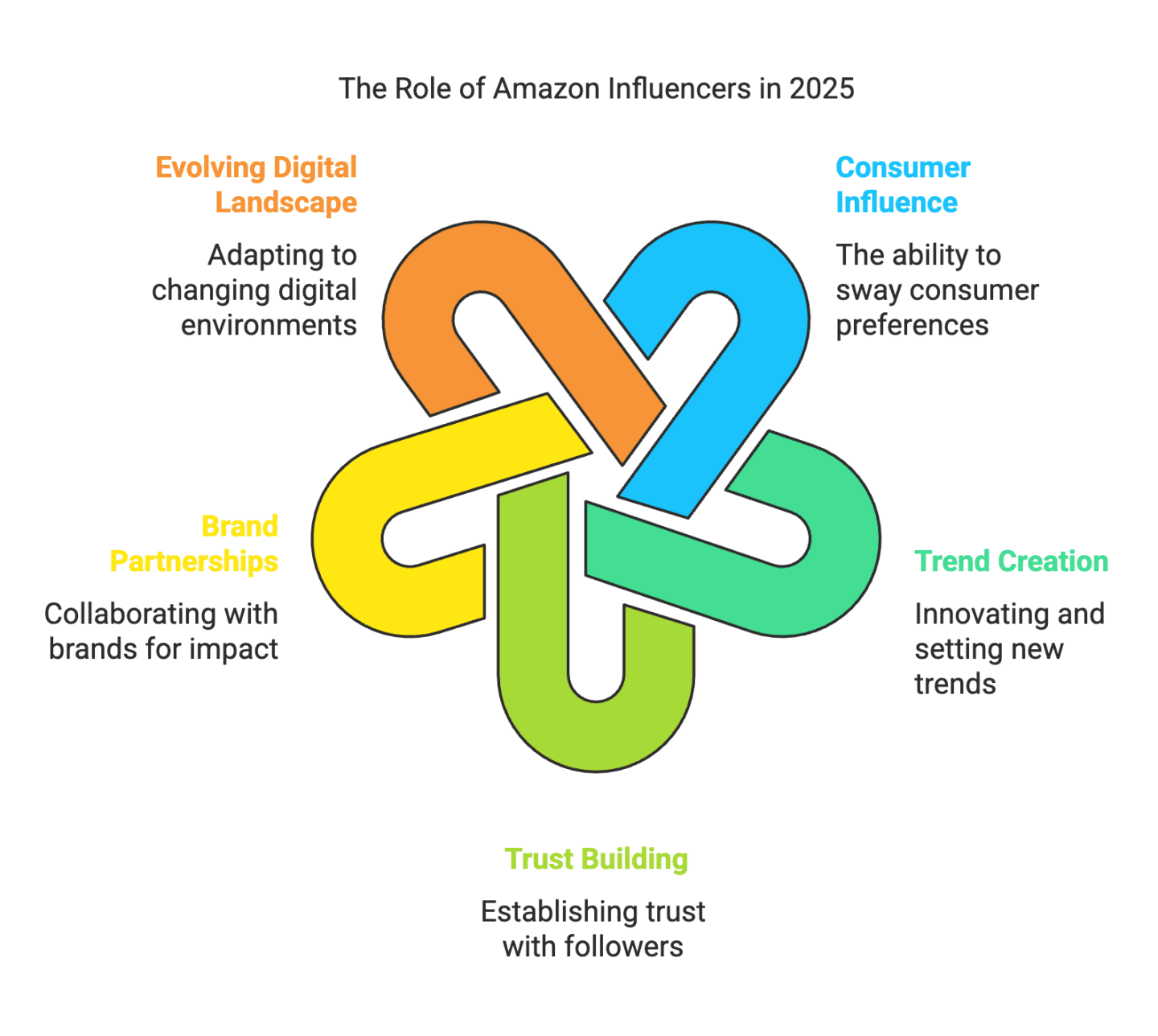
The influence of Amazon influencers in 2026 is unmistakable, with their ability to sway consumer preferences and drive sales through authentic and engaging content. As we've explored the journeys and impacts of leading influencers, it becomes clear that their contributions are not just about promoting products but about creating trends and fostering trust among their followers. These influencers have mastered the art of digital persuasion, making them indispensable partners for brands looking to connect with consumers in a more personalized and impactful way. As the digital landscape continues to evolve, the role of these influencers will likely expand, further cementing their status as pivotal figures in the future of online retail and marketing strategies.
Diving into the dynamic world of influencer marketing in 2026? Our detailed roundup of the year's premier influencer databases is your essential toolkit. Whether you're aiming to amplify your brand's digital outreach or seeking effective partnerships as a marketer, getting to grips with key platforms like Stack Influence, inBeat, and others will be pivotal. These platforms offer cutting-edge search functionalities, detailed analytics, and streamlined campaign management to maximize the impact of your influencer collaborations. Explore our in-depth guide to find the perfect match for your marketing needs and elevate your strategy to new heights.
A post shared by Stack Influence (@stackinfluence)
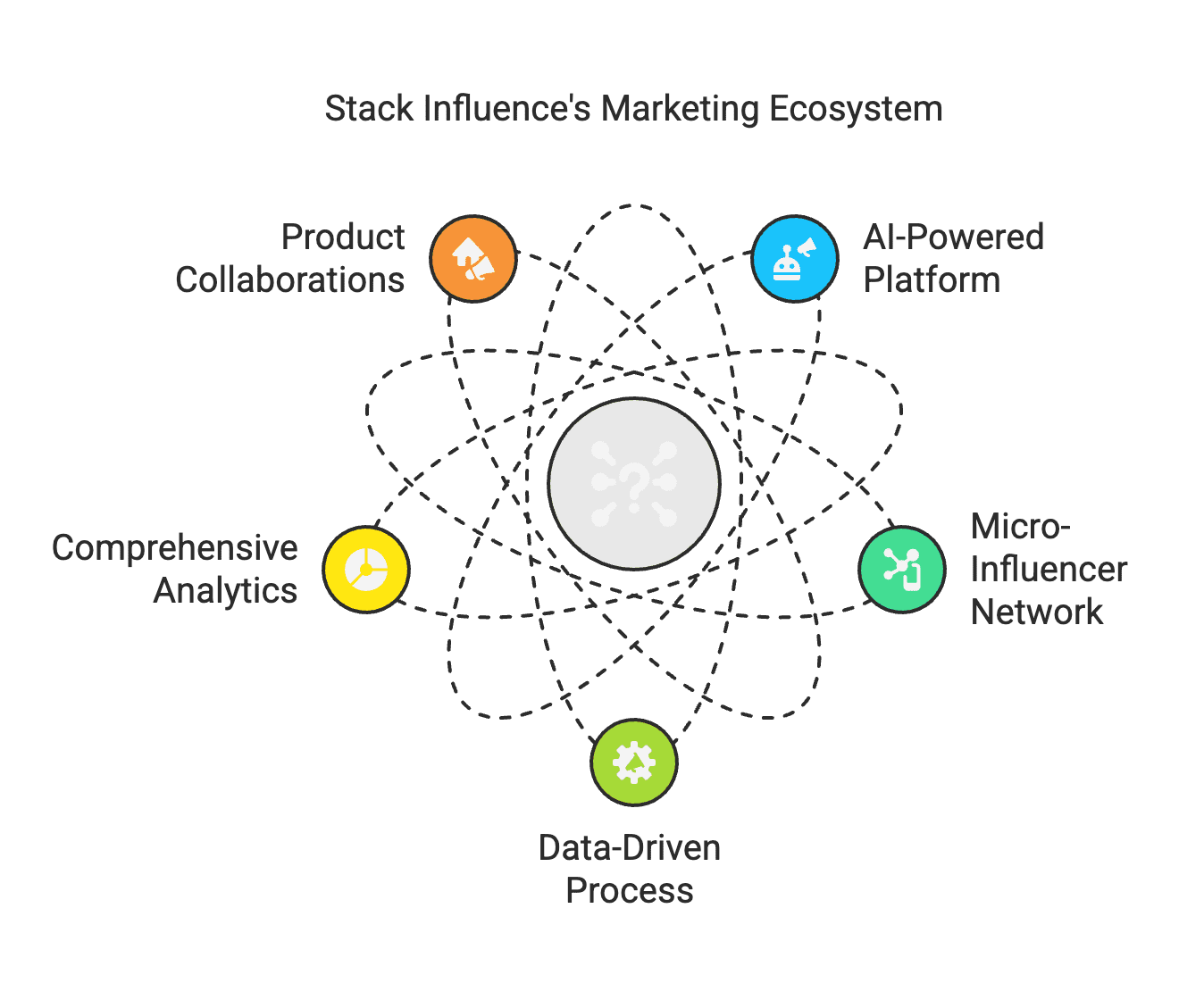
Stack Influence is a leading platform renowned for its comprehensive micro-influencer marketing services. It offers brands an all-encompassing approach to boosting customer engagement, amplifying brand visibility, and increasing social media traffic on a grand scale.
This platform distinguishes itself by handling every aspect of micro-influencer marketing campaigns, from the initial sourcing to the final execution. By harnessing a vast network of micro-influencers, Stack Influence ensures authentic and influential brand promotions, thereby supercharging customer engagement.
1. AI-Powered Influencer Platform:
Stack Influence features an advanced AI-driven platform that meticulously assesses psychographic, demographic, and geographic data to validate micro-influencers. This technology guarantees that only influencers who meet a brand’s specific criteria are chosen.
2. Extensive Micro-Influencer Network:
Stack Influence offers access to a network of over 11 million micro-influencers across the USA, providing brands with extensive engagement opportunities. These influencers typically have higher engagement rates than their more prominent counterparts, offering more impactful interactions.
3. Data-Driven Campaign Process:
The platform facilitates the creation of authentic user-generated content by managing micro-influencers throughout the campaign. This content not only boosts social media presence but also enhances conversions, significantly benefiting the brand’s overall marketing efforts.
4. Comprehensive Analytics:
At the end of each campaign, Stack Influence delivers detailed analytics reports. These insights cover social impressions, engagement metrics, follower demographics, and the overall impact of the campaign, equipping brands with the data needed to refine future marketing strategies.
5. Product Collaborations and Guarantees:
Micro-influencers engaged through Stack Influence receive products that align with their interests, ensuring authentic endorsements. The platform also stands behind its influencer campaigns with a 100% satisfaction guarantee, providing brands with unique security and confidence in their investments.
With its strategic approach to micro-influencer marketing and a robust influencer database, Stack Influence remains a pivotal resource for brands looking to expand their reach, enhance brand awareness, and achieve their marketing objectives efficiently.
inBeat stands out as a premier platform offering an expansive database specifically designed for finding influencers on TikTok and Instagram. It simplifies the process of creating high-quality User-Generated Content (UGC) through its innovative Showcase tool, making it a favored tool among agencies and brands. This platform streamlines the often arduous task of influencer research, positioning itself as a crucial asset for digital marketing professionals.
1. Comprehensive Database:
inBeat houses an extensive collection of micro and nano influencers from both TikTok and Instagram. The platform allows users to apply various metrics and keywords to fine-tune their searches, ensuring the discovery of the most suitable influencers for specific marketing campaigns.
2. Spam-Checked Influencer Profiles:
To guarantee the authenticity of its influencers, inBeat employs rigorous spam-checking measures to weed out fake followers and ensure that only credible profiles populate their database.
3. Efficient Search and Selection:
The platform offers a user-friendly interface that allows for swift navigation and selection of influencers, bypassing the need for intermediaries typically associated with talent agencies. This direct engagement streamlines the entire process, enhancing efficiency.
4. Bulk Contact Exports:
Users can compile their preferred influencers into a list and export their contact details in bulk with just one click, facilitating effortless communication and efficient campaign management.
5. Unlimited Searches and Speed:
inBeat provides unlimited searches with advanced filters, affording users the flexibility to explore a wide array of influencer profiles. The platform is designed for speed, delivering search results in milliseconds to ensure a smooth user experience.
6. Transparent Pricing and UGC Platform:
With clear, competitive pricing, inBeat is accessible to businesses of all sizes. Additionally, the platform has introduced a new UGC platform that aids in crafting content that is focused on conversion, helping to reduce Cost Per Acquisitions (CPAs) effectively.
Through its robust influencer database, efficient search capabilities, and comprehensive spam-check mechanisms, inBeat continues to equip marketers with the tools they need to forge successful brand collaborations and execute impactful marketing campaigns effectively.
Creator.co distinguishes itself as a dynamic platform designed to bridge the gap between brands and a diverse network of content creators, influencers, and affiliates. Its primary aim is to facilitate seamless and impactful collaborations, streamlining influencer and affiliate marketing initiatives for enhanced effectiveness and ease.
Tailored specifically for brand managers, Creator.co simplifies the complex dynamics of influencer engagement and campaign management. Testimonials from seasoned industry professionals highlight its seamless integration into broader marketing strategies and its effectiveness in generating compelling content outcomes.
With a network exceeding 175,000 creators, Creator.co acts as an effective conduit, aligning brands with influencers whose authenticity and passion align closely with brand values and audience expectations.
1. Extensive Influencer Database:
Creator.co boasts an advanced search function that taps into a database of over 300 million profiles across major platforms like Instagram, TikTok, and YouTube, ensuring brands can pinpoint the ideal influencer matches.
2. Comprehensive Campaign Management:
The platform offers a centralized dashboard that streamlines campaign oversight, content scheduling, and performance tracking, all while simplifying interactions and payments with influencers.
3. Expert Account Management:
Creator.co provides dedicated expert account management, assisting brands in strategy development, influencer recruitment, and campaign performance analysis, crucial for achieving marketing objectives effectively.
4. Proven Track Record:
The platform’s efficacy is proven through successful case studies, such as the THINK! bars campaign, which achieved a remarkable 55% retail sell-through rate, demonstrating Creator.co’s capacity to drive significant sales through strategic influencer partnerships.
Creator.co has solidified its standing by providing an intuitive interface that guides brands through the intricacies of campaign creation, from drafting briefs to activating top influencers, thereby demystifying the influencer marketing process and making it accessible to marketers at all levels.
A post shared by Upfluence Inc (@upfluence.co)
Upfluence stands out as an all-encompassing influencer marketing platform designed to enhance the effectiveness of corporate influencer strategies. This platform excels in seamlessly integrating influencer identification, data-driven campaign analytics, and creator relationship management to optimize return on investment and streamline influencer interactions.
1. Robust Influencer Discovery:
With advanced search capabilities, Upfluence enables brands to pinpoint the perfect influencers whose ethos and audience align with their marketing goals, facilitating targeted and impactful collaborations.
2. Comprehensive Analytics:
The platform delivers in-depth insights that help brands track performance metrics, measure sales impact, and refine strategies for maximum ROI.
3. Streamlined Affiliate Marketing:
Upfluence simplifies the management of affiliate programs with tools for influencer gifting, tracking, and comprehensive campaign management, making it easier for brands to enhance their outreach and profitability.
4. Efficient Collaboration Tools:
It offers robust tools, including video collaboration software, for managing collaborations, ensuring clear communication and efficient project management with influencers to drive successful marketing outcomes
5. Demonstrated Effectiveness:
User testimonials highlight Upfluence’s capacity to streamline campaign execution, identify and assess influencers, and manage relationships more efficiently, all contributing to reduced operational times and enhanced campaign results.
Organizations across various industries commend Upfluence for its ability to facilitate data-driven decisions, improve influencer engagement, and support scalable marketing strategies. Overall, Upfluence is celebrated for its comprehensive toolset, ease of use, and its proven ability to help businesses achieve their influencer marketing goals effectively and profitably.
A post shared by Aspire (@aspireio)
Aspire.io redefines influencer marketing by harnessing the power of word-of-mouth commerce to transform customer conversations into potent tools for sales enhancement and brand advocacy. This innovative approach is what sets Aspire apart in the digital marketing landscape.
1. Innovative Word-of-Mouth Commerce:
Aspire leverages the genuine influence of word-of-mouth by providing tools that help brands convert everyday customer interactions into authentic brand endorsements, significantly amplifying their market presence.
2. Marketing Integrations and Social Partnerships:
The platform offers seamless integration capabilities, allowing businesses to effortlessly blend Aspire’s services with their existing marketing strategies or to forge new alliances with influential personalities to boost their brand’s visibility.
3. Comprehensive Influencer and Campaign Management:
With a focus on identifying the right influencers and managing campaigns efficiently, Aspire enables targeted, performance-driven advertising backed by actionable insights.
4. Strategic Empowerment:
Aspire equips companies with the tools and support necessary to fully exploit the potential of influencer marketing and word-of-mouth commerce, aiming to elevate sales, enhance customer engagement, and expand brand awareness effectively.
Aspire.io stands out as a vital resource for businesses aiming to refine their digital marketing strategies and bolster their online presence. It provides an all-encompassing solution that empowers brands to achieve their marketing objectives through innovative and impactful word-of-mouth commerce and influencer collaborations.
Trend.io emerges as a premier network for content creators and a pivotal platform for user-generated content (UGC), designed to magnify brand visibility across various digital platforms including Facebook, YouTube, Instagram, TikTok, Twitter, and Amazon. Trend.io's network boasts 10,000 verified creators, skilled in crafting compelling content that resonates across diverse audiences.
1. Authentic Engagement:
Trend.io prioritizes authenticity, enabling brands to connect with their audiences through real, relatable content produced by genuine creators in authentic settings. This approach fosters trust and enhances audience engagement.
2. Custom Content Solutions:
At its custom content studio, Trend.io allows marketers to collaborate with top-tier designers, photographers, and videographers to bring their creative visions to life, ensuring that each piece of content is not only tailored to brand specifications but also high in quality.
3. Efficient Creator Collaboration:
The platform simplifies the collaboration process, allowing brands to easily review applications from a broad spectrum of creators and choose those who align best with their brand identity.
4. Robust Security and Scalability:
Security is a cornerstone of Trend.io, which rigorously screens each creator and supports the content creation process through network segmentation. Coupled with a scalable infrastructure, the platform ensures that brands can confidently expand their content creation efforts.
Security is a cornerstone of Trend.io, which rigorously screens each creator to secure the content creation process. Coupled with a scalable infrastructure, the platform ensures that brands can confidently expand their content creation efforts.
5. Endorsement by Industry Leaders:
The platform has earned accolades and support from notable figures, including music mogul Pharrell Williams, highlighting its impact and credibility in the industry.
Trend.io revolutionizes brand content strategies by empowering creators to leverage their unique talents within a community that values originality and creativity. By providing access to a diverse array of high-quality content through a single platform, Trend.io stands as a critical tool for brands looking to enhance their digital presence.
Influencity stands out as a top-tier influencer marketing platform, boasting a comprehensive suite of tools tailored for brands, agencies, and e-commerce platforms. Its integrated approach combines advanced search capabilities with robust campaign management and influencer relationship tools, ensuring a seamless workflow from influencer discovery to campaign execution.
With its focus on efficiency and effectiveness, Influencity is designed to streamline the influencer marketing process, making it an essential tool for any digital marketing strategy.
As we close out our exploration of the top influencer databases in 2026, it's clear that platforms like Stack Influence, Aspire.io, Trend.io, and Influencity are at the forefront of transforming how brands connect with influencers to enhance their digital marketing strategies. These platforms not only simplify the process of finding and collaborating with influencers but also elevate the quality of interactions through innovative features such as AI-driven insights, comprehensive campaign management, and robust security measures. With their advanced capabilities, these databases are essential tools for any brand looking to leverage influencer marketing to boost visibility, engage with diverse audiences, and drive impactful results. As the digital landscape continues to evolve, these platforms will undoubtedly play a crucial role in shaping the future of marketing, making them indispensable allies for brands aiming to succeed in the dynamic world of online engagement.
As we approach 2026, the direct-to-consumer (DTC) landscape continues to evolve, bringing forward brands that are not just selling products but are reshaping the shopping experience. This article spotlights the top DTC brands of 2026, each pioneering unique paths in their respective industries. From Warby Parker’s continued innovation in eyewear to the distinctive approaches of brands like Blume and Feastables, these companies are setting benchmarks for success. Through their commitments to quality, customer engagement, and innovative marketing strategies, they not only meet consumer needs but also enhance the way we think about and engage with brands. Whether it's through groundbreaking product offerings or impactful social initiatives, these DTC brands are poised to make a significant impact in 2026 and beyond.

A post shared by Warby Parker (@warbyparker)
Since its inception, Warby Parker has steadfastly redefined the eyewear industry, establishing itself as a paragon of the direct-to-consumer (DTC) model. Known for its innovative approach to selling high-quality eyeglasses and sunglasses, Warby Parker has built a reputation for blending style, substance, and affordability. As the company marches into 2026, it stands out as one of the leading DTC brands, fueled by a relentless dedication to customer satisfaction and impactful collaborations.
Warby Parker has always placed innovation at its core, offering an array of eyewear that caters to diverse tastes and needs. From the beginning, the company revolutionized the buying process with its Home Try-On program, allowing customers to select five pairs of glasses to try at home for free, ensuring they find their perfect style without leaving their house. This commitment to convenience and customer experience underscores Warby Parker's ascendancy in the DTC space.
The brand's offerings are vast and varied, with eyeglasses, sunglasses, contacts, and a selection of accessories that appeal to a wide audience. Warby Parker frames are designed in-house, emphasizing premium materials without the premium price tag. Each pair includes impact-resistant polycarbonate lenses, anti-reflective and scratch-resistant coatings, and options for blue-light filtering, progressives, and more. With over 270 retail locations and a seamless online shopping experience, Warby Parker has made elite eyewear accessible to all.
A pivotal aspect of Warby Parker's success and virality in the digital age is its collaboration with pop culture icons, notably Emma Chamberlain. Chamberlain, a YouTube sensation and trendsetter, partnered with Warby Parker to release a special collection that blends her unique aesthetic with the brand's classic design philosophy. This collaboration not only introduced Warby Parker to Chamberlain's vast audience but also cemented the brand's status as a culturally relevant and fashion-forward label. The partnership is emblematic of Warby Parker's strategy to engage with younger demographics through authentic and resonant collaborations.
At the heart of Warby Parker's mission is a commitment to social good. The company's pioneering "Buy a Pair, Give a Pair" program ensures that for every pair of glasses sold, a pair is distributed to someone in need. To date, over 15 million pairs of glasses have been donated, showcasing Warby Parker's dedication to making a positive impact on the world. This ethos of corporate responsibility significantly contributes to the brand's appeal and success.
As we look ahead, Warby Parker's trajectory remains impressively upward. Its innovative direct-to-consumer model, compelling product range, strategic celebrity collaborations, and impactful social responsibility initiatives position it as one of the best DTC brands of 2026. Warby Parker proves that a company can stay true to its founding principles while evolving and thriving in a competitive marketplace. With eyes firmly set on the future, Warby Parker is not just watching the world—it's shaping how the world sees.
Leveraging influencers in marketing campaigns, much like Warby Parker's collaboration with Emma Chamberlain, has proven to be a highly effective strategy for expanding brand exposure and engaging with a broader audience. Influencers can authentically showcase your products, creating a personal connection with their followers. Such partnerships can significantly enhance your brand's visibility and credibility, as demonstrated by Warby Parker's successful infusion of fashion and persona through Emma's influence.
For brands looking to capitalize on this successful marketing strategy, Stack Influence is an excellent platform to consider. Specializing in micro-influencer campaigns, Stack Influence offers access to over 11 million influencers across various niches, making it easy to find the perfect match for your brand. Their service is designed to automate product seeding campaigns, which can drastically amplify your brand awareness, user-generated content (UGC), and online growth. By handling everything from influencer targeting to campaign management, Stack Influence ensures a seamless experience that can scale up your digital presence and deliver tangible results.
A post shared by Blume (@blume)
In the rapidly evolving direct-to-consumer (DTC) landscape of 2026, **Blume** emerges as a beacon for individuals with sensitive and acne-prone skin. Esteemed for setting a new standard in skincare, Blume's commitment to formulating products that cater to the unique demands of sensitive skin has earned it a revered spot among the best DTC brands of the era.
From its inception, Blume was more than just a skincare brand; it was a movement toward inclusive beauty, driven by the understanding that sensitive skin requires more than just gentle ingredients. It demands a holistic approach that embraces the emotional and physical aspects of skin health. Blume's founders, inspired by personal experiences and the stories of those often overlooked by the mainstream beauty industry, embarked on a mission to craft formulas that soothe, protect, and celebrate sensitive skin.
Blume's dedication to providing free shipping on orders over $75 USD is not just about convenience; it's a testament to their commitment to accessibility and customer satisfaction. This policy ensures that more individuals can experience the transformative benefits of their skincare line without the barrier of added costs. By addressing the needs of acne-prone skin with innovative and conscientious product development, Blume has cultivated a loyal following. Their products do not just aim to treat skin gently but also to foster a skin-positive community that encourages self-love and acceptance.
Looking toward the future, Blume's trajectory is marked by continuous growth and the pursuit of excellence. As a brand at the forefront of the DTC revolution, Blume not only adapts to changes in consumer behavior and technology but also actively shapes the future of skincare. Their unwavering dedication to their mission, combined with a keen eye on sustainability and ethical practices, positions Blume as a leader among DTC brands in 2026 and beyond.
In an age where consumers crave authenticity and efficacy, Blume stands out by offering both in abundance. Through its pioneering approach to sensitive and acne-prone skin, Blume has not only carved a niche but has also redefined standards within the beauty industry. As the brand continues to flourish, its impact is felt far beyond the confines of its community, inspiring a gentle yet powerful shift towards inclusive and conscious beauty.
A post shared by Feastables (@feastables)
In the burgeoning landscape of DTC brands in 2026, Feastables stands out as a trailblazer in the confectionery industry. With its enticing array of chocolate products and innovative business practices centering around convenience and quality, Feastables has redefined how consumers indulge in and experience sweets.
Founded with a vision to make premium chocolate accessible to everyone, Feastables offers a diverse range of chocolates that cater to various taste preferences. Their product lineup includes enticing selections like Milk Chocolate, Peanut Butter, Milk Crunch, Almond Crunch, Dark Chocolate, and even gourmet flavors such as Dark Chocolate Sea Salt and Cookies & Creme. These offerings come in various forms, including limited-time packs like the 'MrBeast Briefcase Collectors Edition' and the 'Beast Games Box,' showcasing the brand’s knack for creativity and engaging marketing.
Feastables has set itself apart with distinct features:
Ethical Sourcing: Commitment to ethically sourced ingredients, emphasizing sustainable and fair practices that resonate well with today's eco-conscious consumers.
Worldwide Domination: As denoted by their catchphrase, Feastables is not just a national but a global player, aiming to dominate the chocolate market by expanding their reach to various countries, offering a consistent quality and experience across the globe.
Engagement and Community: Featuring interactive platforms like TikTok, Instagram, and Discord, along with SMS campaigns (Text FEAST to 69420), Feastables has cultivated a strong community, enhancing brand loyalty and customer engagement.
A pivotal strategy that sets Feastables apart as a leading DTC brand in 2026 is their widespread availability in major retailers like Walmart, Target, 7-Eleven, Kroger, Sam’s Club, and Albertsons, bridging the gap between online and physical retail spaces. This strategic market penetration ensures that Feastables is accessible to a broad audience, successfully merging the DTC model with traditional retail.
Looking forward, Feastables aims to continue pushing the boundaries of confectionery through innovative products and sustainable growth. By sticking to its core principles of quality, customer engagement, and ethical practices, Feastables is poised for continued success and influence in the DTC space.
As the DTC sector continues to evolve, Feastables embodies the essence of innovation and customer-focused strategy. It stands as a beacon among the best DTC brands of 2026, showcasing what is achievable when a company remains steadfast in delivering exceptional products while simultaneously embracing ethical business practices and extensive community engagement.
A post shared by Pepper (@wearpepper)
As the direct-to-consumer (DTC) industry blossoms, Pepper stands out in 2026 as a leader in the intimate apparel niche, particularly for those with small-chested bodies. Born from a desire to provide flawlessly fitting bras and swimwear for AA, A, and B cups, Pepper has revolutionized the concept of inclusive fashion by celebrating bodies that often go unnoticed by mainstream lingerie brands.
Pepper was created as a response to an evident market gap: the lack of proper-fitting bras for smaller cup sizes. This issue not only affected the availability of comfortable and supportive options but also impacted the self-esteem of women who didn't conform to the industry's standard sizing. Pepper’s founders recognized this challenge and saw an opportunity to cater to a specific but significant group.
Offering an array of bras, swimwear, and intimates, Pepper has set new standards for what small-chested individuals can expect from lingerie. Every product is designed with meticulous attention to fit, comfort, and style, ensuring that customers feel both supported and celebrated. The brand's flagship product, the mesh bra, quickly became a favorite, praised for its no-gap design and lightweight feel.
What sets Pepper apart in the competitive DTC landscape of 2026 is not just its specialized product range but also its commitment to promoting self-love and body positivity for small-chested individuals. This resonates deeply with consumers who seek brands that not only address their physical needs but also acknowledge their emotional and psychological well-being.
Pepper maintains a strong connection with its audience through thoughtful marketing and community engagement strategies. From interactive social media campaigns to customer-centered events, Pepper ensures that its clients are part of a supportive and empowering community. This level of engagement enhances customer loyalty and positions Pepper as not just a brand, but a movement.
Looking ahead, Pepper continues to innovate in both its product offerings and its approach to customer experience. Plans to expand their range to include more styles and colors, and potentially broader product lines, indicate Pepper’s commitment to its niche market. Additionally, sustainability in manufacturing and ethical sourcing are also key areas of focus for future developments, aligning with the growing consumer demand for responsible brands.
As 2026 nears its close, Pepper stands prominently amongst the best DTC brands, celebrated for its dedication to underserved markets and for forging a path of inclusivity and self-love in fashion. This recognition is not only a testament to Pepper's business acumen but also its ability to deeply connect with and uplift its customers.
Launched just over a decade ago, Away quickly transcended its status as a mere luggage company to become a global travel brand synonymous with smart design, durability, and seamless travel experiences. Its journey from a New York-based startup to one of the world's leading Direct-to-Consumer (DTC) travel brands is a testament to its innovative approach and commitment to quality. In 2026, Away stands as a paragon among DTC brands, celebrated not only for its exceptional products but also for its forward-thinking business model and community engagement.
Away has revolutionized the travel essentials market by offering products meticulously designed for the modern traveler. Highlights from its product lineup, as revealed in the website scrape, include the iconic Transit Canvas Weekender, the ultra-functional Hanging Jewelry Organizer, the sleek Mini Crossbody, and the premium Carry-On: Aluminum Edition. Each product showcases Away's commitment to quality, combining aesthetic appeal with practical functionality.
The brand’s recognition in the "2024 Readers' Choice Awards" as one of the best luggage brands in the world underscores its excellence. Its hard-sided carry-on, winning accolades two years in a row, reflects the brand's dominance in the luggage category, mirroring its broader impact on the travel industry.
Away's success stems not only from its innovative product range but also from its ability to resonate deeply with consumers' desires for authenticity, sustainability, and inclusivity. By focusing on what truly matters to travelers, Away has redefined the parameters of design and utility in travel gear, ensuring that every journey is as seamless and comfortable as possible.
The brand's influence extends beyond the airport terminal; it's palpable in the way individuals now approach travel — with a sense of joy, preparedness, and sophistication. Away's dedication to creating a community around travel, sharing tips for long flights, and advising on the best bags for commuting exemplifies its role as much more than a luggage company; it's a travel companion that understands and anticipates the needs of its audience.
As we move further into 2026, Away's visionary approach continues to drive its expansion and evolution. The company's dedication to sustainability and ethical practices is charting a course for a future where travel is not only about where you go but also how responsibly you get there. Away is not just preparing us for our next trip; it's shaping the future of how we connect with the world.
Away exemplifies the quintessence of a successful DTC brand in 2026: innovative, customer-centric, and with an unwavering commitment to quality and sustainability. Its remarkable journey from a newcomer to a trailblazer in the travel industry reflects a broader narrative of transformation and excellence. Through its exemplary products and visionary leadership, Away continues to inspire and empower a new generation of travelers, making it unequivocally one of the best DTC brands of 2026.
A post shared by DAILY HARVEST (@dailyharvest)
In a world where time is of the essence but health is paramount, Daily Harvest has emerged as a beacon for the health-conscious and time-starved individuals alike. Founded on the principles of nourishment and convenience, Daily Harvest has become synonymous with wellness and sustainable living, earning it a spot among the best Direct-to-Consumer (DTC) brands of 2026. Its innovative approach to plant-based foods has revolutionized the way people consume fruits and vegetables, making clean eating both accessible and delicious.
From refreshing smoothies to hearty harvest bowls, sumptuous pastas, wholesome grains, energizing breakfast bowls, indulgent pops, comforting soups, tempting bites, and mouth-watering flatbreads, Daily Harvest's range is as diverse as it is nutritious. Every item on the menu is crafted to cater not just to the palate but also to the body’s needs, ensuring that each meal is a step towards better health.
The emphasis on sourcing premium, organic ingredients showcases the brand’s commitment to quality. By prioritizing nutrient-rich foods that are both good for the consumer and the planet, Daily Harvest stands out as a leader in the plant-based food industry. Its dedication to sustainability extends beyond its products, with eco-friendly packaging and responsible sourcing practices that underscore its commitment to the earth’s well-being.
The success of Daily Harvest can be attributed to its innovative model that combines the convenience of direct-to-door delivery with the nutritional benefits of whole, plant-based foods. This pioneering approach addresses the modern dilemma of balancing fast-paced lifestyles with the desire to eat healthily. By making nutritious foods easily accessible, Daily Harvest empowers individuals to make better food choices without compromising on taste or time.
As we move further into the decade, Daily Harvest continues to set trends in the DTC space, not just as a business but as a movement towards a more sustainable, health-conscious future. The brand has grown beyond its initial offering, responding to the evolving dietary preferences and environmental concerns of its community with innovative food solutions that are both kind and considerate to our bodies and our planet.
Daily Harvest represents the epitome of success in the DTC industry by 2026, seamlessly merging the demand for convenience, taste, nutritional value, and sustainability. Its comprehensive range of plant-based offerings caters to a growing demographic that seeks to nourish themselves without the guilt or the effort traditionally associated with healthy eating. Through its unwavering commitment to quality, innovation, and sustainability, Daily Harvest not only nourishes its customers but also nurtures the planet, making it undeniably one of the best DTC brands of 2026.
A post shared by T R I N N Y L O N D O N (@trinnylondon)
In a vibrant industry where beauty is often equated with complexity, Trinny London has blossomed as a game-changer, urging everyone to rethink and simplify their beauty routines. This innovative DTC brand is lauded as one of the best of 2026, carving its niche in an over-saturated market with its promise of delivering confidence-boosting makeup that praises practicality, personalization, and potency.
Trinny Woodall, the founder and the creative force behind Trinny London, has always envisioned a world where beauty transcends age, boundaries, and traditional expectations. With her extensive background in fashion and beauty, Trinny's mission is deeply embedded in empowering individuals through products that work for every face, at every age. Her approachable, accessible vision of beauty is reflected in every cream-based, skin-loving product that effortlessly glides into a daily routine.
Renowned for their signature stackable packaging, Trinny London has redefined 'on-the-go' beauty. The brand’s hero products—which include multi-tasking tinted balms, foundations, concealers, and eye colors—are not just designed for versatility but also for ease of use. Each pot is a testament to the idea that your entire beauty bag can be compact, personal, and ready for life's myriad moments.
The commitment to personalized beauty has echoed through Trinny London's customer experience since its inception. With innovative tools like online color-matching and virtual consultations, Trinny London has succeeded in bringing the intimacy and effectiveness of a makeup counter to the digital space. This personalization has been instrumental in building a devoted community and in standing out as a DTC brand.
A pivotal reason Trinny London shines among the best DTC brands of 2026 is its unwavering commitment to ethical practices and sustainability. Conscious of its impact, the brand champions cruelty-free formulations and responsible sourcing for its collection. The refillable and recyclable packaging mirrors the ethos of a community that is beauty-conscious and environmentally aware.
Trinny London has continuously expanded its influence, staying ahead of beauty trends while remaining true to its core principles. The brand's pivot from traditional retail to a direct-to-consumer model has fortified its relationship with its loyal customer base, creating a bond built on trust, diversity, and unparalleled quality.
The brand's ascension to the top-tier of DTC brands by 2026 is a narrative of relentless innovation and empathetic understanding of its customers’ needs. Its straightforward, personalized makeup solutions have not just filled beauty bags but have also uplifted spirits and self-esteem worldwide. With a fervent commitment to ethical beauty, convenience, and customization, Trinny London doesn't merely sell products—it champions a movement towards a more confident, radiant, and sustainable future in beauty.
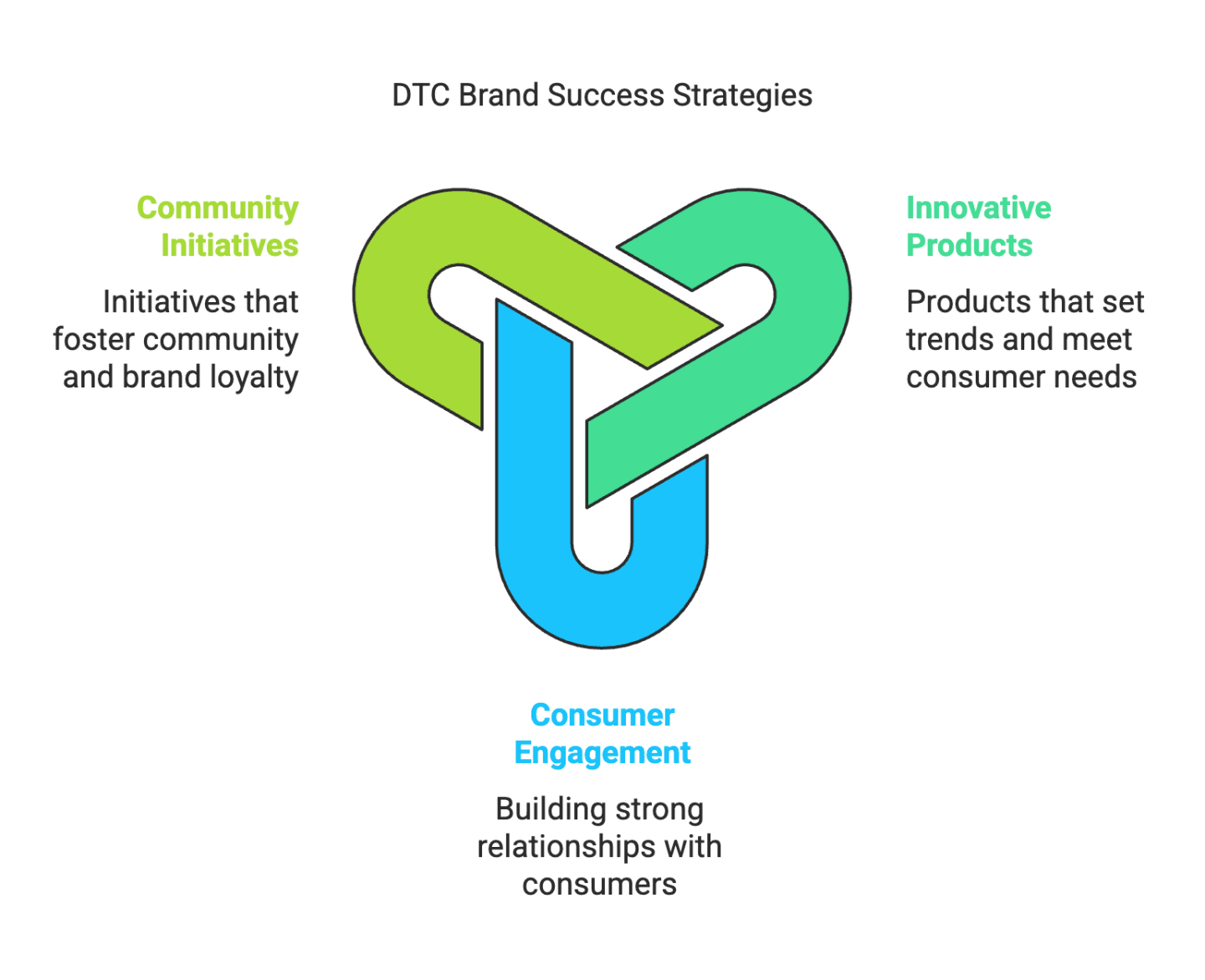
As we delve into 2026, the direct-to-consumer (DTC) sector showcases a compelling lineup of brands that are not just riding the wave of e-commerce growth but are actively steering it. Companies like Warby Parker, Blume, and Feastables exemplify how deeply DTC brands can influence market dynamics and consumer preferences by prioritizing innovative products, genuine consumer engagement, and robust community-focused initiatives. These brands are not merely surviving in a competitive landscape; they are thriving by continuously adapting and aligning with the evolving demands of modern consumers. Their success stories offer a blueprint for how businesses can harness direct engagement and tailored experiences to create lasting brand loyalty and substantial market impact. As we look forward, these top DTC brands of 2026 are poised to not only lead but transform their respective industries, making them essential ones to watch.
Micro-influencers have become the secret sauce in digital marketing for 2026. These are creators with smaller followings (often roughly 10k–100k fans) who pack a punch in niche communities, driving higher engagement and trust than mega-celebrities. Brands love micro-influencers for their authenticity and affordability – they’re often happy to collaborate in exchange for free products or modest fees, making campaigns budget-friendly. Meanwhile, new platforms and tools are popping up to help brands scale these partnerships, track ROI, and keep everything running smoothly. In this article, we’ll explore the top 10 micro-influencer marketing platforms in 2026 that cater to any niche, break down their features and pricing in a handy comparison table, discuss emerging trends (from AI-driven matchmaking to shifting payment models), and share a few case studies of micro-influencer campaigns knocking it out of the park. Grab a coffee and let’s dive in!
To kick things off, here’s a quick comparison of the leading platforms tailored for micro-influencer marketing. We’ve highlighted how each platform works, what it costs, which industries use it, the scale of influencers you can reach, and key campaign management features:
Table: A side-by-side look at the top micro-influencer platforms in 2025 – including their pricing models, target industries, influencer network size, and standout features.
Let’s explore each platform in a bit more detail to see what makes them stand out for micro-influencer campaigns:
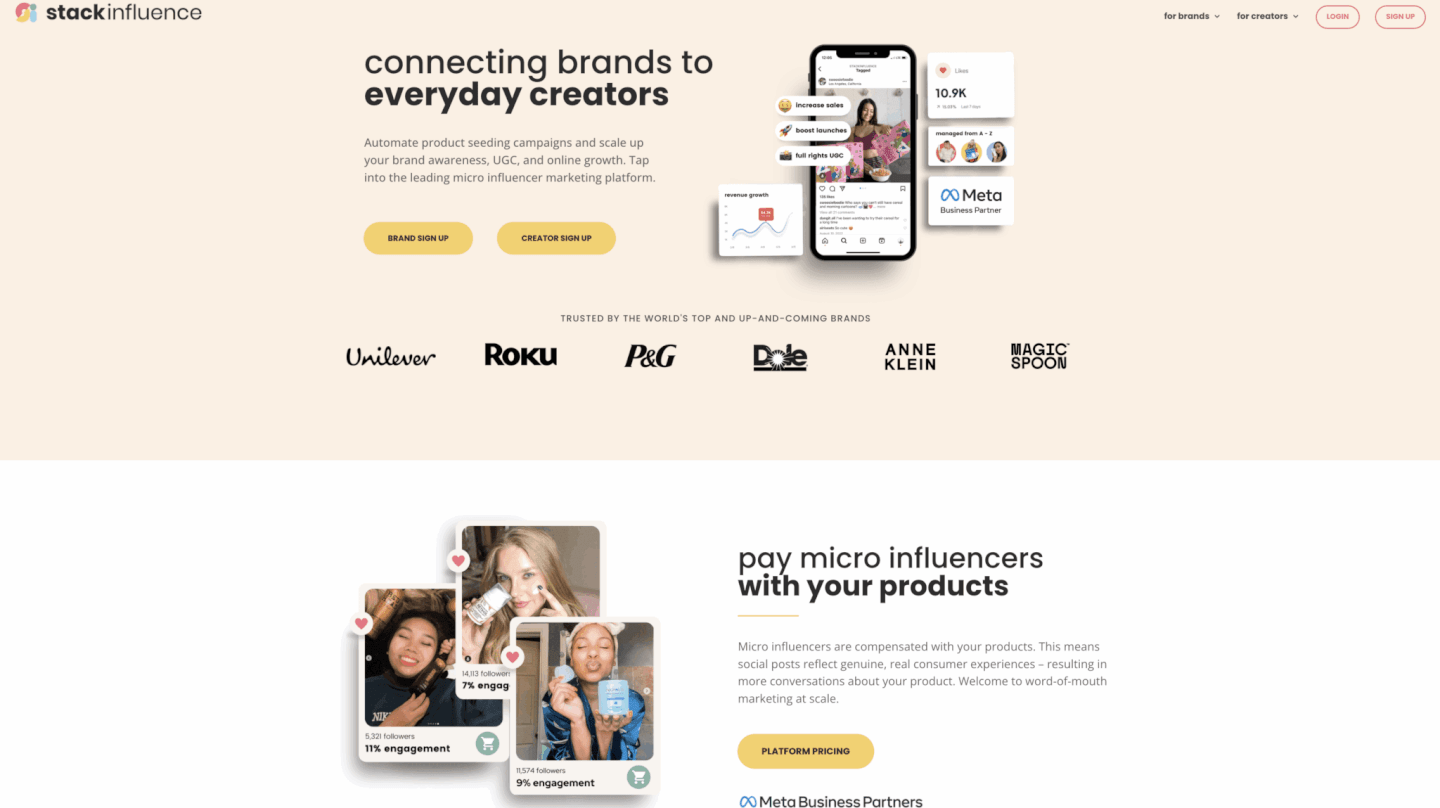
Best for: Hands-off micro-influencer campaigns at scale. Stack Influence is a dedicated micro-influencer platform that connects brands with everyday creators to spark word-of-mouth buzz.
What’s unique is its product-only compensation model – influencers are paid in free product, not cash, which keeps costs low. Brands only pay Stack Influence when an influencer actually posts, making it essentially pay-for-performance.
Under the hood, Stack Influence offers end-to-end automation: they use AI to hyper-target the right micro influencers and handle everything from outreach and product shipping to content tracking. The platform boasts a vetted network of 11+ million micro-influencers across niches like fashion, tech, fitness, beauty and more – all screened by demographics and interests.
In short, Stack Influence is like having a turnkey micro-influencer campaign team that can blast your product out to thousands of real consumers, generating authentic UGC and reviews at scale.
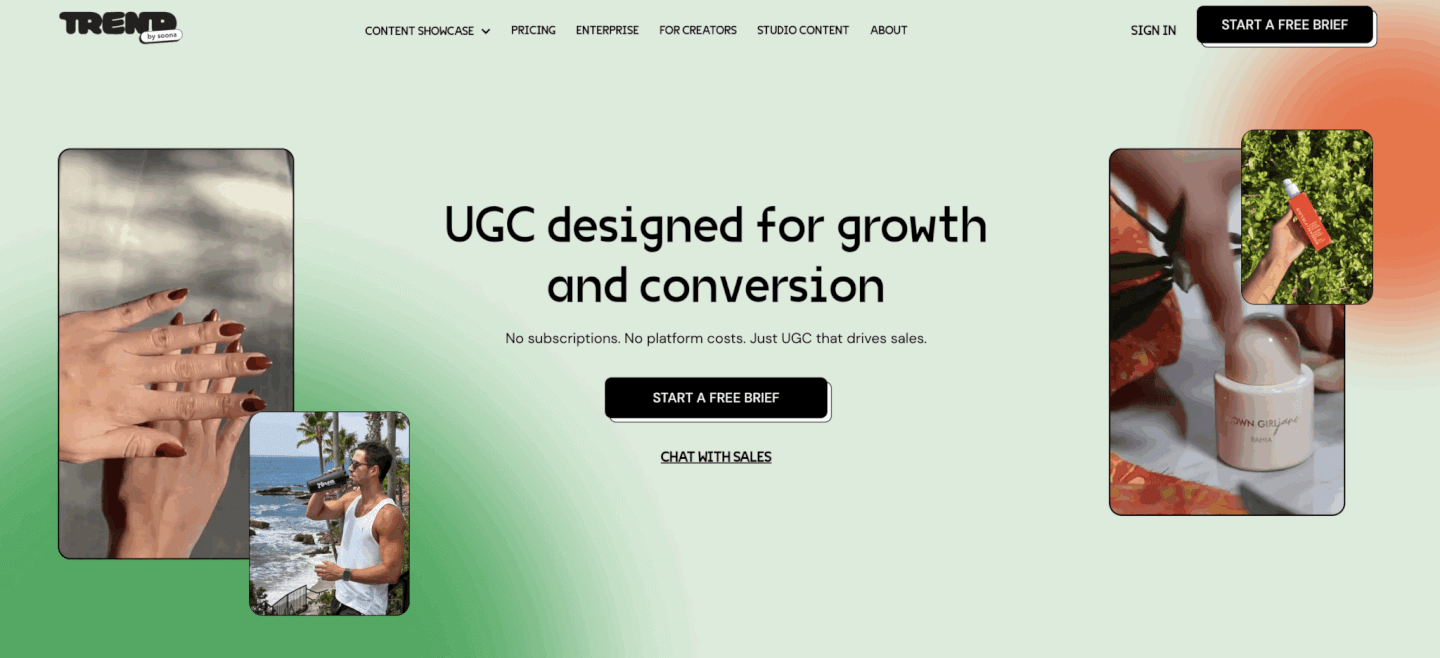
Best for: Brands seeking fresh UGC content from micro-creators. Trend (often accessed at Trend.io) is a large content creator network and UGC marketplace. It flips the usual script: instead of paying influencers for a single Instagram post, you pay per piece of content (for example, a TikTok video or a set of photos) produced by their creators. Pricing starts around $110 per UGC asset , making it easy to order a bundle of authentic posts without breaking the bank. Trend.io has 10,000+ verified creators skilled in producing engaging content for Instagram, TikTok, YouTube, and more Brands post a campaign brief, creators apply, and the brand picks their favorites to collaborate with – it’s a streamlined process to get genuine product-in-use content. The platform prides itself on authenticity and diversity: real people creating in real settings, which resonates with audiences. It also offers a “custom content studio” for polishing and repurposing the creator content, and ensures every creator is thoroughly vetted (even music mogul Pharrell is a noted supporter of the platform’s mission). If you need a quick infusion of influencer-style content (say for an ad campaign or social media refresh), Trend.io is a go-to solution.
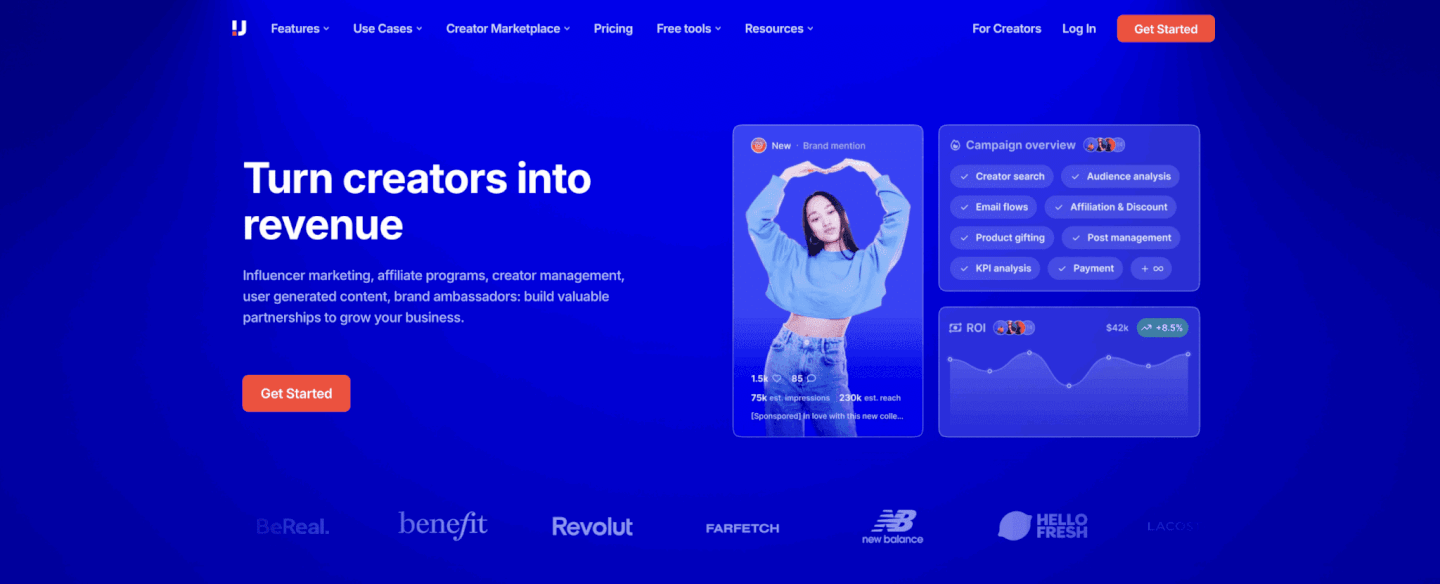
Best for: Data-driven influencer campaigns and e-commerce integration. Upfluence is an all-in-one influencer marketing platform trusted by many brands to find, manage, and track influencers at scale. It has a massive global database of influencers (over 1 million profiles) covering all tiers from nano-influencers to celebrities. One of Upfluence’s standout features is its advanced search and filtering – you can slice and dice by keywords, location, social stats, audience demographics, and even see an influencer’s fake follower percentage or estimated fees. Uniquely, Upfluence also helps brands tap into their own customer base to find hidden influencers: it integrates with Shopify, Magento, WooCommerce, etc., to identify customers who happen to have a social following. These customers-turned-ambassadors can be incredibly authentic promoters. The platform’s campaign management tools cover everything: outreach emails (with templates and an AI mailing assistant), contracts, gifting products, tracking discount codes, and robust analytics to measure clicks, sales and ROI. For example, Upfluence can automatically track e-commerce revenue generated by each influencer, since it plugs into your online store. It’s not the cheapest option (plans often run in the thousands per month), but mid-to-large brands find value in Upfluence’s efficiency – user testimonials frequently cite how it cuts down management time and boosts campaign ROI through data-driven insights.
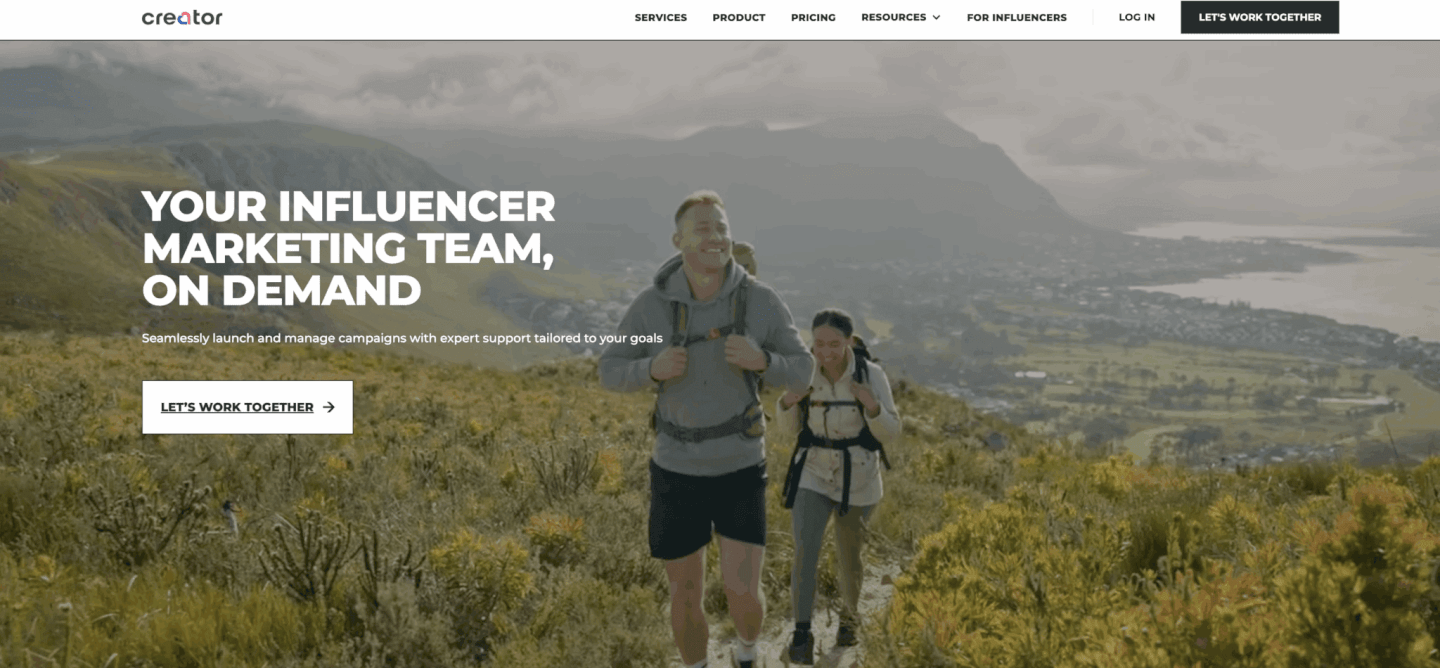
Best for: Easy campaign management for brands of any size (with options for DIY or full service). Creator.co is a vibrant platform that acts as a hub connecting brands with a community of content creators, influencers, and even affiliates. It’s essentially a one-stop shop: you can discover influencers (they claim a searchable database of 300 million social profiles!), run campaigns, and track everything in one dashboard. Over 175,000 creators have joined Creator.co’s network to collaborate with brands One thing users appreciate is that Creator.co is scalable to your needs – if you’re on a budget, their self-serve plan (~$460/month) gives you full access to the platform’s features to run campaigns yourself. As your needs grow, higher tiers add more hands-on help: you can get an account manager, help with strategy, and even a team to handle recruiting and campaign execution at the top tiers. This means small businesses and big agencies alike use Creator.co effectively. Feature-wise, it has advanced search with detailed creator insights, an ability to run product gifting campaigns, paid campaigns, or even giveaways/contests, and an optional affiliate marketing integration so influencers can be given unique referral links. It also emphasizes an “own the content” approach – brands get a license to all the influencer content, which they can download (even Instagram Stories) for repurposing. Overall, Creator.co makes influencer marketing feel more plug-and-play, lowering the barrier with its user-friendly platform and support options.

Best for: Leveraging customer content and social proof in marketing. Emplifi is a bit different from the others on this list – it’s not an influencer marketplace, but rather a user-generated content platform that many brands use in tandem with influencer efforts. Emplifi’s UGC solution (stemming from their acquisition of Pixlee) allows companies to collect, curate, and publish content from real customers and micro-influencers across social media. Imagine being able to pull all the Instagram posts, TikToks, and Tweets about your brand into one place, and then showcase the best bits on your website or in ads – that’s Emplifi. It features things like shoppable social galleries (so a visitor on your site can see a product “in the wild” and click to buy it), and Reel Commerce which brings TikTok/IG reels onto e-commerce pages. The platform is heavy on analytics and AI: it can track how UGC is impacting conversions and even use AI to tag products in images or analyze sentiment. Emplifi is trusted by big names (e.g. airline and retail brands) to ensure their online presence is filled with authentic, up-to-date content from fans. For a micro-influencer strategy, Emplifi can amplify results – after running a campaign, you’d use Emplifi to scale the best content (from micro-influencers or customers) across your marketing channels. Pricing is enterprise-level (custom quotes), but if your brand is serious about social proof, Emplifi is a powerful ally to have in your tech stack.
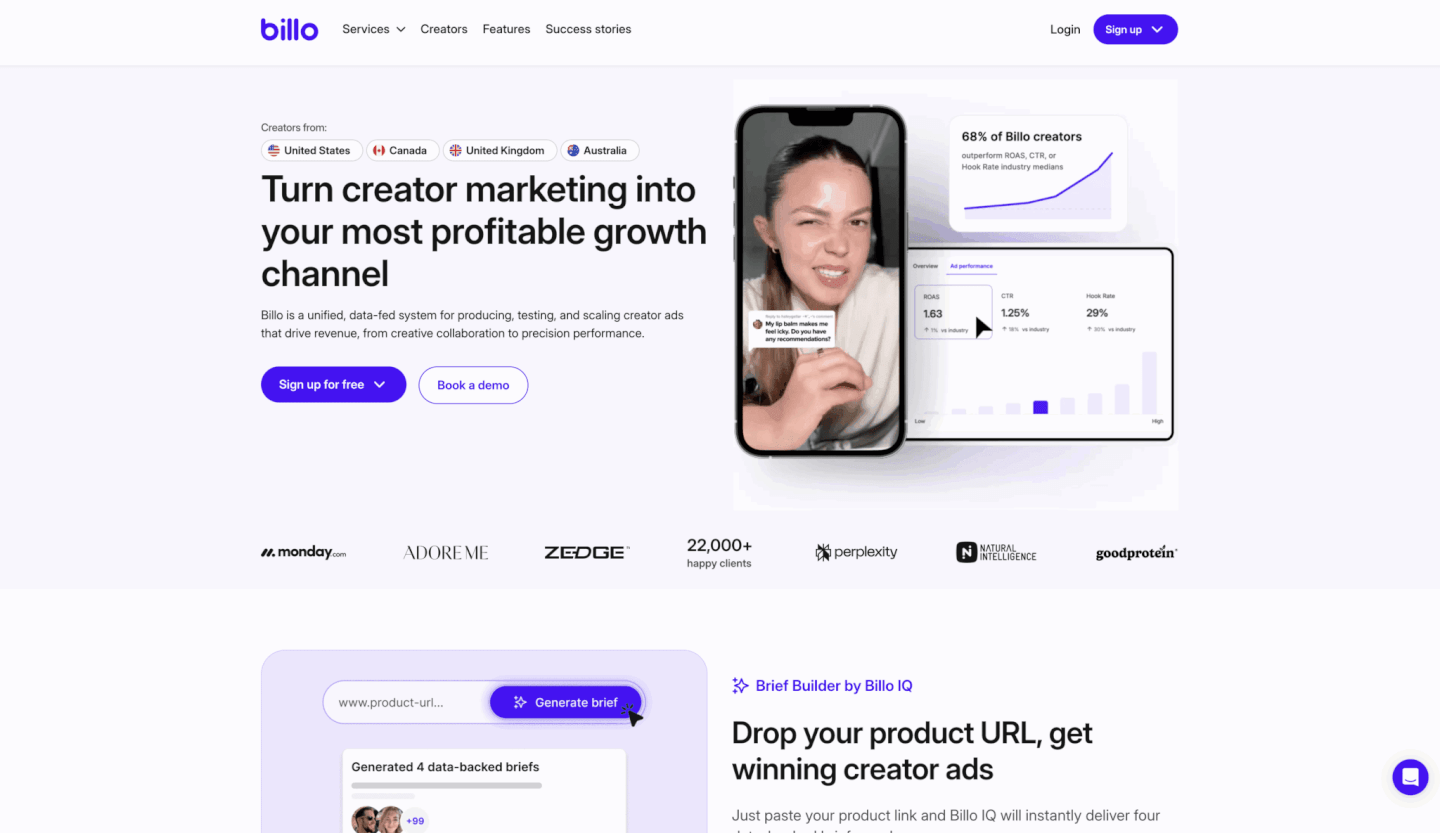
Best for: Affordable, fast-turnaround video content for ads and social. Billo is a specialized platform for video creators to make short videos for brands – essentially an on-demand video ad service powered by micro-influencers/UGC creators. The value prop is clear: for as low as $99, you can get a custom video of someone using or reviewing your product, delivered in about a week. This is a game-changer for small brands that can’t afford a big production crew. Billo has a network of 5,000+ vetted creators (mostly in the US, covering a wide range of ages, styles, and niches) ready to film content. Using the platform is straightforward – you write a brief describing the video you want (e.g. an unboxing, a testimonial, a how-to demo), and creators will accept the task. Once you approve a creator, they’ll receive your product and film the video. No influencer negotiation or scheduling posts required – the focus is on getting the video itself as a marketing asset. Brands often use Billo videos as TikTok ads, Instagram Reels, or product page videos. The platform handles all the logistics (so you don’t pay until you get the video, and there are guarantees on on-time delivery). There’s even a chat feature to communicate with the creator during the process. In short, Billo is like a content factory for authentic-looking videos. If you’ve noticed how many TikTok-style ads are popping up these days, it’s because platforms like Billo made it easy to produce them at scale – with real micro-influencers giving your pitch an honest, relatable vibe.
Best for: Building a long-term ambassador or affiliate program with influencers. GRIN is often touted as the leading creator management platform and is used by household-name brands to run large-scale influencer programs. Unlike marketplaces that have a pool of influencers to hire, GRIN is more about providing the tools to manage your own influencer relationships. Think of it as a CRM for influencers: you can discover and recruit creators (it has a web extension to pull in influencer data from Instagram or TikTok as you browse, for example), organize them into campaigns, send them products, track their posts, and pay them – all in one system. GRIN particularly shines for brands that treat influencers as an ongoing part of their marketing team rather than one-off ad hoc hires. For instance, if you have 50 micro-influencers who rep your brand every month, GRIN helps streamline communication, product seeding, content collection, and even sharing affiliate codes or links to each influencer. It integrates with e-commerce platforms like Shopify, so you can directly send out discount codes or track revenue each influencer generates. On the analytics side, GRIN offers detailed reporting on sales, engagement, and ROI down to each influencer and campaign. They also provide extras like an engagement rate calculator and educational resources (guides, podcasts) to help marketers improve their influencer strategy. Because of its depth, GRIN is primarily used by medium to large brands and comes with custom pricing (often a few thousand dollars per month). For those companies, the investment pays off by transforming a chaotic influencer operation into a well-oiled, scalable program.
Best for: Turning user content into shoppable experiences on your site. Tagshop is another flavor of UGC platform, geared towards e-commerce brands who want to boost conversions through social proof. If you’ve ever seen a brand’s website showing a gallery of real customer Instagram photos (with the products tagged for purchase), that’s Tagshop in action. It offers tools like “Shoppable Instagram” feeds, visual UGC galleries, and even a feature called Reel Shop to embed TikTok-style video feeds on your store. Tagshop basically connects your product catalog with UGC content: you can curate pics or videos from customers and influencers that mention your brand, tag the products in them, and publish these galleries on product pages or a dedicated inspiration page. Shoppers can click and buy directly from those photos/videos, closing the gap between inspiration and purchase. Tagshop supports a wide range of industries – fashion, beauty, jewelry, travel, and more – anywhere visuals help sell the product. They also tout AI-powered product tagging, which likely automates linking the right products to each UGC post. For influencer marketers, Tagshop can be a great add-on: when micro-influencers post about your product, you can reuse that content to enrich your site and ads (with proper permission, of course). The platform even enables “natural creator collaborations” where brands can invite influencers to contribute content that goes into these shoppable galleries. Pricing is friendly to smaller businesses with a free plan and entry-level paid plans (tens of dollars a month via the Shopify app), scaling up to custom pricing for enterprise. In essence, Tagshop helps bridge social media and shopping, ensuring all that influencer content isn’t just on Instagram – it’s directly boosting your online store’s performance.

Best for: Retail brands leveraging influencer-driven sales (affiliate model). LTK, formerly known as rewardStyle and LIKEtoKNOW.it, pioneered the space of influencer-powered shopping. It started back in 2011 by enabling fashion bloggers to earn commissions on sales they drove – fast forward, and LTK has become a global platform driving $4.1 billion in annual sales for brands via influencer recommendations. The core of LTK is its creator marketplace and consumer app. Influencers (from micro to mega) use LTK to post shoppable content – like outfit pics where each item can be purchased. Their followers (40 million of them) use the LTK app to discover and shop these posts, preferring recommendations from real creators over traditional ads. For brands, LTK offers a self-serve platform called LTK Connect to partner with these creators. Brands typically set a commission rate (e.g. 10-20%) that they’ll pay on any sales an influencer drives. There’s also an upfront subscription fee for using the platform (starting around $5k/year for the basic tie). In return, brands get access to LTK’s curated network of influencers and tools to manage campaigns and track performance. LTK has rolled out some slick tech too: LTK AI Match helps brands find the right creators using AI, and LTK 360 provides full-funnel reporting so you can see an influencer’s impact from initial engagement to final sale. They even launched LTK Boost and LTK Ads to amplify influencer content on platforms like TikTok and Instagram via paid media. Essentially, LTK is where affiliate marketing meets influencer marketing – creators get monetized for their content, consumers get a personalized shopping experience, and brands get a trackable sales channel powered by social influence.
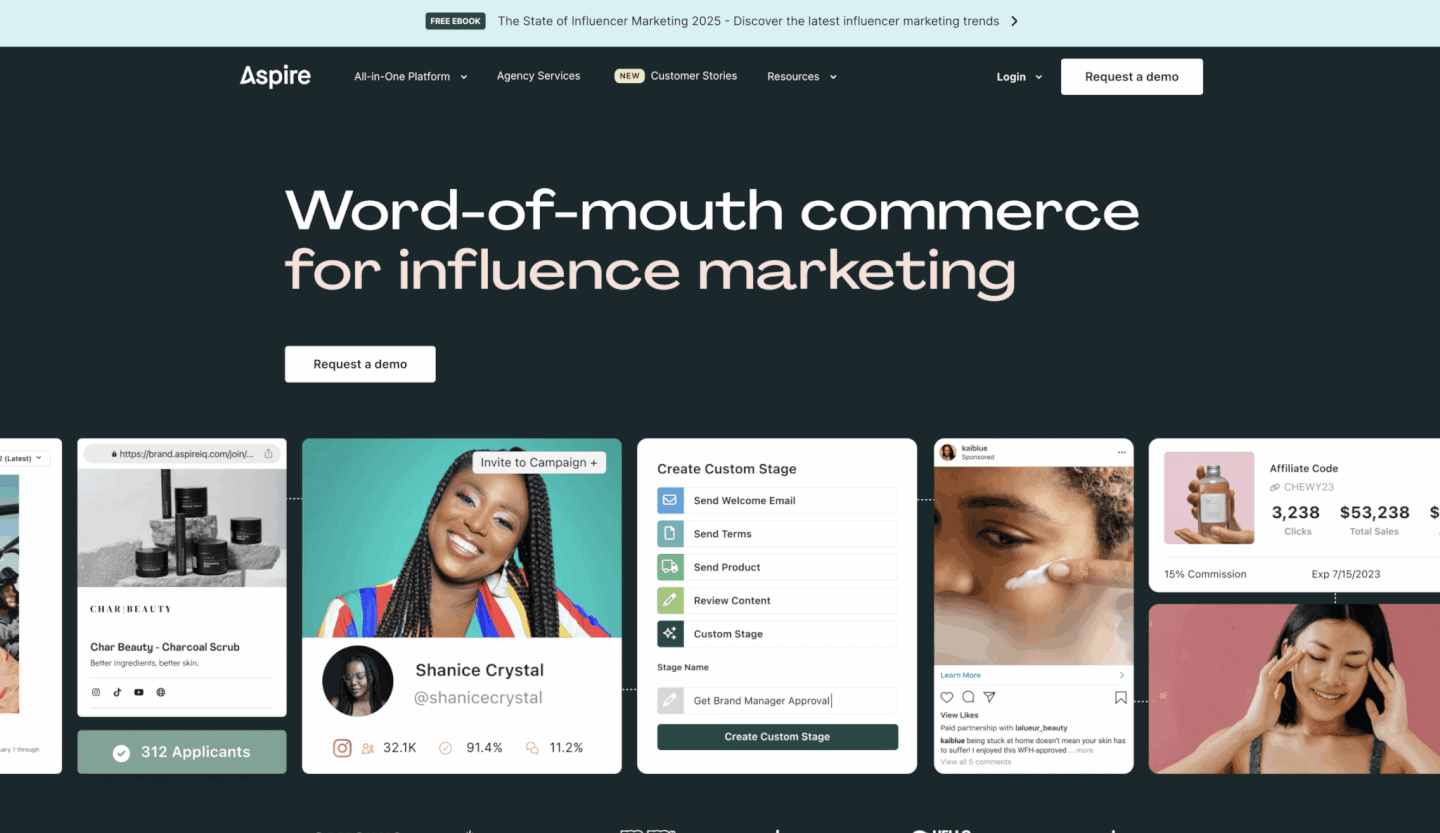
Best for: Comprehensive influencer program management and influencer matchmaking. Aspire (formerly AspireIQ) is a top-tier influencer marketing platform used by big brands and agencies that want everything in one place – from discovery to relationship management to ROI tracking. Aspire began as one of the first influencer marketplaces and has continually evolved. Today, they boast over a million creators in their database, making it one of the largest marketplaces out there. But Aspire isn’t just about volume; it’s about making influencer marketing strategic and long-term. The platform enables you to run not just one-off campaigns but to build whole programs (think ambassador programs, affiliate programs, product seeding initiatives, etc.). They have all the standard goodies: a robust influencer search engine (with cool features like image recognition AI – you can find influencers whose content matches a certain aesthetic, for example), tools for managing campaigns (content approvals, messaging, timelines), and analytics. One notable thing: Aspire doesn’t take a cut of payments between brands and influencers on the platform, so you’re free to negotiate rates and pay through the system without extra fees. Aspire also emphasizes relationship nurturing – it helps identify your high-performing influencers so you can double down on those, and even suggests “similar influencers” to ones that worked well to expand your roster. Over the years, brands like Calvin Klein and others have used Aspire to manage large communities of creators. It is an enterprise-level solution (requiring annual contracts, with pricing starting around $2k/month), but it’s often praised for being “truly end-to-end” and leaving users “wanting for nothing” feature-wise, If you need a platform that can grow with your influencer strategy – from a handful of micro-influencers to thousands – Aspire is built to handle it.
The micro-influencer landscape is continually shifting as social media and consumer behavior evolve. Here are some key trends and innovations in 2026 that brands and marketers should keep an eye on:
Looking ahead, the future of influencer marketing will be defined by authenticity, creative content, and smart technology. Consumers now reward brands that “keep it real” – unfiltered, relatable content earns the most loyalty, and even ads are being infused with influencer-created UGC (user-generated content) to preserve that authentic feel. At the same time, performance-based partnerships and AI-driven influencer discovery are taking center stage. New platforms can automatically pinpoint the right influencers and adjust campaigns in real-time based on performance data, ensuring partnerships deliver tangible results. In short, micro-influencers are no longer a side tactic but a must-have strategy for 2026. They offer a unique blend of credibility, targeted reach, and cost-effectiveness that is hard to beat – it’s no wonder experts predict “micro-influencers will dominate, offering targeted, trust-based engagement that macro influencers often fail to deliver.” Brands should embrace this shift by making micro-influencers a core part of their marketing strategy. Now is the time to explore the platforms above and start leveraging micro-influencer marketing to drive authentic, scalable growth in 2026.
In 2026, bigger isn't always better when it comes to influencer marketing. Brands are increasingly turning to nano influencers – those everyday content creators with a small but loyal following – to promote products in a more authentic, relatable way. Nano-influencers (usually defined as having ~500 to 10,000 followers might not have celebrity status, but they often deliver higher engagement and trust. In fact, data shows nano-influencers boast the highest engagement rates (around 2.5% on average) – more than double the rate of mega influencers with huge followings. And brands have noticed: 61% of brands are now working primarily with nano- and micro-influencers, with 44% specifically preferring nano influencers for their authenticity and deep audience connections.
If you’re a marketer looking to tap into this trend, you’ll need the right platform or even robust client management software to find and manage these micro-creators. The good news is there are several great platforms designed to connect brands with nano influencers, making it easier to scale word-of-mouth campaigns. This article will walk you through the top 10 nano influencer platforms in 2026, highlighting how each helps brands discover nano influencers and build successful campaigns. We'll also dive into some stats on why nano influencer marketing is so effective, and give tips on leveraging these platforms to boost engagement and sales. Let's dive in!
Nano influencers may have “nano” audiences, but their impact is anything but small. Here are a few reasons they’ve become marketing’s not-so-secret weapon in 2026:
With these advantages, it’s no surprise marketers are flocking to nano-influencer collaborations in 2026. Now, let’s explore the top platforms that make it easy to find and work with nano influencers.
Choosing the right platform can make your nano-influencer strategy a breeze. Below we highlight ten of the best platforms (in no particular order) that help brands connect with nano influencers, manage campaigns, and ultimately drive engagement and sales. From specialized nano-influencer marketplaces to all-in-one influencer CRMs, each platform has its own strengths.
View this post on Instagram
A post shared by Stack Influence (@stackinfluence)
Stack Influence is a dedicated micro and nano influencer marketing platform – and our top pick for brands focusing on user-generated content (UGC). It stands out for its hands-off, automated approach to running nano-influencer campaigns. Stack Influence essentially acts as a matchmaker and campaign manager between e-commerce brands and thousands of everyday creators.
(Stack Influence has helped brands generate widespread authentic UGC and social buzz, making it our highlighted platform. Its approach of leveraging “the power of the people” is a game-changer for word-of-mouth marketing.)
View this post on Instagram
A post shared by Upfluence Inc (@upfluence.co)
Upfluence is one of the most robust all-in-one influencer marketing platforms on the market. It’s not limited to nano influencers – it has data on influencers of all sizes – but it’s excellent for finding and managing nano and micro influencers thanks to powerful search and analytics tools.
In short, Upfluence is like the Rolls-Royce of influencer platforms – powerful and feature-rich. It helps brands connect with the right nano influencers by sifting through millions of profiles to find that perfect match, then managing those relationships at scale.
Trend.io takes a slightly different angle – it’s a platform focused on UGC content creation by micro and nano influencers. Think of it as a marketplace where brands can request content (like photos or videos) and get it produced by a network of creators quickly and affordably. If your goal is to get authentic posts or videos featuring your product (which you can also repost on your channels), Trend is a great option.
In summary, Trend.io bridges the gap between influencer marketing and content creation. It helps you connect with numerous nano creators who act as a mini creative studio, delivering engaging content that you can in turn use to drive sales.
View this post on Instagram
A post shared by Tagshop.ai (@tagshop.ai)
Tagshop is an emerging platform that combines influencer marketing with user-generated content (UGC) and social commerce features. It’s designed to help e-commerce brands discover nano and micro influencers, manage campaigns, and turn the resulting UGC into shoppable experiences on their sites. If that sounds like a lot – it is! Tagshop is like a toolkit for both finding influencers and leveraging their content for your store’s marketing.
Overall, Tagshop helps brands connect with nano influencers and then make the most of that connection by integrating the content into the shopping journey. It’s all about turning influence into immediate social proof and sales.
View this post on Instagram
A post shared by Billo | #1 UGC platform in the U.S. (@billo.app)
Billo is a popular platform specifically for sourcing short-form video content from everyday creators. It’s somewhat similar to Trend.io in concept but focuses solely on video (particularly 15-60 second videos that are perfect for TikTok, Instagram Reels, ads, etc.). Billo doesn’t require influencers to have a huge following; instead, it leverages nano influencers and regular folks who are good at making engaging video clips. If you need authentic video reviews, unboxings, or demos of your product, Billo has you covered.
In essence, Billo helps brands connect with a crowd of nano-influencer creators who turn into video content producers. It’s a win-win: creators get free products and a bit of cash, brands get lots of real, engaging videos to build trust with consumers and drive sales.
Emplifi is a larger software suite that includes social media management, customer care, and commerce tools – and importantly, an influencer marketing platform as part of its Social Marketing Cloud. Emplifi is more of an enterprise solution, but it’s noteworthy for brands that want to integrate influencer marketing with their overall social strategy. Its influencer module allows brands to discover influencers (including nano and micro), manage relationships, and track campaigns with robust analytics.
In a nutshell, Emplifi helps brands connect with nano influencers in a very strategic, data-backed way as part of a bigger social marketing picture. It’s less of a scrappy marketplace and more of a precision tool to identify and nurture the best influencer partnerships, at scale.
Aspire (formerly AspireIQ) is a well-known influencer marketing platform that focuses on fostering ongoing relationships between brands and influencers (including nano and micro influencers). Aspire combines a huge database of influencers with a built-in creator marketplace and relationship management tools. It’s particularly popular among e-commerce brands and those building ambassador programs.
Overall, Aspire helps brands connect with nano influencers in a sustainable, long-term way. It’s about building relationships, not just one-off transactions, and provides the infrastructure to turn a handful of nano collaborations into a powerhouse community of advocates.
Creator.co is a dynamic platform that started as a marketplace (formerly known as Shoutcart/Shop and Shout) and has evolved into an end-to-end influencer marketing solution with a twist of affiliate marketing. It heavily features nano and micro influencers and even allows brands to run micro-level campaigns like product giveaways and contests to engage lots of small creators at once. Creator.co’s mission is to make influencer marketing accessible to brands of all sizes by automating much of the process.
In summary, Creator.co is about scaling up with small creators in an efficient way. It helps brands connect with a multitude of nano influencers and orchestrate campaigns that feel like a hundred small voices creating one big chorus about your brand.
GRIN is a heavyweight in the influencer marketing software space, often touted as the #1 influencer marketing software for D2C brands. It’s a comprehensive platform that enables brands to manage every aspect of influencer relations in-house – from discovery to outreach, product seeding, content tracking, and sales attribution. GRIN is especially known for helping brands build their own always-on influencer programs (think brand ambassador programs) largely composed of micro and nano influencers.
In essence, GRIN helps brands connect and coordinate with nano influencers (and larger influencers too) in a very organized, self-sufficient way. It’s about building your own network of influencers and efficiently managing those relationships to drive ongoing engagement and sales.
View this post on Instagram
A post shared by #LTK (@shop.ltk)
LTK, which originated as LiketoKnow.it, is a slightly different beast in the influencer platform world. It is a creator commerce platform and shopping app that connects content creators, consumers, and brands. LTK is known for its huge network of fashion, beauty, and lifestyle influencers who use the platform to monetize their content via affiliate commissions. Now, LTK also offers tools for brands to directly partner with these influencers through a self-serve platform called LTK Connect. Essentially, LTK is where a lot of nano and micro influencers (especially in lifestyle niches) are already curating shoppable posts, and brands can tap into that community.
In summary, LTK stands out as a platform where nano influencers not only promote products but also drive immediate shopping activity. It helps brands connect with these creators in a way that is measurably tied to sales, making influencer marketing feel less like a leap of faith and more like a data-backed channel.
To help you see the differences at a glance, here’s a comparison of the top 10 platforms, including key features, pros/cons, pricing, and ideal use cases:
Sources: Key data and statistics have been taken from industry reports and platform info (28 Important Influencer Marketing Statistics To Know in 2025 - Shopify) ( Famesters Influencer Marketing Report 2025: Trends, Stats and Insights for the Future ) (5 Popular Micro Influencer Platforms and Top Benefits - Shopify Hong Kong SAR) (Upfluence vs. HypeAuditor: Best Influencer Marketing Tool for Your ...) to ensure accuracy.
Having the right platform is only half the equation – it’s how you use it that really counts. Here are some tips on leveraging these nano influencer platforms to boost engagement and drive sales:
By following these strategies, brands can fully unlock the potential of nano influencer platforms. The key is to be strategic and authentic: choose the right influencers, give them the tools and creative freedom to shine, and build on what works. In 2026, influencer marketing is maturing – it’s not just about one-off posts, but about integrating genuine voices into your marketing engine. Nano influencers, with their high engagement and authenticity, are the perfect partners for this, and the platforms we discussed are your gateway to connect with them at scale!
Navigating the complexities of Amazon's review system in 2026 requires a deep understanding of its updated guidelines and a commitment to maintaining the integrity of your feedback. As Amazon continues to evolve, so too do the rules governing how reviews are written and perceived. The upcoming article, "The Do's and Don'ts of Amazon Reviews in 2026," provides a comprehensive look into the updated review policies, practical tips on crafting valuable reviews, and strategies to ensure your reviews not only comply with the latest standards but also help other customers make informed decisions. Whether you're a seasoned reviewer or new to Amazon's platform, this guide is your roadmap to mastering the art of impactful and ethical reviewing in a digital age where every word counts.
Pre-2026, Amazon already had a set of robust review guidelines. However, with the digital marketplace constantly evolving and the increasing sophistication of both genuine and fraudulent reviewers, Amazon has continually updated its policies to ensure fairness and accuracy. As of 2026, these guidelines have become significantly more nuanced, focusing on transparency, authenticity, and relevance.
1. Authenticity is Key:
2. Avoid Conflicts of Interest:
3. Feedback Over Promotion:
4. Be Detailed, But Not Personal:
Amazon is dynamic. Policies in 2026 can shift, sometimes subtly. Here's how to stay in the loop:
Understanding these guidelines is the golden key to ensuring your reviews stand the test of time and contribute positively to the Amazon community. These policies are designed not just for the integrity of the review ecosystem but to empower consumers to make informed choices.
Remember, every review counts. You’re not just influencing a purchase decision; you’re contributing to the larger ecosystem of online shopping, helping it become more transparent, trustworthy, and user-friendly.
First things first, give your product adequate time and testing. Use it as it was intended. A snapshot impression doesn’t really cut it; understanding the nuances of its functionality can significantly power up your review:
Remember, effective reviews are based on thorough experience—a quick trial won't always reveal everything.
Check back with the product’s Amazon page:
This part is crucial because if something was promised but not delivered, your review could be vital for alerting other potential buyers and even the seller to possible discrepancies.
Now, with all your notes and observations, start drafting your review:
Your integrity as a reviewer hangs on honesty. The tone can be casual but should paint a true picture of your experience. Even if it's a product you dislike or find faulty, mentioning any positives you noticed can add balance to the review.
Lastly, proofreading isn't just for typos. Double-check:
And there you have it! Preparing to write your review with these steps can ensure that your contribution is insightful, useful, and valued by other Amazon shoppers.

Alright, you're prepped and ready to transform your experience into a stellar review on Amazon, but how do you ensure it's a touchdown for other customers? Here's a list of do's to keep your review on point, help it stand out, and truly come in handy for your fellow shoppers:
Get into the nitty-gritty! Instead of a vague "It's great," share why it's great. Was it the battery life, the sleek design, or maybe the intuitive user interface? Your specifics can make all the difference for someone on the fence about a purchase.
Keep it snappy, but cover the bases. Your review doesn't need to be an essay but provide enough substance for it to be informative. Think of the key points you looked for when you were considering this product, and make sure you touch on them.
This should be a given, but it bears repeating. Only by using the product can you give an opinion that's worth something.
Your voice is unique, so let it shine through in your reviews. If you're naturally humorous, witty remarks can make your review more enjoyable. Authenticity resonates with readers and can make your feedback much more relatable.
Remember, the point of your review is to help others make informed decisions. By following these do's, you are contributing to the trustworthiness and usefulness of customer reviews, which, according to Trust Pulse, 49% of consumers trust online reviews as much as personal recommendations from friends and family.
And there you have it! Stick to these guidelines, and your reviews will be hitting the bullseye for helpfulness on Amazon.
Writing a review on Amazon isn’t just about whether you liked the product or not; it’s about guiding future shoppers in making an informed decision. Let’s break down the essentials you should always try to include in your review to make it as helpful as possible.
Beyond "love it" or "hate it," your review should give readers a clear understanding of why. For example, specifying that a phone case fits perfectly but doesn't offer much screen protection adds dimension that can drive purchase decisions.
Context can alter perceptions. Mention how you’re using the product. A backpack that doesn't suit a laptop commuter might still be perfect for a day hiker. Also, specifying your initial expectations can help readers understand your satisfaction level.
Even if you love the product, it’s unlikely to be perfect. Providing both positives and negatives makes your review appear more balanced and trustworthy. A significant percentage of customers believe balanced reviews more readily than one-sided ones. In fact, a balanced review increases the purchase likelihood by up to 88% according to Forbes.
If you really want to make an impact with your review, add visual elements. In fact, according to Gelato, 93% of customers consider visual appearance the key deciding factor in a purchase decision.
End your review with a quick summary to rehash the key points about your experience. This helps to reinforce your stance and gives readers a quick snapshot, which is often helpful when they’re scanning through multiple reviews.
By including these elements, your reviews will not only be comprehensive but also incredibly useful to other customers, helping them to navigate their options more effectively on Amazon.
Remember, every bit of detail aids in creating a transparent shopping environment, which is crucial in online marketplaces like Amazon.
When it comes to penning down your thoughts on that latest purchase, your intention is probably to help others in their decision-making process. However, amidst the eagerness to share, it’s easy to trip into common pitfalls. Let’s navigate through what not to do, ensuring your reviews remain helpful, ethical, and within the guidelines.
We get it. A bad product can be frustrating, especially if it had glowing reviews. However, focusing your review on a personal vendetta against the brand or going into tirades can dilute the usefulness of your critique.
Imagine running into a wall of text. Intimidating, right? Break down your thoughts into paragraphs, use bullet points or headers, and embrace white space. It makes your review easier to digest.
Phrases like “worst product ever” or “best thing since sliced bread” are not only subjective but can also mislead readers. Be realistic in your evaluation. Providing specific instances or comparisons when expressing dissatisfaction or praise makes your review more credible and actionable.
For safety reasons, never include personal contact details in your review. Amazon has channels for sellers or others who might need to get in touch with you directly regarding your review. Placing personal info in the public domain is never advisable.
If you’re closely associated with a product (say, you work for the company selling it), stepping back from reviewing it is the ethical choice. Bias, intentional or not, can skew the authenticity of reviews, something both Amazon and shoppers take seriously.
By steering clear of these don'ts, your reviews are bound to make a positive impact, leading the charge towards an informed and honest shopping community.
Remember, the aim is to enlighten, not to enflame. Keeping it relevant, respectful, and informative are your best bets in writing a review that others can rely on.

After you’ve written a comprehensive, honest, and guideline-abiding review, you're just a few clicks away from sharing your insights with the world—or at least the Amazon shopping community. So how exactly do you go from draft to published review? Let’s walk through the process, keeping it cool and straightforward.
Seems obvious, right? But it's step number one. Navigate to Amazon’s website or app and make sure you're logged in. Can’t review without an account, and you certainly can’t post anonymously — that’s just how the cookie crumbles.
Type the product name into the search bar or head over to the "Your Orders" section to find the item with ease. Make sure you’re on the right page because a review of a toaster will be mighty confusing on a page for running shoes.
You’ll find a button inviting you to write a customer review. It's usually eye-catching. Click it and you're on your way.
Here's where you’ll paste or type your review. You'll also have the option to rate the product. Remember, your star rating should match your content—don’t rave about the product and then slap on a one-star rating by mistake.
Hit the preview button to see your review in all its glory. This is your last chance to catch any mistakes and ensure everything reads just right. Happy with how it looks? Click ‘Submit’, and let it fly into the ether of Amazon’s vast review database.
After you've posted, Amazon might take some time to approve your review. Don’t panic if it doesn't show up immediately — there’s a vetting process to ensure no rule-breaking content slips through.
And there you have it! Your review is live and influencing fellow shoppers. By contributing your honest feedback, you're helping to create a richer, more trustworthy buying experience for everyone involved.
Congratulations, you’ve just amplified your voice in the e-commerce sphere!
Congratulations! Now that your review is live and out there in the wild, you’ve officially contributed to the bustling marketplace of ideas and experiences that make online shopping such a dynamic space. But as with any public forum, the story doesn’t end once you hit 'Submit'. Let's chat about what comes next: handling feedback on your review.
First off, take a moment to pat yourself on the back. Seriously, good job! Now, it's time to brace yourself. Feedback can come in many flavors: some sweet, others, well, a little sour. So, if you’ve posted a critical review, prepare for potential pushback or even appreciation from others, including the brand itself.
If you receive constructive feedback or questions about your review, engaging in a thoughtful manner can be incredibly rewarding. A simple thank-you or a clarification can go a long way. It demonstrates that you’re not just venting or raving but are genuinely interested in providing useful information.
Your first review isn’t set in stone. If you encounter new information, experience a change in product performance, or if the company reaches out to resolve an issue, updating your review can be a fantastic way to provide the most accurate and helpful advice. According to Podium, over 56% of consumers have changed their opinion about a brand after seeing how they respond to reviews, highlighting the power of ongoing dialogue and updates.
Each piece of feedback on your review is an opportunity to learn, grow, and refine your reviewing skills. Over time, you’ll get better at writing helpful, insightful reviews that hit the mark with your audience. And before you know it, you might just find yourself becoming a go-to source of wisdom for fellow shoppers navigating the vast ocean of e-commerce.
Handling feedback on your review isn't just about standing your ground or admitting fault; it's a dynamic part of the reviewing process that enhances the online shopping experience for everyone involved. So, take it in stride, and keep contributing your valuable insights to the community!
So, you’ve taken the time to write a thoughtful, detailed review, only to find out it’s been removed or not published at all. Frustrating, right? Unfortunately, it’s not an uncommon scenario. Various reasons might lead to a review getting the axe, from platform policies and guidelines to flagged content by users or the brand. But don’t throw in the towel just yet! Let’s dive into how you can handle this situation with grace and possibly get your review back online.
The first step after discovering your review is missing is to figure out why. Most platforms will send you a notification if your review has been removed, usually with a reason attached. Common reasons include the use of inappropriate language, the inclusion of personal information, or the review being flagged as spam.
If the reason for your review’s removal isn’t clear, or you believe it’s been mistakenly flagged, don’t hesitate to reach out to the platform's support team. A simple inquiry can sometimes clear up misunderstandings quickly.
If your review consistently fails to meet the standards of one platform, or if you feel your voice is being unjustifiably silenced, it may be time to look elsewhere. With a plethora of review sites and social media platforms available, your opinion can still make a significant impact. For example, specialty forums or niche sites related to the product or service you’re reviewing might be more receptive or provide a more suitable audience for your insights.
Each interaction with a review platform, be it positive or negative, offers valuable lessons. Understanding the boundaries of acceptable content and learning how to articulate feedback within those limits is a skill that will serve you well, not just in writing reviews but in many forms of communication.
Dealing with a removed review can be a test of patience and persistence, but don’t let it deter you from sharing your honest experiences and opinions. Your contribution is vital to the ecosystem of online shopping, providing necessary insights that help others make informed decisions.
Remember, the goal of review platforms is to create a helpful, trustworthy community for consumers to exchange experiences. By respecting the rules and engaging constructively with the process, you can continue to be a valuable part of that community.
In conclusion, mastering the art of writing reviews on Amazon in 2026 is more than just sharing your thoughts; it's about adhering to updated guidelines, engaging constructively, and enhancing the shopping experience for all. By understanding and applying the do's and don'ts detailed in this guide, reviewers can effectively contribute to a transparent, trustworthy, and user-friendly online marketplace. Whether you're praising a product's excellence or critiquing its flaws, the key lies in providing balanced, honest, and detailed feedback that benefits the entire Amazon community. As we navigate this evolving digital landscape, remember that each review is a building block in the vast infrastructure of e-commerce, shaping the way we shop and influence others in the ever-expanding online world.
In the dynamic world of social media marketing, AI influencers are rapidly becoming a game-changer, bridging the gap between cutting-edge technology and authentic engagement. These virtual personas aren't just a fleeting fad; they're transforming how brands connect with their target audiences and reshaping the future of strategic marketing.
AI influencers are digitally-created entities designed to interact with real human audiences on social media platforms. These influencers exist solely in the virtual realm, crafted using advanced artificial intelligence technologies such as deep learning and natural language processing. Despite their artificial nature, they're remarkably adept at simulating human characteristics and behaviors, engaging with followers through personalized content and conversations.
Creating an AI influencer is a fascinating blend of art and science, requiring the collaboration of tech experts, graphic designers, and content strategists. The process intersects several advanced technologies, primarily focusing on machine learning, computer graphics, and social media analytics. These digital personas often resemble AI talking avatars, combining hyper-realistic visuals with responsive language models to simulate engaging, human-like interactions.
The first step in crafting an AI influencer is designing their appearance and persona. This is where graphic designers and digital artists come into play. They create realistic or sometimes purposefully stylized characters that resonate with specific audience demographics. The design process might include defining everything from the AI’s hairstyle and fashion sense to subtle gestures and expressions, ensuring the character remains visually appealing and relatable to users.
Once the visual elements are locked in, the next phase involves developing the AI’s personality and communication style. This is where natural language processing (NLP) and machine learning (ML) technologies are crucial. Developers train AI using large datasets of human interactions to enable it to conduct conversations, respond to social media comments, post engaging content, and even develop its unique tone of voice.
Integrating AI influencers with social media platforms is critical since these platforms serve as their primary medium of interaction. This involves programming APIs (Application Programming Interfaces) that allow the AI to autonomously post content, respond in real-time to followers, and analyze engagement metrics. These capabilities enable AI influencers to operate around the clock, interacting with users across different time zones without human intervention.
An essential part of an AI influencer's mechanics is its ability to learn from interactions and adapt over time. Machine learning models ensure that with every interaction, the AI refines its responses and content to increase engagement. This involves continuously analyzing the performance of past posts, understanding trending topics, and even adapting to changes in audience preferences.
While specific statistics on AI influencers' engagement rates are an evolving field, studies suggest that AI-driven content can result in high engagement due to personalized and timely interactions. Top Performers are more than twice as likely to report being all-in on GenAI adoption across the business.
In marketing, the use of AI technologies is projected to grow significantly. According to Adobe, top-performing companies are more than twice as likely as their peers to be using AI for marketing (28% vs. 12%).
The creation of AI influencers represents a cutting-edge fusion of technology and creativity. As these digital personalities become more sophisticated, they hold the potential to redefine engagement in the digital marketing space. Their ability to scale, adapt, and personalize interactions offers a unique advantage for brands looking to innovate their approach to customer connection. This, combined with their operational efficiency and cost-effectiveness over time, makes them a compelling option for future marketing strategies.
AI influencers are poised for significant influence, suggesting that the nexus of AI and social media will be an exciting space to watch in the coming years.

AI influencers are never off the clock. They can produce and engage with content 24/7, 365 days a year—no sick days, no vacations. This non-stop availability means that brands can maintain a constant presence online, which is crucial in our always-on digital world. For example, virtual influencer Lil Miquela reportedly can rapidly respond to current events and trends, ensuring timely content that keeps followers engaged.
With AI influencers, brands enjoy a high degree of control over their messaging. Every aspect of the influencer's appearance, personality, and voice can be crafted to align closely with brand values and the target audience's preferences. This level of customization helps in ensuring that every campaign delivers exactly the intended message, without the unpredictability associated with human influencers.
AI technology enables personalization at scale. By analyzing data from user interactions, AI influencers can offer tailored content to different segments of the audience. This one-to-many relationship, personalized for each user, increases the potential reach and impact of marketing campaigns. In fact, 84% of consumers say being treated like a person, not a number, is very important to winning their business according to Forbes.
Developing an AI influencer might require a significant initial investment, but over the long term, they can be more cost-effective than human influencers. They don't require ongoing contracts, per-post payments, or other forms of compensation that typically increase with the influencer's fame, making it a potentially more sustainable model for continuous engagement.
As AI becomes increasingly life-like, ethical questions arise. Issues around transparency, such as whether followers can easily recognize an AI influencer as non-human, come into play. Additionally, the use of AI to simulate human interaction raises concerns around deepfakes and misinformation.
Even though AI is advancing rapidly, there are still technological barriers to creating truly convincing and relatable AI influencers. The uncanny valley—a term used to describe the unsettling feeling people get when looking at a digital entity that's almost, but not quite human—is a significant challenge to overcome. Viewers can sometimes sense something is "off," which can be detrimental to user engagement if not handled delicately.
Authenticity is a valuable currency on social media.There's a particular charm and relatability to human imperfection and spontaneity that AI influencers might struggle to emulate. Building trust with an audience requires transparency about the nature of the AI influencer, which could influence audience rapport.
As AI influencers gain traction, they are likely to face increasing scrutiny. Social media platforms and regulatory bodies might implement new regulations governing their use. This changing landscape can introduce new compliance issues for companies employing AI personalities in their marketing strategies.
In conclusion, AI influencers represent an exciting frontier with considerable potential for innovation in marketing and engagement. They offer the benefit of scale, control, and potentially greater return on investment. Yet, navigating the interplay of technology, ethics, and regulation will be a crucial balancing act for brands looking to leverage these digital personalities in their strategies.
For a deeper exploration into the ethics and regulations impacting AI and social media, sources like the Interactive Advertising Bureau (IAB) and Federal Trade Commission (FTC) often provide guidelines and thought leadership on these burgeoning topics.
It's an exciting time in the digital world, where the lines between reality and virtual existence are blurring more each day, especially in the field of marketing. AI influencers, also known as virtual or CGI (Computer-Generated Imagery) influencers, are taking social media by storm, providing a new and intriguing way for brands to connect with their audience.
The surge of AI influencers in marketing is undeniable. In the past few years, these digital personalities have exploded onto the scene. According to Salesforce, businesses that implement marketing automation experience a 451% increase in qualified leads. Artificial figures with eerily realistic features and the ability to engage followers are attracting the eye of big brands looking to cut through the noise of traditional advertising.
Household brand names like KFC created their own virtual influencer version of Colonel Sanders, and Balmain's virtual army boasts three CGI models. The AI influencer Lil Miquela created quite a buzz when she kissed real-life influencer Bella Hadid in a Calvin Klein ad, showcasing how brands are pushing the envelope in blending virtual and human elements.
Despite not being human, AI influencers are amassing large followings and, more importantly, fostering genuine connections with their audiences. They're influencers, conversationalists, and sometimes even activists, speaking on current events or social issues. It's not just about product placement; these AI personalities are crafting communities around shared interests and values.
Consumers are increasingly open to engaging with digital entities. As comfort with AI in everyday life grows, so too does the potential for AI influencers to build rapport with audiences.
AI influencers offer a blend of innovation, efficiency, and engagement that's hard to ignore. As we look to the data, creativity, and consumer trends shaping the landscape, it's clear that these virtual figures are not just a fad—they represent a burgeoning domain in the influencer marketing space. They're here to collaborate, inspire, and lead the charge in a future where virtual and reality are nearly indistinguishable.
Brands thinking about jumping on the AI influencer bandwagon should consider the statistics and trends that suggest a bright and compelling future for such digital collaborations. At the same time, it's crucial to keep an eye on the authenticity that audiences crave, which may evolve as consumers become more accustomed to virtual influencers in their online interactions.
The digital realm has heralded the rise of AI influencers – virtual personas with strikingly human-like qualities and a knack for captivating internet audiences. These influencer avatars aren't just flashy tech gimmicks; they command followings on par with human celebrities and work with top-tier brands. Here's a look at some of the AI-powered faces that are drawing eyeballs and influencing trends.
Perhaps the most well-known of all AI influencers is Lil Miquela, a 21-year-old Brazilian-American model and music artist from Los Angeles. Since her Instagram debut in 2016, she's racked up over 3 million followers, collaborated with luxury brands like Prada and Givenchy, and been featured in high-profile publications. Despite being a CGI creation, she embodies the influencer lifestyle to a T, promoting social causes and engaging with her audience as any human would.
A post shared by Shudu (@shudu.gram)
Meet Shudu Gram, known as the world's first digital supermodel. Created by photographer Cameron-James Wilson, Shudu has stunned the internet with her strikingly realistic appearance and has collaborated with major brands such as Balmain and Ellesse. With a follower count reaching into the hundreds of thousands, Shudu continues to intrigue and challenge perceptions of beauty and reality in the digital age.
A post shared by noonoouri (@noonoouri)
High fashion's darling Noonoouri boasts nearly 500K followers while working with iconic brands like Dior, Versace, and Kim Kardashian's KKW Beauty.. With her big eyes and exaggerated features, Noonoouri has a distinct animated style that's both fantasy-like and fashion-forward, charming her way into the hearts of fashion enthusiasts worldwide.
A post shared by Bermuda (@bermudaisbae)
Another influencer on the radar is Bermuda, an LA-based AI artist with a penchant for striking a conversation on controversial topics. While Bermuda's following is smaller, with around 217K followers, her engagement with real-world issues and bold personality helps her stand out amongst her peers.
A post shared by imma (@imma.gram)
Rounding out this high-tech lineup is Imma, a Tokyo-based virtual model known for her trendy pink bob and edgy style. Imma has appeared in cosmetic ads, graced the cover of magazines, and even 'participated' in photoshoots and events, proving that virtual influencers are crossing cultural and global barriers.
Another cool character in this digital domain is Blawko, a streetwear enthusiast with a mysterious vibe, partly due to his face always being obscured. With around 120K followers, Blawko is the edgy counterpart to these AI influencers, connecting with fans who are drawn to a more underground scene.
These AI influencers represent a paradigm shift in how brands engage with audiences. With their immense reach and ability to generate buzz, it's clear they're not just passing trends. As these digital stars continue to evolve, brands and marketers should keep an eye on their growth and the innovative ways they connect with their fanbase.
Remember, each of these virtual influencers brings something unique to the table – be it fashion, music, social activism, or sheer personality. They're blazing a trail for future digital personalities, and their impact on marketing, social media, and popular culture is unmistakable. The question now is, who will be the next digital influencer to capture our screens and our imaginations?
In summary, AI influencers are reshaping the future of marketing by blending advanced technology with engaging social media presence. These digital entities, designed to mimic human interaction, offer brands a unique opportunity to connect with audiences in a controlled, consistent, and cost-effective manner. Despite challenges like ethical concerns and the potential for decreased authenticity, the strategic use of AI influencers is poised to expand, driven by their ability to provide personalized content at scale. As this innovative trend continues to evolve, it will be crucial for marketers to navigate the complexities of integrating these virtual personas in a way that enhances brand value and enriches customer interactions.
Influencer marketing is a collaboration between brands and individuals who have influence over a target audience on social media. You've likely seen posts labeled #ad on Instagram or TikTok – that’s influencer marketing in action. It has become one of the fastest-growing marketing strategies, with the U.S. influencer market valued at $16.4 billion in 2022. In fact, 92% of marketers believe influencer marketing is an effective form of marketing, and most plan to increase or maintain their investment in it. But how does it actually work behind the scenes? This article will break down the types of influencers, how brands run campaigns with them step by step, and what makes these campaigns so effective – with real examples and data to back it up.
Not all influencers are created equal. In the marketing world, influencers are typically categorized by the size of their following. Each tier comes with different collaboration styles and benefits for brands:
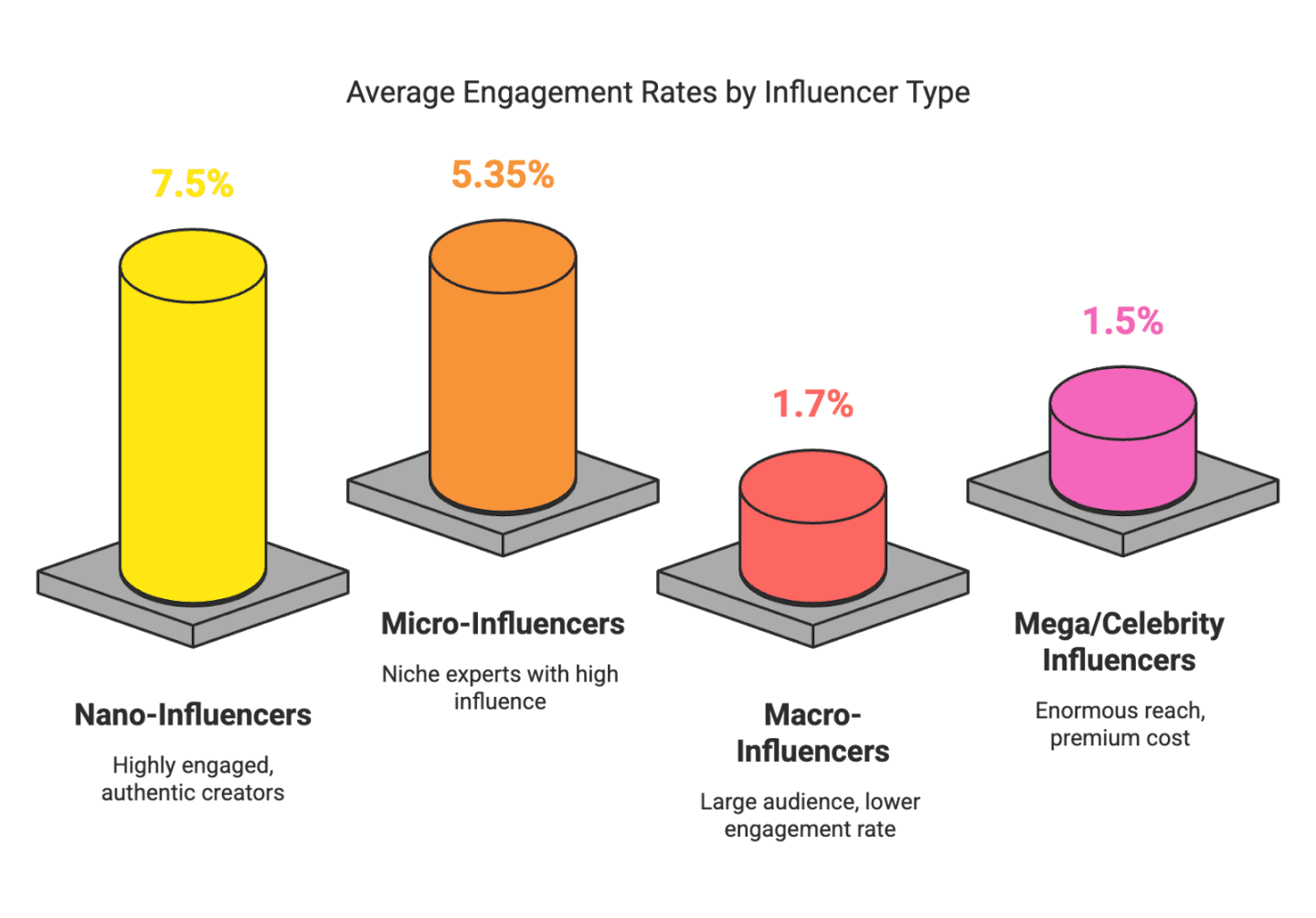
To summarize the above, here’s a quick comparison of influencer tiers, their typical follower counts, and average costs for a sponsored Instagram post:
Table: Influencer levels and typical Instagram pricing. Actual rates vary by platform, niche, and engagement rates, but larger follower counts generally command higher fees.
As the table shows,Nano and micro-influencers are far more affordable on a per-post basis than macro or celebrity influencers. This is why a brand with the same budget might hire 50 micro-influencers instead of one celebrity – and often get better overall engagement in aggregate. Smaller influencers also tend to accept product samples or commissions as compensation. For example, Stack Influence’s platform often compensates nano and micro influencers with free products (product seeding) rather than cash, which leads to more genuine posts. These creators share real opinions after trying the product, so the content comes off as authentic word-of-mouth recommendations rather than paid ads. It’s essentially grassroots marketing at scale.
Each type of influencer has its place in a marketing strategy. The key is for a brand to match the influencer type with its campaign goals. If a company wants to boost trust and engagement in a niche community, tapping dozens of nano- or micro-influencers can be incredibly effective. On the other hand, if the goal is broad mass awareness (like a nationwide product launch), partnering with a few macro or mega influencers might make more sense. Many successful campaigns use a mix – for example, a core group of mid-tier/macro influencers to reach a wide audience, supported by a long tail of micro-influencers to drive engagement and conversations.
So, how do brands actually run an influencer marketing campaign from start to finish? It typically goes something like this:
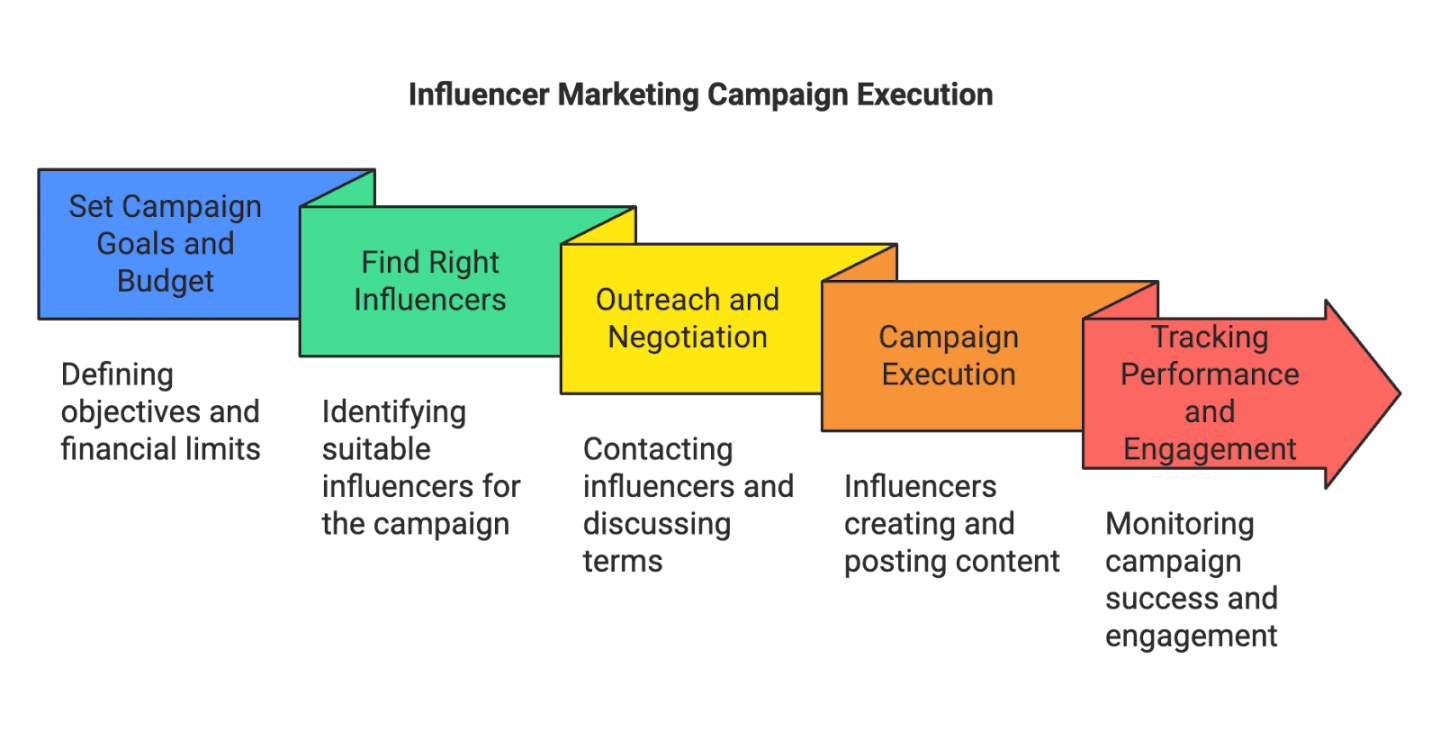
So, how do brands actually run an influencer marketing campaign from start to finish? It typically goes something like this:
A post shared by Daniel Wellington (@danielwellington)
The watch brand Daniel Wellington is often cited as a textbook example of influencer marketing success. As a startup with a limited budget, they skipped traditional ads and instead sent free DW watches to thousands of micro-influencers on Instagram, anyone from fashion bloggers to artists with engaged followings. In exchange, these influencers posted photos wearing the stylish watches and often shared a discount code for followers. This strategy of mass “product seeding” was extremely cost-effective for DW (their product had a 50% profit margin, so gifting watches cost them very little). The result? In just a few years, Daniel Wellington’s social media presence exploded with user-generated content. Their hashtag #DWpickoftheday garnered over 60,000 posts as influencers and even fans started posting just to get featured on the brand’s page. This social proof and buzz translated into sales – over 1 million watches sold (about $228 million in revenue) in three years, transforming Daniel Wellington into a globally recognized brand. Influencers gave DW a “sturdy foundation” of content and credibility, which the brand smartly repurposed in its own marketing. This case shows the power of micro-influencers en masse; by leveraging countless authentic endorsements, a small company turned itself into a powerhouse.
A post shared by Chipotle (@chipotle)
Fast-casual restaurant Chipotle is known for clever social media campaigns, and in 2019 they struck gold on TikTok with the #GuacDance challenge. In honor of National Avocado Day, Chipotle partnered with a mega-influencer – TikTok star Loren Gray (tens of millions of followers) – to kick off a dance challenge celebrating guacamole. They used a goofy guacamole song and encouraged users to post their own dance videos. The campaign went viral, becoming TikTok’s highest-performing branded challenge in the U.S. at the time. The results were directly tangible for Chipotle: the challenge led to the most guacamole orders ever in a single day for the chain. They served over 800,000 sides of guac on that day (65% more than usual, according to one report) and had to increase avocado supplies by 6% to meet demand. The hashtag itself amassed over a billion views on TikTok. This campaign combined a celebrity influencer’s huge reach with the viral nature of TikTok challenges (where everyday users became nano-influencers by creating and sharing their own videos). By engaging fans in a fun activity and tying it to a one-day promotion (free guac with online orders), Chipotle drove both engagement and a clear sales spike. It’s a great example of how influencer marketing isn’t just about one person posting – it can be about sparking a movement of user content that amplifies the message far beyond the initial influencer’s audience.
A post shared by Glossier (@glossier)
Beauty brand Glossier built its company on the ethos of community and word-of-mouth. Rather than rely on a few big celebrity endorsements, Glossier has famously leveraged its own customers and followers as a network of nano- and micro-influencers. One example is their #GlossierGirl campaign, where they encouraged real users to share posts wearing Glossier products in their everyday lives. Glossier would often re-post customer content and treat them like VIP brand ambassadors. This authentic strategy paid off: by turning regular fans into advocates, Glossier gained massive buzz and credibility in the beauty community. The campaign emphasized real people and real skin – an attractive contrast to overly airbrushed cosmetics ads. It helped Glossier grow primarily through social media referrals, with minimal ad spend. The takeaway from Glossier’s approach is that sometimes your happy customers are your best influencers. By nurturing a passionate community (through engagement, referral programs, and recognition), a brand can enjoy a continuous stream of organic influencer marketing. Glossier’s success with peer-to-peer recommendation contributed to it becoming one of the fastest-growing skincare brands of its time, all fueled by the power of nano and micro influencers sharing their genuine love for the products.
(These are just a few examples – influencer marketing is used across industries, from fashion and tech to food and gaming. The common thread in successful campaigns is authenticity and alignment: the influencers truly connect with the product and audience.)
Is influencer marketing actually effective? The data says yes – when done right, it can yield impressive engagement and conversion results. Here are some key statistics that highlight its impact:
In summary, the statistics show that influencer marketing, when aligned with the right strategy, is highly effective. It drives strong engagement, builds trust through third-party voices, and can deliver solid conversion and ROI for brands. It’s not magic – a poorly executed campaign can still flop – but with careful planning and authentic partnerships, the numbers often tilt in favor of this approach. This is why 89% of marketers doing influencer marketing are maintaining or increasing their budgets and why the practice continues to grow each year.
Influencer marketing might have started as a trend, but it’s now a core component of many marketing strategies – and for good reason. It essentially leverages the oldest form of marketing (word-of-mouth) amplified through modern social networks. By collaborating with influencers who genuinely connect with their audience, brands can humanize themselves and reach consumers in a way that feels organic rather than intrusive.
Whether it’s a nano-influencer on TikTok raving about a new snack to a tight-knit local audience, or a YouTube tech guru doing an in-depth review of a gadget, or a celebrity introducing a fashion line to millions of fans – the underlying mechanism is the same: people influence other people. Influencer marketing works when that influence is rooted in trust and authenticity. As we saw with examples like Daniel Wellington and Glossier, you don’t need a Super Bowl ad to build a brand; a network of passionate micro-influencers can be just as powerful. And as Chipotle’s campaign showed, creative ideas with the right influencers can even spur millions of ordinary users to become brand advocates for a day.
For brands considering influencer marketing, the key is to know your goals, pick your partners wisely, and treat the relationship as a two-way street (the best campaigns feel like a collaboration, not just a transaction). Using tools and platforms (like Stack Influence for scaling up micro-influencer efforts) can help manage the complexity, especially if you plan to work with large numbers of creators. With careful execution and a bit of creativity, influencer marketing can yield exceptional results – from skyrocketing engagement rates to tangible sales growth, all while creating a community around your product.
In a world where consumers are increasingly skeptical of traditional advertising, influencers provide a relatable bridge between brands and audiences. That’s the real magic of influencer marketing: it turns marketing messages into conversations and recommendations between real people. And as long as those conversations remain genuine, influencer marketing will continue to thrive as an easy-to-digest, engaging, and effective way to connect with consumers.
In the realm of e-commerce, where competition is as vast as the ocean, every brand seeks innovative ways to elevate its visibility and engagement. Enter Amazon Posts, a game-changing feature that's creating a buzz among sellers and brands on Amazon. If you haven't tapped into Amazon Posts yet, you might be missing out on a significant opportunity to boost your brand's presence. Let's dive deep into what Amazon Posts are, why they matter for your brand, and how to leverage them effectively.

Source: Amazon
Amazon Posts is a feature that allows brands to use social media-style posts to engage shoppers and promote their products on Amazon. This feature is part of Amazon's larger effort to enhance brand discovery and customer interaction within their platform. It mirrors the user experience of browsing through a social media feed, with a carousel of posts displaying lifestyle images, product highlights, and more, all tailored to include your brand's offerings.
Why is this exciting for brands? Because Amazon Posts provides a visually appealing way to tell your brand story and showcase products without the shoppers feeling the hard-sell approach. It blends content and commerce smoothly, encouraging exploration and discovery in a shopper-friendly manner.
In the ever-evolving landscape of e-commerce, getting your brand noticed can often feel like shouting in a bustling, crowded room. That's where Amazon Posts can step in to amplify your voice. This tool is crafted specifically to improve brand visibility, acting much like a megaphone that helps your brand's message reach the right audience more effectively.
Brand visibility refers to how prominently and frequently your brand appears in front of potential customers. On a platform like Amazon, which is saturated with countless products and sellers, standing out is crucial. Amazon Posts helps by presenting your products in a visually engaging feed format that users can scroll through — quite similar to browsing through their favorite social media.
When a shopper scrolls through Amazon Posts, they see a carousel of posts that include high-quality images and narratives crafted by brands themselves. This format isn't just about showing pictures; it's about telling a story that encompasses the lifestyle and values behind the products.
Here’s how Amazon Posts works to boost your brand’s visibility:
Businesses utilising Amazon Posts have reported higher conversion rates, noting that the engaging format makes potential customers more likely to click through and purchase. In fact, some brands have observed a noticeable uptick in organic search results on Amazon following their use of Posts, as the content's increased engagement helps to signal its relevance to Amazon’s algorithms.
In a marketplace as vast and competitive as Amazon, standing out is essential. Amazon Posts offers a unique, eye-catching, and effective way to enhance brand visibility, ensure your products reach a broad audience, and imbue your brand narrative within the consumer’s journey. By embracing this tool, brands can navigate the crowded market more effectively, ensuring they not only get seen but also remembered.
In today’s digital age, just selling a product isn't enough. The key to truly succeeding in the competitive e-commerce landscape lies in engaging with your customers effectively. Improved customer engagement not only enhances the shopping experience but also builds lasting relationships and loyalty. This is especially true on platforms like Amazon, where the vast number of options can often leave customers feeling overwhelmed and disconnected from the brands they shop with.
Customer engagement is about more than just capturing attention; it's about creating meaningful interactions. From personalized recommendations to interactive content, engaged customers are more likely to return, recommend your brand to others, and have higher lifetime values.
According to Brevo highly-engaged customers buy 90% more frequently, spend 60% more per transaction, and are five times more likely to indicate it is the only brand they would purchase in the future.
Amazon provides several tools to help sellers enhance engagement:
By harnessing the power of these tools, brands have noted several benefits:
Here are a few proven strategies to effectively increase customer engagement on Amazon:
Improving customer engagement on Amazon goes a long way in building a loyal customer base and differentiating your brand in a crowded marketplace. With tools like Amazon Posts and Amazon Live, sellers are equipped more than ever to create meaningful connections that drive not just sales, but also long-term brand loyalty.
Engagement isn't just another metric to track—it's a crucial component of your business's growth and sustainability on platforms like Amazon.
In the digital era, one of the biggest advantages for businesses, especially startups and SMEs, is the abundance of free tools available at their disposal. These tools, ranging from marketing platforms to analytical software, offer functionalities that were once only accessible to companies with deep pockets. This democratization of technology not only levels the playing field but also encourages innovation and creativity among businesses of all sizes.
The notion "You get what you pay for" doesn't always hold true, especially when it comes to the plethora of free tools available online. These platforms can significantly reduce operational costs while optimizing efficiency and productivity. For instance, social media management tools like Buffer, Hootsuite, or Nuelink offer free versions that, while they may have some limitations, provide immense value for small businesses looking to establish an online presence without significant investment. Similarly, Google Analytics offers comprehensive insights into website traffic and user behavior, enabling businesses to tailor their strategies without having to invest in costly analytics software.
The cost savings from using these free tools can be redirected into other areas of the business, such as product development, customer service, or marketing. This reallocation of resources can lead to improved product quality, enhanced customer experiences, and more aggressive marketing strategies. According to Fit4Market, businesses that prioritize inbound marketing (a strategy easily executed with free tools) are 3x times more likely to see higher ROI on inbound marketing campaigns than on outbound.
In conclusion, the strategic use of free tools can be a game-changer for businesses. Not only do they offer cost savings, but they also promote innovation, agility, and community support. As the digital landscape continues to evolve, the importance of leveraging these tools cannot be overstated. Whether it's through social media management, analytics, or design, the effective use of free resources can significantly impact a business's growth trajectory.
So, before you consider investing in expensive software or services, take a closer look at what's available for free. You might be surprised at how much you can achieve without dipping into your budget.
In today's digitally charged business landscape, navigating without data is akin to sailing without a compass. Data-driven insights not only illuminate paths to better decisions but also bolster business strategies with tangible evidence. For startups and established companies alike, the adoption of data analytics translates into a significant competitive advantage, enabling an understanding of market trends, consumer behavior, and operational efficiencies with precision.

Gone are the days when decisions were based purely on gut instincts or past experiences. The surge in data analytics tools has reshaped the approach towards business decision-making. According to Forbes, data-driven companies are 23 times more likely to top their competitors in customer acquisition, about 19 times more likely to stay profitable and nearly seven times more likely to retain customers. This shift towards data-driven strategies highlights the critical role of accurate data in boosting business outcomes.
Data analytics not only enhance decision-making but also optimize costs and resource allocation. Real-time data insights help businesses minimize waste, improve supply chain efficiencies, and forecast demand more accurately. This proactive management of resources leads to substantial cost savings and operational improvements. According to McKinsey, organizations that effectively leverage analytics in their supply chain can see cost reductions of 15% to 25%.
The power of predictive analytics allows companies to not just react to changes, but to anticipate them. By analyzing historical data and identifying patterns, businesses can predict future trends and behaviors, from customer churn rates to potential market shifts. This foresight enables proactive strategy adjustments, ensuring businesses remain agile and responsive in a dynamic market environment.
The strategic application of data-driven insights offers more than just incremental improvements; it can ignite transformative changes across all facets of a business. From refining customer experiences to streamlining operations and forecasting future trends, the benefits are comprehensive. As the repository of accessible data continues to expand, the potential for these insights to power successful, agile businesses becomes even more pronounced.
Embracing the wave of data analytics will not only empower businesses to navigate uncertainties with confidence but will also pave the way for innovative solutions and sustained growth.
Incorporating a robust data analytics strategy isn't merely an option for competitive businesses—it's becoming a necessity.
Amazon Posts offers an easy-to-navigate interface for brands to get started. Here's a simple guide to leveraging Amazon Posts for your brand:
Embarking on a new venture, whether it's launching a startup or initiating a project within a large corporation, begins with two critical steps: determining eligibility and setting up your operational base. These initial phases are like building the foundation of a house—without a solid base, no matter how aesthetically pleasing the structure, it won't stand the test of time. So, let's break down what these foundational steps entail and how you can navigate them smoothly.
Determining eligibility is the very first checkpoint in your journey. It involves understanding whether your project or business idea meets the necessary criteria set by stakeholders, regulatory bodies, or potential funding sources. For startups looking for funding, for example, specific eligibility criteria could include the stage of your business, the industry sector, and even the geographical location of your operations.
Once you've cleared the eligibility hurdle, the next step is to set up your operational base. This goes beyond just finding a physical location for your office. In today's digital age, setting up involves several components including legal registration, establishing your online presence, and implementing the right technology tools that align with your business needs.
Additionally, your online presence, encompassing everything from your website to social media profiles, is your digital storefront. 99.5% of shoppers research purchases online at least sometimes. Nearly 87% do so regularly or always according to Power Reviews so having a robust online presence is non-negotiable. It's crucial for reaching potential customers, investors, and partners.
Moreover, the legal setup of your business—choosing the right business structure, registering your business, and obtaining necessary licenses—lays the groundwork for your operational legality and tax obligations. A clear understanding of these requirements is essential to avoid any legal pitfalls that could jeopardize your business down the line.
Kickstarting your project or business on the right foot involves a mix of strategic planning and meticulous attention to detail. By ensuring you meet all eligibility criteria and setting up your operational base with care, you lay a solid foundation that supports sustainable growth and success.
While these steps may seem daunting at first, they're crucial for creating a streamlined, efficient operation that's poised for success in the competitive business landscape. Remember, the time and effort invested in these initial phases will pay dividends in the long run.
Taking a systematic approach to eligibility and setup not only positions your venture for a strong start but also signals to stakeholders, including investors, employees, and customers, that your business is built on a solid foundation of thoughtful planning and strategic foresight.
A post shared by Stack Influence (@stackinfluence)
In the digital age, content is king. Creating compelling, engaging, and relevant content is essential for attracting and maintaining the attention of your audience, whether they're potential customers, stakeholders, or the wider community. Here’s how you can strike the right note with your content creation efforts.
The first rule of effective content creation is to know who you're talking to. This involves deep audience research to understand their preferences, pain points, and the platforms they frequent. For instance, did you know that visual content is 40 times more likely to get shared on social media than other types of content according to Neil Schaffer. This insight indicates the importance of incorporating visuals into your content strategy to boost engagement and shareability.
No matter how great your content is, it won’t have the desired impact if it doesn’t rank well on search engines. 68% of online experiences begin with a search engine according to BrightEdge. This statistic underscores the importance of optimizing your content for search engines—a practice known as Search Engine Optimization (SEO). Using the right keywords, ensuring fast page load times, and creating quality backlinks are just a few aspects of a solid SEO strategy that can help your content reach a wider audience.
Consider outsourcing tasks like content creation with an Influencer Marketing Platform like Stack Influence; a community of over 11 million influencers built to automate product seeding campaigns and scale up your brand awareness, UGC, and online growth.
In conclusion, successful content creation involves understanding your audience, diversifying your content formats, focusing on quality, optimizing for search engines, and continuously measuring and iterating based on performance metrics. By following these principles, you can create content that not only captures attention but also drives engagement and conversion.
Effective content creation is not just about filling your channels with material—it’s about crafting stories and information that resonate with your audience, thereby building long-lasting relationships and trust.
When it comes to communicating effectively with your audience, how you say it can be just as important as what you say. Crafting your message is a delicate art that involves clarity, persuasion, and resonance. Here’s how you can refine your messaging to make a meaningful impact.
Before diving into content creation, pinpoint exactly what your core message is. This is the fundamental idea or value proposition you want your audience to remember. It should be concise and clear. For instance, Apple’s core message often revolves around innovation and simplicity, communicated through succinct taglines and visually clean advertisements. Having a strong, clear message makes it easier for your audience to understand, connect with, and recall your brand or purpose.
Your message should not only sell your product or service but also solve a problem or fulfill a need. 65% of consumers expect companies to understand their needs and expectations according to Salesforce.Use your messaging to empathize with your audience’s challenges and provide solutions. This approach not only enhances the relevance of your message but also boosts engagement.
What do you want your audience to do after they read your message? Whether it’s signing up for a newsletter, purchasing a product, or following your social media, your message should always include a clear and compelling call to action (CTA).
In a nutshell, crafting your message is about more than just sending information—it’s about making a connection. By understanding your audience, speaking in their language, addressing their needs, and compelling them to act, your message will not only be heard but also felt.
Consistency, clarity, and empathy are your best tools in this step. Remember, every piece of content is an opportunity to strengthen your relationship with your audience.
In the bustling digital marketplace, making your products easily discoverable can be the difference between a sale and a missed opportunity. That’s where product tagging comes into play. Think of product tags as your silent salespeople, working round the clock to guide potential customers to your items. But how do you maximize their effectiveness? Let’s dive in.
Product tagging involves attaching relevant keywords or phrases to your products, which can include details such as type, size, color, and brand. These tags help categorize and organize your inventory, making it easier for customers to find what they're looking for. In an environment where consumers are bombarded with choices, clear and comprehensive tagging can significantly enhance user experience.
Creating effective tags is as much an art as it is a science. Here are some best practices:
Product tagging isn’t just about improving user navigation on your site; it’s also a potent tool for search engine optimization (SEO). Effective product tags can boost your products' visibility in search engine results, potentially increasing your organic traffic. It's a strategy that can complement your other SEO efforts, offering a more direct path to your products for those searching with specific intent.
Product tagging is a critical, yet often overlooked, component of e-commerce success. By thoughtfully tagging your products, you not only enhance the shopping experience for your customers but also improve your site’s visibility online. It’s a win-win that requires a bit of effort upfront but pays dividends in customer satisfaction and sales.
Consider your product tags as an ongoing project, continuously refining and optimizing based on customer feedback and analytical insights. With the right approach, your silent salespeople will work tirelessly, guiding your customers right to their (and your) desired outcomes.
You’ve brainstormed, drafted, edited, and now your piece is gleaming like a diamond in the rough of the internet. But before you hit that ‘Publish’ button with a storm of enthusiasm, let’s chat about the final, crucial step that can make or break your post’s success: the art of publishing.
Not all platforms are created equal, and neither are their audiences. Instagram is a visual buffet, perfect for eye-catching photos or short videos, while LinkedIn thrives on professional content, articles, and more detailed posts. Choose the platform where your target audience spends their time and engages with content. And if you’re blogging, SEO (Search Engine Optimization) becomes your best buddy.
Publishing isn’t the end of the road; it’s the beginning of a journey where engagement plays a leading role. Encouraging comments, shares, and likes can amplify your post’s reach. Ask questions, prompt discussions, or simply engage genuinely with comments to spark further interaction. Also, don’t forget to utilize hashtags wisely. They can serve as beacons, drawing in interested readers from beyond your immediate network.
Congratulations! You’ve crafted, published, and promoted your post into the digital wild. But don’t sit back and relax just yet because the cycle of content creation is never truly complete without diving into the nitty-gritty of analytics. This step is your golden ticket to understanding what resonates with your audience, what drives engagement, and, most importantly, how to do it better next time.
Let’s break down the art of analysis into digestible chunks. Each social media platform comes with its own analytics tools, as does your website or blog platform. These tools are like treasure maps, guiding you to the X marks of success. For example, Google Analytics offers insights into how visitors find your blog, the most popular content, and what actions they take.
Start by looking at basic metrics such as page views, likes, shares, comments, and the average time spent on each post. But don’t stop there. Delve deeper into engagement rates, click-through rates (CTR), and conversion rates if you’re guiding readers towards a specific action. According to First Page Sage, the average CTR for a first-place Google search result is 31.7%.This number paints a clear picture of the importance of SEO and the advantages of ranking high in search results.
Once you’ve identified areas for improvement, implement changes and closely monitor the results. This iterative process is crucial for continuous improvement. Platforms like Hootsuite or Buffer offer analytics across multiple social media platforms, making it easier to track performance and spot trends.
It’s also beneficial to keep an eye on industry benchmarks. According to Mailpro 20.9% while non-personalized emails have an opening rate of 9.68% and automated emails have a 29. 57% opening rate. Knowing this can help you set realistic goals and evaluate the effectiveness of your email marketing campaigns in driving traffic to your posts.
Embrace the cycle of analyze and optimize as a continuous learning journey. The digital landscape is ever-changing, with new trends, algorithms, and audience behaviors emerging. Staying agile, keeping your content fresh, and being willing to pivot based on data insights will keep your content strategy dynamic and successful.
In conclusion, analysis and optimization aren’t just steps in the content marketing process; they are integral to your growth strategy. By understanding your performance and applying those insights to future content, you're setting up for better engagement, reach, and conversion. It’s a game of constant improvement, and you’re equipped to play it well.
So you’ve analyzed, you’ve optimized, and now you’re probably thinking, “What’s next?” Well, the magic of content creation doesn’t end with a single cycle of analysis. The real growth happens when you embrace the power of iteration. Iteration means continually refining and evolving your strategy based on past learnings and performance data.
Here's the deal: The digital world is dynamic. What worked last month might not work today. Perhaps there’s been an algorithm update, a shift in consumer preferences, or maybe a competitor has upped their game. Iteration helps you stay relevant, engaging, and ahead of the curve.
For instance, if engagement rates dropped for your latest posts, it’s time to dissect the elements—be it the headline, content length, or even post timing. Did you know that, according the best times to post on Instagram can significantly affect engagement rates? That’s a simple yet impactful adjustment you can test in your next content cycle.
Iteration isn’t just a step; it’s a mindset. Encourage your team to view every content outcome as a starting point for the next. Promote a culture of curiosity where challenging the status quo is welcomed and where every metric improved is celebrated.
Regularly scheduled review sessions can help keep this mindset alive. Discuss what’s working, what isn’t, and hypothesize why. This continual loop of discussion, testing, and revision creates a proactive rather than reactive strategy.
In content marketing, perfection is a moving target, and iteration is the process of keeping up. By continuously refining your approach, you ensure your content doesn't just meet the current standards but sets new benchmarks.
Remember, every piece of content is a learning opportunity. Embrace the iterative process, and watch as your content—and its results—improve with every cycle.
Amazon Posts represents a powerful, innovative way to boost your brand's visibility and engagement on one of the world's largest e-commerce platforms. By adopting this tool, brands can effectively merge content creation with e-commerce strategies, showcasing their products through visually rich, social media-style posts that resonate with users' browsing habits. With the ability to amplify brand stories and product highlights in a consumer-friendly format, Amazon Posts not only enhances your visibility but also deepens customer engagement, driving higher conversion rates and fostering brand loyalty. As the digital marketplace continues to evolve, leveraging Amazon Posts can provide your brand with a competitive edge, ensuring you stand out in the crowded and competitive arena of Amazon.
User-generated content (UGC) continues to be marketing gold in 2026 – and brands are tapping both everyday customers and influencers to create authentic, relatable content. In fact, 85% of consumers find UGC more authentic and influential than brand-created content, and it’s 5× more likely to convert shoppers than traditional ads. Whether it’s an unboxing video from a micro-influencer or a happy customer’s photo review, UGC builds trust and community. No wonder 79% of people say UGC highly impacts their purchasing decisions.
In this article, we’ll explore the top UGC platforms of 2026 – focusing on those built for influencer-generated content and those that facilitate both influencer and customer content. We’ll compare key platforms (features, pricing models, UGC types, AI tools, integrations, etc.), highlight emerging UGC marketing trends (think AI and personalization), and look at real case studies of brands winning with UGC (including one from Stack Influence’s campaigns).
Not all UGC is created equal. Some content comes organically from customers (like product reviews, customer photos, or social media posts by fans), while other UGC is driven by influencers/creators who partner with brands. In 2026, the lines between the two are blurring – savvy brands often leverage both. For example, a skincare brand might collect customer reviews and photos on its site, while also sending free samples to micro-influencers to post on Instagram or TikTok. Both strategies amplify the “voice of the customer,” just through different channels.
Influencer-generated UGC usually involves collaborating with creators (from mega influencers to niche nano influencers) to produce content for the brand. This content tends to be polished yet authentic – influencers know how to engage their audience with relatable storytelling rather than obvious ads. Meanwhile, customer-generated UGC (like someone tagging a brand in a post or leaving a review) provides unfiltered authenticity and social proof from real buyers. As brands increasingly rely on AI to optimize UGC strategies, integrating AI-powered content moderation becomes important. This technology helps ensure that the content aligns with brand guidelines and community standards, maintaining a positive and safe online environment.
These days, top UGC platforms recognize the value of community-driven content in all forms. Many platforms that started with one focus (say, collecting Instagram fan photos) have expanded to handle reviews, influencer campaigns, and more – essentially becoming unified UGC hubs. Below, we compare some leading platforms empowering brands to harness UGC, whether it’s coming from passionate customers, paid influencers, or a mix of both.

The table below highlights some of the top UGC platforms in 2025, with a focus on their support for influencer and customer content, pricing models, industries they serve, types of UGC supported, AI capabilities, and key integrations.
(Platforms marked in bold specialize or excel in influencer-driven UGC, while others handle a mix of influencer and customer content. All information is based on available data as of 2025 – pricing and features may change.)
As shown above, there’s a platform for every need. For example, Stack Influence is all-in on micro-influencer campaigns (great for product seeding at scale, where you send free product to lots of small influencers in exchange for posts). On the other hand, a platform like Bazaarvoice centers on collecting and amplifying customer voices (reviews, ratings) but also has solutions for influencers and social content. Many tools now offer a unified suite: look at Emplifi (Pixlee TurnTo) combining Instagram curation, influencer management, and classic reviews into one package.
Another trend in this comparison is the rise of AI features. Several UGC platforms now bake in AI to help brands manage the content flood more efficiently. For instance, Flowbox’s AI auto-detects products in photos so you can make UGC shoppable faster. Stackla (Nosto) uses AI to personalize which UGC each shopper sees, boosting relevance. And Yotpo’s AI finds the most “on-brand” snippets from thousands of reviews to display as highlights. We’ll talk more about these AI-driven trends next.
UGC isn’t static – the strategies and tech around it evolve every year. In 2026, a few key trends are shaping UGC marketing:
Artificial intelligence is supercharging how brands leverage UGC. We’re seeing AI used in content creation, editing, and delivery:
Overall, expect AI to continue making UGC campaigns more efficient and tailored. As one industry blog noted, “Artificial Intelligence will take on a much bigger role in editing, optimizing, and distributing UGC content much more efficiently.”. The brands that embrace these AI tools can scale up their UGC efforts without drowning in content management tasks.
Authenticity has been the buzzword in UGC for years, and it’s only getting bigger. Consumers crave genuine voices, which is driving two related trends: the rise of micro/nano-influencers and a new class of UGC creators.
In short, UGC in 2026 is as much about community and collaboration as it is about content. Brands are building long-term relationships with fans and micro-creators. By nurturing these communities (through reposting fan content, offering perks, featuring customers on their pages, etc.), companies foster a loyal base that keeps the UGC flowing. It’s a virtuous cycle: people love seeing real customer stories, which drives more engagement, which in turn inspires more people to create content for the brand.
Another big trend: brands are squeezing more juice out of UGC by repurposing it across every possible channel. Gone are the days when a customer’s Instagram photo might only live in an Instagram re-post. In 2026, if a brand gets a great piece of user content, they’ll use it in multiple ways, such as:
The key is that brands treat UGC as versatile marketing assets, not one-off bits. A glowing customer review might start on a product page, but then feature in ads, emails, social media, and even investor presentations! This not only maximizes the value of content customers generously provide, but also maintains consistency – shoppers encounter the same authentic messages on every channel. As one guide recommends, “UGC is not a social media only tool. Brands can repurpose the same content for website banners, email campaigns, paid ads, product pages, etc.”. The result? A cohesive customer-centric brand story everywhere a potential buyer looks.
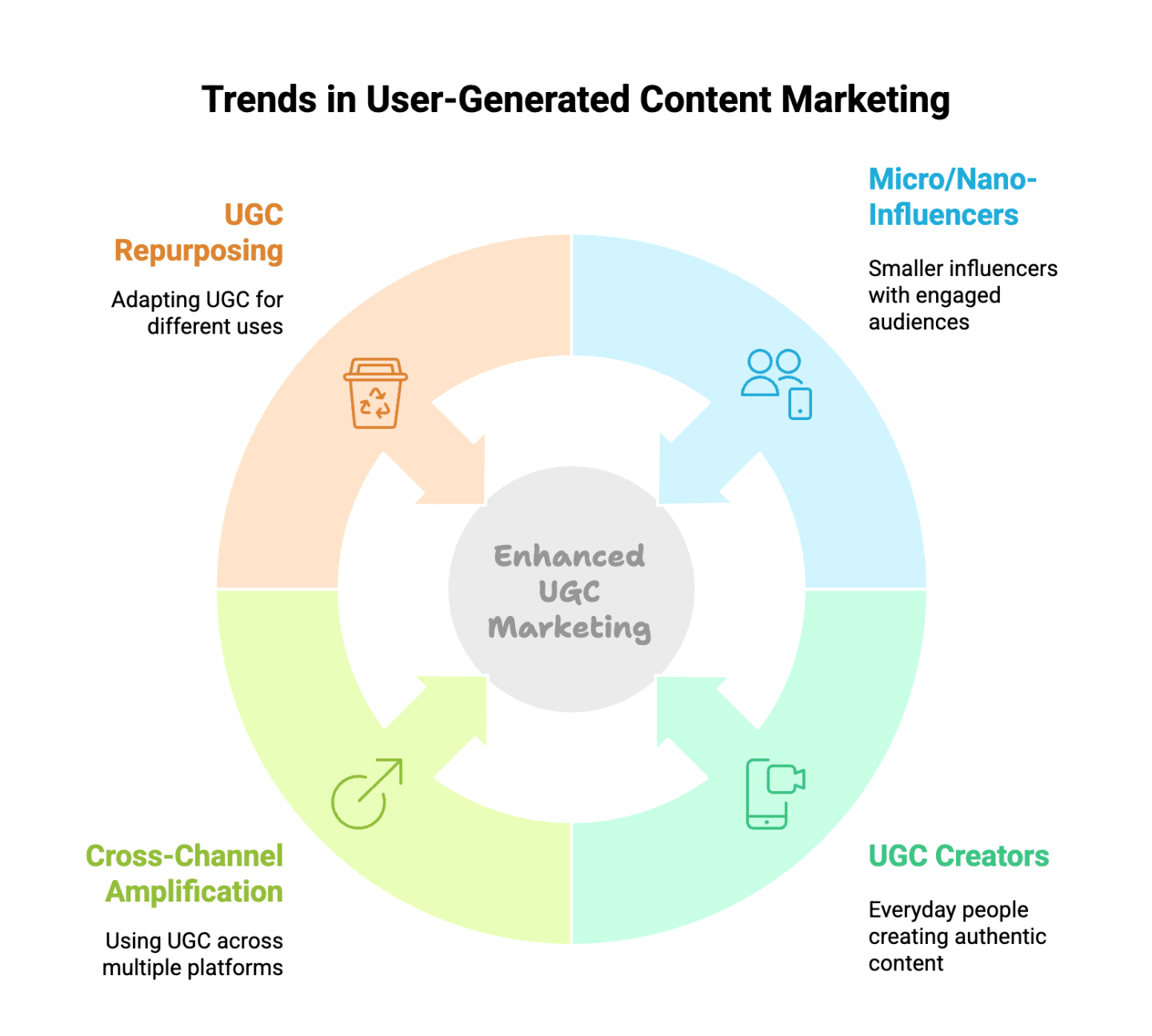
Finally, it’s worth noting how the platform landscape and social media itself are evolving for UGC:
All told, UGC marketing in 2026 is more sophisticated, data-driven, and creative. Brands are not passively waiting for content – they actively encourage it (through hashtags, contests, product seeding, and community building), and then aggressively amplify it across channels using the latest tech. The core reason remains the same: people trust people. UGC delivers that trust in a way brand-crafted content simply can’t match, and now at a scale and precision that makes it a cornerstone of modern marketing strategy.
To ground all this theory, let’s look at a few real-world UGC campaign successes. These case studies show how different brands leveraged influencer and customer content to drive results:
Each of these case studies highlights a different angle of UGC marketing – influencer activation (Blueland), website integration (Iconic London), and combining reviews with user photos (Tarte). Yet all arrived at the same conclusion: UGC delivers results. Whether it’s ROI, conversion rate lifts, or richer engagement, leveraging authentic content from customers and creators is a winning strategy.
UGC isn’t just a trendy term – in 2026, it’s a foundational strategy for brands that want to stay relevant. The top platforms we discussed can help streamline and scale your UGC efforts, but success ultimately comes from a mindset of putting customers at the heart of your marketing. By encouraging fans to create content, amplifying their voices across channels, and using new tools (AI, personalization) to optimize along the way, brands can build stronger trust and community with their audience. The platforms and trends above show that UGC marketing has matured: it’s more strategic, data-backed, and creative than ever. For brands looking to leverage UGC effectively, the playbook is clear – start with authentic customer and influencer stories, and let those stories be your marketing engine. By doing so, you tap into an almost endless supply of relatable content that keeps your brand fresh, credible, and engaging in the eyes of today’s consumers. Here’s to letting your customers and creators do the talking in 2026!
Meta’s advertising ecosystem (encompassing Facebook and Instagram) is continually evolving, and one strategy has proven exceptionally potent in recent years: user-generated content (UGC). UGC – content created by real users, customers, or fans – offers authenticity and relatability that traditional brand ads often lack. In this in-depth guide, we’ll explore how brands can effectively leverage UGC in their Meta ad campaigns. We’ll cover best practices for sourcing and optimizing UGC, examine case studies of successful UGC-driven campaigns across various industries, dive into data-driven insights on UGC’s impact (with compelling stats and facts), discuss how to incorporate macro and mega influencers into UGC strategies, review key influencer marketing platforms, and provide actionable strategies you can implement today.
Grab a coffee, and let’s dive in – with a casual yet informative tone – into the world of UGC ads on Facebook and Instagram!
Before we get into the how-to, let’s address the why. Why should you care about UGC in your Facebook and Instagram ads? The short answer: because consumers trust it and engage with it far more than polished brand-created content. UGC brings a human touch to advertising, making your promotions feel less like ads and more like recommendations from friends. Here are some data-driven insights that highlight the impact of UGC on ad performance:

In summary, UGC brings unmatched authenticity, engagement, and efficiency to Meta advertising. It creates a virtuous cycle: authentic content leads to higher engagement, which leads to better ad delivery and lower costs, which leads to more reach and conversions. Now that we’ve sold you on why UGC matters (with plenty of stats to back it up), let’s get into the practical side: how to actually source and use UGC effectively in your Facebook and Instagram campaigns.
Successfully leveraging UGC in ads requires a thoughtful approach. It’s not as simple as finding a random customer photo and slapping it into an ad. The best UGC campaigns are carefully sourced, curated, and optimized to align with the brand and appeal to the target audience. Here are some best practices to guide you through the process:
The first step is to collect great user-generated content relevant to your brand. There’s an abundance of content out there on social media – the key is encouraging the right content and finding it efficiently. Here’s how to source UGC:
Once you have a pool of user-generated content, the next step, one often managed by a dedicated social media agency, is curation: choosing the right pieces to use and moderation – ensuring the content aligns with your brand values and quality standards. Here’s how to curate like a pro:
Before you hit “Publish” on that shiny new UGC-based ad, you must secure permission from the content creator. Just because someone posted about your brand publicly doesn’t automatically give you the right to use their photo or video in your advertising. Here’s how to navigate permissions and give proper credit:
By securing rights and giving credit, you not only stay legally compliant but also build trust with your audience and the content creators. It shows that your brand values its community and does things the right way. Once permission is sorted, it’s time to polish that content for prime time!
One of the beauties of UGC is its raw, unfiltered nature – you don’t want to over-edit that out. However, when turning UGC into a paid ad, you should do some optimization to make sure it performs well on Meta’s platforms. This means tweaking format, size, and context while preserving authenticity. Here’s how to optimize UGC for Facebook and Instagram ads:
By effectively optimizing UGC for ads, you’ll ensure that the content not only appears natively in users’ feeds but also serves your campaign objectives (whether that’s clicks, conversions, or engagement). Now, with your UGC content sourced, approved, and optimized, let’s see this strategy in action through some inspiring case studies.
A post shared by Stack Influence (@stackinfluence)
When we talk about UGC, we often think of everyday customers snapping photos. But influencers – particularly macro and mega influencers – can also play a key role in generating content and amplifying your message. First, a quick definition check:
These influencers aren’t exactly “everyday” users, but the content they create can function similarly to UGC, especially when done in a relatable, authentic style. Here’s how to incorporate macro/mega influencers into your UGC campaigns effectively:
Macro and mega influencers come with the advantage of high production value and storytelling skills. Many of them are content creation machines – they know how to shoot engaging videos or take stylish photos that still feel personal. By collaborating with them, you can generate content that resonates as “real” but also is top-notch quality.
Strategy: Invite influencers to use your product and share their honest experience, just as a normal user would (albeit to a huge audience). The key is to let them keep their voice and style – you want it to come off as a genuine recommendation, not a scripted ad read. For example, if you’re a skincare brand, you might send a product to a beauty macro-influencer and have them incorporate it into their daily skincare routine video. They create the video (perhaps sponsored, which they’ll disclose), talking casually about how it worked for them, maybe even including some “this is just my experience” candid remarks. That content can then be used with permission in your ads as a testimonial-style UGC clip. Influencer content like this often serves as trustworthy social proof, especially if the influencer is known for being authentic with their audience.
One popular tactic on Meta platforms is whitelisting influencer content for ads. This means you get permission to run ads through the influencer’s handle or to promote their post. On Facebook/Instagram, this is done through the “Branded Content” tools (where an influencer can allow a brand to run ads using their account as the advertiser identity). On Instagram it shows as “Paid partnership with ” on the post.
Why do this? Because an ad coming from an influencer’s page can often outperform one from your brand page. It blends into the user’s feed more naturally, as it looks like a post from the influencer (whom the user might recognize or follow) rather than from a brand. It’s leveraging the influencer’s personal brand and voice. If you have macro or mega influencers who love your product, consider running a paid campaign where their UGC-style post is the creative, and it’s targeted to your audience. For instance, a mega influencer might create a short Reel using your fitness app, and you run that as an Instagram ad to people interested in fitness. Viewers see the influencer, maybe think it’s just their normal content, but there’s a subtle “sponsored” tag and a call-to-action to download the app.
Case in point: Many brands do this with celebrity influencers – e.g., a celeb posts a casual video using a haircare product; the brand then turns that into a sponsored story ad. The content carries the weight of the celeb’s endorsement but is presented in a very UGC way (often selfie-style or lo-fi video). It’s a powerful combo of authenticity and star power.
Influencers aren’t just content creators themselves; they can also mobilize their followers to create content. A macro influencer can kick off a UGC campaign by challenging their fans to participate. For example, a popular fitness influencer could announce a challenge in partnership with your brand – “Show me your best at-home workout using #XTrainingChallenge and tag @YourBrand – I’ll feature my favorites!” This merges influencer marketing with UGC campaign, as the influencer provides the initial reach and credibility, and their followers (who trust them) start generating content around your brand.
Strategy: When working with a big influencer, design a campaign element where they ask their audience to do something involving your product. Maybe a mega influencer chef asks followers to remix one of their recipes using your branded ingredient and post it. The influencer might even judge the entries or simply promise to highlight some. This approach was effectively used by brands like GoPro – they partner with extreme sports influencers who post jaw-dropping footage (with GoPro cameras) and prompt fans to share their own GoPro moments. It creates a cascade: influencer posts content -> fans post content -> brand gets a ton of UGC and brand impressions.
Macro influencers can also host giveaways or contests (sponsored by the brand) that involve user submissions. The influencer’s star power draws participation that a brand alone might not be able to achieve.
Watch-outs: If you do this, ensure clear rules and that the influencer correctly discloses their partnership. Also, be prepared to curate a lot of content if the influencer’s post goes viral.
It’s worth noting that the larger the influencer, often the lower the engagement rate (in percentage terms) and sometimes the perceived authenticity. Macro and mega influencers have wide reach, but their personal connection with each follower is less intimate than, say, a micro-influencer with 5k followers who replies to every comment. Studies have found micro-influencers can have engagement rates of 7-20%, much higher than macro influencers according to Marketing Dive.
So, when using macro/mega influencers in UGC campaigns, be mindful: their content might need extra relatability to not come off as just a paid endorsement. One strategy is to combine tiers: use a mega influencer for broad awareness and simultaneously run a micro-influencer campaign for niche engagement and content volume. You’ll get the best of both worlds – the mega influencer’s content draws eyeballs (and perhaps press coverage if they’re famous), while dozens of micro influencers each contribute authentic content that collectively blankets various communities.
For example, a cosmetics brand might collaborate with a celebrity (mega influencer) who posts a video getting ready with their makeup (huge reach), but also engage 50 beauty micro-influencers to post their looks with the same products (depth of content and engagement). The macro content creates buzz, the micro content creates trust at peer levels.
When incorporating influencer content into your ads or campaigns, try to maintain the spirit of UGC. That means if an influencer made a casual Instagram Story talking about how they use your protein powder in their morning shake, and you want to use that in an ad, don’t over-edit it. Don’t turn it into a glitzy ad with background music and flying logos. Maybe just add a caption and your brand logo small at the end, and otherwise keep it as if it were just their story. The idea is to repurpose influencer content in its raw form. Many brands literally take the content straight (with permission) and run it – so you might see an ad that looks exactly like an influencer’s TikTok or IG Story, because it basically is, just promoted.
Consumers have pretty good radar – they can tell when an influencer is being genuine versus just reading a script. Macro and mega influencers often have media kits and professional workflows, but the trend lately is that even big influencers try to maintain an “authentic” feel (audiences demand it). Encourage that. If their first take is too polished, ask them to do a quick selfie video instead. It might feel weird to tell a professional influencer to make it less professional, but often that’s what works.
Bottom line: Macro and mega influencers can supercharge a UGC campaign by adding reach and high-quality content, but the content should remain relatable and real. Use them to amplify UGC, start UGC movements, and create hero pieces of content, all while keeping the tone friendly and unscripted.
One last note – whenever influencers (macro, mega, or micro) are involved and they’re being compensated (money, free product, or otherwise), ensure proper disclosure (like #ad or #sponsored on their posts). This transparency is legally required in many regions and also keeps the trust intact. You might think a #ad tag will hurt authenticity, but research shows that if the content is genuinely useful or entertaining, audiences don’t mind the sponsorship. Plus, Gen Z and younger audiences value honesty; sneaky ads can backfire.
However, if an influencer truly just loves your product and posts about it organically without any payment – that’s more like classic UGC (earned media). Those instances are gold – you can still approach them to formally use the content in ads, but the story remains “they posted this on their own, we just loved it so much we had to share it too.”
In summary, macro and mega influencers should be seen as part of your UGC ecosystem. They bring a megaphone and often creative chops, but the message still needs to feel genuine. By thoughtfully integrating them, you can get the reach of big influencers with the authenticity of UGC – a killer combo in Meta ad campaigns.
A post shared by Stack Influence (@stackinfluence)
As you scale up your UGC and influencer-driven efforts, managing all the moving parts can become a challenge. This is where influencer marketing platforms and UGC tools come into play. These platforms help brands discover content creators, manage collaborations, streamline content rights, and measure performance. Let’s overview a few key platforms and how they assist with UGC campaigns – and we’ll give special attention to Stack Influence, a notable platform in this space.
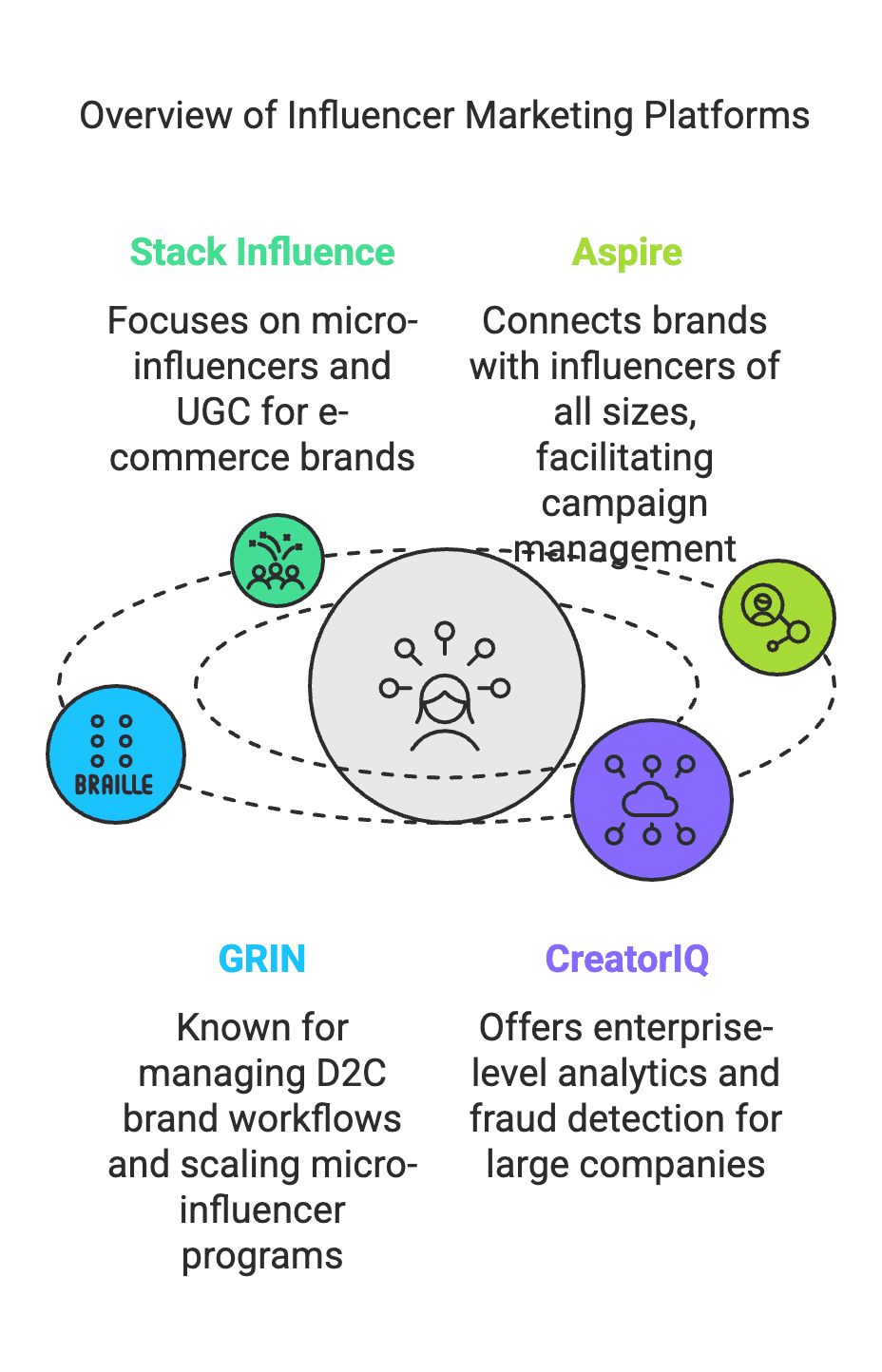
In summary, influencer marketing platforms – and UGC aggregation tools – are like your mission control center for UGC campaigns. They help you go from one-off lucky user posts to a systematic content strategy. And with players like Stack Influence, you have the option of practically outsourcing the generation of high-quality UGC, especially via micro-influencers, to professionals who guarantee results. It’s worth exploring these platforms as you plan to maximize UGC in your Meta advertising.
In today's marketing, authenticity is crucial, especially in Meta ad campaigns where user-generated content (UGC) has become essential. UGC helps humanize brands, builds trust, enhances engagement, and boosts return on investment. Effective UGC involves sourcing through campaigns, curating content, securing permissions, and optimizing for different ad formats. Integrating macro influencers and using influencer marketing platforms can scale UGC efforts efficiently. For impactful Meta ads, consider incorporating real customer experiences and feedback, utilizing tools for broader reach and authenticity in your advertising strategy.