
The latest info on influencer marketing trends, micro influencer news, and the world of social media

Micro-influencers – generally creators with a modest yet highly engaged following – have become powerful partners for brands. They offer niche audiences, authentic voices, and often higher engagement rates than mega-celebrities. However, finding the right micro-influencers and ensuring they’re a good fit requires careful vetting. This comprehensive, platform-agnostic guide walks you through how to recruit and vet micro-influencers for authenticity, engagement quality, audience demographics, brand alignment, and the tools that can help at each step. The tone here is professional but accessible, so whether you’re a marketing veteran or a small business owner new to influencer marketing, you’ll find clear, actionable insights.
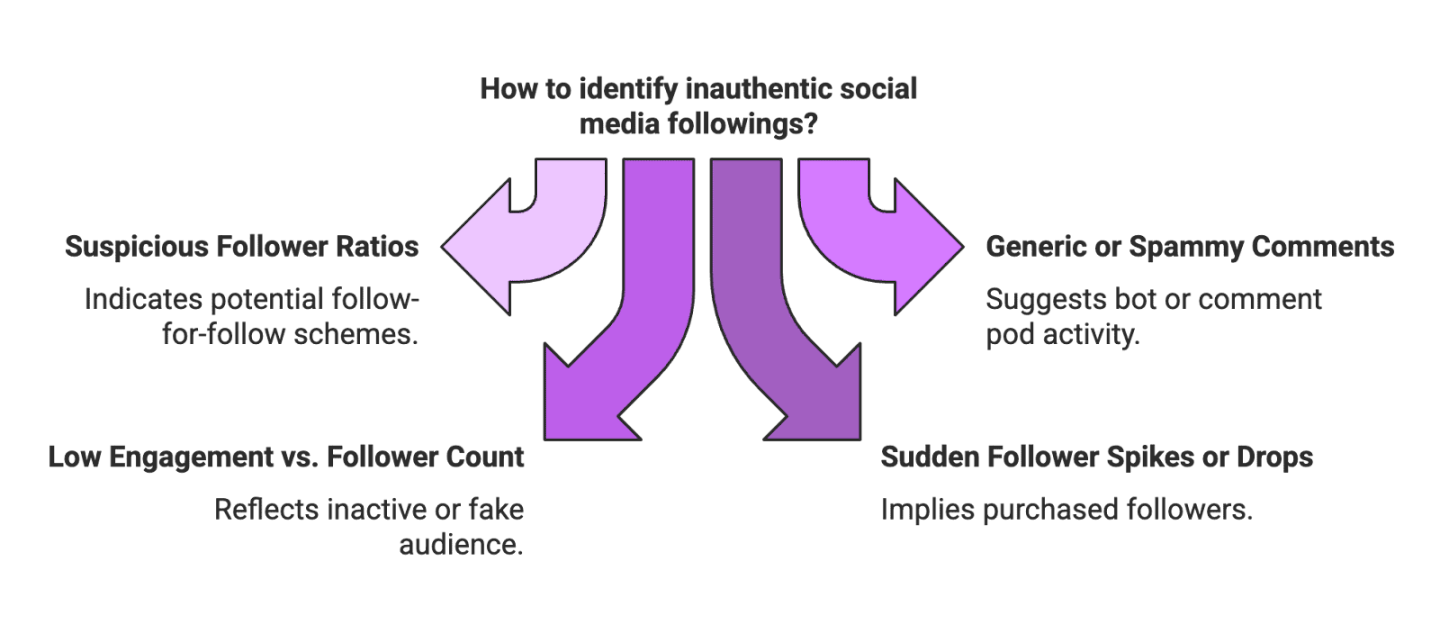
Authenticity is non-negotiable in influencer marketing. One of the first vetting steps is to verify that a micro-influencer’s following and engagement are real. Fake followers and bot-generated engagement can mislead your campaign, wasting budget on an audience that isn’t genuine. In fact, one in four influencers has bought fake followers, underscoring the need for brands to scrutinize influencer authenticity according to Shopify.
Why all this diligence? Aside from wasted reach, partnering with a fake influencer can damage brand trust. A survey found 71% of consumers will unfollow influencers who are caught with fake followers, seeing it as a breach of authenticity according to Smart Insights. On the positive side, micro-influencers as a group tend to have more authentic audiences than celebrity influencers – one analysis found ~90% of micro-influencers’ followers are real humans, a higher authenticity rate than macro or mega influencers according to Heepsy. Still, it’s critical to vet each candidate. Consider using audience audit tools (more on tools later) that provide “authenticity scores” by analyzing the influencer’s follower base for suspicious accounts. By weeding out fake followers and bots upfront, you ensure your brand’s message will reach genuine potential customers.
Beyond raw follower counts, a micro-influencer’s impact is best measured by the quality of engagement they drive. High engagement indicates an active, loyal audience that pays attention – exactly what you want. Here’s how to evaluate engagement quality:
Engagement Rate – The Golden Metric: Engagement rate is the percentage of an influencer’s audience that interacts with their content. It’s calculated as:
Engagement Rate = (Total engagements per post / Total followers) × 100%
Total engagements include likes, comments, shares, saves, or views (depending on platform). This metric lets you compare influencers of different sizes on an even footing. For instance, an Instagram micro-influencer with 8,000 followers and 400 likes+comments per post has a 5% engagement rate, which is quite solid. As a rule of thumb, micro-influencers often see higher engagement rates than huge celebrities because their following is more niche and invested according to Mail Blimpp.
These numbers are guidelines – actual rates vary by platform and content type. For example, on TikTok, micro-influencers can see extremely high engagement (often due to the way the algorithm boosts content; one study noted 5–10K follower TikTok accounts averaged upwards of 70% engagement). The key is to compare candidates in similar niches: if one micro-influencer’s rate is significantly below the norm for their follower count, that’s a caution sign.
Quality matters as much as quantity. Look at who and how people engage. Are followers leaving thoughtful comments or just clicking “like”? Meaningful comments (questions, feedback, tagging friends) indicate genuine interest and community. If an influencer’s comment section is full of single-word compliments or heart emojis from a revolving cast of accounts, the engagement might be superficial or orchestrated. Follower interaction patterns can tell you a lot: Do the same few accounts comment on every post (possibly an engagement pod), or is there diverse participation? Also, check if the influencer takes time to reply to comments or foster discussions. An engaged influencer who interacts back with their audience is building relationships, not just broadcasting. This kind of two-way engagement often translates to greater influence and trust with their followers.
It’s wise to review the influencer’s last several weeks of content. Is engagement consistently strong across their posts, or do they have one viral hit and many duds? Consistency implies a reliably engaged audience. Note that different content formats have different engagement levels (e.g., an Instagram Reel’s public like/comment counts might differ from a static post, and some platforms hide likes). If possible, ask for additional metrics like story views, link clicks, or saved posts from past campaigns – these deeper metrics (often available via the influencer’s insights) can illustrate how their audience behaves beyond surface likes.
Finally, remember that real engagement beats raw numbers. A micro-influencer with “only” 5,000 followers but a 8% engagement rate and a lively comment section is likely more valuable than someone with 50,000 followers and a silent audience. High engagement means an influencer’s content resonates with their followers – a strong signal they can spark interest in your brand as well (Influencer Brand Alignment: How to Get Better Influencer Content). Prioritize engaged audiences and you’ll likely see better campaign results, whether your goal is awareness or conversions.
Pro tip: Clearly separate campaigns geared toward awareness vs. those for sales, and choose your KPIs accordingly. It’s fine to have secondary goals (e.g., you hope a brand awareness campaign still drives some sales), but judging an awareness campaign purely on immediate sales can make it look less successful than it truly is. Conversely, a sales-driven campaign should ultimately be evaluated on sales, even if it also produces some nice engagement as a byproduct.
Even if an influencer’s followers are real and engaged, you need to ensure those followers match your target customer profile. A micro-influencer might have great metrics, but if their audience is outside your market, the partnership won’t yield results. That’s why analyzing audience demographics and interests is a crucial part of vetting.
Consider the following factors and how they align with your brand’s target audience:
Accessing an influencer’s audience demographics is easier if the influencer cooperates. Most influencers with business/creator accounts on platforms like Instagram, TikTok, or YouTube have built-in analytics (“Insights”) that show their follower breakdown by age, gender, location, etc. Don’t be afraid to ask micro-influencers for a screenshot or media kit with this information. Reputable influencers are used to such requests and will provide data to serious brand partners. Look for at least the basics: top age ranges, gender split, top 5 cities or countries, and potentially an overview of interests.
If direct data isn’t available, consider using third-party analytics tools or influencer marketing platforms that provide audience insights. For example, tools like HypeAuditor, Upfluence, or Influencer Hero can generate reports with an influencer’s estimated audience demographics across platforms. These often include useful visuals – a graph of age distribution, a pie chart of gender, a list of top follower countries – along with engagement stats and even a fake follower audit. While third-party data may not be 100% precise, it’s a great directional indicator, especially if you can’t get first-party data.
Example audience geography breakdown for a micro-influencer. Tools or social platform analytics can reveal an influencer’s top follower locations. In this hypothetical chart, the influencer’s audience is primarily in the United States (45%), with significant followers in the UK (15%) and other English-speaking countries. Such insights help ensure your campaigns reach the right geographic markets.
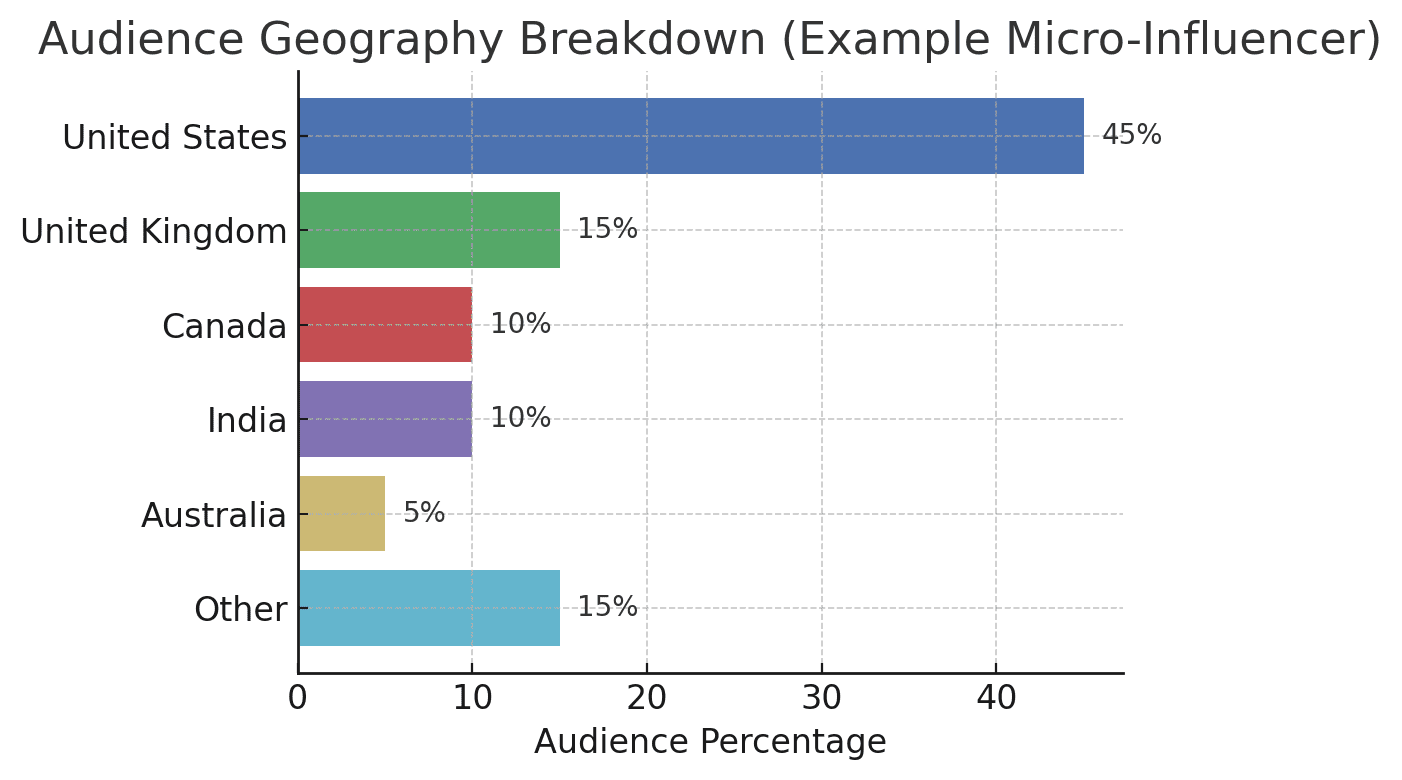
Ultimately, align the influencer’s audience profile with your target market. If your brand targets women 18–24 in urban areas, seek micro-influencers who reach exactly that group. If you cater to outdoor enthusiasts, a micro-influencer whose followers are largely hikers, travelers or nature lovers (perhaps inferred from their interest in adventure content) will give you better ROI. Demographic alignment means any content the influencer creates will resonate more and drive relevant results – whether that’s clicks, follows, or sales. As a bonus, when an influencer truly reaches your target demographic, you’ll also gain secondary insights; for instance, reading through followers’ comments can reveal preferences and language that inform your broader marketing to that demographic.
Numbers aside, a successful micro-influencer partnership hinges on fit. The best influencer-brand collaborations feel natural and authentic. As you vet micro-influencers, look beyond metrics to see who they are and what they stand for. Ask: does this creator genuinely align with our brand’s values, voice, and vibe?
Your brand likely has core values or a mission – find influencers who embody those principles. For example, a sustainable eco-friendly brand should look for micro-influencers who are vocal about sustainability and living green, rather than a general fashion influencer who never mentions environmental issues according to Join Status. When an influencer is already passionate about causes or lifestyles related to your product, any collaboration will come across as more sincere (because it is!). Check their content themes and bio for clues – do they talk about community, quality, innovation, family? Whatever matters to your brand should matter to them. A quick way to gauge this is to see if they have posts or stories that touch on topics relevant to your brand’s ethos. Authentic alignment on values means the influencer will naturally champion your product in a way that audiences trust.
Review the influencer’s overall aesthetic and tone of communication. Does it match your brand’s style? For instance, if your brand voice is playful and quirky, an influencer who posts stiff, formal content may not be ideal. Conversely, a luxury brand would seek influencers with a polished, high-quality content style. Look at the imagery, captions, even the frequency and timing of their posts. Tone can include their humor, use of language, and how they engage with followers. Make sure it complements how you speak to your customers. As an example, a fitness apparel brand might prefer a micro-influencer whose feed is filled with dynamic, motivational workout posts and upbeat encouragement, rather than one who mostly shares unrelated lifestyle snapshots. When the content style aligns, any sponsored post will blend seamlessly into the influencer’s feed and still feel “on-brand” for you.
We covered demographics above, but there’s also a psychographic alignment aspect. If you sell gourmet coffee, an influencer whose followers are foodies or work-from-home professionals is likely a better match than one whose audience is mostly teenage gamers. Some of this comes down to the influencer’s niche and reputation. Check the comments and how followers interact: do they ask the influencer for advice in a relevant domain? For example, a micro-influencer known for hiking will attract fellow outdoor enthusiasts who would appreciate an athletic gear brand partnership. Essentially, ensure the community they’ve built is one you’d love to gain exposure to. If you see followers frequently praising the influencer’s taste or asking for recommendations, that’s a good sign that a product mention would be well-received.
A powerful way to vet alignment is to examine an influencer’s history and online behavior. Have they worked with brands before? If yes, were those brands in a similar space or did they conflict with your industry? Ideally, a micro-influencer hasn’t been the face of your direct competitor (at least not recently), or if they have, they handled it in a way that wouldn’t undermine a new partnership. Look at a few of their past sponsored posts: Was the content high quality and on-message? How was the engagement – any backlash or negative feedback? Consistently positive previous collaborations indicate professionalism and audience trust. Also, be mindful of over-sponsorship – if their feed is packed with ads and #sponsored every other post, their audience might be fatigued or skeptical of endorsements. A healthier mix (mostly organic content with occasional sponsorships they genuinely use) is better.On the flip side, scan for any red flags in their content. Do a quick dive into their posts or even tweets to ensure there’s no history of offensive remarks or behavior that clashes with your brand’s image. Micro-influencers might not have had PR training, so do your due diligence on brand safety. One tip is to search their username with keywords related to your values (e.g., “ controversy” or words that would be problematic) – nothing obvious should pop up. Additionally, if they create content in a style that could be seen as too edgy or too bland for your brand’s taste, take note. It’s easier to not engage an ill-fitting influencer than to deal with fallout later.
Finally, gauge the influencer’s genuine affinity for your product or category. The best collaborations often come from micro-influencers who already love your brand or at least are fans of what you do. Some brands start by noticing who’s organically mentioning them on social media – those fans can be great micro-influencer partners. If you approach an influencer, see how they react. If they express real excitement and already know your product, that passion will shine through in the content. Conversely, if you sense disinterest or that they’re just in it for a paycheck, the partnership may fall flat. Authenticity is transparent: creators who truly like the brand create more credible and engaging sponsored content.In summary, choose micro-influencers who feel like an extension of your brand. When values, tone, and audience align, the influencer’s endorsement comes off as a natural recommendation rather than an ad. This alignment drives higher engagement and trust – their followers will think, “Of course they’re partnering, it makes total sense!” That’s the reaction you want.
Recruiting and vetting micro-influencers can be labor-intensive if done manually – but fortunately, there are many tools and platforms to streamline the process. These range from dedicated influencer marketing platforms to analytics dashboards and browser-based tools. Here’s how to leverage them:
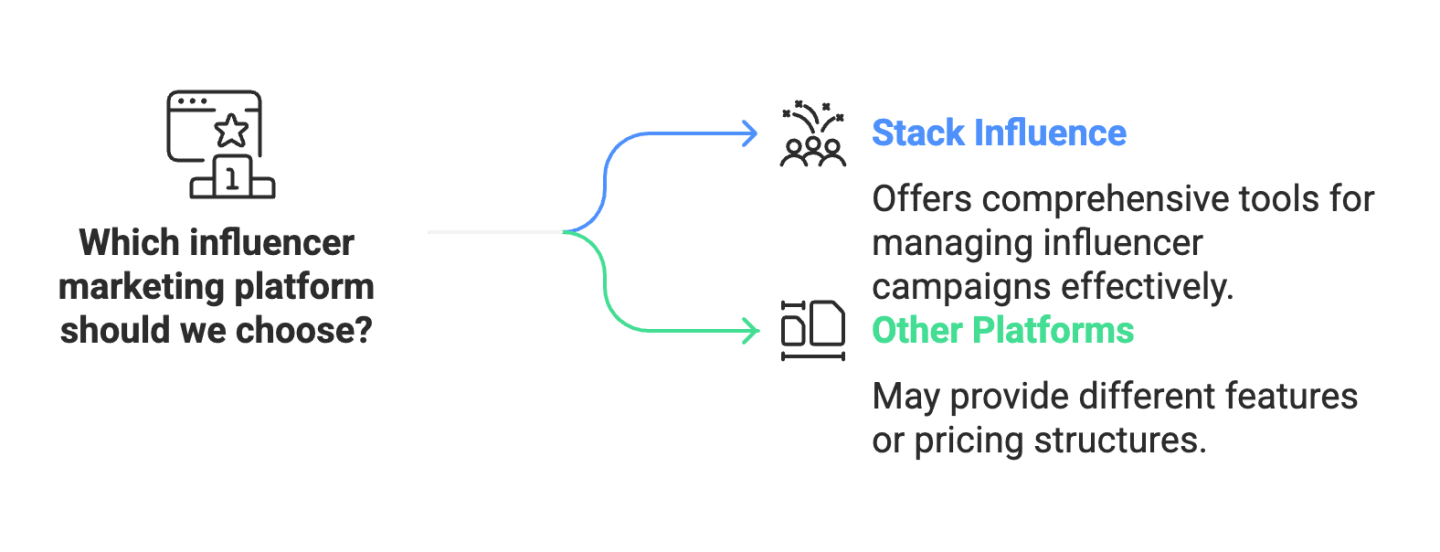
Full-service platforms like Stack Influence and others have databases of influencers across social networks. You can search for micro-influencers by criteria – for example, filter by location, follower count (e.g. 5K–50K), topic niche, or engagement rate. These platforms typically provide rich profiles for each creator, including: engagement metrics, audience demographics, and **“authenticity” scores that flag potential fake follower issues. They essentially centralize much of the vetting data we discussed. The drawback is that advanced features often require a subscription, but many offer free trials or basic search functionality. For brands or agencies planning to work with multiple influencers regularly, these tools can save a lot of time by presenting verified metrics upfront and sometimes even contact info. Stack Influence also helps manage the recruitment process, tracking deliverables and results in one dashboard.
If you don’t use a full platform, you can mix and match specialized tools. For instance, Social Blade is a free online tool that provides historical follower graphs for Instagram, YouTube, TikTok and more. It’s great for spotting the follower spikes/drops we discussed (just input the influencer’s handle and examine their follower trend chart over months). There are also fake follower checkers – some are standalone or built into platforms like HypeAuditor or Modash – which analyze a sample of followers to estimate what percentage look suspicious. Using these tools, you might quickly discover that Influencer A has an estimated 30% fake followers while Influencer B has 5% – a huge difference for authenticity. Comment analysis tools (or even manual scanning) can also help: certain services use AI to evaluate the sentiment and quality of comments on an influencer’s posts, which aids in identifying engagement pods or bot comments.
As mentioned, the influencers themselves have access to their audience analytics on platforms like Instagram Insights, YouTube Studio, TikTok Creator Dashboard, etc. While these are not tools you as a brand can directly use (unless the influencer shares access or screenshots), it’s worth noting what data is available: follower demographics, average reach, top performing posts, story view rates, etc. When recruiting, you can ask influencers to provide a media kit or an analytics snippet. Many savvy micro-influencers will have a one-sheet or PDF that highlights their key stats (follower count, engagement rate, audience demo, past partnerships, etc.). Don’t hesitate to request this during your vetting process – it’s a quick way to get trustworthy first-party data. If something in their provided stats looks off (e.g., very high follower count but strangely low reach), you can follow up with questions or use third-party tools to double-check.
Workflow Tip: Consider the recruitment and vetting process as a funnel. Start by using discovery tools (like searching hashtags manually or using a platform’s database search) to compile a list of potential micro-influencers. Then, use analytics tools or the above methods to vet each candidate on authenticity, engagement, audience, and alignment. It can be helpful to create a scorecard or spreadsheet – many influencer platforms let you “favorite” or list creators, but you can do this yourself too. Include columns for each of our major criteria (real engagement rate, % suspicious followers, top audience demographics, etc.) and note your impressions of their content quality and brand fit. This structured approach makes it easier to compare and choose the best fits.
Below is a table summarizing some popular tools and how they assist in micro-influencer vetting and recruitment:
Native Insights (Social Apps): Instagram Insights, TikTok Analytics, YouTube Studio, etc. – data provided by the platform to the influencer. Includes follower demographics, post reach, impressions, etc., which influencers can share for vetting.
Using these tools can greatly enhance your vetting rigor. For example, you might use HypeAuditor to pull a report on an influencer that reveals they have a 4.5% engagement rate and 92% real followers (good sign!), plus their top audience country is the US (matching your market) and audience interests align with fashion. Meanwhile, Social Blade could show that same influencer’s follower growth has been steady with no big fake-looking jumps. Armed with this data, you can approach the influencer confidently or move on to the next candidate if red flags appear.
Vetting and recruiting micro-influencers is part art, part science. To recap the process in a practical sequence:
1. Discover Potential Micro-Influencers: Identify creators in your niche via hashtag searches, your own follower community, influencer platforms, or even competitor campaigns. Make an initial list of those who seem to fit your brand’s niche and have follower counts in the micro range (roughly 5K–50K, depending on definition).
2. Audit Authenticity: For each candidate, check for fake follower signs and bot activity. Use tools to examine follower quality and engagement authenticity. Eliminate anyone with red flags like massive fake follower percentages or spammy engagement patterns.
3. Evaluate Engagement Quality: Calculate and compare engagement rates. Look at the content interaction depth – prioritize influencers with active, genuine conversations happening. Consistency counts too; ensure they post regularly and get reliable engagement.
4. Examine Audience Fit: Obtain audience demographics. Verify the influencer’s follower age, gender, location, and interests align with your target consumer profile. The better the match, the more likely your collaboration will resonate.
5. Ensure Brand Alignment: Review the influencer’s values, content style, and past posts. Ask: would our brand naturally be part of this person’s world? Favor influencers who already embody elements of your brand’s identity or could authentically use your product. Steer clear of any personality or content clashes, and double-check their history for brand safety.
6. Leverage Tools & Data: Throughout the above steps, use influencer marketing tools and analytics to gather objective data. They can expedite finding the right people and provide confidence in your decisions. At the same time, don’t ignore your intuition from qualitative review of content. Combine data with personal assessment for the best outcome.
7. Outreach and Recruitment: Once you’ve vetted and narrowed down the list, reach out professionally. Mention why you think they’re a great fit (because you’ve done your homework on alignment!) and provide details of what you’re proposing. Many micro-influencers are open to collaboration, and your thorough vetting will show when you personalize your outreach.
8. Monitor and Refine: After recruiting influencers, continue to monitor their performance for your campaigns. The vetting doesn’t entirely stop at recruitment – ensure the partnership delivers as expected (authentic content, good engagement). Use that insight to refine future influencer selections and maintain a high standard for who represents your brand.
By following this guide, you’ll build a micro-influencer team that is authentic, engaging, demographically on-point, and perfectly in tune with your brand’s identity. This thoughtful approach can pay off tremendously: micro-influencers often drive higher engagement and conversion rates because their audiences trust them like friends. When you choose wisely, you’re not just paying for a post – you’re partnering with a genuine advocate for your brand.
In a time when consumers value authenticity and relatability, micro-influencers can be marketing gold. But the onus is on you, the marketer or business owner, to vet them diligently. Use the tips, metrics, and tools outlined here to make informed decisions. With careful recruitment and vetting, your micro-influencer campaigns will likely achieve greater credibility, reach, and ROI – all while building positive relationships with the very communities you want to attract. Happy influencer hunting, and may your future collaborations be both influential and authentic!
Influencer marketing has evolved from a niche tactic to a core strategy for many brands. Along the way, the ways influencers get paid have also diversified. While flat fees (a fixed payment per post) remain the most popular method – 83% of creators are highly willing to work on flat fee campaigns according to a 2024 survey – brands and influencers are increasingly exploring alternative compensation models that go beyond the traditional flat rate. Why? These models can align incentives, suit varying budgets, and sometimes deliver better ROI for brands while rewarding performance and creativity for influencers.
In this guide, we’ll explore five influencer compensation strategies beyond flat fees: affiliate marketing, product seeding (gifting), performance-based commissions, hybrid models, and licensing & royalties. We’ll break down how each works, their pros and cons, and when to use them, with examples and tips. Whether you’re a brand deciding how to pay partners or an influencer negotiating a deal, understanding these models will help you structure collaborations that are fair, effective, and mutually rewarding.
Affiliate marketing is a performance-driven model where influencers earn a commission for sales or leads they generate for a brand. Essentially, the brand provides the influencer with a unique referral link or discount code, and the influencer gets a percentage of any purchase made through that link. This model directly aligns the influencer’s incentives with the brand’s sales goals – the more they sell, the more they earn.
A brand might offer an influencer, say, a 10% commission on each sale they drive. The influencer then promotes the product on their platforms (Instagram, YouTube, blog, etc.) using their unique link or code. Modern affiliate tracking makes it easy to attribute each sale to the right influencer and calculate their earnings in real-time.
Affiliate deals are low-risk and ROI-positive – you’re paying for actual results (conversions). It’s cost-effective because brands only spend money when a sale occurs, making this ideal for performance-focused campaigns according to Prefinery. It can also lead to passionate promotion; influencers have a direct incentive to drive sales, so they may put extra effort into content that converts.
There’s no earning cap – a campaign can become very lucrative if their audience buys in large numbers. It also allows influencers to partner with brands they truly love and earn ongoing income, rather than one-off fees.
Not all influencers like commission-only deals. In fact, many are hesitant to rely solely on affiliate income. Only 9% of creators said they are very willing to join commission-only campaigns, while 41% said they’d avoid them altogether according to Later, viewing them as high-risk and unpredictable. For influencers, there’s the chance they put in work creating content and end up with minimal earnings if their followers don’t purchase. For brands, finding the right influencers is crucial – those whose audience trusts their recommendations and is a good demographic fit for the product. You also need robust tracking in place to ensure sales are properly credited.
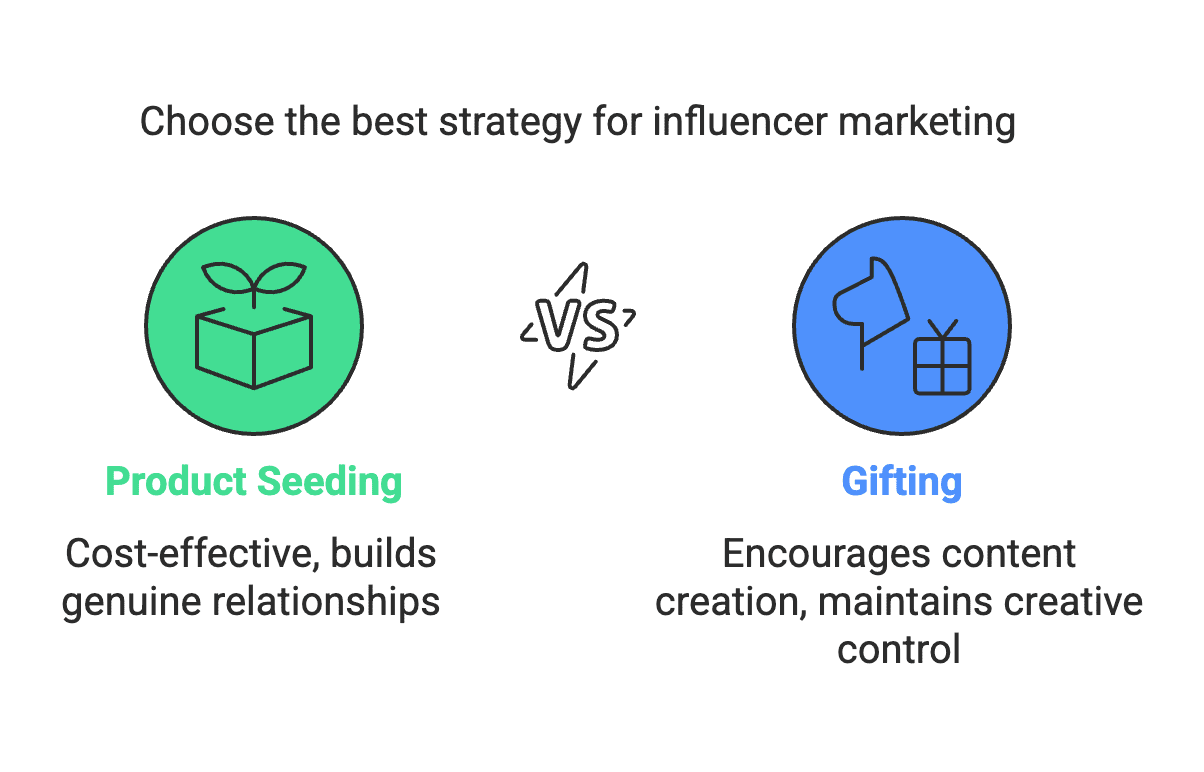
Product seeding, also known as influencer gifting, is a non-monetary compensation model where brands send free products to influencers with the hope of exposure. In pure product seeding, there may be no formal requirement for the influencer to post or review the item. The idea is that if they genuinely like the product, they’ll choose to share it organically. Gifting is a closely related approach where a free product is provided with the expectation (implicit or explicit) that the influencer will feature it according to MightyScout, even if no cash changes hands.
A brand looking to generate buzz will compile a list of influencers (often micro- or mid-tier influencers) and send them a “PR package” or gift box containing the product, sometimes with a personalized note. For example, a skincare startup might send its new serum to 50 beauty influencers. Those who enjoy the product may post an Instagram Story or unboxing video about it. There’s no direct payment – the free product is the compensation.
Product seeding is cost-effective for brands, especially those with a limited cash budget but plenty of product. Rather than paying thousands for a post, you’re investing the cost of goods. It’s a great way to build relationships with influencers: by gifting first without demanding a post, brands can start a genuine partnership on a positive, low-pressure note. When an influencer does share content about a gifted product, it often comes across as more authentic and enthusiastic since it wasn’t a paid requirement. Gifting campaigns can also yield a trove of user-generated content and valuable feedback on the product.
They get to try new products for free (which can be especially appealing in niches like beauty, food, or tech where influencers constantly need fresh material to showcase). If they genuinely love the product, they can create content that delights their followers and strengthens their relationship with the brand, potentially leading to paid deals later. There’s also less pressure – with true seeding (no strings attached), influencers don’t feel obligated and maintain creative control.
From the brand’s perspective, there’s no guarantee of exposure. You might send out dozens of freebies and see only a handful of posts (or sometimes none at all). It’s essentially a numbers game and a gesture of goodwill. Measuring ROI is trickier unless you specifically track things like referral codes included in the package. For influencers, while freebies are nice, products don’t pay the bills. Established creators may decline gifts or have policies that gifting must include an agreed post if they accept, blurring the line into a transaction. Also, too many “gifted” posts without monetary sponsorship can dilute an influencer’s income stream and, if not disclosed properly, can raise audience trust issues. It’s worth noting that product-only compensation is generally less attractive than monetary pay – only about 19% of creators said they are highly willing to participate in product gifting campaigns. Still, that’s higher than the interest in commission-only deals, suggesting that many influencers would rather receive some product value than gamble solely on performance commissions.
Performance-based compensation means an influencer’s pay is tied to how their content performs against specific measurable outcomes. Affiliate marketing (pay per sale) is one form of this, but performance models can also include pay per click, pay per sign-up, pay per app install, or bonuses for hitting certain engagement targets. In other words, instead of paying a lump sum up front, the brand sets key performance indicators (KPIs) – such as number of conversions, click-throughs, or even views – and pays the influencer based on those results.
The structure can vary widely. For example, a brand might offer $X per 1,000 video views on TikTok, or $5 for each lead generated via a sign-up form, or a tiered bonus like “$500 if your post reaches 100k impressions.” Another common approach is a pure revenue share (affiliate model) or cost-per-acquisition (CPA) payment where the influencer gets a fixed bounty for each customer acquired. Fitness influencer Kayla Itsines, for instance, has partnered with apps where she earns income based on the number of app downloads or memberships sold through her promotions according to Influencity – a clear performance-based deal tracked via her unique promo code.
This model is all about accountability and efficiency. Every dollar spent ties back to a quantifiable result. It greatly mitigates the risk of paying for an underperforming campaign – if an influencer’s content flops, the brand doesn’t overspend. It can be a powerful way to maximize ROI, especially for direct-response campaigns (like driving sign-ups or sales). Performance models also push influencers to do their best work to earn more, theoretically leading to more effective content. Essentially, brands get to “pay for success” and can run multiple micro-campaigns to see which influencers truly deliver.
For those confident in their ability to drive results (or those with highly engaged niche audiences), performance deals can actually out-earn flat fees. There’s often no earning ceiling – a campaign that goes viral or a product that’s a hit with their audience could net them significantly more than a one-time fee might have. It also provides a sense of partnership with the brand; the influencer is more like a marketing affiliate, sometimes with access to performance dashboards and deeper engagement with the brand’s goals. New or mid-tier influencers might accept performance deals to prove their value and build a case for higher flat fees later (by showing data on conversions they achieved).
As noted earlier, many influencers are wary of commission-only arrangements. Unpredictability of income is the biggest downside – an influencer could invest considerable time and not hit the targets (due to factors outside their control, like product-market fit or seasonality), resulting in low pay. Creators often analogize: “You wouldn’t pay a TV ad solely based on sales, so why apply that to influencer content?”. Brands must also ensure they have reliable tracking mechanisms (e.g., solid referral links, promo codes, or analytic tools) – misattribution or tracking errors can sour a partnership quickly if an influencer feels they weren’t credited for results they did drive. Another risk is that influencers, in an effort to maximize results, might resort to overly salesy messaging or frequent posting, which can feel inauthentic to their audience and potentially erode trust or lead to audience fatigue with the brand mention.
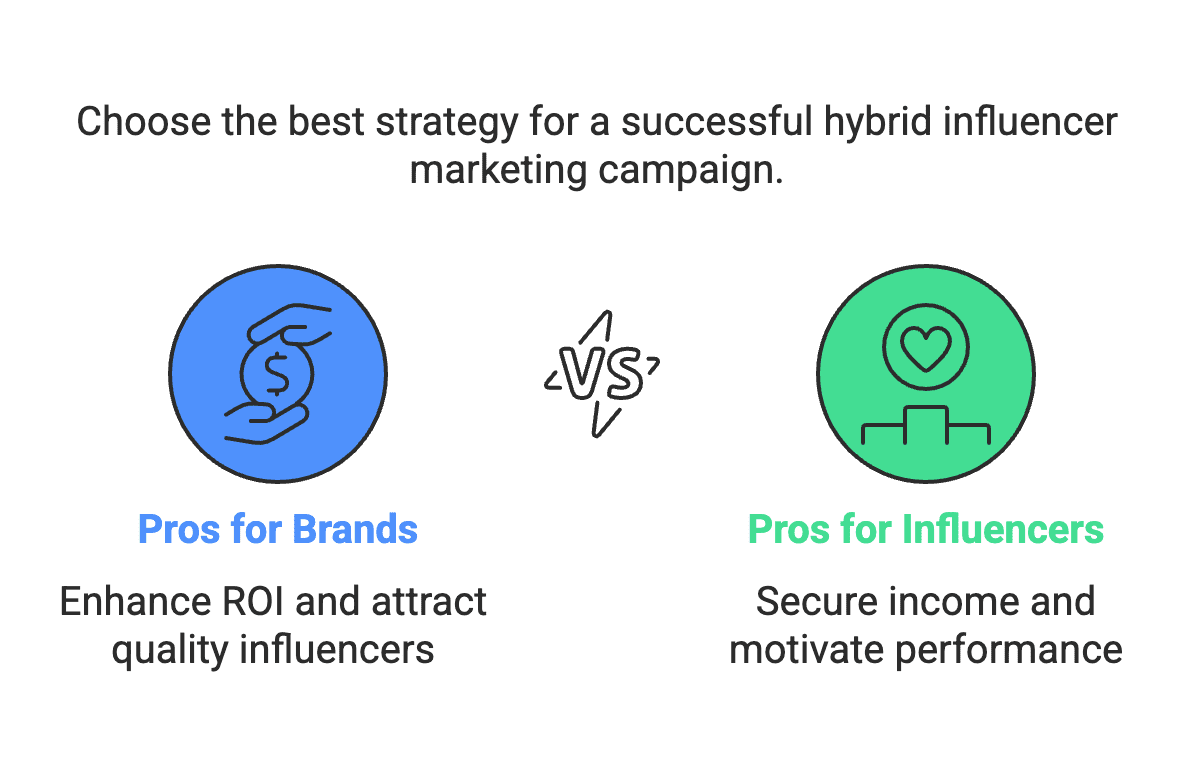
As the name suggests, hybrid compensation models combine a guaranteed payment with a performance incentive. In practice, a brand will pay an influencer a smaller flat fee upfront, plus a commission or bonus based on results achieved. This approach offers the “best of both worlds,” providing some security for the influencer and motivation to excel for the brand. It’s becoming an increasingly popular strategy because it strikes a middle ground that appeals to both parties.
There are many ways to structure a hybrid deal. For example, a brand might pay an influencer $500 for an Instagram post + $50 for every 10k engagements it receives, or a $1,000 base + 5% of any sales generated through the influencer’s link. Some hybrid agreements set performance tiers – e.g., an extra bonus if a certain sales volume or view count is surpassed. Essentially, the brand and influencer agree on a fair base rate (lower than a normal flat fee, since upside is included) and a clear formula for additional compensation if specific metrics are met. Influencer marketing platforms and agencies often help craft these deals to ensure transparency.
Hybrid models ensure the influencer has skin in the game without making the entire campaign contingent on performance. The brand likely spends less upfront than a pure flat fee, stretching their budget, and only pays the full potential amount if the campaign meets success metrics (which they’d be happy to pay for). This model can attract higher-quality influencers who might ignore a commission-only offer – because they know they’ll at least cover their effort with the base pay. It also sets a collaborative tone: both brand and influencer are working toward the same outcomes, but the brand isn’t asking the creator to take 100% of the risk. From a ROI perspective, hybrids often deliver strong returns – one study noted that hybrid campaigns deliver measurable ROI by tracking clicks and conversions while still securing authentic content upfront.
They get a guaranteed payout for their work (which values their time and creative effort to produce content), plus the exciting possibility of earning more if they really knock it out of the park. This feels inherently fair to many creators – they’re being paid for their content and for the value it generates. In fact, data shows about 54% of creators are highly willing to participate in hybrid payment campaigns, a much higher approval rating than commission-only deals. With a hybrid, an influencer can plan their workload and income better (thanks to the base pay), and treat any performance bonus as gravy. It also signals that the brand believes in their ability to deliver results, which can be a confidence boost and lead to a more invested partnership.
Hybrids require more negotiation and clear terms. Both sides must agree on what metrics to measure, how they’ll be tracked, and what constitutes a fair bonus. If not communicated well, there could be disputes – for instance, does a “sale” count if a user clicked the influencer’s link but purchased two weeks later? Setting up tracking windows, attribution models, and a payment schedule for the variable component is critical. It’s also possible that despite incentives, an influencer might not hit the targets (due to factors beyond their control), which could lead to some disappointment even though they received base pay. Brands should ensure the base fee is substantial enough to be respectful of the creator’s work, even if results fall short. On the flip side, influencers should gauge the realism of the performance goals – unreachable targets won’t yield any extra money, so the bonus structure should be attainable with effort.
Licensing and royalties represent a more advanced tier of influencer compensation, often tied to content rights or product collaborations beyond a one-off post. In these models, an influencer isn’t just paid to create a post, but rather to allow the brand to reuse their content or likeness, or to co-create something (like a product or design) for a share of revenue. This approach treats influencer content as intellectual property that can drive value over a longer term, and the influencer is compensated accordingly – either through licensing fees (upfront or periodic payments for usage rights) or royalties (a percentage of sales, akin to an inventor or artist royalty).
In a content licensing deal, brands buy the rights to use influencer-created content in other marketing channels. For example, imagine an influencer makes a fantastic TikTok video demonstrating a skincare routine with a particular brand’s product. The brand might pay a licensing fee to the influencer to use that video in the brand’s own ads, on their website, or across social media for a defined period. This is becoming common – brands often want to amplify high-performing influencer content through paid advertising (sometimes called “whitelisting” or “paid amplification”), or repurpose a beautiful influencer photo in an email campaign or even on product packaging. By compensating the creator for those extended uses, the brand legally secures the right to reuse the content, and the influencer benefits from an additional payday beyond the initial post. The terms will specify where, how long, and in what ways the brand can use the content (for instance, “Brand can use Instagram images X and Y in digital ads for 6 months”). Licensing fees can range widely, often 25-100% of the original campaign fee per each month of usage depending on scope according to Modash.
Royalties come into play when influencers enter partnerships more akin to traditional talent licensing or product development. For instance, an influencer might collaborate with a brand to create a co-branded product line – such as a makeup palette, a clothing capsule collection, or a signature flavor of a drink. Instead of (or in addition to) a flat sponsorship fee, the influencer may negotiate a royalty, say 5-15% of net sales of that product, for lending their name, design input, and promotion to it. This is similar to celebrity endorsement deals in fashion/beauty where the celebrity gets a cut of each sale. Even if the influencer isn’t co-creating a product, some long-term ambassador deals involve paying the influencer a royalty for any sales in their referred customer segment or a bonus for each year their partnership drives growth (blurring into performance pay, but as a sustained share rather than one-time). Another example is influencers who join platforms for creating content like e-books, stock photos, or courses – they might earn royalties each time their content is purchased or licensed by others.
Licensing existing influencer content can be far cheaper and more effective than producing new creative from scratch. If a brand sees an influencer’s video getting great engagement, by licensing it they get authentic, proven content to use in ads (which often outperform polished company-made ads). It also saves time and production cost – the content is already made. Royalties or licensing deals can also solidify a deeper relationship with a top-performing influencer, essentially turning them into a partner of the brand. This can lead to more consistent brand messaging and a sort of de facto spokesperson who is invested in the brand’s success long-term. For brands that need a lot of content (for multi-channel campaigns), licensing influencer content provides a stream of real, relatable material that can be adapted to different audiences. When it comes to co-created products, having an influencer’s name on an item can drive huge sales from their fanbase – the brand benefits from built-in demand and credibility, sharing profit via royalties rather than paying all upfront.
These deals unlock new revenue streams and opportunities for personal brand expansion. If a brand wants to license your content, it’s a form of praise – your work resonated so well that the brand wants to use it more widely. That means extra income without having to create something new (though usually you’ll approve the way it’s used). It also can increase the influencer’s exposure (their face or content appearing in official brand channels can grow their audience). Royalties, while not guaranteed, can scale impressively; if an influencer’s collaborative product is a hit, their earnings could surpass typical sponsorship fees. Plus, having a product with your name on it (e.g., “Jane Doe x Brand” collection) is a notable career milestone that can elevate an influencer’s profile from just a content creator to a bona fide creator/designer. It diversifies their income and can even lead to future business ventures (some influencers have spun off their collab success into their own brands). Overall, licensing and royalty deals treat the influencer as a creative partner or intellectual property owner, which is an empowering shift from just “hired content creator.”
These arrangements are more complex and legalistic. Negotiating usage rights requires clarity – misuse or overuse of an influencer’s content beyond agreed terms can lead to conflict (e.g., if a brand keeps running an influencer’s photo in ads past the licensing period without paying). Both parties usually involve legal counsel or detailed contracts to cover things like exclusivity (can the brand alter the content? can the influencer license the same content to a competitor?), duration, territories (US only vs global rights), and so on. This can be daunting for influencers not used to such contracts, and costly if lawyers get involved. For royalties, the influencer is taking on risk – if the product doesn’t sell well, they might earn less than a flat fee would have given. There’s also a trust factor; the influencer must trust the brand’s reporting of sales for royalty calculations. Brands, on the other hand, must ensure the influencer’s image aligns with their broader marketing – once you put an influencer’s face on an ad or product, any controversy around that person could reflect on the brand, so due diligence is important. Additionally, paying royalties means accounting overhead and sharing profit you’d otherwise keep – brands should be sure the influencer’s contribution is worth that share (often it is, due to their marketing impact).
With all these models available – from simple gifting to complex royalty deals – how should a brand decide which compensation strategy fits best? The answer depends on your campaign goals, budget, the influencers you’re working with, and the nature of your relationship. Here’s a quick guide to help you choose:
1. Clarify Your Campaign Goals: What are you hoping to achieve?
2. Assess Your Budget Constraints: How much can you afford to pay, and when can you pay it?
3. Consider Influencer Preferences and Size: What does the influencer value, and what is their scale?
4. Match the Model to the Campaign Length and Depth: Is this a one-off post or an ongoing partnership?
5. Plan How You’ll Measure Success: Can you track results easily, or will you rely on qualitative impact?
Finally, remember that these models can be combined and tailored. For example, a campaign could involve a flat fee for an Instagram post, an affiliate commission for any resulting sales, and a small licensing fee to boost the post as an ad. The key is that the influencer feels adequately compensated and motivated, and the brand feels the payment structure will drive the desired outcome. Don’t be afraid to discuss options with your influencers – many creators are knowledgeable and can tell you what has worked well for them in past partnerships.
Determining the best influencer compensation strategy is not one-size-fits-all. The most effective partnerships consider the needs of both the brand and the influencer. Brands should aim to respect the influencer’s value (audience reach, content creation skill, and influence credibility) by offering fair compensation, and influencers should understand a brand’s need for return on investment and tangible results. Often, the ideal solution is a balanced approach – for instance, a base payment to cover the creator’s effort and additional rewards if their contribution truly excels.
As the influencer marketing industry matures, we’re seeing a trend toward greater transparency and creativity in compensation. Clear contracts and open communication about expectations are becoming the norm. Brands are experimenting with new models (like those discussed above) to find arrangements that drive performance while building genuine relationships. Influencers, on their side, are more empowered to choose deals that align with their worth and how they prefer to collaborate.
For brands, it’s wise to start with a model that fits your current objectives and budget, and then iterate. You might try a small affiliate program with micro-influencers, then add a flat fee component once you identify top performers. Or begin with a few gifted products to build buzz, then convert the most enthusiastic influencers into paid ambassadors. Use the insights from each campaign to refine your approach. If an influencer delivered amazing results on a purely commission deal, consider rewarding them with a bonus or offering a higher flat fee next time – this builds loyalty. Conversely, if a flat fee campaign didn’t move the needle, next time experiment with adding performance incentives.
In summary, influencer compensation models span a spectrum from traditional to innovative. Affiliate marketing turns influencers into a sales force on commission, product seeding swaps goods for goodwill, performance deals make earnings contingent on impact, hybrid models blend security with incentive, and licensing/royalties elevate influencers to creative partners. By understanding these options, brands can design campaigns that not only get the most out of their influencer collaborations but also ensure creators feel valued and invested. When you find the right compensation model, it creates a partnership where everyone wins – the brand achieves its marketing goals, the influencer earns fairly (and even grows their business), and the audience gets authentic, engaging content rather than ads. That’s the true power of strategic influencer compensation: it turns a simple transaction into a collaborative relationship with lasting benefits.
Moving from a single micro-influencer pilot to a full-fledged, multi-influencer strategy is like going from a cozy campfire to a bonfire – you want a bigger blaze without losing the warmth. In influencer marketing terms, that means scaling up reach while keeping the content authentic and engaging. How do you pull it off? In this comprehensive guide, we’ll walk through how to take your micro-influencer campaign to the next level, build an “always-on” influencer program that runs year-round, and do it all with an approachable yet authoritative touch.
Every big influencer program starts small. Maybe you tested the waters with one or two micro-influencers posting about your product – a pilot campaign. These “micro” collaborators (usually 10k–100k followers) punch above their weight in engagement and trust. In fact, micro-influencers often see engagement rates up to 60% higher than macro-influencers, and 82% of consumers say they’re more likely to act on a micro-influencer’s recommendation than a celebrity’s according to Giraffe Social. The pilot likely showed you a glimpse of this potential. Now it’s time to scale up without coming off as fake or factory-produced.
So, how do you go from a handful of posts to a coordinated army of influencers while maintaining that authentic vibe? Let’s break it down into key steps and tips:
Don’t rush into adding more influencers until you’ve squeezed insights from your pilot. Treat it as a mini lab experiment for what works and what doesn’t:
Look at when your pilot posts went live and how the audience responded. Perhaps posting around a holiday or at a certain hour spiked engagement. One brand found success by launching their back-to-school influencer campaign a full month earlier the following year to catch parents at the start of shopping season according to Carusele. Use such learnings to time your scaled campaign for maximum impact.
Not all posts are created equal. It’s common to see roughly 20-25% of influencer content outperform the rest in a campaign. Figure out which pilot posts got the most love – was it the unboxing video, the heartfelt story, or the how-to demo? Those high-performing pieces hold the secrets to what resonates with your audience. Carry those content themes or styles forward into the bigger campaign.
Check comments, DMs, and shares on the pilot posts. Did followers mention they loved the authenticity? Any recurring questions or praises? This qualitative feedback will help ensure you double-down on what felt real and scrap what felt “meh.” It’s all intel for scaling up authentically.
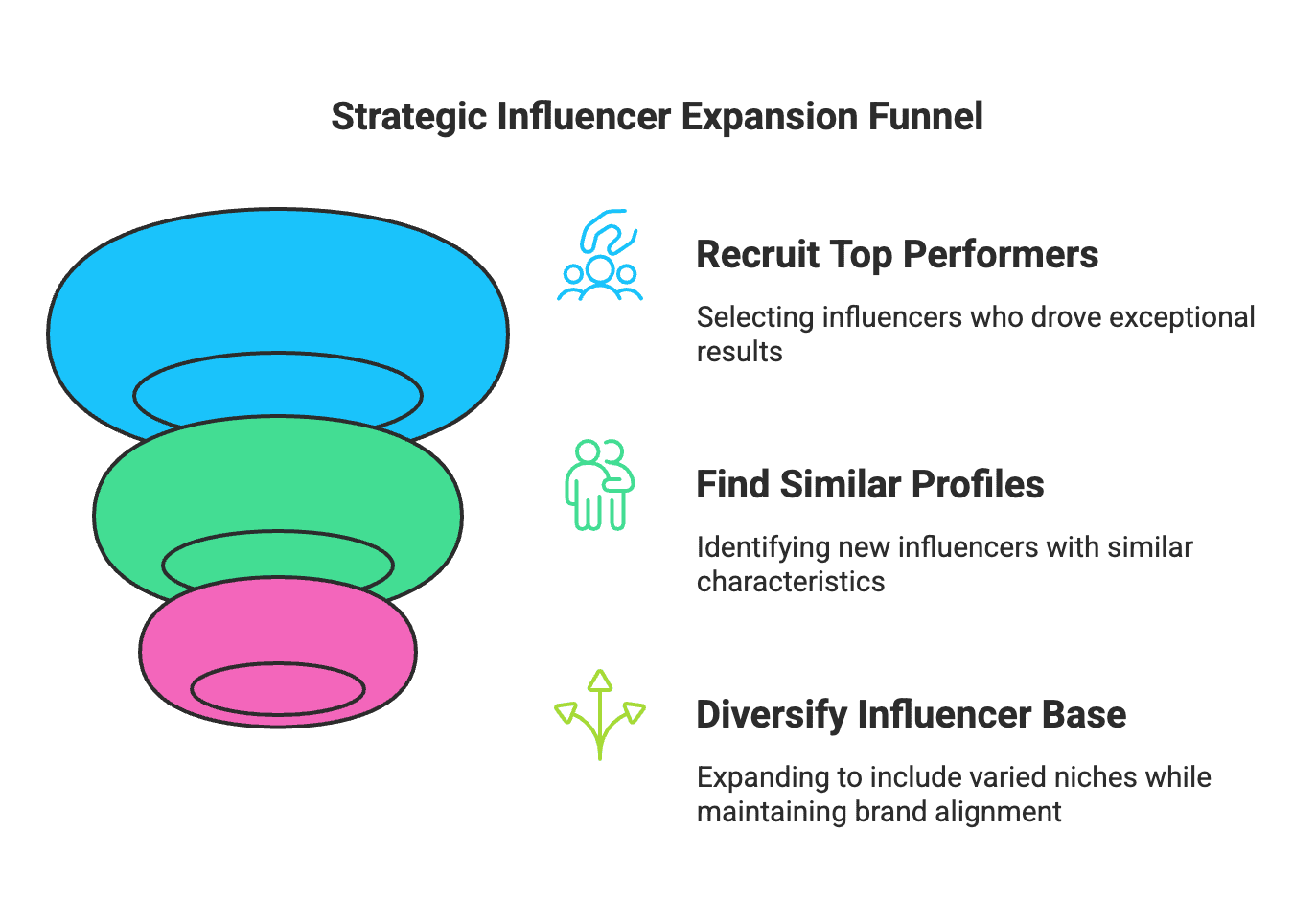
With pilot insights in hand, you’re ready to bring more influencers on board. But scaling isn’t about just throwing spaghetti at the wall (or dollars at random influencers) – be intentional:
By now you know which pilot influencers truly clicked with your brand (and drove results). Rank your creators by performance and recruit the top-performers again. If an influencer’s content drove exceptional engagement or sales, you want them on the varsity team for your expanded campaign. Their familiarity with your brand will likely make their new content even more authentic.
Not actual clones (that would be weird), but look for new influencers who have a similar profile or style to your pilot winners. For example, if a yoga-mom micro-influencer crushed it for your athleisure brand, finding a few more yoga-loving mom influencers could multiply that success. This doesn’t mean they all have identical content (authenticity, remember) – but they tick the same boxes in audience and vibe. It’s about scaling what already proved effective.
At the same time, consider adding a bit of variety. Perhaps your pilot only covered one niche; scaling up allows you to test adjacent niches. Think outside the box: a fitness gear brand might expand beyond fitness influencers to include an outdoor adventurer or a busy dad who stays fit – broadening reach while still aligning to your product according Singular. Just ensure any new influencers still feel on-brand and genuine. A diverse influencer team can keep content fresh and broaden your appeal without diluting authenticity.
One expert who has managed influencer programs into the hundreds put it nicely: “Each influencer is a unique human being… an individual wants to feel like you care about them.” In practice, that means even as you scale to dozens of partners, take the time to personalize communication, provide thorough onboarding, and make each creator feel valued. A little TLC goes a long way. Influencers who feel like true partners will naturally produce more authentic content, even as your campaign grows.
One of the biggest fears when scaling up an influencer program is that the content will start to feel “corporate” or cookie-cutter. After all, part of the micro-influencer magic is the personal, authentic flavor they bring. As you involve more influencers, how do you avoid diluting that authenticity?
Here are some authenticity-preserving tips:
Resist the urge to micromanage. Provide a clear brief, yes, but allow influencers to tell your brand story in their own words and style. Their creative spin is what made your pilot authentic, so keep that trust going. Audiences can sniff out an overly scripted ad from a mile away. By letting creators maintain their usual tone – even as you scale – you ensure each post still feels like a genuine recommendation, not a commercial.
Encourage influencers to incorporate your product naturally into their lives. Maybe they integrate it into a routine video or share an honest before-and-after. If followers see the influencer actually using and enjoying the product (not just posing with it once), credibility soars. Long-term collaborations help here – for instance, multiple posts over time signal the influencer truly backs the brand. When an influencer repeatedly features your brand, followers start assuming “hey, they really are a fan of this”, boosting trust and conversion rates. (It’s the difference between a one-off shoutout and a recurring presence.)
Speaking of repetition, turning high-performing influencers into brand ambassadors is a smart scaling move. Instead of one-and-done deals, consider signing on influencers for ongoing partnerships (3, 6, 12 months). This not only reduces the onboarding burden each time, it also deepens the influencer’s connection to your brand. They’ll be able to speak more naturally about your products as they get to know them over time. Plus, as noted, their audience sees an ambassador as genuinely invested. Authenticity comes standard when an influencer is proudly repping your brand over the long haul. It’s win-win: you get continuity; they get a steady gig – and your customers get consistent, believable recommendations.
Finally, maintain a human touch behind the scenes. As your influencer count grows, it’s tempting to automate everything. Automation tools and spreadsheets are helpful, but remember there are real people creating this content. Check in personally, gather their feedback, and make them feel part of your brand’s story. Authenticity isn’t just an output; it’s part of the process. If your influencers genuinely like working with you, it will show in their content.
Scaling a campaign isn’t just about adding more influencers – it’s also about doing more with the content they create. You want to maximize the impact of every authentic post:
Once you identify which influencer posts are performing like rock stars (from your pilot or early in the campaign), consider putting some ad dollars behind them. Whitelist or boost those posts to reach a wider audience beyond the influencer’s followers. This way, the authentic content that’s already proven to resonate can scale even further. It’s like turning a spark into a wildfire – carefully.
If your pilot included any tracking (UTM links, affiliate codes) or if you’re monitoring which audiences engaged most, use that data to sharpen your targeting in the scaled campaign. For example, if you noticed the content resonated especially with college-aged women, ensure your expanded influencer list and any paid promotions zero in on that demographic. Some brands even create lookalike audiences based on engaged users from the pilot to target similar people in ads. Scaling smart beats scaling blind.
You paid for those awesome influencer photos, videos, and stories – get extra mileage out of them. With the proper usage rights in place, you can share top influencer-generated content on your brand’s own Instagram, website, newsletters, etc. If an influencer took a stunning product photo or a compelling testimonial video, that could become marketing gold for you beyond social media. We’ve seen brands turn influencer shots into everything from Facebook ad creatives to billboard images! Just be sure to credit or tag the creator if appropriate, and avoid altering their content in a way that loses authenticity.
By now, you’ve turned that little pilot into a full-blown multi-influencer campaign machine. Done right, you’re reaching exponentially more people while those personal, relatable stories remain the heart of the campaign. As a quick success story: after following these scaling steps (optimizing timing, reusing top creators, adding paid boosts, etc.), one brand’s back-to-school micro-influencer campaign in year two doubled their click-through goal and achieved 3× the results of the prior year’s pilot. That’s the kind of growth potential on the table.
But our journey doesn’t stop at one big burst campaign. The next step in influencer marketing evolution is making it “always-on.”
Imagine if your influencer marketing wasn’t confined to a one-quarter campaign or a one-off product launch, but instead became a continuous engine promoting your brand all year. That’s the idea behind always-on influencer marketing – an ongoing, evergreen program versus isolated campaigns.
Why go always-on? For starters, consistency breeds familiarity (and trust). Rather than a spike of influencer posts and then radio silence, you have a steady drumbeat of brand mentions, content, and engagement throughout the year. This sustained presence can create a snowball effect: each month builds on the last, keeping your brand in the social media conversation continuously according to Join Status. In fact, ongoing influencer collaborations often lead to hundreds of pieces of authentic content, compounding your reach and giving you a deep well of UGC to draw from. It’s like having a perpetual marketing campaign that’s always refreshing itself.
Brands are catching on to this approach. In one survey, 42% of marketers said they’ve shifted from one-off campaigns to an “always on” influencer strategy according to Marketing Dive. It’s becoming a staple strategy, much like SEO or email marketing – a constant effort that yields results over time. The key phrase there is “over time.” Always-on programs are long-term plays; you might not get instant virality, but you’re building a resilient pipeline of awareness and engagement that can significantly boost ROI in the long run. The biggest mistake is stopping too soon – cutting off an influencer initiative before it gains momentum. With always-on, you commit to the long game.
So how can you create an always-on micro-influencer program that runs year-round? Here are some tips to keep your influencer marketing humming 24/7/365:
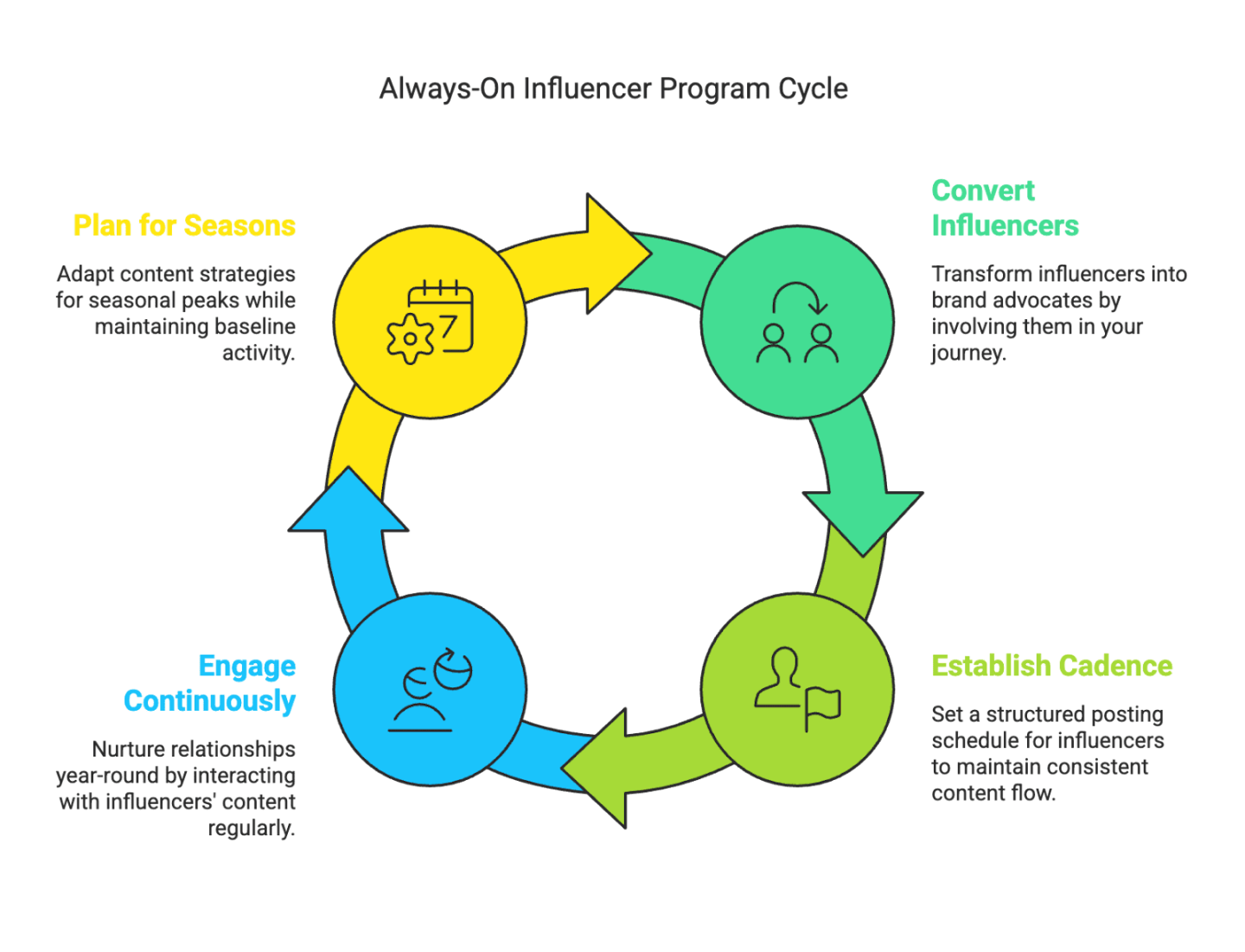
1. Convert Influencers into True Brand Advocates: Think beyond transactional relationships. Invite influencers to be part of your brand’s journey on an ongoing basis. For example, if your company attends multiple trade shows or events annually, you could use the same core group of influencers at each event instead of hiring new local ones every time. They’ll grow with your brand and their followers will repeatedly see them championing you, reinforcing that the influencer genuinely loves your products. (As one strategist noted, when fans see an influencer with your brand across multiple occasions, they’ll assume “this influencer is a genuine fan,” which boosts credibility and conversion.) Consider setting up brand ambassador contracts for 6-12 months so that a select roster of micro-influencers is always creating content for you across different campaigns and seasons. This continuity transforms influencers from one-time promoters into bona fide brand cheerleaders.
2. Establish a Consistent Cadence (Ambassador Programs): An always-on program benefits from structure. One model is a rotating ambassador program with set cycles. For instance, you might run an ambassador “class” every quarter: a group of influencers who, for three months, have a posting schedule (say 2 posts per month each) and specific deliverables. At the end of the quarter, you bring in a new set for the next cycle (some might continue if they performed well, plus a few fresh faces). This approach keeps content flowing year-round in a manageable way. It also creates a sense of community – influencers in each cycle know they’re part of a team. These programs are more intentional and can include perks like mentorship, early access to products, or exclusive events for your ambassadors, deepening their connection to the brand. Over time, cycle after cycle, you have a reliable stream of content and a large extended “family” of influencers who have worked with you.
3. Engage Even When Not “On Duty”: Always-on isn’t only about constant posting; it’s also about nurturing relationships continuously. Make it a habit for your brand to interact with influencers’ content year-round, whether or not they are currently in a formal campaign with you. Follow their social accounts, like and comment on their posts, share their relevant content, and keep an eye on what they’re up to. This ongoing engagement shows influencers that you’re genuinely interested in them, not just when you need a post. It increases the likelihood they’ll want to work with you again, and often they’ll organically mention your brand simply because they feel connected. (Plus, it helps you monitor if they’ve started working with competitors or shifted their style.) By staying present in their world, you remain on their radar – and by extension, their audience’s – even between official campaigns.
4. Plan for Seasons but Don’t Go Dark: It’s fine to have peaks (back-to-school, holiday, summer, etc. might be key periods for your brand), but always-on means you never completely go dark in the off-season. Maintain a baseline level of influencer activity each month. During slower periods, influencers can focus on storytelling, education, or community engagement rather than salesy posts. For example, a sunscreen brand in winter might have influencers share “warm travel throwbacks” or skincare tip content to stay relevant year-round. The idea is to keep the ember glowing so that when you pour on the gas during peak season, it ignites faster. Consistency is king – even a light drumbeat in off-peak times preserves momentum.
Above all, an always-on mindset means viewing influencers as an extension of your brand’s marketing team rather than one-time assets. Treat them like long-term partners. Share your product roadmap, include them in upcoming launches or store events, send them swag “just because,” and foster a genuine community among your influencers (maybe a private Facebook group or Slack channel just for your brand’s creators). This investment in relationships pays off massively. You’ll have a go-to crew ready to post at a moment’s notice, often happy to do a quick shoutout even outside of contracted posts because they feel a real affinity for your brand. That’s when you know your program has gone truly always-on – your brand is woven into their daily online presence in a natural, sustained way.
To recap, always-on influencer marketing focuses on building and maintaining relationships rather than one-off transactional deals. By inviting influencers into recurring opportunities, keeping engagement consistent, and structuring long-term programs, you create a pipeline of advocacy that doesn’t switch off. Your brand stays in the social media spotlight all year, and those authentic voices keep talking about you to their followers in an ongoing conversation. It’s the opposite of the “campaign spike and silence” pattern – instead, you’re nurturing a continuous buzz.
Scaling micro-influencer campaigns is a bit of an art and a bit of a science. The art is in preserving the human touch, the candid storytelling, and the trusted connections that made your initial micro-influencer pilot successful. The science is in applying data, process, and strategy to multiply that success across many influencers and over many months. When you blend the two, you get a powerful outcome: a large-scale influencer campaign that still feels personal to the audience.
Remember, even as you scale from a spark to a bonfire, you want your audience to feel the same warmth from your brand content. That warmth comes from authenticity – the sense that real people genuinely like your product and aren’t just marketing mouthpieces. By carefully selecting the right creators, fostering long-term partnerships, and keeping the focus on genuine engagement rather than just flashy numbers, you’ll maintain that authenticity at scale.
And by adopting an always-on approach, you ensure that this authentic influencer marketing engine runs year-round, continually stoking brand awareness, conversion, and loyalty. It’s a marathon, not a sprint: think in terms of months and years of compounding influencer impact, not just one quick hit. As the data shows, brands that commit to longer-term influencer strategies see better ROI and a treasure trove of content and social proof.
So, whether you’re just now planning to leap from a small pilot to a full campaign, or you’re already running influencer programs and looking to keep them always-on, use these insights as your roadmap. Start small, learn fast, think big, but stay real. Scaling up doesn’t mean selling out – with the right approach, it means more authentic stories about your brand being told every day. And that is marketing gold.
Now go forth and ignite those scaled, always-on influencer campaigns – your brand’s bonfire awaits! 🔥
Being an influencer is exciting – you get to create content, engage with your audience, and even earn money from your passion. But relying on a single income source (like just one sponsorship or just ad revenue) can be risky. Algorithms change, trends shift, and what’s hot today might cool off tomorrow. That’s why diversifying your income as an influencer is so important. In fact, successful creators often use multiple monetization strategies at once according to Shopify to build a stable, resilient business. Even micro-influencers with a small but loyal following can benefit from having more than one revenue stream. In this post, we’ll break down 10 different income streams you can explore – from sponsored posts to coaching – so you can mix and match opportunities and not put all your eggs in one basket.
Sponsored content is one of the most common ways influencers make money. This is when a brand pays you to create a post, video, or story featuring their product or service. It could be an Instagram photo with a tagged brand, a TikTok video challenge sponsored by a company, or a YouTube video where you integrate a product mention. Sponsored posts are popular because they can be very lucrative – over 80% of influencers cite sponsored content as a source of income, according to Oberlo. Essentially, you’re teaming up with brands to share their message, leveraging the trust you’ve built with your followers.
A fitness Instagrammer might partner with a workout gear brand for a paid post, or a tech YouTuber might do a sponsored review of a new gadget. Top influencers can command large fees (some mega-influencers earn tens of thousands per post, according to Shopify), but even smaller creators can earn modest fees or freebies by showcasing products they genuinely like. Tip: Stay authentic and choose sponsorships that fit your personal brand – your audience will appreciate it and trust your recommendations more.
Affiliate marketing is a popular “passive” income stream for many creators. With affiliate marketing, you promote products or services through special tracking links or coupon codes, and you earn a commission for each sale or lead generated through your link. Unlike sponsored posts, you’re typically not paid upfront – instead, you get a small percentage of each sale. This method is widely used: nearly one in five influencers (about 19%) say affiliate links are one of their income sources. Common affiliate programs include Amazon Associates, LiketoKnow.it (for fashion influencers), or specific brand affiliate programs.
A beauty YouTuber might include affiliate links to the makeup products used in a tutorial. If a viewer clicks and buys, the YouTuber gets a cut of the sale. Similarly, a blogger could write a “Top 10 gadgets” post with Amazon affiliate links. Over time, those commissions can add up. Pro Tip: Focus on products you truly use and love. Your honest reviews and genuine enthusiasm will lead to higher conversions (and a happier audience) than posting every random affiliate link out there.
Many influencers turn their personal brand into physical products by selling merchandise. This can be branded merch (like T-shirts, hoodies, mugs, hats with your logo or slogans) or any physical product line related to your niche. For example, a travel vlogger might sell custom-designed travel journals or backpacks, or a gamer might sell T-shirts with their catchphrase. Merchandise not only provides an extra income stream but also deepens your connection with fans – they get to literally wear or use a piece of your brand. Around 21% of influencers have tried selling their own branded merchandise according to KITE (though it’s a less common revenue source than sponsorships).
Plenty of YouTubers sell merch – think of your favorite creator wearing their own branded hoodie or cap. For instance, a popular lifestyle vlogger could sell a line of motivational quote T-shirts, or a cooking influencer might sell kitchen aprons with a fun design. Tip: Make your merch meaningful. A clever inside joke or unique design your followers love will sell better than just slapping your logo on a generic T-shirt. Start with a few items to test the waters, and consider using a print-on-demand service (like Teespring or Printful) to avoid upfront costs.
Digital products are an awesome scalable income stream because you create them once and can sell them unlimited times with no inventory. Many influencers package their knowledge or creative work into digital goods. Examples include: e-books or guides (a fashion influencer might write “An Instagrammer’s Guide to Posing & Lighting”), online courses or webinars (a business influencer could offer a course on growing a LinkedIn presence), downloadable presets/filters for photo editing, design templates, music beats, meal plans, workout programs – the list is endless. These products leverage your expertise and give your audience added value beyond your free content.
A photography influencer might sell a pack of Lightroom presets for editing photos with one click. A finance YouTuber could write an e-book on budgeting or a spreadsheet template for tracking expenses. A mom blogger might offer a printable meal planner. Actionable idea: If you find yourself frequently answering the same questions from followers (“How do you edit your videos?” or “Can you help me start a blog like yours?”), that’s a hint that you could create a digital product to serve that need. Start with something small like a short PDF guide; you can expand into a full course if the demand is there. Even micro-influencers with a small but loyal following can benefit from having more than one revenue stream, from sponsored posts and affiliate links to micro jobs and digital products.
Membership and subscription platforms allow you to earn recurring revenue from your most dedicated followers. Services like Patreon, OnlyFans, SubscribeStar, or even YouTube Memberships enable fans to pay a monthly fee for exclusive content and perks. In return, they might get behind-the-scenes posts, bonus videos, private live streams, early access to content, shout-outs, or even one-on-one interactions depending on the tier of support. This model is great for cultivating a community of “super-fans” who are invested in your work. While it may start small, it can grow into a substantial income over time – some creators on Patreon earn a full-time living from their subscribers.
A podcaster might use Patreon to offer ad-free episodes and bonus segments to subscribers. A cosplayer or fitness influencer might use OnlyFans (which isn’t just for adult content; many creators use it for SFW content too) to share exclusive photos or tutorial videos with their paying fans. Tip: Treat your members like VIPs. Engage with them regularly, ask for their input, and make them feel appreciated. Over-deliver on value – even small personal touches (like a birthday shout-out or a monthly Q&A session) can keep your community happy and subscribing.
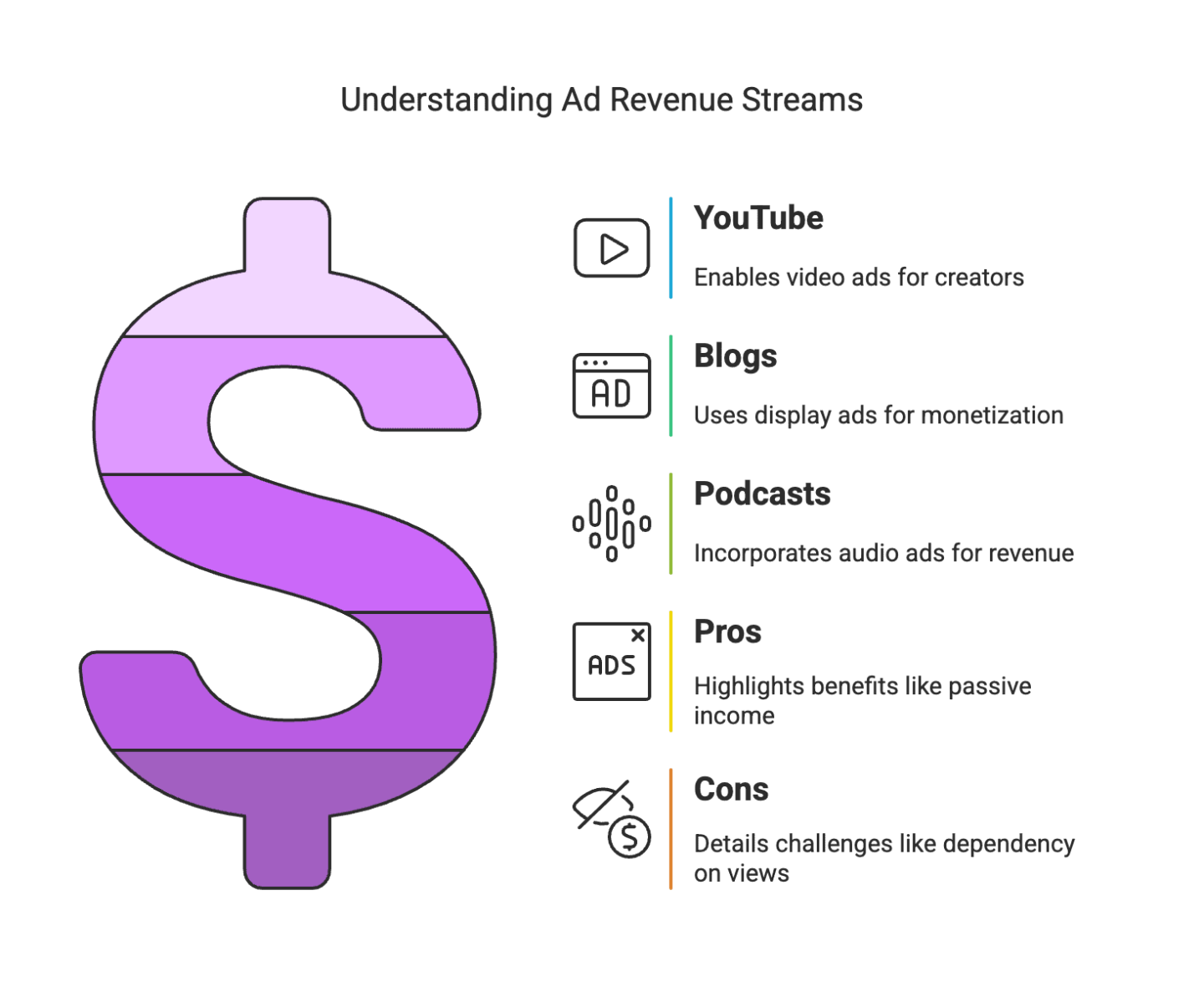
If you create content on platforms that support advertising, you can earn ad revenue as another income stream. The classic example is YouTube’s Partner Program – once you meet the criteria (e.g. 1,000 subscribers and 4,000 watch hours), you can enable ads on your videos and earn money per view. Similarly, bloggers can place display ads (via Google AdSense or ad networks like Mediavine) on their sites to earn money whenever visitors see or click those ads. Podcasts can incorporate ads too (either host-read sponsorships or programmatic ads). Ad revenue is usually proportional to your traffic or views – it’s largely passive in that once the content is up and the ads are enabled, you earn as people consume your content. About 14% of creators cite ads as one of their income sources, and while ad earnings for most are modest, they can be significant for those with large audiences.
A travel vlogger on YouTube enables ads on all their videos and earns a share of the revenue from the pre-roll and banner ads that Google displays. A mommy blogger uses AdSense to automatically show relevant ads to her readers and gets a small payout for each click. A true-crime podcaster might get paid by an ad network to read a 60-second sponsor message in each episode. Insider tip: Don’t rely solely on ads, but don’t leave this money on the table either. It might start as coffee money, but as your content library and audience grow, ad revenue can become a nice steady drip of income in the background.
If you’ve built up expertise through your influencer journey, coaching or consulting can be a highly rewarding income stream. This involves working directly with individuals or businesses, offering your knowledge and advice for a fee. For example, if you’re a successful content creator, you might coach aspiring influencers on growing their following. If you’re a food blogger, you could offer consulting to restaurants on social media marketing or food photography. Many creators find that people are willing to pay for one-on-one guidance. In fact, about a third of influencers (31%) have done consulting work, and some even rate it as a top revenue source (it was the #3 top revenue source in one study, after sponsored content).
A fashion influencer with a knack for branding might offer consulting to small fashion brands on improving their Instagram presence. A successful blogger might offer coaching calls to newbie bloggers, reviewing their sites and giving growth strategies. Some YouTubers offer channel audits or one-on-one coaching sessions to help others improve content and SEO. Tip: If you’re considering coaching, start by informally helping a few people for free or a small fee to get the hang of it and collect testimonials. Package your offerings clearly (e.g., a one-hour strategy call, or a 4-week mentorship program with weekly Zoom meetings) and set boundaries so it doesn’t overwhelm your own content schedule.
As your personal brand grows, you might find opportunities to step out from behind the screen and onto a stage. Public speaking engagements and workshops can be a thrilling and profitable way to monetize your expertise. Industry conferences, universities, or companies might invite you to give a talk about your specialty. Workshops are more hands-on classes (could be online webinars or in-person seminars) where you teach a skill or share knowledge in depth. Public appearances not only pay you a speaking fee, but also enhance your reputation as an authority in your field.
A DIY craft YouTuber might be asked to host a workshop at a craft fair or be a panelist at a creative conference. A tech influencer could be invited to speak about digital marketing at a business summit. There are also virtual summits and Instagram Live workshops – for instance, a travel influencer could run a paid webinar on “Travel Photography 101.” Tip: If public speaking appeals to you, start small. Offer a local class or do a live session on your social media. Over time, as you gain experience and confidence, you can approach larger organizations or use speaking bureau services to get gigs. Always have a clear topic or message you’re known for – that’s what people will be interested in hearing about.
Think about the skills you’ve learned as an influencer – maybe photography, video editing, graphic design, writing, social media management, or voice-over talent. Many creators freelance their skills to clients as another income stream. This means taking on projects not necessarily as “you the influencer” but as a specialist or creative professional. For example, an influencer known for amazing Instagram photos might do freelance photography for brands or other influencers. Or if you’ve honed video editing for your vlogs, you might edit videos for clients on the side. Offering freelance services can be a smart way to monetize your talents without needing to tie it to your personal content (and it diversifies your revenue beyond the whims of algorithms).
A skilled TikTok comedian who is also a good writer might freelance as a copywriter for an advertising agency’s social media campaigns. A travel blogger who learned web design could take on freelance website building projects. A beauty influencer might do freelance makeup artistry for events, leveraging their makeup skills in real life. Tip: Create a simple portfolio or page on your site listing your services. Mention it occasionally to your network (“BTW, I’m available for hire for product photography!”). Often your first freelance gigs may come from people who already know you through your content and trust your skills.
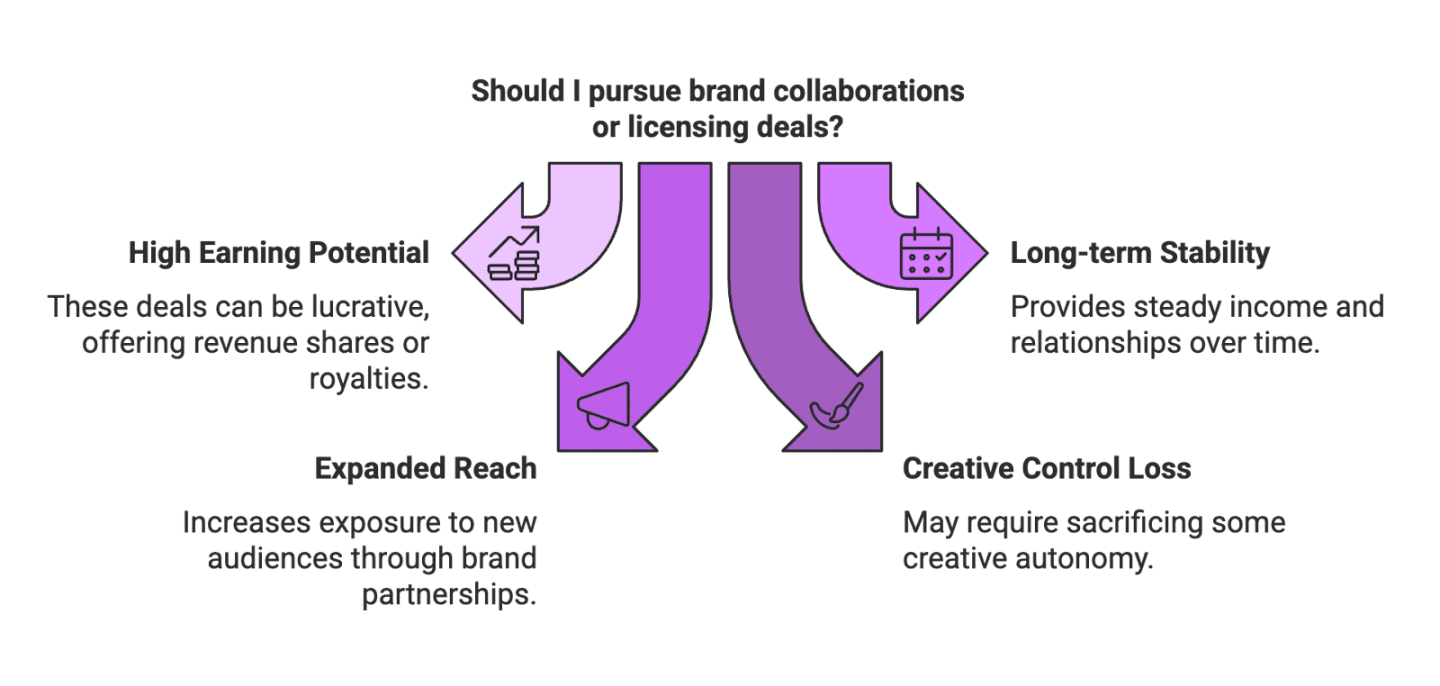
This category is like an evolution of sponsored content – it involves deeper brand collaborations, ambassadorships, or licensing your brand/content for other uses. For instance, a long-term brand ambassadorship might mean you’re under contract to promote a brand periodically throughout the year, possibly even with your image or name used in their marketing (in-store displays, commercials, etc.). Licensing deals could include things like co-creating a product line with a company (e.g., an influencer partners with a makeup brand to launch a new palette carrying their name) or allowing a brand to license your content (photos, videos) for their own advertising use beyond your channels. These deals often come as you gain a high profile and a strong personal brand that companies want to tap into.
A fashion influencer signs a licensing deal with a clothing company to create a capsule collection – the influencer’s name is on the tag, and they get a royalty for each item sold. A popular meme creator lets a brand use one of their viral video clips in a TV commercial (for a hefty fee, of course). Another example is an influencer becoming a brand ambassador for a year, appearing at events and in social media campaigns as essentially a spokesperson. Pro Tip: Opportunities like these often come once you’ve proven your influence and reliability through smaller collabs. Always ensure any contract clearly outlines where and how your name/content can be used and for how long. Protect your personal brand while also leveraging it – it’s a delicate but rewarding balance.
By now you might be wondering, “Which of these income streams is worth my time?” The truth is, it depends on you – your niche, your audience, your skills, and what you enjoy. It helps to compare them on a few key factors: effort required (how much work or time you need to invest), revenue potential (how much money you could possibly make), and scalability (how easily it can grow without requiring tons of extra work). Here’s a quick comparison chart (qualitative, based on typical scenarios):
Note: The above is a general comparison. “Effort” can decrease as you gain experience or build processes (for example, your 10th online course might be easier to launch than your first). “Revenue potential” varies widely – a small niche might not generate huge ad revenue but could command high coaching fees. And “scalability” often ties to whether the income is product-based vs. service-based. Ideally, a mix of streams – some high-effort, some low-effort; some quick cash, some passive growth – will create a healthy balance.
Diversifying your income as an influencer is all about creating stability in a volatile digital world. Not every revenue stream will make sense for you, and that’s okay. You might start with just a couple (say, sponsored posts and a little affiliate marketing on the side) and then gradually expand. The key is to experiment and find what fits your brand and lifestyle.
In the end, diversifying your income is about empowerment. It gives you the freedom to be a full-time creator on your terms, and a safety net if one source of revenue dips. By combining multiple revenue streams – a few big ones and a few trickles – you create a river of income that can keep flowing no matter what changes on any single platform. So brainstorm, plan, and take the leap into new monetization avenues. Your future self (and bank account) will thank you!
Now go forth and monetize wisely – with creativity, authenticity, and a diversified approach, you’ll be well on your way to sustainable success as an influencer. Here’s to making your influence not just impactful, but also income-full! 🚀🎉
Negotiating brand deals is a crucial skill for influencers because these collaborations often make up a big chunk of creator income. In fact, 77% of creators rely on brand sponsorships as their primary revenue source, three times more than any other income stream. Yet, figuring out what to charge and how to ask for it isn’t always straightforward – there’s no official rate card, and influencer pay can feel like a mystery. This guide will walk you through a casual yet informative step-by-step process to help you confidently negotiate brand deals on Instagram, TikTok, YouTube, and more. Whether you’re a beginner looking for your first sponsorship or an experienced creator aiming to level up your earnings, these steps will make it easier to land deals that value your work. Let’s dive in!
Before you negotiate anything, you need a clear picture of what your influencer platform is worth. Brands will look at metrics like your follower count, engagement rate, audience demographics, and content quality – and so should you. Remember, it’s not just about how many followers you have. A smaller but highly engaged audience can command higher rates than a larger, less active one, because brands care about engagement and actual influence according to Blavity. Consider your niche as well: certain niches (beauty, tech, fitness, etc.) often have bigger brand budgets, but even a smaller niche can be lucrative if your followers are loyal and responsive. Also, take an honest look at your content quality. High-quality photos or videos and authentic storytelling increase your value in a brand’s eyes. All these factors – who your audience is, how they interact with you, and how good your content is – add up to your value proposition as a creator.
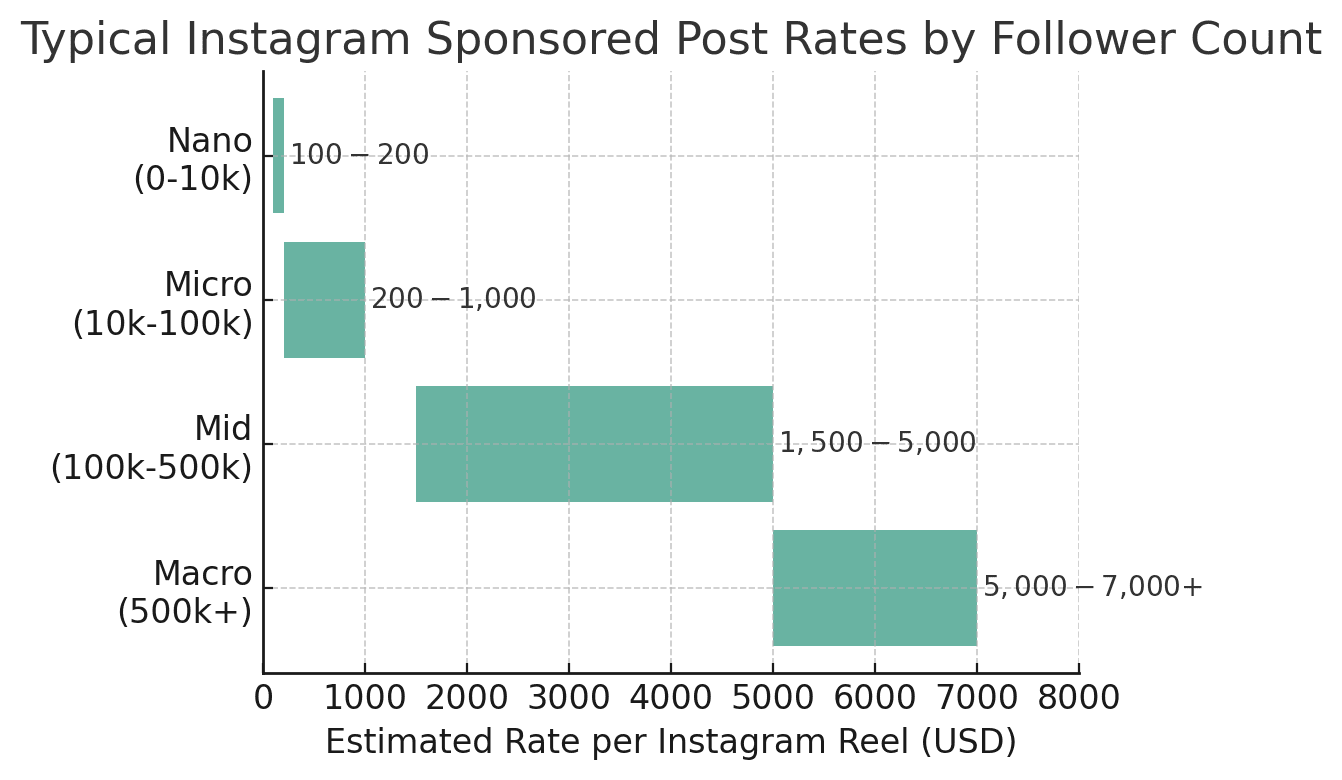
Knowing industry benchmarks can boost your confidence. For example, a common rule of thumb on Instagram is about $100 per 10,000 followers as a baseline rate accoridng to Shopify – but this can vary with your engagement and the work involved. Check what similar creators in your niche charge if you can, and note the formats (a dedicated YouTube video might pay more than an Instagram story, for instance). Ultimately, understanding your own analytics is key. Look at your average likes, comments, views, and click-throughs. Know your audience demographics (age, location, interests) from your platform insights. This data not only helps you decide your pricing but will be ammo to justify it during negotiation. Don’t sell yourself short: if you have an above-average engagement rate or a unique audience segment, that’s added value you bring to the table. (Fun fact: even nano-influencers can have high impact – one study found creators under 10K followers actually had the highest engagement rates on average according to Later, so every size audience has its strength!)
Not every brand deal is created equal, and finding collaborations that fit you is half the battle. Start by looking close to home: think about the brands you already use and love in your daily life. If you’re a beauty vlogger obsessed with a certain skincare line or a gamer who genuinely enjoys a particular tech accessory, those are great candidates to approach. Brands appreciate authenticity – in fact, 83% of brands say that a creator’s deep love and understanding of the brand is a sign of a potentially successful partnership according to Impact. So, brainstorm a list of products or services you’d be truly excited to promote. Those partnerships will come off as genuine (and be more fun for you). Also, see what brands creators in your niche and size range are working with. If influencers with a similar follower count often partner with certain companies, those brands might be open to working with you too (and it gives you a clue where to start).
Next, you’ll want to know where to look for deals. Opportunities can come from a variety of places:
Many social networks have their own matchmaking tools (e.g. the TikTok Creator Marketplace or Instagram’s Brand Collabs Manager) where brands and creators connect. There are also third-party platforms like Aspire, Grapevine, or FameBit (YouTube’s BrandConnect) that list paid campaigns. Creating a profile on these can put you on the radar of brands searching for influencers.
You don’t have to wait for brands to find you. Sometimes a simple professional email or DM to a brand’s social media asking if they work with creators can open doors. (More on crafting your pitch in Step 4.) Look on company websites for an influencer marketing or PR contact, or even use LinkedIn to find the right person according to Later. A polite inquiry introducing yourself can put you on their radar for future campaigns.
Many companies have formal ambassador or affiliate programs. These are often geared toward micro-influencers and have easy sign-ups on the brand’s site. They might not pay much upfront, but they’re a foot in the door. Ambassador and affiliate programs often have a lower barrier to entry than paid one-off sponsorships, making them great for smaller creators. For example, a fitness apparel brand might give you a discount code and small commission on any sales you drive – you won’t get a flat fee, but you get free products and a chance to prove you can promote effectively.
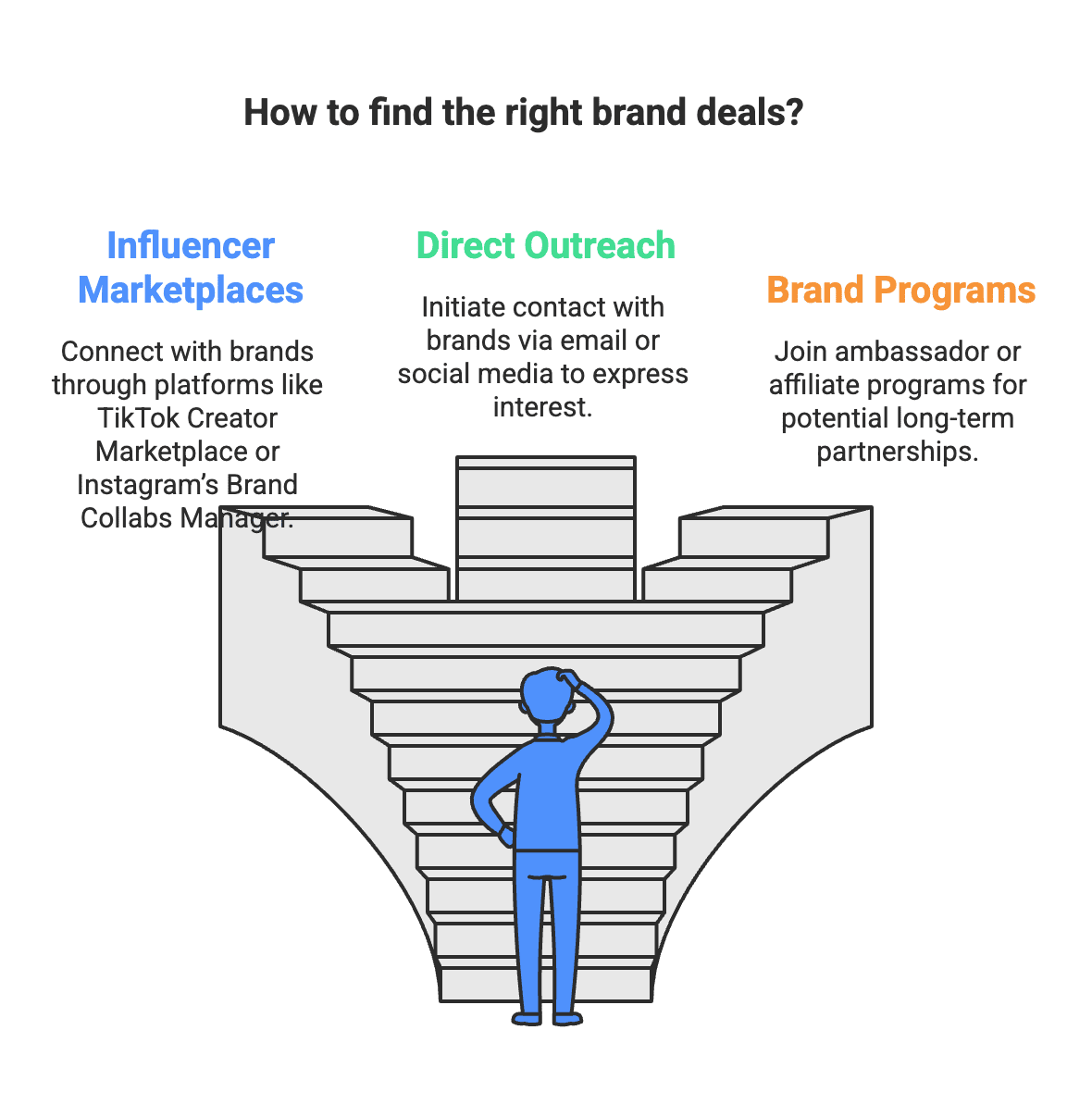
It’s also important to understand the types of deals out there so you know what to ask for or expect. Here are some common
This is the classic “#ad” post. The brand pays you (or gives product) in exchange for a dedicated piece of content featuring their product or service. It could be an Instagram photo, a TikTok video, a YouTube integration/shoutout, a tweet, you name it. This content is usually tagged as sponsored (FTC requires disclosure). It’s typically a one-time arrangement: you deliver the agreed post(s) according to their guidelines, and that’s it according to IZEA Worldwide, Inc. Pay can vary widely based on deliverables and your size – anywhere from free product up to thousands of dollars. This is a good way to start if you want to work with many brands on individual campaigns.
Instead of (or in addition to) an upfront fee, affiliate deals give you a commission for sales or traffic you drive to the brand. The brand will provide a special tracking link or discount code unique to you. When your followers use it to make a purchase, you earn a percentage or flat amount. For example, a makeup influencer might get 10% of all sales made with her promo code. Affiliate deals are common for smaller influencers or as a supplement to paid deals. The upside: unlimited earning potential if your audience really buys in; some creators earn more from commissions than flat fees. The downside: if the product doesn’t resonate with your audience, you might earn very little. Still, it’s low risk for the brand, which is why many have affiliate programs open to join. It can be a great way to prove your conversion power – if you consistently drive sales, you can use that data to negotiate paid sponsorships later.
Here, a brand sends you free product (or offers a free service) in the hope that you’ll feature it. Some brands will explicitly ask for a post in exchange; others just gift and hope you’ll share. Gifting is extremely common, especially with nano and micro-influencers. While “product only” doesn’t pay the bills, it can be worthwhile if the product is something you truly want and if it could lead to a paid deal down the road. Treat gifting professionally: if you agreed to post, deliver good content even if no money is involved. Brands often use gifting as a trial run – if you impress them, they might come back with a paid gig next time. But also know you’re not obligated to work for free if you don’t want to. It’s okay to politely decline purely unpaid offers that don’t feel worth it for you.
As you search for deals, stay true to your niche and audience. It’s tempting to accept any offer that comes your way, but in the long run, partnering with brands that don’t fit your personal brand will hurt your credibility. If you run a sustainable living Instagram, suddenly promoting a fast-fashion brand might confuse or alienate your followers. Brands care about audience alignment – they want your followers to be their potential customers. So when evaluating a potential collab, ask yourself: Will my audience care about this? If the answer is no, it might not be the “right” deal for you, no matter the pay.
So you’ve found a potential brand deal – exciting! Now, before you jump into discussing terms or signing anything, take some time to prepare. Good prep work sets you up to negotiate confidently instead of just winging it. Here are some steps to get ready:
Do your homework on the company that you’ll be working with (or pitching to). What kind of influencer campaigns have they done in the past? A quick scroll through their social media can show if they repost influencers or what style of content they like. If you can find hints of their budget or typical deals (sometimes influencers share experiences in forums or you might know someone who’s worked with them), even better. Knowing the brand’s marketing style will help you tailor your approach. And make sure you understand the brand’s product and values – if you come to the table informed, it shows professionalism.
Be clear on what you’re going to do for the brand. Often, a brand will outline what they want (e.g., 1 TikTok and 3 Instagram Stories). If they haven’t, think about what makes sense to propose. Going into negotiation, list the deliverables and content formats you’re prepared to offer (and maybe a few extras you could include if needed). Also decide on rough timelines – for instance, “a dedicated YouTube video to go live within 4 weeks of contract signing” or whatever fits. Being specific about deliverables (number of posts, platform, content length, etc.) sets the stage for a clear agreement according to TopRank® Marketing. It also helps you later when talking about compensation (more deliverables = higher price).
Think about what you want from this deal beyond money. Is it a foot in the door for more collaborations? Content you can add to your portfolio? A chance to break into a new market? When you know your goal, you can negotiate towards it (for instance, if your goal is a long-term partnership, maybe you’re willing to do the first deal slightly cheaper or over-deliver to impress). Also set boundaries: if the brand asks for something you’re not okay with (creative direction that doesn’t fit you, or an exclusivity period that’s too long, etc.), be prepared to address that. It’s easier to negotiate changes when you’ve identified potential red flags before you’re on the spot.
Taking these preparatory steps will give you confidence. You’ll enter negotiations appearing professional, informed, and self-assured – which immediately signals to the brand that you know your value and are not a newbie to be taken advantage of. As the saying goes, proper preparation prevents poor performance! So arm yourself with knowledge and a clear plan before any negotiation call or email exchange.
Now you’re prepared – time to make your move. “Making the first move” can mean two scenarios: pitching a brand directly or responding to a brand that reached out to you. In either case, the goal is to communicate professionally and showcase your value so that you set the stage for a great deal.
Briefly introduce yourself in a sentence or two. For example, “Hi, I’m Jane Doe, a fitness influencer on Instagram with 25,000 followers passionate about yoga and wellness.” Mention something defining about you (your niche, your audience).
Immediately follow up with why you’re reaching out – make it about the brand. Authenticity is key: if you’ve been using their product or genuinely admire their brand, say it. For instance, “I’ve been a loyal subscriber to your snack box service for a year, and my audience loves when I share my unboxings – those posts get 20% more engagement than my average.” A little flattery (true flattery, not fake) goes a long way, and it shows you’re not just mass-emailing 100 companies.
In a few sentences, explain what you can do for them. This is where you highlight relevant stats and a content idea. You might write, “My Instagram averages a 5% engagement rate, with a strong community of health-conscious millennials. I’d love to create an IG Reel showing how I incorporate into my morning routine, which I think would resonate well and drive interest in your new product line.” Tailor your idea to something that fits their marketing goals if you know them. If you have past results or similar collabs, mention one (e.g. “When I partnered with , I generated over 100 swipe-ups in 24 hours”). Keep it concise but compelling – you want them to see a partnership as a win-win.
Indicate that you have a media kit or more info available (and attach it if appropriate). Also mention any notable past partnerships or relevant experience, especially if they add credibility. For example, “I’ve successfully collaborated with XYZ Foods and FitCo (references available in my media kit), and I am confident my audience would love your products just as much.” This is subtle brag time – back up your value with proof.
End with a friendly call-to-action, like asking for a chance to discuss further. For example, “If this sounds like a good fit, I’d be happy to chat more or answer any questions. Thank you for your time and consideration!” And of course, a polite sign-off.
Keep your pitch short (2–3 short paragraphs) and to the point. Nobody wants to read a wall of text. The goal is to pique their interest enough that they respond. Make sure to proofread (you want to come across as detail-oriented and professional). And don’t get discouraged if you don’t hear back or get a “no” – brands get a lot of pitches. You can always follow up once (politely) after a week or two, or pivot to other prospects. Persistence pays off, as long as you remain courteous.
If a brand reached out to you first: Great – this means they already see potential in working with you. Your job here is to respond in a timely, professional manner and gather all the info you need. First, respond with enthusiasm: thank them for reaching out and express that you’re interested in learning more. If they haven’t already stated it, ask politely what they have in mind in terms of collaboration: “Could you share more details about the campaign goals, deliverables you’re looking for, and budget?” It’s important to get them to outline their expectations. Sometimes brands (or agencies) reaching out might be vague like “we’d love to work with you, let us know if you’re interested.” In your reply, you can say you’re interested and then ask, “Can you let me know what kind of partnership you have in mind (e.g., a sponsored post, product review, etc.) and the deliverables and budget for the project?” Don’t feel awkward bringing up budget early – it’s a normal part of the conversation, and it sets the tone that you expect this to be a business collaboration (not just freebies).
While emailing or messaging with a potential brand partner, maintain a casual yet professional tone. Emojis and exclamation points can convey friendliness (which is fine), but don’t overdo it – you are ultimately discussing a business deal. Be prompt in your replies (within 1-2 business days is ideal, faster if you can). If the brand is slow to reply, be patient but feel free to follow up after a week if you got no response. Communication is key; you’re already showing them what it might be like to work with you by how you handle these early interactions.
Finally, whether you initiate or they do, always be honest and clear in your communications. If you’re not sure about something, ask. If you have certain requirements (for example, you only create content on weekends, or you need at least two weeks lead time to produce a video), let them know. Setting clear expectations now will make negotiations and the eventual partnership smoother.
Alright, here’s where the real deal-making happens. Negotiation can sound intimidating, but think of it as a friendly discussion to reach a fair agreement. Brands negotiate all the time – so should you. Don’t be scared to advocate for yourself. The key is to negotiate professionally and confidently, so both you and the brand feel good about the partnership. Here are some strategies and tips:
Some creators make the mistake of accepting the first offer a brand gives without question. Don’t do that! Remember, the first number a brand offers is rarely their best – often it’s the lowest they think you might take. It’s expected that you might come back with a counter. So if a brand says, “Our budget for this Instagram post is $300,” it’s perfectly fine to politely counter with a higher number that you feel is fair, backed by reasoning (e.g., “Thank you for the offer. Based on the scope, my typical rate for an IG post with Story promotion is $500. Would that be workable for you?”). The worst they can say is no, and often they’ll meet you somewhere in the middle.
When pushing for a better rate or more perks, support your stance with your metrics and past results. For example, “I’m asking for $1,000 because my average Reel receives ~50,000 views (which is a high engagement for my follower count), and I consistently drive traffic – my last campaign resulted in 1,000 swipe-ups in a day.” By highlighting concrete numbers, you shift the discussion from “I want more money” to “Here’s the business value I provide”. Brands ultimately care about ROI (return on investment) – show them you’re worth it. As one expert puts it, brands care about business impact – conversion rates, demographics, and past campaign ROI are all factors that justify higher pay. If you can demonstrate that working with you will likely achieve their goals (sales, sign-ups, views, etc.), you have strong leverage in negotiation.
These two are big ones that many new influencers overlook. Usage rights refer to how the brand can reuse your content. For example, are they allowed to repost your photo on their own page? Can they use your video in a Facebook ad? If a brand wants rights beyond you just posting on your channel, that usually warrants additional compensation. Similarly, exclusivity means you agree not to work with the brand’s competitors for a certain time. That could mean, for example, if you do a deal with Coke, you can’t do a deal with Pepsi for X months. Exclusivity can be a big ask because it potentially limits your future income (maybe Pepsi comes knocking with a fat check but you’re contractually barred from taking it). Therefore, exclusivity should come at a premium price as well. When negotiating, don’t agree to broad or lengthy exclusivity without adjusting the rate upward. Feel free to ask, “Will there be any exclusivity period, and if so, is additional compensation provided for that?” This signals to the brand that you know your stuff. If they do want exclusivity, you can negotiate the terms (e.g., limit it to direct competitors only, or a shorter duration). Both usage and exclusivity often appear in contracts (Step 6 covers that), but initial negotiation is the time to hash them out.
One of the strongest negotiation tools is the willingness to walk away if the deal isn’t right. Not every opportunity is worth it, and that’s okay. If a brand can’t meet your minimum requirements (whether money, or maybe they want you to do something you’re uncomfortable with), you can politely decline. For example: “I appreciate your interest in working with me. Unfortunately, I won’t be able to proceed this time as the terms don’t align with what I can offer. Hopefully we can collaborate in the future under different circumstances.” Surprisingly, saying no can sometimes even make a brand come back with a better offer – it signals that you know your worth and won’t settle. But even if they don’t come back, it’s better to hold out for fair deals than to take ones that leave you feeling undervalued or compromise your brand. Remember, lowball offers can set a bad precedent. You’re not just negotiating this deal, you’re also setting the tone for future deals (with that brand and others, since word can get around).
Most contracts will include clauses covering the following:
Always read the contract carefully – it might be boring, but it’s worth a close look. If something is very complex or high-value, and you have access to a lawyer or knowledgeable friend, getting a second opinion is never a bad idea. Don’t be afraid to ask the brand’s rep to clarify anything you don’t understand. It’s so much better to clarify up front than to have a disagreement later because something was unclear.
If you need changes, you can request them. People often think contracts are set in stone – they’re not. Common tweaks influencers ask for include: adjusting exclusivity terms, clarifying usage rights, adding that the brand will tag you in any reposts (if you care about that), or fixing any mistake in deliverables or payment. Brands may or may not accept changes, but polite negotiation here is fine. For example, “I noticed the contract has a 6-month exclusivity clause. That wasn’t in our initial discussion – could we reduce that to 1 month? Six months is quite long in my industry.”
Payment considerations: Once the contract is signed and you do the work, how do you ensure you get paid properly? First, make sure you follow whatever invoicing process was agreed. Some companies might require an official invoice document; others just need an email to accounts payable. Submit your invoice promptly upon completing your deliverables (or at the milestone agreed). On the invoice, include the payment terms (“Due in 30 days”) as a reminder. If the contract says net 30, mark your calendar. Hopefully, the brand pays on time, but sometimes you might need to nudge. It’s perfectly acceptable to send a friendly reminder if a payment is a few days overdue: “Hi, just checking in on the payment for our campaign – the invoice dated X was due last week. Please let me know if you need any additional info to process it. Thanks!” Most brands will pay within the agreed window, but larger companies might have set pay cycles (some only cut checks on certain days). Patience is good, but don’t let it slide too long.
Also, be aware of how taxes work in your region for this income, as you’ll likely be considered an independent contractor. The contract won’t always mention taxes (except maybe that you’re responsible for your own). Just keep records of what you earn; that’s part of being a business-savvy influencer. Using contract analytics software can help you better understand the terms, obligations, and hidden clauses in your agreements, ensuring you’re fully informed and prepared from a financial and legal standpoint.
In summary, the contract is your safety net. It ensures you deliver what’s expected and that the brand delivers (payment, etc.) what’s promised. It’s there to protect you both. Don’t sign anything you’re super uncomfortable with. Most brands will be reasonable if you request logical tweaks. Once both parties sign, keep a copy of the contract for your records. Congrats – you now have a formal agreement! Now it’s time to uphold your end and hopefully start a great partnership.
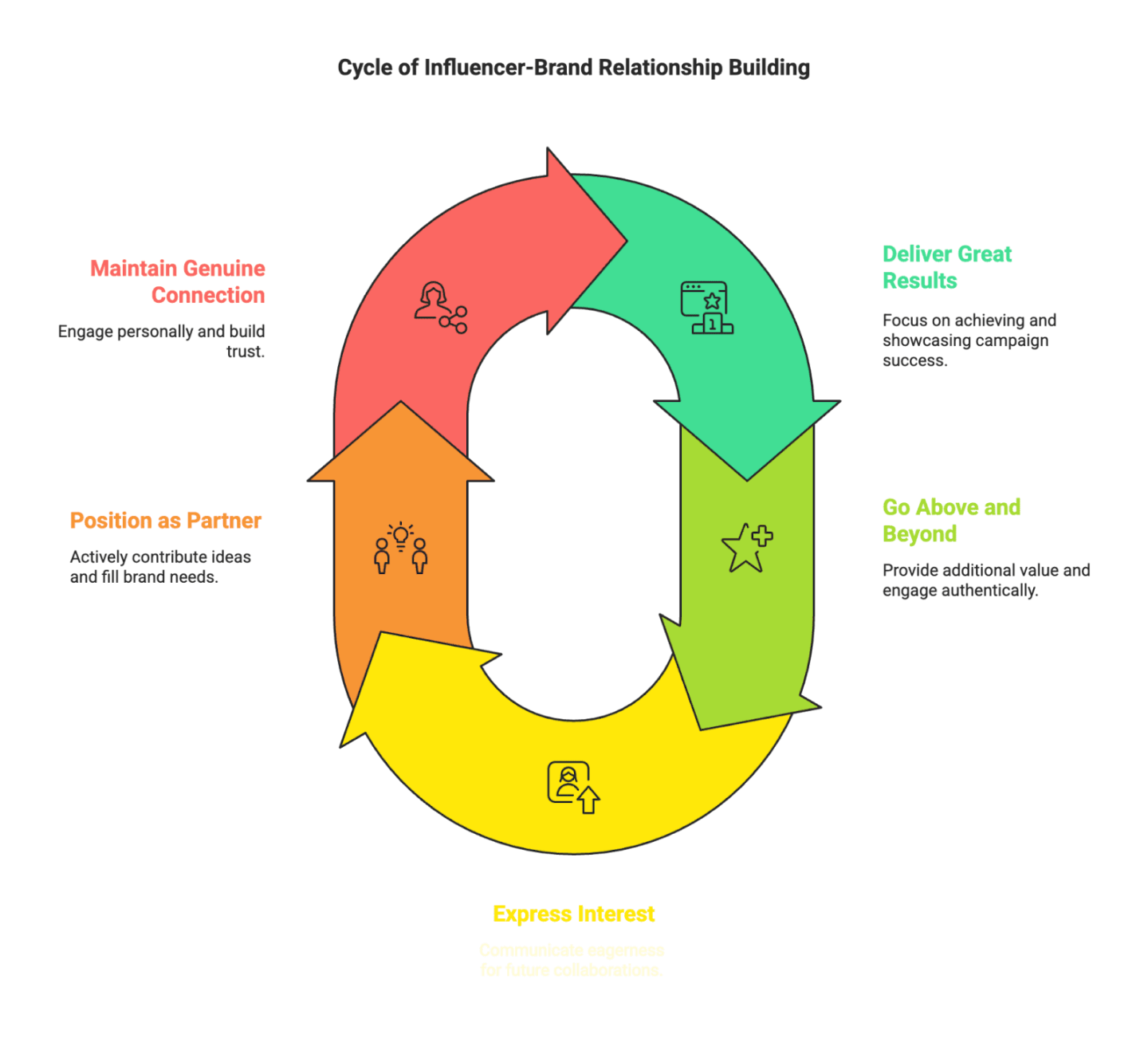
A successful one-off brand deal is great, but you know what’s even better? Turning it into an ongoing partnership. Consistent long-term deals can provide stable income and are a testament to your professionalism and value as a creator. Brands love working repeatedly with influencers who deliver results – it’s less effort than finding new people each time. Here’s how you can pave the way for repeat collaborations and lasting relationships:
This is step one. Treat every campaign, big or small, as an opportunity to shine. Meet your deadlines, follow the brief, and create the best content you can. After you post, provide the brand with a recap of how the content performed – send them the analytics, like reach, impressions, clicks, swipe-ups, sales generated (if you have that info), etc. Brands might have tracking on their side, but it makes a huge impression when you proactively report results. It shows you care about their ROI. If you can prove that your collaboration delivered real value – say, conversions, sign-ups, strong engagement – you’re giving them concrete reasons to hire you again. Data beats assumptions, as they say; if you drove measurable success, highlight it. Don’t assume the brand saw that your video got 100k views – tell them and contextualize why it’s good. This follow-up can be a simple email: “Hi! Just wanted to share the results from the Instagram post – it reached 50,000 people with an 8% engagement rate, well above my average. Also, my promo code was used 30 times in the first week. I’m so happy we achieved these results together!” This not only helps justify your fee this time, but it plants the seed that you’re worth working with again.
If you really want to stand out, find little ways to over-deliver. This doesn’t mean give away tons of free work; it means show enthusiasm and initiative. For example, actively engage with your audience in the comments about the sponsored post (answer questions about the product, etc.). Brands notice that! Maybe you do the one post they paid for, but also casually mention the product in another post or story (organically, not as a second ad, just as part of your life). This reinforces that you genuinely like the product. Providing extra value – like a few extra Instagram Story frames unasked, or an unboxing on IG Live in addition to the feed post – can impress a brand and doesn’t cost you much effort. It shows you’re a true partner, not a clock-puncher. One tip: some creators keep the partnership momentum going by continuing to mention or use the brand’s product even after the official collab is over (in a natural way). This makes the promotion look authentic and not just for a paycheck. It also signals to the brand that you’re still a fan, which makes them more likely to come back.
Don’t be shy to let the brand know you’d love to work together again. When wrapping up your post-campaign communication (for example, when you send them the performance report), you can say something like, “I really enjoyed collaborating on this campaign. If you have upcoming product launches or future campaigns, I’d be thrilled to partner up again – please keep me in mind!” That simple message can open the door to them contacting you next quarter for another project. Sometimes after a deal, if you don’t vocalize this, the brand might think you’re busy or not interested in continuing – so give them that nudge. Additionally, stay in touch: follow the brand on social, engage with their posts occasionally (don’t overdo it, but genuine interest is good). This keeps you on their radar without you explicitly pitching. If a few months go by and you haven’t heard, you can send a friendly check-in – maybe comment on their new product and even send an email like, “Congrats on the new launch! I loved seeing it. If you are planning any influencer campaigns around it, I’d love to collaborate again.” Not every one-off will turn into a long-term ambassadorship, but many do, especially if you’ve proven to be a good return on investment.
The best long-term relationships happen when you become almost an extension of the brand’s team. That means taking initiative to offer ideas. Perhaps after the campaign you have thoughts on how to improve future ones – share that (tactfully). For example, “My audience responded well to the product; some mentioned they’d love to see a tutorial – maybe next time we could do a short how-to video?” By offering creative input, you show you’re invested in their success, not just collecting a paycheck. Also, if you notice the brand has other needs you can fill, mention it. “I also create short-form videos – if you ever need extra content for your own social media or ads, I can help with that too.” Brands often repurpose influencer content for their marketing (with proper terms agreed), so this could open a new revenue stream for you as a content creator. The idea is to become valuable to the brand in multiple ways so they have every reason to keep coming back.
Lastly, remember that relationships are two-way streets. Be genuine in cultivating them – don’t just fake interest. If there were people on the brand’s team you communicated with, you can even connect with them on LinkedIn or send a holiday hello message. Little personal touches can make you memorable. When a brand feels like they "know" you and trust you, they’re far more likely to think of you for future projects. Some of the most successful influencers have long-term partnerships that span years and multiple campaigns, essentially becoming an ambassador even without the formal title. That stability is awesome for your influencer business.
Building long-term brand relationships doesn’t mean you can’t work with others; it just means you have a reliable roster of “regulars” along with new collabs. Over time, as you prove yourself, you might even have brands booking you for year-long campaigns or on retainer. That’s the dream scenario where you’re not constantly hunting for the next gig – the gigs come to you. So, treat every campaign like an audition for a long-term role. If it doesn’t turn into one, no worries – you still gained experience (and hopefully a good reference). But when it does, it’s a win-win for you and the brand.
Negotiating brand deals might feel daunting at first, but with practice it becomes second nature. The key takeaway is confidence – confidence in the value of your content and audience, and confidence to ask for what you deserve. Remember that you’re not “lucky to be paid to post”; the brand is paying you because you offer something they need – authentic connection to an audience. As we saw, most creators rely on these deals for income, so you’re absolutely entitled to approach it as a business according to Creators Agency. By understanding your worth (and backing it up with data), seeking out the right partnerships, preparing thoroughly, communicating effectively, and using smart negotiation tactics, you’ll set yourself up for success. And success isn’t just a one-time payday – it’s building a sustainable brand of your own as an influencer, with a reputation that commands top deals and long-term collaborations.
Keep refining your negotiation skills with each deal. Maybe after a campaign, take notes: what went well in the negotiation, what could you have done better? You’ll learn something every time. Don’t be discouraged by setbacks – a proposal that gets rejected or a deal that falls through is not a failure, it’s feedback. Maybe your rate was a bit high for that brand’s budget – you can adjust strategy for next time, or target bigger brands. Maybe you felt you undersold yourself – great, next time you’ll quote higher or hold firm. Like any skill, negotiating gets better with experience.
Lastly, always maintain professionalism and authenticity. It’s a small world in social media marketing; a good reputation will follow you and so will a bad one. Be the influencer that brands love to work with – the one who delivers results and is a joy in the process. When you do that, you’ll find brands coming back again and again, and even referring others to you.
Now go forth and confidently secure those bag$$! You’ve got the knowledge – from knowing your value, to pitching, to signing on the dotted line – to make the most of every brand opportunity. Believe in your value, stand up for it, and never stop honing your craft (both creating and negotiating). With each deal you negotiate, you’re not just earning money – you’re building your career and brand as an influencer. Good luck, and happy negotiating! 🎉
Social commerce – the blending of social media engagement with online shopping – has transformed how consumers discover and purchase products. Today, more than half of socially engaged shoppers have made a purchase directly through a social media platform according to TINT. Brands are responding by leveraging influencers to drive these on-platform sales. In particular, micro-influencers have emerged as powerful catalysts for converting followers into customers.
Micro-influencers may not have millions of followers, but they often deliver outsized impact through trust-based recommendations and highly engaged niche audiences. Their authentic voices and community connections can integrate e-commerce seamlessly into social feeds, encouraging followers to click “buy” on the products they genuinely endorse. This article explores who micro-influencers are, how they build trust and engagement to drive sales, why authenticity and niche focus make them so effective, and strategies for collaborating with them. We’ll also look at a case study of Stack Influence’s Instagram campaigns and present data-driven insights (with original charts) on micro-influencer trends, impact, and best practices for success in social commerce.
Micro-influencers are social media content creators with a follower count typically in the 10,000 to 100,000 range according to Sprout Social. They fall between nano-influencers (those with only a few thousand followers) and macro- or mega-influencers (hundreds of thousands to millions of followers). For reference, influencer tiers are often defined as:
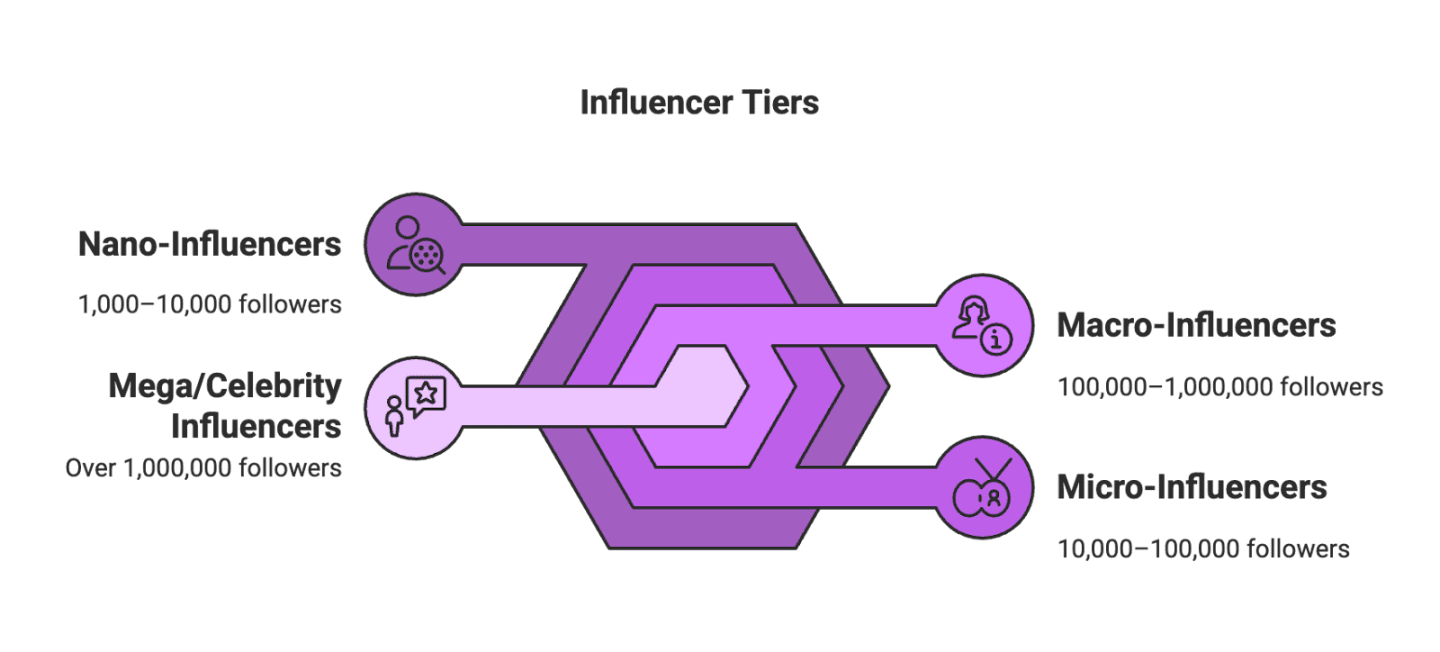
What micro-influencers lack in sheer reach, they make up for in influence per follower. In fact, micro-influencers comprise the vast majority of the influencer market (around 91% of all influencers). These are often everyday individuals – passionate enthusiasts, niche experts, or local trendsetters – who have built loyal communities around specific interests.
The role of micro-influencers in social commerce is to act as relatable brand advocates. They create content (posts, stories, videos, etc.) featuring products in an organic, authentic way and encourage their engaged followers to try those products. Unlike celebrity influencers, micro-influencers tend to personally interact with followers via comments and DMs, fostering a sense of friendship and trust. This close connection means a product recommendation from a micro-influencer can carry significant weight in purchase decisions. Brands tap into micro-influencers to drive direct sales by leveraging that trust – effectively turning social media posts into shoppable content.
Another advantage is cost: partnering with micro-influencers is budget-friendly compared to mega-influencers. While a celebrity influencer might charge $5,000–$10,000 for a single Instagram post, micro-influencers often charge only around $100–$500 per post according to Prowly. This lower cost allows brands (especially small businesses and e-commerce startups) to work with multiple micro-influencers for the price of one macro-influencer, creating a broader network of authentic endorsements.
Micro-influencers excel at building trust with their audience. They typically come across as “people like me,” which makes their followers view them as friends or peers rather than distant celebrities. This dynamic is key to social commerce success – consumers are far more likely to trust and act on recommendations from someone they feel genuinely connected to. According to a HubSpot study, over 82% of consumers say they are likely to buy a product recommended by a micro-influencer according to Mik Mak. Moreover, an international survey found 92% of people trust recommendations from individuals (even if they don’t personally know them) over brand advertisements according to Saleslion. In other words, a suggestion coming from a relatable micro-influencer carries much more credibility than the same message coming directly from a brand.
This trust translates into tangible engagement. Micro-influencers often have much higher engagement rates on their posts compared to larger influencers. Their audiences actively like, comment, and share their content, reflecting genuine interest. Studies show that on Instagram, micro-influencers can average around a 6% engagement rate, whereas mega-influencers might only see about 1–2% engagement. This pattern holds across platforms – smaller creators proportionally engage more of their following. High engagement matters for social commerce because it means more eyes on each recommendation and a conversation around the product.
In addition to likes and comments, that engaged audience is more likely to click on links or make purchases spurred by the influencer’s post. All the trust and interaction that micro-creators build up serve one goal in social commerce: driving conversions. It’s no surprise that micro-influencers tend to convert sales at higher rates. Research indicates that micro-influencer campaigns achieve over a 20% higher conversion rate than those involving macro-influencers. In other words, the followers of micro-influencers don’t just interact more – they also buy more readily when their favorite creator suggests a product. By combining credibility with engagement, micro-influencers create a perfect recipe for turning social media content into actual sales.
One of the greatest strengths of micro-influencers is the authenticity of their content and connections. Because they typically focus on a specific niche or passion (be it eco-friendly beauty, gourmet cooking, tech gadgets, fitness for new moms, etc.), their audience expects and values their genuine opinions in that domain. Micro-influencers often carefully choose the products they promote to maintain credibility with their followers accoridng to insightIQ. Unlike some celebrities who might endorse dozens of unrelated brands, a micro-influencer will turn down offers that don’t fit their personal brand or their community’s interests. This selectivity makes any sponsored post they do share feel more credible – if your favorite book blogger with 20k followers raves about a new novel, you trust that it’s truly something they enjoyed, not just a paid ad.
Authenticity is so important that 88% of people say it’s critical for influencers to genuinely care about the products or topics they feature. Micro-influencers live this principle: they are generally enthusiasts first and marketers second. Their content tends to be less polished and corporate-looking than a big influencer’s studio shoot, which actually adds to the authenticity. A quick smartphone video review or a heartfelt caption comes off as a real personal recommendation rather than an obvious advertisement.
Another factor is their niche audiences. By operating in a focused domain, micro-influencers attract followers who are highly interested in that subject. This makes their following a target-rich group for brands in that industry. For example, a micro-influencer who posts about home baking will have an audience filled with baking enthusiasts – a perfect match for a company selling baking tools or gourmet ingredients. When that influencer showcases a new stand mixer or a specialty spice blend, it’s being shown directly to people who are likely to need those items. This level of precise audience targeting is hard to achieve with a mass-market celebrity. It leads to higher relevance and conversion: niche followers are more likely to say “That’s exactly what I’ve been looking for!” and proceed to purchase.
Authenticity and niche focus also lead to more conversation and community. Followers often interact with micro-influencers, asking questions like “Did the product work well for you?” or sharing their own experiences. The micro-influencer usually replies, fostering a dialog that builds even more trust. This ongoing engagement means that when the influencer recommends a product, it feels like a tip from a knowledgeable friend in the community. From a social commerce perspective, this is gold – the product promotion is woven into genuine social interaction. Brands who partner with authentic micro-influencers thus benefit from word-of-mouth style marketing that can be far more persuasive than traditional ads.
To see micro-influencer social commerce in action, let’s examine a case study. Stack Influence is a micro-influencer marketing platform that helps brands connect with large numbers of micro-influencers for campaigns according to Doe Media. One example of their work is a product-promotion campaign for Blueland, a direct-to-consumer brand selling eco-friendly cleaning products. Blueland partnered with Stack Influence to leverage micro-influencers on Instagram as a way to boost their sales on Amazon.
Campaign setup: Stack Influence recruited 211 micro-influencers to participate in Blueland’s campaign. These influencers were activated to create branded posts about Blueland’s products on social media (primarily Instagram) with three core goals: 1) generate authentic content featuring Blueland, 2) strengthen the brand’s social media presence through mentions and shares, and 3) drive targeted traffic to Blueland’s product listings on Amazon. Each micro-influencer received Blueland products to try and then shared their honest reviews and usage experiences in their own voice – often through Instagram photos or short videos demonstrating the products (for example, showing Blueland’s refillable cleaning sprays in action). The influencers typically included a link in bio or a swipe-up story pointing followers directly to Blueland’s Amazon page to purchase, seamlessly connecting social engagement to e-commerce.
Results: The micro-influencer campaign had a powerful impact on both engagement and sales. Collectively, the 211 influencers’ posts garnered about 247,932 impressions and 11,451 engagements, averaging a strong 4.6% engagement rate across the campaign. This showed that their followers were actively interacting with the content. Blueland also gained a trove of user-generated photos and videos from these posts – the company received full rights to all the high-quality images and clips, which they later repurposed in other marketing channels and ads. In terms of business outcomes, the campaign drove a dramatic uplift in sales.
By engaging this network of micro-influencers, Blueland saw its average monthly unit sales jump from roughly 542 units before the campaign to 2,562 units during the campaign – a 4.7× increase in sales velocity. The chart below illustrates this dramatic sales lift. This surge amounted to an additional $129,280 in revenue over three months, representing an impressive 13× return on investment (ROI) for the micro-influencer program (the campaign costs, including Stack Influence’s fees and product giveaways, were about $9,917). Even after the campaign, Blueland’s monthly sales remained at their elevated new level, indicating a lasting boost. It also improved Blueland’s visibility on Amazon – during the campaign their product’s search ranking and keyword presence on Amazon improved substantially due to the influx of traffic and sales. This case demonstrates how micro-influencers can be effectively leveraged to generate both immediate e-commerce revenue and long-term digital shelf growth.
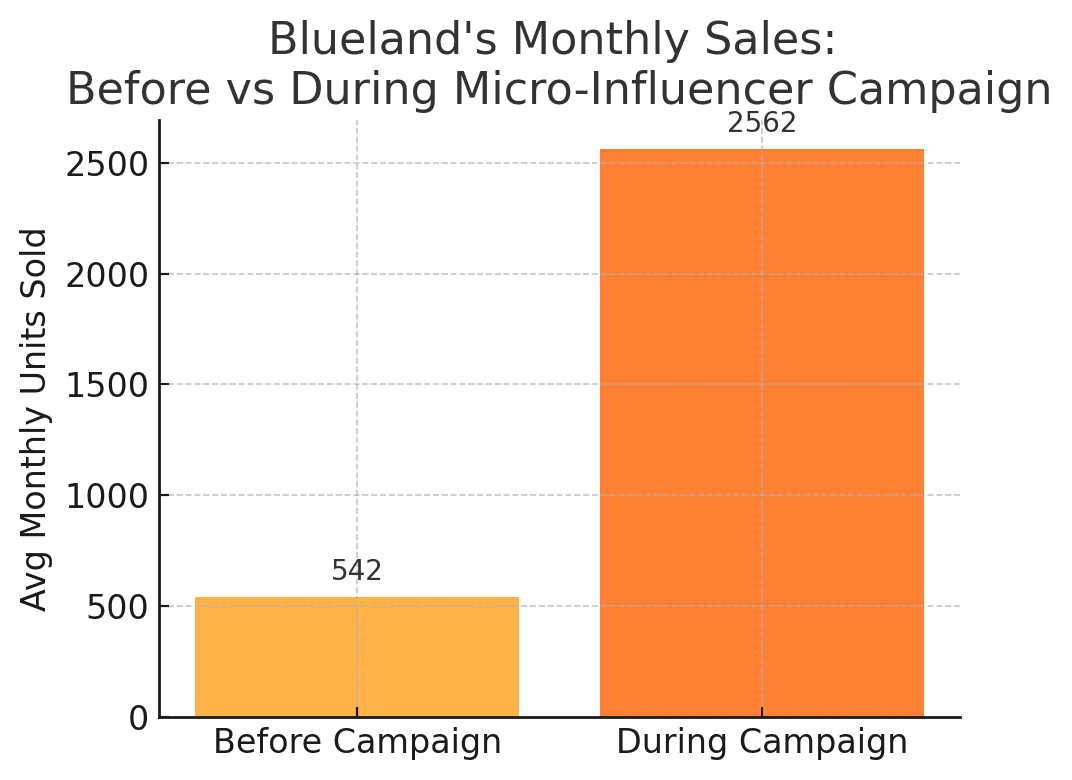
Micro-influencers are active across all major social networks, but a few platforms stand out in the context of social commerce:
The original hub of influencer marketing, Instagram remains a top platform for micro-influencers. Its visual format is ideal for showcasing products in lifestyle contexts (through photos, carousel posts, Stories, and Reels). Instagram also offers built-in shopping features – influencers can tag products in posts or add “link in bio” and Story link stickers that take followers directly to product pages. 67% of brands use Instagram for influencer marketing according to Influencer Marketing Hub, making it the most popular channel in this space. Micro-influencers on Instagram often cultivate tightly knit communities around interests like fashion, beauty, travel, fitness, or parenting. Their posts can drive immediate shopping actions by using features like Instagram Shops or affiliate links.
TikTok’s explosive growth has made it a goldmine for social commerce, and micro-influencers play a big role. TikTok’s short-form video algorithm can catapult niche creators to wide audiences if their content resonates. Micro-influencers on TikTok produce creative, authentic videos – think product demos, unboxings, or before-and-after transformations – that often feel like recommendations from a friend. Engagement on TikTok is particularly high (as seen earlier, micro TikTokers average ~18% engagement). Many products have gone viral via TikTok micro-influencers and their followers, leading to immediate spikes in sales (the “TikTok made me buy it” phenomenon). TikTok now has shopping integrations (like in-app product links and live shopping features), which micro-influencers can leverage to drive direct purchases during streams or from their video posts.
Known for long-form content, YouTube is another key platform where micro-influencers (often in the 10k–100k subscriber range) thrive – especially for product reviews and how-to videos. A tech gadget reviewer or beauty vlogger with 50k subscribers might not be a household name, but they can have immense sway over their viewers’ buying decisions. Micro-influencers on YouTube build trust through in-depth, honest reviews – viewers often watch these before deciding to purchase a product. While engagement (likes/comments) rates on YouTube are lower overall than on other platforms, the level of attention and time spent (e.g. watching a 10-minute review) indicates strong interest. Social commerce on YouTube usually happens via links in video descriptions or pinned comments (often affiliate links or promo codes provided by the influencer). Many micro-influencers also mention “Use my code for X% off” to encourage trackable sales. For brands in electronics, gaming, beauty, or any category where consumers seek detailed insight, partnering with micro-influencers on YouTube can drive steady e-commerce traffic.
Of course, micro-influencers are present on other platforms too – from Facebook groups to Pinterest boards to emerging apps – but Instagram, TikTok, and YouTube are among the most effective for integrating commerce with social engagement. Each platform offers a unique format (photos, short videos, long videos) and different ways for audiences to engage, so brands often cross-post campaigns through micro-influencers on multiple channels to maximize reach and impact.
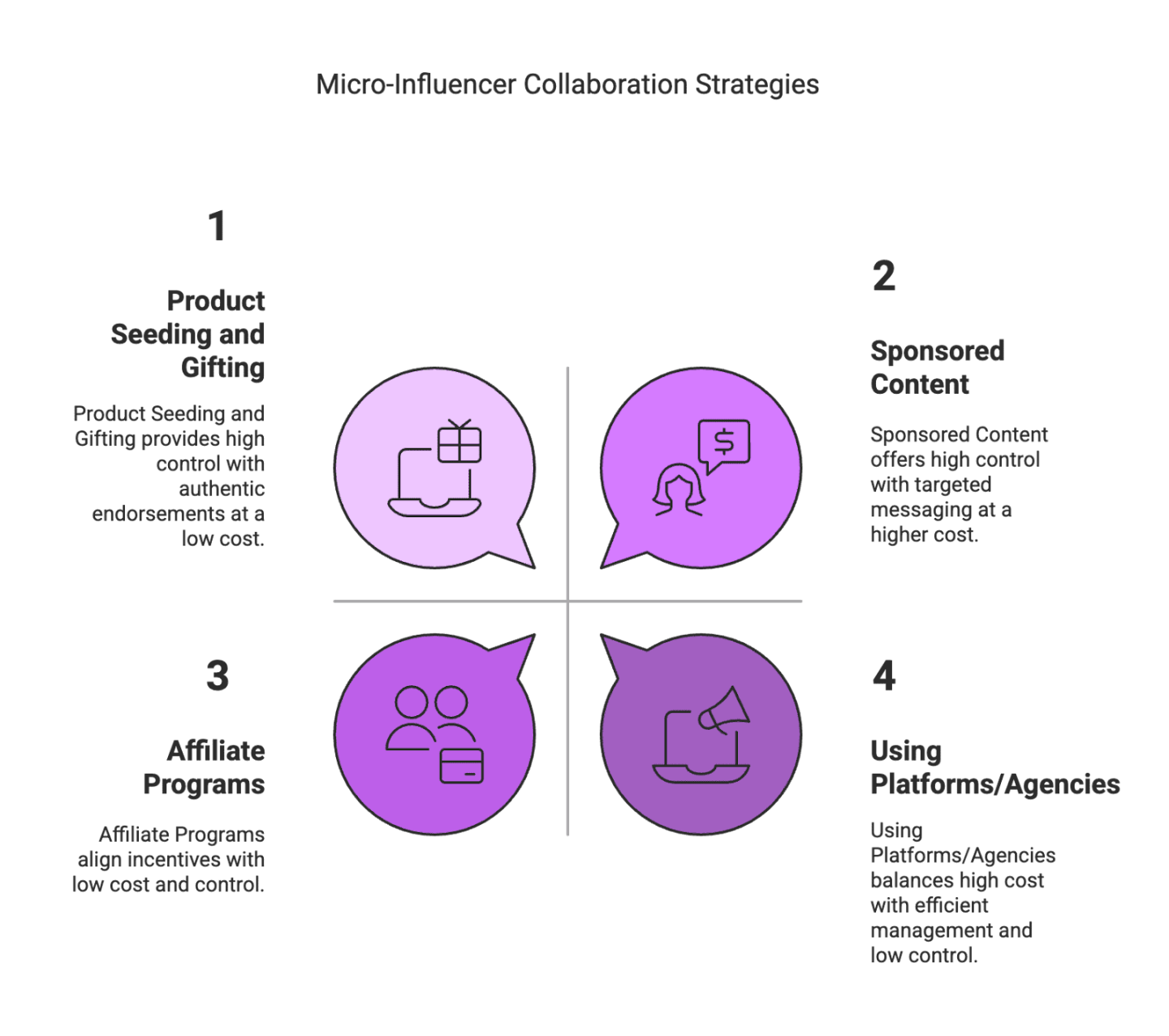
Brands that successfully harness micro-influencers typically employ a variety of collaboration strategies to spark social commerce. Here are some common approaches businesses use:
One popular tactic is sending free products to micro-influencers in the brand’s niche, hoping they’ll share their genuine feedback. This product seeding approach lets influencers try the product firsthand. If they love it, many will organically post about it, effectively endorsing the item to their followers. Even if payment isn’t involved, micro-influencers often appreciate the perk of free products, and their content comes across as a heartfelt personal recommendation. Brands usually reach out personally to offer a gift (without strings attached), which maintains authenticity and often delights the influencer into sharing the experience.
Just like bigger influencers, micro-influencers also do sponsored posts – but at a much lower cost. Brands will pay a micro-influencer to create content featuring their product, typically with certain key messaging or hashtags. The influencer still has creative freedom to present it in their own style, which keeps the content feeling authentic. Sponsored micro-influencer posts can be single feed posts, dedicated YouTube videos, TikTok clips, or a series of Stories. The key is to ensure proper disclosure (using #ad or #sponsored) while still letting the influencer’s genuine voice shine through. Many brands find that a handful of micro-influencer sponsored posts can outperform one celebrity endorsement, due to better engagement and trust.
To directly tie micro-influencer activity to sales, brands often give them unique referral links or discount codes. For example, a cosmetics brand might provide a micro-influencer with a code “JANE20” for 20% off, which the influencer shares with followers. This not only incentivizes the audience to buy (to get the discount) but also lets the brand track how many sales came from that influencer. In return, the micro-influencer might earn a small commission for each sale (affiliate marketing) or a flat fee per conversion. This performance-based collaboration aligns incentives on both sides – the influencer earns more by genuinely convincing followers to purchase, and the brand gets measurable ROI on each influencer’s contribution.
As seen with Stack Influence, there are platforms and agencies that specialize in scaling micro-influencer campaigns. Brands can leverage these services to find a large pool of vetted micro-influencers in their niche and manage collaborations efficiently. These platforms handle the recruitment, communication, and sometimes content approval, making it easier to run campaigns with dozens or hundreds of micro-creators at once. They often also provide analytics and tracking links to measure each influencer’s impact on sales. For brands with limited internal bandwidth, such platforms can jumpstart a micro-influencer program quickly and in a more organized way than doing manual influencer outreach. The Stack Influence case above showed how coordinating 200+ micro-influencers via a platform yielded a huge ROI. Whether through an agency or DIY, the ability to scale up the number of micro-influencers while maintaining authenticity is a winning strategy in social commerce.
It’s clear that micro-influencers can merge social engagement with e-commerce effectively. To recap some telling data points and trends:
Micro-influencers consistently see engagement rates 3–5× higher than macro/mega-influencers across social platforms. Audiences not only follow them but actively interact, which increases the visibility and credibility of product mentions. (Our earlier chart highlighted this gap on Instagram, TikTok, and YouTube.)
More engagement and trust lead to more sales. Micro-influencer campaigns have been found to deliver >20% higher conversion rates than campaigns with larger influencers. In some cases, micro-influencers have driven 22× higher conversion rates than other types of influencers according to Saleslion, showing the extreme impact an enthusiastic micro-influencer can have on buying behavior.
There’s a notable industry trend toward working with smaller influencers. Only a small minority of marketers still prioritize celebrities – in fact, just 14% prefer celebrity influencers according to one report according to Embryo – while the vast majority focus on micro and nano tiers. Brands are increasingly valuing authenticity and ROI over sheer reach. The abundance of micro-influencers (remember, they make up ~91% of the market) means brands have many to choose from, and they are taking advantage of that diversity.
Instagram is still the leading platform for influencer commerce, but TikTok is rapidly catching up as usage skyrockets. We also see micro-influencers being crucial in emerging social commerce arenas like live shopping (e.g. hosting live product demos on Instagram or TikTok Live) where their personable, interactive style shines. Meanwhile, traditional blogs and YouTube channels run by micro-influencers continue to influence product discovery (consumers searching for reviews often find a micro-influencer’s blog or video). The trend is an omni-channel micro-influencer presence driving the customer journey: a consumer might discover a product on TikTok, research it via a YouTube review, and finally purchase it through an Instagram Shop – encountering micro-influencers at each step.
Because micro-influencers charge less and can be engaged in greater numbers, brands are seeing strong returns. The Blueland case we saw achieved a 13:1 ROI. Overall, influencer marketing ROI averages around $6.50 for every $1 spent, and micro-influencer campaigns often exceed that by reaching the most receptive consumers. Additionally, the content value (hundreds of authentic photos/reviews) generated by micro-influencers provides marketing assets that would be expensive to produce in-house. This earned content further amplifies ROI by boosting other channels like the brand’s website (with real customer lifestyle photos) and social ads (using influencer testimonials in advertising).
These points underscore why micro-influencers are sometimes called the “trusted, unsung work horses” of social commerce according to PYMNTS. They may not have the fame of mega-influencers, but they reliably pull more weight in driving engagement and conversions.
To wrap up, here are some best practices for businesses looking to harness micro-influencers in their social commerce strategy:
Identify micro-influencers whose content themes and audience demographics align closely with your product. Use social platform searches, hashtags, or influencer databases to find creators in your industry (e.g. cruelty-free beauty bloggers if you sell vegan skincare). Relevance is crucial – an engaged niche following interested in your category will yield the best results.
Approach micro-influencers with genuine interest in their content. Engage with their posts, leave thoughtful comments, and build rapport before pitching a collaboration. When you do reach out, personalize your message. Treat influencers as partners, not just advertising channels. A respectful, human approach will encourage them to put sincere effort into promoting your brand, resulting in more authentic endorsements.
While many micro-influencers appreciate monetary compensation, also consider the other value you can offer: free products, exclusive discounts for their followers, or features on your brand’s official channels (which can help them grow their own audience). By creating a win-win proposition, influencers will be more enthusiastic. For example, gifting them an upcoming product release early makes them feel like insiders and builds excitement to share with their audience.
Rather than putting all your budget into one “big” name, work with a group of micro-influencers to amplify reach. You can target different sub-audiences by using several smaller influencers in various communities. For instance, if you sell a fitness snack, collaborate with a yoga micro-influencer, a marathon-running influencer, and a weightlifting influencer to cover distinct fitness subcultures. The combined effect can outperform one-size-fits-all messaging. Coordinate campaign hashtags or themes so that the buzz builds collectively.
By following these best practices, brands can build a robust micro-influencer program that drives awareness, engagement, and most importantly, sales.
Micro-influencers have proven that when it comes to social commerce, smaller can be mightier. Their trustworthiness, authenticity, and close-knit audience relationships enable them to turn casual scrolling into checkouts. As we’ve discussed, micro-influencers bridge the gap between social media buzz and real commercial impact – they are the relatable voices that can recommend a product one minute and send followers to an online store the next.
For businesses, leveraging micro-influencers is a practical and often cost-effective way to integrate e-commerce into social engagement. The key is to choose the right partners and foster genuine collaborations. When done right, micro-influencer campaigns build brand loyalty and community while simultaneously driving up conversion rates and sales figures. In a world where consumers crave authenticity, micro-influencers deliver it – along with the ROI that marketers seek.
In summary, micro-influencers play an indispensable role in modern social commerce: they humanize brands, create engaging content that resonates with niche audiences, and serve as powerful ambassadors who can inspire action – from likes, to clicks, to purchases. Brands that embrace micro-influencer partnerships as part of their social commerce strategy are likely to see not only immediate bumps in sales, but also long-term benefits as they cultivate armies of passionate, influential fans across social media.
When you think of influencer marketing, LinkedIn might not be the first platform that comes to mind. But for professionals and B2B brands, LinkedIn has quietly become a powerhouse for influencers. In recent years, LinkedIn has evolved from a simple job hunting and networking site into a robust ecosystem for influencer marketing, especially in the B2B space according to Favikon. It’s now a place where thought leaders share insights, industry experts build their brands, and companies connect with decision-makers through trusted voices. This blog will explore how LinkedIn fits into the influencer marketing landscape, how its algorithm impacts content visibility, the types of influencers thriving on the platform, best practices to succeed, and real examples backed by data and expert insights.
LinkedIn is the world’s largest professional social network, with more than 1 billion members across 200 countries according to Social Pilot. Unlike entertainment-focused platforms, LinkedIn’s users are business professionals primed to engage with industry content. In fact, over 65 million LinkedIn users are decision-makers and 10 million are C-level executives – meaning the audience here has real buying power and influence. (Fun fact: LinkedIn users have 2X the buying power of the average web audience!) It’s no wonder that roughly 80% of B2B social media leads come from LinkedIn.
What makes LinkedIn especially valuable for influencer marketing is the trust and credibility inherent in the platform. People come to LinkedIn to discuss business challenges, learn new professional skills, and follow industry news – a fertile ground for influencers who offer knowledge and expert insights. Rather than dance trends or prank videos, content that speaks to professional development and business trends thrives on LinkedIn according to Favikon. LinkedIn even encourages this with features like long-form articles (formerly Pulse), newsletters, live video, and more – all tools that influencers can use to share value. No surprise, then, that content creation on LinkedIn has been booming, with a 24% year-over-year increase in posts as LinkedIn continues to support creators.
From a marketing perspective, LinkedIn is a goldmine for B2B brands. Marketers consistently rank LinkedIn as one of the most effective channels for reaching professionals – nearly 97% of B2B marketers use LinkedIn to distribute content, and 79% of B2B marketers see LinkedIn as an effective source for lead generation. Simply put, if your goal is to influence business decisions or establish thought leadership, LinkedIn is the place to be.
One big reason LinkedIn has taken off in influencer marketing is its feed algorithm, which determines what content gets seen by whom. Every platform has an algorithm, but LinkedIn’s is a bit unique in that it’s geared towards surfacing relevant, high-quality professional content over pure virality. Understanding how it works can help influencers and brands maximize their reach.
In a nutshell, it goes through a few stages when you post something:
1. Initial Quality Filter:
As soon as you post, LinkedIn’s system classifies the content as spam, low-quality, or high-quality. Obvious spam (e.g. posts with malicious links or blatant sales pitches with tagging everyone under the sun) gets filtered out. Posts that pass basic quality checks move on.
2. Engagement Testing (“Golden Hour”):
LinkedIn will first show your post to a small sample of your network to gauge interest. It closely watches how that audience reacts in the first minutes to an hour. If your post earns strong engagement (likes, comments, shares) in the first hour, the algorithm takes it as a sign that people find it valuable according to Hootsuite. It will then start showing the post to more people beyond your immediate connections (second and third-degree connections). In other words, early interaction gives your post a green light for broader distribution.
3. Relevance and Network Boost:
As the post spreads, LinkedIn will prioritize showing it to people who are likely to care – for example, those who have similar interests or who frequently engage with content like yours. It also favors content from people you interact with often. This means building a relevant audience and engaging with others can directly improve your own content’s visibility.
LinkedIn’s algorithm doesn’t stop there. It also pays attention to “dwell time,” which is how long someone spends on your post. If people linger to read your entire article or watch most of your video, that signals the content is engaging. Posts that keep users around longer get better distribution in the feed. Additionally, LinkedIn has been boosting native content – posts that keep users on LinkedIn (text, images, videos, documents) – while de-emphasizing posts with external links that send people off-platform. That’s why you might see savvy influencers put a link in the comments instead of the post body.
The practical impact of this algorithm for influencer marketing is huge. It means quality and relevance win on LinkedIn. An influencer with a smaller following can still achieve massive reach if their content sparks conversation. (LinkedIn posts also have a longer shelf-life than on many platforms – content can continue to get views and engagement days or even weeks later, thanks to its “long tail” in the feed according to So Standard. For brands, a collaboration with the right influencer who posts engaging, insightful content can far outshine a post from the brand’s own page. In one example, a company’s LinkedIn post got only “17 likes” when posted from the brand account, but reached 1.2 million impressions, 18,800 engagements, and 5,600 clicks when shared by influencers as part of a campaign according to Marketing Examined. The algorithm loves when real people share content that resonates – it’s seen as more genuine, so it’s amplified more widely.
Bottom line: To crack LinkedIn’s algorithm, focus on meaningful content. Avoid spammy tactics (tagging 50 people who have nothing to do with your post = bad idea), aim to get engagement early (ask a question or prompt discussion), and consider using LinkedIn’s native features (text posts, photos, videos, polls, documents) to keep that dwell time high. Do that, and the LinkedIn algorithm becomes your friend, significantly boosting your content’s visibility.
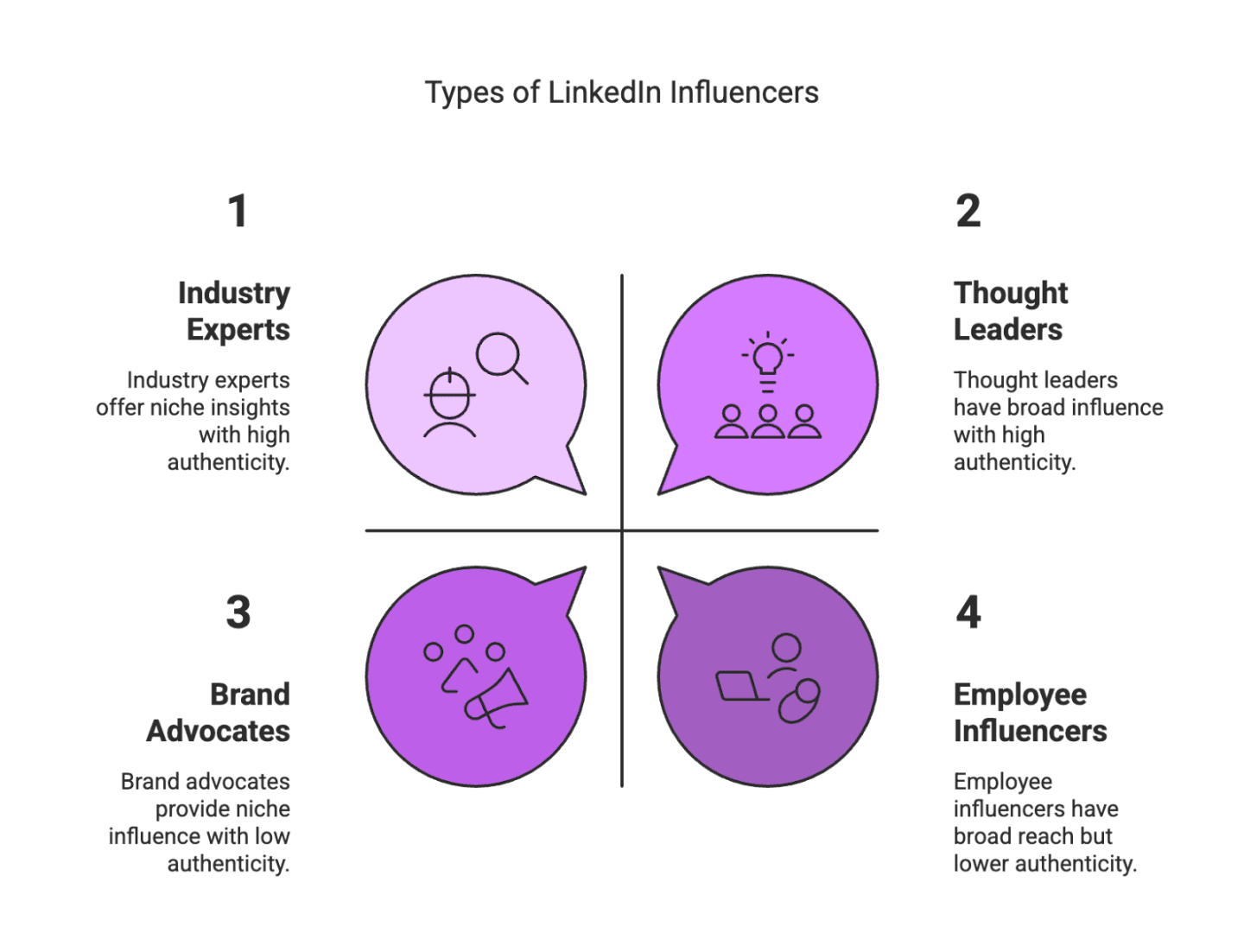
When we say “LinkedIn influencer,” you might picture a buttoned-up executive posting inspirational quotes – and yes, those exist! But LinkedIn’s influencer community is diverse.
These are the big names and visionaries in various fields. They might be CEOs, founders, authors, or even public figures, but what they have in common is a large following and recognized expertise. They regularly share thought-provoking posts about industry trends, leadership, or professional growth. (Example: Bill Gates is a LinkedIn Influencer with over 35 million followers, sharing insights on global health and technology according to Social Pilot.) Thought leaders often set the tone for conversations on LinkedIn and can drive huge engagement due to their authority.
Not every influencer on LinkedIn is a household name – many are respected within a specific industry or niche. These folks might be known only in their circle (say, a supply chain expert, a coding bootcamp instructor, or a healthcare policy analyst), but they have credibility among a targeted audience. They share detailed insights, how-tos, case studies, and commentary that establish them as go-to resources. Their follower counts can range from a few thousand to hundreds of thousands. What matters is the quality of their network – they influence the people who care about that topic.
Brand advocates on LinkedIn are people who promote a company or product because they genuinely like it, not because it’s their job. They could be loyal customers, partners, or enthusiasts. For example, a marketer might often post about how a certain software changed their work life, effectively influencing others to consider it. Brand advocates bring authenticity – their endorsement feels organic and trustworthy. Sometimes brands will nurture these advocates by featuring them or giving them perks, but the key is they already love the brand. Their content tends to be testimonials, success stories, or educational content related to the product (rather than overt ads).
A company’s own employees can be incredible influencers on LinkedIn. In fact, employees’ combined networks average 12X the size of the company’s own follower base on LinkedIn according to Social Discovery Insights. Employee influencers range from C-suite executives with large followings to rank-and-file team members who are super passionate about their work and share that with the world. They add a human face to a brand.For instance, a software company’s engineer might post insightful articles about innovations they’re working on – indirectly boosting the company’s reputation. Many companies are encouraging this: Cisco even offers training to its 83,000+ employees to act as influencers on LinkedIn, since employee posts are “so much better than any content we would curate from a branding standpoint,” according to Cisco’s Chief People Officer. When employees become influencers, their authenticity and insider perspective can attract talent, build trust with customers, and extend the brand’s reach exponentially.
Of course, an influencer can wear multiple hats – a CEO could be both a thought leader and an employee advocate for their own company, for example. LinkedIn even officially designates some people as “LinkedIn Top Voices” or Influencers (you’ve likely seen the little blue LinkedIn Influencer label on profiles of folks like Richard Branson or Arianna Huffington). But today, anyone with expertise and a willingness to share valuable content can become an influencer on LinkedIn. The platform reportedly has over 17 million “thought leaders” and 180 million senior-level influencers among its members – that’s a lot of potential voices! The variety of influencer types is part of LinkedIn’s strength: whether you’re looking to promote a brand or an idea, you can likely find the right mix of influencers – from niche experts to broad-reach leaders – to help spread the message.
So, how can you effectively leverage LinkedIn for influencer marketing? Whether you’re a marketer planning a campaign or an aspiring LinkedIn influencer yourself.
On LinkedIn, knowledge is king. Influencers who educate, inform, or provide actionable insights build a loyal following. If you’re a brand working with influencers, encourage them to create content that offers tips, analysis, or personal stories related to your industry – rather than a blatant sales pitch. An interesting example: In one campaign, an influencer with half the follower count of another got 3× more engagement because he shared useful insights from a report, whereas the bigger influencer just did a product promo. Takeaway: Audiences respond to genuine thought leadership. Even if the ultimate goal is to promote something, wrap it in expertise and authenticity.
LinkedIn may be professional, but that doesn’t mean posts have to be dry. Use a casual, human tone and invite interaction. Posts that ask a question or tell a personal story often get people talking in the comments. That engagement then feeds the algorithm (hello, greater reach!). Also, when people do comment, respond and converse – it builds community. Influencers who engage with their audience tend to see their following grow (and it doesn’t hurt that the LinkedIn algorithm notices this activity too).
A wall of text isn’t your only option. Mix it up with images, videos, and document posts. Visual content tends to grab attention – for instance, posts with images can get 2× higher comment rates than text-only posts, and LinkedIn videos on average get 5× more engagement (with live videos even 24×!). Influencers should also take advantage of LinkedIn’s features: turn on Creator Mode (which can increase your follower growth by 50% and give you tools like hashtags on your profile), start a newsletter if you have regular insights to share, or host a LinkedIn Live session for realtime interaction. Using these tools not only diversifies your content but also signals to your audience (and LinkedIn) that you’re an active, modern creator.
Consistency is key in building an audience. Many LinkedIn creators post weekly or even a few times per week. Regular content keeps you on your followers’ radar and establishes you as a reliable voice. That said, quality trumps quantity – don’t post meaningless updates just to fill a quota. Also note LinkedIn’s algorithm doesn’t favor posting more than once a day; it’s recommended to space posts at least ~12-18 hours apart to avoid cannibalizing reach. Find a cadence you can sustain. Over time, consistent posting can lead to thousands of views even if you start with only a few hundred connections (LinkedIn rewards steady contributors).
Hashtags can help categorize your content and get it in front of people following those topics. Use a few relevant hashtags (LinkedIn suggests 3-5 per post). For example, if you’re posting about fintech, tagging #FinTech #DigitalBanking #Innovation might extend your reach to those interest communities. Tagging people can also boost engagement if they are truly relevant to the post (e.g., tagging an author when referencing their article). But avoid random or excessive tagging – LinkedIn considers that spam and it can hurt you. The rule of thumb: only tag people or companies directly connected to the content of your post.
For brands, choose the right influencers for your campaigns. Look for individuals whose audience aligns with your target market and who have a history of creating quality content (check if their posts get genuine engagement, not just vanity metrics). A micro-influencer who is a respected voice in your niche may have far more impact than a celebrity with a massive but disengaged following. Once you partner, give the influencer creative freedom to frame the story in their own voice – authenticity is crucial on LinkedIn. Provide them with information or assets they might need (like an advance copy of a report, or interesting data points), but let them decide how to present it so it feels natural.
If you’re a company, one of the easiest wins on LinkedIn is to tap into your employees as influencers. Encourage your team to share their experiences, successes, and even challenges (where appropriate) on LinkedIn. Perhaps provide training or resources to help them improve their LinkedIn game (as we saw with Cisco). This not only amplifies your reach (remember that 12× network size stat!) but also builds trust. People tend to trust content from individuals more than official brand communications. In fact, 89% of top executives say that using employees as influencers can help enhance a brand’s credibility and message reach according to Business Insider. Let your people be your champions – it adds a relatable, human touch to your brand’s presence.
Lastly, keep an eye on the results. LinkedIn’s analytics for posts or the campaign reports for paid partnerships can show you what’s resonating (e.g., which posts got high engagement, what demographics you reached, any increase in followers or website traffic). Use this data to refine your approach. Maybe you’ll find that posts with a storytelling angle outperform listicle-style posts, or that certain times of day get better response from your audience. Influencer marketing is part art, part science – you need the creative, human element, and a feedback loop of data to continuously improve.
By following these best practices, you set yourself up for success on LinkedIn. The overarching theme is be genuine and add value – LinkedIn users respond to that, and the platform’s features and algorithm will work in your favor if you do. Now, let’s look at some proof of how effective this can be.
To anyone still on the fence about LinkedIn’s role in influencer marketing, the numbers and expert opinions speak loud and clear: LinkedIn is incredibly effective for influencer campaigns, especially in B2B contexts.
LinkedIn isn’t just another channel; for many B2B marketers it’s the top social channel. About 89% of B2B marketers rely on LinkedIn for lead generation, and four out of five B2B social media leads come directly from LinkedIn. In surveys, 79% of B2B marketers say LinkedIn is an effective marketing channel for them – far outpacing other platforms. This makes sense given the professional user base and networking dynamics.
There was a time when “influencer marketing” was seen as fluffy (just for awareness). Not anymore. A recent study by Ogilvy found 67% of B2B influencer campaigns outperformed comparable campaigns that relied only on brand content. Even more importantly, 43% of marketers said they saw actual sales generated or other tangible ROI from B2B influencer campaigns. In other words, influencers on LinkedIn aren’t just getting likes – they’re helping drive the business forward (sales, leads, conversions). When the influencer’s audience trusts them and is the right fit for your product, a recommendation or insight from them can carry a lot of weight in purchasing decisions.
LinkedIn’s own research underscores why influencer content works. In a survey of 1,700 tech buyers, the top traits that make a B2B influencer effective were expertise (cited by 53% of buyers), trustworthiness (52%), and authenticity (36%). These are exactly the qualities that many LinkedIn influencers embody through their informative posts and professional backgrounds. Another finding: B2B influencers have significant impact at various stages of the buying process – 65% of buyers said influencers helped them during the research/consideration phase, and nearly half said influencers guided their decisions during the selection of a solution. That means an influencer’s LinkedIn post about, say, a new SaaS tool might be the nudge that convinces a company to put that product on their shortlist or even make a purchase.
Far from being an experiment, influencer marketing on LinkedIn is becoming mainstream for companies. According to that Ogilvy study, 75% of B2B businesses are already leveraging industry influencers (e.g. subject matter experts, CEOs, academics) in their marketing, and a whopping 93% of CMOs said they plan to increase their investment in influencer marketing. The consensus is that it’s working and gaining momentum. As Rahul Titus, Ogilvy’s Global Head of Influence, put it, this reflects “the increasing demand we are seeing from clients who are investing in the space.”
We’ve mentioned employee influencers, and here’s why: 89% of C-suite marketers acknowledge the value of employees as influencers for their brand. One CMO described their employee base as an untapped amplifier that’s “absolutely… something that can have 10 times the reach, and that’s almost free”. When your own team passionately shares content, it comes off as more credible and can massively expand your message’s reach at no extra cost – a win-win.
Compared to some networks where only a small fraction of your followers see your posts, LinkedIn can be very generous with organic reach, especially for good content. By some reports, LinkedIn delivers the highest organic results for content marketers – 77% of content marketers in one survey said LinkedIn outperformed other channels in organic reach. And remember, LinkedIn users want to engage with professional content: 60% actively seek out industry insights, and every week over 3 million members share content on LinkedIn, keeping the ecosystem buzzing. When an influencer posts something insightful, it’s not unusual to see tons of comments and reshares, which can then snowball as second-degree connections join the conversation.
If you are interested in influencer marketing for your business, look into an influencer marketing platform such as Stack Influence. With Stack Influence brands offer products to a vetted network of over 11 million micro-influencers, reimbursing them for their purchase once they’ve produced authentic content and reviews. This approach drives buzz and word-of-mouth marketing. The platform leverages AI to precisely target influencers by niche and demographics, managing campaigns from start to finish so brands don’t have to handle logistics or risk losing inventory.
In summary, LinkedIn influencer marketing works, and it works exceptionally well when done right. By tapping into credible voices and fostering genuine dialogue, brands can cut through the noise and reach professionals in a way that feels organic and trustworthy. The data shows not just engagement highs, but real business impact – from lead generation to sales. Little wonder that LinkedIn influencer marketing is on the rise; it’s combining the oldest marketing truth (“people trust people over advertising”) with the reach of modern social media.
LinkedIn’s rise in influencer marketing is a reminder that influence isn’t just about pretty pictures or entertainment – it can be about expertise, trust, and genuine connection in a professional context. As we’ve explored, LinkedIn offers a unique environment where influencers can impact business decisions, and brands can reach audiences in a credible way. The platform’s algorithm actively rewards the kind of content that makes influencer marketing successful: posts that educate, inspire, or spark discussion. And with the variety of influencer types on LinkedIn – from globally recognized thought leaders to passionate employees – there’s ample opportunity for brands to find the perfect advocates for their message.
For anyone looking to dive into LinkedIn influencer marketing, the path is clear: be authentic, be helpful, and engage with your professional community. Whether you’re an influencer-in-the-making or a brand crafting your next campaign, approach LinkedIn as a place to build relationships and share value, not just a place to “post ads.” If you do that, you’ll find an audience that is receptive and even eager to hear from you. In the professional world, people influence people, and LinkedIn is the digital meeting ground where that influence can scale.
So, the next time you scroll your LinkedIn feed and see a great piece of advice from a thought leader or an insightful story from someone at a company you respect, remember: that’s influencer marketing at work – LinkedIn style. And it’s likely shaping opinions, fostering trust, and maybe even helping drive the next big business decision for someone out there. In a casually professional way, LinkedIn has indeed become the influencer marketing network we all didn’t know we needed.
Go forth and connect, engage, and influence (responsibly)! The LinkedIn community is listening.
In today's advanced world, to begin with impressions happen in a part second - often some time recently somebody indeed peruses your bio. For miniaturized scale influencers, your profile picture is more than fair a selfie. It's your advanced handshake, your storefront window, and your noiseless lift pitch all rolled into one. Whether you're pitching a brand or developing your community, your profile picture plays a basic part in forming your individual brand.
Concurring to a think about by Mental Science, individuals shape to begin with impressions inside fair 40 milliseconds of seeing a confrontation. Meaning your gathering of people is making presumptions about your identity, dependability, and polished skill some time recently perusing a single word. That's why choosing a profile picture that adjusts along with your niche, values, and tone is one of the most intelligent moves you'll be able to make.
Creating a standout image doesn’t mean hiring a high-end photographer. With intuitive tools like Adobe Express, you can create a profile picture that fully represents yourself and aligns with your unique brand identity.
Empirical research indicates that individuals formulate impressions in a mere 1/10th of a second. As your audience navigates through social media platforms, there exists a fleeting opportunity to seize their attention - and a well-crafted, captivating profile image achieves this objective effectively.
Your visage constitutes your personal brand. In accordance with findings from the Georgia Institute of Technology, images featuring faces garner 38% more likes and 32% more comments on Instagram. This evidence strongly advocates for the utilization of a refined and genuine photograph that encapsulates your persona and area of expertise.
Empirical research indicates that individuals formulate impressions in a mere 1/10th of a second. As your audience navigates through social media platforms, there exists a fleeting opportunity to seize their attention - and a well-crafted, captivating profile image achieves this objective effectively.
Your visage constitutes your personal brand. In accordance with findings from the Georgia Institute of Technology, images featuring faces garner 38% more likes and 32% more comments on Instagram. This evidence strongly advocates for the utilization of a refined and genuine photograph that encapsulates your persona and area of expertise.
It is imperative to eschew pixelated or indistinct photographs. Employ natural illumination and an uncluttered background to ensure that your facial features remain the focal point.
Maintain uniformity in your profile image across all social media platforms. This practice enhances brand recognition and facilitates easier discoverability.
It is imperative to eschew pixelated or indistinct photographs. Employ natural illumination and an uncluttered background to ensure that your facial features remain the focal point.
Opt for a centered headshot or a shoulders-up composition. It is essential for individuals to easily recognize your visage, even within a compact circle or square format. If you're starting from scratch or want to enhance your professional image, consider using a list of AI headshot generators to quickly create high-quality, polished photos tailored for online profiles.
Minimize Distractions: Stay away from chaotic backgrounds. Opt for plain environments or eliminate background mess.
Color Psychology: Incorporate colors associated with your brand in your attire or surroundings to strengthen your visual identity.
Utilize Editing Tools Effectively: Adjust brightness or eliminate imperfections but steer clear of excessive editing. Authenticity is crucial for fostering trust. For additional creativity, you can use an AI image generator to create images that complement your profile photo or match your overall brand aesthetic.
How to Create a Profile Picture That Works for You
If you're not skilled in Photoshop or lack access to a studio, there's no need for concern. Online resources can handle the work for you.
Adobe Express provides an intuitive platform that allows you to upload an image, enhance it, modify colors, crop it for social media specifications, and even alter or replace backgrounds to align with your brand's aesthetic. It's perfect for influencers aiming to enhance their digital footprint without requiring design expertise or costly software.
Your profile picture isn’t just a photo - it's a marketing asset. It:
As more brands turn their focus to micro-influencers, maintaining a refined and branded image could determine whether you are overlooked or secure your next significant opportunity.
In a vast digital world overflowing with content, your profile image serves as one of the most impactful assets in your personal branding arsenal. It may be small, but it wields significant influence.
In a whirlwind of events this January, TikTok’s U.S. community experienced an emotional rollercoaster. One moment, the beloved app was yanked offline nationwide as a ban took effect – the first time America had ever pulled the plug on a major social media platform. The next, an unlikely savior stepped in: newly re-elected President Donald Trump, who at the last minute reversed course and delayed the ban, bringing TikTok back from the brink. This post unpacks the drama: a timeline of the ban saga, influencer reactions and backup plans, where creators are migrating, the financial fallout, official statements on the debacle, and practical advice for influencers to future-proof their careers.
Trump’s intervention was notable because it reversed his own prior stance. Back in 2020 he pushed to ban TikTok entirely, but now in 2025 he proclaimed, “Frankly, we have no choice. We have to save it,” as he told a rally crowd on the eve of his inauguration according to Reuters. He even credited TikTok with helping him win over young voters in the 2024 election, expressing a “warm spot in my heart for TikTok,” and floated plans for a joint venture with 50% U.S. ownership to address security issues. This about-face by Trump set the stage for TikTok’s return – and kicked off a scramble among influencers to adapt to an uncertain future.
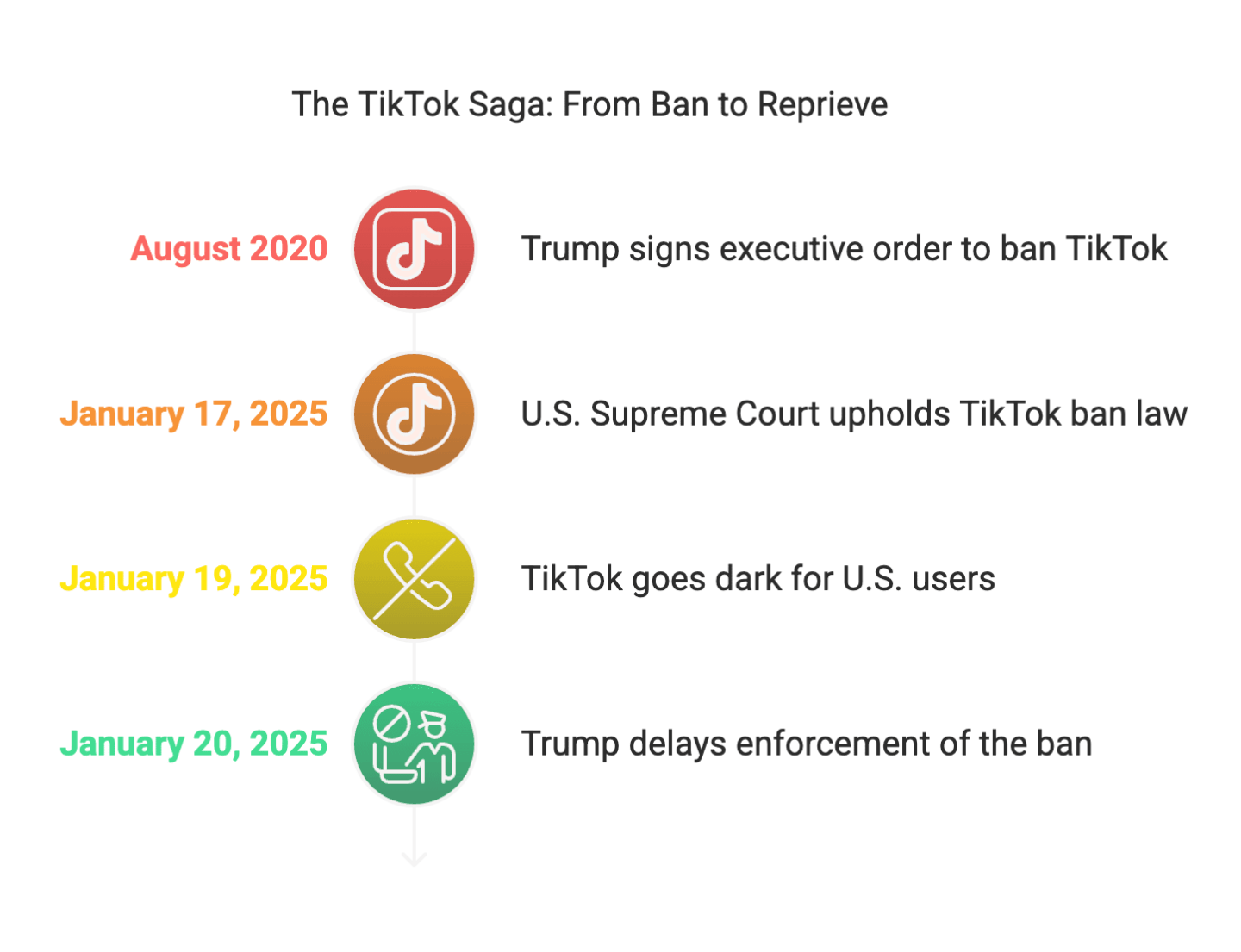
Emotional Farewells: When TikTok’s shutdown became a reality (however brief), top creators reacted with shock, sadness, and creativity. Addison Rae, one of TikTok’s biggest stars, posted a eulogy-like farewell note on the app as the ban loomed, calling TikTok a “transformative arc in the story of my life” and expressing “endless gratitude.” Many other influencers shared similar heartfelt goodbye messages, unsure if they’d ever see their TikTok fans again according to The Tab.
Last-Day Content Blitz: Some creators coped by dumping content in a last hurrah. Notorious influencer Tana Mongeau, for example, hurriedly published dozens of never-posted TikTok drafts in the hours before the ban hit. She treated fans to a random mashup of videos – from old dance clips to party vlogs – essentially emptying her drafts folder as a final gift. In between the chaos, Tana got candid about how TikTok had changed her career, but assured followers she’d be “moving back to…YouTube” once TikTok went down. Planning a return to her YouTube roots was a common theme, as savvy influencers immediately looked to backup platforms (more on that below).
Nostalgia and Humor: Other TikTokers took a nostalgic or tongue-in-cheek approach. Charli D’Amelio, the platform’s most-followed teen dancer, spent TikTok’s supposed final hours re-posting a flurry of her old dance videos – a full-circle trip down memory lane for her fans. It left some viewers puzzled (one commented, “Charli are you ok? Just posting old videos”, but others appreciated the nod to simpler times (“finishing how we started,” one fan wrote). Charli even jumped on a trending hashtag “since we’re all gonna die” – where creators humorously confessed secrets before the app’s end. In that trend, she jokingly admitted a long-running inside joke: a video of her apparently vaping was not actually an “anxiety pen,” debunking a rumor as a lighthearted farewell confession.
Meanwhile, some kept their humor despite the panic. One beauty creator (the flamboyant James Charles, hiding under a bedsheet) posted a satirical “SOS” video on a new account, pretending he’d found a “loophole” to still post while the rest of America was locked out. “Hello, rest of the world, it’s James… I have to make this quick before they get me,” he deadpanned, lampooning the absurdity of the situation. It was a comedic silver lining on an otherwise heartbreaking night.
Contingency Communications: Across the board, influencers large and small were making contingency plans on the fly. Many took to their other social media – Instagram, YouTube, Twitter – to tell fans where to find them if TikTok vanished. TikTok stars with crossover presence (like those who also vlog on YouTube or have big Instagram followings) reminded followers to check those channels. Some creators set up link pages or newsletters to maintain contact. The overall sentiment: “We don’t know if we’ll be back, so here’s where else you can follow me.” This crisis-instilled mindset of “always have a backup” would shape influencers’ strategies going forward.
With TikTok’s fate uncertain, influencers wasted no time in migrating to alternative platforms to keep their content alive. The natural refuges were Instagram Reels and YouTube Shorts – both of which offer similar short-form video formats. These platforms immediately saw an uptick in attention from TikTok “refugees.” After the Jan 19 scare, many creators began actively growing their audiences on YouTube and Instagram, not wanting to rely solely on TikTok anymore. In fact, this pattern had precedent: when TikTok was suddenly banned in India in 2020, Indian influencers who quickly pivoted to Reels and Shorts were able to keep their communities intact and even thrive on those platforms. U.S. TikTokers took note, rushing to make sure their Instagram and YouTube accounts were up-to-date and full of content.
Beyond the big-name social networks, a few new players and smaller apps seized the moment. One of the most talked-about alternatives was Triller, a U.S.-owned short-form video app that has long positioned itself as a TikTok competitor. In the weeks surrounding the ban drama, Triller aggressively courted dislocated TikTok creators. The company rolled out a tool called “SaveMyTikToks” that let users easily download all their TikTok content and import it to Triller. “Creators are the foundation of Triller and we are dedicated to protecting their livelihoods,” Triller’s CEO (himself a former TikTok exec) said, pitching Triller as a safe new home for TikTok stars. The strategy saw some success: Triller jumped over 100 spots on app download charts as millions of U.S. users reportedly looked for a new platform ahead of the ban.
Other apps also aimed to capitalize on TikTok’s troubles. ByteDance’s own sister apps like CapCut (a video editor) and Lemon8 (a lifestyle content app) had been gaining users – though notably, those were also pulled from U.S. app stores during the ban saga. There was even buzz about a mysterious Chinese short-video app called “Rednote” suddenly topping U.S. app store charts with hundreds of millions of users (highlighting how eager American users were to find any workaround). And let’s not forget Snapchat’s Spotlight feature and other niche video platforms that saw renewed interest from creators hedging their bets.
In the end, Instagram and YouTube remain the primary fallback for most TikTokers – leveraging their existing follower bases there. But this episode opened many creators’ eyes to the broader social media ecosystem. Influencers are learning to never again put all their eggs in one basket when it comes to platforms. “Now I’m posting everything on Reels and Shorts too, just in case” became a common refrain. Even as TikTok came back online, smart creators continue to cross-post content across multiple apps, ensuring they won’t lose their entire audience overnight due to a single app’s shutdown.
The on-and-off ban didn’t just rattle creators emotionally – it hit them in the wallet. For many influencers, TikTok isn’t just for fun; it’s their full-time job and income source. “All of my income comes from TikTok,” said one college TikToker who feared a permanent ban would force her to “get another job” to make ends meet according to Florida Political Review. She’s not alone. Thousands of creators earn money on TikTok through a mix of brand partnerships, sponsorships, and the app’s Creator Fund payouts. If that platform disappears, those revenue streams evaporate instantly.
During the brief TikTok blackout, this theoretical threat became very real. Top TikTok stars were estimated to be losing hundreds of thousands of dollars (annualized) for as long as the app stayed down according to Teachable. Think about it: sponsored content deals lined up for late January suddenly had nowhere to be published. Brands were left scrambling to relocate those campaigns to Instagram or cancel them. Influencers who normally earn money daily from TikTok live-stream gifts or ad revenue saw a $0 day, which in some cases meant tens of thousands of dollars lost. Even a 12-hour outage had a six-figure impact on the highest earners, according to Fortune’s calculations..
For brands and advertisers, TikTok’s uncertainty was equally chaotic. Many companies had poured significant budget into TikTok marketing – and now faced the prospect of losing access to 170 million American consumers on that app according to This Crowd. During the ban, some brands hit “pause” on influencer campaigns. Marketing platforms advised clients to shift budgets to other platforms in the interim, re-allocating spend to Instagram Reels or YouTube Shorts where possible according to Stack Influence Contracts with influencers were hastily amended with contingency clauses (for example, “if TikTok is banned, influencer will post the content on Instagram instead.”) Essentially, everyone had to prepare backup plans on the fly – an uncomfortable exercise in risk management for social media marketing.
Smaller creators – especially “TikTok-only” micro-influencers – faced the harshest reality. These folks often don’t have diversified income like the big stars do. As experts noted, if TikTok vanished, those with solely a TikTok following would be forced to “rebuild on other platforms where it may not be as lucrative or easy to grow”. Unlike TikTok’s magic algorithm, platforms like Instagram can be slower to gain traction, making it hard for an influencer to prove their value to brands immediately after migrating. Thus, the ban scare made clear that relying on one platform puts one’s livelihood at risk. It was a wake-up call: influencers (and the brands who sponsor them) need to diversify not just for audience reach, but for financial stability.
TikTok’s Response: Throughout this saga, TikTok’s official stance was a mix of compliance and cautious optimism. When the app went dark, TikTok issued a statement to users acknowledging the ban and expressing regret. “We are fortunate that President Trump has indicated that he will work with us on a solution to reinstate TikTok once he takes office. Please stay tuned,” the in-app notification read, trying to keep users hopeful. After Trump’s executive order, TikTok moved quickly to thank him and reassure everyone that service was being restored. “As a result of President Trump’s efforts, TikTok is back in the U.S.,” the company proclaimed to users on Jan 20. TikTok also publicly thanked its service providers (like cloud hosts and internet backbones) for not completely cutting ties during the ban, now that Trump provided “clarity and assurance” that they wouldn’t be penalized for enabling TikTok’s U.S. operations. In short, TikTok walked a fine line – complying with the law by shutting down when ordered, but clearly fighting for a reprieve and celebrating the chance to return.
Trump and U.S. Officials: Donald Trump’s own statements during this episode were striking. At a rally on January 19, he stunned observers by saying, “We have to save .” He promised to issue an order on his first day back in office to delay the ban and seek a solution. This was a complete 180 from his rhetoric in 2020, when he wanted TikTok gone. The reasoning in 2025 was partly political – Trump acknowledged TikTok’s huge American user base and even credited the app for helping energize young voters during his campaign. Once in office, he followed through with the executive order delaying the ban by 75 days. Trump suggested exploring a partnership where a U.S. company would own at least 50% of TikTok, framing it as a way to protect national security while keeping the app running. This public stance – effectively “I banned it before, but now I’m bringing it back” – drew a mixed response. Many TikTok users (and influencers) were pleasantly surprised and grateful for the lifeline. TikTok’s own statement lavished praise on Trump for his “efforts” to save the app.
However, some U.S. lawmakers were not happy about TikTok’s last-minute escape. Republican Senators Tom Cotton and Pete Ricketts, both vocal China hawks, blasted the reprieve. In a joint statement, they argued that “now that the law has taken effect, there is no legal basis” for extending the deadline, and insisted TikTok should only come back if ByteDance sells it off completely to sever ties with “Communist China.” They essentially accused the new administration of bending the law. This highlights how politically charged the TikTok issue is – even within the same party, there was disagreement on whether saving TikTok (in exchange for a potential U.S. ownership deal) was the right move.
Across the Pacific, Chinese officials reacted in their typically understated way. A spokeswoman for China’s foreign ministry noted that TikTok has long been “deeply loved by American users” and said, “We hope that the U.S. can… decide independently” on allowing such companies to operate. In diplomatic speak, that was China welcoming Trump’s delay of the ban, since Beijing has opposed what it sees as unfair targeting of a Chinese tech company. ByteDance (TikTok’s parent) didn’t issue any fiery public statements during all this, likely to avoid rocking the boat as negotiations loomed.
Influencer Voices: Major TikTok influencers also spoke up in the media about the ban and its pause. Many shared relief on social media when TikTok service returned. For instance, Tana Mongeau – after initially mourning the app – gleefully posted that it was “so it girl of TikTok to come back so quickly.” She quipped that TikTok “left just so everyone’s like ‘no, don’t go,’ coming right back, folding like a lawn chair,” comparing the app to a dramatic diva making a grand return. This humorous take went viral and captured what a lot of creators felt: that TikTok’s sudden return was unexpected and totally on-brand for the chaotic world of social media. Other stars like Addison Rae simply breathed a public sigh of relief and quickly resumed posting content, thanking fans for sticking with them. On the business side, some influencer marketing firms commented that while they welcomed the reprieve, they’d continue preparing backup plans given the uncertainty. It’s clear that while the crisis was averted for now, everyone from TikTok’s CEO to teenage TikTokers is treating the situation as a serious warning.
The TikTok ban saga holds valuable lessons for content creators. If you’re an influencer (or aspiring to be one), now is the time to diversify, safeguard, and adapt. Here are some actionable insights to future-proof your career in the volatile social media landscape:

The TikTok ban drama of January 2025 was a wake-up call for influencers everywhere. It was a dramatic reminder that the digital platforms we take for granted can be upended overnight by forces beyond our control – be it government intervention, corporate decisions, or technical failures. For TikTok’s stars, Trump’s last-minute reversal was an unexpected lifeline that allowed them to log back in and carry on (for now). But wise creators aren’t simply breathing a sigh of relief and continuing as usual; they’re evolving their strategies to ensure they’re never in that precarious position again. The incident has sparked a new era of savvy influencer behavior: more cross-platform content, deeper engagement with audiences off-platform, and business models that don’t crumble if one app disappears.
For the general audience and fans, this episode also highlighted just how intertwined these apps have become with everyday life and livelihoods. The “TikTok Ban Drama” will likely be studied in marketing and tech circles for years as a case of political-tech clash. But for creators on the frontlines, the takeaway is much more personal and pragmatic: always be ready to pivot, because you never know when your favorite platform might face an existential threat. Today it’s TikTok; tomorrow, who knows? By learning from this experience, influencers can continue doing what they love – entertaining and inspiring millions – no matter what twists and turns come in the social media world’s future.
TikTok Shop has quickly become a hotspot in social commerce, raising a pressing question for e-commerce brands: Should you double down on TikTok’s momentum, or hedge your bets elsewhere? In this blog, we’ll dissect TikTok Shop’s rapid growth (55 million buyers in 2023!) and explore how brands can ride that wave with micro-influencers. But we’ll also weigh the other side of the coin – the looming regulatory uncertainties around TikTok – and make a data-driven case for why pivoting to Instagram might be a smarter long-term play. Let’s dive in with an analytical yet casual look at what 2026 might hold.
TikTok’s foray into e-commerce has been nothing short of explosive. In 2023, an estimated 37% of TikTok users in the U.S. – about 55.5 million people – made a purchase through the app. This figure is staggering for a relatively new shopping platform, and it’s projected to grow another 67% by 2026 according to Fit Small Business. In other words, TikTok Shop’s customer base isn’t slowing down; it’s accelerating. Globally, TikTok’s scale is immense as well – roughly 58% of TikTok users shop directly on the platform, which translates to over 1 billion people worldwide engaging in TikTok-driven shopping content. Clearly, TikTok Shop has tapped into something big, blending entertainment with impulse-friendly buying opportunities.
TikTok Shop’s early success has been particularly striking in Southeast Asia, where it’s become a dominant shopping channel. Countries like Thailand and Vietnam have each generated well over $2 billion in TikTok Shop gross merchandise value (GMV), far outpacing Western markets. The United States, which only launched TikTok Shop in late 2023, already saw about $853 million in GMV by the end of that year (around 7.7% of TikTok Shop’s global sales according to Influencer Marketing Hub.) These figures highlight how rapidly TikTok Shop expanded from Asia to the West. In fact, in the second quarter of 2023 TikTok Shop was the #2 social platform for Gen Z purchases (behind Instagram’s top spot) – not bad for the new kid on the block. With such momentum, it’s no wonder many brands are eyeing TikTok Shop as the next big e-commerce frontier.
It’s not just the user counts that impress; user behavior on TikTok is a marketer’s dream. TikTok’s content-first approach drives a ton of impulse buying. Over 55% of TikTok users made an impulse purchase on the platform in 2022, making TikTok the top social app for impulse buys (for comparison, Instagram was 46%). TikTok’s algorithmic feed means products find users (not just the other way around), which blurs the line between discovery and purchasing. It’s common for users to go from watching a funny video to buying the featured product within seconds. TikTok itself reports that 71% of users have shopped for something they stumbled upon in their feed – a testament to how seamlessly TikTok turns entertainment into shopping. All this paints a rosy picture: TikTok Shop is growing fast, driving sales, and changing shopping habits. So, why not double down? The answer: there are some storm clouds on the horizon.
Before you pour your entire marketing budget into TikTok, remember that the platform’s future – at least in some markets – isn’t guaranteed. Regulatory uncertainty is the elephant in the room. In the U.S., for instance, TikTok has been under intense scrutiny over data security and ownership. In early 2023, the Biden administration even pushed an executive order that set the stage for a potential ban of TikTok in the U.S. by 2026 if the app’s Chinese ownership isn’t resolved. While nothing is final as of this writing, the mere possibility of a TikTok ban has many brands and creators on edge. We’ve seen some governments already restrict TikTok on official devices, and public opinion is split – roughly one third of Americans favor forcing a change in TikTok’s ownership as a security measure.
For marketers, this uncertainty means TikTok could conceivably vanish or lose millions of users overnight due to a ban or restrictions. That’s a scary thought if you’ve built a huge sales channel or follower base on the platform. It’s the classic “don’t put all your eggs in one basket” scenario. TikTok’s meteoric rise has been amazing, but it comes with geopolitical baggage that Instagram (as part of U.S.-based Meta) simply doesn’t have. Platform stability matters – you don’t want your brand’s shoppable content to go dark because of forces outside your control. So while TikTok Shop is hot right now, savvy brands are hedging their bets and formulating a Plan B (or even Plan A) on more stable ground. That’s where Instagram often comes into play, as we’ll discuss shortly.
Bottom line: TikTok’s growth is real, but so is the regulatory risk. The good news is that you can still capitalize on TikTok Shop’s current momentum and prepare for a pivot if needed. How? One smart approach is leveraging micro-influencers to drive TikTok sales without overcommitting resources.
Influencers have been central to TikTok’s shopping explosion – in fact, a whopping 78% of TikTok shoppers say they discover products through influencers. But you don’t need a mega-celebrity to succeed on TikTok Shop. Recently, micro-influencers (creators with smaller, niche followings) have proven to be a golden ticket for brands looking to balance impact with cost. There are good reasons to go “micro.” First, big TikTok stars charge big bucks – creators with over 1 million followers earn an average of $1,200 per post according to AMZ Scout, which can burn through a marketing budget fast. Micro-influencers, on the other hand, are far more affordable and often willing to collaborate in exchange for free products or modest fees. This lower cost doesn’t mean lower returns; quite the opposite. Micro-influencers tend to have highly engaged communities that trust them, leading to higher conversion rates per viewer. They speak to specific interests, which means their product recommendations feel more authentic than a broad-brush celebrity endorsement.
Analysts note that in 2023, working with micro-influencers is “as relevant as ever” for social commerce. Because these creators share niche interests and values with their followers, they can drive serious sales even on a tight budget. In other words, a micro-influencer’s post about your product might not get millions of views, but the viewers it does get are primed to buy. This strategy is perfect for TikTok Shop’s environment of impulse buys and algorithm-driven discovery. Brands can team up with a squad of micro-influencers to flood TikTok with genuine product testimonials, hauls, or how-tos, capturing TikTok’s frenetic energy in a cost-effective way.
Another advantage of leaning on micro-influencers amidst uncertainty: agility. If TikTok were to face a ban or if performance dips, you haven’t bet the farm on one huge campaign or a single spokesperson. Micro-influencer collaborations can be scaled up or down quickly. Many of these influencers also have presences on other platforms, so you can potentially redirect the campaign to Instagram or YouTube if needed. Essentially, it’s a flexible, lower-risk way to ride TikTok Shop’s wave now, while keeping your options open. E-commerce brands and marketers should consider building a micro-influencer network as a strategic bridge – it lets you capitalize on TikTok’s 2026 momentum without being overexposed to its uncertainties. If you are interested in micro influencer marketing, consider utilizing an influencer marketing platform such as Stack Influence; a community of over 11 million influencers built to automate product seeding campaigns and scale up your brand awareness, UGC, and online growth.
TikTok may be the cool new kid, but Instagram is the established powerhouse that isn’t going anywhere. If you’re feeling wary about TikTok’s future, Instagram offers a robust (and safer) avenue for social commerce. Let’s start with sheer scale and stability. Instagram boasts 2 billion+ monthly active users globally, about double TikTok’s user base. And unlike TikTok, Instagram isn’t under threat of government bans – it’s part of Meta’s ecosystem, trusted by brands worldwide. In fact, over 90% of major brands have a presence on Facebook, with Instagram following closely behind. That ubiquity speaks to a platform that businesses feel confident investing in for the long haul.
Data backs up Instagram’s e-commerce prowess. As of 2022, Instagram was slightly ahead of TikTok as a shopping destination for young adults in the U.S., with about 27% of 18–34 year-old digital buyers making purchases via Instagram, compared to 19% via TikTok. (Facebook still led overall, especially among older shoppers, as the chart above shows according to Tidio.) Fast-forward to today, and Instagram remains a force in social shopping across age groups. Roughly 44% of Instagram’s active users engage in shopping on the platform weekly – a testament to how many people incorporate Instagram into their regular buying routine. Scrolling Instagram isn’t just about liking photos; nearly half of users are actively browsing or buying products each week. And they’re not just window-shopping: one study found that businesses see a 42% increase in sales on average by leveraging Instagram’s shopping features according to Godata Feed. Features like shoppable posts, product tags, and in-app checkout make it easy for followers to convert into customers. It helps that Instagram is inherently visual; a well-styled product post or catchy Reel can quickly catch someone’s eye and lead to a purchase.
Crucially, Instagram provides platform stability and reach that TikTok can’t guarantee right now. For one, Instagram’s audience skews a bit broader in age. While TikTok is heavily Gen Z, Instagram commands both Gen Z and Millennials (and even plenty of Gen X). In fact, Instagram is preferred by users 16-34 and even outpaces TikTok in popularity among Gen Z and Millennial consumers as of recent data. This means if your brand targets a wider age range or slightly older demographic with spending power, Instagram might deliver better results. Moreover, Instagram’s integration with Facebook’s advertising and commerce infrastructure gives it an edge. The ad targeting tools, analytics, and cross-posting capabilities are mature and powerful. There’s also less volatility – you’re not likely to wake up to news of Instagram being banned or facing the kind of disruption that TikTok fears.
Even with some recent changes (Instagram removed the dedicated Shop tab from its home screen in 2023 to refocus on content discovery, the platform’s shopping ecosystem remains strong according to GrowMojo. Users can still find and buy products on IG easily through feed posts, Reels, Stories, and the Explore page. In fact, Instagram reports that 130 million users tap on shoppable posts each month, and 70% of shoppers look to Instagram for their next purchase inspiration. Those are hard numbers to ignore. Combine that with a lack of regulatory drama, and Instagram starts to look like the smart bet for brands building a sustainable social commerce strategy.
If you’re convinced it’s time to double down on Instagram (or at least not put all bets on TikTok), how do you make the transition smoothly? Here are some actionable steps for e-commerce brands and marketers to shift gears and leverage Instagram’s ecosystem effectively:
If you haven’t already, set up an Instagram Business account and enable Instagram Shopping. Connect your product catalog via Facebook Commerce Manager so you can tag products in your posts and Stories. This will create a storefront for your brand on IG where users can browse your collections. Action: Go to your Instagram settings and follow the steps to “Set Up Instagram Shopping”, linking your ecommerce catalog. Instagram will review and approve your shop, unlocking product tagging features.
Don’t let all that great TikTok content go to waste. Instagram Reels thrive on the same short-form video formula that makes TikTok videos engaging. Take your best TikTok product demos, unboxings, or influencer collaborations and repost or adapt them as Reels on Instagram. This not only saves content creation time, but also helps you maintain continuity with the audience vibe. Tip: Remove any TikTok watermarks (Instagram’s algorithm may de-prioritize watermarked content) and consider tweaking the caption or music to fit Instagram’s trends. By doing this, you ride on TikTok’s creativity while tapping into Instagram’s reach.
Make full use of Instagram’s shopping features. For instance, tag products directly in your feed posts and Stories, so viewers can tap to see details and prices. You can also use Stickers in Stories for product links. Consider creating Instagram Guides or carousel posts that showcase product collections or how-tos. These native tools make the shopping experience seamless. Action: Each time you post about a product, tag it. If you post a Reel of, say, a new fashion item, tag the item in the Reel (Instagram now allows product tagging in Reels too). This reduces friction – interested viewers can go straight to the product page from the content.
Many TikTok micro-influencers also have Instagram followings. Reach out to the same creators (or new Instagram-focused ones) to create content for you on Instagram. Influencer content on IG can be in the form of feed posts, Stories takeovers, Reels, or IG Live sessions. Micro-influencers on Instagram often have excellent engagement rates as well, and you can use the Branded Content tools on IG to sponsor their posts, which also allows you to run them as ads. Strategy: Identify which TikTok influencers drove results for you, and check if they’re active on IG. If so, propose a campaign where they can post on both platforms. If TikTok goes dark, at least you’ll still reach their audience on Instagram.
By following these steps, brands can create a smoother transition from TikTok Shop to Instagram Shopping without losing the essence of what made them successful on TikTok. The goal is to diversify your social commerce strategy – enjoy TikTok’s ride, but build up Instagram (and perhaps Facebook or others) as a reliable workhorse for sales. This way, you’re covered no matter how the social media landscape shifts.
So, should e-commerce brands double down on TikTok Shop’s 2026 momentum? The answer, in true analytical fashion, is a bit nuanced. TikTok Shop is undeniably a phenomenon – it’s growing fast, shaping consumer behavior, and can drive serious revenue, especially if you leverage it with savvy tactics like micro-influencer partnerships. Ignoring TikTok in 2026 would mean missing out on a vibrant market of engaged shoppers (those 55 million and counting in the U.S., and many more globally). Brands that have jumped in are reaping rewards from TikTok’s unique mix of entertainment and commerce.
In plain terms, don’t quit TikTok, but don’t trust it with your life. Double down on the strategy of social selling, not on a single platform. Use TikTok for what it’s great at: authentic short-form videos, trend-driven campaigns, and reaching Gen Z in their element. At the same time, bolster your Instagram shop, nurture your community there, and leverage its rich toolkit for conversions. This dual approach lets you capture immediate opportunities on TikTok and build a resilient pipeline through Instagram. If TikTok remains strong and avoids bans, you’ll have two juggernaut channels working for you. If TikTok falters, you’ll have your Instagram presence ready to catch the fall.
For e-commerce marketers, the key takeaway is to stay flexible and data-informed. Social commerce in 2026 will continue to evolve, with TikTok, Instagram, and others each playing a role. By understanding TikTok Shop’s momentum and constraints, and by proactively growing your brand on Instagram, you position your business to thrive no matter which way the social winds blow. In the end, it’s not about favoring one platform over another blindly – it’s about making smart bets. And in the current climate, the smart bet is to enjoy TikTok’s ride but keep your seatbelt fastened and a map (to Instagram) at the ready. Happy selling!
Amazon has officially shut down Inspire, the TikTok-style shopping feed it introduced in late 2022. Inspire was built into Amazon’s mobile app as a continuous scroll of product photos and videos posted by influencers and brands, aiming to blend social media entertainment with instant shopping. Less than two years after launch, Amazon confirmed in February 2025 that Inspire is “no longer available” in the shopping app. The feature’s quiet demise raises questions about why Amazon’s foray into influencer-driven social commerce didn’t pan out, how its shutdown impacts influencers and brands, and what this means for the future of social commerce overall.
Amazon’s Inspire interface on the mobile app. Users first selected interests to personalize their feed (left). The feed (center) displayed short-form videos and photos of products from creators, similar to TikTok. Tapping on a product brought up a pop-up with product details and an “Add to cart” button, leading seamlessly to the standard Amazon product page (right). The goal was to let users discover and buy products in one scroll-friendly experience.

Lack of Traction with Users: From the start, Inspire struggled to catch on with Amazon’s shoppers. It looked like an appealing mix of affiliate marketing and short-form video, but it “struggled to catch on as a shoppable hub” in practice according to Tubefilter. Amazon’s core customers are used to searching for specific items on the app, not casually browsing video feeds, and early analyses predicted this challenge. As one industry analyst noted when Inspire launched, Amazon risked coming off as “too contrived or commercial” by trying to mimic TikTok’s vibe inside a shopping app. In other words, Inspire was “Amazon dressing up as TikTok” – a hybrid that never quite captured the magic of either platform. This likely led to tepid user engagement (our “compressed funnel” of discovery-to-purchase wasn’t compelling enough for most shoppers).
Difficulty Attracting Creators: A social feed lives or dies by fresh, engaging content – something Amazon had trouble securing for Inspire. Reports emerged that Amazon was offering influencers well below market rates for content: around $25 per shoppable video (featuring 2+ products) at a time when influencers on other platforms averaged about $212 per video. This bargain approach made it challenging to entice creators to consistently populate Inspire with quality posts. An Amazon spokesperson even acknowledged they were seeking a “steady stream of fresh videos” in mid-2023 according to PYMNTS. Without enough creator buy-in, the feed couldn’t deliver the endless entertainment that keeps users scrolling. Other Amazon social commerce experiments faced similar issues – for example, some influencers gave up on Amazon Live (the company’s live-stream shopping platform) after struggling to build an audience on the Amazon app.
Shifting Strategic Priorities: Amazon has been quick to pivot when a project isn’t yielding returns. “We regularly evaluate various features... and as part of that, Inspire is no longer available,” an Amazon spokesperson explained. In typical Amazon fashion, if a new initiative doesn’t reach a certain scale or ROI threshold, it gets cut according to Localogy. In Inspire’s case, Amazon appears to be reallocating focus to areas customers value more – notably, artificial intelligence-driven shopping tools. The in-app message announcing Inspire’s shutdown actually pointed users to try Amazon’s new AI assistant “Rufus” and other AI-powered discovery features instead. This suggests Amazon sees more promise in personalized search and chatbot recommendations than in a bespoke social feed. One retail consultant noted that Inspire likely failed to convert Amazon users into the kind of impulse shoppers that fuel TikTok’s success according to Modern Retail. Amazon’s CEO Andy Jassy has also signaled a “laser-focus” on AI across the business, with massive investments going into AI initiatives in 2024-2025. Simply put, Amazon decided to bet on algorithms over influencers for driving product discovery.
Not Becoming a Social Network: Perhaps the clearest reason is that Amazon realized it isn’t a social media platform – and doesn’t need to be. Shoppers weren’t visiting the Amazon app for entertainment, and trying to graft a TikTok-like experience onto Amazon’s utilitarian shopping interface proved awkward. “Shoppers just don’t turn to Amazon for entertaining content”, observed Sky Canaves, retail analyst at eMarketer. Amazon itself acknowledged that customers prefer to get product inspiration on established social networks and that it’s better to meet them there. Instead of trying to compete head-on with TikTok or Instagram inside its own app, Amazon has opted to “partner with the major ones”. In fact, in August 2023 Amazon struck a deal with TikTok to let users buy Amazon products directly within TikTok – marrying TikTok’s engagement with Amazon’s fulfillment without forcing users to switch apps. All told, Inspire “always felt like a pale imitation of TikTok”, and Amazon cut its losses to refocus on what it does best (online retail and AI) rather than trying to cultivate a social media community from scratch.
Amazon Inspire’s shutdown is a reality check for the role of influencers within Amazon’s ecosystem. The feature was explicitly designed to give influencers and content creators a new channel to reach Amazon’s shoppers and earn commissions according to Retail Touch Point. Its demise means influencers will no longer have a built-in Amazon feed to showcase shoppable videos, but in practice the impact may be limited. Here’s why:
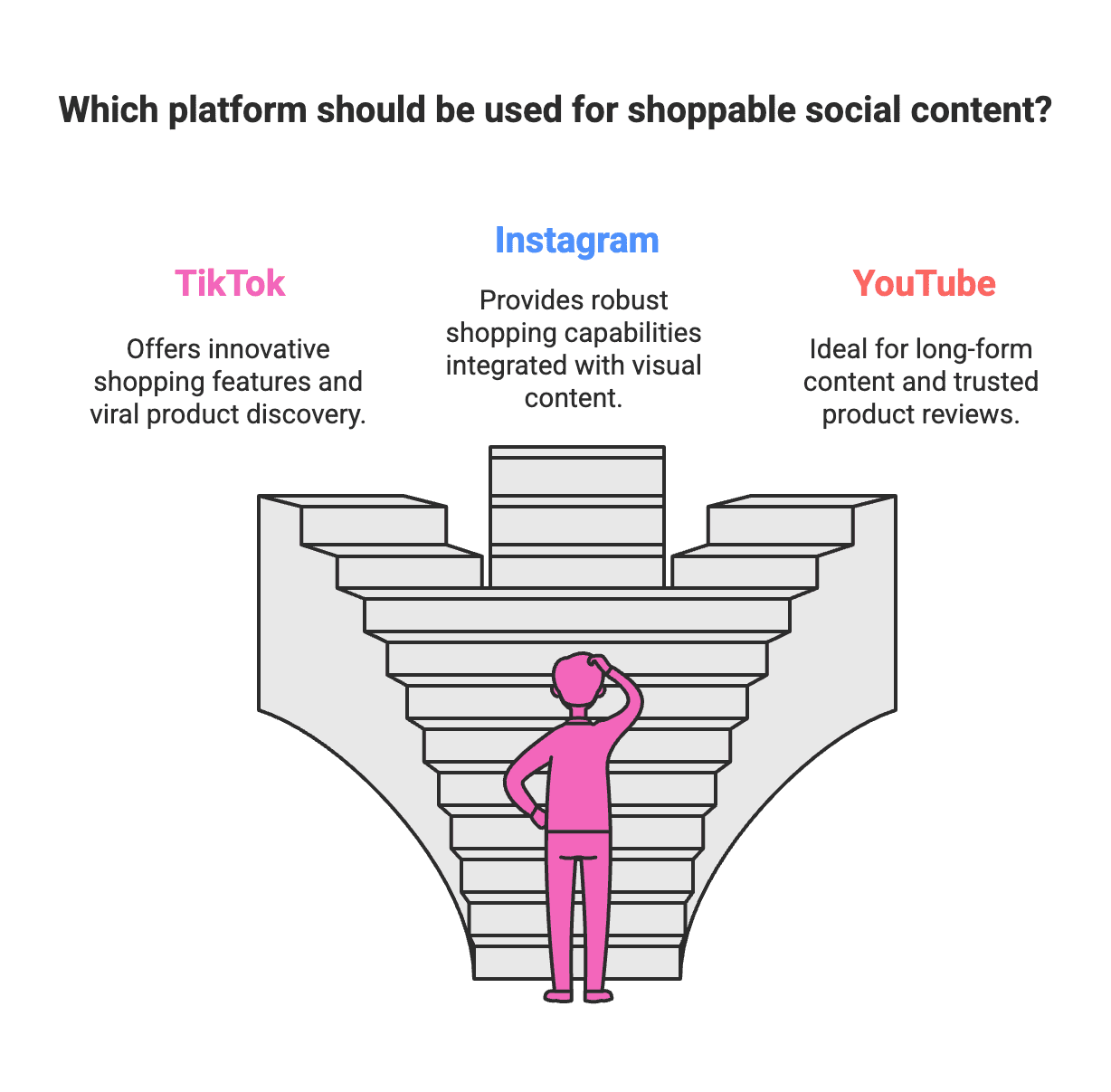
The end of Inspire doesn’t mean the end of shoppable social content – far from it. Influencers and brands have a wealth of other platforms and tools to connect with shoppers and drive e-commerce. Here are some key alternatives where the influencer-driven shopping model is thriving:
Amazon’s Inspire shutdown comes at an inflection point for social commerce. On one hand, the concept of shopping directly through social content is booming globally; on the other hand, companies in the U.S. are recalibrating how to execute it effectively. So, what does the future hold?
Continued Growth (Global and Gen Z Driven): All signs point to social commerce growing rapidly worldwide. A report by Accenture projected that global social commerce sales would reach $1.2 trillion by 2025, growing three times faster than traditional e-commerce from 2021 levels. This explosive growth is largely driven by younger consumers (Gen Z and Millennials) who are expected to account for 62% of that spending. These digital-native shoppers are very comfortable discovering and buying products through social media. We’re already seeing this in Asia where social commerce is deeply embedded – for instance, an astonishing 84% of social media users in China have bought something through social platforms, and conversion rates via features like live-stream shopping can be 10x higher than on standard e-commerce sites. The U.S. is catching up: social commerce sales in the U.S. were about $64 billion in 2023 and are expected to roughly hit $80 billion by 2025. So the pie is growing; the question is how it will be divided among platforms and what approach will work best in different markets.
Amazon’s Role – Commerce Backbone vs. Content Player: Amazon shutting Inspire signals that it sees itself more as a commerce backbone than a social content player. Don’t expect Amazon to try launching another social feed in the near term (unless a major competitor’s absence, like a TikTok ban, creates a vacuum – even then, experts think Amazon would try a variation only if conditions change. Instead, Amazon will double down on improving the shopping experience through technology (AI personalization, search, virtual try-on, etc.) and through partnerships. Amazon wants to be the place where all these social discoveries convert into purchases. By integrating with TikTok, Snapchat, and others, Amazon can capture social commerce spend without hosting the social experiences itself. We may also see Amazon enhance its influencer tools outside of Inspire – for example, making influencer storefronts more prominent or expanding Amazon Live – but in ways that complement external social activity, not replace it. The company’s swift termination of Inspire also sends a message: Amazon won’t hesitate to kill features that don’t perform, which could make influencers and brands cautious about relying too heavily on any one platform’s experimental features in the future.
Influencers Remain Key (But Content Must Feel Authentic): The future of social commerce still very much revolves around influencers and creators who can build trust and engage audiences. What’s changing is the understanding of how to deploy influencer-driven commerce effectively. The Inspire episode shows that simply transplanting influencer content into a shopping app doesn’t magically create a community. Successful social commerce will likely happen in environments where users are already primed for content consumption (e.g. scrolling a feed, watching videos) and then given easy paths to purchase. Influencers will continue to be the bridge between brands and consumers, but they will choose platforms that allow them creative freedom and where their audiences hang out. Micro-influencers are also rising in importance – brands see higher conversion rates when partnering with niche creators whose followers trust their recommendations. This trend means social commerce could become more decentralized, with countless small-scale influencers each driving modest sales that add up, rather than a few mega-celebrities pushing products (which can come off as inauthentic). Additionally, content formats like short videos (TikTok/Reels) and ephemeral content (Stories) are likely to dominate social commerce because they grab attention and can seamlessly incorporate product mentions without feeling like an ad.
Seamless Integration and New Technologies: We’ll likely see a continued blurring of lines between “social” and “shopping.” The most successful efforts will make buying as easy as a double-tap. Social platforms are investing in frictionless checkout, so users don’t have to leave the app at all. As of now, some platforms still link out to external sites (which can cause drop-off), but the trend is toward native checkout (Facebook/Instagram have it for some shops, TikTok is introducing it). Payment options, one-click buy, and even things like shoppable comment sections could evolve. AI and personalization will play a big role too: algorithms can now predict and surface products a user might love, based on their behavior, making the discovery-to-purchase journey more intuitive. Amazon’s Rufus chatbot is one example of bringing a personal shopping assistant into the mix. On social media, AI might help creators produce more engaging content (think AI-generated demo videos or virtual influencers) and help match products with interested consumers. Augmented reality (AR) is another technology to watch – Snapchat already lets users virtually try on products and then buy, and Instagram and TikTok have AR filters for testing makeup or seeing how furniture looks in your room. AR can make social commerce more experiential, bridging the gap between online browsing and in-person trying on.
Amazon’s decision to shut down Inspire highlights a key lesson in the evolving landscape of social commerce—just because a platform has massive retail power doesn’t mean it can seamlessly transform into a social media experience. While Inspire struggled to gain traction, the demand for influencer-driven shopping is stronger than ever. Consumers still turn to TikTok, Instagram, and YouTube for product inspiration, and Amazon remains a dominant force in e-commerce by enabling those platforms to funnel sales directly to its marketplace.
For influencers and brands, this shift reinforces the importance of meeting audiences where they naturally engage. Instead of relying on Amazon to provide a built-in social shopping experience, creators will continue leveraging external platforms, using Amazon as a trusted purchase destination rather than a discovery hub. Brands, in turn, will focus more on influencer partnerships outside of Amazon while optimizing their presence on the platform through storefronts, affiliate links, and strategic ad placements.
Ultimately, Inspire’s failure doesn’t signal the decline of social commerce—it underscores the need for a more integrated approach. The future of influencer-driven shopping will thrive where content and commerce feel organic, frictionless, and engaging. Amazon may have pivoted away from a direct social feed, but its investment in AI and external partnerships suggests it’s still betting big on influencer-driven retail—just in a way that lets social platforms do what they do best.
In digital marketing, Key Opinion Leaders (KOLs) and influencers are pivotal figures who shape audience opinions and drive consumer behavior. While both play influential roles, they are distinct in their operations, motivations, and impact. This examination will differentiate KOLs from typical social media influencers, focusing on their unique characteristics and corresponding roles in brand strategies.
Key Opinion Leaders (KOLs) are noted for their expertise and authority in specific domains. Their influence is rooted in their professional achievements and deep knowledge, making them respected figures within specialized industries. Unlike influencers, KOLs primarily engage with their audience through their professional activities rather than through social media.
Influencers, on the other hand, primarily grow their presence on social media platforms, creating content that resonates with a broad audience. They often focus on lifestyle, fashion, travel, and other more general topics, leveraging their extensive follower bases to partner with brands for promotions.
A post shared by Elon Musk Now (@elonrmuskk)
Key Opinion Leaders (KOLs) are integral to shaping perspectives in specialized areas, bringing a depth of knowledge and authority that's unmatched in their fields. Here's a deeper look at the distinct attributes that set KOLs apart:
A standout trait of a KOL is their deep-rooted expertise in a particular domain. Whether it’s healthcare, technology, finance, or any other industry, these individuals aren’t just well-informed; they're often at the forefront of their field. For example, medical KOLs often contribute to groundbreaking research and publications, influencing clinical practices worldwide. According to a report by PubMed, articles authored by leading experts can notably shift clinical guidelines and practices, underscoring the significant reach of KOLs in the medical community.
KOLs earn their stripes through years of experience and significant contributions to their fields. Their credibility is bolstered by their academic achievements, professional endorsements, and peer recognition. This isn't merely about popularity; it's about proven expertise and respect within a professional community. For instance, economists recognized as KOLs often hold positions at prestigious universities or international economic organizations, lending considerable weight to their opinions on fiscal policies or economic trends.
Unlike typical influencers who might partner with a range of brands across various sectors, KOLs are very selective about their endorsements. They tend to collaborate with brands that align strictly with their field of expertise, ensuring that any association is consistent with their professional image.
Each of these characteristics contributes not only to the individual success of KOLs but also amplifies their ability to influence within their spheres effectively. Their endorsement of a product, technique, or innovation carries a level of authority and trust that few other endorsements can, making them invaluable assets in targeted marketing and educational initiatives within their sectors.
Key opinion leaders (KOLs) have a critical impact across various sectors by providing thought leadership and influencing both industry trends and public opinion. Below are some examples of prominent KOLs and how their expertise and endorsements have shaped their fields:
Source: National Institute of Allergy and Infectious Diseases
In the realm of healthcare, few names have been as pivotal as Dr. Anthony Fauci, the director of the National Institute of Allergy and Infectious Diseases in the U.S. Renowned for his work on HIV/AIDS research and his recent role during the COVID-19 pandemic, Dr. Fauci exemplifies the characteristics of a KOL through his extensive research publications and public health policy leadership. His straightforward communications during the COVID-19 crisis helped guide public understanding and policy.

Source: The New York Times
In technology and entrepreneurship, Elon Musk stands out not only as the CEO of multiple high-impact companies like Tesla and SpaceX but also as a KOL whose opinions reach millions instantly, particularly via platforms like Twitter now X. His tweets have been known to influence stock markets and consumer behavior profoundly, illustrating a direct line between KOL statements and economic shifts. For instance, a single tweet about a cryptocurrency from Musk can lead to immediate, significant market movements, according to ScienceDirect.com demonstrating the tangible impact of KOLs in financial ecosystems.

Source: Forbes
Warren Buffett, often referred to as the "Oracle of Omaha," is a towering figure in the world of finance. As the chairman and CEO of Berkshire Hathaway, his investment choices and strategic insights influence other investors and financial markets globally. His annual letters to shareholders are eagerly anticipated for insights and have been known to move markets, highlighting the influence wielded by KOLs in the financial sector.

Source: The Guardian
Dr. Jane Goodall, a primatologist and anthropologist, has transcended her initial research focus to become a global advocate for environmental conservation. Her work has not only advanced our understanding of chimpanzees but also played a critical role in wildlife conservation efforts worldwide. Through her books, speeches, and the Jane Goodall Institute, she inspires actions toward sustainable ecological practices, demonstrating how KOLs can mobilize public action and change in global environmental policies.
These examples reflect the spectrum of influence that KOLs have across different sectors, affecting everything from stock market fluctuations and public health strategies to environmental policies and tech innovations. Their reach and impact underscore the power of specialized knowledge combined with a willingness to engage publicly on critical issues.
For further reading about the influence of these and other KOLs, you can find more statistics and insights on their respective official websites and trusted news sources.
In today's fast-paced digital world, the role of key opinion leaders (KOLs) in shaping brand strategies has become increasingly significant. These influencers, with their dedicated following and domain expertise, can drastically sway consumer perceptions and behaviors, making them a crucial asset for brands looking to boost their visibility and credibility. Let's delve into how KOLs are revolutionizing brand strategies and the measurable impacts of their involvement.
KOLs bring a unique blend of expertise and personal connection to the table, which can greatly enhance a brand's authenticity. For instance, when a respected figure in the beauty industry endorses a skincare product, their endorsement is seen as a trustworthy and knowledgeable recommendation. This perception stems from the KOL's reputation in their field, lending the brand an air of authenticity that would be hard to achieve through traditional advertising. According to CrowdRiff, 92% of consumers trust word of mouth and UGC more than other forms of traditional brand advertising.
The expansive reach of KOLs on platforms like Instagram, Twitter, and YouTube translates into a wider audience for brands. Moreover, KOLs have a knack for creating engaging content that resonates with their audience, resulting in higher engagement rates for brands. For example, a tech KOL’s in-depth review of a new smartphone on YouTube can garner millions of views, significantly expanding the brand’s reach. According to Supliful, businesses reported an average return on investment (ROI) of $5.78 for every dollar spent on influencer marketing, highlighting the immense potential of KOL collaborations to boost engagement and reach.
KOLs have a pronounced effect on consumer purchase decisions. Their endorsements can swiftly shift perceptions and drive sales, turning a recommended product into a must-have item almost overnight. This phenomenon is particularly notable in fashion and beauty, where KOLs' picks often become trending items.
When a KOL consistently endorses a brand or becomes its face, it can significantly strengthen consumer loyalty. Fans of the KOL transfer some of their trust and loyalty to the brand, seeing their continued partnership as a seal of approval. This deepened brand connection can lead to an enduring customer base that not only purchases repeatedly but also advocates for the brand within their circles.
Despite the clear advantages, collaborating with KOLs does come with its set of challenges, such as ensuring authenticity and aligning with individuals whose values match the brand. The key to a successful KOL partnership lies in authenticity, strategic alignment, and a clear understanding of the brand's goals and the KOL's influence.
In conclusion, KOLs play a transformative role in shaping brand strategies today, offering authenticity, extensive reach, influential endorsements, and the power to foster deep brand loyalty. Their impact on consumer engagement and behavior is profound, providing brands with a dynamic tool to navigate the competitive digital landscape. As this trend continues to evolve, the brands that effectively integrate KOL partnerships into their strategies will likely enjoy a considerable competitive advantage.
A post shared by Stack Influence (@stackinfluence)
The digital marketing realm is abuzz with terms like Key Opinion Leaders (KOLs) and influencers, often used interchangeably by many. However, drawing a distinction between the two can unlock unique strategic advantages for brands. Both wield significant influence on social media and beyond, but their approaches, audiences, and impacts on brand strategy can differ considerably. Let's dive into the nuances of KOLs versus influencers and explore how their effectiveness stacks up in the digital marketing landscape.
The digital marketing realm is abuzz with terms like Key Opinion Leaders (KOLs) and influencers, often used interchangeably by many. However, drawing a distinction between the two can unlock unique strategic advantages for brands. Both wield significant influence on social media and beyond, but their approaches, audiences, and impacts on brand strategy can differ considerably. Let's dive into the nuances of KOLs versus influencers and explore how their effectiveness stacks up in the digital marketing landscape.
Influencers usually boast large followings, offering brands extensive reach and visibility across diverse demographic segments. They excel in creating trends and generating buzz around products or services. According to Backlinko, influencers on platforms like Instagram can help brands reach audiences in the millions, showcasing the vast potential reach of partnering with influencers.
KOLs, while they might have smaller social media footprints, offer depth and authenticity. Their endorsements are rooted in genuine expertise, making their recommendations highly credible and impactful within their community. According to Devrix, endorsements from experts can lead to increased interactions and higher conversion rates, underscoring the impactful depth KOLs bring.
For brands looking to boost awareness and capture wider attention, influencers can be the go-to strategy, thanks to their large and engaged followings. Their ability to craft relatable content can ignite viral trends, thereby amplifying brand visibility. According to Aspire.io, 69% of marketers planned to increase their influencer marketing budget in 2025, attesting to its power in driving awareness.
On the flip side, KOLs are often more effective at driving conversions due to their authoritative voice in specific sectors. When a KOL recommends a product, it's not just another item on the list; it’s a vetted, credible suggestion. This level of endorsement can significantly influence purchasing decisions, making KOLs invaluable for brands aiming for higher conversion rates.
Influencers can offer brands a burst of visibility, but KOLs tend to be involved in longer-term relationships, gradually building trust and credibility among their followers. This enduring trust not only bolsters brand reputation but can also sensitize an audience to a brand’s products or services over time, potentially leading to a loyal customer base.
Despite their advantages, both strategies come with their challenges such as aligning with the right personality, maintaining authenticity, and measuring ROI. Brands need to craft careful strategies that align with their objectives, whether that's employment of influencers for broad awareness or leveraging KOLs for deeper, more authentic engagements.
In summary, the effectiveness of KOLs versus influencers in a brand's strategy depends on the brand's goals, target audience, and the type of engagement they wish to cultivate. While influencers offer wide reach and trend-setting capabilities, KOLs bring depth, credibility, and conversion potential. By understanding the distinct values both bring to the table, brands can harness their combined power to maximize their digital marketing efforts.
Understanding the differences between Key Opinion Leaders (KOLs) and influencers is crucial for any brand looking to leverage digital marketing effectively. While influencers excel in creating broad awareness through their extensive social media presence, KOLs offer depth with their expert knowledge and credibility in specific fields. This distinction means that brands can choose to engage with either based on their marketing objectives, whether aiming for widespread reach or looking to build trust and drive conversions with authoritative endorsements. By strategically utilizing the unique strengths of both KOLs and influencers, brands can enhance their visibility, engage with diverse audiences, and ultimately, achieve a more substantial impact in their digital marketing endeavors.