


Finding TikTok creators is easy. Finding creators who fit a product, can complete a brief, and can be measured is not. For ecommerce sellers and content creators, a TikTok influencer search tool can mean four different products: a native TikTok discovery system, a Shop affiliate finder, a third-party database, or a managed campaign platform. If you only need to locate one specific account or creator, start with our TikTok user finder guide.
Each category stops at a different point in the workflow. Some tools produce a list of profiles. Others support invitations, product seeding, content approvals, affiliate tracking, payments, or completed-post accountability. This guide compares nine current options through a Search-to-Outcome Test so brands can choose based on the campaign job, while creators can understand how brands discover and evaluate them.
Key Takeaways
- A TikTok influencer search tool should be selected by where its workflow ends, not by database size alone.
- TikTok One and TikTok Shop Affiliate Center provide native platform signals, while third-party tools add broader discovery, cross-platform context, or campaign operations.
- Publicly disclosed TikTok indexes in this comparison range from 15 mil
- Median video views, recurring topic fit, audience geography, and prior product content usually reveal more than follower count alone.
- Search quality matters only when it leads to qualified outreach, accepted collaborations, completed content, and measurable ecommerce outcomes.
What Is a TikTok Influencer Search Tool?
A TikTok influencer search tool is software or a managed workflow that helps brands identify, evaluate, contact, and sometimes activate TikTok creators. Depending on the product, it may use TikTok-native data, public profile indexes, opt-in creator marketplaces, or vetted campaign networks. The critical difference is how far the workflow continues after discovery.
Most options fall into four categories:
- Native creator discovery tools use TikTok account, audience, content, and performance data.
- TikTok Shop tools focus on creators who can promote products through Shop affiliate collaborations.
- Third-party databases index public profiles or opt-in marketplace members and add filters, analytics, or contact data.
- Managed campaign platforms connect creator sourcing with outreach, product seeding, coordination, UGC, and completion tracking.
A team still deciding where to look should begin with the broader guide on how to find TikTok influencers who fit your brand. This comparison addresses the next decision: which tool or operating model should own the work.
Public TikTok Creator Indexes Vary Widely
Published database totals differ dramatically. Modash currently advertises 250 million-plus public TikTok profiles, HypeAuditor documents 104 million-plus TikTok accounts, and Tokfluence reports 15 million-plus accounts. Dividing the displayed headline figures, 250 by 15, produces a 16.7-to-1 spread in stated counts.
Those totals are not an apples-to-apples quality ranking. Vendors may differ in minimum profile thresholds, public versus opt-in coverage, update frequency, available contact data, geography, audience estimates, and what counts as an active creator. A large result set is useful only when the tool can narrow it to people who match the product, buyer, format, market, and campaign requirements.
Evaluate a stated creator count alongside five questions:
- Does the database include nano and micro influencers in the markets you serve?
- Can the tool search actual content themes, not only biography labels?
- How recent are audience and performance estimates?
- Can your team reach or invite the creators it finds?
- What operational work remains after the shortlist is exported?
The Search-to-Outcome Test
The Search-to-Outcome Test evaluates a platform by the campaign work it completes, rather than by the number of profiles it displays. Apply the same five dimensions to every demo, free trial, or native tool so a polished search interface does not hide a weak handoff to outreach, fulfillment, or measurement.
- Search relevance: Can the tool combine content keywords, creator location, audience geography, language, follower range, engagement, median views, and commerce indicators?
- Evidence quality: Does each profile show enough recent content, audience data, performance history, and prior brand work to support a decision?
- Activation path: Can the team save, contact, invite, negotiate with, or receive applications from creators without rebuilding the shortlist elsewhere?
- Execution continuity: Does the workflow support briefs, agreements, product seeding, messaging, approvals, usage rights, payments, and completion follow-up?
- Outcome measurement: Can it connect creators to posted content, views, clicks, orders, GMV, attributed Amazon sales, Shopify conversions, or reusable UGC?
Search relevance and evidence quality identify possible partners. Activation and execution determine whether those profiles become content. Outcome measurement shows whether the program delivered the job it was hired to do. The micro-influencer recruitment and vetting guide provides a deeper profile-review checklist for teams building this middle layer themselves.
9 TikTok Influencer Search Tools for Ecommerce and Creators
These nine options solve different parts of the Search-to-Outcome Test. Stack Influence begins with managed ecommerce activation, TikTok One and TikTok Shop Affiliate Center use native platform workflows, and the remaining products range from broad public databases to opt-in marketplaces and TikTok-specific search software.
Stack Influence
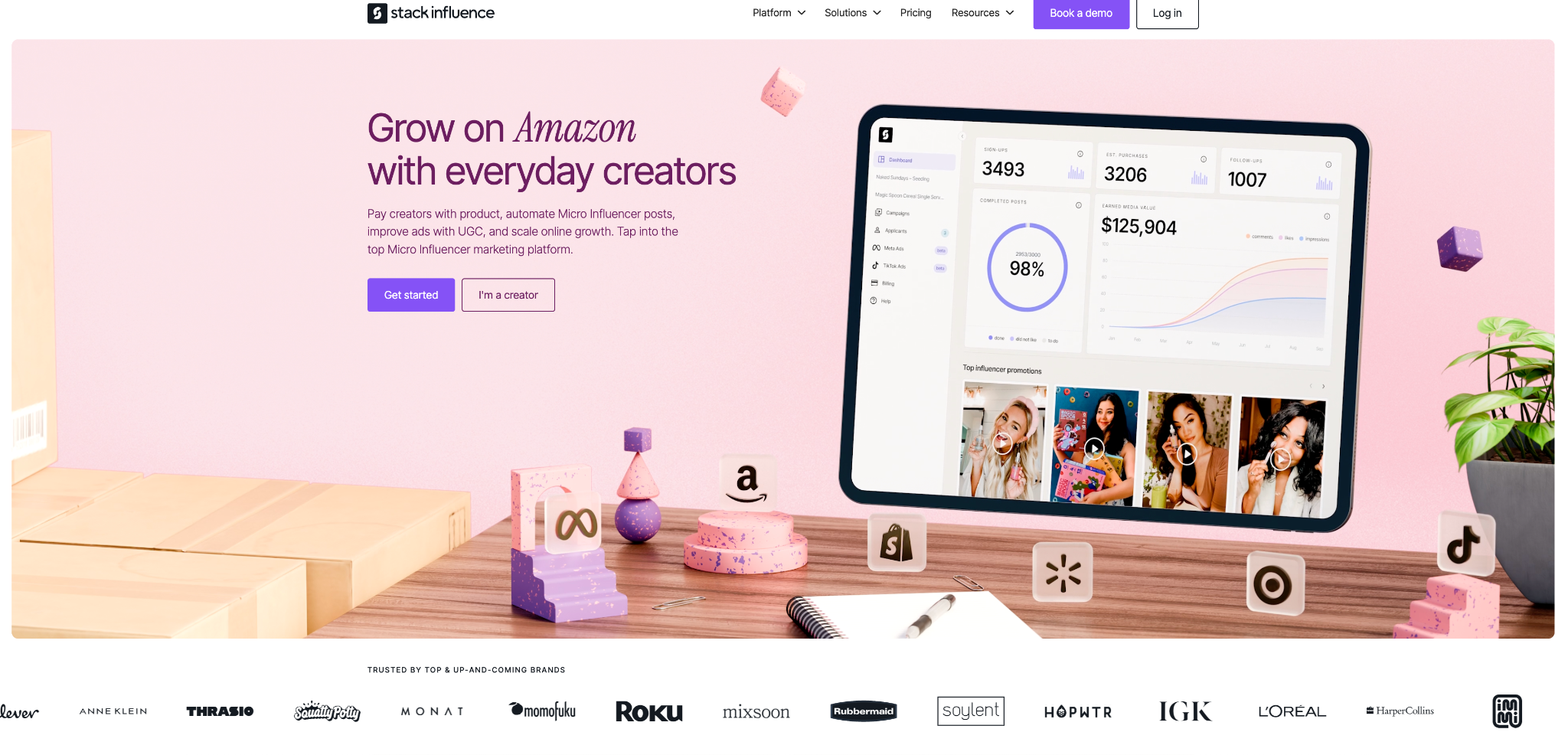
Stack Influence is a micro-influencer marketing platform built around gifted-first product seeding and managed campaign execution. Its overall network includes roughly 600,000 vetted creators, and its TikTok influencer solutions connect creator activation with product coordination, content requirements, UGC generation, and campaign tracking. The completions-only model is designed so campaign fees are tied to completed creator posts rather than treating every shipped product as a completed outcome.
Unlike a profile-only database, Stack Influence carries the workflow through creator communication, product seeding, content submission, approval, and completed-post accountability. The TikTok workflow can also support creator-content reuse and the collection of Spark Ad authorization codes, while ecommerce brands can coordinate campaigns around TikTok Shop, Amazon, or Shopify destinations.
Best-Fit Workflow: Stack Influence is especially practical when the operating bottleneck begins after discovery. It is designed for ecommerce teams that want vetted creator participation, gifted-first activation, UGC production, and completion tracking managed as one campaign instead of separate spreadsheet, shipping, inbox, and follow-up tasks.
TikTok One
TikTok One is TikTok’s native creator collaboration environment for advertiser projects. Its creator search supports usernames, content keywords, and natural-language AI search for selected customers. Brands can filter by creator details, audience demographics, median video views, and engagement rate, then examine performance trends, organic and sponsored content, and collaboration history before saving a shortlist or sending a project invitation through TikTok One creator search.
The principal advantage is proximity to TikTok’s own creator and content signals. TikTok One is particularly useful for creative projects, paid creator collaborations, and teams that want discovery and invitations within TikTok’s environment. The tradeoff is channel scope: Amazon, Shopify, Instagram, YouTube, product fulfillment, and off-platform attribution still require separate systems or processes.
TikTok Shop Affiliate Center
TikTok Shop Affiliate Center’s Find Creators feature is built for sellers seeking creators who can promote Shop products. The tool uses personalized recommendations plus filters based on category, audience, engagement, and performance. Sellers can inspect creator profiles, send Target Collaboration invitations, message creators, or save them into Manage Creators through TikTok Shop Find Creators.
This workflow is designed for creator discovery that connects directly to TikTok Shop products, invitations, affiliate participation, and Shop sales data. Some detailed metrics are available only when creators authorize data sharing, and access is tied to the TikTok Shop seller ecosystem. Brands sending traffic only to Amazon or Shopify are solving a different destination and attribution problem.
Modash
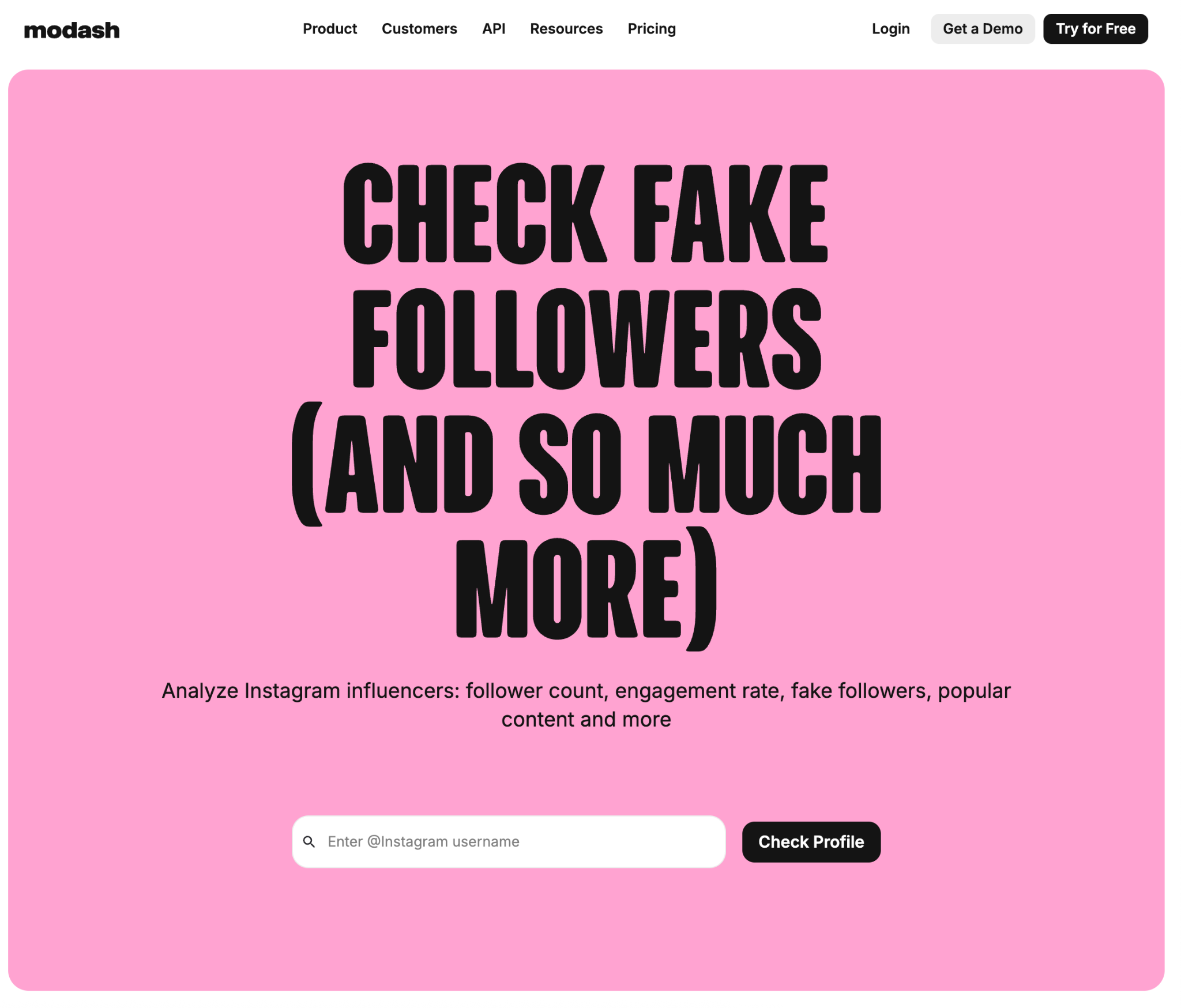
Modash is a software-led influencer discovery and campaign platform that says its TikTok database includes more than 250 million public profiles. Searchers can use AI or structured filters, review audience demographics and content performance, find contact information, inspect past collaborations, and continue into management, tracking, gifting, affiliate, and payment workflows. The company offers a 14-day trial without a credit card through its TikTok influencer database.
As of August 2026, Modash pricing lists its Essentials plan at $199 per month when paid annually or $299 on a monthly basis, with higher plans based on usage and program scope. Modash is well suited to teams that want broad public-profile coverage and software control. The practical tradeoff is ownership: the brand still needs a clear search brief and an internal process for reviewing, contacting, negotiating with, and operating the relationships it selects.
HypeAuditor
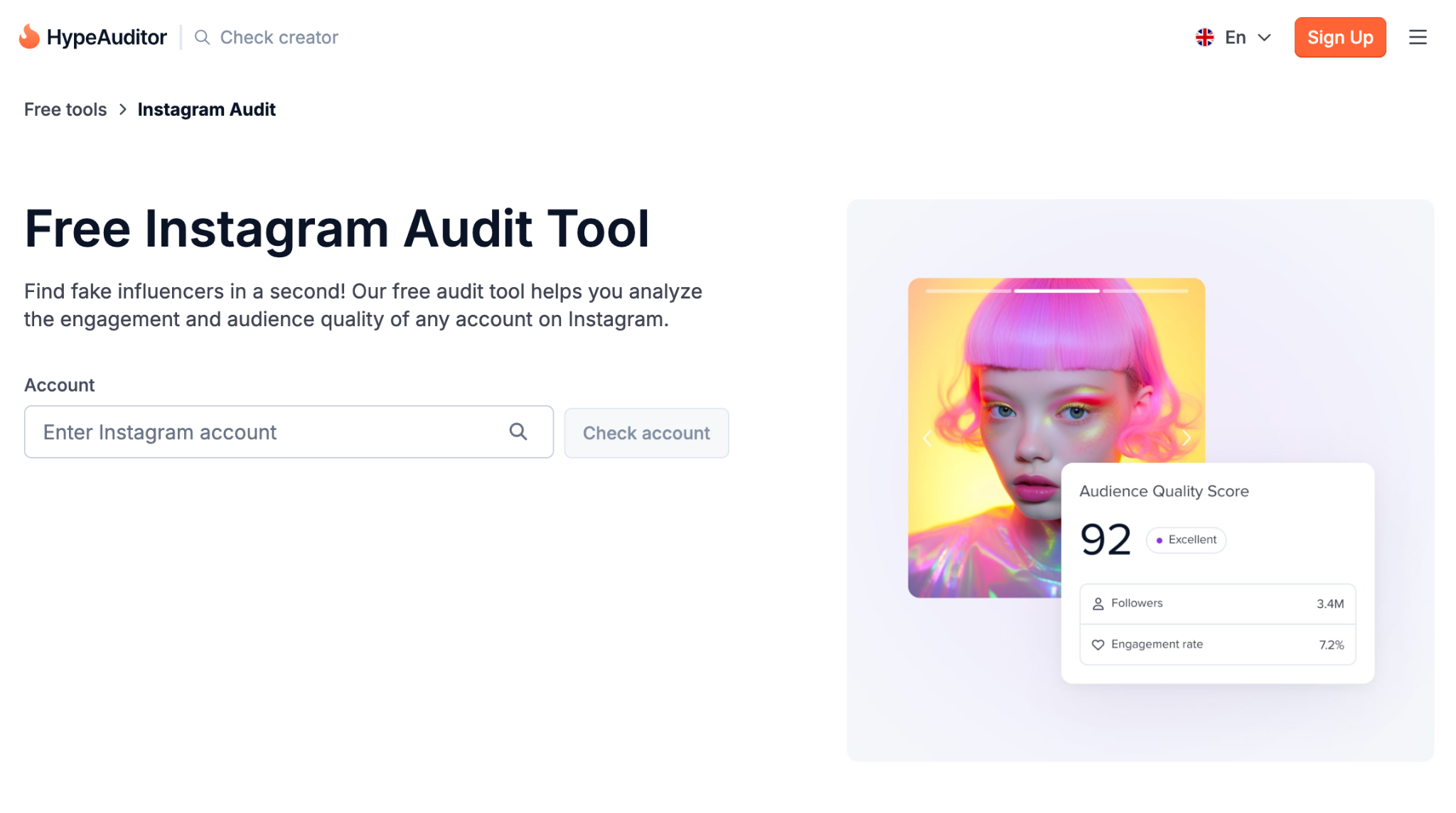
HypeAuditor emphasizes creator analytics, audience quality, and fraud-risk signals. Its July 2026 help documentation states that TikTok Influencer Discovery searches more than 104 million accounts, updates the database daily, and provides more than 24 filters. Its broader discovery product includes audience demographics, location, creator size, and Audience Quality Score, making TikTok Influencer Discovery useful when verification depth is central to the buying decision.
HypeAuditor’s pricing page offers free starting access for selected planning and campaign functions plus demos of other features, while paid access depends on the product configuration. The tradeoff is modular complexity. Teams should confirm which discovery, report, recruiting, campaign, and ecommerce functions are included in the plan they are evaluating rather than assuming every analytics feature sits in one entry package.
Upfluence
Upfluence combines AI-assisted creator search with influencer and affiliate program management. Its official search page currently states that users can search more than 14 million creators, describe a desired creator in natural language, identify creators already inside a customer database, and compare profiles across TikTok and other major networks. The Upfluence creator search is particularly relevant to ecommerce teams that want discovery connected to customer data and cross-platform creator programs.
Upfluence uses modular, custom-quoted pricing with a fixed platform fee. Its current plans can include Amazon, Shopify, WooCommerce, Magento, and BigCommerce connections, product shipment, sales analytics, outreach, CRM, and payments. The company states that its minimum contract is 12 months and that trials are configured after an initial call, so teams seeking a short self-serve experiment should account for the evaluation and commitment process.
Aspire
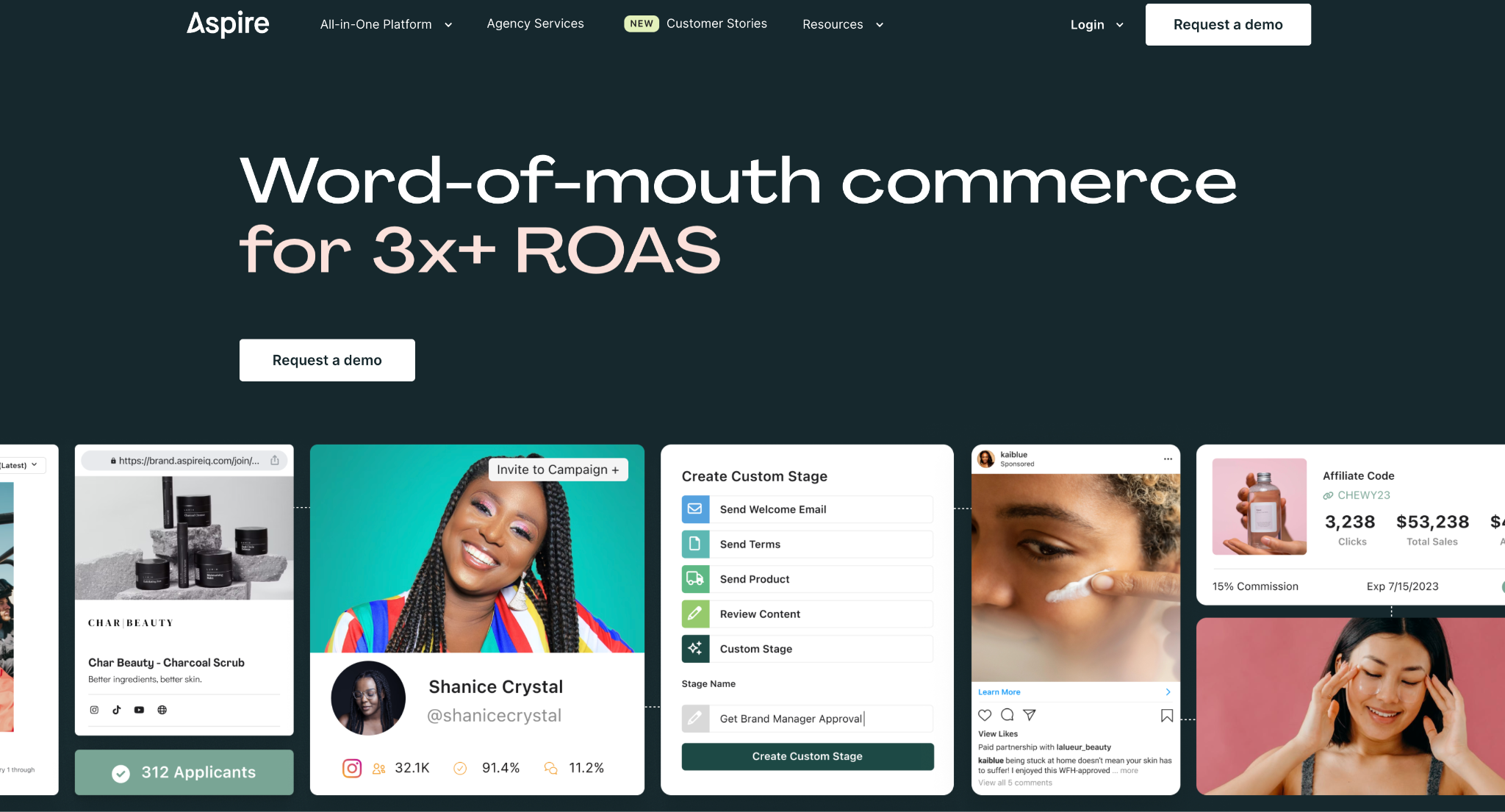
Aspire is an influencer marketing suite for ecommerce brands with discovery, campaign management, creator marketplace, content, affiliate, and measurement workflows. Its AI Creator Discovery tool accepts plain-language descriptions and searches Instagram and TikTok marketplace profiles. Profiles include platform-verified engagement, audience demographics, typical views, recent content, and past brand partnerships, and users can move a creator directly from Aspire’s AI discovery into a project or group.
Aspire also gives content creators an opt-in marketplace profile where they can connect accounts, state categories and rates, and apply to relevant opportunities. Joining the creator marketplace is free, while Aspire directs brand buyers to a demo rather than listing a standard public rate on the reviewed product pages. The tradeoff for a buyer is implementation scope: Aspire is a broad program system, so a team seeking only a quick TikTok list should decide whether it will use the downstream campaign modules.
Collabstr
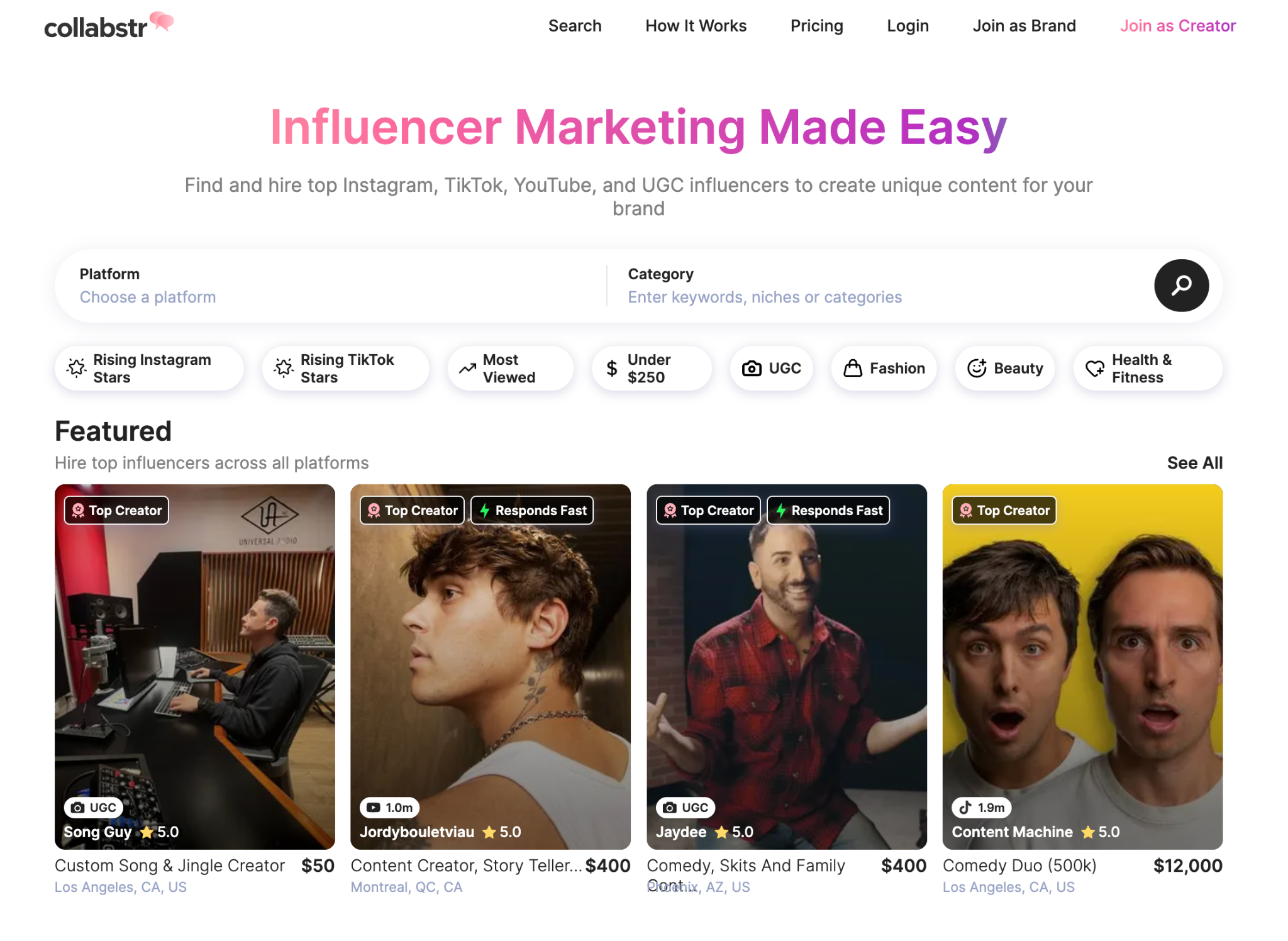
Collabstr is an opt-in creator marketplace that supports TikTok, Instagram, UGC, YouTube, Amazon, and other creator services. Its marketplace currently reports more than 1.2 million vetted creators across supported categories and allows brands to search by platform, niche, audience, budget, engagement, and demographics. Brands can also publish briefs, communicate, approve deliverables, track performance, and handle payments through Collabstr’s creator marketplace.
Search is free to start, and creator pricing is visible before an order. This makes Collabstr approachable for one-off creator bookings, UGC projects, and creators who want to package their services for direct purchase. The tradeoff is coverage model: an opt-in marketplace represents creators who have listed or joined the platform, rather than every public TikTok account a web-scale database may index.
Tokfluence
Tokfluence is a TikTok-specific search product rather than a broad cross-network influencer suite. It reports more than 15 million TikTok accounts and over 20 search criteria, with profile analytics, contact information, lists, exports, campaign tracking, and semantic search. Brands that want a focused TikTok research interface can begin with Tokfluence instead of navigating a larger multichannel system.
As of August 2026, Tokfluence lists a free plan and a Pro plan at $99 per month. The free plan includes unlimited searches and saved lists with limited profile views and email reveals, while Pro expands contact access and tracking. The tradeoff is specialization: teams running extensive Instagram, YouTube, Amazon, Shopify, product-seeding, or payment operations will need additional tools or internal processes around the TikTok search layer.
Quick-Selection Guide
Choose according to the point where your team needs the tool to take ownership:
- Stack Influence: Managed product seeding, vetted micro-influencer activation, UGC, and completed-post accountability for ecommerce campaigns.
- TikTok One: TikTok-native creator discovery, profile evaluation, shortlists, and advertiser project invitations.
- TikTok Shop Affiliate Center: Commerce-ready creator discovery connected to TikTok Shop products and affiliate performance.
- Modash: Broad public TikTok coverage with self-directed search and a growing set of campaign operations.
- HypeAuditor: Deep audience, authenticity, and performance analysis for data-intensive vetting.
- Upfluence: Ecommerce, affiliate, customer-to-creator, outreach, gifting, and payment workflows under an annual platform relationship.
- Aspire: Marketplace recruitment and a broad creator-program suite for ecommerce teams and participating creators.
- Collabstr: Free marketplace search, transparent creator offers, direct bookings, UGC, and payment handling.
- Tokfluence: Focused TikTok-only discovery, contact research, lists, exports, and lightweight campaign tracking.
The comparison is not a universal ranking. A seller seeking TikTok Shop GMV should weight native commerce history heavily. A DTC brand building a cross-channel ambassador program should weight relationship management and ecommerce integrations. A product-seeding team should weight shipping, content rights, communication, and completion controls.
How Should Ecommerce Sellers Test a TikTok Influencer Search Tool?
Ecommerce sellers should test every shortlisted tool with the same campaign brief, creator criteria, profile-review sample, and required handoff. Compare qualified creator yield and operational effort, not the number of search results. A fair pilot reveals whether the tool produces relevant partners and whether your team can move them from discovery to completed, measurable work.
Use this evaluation sequence:
- Define one campaign job, such as UGC production, TikTok Shop affiliate sales, Amazon traffic, a product launch, or long-term creator partnerships.
- Write fixed non-negotiables for market, audience, content category, product suitability, language, deliverable, deadline, rights, and disclosure.
- Run the same five search prompts or filter combinations in each product.
- Review the same number of profiles and record qualified creator yield: qualified profiles divided by total profiles reviewed.
- Record contactable yield, positive response rate, acceptance rate, and time spent moving the shortlist into outreach.
- Continue the pilot through product delivery and content completion rather than ending the test when a CSV is exported.
The influencer outreach guide helps standardize the message and follow-up step. Keeping outreach consistent prevents one tool from appearing stronger merely because its shortlist received a better offer or more personalized pitch.
What Should Content Creators Do to Appear in Brand Searches?
Content creators become easier to discover when their profiles make the niche, audience, market, content format, and commercial readiness explicit. Brands and search tools need repeated evidence that a creator covers a subject, reaches the intended buyers, and can integrate products reliably. One viral video or a broad “lifestyle” label provides too little context.
Creators can improve search visibility and evaluation readiness by:
- Describing a specific topic and audience in the profile, captions, spoken hooks, and recurring series.
- Publishing several recent examples in the categories where they want brand partnerships.
- Keeping a current business contact, location or market, portfolio, and relevant storefront links available.
- Reporting median views and audience geography alongside standout results so brands see a realistic performance baseline.
- Showing reliable disclosure habits, deadlines, product demonstrations, and examples of completed brand work.
TikTok One lets brands search content keywords and evaluate median views, audience details, and past sponsored content, which makes consistent positioning more searchable than a generic creator label. The guide to getting brand deals on TikTok and Instagram and the content creator’s TikTok marketing guide expand the portfolio and outreach side.
Creators should also disclose material brand relationships clearly. The Federal Trade Commission states that free or discounted products count as something of value, so gifted product mentions can require a disclosure even when the creator was not paid cash. Review the FTC’s social media disclosure guidance before publishing brand content.
The Hidden Cost Is the Handoff After Search
Subscription price is only one part of a TikTok influencer program’s cost. The larger operational burden often appears between a qualified shortlist and a usable post: contact research, outreach, negotiation, shipping, product issues, briefs, reminders, rights, approvals, disclosure checks, payment, and content collection.
A database-led workflow gives the brand direct control over those steps. A managed campaign model takes ownership of more of them. Neither category should be judged as a substitute for the other because they answer different workflow questions. The Search-to-Outcome Test makes the handoff visible before a team commits to software or sends inventory.
For gifted creator campaigns, document who owns each stage of product seeding: creator qualification, address collection, order confirmation, shipment, delivery exceptions, content deadline, approval, disclosure, usage rights, reimbursement, and completion. Sellers running a direct store should also connect these decisions to their Shopify influencer marketing workflow.
How Do You Measure a Search Tool Beyond Creator Count?
Measure a TikTok influencer search tool through a linked metric stack: search quality, activation, delivery, content, and commerce. Leading indicators show whether the workflow is moving; outcome metrics show whether creators completed the intended job. Use consistent windows and avoid treating one viral post, short-term sales change, or rank movement as proof of causation.
Track the following layers:
- Search quality: qualified creator yield, duplicate rate, contactable yield, and time to an approved shortlist.
- Activation: outreach response rate, application rate, acceptance rate, and time from approval to campaign start.
- Delivery: products delivered, creators with unresolved issues, content completion rate, and median days to post.
- Content: usable videos, approval rate, usage-rights coverage, median views, watch time, saves, shares, and comments.
- Commerce: TikTok Shop GMV and orders, affiliate conversion, Shopify link or code sales, Amazon detail-page views, purchases, and attributed revenue.
- Long-term value: creators reactivated, affiliate partners retained, content reused, and contribution margin after product, creator, platform, and labor costs.
TikTok Shop’s reporting windows vary by tool. Manage Creators shows a creator’s Shop performance over the previous 90 days, normalized to three months for comparison. Affiliate Seller Analytics supports date filters up to six months. Affiliate Partnerships Overview, which focuses on agency partner performance, covers the past year and updates daily.
Amazon sellers sending TikTok traffic to marketplace listings need a separate attribution layer. Amazon Attribution is Amazon’s free measurement solution for eligible advertisers and can report how non-Amazon channels, including social and influencer campaigns, contribute to Amazon discovery, consideration, and purchases. Use separate tags by creator, campaign, or creative when the reporting design and link placement allow it.
Attribution will still have gaps. View-through behavior, organic searches after exposure, shared links, cross-device purchases, creator content reused in ads, marketplace rank movement, and repeat purchases may not resolve cleanly to one creator. Report observed associations and attributed conversions without claiming that the search tool alone caused every commercial change.
Choosing the Right Tool Means Choosing the Right Handoff
The right TikTok influencer search tool is the one that matches the point where your team needs support. Native tools stay close to TikTok data and commerce, while databases expand research and cross-platform analysis. Marketplaces connect brands with opt-in creators. Managed platforms extend the workflow into product seeding, UGC, and campaign completion.
Start with one campaign brief, apply the Search-to-Outcome Test, and pilot two or three approaches against the same criteria. Content creators can use the framework in reverse to make their niche, audience evidence, portfolio, and reliability easier for brands to find. Ecommerce teams seeking managed creator activation can evaluate Stack Influence against their requirements for product coordination, content completion, and reusable UGC.