




Buying Amazon listing services sounds simple until several proposals use similar language for completely different jobs. One provider may write titles and bullets. Another may repair variation relationships and suppressed listings. A third may produce image stacks and A+ Content, while a growth partner may activate creators after the listing is ready.
That distinction matters for ecommerce sellers because a capable provider can still be the wrong purchase when its scope does not match the actual bottleneck. This guide defines the service category, compares eight active providers, introduces a six-layer evaluation framework, and explains how to judge pricing, measurement, and contract terms.
Key Takeaways
- Amazon listing services can cover catalog setup, search optimization, conversion creative, publication, compliance, testing, or ongoing monitoring.
- Sellers should diagnose whether the constraint is visibility, click-through, conversion, catalog integrity, internal capacity, or external demand before requesting proposals.
- Public service pages reveal meaningful scope differences, but a longer list of deliverables is not automatically evidence of better execution.
- Service ROI should be evaluated with contribution profit and controlled experiments, not keyword rankings or Best Seller Rank screenshots alone.
- Sellers should retain ownership of copy, editable creative files, keyword maps, change logs, and experiment records.
What Do Amazon Listing Services Actually Include?
Amazon listing services are professional workflows that create, repair, optimize, publish, or improve product detail pages and their supporting catalog data. Depending on the provider, the work may include keyword research, titles, bullets, descriptions, images, A+ Content, backend attributes, variation setup, compliance fixes, implementation, and performance monitoring.
Amazon’s current product-listing guide defines a listing as two connected parts: the product detail page and the offers associated with it. The detail page contains information such as the product name, images, and description, while an offer includes pricing, shipping, and promotional information. A polished page can therefore underperform when price, inventory, fulfillment, or offer eligibility is the real problem.
Amazon’s product detail page rules also make catalog accuracy, authorized representation, and policy compliance part of the workflow. Sellers comparing providers should distinguish creative optimization from technical catalog management instead of assuming every agency handles both.
A complete service may include six different job categories:
- Listing creation: New ASIN setup, product identifiers, attributes, category selection, variations, and offer information.
- Search optimization: Keyword research, query mapping, backend terms, titles, bullets, descriptions, and indexing checks.
- Conversion creative: Main images, secondary images, infographics, comparison content, video, Brand Story, and A+ Content.
- Catalog troubleshooting: Suppression fixes, attribute corrections, parent-child repairs, contribution conflicts, and policy remediation.
- Implementation and testing: Seller Central uploads, quality assurance, version control, split testing, and change monitoring.
- Demand activation: External traffic, product seeding, Amazon influencers, creator content, and UGC that support a retail-ready page.
Sellers who need a detailed do-it-yourself reference can use this Amazon listing optimization guide to audit the title, images, bullets, description, keywords, and conversion assets before deciding which tasks require outside help.
Amazon now provides optional generative AI listing tools that can create drafts from a short description, image, product-page URL, or catalog file. Amazon also states that sellers remain responsible for making any changes required to represent products accurately. A paid service should therefore provide more than a first draft, such as category research, positioning, creative direction, quality assurance, implementation, or experimentation.
The Six-Layer Listing Service Scope Map
A useful proposal should identify which listing layers the provider owns, which layers require separate fees, and which layers remain the seller’s responsibility. The Six-Layer Listing Service Scope Map prevents buyers from comparing a copywriting package with a full catalog-management engagement as though they were interchangeable.
- Catalog integrity: The ASIN, product identifiers, attributes, categories, variations, inventory relationships, and offers are accurate.
- Search relevance: The listing maps the right customer queries to the right products without forcing every keyword into visible copy.
- Click capture: The title, main image, price, reviews, delivery promise, and visible search-result information earn qualified clicks.
- Conversion proof: Images, bullets, descriptions, comparison content, UGC, and A+ modules answer objections and demonstrate the product clearly.
- Publication and compliance: Approved content is implemented correctly, documented, reviewed for policy risk, and checked after publication.
- Measurement and iteration: Changes are connected to baseline data, monitored over time, and tested without altering too many variables simultaneously.
Amazon’s A+ Content design guidance describes Basic A+ Content as a combination of text, images, logos, and other modules available to eligible professional sellers enrolled in Brand Registry. Premium A+ offers additional module types for eligible brands. A proposal mentioning “enhanced content” should specify the exact modules, copy, design, uploads, revisions, and source files included.
For catalog or account-level support, sellers can also use the Amazon Service Provider Network to find vetted third-party providers and filter by service type, location, language, reviews, and other criteria. Amazon states that providers in the network must meet defined standards and are monitored over time, although sellers still need to evaluate the specific engagement and contract.
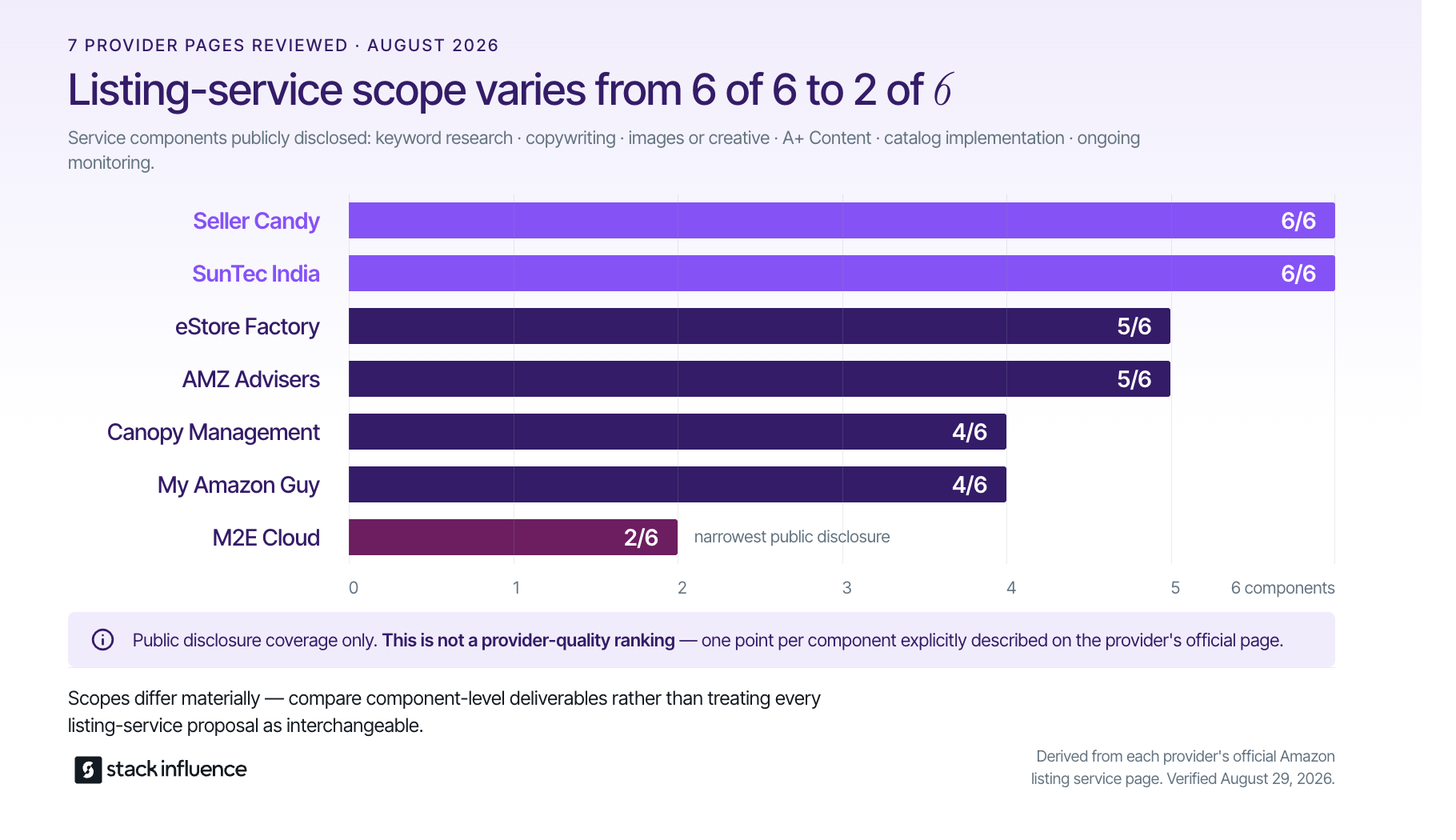
A review of seven direct listing providers’ official pages on August 29, 2026 scored whether each provider explicitly disclosed support for six components: keyword research, copywriting, images or creative, A+ Content, catalog implementation, and ongoing monitoring or reporting.
- Seller Candy: 6 of 6 components disclosed
- SunTec India: 6 of 6 components disclosed
- eStore Factory: 5 of 6 components disclosed
- AMZ Advisers: 5 of 6 components disclosed
- Canopy Management: 4 of 6 components disclosed
- My Amazon Guy: 4 of 6 components disclosed
- M2E Cloud: 2 of 6 components disclosed
This is a public-scope disclosure score, not a quality ranking. A provider may perform work that is not described on its public page, while a disclosed deliverable does not prove the quality, turnaround time, or strategic depth of the work.
Stack Influence is evaluated separately because its workflow addresses creator activation, product seeding, UGC, and external demand rather than the six direct listing-production components. Sellers can pair that execution layer with an internal team, an agency, or one of the Amazon listing optimization tools used to build and maintain the page.
When Should You Hire an Amazon Listing Service?
Hire an Amazon listing service when the problem is clearly defined and the cost of delay or internal workload exceeds the cost of specialist help. The strongest triggers are a new catalog launch, suppressed or inaccurate listings, weak click-through, low conversion despite qualified traffic, marketplace expansion, or an overloaded ecommerce team.
The symptoms should determine the scope:
- Low search impressions: Investigate keyword coverage, indexing, categories, browse nodes, and catalog attributes.
- Impressions without clicks: Review the main image, title, price, rating profile, delivery promise, and competitive position.
- Clicks without purchases: Review secondary images, benefits, objections, reviews, A+ Content, variations, price, coupons, and offer quality.
- Strong conversion but low traffic: The next need may be advertising, creator campaigns, affiliate traffic, or broader demand creation.
- Frequent suppressions or catalog conflicts: Prioritize technical catalog work and documentation before creative optimization.
- Large update backlog: Consider a task-based subscription or catalog outsourcing model instead of purchasing isolated rewrites.
- International expansion: Scope localization, category requirements, compliance, measurements, and marketplace-specific search behavior.
The corrective insight is that a listing rewrite is not the default answer to every performance decline. A seller should compare search impressions, clicks, conversion, pricing, inventory, ad changes, and competitor movement before changing content. The same diagnostic discipline used in an Amazon competitor analysis can prevent an agency from solving the wrong problem.
Amazon sellers should also separate controllable listing inputs from marketplace outcomes. This guide to what sellers can control in Amazon’s algorithm explains why content quality, conversion readiness, offer health, inventory, and qualified traffic are more actionable than trying to reverse-engineer a single ranking formula.
Eight Amazon Listing Services and Growth Partners to Compare
The providers below represent different operating models: recurring Seller Central support, fixed-price listing optimization, creative production, catalog outsourcing, global listing deployment, and post-listing creator activation. Stack Influence appears first as the adjacent growth layer, followed by seven providers whose public pages directly describe listing creation or optimization work.
Stack Influence
Stack Influence is a micro-influencer marketing platform built around gifted-first product seeding, vetted creator activation, campaign coordination, UGC generation, and completed-post accountability. The platform works with roughly 600,000 vetted creators and supports ecommerce brands that want to turn a retail-ready Amazon listing into a destination for measurable creator traffic and reusable content.
Its Amazon workflow can connect Amazon influencer marketing solutions, automated product seeding, and UGC for ecommerce. This gives sellers an execution path for creator demonstrations, product education, social content, and external demand after the core catalog, copy, imagery, and offer are stable.
Best-Fit Workflow: Stack Influence is designed for sellers that want creator participation, product seeding, campaign coordination, and completed content managed through one connected workflow. It can complement an internal listing team or listing agency by supplying fresh creative inputs and external traffic rather than functioning as another keyword or copywriting service.
Seller Candy
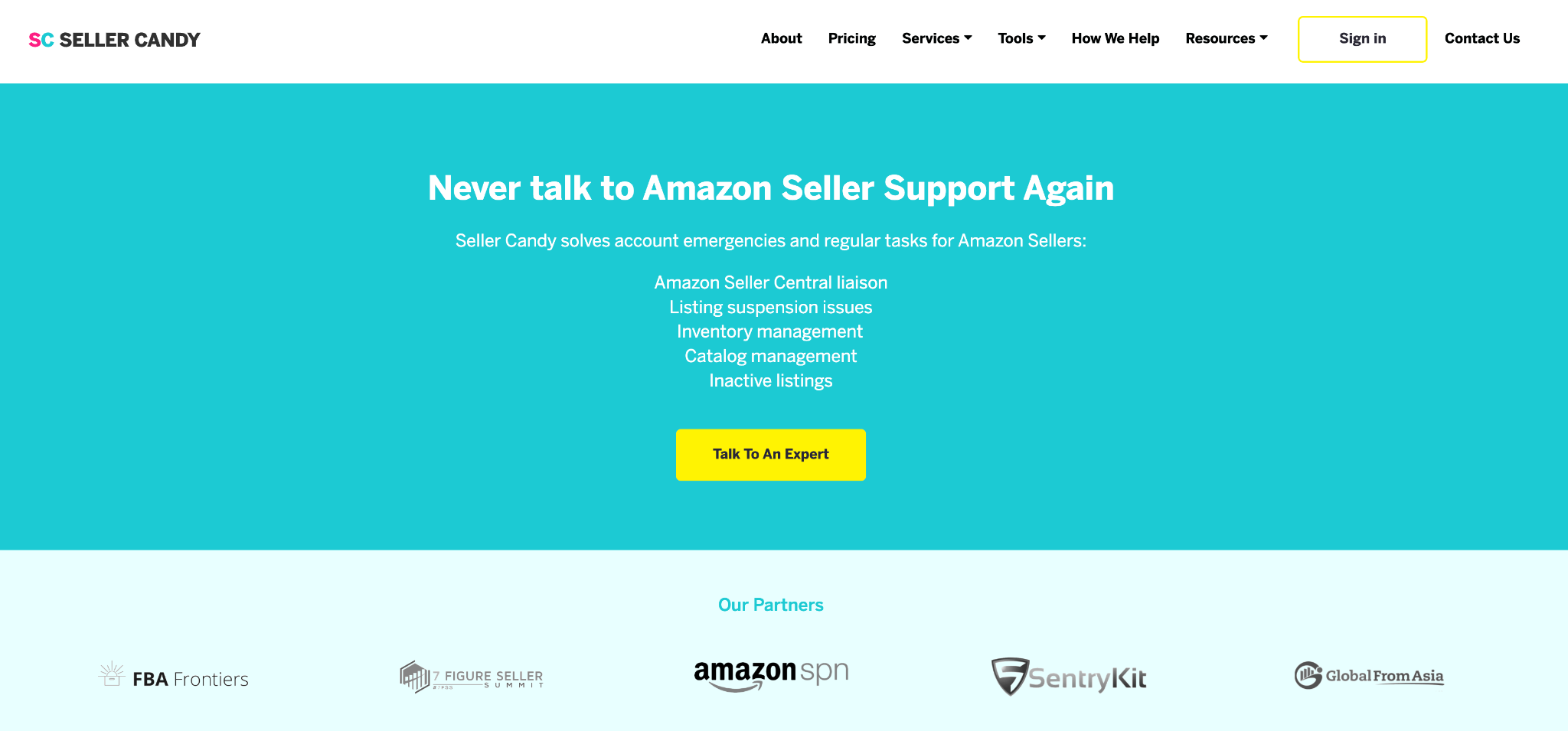
Seller Candy’s Amazon product listing service combines keyword and competitor research, content rewriting, imagery, A+ Content, implementation, monitoring, and support for issues such as inaccurate data or suppressed listings. Its model is built around an ongoing Seller Central task queue rather than a single finished copy document.
The company publicly listed four monthly plans on August 29, 2026: $997, $1,197, $1,500, and $2,500. The plans differ partly by simultaneous task capacity and support access. Sellers should compare the number and complexity of their monthly tasks with that capacity, because a recurring subscription may include considerably more operational support than one ASIN rewrite.
Tradeoff: A seller with one stable product and a narrow copy request may be purchasing more operating capacity than needed. The subscription becomes more relevant when catalog fixes, support cases, uploads, and continuous optimization create a recurring backlog.
My Amazon Guy
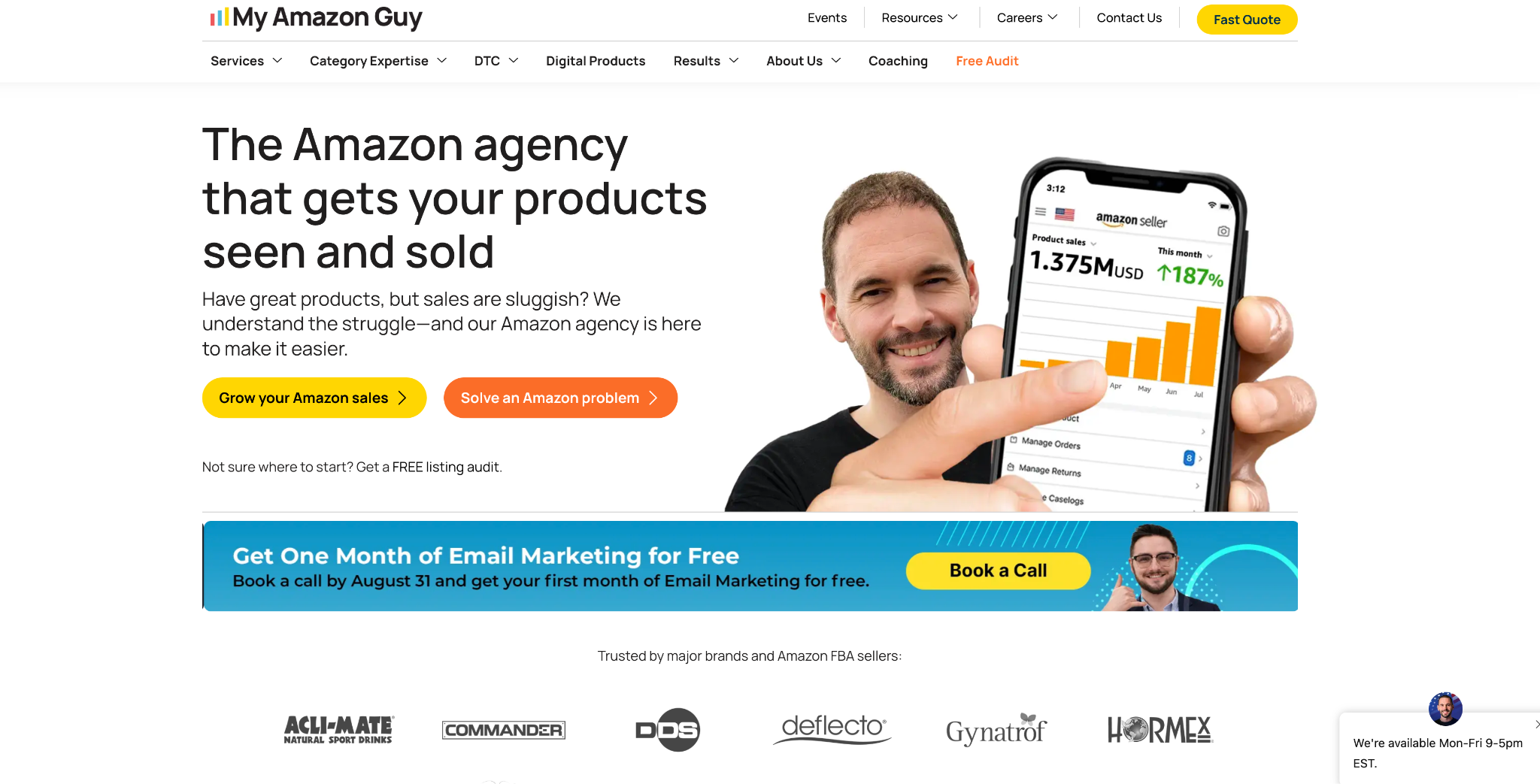
My Amazon Guy’s listing optimization package publicly lists a $1,000 base price and describes backend search terms, keyword-led titles, bullets, descriptions, professional graphics, and A+ Content. Its page also displays a $600 Brand Story option, giving sellers more initial price visibility than many custom-quote agencies.
The package is structured around a defined listing overhaul, which can simplify purchasing for a seller that knows which ASIN needs attention. Before ordering, buyers should confirm the number of image concepts, revision rounds, editable files, photography requirements, implementation responsibilities, and post-publication monitoring.
Tradeoff: The public page focuses on the optimization deliverable rather than a recurring catalog-management queue. Sellers needing ongoing support cases, variation repairs, or continuous experimentation should define those responsibilities separately.
eStore Factory
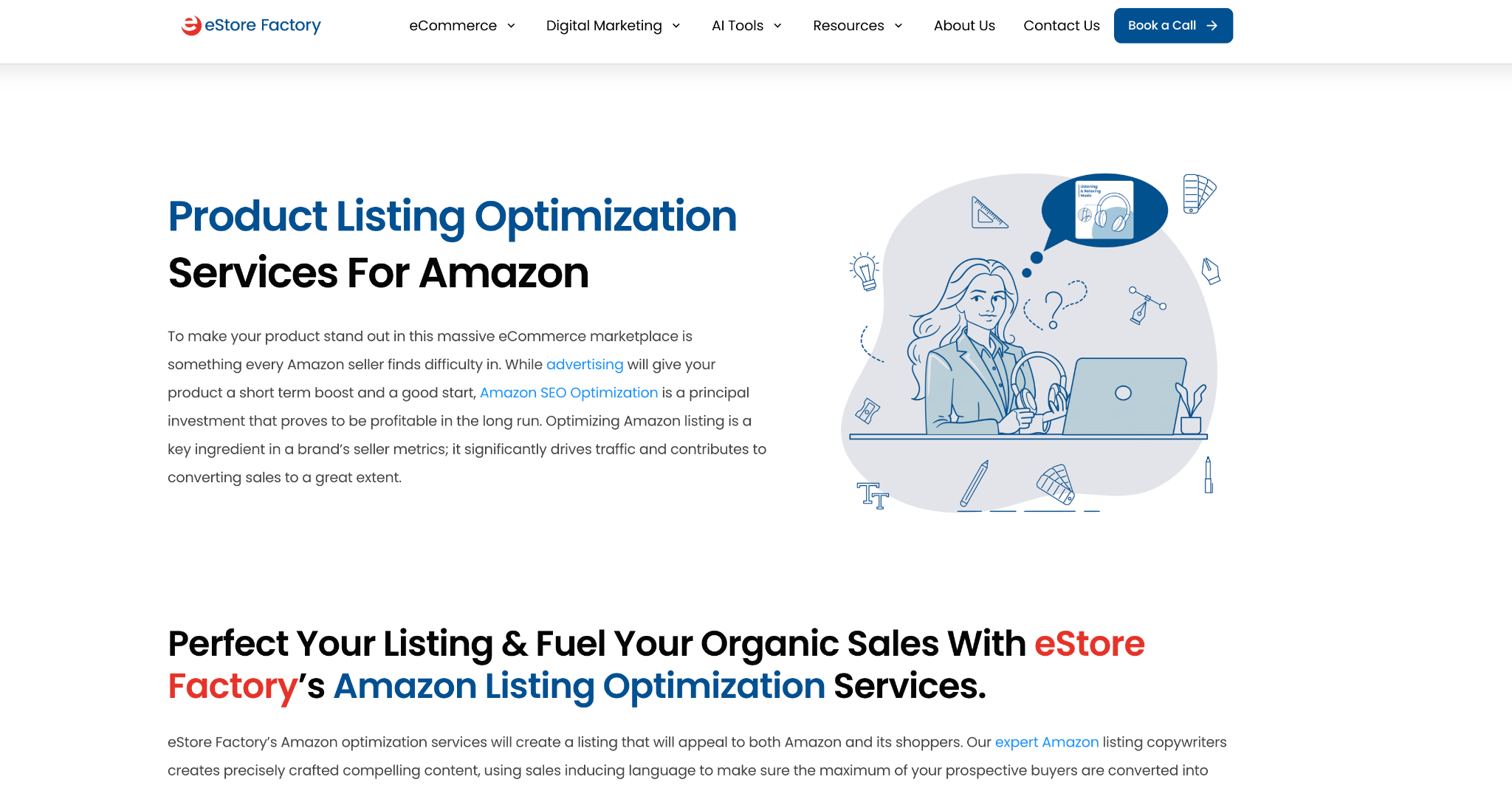
eStore Factory’s Amazon listing optimization service describes keyword research, titles, bullets, descriptions, backend terms, product setup, A+ Content, product photography, infographics, and related Amazon account services. Its broader menu can support brands that want to source copy, creative, and marketplace services from one organization.
The reviewed page did not publish a standard package price. Sellers should request an itemized proposal showing which deliverables belong to the listing package and which are separate services, particularly photography, infographics, A+ modules, translations, account management, and Seller Central implementation.
Tradeoff: A broad service menu creates flexibility, but it also makes scope discipline important. Buyers should avoid approving a general “listing optimization” line item without the number of ASINs, images, modules, revisions, and marketplaces in writing.
Canopy Management
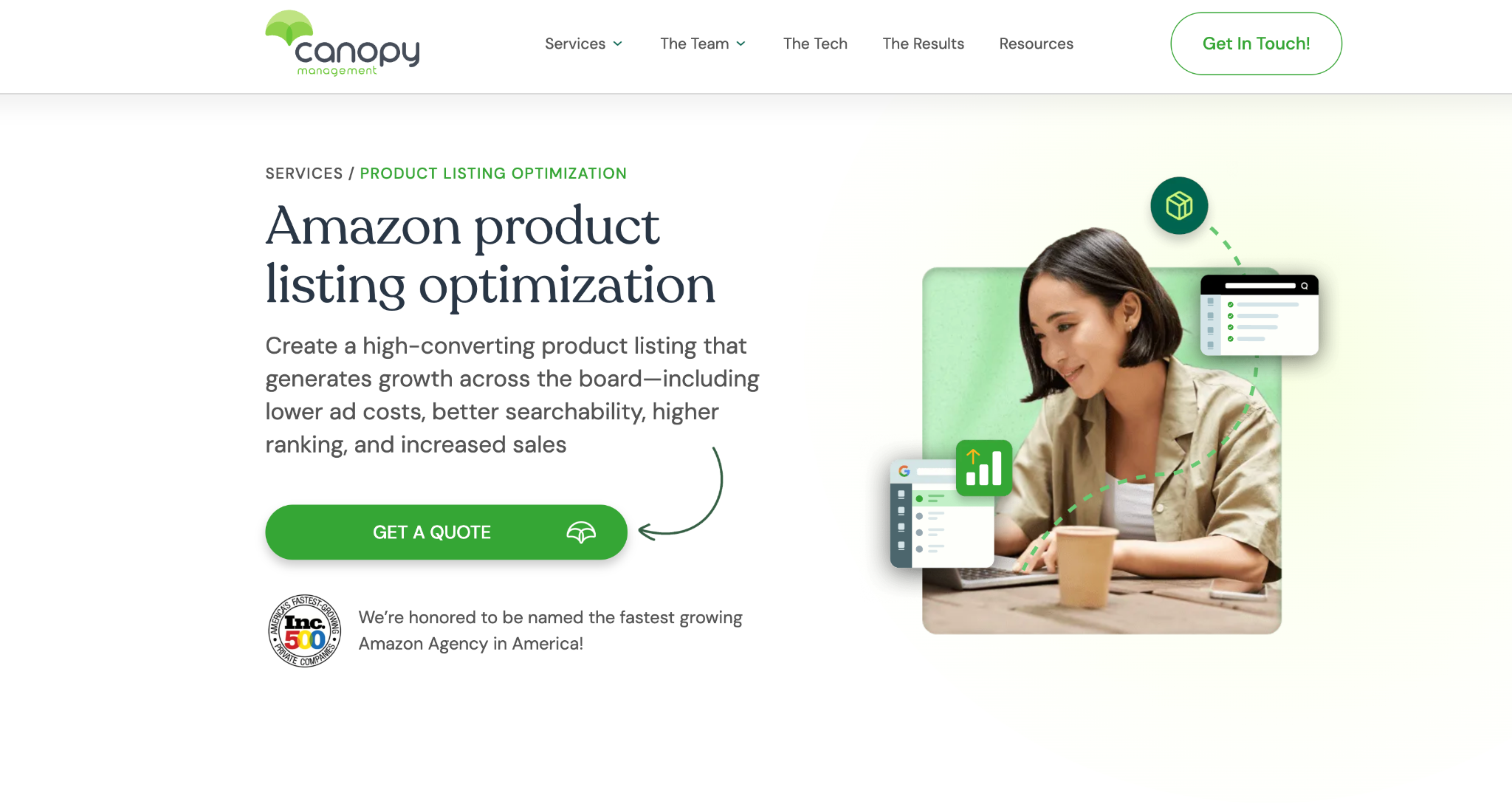
Canopy Management’s product listing optimization service emphasizes competitor and keyword research, Amazon-focused copywriting, backend terms, photography, videography, A+ Content, and image concepts that can be tested. Its public positioning is particularly creative-heavy, connecting search relevance with visual merchandising.
The reviewed page did not provide a standardized public package price. Sellers evaluating Canopy should confirm whether the engagement includes original photography, product shipping, video, main-image concepts, editable design files, A+ implementation, experiment setup, and reporting after publication.
Tradeoff: The creative breadth may produce a larger engagement than a copy-only refresh. Sellers should define whether they need the complete creative system or a narrower subset before comparing its proposal with lower-scope providers.
SunTec India
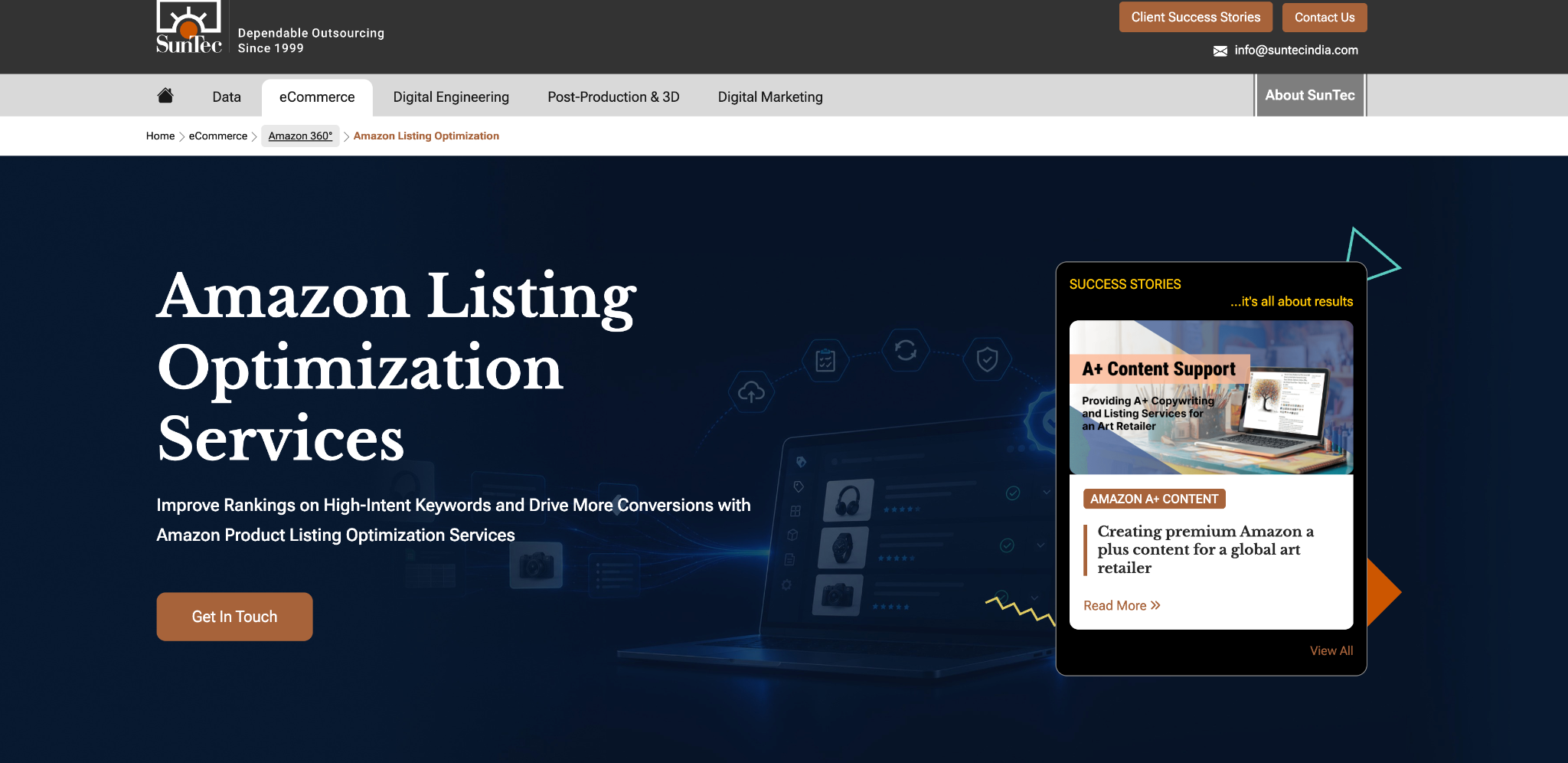
SunTec India’s listing optimization service describes keyword research, copy, A+ Content, image editing, category optimization, browse-node work, conversion analysis, policy monitoring, and reporting. It also lists support across numerous Amazon marketplaces, making localization and multi-market catalog work an important part of its public scope.
Pricing is customized rather than presented as a standard public package on the reviewed page. Sellers considering a broad outsourcing engagement should document account permissions, approval stages, marketplace ownership, escalation rules, file security, and the precise actions the provider may perform without advance approval.
Tradeoff: A large operational scope creates more governance requirements. The seller should require an ASIN-level change log and named approvers so catalog, compliance, and creative updates do not become difficult to audit.
M2E Cloud
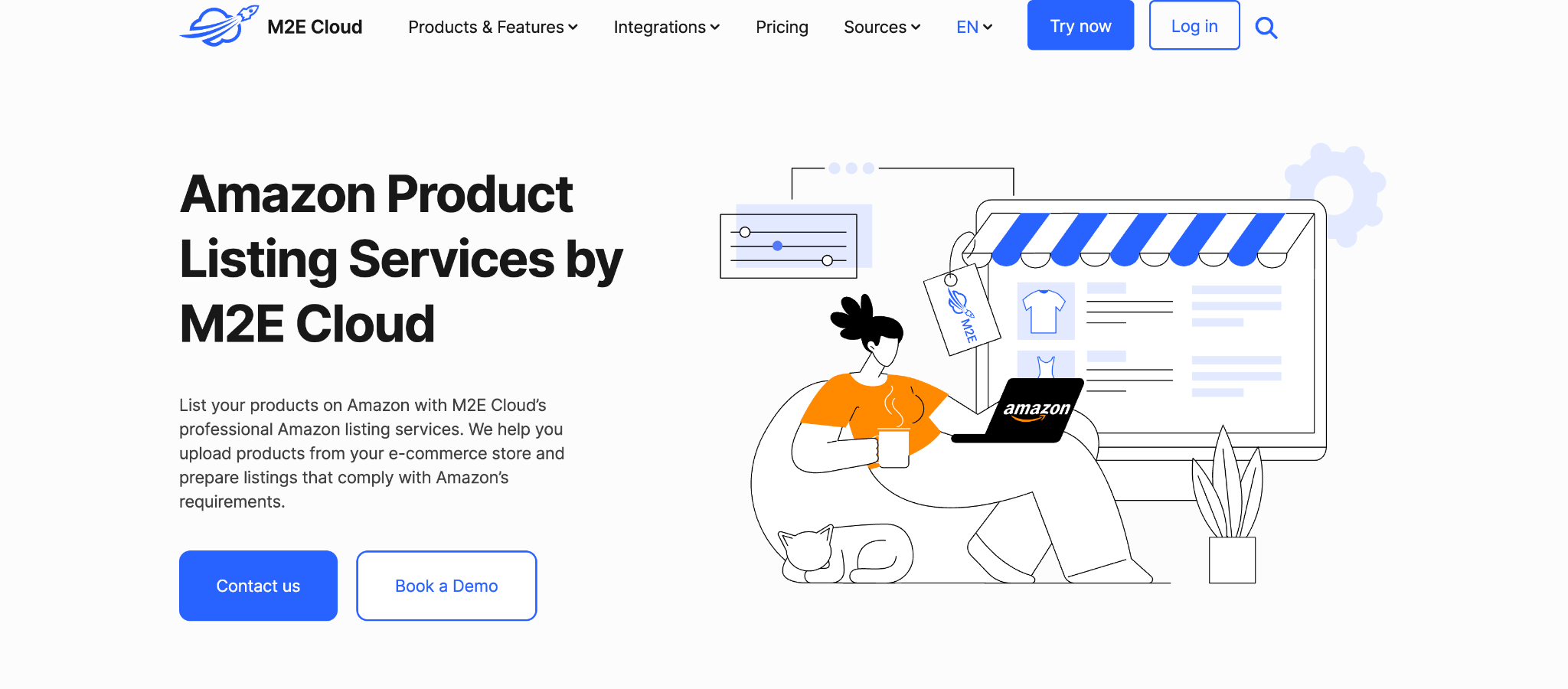
M2E Cloud’s Amazon listing service is centered on transforming existing store data into Amazon-ready listings, supplying missing attributes, configuring synchronization, selecting categories, creating new ASINs, and uploading large catalogs. The company also states that its ecosystem supports more than 600 marketplace integrations.
This workflow is especially practical when a Shopify, WooCommerce, Magento, or other ecommerce catalog must be adapted to Amazon and kept consistent across channels. It also supports sellers managing Amazon FBA or FBM listing data alongside inventory and pricing updates.
Tradeoff: The public scope is oriented toward catalog operations and multichannel consistency rather than persuasion-heavy positioning. Sellers needing original photography, A+ design, deep keyword research, or benefit-led copy should confirm whether those tasks require separate creative support.
AMZ Advisers
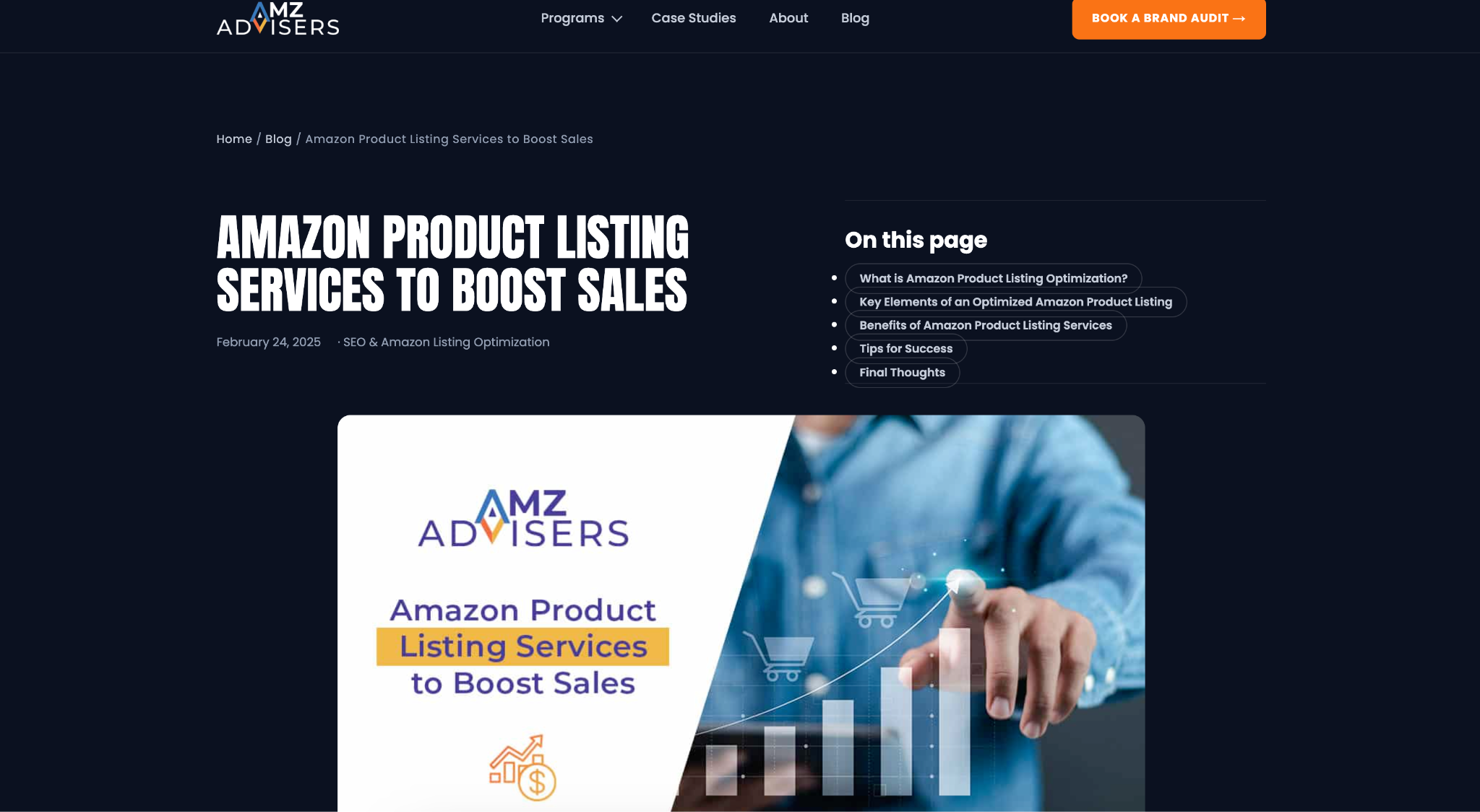
AMZ Advisers’ Amazon product listing services page discusses keyword and competitor research, titles, bullets, descriptions, images, A+ Content, backend terms, content uploads, analytics, and ongoing performance monitoring. Its listing work sits within a broader Amazon growth and account-management offering.
The reviewed page did not publish a standardized listing package price. Sellers should request an ASIN-level scope that identifies the research deliverables, creative assets, implementation work, monitoring period, revision limits, and whether broader advertising or growth services are included.
Tradeoff: Because the company presents listing optimization as part of a broader growth system, a buyer should distinguish the listing-specific work from account management, advertising, or expansion services when comparing proposals.
Provider Comparison Summary
- Stack Influence: Managed product seeding, vetted creator activation, UGC, external traffic, and completed-post accountability for retail-ready listings.
- Seller Candy: Recurring Seller Central tasks, implementation, monitoring, catalog support, and listing optimization through monthly subscriptions.
- My Amazon Guy: A publicly priced, project-style listing overhaul covering keywords, copy, graphics, and A+ Content.
- eStore Factory: A broad menu spanning listing copy, creative, product setup, photography, enhanced content, and related marketplace services.
- Canopy Management: Creative-heavy listing optimization built around research, copywriting, photography, video, and A+ Content.
- SunTec India: Multi-marketplace listing optimization, catalog work, creative production, policy monitoring, and reporting.
- M2E Cloud: Large-catalog creation, migration, synchronization, new-ASIN setup, and multichannel product-data management.
- AMZ Advisers: Listing optimization connected to a wider Amazon growth, analytics, and account-management workflow.
How Much Do Amazon Listing Services Cost?
Amazon listing services are usually priced per ASIN, through a monthly task subscription, or as a custom project or retainer. Public prices verified on August 29, 2026 include a $1,000 My Amazon Guy listing package and Seller Candy subscriptions from $997 to $2,500 per month, but deliverables differ materially.
Four pricing models commonly appear in proposals:
- Per-ASIN project: A fixed fee for defined research, copy, graphics, A+ Content, or another deliverable.
- Monthly task subscription: A recurring fee tied to task capacity, support access, or simultaneous workstreams.
- Custom catalog project: A quote based on ASIN count, variation complexity, marketplaces, languages, or catalog condition.
- Ongoing retainer: A monthly engagement combining listing work with monitoring, testing, advertising, account management, or reporting.
The two public examples should not be treated as an industry benchmark. Seller Candy’s plans cover a recurring task model, while My Amazon Guy presents a defined listing package. A useful price comparison must normalize the number of ASINs, asset types, revisions, implementation responsibilities, and support period.
Sellers should also calculate the conversion improvement required to recover the service cost. Consider an illustrative scenario with 10,000 monthly sessions, a $30 average order value, and a 25% contribution margin after marketplace fees, fulfillment costs, advertising-related variable costs, returns, and product cost.
- At 10% conversion: 1,000 orders, $30,000 revenue, $7,500 contribution profit, and $0 incremental profit.
- At 11% conversion: 1,100 orders, $33,000 revenue, $8,250 contribution profit, and $750 incremental profit.
- At 12% conversion: 1,200 orders, $36,000 revenue, $9,000 contribution profit, and $1,500 incremental profit.
- At 13% conversion: 1,300 orders, $39,000 revenue, $9,750 contribution profit, and $2,250 incremental profit.
The formula is:
Monthly contribution profit = sessions × conversion rate × average order value × contribution margin.
Under these assumptions, a $1,000 project needs an absolute conversion lift of approximately 1.33 percentage points to recover its cost through one month of incremental contribution profit. That means moving from 10% to approximately 11.33%, assuming traffic, order value, margin, inventory, and other conditions remain constant.
This is an illustrative calculation, not a promised outcome or industry benchmark. Sellers should replace every input with ASIN-level data and consider whether the improvement is likely to persist. An Amazon keyword ranking guide can help diagnose search visibility, but the financial case should still end with profit rather than rank movement.
How Should Sellers Measure Listing Work?
Sellers should measure listing work as a sequence from impressions to clicks, cart additions, purchases, and contribution profit, then isolate whether the listing change plausibly influenced each step. Rankings alone are insufficient because price, inventory, ads, reviews, coupons, seasonality, and competitor actions can change performance during the same period.
Use a Listing Evidence Stack with five layers:
- Visibility: Search impressions, indexed terms, query coverage, organic position, and category visibility.
- Click response: Clicks, click rate, main-image performance, search-result price, and traffic quality.
- Conversion behavior: Cart additions, purchases, unit session percentage, variation performance, and return patterns.
- Economics: Revenue, contribution profit, advertising efficiency, refund costs, creative costs, and service fees.
- Causal confidence: Baseline quality, test design, change logs, sample size, stock stability, and control of competing variables.
Amazon Brand Analytics provides Search Catalog Performance and Search Query Performance data for eligible brands. Amazon describes metrics including impressions, clicks, click rates, cart additions, purchases, conversion rates, and brand-level query shares, allowing sellers to identify where shoppers leave the path to purchase.
Eligible Brand Registry sellers can use Manage Your Experiments to test titles, images, descriptions, bullets, and A+ Content. Amazon says customers are randomly split between content versions and that sellers can compare sales and conversion results, which creates stronger evidence than an uncontrolled before-and-after comparison.
When creator posts, social ads, email, search, video, affiliate links, or other external channels send traffic to Amazon, Amazon Attribution can measure eligible non-Amazon campaigns. Amazon describes the product as a free measurement solution for eligible participants and specifically includes affiliate and influencer campaigns among the channels it can track.
A verified Stack Influence case study provides an example of why measurement should combine campaign delivery, traffic, and marketplace outcomes. During a three-month Targus campaign, average monthly unit sales increased from 56 to 221 while Best Seller Rank moved from #151,547 to #47,811. The campaign included 120 creator promotions, 275,560 social impressions, and 4,323 engagements.
Those values describe what occurred during the campaign, not proof that creator activity independently caused every marketplace change. Product demand, pricing, advertising, inventory, competition, reviews, seasonality, and other variables may also contribute.
For an uncontrolled update, preserve at least one comparable baseline period and avoid changing price, ads, coupons, copy, and images simultaneously. A 28-day baseline followed by a 28-day observation period is a practical starting point for many sellers, but lower-volume ASINs may need more time to accumulate meaningful data.
The operating principle is simple: connect the listing to the full traffic system. Stack Influence’s guides on how to drive traffic to an Amazon listing and Amazon algorithm controls can help sellers separate content changes from traffic-generation work.
Asset Ownership Is the Contract Clause Sellers Miss
The most overlooked buying criterion is not the number of keywords or graphics. It is whether the seller receives the assets, records, and documentation required to maintain the listing after the engagement ends.
Require the provider to deliver:
- The final copy deck and every approved revision
- The keyword map, research export, and query-to-ASIN assignments
- Raw photography and editable image source files
- Final image exports in Amazon-ready dimensions
- Editable A+ Content and Brand Story layouts
- A record of backend terms, attributes, and category changes
- An ASIN-level publication and quality-assurance log
- Experiment hypotheses, variants, dates, and results
- Usage rights for photography, creator content, graphics, fonts, and other assets
- A rollback version of the previous listing
- A documented handoff process for account access and unfinished support cases
A provider should not be the only party that knows what changed. Without a version history, a seller cannot isolate performance, reverse a harmful update, onboard another partner, or determine whether Amazon has overwritten a contribution.
Usage rights deserve particular attention when listing creative includes UGC, creators, models, licensed graphics, or third-party photography. The contract should state where each asset may appear, how long the rights last, whether paid advertising is permitted, and whether editable files are included.
A Buyer Checklist Before You Sign
A strong procurement process begins with one hero ASIN and a written diagnosis. Ask every provider the same questions so differences in scope remain visible.
- What problem does your audit believe is limiting this ASIN?
- Which of the six service layers are included?
- What exact deliverables will we receive for each ASIN?
- Are photography, graphics, video, A+ Content, and Brand Story included or separate?
- Who implements the changes in Seller Central?
- Who handles listing suppressions, contribution conflicts, and support cases?
- How many revision rounds are included?
- Which editable files and research exports become our property?
- What data will establish the baseline?
- Which metrics will determine whether the work succeeded?
- How will you separate listing effects from price, PPC, inventory, and promotional changes?
- Will eligible content be tested through Manage Your Experiments?
- How often will we receive an ASIN-level change log?
- Which account permissions does your team require?
- What happens to unfinished work, access, and files when the engagement ends?
Do not begin with the largest catalog. A paid pilot on one representative ASIN reveals how the provider researches, writes, communicates, handles revisions, implements changes, and interprets data. That evidence is more useful than a proposal filled with broad performance promises.
Choose the Service Layer Your Listing Actually Needs
Amazon listing services create the most value when the provider’s workflow matches a diagnosed constraint. Catalog specialists should solve catalog problems. Creative teams should solve presentation problems. Optimization partners should connect search relevance with conversion, while growth partners should expand proof and demand once the retail foundation is stable.
Start by auditing one hero ASIN through the six-layer scope map. Establish the baseline, define the deliverables, preserve asset ownership, and calculate the contribution-profit lift required to recover the project cost.
When the listing is retail-ready and the next constraint is creator proof, UGC, or measurable external demand, assess whether a managed product-seeding campaign can extend the work beyond the product page. The goal is not to buy the longest service list. It is to build a listing system your team can measure, maintain, and improve.