



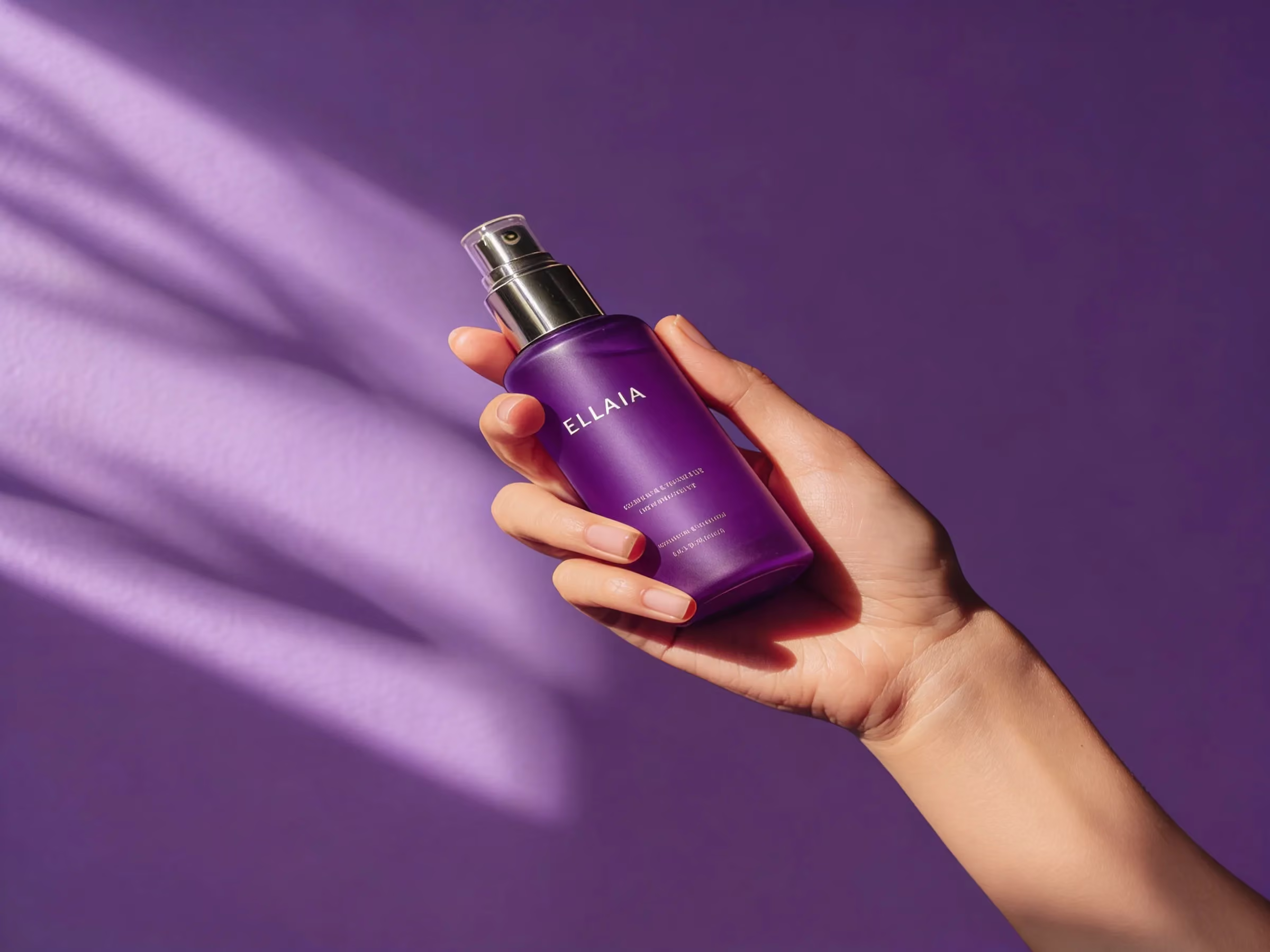
Product Seeding
For e-commerce brands, Amazon sellers, DTC founders, influencers, and content creators, Product Seeding is one of the fastest ways to turn inventory into reach, trust, and reusable media. Instead of starting with a cash fee, a brand sends product to a relevant creator and sets a clear exchange such as a post, a short video, a review, or off-platform UGC.
When Product Seeding works, it does more than create buzz. It helps brands test creator fit with less upfront cash, and it helps creators build a portfolio that can lead to stronger brand partnerships. This glossary explains what Product Seeding is, how it works, and how both sides can use it more strategically.
Key Takeaways
- Product Seeding is a creator marketing strategy where a brand sends free product to selected creators in exchange for agreed content, exposure, feedback, or user-generated assets.
- For brands, Product Seeding can generate UGC, social proof, and repeatable creator partnerships while reducing the need for large upfront fees.
- For creators, Product Seeding can become a portfolio builder that opens the door to affiliate work, ambassador roles, and larger brand deals.
- The best Product Seeding programs are run like systems, with targeting, measurement, disclosure rules, and follow-up built in from the start.
What Is Product Seeding?
Product Seeding is the practice of sending free product to carefully selected creators so a brand can earn authentic content, audience exposure, product feedback, or other agreed marketing outputs.
It sits between pure PR gifting and fully paid sponsored content. The brand is still investing through inventory, shipping, coordination, and possible content rights, but the starting compensation is product instead of a fixed media fee. That is one reason the model is widely used with smaller creators and lean e-commerce teams.
A typical Product Seeding campaign has four core parts:
- Creator Match: The product needs to fit the creator's niche, style, and audience.
- Content Ask: The brand needs a simple brief that explains what kind of content is needed.
- Usage Plan: Both sides should know whether the brand can reuse the content in ads, email, or product pages.
- Success Metric: The campaign needs one main goal, such as usable assets, clicks, or repeat creator retention.
Product Seeding matters because it creates learning as well as content. If a creator performs well, the brand has a clear candidate for a long-term creator partnership. If the creator is not a fit, the brand still learns what message, audience, or content angle should not be scaled.
Why Does Product Seeding Work?
Product Seeding works because creator marketing now rewards niche trust and content relevance more than celebrity scale. The influencer marketing industry was projected to reach $32.55 billion in 2025, 63.8% of brands planned to partner with influencers that year, and nano-influencers made up 75.9% of Instagram's influencer base in 2024, according to Influencer Marketing Hub.
It also works because shoppers respond to real-world product proof. Bazaarvoice reports that 85% of consumers turn to visual UGC over branded content when making purchase decisions, and three in five shoppers would rather buy from a product page with fewer reviews that include photos than one with many reviews and no user photos.
That is why Product Seeding is often paired with micro-influencers and reusable user-generated content. The shipment is not just a sample. It is a way to create social proof, gather fresh creative, and pressure-test messaging in public.
The value usually shows up in four ways:
- For Brands: You can trade inventory for content, feedback, and attention before committing to larger creator spend.
- For Amazon Sellers: You can support launches with off-platform awareness and marketplace-friendly creative assets.
- For Creators: You can turn a seeded campaign into a public proof point that helps you win future work.
- For Customers: You get more useful demos, routines, and product visuals than you often get from studio content alone.
How Should Brands Run a Product Seeding Program?
Brands should run Product Seeding like a structured content and acquisition workflow, not a free-sample blast. Sprout Social found that 65% of influencers want early creative involvement, while B2C brands often work with several creators at once, with 52% partnering with 6 to 10 and 23% partnering with 11 to 19.
That matters because scale creates operational risk. Once a team starts shipping to multiple creators, it needs tighter creator selection, briefing, asset collection, and rights tracking. If your team is already losing time to manual follow-up, this is the point where a more managed workflow starts to matter.
A clean brand-side process looks like this:
- Set One Core Objective: Pick the main job for the campaign, such as UGC creation, awareness, or marketplace support.
- Choose Creators By Fit: Prioritize niche relevance, content quality, and trust instead of raw follower count alone.
- Send A Short Brief: Explain the product story, timing, content ask, and disclosure expectations without scripting the creator's voice.
- Track Outputs: Log what shipped, what posted, what assets are reusable, and what angles performed best.
- Promote Winners Forward: Move the best creators into repeat seeding, affiliate work, or paid sponsored content.
The best programs also protect unit economics. Product cost, freight, team time, and replacement shipments all count, so the useful benchmark is often cost per usable asset or cost per qualified creator, not just cost per post.
How Can Creators Benefit From Product Seeding?
For creators, Product Seeding is valuable when it is treated as a stepping stone instead of a random freebie. A strong seeded collaboration shows that you can understand a brief, create clear content, and help a brand communicate product value. That proof can matter more than follower count, especially in the early stages of the creator economy.
Product Seeding is also one of the most accessible ways to enter influencer marketing. Many brands need believable demos, tutorials, testimonials, and routine content from everyday creators, not celebrity talent. That makes the model useful for UGC creators, nano influencers, and specialists in narrow product categories.
Creators should use a simple screen before saying yes:
- Take Relevant Products: Accept seeded products that fit your audience and personal standards.
- Clarify Deliverables: Confirm the deadline, number of assets, posting requirement, and usage rights.
- Disclose Clearly: The FTC says endorsements must be truthful and not misleading, and creators who are compensated to promote or review a product should disclose that connection.
- Save Your Best Work: Build a portfolio so future brands can see your on-camera style and product storytelling.
- Ask For The Next Step: After a strong campaign, ask about affiliate links, ambassador work, or recurring UGC.
Creators who perform well can use seeded campaigns to move into storefront curation, sponsored content, repeat brand deals, and deeper commerce roles. For marketplace-focused creators, the Amazon influencers glossary is a useful next step because it shows how brands think about creators who can support both discovery and shopping intent.
What Does Product Seeding Look Like In Practice?
Product Seeding works best when it is tied to a specific business use case. For a DTC brand, that may mean a monthly stream of short-form video for paid social. For an Amazon seller, it often means creator content that drives demand off-platform and strengthens the content around the product listing.
That marketplace angle matters because Amazon Ads reports that 94% of creator-inspired shoppers visit Amazon to complete their purchase, and 69% of consumers trust influencer recommendations over brand messaging. That is a strong reason for e-commerce teams to treat Product Seeding as a commerce input, not just a branding exercise.
Common Product Seeding use cases include:
- Product Launches: Build first-wave awareness and educational content around a new item.
- Creative Refreshes: Replace stale ads, landing page visuals, and product detail assets with fresh creator content.
- Seasonal Campaigns: Seed products ahead of gifting, travel, or category-specific shopping spikes.
- Creator Vetting: Identify which creators deserve a larger ongoing relationship.
If you want practical examples of kits, outreach, and campaign design, the Influencer Product Seeding Strategies article is a helpful companion to this definition.
Where Does Stack Influence Fit?
For brands that want a managed route, Stack Influence positions itself as a micro influencer marketing platform built around scale, automation, and Product Seeding for e-commerce. Its automated product seeding page describes a workflow where brands compensate micro influencers with product, and its pricing page says brands pay about $30 on average when an influencer completes a social post.
The current site also says Stack Influence supports 340,000 vetted creators, saves brands about 175 hours per month on average, and can improve ad conversions by 4x. Those numbers, along with its Amazon-oriented positioning, make it relevant for sellers that need volume, UGC throughput, and a more performance-based operating model than manual outreach usually provides.
Its differentiators are fairly clear:
- Managed Execution: The workflow is positioned as managed from start to finish rather than a simple creator directory.
- Performance-Based Pricing: Spend is tied to completed creator output instead of broad subscription access alone.
- Creator Scale: The company highlights a large vetted creator base for brands that need volume with micro influencers.
- Amazon-Specific Relevance: The site frames Product Seeding around marketplace growth, content rights, and external traffic support.
If you are weighing solutions, start with Stack Influence when the real problem is operational scale, then compare other influencer marketing platforms against that bar. If you are a creator, look for opportunities where the product, brief, and value exchange are clear enough to produce content you would actually be proud to publish.
Why Product Seeding Matters Long Term
Product Seeding matters because it turns inventory into learning, content, and trust at the same time. For e-commerce brands and Amazon sellers, that means faster creative testing, more social proof, and a lower-risk way to identify creator partnerships that deserve a bigger budget. For creators, it offers a practical path from gifted products to recurring brand deals.
The main takeaway is simple: Product Seeding works best when it is intentional. Choose the right creators, make the value exchange clear, measure what matters, and keep the partnerships that produce believable content and real business outcomes. If your team wants a repeatable way to grow with creators, Product Seeding is worth building as a system instead of treating it like a one-off tactic.
FAQ
Is Product Seeding good for micro influencers and nano influencers?
Yes. Product Seeding is especially common with micro influencers and nano influencers because brands can test fit at scale without paying large upfront fees. Smaller creators often bring stronger niche relevance and more believable content than larger, more generalized accounts.
Can Amazon sellers use Product Seeding?
Yes. Amazon sellers can use Product Seeding to generate off-Amazon awareness, creator content, and stronger conversion support assets around the listing. It works best when the seller treats seeding as part of a broader traffic and content strategy, not as a one-post shortcut.
How do content creators find Product Seeding opportunities?
Content creators usually find Product Seeding opportunities through influencer marketing platforms, direct brand outreach, creator communities, and repeat brand partnerships. Smaller creators can improve their odds by publishing niche product content consistently and keeping a portfolio of past UGC or seeded work.
Does Product Seeding require disclosure?
Yes. A free product is a material connection between the creator and the brand, so disclosure should be clear and easy for the audience to understand. Brands should define the expectation in the brief, and creators should make the relationship obvious in the post.
Can Product Seeding turn into paid brand deals?
Yes. Product Seeding often functions as a test phase that helps brands identify creators worth keeping in the mix for affiliate work, ambassador programs, or paid campaigns. Sprout Social reports that 71% of influencers offer discounts for longer-term partnerships, which reinforces how often creator relationships deepen after early proof of fit.