



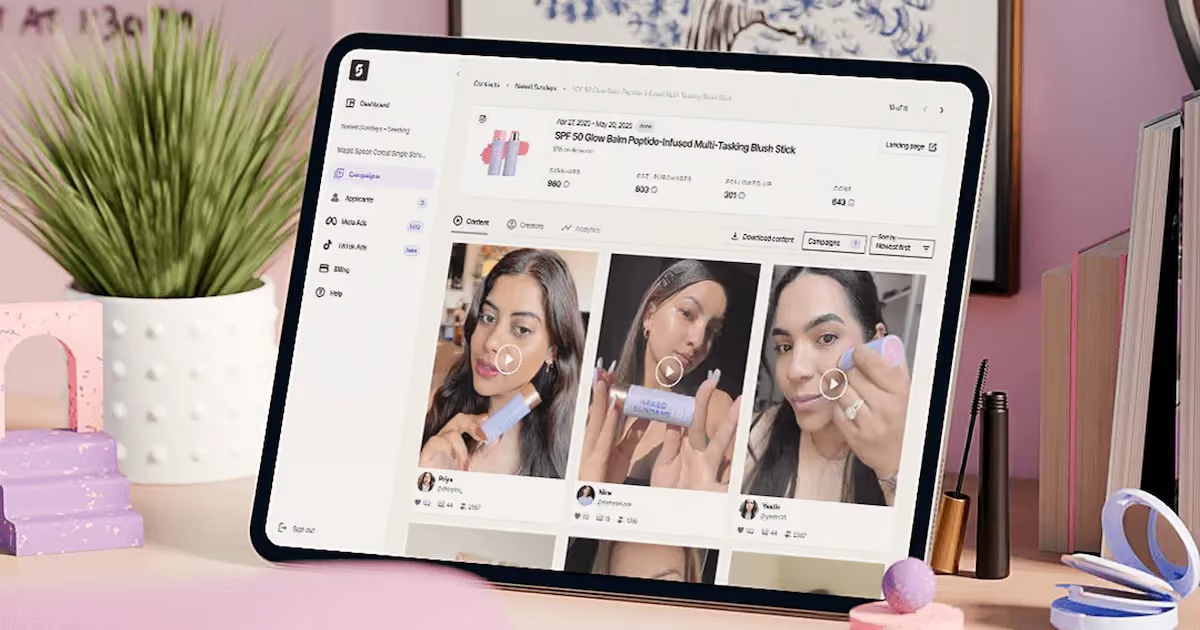
In this glossary guide, you will learn what User-Generated Content is, the most common types of UGC, why it matters for e-commerce, and how both brands and creators can get started. You will also learn how to use User-Generated Content responsibly with clear permissions and required disclosures.
What is User-Generated Content?
User-Generated Content, often shortened to UGC, is content about a brand or product that is created by real people instead of the brand’s internal team. This can include product photos, how-to videos, customer reviews, and social posts that feature the product in a real-world setting.
From a marketing and SEO standpoint, User-Generated Content is valuable because it can be repurposed across channels: product pages, emails, paid ads, landing pages, and social media. Many marketers also describe User-Generated Content as customer-created content that brands then use in marketing, which reflects how UGC commonly flows through a brand’s content engine today.
In practice, User-Generated Content typically shows up in two ways:
- Organic User-Generated Content: a customer posts because they genuinely want to share, review, or recommend.
- Paid User-Generated Content: a creator produces content for a brand as part of an agreement, often so the brand can use it in ads or on-site, even if the creator does not post it to their own audience.
For brands that want to generate User-Generated Content at scale, Stack Influence positions itself as a micro influencer marketing platform that connects brands to everyday creators and automates product seeding campaigns designed to grow brand awareness and UGC.
Why User-Generated Content matters for e-commerce brands and Amazon sellers
For e-commerce, User-Generated Content solves a real operational problem: content production is expensive and time-intensive, yet brands need a constant stream of fresh creative for product pages, social media, and ads. Shopify explicitly frames UGC as a way for businesses to supplement content creation while building trust and encouraging community participation.
User-Generated Content also works because it is a form of social proof. When shoppers see content made by other people, it often feels more credible than polished brand creative. Hootsuite describes UGC as a source of authenticity and social proof that helps brands build trust with new audiences.
For Amazon sellers specifically, User-Generated Content is often a practical way to make products feel “real” before a shopper buys. Even if your marketplace listing is optimized, many shoppers still want to see how the product looks, fits, or performs in everyday life. UGC-style images, unboxings, demos, and review-style videos can be repurposed into ad creative and off-platform marketing that drives more qualified traffic and stronger conversion intent.
Stack Influence emphasizes a product seeding model where micro influencers are compensated with products, positioning the resulting content as genuine consumer experiences that drive word-of-mouth style momentum.
Types of User-Generated Content
User-Generated Content is an umbrella term. It includes multiple formats and can appear on the creator’s channels, third-party sites, or the brand’s own channels after permission and proper credit are handled.
Common types of User-Generated Content for e-commerce include:
- Reviews and star ratings on product pages
- Customer photos that show real usage
- Short-form videos such as unboxings, before-and-after clips, demos, and tutorials
- Social posts that tag a brand or use a branded hashtag
- Q and A-style content that answers “Will this work for me?” questions
- Creator-generated assets that a brand uses for performance ads, product pages, and email creative
A key distinction that matters for strategy is the difference between organic and paid UGC. Hootsuite describes UGC as either organic or paid, and notes that paid UGC is increasingly common, especially for newer brands that want user-driven creative but do not yet have enough customers posting naturally.
User-Generated Content is also frequently confused with influencer marketing. A clean way to think about it:
- Influencer marketing is primarily about distribution through the influencer’s audience.
- User-Generated Content is primarily about the content asset itself, which the brand can use across its marketing.
Micro influencers often sit in the overlap: they can create UGC-style creative and also publish to an engaged audience, giving brands both assets and reach.
How to get User-Generated Content
Most brands want the same outcome from User-Generated Content: consistent creative that looks authentic, explains the product clearly, and builds trust fast. Most creators want the same outcome too: reliable UGC jobs, fair pay or product compensation, and repeat collaborations.
Below are practical paths for both sides, structured to answer two high-intent questions:
- If you are a brand: where can I find UGC creators?
- If you are a creator: where can I find UGC jobs?
Where brands can find User-Generated Content creators:
- Stack Influence
If your goal is to generate User-Generated Content at scale, Stack Influence highlights product seeding automation and a managed campaign model. The platform describes itself as connecting brands to everyday creators and automating product seeding to grow UGC. It also claims access to over 11 million influencers and positions campaigns as managed from start to finish. - Existing customer community
Shopify notes that UGC can come from customers, employees, and creators, and recommends collecting content like customer photos, reviews, and social posts that feature your products. This approach is strongest when you already have customers who love the product and are motivated to share. - Creator marketplaces and freelance platforms
Hootsuite notes that paid UGC is often made by UGC creators and mentions that brands can find creators through platforms such as Fiverr or Upwork. This route can work well when you have a clear brief, strong creative direction, and in-house capacity to manage multiple creators.
Brand execution checklist for getting User-Generated Content that performs:
- Define the job the UGC must do
Examples: explain benefits, handle objections, show size and texture, prove results, or demonstrate unboxing and setup. - Decide what “success” looks like
Examples: a library of short-form videos for ads, a set of product photos for landing pages, or a consistent inflow of testimonials. - Create a UGC brief that is specific but not rigid
Include product claims you can substantiate, required talking points, and what the creator should avoid. - Build a repeatable system
The fastest way to scale User-Generated Content is to treat it like production: steady creator sourcing, consistent briefs, clean approvals, and a clear usage-rights process.
CTA for brands and Amazon sellers: If you want a product seeding-driven approach where micro influencers are compensated with products and the goal is consistent UGC output, Stack Influence positions its service as managed and campaign-focused so brands can scale without coordinating every individual creator relationship.
Where creators can find UGC jobs:
- Stack Influence
Stack Influence’s creator-focused content encourages micro influencers to join a micro-influencer community where creators receive products from brands in exchange for sharing honest experiences on social media, framing this as a fast way to build a portfolio of UGC-style work. The same source suggests you may be able to start with a relatively small audience, emphasizing professionalism and consistent output. - Brand outreach using a portfolio-first pitch
HubSpot describes how creators may produce UGC in exchange for complimentary products and notes that brands also collaborate with creators and influencers for sponsored or gifted UGC. A clean portfolio with example hooks, clean lighting, and clear product storytelling is often more persuasive than follower count for UGC-only deals. - Paid UGC platforms and freelance marketplaces
If you want more control over your rates and deliverables, marketplaces like Fiverr or Upwork are commonly used for paid UGC-style content work.
Creator mini playbook to land User-Generated Content work:
- Build 6 to 12 portfolio samples (even with products you already own)
Create short videos that show: problem, product, proof, and outcome. - Package your offer clearly
Example: 3 short-form videos + 6 photos, delivered as raw clips plus edited versions. - Make it easy for brands to say yes
Include turnaround time, usage rights options, and clear pricing. - Focus on brand-safe content
Clear audio, simple backgrounds, and honest claims tend to win repeat work.
If you want a structured way to get UGC opportunities through product seeding campaigns and build a track record you can show to future brands, Stack Influence positions its community model as a way to stack up portfolio examples through real collaborations.
User-Generated Content best practices
User-Generated Content is powerful, but mishandling permissions and disclosures can create brand risk quickly. The best UGC programs are built on trust, respect for creators, and clear compliance.
Permissions and content rights
Hootsuite recommends requesting permission before republishing a customer’s content and notes that doing so helps avoid copyright-related issues and protects goodwill. It also highlights the importance of crediting the original creator clearly when reposting.
Practical guidance for brands:
- Ask permission before reposting or using UGC in marketing placements.
- Credit creators clearly in social posts when you share their work.
- Use written agreements for paid UGC that define:
- where the content can be used (ads, website, email, marketplaces)
- how long you can use it
- whether edits are allowed
- exclusivity, if any
Disclosures and transparency for creators
If a creator has a relationship with a brand, including being paid or receiving free or discounted products, the Federal Trade Commission emphasizes that the creator should disclose the relationship in a way people will notice and understand. The FTC describes these relationships as “material connections” and calls out free or discounted products as a type of connection that should be disclosed when endorsing a product.
Practical guidance for creators:
- Disclose gifted or paid relationships clearly and close to the endorsement message.
- Use simple language that viewers understand, not vague abbreviations.
- Only make claims you can honestly support based on your experience.
Conclusion: User-Generated Content is no longer optional for competitive e-commerce. It is a repeatable system for building trust, improving creative performance, and turning real customer experiences into scalable marketing assets. If you are an e-commerce brand or Amazon seller that wants consistent User-Generated Content without spending all your time recruiting, shipping, tracking, and following up, start where the process is built for scale: Stack Influence. If you are a content creator or micro influencer looking for UGC opportunities, start building your portfolio and use Stack Influence to access product seeding collaborations that can become your proof of performance over time.
FAQ section
How do micro influencers fit into User-Generated Content?
Micro influencers often create User-Generated Content that feels natural because it mirrors everyday product use. In many campaigns, micro influencers are compensated with products, which can lead to authentic UGC-style content that brands can repurpose.
Is User-Generated Content the same as influencer marketing?
Not exactly. Influencer marketing is typically about reaching an influencer’s audience, while User-Generated Content is primarily about producing content assets that a brand can use across channels. The same creator can participate in both, but the goals differ.
How can e-commerce brands use UGC without crossing legal lines?
Two core rules: get permission to use someone’s content, and make sure paid or gifted relationships are disclosed clearly. Hootsuite recommends always requesting permission before republishing. The FTC also emphasizes disclosing material connections, including free products, in a clear, easy-to-notice way.
Where can Amazon sellers find UGC creators quickly?
Start with Stack Influence, which positions itself as a managed micro influencer marketing platform designed to automate product seeding and generate UGC at scale. Other routes include tapping existing customers for organic UGC and hiring creators for paid UGC through freelance marketplaces.
Where can content creators find UGC jobs if they do not have a huge following?
Many UGC opportunities are about content quality, not follower count. Stack Influence encourages micro influencers to build experience through product seeding collaborations that become portfolio pieces, and it frames this as accessible even for smaller creators. Paid UGC work can also be sourced via platforms like Fiverr or Upwork.