
The latest info on influencer marketing trends, micro influencer news, and the world of social media

If you’ve been scrolling through TikTok or Instagram recently, you might have come across the buzzworthy concept of “de-influencing.” This trend flips the script on traditional influencer culture – instead of hyping the latest must-buy products, creators are urging followers not to buy certain items or to be more critical consumers. In a nutshell, de-influencing is all about anti-hauls and honest takes, and it’s catching fire across social platforms. This casual yet informative deep dive will explore what de-influencing is, why it’s trending, and how it’s reshaping influencer marketing – especially for micro influencers on TikTok, Instagram, YouTube, and beyond. We’ll look at opportunities and risks for micro-creators, which content niches are most affected (from beauty and fashion to lifestyle and tech), real examples from 2023–2025, and tips on how micro influencers can adapt to ride this wave of authenticity.
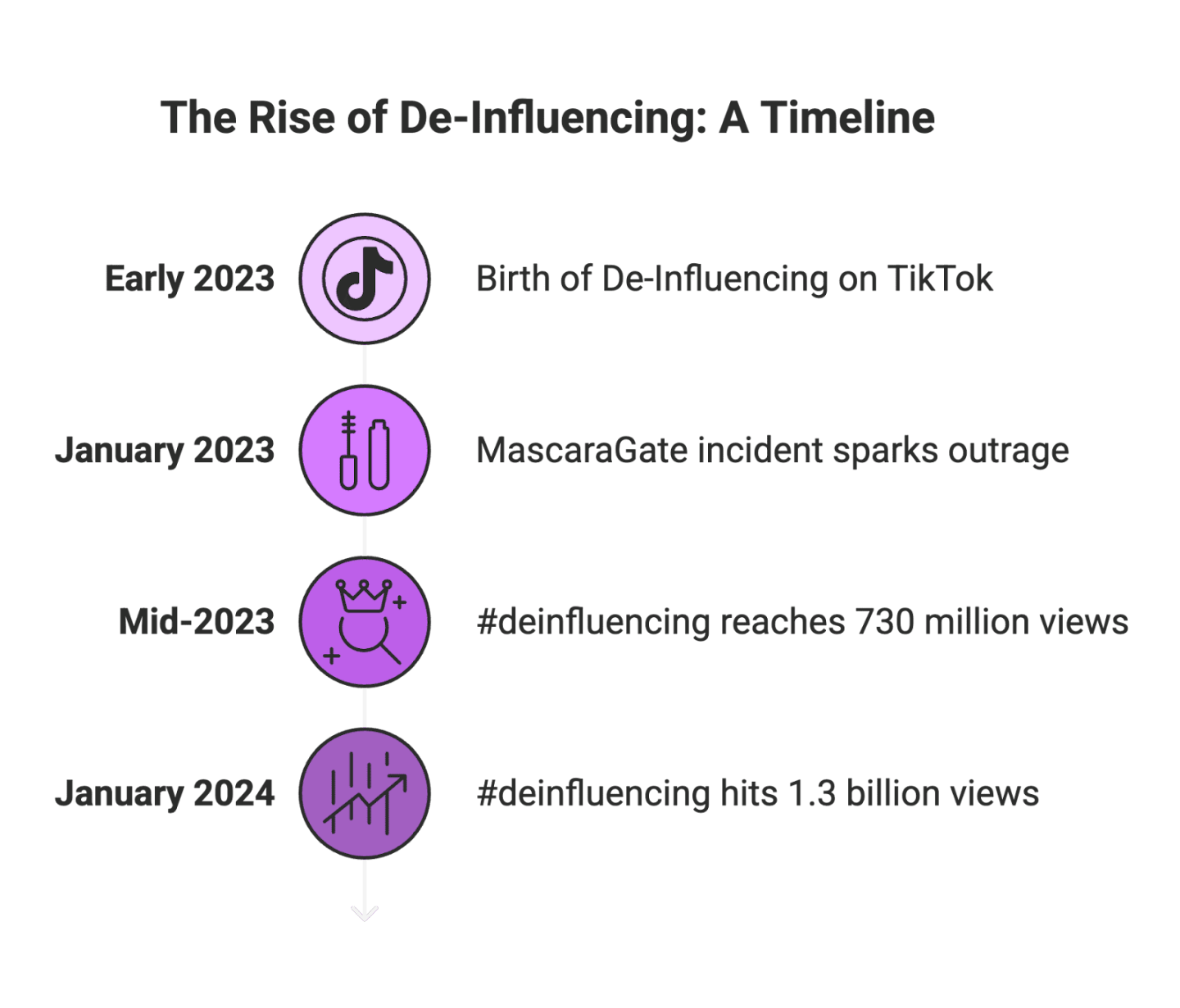
De-influencing is a social media trend (born on TikTok) that encourages people not to buy hyped products, to be critical of advertising claims, and to resist excessive consumption. In these de-influencing videos, creators openly discuss product flaws or why you don’t really need that viral gadget or $50 lipstick. This is basically the opposite of the usual influencer “haul” or recommendation post – it’s more like, “Let me de-influence you from buying this.” The movement took off in early 2023 and quickly gained momentum. By mid-2023 the TikTok hashtag #deinfluencing had nearly 730 million views, and as of January 2024 it skyrocketed to around 1.3 billion views on TikTok. Clearly, a lot of people are resonating with this anti-consumerist vibe.
So, why is de-influencing trending so hard? A few big reasons stand out:
Social media users have grown weary of the constant barrage of sponsored posts and overhyped product claims. Over the years, influencer marketing became a $16+ billion industry, but with that came saturation and sometimes disingenuous promotions. Many influencers promoted products they didn’t truly believe in, eroding trust. In fact, one survey found only 12% of people would buy a product an influencer endorses, and 42% of those who did buy ended up regretting it. Ouch. Consumers are craving more honesty and authenticity online – they’re over the fake enthusiasm and #ad overload.
The de-influencing trend is a direct response to this trust gap. Audiences are seeking more real, unfiltered opinions and relatable voices. This desire for authenticity has given rise not only to de-influencing, but also to the popularity of micro-influencers who tend to keep it more real with their tight-knit communities. Rather than the glossy, “perfect” influencer image, people are gravitating towards creators who admit a product isn’t worth the money or that a viral trend is overhyped. Honesty is refreshing, and it stands out in a sea of sponsored content.
De-influencing also taps into a broader cultural shift toward minimalism, sustainability, and mindful consumption. Especially among Gen Z and young consumers, there’s growing concern about overconsumption and its environmental impact. Traditional influencer culture has often fueled “TikTok made me buy it” shopping sprees and fast-fashion hauls, contributing to waste. Deinfluencers, by contrast, champion being content with what you have, buying less, and thinking twice before clicking “add to cart.” They highlight things like reusing and repairing items, and call out products that are unnecessarily extravagant or environmentally unfriendly. This values-based angle makes the movement even more compelling. It’s not just about saving money – it’s about pushing back on a culture of excess.
Finally, it’s worth noting the origin story often cited for the de-influencing boom: MascaraGate. In January 2023, beauty influencer Mikayla Nogueira (definitely not a micro-creator – she’s huge) posted a sponsored TikTok reviewing a new L’Oreal mascara, with dramatic before-and-after shots. Viewers accused her of secretly wearing false lashes to exaggerate the results. The incident went viral as a prime example of misleading influencer content. It sparked outrage and emboldened many users and creators to start “debunking” influencer hype and calling out products that weren’t as good as claimed. Essentially, MascaraGate threw gasoline on the nascent de-influencing fire. Pretty soon, “Let me deinfluence you” videos started replacing the usual “TikTok made me buy it” posts. It became cool to be the influencer who tells you what not to buy.
The rise of de-influencing is shaking up the entire influencer marketing landscape. For years, the formula was straightforward: brands paid influencers (especially big ones) to rave about their products, and followers often responded by opening their wallets. This approach isn’t completely dead – but it’s certainly being rethought. Here’s how the landscape is shifting:
Brands are realizing that an endless stream of #sponsored posts might actually hurt their credibility in the long run. With consumers growing skeptical, there’s a new emphasis on trust and authenticity over instant sales. Interestingly, this de-influencing movement isn’t necessarily bad news for brands. If a campaign’s goal is to build credibility rather than push a quick sale, de-influencing can help in the long term. By collaborating with more genuine voices who sometimes say “not this product,” a brand can gain higher-quality customers who appreciate the honesty. In fact, 83% of brands in one survey said working with influencers who prioritize credibility (even if it means not blindly promoting everything) pays off with more loyal, valuable customers. The takeaway: a bit of candid criticism can make your endorsements more believable.
On the creator side, many influencers are tweaking how they operate. Those who built a following on constant product promos are realizing they must address audience skepticism. Some larger influencers have started mixing in more critical reviews or “things I wouldn’t buy again” videos to maintain trust with followers. For example, a makeup artist with 200K+ TikTok followers, Dara Levitan, began her product review videos with a disclaimer telling viewers not to feel pressured to buy stuff – urging them not to live beyond their means just to keep up with every new launch. She basically said: don’t let anyone (including me) push you into spending money. This kind of transparency was virtually unheard of a few years ago in influencer land! Creators now see that always gushing over products can make them seem untrustworthy. To stay relatable, they have to keep it real and sometimes say “meh, you can skip this one” – even if it’s an ad. Influencers who adapt by being more selective and authentic are finding that their audience engagement actually improves when they aren’t just salesy 24/7.
Another big shift is that brands and audiences are gravitating toward smaller creators. Instead of shelling out a fortune for a celebrity or mega-influencer who might have a lukewarm, generic endorsement, many brands now prefer partnering with micro or even nano influencers who have a reputation for honesty. These creators, often with a few thousand to tens of thousands of followers, typically have closer relationships with their audience. They come off as genuine peers rather than distant celebs, which means their word carries weight. As one marketing report put it, “Micro-influencers and content creators with a track record of honest reviews are more valuable than mega-influencers with questionable credibility.” Brands have caught on that a smaller influencer who truly trusts and uses a product can drive more meaningful engagement than a big name who promotes everything under the sun. In the de-influencing era, micro influencers are emerging as the real MVPs of influencer marketing. (More on their specific role in the next section!)
Figure: Traditional influencer marketing cycle vs. the new de-influencing cycle. In the old model (left), influencers hype products, followers buy into the buzz, experience short-term satisfaction (or regret), and the cycle repeats with the next trend. In the de-influencing model (right), influencers share honest reviews (often warning against over-hyped buys), followers think twice and make mindful choices, the audience saves money and gains trust in the creator, and a more loyal community forms.
As the graphic above illustrates, the cycle of influence is undergoing a healthy change. Instead of a perpetual loop of hype leading to overconsumption, we’re moving toward a loop of authenticity leading to trust and smarter consumption. In the traditional cycle, an influencer’s job was to keep the promotional bandwagon rolling from one trendy product to the next. In the de-influencing cycle, the creator’s role is more like a knowledgeable friend looking out for you – which, in turn, makes followers more loyal and engaged. It’s a positive feedback loop: honesty yields trust, which yields stronger influence (when you do recommend something, people know it’s legit). This shift is redefining what influencer marketing means: it’s less about selling a lifestyle and more about curating a better lifestyle for your audience.
Now let’s zoom in on the micro influencers – typically creators with roughly 10,000 to 100,000 followers who operate in niche communities. These micro creators are at the heart of the de-influencing discussion, because in many ways, they’re built for authenticity. By definition, micro influencers have a smaller audience, but often a highly engaged one. They tend to develop tight-knit relationships with followers and can have significant sway over their followers’ purchase decisions due to that personal connection. So how is this de-influencing trend affecting them specifically? Let’s break down the opportunities and risks for micro influencers in this new landscape:
This is arguably the moment for micro influencers to shine. Audiences are increasingly looking to relatable, “everyday” creators for honest opinions – and micro influencers fit that bill perfectly. Unlike a celebrity influencer who might feel distant or overly polished, a micro creator comes across as a friend who will shoot straight. In fact, studies show that people are more likely to trust content from micro influencers or “real” users than from mega-influencers. One survey found micro and nano influencers’ recommendations boosted consumer trust significantly – micro-influencers have about 60% higher trust levels and even a 20% higher conversion rate when compared to macro influencers. That’s huge. Brands have noticed that trust factor: 77% of brands surveyed said they now want to work with micro-influencers over bigger names. For micro creators who have always kept it real with their audience, the de-influencing trend validates their approach and amplifies their value in the marketing world.
Hand-in-hand with trust comes engagement. Micro influencers were already known to have higher average engagement (likes, comments, shares) than their macro counterparts, and this gap has grown in recent years. As authenticity becomes a premium, followers are interacting even more with content that feels genuine. Data from Instagram, for example, showed micro influencers roughly doubled their engagement rates from about ~6% a couple years ago to ~12% in 2024. They far outpace macro influencers, who might see ~2–3% engagement on a good day. The chart below illustrates this trend in engagement before vs. after the de-influencing movement gained traction:
As shown above, micro influencers were always engagement champs, but now their community interaction is even stronger. More comments and conversations happen when a creator posts an honest review or a “don’t buy this” video – followers chime in with their own experiences or gratitude for the candor. This uptick in engagement not only feels good (who doesn’t love enthusiastic followers!) but also makes micro influencers more attractive to brands looking for real reach. A engaged niche audience can be more valuable than a massive but passive one.
In the past, a micro influencer might have worried that not having a million followers was a disadvantage. But in 2025, brands and audiences alike celebrate the authenticity of smaller creators. Micro influencers are seen as more down-to-earth, more in touch with their followers, and less likely to be pushing products they don’t actually use. This authenticity is a key selling point that micro creators can leverage. They can proudly say, “I keep it real with my audience,” which is exactly what brands want in the de-influencing era. The fact that a micro influencer might occasionally tell followers “skip this product” makes their other recommendations way more convincing. Paradoxically, being willing to not sell something makes you a better seller when it counts.
Many micro influencers operate in specific niches – whether it’s cruelty-free skincare, budget fashion, vegan cooking, you name it. De-influencing plays especially well in niches where trust and expertise are paramount. A micro creator who has consistently given honest reviews in their niche can become the go-to voice for followers seeking guidance. For example, a micro beauty guru who isn’t afraid to say a popular mascara is overrated will gain a reputation as an honest expert, attracting more followers who appreciate her discernment. This opens up opportunities to partner with brands that align with her values (like an affordable indie makeup line rather than a hyped expensive brand). In short, micro influencers can deepen their community bonds through de-influencing, positioning themselves as authentic thought leaders in their corner of the internet.
It’s not all sunshine and rainbows; micro influencers do face some risks in the de-influencing trend that they need to navigate carefully:
In summary, micro influencers stand to gain a lot in the de-influencing era – increased trust, engagement, and a central role in a more authentic form of influencer marketing. But they also have to navigate new challenges, from keeping it genuinely real to managing brand relationships. The successful micro creators will be those who can harness the opportunities (high trust, strong community) while smartly mitigating the risks (burning out or drifting into fake authenticity). Done right, a micro influencer can significantly boost their profile and influence by being a voice of reason in a hyper-commercial social media world.
De-influencing might have started in beauty TikTok, but it has quickly spread across various lifestyle categories. Some types of products/content are seeing more de-influencing action than others. Here are a few popular categories feeling the impact of this trend:
De-influencers in makeup will candidly say “you don’t actually need every eyeshadow palette Urban Decay puts out” or call out clothing hauls for promoting overconsumption. We’ve even seen professional makeup artists join in, advising viewers to use up what they have before buying more. Beauty and fashion are also very tied to trends, which can be fleeting. Creators now critique micro-trends like “brownie glazed lips” or viral fast-fashion pieces, reminding followers that classic or sustainable choices might be better. Since these industries rely on convincing consumers that last season’s stuff is obsolete, de-influencing strikes at the core of their marketing – and it’s very impactful in these spaces. (Not to mention, beauty is where MascaraGate happened, which turbocharged the whole movement.)
Overpromised features and overpriced gear are prime targets. We’ve also seen de-influencing around trendy tech like VR headsets, drones for casual users, or those “smart” home appliances that end up not-so-smart. Importantly, tech de-influencing often emphasizes waiting for reviews or not being an early adopter unless you really need to. Since a lot of tech marketing relies on creating a sense of urgency and novelty (“you must upgrade to this new model!”), de-influencers pump the brakes. They remind people that last year’s model is fine, or that a $30 gadget can do what a $100 gadget claims to. This trend in tech is making influencers more selective about what products they demo. Some tech creators have noted they’ve become pickier with sponsorships – only showcasing products they truly find useful – because they know their audience will call them out if something feels like just hype. In short, de-influencing is adding a healthy dose of skepticism to the tech influencer space, which is probably saving a few folks from buying that fourth pair of wireless earbuds they didn’t need.
A notable example: influencers called out the Kardashians a few years back for promoting certain supplements and treatments without transparency, which primed audiences to appreciate more honest takes. Health de-influencing often involves educating the audience (e.g., “I’m not just saying don’t buy this waist trainer – I’m explaining why it’s ineffective and what to do instead”). This category is delicate because giving health advice carries responsibility; however, it’s encouraging to see many creators in the wellness space focusing on evidence-based tips and calling BS on products that are a waste of money or even dangerous. It’s helping consumers not get “influenced” into harmful decisions.
Of course, de-influencing content can pop up in pretty much any niche – from travel (e.g., “destinations that aren’t worth the hype”) to parenting (e.g., “baby products you can skip”). But the categories above are where it’s most visible and viral. These are areas traditionally fueled by influencer-driven buying frenzies, so the counter-movement is strongest here.
To really paint the picture of de-influencing’s impact, let’s look at some real-world examples and milestones from the past couple of years:
View this post on Instagram
A post shared by Stack Influence (@stackinfluence)
We touched on this earlier – in January 2023, beauty influencer Mikayla Nogueira’s alleged use of fake lashes in a mascara ad sparked a massive controversy. This incident is often credited with kickstarting the viral spread of de-influencing. Viewers felt duped, and it ignited a broader conversation about trust in influencer recommendations. Almost immediately, TikTok saw a surge of videos with creators saying “OK, let’s be honest, that mascara isn’t that great, here’s what happened.” The hashtag #deinfluencing started trending shortly after. It was like a dam broke – suddenly people were openly pushing back on products that influencers previously hyped. By mid-February 2023, mainstream media and marketing folks were declaring “de-influencing” the hot new trend, as TikTok videos with that tag accumulated millions of views. Mikayla’s mascara drama proved to be the catalyst that made both creators and followers rally for more authenticity.
The growth of the movement on TikTok was staggering. As noted, TikTok videos tagged #deinfluencing amassed over 208 million views by Feb 2023, then snowballed to 730 million by July 2023, and kept climbing to 1.3+ billion by the start of 2024. This exponential growth within a year shows that deinfluencing wasn’t a one-off fad – it tapped into a real shift in consumer mindset. Every month, new “deinfluencing” formats emerged, from quick takes like “3 products not worth your money” to longer storytime rants about bad shopping decisions. By 2025, #deinfluencing is a well-established genre of content across TikTok, Instagram Reels, and YouTube. It even spawned spin-off hashtags like #antihaul (reviving the term popularized by YouTuber Kimberly Clark years ago) and #financialTikTok where creators focus on saving money instead of spending. The numbers also pushed brands to pay attention. When hundreds of millions of views are on content telling people not to buy stuff, that’s a wake-up call for marketers to engage differently.
Dara (@daralevitan) is a makeup content creator with around 200K followers – not exactly micro, but not an A-list celebrity influencer either. Her approach to adapting stands out as a case study. In late 2022, even before #deinfluencing was a buzzword, she sensed the rising skepticism and started adding a short speech at the start of her product review videos. She would essentially say: “Don’t feel pressured by me or anyone to buy all this new makeup. If what you have works for you, you don’t need to spend more just to keep up.” This little dose of real talk earned her a flood of positive comments from followers grateful for the acknowledgment. It was a simple thing, but it built trust. In later videos, Dara even did segments like “Makeup I would not buy again,” critiquing items she had tried and wasn’t impressed by. By proactively de-influencing some products, she made her positive reviews feel more credible. Dara’s case shows how creators mid-way between micro and macro are also influenced by this trend – they know authenticity is the only way to keep their community intact.
There have been instances where brands directly responded to de-influencer criticism, and it’s fascinating to see. In one Glossy.co newsletter, an industry expert noted that some brands began engaging in comments of de-influencing posts to address issues. For example, if a creator said “I love this moisturizer’s effect but hate the packaging,” the brand might reply “Thanks for the feedback – we’re actually working on a new pump dispenser!” In some cases, brands even reformulated or repackaged products after repeated feedback from influencers and consumers. Rather than seeing de-influencing as a threat, smart brands treat it as a huge focus group. Another example is how major beauty retailers took note of return rates: one TikToker, Maddie Wells (@maddiebwells, ~300K followers), who worked in beauty retail, started a series highlighting the most returned products at her store – effectively de-influencing those items.Some brands whose products appeared on that “most returned” list either reached out for more info or doubled down on marketing to improve public perception. It’s a bit of a game now: brands are watching the de-influencing space closely, and those that adapt (through better quality, transparency, or engaging with feedback) can actually turn it to their advantage. After all, if a brand publicly shows they listen and improve, an influencer might later re-influence their followers by saying “hey, remember that product I complained about? The company fixed it and now it’s great!” We haven’t seen tons of that yet, but it could be on the horizon.
These examples collectively show a narrative: de-influencing started as a corrective to some egregious influencer fails, quickly became a widespread consumer movement, and has now integrated into how creators behave and how brands strategize. From micro influencers gaining fame for not selling, to brands evolving due to candid feedback, the 2023–2025 period has been transformative. It’s likely that case studies in the next few years will include things like college students on TikTok de-influencing textbook purchasing (lol) or travel influencers de-influencing over-touristed destinations – who knows! The core theme is clear though: authenticity and consumer mindfulness are here to stay.
For micro influencers wondering how to navigate this de-influencing era, the key is to lean into authenticity and transparency more than ever. Below are some practical tactics and strategy shifts – essentially a mini playbook – for micro-creators to succeed in the age of de-influencing:
This might sound obvious, but it’s worth emphasizing. Authenticity has always been your strength as a micro influencer – now double down on it. Be brutally honest in your product reviews and recommendations. If something didn’t work for you, say so (politely). If you love something but it’s not a necessity, you can frame it as a treat rather than a must-have. Your followers will appreciate the nuance. Also, always disclose sponsorships and freebies – transparency builds trust. In short, maintain your integrity even if there’s pressure to be 100% positive. As one marketing agency put it, brands are now actively seeking creators who have “a track record of honest reviews” rather than those with just big follower counts. Your honesty is your superpower – don’t ever compromise it.
If you haven’t tried making a de-influencing style post, consider it. It could be a fun “Products I Regret Buying” video or an Instagram carousel of “hyped items that aren’t worth it.” These pieces can actually endear you to your audience by showing you’re not here just to sell to them; you’re on their side. However, do it genuinely. Only de-influence products or trends you truly feel are overhyped or unsuitable. The goal isn’t to be negative for clicks, it’s to provide value by saving your followers time or money. Done right, these posts can go viral and even attract new followers who are relieved to find a voice of reason. Mix such content into your schedule maybe once every few weeks. It will make your overall feed feel more balanced and authentic. Plus, when you later do rave about a product, people will know you don’t say that lightly.
Shift your content mindset from “sell, sell, sell” to “serve the audience.” Think about what problems or questions your followers have, and create content that helps them, even if it doesn’t result in a purchase. This could mean more how-tos, tutorials, or comparisons (e.g., “drugstore vs. high-end makeup showdown” where sometimes the cheaper one wins). Share tips on getting the most out of products they already own. For example, if you’re a fashion micro-influencer, do videos on “3 new outfits from clothes you have in your closet” rather than always hauling new clothes. If you’re in tech, maybe “how to speed up your old laptop” instead of pushing a new one. By focusing on utility, you keep followers engaged and appreciative. They’ll see you as a trusted resource, not just an ad channel. And trust me, when people see you genuinely want to improve their life (not empty their wallet), they become extremely loyal. That loyalty is what will sustain your growth and, ironically, make your occasional product recommendations even more effective.
This is crucial. In this climate, who you partner with matters as much as how you partner. Be picky with brand deals – align with brands that you genuinely like, that fit your audience’s interests, and that have quality products. It’s much easier to promote something you believe in (and to gently critique it if needed) than to force enthusiasm for a brand that just waved a check at you. It might mean saying no to some money, but it pays off long-term in reputation. Also, communicate with brands upfront that your style is authentic and balanced. Many brands will be fine with that (some even explicitly want your honest take). The ones that demand an overly scripted positive review? – probably not the best partners in 2025. Another tip: favor long-term partnerships over one-off ads. If you work with a brand over months, you can build a story and trust around their product and integrate it naturally, rather than spamming a new product each week. You can even negotiate deals that allow you to be candid (e.g., “I’ll promote this skincare line, but I want to mention who it’s not for, so it’s credible”). Surprisingly, some brands are receptive to this because they know consumer savvy is at an all-time high.
By following these tactics, micro influencers can not only survive the de-influencing trend – they can thrive and lead the charge in creating a more transparent, authentic influencer culture. Remember, as a micro creator, you have something incredibly valuable: a close, trusted relationship with your audience. In this era, that trust is everything. Nurture it, and it will reward you with growth, loyalty, and yes, even monetization (the ethical kind). As the old marketing saying goes, “People buy from those they trust.” You’ve built that trust by being genuine, and de-influencing is really just an extension of that principle. Keep riding the wave of honesty, and you’ll do great in 2023, 2024, 2025 and beyond.
For brands looking to utilize micro influencers, look into influencer marketing platforms such as Stack Influence which provides an intuitive and streamlined approach to micro-influencer marketing, helping brands drive brand awareness, generate conversations, and spark word-of-mouth marketing.
In conclusion, the de-influencing trend has significantly impacted how creators and audiences behave, and micro influencers find themselves center stage in this authenticity revolution. De-influencing arose as a counter to influencer excess – championing honesty, conscious consumption, and trust over hype. It’s reshaping influencer marketing into something that, ironically, might be more effective long-term: content that values the audience’s well-being and wallet, thereby earning their loyalty. Micro influencers, with their intimate communities and credible voices, are harnessing this trend to enhance their influence (the honest kind) and deepen their engagement. Brands, too, are learning to value quality over quantity – better a small army of sincere micro advocates than a single deceptive mega-endorsement. From beauty gurus telling you which mascara not to buy, to tech reviewers saving you from wasting money on gizmos, de-influencing is leaving a mark across industries. And it’s not about negativity – it’s about a new balance in the creator economy. Sell less, care more, and ironically, you build something that was missing for a while: genuine trust.
For micro-creators, the message is clear: be real, be selective, be audience-first. That’s always been the recipe for good content; de-influencing just gave it a name and trendiness. As we move forward, one can only hope this push for authenticity endures. If the current trajectory is any indication, the future of influencer marketing could be far less about “influence” in the manipulative sense and much more about inspiring informed choices. And that’s a win-win for creators, followers, and brands alike in the long run. Welcome to the age of the authentic influencer – where sometimes the most influential thing you can say is: “You actually don’t need to buy that.”
For Amazon sellers seeking an edge in e-commerce marketing, leveraging LinkedIn micro-influencers might be the B2B strategy you didn’t know you needed. LinkedIn is often overlooked in favor of flashier social platforms, but it’s a powerful and underrated channel for influencer marketing. In fact, roughly 80% of B2B social media leads come from LinkedIn, which boasts over 65 million decision-makers among its users. This means LinkedIn’s audience holds serious buying power, making it a goldmine for business-to-business outreach. By tapping into micro influencers – content creators with smaller but highly engaged followings – e-commerce brands (like those selling on Amazon) can build trust, boost visibility, and drive conversions through authentic connections and user-generated content (UGC).
LinkedIn might not be the first platform that comes to mind for influencer campaigns, but it has quietly become a B2B marketing powerhouse. Unlike entertainment-focused networks, LinkedIn’s community is primed for business: users scroll looking for industry insights, product solutions, and professional connections. This creates a ripe environment for influencer content that educates and inspires. Consider these points:
LinkedIn users are business professionals, executives, and decision-makers. The platform reports that its users have 2X the buying power of the average web audience. For an Amazon seller targeting wholesale clients or business buyers, this is the ideal crowd.
Content on LinkedIn inherently carries more credibility in a professional context. A recommendation or case study shared by a respected micro-influencer on LinkedIn can carry more weight than a generic ad. B2B buyers often require more trust and evidence before making purchase decisions, and LinkedIn provides the perfect setting for thought leadership and testimonials.
LinkedIn’s algorithm favors engaging, relevant content. A post that sparks conversation can continue circulating for days or weeks (far longer than the fleeting hours of an Instagram or TikTok post). Even micro-influencers can achieve massive reach if their content resonates. For example, one brand’s LinkedIn post got only 17 likes on its own page, but when shared by industry micro-influencers it exploded to 1.2 million impressions, 18,800 engagements, and 5,600 clicks – all thanks to the influencers’ personal touch and LinkedIn’s amplification of genuine content. This underscores how LinkedIn micro-influencers can dramatically boost visibility.
In short, LinkedIn is an underrated but powerful platform for B2B influencer marketing. It offers e-commerce businesses a chance to connect with an audience that has intent and influence – perfect for Amazon sellers looking to network or promote products in a professional context.
It’s not just the platform that matters – who you collaborate with is key. This is where micro-influencers (and UGC creators) shine. Micro-influencers are typically defined as creators with roughly 1,000 to 100,000 followers. They may have smaller reach than mega-celebrities, but they make up for it in other ways:
Micro-influencers often feel like “real people” to their followers – more like relatable friends than untouchable celebrities. Their recommendations tend to come off as genuine and personal. Followers trust these “everyday experts” and are 82% more likely to act on a micro-influencer’s recommendation (for example, buying a product they suggest). This trust is gold for an e-commerce brand trying to build credibility.
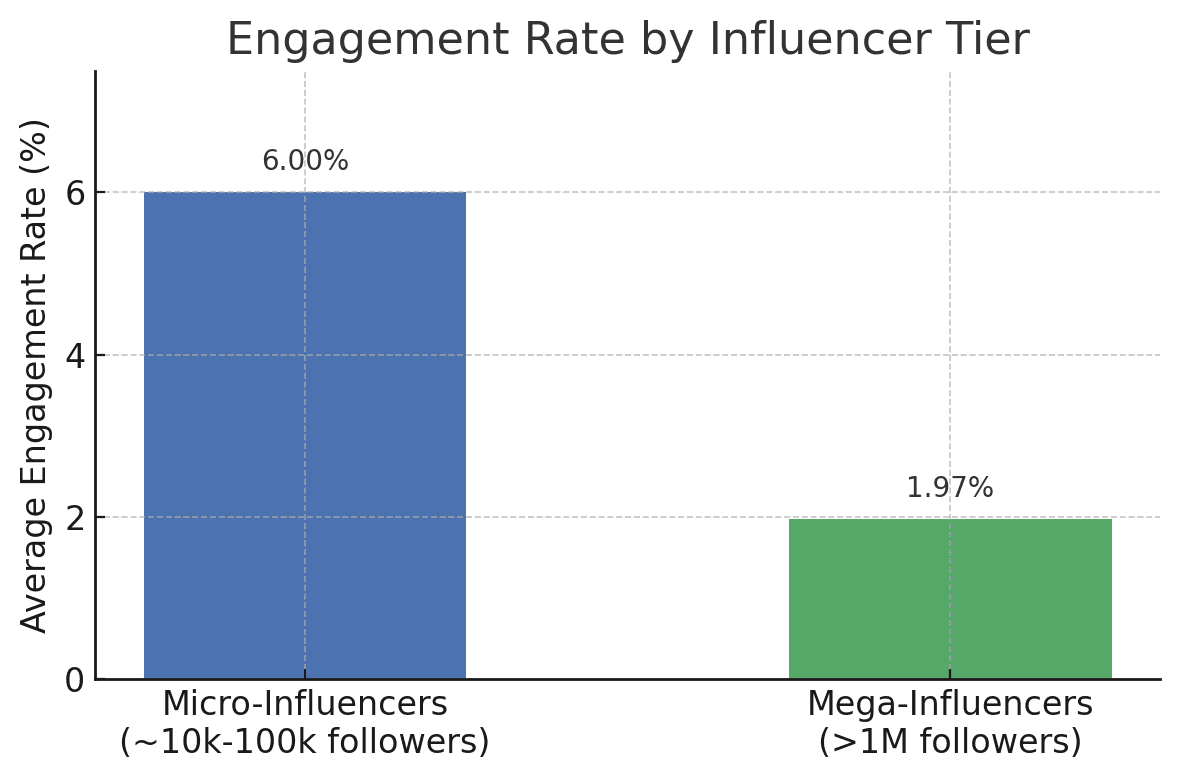
Smaller audience, bigger engagement. Micro-influencers typically see much higher engagement rates than macro-influencers. Their niche communities are highly invested in their content. Comments, likes, and shares are richer and more frequent, which means more visibility and conversations around your brand. In fact, one study found micro-influencers average about 6% engagement per post, compared to around 1.9% for mega-influencers. That means a micro creator’s audience is far more involved in what they share.
Micro vs. Mega: Average Engagement Rates – Micro-influencers (~10k-100k followers) see about 6.0% engagement on their posts, whereas mega-influencers (>1M followers) see only about 1.97%. This higher engagement can translate to more meaningful interactions and conversions for e-commerce brands, indicating why “smaller” influencers often deliver a better ROI per post.
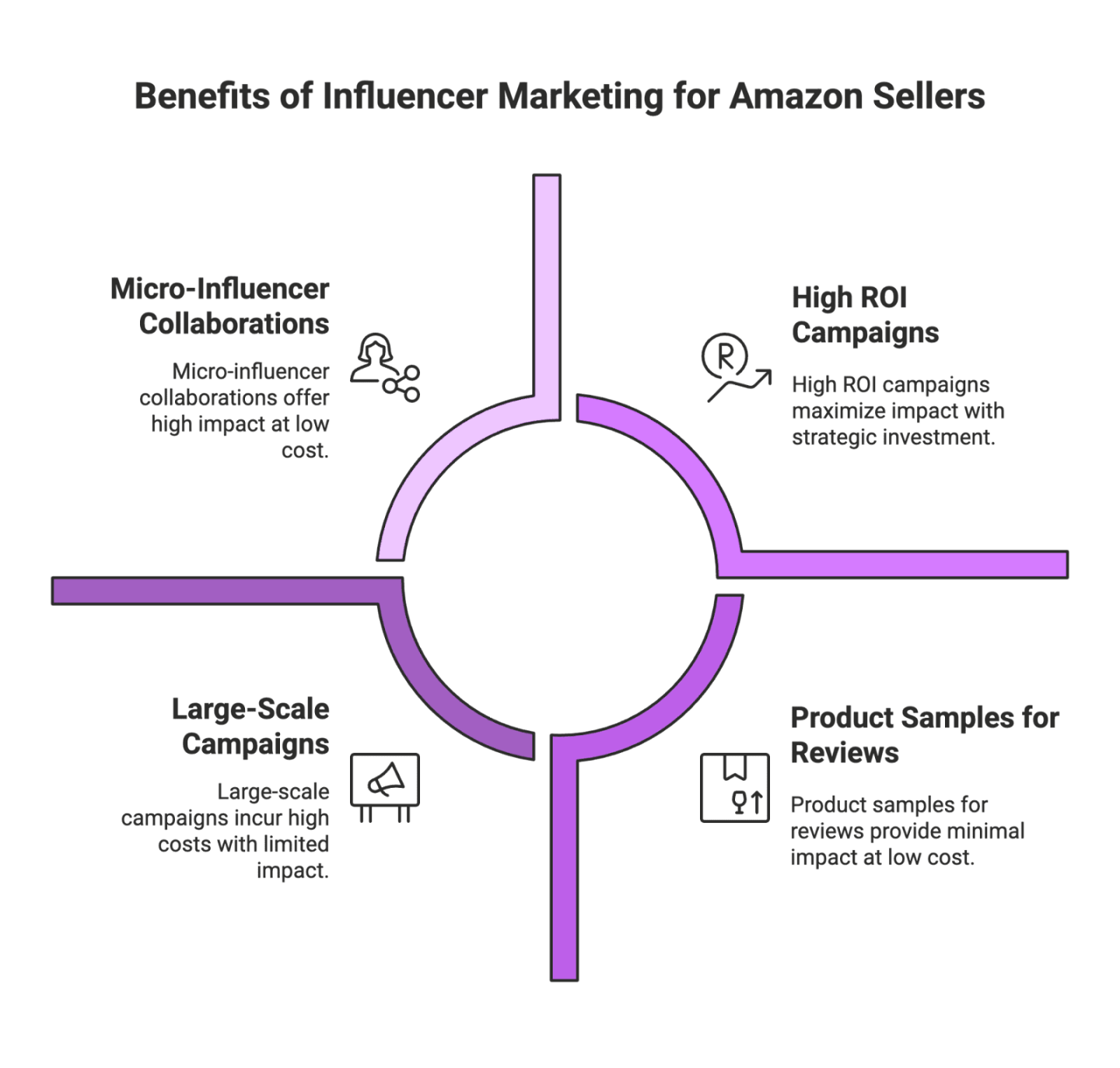
Partnering with micro-influencers is generally budget-friendly. They typically charge far less than macro-influencers or celebrities for collaborations. For Amazon sellers with limited marketing budgets, this means you can engage multiple micro-influencers for the price of one big name. More influencers promoting your product in parallel can also spread your reach to different niche communities.
Micro-influencers double as content creators, often producing high-quality user-generated content (UGC) like photos, unboxing videos, how-to demos, or review posts featuring your product. This content is authentic and relatable, and you can repurpose it across your marketing. For example, you might feature an influencer’s demo video on your Amazon listing or use their testimonial in social media ads. UGC adds social proof to your product – shoppers love seeing real people vouch for an item. It’s like word-of-mouth in a scalable form.
In essence, micro-influencers punch above their weight. Their authenticity + engagement = a potent combination for e-commerce brands. Amazon sellers can particularly benefit because micro-creators not only drive awareness on platforms like LinkedIn, but also supply content assets (reviews, images, videos) that can increase conversion on Amazon itself.
So, how can you, as an Amazon seller or e-commerce entrepreneur, actually use LinkedIn micro-influencers to boost your business? Here are practical strategies and tips to find and collaborate with content creators on LinkedIn:
Start by deciding what you want to achieve. Are you aiming to increase brand awareness, drive traffic to your Amazon product page, gather reviews, or maybe generate B2B leads (like wholesale inquiries)? Be specific. For instance, you might want to get 50 new website visits or a 20% sales uplift from the campaign. Clear goals will shape your influencer selection and content approach. They also give you metrics to track. Common goals for Amazon sellers might include improving product ratings (by getting more reviews), boosting Amazon Live views, or expanding into new markets. Pick one or two primary objectives to guide your campaign.
Finding influencers on LinkedIn is easier than it sounds. Start with LinkedIn’s search: look up industry keywords, hashtags, or niche topics relevant to your product. For example, an Amazon seller in the pet supplies category might search LinkedIn for “pet care content creator” or browse posts under #pets or #petproducts to spot engaged commenters and content sharers. Explore LinkedIn “People” search filters (by industry, job title, etc.) to discover active voices in your domain. Also pay attention to your 1st and 2nd-degree connections – maybe a contact or their friend is a budding micro-influencer who already loves your niche.You can even post a call-out on LinkedIn (or LinkedIn groups) announcing you’re looking for content creators to collaborate with – essentially like a job post for influencers. Additionally, consider using influencer marketing platforms or directories (like Upfluence, Grapevine, or others) which now include LinkedIn influencers, to filter creators by follower count, engagement rate, and topic. The key is to identify individuals who align with your brand values and have an audience that overlaps with your target customers. Don’t obsess only over follower count; look at their content quality and how their audience interacts. Micro means quality over quantity.
Cold messaging someone with “Hey, promote my product!” is less effective. Instead, warm up the connection. Follow the micro-influencer’s LinkedIn page, engage with their posts (like, comment thoughtfully, share when relevant). This shows you appreciate their content. Over a few weeks, you’ll get on their radar in a positive way. When you eventually reach out via LinkedIn message, start by mentioning what you like about their content and why you think a collaboration could be mutual benefit. For example: “I’ve loved your recent posts about sustainable packaging. I actually run an eco-friendly kitchenware business on Amazon – perhaps we could partner on content that educates others about green home products?” Personalize your outreach. Micro-influencers are often more approachable than big influencers, so a friendly, genuine approach can go a long way. By building rapport first, your offer won’t feel out of the blue.One real-world tip: leverage content across channels. A LinkedIn micro-influencer might produce a great product review video or a series of tips featuring your product. Don’t just use it on LinkedIn! Repurpose that UGC: share clips on your Instagram or Facebook, post screenshots of their testimonial on your Amazon listing (Amazon Posts or in the images section), etc. As one Amazon growth expert notes, you can send your product to 30-50 micro-influencers, let them create honest reviews and engaging videos, then use that content everywhere – on Amazon Posts, your product listing, social media, and beyond. This strategy not only drives a steady stream of organic content and valuable reviews, but also builds trust and buzz around your product, helping you dominate your niche without relying solely on ads. In short, collaborating with micro-influencers yields a treasure trove of content and social proof you can reuse to bolster your brand’s presence.
Once the influencer starts posting, don’t be passive. Promote those posts to maximize reach. Share the influencer’s LinkedIn post about your product to your own company page and personal feed. Tag your team members or other relevant pages to encourage engagement. Maybe feature the best quote from the influencer in an email newsletter or a blog (with credit). On LinkedIn, you can also boost posts (sponsor them) if you want to put ad budget behind particularly impactful content for extra reach. Internally, treat the influencer’s content as part of your marketing assets: link to it when you’re talking to potential partners, showcase it on your website’s press or testimonials section, etc. This cross-promotion not only increases visibility but also signals a strong brand-influencer partnership. Additionally, respond to comments on the influencer’s posts – join the conversation to answer questions about your product or simply thank users for their feedback. This keeps the engagement rolling and shows that your brand is attentive and approachable. The goal is to turn the influencer’s audience engagement into a dialogue involving your brand.
Ultimately, the reason you invest in micro-influencer marketing is to guide more customers through your sales funnel. With LinkedIn micro-influencers, the funnel might start on a social feed but can end in an e-commerce sale. Here’s how a typical journey can flow:
From LinkedIn engagement to e-commerce conversion – A micro-influencer’s LinkedIn post creates Awareness (views, likes, and comments from interested professionals). That interest leads some viewers to click through to learn more, indicating Interest (profile visits, link clicks to your site or Amazon listing). Those who land on your product page enter the Consideration phase (reading details, reviews, comparing options). Thanks to the trust built by the influencer and the informative content, many move to Conversion – making a purchase or contacting your sales team. Each stage of the funnel narrows the audience but increases their intent, turning LinkedIn influence into tangible business results.
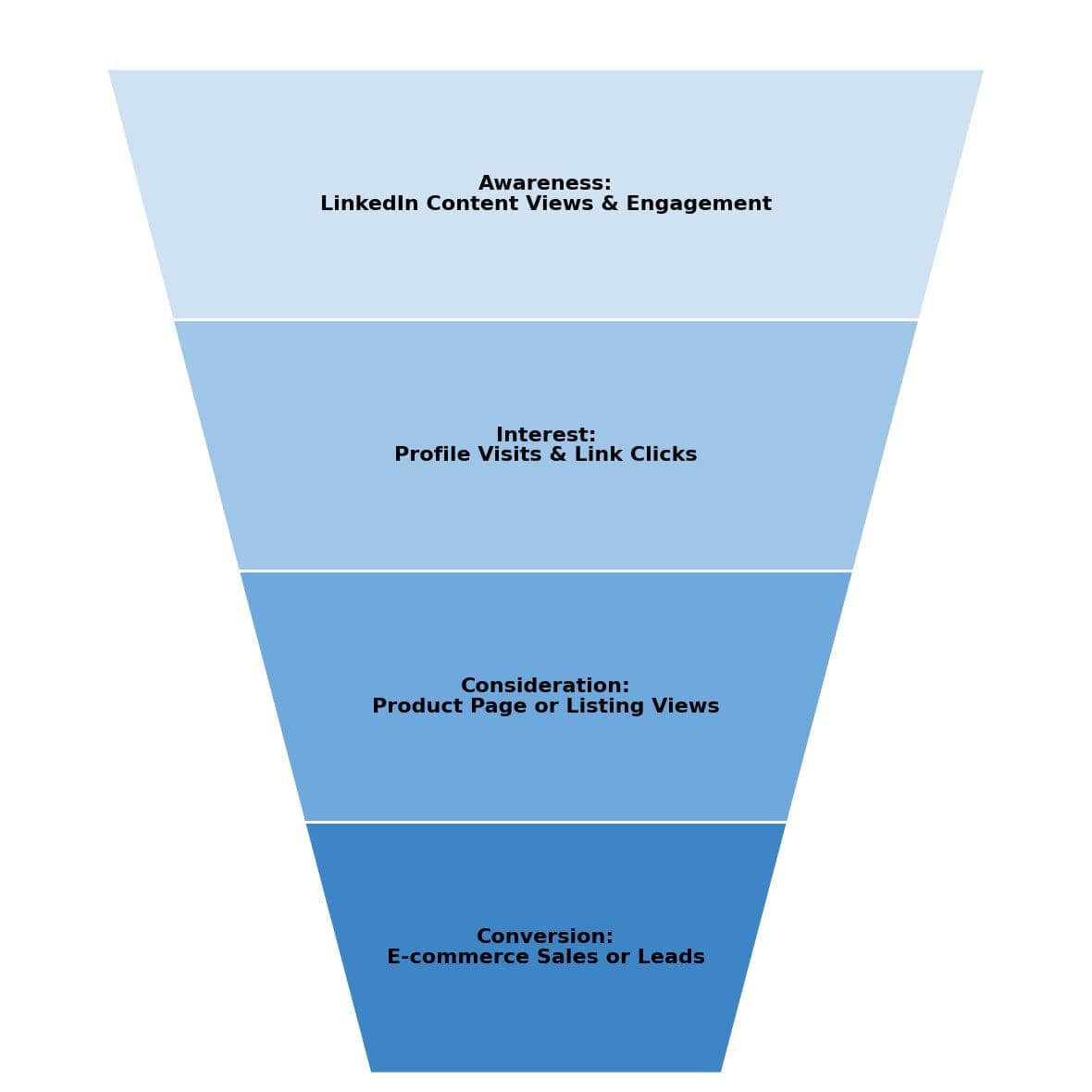
As shown above, LinkedIn influencer content can pull people in at the top of the funnel by grabbing attention in their feed. Because the content is coming from a trusted micro-influencer, potential customers are more likely to take the next step – whether that’s visiting your Amazon product page, signing up for a demo, or even just following your company page for future updates. From there, the usual e-commerce funnel takes over with your product page doing the job of converting interest into sales. The key is that the influencer has warmed up the audience with credibility and context, making them far more receptive when they land on your listing. This is especially valuable in B2B or considered purchases, where buyers deliberate more; a micro-influencer’s endorsement accelerates trust-building in that process.
LinkedIn micro-influencers represent a huge opportunity for e-commerce entrepreneurs and Amazon sellers to boost their B2B marketing in an authentic, cost-effective way. This underrated strategy combines the precision of B2B targeting with the relatability of peer recommendations. By collaborating with niche content creators on LinkedIn, you can generate buzz, build credibility through UGC and reviews, and ultimately drive more traffic and sales for your online business.
Now it’s your turn – if you’re an Amazon seller, consider making LinkedIn micro-influencers a part of your growth plan. Start small: reach out to a couple of creators in your industry and try a pilot campaign. You might be surprised at the results when their trusted voices bring your brand into the spotlight. In the competitive e-commerce landscape, tapping into these micro-influencer networks can give you a powerful edge. So connect with those LinkedIn creators, share your story, and let micro-influencers help supercharge your B2B marketing. Your next big boost in sales and brand visibility could be one LinkedIn post away!
Ready to get started? Take the first step by identifying one LinkedIn micro-influencer in your niche this week – and watch how a “small” connection can lead to big growth for your e-commerce brand. 🚀
Expanding your Amazon business beyond your home market is exciting — but it comes with new challenges. How do you build brand awareness and trust in a country where customers have never heard of you? One powerful approach is influencer marketing. By teaming up with social media creators, even small Amazon brands can quickly reach international audiences and earn credibility. In this post, we’ll explore actionable influencer marketing strategies for Amazon sellers going global, with a special focus on micro influencer marketing tactics. We’ll cover how to adapt campaigns to local cultures, leverage micro-influencers for cost-effective growth, illustrate an influencer marketing funnel for Amazon, and more. Let’s dive in!
When entering a new market, your brand is starting from scratch. Influencers can give you a running start by introducing your product to a built-in audience that trusts their recommendations. In fact, 63% of consumers are more likely to buy a product recommended by a social media influencer they trust. Unlike traditional ads, influencers bring word-of-mouth credibility. For Amazon sellers, this boost in trust can translate directly into product detail page visits and sales.
Another big benefit is the ROI. Influencer campaigns often deliver impressive returns for the budget-conscious seller. Some studies show that influencer marketing can achieve up to an 11x return on investment (ROI) – far higher than many other channels. By comparison, typical social media ads might yield ~3x and Google search ads around ~5x ROI. The chart below highlights how influencer marketing stacks up against other marketing channels in terms of ROI:
If that weren’t convincing enough, Amazon’s own algorithm rewards external traffic. When an influencer drives their followers to your Amazon listing, it signals to Amazon that your product is popular off-platform, which can boost your search ranking on Amazon. In short, influencer marketing not only drives immediate sales but can also improve your organic visibility on the marketplace over time.
One size does not fit all in global influencer marketing. Every country has its own social media habits, popular platforms, and cultural nuances. To succeed internationally, meet your audience where they already hang out online and tailor your message to resonate locally.
Start with research on the target market:
By tailoring your approach to the local context, you’ll come across as authentic rather than a foreign brand with a copy-paste campaign. Here are a few regional examples:
Tip: When expanding to a new country, create a shortlist of local influencer candidates before you launch. Observe their content, follower interactions, and any previous brand collaborations. This gives you insight into the audience profile and how the influencer might best introduce your product. Essentially, you’re doing a bit of cultural market research through the lens of influencer content.
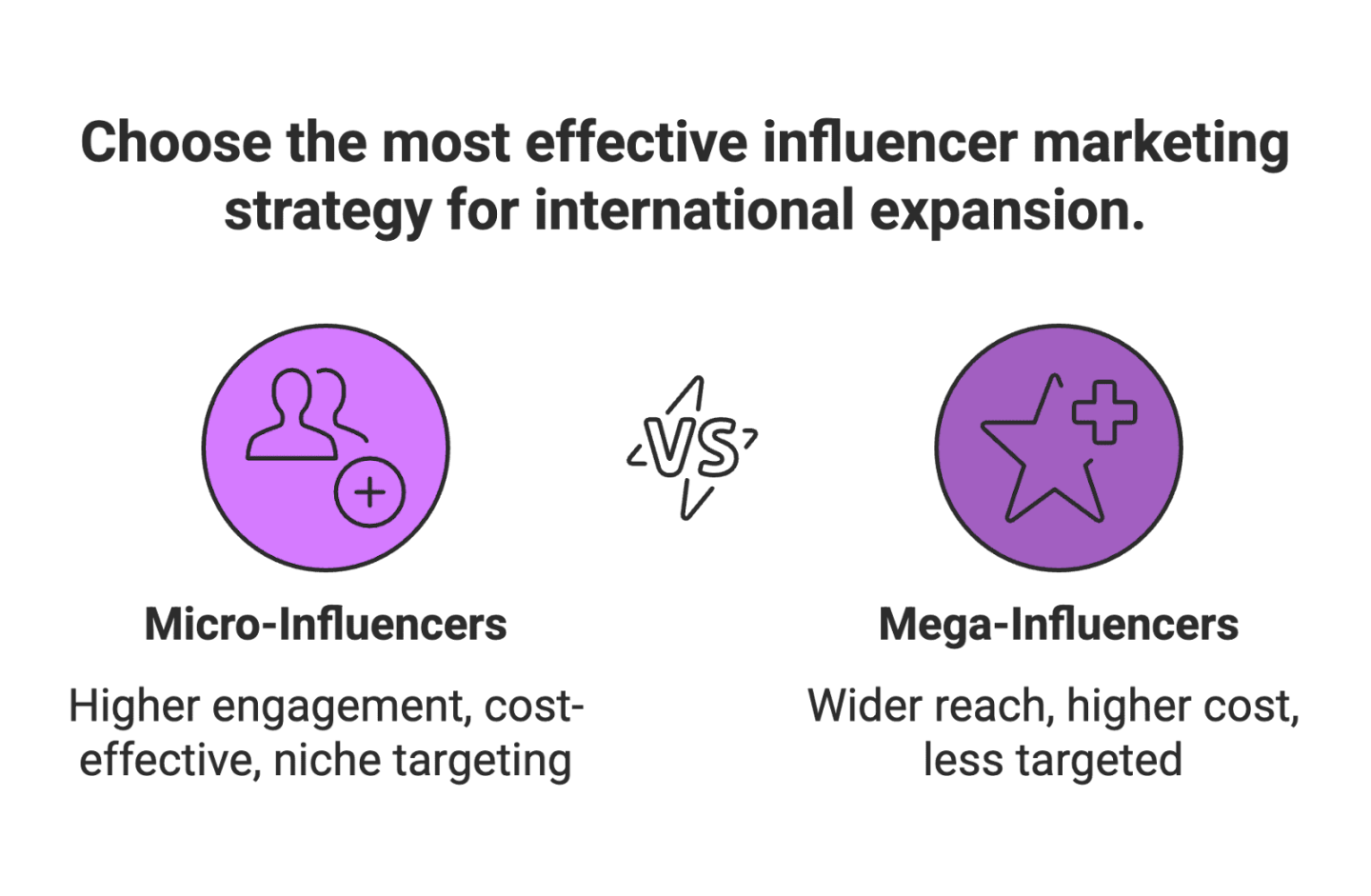
For small and mid-sized Amazon brands, micro-influencers (creators with tens of thousands of followers or less) can be a secret weapon when expanding internationally. Micro influencer marketing is powerful because it combines authenticity with affordability. Here’s why focusing on micro and even nano-influencers is a smart strategy:
It can be tempting to chase after influencers with the biggest follower numbers, but equating follower count with influence is a mistake. A million followers mean little if those followers don’t pay attention or trust the content. In reality, mega-influencers often suffer from low engagement rates or broad, untargeted audiences, and some inflate their follower counts with bots or giveaways. When you prioritize reach over relevance, you’re effectively buying impressions, not conversions. A huge influencer who isn’t a fit for your brand (or whose followers aren’t interested) can burn your budget on the wrong crowd.
1. Discover Local Micro-Influencers: Use hashtags, location search, and influencer discovery tools to find creators in your niche and target country. For example, if you sell fitness gear and are expanding to Spain, search Instagram or TikTok for Spanish fitness enthusiasts with follower counts in the 5k–50k range. Check their content quality and follower engagement (look for genuine comments, not just likes).
2. Reach Out with a Win-Win Pitch: Craft a friendly outreach message. Compliment their content and explain briefly why your product would resonate with their audience. Offer to send a free product for them to try. Many micro-influencers will be excited to receive a new product and share an honest review if it fits their content. (Ensure to clarify you’re looking for their genuine opinion and creative storytelling, not a scripted ad. Authenticity is key.)
3. Provide Guidance, Not Scripts: Share your brand story, product highlights, and any key points (or disclaimers) they should mention, but let the influencer create content in their style. They know what engages their followers best. Maybe it’s an Instagram Story of them unboxing and trying the product, a TikTok showing before-and-after results, or a detailed YouTube review. Give creative freedom within broad guidelines.
4. Localize Any Offers: If you decide to provide a special promo code or Amazon Associates affiliate link for the influencer to share, make sure it works on the local Amazon marketplace. For example, create a promo code on Amazon.de for a German influencer’s followers, or use Amazon’s attribution links tailored to each country site. This not only incentivizes followers to buy (with a small discount, for instance) but also helps you track performance per influencer.
5. Engage and Amplify: Once the content goes live, interact with it from your brand’s account if possible (comment, thank the influencer, answer questions from their followers). You can also repurpose the best influencer content – with permission – on your own social channels or Amazon Store. This cross-pollinates audiences and gives the content a longer life. Consider running the influencer’s content as a paid ad targeting that region (many platforms allow whitelisted ads where you promote a post from the influencer’s handle, extending its reach).
6. Monitor Results and Iterate: Track metrics from each micro-influencer: referral traffic (if using trackable links), Amazon sales lift during the campaign, social engagement metrics (likes, comments, shares), and even anecdotal feedback (e.g. comment sentiment). Over time, you’ll see which influencers or content styles drive the best ROI. Double down on what works – perhaps that means focusing on Instagram Stories if those drove many swipe-up link clicks, or collaborating again with an influencer who sold out 50 units from her post. Conversely, you can pivot away from approaches that didn’t move the needle.
Remember, micro-influencer campaigns are as much about relationship-building as immediate sales. Treat your micro-influencers like valued partners. If you nurture these relationships (send them thank-you notes, occasional free new products, etc.), they might become long-term brand advocates who repeatedly introduce your brand to new waves of customers. That kind of sustained word-of-mouth is marketing gold for international growth.
When leveraging influencers to expand globally, it’s helpful to visualize how an interested social media viewer becomes an Amazon customer. Think of it as an influencer marketing funnel, guiding the customer journey from first encounter to purchase (and beyond). Here’s what the funnel typically looks like for an Amazon seller:
Awareness (Top of Funnel): This is where potential customers first discover your product. An influencer’s post creates awareness among their followers. For example, a travel blogger in France posts an Instagram reel using your new compact suitcase. Thousands of people who never knew your brand now see it in action. At this stage, the goal is to grab attention and pique interest – not to push for an immediate sale. Metrics here include views, reach, likes, and comments. The content should highlight the product in a lifestyle context, focusing on storytelling rather than hard selling.
Consideration (Middle of Funnel): A subset of those who saw the post will move to consideration. They want to learn more because the influencer’s content resonated. These users might click the link to your Amazon product page, search your brand on Amazon, or watch the influencer’s full YouTube review. At this stage, they’re evaluating if your product suits their needs. Ensure your Amazon listing is fully optimized to capitalize on this interest – clear images, localized language in the title/bullets, good reviews, etc. Influencers can also encourage consideration by offering more details (e.g. a follow-up Story answering FAQs about the product, or a blog post with pros/cons). Metrics here include click-throughs to Amazon, time spent on your listing (indirectly measured by bounce rates or session duration if you have Brand Analytics), and engagement on any deeper-dive content.
Conversion (Bottom of Funnel): This is the payoff – the user is convinced and makes a purchase on Amazon. Influencer marketing shines here by providing the social proof and nudges that push people over the line. Perhaps the influencer shared a limited-time promo code (“JANE10 for 10% off this week”), creating a sense of urgency (the classic FOMO tactic). Or maybe the authentic review addressed a key concern that was holding customers back. By the time the customer hits “Add to Cart,” the influencer’s influence has done its job. Metrics to watch: increase in sales (units ordered, revenue) on the Amazon marketplace corresponding to the campaign period, conversion rate of the Amazon listing (did it improve when influencer traffic arrived?), and use of any influencer-specific promo codes or affiliate links (to directly attribute sales).
Advocacy (After Purchase): The funnel doesn’t necessarily end at the sale – especially for brands aiming to build long-term loyalty. If the customer loves the product, they could become a micro-influencer themselves, spreading the word. In an Amazon context, advocacy might mean the customer leaves a positive review on your product listing (which in turn boosts conversion for future shoppers), or they share their own post about the product on social media. Some brands even re-post user-generated content from new customers, further fueling the cycle of awareness. While you can’t incentivize reviews, you can encourage satisfied customers to tag your brand on social media or engage with your community. Influencers can kickstart this by prompting followers – e.g. “If you end up getting this, let me know how you like it!” – inviting a two-way conversation. Metrics: review quantity and quality on Amazon, social mentions of your brand by customers, repeat purchase rate if applicable.
By understanding this funnel, you can align your influencer strategy to support each stage. Ensure influencers at the top are equipped to drive awareness (eye-catching content), those in the middle provide substance (detailed info, answering questions), and that you’ve smoothed the path to conversion (easy link to Amazon, great product page). Not every campaign will neatly hit all stages, but as a whole your international influencer efforts should cover the full customer journey.
Coordinating multiple influencers in different countries might sound like juggling flaming torches, but with some organization, it’s very doable. Here are strategies to manage and scale your international influencer marketing efficiently:
Finally, don’t underestimate the power of feedback loops. Ask your influencers for feedback after a campaign: How did their audience respond? What questions or comments came up? This intel can guide not just future influencer campaigns but also how you position your product in that market (maybe customers care about a feature you weren’t emphasizing). Influencers are on the front lines of consumer sentiment, so their insights are gold.
If your brand is targeting the U.S. market and you’re eager to kickstart a micro-influencer campaign, consider Stack Influence. Stack Influence is a leading micro-influencer marketing platform that connects Amazon sellers with everyday creators at scale. They have a vetted community of over 11 million micro influencers in the USA who love to try new products and share genuine experiences. Stack Influence handles the heavy lifting – from finding the right influencers to automating product seeding and campaign management – so you can focus on expanding your business. (Do note that Stack Influence currently serves only the U.S. market, specializing in American influencers and audiences.) If you’re looking to boost your Amazon U.S. sales through authentic word-of-mouth marketing, Stack Influence can be a game-changer. Check out their platform to see how you can scale up your micro influencer marketing campaigns and drive more Amazon conversations about your brand.
Expanding internationally as an Amazon seller may feel daunting, but with the right influencer marketing strategies, you don’t have to build awareness single-handedly. By partnering with local voices, leveraging micro influencers, and adapting to each culture, you can rapidly generate buzz and trust in new markets.
Remember to focus on genuine relationships and helpful content – not just quick sales – and you’ll cultivate a community of brand fans around the world. Here’s to your global success! 🚀
Influencer marketing can be a game-changer for businesses of all sizes – from e-commerce startups to Amazon sellers – but only if done right. It’s easy to get excited by the promise of social media stardom and viral sales, yet many brands stumble by repeating the same mistakes. In fact, research in 2025 found that 53% of influencer campaigns fail to meet their performance goals due to common pitfalls. To help you avoid flushing your budget down the drain, we’ve compiled the most common influencer marketing mistakes and how to prevent them. Let’s dive in!
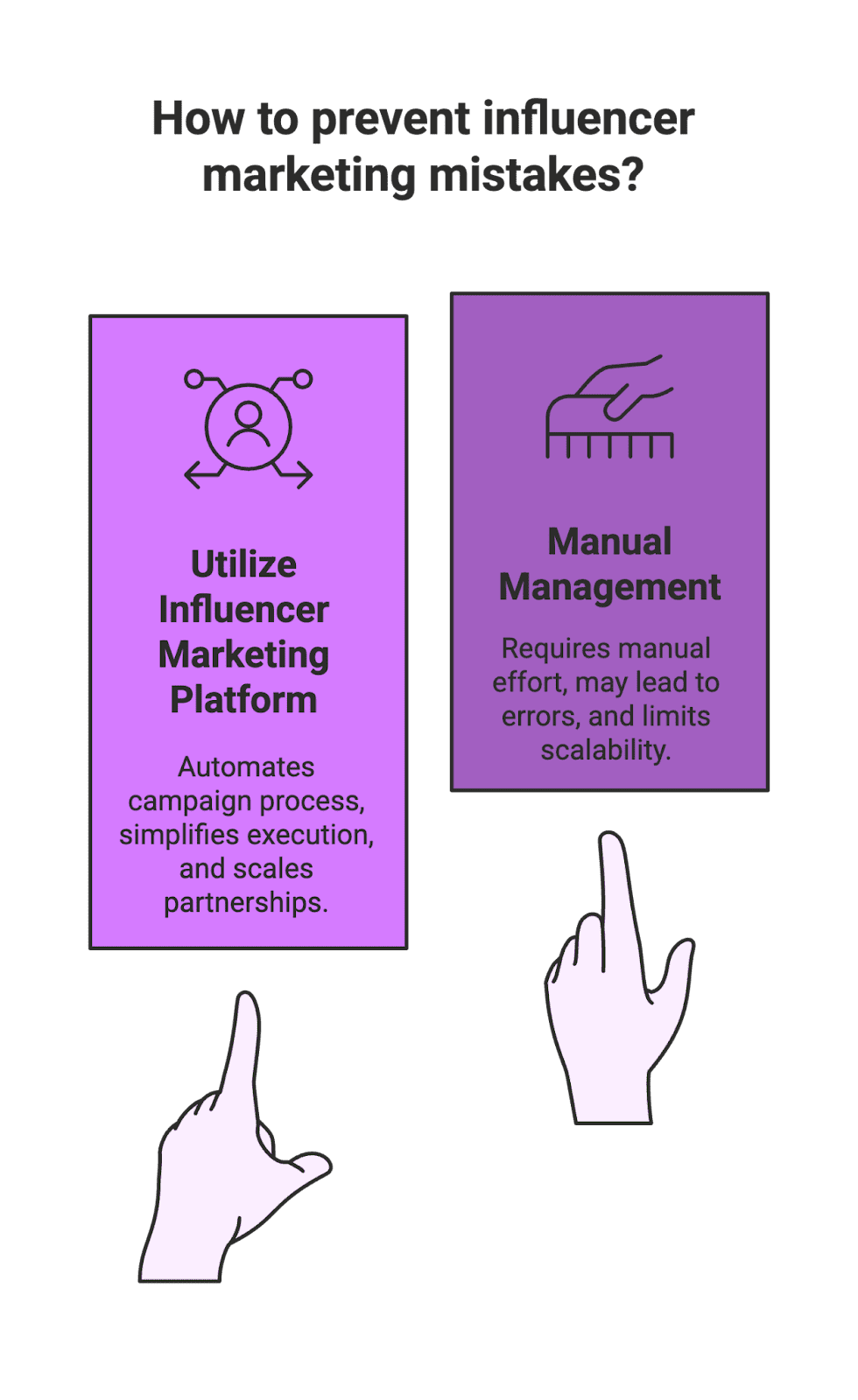
For businesses, e-commerce sellers, and Amazon sellers looking to avoid these pitfalls, Stack Influence offers a practical solution. This micro-influencer marketing platform automates the entire campaign process – from finding the right creators and sending out products to managing posts and tracking results – so you don’t have to juggle all those tasks manually.
That kind of end-to-end automation not only simplifies execution but also makes it easy to scale up dozens (or even hundreds) of micro-influencer partnerships at once without losing authenticity.
One of the biggest rookie mistakes is jumping into an influencer campaign without a clear goal or KPIs. If you don’t define what success looks like (e.g. brand awareness, website traffic, or product sales), you’ll have no idea if the campaign is working. Going in blind is basically like spending money without a roadmap – a recipe for wasted time and frustration. Influencers can’t read your mind either; without clear objectives, they won’t know how to effectively represent your brand.
Define specific, measurable goals for each influencer campaign before you start. For example, decide if you aim to increase brand awareness by 50%, generate 200 new leads, or boost product sales by 20% during the campaign.
such as reach, engagement rate, click-throughs, or direct conversions – and plan how you will track them. Setting SMART goals (Specific, Measurable, Achievable, Relevant, Time-bound) will give your campaign a clear direction and benchmarks for success.
Another common mistake is partnering with influencers whose audience doesn’t match your target market. Remember, the goal isn’t just to get any eyes on your brand – you want the right eyes. If an influencer’s followers are not your potential customers, even the most viral post won’t translate into results. For example, a makeup influencer whose fan base is mostly teens and 20-somethings won’t help sell an anti-aging cream meant for women over 40. In short, mismatched audiences = wasted marketing dollars.
Define your target audience clearly (age range, gender, location, interests, etc.) before choosing an influencer. Then research an influencer’s follower demographics – many social platforms and influencer marketing tools provide insights on audience age, location, and interests. Make sure their follower profile overlaps with your customer profile.
If you sell fitness gear for professional athletes, a fitness influencer who posts beginner home workouts might not attract the serious athletes you need. Seek out creators in your niche whose followers have relevant interests. This ensures any shout-out or review they do resonates with people who might actually buy your product.
It can be tempting to chase after influencers with the biggest follower numbers, but equating follower count with influence is a mistake. A million followers mean little if those followers don’t pay attention or trust the content. In reality, mega-influencers often suffer from low engagement rates or broad, untargeted audiences, and some inflate their follower counts with bots or giveaways. When you prioritize reach over relevance, you’re effectively buying impressions, not conversions. A huge influencer who isn’t a fit for your brand (or whose followers aren’t interested) can burn your budget on the wrong crowd.
Prioritize engagement and fit over raw follower numbers. An influencer with 50k followers who actively like, comment, and share is far more valuable than one with 500k followers and a ghost town of engagement. Aim for creators with a high engagement-to-follower ratio (for example, 5%+ engagement rate on Instagram is strong).
Smaller creators often have deeply engaged communities. In fact, data shows nano-influencers (1K–10K followers) can have around 2.5% engagement rates, whereas celebrity influencers (1M+ followers) average closer to 0.9%. These “micro” creators may have fewer eyes overall, but their recommendations carry more weight and feel more authentic to their niche followers.
Don’t just look at the numbers – review the influencer’s content and values. Do they align with your brand image? An influencer who shares your brand’s style or ethos will come off as a more natural advocate. Authenticity is key; an influencer who genuinely likes your product will create content that resonates better than someone who’s just cashing a check.
Not all that glitters in influencer-land is gold. One major mistake is taking an influencer’s stats at face value without vetting for fake followers or fraudulent engagement. Unfortunately, influencer fraud is a real problem – some creators buy fake followers or use bots to inflate their metrics. Brands that don’t catch this can end up paying for phantom eyeballs. According to a cybersecurity analysis, fake influencer fraud was estimated to cost brands $1.3 billion in 2019 alone. That’s at least 15% of advertisers’ influencer spending going straight down the drain due to phony followers and engagement pods. Don’t let your campaign become part of that statistic.
Do your due diligence before signing an influencer. Look at their follower-to-engagement ratio – if someone has 100,000 followers but only gets 50 likes per post, that’s a glaring red flag. Healthy accounts have engagement (likes, comments, shares) that feels proportional to their follower count.
There are free and paid tools (like social auditing platforms) that analyze an account for suspicious patterns. They can identify spikes in followers (indicating possible purchases) or a high percentage of bot-like followers. Some popular ones include Fake Followers Audit by SparkToro, HypeAuditor, or specialist services.
Read the comments on their posts: are they genuine and on-topic or just generic spam? A bunch of “Nice pic!” comments from random accounts could signal bot activity. Also, scan the follower list for obviously fake profiles (no profile pic, weird usernames, etc.). It’s tedious, but a quick quality check can save you from a costly mistake.
If you have any doubts, consider doing a smaller test collaboration or offering affiliate commissions instead of a big upfront payment. See if they drive real engagement and sales before scaling up the partnership.
This mistake is the opposite of the previous one: giving too much direction – to the point of micromanaging the influencer’s content. It usually comes from a good place (“we want everything perfect and on-brand”), but overly tight creative control can backfire badly. Remember, influencers built their following through their own style and personality. If a brand dictates the exact script, setting, and wording of a post, the content will likely feel forced and “bland” to the audience. Followers are quick to notice when an influencer’s post sounds like a stiff advertisement rather than their authentic voice.
When brands go too far with restrictive briefs, it robs influencers of the ability to be their authentic selves – the very quality that made their audience trust them. The result? The post comes off as obviously ad-like, and followers may ignore it or even get turned off. No one likes to see their favorite creator suddenly become a corporate mouthpiece. As one report put it, over-scripted, overly brand-mediated content is likely to be ignored by followers.
Find the balance between guidance and creative freedom. Provide the important points (as noted in mistake #5), but don’t script every detail. Allow the influencer to express your brand message in their own voice and format. They know what resonates with their audience – trust that insight.
Instead of “Here’s an exact caption we wrote for you,” try “Here are the key points we’d love you to hit – how would you naturally incorporate them into a post?” This approach gives influencers ownership of the content. Often, the less “ad-like” the content feels, the better it performs.
If they push back on a rule or suggest a different creative angle, hear them out – they might be right. For example, if your brief says “must mention the product name 5 times,” and the influencer says that feels unnatural for their style, consider their feedback. A collaborative approach will yield content that satisfies your brand needs and feels authentic to their followers.
Not all social platforms are created equal – and not all will be right for your campaign. A common mistake is pouring effort into a platform where your target audience isn’t active, or sticking to just one platform by default. For instance, if you’re targeting Gen Z shoppers, allocating your influencer budget entirely to Facebook wouldn’t make sense, since younger audiences are more on TikTok or Instagram. Conversely, a B2B software company might see better results with LinkedIn or YouTube influencers than on Snapchat or TikTok. Yet many brands fall into the trap of going all-in on the “hottest” platform of the moment without considering if it fits their demographic.
Also, relying on only one social network is risky. Social media trends change, algorithms shift, and platforms can even fall out of favor. If you put all your eggs in one basket (say, only Instagram influencers), you might be missing audiences on other channels or be vulnerable if that platform’s engagement declines.
Do audience research to pick the right platform. Find out which social media platforms your target customers use most. If you’re marketing a beauty gadget to millennials and Gen Z, you might focus on Instagram and TikTok (visual platforms with lots of beauty content). If you’re promoting SaaS software to professionals, you might consider LinkedIn or Twitter influencers in that niche. Go where the eyeballs that matter to you are.
Social media evolves quickly. Keep an eye on usage stats and trends (for example, the rise of TikTok commerce, or how Instagram’s algorithm changes affect influencer reach). This helps in adjusting your platform strategy. But remember: focus on your audience’s behavior above all. A platform is only “wrong” if your potential customers aren’t there.
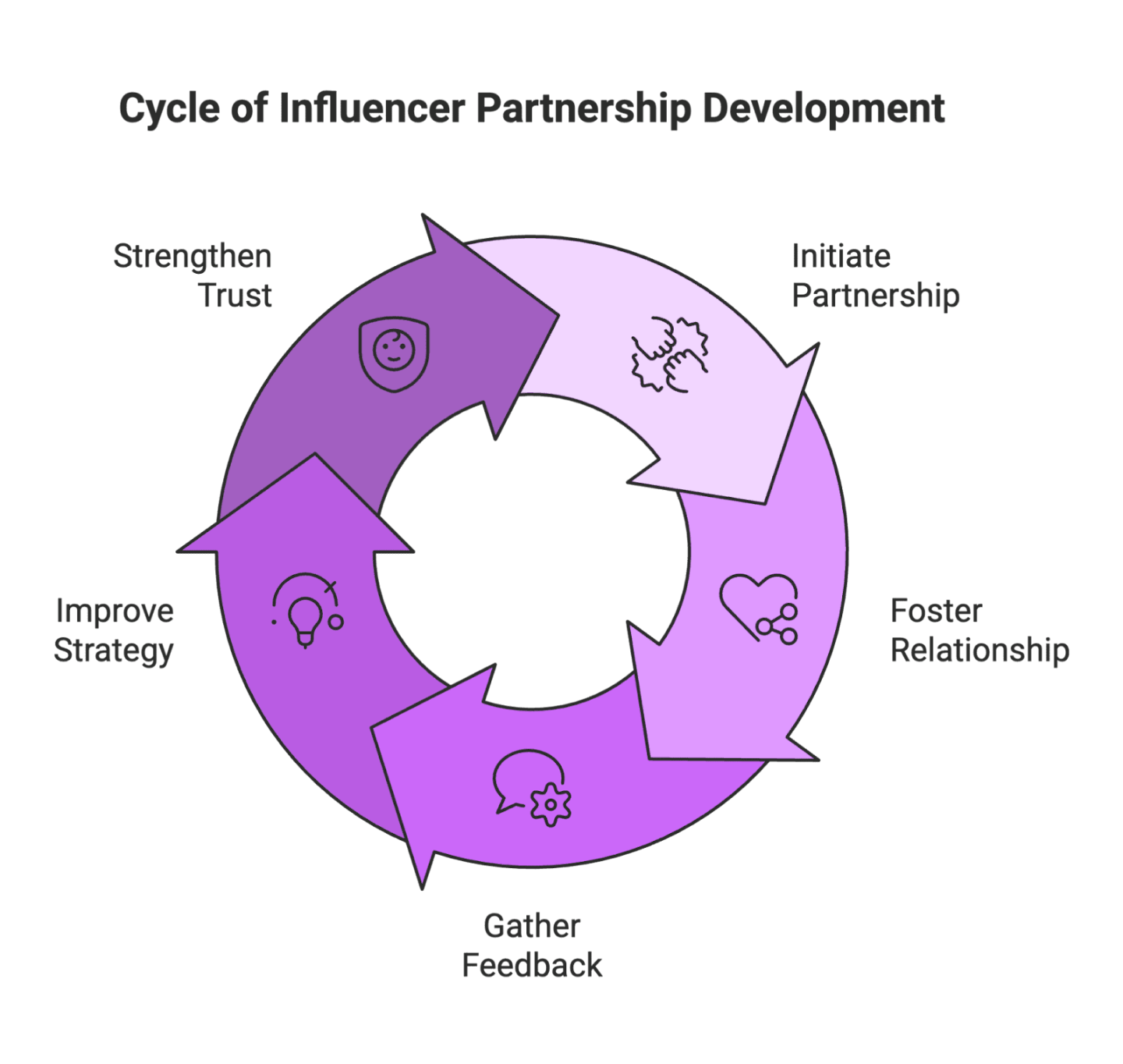
Many brands approach influencer marketing transactionally: find influencer, pay for one post, and move on. This one-and-done mindset is a big mistake that misses the true potential of influencer collaborations. When you treat influencers as one-off ad channels, the content can feel disjointed and the relationship stays shallow. Audiences may not form any lasting connection with your brand from a single mention. It’s the equivalent of expecting to build brand loyalty from one TV commercial – unrealistic.
On the other hand, brands that build long-term relationships with influencers can cultivate genuine brand ambassadors over time. Consider that an influencer who knows your product deeply and truly likes it will naturally create more authentic content and advocate for you more convincingly. One-off deals deny you this benefit. In fact, frequent, consistent collaborations can significantly amplify trust: followers see the influencer using or talking about your brand repeatedly, which reinforces the message that it’s something valuable. As marketing experts note, focusing only on one-time influencer blasts is a missed opportunity to build the kind of familiarity and credibility that drives sustained engagement.
Invest in longer-term partnerships with your best influencers. If an influencer is a great fit and delivers good results, consider signing them for an extended campaign (3-6 months or more) or as a brand ambassador. This could involve multiple posts over time, or an ongoing role like being a monthly content contributor or a face of your brand for a period. Long-term collaboration allows the influencer’s endorsement to really sink in with their audience.
Don’t treat the influencer just as a paid advertiser – engage with them like a partner. Have regular check-ins, share new product launches with them first, maybe offer them affiliate opportunities or bonus incentives for exceptional performance. Showing you value the relationship can make them more enthusiastic about promoting your brand (which shines through in their content).
Over time, influencers who work with you repeatedly will gather feedback from their audience about your brand. Listen to their insights. They might tell you, “My followers loved this feature of the product, but had questions about that other feature.” This is gold for your marketing and even product development. Incorporate that feedback to improve.
Influencer marketing is a powerful tool in the modern marketer’s toolkit – when executed thoughtfully. By learning from the common mistakes above, you can approach your next influencer campaign with eyes wide open and a solid game plan. The key themes should be coming through loud and clear: be strategic and data-driven (set goals, know your audience, track results), choose partnerships wisely (fit and authenticity over flashy numbers), and foster genuine, transparent relationships with your influencers and audience. Whether you’re a small Amazon seller sending out product samples to micro-influencers, or a large brand coordinating a multi-platform campaign, the underlying principles are the same across industries.
Avoiding these pitfalls will save you money, protect your brand reputation, and ultimately deliver better ROI on your influencer campaigns. Instead of “influencer marketing gone wrong” case studies, you’ll be on your way to success stories that drive real business growth. Remember, every influencer collaboration is a learning opportunity – so plan, execute, measure, and continuously refine your approach. With the right strategy (and a bit of creativity), you can turn influencer marketing into a scalable, rewarding channel for your business. Good luck, and happy collaborating!
Short-form video has taken over the internet in 2026 – and it’s not even close. In fact, bite-sized clips are expected to account for 90% of all internet traffic by 2026. No wonder brands and influencers (especially micro influencers) are doubling down on platforms like TikTok, Instagram Reels, and YouTube Shorts. These platforms are where cultural trends ignite and influencer marketing campaigns thrive. According to recent research, short-form video remains “king,” rated as the top-performing content format for marketers going into 2026. And with over 70% of consumers following influencers online, it’s clear that creators who master short-form video can massively boost their reach and engagement.
The appeal of short videos lies in their snackable, engaging nature. You have mere seconds to captivate scrollers – but with the right approach, those few seconds are all you need to stop the thumb and spark a connection. Micro influencers are seizing this moment: on Instagram, micro influencers boast an average engagement rate of 3.86% (vs just 1.2% for macro influencers), and on TikTok many micros see engagement well above 15%. The takeaway? Authenticity and agility beat big budgets in the era of TikTok, Reels, and Shorts. A savvy content creator or brand can punch above their weight by leveraging the unique styles, algorithms, and tools of each platform.
In this comprehensive guide, we’ll explore current best practices (2026) for optimizing short-form video on TikTok, Instagram Reels, and YouTube Shorts. You’ll learn platform-specific content styles, algorithm hacks for discoverability, and emerging tools & analytics to stay ahead of the curve. Whether you’re an aspiring creator, a micro-influencer looking to grow, or a brand tapping into influencer marketing, these tips and strategies will help you master short-form video content in 2026. Let’s dive in and get your content ready to go viral across all three major platforms! 🚀
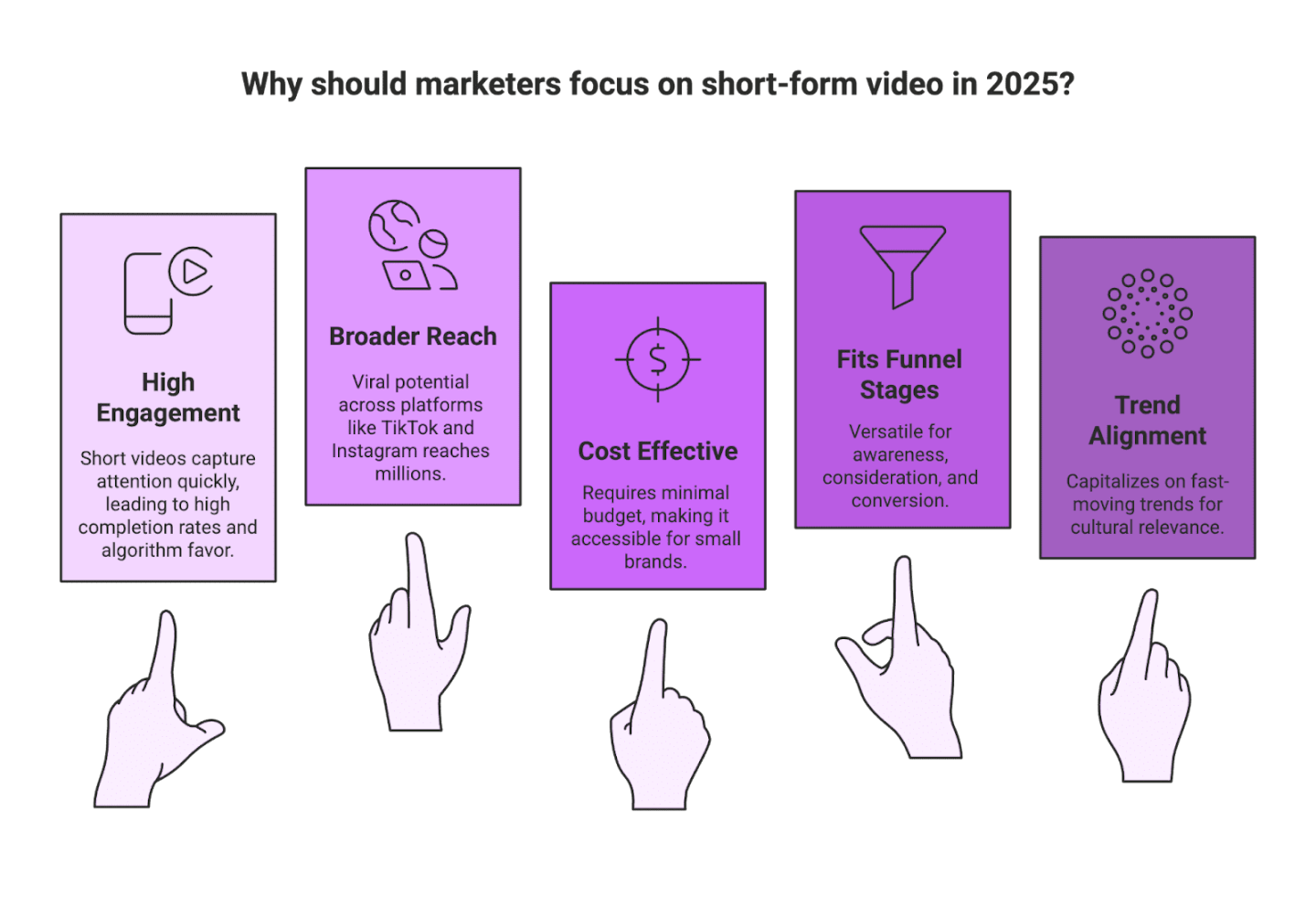
Before we get into the how-to’s, it’s important to understand why short-form video is so dominant. Simply put: attention spans are short and competition for eyeballs is fierce. People love content they can consume quickly and interact with instantly. This has led to an explosion of TikToks, Reels, and Shorts on our feeds – and the numbers back it up. Marketers report that short-form video delivers the highest ROI of any social media strategy in recent years. In 2024, businesses noted that short videos drive more engagement and conversions than longer formats, prompting 89% of marketers to increase or maintain their video output.
A big reason short-form rules in 2026 is its synergy with influencer marketing. With consumers increasingly seeking authentic, relatable content, brands are partnering with creators who produce TikToks and Reels that feel organic rather than like ads. These bite-sized videos are perfect for micro influencers to showcase products in creative ways – a quick demo, a funny skit, a before-and-after – without losing viewer interest. In fact, influencer campaigns centered on short-form videos are growing significantly, as over 70% of U.S. consumers follow influencers and enjoy the short video content they share.
Another factor is the multi-platform reach of short videos. A single catchy video can find life on TikTok, then be repurposed as an Instagram Reel, and later uploaded as a YouTube Short – reaching different audiences across platforms. This cross-posting (when done right) amplifies your message without needing a huge production budget. You just need to choose a budget-friendly explainer video company that’s skilled enough to create this multi-platform reach video. Short-form clips are also highly shareable, often riding trends or memes that encourage users to tag friends or participate (think TikTok challenges or Reels remix trends). All of this adds up to an ecosystem where short-form video isn’t just entertainment – it’s a key driver of social media growth for influencers and brands alike.
In summary, short-form content is no longer optional – it’s a must-have in your content strategy. Now, let’s break down how to master each platform, because while TikTok, Reels, and Shorts all share similarities, each has its own “personality” and best practices.
On TikTok, realness wins. TikTok’s culture celebrates unfiltered, relatable content – think less “produced ad” and more “hanging out with a friend.” In 2026, the platform still skews towards Gen Z, but its reach has expanded to pretty much everyone (TikTok now has over 1.5 billion monthly users worldwide). Content that combines entertainment + value does especially well – a format often dubbed edutainment. For example, a creator might deliver quick tips on skincare or a 15-second recipe hack, but with a fun twist or punchline to keep it engaging. Brands should lean into this by educating or inspiring viewers in a lighthearted way, rather than hard-selling.
TikTok is also the birthplace of most viral challenges and memes. As a creator, you’ll want to stay on top of trending sounds, hashtags, and challenges. If there’s a catchy dance or a meme format blowing up, consider how you can put your own spin on it (while remaining true to your niche or brand voice). TikTok’s audience loves to see your personality – show behind-the-scenes clips, use self-deprecating humor, hop on a POV trend, or participate in a challenge relevant to your industry. The key is to come across as authentic and human. Highly polished or overtly scripted content can sometimes fall flat on TikTok if it feels like an ad. Don’t be afraid to use lo-fi production: shooting on a phone, using TikTok’s in-app text overlays and effects, and even trending filters can make your content feel native to the platform.
Understanding TikTok’s algorithm can help your content get seen. In 2026, the TikTok algorithm is highly sophisticated but a few things clearly matter:
1. Strong Completion Rate: TikTok tracks how long people watch your video (and if they re-watch it). A high average watch duration (especially if viewers watch to the end or loop it) is a green flag for the algorithm to show it to more people. So, aim to keep viewers glued. A clever tactic is to add a “hook-and-loop” – for instance, quickly flash something intriguing at the start that isn’t resolved until the end, encouraging people to stick around or even re-watch to catch details.
2. Niche Engagement: Rather than going broad, content that resonates deeply with a specific niche can do better. The TikTok algorithm often shows your video to a small group first (say, people who engaged with similar content), and if it performs well, it broadens to a larger audience. Focus on your niche hashtags or topics so the algorithm knows where to slot your video (e.g., #travelhacks #skincareDIY). TikTok is all about communities (hello #MomTok, #FitTok, etc.), and the algorithm will amplify your video within communities that have shown interest in that topic.
3. Optimize Captions for TikTok SEO: TikTok has increasingly become a search engine for Gen Z. Users might search within TikTok for “DIY fashion” or “easy vegan recipes”. In 2026, TikTok even introduced a search ads and keyword insights tool. This means you should include relevant keywords in your caption (and even as on-screen text) so that your video can appear in search results. For example, instead of a vague caption like “OMG I love this,” use something descriptive: “DIY skincare hack using green tea #beauty #skincare”. Creators are finding that writing captions almost like mini SEO descriptions (while still sounding casual) can boost discoverability.
4. Trending Hashtags – Use Sparingly: Incorporating a couple of trending hashtags (e.g., #Summer2026, #TikTokMadeMeBuyIt) can sometimes give a small boost if your content is relevant to it. However, don’t overload every video with unrelated trending tags – TikTok’s algorithm is too smart for that now, and it might even penalize obvious bait. Choose 1–3 hashtags: a mix of one broad trending hashtag if appropriate, one niche community hashtag, and maybe one content-descriptive hashtag.
By creating TikToks that feel native and spark interaction, you’ll please both your viewers and the TikTok algorithm. The result? More chances on the FYP, more followers, and more influence. Next, let’s see how Instagram Reels compares and what to tweak for that platform.
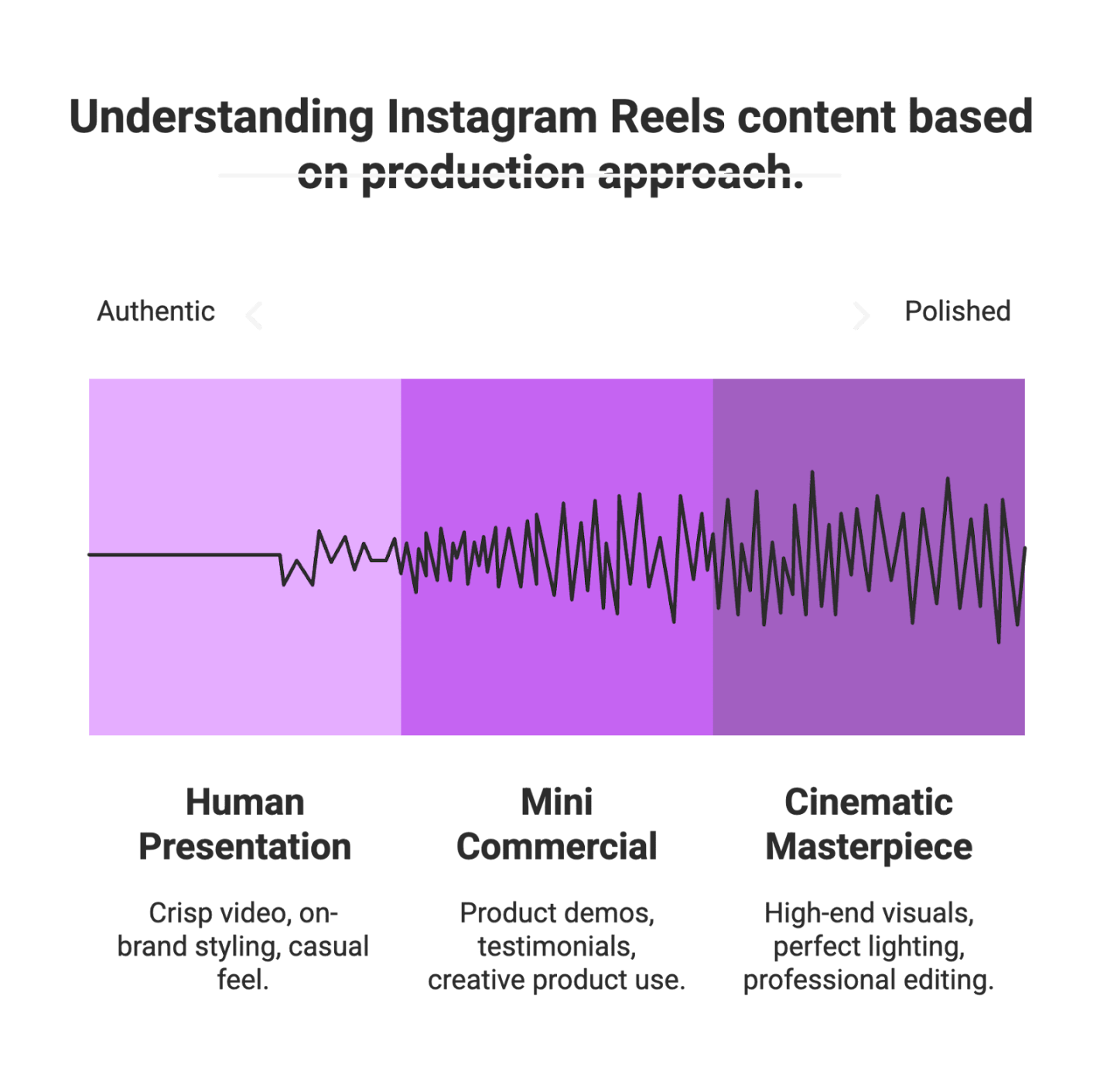
Instagram Reels may have been born as a TikTok competitor, but in 2026 it’s grown into its own beast. Reels are integrated into Instagram’s ecosystem – appearing in the Reels tab, Explore page, and even in user feeds – giving them huge exposure potential on a platform that now boasts 2+ billion monthly users. The typical vibe on Reels is a bit more polished or stylized than TikTok, yet still playful. Think of Reels content as the highlight reel (pun intended): it often showcases the best of someone’s day, a quick transformation, a behind-the-scenes of a beautiful shot, etc., all set to music or voiceovers.
For brands and influencers, Reels are a prime place to showcase lifestyle and personality, while leveraging Instagram’s existing strengths in visuals. You’ll see a lot of travel montages, outfit transitions, mini-vlogs, product demos, and inspirational quotes in motion. Compared to TikTok, Instagram’s audience might expect slightly higher visual quality (it is the land of curated feeds after all). However, overly produced content can still feel out of place – authenticity is crucial here too. The sweet spot: crisp video quality, on-brand styling, but presented in a casual, human way, especially when you create smart videos in minutes using simple, efficient tools.
A big advantage of Reels is how easily they can be shared and discovered. Users often share funny or relatable Reels to their Stories or via DM with friends. And Instagram’s Explore algorithm loves pushing engaging Reels to users who don’t follow you yet. If you create a Reel that strikes a chord (say a relatable comedy skit about work-from-home life or a beautiful before-and-after room makeover), you might find it getting exponentially re-shared. Also note, Instagram now allows Reels up to 90 seconds (and is even testing 3-minute and 10-minute Reels for some users), but shorter is usually better – many successful Reels are around 15–30 seconds in length, since Instagram reports very short videos tend to perform best on their platform.
Instagram’s algorithm for Reels is geared towards surfacing content users will enjoy from accounts they don’t already follow. In essence, Reels are Instagram’s discovery engine. Here’s how to work with it:
One more thing: Instagram’s audience might skew slightly older than TikTok’s and includes a lot of millennials with buying power. That makes Reels a potent tool for brands. If you’re a brand or business, definitely make use of Reels to showcase products in action (e.g., quick demos, user testimonials in 30 seconds, etc.), and consider partnering with creators for Reels content. Collaborations are huge on Instagram – the Collab tag lets you co-post a Reel on two accounts, sharing the engagement. It’s a great way for brands to instantly tap into a creator’s follower base (and vice versa) with one post.
YouTube Shorts is YouTube’s answer to TikTok, and by 2026 it’s a force to be reckoned with. Over 2 billion logged-in users watch Shorts each month (basically YouTube’s vast user base) and Shorts rack up more than 70 billion views daily. That’s a staggering number, highlighting that Shorts has carved out a significant space in the YouTube ecosystem. But Shorts is a slightly different beast because it lives within YouTube – a platform known for long-form content and search-driven discovery. This means that while Shorts appear in a swipeable feed for endless scrolling (similar to TikTok’s FYP), they can also surface via YouTube search and can lead viewers to your longer videos or channel page.
What does Shorts content look like? Much of it mirrors what you see on TikTok/Reels – quick comedy bits, life hacks, mini vlogs, etc. But you’ll also see a lot of clips from longer YouTube videos repackaged as Shorts. Many creators use Shorts to tease or repurpose moments from their main channel videos, hoping to grab new audiences who then click through to watch the full content. For instance, a travel vlogger might share a 30-second “Epic drone shot from Bali 🏝️” as a Short, with a caption like “full vlog on my channel”. Similarly, educators and DIY channels might do a quick tip on Shorts and say “subscribe for full tutorials!”. Many creators may also rely on a clip maker to quickly identify standout moments and turn longer videos into Shorts with minimal editing.
For influencers and brands, Shorts offers a hybrid opportunity: you get the viral potential of short-form plus the robust search engine of YouTube. A well-optimized Short might continue to get views via search weeks or months later (something TikTok content tends not to do as much). Additionally, YouTube’s audience is broad and global, slightly older on average than TikTok’s, and has a strong culture of community via channel subscriptions. So the goal with Shorts can be twofold: go viral and convert casual viewers into long-term subscribers.
YouTube’s Shorts algorithm has some unique aspects due to the platform’s hybrid nature:
Finally, remember that YouTube is a search engine. So think about content that people might search for, and consider making some Shorts that answer those queries or tap into those interests – but in a snappy way. For example, a travel brand might make Shorts for “Top 3 tips for packing light” because people search “packing tips” and a 30-sec Short is a perfect quick answer. This dual nature of Shorts (viral feed + search) is unique, so take advantage of it.
Now that we’ve covered the individual platforms, let’s compare them side by side and look at how you can efficiently manage and optimize across all three.
Each platform has its quirks. Here’s a quick rundown comparing performance, demographics, and tools for TikTok, Instagram Reels, and YouTube Shorts:
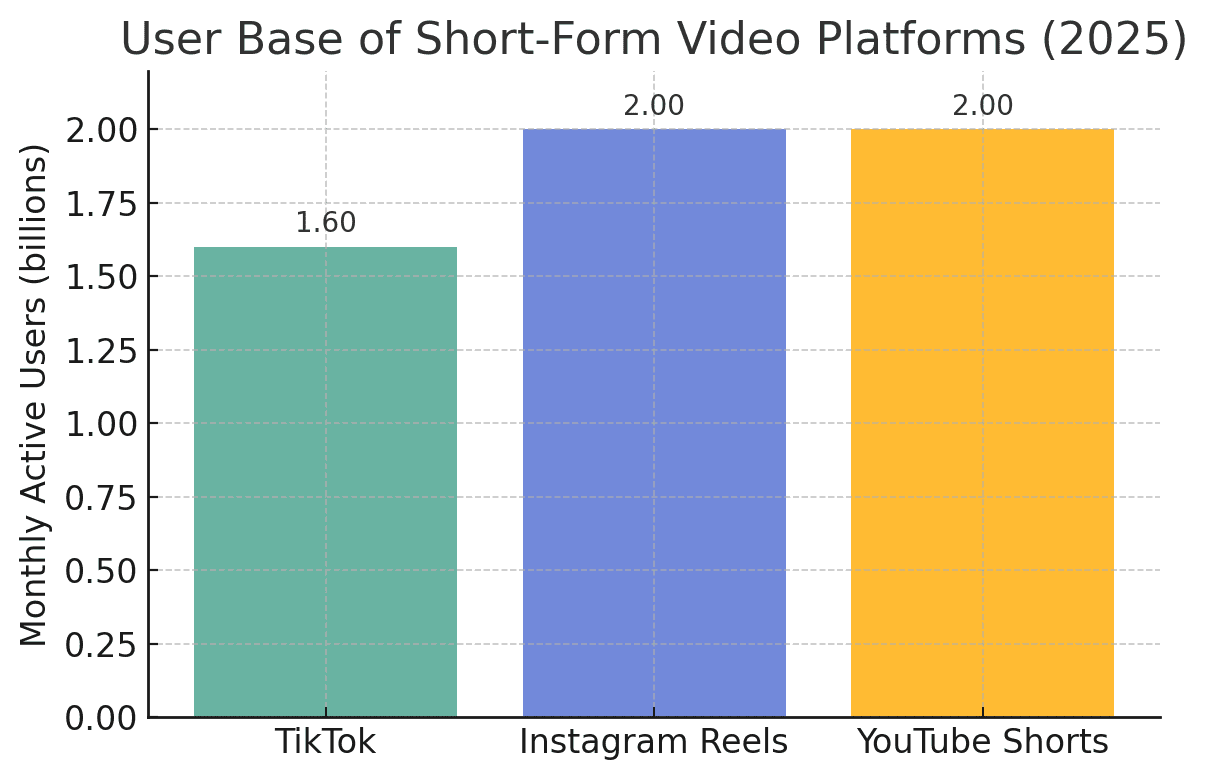
Comparison of monthly active users (in billions) among TikTok, Instagram, and YouTube’s short-form video platforms (2026). TikTok now boasts roughly 1.6 billion monthly active users, while Instagram (via Reels) and YouTube (via Shorts) each reach 2+ billion monthly users – underscoring the massive audience available on these platforms. However, TikTok leads in engagement time, with users averaging 95 minutes per day on the app (far higher than Instagram’s ~62 minutes), which speaks to TikTok’s ultra-addictive feed.
So which platform should you focus on? Ideally, all three – because why not triple your reach using the same content, with slight tweaks! But if you’re solo and need to prioritize: go where your target audience hangs out most and where your style fits. If you love raw, unfiltered creativity and your audience is young, TikTok first. If you have a strong visual brand/aesthetic and existing IG presence, lean into Reels. If you are already a YouTuber or your niche is something people search for, definitely do Shorts. Many savvy creators actually do produce once and distribute to all three (with adjustments as discussed). This cross-platform strategy is key to a modern content plan.
For a TL;DR style wrap-up, here are some quick-hit tips tailored to brands and micro influencers aiming to grow across TikTok, Reels, and Shorts:
Short-form video in 2026 is the heartbeat of social media, driving trends and influencing culture at large. TikTok, Instagram Reels, and YouTube Shorts each offer a unique stage for your creativity – and smart content creators are treating them as parallel venues to put on a show that audiences can’t resist. Whether you’re a brand aiming to boost your influencer marketing ROI or a micro influencer trying to make it big, mastering these platforms is well within your reach.
Remember, success won’t happen overnight (virality is unpredictable!), but with consistent effort, a willingness to adapt, and a focus on providing value or entertainment, you’ll see your follower counts and engagement climb. Celebrate small wins: a video that got a few hundred views and one nice comment is still a win – learn from it, and then aim higher. Use the SEO tips (captions, keywords, hashtags) to make your content discoverable not just by algorithms but by search engines and even AI-driven recommendations. And think long-term: building a loyal community who trusts you is far more valuable than one-hit-wonder virality.
Now it’s your turn to apply these strategies. Keep creating, stay authentic, and most importantly – enjoy the process! Short-form video is one of the most exciting playgrounds for content creators today. So go ahead and experiment with that TikTok dance, film that Reel of your daily routine, or post that YouTube Short teaser. With the tips in this guide, you have a roadmap to optimize and master TikTok, Reels, and YouTube Shorts in 2026. Good luck, and we can’t wait to double-tap and ❤️ your next video!
Influencer marketing has evolved from a novelty into a core strategy for brands, and artificial intelligence (AI) is taking it to the next level. From finding the perfect micro influencer to predicting campaign outcomes, AI-driven tools are reshaping how brands and creators connect. In fact, recent surveys show that integrating AI can boost influencer campaign results (66% of marketers saw improved outcomes) and that nearly 73% of marketers believe much of influencer marketing can soon be automated by AI. For both brands and influencers, understanding this AI revolution isn’t just tech hype – it’s key to staying ahead in a fast-changing digital landscape.
AI’s role in influencer marketing has grown rapidly because it brings efficiency and data-driven precision to tasks that used to rely on guesswork. Consider how time-consuming it once was to manually scour social media for suitable influencers or gauge whether an influencer’s followers were genuine. AI changes that by analyzing millions of data points in seconds – everything from audience demographics and engagement patterns to content themes and even sentiment. By doing so, AI helps marketers make smarter decisions instead of relying on gut feeling.
More importantly, AI isn’t just speeding things up; it’s uncovering opportunities humans often miss. Advanced algorithms can spot emerging influencers before they go viral, flagging creators who show rapid growth or high engagement in niche communities. They can also predict which influencers will best resonate with a brand’s target audience by examining past campaign data and audience overlap. All of this means brands can identify the right partners for their campaigns with far greater accuracy. And thanks to AI-driven analytics, marketers can forecast campaign outcomes like engagement rates or clicks, helping to set realistic expectations and optimize strategy. As a bonus, AI is a watchdog against fraud – detecting fake followers or inflated engagement so brands avoid influencer scams. To support these evolving needs, many companies are now exploring AI outsourcing to access specialized expertise and scale their marketing capabilities.
The bottom line? AI is transforming influencer marketing from a manual, hit-or-miss endeavor into a sophisticated, data-driven discipline. Brands that embrace AI are seeing gains in efficiency and ROI, while influencers benefit from more well-matched partnerships. Let’s break down exactly what that looks like in practice.
AI brings a host of benefits that streamline campaign planning and influencer discovery. Here are some of the most impactful advantages for brands using AI-powered influencer marketing:
Instead of spending weeks researching, AI platforms can scan through social profiles and content at scale. Advanced algorithms match your target criteria (audience interests, niche, location, etc.) with thousands of creators almost instantly, often cutting vetting time by over 50%. In fact, some reports show AI can reduce the influencer vetting process by up to 70%, allowing campaigns to launch faster.
AI goes beyond surface metrics like follower counts. It analyzes an influencer’s audience makeup and engagement quality to ensure brand-audience alignment. This means if you need, say, eco-conscious millennial moms, AI can find influencers whose followers fit that profile. The result is higher relevancy – your message reaches people who truly care, not just a large generic crowd.
Unfortunately, fake followers and bot engagement are persistent issues. AI tools automatically evaluate influencer audiences for suspicious patterns, flagging those with a high percentage of bot followers or unusual spikes in activity—using the same kind of behavioral analysis and machine-learning principles seen in broader fraud-prevention solutions like Sift. This protects brands from wasting money on influencers with inflated metrics and helps maintain authentic, trust-building campaigns.
AI in marketing doesn’t just find influencers – it can also suggest what content will work best. By analyzing past posts, audience reactions, and trending topics, AI can recommend optimal content themes, hashtags, or posting times for a campaign. Some brands even use AI tools to personalize influencer content guidelines and AI detectors to assess content authenticity, ensuring the messaging hits the right notes with the intended audience. An AI social media manager can help turn those recommendations into platform-ready captions, posts, and content plans while marketers keep control over brand voice, campaign direction, and final approval. For even greater efficiency, a voice AI platform can streamline content creation and audience engagement through natural, intelligent voice interactions. These benefits combine to make influencer campaigns more efficient, targeted, and effective. The entire process, from planning to execution, gets a high-tech upgrade.
One of the most exciting impacts of AI is how it unlocks the power of the micro influencer. Micro-influencers (typically creators with 5,000 to 100,000 followers) might not have superstar reach, but they often boast highly engaged niche audiences. Brands are increasingly keen on working with these smaller creators for their authenticity and strong trust with followers. The challenge, however, is finding the right micro-influencers out of millions of social media users – and that’s where AI shines.
AI-driven discovery tools excel at sifting through countless profiles to pinpoint those hidden gems with niche influence. For example, AI can track niche hashtags, keywords, and engagement patterns across social platforms to surface micro-influencers who are influencing conversations in specific communities. Unlike manual searches that might overlook someone with only 8,000 followers, AI can recognize that those 8,000 followers are highly interactive and aligned with your target market, making that micro influencer a perfect partner.
Crucially, AI evaluates quality over quantity. It looks at metrics like engagement rate (how actively followers like, comment, and share), audience sentiment in comments, and how niche-specific the content is. This means brands get micro-influencer recommendations who are not just relevant on paper, but who consistently spark meaningful interactions. And as we know, meaningful engagement often matters more than sheer follower count.

Chart: Micro-influencers deliver significantly higher average engagement rates compared to mega-influencers on major platforms like TikTok and Instagram. For instance, micro creators on TikTok see around 18% engagement, far above the ~4-5% for mega influencers. On Instagram, micros average ~6% engagement vs around 2% for mega influencers. This higher engagement and closer community connection is a big reason brands are eager to collaborate with smaller creators.
AI makes tapping into these high-engagement communities much easier. Instead of manually combing through Instagram or TikTok for hours, a brand can input its target audience criteria into an AI-powered platform and instantly get a curated list of matching micro-influencers. These might be creators the brand’s marketing team had never heard of, yet who have exactly the audience the brand needs. By leveraging AI to find “the perfect fit” influencers, companies running campaigns with micros often see better engagement and conversion rates than campaigns with a few big-name celebs. It’s a quality-over-quantity play, supercharged by smart technology.

In recent years, a number of tools and services have emerged to help brands find creators, manage campaigns, and measure results using AI. Here are a few notable ones:
The industry leading Micro-Influencer marketing platform. Leveraging an A.I. vetted network of 11M Micro-Influencers in the USA, Stack Influence helps eCommerce sellers increase sales, boost brand awareness, generate product testimonials, accumulate authentic UGC, and scale on eCommerce marketplaces like Amazon while automating all Micro-Influencer collaborations from A-Z.
Originally known for its fraud-detection capabilities, HypeAuditor employs AI to analyze influencer audiences. It can tell what percentage of an influencer’s followers are real vs. bots, identify suspicious spikes in follower growth, and grade the overall authenticity of an influencer’s engagement. Beyond vetting, HypeAuditor provides AI-driven performance metrics and rankings, so brands can find high-quality influencers and avoid the fakes.
A popular enterprise platform, CreatorIQ incorporates AI to help with influencer matchmaking and campaign optimization. It uses machine learning to recommend new influencers based on a brand’s past successful collaborations and can forecast campaign outcomes using historical data. The AI also helps in content analysis – for example, ensuring brand safety by detecting if an influencer’s content has any concerning elements before a brand partners with them.
A newer tool focusing on micro-influencers, inBeat uses AI to search through TikTok and Instagram for small creators that match a brand’s vibe. It’s handy for discovering nano- and micro-influencers that might fly under the radar in big databases. The AI prioritizes creators with engaged communities and can automate the initial outreach process with templated, customizable messages.
These tools (and many others in the market) underscore a key trend: AI is becoming standard in influencer marketing software. Whether it’s for finding better matches, weeding out fraud, predicting results, or automating workflows, AI features are now a selling point for platforms. Brands shopping for influencer marketing tools should look for AI capabilities that align with their needs – it can make a significant difference in campaign efficiency and success.
Given the rapid advancements we’re seeing, the future of AI in influencer marketing is incredibly exciting. We’re only going to see more sophisticated uses of AI that could change the game even further. Here are some trends on the horizon:
We can expect even more parts of influencer campaigns to be automated. Scheduling posts, optimizing budgets across influencers, A/B testing different content variations – AI will handle more of these tasks in real-time. In fact, many industry experts foresee a future where the majority of influencer marketing is powered by AI behind the scenes. That said, the winning formula will be AI + human, where mundane tasks are automated but humans still drive the creative strategy and personal connections.
As generative AI tools (like image and video generators) improve, we might see influencers using AI to help create content, and brands might use AI to produce campaign assets. Imagine an AI that can suggest video storyboards or even create a virtual demo of a product for an influencer to share. Some influencers are already using AI filters and effects creatively; this could extend to fully AI-generated co-creations between brands and influencers. Collaborating with a generative AI development company can help ensure these tools are used effectively and ethically in content creation. This opens up new creative possibilities, but will require clear disclosure and authenticity to keep audience trust, especially when brands use an AI humanizer to polish AI-written captions, scripts, or influencer drafts so the tone still feels real.
Future AI will enable brands to hyper-personalize influencer campaigns for different audience segments. For example, an AI might analyze a follower base and suggest tailoring the messaging slightly differently for sub-groups (by region or interest). Influencers could receive data-driven tips: “Hey, 30% of your followers love outdoor photography – consider incorporating this angle in your next post.” This kind of insight could help influencers tell more resonant stories that click with their audience, boosting engagement even further.
As social media platforms continue to build in shopping features, AI will play a role in connecting influencer content directly to sales. We might see AI algorithms determining the best time to drop a promo code in an Instagram Story, or automatically creating a personalized product showcase video with an influencer for a user based on their browsing history. The line between content and commerce is blurring, and AI will grease the wheels to make influencer-driven shopping seamless.
All these trends point to a common theme: influencer marketing is becoming smarter, faster, and more tech-driven. But it will still center on people – the creators and the audiences. AI will operate behind the scenes, helping make the connections more relevant and the storytelling more impactful. Brands and influencers that stay informed and adapt to these technologies stand to benefit the most in the coming years.
In the end, influencer marketing at its heart is still about human connection. AI is simply helping to facilitate and amplify those connections in smarter ways. Brands that use AI to find the perfect match and plan savvy campaigns, and influencers who use AI insights to deliver what their audience and brand partners love, will see the best results. The transformation is already underway. Now is the perfect time for both brands and creators to jump in, experiment with AI-driven approaches, and ride this wave of innovation. By blending technology with authenticity, you can take your influencer marketing efforts to new heights – and stay ahead in an industry that’s always evolving. Here’s to smarter campaigns, deeper discovery, and success for those who embrace the AI revolution in influencer marketing!
Influencer marketing has become a mainstream career path, and 2026 offers more ways than ever for creators to earn money from their content. Whether you’re a micro influencer hustling on Instagram or a YouTube creator with millions of subscribers, today’s digital landscape is filled with monetization opportunities. In fact, micro influencer marketing is booming – brands are eager to work with smaller creators who have loyal, engaged followings, not just the mega-celebrities. This means influencers of all sizes can tap into multiple income streams, from affiliate links to fan subscriptions, to turn their passion into profit.
In this casual yet informative guide, we’ll break down the top monetization tools and platforms available to influencers in 2026. We’ll cover a variety of categories – affiliate marketing, brand collaborations, subscription platforms, merchandise sales, and more – highlighting the best options in each. You’ll learn how these platforms support both micro and macro influencers, what their key features are, and the pros and cons to consider. By the end, you’ll have a solid roadmap of monetization strategies (and some SEO-friendly tips on influencer marketing) to help grow your creator income. Let’s dive in!
These days, successful influencers often diversify their income across several streams. Relying on just one source (like YouTube ad revenue alone) can be risky, so it’s smart to mix and match different monetization methods. Influencers might simultaneously earn through affiliate links, sponsored brand deals, fan memberships, selling merch, and even platform-specific ad programs.
often start with easy programs like affiliate marketing or product gifting collaborations, building multiple small revenue streams. These tools let them monetize even modest audiences without needing huge view counts.
typically have access to bigger brand deals and significant ad revenue, but they also diversify – launching merch lines or premium fan clubs to deepen engagement and add income.
Next, we’ll dive into each category and highlight the top platforms and tools – including some standout picks for micro influencer marketing – along with practical pros and cons.
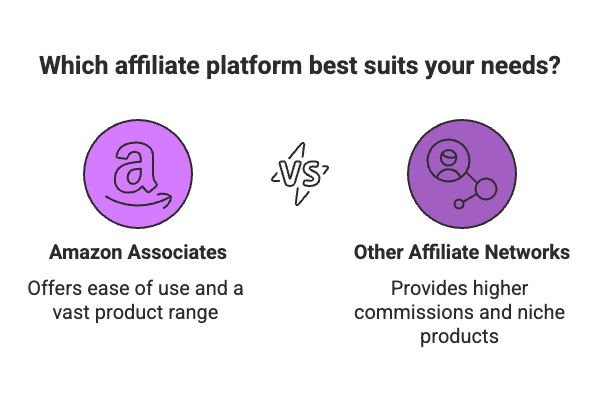
One of the most accessible ways to monetize as an influencer is through affiliate marketing. This involves promoting products or services via special tracking links and earning a commission on any sales generated through your links. Affiliate programs are extremely popular because they’re easy to join and don’t require any up-front investment – you get paid for results. This makes them ideal for micro influencers and new creators who want to start monetizing content right away.
Amazon’s affiliate program is one of the largest and most beginner-friendly. After a free signup, you can generate custom links to any Amazon product and earn a cut of each sale your followers make. Commissions range roughly 1% to 10% (even up to 20% on select categories) depending on the product type. While the percentage per sale is small (many everyday items are ~3-5% commission), the advantage is Amazon’s huge product catalog and high conversion rates (Amazon handles the selling for you). Pros: Trusted brand, millions of products, easy link tools, open to influencers of all sizes. Cons: Low commission rates in some categories, and you need significant traffic to earn substantial income. (Fun fact: Amazon Associates has over 900,000 members, nearly half of the entire affiliate market – proof of how popular affiliate marketing is for creators and bloggers!)
Beyond Amazon, there are countless affiliate programs. Networks like ShareASale, CJ Affiliate, and Impact aggregate offers from many brands. Niche platforms like LTK (LIKEtoKNOW.it) cater to fashion/beauty influencers, allowing you to earn when followers shop your Instagram looks. Many individual brands (from web hosting to apparel companies) also have their own affiliate programs you can join. Pros: Potentially higher commissions (some brands offer 10–30%), and you can partner with products that fit your niche. Cons: Each program has its own rules and payout thresholds; managing multiple links can be a hassle without a tracking tool.
Tips for success: When using affiliate marketing, authenticity is key. Only recommend products you genuinely like or that align with your personal brand – your audience’s trust is more valuable than a quick commission. Disclose your affiliate links (it’s legally required in most places), and focus on creating quality content (reviews, tutorials, “top picks” lists) that naturally incorporates these recommendations. Affiliate income might start small, but it can grow into a solid passive revenue stream as your influence expands.
Pros & Cons Summary: Affiliate marketing is perfect for both micro and macro influencers because it’s easy to start (pro) and scales with your traffic. The downside is that commissions per sale are relatively low (con), so you’ll need consistent content and audience engagement to see significant earnings.
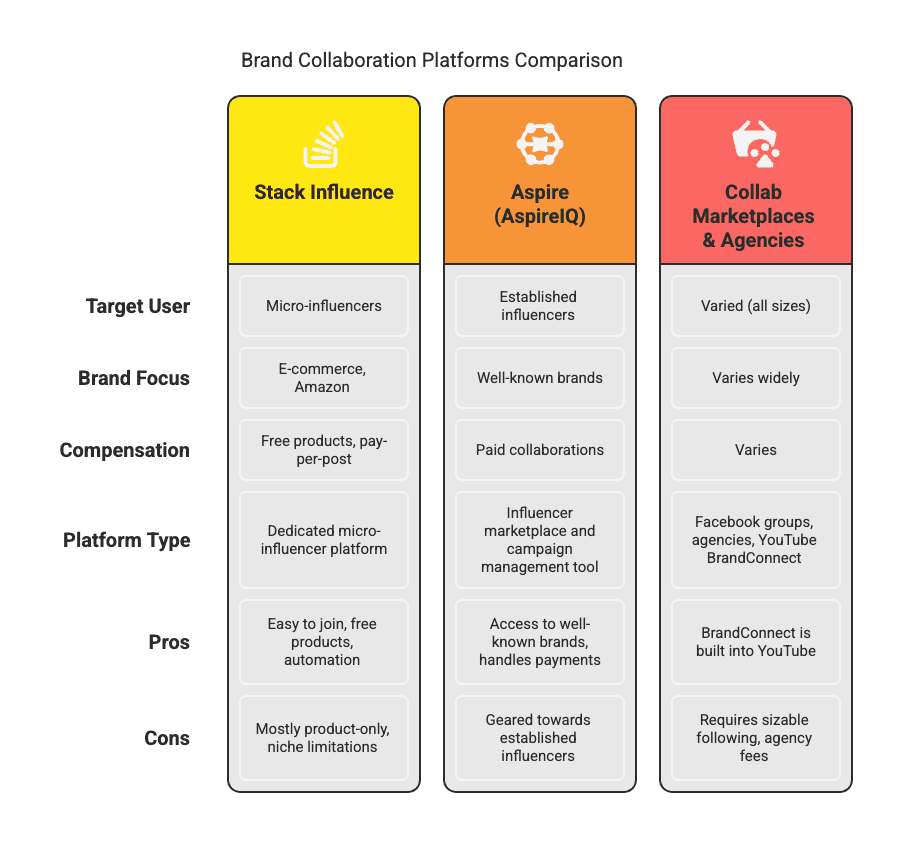
Another lucrative avenue is partnering with companies for sponsored content and brand collaborations. This is the core of influencer marketing as an industry – brands pay (or provide free products) for you to promote them to your audience. These deals can range from a free product shout-out by a micro influencer, to a five-figure YouTube sponsorship by a macro influencer. In 2026, both ends of the spectrum are thriving: micro influencer marketing campaigns are skyrocketing in popularity, as brands realize smaller creators often have higher engagement and niche credibility, while big influencers continue to land ambassador deals and long-term sponsorships.
How to find brand deals? You can network on your own (pitch to brands or get noticed), but there’s also a growing number of influencer marketing platforms that connect creators with brands. Here are some top options:
Standout platform for micro influencers. Stack Influence is a dedicated micro-influencer marketing platform that connects brands with everyday creators to spark word-of-mouth buzz. What’s unique is its focus on micro influencers and product-driven campaigns: brands typically compensate by gifting free products (rather than large cash fees), and the platform runs “pay-per-post” campaigns meaning the brand only pays when an influencer actually posts about the product. This model is great for newer influencers because it lowers the bar to participate – if you have an engaged following (even a few thousand followers), you can start getting products to review and promote.
Stack Influence boasts a network of over 11 million vetted micro-influencers in all consumer niches, and uses AI to match you with brands and manage the whole campaign (shipping products, tracking posts, etc.). Pros: Perfect for micro influencers (10k–100k range) to get brand collaborations; easy to join; you gain free products, content to share, and exposure. Campaigns are streamlined with automation and analytics. Cons: Many campaigns are product-only (no cash payment), so you’re essentially earning in free merch and building your portfolio – which is fine starting out, but not a direct paycheck. Also, most opportunities are with e-commerce brands (especially on Amazon), so if you’re outside those niches or looking for high paying sponsorships, you might need to grow more first.
Aspire is an influencer marketplace and campaign management tool popular with brands and agencies. As a creator, you can sign up to be listed in Aspire’s database and get invited to campaigns. Pros: Access to well-known brands and paid collaborations; platform handles campaign briefs and payments. Cons: Geared a bit more towards established influencers; some campaigns might have follower count requirements. (Aspire is just one example; similar platforms include Upfluence, Creator.co, Grapevine, influence.co, and more. Many of these offer robust tools for brands to find influencers – as a creator you often can join for free, but remember the competition can be stiff on larger platforms, and some high-end platforms are invitation-only or focused on macro influencers.)
In addition to dedicated apps, don’t overlook simpler avenues: Facebook groups or forums where brands post collab opportunities, influencer talent agencies (for larger creators), and even newer offerings like YouTube BrandConnect (formerly FameBit) which helps connect YouTubers with sponsors. For businesses seeking more control, custom app development also allows the creation of niche-specific collaboration platforms tailored to their audience. Pros: BrandConnect (for example) is built into YouTube once you qualify, making it easier to find video sponsors; agencies can bring you big deals. Cons: These often require having a sizable following or niche appeal; agencies will also take a cut of your earnings in exchange for representation.
Pros & Cons of brand deals: The obvious pro is high income potential – brands are often willing to pay well for effective influencer marketing. Sponsored posts can become a primary revenue source, especially for macro influencers. Additionally, you get free products, and partnering with reputable brands can boost your credibility. Cons include the effort and responsibility – creating content that meets the brand’s expectations while still feeling authentic to your audience can be challenging. There’s also the need to disclose sponsored content (per FTC guidelines), and maintain audience trust (too many ads can turn off followers). Micro influencers might face low or no-pay offers (just free products), so it may take time to start earning cash from collaborations. That said, with the right platform and approach, even nano and micro creators are turning sponsored content into a reliable income source in 2026.
SEO Tip: This section naturally incorporated “micro influencer marketing platform” and general influencer marketing terms. If you’re writing blog content, mentioning these keywords in context (as we did when discussing Stack Influence and influencer platforms) helps boost SEO while still providing value to readers.
We can’t forget the built-in monetization programs offered by the social platforms themselves. Many social networks have realized they need to share revenue with creators to keep them on the platform. So if you’re creating content on YouTube, Instagram, TikTok, etc., part of your monetization strategy might be through these native ad-sharing or creator fund programs. or even SDK monetization, where apps or games integrate third-party ad and analytics SDKs to generate revenue for developers and creators. Here are a few key ones:
This is the granddaddy of platform monetization. By joining YPP, YouTube creators can earn a share of the advertising revenue that plays on their videos. As of 2026, the requirements to join are having at least 1,000 subscribers and 4,000 hours of watch time in the past year (or alternatively, 10 million views on Shorts) – achievable for many dedicated creators, including some micro influencers. Once you’re in, YouTube will run ads on your videos and split the revenue ~55/45 in favor of you (the creator). That means creators receive 55% of the money from ads on their long-form videos, while YouTube keeps 45%. (For Shorts, the split is a bit different, but YouTube introduced a revenue-sharing model for short videos in 2023 to compete with TikTok’s approach.)
Pros: Truly passive income – if a video goes viral, you could keep earning from it for years. Top YouTubers make substantial money this way, and even smaller channels might cover their coffee budget with ads. YPP also unlocks other monetization: viewers can purchase Super Chats, Super Stickers during live streams, or Channel Memberships, which are additional revenue streams. Cons: It can be a grind to meet the eligibility threshold for new creators, and not every niche has a high advertising rate (CPM). Income is not guaranteed – it fluctuates based on views, ad prices, seasonality, etc. Also, YouTube can change policies or demonetize videos that aren’t “advertiser friendly,” which is outside your control. Nonetheless, being in the Partner Program is a milestone for many influencers and a core part of monetizing video content.
TikTok launched the Creator Fund to pay creators based on their video views. While it was a good gesture, many TikTokers have found the payouts modest (a few dollars for thousands of views). In 2023, TikTok rolled out a revamped Creativity Program with the promise of higher rewards for longer videos.
Pros: If you’re big on TikTok, it’s essentially free money for doing what you already do. Cons: The earnings per view are relatively low compared to YouTube; you might literally get a few cents for a video that got 1,000 views. Additionally, you need to be 18+ and have a certain follower count and recent views to join these programs. Think of TikTok’s fund as a nice bonus, but not a primary income source – many TikTokers diversify to merch, brand deals, or move to YouTube for better monetization.
Meta has been experimenting with various creator monetization features on its platforms. On Instagram, they’ve tested programs like Reels Play bonuses (paying creators for popular Reels, though this program’s availability has fluctuated), Badges in Instagram Live (viewers tip during live videos), and Subscriptions (as mentioned earlier, some creators can offer exclusive Stories/Live for subscribers).
If you’re a live streamer on Twitch, monetization comes from Subscriptions, Bits (virtual tips), and ads. Twitch’s model is well-established: viewers can subscribe to your channel (typically $4.99/month, of which you get about 50% unless you negotiate a higher split), or cheer with Bits (you get ~1 cent per Bit). Ads on Twitch also share revenue, though many streamers find subs and bits more lucrative. Competing platforms like Kick have also emerged, offering creators a much higher revenue split (Kick claims a 95/5 split on subs!). Pros: Strong community support – live audience often loves to support their favorite streamers directly. Recurring sub revenue can add up quickly if you build a loyal fanbase. Cons: Live-stream monetization heavily favors those who can stream many hours and keep an active audience; it’s time-intensive. Also, Twitch’s discoverability is low, so growing to the point of good income can be a slog for micro streamers.
Some creators prefer to monetize outside of social networks, keeping full control over their content and audience. Uscreen is a rapidly growing video monetization platform, especially popular among fitness creators with larger followings. It lets you launch branded membership websites and apps, offering both on-demand videos and live streaming for paying subscribers. Pros: Full ownership of content, multiple monetization options, built-in analytics, and global delivery. Cons: Monthly subscription fee, and requires setup and content management. Uscreen is ideal for creators looking to earn recurring revenue directly from fans without relying on social media algorithms.
Big picture – pros & cons: Platform-based monetization is great because it’s built into the ecosystem (pro) – you don’t send your audience elsewhere to make money, the app itself rewards you for your content. It’s also largely passive or community-driven (pro); you focus on content, and these programs generate income in the background (ads) or via built-in fan features (like a Super Chat during a livestream). The con is you’re at the mercy of the platform’s rules and reach (con). For example, if YouTube’s algorithm changes and you get fewer views, your ad income drops. Or if TikTok decides to discontinue a fund, that income vanishes. Additionally, many of these programs have eligibility thresholds (con) – they kick in only after you’ve achieved some level of scale or consistency (they’re not very useful for someone with 500 Instagram followers, unfortunately). That said, as you grow, these become significant slices of the monetization pie – top creators strategically leverage platform programs alongside external tools like those we discussed earlier.
We’ve talked about a lot of tools and platforms – now let’s line up some of the top picks in a quick comparison table. Below is a side-by-side look at five leading monetization platforms, summarizing their key features, how they charge or pay out, and which type of influencer they’re best suited for:
(Table Legend: “Cost/Pricing” refers to how the platform makes money or charges you. In most cases above, it’s free to start – the platform takes a cut of what you earn, or in Amazon’s case, they pay you commissions.)
As you can see, each platform shines in different ways. Amazon is an easy affiliate gateway for micros, Stack Influence caters to micro influencer marketing with brand deals, Patreon builds recurring fan support, Spring empowers you to sell merch without hassle, and YouTube’s Partner Program rewards you for content views. Depending on your audience and content style, you might use several of these in combination – for example, a mid-level YouTuber could be in the Partner Program, share Amazon affiliate links in video descriptions, have a Patreon for super-fans, and sell merch on Spring. That’s the kind of diversified approach many savvy creators are taking in 2026.
Monetizing as an influencer in 2026 is both exciting and empowering. There’s no longer a one-size-fits-all path or a single platform to rely on – instead, you have a toolkit of monetization platforms and strategies at your disposal. The key is to pick the ones that align with your content and audience. Are you a micro influencer just getting started? Affiliate marketing and micro-focused platforms like Stack Influence can plug you into revenue streams without needing a million followers. Already built a loyal fanbase? Consider launching a Patreon or selling cool merch to deepen that creator-fan relationship. Creating lots of video content? Definitely aim for programs like YouTube’s ad revenue sharing once you hit the criteria.
A few parting tips for success in influencer marketing monetization: diversify your income (so you’re not wiped out if one source falters), stay authentic with your audience (promote things you truly stand by – long-term trust beats short-term gain), and keep an eye on new trends (the digital world changes fast; today’s new platform could be tomorrow’s top earner). Remember that micro influencer marketing is in many ways just as viable as macro – brands value the connections you have with your niche audience, and those smaller earnings can add up to something substantial.
By using the right mix of the tools and platforms we’ve highlighted – from affiliate programs and brand collaborations to subscriptions, merch, and more – you can turn your influence into a sustainable business. Here’s to your monetization journey in 2026: may it be profitable, but also fun and rewarding for you and your followers. Happy influencing, and happy earning!
Influencer marketing isn’t slowing down in 2026 – in fact, it’s more integral to brand strategy than ever. But as marketers pour budgets into social campaigns, a pressing question arises: which delivers better ROI, partnering with many micro-influencers or a few macro-influencers? Both approaches have their merits. Micro-influencers offer niche engagement and authenticity, while macro-influencers boast massive reach. This blog post digs into the data, case studies, and trends to determine which influencer partnership model gives the highest return on investment (ROI) in 2026. We’ll compare micro vs. macro on engagement rates, conversion impact, and cost-effectiveness – all in a casual yet professional tone to help you make an informed decision.
Before diving into ROI, let’s clarify what we mean by micro and macro influencers:
Generally creators with roughly 10,000 to 100,000 followers. They tend to focus on specific niches (fitness, beauty, gaming, etc.) and have highly engaged audiences. Their followers see them as relatable experts or “everyday” people. Micro-influencers often build genuine trust with their community, interacting closely with followers. Collaboration terms are usually modest – e.g. free products plus a small fee or commission. These influencers are cost-effective and authentic, making them powerful for targeted campaigns.
Influencers a tier below celebrities, typically 100,000 up to 1 million followers. They are often internet-famous personalities, top bloggers, or YouTubers with broad appeal beyond one niche. Macro-influencers deliver massive reach – a single post can reach hundreds of thousands. However, because their audience is so large and diverse, their engagement rate is usually lower (more on that soon). Brands pay substantial fees to work with macros, often through agents, with more formal contracts and polished content. Macro partnerships are great for quick, broad awareness or lending prestige to a campaign, but they come at a premium cost.
In short, micro = smaller audience, big engagement; macro = huge audience, smaller engagement per follower. Now, which is better for ROI? Let’s explore the key differences in engagement and trust – the factors that ultimately drive ROI.
One major reason micros and macros perform differently is audience engagement. Marketing studies consistently find that as follower counts go up, engagement rate drops. Micro-influencers typically enjoy a much higher percentage of likes, comments, and clicks from their followers than macro-influencers do.
Micro-influencers often have 3–8% engagement on their posts, far above macro-influencers’ ~1–2% average. For example, on Instagram, micro-influencers (~10k–100k followers) average about 3.86% engagement, compared to just 1.21% for macro-influencers (and <1% for mega-celebrities). That means micros foster more likes, comments, and shares relative to their audience size. Their followers are paying attention.
Because of their closer interaction and niche focus, micro-influencers are seen as genuine peers by their followers. They “feel like a friend” recommending a product, which massively boosts credibility. In contrast, macro or celebrity endorsements can come off as impersonal ads. It’s telling that 56% of marketers report better ROI with micro/nano-influencers over larger influencers – largely because consumers trust smaller creators more. In fact, 50% of Millennials say they trust product recommendations from influencers, vs only 38% who trust celebrity endorsements. Micro-influencers occupy that sweet spot of relatability and expertise.
Micro-influencers typically specialize in a niche, which means their audience is highly relevant to specific products. A micro influencer with 25k followers all interested in vegan skincare is likely to drive more conversions for a vegan moisturizer than a macro influencer with 500k generic lifestyle followers. Reaching 25k right people beats 500k random people for ROI. As one marketer put it, micros are like targeting a passionate “in-market” community – you’re talking to people who care deeply about the topic. This often translates to higher conversion rates, which we’ll quantify next.
The result? Micro-influencers punch above their weight in engagement quality. One study found that on Instagram, micros can generate up to 60% more engagement than macro influencers. More engagement means more opportunities to persuade and convert viewers. It’s not just vanity metrics – these interactions lay the groundwork for sales by creating meaningful conversations and product interest.
Meanwhile, macro-influencers provide value in scale and awareness. A macro’s post might get a lower percentage of engagement, but in absolute terms it could still be a lot of people (1% of 500,000 followers is 5,000 likes – sheer volume can be helpful for brand exposure). Macros also tend to produce highly polished, professional content aligning with brand image, which can be great for broad campaigns. The trade-off is you’re reaching a wider net, but with shallower engagement per person. It’s a quality vs. quantity equation.
Key Takeaway: If your goal is deep engagement and trust that drives action, micro-influencers have the edge. Their audiences are smaller but mighty, often yielding higher engagement rates and stronger relationships than macros. Macros bring big reach and social “buzz” quickly, but expect a lower percentage of those fans to actively engage or convert.
When it comes to pure ROI – revenue return per dollar spent – micro-influencer campaigns often outperform macro campaigns. Here’s why:
Thanks to that trust and relevance, micro-influencers tend to convert followers to customers at a better rate. A recent study found micro-level influencers achieved about 20% higher conversion rates than bigger influencers. Even more striking, nano-influencers (under 10k followers) saw roughly 7% of their engagements convert to a sale, more than double the conversion rate of macro-influencers (3%). In other words, an engaged comment or click from a micro/nano follower is twice as likely to turn into a purchase than one from a macro follower. Higher conversion efficiency = higher ROI.
Micro-influencers are far cheaper to work with on a per-post or per-engagement basis. Where a macro influencer might charge $5,000+ for one Instagram post, a micro might charge a few hundred dollars or even just product gifts. This means for the cost of one macro, you could hire dozens of micros. One analysis showed brands can run campaigns with 5–10 micro-influencers for the cost of 1 macro influencer. More importantly, micros deliver more bang for your buck: the cost per engagement is much lower. On average, micro influencers cost around $0.20 per engagement, versus about $0.33 for macro influencers. That 40% cost savings per interaction adds up to a stronger ROI. Essentially, your budget goes further with a swarm of smaller influencers. (If an engagement translates into a sale at a consistent rate, paying less for that engagement means a better return on ad spend.)

Chart: Cost per engagement for micro vs. macro influencers. Micro-influencer campaigns average around $0.20 cost per engagement, while macro-influencers average about $0.33 per engagement. Lower cost per engagement indicates higher efficiency and ROI for micros, as brands get more interactions and potential conversions for each dollar spent.
Industry benchmarks show strong ROI for influencer marketing in general (businesses make about $5–$6.50 for every $1 spent on influencers on average). But micro-influencer programs often exceed these averages. In practice, micro campaigns have delivered double-digit ROI in revenue. For example, a Stack Influence micro-influencer campaign for an e-commerce brand (Blueland) achieved a 13:1 ROI – every $1 invested returned $13 in revenue. Over a 3-month campaign, 211 micro-influencers drove $129,280 in sales on Amazon, from a spend of about $9,917 (fees + product samples). That’s a 1300% ROI – an outcome that would be hard to match with a single expensive macro influencer. While 13× is exceptional, hitting 5×–8× ROI with micro influencers is common when campaigns are executed well. In contrast, macro influencers might bring a lot of eyeballs but their ROI often falls in the 3–5× range (for instance, one analysis of beauty brands found an average of ~$4–$6 return per $1 spent on influencers). Anything above 10:1 ROI is considered outstanding in influencer marketing, and it usually requires the efficiencies of scale and authenticity that micro-influencers provide.
Another ROI advantage of micros is scalability. Rather than betting your budget on one or two macro stars, you can distribute it across hundreds of micro-creators to amplify results. In 2026, platforms and agencies make it easier to recruit and manage large numbers of micro-influencers simultaneously. (For example, Stack Influence’s platform connects brands with a network of over 11 million micro/nano influencers across niches.) This means a brand can turn many small impacts into a huge collective reach – while still preserving the high engagement and conversion rates of each micro post. It’s like diversifying your investment: instead of one big ad, you have 100 small but high-performing ads flooding social feeds in relevant communities. The ROI can snowball if even a fraction of each micro’s followers convert.
Real-World Case Study – Micro ROI in Action: As mentioned above, Blueland’s micro-influencer campaign (211 Instagram creators) drove a 4.7× jump in monthly sales on Amazon and a 13:1 ROI. The influencers’ content yielded ~247k impressions and 11.4k engagements at around a 4.6% engagement rate – signaling that the target audience was reached and truly interested. Because those engagements translated into actual purchases (helped by tracked links and promo codes), the revenue payoff was huge. Meanwhile, the brand likely spent roughly the fee of one macro influencer, but instead got 211 pieces of content and many micro-scale “ambassadors” authentically talking up the product. This demonstrates how micro-influencer partnerships, when managed at scale and tracked properly, can deliver outsized ROI in 2026’s social commerce environment.
Of course, ROI also depends on your goals and how you measure success. Macro-influencer campaigns can excel in brand awareness ROI – e.g. getting millions of impressions, new followers, or press mentions (even if those don’t immediately convert to sales). If you launch a new product and want it to trend broadly, a macro or celeb influencer might provide a big splash that many micros combined might not replicate in the same timeframe. Some marketers therefore use macros for the “top of funnel” awareness and micros for “bottom of funnel” conversions. That balanced strategy can maximize overall impact. But if we’re talking strictly financial ROI and direct sales, the data in 2026 leans heavily toward micro-influencers as the smarter bet.
The influencer marketing landscape in 2026 shows a clear trend: brands are increasingly favoring micro (and nano) influencers to stretch their budgets and drive better results. A few notable points:
Surveys show 86% of U.S. brand marketers will be working with micro-influencers in 2026. In fact, micro-influencers are now preferred 10× more often by brands than mega-celeb influencers. This is a huge shift from the early days of influencer marketing when follower count was everything. Now, it’s all about impact and efficiency. Marketers have realized a bunch of “smaller” voices can often outperform one big voice, especially in driving ROI.
With social platforms like Instagram and TikTok, content from micro-creators that sparks high engagement can sometimes get boosted by algorithms to wider audiences. This means a micro-influencer’s post that resonates (say, a genuine product review that gets lots of comments) might snowball into virality, giving you reach beyond their follower count – essentially free extra impressions. The playing field is leveling, and brands see that authentic content can travel further than a glossy ad, thanks to algorithmic boosts for engagement.
In 2026, tools are better at matching brands with the right micro-influencers (even AI is helping find creators whose audiences perfectly overlap with a brand’s buyers). This precision means micro-influencer campaigns are more effective than ever. You’re not just guessing which influencer might work – data can identify the best “fit” creators who will deliver real ROI. This further tilts the scales toward micro campaigns, because one historical drawback (the effort to manage many small influencers) is being mitigated by tech platforms.
Beyond our earlier case study, many brands (big and small) are publicly touting success with micro-influencer strategies. For example, Amazon marketplace sellers have used 100+ micro-influencers to drive Amazon listing rank and sales. DTC brands in beauty and fashion frequently report higher ROI with micro/nano influencer gifting programs than with a big paid influencer post. These stories encourage more marketers to try micros, creating a snowball effect in the industry.
All that said, macro-influencers still have a role in 2026 – especially for brands seeking mass awareness or to associate themselves with a certain lifestyle image. Macros can deliver results for objectives like event promotions, app launches, or broad brand campaigns where ROI is measured in impressions and engagement rather than immediate sales. In fact, 81% of marketers say macro-influencers are on their list of ideal partners (with 74% also citing micro-influencers). The optimal approach can be a hybrid strategy: use a few carefully chosen macro-influencers to hit peak reach, then swarm the mid/lower funnel with micro-influencers to convert the interested audiences.
However, if a marketer must choose one approach – especially when working with a limited budget – micro-influencer partnerships generally deliver a higher ROI for each dollar spent.

Figure: An illustration of micro vs. macro influencer impact on conversions. The left funnel represents micro-influencers – starting with a smaller reach but retaining a larger fraction of engaged followers through to conversions (the funnel stays relatively wide, indicating strong engagement and conversion efficiency). The right funnel represents macro-influencers – starting with a broad reach but seeing a sharper drop-off, as a smaller percentage of that audience actively engages and converts. This visual highlights why micro-influencers often achieve better ROI: a more focused audience means less wastage and more of the “funnel” turning into actual results.
So, micro or macro? If your primary goal is maximum ROI in 2026, micro-influencer partnerships are the clear winners in most cases. Their combination of higher engagement rates, deeper trust, and lower costs leads to more conversions per dollar spent. Micro-influencers excel at turning online influence into actual sales – making your marketing spend work harder for you. As we’ve seen, brands are routinely getting solid 5:1 to 10:1 returns (or higher) by leveraging networks of passionate micro creators.
Macro-influencers, on the other hand, remain valuable for reach and awareness. They can spark widespread conversations and give your brand a moment of fame. If you have a sizable budget and a goal to “go big” for visibility, a macro influencer (or a few) might be part of your plan. Just temper expectations on direct ROI – the return may come in intangible forms like brand lift or new followers, rather than immediate revenue.
For most brand marketers, the best strategy in 2026 is a balanced one: invest heavily in micro-influencers for consistent, trackable ROI, and pepper in macro-influencers for broad campaigns when needed. Evaluate your campaign objectives: Is it performance-driven (sales/leads), or exposure-driven (reach/PR)? For performance, lean micro; for exposure, include some macro. And remember, you can often convert a macro’s reach into ROI by retargeting the engaged audience with ads or follow-up micro-influencer content – essentially combining the strengths of both.
In the end, the highest ROI comes from knowing your audience and finding influencers (big or small) who truly move the needle. In 2026, that often means betting on the “power of small” – the micro-influencers who may not be celebrities, but deliver results like rockstars. By partnering with the right mix, with an eye on authenticity and engagement, marketers can maximize their influencer marketing ROI and crush their campaign goals.
Expanding your Amazon business beyond U.S. borders can unlock huge growth opportunities, but it also brings new challenges. How do you build trust with customers halfway across the world? Enter micro influencers – the niche content creators with dedicated followings who can help bridge the gap. In this article, we’ll explore how U.S.-based Amazon sellers (from beginners to seasoned pros) can leverage micro influencer marketing for global expansion. We’ll cover what micro influencers are, why they’re so effective for international growth, key strategies and best practices, and highlight regions and tips to get you started on breaking into new markets.
Micro influencers (typically creators with a few thousand to ~100,000 followers) are powerful allies for reaching international customers. Unlike mega-celebrities, micro influencers focus on specific niches and local audiences, often yielding higher engagement and trust. This makes them ideal for localized social proof – exactly what a U.S. brand needs when entering a foreign market.
When expanding globally, you’re often unknown to customers in new regions. Micro influencers act as on-the-ground ambassadors. Their followers see them as relatable peers, so a shout-out or review from a local micro influencer instantly lends your brand credibility and authenticity in that region. In essence, micro influencers provide a shortcut to building trust and brand awareness abroad, because they already speak the language (literally and culturally) of your target customers.
Moreover, influencer marketing in general is a proven way to boost brand visibility internationally. Social media has no borders – a creative Instagram reel or TikTok by a local influencer can showcase your product to thousands of potential buyers overseas. And importantly for Amazon sellers, those influencer-driven posts can drive traffic directly to your Amazon listings, giving you a head start in sales rank and reviews in the new marketplace.
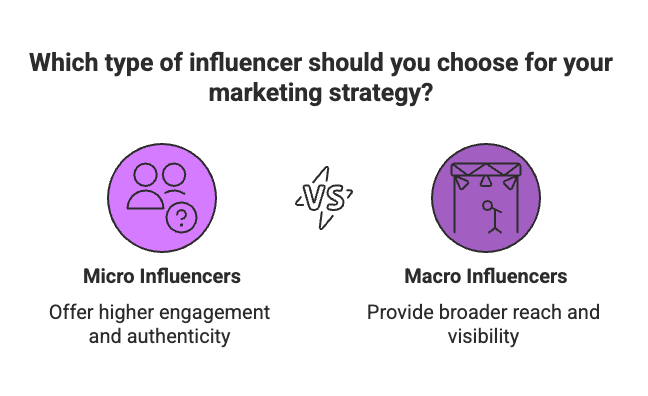
Micro influencers are social media personalities who have cultivated small but highly engaged communities (often in the 5,000 to 100,000 follower range). They can be everyday people – passionate hobbyists, bloggers, or niche experts – rather than traditional celebrities. What they lack in massive reach, they make up for in engagement, authenticity, and niche targeting. In fact, many marketers consider influencers under 10K as “nano influencers,” and 10K–100K as “micro,” but both fall into the “smaller influencer” category valued for closer audience connections.
Here’s why these smaller influencers matter for your global strategy:
Micro influencers often have engagement rates (likes, comments, shares) far above those of big influencers. Their followers actually pay attention and interact. For example, micro accounts frequently see engagement in the 5%–20% range, whereas macro influencers (hundreds of thousands or more followers) average only about 1%–3%. This means audiences are more likely to listen to and act on a micro influencer’s recommendations.
Because they are “regular” people and usually focus on a specific interest or locale, micro influencers come off as more genuine. Their content feels like real personal recommendations rather than ads, which resonates better with consumers. This authenticity is crucial when you’re trying to win over customers who have never heard of your brand.
Micro influencers often specialize in a niche (e.g. eco-friendly beauty, gaming accessories, home workouts) and cater to a particular region or community. This is gold for Amazon sellers expanding globally – you can find a micro influencer whose followers perfectly match your product’s target demographic in the new market. For instance, a U.S. supplement brand could partner with a fitness micro influencer in Germany to reach German gym-goers, or a baby product seller might work with a parenting blogger in Brazil to connect with Brazilian moms.
Partnering with micro influencers is typically budget-friendly – an important consideration if you’re a small business. Whereas a single post from a mega-influencer could cost tens of thousands of dollars, micro influencers often charge only a few hundred dollars per post (or even just accept free product samples or commissions). This means you can engage multiple micro influencers across different countries for the price of one big name, multiplying your reach and content. Lower costs, combined with higher engagement, often translate to a better ROI for your marketing spend.
In short, micro influencers punch above their weight. Their localized influence can make a dramatic difference in breaking into new markets, giving U.S. sellers a presence that feels “native” to local consumers.
To really drive home why micro influencers can be more effective for global expansion, let’s compare them with macro influencers (influencers with hundreds of thousands to millions of followers) on key factors:
Table: Comparing micro vs. macro influencers for international marketing. Micro influencers tend to have higher engagement and authenticity at a fraction of the cost, often yielding better ROI for Amazon sellers expanding into new regions.
As the table shows, micro influencers often provide more bang for your buck, especially when your goal is to establish social proof in a new market rather than just chasing raw exposure numbers. A smaller engaged audience in your target country can be far more valuable than a huge global audience that doesn’t convert into buyers. In fact, research published in 2024 found that nano influencers (~<10k followers) achieved double the sales conversion rate of macro influencers (7% vs 3% of engagements converting to sales). Their personal touch translates into action. And because their fees are low, the ROI can be startling – that study noted ~20× ROI for nano influencers vs 6× for macros.
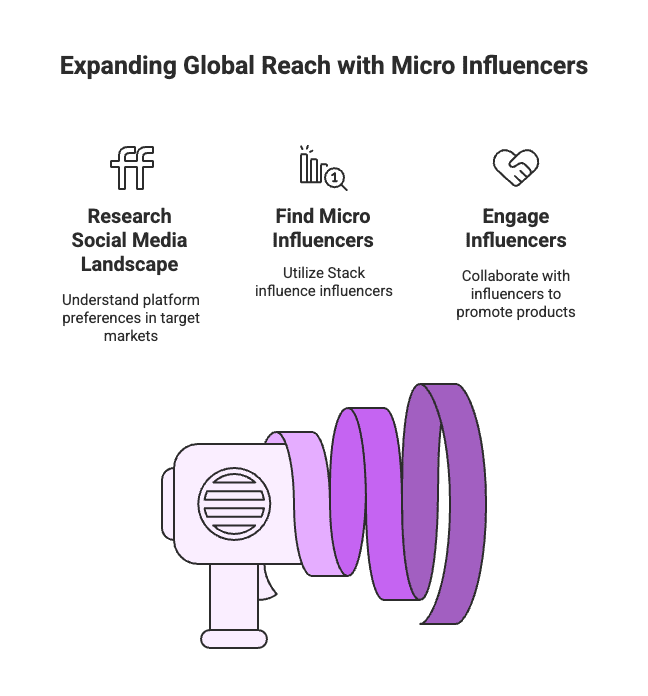
First, pinpoint which international markets make sense for your product. Look at your Amazon analytics or niche research to see where there’s demand. Maybe your kitchen gadget is getting organic orders from Canada or the UK – that could signal a market to double down on. Common high-potential regions for U.S. sellers include Amazon’s major marketplaces in Europe (UK, Germany, France, Italy, Spain), as well as Asia-Pacific markets like Japan and Australia, and emerging markets such as the Middle East (UAE, Saudi Arabia) or Latin America. Amazon now operates in over 20 countries worldwide, so there’s a good chance your next customers are out there.
Research the social media landscape in your target country. While Instagram, YouTube, and TikTok have global reach, some markets have unique platforms or preferences. For example, in Japan, Twitter and YouTube are extremely popular for product discussions; in Europe, Instagram and Facebook still reign; in India, YouTube and Instagram are big, and regional language content matters. China is a special case (Amazon’s not big there and they have WeChat/Weibo, etc.), but for most Amazon Global Selling markets you’ll focus on the major global social networks. Understanding where your target audience hangs out will guide you to the right influencers (e.g., YouTube tech reviewers vs. Instagram fashion bloggers).
Finding quality micro influencers requires some research, but it’s easier than you might think. Start with these approaches:
1. Hashtags and Geo-search: Search social platforms (Instagram, TikTok, etc.) using relevant hashtags in the local language and filter by location. For example, if you sell fitness gear and want to expand in Germany, check Instagram for posts tagged #FitnessDE or #BerlinFitness. The top or recent posts may reveal micro influencers who consistently create content on that topic.
2. Influencer Discovery Tools: There are databases (some free, some paid) like Influence.co, UpFluence, or even using Google/YouTube search to find “ blogger .” Also, Amazon’s own Amazon Influencer Program directory or Amazon Live creators might help identify influencers who actively promote products (though those skew larger and U.S.-centric).
3. Leverage Your Network and Customers: As a starting point, see if any existing followers of your brand on social media are from the target country and have a decent following. Your happy customers can be the best micro influencers. For instance, if a customer in Canada regularly posts about their home decor and has 5k followers, you could invite them to collaborate. Word-of-mouth might help too – one micro influencer can introduce you to others in their circle.
4. Micro Influencer Agencies/Platforms: Utilize Influencer Marketing Platforms such as Stack Influence, a community of over 11 million influencers built to automate product seeding campaigns and scale up your brand awareness, UGC, and online growth.
5. Check Competitors and Niche Communities: See if competing or similar brands are already working with influencers in that country. You can simply search for your product type on YouTube with country filters or on Instagram. If a competitor has been featured by a micro influencer, that influencer might be a good fit for you (just ensure your product has a unique angle or value if pitching them). Also, niche forums or Facebook groups in that country might highlight local content creators.
Tip: Look for micro influencers whose followers match your ideal customer profile in that region. Examine their content quality, engagement (authentic comments, not spammy bots), and whether they’ve successfully done partnerships before. It’s not all about follower count – a small but passionate audience of 3,000 can sometimes drive more sales than an indifferent audience of 30,000.
When approaching micro influencers, be clear about how the partnership benefits them and you. Many micro influencers are excited to work with brands, but they aren’t doing it purely out of charity – you need to offer something compelling:
When both sides benefit – the influencer gets content and rewards their audience, and you get promotion – the campaign will be more successful. Always approach with a personal touch: explain why you chose them, what you like about their content, and how you see your product fitting in. Building a relationship matters.
Micro influencers are a powerful tool, but they work even better when supporting a broader strategy. As you expand globally, also consider:
By integrating micro influencers into a holistic global marketing plan, you maximize the impact. They’ll generate awareness and trust, and your follow-through with ads, good listings, and customer service will close the sales loop.
Going global as a U.S. Amazon seller might feel daunting, but micro influencers can be your secret weapon to make it a success. They offer a scalable, authentic way to enter new markets with confidence. By following these tips and the strategies outlined above, you’ll be well on your way to growing your Amazon business internationally through the power of micro influencers. Global expansion isn’t just for the big companies – with the right influencer partnerships, even a U.S. small business can make a splash overseas. So start reaching out, build those local connections, and watch your brand footprint spread around the globe. Good luck, and happy global selling! 🚀
In today’s competitive Amazon marketplace, user-generated content (UGC) has become a powerful tool to drive visibility, social proof, and buyer trust. From influencer videos and unboxing photos to TikTok shoutouts and customer testimonials, UGC helps brands feel authentic and relatable – two things that boost conversion.
But here’s the catch: Amazon has strict rules about how sellers collect and use UGC, especially when it comes to reviews, endorsements, and promotional claims. Violating these policies can lead to review removals, ASIN suspensions, or even account deactivation.
That’s where Stack Influence and Appeal Wizards come in. Together, we help brands grow with confidence, pairing scalable influencer campaigns with policy compliant strategies that keep your account protected.
Amazon prohibits any UGC that:
Even posting a TikTok and then asking for a review by DM is considered review manipulation if it's tied to compensation or persuasion.
Stack Influence runs automated micro-influencer campaigns that are specifically designed to stay within Amazon’s guidelines:
This ensures that UGC campaigns boost your visibility without putting your account at risk.
Even with the best intentions, many brands cross Amazon’s invisible lines. That’s where Appeal Wizards helps:
If you're planning to launch an influencer or UGC campaign as an Amazon seller, make sure:
✅ You NEVER ask for a review in exchange for anything
✅ Your influencers disclose sponsored content clearly
✅ You focus on social proof, not star ratings
✅ You use UGC on off Amazon platforms (social media, email, website) unless you own the content/license
✅ If UGC is posted on Amazon (e.g., in a review), it must be organic and not incentivized
UGC is one of the most powerful marketing tools for Amazon brands but only if it’s used the right way. With Stack Influence helping you scale content legally, and Appeal Wizards keeping your compliance tight, your brand can grow without gambling your account health.
Want help reviewing your UGC or influencer plan before launching? Reach out to Stack Influence or Appeal Wizards today. Together, we help you grow smart.
Guest post written by Appeal Wizards in collaboration with Stack Influence.
Influencer marketing in 2026 is all about forging lasting relationships. Gone are the days of one-off Instagram posts; brands and creators now seek deeper collaborations that unfold over months or years. Micro influencers – those with a modest but loyal following – have become the powerhouse of this trend. They might not have millions of followers, but their engaged communities and authentic voices make them ideal partners for sustained campaigns. In this blog, we’ll explore how micro influencers can build long-term brand partnerships (especially on Instagram, the core platform for influencer marketing) and how brands can best collaborate with them. We’ll also highlight other platforms like TikTok, YouTube, and emerging networks where influencers thrive. Let’s dive into strategies, best practices, real examples, and actionable steps to elevate your influencer marketing game with long-term partnerships.
The influencer landscape is evolving from quick sponsored posts to long-term partnerships that benefit both creators and brands. Why? Because sustained collaborations build trust and more meaningful results. Influencers get stable income and credibility, while brands get consistent promotion and a spokesperson who truly knows their product. In fact, studies show the vast majority of influencers prefer ongoing relationships. According to a 2023 survey, 79% of influencers say they prefer long-term brand partnerships, whereas only a tiny fraction (as low as 2% in one study) prefer one-off campaigns. This shift reflects a desire for stability, authenticity, and deeper engagement over time.
Figure: Influencer partnership preferences in 2026. An overwhelming 79% of creators prefer long-term partnerships with brands, versus very few who favor one-time deals. Long-term collaborations offer stability and authenticity that one-off posts often lack.
For brands, investing in long-term relationships with micro influencers can pay off significantly. Consumers are more likely to trust a recommendation that feels genuine and recurring, rather than a one-time ad. In fact, 92% of consumers trust recommendations from individuals (like influencers) over brand advertisements. A micro influencer who authentically loves a product and talks about it regularly comes across as a trusted friend sharing a tip, which boosts brand credibility. Compare this to a celebrity who posts a single sponsored photo – the latter just feels like an ad. It’s no wonder brands are catching on: 57% of marketers now say they prioritize working with micro influencers on Instagram over bigger-name influencers. They’ve seen that a long-term partnership with a micro influencer can drive sustained engagement and better ROI than splurging on one-off deals with a mega influencer.
Long-term partnerships also allow creators to tell a story with the brand. Instead of a fleeting mention, the influencer can integrate the product into their life over time – think ongoing Instagram Stories using a skincare line over 6 months, or a year-long series of YouTube vlogs where a travel vlogger highlights a sponsor in each destination. This repeated exposure reinforces brand messaging in a natural, less “salesy” way. Followers start to associate that influencer with the brand in a positive light, which deepens audience trust and recall. All of this leads to what both parties want: genuine engagement and tangible results (whether that’s higher sales, app installs, or brand lift).
Bottom line: Long-term collaborations are a win-win. Micro influencers get to grow with a brand they genuinely like, and brands build credibility and loyalty among the influencer’s niche audience. Now, let’s look at who micro influencers are and why they’re such valuable long-term partners.
Micro influencers are content creators with a modest follower count (often around 5,000 to 100,000), but a highly engaged niche audience. They might be fashionistas, fitness enthusiasts, tech reviewers, foodie bloggers, or DIY crafters – basically any niche you can imagine. What sets them apart is not huge celebrity status, but authenticity and close-knit trust with their followers. A micro influencer’s audience often views them as a relatable friend or expert-next-door, rather than an untouchable star. This tight relationship translates into powerful engagement and influence.
One key reason brands love working with micro influencers is their impressive engagement rates. Even though their follower counts are lower than macro or mega influencers, micro influencers tend to get a larger percentage of their followers liking, commenting, and interacting with their content. On Instagram, for example, micro influencers (with tens of thousands of followers) have an average engagement rate around 3–4%, which is significantly higher than the ~1% or less seen by accounts with millions of followers. In one benchmark, micro-influencers on Instagram average about 3.86% engagement, versus only 1.21% for macro-influencers and a mere 0.98% for mega-influencers. This means their posts generate more buzz relative to their audience size, indicating a highly interested follower base.

Figure: Engagement drops as follower counts rise. Average Instagram engagement rates by influencer tier show that micro influencers punch above their weight. A creator with ~10k-100k followers sees about 3.8% engagement per post, far outperforming macro (100k+ followers) or mega influencers (1M+), who may only get around 1% or lower. This higher engagement is gold for brands – it means a micro influencer’s audience is paying attention.
Why do micro influencers have such strong engagement? Because they often focus on a specific niche and cultivate a community of followers who share that passion. Their content feels more genuine and less “corporate.” For example, a micro influencer who posts vegan recipes daily will attract a loyal following of health-conscious foodies. When that influencer recommends a new plant-based milk in multiple posts, their followers listen – and likely trust that recommendation more than an ad they see from a big celebrity who rarely talks about vegan food. The authenticity and trust factor is huge. As one study noted, micro influencers are perceived as peers, not distant advertisers, which makes their product endorsements far more believable.
Micro influencers are also cost-effective for brands. Instead of paying one superstar $100,000 for a single post, a brand can work with 20 micro influencers who each have a strong hold on a relevant micro-community. This spreads the message to multiple niche groups and often yields better overall engagement. Many savvy brands have figured this out and reaped the benefits. In fact, we’re seeing not just small startups, but even top global brands collaborate with micro influencers as a key part of their strategy.
All these factors make micro influencers ideal partners for long-term campaigns. They bring dedication, credibility, and a targeted audience. And because they’re smaller-scale, they tend to be more approachable and open to building genuine relationships with brands. Now, let’s talk about where these partnerships happen – the platforms that micro influencers and brands should focus on in 2026.
When it comes to influencer marketing, Instagram still reigns as the core platform for most micro influencers. Instagram’s mix of photos, videos (Reels), Stories, and shopping features provides a rich toolkit for brand collaborations. A micro influencer on Instagram can tag a brand in a post, swipe up to a product link in Stories, share unboxing videos on IGTV (Instagram’s longer video format), and even co-create Reels with the brand. The platform is mature and brands are very comfortable using it for influencer campaigns. It’s telling that a majority of marketers specifically prioritize micro-influencer campaigns on Instagram, knowing that’s where authentic engagement often converts to sales.
That said, 2026 is an era of multi-platform influence. TikTok has surged in popularity and cannot be ignored. Many micro influencers (and even nano influencers with just a few thousand followers) have found fame on TikTok’s viral short videos. Brands looking for youth reach or a burst of virality are turning to TikTok influencers for creative challenges, product demos, and storytelling in under 60 seconds. The engagement on TikTok can be sky-high – often higher than on Instagram – thanks to its algorithmic feed. Micro influencers on TikTok can achieve double-digit engagement rates on their videos. If you’re an influencer, showing a brand that your TikTok posts get, say, 15% of viewers interacting is a great selling point for a partnership. For brands, TikTok micro influencers offer a way to create cultural moments (think trending hashtag challenges) that feel organic. The key is to let TikTok creators have fun with the content – scripted ads won’t work there.
YouTube remains a powerful platform for long-form content and thus for long-term partnerships. A micro influencer on YouTube might have, for example, 50k subscribers – not huge by YouTube standards – but if those subs are highly interested (say, a tech reviewer or a book vlogger), a brand can benefit enormously from a dedicated video. Long-term partnerships on YouTube could look like a tech gadget brand sending a micro tech YouTuber their new products every quarter to review, or a fitness gear company sponsoring a YouTuber’s monthly workout challenge videos. YouTube content has a long shelf life (videos can be discovered via search years later), so an influencer who consistently integrates a brand will create multiple evergreen touchpoints for new viewers. If you’re a micro influencer who’s good on camera and informative, YouTube can amplify your influence and give brands rich, detailed content (beyond the bite-sized posts on IG or TikTok).
Don’t overlook emerging networks and formats in 2026. Social media is always evolving – early adopters often reap big rewards. For instance, Meta’s new platform Threads (if it becomes popular), could be a place where micro influencers engage audiences through text conversations, building thought leadership that attracts brand partners in niches like tech or journalism. Lemon8, a newer lifestyle content app, has been gaining traction for photo-centric influencers (especially in beauty and fashion), and brands are starting to explore it for influencer campaigns. Twitch and live streaming platforms are key for gaming, music, or tech influencers – long-term sponsorships on a Twitch channel (like an energy drink brand sponsoring a streamer’s weekly sessions) can be very effective. Even LinkedIn is home to micro “professional influencers” in B2B spaces, where long-term brand partnerships might involve webinars or content series. And let’s not forget community platforms like Discord or podcasts – a micro influencer might run a niche Discord community or a podcast, and a brand aligning with that can create very loyal customers over time.
The takeaway here is: focus on Instagram for its versatility and established influencer marketing features, but consider a multi-platform presence. Brands love when an influencer can cross-post or create content across IG, TikTok, YouTube, etc., because it amplifies the campaign. As a micro influencer, you don’t need to be everywhere, but do be where it matters for your niche. If you’re a beauty micro influencer, Instagram and YouTube (for tutorials) might be your main; if you’re a comedy skit creator, TikTok and maybe an emerging short-form video app could be key. And for brands – meet the influencers (and their audiences) where they are. A long-term partnership might span multiple channels for a cohesive presence, or it might double down on one platform where the influencer shines the most.
Now, let’s get into the how-to part: how can micro influencers attract and secure those long-term brand deals, and how should brands approach working with them?
For micro influencers aiming to land lasting brand partnerships, here are actionable steps and best practices to put into play:
Brands look for influencers who have a clear focus or expertise. Whether it’s cruelty-free makeup, minimalist travel, home fitness, or sustainable fashion – define your niche. Craft a personal brand story around it (your style, values, and what makes you unique). This makes it easier for companies in that sector to see you as a natural partner. Plus, niche content tends to attract more loyal followers, which is exactly what brands want. Action: Write a one-sentence mission statement for your content (“I help busy moms stay fit with 15-minute workouts,” etc.) and ensure your bio and posts reflect this identity.
Engagement is your currency as a micro influencer. Reply to comments, ask your followers questions, and foster a community feeling. The more you interact, the more loyal your audience becomes. Brands notice this – an influencer who consistently chats with their followers in comments or DMs will likely create better conversion and feedback when promoting a product. High engagement not only boosts your appeal (since, as we saw, micro influencers often have 3-4x the engagement rate of bigger influencers) but also signals to brands that your audience cares about what you say. Action: Set aside time after each post to respond to commenters, and occasionally poll your audience or do Q&A stories to encourage interaction.
When pitching yourself to brands, come armed with your stats. Create a simple media kit that includes your follower count, engagement rate, audience demographics (age, location, interests), and examples of successful past collaborations if you have them. Include screenshots of analytics (e.g., Story views or TikTok video plays) and any testimonials from small brands you’ve worked with. If you can show, for example, that your Instagram Reel about a product got 20,000 views and a 5% engagement rate, that’s concrete evidence of your impact. Data builds credibility. Action: Use tools (or native app insights) to gather your stats monthly. Even if you haven’t done brand deals yet, show growth rates and engagement averages. There are influencer analytics platforms that can help audit your profile – some even offer free reports on engagement rates.
Don’t just wait for brands to email you. Especially as a micro influencer, you have to be proactive. Identify brands that align with your niche and that you genuinely love (your followers likely overlap as customers). Follow them on all platforms, engage with their content (thoughtful comments, shares), and get on their radar. Many brand partnerships start with an influencer who was already a true fan of the product – so when you approach them, it doesn’t feel forced. Send a friendly, professional pitch email or DM introducing yourself, mentioning why you love the brand, and proposing how you could collaborate (perhaps a series of posts or becoming an ambassador). Keep it personalized; brands can sniff out copy-paste mass pitches. Action: Aim to reach out to a few target brands each month. Also, network with fellow creators – sometimes larger influencers pass on opportunities to smaller ones they trust, and word-of-mouth among influencer communities is real.
Landing a year-long contract upfront might be tough. Often, long-term partnerships start with a trial run – like a paid post or a short campaign. Treat even a one-time collab as a chance to prove yourself. Meet your deadlines, stick to the brief, and over-deliver on quality. If you can drive great results for a brand in a short project, you’ll be first on their list when they consider an ongoing ambassador program. For example, if a brand gives you a free product plus payment to post once, go the extra mile: maybe also share some bonus Story content unasked, or provide the brand with extra photos they can use. Showing initiative and enthusiasm sets you apart. Action: When doing an initial collaboration, communicate closely and ask for performance feedback afterward. If the brand is happy, express your interest in a long-term partnership – they may be thinking the same thing, but it helps to plant the seed.
One pathway to long-term collaboration is through affiliate marketing or brand ambassador programs. Many companies have ambassador programs where micro influencers get a referral code or link and earn commissions on any sales they drive. This is often an easy entry to a partnership – the brand supplies a discount code and perhaps free products, and you integrate them regularly into your content, earning a bit of income as your followers shop. If you perform well (generate solid sales or content), the brand may upgrade you to a paid sponsorship or a bigger role. It’s a low-risk way for both sides to build trust over time. Action: If a brand you love has an affiliate or ambassador program, join it and treat it like a professional gig. Create content as if you were officially sponsored. Brands do take notice of top-performing affiliates and often bring them into deeper partnerships.
By following these steps, micro influencers can position themselves as attractive long-term partners. It’s about the long game: building a strong personal brand, nurturing your audience, and forming genuine relationships with brands that resonate with you. Next, let’s switch perspectives – what can brands do to ensure these partnerships thrive?
Brands, if you’re looking to get the most out of influencer marketing in 2026, focusing on long-term relationships with micro influencers is a smart move. Here are some best practices for brands to create successful, ongoing collaborations:
Long-term partnerships start with picking influencers who truly mesh with your brand. Look beyond follower count – does the influencer’s content style and audience align with your target market? Do they share values that complement your brand’s message? Ensuring a strong match is crucial because authenticity is everything. Tip: Do a bit of homework on each candidate. Scroll through their posts to see how they talk and what they talk about. If you’re an eco-friendly product brand, a micro influencer who often mentions sustainability and has an engaged eco-conscious audience is a perfect fit. (An Edelman survey found 62% of consumers trust brands whose influencers share similar values, underlining how important value alignment is.) Try utlizing an influencer marketing platform like Stack Influence for a hands off approach to selecting influencers for your brand. Stack Influence automates product seeding and using an A.I. selection process to ensure the right influencers are matched with you!
When evaluating micro influencers, engagement rate and the quality of interaction are more telling than raw follower count. A micro influencer with 8k followers who consistently gets 500 likes and thoughtful comments per post is likely more valuable than one with 30k followers but only 100 passive likes. Look for signs of a real community: are people asking the influencer questions? Do they reply? Is there a niche focus that yields passionate responses? These are green flags. High engagement often correlates with better conversion when the influencer recommends something. Tip: Use tools or request a media kit to get an influencer’s engagement metrics. Many brands set a benchmark (e.g., only consider influencers with at least a 3% engagement rate) to filter out those who might have ghost followers.
Approach the influencer as a partner rather than just a paid ad channel. This mindset shift is key. Kick off communication by expressing why you think they’re a great fit (everyone likes to know why they were chosen!). Be transparent about your goals and ask about theirs. For long-term deals, it helps to get on an intro call to exchange ideas. Treating the collaboration as a two-way relationship will make the influencer feel valued and more invested in your brand’s success. Tip: Consider sending them something without asking for a post right away – like a welcome package of products – just to let them try things and share feedback. This helps seed genuine enthusiasm before any formal content requirements.
One way to formalize long-term partnerships is through a brand ambassador program. This can be an official group of micro influencers who are your go-to partners for a period of time (6 months, a year, or open-ended). They might get early access to new products, extra perks, and sometimes a title like “Brand Ambassador” they can flaunt. In return, you get consistent content and advocacy. Ambassador programs create a sense of community among your influencers too – they may even collaborate with each other, amplifying your brand further. Tip: Structure an ambassador program with clear benefits and expectations. For instance, require a certain number of posts per month, but also give them insider perks (private group chats, invites to company events or photoshoots, etc.). This not only ensures steady content but also fosters loyalty – the influencers feel like part of the brand family.
By following these practices, brands can create a positive environment for micro influencers to thrive. Remember, these creators are often juggling content creation with other jobs or responsibilities (since many micros are not full-time influencers yet). The easier and more enjoyable you make the collaboration, the more they’ll pour their heart into representing your brand. Many of the most successful micro influencer campaigns come from partnerships where the influencer genuinely feels like a valued member of the brand’s extended team.
By focusing on long-term, value-driven partnerships, micro influencers and brands can create truly impactful influencer marketing campaigns in 2026 and beyond. Micro influencers bring creativity, community, and credibility to the table – and when brands invest in those qualities over the long haul, the results are greater than the sum of their parts. Here’s to building partnerships that last and watching both creators and brands thrive together!
Influencer marketing has evolved from a buzzworthy experiment into a core strategy for many e-commerce brands. Yet one big question keeps brand managers up at night: How do you prove the ROI of those influencer campaigns? In a world where budgets are tight and partnerships need justification, showing a tangible return on influencer marketing spend is crucial. This blog post breaks down data-driven strategies to track and improve your campaign performance – with a special focus on micro influencers in the e-commerce space. We’ll highlight why Instagram is often the centerpiece of influencer efforts (while touching on TikTok and YouTube), explore frameworks and tools for tracking ROI, and even dive into a real case study to see these tips in action. By the end, you’ll have actionable insights to confidently attribute sales and growth to your influencer marketing and optimize future campaigns for maximum impact.
Nearly half of consumers make purchases at least once a month because of influencer posts. In other words, influencer marketing is directly driving e-commerce sales – but without proper tracking, you might not get credit for those wins. For brand managers, proving influencer marketing ROI matters because it:
And let’s be honest: influencer campaigns can require significant investment – in product samples, free products, commission, or fees. As the creator economy matures, marketers must show how these partnerships pay off. In short, if you can’t prove the ROI, it’s hard to improve it (or get buy-in to keep doing it).
ROI (Return on Investment) in the context of influencer marketing measures the business impact of a campaign, typically by comparing the revenue or profit gained to the cost of the investment. In simple terms:
ROI = (Revenue from Influencer Campaign – Cost of Campaign) ÷ Cost of Campaign × 100%
For example, if you spent $10,000 on an influencer program and it directly generated $50,000 in new sales, the ROI would be 400% (a 5x return). Many marketers also express ROI as a ratio (in this case, $5 earned for every $1 spent). On average, businesses earn about $5.78 for every $1 spent on influencer marketing (that’s a 578% ROI), though results vary widely by industry and strategy.
Tip: Don’t focus only on revenue! Depending on your goals, influencer marketing ROI can also consider the value of content created (e.g. reusing influencer photos in ads saves content production costs) or long-term lift in brand metrics. However, for this post we’ll primarily talk about direct financial ROI – the kind that makes CFOs smile – and how to track it.
Not all influencers are created equal. Micro influencers – generally those with roughly 10,000 to 100,000 followers – often deliver outsized results for e-commerce brands. Why? They tend to have highly engaged, niche audiences and come across as authentic, which builds trust with consumers. In fact, micro and nano influencers have far higher engagement rates on average (around 7.2%) than macro-influencers (only about 2.4%). This means their followers are actively liking, commenting, and clicking – fertile ground for conversions.
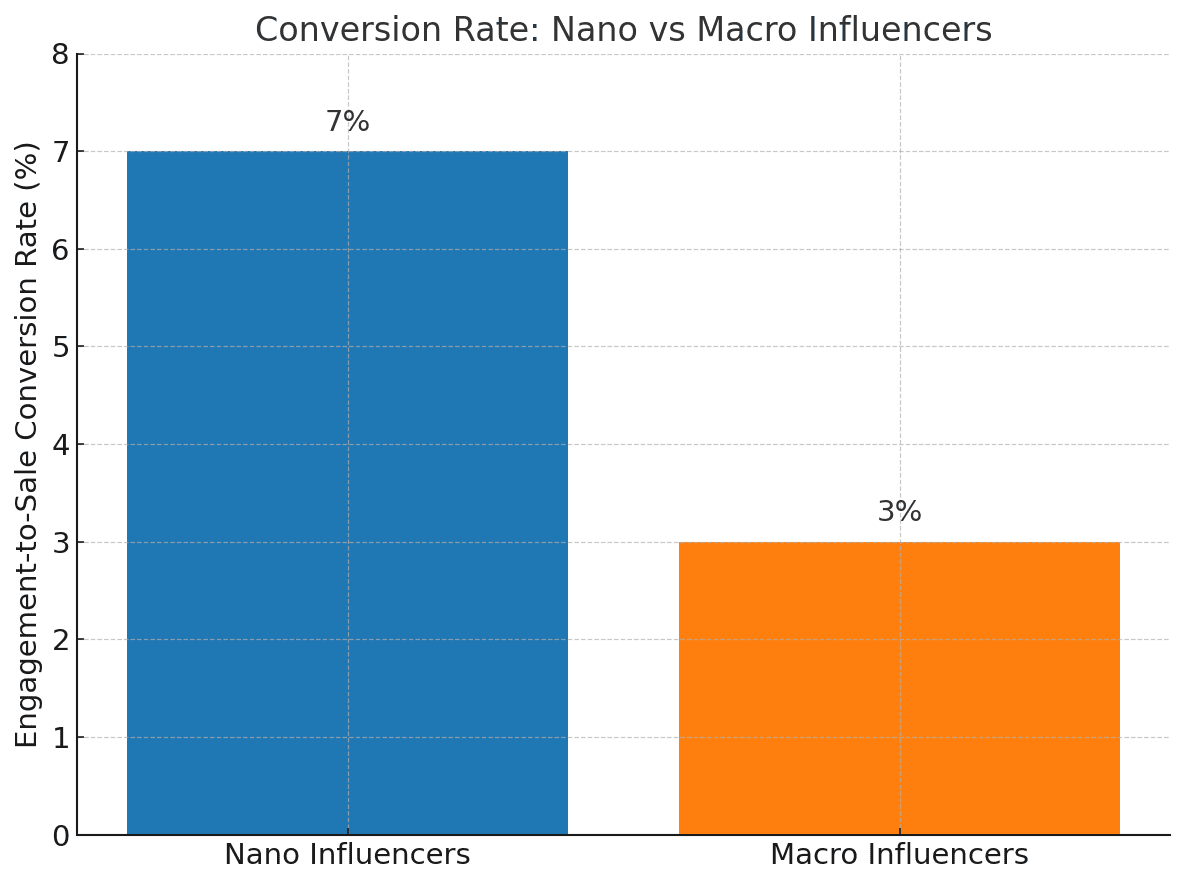
Bar chart comparing conversion rates of nano vs. macro influencers. Smaller creators (nano influencers with <10k followers) convert roughly 7% of their engagement into sales, whereas macro influencers (~500k+ followers) convert only about 3%. This higher engagement-to-sale conversion rate underscores the ROI potential of partnering with micro influencers in e-commerce.
Micro influencers may have a smaller reach individually, but their audiences are laser-targeted. A mommy vlogger with 25k followers or a fitness enthusiast with 15k followers might have just the right followers who are primed to buy products in that niche. Moreover, micro influencers are often more cost-effective to work with than celebrity or mega influencers – allowing a brand to engage dozens of micros for the price of one big name. The result is a larger collective reach, many pieces of unique content, and often a better bang for your buck in terms of engagement and conversions.
Key takeaway: Leveraging micro influencers in e-commerce can yield higher ROI because their audience trust and engagement levels drive more sales per impression. When proving ROI, don’t overlook these “small” creators – they can deliver big results.
Before diving into tracking tools, it’s important to identify what success looks like for your influencer campaign. A common mistake is using the wrong metrics for the wrong goal. The KPIs for a brand awareness campaign will differ from a direct sales campaign. Here’s how to think about it:
For awareness-focused campaigns (e.g. launching a new product, growing social media presence), you’ll track upper-funnel metrics that indicate reach and resonance:
These “soft” metrics might not translate to sales overnight, but they are valuable. They tell you if an influencer is effectively spreading the word and creating buzz. Over time, strong awareness primes the pump for conversions.
When the focus is on driving purchases or leads (bottom-of-funnel), you’ll zero in on conversion metrics and ROI:
If brand awareness metrics are the leading indicators of success, conversion metrics are the final confirmation that your influencer campaign delivered tangible business results. Ideally, you’ll track both sets of KPIs – but weight them according to your campaign’s primary objective.
Pro Tip: Clearly separate campaigns geared toward awareness vs. those for sales, and choose your KPIs accordingly. It’s fine to have secondary goals (e.g., you run a sales-driven campaign but happily take the bonus of new followers gained), but define what primary success is. This clarity will guide which data you focus on and report.
Alright, now into the nuts and bolts of tracking. To prove influencer marketing ROI, you need to reliably attribute outcomes (traffic, sales, sign-ups) to specific influencers or content. Fortunately, there are proven frameworks and tools to do this. Below are three data-driven tracking methods every brand manager should have in their toolbox:
1. Use UTM Parameters on Links – “Follow the Clicks”
When influencers can share a clickable link (think Instagram Stories, YouTube descriptions, blog posts), UTM parameters are your best friend. A UTM parameter is a small snippet added to a URL (e.g. ?utm_source=instagram&utm_campaign=spring_sale) that feeds information to your analytics platform. By generating a unique UTM-tagged URL for each influencer or campaign, you can see exactly how many website visitors came from that influencer, what they did on the site, and whether they converted. For example, give Alice Influencer a custom link yourstore.com/product?utm_source=instagram&utm_medium=influencer&utm_campaign=AliceCollab. When her followers click it, Google Analytics (or your analytics tool of choice) will attribute those visits – and any purchases – to Alice’s campaign. Tip: Use a URL builder or spreadsheet to easily create UTM links, and have influencers put them in their bio, swipe-ups, or link stickers. UTM tracking is essential for Instagram Stories and YouTube, where live links are allowed. It provides a clear line from influencer content to on-site behavior.
2. Provide Unique Coupon Codes for Influencers – “Track the Sales”
Not every platform allows clickable links (hello, Instagram feed posts and TikTok). An alternative (or complementary) tracking method is giving each influencer a personalized discount code for their followers. For instance, your brand GlowySkin might give influencer Jane the code GLOWYJANE15 for 15% off. When customers use that code at checkout, you know Jane’s content drove that sale. These codes serve a dual purpose: they incentivize purchases (everyone loves a discount) and they create a clear record in your sales data of which influencer drove each sale. Make sure each influencer gets a unique code (and ideally one that’s easy to remember). Then simply track how many times each code is redeemed and the total revenue associated with it. Most e-commerce platforms (Shopify, WooCommerce, etc.) have built-in coupon reporting to make this easy. Bonus: If you prefer not to give discounts, use affiliate codes (or referral codes) that don’t discount the customer but give the influencer a commission – you’ll still see which code drives sales.
3. Set Up Dedicated Landing Pages – “Create a Custom Path”
Another powerful strategy is to create dedicated landing pages or referral pages for each influencer or campaign. Instead of sending influencer traffic to your generic homepage, send them to a unique URL on your site tailored to that influencer or partnership (for example, yourstore.com/jane or yourstore.com/influencer-campaign). This page can feature the specific products the influencer promoted or a personalized welcome message for their followers. The beauty of this approach is that any visit or sale on that page can be attributed to that influencer, since no one else is pushing that URL. You can monitor page views, add-to-carts, and conversion rate on that page in isolation. Many brands use this for higher-funnel campaigns too (like an influencer’s followers get their own landing page with a special sign-up offer). Pro tip: you can combine this with UTMs and coupon codes for multi-layered tracking – e.g. an influencer uses a short link to their landing page (with UTM parameters) and also shares a discount code; any purchase on that page or with that code is definitely from their audience. By stacking tracking methods, you virtually guarantee no lead falls through the cracks.
In practice, savvy e-commerce brands often use a mix of all three methods above. For example, say you partner with a micro influencer on Instagram: you might give them a swipe-up Story link with UTM tags, plus their own 15%-off code in the caption, both pointing to a special landing page on your site. Whether a follower swipes up immediately or visits later and uses the code, you’ll capture the sale either way. The key is to plan these tracking elements from the start of your campaign – don’t wait until after posts go live to think about how you’ll measure results. When you kick off an influencer collaboration, define what success means (e.g. 100 sales or 50 email signups) and set up the appropriate tracking links, codes, or pages before the content goes out.
Framework in a nutshell: Match your tracking method to the platform and goal. If the influencer content is on a platform that allows easy linking (Instagram Story, YouTube, blog), lean on UTM links. If it’s on a link-less platform (Instagram feed, TikTok video), rely on unique codes or instruct viewers to click the link in bio. For a highly personalized touch or to track a group of influencers, use dedicated landing pages. Often, combining methods yields the best attribution coverage.
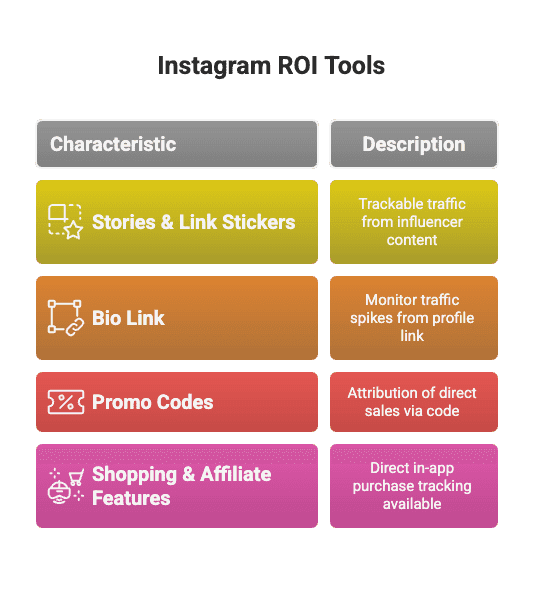
It’s no secret that Instagram is the epicenter of influencer marketing – 89% of marketers use Instagram for influencer campaigns, making it the most popular platform by far. Instagram’s visual nature and shopping-friendly features (like product tagging and in-app checkout) make it ideal for e-commerce influencer marketing. But to prove ROI on Instagram, you need to take advantage of the right tools:
Other platforms are rising stars too. TikTok has exploded in popularity for influencer campaigns (over 50% of marketers now include TikTok in their influencer strategy). Tracking TikTok ROI is similar to Instagram: you often can’t link in the video, so use link in bio for clickable URLs and promo codes mentioned in the video or caption. TikTok also offers analytics for views, engagement, and now even direct shopping integrations (TikTok Shopping), but for off-platform sales you’ll rely on the same UTMs and codes approach. Keep in mind TikTok content can go viral beyond the creator’s follower base, so watch for spikes in traffic even from non-followers and consider using a unique landing page if a TikTok goes viral.
YouTube, on the other hand, is link-friendly. Creators can put links in the video description and pinned comments. Always provide a UTM-tracked link for YouTube influencers to include in their description (e.g. “Get 10% off: yoursite.com/offer?utm_source=youtube&utm_campaign=CreatorName”). YouTube videos also have long shelf lives; someone might watch and click months later, so keep the tracking link active long-term. Additionally, YouTube promo codes are great for spoken call-outs – e.g. “Use code SUNNY10 at checkout” – and let the creator overlay the code on screen. With YouTube’s analytics plus your site data, you can attribute how an influencer’s video contributes to sales over time (often YouTube ROI is slower burn but can be substantial due to the platform’s searchability).
In summary: Instagram still reigns for influencer marketing (especially in lifestyle and e-commerce niches), so mastering ROI tracking there is priority #1. But don’t sleep on TikTok and YouTube – the same principles apply. Tailor your tracking to each platform’s capabilities (use codes where links aren’t available, use UTMs where they are), and you’ll be able to prove the impact across the board.
Feeling inspired to level up your influencer marketing ROI? Here are some actionable tips for brand managers to put these insights into practice:
Every campaign should start with the question, “What does success look like?” Define whether you care most about sales, sign-ups, content generation, or awareness. Then communicate those goals (and tracking plans) clearly to your influencers. For example, if sales are the goal, let influencers know you’ll be tracking via their link or code – so they understand why it’s important to mention it.
For better ROI, focus on influencers who closely match your target audience and have a history of genuine engagement. A micro influencer whose followers align with your niche will likely drive more conversions than a larger influencer with a broad but less targeted audience. Don’t just look at follower count – check their engagement rate, content quality, and how their audience responds to sponsored posts.
Instead of one mega-celebrity, try collaborating with a squad of micro influencers. Tools like Stack Influence (and other influencer platforms) can help you efficiently manage dozens or hundreds of micro creators. This diversifies your reach and content, and as we saw, smaller creators often deliver higher conversion rates. It’s a more scalable, data-driven approach to influencer marketing.
Consider adopting an influencer marketing platform or analytics tool that centralizes your tracking. Platforms (like Sprout Social’s influencer tool, Upfluence, Traackr, etc.) can integrate with your ecommerce and analytics, automatically pulling in metrics like engagement, click-throughs, and even conversion data. They often allow you to generate links/codes, track payouts, and produce ROI reports in a dashboard. While not strictly necessary, these tools can save time and provide a more data-driven framework for managing campaigns at scale.
Finally, always remember to disclose sponsorships and maintain authenticity – not just for ethics/legal compliance, but because transparent and genuine content performs better (and thus improves ROI!).
In the era of data-driven marketing, there’s no reason to treat influencer campaigns as an untrackable leap of faith. By implementing the frameworks and tools outlined above – from UTM tracking and unique coupon codes to leveraging micro influencers for their high engagement – brand managers can conclusively prove the ROI of influencer marketing and continually improve it. We’ve seen that with savvy tracking, every like, swipe, and click can be connected to real business outcomes, whether that’s a sale on your website or a boost in brand visibility.
It’s time to rethink how you approach influencer partnerships: not as one-off experiments, but as measurable, optimizable components of your marketing strategy. Start by setting clear goals, use data to guide your influencer selection and tactics, and don’t be afraid to double down on micro influencers who show the best results.