
The latest info on influencer marketing trends, micro influencer news, and the world of social media

Think you need millions of followers to snag a brand deal? Think again. Micro-influencers – content creators with modest followings – are proving that small creators can make a big impact in today’s creator economy. In fact, brands from e-commerce startups to Fortune 500s are eagerly partnering with micro-influencers for their authentic connection and high engagement with niche audiences. This casual, informative guide will show how aspiring influencers (even those with a few thousand followers) can win big brand deals, with practical step-by-step tips, charts, and insider strategies. Whether you’re a budding Instagrammer, a TikTok comedian, or a YouTube vlogger, you’ll learn how to leverage your strengths as a micro-creator to land collaborations – and how e-commerce brands, Amazon sellers, and DTC companies can benefit from these partnerships. Let’s dive in!
Micro-influencers might be “micro” in follower count, but their impact is anything but. Brands love them for a few key reasons:
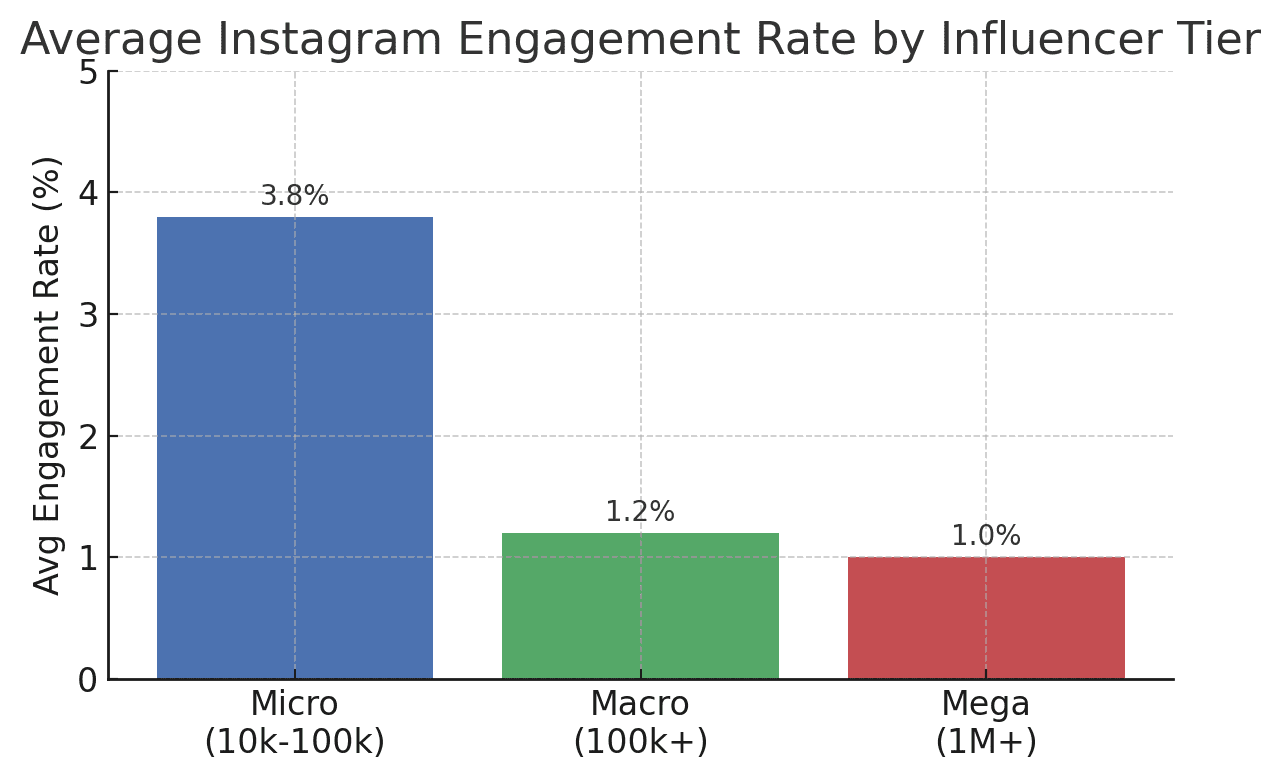
Figure: Average Instagram engagement rate by influencer tier. Micro-influencers (~10k–100k followers) see around 3.8% engagement, far outperforming macro (100k+) and mega (1M+) influencers (~1% or lower). In other words, smaller creators generate more buzz per follower, indicating a highly interested and responsive audience.
It’s no wonder a recent industry report found marketers are shifting budgets toward micro and nano influencers in 2025. In short, micro-influencers have become “the secret sauce in digital marketing”, prized for their engagement, authenticity, and affordability. Now, how can you, as a rising micro-influencer, capitalize on these trends and start landing those brand deals? Let’s walk through it step by step.

Getting a brand collaboration as a micro-influencer isn’t about luck – it’s about preparation, persistence, and smart strategy. Here’s your step-by-step roadmap to go from a small creator to a brand’s next VIP partner:
Infographic: A step-by-step roadmap for micro-influencers to secure brand deals. From carving out a niche to leveraging affiliate programs, following these six steps (and the actions under each) can significantly boost your chances of landing and growing lucrative partnerships.
Be a specialist, not a generalist. Brands look for influencers who have a clear focus or expertise that aligns with their products. Maybe you’re the thrift-fashion guru, the vegan baker, or the tech gadget reviewer. Embrace that niche fully. Define what makes you unique and build your personal brand story around it – your style, values, and mission. This will attract like-minded followers and make it obvious to companies what kind of value you offer.
Tip: Write a one-sentence mission statement for your content (e.g., “I help busy moms stay fit with 15-minute workouts” or “I review affordable gadgets for budget tech lovers”). Use that message in your social bios and make sure your posts consistently reflect it. A strong niche identity makes you memorable and instantly tells brands what you’re about.
Your engagement is your currency as a micro-influencer. A loyal, interactive audience is far more important than a huge follower count. So focus on nurturing the community you have:
All this engagement work pays off. Remember, micro influencers often have 3-4x the engagement of bigger influencers, which is exactly what brands want. Show off that vibrant community and you’ll be far more appealing to potential partners.
Not all brand deals are created equal. As a micro-influencer, you’ll have the most success by being strategic in whom you approach. Here’s how to find the perfect brand matches for you:
All this engagement work pays off. Remember, micro influencers often have 3-4x the engagement of bigger influencers, which is exactly what brands want. Show off that vibrant community and you’ll be far more appealing to potential partners.
What if a brand isn’t ready to sign you as a paid influencer due to your modest size? You can still get your foot in the door (and even earn money) through affiliate and ambassador programs – often a stepping stone to full sponsorships:
The big picture: affiliate links, ambassador roles, product-for-content gigs – they’re all ways to get involved with a brand with a lower barrier to entry than a full-on paid sponsorship. Use them as learning experiences and proof points. If you drive great results, you can always take that data back to the brand (or even other brands) and say, “look what I did in 3 months – imagine what I could do in a bigger collaboration!” It’s about building relationships and demonstrating value over time. Today’s affiliate code could turn into tomorrow’s six-month brand ambassador deal.
In the booming 2025 creator economy, micro-influencers are punching above their weight like never before. Brands have realized that an engaged niche following often beats a massive disengaged one – and they’re shifting their marketing strategies accordingly. This is huge opportunity for aspiring creators: you don’t need to wait until you have 100k followers to start pitching brands or monetizing your content. By focusing on your niche, fostering genuine audience trust, and approaching collaborations with a professional, value-driven mindset, you can turn your small platform into a launching pad for major brand deals.
To recap, micro-influencer success comes down to authenticity and hustle. Keep your content real, choose partnerships you believe in, and put in the work – from thoughtful pitches to insightful content to diligent follow-ups. The partnerships you build can be incredibly mutually beneficial: you get experience (and income/freebies), and brands get the holy grail of modern marketing – authentic user-generated content and word-of-mouth promotion.
So whether you’re an Instagram artist with 5,000 followers or a YouTuber with a tight-knit subscriber base, don’t underestimate your value. E-commerce brands, Amazon sellers, and DTC startups are out there actively seeking micro and nano-influencers to collaborate with. Use the tips in this guide to present your best self and seize those opportunities. As the saying goes, “It’s not the size of the dog in the fight, but the size of the fight in the dog.” You may be a small creator, but you can have a major impact – and score some big brand deals along the way. Now go out there and make it happen!
Learn how e-commerce and DTC brands can leverage the Instagram Creator Marketplace to find micro influencers, boost UGC, and drive sales. This step-by-step guide covers strategy, common influencer niches (beauty, fitness, fashion, etc.), and tips for Amazon sellers to maximize ROI.
The Instagram Creator Marketplace is a platform within Instagram (accessible via Meta Business Suite) that connects brands with content creators for collaborations. Think of it as Instagram’s built-in influencer hub – it allows brands to find and filter influencers by niche, audience demographics, follower count, and more, then negotiate partnerships all in one place. Meta first tested this marketplace in 2022 in the U.S., and since then thousands of brands and creators have joined. In 2024, Instagram expanded the Creator Marketplace to 8 new countries (including the UK, Canada, Australia, India, and more) to make brand-creator collaborations easier globally.
Why should your brand care? For one, influencer marketing works – on Instagram, brands earn an estimated $4.12 for every $1 spent on influencer campaigns. Instagram remains a top platform for influencer marketing, boasting over 500,000 active influencers covering every niche from beauty to tech. The Creator Marketplace streamlines finding the right creators among this vast pool. Instead of cold-DMing random influencers, you can use Instagram’s tools to discover and vet creators who match your target audience and campaign goals.
Benefits at a glance: Using the Creator Marketplace can save you time and effort by providing a centralized dashboard to search for creators, manage campaigns, and even boost influencer posts as ads. It’s designed to keep both creators and brands happy by facilitating seamless partnerships. Now, let’s dive into a step-by-step guide on how to strategically use this marketplace to amplify your e-commerce brand’s reach and authenticity.
Before jumping in, make sure you’ve set the stage for success:
You must have an Instagram business or creator account (a professional profile) to access the Creator Marketplace. If you haven’t already, convert your Instagram to a business account and link it to a Meta Business Suite account. Only users 18+ who comply with Instagram’s Community Guidelines and Partner Monetization policies are eligible. Brands will access the marketplace through Facebook’s Meta Business Suite dashboard, whereas creators access it via their Instagram app’s professional dashboard.
Define what you want to achieve with influencer collaborations. Is it product awareness, driving e-commerce sales, generating UGC (user-generated content) for ads, or boosting Amazon product reviews? Clear objectives will inform the type of creators you seek and the campaign structure. For example, a DTC skincare brand might aim for UGC videos demonstrating the product, whereas an Amazon seller might focus on driving affiliate sales and getting review content.
Set a rough budget or incentive plan for creators. Will you offer free product, a flat fee, commission on sales, or a combination? Micro influencers (those with tens of thousands of followers) often charge modest fees or accept products, whereas larger influencers require higher fees. Knowing this upfront will help you filter creators within your range. Keep in mind that micro influencers tend to be more cost-effective and highly engaged, delivering strong ROI even on smaller budgets.
Finally, ensure your Instagram profile is polished – good bio, link in bio updated, and a cohesive feed. Creators you approach will likely check out your brand’s profile, and a professional appearance can make your partnership invitation more appealing.
Once your accounts are in order, it’s time to get into the Creator Marketplace:
Log in to Facebook’s Meta Business Suite with the account that manages your Instagram business profile. In the sidebar menu, look for “Creator Marketplace” (under the Instagram or Brand Collaboration section).
If it’s your first time, you may need to enroll or request access. Instagram has been gradually rolling out invites to brands; in supported regions you can opt in directly. (If you don’t see the option, ensure your app and accounts are updated, or check if the feature is available in your country as expansion is ongoing.)
Once inside, you’ll see a dashboard with tools to search for creators, view recommendations, and manage campaigns. The interface includes a Search function with filters, a tab for saved creators, and a section for managing collaboration projects.
Pro Tip: If you have a specific campaign in mind, you can also create a project brief within the Creator Marketplace. This allows you to outline the campaign details (timeline, deliverables, compensation) and send it to multiple creators at once who fit your criteria. It’s a handy way to scale outreach for, say, a new product launch or seasonal campaign.
With the search tools at your fingertips, you can now discover the ideal influencers for your brand:
Instagram’s marketplace lets you filter creators by niche, follower count, gender, age, location, interests, audience demographics, and more. Start broad with a category or interest related to your product. For example, if you sell organic protein bars, you might filter for interests like fitness or wellness, and an audience age range that fits your customer profile. You can also filter by creator location if you need someone in a specific country or city (useful for local campaigns or language-specific content).
You can type relevant keywords in the search bar. Try keywords connected to your industry (e.g., “beauty”, “fashion”, “tech gadgets”) or even competitor brand names to find creators who have mentioned those. The goal is to surface creators already producing content in your niche.
Almost every industry has influencers, but some niches are especially popular on Instagram. Here are a few industries where micro-influencers and creators shine:
Why does niche matter? Partnering with creators in your specific industry ensures the audience is relevant. A beauty micro-influencer will have followers who love cosmetics – exactly the people likely to buy a new makeup line. Niche creators also tend to have highly engaged communities who trust them on that specific topic, which means a recommendation for your product feels more authentic and credible.
When browsing search results, click on creator profiles to see more details. Instagram’s marketplace profiles often show stats like number of followers, average engagement rate, top content categories, and sometimes an overview of the creator’s audience (e.g., 80% female, top age group 25-34, top country US). Use this data to ensure alignment with your target market.
Finding creators is only half the battle – next you need to vet them. Here’s how to evaluate which influencers are the best fit:
Look beyond follower counts and examine engagement. How many likes, comments, or views do their posts get on average? Micro-influencers often have significantly higher engagement rates than big celebs – for instance, micro Instagram influencers average around 3.8% engagement per post, whereas mega-influencers (think million+ followers) see only about 1.2%. Our chart below illustrates this difference in engagement:

Figure: Average Instagram engagement rates of micro vs. mega influencers. Smaller creators tend to have a more engaged audience (~3.9% engagement) compared to mega influencers (~1.2%). Higher engagement can lead to more authentic interactions and better conversion rates for e-commerce campaigns.
High engagement means the creator’s audience is actively listening and interacting – a good sign for potential ROI. Be wary of influencers with inflated follower counts but sparse engagement (it could indicate fake followers or a less-trusting audience).
Scroll through their recent posts and Stories. Is the content well-crafted and in a style that suits your brand? A fitness influencer might have bright, high-energy workout videos; a food blogger might excel at mouthwatering recipe photos. Ensure their quality meets your standards and that you can envision your product naturally fitting into their feed. Also, see how they disclose partnerships – credible creators follow FTC guidelines (using tags like #ad or Instagram’s “Paid Partnership” label).
The creator is effectively a spokesperson to their followers. Check who those followers are likely to be. If you’re a B2B tech gadget brand, a lifestyle mommy blogger might not be your best match even if she has great engagement – her audience might not care about your product. Look for clues about the audience: comments (what are followers saying?), the influencer’s usual topics, and any audience insights provided. The Creator Marketplace might show an overview of their follower demographics (age, gender, location). Aim for creators whose audience aligns with your customer profile.
Decide what size of influencer makes sense. Many e-commerce and Amazon sellers find success with micro or nano influencers because they are budget-friendly and highly trusted by their niche communities. A few micro-influencers working together can sometimes outperform one large influencer in both engagement and cost efficiency. However, macros (hundreds of thousands of followers) can give a single-post big splash if you need broad awareness quickly. You might shortlist a mix of sizes – for example, 5 micro influencers instead of one macro, or a combination for different roles (a macro for reach, micros for deep engagement). Studies show over 70% of brands work with smaller creators now as part of their strategy.
After this evaluation, compile a shortlist of creators that check the boxes. Maybe you start with 20 profiles from search, then narrow down to 5-10 excellent candidates who have the right mix of engagement, content quality, and audience match.
Now it’s time to approach the creators on your shortlist. The Instagram Creator Marketplace makes this easy with built-in messaging and project workflows:
Click the “Message” or “Contact” button on the creator’s profile within the marketplace. This will send a message to the creator’s Partnership Messages folder in Instagram – a dedicated inbox for brand collaboration chats. Introduce yourself and your brand briefly, and express genuine interest. For example: “Hi , I love your content – especially your recent post about . I’m from . We have a new that I think your followers would enjoy, and I’d love to collaborate with you on a sponsored post.”
For a more formal approach, you can use the “Create Campaign/Project” feature. This lets you craft a brief detailing the partnership opportunity (campaign objective, what content you’re looking for – e.g. one IG Reel and two Stories, the timeframe, and what you’re offering in return). You can then send this brief to one or multiple creators through the marketplace. They can respond with their interest or ask questions before accepting.
When reaching out, clearly outline what you envision: the type of content (video, Story series, static post), any key message or hashtag to include, and the deliverable timeline. Also mention what you’re offering – whether it’s a free product, payment (state the amount or range), affiliate commission, discount codes for their followers, etc. Creators appreciate clarity. For micro influencers, many are happy to promote products they truly like for free product plus a modest fee or performance bonus.
While you might use a template, always personalize at least the first few lines. Mention something you genuinely like about their content or how you see the partnership fitting. This shows it’s not a spam blast and that you value their unique style.
Remember to keep the tone professional but friendly. Influencers are more likely to respond when they feel a brand has taken the time to understand their work. Also, if you found them via the marketplace, they know you’ve seen their stats and profile – leverage that by saying what stood out (e.g., “I noticed you have a highly engaged audience of eco-conscious moms – that’s exactly who our brand serves too!”).
Once the creator agrees to collaborate, you can move the conversation forward to logistics. The Creator Marketplace can help here as well, by tracking accepted projects and even managing some aspects like deliverables and payment info (in some cases).
A post shared by Stack Influence (@stackinfluence)
With a partnership agreed, the real fun begins – creating the content that will promote your product. Here’s how to manage the collaboration workflow smoothly:
If the creator needs to try or feature your product, arrange to send it to them ASAP. Micro influencers often love getting products in hand – it helps them create more authentic and detailed content. If you’re an Amazon seller, you might provide a promo code for them to order it, or ship it directly. Ensure you account for shipping time in your campaign timeline.
Even if you discussed ideas in chat, send a concise brief summarizing the key points: campaign goal, main message or theme, any required hashtags or @mentions (e.g., #ad for disclosure, @yourbrand handle, campaign hashtag if you have one), and the content format expected. For example, “1 IG Reel (30 sec) showing an unboxing + usage demo of the product, and 2 IG Story frames sharing your personal review.” Keep it open enough for the creator’s personality to shine. You want their creative spin – that’s why their followers trust them – so avoid an overly prescriptive script.
Encourage the creator to be honest and authentic in how they incorporate your product. Today’s audiences value genuine opinions; a too-perfect ad-like post might not resonate. According to industry insight, micro influencers only endorse products they genuinely like to maintain their audience’s trust. Let them know you welcome their personal story or experience with the product. Authentic content tends to drive better engagement and UGC that doesn’t feel like a blatant ad.
Agree on when the content will be published. If needed, ask for a draft or preview to ensure brand safety (many influencers will allow you to see the content beforehand for feedback, as long as feedback is reasonable and respects their creative style). Make sure they use Instagram’s Branded Content tools – e.g., tagging your brand as a business partner in the post settings, which adds a “Paid Partnership with ” label. This also gives you the ability to see insights and promote the post as an ad if desired.
During content creation, be responsive to any questions from the influencer. They might need clarification on product details or want to run an idea by you. Timely communication keeps the process smooth and builds a positive working relationship (which is great if you want to work with them again in the future).
It’s go time – the content is ready and the campaign is rolling out. Here’s how to maximize its impact:
On the agreed date(s), the influencer will publish the content. Engage immediately – like, comment, and share the post to your brand’s Story (if it fits the narrative). This not only encourages their followers to see the brand interacting, but your engagement can also help the post gain algorithm traction.
Use Instagram Insights (if you have access via the branded content tag) to watch early performance of the post – views, likes, saves, swipe-ups (if Stories with links), etc. Also keep an eye on your own website traffic or Amazon product page visits if applicable (spikes could correlate with the post going live). Many brands provide influencers with a unique affiliate link or discount code; track usage of those in the days following the post to directly measure sales or sign-ups driven by the campaign.
One powerful feature Instagram offers is the ability to turn influencer posts into Partnership Ads (formerly Branded Content Ads). Essentially, with the creator’s permission, you can put ad spend behind their content to reach a much broader audience from their handle. These ads often perform exceptionally well because they combine the authenticity of creator content with the targeting power of paid ads. If you have budget, identify the best-performing influencer post in your campaign and promote it. For example, boost that high-engagement Reel to thousands more users – it will appear as “ – Sponsored” in feeds and can significantly amplify results.
Sometimes you can involve the influencer’s audience too, turning the campaign into more of a community event. For instance, run a giveaway or challenge tied to the influencer’s post (have users comment or create their own content with your product). This can generate additional UGC and buzz. Always ensure any contest follows Instagram’s promotion guidelines.
Throughout the launch phase, maintain open communication with the creator. If the post is doing great, let them know! They appreciate feedback and may even give the content an extra push (like sharing to their Story, or engaging back with commenters) when they see the brand is excited and involved.
After the campaign has run its course, it’s crucial to analyze performance and gather learnings for next time. Here’s how to wrap up and plan ahead:
Look at the results relative to your original goals. Metrics can include engagement (likes, comments, shares), increase in followers on your brand account, website traffic from Instagram, and of course sales or conversions. If you provided affiliate links or coupon codes to the influencer, calculate how many sales or referrals came directly through them. For example, did you see a boost in Amazon orders after the posts? How many times was the discount code used? Many brands see not only immediate sales but also an uptick in things like Amazon reviews or social followers as a secondary benefit of influencer campaigns.
Compare what you spent (product costs, any fees paid, time invested) to the value generated. This could be direct revenue or the value of content produced. Influencer collaborations often produce valuable user-generated content that you can repurpose. That library of authentic photos, videos, and testimonials can be reused in ads, on your product pages, or social media (with the creators’ permission). In a sense, part of the ROI is that you’ve effectively produced a bunch of on-brand content. One study found 63% of marketers say influencer-generated content outperforms brand-created assets. So factor in the content value as well.
Identify which influencer or content piece was the top performer. Perhaps the micro influencer in the food niche drove the most sales with her recipe video, whereas the fitness influencer’s post got tons of engagement but fewer conversions. These insights help refine your strategy: you might decide to double down on the foodie angle next time, or realize that micro influencers in certain niches yield the highest ROI for you. It’s all about finding the sweet spot of reach vs engagement vs relevance for your brand.
Ask the influencers for their input too. How did they feel about the collaboration? Often they’ll have ideas on improving the process or might be excited to work again. A positive relationship can turn one-off campaigns into long-term brand ambassador partnerships, which is gold for consistency. If the influencer loved your product, you may even use their quote as a testimonial (again, with permission).
Speaking of tools, it’s worth noting there are specialized platforms to help scale micro-influencer campaigns beyond just Instagram’s native tools. For example, Stack Influence is a platform geared towards micro and nano influencer campaigns; it “automates product seeding campaigns” and manages the end-to-end process of working with a large number of small creators. Such platforms can be a game-changer for e-commerce brands and Amazon sellers, handling everything from recruiting dozens of influencers, shipping out products, tracking posts, to consolidating results in one dashboard. This kind of solution is especially useful if you want to work with, say, 50+ nano-influencers at once for a huge UGC push, without needing a large in-house team. Stack Influence and similar services basically let even a tiny brand run a big influencer program efficiently – leveling the playing field so that Amazon sellers and small DTC brands can compete with big brands in influencer marketing.
Finally, celebrate your successes. Influencer marketing is as much an art as a science, and each campaign teaches you more about your brand’s community. By consistently engaging creators in popular industries (be it beauty, fitness, fashion, or tech) and leveraging the Instagram Creator Marketplace tools, you’re building a powerful marketing engine fueled by real people and authentic content.
Navigating the Instagram Creator Marketplace gets easier with practice. This all-in-one hub is a boon for e-commerce and DTC brands looking to tap into the power of micro influencers and UGC. With strategic planning – from defining goals and finding the right creators, to executing creative campaigns and measuring results – you can drive brand growth, boost engagement, and even improve sales rank (for Amazon sellers) through influencer collaborations. The key is to stay authentic and data-informed: choose creators who genuinely connect with your niche, build relationships with them, and let their creativity showcase your product in an organic way. Follow the steps in this guide, and you’ll be well on your way to running influencer campaigns that not only rank high on Instagram feeds but also in Google searches and AI-driven recommendations, thanks to the buzz and SEO-friendly content they generate. Here’s to your next successful creator collaboration! 🚀
TikTok isn’t just about dance challenges and viral memes – it’s fast becoming a live shopping powerhouse. For U.S.-based e-commerce and direct-to-consumer (DTC) brands (and even ambitious Amazon sellers), TikTok’s new in-app Shop feature with live streaming is a potential goldmine. In this masterclass, we’ll dive into how TikTok Shop Live works, why it matters, and actionable strategies to drive conversions. Grab a coffee (or boba tea) and let’s turn scrolling into shopping! 😄
Live shopping (or “live commerce”) is the new frontier of social commerce. Think of it as the modern, mobile version of QVC or the Home Shopping Network – but hosted by relatable content creators in real-time. TikTok has embraced this trend in a big way, integrating shopping directly into live streams and videos. The platform’s Chinese sister app Douyin pioneered this, racking up an astonishing $274 billion in e-commerce sales in the first 10 months of 2023 alone. Seeing that success, TikTok is betting big on live shopping globally – a court filing revealed projections of TikTok Live generating $77 billion in annual sales by 2027.
That growth might sound ambitious, but the appetite is there. TikTok reports that 62% of Live viewers watch daily, indicating a highly engaged audience. Major tech players are taking notice: YouTube, Instagram, and even Amazon have been experimenting with TikTok-style shopping features. (Fun fact: Amazon introduced a TikTok-like shopping feed, showing that even the e-commerce giant wants in on the action.) The message is clear – live shopping is poised to explode. For brands, this means an opportunity to ride the wave early rather than playing catch-up later.
TikTok isn’t just another social app; it’s a full-fledged shopping discovery engine. Consider these eye-opening stats:
A remarkable 50% of TikTok users have made a purchase after watching a TikTok Live. That means one in two people viewing a live stream end up buying something – talk about conversion potential! Even outside of live streams, TikTok’s influence is strong: 55% of users have bought a product after seeing it on the app (thanks to trends like #TikTokMadeMeBuyIt). Essentially, TikTok’s entertaining content is directly driving purchases.
TikTok’s user base is massive and active. There are around 150 million active users in the U.S. (and over 1 billion globally), with Americans spending an average of 95 minutes per day on the app. Importantly, over 58% of TikTok users use the platform as a source of shopping inspiration – browsing videos and live streams as they would window-shop a mall. TikTok blurs the line between content and commerce, making shopping impulsive and fun.
TikTok is built on authenticity and community. Micro influencers and everyday content creators share genuine product experiences, which builds trust. According to Deloitte, social commerce can yield an ROI of $20 for every $1 spent for companies – essentially word-of-mouth marketing at scale. When viewers see an enthusiastic creator actually using a product live, it feels less like an ad and more like a friend’s recommendation. This social proof translates into powerful sales impact.
Here’s a secret – while live shopping is huge in Asia, it’s still nascent in Western markets. Southeast Asia currently dominates TikTok Shop transactions (Thailand alone accounts for ~25% of sales), while the U.S. makes up only about 2.3% of TikTok Shop sales so far. In other words, the U.S. is just getting started. For U.S. brands, this means huge untapped potential and a chance to become a pioneer in TikTok live commerce before it’s crowded.
Trend of TikTok users making purchases in-app. The share of TikTok users who shop on the app jumped from only 5.7% in 2020 to a projected 27.3% in 2023, and is expected to reach nearly 40% by 2026. This surge illustrates how quickly TikTok is morphing from a fun video app into a serious e-commerce platform.
As the chart shows, TikTok’s shopping adoption is skyrocketing. More and more users are comfortable buying products directly through TikTok. For brands, this is a green light to incorporate TikTok into your sales funnel. If nearly 1 in 3 users are shopping on TikTok today – and possibly 1 in 2 in a few years – you don’t want to miss out on that traffic. Whether you’re a niche DTC product maker or an Amazon seller looking to expand your channels, TikTok live shopping can expose your brand to new buyers in an interactive way.
Excited by the potential, but not sure where to begin? Here’s a quick getting-started guide for TikTok Shop Live:
First, ensure you have a TikTok Business Account and apply for TikTok Shop (if it’s available in your region). TikTok Shop allows you to sell products directly within the app, complete with product detail pages and in-app checkout. Link your e-commerce inventory or catalog to TikTok – the platform supports integrations with Shopify and other systems to make this smoother. Tip: Even if you primarily sell on Amazon or Shopify, consider syncing some best-sellers to TikTok Shop to test the waters.
TikTok provides seller tools for live streams. You can tag or pin products during a livestream, so they appear as tappable shopping bags on-screen. Viewers can click these without leaving the stream, add to cart, and purchase on the spot. Before going live, load up your product showcase with the items you plan to feature. Also, enable any relevant coupons or flash deals to entice viewers (everyone loves a live-exclusive discount!).
Treat your live like an event. Announce the live stream schedule on your TikTok feed (make a teaser video), and on other platforms like Instagram or your email newsletter. Build anticipation by telling followers what they can expect (e.g., special guest host, limited stock items, or a big reveal). TikTok now allows scheduling lives with a countdown sticker – use that to remind people. The more viewers you drive to the live, the more potential customers in the moment.
When the time comes, start your TikTok Live and bring the energy! Greet people joining, introduce yourself and what the live is about, and interact with comments throughout. Show your products in action – demonstrate features, try on the clothes, test the gadget, etc. Encourage questions (“Ask me anything about the product!”) to spark conversation. Engagement is key: the more you respond to viewers, the more they feel connected and trust your brand. Many successful sellers treat live streams like a casual chat or hangout with their community.
Getting started might feel daunting, but TikTok’s interface is fairly intuitive once you play around with it. Start small with a low-stakes live demo, and you’ll quickly find your rhythm. The key is to embrace authenticity – TikTok audiences don’t expect a polished, corporate broadcast. They prefer realness, even if that means the stream is a bit scrappy or goofy at times.
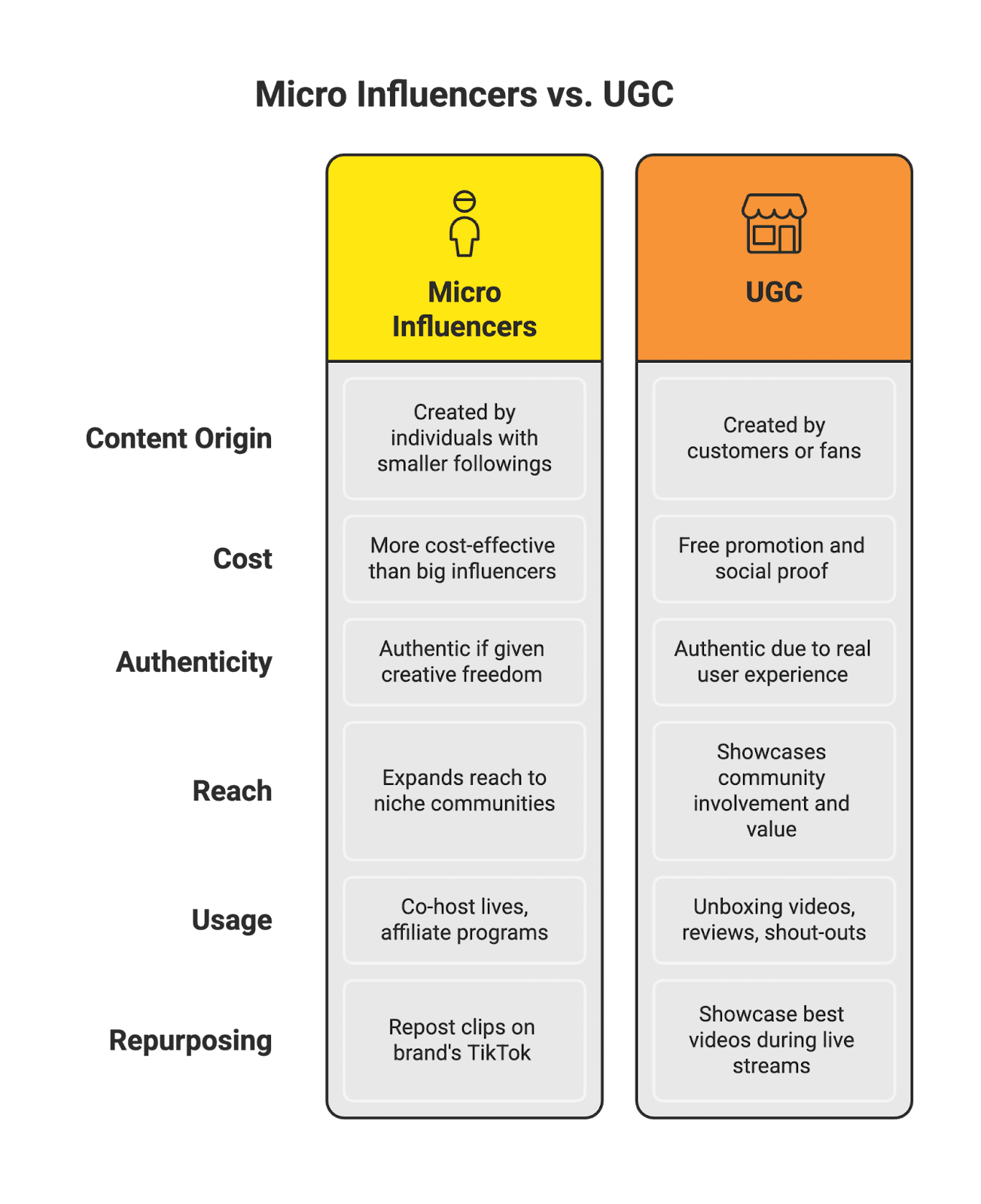
One of the smartest ways to boost your TikTok live shopping success is by tapping into micro influencers and user-generated content (UGC). Why? Because TikTok is a creator-driven platform – people love discovering products from relatable folks, not faceless brands.
Micro influencers (creators with, say, 5k–50k followers) often have tight-knit, engaged audiences. When they host a live shopping session or feature your product in a video, it can come across as a friendly recommendation rather than a hard sell. These creators are typically more cost-effective than big-name influencers and often yield higher engagement rates. In fact, entire platforms (like Stack Influence) exist to connect brands with everyday creators for this reason. Stack Influence, for example, is a leading micro-influencer marketing platform that helps e-commerce brands run product seeding campaigns and scale up authentic word-of-mouth marketing. By compensating micro influencers with products, you get genuine content where social posts reflect real consumer experiences – essentially UGC at scale.
How can you leverage micro influencers for TikTok Shop Live? A few ideas:
Identify a micro influencer in your niche who already loves (or at least aligns with) your product. Invite them to co-host a TikTok Live session on your channel (or have them host on theirs with your products). Their presence can attract their followers to tune in, expanding your reach. Plus, a charismatic host can keep the energy high and audience engaged. For example, a beauty brand might partner with a makeup micro influencer to do a live tutorial using the brand’s products. The influencer brings credibility and personality, making viewers more comfortable buying the featured items.
TikTok Shop has an affiliate feature where creators can earn commissions by selling products through their content. You can recruit micro influencers to join your affiliate program – they get a unique link or product selection in TikTok Shop to promote. When they go live or make videos about your product, any sales they drive earn them a cut, and you get new customers. It’s a win-win incentive that motivates creators to authentically pitch your product. Many small brands have scaled via armies of micro affiliates showcasing products to niche communities.
Even beyond formal influencer partnerships, encourage your customers and fans to create content. Perhaps after a live shopping event, ask viewers to post videos of their unboxing or reviews of the product and tag your brand. This UGC acts as free promotion and social proof. You can even showcase the best user videos during your live streams (e.g., “Here’s a TikTok from @jane_doe rocking the dress she bought from our last live sale!”). It makes your community feel involved and valued.
With permission, take the best clips from influencer streams or UGC videos and repost them on your own TikTok (and other channels). This can amplify the reach of that content. Seeing real people excited about your product builds trust for new viewers. It’s essentially like video testimonials. Some brands create compilation reels like “See how our customers are styling this item!” which not only flatters those featured but also nudges others to hit “Add to Cart.”
Remember, authenticity is the name of the game on TikTok. Micro influencers thrive because they are authentic. When partnering, give them creative freedom to present your product in their own voice – it will feel more genuine to their audience. Also, ensure any sponsored relationship is disclosed (#ad or #partner, etc.) to keep things transparent.
By building relationships with a network of micro influencers, you’ll generate a steady stream of content and buzz around your products. It’s like having a small army of brand advocates. As Stack Influence notes, this “results in more conversations about your product… word-of-mouth marketing at scale”. For a scrappy DTC brand, that kind of organic chatter can be priceless.
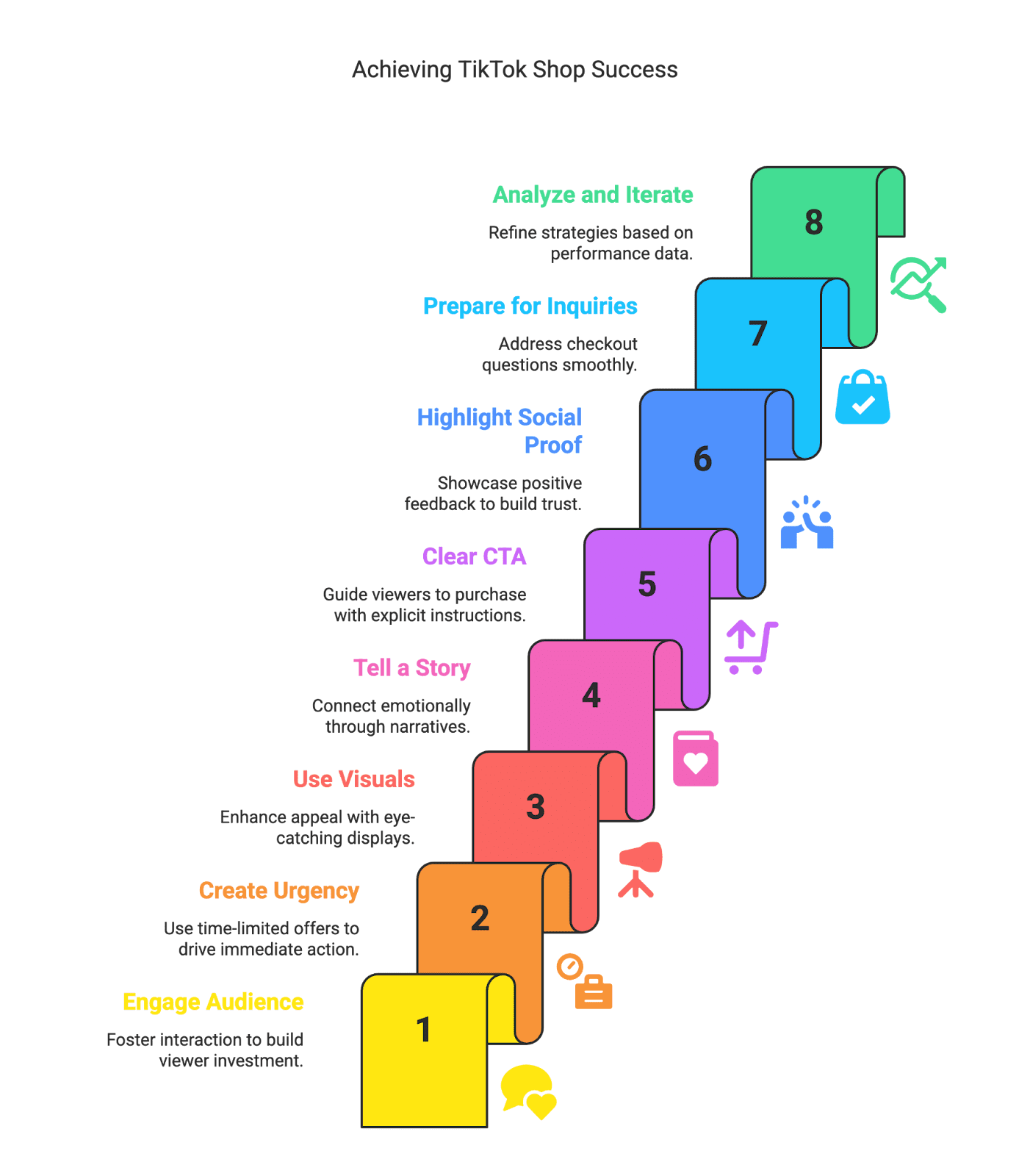
Going live is one thing; driving conversions from live is another. Here are some battle-tested tips and tricks (in no particular order) to help turn viewers into customers during your TikTok Shop live streams:
To illustrate the impact of these best practices, consider a real-world example: energy drink brand GFuel hosted a Halloween livestream with a popular creator and an exclusive product tie-in. The result? Over $200,000 in sales from that one stream, with a whopping 42.4% customer conversion rate. 🤑 How did they do it? They leveraged a well-known content creator (influencer-driven traffic), a themed event (seasonal hype), and a seamless shopping experience integrated into their site via a TikTok-like stream. While not every live will hit numbers like that, it shows the ceiling is high when you get the formula right.
TikTok live shopping isn’t a fad – it’s quickly becoming a mainstay in e-commerce strategy. The lines between content, community, and commerce are blurring, and that’s a huge advantage for small-to-mid-sized brands. You don’t need Super Bowl ad budgets or celebrity endorsements to win on TikTok Shop Live. With creativity, consistency, and a genuine connection to your audience, even a scrappy DTC brand or Amazon seller can turn TikTok streams into a revenue channel.
In this masterclass, we covered how TikTok’s live shopping works, why it’s a game-changer (huge engagement, high conversions, global growth), and practical steps to succeed – from setting up shop, to partnering with micro influencers, to refining your on-camera pitch. The takeaway? Don’t be afraid to experiment. Try a live stream or two, learn from it, and iterate. TikTok’s culture rewards authenticity and innovation, so bring your brand’s unique flair to the table.
The future of shopping is interactive and entertaining. Consumers (especially Gen Z and Millennials) are hungry for experiences, not just transactions. TikTok gives you the platform to serve both – entertain while you sell. As one article quipped, if you want a piece of the booming live-commerce pie, “all you need to do is tap the ‘LIVE’ option” in TikTok. So go ahead: schedule that live, crack a joke, showcase your awesome products, and watch the sales roll in. Your TikTok Shop success story starts with hitting that Go Live button. Good luck, and happy selling! 🎉
Are you dreaming of going viral and becoming TikTok famous? Whether you're an aspiring influencer, UGC content creator, or a small business owner, TikTok offers a golden opportunity to explode your reach. This friendly guide will walk you through proven strategies – from mastering trends to leveraging micro influencers – to help you stand out on TikTok in 2025. TikTok isn’t just for dancing teens anymore; brands, Amazon sellers, and content creators of all kinds are using it to build an audience and drive e-commerce sales. Let’s dive into how you can do the same!
TikTok’s growth has been meteoric. The platform boasts over 1 billion monthly active users globally as of 2024, meaning your potential audience is massive. Users also spend nearly an hour per day on the app on average, scrolling through an endless feed of content. This high engagement gives every creator a chance to shine. Unlike other social networks where you mostly see posts from accounts you follow, TikTok’s For You Page (FYP) shows content from “entertaining strangers”. In other words, even a total newcomer’s video can get in front of millions if the algorithm senses people love it. This level playing field has turned TikTok into a place where unknown creators, small brands, or even quirky products can go viral overnight.
TikTok’s algorithm is famously good at matching content to users’ interests. It favors niche communities and specific interests – for example #BookTok (book lovers) or #CleanTok (cleaning hacks) – rather than trying to appeal to everyone. This means if you find your niche and create content that deeply resonates with that community, the algorithm will amplify it to more people in that group. TikTok also heavily rewards videos that keep viewers watching. High watch time and engagement (likes, comments, shares) signal quality. Starting your videos with a strong hook or eye-catching moment can boost retention, which TikTok loves. And while polished production has its place, authentic and relatable content often wins on TikTok. It’s the kind of platform where a casual clip filmed in your bedroom can outperform a slick studio ad, because realness and creativity matter more than big budgets.
For businesses and e-commerce sellers, TikTok is a dream come true. The hashtag #TikTokMadeMeBuyIt has become a cultural phenomenon, where products go viral and sell out thanks to user-created videos. Some videos with that tag get millions of views, turning obscure gadgets or beauty products into overnight bestsellers. In fact, TikTok is now an essential marketing tool for Amazon sellers and D2C brands. By creating engaging short videos (think product demos, unboxing, how-tos) or partnering with influencers, sellers have driven huge traffic spikes to their Amazon listings. Combined with social media automation, brands can repurpose TikTok clips across other platforms for even more reach. Ignoring TikTok means potentially missing out on a flood of new customers. As an Amazon seller, you can use TikTok both to spot trends (what products are blowing up) and to reach new buyers by riding those trends. TikTok even introduced shopping features and links, blurring the line between social media and storefront.
Finally, TikTok’s engagement rates are the highest in the social media world. On average, brands see around a 3.8% engagement rate per view on TikTok, far higher than on Instagram or Twitter. And interestingly, micro influencers (accounts with a few thousand up to ~50k followers) often get even better engagement than mega-stars. Why? Their audiences are small but hyper-engaged. Fans feel a closer connection to a relatable creator than to a huge celebrity. In fact, one 2025 benchmark study found TikTok accounts under 5K followers had the highest engagement rate by view (~4.2% on average).
TikTok Engagement vs. Follower Count: Smaller creators often see slightly higher engagement rates (as a percentage of views) than larger ones. TikTok’s overall engagement is around 3.8%, but accounts with under 5,000 followers average about 4.2% – highlighting the power of micro influencers with tight-knit audiences. Even big accounts (100k+ followers) still approach ~4% engagement by views, which shows TikTok’s user base is highly interactive across the board. For you, this means you don’t need millions of followers to make an impact – a small, devoted fanbase on TikTok can outperform a larger one on other platforms in terms of engagement and influence.
In short, TikTok offers huge reach, an algorithm that can catapult unknown creators to fame, a culture of authenticity and community, and unprecedented engagement levels. Now that you know why TikTok is the place to be, let’s get into how to become famous on TikTok. Below are eight real strategies to grow your following and become “TikTok famous,” with tips for both creators and small brands. 😊
Here are eight foolproof tips to help you gain more followers, boost your views, and make a name for yourself on TikTok. These strategies blend timeless social media wisdom with up-to-date tactics for 2025. Whether you’re a solo content creator or a business building a brand presence, these tips will set you on the right path.
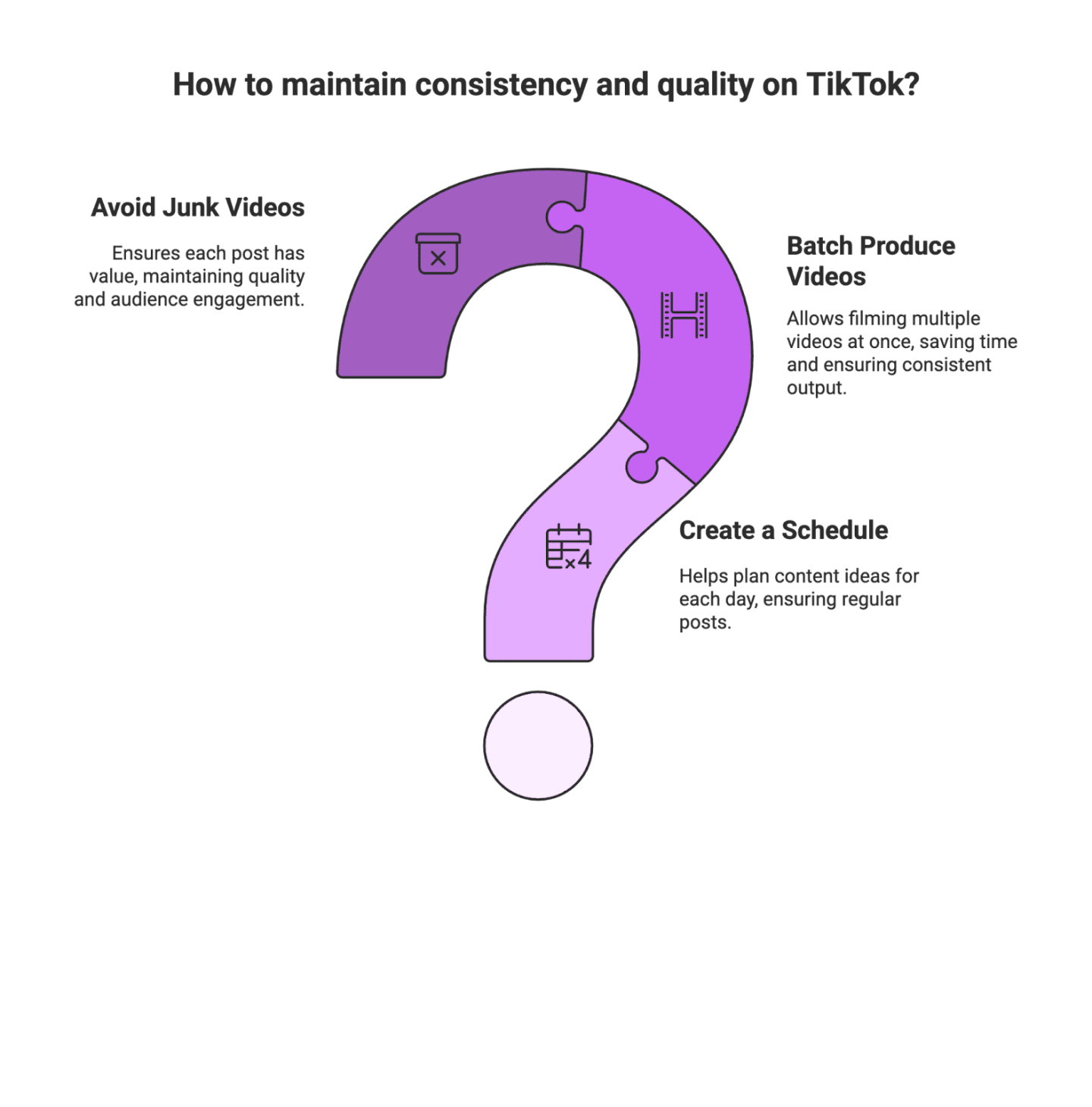
TikTok rewards consistency. To grow your audience, post new content regularly – ideally daily if you can swing it. Frequent posting increases your chances of appearing on someone’s FYP and gives viewers more chances to discover you. Unlike some platforms, on TikTok you really can’t post too much. Many successful TikTokers post 1-3 times per day. Every video is a fresh lottery ticket for virality! That said, don’t sacrifice quality for quantity. Consistency + quality = growth. A few tips for consistent posting:
Treat TikTok like a job (a fun one!). Plan out content ideas for each day of the week. Use trending sounds or challenges as inspiration for daily posts.
when you’re feeling creative. You can film and save drafts of multiple TikToks in one go, then publish them over several days.
just to hit a quota. Each video should have some entertainment or educational value. If an idea feels half-baked, refine it a bit more before hitting publish.
Remember, consistent posting helps keep you in the algorithm’s rotation. If you disappear for weeks, you might lose momentum. By steadily delivering content, you’ll start to build a loyal audience that looks forward to your posts. Just make sure what you’re posting is worth watching – TikTok’s algorithm measures if people actually watch and re-watch your video. So keep those quality standards up and that's how you become famous on TikTok.
One of the biggest keys to TikTok success is finding your niche. Don’t try to be everything to everyone – the platform is too crowded for generalists. Instead, think about what unique angle, topic, or style you bring to the table, and run with it. Maybe you’re the skateboarding barista, making coffee art by day and skate tricks by night. Or the DIY home decor mom, or the sarcastic product reviewer. Niche = notice. By focusing on a specific interest or theme, you’ll attract followers who are super interested in that thing, and the TikTok algorithm will start showing your videos to users who like similar content.
How to find your niche? Start by listing your passions, skills, or unique traits. Is there an overlap no one is doing yet? Sometimes combining two interests works wonders (e.g. fitness + comedy, or makeup + history lessons!). Once you’ve picked a lane, stick with it for a while. You want someone who visits your profile to immediately get “oh, this person makes videos about .” That doesn’t mean you can’t ever branch out, but your core content should have a theme.
Niches help you build a community. TikTok is full of subcultures (BookTok, FoodTok, MomTok, PetTok… you name it). When you tap into one, even a small one, you’ll find a devoted audience. TikTok’s own data shows that users are 4× more likely to say TikTok is the best platform for forming niche communities, compared to other social apps. People love finding creators who share their specific interests or identity. If you become the face of a particular niche, your fame within that circle can grow fast.
So don’t worry about appealing to everyone on TikTok (spoiler: you won’t 😅). Zero in on your target audience and make videos that speak to them. A smaller but passionate fanbase is better than a broad, disengaged one. And niches can actually broaden over time – for example, if you start as “fashion tips for tall girls” and gain traction, even people outside that exact demo might follow you for your style content. Be niche and be excellent, and the followers will come.
TikTok is a creative playground, so to get noticed you need to bring some originality to your content. It sounds cliché, but “think outside the box” is solid advice here. There are millions of videos uploaded daily – what makes yours stand out? The good news is, you don’t need Hollywood production to be creative. Often it’s the idea or twist that sets you apart.
Ways to unleash your creativity on TikTok:
Don’t just do exactly what everyone else is doing in a challenge. Add a twist, a surprise ending, or mix two trends together for a fresh result.
TikTok has tons of effects and editing tools. Learn how to do transitions, clone yourself, use green screen backgrounds, etc. Cool editing can make a simple concept much more engaging.
Instead of a random clip, maybe craft a short narrative or skit. Hook people in the first 2 seconds (“Wait for it…” or a teaser of the payoff) to boost watch time. Creative storytelling can glue viewers to the screen.
Remember that TikTok celebrates authentic, “ugly” creativity as much as polished art. A bizarre idea that makes people say “I’ve never seen that before 😲” can go viral even if the video quality is grainy. Don’t be afraid to experiment and even be a little weird! As long as it’s entertaining or intriguing, there’s an audience for it. Some of the biggest TikTok stars blew up by doing something unusual or quirky that caught fire. So brainstorm, experiment, and have fun – your creative spark is what will set you on how to become famous on TikTok.
TikTok runs on trends. From hashtag challenges to viral sounds and dances, hopping on trends is one of the quickest ways to boost your visibility. When you use a trending song or participate in a popular challenge, the algorithm is more likely to serve your video to people following that trend. However, here’s the key: don’t just copy – innovate. Trends come and go fast, so you want to ride the wave while it’s hot, and stand out from the crowd.
How to master trend-riding:
Spend time on your FYP and the Discover page to see what formats or songs are blowing up this week. Also check TikTok’s Creative Center or trending hashtag lists. Early adopters of a trend often reap the biggest rewards.
A trending audio clip can boost your video’s chance of being seen. TikTok has a massive library of sounds – when you notice a particular sound being used a lot, consider how you can use it in your niche context. (Tip: save favorite sounds when you encounter them so you remember later.)
If it’s a comedy sketch format everyone is doing, can you twist the ending? If it’s a dance, can you perform it in an unexpected location or costume? Add your personality or niche theme to the trend. This way you benefit from the familiar format and give viewers something fresh.
Jumping on trends shows you’re plugged into TikTok culture, and it can expose your content to a wider audience who are all watching videos with that song or challenge. Just make sure to keep it high quality and on-brand for you. If a trend doesn’t fit your niche or style, it’s okay to skip it. There’s always a new one tomorrow! When you do find one that clicks, move fast (trends on TikTok can peak and fade within days). By balancing trend participation with originality, you get the best of both worlds – discoverability and memorability.
In the quest for TikTok fame, the worst thing you can do is try to be someone you’re not. TikTok audiences crave authenticity the easiest way on how to get famous on TikTok. Some of the most beloved creators on the app are those who unapologetically show their true selves – quirks, flaws, unique opinions and all. So don’t shy away from your personality. Embrace who you are and let it shine through your videos.
Here’s why authenticity matters: Viewers can sense when someone is being fake or just doing what they think will please everyone. That kind of content falls flat. On the other hand, when you share something personal or showcase your genuine sense of humor/talent/weird interest, it resonates. People feel like they know you, and that builds loyalty. Even if not everyone likes your style, the ones who do will really like you – and those are the followers that become true fans.
Tips to boost authenticity on TikTok:
If you’re naturally goofy, let the goofiness out. If you’re super positive, be that ray of sunshine. Don’t force a persona. Talk to the camera like you’d talk to a friend.
TikTok isn’t all skits and challenges. Some days, just posting a candid “life update” or a behind-the-scenes of your day can deepen your connection with followers. Showing vulnerability or humor about real situations makes you relatable.
As we noted, trends are great, but if a particular trend or type of humor doesn’t sit right with you, you’re better off skipping it. Consistency of character is important for your personal brand.
Also, part of being authentic is accepting that not everyone will like you or your content, and that’s okay. TikTok is a huge platform – there’s room for all sorts of voices. Haters gonna hate, as they say. If you get negative comments, try not to take it personally. Often it’s more about them than you. You can choose to engage constructively, or just ignore/block the trolls. Focus on the positive community you’re building. By being true to yourself, you’ll attract the right audience – the people who appreciate you. And those are the folks who will help propel you to TikTok fame while keeping you grounded.
TikTok fame isn’t a one-way street – it’s a conversation. The most successful creators actively engage with their viewers, turning casual followers into a passionate community. The beauty of TikTok is how interactive it is: people leave funny comments, ask questions, create response videos, etc. By joining that back-and-forth, you not only boost your engagement metrics (which the algorithm loves), but you also create loyal fans. Here’s how to cultivate your community:
Set aside time after posting to reply to top comments or frequently asked questions. Users get excited when a creator personally replies or even just “likes” their comment. It makes them feel seen. A simple “😂👏” or “Thanks for watching!” can go a long way.
TikTok has a reply-with-video feature where you can take a comment and record a video answer. This is an awesome way to address fan questions or highlight funny comments in your next video. It shows you’re listening and creates a loop of engagement.
Inviting your viewers to participate in your content can boost your reach. For instance, say “Duet this and show me your version!” or start a challenge and ask others to join. User Generated Content is powerful – when people remix or respond to your video, it spreads your presence further (plus free content for you!). UGC creators often jump on trends started by influencers, so sparking a chain of duets could amplify your fame the best way on how to get famous on TikTok.
Also, part of being authentic is accepting that not everyone will like you or your content, and that’s okay. TikTok is a huge platform – there’s room for all sorts of voices. Haters gonna hate, as they say. If you get negative comments, try not to take it personally. Often it’s more about them than you. You can choose to engage constructively, or just ignore/block the trolls. Focus on the positive community you’re building. By being true to yourself, you’ll attract the right audience – the people who appreciate you. And those are the folks who will help propel you to TikTok fame while keeping you grounded.
Don’t go it alone! One of the fastest ways to boost your profile is by collaborating with other creators. TikTok is a social platform after all, and when creators team up, everyone benefits. By networking with your fellow TikTokers, you can tap into new audiences, learn new skills, and create really fun content. Plus, it’s just more enjoyable to share the journey with peers rather than viewing everyone as competition.
Ways to network and collaborate on TikTok:
Find creators you admire (or who are in a similar niche) and duet their videos with your reactions, or use the stitch feature to add your commentary to the first part of their video. This puts you on the radar of their followers. Pro-tip: make sure your addition is meaningful or entertaining so it stands out!
You can agree with a TikTok friend to mention or tag each other in videos. For example, do a “pass the phone” challenge virtually, or simply say “I saw @BestCreatorEver do this and I had to try!”. When they reciprocate, both audiences get introduced to the other person.
Team up with a few creators to start a challenge or trend. With multiple people pushing it, it has a higher chance to catch on. This also signals to the algorithm that there’s a buzz around this idea.
The ethos here is community over competition. TikTok is huge; creators don’t need to tear each other down to succeed. In fact, being friendly and supportive can boost everyone. When you help someone else go viral, it often splashes back on you in a good way. Not to mention, you can learn a ton by observing how other TikTokers create their content and engage their fans which is how they got famous on TikTok. Networking might even connect you to mentors or lifelong friends. So start hyping up other creators, leave nice comments, and build those relationships. When TikTokers unite, awesome things can happen – and your name will grow in the process.
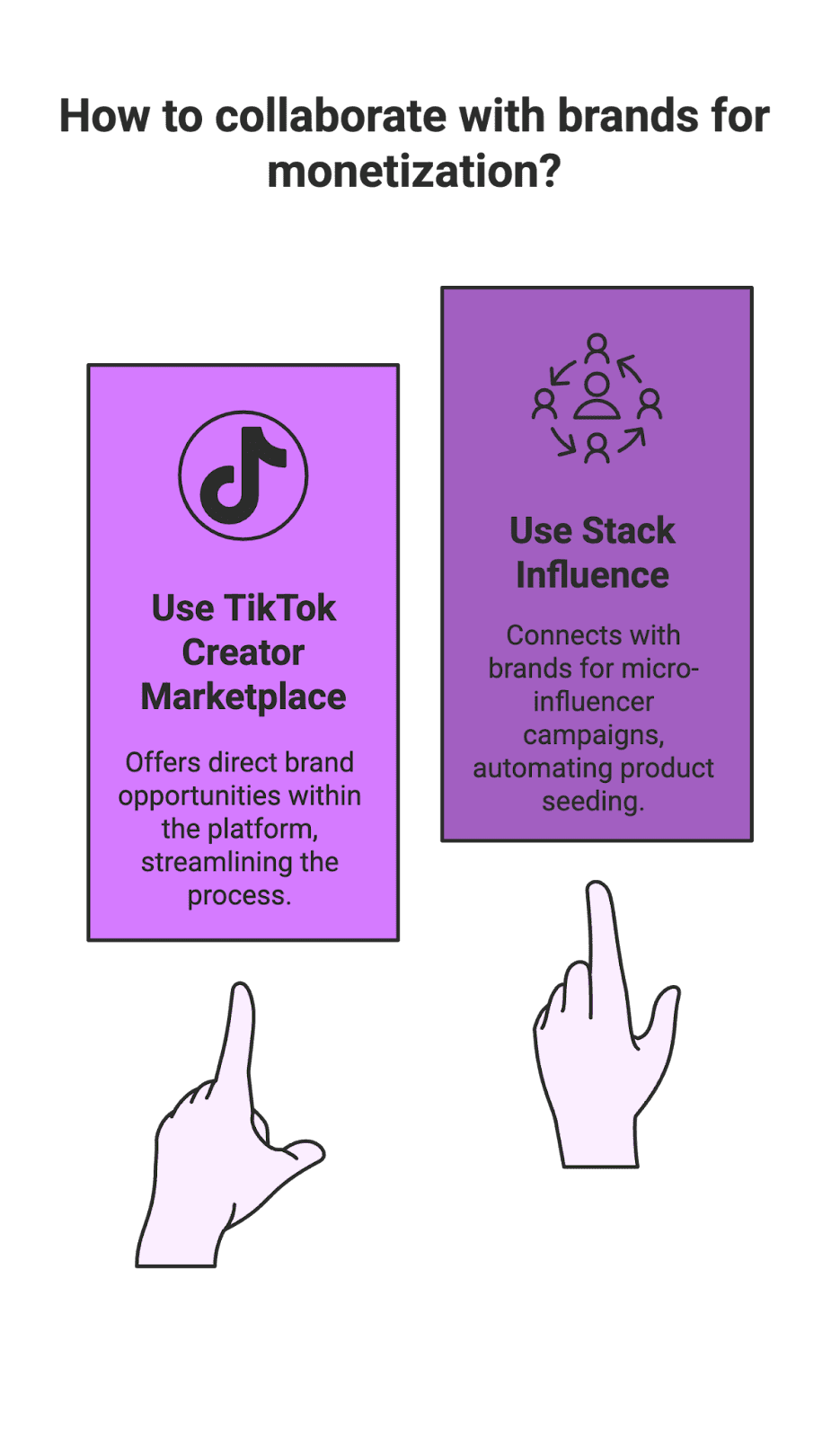
Last but certainly not least: brand collaborations! Becoming “TikTok famous” isn’t just about clout – it can also translate into cash and opportunities. Brands are pouring marketing dollars into TikTok and influencer campaigns, and they love working with creators of all sizes (not just million-follower celebs). In fact, influencer marketing keeps growing in 2025 as one of the most effective ways for brands to reach audiences. So as you grow, start thinking about how you can partner with brands in a way that fits your content.
Here’s how collaborating with brands works and why it’s a win-win:
A brand might pay you to create a TikTok featuring their product or service. You’ve probably seen TikToks where an influencer is using a gadget, wearing a certain fashion brand, or doing a funny skit around a product – those are often sponsored. Done right, these videos still feel authentic and fun, but also give the brand exposure. You get paid (or free products), and the brand gets your creative content and access to your audience.
Brands are eager to tap into TikTok because of its high engagement and younger demographics. Even micro influencers can have big sway – micro creators often have higher engagement (5–20% per post) than huge influencers with diluted audiences. Brands know a recommendation from a trusted creator, even to 5,000 followers, can drive more action than a generic ad to 5 million. They also know TikTok content feels more genuine. So, don’t think “I’m too small to get brand deals.” Micro and nano-influencers are in demand for their authenticity and tight-knit communities.
TikTok itself has the Creator Marketplace where brands post campaign opportunities. Additionally, platforms like Stack Influence connect creators with brands for paid collaborations, often focusing on product gifting or micro-influencer campaigns. These services can streamline the process: for example, Stack Influence is a leading micro-influencer marketing platform that automates product seeding campaigns and connects everyday creators with brands. By signing up, you can get offers to promote products in exchange for free samples, commissions, or fees, without having to do all the legwork yourself.
Collaborating with brands not only monetizes your TikTok fame, it can also increase your exposure. Brands might repost your video on their official channels (bringing their audience to you), or run your TikTok as an ad (often called whitelisting or Spark ads) which can get you in front of even more people. It’s a terrific way to accelerate your growth while getting paid. Many TikTok stars eventually create their own product lines or get bigger deals (hello, Charli D’Amelio’s Dunkin Donuts drink!). Who knows, your TikTok could land you an ambassadorship or a partnership that becomes a whole new career avenue.
Bottom line: Don’t be shy about treating yourself as a brand as you grow. You’re a content creator and an influencer – and that has value! Platforms like Stack Influence or TikTok’s creator marketplace can help you turn your creativity into income, connecting you with brands eager to work with you. It’s a pretty sweet stage to reach on your TikTok-famous journey: doing what you love and getting paid for it.
Illustrative TikTok Growth Funnel: Only a small percentage of those who see your TikTok content will convert into loyal followers or customers – which is why reach and consistency are vital. For example, imagine 100% of viewers watch your video; perhaps ~10% will engage (drop a like, comment, or share), ~1% might actually follow you, and an even smaller fraction become dedicated fans or purchasers of your merch/product. As the funnel above shows, you need a lot of eyeballs at the top to yield a few serious results at the bottom. Don’t be discouraged by this natural drop-off! It simply means the more quality content you put out, the more chances you have to fill that funnel. Over time, those 1% here and 1% there add up to a sizable follower base and real influence. Keep at it consistently, and watch your personal “fame funnel” grow wider at every level.
By now, you’ve got a toolkit of strategies to help you stand out on TikTok – from consistent posting and niche focus to trend-savvy creativity, community engagement, and savvy collabs with creators and brands. Becoming TikTok famous isn’t an overnight thing for most people, but it is absolutely achievable with persistence and smart tactics. Remember, even the biggest TikTok stars started with zero followers and learned along the way. The platform continues to evolve, but one thing stays constant: great content + the right audience = magic on TikTok.
So, start implementing these tips today. Brainstorm your niche and content ideas, film that first (or next) video, and hit post! Be patient with yourself as you experiment and find your groove. Some videos may flop, and others might unexpectedly blow up – enjoy the ride of learning from each experience. Engage with the community, be genuine, and keep an eye on what’s new and next on the app (who knows, you might set the next big trend!).
Finally, don’t forget to leverage the resources at your disposal. Use TikTok’s analytics to see what’s working. Tap into creator marketplaces or influencer marketing platforms platforms when you’re ready to partner with brands or amplify your reach. The creator economy is booming, and there’s a place in it for you, whether you’re aiming to be an influencer icon or to boost your small business through TikTok fame.
Now the stage (or rather, the “For You” page) is yours. Apply these strategies, stay persistent, and have fun with the process. Fame on TikTok can be fickle, but with authenticity and dedication, you could be the next TikTok success story. Time to get out there and make some TikToks – the world is waiting for your creativity. Good luck, and see you on the FYP! 🚀
Micro-influencers – those niche content creators with modest followings – are a go-to marketing channel for many e-commerce and DTC brands today. If you’re an Amazon seller or online store owner, partnering with these creators can drive authentic user-generated content (UGC) and boost sales. However, not all that glitters is gold in influencer-land. The rise of influencer marketing has also given rise to fake micro-influencers who inflate their follower counts and engagement with bots. Working with such fakes means wasted budget, zero ROI, and even damage to your brand’s trust. In fact, one analysis found that one in four influencers has bought fake followers – a sobering statistic for any marketer. In this comprehensive guide, we’ll explain why fake micro-influencers are a serious problem in e-commerce, how to detect fake followers and other red flags, what tools and techniques can vet authentic influencers, and how to build trust with real content creators and UGC influencers. Let’s dive in!
Fake micro-influencers pose significant risks to brands – from wasted marketing spend to undermining customer trust. Here are the key issues they create:
Perhaps the biggest problem is financial. Paying an “influencer” who has a large following of bots or inactive accounts is like throwing money away. At least 15% of advertisers’ influencer marketing spend is lost to fraud, amounting to over $1.3 billion in wasted budget. Brands have literally been conned out of millions of dollars by influencers padding their stats with fake followers and likes. Those fake followers will never become customers, so any money or free product you send is a sunk cost.
Fake influencers can mislead your analytics. With artificially high follower counts, they may appear influential at a glance. You might choose an influencer thinking you’re getting access to 50,000 potential customers, when in reality 40,000 of those are bots. This skews key metrics (like cost per engagement or CPM) and can lead you to allocate budget away from legitimate micro-influencers. It’s a classic garbage-in, garbage-out scenario – basing campaign decisions on fake data yields poor results.
An influencer’s value comes from their ability to inspire actions – clicks, likes, shares, and purchases – from real people. Fake micro-influencers lack that real influence. Their posts might get some likes or generic comments, but it’s often from bot accounts or engagement pods, not genuine shoppers. Collaborating with such frauds typically results in poor campaign performance and no bump in sales, because their “audience” isn’t real or paying attention. You essentially end up paying for impressions that don’t actually reach any humans. For e-commerce and Amazon sellers, this means no uptick in traffic or reviews, and thus no return on your investment.
There’s also an indirect cost. Every dollar or product sample wasted on a fake influencer is a dollar not spent on a genuine micro-influencer who could have driven real engagement. Micro-influencers generally have highly authentic audiences – one analysis found ~90% of micro-influencers’ followers are real humans, a higher authenticity rate than macro-celebrities. So by accidentally choosing a fraud, you miss out on working with a legit creator who might have truly moved the needle for your brand.
In short, fake micro-influencers drain resources and provide none of the upside that draws brands to influencer marketing in the first place. The good news is that with a bit of due diligence, you can spot most fakes before you ever sign a contract or send out a free product. Next, we’ll cover the telltale signs to look for.
Not sure if an influencer is the real deal? There are several red flags and pattern clues that often give away a fake or inflated following. Below are some of the most common signs that a micro-influencer might not be as influential as they appear:
Check how many people the influencer follows versus how many follow them. If an account follows nearly as many accounts as their own follower count (e.g. a 1:1 ratio), it could indicate participation in “follow-for-follow” schemes. Legitimate creators usually have more followers than people they follow back; an even ratio might mean they bulk-followed others just to get follows in return, rather than growing an audience organically.
This is one of the biggest red flags. Look at their typical likes, comments, or views per post and see if it feels proportionate to their follower count. For example, if an Instagram influencer boasts 50,000 followers but only gets a few hundred likes per post, that suggests a largely inactive or fake audience. A healthy micro-influencer should have consistent engagement on each post – industry benchmarks say micro-influencers (10K–50K followers) average about 3–5% engagement on Instagram. So a 50K account should be getting on the order of 1,500–2,500 likes/comments per post. If instead they’re scraping 100–200 likes, something is definitely off. (By contrast, huge celebrities often have <1% engagement, but micros should be much higher.) Low engagement with high follower count is often a sign of “ghost” followers – bots or disinterested accounts that inflate the numbers but don’t interact.
Take a quick scroll through their post comments. Do you see lots of one-word compliments, repetitive phrases, or unrelated emoji comments? For instance, if many comments are just “Nice pic! 😊” or random hashtags, they could be coming from bot accounts or automated comment pods. Genuine engagement typically includes at least some thoughtful, specific comments from real followers. If everything looks copy-pasted or unnaturally generic, the influencer might be using bots to fabricate interaction. Excessive identical praises or emoji-only comments are a big red flag of fake engagement.
This is a more qualitative sign. Does the influencer post original, consistent content in their supposed niche? Or is their feed a random assortment of generic images, memes, or even stolen content? Fake influencers often struggle to produce genuine content; you might notice that their captions are oddly empty or their photos are all over the place (as if they’re posting just to appear active). Authentic micro-influencers typically have a personal style or theme and put effort into engaging with their community. If the content feels like a placeholder or overly sponsored with no real personal touch, be cautious. Also, an overabundance of sponsored posts (every other post is an #ad) can be a bad sign – it might mean they’re cashing in on any deal they can get, rather than having an engaged audience that trusts them (and it could fatigue their real followers, if any).

Visualization: A comparison of engagement rates for an authentic vs. fake influencer. In this example chart, two influencers each have around 50,000 followers – but the difference in engagement is dramatic. The authentic micro-influencer (green bar) averages about 5% engagement (roughly 2,500 likes/comments per post), while the fake influencer (red bar) sees only ~0.5% engagement (a few hundred likes) despite their large following. Such a huge gap in interaction is a telltale sign of an inflated follower count. When an account’s likes and comments are just a tiny fraction of its followers, it’s likely propped up by bots or inactive “followers” that won’t deliver any real value to an e-commerce brand.
By watching out for the above signs, you can weed out most fake micro-influencers before they waste your time and money. But spotting red flags is just one part of the equation. In the next section, we’ll look at concrete tools and techniques you can use to verify an influencer’s authenticity in more detail.
A post shared by Stack Influence (@stackinfluence)
The manual sniff test (checking ratios, comments, etc.) is a great start, but you don’t have to do all the vetting alone. There are numerous tools and methods – both high-tech and low-tech – that e-commerce and Amazon sellers can use to validate a micro-influencer’s true reach. Leveraging these can save you from getting duped and ensure you partner with authentic content creators. Here are some effective techniques:
As mentioned, engagement rate is the golden metric for influencer quality. Take a few recent posts from the influencer and calculate their engagement rate: (likes + comments) ÷ follower count × 100. Does it fall in a healthy range (~3–5% for micro-influencers) or is it suspiciously low? If someone with 20,000 followers averages only 50 likes (0.25%), that’s a huge red flag. On the flip side, an unusually high engagement rate (like 15%+) could also be fishy – sometimes it means they participate in comment pods. Compare the influencer’s rate to typical benchmarks for their follower size, and also see if their engagement holds steady across posts. Consistency is key; one viral post is great, but if every other post is nearly dead, something’s off.
Use a qualitative approach in tandem with the numbers. Read through recent comments to gauge if the engagement feels real. Are people asking questions, tagging friends, or referencing the content in a meaningful way? Or is it all generic fluff? Some services use AI to analyze comment sentiment and authenticity, highlighting bot-like comments. But you can often tell just by scanning manually for a minute. Also, click on a few follower profiles (especially among those who frequently like or comment). If you encounter lots of blank profiles, consider it a warning sign. Quality matters – 1,000 real, engaged followers are far more valuable than 10,000 fake ones. So make sure the engagement you see is coming from real people, not automated accounts.
Don’t hesitate to go direct. Serious micro-influencers often have a media kit or can share screenshots of their analytics (e.g. Instagram Insights). From this, you can verify audience demographics, top locations, gender splits, etc., and their reach/impressions per post. If an influencer claims 50k followers but their own Insights show only 1k people saw the last post, that’s a red flag. When recruiting, ask for an influencer’s key stats – many will happily provide a one-sheet with their follower count, average engagement rate, and past partnership examples. This first-party data can be very trustworthy. If something looks off (like strangely low reach or an audience demographic that makes no sense for their content), use third-party tools to double-check. Legit influencers won’t mind a bit of scrutiny; if anything, it signals that you as a brand care about quality – and the good ones will respect that.
If you plan to work with many micro-influencers (or just want a one-stop solution), consider using a specialized influencer marketing platform. Full-service platforms like Stack Influence, Upfluence, AspireIQ, and others maintain databases of vetted influencers across social networks. You can search for creators by niche, follower count, engagement rate, location, etc., and these platforms often provide rich profiles for each creator – including engagement metrics, audience demographics, and even “authenticity scores” that flag potential fake follower issues. In other words, they centralize a lot of the vetting data we’ve discussed. For example, Stack Influence’s platform shows an influencer’s real versus fake follower estimates, so you can immediately filter out anyone with a sketchy audience. The upside of these platforms is speed and confidence – they present verified metrics upfront and often even help with outreach and campaign tracking. (Stack Influence, for instance, not only vets influencers but also helps manage the whole recruitment process, tracking deliverables and results in one dashboard.) The drawback is that advanced features may require a subscription fee, but many offer free trials or basic search functionality. If influencer marketing is a significant part of your strategy, these platforms can be worth the investment to avoid fraud and save time.
By mixing these tools and techniques, you create a strong vetting funnel. Start broad (discovery and initial checks), then drill down with analytics tools, and don’t be afraid to ask for proof of performance. The goal is to ensure any micro-influencer you work with has a real, engaged following that matches your target audience. Now that we’ve covered how to spot and verify real vs. fake, let’s discuss how to build solid relationships with authentic creators and make the most of user-generated content.
Once you’ve filtered out the phonies, the real fun begins – working with genuine micro-influencers who can authentically champion your brand. To get the best results, focus on building trust and a real partnership with these authentic content creators. Here are some tips for cultivating successful collaborations and leveraging UGC (user-generated content) effectively:
The foundation of trust is picking influencers who genuinely align with your brand values and product. Seek out micro-influencers who are already interested in your niche or have a use for your product – their advocacy will be natural, not forced. When an influencer truly likes what you offer, they’ll naturally champion your product in a way that audiences trust. Look at their content: do they use similar products? Is their personal style or message a fit with your brand? When there’s a strong alignment, any shout-out or review they do will feel organic. Their followers will think, “Of course they’re partnering with this brand, it makes total sense!” – which is exactly the reaction you want. By choosing wisely up front, you’re not just buying a post; you’re gaining a genuine brand advocate who actually believes in what they’re promoting.
Today’s consumers (especially Gen Z) can spot a fake corporate tone a mile away. To build trust, encourage influencers to keep it real and create content in their voice, not corporate marketing-speak. User-generated content works because it’s real people sharing real experiences. In fact, 75% of consumers trust content shared by “regular people” (like influencers or customers) more than they trust branded content. That’s a huge vote in favor of authenticity. So, instead of giving your influencers a strict script or overly polished brief, give them creative freedom to incorporate your product naturally. The resulting UGC – whether it’s an unboxing video, a candid review, or a how-to demo – will come across as genuine. This kind of relatable content builds trust with audiences and feels more like a friend’s recommendation than an ad. (Remember, 84% of consumers say that even UGC from strangers influences their buying decisions more than brand-produced content, because it reflects real experiences.)
An influencer’s credibility with their audience is earned by being genuine and selective. If you notice a micro-influencer’s feed is packed with sponsored posts every other day, that’s a yellow flag. When followers see an endless stream of #ad, they may grow skeptical or fatigued. Ideally, the influencers you work with should have a healthy mix of organic content vs. sponsored content. Occasional sponsorships are fine (people understand creators need to earn a living), but those sponsorships should be things the influencer genuinely uses or likes. During your vetting, peek at how they’ve handled sponsored content in the past. Do they disclose it properly and still keep an authentic tone? Do their followers engage positively with those posts? If an influencer only does sponsorships that align with their personal brand, their audience is more likely to trust those recommendations. The goal is to partner with someone whose audience trusts them – because that trust will transfer to your product when they recommend it.
Finally, don’t limit the content creation to the influencers themselves – encourage your customers and fans to create UGC too, and then highlight it. For instance, run a campaign asking customers to share photos with your product using a branded hashtag. Micro-influencers can help kickstart this by sharing the hashtag challenge, but regular customers will join in. This not only gives you a wealth of authentic content, but also reinforces trust: people love seeing real customers featured by a brand. Highlight UGC on your socials or product pages (with permission) as social proof. By weaving your micro-influencers into a larger UGC strategy, you create a virtuous cycle – influencers inspire their followers to create content, which the brand amplifies, which further validates the influencers’ impact. It’s a win-win-win for building a trusted brand community.
In summary, the key to success with micro-influencers is authenticity at every step. Choose honest, relevant creators, let them share genuine stories, and value the relationship beyond a single post. This approach will yield content that resonates with consumers and ultimately drives real results for your e-commerce business.
Once you have the right processes to spot fakes and cultivate authentic relationships, you can confidently scale up your influencer marketing while staying safe from scams. Here are some final tips on growing your micro-influencer program in a smart, secure way: Spot the fakes, invest in the reals, and scale smart. Micro-influencer marketing, when done right, is one of the most powerful growth engines for brands today – and now you’re equipped to leverage it without falling for the frauds. Happy influencer hunting, and may your campaigns be both authentic and effective!
In the ultra-competitive world of Amazon and e-commerce, relying solely on pay-per-click ads is no longer enough. Sellers are discovering that working with micro influencers and content creators can drive sales and brand growth in ways that traditional ads can’t. Why? Because influencer partnerships offer authenticity, generate user-generated content (UGC), and build long-term trust – all while often being more cost-effective than ad campaigns. If you’re an Amazon seller looking to level up beyond ads, read on. We’ll explore how teaming up with influencers can supercharge your sales and brand value in a casual yet informative way.
Before diving in, here are the key ways influencer marketing benefits Amazon sellers (beyond just paid ads):
With those benefits in mind, let’s break down how exactly influencer partnerships help Amazon sellers succeed – and how you can start leveraging them today.
It’s no secret that Amazon PPC costs have been rising, squeezing margins for sellers. Influencer partnerships offer a cost-effective alternative. Rather than spending thousands on an ad that shoppers might ignore, you can pay a micro-influencer a few hundred dollars (or just send a free product) for a post that feels authentic. In fact, partnering with micro influencers is typically budget-friendly – an important consideration for small businesses. Whereas a single post from a mega-influencer could cost tens of thousands of dollars, micro influencers often charge only a few hundred (or even just accept free products/commissions). This means for the price of one big celebrity ad, you could have dozens of niche creators promoting your product, multiplying your reach.
Better ROI: Because micro-influencers are cheaper and their audiences engage more, brands often see more sales per dollar spent. Lower costs, combined with higher engagement, translate to a better ROI for your marketing spend. One study found nano/micro influencers can deliver around a 20:1 return on investment (~20× revenue per $1 spent), versus roughly 6:1 ROI for macro influencers – a huge difference. In other words, micro influencers “punch above their weight” by delivering outsized results for less cost.
The chart above illustrates how micro-influencers enjoy much higher engagement rates (~10% vs ~2%) while costing a fraction of what macro influencers charge per post. This combination of strong engagement and low cost often yields a better cost-per-conversion for micro influencer campaigns. Instead of spending $20,000 on one celebrity Instagram post, a brand could work with many micro influencers for the same budget – generating multiple pieces of content and reaching several niche audiences.
Not only are influencers often cheaper than ads in absolute terms, but their content can keep working for you. An Instagram or TikTok post by a creator remains visible and can continue to attract views and comments for days, weeks, or longer – essentially free ongoing impressions after the initial “payment.” In contrast, a pay-per-click ad stops generating traffic the minute you stop paying for it. This makes influencer marketing a savvy investment, especially for Amazon sellers with limited budgets who need every dollar to work hard.
Crucially, influencers also drive word-of-mouth effects that ads can’t match. Happy customers might tag friends or share an influencer’s post, extending your reach at no extra cost. Remember that word-of-mouth marketing generates more than twice the sales of paid advertising – meaning these organic referrals are extremely valuable. By tapping into networks of micro influencers, you essentially spark digital word-of-mouth for your product, leading to compound growth that pure ads wouldn’t achieve.
One of the biggest advantages of influencer partnerships is the trust they build with your potential customers. Modern consumers are increasingly “ad-blind” and skeptical of obvious advertising. But a recommendation from a favorite content creator? That feels like advice from a friend. Micro-influencers in particular often cultivate a personal rapport with followers, so their endorsements come off as genuine, not salesy. This word-of-mouth style buzz is gold for you as a seller.
Consider this: 82% of consumers in one survey said they are “highly likely” to follow a micro-influencer’s recommendation. That’s an enormous trust factor. People trust people – far more than they trust faceless brands or banner ads. According to Nielsen, 84% of consumers trust peer recommendations over traditional advertising. So when an influencer (essentially a peer in the online community) talks up your Amazon product, it carries credibility that a self-promotion never could. No wonder 90% of consumers say authenticity is important when deciding which brands to support.
Micro and nano influencers excel at authenticity. They often share personal stories, demos, or reviews in a relatable way, rather than slick corporate messaging. Their content feels like genuine user experiences, making viewers more comfortable trusting the product. “Their content feels like real personal recommendations rather than ads, which resonates better with consumers,” as one report noted. This is crucial for winning over customers who have never heard of your brand.
Additionally, micro influencers tend to have higher engagement and loyalty in their communities. Followers actually pay attention to their posts and reply with comments or questions. For example, micro accounts frequently see engagement in the 5%–20% range, whereas macro influencers with huge followings average only about 1%–3% engagement. This higher interaction rate means an influencer’s audience is truly listening and trusting their opinions. More trust = more conversions. If an influencer sincerely vouches for your product and answers questions about it, their followers are far more likely to click over to your Amazon listing and make a purchase.
And let’s not forget social proof: when shoppers see real people (influencers or customers) using and loving a product, it triggers a psychological reassurance. It’s why having reviews on Amazon is so important. Influencer content serves as off-Amazon social proof that can drive buyers onto Amazon. In effect, the influencer becomes a walking, talking five-star review for your item. This trust-building aspect of influencer partnerships is something no ad can replicate – you’re leveraging human-to-human recommendation at scale.
Beyond immediate sales, influencer collaborations leave you with a treasure trove of user-generated content (UGC). When an influencer posts a photo, video, or story featuring your product, you suddenly have authentic content to reuse in your own marketing. This is huge for Amazon sellers, where having rich lifestyle images, unboxing videos, or real-life testimonials can boost your product page performance.
Collaborating with micro-influencers essentially outsources your content creation to passionate users. Instead of you having to produce all your own photos or ad creatives, you now have a library of real-life product photos, demo videos, and reviews from people who actually tried the product. For example, a micro-influencer might create an Instagram Reel showing how they use your kitchen gadget, or a YouTube unboxing of your new electronics accessory. You can then take that content (with permission) and feature it on your Amazon listing (Amazon Posts, A+ content, etc.), on your social media, or even in ads. Shoppers respond well to this kind of UGC – it’s been found that 84% of people are more likely to trust a brand if it uses UGC in its marketing.
UGC generated from influencer partnerships not only saves you the cost and effort of producing content, it performs better. Real customer-style photos and videos come across as more relatable and credible. 85% of consumers find UGC more influential than brand-created photos or videos. Think about it: seeing an influencer’s casual snapshot with a product (or a TikTok of them genuinely enjoying it) feels much more convincing than seeing a glossy studio photo. The UGC brings your product to life in real contexts.
Platforms like Stack Influence specialize in helping brands accumulate authentic UGC through micro-influencer collaborations. By running campaigns with dozens of content creators, Stack Influence and similar platforms generate a steady stream of customer-centric content for your brand. Amazon sellers can then incorporate these assets into enhanced brand content, social media posts, or even Amazon ads, amplifying the reach of that one piece of influencer-generated media. It’s essentially marketing fuel that keeps burning long after the initial post.
Moreover, UGC provides social proof at scale. When potential buyers see lots of different people posting about your product, it creates a bandwagon effect. It signals that your product is popular and trusted by “people like me.” This can tip undecided shoppers toward a purchase. In summary, influencer partnerships don’t just sell – they also create content and buzz that you can leverage across your entire marketing strategy.
Perhaps the most profound benefit of going “beyond ads” with influencer partnerships is the long-term brand value you build. Paid ads are transactional – you pay for placement, get a quick spike in clicks or sales, and then it tapers off. Influencer marketing, on the other hand, is relational. You’re not just buying traffic; you’re building a network of brand advocates and a community of engaged customers.
The graph above illustrates the difference in impact between a short-term ad campaign (yellow line) and a sustained micro-influencer strategy (orange line). An “ads only” campaign can drive a quick spike in sales, but notice how the yellow line plummets once the ad spend stops at month 3. In contrast, the influencer partnerships lead to steady growth that continues climbing even after the initial campaign – the orange line keeps rising throughout the year. This demonstrates the long-tail effect of influencer marketing: the content, trust, and community built by creators keep driving organic sales long after a one-off ad would have faded.
When you treat influencers as true partners (not just one-off ad channels), you start to foster a brand community. Influencers often become long-term ambassadors who authentically love your products. Their audiences, in turn, become loyal customers because they feel connected through the influencer. Over time, this can snowball into a base of fans who stick with your brand, advocate for it, and give you repeat business. As marketing experts have noted, brands that collaborate deeply with creators (through co-creation and ongoing relationships) end up with “more sustainable, long-term brand value.”
Long-term influencer partnerships can also future-proof your brand in an evolving market. Each piece of content and each new customer brought in via influencers is an asset that keeps working for you. For example, an influencer’s YouTube review might continue showing up in search results, informing buyers for years. Or an Instagram post might keep getting discovered via hashtags. Additionally, the goodwill you build with creators can lead to them supporting your future product launches or defending your brand if issues arise. This kind of goodwill is hard to buy – it’s earned by genuine relationship-building.
Compare this to a pure ads strategy: the moment you cut your PPC budget, the music stops. You lose visibility on Amazon search, and sales drop back to baseline. There’s no residual value left from an ad click a week later. Influencer partnerships are the opposite – they create compounding value. Each collaboration adds to your brand’s social presence, content library, and customer base in a way that persists. That’s a smart investment.
In short, influencers help you build a brand, not just chase a quick sale. They humanize your brand voice, increase customer trust, and lay the groundwork for loyalty. For Amazon sellers, this can mean more reviews, better seller feedback, and an overall stronger brand that can expand beyond just the Amazon platform.
Ready to move beyond ads and give influencer partnerships a try? Here’s a mini strategy guide with actionable steps to begin or refine your influencer marketing efforts:
1. Define Your Goals and Budget – First, decide what you want from influencer marketing. More Amazon sales? More brand awareness or UGC content? Clarify your goal and how much you can spend (including free products to send out). Even a modest budget or just product gifting can go a long way with micro influencers. Determine a rough budget per influencer or per campaign so you know your limits.
2. Identify Relevant Micro-Influencers – Look for content creators whose niche and audience align with your product. Focus on micro influencers (around 5k–100k followers) or even nano influencers (<5k) who speak to your target market. For example, if you sell fitness gear, find Instagram or YouTube creators who post workout content. Tools and platforms can help: for instance, Stack Influence provides a network of vetted micro-influencers and a turnkey campaign management process. You can also manually search hashtags, use influencer databases, or even check Amazon’s own #FoundItOnAmazon and Amazon Live influencers. Make a list of potential influencers who have good engagement and a style that fits your brand.
3. Reach Out with a Win-Win Proposal – Contact the influencers (via email or DM) with a friendly, personalized message. Compliment something you like about their content, and explain why you think your product would resonate with their audience. Propose a collaboration: for example, offer to send a free product for them to try, or discuss a paid sponsorship if appropriate. Be clear about what you’d like (e.g. a review post, a how-to video, social media shoutouts, etc.) but remain flexible and open to their creative ideas. Emphasize that you value authentic opinions – you want them to be honest and genuine in whatever content they create. This approach builds trust and often yields better content.
4. Establish Campaign Terms and Tracking – Once influencers agree to collaborate, set the expectations. Determine the timeline (e.g. “post within 3 weeks of receiving product”), the platforms they’ll post on, and any key messages or hashtags (like #ad or an Amazon affiliate link if you provide one). If you’re using Amazon’s Associate affiliate program or a promo code, give those details so you can track sales. However, avoid any shady requests like asking for positive Amazon reviews in exchange for the product – that violates Amazon’s policies. Focus on social content and traffic, not incentivized Amazon reviews. Make sure influencers disclose sponsorship per FTC guidelines (hashtags like #ad are standard). It’s also wise to agree on content usage rights – let them know you’d love to repost their content (most will be flattered and say yes). If you are running through a platform or agency, much of this process will be handled for you with standardized contracts and tracking links.
5. Amplify and Leverage the Content – As the influencers start posting, engage with their content! Re-share their Instagram Stories, retweet them, feature their YouTube review on your website or Amazon storefront if possible. This not only gives your content more mileage, but also shows appreciation to the creator. Their audience will see that the brand is friendly and interactive, reinforcing a positive image. Additionally, save the best UGC for your own future use. You can compile influencer testimonials into a video, use their lifestyle photos in Amazon A+ content, or quote their reviews in your product description (perhaps in the “From the brand” section). By integrating this influencer-generated content into your Amazon listing and off-Amazon ads, you bring that authenticity to all your customers.
6. Monitor Results and Iterate – Track the impact of the campaign as best you can. Did your Amazon sessions or sales lift during the campaign period? Are you seeing referral traffic from social media? If you provided affiliate links or discount codes, calculate how many sales came through each. Also pay attention to less direct metrics: an increase in your product’s search rank on Amazon, more product reviews coming in (often an indicator that those who bought via influencer recs left reviews), or a jump in followers on your brand’s social media. Use whatever data you gather to gauge ROI. Not everything will be easily quantified (influencer marketing often has a halo effect on brand searches and word-of-mouth). Consider running post-purchase surveys asking customers how they heard about the product – you might be surprised how many say YouTube or Instagram. Finally, double down on what worked. If one influencer drove great results, consider an ongoing partnership or a bigger campaign with them. If a certain content angle resonated (say, a how-to video performed better than a static pic), guide future influencers to similar content. Treat it as an evolving strategy.
7. Build Long-Term Relationships – Don’t approach influencer marketing as a one-and-done deal. The real value comes from long-term relationships. If an influencer enjoyed your product and did a great job, keep in touch! Send them your next product launch, or just interact with their posts regularly to maintain the rapport. You can even form a small “brand ambassador” team of repeat collaborators. Creators who consistently work with you will become even more authentic advocates as they develop deeper knowledge of your brand. They may create content for you for years, giving your brand ongoing exposure to a growing audience. Plus, long-term deals can be more impactful – an influencer’s followers will see multiple posts about your brand over time, really cementing your credibility. As one marketing expert noted, the most forward-thinking brands involve creators as true partners, even in product development and strategy, leading to tighter community alignment and lasting brand loyalty. In summary: invest in relationships, not just transactions.
In a crowded marketplace, Amazon sellers need every advantage to stand out. Influencer partnerships offer a powerful edge beyond what traditional ads can do. By leveraging micro influencers and the content they create, you tap into genuine customer trust, generate valuable UGC, and cultivate a lasting brand community. It’s not about scrapping ads entirely – it’s about going beyond ads to build something more sustainable.
The benefits are clear: lower marketing costs for higher engagement, richer product pages filled with real-life content, and a network of advocates who actively spread the word about your brand. Importantly, this strategy scales with your business – you can start with one or two micro-influencers and grow to dozens as you see results. Each collaboration adds incremental long-term value, from SEO (as your product gets mentioned across the web) to increased conversion rates (thanks to all that social proof).
In the end, brands that embrace influencer partnerships will build stronger customer relationships and future-proof their growth. It’s about creating a buzz that money can’t simply buy – the kind of authentic connection that turns shoppers into loyal fans. Amazon’s landscape is evolving, and those who adapt their marketing strategies accordingly will lead the pack. Don’t be the seller still stuck only running ads while your competitors are engaging communities and racking up UGC.
Take that step beyond ads and give influencer collaborations a try. Your Amazon business might just boost sales in ways you never imagined, and along the way, you’ll be building a brand that stands the test of time. Here’s to your influencer marketing success – see you on page one!
Meta’s new Threads app has been making waves in the social media world. As a text-based companion to Instagram, Threads promises a more conversational, community-driven platform. But should brands – especially those working with micro influencers, e-commerce sellers (like Amazon sellers), marketers, and content creators – embrace Threads for influencer marketing? In this casual yet informative guide, we’ll explore how Threads fits into the influencer landscape, its reach and engagement versus Instagram, TikTok, and X (formerly Twitter), and actionable tips for using Threads in micro-influencer and UGC campaigns. Let’s dive in and get “thread-y” with it!
Threads is a social app launched by Meta (Instagram’s parent company) in July 2023 as a platform for text-first sharing and public conversations. Think of it as Instagram’s chatty sibling – posts can be up to 500 characters and include links, images, or short videos. The vibe on Threads is often described as authentic and conversational, with many users noting its “good vibes” and community feel reminiscent of early social media days. This conversational nature provides fertile ground for authentic engagement and storytelling, which is crucial for brands aiming to connect genuinely with audiences.
In less than a year, Threads has grown rapidly. It reached 100 million sign-ups in its first week, and by Q4 2023 had 130 million monthly users according to Meta. The growth continued into 2024 – in fact, by late 2024 Threads was estimated to have around 275 million active users, showing steady momentum (though still fewer users than more established platforms). For context, that’s already more than half of Twitter/X’s active user base. With this kind of early traction, Threads has caught the attention of marketers. A Sprout Social survey in late 2023 found 70% of marketers were already using Threads, with another 21% planning to start. And tellingly, about 45% of marketers are leveraging Threads as part of their influencer marketing efforts. In short, Threads is new but it’s no small fry – it’s quickly becoming a platform brands cannot ignore.
So why does Threads matter for influencer marketing? In one word: engagement. Threads is built for back-and-forth interaction. Influencers and content creators can start conversations, ask questions, and reply to fans in real time – fostering a sense of community. Early data shows Threads posts often spark high engagement. Buffer’s analysis of 10+ million posts found a median engagement rate of 6.25% on Threads, significantly higher than X’s 3.6%. This suggests users on Threads are very responsive, likely due to the novelty and the tighter-knit, less “noisy” network. With fewer brands and creators competing for attention (for now), micro influencers have an easier time standing out on Threads, and audiences seem eager to interact. For brands prioritizing authentic connections – the kind that micro influencer campaigns excel at – Threads’ engagement-friendly design is a big plus.
Finally, Threads is tightly integrated with Instagram. Users sign up with their Instagram accounts and can port over their followers. This means many micro influencers and creators who built followings on IG jumped onto Threads with a ready-made audience. For brands already working with influencers on Instagram, Threads offers a quick way to extend those campaigns into a new format. It’s not about abandoning polished Instagram photos or viral TikToks, but adding a new channel for casual conversation and community-building. As we’ll explore, this can be especially useful for campaigns involving micro influencers and user-generated content (UGC), where authenticity and dialogue are key.
Micro influencers – those niche creators with smaller (but highly engaged) followings – have become a secret weapon for brands in recent years. Their authenticity and close-knit communities translate into outsized impact: studies show consumers are 82% more likely to act on a recommendation from a micro-influencer, and engagement rates can be up to 60% higher for micro influencers compared to macro influencers. In other words, a micro influencer’s audience might be smaller, but they trust that creator more and interact with their content more actively. For e-commerce brands and Amazon sellers, this is gold. Micro influencers’ followers listen to their product suggestions, leading to more genuine word-of-mouth marketing. No wonder 69% of brands now work with nano/micro influencers, prioritizing authenticity over sheer follower count.
So, how does Threads come into play? Think of Threads as a new arena for micro influencer campaigns – one that emphasizes conversation and community. Traditionally, a micro influencer campaign might involve Instagram posts or Stories showing a product, TikTok videos demonstrating it, and maybe some YouTube or blog content. Threads adds another dimension: the influencer can talk about the product in a spontaneous, conversational way, sparking dialogue with their followers. It’s like the difference between a prepared speech and an open coffee shop chat. On Threads, a creator might start a thread like, “I’ve been trying out this new organic coffee maker – ask me anything about it!” or “Unboxing my latest Amazon find from Brand X… first impressions in the comments 👇”. This invites followers (and the brand itself) to reply, ask questions, and share their own experiences. The result is rich UGC and community buzz – exactly what brands want from micro influencer collaborations.
Consider how valuable this could be for an Amazon seller. Let’s say you have a new kitchen gadget. Instead of (or in addition to) purely polished posts, you have 50 micro influencers posting on Threads about their real experience using it: their honest thoughts, maybe a funny anecdote or a tip. Their followers chime in with questions or “I need that!” comments. As a brand, you can jump into the thread to engage or clarify features (in a friendly, non-salesy way). This public dialogue does two things: (1) it creates a trove of authentic testimonials and FAQs that you can later screenshot or repurpose (with permission) as social proof, and (2) it drives curious readers to check out the product themselves. In fact, influencers can include a link to your Amazon listing or mention a discount code in their Thread posts. Over a campaign, those Threads discussions can funnel a steady stream of warm leads to your Amazon page. A real-world example: sustainable brand Blueland used a large micro-influencer campaign to drive Amazon sales – 211 micro influencers activated via Stack Influence (a micro-influencer agency) posted across channels, including mentions and links to Amazon, which boosted Blueland’s Amazon ranking by 6× and yielded a 13× return on investment in sales. That was before Threads existed, but imagine a similar coordinated effort including Threads conversations – the impact could be even more “stacked.”
Lastly, Threads can help humanize brand-influencer collaborations. Because the tone on Threads is casual and even “playful” for many brands, influencers can drop the overly polished act and be more real. This aligns with what today’s audiences crave – according to the Sprout Social Index 2025, consumers value content that is authentic, relatable, and entertaining, rather than overly polished or purely product-centric. Threads by design pushes for authenticity (there are no crazy filters or editing tools for a text post with maybe one photo). For micro influencers known for keeping it real, this is a natural extension of their style. The bottom line: Threads fits into micro influencer and UGC campaigns as the conversational glue – it’s where the story continues after the Instagram post or TikTok video, through genuine dialogue, Q&A, and community storytelling.
How does Threads stack up against the social media heavyweights in terms of raw reach and engagement potential? Let’s compare some numbers and features to get the full picture. Below, we have charts comparing the user base (reach) and typical engagement rates of Threads versus Instagram, TikTok, and Twitter (X):

Platforms like Instagram, TikTok, X, and Threads have vastly different audience sizes. Instagram leads with around 2 billion monthly active users (MAUs), making it one of the largest social platforms globally. TikTok isn’t far behind, recently surpassing 1.5 billion MAUs thanks to its explosive growth. Twitter (now X) has a smaller but still substantial user base (~586 million MAUs). Threads, being the newest entrant, launched in 2023 and quickly amassed over 100 million users in its first week, climbing to an estimated 200–300+ million MAUs by 2024. While Threads’ user count is still catching up to the big networks, it’s already roughly half of Twitter’s size and continuing to grow. For brands, this means Threads offers access to a sizeable community – albeit not as massive as Instagram or TikTok – but one that may be more niche and engaged.
As the chart above shows, Instagram and TikTok dwarf Threads in sheer scale, which is expected given they’ve been around much longer. If your goal is maximum reach, those platforms currently provide a broader audience. However, reach isn’t everything – engagement is where Threads shines. The next chart compares average engagement rates (the percentage of an audience that interacts with a post) on each platform:
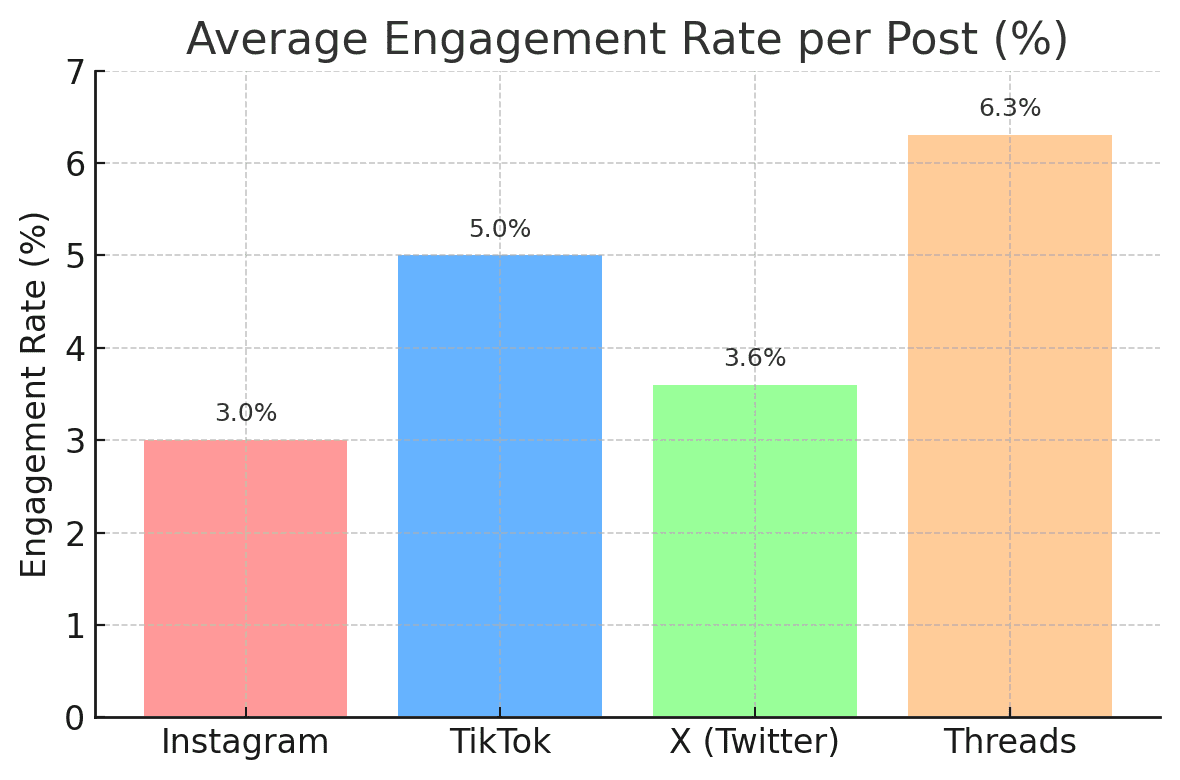
Despite its smaller user base, Threads boasts remarkably high engagement rates. Analyses indicate Threads posts can see ~6% engagement, outpacing other networks. For instance, Buffer’s study found a median 6.25% engagement rate on Threads vs just 3.6% on X. TikTok is known as the engagement king among established platforms – influencers on TikTok often get 5% or higher engagement, especially for niche or creative content. Instagram engagement varies widely; while brand accounts average around 0.5–3% (with higher for Reels or carousels), micro influencers on Instagram can see around 3–4% engagement on posts. Twitter/X historically has lower engagement (often below 2% for many users, and around 0.1–0.5% for brands), since it’s a very crowded, fast-paced space. Threads’ ~5–6% engagement suggests that users aren’t just passively scrolling – they’re liking, replying, and engaging with content at a high rate. This could be due to lower saturation (fewer accounts = more visibility per post) and the novelty factor – early adopters are eager to interact. It’s also by design: Threads’ algorithm favors conversations and meaningful interactions, much like Instagram’s, boosting content that sparks replies. For influencer marketing, this high engagement environment means your campaigns on Threads might generate more comments and discussions relative to the audience size than on more established apps.
Key takeaway: Instagram and TikTok have broader reach (huge audiences and discovery algorithms), but Threads offers a community feel with strong engagement and less competition for attention. If you collaborate with a micro influencer who has, say, 10k followers on Threads, a larger portion of those followers might actually see and interact with their post compared to an Instagram post that could be throttled by the algorithm or lost in the feed. On Threads, content lives in a stream of conversations, and because it’s not yet oversaturated with ads or brand accounts, people are actively exploring and participating.
Of course, each platform has its strengths. TikTok’s video virality is unparalleled (nothing on Threads will “go viral” to millions of strangers in the same way, since Threads still leans on followers and a curated feed). Instagram remains the go-to for visual inspiration and polished influencer content (no one is suggesting replacing your Insta strategy, especially when it’s integrated with Threads). X/Twitter is still where quick news breaks and witty one-liners trend (Threads has a similar format but not the same entrenched communities for niches like tech Twitter – at least not yet). The good news is, you don’t have to choose just one platform. Many successful campaigns run cross-platform, using each channel for what it does best. Threads can be the interactive after-party for your campaign – the place where the conversation keeps going after a big TikTok or after an Instagram giveaway post, for example.
Beyond the numbers, what features set Threads apart, and how do those affect influencer marketing? Here’s a quick rundown of Threads’ key characteristics compared to Instagram, TikTok, and X, especially from the perspective of running campaigns:
Threads is text-first, allowing up to 500 characters of text, along with optional photos or short videos (up to 5 minutes). This is somewhat a hybrid of Twitter and Instagram – you can share visuals, but the emphasis is on the text/conversation around them. By contrast, Instagram is visual-first (images, 60-sec videos, Stories, Reels) with captions secondary; TikTok is video-only (with captions, but the video is the star); X (Twitter) is text-first (280 characters, with images/videos allowed, and now longer posts for Blue subscribers). For influencers, Threads provides a space to share content that doesn’t have to be finely edited or perfectly curated – it can be a raw thought or a quick update, accompanied by a candid pic or two. This lowers the production barrier and encourages more frequent, spontaneous posting.
At launch, Threads lacked robust discovery features like hashtags or trending topics, but Meta has been rolling those out gradually. As of 2024, Threads introduced “topic tags” (a variant of hashtags) and a trends page in the feed. The algorithm shows users a mix of content from followed accounts and recommended posts (much like Instagram’s feed). It tends to prioritize engaging, discussion-sparking posts – for example, questions or conversational prompts may get a boost. Instagram relies on hashtags, Explore page, and an algorithm that favors visually appealing and relevant content; TikTok has the mighty For You Page driven by a highly advanced algorithm that can catapult unknown creators to fame overnight; X uses hashtags, trending topics, and a mix of chronological and algorithmic timelines. For influencer campaigns, this means Threads content might predominantly reach followers and their network (via replies and reposts), whereas TikTok content might reach completely new audiences via the FYP. Threads is currently more about depth of engagement with your community than broad discovery – at least until its user base grows further and discovery features mature.
Early observations say the tone on Threads is friendly, casual, and even witty. Brands and influencers often adopt a more playful voice here. Think of it as the after-hours hangout compared to Instagram’s polished daytime persona. For example, brands on Threads have been cracking jokes, participating in meme trends, and generally shedding stuffy formality. An influencer who might post a glamorous edited photo on IG could hop on Threads and say “OMG you guys, that photoshoot was hot. I was sweating buckets 😂 – anyone else literally melting this summer?” The humanizing effect is strong. Compare this to Twitter, which can be snarky or newsy, Instagram, which is curated and aspirational, and TikTok, which ranges from goofy to educational but always through video. If your brand values a human, relatable voice, Threads provides a welcoming space for that.
As of mid-2025, Threads is just beginning to introduce ads into the platform. Meta has started testing ads on Threads with select brands, and plans to integrate Threads into its broader ad ecosystem (meaning in the near future you might be able to include Threads placement in your Meta ad campaigns). For now, though, there’s no paid boosting of Threads posts and limited analytics. Creators and brands can see basic metrics (likes, replies, follows), but not the rich insights (demographics, reach, impressions) available on Instagram or Facebook. This means influencer campaigns on Threads are a bit harder to measure precisely – you’ll mainly gauge success by engagement and any referral traffic from links or uptick in brand mentions. It’s a bit of a “trust fall” scenario at the moment: you believe high engagement is building brand goodwill and indirect results, even if you can’t quantify all of it. This is where partnering with experienced influencer platforms can help – for example, Stack Influence or similar agencies can track multi-channel campaigns and give you a combined report (they might track if a Threads post caused a spike in Amazon searches, etc., through correlation). Over time, expect Threads to roll out more analytics and business tools as it matures.
In summary, Threads offers a blend of Twitter-like conversation with Instagram-like community, all under the Meta umbrella. Its feature set is still evolving, but this leaner feature set can actually be a boon – fewer distractions and more focus on conversation. For influencer campaigns, use Threads’ strengths (text dialogue, link sharing, casual tone) to complement the strengths of your other platforms (visual storytelling on IG, viral reach on TikTok, etc.). Now, let’s get practical with some tips on how e-commerce and content marketers can actually leverage Threads effectively.
Ready to get started with Threads as part of your marketing mix? Here are some concrete tips and ideas for e-commerce brands (including Amazon sellers) to make the most of Threads in micro influencer campaigns:
1. Extend Campaigns with “Threadversations”: When running a campaign on Instagram or TikTok, carry the conversation to Threads. For example, if a micro influencer posts a product demo on TikTok, have them create a Threads post the next day saying, “Got a bunch of questions about after my latest TikTok – let’s discuss! What do you want to know?” This gives interested followers a place to engage more deeply. It’s an easy way to capture the buzz and curiosity your campaign generated and channel it into community interaction. The influencer (and you, the brand) can then answer questions, address concerns, and highlight more features in a conversational way. This not only educates potential customers but also makes them feel heard. It’s like turning a one-off post into an ongoing AMA (Ask Me Anything) session – driving higher engagement and trust.
2. Leverage Threads for Product Feedback and UGC: Launching a new product or feature? Use Threads via your micro influencers (or your own brand account in collaboration with influencers) to gather feedback and stories. For instance, an Amazon seller might coordinate with a few micro influencers to all post on Threads during launch week asking their followers “How would you use ? Any creative ideas?” or “We’re launching – what’s one feature you’d love to see in the next update?”. This invites tons of UGC in the form of replies. You might get testimonials (“I just bought it and it’s awesome for small apartments!”), use-cases you hadn’t thought of, or valuable constructive feedback. Repost or highlight the best responses (e.g., share screenshots of funny or insightful replies, with credit to the user – instant social proof!). This tactic makes your community feel like part of the brand’s journey. Consumers love brands that listen, and micro influencers can be the facilitators of that dialogue on Threads.
3. Combine Threads with Promo Codes and CTAs: While Threads isn’t all about hard selling, you can drive conversions subtly. Work with your influencers to share exclusive promo codes or timely offers on Threads in an organic way. For example, “Heads up: I convinced to give me a 20% off code for you guys 😏 – use MYCODE on their site (good for 48h). Also, real talk: my favorite from their line is the vanilla flavor, especially in iced coffee!”. This doesn’t feel like an ad, it feels like a friend giving a recommendation with a perk. The conversational context (maybe it’s part of a thread about morning routines or favorite products) makes the offer less intrusive. If you’re an Amazon seller, you could use referral links or Amazon Associate short links in the post. Track if there’s a spike in traffic or sales when the thread is live. Tip: Don’t overdo the promos – keep it to occasional threads – but when you do, make it feel like an insider tip rather than a generic advertisement.
4. Real-Time Engagement (Live Threads): Threads can be great for real-time discussions during events or product drops. If you’re doing a live stream, webinar, or even appearing on a podcast/TV (think QVC for Amazon sellers), have a micro influencer host a live thread simultaneously: “I’m live-tweeting (threading?) the launch event for ’s new collection – join me here!”. They can post updates or behind-the-scenes photos in the thread, and followers can react in real time. It’s like a live commentary that makes the audience feel involved. The influencer can toss in their own commentary (“OMG look at the crowd reaction to the new widget – wild!”) which gives your launch a bit of social proof and excitement. After the event, that thread stands as a record of the hype and key moments, which others can still read and engage with.
5. Encourage Influencers to Be Themselves: On Threads, authenticity wins. Brief your influencers that it’s okay to loosen up and have fun on Threads – in fact, it’s encouraged. Their posts can use memes, humor, or casual lingo without breaking brand guidelines (within reason, of course). For instance, if an influencer normally posts a polished skincare tutorial on IG for your product, on Threads they might share a goofy before-and-after selfie with the caption, “Me pretending I’m not shook by how good my skin looks after using for 2 weeks 🤭 #nofilter”. That kind of candid, friendly tone performs well on Threads and makes the endorsement feel genuine. Brands should embrace this and not insist on corporate tone on Threads. It might be a shift if you’re used to approving every Instagram caption, but giving influencers a bit more voice on Threads can pay off with higher engagement and a closer bond with their followers. (Of course, set basic guidelines and trust your influencer’s judgment).
6. Integrate Threads Content into Your Brand Channels: Just like repurposing other UGC, don’t let great Threads content disappear into the feed. Take the best bits and showcase them. You could create a blog post like “What people are saying about on Threads” and embed or quote the threads. Or share a carousel on Instagram featuring screenshots of influencer Threads posts and replies (this can be a fresh form of testimonial). Another idea: if an influencer’s thread yields a fantastic piece of advice or a cool use-case of your product, turn that into an email newsletter snippet or a graphic for Pinterest. This cross-channel repurposing extends the life of the content and amplifies the voices of your micro influencers beyond Threads. It also shows the influencers that you value their contribution, strengthening your partnership. Just remember to credit appropriately and get permission if needed (public Threads are generally okay to quote with attribution, but it’s polite to ask for images, etc.).
7. Monitor and Engage (Brand Participation): Don’t treat Threads posts by your influencers as set-and-forget. Join the conversation! Create a brand presence on Threads (even if you’re not fully active daily, you should have an account ready). When an influencer posts about your brand, the brand account can like and reply. A simple “We’re so glad you’re loving it! 🙌” or answering a question that a user asked the influencer (maybe a technical spec or stock availability) shows that the brand is listening. Be careful not to hijack the authentic vibe – you’re there as a friendly expert or cheerleader, not a salesperson. When other users see the brand chiming in helpfully, it builds trust. It can also increase the post’s reach (the algorithm might surface a thread more if the original brand is active in it). Essentially, treat Threads as a customer service and community forum for your campaigns. This is particularly useful for Amazon sellers who often lack a direct channel to talk to customers – Threads can act as an informal FAQ hub via influencer-hosted discussions.
8. Know When Not to Use Threads: Finally, an important tip is knowing when Threads might not be the right tool. If your influencer campaign relies on highly visual content (e.g. a fashion lookbook or a complex DIY tutorial), Threads’ text-centric format might not do it justice – you’re better off on IG, TikTok, or YouTube for the primary content. Similarly, if your target demographic isn’t present on Threads (check the stats – Threads users tend to skew toward existing Instagram users, likely younger and mobile-savvy; if your niche is, say, retirees on Facebook, Threads won’t move the needle). Use Threads as a complement, not a replacement. You don’t need to force every campaign onto Threads if it doesn’t naturally fit. Focus where the impact is greatest. That said, because Threads is low-effort to post on, it doesn’t hurt to experiment with even a small presence – just manage expectations. It’s also okay to skip Threads for certain product categories that require heavy visual demonstration or for very serious topics where the lighthearted tone might not match – use your judgment.
By following these tips, e-commerce brands and influencers can tap into Threads’ strengths: its engaged community, ease of dialogue, and authentic tone. The overarching strategy is to make Threads the interactive layer of your influencer campaigns – the place where consumers move from passive viewers to active participants. When they start chatting on a thread, they become part of your brand story, and that investment can turn into loyalty and sales.
Is Threads right for every brand or campaign? Not necessarily. Here’s a quick guide on when to go all-in on Threads and when you might want to prioritize other platforms:
In essence, Threads is a powerful new tool, but not a magic bullet. It excels at what it was designed for – building dialogues. Smart brands will use it alongside other platforms, deploying it in campaigns where conversation and community are the goals. If you find a strong micro-influencer presence on Threads in your niche, that’s a green light to incorporate it. If not, you might be a pioneer and need to bring your community there.
Threads may be the new kid on the social media block, but it’s quickly proving its value for influencer and micro-influencer marketing. In the span of a year, it has grown into a community of hundreds of millions, with engagement levels that make marketers’ eyes light up. Its conversational, casual vibe offers a refreshing complement to the polished feeds of Instagram and the flashy clips of TikTok. For brands focused on authentic connections, UGC, and community-building, Threads is a space you should strongly consider.
We’ve discussed how micro influencers can leverage Threads to amplify their campaigns – by engaging followers in genuine dialogue, collecting testimonials and feedback, and giving brands a human voice. Especially for e-commerce and Amazon sellers, Threads can be an innovative way to drive interest and trust, which ultimately drives sales (directly or indirectly). The example of Blueland’s 13× ROI with a coordinated micro-influencer campaign across channels highlights the potential – now with Threads in the mix, such cross-channel strategies can be even more impactful. And platforms like Stack Influence are there to help manage these multi-channel micro-influencer efforts, ensuring that even as you add Threads to your arsenal, everything stays streamlined and ROI-focused. (Stack Influence, for instance, has a network of millions of micro influencers and emphasizes campaigns that blend content, social engagement, and sales channels – exactly the approach Threads can amplify.)
That said, success on Threads will come from understanding the platform’s ethos. People come to Threads to talk, joke, learn, and bond – not to be sold to with corporate-speak. Brands that embrace authenticity and let their influencers (and even employees or founders) have real conversations will find a welcoming audience. Those that merely copy-paste marketing messages will likely be tuned out. In influencer marketing, authenticity has always been key, and Threads is perhaps the purest test of that yet – it’s literally built around conversations, which are hard to fake.
As you craft your influencer strategies for the coming months, consider weaving in a Thread or two (pun intended). Start small: maybe a Q&A thread here, a product story thread there. See how your audience responds. You might be pleasantly surprised at the depth of interaction. Monitor what works – is it the humorous posts, the behind-the-scenes stories, the direct questions? – and refine your approach. Encourage your micro influencers to share their own creative Thread ideas; they’re users of the platform too and often know what resonates with their followers.
In conclusion, Threads is not a replacement for Instagram, TikTok, or any other platform – but it is a powerful addition. For brands who want to build a loyal community and engage in genuine dialogue, it can become the secret sauce that ties your multi-platform influencer campaign together. It’s one more place to let your brand’s story unfold, through the voices of those who love it. And in the age of authenticity, that’s an opportunity you don’t want to miss.
So, should your brand use Threads for influencer marketing? If you value authenticity, community engagement, and the power of micro influencers – then absolutely, yes. It’s time to get thread-y and start conversations that count. Happy threading!
Live shopping and social commerce are changing the game for influencer marketing. Not long ago, influencers mainly posted photos or videos and added a promo code. Now they’re hosting live “shop-along” streams and selling products in real-time to their followers. It’s like a modern, mobile QVC – except the hosts are relatable content creators and micro influencers that audiences trust. Brands, Amazon sellers, and marketers are taking notice of this trend, seeing live shopping as a new frontier for collaboration with influencers. The vibe is casual but the opportunities are serious: more engagement, direct sales, and authentic user-generated content (UGC) that today’s shoppers crave.
In this post, we’ll break down how live shopping and social commerce are evolving influencer collaborations. You’ll get the latest data on these trends, see why micro influencers and UGC-focused creators are leading the charge, and learn practical ways for brands and influencers to ride this wave. Grab a snack (maybe something an influencer convinced you to buy) and let’s dive in!
Social media and e-commerce have merged to create a booming new channel: social commerce. In simple terms, social commerce means buying products directly through social media platforms or content – no separate storefront needed. This sector has exploded in recent years. Global social commerce sales grew from around $81 billion in 2018 to an estimated $688 billion in 2024, an eightfold increase in six years. Analysts project the market will keep surging by over $100 billion per year, set to hit $1 trillion by 2028. In fact, by 2028 social commerce could account for almost 20% of all online retail sales worldwide – a huge chunk of e-commerce driven by Instagram, TikTok, Facebook, and more.
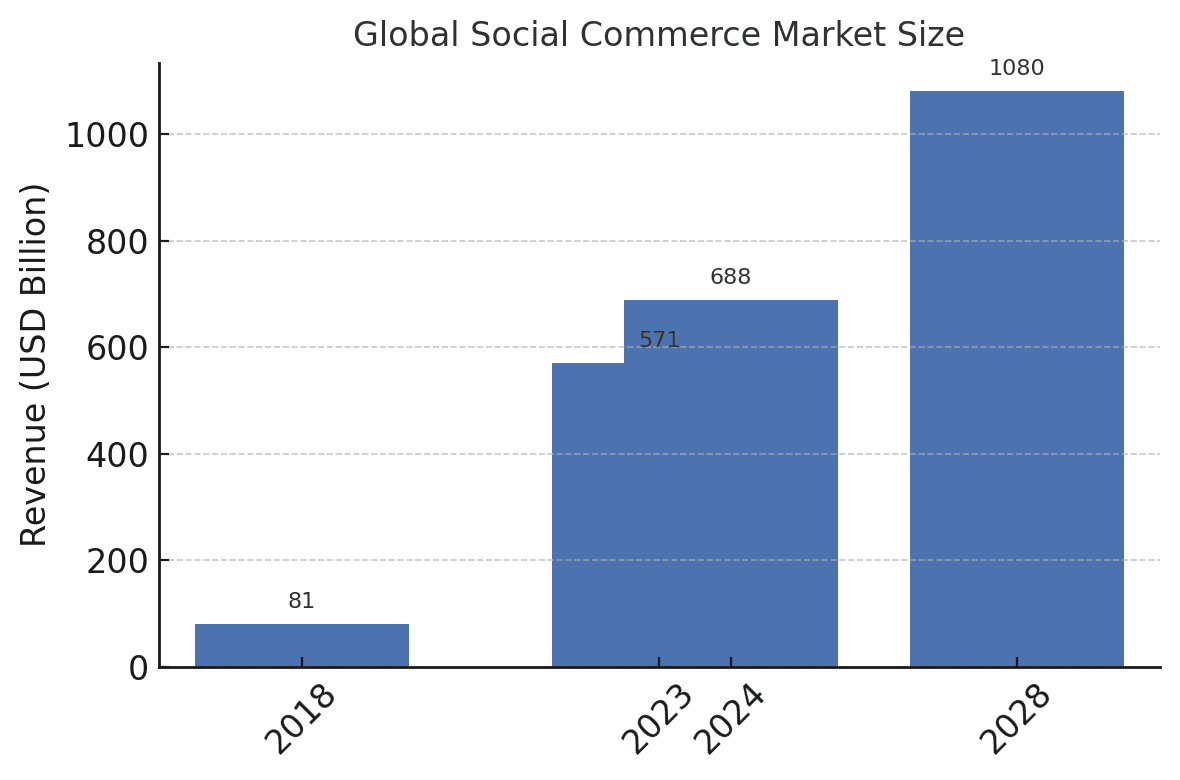
Global social commerce has skyrocketed – from $81 billion in 2018 to a projected $1 trillion+ by 2028. This chart shows the explosive revenue growth in social commerce (purchases made via social media) over recent years.
A big part of social commerce’s rise is live shopping (also called livestream shopping or live commerce). This refers to real-time streaming events where hosts (often influencers or brand reps) show off products, answer questions, and provide purchase links on the spot. It turns passive browsing into an interactive experience. Live shopping is already massive in Asia – especially China, which dominates this space. More than 526 million people in China used live commerce in 2022 (nearly half of all internet users there), and Chinese live-stream apps sold over $500 billion worth of goods that year. 🤑 Yes, you read that right – half a trillion in sales via influencers and hosts streaming on platforms like Douyin (TikTok’s Chinese counterpart).
Now, live shopping is catching on in the West too. The U.S. live commerce market, while younger, is growing steadily and is projected to reach ~$55 billion by 2026. Platforms like Facebook/Instagram Live, YouTube Live, and newcomer TikTok Live are increasingly hosting shopping streams. Even Amazon has joined the fray with Amazon Live, letting influencers stream and demo products on Amazon’s site. (Amazon sellers, take note – we’ll talk more about this opportunity soon!). Europe and other regions are seeing similar trends, with live commerce viewership up sharply year over year.
So why all the hype? Because consumers are tuning in and buying. Live shopping events combine entertainment, education, and convenience in one. Shoppers can watch a charismatic host (often an influencer they follow) use the product, ask questions via chat, get instant answers, and snag exclusive deals – all without leaving the app. It’s immersive and it’s driving real sales. One survey found 73% of consumers are more likely to purchase a product after watching a live streaming event, and 47% have made impulse buys during live streams due to the fear of missing out on limited-time offers. In short, live commerce blends the social media experience with the ease of one-click shopping, and shoppers are loving it.
For influencers, live shopping is a natural next step in collaboration with brands. It shifts them from just endorsers to real-time sellers and entertainers. This format plays to influencers’ strengths – their personality, authenticity, and ability to engage an audience. Here’s why creators (and brands) are jumping on live commerce as the next big thing:
From a brand’s perspective, these benefits are golden. Live influencer collaborations combine the reach of social media, the credibility of influencer recommendations, and the direct conversion power of e-commerce. It’s a potent mix. No wonder 62% of global marketers now say social commerce is a top objective for their influencer campaigns. And it’s not just for the Nikes and Sephoras of the world – smaller brands and even individual Amazon sellers are leveraging live shopping through micro influencers to drive sales.
When it comes to live shopping and social commerce, bigger isn’t always better in terms of influencer size. In fact, micro influencers (typically those with roughly 5,000 to 100,000 followers) and even nano influencers (<5k) are proving to be especially effective in this space. These creators may not have millions of fans, but they have highly engaged, loyal followings and niche expertise that brands can tap into.
Why are micro influencers so valuable for social commerce? Let’s break it down:
1. Higher Engagement Rates: Micro influencers often see much higher engagement from their audience compared to macro influencers with huge followings. Their communities are smaller but more tight-knit and attentive. For example, a recent industry report found Instagram micro-influencers (10k–50k followers) average about 1.8% engagement per post, whereas mega-influencers with millions of followers average well under 1%. Smaller creators on TikTok or other platforms can see even higher engagement percentages. In other words, fans are more likely to like, comment, and click when the recommendation comes from a relatable micro creator than from a celebrity who feels less accessible. This higher engagement translates to more viewers and buyers during live shopping sessions.
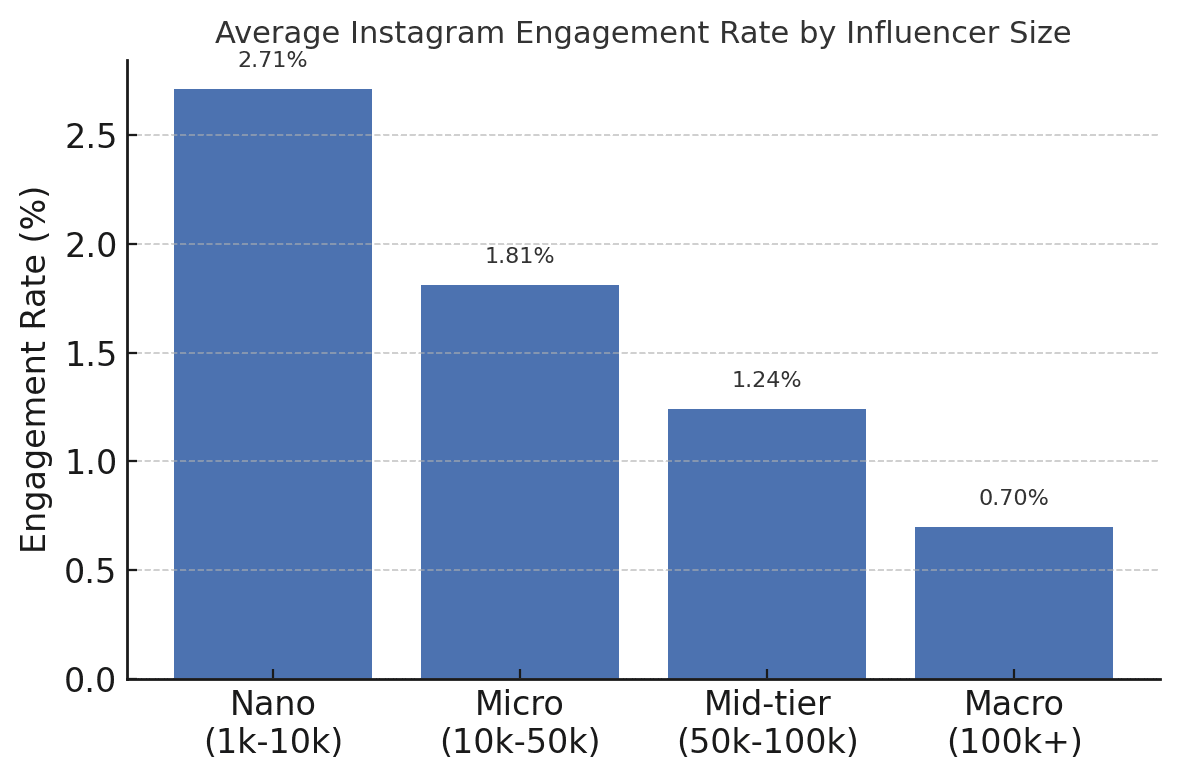
Data shows that smaller influencers have far higher engagement. Nano influencers (1k–10k followers) see about 2.7% engagement on Instagram, and micro influencers (~10k–50k) around 1.8% – significantly outperforming larger accounts (macro influencers with 100k+ followers often see <1% engagement). More engagement means more people interacting with and acting on their content.
2. Trust & Authenticity: Micro influencers are seen as “people like me,” not polished celebs. This creates a sense of authenticity that is marketing gold. Their recommendations feel like genuine word-of-mouth. In fact, 90% of consumers trust content from a peer or another customer (UGC) more than traditional ads. And 70% of teens trust influencer opinions more than celebrity endorsements. During a live stream, a micro influencer’s casual chat and honest take on a product can come across as far more credible than a slick brand ad or a famous spokesperson. Viewers think, “If they like it and actually use it, maybe I’ll like it too.” This trust leads to higher conversion rates.
3. Niche Communities: Most micro influencers focus on a specific niche or passion, whether it’s eco-friendly beauty, home workouts, budget fashion, gaming accessories, or pet grooming. Their audience is laser-targeted around those interests. For brands, this is perfect for finding your ideal customers. If you sell organic dog treats, a pet mom influencer with 15k dedicated dog-loving followers on TikTok is likely to get you better results than a general lifestyle influencer with 2 million random followers. The micro influencer’s content aligns closely with your product, so the viewers are primed to care. This niche alignment makes live sessions and UGC more impactful – you’re reaching exactly the right people. (One study showed campaigns that matched influencer niche to the product saw 13.5% higher engagement than those that didn’t.)
4. Affordability & Scalability: Working with micro influencers is budget-friendly, which means even small brands or Amazon sellers can launch campaigns with dozens of influencers without breaking the bank. Many micro influencers will collaborate in exchange for free product or for a modest fee – often ranging from ~$100 to $500 per post or video. Compare that to the thousands (or hundreds of thousands) big influencers charge. Because micro influencers are more affordable, brands can scale up the number of collaborations – seeding products to 50 micro creators instead of paying for one Kylie Jenner post. More influencers posting means more UGC, more reach across different little communities, and a bigger cumulative impact.
5. Authentic UGC for the Brand: The content produced by micro influencers often doubles as valuable user-generated content for the brand. Those tutorial videos, unboxing clips, try-on photos, and live stream recordings can be repurposed on the brand’s own social channels, website, or ads. Featuring UGC on e-commerce sites has been shown to increase conversion rates (it’s social proof). And since it’s coming from real people, it resonates more – 84% of millennials say UGC from strangers influences their buying decisions. By collaborating with armies of micro influencers, brands essentially generate a constant stream of authentic content to fuel their marketing. It’s no coincidence that 97% of Gen Z consumers now cite social media as their main source of shopping inspiration – they’re looking at peers and micro creators for ideas more than polished brand ads.
The bottom line: micro influencers punch above their weight in driving engagement and sales. They’re the secret sauce behind many successful social commerce campaigns. As one marketer put it, “Ditch the follower count obsession. It's not about size, it's about connection.” Brands that understand this are leveraging platforms and agencies to connect with thousands of vetted micro influencers and everyday creators. The result is genuine buzz, authentic content, and ultimately, more conversions.
(Fun fact: According to a Shopify study, 77% of brand-influencer partnerships are now with micro influencers. The majority of brands prefer working with micros because of the benefits we just discussed.)
So, you’re convinced that live shopping and micro influencer collaborations are the future – or at least worth a try. How can you, as a brand, marketer, or seller, capitalize on these trends right now? Here are some practical tips and examples to get you started:
1. Partner with Micro & Nano Influencers: Start identifying influencers in your niche with engaged followings in the 5k–100k range. These creators are hungry to collaborate and often willing to promote products in exchange for freebies or small fees. Use influencer platforms or communities (e.g. Stack Influence, which specializes in micro-influencer campaigns) to find good matches. For example, if you’re an Amazon seller launching a new kitchen gadget, you might partner with 20 micro-influencers who do cooking demos. They could go live on Instagram to show your gadget in action, each driving their followers to your Amazon product listing. This on-the-ground ambassador approach can quickly build trust in new markets – followers see a peer using the product, which instantly lends credibility. And those live videos stay up as shoppable replays, continuing to drive traffic and sales.
2. Leverage Live Platforms (Instagram, TikTok, Amazon Live): Make use of the built-in live shopping tools emerging on social platforms. Instagram Live allows you to tag products from your catalog so viewers can tap and buy during a stream. TikTok has rolling out TikTok Shop and live shopping features where creators can showcase items with a purchase link pop-up. If you sell on Amazon, explore Amazon Live – Amazon’s own live stream platform where influencers (in the Amazon Influencer Program) host streams promoting marketplace products. Brands are finding success sending samples to Amazon influencers who then feature those products in their Amazon Live broadcasts, earning commission on any sales (a win-win setup). The key is to meet your audience where they scroll – if your target demo spends hours on TikTok, consider partnering with TikTok creators for live flash sales or product reveals on that app.
3. Encourage UGC & Reviews: Not every collaboration has to be a live stream. Standard UGC content – like unboxing videos, 30-second testimonial clips, or before-and-after photos – is also extremely valuable for social commerce. Encourage your influencers and customers to share their experiences on social media. Repost this content and tag products (Instagram has a Product Tag feature for posts). On Amazon, invite micro influencers or enthusiastic customers to post short video reviews on your product page (Amazon now displays videos uploaded by “Amazon influencers” and other customers, which can boost conversion). Consumers trust UGC – 85% find UGC more influential than brand-created photos or descriptions. By seeding product out and asking for honest feedback content, you build a library of social proof. One tactic: run a contest for customers/influencers where they share a video using the product; award winners with a gift card or feature their content on your official page. This not only generates buzz but provides authentic visuals that can be used in ads or product pages.
4. Host Live Shopping Events & Collaborations: Plan a live shopping event as you would a marketing campaign. Promote it ahead of time (“Join our Live this Friday at 7 PM for an exclusive launch!”). Collaborate with an influencer as a co-host to draw their audience. During the live, have a clear theme (e.g. try-on haul, Q&A, tutorial) and interact with viewers – answer their questions, shout-out their comments, make it fun. Offer a special discount code or limited deal only for live viewers to spur purchases. For instance, a fashion brand might do an Instagram Live with a style micro-influencer doing a fall wardrobe try-on, where viewers get a 20% off code valid only during that stream. The influencer’s personable hosting can make viewers feel like they’re shopping with a friend. This drives immediate sales and also deepens community engagement. Pro tip: Keep replays of the live session on your profile and in your stories, as they can continue to generate sales for those who couldn’t join live.
5. Use Data to Refine Your Strategy: Treat each influencer collaboration or live stream as an experiment to learn from. Track metrics – how many viewers, engagement rate (comments/questions per viewer), and of course sales or link clicks generated. Which influencers drove the most sales? What product demo style got the best response? Maybe you’ll find that gifted product collaborations outperform paid posts (which some data suggests – gifted influencer posts often have slightly higher engagement than outright sponsored ones). Or you might discover your Facebook audience isn’t as into live video as your TikTok audience. Use these insights to double down on what works. The beauty of this new frontier is that it’s evolving – stay agile and adapt your strategy as you gather feedback.
By following these steps, brands both big and small can start to harness live social commerce. One real-world example: Amazon sellers have used micro-influencer campaigns to expand internationally, seeding products to local micro influencers in target markets. Those influencers’ shout-outs drive traffic directly to the Amazon listings, boosting sales rank and reviews in the new market. It’s a smart way to enter a new country’s marketplace with built-in social proof and buzz.
Live shopping and social commerce represent a bold new frontier of collaboration between brands and influencers. The lines between content and commerce are blurring – and that’s a good thing. Influencers are no longer just billboards for products; they’re becoming real-time brand partners who entertain, educate, and drive sales in a single swoop. Micro influencers and everyday creators are at the forefront of this shift, using their close-knit communities and authentic voices to bring products to life in ways traditional marketing never could. Meanwhile, brands are learning that fostering these genuine connections (through UGC, interactive live events, and niche-focused outreach) pays off with more engaged customers and increased loyalty.
As we’ve seen, the data backs it up: social commerce is skyrocketing globally, consumers trust peer recommendations over ads, and influencer-driven live events can spur impulse buys at impressive rates. For influencers, it’s an opportunity to deepen relationships with your audience and monetize in new ways. For marketers, it’s a chance to turn social media into a direct sales channel with the help of creative collaborators. And for Amazon sellers and e-commerce entrepreneurs, it levels the playing field – you don’t need a Super Bowl ad when you have a squad of passionate micro influencers ready to hype your product on TikTok Live.
TikTok isn’t just for dance challenges anymore – it’s become a serious eCommerce engine. With around 2 billion users worldwide, TikTok now drives product discoveries and impulse buys at an astonishing rate. In fact, roughly 37% of U.S. TikTok users (55 million people) made a purchase through the app in 2023, and that number is only growing. For online sellers, this means one thing: TikTok influencer marketing needs to be a key part of your 2026 strategy. In this blog post, we’ll explore the top TikTok influencer marketing strategies – from leveraging micro-influencers and UGC to riding trending hashtags – all tailored for eCommerce brands. The tone is casual but informative, so grab a coffee and let’s dive into how you can boost your sales and brand presence on TikTok this year.
You don’t need Charli D’Amelio or the latest TikTok superstar to drive sales. In 2026, micro-influencer partnerships are proving that small can be mighty. Micro-influencers are typically creators with niche followings (say 1,000 to 50,000 followers) who are deeply trusted by their audience. For eCommerce brands, partnering with micro-influencers offers an authentic, cost-effective way to reach consumers.
Why focus on micro-influencers? First off, influencers are how TikTok users discover products – a whopping 78% of TikTok shoppers say they find new items through influencer content. But importantly, micro-influencers often deliver better bang for your buck. Top TikTok stars with millions of followers can charge upwards of $1,000 (or much more) for a single post, which can burn through a small brand’s budget fast. Micro-influencers, on the other hand, are far more affordable – many will collaborate in exchange for free product or a modest fee. Despite the lower cost, this doesn’t mean lower returns – quite the opposite. Micro-creators tend to have highly engaged communities that trust them, leading to higher conversion rates per viewer. Their recommendations feel more personal and authentic than a big celebrity endorsement.
Consider this scenario: you send your handmade jewelry to 20 micro-influencers who each have 5,000 followers in the fashion/jewelry niche. Each of them posts a TikTok showing how they style your pieces. Those videos might get, say, 2,000 views each – that’s 40,000 impressions of genuine content featuring your product, targeted at people who love handmade jewelry. The viewers seeing those posts are likely the exact customers you want, and they’re hearing about your brand from someone they trust. Even if each micro-influencer’s reach is small, collectively they make a big impact.
Another huge benefit of going micro is agility and lower risk. If one influencer’s post flops or if an influencer goes on hiatus, it’s not a big blow – you have a whole team of others contributing. You can also scale up or down quickly by adding more micro-influencers to the mix as needed. This flexibility is useful in fast-changing environments like TikTok. Plus, many micro-influencers are active on multiple platforms (Instagram, YouTube, etc.), so a partnership with them can sometimes extend beyond TikTok, giving you multi-channel exposure.
Micro-influencer partnerships prove that influencer marketing isn’t just a luxury for big companies. In 2026, even the smallest eCommerce seller can harness the persuasive power of relatable TikTok creators without breaking the bank. The result is authentic content, stronger customer trust, and yes – more sales.

Word of mouth has always been marketing gold, and on TikTok, word of mouth often takes the form of user-generated content (UGC). UGC is basically any content about your brand that isn’t made by you – think videos of real customers unboxing your product, a TikTok of someone using your app in daily life, or a fan doing a funny skit featuring your brand. In 2026, TikTok UGC has taken center stage in digital marketing because it delivers something consumers crave: trust and authenticity.
What makes UGC so powerful on TikTok? It feels real, unscripted, and honest. TikTok users scroll past polished ads, but they stop for stories and genuine moments. A TikTok video shot on an iPhone by a happy customer can often outperform a slick commercial. In fact, 83% of TikTok users say UGC makes brands seem more authentic, and brands using UGC content on TikTok see significantly higher engagement – about 35% higher watch-through rates compared to polished ads. In other words, people are more likely to watch and trust content that looks like it came from “people like me.” No wonder UGC drives roughly 60% of TikTok’s brand engagement these days.
For eCommerce sellers, running UGC campaigns on TikTok is a no-brainer to build credibility and spark viral growth. Here are some ways to leverage UGC in 2026:
A great example of UGC in action is the #TikTokMadeMeBuyIt phenomenon. This hashtag – which has literally billions of views – is full of everyday people showing off products they bought because they saw them on TikTok. Smart eCommerce brands are hopping on this trend by tagging their product showcase videos with #TikTokMadeMeBuyIt, effectively tapping into a massive social proof engine. If a product gains enough positive traction, it can even turn into a viral hit where everyone wants to buy it just because “TikTok made me do it.”
Another example: cosmetics brand Glossier used the popular “Get Ready With Me” (#GRWM) format to encourage users to post their skincare routines featuring Glossier products. By letting the story (morning routine, self-care, etc.) come before the product pitch, the campaign felt natural and relatable, leading to tons of engagement. Or consider Chipotle’s #Boorito campaign – a Halloween challenge where fans posted videos in costume to earn a discount, generating a trove of fun UGC that tied back to the brand. These cases show that when UGC is done right – aligning with a trend or community passion – it can explode your reach.
The bottom line: UGC campaigns build trust and community around your brand. In 2026, Gen Z and Millennials want to interact with real stories and peer recommendations on TikTok, not faceless corporations. By integrating UGC into your influencer marketing (and giving your customers a voice), you make your marketing feel more like a conversation than a sales pitch. And that’s exactly the kind of authentic connection that translates into loyalty and sales.
TikTok runs on trends – they’re the lifeblood of the platform’s culture and virality. For eCommerce brands, trend-based content is a powerful strategy to boost visibility and stay relevant, as long as you do it right. Trend-based content means tapping into whatever is hot on TikTok at the moment, whether it’s a catchy dance, a viral hashtag, a new filter, or a popular sound clip. The payoff? When you join a trend, you’re more likely to appear on the coveted For You Page (FYP) and get those sweet viral views, because TikTok’s algorithm often rewards content that lots of people are engaging with.
However, trends on TikTok move fast. What’s exploding this week might fizzle out by next month. To capitalize on trend-based content in 2026, you need to be agile and observant. Here are some tips:
A trend-related win for brands often comes from blending the trend with a bit of creativity. For example, during a popular TikTok “Storytime” trend (where users narrate a story with on-screen text), an online shop might create a video like “POV: You’re opening a package from ” to ride the POV storytelling wave. Or with the evergreen dance trends – even if you as a founder can’t dance, you could have your team do a quick choreo in the warehouse or show your product dancing (hey, products have moves too!). The goal is to signal that your brand is up-to-date and part of the fun, which makes users more inclined to engage with you.
Remember, TikTok trends are an opportunity to massively amplify your reach for free (or cheap). A single well-timed, trend-savvy video can sometimes do the work of a whole paid ad campaign. By staying nimble and creative, eCommerce sellers can ride these TikTok waves to gain followers, boost brand awareness, and ultimately drive more sales.

Finally, let’s talk about making all these strategies pay off. It’s great to run influencer campaigns and join trends, but you should also measure what’s working and double-down on authenticity to get the best return on investment (ROI). Here are some practical tips to maximize your ROI while keeping it real with your audience:
By implementing these tips, you’ll not only squeeze the most value from your TikTok influencer campaigns, but you’ll also cultivate real connections with your audience. And that’s the ultimate goal – because authentic engagement is what turns a one-time viewer into a loyal customer who sticks with your brand beyond the trends of today.
TikTok’s explosive growth as a shopping and discovery platform shows no signs of slowing in 2026. For eCommerce sellers, this translates into an incredible opportunity – if you use the right strategies. Micro-influencer marketing offers a scalable way to flood TikTok with genuine chatter about your products, all while staying budget-friendly. UGC campaigns and authentic content build the trust that converts passive viewers into active buyers. Keeping a finger on the pulse of trends ensures your brand stays visible and culturally relevant on TikTok’s dynamic stage. And through it all, keeping an eye on performance metrics and nurturing true connections with your audience will maximize your ROI.
In essence, successful TikTok influencer marketing in 2026 is about mixing creativity with data, and authenticity with strategy. By partnering with relatable creators, encouraging your customers’ voices, hopping on trends that make sense, and continually learning from the results, you can create a TikTok presence that not only drives sales but also resonates with people. Brands that embrace these approaches are seeing stronger engagement and deeper customer relationships – translating to long-term success.
So, whether you’re a small Shopify store or an established online seller, now is the time to step up your TikTok game. Try out that micro-influencer campaign, launch a fun hashtag challenge, or share a behind-the-scenes clip that shows the heart of your business. The TikTok community is ready to discover something new – let it be your brand, delivered through the voices and stories that only TikTok can amplify. Here’s to making 2026 the year your eCommerce brand goes viral (for all the right reasons)!
Influencer marketing is a form of social media marketing where brands partner with individuals who have influence over an audience to promote products or services. In simpler terms, it means businesses collaborate with popular social media users – the influencers – to spread the word about their offerings in an authentic way. This strategy has rapidly evolved from celebrity endorsements into a booming industry valued at over $32 billion in 2025. For aspiring influencers, e-commerce sellers, Amazon sellers, and content creators, understanding influencer marketing is key to unlocking new opportunities in the digital economy.
In this article, we’ll break down what influencer marketing really means, how it has changed over time, and why it’s so effective today. We’ll also dive into the rise of micro influencers and the power of UGC (user-generated content) in driving engagement and trust. Whether you’re a content creator looking to monetize your passion or an Amazon seller aiming to boost sales, influencer marketing can be a game-changer. Let’s explore this dynamic marketing approach in depth.
At its core, influencer marketing is about leveraging the reach and credibility of individuals who have built a following in a particular niche. These influencers can be anyone from celebrities and bloggers to everyday content creators on Instagram, YouTube, TikTok, or other platforms. The appeal for brands lies in the trust and authority that influencers have with their audience – when an influencer recommends a product, their followers are more likely to take notice (and action) than if the brand advertised directly.
Influencer marketing isn’t just a buzzword; it’s become a mainstream strategy because it works for all parties involved – brands, consumers, and influencers. Studies show that 84.8% of marketers find influencer marketing effective, with over a third saying that influencer-created content outperforms brand-created content in terms of engagement. The reason is simple: people trust people. In fact, 69% of consumers trust influencers’ recommendations over information straight from brands. This trust translates into more authentic marketing and often better ROI for businesses. No wonder around half of marketers today work with influencers in some capacity.
For those new to the concept, here are a few common ways influencer partnerships work:
A brand pays an influencer to create a post (or video, story, etc.) featuring their product. The influencer typically will mention or demonstrate the product to their followers.
Brands send free products to influencers in the hopes they’ll try them and organically share a review or experience with their audience. This is popular with e-commerce and Amazon sellers, as it can generate genuine buzz.
An influencer shares a trackable link or discount code; they earn a commission on any sales made through their referrals. This model incentivizes influencers to actively promote the product.
Longer-term relationships where an influencer represents the brand over time, regularly promoting their products in exchange for compensation or perks.
The beauty of influencer marketing is that it allows for creative, word-of-mouth style promotion at scale. Instead of a company tooting its own horn, it enables real people (influencers) to spread the message. And as social media usage has exploded, so has the impact of these collaborations. The global influencer marketing industry has seen exponential growth over the past decade, outpacing traditional advertising channels.
Global influencer marketing market size from 2014 to 2025 (in USD billions). The industry has surged from just $1.4 billion in 2014 to over $32 billion by 2025, reflecting its evolution into a mainstream marketing channel.
Why does this matter for you as a creator or seller? Because influencer marketing is no longer a niche experiment – it’s a proven strategy driving product awareness, user engagement, and sales. In 2024, social media even surpassed search engines to become the largest advertising channel, thanks in part to influencer-driven campaigns. In short, influencer marketing has matured into an essential component of digital marketing. Now, let’s look at how we got here.
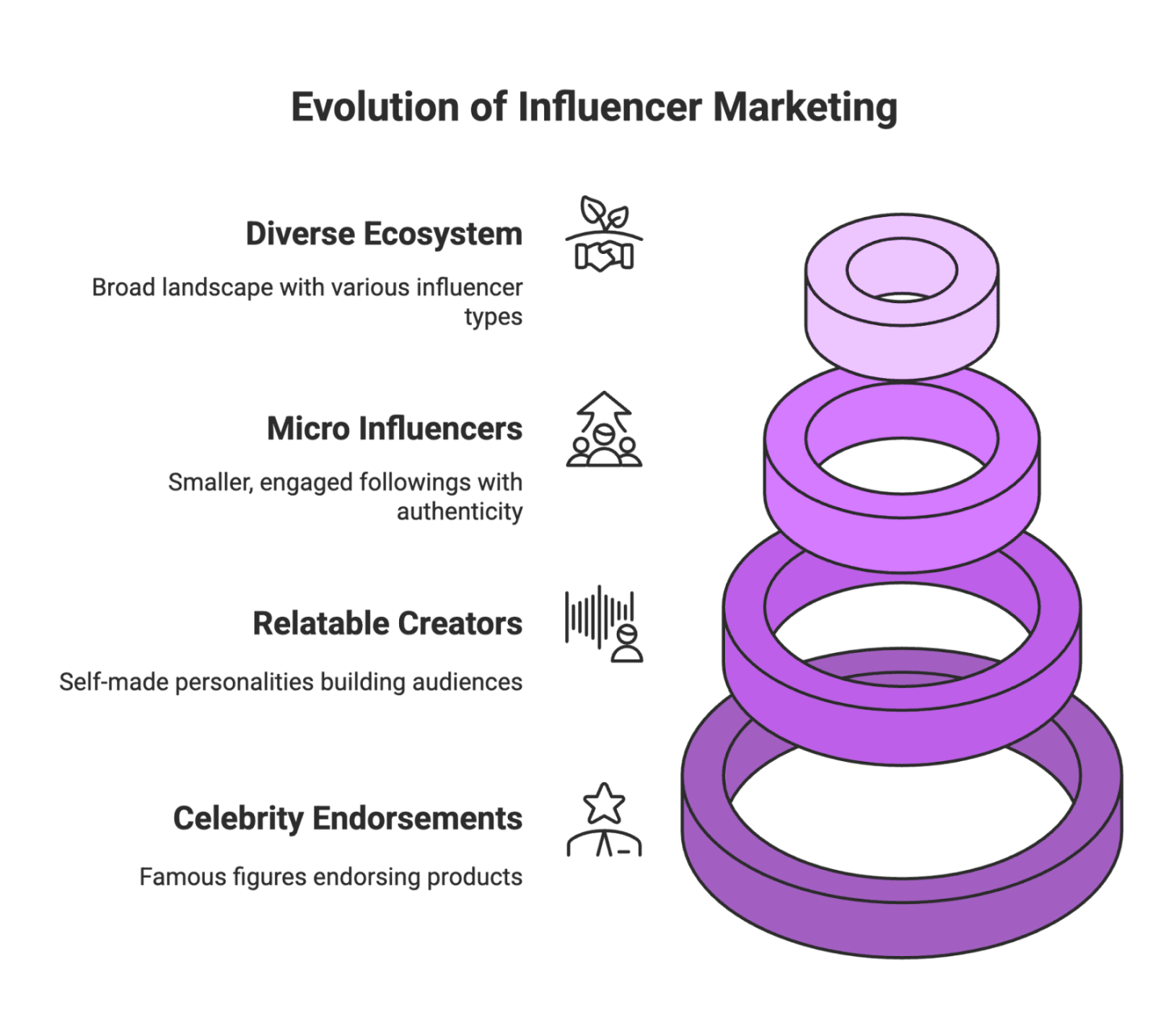
Not long ago, the term “influencer” was almost synonymous with celebrity. In the early days, influencer marketing basically meant hiring a famous person to endorse your product. Think traditional celebrity endorsements – athletes on cereal boxes or actors in TV ads – just transposed onto social media. Brands would pay hefty sums to have someone with a massive following post about their product. While this approach did leverage social platforms, it was accessible mainly to big companies with big budgets.
Fast forward to the mid-2010s: platforms like Instagram, YouTube, and later TikTok gave rise to a new breed of influencers – self-made internet personalities who weren’t movie stars or rock idols, but rather relatable creators who built their own audience. As social media democratized fame, it turned out that “regular” people could become highly influential in specific niches (beauty, fitness, tech, etc.). By 2014, marketers and researchers had already noticed that many purchase decisions were being shaped by these online personalities and not just traditional ads. Influencer marketing as a practice started shifting from one-off tactics to a strategic discipline, and regulators even stepped in with guidelines (like the FTC requiring #ad disclosures by 2016).
Over time, the focus of influencer marketing expanded beyond celebrities and macro influencers. Brands began to see huge potential in collaborating with micro influencers and nano influencers – those with smaller but highly engaged followings. This marks a major evolution: from chasing the biggest possible audience to targeting the right audience. By the late 2010s and into the 2020s, the “power middle” of influencers (micro and nano tiers) became incredibly important. These smaller creators offer authenticity and connection that many megastars simply can’t match. As a result, we’ve seen a massive rise in micro influencer campaigns, especially for e-commerce brands that value engagement and authenticity over sheer reach.
Today, influencer marketing is a diverse ecosystem. We still have celebrities doing sponsored posts (the “mega-influencers” with millions of followers), but we also have thousands of everyday creators monetizing their hobbies and expertise. In fact, being an influencer is now a mainstream aspiration – 57% of young people (Gen Z and Millennials) say they’d want to be an influencer if they could. This surge of creators means brands of all sizes can find an influencer who fits their niche, budget, and campaign goals. There are entire platforms and agencies (over 6,900 worldwide as of 2025) dedicated to connecting brands with influencers, managing campaigns, and even leveraging AI to match the right creators with the right products. As influencer marketing continues to evolve, specialized agencies have emerged to cater to niche markets. For example, a crypto influencer marketing agency focuses on leveraging influencers within the cryptocurrency and blockchain communities, while other agencies have turned their attention to sectors like sustainable fashion. These agencies tailor their strategies to resonate with specific audiences, ensuring more authentic and impactful campaigns that align with the values and interests of their target markets.
Key takeaway: Influencer marketing has evolved from celebrity-centric advertising into a broad, collaborative landscape where micro influencers and passionate content creators are driving much of the value. Next, let’s zoom in on these micro influencers and why they’re so effective.
Not all influencers are mega-famous stars. In fact, most aren’t. Micro influencers generally refer to creators with roughly 10,000 to 100,000 followers (definitions vary, and some consider 50K the upper limit for “micro”). There’s also a category below that – nano influencers, with under ~5K–10K followers – which often overlaps in discussion. The key point is that these smaller-scale influencers have fewer followers than big celebrities, but often a much more engaged audience in a specific niche.
Why are micro influencers so powerful? It comes down to engagement, authenticity, and trust. Here are some of the benefits of working with micro influencers:
Distribution of Instagram influencers by follower count tier (2024). Nano-influencers (1K–10K followers) and micro-influencers (10K–50K) together make up the vast majority of influencers on Instagram. This pyramid is a testament to how the influencer landscape has shifted toward everyday creators with smaller, niche followings, who often deliver outsized engagement relative to their size.
The dominance of micro/nano influencers in sheer numbers is clear – on Instagram, over 75% of influencers are nano (1K–10K followers) and another ~14% are micro (10K–50K). That means nearly 9 in 10 influencers fall into these “smaller” tiers. These creators may not be household names, but they often punch above their weight when it comes to influence. Their content comes across as peer recommendations rather than ads, which is precisely why followers listen.
For aspiring influencers and content creators, the rise of micro influencers is encouraging. You don’t need millions of followers to start collaborating with brands and monetizing your content. If you have a few thousand engaged followers in a particular niche, you’re already in the game! Many brands (including savvy e-commerce startups) are eager to work with micro influencers who can create relatable content and UGC (user-generated content) for them. It’s a win-win: the creator gets to monetize and grow, while the brand gets authentic promotion. In the next section, we’ll talk more about the importance of UGC and authenticity in influencer marketing.
One of the biggest reasons influencer marketing has exploded is the value of user-generated content (UGC). In this context, UGC means content (videos, photos, reviews, posts) created by real users/influencers, rather than by the brand itself. Influencer posts are essentially high-quality UGC that brands can leverage. Why is that so powerful?
First off, as mentioned, consumers trust peer content more than brand content. An influencer’s Instagram post or TikTok video showing how they use a product feels more genuine than a traditional ad created by the company. That authenticity leads to higher trust and engagement. It’s telling that the primary goal for many influencer campaigns is to generate UGC – marketers want those real-life posts and testimonials because they resonate better with audiences. When an influencer campaign is successful, a brand doesn’t just get direct sales; it also gains a library of UGC (images, videos, reviews) that can be repurposed in marketing channels, further amplifying the effect.
For example, suppose you run an e-commerce store for skincare products. If you partner with 20 micro influencers on Instagram, you’ll end up with dozens of genuine posts – before-and-after photos, routine videos, unboxing reels, etc. Those posts themselves reach each influencer’s followers (driving interest and traffic), and you can later share that content on your own social media or website as testimonials. You’ve essentially crowdsourced authentic marketing material. Some brands even run paid ads using influencer-generated content because it often outperforms ads that look like polished commercials.
Here are a few reasons UGC packs a punch in influencer marketing:
A striking statistic underscoring the value of UGC: 36% of brands say that influencer-created content (UGC) outperforms content produced by the brands themselves. And as noted earlier, nearly 70% of consumers trust those peer-style recommendations more than the official messaging. This is why savvy brands, including many Amazon and e-commerce sellers, put UGC at the heart of their influencer strategies. By working with influencers, they essentially outsource authenticity – letting real voices promote their products – which in turn draws in customers in a more organic way.
For content creators, this emphasis on UGC is also great news. It means brands want you to be yourself and create content in your voice and style. The days of every sponsored post sounding like a scripted commercial are gone. Now, brands often encourage influencers: “Just be honest in your review” or “Do something fun that incorporates our product.” The result is more creative freedom and content that resonates better with your audience. So embrace your unique perspective – it’s your asset in creating compelling UGC that brands value highly.
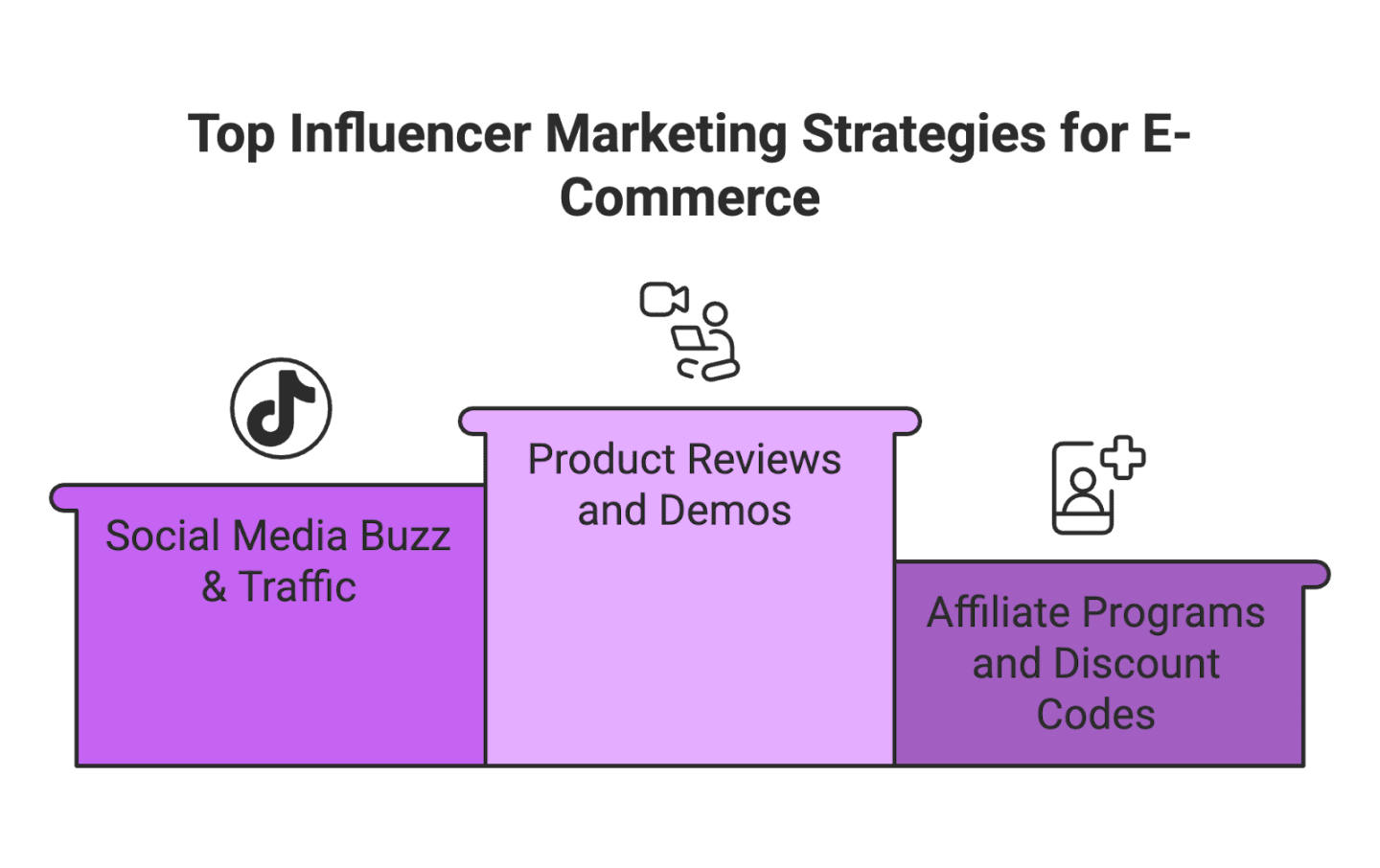
If you’re selling products online – whether via your own e-commerce site or marketplaces like Amazon – influencer marketing can be a powerful tool to drive traffic, trust, and sales. In fact, a majority of brands working with influencers today are e-commerce businesses. One report found that 57.6% of brands who utilize influencer marketing have e-commerce stores. This makes sense: online sellers thrive on digital exposure and word-of-mouth, which is exactly what influencers provide.
For Amazon sellers specifically, influencers can help overcome a big challenge: standing out and building credibility in a crowded marketplace. Imagine you’re launching a new product on Amazon – getting initial reviews and sales momentum is critical. Micro influencers can give you that jumpstart by showcasing your product to their engaged followers and directing them to your Amazon listing. Those followers are likely to check out the product and perhaps be early purchasers, leading to more reviews and a higher sales rank. As one guide for Amazon sellers notes, a shout-out from a niche content creator can “instantly lend your brand credibility and authenticity” in a new market. Influencers act as trust bridges between your brand and potential customers who have never heard of you.
Here are a few ways e-commerce and Amazon sellers can leverage influencer marketing:
One striking example of influencer impact: 82% of consumers report being highly likely to follow a micro influencer’s recommendation, and this kind of trust can translate directly into sales. If a micro influencer raves about your product, their audience is more inclined to check it out and buy. It’s like a friend telling you “I tried this, it’s awesome” – a powerful endorsement. No wonder that even for Amazon-focused marketing, micro influencers are called a potential “secret weapon” to boost product visibility and credibility.
Of course, the effectiveness of influencer marketing for sellers depends on finding the right influencers. Relevance is crucial – the influencer’s audience should align with your target customers. An outdoor gear Amazon store would do well to work with micro influencers who love hiking or camping, for example, rather than a random fashion influencer. Also, authenticity matters here: savvy Amazon shoppers can tell if an influencer is just blindly shilling products versus genuinely recommending them. Long-term collaborations or ambassador programs can work well, where an influencer becomes closely associated with your brand over time, further reinforcing trust.
Platforms and services have emerged to help connect e-commerce sellers with influencers and streamline these campaigns. For instance, Stack Influence (a micro-influencer marketing platform) specializes in running product seeding campaigns for online brands, handling everything from sourcing the right creators to ensuring content completion. Such platforms are built by experienced e-commerce folks who understand the needs of Amazon and Shopify sellers looking to scale via influencer marketing. They leverage technology (even AI) to hyper-target influencers who fit your niche and manage the workflow end-to-end, so sellers can run dozens or hundreds of micro influencer collaborations efficiently. Mentioning this is just to illustrate that as a seller, you’re not alone – there’s a growing ecosystem to support your influencer marketing efforts.
Finally, it’s worth noting that influencer marketing can also boost your SEO and discovery. How? Influencer posts often create backlinks or social mentions of your brand, which can indirectly improve your search rankings. Also, on platforms like Amazon, an influx of external traffic (from an influencer campaign) can improve your product’s algorithmic standing. Amazon’s algorithm tends to reward listings that get external traffic and sales boosts, seeing it as a sign of popularity. So, a well-run micro influencer campaign might not only bring immediate sales but also elevate your product’s position in Amazon search results long after the campaign.
Influencer marketing has come a long way from its celebrity endorsement roots. Today, it’s an accessible and potent marketing approach for aspiring influencers, content creators, and online sellers alike. The playing field has leveled – you don’t need a Hollywood star or a Super Bowl ad to create impact. Micro influencers with loyal followings are helping brands big and small reach targeted audiences in authentic ways. Their voices, along with the UGC they create, carry an honesty that traditional advertising struggles to match, and consumers are responding with higher engagement and trust.
If you’re a content creator, now is a great time to monetize your creativity. Brands are actively looking for relatable voices to partner with. By honing in on your niche and growing an engaged community, you can collaborate with companies that align with your passions. Remember, even a few thousand followers can be enough to get started – focus on genuine engagement and your influence will shine through. Use your unique perspective to create content that resonates; authenticity is your superpower.
For e-commerce and Amazon sellers, influencer marketing can elevate your business to new heights. It’s like having a team of enthusiastic brand ambassadors who introduce your products to pockets of potential customers across the internet. Whether you run a small Shopify store or manage dozens of Amazon listings, consider integrating influencers into your marketing mix. Start small if needed – gift products to a handful of micro influencers and see the ripple effect. Track the results (use affiliate links or codes to measure sales) and double down on what works. You might find that a network of micro influencers consistently talking about your brand can drive steady growth in traffic and sales, not to mention user-generated content that fuels your future marketing.
In summary, influencer marketing is about people. It’s about leveraging human connection in the digital age to spread the word in a trustworthy way. For those looking to grow an audience or a customer base, it’s an avenue you can’t afford to ignore. Embrace the trend: whether you become the influencer or you partner with them, tapping into the power of influencers and UGC can help you build credibility, expand your reach, and ultimately drive success in your venture. In the era of social media, authentic influence is the new currency – and now you know how to start cashing in on it. Happy influencing!
In the world of social media and e-commerce, a new type of content creator is emerging alongside traditional influencers: the UGC creator. UGC stands for user-generated content, meaning content like videos, photos, or reviews created by real users rather than the brands themselves. If you’ve scrolled TikTok or Instagram lately, you’ve likely seen everyday people (not just big influencers) sharing product reviews, unboxings, or testimonials in an authentic, relatable style. These are UGC creators in action. They might not have millions of followers, but their content feels real – like advice from a friend – and that’s exactly why it’s so powerful. Brands, from small Amazon sellers to major e-commerce companies, are tapping into UGC creators to produce genuine posts that build trust with consumers. This article will break down what UGC creators are, how they differ from traditional influencers, and why they’re becoming a go-to strategy for micro-influencer marketing and e-commerce success.
A UGC creator is essentially a content creator who produces authentic, user-generated style content for brands. Unlike a typical influencer, a UGC creator is paid to create content about a product without necessarily promoting it on their own social media profiles. Instead, the brand publishes this content on its marketing channels – think product pages, ads, or social media feeds – to showcase real-life usage and testimonials. In other words, UGC creators act like “behind-the-scenes” influencers: they make high-quality, relatable posts (short videos, photos, reviews) that look like they came from a regular customer, not a polished ad agency. Brands often get full rights to these UGC pieces, allowing them to repurpose the content across Instagram, TikTok, YouTube, or even their Amazon listings.
To clarify, user-generated content (UGC) itself means any content created by users or customers about a brand – this could be an unpaid customer review, a social media mention, a fan’s photo with a product, etc.. UGC is valued for its authenticity, but organically it’s unpredictable and not always plentiful. That’s where UGC creators step in as a strategy: brands partner with content creators (often everyday consumers or micro influencers) to intentionally produce content that feels organic and user-driven. For example, an Amazon seller might send their product to a UGC creator who then films a casual unboxing video or shares their honest experience using it. The result is content that resonates with shoppers because it comes across as a peer recommendation rather than a direct ad.
UGC creators typically focus on authenticity over polish. The content might be filmed on a smartphone, with a personal tone and real-life settings, as opposed to studio-quality perfection. This raw style is by design – it builds trust by showing the product in a real context. As one UGC creator famously put it, “You don’t need flashy and polished, you need real and informative with a splash of entertainment.” Brands love this because it bridges the gap between word-of-mouth from actual customers and traditional advertising. In essence, a UGC creator is someone who creates relatable, customer-style content as a service to brands.
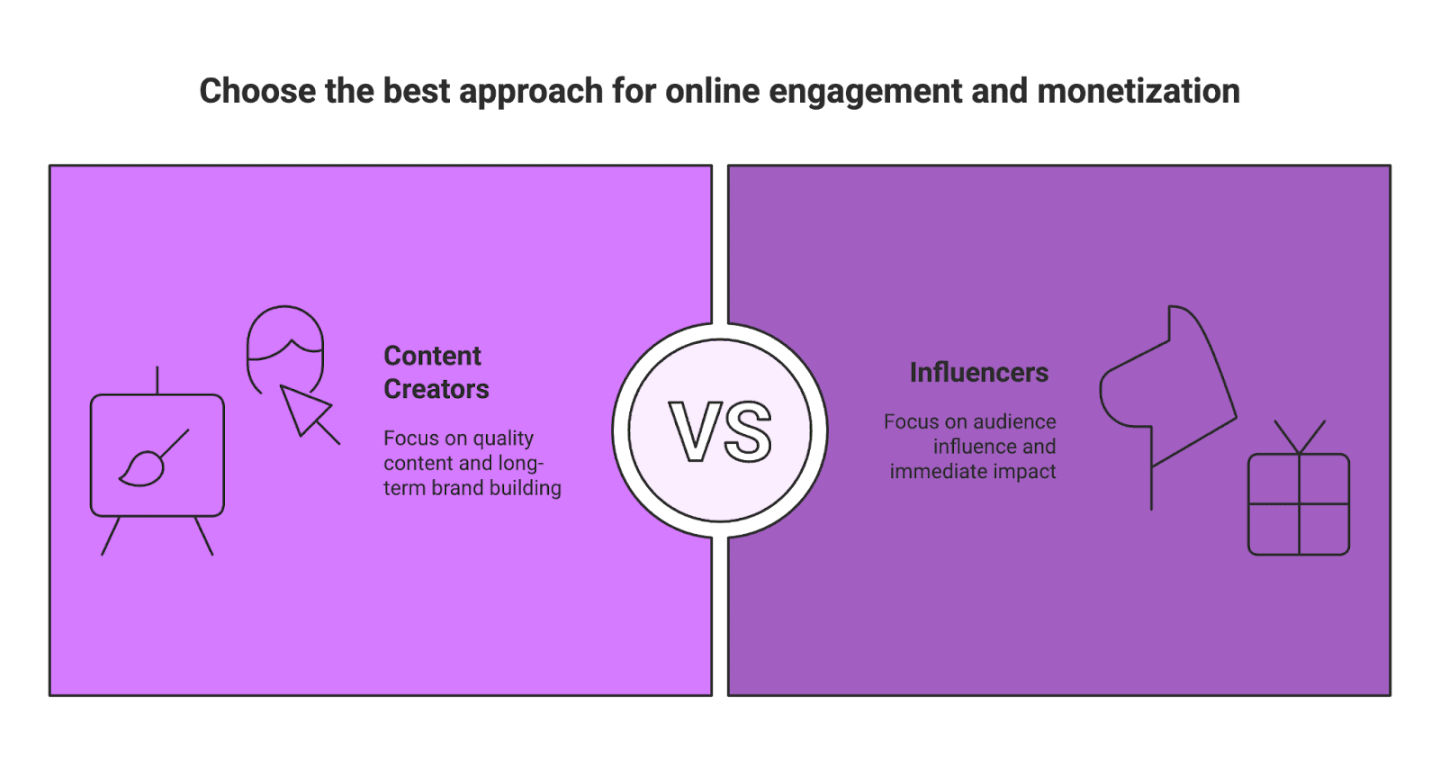
At first glance, UGC creators and influencers both produce content about products – but there are key differences in how they operate and the role they play in marketing. Below, we break down the main points that set UGC creators apart from traditional influencers:
Another difference worth noting is scale and cost. Hiring a network of UGC creators can be more cost-effective for brands than a few big influencers. For example, a brand might pay around $250 for a 60-second UGC video (and then reuse it in ads indefinitely), whereas an influencer with a sizable following could charge thousands for a single sponsored post. In fact, even micro-influencers (those with smaller follower counts) often make hundreds of dollars per post, and celebrities can command six or seven figures. UGC content tends to be cheaper per piece because you’re not paying for fame, you’re paying for production. This affordability lets e-commerce brands gather lots of diverse content. However, the trade-off is that UGC creators won’t directly bring you an audience the way an influencer will. Many brands are discovering that a blend of both works best: use influencers to spark buzz and reach targeted communities, and use UGC creators to stockpile authentic content that can be used across your marketing.
Why are UGC creators in such demand for e-commerce marketing? The simple answer is that they deliver something today’s consumers crave: authenticity. When you’re selling online – whether via your own website or as an Amazon seller – building trust can make or break your sales. Here are some key benefits of working with UGC creators for e-commerce brands, including Amazon marketplace sellers:
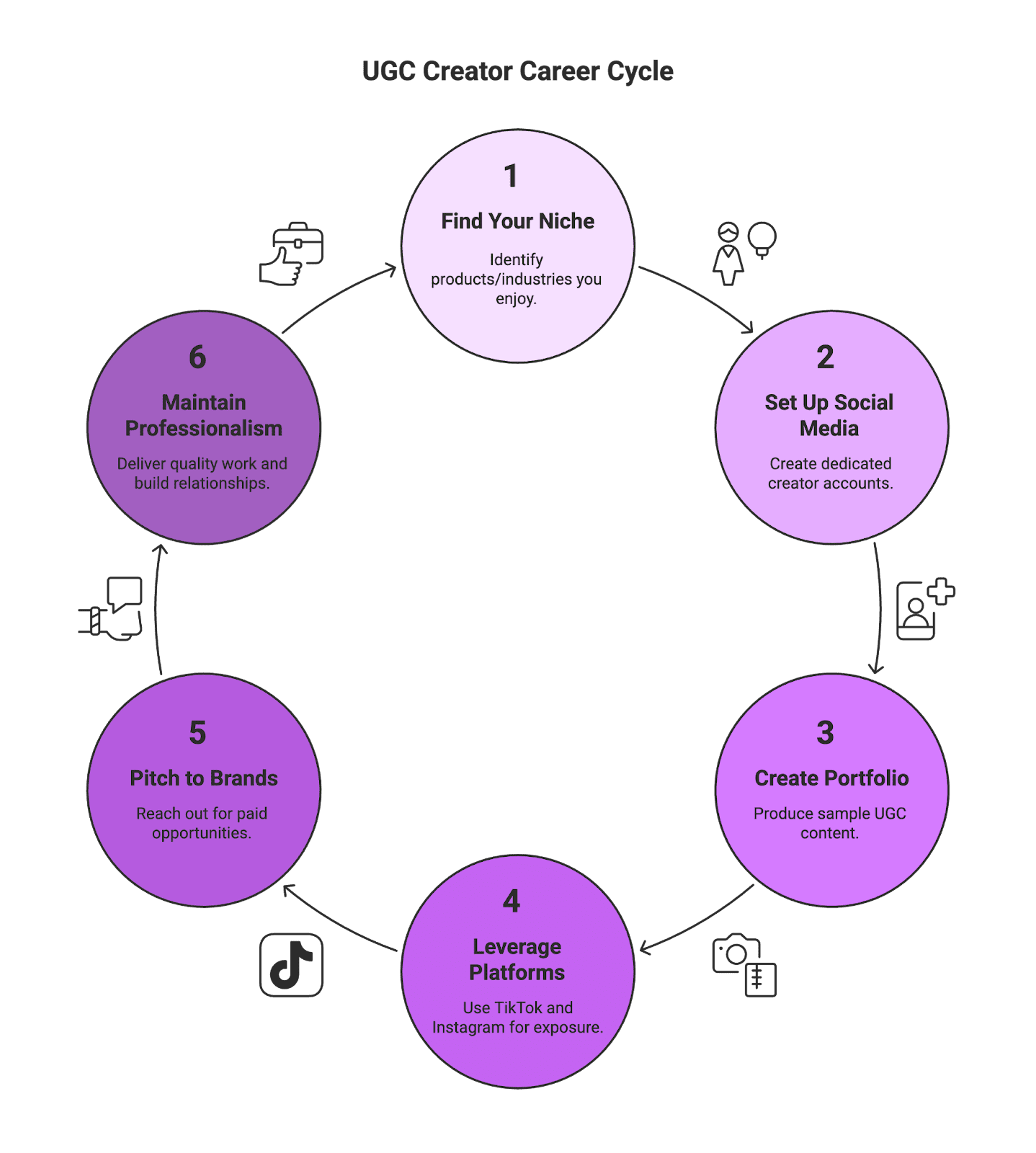
So, you’ve seen the buzz around UGC and you’re thinking of becoming a UGC content creator yourself? Great choice! It’s a booming field in 2025 for those who love creating content but might not necessarily want the full-time commitment of being an influencer. UGC creators can earn money by making relatable product videos and posts without needing tens of thousands of followers. Here’s a step-by-step guide on how to start your journey as a UGC creator:
1. Find Your Niche and Style – Start by identifying what type of products or industries you resonate with. Ask yourself: What do I genuinely enjoy or have knowledge about? It could be beauty, tech gadgets, home decor, fitness, books – you name it. Focusing on a niche helps you stand out and build credibility in that area. Brands are more likely to hire you if they see you have a passion or expertise in their category. For example, if you love skincare, posting lots of skincare product mini-reviews or routines will make you an attractive UGC creator for beauty brands. You should also consider your personal style of content: Are you bubbly and humorous, or calm and informative? Lean into what feels natural. Remember, authenticity is your currency as a UGC creator, so choose a niche that genuinely excites you – it will show in your content.
3. Create a Portfolio of UGC Content – As you build your social presence, focus on producing sample UGC content that you can show to brands. This portfolio is how you prove your ability. Start with products you already use and love: film a 30-second testimonial, take aesthetic photos, write a short review. You don’t need anyone’s permission to create this content – you’re essentially doing mock projects to demonstrate your style. Be sure to cover the kinds of content brands look for: an unboxing video, a how-to/demo video, a before-and-after if applicable, a testimonial talking to the camera, etc. Variety helps. You can even edit together a few clips into a UGC reel highlighting your best work. Keep the style authentic and "uncommercial." Show that you can capture the product in a relatable way (maybe it’s you making a smoothie with that protein powder, or your honest reaction to trying on that Amazon find). Consistency and quality matter here: use good lighting and clear audio so that while the content feels real, it’s still enjoyable to watch. Over time, as you do get actual brand gigs, seek permission to include those examples in your portfolio too. Many new UGC creators also make a UGC portfolio website or PDF – this can outline your services, rates, and include links or QR codes to your sample videos. If you need to update or edit your portfolio, tools like Smallpdf make it easy to unprotect a PDF file so that you can quickly and seamlessly make changes. The key is to have something you can send to potential clients that says, “this is what I can create for you".
4. Leverage TikTok and Instagram for Exposure – Platforms like TikTok are hotbeds for UGC opportunities. TikTok in particular has a huge community around UGC; you’ll find hashtags like #ugcreator or #ugccommunity where creators share tips and even trending sounds/templates for UGC videos. Participate in these communities to learn and get noticed. Post TikToks showcasing UGC tips or your behind-the-scenes process – this can attract fellow creators and brands alike. On Instagram, use features like Reels to post engaging short videos (since Reels can reach non-followers). Also, engage with brands you love: follow them, comment thoughtfully on their posts, maybe create an unpaid piece of content for them and tag them. Brands often notice engaged fans. Some might even repost your content (hello, more exposure!). Essentially, be visible on the platforms where brands hang out. Another tip: on TikTok, some UGC creators document their journey (e.g., “Watch me create 3 UGC videos today” or “How much I made in my first month as a UGC creator”). These not only build your personal brand but also signal to potential clients that you’re experienced and open for work.
5. Pitch and Collaborate with Brands – Once you have a bit of content to show, start reaching out for paid opportunities. Don’t be shy – even if you’re new, many brands are eager to work with micro content creators. Begin with smaller or indie brands, including Amazon marketplace sellers who often need lots of content. Research brands in your niche and make sure your style aligns (if your vibe is earthy and boho, a skincare brand with a similar aesthetic is a good match, for example). Then send a friendly pitch. This could be an email or DM introducing yourself as a UGC creator, complimenting their product, and offering to create content for them. Highlight any relevant stats (“I have a TikTok with 5k followers” or even “my content averages __ views”) and link your portfolio. Keep it short and genuine. You might be surprised – even big companies sometimes reply to the right DM if the pitch is compelling. Offer value: explain how you can provide engaging content that will save them time and boost their social media. Over time, as you get responses, negotiate fair rates (know your worth, even as a beginner – creating a video can easily justify $100-$200+ depending on complexity). Also, consider signing up for UGC marketplaces and influencer platforms. There are websites and apps where brands post UGC creator jobs, such as Insense, Coley, Trend, and others. Since the target audience here includes ecommerce folks, it’s worth mentioning Stack Influence – they run a platform connecting micro-influencers with brands, which often results in UGC-style campaigns. As a creator, you can sign up on such platforms to get matched with brands looking for content. It’s a great way to find consistent gigs once you have a solid profile.
6. Maintain Professionalism and Build Relationships – Treat your UGC creator gigs as a business. This means delivering quality work on time, being responsive to feedback, and generally being easy to work with. Often, if you impress a brand, they will come back for more content next product launch or refer you to others. Build a good rapport – even though you’re not an “influencer” promoting the product on your page, you are still a brand collaborator. Sometimes UGC creators evolve into long-term content partners for a brand (or even take on managing that brand’s social content). Also, respect usage rights and agreements: know whether the brand can put your face in an ad, and if so for how long (many UGC deals include usage terms). As you complete projects, don’t forget to ask for testimonials or permission to publicly credit the work. This can help you attract more clients. Finally, stay up-to-date on trends: new social media features, TikTok meme formats, editing tools, etc. The more you stay relevant with trends while keeping content genuine, the more in-demand you’ll be.
Becoming a UGC creator is an exciting path, especially in the current era where authentic content is king. You don’t need influencer-level fame; brands and Amazon sellers care about your creativity and authenticity. By honing your style, showcasing it on TikTok/Instagram, and proactively reaching out, you can start landing gigs creating content for products you love. Many UGC creators even turn this into a lucrative side hustle or full-time career, all while having fun being creative. And who knows – along the way, you might grow your own following too, essentially becoming a micro-influencer yourself! The overlap between UGC creators and micro influencers is real: both thrive on genuine connections and niche interests. Whether you aim to do UGC behind the scenes or use it as a springboard to influencer fame, the opportunities in user-generated content creation are only growing. Brands are actively seeking fresh voices to humanize their marketing, so this is your chance to shine. Happy creating!
User-generated content creators are reshaping the marketing landscape for e-commerce and beyond. They bring the voice of the customer into a brand’s content strategy in a deliberate, scalable way. For brands – from ambitious Amazon sellers to established e-commerce companies – partnering with UGC creators can unlock a treasure trove of authentic content that builds trust and drives sales. For creators and aspiring influencers, the UGC route offers a new way to monetize creativity without needing millions of followers: you can get paid to do what you love (creating content), all while helping brands tell genuine stories.
In a digital world saturated with ads, UGC creators stand out by not looking like ads. They leverage the power of the micro-influencer approach – authenticity, relatability, niche appeal – and turn it into compelling marketing material for brands. We’ve explored how UGC creators differ from traditional influencers, each with their role to play. Ideally, a savvy brand will use both: influencers for reach and UGC creators for relatable content..
The rise of UGC creators is really a response to what consumers are asking for: “Show us real people and real experiences.” Those real voices can transform a brand’s image from corporate to community-driven. Whether you’re a seller looking to boost your marketing or a creator looking for new opportunities, understanding UGC creators is key in 2025. Embrace the trend – because content that feels genuine isn’t just good storytelling, it’s smart business. By integrating UGC creators into your strategy, you tap into the most powerful marketing asset of all: the customer’s trust.
Have you ever bought something because a friendly Instagrammer or YouTuber raved about it? If so, you’ve experienced the power of micro influencers. These are not mega-celebrities or household names, but rather everyday content creators with a small yet loyal following. Micro influencers often feel like the relatable friend next door, sharing honest opinions and niche interests. In an era where consumers crave authenticity and word-of-mouth recommendations, micro influencers have become marketing gold for brands – especially in e-commerce and among Amazon sellers looking to build trust and boost sales.
In this article, we’ll break down what a micro influencer is, how they compare to their macro-influencer counterparts, and why they’re so valuable to brands. You’ll learn how micro influencers can help e-commerce businesses (including Amazon marketplace sellers) through genuine user-generated content (UGC) and higher engagement. We’ll also highlight the benefits of working with micro influencers and provide actionable tips for partnering with them. By the end, you’ll see why tapping into these niche creators can be a game-changer for your marketing – whether you’re a general reader curious about influencer trends, an online seller, or a content creator yourself.
So grab a coffee, and let’s dive into the world of micro influencers in a casual yet informative way!
A micro influencer is typically defined as a social media personality who has cultivated a small but highly engaged following – usually on the order of a few thousand up to around 100,000 followers. Unlike celebrity or “macro” influencers who might have millions of followers, micro influencers are often just regular people: passionate hobbyists, bloggers, or niche experts who create content about specific interests. For example, this could be a fitness enthusiast on Instagram with 20k followers, or a DIY craft YouTuber with 50k subscribers. They’re not famous in the traditional sense, but within their focused community they are trusted voices.
What micro influencers lack in sheer follower count, they make up for in engagement, authenticity, and niche targeting. Their audiences tend to be tight-knit and genuinely interested in the content they share. Because these influencers actively interact with followers (replying to comments, sharing personal experiences, etc.), they build a personal rapport that big celebrities often can’t. In other words, a micro influencer feels more like a friend recommending something rather than an advertisement. This relatable vibe leads to strong trust – a key distinction from macro influencers.
It’s worth noting that within the “small influencer” category, you might hear terms like nano influencers (often those with under 5–10k followers) and micro influencers (roughly 10k–100k followers). Both nano and micro influencers operate on a smaller scale, but the exact follower ranges aren’t rigid and can vary by source. The main idea is that we’re talking about influencers who aren’t superstars or big-name personalities, but rather niche content creators with a targeted, loyal audience.
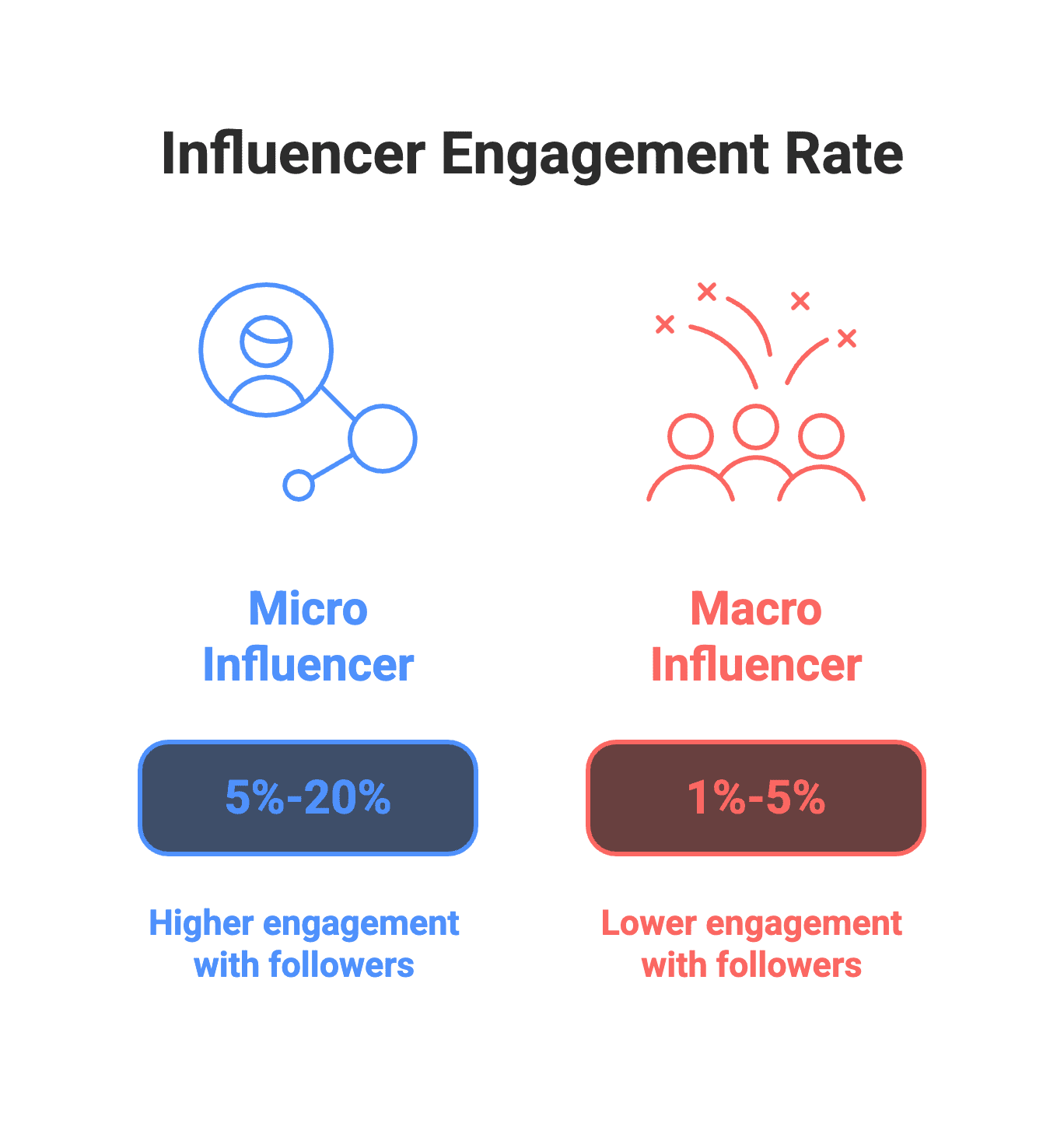
Micro Influencers vs. Macro Influencers – an infographic comparison. Micro influencers have smaller follower counts but often boast higher engagement rates and closer audience relationships, while macro influencers offer broad reach but typically see lower engagement percentages.
Now, how do micro influencers stack up against macro influencers (the ones with hundreds of thousands or even millions of followers)? The differences are quite striking:
In summary, macro influencers give you reach, but micro influencers give you engagement, authenticity, and cost-effective targeting. Depending on your goals, you might choose one or the other (or a mix), but increasingly brands are seeing that bigger isn’t always better when it comes to influencer marketing.
If you run an e-commerce business or sell on Amazon, micro influencers could be your secret weapon. In the online marketplace, trust and visibility are everything. Micro influencers excel at delivering both:
For one, micro influencers create a sense of authentic social proof around your product. When an everyday person raves about a gadget or shows off a clothing haul, it feels real and relatable to consumers. According to a survey, 82% of consumers said they are “highly likely” to follow a micro influencer’s product recommendation – a testament to the trust these niche creators inspire. For an Amazon seller, that kind of trust can translate directly into more product page visits and conversions, as followers check out the items their favorite micro influencer mentioned.
Micro influencers are also fantastic at generating buzz and engagement on social media, which can drive traffic to your online store or Amazon listing. Remember, their engagement rates are high – often in the mid-single or even double digits percentage-wise. More engagement means more people seeing and discussing your product. This can lead to a spike in clicks through to your product page. In fact, influencer-driven posts can give you a head start by driving external traffic to your Amazon listings, boosting your sales rank and even leading to early reviews. Unlike traditional ads, which consumers often tune out, micro influencer content comes across as friendly advice, so viewers are more inclined to check out the product link or Amazon storefront mentioned.
Another huge advantage is the content they produce. Micro influencers often create a library of user-generated content (UGC) – think unboxing videos, real-life product photos, demo reels, and honest reviews. This UGC is marketing gold for e-commerce sellers. It makes your brand feel authentic and relatable, which are two qualities that directly boost conversion rates in online shopping. You can also repurpose this influencer-generated content in your own marketing channels – for example, using influencer photos in your product listings, sharing their videos on your brand’s social media, or even featuring testimonials in ads (with permission). All of this amplifies the social proof around your product. As one e-commerce marketing expert put it, UGC helps brands appear more genuine, which builds buyer trust and drives sales.
Finally, micro influencer campaigns are often scalable and budget-friendly – a perfect fit for small businesses and Amazon sellers who don’t have huge marketing budgets. Instead of spending big on one or two ads, you can send out a batch of product samples to a group of micro influencers and get a flurry of genuine posts and reviews in return. This kind of word-of-mouth marketing at scale can significantly strengthen your brand presence on Amazon and beyond, without breaking the bank.
To summarize, here are some key benefits of working with micro influencers if you’re in the e-commerce or Amazon space (or really, any brand looking to boost its online presence):
By leveraging these benefits, e-commerce and Amazon sellers can build a strong online presence relatively quickly. Micro influencers give you social proof, targeted reach, and compelling content – all key ingredients to succeed in digital marketplaces. Additionally, many businesses recognize the benefits of outsourcing tasks like influencer outreach, content creation, and campaign management to specialized agencies, allowing them to scale faster while focusing on core business activities.
Ready to tap into the micro influencer magic? Here are some actionable tips for brands (big or small) looking to partner with micro influencers. These will help ensure your collaboration is effective, authentic, and mutually beneficial. Whether you’re a startup e-commerce founder, an Amazon seller launching a new product, or a marketer at a larger company, these tips apply:
Before reaching out to any influencers, get clear on what you want to achieve. Are you aiming to increase brand awareness, get more Amazon reviews, drive traffic to your online store, or generate a library of UGC content? Also, define who your target customer is. Having a specific goal (e.g. “boost summer sales of our eco-friendly water bottles by 20%”) and knowing your audience (e.g. “outdoorsy millennials who value sustainability”) will guide you in choosing the right micro influencers and measuring success.
Look for influencers who create content in your product’s niche and have followers that match your target demographic. You can start by searching relevant hashtags on Instagram, TikTok, or YouTube (for example, if you sell artisanal coffee, check out #coffeeholic or #thirdwavecoffee and see who’s posting). Also, consider using an influencer platform or marketplace to save time – for instance, Stack Influence maintains an AI-vetted network of over 10 million micro influencers across all kinds of niches. Such platforms let you filter creators by topic, follower count, engagement rate, etc., making it easier to find quality candidates. However you do it, vet each influencer: check that their engagement is real (not bots), their content quality fits your brand, and that they align with your values.
Micro influencers are real people, and they appreciate genuine connections. When you approach them, avoid generic copy-paste pitches. Instead, send a friendly, personalized message or email. Mention what you like about their content (“I loved your recent unboxing video of hiking gear!”) and explain why you think your product would resonate with their audience. Keep the tone casual and enthusiastic. Remember, since micro influencers are smaller-scale, they are often more approachable than big celebs – many will be flattered by your interest. Building a real relationship here can go a long way toward a successful collaboration.
Since one big benefit of micro influencer campaigns is all the great content generated, make sure you encourage content sharing. Ask if they can send you high-res versions of the photos or videos they create, or if you can repost their content (with credit). Most micro influencers will be happy to get additional exposure through your brand’s channels – it’s mutually beneficial. Once you have this user-generated content, use it! Share their unboxing video on your Facebook page, add their photo (with permission) to your product gallery or testimonials section, retweet them, etc. This not only maximizes the value of the collaboration, but it also shows the influencer that you appreciate their work. It further amplifies the authentic buzz around your product.
By following these tips, brands can craft micro influencer partnerships that feel organic and truly resonate with audiences. The overarching theme is to keep it authentic and audience-focused: choose the right influencers, build real relationships with them, and let them tell your brand’s story in their own genuine way.
Micro influencers may be “micro” in follower count, but their impact on modern marketing is anything but small. These niche content creators combine authenticity, engagement, and trust in a way that big-name influencers often can’t match. For e-commerce entrepreneurs and Amazon sellers, micro influencers offer an accessible path to generate buzz, rich UGC content, and credible word-of-mouth recommendations that drive sales. Their value comes from the meaningful connections they foster with an audience – the very connections that make their followers think “Hey, if they love this product, maybe I will too!”
In a world where consumers are increasingly savvy and ad-weary, micro influencers provide a refreshing human touch. They remind us that marketing at its core is just people sharing things they love with others. Brands that embrace micro influencer collaborations are finding that you don’t need a superstar to make a big difference – a handful of passionate micro influencers can collectively create a powerful ripple effect for your product or service.
Whether you’re looking to boost your online store, improve your Amazon product rankings, or simply spread the word about your brand, tapping into micro influencers is a strategy well worth exploring. It’s cost-effective, creative, and scalable. More importantly, it’s driven by genuine voices and user-generated stories that consumers trust. So, as you plan your next marketing move, consider reaching out to those micro influencers in your niche. You might just find that a small influencer can have a huge influence on your success – one authentic post at a time.
Happy collaborating, and here’s to making big waves with “small” influencers!