
The latest info on influencer marketing trends, micro influencer news, and the world of social media

Instagram remains one of the most powerful platforms for influencers, micro influencers, content creators, e-commerce entrepreneurs, and Amazon sellers alike. With over 1.64 billion people in its potential advertising audience, Instagram has evolved into not just a social app but a mainstream retail channel for product discovery and shopping. Standing out on this massive platform takes more than pretty pictures—it requires strategy, creativity, and consistency.
In this comprehensive guide, we’ll explore a variety of Instagram post ideas and content strategies (grouped into easy categories) to help you boost engagement, grow your following, and ultimately drive your goals—whether that’s building a personal brand or increasing sales. We’ve included practical examples, charts, and best practices to make this guide both casual and informational. Let’s dive in!
One proven way to provide value to your audience is through educational content. Posts that teach or inform can position you as an expert in your niche and keep followers coming back for more. Educational content is always in demand and often earns saves and shares, which boosts your visibility on Instagram.
Show your followers how to do something step-by-step. For example, a beauty micro influencer might post a makeup tutorial, a foodie might share a recipe, and an Amazon seller could demonstrate how to use their product. These posts not only help your audience but also subtly highlight your product or skill. Benefit: They establish you (or your brand) as a knowledgeable resource and encourage followers to save the post for later reference (great for the algorithm!).
Quick tips or hack posts (e.g. “5 Tips for Better Product Photos” or “3 Life Hacks using ”) provide bite-sized value. Use carousel posts to break tips into multiple cards for easy reading. This encourages swipe interactions and can increase time spent on your post. Including keywords or text overlays in the images (for example, “Amazon Seller Hack #1” or “Content Creator Tip”) can also make the content more discoverable and shareable.
If applicable, show a process or transformation. Fitness and DIY influencers use this effectively (e.g. before vs. after workout results, a room makeover, etc.). An e-commerce brand could show a before/after using their product (like a cleaning solution’s effect). These visuals are eye-catching and prove the value of a product or idea.
Share a surprising fact, common myth vs. truth, or an insight about your niche. For instance, “Myth: You need a huge following to be an influencer – Fact: Micro influencers often have higher engagement and impact!” Back it up with a stat or your experience. This positions you as a thought leader and sparks conversation.
Why this works: By focusing 80% of your content on educating, inspiring, or entertaining (and only 20% on direct promotion), you follow the popular 80/20 rule for social media. Followers get real value without feeling “sold to,” making them more receptive when you do promote something. (We’ll illustrate the 80/20 content mix later in the guide.
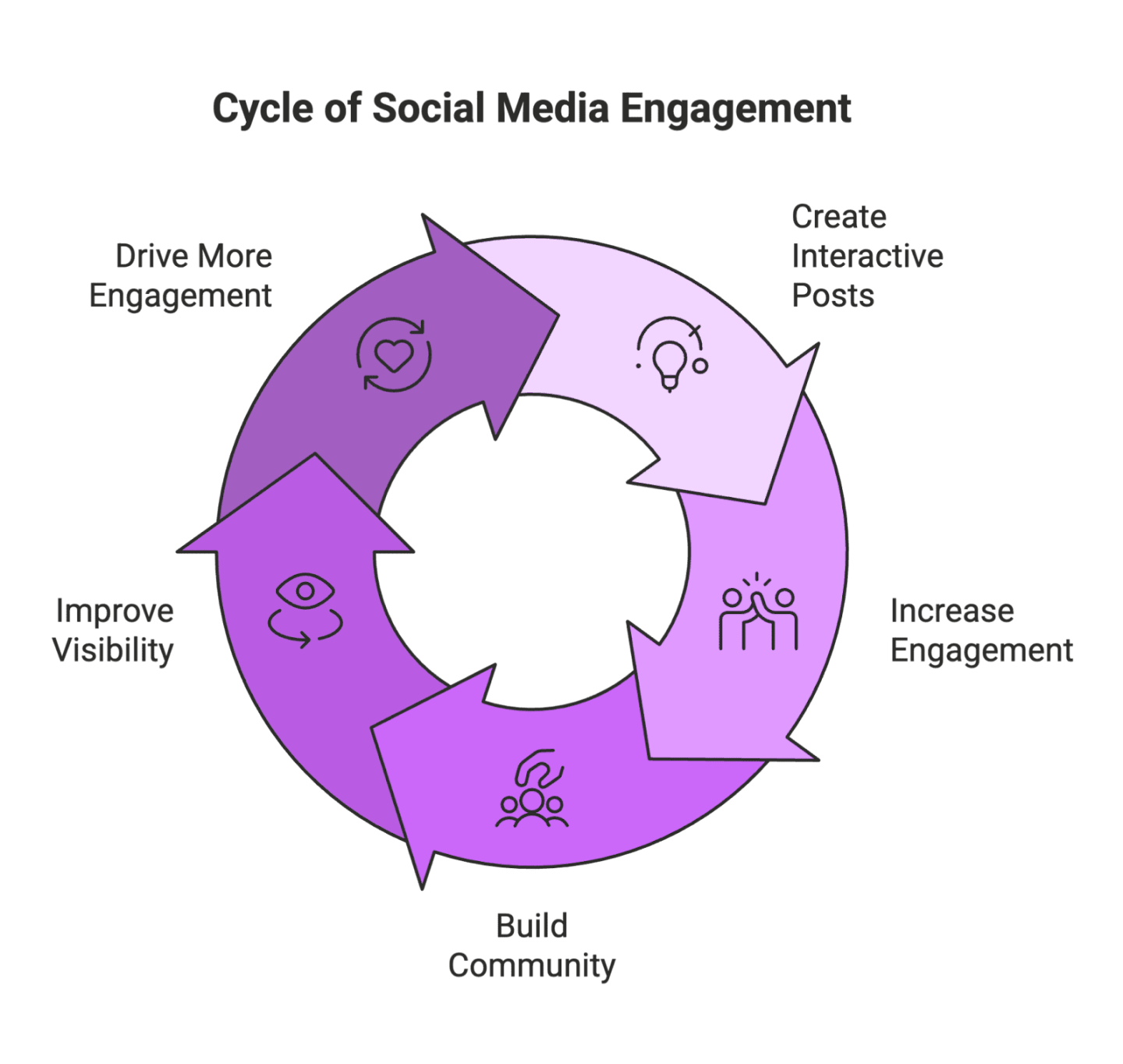
Social media is meant to be interactive, so posts that prompt your audience to take action tend to perform very well. Engagement not only builds community, but it also signals the Instagram algorithm to show your content to more people. Here are ideas to get your followers tapping, swiping, and commenting:
Instagram Stories offer interactive stickers (polls, quizzes, question boxes) that are excellent for quick engagement. For example, do a “This or That” poll related to your niche (e.g., fashion influencers can ask “Floral or Stripes? Vote now!”). Using Stories’ interactive features like polls and question stickers not only engages your audience but also provides valuable feedback and insights. It keeps your followers eagerly coming back for more interactive content. Consider hosting an “Ask Me Anything” (AMA) in Stories – it makes your audience feel heard and personally connected.
Post a funny or interesting photo and ask followers to caption it in the comments. This is a lighthearted way to spur comments. You can even promise to feature the best response in your Stories, encouraging more participation. Tip: This works well with a quirky behind-the-scenes shot or a meme-worthy image related to your brand.
Everyone loves a chance to win something. Run a giveaway where entrants have to like the post, follow your account, and tag a friend or two in the comments. This can dramatically boost your visibility as it brings new eyes to your page (friends of those tagged will see the activity). Giveaways also create excitement and goodwill with your existing followers. If you’re an e-commerce or Amazon seller, consider giving away a free product or a gift card. Make sure to clearly state the rules and include an enticing image of the prize to grab attention.
Participate in or start a challenge. Trending hashtag challenges (like a popular dance or a #ThrowbackThursday post) can increase your reach. For example, a content creator might do the latest viral Reel challenge but put their own creative spin on it. If you create your own challenge, craft a unique hashtag and encourage UGC (user-generated content) submissions from followers. This not only boosts engagement but also generates more content for you to share. Hashtag challenges drive participation and can expand your reach through the shared hashtag.
Why this works: Interactive content makes your audience an active part of your page rather than passive scrollers. For instance, simply using a poll or quiz in Stories can increase your engagement rate and keep your audience coming back. More engagement not only builds loyalty, but also improves your content’s visibility in both your followers’ feeds and Explore pages. It’s a virtuous cycle: engagement breeds more engagement!
In a world of polished feeds, showing authenticity can be a superpower – especially for micro influencers who thrive on closer connections with their audience. Personal, “human” content helps build trust and lets followers get to know the real you (or the real people behind a brand). Here are ways to pull back the curtain:
Take your followers behind the curtain of your life or business. It could be a day-in-the-life vlog style Reel, a series of Stories from an event you’re attending, or photos of your workspace. BTS posts build transparency and trust, humanize your brand, and make followers feel included in your journey. For example, an Amazon seller could share the process of packing orders or developing a new product, while a fashion influencer might show the unglamorous side of a photoshoot. This content makes people feel like insiders.
Don’t be afraid to get a bit personal (within your comfort level). Share a story about why you started your venture, an obstacle you overcame, or a milestone you’re proud of. Authentic storytelling – like discussing your challenges or growth – can deeply resonate. Influencers often find that posts where they open up (“I was nervous about launching this product, but here’s what happened…”) receive heartfelt responses. It reminds everyone there’s a real person behind the account, fostering a stronger connection.
If you have causes or values you care about, share them. Whether it’s sustainability, social justice, or community initiatives, highlighting these shows your audience what you and your brand stand for. For instance, posting about a charity you support or an eco-friendly move your business is taking can inspire your followers and invite them to engage (or even participate). It also attracts like-minded followers and adds depth to your content beyond just “business as usual.”
Not every post has to be perfectly curated. Many micro influencers excel by occasionally sharing the “real life” moments – maybe a funny parenting fail, a messy desk, or a candid unfiltered photo – to balance out the highlight reel. These posts often get a lot of engagement because they’re highly relatable and show you’re not always picture-perfect. As one report noted, when influencers share content that feels like real personal recommendations rather than ads, it resonates better with consumers. In fact, micro and nano influencers often cultivate a personal rapport with followers that mega-celebrities can’t match.
Why this works: Authentic content builds trust and loyalty. Modern consumers are “ad-blind” and crave authenticity. Micro-influencers in particular often see higher engagement (frequently 5%–20% per post) compared to macro influencers’ ~1%–3% because their audience feels a genuine connection. By sharing your honest stories, quirks, or behind-the-scenes moments, you’re essentially strengthening the bond with your community. And trust translates into influence – people are much more likely to take recommendations from someone they feel they know and trust. (Remember: 82% of consumers say they’re highly likely to follow a micro-influencer’s recommendation, precisely because it feels like advice from a friend.)
Average engagement rates tend to be much higher for micro influencers (those with smaller, loyal followings) than for big “macro” influencers. Focusing on genuine connection and niche communities can actually yield greater engagement per post.
If you’re a content creator working with brands, an influencer who sells merchandise, or an e-commerce entrepreneur (like an Amazon seller), you’ll want to incorporate product-focused posts. The key is to do this in a way that still provides value or entertainment, so it doesn’t feel like just an advertisement. Instagram’s evolution into a shopping platform means users are open to product content – as long as it’s engaging. Here are some ideas:
Showcase your product (or a sponsor’s product) with beautiful photos or short videos. Think of these posts as digital storefronts. Use good lighting, and show the product in use or styled in a lifestyle context. For example, instead of just a product-on-a-table shot, show a person using the product in a real setting. Visually appealing images immediately grab attention on the feed, especially in niches like home décor, food, or fashion. If you’re an Amazon seller, you can repurpose these for your Amazon listing too. Pro tip: Carousels work great here – first image grabs attention, subsequent images can show different angles or variations.
Don’t just show the product—demonstrate it. Create a Reel showing how your gadget solves a problem, or a before-and-after using your beauty product. An influencer might do a try-on haul video for a clothing line or a tech reviewer might show a device in action. Demonstrations are essentially product tutorials that educate viewers on the benefits and features, which can drive interest and conversions. (This doubles as educational content – notice how content categories can overlap!)
Launching something new? Build buzz by teasing it on Instagram. Post a mysterious close-up, a coming-soon graphic, or a short clip of you unboxing the new item. Ask your followers to guess what it is, or countdown to the launch date. Sharing teaser images or details before an official launch creates excitement and a sense of exclusivity. This works whether you’re an influencer collaborating on a product line or a small brand releasing a new item.
Take advantage of Instagram Shopping features if available in your region. You can tag products in your photos or videos so users can tap and see details or purchase links. For instance, a micro influencer partnered with an Amazon seller can post a lifestyle shot using the product and tag it for easy buying. This reduces friction for interested customers. Make sure the post itself is appealing and not just a sales pitch: show the benefit or experience of the product. Remember, Instagram users love to discover products on the platform – it’s common now for people to shop directly via Instagram posts.
Influencers often use creative setups, like ring lights and lifestyle backgrounds, to craft engaging product demo posts. High-quality visuals and authentic use-cases make product posts feel genuine rather than promotional, which is especially effective for e-commerce brands and Amazon sellers looking to showcase their offerings.
Best Practice – Balance is Key: While product-centric content is important for driving sales, don’t overdo the hard sell. Aim to follow the 80/20 rule mentioned earlier: about 80% of your content should be value-driven or story-driven, and 20% promotional. This keeps your feed engaging. The promotional posts will land stronger because your audience isn’t tired of being sold to. (See the chart below for a visual of this balance.)
The 80/20 Content Rule: Roughly 80% of your Instagram posts should focus on providing value (education, entertainment, inspiration), while only 20% are directly promoting a product or brand. Following this guideline keeps your feed audience-centric and builds trust before you make an ask.
Additionally, for those in e-commerce, consider that influencer partnerships can amplify your product content. Micro-influencers are often budget-friendly for small businesses and Amazon sellers, and they create authentic posts that feel more like recommendations than ads. Instead of pouring your whole budget into one glossy ad, working with multiple micro influencers can get you a variety of genuine product posts that followers trust. (A study even found nano/micro influencers can deliver about a 20:1 ROI, vs ~6:1 for macro influencers!) The takeaway: a creative network of smaller creators posting about your product can often outperform a single big sponsored post.
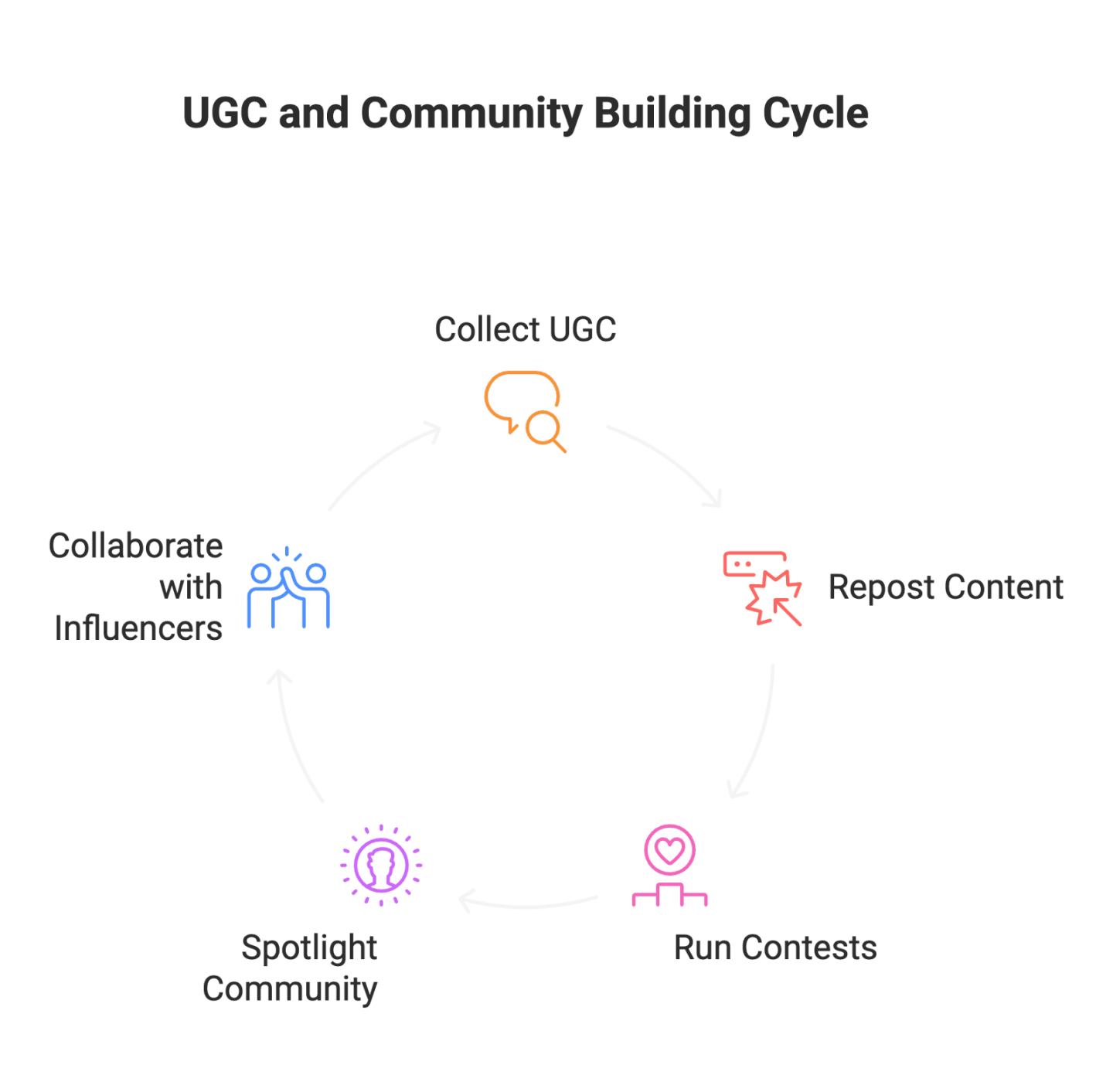
User-generated content (UGC) is like gold on Instagram. It refers to content related to your brand that is created by your followers or customers. This could be someone posting a photo with your product, a fan art, a testimonial video, or any content where your community shares their experience. Featuring UGC not only gives you a constant stream of ready-made content, but also makes your followers feel seen and valued. It’s a win-win for influencers, creators, and brands alike:
A simple way to start with UGC is to repost your followers’ content that showcases you or your product. Did a follower create a cool unboxing video of your item? Re-share it (with credit to them). Got tagged in a story where a customer uses your product? Ask for permission to feature it in your feed. Showing real people using and loving your product builds trust – it’s social proof in action. It also encourages more followers to post about you, since they see you might feature them. Pro tip: Create a branded hashtag and encourage customers to tag you and use the hashtag when they post about your brand; this makes finding UGC easier.
Actively solicit UGC by running a campaign. For example, “Share a photo of you wearing our merch and tag #MyBrandFan for a chance to be featured.” or “Submit your best recipe using our kitchen gadget and we’ll repost the top entries!” This gamifies content creation. You might reward top contributors with a shoutout, a feature on your page, or even a small prize. Gamifying UGC and rewarding contributors (like an in-feed spotlight) can significantly boost participation.
Dedicate some posts to highlighting members of your community. If you’re an influencer, you could spotlight a follower of the week who has been very engaged, or do a mini-interview with a fan. If you’re a brand, spotlight a loyal customer or a micro influencer who partnered with you. This not only provides content but fosters a deeper community feeling—people love recognition. It signals that your page isn’t just about you; it’s about everyone in your circle.
Partner up with fellow creators or micro influencers for collab posts. Co-create content—like a joint Live session, a Reel duet, or a takeover where you swap accounts for a day. When influencers collaborate, they often exchange audiences, which can grow your followers. Plus, each influencer usually brings their own style and ideas, resulting in fresh content that appeals to both fan bases. Announcing and then recapping an influencer collaboration (e.g., “Had a blast teaming up with @InfluencerA on this lookbook!”) generates buzz and credibility, tapping into the trust they’ve built with their followers.
Why UGC and community posts work: They turn your audience into an active part of your content strategy. People trust peer recommendations more than ads – in fact, 63% of marketers say influencer-generated content (a form of UGC) performs better than brand-created content. There’s authenticity in UGC that you just can’t fake. When your followers see others (just like them) featured on your page, it builds a sense of community and belonging. Brands leveraging micro-influencer UGC often get genuine, relatable posts that can be repurposed across marketing channels, extending far beyond Instagram.
For example, if you gather a library of UGC from influencers and customers – unboxing videos, testimonials, lifestyle photos – you can reuse that in your Instagram content, Stories, and even on your product pages. 84% of people are more likely to trust a brand that shares UGC in its marketing, because it shows real experiences.
And remember, you don’t have to do it all alone! There are platforms to help facilitate UGC collection and micro-influencer collaborations. Stack Influence, for instance, is a micro-influencer marketing platform that **connects brands with everyday content creators, helping to automate product seeding and generate tons of authentic UGC and testimonials at scale*. By partnering with passionate micro influencers, even small e-commerce brands can get a steady pipeline of content and word-of-mouth exposure without a huge budget or content team.
Now that we’ve covered what to post, let’s touch on how to maximize growth and reach with those posts. Great content is crucial, but optimizing how you deliver that content will ensure it actually finds your target audience. Here are some best practices and growth hacks to pair with your brilliant post ideas:
Post on a regular schedule so followers know you’re active. Consistency also helps appease the algorithm gods. Whether it’s three times a week or daily, pick a cadence you can sustain. Many successful influencers post nearly every day or use features like Stories daily to stay top-of-mind. A consistent flow of content keeps your audience engaged and encourages new followers to stick around (an inactive feed can deter potential followers). Use scheduling tools or content calendars to plan ahead, ensuring you maintain that rhythm.
Research relevant hashtags in your niche – a mix of popular ones and more niche ones. Hashtags make your content discoverable beyond your follower base. For example, a travel micro influencer might use #TravelHacks or #Wanderlust, but also niche tags like #BackpackingAsia to reach a specific community. Don’t overstuff (about 5–10 solid hashtags is usually enough). In captions, lead with an intriguing first line (to hook those who see it in feed) and consider asking a question at the end to prompt comments (e.g., “Which look did you like best? Let me know below!”). Emojis and line breaks can make longer captions more readable. Remember, captions are a chance to tell a story or add context – they can be as important as the image/video itself in connecting with your audience.
The Instagram algorithm favors users who use all its features. So mix it up: feed posts (images/carousels), Reels, Stories, IG Live, and even the newer features like Collabs (co-authoring a post) or Guides. Reels in particular have huge reach potential right now as Instagram competes with TikTok – many creators find Reels can attract non-followers if they hit explore. If you’re camera-shy or new to video, start with simple slideshow Reels (using photos and text overlays) set to trending music. Trends can be your friend: keep an eye on trending audios or formats and adapt them in your own niche style for a chance at virality.
Promote your Instagram content on other platforms and vice versa. For example, if you have a YouTube channel or TikTok, tease your IG content there (“Check out my IG for a full breakdown in pics!”). On Instagram itself, use Stories to reshare your recent feed posts or Reels with a “new post” sticker to make sure your current followers don’t miss them. If you run a newsletter or a blog, embed your Instagram posts or mention your profile. And don’t underestimate offline promotion – even something as simple as mentioning your IG handle at events or on packaging can funnel interested people to your page.
By implementing these strategies, you’ll amplify the impact of the great content ideas we covered earlier. It’s all about working smarter: producing quality content and making sure it reaches as many relevant eyeballs as possible.
Growing on Instagram as an influencer (or brand) in 2025 is a blend of consistent effort, creative content, and genuine community-building. We’ve covered a wide array of Instagram post ideas – from educational how-tos and entertaining challenges to authentic personal stories, product showcases, and community-driven UGC. The common thread through all these is providing value and connecting with your audience. When you focus on serving your followers – be it through teaching them something new, making them laugh, inspiring them, or involving them – you build a foundation of trust and engagement that is the true currency of influence. Now, it’s time to take action: pick one idea from this guide and plan your next post. You’ve got this! Happy ‘gramming!
Ever wonder what sets a great influencer apart from the rest? In today’s digital world, leveraging influencer marketing is a go-to growth strategy – especially for e-commerce brands and Amazon sellers. From mega-stars to micro-influencers, the right content creator can help your products reach new audiences and drive sales. But not all influencers are created equal. Brands need to know which qualities make an influencer truly effective (and worth partnering with). In this blog post, we’ll break down the top 10 characteristics of a good influencer that attract brand attention. Our focus is on traits that matter most for e-commerce success – think authenticity, content quality, engagement, and more – all explained in a casual, informative way.
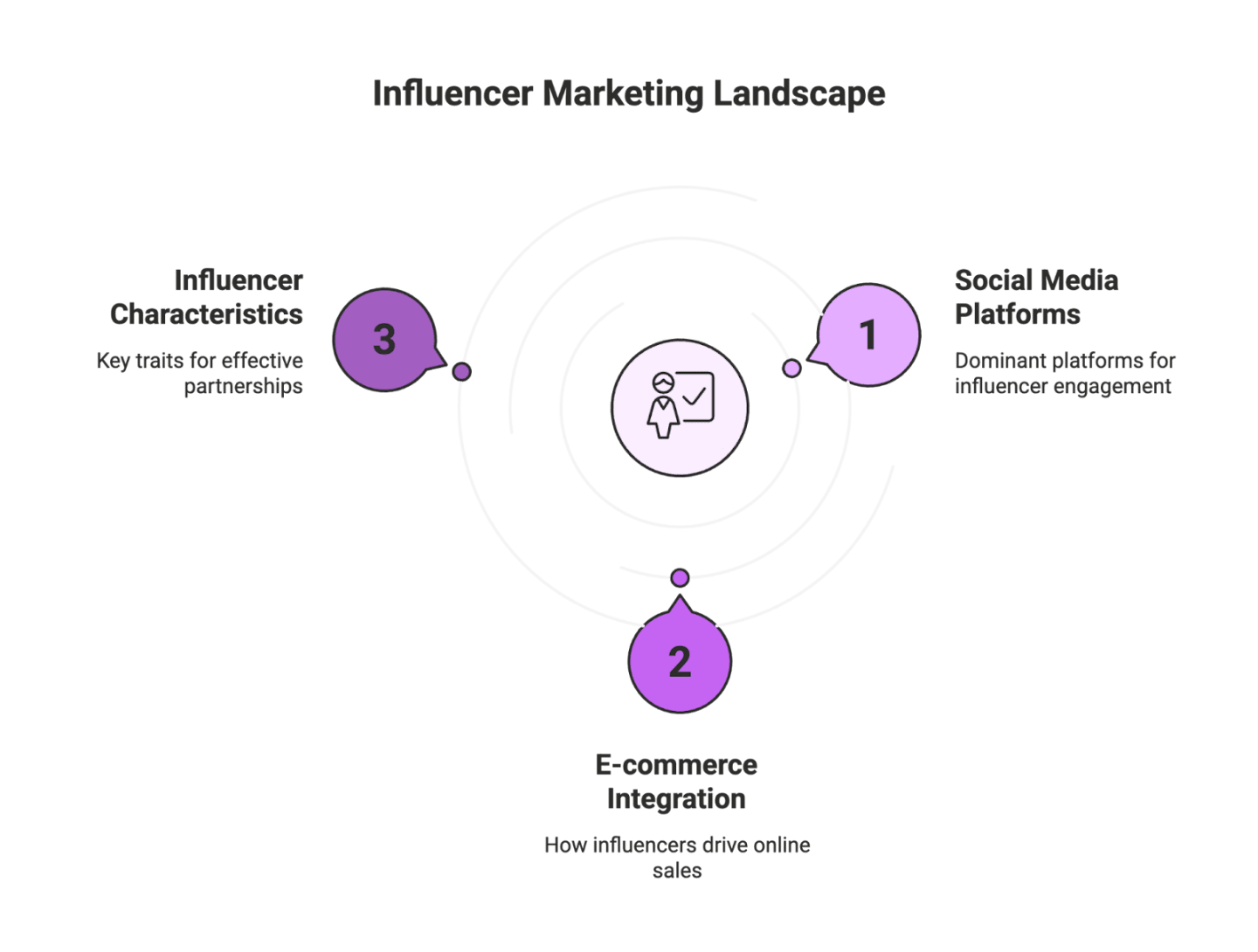
Before diving into individual traits, let’s set the stage with a quick look at influencer marketing today. Social media platforms are the playgrounds where influencers thrive, and a few big players dominate. TikTok has recently surged ahead as the most-used channel for influencer campaigns (employed by 69% of brands), surpassing long-time leader Instagram (47%) and YouTube (33%). This shift reflects where audiences (especially Gen Z and young millennials) are spending their time – short-form video platforms like TikTok are booming, though Instagram and YouTube remain hugely important for visuals and long-form content.
Most popular social platforms for influencer marketing in 2024. TikTok’s rapid rise (used by 69% of brands) has put it ahead of Instagram and YouTube as the go-to channel for influencer campaigns. Influencers who master these platforms – whether it’s engaging TikTok videos, Instagram Reels, or YouTube vlogs – can offer brands massive reach and creative content opportunities. It’s no surprise that marketers prioritize influencers on these top platforms when planning campaigns.
Meanwhile, e-commerce brands have embraced influencer marketing more than any other sector. Over 57% of brands working with influencers run online retail or e-commerce stores. Why the strong participation? Online sellers can directly link influencer content to their product pages, making it easier for followers to “shop now” on sites like Amazon or Shopify. Influencers effectively become digital brand ambassadors, driving traffic to e-commerce listings and boosting conversion rates.
Share of influencer-active brands that have e-commerce stores. More than half (57.6%) of brands engaging in influencer marketing are e-commerce businesses. This highlights how online brands – from boutique Shopify retailers to large Amazon sellers – rely on influencers to generate awareness, create UGC (user-generated content), and ultimately drive sales. An influencer who understands the e-commerce world (and how to seamlessly integrate product links or discount codes) is especially valuable to partner with.
With these trends in mind, let’s explore the 10 key characteristics that make an influencer stand out as a great partner for your brand.
Authenticity is the foundation of a good influencer. In a space flooded with polished ads and paid posts, the influencers who feel real and genuine rise above the noise. An authentic influencer is transparent about their opinions and only promotes products they truly like or find relevant. Crucially, their audience is made up of real followers – not bots or purchased likes. (No brand wants to pay for an “influencer” whose 100k followers turn out to be fake accounts!) In fact, authenticity is so important that 90% of consumers say it influences which brands they support. People are far more likely to trust recommendations from a relatable creator than a glossy ad. No wonder one survey found 82% of consumers are highly likely to follow a micro-influencer’s recommendation – micro influencers often come across as peers giving genuine advice, which carries huge weight.
So how do you spot authenticity? Look for consistency between an influencer’s content and their actual lifestyle or niche. Do they actually use the products they feature? Are they honest if something isn’t perfect? Authentic influencers also tend to have engaged communities that interact naturally (lots of genuine comments, not just generic praise or emoji spam). When an influencer is authentic, their endorsement feels like a friend’s suggestion, building trust with your potential customers. This kind of honesty and credibility is invaluable – an authentic influencer can lend your brand social proof that truly resonates.
Great influencers are content creation experts. At the end of the day, an influencer is only as good as the content they produce – be it stunning photos, engaging videos, catchy captions, or informative how-tos. For e-commerce and Amazon sellers, this content often doubles as user-generated content (UGC) that can be repurposed in your own marketing. You want influencers whose style and quality match your brand’s vibe. Review their feed: Are their photos/videos well-composed, clear, and scroll-stopping? Do they experiment with formats like Reels, Stories, Lives, or YouTube vlogs? Top influencers know how to showcase a product in an appealing way without it feeling like a traditional ad.
Brands are increasingly realizing the power of influencer-created content. In fact, 36% of marketers say that influencer content outperforms content produced by the brands themselves. This makes sense – influencers know how to speak the social media language authentically. Additionally, consumers tend to trust peer content more: in one study, 85% of people found UGC more influential than brand-created photos or videos. A good influencer provides a steady stream of authentic creatives for your brand. For example, an influencer might shoot a fun unboxing video of your product or post a tutorial using it; you can then (with permission) reuse that UGC on your own Instagram, website, or Amazon page. The ability to produce high-quality, relatable content that resonates with your target audience – and to do it consistently – is a hallmark of a top-tier influencer. When vetting influencers, look at their past posts and ask yourself: Would I be proud to have this content associated with my brand? If the answer is yes, you’ve likely found a strong content creator.
Scrolling through an influencer’s feed should give you a sense of their passion – both for their niche and for creating content. Passion is contagious; when an influencer genuinely loves what they do (and the products or lifestyle they showcase), their audience can feel it. This enthusiasm translates into higher excitement for your brand’s offerings. A good influencer will get truly excited about a collaboration if your product aligns with their interests. They’ll pour energy into the campaign, which in turn inspires followers to share that excitement. As Influencity notes, “Passion is what will fuel your campaigns, and it’s something that cannot be faked.”. If an influencer seems bored or just going through the motions, their content will reflect that – and viewers will tune out.
When researching influencers, look for those who light up when talking about topics related to your product. For example, if you sell fitness gear, an influencer who lives and breathes workouts (and excitedly shares new routines, personal progress, and tips) is likely to bring authentic passion to promoting your equipment. Their eyes sparkle when they unbox a new item; they can’t wait to demo it on camera. That enthusiasm creates an emotional connection with the audience. In short, choose someone who would use your product even if they weren’t paid – their genuine love for the niche will make the promotion feel natural and compelling. Passionate influencers go the extra mile, and that can make all the difference in a campaign’s impact.
When you partner with an influencer, you’re essentially putting your brand’s reputation in their hands. That’s why trustworthiness is a critical characteristic to seek out. A trustworthy influencer is honest with their audience and with the brands they work with. They disclose sponsorships transparently (followers appreciate honesty about paid partnerships), and they don’t promote things they don’t believe in just for a quick payday. Their recommendations carry weight precisely because they’ve built a reputation for sincerity. As a brand, you need an influencer whose audience trusts what they say. If followers suspect an influencer will shill any product for a buck, those endorsements won’t be effective. On the flip side, an influencer who has earned credibility can seriously boost your brand’s authority. Consider that 84% of consumers trust peer recommendations over traditional advertising – an influencer is essentially a peer voice. You want that voice to be seen as reliable.
How do you gauge credibility? Look at the influencer’s history. Have they been involved in any scandals or spread misinformation? (Red flag!) Do they give balanced, fair opinions in reviews? Influencers who occasionally turn down sponsorships or provide measured critiques come off as more authentic and principled. Also, check if they maintain a consistent personal brand – no wild, out-of-character promotions. Trustworthy influencers often have loyal, long-term followers who stick around because they value the influencer’s judgment. Additionally, consider professionalism: Do they communicate well and set clear expectations with brands? An influencer who is organized and reliable in business dealings is more likely to handle your collaboration responsibly. Remember, a credible influencer not only keeps your brand’s image safe but can actively enhance your credibility by association.
Relatability is that special something that makes followers think “This person is just like me!” or “I could totally be friends with them.” Good influencers tend to be relatable in how they present themselves and their lives. They share everyday moments, admit imperfections, and speak in a conversational tone rather than sounding like a corporate press release. This down-to-earth vibe helps audiences form a personal connection. For brands, partnering with a relatable influencer means your product is being showcased by someone who feels like a friend to their followers. That dynamic can significantly warm up an otherwise skeptical audience. People are more open to hearing about a new snack, gadget, or fashion item if it’s coming from “someone like me” whose lifestyle or challenges mirror their own.
To identify a relatable influencer, look at how they engage and what they share. Do they only post picture-perfect, heavily edited shots, or do they also show behind-the-scenes bloopers and real-life struggles? The ones who aren’t afraid to be a bit vulnerable or goofy often come across as more genuine. Maybe they joke about Monday morning coffee dependence, share no-makeup selfies, or talk about balancing influencer life with kids or school – these touches make them human. When followers relate to an influencer, they trust their recommendations more because it feels like advice from a peer rather than a sales pitch. For example, an influencer who is a busy mom sharing quick healthy recipes can be highly relatable to other parents – if she then recommends a kitchen appliance, her followers are inclined to listen. In summary, relatability breeds trust and loyalty, which makes an influencer’s advocacy on behalf of your brand much more persuasive.
A great influencer doesn’t just broadcast content; they actively engage with their community. Being responsive – replying to comments, answering followers’ questions, and generally showing up for their audience – sets top influencers apart. This kind of engagement creates a sense of community and loyalty. When followers feel seen and heard by an influencer, they become more invested. For brands, an influencer who nurtures their audience like this is gold: their followers are not passive viewers, but an interactive community excited about what that influencer posts (including your sponsored content). Check an influencer’s posts – do you see them replying to a decent number of comments? Do they acknowledge feedback or thank fans? An influencer who comments “OMG yes 🔥” on a fan’s remark or addresses user questions in their next video is demonstrating responsiveness.
Beyond audience interaction, responsiveness also extends to how the influencer works with brands. You want a partner who is communicative, open to feedback, and timely in their responses during a campaign. If an influencer answers your emails promptly and is willing to discuss ideas or adjustments, it bodes well for a smooth collaboration. Influencity combines “relatable & responsive” as a key trait – essentially highlighting that a pleasant, sociable influencer who interacts regularly with followers is ideal. These influencers often foster higher engagement rates on their content because they’ve trained their audience to expect a conversation, not a one-way feed. In practical terms, a responsive influencer might host Q&A sessions about your product, respond to DMs asking for details, or promptly address any negative comments with grace. This not only boosts the content’s performance (thanks to more comments and shares) but also reflects well on your brand by extension. An engaged community can even provide user feedback or testimonials that enrich the campaign. Overall, when an influencer is responsive, they create a lively, interactive environment that your brand can positively be a part of.
One size does not fit all in influencer marketing. A good influencer for one brand might be a terrible fit for another. That’s why niche alignment is key. You should look for an influencer who operates in a niche relevant to your product or brand – ideally, someone who is seen as an expert or at least a trusted enthusiast in that area. For example, if you sell organic skincare, an influencer who regularly posts skincare routines, product reviews, and has followers who care about beauty and wellness would be a strong match. Conversely, a travel vlogger or a tech gadget reviewer wouldn’t make much sense, no matter how large their following, because their audience isn’t primed for skincare content. An influencer’s expertise (or genuine interest) in your field lends credibility to your product. They can speak the lingo, anticipate what their followers might want to know, and integrate your product into their content more naturally.
When evaluating niche alignment, consider both content and audience demographics. Check the influencer’s topics and see if your product could logically be part of that narrative. Also, look at any available data on their audience (some influencers share stats about follower age, location, interests). Does it overlap with your target customer profile? For instance, a micro-influencer who focuses on outdoor gear and has a fan base of hiking enthusiasts would be perfect for an eco-friendly water bottle brand, but perhaps not for a high-fashion jewelry line. Collaborating within the right niche ensures the influencer’s audience will actually care about your message. It’s the difference between a lukewarm “okay, cool” reception and an excited “this is exactly what we need!” reaction. Remember, influence is contextual – even a smaller creator (nano or micro) can have outsized influence if they’re deeply embedded in a niche community that aligns with your market. In short, find influencers who “get” your space, and you’ll tap into an audience that’s primed to listen.
Not all social platforms are equal, and a good influencer understands how to leverage the platforms that matter for your brand. When scouting influencers, consider where they have a strong presence and whether that aligns with where your customers hang out. The most popular platforms for influencers today are Instagram, TikTok, and YouTube, as we saw earlier, but within those, content format is key. Is the influencer a master of short-form video (TikTok/Reels)? Long-form storytelling (YouTube vlogs)? High-quality photos and carousel posts (Instagram feed)? Ideally, the influencer’s strengths should match the kind of content that best showcases your product. For example, an influencer known for engaging unboxing videos on YouTube might be perfect if you want a detailed demo of your gadget, whereas a TikTok comedian with quick sketches might be great for a snappy, viral take on your fashion item.
Platform fit also means ensuring the influencer’s audience on that platform is the one you want to reach. TikTok skews younger (teens and 20s), Instagram covers a broad range but is strong for 18-34, and YouTube can vary widely by content type. If you’re marketing an upcoming video game, a Twitch streamer or YouTuber might have more sway than an Instagrammer. On the other hand, lifestyle and beauty brands often still find Instagram influencers effective for shopping-oriented posts, and TikTokers for trend-driven products. A good influencer often diversifies across platforms too – many have a primary channel and secondary ones (e.g., an Instagram influencer who also runs a TikTok). This multi-platform presence can be a bonus, as it gives your brand multiple touchpoints. However, make sure they maintain quality across channels (repurposing content smartly rather than copy-pasting). Ultimately, you want an influencer who is fluent in the platform(s) your target audience uses, including knowing the latest features (like IG Reels, Stories stickers, TikTok sounds) to maximize engagement. An influencer with the right platform and format fit will deliver your message in the medium that has the most impact, whether it's a viral dance challenge or a heartfelt vlog testimonial.
When a brand commits to an influencer partnership, there’s often a schedule or campaign plan involved – and nothing derails a campaign faster than an inconsistent partner. That’s why consistency and reliability are prized characteristics of a good influencer. Consistency means the influencer posts regularly and maintains a steady voice/style. If they suddenly go radio silent for weeks or their content quality swings wildly, it’s a red flag. You want someone who has shown that week in, week out, they can deliver engaging content. Consistency builds audience trust too: followers learn to expect that every Tuesday there’s a new tutorial, or every morning there’s a relatable anecdote on Stories. This habit formation means when your sponsored post comes along, the audience is there and attentive.
Reliability extends to how the influencer manages commitments. Do they deliver content to you for review on time? Do they stick to the agreed posting schedule? A reliable influencer treats their collaborations professionally – they’ll read the brief, adhere to FTC guidelines for disclosures, and execute the campaign as agreed. Look for signs of professionalism: perhaps other brands have tagged them or left positive comments like “Loved working with you!” which hint at a good experience. Some influencers even have media kits or managers, which can indicate they take their business seriously. Don’t be afraid to ask an influencer about their process and how they handle sponsored partnerships – the pros will have clear answers. In short, a good influencer is dependable. When they promise to do something, you can count on them to follow through (or communicate proactively if issues arise). This reliability not only makes your life easier but also ensures your campaign runs smoothly and on schedule. It’s the difference between a post that goes live promoting your holiday sale on the correct date versus an “oops, I forgot to post!” fiasco. Consistent, reliable influencers help your marketing stay on track and maintain a positive brand image.
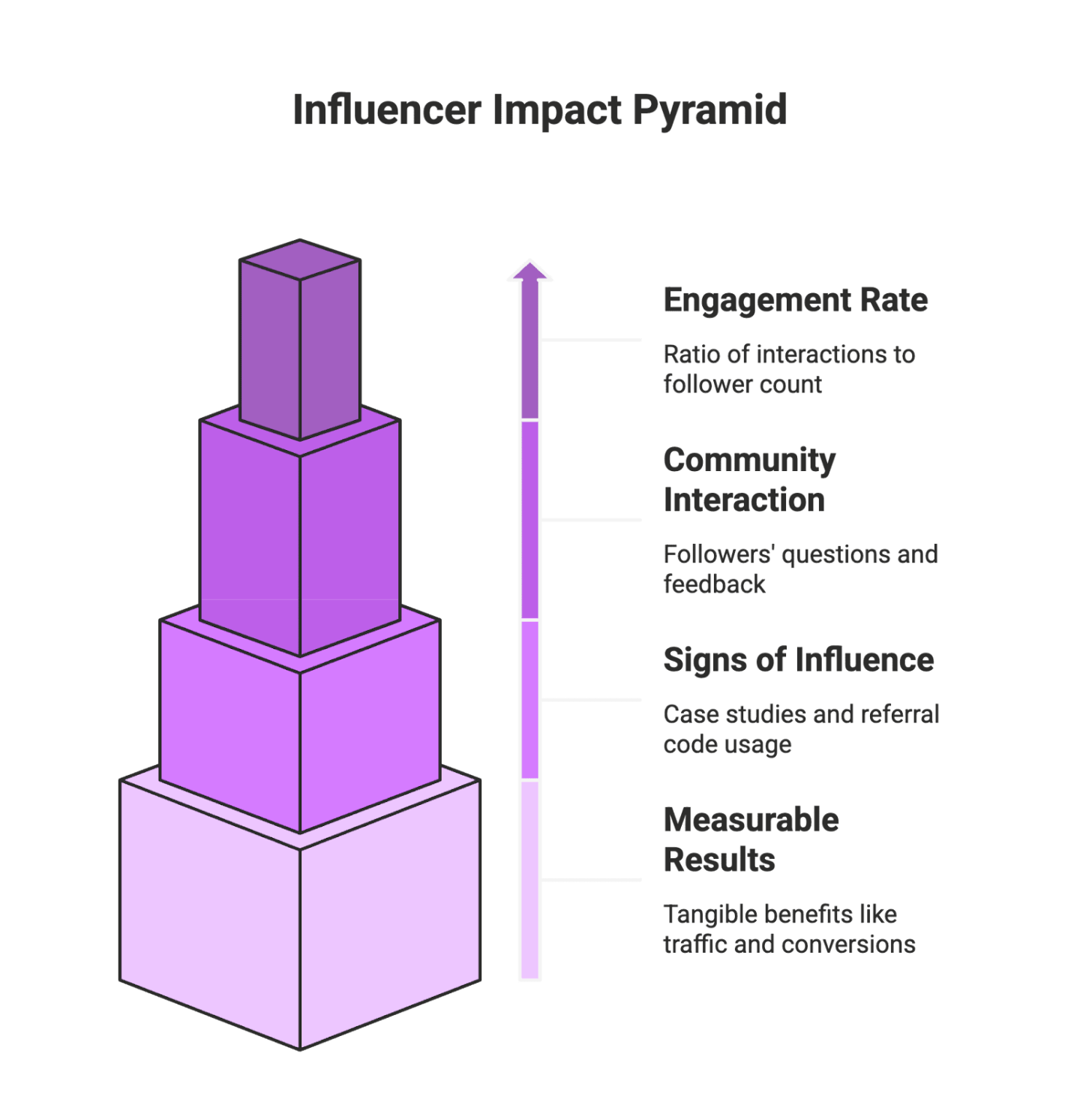
Last but certainly not least, a top influencer should be able to deliver measurable results – or at least have the hallmarks of someone who can drive results. Two key metrics to examine are their engagement rate and any evidence of past successful collaborations. Engagement rate (the ratio of likes, comments, shares to follower count) is often a better indicator of influence than follower number alone. A creator with 50k followers and a 5% engagement rate is likely more impactful than one with 500k followers and a 0.5% engagement rate. In fact, smaller influencers often shine here: nano-influencers (<5k followers) have the highest engagement rates (~2.5% on average) while mega-influencers (>1M) only around 0.9%. This means micro and mid-tier influencers can sometimes offer the best of both worlds: a sizable reach and an actively engaged audience. When vetting an influencer, check if their followers actually interact – do they ask questions, give feedback, appear influenced by the content? High engagement suggests the influencer has a true community that pays attention, which increases the likelihood that a shoutout or recommendation will lead to clicks and conversions.
Beyond engagement, look for signs of influence on outcomes. Some influencers may share case studies or testimonials (e.g., “I used @InfluencerX for promo and saw a 20% sales lift”). While not always available, you can infer impact from things like referral codes usage, comments (“Just ordered this!”), or if the influencer is frequently re-hired by brands (implying they delivered good ROI). You might also ask for media kit stats like story views, link click rates, or audience demographics to ensure they match your goals (for example, if you want to drive Amazon sales, an influencer with above-average link clicks in Stories could be valuable). Stack Influence, for instance, specializes in micro-influencer campaigns that generate high engagement and authentic UGC, focusing on measurable outcomes for e-commerce brands. The bottom line: a good influencer’s value can be quantified. Whether it’s traffic, conversions, or content creation, they should bring tangible benefits to your brand. By prioritizing influencers with strong engagement and a track record (or clear potential) of results, you set your campaign up for success.
In the rapidly evolving world of influencer marketing, e-commerce brands and Amazon sellers can gain a serious competitive edge by choosing the right influencers to work with. The top 10 characteristics we’ve outlined – from authenticity and passion to reliability and results – serve as a checklist for evaluating potential influencer partners. Keep these traits in mind during your influencer research: an influencer who ticks most (or better yet, all) of these boxes is likely to deliver not just eyeballs, but genuine engagement and trust that translate into sales.
Finding such well-rounded influencers may seem daunting, but the good news is that resources exist to help. Ultimately, successful influencer marketing comes down to forming authentic, value-driven partnerships. When you collaborate with influencers who are trustworthy, relatable, and truly engaged with their followers, your brand naturally becomes part of a story that audiences believe in. In turn, those audiences become your customers and advocates. So use this list as your guide, choose your influencers wisely, and watch your next campaign thrive! Good luck, and happy influencer hunting.
Ever watched a favorite content creator unbox a surprise package from a brand on YouTube or Instagram? That exciting gift box – filled with products, samples, and swag – is what’s known as a PR package. In the influencer and e-commerce world, PR packages have become a popular way for brands to get their products into the hands of content creators (from micro-influencers to celebrities) in hopes of generating buzz. This blog will demystify what PR packages are, why they matter for both creators and brands (including Amazon sellers and other e-commerce businesses), and how you as a content creator can start receiving them. We’ll also cover tips for brands on sending PR packages that stand out and lead to valuable user-generated content (UGC). Let’s dive in!
A PR package (short for “public relations package”) is a branded box of goodies that a company sends as a gift to influencers, journalists, or celebrities. It’s carefully curated with products or samples, often in creative packaging, with the hope that the recipient will share an authentic review or unboxing with their audience. In essence, a PR package is like a VIP invite into the brand’s world – a tangible experience of their products meant to excite the receiver and encourage social media sharing. These packages typically live at the top of the marketing funnel, focusing on awareness and buzz rather than immediate sales.
No Strings Attached: Unlike a paid sponsorship or ad, PR packages are usually no-obligation gifts. The brand covers the cost of the products and shipping, but there’s no contract requiring the influencer to post or say anything specific in return. The influencer has full creative freedom – they might choose to feature the products in a video or Instagram story, but it’s voluntary. This lack of obligation can be a double-edged sword: many influencers will share genuinely if they love the products, but there’s also a chance the package gets no coverage at all. Brands accept this risk because a genuine, unsolicited endorsement often carries more credibility than a paid post.
Why Brands Send Them: PR packages are part of a broader PR or influencer marketing strategy centered on building relationships and earning media (exposure you don’t directly pay for). It’s about planting seeds – if the influencer likes the product and shares it, the brand gets exposure to a new audience via a trusted voice. Even if not, the brand has started a relationship by gifting their product. As we’ll discuss, when done right, PR boxes can generate valuable word-of-mouth marketing, user-generated content, and credibility for the brand.
For Brands – Awareness, Trust, and UGC: In an age of banner ad fatigue, PR packages offer a more authentic way to reach consumers. When an influencer enthusiastically unboxes a product and shares it, it feels like a recommendation from a friend rather than an ad. In fact, 92% of people say they trust a recommended brand – even if the recommendation comes from a stranger online. This is exactly why unboxing videos and “PR haul” posts are so popular; they harness the power of word-of-mouth recommendations to raise brand awareness. The influencer’s genuine reaction and review serve as social proof that the brand is worth paying attention to.
Figure: PR packages often arrive in creative, eye-catching boxes filled with curated products and a personal note. The goal is to create a memorable unboxing experience for the content creator, which in turn can lead to an exciting reveal for their audience.
When a brand’s PR box delights an influencer, it can spark immediate social media content – think Instagram stories, TikTok unboxings, YouTube reviews – essentially free publicity that feels organic. These posts are a form of user-generated content (UGC) which brands love to repurpose. By sending out PR packages, companies can accumulate a library of real-life product photos, unboxing videos, and authentic testimonials created by the influencers themselves. This UGC can be re-shared on the brand’s own social channels, used in ads, or even featured on e-commerce sites (for example, brands often integrate influencer photos into their Amazon product listings to build trust with shoppers). It’s like outsourcing a portion of your content creation to passionate fans.
Another big benefit is credibility and trust. When people see someone they follow (and trust) using a product, it validates the brand. A good PR package tells a story about the brand – who they are and what they offer – in a way that doesn’t feel like a sales pitch. As one PR expert notes, a well-crafted PR box can elevate a brand’s image and build credibility when shared by the right people. This kind of third-party endorsement is gold. Research backs it up: 82% of consumers in one survey said they are “highly likely” to follow a micro-influencer’s recommendation. In other words, if a micro influencer raves about your product, their audience is much more inclined to check it out. This trust-by-association can even translate into increased sales – not necessarily immediately, but as a downstream effect of the positive buzz. Partnering with the right influencers lets brands tap into that small percentage of followers who are ready to buy, potentially giving sales a boost.
For Influencers – Free Products and Opportunities: From the content creator’s side, PR packages are exciting because who doesn’t love free products? 🎁 Getting on a brand’s PR list means you’ll receive new goodies (often before they’re released to the public). This not only saves you money (no need to buy those makeup palettes or gadgets to review) but also gives you fresh content for your channels. Free product gifts can spice up your content and keep your followers engaged with new reviews and unboxings. It’s a chance to try the latest trends without straining your wallet – and if you genuinely like the products, it could lead to a longer-term partnership or even paid sponsorships and other influencer compensation models down the line.
Perhaps even more valuable is the relationship aspect. When a brand starts sending you PR packages, it’s opening the door to a mutually beneficial relationship. You get cool products and validation (being on a PR list signals you’re an influencer worth noticing), and the brand gets potential exposure. If you consistently deliver great content and engagement with those PR products, you’ll stay on their radar for bigger things. Brands often use PR gifting as a way to test the waters with influencers – if you impress them with an unpaid unboxing, you might be first in line for future paid campaigns. As an influencer, being gracious, honest, and creative with PR gifts can convert those one-off mailers into ongoing collaborations.
Finally, PR packages add to your credibility as a creator. When your followers see brands sending you products, it reinforces that you’re seen as an authority or trendsetter in your niche. (Always disclose that the item was gifted in your post, per the FTC's updated endorsement guidelines, which require clear language like #gifted or #ad even for non-paid partnerships ).
Bottom Line: PR packages, when aligned correctly, are a win-win. Brands get affordable outreach and grassroots buzz; influencers get free products and content material. It’s marketing fueled by genuine enthusiasm rather than traditional ads. As one report put it, influencer recommendations feel like advice from a friend, and modern consumers value that authenticity highly. Next, let’s look at how you as a creator can start receiving PR packages, and how brands can level-up their PR package game to maximize results.
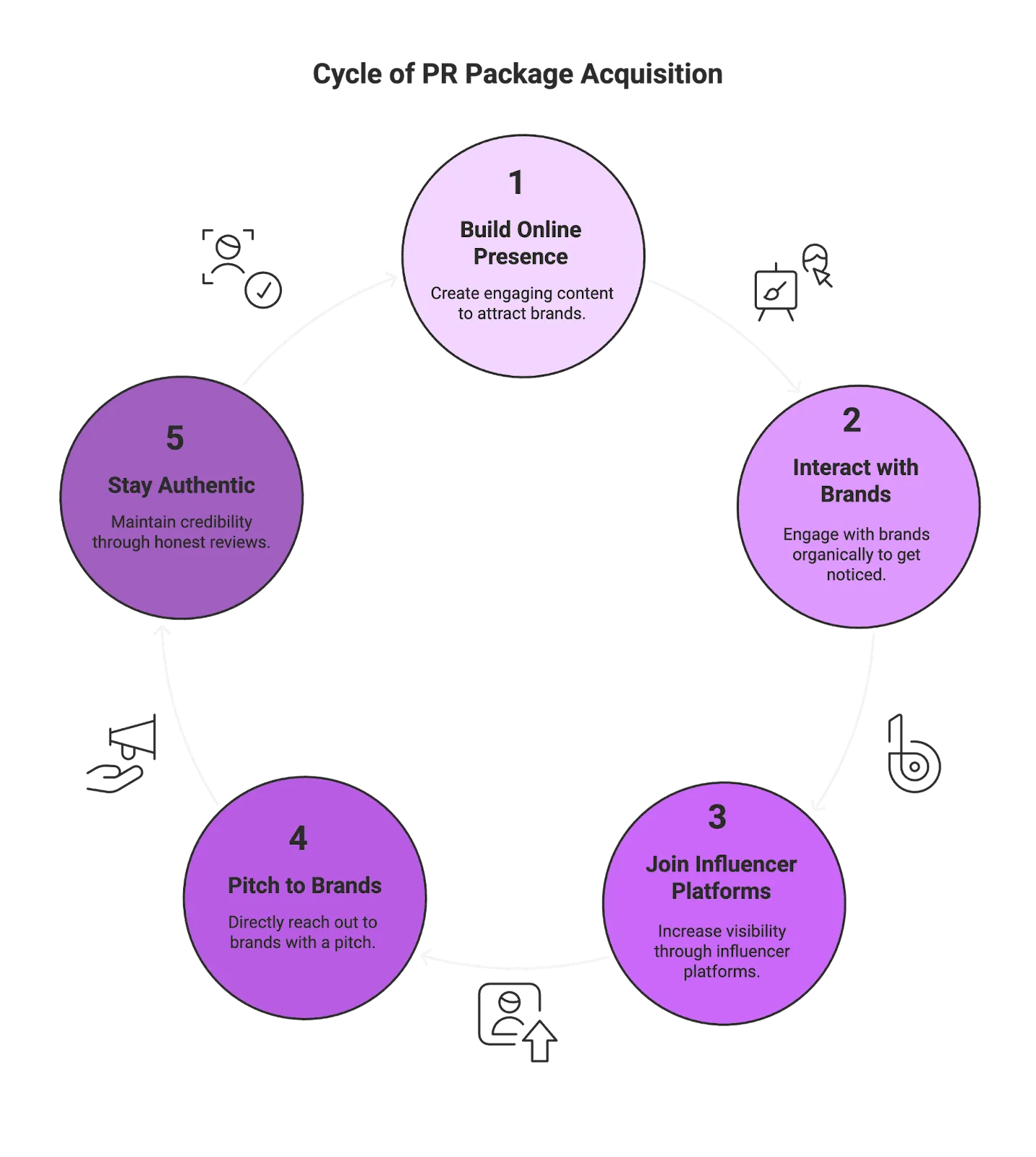
If you’re an aspiring influencer or micro-influencer dreaming of free PR mailers showing up at your door, here are some tips to help make it happen. Spoiler: You don’t need millions of followers, but you do need to put in some work to get noticed and added to those coveted PR lists.
1. Build an Engaging Online Presence in Your Niche: Brands usually look for influencers who have an audience that matches their target customers. Focus on a niche or theme you’re passionate about – whether it’s beauty, tech gadgets, fashion, fitness, or home decor – and start creating quality content around it. The key is to grow an authentic and engaged following. You might be a micro-influencer (typically defined as having anywhere from ~1,000 up to 50,000 followers), but that’s okay. In fact, many brands prefer micros because of their tight-knit communities and higher engagement rates. For example, on Instagram, micro-influencers often boast ~4-5% engagement per post, whereas mega influencers (think 1M+ followers) might only get ~1% engagement. Brands care about those likes, comments, and shares – it shows your followers actually pay attention to what you share. So focus on quality over quantity: better to have 5k followers who care about your content than 50k who scroll past it. Post consistently, hone your photography/video skills, and be authentic. A strong content portfolio and engaged audience will make brands more likely to send you free products.
2. Interact with Brands in Your Content: An effective way to get on a brand’s radar is to show love to their products organically. Create posts or videos featuring things you genuinely use and tag the brand’s official account. For instance, if you bought a new skincare item and love it, post a review or a tutorial and tag the brand. Brands often notice when creators mention them – especially smaller brands or those actively seeking UGC. Sometimes a simple tag can lead to a brand reaching out to you. Also, use relevant hashtags (e.g., #PRHaul, #Gifted, or niche tags like #beautycommunity) which brands or PR agencies might monitor. Engaging with a brand’s own posts (thoughtful comments, participating in their chats or live streams) can also put you on their radar as a loyal fan. Essentially, make sure your name comes up in the communities around products you’d love to receive. Just remember to keep it genuine – brands can tell the difference between a real fan and someone begging for freebies.
3. Join Influencer Platforms and Marketplaces: Take advantage of influencer marketing platforms that connect creators with brands and campaigns. There are websites and apps where you can create a profile, showcase your social stats and content style, and apply to campaigns looking to send out free products for promotion. For example, platforms like Stack Influence, Collabstr, Shein's influencer program, and others maintain large networks of micro-influencers or nano-influencers and let brands filter by niche, follower count, engagement rate, etc., to find a good match. Often you can discover brands actively seeking creators to send PR packages or product samples to. Being on these platforms increases your visibility – it’s like putting your hand up and saying “Hey, I’m here and open to collaborations!” Some platforms even list campaigns specifically offering free product in exchange for content (filterable by “gifted” or “product only” collaborations). Sign up for a few that cater to your niche and keep an eye out for opportunities. This approach can be especially fruitful for micro-influencers; it bridges the gap so you don’t have to solely rely on brands finding you – you can find them.
4. Pitch to Brands Directly: Don’t be shy about reaching out. If there are particular companies you adore and align with, send them a friendly pitch email or direct message. Introduce yourself, express what you love about their products (be genuine – flattery only works if it’s believable), and let them know you’d be thrilled to be considered for any influencer opportunities or PR lists. Highlight your engagement and what you can offer: for example, mention that you create high-quality review videos or stylish photos, and explain how your audience fits their target market. Essentially, answer the “what’s in it for them” – maybe you have a niche audience that would love their product, or you specialize in detailed reviews that help drive purchase decisions. Include links to your best content and your media kit (a short document or page with your stats, audience demographics, past collaborations, etc., if you have it). Keep the tone polite and enthusiastic. Even if your following is small, demonstrating professionalism and a clear value proposition can catch a brand’s attention. The worst that can happen is they say not now – the best is, you land on their next PR send-out list!
5. Stay Authentic and Follow Through: Once you start receiving the occasional PR package, handle it like a pro. Treat the free product as you would a business collaboration: thank the brand (a quick email or tag them in a “Thank you @Brand for this package!” post), and if you do like the product, share your honest thoughts in a timely manner. Always disclose that the item was gifted (#gifted or #PR in your caption or video description) to be transparent with your audience. You’re not obligated to post just because something was free, but if it fits your content, featuring it can strengthen your relationship with the brand. They’ll appreciate the love and will be more likely to keep you on the list or even consider you for future paid campaigns. On the flip side, if something really doesn’t work for you, it’s okay not to post; you’re not under contract. Perhaps provide the brand private feedback in that case. The key is to maintain your credibility with your followers – never hype a product you don’t actually believe in, just because it’s free. Authenticity is your currency as a creator. If you keep your audience’s trust first, you’ll also become a more valuable partner to brands in the long run.
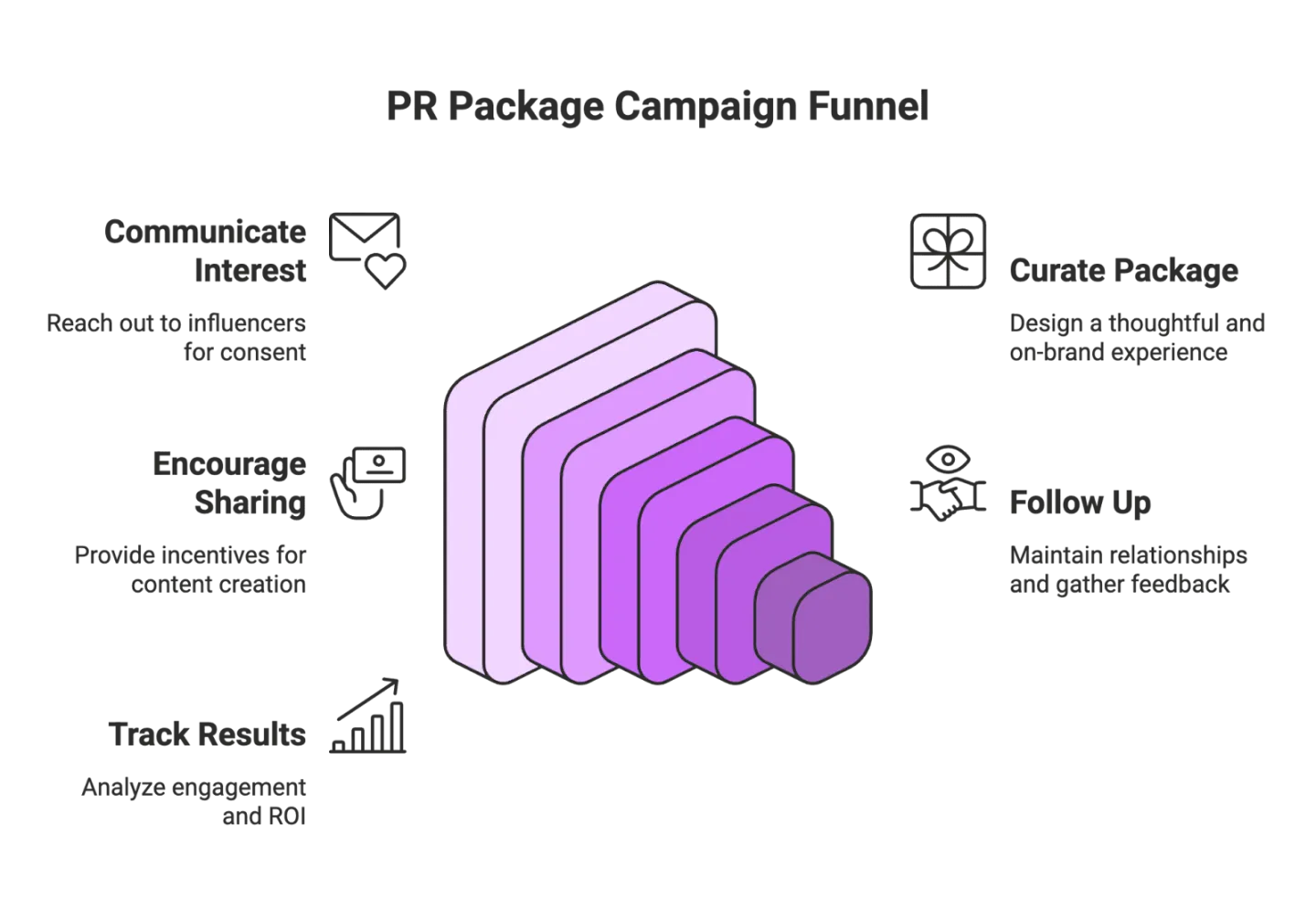
For brands (including small businesses, Amazon sellers, and e-commerce startups) looking to leverage PR packages as a marketing strategy, here are some best practices to ensure your efforts pay off. Sending out free product isn’t cheap – between the product cost, packaging, and shipping – so you want to maximize the chances that your PR package makes a splash and generates ROI.
Running product seeding campaigns at scale reveals a consistent pattern: the size of the package has almost nothing to do with whether a creator posts. What actually drives posting behavior is a combination of fit, surprise, and ease.
From running thousands of automated product seeding campaigns across Amazon, Shopify, and TikTok Shop brands, the clearest driver of organic posting is product-audience alignment. When a beauty creator receives a skincare product their followers are already asking about, the post almost writes itself. Across the campaigns we run, on-niche sends consistently generate organic post rates around 40 to 50 percent, while off-niche sends to creators whose audience doesn't overlap with the product category typically fall below 15 percent. That gap rarely closes regardless of how premium the packaging is. When the product fits naturally into what a creator already talks about, the post almost writes itself -- and the resulting content tends to be longer, more detailed, and more convincing to their audience than anything a mismatched creator would reluctantly produce.
The second biggest factor is unboxing experience. Packages that arrive looking like a gift, rather than a fulfillment box, are significantly more likely to generate video content, particularly on TikTok and Instagram Reels where the unboxing moment itself is part of the entertainment. A handwritten note still outperforms a printed card in creator feedback across most niches.
Finally, speed matters more than brands expect. Creators who receive a package within the first week of a launch tend to post while the excitement is high. Delayed shipping, especially packages that take three or more weeks to arrive, often result in the post never happening at all. If you are sending products to coincide with a campaign window or seasonal moment, build shipping lead time into your calendar.
Most brands track PR packages the wrong way, counting only posts and reach. A more complete picture requires separating three distinct value streams: earned media value, UGC asset value, and relationship pipeline value.
Earned Media Value (EMV) is the estimated equivalent cost of the impressions generated if you had paid for them as ads. A rough formula: multiply the influencer's average post reach by a cost-per-thousand-impressions (CPM) benchmark for their platform. In our network, micro-influencer posts on Instagram and TikTok typically deliver an effective CPM in the $10 to $15 range once you calculate total impressions against the product-plus-shipping cost of the send. That's roughly on par with what brands pay for paid social placements on Meta and TikTok, which average $10 to $14 per thousand impressions in 2025. The meaningful difference is what you get for that spend: micro-influencer impressions carry the weight of a personal recommendation from a trusted voice, while paid ad impressions do not. Even a modest creator with 8,000 followers posting to their full audience can represent $50-$200 in EMV per post, and that scales quickly across 20 or 30 creators.
UGC Asset Value is often overlooked. Every photo and video an influencer creates and posts is a content asset you can request permission to repurpose in ads, Amazon listing images, and email campaigns. Brands running campaigns through our platform regularly repurpose creator-generated photos and videos as primary ad creative on Meta, and the performance gap is consistent: UGC creative typically drives 50 to 70 percent higher click-through rates than studio-produced brand assets in the same campaigns. That lift comes from the native feel of the content -- audiences scrolling Instagram and TikTok respond to content that looks like something a real person made, not a polished brand shoot. For many of our brands, that CTR improvement is enough on its own to justify the full cost of the seeding program.
Relationship Pipeline Value is the hardest to quantify but often the most significant. A creator who posts organically once is a candidate for a paid collaboration, an affiliate arrangement, or a long-term ambassador program. Track which PR gifting recipients convert to repeat partners. Over time, that pipeline has compounding value that a single post metric will never capture.
A simple tracking setup for most brands: create a unique UTM link or promo code per creator, monitor post activity within 30 days of delivery, and log the result in a simple spreadsheet. You do not need enterprise software to start measuring; you need consistency.
Even well-intentioned PR sends fail when a few avoidable errors stack up. These are the patterns that consistently undermine campaigns, based on what we see across brand accounts on the platform.
Sending to the wrong creators. The most common mistake is prioritizing follower count over audience fit. A fitness influencer with 15,000 engaged followers in the supplements space will almost always outperform a lifestyle creator with 150,000 followers whose audience does not overlap with your product category. Niche fit is the single strongest predictor of whether a post happens and whether it converts.
Skipping the opt-in step. Sending a package cold, without first confirming the creator's interest, wastes product and shipping budget and risks a negative public reaction. Some creators now openly call out unsolicited PR on their channels. A 30-second DM confirming interest protects the relationship before it starts.
Over-packing the box. Including too many products can actually reduce the quality of the content. Creators who receive 15 items often post a chaotic overview rather than a focused, convincing review of any single product. Curate to two or three hero products that tell a clear story.
No follow-up plan. A package without a follow-up strategy is just a donation. Brands that check in after delivery, express genuine interest in the creator's experience, and make it easy to ask questions consistently see higher post rates than those who send and go silent.
Ignoring disclosure requirements. Under the FTC's updated guidelines, creators must clearly disclose gifted products, and brands share responsibility for ensuring this happens. Failing to brief creators on this up front creates legal exposure and can damage audience trust if followers feel misled.
PR packages have become a staple of modern influencer marketing – from indie skincare brands sending care packages to TikTok creators, to big tech companies gifting gadgets to YouTubers. They operate on a simple but powerful principle: gift someone something awesome, and they just might share it with the world. For content creators and micro-influencers, receiving your first PR package is a thrilling milestone that can open doors to bigger opportunities. And for brands, especially e-commerce businesses and Amazon sellers navigating a competitive market, PR packages offer a cost-effective way to generate authentic hype and a trove of user-generated content.
The beauty of PR packages is in their authenticity. When done right, they don’t feel like advertising – they feel like friend-to-friend recommendations playing out on social media. That kind of trust and organic buzz is invaluable in today’s landscape. So whether you’re a creator looking to get on PR lists, or a brand planning your next influencer outreach, remember that it’s all about building genuine relationships. Keep it real, keep it fun, and you might just find your products popping up all over Instagram feeds or your doorstep filled with surprise boxes.
In the end, successful PR packages come down to finding the right partners (brands ↔️ influencers), adding value to each other, and creating shareable moments. Here’s to unboxing many happy collaborations! 📦✨
Affiliate marketing has become a powerhouse in digital commerce – as of 2025, the industry is worth around $37.3 billion globally and on track to hit $48 billion by 2027. In the U.S. alone, affiliate programs drive 16% of all online orders, making them a key revenue channel for e-commerce brands. Now, artificial intelligence (AI) is reshaping how this revenue is generated. In fact, experts estimate that over 50% of digital marketing strategies will leverage AI by 2025 – meaning affiliate marketers must adapt to these innovations or risk falling behind.
Chart: Global affiliate marketing industry market size (USD billions) from 2016 to 2027 (projected). The affiliate industry has seen rapid growth in recent years and is expected to reach $48 billion by 2027.
With affiliate marketing already widely adopted by over 80% of brands and publishers and offering an average $12 return for every $1 spent, adding AI into the mix opens up new frontiers. AI tools can automate tedious tasks, pinpoint the perfect audience, and even generate content – all of which can supercharge your affiliate program’s performance, and platforms like ReferralCandy make it easy for e-commerce brands to launch referral programs that run alongside those affiliate efforts. In this guide, we’ll break down what AI affiliate marketing is, how it’s transforming the industry, which AI-powered tools you can use (featuring Stack Influence and more), the benefits for both newcomers and veteran marketers, and how e-commerce brands and content creators can get started. Let’s dive in!
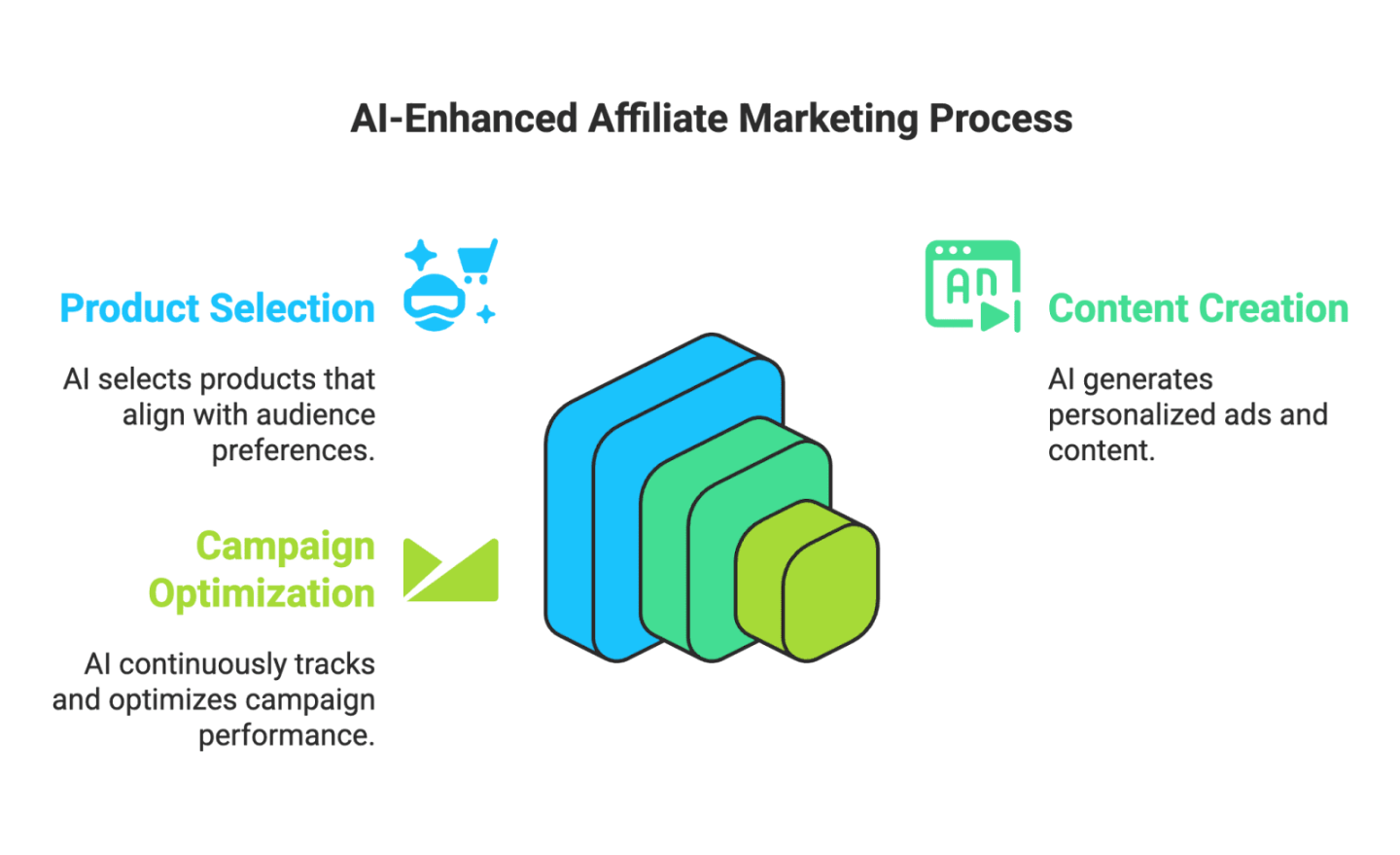
AI affiliate marketing is the use of artificial intelligence to improve and automate the process of affiliate marketing. In traditional affiliate marketing, individuals (bloggers, influencers, content creators, etc.) earn commissions by promoting a product or service and driving sales through a unique link or code. AI enhances this model by analyzing huge amounts of data and performing tasks that normally take marketers hours – in seconds. This means smarter decisions and less manual grunt work. For example, AI can sift through consumer data to understand buying behavior, help choose the best products to promote, create personalized ads or content, and even continuously track and optimize campaign performance.
Think of it this way: an affiliate marketer (maybe a micro-influencer on Instagram or a YouTube content creator) typically has to guess which products their audience might like, test different content, and monitor results. With AI, much of this becomes automated and data-driven. AI might reveal that your audience clicks more on tech gadget links in the evenings, or that one type of post generates 3x more sales than another – insights you can immediately act on. Essentially, AI transforms affiliate marketing into a more predictive, personalized, and efficient system. By leveraging AI, affiliate marketers – from solo Amazon sellers to large e-commerce brands – can save time, increase profits, and make smarter decisions based on real data. For marketers looking to deepen their AI knowledge, AI Certification Courses provide structured learning to understand and implement these advanced strategies effectively.
Here’s how AI affiliate marketing works in practice:
AI tools analyze market trends, consumer behavior, and past performance to identify the most profitable products to promote. This data-driven approach helps affiliates (and the brands they work with) focus on winners instead of guesswork.
AI can segment audiences by analyzing user data (browsing habits, purchase history, demographics, etc.), enabling highly personalized campaigns. This ensures the right product reaches the right customer (or micro-influencer’s follower) at the right time, dramatically improving conversion rates.
AI-powered platforms automatically monitor campaign performance in real time and adjust on the fly. They might tweak an ad placement, reallocate budget to a better-performing product, or suggest new content if conversions dip. By eliminating underperforming strategies and doubling down on what works, AI continually maximizes your ROI.
So, how exactly is AI changing the game for affiliate marketers? In a nutshell, AI is bringing automation, personalization, and smarter decision-making to every facet of affiliate marketing. Tasks that used to be manual or time-consuming are now handled by intelligent algorithms. This transformation is having a profound impact on both marketers and consumers:
One huge change is the automation of routine tasks. Tracking clicks, updating links, calculating payouts, scheduling posts – AI can handle all of this behind the scenes. For marketers, that means less spreadsheet juggling and more time focusing on strategy. Imagine an AI tool automatically identifying which affiliate links aren’t getting clicks and replacing them with better options – all while you sleep. This level of automation lets affiliate programs scale up easily (you could manage hundreds or thousands of affiliate partners or pieces of content) without a linear increase in workload. In fact, automation tools now handle these chores so efficiently that marketers can scale their efforts without being overwhelmed.
AI enables a shift from one-size-fits-all marketing to tailored experiences for each user. Traditional affiliate marketing might show all visitors the same product recommendation; AI-powered affiliate marketing can show each visitor (or each social media follower) a product that fits their interests based on data. This hyper-personalization leads to higher engagement and conversion. Companies using AI-driven personalization have seen conversion rates literally doubling in some cases. For instance, an AI might learn that a segment of your audience consists of young content creators who respond best to casual, behind-the-scenes style content – so it suggests affiliate content that feels like a personal recommendation rather than an ad. By delivering the right message to the right audience, AI significantly boosts the effectiveness of affiliate campaigns. In the world of influencer marketing, this means AI can help match brands with micro-influencers whose followers are most likely to value the product, ensuring promotions come off as authentic and hit the mark.
AI isn’t just reacting in real time – it’s also looking forward. Predictive analytics powered by AI can forecast trends and product performance, helping affiliate marketers stay ahead of the curve. For example, AI might analyze seasonal shopping data and predict which product category will spike next month, so you can start promoting the right items now. These data-driven insights take a lot of the guesswork out of affiliate marketing. Instead of relying on hunches, marketers can make informed decisions backed by hard data. This leads to more confident strategies and often a higher return on investment. As one expert aptly put it, “AI is not just changing the game; it’s rewriting the rulebook.” Marketers who embrace AI find themselves able to adapt quickly to market changes, optimize campaigns on the fly, and capture opportunities that others might miss.
Another exciting transformation is how AI bridges affiliate marketing and influencer marketing. Influencer marketing has traditionally been somewhat separate (focused on brand awareness and engagement), but now influencers can be affiliates too – earning commissions on sales they drive. AI-driven platforms can identify the right influencers for affiliate campaigns by analyzing tons of data (engagement rates, audience demographics, content style) to predict who will generate the best results. This is especially useful for e-commerce brands and Amazon sellers looking to amplify their reach. By finding micro- and nano-influencers whose followers perfectly match a product niche, AI helps create partnerships that feel organic and yield real sales. And because AI can handle the logistics (tracking each influencer’s sales, providing them personalized affiliate links, etc.), managing an army of micro-influencer affiliates becomes feasible. The result is a powerful combo of trust and technology: authentic content from influencers paired with the precision targeting of AI.
In short, AI is transforming affiliate marketing into a more efficient, personalized, and scalable operation. Marketers who leverage AI can reach the right customers more effectively and automate their way to better results, while customers benefit from seeing content and offers that truly match their interests. It’s a win-win scenario that is rapidly becoming the new norm – by 2025, over half of marketing teams are expected to be using AI just to keep up.
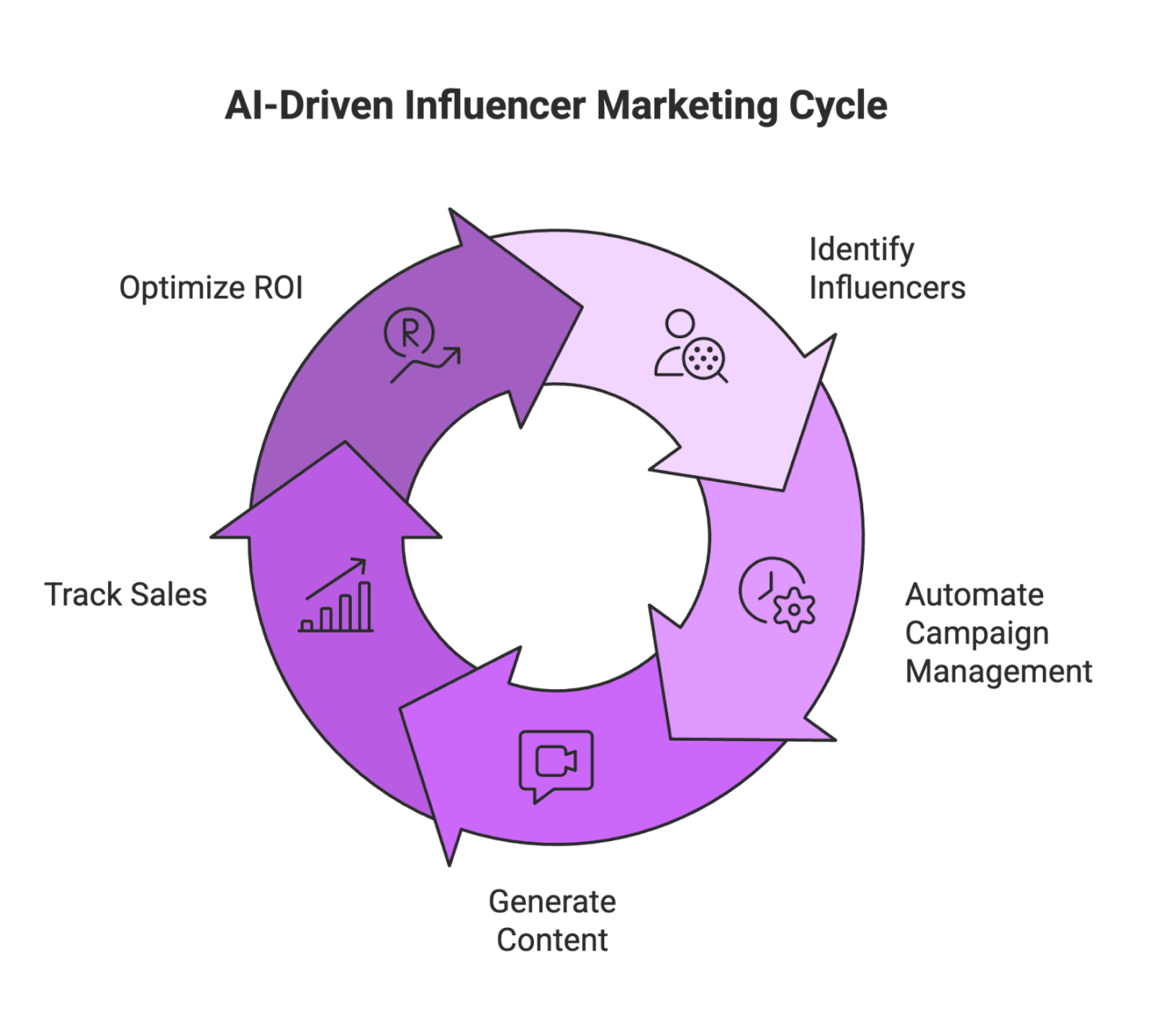
What tools and technologies make all this possible? AI is a broad field, but in affiliate marketing a few key categories of AI tools have emerged. Below is a breakdown of essential AI-driven tools (and platforms) that e-commerce brands, affiliate marketers, and content creators should know about:
Examples: Stack Influence, Upfluence, Influencity. These platforms use AI to connect brands with the right influencers (often micro-influencers) and to automate campaign management. For instance, Stack Influence leverages AI to identify and manage micro-influencers at scale, analyzing factors like engagement rates and audience demographics to find perfect matches. By automating the entire collaboration process (from outreach to tracking sales), such platforms help brands quickly generate lots of authentic content and UGC through influencer affiliates. The AI can even predict which influencers are likely to generate higher conversions for your niche, so you focus your budget on partnerships that yield the best ROI. In short, AI-driven influencer platforms take the legwork out of finding creators who align with your brand and make it easier to run large, scalable affiliate campaigns through social media personalities. (For an e-commerce example, imagine launching a new gadget and having an AI platform recruit 100 tech micro-influencers on Instagram to promote it with affiliate links – and handling all the tracking and payments automatically!)
Examples: Google Analytics (with AI insights), HubSpot’s AI tools, Adobe Analytics. Data is the heart of affiliate marketing, and AI-powered analytics tools help you make sense of it fast. These tools can quickly crunch large datasets to spot patterns and trends that humans might miss. For affiliate marketing, AI analytics can identify which products are surging in popularity, which blog content is driving the most referrals, or how different traffic sources convert. They often include features like predictive analytics (forecasting future performance) and anomaly detection (flagging when something in your campaign spikes or dips unexpectedly). By using AI to continuously analyze your clicks, conversions, and audience behavior, you get actionable insights in real time. This means even if you’re an Amazon seller with thousands of SKUs or a content creator with millions of monthly readers, you’ll know exactly where to focus your efforts for maximum revenue. In essence, AI analytics tools turn raw data into strategic decisions for your affiliate business.
Examples: Examples: Jasper, ChatGPT (yes, like the AI writing this article!), Copy.ai, Weshop.ai. Content is king in affiliate marketing – think product reviews, blog posts, social media updates, video ads. AI content generators use natural language processing (NLP) to create high-quality, relevant content for you in a fraction of the time it would take to write manually. Need a product description for your Shopify store? An AI writer can draft it in seconds. Want to A/B test two different blog intros? Tools like Jasper or ChatGPT can whip up variations on demand. This is a game-changer for affiliate marketers who need a lot of content to succeed (e.g., Amazon Associates niche site owners or Pinterest affiliates). By outsourcing the first draft to AI, you save hours and can scale up content production without burning out. Of course, you’ll want to fact-check and add a human touch to AI-written content, but these tools dramatically speed up the content creation process. The result: more content, optimized with keywords and tailored to your audience’s interests, helping drive organic traffic and engage readers so they click those affiliate links.
Examples: Amazon’s recommendation algorithm, AI-driven product recommendation apps for Shopify, Dynamic Yield. One of the most profitable applications of AI in affiliate marketing is showing people exactly the products they’re likely to buy. Recommendation engines use AI to analyze user behavior (browsing history, past purchases, items in cart, etc.) and then automatically suggest relevant products or content. You’ve seen this in action if you’ve ever gotten the “Customers who viewed this also viewed…” on Amazon – that’s an AI recommendation engine at work. For affiliates, you can deploy similar AI tools on your own e-commerce site or blog. For example, an AI plugin can display related products under your blog post based on each visitor’s reading history or profile. These recommendations feel personalized and often increase conversion rates, because the AI is essentially upselling or cross-selling items the user is predisposed to want. Amazon’s affiliate program (Amazon Associates), the largest in the world, heavily utilizes these AI suggestions to drive more sales. By integrating AI recommendation engines, you ensure that your audience always has more relevant products to discover – which boosts affiliate revenue and creates a more engaging user experience.
By now, it’s clear that AI can shake up how you run affiliate marketing. But what tangible benefits can you expect? Let’s highlight the biggest advantages of embracing AI in your affiliate strategy – whether you’re a newcomer just starting an e-commerce venture or an experienced marketer managing large affiliate campaigns:
If you’re newer to affiliate marketing (or launching an influencer affiliate program for the first time), AI can act as a friendly guide. It simplifies complex tasks like researching your target audience, finding profitable products, and even creating content. For example, instead of spending weeks figuring out which niche to target or which keywords to use, a smart AI tool can analyze the market and give you data-driven recommendations in minutes. AI-driven platforms also automate time-consuming chores like keyword research, link tracking, and performance reporting. This means you don’t need to be a marketing guru to get started – AI provides insights and handles grunt work, so you can focus on strategy and learning the ropes. The result is a shorter learning curve and a campaign that’s optimized from the get-go, allowing beginners to see results faster and with less trial-and-error.
Already a pro? AI will take your efficiency and results to the next level. Seasoned affiliate marketers benefit from fine-tuned campaign optimization at scale. AI tools can crunch massive datasets in real time – far beyond what any human could – to spot trends and opportunities. They might identify micro-segments of your audience and tailor offers specifically to them, or adjust your PPC bids dynamically throughout the day to capitalize on when conversions are highest. This level of granularity can increase conversion rates and profits with minimal manual intervention. In other words, you can run bigger campaigns (think thousands of ads or dozens of simultaneous promotions across different channels) without needing a huge team, because the AI is doing a lot of the monitoring and adjusting for you. It’s like having a tireless assistant who never sleeps. Additionally, AI makes tasks like product seeding (sending samples to influencers or loyal customers) more strategic by predicting which influencers or communities will generate the most organic buzz. For an experienced marketer, that means higher ROI on each initiative and the ability to manage more campaigns at once while maintaining peak performance.
One of the most immediate benefits of AI is how much time it frees up. Automation is a big theme here – AI can handle repetitive tasks and run analyses in seconds that might take you hours. For example, tracking hundreds of affiliate links to see which have converted, and then paying out commissions, can be a full-time job on its own. AI can instantly generate performance reports and even trigger payments, effectively acting as an autopilot for back-end operations. This efficiency gain means you (or your team) can focus on high-level strategy, creative collaboration with influencers, or expanding into new channels, rather than getting bogged down in mundane tasks. Many marketers find that with AI handling the busywork, they can run a robust affiliate program in the margins of their day – making affiliate marketing a more scalable and passive income stream than ever before. In summary, you’re working smarter, not harder, when AI is involved.
When your marketing is data-driven, you naturally end up targeting more precisely, and AI is the ultimate data analyst. By leveraging AI, affiliates and brands can ensure their offers are highly relevant to the audience seeing them. Personalized product recommendations, custom content for different audience segments, AI-tailored email subject lines – these all lead to a more engaging user experience and higher trust. And when followers or customers feel like an offer “speaks” to them, they’re far more likely to click and convert. AI enables this level of personalization at scale, which used to be impossible. The benefit is clear: better targeting translates to higher click-through rates and conversion rates, meaning more commission in an affiliate’s pocket. Marketers have observed that campaigns with AI-driven personalization significantly outperform generic campaigns, often achieving notably higher engagement and sales. In affiliate marketing, where commission margins can be thin, boosting conversion rates even a few percentage points can make a big difference in revenue.
Bottom line: Embracing AI in affiliate marketing can streamline your workflow, improve accuracy, and unlock growth. It’s like adding a turbocharger to your affiliate engine – you’ll get where you want to go faster and more efficiently, whether that’s increasing sales for your e-commerce store, growing passive income as a content creator, or scaling an influencer program to new heights.
Now that we’ve covered the what and why, you might be wondering how to actually put AI into action for your affiliate marketing. Don’t worry – you don’t need to be a data scientist or have a huge budget. Many AI tools are accessible to solopreneurs and small brands. Here’s a simple step-by-step roadmap to start integrating AI into your affiliate campaigns:
Start by tapping into AI-powered analytics to understand your audience and traffic. Platforms like Google Analytics (with GA4’s AI insights) or HubSpot can sift through your website or social media data to identify patterns. Look for insights on who your audience is (demographics, interests) and how they behave (which pages they visit, what time of day they’re most active, etc.). AI can highlight, for example, that mobile users from social media spend longer on your site, or that a particular blog post is a conversion hot spot. Armed with these insights, you can tailor your affiliate content and ads to better match your audience’s preferences. In essence, let AI do the heavy lifting in market research – you’ll get a clearer picture of where to focus your efforts. For instance, if you’re an Amazon seller using affiliates, AI analytics might reveal that most referral traffic comes from YouTube unboxing videos, suggesting you invest more in that channel.
Consistent, quality content is key to affiliate success – and AI can help you produce it at scale. Use AI writing tools like ChatGPT or Jasper to generate drafts for your blogs, product descriptions, social media captions, or even outreach emails. For example, you can prompt ChatGPT to “Write a 200-word review of highlighting its benefits for ” and watch a solid draft appear in seconds. While you’ll want to edit for tone and accuracy, this can drastically reduce the time you spend writing from scratch. AI can also repurpose content: turn a long blog post into a quick Facebook post or a series of tweets, for example. By automating parts of content creation, you ensure you always have fresh material to promote your affiliate links. This is especially useful for content creators and UGC influencers who need to churn out posts frequently – with AI, keeping up with the content demand becomes much easier.
If you’re running paid advertising (on Facebook, Google, Instagram, etc.) to drive affiliate sales or to promote your brand’s affiliate program, make use of the AI features available on these platforms. For instance, Facebook Ads’ algorithm learns from your campaign’s performance and will automatically show your ads to people it predicts are most likely to convert (if you use objectives like conversions or landing page views). Enable options like automated targeting and dynamic creative where the platform mixes and matches your ad assets to find the best combination. On Google Ads, try Smart Bidding strategies (like Target CPA or Target ROAS) – the AI will adjust your bids for each auction to hit your goals, factoring in signals like device, location, time of day, etc. By trusting the AI to manage the nitty-gritty of ad optimization, you’ll likely see better results. Keep an eye on performance, but resist the urge to micromanage – give the algorithms time to learn and they’ll optimize to outrank your competitors in efficiency. In practical terms, this means lower cost per click and higher conversion rates, so each dollar you spend on ads brings in more affiliate revenue.
Affiliate marketing often overlaps with influencer marketing, especially for micro-influencer campaigns on Instagram, TikTok, or YouTube. To scale this, use AI-powered influencer platforms (like Stack Influence) to find and manage influencers suited to your brand. These platforms analyze data such as an influencer’s engagement rate, audience demographics, and past performance to recommend the best matches for your campaign. Instead of manually searching social media and guessing, you can let AI suggest (for example) the top 50 micro-influencers in the fitness niche whose followers overlap with your target customer profile. Stack Influence’s AI, for instance, automates the entire collaboration process, from initial outreach to shipping products to tracking each influencer’s sales via affiliate links. By using such a platform, an e-commerce brand could easily run an ambassador or affiliate program with hundreds of influencers at once – something that would be nearly impossible to coordinate manually. The AI will ensure you partner with creators who are likely to convert well, and it will flag any who underperform so you can continuously optimize your influencer roster. The outcome is a data-driven influencer affiliate strategy that can massively boost your reach, provide tons of UGC content, and of course drive sales, all with relatively light effort on your part.
By following these steps and integrating AI tools into your strategy, you’ll be well on your way to automating and supercharging your affiliate marketing. Remember, you don’t have to implement everything at once. You can start small – maybe begin by using an AI copywriter for a few weeks, then gradually experiment with an AI analytics tool or an influencer platform like Stack Influence. Monitor your results, iterate, and expand your AI toolkit as you become more comfortable.
AI affiliate marketing isn’t about replacing the human touch – it’s about augmenting it. The best results come from pairing your own creativity and understanding of your niche with the incredible speed and intelligence of AI systems. E-commerce brands, Amazon sellers, content creators, and influencers who embrace AI will find they can do more with less, scaling their earnings and growth faster than ever. The future of affiliate marketing is here, and it’s intelligent. So go ahead – leverage those algorithms, work with those micro-influencers, and let AI help turn your affiliate efforts into a powerhouse of automated revenue. The brands and creators who adapt now are the ones who will thrive in the evolving digital landscape. 🚀
In today’s digital age, social media marketing has become an indispensable tool for businesses of all sizes – especially for e-commerce brands, Amazon sellers, and content creators. Platforms like Instagram, TikTok, Facebook, and YouTube offer unprecedented opportunities to reach consumers, build communities, and drive sales. Consider this: over 5.3 billion people worldwide use social media as of 2025 – more than 64% of the global population. This massive user base represents a goldmine for brands looking to increase their visibility and influence online.
Global growth of social media users from 2015 to 2025. The number of active social media users worldwide more than doubled from about 2.08 billion in 2015 to 5.24 billion in 2025, illustrating the expansive reach available through social platforms.
In this blog, we’ll explore the top 10 benefits of social media marketing and why leveraging platforms (and strategies like micro-influencer partnerships and user-generated content) is crucial for modern e-commerce success. Whether you’re a startup Amazon seller or an established retail brand, these benefits highlight how a savvy social media strategy can boost your business. Let’s dive in!
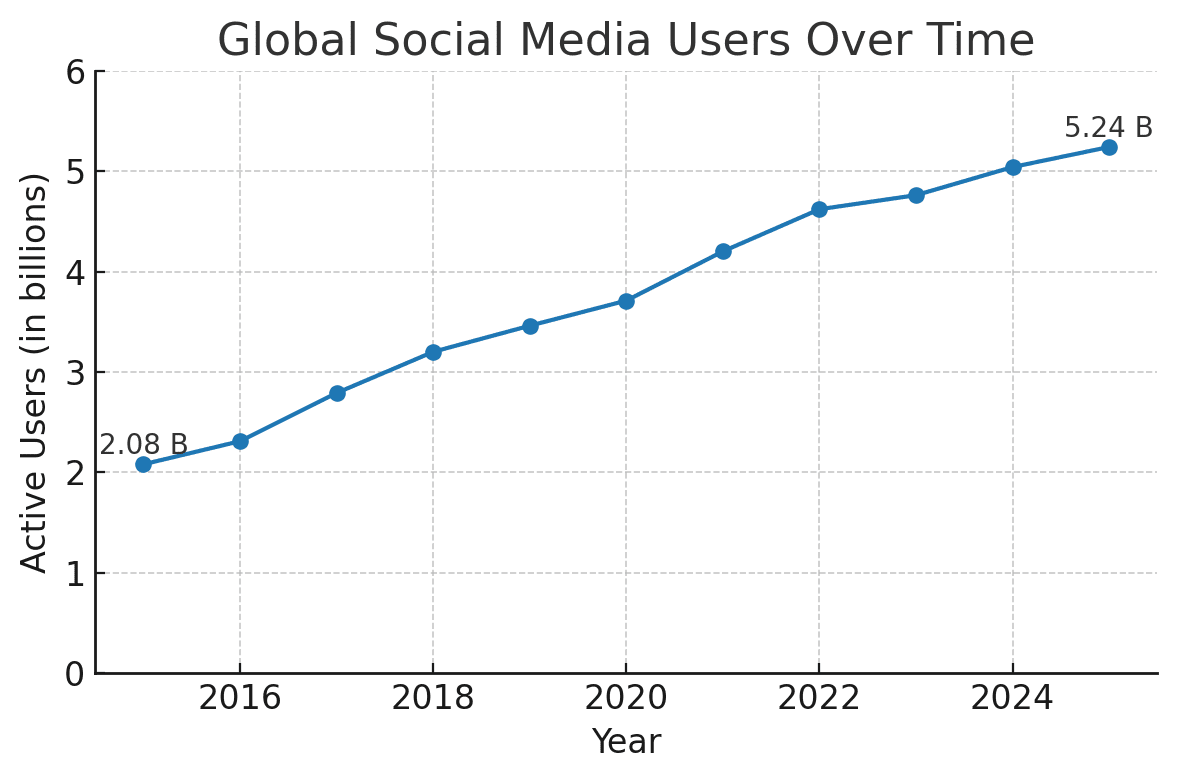
One of the biggest benefits of social media marketing is the sheer boost in brand visibility it provides. Social platforms host billions of daily active users, which means your brand’s content has the potential to be seen by far more people than traditional channels. By regularly posting and engaging on social media, even small e-commerce businesses can reach audiences around the globe without a massive advertising budget.
The statistics speak volumes: Over 96% of small businesses already use social media as part of their marketing strategy, and about 73% of marketers find social media effective for increasing brand awareness. Simply put, if your brand isn’t active on social media, you’re missing out on exposure to countless potential customers. Every like, share, or comment can introduce your business to new eyes, helping to build recognition. Especially for new e-commerce brands or Amazon sellers looking to make a name, an active social presence can rapidly accelerate brand awareness in a way that traditional word-of-mouth or print ads never could.
Pro Tip: Consistency is key. Use your brand’s logo, colors, and messaging style uniformly across profiles to reinforce recognition. Encourage satisfied customers to tag your brand or share unboxing experiences – this kind of user-generated content (UGC) from real people can further amplify your reach organically and lend authenticity to your brand.
Social media isn’t a one-way broadcast channel – it’s a two-way conversation. This interactive nature is a huge benefit: it allows for real-time engagement with your audience. Through posts, comments, stories, polls, and DMs, brands can actually talk with customers, not just talk at them. This fosters a sense of community and belonging around your brand.
When you consistently post relevant, interesting content (think behind-the-scenes peeks, how-to videos, polls, or memes related to your niche), you invite followers to interact – and these interactions deepen their connection to your business. Answering questions in comments or thanking someone for a review can humanize your brand. Over time, engaged followers often turn into loyal customers and even advocates who eagerly promote your products to their own friends and followers.
Importantly, engagement drives further visibility: every time a follower likes or shares your post, it can appear to their network, extending your reach organically. And when customers feel heard and valued, they tend to stick around. In fact, 71% of consumers say that if a brand’s social media interactions are attentive and helpful, they’re more likely to recommend that company to others. Simply put, active engagement on social media creates a positive feedback loop – the more you engage your audience, the more your audience will boost your brand.
Quick Win: Try incorporating interactive elements into your content. Run a poll about which new product flavor to launch, host an Instagram Q&A, or encourage users to caption a photo. These tactics not only boost engagement rates but also make your followers feel like part of the brand’s journey.
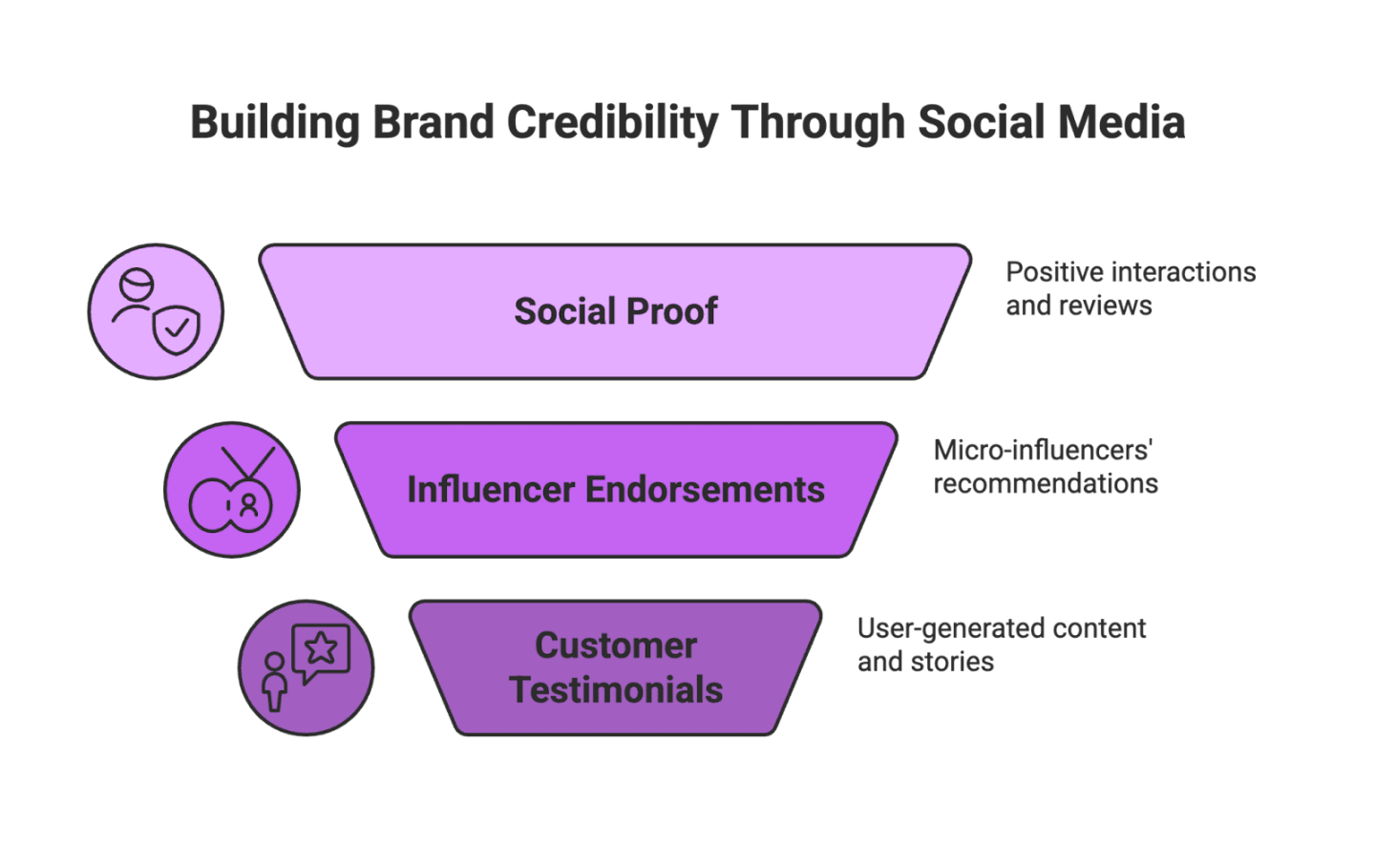
In crowded markets, establishing trust is everything. Social media marketing offers a platform for brands to position themselves as authorities in their field and build credibility among consumers. By sharing valuable, insightful content and demonstrating expertise, you can become the go-to resource in your niche. For instance, an online health food store might regularly post nutrition tips or recipes, while a tech gadget brand might share how-to videos and industry news. Over time, this consistent helpful content makes your audience view you as knowledgeable and trustworthy.
Furthermore, social proof plays a huge role in credibility. When potential customers see others interacting positively with your brand online, leaving good reviews, or when they see influencers and micro-influencers endorsing your products, it bolsters trust. In one survey, 84% of consumers said they trust peer recommendations (like those from micro-influencers or other users) over traditional advertising. This is why influencer marketing has become so powerful – a shoutout or product review from a content creator that your target audience follows can significantly enhance your brand’s credibility in their eyes. (It feels less like an ad and more like advice from a friend.)
Speaking of influencers, partnering with micro-influencers (creators with smaller but highly engaged followings) is an especially effective strategy for e-commerce brands to build credibility. Micro-influencers tend to have very loyal audiences, and their recommendations come across as genuine. Studies show that people are highly likely to trust a micro-influencer’s recommendation – up to 82% of consumers reported being very likely to follow a micro-influencer’s suggestions in at least one survey. By collaborating with the right influencers, your brand gains instant social proof, as well as quality content (photos, videos, reviews) that you can share. Platforms like Stack Influence specialize in connecting brands with micro-influencers to generate authentic UGC and trust at scale, which can be a game-changer for credibility.
Lastly, showcasing customer testimonials or user-generated content on your social feed can further boost authority. For example, reposting a customer’s photo using your product (with permission) or sharing success stories demonstrates that real people love your brand. All of these tactics work together to make new customers feel confident choosing you over a competitor.
Turning one-time buyers into loyal, repeat customers is significantly easier with social media marketing. Why? Because social media enables ongoing relationship-building after the purchase. By engaging customers through interesting content and responsive communication, brands stay “top of mind” and develop an emotional connection with their audience. Over time, this can cultivate a loyal community of customers who not only come back for more purchases but also become brand advocates.
How does this play out? First, social media gives your brand a voice and personality (more on that later), which humanizes your business. Customers feel like they know the people or values behind the brand, which fosters a deeper loyalty. Second, you can use social channels to reward and appreciate customers – for example, by offering followers exclusive discount codes, running social-media-only contests/giveaways, or featuring customer spotlights. When people feel appreciated and part of an inner circle, their allegiance to your brand grows.
Crucially, social media is also a channel for customer service and support, which directly impacts loyalty. Many consumers now turn to Facebook, Twitter, or Instagram to ask questions or resolve issues – in fact, about 75% of Twitter users have used that platform to interact with brands, and roughly half of those interactions are customer service related. By responding quickly and helpfully to inquiries or complaints on social media, you demonstrate reliability and care. This can turn a frustrated customer into a grateful one – and a happy customer into a loyal fan. (Nothing earns loyalty quite like a company that listens and takes care of its customers publicly for all to see.)
The payoff for nurturing loyalty through social media is huge. Studies have found that companies which build emotional connections with customers via social platforms can triple the customer’s lifetime value to the brand, and such engaged customers tend to spend 20–40% more with the company. Plus, loyal followers often spread the word, bringing in new business via referrals. It’s a virtuous cycle: social media helps create loyal customers, and loyal customers help promote your social media presence.
If your goal is to generate leads or drive sales (and let’s be honest, for most businesses it is), then social media marketing is a powerful ally. Social platforms can funnel a steady stream of interested prospects into your sales pipeline, often at a lower cost than traditional lead-gen methods. By sharing compelling content and strategic calls-to-action (CTAs), you can entice followers to join your email list, visit your website, or directly shop your products.
Social media is incredibly effective at lead generation. Don’t just take our word for it – 68% of marketers say that social media marketing helped them generate more leads for their business. For example, an e-commerce brand might post a product demo video with a “Swipe Up to Shop” link, or offer a free downloadable guide (in exchange for an email sign-up) via a Facebook post. Many platforms (like Instagram, Facebook, and Pinterest) have added shopping features and lead form ads that make it seamless for users to go from browsing to joining or buying.
Not only can social bring in leads, those leads often convert better. One study from HubSpot found that brands see a 100% higher lead-to-close rate (i.e. double the conversion rate) when they are actively engaging prospects on social media. Why might that be? Likely because by the time someone becomes a lead via social media, they’ve already had multiple touchpoints with your brand’s content and community – they feel more familiar and trusting of your business, which makes them more inclined to become a customer.
For Amazon sellers or direct-to-consumer brands, social media can also drive website traffic that converts into sales. Each social profile is essentially a funnel directing people to your product pages or site. By optimizing your bio links, utilizing features like Instagram’s product tags or Pinterest’s Rich Pins, and regularly posting about new arrivals or promotions, you can generate spikes of traffic whenever you share something compelling. And those social referrals often come with warmer intent (someone clicked because they liked what they saw), meaning they’re more likely to make a purchase compared to a cold click from elsewhere.
In short, if you’re looking to boost sales or build a list of prospective customers, don’t overlook the lead-gen potential of social media. It’s an always-on channel for attracting interested buyers.
For budget-conscious brands (and who isn’t, really?), social media marketing is amazingly cost-effective. Setting up a business page on major platforms is free, and even paid advertising or influencer partnerships on social can deliver a much higher return on investment (ROI) than traditional advertising methods. This means you can achieve significant marketing results without breaking the bank.
Consider traditional channels: printing flyers, running TV or radio ads, or large-scale billboards. Those often come with hefty price tags for production and placement, yet offer no guarantee that your target audience will pay attention. In contrast, on social media you can spend $0 to post quality content that reaches people organically, or choose to spend a modest sum on highly targeted ads that reach exactly who you want, where you want. It’s marketing on your terms and within your budget. In fact, traditional marketing methods cost about 3.4 times more per 1000 impressions than social media marketing – a striking difference in cost efficiency.
Even when you do invest money in social media (for example, boosting a post or running a Facebook/Instagram ad campaign), you can start with very small budgets and scale up as you see results. You’re in complete control of the spend. And thanks to detailed analytics (more on that soon), you can optimize campaigns in real-time to improve performance, ensuring every dollar works harder.
Another angle to consider is the cost-effectiveness of influencer marketing on social media. Particularly for e-commerce brands, partnering with micro-influencers can often yield better results at a lower cost than other forms of advertising. For example, rather than paying tens of thousands for one celebrity endorsement, you could work with a team of micro-influencers for the same budget – potentially getting dozens of authentic posts and reaching multiple niche communities. This strategy can dramatically multiply your reach and content output. It’s no surprise that working with micro and nano influencers can deliver an astonishing ROI – one study found around a 20:1 return on investment for micro-influencer campaigns (versus roughly 6:1 ROI for traditional macro-influencer or celebrity campaigns). In other words, micro-influencers punch above their weight when it comes to cost-effectiveness, often due to their lower fees and higher engagement rates.
Additionally, content created for social media has a longer shelf-life than, say, a paid ad that disappears when the budget runs out. A creative TikTok or Instagram Reel can continue to attract views and engagement for days or weeks after it’s posted – essentially giving you free ongoing impressions beyond the initial effort. And if that content is particularly useful or entertaining, followers might share it on their own, giving you even more bang for your buck.
All told, social media lets you do more with less. Especially for new brands or entrepreneurs with limited funds, it levels the playing field – you don’t need a Super Bowl ad to make a splash; a clever Tweet or a well-targeted campaign can yield great results at a fraction of the cost.
While social media and search engine optimization (SEO) are distinct marketing channels, they complement each other in powerful ways. Having an active social media presence can indirectly boost your website’s SEO and drive more organic traffic to your site or Amazon product pages. Here’s how it works:
When you share content from your website (like blog articles, product pages, or press releases) on social media and it gets traction, more people visit your site – which can lead to more backlinks and brand mentions on the web. For example, imagine you publish a helpful “How to Use XYZ Product” guide on your e-commerce site and post a snippet of it on LinkedIn or Reddit. If it gains attention, bloggers or news outlets might notice and link to your guide in their own content. These inbound links signal to search engines that your site has valuable content, which can improve your search rankings. In essence, social media can be a catalyst for content discovery, helping your content reach the people who might amplify it further (journalists, bloggers, industry influencers).
Additionally, social media profiles themselves often rank on Google. If someone searches your brand name, your Facebook or Instagram page might appear alongside your website, occupying more real estate on the search results page and giving customers more info and avenues to connect. A well-optimized social profile (with relevant keywords in your bio and posts) can thus enhance your overall online presence.
It’s worth noting that social media signals (likes, shares) aren’t a direct ranking factor in Google’s algorithm – but the secondary effects (traffic, links, branded searches) certainly are. There’s a symbiotic relationship: strong social engagement can lead to higher visibility off social, and higher search visibility can lead more people to find and follow you on social media. One data point: content that is widely shared and enriched with visuals gets significantly more attention – for instance, posts with relevant images are found to get 94% more views than text-only posts, which can translate into more traffic and buzz around your brand.
Finally, don’t forget the simple fact that every social media profile is another pathway to your site. A savvy social strategy will use these pathways smartly – like including your website link in your profiles, using link-in-bio tools to direct Instagram followers to your latest content or products, and sharing links (where allowed) in your posts or stories. All of this can add up to a notable uptick in visitors coming to your site via social channels. And typically, traffic from social media has some level of pre-qualification (they clicked because they liked something they saw), which can mean lower bounce rates and higher on-site engagement – factors that can further help with SEO.
Social media isn’t just a marketing megaphone – it’s also an incredible listening tool. Through your brand’s social channels, you have a direct line to real customers’ thoughts, questions, praise, and complaints in real time. This immediate feedback loop is a major benefit of social media marketing, as it allows your business to learn and adapt quickly to meet customer needs.
Think about the pre-social media era: companies had to rely on surveys, focus groups, or customer service calls to understand customer sentiment – processes that took weeks or months. Now, you can simply look at the comments on your latest post or check your DMs to gauge reactions to a new product launch or campaign instantly. Customers often won’t hold back – if they love something, you’ll know; if they’re confused or unhappy, you’ll hear that too. This candor can be incredibly valuable. It’s like having a continuous focus group at your fingertips. You can uncover frequently asked questions, identify pain points, or gather ideas for improvements just by monitoring the conversations happening on your pages. For example, a fashion e-commerce brand might notice multiple followers asking if a certain shoe comes in larger sizes – that’s a signal to update your sizing range or provide better size information.
Not only can you gather feedback, but you can also respond in real time, showing customers that you’re listening. If someone tweets about a defect in your product, a swift public response apologizing and offering a solution can turn a negative into a positive – and demonstrates to others that you have great customer service. On the flip side, when customers share positive experiences or creative uses for your product, you can amplify those stories (with permission), which not only flatters the customer but also provides social proof to your audience.
Beyond qualitative feedback, social media platforms provide robust analytics and data insights about your followers and content performance. You can dive into metrics like reach, engagement, click-through rates, audience demographics (age, location, interests), and even the times of day your followers are most active. All this data helps you understand your audience better than ever before. In fact, 73% of social media marketers say social media is effective for gaining insights and a deeper understanding of their target audience. By knowing which posts resonate the most, or what products get the most buzz, you can refine your marketing strategies and even inform product development. For instance, if you find that your posts about eco-friendly materials get 2x the engagement of other posts, it might signal an opportunity to expand that aspect of your business.
In summary, social media offers a dual benefit here: it’s both a real-time feedback channel and a rich data source. Use it to listen actively and to make data-driven decisions. Brands that tap into these insights can stay one step ahead of customer expectations and continuously improve their offerings and messaging.
Brands that succeed on social media tend to have something in common: a strong, relatable brand personality. Social media marketing allows you to craft and showcase your brand’s unique voice in a way that traditional advertising doesn’t. Are you witty and humorous like Taco Bell or Wendy’s? Inspirational and empowering like Dove? Snarky and bold, or warm and friendly? However you define your persona, social media is the stage to perform it. This is a huge benefit because people connect with personalities, not faceless corporations. By humanizing your brand, you make it easier for consumers to relate to you and ultimately trust you.
A consistent tone and style in your posts can set you apart in a crowded marketplace. When your followers can recognize a post as quintessentially “you” even before seeing your name, you’ve achieved something powerful. It builds a cohesive brand image across all channels. Moreover, having a defined voice makes content creation easier – you have guiding “character traits” to embody in everything you do, from the captions you write to the way you respond in comments.
Cultivating a brand personality is especially important for e-commerce brands trying to stand out among larger competitors. It’s not just what you sell, but how you talk about it that can win hearts. Take the example of Wendy’s on Twitter: they adopted a playful, cheeky tone – even playfully roasting competitors or followers – which gained viral fame. That tone resonated with a younger audience and made people excited to engage with a fast-food chain (of all things!). While not every brand should be snarky on Twitter, the principle is to find a voice that aligns with your values and appeals to your target audience. Maybe your brand voice is all about expert guidance (establishing you as a helpful mentor), or maybe it’s all about celebrating a lifestyle (positioning your products as part of an aspirational identity).
The benefit of expressing your brand’s voice on social media is the emotional connection it builds. As you consistently convey personality and values, followers start to feel like they “know” your brand on a personal level, similar to knowing a friend. This fosters trust and loyalty. Consumers are more likely to support brands that share their values or make them feel understood. In one survey, an overwhelming 90% of consumers said authenticity (being true to your personality/values) is important in deciding which brands they like and support. So, using social media to be authentic and personable isn’t just a nice-to-have – it directly impacts buying decisions.
Finally, a defined brand personality opens up opportunities for creative campaigns and storytelling. You can create recurring content series (like “Motivation Monday” inspirational posts if you’re a fitness brand with a positive tone, or meme-of-the-week if humor is your angle) that further cement who you are. When done right, your brand’s social content becomes something people look forward to because it’s entertaining or meaningful, not just promotional. That’s the point at which your social media truly starts to build community and culture around your business – something competitors will have a hard time copying.
Last but certainly not least, social media marketing enables even the smallest business in one location to reach customers across the world. It levels geographic boundaries in a way that traditional brick-and-mortar marketing simply can’t. Running an online store from, say, Austin, Texas? Through social media you can attract followers (and buyers) from Sydney to London to São Paulo if your content resonates. This global connectivity is transformative for growth.
For e-commerce brands and Amazon sellers, this means you aren’t limited to your local market – your potential customer base is truly international. Social platforms are used universally, and many (like Instagram, Facebook, TikTok) have robust penetration in countries all over. In fact, the average social media user engages with around 6–7 different platforms and spends over 2 hours per day on social media, whether they’re in Asia, Europe, or the Americas. With smart use of hashtags, trends, and even a modest budget for targeted ads, you can get your content in front of specific demographics in specific regions that align with your business goals (e.g. targeting fashion enthusiasts in Europe, or tech gadget fans in India).
Beyond just reaching more people, social media allows for cultural tailoring of your marketing. You can learn what content appeals to different audiences through analytics and then adjust your messaging for various regions – all still managed from one account if you choose. This kind of agile market expansion was unheard of before social media. Now, a niche product that might have too small an audience in one city can find its perfect fans scattered across the globe, and social media is the meeting point.
Global reach isn’t only about sales either – it’s also about sourcing inspiration and building partnerships. Through social listening you might discover an emerging trend overseas and be one of the first to bring it to your local market. Or you could connect with influencers or partner brands in other countries to collaborate on campaigns, thereby tapping into their local follower base. The possibilities are endless when geography is no longer a barrier.
To put it simply, social media opens the door for borderless growth. Many e-commerce success stories – from beauty brands to tech gadgets – have been written by savvy social media use that turned a small business into a worldwide phenomenon. Your next “superfan” customer might live on the other side of the planet, and through social media, you can say hello and welcome them into your community just as easily as if they walked into your local shop.
It’s clear that social media marketing offers tremendous benefits for brands – from boosting awareness and engagement to driving leads, sales, and loyalty – all in a cost-effective, data-rich way. For e-commerce brands, Amazon sellers, and creators, these advantages are even more pronounced. Social media is where your customers spend their time, discover new products, and form opinions about brands. By actively and authentically engaging on these platforms, you’re meeting your audience where they are and building real relationships with them.
Whether you leverage micro-influencers to add credibility, encourage UGC to amplify your message, or use analytics to hone your strategy, the key is to be consistent and customer-centric in your approach. The brands that win on social media are those that provide value, listen and respond to their community, and stay true to their identity.
In short, social media marketing isn’t just an optional add-on for modern businesses – it’s a must-have channel for sustainable growth. Embrace these benefits in your marketing game plan, experiment with content and campaigns, and watch how your online community and business flourish.. Happy posting and good luck growing your brand in the social sphere!
In the fast-paced world of social media marketing, engagement rate is one of the most telling metrics of success. For e-commerce brands and Amazon sellers leveraging influencer collaborations, understanding engagement rates is crucial. It answers the big question: Are people actually interacting with the content? A high engagement rate means an influencer’s audience is liking, commenting, sharing – in short, actively paying attention. A low rate can ring alarm bells about fake followers or bland content. In this blog post, we’ll break down what counts as an average (and good) influencer engagement rate on social platforms, why it matters for e-commerce marketers, and how micro-influencers, content creators, and UGC (user-generated content) play into the equation. We’ll also share some tips to boost engagement and a few handy charts to put the benchmarks in perspective. Let’s dive in!
Engagement rate is a measure of how actively an audience interacts with an influencer’s content. It’s typically expressed as a percentage of followers (or viewers) that engage. The formula can be as simple as:
Engagement Rate (%) = (Total interactions on a post / Total followers) × 100%
“Interactions” usually include likes, comments, shares, saves, and clicks – basically any action showing the audience is interested and involved. For example, if an Instagram post has 500 likes and comments combined and the influencer has 10,000 followers, the engagement rate is 5%. Higher engagement means the content resonates strongly with followers.
Why do e-commerce and Amazon sellers care about this? Because engagement is often a proxy for trust and influence. If an influencer’s audience frequently engages, it suggests they find the content valuable and the creator credible. High engagement builds trust, which is gold for brands hoping an influencer’s followers will take product recommendations seriously. On the flip side, a huge follower count with very little engagement can indicate a disconnected audience (or even bot followers). As one guide notes, “high engagement is a sign of trust and loyalty and hence a good indicator of success for many influencers.” In short, an influencer with 50k followers and a 5% engagement rate is often far more impactful than one with 500k followers but a 0.5% engagement rate.
Moreover, social platform algorithms favor engagement. Content that sparks more interactions tends to get boosted to more users. That means influencers (or brands) with better engagement can enjoy higher organic reach. For e-commerce brands, that can translate into more eyes on your products without paying for ads. Engagement rate also helps cut through vanity metrics. It’s a reality check beyond follower counts – reminding marketers that an active community beats a big but silent audience any day.
These figures represent recent benchmark data (late 2025 – early 2026) from credible industry analyses:
Mega (1M+): ~0.1% (est.)
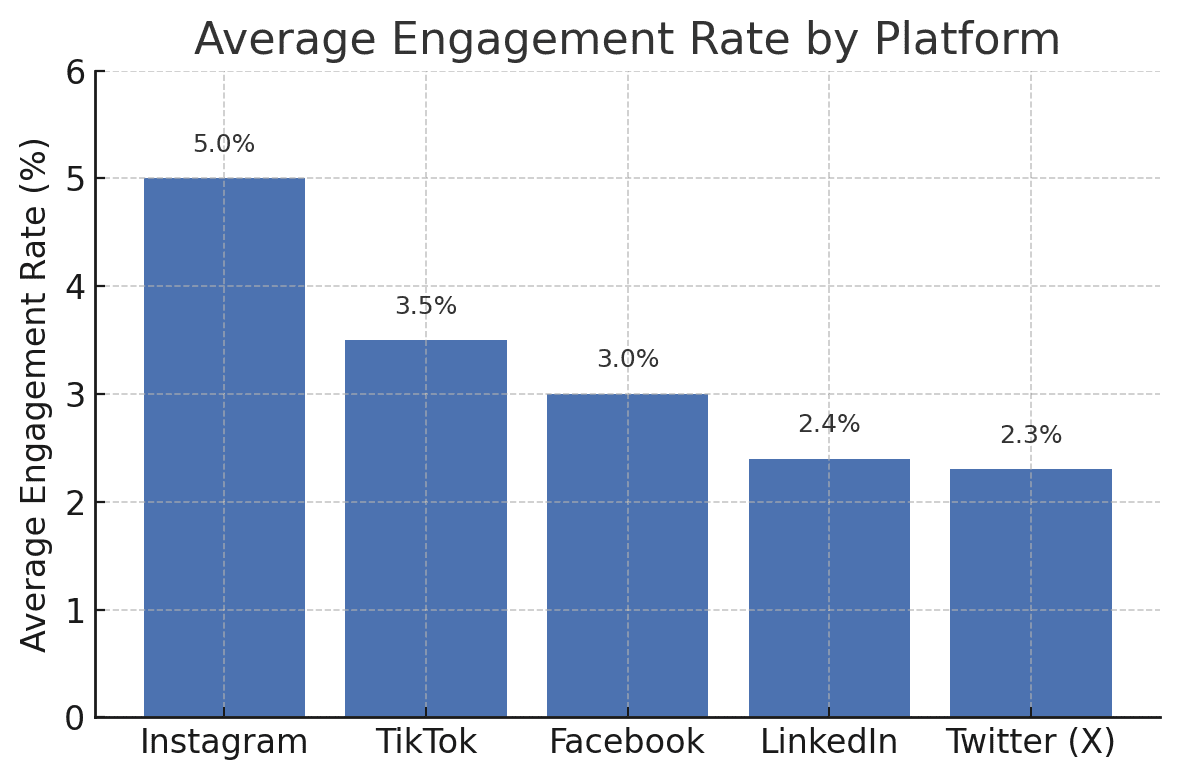
It’s important to realize that “average” engagement rates vary by platform. Social networks have different norms and user behaviors. For instance, Instagram is known for higher engagement relative to other platforms, thanks to its visual nature and interaction-friendly interface (double taps, story replies, etc.). TikTok, with its addictive short-form videos, can drive a ton of interaction as well. Meanwhile, Twitter (now X) and LinkedIn generally see lower engagement rates on posts – users might quickly scroll through updates without interacting as much.
Recent benchmark data highlights these differences. According to a Q4 2024 social media analysis, Instagram posts average around a 5.0% engagement rate, one of the highest across networks. TikTok isn’t far behind with roughly 3.5% average engagement. Facebook sits around 3.0%, while LinkedIn averages about 2.4%, and Twitter (X) comes in last at approximately 2.3%. These numbers make sense – a flashy product photo on Instagram or a catchy TikTok video naturally elicits more quick reactions than a text update on LinkedIn.
To put this into perspective, have a look at the chart below comparing typical engagement rates across major platforms:
Average engagement rate benchmarks by social media platform (Instagram tends to see higher interaction rates than Facebook, Twitter (X), or LinkedIn).
If your brand or influencer posts are getting ~2% engagement on Twitter but 6% on TikTok, that’s completely normal. Each platform’s audience behaves differently. Don’t panic if one channel underperforms another – instead, judge against the right benchmark. For example, a 3% engagement on Instagram might be mediocre (since IG’s average is around 5%), but that same 3% on Twitter would be outstanding. The key is to compare apples to apples: measure your Instagram engagement vs. Instagram norms, TikTok vs. TikTok norms, and so on.
Also consider industry differences. Engagement benchmarks can vary by niche or sector. (A fashion influencer’s audience might habitually like and comment more than, say, a B2B industry influencer’s audience.) One set of benchmarks from Hootsuite showed overall average engagement ~2% on Instagram across all industries, but higher in some sectors like media or sports. The main point is that “average” isn’t one-size-fits-all – use it as a reference point, not a rigid standard.
When evaluating influencers, size matters – but maybe not in the way you’d think. It turns out micro-influencers often generate a higher average engagement rate than macro- or mega-influencers. “Micro” generally refers to creators with tens of thousands of followers (not millions), whereas “macro” influencers have hundreds of thousands, and “mega” are the true celebrities with millions. Multiple studies have confirmed an inverse relationship between audience size and engagement rate: as follower count goes up, engagement percentage tends to drop.
For example, micro-influencers (say 10k–100k followers) might average in the ballpark of 3–6% engagement per post, while macro influencers (100k+ followers) see closer to 1–2% on average. That means a micro-influencer’s smaller audience is proportionally far more active and interactive. One analysis found that on Instagram, micro-influencers around this range enjoy roughly a 3.86% engagement rate, compared to only 1.21% for much larger influencers. In fact, micro influencers receive about 60% more engagement (relative to their audience size) than big-name influencers.
To visualize this contrast, check out the chart below. It compares an example average engagement rate for micro-influencers vs. mega influencers on Instagram:
Engagement rate comparison by influencer follower size: smaller “micro” influencers often see a significantly higher % of their followers engaging with content than do mega-influencers with millions of followers.
As you can see, a creator with, say, 50k followers might routinely get 5%+ of their audience engaging. Meanwhile, a celebrity account with 5 million followers may only spark engagement from ~1–2% of that massive audience. The reasons? Niche focus and community connection. Micro-influencers tend to cultivate tight-knit, highly interested communities. Their content is often more relatable and dialogue-driven. Followers see them as genuine peers or experts in a specific niche, whether it’s eco-friendly beauty or gourmet baking. There’s a sense of trust and friendship that drives more likes and comments. On the other hand, macro influencers – with their broad, diverse following – inevitably have a more passive audience. It’s hard to maintain the same level of personal connection when you’re speaking to millions of people.
From an e-commerce perspective, this is big news. It means that if you’re a brand looking for engagement (and ultimately conversions), partnering with a bunch of micro-influencers could deliver more bang for your buck than paying one superstar. Micro-influencers not only charge lower fees, but their followers are actually listening and interacting at a higher rate. For example, an Amazon seller launching a new kitchen gadget might get better results working with 10 cooking enthusiasts who each have 25k very engaged followers, than blowing the whole budget on one cooking celebrity with 1 million followers who yields only lukewarm engagement. As one marketing firm succinctly put it: “micro influencers may get fewer eyeballs overall, but the ones they reach are far more likely to click, comment, and convert.”’
We’ve talked about averages – but what counts as good? Here’s a general rule of thumb often cited by marketers and influencer platforms:
Engagement is low. This is below average on most platforms. If an influencer or brand page is under 1%, it might be a sign to re-evaluate content strategy or check for issues (e.g. irrelevant audience or fake followers).
A solid engagement rate on most social media. Most brands and influencers fall into this range, hovering around the middle of the pack. If you’re in this range, you’re doing okay – roughly keeping pace with typical benchmarks.
High engagement. Hitting 3%+ consistently means your audience finds your content very appealing. Many would consider 3-5% an indicator that the influencer is above average in connecting with followers.
Excellent engagement. Anything above five percent is top-tier (especially if sustained over many posts). This often means the content is viral or highly niche-relevant, provoking lots of interaction. Influencers with engagement in this territory are punching well above the norm. As Influencity’s research notes, engagement above 5% means your content is “making a real impact” with the audience.
Keep in mind these are broad strokes. What’s “good” can differ by platform and audience size. For instance, a TikTok creator might regularly see 10%+ engagement (due to how the For You page spreads content widely), so their bar for “excellent” might be higher than 5%. Meanwhile, a LinkedIn content creator might consider 2% very good because that platform’s interactions are generally lower. Context is everything – compare within the right frame of reference and consider the typical engagement in your specific community or industry niche.
Also remember that quality of engagement matters. 100 genuine comments (“I love this product, where can I buy it?”) are worth more than 1,000 random “nice pic!” comments from bots or disengaged followers. If you’re evaluating an influencer for a campaign, look deeper than the percentage: Are the comments meaningful? Is the audience asking questions, tagging friends, showing real interest? An influencer might have a 6% engagement rate, but if that engagement is mostly low-effort or off-topic, it’s less valuable. On the other hand, a niche content creator could have a modest 2% rate, but if those interactions are thoughtful and on-target (from exactly your customer demographic), it might still be a great partnership opportunity for your brand.
In summary, use engagement rate benchmarks as a guideline, but don’t obsess over them in isolation. Consistent growth and audience alignment often matter more. If your brand’s account or your influencer partner’s account is steadily rising from 2% to 3% to 4% over a few months, that trend is a great sign – keep doing what works. The upward momentum and loyalty being built are more important than hitting an arbitrary number.
Maybe you’ve checked the numbers and aren’t thrilled with where your engagement stands – or you just want to keep pushing it higher (who wouldn’t?). Whether you’re a content creator or a brand managing your own social media, here are some battle-tested tips to boost engagement rate:
This might sound obvious, but it’s the foundation. Posts should catch the eye (clear images or videos, interesting visuals) and provide value. For an e-commerce brand, that could mean sharable how-to videos, beautiful photos of your product in use, or funny relatable memes in your niche. Quality content that either entertains, educates, or inspires will naturally invite more likes and shares. Don’t be too “salesy” in every post – mix in genuine content that sparks conversation.
Tailor your content to what your followers care about. Use analytics to see what types of posts have gotten the most engagement in the past. Lean into your niche. An Amazon seller in home decor might engage people with DIY interior design tips, not just product photos. When content feels specifically relevant to a follower’s interests, they’re more likely to interact. (This is why micro-influencers do well – their niche expertise attracts a passionate audience.)
Inactive or erratic posting can cause your audience to drift away. Maintain a consistent posting schedule so followers know you’re active and to keep your content on their radar. At the same time, don’t overwhelm with too many posts (quality over quantity). It’s also key to post when your audience is actually online – if that means weekday evenings or Saturday morning, time your content accordingly for maximum visibility and engagement.
Brands can boost their own social engagement by partnering with influencers (yes, influencers collaborating with influencers is a thing, and brands collaborating with influencers definitely is). For instance, an e-commerce brand might do an Instagram Live Q&A with a content creator, or co-create a piece of content. These collaborations often bring an influencer’s highly engaged audience over to interact with your brand, effectively cross-pollinating engagement. As a platform that connects micro-influencers with e-commerce campaigns, Stack Influence has seen how a well-matched influencer partnership can rev up engagement and sales simultaneously.
By implementing these tactics, you’ll be well on your way to boosting that engagement rate. Remember, growth takes time – so stay consistent and keep the content authentic. Over time, you should see those likes, comments, saves, and shares trend upward.
If you’re an e-commerce brand or Amazon seller, you might wonder how all this influencer engagement rate talk translates to real business outcomes. The truth is, engagement rate can be a proxy for conversion potential. When an influencer’s audience is highly engaged, they’re not just passively scrolling – they’re paying attention and interacting. This typically means they trust the influencer’s voice and value their content. So if that influencer features your product, a high percentage of engaged followers are likely to notice and consider it, if not act on it.
Micro-influencers in particular are powerful allies for e-commerce. Their content often comes across as authentic UGC, like a friend sharing a recommendation. This authenticity leads to better engagement and can drive higher conversion rates. As noted earlier, a micro-influencer’s followers are more likely to click links (such as an Amazon product link), use a promo code, or leave a review after purchase, because they feel a closer connection and trust. In influencer marketing ROI terms, higher engagement often correlates with higher ROI – you’re getting more actual interaction and potential customers for the money you spend.
Moreover, engagement on influencer posts can create a halo effect for your brand’s own social media. If an influencer’s followers start talking about your product in the comments (“I need this!” or “Does anyone have one? How is it?”), that buzz can spill over. You might see increased followers on your brand account, more comments on your posts, and more UGC as people share their experiences. All of this social proof builds credibility for new shoppers who discover your brand.
Finally, algorithmically speaking, when an influencer’s post about your product gets strong engagement, it’s more likely to be shown to additional users (via Instagram’s Explore page, TikTok’s For You Page, etc.). For brands running paid influencer campaigns across regions, ad verification proxies can also help confirm that sponsored content, landing pages, and promotional placements appear correctly to different audiences. That means extra exposure beyond the influencer’s follower list – essentially bonus impressions and engagement that you didn’t even pay for. It’s like compounding interest on your influencer investment, courtesy of the social network algorithms rewarding engaging content.
In short, if you’re investing in influencer marketing, don’t just chase follower counts. Pay close attention to engagement rates. An influencer with a modest but active audience is often a smarter choice for e-commerce campaigns aiming for sales or brand awareness. The engagement rate is a signal that “this creator’s audience cares about what they post” – and by extension, they might care about your product when it’s featured.
As you plan your influencer campaigns or build your own social media presence, use the benchmarks and tips above as a guide. Track your metrics, celebrate steady improvements, and don’t be afraid to adjust your strategy based on what the data (and your audience) tell you. Whether you’re collaborating with a network of micro-influencers via a platform like Stack Influence or creating content in-house, the goal is the same: capture the attention and hearts of your target audience so they engage with your content – and eventually, with your brand or product.
In the age of content overload, an engaged audience is like gold. When you see those likes, comments, and shares flowing, you know you’re not just speaking into the void – you’re building a community. And ultimately, that’s what turns social media from just numbers into true business value. So keep an eye on those engagement rates, keep refining your approach, and watch as a “good” engagement rate leads to even greater marketing success.
In the fast-paced world of 2026, content creators and micro-influencers have more tools than ever at their disposal to create, share, and monetize content. Whether you’re an Instagram storyteller, a TikTok comedian, an Amazon seller promoting products, or a YouTube vlogger, the right apps can streamline your workflow and amplify your online presence. From editing photos and videos to brainstorming content ideas, scheduling posts, and generating UGC (user-generated content) for e-commerce brands, these apps cover all the bases. Let’s dive into the top 10 best apps that influencers (big and small) are using in 2026 to take their content game to the next level.
Influencers rely on a variety of tools. The chart above breaks down popular tool categories and the estimated percentage of influencers using them (photo and video editing tools are virtually a must-have, while many also use scheduling, monetization, planning, and analytics apps). The takeaway: successful content creators mix creativity with smart tools to save time and boost impact.
A post shared by Stack Influence (@stackinfluence)
If you’re looking to partner with brands and monetize your influence, Stack Influence is a game-changer. It’s the leading micro-influencer marketing platform that connects everyday content creators with e-commerce brands (including Amazon sellers) for product seeding campaigns. What does that mean? Essentially, micro-influencers get free products (or other compensation) in exchange for honest posts about those products, creating genuine buzz. Stack Influence automates these campaigns, making it easy for brands to scale up word-of-mouth marketing and for creators to get collaboration opportunities. Posts created through Stack Influence feel authentic because creators are paid with products, resulting in real personal experiences being shared – genuine UGC that resonates with audiences. If you’re a rising influencer who wants to work with brands or an Amazon seller seeking social proof, Stack Influence helps bridge the two in a way that’s seamless and authentic.
Every influencer knows the value of eye-catching visuals, and Canva remains the go-to app for creating them. Canva’s drag-and-drop interface and huge library of templates make design accessible even if you’re not a pro designer. Need to create an Instagram story, YouTube thumbnail, Pinterest pin, or even a media kit? Canva’s got you covered with pre-made templates and an endless supply of fonts, graphics, and stock photos. It’s incredibly popular – in fact, as of late 2024 Canva boasted over 220 million active users worldwide, a testament to its widespread adoption among content creators and businesses alike. You can whip up polished, branded graphics in minutes on either mobile or desktop. Pro tip: many micro-influencers use Canva to maintain a consistent look across their posts (think consistent color schemes, filters, and layouts) which helps build a recognizable personal brand. With Canva, you don’t need an art degree to make your content look professional and on-brand.
Thousands of templates for social media posts, the ability to remove backgrounds or animate text, and collaborative design folders to share with your team.
It saves time and money – no need to hire a graphic designer for everyday content. Plus, it’s web-based and has a great mobile app, so you can design on the go.
When it comes to editing TikToks, Reels, or YouTube Shorts, CapCut is a powerhouse that influencers are obsessed with. This free mobile video editor (developed by the same company behind TikTok) makes cutting and splicing clips, adding effects, and syncing music incredibly simple. It comes loaded with trending templates and special effects that make creating viral-worthy videos a breeze. Want to jump on the latest TikTok trend? CapCut’s templates let you plug in your own clips or photos and instantly have a polished, on-trend video. It’s no wonder CapCut has gained massive popularity among content creators – by 2024 it had around 323 million monthly active users globally. Influencers love that they can produce high-quality, engaging videos quickly on their phone, without needing complex desktop software. CapCut also supports 4K video and has handy features like auto-captions and background removal, which used to require separate apps or lots of manual effort.
Easy trimming and cutting, a rich library of filters, effects, and music, one-click trending templates, text overlays, and AI tools like automatic subtitles.
It’s tailor-made for social media video. As one of the most popular editing apps for TikTok and Reels, it enables creators to turn raw clips into slick videos that match the latest trends. Even if you’re new to video editing, CapCut’s intuitive interface lowers the learning curve.
Consistency is key in growing your following – but nobody has time to live-post every day. Later is an app that solves this by letting you plan, schedule, and automatically post to your social media accounts. It supports platforms like Instagram, Facebook, Twitter, and even TikTok, all in one dashboard. With Later, you can map out your content calendar, schedule posts for peak times, and ensure you never miss a posting day. The app also helps with Instagram hashtag suggestions and first comment scheduling, and it provides basic analytics on how your posts perform. According to one review, Later helps influencers plan, schedule, and auto-publish posts across Instagram, Facebook, and TikTok seamlessly. This means you can batch-create your content and let the app handle the publishing while you focus on engaging with your audience or creating new content.
Visual content calendar with drag-and-drop scheduling, automated publishing (including Stories and Reels via notifications), and a Linkin.bio feature that creates a mini landing page for your Instagram link.
It saves hours of manual posting each week and keeps your content organized. For anyone juggling multiple social platforms or accounts, a scheduler like Later is a lifesaver. Consistent posting without the stress = happier creator. (Bonus:) There’s a free plan, which is great for nano or micro-influencers just starting out, and later you can upgrade as your needs grow.
High-quality photos are non-negotiable for influencers, and Adobe Lightroom (especially the mobile app) is a favorite for perfecting images. Unlike simple filter apps, Lightroom gives you powerful control over details like lighting, color balance, and sharpness – yet it’s user-friendly enough that you don’t need to be a photography expert. One killer feature for content creators is Lightroom Presets, which allow you to apply a custom editing filter across multiple photos with one tap. This not only saves time but also helps keep your visual aesthetic consistent. In fact, using presets means you can edit a batch of photos in seconds, streamlining your content publishing and scheduling process. Many influencers (especially in niches like travel, fashion, or fitness) develop or buy signature preset packs so their feed has a cohesive look. With Lightroom you can create your own presets or use ones from others to get a professional vibe instantly. The mobile app syncs with the desktop version too, so you can start editing on your computer and fine-tune on your phone (or vice versa). However, for those looking to avoid a subscription model, there are many powerful Lightroom alternatives available, such as Skylum Luminar, Capture One, or Affinity Photo.
Advanced photo editing tools (exposure, colors, selective edits), one-tap presets, RAW photo support, and cloud backup of your photos.
It delivers professional-quality edits on a smartphone. Your photos will look like you hired a personal photo editor. Plus, you can fix or enhance tricky lighting after the fact. Bonus: If Lightroom feels too advanced for quick fixes, many creators also use VSCO, a popular mobile editing app with beautiful preset filters and a creative community for inspiration.
Being an influencer often means wearing many hats – you’re planning content, tracking brand collaborations, brainstorming new ideas, and maybe managing a team or a virtual assistant. Notion is the ultimate all-in-one organization app to keep your influencer life on track. Think of it as a supercharged digital notebook where you can build your own planners, calendars, and databases. Many content creators use Notion to create a content calendar – for example, a calendar where each entry is an idea or scheduled post with details like draft captions, platform, status, etc. You can also have a table for tracking brand deals (companies, deliverables, deadlines, payments) and even a board for your content ideas by stage (idea, in progress, published). In short, Notion is totally customizable to your workflow. According to one guide, Notion is a versatile app perfect for planning campaigns, tracking collaborations, and managing content ideas in one place. It’s like having Trello, Google Docs, and a notebook combined – but tailored exactly to your needs.
Customizable pages with text, tables, boards, calendars, and more. Tons of templates (including influencer-specific ones like content planners). Real-time collaboration if you work with others, and Notion Web Clipper to save inspiration from the web.
It keeps everything organized! No more scattered Google Docs and sticky notes. Whether you’re a solo content creator or part of a small team, Notion helps map out ideas to execution. For example, you might use Notion to draft your captions, plan an upcoming YouTube video script, and checklist your TikTok filming schedule – all in one app. It’s a huge productivity booster once you set it up to fit your style.

Creating timely, relevant content is a lot easier when you know what your audience is interested in. Google Trends isn’t a flashy editing tool or planner, but it’s a secret weapon for content ideation. This free tool (by Google) lets you see what topics are trending in search in real time. You can enter keywords related to your niche and see interest over time, regional interest, and related queries that are rising. Why does this matter for influencers? Because aligning your content with trending topics or seasonal spikes can boost discoverability. For instance, if you’re a tech YouTuber and see that “smart home gadgets” are trending this month, you might create content to ride that wave. Google Trends enables tracking of trending topics across various regions and languages, helping creators produce content that’s well-timed and in sync with audience interests. Even on platforms like Instagram or TikTok, understanding broader search trends can inspire new post ideas or hashtags to tap into. It basically gives you insight into the collective mind of the internet.
Real-time search trends, filters by country/time/category, and comparisons between terms. Also shows related topics & queries (great for finding content angles).
It’s fantastic for brainstorming content ideas that will resonate. Stuck on what to post this week? A quick look at Google Trends might show, say, a spike in “DIY home office decor” – telling a lifestyle influencer that now’s a good time to post that desk makeover reel. It takes some of the guesswork out of knowing what your audience might care about at any given moment.
Influencers often have multiple things to promote – your social profiles, your latest YouTube video, an online store, affiliate links, a Patreon, etc. And since apps like Instagram and TikTok give you only one link in bio, a whole category of “link in bio” tools has emerged. Koji is one of the hottest link-in-bio apps in 2026, going beyond a basic link list. Koji provides an interactive mini-website as your bio link, with easy-to-use tools for selling products, promoting affiliate links, and even accepting fan tips directly. Think of it as a monetization hub: you can add a tip jar for followers who want to support you, sell digital products or shoutouts, feature your latest videos or blog posts with nice previews, and more – all within that single bio link. It’s highly customizable with different templates and features called “Kojis” (apps you can add to your page for specific functions). For example, you could have a product showcase Koji to sell your Lightroom preset pack, an AMA Koji where fans pay to ask you questions, and a YouTube feed Koji showing your recent videos.
Fully customizable link-in-bio page, built-in mini apps for e-commerce, services, and engagement (quizzes, Q&As, etc.), analytics on link clicks and revenue, and no coding required.
It unlocks new revenue streams and engagement right from your bio. Instead of a boring Linktree with just a list of links, Koji makes your bio link an extension of your brand. Fans can directly buy or interact without leaving the app, which increases conversions. For micro-influencers and creators, it’s an easy way to start monetizing – whether you’re an Amazon seller listing products or a creator offering exclusive content, Koji helps you do it in one neat link.
If you frequently talk about products you love (beauty, tech, home, anything!) on social media, the Amazon Influencer Program is an app (and program) you should know about. This program lets influencers earn commissions by promoting products available on Amazon. It’s essentially an extension of Amazon’s affiliate marketing tailored for influencers. You apply and, once accepted, you get your own Amazon storefront URL where you can curate lists of your favorite products. When you share your storefront or specific product links and your followers buy through them, you earn a percentage of those sales. Influencers often use this to link products they feature in their content – for example, a fitness influencer might have an “Amazon storefront” link in bio with their recommended yoga mats, supplements, etc. Some also host Amazon Live streams (Amazon’s live-shopping feature) to showcase products in real-time. For Amazon sellers, this program is a way to get products in front of new audiences via these influencers’ recommendations, so it’s a win-win. In 2026, with so much social commerce happening, the Amazon Influencer Program is a popular route for creators to monetize their content through e-commerce affiliations.
Your personal Amazon storefront, ability to create idea lists (e.g. “Summer Must-Haves”, “Camera Gear I Use”), live streaming integration, and analytics on clicks and earnings.
Trust and convenience. Almost everyone shops on Amazon, so when you recommend a product via Amazon, followers find it easy to buy (Prime shipping, yay!). You don’t have to handle any inventory or customer service – you just share what you genuinely like, and Amazon handles the rest. Over time, those commission earnings can add up significantly, essentially turning your product recommendations into a passive income stream. Plus, being part of the program can make you more attractive to brands (especially Amazon sellers) who may send you products to review, since they know you have a built-in way to showcase and link them.
Last but definitely not least, let’s talk AI. ChatGPT (and similar AI tools) have exploded onto the scene, and many influencers are embracing them to work smarter. ChatGPT is an AI chatbot that can assist you with all sorts of creative tasks: brainstorming content ideas, writing captions, generating video script outlines, drafting emails, you name it. It’s like having a super knowledgeable (and super fast) writing assistant on call 24/7. Need 10 ideas for your next cooking livestream? Ask ChatGPT. Struggling with how to phrase a brand collaboration email or come up with a catchy YouTube title? ChatGPT can give you suggestions in seconds. According to Later’s 2026 trend report, ChatGPT is a free tool that makes it easy to get new content ideas and even step-by-step instructions for new social media strategies. The AI is trained on vast information, so it can help generate creative prompts or research info for you. And it’s not just hype – by early 2024 ChatGPT had reached an estimated 180 million monthly users, making it the fastest-growing app in history. This shows how quickly creators and professionals have integrated AI into their workflows. Of course, you’ll always add your personal touch to whatever ChatGPT helps with (authenticity is still king!), but it can seriously reduce writer’s block and save time on the tedious stuff.
Natural language Q&A format – you just chat with it. Ability to remember context in a conversation, so you can refine outputs. Versatility in generating text on virtually any topic. (There are also specialized AI tools for images, captions, and more, but ChatGPT is a great all-around starting point.)
Saves time and boosts creativity. It’s like having an assistant to bounce ideas off of or do initial drafts. For example, a content creator might use ChatGPT to draft three variations of a caption for their next post, then tweak the best one to fit their voice. Or use it to generate a list of trending TikTok challenges in their niche. It helps you work faster, so you can focus more on creating and less on brainstorming or administrative writing tasks. In 2026, savvy influencers are those who treat AI as a collaborator – using it to enhance (not replace) their unique creative voice.
To sum it up, the best apps for influencers in 2026 span across editing, planning, networking, and monetization – reflecting the many hats that creators wear. As a content creator or micro-influencer, leveraging these tools can seriously level-up your efficiency and content quality. Want to produce scroll-stopping visuals? Canva and Lightroom have your back. Need to stay consistent and organized? Later and Notion keep the content pipeline flowing. In the end, success in the influencer world is a mix of creativity, authenticity, and smart strategy. These apps won’t make you internet-famous overnight, but they will make your journey as a creator smoother and more productive. By integrating the right tools into your routine, you can focus on what you do best – creating great content and connecting with your audience – while the apps handle the rest. Whether you’re an Amazon seller-turned-influencer showcasing your own products, or a TikTok comedian looking to streamline your workflow, there’s an app (or three) on this list that can help you shine. Here’s to working smarter in 2026 and watching your personal brand thrive!
Being an influencer – whether on Instagram, TikTok, YouTube, or any platform – isn’t just a hobby anymore. It’s a booming business. In fact, the influencer marketing industry is valued at roughly $24 billion in 2024 (up from $21.1B in 2023). Brands of all sizes (from major retailers to small Amazon sellers) are investing in creators to reach consumers. And it’s not just mega-celebrities cashing in – micro-influencers (those with smaller, niche followings) are also finding ways to monetize their content in the e-commerce era. From product reviews and unboxing videos to creative TikTok skits, content creators today have more opportunities than ever to earn money doing what they love.
That said, making a living as an influencer often means diversifying your income streams. Relying on just one source (say, only sponsored posts or just ad revenue) can be risky – algorithms change and trends come and go. Top creators typically mix and match multiple revenue streams to build a stable business. Even if you’re just starting out as a micro-influencer, you can combine several methods (like partnering with brands, using affiliate links, and creating your own products) to maximize your earnings and resilience. The good news? There are many ways to make money as an influencer, and you don’t need millions of followers to get started.
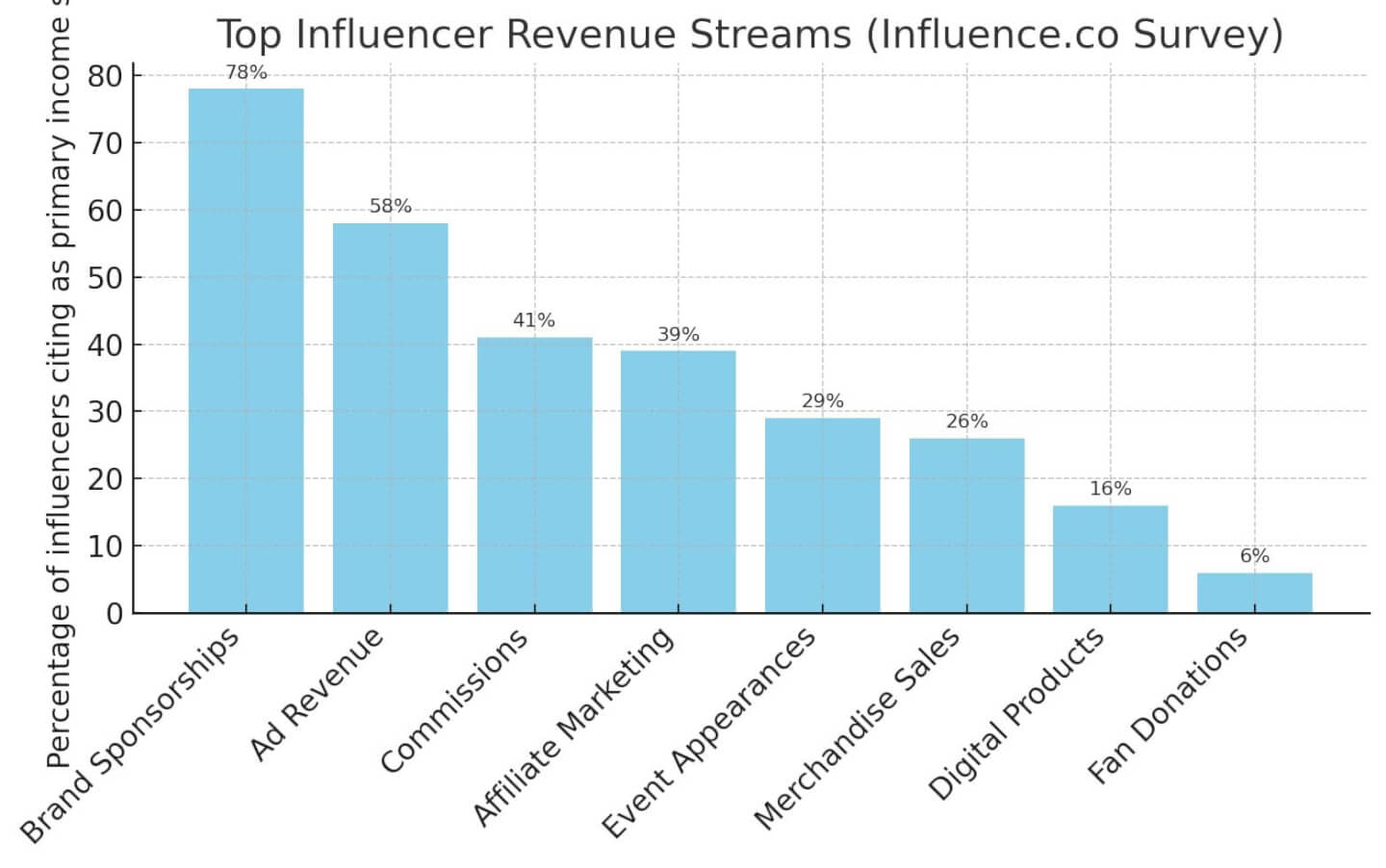
Chart: A survey of influencers (Influence.co, reported by Business Insider) showed brand sponsorships were the #1 income stream for 78% of creators, followed by platform ad revenue (58%), and commission-based sales/affiliate marketing (around 40%). Many creators also earn from events, selling merchandise or digital products, and fan donations.
Before diving into the top ways influencers make money, keep in mind that how much you can earn will depend on a few key factors:
Now, let’s explore the top 10 ways influencers make money (and how you can too!). Whether you’re an aspiring creator or a seasoned influencer looking to expand your revenue, these strategies cover the most popular monetization methods in 2025.
Sponsored content is the classic way influencers earn cash. This is when brands pay you to feature their product or service in your social media post, video, or story. For example, a fitness Instagrammer might get paid to post a photo wearing a certain activewear brand, or a TikTok star might do a funny skit showcasing a new gadget. Sponsored posts are popular because they can be very lucrative – over 80% of influencers cite sponsored content as an income source, and many creators, even with modest followings, earn hundreds of dollars per post. Top-tier influencers can even get thousands (or more) for a single post.
In a typical sponsored deal, the brand and influencer agree on deliverables (e.g. one Instagram Reel and two Stories) and a fee. The influencer creates the content (following any guidelines) and includes disclosures like #ad or #sponsored. Brands love this because it taps into the trust you’ve built with your audience. Done right, it’s a win-win: you get paid and the brand gets exposure.
Not all “sponsored” collaborations involve cash – especially for micro-influencers, a common arrangement is to receive free products in exchange for a post. This is also known as product seeding or gifting. For newer influencers, gifting campaigns are a great way to start working with brands without needing a big follower count or formal contract. You might not get money upfront, but you build your influencer resume (and your content portfolio) by showing you can promote products professionally. For those looking to present this experience clearly, checking out relevant resume introduction examples can help craft a strong summary that highlights your early brand collaborations effectively. Brands benefit too: compensating micro influencers with product often yields authentic content and word-of-mouth buzz. Example: a small skincare brand might send you a free facial serum; in return, you post an Instagram review or a before-and-after TikTok. You get to try cool products (for free), and the brand gets genuine content and exposure.
If you’ve ever seen a YouTuber say “use my link to get 10% off” or an Instagrammer link products with special URLs, that’s affiliate marketing in action. In this model, you earn a commission for sales or traffic that you drive to a brand, usually via a unique link or coupon code. Unlike sponsored posts, you’re typically not paid upfront; instead, you earn a percentage (anywhere from ~5% to 30% depending on the program) of any sale that comes through your link. This can be a fantastic passive income stream – you might wake up to new earnings from purchases followers made overnight!
One of the most popular is Amazon Associates (Amazon’s affiliate program), where creators earn a small cut of any Amazon products they recommend. This is especially great for tech reviewers, beauty gurus, and even Amazon Live influencers who create idea lists or product videos. Other examples include LiketoKnow.it for fashion, ShareASale or Commission Junction for various brands, or direct brand programs (many companies have their own affiliate sign-ups). According to industry stats, nearly 1 in 5 influencers (19%) use affiliate links as an income source, so it’s a well-trodden path for creators – especially those in niches like tech, beauty, fashion, and DIY where product recommendations are common.
Affiliate deals are essentially performance-based – a brand only pays you when you deliver results (sales or leads). This low-risk model means tons of e-commerce companies and Amazon sellers are happy to work with micro-influencers this way, since any commission you earn came from a sale they might not have gotten otherwise. For influencers, it means unlimited earning potential: if one of your posts or videos goes viral and drives $50,000 in sales, you get a nice chunk of that! Even with a smaller audience, over time those little commissions can snowball, especially if you have evergreen content (like a blog post or YouTube video that keeps getting views and clicks months later). Influencer marketing isn’t just for selling products; nonprofits now use it to raise awareness, drive donations, and build support. If you’re a mission-driven creator, this guide shows how influencers can partner with nonprofits for real impact.
Sign up for a few affiliate programs that make sense for your niche. Share honest recommendations of products you truly use – authenticity will drive more followers to trust your links. Post your links wherever relevant: in YouTube descriptions, blog posts, Instagram swipe-ups, TikTok bios (using a Linktree), etc. Just remember, like all monetization, it works best when you’re genuinely providing value (e.g. real reviews, helpful how-tos). Also disclose affiliate links per guidelines. It might start small (maybe you earn just $10 your first month), but as your content and audience grow, affiliate income can become a solid revenue stream that literally earns money while you sleep.
Ever wonder how YouTubers make money beyond their sponsored shoutouts? The answer is often ad revenue. Platforms like YouTube, Facebook, and even TikTok share a portion of advertising income with creators. On YouTube, once you meet the eligibility (e.g. 1,000 subscribers and 4,000 watch hours), you can join the YouTube Partner Program and start monetizing your videos with ads. When viewers watch or click those ads, you get paid a small amount. It varies widely, but roughly a YouTuber might earn around $2–$10 per 1,000 views (more if their audience is in high-ad-value demographics). It doesn’t sound like much, but for videos with millions of views it adds up – creators have reported earnings anywhere from $3,600 up to $40,000 for a single video with ~1 million views (it depends on content niche, advertiser rates, etc.). No wonder 58% of influencers in one survey said ad revenue was a top income source.
Facebook has In-Stream Ads for video creators. TikTok introduced a Creator Fund that pays based on video views (though rates are modest). Twitch (for streamers) allows ads and also subscriptions (more on subs later). Even Instagram has experimented with ads on IGTV/reels for creators, and Snapchat has a creator gifting program. If you run a blog or website, you can use ad networks like Google AdSense or Mediavine to earn from banner ads when people visit your site. Podcast influencers might get income from traditional ad reads in their episodes. Essentially, if you’re creating content on a platform that offers revenue sharing, take advantage of it – it can be a nice baseline income each month.
Ad revenue can be unpredictable and usually won’t be your biggest money-maker unless you have massive view counts. Think of it as coffee money that can grow to rent money as your audience grows. It’s also heavily dependent on algorithms (a change in YouTube’s recommendations could spike or tank your views). So, it’s smart to diversify. But hey, if you’re making content anyway, enabling ads is a no-brainer to earn a little extra on the side. Just be mindful of platform rules (e.g. YouTube will demonetize videos that aren’t ad-friendly) and try not to annoy your audience with too many ads. When you hit that “monetize” toggle, you’re officially turning your content into a revenue source – congrats!
Many influencers eventually ask: “What if I had something of my own to sell?” Enter merchandise and product lines. This is when you turn your personal brand into physical products – commonly T-shirts, hoodies, mugs, hats, or other branded swag. For example, a popular travel vlogger might sell a custom travel journal or a photographer influencer might sell printed photo books or art prints. Fans love merch because it’s a way to feel connected to their favorite creator (like wearing an inside-joke T-shirt or using a coffee mug with your slogan). And for you, the creator, it’s a new income stream and free promotion when your followers sport your gear.Beyond generic merch, some influencers go further and launch full product brands: think makeup gurus launching a makeup line, fitness influencers launching a supplement or activewear line, or a foodie influencer selling a custom spice blend. These are more complex (often involving partnering with manufacturers), but can be extremely lucrative if your audience is on board. Even a micro-influencer can have success here if they have a tight-knit community willing to buy.
It varies. Only about 26% of influencers said merch was a primary income source, as it’s less common than sponsorships or affiliate marketing. But those who do it can see significant profits, especially if the merch resonates. One smart approach is using print-on-demand services (like Teespring, Printful, etc.) – these handle the printing and shipping, so you don’t need upfront inventory. Your profit per item is lower, but there’s less risk and no need to buy 500 shirts in advance. As you grow, you might switch to custom manufacturing for higher margins.Pro Tip: If you launch merch, make it meaningful. A shirt with just your username might not be compelling, but a clever phrase you’re known for, a cool design, or something that ties into your niche will excite your followers. For instance, if you’re a gaming creator known for a funny catchphrase, put that on a hat. Or if you’re a sustainability blogger, maybe offer eco-friendly tote bags with a cute design. Also, promote it creatively – unbox your own merch on IG Live, have fans share pics wearing it, maybe do limited drops to create urgency. Merch not only brings income but also strengthens your personal brand – it’s like your community’s uniform!
While physical merch is great, don’t overlook the power of digital products. These have become a goldmine for many creators because they are high-margin and scalable. Once you create a digital product, you can sell it an unlimited number of times with minimal extra cost. Common digital products influencers offer include:
Are you a travel influencer with tons of tips? Maybe write a “Ultimate Budget Travel Guide” e-book. Fashion influencer? How about a style lookbook PDF or a guide to posing for photos.
If you have expertise, people are often willing to pay to learn. Creators have launched courses on everything from “How to grow on Instagram” to cooking classes to photography masterclasse to learning japanese. Platforms like Teachable or Udemy can host your course, or you can offer webinars.
A photographer might sell Lightroom presets (pre-made filters) so fans can edit photos with one click in your signature style. A blogger might sell Pinterest pin templates or media kit templates. A fitness influencer could sell a 4-week workout program PDF or meal plan.
Some creators package their past content in an organized way – e.g. access to an archive of high-res photos, or a set of unreleased music tracks, or design graphics – basically content that super-fans or fellow creators might pay to use.
Digital products can be hugely profitable. Create it once, and each new sale is mostly profit. Some influencers have made serious money – for example, top creators have earned millions from online courses alone. Even if you’re not aiming for seven figures, an e-book that sells for $20 could bring a nice income if even a few hundred followers buy it. And your audience is global – anyone anywhere can download a PDF or watch an online class, so you’re not limited by shipping.
Keep in mind: The challenge with digital products is upfront effort and making it valuable. You have to invest time (and maybe some money) to create something high-quality. And once it’s available, you need to market it – just having a course doesn’t mean people will flock to buy it. You’ll use your influencer channels to promote, maybe gather testimonials from early buyers, perhaps run discounts or affiliate deals for your product. Also, uniqueness matters: the internet is full of courses and guides, so think about what you offer that’s different. If you consistently get certain questions from your followers (“How do you edit your videos?” or “Can you share your recipe?”), that’s a clue to what knowledge product people might pay for. Start with something manageable – say a short guide or mini-course – and gauge interest. Digital goods are a fantastic way to monetize your know-how and provide extra value to your followers who want to dive deeper with you.
Not all income has to come from brands or selling something – many influencers earn thanks to their fans’ direct support. If you have a loyal audience, some of them might be willing to pay for exclusive content or perks. This is where platforms like Patreon, OnlyFans, YouTube Channel Memberships, Twitch Subscriptions, and others come in. The idea is: fans pay a monthly subscription (or send one-time tips) to support you, and in return they get special access.
Patreon is a popular one – you can set up tiers (e.g. $5/month, $10/month) and offer benefits like bonus episodes, behind-the-scenes vlogs, early access to videos, private Discord chat, shoutouts, or whatever creative perks fit your style. Some creators use OnlyFans similarly (despite its reputation for adult content, there are plenty of SFW creators on there too, offering exclusive cosplay pics, fitness tips, etc.). Even Telegram or WhatsApp groups or Substack newsletters can act as a subscription model if you charge for access. The beauty is recurring revenue – it’s more predictable than one-off sales. As an example, even 50 members paying $10/month is $500 every month for you, which can cover some bills. Some creators have turned this into a primary income; there are podcasters, for instance, making a full-time living from a few thousand Patreon subscribers.
Big social platforms have caught on and introduced their own ways for fans to pay creators. For example, Instagram now has Subscriptions where creators can offer exclusive Stories or Lives to subscribers. Twitter (now X) has a “Super Follow” subscription feature. Twitch streamers get subscribers who pay (often $4.99/mo, with Twitch and the streamer splitting that). YouTube has paid Channel Memberships and also features like Super Chat and Stickers where viewers pay to highlight their message during live streams. On TikTok or Instagram Live, fans can send virtual gifts (like TikTok Diamonds or IG Badges) that convert into real money for the creator. Even Facebook has Stars for live streams. These are essentially donations or tips. They might seem small (e.g. a fan buys a $1.99 badge), but many small contributions from a large audience can add up. In a survey, about 6% of influencers said fan donations (tips, memberships) were a primary income source – not huge, but it’s growing as these features expand.
To succeed here, you need to nurture your community. People will only pay if they feel a strong connection and find your extra content worth it. So, engage with your audience, find out what they’d value (Q&A sessions? Mentorship? Bonus content?), and consistently deliver. It’s also okay to promote it: remind your fans that if they love your work, one of the best ways to support you is through these channels (sometimes they just don’t know!). And always thank your supporters – small shoutouts or simply expressing gratitude goes a long way in keeping that community vibe. Fan support can start slow – maybe just a couple people – but if you treat those first subscribers like gold and keep delivering, that number can grow into a solid side income (or one day, a main income). Plus, it feels amazing to know your audience values you enough to invest in you directly!
As you build relationships with brands through sponsored posts or gifting collaborations, you might land the holy grail: a brand ambassadorship. This is typically a long-term partnership where you become one of the “faces” or representatives of a brand. Instead of a one-off post, you might sign a 3-month or 1-year contract to promote the brand periodically, attend events, or produce a certain amount of content. Ambassadors often get perks like early access to products, bigger compensation packages, and a closer relationship with the brand (sometimes even input on products). For instance, a beauty micro-influencer might be an ambassador for a cosmetics line, agreeing to create monthly makeup looks using their products, and appear at a couple of the brand’s launch events. In return, they get a monthly retainer or a bundle payment, lots of free products, and clout from being associated with a known brand.
They usually come with steady pay and benefits. Many brands recruit high-performing creators (not necessarily the ones with the biggest followers, but those who deliver great content and sales) into ambassador programs. It gives you more financial stability versus chasing individual deals. Ambassadorships also boost your credibility – you can say “I’m an official ambassador for XYZ Co.” which is great for your media kit. Sometimes ambassadorships also involve licensing your content or even your name/image for the brand’s use. For example, your photo might appear on the brand’s website or ads (make sure you negotiate usage rights for that!). In some high-profile cases, it even leads to product co-creation – like when TikTok star Charli D’Amelio had a Dunkin’ Donuts drink named after her. You don’t have to be a celebrity for co-creation though; some niche influencers collaborate on designing a new flavor, a capsule collection, etc. That often comes with a royalty on sales – meaning you earn a percentage of each product sold.
Ambassadorships typically require professionalism and commitment. You’re kind of like a part-time employee of the brand for that period. You might have exclusivity clauses (e.g. if you’re the ambassador for Nike, you probably can’t promote Adidas at the same time). You’ll need to really love the brand because you’ll talk about them a lot! But if it’s a natural fit, this can be one of the most rewarding collaborations. It’s often something you work up to – you might start with a small sponsored post, do well, then get invited into a longer partnership. Always do your best work in any collab; brands notice and could escalate the relationship. Ambassadorships and major collabs tend to go to influencers who are consistent, reliable, and create high-quality content that aligns with the brand’s identity.
Once you’ve grown a following, don’t be surprised if opportunities pop up beyond the screen. Many influencers monetize their personal brand by making paid appearances – anything from speaking on a panel at a conference, to hosting a workshop, to being a guest at an event or party. If you’ve ever seen YouTubers at conventions (like VidCon, BeautyCon, Comic-Con etc.), know that often they are paid to be there or at least have their expenses covered. Even smaller scale, a local business might invite a foodie influencer to demo a recipe in-store, or a university might invite a motivational TikToker to give a talk to students. These gigs typically come with an appearance fee or honorarium. For well-known creators, this can be hefty (four, five, even six figures for big names). But even micro-influencers might get a few hundred dollars to speak at a workshop or sit on a panel, especially if they have specialized knowledge.
If you’re skilled at teaching, you can also organize your own paid workshops or webinars. For example, a photography influencer could hold a weekend photo workshop where attendees pay to learn in person. Or a craft influencer might do a paid Zoom class for holiday DIY projects. To maximise the profitability of these sessions, keeping overhead costs low is essential; utilising a Zoom discount for an annual Pro plan can help you access advanced features like longer meeting durations and cloud recording without cutting deeply into your margins. Live, interactive experiences are something fans will pay for because they get direct access to you and your skills. Plus, you can double-dip – charge admission and maybe sell merch or books at the event too.
If you’re skilled at teaching, you can also organize your own paid workshops or webinars. For example, a photography influencer could hold a weekend photo workshop where attendees pay to learn in person. Or a craft influencer might do a paid Zoom class for holiday DIY projects. Live, interactive experiences are something fans will pay for because they get direct access to you and your skills. Plus, you can double-dip – charge admission and maybe sell merch or books at the event too.
Not only do events pay, they also position you as an expert/authority. Being able to say you spoke at an industry conference or gave a keynote speech is a boost to your reputation. It can lead to more followers (audiences often check you out after seeing you speak) and more opportunities down the line. Many influencers find that as they become recognized in their niche, invites for speaking or hosting start coming in. Sometimes you might even have to pitch yourself – if you see a relevant event, reach out and offer to speak on a topic you know well. Over time, you could join a speakers bureau or get an agent for appearances if it becomes a big part of your income.
Paid appearances were hit during the pandemic (lots of cancellations), but they’re bouncing back now with virtual events and in-person conferences returning. This income stream probably won’t be your first as an aspiring influencer (you need some clout before people pay you to show up), but keep it on your radar as you grow. Even doing a couple talks a year can be decent money and great networking. Plus, it’s just fun to meet your followers or like-minded people in real life – a refreshing change from just seeing comments on a screen!
Remember, as an influencer you develop valuable skills: content creation, social media strategy, photography, video editing, marketing, on-camera presentation, and more. A clever way to monetize these skills is by offering services or coaching outside of just your own content. This could mean working with individuals or businesses who could use your expertise. Here are a few examples:
If you cracked the code on growing from 0 to 50k followers, there are plenty of folks who’d love guidance on doing the same. Some established creators offer one-on-one coaching calls, audits of someone’s social media profile with feedback, or even mentorship programs. In fact, about 31% of influencers have done consulting work to advise others. You could charge hourly or have a package (e.g. $200 for a one-hour coaching session on content strategy). It’s rewarding to help others and see them grow.
Businesses (especially small ones) often seek help with their social media presence. As an influencer, you are a social media pro. You might consult a local boutique on how to improve their Instagram, or run a workshop for a company’s marketing team on TikTok trends. This moves you a bit “behind the scenes” but can pay well, since you’re leveraging your knowledge in a corporate context.
Here’s a hot one in 2025 – brands hiring creators not necessarily to post on their own accounts, but to create user-generated content (UGC) that the brand can use in ads or on the brand’s socials. For example, an e-commerce company might pay you to film an unboxing or testimonial video for their product, but you don’t have to post it on your channel; they’ll use it on their website or ads. This is awesome for micro-influencers because the brand cares more about your content skill and authenticity than your follower count. It’s like being a freelance photographer/videographer and on-camera talent rolled into one. You can find UGC gigs on influencer marketplaces or by pitching brands directly, highlighting that you can make relatable content. It’s often fixed fee per content piece (e.g. “$100 for a 30-second product demo video”). Since UGC is in high demand (brands have realized that real people showcasing products outperform slick studio ads), even nano-influencers are capitalizing on this.
Services can pay handsomely because they’re personalized and hands-on. Coaches/consultants can charge premium rates especially as their own success grows. Freelancing content or skills might start smaller, but if you’re efficient, you can take multiple projects. One caution: this trades your time for money, so it’s not as scalable as, say, selling a digital product. You only have so many hours for coaching calls or freelance projects. But it’s a fantastic way to supplement income between sponsorships, and it can be flexibly turned on/off. If brand deals slow down, you can accept more freelance gigs, for example. Also, always set clear expectations in contracts for services (deliverables, timelines, revisions, payment terms) to keep things professional.
In summary, offering services leverages the “influencer skills” you’ve honed in a slightly different way. It can also deepen your expertise. Many influencers who do consulting say it actually enhances their own content game – teaching others or doing projects for clients gives new perspectives and ideas for their channels too. So, if you’re someone who likes working directly with people or businesses, consider adding a service or two to your menu of offerings.
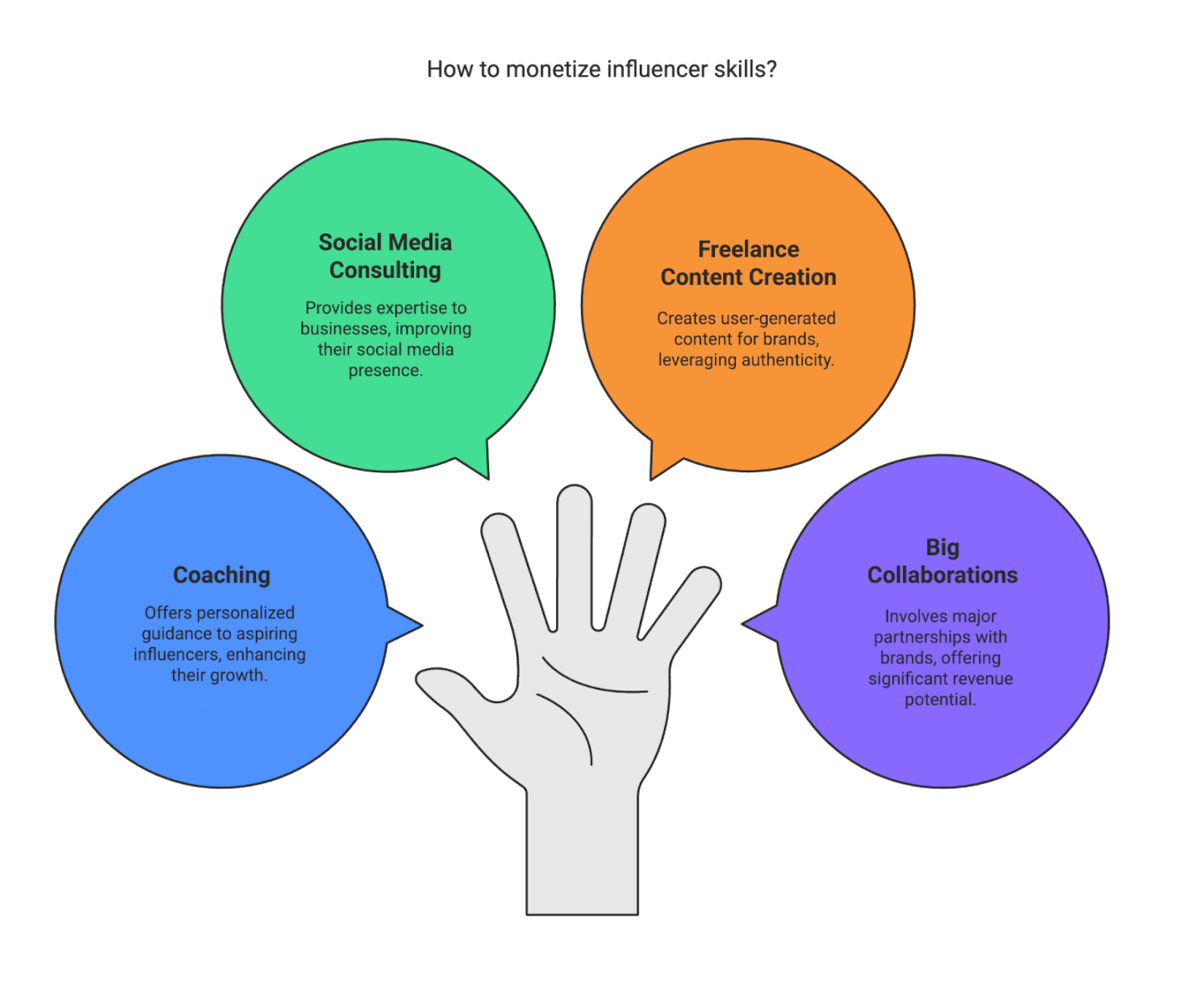
Last but not least, as you climb the influencer ladder, you may encounter opportunities for major collaborations – think along the lines of creating a product line with a brand, or licensing your content/name for broader use. We touched on this with brand ambassadorships and co-creations, but it’s worth highlighting the potential here. Examples include: an influencer co-designing a clothing collection, a gamer partnering with a chair company to release a custom gaming chair, or even an influencer lending their voice/likeness to a video game or animated show. These deals often come with a revenue share or royalty. Instead of (or in addition to) a flat fee, you might earn a percentage of each sale of the product that has your name on it. If the product does well, this can be huge. One survey found some creators ranked these kinds of collab/licensing deals as one of their top revenue sources (after sponsored content) because of the earning potential.
Licensing content is another angle: say you made an amazing photo or a hilarious video that went viral. A company might pay to license that content for their own marketing. For instance, a travel influencer’s stunning photo might be licensed to use in an airline’s brochure (with your permission, for a fee). Or a snippet of your TikTok dance ends up in a TV commercial – if properly negotiated, you’d get paid for that usage. Always ensure you have contracts that specify how and where your content or name can be used, and for how long, to protect your brand.
These big deals usually happen once you’ve proven yourself through smaller collabs. It’s like leveling up. A brand might notice your knack for design and invite you to collaborate on a special edition product. Or you consistently deliver great sponsored posts, so they trust you enough to go bigger. They can be game-changers for your income and career. Of course, with big opportunities comes big responsibility – you may need to involve a lawyer or manager to help navigate the fine print. And you must consider your personal brand carefully: only do these deals with brands that align strongly with your image, because your name will be tied to the outcome (if the product flops or the collab gets backlash, it can reflect on you). But when it hits, it’s incredibly rewarding to see something you helped create out in the world – and getting those royalty checks isn’t bad either!
As you can see, there’s no single answer to “how do influencers make money?” – there’s a menu of options. The most successful content creators often combine several of these streams. For example, you might simultaneously earn from sponsored Instagram posts, a bit of YouTube ad revenue, a Patreon page, and the occasional affiliate link commission. Over time, you’ll figure out what works best for you and your audience. Maybe you love the creativity of making digital products, or you prefer the simplicity of affiliate marketing, or you thrive on one-on-one coaching – you can tailor your monetization mix to suit your strengths.
Start small and stay authentic. Especially if you’re a micro-influencer, you might begin with, say, a few free product collaborations (to build relationships and content), join an affiliate program, and make sure your YouTube is monetized. As you grow, opportunities for bigger brand deals, ambassadorships, and product lines can follow. Remember that influence is not just about follower count – it’s about the impact and trust you have with whatever audience you do have. Brands are eager to tap into genuine voices, and followers are happy to support creators who provide them value. Whether you’re posting fashion tips, tech reviews, comedy skits, or DIY crafts, there’s a path to turn your passion into pay.
In conclusion, influencers make money in myriad ways – and now you have the roadmap. Stay strategic, keep diversifying, and always put your audience first (their trust is your biggest asset). With consistency and creativity, you can turn those posts and videos into a thriving creator career. Good luck, and happy monetizing!
Food content has exploded across social media, and in 2026 the culinary creator scene is more vibrant than ever. From charismatic celebrity chefs to home-taught cooks and viral food reviewers, the top food influencers command audiences in the millions. These tastemakers are not only entertaining fans with recipes, reviews, and food adventures, but also shaping food trends and even launching product lines. Below, we highlight some of the most popular and influential figures in the food content space as of 2026. The list focuses mainly on U.S.-based influencers, with a few international stars who have captured global attention.
To kick things off, here’s a quick-reference table summarizing each influencer’s name, primary handle, key platform(s), and follower counts (as of 2025):
(Follower counts are approximate and reflect the latest available data in 2025.)
Below we delve into each of these influencers in detail – including what platforms they dominate, what content they’re known for, notable 2026 achievements, and why they have captured the food-loving world’s attention.
A post shared by Gordon Ramsay (@gordongram)
Gordon Ramsay needs no introduction – the British chef and TV personality has also become a social media powerhouse. Ramsay boasts 17+ million Instagram followers, 40 million on TikTok, and over 20 million YouTube subscribers, making him one of the most-followed food figures online. In 2026, he continues to leverage his fiery persona and culinary expertise in short-form videos: on TikTok, for example, he’s famous for his comedic “Ramsay Reacts” duets critiquing others’ cooking. His Instagram feed is a mix of beautifully plated dishes, quick cooking tips, behind-the-scenes peeks, and cross-promotions for his YouTube shows. Ramsay’s high engagement and global name recognition (from Hell’s Kitchen to MasterChef) ensure that any content he touches goes viral. Despite his Michelin-star chef status, Gordon’s knack for entertaining, bite-sized content and blunt humor has helped him stay broadly influential in 2026’s social media food scene.
Nick DiGiovanni is a rising star of the digital culinary world, known for bridging the gap between professional technique and viral entertainment. A former MasterChef finalist, Nick has turned his passion for cooking into a social media empire. As of 2026, he has over 25 million subscribers on YouTube – making him one of the platform’s top food creators – and more than 13 million followers on TikTok (where he first went viral with fast-paced cooking videos). DiGiovanni’s content ranges from wild cooking challenges and food hacks to step-by-step recipes and exotic restaurant tours. He’s also known for breaking multiple food-related Guinness World Records (largest cake pop, biggest chicken nugget, etc.) and often collaborates with fellow creators. In 2026, Nick’s achievements include not only massive follower growth but also product ventures (he co-founded Osmo salt company) and continued viral stunts. His engaging, youthful style and willingness to “go big” with food experiments keep his audience hooked. From crazy 100-layer lasagnas to thoughtful kitchen tips, Nick DiGiovanni has proven that a Harvard-educated chef can captivate the TikTok generation.
Keith Lee has become a TikTok sensation in the food review space, revered for his heartfelt and unfiltered restaurant reviews. A former MMA fighter turned social media food critic, Lee’s TikTok following swelled to about 17 million in 2026 thanks to his signature format: sitting at his kitchen table, quietly delivering honest ratings of takeout meals (often scoring them out of 10). What makes Keith truly influential is the “Keith Lee effect” his reviews have on small businesses. When he gives a positive review to a local eatery, it often results in overnight viral fame for that restaurant – think wrap-around lines out the door and sales doubling. Lee and his family have traveled across the U.S. (and even to Canada) in search of hidden gem eateries, with a focus on uplifting Black-owned and family-run restaurants. In 2026, he embarked on a food tour through the Carolinas, with local fans eagerly suggesting spots for him to try. Keith’s approachable demeanor, integrity in reviews, and impact on real businesses have made him one of the most trusted and engaging food influencers of 2026, proving that sometimes a simple, authentic approach resonates more than any high-production video.
Tieghan Gerard is the creative force behind Half Baked Harvest, one of the internet’s most beloved food blogs-turned-brands. Starting her blog in 2012 from her family barn in Colorado, Tieghan has since amassed a 5.5 million strong following on Instagram by sharing mouthwatering recipes and stunning food photography. Her cooking style focuses on comforting, hearty meals with a gourmet twist – from cozy pastas and soups to show-stopping desserts – all presented with a rustic-chic aesthetic. In 2026, Half Baked Harvest remains wildly popular; Tieghan’s posts regularly go viral on Instagram for their exceptional visuals and approachable recipes. She’s published multiple New York Times bestselling cookbooks (most recently Half Baked Harvest Every Day and Half Baked Harvest Quick & Cozy) that showcase her accessible yet flavor-packed dishes. Tieghan’s notable achievements include features on the Food Network and HGTV, and a loyal community that tries her recipes daily. With her mix of professional-level food styling and down-to-earth charm, Tieghan Gerard continues to be a trendsetting home cook inspiring millions to get in the kitchen.
Yumna Jawad, known online as Feel Good Foodie, has built a massive audience by making healthy eating both easy and delicious. The Michigan-based content creator shares daily recipes focusing on wholesome, everyday ingredients – and her approachable style has earned her 4.5 million Instagram followers as of 2026. Yumna specializes in Mediterranean-inspired and lightened-up comfort foods, from colorful salads and hummus bowls to creative twists on family-friendly meals. Her mantra is that food should feel good in every way, emphasizing nutrition without sacrificing flavor. One reason for her high engagement is that her recipes are truly doable for the average home cook – she often posts step-by-step videos and quick tips, making her content highly shareable. Beyond recipes, Yumna has capitalized on her influence with product ventures: she launched her own line of overnight oats (Oath Oats), integrating it seamlessly into her breakfast recipe content. In 2026, Yumna’s notable achievements include growing her TikTok presence (where she also shares cooking hacks) and partnering with brands aligned with healthy living. Her friendly personality and reliable, guilt-free recipes have solidified Feel Good Foodie as a top destination for home cooks seeking healthier meal ideas.
Better known as “The Pasta Queen,” Nadia Munno brings a big dose of Italian passion and flair to the social media food scene. Born and raised in Italy (now based in the U.S.), Nadia turned her lifelong love of pasta into a viral brand. On Instagram she entertains over 5 million followers with dramatic, saucy pasta tosses and the catchphrase “Just Gorgeous!” echoing through many of her videos. Her content celebrates traditional Italian recipes – think carbonara, ragù, pesto – often presented with a storytelling twist about her Nonna or regional culinary lore. Nadia’s undeniable camera presence and humorous elegance in the kitchen have also translated to TikTok and YouTube, where she continues to grow fanbases. In late 2024, The Pasta Queen released her second cookbook, expanding beyond pasta into broader Italian cooking, after her first book became a bestseller. By 2026, she has not only become a social media star but also a published author and entrepreneur. With her glamorous on-screen persona and genuinely instructive cooking content, Nadia Munno stands out as an international influencer bridging old-world cuisine with new media. Whether twirling spaghetti or sharing family secrets, The Pasta Queen makes everyone watching crave a taste of la dolce vita.
A post shared by Amaury Guichon (@amauryguichon)
Amaury Guichon is a pastry chef extraordinaire who has taken dessert artistry to viral heights. A native of France based in Las Vegas, Amaury has stunned millions with his ability to sculpt elaborate chocolate creations – earning him a staggering 20 million subscribers on YouTube and equally strong followings on Instagram (~17M) and TikTok. In his videos, this classically trained chocolatier will create everything from life-sized chocolate dragons and sugar showpieces to intricate pastries that look almost too perfect to eat. With 18+ years of experience and his own Pastry Academy in Vegas, Amaury balances professional expertise with a knack for social media appeal. His content often has a calming, mesmerizing quality – imagine time-lapses of chocolate being tempered and molded – making it oddly satisfying to watch even if you’re not a baker. In 2026, Amaury’s notable achievement was continuing to push the boundaries of what can be made out of chocolate (one viral video featured a fully edible chocolate telescope). He also mentors aspiring pastry chefs through his academy and online classes. By combining spectacle with skill, Amaury Guichon has solidified his status as the “Chocolate Guy” of the internet, proving that dessert can be just as thrilling as any trending dance or prank.
Mark Wiens is one of YouTube’s pioneering food and travel vloggers, renowned for his infectious enthusiasm and street-food adventures around the globe. An American based in Thailand, Mark has spent over a decade traveling to dozens of countries in search of the most authentic local cuisines. His YouTube channel boasts about 11 million subscribers, and each week viewers tune in to watch Mark take that signature first bite (often followed by a blissful smile and a head tilt indicating “delicious!”). In 2026, Mark continues to be the go-to guide for culinary travel, be it sampling spicy noodles in Sichuan or grilling meat in the markets of Marrakech. According to CreatorDB, he’s explored everywhere from Afghanistan to Peru, talking with locals and trying their most intriguing dishes. His content offers an immersive cultural experience – you learn about the people and traditions behind each meal. Mark’s notable achievements include a line of hot sauces and a thriving second channel for travel tips. But it’s his genuine love of food and respectful approach to each culture that keeps audiences engaged. For any foodie with wanderlust, Mark Wiens remains a must-watch in 2026, bringing the flavors of the world straight to your screen.
Joshua Weissman has emerged as one of YouTube’s brightest food stars, blending chef-level knowledge with witty, relatable presentation. The Texas-born Weissman approaches cooking with a playful confidence – whether he’s attempting to outdo a fast-food burger or teaching how to cook a perfect steak, his videos are equal parts informative and entertaining. As of 2026, Joshua’s YouTube channel has just about 9.97 million subscribers (on the cusp of 10M), and he’s also popular on TikTok for quick-hit recipe teasers and tips. His content often features viral recipe remakes and indulgent comfort foods delivered in a friendly, humorous tone. (Fans love his catchphrase “but cheaper” as he recreates restaurant favorites at home.) In 2026, Joshua hit a milestone by publishing a bestselling cookbook and expanding his line of kitchen merchandise. He’s also maintained high engagement with series like “Unnecessary But Awesome Kitchen Gadgets” and collaborations with other YouTubers. What makes Weissman influential is his ability to demystify cooking techniques for a young audience – he’ll brine, smoke, sear, and sous-vide on camera, all while keeping things accessible. With luscious visuals, a touch of sass, and serious culinary chops, Joshua Weissman continues to set the bar for next-gen cooking content.
Rounding out our list is an international sensation: Burak Özdemir, better known as CZN Burak, Turkey’s superstar chef influencer. Burak became famous on Instagram and TikTok for his colossal portion recipes – gigantic kebabs, enormous stews – all made while he beams a big smile straight at the camera. By 2026, he has an almost unbelievable follower count: roughly 129 million followers across social platforms (with around 75M on TikTok and 53M on Instagram), putting him among the most-followed food personalities on the planet. What draws people to CZN Burak’s content is its universal appeal – no spoken language is needed as he cheerfully prepares massive meals, often for charitable events or community gatherings. His videos highlight traditional Middle Eastern and Turkish dishes, acting as a form of culinary diplomacy that introduces global audiences to his culture through food. In 2024, Burak was honored with the WIBA Grand Prix Award in Cannes as the world’s top influencer, underscoring his worldwide impact. In 2026, he’s continued to expand his restaurant empire (with locations in Istanbul, Dubai, etc.) and partner on humanitarian initiatives – all while maintaining a wholesome online persona. CZN Burak’s ability to bridge cultures with a smile and a giant pan of food illustrates the positive power of food content in bringing people together.
From fiery-tongued chefs to soft-spoken home cooks, the food influencers of 2026 are a diverse bunch – but all share a passion for connecting with people through food. These creators have turned social media platforms into their personal food networks, each with a unique flavor: some teach and inspire home cooking, others entertain with jaw-dropping food feats or guide us through far-flung culinary journeys. What they have in common is high engagement and authentic influence – they’ve built trust with their audiences by consistently delivering content that delights the taste buds and the eyes.
It’s clear that in 2026, being a food influencer isn’t just about pretty pictures of meals (though there are plenty of those!); it’s about storytelling, expertise, and community. Whether it’s Gordon Ramsay dropping kitchen wisdom with a side of snark, or Keith Lee shining a spotlight on hidden gem eateries, these food influencers have changed the way we discover recipes and restaurants. They’ve made cooking more accessible, dining more adventurous, and eating – well – an even more social experience.
As we follow these tastemakers into the latter half of the decade, one thing is certain: our feeds (and our kitchens) will never be boring. So here’s to the foodie influencers of 2026 – thank you for keeping us hungry for more!
TikTok has become a powerhouse in social media and influencer marketing – so much so that talk of a potential ban sends shockwaves through the creator community. What would happen if TikTok actually went dark? And more importantly, what’s Plan B for influencers and marketers? In this blog post, we’ll explore how a TikTok ban could impact creators, brands, e-commerce sellers and more, and outline strategies to stay on top of your influencer game even if TikTok disappears. (Spoiler: savvy influencers and marketers are already preparing backup plans.)
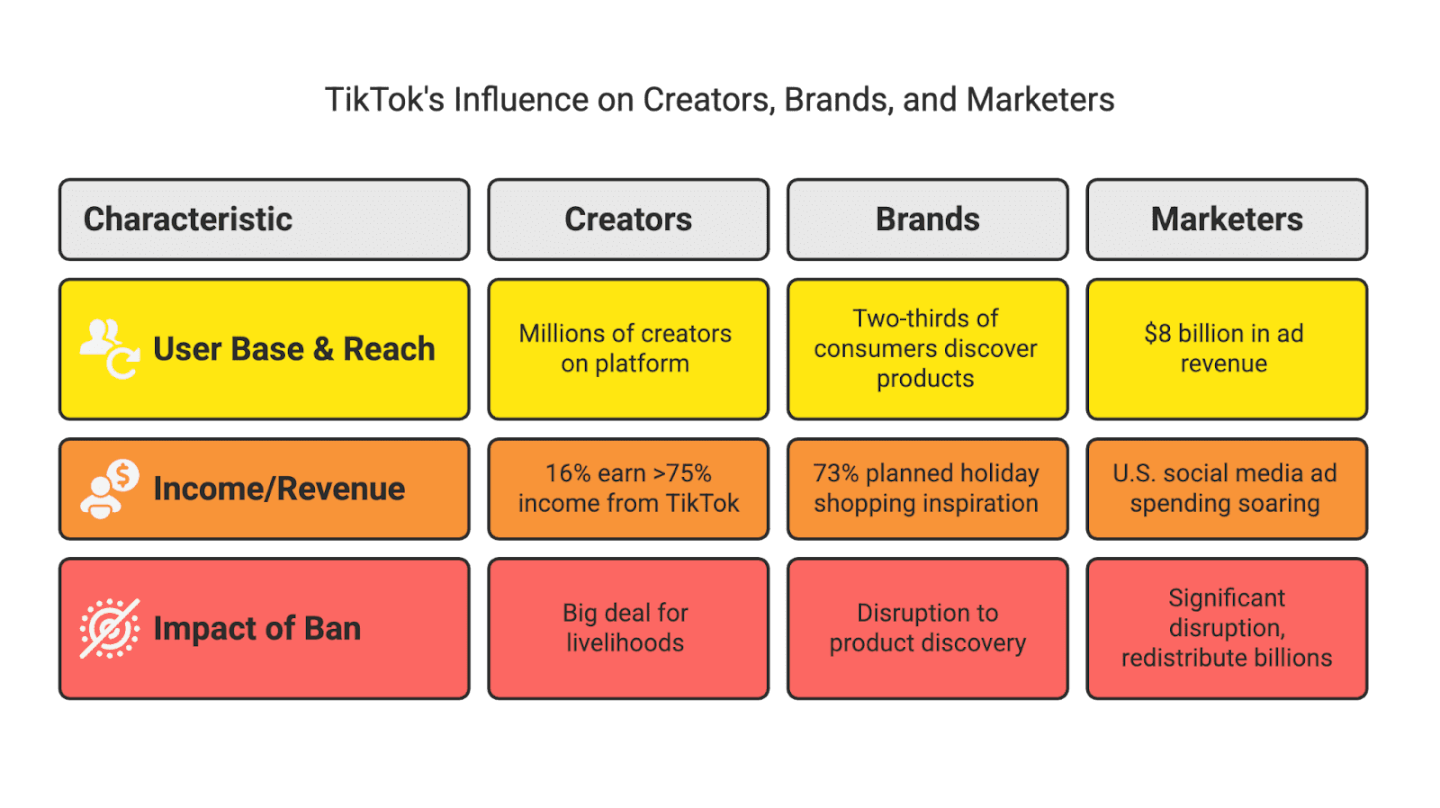
It’s hard to overstate TikTok’s impact on the creator economy. The platform boasts over 170 million U.S. users and has given rise to millions of content creators. TikTok’s unique algorithm and viral trends have turned everyday people into internet stars, and it’s a central hub for influencer marketing. Many micro-influencers and content creators rely on TikTok not just for views but for income – in one recent survey, 16% of influencers said more than 75% of their income comes from TikTok, and one-third earn 25–50% of their income there. In other words, a ban would be a big deal for those creators’ livelihoods.
TikTok isn’t just dancing teens; it’s also a rising force in social commerce. Over two-thirds of consumers discover products on TikTok that they later purchase elsewhere, making it a powerful product discovery engine for brands. By 2024, 73% of consumers planned to use TikTok for holiday shopping inspiration (and 59% intended to buy directly via TikTok Shop), highlighting how deeply TikTok is woven into e-commerce trends. 81% of retailers are on TikTok to sell directly to consumers – and many have experienced the chaos of “TikTok made me buy it” virality (nearly 70% of retailers surveyed struggled with stockouts or supply delays thanks to TikTok-driven demand surges). Simply put, TikTok’s influence on shopping and user-generated content (UGC) marketing is huge.
For marketers, TikTok has been a gold rush. U.S. social media ad spending is soaring (projected to top $82 billion in 2025), and TikTok has claimed an $8 billion chunk of that. If the platform suddenly went offline, brands would be scrambling. As one report noted, a ban “would cause significant disruption for marketers,” forcing them to redistribute billions of ad dollars across other channels. In short, everyone from micro-influencers to Amazon sellers could feel the ripple effects of a TikTok ban.
A TikTok ban – whether through government regulation or app store removal – means creators lose access to the platform and audience they’ve built there. We’ve already seen a preview of this in markets like India, which banned TikTok in 2020. At the time, TikTok had over 200 million Indian users and was a primary platform for creators. When it vanished, local copycat apps sprang up, but ultimately Instagram and YouTube emerged as the big winners. Millions of Indian TikTokers flocked to Instagram Reels and YouTube Shorts, but not without pain: many found it hard to recreate their TikTok success elsewhere. For example, one popular TikTok choreographer with 1.5 million TikTok followers managed to bring only ~94,000 of them to Instagram in the years after the ban. Building an audience on other platforms can take years, and not every TikTok star will automatically thrive on Instagram’s more curated, personality-driven style.
For influencers and content creators, a ban means losing a massive audience and content library overnight. It’s not just dance challenges – think of all the product review videos, educational clips, comedic skits, etc., that might disappear. Many creators (especially micro-influencers who poured their energy into TikTok) would need to pivot quickly to avoid losing relevance and income. In fact, 84% of influencers say they’re worried about a potential TikTok ban (52% are very concerned), and with good reason: their monetization and brand deals are at stake. The good news is that most aren’t waiting around – 67% of influencers already have contingency plans in place for a TikTok ban. This shows that savvy creators are thinking ahead and diversifying (as we’ll discuss below).
Brands and marketers would also feel the crunch. Many brands have invested heavily in TikTok advertising and TikTok influencer partnerships to reach Gen Z and Millennial shoppers. Two-thirds of retailers in a late-2024 study believed a TikTok ban or sale would impact their business and conversion rates. TikTok’s secret sauce is the way its For You page can make unknown products go viral overnight – losing that channel means losing a bit of marketing magic. “Retailers risk losing a powerful product discovery platform if TikTok is shut down,” said one industry CEO, noting the clock is ticking for retailers to develop backup plans. Yet surprisingly, only 28% of retailers in that study had a specific contingency plan.
In summary, a TikTok ban would be a shock to the system: creators would have to scramble to relocate their communities, and marketers would need to rapidly reallocate budgets and strategies. The key to weathering this storm is diversification and flexibility – enter Plan B.
If TikTok goes dark, influencers and brands won’t be quitting social media – they’ll move their efforts elsewhere. So what does “Plan B” look like? In a word: Meta. Recent surveys suggest that the first choice for displaced TikTokers is Facebook and Instagram. In fact, one 2024 survey of creators with 10k+ followers found that if TikTok were banned, 40% of influencers would shift their focus to Facebook, and 33% to Instagram. (Surprising, right? Facebook edged out Instagram by a bit – likely due to its sheer scale and the integration of Reels across both Facebook and Instagram.)
Figure: Many influencers plan to pivot to Meta’s platforms if TikTok is banned, with 40% choosing Facebook and 33% Instagram. This chart illustrates survey findings by First Insight, showing where creators would focus if TikTok disappeared. (The remaining 27% of creators surveyed favored other platforms like YouTube, Snapchat, or “new apps” as their Plan B.)
Instagram Reels is the most natural refuge for TikTok-style short video content. Reels was created to mimic TikTok’s format, and it’s already tremendously popular. After India’s TikTok ban, Instagram saw an explosion of content – about 6 million Reels were posted per day in India within a year of the ban (far outpacing content on local clone apps). For influencers, Instagram offers the allure of an established follower network and robust monetization tools (shopping tags, brand partnership labels, etc.), though its algorithm tends to reward a more polished aesthetic and consistent personal branding than TikTok’s. Creators who can bring their TikTok audience to Instagram will want to lean into Reels, while also using Instagram Stories and Posts to deepen community engagement in ways TikTok didn’t allow (e.g. behind-the-scenes content, Q&As, swipe-up links for those with 10k+ followers, etc.).
Facebook, often seen as Instagram’s less trendy older sibling, might actually be a big winner too. Facebook has a massive user base (including slightly older demographics with significant spending power) and has integrated the Reels short-video format as well. The data suggests many influencers believe they can match or even surpass their TikTok reach on Meta’s platforms – especially with Facebook’s content sharing and virality in play. YouTube Shorts is another key Plan B platform. YouTube’s short-form video feature launched in 2021 and quickly amassed traction by leveraging YouTube’s billions of users. While the survey mentioned above saw fewer creators picking YouTube as their top choice, YouTube Shorts offers an attractive blend: short viral clips and the stability of a platform where longer content can live too. Many TikTokers already cross-post to Shorts; a ban would only accelerate that. Plus, YouTube’s monetization (ad revenue sharing) can be a big draw.
What about other players? Snapchat (with Spotlight) and Pinterest (with Idea Pins) also jumped on the short-video bandwagon. They haven’t been as central to influencer marketing deals yet, but a void left by TikTok could push creators and brands to explore them more. There are also smaller contenders and regional apps – from Triller to Dubsmash (now part of Reddit) to newer ByteDance apps like Lemon8 – but these would really have to fight to capture a critical mass of TikTok refugees. The likely scenario is an ecosystem where Instagram, Facebook, and YouTube collectively absorb most of the TikTok content and audiences, just as they did in India.
One reassuring insight from industry insiders: what makes influencer marketing effective isn’t tied to just one platform. Great content and engaged followings can travel. Talent managers have noted a shift in how campaigns are planned – focusing on the content itself rather than the specific platform. Some influencer agencies have even built contingency clauses into contracts: if a sponsored TikTok post can’t go live due to a ban, the creator will repost it on Instagram or YouTube Shorts so the brand still gets exposure. In other words, as long as influencers can create engaging videos, brands are happy to follow them to whatever platform their audience goes.
Key takeaway: Diversify your platform presence. If you’re an influencer, you should already be nurturing your Instagram, YouTube, or other channels as if a TikTok ban were imminent. And if you’re a brand, you should be building relationships with multi-platform creators and not betting everything on TikTok alone. Next, we’ll get into some actionable tips on how to do just that.
Nobody wants to wake up to find their audience vanished overnight. Here are some concrete steps and Plan B tactics for influencers and marketers to thrive with or without TikTok:
Don’t let your TikTok videos vanish into the void. Proactively save your best content (no watermarks if possible) and repost or repurpose it on Reels, Shorts, or other platforms. Great content is great content – a funny skit or useful how-to can find a new audience on Instagram or YouTube. Many TikTokers already cross-post videos; if you haven’t, start now. (Also, consider creating compilation videos for YouTube or Facebook featuring your top TikToks – a good way to introduce new followers to your style.)
Use your TikTok while you have it to funnel followers to your other platforms. For example, add your Instagram and YouTube links in your bio. Create a TikTok video inviting people to follow you elsewhere “just in case.” TikTok’s bio and Q&A features can be used to promote your other handles. (Pro tip: Do a giveaway or special Q&A on Instagram to entice your TikTok fans to join you there.) Influencers who faced bans before did this – when India banned TikTok, creators like the choreographer Sahil Kumar posted farewell TikToks urging fans, “follow me on Instagram and YouTube”. It’s not guaranteed you’ll retain everyone (as we saw, only a fraction might convert immediately), but even a fraction of 1 million is better than losing them all.
If you typically do brand deals only on TikTok, start branching out. Many brands are already cautious and “not putting all their eggs in the TikTok basket”. Show that you can offer value on Instagram, YouTube, or through blog content as well. For example, if you’re doing an Amazon product review on TikTok, offer the brand an Instagram Reel and Pinterest pin as bonus distribution. Brands, on your side, should negotiate flexibility – e.g. ensure your influencer contracts let you shift a campaign to the creator’s next-best platform if needed. Being platform-agnostic in your collaborations makes everyone more future-proof.
Finally, don’t panic. The influencer marketing industry is young, but one thing we know: creators who adapt thrive. Remember Vine? When it shut down, its stars didn’t disappear – they migrated to YouTube, Instagram, etc., and many continued to flourish. The same can be true if TikTok shuts down. Yes, there may be an adjustment period (and some lost followers in the shuffle), but if you consistently create engaging content and maintain authenticity, your audience will find you.
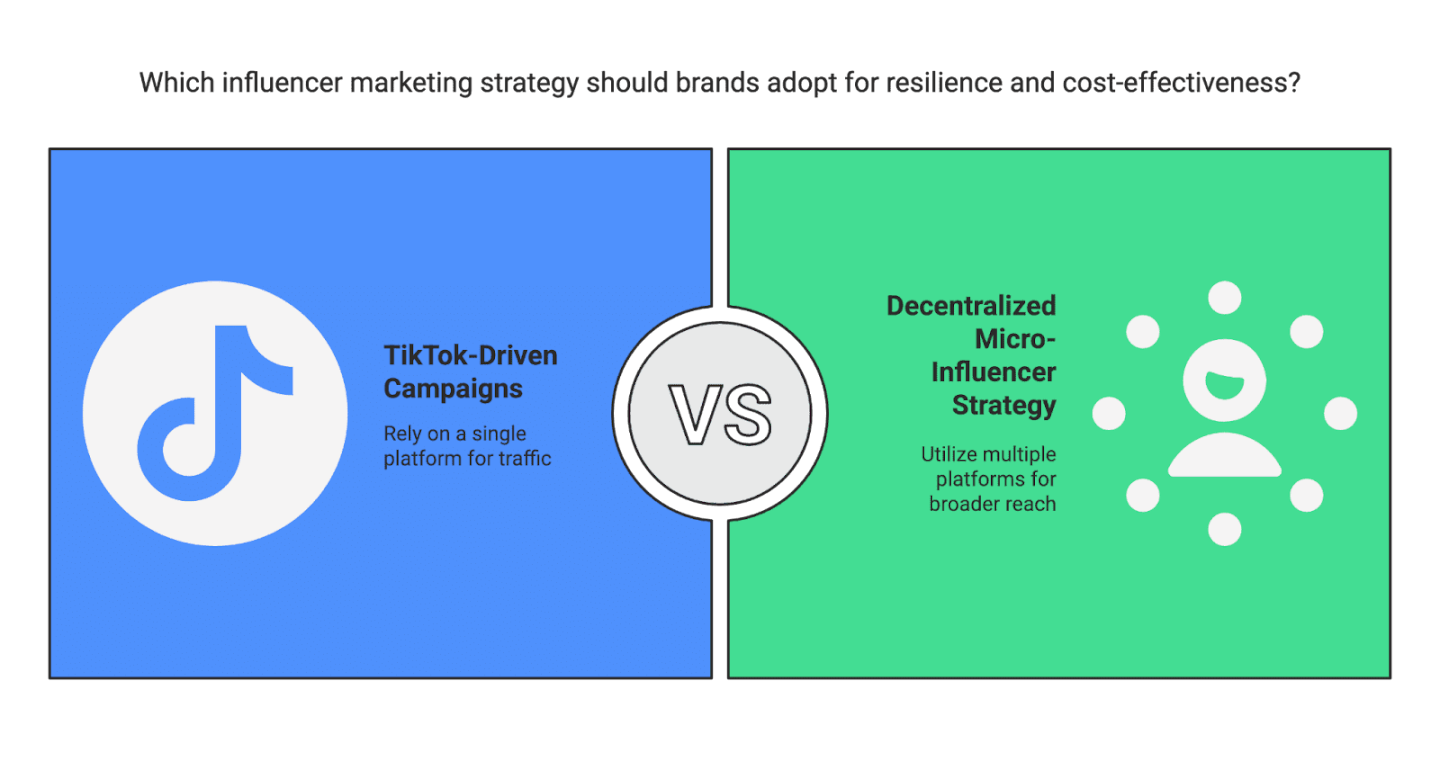
Let’s talk about some MVPs of influencer marketing that will carry on strong with or without TikTok: micro-influencers and UGC (user-generated content). In a post-TikTok scenario, micro and nano influencers (those with smaller followings, often under ~50k) could become even more valuable:
Micro-influencers often cultivate tight-knit communities and higher engagement rates than mega-celebrities. For example, nano-influencers (<5k followers) on Instagram can have engagement rates around 2.5% – roughly 2–3× higher than macro influencers with millions of followers. This means their recommendations feel like advice from a friend and spur action. Critically, this dynamic doesn’t depend on TikTok alone. Whether it’s Instagram, YouTube, or even niche forums, micros bring trust and authenticity. In fact, one study found nano/micro influencers deliver about a 20:1 ROI on marketing spend (20× revenue per $1), compared to roughly 6:1 for mega-influencers. So even if a major platform disappears, brands can achieve strong results by partnering with many smaller creators across diverse platforms – spreading reach and reducing reliance on any single channel.
If you’ve been relying on TikTok for the bulk of your traffic (perhaps via the #TikTokMadeMeBuyIt phenomenon), now’s the time to diversify your marketing channels. The good news is that micro-influencer marketing can effectively replace a lot of TikTok-driven campaigns. Platforms like Stack Influence specialize in helping brands accumulate authentic UGC and product reviews through micro-influencer collaborations. In fact, Stack Influence is a leading micro-influencer marketing platform that connects Amazon sellers with everyday creators at scale, with a vetted community of over 11 million micro-influencers in the U.S. ready to try products and share genuine experiences. By seeding products to a network of micro-influencers on Instagram, YouTube, blogs, etc., brands can generate buzz and sales without relying on TikTok’s algorithm. This kind of decentralized influencer strategy – many small voices across multiple platforms – can actually be more resilient and cost-effective than pouring a huge budget into TikTok alone. It also yields a trove of multi-channel UGC (videos, photos, testimonials) that the brand can repurpose in ads or on their e-commerce site for months to come.
In short, micro-influencers and UGC will form a robust Plan B backbone for influencer marketing. They exemplify the principle of not depending on one giant platform. If TikTok vanishes, brands that work with a portfolio of micro-creators across Instagram, YouTube, blogs, and other channels will continue reaching consumers authentically. And influencers who maybe never had huge TikTok followings to begin with can shine on alternative platforms where their niche audiences engage.
The possibility of TikTok getting banned is a scary thought for many – but it’s also a reminder of the digital marketing golden rule: be adaptable. Social media platforms rise and fall, algorithms change, but the core of influencer marketing remains authentic content and community connection. Influencers who can cultivate those will always have a place to go, whether it’s on Instagram, YouTube, the next big app, or their own website. Marketers who stay flexible and invest in multi-channel strategies (and in long-term creator relationships rather than one-off platform stunts) will safeguard their reach no matter what happens in Silicon Valley or Washington D.C.
If TikTok gets banned, it will certainly be a shake-up – there will be an initial scramble as billions of views and dollars get redistributed. But it won’t be the end of influencer marketing by any stretch. In fact, it could spark a new era where creators and brands are more diversified, resilient, and creative in how they engage audiences. As one marketing exec put it, the upheaval is teaching brands “the value of a diversified media mix and understanding the behavior of target audiences” across platforms.
So, what’s Influencer Marketing’s Plan B? It’s already in motion: diversify your presence, focus on great content over any single app, leverage micro-influencers and UGC across channels, and always have a contingency up your sleeve. TikTok or no TikTok, the show will go on – and the influencers and marketers who think ahead will keep right on dancing (or vlogging, or posting) their way to success.
In the era of savvy consumers and overflowing digital ads, user-generated content (UGC) has emerged as a cornerstone of modern marketing. UGC refers to any brand-related content created by real users or customers – from social media posts and unboxing videos to product reviews and testimonials. Unlike polished corporate ads, these are authentic voices and visuals coming straight from a brand’s community. Marketers, e-commerce brands, Amazon sellers, and influencers are all leaning into UGC as a powerful way to build trust, engage audiences, and boost sales. It’s no wonder that UGC has become invaluable in 2025’s marketing landscape, especially for micro-influencers, content creators, and online sellers looking to stand out.
Why does UGC matter so much? The short answer: people trust and engage with content from real users more than traditional advertising. But that’s just the beginning. Below we break down the key reasons why user-generated content is so important for brands today, backed by data and examples.
Now, let’s dive deeper into each of these benefits to see exactly how UGC drives results for marketers and online businesses.
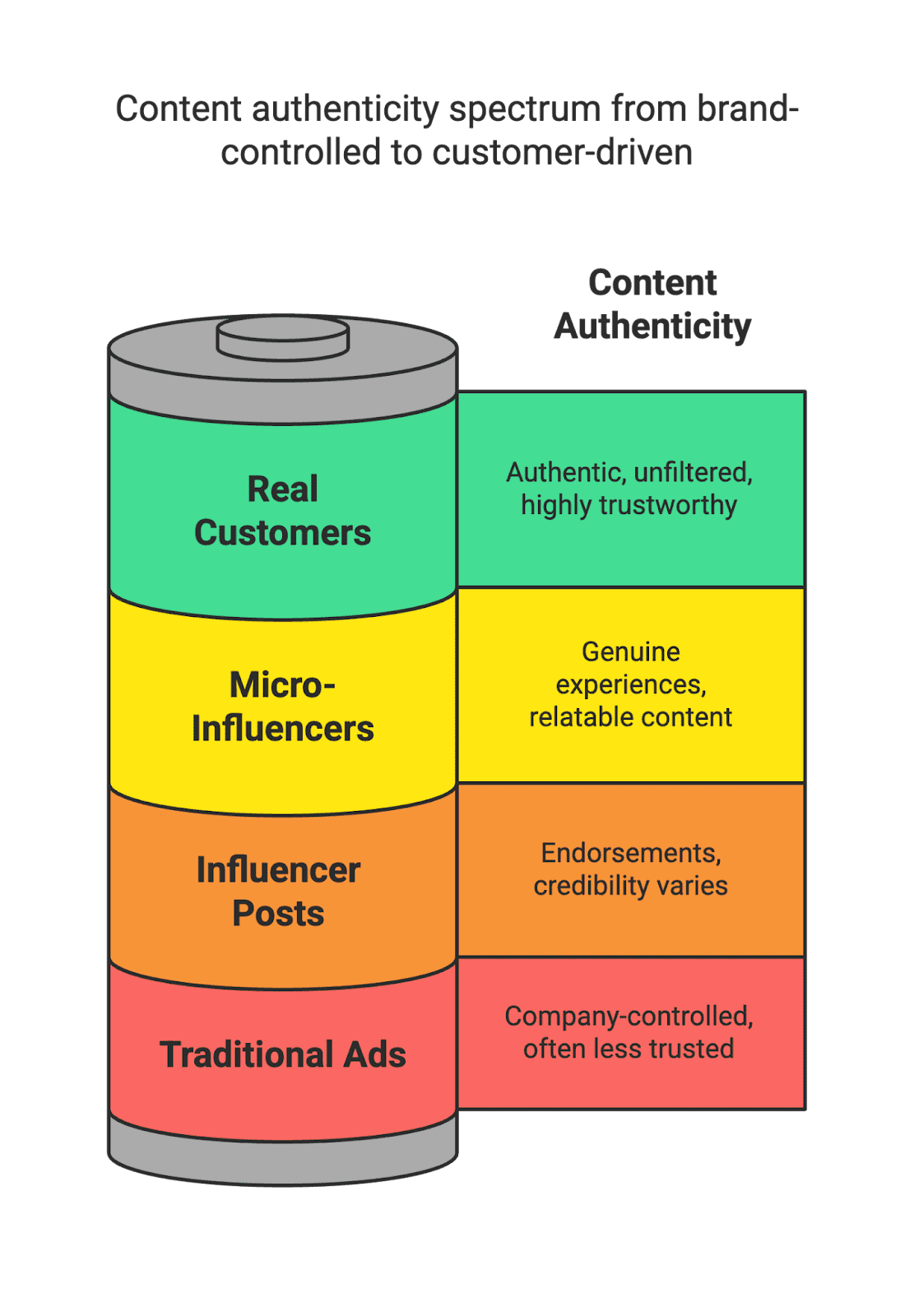
One of the biggest advantages of user-generated content is authenticity. In a world inundated with ads, consumers crave content that feels genuine. UGC delivers that in spades. It’s content created by real customers in real-life settings – not studio-perfect photos or scripted endorsements – and that makes it highly trustworthy. In fact, people consider UGC the most trusted form of brand-related content, ranking it above both professional brand-created content and traditional influencer posts. When potential customers see others (just like them) openly loving a product, it builds immediate credibility.
Most consumers find user-generated content (UGC) to be the most trustworthy form of brand-related visuals. This chart compares the percentage of consumers who rated UGC vs. professional brand content vs. influencer content as their “most trusted” visual content type. As shown, UGC outranks polished corporate visuals and even influencer posts when it comes to earning consumer trust.
Consumers today actively prefer “real” over “ideal.” A recent marketing study found that 84% of people are more likely to trust a brand that incorporates UGC in its marketing. They don’t want to see only slick ads or mega-celebrity endorsements; they want to hear from everyday customers. This trust directly impacts behavior: the same survey showed that nearly 77% of people say their purchasing decisions are influenced by whether a brand uses UGC in its marketing. In other words, featuring authentic customer content doesn’t just make your brand look honest – it convinces more people to buy.
Why is trust such a big deal? Because trust is the deciding factor for today’s consumers. Traditional ads alone are no longer convincing for many – one report noted that 55% of consumers across all age groups trust UGC more than other forms of marketing. People have grown skeptical of perfectly crafted campaigns; they know those are company-controlled messages. UGC, by contrast, is perceived as unfiltered and honest. It serves as social proof – real evidence from peers – that a product or service delivers on its promises. This dynamic is especially vital on social media: 34% of consumers say “too much brand self-promotion” is a major turn-off on social platforms. UGC helps avoid that pitfall by letting your happy customers do the talking for you.
Another aspect of authenticity is relatability. Micro-influencers (everyday creators with modest followings) play a key role here. Their content often feels like a friend’s recommendation rather than an ad. For example, micro-influencers typically post about using a product in their normal life, sharing genuine experiences. Brands can partner with dozens or hundreds of these creators to generate relatable UGC at scale. Micro-influencer posts tend to reflect genuine consumer experiences – essentially word-of-mouth marketing multiplied. This not only builds trust with niche audiences but also sparks more conversations about the product. Platforms like Stack Influence specialize in connecting brands to micro-influencers for exactly this reason, helping companies scale up authentic UGC and brand awareness through product seeding campaigns. By leveraging everyday creators, even new or small brands can gain trust and credibility with an audience that might tune out traditional ads.
It’s also worth noting that UGC’s authenticity can sometimes reveal imperfections – and that’s okay. Showing real customers using your product (with all the little quirks that entails) actually makes your brand more trustworthy. Audiences prefer seeing products in true-to-life situations rather than overly staged scenarios. This transparency signals confidence in your product. When people see that you’re not afraid to let real users speak, it reinforces that you have nothing to hide.
In summary, UGC infuses authenticity and trust into your marketing in ways that brand-created content often can’t match. It’s the digital equivalent of word-of-mouth trust – and trust is the foundation upon which long-term customer relationships are built.
Beyond just creating a feel-good vibe around authenticity, UGC directly drives buying decisions through social proof. Social proof is the psychological phenomenon where people rely on the feedback and actions of others to determine what is correct or worthwhile. In commerce, that means if we see lots of fellow consumers raving about a product, we’re more inclined to try it ourselves. User-generated content is essentially social proof made visible.
Consider the impact of a simple customer review or a user’s photo of your product: these pieces of content demonstrate real satisfaction to future customers. It’s one thing for a brand to claim “our product is great,” but when dozens of shoppers publicly post that they love it, those claims carry much more weight. Shoppers increasingly won’t buy without checking UGC first. According to recent research, 40% of buyers say UGC is “extremely important” or “very important” in their purchase decisions, actually outranking information like professional product descriptions or videos. What’s more, 13% of online shoppers might abandon a purchase if they can’t find any UGC (like reviews or photos) about the product. This shows that a lack of UGC can literally cost sales – people hesitate when there’s no social proof.
Nowhere is this more evident than in e-commerce and on platforms like Amazon. In fact, UGC has been central to Amazon’s model from the beginning. Amazon was a pioneer in leveraging user content by enabling customers to post product reviews and ratings right on its site. Those star ratings and review sections are now a critical part of how we all shop. Virtually everybody reads reviews: one study found 99.9% of consumers read reviews when shopping online. It’s hard to get more unanimous than that! Buyers trust these firsthand accounts more than any product copy – by 2025, 54% of consumers trust online reviews more than even recommendations from friends or family (and far more than they trust branded marketing or advertising). This is a stunning vote of confidence in UGC as the most credible source of truth about products.
The result? UGC drives conversions. Shoppers not only read UGC, they act on it. Seeing numerous positive reviews or customer photos can tip someone from consideration to purchase. According to reports, nearly 82% of consumers are more inclined to buy from a brand that features UGC in its marketing. And this isn’t just theory – it shows up in hard metrics like conversion rates. Products that have UGC such as reviews or ratings simply sell better. For example, online retail data shows that products with as few as 5 reviews are 270% more likely to be purchased than those with no reviews at all. That’s almost a three-fold increase in sales likelihood just by having some customer-generated feedback visible! UGC lowers the risk in the buyer’s mind; it answers questions and offers reassurance that “others bought this and liked it, so you probably will too.”
Let’s not forget the influence of UGC on major platforms like social media, where shopping inspiration often strikes. On Instagram, TikTok, YouTube and beyond, consumers get purchase ideas from content posted by peers and influencers. A casual TikTok clip of someone using a skincare product can send hordes of viewers to buy it – essentially the new “viral word of mouth.” In fact, Instagram is considered by marketers to generate the most engaging UGC (nearly 28% say so), with Facebook (23%) and TikTok (19%) close behind. This aligns with the rise of social commerce: people discover products through UGC on their feeds and make purchases directly. For Gen Z shoppers, UGC on social media is a major influence on buying – even more so than some traditional comparison shopping tools.
Amazon sellers and direct-to-consumer e-commerce brands know that harnessing UGC is key to success. They actively encourage customers to leave reviews, post photos, and answer questions (another form of UGC on Amazon is the Q&A section, where users respond to prospective buyers’ questions). Smart brands will even integrate UGC into their product pages and ads – for instance, showing real customer Instagram photos using the product, or quoting testimonials. This not only increases trust but can improve click-through and engagement on marketing campaigns. In one travel industry report, 92% of consumers said they trust word-of-mouth and UGC more than traditional ads, and 85% said UGC was more influential than brand-produced photos or videos. Those numbers translate across industries: show, don’t tell is the new mantra – show customers happy with your product, and new customers will follow.
To sum up, UGC provides the social proof that converts interest into sales. It’s hard to overstate its importance in the customer journey today. From the moment a shopper begins researching, they’re looking for that proof – the star ratings, the unboxing video, the before-and-after photo, the story from an influencer they trust – that nudge which says “Yes, this is the one.” Brands that lack UGC will simply lose out to those that have built up a rich tapestry of user testimonials and community buzz.
Another reason UGC is so important is that it offers a cost-effective way to generate a ton of content, which is music to any marketer’s ears. Traditional content creation – think high-end photoshoots, video productions, ad agency campaigns – is expensive and time-consuming. By contrast, user-generated content can drastically cut down production costs for marketing. How so? Because your customers and fans are effectively creating the content for you. Instead of hiring a big creative team for every new product shoot, brands can repurpose genuine customer photos or invite loyal users to share videos of how they use the product. Many companies now collaborate with UGC creators or micro-influencers who will produce content for the price of a free product sample or a modest fee – micro-influencers are often simply “paid” with the product itself, which makes UGC campaigns far cheaper than formal advertising shoots. As a result, social posts from these creators feel genuine (bonus: no acting fees, no studio rental) and the brand gets a library of ready-made content.
UGC doesn’t just save money; it also saves time and scales faster. There’s an almost endless supply of content creators out there, and many are excited to feature brands they love. This means UGC can scale infinitely in a way in-house content cannot. While an internal team can only produce X campaigns per quarter, your user community might produce 10X that amount of content in the same time. As one marketing expert put it, companies leveraging UGC “don’t have to hire massive marketing teams with dozens of writers, photographers, and videographers” to churn out content – enthusiastic customers and influencers do that for them. Some brands literally receive thousands of user submissions when they run a UGC contest or hashtag campaign, far exceeding what they could create alone. This continuous stream of fresh content keeps marketing channels from going stale. For example, encouraging a new hashtag challenge on TikTok could yield hundreds of videos showcasing your product from different perspectives. That’s hundreds of pieces of content you didn’t pay a production studio to make!
From a budget standpoint, the return on investment can be very attractive. UGC-oriented campaigns often have lower cost-per-content-piece and can also lead to better ad performance. Many brands report that ads or social posts incorporating UGC (like real customer images) perform better than traditional creative. It makes sense: authentic content resonates more, so you get higher engagement for each dollar spent. In fact, 86% of brands believe using authentic UGC in their paid and owned media improves ad performance. At the same time, because UGC is relatively inexpensive, even smaller companies or startups can leverage it heavily without breaking the bank. This levels the playing field – you don’t need a Super Bowl ad budget if you can get your customers to create buzz for you.
To illustrate the scale and growth of UGC, consider this: the global UGC market was valued around $5.3 billion recently and is projected to grow to $32.6 billion by 2030. That explosive growth reflects how companies worldwide are investing in UGC platforms and campaigns. Clearly, brands are finding UGC to be a cost-effective marketing strategy worth ramping up.
It’s also practically free advertising when you think about it. Each time a customer posts about your brand, they are exposing your product to their network at no cost to you. UGC can increase your brand’s visibility with no extra spend by piggybacking on user shares. A happy customer might share an Instagram story using your product, reaching hundreds of their friends – which is essentially a personal endorsement money can’t easily buy. Multiply that by thousands of customers, and you have an army of brand advocates spreading the word every day. This organic reach is something you’d otherwise have to pour money into ads to achieve.
In summary, UGC allows marketers to do more with less. It slashes content creation costs, provides a scalable pipeline of marketing materials, and even gives you free exposure through your customers’ own networks. Especially for e-commerce brands and Amazon sellers operating on tight margins, UGC can be a game-changer – you’re not constantly paying influencers or photographers; instead, you’re leveraging the goodwill and creativity of your user community. It’s efficient, sustainable, and as we’ve seen, often more effective than the content brands might create on their own. Want to see how nonprofits are using UGC to boost their impact? Check out this guide on nonprofit UGC strategy.
UGC isn’t just about getting content or driving sales – it’s also about building an engaged community around your brand. When you invite your audience to participate in your marketing, you’re essentially saying, “We value your voice.” This inclusion makes customers feel like they’re part of the brand’s story, not just passive buyers. The result is often a deeper emotional connection, more engagement, and greater loyalty.
Interactive campaigns and challenges are a great example of UGC-driven engagement. Brands that run UGC contests (like “post a photo with our product and tag us to win”) often see explosive participation. Customers love the chance to be featured by a brand or to contribute ideas. This kind of involvement naturally boosts engagement metrics – more comments, more shares, more time spent interacting with brand content. According to marketing research, involving users in content creation encourages interaction and creates a community around the company, strengthening loyalty. Essentially, UGC turns marketing into a two-way conversation. Instead of just broadcasting messages, the brand is listening and responding to user contributions. This feedback loop can significantly increase how invested people feel.
There’s also a feedback benefit: UGC can provide insights and foster dialogue. For example, encouraging customers to share their experiences or even product improvement ideas not only generates content but also gives you direct feedback. Some brands highlight UGC that includes tips or new use-cases for their products, showing they listen to customers. This can make customers more loyal because they see their input matters. In some cases, brands have even co-created products or features based on UGC suggestions (think of companies that run design contests or ask customers to vote on new flavors – that’s UGC in action driving innovation).
Perhaps the biggest loyalty boost comes from the human connection UGC enables. People tend to form attachments to other people more than to faceless companies. By showcasing human stories – whether it’s a testimonial video of a customer describing how your service helped them, or an influencer’s personal story with your product – you create emotional resonance. Fans of those UGC creators (like influencers) will transfer some of that affection to your brand. Some consumers will even go out of their way to try a product solely because an influencer they love recommended it. That shows how powerful the creator-consumer connection can be. By tapping into it (through UGC collaborations), brands can earn loyal customers almost by proxy.
What’s more, when people see their own content (or that of peers) featured by a brand, it builds a sense of belonging and pride. If you’ve ever had a company re-post your photo or say “thank you” for your review, you know it creates a positive feeling towards that company. Recognizing contributors publicly is a great way to reinforce loyalty – those customers are likely to stick around and continue advocating. Many brands will re-share UGC on their official channels (with credit to the creator) as a way of saying “look how awesome our customers are!” This not only makes the featured creators happy, but also shows other customers that the brand values real users. It’s a virtuous cycle: UGC begets more UGC because people see the brand is listening and might feature them next.
Engagement also extends to offline behaviors. For instance, a user who participates in an online UGC campaign might feel more connected and then attend an in-person brand event or be the first to try a new product launch. Essentially, UGC can cultivate brand advocates – customers who are highly engaged and loyal, willing to promote the brand on their own. There’s data to back this: one study found nearly 65% of people aged 18–44 would be more loyal to a brand if it reposted their content or asked to use it in marketing. It makes them feel like part of an exclusive club or community.
Finally, UGC can even humanize your brand. Big companies can sometimes feel distant, but by sharing customer stories or highlighting individual community members, a brand comes across as more approachable and caring. For example, an e-commerce brand might do a weekly “customer spotlight” post featuring a photo and blurb from a real customer. Over time, this shapes a brand image that is customer-centric, which strengthens overall brand love and loyalty.
In short, user-generated content is a catalyst for engagement and loyalty because it turns marketing into a dialogue and customers into community members. The more you involve your audience, the more invested they become. And a highly engaged, loyal customer base is one of the most valuable assets any brand can have.
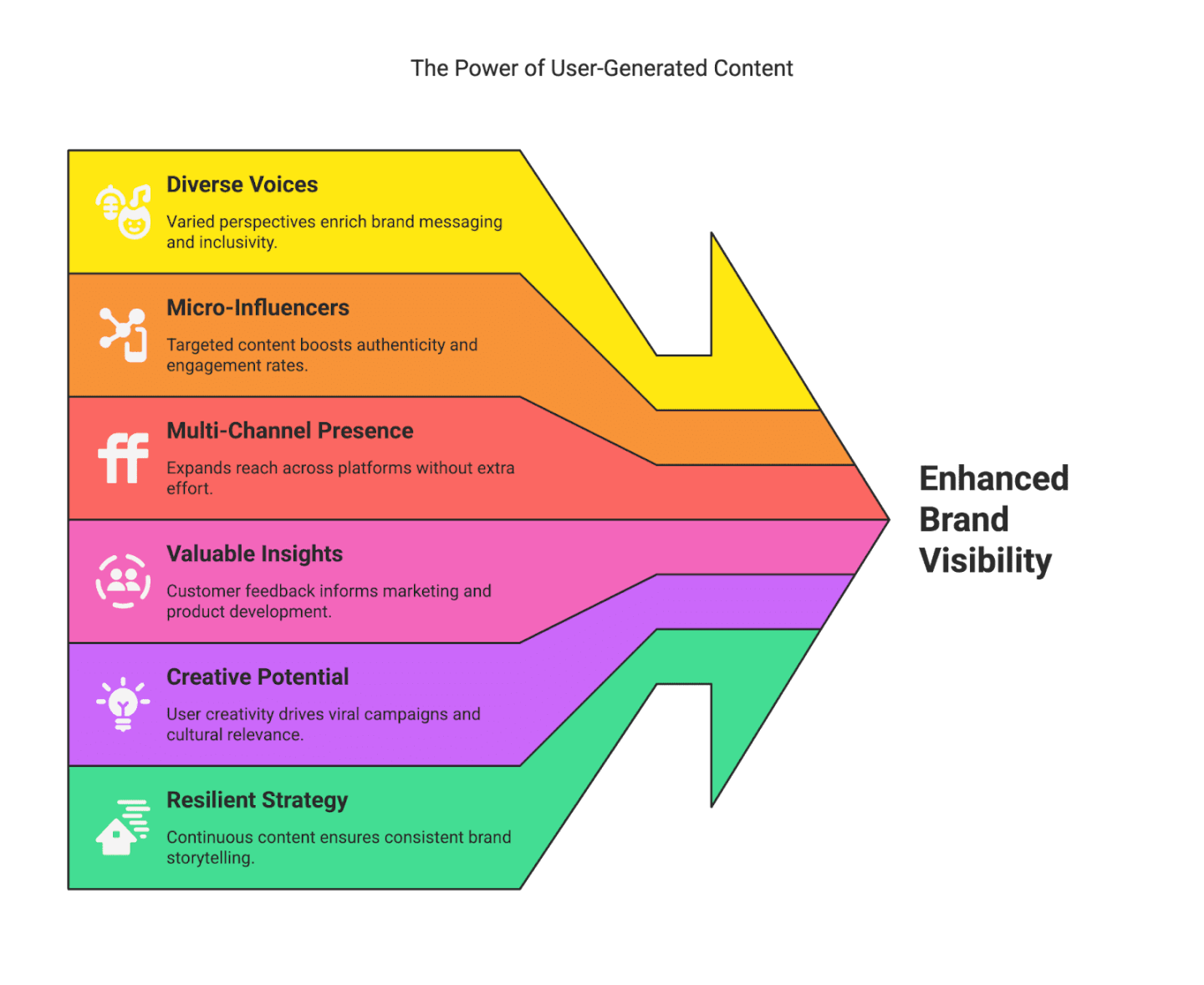
When relying solely on your internal marketing team, there’s a limit to the perspectives and ideas you can produce. UGC shatters that limit by bringing in diverse voices and content styles. Every customer is different, and so each piece of UGC adds a new angle to how your product or service is portrayed. Embracing this diversity can make your marketing more inclusive and far-reaching.
For example, your customer base might span various ages, cultures, and interests. UGC from a range of these customers means content that resonates with different segments of your potential audience. One person’s unboxing video might appeal to younger tech-savvy viewers, while another customer’s thoughtful review on a blog might appeal to an older, research-driven crowd. By showcasing both, you cover more ground. UGC delivers perspectives from across the spectrum of your users, helping others in those groups see themselves in the brand. This is especially valuable for brands with diverse demographics – seeing someone “like you” using the product can be the deciding factor in feeling the product is right for you.
A big part of this diverse content ecosystem is powered by micro-influencers and niche content creators. Unlike mega-celebrities, micro-influencers often cater to a specific interest area or community – for instance, a micro-influencer might focus on eco-friendly living, or fitness for new moms, or tech gadgets under $50. When such creators produce UGC featuring your product, they tailor the message to what their particular audience cares about. This not only boosts authenticity but also ensures the content is relevant to a targeted group. Brands find that micro-influencers can have higher engagement rates and more trust with their followers compared to big influencers, precisely because they are seen as fellow consumers and enthusiasts rather than unreachable stars. As mentioned earlier, partnering with lots of micro-influencers via platforms like Stack Influence (a leading micro-influencer marketing platform) lets brands automate product seeding and scale up UGC generation quickly. The Stack Influence approach of sending product to many micro-influencers results in a flood of diverse posts and reviews – significantly boosting brand awareness among various micro-communities.
UGC also allows your brand to be everywhere without doing it all yourself. Your internal team might not have the bandwidth to create content for every social media channel or trend, but somewhere out there a customer of yours is already doing it. For example, your team might focus on Instagram, but one of your fans might start a trending topic about your product on Twitter, and another might make a viral TikTok. By encouraging and monitoring UGC, you effectively extend your presence across platforms and formats. In 2024’s landscape, brands that successfully integrate UGC are seeing increased multi-channel visibility. Content shared by users often reaches broad audiences through social networks, email forwards, forum discussions, and more – giving you widespread visibility at no extra cost.
Another benefit of diverse UGC is that you’ll gather valuable insights. Seeing how different people use and talk about your product can inform your future marketing or even product development. Perhaps you notice a trend that a certain feature gets mentioned a lot in UGC or a new use case you hadn’t thought of. That’s data straight from your customers’ minds. Analyzing UGC can reveal what various segments of customers value most, helping you refine your offerings and messaging.
Let’s not overlook the creative potential in diversity. Your customers collectively have far more creative energy than any single marketing department. They will come up with memes, angles, and stories about your brand that you’d never imagine. For instance, remember how a simple customer idea led to a viral campaign like Starbucks’ #WhatsYourName (where people shared their names on Starbucks cups, celebrating transgender name changes)? That was user-driven content that gave Starbucks a whole new heartfelt narrative and reached a new audience. By embracing UGC, you open the door for these organic creative moments that can massively boost your brand’s cultural relevance.
Finally, a diverse UGC strategy means you’re not putting all your eggs in one basket. Traditional campaigns can be hit or miss – if your one big ad doesn’t land, that money is gone. But with continuous UGC from many sources, you have a constant mix of content out there, some of which will inevitably catch fire. It’s a more resilient, grassroots approach to marketing. And if one influencer or creator moves on, there are thousands more voices ready to fill the space, ensuring your brand’s story keeps spreading.
In essence, user-generated content widens your horizons. By leveraging the breadth of your user base – different people from different walks of life – you make your brand messaging more inclusive, relatable, and far-reaching. Especially for new or emerging brands, this can accelerate growth quickly as you tap into networks and niches that would be impossible to reach through one-size-fits-all advertising.
To wrap up, user-generated content is no longer a nice-to-have; it’s a must-have strategy for any brand that wants to thrive in today’s digital and social media-driven world. UGC’s importance boils down to a simple truth: people trust people. When marketers harness that truth, they unlock a powerful force.
UGC brings authenticity, which builds trust and credibility that paid ads often lack. It provides social proof at scale, directly influencing purchasing behavior and boosting conversion rates. It slashes content costs while scaling up your content volume to levels unachievable by internal teams alone. It engages your audience, turning customers into active community members and brand advocates who feel genuine loyalty. It adds diversity in perspective, enriching your brand’s story and extending your reach into new customer segments and platforms (with help from micro-influencers and everyday creators). And as a bonus, all that fresh content even feeds SEO benefits, helping your brand get discovered more easily online.
In practical terms, leveraging UGC can be as simple as encouraging reviews and testimonials, running hashtag campaigns on social media, reposting customer photos, or seeding products to micro-influencers for content. Even giants like Amazon rely on UGC (in the form of user reviews and ratings) as a foundation of their trust mechanism. Smaller brands and Amazon sellers, too, can punch above their weight by cultivating a strong base of user content.
As the data has shown, customers today often trust UGC more than any other information about your brand. If you’re not tapping into that trust, you’re leaving a huge opportunity on the table. On the flip side, brands that embrace UGC are reaping rewards: higher engagement, improved customer acquisition, and deeper loyalty. Some campaigns see ROI multiply – for instance, companies have reported massive jumps in revenue and ad performance after integrating UGC into their strategy.
In conclusion, the question isn’t “why is UGC important?” – it’s “how can we maximize UGC as part of our strategy?”. User-generated content is important because it’s real, influential, cost-effective, engaging, and far-reaching. It’s the voice of your customer, amplified. And in an age where the customer’s voice carries more weight than ever, UGC is arguably the most compelling form of marketing you can have. Brands that recognize this and put UGC at the heart of their marketing will continue to build trust, spark conversations, and ultimately drive growth in a way that no purely traditional approach can match. Embrace the content your users create – it just might be the strongest asset your brand has in the digital world.
Social media isn’t just for sharing memes and holiday photos – it’s a goldmine for entrepreneurs, influencers, and content creators. In fact, the creator economy is booming: more than 50 million people are trying to make a living by creating online content. With billions of users scrolling feeds daily, social platforms offer unprecedented opportunities to earn income, whether you’re a micro-influencer, e-commerce seller, Amazon affiliate, or UGC creator. The best part? You don’t need to be a Kardashian-level celebrity to cash in. Even those with modest followings or niche interests can monetize their social presence. From getting paid to review products to launching your own merch line, making money on social media is accessible to anyone willing to get creative and put in the work.
As the digital landscape evolves, savvy creators are diversifying how they earn. Brand partnerships (sponsored posts) remain the most popular moneymaker – one survey found 94% of creators earn through brand deals – but they’re far from the only game in town. Affiliate marketing and freelance content creation (UGC) are tied as the second-most common revenue streams, each used by about 68% of creators. This means many influencers are combining multiple income sources, like sponsorships and affiliate commissions, to boost their earnings. The chart below highlights the popularity of a few top monetization methods among content creators:
Popularity of top social media monetization methods among creators (percentage of creators using each method).
Massive Audience Reach: Over 5.2 billion people (more than half the world) use social media, offering a virtually unlimited audience for your content or products. Whether you’re targeting niche enthusiasts or the general public, there’s a community for everything – and where there’s an audience, there’s monetization potential.
Booming Creator Economy: The influencer marketing industry alone is projected to hit $32+ billion in 2025. Brands large and small are pouring money into social media promotions, because nearly half of consumers (49%) have made purchases due to influencer content. This means companies want to pay people like you to showcase their products online. At the same time, millions of individuals are building personal brands – the competition is stiff, but the opportunities are growing.
Low Barriers to Entry: You don’t need a fancy resume or huge upfront investment to start. Social platforms are free to use, and even “micro” influencers with a few thousand followers can earn money by sharing authentic content. Many new creators also rely on an AI UGC creator tool to produce consistent content without expensive equipment or a full production setup. In fact, you can start monetizing with as little as 1,000 followers – micro-influencers on Instagram (under 10k followers) often charge $20–$100 per sponsored post. That’s real money for a single upload, and those rates scale up as your follower count grows (accounts with 500k+ followers can command up to $7,000 per post). In short, everyone from a college student with a niche meme page to an Amazon seller with a product line can find a way to profit on social media.
Multiple Income Streams: Unlike a traditional job, social media offers countless ways to monetize your creativity. The most successful creators don’t rely on just one method – they mix and match. For example, you might earn ad revenue from YouTube, commission from affiliate links, and direct payments from fans on Patreon, all while also doing the occasional brand collaboration. This diversification helps stabilize your income (if one source dips, another can fill the gap). Later in this post, we’ll explore eight+ proven ways to make money on social media and how you can combine them.
Ready to turn your tweets, grams, and TikToks into income? Here are the top strategies – and how to get started with each.

One of the most well-known ways to earn money on social media is through influencer partnerships – in plain terms, getting paid to promote brands. Companies will compensate you (with cash, free products, or both) to feature their product or service in your content. These could be a dedicated Instagram post about a skincare line, a TikTok video using a gadget, or a mention in your YouTube video description. It’s a win-win: brands reach your audience, and you get paid for doing what you love.
Start Small (Micro-Influencers FTW): You might think you need millions of followers to be an influencer, but today micro-influencers are in high demand. Brands have realized that creators with 1,000–50,000 followers often have highly engaged and loyal audiences, which can be more valuable than a mega-celebrity’s massive (but less engaged) following. As a result, even nano and micro influencers can snag paid collaborations. Authenticity beats sheer size – if your followers trust you, your recommendations carry weight. Many companies, especially small businesses, prefer working with a bunch of micro-influencers who feel like “real people” rather than a single expensive superstar.
Show Me the Money (or Products): How much can you earn as an influencer? It varies widely. On the lower end, a micro-influencer might earn a few dozen dollars per sponsored post (remember that $20–$100 per post figure for <10k follower Instagram accounts). As your following and niche influence grow, so do the paychecks. Influencers with hundreds of thousands of followers often charge thousands of dollars per post. Additionally, many brands offer free products or services as part of the deal – which can save you money if it’s something you love. For instance, a fitness influencer might get free gym apparel plus a fee for posting a workout photo wearing the brand’s gear.
How to Attract Brand Deals: To land sponsorships, build an online persona that brands want to align with. Here are a few tips:
Keep It Authentic: Perhaps the golden rule of influencer marketing – only partner with brands that make sense for your image and audience. Promoting a random detox tea one week and a video game the next (with no personal interest in them) will erode your credibility. Long-term success (and repeat deals) come from being genuine. Many social media users can sniff out inauthentic shills, so stick to products you’d honestly use. This way, sponsored content remains engaging and you keep the trust of your followers.
If getting paid per post sounds fickle, how about earning money while you sleep? Affiliate marketing is one of the easiest ways to make passive income on social media. The concept: you promote a product via a special trackable link or discount code, and whenever someone buys through your link, you earn a commission. It’s like being an online salesperson – but you can post the link once and keep earning from it indefinitely.
How Affiliate Programs Work: Companies set up affiliate programs to incentivize people to refer customers. You sign up (often free), get your unique referral link or coupon code, and then share it in your content. When a follower uses your code/link to make a purchase, the sale is attributed to you and you get a cut. Commission rates range widely – some programs offer a flat dollar amount per sale, others give a percentage (typically anywhere from 5% to 30% of the sale price). For example, an affiliate might earn 10% on each sale; if you recommend a $100 coffee maker, you’d get $10 each time someone buys it via your link.
The Amazon Affiliate Example: One of the most popular affiliate programs in the world is Amazon Associates (Amazon’s affiliate program). It’s beginner-friendly and free to join. Amazon Associates lets you generate special links for millions of products on Amazon – you earn a small percentage (around 4-8% on average) from anything someone buys after clicking your link. This is great for product review bloggers, tech YouTubers, or anyone who frequently talks about products available on Amazon. For instance, if you’re a book reviewer, you can post an Amazon affiliate link to each book you recommend; if a follower buys the book through your link, you get a commission. Getting started is simple – Amazon’s program is open to influencers and content creators of all sizes. Beyond Amazon, there are many other affiliate networks and programs (ShareASale, CJ, Rakuten, to name a few) covering almost every industry.
Where to Share Links: The key to affiliate success is smart placement of your links or codes:
Why Affiliate Marketing Rocks: It’s low-effort and scalable. You don’t have to create or stock any product – you’re just sharing things you already enjoy. As your following grows or a post goes viral, an old affiliate link can suddenly generate a surge of income. Some creators wake up to find they earned money overnight because a YouTube video from six months ago is still driving sales. While each individual commission might be small, over time it adds up. In fact, affiliate marketing is often cited as one of the most popular ways creators monetize their presence, and billions are being invested into this space.
Tips for Affiliate Success: Choose products or services relevant to your audience (a gaming accessory will do great on your Twitch channel, but flop on a parenting blog), and be honest with your reviews. If something has flaws, mention them – it builds trust. Track your results if possible (many programs let you see how many clicks and sales your links generated) to learn what works best. And don’t overdo it; people will tune out if every post is pushing a product. Mix affiliate content with regular content so your feed doesn’t feel like one big advertisement.
Why promote someone else’s products for a cut when you can sell your own for 100% of the profit? If you have an entrepreneurial spark, social media can drive serious sales for your business. Whether it’s a physical product, a handmade craft, or a digital download, you can use your social channels as a marketing funnel to your online store – or even sell directly on the platform.
E-Commerce and Amazon Sellers: Many social media influencers eventually become e-commerce entrepreneurs. Perhaps you’re a fashion influencer who launches your own clothing line, or a fitness YouTuber who sells branded workout gear. If you’re already an Amazon seller (or have an Etsy shop, Shopify store, etc.), you know the challenge is getting customers. That’s where social media comes in: by building a following around your niche, you create a pool of potential buyers for your products. Even a small business or private label seller on Amazon can significantly boost sales by showcasing products on Instagram, TikTok, or Pinterest – platforms where people go to discover new things. In fact, social commerce is on the rise: platforms like Instagram and TikTok now let users shop directly without leaving the app. For example, you can tag products in an Instagram post or create a TikTok Shop video, turning casual viewers into instant shoppers.
Types of Products to Sell: Here are popular product ideas for social media creators:
Social Media as a Storefront: Modern platforms have features to support sellers. For example, Instagram Shopping allows business accounts to create a shop with product listings and tag products in posts/stories, so users can tap and buy. Facebook Shops integrate with Instagram and let you showcase products on your page. Pinterest has Buyable Pins. TikTok has shopping and live-stream sales features. And of course, you can always link to your external store (like your Amazon product page or Shopify site) in your bio or posts. The key is to make the buying process seamless. If a viewer sees something they like in your content, make it easy for them to find the product and check out.
Success Story – From Content to Commerce: Consider the example of Julia Roblin, a TikTok creator who posted her tattoo art and built a following of over 500,000. When her audience started clamoring for her designs on merchandise, she launched an online store selling stickers, apparel, and more with her art. By using TikTok to promote her own products, she created a lucrative revenue stream that didn’t rely on fickle algorithms or brand deals. This illustrates a powerful point: if you have an engaged audience, there is likely something they’d be willing to buy from you, be it a product or a service. Listen to your followers – sometimes they’ll literally comment “I wish you sold X!”. That’s your cue.
Tip: If you don’t have your own product idea yet, you can start by selling someone else’s product in a more direct way than affiliate marketing. For example, dropshipping allows you to sell products (often generic ones from suppliers) via your own storefront, and the supplier ships it to the customer for you. It’s a common way to test product demand without huge investment. Alternatively, join a direct sales or MLM company (with caution and research) where you sell their products on your social channels for a commission. However, creating your own brand, even if it’s a small side-hustle business, tends to be more rewarding and under your control.
Not keen on being in the spotlight or cultivating a huge public following? You can still make money with your social media skills by becoming a UGC creator. UGC stands for user-generated content – but in the monetization context, UGC creators are paid to make content that looks organic and authentic, which brands then use in their marketing. In simpler terms, you’re like a freelance content creator for hire: a brand sends you their product (or you purchase it), you film videos or take photos with it as if you were a genuine customer, and the brand posts that content on their social media or ads.
No Big Following Required: The huge appeal of UGC creation as a money-making route is that you don’t need any followers at all. Brands aren’t hiring you for your audience – they’re hiring you for your content. This means someone with a brand-new TikTok account (zero followers) could make money by producing a great 30-second product demo video that a company uses on its own TikTok page. It’s an ideal path for folks who have a knack for creating engaging videos or photos but don’t necessarily want to maintain a public persona or deal with “influencing.” As Later Media explains, UGC creators are valued for their creativity and authenticity, not their audience size. This levels the playing field – even nano-creators can get paid work if they can film a compelling clip.
Why Brands Crave UGC: In the age of polished ads and sponsored posts, consumers are increasingly drawn to content that feels real and relatable. A whopping 93% of marketers say that UGC performs better than traditional branded content – it comes off as more trustworthy. Think about it: a TikTok of a regular person enthusiastically trying on a new jacket can often sell it better than a high-end studio photoshoot. Brands know this, so they’re actively seeking everyday people to create “real life” testimonial videos, unboxing clips, how-to demos, and lifestyle photos. Some brands even run UGC campaigns at scale, collecting tons of customer-made content to repost. They save on big production costs and get diverse content that resonates with different audiences.
How UGC Creators Make Money: Typically, you’ll charge a per-content fee or package rate. For instance, you might charge a flat fee for one edited video or a bundle price for a set of 5 photos. Rates can vary based on your experience and the complexity of the project. To give a ballpark: UGC creators often earn anywhere from $50 up to $500+ for a single piece of content (like a short video), depending on usage rights and quality. Some reported averages: about $50–$200 for an image, $50–$500 for a short video (Reel/TikTok), and experienced UGC videographers even charging $500–$1,000 per video for bigger brands. These numbers show that UGC creation can be quite lucrative, especially if you develop a efficient process to shoot and edit content. Remember, since you’re behind the camera rather than promoting to your followers, you can do UGC work for many brands concurrently without worrying about saturating your own feed or violating exclusivity (just be mindful if contracts ask you not to work with competitors for a time frame).
How to Get Started as a UGC Creator:
Pro Tip: Even though you’re not an “influencer” in this scenario, treat brands professionally and meet deadlines like any freelance client work. High-quality content delivered on time will likely result in repeat business. Brands that find a reliable UGC creator often come back for more content each month or for new product launches. Over time, you can develop long-term relationships where you’re practically an extended part of their content team, creating a steady income stream.
Lastly, if you still plan to grow your own following, doing UGC gigs can actually sharpen your content skills and help you earn on the side until your audience is big enough for direct monetization. Many creators do both – they make UGC for brands anonymously and also run their own influencer-style accounts separately.
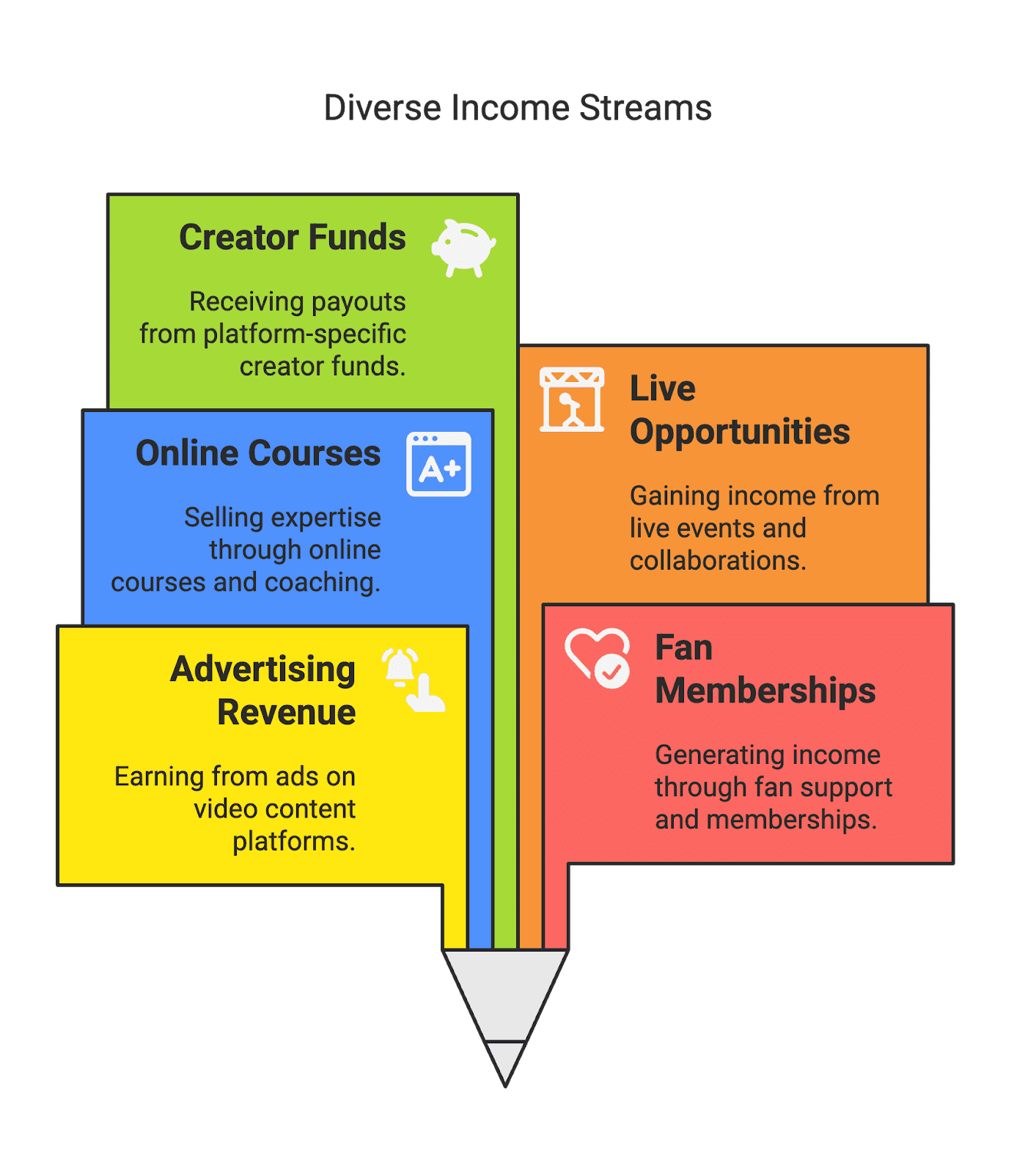
We’ve covered the big four, but the list doesn’t end there. The beauty of being an online creator is that you can monetize your skills and audience in countless ways. Here are some additional social media monetization avenues worth considering:
In essence, the sky's the limit. Many creators ultimately blend multiple monetization methods for best results. For example, a successful fitness influencer might simultaneously: do brand-sponsored posts, earn affiliate commissions on supplement links, sell their own workout app, and offer premium coaching to a handful of clients. It might sound like a lot, but each method taps into a different segment of their audience or skills, and together it forms a robust income mix. Diversifying your revenue is strongly advised by top creators and experts – it not only helps you earn more, but also protects you if one income source dries up.
Before we wrap up, let’s arm you with some useful tools and resources to help on your money-making journey.
Making money online doesn’t happen in isolation – you’ll want some tools, platforms, and resources to streamline the process. Here’s a curated list of helpful tools and services (including a shout-out to Stack Influence) to boost your social media monetization efforts:
Lastly, always keep an eye on platform policies and algorithm changes. One algorithm tweak can affect reach or a new feature can unlock a revenue opportunity (for example, the rise of Reels opened new ways to get discovered). Adaptability is key in this fast-paced social media world. Fortunately, using the tools and resources above will help you stay agile and informed.
As we’ve explored, there’s an abundance of ways to make money through social media, whether you dream of being the next big influencer or prefer working behind the scenes. The common thread among all these methods is value creation. If you consistently create content that entertains, informs, or inspires an audience, you can monetize that value – be it through influencing purchase decisions, selling your creations, or lending your creative skills to brands. Finally, remember that making money on social media should still be fun and fulfilling. It’s about turning your creativity, passions, or expertise into a career – something previous generations could only dream of. Whether you’re creating hilarious viral videos, posting mouthwatering food pics, reviewing gadgets, or building a tight-knit community around a cause, you have the potential to earn an income while doing it. So go ahead and give it a shot! Experiment with the strategies we discussed, find what clicks for you, and run with it. Who knows – you might be the next success story we read about, or at least you’ll earn a nice side hustle income and a bunch of new opportunities along the way.
Now it’s your turn: What are you waiting for? Start applying these tips and watch your social media start paying you! Good luck, and happy monetizing.