
The latest info on influencer marketing trends, micro influencer news, and the world of social media

Ever scroll through TikTok and see a familiar creator’s video with a small “Sponsored” label attached? Chances are, you’ve encountered a TikTok Spark Ad. Spark Ads are essentially TikTok’s way of letting brands boost real user content as ads, blending organic posts with paid promotion. It’s a casual, authentic-style advertising format that’s quickly becoming a game-changer for e-commerce businesses and influencer marketing. In fact, 66% of brands plan to repurpose micro-influencer content in TikTok Spark Ads in their campaigns. Whether you’re an Amazon seller, an e-commerce marketer, a micro-influencer, or a content creator, it’s worth understanding how Spark Ads work and how they can benefit you.
In this guide, we’ll break down what TikTok Spark Ads are, how they work, what makes them different from traditional ads (and from “whitelisting” on other platforms), and how they stack up against formats like Instagram’s branded content. We’ll also explore why Spark Ads matter for e-commerce brands and Amazon sellers looking to drive sales, and how micro influencers and creators can capitalize on this trend. Finally, we’ll wrap up with some actionable tips to help you implement Spark Ads successfully in your marketing strategy. Let’s dive in!
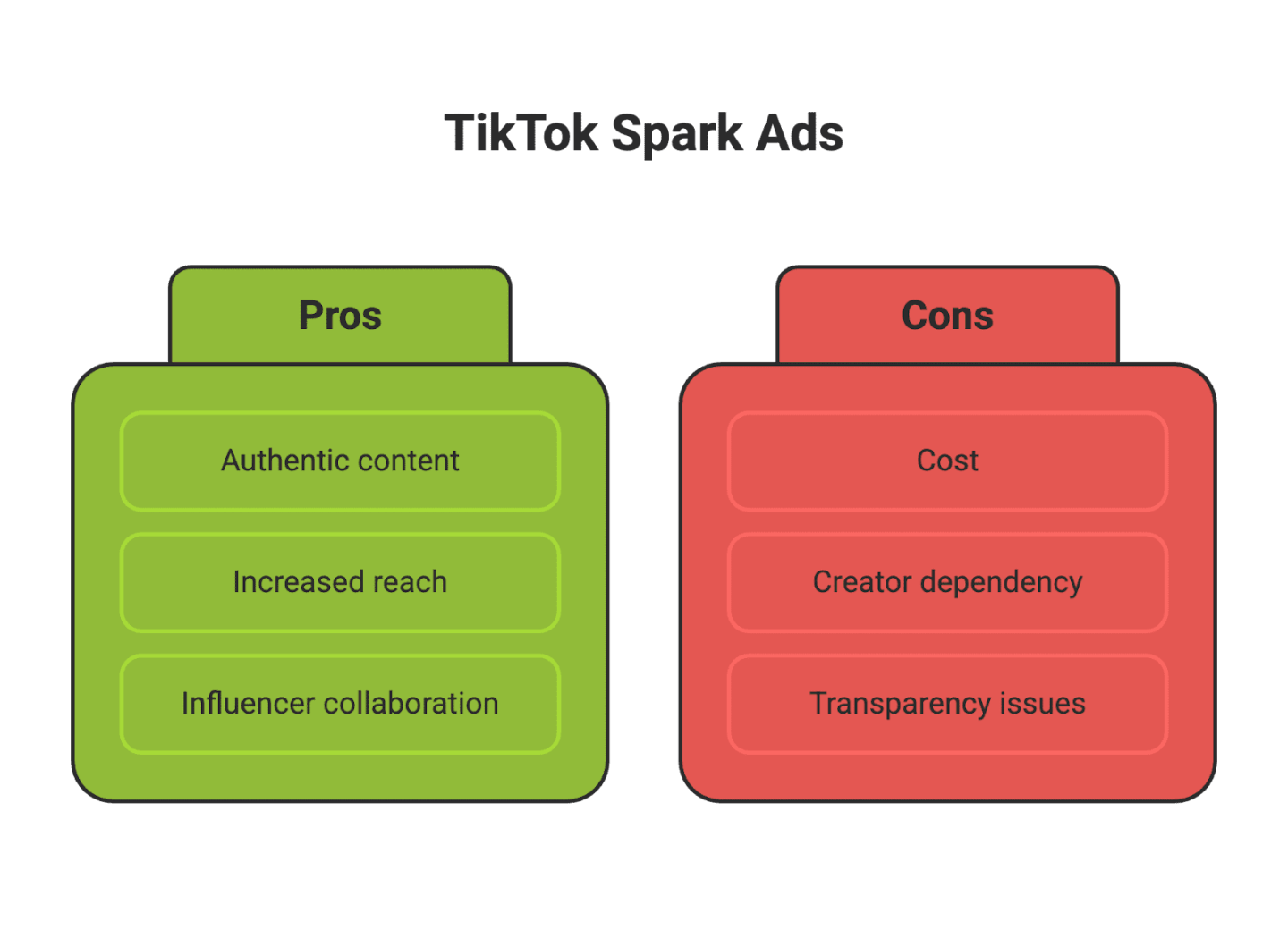
TikTok Spark Ads are a native ad format on TikTok that allows brands to promote existing organic TikTok posts as ads, rather than creating traditional ads from scratch. In simple terms, a Spark Ad takes a real TikTok video – often one made by a creator or even the brand’s own TikTok account – and turns it into a sponsored post. Unlike standard ads, Spark Ads maintain the original post’s appearance and engagement (likes, comments, shares), showing up with the creator’s username and profile picture as if it were their normal TikTok content. The only giveaway is a small “Sponsored” or “Paid Partnership” tag on the video, which means viewers experience it almost like user-generated content (UGC) in their feed rather than a flashy ad.
What makes Spark Ads special is that they leverage the authenticity of TikTok content. TikTok is all about short, relatable videos by real people, and Spark Ads tap into that vibe. By using a real post (for example, a creator’s product review, a how-to clip, or a funny skit featuring a brand’s product), Spark Ads preserve the lo-fi, genuine feel that TikTok users love, even though the post is being shown to a wider audience as paid advertising. Essentially, Spark Ads are TikTok’s built-in system for “influencer whitelisting”, meaning brands can pay to amplify a creator’s content – with the creator’s permission – to reach more people. This is very similar to how Instagram’s branded content or Facebook’s partnership ads work, but TikTok coined it “Spark Ads” to emphasize sparking organic content into a broader campaign.
For a quick mental picture: imagine a skincare micro-influencer posts a genuine review of a new face mask. With Spark Ads, the skincare brand can take that exact TikTok video (with the influencer’s handle, music, captions and all) and promote it as an ad. Users scrolling the For You Page might see the video and think “oh, here’s a cool review from someone,” not realizing at first glance that it’s an ad – because it looks and feels like any other TikTok post from a creator they follow or trust. This blend of authentic content + paid reach is what makes Spark Ads so powerful for e-commerce marketing and UGC campaigns.
So, how does a brand actually create a Spark Ad? It’s easier than you might think. Here’s a step-by-step look at how TikTok Spark Ads typically work:
In short, Spark Ads work by taking already-successful TikTok content (often created by influencers or happy customers) and supercharging it with paid advertising. TikTok provides the plumbing (via the code system and Ads Manager integration) to make this process smooth without requiring logins or the creator handing over their account. This way, brands get the benefit of influencer-style content and social proof, while creators maintain control over their content and even earn a fee or additional exposure from the ad. It’s a clever synergy that lets both sides collaborate easily on advertising.
Now that we know what Spark Ads are, you might wonder how they differ from the regular TikTok ads we’re used to (the kind where a brand just makes an ad video and posts it from their own account). There are a few key differences that set Spark Ads apart from traditional ads on TikTok:
TikTok Spark Ads vs Non-Spark Ads – key differences at a glance. Spark Ads rely on existing creator posts and show up under the creator’s profile name, whereas standard TikTok ads are brand-created content that appear under the brand’s account. Spark Ads also require an authorization code from the creator and only run for a set period (e.g. a few weeks) determined by that creator. Traditional ads, on the other hand, can be run by the brand at any time and for as long as desired since the brand fully controls them. The result is that Spark Ads come across as authentic UGC in users’ feeds, while traditional ads are more clearly “ads” – which has a big impact on how users receive them.
Because Spark Ads mimic organic content, they often outperform regular ads in key metrics. TikTok and various studies have noted some impressive uplifts when using Spark Ads versus standard in-feed ads:
Chart: Spark Ads vs Non-Spark Ads Performance – Spark Ads consistently deliver higher engagement and conversion metrics than standard TikTok ads, thanks to their authentic look. As shown above, Spark Ads tend to generate more video completions, higher engagement rates, and greater conversion lift compared to non-Spark ads. For example, TikTok’s own data has hyped that Spark Ads can drive significantly higher interaction rates – one report noted 142% higher engagement and 43% more conversions for Spark Ads compared to traditional TikTok ads in similar campaigns. Another TikTok case study showed a 25% higher click-through rate and 24% higher conversion rate when a jewelry brand switched to Spark Ads, along with substantially lower cost-per-click and cost-per-action. The consensus is clear: leveraging a creator’s relatable content can be far more effective at grabbing viewers’ attention and earning their trust than a typical polished ad spot.
Of course, creative quality and relevance still matter. A boring video won’t magically perform well just because it’s a Spark Ad. But if you have engaging UGC or influencer content to start with, Spark Ads give it a boost of reach without killing the vibe that made it good. This combination of authenticity + amplification often translates into better ROI for brands – whether that’s measured in website clicks, app installs, or product sales.
You might be thinking: This sounds similar to what we’ve seen on other platforms, right? And you’re correct. TikTok Spark Ads are essentially the platform’s answer to “whitelisting” and branded content ads elsewhere in social media. Here’s a quick comparison to put it in perspective:
In summary, TikTok Spark Ads are not an isolated phenomenon – they’re part of a broader shift in advertising towards authentic, creator-powered content. TikTok has simply made it very seamless with the Spark Ad functionality. If you’re already familiar with running influencer ads on Instagram or YouTube (where it might be called whitelisting, collab ads, etc.), adopting Spark Ads on TikTok will feel like a natural extension. The key difference is in execution details (e.g. using a code on TikTok vs. Business Manager on IG), but the strategic idea is alike: partner with creators, and let their content + voice carry your brand message to the masses in a less intrusive way.
For anyone selling products online – whether you have a Shopify store or you’re hustling on the Amazon Marketplace – TikTok Spark Ads can be a powerful tool in your marketing arsenal. Here’s why e-commerce marketers and Amazon sellers should pay attention:
In short, Spark Ads offer e-commerce and Amazon sellers a potent combo: authentic content that builds trust and the reach/targeting of paid advertising. If you’re trying to stand out in a crowded online market, this approach can elevate your brand above competitors who rely only on bland product shots or text ads. It creates a bridge between social media buzz and actual sales, which is exactly what online sellers need in 2025’s competitive landscape.
Spark Ads aren’t just beneficial for brands – they open up exciting opportunities for micro-influencers and content creators as well. If you’re a creator who makes great content, Spark Ads can be a new avenue to grow your impact (and your income). Here’s how Spark Ads affect the creator side of the equation:
One thing to note for creators: make sure you have clear agreements with brands when doing Spark Ads. It’s standard that if a brand is putting paid support behind your content, you should be fairly compensated. Also discuss things like duration (how long can they run the ad) and any content usage rights beyond TikTok. Many micro-influencers are savvy to include whitelisting clauses in their collaboration terms now (e.g., “brand can promote the TikTok on TikTok for X days, starting within Y days of posting”). This avoids any confusion. As the industry matures, platforms (like Statusphere and others) even facilitate selling Spark Ad authorization directly at set rates. The takeaway: creators stand to benefit from the Spark Ad revolution – just be sure to protect your value and maintain that authentic style that made brands want to “spark” your content in the first place.

By now, we’ve covered the what, why, and how of TikTok Spark Ads. If you’re a brand (or marketer) ready to give this a shot, how can you implement Spark Ads effectively? Here are some actionable steps and tips to ensure your Spark Ad campaign shines:
By following these steps, you’ll be well on your way to mastering TikTok Spark Ads. Remember that at its core, success on TikTok (ad or not) is about creativity and authenticity. Spark Ads are just a vehicle to amplify those. So focus on the content and the people behind it – work with creators who genuinely love your product or align with your brand values. That genuine enthusiasm will shine through in their TikToks, and when you boost those TikToks to millions of eyes, viewers will feel that authenticity. In the era of ad-fatigue, relatable content is your secret weapon, and Spark Ads are the delivery system.
TikTok Spark Ads represent the intersection of social media authenticity and advertising reach. For brands and sellers, they offer a chance to break through the noise with what feels like word-of-mouth recommendations, all while using TikTok’s powerful targeting to hit the right audience. For micro-influencers and creators, Spark Ads have unlocked new ways to partner with brands and monetize content without sacrificing your personal voice. It’s a true win-win when executed thoughtfully.
As you venture into Spark Ads, keep the tone casual and informative – just like this blog’s style. TikTok is a platform built on creativity and fun; the ads that perform best often keep that same spirit. A polished, traditional commercial might flop on TikTok, whereas a quirky DIY video or an earnest testimonial from a creator can go viral. Leverage UGC, lean into the platform’s trends, and let real user stories do the selling for you.
In a world where user-generated content and micro-influencer buzz drive purchasing decisions, TikTok Spark Ads are an almost logical evolution – turning those grassroots product shoutouts into scalable marketing campaigns. Whether you’re trying to boost your Amazon product’s rank, scale up your DTC brand’s sales, or grow your influence as a creator, Spark Ads are a tool worth using.
By embracing TikTok Spark Ads, you’re essentially embracing the future of advertising – one where micro-level trust (from everyday creators) meets macro-level reach (through paid media). It’s a strategy that can humanize your brand and supercharge your ads at the same time. So if you haven’t tried Spark Ads yet, give it a go. Start small, learn the ropes, and scale up. Your next big sales “spark” might just come from a tiny TikTok video that catches fire with a little boost. Happy Sparking! 🚀
E-commerce has transformed from a niche experiment into a multi-trillion dollar force driving modern retail. For entrepreneurs and Amazon sellers, the barrier to starting an online business has never been lower – you can reach global customers 24/7, often with just a laptop and an idea. This comprehensive guide will walk you through everything you need to know to build a successful e-commerce business in 2026, including choosing a business model, setting up your online store, marketing effectively (with a focus on micro-influencers, content creators and UGC), and leveraging platforms like Amazon. By the end, you’ll have a blueprint to launch, scale, and grow your e-commerce venture in today’s competitive digital marketplace.
E-commerce (electronic commerce) refers to buying and selling goods or services using the internet, and the transfer of money and data to execute these transactions. In simple terms, any commercial transaction conducted online is part of e-commerce. This encompasses a wide variety of businesses and models, from retail giants selling physical products, to individuals offering digital downloads or services via a website. As digital marketplaces grow across websites, apps, and social platforms, helping shoppers find products fast is crucial, and tools like smart filters, recommendation engines, and the Crobox product discovery tool for e-commerce make this seamless by guiding users to the most relevant items.
It’s important to clarify e-commerce vs. e-business. Strictly speaking, e-commerce focuses on the transaction of products and services online, whereas an e-business refers to the entirety of running an online business – not just sales, but also marketing, customer service, etc.. In practice, when people talk about an “e-commerce business,” they usually mean an online business involved in selling something.
Virtually anything. Common categories include:
In short, if it can be sold, it likely can be sold online. The explosion of e-commerce over the past two decades means consumers are comfortable buying everything from groceries to cars on the internet.
Starting an e-commerce business in 2026 is an exciting opportunity. The growth of online commerce has been astounding – and it’s still accelerating. Over 2.77 billion people (about one-third of the world’s population) now shop online as of 2026, and retail e-commerce sales will exceed $6.8 trillion in 2026 (up ~8% from 2024). In fact, more than 21% of all retail purchases worldwide are now happening online, a figure that keeps rising each year.

Global retail e-commerce sales have risen dramatically in the past several years, from around $2.4 trillion in 2017 to over $6 trillion in 2024. In 2026, online sales are on pace to approach $6.5–6.8 trillion (roughly 20-21% of total retail worldwide). This rapid growth underscores the tremendous opportunity for new e-commerce entrepreneurs entering the market.
Why is e-commerce so attractive for entrepreneurs and creators? Here are a few key benefits and advantages of an online business:
Finally, it’s worth noting that consumer behavior has permanently shifted toward e-commerce. The COVID-19 pandemic accelerated online shopping adoption by an estimated 5 years in growth. People of all ages are now comfortable buying online, and technologies like mobile apps and voice assistants make it even easier. In short, the customers are already online – meeting them there with your business is often the smartest move you can make as a seller in 2026.
Not all e-commerce businesses are alike. It’s important to understand the different models of online business, because the strategies for success and operational considerations can differ for each. E-commerce models are often categorized by who is selling to whom:
Understanding which category your business fits in will influence your approach. Companies selling to other businesses often complement their online storefront with B2B commerce software that supports negotiated pricing, purchasing permissions, and integrated order management. Most new e-commerce entrepreneurs start in B2C, since you can directly reach consumers by launching a website or Amazon store. B2B can also be lucrative if you have a product that businesses need – but expect more complex requirements (like invoices, bulk shipping logistics, or even integration with clients’ procurement systems). Meanwhile, if you’re an influencer or content creator, you might find yourself dabbling in C2B (monetizing your content to brands) alongside a traditional B2C shop.
In addition to “who you sell to,” another way to classify e-commerce businesses is how you source, stock, and sell your products. Your revenue model or fulfillment strategy is essentially how you plan to provide products to your customers and make money. You’ll want to choose a model that fits your resources, budget, and risk tolerance. Here are some of the most popular e-commerce models:
Many e-commerce businesses actually blend models. You might start with dropshipping to test products, then invest in inventory for the best-sellers (moving to wholesale model), then perhaps launch a private-label version of a successful generic product. Or you might both sell products and have affiliate income on the side. There’s no single “right” model – choose what aligns with your resources and market opportunity.
Pro Tip: If you’re not sure which model to start with, consider your risk tolerance and capital. Low capital and low risk? Dropshipping or print-on-demand might be safest. Willing to invest more for potentially higher margins? Private label or wholesale could work. Want recurring revenue? Think subscription. The good news is that with e-commerce, you can pivot and adjust your model as you learn more about what works for your business.
Starting an e-commerce business can feel overwhelming – but it becomes manageable if you break it into clear steps. Below is a step-by-step roadmap to go from idea to launch:
Every successful business starts with selling something people want. Finding the right product (or service) and niche is arguably the most important step. With millions of products already out there, you’ll need to do some research and creative thinking. Here’s how to approach it:
In summary, brainstorm ideas, research thoroughly, and narrow down to a niche + product with demand and profit potential. Don’t skip this validation stage – it can save you from investing in the wrong inventory. It’s okay if your first idea isn’t “the one” – keep researching until you feel confident.
Before you rush to build a website, take a moment to outline a simple business plan. This doesn’t have to be a formal 50-page document. It can be a one-page Lean Canvas or just notes, but it should cover key points:
Writing this plan forces you to think through the business holistically. It will highlight any glaring issues (e.g., you might realize shipping heavy furniture internationally is not feasible without raising prices, etc.).
Remember, a business plan is a living document – you can and should adjust it as you learn more. But starting with a plan vastly improves your odds of success versus winging it.
Now it’s time to build your online presence so customers can find and buy your product. You have two main routes here: sell on an established marketplace (like Amazon, Etsy, eBay) or create your own online store (using a platform like Shopify, WooCommerce, etc.). Many businesses do both eventually, but as a start, consider which suits your product and strategy:
You can choose one or both approaches. For instance, some entrepreneurs start on Amazon to validate the product (fast traffic) and later launch their own branded site to diversify sales. Conversely, some start on their own site to build a brand identity, then expand to marketplaces to reach more customers. There’s no wrong answer – just align with your business goals.
Setting up your store involves a few key steps:
At this point, you should have a functioning online store or live product listings. Congratulations – you’re officially open for business! But as they say, “if you build it, they won’t necessarily come” – now you need to focus on getting customers.
With your e-commerce store ready, marketing is the make-or-break factor for success. “Build it and they will come” does not apply in e-commerce – you have to proactively drive traffic and attract shoppers. In this section, we’ll cover the core marketing strategies to get visitors and convert them into buyers:
SEO means optimizing your website (or marketplace listings) to rank higher in search engine results (primarily Google, and also Bing). When someone searches for “best gaming chair” or “handmade soap gift set,” you want your site or product to appear on page 1 if possible. SEO is a long-term strategy and can take time to show results, but it pays off with “free” organic traffic.
Billions of people use social media daily – platforms like Instagram, Facebook, TikTok, Pinterest, YouTube, and Twitter are fertile ground for showcasing your products and brand personality. Social media marketing can generate both brand awareness and direct sales, especially for visually appealing products or niches with active communities.
The main goal of social media is to create a buzz and connection with your audience. It often takes time to grow followers, but a single viral post or strong influencer collaboration can also spike sales dramatically. Which brings us to a major strategy for 2026: micro-influencer marketing, detailed in the next section.
While SEO and organic social media are often “free” (aside from your time and maybe content creation costs), paid ads can drive traffic quickly by putting your promotions in front of targeted audiences. The most common forms for e-commerce are:
Starting with paid ads, a good approach is to set a modest budget and experiment. Even $5-$10 a day on Facebook/Instagram ads to test an audience can yield data. Watch the metrics: click-through rates, cost per click, and importantly the conversion rate once they land on your site. If you spend $50 on ads and get $200 in sales, that’s a success. If you spend $50 and get $0, tweak either the audience targeting, the ad creative, or perhaps your landing page (maybe the page didn’t convince them).
Beyond immediate sales tactics, think about content marketing and email to nurture potential customers over time:
Some standard email sequences to set up: a welcome series (when someone signs up or makes their first purchase, send a series of 2-3 emails welcoming them, sharing your brand story, and perhaps recommending popular products), and an abandoned cart email (if someone adds to cart but doesn’t check out, trigger an email after a few hours reminding them – this can recover a lot of otherwise lost sales).
One of the most impactful ways to market your e-commerce business in 2026 is through influencer marketing – specifically working with micro-influencers and content creators to promote your brand. Simultaneously, tapping into user-generated content (UGC) from everyday customers can dramatically boost trust and conversions. Let’s break down why these are game-changers and how to do it effectively:
You’ve likely heard of influencers on social media – people with large followings who partner with brands. While mega-celebrities and top YouTubers have massive reach, there’s a growing body of evidence that “smaller” influencers often drive better results for e-commerce brands. Micro-influencers are generally defined as those with roughly 10,000 to 100,000 followers (tiers vary, with nano-influencers even smaller at 1k-10k). They may not be famous, but they have highly engaged audiences in specific niches.
Here’s why micro-influencers are so powerful for online sellers:
To leverage micro-influencers for your store, consider these steps:

Real-world example: A small fitness apparel brand might send free outfits to 20 micro-influencers who post workout content on Instagram/TikTok. Each posts a workout video wearing the outfit, mentioning the brand with a discount code. Collectively, those posts reach tens of thousands of targeted viewers and drive traffic to the brand’s site. The authentic fitness context and peer-like advice “I love these leggings, they actually stay up during my run!” is more convincing than any polished ad the brand could have made.
It’s worth mentioning platforms like Stack Influence can simplify running micro-influencer campaigns. These platforms connect brands with networks of vetted micro-influencers at scale. For instance, Stack Influence is a leading micro-influencer marketing platform that helps e-commerce brands automate product seeding campaigns and scale up authentic word-of-mouth marketing. In such platforms, you might specify your target demographics and campaign goals, and they handle matching you with a batch of creators who then receive your product and post content. This can save you time if you want to run larger campaigns without manual outreach to dozens of individuals. As an e-commerce seller, it’s a resource worth exploring to boost your brand awareness and UGC content.
We touched on marketplaces earlier, but given Amazon’s dominance in e-commerce, it’s worth discussing how to succeed as an Amazon seller (or on similar platforms like eBay, Etsy, Walmart Marketplace). Many e-commerce entrepreneurs either start on Amazon or eventually expand there, because of the vast customer reach. Here are some key considerations:
Selling on marketplaces can be highly lucrative due to the sheer volume of shoppers – some entrepreneurs have built million-dollar businesses primarily on Amazon. But remember, you are also building Amazon’s customer base, not your own, when all sales go through them. That’s why a dual strategy is wise: leverage marketplaces for reach and sales, but also nurture your own direct brand (via your website or social channels) so you’re not 100% dependent on any single platform.
Many brands find a synergy where Amazon is one sales channel (often the biggest in revenue), and their own site is another, and perhaps retail or other channels as well – a true omnichannel approach. The key is consistency in brand and product quality across all channels.
Choosing the right platform(s) is half the battle. The other half is how you execute your selling strategy. As a wrap-up, here are some essential tips for small businesses and first-time sellers to thrive in the online marketplace:
Even if you primarily sell on a marketplace like Amazon or Etsy, you can drive extra traffic and sales by promoting on social channels. Create business accounts on platforms like Instagram, Facebook, or TikTok to showcase your products in use. Micro influencers can be a cost-effective way to get the word out – they create content and reviews that expose your product to niche audiences. Many micro influencers will collaborate in exchange for a free product, which is budget-friendly for new businesses. The content they produce (photos, unboxing videos, tutorials, etc.) can also be reused in your own marketing (with permission). This approach builds social proof and can even improve your listing conversion rates – for example, an Amazon listing with great review photos or a video of someone enthusiastically using the product can significantly boost trust.
When selling online, always keep an eye on the fee structures and adjust your pricing accordingly. Calculate the landed cost of your product (product cost + shipping + marketplace fees + taxes, etc.) to ensure you’re making a profit. Small businesses can’t always compete on price with big-box sellers, but you also don’t want to inadvertently lose money on each sale because fees ate the margin. If your product is premium and priced higher, make sure to communicate its value through your listing and marketing.
Positive reviews help build trust on any platform. Encourage satisfied customers to leave reviews (many platforms send automated follow-ups, but a polite request in your insert or thank-you email can help). When you get great feedback, show it off. If it’s on your own site, highlight testimonials on your homepage. If it’s on Etsy, pin it in your shop announcements or share on social media (maybe create a cute graphic of a customer review). Today’s shoppers heavily rely on social proof, and user-generated content like reviews, unboxing photos, or customer Instagram tags can do the selling for you.
The online market is always evolving. New features roll out (e.g., new ad types on Amazon, or algorithm changes on Etsy), trends change (remember when fidget spinners were all the rage?), and consumer habits shift. Be ready to learn and pivot. Follow e-commerce blogs or YouTube channels that share the latest tips for sellers. Join communities (Facebook groups, subreddits, etc.) relevant to your platform for peer advice. The more you stay informed, the quicker you can adapt and stay ahead of the curve.
Remember that building a thriving online business takes time and persistence. You might hit a slow sales week or face an unexpected issue (like an ad account suspension or a supply chain delay). The entrepreneurs who succeed are the ones who keep learning and keep going. Use the wealth of online communities (e.g., e-commerce seller forums, subreddits, Facebook groups) to ask questions and share experiences – the e-commerce community is vast and often very supportive.
Finally, celebrate the small wins. That first sale to a stranger (not just your friend or mom) is a huge milestone. Then your 100th sale, your first $1,000 month, and so on. Each is proof that you’re offering something people find valuable. Double down on that value, continue to optimize, and your business will grow.
Here’s to your success in the exciting world of e-commerce! With the knowledge from this guide and your own creativity and drive, you’re well on your way to launching a wildly profitable e-commerce business – and perhaps one day your store will serve as an inspiration for future entrepreneurs learning the ropes.
If you’re a small business owner or first-time seller looking to sell products online, you’re in the right place at the right time. E-commerce is booming – global online sales are projected to exceed $4.1 trillion in 2024 – and there are more ways than ever to reach customers. But success takes more than just listing your product and hoping for the best. In today’s e-commerce landscape, savvy sellers combine the right marketplace with smart marketing (like leveraging micro influencers and engaging UGC content) to stand out.
In this blog, we’ll explore the best online marketplaces and platforms for small businesses and new sellers. We’ll also share tips on how Amazon sellers, boutique brands, and creators can make the most of each channel. The tone here is casual and informative – think of it as a friendly guide to kickstart your online selling journey. Let’s dive in!
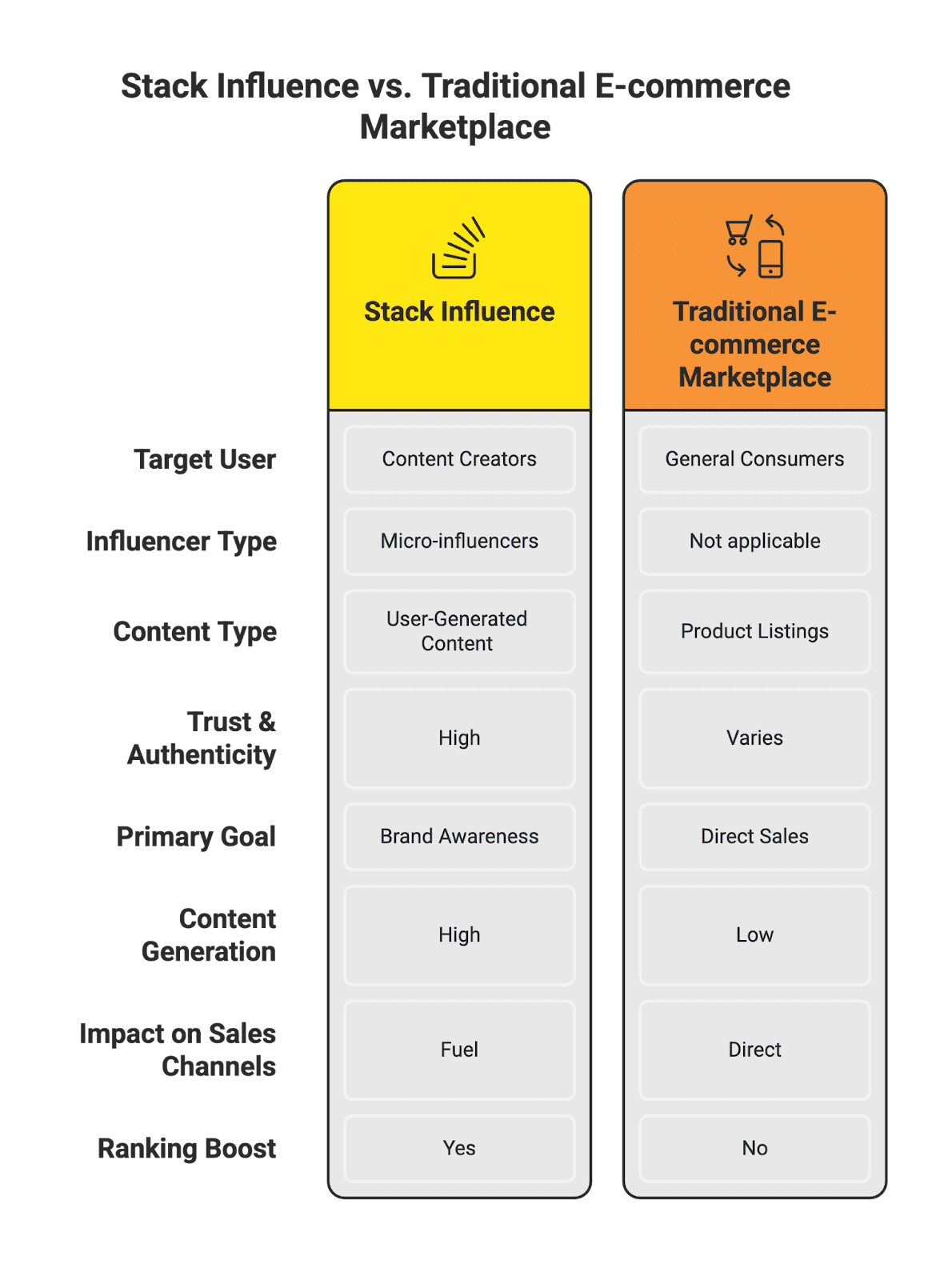
Below we’ve rounded up 10 of the best platforms (and strategies) to help you start selling online. From major marketplaces like Amazon to social commerce on Instagram, each option has its own perks. Spoiler: We’ll start with a not-so-traditional “marketplace” – leveraging micro influencer marketing with Stack Influence – because getting your product discovered is half the battle for new sellers!
Stack Influence is not a typical e-commerce marketplace – it’s a micro influencer marketing platform that connects brands with everyday content creators. Why include it on this list? Because for small businesses, collaborating with micro influencers can be a game-changer to drive sales and build brand awareness. Stack Influence has a vetted community of influencers (usually under 20K followers each) with a combined reach of over 11 million social media users. These creators promote your product to their engaged audiences, generating authentic buzz and user-generated content (UGC).
What makes micro influencer marketing so powerful for new sellers is the trust and authenticity it creates. Micro influencers typically promote products in exchange for free samples – meaning their social posts reflect genuine experiences with your product. This word-of-mouth style promotion often leads to more conversations and recommendations about your brand. In fact, according to the Wharton School of Business, 82% of consumers are highly likely to follow product recommendations from micro influencers. That’s huge for a small business trying to gain trust!
By using Stack Influence to run a product seeding campaign, a small e-commerce brand can quickly generate UGC, reviews, and social proof that build credibility. Think of it as fuel for your other sales channels: the photos, videos, and testimonials from these collaborations can be repurposed on your Amazon listings, website, or social media ads. Plus, the direct traffic and sales that come from influencer shoutouts can boost your product’s ranking on marketplaces (hello, algorithm love!). For any first-time seller, tapping into a network of enthusiastic micro influencers gives you a running start – it’s like having a grassroots salesforce spreading the word about your product.
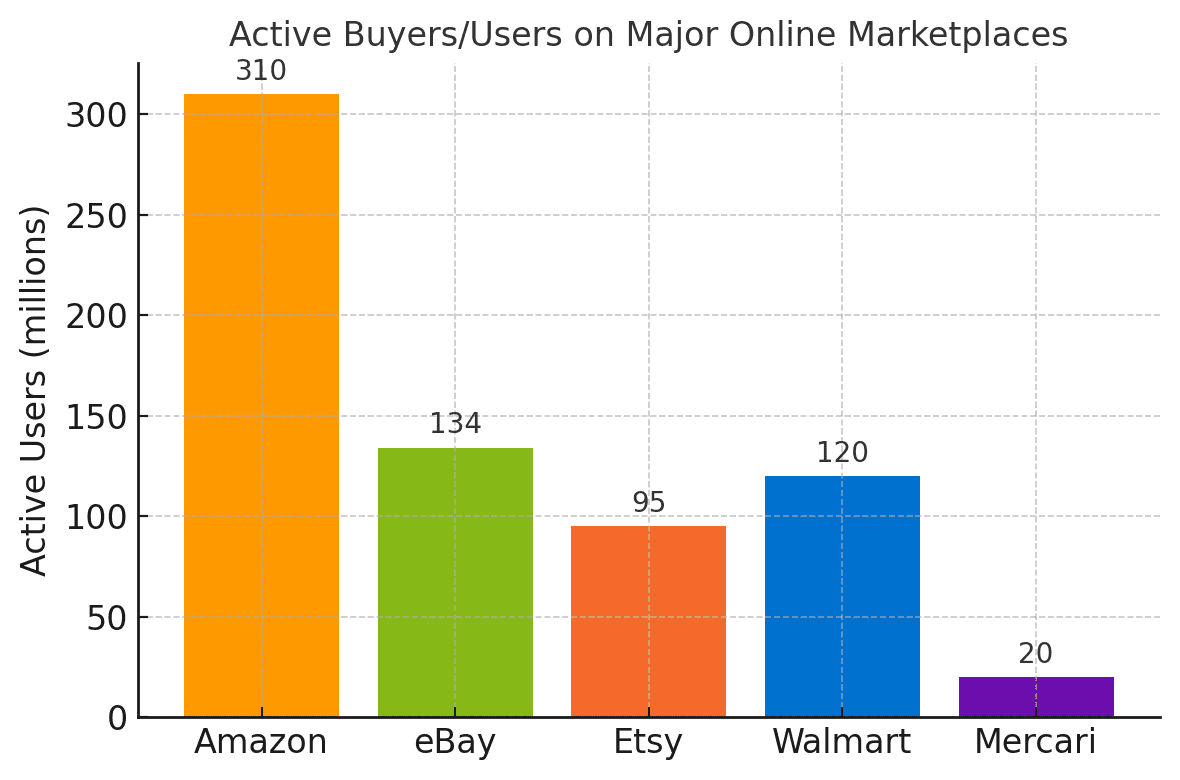
You probably guessed this one. Amazon is the world’s largest online marketplace and a must-consider for almost any product seller. With over 310 million active users globally (about 230 million in the U.S. alone), Amazon provides unparalleled reach. It commands about 38-40% of U.S. online retail market share – meaning when people think “online shopping,” they often think Amazon first. In fact, 56% of consumers start their product searches on Amazon rather than on search engines. So listing your products here puts you in front of a massive audience actively looking to buy.
Pros: Amazon brings trust and convenience (fast Prime shipping!) that can attract buyers to your listings. New sellers benefit from Amazon’s built-in traffic – you don’t have to drive every customer to the site, since millions already shop there daily. Amazon’s tools like Fulfillment by Amazon (FBA) let you outsource storage and shipping, so even a one-person business can offer Prime 2-day delivery. It also offers advertising options (Sponsored Products, etc.) to boost your visibility. Many Amazon sellers are small businesses – over 60% of Amazon’s sales come from third-party sellers (mostly SMBs), and more than half of sellers are profitable within their first year.
Cons: The competition on Amazon is fierce. You’re listing alongside countless other sellers, including possibly the product manufacturer or Amazon’s own brands. To succeed, you’ll need to optimize your product listings with great images, detailed descriptions, and strategic keywords. Additionally, Amazon’s fees will eat into your margins: expect a referral fee around 8–15% per sale plus fulfillment fees if you use FBA. There’s also a monthly seller plan fee if you choose the Professional account.
Amazon is a big pond, but the customers are already there in droves. If you navigate the fees and competition with a smart strategy (and maybe a little influencer marketing boost on the side), it can become a cornerstone of your online sales.
If your products are handmade, custom, vintage, or crafty, Etsy should be on your radar. Etsy is the go-to marketplace for artisans, crafters, and creative entrepreneurs. It boasts about 95 million active buyers as of 2024, all looking for unique, hard-to-find items that aren’t mass-produced. For a small business with a personal touch, Etsy provides a ready-made audience who values that uniqueness.
Etsy’s user base expects and appreciates small sellers – in fact, playing up your story can be a selling point. You can create a storefront with your branding, bio, and policies. Etsy also has community features like Teams and forums to connect with other sellers and learn the ropes. It’s relatively simple to set up, and listing an item just costs $0.20. When you make a sale, Etsy’s fees are straightforward: about 5% transaction fee on the sale price, plus payment processing (roughly 3% + $0.25). There’s no monthly store fee for the basic Etsy shop, which is great for first-timers testing the waters.
While Etsy’s audience is sizable, it’s still smaller than Amazon’s and focused on specific categories. If you sell electronics or commodity items, Etsy is not the right fit. Also, because Etsy emphasizes handmade, you might face challenges if you ever scale up production or outsource manufacturing (sellers have to disclose if products are designed by you but made with production assistance). Competition among similar crafters can be stiff, and Etsy has introduced advertising options that sometimes favor those who pay for promoted listings. Profit margins can be thin once you account for materials, Etsy fees, shipping, and the time invested in handcrafted products – so price your items carefully.
In short, Etsy is a fantastic launching pad for creative small businesses. It’s casual and personal by nature, and you can slowly build a brand with repeat customers there. Some sellers even graduate from Etsy to their own standalone websites once they have a solid customer base, but many keep Etsy as a core sales channel for steady organic traffic.
eBay is a veteran in the e-commerce space, famous for its auction-style listings and vast category range. Whether you’re selling brand new products or used goods, eBay can be an effective platform – especially for first-time sellers who want flexibility in what and how they sell. As of early 2025, eBay has 134 million active buyers worldwide, so there’s a large audience browsing on any given day.
eBay’s biggest strength is its versatility. You can sell almost anything (as long as it’s legal and meets eBay policies) – from electronics to collectibles to car parts. For small businesses, eBay can be a good channel to liquidate excess inventory or sell open-box returns, etc., that wouldn’t be ideal for Amazon’s “new only” marketplace. You have the option of auctions (letting the market bid up the price) or fixed-price “Buy It Now” listings. Setting up an eBay seller account is quick, and you pay fees only when you list and when you sell. Typically, there’s a small insertion fee (first few listings each month are free for private sellers) and a final value fee ~10% of the sale price. Unlike Amazon, eBay directly connects buyers and sellers – buyers see your profile, and you can personalize your listings more. You can even use eBay to invoice buyers or do custom deals (for example, if someone messages asking for a bundle). This can make the experience feel more peer-to-peer and casual, which some buyers and sellers prefer.
eBay’s heyday as the dominant marketplace has passed, and it now holds only a single-digit percentage of online retail share (around 3% of U.S. e-commerce in recent years). It’s still significant, but you may not see the same volume as on Amazon. Additionally, customers on eBay often expect bargains – many go there hunting for deals or used items. If you’re launching a premium-priced new product, eBay might not showcase it in the best light (though there are plenty of high-end products on eBay too). Another consideration: payment processing is handled through eBay’s Managed Payments (no more direct PayPal with buyers), which can take a day or two to deposit funds. And be prepared for the occasional non-paying bidder or tricky customer – eBay’s seller protection exists, but it’s important to document everything (shipping, item condition) in case of disputes.
Even though eBay is an older platform, you can still use modern tactics to boost sales. High-quality product images and detailed descriptions help your listing stand out. Offering free shipping (factored into your price) and fast handling time can also give you a boost in search results. And just like other channels, excellent customer service will earn you positive feedback, which builds trust with future buyers.
So far we’ve talked about marketplaces where you join an existing platform. Shopify is a bit different: it’s an e-commerce website builder that lets you create your own online store. For a small business aiming to build a brand, Shopify (or similar tools like WooCommerce, BigCommerce, Webnode, etc.) is a popular choice. You get to run your site on your domain – for example, yourbrand.com – and have full control over the look and feel. Essentially, you’re creating your own marketplace just for your products.
The biggest advantage is branding and control. You’re not one listing among millions on a big marketplace; instead, customers see your storefront, with your logo, design, and messaging. This helps in building a loyal customer base and brand identity. Shopify offers tons of professional themes, apps, and SEO tools to help you customize your site and optimize it for search engines. It’s very user-friendly – you don’t need to know how to code to set up a basic store. Another pro: no marketplace commission fees on each sale (beyond payment processing). Shopify charges a monthly subscription (plans range from about $29/month for Basic up to $299/month for Advanced). If you use Shopify’s built-in payment processor, transaction fees are included; if you use an external payment gateway like PayPal, there may be an extra 2% fee. For small-scale sellers, the Basic plan is usually enough to get started. Shopify also scales with you – if you grow, you can upgrade plans or add features as needed.
“Build it and they will come” does not apply here. With your own store, you are responsible for driving traffic. That means investing in marketing – whether SEO, social media, paid ads, or influencer partnerships – to get people to find your site. Early on, this can be challenging and sometimes costly, especially compared to a place like Amazon where millions of shoppers are searching daily. Another con is that you have to handle more logistics: setting up payment processors, figuring out shipping integration, handling sales tax, etc. Shopify makes these easier with integrations, but it’s still on you to configure. Lastly, some customers might be hesitant to buy from a standalone site they’ve never heard of (versus the comfort of, say, “Ships from and sold by Amazon.com”). You’ll need to build trust through professional design, site security, clear return policies, and even trust badges or customer reviews on your site.
Even on your own site, make use of UGC and social proof. For example, display reviews and testimonials (perhaps some quotes from those micro influencers or customers who loved your product). Seeing real people endorse your product can reassure new visitors. Also, consider adding a blog to your site to improve SEO – share stories, how-to guides related to your product, or behind-the-scenes looks at your business. This can attract organic traffic and also establish you as more than just a faceless seller. As your store grows, consider using a Shopify shipping app to automate shipping labels, live carrier rates, and order tracking, saving time while improving the customer experience.
Walmart Marketplace is Walmart’s answer to Amazon, allowing third-party sellers to list products on Walmart.com. It’s a bit more selective – historically you had to apply and be approved to sell on Walmart’s platform – but it has opened up a lot in recent years to compete with Amazon’s seller base. Selling on Walmart.com can be lucrative, especially if your products fit Walmart’s customer profile (value-conscious shoppers, popular categories like home, apparel, baby, etc.). Walmart’s online marketplace gets over 120 million unique visitors each month in the U.S., which makes it one of the largest e-commerce sites, second only to Amazon in some metrics.
Less competition (so far) than Amazon. While Walmart’s online marketplace is growing, it still has far fewer sellers – which could mean your product has a better chance to shine, particularly if it’s a category Walmart is expanding in. You also benefit from Walmart’s brand trust. Many Americans are accustomed to shopping at Walmart stores, and Walmart.com is seen as a trustworthy place to buy. If you can offer free 2-day shipping (either via your own logistics or Walmart’s fulfillment service, WFS), you gain a big advantage as Walmart highlights 2-day shipping items similar to how Amazon highlights Prime. Fees on Walmart are competitive: a referral fee of about 6% to 15% depending on category (similar to Amazon, some categories like electronics are lower, others like jewelry higher), and no monthly seller fee. Also, Walmart doesn’t charge listing fees. They’re clearly trying to attract sellers from Amazon with a potentially lower cost structure and a large built-in audience.
The setup process can be more involved. You need to apply to become a Walmart Marketplace seller and meet certain requirements (they prefer experienced sellers with a track record of ecommerce success, though smaller sellers do get in). The onboarding and system isn’t as slick as Amazon’s Seller Central yet – some sellers find Walmart’s seller interface less intuitive. Another con is that Walmart’s online algorithms and advertising platform are still developing. Amazon has very robust seller tools and third-party support (think of all the Amazon seller softwares out there); Walmart’s ecosystem is newer, so you might find fewer resources or smaller community knowledge base. Additionally, Walmart’s audience might expect lower prices (Walmart’s known for low prices), so premium brands should ensure their value proposition is clear. Keep in mind Walmart’s rules too – for example, they generally don’t allow you to sell the same item cheaper on other sites (price parity requirement).
Not all online selling needs a formal “platform” – Facebook Marketplace is a more casual, person-to-person style platform that has also become a valuable channel for small businesses. If you have a Facebook account, you already have access to Marketplace. It started as a Craigslist-like way to buy/sell used items locally, but now you can also offer shipping for products and reach people beyond your neighborhood. Given Facebook’s enormous user base (nearly 3 billion monthly active users globally), Marketplace posts can get a lot of eyeballs, especially locally or regionally.
Free listings! It costs nothing to list items on Facebook Marketplace. You can create a listing in minutes with a photo and description. For new sellers or very small businesses, this no-barrier-to-entry approach is fantastic. If you’re just testing a product idea, you can gauge interest on Marketplace without setting up a whole store. Initially, Marketplace was mostly local pickup transactions (and it’s still heavily used for that – think selling that old sofa or homemade crafts to people in your city). But Facebook introduced shipping options, and if you enable shipping on your listings, buyers nationwide can purchase your item. The fees are low: Facebook charges a 5% selling fee on shipped transactions (or a flat $0.40 fee for shipments under $8), which is very reasonable. If you stick to local-only and take cash in person, there’s no fee at all because the transaction isn’t through Facebook. Another pro is the built-in chat – buyers often message with questions, and you can build rapport or negotiate, which gives a human touch to selling.
The casual nature of Marketplace means you’ll deal with casual buyers. Be prepared for flaky inquiries (“Is this still available?” – a question every Marketplace seller gets a dozen times) and people who vanish without purchasing. There’s also no formal payment escrow for local deals – it’s up to you and the buyer to arrange payment and pickup. If you use shipping, the payments go through Facebook (linked to your bank), but there’s a short delay as Facebook holds funds until tracking shows item delivered. Another con is discoverability: Marketplace search isn’t as sophisticated as Amazon’s. Your item’s visibility can depend on timing, category, and luck. It’s wise to renew/repost your listings periodically to reach new people. Also, consider safety for local meetups – always meet in a public place if possible.
One more thing: Facebook also lets businesses create a Facebook Shop (which can integrate with your Instagram Shop and your product catalog). That’s a bit different from Marketplace, but worth mentioning. A Facebook Shop is like a mini storefront on your Facebook page where people can browse your collections. It’s free to set up and basically syncs with your product feed. Customers can sometimes check out directly via Facebook (again 5% fee) or be directed to your website. This blurs the line between social media and marketplace, and it’s a great way to turn those Facebook fans into buyers.
Whereas Facebook Marketplace feels like a yard sale or flea market, Instagram is more like a trendy popup shop on a bustling street – it’s all about visual appeal. For small brands with photogenic products (think fashion, beauty, home decor, food, art, etc.), Instagram isn’t just for marketing; it can directly drive sales. By setting up Instagram Shopping, you can tag products in your posts and stories, allowing users to tap and see details or purchase. Even without the formal “shop” feature, many businesses make sales through DMs or link-in-bio referrals. It’s social commerce at its finest.
Massive audience and engagement. Instagram has over 2 billion monthly active users, and people scroll it not just to connect with friends but to discover trends and products (hence the phrase “Instagram made me buy it!”). If you can create eye-catching content, you can build a following and customer base right on IG. For a small business, this is a chance to showcase your brand personality and product usage in a lifestyle context. When you post a great product photo or a video reel, you’re not just listing specs – you’re inspiring customers with how your product fits into their life. Instagram Shopping tools make it seamless: users can see a post, tap the product tag, and go to a product page to buy (either on your website or natively in the app if you have Instagram Checkout enabled). As of now, Instagram’s checkout fee is low or even waived for many small sellers (they had waived selling fees to encourage use, though this may change in the future). Additionally, partnering with influencers on Instagram can amplify your reach. Influencer marketing isn’t just for big brands; micro influencers (like those on Stack Influence) shine on IG by creating authentic posts that can draw their followers to your page.
It’s a crowded, competitive space. Every niche on Instagram likely has established influencers and brands already. Gaining followers and consistent engagement can take time and effort (posting regularly, using hashtags, engaging with comments, etc.). There’s also the challenge that users are in “browse mode” on IG; they aren’t on there primarily to shop, so converting a casual scroller into a buyer requires compelling content and often multiple touchpoints. Unlike a marketplace where someone searches “buy running shoes” with intent, on IG they might just stumble on your cool custom sneakers and think “nice pic” – you have to nudge them to buy. Another con: you pretty much need good visuals. Low-effort photos or lack of aesthetic won’t cut it on this platform. This might mean investing in some photography or design work. Finally, you’re at the mercy of algorithms. Your followers might not see every post unless they interact a lot, and new potential customers might only see you if you either go viral, run ads, or collaborate with others.
Even if you don’t have Instagram’s shopping feature set up yet, you can start by building a presence: share behind-the-scenes of your business, customer testimonials, and of course product photos. Use relevant hashtags to get discovered. Engage with your target community (comment on similar profiles or your followers’ posts). This organic relationship-building can translate into sales over time. Also, consider using Instagram Stories and Reels – these have huge reach and are great for showcasing product demos, unboxing, or quick before-and-after results (depending on your product). For example, a skincare small business might do a Reel showing a morning routine using their product. Pin your best posts to your profile and make use of Story Highlights (you can have a “Shop” highlight, “Reviews” highlight, etc. on your IG profile). Overall, if your product shines visually and you enjoy creative marketing, Instagram is a playground that can directly lead to e-commerce success.
Another social commerce frontier that has exploded recently is TikTok. While many think of TikTok as the app for dance challenges and Gen Z memes, it’s also rapidly becoming an e-commerce force. TikTok introduced shopping features and TikTok Shop in various regions, and even without those, countless products have gone viral under the hashtag #TikTokMadeMeBuyIt. For a small business or new seller, TikTok offers the tantalizing possibility of massive viral exposure – if your product hits the right note with TikTok’s algorithm and community.
Unmatched viral potential. TikTok’s algorithm can take a video from a total newbie account and show it to millions of people if the content is engaging. This means a single creative or authentic video featuring your product could drive a surge of traffic and sales overnight. It’s a more level playing field compared to platforms where you need followers first – on TikTok, content is king. The platform is especially effective for demonstrating products in a fun or novel way. Are you selling a cool kitchen gadget? Show it in action with a catchy sound clip. Got a transformative beauty product? Do a quick before-and-after or a reaction video of someone trying it. Users love genuine reactions and useful hacks – which small businesses often have plenty of, since they’re passionate about their products. TikTok users also skew younger (teens, 20s, early 30s), which is great if that’s your target market or if you want to future-proof your brand by gaining young customers. Importantly, TikTok has integrated shopping: in some markets including the US, sellers can set up TikTok Shop to sell directly in the app. And even outside of that, you can link to your online store on your profile. According to recent stats, 55% of TikTok users have made an impulse purchase because of a TikTok video – talk about influencing buying behavior! People scroll TikTok not just for entertainment but also discovery; 1 in 6 users even use it as a search engine to find product info (e.g., searching “best ring light TikTok”).
TikTok content creation requires a bit of creativity and willingness to put yourself (or at least your product) on camera. Not every small business owner is comfortable becoming a “TikTok creator,” which is okay – you can also partner with content creators to make videos for you (again, Stack Influence or other influencer networks can help here). Another challenge is that trends on TikTok move FAST. What’s popular this week might be passé next week. To really capitalize on TikTok, you have to spend time on the app, learn the trends, sounds, and memes, and then think of how to apply them to your product in a clever way. Additionally, while viral bursts are great, sustaining that traffic is the next challenge. You might see a spike in orders, then things cool off; it requires consistency and community engagement to turn TikTok fame into long-term customers. Finally, TikTok’s audience might leave goofy comments or ask repetitive questions; staying responsive and friendly in the comments helps (because comment engagement can also boost your video’s reach).
The online selling universe is huge, and there are plenty of niche platforms that might be perfect for your specific business. As a small seller, you don’t need to be on all of these, but here are a few notable ones to consider:
A popular app/marketplace for selling virtually anything, similar to eBay but focused on mobile simplicity. It’s big in the US and Japan, with around 20 million monthly active users globally in recent years. Mercari is especially good for secondhand items, toys, electronics, and fashion. It’s very user-friendly for beginners (listings take minutes via your phone). Mercari charges a flat 10% selling fee and currently no listing fee, making it low-risk. If you have excess inventory, thrift finds, or handmade goods, Mercari could bring in extra sales.
If you’re in the fashion and apparel space (new or used clothes, boutique fashion, etc.), Poshmark is a social marketplace worth checking out. It reportedly has tens of millions of users (about 7-8 million active buyers as of a couple years ago, and growing). Poshmark is U.S.-focused and encourages a community feel – users follow each other’s “closets” and you share listings to increase visibility. It’s great for women’s clothing and accessories. Fees are straightforward: for sales under $15, a flat fee around $2.95; for $15 or above, 20% commission. That commission is a bit higher, but it covers things like prepaid shipping labels and the convenience of the platform. Poshmark is known for a friendly vibe and even hosts virtual “Posh Parties” where people share listings at certain times.
Got a tech product or electronics to sell? Newegg is a major electronics-focused marketplace. Small tech businesses (like those selling PC components, gadgets, etc.) can find a targeted customer base here. It’s more of a traditional marketplace model, with a seller application and commission fees comparable to Amazon’s. The audience is largely tech enthusiasts.
In essence, the list could go on – from Google Shopping (which isn’t a direct marketplace but a comparison shopping feed) to smaller craft marketplaces like Folksy or ArtFire. The key is to find the platforms where your target customers hang out. It’s often better to do really well on 2-3 platforms than spread yourself too thin across 10 of them. You can always expand later once you have a handle on fulfilling orders and managing inventory across channels.
Choosing the right platform(s) is half the battle. The other half is how you execute your selling strategy. As a wrap-up, here are some essential tips for small businesses and first-time sellers to thrive in the online marketplace:
Even if you primarily sell on a marketplace like Amazon or Etsy, you can drive extra traffic and sales by promoting on social channels. Create business accounts on platforms like Instagram, Facebook, or TikTok to showcase your products in use. Micro influencers can be a cost-effective way to get the word out – they create content and reviews that expose your product to niche audiences. Many micro influencers will collaborate in exchange for a free product, which is budget-friendly for new businesses. The content they produce (photos, unboxing videos, tutorials, etc.) can also be reused in your own marketing (with permission). This approach builds social proof and can even improve your listing conversion rates – for example, an Amazon listing with great review photos or a video of someone enthusiastically using the product can significantly boost trust.
When selling online, always keep an eye on the fee structures and adjust your pricing accordingly. Calculate the landed cost of your product (product cost + shipping + marketplace fees + taxes, etc.) to ensure you’re making a profit. Small businesses can’t always compete on price with big-box sellers, but you also don’t want to inadvertently lose money on each sale because fees ate the margin. If your product is premium and priced higher, make sure to communicate its value through your listing and marketing.
Positive reviews help build trust on any platform. Encourage satisfied customers to leave reviews (many platforms send automated follow-ups, but a polite request in your insert or thank-you email can help). When you get great feedback, show it off. If it’s on your own site, highlight testimonials on your homepage. If it’s on Etsy, pin it in your shop announcements or share on social media (maybe create a cute graphic of a customer review). Today’s shoppers heavily rely on social proof, and user-generated content like reviews, unboxing photos, or customer Instagram tags can do the selling for you.
The online market is always evolving. New features roll out (e.g., new ad types on Amazon, or algorithm changes on Etsy), trends change (remember when fidget spinners were all the rage?), and consumer habits shift. Be ready to learn and pivot. Follow e-commerce blogs or YouTube channels that share the latest tips for sellers. Join communities (Facebook groups, subreddits, etc.) relevant to your platform for peer advice. The more you stay informed, the quicker you can adapt and stay ahead of the curve.
Launching your small business online is an exciting journey. The beauty of today’s e-commerce environment is that you have options – from giant marketplaces like Amazon and Walmart to social selling on Instagram and niche communities on Etsy or Poshmark. There’s no one-size-fits-all solution; the “best” marketplace to sell on depends on your product, your brand, and where your customers spend their time.
For many first-time sellers, a combination strategy works well: for instance, you might list on Amazon for volume, use Etsy for artisan credibility, and build your own Shopify site for long-term brand growth – all while promoting via micro influencers on social media to tie it all together. With a bit of experimentation, you’ll find the mix that works for you.
Remember, every big brand started somewhere. Amazon itself began as a tiny online bookseller, and many Etsy top sellers were literally kitchen-table crafters at the start. With dedication, great customer care, and smart use of tools (yes, we’re biased, but don’t sleep on the power of micro influencer marketing for that initial momentum!), your small venture can grow into a thriving online business.
Now it’s your turn to take action. Pick a platform, get your products out there, and see what happens. Learn and iterate. The barrier to entry has never been lower, and the world of e-commerce shoppers – from Amazon sellers to content creators and everyone in between – is waiting to discover what you have to offer. Good luck, and happy selling!
Starting an e-commerce business is an exciting journey for new B2C entrepreneurs. You’ve probably seen the success of Amazon sellers and the buzz created by micro influencers on social media. E-commerce enables anyone to reach customers globally from day one, and even tap into content creators to build brand awareness. Let’s dive into the ecommerce advantages and disadvantages that can make or break your B2C venture.

E-commerce has transformed how we do business, and it comes with some compelling advantages for entrepreneurs. Here are some of the biggest advantages of e-commerce for B2C startups:
An online store isn’t tied to a single location or business hours. You can reach customers across different cities, countries, and time zones – effectively selling 24/7 without ever opening a physical storefront. This around-the-clock availability means you could be making sales while you sleep. Even a small business can attract a worldwide customer base online, something traditional retail could never do as easily.
Launching a basic e-commerce website is often much cheaper than opening a brick-and-mortar shop. There’s no rent for a physical store, fewer staff members needed, and minimal upfront investment beyond inventory and a website. Many e-commerce platforms and tools today are affordable or even free to start. You can be an Amazon seller with just a small listing fee or run a Shopify store on a shoestring budget. This lower barrier to entry lets entrepreneurs test ideas online with far less risk and cost than a traditional retail business.
E-commerce is one of the fastest-growing segments in retail, which is a huge plus for new businesses. The online market is massive and still expanding each year. Global e-commerce retail sales have soared from about $1.5 trillion in 2015 to over $6 trillion in 2024, and they’re projected to keep rising. You’re essentially entering a growing market with momentum behind it. Need to scale up? In e-commerce, that might be as simple as upgrading your web hosting and adding more stock – no need to build new stores. This flexibility means your business can grow quickly without the usual growing pains of physical expansion.
Online selling gives you access to a goldmine of customer data and analytics. You can track every click, view, and purchase to understand what your customers want. This data helps you optimize your marketing and website experience on the fly. For example, you can see which products are popular, where customers drop off in the checkout process, or which ads convert best. With e-commerce, even small businesses can leverage personalized marketing techniques – like recommending products based on browsing history or sending targeted email offers – that would be impossible in a generic physical store. The result is more effective marketing and higher conversion rates, because you’re tailoring the shopping experience to each customer’s interests.
Traditional advertising can be expensive and less effective nowadays, especially for a new B2C brand. E-commerce opens up modern, cost-effective marketing channels. You can collaborate with micro influencers on Instagram, TikTok, or YouTube who promote your products to their engaged niche followers. In fact, micro-influencers often generate 60% more engagement than larger influencers, making their recommendations feel like genuine word-of-mouth endorsements. Likewise, encouraging customers to share reviews, unboxing videos, and other user-generated content (UGC) can significantly boost your brand’s credibility. Shoppers trust real customer experiences – 84% of people are more likely to trust a brand that uses UGC, and 77% say UGC influences their buying decisions. For you, this means free or low-cost content that serves as powerful social proof. Between influencer partnerships and UGC, an online business can build trust and buzz without the mega-budget that traditional marketing might require.
Without the physical constraints of a storefront, e-commerce lets you offer a much wider range of products. However, keeping those thousands of listings accurate and up-to-date across multiple platforms is a significant operational challenge, which is why scaling businesses often rely on specialized tools like PIM Toriut to centralize their product data management. This means you can cater to niche markets and varied customer preferences. Whether you’re selling custom phone cases or eco-friendly pet supplies, you’ll find customers from all over who are interested. Being online also means you can pivot or expand your product line quickly by reacting to market trends or customer feedback. In a physical store, adding new products might mean finding shelf space or opening new locations; online, it could be as simple as adding a new category on your website.
E-commerce streamlines the entire buying process for both the seller and the customer. Payments are handled instantly through secure payment gateways, and funds can flow to your account faster than waiting for a monthly check from a distributor. You can offer multiple payment options (credit cards, PayPal, digital wallets, “buy now pay later” services, etc.) with a few clicks, which makes it easy for customers to complete purchases – and more completed purchases means more revenue. Automation is another big plus: orders can trigger automatic invoices, update your inventory, and send confirmation emails without you lifting a finger. This level of efficiency frees up your time to focus on growth, rather than manual paperwork.
In the e-commerce world, feedback is often immediate. Customers can leave product reviews, post on social media, or respond to email surveys quickly. This direct feedback loop is incredibly valuable for improving your business. If a product has a common issue, you’ll know about it and can fix it or address it in your listings. If customers keep asking for a new feature or product variation, you can adapt to meet that demand. By paying attention to reviews and social media comments (a form of UGC as well), online businesses can continuously refine their offerings and customer service. Ultimately, this leads to better customer satisfaction and loyalty – an advantage that grows your reputation over time. Many small businesses benefit from using the Aircall customer communication platform to streamline customer communications, collect valuable feedback, and provide fast, personalized support. Tools like this simplify managing inquiries and help boost customer satisfaction while allowing businesses to scale efficiently
In short, the advantages of e-commerce can empower small business owners to compete with larger players by leveraging technology, data, and creative digital marketing. A one-person online shop can potentially reach millions of consumers, use sophisticated marketing tools, and operate at low cost – something unimaginable in the old brick-and-mortar model. It’s this democratization of retail that makes e-commerce so appealing.
If you’re a new B2C entrepreneur excited by these advantages, now is the perfect time to take action. Brainstorm that product idea, set up your online store, or create your first Amazon seller account – don’t be afraid to start small and learn. Leverage the tools at your disposal (for example, consider reaching out to micro influencers or using Stack Influence’s platform to get the word out) and start building your e-commerce presence today. Every big e-commerce success story starts with that first step!

While e-commerce offers plenty of benefits, it also comes with its own set of challenges and drawbacks. It’s important to go in with eyes open so you can plan to mitigate these issues. Here are the major disadvantages of e-commerce that new business owners should understand:
One of the double-edged swords of e-commerce is the low barrier to entry – it’s easy for anyone to start an online store, which means everyone is doing it. Whatever your niche, there are likely hundreds of other online stores selling similar products. Big marketplaces like Amazon are incredibly crowded; Amazon itself has about 1.9 million active sellers on its marketplace (with roughly 548 new sellers joining every day). That means as a new entrant, you’re competing not just with other small businesses, but also with well-established players and Amazon’s own sold products. Standing out requires a clear unique selling proposition (USP), great branding, and savvy marketing. It can take significant effort (and advertising spend) to drive traffic to your site when you’re starting from zero in a saturated online market.
Another aspect of competition is the race to the bottom on pricing. Consumers can compare prices in seconds online. If your product is available from multiple sources, customers will often go for the best deal or the seller with the most trust (e.g., a high rating on Amazon). Small businesses can feel pressure to discount heavily or pay for ads to get visibility, which can cut into margins. To overcome this disadvantage, focus on differentiators other than price – like superior quality, exclusive products, or outstanding customer service – so that customers have a reason to choose you over the competition.
In a physical store, customers can touch, feel, or try products and talk to sales staff. In e-commerce, customers rely on photos, descriptions, and reviews. This lack of tangible interaction can make some shoppers hesitant to buy, especially for products where fit, quality, or style are important (think clothing, furniture, or anything you’d want to examine in person). A consequence is higher return rates for online purchases – people might order multiple sizes or variants expecting to send some back, or they may be disappointed if a product doesn’t meet expectations in real life.
Trust is another related issue. A new online store with no track record might raise red flags for consumers: Is this site legit? Will the product look like the photos? Is my payment information safe? Building trust online takes time and effort. Until you have a solid base of customer reviews and a known brand, convincing first-time visitors to hit “Buy Now” can be challenging. It’s crucial to include clear information about your products, display reviews and testimonials (UGC can help here), and have transparent policies (for shipping, returns, privacy, etc.). Over time, as you gather happy customers and positive ratings, this disadvantage diminishes – but in the beginning, that lack of face-to-face reassurance is a hurdle.
Tip: To boost trust, focus on social proof and transparency. Encourage satisfied buyers to leave reviews and share their experiences. Highlight UGC like customer photos or unboxing videos. Implement live chat or chatbots to answer questions in real-time, mimicking the helpful interaction of an in-store clerk. Offer a generous return policy to reduce the risk for skeptical buyers. These steps can help bridge the trust gap that online shopping inherently has.
Your e-commerce store is open 24/7 – but only if your website is up and running smoothly. Technical issues are a formidable disadvantage in online business. Website outages or slow load times can immediately cost you sales (if the site’s down, you’re essentially “closed” until it’s fixed). Even a few minutes of downtime during a big promotion can mean lost revenue. For instance, if you run an ad campaign and your site crashes from the traffic, potential customers will bounce and may not come back. Additionally, any complexities in the checkout process (broken buttons, payment gateway errors, etc.) can frustrate users and lead to abandoned carts.
Keeping a website running well requires ongoing maintenance. That means you’ll either need some technical know-how yourself or have to hire help. You’ll need to update software (e.g., plugin updates for your e-commerce platform), monitor for broken links or issues, and optimize for speed and mobile compatibility. There are also costs for web hosting, domain renewal, and possibly tech support or developers for custom features. While these costs are usually lower than physical store rent, they are continuous – you can’t just “set and forget” your website. Ensuring a reliable, fast, user-friendly site is an ongoing responsibility for e-commerce entrepreneurs.
Tip: Choose a reputable e-commerce platform or hosting provider known for reliability. It’s worth investing in good hosting so your site can handle spikes in traffic. Regularly test your site’s performance (many tools can monitor uptime and load speed). Also, have a plan for backups and a developer or support person on call in case something breaks. A smoothly running website is the lifeblood of your online business – prioritize it accordingly.
Handling transactions online means dealing with sensitive customer data: credit card numbers, personal contact info, and so on. With that comes serious responsibility – and risk. For U.S.-based storefronts, it helps to keep payment handling on infrastructure designed around card-security requirements, like the one from Atlantic.Net. E-commerce sites can be targets for cyberattacks, including hacking, data breaches, or credit card fraud. A single security breach can be devastating: not only could it cost you money (through chargebacks or theft), but it can also destroy the trust you’ve built with customers.
Common security tasks for an online store include obtaining an SSL certificate (so your site is HTTPS secure), using secure payment processors (you typically shouldn’t handle raw credit card data yourself), and keeping your software/platform updated to patch vulnerabilities. You also need to be on the lookout for fraudulent orders – e.g., stolen credit cards being used to buy goods from you. If you ship a product only to later find out the payment was fraudulent, you often have to refund the charge, losing revenue and product. It’s a sad reality that e-commerce fraud exists and can hit new sellers hard if they’re not careful.
All of this means that e-commerce security is a necessary area to invest time (and some money) into. Services like fraud detection tools, secure checkout providers, and backups for your data are part of doing business online. It’s not the most glamorous part of e-commerce, but it’s extremely important.
E-commerce offers a world of opportunity for new B2C business owners – you can launch quickly, reach a global audience, and leverage creative digital strategies like micro-influencer marketing and UGC to grow your brand. The advantages of e-commerce, from low startup costs to data-driven insights, make it an enticing path for entrepreneurs looking to break into retail or expand an existing business online.
So, is e-commerce right for you? That depends on your product, your target customers, and your willingness to adapt and learn. If you value flexibility, creative marketing, and the ability to scale fast, e-commerce is a fantastic avenue. Just be ready to wear many hats or partner with experts in areas where you’re less confident.
In the end, many entrepreneurs find that the benefits outweigh the drawbacks, especially as you gain experience and momentum. The barriers that seemed challenging at first – like learning SEO or managing inventory – become just another part of the business you’ve mastered. And the reward is a thriving online brand that can reach customers worldwide and potentially grow beyond what any local shop could achieve.
If you’re leaning toward starting your own e-commerce venture, now is the time to go for it. Do your research, build a solid plan addressing both the advantages and disadvantages we discussed, and take that first step. Launch your website, list your products, or open that Amazon store. Maybe even run a small social media campaign or send samples to a few micro influencers to get the ball rolling. Take action today – the sooner you start, the sooner you’ll be learning and optimizing. Remember, every major e-commerce success – from the local Etsy seller to the next big D2C brand – began with a first sale. You’ve got the knowledge; now put it to use and create your own e-commerce success story!
Good luck on your e-commerce journey, and feel free to bookmark this guide as a reminder of what to watch for. With preparation, passion, and persistence, you can ride the e-commerce wave and make your entrepreneurial dreams a reality. Happy selling!
Think you need millions of followers to work with brands? Think again! In 2025, brands are eagerly collaborating with micro‑influencers (creators with small but engaged followings) for their authenticity and high engagement. As a micro‑influencer, your strength is the genuine connection you have with your audience – something even big creators envy. This short and casual guide will show you how to leverage that advantage and create standout User-Generated Content (UGC) that lands brand collaborations across Instagram, TikTok, YouTube, and more. From building your “influencer résumé” to writing pitch emails, let’s dive into actionable tips to help you punch above your weight class in the creator economy.
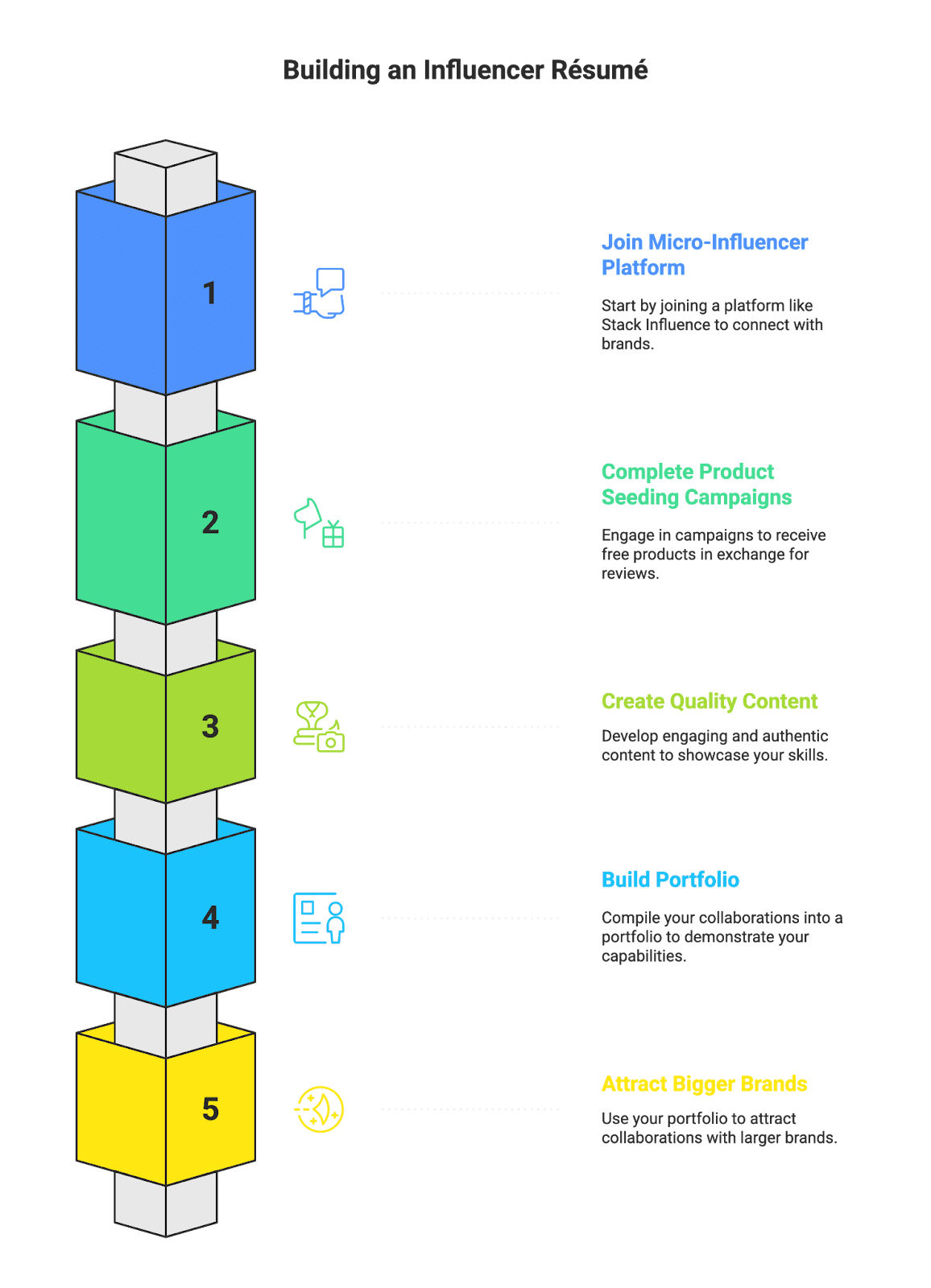
Leverage micro‑influencer programs to gain experience. One of the quickest ways to start working with brands (and score free goodies) is by joining a micro‑influencer community like Stack Influence. These platforms connect everyday creators with companies for product seeding campaigns, meaning you get free products from brands you love in exchange for sharing your honest experience on social media. It’s a win-win: you enjoy trying new products, and brands get authentic UGC from you. Each collaboration you complete through such platforms becomes a portfolio piece – essentially helping “build your influencer resume” while you accumulate real campaign experience and testimonials. Don’t worry if your follower count is tiny; you often only need as few as 100 followers to get started! The key is to treat each campaign professionally so you can stack up proof of your skills. By consistently doing these collabs and creating quality content, you’re essentially developing a digital résumé of what you can do – showing brands “here’s how I make your product shine”. And you don’t need 50k followers to start; you just need to demonstrate creativity and genuine enthusiasm. Use these early gigs as stepping stones, and soon you’ll have a track record that bigger brands can’t ignore.
Content is king, no matter your follower size. Big influencers often have professional photographers and editors, but as a micro‑influencer you can still punch above your weight in content quality. Brands love that micro‑creators double as talented content creators – your photos, videos, unboxings, and reviews are authentic marketing assets that they can repurpose. So focus on making your content polished and engaging: use good lighting, clear audio, and eye-catching visuals. Shoot in HD (a modern smartphone is fine), learn basic editing tricks, and develop a consistent aesthetic or theme for your posts. For example, if you’re into food, compose bright, appetizing shots; if fashion, ensure your outfits pop against clean backgrounds.
Get creative with how you package content. Top influencers stand out by presenting content in unique ways – think Instagram carousel tutorials, TikTok challenges with a twist, or themed story series. You can do this too on a micro scale. Try packaging a brand’s product into a mini story or series: e.g. “5 Days of Outfits featuring ” or a before-and-after video using a skincare item. This shows off your creativity and commitment. Also consider repurposing content across platforms just like big creators do – for instance, turn a longer YouTube demo into a short TikTok clip, or share behind-the-scenes snaps in your Instagram Stories. Not only does this maximize your reach, it demonstrates to brands that you’re savvy about different content formats. By delivering high-quality, versatile content as a small creator, you’ll prove you can offer the same “wow factor” as larger influencers, just on a more relatable scale.
Never underestimate the power of a great caption. While flashy visuals grab attention, it’s often the caption that converts a casual scroller into an engaged follower – and brands notice this. Big influencers are pros at weaving stories or wit into their captions, and you can adapt this strategy too. Instead of a generic one-liner, use your caption to tell a story or spark a conversation. For example, share a quick personal anecdote about how you use the product in daily life, or the story behind your photo. Be authentic and let your personality shine through (humor, honesty, whatever makes you unique). Then, end with a question or call-to-action to encourage comments – something as simple as “Have you guys tried anything like this? What did you think?” can invite your followers to chime in. These open-ended prompts not only boost your engagement rate (hello, algorithm love!) but also create genuine dialogue that showcases your community vibe.
Keep it value-driven and on-point. Strategic captions for brand collabs should balance personality with purpose. Mention the product or brand in a natural, storytelling way rather than sounding like an ad. Highlight a benefit or useful tip (e.g. “This serum has become my morning savior for glowing skin – no filter needed!”), and express honest enthusiasm. If there’s a promo code or campaign hashtag, integrate it smoothly. Essentially, think like a copywriter: your caption should resonate with your audience’s interests and subtly reinforce why the brand is awesome, all while staying you. This is what bigger creators excel at – they deliver a brand message through a personal lens. By mastering this on a micro level, you’ll show brands that your content isn’t just pretty – it’s effective. (And as a bonus, those thoughtful captions will deepen your bond with your followers, which is exactly what brands are after.)
Your engagement is your superpower. Micro‑influencers often see 3–4× higher engagement rates than mega influencers, which means your smaller audience is likely very tuned-in. Keep it that way by actively engaging back. Treat your community like friends: reply to comments, answer DMs, and ask for their opinions regularly. For instance, run quick polls in your Stories (“Which outfit for date night – A or B?”), or simply ask a question in your post caption as mentioned. When followers see you genuinely care and listen, their bond with you grows – and so does their trust in your recommendations. Authenticity is key here. Only promote products you actually like and would use; your audience can spot a fake endorsement a mile away. Stay true to your niche and voice – that realness is why they follow you in the first place.
Network in the brand and creator community. Engaging isn’t just for your followers – it’s also how you get on a brand’s radar. Take a cue from savvy larger creators: be proactive in the community. Follow brands you love across social platforms and interact with their content regularly (leave thoughtful comments, share their cool posts to your Stories, etc.). Brands often notice top fans, and this is a natural way to get noticed before you even pitch. In fact, many partnerships begin with an influencer who was already a genuine fan of the product, making any collaboration feel organic. Similarly, engage with fellow creators in your niche. Respond to their posts, collaborate on shoutouts or join influencer pods/support groups. Bigger influencers often know each other and swap tips – you can build your own micro-influencer squad. Networking with other creators can even lead to referrals for gigs (sometimes a larger creator might pass a smaller collab opportunity your way if it’s a better fit). Bottom line: be a familiar, friendly face in the circles you want to grow in. Opportunities often arise from genuine connections – whether it’s a brand social media manager who remembers your thoughtful comment, or a peer who recommends you for a campaign. Stay true, stay kind, and keep showing up!
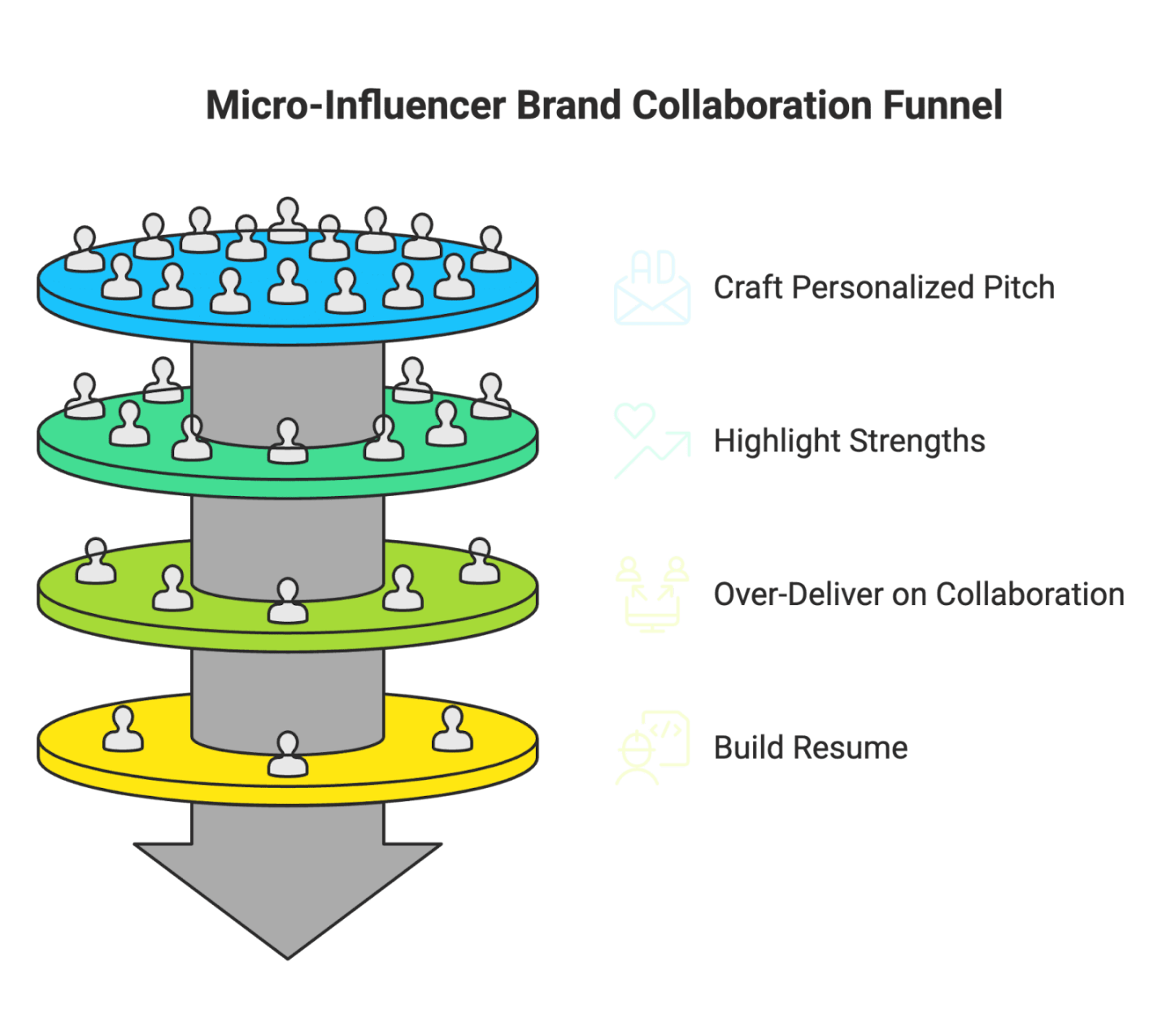
Don’t wait around hoping brands will discover you – make the first move! Bigger creators might get inundated with offers, but micro‑influencers often have to hustle a bit more (and that hustle can pay off). Identify a list of target brands that align with your niche and that you truly adore. Then reach out with a friendly pitch email or DM. Introduce yourself briefly, mention why you love the brand (be specific – show you actually use or understand their product), and pitch a simple collaboration idea. It could be as small as, “I’d love to create an Instagram Reel styling 3 looks from your new collection,” or offering your skills as a UGC creator (e.g. “I can shoot an unboxing video for you to use in your social media”). Keep the message professional but personalized – no copy-paste spam! Brands can sniff out a mass email, so tailor each pitch to the company. And don’t be shy about highlighting your strengths: share your follower count and engagement rate (since that’s your strong suit), and any mini wins like a post that went viral or a previous collab that did well. (If you have a one-page media kit, even better – attach it. A media kit is basically your influencer resume/portfolio that showcases your stats and past work.) Remember, brands care about engaged audiences and quality content, not just big numbers. A solid, customized pitch from a micro‑influencer can absolutely grab a company’s attention.
Start small and over-deliver. When a brand does show interest – or if you snag a product seeding/affiliate offer – treat it like gold. Many big long-term brand deals start with a tiny collaboration to “test the waters,” so knock it out of the park. If a company sends you a free product to post once, for example, consider doing a little extra beyond what’s required. Share an unboxing on your Story in addition to the feed post, or send the brand a few bonus photos or TikTok clips they can use. Showing that kind of enthusiasm and professionalism (meeting deadlines, following any brief/guidelines, and then going the extra mile) makes you memorable. It signals, “I’m awesome to work with!” – and brands will remember that when planning future campaigns. Also, small gigs like affiliate programs or brand ambassador roles are great résumé builders. Even if you’re just earning commission or free swag at first, you’re gaining experience and proving you can drive results. Collect those metrics (clicks, sign-ups, sales, etc.) and testimonials. After a successful small campaign, you can approach the brand (or another company) with evidence: “My discount code got 50 redemptions in a week – imagine what we could do with a bigger collab!”. This kind of data-backed confidence is how micro‑influencers graduate to bigger opportunities. So hustle humbly, work hard, and let your results speak for you. You’re not “just” a small creator – you’re a rising star, and smart brands will see the value you bring.
When it’s time to reach out to a brand, having a clear and concise email makes all the difference. Feel free to customize the template below for your own pitch. Keep it personal, genuine, and succinct – and don’t forget to proofread and double-check names!
Subject: Partnership Inquiry – x Collaboration
Hi ,
My name is and I’m a micro-influencer who focuses on . I’ve been a loyal fan of for a while – in fact, . I love how stands for .
I run a community on (around followers, with an average engagement rate of %). My followers are who trust my product recommendations and enjoy my honest, down-to-earth reviews.
I’m reaching out because I have an idea for content featuring . In the coming weeks, I’m planning a , and I would be thrilled to include as a highlight. I could create . I believe this would resonate with my audience – they are always looking for , and I know they’d be excited to see how can improve their routine.
If this sounds like a collaboration you’d be interested in, I’d love to discuss it further or hear any ideas you might have as well. I’ve attached my media kit which includes some examples of past content and stats.
Thank you so much for your time and consideration. I really appreciate it, and I’m genuinely excited about the possibility of working together. Looking forward to hearing from you!
Sincerely,
Being a micro‑influencer is an exciting place to be – you have the agility to experiment, the closeness with followers to drive real trust, and now, the strategies to turn your creativity into collaborations. Remember that every “small” partnership or piece of content can lead to bigger things. Stay authentic, keep learning from the bigger fish (while playing to your own strengths), and don’t give up if a pitch goes unanswered – persistence is all part of the game. Brands in 2025 want what you have to offer: authentic user-generated content and passionate word-of-mouth promotion. So go out there and show them that small creators can have a BIG impact. You’ve got this – happy collaborating!
Getting more traffic is a top priority for every e-commerce entrepreneur, whether you’re new to Shopify or an experienced Amazon seller expanding to your own store. With over 2.5 million Shopify stores competing for attention and an average conversion rate of only about 1.4%, you need a steady stream of visitors to make sales. The challenge is driving qualified traffic in a sustainable way. This guide will walk through the main strategies – from leveraging micro-influencers to optimizing SEO – that new and experienced store owners can use to boost their Shopify traffic.
On average, only about 22% of website visitors come directly to an online store, while the remaining 78% find stores via channels like search engines, social media, email, and referrals. In other words, you can’t just build a site and hope people show up – you need proactive methods to attract shoppers. Below is a breakdown of typical e-commerce traffic sources by channel:
Typical e-commerce traffic sources breakdown by channel. Only ~22% of visitors arrive by typing your URL directly, while ~78% come through organic or paid channels (search, social, email, referrals, etc.). This underscores the importance of diversifying how you drive traffic to your Shopify store.
In the sections that follow, we’ll cover the most effective strategies to get traffic flowing, with influencer marketing as the top recommendation. We’ll also dive into SEO, content/UGC, social media, email, paid ads, and referral programs. Let’s get started!
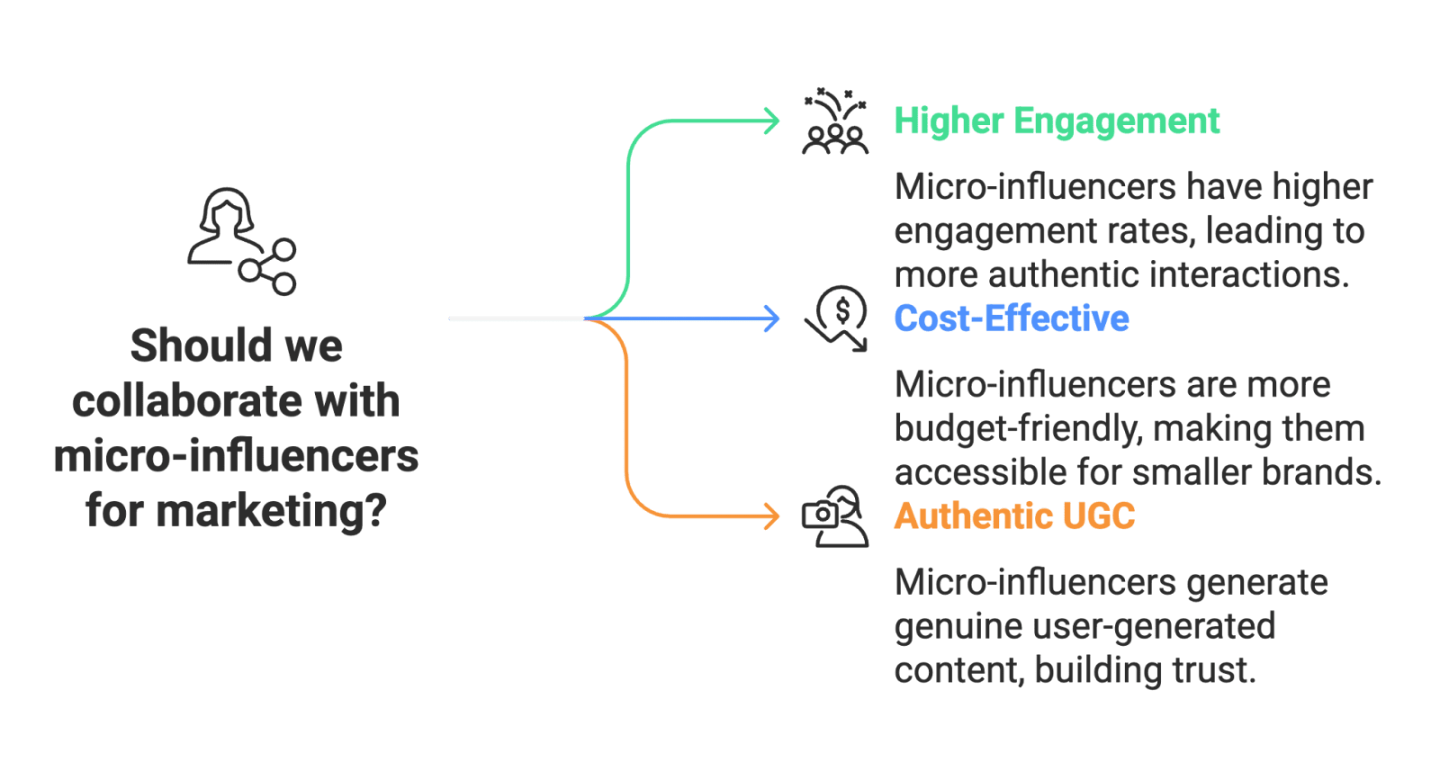
Influencer marketing – partnering with popular social media content creators – is one of the fastest ways to boost your Shopify traffic. Why? Because consumers trust influencers. In fact, 69% of consumers trust influencer recommendations more than information directly from brands. When a creator authentically showcases your product, their followers listen. Instagram is a prime example: as many as 70% of shoppers use Instagram to inform their purchasing decisions, so a single post or story from the right influencer can send a wave of traffic to your store.
Crucially, you don’t need to hire mega-celebrities. Micro-influencers (those with around 5,000–100,000 followers) often offer the best bang for your buck. They have niche, highly-engaged audiences and are seen as relatable content creators rather than distant celebrities. Collaborating with a group of micro-influencers can outperform a single big name in both engagement and cost-effectiveness. For example, micro-influencers typically see much higher audience interaction on their posts than macro-influencers do. Research shows a micro-influencer with ~10k–100k followers might get around a 3.8% engagement rate on Instagram, versus roughly 1.2% for a macro-influencer with hundreds of thousands of followers. That means their followers are liking, commenting, and clicking at a higher rate, which translates to more traffic and sales opportunities (see chart below).
Micro vs. Macro Influencer Engagement. Micro-influencers (smaller, niche followings) achieve far higher average engagement (~3–8% of followers interact) than macro-influencers (~1–2% engagement). This deeper engagement leads to more trust and traffic per viewer, giving micros an edge in driving ROI.*
Because of this high engagement and trust, partnering with multiple micro-influencers can “multiply” your reach and credibility. Micro-influencers often convert at higher rates while costing significantly less than a single celebrity endorsement. Many are willing to promote your product in exchange for a free sample or a small fee – influencer product seeding is a popular approach. You send a free product to relevant influencers and in return they share an honest review, unboxing, or demonstration to their audience. This tactic not only drives traffic from curious followers, it also produces user-generated content (UGC) you can reuse. Shopify’s own marketing guide notes that sending free samples to Instagram influencers is an effective way to boost brand visibility and traffic.
Tip: When using micro-influencers, focus on authenticity and fit. Look for creators whose niche aligns with your product and whose audience demographics match your target customers. A micro-influencer who genuinely loves your product will create content that resonates as a personal recommendation rather than an ad. Also, give them creative freedom – influencers know what content engages their followers best.
Some common ways to collaborate with influencers include:
Gift your product to influencers (often no monetary payment) for them to try and post about authentically. This often yields genuine reviews and word-of-mouth buzz.
Pay influencers to create content featuring your product, with agreed-upon deliverables (e.g. one Instagram reel and two stories).
Give influencers a unique discount code or referral link so they earn a commission on any sales they drive. This incentivizes them to actively promote your store.
Form longer-term partnerships where an influencer regularly represents your brand in content over months in exchange for products or a stipend.
When evaluating influencers, remember that quality beats quantity. An influencer with 10,000 highly engaged followers in your niche will likely send more converting traffic than one with 100,000 disengaged or off-target followers. Prioritize engagement rates, audience relevance, and authenticity over just follower count.
Finally, leverage tools and platforms to streamline your campaigns. For example, Stack Influence is a leading micro-influencer marketing platform that connects brands with everyday creators and automates product-seeding campaigns. It allows you to pay micro-influencers with your product, resulting in genuine posts reflecting real customer experiences – essentially word-of-mouth marketing at scale. Using a platform like this, you can scale up your brand awareness, UGC, and online growth by running many micro-influencer collaborations at once. The result is a flood of authentic content about your products and a steady stream of interested traffic clicking through to your Shopify store.
While social media hype is great, organic search remains arguably the most important long-term traffic source for e-commerce. In 2025, organic search is still the largest driver of website traffic overall – accounting for about 53% of visits on average. Ranking well on Google can funnel a constant stream of high-intent shoppers to your Shopify store for free. SEO is a must for sustained growth.
Start by making sure your Shopify site is optimized for the keywords your potential customers are searching. Think about what someone would type into Google when looking for products like yours (e.g. “waterproof hiking backpack” rather than just “backpack”). These specific phrases are called long-tail keywords, and targeting them can be very rewarding. Long-tail searches are more detailed (and often indicate a ready-to-buy intent) – they also face less competition in the search rankings. Optimizing your product pages or blog posts for long-tail terms can pay off with higher click-through rates and easier rankings. For example, a boutique running shoe store might write a blog post targeting “best running shoes for flat feet” to capture searchers with that specific need, rather than trying to rank simply for “running shoes”. By serving niche queries, you attract highly targeted visitors who are more likely to convert.
Here are some key SEO elements to focus on for your Shopify store:
Research relevant search terms and incorporate them naturally into your page titles, product descriptions, and headings. Each product page should target a primary keyword (like “men’s organic cotton t-shirt”) and possibly a couple of variations or long-tail phrases. Craft unique meta titles and meta descriptions for each page that include these keywords and entice users to click.
Ensure your store loads quickly. Compress images, use fast hosting, and minimize unnecessary scripts/apps. Not only do faster sites rank higher on Google, they also keep shoppers from bouncing. Even a one-second delay in page load time can reduce conversions by up to 7%, so speed is critical for both SEO and sales.
Choose a responsive Shopify theme and test your site on mobile devices. Google uses mobile-first indexing, meaning the mobile version of your site is what gets evaluated for rankings. A smooth mobile experience (easy navigation, readable text, fast load) will help your SEO – and since most searches now happen on phones, it keeps visitors around.
Consider adding a blog or resource section to attract organic traffic beyond just product searches. Publishing helpful, keyword-rich content (how-to guides, style tips, product comparisons, gift guides, etc.) can rank in search results and funnel readers to your products. Aim to answer common customer questions through content. Not only does this establish your expertise, it naturally includes relevant keywords and creates more pages that can be indexed by search engines.
Optimizing for search is not an overnight effort – SEO is a long game, but it pays dividends. Over time, as your site climbs up the Google results for more keywords, you’ll enjoy a consistent, high-intent traffic flow without having to pay for each click. And unlike social media posts that have a short lifespan, a well-ranked page can keep pulling in visitors for months or years. Invest the time in SEO early: it’s like laying a foundation that all your other marketing efforts can build upon.
User-Generated Content -Things like customer reviews, photos, videos, or social media posts created by your users – can be a goldmine for both traffic and conversions. Shoppers trust content that comes from real customers more than polished brand advertising. By actively encouraging your customers to create and share content related to your products, you boost your credibility and expand your reach.
Think about reviews and ratings: when potential buyers see lots of positive reviews on your product pages, they’re more likely to purchase (and also more likely to even find your site, since Google favors sites with fresh, relevant content like reviews). If you’re an Amazon seller, you already know how powerful reviews and customer photos are on that platform. Bringing that same strategy to your Shopify store is crucial. Enable product reviews (Shopify has apps for this) and actively ask customers for feedback after purchase – a simple email requesting a review in exchange for a small coupon can work wonders. Each review adds new content (keywords, photos, testimonials) to your pages, which can improve SEO and conversion rates.
Beyond reviews, get creative in prompting UGC on social media. For example, you could create a branded hashtag and encourage customers to share pictures of themselves using your product. Fashion and beauty brands do this effectively – customers post selfies with the clothing or makeup, tag the brand, and suddenly you have authentic word-of-mouth happening publicly. You can then repost that UGC on your own social feed (with permission) or even embed a gallery of real customer photos on your site. This not only provides social proof but also incentivizes those featured customers to share even more (they feel like a mini-influencer when a brand features them).
According to marketing studies, UGC promotes your brand through authentic voices, increasing engagement and reach among other consumers. People naturally trust the experiences of fellow shoppers more than polished brand copy – it’s perceived as more genuine. By reposting and highlighting UGC, you also encourage more people to contribute their stories and photos, creating a virtuous cycle. For example, if you run a home décor store, you might start a weekly “Customer Spotlight” blog post or Instagram story featuring a customer’s photo of your furniture in their living room. This not only makes that customer feel valued (building loyalty), but it shows new visitors real-life proof of your product in use, and might inspire them to submit their own content.
UGC can also come in the form of video content. Unboxing videos, customer testimonial videos, or how-to clips created by users are incredibly persuasive. You could run a contest for the best video review of your product, or simply encourage customers to share their unboxing on TikTok or YouTube. These platforms can generate traffic back to your store if you’re tagged or if you put your store link in the video description. Plus, you can embed the best videos on your product pages to enrich the shopping experience.
In summary, make it easy and rewarding for customers to create content about your brand. Feature their photos, highlight their stories, respond to their posts – show that you value their voice. This kind of community-building not only drives organic traffic (as the content spreads on social networks and search engines pick up on the buzz) but also significantly increases trust for anyone who lands on your site. A new visitor who sees genuine reviews, customer photos, and real-life testimonials will feel more comfortable buying from you versus a store with none of that social proof. UGC truly turns your happy customers into a marketing engine for your Shopify business.
Being active on social media is another major traffic driver for Shopify stores. Platforms like Instagram, TikTok, Facebook, Pinterest, and YouTube are essentially today’s shopping malls – they’re where people discover new brands and products during their daily scrolling. An engaging social media presence can attract followers and funnel them directly to your product pages.
Start by identifying which platforms your target audience frequents the most, and focus your energy there. For visually appealing consumer products (food, fashion, beauty, home decor, etc.), Instagram is a must-have. Over 62% of Instagram’s billion-plus users follow brand accounts to some degree, which means they are open to discovering and engaging with businesses on that platform. By regularly posting high-quality photos, Reels, and stories showcasing your products, you can convert your Instagram followers into website visitors. Use features like the link in bio, swipe-up links in Stories (if you have that enabled), and Instagram Shopping tags that let users click directly to your product pages. Engage with your community by responding to comments and DMs; this builds loyalty and keeps your brand top-of-mind.
TikTok is another game-changer for e-commerce. The app’s viral nature can catapult brand awareness overnight. Posting short, entertaining videos related to your niche – whether it’s demonstrating a product, sharing behind-the-scenes manufacturing clips, or jumping on trending sounds in a way that fits your brand – can expose you to thousands of potential customers. TikTok’s audience skews younger (Gen Z and young Millennials) who are highly influenced by what they see on social. In fact, for Gen Z, social influencers are now a primary channel for product discovery. If your target demo includes teens or 20-somethings, investing time in TikTok content and challenges could directly translate to traffic and sales (e.g. the viral hashtag “#TikTokMadeMeBuyIt” has driven many sell-outs of products).
Facebook is still relevant too, especially for reaching slightly older demographics and niche interest groups. Creating a Facebook Page for your business and updating it with content (and product links) can capture traffic from Facebook users who prefer that platform. Moreover, Facebook Groups related to your niche are great places to participate (genuinely) in discussions and softly promote your brand when appropriate. For example, if you sell eco-friendly pet products, being active in a “sustainable living” or “dog lovers” community group – by sharing tips or answering questions, not just dropping links – can establish your expertise and indirectly lead people to check out your store via your profile or mentions.
Pinterest is a powerful but sometimes overlooked traffic source for certain categories like fashion, DIY, home, wedding, and food. Users on Pinterest are often actively looking for inspiration and products to purchase. By creating Pinterest pins for your product images and blog content (with descriptive titles and your store URL attached), you can gain steady referral traffic. A pin showing “10 Ways to Style ” or a beautiful lifestyle shot of your product can circulate on Pinterest for months, continuously bringing in visitors. Make sure to link the pins directly to your Shopify product or a relevant landing page for seamless conversion.
Don’t forget YouTube if video content fits your product. Tutorial videos, product reviews, unboxings, or behind-the-brand stories on a YouTube channel can attract subscribers and drive traffic via video descriptions and YouTube’s clickable cards/end screens. YouTube content also often appears in Google search results (bonus SEO traffic!). For example, a small electronics store might post how-to videos for using or installing their products – viewers find those on Google or YouTube and then click the link to purchase the item from the store.
To maximize your social media impact, keep these best practices in mind:
Post regularly so that you stay visible in your followers’ feeds. Use a content calendar to plan posts around holidays, product launches, or seasons. Consistency builds momentum.
Ensure your Instagram bio, Twitter profile, etc., clearly state what you sell and include a link to your Shopify store (or Linktree if you want to link multiple things). This makes it easy for interested viewers to click through.
Research popular hashtags in your niche and use them strategically to expand your reach. Participate in trending challenges or memes if they suit your brand voice – this can expose you to a wider audience.
Tieing back to the UGC point – share customer posts or testimonials on your social channels (with permission). It shows you appreciate your customers and provides social proof to your followers that real people love your products.
Social media can drive both immediate traffic (a single post can spike a bunch of clicks right away) and persistent traffic (as you grow an audience, you have a pool to market to continuously). Treat your social channels as extensions of your brand experience – not only will they bring visitors, but they’ll also often be the first impression of your brand for people (who may then decide to visit your store). In short, a strong social media game can significantly amplify all your other efforts to get Shopify traffic.
Building an email list is one of the best investments for driving repeat traffic and sales. While many of the methods we’ve discussed (SEO, social, influencers) focus on bringing new visitors, email marketing shines at bringing past visitors and customers back to your site. Given that not everyone buys on their first visit, staying in touch via email can dramatically increase a customer’s lifetime value and keep that traffic pipeline flowing.
Email has incredible ROI – studies show businesses earn on average $36 for every $1 spent on email marketing. That’s a 3600% return, higher than practically any other channel. Why? Because the people on your email list are those who have already engaged with your brand (they may be past customers or at least interested enough to sign up), so they’re warm leads. A well-crafted email can directly prompt a flurry of revisits and purchases from that group. In fact, shoppers coming from email tend to spend more than those from other channels – one analysis found consumers spend 128% more when shopping via email than via other methods. It makes sense: if someone joined your newsletter or gave their email during checkout, they likely have a positive impression of your brand and are receptive to your messaging.
To get started, you’ll want to capture emails on your Shopify site. Use a signup form or pop-up (with a tempting incentive) to grow your list. Common tactics include offering a discount (e.g. “Join our newsletter for 10% off your first order!”), a free downloadable guide relevant to your products, or entry into a giveaway. Make sure whatever you offer appeals to your target audience so you get qualified subscribers (people who’d actually buy later). Also, assure visitors you won’t spam them – highlight the value they’ll get, like exclusive deals or useful content.
Once you have subscribers, plan out a mix of email campaigns to send regularly. A welcome email or series for new subscribers is crucial – it can introduce your brand story, highlight best-selling products, and perhaps give that discount code you promised. Beyond that, consider sending a content-rich newsletter monthly or bi-weekly, with product tips, new arrivals, or blog highlights. During promotions or holidays, send dedicated campaign emails (e.g. “Summer Sale – 20% off all swimwear!” with direct links). Be sure to also set up automated emails that trigger based on behavior: for instance, abandoned cart emails (to nudge those who added to cart but didn’t checkout – these often convert very well), post-purchase follow-ups (asking for a review or suggesting related products), and win-back emails (to re-engage customers who haven’t purchased in a while with a special offer).
Personalization can significantly boost email effectiveness. Use the customer’s name in the email, segment your list into groups (by past purchase behavior, preferences, location, etc.), and send targeted content. For example, you might have one email variant for customers who bought women’s shoes and another for those who bought men’s, featuring complementary products for each. Many email marketing tools (including Shopify Email or apps like Klaviyo, Omnisend, etc.) make segmentation and automation straightforward.
The beauty of email marketing is that it’s your owned audience – unlike social media followers, you’re not at the mercy of an algorithm deciding who sees your message. Nearly everyone checks their email daily, and your message lands directly in their inbox. Even if only a fraction of subscribers open and click, that’s recurring traffic you can reliably drive by simply hitting “send.” To maximize those clicks, spend time on writing compelling subject lines (to improve open rates) and include clear call-to-action buttons in the email that link to relevant pages on your store. For instance, a fashion boutique’s newsletter might include beautiful images of new dresses with a “Shop New Arrivals” button that brings people straight to the site.
One more tip: don’t spam or oversell. Make sure your emails provide value, whether that’s a promotion, useful information, or entertainment. If every email is just “Buy this now!”, people will tune out or unsubscribe. A good rule is the 80/20 rule – 80% of your emails should be content or value-focused, and 20% can be direct sales pitches. And always give an easy way for people to opt out or adjust their preferences.
In summary, email marketing turns one-time visitors into loyal repeat visitors. By nurturing your audience’s interest and regularly inviting them back (with compelling reasons), you create a cycle where each new customer potentially yields multiple sessions and purchases over time. It’s like having a direct line to your customer’s attention – use it wisely, and you’ll see your traffic (and revenue) grow steadily.

Sometimes you need to pour a little fuel on the fire – that’s where paid advertising comes in. While organic methods (SEO, social, referrals) are crucial, they often take time to build up. Paid ads, on the other hand, can deliver immediate traffic to your Shopify store by putting your brand in front of targeted audiences within hours. The trade-off is cost, but when done right, paid ads can be a profitable engine of growth and a way to scale your traffic quickly.
The two primary avenues for e-commerce ads are search engine advertising and social media advertising:
These are ads on platforms like Google Ads (and Bing Ads) that appear when users search for specific keywords. For example, a search for “ergonomic office chair” might show sponsored text ads or shopping ads at the top of Google’s results. With search ads, you’re capturing people who are actively looking for products or solutions you offer – often these clicks have strong purchase intent. You bid on keywords relevant to your products so that your ad shows up in those searches. The great advantage here is you’re getting in front of customers exactly at the moment they’re searching for something you sell. Google Ads offers formats like Search text ads (simple text results labeled as “Ad”), Shopping ads (product images with price, very effective for retail), and Display ads (banner ads that appear on websites in Google’s network). If you have the budget, consider starting with Google Shopping ads, which showcase your product photo, price, and rating right in the search results – these tend to attract clicks from shoppers who are ready to buy. Keep an eye on your cost-per-click and conversion rate – you want to ensure the sales generated exceed the ad spend. The nice thing is you can set daily budgets and adjust bids anytime, making it flexible to scale up or down.
Platforms like Facebook, Instagram, TikTok, and Pinterest offer powerful advertising tools to reach users based on their interests and demographics – even if those people aren’t actively searching for products. Social ads are great for discovery and building awareness among potential customers who fit your target profile. Facebook is the giant here, with over 3 billion monthly active users spanning all age groups – and its Ads Manager lets you target people by age, location, interests, behavior, etc. For instance, you could run a Facebook/Instagram ad campaign targeting “women ages 25-45 who are interested in yoga and sustainable living” if you sell eco-friendly yoga apparel. Instagram (which is managed via Facebook’s ad platform) is equally valuable, especially for visually appealing products; it has over 2 billion users itself and strong engagement. TikTok ads can help you reach the younger demographic with short video ads (and TikTok’s ad platform is rapidly evolving, with options for targeting interests and even creating “Spark” ads from existing organic TikTok content). Pinterest Ads (Promoted Pins) are fantastic for product-based businesses, as Pinterest users are often planning projects or shopping – a promoted pin of your product can look very native in their feed and draw in quality traffic. One advantage of social ads is that you can showcase your product in a lifestyle context (through images or videos) to generate demand, even when the viewer wasn’t actively looking for it. This can expand your market by finding new customers who didn’t know about you before.
Whichever platform you choose, start with a clear objective: do you want to drive traffic specifically (to increase brand awareness or retarget previous visitors), or drive conversions/sales right away? Platforms allow you to optimize for different objectives. For example, Facebook can optimize your campaign either for link clicks (traffic) or for conversions (it will show ads to people most likely to purchase, if you have the Meta Pixel set up on your site to track that). If you’re just starting out and need traffic, you might optimize for clicks to get people in the door, then later shift to conversion optimization as you gather data.
Your existing community can reveal micro-influencers who are organically interested in your brand. These people will likely create very authentic UGC if they partner with you, since they already have enthusiasm. As Meltwater’s marketing experts note, a follower-turned-influencer is valuable because they’re already familiar with your brand and can represent you authentically.
Never underestimate the power of word-of-mouth when it comes to driving traffic and sales. Customers who come via referrals from friends or family often convert more readily and have a higher lifetime value, because trust is built in. You can encourage this by setting up a formal referral program for your Shopify store, and by working with affiliates who promote your products to their audiences. These programs essentially turn your existing customers and partners into a marketing force, incentivizing them to send new shoppers your way.
A classic referral program offers a reward to customers who refer a friend and to the friend who was referred. For example, you might give a referrer a $10 store credit for each friend who makes a purchase, and that friend might get a 10% discount on their first order as a welcome bonus. This “double-sided reward” structure is popular because everyone wins – your loyal customer gets a perk, the new customer gets an incentive to try your store, and you get a new sale and subscriber. Shopify has apps that can automate referral tracking and reward distribution (such as ReferralCandy, Smile.io, etc.), making it easy to manage. Promote your referral program visibly: mention it in post-purchase emails (“Loved your purchase? Refer a friend and you both get $10 off your next order!”), add a banner on your site, and periodically remind your social media followers.
Why go to the trouble? Because referred customers tend to be high-quality. People trust recommendations from someone they know far more than any ad or marketing you could do. In fact, a Nielsen study found 92% of consumers trust recommendations from friends and family over any form of advertising. When a friend raves about a product and sends you a referral link or code, you’re likely to check it out – that’s instant, warm traffic to your store that is primed to buy if the product fits their needs. Moreover, research indicates that e-commerce businesses see a 68% higher conversion rate from referral traffic compared to other channels. In other words, visitors who land on your site via a friend’s referral are much more likely to actually purchase something, making referral traffic extremely valuable.
In addition to customer referrals, consider an affiliate program to leverage bloggers, influencers, and industry partners. Affiliates are like commission-based ambassadors – they’ll promote your store or products using a special link, and for every sale that comes through their link, they earn a commission (percentage of the sale or a flat fee). This is a pay-for-performance model that can rapidly expand your reach. For instance, if you sell skincare products, you could partner with beauty bloggers or YouTubers who will review or mention your products, and give them a cut of any resulting sales. There are affiliate networks you can join, or you can run a program in-house with Shopify apps (or manually assigning coupon codes/links to partners). The key is to recruit affiliates whose audience aligns with yours – their recommendations will send targeted traffic your way. Affiliates essentially act as marketing extensions of your brand, and you only pay a commission when they successfully drive a sale, so it’s cost-effective.
When launching an affiliate or referral program, keep these tips in mind:
The incentive has to be meaningful enough for people to bother. For referrals, a coupon, discount, or cash credit works well. For affiliates, ensure the commission rate is competitive in your industry (many offer 5-20% of sales, depending on margins).
Dedicate a page on your website to explain how your referral program works or how affiliates can join. Remove friction – it should be easy to refer a friend (one-click sharing links, etc.) or for an affiliate to get their link and start promoting.
With referral discounts or affiliate payouts, occasionally someone might try to game the system (self-referrals, fraudulent activity). Use the tools available (or manual checks) to ensure referrals are genuine new customers and that affiliates are following your guidelines (e.g., not spamming their links).
Publicly or privately acknowledge your top referrers or affiliates. You might create a tiered system where super-referrers get extra perks. A little recognition can motivate them to keep spreading the word.
Word-of-mouth marketing is often called the oldest growth hack in the book, and it’s now supercharged by the internet – one happy customer’s recommendation on social media can send dozens of new shoppers to your site. By formalizing and rewarding these referrals, you amplify the effect. Many huge brands (Dropbox, Uber, etc.) owe a large part of their growth to referral programs that turned users into evangelists. As a Shopify store owner, even a modest referral program can steadily bring in new traffic every month as your customer base grows. And the best part: those referred customers might refer others in turn, creating a virtuous cycle of organic growth.
Driving significant traffic to your Shopify store requires a combination of strategies working in harmony. Influencer marketing stands out as a powerful way to quickly build brand awareness and trust, especially through micro-influencers who generate authentic buzz and UGC. But it shouldn’t be your only tactic. The stores that win in the long run are those that diversify their traffic sources – mastering SEO to capture searchers, cultivating a social media following, nurturing an email list of repeat visitors, leveraging paid ads for scale, and encouraging referrals to tap into word-of-mouth. Each channel complements the others: for example, your social media content can feed your email campaigns; your influencer collaborations can produce UGC that improves your site’s conversion rate; your SEO-driven blog posts can be shared on social media for extra reach, and so on.
Remember, growing traffic is not an overnight game. It builds over time with consistent effort. Stay patient and keep experimenting. Whether you’re a new Shopify entrepreneur or a seasoned Amazon seller, the methods in this guide – from collaborating with micro-influencers via platforms like Stack Influence to optimizing for Google and beyond – will set you on the path to sustainable traffic growth. With more of the right visitors coming in, you’ve set the stage for increasing those sales and taking your e-commerce business to new heights. Good luck, and happy selling!
In the ultra-competitive world of e-commerce, brands and Amazon sellers are turning to micro influencers and content creators to gain an edge. These niche creators – often everyday people with dedicated followings – help generate authentic user-generated content (UGC) and build consumer trust in ways traditional ads struggle to match. From engaging social media posts to credible product reviews, micro-influencers are proving to be a powerful resource for driving online sales and brand growth.
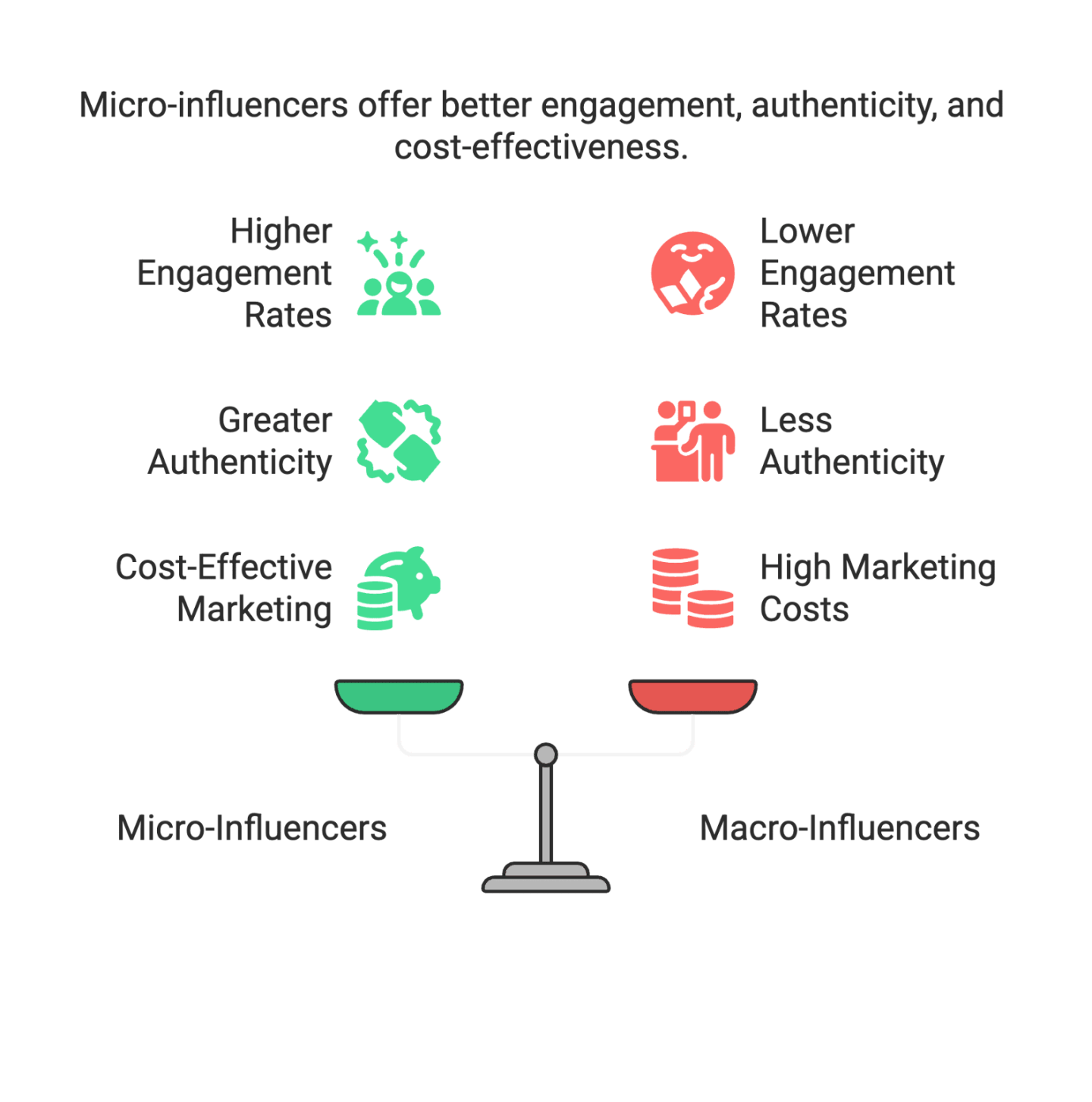
Micro-influencers are social media personalities with relatively small but highly engaged audiences (typically in the few thousand up to ~100,000 follower range). Unlike celebrity “macro” influencers, micro-influencers operate in specific niches and feel like peers to their followers. They might be passionate hobbyists, bloggers, or experts in a particular domain, and their recommendations come off as genuine advice rather than paid advertisements. This authenticity and relatability give micro-influencers outsized influence over purchasing decisions.
Some key advantages of micro-influencers include:
In sum, micro-influencers may lack giant follower counts, but they excel at sparking genuine conversations and trust. Their recommendations feel like advice from a friend, leading audiences to engage and buy in ways they wouldn’t from a generic ad. Next, we’ll look more closely at how micro-influencers stack up against macro influencers on key metrics.
Comparison of micro vs. macro influencer performance. The chart above compares micro-influencers and macro-influencers on two crucial metrics: average engagement rate and marketing ROI. As shown, micro-influencers tend to have significantly higher engagement on their content – roughly around 10% of their followers engage on average, compared to only about 2% for macro influencers. This means a far greater portion of a micro-influencer’s audience is actively liking, commenting, and clicking, which is invaluable for spreading a brand’s message. Moreover, micro-influencer campaigns often yield a much better return on investment – on the order of 20:1 ROI versus ~6:1 ROI for campaigns with big influencers. In practical terms, that means a dollar spent on a micro-influencer campaign can generate roughly 3× or more the sales of a dollar spent on a celebrity influencer campaign. The higher ROI is driven by the combination of lower costs and more engaged, receptive audiences.
Why do micro-influencers outperform larger influencers so dramatically? It comes down to trust and relevance. Followers view micro-influencers as authentic peers, so their recommendations carry weight – their engagement isn’t just vanity metrics, it reflects genuine interest. By contrast, macro influencers, despite their huge reach, often see diminishing returns: their audiences are so broad and inundated with sponsorships that any given post feels less personal and persuasive. In fact, research found that nano- and micro-influencers achieved roughly double the sales conversion rate of macro influencers in one analysis (about 7% of engagements converting to sales for small influencers vs. 3% for large influencers). The personal touch of smaller creators clearly translates into action from their followers. And because micro-influencers are far less expensive to work with, the ROI per marketing dollar can be startlingly high. Instead of paying $20,000+ for one macro influencer post, a brand could sponsor 50 micro-influencer posts at $400 each and likely generate far more total engagement and sales. This efficiency is exactly why micro-influencer marketing has exploded in popularity among savvy e-commerce brands.
Micro-influencers don’t just drive sales directly – they also produce user-generated content (UGC) that can amplify your brand’s credibility and reach. UGC refers to any content created by real users or customers, such as social media posts, reviews, photos, videos, or testimonials, rather than by the brand itself. In the age of social media, UGC has become marketing gold. Consumers trust content from real people far more than polished brand advertisements. In fact, a whopping 90% of consumers say authenticity is important when deciding which brands to support, and user-generated content is viewed as the most authentic form of content by consumers globally. By showcasing real-life product experiences and honest opinions, UGC serves as digital word-of-mouth – the modern “friend’s recommendation.”
It’s no surprise, then, that UGC heavily influences purchasing decisions. 79% of people say UGC highly impacts their purchase decisions, far more than traditional brand content. Shoppers are more likely to trust a fellow customer’s Instagram post or an unboxing video than a slick ad copy from the brand. Micro-influencers play a pivotal role here: the content they create (product reviews, demo videos, before-and-after photos, etc.) is essentially UGC from a semi-peer. Their posts are often unfiltered and relatable, showing products in real-life use. This kind of content not only builds trust with the influencer’s followers, but can also be repurposed by the brand across other channels. For example, an influencer’s photo or testimonial can be shared on the brand’s own social media or featured on product pages, adding social proof. Many brands even turn influencer UGC into ads – which tends to outperform traditional ads. (Studies show UGC-based ads get significantly higher click-through rates and lower cost-per-click than typical branded ads.)
Another benefit is the longevity and virality of influencer content. When a micro-influencer posts about your product, that content stays online and can continue to garner views, likes, and comments for days, weeks, or even longer. Essentially, you keep getting “free” impressions after the initial post, as new people discover it. In contrast, a paid ad stops working the moment your budget runs out. Good UGC can also snowball: people tag friends or share the post, leading to secondary reach that you didn’t even pay for. This kind of organic word-of-mouth effect is incredibly valuable – word-of-mouth marketing generates more than twice the sales of paid advertising on average. By sparking conversations and sharing, micro-influencer content can produce a ripple effect of brand awareness that far exceeds the initial audience.
In summary, UGC is a trust multiplier for e-commerce. Micro-influencers supply a steady stream of authentic content that humanizes your brand and builds credibility with customers. When potential buyers see real people (especially people they admire or relate to) genuinely enjoying your product, it diminishes skepticism and encourages them to buy. This fusion of influencer marketing and UGC is a one-two punch: you get both immediate promotion to the influencer’s followers and enduring social proof in the form of content that lives on. For Amazon sellers and online brands, leveraging UGC through micro-influencers can significantly boost conversion rates and customer loyalty.

Amazon’s dominance in online retail makes it a critical battleground for sellers – the platform accounts for about 38% of the U.S. online retail market, and nearly two-thirds of online shoppers start their product searches on Amazon. This means success on Amazon often determines overall e-commerce success. Micro-influencers offer Amazon sellers a powerful way to stand out and drive sales within this ecosystem, by merging social media influence with Amazon’s built-in shopper base.
One way Amazon sellers tap into influencer marketing is via Amazon’s own Influencer Program. This program lets approved content creators (from micro-influencers to celebrities) set up their own Amazon storefronts – basically, curated pages on Amazon where influencers list products they recommend, and earn commissions on any sales they drive. These Amazon influencers will often promote their storefronts and product picks on social media (you’ve probably seen hashtags like #AmazonFinds or #TikTokMadeMeBuyIt). When an influencer features your product on their Amazon storefront and tells their followers about it, it creates a seamless path: the audience can click through directly to Amazon and purchase with trust, since it’s a recommendation from someone they follow. This blend of content and commerce is incredibly potent. It not only generates immediate sales, but the external traffic and sales can boost your product’s ranking within Amazon’s search results, helping your item show up higher when people search on Amazon. In essence, micro-influencers can funnel outside interest into Amazon, which Amazon’s algorithm rewards, creating a virtuous cycle of more visibility and sales (a win-win for the seller).
Even outside of the official Amazon Influencer storefront program, micro-influencer partnerships benefit Amazon sellers in numerous ways. For instance, an Amazon seller can provide a micro-influencer with a free product (or discount code) in exchange for the influencer sharing their honest review or usage of the item on Instagram, TikTok, YouTube, etc. The influencer’s followers get to see the product in action from a trusted voice, and the post can include a direct Amazon product link or affiliate link. When those followers click through to Amazon and buy, the seller gains new customers and often new reviews on their product listing (as the buyers may leave feedback). Those authentic positive reviews and increased sales velocity will further improve the product’s ranking and conversion rate on Amazon. Additionally, the influencer’s content (photos, videos) can be used in the Amazon listing itself if applicable – for example, short video reviews or unboxing videos can be uploaded to the listing page or used in Amazon Posts/Live. This user-generated content enhances the Amazon listing, making it more convincing to future shoppers.
Crucially, micro-influencer marketing is a cost-effective strategy for Amazon sellers, especially compared to Amazon’s internal advertising costs. Amazon Pay-Per-Click (PPC) ad bids have been rising steeply, squeezing sellers’ profit margins. Rather than spending hundreds or thousands on PPC clicks that shoppers might ignore, sellers can often work with micro-influencers for the cost of a free product or a modest fee. For example, instead of paying $1000 for Amazon Sponsored Product ads, that budget could seed 10 micro-influencers with your product. Each of those influencers might create a review video or social post that not only reaches a targeted audience but also produces reusable content and lasting social proof. The content feels organic (not an ad), which is important given many consumers are “ad-blind” on platforms. Especially for new or unknown brands on Amazon, micro-influencers serve as trust bridges to skeptical customers in a way PPC ads cannot. A favorite influencer’s recommendation makes your Amazon product feel vetted and popular. It’s telling that 72% of teenagers (a key demographic of new consumers) follow influencers and trust their product recommendations – illustrating how powerful creator endorsements have become in shaping shopping habits.
To maximize impact, Amazon sellers often work with multiple micro-influencers simultaneously to broaden reach while keeping authenticity high. Rather than one celebrity who might generate a spike of traffic, a team of many micro-influencers can produce a steady stream of diverse content and referrals. In fact, marketing experts note that brands sometimes collaborate with dozens or even hundreds of micro-influencers in a single campaign to scale up exposure while still maintaining that personal touch. Each micro-influencer brings their own niche audience to the table, so by casting a wide net, you capture a variety of customer segments. This “many small voices” approach can outperform a single big voice, both in total reach and in the richness of UGC produced. And thanks to the relatively low cost of micro-influencers, this strategy is accessible even to small Amazon sellers with limited budgets.
Of course, coordinating such campaigns can be challenging – reaching out to many individuals, sending products, tracking posts, etc. This is where specialized influencer marketing platforms like Stack Influence come in. Stack Influence, for example, is a platform that automates product seeding campaigns and manages the end-to-end process of working with a large number of micro-influencers. It helps brands accumulate authentic UGC, testimonials, and traffic at scale, with campaigns 100% managed from A to Z. By using a platform or agency experienced in influencer marketing, Amazon sellers can save time on finding and vetting creators, ensure each influencer delivers the agreed content, and only pay for results. (Many platforms guarantee performance – e.g. you pay only when an influencer has posted as required.) Leveraging such tools allows even one-person businesses to execute large-scale micro-influencer campaigns efficiently, turning what could be a logistical headache into a streamlined process.
If you’re an e-commerce brand or Amazon seller ready to dive into micro-influencer marketing, here are some best practices to ensure your campaign is effective:
By following these steps, even small sellers can gradually develop a robust micro-influencer marketing strategy that complements their other sales tactics. It does require effort up front – researching and coordinating with multiple people – but the payoff in authentic exposure and customer trust can be game-changing.
In today’s social media-driven commerce landscape, micro-influencers and UGC have become indispensable assets for e-commerce success. They inject authenticity, trust, and community engagement into your marketing efforts – qualities that are hard to achieve with traditional advertising alone. For Amazon sellers, in particular, partnering with micro-influencers and content creators can be the differentiator that propels your product to the top of search results and into countless shopping carts. The data is clear: smaller creators often deliver higher engagement and better ROI than their larger counterparts, all while creating a wealth of content that can be repurposed to further amplify your brand message. And with consumers increasingly skeptical of ads but receptive to peer influence, this approach aligns perfectly with what modern shoppers trust.
In summary, micro-influencers, content creators, and UGC represent a powerful combination for any e-commerce brand or Amazon seller looking to thrive. By embracing the authentic connection these creators foster with consumers, you can supercharge your marketing strategy – boosting credibility, expanding reach, and ultimately driving more conversions. In a market where trust is the new currency, tapping into the “small but mighty” influence of everyday creators can yield outsized rewards for your business. So, start small and scale up: your future customers are waiting to hear about you from the voices they trust. By investing in micro-influencers now, you’ll build a foundation of genuine advocacy that can keep your brand growing for years to come.
Twitter – now rebranded as X – remains a bustling social hub where trends spark and conversations flow in real time. For e-commerce brands, Amazon sellers, and marketers, finding the right influencers (content creators active on X) can amplify your brand promotion and generate valuable user-generated content (UGC). This guide will walk you through why micro-influencers on Twitter are a game-changer for online businesses and how to find influencers on Twitter/X to boost your brand’s awareness and sales. We’ll also highlight tools and tips (including how platforms like Stack Influence can help) to make your influencer hunt easier.
Twitter may have a smaller user base than some networks, but with about 335 million monthly active users – many of them educated and high-earning – it offers access to engaged, niche communities. Its fast-paced, conversational format is ideal for industries like tech, finance, retail, and e-commerce to engage customers quickly. Brands often use Twitter for customer service, feedback, and community building, so partnering with reliable voices (influencers) on the platform can enhance credibility and spark conversations around your products.
Importantly, Twitter influencers (whether big or small) have built-in audiences that trust them. When an influencer shares a product recommendation or unboxing on X, their followers take notice – this can drive traffic to your online store or Amazon listing and even improve your product’s visibility. Influencers skilled in concise, witty posts can distill your brand message into viral tweets. In short, teaming up with Twitter influencers lets you tap into ready-made communities and inject your brand into the daily discussions of your target audience.
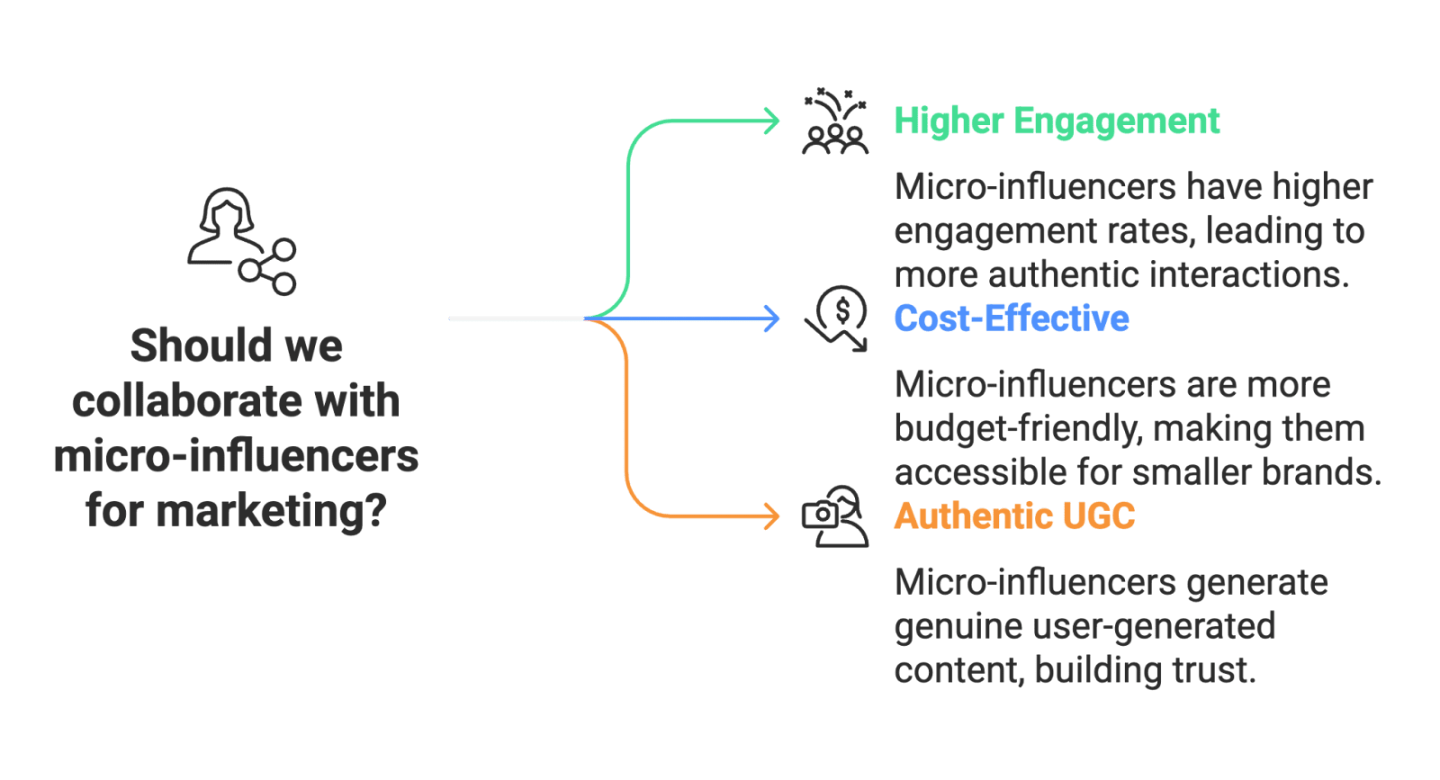
Not all influencers are mega-celebrities. In fact, micro-influencers (those with roughly 1,000 to 50,000 or up to 100,000 followers) often punch above their weight in marketing impact. Why? They tend to have higher engagement rates, closer relationships with their followers, and niche expertise. Research shows micro-influencers’ posts can achieve engagement rates up to 3X higher than macro or mega influencers, and brands see 60–80% higher ROI compared to some traditional ads. Their audiences are more tight-knit and trust their opinions, which leads to authentic interactions and content.
Micro vs. Mega influencer engagement rates on social media (Instagram example). Micro-influencers (fewer followers) see significantly higher average engagement (~3.86%) than mega-influencers (~1.21%). Greater engagement means more comments, shares, and genuine conversations around your brand.
Micro-influencers are also fantastic for generating user-generated content. Videos shared on platforms like Twitter can be downloaded using a Twitter video downloader to preserve and reuse valuable UGC across marketing campaigns. Because they typically collaborate in exchange for product samples or modest fees, their social posts often feel like genuine consumer experiences rather than polished ads. For example, micro-influencers might post candid reviews, unboxing videos, or testimonials that resonate as honest UGC. These posts reflect real customer experiences, sparking word-of-mouth marketing at scale. As an e-commerce marketer, you can often repurpose this UGC – using influencer photos, tweets, or videos in your own social media, product pages, or ads (with permission) to build trust with a wider audience.
Lastly, micro-influencers are more budget-friendly and accessible. Many brands prefer working with a team of smaller influencers than a single celebrity: in fact, 64% of marketers have worked with micro-influencers, and nearly half reported the most success with them. For growing Amazon sellers or niche e-commerce brands, micro-influencers provide an affordable way to get your product in front of targeted buyers while creating a buzz of authenticity around it.
So how do you actually find the right influencers on Twitter/X for your brand? Below are seven proven methods – from using Twitter’s own features to leveraging external tools – to discover and connect with influencers who can champion your product. Use a combination of these strategies to build a list of potential influencers, then vet them for fit (audience demographics, engagement, content quality) before reaching out.
Hashtags are one of the easiest ways to find relevant voices on X. Users tag tweets with hashtags to categorize content, which makes hashtags essentially keywords for Twitter. Start by searching for popular hashtags in your industry or related to your product. For example, a skincare brand might search #skincareRoutine, #BeautyTwitter, or an Amazon gadget seller might try #TechTwitter or #AmazonFinds.
By scanning who is active in conversations around your target hashtags, you’ll quickly compile a list of potential influencers leading those conversations. For each promising profile, you can dig deeper into their recent tweets and engagement levels to gauge influence.
Twitter’s Explore tab (often represented by a magnifying glass or compass icon) is a handy built-in tool for discovery. The Explore page shows trending topics, popular posts, and recommended accounts, often tailored to your region or interests. How can this help find influencers?
The Explore tab essentially curates what’s hot on Twitter at the moment. It’s a great way to discover influencers who are actively participating in popular conversations and might have momentum with their audience.
Twitter Lists are an underrated treasure for finding influencers. A Twitter List is a curated group of Twitter accounts, often centered around a theme or industry. Many savvy users create and share lists like “Top Ecommerce Experts” or “Favorite Tech Reviewers”. By tapping into lists, you can find clusters of influencers in one place:
By exploring Twitter Lists, you essentially leverage the curation work already done by others. It’s an efficient shortcut to identify multiple influencers in a category without hunting them one by one. Once you find a relevant list, consider following or engaging with those creators.
Twitter Communities (a feature introduced to group discussions by topic) can also be fertile ground for finding influencers, especially micro-influencers passionate about a subject. Communities are like interest-based groups where members tweet to the group’s feed.
For example, an Amazon seller of kitchen gadgets might join a “Home Cooking” community and soon notice a few cooking experts or home chefs who frequently share tips. Those could be great micro-influencers to partner with for showcasing your gadget in their next recipe tweet. Using Communities helps you find influencers who might not be super famous, but have strong clout in a dedicated group of potential customers.
Sometimes, the ideal Twitter influencer for your brand is someone who’s already in your orbit. Make sure to examine your brand’s current followers and interactions:
Your existing community can reveal micro-influencers who are organically interested in your brand. These people will likely create very authentic UGC if they partner with you, since they already have enthusiasm. As Meltwater’s marketing experts note, a follower-turned-influencer is valuable because they’re already familiar with your brand and can represent you authentically.
Beyond Twitter’s native features, consider using social listening tools or Twitter analytics to uncover influential voices:
By leveraging these tools, you essentially let data guide you to influencers. If a particular user consistently appears in conversations getting strong engagement around your topics, that’s a signal they are an influencer or thought leader in that space.
Also, keep an eye on competitors: social listening can alert you when another brand in your niche is mentioned alongside an influencer (e.g., “Thanks @TechGuru for reviewing our product!”). If your competitors are working with an influencer, you might consider approaching them as well – or find a similar profile who can champion your brand.
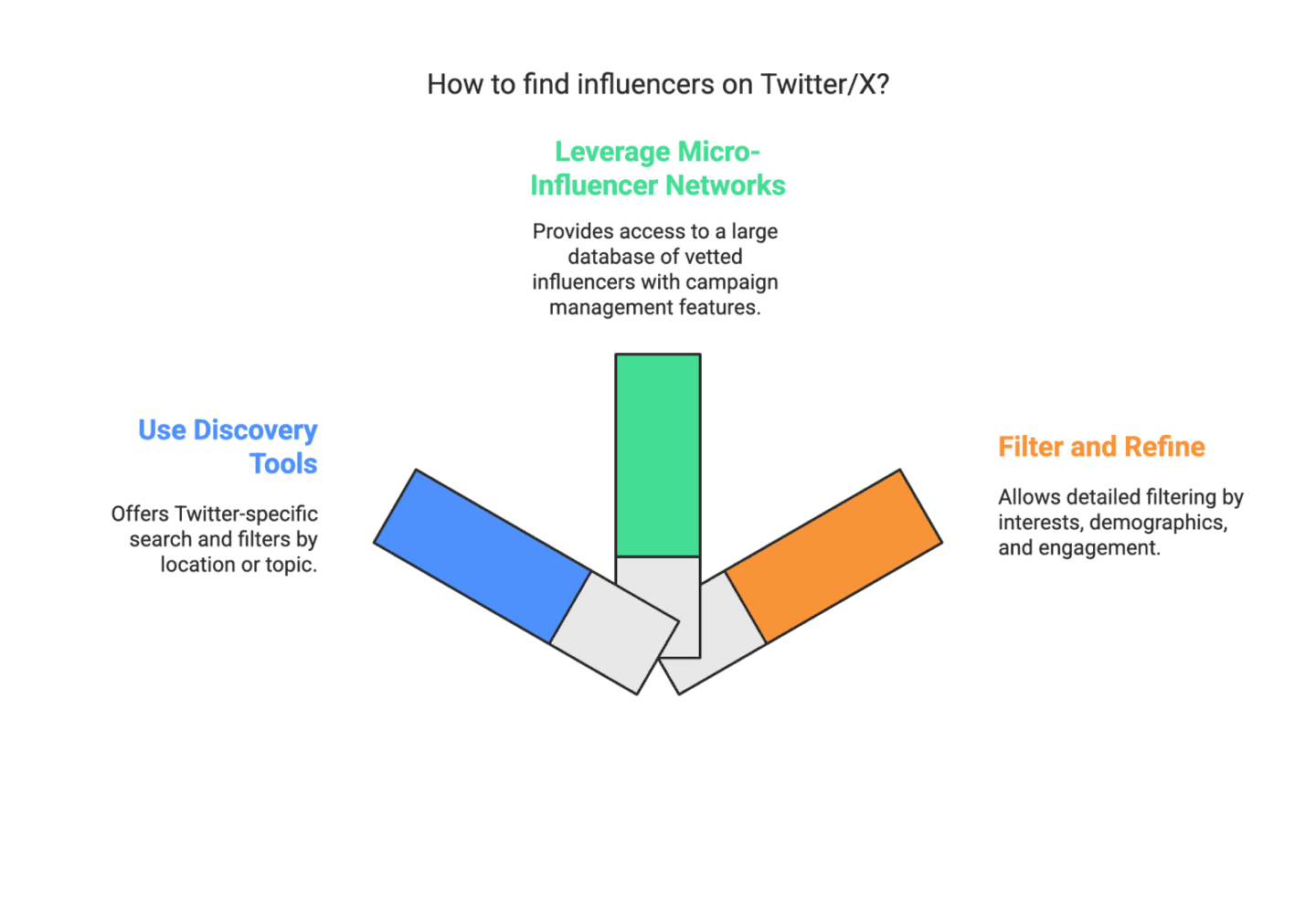
For a more automated approach, influencer marketing platforms can save time by aggregating and filtering creators across social media. There are many tools where you can search for Twitter/X influencers by keywords, follower count, engagement rate, location, etc. A few strategies here:
Using an influencer platform can streamline outreach and even handle parts of the collaboration process. Some platforms (like Stack Influence) will automate product seeding campaigns – meaning they help send your product to selected micro-influencers and coordinate the posting schedule. This automation scales up your brand awareness and UGC generation significantly. It’s essentially a one-stop solution: you provide campaign goals and product info, and the platform manages finding influencers, shipping products, and ensuring posts go live.
Pro Tip: When using influencer platforms or databases, don’t just rely on the numbers the tool provides. After getting a list of potential Twitter influencers, manually review their recent tweets. Make sure their content style and tone match your brand, and check that they engage positively with their followers. A smaller influencer who truly aligns with your brand values can be more valuable than one with a slightly bigger follower count but an irrelevant audience.
If all else fails, good old Google can help surface influencers. Try search queries like “top influencers on Twitter” or “best Twitter accounts to follow.” Often, marketing blogs or news sites have round-up articles (e.g., “15 Twitter Influencers Every Marketer Should Follow”). While these lists might feature more well-known personalities, they can still be useful for inspiration. You might find a few niche experts listed that are perfect for your campaign. Additionally, look at ranking sites like Feedspot or Influencer directories that list influencers by category. Just remember to vet any names you gather – ensure they are active on X and have genuine engagement.
Finding the right influencers on Twitter/X requires a mix of research, tools, and personal outreach, but it’s well worth the effort. The real-time nature of Twitter means that a single retweet or mention from an influencer can drive a surge of interest in your brand overnight. By leveraging hashtags, trending topics, lists, and influencer platforms, you can identify the voices that matter in your niche and turn them into brand advocates.
Remember to keep the relationship mutually beneficial: when reaching out to Twitter influencers, personalize your message, highlight why you admire their content, and explain how collaborating could provide value to their followers. Whether you send a free product for them to try, offer an affiliate commission, or simply build a friendly rapport first, authenticity is key. Influencer marketing on X works best when the content doesn’t feel forced – let your micro-influencers’ creativity shine through in genuine tweets about your product.
By following this guide, e-commerce marketers and Amazon sellers can develop a robust Twitter influencer strategy that boosts brand awareness, drives user engagement, and generates plenty of organic UGC to fuel your marketing engine. Now it’s your turn: start that hashtag search, join a community, or reach out to a potential influencer today – your next brand champion might just be a tweet away!
TikTok has exploded as a platform for micro-influencers, content creators, and e-commerce brands alike – from Amazon sellers showcasing products to everyday creators sharing UGC (user-generated content). Partnering with niche creators on TikTok can drive authentic content and boost sales. However, not all that glitters is gold in the influencer world. A growing number of individuals inflate their follower counts, likes, or views through artificial means – a phenomenon known as fake engagement. In fact, one analysis found that one in four influencers has bought fake followers, a sobering statistic for any marketer.
In this comprehensive guide, we’ll explain what fake engagement on TikTok is, why fake influencers are problematic for brands, and how to spot the telltale signs of phony influence. We’ll also share tips for e-commerce companies and creators to ensure you engage with real audiences. Let’s dive in!
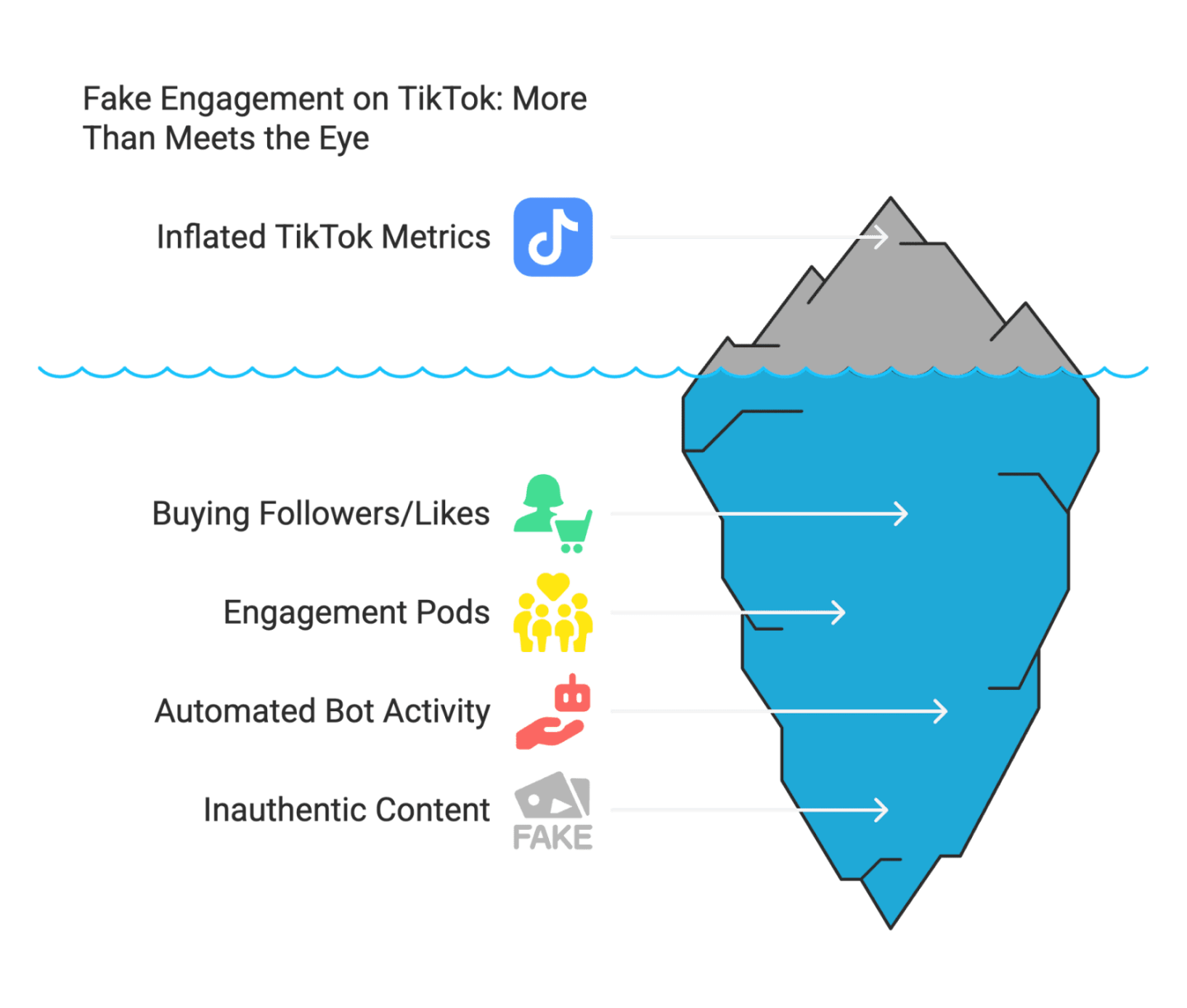
Fake engagement refers to any artificially inflated metrics on TikTok – such as fake followers, likes, views, or comments – that give the illusion of popularity without real audience interaction. In other words, an account might look influential at a glance, but much of its engagement is generated by bots or coordinated schemes rather than genuine fans. Fake influencers often resort to tactics like:
Purchasing followers in bulk (often bot or inactive accounts) to boost follower count. These fake followers do not engage authentically, but they make the creator appear more popular.
Joining groups where members agree to like and comment on each other’s videos to inflate engagement metrics artificially. This creates mutual fake engagement that tricks the TikTok algorithm and onlookers.
Using software or bots to auto-like, follow, or comment on content. For example, comment bots might spam generic phrases (“Nice vid!” “Great content!”) on posts, and view bots can raise view counts. These bots create an illusion of high engagement.
Some fake influencers even steal or repost content just to keep their profile active, or they participate in follow-for-follow and like-for-like schemes (e.g. using hashtags like #follow4follow) to superficially grow numbers. An account following nearly as many people as follow them is one red flag of such schemes.
All these tactics artificially inflate an influencer’s metrics to appear more influential than they truly are. The motivation is clear: bigger numbers can attract unwary brands looking for reach, and even unlock TikTok’s monetization features or Creator Fund payouts. With the intense competition to grow and secure brand deals, some creators see fake engagement as a tempting shortcut. But as we’ll see, this deception carries major risks for everyone involved.
For e-commerce brands, Amazon sellers, and marketers leveraging TikTok, fake engagement isn’t just a minor annoyance – it can directly undermine your marketing success. Here are the key issues that fake influencers and inflated metrics create:
Perhaps the biggest issue is financial. Paying an “influencer” who has a large following of bots or inactive accounts is like throwing money away. At least 15% of advertisers’ influencer marketing spend is lost to fraud, amounting to over $1.3 billion in wasted budget. Those fake followers and likes will never convert into customers, so any free products or fees you pay are a sunk cost. In short, fake engagement yields zero real sales – no traffic, no conversions – leaving your investment with no return.
Fake engagement can mislead your analytics and decision-making. An influencer might appear to have 50,000 followers, but if 40,000 of those are bots, your cost-per-engagement and conversion metrics will be distorted. Brands might allocate budget to the wrong people based on inflated follower counts – a classic garbage-in, garbage-out scenario. Basing campaign decisions on phony data yields poor results and could mean overlooking authentic micro-influencers in favor of frauds.
An influencer’s true value comes from their ability to genuinely inspire actions – clicks, likes, shares, and purchases – from real people. Fake influencers lack real influence. Their posts may get likes or generic comments, but often from bot accounts or pods, not actual fans. As a result, collaborating with such profiles leads to poor campaign performance and no uptick in sales, because the “audience” isn’t real or paying attention. For example, an Amazon seller who sends free products to a fake TikTok influencer will likely see no increase in traffic or reviews, since the followers were never true buyers.
Association with influencer fraud can hurt a brand’s reputation. Today’s consumers value authenticity – 71% of people will unfollow influencers who are caught with fake followers, considering it a breach of trust. If a brand partners with a fake influencer and the truth comes out, it can make the brand appear complicit or at least careless in vetting. This can undermine customer trust in the brand itself. Moreover, genuine creators might be hesitant to work with a brand that previously boosted a fraud.
In short, fake engagement drains budgets, skews data, and delivers none of the upside that draws brands to influencer marketing in the first place. The good news is that with a bit of diligence, most fakes can be spotted before you sign a contract or send out a product. The next section covers exactly how to identify those red flags.
Not sure if a TikTok creator is the real deal? There are several red flags and patterns that often give away fake engagement. Below are some of the most common signs that an influencer’s popularity might be more illusion than reality:
Follower-to-engagement ratio is one of the clearest tells of fake followers. For example, if someone has 100,000 followers but their videos only get a few hundred views or likes, that’s a major red flag. A genuine TikTok account typically sees engagement numbers that make sense for its follower count (e.g. a creator with 50k followers should regularly get thousands of views, not dozens). If the likes and comments are only a tiny fraction of followers, the bulk of those followers may be fake or inactive. In contrast, micro-influencers often have higher engagement rates proportionally because their real followers are very invested in their niche content.
Take a look at the comment section on their TikToks. Do you see a lot of one-word compliments or repetitive phrases like “Cool video!” “Nice!” followed by random emojis? Comments that are generic, irrelevant, or in odd languages unrelated to the creator’s audience are often generated by bots or comment pods. Real fans tend to leave more thoughtful or specific comments (or at least varied ones). If most comments feel like copy-paste hype with no substance, the engagement is likely fake. Excessive identical emoji comments or “Promote it on XYZ” spam are a big red flag of bot activity.
Authentic growth on TikTok is usually steady or tied to a genuine viral moment. If an account’s follower count jumps overnight by thousands without an obvious viral video to explain it, be suspicious. A graph of a fake influencer’s followers often shows a sharp jump (when they bought a batch of followers), sometimes followed by a drop if TikTok purged those fake accounts. In contrast, real creators build their following gradually, with growth spikes only when content truly pops off. You can use tools like Social Blade to check an influencer’s follower history – unnatural jumps or big drops will stand out clearly.
Look at the mix of likes, comments, shares, and views on their videos. If you notice something like tons of likes but almost no comments or shares, that imbalance suggests the likes might be paid for. Similarly, if every video has an identical number of comments (e.g. exactly 50 comments each, mostly generic), it could be a sign of an engagement pod coordinating comments. Real engagement tends to vary by post – one video might spark lots of comments, another might get more shares – but fake engagement often floods one metric in a way that looks unnatural when compared side by side. On TikTok, also consider video completion rate: if an account shows very high view counts but extremely low average watch time or very few likes, the views could have been bought (since real viewers who watch tend to also engage or at least watch for more than a split-second)
By keeping an eye out for these signs, you can filter out fake influencers before they waste your time and money. It often just takes a few minutes of sleuthing per profile – a glance at their engagement ratio, scanning comments, checking recent growth and a few followers – to gauge if an influencer’s audience is legit.
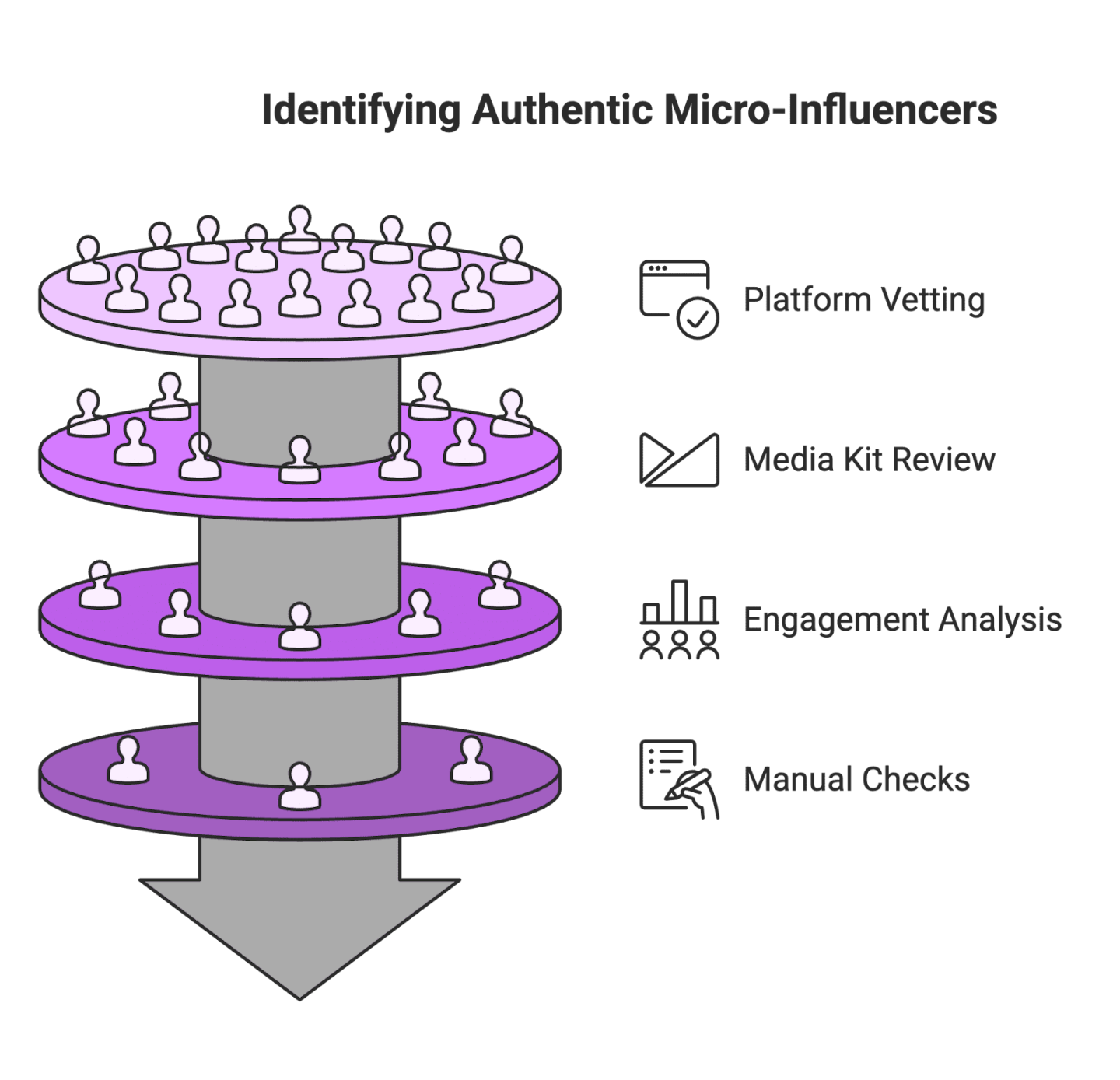
Detecting fake engagement is only half the battle – the other half is vetting and choosing the right influencers to work with. Here are some strategies and tools to ensure your brand connects with authentic TikTok creators:
Full-service influencer marketing platforms like Stack Influence have databases of vetted micro-influencers across social networks. These platforms often provide rich profiles for each creator – including engagement metrics, audience demographics, and even “authenticity scores” that flag potential fake follower or bot issues. For example, Stack Influence’s system can analyze an influencer’s followers and engagement to give a score indicating how “real” their audience is. Using such tools can save you time by automatically filtering out creators with lots of fake engagement.
A legitimate content creator will often have a media kit or past campaign examples to demonstrate their impact. Look for concrete metrics like click-through rates, conversion rates, or growth achieved for past brand partners. If all they tout are vanity metrics (followers, likes) without real-case results, probe deeper. When you request this info, watch how the influencer responds – authentic influencers will be proud to share their true stats (and will likely acknowledge platform fluctuations honestly), whereas fake influencers might get defensive or provide only vague answers.
Remember that bigger isn’t always better. Micro-influencers (those with smaller, niche followings) often have more engaged and loyal audiences. Studies have shown that micro-creators typically enjoy higher engagement rates than mega influencers, and as noted, about 90% of their followers tend to be real. Many brands are shifting focus to these smaller creators for precisely this reason – their influence might reach fewer people overall, but those people genuinely trust and listen. When evaluating micro-influencers, quality of engagement beats sheer quantity. A TikTok micro-influencer with 5,000 true fans can drive more actual sales than an account with 500,000 fake followers. Look for indicators of community – do people ask the creator questions, do they reply to comments, do viewers seem to return video after video? These are signs of real influence that no number of bots can replicate.
Finally, never underestimate a manual check and good judgment. If an influencer’s profile feels off, or something just doesn’t add up when you review their content and engagement, walk away or dig deeper. Simple steps like watching a few of their videos (are the view counts consistent? is the content quality aligned with their follower count?), reading through comments, and looking at how they interact with their audience can be very telling. Genuine creators engage back – they reply to comments, they have personalities that shine through, and their follower counts grow in tandem with real community interaction. If instead you see robotic behavior or vanity metrics with no substance behind them, it’s probably not a partnership worth pursuing. When in doubt, err on the side of working with authentic micro-creators who might have smaller numbers but real passion, as opposed to flashy accounts that set off alarm bells.
Fake engagement on TikTok is an unfortunate byproduct of the platform’s meteoric rise and the rush to monetize social influence. For brands, marketers, and even other creators, understanding this phenomenon is crucial. The stakes are high – fake influencers can drain marketing budgets, distort campaign results, and erode the trust that is so essential in influencer marketing. On the flip side, authentic engagement drives real connections and ROI.
The good news is that by staying informed and vigilant, you can steer clear of frauds and focus on genuine partnerships. Always vet potential influencers carefully: look beyond vanity metrics, use tools and platforms to verify follower authenticity, and trust the qualitative signals of real community interaction. By doing so, e-commerce brands and content creators can build collaborations that are rooted in trust and mutual benefit – delivering creative TikTok content to truly engaged audiences.
In the end, there’s no substitute for real influence. TikTok success isn’t about tricking algorithms with bots; it’s about honest engagement – creators inspiring audiences with content, and brands connecting with consumers through relatable voices. By avoiding the trap of fake engagement and embracing transparency, you’ll not only protect your investment but also contribute to a healthier, more authentic social media ecosystem. Keep it real, do your homework, and you’ll reap the rewards of genuine TikTok influence in the long run.
The beauty community on YouTube is thriving in 2026, driving trends and product sales across social media. Beauty content – from makeup tutorials to honest product reviews – has massive influence on consumer behavior. In fact, nearly half of U.S. shoppers say social media has led them to spend more on cosmetics, and 42% of consumers would buy a product recommended by an influencer. This speaks to the persuasive power of beauty content creators. Below, we spotlight the top 10 beauty vloggers on YouTube in 2026 (mostly U.S.-based and focused on makeup) – the influential content creators setting trends with casual yet informative style. We’ll also highlight two rising stars to watch.

Figure: Top beauty YouTube influencers and their approximate subscriber counts. Leading channels like Jeffree Star (~15.7M subscribers) and NikkieTutorials (~14.7M) reach massive audiences. Such scale gives these creators major sway over beauty trends and product sales. Even mid-tier influencers with 3–8 million subscribers can regularly drive makeup items to sell out after a single video. (Data sourced from Feedspot)
A post shared by NikkieTutorials (@nikkietutorials)
Subscribers: ~14.7 million on YouTube – one of the largest beauty channels worldwide.
Content & Style: Nikkie is a veteran beauty guru who started her channel in 2008 as a teenager. She delivers everything from everyday glam looks to avant-garde artistry, always with flawless technique and an upbeat, personable style. Her famous “Power of Makeup” video – where she applied makeup to only half her face – went viral for its empowering message embracing natural beauty alongside makeup magic. Nikkie is beloved for her honest product reviews and skilled tutorials that feel like learning from a talented friend. In 2020, Nikkie came out as transgender to millions of viewers, and she now also uses her platform to champion inclusivity and self-love. She collaborates frequently with top brands and even celebrity guests (she famously did Adele’s makeup on her channel). Why Follow: For professional-quality makeup tips delivered in a fun, relatable way – NikkieTutorials is an absolute must-follow beauty icon of 2026.
A post shared by Jeffree Star (@jeffreestar)
Subscribers: ~15.7 million on YouTube (plus 13M+ on Instagram).
Content & Style: Jeffree Star is a controversial beauty mogul who has undeniably shaped the online makeup world. Known for his striking hot-pink hair and unfiltered opinions, Jeffree’s videos are equal parts entertaining and brutally honest. He built a cosmetics empire (Jeffree Star Cosmetics) and often features lavish visuals – from his pink mansions to fleets of luxury cars – but it’s his product reviews and tutorials that keep millions watching. Jeffree’s review videos are almost legendary for their candor; if a product is sub-par, he will not hold back, and a single Jeffree Star review can make or break a product’s reputation. Fans love this tell-it-like-it-is approach and high-glam style. He has collaborated on mega-hyped collections (like the record-breaking “Conspiracy” palette collab with Shane Dawson), and his own brand’s launches often sell out instantly. Why Follow: Jeffree brings drama and extravagance to beauty content – but also deep product knowledge. Love him or hate him, his tutorials and reviews are hugely informative, and his influence on makeup trends (from liquid lipstick crazes to highlighting techniques) remains significant in 2026.
A post shared by Bretman Rock (@bretmanrock)
Subscribers: ~8.8 million on YouTube (plus 18M+ each on Instagram and TikTok).
Content & Style: Bretman Rock is as much an entertainer as he is a beauty influencer. This Filipino-American creator started with comedic Vines and Instagram skits and parlayed his bold, flamboyant personality into a thriving beauty career. His channel features an addictive mix of fabulous makeup looks and humor – one minute he’s doing a genuinely skilled eyeshadow tutorial, the next he’s making you laugh with an off-the-cuff joke. Bretman’s unfiltered realness and catchphrases (“da baddest”) make his videos feel like hanging out with a hilarious, glam friend. He breaks stereotypes as a proud member of the LGBTQ+ community, showing that makeup is for everyone. Bretman has also crossed into mainstream entertainment – he’s appeared on red carpets, had its own MTV reality show, and written a memoir – all while staying true to his beauty roots. He’s collaborated on makeup lines (his Wet n Wild “Jungle Rock” collection famously sold out) and continues to rank among the top influencers year after year. Why Follow: For a guaranteed good time and great makeup tips. Bretman’s content will make you laugh, boost your confidence, and inspire you to play with makeup in bold new ways.
Subscribers: ~4.2 million on YouTube (and a beauty empire with 57M on Instagram).
Content & Style: Huda Kattan is a makeup artist-turned-entrepreneur who built one of the world’s top beauty brands. Based in Dubai but born in the U.S., Huda started by posting beauty tutorials and hacks online, which gained her a loyal following for their engaging and down-to-earth tone. She famously shared DIY beauty tricks and honest opinions on products. In 2013, she launched her own cosmetics line, Huda Beauty, which skyrocketed – today Huda Beauty is among the top makeup brands globally. On YouTube, Huda’s channel features makeup tutorials, product reviews, and behind-the-scenes looks at her business. Fans love that she combines professional artistry with an approachable vibe, often bringing her sisters or employees into fun challenge videos. Why Follow: Huda offers the perspective of a successful beauty CEO who still genuinely loves the art of makeup. You’ll learn pro techniques (like flawless contouring and bold Middle Eastern-inspired eye looks) and get first dibs on Huda Beauty product demos. She’s both a trend-setter and a mentor figure in the beauty community.
A post shared by Tati Westbrook (@glamlifeguru)
Subscribers: ~8 million on YouTube (long known by her channel name GlamLifeGuru).
Content & Style: Tati is an OG beauty YouTuber revered for her thorough, no-nonsense reviews. An American influencer and makeup artist, she’s been on YouTube for over a decade and built a reputation as a trusted voice. Tati’s videos often focus on testing new makeup (from drugstore bargains to luxury brands) and giving in-depth critiques. Viewers appreciate her detailed, honest assessments – she’s not afraid to spend weeks testing a foundation or to frankly say when a hyped product disappoints. This commitment to unbiased reviews has earned her a very loyal following. Tati also does tutorials ranging from everyday looks to full-glam transformations, always emphasizing technique and product quality. After some hiatus in recent years, she made a comeback and continues to maintain an engaged fanbase. Why Follow: If you want trustworthy advice on what makeup is worth your money, Tati is your go-to. She brings a mature, informative style (imagine a beauty-obsessed big sister who’s tried everything) and still keeps content fun with occasional challenges and personal vlogs. In an era of quick TikTok reviews, Tati’s long-form videos remain a gold standard for beauty enthusiasts seeking depth and credibility.
A post shared by JACLYN TORREY💍 (@jaclynhill)
Subscribers: ~5.5 million on YouTube.
Content & Style: Jaclyn Hill is a professional makeup artist turned YouTube star known for her glamorous makeup looks and vibrant personality. She began posting tutorials in 2011 and quickly became one of the platform’s brightest stars, thanks to her high-energy “You guys!” on-camera presence and undeniable makeup skills. Jaclyn’s tutorials often feature dramatic smokey eyes, blinding highlights, and techniques to achieve a flawless Instagram-worthy look. She’s a master at breaking down complex looks into doable steps, making viewers feel capable of achieving full glam at home. Over the years, Jaclyn also became an entrepreneur – she launched her own makeup line (Jaclyn Cosmetics) and collaborations, including a famed highlighter palette with BECCA Cosmetics. While she’s faced some ups and downs (including product launch controversies), her core fanbase remains passionate. Why Follow: Jaclyn brings makeup artist expertise with a fun, chatty delivery. You’ll get tons of product recommendations, behind-the-scenes stories from the beauty industry, and inspiration for both everyday and special occasion makeup. If you love a bit of sparkle and drama in your makeup style, Jaclyn’s channel is a must.
A post shared by 🌙Manny Gutierrez (@mannymua733)
Subscribers: ~4.8 million on YouTube.
Content & Style: Manny MUA is one of the top male beauty gurus who helped pave the way for guys in makeup. His channel is a mix of makeup tutorials, product “favorites” videos, and humorous vlogs about his life in the beauty world. Manny’s personality is warm, witty, and approachable – he often chats with viewers as if they’re his close friends, sharing both beauty tips and personal anecdotes. As a makeup artist, Manny can serve up dramatic colorful looks one day and easy “no-makeup” makeup the next. He’s also known for fun challenges and collabs, including videos with his BFF (and fellow beauty boy) Patrick Starrr. Importantly, Manny has been an advocate for inclusivity, famously stating “I believe men can wear makeup and vlog about it just as much as girls can!”. He even became the first male ambassador for Maybelline. Now the founder of his own makeup brand (Lunar Beauty), Manny balances running a business with creating content. Why Follow: For a dose of laughter and learning. Manny’s videos will teach you how to blend eyeshadow like a pro, but also keep you smiling. He’s great at reviewing products in an honest yet upbeat way, and he makes the beauty community feel welcoming to all.
A post shared by Jackie Asamoah (@jackieaina)
Subscribers: ~3.5 million on YouTube.
Content & Style: Jackie Aina is a trailblazer for diversity in beauty and a veteran influencer known for her sophisticated makeup looks and sharp commentary. An Army veteran-turned-YouTuber, Jackie rose to fame with her stunning tutorials and willingness to call out industry shortcomings. She has been vocal about the lack of inclusive shade ranges – using her platform to push brands toward greater diversity (notably, she partnered with Too Faced to expand their foundation shades). Jackie’s videos mix flawless makeup application with a fun, sassy sense of humor and catchphrases (her intros “Hello hello hello, beautiful people” make you feel instantly welcome). Whether she’s reviewing the latest launches or doing a themed tutorial, she’ll drop honest opinions and often hilarious asides. Viewers also enjoy peeks into her lifestyle and fashion. In recent years, Jackie launched her own business too – an indulgent candle line called FORVR Mood. Why Follow: Jackie is a must-follow for anyone who values inclusivity and keeping it real. She’ll help you find the best products for deeper skin tones (or any skin tone), all while making you laugh. Her influence has pushed the beauty industry to be more accountable and representative, and in 2026 she remains a respected voice whose recommendations carry weight.
A post shared by Meredith Duxbury (@meredithduxbury)
Followers: ~1.4M YouTube subscribers (plus 18M on TikTok).
Claim to Fame: Meredith Duxbury exploded onto the scene with her one-of-a-kind foundation technique – in a viral TikTok, she applied an entire handful (yes, 10 pumps!) of foundation to her face at once, sparking the #FoundationChallenge online. That bold experiment put her on the map, and she’s since become one of TikTok’s biggest beauty stars, now expanding her content on YouTube. Meredith’s style is all about fun, fast-paced makeup transformations. She’ll do short-form videos applying 100 layers of product or creating a dramatic before-and-after look set to music, which keeps younger audiences hooked. Under the playful antics, she does share genuine makeup tips and favorite products, especially through YouTube Shorts and tutorials. At just 24, Meredith’s influence is already leading to brand deals (she’s done a Morphe collaboration) and likely her own product line soon. Why Follow: To stay on top of every viral makeup trend. Meredith brings the creative, trendy side of beauty – following her means you’ll never miss the latest TikTok craze, and you’ll gain a fearless attitude toward trying quirky techniques. Her bubbly personality makes even wild makeup challenges feel approachable and entertaining.
A post shared by Mikayla Nogueira Hawken (@mikaylajmakeup)
Followers: 0.8M on her new YouTube (16M on TikTok; 3M on Instagram).
Claim to Fame: Mikayla Nogueira is a 25-year-old makeup artist from Boston who became a TikTok sensation virtually overnight. While she’s relatively new to YouTube, her impact on the beauty community has been profound, so she’s a rising star to watch on all platforms. Mikayla’s authenticity and strong Boston accent make her instantly memorable – when she loves a product, you know she means it, and her enthusiastic, unpolished style feels like chatting with a friend. She started by posting short, frank product reviews and tutorials on TikTok in 2020, and by 2023 she had amassed over 15.9 million TikTok followers thanks to her candid reactions and incredible makeup skills. Fans love her catchphrases and genuine emotion – if a foundation or mascara wows her, her excited happy tears might sell it out by next day! She often spotlights both high-end and affordable makeup, giving pros and cons in a thick Boston brogue. Mikayla has already won a Beauty Influencer of the Year award and launched her own beauty brand (POV Beauty). Why Follow: As Mikayla begins focusing on longer YouTube content, expect the same brutal honesty and passion she’s known for. Following her will keep you in the loop on trending products (many of which she’s responsible for making viral) and give you refreshingly authentic reviews in an age of overhyped ads. She represents the next generation of beauty influencers – relatable, influential, and business-savvy – making her an exciting one to watch on YouTube in 2026.
The mega-influencers above command huge followings, but it’s worth noting the growing power of micro-influencers in beauty. Smaller creators (with, say, 5k–100k followers) often have extremely high engagement rates – studies show they drive ~60% more engagement than macro influencers – and their close-knit audiences trust their recommendations. Brands, including major e-commerce players and Amazon sellers, are increasingly partnering with these micro creators to generate authentic buzz. The content these influencers produce is essentially user-generated content (UGC) that feels organic; an unboxing or tutorial by a micro-influencer can come across as advice from a friend, which is marketing gold for brands. Platforms like Stack Influence (a micro-influencer marketing platform for e-commerce) facilitate these collaborations at scale, making it easier for companies to tap into the power of niche creators.
In summary, the top beauty vloggers of 2026 are not only entertaining millions with makeup knowledge and personality – they’re also shaping purchasing habits and redefining how brands reach consumers. Whether it’s a superstar like NikkieTutorials demonstrating the latest look, or a micro-influencer on Instagram raving about a hidden gem product, beauty content creators drive trends in a way traditional ads simply can’t. If you’re passionate about makeup (or marketing it!), these influencers are your guiding lights. Follow them for daily inspiration, honest reviews, and a front-row seat to where beauty is headed next. 💄✨
Collaborating with a lifestyle influencer can be a powerful way to expand your brand’s reach, connect with targeted audiences, and drive authentic engagement. But what exactly is a lifestyle influencer, and why are they so valuable to e-commerce brands and marketers today? In this post, we’ll break down what lifestyle influencers are, the different tiers (from nano to mega influencers), and the key benefits of working with them. We’ll also explore how lifestyle content creators can boost results for e-commerce companies (including Amazon sellers) by generating trusted recommendations and user-generated content (UGC). Let’s dive in and see why lifestyle influencers have become a must-have partnership in modern marketing.
A lifestyle influencer often shares relatable content about everyday life – from fashion and beauty tips to home decor hacks – engaging followers with their personal style and recommendations.
Lifestyle influencers are captivating online personalities who share and promote aspects of their daily life, interests, and values on social media. They build a following by creating content around niche lifestyle topics such as fashion, beauty, travel, fitness, food, home décor, or personal development. Essentially, their posts reflect their own lifestyle choices and passions – offering tips, tutorials, product reviews, and personal stories to connect with their audience. For example, a travel-loving influencer might chronicle their adventures and favorite gear, while a home décor enthusiast posts room makeovers and DIY ideas. Followers tune in for inspiration on how to elevate their own lives in those areas.
Lifestyle Influencer Categories: Like other influencers, lifestyle creators are often grouped by their follower count. Each tier has unique strengths depending on your goals:
These are everyday creators with a small but highly engaged audience. Nanos typically focus on a very specific interest or community, allowing for intimate, personal interactions with followers. They may only reach a few thousand people, but those fans are often very loyal and responsive.
Micro influencers have a bit wider reach while still maintaining strong community engagement. They are known for their authenticity and relatable content, often sharing personal stories or daily life hacks that resonate deeply with their niche audience. Micros hit a sweet spot – large enough to influence many people, but small enough to feel like a trusted friend rather than a celebrity.
Macro influencers boast a broad reach and a more diverse audience. They’ve typically developed a recognizable personal brand or persona that many people know. A macro lifestyle influencer might be a prominent blogger or YouTuber whose style or expertise has mass appeal across demographics. They can introduce your brand to hundreds of thousands of people, though their content may be less niche-focused than nanos/micros.
The mega tier includes the true internet celebrities – often famous figures or top industry experts with immense followings. They wield significant influence due to their sheer reach. A mega lifestyle influencer’s post can make a huge splash, but these influencers are generally less personally interactive with fans compared to smaller creators. (Many mega influencers are household-name celebrities whose lifestyles set trends globally.)
Each type of lifestyle influencer can play a role in your marketing strategy. If you want niche credibility and community engagement, nanos and micros shine. For massive brand exposure, macros and megas can broadcast your message far and wide. Next, let’s look at why brands – especially e-commerce brands – are eager to work with lifestyle influencers at all levels.
Lifestyle influencers aren’t just popular for fun – they offer real value to brands. By partnering with an influencer whose life and audience align with your product, you tap into a built-in fanbase that trusts that person’s recommendations. Here are some of the top benefits of working with lifestyle influencers in marketing:
Lifestyle creators can introduce your brand to audiences you might not reach otherwise. Macro and mega influencers in particular have large, geographically dispersed followings, giving your brand exposure to new potential customers on a broad scale. For instance, a fashion influencer with 500K followers can instantly put your boutique in front of style enthusiasts worldwide. This expanded reach helps grow brand awareness beyond your current circle.
When an influencer features your product as part of their lifestyle, it boosts your brand visibility and credibility by association. Their followers learn about your brand in a context that feels natural, not like an ad. Over time, seeing your name pop up in an influencer’s content builds recognition. Importantly, audiences tend to trust influencers like they trust friends – their personal vouch carries weight. In fact, 84% of consumers trust peer recommendations (like those from influencers) over traditional advertising. This trust can make your brand seem more authentic and credible. Lifestyle influencers essentially lend you social proof, saying “this product is part of my life and it’s great,” which resonates more than a corporate message.
Partnering with influencers can boost your own social media engagement and following. When a lifestyle influencer tags your brand or creates content around it, you’ll likely see an influx of likes, comments, and shares from their audience. Their stamp of approval makes people more inclined to interact with your brand. Your social posts might get more saves and comments, and your follower count can climb from the added exposure. Influencer collaborations also give you fresh content to repost on your channels (with permission), which further drives engagement. Overall, an active influencer campaign can be a catalyst that livens up your social media presence, creating a buzz that spills over to your profiles.
Another big perk is that lifestyle influencers double as content creators for your brand. The photos, videos, and stories they produce showcasing your product are essentially high-quality user-generated content. You can often repurpose this content in your own marketing – share their Instagram Reel on your feed, feature their YouTube review on your website, etc. This saves your team the time and cost of producing all content in-house. Micro and nano influencers, in particular, are known for creating authentic, relatable posts (sometimes with just a gifted product as compensation). Collaborating with a few lifestyle influencers can net you a library of real-life product images and testimonials to fuel your ads, emails, and product pages. It’s a cost-effective way to build a gallery of lifestyle-centric content around your brand.
As you can see, lifestyle influencers can impact every stage of the marketing funnel – from awareness and engagement to trust and conversion. No wonder 69% of consumers say they trust influencer recommendations over information directly from brands. By working with the right influencers, you essentially borrow that earned trust and goodwill to enhance your own brand marketing.
While all types of lifestyle influencers have their place, many e-commerce brands and Amazon sellers are finding that smaller influencers (nano and micro) deliver outsized results for the investment. In the world of online retail, trust and authenticity are everything – especially when customers can’t touch or try your product in person. This is where micro lifestyle influencers shine. They may not have millions of followers, but their audience relationships are often tighter-knit and more persuasive. Let’s explore why micro influencers are a sweet spot for e-commerce, and how even large marketplaces like Amazon benefit from these partnerships.
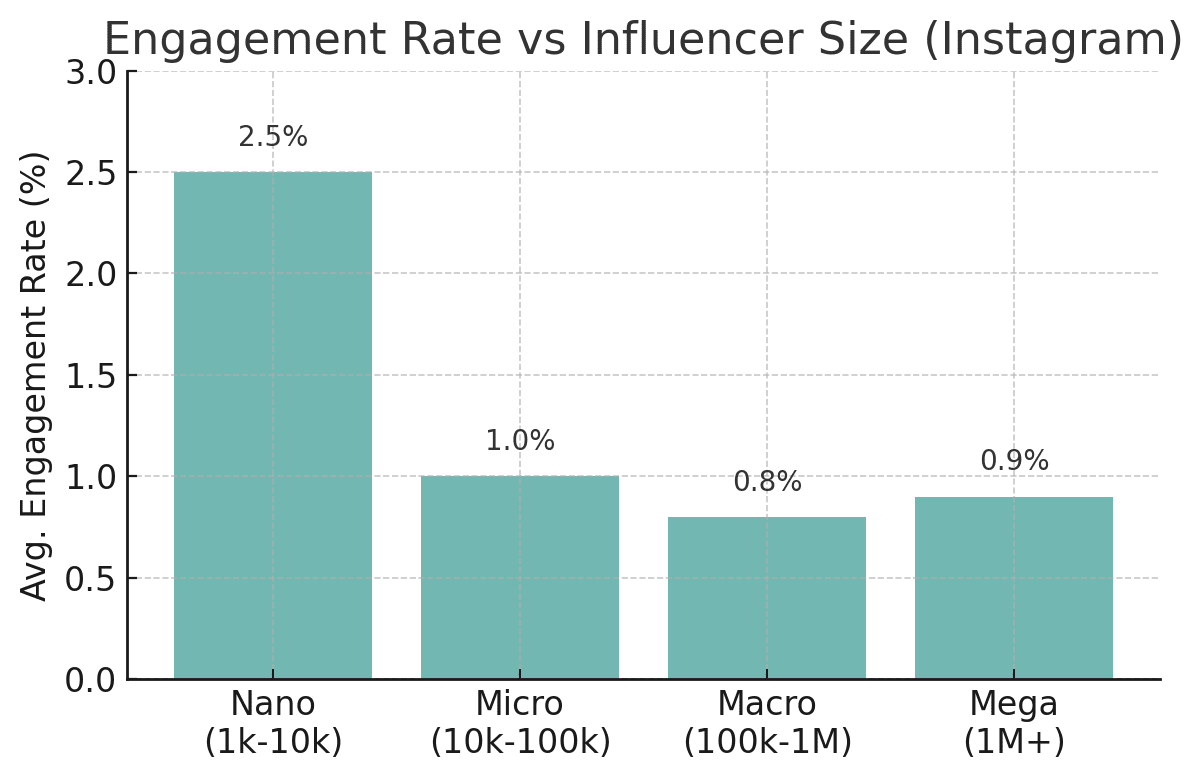
One major advantage of nano/micro influencers is their high engagement rates. Their audiences are small communities of genuinely interested followers, so a much larger percentage of people actively like, comment, and click on their posts compared to huge celebrity accounts. For example, Instagram posts by nano-influencers (under ~5k followers) see about a 2.5% engagement rate on average, versus around 1% for micro-influencers with 10k+ followers. By contrast, mega influencers with millions of followers often see well under 1% engagement on posts.
Chart: Smaller lifestyle influencers tend to have significantly higher average engagement rates on Instagram than bigger influencers. Nano influencers (<10k followers) see around 2–3% engagement, versus under 1% for macro/mega influencers. This means nano/micro audiences are highly tuned-in – a recommendation from a small influencer can feel more genuine and spur more action from followers.
What does this higher engagement mean for e-commerce sellers? In short, greater trust and influence. When an influencer’s followers are frequently interacting and paying attention, they’re more likely to notice and trust that influencer’s product recommendations. It’s akin to a close friend suggesting something versus a distant celebrity hawking a product. In fact, one survey found 84% of consumers are “highly likely” to follow a micro-influencer’s product recommendation – an incredibly strong conversion potential. For Amazon sellers trying to earn customer trust (and reviews) on a crowded marketplace, that kind of influence is gold. A micro lifestyle influencer’s enthusiastic review of your kitchen gadget or skincare line can quickly translate into a bump in Amazon sales, as their loyal fans go check out the product themselves.
Micro and nano influencers are also budget-friendly, which is crucial for many small businesses. Partnering with a big-name influencer or running traditional ad campaigns can cost tens of thousands of dollars. In contrast, micro influencers often charge only a few hundred dollars per post – and many nanos will collaborate in exchange for free product or affiliate commissions. This low cost, combined with the higher engagement we discussed, means you often get more sales per dollar spent with micros. One study found that nano/micro influencer campaigns can deliver about a 20:1 return on investment, whereas campaigns with macro influencers yielded roughly 6:1 ROI. That’s a huge difference in marketing efficiency. Essentially, micro influencers “punch above their weight,” delivering outsized results for less cost.
For example, instead of paying $20,000 for a single Instagram post by a mega influencer (which might get lost in a feed), that same budget could sponsor dozens of micro influencer posts. Those dozens of smaller posts would generate multiple pieces of content, reach several niche audiences, and likely produce more total engagement and conversions than the one celebrity post. It’s a classic case of quantity and quality (engagement) beating pure size. This is why savvy D2C and Amazon brands are scaling up micro-influencer programs – they see a better cost-per-conversion. And as a bonus, all the content those micros create becomes valuable UGC for the brand to repurpose.
It’s no coincidence that over half of brands using influencer marketing are e-commerce businesses. Online sellers find influencer partnerships especially effective because social media drives shoppers directly to their digital storefronts. A lifestyle influencer’s post can seamlessly include a swipe-up link or bio link to your product page, making it easy for interested followers to shop immediately. With Amazon in particular, influencers often use affiliate links or Amazon storefronts to showcase products they love, turning their social feed into a direct sales funnel for Amazon listings.
In the ultra-competitive online market, lifestyle influencers also give e-commerce brands something that’s hard to buy – authentic social proof. Shoppers are skeptical of polished ads, but seeing a real person incorporate a product into their daily life is persuasive. Influencers basically generate word-of-mouth buzz at scale, which is marketing magic. (In fact, word-of-mouth drives more than twice the sales of paid advertising in general.) By partnering with a cluster of micro lifestyle influencers, an e-commerce brand can ignite many small “word-of-mouth” fires – through makeup tutorials, unboxing videos, stylish Instagram photos, blog mentions, you name it – creating a ripple effect of awareness and interest that traditional ads struggle to achieve.
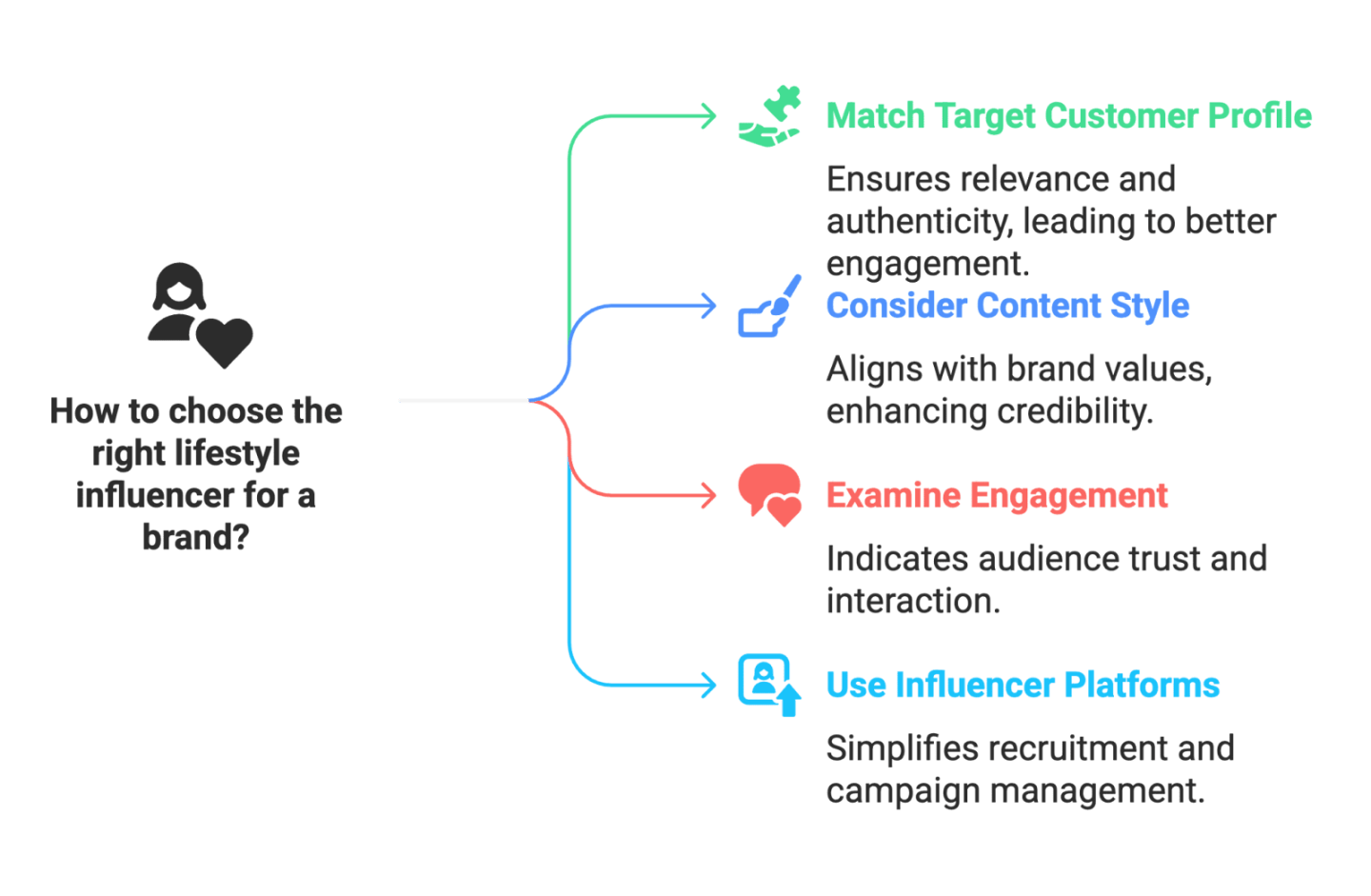
To maximize success, it’s important to choose lifestyle influencers who closely match your target customer profile and brand values. Bigger isn’t always better – relevance and authenticity are key. Look for influencers whose content style and interests align with your product. For example, if you sell eco-friendly home goods, a sustainability-minded micro influencer who shares zero-waste living tips would likely outperform a random mega celeb with no connection to that niche. Examine an influencer’s engagement (do people reply to them?), the tone of their content, and how they present sponsored products. The best lifestyle influencers weave promotions into their storytelling in a genuine way. As a brand, you want to collaborate with creators who naturally resonate with your mission and aesthetic – this ensures the partnership comes off as credible to the audience.
It can be helpful to start with a few micro or nano influencers as a test, then scale up what works. Many e-commerce marketers use influencer discovery platforms or agencies to find good matches. Platforms like Stack Influence, for example, specialize in connecting brands with vetted micro-influencers and managing campaigns at scale. (Stack Influence is a leading micro-influencer marketing platform focused on the Amazon marketplace, helping sellers generate authentic UGC and traffic for their listings.) Leveraging such services or tools can simplify the process of recruiting influencers, shipping out products for review, and tracking results, especially if you’re coordinating dozens or hundreds of micro collaborations.
In a time when consumers crave authenticity, lifestyle influencers have emerged as invaluable partners for brands. They bridge the gap between brands and real people’s everyday lives. By sharing products they genuinely enjoy as part of their own lifestyle, these influencers create a trusted link to audiences that traditional advertising simply can’t replicate. Whether it’s a nano influencer on Instagram giving an unfiltered review of a kitchen gadget, or a famous lifestyle YouTuber vlogging about their daily wellness routine (featuring your supplement), the impact is similar – followers feel like they’re getting a recommendation from a friend, not a salesperson.
For marketers and e-commerce entrepreneurs, working with lifestyle content creators is an opportunity to humanize your brand and tap into enthusiastic communities. You can boost your brand awareness, gain new customers, and gather a wealth of social proof and content along the way. The data speaks for itself: most consumers trust influencers’ recommendations, and nearly every shopper has been influenced to purchase by social media at some point. By incorporating lifestyle influencers into your strategy, you meet your customers where they already are – scrolling Instagram, watching TikToks, reading blogs – and you do so with a message delivered by someone they already trust. That’s a recipe for marketing success in 2025 and beyond.
In summary, what are lifestyle influencers? They are relatable content creators who built communities around living life in a certain way – and in doing so, they’ve become powerful voices that can amplify your brand message. Whether you engage a dozen micro influencers to promote your new Amazon product, or partner with a single macro influencer for a big campaign, remember that authenticity and relevance are the north stars. Choose influencers who genuinely love what you offer and let them creatively share that love. The results can be trend-setting and profit-boosting. So, embrace these digital trendsetters and let lifestyle influencers help take your brand’s story to the next level in a truly authentic fashion. Your future customers are out there, following and listening – make sure your brand is part of the lifestyle conversation!
Amazon is a highly competitive e-commerce marketplace where prices can change multiple times a day. Amazon sellers need smart strategies to stay competitive, including marketing tactics and pricing optimization. One powerful pricing strategy is using an Amazon repricer tool. In this blog, we’ll explain what an Amazon repricer tool is, how it works, how to use one, and why it’s beneficial. We’ll also touch on tips, best practices, and how repricing fits into a broader success strategy for sellers (including leveraging micro influencers, content creators, and UGC). This comprehensive guide is written in a casual, informative tone – whether you’re a new seller or an advanced seller, you’ll find valuable insights here.
Pricing competitively on Amazon is crucial. If your prices are too high, shoppers will choose a cheaper option; if too low, you might hurt your profits or devalue your product. Most buyers on Amazon purchase through the Buy Box (approximately 82% of sales go through the Buy Box), meaning that if you’re not offering a competitive price, you’re likely missing out on the majority of potential sales.
At the same time, maintaining a good price is a balancing act – you need to stay competitive and profitable. This is where repricing tools come in. Repricers can adjust your prices in real-time to respond to market changes, helping you win the Buy Box while protecting your profit margins. Before diving into details, let’s clarify what exactly an Amazon repricer tool is.
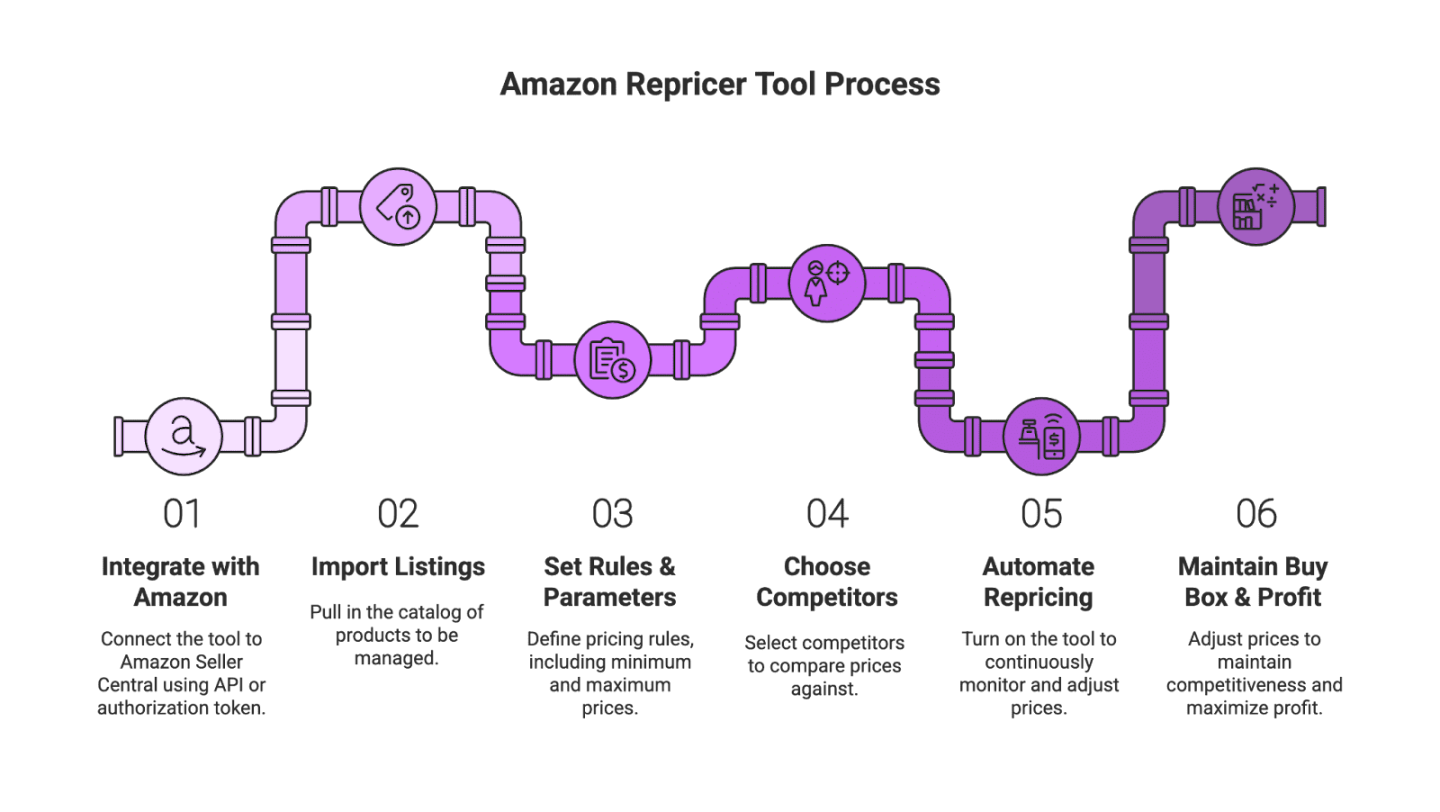
An Amazon repricer tool is software that automatically adjusts the prices of your Amazon products based on rules and parameters you set. In other words, a repricer continuously monitors the market (such as your competitors’ prices on the same product listing) and changes your price up or down to keep you competitive. The primary goal is usually to win the Buy Box and increase sales, without you having to manually update prices all day.
A simple way to think of a repricer: it’s like an autopilot for your Amazon pricing. You input the guidelines (for example, your minimum price, maximum price, and strategy for undercutting or matching competitors), and the repricer will take care of the rest 24/7. This is especially useful on Amazon because many sellers might be offering the same product; the one with the optimal price and seller performance wins the sale most of the time.
Manual pricing vs. automatic repricing: To appreciate a repricer, consider how sellers often adjust prices manually. Manual repricing means you (or your team) regularly check competitor prices and update your listings by hand. While this can work for a very small catalog or for fine-tuned strategies, it’s incredibly time-consuming and hard to scale. As the competitor Jungle Scout notes, manually repricing many listings “can become tedious and time-consuming”, and it “lacks the speed and responsiveness needed in a fast-paced marketplace like Amazon”. Automatic repricers solve this by handling the repetitive work instantly.
In summary, Amazon repricer tools do the heavy lifting of price adjustment for you. Sellers use them to save time, avoid missing out on sales due to slow price changes, and to maintain optimal pricing around the clock. Next, let’s see how these tools actually work in practice.
While each repricing software may have its own interface and features, most Amazon repricers work in a similar fundamental way. Here’s a breakdown of how a typical repricer operates:
It’s worth noting that there are different types of repricing strategies available:
Amazon’s own Automate Pricing tool vs. third-party repricers: Amazon provides a free built-in tool called Automate Pricing in Seller Central. It allows you to create rules to adjust prices against the Buy Box or lowest price, within min/max bounds. The Amazon tool is easy to use and costs nothing, making it a good starting point. However, it has limited features compared to many third-party repricers. For instance, Amazon’s tool is rule-based and offers basic rules (match or beat Buy Box/lowest price by X amount), whereas external repricing software can offer more sophisticated strategies, richer analytics, and support for multiple marketplaces. Third-party tools often use algorithmic repricing and provide better reporting and customization, though they come with subscription fees. Here’s a quick comparison:
In short, Amazon’s Automate Pricing tool is a great free way to dip your toes into repricing, but many serious Amazon sellers opt for third-party Amazon repricing software for more powerful features as their business grows. (Note: If you’re just starting out, you might try Amazon’s tool first; if you need more sophistication, explore popular third-party repricers like Informed.co, BQool, Seller Snap, Aura, and others.)
Now that we know what repricers do, let’s talk about why you might want to use one. Here are the main benefits of using an Amazon repricer tool for Amazon sellers:
To illustrate the difference a repricer can make, consider a simple scenario visualized below. Suppose you and a competitor are both selling the same product which initially is priced at $20. Over a few days, the competitor changes their price, and if you don’t respond quickly, you lose the Buy Box.
Example chart: A competitor drops their price, and the seller with a repricer immediately matches/undercuts and later raises price when competitor goes out of stock, whereas the manual seller reacts late or not at all. This leads to the repricer user winning more sales and even earning higher profits once competition is gone.
In the chart above, the green line shows your price with an automated repricer, and the blue line shows your price if you were manually pricing (in this example, the manual seller kept the price at $20 the whole time). The red line is a competitor’s price. Here’s what happens:
This example shows how a repricer helps win sales when competition is present, and maximize profit when competition is absent – all automatically. Manual pricing often cannot keep up with these rapid changes.
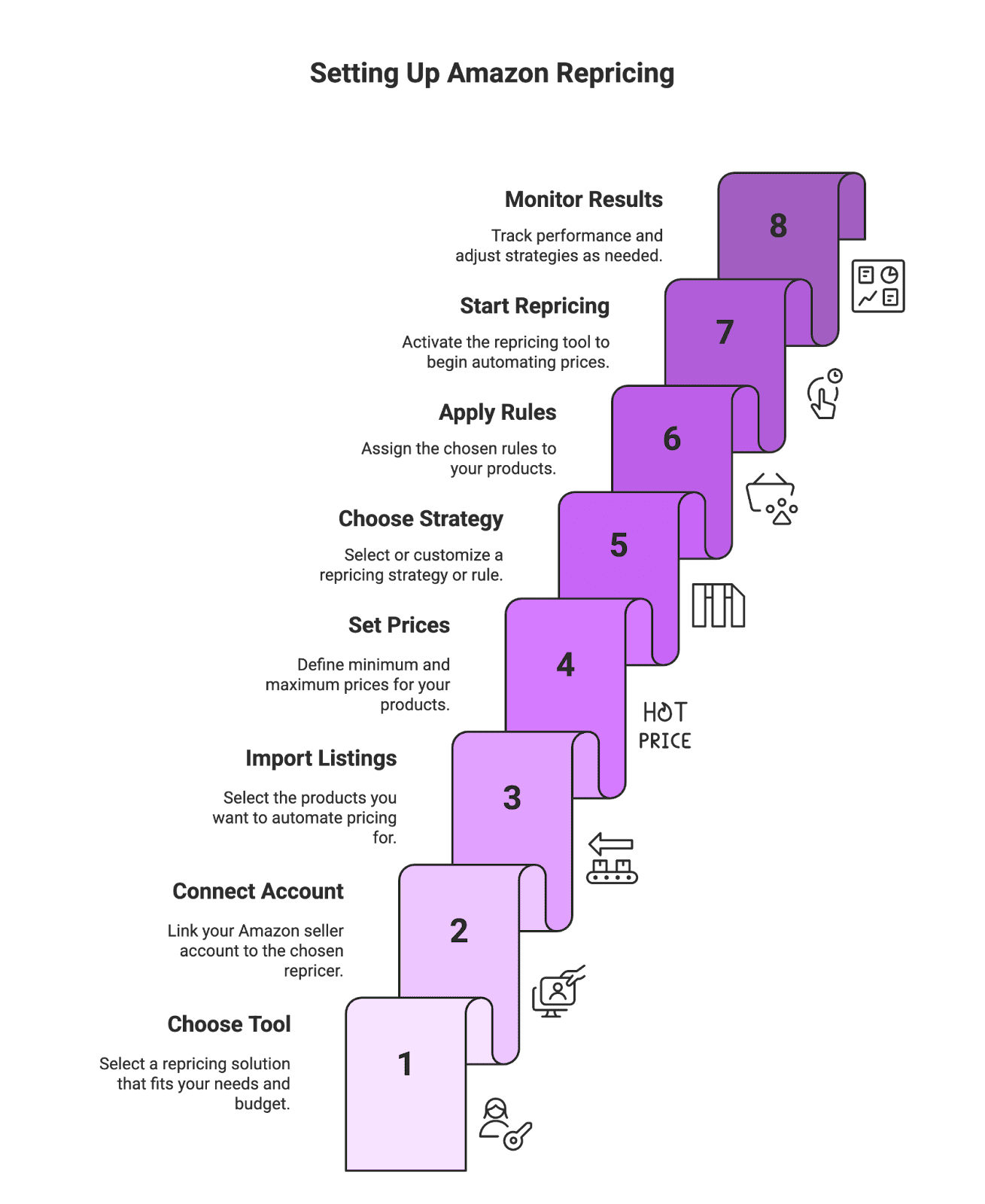
Using an Amazon repricer is generally straightforward. Here’s a step-by-step guide on how you would typically set up and use a repricer:
Using a repricer effectively is about finding the right balance – you let the tool handle the minute-by-minute changes, but you still guide the overall strategy and adjust as needed. It’s also important to coordinate your repricing with your overall business strategy. For example, if you have marketing campaigns or seasonal promotions, you might adjust pricing rules during those periods. Some sellers even use higher prices when their product is trending due to social media buzz (often created by micro influencers or holiday seasons) to capitalize on increased demand, and lower prices during slower periods to stay competitive.
To get the most out of an Amazon repricer tool, keep in mind these best practices:
Speaking of marketing, let’s touch on that in relation to repricing.
While using an Amazon repricer tool can give you a competitive edge on price, it’s important to remember that price isn’t everything in e-commerce. Shoppers consider value, which includes your product reviews, descriptions, images, and overall brand trust. This is where content and marketing come in:
In essence, think of repricing as one tool in your toolkit. To truly optimize your Amazon business, blend pricing strategy with great content, influencer-driven marketing, and stellar customer experience. Each complements the other: a strong brand and marketing can allow higher pricing power, and a repricer ensures you don’t lose competitive edge on price when it matters.
For completeness, let’s quickly summarize the advantages and potential downsides of using an Amazon repricer tool:
Despite these cons, the e-commerce marketplace climate (especially on Amazon) has made repricers almost a must-have for many sellers. The pros usually far outweigh the cons when used correctly, as evidenced by the popularity of repricing tools among Amazon sellers – after all, “using a tool that saves you a lot of time and helps update thousands of prices in seconds improves your workflow”.
An Amazon repricer tool is a powerful asset for any serious Amazon seller looking to stay competitive in pricing. It automates the tedious task of price adjustment, helps win the Buy Box (which is critical given around 82% of sales come from that Buy Box), and frees you up to focus on other aspects of your business. Whether you use Amazon’s free Automate Pricing tool or invest in a more advanced third-party repricer, the goal is the same: optimal pricing at all times to maximize sales and profits.
However, success on Amazon comes from excelling on multiple fronts. Competitive pricing will get customers in the door (or rather, into your Amazon listing), but great content and marketing will close the deal and bring them back for more. Consider complementing your repricing strategy with efforts to build your brand – for example, engaging micro influencers to create buzz and generate UGC, improving your product listings, and providing excellent customer service. By doing so, you’re not only competing on price but also creating value that justifies your price.
In the ever-evolving world of e-commerce, tools like repricers and platforms like Stack Influence can both play a role in your success – one handles the numbers side of things (price optimization), and the other handles the people side (building trust and desire through influencers and content creators). Utilizing both will stack the odds in your favor (pun intended). Happy selling, and may your prices (and profits) always be optimized!