
The latest info on influencer marketing trends, micro influencer news, and the world of social media

Who doesn’t love getting free stuff from their favorite brands? Imagine receiving the latest gadgets, beauty products, or fashion accessories just because a brand wants you to try them out. Sounds too good to be true? It’s not! You don’t need a million followers or celebrity status to make it happen. In fact, many companies prefer working with smaller creators – about 44% of brands favor nano-influencers and 25.7% favor micro-influencers over macro or mega celebs. Even if you’re a micro influencer with a few thousand followers (or a passionate content creator just starting out), there are proven ways to score those freebies.
Brands are increasingly embracing product gifting. Free products made up just 4% of influencer compensation in 2022, but jumped to 19% in 2023 (a nearly fivefold increase). Over 59% of brands now prefer offering non-monetary rewards (like free product samples) over direct payments. This means more opportunities than ever for micro influencers to snag free products in exchange for content!
Ready to discover how to get free products from brands? Let’s dive into 8 simple strategies to make it happen – from building your presence to engaging with brands – all presented in a casual, informative way. (Bonus: These tips will not only help you shine in Google searches, but also appeal to AI-powered search engines looking for rich, relevant content.)

First things first – brands need to find you. The best way to get noticed is by having a solid online presence. This doesn’t mean you have to be famous; it’s more about showcasing your interests, hobbies, and personality in an authentic way. Think of your social media profiles as your digital portfolio for brands.
Make sure your Instagram, TikTok, YouTube, blog, or whatever platforms you use look professional and reflect your niche. Use a clear profile picture, write an engaging bio (mention you’re a content creator or micro influencer), and ensure your feed has high-quality photos or videos.
Share what you love – whether it’s fitness workouts, makeup tutorials, tech gadget reviews, or travel vlogs – and do it consistently. Regular posting (e.g. a few times a week) keeps your audience engaged and shows brands that you’re active.
Respond to comments, ask questions in your captions, and build a community. High engagement can matter more than high follower count. In fact, micro-influencers often have stronger engagement rates than big influencers, which is a huge plus for brands.
Consistency is key. When brands see that you’re passionate, consistent, and authentic online, they’re more likely to want to work with you. So make those profiles shine – show off your unique style and personality. Over time, as you grow your presence, opportunities will start rolling in!
Now that your online presence is on point, it’s time to target the right brands. Not every brand will be a perfect match, so focus on those that align with your niche, interests, and style. By zeroing in on the right companies, you increase your chances of getting a “yes” when you ask for a free product.
Start by making a list of brands that make sense for you:
Are you into fitness? Look for activewear companies, supplement brands, or gym gear makers. Love makeup and skincare? Target indie beauty brands or cosmetic lines. Passionate about tech gadgets? Think of emerging electronics brands or accessory makers. When you approach brands relevant to your content, it’s a win-win – you’ll create more genuine content and their product will naturally fit your audience’s interests.
Don’t overlook smaller e-commerce businesses or Amazon sellers in your niche. Many Amazon marketplace sellers and DTC (direct-to-consumer) brands are eager to get their products in front of new audiences. They often seek user-generated content (UGC) and reviews to build credibility, making them more likely to send out free samples to micro influencers who can showcase their products on their Amazon storefront, in their ads, or in other marketing material.
See if the brand has worked with influencers before. Do they repost UGC on their social media? Do they have a hashtag for their community? If a brand is already engaging with content creators, they’ll be more open to gifting products. Also, newer brands might be actively looking for influencers to get the word out.
Choosing brands that truly fit your vibe will make your outreach much easier. Your enthusiasm will come through naturally because you already love the space. And when a brand’s style matches yours, your followers are more likely to respond positively to the content you create with that free product. Remember, authenticity is everything in influencer marketing – brands want partners who genuinely enjoy their offerings.
Pro Tip: Start with smaller or newer brands where possible. Big, popular brands get tons of requests, but a small skincare startup or a local fashion boutique might jump at the chance to work with a motivated micro influencer. You’ll have less competition and a higher chance of scoring that freebie!
Once you’ve identified a few dream brands, it’s time to reach out with a pitch. This step is crucial – your pitch is basically your sales proposal for why the brand should send you a free product. But don’t worry, “salesy” doesn’t mean impersonal. In fact, the best pitches are personal, concise, and focused on mutual benefit.
Here’s how to craft a pitch that stands out in the brand’s inbox:
Start with a friendly hello and who you are. Mention the content you create (“I’m a micro-influencer who posts budget fashion finds on TikTok and Instagram”) and give a hint of your personality or passion. Keep it to a sentence or two.
Brands love to see that you have an active audience, even if it’s small. You might say, “I have 3,000 followers and a highly engaged community that loves skincare – my product review posts often get 100+ saves and comments.” This shows you bring value beyond the numbers.
Be specific about why you’re interested in their products. Authentic flattery works! For example, “I’ve been following your brand for a while – your eco-friendly approach and cute packaging really stand out to me,” or “I’ve heard great things about your new gaming headset from other creators.” This shows it’s not a generic copy-paste email.
Tell them what content you plan to create with their product. Will you do an unboxing video, a how-to tutorial, a styled photoshoot, or a review post on your blog? Be concrete: “If you send me that new serum, I’d love to film a before-and-after 7-day skin test on my TikTok, and share an Instagram Reel showing my skincare routine featuring your product.” This paints a picture of the value you’re offering them in return for the free item.
Remember to personalize each pitch. Brands can tell if they’re getting a cookie-cutter email. Use the brand’s name, maybe reference a specific product or a recent campaign they did, to show you’ve done your homework. This personal touch can make all the difference in landing that free gift.
Finally, don’t be discouraged by no-responses or the occasional rejection. Brands might be busy or have limited stock for gifts. Stay positive, tweak your pitch if needed, and keep reaching out to new prospects. That persistence will pay off (more on patience in a bit).
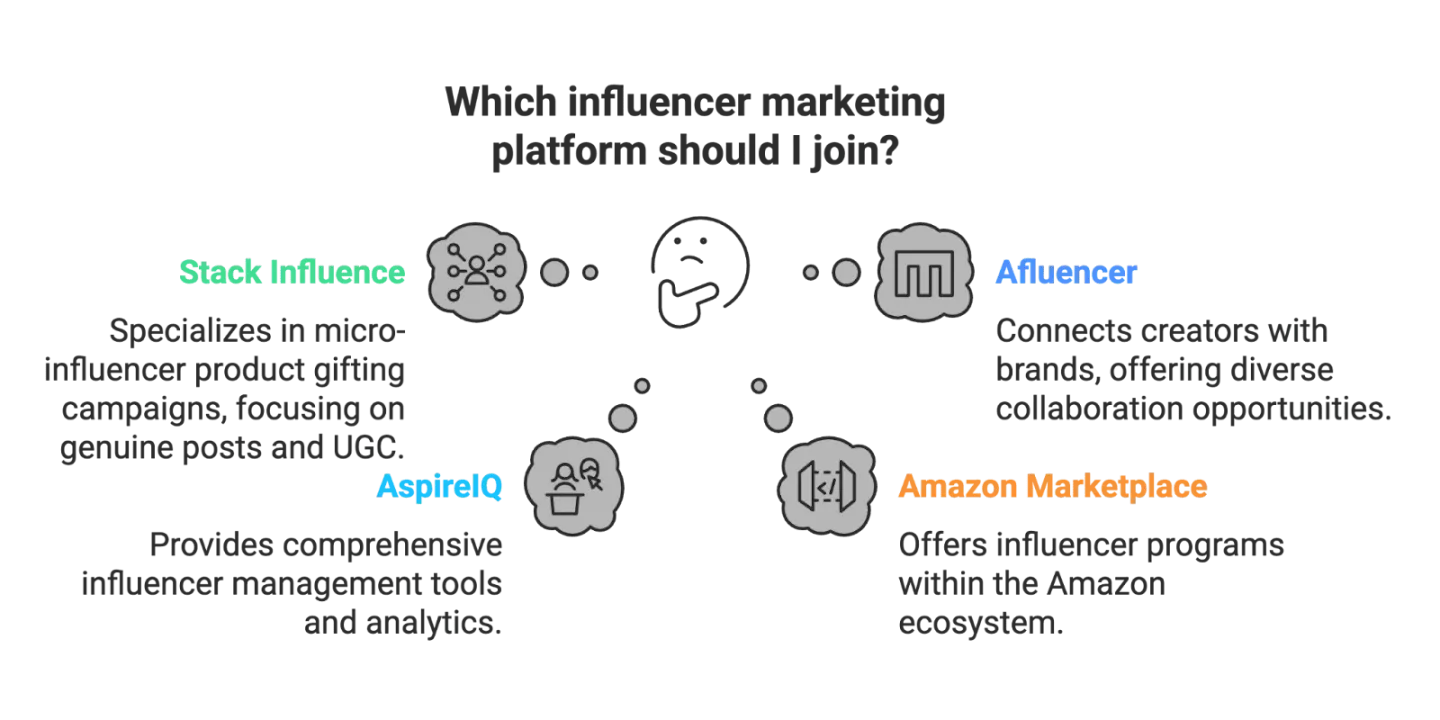
Want to make it really easy for brands to find and send you free products? Consider joining an influencer marketing platform. These are online marketplaces that connect brands with influencers and content creators (like you!). One great example is Stack Influence, a leading micro-influencer platform that specializes in product gifting campaigns. (In fact, Stack Influence is built around the idea of “product seeding,” where brands pay micro influencers with free products – making posts feel genuine and boosting UGC for the brand.) Other good examples are Shein's influencer program which can help you promote Shein's products or Walmart's Customer Spark program which can help you promote Walmart products and earn commissions.
Platforms like these are basically a matchmaking service for collaborations. Here’s why signing up can boost your freebie chances:
On influencer platforms, brands post campaigns or “collabs” looking for influencers to try their products or promote them. You can browse a list of offers instead of cold-emailing brands one by one. For instance, a protein bar company might list that they’re offering a free sample box and a small commission if you post a gym selfie with their bar. You can then apply directly through the platform.
These platforms often handle the nitty-gritty, like shipping details and communication. Once you’re accepted into a campaign, you might input your shipping address on the platform and the brand sends the product through the system. Some platforms (like Stack Influence or others) let you track shipments, see campaign guidelines, and even handle posting schedules all in one dashboard. This makes the whole experience more organized for you.
When you join, you’ll create an influencer profile with your social media stats, audience demographics, niche, etc. Brands can discover you by searching the platform’s database. Make sure you fill out your profile completely – add a nice bio, your interests, and connect your social accounts so your follower counts and engagement stats are visible. A complete profile increases your chances of getting picked for freebies.
To get started, sign up on a reputable influencer platform (many are free for influencers). Complete your profile and include your shipping information (so brands can send products seamlessly). Browse the available brand collaborations and start applying to any that fit your style. With platforms, you might find opportunities you wouldn’t have discovered on your own – and managing multiple gifting deals becomes much easier when it’s all in one place.
Examples: Aside from Stack Influence (which focuses on micro influencers and e-commerce brands), there are others like Afluencer, AspireIQ, or Influencer marketplaces on Amazon that connect creators with brands. Being on a couple of these can multiply your chances of getting cool free stuff to review or feature.
Simply being on an influencer platform isn’t enough – you need to actively apply for campaigns (often called “Collabs” or collaborations) to get those free products. Brands across various niches post opportunities, and these listings are often a goldmine for freebies. Don’t be shy about throwing your hat in the ring if you meet the requirements.
When browsing campaigns, here’s how to make the most of them:
Each listing will usually tell you what the brand is offering (e.g. free product, discount codes, payment, etc.) and what they expect in return (a certain number of posts, a review, UGC rights to your content, etc.). Make sure it’s something you’re comfortable with and fits your niche. If a pet supply brand is offering a free dog toy and you have a dog (and a pet-lover audience), great! If it’s a luxury watch and you run a hiking/outdoors page, maybe skip that one.
Some campaigns look specifically for certain follower ranges or locations. For example, a local food delivery service might only want influencers in New York, or a brand might seek Instagram creators with 5k–20k followers. Focus on the opportunities you qualify for to maximize your acceptance rate.
Platforms often let you send a quick message when you apply. This is like a mini-pitch. You might write a sentence or two about why you’re interested or how you’d feature the product. Even if it’s not required, it can help you stand out. For instance: “Hi! I love sustainable fashion and I’ve actually been eyeing your designs – I’d be excited to style your eco-friendly handbag in an OOTD post on my Instagram. Hope to collaborate!”
After applying, keep an eye on your dashboard or email for responses. If accepted, you’ll likely get instructions or a confirmation when the product ships. If a reasonable time passes and you haven’t heard back, you can send a polite message through the platform to check in. However, avoid spamming – brands will choose from many applicants, so sometimes no reply is a no. Just move on to the next opportunity.
The best part of these collab applications is everything is in one place. You can track which campaigns you applied to, coordinate multiple collaborations, and keep communication centralized. It’s a seamless way to connect with brands and start receiving those coveted free products. Some brands might even offer additional perks like a small payment or commissions on sales you drive, but even if not, you’re gaining experience and building relationships (plus fun new products to try!).
Applying for collaborations is great, but you can further boost your visibility to brands by engaging with them on social media. Think of it as gently getting on a brand’s radar even before (or after) you formally reach out. This shows genuine interest and can set you apart from other influencers who might just be names in an inbox.
Here’s how to effectively engage with brands online:
Start by following the brands you love (and especially the ones you’ve applied to collaborate with). Regularly like their posts and leave thoughtful comments. For example, if a skincare brand posts about a new serum launch, comment something like, “Been waiting for this launch – the ingredients look amazing 🔥.” Authentic engagement (not just “nice pic!” spam) helps the brand’s social media managers notice you.
If a brand posts something really useful or cool, consider sharing it to your Stories or retweeting it (depending on the platform). Add a little note on why you think it’s interesting. This not only provides value to your followers but also signals to the brand that you care about what they’re doing.
When it makes sense, tag brands in your own content. Let’s say you already use a product from that brand or something similar – create a post around it. For instance, if you’re a food content creator and you made a smoothie with Amazon Kitchen ingredients or a blender from Brand X, tag them! A caption might be: “Morning smoothie time 🥤🍌 – thanks @BrandX for the blender that makes my life easier!” Brands often notice when they’re tagged, and they might even reshare your Story or comment. Even if they don’t respond, you’ve shown them you’re a true fan.
Another clever move is to watch for when brands ask questions or polls to their community. Jump in with your answer. If a fashion label asks “Which summer style do you like best?” reply with your pick and why. It’s yet another touchpoint that can make your name/handle familiar to them.
The goal with all this is to become a familiar face (or username) to the brand. When brands see that you’re actively and positively engaging with their content, they’re more likely to remember you when they’re looking for people to send PR packages or freebies to. You start to build a relationship before any formal partnership.
Keep your interactions positive and genuine – don’t overdo it to the point of looking spammy. Even a few meaningful interactions a week can make a difference. Over time, you’ll build a rapport. Some brands might even slide into your DMs to offer a gift or collaboration once they see how enthusiastic and supportive you are.
Sometimes, the path to free products isn’t entirely online. Networking in real life (or virtual events) can open doors to unexpected gifting opportunities. Brands love to see real people and genuine enthusiasm, so putting yourself out there can pay off in multiple ways.
Consider these approaches:
Keep an eye out for events hosted by brands in your niche. These could be product launch parties, pop-up shops, workshops, webinars, or influencer meet-and-greets. For example, an e-commerce jewelry brand might host a holiday pop-up in your city – go there, introduce yourself, and connect! In-person, you can often meet brand reps or PR people. If they see you’re a friendly micro influencer who truly likes their stuff, you might walk away with a gift bag or a promise of a future collaboration. Even online events (like a webinar or Instagram Live) can have opportunities – sometimes brands give out freebies to attendees or pick people to send samples to afterward.
There are also events specifically for influencers or content creators (sometimes organized by agencies or platforms). Networking with other influencers can indirectly lead to freebies. How? If you befriend someone who’s a brand ambassador or who regularly gets PR packages, they might recommend you to a brand or give you insider tips. Plus, you might hear about campaigns or gifting programs through word-of-mouth in these circles.
Partnering up with other micro influencers for content can get you noticed by brands. Suppose you and a few creator friends host a joint giveaway or do a collab video featuring your favorite products. If those products include brands you want to work with, your collaborative content could catch the brand’s attention (especially if all of you tag them). Additionally, bigger influencers sometimes share or tag the products they feature – if you collaborate with someone slightly bigger, a brand might see their post (and thereby see you). It adds credibility by association.
Networking is all about building relationships. It might not yield an immediate free product like “hey, nice to meet you, here’s a free phone case!” – but the connections you foster can lead to gifts down the line. Maybe a marketing rep you chatted with keeps you in mind for the next campaign, or an influencer friend passes your name to a brand that’s a perfect fit. At the very least, you’ll learn a ton from others and become more immersed in the influencer and e-commerce brand community.
And don’t forget: when you do attend events, share it on your social media. Tag the event and the brand if appropriate (“Had a blast at @SkincareCo’s product launch party! 💄✨”). This not only shows brands you’re active and engaged, but it gives you more content to keep your own audience entertained. It’s all part of building your presence and credibility.
Last but definitely not least: patience and persistence are key. Getting free products from brands isn’t usually an overnight success; it can take time to build up your credentials and connections. Don’t get discouraged if you don’t have boxes of goodies pouring through your mail slot after a week of trying. The influencers you see unboxing PR packages on Instagram? Most of them spent months (or years) working toward that.
Here’s how to keep a healthy mindset and stay on track:
Did a brand agree to send you a free sample after 10 emails sent? Awesome! Did you gain 100 new followers this month through consistent content? That’s progress! Each collab – even if it’s just a free t-shirt or a discounted product – is a step toward building your reputation. Brands often start with micro collaborations to test the waters. Deliver quality content for even the smallest gift, and it could turn into a bigger opportunity later.
If you’ve been applying to campaigns or emailing brands for a while with no luck, take a step back and review. Could your pitch emails be tweaked? Maybe shorten them or personalize more. Is your media kit or profile up to date? Perhaps your content niche isn’t clear and you need to refine your branding so brands instantly “get” what you’re about. Treat each rejection or non-response as a chance to improve.
While you’re waiting for those yes’s, continue growing your profile organically. The more quality content you put out, the more attractive you become to brands. Plus, if a brand you pitched checks you out a month later and sees you’ve been super active and gained more engagement, they might reconsider. Persistence isn’t just in reaching out, but also in continuing to do what you love (creating content) even when freebies aren’t flowing yet.
It might be tempting to quit if you hear nothing back initially. However, remember that many brands plan their gifting campaigns seasonally or quarterly. Your pitch in January might get a reply in March when they budget for Q2 gifts, for example. Also, your growth as a micro influencer can be exponential – the first 1,000 followers are hardest, but after that, things often pick up. Stick with it, and by the time you have, say, 5,000 followers, you might find brands approaching you for collaborations.
Above all, stay authentic and enthusiastic. Genuine excitement is infectious. If you truly love what you’re doing – whether it’s creating beauty tutorials, tech reviews, or funny lifestyle vlogs – that passion will attract both followers and brands over time. Patience doesn’t mean sitting idle; it means continuously putting in effort and trusting that the results will come with consistency. And they will.
Getting free products from brands is absolutely achievable with the right approach. Let’s recap your game plan: build a strong online presence, focus on the right brands (ones that align with your niche), and craft a compelling pitch that shows your value. Leverage influencer platforms like Stack Influence to find and manage gifting opportunities easily, and don’t hesitate to apply to multiple collabs to increase your odds. Meanwhile, engage with brands on social media so they know you’re a true fan, and get out there – network at events and collaborate with fellow creators to boost your visibility. All along, remember to stay patient and persistent.
Many micro influencers before you have gone from zero to a mailbox full of goodies by using these strategies. You’re building relationships and a personal brand, and that takes a little time – but it’s so worth it. Stick with it, keep creating content you love, and keep putting yourself out there. Soon enough, you’ll be watching those free gifts roll in and stacking up some awesome products to feature in your content.
Now go ahead and start implementing these tips. Good luck, have fun, and enjoy the journey of growing as a creator (with plenty of free swag along the way)!
Beauty conventions are roaring back in 2026 and 2026, bringing together the latest products, trends, and influential voices in the industry. After a few tumultuous years of virtual events and postponements, in-person beauty trade shows and festivals are in full swing again. These events aren’t just glitzy expos – they’re critical opportunities for brands, micro-influencers, content creators, Amazon sellers, and beauty professionals to connect. In fact, 81% of trade show attendees say that conventions help them discover new products and services, a testament to how vital these gatherings are in the beauty world. From massive B2B trade fairs to creator-focused festivals, we’ll explore the top beauty conventions slated for 2026 and 2026 – and how you can leverage them for your e-commerce and marketing strategy.
What’s new? Many of these events are embracing digital integration and influencer participation like never before. Brands are launching products with live demos, and micro-influencers are often on the scene generating buzz through user-generated content (UGC) on social media. With influencer marketing now a mainstream tactic (nearly 86% of U.S. marketers plan to partner with influencers in 2026, up from ~70% in 2021), beauty conventions provide fertile ground to marry physical experiences with online reach. Below, we break down the must-attend beauty conventions in 2026–2027 and offer tips on making the most of them.
Beauty is a tactile industry – people want to see, touch, and try products. Conventions allow brands to offer visual and sensory demos that simply can’t be replicated online. This is key for emerging brands and Amazon sellers looking to stand out, as showcasing product quality in person builds trust.
Major shows often feature seminars and panels by industry experts. You’ll hear about cutting-edge trends (think AI skincare, sustainable packaging, inclusive beauty) before they hit the mainstream. Attending in 2026 means you’ll catch insights on what consumers will be craving in 2026 and beyond.
Whether you’re a content creator, indie brand founder, or retailer, conventions are prime for networking. It’s not uncommon for an Amazon e-commerce seller to meet a product manufacturer or for a micro-influencer to secure a brand partnership on a show floor. The face-to-face connections can spark deals and creative collaborations that online interactions might never achieve.
Conventions generate buzz. Brands often use these events to launch products or campaigns, leveraging the live excitement. With so many influencers and beauty enthusiasts gathered, the UGC potential is huge – think event hashtags, live streams, and haul videos coming out of every major expo.
In short, beauty conventions in 2026–2027 blend the best of physical experience and digital amplification. Now, let’s dive into the top events to mark on your calendar.
Below is a curated list of the most important beauty industry events for late 2026 and 2026. These range from massive trade-only expos to festivals open to the public. Each offers unique opportunities whether you’re scouting new products, looking to network, or creating content.
When: March 20–23, 2026 and March 26–29, 2026
Where: Bologna, Italy
Cosmoprof Worldwide Bologna is the world’s largest B2B beauty trade show, and it truly lives up to the hype. The 2026 edition hosted over 3,000 exhibitors from 69 countries and a staggering 250,000+ visitors – yes, a quarter of a million! It’s a sprawling showcase covering every sector: skincare, makeup, hair, perfumery, nails, packaging, ingredients – you name it. For context, Cosmoprof has multiple halls and sub-shows (like Cosmopack for packaging) running simultaneously, making Bologna the epicenter of the beauty business each spring.
Why attend: This is the place to spot global trends and products before they hit other markets. If you’re an e-commerce beauty seller or brand owner, Cosmoprof offers unparalleled sourcing opportunities – you can meet manufacturers and discover innovative products from all over the world in one place. It’s also rich with educational conferences and trend forums (often featuring data from agencies like Beautystreams or CEW) so you can glean insights on market directions. While the scale can be overwhelming, the payoff is huge: many brands that exhibit here set the tone for the year’s beauty innovations. Even if you’re a U.S.-based Amazon seller, a trip to Cosmoprof can help you find that next unique product or supplier to gain an edge in your category. Plus, being in Bologna doesn’t hurt – the city comes alive with networking events and yes, fantastic Italian hospitality.
Pro tip: Plan ahead – the sheer size means you should map out must-visit zones (e.g., a hall for natural/organic beauty or K-beauty pavilions). And bring comfortable shoes!
When: Jan 27–29, 2026 (Miami)
Where: Las Vegas, NV and Miami, FL (USA)
The Cosmoprof North America (CPNA) is the leading B2B beauty trade show in the Americas, attracting a more regional (but still international) crowd. Traditionally held in Las Vegas each summer, CPNA has drawn 32,000+ attendees and 1,000 exhibitors in past years. Recently, it expanded with a new Miami edition in winter, catering to the East Coast and Latin American markets. CPNA showcases cosmetics, skincare, haircare, nails, and beauty tech, and also hosts the co-located Cosmopack NA focusing on packaging and supply chain.
Why attend: For brands and retailers, CPNA is a great place to get your products in front of buyers – many indie brands have been “discovered” here and landed retail deals. If your goal is to get your beauty brand into boutiques or major retailers (or even to network with distributors for international expansion), CPNA is ideal. Amazon-focused sellers can also benefit – you might find emerging indie brands to partner with or source from, before they blow up. The Vegas show is known for a high-energy floor and networking events (plus, Vegas nightlife for after-hours fun). The Miami edition (launched in 2024) underscores the importance of the East Coast and Latin markets, so attending there could connect you with brands and influencers popular in those communities. Don’t miss the Cosmopack section if packaging or private-label sourcing is on your agenda – it’s where you’ll find cutting-edge packaging innovations and manufacturers that can help differentiate your product’s look.
A post shared by Premiere Show Group (@premierebeautyshows)
When: May 31 – June 1, 2026
Where: Orlando, FL, USA
Billed as the largest beauty show in the United States, Premiere Orlando is a massive event geared towards licensed professionals in hair, nails, and skincare. The 2026 show was expected to draw over 50,000 visitors and hundreds of exhibitors. This is a business-to-business event with a heavy focus on education – think hands-on workshops, live competitions, and classrooms covering everything from cutting-edge hair color techniques to spa therapies. It’s not your typical expo hall; it’s also a giant training ground for stylists and estheticians. Premiere Orlando has been so successful that the organizers are expanding regionally, with new shows in other cities (e.g., Premiere Columbus and Premiere San Antonio launched in 2024–25).
Why attend: If you’re in the professional beauty sphere or target salon/spa professionals with your products, Premiere Orlando is a gold mine. Brands that exhibit here often demo tools, equipment, or pro-grade products to an eager audience ready to buy for their salons. The networking among beauty pros is intense – you could connect with salon owners or spa directors who make bulk purchases. Micro-influencers in the hair and makeup niche also frequent Premiere to stay current on techniques; many top educators (including celebrity stylists) teach classes, giving the show star power. Even as a product seller, attending can clue you in on salon trends that could cross over to retail (for instance, a hot new hair treatment you discover here might be a great item to sell online). And if nothing else, it’s one of the most inspiring events for pure artistry – you’ll leave brimming with ideas after seeing stage shows and creative competitions (and possibly some wild hair colors walking around!).
When: Annually each spring; 2026 expected around March/April
Where: Chicago, IL, USA (Rosemont Convention Center)
America’s Beauty Show is a major annual beauty trade show organized by Cosmetologists Chicago, and it has an impressive legacy – over 101 years running as of 2026. ABS caters to licensed cosmetology professionals (stylists, colorists, estheticians) and features a large expo of brands alongside competitions and education. The theme for 2026 is “What’s Next In Beauty,” fitting for a show that historically highlights future trends. More than 21,000 beauty pros were expected to attend the 2026 show. One highlight of ABS is the Global Image Awards, an annual competition showcasing creative talent in categories like hairdressing and nail art– it adds a dash of glamour and forward-thinking style to the event.
Why attend: For brands, ABS is key if you want to reach the Midwest professional market – thousands of salon owners and beauty students from across the region drive in for this show. It’s a bit more intimate than IBS or Premiere Orlando, yet still large-scale. If you’re an indie hair care or skincare brand, ABS is a great place to exhibit and get in front of professionals who can champion your products in their salons or stores. The show is also a hub for education: you can attend seminars on business skills (like how to grow your salon’s Instagram, or retailing techniques) as well as technical demos on the latest balayage or facial treatments. Micro-influencers who focus on professional techniques often attend ABS to stay sharp – you might catch a popular hairstylist influencer quietly taking notes in a color class. And given its long history, ABS has a strong community vibe. By attending, you plug into a century-old network of beauty pros, which can yield lasting connections. Plus, Chicago in the spring is lovely (in case you need a city getaway excuse)!
When: November 16–17, 2026 (Chicago). (Also runs in other cities some years)
Where: New York, NY and Chicago, IL, USA
The Makeup Show is a pro-focused beauty event that zeroes in on cosmetics and makeup artistry. The NYC edition each spring is a favorite among makeup artists (MUAs), cosmetic brand founders, and yes, makeup-loving influencers. It’s a bit smaller and more curated – held in venues like the Metropolitan Pavilion – but it attracts innovative indie brands, celebrity makeup artists, educators, and influencers in a more intimate setting. Attendees can shop products (often at a discount), watch live demos, and attend seminars. The Chicago edition in the fall offers a similar experience for the Midwest. The vibe is one of artistry and community; it’s not unusual to bump into renowned artists in the aisles or see an impromptu demo happening at a booth.
Why attend: If makeup is your passion or business, The Makeup Show is a must. For micro-influencers focusing on makeup, this event is fantastic to network with niche brands (many indie cosmetic brands exhibit here looking to build relationships with artists and influencers). You’ll also gain skills: the education ranges from mastering complexion techniques to the business of being a freelance MUA. Brands often use The Makeup Show to debut new collections, especially those targeting pro users. From an e-commerce seller perspective, it’s a place to find unique indie makeup lines that aren’t yet mass-distributed – perfect if you’re curating products for an online store. The show’s scale allows for real conversations; you can actually chat with brand founders or celebrity artists (who are surprisingly approachable here). Also, because it’s a selling show, you can stock up on products and tools – great for kit building. In summary, The Makeup Show blends shopping, learning, and networking in a niche that’s all about creativity and cosmetics culture.
A post shared by Beautycon (@beautycon)
Aside from the big names above, keep an eye on a few additional events that might align with your niche or goals:
Each event has its own flavor and audience. Ultimately, choose conventions that align with your objectives – whether it’s sourcing products, learning skills, building partnerships, or generating content.
Attending a beauty convention is just the first step. To get ROI from these events, it helps to integrate them into your broader marketing and e-commerce strategy:
Bring your camera (or smartphone) and capture the experience. Whether you’re a brand or an influencer, there are countless opportunities for content creation – product unboxings of samples you got, mini-interviews with brand founders, trend roundups, or simply aesthetic footage of booths and stage demos. This kind of authentic, event-based content is gold for social media and social SEO on platforms like TikTok and Instagram. It’s also true UGC that can later be repurposed in your marketing (with permission if it features others). Some shows like Beautycon even provide studios explicitly for creators to film content.
Conventions are where you might meet the influencer who becomes your next brand ambassador, or the distributor who takes your product global. Pack business cards or have your LinkedIn QR code ready. After the show, follow up promptly while the connection is fresh – that’s how a casual booth chat turns into a collaboration. Pro tip: as a micro-influencer, don’t be shy to introduce yourself to brand reps at booths. Many are actively looking for content creators to work with for product seeding or campaigns.
Make a point to jot down (or voice memo) notable trends you observe. Did many skincare brands highlight blue light protection? Was there a buzz ingredient like bakuchiol or a new hair tool everyone was talking about? These insights can inform your content calendar or product development. Share the trends with your audience in a blog or video – positioning yourself as an authority who stays ahead of the curve. This can attract more followers and even the attention of brands who value an informed creator.
Use the event to boost your online presence. For example, live-tweet or live-stream from the convention floor to involve your audience in real time. Create an Instagram Story highlight for the event. If you’re a brand, consider hosting a giveaway after the show for the audience who couldn’t attend, using some products you picked up. This creates a bridge between the physical event and your wider online community.
To underscore the power of blending conventions with influencer marketing, consider this: in the ultra-competitive world of e-commerce, brands and Amazon sellers are turning to micro-influencers and content creators to gain an edge. These niche creators – often everyday people with dedicated followings – help generate authentic user-generated content and build consumer trust in ways traditional ads struggle to match. By engaging with micro-influencers at events or afterward, brands can amplify the event’s reach exponentially through social media.
Share of U.S. marketers using influencer marketing (2021–2026) – Influencer marketing has become nearly ubiquitous, with 86% of marketers working with influencers by 2026. Beauty brands in particular are leveraging micro and macro influencers to extend the impact of trade show appearances and product launches.
Finally, if you’re looking to turbo-charge your post-convention marketing, consider tapping into platforms designed for influencer collaborations. Platforms like Stack Influence, for example, can automate product seeding campaigns and manage large numbers of micro-influencers on behalf of brands. This makes it easier to turn all those convention connections into tangible campaigns. Stack Influence is a platform that handles the end-to-end process of working with micro-influencers – helping brands (including experienced Amazon sellers) accumulate authentic UGC, testimonials, and traffic at scale. By utilizing such services, you can scale up the buzz from a single event into a sustained marketing engine across social channels.
Beauty conventions in 2026 and 2026 are more than calendar events – they’re strategic milestones for anyone in the beauty business or community. Whether you’re swatching the latest lipstick at a festival-like Beautycon, striking deals at Cosmoprof, learning a new balayage trick at IBS, or discovering an eco-friendly packaging at LUXE PACK, each event can propel your brand or career forward. The key is to be intentional: set your goals for each convention (be it networking, learning, or sourcing) and follow through with the connections and content you gain.
In a beauty landscape that’s increasingly omni-channel, the magic happens when you blend the physical and digital. The in-person trust and serendipity from conventions, combined with the scalable reach of micro-influencers and UGC, is incredibly powerful. So as you plan your 2026–26 schedule, pencil in those dates, book those tickets, and maybe order some extra business cards. The future of beauty is waiting on that convention floor – and you’ll want to be there to experience it, shape it, and share it with the world.
Wellness influencers have become powerhouse content creators in today’s health-conscious world, inspiring millions to live healthier lifestyles. From fitness coaches and nutritionists to mental health advocates, these influencers cover a broad spectrum of wellness topics. Crucially, they forge a sense of authenticity and trust with their audiences – in fact, studies show that 92% of consumers trust influencer recommendations over traditional ads. That’s no surprise when nearly 90% of people also say authenticity is important in choosing which brands to support Modern wellness influencers meet this need by sharing genuine stories of self-care, balance, and even personal struggles. It’s not just green smoothies and yoga poses anymore – today’s top creators talk about setting boundaries, overcoming burnout, gut health, gentle workouts, and the importance of mental well-being. By “walking the talk” in their own lives and being refreshingly honest, wellness influencers are redefining what it means to be truly well and helping their followers do the same.
From a marketing standpoint, these influencers are gold. They make healthy living relatable by turning complex wellness concepts into engaging, actionable content. Whether it’s a quick meditation tip on TikTok or an in-depth blog about hormone balance, influencers translate wellness trends into everyday habits that anyone can try. And when they recommend products or brands that align with their message, followers listen. Influencer-driven content feels more like advice from a friend than an ad, which is why brands see higher engagement and loyalty when partnering with creators in this space. In short, wellness influencers wield immense cultural and commercial influence – and both brands and individuals aspiring to become influencers have a lot to gain by understanding who the top players are and how they operate.
A post shared by Bitdefender (@bitdefender)
Who are the leading voices in health and wellness right now? Below we highlight ten of the top wellness influencers making waves in 2026. These creators span various niches – from medical doctors and holistic coaches to fitness gurus and food bloggers – showcasing the diversity of the wellness movement. Each has a unique story and approach that resonates with a large audience. Brands looking for impactful partnerships and aspiring influencers seeking inspiration can both learn from these standout figures.
The above influencers are just a snapshot of the vibrant wellness community online. There are countless others – from micro-influencers with tightly knit communities to celebrity trainers with global reach – all contributing to the “well-thy” content ecosystem. The key takeaway is that each influencer succeeds by being genuine, offering value (whether education, motivation, or entertainment), and connecting with a specific audience. Brands can find a perfect match in this diversity, and aspiring influencers can learn what style or niche might fit them best by observing these leaders.
A post shared by Stack Influence (@stackinfluence)
Comparison of engagement rates and ROI: micro- vs. macro-influencers. As the chart shows, micro-influencers in wellness tend to enjoy much higher engagement from their audiences compared to macro-influencers. On average, a micro-influencer (think someone with, say, 5k–50k followers) might see around 10% of their followers engaging (liking, commenting, clicking) on a given post, whereas a mega-influencer with a huge following might only get ~2% engagement. This means a far greater portion of a micro-influencer’s audience is actively tuned in and trusting what they share. Moreover, campaigns with micro- or even nano-influencers often deliver a significantly higher marketing return on investment – roughly 20:1 ROI (return per dollar spent) versus only about 6:1 ROI for campaigns using big celebrity influencers. In practical terms, a brand could spend the same budget on one macro-influencer post or on dozens of micro-influencers, and the micro route would typically generate much more engagement and sales. No wonder studies have found small creators achieve roughly double the sales conversion rates of larger influencers (about 7% vs 3% of engaged users converting).
Why do smaller influencers punch so far above their weight? It comes down to trust and relevance. Followers tend to see micro-influencers as relatable peers or friends, so a recommendation from one feels organic – like real advice rather than an ad. These creators are deeply niche-focused, whether it’s a vegan mommy blogger or a local fitness coach, which means their content is highly relevant to their followers’ interests. A healthy smoothie recipe from a tiny foodie influencer who chats with her followers daily in DMs can spark more action than the same recipe posted by a celebrity who barely interacts. Additionally, micro-influencers are often seen as more authentic, sharing parts of their real lives and engaging with comments, which strengthens community bonds. By contrast, the biggest influencers, despite their reach, may struggle with declining engagement – their audience is so broad (and often inundated with sponsorships) that any given post feels less personal. As a result, many brands are shifting their strategies to include many micro and nano-influencers instead of putting all their budget into one or two big names. The data supports this shift: not only is engagement higher with micros, but also ROI can be 3x+ greater per dollar spent on micro-influencer campaigns versus macro. For wellness brands in particular – where trust, credibility, and community are paramount – micro-influencers can be the secret sauce to a highly effective campaign.
Brands in the health and wellness industry have caught on that influencer partnerships can drive serious growth – especially in e-commerce. In fact, in the ultra-competitive online market, brands (including Amazon sellers) are turning to micro-influencers and content creators to gain an edge. These collaborations allow companies to tap into the authentic connections influencers have built and translate that into product awareness, user-generated content, and sales. Whether you’re a DTC supplement brand, a fitness apparel company, or an Amazon seller with a new wellness gadget, there are many ways to partner with influencers to reach your target customers.
Some common forms of collaboration include:
Behind the scenes, there’s also a growing ecosystem of influencer marketing platforms that help brands manage these collaborations – and notably, many focus on micro-influencers at scale. Stack Influence, for instance, is a leading micro-influencer marketing platform that automates these kinds of campaigns. Using Stack Influence, e-commerce brands can connect with over 700,000 social media micro-influencers to drive product promotions and even boost Amazon sales. Platforms like this handle the heavy lifting (finding the right creators, communicating, tracking posts, handling payments or product shipments) so that even a small Amazon seller can run a campaign with hundreds of micro-influencers without a huge team. The result is an explosion of diverse, authentic content and credible word-of-mouth. And because wellness is such a personal, testimonial-driven space, this approach can significantly amplify a brand’s reach and reputation.
It’s also important for brands to choose influencers who truly align with their values and target audience. Successful wellness campaigns often pair brands with influencers who are already genuine fans of similar products or practices. For example, a plant-based protein company will get better engagement working with a vegan fitness micro-influencer than a random celebrity. When there’s a natural fit, the partnerships don’t feel forced – the influencer’s endorsement comes off as a honest recommendation, not just a paid promotion. This kind of alignment, combined with the relatability of the influencer, can lead to a powerful trust transfer: followers start to associate the brand with the positive qualities they see in the creator.
Lastly, transparency and creativity are key. Influencers who integrate a brand into their wellness content in a creative, story-driven way (rather than just a blatant ad) tend to see the best results. That might mean a content creator on TikTok filming a “day in my life” that organically features the meditation app she’s promoting, or an Instagrammer sharing a heartfelt personal anecdote about overcoming insomnia while mentioning how a certain sleep supplement helped – complete with before/after stats from her fitness tracker. Such integrations keep audiences engaged and informed. Brands should encourage influencers to put their own spin on promotions, since they know their followers best. When done right, partnering with wellness influencers – big or small – can dramatically boost a brand’s visibility, credibility, and sales in the health niche.
Not only are brands looking to work with influencers – many individuals are looking to become influencers themselves. If you’re passionate about wellness and want to grow a following as a content creator, here are some tips to get started (and to sustain your journey for the long run):
Finally, be patient and enjoy the process. Becoming a wellness influencer isn’t an overnight thing – it might take months or years to build a sizeable following and get those brand collaboration emails rolling in. But if you love what you’re sharing and stay true to your mission, you’ll find that even on a small scale you can start influencing lives in a positive way. Celebrate small milestones: your first 100 followers, your first comment from a stranger saying “this helped me so much,” etc. These are signs you’re on the right track. Over time, those small ripples can turn into big waves. Remember that even the top influencers we listed above started with zero followers and learned along the way. With passion, persistence, and authenticity, you could be the next wellness influencer inspiring a healthier world – and having a blast doing it!
The health and wellness influencer scene in 2026 is richer and more dynamic than ever. From trusted medical experts like Dr. Mike and Dr. Hyman, to holistic lifestyle gurus, fitness phenoms, and creative minds blending art with self-care – there’s an influencer for every corner of the wellness journey. These individuals have built dedicated communities by sharing knowledge, positivity, and personal experience, proving that real influence comes from building trust and adding value. Brands have recognized this, increasingly partnering with both mega and micro-influencers to tap into that trust and authenticity. Whether it’s through an intimate Instagram Story or a viral TikTok challenge, wellness influencers offer a bridge between companies and consumers that traditional marketing simply can’t replicate.
If you’re a brand – be it an indie supplement line or a large e-commerce retailer – collaborating with wellness influencers (especially those micro creators who speak directly to your niche audience) can elevate your marketing to new heights. And if you’re an aspiring influencer, know that there’s always room for fresh voices passionate about helping others live better. Focus on your niche, be genuine, and engage with your community. Success in this field isn’t measured only by follower count, but by the positive impact and trust you cultivate – the sponsorships and follower growth tend to follow naturally from that foundation.
One thing is clear: the era of wellness influencers is here to stay, continually evolving with new trends and platforms but always centered on the human desire for a healthier, happier life. In a world where consumers crave authenticity, those who can provide honest guidance and inspiration will continue to thrive – and change lives in the process. So whether you’re looking for the next great collaboration or hoping to start your own influence journey, take notes from the top wellness influencers and the strategies outlined above. Here’s to a healthier world, one post at a time!
Photography influencers are taking social media by storm with breathtaking visuals and engaging storytelling. From adventure travelers scaling snowy peaks to food stylists crafting mouth-watering images, these content creators inspire millions and drive trends in visual content. Many of the most impactful photographer influencers are based in the United States, though several global stars also shine. Beyond beautiful images, they foster passionate communities – and savvy brands are paying attention. In the era of e-commerce and social media, even micro influencers (those with smaller but loyal followings) can have outsized influence by producing authentic, high-engagement content. Amazon sellers and online retailers in particular are tapping into these creators for user-generated content (UGC) that showcases products in real-life settings, building trust with consumers. Whether you’re looking for epic travel landscapes, creative product shots, or delicious food photography, here are some of the top photography influencers (US-focused, with a few international icons) to follow in 2026.
A post shared by David Christopher Lee (@davidcleephotography)
Location: Los Angeles, USA
Followers: ~121K on Instagram
Niche & Style: As a renowned celebrity photographer, David’s work centers on the entertainment industry and high-profile events. His Instagram feed is a glossy display of portraits and red-carpet moments – he’s photographed stars like Grammy-winner Jon Batiste and actress Bella Thorne. But David isn’t just about Hollywood glam; he also shares slices of his own life, from nature adventures to fitness milestones, often with insightful captions about wellness and “biohacking” (earning him the nickname of the photographer who drinks from the fountain of youth in jest).
David’s account offers a mix of masterful portraits and personal journey. One day you might see a vibrant shot of a celebrity at the Nickelodeon Kids’ Choice Awards, and the next, a serene landscape from his travels with a reflection on finding inner peace. This blend of entertainment photography and authentic storytelling keeps his audience of over 100k followers engaged. He’s also an entrepreneur, creating SEO-driven content campaigns, and frequently collaborates with lifestyle and fashion brands. (His recent collabs include an organic farm and luxury hospitality, showing his versatility.) If you’re interested in the intersection of celebrity culture and photography, David Christopher Lee provides a front-row seat.
A post shared by Jamie Pelfrey (@freshfacedover40)
Location: Florida, USA (via @freshfacedover40)
Followers: ~10K on Instagram
Niche & Style: Jamie Pelfrey specializes in product photography – particularly in beauty and skincare – and is known for her vibrant, colorful style. As a mom over 40 breaking into the influencer scene, she’s shattering age stereotypes in the creator world. Jamie’s feed is a cheerful tapestry of cosmetics, skincare products, and fun lifestyle shots that pop with color and creativity. She often includes behind-the-scenes peeks and practical tips, making her content both beautiful and relatable.
Jamie brings a fresh, “you can do it at any age” energy to influencer photography. Her eye for detail in staging products has led to collaborations with numerous brands – she loves sharing discount codes and honest reviews with her followers. Fans appreciate her authenticity and positivity. If you’re a content creator or entrepreneur looking for inspiration on how to showcase products (from makeup to gadgets) in a genuine way, Jamie’s account is a goldmine of ideas. She proves that micro-influencers can deliver professional-quality content with a personal touch, and she encourages others to pursue their passions regardless of age.
A post shared by Johan Lolos (@johanlolos)
Location: Belgium (worldwide traveler)
Followers: ~376K on Instagram
Niche & Style: Johan Lolos (often known by his handle @lebackpacker) is a documentary-style travel photographer with a passion for the outdoors and wildlife. His work takes you on a journey to some of the most breathtaking corners of the planet: from the towering sand dunes of Namibia to the erupting volcanoes of Iceland, or from lions in the South African savannah to serene Mediterranean seascapes. Basically, Johan has likely been everywhere – and his camera is always ready to capture those picture-perfect moments of natural beauty. His images have a pristine, vivid quality that often leaves viewers wondering, “How is this real?”. He’s particularly talented at wildlife shots – baby lion cubs, elephants on the move – as well as sweeping landscapes that showcase the grandeur of nature. Johan pairs his photos with thoughtful captions, sharing his reflections from each trip and often some travel tips or background stories. This personal narrative gives insight into his “outer and inner lens,” as he calls it, letting followers see not just what he witnesses, but how he feels about it.
Following Johan is like having National Geographic in your pocket. He amplifies the perfection of nature and makes you appreciate the planet’s wonders. Adventure enthusiasts will love his expeditions – it’s easy to get lost in his feed and suddenly find yourself planning your next vacation based on his shots. He also exemplifies how to build a strong personal brand as a photographer: Johan has authored a book (“Peaks of Europe”) and become an ambassador for Toyota’s 4x4 division, leveraging his expertise and audience into broader opportunities. For brands in travel, outdoor gear, or even automotive, Johan’s content is proof of how powerful influencer partnerships can be when the influencer truly lives the lifestyle. His followers trust his recommendations because they know he’s in the field testing gear, exploring in that Toyota truck, and genuinely using what he promotes. In a social media world full of filters, Johan’s authenticity – in both his images and his storytelling – stands out. Follow him to be inspired by Earth’s beauty and perhaps nudge yourself to step outside and explore more. As one fan told him regarding a Milky Way photo of his: “Good job – it’s not too fake like most Milky Way shots on Instagram”. In other words, Johan keeps it real, and it’s really amazing.
A post shared by Jack Harries (@jackharries)
Location: London, UK (global citizen)
Followers: 2M on Instagram; 3.9M on YouTube
Niche & Style: Jack Harries first rose to fame through YouTube, but over the years he has transformed from a travel vlogger into a prominent documentary filmmaker and climate activist. His content focus is unique among this list – it’s not just pretty pictures (though he does share stunning photography too); it’s purposeful storytelling about the issues facing our planet. Jack’s Instagram and films highlight environmental issues like climate change, conservation, and social justice. One post might show him at a climate march or interviewing an environmental scientist, while another features a beautiful but endangered ecosystem he’s visiting. He uses his platforms to educate and inspire action, often collaborating with organizations like WWF. Notably, Jack was involved in the Netflix documentary series “Our Planet” and has even appeared on CNN with Christiane Amanpour to discuss his activism. Visually, his style is a blend of personal and professional – you’ll see both candid shots from his life (he’s an aspiring gardener and proud duck dad, as he humorously notes) and high-quality imagery from his documentary projects.
Jack Harries is proof that influencers can use their voice for something greater. Follow him if you want substance with your style. His posts often come with insightful captions or calls to action, whether it’s encouraging tree planting or explaining a sustainability concept. Despite tackling heavy topics, Jack’s approach is hopeful and solutions-oriented – he’s all about raising awareness and highlighting what can be done. His massive following (over 1 million) and media presence show that he’s struck a chord; as a result, he’s worked on campaigns for things like launching an all-electric car (promoting sustainable choices) and other global initiative. Brands or nonprofits looking to engage younger audiences on social or environmental campaigns often look to partner with voices like Jack’s for authenticity. Even if you’re not an activist, following Jack will broaden your perspective on how photography and storytelling can drive positive change. And of course, you’ll also catch some beautiful travel shots in the mix – he is a talented photographer – but with Jack, the caption will likely make you think a bit more about the world behind the image. It’s inspiring stuff that proves social media can be a force for good.
A post shared by Simone Bramante (@brahmino)
Location: Bologna, Italy
Followers: 938K on Instagram
Niche & Style: Simone Bramante (known as @brahmino online) is often hailed as one of Instagram’s most creative photographers – a true visual storyteller for whom nature is a constant inspiration. His imagery has a dreamy, narrative quality. Scrolling through Simone’s feed is like reading a beautifully illustrated storybook without words: each photo stands on its own as art, yet together they weave a cohesive tale. He might post a whimsical shot of a lone tree blooming in a field, followed by a romantic scene on an Italian street, then a surreal composition of a person floating with balloons. The diversity is astounding – countryside landscapes, charming European architecture, imaginative portraits – but all share a refined, cinematic style that is unmistakably his. His captions often read like mini poetic reflections, adding depth to the visuals (e.g., “On a fall day, I meet a beautiful dreamy face to care for. Her name is Rome.”).
Simone is a must-follow for anyone who loves photography as art. He’s not just snapping pictures; he’s creating worlds. It’s no surprise Forbes named him one of the top Instagram photographers, noting his whimsical images and storytelling approach. With nearly a million followers, Simone has major influence, yet he maintains an intimate, inspiring tone in his posts. Photographers can draw inspiration from his composition and conceptual creativity – he often plays with perspectives and scales that make you do a double-take. Brands have eagerly collaborated with Simone for his visionary touch: he’s worked with the likes of OPPO Mobile (blending tech and nature in a campaign) and even promoted an electric car launch by framing it in a captivating travel narrative. Following Simone Bramante feels like traveling the world through art. It will spark your imagination, and you’ll likely find yourself looking at everyday scenes with a more creative eye after seeing how Simone might transform them into something unbelievably beautiful.
A post shared by R A G E N (@thefrozennuggett)
Location: Alaska, USA
Followers: (Micro-influencer)
Niche & Style: Ragen (known on Instagram as @thefrozennuggett) is a self-taught adventure photographer who calls the wild landscapes of Alaska home. Her playground is the Last Frontier: rugged mountains, icy glaciers, and the dancing northern lights. Ragen’s photography captures the extreme beauty of cold climates – think tents pitched on a mountainside under a starry sky, or a frozen lake trek that makes you shiver just looking at it. She has a knack for making you feel the awe of her experiences, often with captions that invite you into her adventurous world (and sometimes humorous takes on how she survives those sub-zero camping nights!). The color palette of her feed is cool and crisp – lots of whites, blues, and the neon glow of auroras. It’s not your typical beach vacation influencer content; it’s something rarer and more exhilarating.
For anyone stuck in a city or a warm climate, following Ragen is like a virtual trip to a winter wonderland. Her passion for the outdoors is infectious, and she proves you don’t need a massive follower count to inspire people – you just need dedication and a unique perspective. Ragen’s authenticity shines in how she shares both triumphs (reaching a summit) and struggles (like thawing out her camera batteries in her socks!). She’s also great at engaging fellow outdoor enthusiasts, swapping trail tips and camping hacks with her followers. Brands in the outdoor gear and travel space have started to partner with Ragen, recognizing that her tight-knit audience trusts her recommendations for that perfect tent or camera backpack. If you’re an Amazon seller in the adventure niche, for instance, a micro-influencer like Ragen can create stunning UGC with your product in dramatic settings that stock photos could never match. Follow Ragen D. to get inspired to step outside your comfort zone – and maybe plan that Alaska trip you’ve been dreaming of.
A post shared by Linda Lomelino (@linda_lomelino)
Location: Sweden
Followers: 751K on Instagram
Niche & Style: Linda Lomelino is a food photographer and stylist who elevates baking to a fine art. Also a cookbook author and blogger (of “Call Me Cupcake” fame), Linda has been sharing her confectionery creations for years, and her experience shines in every post. Her style is distinctly magical and atmospheric: imagine a vintage gingerbread village dusted with powdered sugar snow, or a close-up of a berry-topped cake that practically lets you smell the frosting. She often uses rustic props – antique plates, weathered wood tables, wildflowers – to create a cozy, storybook mood in her shots. Each photo tells a tale of comfort and sweetness, making you feel as if you’ve stepped into a woodland cottage where something delicious is always in the oven.
For anyone into baking, food styling, or photography, Linda’s Instagram is pure inspiration. Her creativity in the kitchen is matched by her skill behind the camera. Followers frequently comment things like “What beautiful shots” and express how her imagery warms their hearts. It’s not just about drool-worthy food; it’s about the feeling her images evoke – often nostalgia or seasonal joy. Linda also shares snippets of her process and sometimes recipes, generously inviting her audience to try creating the magic themselves. She’s collaborated with food and lifestyle brands (recently including a crispbread company and a coffee maker) that align with her aesthetic – showing that even sponsored content can feel like a natural part of her fairy-tale world. If you’re a brand, take note: influencers like Linda prove that partnering with a skilled content creator can make your product look irresistibly charming. And if you’re a fan, following Linda Lomelino will fill your feed with beauty and likely motivate you to bake something sweet on the weekend. Just be warned: you will get dessert cravings!
Bigger isn’t always better. While top influencers with millions of followers have wide reach, micro-influencers (even those with 5k–50k followers) often boast higher engagement and trust with their audience. Their recommendations feel like advice from a friend, which can lead to higher conversion rates. For example, a niche food photographer with 8k followers might drive more enthusiastic trial of a new kitchen gadget than a mega influencer would – simply because their followers are a tight-knit, relevant community. Don’t overlook these “smaller” creators; their impact per follower can punch above their weight.
Influencer content isn’t just for social media posts – it can become valuable user-generated content (UGC) for your brand. Photographers often produce gorgeous product shots or lifestyle images that you can repurpose (with permission) on your website, Amazon product listings, or ads. Real photos from real creators add authenticity to your product pages and build consumer trust. Many Amazon sellers are doing this by sending products to influencers and getting a gallery of UGC in return – a strategy that can boost conversion, since 90% of consumers say authenticity is important in deciding which brands they support.
Identify where the influencer shines. Some photographers also have popular blogs or YouTube channels. If you’re an e-commerce brand looking for a product review, a long-form blog post or YouTube video from the creator (with plenty of photos) might provide more value than an Instagram post alone. On the flip side, an Instagram Story takeover might be fantastic for a travel tourism board partnership, as the influencer can “bring” followers along in real time. Match the medium to the message.
Track the results of your influencer campaigns (use affiliate links, UTM codes, or promo codes to gauge engagement and sales). But beyond one-off numbers, look at the bigger picture: building ongoing relationships with talented photographer influencers can continually supply your brand with fresh content and authentic promotion. Many of the influencers above have repeat brand partners – indicating successful collaborations. When you find a creator who truly “gets” your brand, consider an ambassador program or long-term deal.
Finally, if you’re not sure where to start in finding the right influencer, consider using an influencer marketing platform or agency. Stack Influence, for example, specializes in connecting e-commerce brands (including Amazon sellers) with vetted micro-influencers and content creators for campaigns at scale. Leveraging a service like that can save you time and ensure you partner with creators who are a great fit for your niche and objectives. Whether you go DIY or use a platform, tapping into the creativity of these photography influencers can elevate your brand’s content game – and maybe even land your product in one of those stunning Instagram shots that everyone can’t stop talking about!
From celebrity portraits to food styling, pet photography, and adventure landscapes, these photography influencers show the wide range of creativity driving today’s content world. Whether they have millions of followers or just a few thousand, their authentic storytelling, unique perspectives, and stunning visuals prove the power of micro influencers, UGC, and content creators in shaping e-commerce and helping Amazon sellers stand out. For brands, collaborating with these photographers isn’t just about beautiful pictures—it’s about building trust, sparking engagement, and creating lasting connections with audiences.
In today’s creator-driven marketing world, brands and e-commerce sellers (from boutique online stores to Amazon sellers) often ask: what’s the difference between a blogger and an influencer, and whom should I work with? The terms sometimes get used interchangeably, but they aren’t the same. Understanding the nuances – and where micro-influencers, content creators, and UGC (user-generated content) fit in – can help your brand craft a smarter marketing strategy.
Influencer marketing has exploded into a $30+ billion industry (projected to reach $32.5 billion globally in 2025), which means both bloggers and social media influencers are more important than ever for reaching consumers. Yet the way they create content and drive engagement differs. Let’s break down what each role entails, their key differences, and how to choose the right partnership for your brand in 2025.
A blogger is someone who primarily creates written content on a blog website (often their own domain). They might share personal experiences, expertise, or reviews in blog posts. Successful bloggers tend to be skilled writers who understand how to attract readers via search engines (SEO) and social shares. There are an estimated 600 million blogs on the internet today, covering every niche from travel to tech. Blogs are powerful for brands – companies that maintain a blog generate 67% more leads per month than those that don’t. Bloggers usually “own” their platform (their website), giving them control over their content and a stable, searchable archive of posts.
An influencer is someone with an established following on social media (Instagram, TikTok, YouTube, etc.) who can influence their audience’s opinions or buying decisions. Influencers often focus on visual or video content and real-time engagement with followers. What makes someone an influencer isn’t just content but impact – their followers trust their recommendations. Influencers range from mega-celebrities to micro-influencers with a few thousand highly engaged followers. Unlike bloggers, influencers typically rely on third-party platforms (social networks) rather than their own website. As marketer Andrea Bosoni neatly explained, “A blogger owns a domain and creates content on both social media and their own site. An influencer can also be someone who creates content only on social media.” In other words, all bloggers are content creators, but not all bloggers are social influencers – and not all influencers run blogs.
You might also hear the term content creator. This is a broader category that includes anyone creating digital content (written, video, photo, etc.), whether or not they have a large following. A freelance writer, a photographer on Instagram, a YouTuber, or a podcaster could all be content creators. Some content creators are also influencers (if they have an engaged audience), but others create content mainly for the art or for brands to use, without focusing on building a personal “influencer” brand. For example, a talented photographer might produce gorgeous product photos (user-generated content) for a brand’s use, even if they aren’t personally famous on social media.
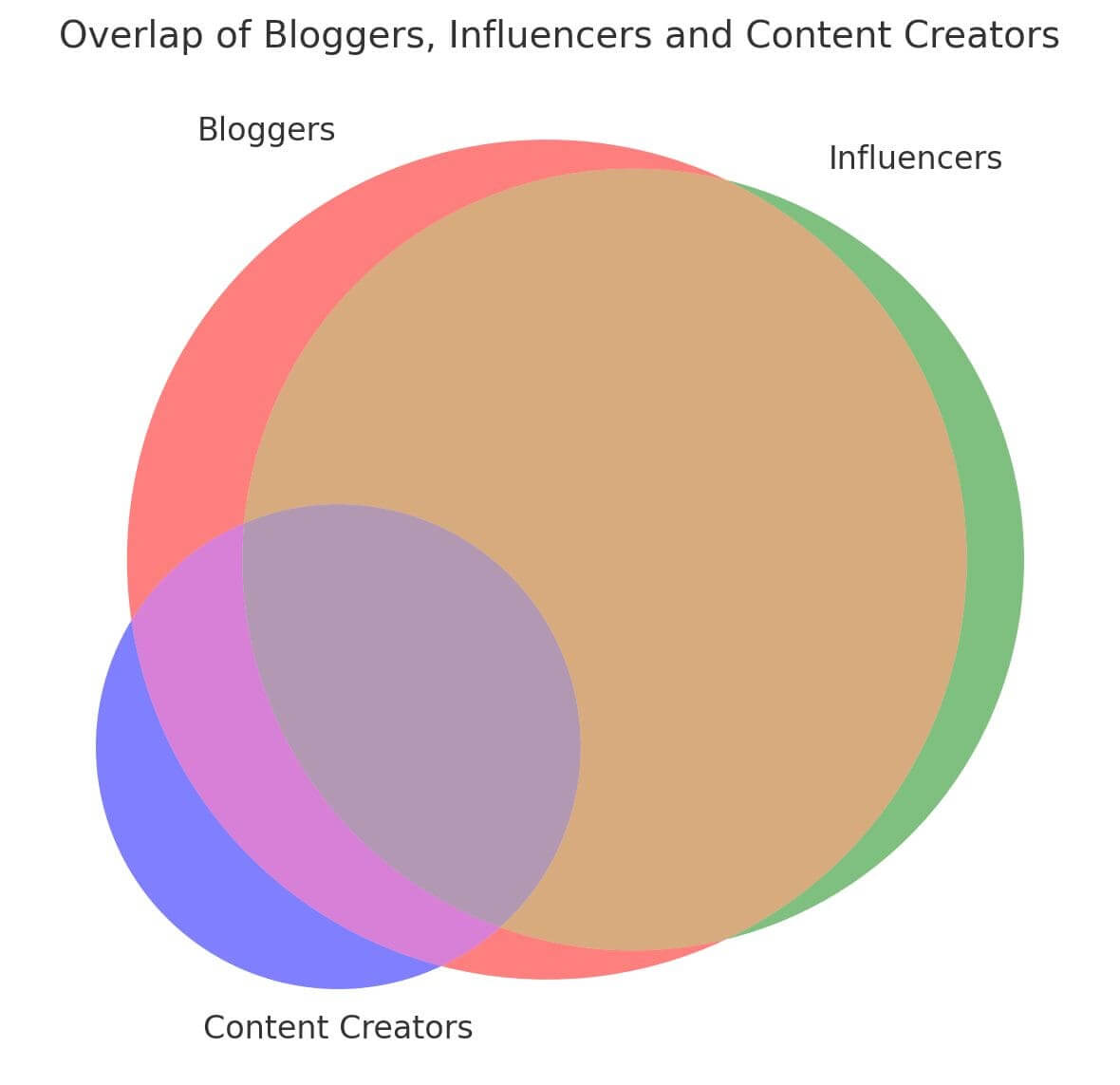
Overlap of Bloggers, Influencers and Content Creators.
As the Venn diagram above suggests, bloggers and influencers overlap but aren’t identical. Many influencers do have blogs, and many bloggers cultivate social media followings – but each role has its own strengths. Both fall under the big umbrella of content creators, yet an influencer’s clout comes from their social follower community, while a blogger’s comes from their website content and readership. Now, let’s dive into the key differences in how bloggers and influencers operate.
Both bloggers and influencers create content and connect with audiences, but they do it in different ways. Here are five major differences that matter to brands:
Bloggers predominantly create written long-form content (articles, guides, reviews) hosted on a blog site or website. Their content lives on platforms like WordPress, Medium, or personal domains. These posts can be deep-dive informational pieces that rank on Google and provide value over time. (Think of a 1,500-word blog post reviewing the top 10 skincare products in detail.) Bloggers may incorporate images or even the occasional video, but text is their bread and butter. In contrast, influencers thrive on social media platforms – primarily visual and video channels. Instagram, TikTok, YouTube, and Facebook are among the most popular homes for influencer content. Influencers create short-form videos, Stories, photos, and live streams that grab attention in the feed. Each post is generally more bite-sized than a blog article, but an influencer often posts more frequently. Platforms like TikTok favor super short clips, YouTube favors longer videos, and Instagram sits in between; influencers adapt their content style to each channel. Importantly, a blogger’s content is hosted on their own site (which they control), whereas an influencer’s content is subject to the algorithms and rules of whatever social platform they use.
How people find their content also differs. Bloggers rely heavily on search engines and subscriptions for traffic. A well-SEO-optimized blog post can keep attracting new readers via Google search results for months or even years after it’s published. For example, someone might search “best budget gaming laptops” and land on a tech blogger’s 6-month-old article. This long-tail discovery means blogger content has a longer shelf life. In fact, the cumulative effect is huge – as mentioned, businesses with blogs see 67% more leads due to this steady organic traffic. Influencers, on the other hand, reach their audience in real-time through social feeds. Discovery is driven by social algorithms, hashtags, and shares. When an influencer posts a new makeup tutorial or unboxing video, most of its engagement happens in the first 24–48 hours as followers see it in their feed. Viral reach is possible if followers share it or if the platform’s algorithm features it. Social media is a fast-moving stream: posts trend briefly then get buried. However, the immediate reach can be massive – 87% of consumers now use social media to research products, and 72% of Gen Z and Millennials follow influencers. That means an influencer’s recommendation can put your product in front of thousands overnight, especially if it catches on. Bloggers trade quick viral hits for slow-burn traffic, whereas influencers trade longevity for instant eyeballs and buzz.
Both bloggers and influencers build communities, but they engage with fans differently. Influencers interact with followers largely within social apps: replying to comments on their posts, hosting Instagram Live or TikTok Live sessions, responding to DMs, and creating interactive Stories/polls. This creates a sense of real-time intimacy. Influencers often cultivate a persona that followers feel personally connected to, and they maintain engagement by frequently liking and replying to fans’ comments in a casual, conversational tone. Bloggers, by contrast, may engage through blog comments, email newsletters, or social media but often in a more measured, one-on-one manner. It’s not uncommon for a blogger to respond to a thoughtful comment on their blog post or answer reader questions on Twitter. The interaction tends to be deeper and more inquiry-driven (“thanks for this detailed review, how would you compare product X vs Y?”) as opposed to the rapid-fire comments on an Instagram photo. Bloggers might also engage readers by updating posts with new info, running contests or giveaways on their blog, or fostering a community forum on their site. In short, influencers excel at quick, snackable interactions and building hype, while bloggers excel at in-depth discussions and providing thorough answers. Both approaches build trust, just through different communication styles.
A subtle but important difference is who owns the content and how long it lasts. Bloggers own their content outright when it’s on their own site. They have full control – a blog post they wrote five years ago is still there, still generating traffic (if it’s evergreen), and they can update or repurpose it anytime. This content is part of the brand asset of the blogger’s site. Also, the blog’s design and subscriber list belong to the blogger, giving them independence. Influencers, however, are building on rented land – their content lives on Instagram, YouTube, TikTok, etc. If the platform’s rules change or an algorithm shifts, their reach can be drastically affected overnight. (Remember when Instagram algorithm changes tanked organic reach for many creators?) They don’t fully control how their content is distributed – the platform does. Additionally, social content tends to have a short lifespan in the feed (a tweet might get engagement for a day or two; an Instagram post maybe a week at most of visibility). There’s little long-term discoverability unless someone scrolls way back or the influencer constantly reshares it. This means from a brand perspective, a blog review or article can keep influencing new customers long after the initial publish, whereas a sponsored Instagram post has its big impact in the first few days. Of course, influencers can save Stories as highlights or compile content, but generally the turnover is rapid. This difference also means risk vs reward: an influencer campaign can yield quick sales spikes but may not sustain, while a blogger partnership might slowly build referrals over time but not cause an immediate rush.
As you can see, bloggers vs influencers each offer distinct value. Bloggers shine in providing depth, evergreen content, and SEO value, while influencers bring speed, visual impact, and personal connection. Next, let’s talk about a hot topic in the influencer world that blurs the lines: micro-influencers, and how user-generated content (UGC) from these creators is a game-changer for brands (especially in e-commerce).
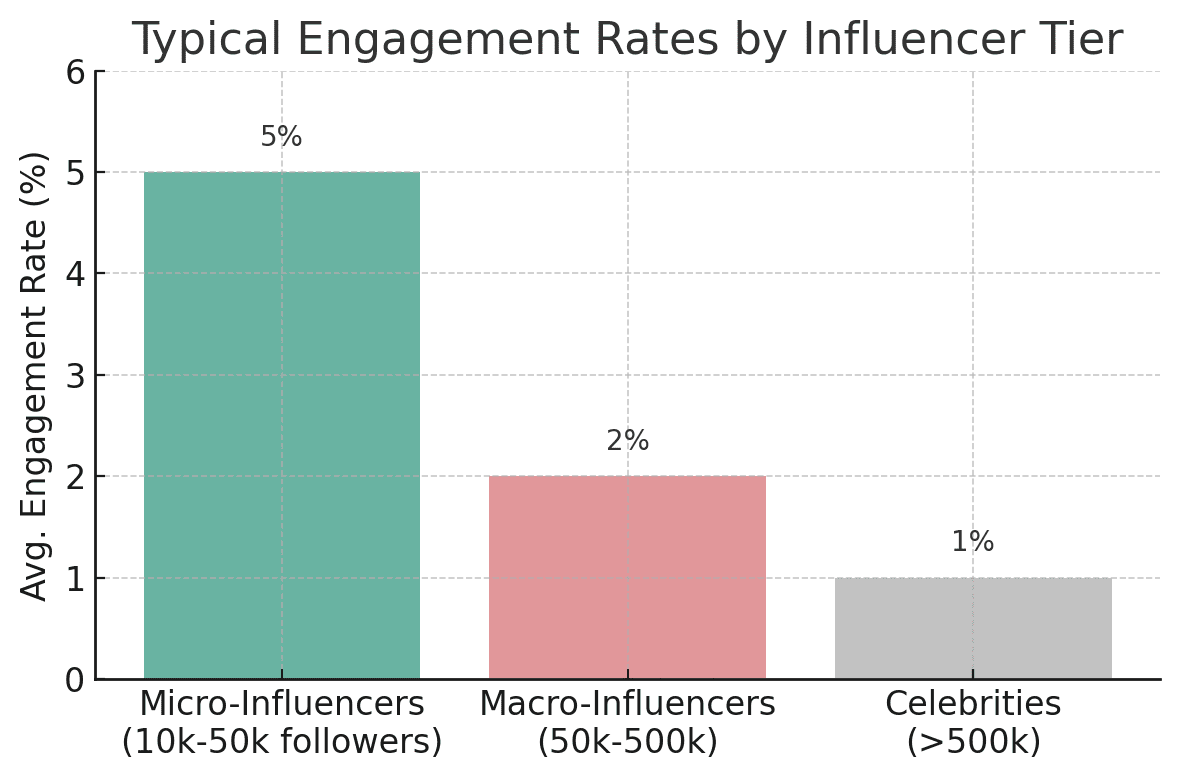
In the influencer universe, bigger isn’t always better. Micro-influencers – generally creators with anywhere from a few thousand up to ~50,000 followers – have risen to prominence for delivering authentic engagement and high-impact content on a smaller scale. These are often everyday people who’ve built a niche community around a particular interest (e.g. a fashion student with 15k Instagram followers who love thrifted outfits, or a mom with 8k followers sharing toddler meal ideas). For brands, especially e-commerce brands and Amazon sellers, micro-influencers can be a sweet spot for collaboration.
Why all the buzz about micro-influencers? Here are a few key reasons:
Micro-influencers typically enjoy a much higher engagement rate with their audience than macro-influencers or celebrities. Their follower base is smaller but highly connected and trusting. Studies show micro-influencers can have engagement rates up to 60% higher than macro-influencers. In other words, a micro-influencer’s post might get proportionally more likes, comments, and shares because their followers are more actively interested. This makes their recommendations really potent. (After all, which is more persuasive: a mega-celebrity who half your customers know is paid to post an ad, or a relatable micro-influencer who genuinely seems to love the product?) No surprise, surveys find 82% of consumers are more likely to act on a micro-influencer’s recommendation than on an average person’s or even a bigger influencer’s. That trust translates into tangible action.
Micro-influencers often cater to very specific interests or communities. For example, a micro-influencer might focus on vegan baking, indie skincare brands, or tech gadgets for gamers. This niche focus means their followers are exactly the kind of consumers interested in those topics. A partnership with a micro-influencer can give brands direct access to a pre-qualified audience. An Amazon seller launching a new eco-friendly kitchen gadget, for instance, might partner with several micro-influencers known for sustainable living content – reaching thousands of eco-conscious consumers in one go. Their smaller audience might only be, say, 5,000 strong, but if 5,000 exact target customers see an authentic endorsement, that’s incredibly valuable. In fact, one survey found 82% of people are “highly likely” to follow a micro-influencer’s product recommendation, showing how effective these niche voices can be at driving purchases. For Amazon sellers, a single Instagram shoutout from a micro-influencer can spike traffic to your product listing and even boost sales rank – because it’s coming from a trusted peer voice.
Working with micro-influencers tends to be budget-friendly. Many micros will promote a product in exchange for a free sample or a modest fee, rather than the thousands (or millions) a celebrity might charge. Brands can often work with multiple micro-influencers for the cost of one big influencer, significantly expanding reach and content volume. For example, instead of paying $50,000 for one post from a single celebrity, a brand could take that budget (or even a fraction of it) and partner with 20, 50, or more micro-influencers who each create content and reviews. This “many voices vs. one” approach not only spreads risk (if one influencer flakes or underperforms, you still have others delivering), but it generates a diversity of content. And because micro-influencers are typically eager to build their portfolio, they often go the extra mile to impress – meaning very high-quality posts showcasing your product from multiple angles.
One of the unsung benefits of micro-influencer campaigns is the trove of user-generated content (UGC) you get. When, say, 30 micro-influencers each create an Instagram post or TikTok video about your product, you suddenly have 30 pieces of authentic content featuring real people using or talking about your item. Brands can reshare this content (with permission) on their own social media, use it in Instagram Stories, or even feature snippets in product pages and ads. This UGC serves as social proof – it shows potential customers that everyday people (not just your brand’s polished ads) genuinely like the product. For example, beauty brands often repost micro-influencer makeup looks using their products, essentially turning fans into ambassadors. According to one report, a UK retailer that switched from celebrity endorsements to a micro-influencer strategy accumulated a “staggering amount of user-generated content” and saw approval ratings shoot from 10% to 70%. Stack Influence, for instance, is a micro-influencer marketing platform that helps brands do exactly this – accumulating authentic UGC through influencer collaborations so e-commerce sellers have more real-life photos, videos, and testimonials to build trust with shoppers When your Amazon listing is enriched with photos of real people unboxing or using your product, it can dramatically increase buyer confidence.
Typical engagement rates tend to be higher for micro-influencers than for macro-influencers or celebrities. Smaller creators often see 5%+ engagement, far outperforming the 1–2% typical for much larger influencers.
All these reasons explain why micro-influencers have become the darlings of influencer marketing in 2025. Over 55% of marketers running influencer campaigns say they’re investing more in micro-influencers rather than macro or celeb influencers nowsendible.com. For brands (especially new e-commerce brands or Amazon marketplace sellers with limited budget), micro-influencers offer an unbeatable combo of affordability, authenticity, and targeted impact. A coordinated campaign using dozens of micro-influencers can blanket your niche audience in genuine positive buzz, yielding better ROI than a single costly celebrity post. And the best part: you often build an ongoing relationship with these creators, who may continue to support your brand long-term simply because they truly like it. That’s a marketing win that money can’t always buy.
So, blogger or influencer – which one does your brand need? The answer will depend on your goals, target audience, and resources. Often, a mix of both is ideal. To summarize and help you decide, here are some pointers:
You need in-depth content and long-term SEO value. If your goal is to educate your audience, improve your website’s search rankings, or publish detailed reviews and tutorials about your products, a blogger is a great fit. Bloggers are ideal for creating content that remains discoverable and continues to drive traffic for months or years (e.g. a comprehensive blog post that ranks on Google). They’re also well-suited for products or services that need explanation – a tech gadget, a financial service, etc. – where a 1,500-word article can answer customer questions and build authority. Collaborating with bloggers can strengthen your brand’s content marketing; for instance, having a respected blogger write about “Top 10 Hiking Backpacks” featuring your product can lend credibility and send referral traffic your way.
Your goal is brand awareness, buzz, and visual storytelling. If you’re launching a new fashion line or a gadget that looks cool, social influencers can quickly put that product in front of a large audience and create a trend. Use influencers to generate excitement through compelling visuals or demonstrations – an Instagram post showing how your product fits into a lifestyle, a TikTok challenge using your product, or a YouTube video review. Influencers are fantastic for tapping into specific demographics on their favorite platforms (e.g. a Gen Z audience on TikTok). They also provide a face and personality to your marketing, which humanizes your brand. If you want immediate feedback and engagement (comments, likes, shares) and access to a community that trusts the influencer’s taste, this is the way to go. Just be ready for an initial spike in interest – and ensure your website or Amazon stock is prepared to handle it if an influencer post goes viral!
You seek cost-effective marketing, niche targeting, and lots of UGC. As discussed, micro-influencers are perfect for smaller budgets and highly targeted campaigns. If you’d rather have 50 people each share genuine posts about your product than one post from a single star, micro-influencers are your best friends. They’re particularly useful for e-commerce sellers who need to generate reviews, testimonials, and social proof. For example, if you’re an Amazon seller looking to climb in rankings, partnering with numerous micro-influencers to review your product can kickstart sales and gather those crucial early reviews (just ensure all guidelines are followed). Micro-influencers will give you plenty of content to repurpose and often a higher conversion rate from their audience. Their authenticity rubs off on your brand. This strategy is great for new product launches in a specific community – like a new fitness accessory promoted through dozens of fitness micro-influencers, creating a ripple effect among fitness enthusiasts.
There’s no rule saying you must choose either bloggers or influencers. Many brands run integrated campaigns. For instance, you might invite a blogger to write a detailed article about your product (for depth and SEO) and have that same person or another influencer share a quick video snippet on Instagram (for reach and engagement). Or you might have a blogger create content which you then ask micro-influencers to share or talk about, creating a content “echo.” Smart brands often repurpose influencer content on their own blog and social channels, blurring the lines between the two worlds. The end game is to get a steady drumbeat of authentic content across channels. Whether it’s a blog or an Instagram feed, the core principles remain: quality content, genuine enthusiasm, and trust with the audience. Both bloggers and influencers can deliver those if you pick the right partners.
Bloggers and influencers each bring something unique to the table. Bloggers offer rich storytelling, expertise, and evergreen visibility; influencers offer personality-driven outreach, quick exposure, and creative visuals. Think about your brand’s needs – is it education or inspiration? Search traffic or social buzz? Ideally, craft a strategy that synergizes both. In a digital landscape where content is king and authenticity is queen, collaborating with the right creators – big or small – can propel your brand to new heights. And whether you team up with a top blogger in your industry or 100 micro-influencers on Instagram, always focus on building genuine relationships. When the partnership is authentic, the content resonates, and everyone (you, the creator, and the audience) wins in the end.
Stop scrolling! If you're a content creator or e-commerce brand, you only have a few seconds to captivate your audience on Instagram. Micro-influencers and Amazon sellers know that in an era of information overload, grabbing attention quickly is everything. That's where Instagram hooks come in – those first words, visuals, or moments in your content that stop the scroll and compel viewers to keep watching. In this comprehensive guide, we'll explore what Instagram hooks are, why they matter (especially for micro influencers, content creators, and online brands), and highlight the best hook strategies – complete with examples, a handy comparison chart, and tips on when and where each type of hook performs best.
Whether you're creating UGC (user-generated content) with influencers or crafting your own Instagram Reels to promote an Amazon product, mastering hooks will skyrocket your engagement. Let's dive in and learn how to keep viewers glued to your content from the very first second!

Instagram hooks are the brief, attention-grabbing elements at the very start of your content – think of the opening line in a Reel, the first frame of a video, or even the caption lead-in. A hook can be an intriguing question, a startling statement, a compelling visual, or a snippet of storytelling – anything that captures the audience’s attention and entices them to keep watching or reading. In other words, the hook is your content’s first impression, and it determines whether someone stays engaged or swipes away.
Why are hooks so crucial, especially in 2025? Simply put, human attention spans are shrinking and social media feeds are more crowded than ever. Studies have found that the average human attention span dropped from 12 seconds in 2000 to around 8 seconds by 2013. On mobile, people often decide within a split-second if something is worth their time – Facebook data indicates users spend only ~1.7 seconds on a piece of content on mobile (about 2.5 seconds on desktop) before moving on. That means you have literally 2–3 seconds to hook a viewer before they scroll past your Instagram post or Reel.
Not only are audiences quicker to scroll away, but Instagram’s algorithmic boost for Reels makes competition fierce. Instagram heavily promotes Reels content – Reels appear in the main feed, the Reels tab, and the Explore page, giving them significantly higher reach than regular posts or Stories. This is great news for creators if you can hold viewers' attention. However, increased reach means nothing if viewers drop off in the first seconds. As Instagram experts note, “The first 1–3 seconds of your Reel (or the first line of your caption) decides everything. If it doesn’t grab attention immediately, it’s ignored.” In other words, no hook = no engagement.
Hooks matter for more than just views – they set the stage for higher engagement and watch time. A strong hook leads to longer view duration, which signals to the algorithm that your content is interesting, leading Instagram to show it to more people. It can also drive actions like likes, comments, shares, and saves. For micro-influencers who thrive on authentic engagement, a good hook can dramatically boost the portion of followers who actually stop and interact with your post. And for brands (from DTC entrepreneurs to Amazon sellers), hooking viewers early means more potential customers actually hear your message or see your product demo rather than scrolling past it.
In short, Instagram hooks are your secret weapon to combat short attention spans, maximize reach, and convert casual scrollers into engaged viewers. Now, let's look at some of the best hook strategies you can use – and where each works best.
There are many creative ways to hook an audience. Below, we’ve compiled some of the best Instagram hook examples – from clever phrases to tactical approaches – and explained what makes each effective. We’ve also noted which scenarios or content types each hook style is best suited for (so you know when to use them).
Use this chart breakdown as a quick reference for different hook strategies and their strengths:
As you can see, each hook style serves a different purpose and audience need. Let’s break down a few of these hook approaches with more context and examples:
Of course, you can mix and match these hook styles. Some of the most effective hooks combine elements – for example: “Stop scrolling! Did you know you can save money with this one Amazon shopping hack?” This one starts with a command + offers value + triggers curiosity all at once. As long as it hits quickly and clearly, feel free to get creative.
Coming up with a hook is as much an art as it is a science. Here are some best practices and tips to help you craft hooks that consistently perform well for your Instagram Reels and videos:
By applying these tips, you’ll improve the odds that your carefully crafted content actually gets the attention it deserves. Remember, the hook is what pulls viewers in, but you also need to keep them watching with quality content after the hook. As one marketer wisely said, “The goal is not just to grab attention, but to engage your viewers. Make them curious, make them laugh, make them think.” Once you have their eyes on your video, deliver value all the way through.
A post shared by Stack Influence (@stackinfluence)
One powerful way to supercharge your Instagram hooks is by collaborating with micro-influencers and using authentic user-generated content. Micro-influencers (creators with smaller but dedicated followings) often have a trust factor with their audience that big celebrities lack – their endorsements feel like recommendations from a friend, which can make a hook even more compelling. In the ultra-competitive world of e-commerce, brands and Amazon sellers are increasingly teaming up with micro and nano influencers to gain an edge.These creators produce relatable UGC – from unboxing videos to personal testimonials – that draws viewers in because it’s genuine and story-driven.
For example, if an influencer starts a Reel with, "I have to confess – I didn’t think this product would work...", their followers are immediately intrigued (story hook) and also trust that what follows will be an honest take. Featuring such influencer-generated hooks in your brand’s content can combine the power of a great hook with the credibility of a real user’s voice. Instagram’s own Creator accounts have noted that showing people (especially top Instagram creators) in the first seconds of your Reel is an excellent way to grab attention. So consider highlighting an influencer’s face or voice right at the start of a video about your product – it can stop scrollers in their tracks.
At Stack Influence, we’ve seen firsthand how pairing strong hooks with micro-influencer content can boost social media engagement. When a campaign’s UGC videos begin with catchy, authentic hooks, the results often include higher view times and more comments from genuinely interested consumers. It’s a winning formula: great hook + relatable creator = content that converts viewers into believers.
In today’s fast-scrolling social media environment, mastering Instagram hooks is a must for content creators, top TikTok influencers, micro-influencers, and brands alike. A well-crafted hook is the difference between a viewer stopping to watch your video or swiping past it in a heartbeat. By using the right hook strategies – whether it’s sparking curiosity, creating urgency, telling a story, issuing a direct challenge, or promising immediate value – you can dramatically increase your Instagram engagement and reach.
Keep in mind that no single formula fits all. The best Instagram hook for you depends on your audience and message. Don’t be afraid to experiment with different hook styles and track what resonates. Stay authentic, deliver on your hook’s promise, and always aim to either entertain, inform, or inspire your viewer in those crucial first moments.
With the examples and tips in this guide, you’re ready to start creating scroll-stopping content. Use hooks to capture attention, pair them with awesome content and relatable micro-influencer charm, and watch how more viewers start liking, commenting, saving – even shopping – because they stayed glued to your Instagram Reel from start to finish. Now it’s your turn: go ahead and hook your audience – you’ve got just a few seconds, so make them count!
A product review video is exactly what it sounds like – a video where someone (often a customer or content creator) shares their honest opinion about a product. Think of it as the modern, visual version of word-of-mouth recommendations. Whether you’re an Amazon seller, an e-commerce brand owner, or a micro-influencer content creator yourself, mastering product review videos can boost trust and sales. In fact, in today’s ultra-competitive e-commerce world, brands and Amazon sellers are increasingly partnering with micro influencers to produce authentic user-generated content (UGC) like product reviews that consumers find more credible than slick ads. People love hearing about real experiences – and that’s exactly what a good product review video delivers in an engaging format.
Simply put, a product review video is a video where someone showcases and gives their review (feedback, pros/cons, personal opinion) of a specific product. This could be a customer, a content creator, or a micro-influencer sharing how the product looks, feels, and performs in real life. For example, imagine unboxing a new gadget and talking through your first impressions – you’re essentially creating a product review video. The goal is to give viewers an honest, first-hand look at the product’s features and your experience, helping them decide if it’s right for them. You’ve probably seen these videos on YouTube, Instagram, or TikTok – from tech unboxings to makeup tutorials – where the reviewer’s genuine reaction builds trust with the audience.
These videos are a form of UGC – content created by real users – and they can be incredibly powerful. Why? Because they show a product in use by a real person, not a polished studio ad. Authenticity is key: 92% of consumers trust word-of-mouth and UGC more than traditional advertising, so a sincere review from a relatable creator can carry a lot of weight. Next, we’ll dive into why these review videos matter so much for your brand’s success.
Product review videos aren’t just “nice to have” – they can be game-changers for e-commerce and marketing. Here are some of the biggest benefits of incorporating review videos into your strategy:
Impact of video content on marketing and purchase decisions. Marketers report that video content massively boosts brand awareness and website traffic, and consumers often buy after seeing video reviews. These statistics underscore the persuasive power of video reviews in influencing shoppers and driving online traffic.
As the chart above shows, the impact of video is undeniable. Around 95% of marketing professionals say that video has helped increase brand awareness, and 91% say video content has driven up their website traffic. Consumers love video too: a huge majority have been swayed to purchase something after watching a review or demo video. In short, product review videos combine the persuasive power of social proof with the high engagement of video – a perfect recipe for boosting your e-commerce results.
Now that we know why review videos are so powerful, let’s get into the fun part: how to make a product review video step by step. Don’t worry – you don’t need a Hollywood film crew or a million followers to do this. We’ll walk through the process, and you’ll see it’s totally doable, even on a budget.
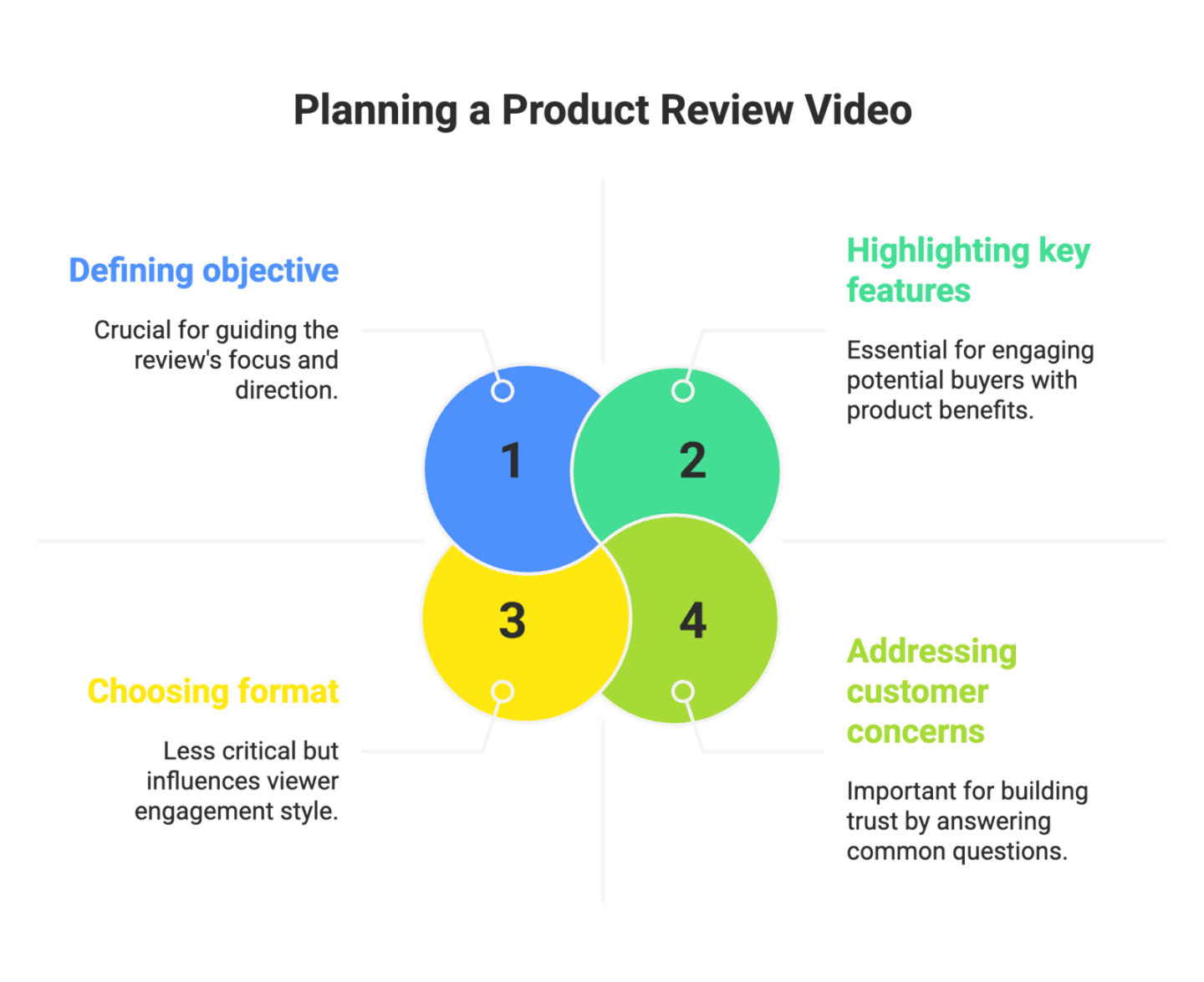
Creating a great product review video involves some planning and creativity, but it’s straightforward if you follow these steps. We’ll go through each stage, from preparation to promotion:
Every successful video starts with a solid plan. Before you hit record, take some time to think about what story you want to tell and how you’ll tell it. Planning your review includes deciding on:
By planning these elements upfront, you set a clear direction for your video. This will save you time during filming and editing, and ensure the final review is focused and impactful. As the saying goes, failing to plan is planning to fail. So don’t skip this step – it’ll make the rest of the process much smoother.
With a plan in place, it’s time to figure out what you’re actually going to say and show. You don’t need a word-for-word script (unless that’s your style), but creating an outline or bullet-point script is super helpful. This prevents the dreaded “umm, what was I going to say next?” moments while recording.
Here are some tips for your review video script:
With these bullet points in hand, you’ll find it much easier to record without losing track. Keep the outline visible while filming (you can even tape bullet points just out of frame behind the camera). This way, you stay on-message and cover everything important.
Now, let’s talk about the setup. You want your product review video to look and sound good – but don’t worry, you don’t need a professional studio. You just need a quiet, well-lit space and some basic gear:
Setting up might take a bit of adjusting, but it’s worth it. Once your space is ready, you’ll feel more confident and can focus on delivering a great review. Remember, you don’t need fancy gear – good lighting and clear audio can be achieved with minimal equipment. Plenty of successful UGC creators film with just a smartphone, a ring light, and a $20 microphone!
Time to film your product review video. This is the fun part where everything comes together. Keep these pointers in mind as you record:
Filming a review video is basically having a one-sided conversation with your future viewers. Imagine them in your mind if it helps. And remember, authenticity beats perfection – if you giggle or have a quirky moment, that can make viewers like you more. So have fun with it! Once you’ve got all the footage (including B-roll of the product, which are extra shots you might overlay later), you’re ready for the next step: editing.
Now it’s time to polish your footage into a tight, viewer-friendly review. Editing might involve cutting down clips, adding text, music, etc. Don’t be intimidated – there are lots of easy editing tools available (many are free). Here’s how to approach the editing process:
There are user-friendly editing tools like iMovie, Adobe Premiere Rush, CapCut, or even Canva’s video editor that can handle these tasks. Take it step by step: cut out mistakes, add any titles/text, insert music if desired, and you’re done. Your aim is a clean final cut that delivers the review in a clear and engaging way. It doesn’t need to be perfect – remember, authenticity is more important. As long as the viewer can follow along and enjoy the content, you’ve succeeded.
Time to share your masterpiece with the world! Publishing the video is straightforward, but to get the most traction, be strategic about how you do it:
Congratulations – at this point, you’ve planned, filmed, edited, and published a complete product review video! But before you sit back and watch the views roll in, let’s cover a few extra tips to take your review videos to the next level and ensure you get the best results.

Following the steps above will give you a solid product review video. Now these additional tips and tricks can make your content even more effective:
When it comes to social media and UGC content, shorter is often sweeter. Attention spans online are limited. Try to convey your message as efficiently as possible – viewers will appreciate a concise, to-the-point review. Aim for just a few minutes if you can, especially for platforms like TikTok or Instagram. Even on YouTube, cutting out fluff will likely lead to more watch time and less drop-off. A study of social content found that videos under a minute often get the highest completion rates. So, as you edit, ask yourself: “Does this part really add value for the viewer?” If not, consider trimming it. That said, don’t cut important info – it’s a balance. A tightly edited 3-minute video that covers all the essentials will beat a rambling 10-minute one every time in terms of audience engagement.
If you don’t have the time or resources to create review videos in-house, consider partnering with micro-influencers or loyal customers to create them for you. Often, these creators are eager to get free products or a small fee in exchange for their honest review content. Micro-influencers (those with smaller, focused followings) can be golden for this because their audiences trust them deeply. In fact, collaborations with micro-influencers can feel like word-of-mouth recommendations at scale. One option is to use a platform like Stack Influence to find and manage micro-influencer campaigns – Stack Influence’s platform connects brands with everyday content creators and automates product seeding (sending out products for review), helping you easily generate authentic UGC and boost brand awareness. By sending your product to a handful of targeted micro-influencers, you could quickly accumulate several high-quality product review videos from different perspectives. This not only saves you the effort of making all the content yourself, but also provides social proof from multiple voices. Just remember to give creators the freedom to be honest – you want genuine opinions, not scripted endorsements, for credibility.
There are hundreds of product reviews out there – make yours stand out by adding your unique personality. Don’t be afraid to be a little entertaining. If a touch of humor or an anecdote fits your style, go for it! For example, you might share a quick funny story about your first attempt to use the product, or a relatable joke if something silly happened (like “I was so excited to test this coffee maker that I nearly made 5 cups of espresso in one afternoon – my caffeine jitters could have powered a rocket!”). A laugh or two can make your review more memorable. Of course, keep it appropriate and ensure it doesn’t overshadow the actual information. The goal is to educate and entertain. A reviewer with a bit of charisma and real-life flavor will keep viewers engaged till the end. Think of popular YouTubers – they often inject their quirks or catchphrases which builds a loyal audience over time. You can do the same on a scale that suits you.
Make your review video a two-way conversation. Prompt the viewers to interact: ask them to leave a comment with their own questions or experiences (“Have you tried this product? Let me know your thoughts below!”). If applicable, you can even encourage viewers to request other products they’d like you to review. This not only boosts engagement (good for the algorithm), but also gives you insight and ideas for future content. If you’re posting on a platform with a built-in community (like a subreddit, Facebook group, etc.), share your video there and ask for feedback. The more buzz you can stir up around the review, the better it will perform and the more trust it builds. And when people do comment or ask questions, be responsive – it shows that you’re not just using the review as a sales pitch, but you genuinely care about helping others make informed decisions.
By implementing these tips, you’ll elevate your product review videos from good to great. You’ll keep viewers hooked, earn their trust, and ultimately see better results – whether that’s more followers, higher engagement, or increased sales for the product.
After all this effort in creating and promoting your product review video, naturally you’ll want to know if it’s working. How do you tell if your review is actually helping your business? Here are a few key metrics (KPIs) to monitor:
First, check how many people are watching your video and for how long. A decent view count shows your promotion is reaching people. Watch time or average view duration tells you if people stick around – if many drop off after 10 seconds, your intro might need improvement. Most platforms (YouTube, Instagram insights, etc.) provide these stats.
Look at likes, comments, shares, and clicks. Are viewers interacting with the video? High engagement is a sign that the content resonated. Comments in particular can be gold – qualitative feedback like “This was really helpful” or common questions can inform your future videos or even product improvements. Shares mean viewers found it valuable enough to show others (a big win, since it amplifies reach). If you posted the video on multiple channels, combine the engagement from all sources for a full picture.
If you included a link to your product or website (say in the description or via a swipe-up), track how many people clicked it. You can use unique tracking links or Google Analytics UTM parameters to see traffic coming from the video. More importantly, track conversions: did people who watched the review end up buying the product? For example, Amazon sellers can see if sales spiked after the video went live (and Amazon’s Influencer Program even attributes sales to influencer videos in some cases). If you see an uptick in conversion rate on your product page when the video is present, that’s a strong indicator of success. Tools like Google Analytics, or built-in e-commerce platform analytics (Shopify, Amazon Seller Central, etc.) will help tie sales to referral sources.
If one of your goals is to grow your audience (not just sell one product), check if you gained new subscribers or followers after releasing the video. A good review video can attract people to your channel/page. For instance, a viewer might subscribe for more content or follow your brand on social media for updates. This is a more long-term benefit, but it’s worthwhile to watch.
You don’t need to drown in data – just pick a few metrics that align with your goals. For example, if sales are the goal, focus on clicks and conversion rate. If brand awareness is the goal, look at view count and reach. One more thing: gather feedback outside the numbers too. Ask customers how they heard about your product – you might find many mention the video. Or if you’re an influencer, ask your community what they thought of the review. Continuous improvement is the name of the game.
Creating a product review video might seem like a lot of steps, but each step is totally manageable – and the payoff can be huge. You’ll end up with authentic content that builds trust with potential customers and differentiates your brand in a crowded marketplace. Remember, today’s consumers (especially on platforms like Amazon) crave authentic insights before they buy. By providing a helpful review, you’re meeting that need and likely boosting your conversions as a result.
So, roll up your sleeves and give it a try! Start with one product and follow this guide – plan your angle, film it with genuine enthusiasm, and let your content creator side shine. Whether you do it yourself or team up with a micro-influencer via a service like Stack Influence, the key is to keep it real and valuable for viewers. With each video you’ll get better and find your own style.
Now it’s your turn to make a product review video that wows your audience. Happy filming, and here’s to turning honest opinions into engaging content that helps drive your e-commerce success!
In the ultra-competitive world of social media and e-commerce, mom influencers (often micro-influencers) are leveraging hashtags to expand their reach and build trust with their audience.Hashtags act as discovery tools – essentially free advertising – that help content creators get found by other users interested in similar topics. For mom influencers juggling content about parenting, lifestyle, and family, using the right hashtags can make a big difference in growing an engaged following. In fact, despite being around for years, hashtags “remain one of the best methods for helping social media users find content”. This comprehensive guide breaks down the best hashtags for mom influencers – from general to niche, casual to informative – and how to use them effectively. We’ll also include charts, examples, and pro tips to optimize your hashtag strategy (and boost your micro-influencer success in the e-commerce world, whether you’re working with Amazon sellers, creating UGC, or just sharing everyday mom life).
Short answer: hashtags = discoverability. For mom content creators and micro-influencers, hashtags are a direct line to your target audience. They categorize your posts (on Instagram, TikTok, etc.) so that other users – especially fellow parents – can find them by searching or following those tags. Growing a loyal, engaged audience is key to monetizing your influence (brand deals, affiliate sales, etc.), but “attracting and retaining an engaged audience… can be tricky”. That’s where a smart hashtag strategy helps: it puts your posts in front of people who don’t yet follow you but are interested in content like yours.
Moreover, mom influencers often start out as micro-influencers focused on specific niches or communities. As Stack Influence points out, mom influencers typically “focus on specific niches so you can tailor each campaign to your ideal target audience”. In other words, a mom influencer might specialize in healthy kids’ meals, homeschooling, fitness for moms, or fashion for toddlers. Using niche hashtags (more on that below) allows you to tap into those focused communities. At the same time, broad hashtags connect you to the larger parenting community. The bottom line: the right mix of hashtags increases your visibility, attracts your ideal followers, and even boosts credibility – great content plus social proof can lead to collaboration opportunities with brands.
(Keep in mind that authenticity matters: moms trust real voices. When your posts appear under relevant hashtags and showcase genuine experiences, it creates a form of user-generated content (UGC) that audiences find highly credible. In fact, 90% of consumers say authenticity is important when deciding which brands or influencers to follow, and UGC is viewed as one of the most authentic types of content.

One key strategy is balancing general hashtags and niche hashtags. General hashtags have broad appeal among all moms, while niche hashtags target a specific subgroup or interest.
According to influencer experts, the best approach is to mix popular and niche hashtags. You want some broad tags so you don’t miss out on large search volumes, and some narrow tags so you land in front of the exact audience that cares most. “Use popular hashtags so long as you don’t rely on them too heavily… The trick to avoid being swallowed in the sea of posts… is to also use hashtags that are more relevant to your niche.” In practice, you might choose a few big hashtags (e.g. 3–5 tags like #MomLife, #MomBloggers) and then 5–10 niche tags specific to your post (like #BreastfeedingTips for a nursing-related post, or #ToddlerCrafts for a DIY kids activity). This way you get the best of both worlds – broad reach and targeted reach.
Local hashtags are another category to consider. These are hashtags tied to a location – for example, #DallasMoms, #UKMums, #LondonMums, #SoCalMoms. They are essentially niche tags by geography. Using locally focused tags makes it easier for people in your area to find and engage with you. If your content or business has a local angle, this is a smart move. It might also open up opportunities to collaborate with local brands or attend regional events. A mom influencer in New York City, for instance, could include #NYCMoms or #BrooklynMom to connect with nearby parents and local businesses. Don’t underestimate the power of community – many followers love seeing content from moms in their city or country, and the engagement can be higher because of that personal connection.
Chart: Examples of General vs. Niche and Casual vs. Informative Hashtags – Mom influencer hashtags can also be categorized by the tone or purpose of the content. Broadly, some hashtags are used for casual/relatable posts and others for informative/educational posts. And you can have both types in general or niche categories. Below is a chart summarizing examples of each type:
In the chart above: general-casual tags (left top cell) are broad communities and everyday moments – e.g. #MomLife is used by millions for everything from messy toddler antics to coffee-fueled mom memes. General-informative tags (right top) are widely used when sharing advice or knowledge – e.g. #ParentingTips or #MomHacks signal that your post contains useful how-to info for parents. On the niche side, niche-casual (left bottom) might be used to share relatable moments within a specific community (a post about twins with #TwinMom, or a funny work-from-home mom moment with #WAHM for work-at-home moms). Niche-informative tags (bottom right) would be for specialized advice – e.g. a post about managing autism meltdowns tagged #AutismMomTips, or a breastfeeding advice video with #BreastfeedingTips. By mixing and matching these categories in your hashtag set, you can reach different segments of your audience effectively.
It’s also important to match your hashtags to the type of content you’re posting. As a mom influencer, some of your posts will be lighthearted, candid glimpses of everyday life (the casual side), while others might be more informative, offering value in the form of tips, tutorials, or inspirational messages. In fact, successful mom influencers often balance both: they share “fun and relatable parenting moments” as well as “motherhood tips and advice”. Your hashtag choices should reflect this balance:
Many posts will blend both tones – and that’s okay! Just be mindful of what you want to emphasize. If your Instagram Reel is a parody of mom life but also contains a useful hack, feel free to use both humorous tags (#MomComedy, #RealMomMoments) and an informative tag (#CleaningHack, #OrganizingTips). The key is that every hashtag you use is relevant to the content. Avoid tagging a post #momtips if it’s purely a joke with no actual tip, for example, as that could disappoint or confuse users coming from that hashtag. Relevance keeps your audience (and the algorithm) happy.
To get a sense of what tags are hot right now, let’s look at some of the most popular mom-related hashtags on Instagram. According to recent data, the top tags used by mom influencers include #mominfluencer, #momblogger, #momlife, #momsofinstagram, and #mommyblogger, among others. These broad tags consistently appear on millions of posts. For example, #mominfluencer itself has become a trending term as more moms embrace content creation – on Instagram, nearly half of the top posts in the mom influencer space use that tag, with #momblogger and #momlife not far behind. Even tags like #mompreneur (for mom entrepreneurs) and #motherhood remain highly popular.It’s worth noting that generic tags such as #influencer or even #follow sometimes show up in these lists. However, while adding a generic #follow might get you a few extra random likes, it’s usually not going to attract your target audience (and could come off as spammy). So, it’s generally better to focus on mom-centric tags.That said, don’t go overboard chasing viral hashtags that don’t fit your niche. Trending tags can be fickle. It’s usually wise to stick with relevant trends – for instance, if #MomHumor or #ParentingFail is trending and you have a funny story to share, go for it. But jumping on a completely unrelated trending hashtag (say, a random celebrity meme) might bring views without any lasting engagement or follows. Always circle back to the golden rule: attract your ideal followers. A thousand views from people who don’t care about mom content won’t help you grow sustainably, whereas a hundred views from fellow moms could turn into real fans. As one guide put it: “Your goal isn’t to attract all social media users, it’s to attract users who are interested in the type of content you post”. Hashtags are a means to that end.

Finally, here are some best practices and tips to optimize your hashtag strategy. These tips will help ensure you’re not just using the best hashtags for mom influencers, but using them in the best way possible:
By following these tips and tailoring them to your personal style, you’ll be well on your way to mastering hashtags as a mom influencer. It’s a mix of art and science: a dash of research, a pinch of strategy, and a whole lot of authenticity. Remember, every mom’s journey is unique – so while you can learn from what others do, don’t be afraid to develop your own hashtag playbook that feels right for you.
Harnessing the best hashtags for mom influencers can significantly boost your growth on Instagram, TikTok, or whatever platform you call home. It’s all about finding the sweet spot between reaching everyone and reaching the right ones. By combining general and niche hashtags, and balancing the casual and informative aspects of your content, you’ll cast a wide net yet still hook the followers who truly connect with your message. Along the way, you’ll build a community that finds value in what you share – whether it’s a candid toddler meltdown moment or a genius hack to get kids to eat veggies.
So, go forth and hashtag with confidence! Refine your strategy, learn from your analytics, and most importantly, be yourself. The world of mom influencers on social media is vast, but there’s always room for another authentic voice. With these hashtag tips – and maybe a little help from influencer platforms like Stack Influence – you’re equipped to grow your reach and make your mark. Happy hashtagging, and remember: #MomLife is better when we’re all in it together.
So, you think your dog has what it takes to become the next social media sensation? 🐕✨ With the pet industry booming and one in four pet owners now trying to build a social media brand for their furry friends, turning your pup into a micro-influencer is more achievable (and rewarding) than ever. Pet influencers are big business – the U.S. pet industry has grown from $97 billion in 2019 to a projected $157 billion in 2025 – and brands are eager to work with lovable pets who can create authentic content. In fact, pet influencers often see engagement rates around 5% (nearly 5× higher than human influencers!), because who can scroll past an adorable dog doing something funny? This means even a “small” dog account with a few thousand followers can have a big impact.
U.S. pet industry spending has skyrocketed in recent years – a good sign for aspiring dog influencers, as pet brands are investing more in social media marketing.
Whether you’re in it for fun, freebies, or a new income stream, making your dog an influencer takes dedication and strategy. The good news is you don’t need millions of followers – many successful pet accounts are micro influencers with under 50K followers, yet they attract sponsorships from pet brands, e-commerce startups, and even Amazon sellers looking for user-generated content (UGC). The key is to build an engaged community and showcase your dog’s unique personality. Below, we’ll walk through 10 steps to turn your dog into an influencer and fetch those sponsorships! 🦴📸
A post shared by Katerina Finck (@katerinafinck)
Now let’s dive into each step in detail:
First things first – your dog needs a social media presence of their own. Decide on one or two platforms where pet content thrives. Instagram and TikTok are the go-to channels for most pet influencers (Instagram for cute photos and Reels, TikTok for short viral videos). You can also consider YouTube (for longer vlogs or training videos) or Facebook if it fits your audience. Choose a handle (username) that’s catchy, easy to remember, and clearly about your dog. Fill out your dog’s bio with a bit of personality – make it fun and “introduce” your pup to the world in one or two lines.
If you’re already a content creator yourself, you might create separate profiles – one for your dog and one personal. That way, your dog can shine as the star of their own page, but you can still cross-promote between your account and the dog’s account if you already have followers.
When setting up the profile, think about a theme or aesthetic for the account. Will it be filled with outdoor adventure shots, funny costumes, day-in-the-life snippets, or maybe your dog’s inner “thoughts” as captions? Having a consistent theme or vibe helps new visitors instantly get what your dog’s page is about. Also, make the profile visually appealing: use a cute, clear profile photo of your dog’s face, and consider a color scheme or filter style for your posts to create a cohesive look. This kind of branding makes your dog’s page look professional and inviting at a glance.
Not every pup is a natural model from day one. Some dogs get camera-shy (or more likely, they just want to sniff the camera or wander off!). To become an influencer, your dog needs to be comfortable being photographed and filmed regularly. Start training them to sit, stay, and pose on cue. Use treats or toys as rewards so they associate the camera with fun and goodies. Practice taking photos in different environments so your dog gets used to lights, sounds, or wearing a costume if that’s part of your content.
You want your dog to enjoy this! Many dogs actually love the attention once they understand that sitting still or doing a trick leads to praise (and treats). If your dog knows basic obedience commands, it’s much easier to capture great content. A well-trained dog can learn specific “modeling” skills like looking at a point, balancing an object (hello, treat on the nose challenge!), or even wearing accessories calmly. The more patient and well-behaved your pup is on camera, the more content ideas you can execute together.
And don’t forget, safety and comfort come first. If your dog shows signs of stress (ears back, yawning, trying to escape the situation), take a break. Never force your pet into an outfit or pose that clearly makes them unhappy. Authenticity is key – a happy dog will shine through in the content and make viewers smile, whereas a stressed dog won’t be fun for anyone. So focus on making your filming sessions a playful bonding time. Over time, your pup will learn that camera time = fun time.
With millions of cute dogs on the internet, you’ll want to pinpoint what makes your dog special. Is it a quirky personality trait? A special talent or trick? A distinctive look or breed? Maybe your Corgi “talks” with funny expressions, or your rescue mutt has an inspiring story. Lean into your dog’s uniqueness – this will become their “brand.” For example, some dog influencers are known for fashion and costumes, others for extreme agility stunts, and some for just being adorably derpy in everyday situations. Don’t try to copy an already famous dog; instead, highlight your dog’s one-of-a-kind charm.
Spend some time brainstorming the theme and voice for your content. Will your dog “speak” in first person in captions (as if they’re posting), or will you narrate as the owner? Many successful pet accounts post from the pet’s point of view – it creates a cute persona that fans can connect with. Find a style that fits your pet’s personality: maybe your dog is sassy and comedic, or sweet and wholesome, or an adventurous explorer. Consistently portraying that personality in posts will help build a loyal audience who feels like they “know” your pet.
Also consider your niche. Are you focusing on dog fashion, training tips, comedic skits, travel adventures, or maybe being a dog mom/dad sharing daily life with your pup? Defining a niche helps attract followers interested in that content and makes your dog more attractive to relevant brands later. For instance, if you often post about hiking with your dog, outdoor gear companies might take notice. If baking dog-friendly treats is your thing, pet food/treat brands could be future partners. Find that intersection of what you and your dog love to do and what audiences enjoy – that’s your sweet spot. And remember, authenticity wins: audiences (and brands) love genuine stories and quirks, so let your dog’s true colors shine.
Now that you have your profiles ready and a sense of your dog’s “brand,” it’s content time! To attract and keep followers, you’ll need to post great content regularly. Aim for a consistent posting schedule – whether that’s daily, a few times a week, or whatever you can manage – and stick to it. Consistency helps keep your dog on your followers’ radar and signals to newcomers that your account is active. Many experts suggest posting at least once a day on fast-paced platforms like Instagram for steady growth, but quality matters more than pure quantity. It’s better to post 3 awesome photos in a week than 7 mediocre ones.
strive for clear, well-lit photos and engaging, funny or heartwarming videos. You don’t need a professional camera – modern smartphones can take fantastic pet photos – but pay attention to lighting (natural light works wonders), focus, and composition. For example, get down on your dog’s level when taking photos (it creates a more intimate, eye-level shot) and shoot in bright conditions or outdoors for vibrant images. Try to capture your dog’s eyes and expression – those puppy dog eyes can melt hearts through the screen. If you’re doing action shots, use your phone’s burst mode or a fast shutter app to catch the exact moment (like the mid-air frisbee catch).
Variety can keep things interesting: mix up photos and videos, and explore features like Instagram Stories and Reels, or TikTok trends. Short video clips often get higher engagement than static pics since people love seeing pets in action. In fact, on Instagram about 58% of users become more interested in an account after seeing its Stories – so don’t neglect those temporary but impactful Story posts! Behind-the-scenes snippets, goofy outtakes, or daily life moments can be perfect for Stories and give your audience an “insider” view of your pup’s life.
Finally, always optimize your captions and hashtags. Write captions in a voice that matches your dog’s persona – whether it’s witty one-liners or a short story about what’s happening in the photo. Include a handful of relevant hashtags to help new people find you. For example, tags like #dogsofinstagram, #dogstagram, #puppylove, and breed-specific tags (e.g. #corgisofinstagram) are popular for reaching dog-loving communities. Don’t overstuff with too many tags (it can look spammy), but a mix of popular and niche hashtags (including some about your dog’s specific traits or the content of the post) can boost discoverability. Over time, you’ll learn which tags or content types get the best response – do more of those!
One thing that sets great pet influencers apart is personality – and often that means effectively speaking in the dog’s voice in your content. After all, your dog can’t type (last we checked 🐾⌨️), so it’s up to you to convey their quirky thoughts and feelings. Many popular dog accounts write captions as if the dog is talking (often in a humorous, childlike, or sassy tone). For example, a photo of a guilty-looking pup might be captioned, “Mom caught me stealing socks again… whoops!” This kind of storytelling makes your posts more engaging and shareable. It invites followers into your dog’s world and helps them emotionally connect with your pet. As the Aspire influencer marketing team notes, pet content triggers deep emotional responses – people feel like these pets are their friends.
Authenticity is hugely important in influencer culture. Today’s audiences (and brands) can sniff out inauthentic content quickly. Don’t try to force your dog into trends or skits that don’t fit their personality. If your content feels too staged or overly promotional, it may turn people off. Instead, focus on sharing genuine moments: the goofy habits that make your dog unique, the sweet interactions between you and your pet, or the small adventures you have together. Authentic content not only resonates more, but it also builds trust – and trust leads to higher engagement and loyal followers.
In practice, being authentic also means engaging sincerely: respond to comments with your dog’s “voice” or your own, whichever suits the situation, and show appreciation to your followers. Share your dog’s journey – even challenges or funny fails (did your dog utterly fail at an agility course? Share the blooper reel!). People love a good story and they love honesty. For example, if you’re training your dog to do a new trick, bring your audience along for the journey – including the trial and error. By being open and real, you turn casual viewers into an invested community that cares about your pup’s life. And that’s the foundation of a lasting influencer presence.
Social media is a two-way street. To grow a loyal following, you’ll need to do more than just push out content – you must actively engage with your audience. Make it a habit to reply to comments on your posts (at least the early ones on each new post, and any questions people ask). A simple “Thank you! 🐾” or a witty reply from your dog’s perspective can delight a fan and encourage them to keep commenting in the future. Check your DMs (direct messages) too – often followers will share fan art, funny stories about their own pets, or inquiries. While you don’t have to respond to every single message, try to be accessible and friendly.
Here are some engagement-boosting strategies to consider:
Live videos are a fun way to interact in real time – you could do a Q&A (“Ask my dog anything!”), show a training session, or just hang out and let viewers see your dog being themselves.
For example, you might host a small contest like “best pet Halloween costume” and feature the winner on your page or send a small prize. People love sharing their own pet photos, and contests encourage sharing and tagging (which can bring new eyeballs to your account).
Instagram Stories’ interactive stickers (polls, quizzes, Q&A boxes) are great for this. You could ask, “Which bandana should Fido wear next – red or blue?” or quiz your audience “Guess what trick I’m learning next!” to make them feel involved.
Don’t just interact on your own posts – go out and double-tap and comment on other pet accounts, especially ones similar to yours. Genuine comments (not generic “cute pic!” spam) on popular pet pages might get those users and followers to notice you. Make friends in the pet community. As Petfinder advises, noticing and interacting with other dogs on your favorite hashtag feeds is a great way to get noticed back.
Also, consider featuring your followers in some way. Did a follower draw a cute portrait of your pup or send a heartfelt message about how your dog’s video made their day? Share that (with permission) in your Stories or a thank-you post. This kind of community shout-out shows that you value your audience and it strengthens the bond.
Remember, brands look at engagement rate as a key metric when choosing influencers to work with. Pet accounts often have high engagement naturally, but you can boost yours by fostering real connections. Aim for an engagement rate (likes+comments divided by follower count) above 2.5%, which is considered decent for influencers – many pet micro-influencers easily surpass that by being very interactive. The more you interact and make your page a fun, warm place for pet lovers, the more your follower count and engagement will grow (a win-win for you and potential sponsors).
To broaden your reach beyond your existing followers, take advantage of hashtags, trending content, and collaborations in the pet influencer community. We touched on hashtags earlier – they’re critical when your account is still growing. Use a mix of popular tags (like #dogs, #dogsofinstagram, #puppy, #dogoftheday) and more specific ones (like #agilitydog if you post agility training content, or #goldenretriever if that’s your breed). Popular hashtags can expose you to large audiences, while niche hashtags might connect you with a highly interested audience. Research what tags similar successful accounts use, or use tools (like Best Hashtags or IQ Hashtags) to find top-performing dog-related tags. Just don’t use irrelevant hashtags – they won’t help you reach the right people.
Keep an eye on trending challenges or sounds on platforms like TikTok and Instagram Reels. Pet versions of trends often go viral (who can resist a dog doing the latest dance or meme?). If a trend aligns with your dog’s abilities and your content style, hop on it quickly. For example, a TikTok hashtag challenge like #BottleCapChallenge (where pets knocked off bottle caps) or cute trends like dogs doing voiceovers can give you a viral boost if you do them in an authentic way. TikTok in particular is known for helping new accounts explode; some pets gain hundreds of thousands of followers in months by having a single viral video on a trending sound. So it’s worth experimenting with short-form videos and trending topics.
This could mean doing a shoutout swap with another pet influencer (“Follow Fridays” where you recommend each other’s accounts), guest appearances (meet up for a playdate and tag each other in posts or do a joint live stream), or simply engaging a lot with each other’s content so the algorithm knows you’re connected. If you have friends with dogs on Instagram, consider organizing a “pet influencer meetup” or a cross-post where you each share a photo of the other’s dog and introduce them to your followers. Even collaborating with non-pet influencers can work if there’s a fun angle (e.g., a travel blogger features your dog in a “traveling with pets” post).
Also, involve yourself in the wider pet community. Participate in pet-related social media groups or Twitter chats. Join challenges like “Dog Photo August” where each day has a theme prompt (this gives you content ideas and a built-in audience following the hashtag). The more your dog’s presence is felt in all corners of the pet-lover internet, the more followers will trickle in from everywhere. It’s about being seen and making friends in the community – opportunities often come from these connections, sometimes even more than from just algorithmic discovery.
A post shared by princess hera 🎀 (@herathefrenchiee)
Running a pet influencer account can be a lot of work, but thankfully there are third-party apps and tools to make your life easier (and your content better). For photo and video editing, try apps like VSCO or Snapseed for tuning up lighting and colors, or Adobe Lightroom mobile presets for a consistent look. Afluencer (a pet influencer network) suggests VSCO to help make your dog photos even cuter with nice filters and enhancements. There are also pet-specific editing apps with fun stickers and frames if that fits your style.
For video, apps like InShot or CapCut let you cut together clips, add music, and do trendy edits. If you’re on TikTok, you probably already use their built-in editing and effects – but external apps can give you more flexibility to polish your videos before posting. Also check out Boomerang (for Instagram) to create those short looping clips – a simple tail wag or head tilt Boomerang can be super charming and is quick content.
On the analytics and growth side, consider using social media management tools. Apps like Crowdfire or Later can help you schedule posts and even suggest popular content or hashtags relevant to pets. There are also tools to track your follower growth, best posting times, and engagement rates (for example, Instagram’s built-in Insights if you switch to a Business/Creator account, which you should do!). Tracking what’s working will help you refine your strategy – maybe you notice your dog selfie posts get 2× the likes of product review posts, or that you get a lot more engagement on weekends, etc. Use that data to post more of what people like.
Another tool category is hashtag research and trend-spotting apps. Tools like Tailwind or Flick can generate hashtag sets and show you which tags got you the most reach. TikTok’s Discover page will show trending sounds/hashtags – take a look daily. If you want to identify other pet influencers to engage with, consider using an influencer discovery tool or even plain old Instagram search (try searching tags like #dogsofinstagram and see which accounts consistently get a lot of engagement – those are the ones to learn from and possibly befriend!).
Ultimately, tools can help streamline your workflow (so you’re not glued to your phone 24/7) and polish your content to stand out. Many have free versions, so take advantage of them. Just remember that tools assist, but your creativity and authenticity are still the secret sauce – no app can replace that!
Once you’ve built up a decent following and engagement (even a few thousand dedicated followers is great in the pet niche), you can start monetizing and finding brand collaborations for your dog. One way is to join influencer marketplaces or networks that connect micro-influencers with brands. For example, pet influencer networks like The Dog Agency, Pets on Q, or online platforms like Afluencer and Stack Influence can link you with companies looking for dog influencers. (Fun fact: Stack Influence is a leading micro-influencer marketing platform that even caters to Amazon sellers and e-commerce brands, automating campaigns that send free products to influencers in exchange for genuine posts – a great way for your pup to score some treats and toys!) These platforms often require you to sign up and create a profile with your dog’s stats (follower count, engagement rate, audience demographics). From there, you can apply to campaigns or get “matched” with brands who are seeking pet content creators.
Many Amazon sellers, for instance, are eager for user-generated content to help promote their pet supplies – you can reach out via email or Instagram DM, introduce yourself and your dog, and express interest in collaborating. When doing this, it helps to have a media kit ready: a simple PDF or webpage that showcases your dog’s best photos, follower count, engagement rate, and any past collaboration examples. Essentially, it’s your dog’s resume for brand deals. Highlight what kind of content you create and how partnering with you can benefit the brand (mention that pet influencers often get 10–40% engagement on posts and that your followers trust recommendations coming from a cute pup). Even if you’re a micro-influencer, emphasize that micro influencers can have higher conversion and engagement – often your smaller audience is very niche and attentive.
When you do get a collaboration, choose carefully and maintain authenticity. Only promote products you actually like and would use for your own pet – your audience’s trust is crucial, so avoid shilling random products that don’t fit your brand. Start with small sponsorships: perhaps a pet treat company sends you a free bag in exchange for an Instagram post review, or a local pet boutique offers you a free grooming session if you post about it. Deliver high-quality content to the brand and meet your agreed deadlines – professionalism will make them want to work with you again.
Keep in mind, compensation can vary widely. Many pet influencers start by getting free products (product seeding) as compensation. As your following grows, you can negotiate for monetary payment per post. For reference, dog influencers with ~50K followers might earn about $500–$1,000 per sponsored post, whereas top dog accounts (1M+ followers) can command $10,000+ per post. So there is real money in this when you scale up! Brands know that pet content can drive sales – a huge industry like pet care means even micro-level campaigns can be worthwhile for them. (Pet influencers are often seen as more relatable and less “salesy” than human influencers, which is a big plus for marketing.)
Finally, consider affiliate programs and other monetization: for example, the Amazon Influencer Program or pet brand affiliate links where you earn a commission if your followers buy through your link. These can be great once you have a loyal audience that trusts your recommendations. Some dog influencers also sell merch (like T-shirts with your dog’s face or catchphrase) or even create content for UGC campaigns (where a brand pays you to create photos/videos for them to use in ads). The opportunities will grow as you and your pup grow your online presence.
Last but not least, remember that becoming a pet influencer is a journey – and it should be an enjoyable one for both you and your dog. Patience is critical. You might post regularly for a few months with slow growth, and then suddenly one video blows up and you gain 5,000 followers in a week. Or growth might be steady and modest but accumulative. Don’t get discouraged by an off week or if a post doesn’t perform as expected. The accounts you admire didn’t grow overnight; they kept hustling and learning over time.
Always keep your dog’s well-being front and center. If at any point the “influencer life” is causing stress to your pet or to you, take a step back and recalibrate. The goal is to share your dog’s joy with the world, not to turn your lives into a stressful content factory. It’s okay to take breaks from posting if needed (just give your followers a heads up in a Story perhaps). Burnout can happen even in the fun world of pet content, so listen to yourself and your furry friend.
Maybe learn a new photo editing technique, teach your dog a funny new trick to debut in a video, or analyze your post insights to see what fans loved most. The social media landscape can change fast (hello, algorithm changes and new platform features), so influencers need to adapt. Stay curious and flexible – if something isn’t working, be willing to try a new approach. And if you find a formula that works (like a certain format or theme that always goes viral), rinse and repeat while it’s hot!
Most importantly, enjoy the process. Your genuine love for your pet is the heart of this whole endeavor. Celebrate the little wins: your dog’s first 100 followers, the first time a brand sends you a freebie, or the heartwarming comments from people saying your posts made their day. Those are signs that you’re not just chasing fame – you’re building a positive community around your pup. In a world where 85% of consumers trust influencer content more than big ads, you’re providing authentic, smile-worthy moments for your audience and helping pet brands connect with people in a real way. That’s something to be proud of!
Becoming a dog influencer does require effort (yes, you will be doing most of the work while your dog laps up the love and treats 😄). But with these steps – from creating a strong social presence, to engaging your community, to networking with brands – you have a roadmap to turn your pooch into the next pawsome micro-celebrity. The combination of a booming pet market and the magnetic appeal of pet content means there’s never been a better time to embark on this journey. So grab your camera, stock up on treats, and let your four-legged friend take the spotlight. With consistency, creativity, and a bit of hustle, you might just find that your dog’s influence (and maybe income) grows faster than their tail wag when they hear the treat bag. 🐶📱🎉
Good luck, have fun, and give your pup an extra belly rub – stardom awaits! 🏆🐾
In recent years, marketers have discovered that bigger isn’t always better when it comes to influencer marketing. In fact, 86% of marketers prefer working with influencers who have under 100,000 followers, compared to just 17% who opt for celebrity influencers with over a million. It’s not hard to see why – these “micro” content creators often boast highly engaged, loyal audiences that respond to their recommendations. For e-commerce brands and Amazon sellers, partnering with niche micro-influencers has become a game-changer, providing authentic user-generated content (UGC) and word-of-mouth credibility that traditional ads struggle to match. This blog will explore what niche micro-influencers are, why they’re so effective, and how you can find the right ones to boost your brand.
A niche micro-influencer is a social media content creator with a relatively small following (often in the 5,000 to 100,000 follower range) who focuses on a specific interest or area of expertise. Unlike macro-influencers or celebrities who appeal to broad audiences, niche micro-influencers zero in on one particular topic or community. This could be anything from gluten-free baking or vintage fashion to bonsai gardening or gadget reviews – whatever their passion and expertise are.
Some common traits of niche micro-influencers include:
It’s worth noting that “micro” usually refers to follower count, while “niche” refers to content scope. Many niche micro-influencers have a modest follower count by design – not everyone is interested in, say, bonsai tree care or Amazon coupon clipping – but those who do follow are highly interested. Occasionally, a niche creator does explode in popularity (some even reaching millions of followers while still sticking to a niche), but generally these influencers operate in the micro/meso tier. The combination of specific focus + smaller size can be incredibly powerful for brands, as we’ll see next.
Partnering with niche micro-influencers offers several unique advantages for marketers. These small-scale influencers may not have celebrity reach, but they excel in engagement, authenticity, targeting, and cost-effectiveness. Below we break down the key benefits and why micro-creators are punching above their weight in modern marketing:
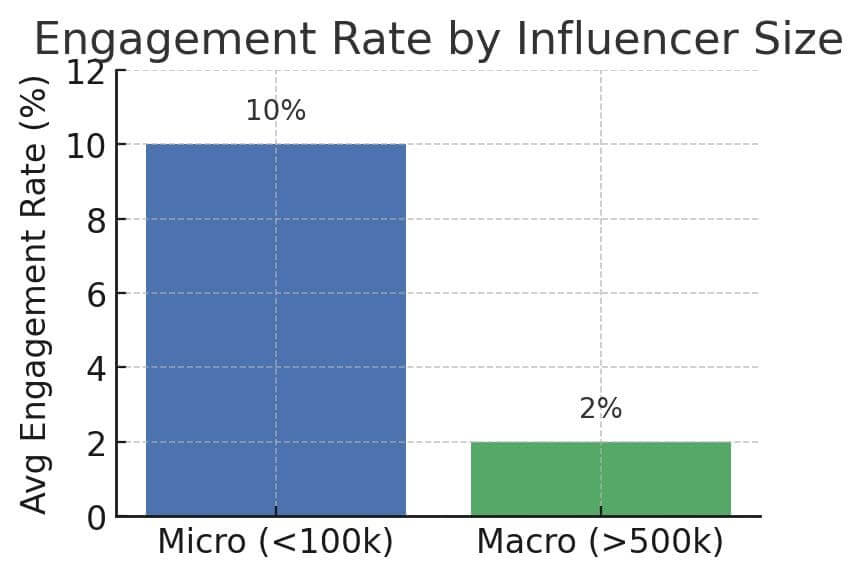
Average engagement rate on posts by micro- vs macro-influencers.
One big draw of micro-influencers is that their followers are highly engaged. It’s common to see 10% or more of a micro-influencer’s audience actively liking, commenting, and sharing their posts – whereas a macro influencer with a million followers might only get ~2% engagement on a typical post. In other words, a creator with 10k followers could receive 1,000+ interactions (signaling an enthusiastic community), while a celebrity with 1M followers might get 20k interactions (a far more diluted response). This stark contrast is illustrated in the chart above. The stronger loyalty and two-way interaction in micro-influencer communities means brand messages don’t just reach more people proportionately – they resonate more deeply. High engagement not only boosts visibility (thanks to social algorithms favoring active posts) but also indicates a loyal fanbase more likely to act on the influencer’s recommendations.
Authenticity is the currency of influencer marketing, and niche micro-creators have it in spades. Because they come off as “regular people” passionately sharing what they love, their content feels more like a personal recommendation than an ad. Followers perceive micro-influencers as peers or friends, so endorsements feel organic. In fact, 82% of consumers say they’re highly likely to follow a micro-influencer’s recommendation, according to one survey. This aligns with Nielsen’s finding that 84% of people trust peer recommendations over traditional advertisements. When a micro-influencer raves about a product – whether it’s a new skincare line or a kitchen gadget – their audience knows it’s coming from a genuine place of use and enthusiasm, not a paid script. That trust factor translates into greater credibility for your brand. Nearly 90% of consumers cite authenticity as important in deciding which brands to support, and micro-influencers deliver authenticity in a way glossy celebrity campaigns often cannot. By partnering with these creators, brands inject a sense of realness and relatability into their marketing, which ultimately drives higher conversion rates (as consumers feel more confident following a trusted influencer’s lead).
Another advantage is the highly targeted audience that a niche influencer offers. Because each micro-influencer specializes in a particular domain, they have accumulated followers who care deeply about that subject. This allows brands to pinpoint very specific customer segments by choosing influencers whose niche aligns with their product. For example, a company selling eco-friendly yoga mats can collaborate with a micro yoga instructor influencer who focuses on sustainable living – instantly reaching an audience of eco-conscious yoga enthusiasts. Or an indie beauty brand might partner with a cruelty-free makeup micro-influencer rather than a general beauty guru, ensuring their message hits exactly the right demographic. Niche micro-influencers often even have insight into local or regional communities (e.g. a food blogger popular in a particular city), which is gold for geographically targeted campaigns. Overall, working with a group of small, niche-aligned creators can get your brand in front of the precise people who are most likely to be interested, rather than a mass audience where most scroll by. This level of relevance leads to higher quality leads and conversion rates for your marketing efforts.
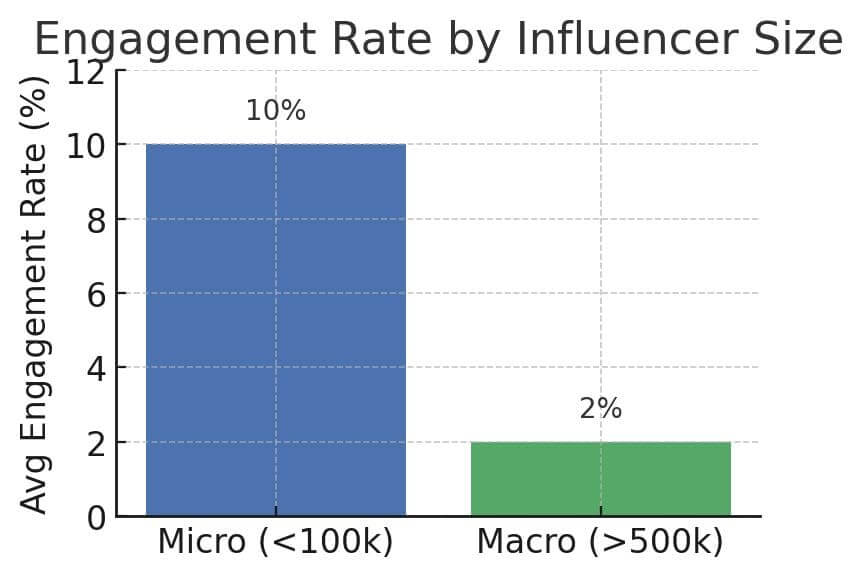
Marketing budgets only stretch so far, and here micro-influencers shine brightly. Partnering with micro-influencers tends to be dramatically more cost-effective than hiring big-name influencers or running large ad campaigns. Many micros will create content for the price of a free product sample or a modest fee – perhaps a few hundred dollars or even just some freebies – whereas a single post from a mega-influencer can run into the tens (or hundreds) of thousands of dollars. This means for the cost of one celebrity endorsement, a brand could hire dozens of micro-influencers, flooding various niche communities with content and multiplying the overall reach and impact. The return on investment (ROI) speaks for itself. Research indicates micro-influencer campaigns can deliver around a 20:1 ROI, compared to roughly 6:1 ROI for macro-influencer campaigns. Put simply, a marketing dollar spent on curated micro-influencer partnerships can generate 3x or more the sales of that same dollar spent on a celebrity influencer campaign. The chart below illustrates this contrast in ROI. It’s driven by a combination of factors we’ve discussed – lower upfront cost, higher engagement, more trust, and better targeting – all stacking up in favor of micros.
Relative ROI of micro-influencer campaigns vs. macro-influencer campaigns (revenue generated per $1 spent). Micro collaborations yield significantly greater returns on average.
From a practical budgeting standpoint, micro-influencers are a low-risk, high-reward proposition. You can run small tests with a handful of creators, see real results, and scale up as needed – all while keeping costs manageable. For lean marketing teams or brands with limited ad budgets, micros offer a way to compete with creative, authentic campaigns without breaking the bank. And even larger brands find that the efficiency of micro-influencer content (in terms of ROI) lets them maximize the impact of their marketing spend. It’s no surprise that surveys show the vast majority of brands – big and small – are shifting their influencer strategy toward micro and nano influencers for these very reasons.
Working with niche micro-influencers is especially beneficial for online brands, e-commerce retailers, and Amazon sellers. These creators excel at producing user-generated content (UGC) and genuine product endorsements that build trust in an online shopping environment. Let’s look at a few ways micro-influencers can turbocharge e-commerce marketing:
Micro-influencers don’t just promote your product – they also create photos, videos, reviews, and tutorials featuring it. This user-generated content can be a treasure trove for your brand’s marketing. Shoppers tend to trust content from real users far more than polished brand ads. In fact, a whopping 90% of consumers say authenticity is important when choosing which brands to support, and UGC is often viewed as the most authentic form of content. By showcasing real-life experiences and honest opinions, micro-influencer content serves as modern word-of-mouth marketing. A follower might see a micro fashion blogger confidently styling your boutique’s sweater in an Instagram Reel, and it feels like a friend’s recommendation rather than an ad – instantly making the viewer more comfortable with the idea of buying. Brands can also repurpose influencer UGC across their own channels. For example, an influencer’s unboxing video or before-and-after photo can be featured on your product pages, social media, or even turned into paid ads. These UGC-based ads often outperform traditional ads because they feel more genuine (studies show UGC ads get higher click-through rates and lower cost-per-click than typical brand-created ads). In short, micro-influencers supply a steady stream of relatable, trust-building content that can significantly boost your conversion rates and credibility online.
For Amazon sellers, micro-influencers offer a secret weapon to stand out in the crowded marketplace. Amazon’s platform rewards products that generate buzz and outside traffic, and micro-influencers can deliver both. One approach is through the Amazon Influencer Program, where influencers (big or small) create their own Amazon storefront pages to recommend products. When a niche influencer features your item on their Amazon storefront or shares an “Amazon find” on TikTok, it creates a seamless path for their followers to click through and purchase on Amazon. This not only generates immediate sales, but that burst of external traffic and sales can boost your product’s ranking within Amazon’s search results – a win-win for visibility. Even outside of Amazon’s official program, micro-influencer partnerships can lead to more product reviews and social proof on your listings. For example, you might give a micro-influencer a free product or discount code in exchange for them posting an honest review or how-to video on their social channels. Their followers see a trusted person using the product and can swipe up or follow an affiliate link to buy on Amazon. As those new customers purchase, many will leave positive reviews on your product page, strengthening your Amazon reputation. The influencer’s content itself can sometimes be added to your listing (e.g. short video reviews in the “Related video shorts” section on Amazon), making your product page more engaging.
Micro-influencer marketing can often yield better results than equivalent spend on traditional digital ads, especially on Amazon. Amazon Pay-Per-Click (PPC) ads have become notoriously expensive, driving up sellers’ acquisition costs. Micro-influencers present a more cost-effective alternative. Consider this example: instead of spending $1000 on Amazon Sponsored Product ads (which might get ignored by “ad-blind” consumers), a seller could use that $1000 to send free products to 10 micro-influencers in their niche. Those 10 creators will each produce content – a review, a demo, a testimonial – reaching highly targeted audiences that trust their opinion. The cumulative reach and influence of those posts can far exceed what $1000 of ads might accomplish, and the content stays online generating “free” impressions over time. Plus, that $1000 may also result in multiple pieces of reusable content and several new reviews on Amazon, adding long-term value. This kind of organic buzz is something ads alone can’t buy. It’s telling that 72% of teens (a key up-and-coming consumer demographic) follow influencers and trust their product recommendations, far more than traditional ads. In the e-commerce world, micro-influencers essentially serve as trust bridges – they humanize your brand and lend it credibility among skeptical online shoppers, all at a fraction of the cost of big ad campaigns.
By now, the benefits of working with micro-influencers are clear – but discovering the right creators is its own challenge. Unlike mega influencers, niche micro-influencers aren’t always in plain sight or represented by talent agencies, so you’ll need to do a bit of digging. Here are some effective strategies for marketers to find and connect with micro-influencers who perfectly fit your brand:
Start by clarifying the specific niche or community you want to target. The more clearly you define the interests, demographics, and values of your ideal customers, the easier it is to spot influencers who speak to that group. For example, if you sell organic pet food, you might look for micro-influencers who are holistic pet care bloggers or dog moms focused on nutrition. Having a solid grasp of your niche will act as a compass in your search – you’ll know the subtopics or hashtags to explore and the type of voice that resonates with your audience.
Organic discovery on social media is a great way to find genuine niche creators. Use platform-specific tools or simple searches on Instagram, TikTok, YouTube, or Pinterest to uncover influencers in your domain. Keywords and hashtags are your friends: if you’re a travel accessories brand, you might search Instagram for “#vanlife” or YouTube for “travel vlog gear”. On TikTok, niche communities often rally around tags like #BookTok (for book lovers) or #PlantTok (for plant enthusiasts). Scroll through the content – when you find a person consistently posting high-quality content in that niche with a moderate following (say 5k, 20k, or 50k followers), you’ve likely found a micro-influencer. Pay attention to engagement: 500 likes on an account with 5,000 followers is a great sign of an active following. Also, check who’s commenting – if you see genuine discussions or loyal fans, that creator has influence. Tip: sometimes your own brand’s followers can lead you to micro-influencers. See if any customers or fans tagging your products have a bit of a following themselves.
Don’t limit your search to just the big social platforms. Many niche influencers also hang out in Facebook Groups, Reddit communities, or forums related to their topic. For instance, a micro-influencer in the keto dieting niche might be active in a popular Facebook group for keto recipes, sharing their YouTube videos there. Similarly, a tech gadget reviewer might post in a subreddit for tech enthusiasts. Join the communities relevant to your industry and keep an eye out for members who frequently create content or have a following outside the group. You might even post a friendly query like, “Hey, does anyone know good Instagram accounts or YouTubers who cover [your niche]?” – you’d be surprised how people love to recommend their favorite niche creators.
To save time, consider using dedicated influencer marketing platforms or databases. There are tools (both free and paid) that let you search for influencers by topic, follower size, engagement rate, location, etc. For example, the TikTok Creator Marketplace allows brands to filter creators by category and audience metrics, and platforms like AspireIQ, Upfluence, or CreatorIQ have extensive databases of influencers across social networks. These tools can quickly surface hundreds of potential micro-influencers for you to vet. Additionally, there are clever services like SparkToro that help find influencers your target audience already follows. And of course, some platforms focus specifically on micro-influencers. (For example, Stack Influence is a marketing platform geared toward connecting e-commerce brands with vetted micro-influencers, making it easier to run product seeding campaigns at scale.) Using these tools can streamline the discovery process – but you’ll still want to review each creator’s content for quality and ensure they align with your brand values before reaching out.
Niche micro-influencers represent the future of relatable, effective marketing. These small-scale creators bring together the best of both worlds – the authenticity and community-feel of a loyal friend, and the reach and creative skills of a digital marketer. By tapping into micro-influencers, brands can access highly targeted audiences, build trust through genuine content, and ultimately drive more e-commerce growth without the hefty price tag of traditional campaigns. Whether you’re an Amazon seller looking to boost product reviews or a DTC brand seeking engaging UGC for social media ads, micro-influencers can deliver results that far outsize their follower counts. The key is to find the right niche personalities who align with your brand and to collaborate in a way that lets their authenticity shine. In an era when consumers value relatability and trust more than ever, partnering with niche micro-influencers might just be the smartest marketing move you make this year. Embrace the power of “small” – and watch how big an impact it can have on your business.
Micro influencers – generally creators with a smaller yet engaged following (often 1,000 to 100,000 followers) – are punching above their weight in today’s digital landscape. They might not have millions of followers, but they wield outsized influence through authenticity and niche focus. In an era where e-commerce brands and Amazon sellers seek genuine connections with consumers, even nano and micro creators are landing press features and brand deals that boost their profile. This guide will walk you through how to get public relations (PR) exposure as a micro influencer, whether you’re a beginner or a seasoned content creator. We’ll cover everything from building your personal brand to leveraging user-generated content (UGC), networking, pitching to media, and using platforms (with Stack Influence as an example) to amplify your reach.
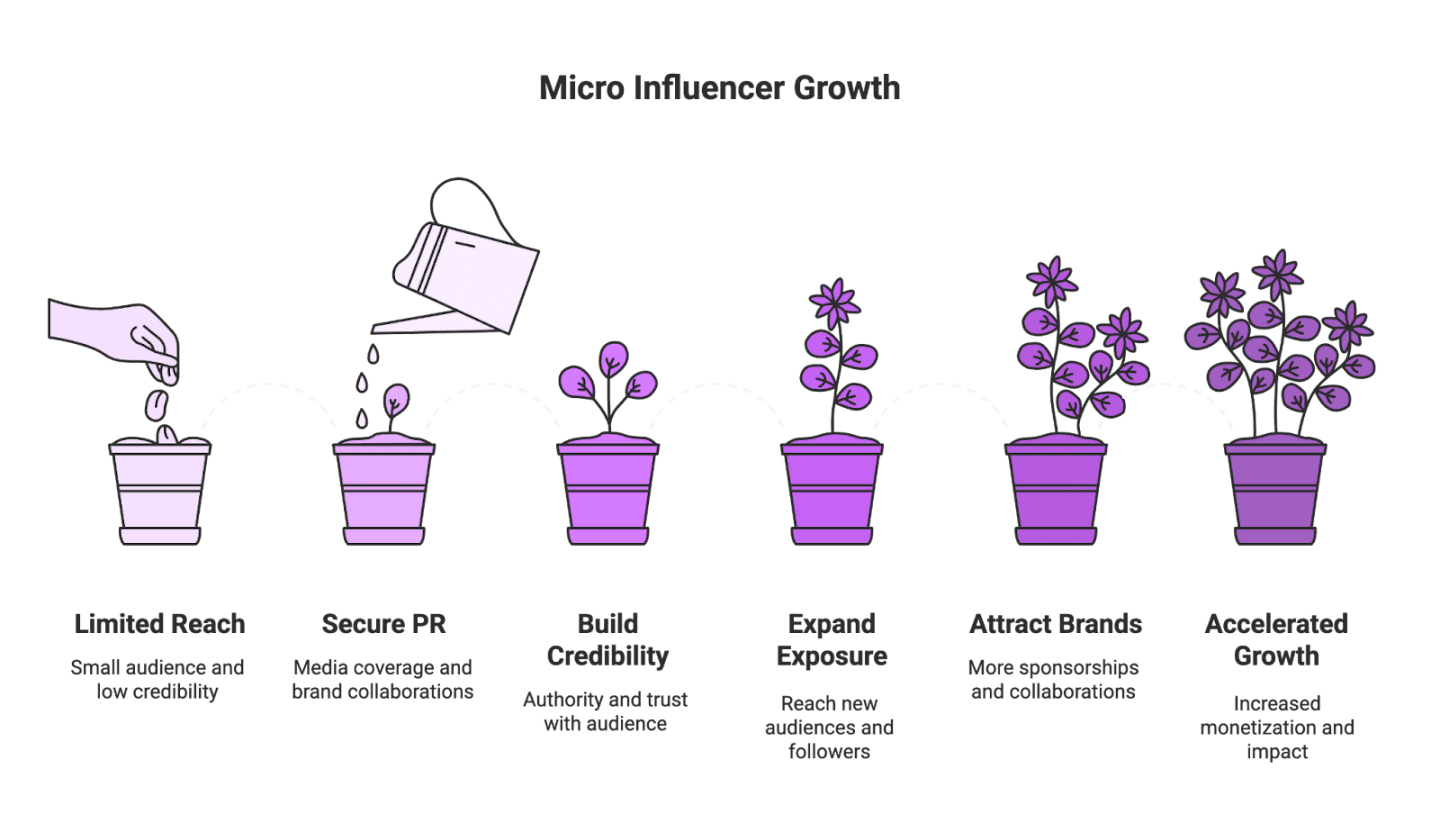
Public relations in this context means increasing your visibility and credibility through media coverage, brand collaborations, and word-of-mouth – going beyond just your own posts. Securing PR can lead to tangible benefits:
Being featured in articles or endorsed by brands lends authority to your name. It signals you’re a noteworthy creator, not just another social media account.
PR coverage (like interviews, guest posts, or shout-outs) puts you in front of new audiences beyond your followers, helping you grow.
Many companies (especially in e-commerce) scout for influencers who have press or a strong personal brand. Good PR can attract more sponsorships and product collaboration opportunities.
Positive press can validate your work to your existing audience, strengthening their loyalty and engagement with your content.
In short, strategic PR can accelerate your growth and monetization as a micro influencer. Now, let’s dive into how you can achieve that!
It’s easy to assume that only mega-influencers get PR attention. In reality, micro influencers (and even “nano” influencers) often have key advantages that make them attractive to brands and media. Understanding these will help you leverage your strengths when seeking PR.
Distribution of influencer tiers on Instagram. Nano- and micro-influencers make up the vast majority (nearly 90% combined) of all influencers on the platform.
First, consider that the majority of social media influencers are in the nano or micro range. On Instagram, for example, over 75.9% of influencers are nano (1K–10K followers) and another ~13.6% are micro (10K–50K). These smaller creators form the backbone of the influencer ecosystem, and brands are taking notice. In fact, 69% of brands now work with nano/micro influencers as they prioritize authenticity over sheer follower count. Why? Because smaller creators often cultivate closer-knit, highly trusting communities. Their recommendations feel like advice from a friend rather than an ad.
Another big advantage is engagement and influence per follower. Studies show consumers are much more likely to trust and act on micro influencers’ recommendations compared to celebrity endorsements. For example, nano influencers on Instagram average about 1.7% engagement rate, significantly higher than macro or mega influencers who might average around 0.6–0.7%. That means your content likely resonates more deeply with your audience. As one report noted, these stronger personal connections lead to higher engagement and “outsized influence” in purchasing decisions. Brands see this in outcomes: they can often get better ROI working with a team of micro influencers versus one big name.
To attract press and partnerships, you first need a clear personal brand. That means defining who you are as a creator and what unique perspective you offer. Start by identifying your niche – the area or topic you’re most passionate and knowledgeable about. Perhaps it’s eco-friendly beauty, budget fashion for moms, gadget reviews for tech enthusiasts, or fitness for busy professionals. The more specific, the better. Focusing on a niche helps you become seen as an expert or go-to voice in that area, which is appealing for both media and brands. Anyone can become a micro influencer, but it takes time and dedication – and it begins with choosing a topic you genuinely care about and excel in.
Once your niche is set, build out your personal brand identity around it. This includes:
Remember, authenticity is crucial. Don’t pretend to be something you’re not just to get PR. Micro influencers thrive on being genuine and relatable. Lean into what makes you unique. A well-defined personal brand not only attracts followers, it also gives journalists a clear angle to write about and helps brands see if you’re a good fit for their image. As one photographer-turned-influencer advises, your personal brand and media kit should convey “not just who you are, but the value you bring to partnerships”. So, invest time in crafting your brand identity – it’s the foundation for all your PR efforts.
In the influencer world, content is king – and queen! Great content is what initially grows your audience, and it’s also what gets the attention of brands and media. Treat your social profiles like a portfolio that editors or marketing managers might review. Here’s how to make your content shine:
UGC (User-Generated Content) is a huge buzzword in marketing right now, and it’s a sweet spot for micro influencers. Brands are eager for content that looks like genuine customer experiences. As a micro influencer, you can create UGC-style posts and videos that brands might repost or use in their ads. This is a win-win: the brand gets relatable content, and you get exposure to a wider audience (sometimes with credit given). For example, you might film an unboxing and honest reaction to a product from an Amazon seller – that clip could end up on the seller’s Amazon page or Instagram. Even if your following is modest, the content itself can travel far.
Case in point: Sperry (the boat shoe company) enlisted micro-influencers to create lifestyle photos and blog posts, which led to a 66% boost in website traffic and millions of impressions for the brand. That’s the power of quality content from micro creators. When you consistently produce such impactful content, you become very attractive to companies who might then feature you in their own channels or press releases (“Brand X teamed up with to launch Y”).
Moreover, crafting good content can directly lead to PR opportunities. A viral TikTok or a well-written blog post could get you noticed by media outlets looking to cover a trend. For instance, if you create a compelling infographic or video that gets shared widely, a journalist might cite it or ask to interview you about that topic. Always be ready – have your contact info easily visible on your profile or website for any press inquiries.
Pro tip: Diversify your content across platforms. Maybe you primarily do Instagram Reels, but consider also writing an occasional LinkedIn article or Medium post about your niche. As Shopify’s 2025 guide notes, short-form video is hot, but “authentic storytelling” across different channels can boost conversions and reach new audiences. By repurposing your content (e.g., turning a YouTube tutorial into a series of Instagram slides or a blog post), you amplify your presence. Each platform could be a gateway for some journalist or brand to discover you.
In summary, focus on content creation as your craft. It’s the fuel for your growth and the bait for PR opportunities. And don’t shy away from the role of being a content creator for brands – producing UGC can fast-track your exposure when that content gets amplified beyond your own followers.
High follower counts are nice, but as a micro influencer, engagement is your gold mine. An engaged audience not only appeals to brands, it also boosts your chances of organic PR. Why? Because engaged communities create buzz – they leave comments, share your posts, and even advocate for you, which can catch the eye of others. Here’s how to cultivate that community:
Growing your community also means steadily attracting new followers. Part of that will happen through PR itself (press mentions will funnel new eyes to you), but you should also proactively network (next section) and use basic growth tactics: optimize your hashtags/SEO, post at peak times, and maybe collaborate with slightly larger influencers to get introduced to their audience. Healthy growth combined with strong engagement is a recipe for being seen as an influential voice, even at a micro scale.
Lastly, remember that loyal followers can become your advocates. If you treat them well and provide value, they might recommend you to their friends or even tag you in opportunities. (Don’t be surprised if one day a follower who loves your content happens to be a writer or a brand manager and offers you a feature or gig!) A vibrant, interactive community is a form of grassroots PR – it’s essentially positive word-of-mouth that can spread beyond your immediate reach. So nurture it, and it will nurture your growth in return.
PR is as much about who you know as what you do. As a micro influencer, you should actively network and collaborate within both the influencer community and your niche industry. This can open doors to opportunities you might never find on your own. Some networking tips:
When networking, focus on giving, not just taking. Offer help, share others’ content, and celebrate peers’ successes. This generosity tends to come back around. If you become known in your circle as someone who supports others, you’ll naturally attract support for your own endeavors. For example, another creator might refer you to a brand (“I’m overbooked, but I know someone who’d be perfect for your micro influencer campaign”) or a blogger friend might feature you in a roundup article.
One more point: collaborations can themselves become PR. If you do something cool with another creator – say a joint Instagram Live or a themed content series – pitch that story! Local media might love the angle of “Two -based micro influencers team up to .” At the very least, you can both publicize it on your channels, effectively doubling the PR reach.
In summary, don’t operate in a silo. Networking expands your opportunities exponentially. Many micro influencers have found that as their network grows, so do the unsolicited opportunities coming their way (from shout-outs to media features and invites). So get out there, virtually or in person, and make some friends in the biz!
View this post on Instagram A post shared by Stack Influence (@stackinfluence)
When it comes time to actively reach out for PR – whether you’re contacting a brand for a partnership or emailing a magazine editor for a feature – you’ll need to put your best foot forward. This is where your media kit and pitching skills come into play.
What’s a media kit? It’s essentially your influencer resume/portfolio that you can share with potential collaborators. A media kit is typically a PDF or webpage that includes: who you are, your niche, audience demographics, follower counts, engagement rates, notable collaborations, testimonials, and contact info. Think of it as a highlight reel of your influence. A well-crafted media kit reflects professionalism and establishes you as a serious contender; it lends credibility and shows brands that you’re business-savvy. In other words, it’s how you tell brands or media “I know what I bring to the table – and here’s proof.”
Design your media kit to be clean and visually appealing – use your branding elements. There are templates online for influencer media kits if design isn’t your forte. The goal is to quickly communicate who you are and why you’re awesome to work with. When you have this media kit ready, you can attach it or link to it in your communications.
Next is the pitch email (or DM) that you’ll send to brands or journalists. This is typically a short message tailored to the specific opportunity. Here’s how to craft a good pitch:
Keep pitch emails short and sweet – a few short paragraphs at most. Use bullet points if that helps readability (especially when outlining collaboration ideas or key stats). And double-check spelling/names – professionalism counts.
One more thing: consider preparing a press release style announcement if you’re doing something newsworthy yourself. For instance, maybe you’re launching your own product (like merch or an e-book), or you’re hosting a charity livestream. Writing a short press release and sending it to local media or relevant blogs can sometimes get you coverage. Format it like a news story, with a catchy headline and the who/what/where/when. Even if you’re small, local news outlets often love human-interest stories (“Local content creator raises $5000 for animal shelter through TikTok”). It’s worth a try if you have a compelling story!
Overall, being prepared with a media kit and knowing how to pitch will massively increase your success rate in converting outreach into actual PR. It shows you’re not just a casual Instagrammer, but a professional content creator who is ready to work together. As one PR resource explains, a concise media kit plus a tailored pitch makes it easier for brands to quickly see if you’re a fit, aligning your strengths with their needs. So, get your materials ready and start knocking on doors – opportunity will eventually answer.
One of the quickest ways for micro influencers to get on the radar of brands (and thus gain PR opportunities) is to join influencer marketing platforms. These are online marketplaces or agencies where creators can sign up and be matched with brand campaigns. Many e-commerce companies and especially Amazon sellers use such platforms to find micro influencers to promote their products. By having a presence on these platforms, you increase your chances of getting contacted for collaborations that can lead to press-worthy content.
Some popular influencer platforms include Aspire (formerly AspireIQ), Upfluence, FameBit (YouTube’s Collab tool), and niche-specific ones for Instagram or TikTok. Stack Influence, for example, is a platform specializing in micro-influencer campaigns for consumer brands. They often work with Amazon marketplace sellers and DTC (direct-to-consumer) e-commerce companies to run campaigns with a network of small creators. By signing up on Stack Influence, you could get invited to participate in product promotions – e.g., receiving a product to create content for, sometimes including compensation. Each campaign you do not only earns you experience (and possibly money or free products), but if successful, it’s something you can tout in your portfolio (“Collaborated with X brand via Stack Influence”). Some platforms even handle generating a case study if a campaign went exceptionally well.
Why use these platforms? Brands trust them and actively scout them. PR and marketing professionals often turn to influencer databases to find the right micro influencers for their needs. By being listed, you’re essentially putting your hand up and saying “I’m here and ready to work.” It saves brands time, so they’re more likely to go through these channels than to discover you organically one by one. Moreover, the platform often facilitates the campaign process (handling the brief, tracking, payments), which makes it easier for both you and the brand to collaborate smoothly.
When you join, make sure to fully optimize your profile on these platforms. This is like an extension of your media kit in a standardized format. Include a clear bio, your niche categories, all your social accounts with up-to-date follower counts, and any standout metrics. Some platforms let you set your rates or collaboration preferences; be honest but don’t undervalue yourself. Also, add a few of your best content examples (photos/videos) if there’s a portfolio section.
Be selective with the campaigns you apply to. Aim for products/brands that align with your niche and that you genuinely like – remember authenticity. If you become known on the platform for doing quality work, you might get directly invited to more campaigns. It’s not uncommon for micro influencers to develop ongoing relationships with brands through a platform (e.g., a small skincare brand that found you on Stack Influence loves your content and later hires you for a longer-term ambassador role – that’s major PR and potentially steady income).
Here’s another benefit: success stories from these collaborations can become PR content themselves. Stack Influence, for instance, has published case studies like “13X ROI With Amazon Micro Influencers”, highlighting how a brand achieved a 13-fold return by working with a team of micro creators. Imagine being one of those creators – that’s something you can brag about (and even cite the stat to future partners). It shows that micro influencers drive results.
Additionally, these campaigns often generate brand-produced PR. For example, if you and other micro influencers are part of a product launch, the brand might issue a press release or social media posts tagging you. That’s direct PR exposure you gain simply by participating.
In short: get on reputable influencer platforms, especially ones focusing on micro/UGC creators. It’s one of the most efficient ways to land collaborations with e-commerce and Amazon-focused brands. You’ll expand your network, build your resume of brand partnerships, and likely get content that you (and the brand) can share widely. All of this boosts your profile in the public eye. Many micro influencers have jump-started their PR journey through such platforms – so don’t miss out on these marketplaces where brands are actively looking for you!
(Bonus tip: Keep an eye on newer platforms or those specific to your niche – for instance, some platforms specialize in hooking up authors with book reviewers, or local businesses with local influencers. Early adoption of a platform can sometimes get you featured or recommended more, since they have fewer influencers in the system at the start.)
Speaking of Amazon and e-commerce – let’s dive deeper into how you can get PR traction in this space. Amazon sellers and online brands are constantly in need of content and reviews to stand out in a crowded marketplace. This presents a ripe opportunity for micro influencers and UGC creators.
Join the Amazon Influencer/Affiliate Program: Amazon has its own influencer program where, if you qualify (criteria include a certain follower count or engagement rate on major platforms), you can create a custom Amazon storefront with products you recommend. You earn commissions on sales through your links, and you can even host Amazon Live streams reviewing products. If you get on Amazon Live and build an audience there, brands might sponsor segments or send you products to feature – essentially like being a QVC host as a micro influencer. This can absolutely become a PR angle (“Amazon Live influencer shares top kitchen gadget picks”) especially as Amazon Live is still growing and sometimes gets press attention in the tech/business media. At minimum, Amazon might surface your streams on product pages, which is added exposure.
Even if you’re not in the formal program, becoming an Amazon affiliate and consistently reviewing Amazon finds on your social media can put you on the radar of Amazon sellers. There’s a whole trend of “Amazon finds” or “TikTok Made Me Buy It” content. If you make those and one goes viral, Amazon’s own social team or other media sometimes spotlight creators behind popular product trends.
Direct Outreach to Amazon Sellers: Smaller Amazon marketplace sellers (think niche brands selling via Amazon FBA) often have very limited marketing teams. If you find a product you genuinely love, don’t hesitate to reach out to the company (many have contact info on the Amazon listing or a brand website). Propose creating some content for them in exchange for the product or a small fee. Emphasize how your style of content can showcase their product better than generic ads – essentially offering them UGC they can use. They might feature your review video on their Amazon page or social media. If they credit you, that’s PR. Even without credit, you can still count it as an experience and perhaps ask for a testimonial.
Feature E-commerce Brands in Your Content: You can also attract PR by proactively featuring products or brands and then tagging them. For instance, as a micro fashion influencer, you might do a “My 5 Favorite Affordable Clothing Brands” YouTube video and include a lesser-known online boutique or an Amazon fashion line. When you publish, tag those brands or send them the content. There’s a chance they’ll share it (instant PR via their audience), or they might even approach you for future work. At the very least, you’re networking by showing love first – some brands keep track of organic mentions. If one of those brands later decides to invest in influencer marketing, they may recall that you already advocated for them genuinely and reach out.
Additionally, being savvy with e-commerce seasonal opportunities can help. Example: Amazon Prime Day or Black Friday/Cyber Monday – if you create content like “Top 10 Prime Day Deals for Home Cooks” and promote it, you have a timely hook. Often, websites round up influencer posts during these big shopping events, and you could get featured in an article like “Best Prime Day Tips from Influencers” if your tips catch on. Same for holiday gift guides or back-to-school essentials in your niche.
Keep in mind that big e-commerce players themselves use influencers aggressively. Amazon, for one, was among the top talked-about brands on Instagram due to influencer mentions. That means there’s an ecosystem of collaboration you can tap into. Even other retail giants (Target, Sephora, etc.) have formal and informal influencer programs. Joining these (when available) or simply engaging with them can yield PR. For instance, Sephora’s micro influencer program (“Sephora Squad”) often leads to those influencers being quoted in beauty articles or invited to brand events that get press coverage.
Lastly, treat every e-commerce collab professionally and try to go the extra mile. If you do a great job promoting an Amazon seller’s product and it leads to sales (they can track using affiliate links or special coupon codes), ask if they’d be willing to provide a brief case study or quote you can use. Something like, “After ’s video review, our product sales jumped 20% in a week,” looks fantastic in your media kit. It’s also a story you can tell if you pitch yourself to bigger brands (“I helped a small brand increase sales through my content”). Numbers speak loudly in PR.
In summary, embed yourself in the e-commerce boom: be active in Amazon-related content, connect with online sellers, and be the go-to micro influencer in your niche for product recommendations. There’s a ton of mutual value to be unlocked here – you get content and possibly commissions/fees, and they get authentic promotion. And as those successes accumulate, they pave the way for larger press and brand opportunities.
Thus far we’ve focused a lot on brand-related PR, but what about getting yourself in the media? Traditional PR – getting written about in articles, blogs, or interviewed on podcasts/TV – is absolutely attainable for micro influencers. You might not have publicists chasing you (yet!), but you can be your own PR agent. Here’s how to proactively secure media coverage:
When you do land press coverage, maximize it. Share it across your socials (“So excited to be featured in…”) – this not only gives you credibility with your followers, but other journalists may see it and consider you for future stories (media tend to follow what others are doing). Add the logo or mention of the feature to your bio or media kit (e.g., “Featured in BuzzFeed” or “As seen on NBC News”). Success begets success in PR – once you have a few logos, it subtly signals to others that you’re media-friendly and a valid subject.
Also, nurture relationships with any journalist or writer who does feature you. Send a thank-you note after an article goes live. Keep them updated occasionally if you have a really newsworthy update (“Just wanted to share that I hit 50K subscribers on YouTube recently, in case you’re ever looking for someone to comment on X, I’d be happy to help.”). Don’t spam them, but a polite follow-up months down the line can keep you in their Rolodex of contacts.
Lastly, be mindful of what stories you want to be known for. Stick to positive and relevant press opportunities. It might be tempting to take any 15 minutes of fame (like some outrageous stunt to get on a reality TV segment), but think long-term. Aim for PR that reinforces your brand image and authority. Quality of press beats quantity.
By actively pursuing press and being helpful to journalists, you’ll find that over time media coverage starts to snowball. And that’s when you truly become more than “just” an influencer – you become a recognized name in your niche.
As you implement these strategies, you’ll (hopefully) start accumulating little PR victories: a collaboration here, a mention there, a spike in followers after a feature, etc. It’s crucial to capitalize on these wins and incorporate them into your brand story – while always staying true to the authentic voice that got you here.
Promote Your Success Stories: Don’t be shy about sharing when something good happens. If a brand campaign you worked on yielded great results, ask if you can share some numbers or a testimonial. Post about it: “Loved partnering with – our campaign reached 50,000 people and broke the company’s sales record for launch day!”. If you’re featured in media, definitely let your audience know: “I’m in VoyageLA Magazine today – talking about my journey as a content creator, check it out!” By doing this, you achieve two things: you let your followers celebrate with you (building community), and you signal to other brands/media that you’re someone worth featuring. Success breeds success; people like to hop on a winning trend. Displaying logos of outlets you’ve been featured in (on your website or Instagram highlights) is a subtle but effective way to boost your credibility at a glance.
Keep an Updated Portfolio: Maintain a highlights section – whether it’s a page on your blog, a PDF, or even a Google Drive folder – of your best work and press. This might include links to your top-performing posts, screenshots of media features, case studies of campaigns, etc. It’s like a running CV of your influencer career. Not only is it useful for you to track progress, it’s handy to quickly pull from when new opportunities arise (“Oh, you want examples of my work? Here’s a link to 5 posts where I drove strong engagement/sales.” or “Attached is a one-sheet of my recent features and partnerships.”). Keeping this up to date will save you scrambling later.
Cultivate Long-Term Relationships: If a particular brand or PR agency has worked with you and it went well, stay in touch. Send a friendly note on occasion (season’s greetings, or “congrats on your new product launch!”). You’ll likely get repeat collaborations, or they might refer you elsewhere. Being on a PR agency’s good side can lead to multiple brand deals since agencies often represent many clients. Likewise, remain friendly with journalists or bloggers you’ve interacted with. Interact with their content (without any agenda) to keep the relationship warm.
Stay Humble and Authentic: As you get more exposure, remember the core reason micro influencers are valued: authenticity and trust. Don’t let a bit of fame or free products change how you treat your audience. Continue to be transparent in your reviews and selective in what you promote. Audiences can be forgiving with #ad tags if you handle sponsorships honestly and keep a good balance of organic content. If your followers sense you’ve “sold out” or changed, you could lose the very engagement that made you attractive to PR in the first place. Moreover, authenticity is something even the press appreciates – human-interest stories resonate more if they’re genuine. So if you ever feel pressure to fabricate or exaggerate for press, resist that. It’s not worth losing credibility. As the saying goes, “trust takes years to build, seconds to break.”
Learn and Iterate: Not every PR attempt will be a hit. You might pitch 10 journalists and hear back from 1. You might try an influencer platform and not get any campaigns for months, then suddenly one pops. Treat it all as a learning process. If something doesn’t land, refine your approach. Maybe your media kit needs tweaking, or maybe you realize your niche could shift slightly to get more traction. Stay adaptive. Keep an eye on what other micro influencers are doing successfully – can you draw inspiration from them? There are many YouTube videos and blogs where creators share how they got featured in XYZ or how they pitch brands; consume that content to keep improving your PR game.
Celebrate Milestones: Hitting your own milestones (follower counts, anniversary of starting your channel, etc.) is also an opportunity for PR. Share your reflections in a blog post or LinkedIn article (“1 Year as an Influencer: 5 Things I Learned”). Sometimes those personal growth stories get picked up or shared widely. At the very least, it’s content for your audience that underscores your journey and expertise.
In the end, always circle back to why you became a creator in the first place. Let that passion shine through in all your communications. If you love what you do and remain genuine, audiences and opportunities will continue to come. As one PR agency put it, micro influencers bring authenticity, engagement, and credibility, and when combined with smart PR strategies, it’s a powerful recipe for building awareness and trust.
You’ve got the authenticity – now you have the strategies to amplify it via PR. Stay true, stay persistent, and enjoy the process of growing from a micro influencer into a micro influencer with major influence!
Getting PR as a micro influencer is not only possible – it’s happening every day in 2025’s influencer-driven world. Brands big and small are eager to work with relatable creators, and media outlets are starting to profile the rising stars of niche communities. By building a strong brand foundation, creating valuable content, actively networking, and strategically pitching yourself, you put yourself in the best position to attract those opportunities. Remember to leverage tools like influencer platforms and HARO, and tap into the booming e-commerce realm where micro influencers are driving real results for Amazon sellers and online brands.
It may take time and hustle – you might send dozens of emails, craft countless posts, and face some rejections – but each step is progress. Learn from every campaign and feature. As you gain experience, your confidence and credibility will snowball. Even as you grow, never lose sight of what makes micro influencers special: the genuine connection with your audience. Keep that front and center, and any PR you get will only amplify the positive impact you already have.
Whether you’re just starting out as a UGC creator on Instagram or a seasoned micro influencer on YouTube looking to break into bigger press, we hope these tips set you on the path to PR success. Good luck – and we can’t wait to see your name in the headlines for all the right reasons!
Are you a micro influencer ready to collaborate with your dream brands, but not sure how to reach out? You're not alone! Reaching out to brands can feel intimidating, especially when you're just starting out with a smaller following. The good news is brands want to hear from authentic creators like you. In fact, many companies are shifting focus from big-name influencers to "everyday creators" who offer raw, authentic content. Why? Because micro influencers often have highly engaged communities – according to one report, small-scale influencers can generate up to 60% more engagement than their larger counterparts. In other words, your close-knit audience and genuine voice are valuable! 🙌
In this post, we'll break down how to write effective outreach emails to brands. We'll share fill-in-the-blank email templates you can adapt for different situations (first cold email, a follow-up, and reaching out about a specific brand campaign). Everything is written in a friendly, casual tone – just like you're talking to a mentor who's guiding you through your first brand pitch. Let's dive in!
Drafting a new email from scratch for every brand can be time-consuming and stressful. That's where templates come in handy. An email template is basically a pre-formatted message where you fill in the details relevant to each brand. Using templates can save you a ton of time without making your outreach sound like a robot wrote it. The key is to customize each template with personal touches so it doesn’t feel like a form letter. As one guide puts it, templates reduce the effort of writing from scratch without sacrificing authenticity, as long as you tailor them to the specific situation.
Think of templates as your starting point or secret weapon for consistency. They help ensure you include all the important info and maintain a professional tone every time. But remember, personalization is everything when it comes to influencer outreach. A generic blast email won't impress anyone. In the sections below, we'll show you how to add those personal flourishes that make brands say "yes, let's work together!"
A post shared by Stack Influence (@stackinfluence)
Sending a great email is about more than writing – a little preparation goes a long way. Before you fire off that message to a brand, make sure you’ve checked these boxes:
Before hitting send, it’s also wise to check that your emails have the best chance of reaching the brand’s inbox. One simple step is to use an IP address blacklist checker to ensure your sending server isn’t flagged by spam filters. While most micro influencers aren’t sending thousands of emails at once, even a minor blacklist issue can prevent your carefully crafted outreach from arriving. This quick check can save time and frustration, giving your emails a smoother path to the brand’s attention. It’s a small prep step that complements having a polished profile and personalized pitch.
Alright, now that your prep work is done and you know the dos and don'ts, let's get to the fun part – the templates! 🎉 Below are three email templates tailored for micro influencers reaching out to brands. Feel free to adjust the wording so it sounds like you. Add your personality, tweak the details, and make these templates your own.
Each template below includes placeholder text in for you to fill in with your details or the brand's information. Remember, these are starting points. Always add a personal touch based on the tips above (like a specific compliment about the brand) before you hit send. 🌟
Use this when: You want to pitch a brand you love for the first time, and they have no idea who you are (yet!). This is your introduction and pitch all in one. Keep it short, genuine, and focused on how a collab would be great for both of you.
Subject: Collaboration Inquiry from –
Hi Team,
My name is and I'm a micro influencer who focuses on . I’ve been a huge fan of for a while – in fact, .
I’m reaching out because I’d love to collaborate with you. I think my audience of followers (mostly ) would be really excited to learn about . I can envision creating featuring your products.
A bit about me: I’ve . My engagement rate is around %, which is above industry average – my followers trust my recommendations and love discovering new brands through me. I truly believe a collab with would resonate with them!
If you’re interested, I’d be happy to chat more or send over additional info (like my media kit and content ideas). Thank you so much for your time and consideration. I’m really excited about the possibility of working together – is exactly the kind of brand I know my community would adore. 🤗
Sincerely,
Why this works: In this template, you start with a friendly intro and a genuine compliment to the brand (showing you've done your homework). You clearly state you want to collaborate and hint at how (the type of content or partnership). You give just enough stats/credentials to establish credibility (niche, follower count, engagement) without writing a novel about yourself. And you wrap up with enthusiasm and openness to discuss more. It's polite, clear, and personalized – all the elements of a great pitch email. That makes the reader think, “Yes, this person understands what I need — maybe they could even do my paper for me if I asked.
Use this when: You emailed a brand and haven’t heard back after about 1-2 weeks. This is a gentle nudge, not a guilt-trip. Often, a polite follow-up can bring your email back to the top of their inbox and show your continued interest without annoying them.
Subject: Re: Collaboration with – Just Following Up Hi Team,
I hope you're doing well! I’m just following up on my email from last week about a potential collaboration. I know things get busy, so I totally understand if it got buried. 😊
To recap quickly: I’m , a micro influencer who . I’m a big fan of (absolutely loved ) and would love to feature your brand in my content.
No rush at all, but I wanted to make sure you saw my message and see if you'd be interested in discussing the idea. I'm happy to resend any info or answer any questions. If now isn’t a good time, no worries – I really appreciate you giving my pitch a read!
Thanks again, and have a great day! 🙏
Best,
Tips for follow-ups: Notice how the tone remains light and respectful. You’re not accusing them of ignoring you – you’re giving the benefit of the doubt that they might have missed the email. You briefly restate who you are and the gist of your proposal, in case they need a refresher. Most importantly, you make it easy for them to respond by expressing flexibility (“happy to answer any questions or if now isn’t a good time, that’s okay”). This takes the pressure off and shows you're understanding. Oftentimes, brands appreciate the reminder because your first email might have slipped through. Keep it to one follow-up unless the brand replies; if you still don’t hear back, it’s usually best to move on or try again in a few months with a new angle.
Use this when: A brand has announced something that opens the door for influencers – for example, they launched a new product line, started an ambassador program, or ran a cool campaign that you think you’d be perfect for. Essentially, it’s still a cold email from you, but you have a built-in conversation starter because you’re referencing their campaign or news.
Subject: Loved the Campaign – Micro Influencer Collaboration? Hi Team,
I saw your recent and had to reach out – what an awesome initiative! 🙌 As a , I was really excited to see .
My name is , and I’m a micro influencer with a focus on . I’ve been creating content for , and has been one of my favorite brands – I actually .
After seeing , I would love to be involved in any current or future collaborations around it. I believe my aligns perfectly with the spirit of this campaign. Perhaps I could to support the campaign.
If there’s an official way to get involved, please let me know – I'd be happy to fill out an application or provide more information about my stats and past collaborations. In any case, I wanted to express how inspiring I found and that I’d be honored to collaborate with you if possible. Thank you for your time and for leading such a cool project!
Sincerely,
In this template, you're riding the wave of the brand's current marketing focus. Brands put effort into campaigns and ambassador programs because they want people to engage – you showing enthusiasm and offering to contribute can be very appealing. The key here is to be genuine about your interest (flattery only works if it's sincere). Point out specifically what you liked about their campaign or program, and then connect the dots as to how you and your content could add value to it. Even if the brand doesn’t have an official call for collaborators, this email shows initiative and excitement. Best case, they reply with an opportunity; worst case, you’ve put yourself on their radar for next time.
Reaching out to brands as a micro influencer might feel like sending a message in a bottle, but remember that many brands love working with smaller creators for that authenticity and close audience connection. The key is to approach them professionally, yet personally. Put yourself in the brand’s shoes and consider what they would love to hear. A well-crafted email that showcases your genuine admiration for the brand, your unique value, and a clear idea of collaboration can open doors – sometimes even ones you didn't expect.
A few parting tips: always be authentic (don't promise what you can't deliver or pretend to like a product you haven't tried), be patient (relationships take time; you might not get a response right away), and keep creating great content in the meantime. Even if you get a few no's (or silence) initially, don't be discouraged. It only takes one "yes" to kickstart your influencer-brand collaboration journey.
So, grab these templates, fill in those blanks with your info, and start pitching! Customize each message for the brand you're emailing, and soon enough, you'll build confidence in writing outreach emails. Before you know it, you might have some exciting brand partnerships in your inbox. Good luck – and happy emailing! ✨