
The latest info on influencer marketing trends, micro influencer news, and the world of social media

In the fast-paced world of Instagram, your bio is prime real estate for making a strong first impression. Whether you’re a micro influencer, an Amazon seller with an e-commerce brand, or a budding content creator in the era of UGC (user-generated content), a compelling Instagram bio can be a game-changer. It’s often the first thing people see when they visit your profile – and it can determine whether they follow you or click away. As one Stack Influence article notes, micro influencers (generally 10k–100k followers) are “marketing gold” for brands – especially e-commerce businesses and Amazon sellers – thanks to their authenticity and loyal audiences. These smaller creators often enjoy higher engagement rates than big celebrities, coming across as a trusted friend rather than an ad. But to leverage that trust and attract opportunities, you need to communicate your value instantly through your profile – starting with your Instagram bio.
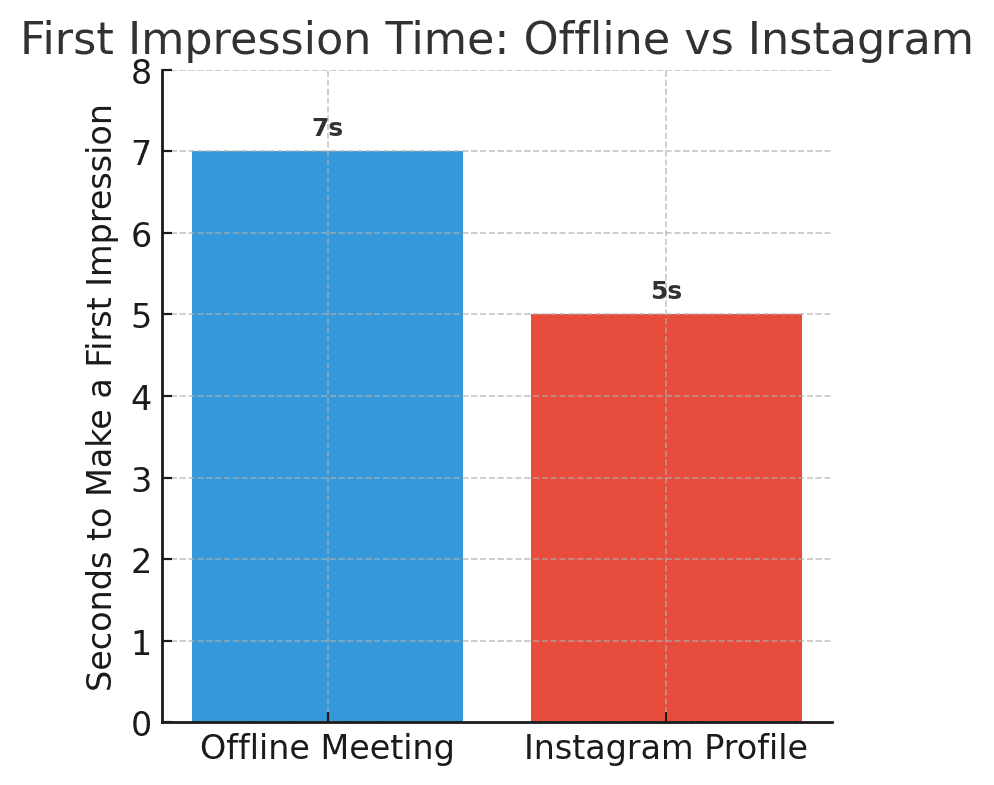
When someone new lands on your Instagram page, your bio is one of the very first places they look to learn about you. You have only a few seconds to capture their interest. In fact, research suggests you have about seven seconds to make a first impression in person – and even less online. If your bio doesn’t immediately convey who you are and why someone should follow you, you risk losing that visitor forever. Your Instagram bio is essentially your elevator pitch or digital business card on the platform. It should tell people at a glance what you do, what makes you interesting, and what action they should take next.
Research suggests an offline first impression takes ~7 seconds, and online attention spans are even shorter.
For influencers and entrepreneurs using Instagram for business, this small snippet of text is incredibly important. “As an Influencer, Creator, or brand who uses Instagram for your business, your Instagram bio is one of your most valuable assets on social media,” explains one expert. It can literally convert profile visitors into followers or customers by answering the key question every visitor has: “Why should I follow or care about this person/brand?” A well-optimized bio helps people instantly understand what content you offer or what product you’re selling, and it can even drive traffic to your website or online store. On the flip side, a vague or cluttered bio can confuse visitors and undermine your credibility. In short, crafting a clear and engaging bio is worth the effort – it’s a simple change that can lead to more followers, better engagement, and even brand collaboration opportunities.
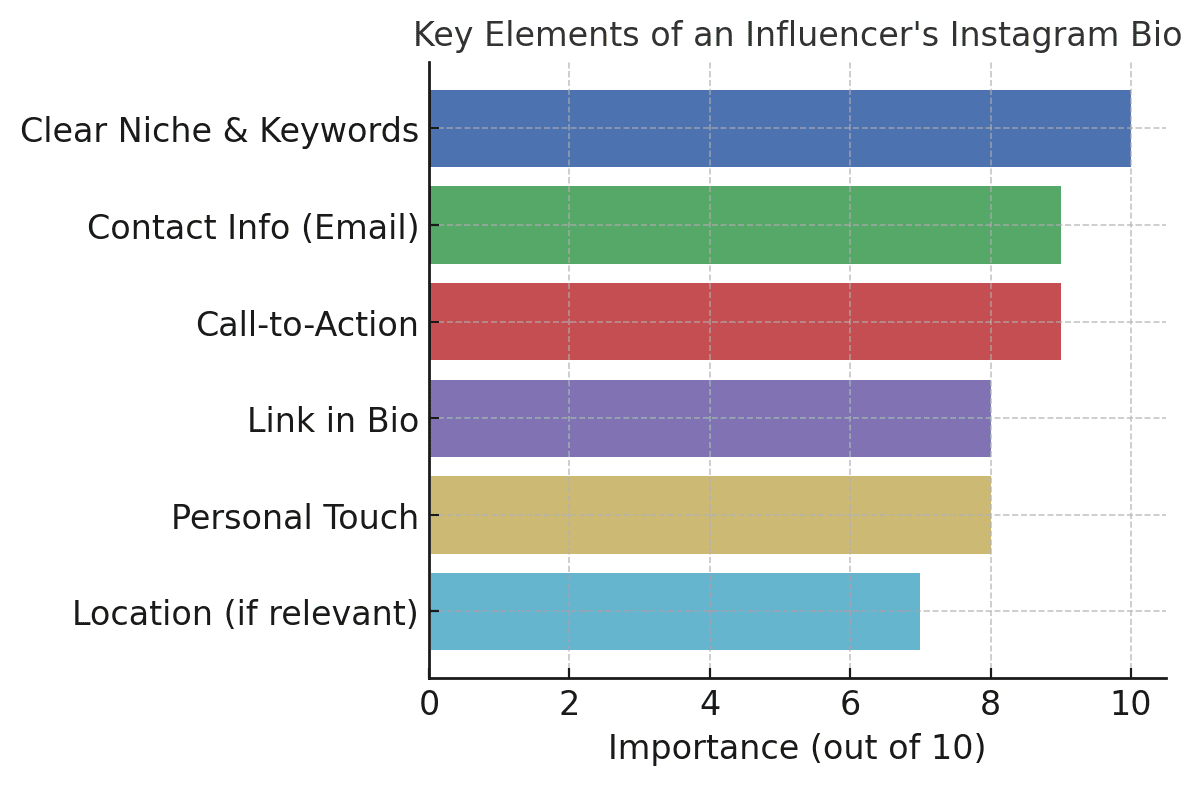
Although your Instagram bio is just 150 characters max, there’s a lot you can do with this space. A great bio usually includes a few essential elements: who you are, what you do (or what value you offer), a hint of personality, and a call-to-action or link. You’ll also want to make use of Instagram’s features like the name field (which is searchable), profile category, contact options, and the single link (now you can even add multiple links). Below is a chart summarizing the key ingredients of an influencer’s Instagram bio and their relative importance, which we’ll explore in detail:
Key elements of an influencer’s Instagram bio, rated by importance. Even small details like adding an email address or relevant keywords can make a big difference.
Now, let’s break down these elements into concrete tips. Here are six best practices to optimize your Instagram bio in 2025 (with special pointers for micro influencers, UGC creators, and small e-commerce brands):
Make yourself easy to find by using keywords in your profile name and bio. Instagram’s search will consider the name field and bio text when people look for certain terms. That means you should clearly state what you do using relevant keywords that your target audience or brands might search. For example, if you’re a makeup artist in Los Angeles, include that: “Makeup Artist in LA.” If you’re a fitness coach, put “Fitness Coach” or related keywords in your name or bio. You have 30 characters in the name field – don’t waste it on just repeating your username or a nickname. Instead, use it to add descriptive terms about your niche or profession. As Tailwind’s social media experts note, adding your profession or niche (and even your city) to your profile name makes it super easy for people searching those terms to find you.
In the bio section itself, also sprinkle in key terms that describe your content or business. For instance, a micro influencer in food might say “NYC foodie” or a UGC creator might include “UGC creator” so brands know you create content for hire. Think about what your ideal follower or a potential collaborator would be looking for. Using the right keywords can help your profile appear in Instagram’s search results for those topics. (Tip: You can include one or two relevant hashtags in your bio if they’re branded or highly relevant, but don’t overdo it – keywords in plain text are just as useful for search and keep your bio clean.)
Your bio should immediately answer: “What do you do, and what’s in it for me (the follower)?” In other words, define your niche and the value you offer. If you’re an influencer or creator, be specific about your theme or industry – are you a travel blogger, tech reviewer, beauty content creator, Amazon fashion finds influencer? Let it be known. A visitor should glance at your bio and understand the kind of content you post or the product you offer. As one influencer consultant advises, your bio should be very specific about what type of content you create, what value you provide, or what you’re selling. Don’t be afraid to niche down. Stating “Tech gadget reviews and budget hacks” is more informative than just “Tech enthusiast.”
For e-commerce brands and Amazon sellers using Instagram, this is equally vital. Make sure your bio clearly states what your business is about and what makes it unique. Highlight your unique selling points – for example, “Handmade organic skincare 🏆” or “Award-winning coffee roaster”. If you have a tagline or mission, you can include that too. The goal is that anyone reading knows exactly what you offer and why it matters. This clarity not only helps attract the right followers but also aids brands in identifying if you’re a good fit for campaigns. Remember, you’re not just describing yourself – you’re telling visitors why they should follow you. Maybe you offer solutions (e.g. “DIY home decor tips”), inspiration (“Travel photos that feed your wanderlust”), or perks (“Exclusive discount codes for my followers”). Make it benefit-driven when possible.
Also, consider using the profile Category feature for a quick at-a-glance label. If you have a creator or business account, you can choose a category (like “Digital Creator”, “Entrepreneur”, “Beauty & Cosmetics”, etc.) that displays on your profile, usually right under your name. This is another subtle cue about your niche or industry. It saves space in your bio since you don’t have to say “I’m a Blogger” if your category already says “Blogger”. Choose the most relevant category so profile visitors instantly get your field.
If you’re hoping to work with brands or build a professional presence, make it easy to contact you. The simplest way is to put your business email directly in your bio text. Yes, you might have an Email button on your profile if it’s a business account, but remember: on the Instagram desktop site, the email button isn’t visible. Many brand managers search on a computer and won’t see an email button – so include your email in the bio itself (e.g. “📧 ”). This small detail can make a big difference; in fact, one creator agency notes that putting your email prominently in your bio streamlines communication and helps you secure collaboration offers faster.
Beyond email, you can also signal that you’re open to collaborations. Phrases like “DM for collabs” or “📩: email for collaborations” can invite opportunities. Brands often skim bios to see if an influencer is interested in partnerships. If you do UGC or freelance content creation, you might state “UGC Creator for brands” or “Available for content collaborations” right in your bio. In fact, many Amazon sellers and small e-commerce brands actively seek micro influencers for product reviews and UGC because of the credibility factor. Platforms like Stack Influence even connect micro influencers with such brands to facilitate honest reviews and product seeding. By indicating that you’re open to collabs, you increase the chances that a brand will reach out – or at least that they’ll know how to reach you.
Don’t forget other contact info as relevant: some put a WhatsApp number or a business phone if that’s how you prefer to be contacted (just be mindful of privacy). If you’re a local business or creator open to local gigs, adding your location (at least city or region) is helpful too. “📍 NYC” or “Based in UK” can be worth including, especially because more and more campaigns are location-specific. Brands might be searching for influencers in particular cities; if they can’t tell where you are, you might be passed over. So if you’re comfortable, add a hint of your location – it could lead to more opportunities in your area.
An effective bio doesn’t just inform – it also guides the visitor on what to do next. Include a call-to-action (CTA) in your bio to direct your profile visitors toward something valuable. This could be “📥 Subscribe to my newsletter,” “🎥 Watch my latest YouTube video,” “🛍️ Shop my Amazon store below,” or anything that fits your goals. Think about the one action you’d love a new viewer to take after checking your profile. For many influencers and businesses, that’s clicking the link in your bio. So you might say explicitly “⬇️ Shop my picks below!” or “👉 Check out my new blog post!”. A clear CTA can increase the chances that people will actually tap that link or send you a DM or whatever you’re encouraging.
Next, make sure you leverage the link in your bio. Instagram famously gives you only one hyperlink on your profile (just below the bio text). As of 2023, however, Instagram allows you to add up to five links directly in your bio using the native “Links” feature. This is a game-changer – you might not even need a third-party link tool if you use this feature. Consider using it to link to your most important destinations: for example, a personal website or blog, your Amazon storefront or product page, your YouTube channel, or a link to sign-up pages. If you prefer a one-stop landing page, you can still use services like Linktree, Beacons, or others to house multiple links behind one URL. The key is to give your audience somewhere to go after reading your bio – somewhere that deepens their engagement with you or generates revenue for you. An influencer marketing blog recommends using a “link in bio” tool or feature to create a dynamic landing page with multiple links, which can significantly improve traffic conversion from your profile.
For e-commerce and Amazon sellers, a great strategy is to direct people straight to your store or product. For instance, an Amazon influencer might say “➡️ Shop my Amazon finds” and use the link for their Amazon storefront. If you have a current promotion or product launch, mention it and point people to it. And remember to update your CTA over time – if you’re running a seasonal sale or just dropped a new video, adjust the bio text to reflect that news or offer. A bio can and should be refreshed periodically to stay timely (fans who revisit your page will notice!). By having an actionable ask in your bio, you turn passive profile views into active engagement.
If you can tick off these items, you likely have a bio that’s in great shape!
Your Instagram bio may be short, but it packs a punch when it comes to personal branding and marketing potential. For micro influencers, it’s an opportunity to highlight your authenticity and niche appeal – the qualities that make you valuable to brands and followers alike. For Amazon sellers and e-commerce entrepreneurs, it’s a chance to concisely tell your brand story and direct customers to your products. And for all content creators – from bloggers to UGC creators – your bio is the hook that can turn a profile visitor into your next follower, fan, or client.
By using the tips above, you can craft a bio that stands out and speaks directly to your target audience. It should reflect you (or your business) at a glance: professional yet personable, informative yet interesting. Don’t be afraid to experiment with different wording – you can always refine it as you see what resonates. Remember, on Instagram, first impressions are everything. A few well-chosen words in your bio can open doors to new followers, higher engagement, and even monetization opportunities. So take the time to get it right. Optimize that bio, keep it fresh, and let it work for you as a 24/7 ambassador for your personal brand. Happy ‘bio’-writing, and may your Instagram presence continue to grow and thrive in 2025!
Facebook might not be the newest platform on the block, but it remains a powerhouse for content creators. With billions of users spanning all age groups, micro-influencers and aspiring content creators have a huge opportunity to build an audience, drive e-commerce sales, and monetize their work on Facebook. In this guide, we’ll explain what a “digital creator” is on Facebook and walk you through how to become a digital creator on Facebook step-by-step. We’ll also cover why Facebook is worth your attention (even in the age of TikTok and Instagram) and how user-generated content (UGC) from micro-influencers can boost Amazon sellers and e-commerce brands.

On Facebook, digital creator is just a fancy term for a content creator who focuses on original content. Ever since Facebook’s early days, people have built followings by sharing their own posts, photos, and videos. In 2025, a Facebook digital creator is someone who regularly posts original content — whether it’s long videos, short Reels, live streams, images, or blogs — as a primary way to engage an audience. In contrast to someone who only shares memes or other people’s posts, a digital creator is known for making their own content that provides entertainment, information, or value.
Facebook has even made it official: they introduced a new profile category called Digital Creator (accessible by turning on Professional Mode) to empower creators on the platform. This unlocks special tools like analytics insights, follower management, and monetization features to help you “build a public presence as a creator”. In short, Facebook wants to attract creators in the way YouTube and TikTok have, so they’re offering more support and features to people who post content regularly. Facebook’s algorithm has also put a growing emphasis on video content to compete with TikTok, making it an opportune time to start creating Facebook Reels and videos.
Is a digital creator the same as an influencer? These terms often overlap, but there is a subtle difference. All influencers create content, and all creators can influence – the distinction is in focus and intent. A common view is that digital creators focus on content first (they see themselves as storytellers, videographers, educators, etc., driven by passion for the craft), while influencers focus on the personal brand and persuasion (they leverage their personality and following to recommend products or lifestyles). As Sprout Social neatly puts it, digital creators help produce content for marketing, whereas influencers help reach a wider audience and drive purchases. In practice there’s plenty of overlap – many Facebook creators do paid brand partnerships, and influencers also strive to post engaging original content. The key takeaway is that “creator” usually highlights the content production aspect (videos, posts, art), whereas “influencer” highlights the relationship with the audience (and often monetizing that influence). On Facebook, you can be both: start as a creator making great content, and as your influence grows you might monetize like an influencer.
Facebook sometimes gets written off as “for older folks” while Gen Z flocks to TikTok and Instagram. But the reality is that Facebook is still the largest social media platform on the planet by user count. That alone is a huge advantage for up-and-coming creators:
As shown above, Facebook’s user base eclipses YouTube, Instagram, TikTok, or any other social network. Virtually every demographic is on Facebook in some capacity – from teens (yes, some still use Facebook) to Boomers. For a micro-influencer or content creator, this means whatever your target audience or niche, you can likely find them on Facebook. Are you into organic gardening, or vintage fashion, or gadget reviews? Facebook’s scale and its Groups/communities feature let you tap into interest-based networks more easily than on follower-centric platforms.
Here are a few specific reasons Facebook is great for creators in 2025:
In short, Facebook offers a huge and diverse audience, multiple content formats, and increasing support for creators. It’s a platform where a micro-influencer can both grow a niche community and tap into big numbers if something goes viral. For example, a cooking enthusiast might have a modest 5,000 followers but one of their short recipe videos could suddenly get 500,000 views through shares – exposing them to new fans. That kind of organic reach is still very possible on Facebook, especially with the push for Reels and shareable video content.
So, how do you actually become a digital creator on Facebook? The good news is you don’t need any official certification or approval – you can start anytime by simply creating content. However, there are some important steps to set yourself up for success. Follow these key steps to go from a regular Facebook user to an up-and-coming digital creator:
You’ve probably noticed we mentioned micro-influencers a few times. If you’re a small creator or just starting out, congratulations – you are a micro-influencer (or on your way to becoming one)! A micro-influencer typically means someone with a modest but highly engaged following, often in the few thousands to tens of thousands range. Don’t let those numbers discourage you: micro-influencers are actually in high demand these days, especially among e-commerce and Amazon sellers. Why? Because they deliver authenticity and engagement that big influencers sometimes lack.
Now, how does this tie into Facebook and becoming a digital creator? If you’re creating content on Facebook, user-generated content (UGC) is your currency. UGC refers to content made by people (not by brands) that features products or experiences – things like reviews, unboxing videos, tutorial posts, testimonials, etc., created by real users. Creators are essentially UGC machines – you’re making content from a user’s perspective. This kind of content is marketing gold for brands, because consumers trust it far more than polished ads. For example, a makeup brand could pay a Facebook creator to post a tutorial using their products; that post is UGC that other users see as a genuine recommendation rather than an ad. Studies show an overwhelming majority of people find UGC more authentic and trustworthy than brand-created content. According to one report, 90% of consumers globally say authenticity is important in deciding which brands they like – and UGC is perceived as the most authentic content of all.
For e-commerce sellers (including Amazon sellers), this is huge. They often struggle with trust – why should a customer buy from a random online store? UGC from micro-influencers provides social proof and relatable stories about the product. That’s why “brands and Amazon sellers are turning to micro-influencers and content creators to gain an edge”, leveraging them to generate authentic UGC and build consumer trust. As a Facebook creator, you can tap into this trend. Once you’ve honed your content style and built a bit of a following, don’t hesitate to reach out to brands you genuinely like. Even a small deal – like a free product in exchange for a review post – is a start. These collaborations can grow your credibility (and often your following, as the brand might promote your post too), and eventually lead to paid gigs. Additionally, a good piece of content can have a second life: for instance, if you create a great product demo video, the brand might license it from you to use in their ads (another revenue stream for you). Many micro-creators also join nano influencer platforms (like the aforementioned Stack Influence or others) where they can get matched with companies seeking UGC content and influencer posts.
Key takeaway: Facebook is not only a place to entertain or inform – it’s increasingly a marketplace of influence. By being a digital creator on Facebook, you position yourself to benefit from the shift in marketing towards micro-influencers and authentic content. Whether it’s an Amazon seller looking for a video review of their gadget, or a local boutique wanting a shoutout, your Facebook creator profile could open the door to these opportunities. Just remember to keep your content genuine; your relationship with your audience comes first. Do that, and the brands will be eager to tap into the rapport you’ve built with your followers.

Becoming a digital creator on Facebook is an exciting journey that almost anyone can start. You don’t need to be a tech expert or have a studio – you just need your ideas, a phone or camera, and the willingness to put yourself out there. In this guide, we covered how to set up your profile for success, find your niche, make engaging content, grow your community, and eventually monetize your efforts. Facebook may not be the trendiest app in every conversation, but it offers something invaluable to new creators: a massive, diverse audience and tools to reach them. It’s a platform where a single video can find viewers in Nairobi, New York, and New Delhi all in the same day.
As you embark on your creator journey, keep these final tips in mind: stay consistent (post regularly, even if just once or twice a week to start), learn and adapt (use your analytics to see what people enjoy, and refine your content strategy), and most importantly, be authentic. Share your personality, not just a persona. Facebook users appreciate realness – whether it’s a funny life anecdote or a candid review of a product, genuineness wins hearts (and algorithm boosts, since engaged audiences will interact more).
Finally, don’t get discouraged by slow periods. Every creator, big or small, has gone through the grind of talking to an audience of maybe 5 people in a live stream, or getting 2 likes on a post that took hours to make. Keep at it. Connect with fellow creators for support. Over time, your efforts will compound: one by one, those 2 likes become 20, then 200, and so on. Facebook is a marathon, not a sprint, but the finish line – a sustainable creator career, a community that values your content, and opportunities to earn doing what you love – is well worth it.
Now, it’s your turn – take these tips and start creating! Who knows, your Facebook content might become the next big thing that inspires or entertains millions. Every big creator starts as a beginner, so hit that “Post” button and begin your digital creator journey on Facebook today. Good luck, and have fun with it!
In the age of social media, fitness brands – from global sportswear giants to niche e-commerce startups – are actively seeking influencers to promote their products. This includes everyone from celebrity athletes to everyday micro-influencers with loyal followings. Why? Because influencer marketing in the fitness niche drives authentic engagement, user-generated content, and sales in ways traditional ads can’t match. In fact, nearly 90% of consumers say authenticity is important when deciding which brands to support, and 77% of marketers say micro-influencers are their ideal partners. Unlike generic ads, a trusted fitness content creator’s recommendation feels like advice from a friend, building credibility and community.
Fitness micro-influencers (typically with 5k–50k followers) have tight-knit, engaged audiences. Their content comes off as genuine personal endorsements rather than ads. Followers see them as relatable peers or local experts, so a shout-out carries weight a brand’s self-promotion lacks. This authenticity translates into trust – the foundation for converting fans into customers.
Smaller creators often see much higher engagement rates than big influencers. On Instagram, micro-influencers average around 3–4% engagement per post vs. barely ~1% for macro-influencers. Their followers actively like, comment, and click, which is marketing gold. Coupled with lower fees, this leads to better bang-for-buck. One study found micro/nano-influencer campaigns can deliver ~20:1 ROI (revenue per $1 spent) vs. ~6:1 ROI for macro influencers. In short, micros “punch above their weight,” driving more conversions at a fraction of the cost.
Fitness is a broad industry, and brands often want to reach specific sub-niches (e.g. yoga moms, marathon runners, keto dieters, etc.). Micro-influencers usually focus on a particular niche or community, allowing brands to laser-target their ideal audience. For example, a U.S. supplement brand could partner with a fitness micro-influencer in Germany to reach German gym-goers. This precise alignment means the influencer’s fans are exactly the type of customers the brand wants, yielding higher relevancy and conversion rates.
Working with influencers also generates tons of user-generated content (UGC) – real-life photos, videos, reviews, unboxings, workout demos, etc. Such content is marketing gold for fitness brands. 79% of people say UGC highly impacts their purchase decisions, far more than polished brand ads. By collaborating with fitness creators, brands get a stream of authentic content they can repost on social media, feature on product pages, or even repurpose into ads. Many brands find that influencer-created UGC (like a genuine before-and-after transformation or a home workout video using their product) outperforms traditional ads in terms of engagement and click-through rates. Nowadays, with the help of AI design in sports, sport teams, creators and influencers can produce more diverse, dynamic, and highly engaging content at scale.
Instead of one expensive celebrity endorsement, a fitness company can work with dozens of micro-influencers for the same budget – multiplying reach and content output. Many micro-influencers are happy to promote quality fitness products for a free sample or modest fee, especially if they get perks like commission on sales or affiliate links. This makes influencer campaigns accessible even to small e-commerce brands and Amazon sellers. In the ultra-competitive online market, many Amazon marketplace sellers are now turning to micro-influencers and content creators to gain an edge, leveraging authentic UGC and social proof to boost their listings. It’s essentially word-of-mouth marketing at scale, powered by social media.
Micro-influencer marketing flow: A fitness brand (e.g., an e-commerce or Amazon seller) provides product to a micro-influencer (fitness content creator), who creates and shares UGC (user-generated content) about the product with their audience. This authentic content builds trust and drives consumers to purchase from the brand.
1. Nike
The world’s leading sportswear brand runs several ambassador and influencer initiatives. Nike often works with top athletes and coaches, but it also engages local fitness influencers through campaigns (e.g. Nike Running Club pacers or Nike Training instructors). These collaborations usually involve providing free Nike gear, event access, and features on Nike’s platforms rather than direct payment. Being a Nike influencer is competitive – the brand tends to pick people with strong personal fitness stories or community influence. Still, even micro-influencers can get on Nike’s radar by organically showcasing Nike products in their content. For example, Nike has featured everyday runners in global marketing campaigns when their authentic story resonated. Tip: Tag @Nike and use hashtags like #teamnike or sport-specific tags (e.g. #nikerunning) to share your workouts – Nike does notice passionate grassroots creators.
2. Lululemon – A high-end yoga and activewear brand, Lululemon is famous for its influencer ambassador program. They partner with yoga instructors, fitness trainers, and wellness micro-influencers around the world. Ambassadors get generous perks: free Lululemon apparel, early access to new launches, and opportunities to host local events or classes sponsored by Lululemon. In return, they represent the brand’s ethos in their communities. Lululemon’s program is one of the most successful and sought-after, which is no surprise given the brand’s quality and community focus. They’ve effectively turned their ambassadors into brand evangelists – many even lead official Lululemon workouts or appear in the company’s marketing. Who it’s for: Typically health and yoga influencers who actively engage their local fitness community. Lululemon looks for authenticity and alignment with their values over sheer follower count. Being a loyal customer who embodies the “sweatlife” is often the first step to becoming an ambassador.
3. Gymshark – Gymshark, the UK-based fitness apparel phenomenon, owes much of its explosive growth to influencer marketing. From early on, Gymshark heavily collaborated with fitness YouTubers and Instagram athletes, turning them into ambassadors for the brand. Today, Gymshark’s influencer roster spans mega-stars to micro-creators across bodybuilding, CrossFit, running, etc. What’s unique is how Gymshark builds a community with its influencers – they’re called “Gymshark athletes” and get treated as part of the family. Perks include free workout apparel, commission on referral sales, features on Gymshark’s socials, and invites to exclusive Gymshark events. Gymshark is a prime example of creating long-term ambassadors rather than one-off sponsored posts. Even relatively small fitness influencers have been able to work with Gymshark if they have a highly engaged niche audience and a compelling personal brand. If you’re looking to partner, keep creating fitness content that aligns with Gymshark’s aesthetic (authentic, motivational, community-driven) and tag them – Gymshark often scouts talent from social media. They occasionally announce open calls for new ambassadors or run contests where posting a hashtag can get you noticed.
4. Fabletics – Co-founded by actress Kate Hudson, Fabletics is a popular athleisure brand that has an extensive influencer program “for all tiers, from micro-influencers to world-renowned celebrities.” In other words, they actively welcome a range of fitness content creators into their fold. Fabletics ambassadors (sometimes called “Fabletics Partners”) typically promote the brand’s affordable, stylish workout apparel on Instagram, TikTok, and YouTube. Common perks include free outfits each month, commission on sales via referral links or discount codes, and being featured on Fabletics’ official pages. They also run regular social media campaigns that micros can join (for example, showcasing a new collection with a specific hashtag). Fabletics often looks for influencers who represent the brand’s inclusive ethos – all body types, backgrounds, and fitness levels. If you love Fabletics products and have an engaged audience (even a small one), you can apply through their influencer portal. They’ve made it easy for micro-influencers to sign up and start collaborating, which is part of why Fabletics is frequently mentioned as a top brand working with micro creators.
5. MyProtein – A global sports nutrition brand, MyProtein is known for its protein powders, supplements, and activewear – and it has a large network of influencers. They offer a tiered ambassador/affiliate program that is quite welcoming to up-and-coming fitness influencers. If you embody MyProtein’s values (passion for fitness and helping others on their journey), you can apply to join their global team. Ambassadors get commission on any sales they drive (via unique discount codes or affiliate links), plus lots of freebies – monthly product allowance, care packages of the latest supplements and snacks, etc. Top performers may receive paid sponsorships or invites to MyProtein events and photoshoots. Uniquely, MyProtein even has a student ambassador sub-program to recruit college fitness enthusiasts. This illustrates their commitment to micro-influencers; they’re literally grooming the next generation of fitness creators. To get involved, check MyProtein’s official “Become an Influencer” page and fill out the application. Even if you have a modest follower count, a highly engaged fitness audience (or a niche like vegan fitness, student athletes, etc.) can be your ticket in.
6. Alo Yoga
Alo Yoga is a trendy yoga apparel and lifestyle brand that has skyrocketed in popularity on social media. Alo runs a robust influencer/affiliate program and boasts a “long list of loyal ambassadors, content creators, and influencers” sharing their Alo outfits and obsessions with followers. If you’re into yoga, Pilates, or athleisure fashion, this is a brand to know. Influencers in the program earn commission by sharing trackable links/codes for Alo products and often receive free apparel to feature. Alo also organizes community events like yoga classes and wellness retreats, frequently tapping their micro-influencers to host or attend. What sets Alo apart is its strong brand image – they often collaborate with very aesthetically minded creators (think beautiful yoga poses, mindful living content). However, they don’t only work with huge influencers; they’ve leveraged plenty of micro-influencers whose serene content and engaged followers align with the brand. Consistency and high-quality content are key – Alo’s Instagram feed is very curated, so they seek influencers who can match that vibe. If that sounds like you, Alo’s influencer program could be a great fit.
7. Fitbit – Not every fitness brand is apparel or nutrition; Fitbit, the wearable fitness tracker company, also works closely with influencers. Fitbit often partners with health bloggers, mom influencers, and micro creators who document their fitness journeys. The idea is for influencers to showcase how Fitbit devices integrate into real-life routines – tracking workouts, improving health metrics, joining Fitbit challenges, etc. This provides authentic testimonials and relatable stories for the brand. For example, Fitbit invited a TikTok micro-influencer mom and her daughter to a launch event for a kids’ fitness watch, highlighting how the product fits an active family lifestyle. Many Fitbit ambassador deals operate as affiliate partnerships (influencers earn a commission on any Fitbit devices sold through their referral link) or as short-term campaigns around new product releases. If you are a content creator into gadgets or tracking your progress, tag Fitbit in your posts or reach out about their ambassador program. They often look for enthusiastic users of their products who can evangelize the benefits of a healthy, active life with Fitbit’s help.
8. Athleta – Athleta, a performance apparel brand owned by Gap Inc., has made a name by focusing on the active women and girls market. They champion inclusivity and women’s empowerment, and their influencer approach reflects that. Athleta has an official ambassador program, often working with fitness instructors, trainers, and everyday athletes who align with the brand’s values. Influencers chosen by Athleta share content featuring Athleta’s apparel in action – from gym workouts to yoga flows – and emphasize the brand’s comfort and functionality for real women. In some cases, Athleta ambassadors are local store associates or community leaders who host events (run clubs, yoga in the park) sponsored by Athleta. Perks can include free clothing, gift cards, early access to new lines, and features on Athleta’s social channels. A micro-influencer personal trainer, for instance, might be invited to takeover Athleta’s Instagram Live for a workout session. Athleta is very much about community engagement; they even showcase their HQ’s gym and recovery facilities through influencers to underscore that they “walk the walk” in supporting a healthy lifestyle. If you’re an active female influencer with a positive, community-driven approach, Athleta could be an ideal partner.
9. IdealFit – A women-centric fitness brand (supplements, activewear, and nutrition plans), IdealFit runs a notably micro-influencer-friendly ambassador program. In fact, IdealFit doesn’t impose strict follower minimums or criteria – their program welcomes everyone from fitness newbies to established creators, as long as you’re passionate about women’s health. Ambassadors get a well-rounded package of perks: free products, affiliate commission on sales, and even promo items to run giveaways (which helps both the influencer and the brand grow). This thoughtful approach has made IdealFit’s program quite popular, especially among female fitness enthusiasts on Instagram and YouTube. Whether you’re into weightlifting, running, or yoga, as an IdealFit ambassador you can share discount codes with your audience and earn money on each purchase you inspire. Meanwhile, you’re stocked with supplements and cute workout clothes to try out. It’s a win-win. Who it’s for: IdealFit specifically encourages women who stand for empowerment and a balanced fitness lifestyle to join. Since micro, mid-tier, and macro influencers are all invited (they have no initial size requirement), this is a great program to consider if you’re just starting out building your fitness influencer presence.
10. ASICS – A renowned running shoe and athletic gear brand, ASICS has a global ambassador initiative that reaches deep into the micro-influencer realm. One notable program is the ASICS FrontRunner team: a community of everyday runners and fitness lovers from various countries who represent ASICS. Many FrontRunner ambassadors are not traditional influencers at all, but regular folks with a passion for running and an active Instagram/blog. ASICS provides them with the latest running shoes and apparel, and in exchange they share their training, races, and personal fitness stories wearing ASICS gear. They often get access to exclusive events (like marathon entries, training camps, photoshoots) and form a tight community with other ASICS ambassadors. For micro-influencers who are avid runners or triathletes, this is a dream gig – you get to be affiliated with a top sports brand without needing hundreds of thousands of followers. ASICS benefits by having genuine grassroots representation in local running communities worldwide. To get involved, keep an eye out on the ASICS FrontRunner website; they periodically open applications in different regions. Emphasize your love of running and community involvement when applying, rather than your follower stats.
...and more! The list doesn’t end here – there are dozens of other fitness brands actively seeking influencers. Some examples include supplement companies like Beast Sports Nutrition, Women’s Best, 1UP Nutrition,* and Uprise Nutrition (which even has a tiered ambassador program rewarding top performers with more free products), emerging activewear labels like Girlfriend Collective and Beyond Yoga (popular for their inclusive and sustainable focus), fitness gear startups like Crossrope or ChopFit that send out products to micro influencers, and even gyms and fitness apps looking for ambassador coaches. The opportunities in 2026 are vast – whatever your fitness niche, chances are there’s a brand eager to work with influencers just like you.
Note: When pursuing these collaborations, remember that each brand’s requirements and application process will differ. Some have formal applications (often found on their website), while others recruit more organically by scouting social media. Always research the specific program details. A brand might require a certain follower count, an engaged community, or particular content style. And not all brands are recruiting at all times – patience and persistence are key.
Getting brand deals isn’t just about having a big follower number. Here are some tips to connect with fitness brands looking for influencers (including micro-influencers, Amazon sellers, and emerging e-commerce brands):
Brands love influencers who have a clear niche and story. Whether you’re a yoga mom, a marathon runner, a crossfit athlete, or a weight loss journey blogger, lean into what makes you unique. Post consistently and showcase your expertise or progress. Brands want to see that you have an authentic connection with your audience and subject matter. A smaller but highly engaged follower base (e.g. 5,000 fans who actually care) beats 50k random followers. Focus on genuine engagement: respond to comments, foster a community. This engagement is often a make-or-break metric for influencer campaigns.
One of the best ways to get on a brand’s radar is to organically feature their products in your content. Post your workout outfit of the day in Gymshark leggings or share a recipe using MyProtein powder – and tag the brand. Use relevant hashtags (many brands have official hashtags or challenges). For example, La Croix (a beverage brand) encourages micro-influencers to use tags like #LaCroixLove and will even send free product vouchers to those who do. Fitness brands often notice when you mention them; some will repost your content (exposing you to their audience) or even reach out with collaboration offers if they like what they see. Essentially, show love to the brands you genuinely use and align with – it can open doors.
Don’t hesitate to use online platforms that connect influencers with brands. Some influencer marketing agencies and websites list ambassador programs you can apply to (for instance, Afluencer’s directory highlights lots of brands seeking fitness influencers, from apparel to nutrition). Additionally, platforms like Stack Influence specialize in automating micro-influencer campaigns for e-commerce brands. Stack Influence, for example, connects everyday fitness creators with companies (including Amazon sellers) looking to seed products and generate UGC at scale. By signing up on such platforms, you might get offers to promote a new protein shaker, a workout app, or an Amazon fitness gadget in exchange for free product plus payment or commission. It streamlines the process of finding opportunities, especially for micro-influencers.
Many fitness brands have affiliate programs open to content creators, which can be an easy entry point. Affiliate marketing means you promote products with a special link or code, and you earn a commission for each sale you generate. This is common with supplement companies, activewear brands, and even equipment retailers. For example, Fitbit’s affiliate program or the Amazon Influencer Program let you earn from recommending fitness products you already use. While affiliate deals might not pay upfront, they can demonstrate to brands that you can drive sales – a big plus for getting future sponsorships. Treat affiliate partnerships professionally: create honest reviews or tutorials, and don’t just spam codes. If you show you can be a genuine advocate who brings in customers, bigger collab offers will come.
The intersection of fitness and influencer marketing in 2026 is full of opportunity. Brands are not only looking for chiseled celebrities or world-famous athletes – they’re looking for authentic voices who can inspire everyday people to live healthier lives. Whether you’re a micro-influencer with 2,000 followers or a growing fitness guru with 50k, there are fitness brands (big and small) eager to collaborate. From scoring free workout gear and supplements, to earning commission promoting your favorite products, to even being featured by top companies – the possibilities are endless.
The key is to be proactive and authentic. Align with brands that genuinely fit your personal brand and that you’d honestly recommend. Approach partnerships as relationships built on mutual value: you provide creative, relatable content and credibility; the brand provides support and rewards that help you continue doing what you love. As the examples above show, influencers who stay true to their voice and audience can thrive. With the right strategy and persistence, your fitness journey could turn into brand partnerships that not only monetize your content but also bring your followers along for an inspiring ride.
So lace up those sneakers, fire up your camera, and put yourself out there – your future brand collab might be just a post away! 🚀💪
LinkedIn has become a go-to platform for professionals to build a personal brand and establish themselves as thought leaders. In the sea of content on LinkedIn, a handful of influencers consistently stand out with engaging posts about personal branding, influence building, and leadership. Below, we highlight some active U.S.-based LinkedIn influencers – a mix of high-profile names and rising stars – who offer valuable insights, inspiration, and practical advice. Follow these individuals for a masterclass in building your professional influence.
A post shared by Justin Welsh (@thejustinwelsh)
Justin Welsh is a former SaaS executive turned solopreneur and one of LinkedIn’s most prolific content creators. He has grown his audience to over 650,000 followers and was named Favikon’s #1 Global LinkedIn Thought Leader five times. Justin built a multi-million dollar one-man business by sharing his expertise online.
Justin shares straightforward tips on growing an online presence and business as a solo professional. His content demystifies LinkedIn strategy with simple frameworks: post consistently, provide value, and build trust. He often breaks down complex growth strategies into actionable steps – from optimizing your profile to turning followers into clients. His posts about content creation systems and audience engagement are gold for anyone looking to leverage LinkedIn.
Justin’s practical, no-nonsense advice has helped thousands of people scale their influence organically. He champions consistency over shortcuts and emphasizes delivering value to your audience. If you want to learn how to monetize your expertise and build a personal brand from scratch, Justin’s feed is a treasure trove of clear, actionable guidance. His own journey – 900+ million content views since 2019 – proves he knows what works on LinkedIn.
Ann Handley is a best-selling author (every marketer swears by her book Everybody Writes) and a pioneer in content marketing. As Chief Content Officer of MarketingProfs, Ann was one of the first executives to hold that title. She’s a LinkedIn Top Voice recognized for her expertise in content creation and has hundreds of thousands of followers eager for her writing wisdom.
Ann’s LinkedIn content centers on storytelling, writing better, and humanizing your communication. She offers witty, insightful tips on crafting content that truly connects – whether it’s a LinkedIn post, blog, or email. Her mantra is clarity and empathy in writing. Ann often shares real-world examples, writing prompts, and encouragement for creators. Following her feels like having a personal writing coach in your feed, helping you find your voice and tell your story effectively.
If you believe “good writing is good business,” Ann Handley is the mentor you need. She makes the case that strong writing and storytelling are cornerstones of personal branding. Ann’s warm, relatable style proves that you don’t need to be overly formal to be professional. By learning from her, you’ll improve your content quality and, in turn, strengthen your personal brand’s credibility. She’s an established thought leader who still engages daily with her community – a must-follow for content creators and professionals alike.
Neal Schaffer is a social media strategist and author of The Age of Influence, known for empowering professionals to leverage LinkedIn. Based in the U.S., Neal has carved out a reputation as a LinkedIn expert who coaches businesses and individuals on digital branding. He might not have millions of followers, but his impact as a teacher and consultant is widely recognized in the marketing community.
Neal shares no-nonsense advice on making LinkedIn work for you. His posts often read like mini-guides: how to optimize your profile, grow your network, increase post engagement, or use LinkedIn’s features effectively. He breaks down LinkedIn’s nuances one practical step at a time. Neal also discusses social media trends and personal branding strategies beyond LinkedIn (like influencer marketing and content planning), but always with an eye toward actionable takeaways.
For anyone feeling overwhelmed by LinkedIn, Neal Schaffer is a grounding voice. He provides clear frameworks and “roadmaps” for building your influence on the platform. Neal emphasizes authenticity and engagement over vanity metrics – he’ll remind you that 500 quality connections beat 5,000 disengaged followers. Following Neal is like having a LinkedIn coach in your feed, helping you turn this professional network into a real personal branding asset.
Better known as Gary Vee, Gary Vaynerchuk is one of the most high-profile entrepreneurs on social media. He’s the CEO of VaynerMedia, a best-selling author, and an early internet personality. Gary is U.S.-based (NYC) and boasts millions of LinkedIn followers. He’s been a pioneering voice in personal branding and social media marketing for over a decade.
Gary’s content is high-energy and motivational. On LinkedIn, he shares short videos and posts encouraging people to create content, be authentic, and “just start”. He often talks about consistency, patience, and documenting your journey. Expect candid advice about business and branding, sprinkled with personal anecdotes. His no-excuses attitude urges professionals to put themselves out there regularly – whether through posts, videos, or engagement – and to not fear imperfection.
Gary Vee is the voice of action in personal branding. If you need a push to overcome self-doubt or procrastination, Gary provides it in spades. He preaches that building a brand is a marathon, not a sprint, built on grit and honest storytelling. By following him, you’ll be reminded to stop overthinking and start executing your ideas. His content isn’t about detailed “how-tos” but about mindset – consistency, authenticity, and work ethic – which is hugely valuable when establishing yourself as a thought leader.
Melanie Deziel is a content strategist and keynote speaker who made her name as the author of The Content Fuel Framework. Based in the U.S., she’s an authority on helping brands and individuals generate better content ideas without burning out. Melanie may not have the largest following on this list, but she’s highly respected in marketing circles and was the first editor of branded content at The New York Times.
Melanie’s LinkedIn posts often provide tips for content creation and storytelling. She’s the master of frameworks – her Content Fuel Framework, for example, gives you systematic ways to brainstorm engaging content topics. On LinkedIn, she shares advice on maintaining consistency, boosting creativity, and finding inspiration for your personal or company brand. She might post a quick tip on repurposing content one day, and a deeper dive into storytelling strategy the next. All her content is approachable and geared toward sparking ideas.
If you ever struggle with “What should I post?”, Melanie is the antidote. Her insights are invaluable for staying inspired and consistent. She shows that you don’t have to reinvent the wheel every day to have great content – you just need the right process. Following Melanie will equip you with practical tools to brainstorm and structure content that aligns with your brand message. For professionals building a thought leadership presence, her advice can help you avoid creative ruts and engage your audience week after week.
Chris Do is a brand strategist, designer, and educator who founded The Futur, an online education platform for creative entrepreneurs. Based in California, Chris has a strong LinkedIn presence where he shares insights on branding, content, and creative business. He’s known for demystifying the creative process and has been an advocate of personal branding for creatives.
Chris’s content simplifies the art of branding and visual storytelling. On LinkedIn he shares tips on things like defining your brand’s core message, improving your design and video content, and positioning yourself in the market. He often uses analogies and visuals (as a designer at heart) to make complex concepts clear. Chris emphasizes being consistent, authentic, and memorable in how you present yourself. He might post quick design tips for better LinkedIn images one day, and a thought-provoking question about what your brand stands for the next.
Chris Do provides a unique blend of creative and business advice. For anyone building a personal brand, he’ll remind you that your visual identity and messaging need to align. His lessons on clarity and consistency can help you develop a brand presence that is unmistakably you. Also, if you’re an entrepreneur or creative professional, Chris’s content on pricing, client communication, and community-building will resonate. He’s a great follow for learning how to communicate your value through both words and visuals.
Dorie Clark is a marketing strategist, executive coach, and author of renowned books like Reinventing You and Stand Out. Based in the U.S., Dorie has been recognized as a Top Voice on LinkedIn in the realm of marketing. She teaches at Duke University and writes for Harvard Business Review, and has helped professionals at big companies refine their personal brands. If there’s one word for Dorie, it’s reinvention – she’s all about evolving your career and brand over time.
Dorie’s LinkedIn content is rich with strategic career and branding advice. She talks about staying relevant in a fast-changing world – whether that means learning new skills, building your network, or adjusting your public narrative. She shares insights on thought leadership, often referencing research or lessons from her own career shifts. Her posts encourage professionals to think long-term: how to build credibility, visibility, and a legacy rather than chasing overnight fame. You’ll also find Dorie sharing her Forbes and HBR articles, LinkedIn Learning course tidbits, and examples of people who successfully reinvented themselves.
Dorie Clark is the “queen of staying relevant”. If you are looking to future-proof your career and brand, her guidance is priceless. She emphasizes strategy and patience – showing you how to build a thought leadership platform that stands the test of time. Her own career journey (from nonprofit executive to marketing guru) demonstrates the power of personal branding done right. Follow Dorie to learn about pivoting your brand, growing your influence deliberately, and making sure your professional reputation evolves as you do.
Shay Rowbottom is a self-made LinkedIn video influencer and personal branding coach, based in the U.S. She skyrocketed to fame by posting viral videos on LinkedIn and later co-founded a video marketing agency. With over 600,000 LinkedIn followers engaging with her content, Shay has been recognized as a top business influencer (Forbes named her the #1 business influencer of 2020). Now she focuses on teaching others how to turn their LinkedIn presence into a magnet for opportunities.
Shay’s content is a mix of bold personal videos, marketing tips, and candid stories. She often shares LinkedIn video marketing secrets – how to hook viewers, tell your story on camera, and generate leads through content. She’s big on authenticity and even vulnerability in posts (speaking openly about challenges). Shay also posts motivational content to encourage professionals to share their truth and be consistent. Underpinning all her posts is her expertise in using LinkedIn strategically: she frequently demonstrates how a strong personal brand on LinkedIn can drive real business results (clients, leads, sales).
Shay embodies the idea that your LinkedIn profile can transform into a powerful personal brand. If you want to learn how to use video and storytelling to stand out, Shay’s feed is a must-follow. She offers a blueprint for turning content into an engine for growth – her own success (10x follower growth and generating $50M+ in revenue for clients) showcases that. Beyond tips and tricks, Shay’s fearless style will inspire you to show more personality in your professional posts. Follow her for a mix of practical LinkedIn tactics and the inspiration to be bolder and more creative online.
A post shared by Goldie Chan 💚 (@goldiecylon)
Goldie Chan is a personal branding expert and agency founder based in Los Angeles. Dubbed the “Oprah of LinkedIn” by Huffington Post, Goldie gained fame through a LinkedIn video series that ran for 365 consecutive days. She’s a LinkedIn Top Voice whose Forbes column on personal branding and storytelling garnered nearly 10 million views. Goldie now runs Warm Robots, a social media strategy agency, and is a sought-after keynote speaker on brand strategy.
Goldie’s content focuses on personal branding, career development, and storytelling in the digital age. She often shares bite-sized personal branding tips, like how to improve your LinkedIn profile or develop your brand message. Goldie also posts about LinkedIn features or trends, helping followers navigate new ways to share their voice (for example, advice on LinkedIn newsletters or creator mode). Her style is very positive and inclusive – she encourages professionals of all backgrounds (including introverts, as per her upcoming book Personal Branding for Introverts) to put themselves out there. Occasionally, she’ll share Comic-Con or pop culture insights, tying it back to branding lessons, reflecting her fun and creative approach.
Goldie Chan offers a masterclass in vibrant personal branding. She’s a living example of how consistency and authenticity on LinkedIn can propel your career – her daily video project made her a platform superstar (and LinkedIn Top Voice winner in the video category). Following Goldie will teach you how to craft your own narrative and share it in a way that’s engaging. She’s especially great for those who think “I’m not a natural influencer” – Goldie shows that by being genuine and telling your unique story, you can build a strong brand no matter your personality type. Plus, she keeps you inspired with her creative flair and supportive tone.
Morgan Ingram is a sales coach, speaker, and content creator based in the U.S. He first gained recognition with his YouTube series “The SDR Chronicles” and later became a prominent voice on LinkedIn for sales professionals. Morgan has about 160,000+ LinkedIn followers and was featured in LinkedIn’s Top Voices in Sales. He’s notable for seamlessly blending sales development advice with personal branding tips for young professionals.
Morgan’s LinkedIn posts are high-energy and motivational, often addressing both sales tactics and personal growth. He provides practical tips on building your personal brand while hitting your sales goals. For example, he might share how a salesperson can create valuable content to attract prospects, or how to network effectively on LinkedIn. Morgan also talks about mindset – resilience, consistency, and creativity – drawing from his own journey in sales. His content is dynamic (lots of short videos, anecdotes, and even rap occasionally) and always actionable, geared to help you stand out in a crowded market.
Morgan Ingram brings a fresh perspective that your personal brand is your career differentiator, even in fields like sales. If you’re early in your career or in a competitive industry, Morgan’s content will show you how to use LinkedIn and content creation to rise above the noise. He is an “emerging” influencer who has real on-the-ground tips for professionals hustling to make a name for themselves. Follow Morgan for a jolt of inspiration and a playbook on balancing professional expertise with personal branding – he proves you can do both at once to accelerate your success.
LinkedIn is bustling with voices, but these influencers consistently deliver value. From marketing veterans to new-age creators, each person above demonstrates how sharing knowledge and personality on LinkedIn can translate into real influence. By following them, you’ll not only get actionable advice on personal branding and thought leadership, but also a daily reminder that building your brand is a continuous journey of learning and giving.
Start engaging with their content, observe how they do it, and apply those lessons to your own LinkedIn activity. In time, you might find your own posts sparking conversations and your network growing with the right people. After all, the key to becoming a thought leader is to learn from the best and then lead in your own way. These influencers are definitely some of the best – and they’re worth having in your feed as you craft your own professional brand story.
Aspiring fashion and lifestyle influencers – this guide is for you. In today’s social media era, style influencers are shaping trends and driving e-commerce like never before. Brands from luxury fashion houses to Amazon sellers are eager to collaborate with relatable micro-influencers to reach engaged audiences through authentic content. A micro-influencer typically has a modest following (5,000–50,000) but a highly engaged niche community– and that smaller scale can actually be a strength in building trust. If you’re passionate about style and want to turn your fashion sense into influence (and maybe income), read on. This comprehensive, step-by-step guide will walk you through how to become a style influencer – from finding your niche to monetizing your content – optimized for both Google and AI search engines. Let’s dive in!
Entering the influencer world is like stepping into a crowded marketplace – to stand out, you need a clear niche. Identifying your niche is the first important step to rise above the noise. Rather than trying to appeal to everyone, focus on the aspect of fashion or lifestyle you’re most passionate about and knowledgeable in. Maybe it’s high-end luxury couture, edgy streetwear, sustainable eco-fashion, thrifted vintage finds, plus-size styling, or minimalist lifestyle design. Choose a niche that reflects you and that you can authentically represent.
By zeroing in on a specific style niche, you’ll attract a targeted, passionate audience who shares that interest. Remember, micro-influencers often specialize in a specific interest area, and that specialization attracts a loyal community. For example, a micro fashion influencer might focus exclusively on vegan handbags or streetwear sneakers, instantly becoming a go-to source for fans of that subgenre. A well-defined niche not only helps you craft a consistent identity; it also makes it easier to form partnerships with brands aligned to your focus (they’ll know you’re a perfect fit for their target audience). As one expert put it: “Identifying your niche... helps establish your signature style and build strong connections with a targeted audience”. In the colorful world of style, your niche is your spotlight – pick one you genuinely love, because you’ll be living and breathing it every day.
Once you know your niche, start developing an aesthetic around it. This includes your visual style (colors, filters, composition of your photos/videos) and your voice (the tone of your captions, blog posts, or videos). Strive to be authentic – people follow you for you, so let your personality shine. If you love bohemian prints and earthy tones, embrace that consistently; if edgy street fashion is your thing, let that attitude come through in your content. Your niche and aesthetic together become your personal brand identity in the fashion world.
In the style influencer game, you are your brand. Developing a unique personal style is absolutely vital – think of your style as your signature that sets you apart from the crowd. This isn’t just about wearing one kind of outfit; it’s the overall vibe you project. From the clothes you showcase, to the way you edit your photos, to the topics you chat about in Stories or videos – it should all communicate who you are and what your fashion perspective is.
Becoming a style influencer is not about copying the latest trendsetters; it’s about curating a look and feel that is distinctly yours. Maybe you’re the queen of pastel streetwear, or you combine high-fashion pieces with thrifted finds in every outfit. Whatever it is, lean into it. Consistency is key: over time, your followers should be able to recognize a post as yours immediately. As one guide notes, personal style is an expression of who you are that speaks clearly to your followers even before you’ve said a word. Is your vibe glam and polished? Casual and beachy? Urban and edgy? Make it intentional and cohesive.
Don’t just focus on clothes – develop your brand voice and story. Perhaps you’re a working mom sharing chic yet comfy looks and life hacks (mixing lifestyle into your fashion). Or you’re an outspoken advocate of sustainable, ethical brands, weaving those values into your content. Having a clear point of view builds your credibility. It will also guide the type of brands that will want to work with you (e.g. if you’re all about eco-friendly fashion, sustainable brands will naturally gravitate to you).
Practical steps to build your brand: design a simple logo or consistent look for any blog or YouTube channel graphics, pick a color scheme or filter preset for your photos, and write a compelling bio that tells new followers exactly what you’re about. Are you “NYC-based thrift fashion guru 💃 Sustainable style on a budget” or “Travel & boho fashion – finding style everywhere I go”? Craft a tagline that encapsulates it. Over time, your name should become synonymous with your niche – that’s when you’ve truly become a brand.
Above all, stay true to yourself. Authenticity is the currency of influencer success. Followers can tell if you’re faking it or chasing trends that don’t fit you. Being genuine in your style and recommendations builds trust – and trust is what makes someone a real influencer. As we’ll reiterate later: keep it real and passionate, because that’s the only genuine way to find success in this space.
Not all social media platforms are created equal – each has its own strengths for style and lifestyle content. When starting out, choose 1–3 platforms to focus on (you can always expand later) and optimize your presence on each. Here’s how to pick what’s best for you:
The go-to platform for fashion influencers – it’s essentially the “couture runway” of social media, perfect for visual storytelling through photos. If you love photography, outfits-of-the-day (#OOTD), and creative editing, Instagram is a must. It allows you to showcase a curated feed of images, while also using Stories and Reels for more candid or dynamic content.
The rising star for reaching young, trend-savvy audiences. TikTok is like the streetwear scene – fast-paced and video-centric. It’s great for short, trendy videos: think styling hacks, outfit transformations, or behind-the-scenes clips set to music. If you’re comfortable on camera and enjoy hopping on viral challenges or dances (and don’t mind not being picture-perfect 24/7), TikTok can skyrocket your reach quickly.
Ideal for long-form content. Many style influencers use YouTube for things like fashion haul try-ons, seasonal lookbooks, vlogs, or detailed tutorials (e.g. how to build a capsule wardrobe). It requires more work per video (filming and editing), but the payoff is a library of content that can continue to draw views over time. YouTube is also fantastic for building a personal connection with your audience through your personality and storytelling.
Often overlooked, Pinterest is powerful for fashion and lifestyle inspiration. It’s more of a search engine for images – by creating style boards (e.g. “Spring Outfit Ideas” or “Boho Home Decor inspo”), you can drive traffic to your blog or Instagram. It’s worth using Pinterest to share your outfit photos or blog graphics with links back to your site, as it can generate steady traffic over time.
While social platforms are key, having your own blog or site can be a home base for longer articles (like trend reports or product reviews) and a place to integrate e-commerce (online shop or affiliate links). Blogs are also great for SEO – people searching Google for style tips might find you this way. Many top influencers still maintain blogs to complement their social content. It’s optional, but consider it once you’re consistently creating content.
Optimize your profiles on whichever platforms you choose. First impressions count when a potential follower or brand clicks your page! Here’s a quick checklist for profile optimization:
Now, how do you tailor content to each platform? Here’s a handy chart summarizing platform-specific tips for fashion & lifestyle influencers:
Figure: Summary of key tips for fashion & lifestyle influencers on major platforms. Each platform has a unique culture and content format, so adapting your style accordingly is crucial. For example, Instagram favors a visually cohesive feed (use consistent filters and fashion hashtags like #OOTD) and interactive features like Reels & Stories to engage your community. TikTok rewards short, trendy videos – jump on popular sounds or challenges, showcase fun outfit transformations, and let your personality shine through casual, unfiltered clips. YouTube is the home of long-form content such as hauls and lookbooks – invest in good lighting and sound, and encourage viewers to like/comment (building engagement). Pinterest thrives on style inspiration boards – use SEO-friendly titles and tags so users can discover your pins, and link each pin to your blog or Instagram for traffic. If you have a blog or personal site, treat it as a hub for in-depth guides and styling tips; optimize posts with keywords (for Google SEO), include high-quality photos, product links or widgets (to earn via affiliates), and then share those blog posts on your social channels to drive traffic. By understanding what works best on each platform, you’ll maximize your reach and impact.
As shown above, tailor your approach to each platform’s strengths. Also, don’t be afraid to cross-promote: share your TikTok videos to Instagram Reels, post your YouTube links on Twitter or Facebook, pin your Instagram photos to Pinterest boards, etc. This way fans on one platform can discover your content on another.
Pro tip: When you’re just starting, you might focus on one platform (say, Instagram) to build a core audience, but it’s wise to diversify eventually. Algorithm changes or platform fads can impact your reach, so having a presence on multiple channels (even if one is primary) gives you stability. Plus, different formats let you show different sides of your creativity.
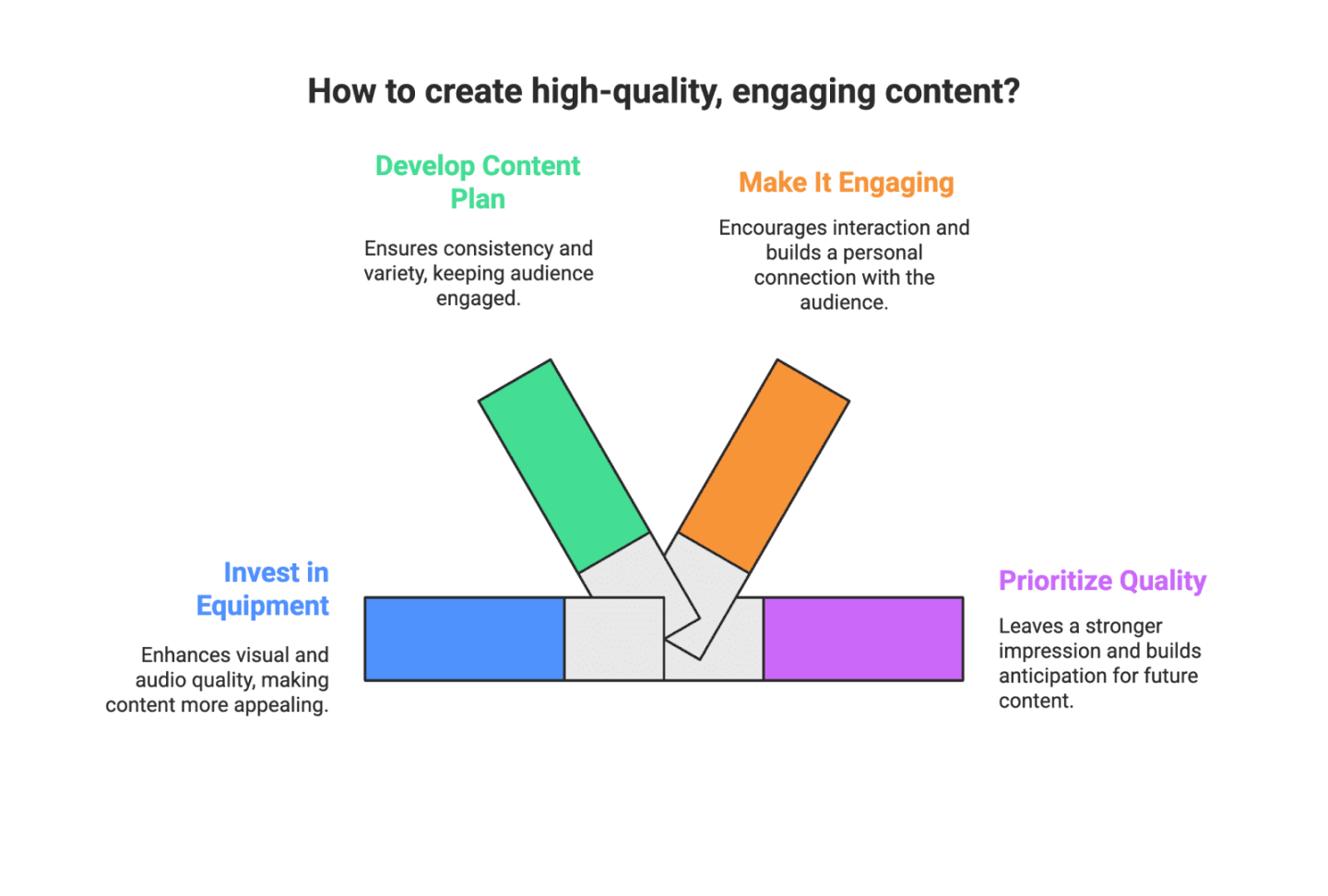
Now for the most important part: content creation. As a style influencer, your content is your product. High-quality, engaging content will attract followers and keep them coming back. Here’s how to make it happen:
You don’t need a Hollywood studio, but a few basics go a long way. A smartphone with a great camera can suffice to start (newer iPhones, Samsungs, etc., have excellent cameras), but if you can, consider a DSLR or mirrorless camera for crisp photos and videos. Also, good lighting is a game-changer – shoot in natural light or get an affordable ring light. Clear, well-lit images make even budget outfits look fab. As one guide suggests, a high-resolution camera and reliable microphone (for video) are key tools – think of them as your paintbrushes on the canvas of social media. If you do video, also ensure your audio is decent (even a $20 lapel mic can improve sound for talking portions).
Consistency is crucial. Aim to post regularly – whether that’s daily on Instagram, 3 TikToks a week, or a YouTube video every Friday. Create a content calendar with ideas so you’re not scrambling. Include seasonal themes (e.g. “Back to School looks” in late summer, “Holiday party outfits” in December) and evergreen content (like “10 Wardrobe Essentials”). Variety helps too: mix up photos, videos, Stories, Lives, etc., to keep things interesting.
Content isn’t just to look at – it should spark engagement. Write captions that tell a story or ask a question (“Which look is your fave? 1 or 2?”). Encourage comments and respond when people leave them. Share personal anecdotes about your life or why you styled an outfit a certain way – this makes you more relatable. If you’re doing a video, be enthusiastic and let your personality come through. Authenticity here is key; audiences love to feel like they know the real you. Share wins and struggles (maybe the dress didn’t fit at first, or you DIYed something). Authentic storytelling creates a deeper connection.
Yes, consistency is important, but never sacrifice quality just to post more. In fashion especially, visuals need to pop. Take the extra time to compose a great shot – clean background, flattering angle, sharp focus. Use basic editing apps to tweak brightness or colors so your outfit stands out. “Quality is paramount: make sure your images are sharp and attention-grabbing,” experts advise. A beautifully shot outfit photo or a well-edited video will leave a stronger impression than five mediocre posts. People will wait for your content if they know it’s always good.
If you’re wondering what to post, here are some staple content types that resonate well in fashion/lifestyle:
In all these, be creative and have fun. Fashion is a creative field – show off your styling creativity, whether through innovative outfits or eye-catching video editing. Make your content experience-able: your audience should feel inspired or informed after consuming it. And don’t forget to include calls-to-action: invite people to like, share, subscribe, or use a certain hashtag. For example, in your YouTube video say, “If you enjoyed these looks, hit that like button and follow for more!” – sometimes people need the little nudge.
Lastly, be consistent. We said it before, but it’s worth repeating: consistently showing up in your audience’s feed builds momentum. One post won’t make you an influencer, but hundreds of posts over time can. Consistency also signals algorithms that you’re an active creator. So stick to a schedule you can manage – even if it’s two great posts a week, stick with that. In this fast-paced social media world, consistency is your best friend for growth.
Creating great content is half the battle – now you need people to see it! Growing your follower base, especially as a micro-influencer, takes time and genuine engagement. Here are strategies to attract and retain an audience:
Treat your followers like friends. Reply to comments on your posts – even just a “❤️” or “Thank you!” makes people feel seen. Answer DMs (within reason) – if someone asks where you got those boots, respond. The closer your relationship with your audience, the more loyal they’ll be. Micro-influencers have an advantage here: with fewer followers, you can interact more and build a tight-knit community, leading to higher engagement rates than big celebs. Consider encouraging user-generated content from your followers too. For example, create a unique hashtag for your community and ask them to share their own outfit pics or lifestyle shots with it. Then feature the best submissions on your page (with credit). This not only provides you fresh content but also makes your followers feel valued. It’s authentic social proof that you have an engaged tribe, and those featured will likely promote your post too, extending your reach.
On platforms like Instagram and TikTok, relevant hashtags can expose your content to people searching those topics. Research what hashtags are popular in your niche (#streetstyle, #plussizefashion, #OOTD, #lifestyleblogger, etc.). Mix big trending hashtags with more niche ones. For example, a post might include #FallFashion alongside a branded hashtag you create for yourself. Don’t go overboard (30 random tags on Instagram might look spammy), but a solid 5–10 tags can help. On TikTok, using trending hashtags or sounds can land you on more For You pages. On Pinterest or your blog, think in terms of SEO keywords: write descriptive titles/captions (e.g., name your Pinterest board “Spring Outfit Inspiration” rather than just “Spring”). Basically, make your content discoverable.
We’ve touched on posting consistently in the content section, but it bears repeating here because consistent posting is one of the top ways to gain followers over time. If people know you put out a new styling tip every Tuesday, they’ll tune in. Also, pay attention to when your audience is online. Posting at peak times (like evenings or weekend afternoons, depending on your analytics) can boost initial engagement, which in turn boosts reach.
Growth might be slow at first. Don’t get discouraged by low numbers – focus on the quality of interactions. Ten followers who comment thoughtfully and try your fashion tips are better than 100 fake accounts or disinterested followers. Avoid any temptation to buy followers – brands can tell, and it kills your credibility. It’s better to have 1,000 real fans than 10k ghosts. As one resource notes, the number of followers needed to be “influencer” varies, but having an engaged and loyal audience matters more than hitting a specific number. Brands would rather see a 20% engagement rate on 5k followers than 1% on 50k.
In summary, to grow: be visible, be relatable, and be responsive. If you consistently put out great content and actively engage your growing community, the followers will come. It’s like hosting the hottest party in town – you want everyone who drops by to feel welcome and want to stay (and invite their friends). Listen to feedback (ask your audience what they want more of – polls and questions in Stories are great for this). Followers who feel heard and valued become true fans who stick around for the long haul.
Once you’ve grown an audience – even a micro one – you can start monetizing your influence. This means turning your content and audience reach into income or freebies. As a style influencer, there are several avenues to explore:
This is often one of the first monetization methods. A brand pays you (or gives free product) in exchange for you featuring their product in your content. For example, a shoe company might pay you to post an Instagram photo wearing their new boots and talking about them, or a skincare brand sponsors a YouTube video of your morning routine where their product is included. The key with sponsored content is to keep it authentic and relevant to your niche (stick to partnerships that make sense for your style) and always disclose that it’s an ad. Sponsored posts can be lucrative; even micro-influencers may get deals ranging from free clothes to a few hundred dollars per post depending on reach and niche. Essentially, a brand pays you to creatively showcase their product – but it should feel natural, within your usual content style. When done right, it’s a win-win: your followers get to discover a product you genuinely like, and you get compensated for your influence.
With affiliate links, you earn a commission on any sales you drive. The classic example is LIKEtoKNOW.it (LTK) or rewardStyle for fashion – you post an outfit pic and link the items; if followers buy via your link, you get a small percentage. Another huge avenue is the Amazon Associates program or the Amazon Influencer Program. Amazon’s Influencer Program lets you have a custom storefront of your recommended products and earn commissions when your followers shop your picks. It’s perfect for fashion/lifestyle because you can link everything from the makeup you wear to the home decor in your room. Many micro-influencers also use affiliate links from specific brands or retailers (check if your favorite brands have affiliate programs). Affiliate marketing basically turns your content into a shoppable experience – you’re recommending products, and if your followers trust you and purchase, you get rewarded. As one description puts it, you share products you like with a unique affiliate link, and earn a percentage of the sale when someone buys through your link. The commissions per sale can be small, but they add up, especially during big shopping seasons or if you have one post that goes viral.
Some influencers monetize by launching their own products. This could be merch with your branding (t-shirts, hats, tote bags with your logo or catchphrase), or even a fashion line if you have the opportunity. For instance, you might partner with a clothing brand to do a capsule collection, or if you have a talent (like jewelry making), sell your own designs on Etsy or your website. Starting more simply, a lot of micro-influencers create things like preset filters for photo editing or digital style guides that they sell to followers. The idea is leveraging your personal brand into something tangible. Launching your own merchandise line directly monetizes your brand – from custom T-shirts to a line of accessories reflecting your style. It requires more effort (design, production, or finding a print-on-demand service), but it can be incredibly rewarding to see your fans rocking something you created. Plus, it diversifies your income beyond sponsored content.
An emerging way to earn, even as a micro-influencer, is being paid to create user-generated content (UGC) for brands. This means you might not even post the content on your own channels; rather, you produce photos or videos for the brand’s use on their socials or ads. Why would they hire you for this? Because brands have realized micro-creators produce high-quality, authentic content that resonates with consumers more than slick ads. Your “everyday influencer” photos and reviews can become valuable marketing assets for them. For example, a cosmetics brand might pay you to film a short makeup tutorial using their products which they’ll post on their own TikTok. It’s like being a freelance content creator. This is especially common with Amazon sellers and e-commerce brands hungry for real-life testimonials and visuals. If you’re good at photography or video, you can pitch yourself as a UGC creator to brands (even those you aren’t an “influencer” for yet). It’s another income stream and often doesn’t require a huge following – just content skill.
A quick reality check: in the early stages, you might not make much money. Many micro-influencers start by getting free products in exchange for posts – which is great, because it saves you money on buying clothes or makeup and gives you content. As your influence expands, you can negotiate paid deals. Always disclose sponsored content (it’s required by law/FTC in many countries) and try to maintain a balance of paid vs. organic content so your feed doesn’t become one big ad.
Also, choose monetization opportunities that align with your audience’s trust. If you suddenly post about a random product that has nothing to do with your niche, followers might get turned off. Protect the trust you’ve built. For example, if you’re a cruelty-free beauty influencer, don’t take a deal with a company that isn’t cruelty-free – the short-term gain isn’t worth long-term credibility loss. Remember that your personal brand’s integrity is your most valuable asset.
When you do get to negotiating brand deals, know your worth. Even as a micro-influencer, you have value – perhaps you have a loyal 5k followers in a very specific niche (say, maternity fashion), which could be more valuable to a maternity wear brand than a generic influencer with 100k. Track your analytics (impressions, engagement rate) so you can present that to brands. You might start with product exchange collaborations, then move to charging a fee as you prove your influence.
Lastly, consider creating a media kit – a simple PDF or webpage that outlines your stats (follower counts, engagement rates), your audience demographics, examples of your best content, and contact info. It’s like a resume for brand collaborations. Brands will take you more seriously if you present yourself professionally. As one guide recommends, include your audience data and some standout content pieces to highlight your unique style and influence in your media kit.
Monetization is exciting, but it’s also a balancing act. Keep your content authentic and audience-focused, and the earnings will follow. As you start making money, remember to treat this like a business: stay organized (track deliverables and deadlines for sponsorships), and always deliver quality to the brands you work with – that will lead to repeat deals and a good reputation in the industry.
No influencer is an island – networking and collaboration are essential to growth and longevity in the influencer world. This step is about forming relationships, whether with brands, fellow creators, or your followers, that can elevate your platform.
Don’t just wait for brands to find you. Be proactive! Make a list of brands that align perfectly with your style and values – these are your dream collaborators. Start engaging with them organically: tag them in your posts when you wear/use their products, mention them in Stories, and genuinely support them. Many brands notice and appreciate this. You can also reach out via email or DMs to introduce yourself (politely and professionally). This is where your media kit is useful – send it along and explain why you’d love to collaborate and what you offer (your audience demographic, creative ideas, etc.). Even as a micro-influencer, if you have a niche audience, highlight how engaged and relevant your followers are.
There are platforms designed to connect micro-influencers with brands – take advantage of them. For example, Stack Influence is a leading micro-influencer marketing platform that connects brands to everyday content creators for product-driven campaigns. By signing up on such platforms, you increase your visibility to brands looking for influencers in your niche. Some popular marketplaces include AspireIQ, Upfluence, and Tribe, among others. These can lead to gifted campaigns or paid opportunities. As one strategy guide notes, registering on creator marketplaces where brands look for influencers and using strategic hashtags to link yourself to your niche can increase your visibility. In short: make it easy for brands to find and work with you.
Once you grow a bit, you might get approached by influencer agencies or managers. They can help negotiate deals and connect you with brand campaigns. Just be sure to research and choose reputable ones (some may not have your best interest at heart). It’s not something to worry about at the very start, but worth keeping in mind as you expand.
Build a support system with other content creators. Not only can you collaborate for content, but you can share tips, encourage each other, and even swap photographer duties if local (Instagram husbands can only do so much 😄). Engaging in influencer Facebook groups or Discords can also provide valuable insight and camaraderie. Remember, other influencers aren’t just competitors – they can be allies. Perhaps you host a joint giveaway with a few micro-influencers in complementary niches (e.g., you do fashion, someone else does makeup – together you offer a full makeover prize). By tapping into each other’s audiences, everyone benefits.
By expanding your network strategically, you’ll find more doors opening. Think of networking and collabs as planting seeds – not every connection blooms immediately, but some will grow into amazing opportunities down the line. As one resource advised influencers, be proactive and make it easy for brands to find and engage with you. Visibility is key. You’re essentially a fashion entrepreneur now, so networking is your business development.
Finally, here’s perhaps the most important advice: to succeed as a style influencer, keep it real, stay persistent, and always be willing to learn and adapt.
We’ve mentioned authenticity throughout this guide, and it truly underpins everything. The influencers who stand the test of time are those who remain genuine and passionate about what they do. If you started because you love fashion and helping others feel confident in their style, hold onto that “why”. When things get challenging – say an algorithm tanks your reach or a campaign doesn’t go well – reconnect with your purpose. Create content that excites you, not just what you think the algorithm wants. Your audience can feel the difference. Remember to keep it real and passionate because that’s the genuine way to find success in this area. Don’t pretend to be someone you’re not, and don’t promote things you don’t believe in. Your authenticity is your unique asset; nobody else can be you.
Overnight success in influencing is rare. Most “sudden” success stories actually have months or years of groundwork behind them. So be patient. You might get 100 views on a video that you poured your heart into; that’s okay. The next one might get 1,000, and one down the line might go viral to 100,000. The key is you keep showing up and improving. Treat setbacks as lessons, not signs to quit. If a post flops, analyze why and adjust next time. If you apply to 10 brand campaigns and get 9 rejections, don’t be discouraged – almost every influencer has been there. It only takes one yes to start a chain reaction.
The digital landscape is ever-changing – new platforms emerge, old ones add features, trends in content style shift (remember when highly filtered perfection was in, and now raw TikTok videos are in?). Keep your finger on the pulse of both fashion trends and social media trends. Follow industry blogs (like Influencer Marketing Hub, etc.) for updates. The influencer space in 2025 is not what it was in 2020, and by 2030 it will change again. Be ready to adapt. For instance, if a new app becomes popular with your target audience, consider establishing a presence there. If data shows videos dramatically outperform photos, pivot more into video content. As one fashion marketing article noted, in fashion, the only constant is change – always be curious and ready to adjust.
You can also invest in yourself by learning new skills: take an online course on photography, watch YouTube tutorials on video editing, learn a bit of SEO for your blog, or even take a class on personal branding. Improving your skill set will reflect in the quality of your content and your efficiency. Some influencers also find mentors – maybe someone a few rungs above you who can give advice. And don’t overlook learning from your audience: their questions and feedback can spark new content ideas and help you serve them better.
On a personal note, being an influencer can be taxing – the drive to constantly create, the comparison with others, the trolls or negativity that sometimes arise. Make sure to take care of your well-being. It’s okay to log off for a weekend or take a short break if you feel burnt out. The goal is to build a sustainable presence, not to sprint and then crash. If you ever feel the pressure to be “perfect”, remember audiences are shifting towards valuing realness. It’s fine to show an unfiltered selfie on a bad day or talk about mental health or challenges – it might even deepen your connection with followers. Build a circle of supportive friends/family to keep you grounded.
In essence, the journey to becoming a successful style influencer is a marathon, not a sprint. Keep learning, keep innovating, and stay true to your unique style voice. The influencer world may feel saturated, but no one else is you, and that uniqueness is your strength. By following these steps – from carving out your niche to engaging your community and collaborating smartly – you are stacking the odds in your favor.
Becoming a style influencer is an amazing journey that blends creativity, entrepreneurship, and community. With dedication and savvy strategies, you can turn your love for fashion and lifestyle into a thriving platform. Remember the core tips: define your niche, produce quality content, engage authentically, leverage micro-influencer opportunities (hello Stack Influence and Amazon programs!), and continually adapt. The road might be long, but it’s rewarding – not just in freebies or income, but in the impact you’ll have on others who look to you for inspiration. Now go forth and start influencing in style! Keep it real, keep it stylish, and above all, enjoy the process of sharing your passion with the world.
Thanksgiving marketing is a golden opportunity for e-commerce brands to connect with customers on an emotional level while driving holiday sales. During Thanksgiving weekend, an estimated 95% of shoppers purchase holiday-related products (spending on average $321 each), and 86% are more likely to buy from brands that make them feel positive emotions. In other words, tapping into the season’s themes of gratitude, family, and community isn’t just feel-good fluff – it’s smart business. The challenge is standing out amid Black Friday noise and countless promotions. The solution? Get creative with campaigns that blend influencer marketing and broader holiday tactics to engage audiences in memorable ways. Below, we explore Thanksgiving marketing ideas – from influencer collaborations and unboxing videos to TikTok challenges and live shopping – that will help your e-commerce brand shine this season.
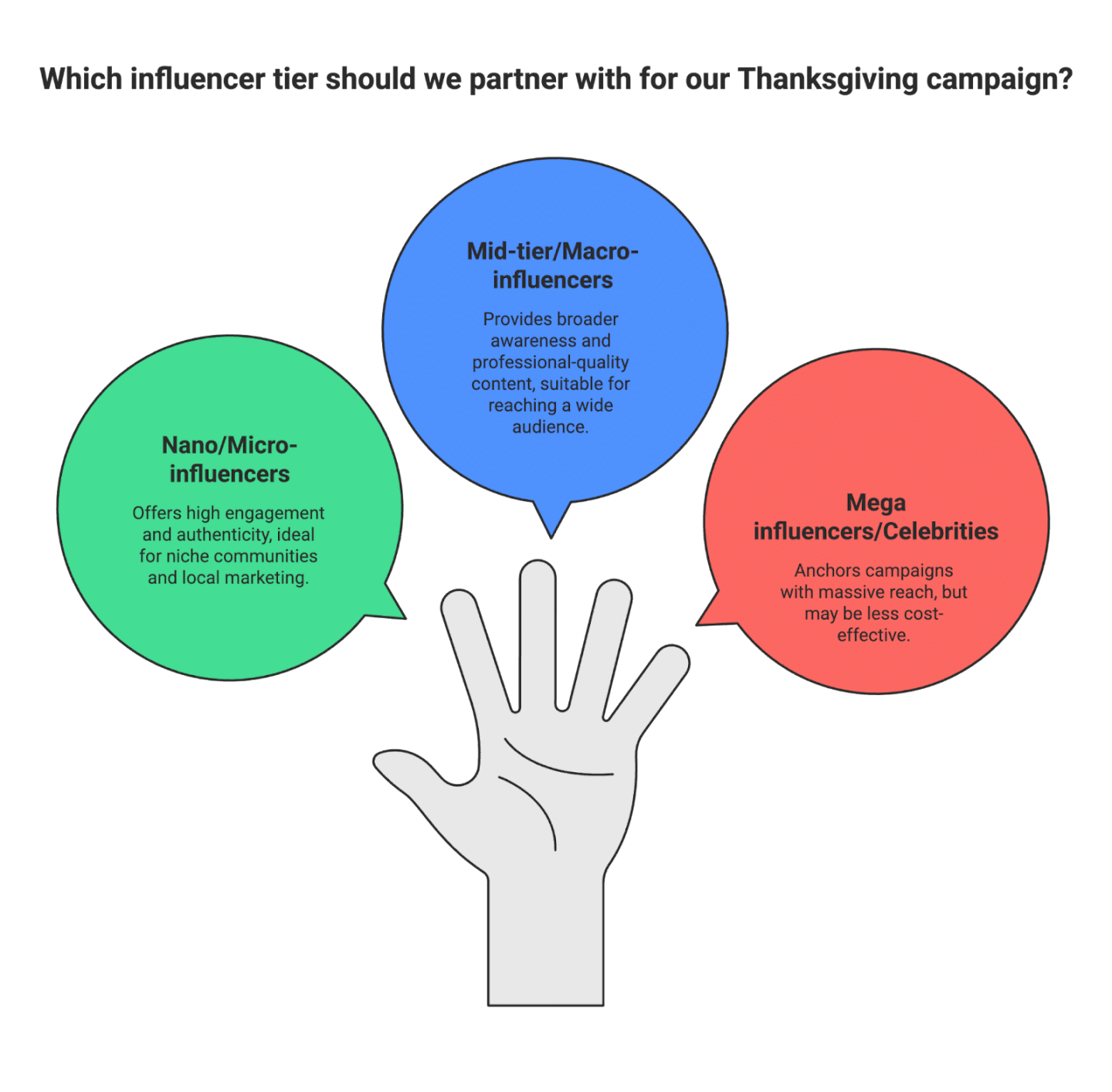
Leverage influencer partnerships to bring your Thanksgiving campaigns to life. Collaborating with influencers – whether nano influencers with a few thousand followers or macro influencers with millions – can dramatically amplify your reach and credibility. In fact, consumers often trust smaller creators for their authenticity; nano- and micro-influencers tend to have stronger engagement and feel “closer” to their followers. This makes your brand more relatable when they recommend your products. On the other hand, macro-influencers and celebrities offer massive reach for big splash campaigns.
Tip: Mix and match influencer tiers for maximum impact. For example:
Great for niche communities and local marketing. Their engagement rates are often 2–3× higher than macro influencers. Partner with a few to create authentic content (e.g. a hometown chef sharing a favorite Thanksgiving recipe featuring your ingredient). These creators excel at driving engagement and trust. They can respond to comments and build buzz in a genuine way.
Use these for broader awareness and professional-quality content. For instance, a lifestyle YouTuber with 500K subscribers could film a “Thanksgiving haul” including your products. They’ll expose your brand to a wide audience, and you can repurpose their polished content in ads or emails.
If budget allows, a big name can anchor a campaign (think a famous foodie or a TV personality doing a Thanksgiving shoutout). But even without A-listers, a well-chosen mix of micro and macro influencers can outperform one-size-fits-all celebrity deals in engagement. Pro tip: Many brands are shifting toward micro-influencers as a cost-effective strategy, focusing on a larger number of smaller creators rather than one or two pricey stars.
Plan early: Start outreach in October or early November, since popular influencers get booked up for the holidays. Offer them a creative brief tied to Thanksgiving (e.g. “Share what you’re thankful for while featuring our product”) but let their personality shine. Ensure they disclose partnerships with #ad or #sponsored tags as required. And consider incentivizing with affiliate programs or discount codes – give each influencer a unique Thanksgiving promo code to share, so their followers feel like VIPs and you can track sales they drive.
Tools & Platforms: To find and manage influencer partners, consider platforms like Influencity, Upfluence, or GRIN. These tools let you filter creators by niche, location, and engagement rate, making it easier to identify the right nano, micro, or macro influencers for your brand. Many also support campaign tracking – for example, you can generate unique referral links or codes for each influencer and monitor performance in real time. By combining human creativity with data (and even AI recommendations), you’ll pick more effective collaborators. As one report noted, brands are increasingly focusing on quality over quantity with influencer partnerships, emphasizing creators who truly align with their audience and values.
There are few things as satisfying as watching an influencer unbox a gift – it’s like opening presents vicariously. Unboxing campaigns tap into the excitement of gift-giving by having influencers film themselves unwrapping a special package and sharing their genuine reactions. For Thanksgiving, curate a themed unboxing experience that showcases your products in a festive light:
Package your products in a seasonal box with autumn leaves, mini pumpkins, or turkey motifs. Include a personalized thank-you note expressing gratitude (on-brand with Thanksgiving!). The goal is to delight the influencer from the moment they open it on camera.
If possible, add an exclusive item that’s only available for the holidays – it could be a new fall flavor, a limited-run product bundle (see idea #3 below), or even Thanksgiving swag like a branded apron or decoration. This creates suspense and novelty as the influencer and their audience discover what’s inside together.
Ask the influencer to share a short Thanksgiving story or tradition as they unbox (“Growing up, we always baked pies – so I’m excited to unbox this pie-scented candle from XYZ brand,” etc.). This weaves emotion into the product reveal.
Why it works: Unboxing videos are inherently engaging – viewers stick around to see every item revealed, and influencers often describe the product features and their impressions in real-time. It’s a natural way to highlight product details: the audience sees the packaging, the quality, and how it’s used. By the end, viewers can practically imagine the product in their own hands, which builds purchase intent.
Real example: Gourmet grocer Whole Foods nailed this with a Thanksgiving influencer collab. They partnered with vegan chef Chloe Coscarelli to create a “vegan Thanksgiving feast” unboxing reel on Instagram. In the video, Chloe opens a box full of holiday favorites – vegan turkey, plant-based sides, and pie – all while expressing her excitement. This campaign resonated because it targeted a niche (vegans at Thanksgiving) and felt authentic coming from a respected chef. It also subtly underscored Whole Foods’ values (sustainability and inclusivity) by showcasing an ethical holiday meal. The takeaway: a well-curated unboxing can generate buzz and communicate your brand’s story.
Tips for execution: Coordinate with your influencers on timing (e.g. have them post the unboxing in early to mid-November, as people start planning their holiday shopping). Provide any key hashtags (like #ThanksgivingUnboxing + your brand name) to track the campaign. You might even make it a challenge for followers: invite customers to share their own unboxing of your products for a chance to win something – turning viewers into participants.
Everyone loves exclusivity, especially during the holidays. Offering limited-edition bundles or products tailored for Thanksgiving can create urgency and FOMO that drive sales. For e-commerce brands, this could mean bundling products into a special edition “Thanksgiving Gift Set” or releasing a holiday-themed product that’s only available this time of year.
Why limited editions? They tap into the “get it before it’s gone” mentality. Time-bound offers play on shoppers’ fear of missing out and spur quick action. In fact, showcasing scarcity (like limited stock or a countdown timer) can significantly boost conversions. One analysis found that well-crafted product bundles can lift average order value by up to 30%– customers perceive a higher value when complementary items are packaged together at a discount.
Ideas for Thanksgiving bundles:
If you sell kitchenware or foods, bundle items that help customers prepare their feast (e.g. a set of spices, mixes, and a recipe card for a signature dish). Or a cookware brand might bundle a roasting pan, thermometer, and carving knife as a set.
Introduce a product in a special Thanksgiving flavor or design – for example, a coffee company could release a Pumpkin Pie Blend available only in November, or a skincare brand might create a “Cranberry Spice” scented lotion as a holiday exclusive.
Think of products that make good gifts at Thanksgiving or “Friendsgiving” gatherings. Perhaps a “Gratitude Gift Box” containing a journal, candles, and tea, marketed as a thank-you gift for hosts. These resonate with the season’s spirit of appreciation.
Thanksgiving is about coming together, so offer a bundle that encourages sharing. For instance, a bakery might do a “Buy One Pie, Get Second 50% Off” deal to encourage customers to bring desserts for a crowd.
Now, pair influencer marketing (such as Stack Influence) with these bundles for even greater impact. Send your limited-edition sets to influencers to review or feature. Their content will not only hype the exclusivity (“OMG this limited-run Thanksgiving candle smells amazing – only 500 made!”) but also demonstrate uses for the bundle. You can even have influencers create content around the bundle, like recipe videos if it’s food-related or styling tips if it’s apparel.
Case in point: In 2020, poultry brand Perdue created a small-batch product called “ThanksNuggets” – turkey-shaped chicken nuggets as a playful Thanksgiving treat. They packaged it in a limited-edition, Thanksgiving-themed box and promoted it on social media. The campaign wasn’t just about selling nuggets; it conveyed gratitude and humor (perfect for a year when many had smaller celebrations). Perdue’s limited-edition approach helped them stand out, engage customers with something genuinely novel, and drive sales at the same time. The lesson: a creative limited product, even if quirky, can generate press and social media chatter that benefits your brand image.
Marketing your bundles: Make sure to highlight the limited availability (“Only 200 boxes available!” or “This week only!”) across your website and marketing channels. Add a banner on your homepage featuring the Thanksgiving bundle. Use email newsletters to announce it to your subscriber base, and encourage influencers to mention that their followers should act fast. Limited editions also pair well with loyalty programs – perhaps give your VIP customers early access (more on early access in the next section).
Finally, consider partnering with complementary brands for a co-branded bundle. For example, a coffee company and a bakery could team up for a “Breakfast on Thanksgiving Morning” bundle (grounds + muffins). Cross-promotion like this can expand your reach and split the marketing lift between partners. Just be sure any collab aligns with your brand and audience.
Why wait until Black Friday to offer amazing deals? Early-bird promotions let you reward your keenest customers before the holiday rush – and capture revenue ahead of competitors. Many retailers now do “early access” sales for loyalty program members or email subscribers in the days or weeks leading up to Thanksgiving. This strategy not only makes your best customers feel like VIPs, it also locks in sales early and reduces strain on your systems during the Black Friday frenzy.
How to execute early-bird deals:
Grant your loyalty program members an exclusive window to shop your Thanksgiving or Black Friday deals early. For example, Walmart+ members got to shop Black Friday deals 3 hours early in 2023, a perk that drove a spike in sign-ups and purchases. You can do similarly on a smaller scale: send a private link or code to your loyalty members giving them 24-hour advance access to a sale. Emphasize it’s a “Thank You” for their loyalty on Thanksgiving.
Brand it as a special Friendsgiving sale for your subscribers or past customers. Perhaps one week before Thanksgiving, offer a hefty discount or BOGO deal exclusively via a secret URL. This not only rewards your existing audience but also trains shoppers to join your list for future early access. (One stat shows 71% of U.S. online adults are motivated to join loyalty programs for instant discounts – proving that exclusive deals can entice sign-ups.)
If you have brick-and-mortar presence, you could offer morning-of-Thanksgiving “doorbuster” deals. For instance, a store might say the first 20 shoppers on Thanksgiving Day (or an early hours event) get a special discount or gift bag. Old Navy once did a campaign where the first 500 customers on Black Friday had a chance to win $1 million – a dramatic example of building buzz. Scale ideas to your business: maybe the first 10 online orders on Thanksgiving Day get a free gift, etc.
Promote your early-bird offers through email, SMS, and social media. Influencers can help here too – have them announce to their followers that “Brand X is offering me early access to their sale, and you can get in on it!” Perhaps give your influencer partners a handful of early-access invite codes to share, making followers feel special. This creates a bit of exclusivity by proxy – the influencer is essentially a gateway to your VIP list.
Key benefits: Early promotions capture shoppers who are ready to buy now (many people actually start shopping in October or early November). They also reduce last-minute chaos. If you spread out demand, your inventory and fulfillment teams will thank you. Additionally, by the time competitors unleash Black Friday promos, you’ve already converted some customers and possibly increased loyalty by treating them like insiders.
Be clear in messaging: Communicate any terms (dates, who’s eligible, limited quantities) very plainly to avoid confusion or backlash. For example: “Exclusive 48-Hour Early Access Sale – Nov 20–21 for Gold Members. Not a member? Sign up by Nov 19 to join!” This way you also drive signups ahead of time. Use countdown timers on your site or emails to stress the timeline.
In summary, early-bird deals harness the Thanksgiving spirit of gratitude to thank your best customers with first dibs on savings. You’ll delight your core audience and steal a march on the competition before the Black Friday noise kicks in.
TikTok and Instagram Reels are fertile ground for creative Thanksgiving campaigns – especially if you can launch a fun hashtag challenge that users and influencers alike want to join. Short-form video challenges can quickly go viral, racking up views and user-generated content that features your brand organically. The key is to make it engaging, seasonal, and easy for people to participate.
Brainstorm challenge ideas that tie into Thanksgiving themes or traditions. Here are a few to inspire you:
Encourage people to share something they’re thankful for each day leading up to Thanksgiving, in a short video or Story. This could be heartfelt or humorous. An influencer could kick it off by sharing a personal gratitude story and tagging others to continue. This trend capitalizes on the holiday’s core message (gratitude) and gets your brand associated with positive vibes.
If your brand is food-related (or even if not – everyone eats on Thanksgiving!), try a recipe challenge. For example, a spice or grocery brand might do #ThanksgivingLeftovers challenge where creators show a creative recipe using leftovers. Or a cookware brand might prompt a turkey-carving tricks video challenge. Influencers can demonstrate in Reels or TikToks, then invite followers to duet or post their own. Bonus: compile the best user entries into a blog or YouTube highlight reel (with permission) to showcase later.
Perhaps there’s a trending TikTok song around Thanksgiving (even a turkey-themed parody) – you can leverage that. Create a simple dance or comedic skit format related to Thanksgiving dinner, and have influencers do it with a branded hashtag. The sillier or more relatable (think: families arguing over the wishbone, or the post-dinner food coma dance), the more likely it’ll catch on. Don’t forget to identify any trending topics or sounds in your niche that could fit – for example, maybe a certain fall song is going viral.
When launching a challenge, collaborate with a handful of influencers to seed the content. Ideally, pick influencers across TikTok and Instagram who appeal to your target demo (family vloggers, foodies, DIY crafters, etc., depending on the challenge). Have them be first movers: they post the challenge video, explain the rules or theme in caption, and use the dedicated hashtag. They should explicitly encourage followers to participate (“I nominate @friend1 and @friend2 – show me your Thanksgiving table!”). Often, tagging a few others to continue the challenge gives it legs.
Keep it simple and visual: The best social media challenges are ones people can watch and immediately think “I want to try that!” Make sure your challenge doesn’t require special skills or elaborate setup that would deter people. It should be inclusive – something a mom with her kids, a group of college friends, or a solo creator could all do with their own spin.
Use platform features: TikTok offers tools like Duets, Stitches, and effects – maybe create a custom AR filter or sticker for your challenge if possible. Instagram has Reels Remix and hashtag aggregators. Consider partnering with the platforms if you’re a bigger brand – e.g., TikTok sometimes features challenges on the Discover page if they gain momentum.
Finally, engage with participants. Repost some of the best entries to your official account or Stories (this recognition can be a huge motivator). Comment on submissions, and keep the challenge duration fairly short (one to two weeks) to maintain urgency. If it’s contest-based, announce the winner and showcase their content on Thanksgiving or the day after.
A successful hashtag challenge can generate a flood of user-generated content and brand mentions. Even folks who don’t participate might see the hashtag trending and check out your products as a result. It’s an interactive, cost-effective way to boost brand awareness during the holiday.
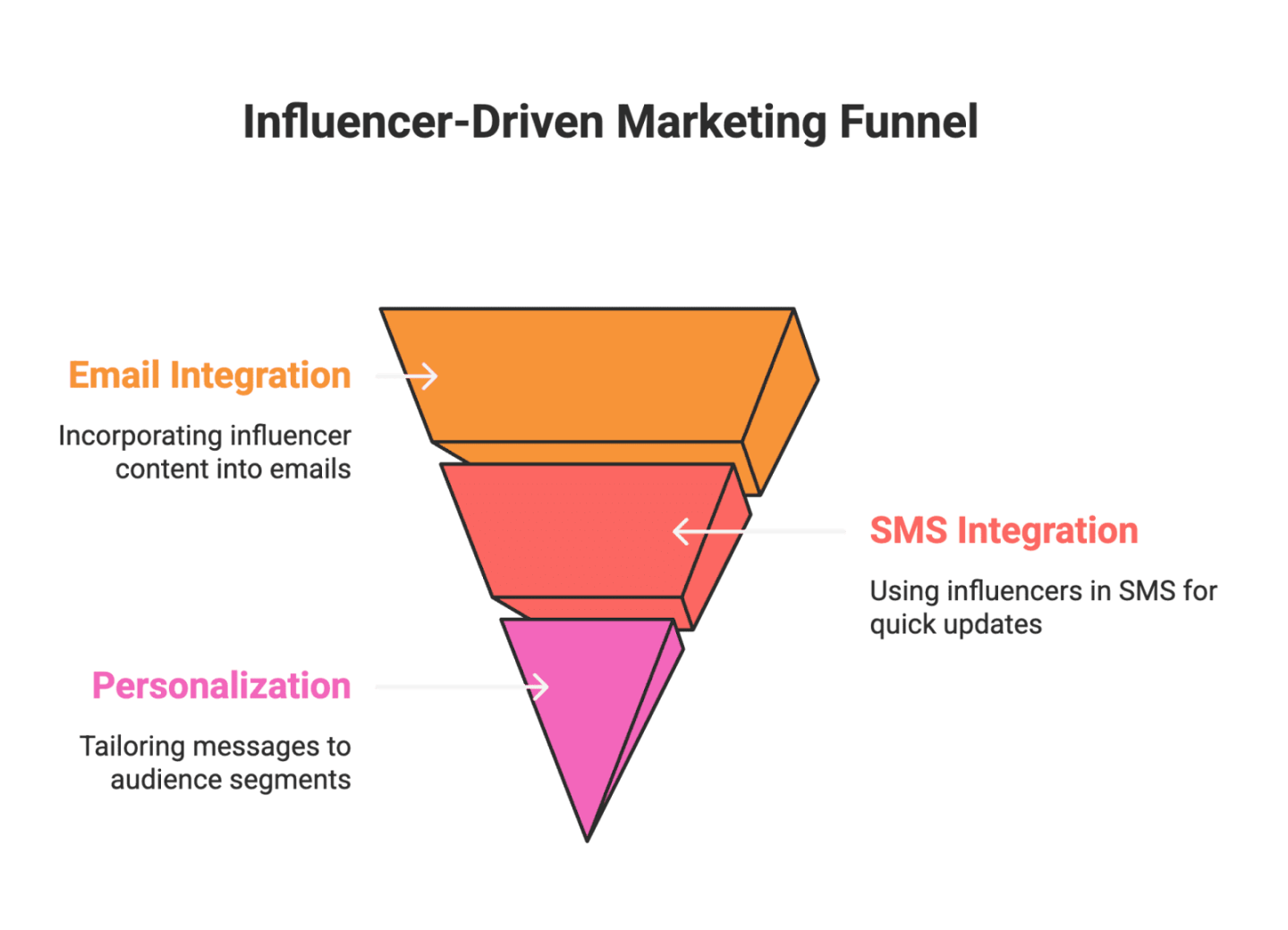
Email and SMS remain two of the highest-ROI marketing channels – email, for instance, still delivers an astonishing 3600%+ ROI on average. During Thanksgiving, you can make these channels even more compelling by weaving in influencer-driven content and offers. Instead of generic “Happy Thanksgiving, here’s 20% off” messages, use the social proof and creativity of influencers to spice up your customer communications.
Influencer-Driven Email Ideas:
Curate content from your influencers into a themed email. For example, a fashion brand could send a “Thanksgiving Outfit Lookbook” email featuring photos of influencers wearing the brand’s clothing in fall settings. In fact, marketing experts suggest sending weekly lookbook emails compiling the holiday outfits your influencers have put together– it’s like a shoppable mini-magazine that inspires customers and drives direct sales. You could do the same with other niches: a cookware brand’s email might showcase recipe images from chef influencers (“5 Thanksgiving Dishes You Can Make with Our Pan – as demonstrated by @ChefInfluencer”). Each image can link to the product page or the full recipe on your blog.
Have a well-known influencer or brand ambassador write a short heartfelt message to your customers, and include that in your Thanksgiving email. For instance, “As a long-time fan of , I, , want to thank all of you for supporting this small business – it means the world! Wishing you a happy Thanksgiving.” This adds a warm, personal touch that doesn’t feel like a typical sales pitch.
If you ran a hashtag challenge or got UGC from a campaign (like those thankful stories or contest entries), feature a few in your email (with permission). For instance, highlight a customer’s story of gratitude or a photo of an actual customer using your product at their Thanksgiving table. This social proof builds community and trust.
SMS with an Influencer Twist:
SMS is great for quick, urgent updates – its open rates are famously high. To tie in influencers, keep texts short but impactful:
Tip: Keep the tone conversational and on-brand. If your influencer has a certain voice or slang, you can incorporate a hint of that into the copy for consistency (while still making sure it’s understandable to all). Always include a clear CTA (link to shop, etc.) since SMS is all about quick action.
Tools to streamline: Platforms like Klaviyo or Mailchimp for email and Attentive, Postscript, or Klaviyo’s SMS feature can help segment and automate these messages. For instance, you might segment your audience by those who came from Instagram (you can collect that info via signup forms or past campaign data) and send them a slightly tweaked message referencing where they follow you (“Since you follow us on IG, you’ve seen our collab with . Here’s a special offer just for our social community…”). This level of personalization can boost engagement.
Remember, the goal is to make your emails and texts feel richer and more relevant by leveraging influencer content that customers already love. Rather than a static newsletter, it becomes dynamic: “Oh, I recognize that YouTuber I follow!” – which can be the difference between a click or an ignore. Just be sure not to overdo it; maintain a balance between promotional content and genuine holiday well-wishes so customers don’t feel every message is a sales grab.
Thanksgiving is all about stories – reminiscing around the dinner table, reflecting on what we’re grateful for, and sharing experiences. Brands can tap into this by running storytelling-driven campaigns that invite customers (and influencers) to create and share content. By centering your marketing on authentic stories or user-generated content (UGC), you humanize your brand and build community during the holidays.
Ideas for storytelling and UGC campaigns:
Launch a campaign asking people to publicly share what they’re thankful for. This could be as simple as a hashtag like #ThankfulWith where followers post a sentence or photo of something they appreciate. You can encourage participation by saying you’ll repost some entries or that it’s part of a charitable initiative (e.g. “for each post, we’ll donate $1 to ”). Influencers can lead the way: a parenting influencer might share a touching story of being thankful for family moments, using your hashtag and perhaps featuring one of your products subtly in the story (like a cozy blanket from your store in a family photo). The focus is on heartfelt, authentic content, with your brand just facilitating the conversation.
Prompt your audience to share specific types of Thanksgiving stories. For example, travel app HotelTonight once asked customers to share their crazy family holiday horror stories for a chance to win credit, capitalizing on the relatable humor of Thanksgiving mishaps. You could do a twist: have people submit their funniest Thanksgiving cooking fail, or most memorable Thanksgiving memory, etc. Collect submissions via a social media thread, a special landing page, or contest platform. Then pick a winner (or several) for a prize. By turning it into a contest, you give extra incentive, but even those who don’t win have engaged deeply with your brand by sharing a personal story.
Leading up to Thanksgiving, highlight a few customer or community stories in your marketing. Maybe a customer who uses your product in a unique way for the holidays. For instance, a fitness brand might spotlight a community member who organizes a “Turkey Trot” run each year for charity, tying into themes of health and gratitude. Write a short blog or social post about them. Not only does this create uplifting content, it shows you truly care about your customers’ lives. It also encourages others to share their stories with you. (This could even tie back into the previous idea if you source stories from a contest or hashtag and then formally feature the best ones).
When doing storytelling campaigns, tone and authenticity are paramount. Keep the voice sincere and avoid heavy-handed product plugs in every piece of content. The stories may indirectly involve your product (e.g. a customer mentions how your winter coat kept them warm at a cold Thanksgiving parade – great, use that!). But the primary goal is to resonate emotionally. Emotional and humorous storytelling is proven effective – major brands from Coca-Cola to EDEKA (a German supermarket) have released Thanksgiving ads that tug at heartstrings or tickle funny bones, and those tend to connect deeply with audiences.
UGC amplification: If users post with your hashtag or submit content, acknowledge it. Repost user-generated photos of customers using your products in their Thanksgiving prep or celebrations (with permission and credit). Create an Instagram Story highlight for “Thanksgiving 2025” featuring a mix of influencer and customer content. This not only flatters the contributors, it shows social proof – real people integrating your brand into the season. UGC-focused campaigns can also boost conversion; studies indicate that marketing campaigns incorporating UGC can see a significant uptick in web conversion (one figure cited a 29% increase in conversions when UGC was used)c.
Tools & execution: To manage UGC, consider using a platform like Tint or CrowdRiff (commonly used to collect and permission UGC). Or if it’s hashtag-based on Instagram/Twitter, manually track entries and use a Google form for longer story submissions. Make sure you clearly state how submissions might be used by your brand to avoid legal issues (e.g., “By posting with #ThankfulWithBrand you agree we can share your content with credit”). When you feature a user’s story or photo, tag them if possible – they’ll likely engage with and share that post too, increasing reach.
In summary, storytelling and UGC campaigns infuse your Thanksgiving marketing with authenticity and warmth. They turn your customers from passive receivers of marketing into active participants, which deepens their connection to your brand. By sharing in the spirit of the season – whether heartfelt thankfulness or the comedy of burnt turkeys – you show the human side of your business. And that kind of connection is something money can’t buy, but clever marketing can certainly encourage.
Imagine a QVC-style shopping show, but on Instagram or TikTok, hosted by a charismatic influencer who’s showcasing your products in real time – that’s live shopping, and it’s poised to be a game-changer for e-commerce brands. Live commerce is already huge in Asia (TikTok’s Chinese sister app Douyin reportedly sold over $200 billion via livestreams last year), and platforms like TikTok and Instagram are now heavily pushing it in Western markets. This holiday season, consider hosting a Thanksgiving live shopping event to engage viewers and drive instant sales.
How a live shopping event works: You (the brand) partner with an influencer or a couple of them, set a scheduled time, and go live on a platform (TikTok, Instagram, YouTube, or even your own site via a service) where the host will demonstrate products, offer special deals, and interact with the audience. Viewers can typically purchase the items in real-time through integrated links or pins on the live video.
Thanksgiving-themed live event ideas:
On Thanksgiving evening, when people are relaxing post-meal (or any optimal time near then), host a live stream where an influencer walks through your Black Friday deals or limited products. For instance, a tech influencer could do an unboxing and demo of gadgets that will go on sale at midnight. Viewers get a sneak peek and maybe an exclusive promo code if they watch the live. This builds hype and gives your most engaged fans a reward.
If relevant to your brand, have an influencer do a mini-class. A kitchenware brand might have a chef influencer live-stream a simple dessert recipe using your tools on Thanksgiving (perhaps earlier in the day, as people cook) and offer viewers a discount on the featured cookware. A craft supplies brand could live-stream a DIY session for making Thanksgiving decorations or leftover recipe hacks. The products used are all purchasable via the live interface.
More general – invite an influencer (or a duo) to share their “top 5 gift picks from ” for the holidays. They can talk about each product, how they use it, and for a live twist, answer questions from the audience (“Is that sweater true to size?”, “Can we see the inside of that bag?” etc.). Maybe do this the week after Thanksgiving as people move into gifting mode. But tie it back to Thanksgiving by framing it as a way to show appreciation through gifting.
What makes live shopping powerful is real-time interaction and urgency. The influencer host can respond to viewer comments, give shout-outs (“Hi @jane87, thanks for joining!”), and create a sense of FOMO (“Only 5 of these left in stock – grab it now if you want it!”). You can also bake in flash deals – e.g., “for the next 10 minutes of the live, use code LIVE10 for an extra 10% off.” Viewers will feel like insiders in a special event.
Notable success: TikTok has been highlighting case studies of live commerce wins. One example: Canvas Beauty (a haircare brand) had its founder Stormi Steele host TikTok live sales; she became the first U.S. TikTok Shop seller to earn $1 million in sales from a single live stream in 2024. Her authentic, engaging on-camera presence (“freestyling” and being herself) was cited as a major factor. This shows that with the right host and audience, live shopping can drive serious revenue. While not every brand will hit seven figures, even a fraction of that success can make a live event worthwhile – plus you gain content and customer feedback in the process.
Tips for a smooth live event:
After the live event, repurpose the content. Clip highlights or product demos and share them on social, or upload the full live replay if the platform allows. People who missed it might watch later and still convert (you can extend the offer for 24 hours for replay viewers, for instance).
Live shopping is still an emerging trend in many markets, but Thanksgiving could be the perfect moment to experiment with it. Shoppers are primed to buy, and many are home on their phones. By inviting them to a live, interactive experience, you create a sense of community – it’s like shopping with a friend (the influencer) and a bunch of other fans, rather than the solitary scrolling of typical e-commerce. That communal vibe, combined with real-time excitement, can give your brand a fresh edge this holiday.
As you plan your Thanksgiving marketing, remember that this holiday is about gratitude, human connection, and celebration. The most effective campaigns – whether an influencer-driven Instagram reel or a heartfelt email – will embrace those themes while also showcasing your products.
Throughout all these ideas, maintain a casual yet expert tone in your content – much like you’d speak on a brand’s blog. You want to come across as the savvy friend who has great marketing tips, not a stuffy corporate voice. Thanksgiving is a warm, informal holiday for most people, so your marketing can reflect that warmth and approachability. An influencer’s conversational style, a behind-the-scenes anecdote, or a touch of humor can go a long way in making your campaigns feel genuine.
Lastly, don’t forget to measure and learn. Note which tactics drive the most engagement or sales – was it the TikTok challenge that brought a flood of new followers? Did the early-bird email campaign spike your revenue more than expected? Use UTM codes, trackable links, and analytics to attribute results where you can. This will not only prove ROI for this season but give you a head start on planning an even better campaign next year (when you’ll have new trends to play with, and perhaps even bigger goals!).
By combining influencer marketing prowess with creative campaign ideas, your e-commerce brand can truly outshine the competition this Thanksgiving. People will remember the brands that made them smile, taught them something new, or brought them into a community celebration – not just the ones that shouted “sale!” the loudest. So embrace the spirit of thankfulness in your marketing, think outside the box (or unboxing, as it were), and you’ll give your audience something to be thankful for too: a brand that “gets” them and makes their holiday season a little brighter. Happy Thanksgiving and happy marketing!
Snapchat’s vertical video format and time limits make it unique – each Snap can be up to 10 seconds (with a series of Snaps capping around 60 seconds total). This brevity is actually a strength: in the ultra-competitive world of social media, short, snappy videos often have higher engagement. In fact, Snapchat has the shortest video length among major platforms, encouraging creators to focus on the most exciting moments For content creators and micro-influencers (including those helping Amazon sellers market products), this means you must grab attention fast. Brands and Amazon sellers are increasingly turning to these creators to generate authentic user-generated content (UGC) for marketing – and Snapchat videos, when edited well, can be a goldmine for that kind of engaging, bite-sized content.
In this comprehensive guide, we’ll walk through how to edit Snapchat videos using the built-in tools (trimming, splitting, adding effects, etc.), plus recommend some top third-party apps for even more editing power. Whether you’re a casual Snapchatter, a content creator, or an e-commerce brand leveraging UGC, these tips will help your Snapchat videos shine. Let’s get started!
Before diving into editing, you need to capture some footage. How do you make a video on Snapchat? It’s simple:
1. Open the Snapchat Camera: Launch Snapchat and make sure you’re on the camera screen.
2. Record a Snap: Tap and hold the capture button (the big circle) to record video – a single continuous clip will record up to 10 seconds by default. You can tap repeatedly to take multiple Snaps in a sequence (Snapchat will chain them together up to 60 seconds total). To switch between front/rear cameras, double-tap the screen.
3. Use the Multi-Snap Feature: If you want a longer story, Snapchat automatically splits longer recordings into 10-second chunks. You can record up to 60 seconds in one go (it will appear as 6 segmented Snaps). Tip: If you upload a video from your camera roll that’s longer, Snapchat will still split it into 10-second pieces. Officially, Snapchat supports video lengths up to 3–180 seconds if the file size is under 1 GB (for example, an imported or ad video), but these longer videos will be broken into smaller Snaps for viewing.
4. Allowed File Size/Format: Videos from your device must be under 1 GB and in .mp4 or .mov format (H.264 encoded) – standard stuff that most phone videos comply with. Snapchat will auto-compress large files when uploading, which is one reason you may want to edit and trim videos beforehand for better quality.
Now that you’ve recorded footage, let’s look at the editing tools. Snapchat’s built-in editor lets you trim length, split clips, add effects, and more, all within the app.
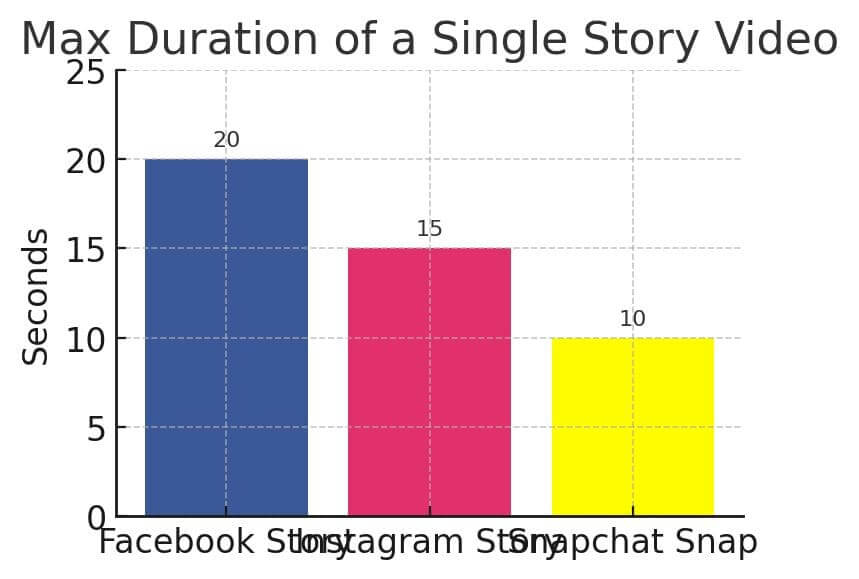
Figure: Max duration of a single story video on popular platforms – Snapchat allows ~10 seconds per Snap, encouraging ultra-short content. (Instagram Stories allow 15s, Facebook Stories 20s.) These tight limits mean editing down to the best moments is crucial.
One of the most common edits is trimming – cutting a video’s start or end to remove unwanted moments. Fortunately, Snapchat makes this easy:
1. Enter Edit Mode: After recording a video Snap (or selecting a saved video from Memories/Camera Roll), tap the three dots ⋮ icon at the top-right of the screen and select “Edit Video.” This opens Snapchat’s editing interface.
2. “Tap to Trim”: You’ll see a timeline of the clip at the bottom. Snapchat may prompt “Tap to Trim” – tap and hold the edges of the video timeline and drag inward to shorten the clip from the beginning or end. For example, if the first 2 seconds are shaky or there’s dead air at the end, trim those parts out.
3. Preview the Cut: Play the video to ensure you captured the best segment. You’re typically aiming for under 10 seconds anyway, so make those seconds count.
4. Save or Send: Once satisfied, you can either save the trimmed video (tap the download/arrow icon) or immediately send it as a Snap to friends or post to your Story (tap the blue arrow). Trimming doesn’t overwrite your original – it just applies to this edited Snap.
Snapchat’s trimming tool is straightforward – drag and drop. It’s perfect for quickly shortening a video to fit Snapchat’s length limits or to focus on a specific highlight. For instance, a micro-influencer might trim a product demo to just the most exciting 7 seconds to keep viewers engaged. (Remember, you can always post multiple Snaps in a series if you have more to show.)
What if you want to split a video into multiple pieces within Snapchat for more precise editing? Snapchat offers a Split tool (only for videos recorded in the app, not imported clips). This is useful if you recorded a 10-second Snap but want to break it into two 5-second segments, perhaps to insert a transition or remove a middle section.
Splitting is handy for creators who record in Snapchat but want to refine the pacing. For instance, if you filmed a quick vlog in one take, you could split out the dull moments and keep the exciting parts, all without leaving the app.
Snapchat normally plays Snaps one after another in a Story, but what if you want to merge videos into one longer clip before posting? Snapchat itself doesn’t have a true “merge” tool (since it prefers the segmented Story format). However, there’s a workaround using the Memories upload:
For a true single file merge, you’d have to use an external editor (we’ll cover some in the next section). But if your goal is just to post a series of clips as one story, the above method works. Many content creators repurpose longer videos by slicing them into Snapchat-friendly chunks – Snapchat will automatically loop them in order when viewers watch your Story.
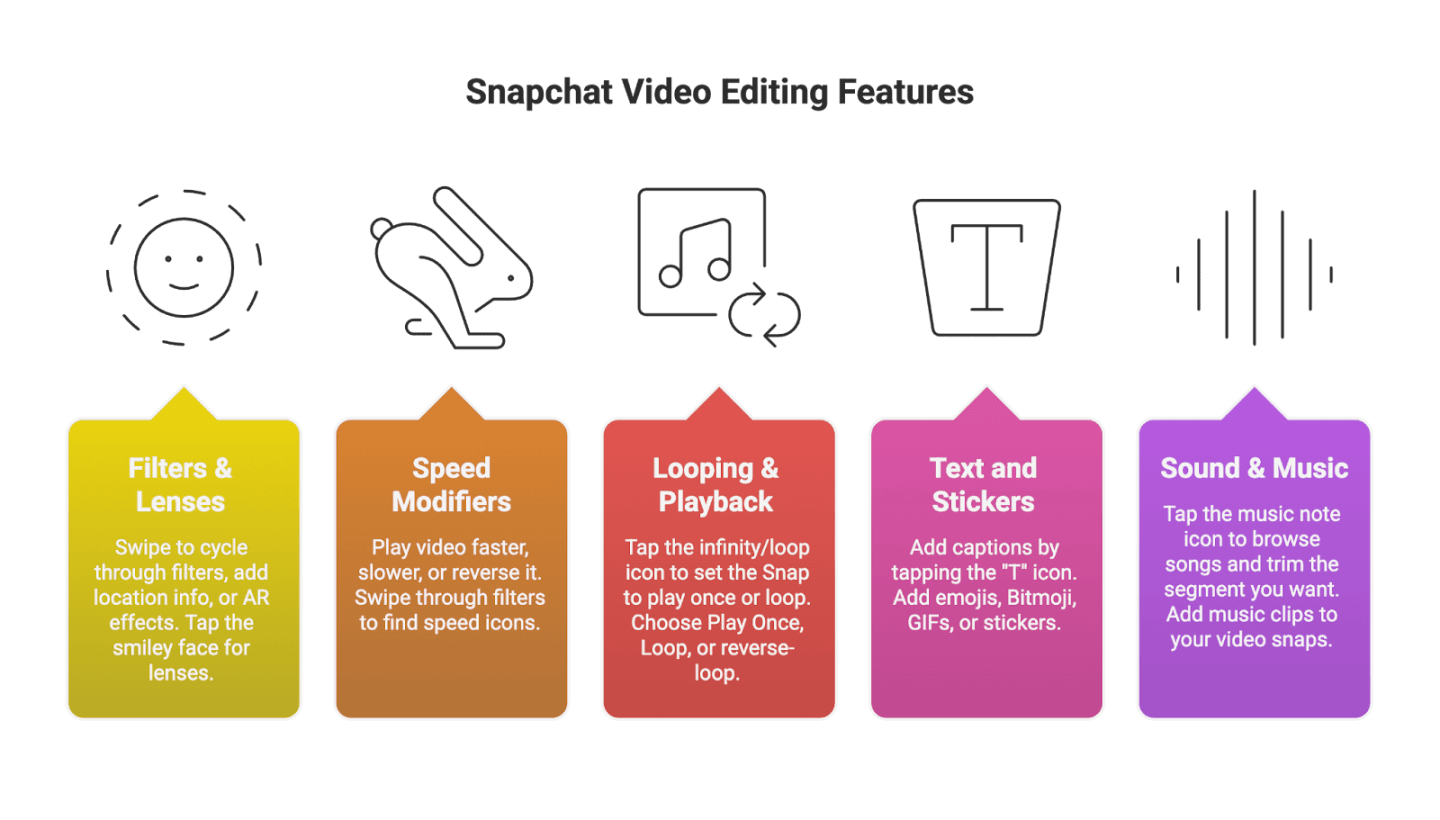
Raw footage is just the start – Snapchat’s fun comes from its creative effects. The built-in editor lets you add all sorts of flair to make your video more engaging:
Snapchat’s built-in tools are pretty robust for quick edits. We consider the built-in editor a fine choice if you’re on a limited budget and want a free way to delete unwanted parts and jazz up your video with effects. Content creators often leverage these features to make their Snaps more entertaining without needing extra software. For instance, an Amazon seller’s micro-influencer partner might add stickers and captions highlighting a product’s benefits in a 10-second demo Snap – making it both fun and informative for viewers.
While Snapchat’s app covers the basics, you might sometimes need more advanced editing – for example, merging clips, adding subtitles, or editing footage longer than 60 seconds before posting. Several third-party mobile apps can help. Here are some of the best Snapchat video editor apps popular in 2025 (Android edition):
Video Snap Editor is one of the most popular free Snapchat video editing apps, available on both Android and iOS. It’s designed with Snapchatters in mind, making it easy to format videos for Snap’s vertical, short-form style. Key features include:
With a high user rating (around 4.6/5★ on app stores) and no cost, Video Snap Editor is a great starting point for beginners who want more than Snapchat’s built-in editor without spending money. It’s lightweight, easy, and focused on quick social video tweaks – perfect for busy creators churning out Snap content regularly.
If you’re willing to invest a couple bucks per month, InShot is a fan-favorite for social video editing. Priced at about $3/month (and with a free version with watermarks), InShot offers a sophisticated yet user-friendly toolkit for editing Snapchat videos (and videos for any platform):
Users love that InShot is intuitive yet “does it all.” It’s commonly used by content creators for TikTok/Reels as well, which means it’s well-suited for Snapchat’s format too. Importantly, it can export high-quality videos ready for Snapchat. Many professionals use InShot on the go because it’s reliable and regularly updated. (Fun fact: InShot is often praised by UGC creators who need to edit product review videos on their phones quickly.)
FilmoraGo (the mobile cousin of the popular Filmora desktop editor) is a powerful app available on Android (and iOS) that brings advanced capabilities to your phone. If you want to make sure your Snapchat videos look extra polished, FilmoraGo is a top choice:
Overall, FilmoraGo is an excellent choice if you need an editing app that approaches desktop-level features while still being mobile-friendly. E-commerce marketers, for instance, might use FilmoraGo to compile a flashy 30-second product highlight, then cut it into Snap-sized bits. The app ensures quality remains high, so your Snap videos look professional.
(Honorable Mentions: Other Android apps worth considering include CapCut (a free powerful editor known for its trendy effects and TikTok integration) and VivaVideo (easy editing with lots of effects, though it watermarks output in free version). Each has its pros and cons, but the ones above are particularly aligned with Snapchat needs.)
iPhone users have their own set of fantastic editing apps for Snapchat videos. Let’s highlight a couple of the best ones for iOS:
If you have an iPhone, Apple Clips is a must-try – and it’s completely free. Apple Clips is one of the finest Snapchat video editing apps for iOS devices. It allows you to produce great Snapchat-friendly videos without needing any prior editing experience. Key features of Apple Clips:
Overall, Apple Clips is extremely user-friendly. Even if you’ve never edited a video, you can pick it up and make a cool Snap in minutes. It’s popular among beginners and even some pros who want to whip up something fast for social media. Since it’s an Apple product, it leverages the iPhone’s power well – we found it to be very reliable and smooth. If you’re an influencer or creator who uses iPhone, Clips can be a secret weapon for producing high-quality Snaps with minimal effort.
Splice is an iOS-friendly video editor (originally by GoPro) that offers a more advanced editing experience on mobile while still being easy to use. It’s often praised for its ability to create full montage-style videos on a phone:
If you’re an iPhone-using content creator who wants to do more complex editing (think vlog-style Stories, mini ads, or multi-clip tutorials) right on your device, Splice is a top pick. Its interface is clean and simple, so even though it offers advanced tools, beginners can gradually learn it. The ability to merge clips and add pro-quality touches can elevate your Snapchat videos significantly – making them look like they were edited on a computer, not a phone.
(Other notable iOS apps: iMovie (Apple’s own mobile iMovie app) is free and quite capable for trimming and basic editing; and CapCut on iOS as well, for a TikTok-style editing experience with lots of effects and trending templates.)
As a final tip, if you’re editing Snapchat videos for business – say you’re an e-commerce brand or Amazon seller creating product highlight clips – consider the content itself as much as the editing. Sometimes the best approach is to source authentic video content from real users and micro-influencers, then refine it with these editing techniques. Stack Influence, for example, is a platform that connects brands with micro-influencers and manages product seeding campaigns to generate tons of authentic UGC videos. With a platform like that, you can accumulate raw video clips (unboxings, testimonials, demos from creators) and then use the editing tips from this guide to polish those clips for Snapchat ads or Stories. The result? Highly engaging, real-feeling Snapchat videos that build trust and drive sales – all while saving you the effort of producing every video from scratch.
Remember, authenticity is key on Snapchat. Snappers love content that feels genuine and fun. Micro-influencers can provide that authenticity, and with smart editing (trimming out fluff, adding captions or stickers for context, and using catchy music), you can turn raw clips into compelling Snapchat Stories that promote your brand or message without feeling like traditional ads.
Editing Snapchat videos might seem straightforward, but doing it well makes a huge difference. By mastering the built-in tools – trimming down to the most exciting 5-10 seconds, splitting and removing dull moments, and spicing things up with filters, captions, and effects – you’ll keep your audience hooked from the first second. And when you need extra power, apps like InShot, FilmoraGo, or Apple Clips have your back for creating professional-looking clips ready to wow your Snapchat followers.
In the fast-paced realm of social media, especially on a platform as quick and ephemeral as Snapchat, every second counts. Many studies and experts note that it’s best to deliver your “wow moment” within the first 2 seconds of a video ad on Snapchat (since viewers tap away fast). That underscores why tight editing is so crucial – cut to the chase (literally) and make it snappy!
By following the tips in this guide, you’ll be equipped to turn out thumb-stopping Snapchat videos that not only look great but also serve your goals – whether that’s growing your influence, entertaining your friends, or boosting your e-commerce sales with UGC-based ads. So grab your phone, record that Snap, and start editing. With a bit of practice, you’ll be crafting Snapchat videos that truly stand out in the feed. Happy Snapping!
Influencer marketing has exploded in recent years, becoming a $24 billion industry in 2024 (up from just $1.7B in 2016). Brands of all sizes – from global retailers to Amazon sellers – are partnering with content creators and micro-influencers to reach consumers with authentic user-generated content (UGC). But while 86% of U.S. marketers will use influencers in 2025, many struggle with a common pain point: ensuring these collaborations actually drive measurable sales and ROI. Too often, companies pay a hefty flat fee for an influencer post and hope for the best, without any guarantee of results. This is where performance-based influencer marketing comes in – a strategy that ties influencer compensation to real outcomes, bringing much-needed accountability and efficiency. In this casual yet informative guide, we’ll break down what performance-based influencer marketing means, why it matters for e-commerce and Amazon sellers, and how you can leverage it (with the help of micro-influencers and great UGC) to boost your brand’s bottom line.
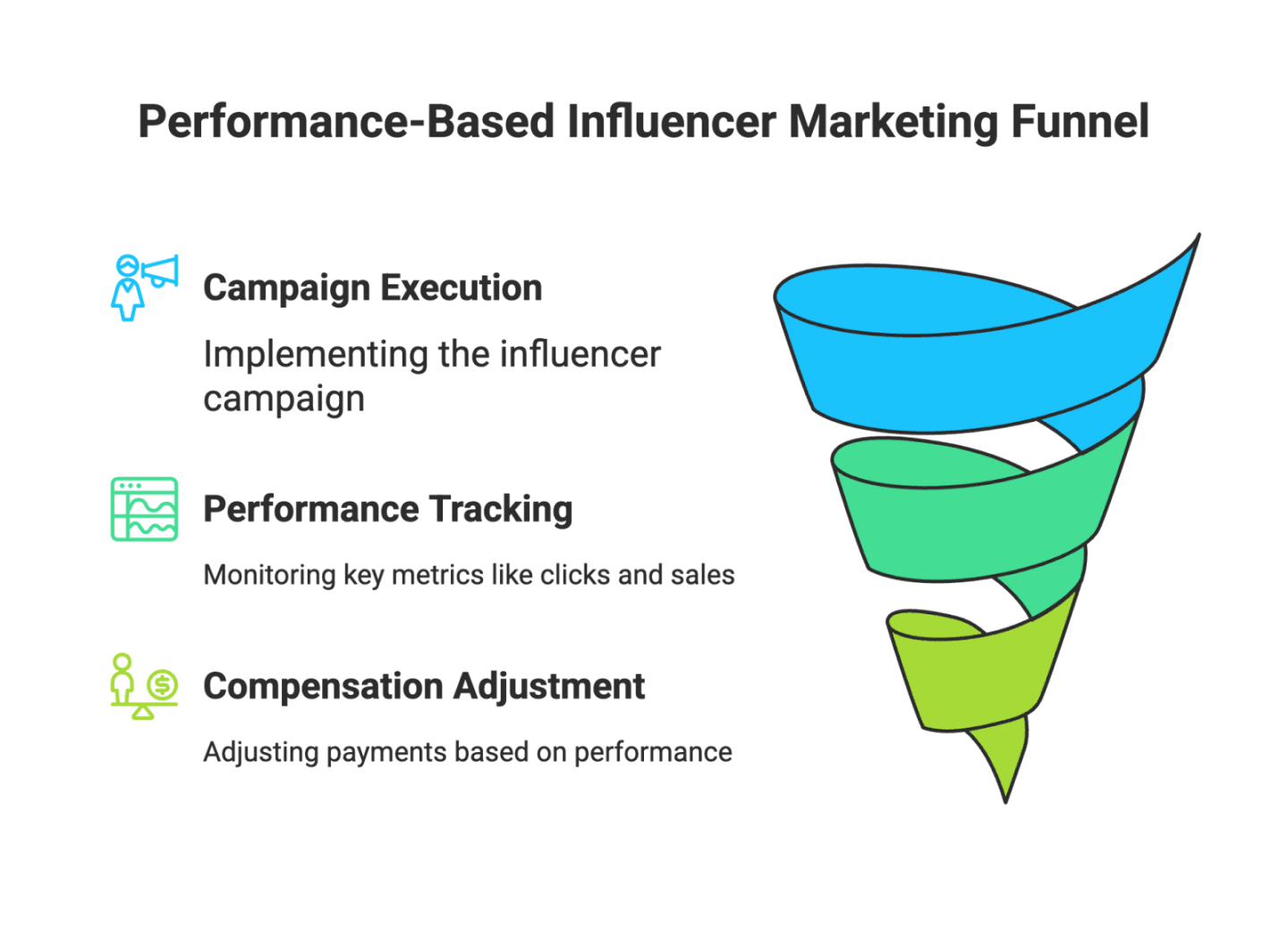
Performance-based influencer marketing is a data-driven approach to influencer campaigns where creators are paid based on the results they deliver – not just for participating. In other words, the focus shifts from vanity metrics (likes and follows) to tangible outcomes like clicks, sign-ups, or sales. Rather than paying a flat fee upfront for a post that might work, brands align their spending with performance: if an influencer’s content drives conversions, they earn more, and if it doesn’t, the brand isn’t left paying for unrealized promises. According to one definition, it’s an approach that integrates data at every touchpoint of your campaign – from selecting the right creators to setting compensation and optimizing strategy based on results.
In practice, performance-based campaigns often look like this:
Brands find the right influencers by analyzing data like audience demographics, engagement rates, past content performance, and prior collaboration outcomes – not just follower count. This ensures you partner with creators (whether micro-influencers or larger ones) who are a strong fit for your niche and have a proven ability to drive action.
Instead of a one-time flat fee, you compensate creators based on the results they generate. For example, you might agree to pay for every 1,000 views or clicks their video produces, offer a 10% commission on each sale generated through their referral link, or give a bonus if they hit a certain conversion target. This way, your marketing budget is spent efficiently – you only pay for outcomes, not promises.
You set up tracking (unique links, discount codes, etc.) to monitor key performance metrics for each influencer’s contribution – such as clicks, website traffic, conversion rate, and revenue. This data-centric approach lets you accurately measure each creator’s impact on your campaign.
With performance data in hand, you can refine your strategy over time. Double down on top-performing influencers or content types, provide feedback to creators to improve content (e.g. share creative tips to boost engagement), and phase out partnerships that aren’t delivering. The goal is to maximize return on investment (ROI) by iterating based on what the numbers tell you.
In short, performance-based influencer marketing means treating influencer collaborations not as a leap of faith, but as a measurable, optimizable marketing channel. It brings influencer campaigns closer to the accountability of digital ads – if an influencer ad spends $X and returns $Y in sales, you can calculate the ROI and adjust spend accordingly. This approach is especially appealing for e-commerce brands that live and die by metrics like customer acquisition cost (CAC) and return on ad spend (ROAS).

Moving to a performance-based model offers several big advantages for brands, particularly those in the fast-paced online retail space:
One of the biggest benefits is taking the guesswork out of influencer spending. Traditionally, many brands would pay influencers up front and then hope for a sales bump, with no clear link between what they paid and what they earned in return. By contrast, a performance-driven strategy ties your costs directly to results, making ROI far more transparent. You’ll know exactly how much revenue or engagement you got for the money spent. This makes your influencer marketing predictable and budget-friendly, since you’re effectively setting a cost per acquisition or action that you’re comfortable with. As the team at Insense notes, with performance as the foundation, your marketing costs are tied to results and you can accurately track campaign performance to reinvest in what works. Over time, this data-backed approach means you can forecast outcomes better and scale campaigns with confidence.
Performance-based deals can actually be a win-win for both brand and creator. Instead of secret expectations or ambiguous goals, everything is on the table: the brand defines what success looks like (e.g. a certain number of sales or sign-ups) and the influencer knows exactly what they need to achieve to get paid. This transparency helps avoid misunderstandings and fosters more genuine partnerships. Influencers who are confident in their connection with their audience often embrace performance-based arrangements, since it gives them a chance to earn more by knocking it out of the park. Top-performing creators feel fairly rewarded for the real value they bring, rather than being paid the same as someone who might have just delivered vanity metrics. Meanwhile, brands ensure that every dollar spent is linked to impact. It’s a much more accountable system on both sides – and it tends to attract influencers who are serious about delivering results, not just collecting a check. (Of course, it’s still wise to structure fair terms – for instance, some brands offer a small base fee or free products plus performance bonuses, to ensure creators at least cover their effort even if a campaign underperforms. The key is aligning incentives so everyone is focused on driving outcomes.)
From a pure finance perspective, performance-based influencer marketing reduces upfront risk. Since you’re paying largely (or solely) when you get results, you’re not throwing money into the wind on unproven influencers or campaigns. This model ensures you only pay for what works, which is especially critical for smaller e-commerce businesses and Amazon sellers with tight margins. It also means you can test on a small scale and then increase spend in the campaigns that show positive ROI, without burning budget on those that don’t. In effect, it’s like turning influencer marketing into a variable cost – if an influencer drives a lot of sales, you happily pay them more (because you made more), and if they drive zero sales, your cost is minimal. This efficient use of budget makes it easier to scale your influencer efforts while keeping them cost-effective. Many brands find this approach far more sustainable and less wasteful than the traditional lump-sum payment model.
An often overlooked benefit: when you collaborate with influencers, you’re not only getting promotion but also content assets. Performance-based campaigns, like any influencer marketing, result in creators producing photos, videos, reviews, and other user-generated content (UGC) featuring your product. This content is authentic and resonates with audiences (coming from real users), so it’s incredibly valuable beyond the initial Instagram post or TikTok video. Brands can repurpose UGC from top-performing influencer collaborations into ads, product pages, or social media posts of their own, amplifying its impact. For example, if a micro-influencer makes a great unboxing video that drives a lot of sales, you can turn that into a paid ad or feature it on your Amazon listing. By focusing on performance, you’ll naturally identify which UGC pieces work best (because they’ll be attached to higher conversions or engagement), and you can double down on that content. In essence, you’re building a library of proven, relatable marketing creatives while only paying for the ones that actually hit the mark. This not only boosts ROI but also enriches your overall content marketing strategy.
When it comes to performance-based campaigns, micro-influencers often punch above their weight. These are creators with smaller followings (often in the 5k–100k range) but highly engaged, niche audiences. For e-commerce brands, partnering with a fleet of micro-influencers can be more effective than one big celebrity endorsement. Here’s why micro and even nano-influencers are perfect for a results-driven approach:
Micro-influencers typically have much higher engagement rates – their followers actually pay attention and trust their recommendations, which means content from these creators is more likely to drive actions (clicks, shares, buys) than content from a mega-influencer who has millions of passive followers. Their relatability and authenticity translate into influence that feels like advice from a friend. This leads to quality traffic and conversions, not just impressions.
Micros are also far more affordable. Many will collaborate in exchange for just free products or a modest fee, especially if they love the brand, whereas a single post from a famous influencer could cost tens of thousands of dollars. This means a brand can hire dozens of micro-influencers for the cost of one celebrity, multiplying the reach and diversifying the content. With a performance model, you might give each micro-influencer a unique discount code and only pay a commission on sales they generate – a budget-friendly way to scale outreach.
The combination of lower cost and higher engagement often yields a higher return on investment. In fact, one study found micro/nano-influencer campaigns deliver around a 20:1 ROI (i.e. $20 in revenue per $1 spent) versus roughly 6:1 ROI for macro-influencer campaigns. That’s a huge difference in efficiency. Micro-influencers, in aggregate, can drive more conversions for the same spend – truly maximizing bang for your buck. They might not individually bring millions of impressions, but what they do bring tends to be highly targeted and conversion-prone.
When you work with many micro-creators, you also get a wide variety of UGC – different styles of posts, honest reviews, tutorials, unboxings, etc. Some pieces of content will inevitably perform better than others. With a performance mindset, you can identify which influencer’s content is really resonating (e.g. driving lots of referrals or sales) and then amplify or repurpose that content, as mentioned earlier. Micro-influencers essentially act as a distributed creative studio for your brand, each making unique content. By structuring campaigns so that their reward correlates with the success of their content, you encourage high-quality efforts and authentic creativity.
Given these advantages, it’s no surprise that brands built on social media often heavily leverage micro-influencers. Take Gymshark, for example: the fitness apparel startup famously scaled from a small online store to a >£1 billion valuation by partnering with fitness influencers and tying payouts to performance (e.g. sales tracked via unique codes). They collaborated with both micro and macro creators in the fitness niche, but the emphasis was always on real conversions – turning fans into customers. This data-driven influencer strategy turned their influencer program into a core revenue engine, not just a branding effort. Another example is HelloFresh, which works with a wide range of lifestyle and food influencers on a purely performance basis (paying per sign-up or order). By only paying for actual customer conversions, HelloFresh can scale its influencer program aggressively while keeping customer acquisition costs in check. These success stories show that when you combine the authentic reach of micro-influencers with performance-based incentives, you can achieve remarkable growth in e-commerce.
Of course, finding the right micro-influencers and managing many small partnerships can be a challenge – but there are tools and agencies to help. Stack Influence, for instance, is an industry-leading micro-influencer marketing platform geared toward e-commerce brands. It leverages technology to connect brands with thousands of vetted micro creators (often everyday consumers who love to create content), automates the campaign process, and even guarantees 100% post fulfillment. Platforms like this have made it much easier to run large-scale micro-influencer campaigns (including product seeding and affiliate programs) without the usual headaches of outreach and coordination. The bottom line: micro-influencers + performance-based marketing = a powerful formula for e-commerce success.
Ready to give performance-based influencer marketing a try? Here’s a step-by-step game plan to set up your campaign for success:
Start by defining what you want from the campaign. Are you aiming to drive online sales, increase app installs, gather UGC for future ads, or boost brand awareness in a niche community? Pinpoint the primary goal, then choose a few key performance indicators (KPIs) that will measure success. For example, if conversions and sales are the goal, track metrics like click-through rates and conversion rates (or straight revenue) from the influencer’s content. If UGC or awareness is a goal, you might track number of content pieces created, engagement rates, or new followers. Having clear goals and KPIs upfront will guide your influencer selection and messaging, and it ensures both you and the influencers know what success looks like. (Tip: It’s fine to have secondary goals too – e.g. you might primarily want sales, but you’ll happily take the extra brand exposure that comes with it. Just make sure one metric is the North Star for how you’ll pay influencers.)
The effectiveness of performance marketing hinges on picking influencers who can truly influence your target audience. Use data to evaluate potential creators: look at their audience demographics (are their followers your ideal customers in terms of age, location, interests?), their engagement rate (do people actually interact with their posts, indicating an active community?), and their content style and quality. Past collaboration results are gold if you can get them – for instance, an influencer who previously drove lots of referral sales in a similar niche is a great candidate. Don’t get blinded by sheer follower numbers; a smaller creator whose followers align closely with your niche can outperform a bigger one who isn’t a tight fit. You can find influencers manually by researching hashtags and communities, or by using an influencer marketplace or platform tool which often provides rich data on creators. For example, some platforms let you filter influencers by category (fitness, beauty, tech, etc.), audience traits, and performance metrics to build a shortlist quickly. If you’re an Amazon seller or DTC brand, consider focusing on micro-influencers in your product category – their audiences might be small, but highly relevant and cost-effective to work with (as we discussed above).
Once you have a pool of ideal influencers, craft a campaign brief and compensation plan that ties to performance. Be very clear in your outreach that you’re proposing a performance-based collaboration – and highlight the upside for the influencer. For example, you might say: “We will provide you with a free product and an affiliate link. You’ll earn 15% commission on every sale made through your link in the next 30 days, plus a bonus of $100 if you exceed 50 sales.” The specifics will depend on your product’s margins and the typical influencer rates in your niche. Some brands offer a tiered incentive structure (e.g. higher commission % if the influencer hits certain sales tiers) to really motivate creators. Another model is setting a flat fee that’s contingent on hitting a minimum result – e.g. paying $500 if they generate at least 100k views or 5k clicks, etc. Just ensure the terms are fair and appealing: newer or micro-influencers might accept commission-only deals, whereas mid-level influencers might prefer a modest base pay + commission combo. Communicate the value of the partnership beyond money too – emphasize that you’re looking for a long-term relationship and that successful partners could get repeat deals or increased rewards. This helps get influencers on board with the performance approach. (Pro tip: also consider what creative direction or guidelines you’ll provide – give influencers the freedom to be authentic, but share key messages or hashtags, your brand story, and any do’s/don’ts to ensure the content aligns with your brand.)
To pay for performance, you need to reliably track the traffic and sales each influencer is driving. This is crucial – without proper tracking, neither side can know if the partnership truly worked. Fortunately, there are simple tools for this. If you run an online store (Shopify, Amazon, your own site), set up unique tracking links or discount codes for each influencer. For example, give each influencer their own coupon code (like INFLUENCERNAME10) that customers can use; you’ll then know any sale with that code came from them. Or use UTM parameters on a URL you provide the influencer, so clicks can be tracked in Google Analytics or your e-commerce analytics. Amazon sellers can use the Amazon Associates program or the Amazon Attribution tool to track influencer-driven sales. Additionally, some influencer platforms have built-in dashboards that attribute clicks and conversions to each creator. Make sure to test that everything is working before the campaign goes live. It’s also wise to track intermediate metrics (like how many people visited your site from an influencer’s post, even if they didn’t buy immediately) to get a fuller picture of the funnel. The more data points, the better you can optimize later. And of course, share these tracking measures with your influencers – let them see their own stats if possible, or update them on how they’re doing. This keeps everyone accountable and motivated throughout the campaign.
By following these steps, you’ll create a cycle of continuous improvement for your influencer marketing. Each campaign’s data feeds into the next, and over time you build a roster of influencers who are effectively your partners in growth.
Influencer marketing in the era of Instagram, TikTok, and YouTube is an incredibly powerful tool for brands – but without a performance mindset, it can also be a shot in the dark. Performance-based influencer marketing changes that equation by aligning everyone’s incentives toward real business outcomes. By carefully selecting the right creators (often savvy micro-influencers in your niche), defining success metrics, and compensating based on results, you ensure that your influencer collaborations are not just generating buzz, but driving e-commerce growth. It brings much-needed transparency, efficiency, and ROI tracking to a space that used to be full of question marks.
For e-commerce brands and Amazon sellers, this approach can be transformative. Instead of wondering if that $1000 you paid an influencer actually led to sales, you’ll know what you got back – and you’ll pay accordingly. Influencers, in turn, are motivated to create their best content and truly advocate for your brand, because their earnings depend on it. The end result is a more authentic, accountable form of marketing. You get not only sales and new customers, but also a wealth of user-generated content and insights to fuel your broader marketing strategy.
As you venture into performance-based influencer campaigns, remember that relationships still matter. Treat your influencers as partners: communicate expectations clearly, reward them fairly, and respect their creative process. With the right structure in place, you’ll be able to build a network of advocates who consistently produce both great content and great results for your brand.
Food brands – from global snack companies to indie e-commerce sellers – are increasingly teaming up with influencers to reach hungry audiences. This trend isn’t just hype: 84% of food and beverage brands plan to launch at least one influencer marketing campaign in the next year And consumers are on board too – 82% of shoppers trust micro‑influencers’ recommendations for food products. In this casual yet informative guide, we’ll explore why influencer marketing (especially with micro-influencers) has become the secret sauce for food brands, and highlight examples of companies cooking up success with content creators and user-generated content (UGC).
Influencers offer a direct line to consumers’ hearts (and stomachs) through authentic, relatable content. Traditional ads can feel impersonal, but an influencer’s post about a tasty snack or recipe feels like a friend’s recommendation. In fact, 45% of consumers have discovered new food and beverage brands through influencer posts. This word-of-mouth effect at scale is priceless for brands looking to build awareness.
Influencer collaborations also drive real purchasing behavior. Nearly 67% of consumers have made a purchase after seeing an influencer’s recommendation showing that the right post can send folks running to add items to their cart. It’s no wonder food marketers are on board: 66% of food & bev marketers say influencer marketing boosts brand awareness and reach. Simply put, influencers help brands cut through the noise with engaging content that builds trust – a crucial ingredient in marketing foods and beverages.
Figure: Influencer Marketing Impact in Food & Beverage. Key stats highlight high consumer trust in micro-influencers and widespread adoption by brands. Influencer content not only raises awareness but also directly drives purchases, making it a compelling strategy for food companies.
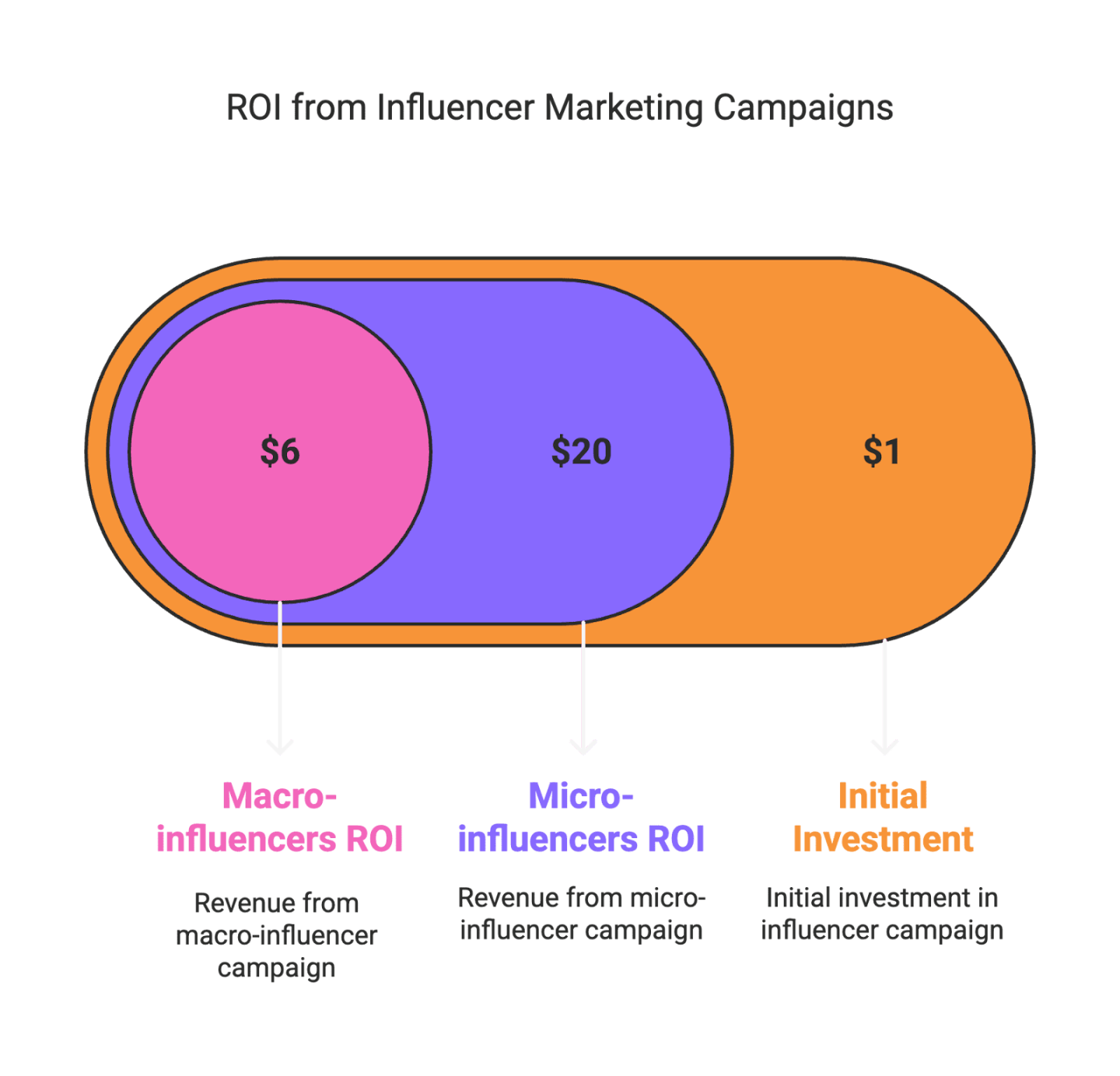
Not all influencers have millions of followers. Micro-influencers (often 5,000–100,000 followers) have become especially popular partners for food brands. Why? They may have smaller reach, but their audiences are highly engaged and niche. A vegan home chef with 20k followers or a mom who reviews kid-friendly snacks on Instagram might have 3–5× higher engagement rates than a celebrity account. In general, micro-creators see around 5–10% engagement per post, far above the ~2% typical for macro influencers. Their followers actively like, comment, and try the products they recommend.
Micro-influencers also come across as genuine. They’re everyday foodies, not unreachable stars. Their content feels more like storytelling or friendly advice than an ad, which hugely boosts credibility. 61% of consumers believe micro-influencers create more authentic, trustworthy content than big influencers. When a micro-influencer raves about a new protein bar or shares a family recipe using a certain brand of cheese, followers know it’s coming from a real personal experience.
Crucially, micro-influencer campaigns deliver big ROI for small budgets. Rather than paying one celebrity $50k for a single post, a brand can work with 50 micro-influencers who each charge a few hundred dollars or just free product. This “many small voices” approach often outperforms one big voice. One analysis (by Stack Influence) found micro/nano-influencer campaigns can drive roughly a 20:1 return on investment, compared to ~6:1 ROI for campaigns using big influencers. In other words, each $1 spent on micro-influencers can yield ~$20 in revenue (vs. $6 with a macro star). No wonder 84% of brands (as noted earlier) are planning to pour more into influencer collaborations!
Micro-influencers’ cost-effectiveness is especially valuable for e-commerce brands and Amazon sellers working with limited marketing budgets. Instead of a pricey photoshoot and ad buy, a scrappy snack startup can send free samples to a squad of micro food bloggers on Instagram. For the cost of shipping some products, the brand could receive dozens of tasty photos, recipe videos, and reviews in return. Each post reaches a niche audience of potential customers (say, fitness enthusiasts for a protein shake, or busy parents for a healthy lunchbox snack) and doubles as user-generated content the brand can reuse. As an example, brands often seed products to micro-influencers and ask for honest reviews – an Amazon seller might ship a new kitchen gadget to 50 foodie micro-influencers, generating a wave of Instagram and TikTok content that the brand can repurpose as UGC. It’s word-of-mouth marketing on steroids, yet feels organic to viewers.
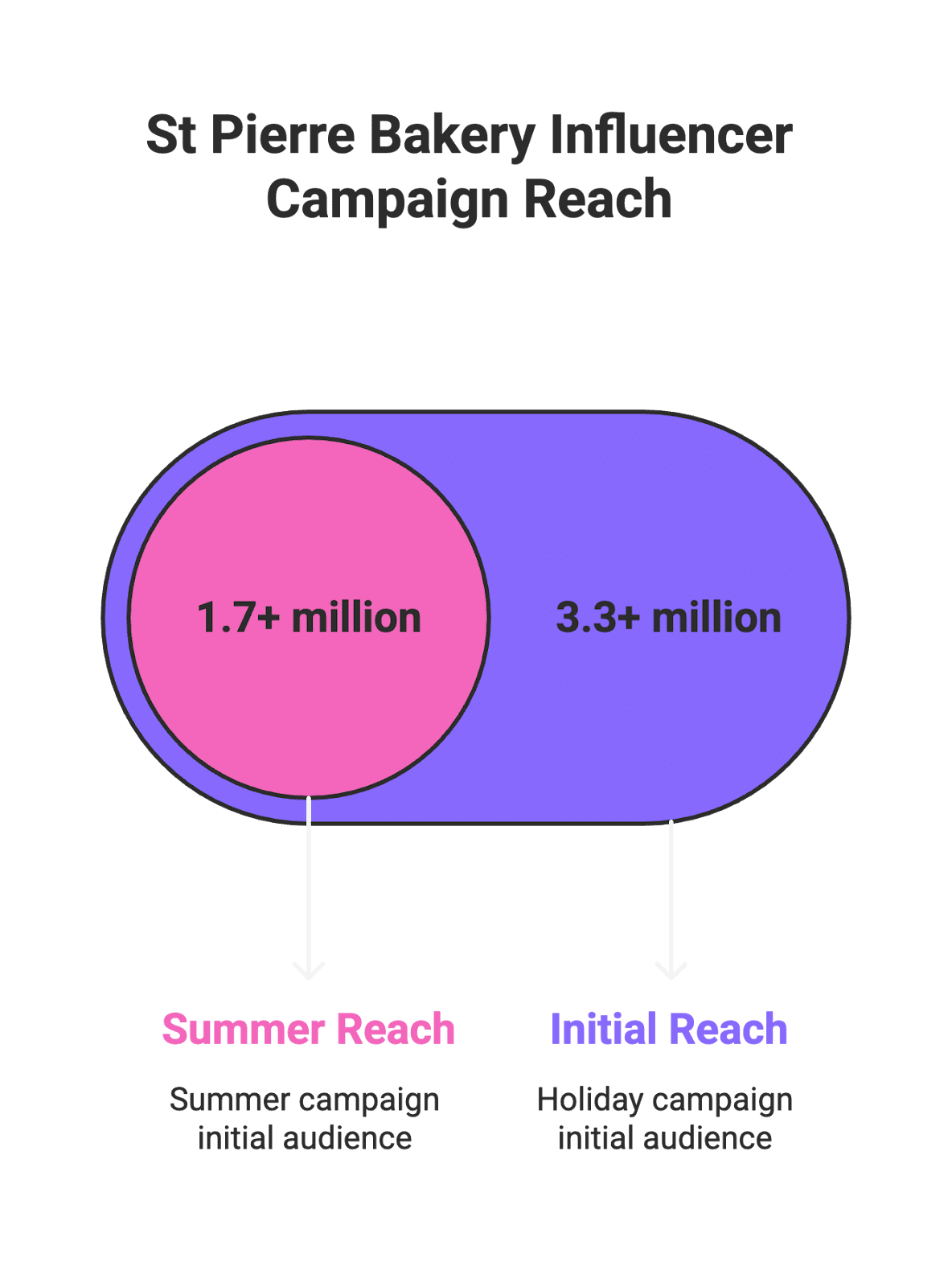
Many food and beverage companies in the US have cooked up creative influencer campaigns. Here are a few stand-out examples – from household names to niche brands – that show how working with influencers (especially micros) can deliver delicious results:
(Honorable mention: In the UK, grocery chain Iceland Foods proved the power of micro-influencers when it pivoted from celebrity ads to everyday “mom” influencers. By partnering with 50 micro-influencers, Iceland saw its customer approval rating skyrocket from a bleak 10% to 70% – a testament to how authentic, relatable content can reshape brand perception!)
One of the unsung benefits of working with influencers is the treasure trove of content it produces. These collaborations yield photos, videos, unboxings, tutorials, and testimonials that brands can repost and repurpose in myriad ways. In essence, influencer marketing doubles as content creation – supplying social media assets, website visuals, and even ad creatives that come with a built-in stamp of authenticity.
This is especially powerful for e-commerce brands and Amazon sellers who need constant content and social proof. For instance, when a micro-influencer shares an Instagram reel cooking with your specialty sauce, you not only reach their followers – you also gain a polished video that can be used on your own product page or in ads. Brands often encourage influencers to allow re-use of their posts as marketing material (with credit), and since the content feels organic, it can outperform slick studio shots in building trust.
Consider Health-Ade Kombucha: The LA-based beverage startup partnered with several micro-influencers, who ended up creating 214 Instagram posts featuring Health-Ade drinks in creative ways – from fridge shelf “kombucha stash” photos to workout recovery videos with a bottle in hand. This mountain of UGC became a goldmine for Health-Ade’s marketing. They republished the best posts on their own Instagram and website, used influencer photos in their email newsletters, and even turned some into paid ads. The campaign didn’t just yield impressions – it saved money. By leveraging influencer-created content, Health-Ade saved over $30,000 in content production costs compared to hiring in-house photographers/designers. Moreover, the buzz generated an estimated $11k worth of impressions for just a fraction of the cost of traditional advertising. It’s a perfect example of how micro-influencer partnerships can fuel your content pipeline while stretching your marketing dollars.
Platforms and agencies have emerged to streamline this process. For example, Stack Influence (a micro-influencer marketing platform) helps connect brands with everyday content creators at scale. Services like these can be a boon for Amazon marketplace sellers and small food brands, handling the heavy lifting of finding, vetting, and managing dozens of micro-influencer collaborations. The end result is a stack of authentic product photos, reviews, and videos – social proof that can bolster your Amazon listings, ads, and social media presence.
From Instagram foodies posting recipe hacks to TikTok creators sparking viral challenges, influencers are undeniably shaping the way food brands reach consumers. And it’s not just the mega-famous chefs or celebrity endorsers – often, it’s the micro-influencers and passionate niche creators who make the biggest impact for the budget. They bring relatability, trust, and engagement that translate into real ROI, whether you’re selling gourmet popcorn on Shopify or launching a new beverage on Amazon.
For food brands in the US (big and small alike), working with influencers has proven to drive awareness, sales, and a wealth of user-generated content. The key is to focus on genuine relationships: choose influencers who truly align with your product and values, encourage their authentic creativity, and leverage the content they create to amplify your brand’s story across channels. Do that, and you’ll tap into a marketing power that’s as organic and satisfying as a home-cooked meal – served with a side of measurable growth.
Every modern e-commerce brand – from Amazon sellers to DTC startups – faces a content crunch. In the battle for consumer attention, user-generated content (UGC) and polished brand-generated content each play distinct roles. And what about content from micro-influencers and other content creators? This blog explores the differences between UGC and brand-created content, the rise of influencer-driven UGC, and how leveraging all three can boost trust and sales for online brands. We’ll also share charts, tips, and best practices to help your content strategy rank high (on Google and with your customers).
A post shared by Stack Influence (@stackinfluence)
Let’s start with quick definitions to set the stage:
In short: UGC comes from customers, while branded content comes from the brand. The two differ in tone and origin – and as we’ll see, in how audiences perceive them. Before diving into which performs better, let’s consider where influencer-generated content fits in.
Influencer-generated content (sometimes called creator content) sits in between pure UGC and brand content. It’s content made by influencers or content creators – real people on social media with a following – in collaboration with a brand. Typically, brands provide a product (and often payment or perks) to a creator, and in return the creator posts about it. The brand usually gives some direction or key points, but the influencer adds their personal creative spin. Done right, these posts feel like organic UGC, even though the creator was guided or compensated by the brand.
Crucially, micro-influencers (those with smaller, niche followings) have become a popular source of influencer content for brands. Why? Their posts come across as authentic and relatable, like content from a friend, yet brands can still coordinate messaging behind the scenes. In fact, micro-influencers often have much higher engagement rates and trust levels than big celebrities, making them ideal for generating UGC-like content that resonates. We’ll explore this more later on.
Now that we’ve defined each type of content, let’s compare their effectiveness on key metrics like trust, authenticity, and scalability.
In today’s review-driven, socially connected marketplace, authenticity is king. User-generated content shines in this area, and it’s reflected directly in consumer behavior and stats:
Consumers perceive UGC as more trustworthy than brand-crafted messaging. After all, UGC comes from real customers with no agenda other than sharing their experience. Surveys consistently show that people trust recommendations from peers and other consumers far more than they trust traditional advertising. For example, a recent report found 92% of consumers trust word-of-mouth and UGC more than they trust traditional ads. Another study noted 85% of people find UGC more influential than brand photos or videos when it comes to making purchase decisions. In essence, seeing an everyday person honestly praising a product builds confidence that the product does what it promises.
UGC acts as digital word-of-mouth. Shoppers often seek out customer reviews, unboxing videos, or social media mentions before buying – and for good reason. Nearly 79% of people say UGC highly impacts their purchase decisions, and 70% will actually look at UGC reviews or ratings before making a purchase. Whether it’s a 5-star Amazon review with photos or a TikTok showing a product in action, this content provides proof from fellow consumers. That social proof can tip the scales for someone on the fence about buying. (If you’re an Amazon seller, think about how crucial those customer review photos and videos are to converting browsers into buyers!)
UGC is, by nature, unfiltered and real. The people creating it aren’t following a corporate script – they’re sharing personal stories, showing products in real-life use, maybe even pointing out small quirks along with the praise. This unpolished vibe actually makes the content more relatable. Potential buyers can imagine the product in their own hands and daily life. In fact, relatable UGC content helps buyers visualize using the product, which is a powerful driver of conversion. And authenticity isn’t just a buzzword: 88% of consumers say authenticity is important when deciding what brands they like and support. UGC delivers that authenticity in spades because it’s created by peers, not marketers.
People tend to engage more with content that feels genuine. UGC often sparks higher likes, comments, and shares on social media compared to slick brand posts. It feels like a friend’s post, inviting conversation. Some brands find that incorporating UGC into their social campaigns can boost engagement by 50% or more. And higher engagement means more reach and free exposure as the content gets shared around.
That said, UGC isn’t all sunshine. Because it’s created by customers, brands don’t control the message or quality. UGC can be unpredictable – some posts will be amazing endorsements, others may be low-quality images or even critiques. This lack of control is the trade-off for authenticity. You also must navigate permissions and legal rights (always ask permission to repost someone’s content!). But the upside of UGC is so substantial that nearly every successful brand taps into it. Consumers actively seek out UGC because it helps them trust a brand. No wonder brands that incorporate UGC into their marketing see conversion lifts up to 29% on their websitesand significantly higher click-through rates in ads.
Consumer surveys show that user-generated content (UGC) and influencer posts are far more trusted and influential than brand-created content when it comes to purchasing decisions.
As the chart above illustrates, customers place far more trust in content that comes from peers or relatable creators than in traditional brand-directed content. In one survey, 84% of people trusted peer recommendations (UGC) – while far fewer said the same about brand-produced content. Influencer content also fares better than purely branded posts, especially if the influencer is seen as genuine and not overly “salesy.” The takeaway for marketers is clear: authentic content isn’t just a nice-to-have, it directly translates into trust and sales.
After hearing the virtues of UGC, you might think brands should just lean on customers for content and call it a day. Not so fast – brand-generated content still plays a critical role in any marketing strategy. There are important reasons you can’t rely only on UGC:
With your own content, you control the narrative. You decide exactly what features or benefits to highlight, what tone to strike, and when to publish. This is invaluable for communicating precise information – like a new product launch, a seasonal promotion, or your brand’s values. UGC might skip key details or go off-message (a customer might rave about your product but not mention its name or where to buy it!). Brand content lets you say exactly what you need to say, how and when you want to say it. It also ensures brand consistency in style and quality. Over time, consistent branded posts build your recognizable voice and visual identity.
Depending on only customers to post about you is a waiting game – UGC comes when it comes. You can’t schedule an organic viral post for next Tuesday at 3pm. But with an in-house content calendar, you can schedule regular posts to keep your feeds active and informative. Brand-generated content can be produced consistently and on-demand, which is crucial for maintaining a presence. Have an upcoming sale? You’ll need a branded announcement post. Launching a product? You’ll want to tease it beforehand (something organic UGC can’t do if the product isn’t even out yet). Branded content fills those gaps with planned communications. It’s the steady drumbeat that UGC can supplement but not replace.
Let’s face it – not all UGC will make your product look amazing. Some customer photos might be poorly lit or off-brand. Your own content allows you to put your best foot forward with professional visuals, high production values, and creative storytelling. This polishes your brand image and can educate or inspire consumers in ways candid UGC might not. For example, a brand-created video can artfully demonstrate how to use the product or tell the story behind it, ensuring viewers understand its value. UGC is powerful for authenticity, but brand content excels at education and branding.
Some marketing channels demand brand-created content. For instance, your official website, product packaging, press releases, or email newsletters will predominantly use content you’ve crafted. Customer Instagram posts won’t directly populate these assets. Brand content is the backbone of many marketing channels, with UGC as a supplemental boost.
In summary, brand-generated content gives you control. It’s reliable, it’s on-message, and it’s fully owned by you. The downside, of course, is that audiences know you made it – so it can sometimes lack the credibility of UGC. Branded content can feel “salesy” if overdone (34% of consumers say too much self-promotion turns them off on social media). That’s why the optimal strategy isn’t UGC or brand content, but both working together. A mix of authentic UGC and informative branded posts can cover all your bases. In fact, studies show that when consumers are exposed to a mix of UGC and professional brand content, engagement goes up and brand trust increases. The challenge is finding the right balance – and that’s where influencer content enters the picture.
A post shared by Stack Influence (@stackinfluence)
What if you could combine the authentic feel of UGC with some of the control and consistency of branded content? Enter influencer-generated content. By working with content creators – especially micro-influencers who have small but loyal followings – brands can essentially manufacture UGC-like content that aligns with their marketing goals. Here’s why influencer content has become a cornerstone for many e-commerce and social media strategies:
Good influencers know that maintaining trust with their audience is their top asset. Micro-influencers, in particular, tend to be everyday folks passionate about a niche – their content comes off as genuine and personal. When a micro-influencer raves about a product, it feels like a recommendation from a friend, not an ad. Consumers respond to that: one study found 71% of consumers prefer to discover products via real people’s content (like influencers or other users) rather than through obvious brand ads. In practice, influencer posts often get lumped into the “UGC” category by viewers because they see a person – not the brand – talking. This means influencer collaborations can yield content that carries the trust signals of UGC, even though your brand had a hand in it.
Unlike true UGC, influencer content is brand-directed to a point. Your team can provide guidelines, key messaging points, or creative briefs to the influencer ahead of time. You might ask them to highlight a certain feature or ensure they mention a discount code or a specific URL. The influencer then weaves those points into their post in their own voice. The result: the post still sounds organic and “in the creator’s own words,” but you’ve managed to get the important info in there. This balance of authenticity and control is influencer content’s sweet spot. You won’t have 100% control (and you shouldn’t, if you want it to feel real), but you can steer things more than with random UGC.
Partnering with influencers can dramatically amplify your reach and credibility. Micro-influencers in particular drive outsized engagement – often getting like, comment, and share rates several times higher than huge celebrity accounts. They interact with followers, answer questions, and build community, which further builds trust. All this translates into tangible results: over 82% of consumers say they’re likely to buy a product recommended by a micro-influencer they follow, and 63% of shoppers have made a purchase based on an influencer’s recommendation (even higher among Gen Z and Millennials). These are powerful numbers – it means influencer content not only engages people, it drives them to act.
Influencer content can directly boost e-commerce efforts. Influencers often include swipe-up links, promo codes, or Amazon affiliate links that drive traffic straight to product pages. On Amazon, the Amazon Influencer Program allows creators to recommend products via their Amazon storefronts and live streams, blending influencer marketing with the marketplace. A micro-influencer’s TikTok video showing a cool kitchen gadget can send hundreds of shoppers to the Amazon listing within hours (#TikTokMadeMeBuyIt is a real phenomenon!). In essence, influencers can create a pipeline of UGC-driven traffic to your e-commerce store or Amazon product, combining the trust-building content with a clear path to purchase.
Influencer marketing does require investment – whether free product, fees, or commissions – and managing relationships. It’s not as “free” as organic UGC. However, it often delivers a strong ROI. Brands see an average of $4+ in earned revenue for every $1 spent on influencer campaigns. And because micro-influencers are far more affordable than celebrity endorsers, even small brands and Amazon sellers can run campaigns with dozens of micro-creators for the cost of one big ad campaign. The payoff is a flood of fresh content and authentic buzz that can jumpstart sales.
To maximize influencer content benefits, focus on creators whose audience aligns with your niche (a tech gadget brand partnering with a tech review YouTuber, a home décor brand with an Instagram home stylist, etc.), and give them creative freedom to be themselves. Their authentic voice is what makes their content resonate. When done right, influencer-generated content truly gives you the best of both worlds: the credibility of UGC and the strategy of marketing content. Or as one marketer put it, “influencer content bridges the gap between UGC and in-house content, delivering authenticity with a sprinkle of brand alignment”.
Knowing the strengths of UGC, brand content, and influencer content is only half the battle. The magic is in how you mix and leverage them. Here are five actionable strategies for e-commerce brands (including Amazon sellers) to make the most of user-generated and influencer content:
Make it easy and rewarding for customers to share their experiences. For example, create a branded hashtag and ask customers to post their photos or stories using it. Run contests or campaigns (like “post a picture with our product and tag us to win a prize”) to incentivize content creation. Engage with customers who post about your brand – a simple reshare or comment can delight them and encourage others to share too. The goal is to build a community of real advocates generating buzz. Many brands also include inserts in product packaging inviting buyers to “Snap a photo and share!” This steady stream of UGC will not only spread word-of-mouth, but also provide you with a library of authentic posts to potentially repost (with permission).
Turn your best UGC into marketing assets. Featuring real customer photos, testimonials, and reviews on your website can boost conversions – it shows visitors social proof right as they shop. For instance, display Instagram customer photos in a gallery on your product pages or add a section for “Customer Spotlight” in your newsletters. Amazon sellers should make use of the “Customer images” and video review sections on product listings – these can be more persuasive than the official product photos. On social media, routinely share or repost user content (with credit to the creator). This not only fills your content calendar with authentic posts, but also encourages more fans to post (because they might get featured!). UGC begets more UGC. By proudly showing off content created by your customers, you send the message that you have a passionate fan base – nothing builds trust for new customers like seeing existing ones happy.
Kick your UGC generation into high gear by partnering with influencers in your niche. Identify micro-influencers (maybe 5k–50k followers in your category) or enthusiastic content creators who love products like yours. Offer them a free product sample or a fee in exchange for an honest review, demo, or creative post featuring your product. Emphasize that you want their genuine opinion – while you might provide some guidelines, picking creators who already align with your brand ensures the content stays authentic. These collaborations can quickly produce a wave of high-quality posts that feel like UGC but are coordinated enough to support your marketing goals. The bonus: you get exposure to the influencer’s follower base, which can drive direct sales. Micro-influencers are especially powerful for e-commerce brands because they speak to tight-knit communities of enthusiasts. Their shoutout carries the weight of a friend’s recommendation, yielding conversion rates that often beat traditional ads. When planning influencer campaigns, aim for a quantity of micro-influencers rather than one celebrity – you’ll get more diverse content and better engagement that way.
As your efforts grow, leverage technology to manage it all. Gathering, permissioning, and publishing UGC can become a big task. This is where dedicated UGC platforms or influencer marketing platforms can help. For example, Stack Influence is a platform that automates product seeding campaigns and manages the end-to-end process of working with large numbers of micro-influencers. It helps brands accumulate authentic UGC, testimonials, and even traffic at scale – without having to manually coordinate with dozens of creators one by one. Similarly, there are UGC rights management tools that make it easy to request and track permissions from content creators. The bottom line: as you collect more UGC and run more influencer collaborations, consider investing in a solution to organize and streamline the workflow. This lets you focus on strategy while the platform handles the heavy lifting of outreach, tracking posts, and aggregating content.
In the end, it’s not a question of UGC vs. brand content as an either/or choice – successful brands use both, complemented by influencer-driven content, to create a well-rounded and effective marketing strategy. User-generated content brings authenticity, trust, and community; brand-generated content provides consistency, control, and clarity of message; and influencer content bridges the two, offering scalable authenticity with a touch of brand guidance.
For e-commerce brands and Amazon sellers especially, this mix is crucial. Online shoppers can’t physically touch or try your product, so they rely on what others say and show. UGC and micro-influencer posts serve as the digital “word-of-mouth” that builds credibility, while your own content delivers the information and brand story that you want to tell. When you integrate them effectively (and maybe add a dash of automation via platforms to help manage the flow), you create a content engine that not only ranks well on search engines but also ranks high in consumer trust.
Remember, authentic content wins hearts – and in turn, wallets. By embracing your customers’ voices and partnering with relatable creators, you humanize your brand in a way polished ads alone simply can’t. In the age of social media and AI-driven search, the brands that will rise to the top are those that combine solid brand messaging with the power of UGC. So, put your happy customers and creative influencers in the spotlight – and watch how the genuine connections you build translate into sustainable growth for your business.
Social media has completely transformed how skincare brands reach consumers. If you haven’t noticed, the days of flipping through magazines for skincare ads or relying solely on glossy billboards are fading fast. Platforms like Instagram, TikTok, and YouTube have become the new beauty counters where customers discover, learn about, and fall in love with skincare products. In fact, the global beauty industry (now a $650+ billion market and counting) is increasingly driven by online trends and conversations – with skincare alone projected to hit $177 billion by 2025. For indie skincare brands and Amazon sellers, this digital shift is a huge opportunity. Social media levels the playing field, letting smaller brands compete with industry giants for a slice of that ever-growing pie. But to succeed, you need to know how to leverage social platforms effectively – and the secret sauce is influencer marketing.
Why is social media such a game-changer for skincare and beauty marketing? The answer is simple: your audience practically lives there. Research shows that around 4 in 5 beauty shoppers use Instagram daily, and 87% of consumers (across all categories) now use social media to research products. In the skincare space, people don’t just scroll for entertainment – they’re actively looking for product recommendations, skincare routines, reviews, and real-life results.
One study from Harvard Business School found that about 2 in 3 beauty shoppers turn to social media influencers to discover new products. That makes influencers the #1 source of product information in beauty – outranking brand websites, ads, and even professional experts. If you’re not tapping into social media, you’re missing where the modern skincare customer is getting their information. And if you’re not leveraging influencers, you might be invisible during that crucial discovery phase.
The visual, community-driven nature of social platforms is a perfect match for skincare marketing. Skincare is all about results you can see – glowing skin, before-and-after transformations, routine demos – and social media is built to share exactly that kind of content. Instead of one-way communication (like a static magazine ad), social allows for conversation and authenticity. Customers can ask questions in comments, share their own experiences, and join communities around skincare topics (think #SkinTok or skincare subreddits). For brands, this means an opportunity to build a real relationship with your audience. You’re not just broadcasting a message; you’re engaging with fans and letting them engage with each other. Even skincare manufacturer Selfnamed, which supplies thousands of brands, shared with us that the number one thing they tell their customers is to start building a community - and how important micro-influencers are in that process.
So, social media is crucial – but what type of content actually moves the needle for skincare brands? The overwhelming evidence points to influencer-generated content. Why are influencers so effective, especially in the beauty and skincare space? It comes down to trust and relatability. Influencers are the new “beauty gurus” and skincare experts that consumers turn to for advice. Unlike a polished corporate ad, an influencer’s recommendation feels like advice from a friend.
Studies show that customers trust influencer recommendations far more than traditional ads. For example, in one survey a whopping 90% of consumers said authenticity is important in deciding which brands to support – and influencer content feels authentic because it’s coming from a real person. It’s no surprise then that 42% of shoppers say they’d buy a product promoted by an influencer they follow. By contrast, company advertisements and celebrity endorsements simply don’t carry the same weight; people know those are paid and polished, so they’re more skeptical. (To put it in perspective, the Harvard study found influencers swayed 67% of shoppers, whereas traditional company ads influenced only about 44%.)
Beyond trust, influencers excel at education and engagement – two things that are gold in skincare marketing. A skincare influencer might post a morning routine video showing how they use your cleanser and serum, or a tutorial on tackling acne featuring your spot treatment. These how-to videos and demos resonate with audiences: nearly 45% of beauty shoppers have watched a “how-to” video on YouTube for inspiration before purchasing a product. Influencers basically give you a way to showcase your product in action, via someone the audience already likes and listens to. It’s far more compelling than a static product photo or a tagline – it’s education and endorsement wrapped in one.
Perhaps the biggest reason influencers are the ultimate tool for skincare marketing is social proof. When people see someone they admire (or even just someone real) using and loving a product, it reduces hesitation. It’s the digital-age version of word-of-mouth. And remember, word-of-mouth is incredibly powerful – customers often trust each other more than they trust brands. Influencers ignite that word-of-mouth at scale by broadcasting their personal experience with your product to thousands of followers. As a result, your brand gains credibility by association: “If this creator with skin like mine got good results, maybe I will too.”
It’s worth noting that even the big players know the power of influencers. Beauty giant Estée Lauder, for instance, has reportedly been spending 75% of its marketing budget on digital campaigns – particularly influencer-centric social media marketing. The takeaway? Whether you’re a boutique skincare line or a Fortune 500 brand, influencers have become a must-have in the marketing mix.
A post shared by Stack Influence (@stackinfluence)
When we talk about influencers, it’s not all about mega-celebrities or million-follower superstars. In fact, for skincare brands (and especially those on a budget), micro-influencers might be your secret weapon. Micro-influencers are creators with a more modest following (often in the 5k–50k range), but what they lack in fame they make up for in high engagement and niche expertise. These are the skincare junkies, beauty bloggers, or estheticians on Instagram and TikTok who have a tight-knit community of followers who genuinely trust their recommendations.
Why collaborate with micro-influencers? For starters, their audiences are typically hyper-relevant to specific skincare niches – think a cruelty-free beauty blogger, or a mom sharing postpartum skincare tips. Partnering with a micro-influencer means your product is showcased to exactly the kind of consumers who would be interested, often yielding better results than casting a wide net with a mega-celebrity. And because these creators are viewed as peers, their followers tend to be more actively engaged (commenting, liking, trying what’s recommended).
In fact, micro-influencers often boast impressively high engagement rates, sometimes up to 60% higher than macro-influencers with huge followings. It’s common to see a micro beauty influencer getting like 10% of their followers engaging with a post – whereas a big influencer or celebrity might only get around 2% engagement. That means a far greater portion of the audience is actually listening and interacting. Higher engagement isn’t just a vanity metric; it translates to more people seeing and acting on the content (clicking the link, signing up for a free sample, or adding your product to cart).
Cost is another big factor. Micro-influencers are far more budget-friendly to work with than big names. Many will create a post or video in exchange for just a free product or a modest fee – whereas a single post from a top-tier influencer could cost tens of thousands of dollars. For the price of one celebrity endorsement, you could hire dozens of micro-influencers, multiplying your reach and content output. This is especially great for emerging skincare brands, e-commerce startups, or Amazon sellers who need to maximize ROI. In fact, brands often see influencer marketing as more cost-effective than traditional ads: you’re getting user-generated content plus promotion in one, and that content can keep working for you over time (more on that soon). One analysis found micro-influencer campaigns can deliver around a 20:1 return on investment, versus roughly 6:1 for macro influencers – a huge difference that can literally make or break profitability for a small business.
But perhaps the best part about micros is the authenticity factor. Followers see micro-influencers as relatable friends or real experts in their domain, not untouchable celebrities. Their content is generally more down-to-earth and candid, which is exactly what resonates in skincare (where consumers are often skeptical of “too good to be true” claims). When a micro-influencer with rosacea-prone skin shares how your calming face mask helped their redness, it carries weight. It feels genuine. That authenticity can translate into serious trust and conversion. As one report put it, micro-influencers “punch above their weight” – delivering outsized results because their audiences actually care and act on their recommendations.
Another massive benefit of working with influencers is that they produce user-generated content (UGC) – and UGC is marketing gold for skincare brands. UGC refers to any content created by real users or customers (rather than the brand itself), such as photos, videos, reviews, or testimonials. Why is UGC so powerful? Because it’s seen as more authentic and trustworthy than polished brand content. Remember that stat: 90% of consumers value authenticity. Well, nothing says “authentic” like real people using and talking about a product in their own words.
When you partner with influencers, every post or video they create about your product becomes UGC you can leverage. You not only get the immediate exposure to their followers, but you also end up with a library of real-life content that can be repurposed in many ways. For example, an influencer’s before-and-after photo using your serum can be shared on your brand’s social channels, featured in your email newsletter, or even embedded on your product page as a testimonial (with permission). This is huge for e-commerce and Amazon sellers – potential customers are far more likely to convert if they see lots of reviews, photos, and stories from other users. In fact, 74% of consumers are more likely to purchase from a company that features customer reviews on its website, and about 3 in 5 shoppers prefer brands that showcase user-generated photos or videos on their site. It’s social proof in action.
And it’s not just about your own website. Social proof spreads on social media too. When an influencer posts about your skincare product, that content remains visible and shareable. Followers might tag their friends (“Hey, didn’t you say you needed a sunscreen? Check this out!”), or others might share the post to their story. This kind of digital word-of-mouth can snowball. One person’s UGC can inspire another’s. Studies show that 79% of people say UGC highly impacts their purchase decisions, far more than professional brand content. We’re in an era where shoppers actively seek out TikTok reviews or Instagram reels of real people using a product before they buy. By fueling the internet with UGC via your influencer partners, you’re making sure your brand is part of those conversations and research moments.
The compounding effect is incredible: An influencer’s post might directly drive some sales the day it’s posted, but it also leaves a trust trail. Weeks later, someone googling your product might stumble on that post or a YouTube video review. Or a potential customer checking your Amazon listing sees that an influencer they recognize left a review or is featured in the content. All of this builds a narrative that “people like this product.” It reduces the risk for new customers to give you a try.
UGC also tends to outperform traditional ads when used in advertising. Brands often take the best snippets of influencer content (like a catchy TikTok video or a testimonial quote) and turn it into paid ads. These ads often get higher click-through rates and lower cost-per-click than slick, studio-shot ads, because they blend in as genuine content and social proof. It doesn’t feel like an ad, which ironically makes the advertising more effective. It’s yet another way influencer collaborations can save you money – you’re basically getting authentic ad creatives for free as a byproduct of the partnership.
A post shared by Stack Influence (@stackinfluence)
At this point, we’ve established that influencer marketing (especially micro-influencers) + UGC is the not-so-secret weapon for skincare brands. But how do you put this into action? Let’s break down 5 key strategies for marketing your skincare brand on social media effectively:
While gifted collaborations are relatively straightforward, a few best practices can dramatically improve your success rate – ensuring that your free products translate into quality content and positive relationships. Whether you’re a brand planning a gifting campaign or an influencer navigating gifted offers, keep these tips in mind:
Skincare shoppers crave information and demonstration. Partner with influencers or content creators to produce tutorials, “Get Ready With Me” videos, and skincare routine posts featuring your products. Educational content builds trust by showing results and giving value. For example, a YouTuber might film a before-and-after using your product or an Instagrammer might do a step-by-step facial routine highlighting your cleanser, toner, and moisturizer. This not only highlights your product benefits in context, but also taps into the huge audience searching for skincare tips online (remember, YouTube is the #1 source for beauty content among many shoppers). When viewers see how your product is used and the results it delivers, they’re much more likely to become customers.
Instead of blowing your budget on one big influencer, recruit a squad of micro-influencers who speak to your target audience. Look for those niche creators with engaged followings – whether it’s an acne-positive teen on TikTok, a dermatologist influencer on Instagram, or a cruelty-free beauty blogger. Their authentic voice and close community will give your brand credibility. And don’t just limit to one platform: you might have TikTok micro-influencers creating fun short-form videos while Instagram creators post beautiful before/after photos – both driving interest. Collaborating with multiple micros widens your reach across different pockets of the skincare community. Plus, as discussed, it’s extremely cost-effective and yields high ROI (since micros often charge little and have high engagement). Pro tip: offer each influencer a unique discount code or affiliate link – this not only incentivizes them but also helps you track sales they drive.
Don’t just rely on influencers for UGC – get your actual customers involved too! Create a branded hashtag for your skincare line and encourage people to tag you in their selfies or routine posts (for example, #GlowUpWith ). You can run a contest or giveaway where users post a photo or video using your product for a chance to win a prize. This is a fantastic way to spark a wave of content. Every piece of UGC a customer posts is like a mini-testimonial to all their friends/followers that your product is worth trying. It also gives you a steady stream of fresh content to repost (with permission) on your brand’s own social feed, showcasing real people and real results. Remember, social media is a two-way street – engaging your community in campaigns makes them feel part of your brand story, not just passive consumers.
For brands selling online (whether your own site or marketplaces like Amazon), ensure your social media efforts feed into your sales funnel. For example, if you’re on Amazon, take advantage of the Amazon Influencer Program or Amazon Live where influencers showcase products on Amazon’s platform. Encourage influencers to leave honest reviews on your Amazon product page after a collaboration – those influencer badges or recognizable names in the review section can boost trust. On your own website, integrate Instagram galleries or TikTok videos so that when shoppers browse, they see a flood of UGC and influencer content validating the product. You can also use influencers in your paid social ads targeting lookalike audiences of your shoppers. Essentially, make your influencers the face of your brand online – their content should be woven into your product pages, ads, and social shop features. This seamless integration of influencer-driven content in the purchasing process can significantly improve conversion rates, as shoppers get consistent reassurance at every step that real people love this product. And of course, always ensure there’s a clear call-to-action – whether it’s “Swipe Up to Shop” on an Instagram Story or a link in bio – to turn that social media interest into an actual sale.
In the fast-paced world of skincare, social media marketing isn’t just an option – it’s a necessity. And within that, influencers (especially micro-influencers) have proven to be the best tool to capture attention, build trust, and drive sales. They bring authenticity to your brand story, create engaging content that educates and entertains, and essentially act as enthusiastic brand ambassadors who people actually listen to. When you combine influencer partnerships with a smart UGC strategy and community engagement, you’re setting your skincare brand up for long-term success both on social media and beyond.
Remember, whether you’re a small Amazon seller or an emerging DTC skincare label, the playing field is more even than ever – if you play it right. A clever Instagram campaign with a handful of micro-influencers can catapult a indie serum into a bestseller. A viral TikTok from a skincare enthusiast can have your brand sold out overnight. This is the power of social media marketing in the beauty industry today. Keep it real, keep it relatable, and leverage those creator relationships to the fullest. Your future customers are out there on their phones right now, scrolling for the next product to add to their routine. With the right social strategy, that product could be yours.
By embracing influencers, encouraging content creators, and nurturing your community, you won’t just market your skincare – you’ll create a movement around it. And that is marketing magic that no old-fashioned ad campaign could ever replicate. Here’s to glowing up your social media presence and watching your brand thrive!
TikTok is no longer just a platform for dance challenges and lip-syncing – it’s now a powerful growth engine for content creators, micro‑influencers, e-commerce brands, and even Amazon sellers. With TikTok’s explosive rise (over 1.6 billion active users worldwide as of 2026) and its unique algorithm, even new or small accounts have the potential to go viral overnight. In fact, TikTok was the most downloaded app in 2024 with 773 million downloads globally, surpassing Instagram. This means huge opportunities for brands and creators to gain exposure quickly. But to harness TikTok’s potential, you need a smart growth strategy.
In this guide, we’ll cover 15 essential TikTok growth hacks – from optimizing your profile to leveraging micro-influencer content – that can elevate your presence on the platform. These tips are presented in a casual, informative way and are packed with actionable steps. Whether you’re a content creator looking to build a following, a micro-influencer aiming to increase your reach, or an e-commerce entrepreneur (including Amazon sellers) wanting to drive product sales, these growth hacks will set you up for success. Let’s dive in!
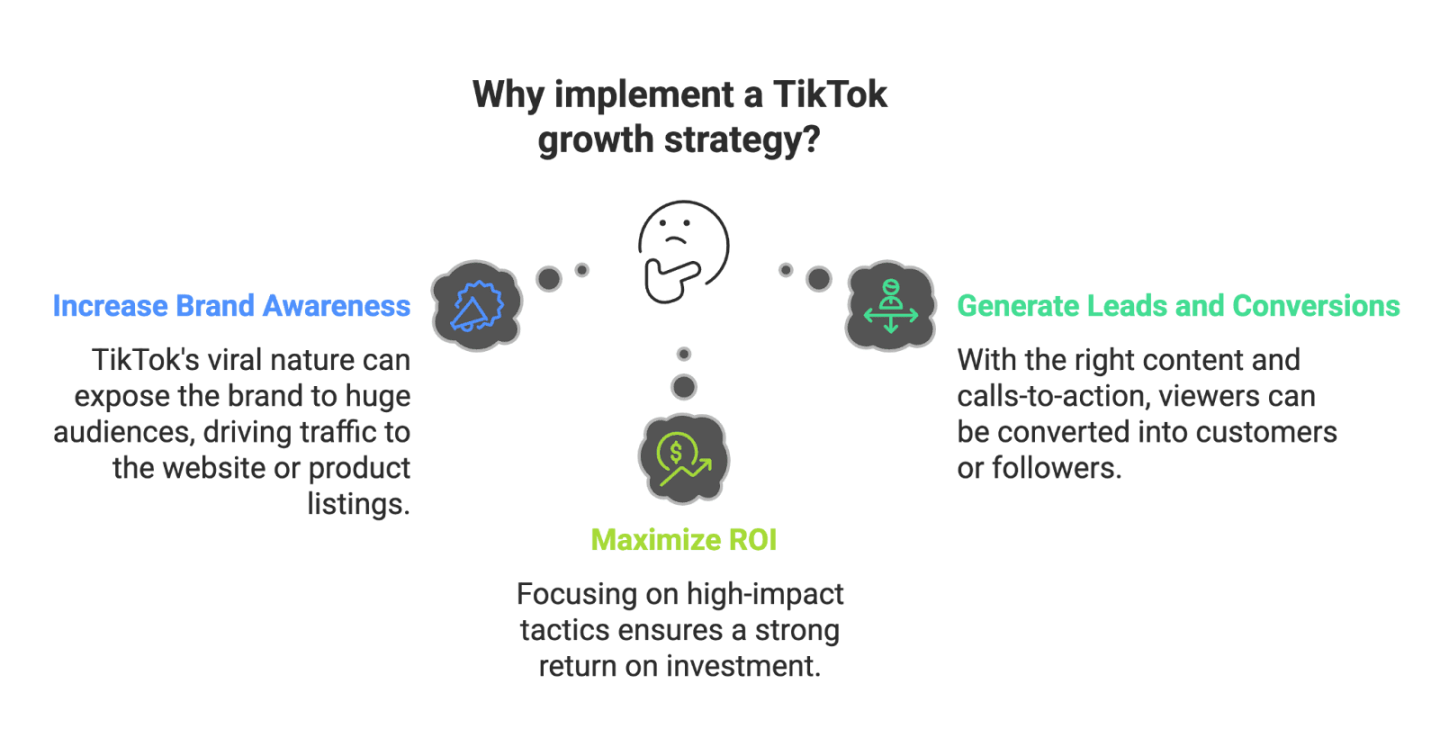
Before jumping into the hacks, it’s important to understand why a TikTok growth strategy matters. TikTok’s highly engaged user base and content-discovery algorithm can translate into real results for your brand or personal profile. A clear growth strategy will help you:
In short, beauty conventions in 2026–2027 blend the best of physical experience and digital amplification. Now, let’s dive into the top events to mark on your calendar.
First impressions count. Your TikTok profile is like a virtual business card for your brand or persona, so making it appealing and clear is critical. When someone lands on your profile, they should instantly understand who you are and why they should follow you. To optimize your profile:
Choose a username (the @handle) that reflects your brand or niche. This helps people remember you and even improves your searchability on TikTok.
TikTok allows a separate name field (above your photo) – make this relevant and keyword-friendly (for example, include your niche or brand name) so you appear in searches.
If you’re a creator, use a clear, friendly headshot. Brands can use a high-quality logo or an engaging on-brand image. This builds recognition.
Take advantage of the link field to drive traffic. This could be your e-commerce site, Amazon storefront, or a Link-in-bio page listing multiple links. Don’t forget you can also connect your Instagram or YouTube accounts to your TikTok profile for cross-platform growth.
By optimizing these profile elements, you make it easy for a visitor to hit “Follow” and click through to your other content or website. An optimized profile sets the stage for all the growth hacks that follow!
Keeping up with trending content is one of TikTok’s superpowers for growth. If you notice many videos using the same song, sound, or challenge format, that’s a trend – and hopping on it can give your content a quick visibility boost. When something is trending on TikTok, the platform’s algorithm actively surfaces those trend-participating videos to more users. In other words, riding the wave of a trend can propel your views and followers upward.
Head to TikTok’s Discover page (or the search page) to see the current trending hashtags and sounds. You can also tap the “Trending” section of TikTok’s sounds library to find popular audio clips. Once you spot a trend that aligns with your brand or niche, jump on it quickly – trends often have a short lifespan, but new ones pop up every week. For example, if there’s a viral dance or comedy skit format that everyone’s doing, put your own creative spin on it (while keeping it relevant to your content themes).
Remember, following the crowd on TikTok isn’t a bad thing when it comes to trends – it’s a growth shortcut. Trends give you a chance to showcase your personality or product in a format the audience is already loving. Just make sure to add your unique twist or branding to stand out even as you participate in popular challenges or memes.
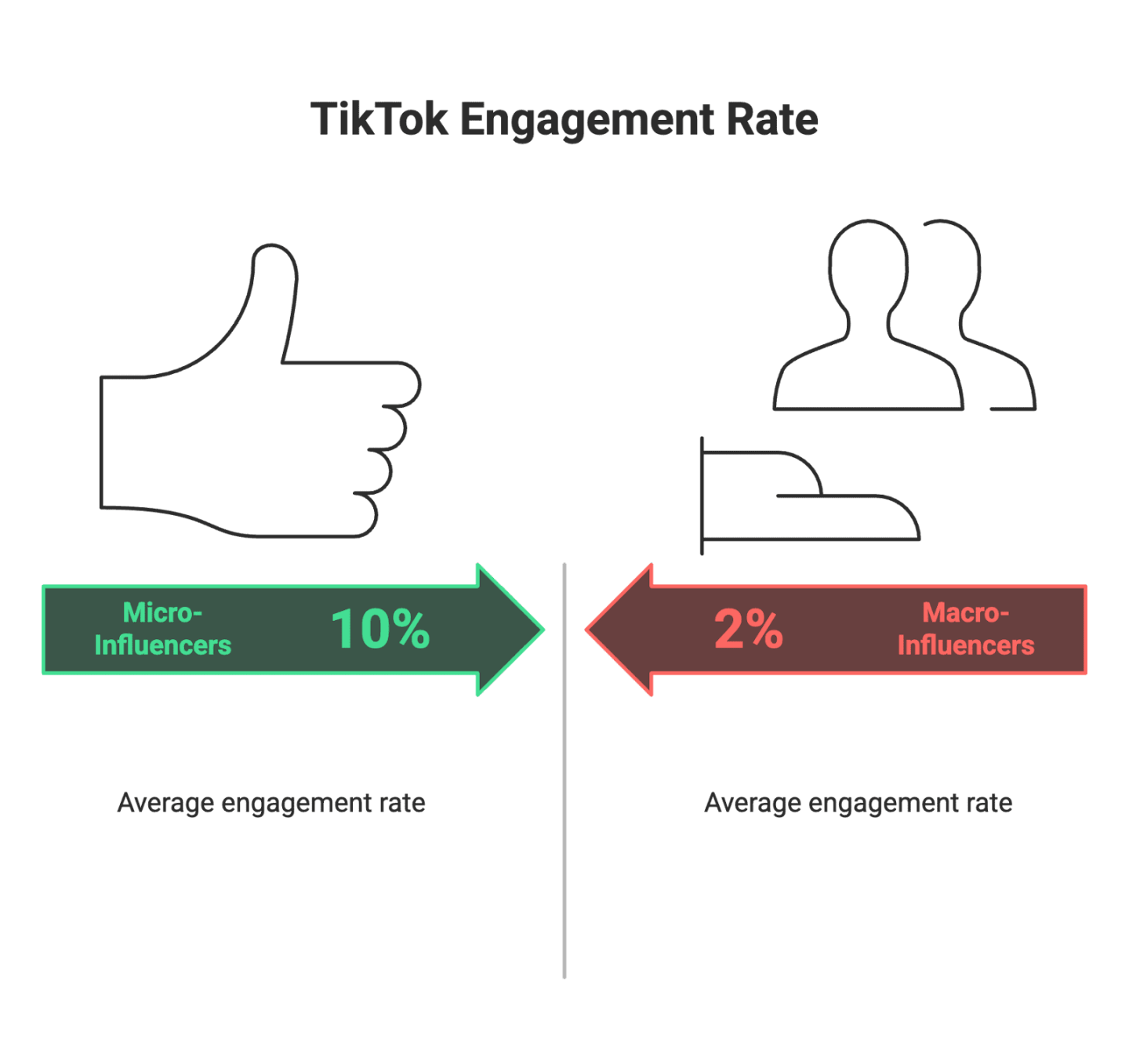
One of the fastest ways to expand your reach on TikTok is by tapping into the audiences of existing creators – especially micro-influencers in your niche. Collaborating with creators who have an established community means you get to leverage their influence and trust with their followers. In other words, influencer partnerships let you piggyback on the platform presence others have built. This is essentially the core of influencer marketing on TikTok.
Average engagement rate on TikTok: Micro vs. Macro influencers. Micro-influencers with smaller followings often see much higher engagement (~10% of followers) compared to macro-influencers (~2%), making their audiences especially valuable.
There are many ways to collaborate: you can sponsor a creator’s video, run a TikTok Takeover (where they post on your account), or simply send free products for them to review or feature (a tactic known as product seeding). Micro-influencers, in particular, can be gold for TikTok growth because their audiences are highly engaged and niche. In fact, micro-creators “punch above their weight” – studies show they average around a 10% engagement rate (likes, comments, etc.), versus roughly 2% for big macro influencers. Their followers see them as relatable peers, so recommendations come off as authentic.
Average ROI on influencer marketing campaigns: Micro vs. Macro. Collaborating with multiple micro-influencers can yield a much higher return on investment (roughly $20 in revenue per $1 spent) versus campaigns with one or two macro influencers.
From a cost perspective, partnering with micro-influencers or up-and-coming TikTok creators is also budget-friendly and high-ROI. Instead of paying one celebrity influencer $20,000+ for a single post, you could work with dozens of micro-influencers for the same budget – often yielding 3x or more the engagement and sales overall. The combination of lower cost and a more receptive, niche audience means micro-influencer campaigns often deliver better ROI (an average ~20:1 return) than macro-influencer campaigns (~6:1).
You have a few options. TikTok’s own Creator Marketplace is a tool where brands can search for and contact creators based on audience demographics and content topics. Additionally, there are specialized influencer platforms (for example, Stack Influence, a leading micro-influencer marketing platform for e-commerce brands) that connect businesses with vetted creators at scale. These platforms can automate the campaign process – useful if you’re an Amazon seller or small brand looking to seed products to many micro-influencers at once.
However you choose to collaborate, a key tip is to give creators creative freedom with the content. TikTok audiences value authenticity and native-style content. As one TikTok marketing expert put it, creators know their audience and “will know what works best… Give them creative freedom!”. When the influencer’s post feels organic and fun rather than like a scripted ad, it will perform much better and reflect positively on your brand.
By teaming up with the right creators, you not only boost your TikTok growth (via exposure to their followers), but you also get quality UGC (user-generated content) that you can repurpose elsewhere. It’s truly a win-win strategy for growing your presence on TikTok.
If you’re serious about growth, you can’t skip the data. TikTok Analytics is an in-app tool that provides valuable insight into how your content and profile are performing. By analyzing these metrics regularly, you can double down on what works and fix what doesn’t. Here’s what TikTok’s analytics dashboard offers:
Demographic breakdowns (age, gender, location) of your followers, which helps you understand who you’re reaching.
You can see when your followers are most active on TikTok, helping you pinpoint the best times to post (more on timing in a moment).
For each video, you get data on views, average watch time, likes, comments, shares, and traffic sources. This reveals what type of content resonates most.
You can discover how people find your videos (For You Page, followers, sounds, hashtags, etc.) and track your follower growth over time.
Simply put, analytics give you everything you need to know about your audience and content performance. And that information is pure gold: it guides you on the best ways to engage your audience and grow faster. For example, if you learn that a certain comedy skit video retained viewers much longer than your other posts, you should analyze why and consider repeating that formula. Or if you see most of your followers are in a certain time zone, you might adjust your posting schedule to their peak hours.
Pro Tip: To access TikTok Analytics, you’ll need a Pro or Business account (it’s free to switch in your settings). Once you have analytics enabled, make it a habit to review your stats at least weekly. Look for patterns in your top-performing videos and audience behavior, and then adjust your content strategy accordingly. Growth on TikTok often comes from constant experimentation – using analytics ensures those experiments are informed by real data.
Timing is everything on TikTok. There are better and worse times to post your videos – and posting when your audience is active can give your content a big boost in early views and engagement. Why does this matter? Because TikTok’s algorithm watches how viewers interact with your video right after you post. If you post when most of your followers (or potential followers in your region) are scrolling, you’re more likely to get a strong initial engagement, which then signals the algorithm to show your video to even more people.
So, how do you find the right time to post? Every account is different, but you should use your analytics (Hack #4) to identify when your followers are online the most. For example, you might notice your engagement spikes in the evenings or around lunch hours. As a general starting point, many creators find success posting in the late afternoon or early evening on weekdays, or mid-morning on weekends – but your follower data is more important. Align your schedule with your audience’s activity pattern.
TikTok rewards active creators. Posting regularly (ideally daily or a few times a week) keeps you in the algorithm’s favor and gives your audience a steady stream of content so they don’t forget about you. Consistency doesn’t mean you should post low-quality videos just to hit a quota, but it does mean you should establish a sustainable content cadence. Even posting 3-4 times per week consistently can outperform a burst of daily posts followed by a long silence.
Finally, when you do post a video, try to engage promptly if people comment in the first hour or two (more on engagement in Hack #14). If you’re online and interacting when a post goes live, that can encourage more activity on the video, which again feeds the algorithm positively. It’s all about maximizing that initial momentum.
Did you know TikTok is becoming a search engine of its own? More and more users (especially Gen Z) actually search on TikTok for things they’re interested in – whether it’s fashion tips, product reviews, or how-to tutorials. This means you should consider keyword strategy for TikTok similar to how one might for YouTube or blogging. By going after trending keywords, you create content that people are actively looking for, increasing the chances your videos get discovered.
Use the app’s search bar and start typing a term related to your niche. TikTok’s search will auto-suggest popular queries. For example, if you sell skincare, type “skincare” or “how to skincare” and see what follows – you might get suggestions like “skincare routine for glowing skin”. Those suggestions are basically TikTok telling you, “Users often search for these phrases.” Jot those down! They make great video topics or hooks to incorporate in your content.
Additionally, scroll through the Discover page which showcases not only trending hashtags but also breakout search terms. Pay attention to comments and questions people leave on popular videos in your niche – they often contain keywords or topics people want to know more about.
Once you have some high-interest keywords, integrate them into your video content naturally. This could mean literally making a video on that topic (“How to do X”, addressing the query), saying the phrase in your video dialogue, adding text on screen with that keyword, and writing it in your video description. The goal is to align your content with what’s being searched. By doing so, you’re effectively letting TikTok know your video is relevant to that keyword, and you increase the likelihood of appearing in those search results. It’s a smart hack to capture organic traffic within TikTok’s ever-growing search ecosystem.
Hashtags on TikTok work like discovery fuel – they categorize your content and can expand its reach beyond just your followers. When you include a hashtag, your video becomes accessible to anyone browsing that tag or related topics. But using hashtags effectively is more than just slapping #fyp on everything. Here are some strategic tips:
Trending hashtags (like #SummerFashion or #StoryTime) can give you a quick boost in views, but they’re very competitive. Niche hashtags (like #EcoFriendlyFashion or #MomLifeHacks) may have a smaller audience, but those viewers are more targeted and likely interested in your content. Using a blend ensures you reach a wide audience and the right audience.
The golden rule – always keep hashtags relevant to your video. TikTok’s algorithm is smart; using irrelevant or misleading hashtags won’t help and might even hurt if people skip your video because it’s not what the hashtag led them to expect. For example, if you tag #DIY on a cooking video, that’s confusing to viewers.
If your video is part of a trending challenge or topic (as discussed in Hack #5), absolutely use the official hashtag for that trend. This plants your content into the larger conversation and increases discoverability.
Unlike some platforms (looking at you, Instagram), TikTok typically doesn’t require 20 hashtags. In fact, you have a relatively limited caption space. A few well-chosen hashtags (say 3-5) can be enough. Quality over quantity.
By making hashtags a part of your TikTok strategy, you ensure your content can be found by users who are interested in that type of content. Think of hashtags as the bridges connecting your videos to potential fans. For instance, a small e-commerce brand selling eco-friendly soap could use #skincare, #EcoFriendly, and #SmallBusiness in a TikTok about their product – reaching beauty enthusiasts, sustainability-minded viewers, and shoppers who love supporting small businesses all at once.
Finally, remember that while hashtags can extend your reach, they’re not a magic wand. Content still rules – a great video with mediocre hashtags can outperform a boring video with “perfect” hashtags. But when you combine engaging content with smart hashtags, you maximize the chances of hitting the For You Page of users who matter most to you. So hashtag wisely and let those tags work for you in growing your TikTok presence!
It might be tempting to chase virality by hopping on every popular topic, but on TikTok (as in all social media), focus wins in the long run. Creating niche-specific content means tailoring your videos to the specific interests of your target audience or market. In other words, know your lane and shine in it. Here’s why this matters for growth:
When you consistently post content in your niche, you attract followers who truly care about that topic – the kind of followers who will like, comment, share, and even eventually buy from you. These are far more valuable than random people who might watch one viral video of yours and never engage again. By being niche-focused, you’re effectively building a community that’s aligned with your brand or interests.
For example, if you’re a fitness micro-influencer focusing on quick home workouts, your niche content might include workout tutorials, nutrition tips, and motivational snippets. Your followers follow you for that content. If you suddenly post random comedy skits or political commentary, it might confuse or alienate your base. More importantly, TikTok’s algorithm learns what your account is about over time. If it sees you consistently put out a certain type of content and that a certain audience always enjoys it, the algorithm will better know who to show your videos to (which improves your growth prospects).
Say you run an Amazon store for kitchen gadgets. If your TikTok content is all about cooking hacks, recipe videos using your gadgets, and kitchen organization tips, the people who follow you will likely be interested in kitchen gadgets themselves. When you then promote a product or drop a link, they’re primed to check it out. On the contrary, a mishmash account might get views but those viewers aren’t primed for your niche, so they’re unlikely to convert.
That said, “niche-specific” doesn’t mean boring or repetitive. You should still be creative and ride trends – just align trends with your niche. If a trending song is everywhere, you can use it in the background of your next recipe video. If a dance is viral and you’re a fashion brand, maybe do it while showing off a new outfit from your line. Always ask, “How can I connect this idea to what my target audience cares about?”
In summary, you can’t serve everyone on TikTok, and you shouldn’t try to. By serving your niche extremely well, you’ll grow a loyal follower base and see more meaningful engagement. It’s better to have 10,000 fans who love your specific content than 100,000 who followed because of one random viral clip but don’t care about the rest. Stay true to your niche, and watch your community flourish.
TikTok is a fast-scrolling, attention-economy platform. You have maybe 2-3 seconds to convince a viewer not to swipe past your video on the For You Page. That’s why starting your videos with a strong hook is a must. A scroll-stopping hook is an element in the first moments of your video that grabs attention and makes people want to watch the rest. This can be done through visuals, text, or audio (or all three). Some effective hook techniques include:
For example, a finance guru might start a video with, “Stop scrolling if you want to learn how to save $1000 this month.” A question like “Ever wonder why your houseplants die so fast?” could work for a gardening niche. This immediately tells the viewer what they’ll get (a benefit or intriguing info) if they stick around.
If the first shot of your video is visually compelling or unexpected, people are more likely to pause. This could be a before-and-after teaser (like showing a messy room that then cuts to a spotless room), an eye-catching location, or a quick preview of the end result of something you’ll demonstrate.
Big, bold text that poses a problem or highlights a benefit can reel people in. E.g., text that says “3 TikTok Hacks to Boost Your Sales 📈” right at the start will immediately tell viewers what they can learn, increasing the chances they’ll watch through.
Sometimes a quick sound or audio clip can hook viewers – like the audio of someone saying “I can’t believe this happened…” which makes you curious to continue.
The key is to give viewers a reason to care immediately. Don’t “slow burn” your TikToks with a long intro or logo animation – this isn’t YouTube and you’ll lose people. Instead, jump straight into value or curiosity. If you’re unsure how to craft hooks, one exercise is to literally list out potential opening lines or shots (brainstorm a dozen, pick the best). Also, spend time on TikTok observing what hooks got you to pause – you can learn a lot from videos that held your attention.
For instance, let’s say you’re a content creator doing a cooking demo. A weak opening is: camera shows you gathering ingredients, saying “Hi, today I’m going to cook X…” – likely swipe! A strong hook could be text on screen “This 10-minute pasta blew my mind 🤯” while you immediately start pouring cheese into a pan – now the viewer is like, okay what’s this about cheese and a mind-blowing pasta? They’ll stick around to find out.
Always remember: on TikTok, the hook can make or break your video’s performance. Craft those first 2 seconds carefully, and you’ll see better retention, which means TikTok will favor your video and show it to even more people (leading to more growth!).
While most of the hacks so far focus on organic growth, there’s a unique advertising feature on TikTok that blurs the lines between ads and organic content – and it’s a growth goldmine if used right. Enter TikTok Spark Ads. Spark Ads allow brands to promote organic posts from creators’ accounts as ads, with the creator’s permission. In practice, it means you find a TikTok creator who made a great video featuring your product (or you partner with a creator to make one), and then you boost that video as an ad so it reaches a wider audience. The ad still appears to come from the creator’s own TikTok account, not a typical sponsored brand account, which makes it feel very native and authentic to viewers.
Why use Spark Ads? Because they combine the authenticity of UGC with the targeting reach of ads. Viewers often can’t tell a Spark Ad is an ad at first – it looks like another TikTok video from a creator they might know, which means they’re less likely to skip it. This authenticity translates into better engagement and often higher conversion (whether that’s follows, clicks, or sales).
Real-world example: A Canadian sneaker brand called Vessi leveraged TikTok Spark Ads by working with creators. The result was impressive – they saw a 59% lower cost-per-purchase compared to their regular campaigns. Not only that, they enjoyed a 38% lower cost-per-click and a 2× increase in ROAS (Return On Ad Spend) by using creator content in Spark Ads. Those numbers mean they got more sales for less money spent, all by using relatable creator videos as the centerpiece of their ads.
First, ensure you have some great content to promote. This could be an organic mention from a happy customer or influencer (maybe someone did a TikTok unboxing your product that got decent engagement), or you can proactively collaborate with a micro-influencer to produce a video tailor-made for Spark advertising. Then, through TikTok Ads Manager, you obtain an authorization code from the creator to spark their post, and set up your targeting as with a normal ad.
The beauty is that the engagement (likes, comments) from the ad can roll over to the creator’s original post as well, amplifying its social proof. And if people tap through, they end up on the creator’s profile/video – which feels more organic than landing on a brand profile directly.
In summary, TikTok Spark Ads are a powerful growth hack, especially for e-commerce brands looking to scale. They let you pay to put your content (or your product in someone else’s content) in front of exactly the right audience, without losing that TikTok-native vibe. If you have some budget for marketing, this is absolutely worth testing. As the case study above shows, the results can be game-changing in terms of cost efficiency and ROI.
TikTok’s growth trajectory isn’t slowing down, and neither should yours. By applying these growth hacks – from optimizing your profile and hopping on trends, to collaborating with micro-influencers and engaging your community – you’ll be well on your way to building a thriving TikTok presence. The common threads among all these tips are authenticity, consistency, and audience focus. TikTok rewards content that genuinely connects with viewers, so keep that as your north star.
Now it’s over to you. Start implementing these hacks step by step. Optimize that bio, film a response to a trending hashtag, reach out to a creator in your niche, check your analytics – action beats inertia every time. Whether you’re aiming to become the next TikTok micro-celebrity or looking to drive sales for your e-commerce business, the opportunity is there on TikTok’s massive stage.
So take these tips and run with them. Stay genuine, have fun with the process, and you might be surprised at how quickly your TikTok can grow. Here’s to your TikTok success in 2026 and beyond – happy growing!