
The latest info on influencer marketing trends, micro influencer news, and the world of social media

In the ultra-competitive world of e-commerce, brands and Amazon sellers are turning to micro-influencers and content creators to gain an edge. These niche creators – often everyday people with dedicated followings – help generate authentic user-generated content (UGC) and build consumer trust in ways traditional ads struggle to match. From engaging social media posts to credible product reviews, micro-influencers can be a powerful resource for driving online sales. But to tap into their potential, brands need to set these collaborations up for success. That’s where a well-crafted influencer creative brief comes in. In this casual yet informative guide, we’ll break down what an influencer brief is, why it matters for your campaigns, and how to create an effective brief (with examples, tips, and even a custom chart!) to align creators with your goals.
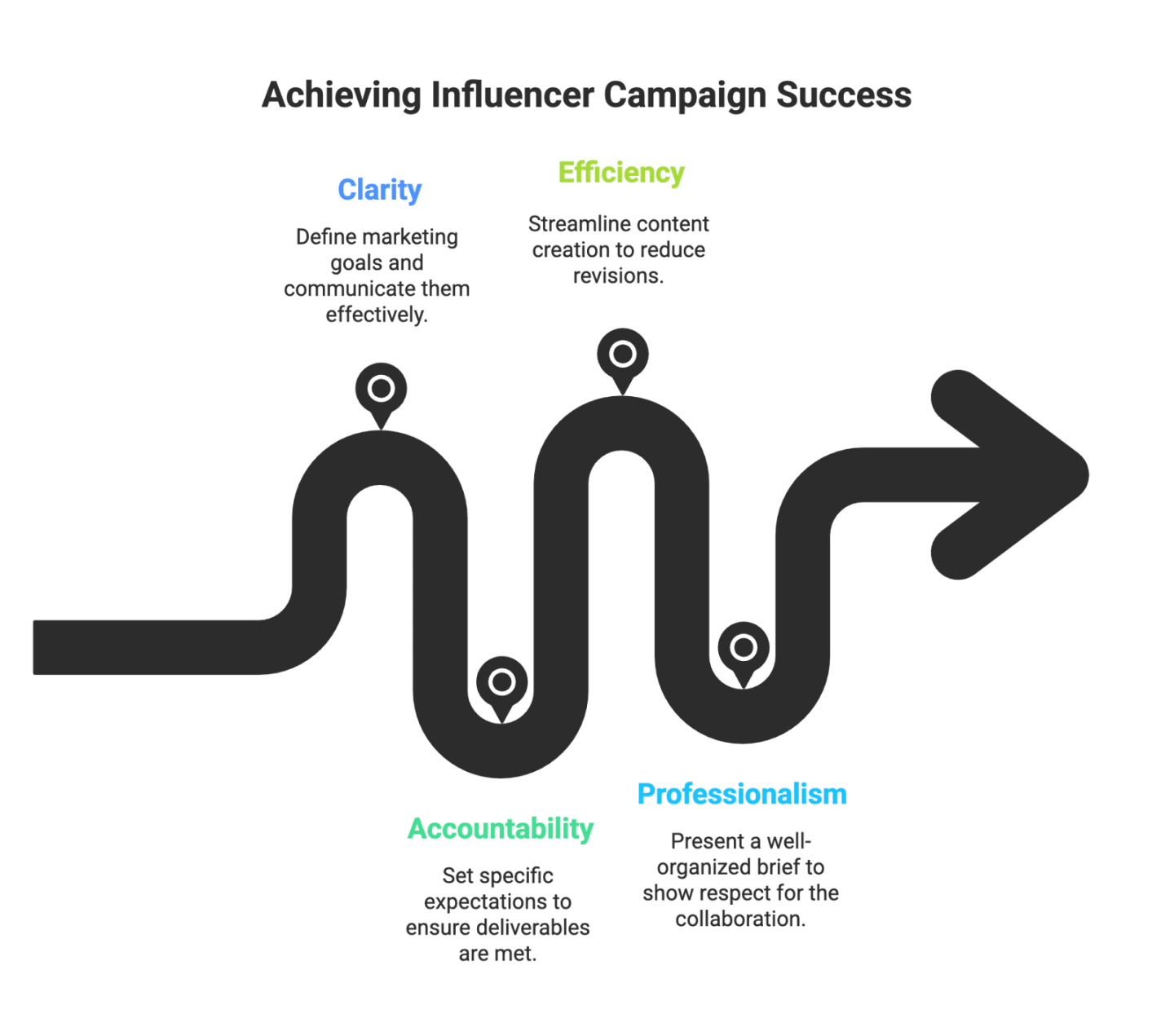
An influencer brief is essentially an outline of instructions, expectations, and deliverables sent to creators before a brand collaboration. In other words, it’s a mini game plan or roadmap for your influencer marketing campaign. While influencers can create five-star content on their own, they’re not mind-readers – creators want and need direction to understand your vision. A concise brief provides that guidance without hindering their creative freedom, ensuring both parties are on the same page.
Brands that invest time in a good brief are often rewarded with smoother campaigns and better content. Your campaigns are more likely to meet their goals when you set clear expectations from the start. Consider a few key benefits of having a solid brief in place:
In short, an influencer creative brief is the blueprint for a campaign that delights both the brand and the creator. It ensures the influencer knows what you have in mind while still giving them room to apply their unique flair. Now, let’s dive into what key components you should include when crafting your brief.
What exactly goes into an influencer brief? Below we break down all the essential sections to include in your creative brief template. Tailor these to your specific campaign, but make sure to cover each area so nothing important falls through the cracks. A thorough brief typically contains the following components:
Start your brief with a quick intro to your brand. Many influencers are their own brand with their own values, and they’ll only collaborate with brands that align with those values. So, give them a reason to be excited about working with you! Include a snapshot of who you are, what your company does, and why it matters. For example, share a bit about your brand’s story (e.g. “Founded by two college friends passionate about sustainable fashion”), your mission or purpose, and core values. This helps creators understand your brand’s personality and ethos.
Make it easy for influencers to do a little homework on you. You might list your key products or best-sellers, your social media handles, or even the name of the founder and a contact person on your team. Providing these details gives the creator context and shows transparency. Also, highlight what sets you apart – your unique selling proposition (USP). If you’re an Amazon seller, for instance, mention if you’re a top seller in a category or if your product has won awards. Driving these points home will help your sponsored content stand out and give the influencer talking points to work with.
Finally, be sure to convey your brand’s tone and voice. Are you playful and quirky, or more professional and scholarly? Mention it in the brief so the influencer’s content can match your vibe. A quick recap of your brand voice, mission, and values (e.g. “Tone: friendly and humorous; Values: cruelty-free, locally made”) will ensure the creator’s content feels on-brand.
Next, clearly define the campaign goals. You can’t provide direction without defining what you want the influencer’s content to achieve. State your primary objectives in one or two sentences: for example, “Promote our summer product launch and drive traffic to our online store,” or “Increase brand awareness among tech enthusiasts on TikTok.” Common goals might include boosting social engagement, generating a certain number of sales or sign-ups, growing your follower count, or gathering UGC for future ads. Be as specific as possible – if you have key performance indicators (KPIs) in mind (like X% increase in website visits or Y number of coupon redemptions), note them. Measurable goals help influencers understand what success looks like.
Along with what you want to achieve, clarify who you want to reach. Describe your target audience for this campaign. Influencers often already appeal to a niche, which is why you chose them, but give extra insight into your ideal customer. Include relevant demographics (age, gender, location), interests, and any pain points or needs your product addresses. For instance: “Targeting health-conscious women 25–45 in the US who love yoga and eco-friendly products.” This reminds the creator exactly who they’re speaking to. Skilled influencers know how to talk to their followers, but your audience intel will help them craft a message that resonates. In short: define the bullseye so the influencer can aim their content right at it.
What key points must the influencer communicate about your product or brand? This section of the brief outlines the essential messages you want woven into the content. Think about the top 2–5 things you want an audience member to remember after seeing the post. These could be product features, benefits, or your brand’s story elements. For example, if you sell a skincare serum, your key messages might be: “100% vegan ingredients,” “visible results in 2 weeks,” and “dermatologist-tested.” List these talking points clearly for the creator.
It’s helpful to differentiate between “must-say” points and “nice-to-say” points. You don’t want the content to feel like a scripted ad, but you also don’t want the influencer to miss a crucial detail. Phrasing this section as a bullet list can be useful. For instance:
Providing these guidelines ensures accuracy (the influencer won’t accidentally overlook that your app is now available on Android, for example). It also helps them plan out captions or talking segments in a video. Remember, influencers will usually speak in their own voice – you’re not writing a script for them, just giving them the puzzle pieces to assemble in a way that fits their style. By listing the key messaging points, you eliminate guesswork and make it easier for the creator to hit all the important notes about your product.
Be very specific about what content the influencer needs to create and deliver. This is where you outline the deliverables: the type and quantity of content you expect, and where it should be published. For example, your campaign might include “1 Instagram Reel and 3 Instagram Story frames” or “2 TikTok videos and one blog post review.” List each required piece of content and the platform it’s for. If it’s a video, mention the approximate length or any format requirements (e.g. “15-30 second Instagram Reel”). If it’s a photo, mention if you need multiple shots or variations. Being straightforward about these deliverables avoids any ambiguity.
It can help to format this as a checklist. For instance:
If you have specific content angles in mind for each deliverable, you can note those too (e.g. Story 1: unboxing, Story 2: product in use, Story 3: testimonial/reaction). Also clarify any posting instructions: should they publish all in one day or spread over a week? Do they need to post at a certain time of day for best results? Provide a brief schedule if timing matters (“e.g. Reel on June 1, Stories on launch day June 5”).
Finally, mention if you expect the influencer to send you the raw content files. In many cases, especially for UGC usage, brands like to receive the original photos/videos. If that’s part of the deal, state it here (e.g. “Please provide us with the original high-res video file via Google Drive after posting”). The clearer you are about the deliverables – what, where, and when – the less room there is for confusion later.
Every brand has some do’s and don’ts – here’s where you lay down those rules. Think of this as the creative guardrails to protect your brand image, while still leaving room for the influencer’s creativity. Start with any mandatory requirements for the content. This often includes things like:
It’s helpful to actually label this section “Do’s and Don’ts” in your brief and perhaps bullet them separately. For example:
While giving guidelines, be careful not to micromanage the influencer’s creative process. Remember that authenticity is key in influencer marketing – followers engage more when content feels organic. Provide the non-negotiables, but avoid writing a word-for-word script or overly stiff instructions that could hinder the creator’s natural style. Influencers know their audience best, so let them have creative freedom within your parameters. For example, instead of dictating the entire caption, you might simply say “make sure to express what you personally love about the product.” This invites genuine endorsement in their own voice. The goal is to ensure brand alignment and accuracy while still allowing the influencer to do what they do best. As a rule of thumb, clarity is good; rigidity is not. Set your rules, then trust the creator to run with them.
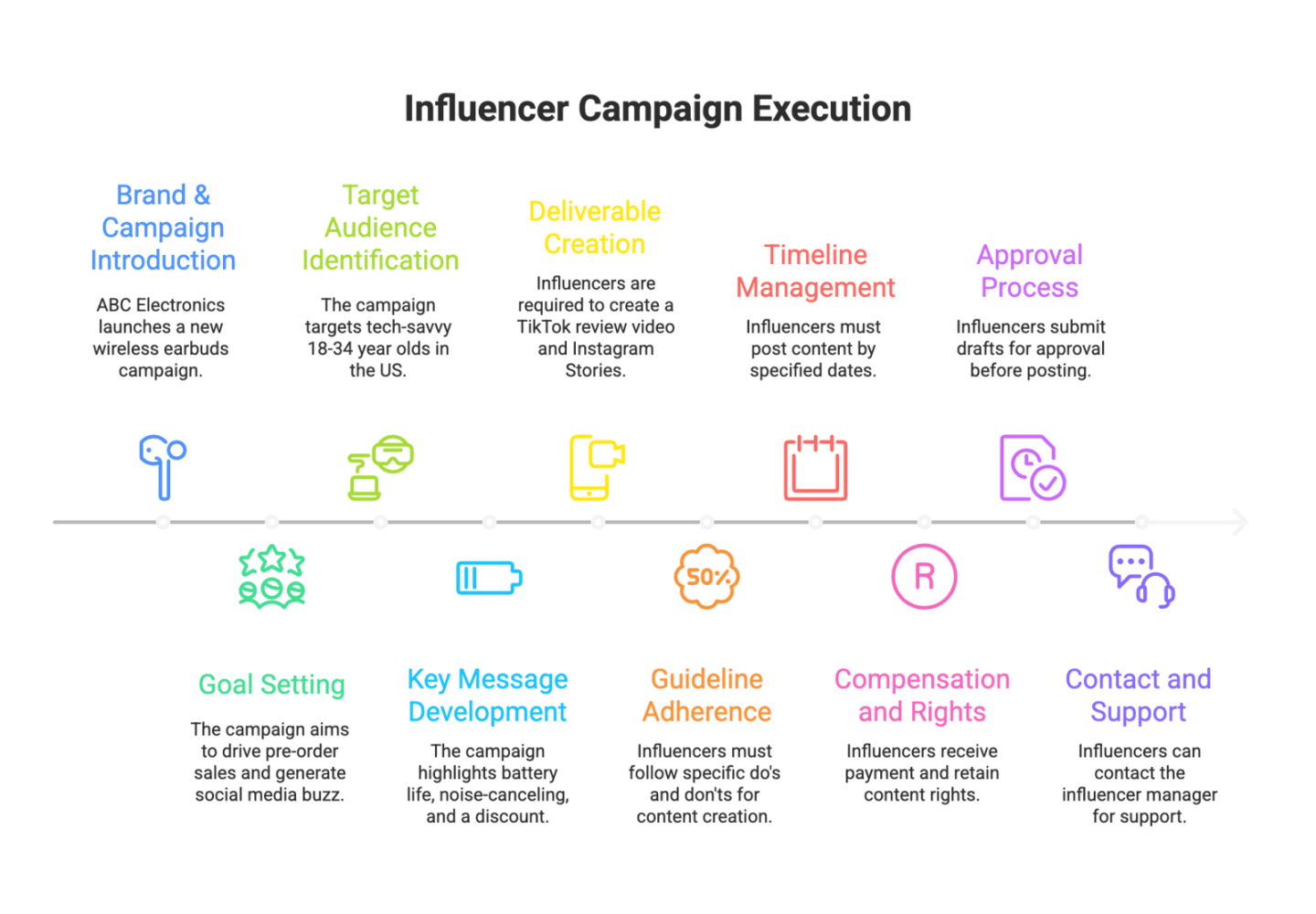
To tie it all together, here’s a simplified example of what an influencer brief could include for a fictional campaign:
As you can see, the example brief is friendly in tone, yet it covers all the bases. Your actual brief might be longer or shorter, but it should always give influencers a clear roadmap.
Putting together an influencer creative brief can feel like an art in itself. Here are some pro tips and best practices to ensure your brief is not only thorough, but also creator-friendly:
By following these tips, you’ll craft a brief that not only covers all necessary information but also motivates and inspires your influencers to do their best work. An effective brief strikes that balance between informative and enjoyable – it should educate the creator about your campaign, but also get them pumped to be a part of it.
Even seasoned marketers can slip up when creating influencer briefs. To ensure your brief doesn’t accidentally turn creators off or cause confusion, avoid these common mistakes:
By steering clear of these mistakes, you’ll maintain a smooth, positive working relationship with your influencers. The goal is for your brief to make the creator’s job easier – not harder. When in doubt, put yourself in their shoes and reread your brief: is it clear, fair, and motivating? If yes, you’re on the right track.
Crafting an influencer creative brief might take a bit of upfront effort, but it pays off with a campaign that runs like clockwork. Especially when working with micro-influencers and content creators for your e-commerce brand, a strong brief is the key to unlocking truly authentic UGC that still aligns with your marketing goals. When influencers know exactly what you’re looking for (and why), they can channel their creativity in the right direction – the result is content that feels genuine to their audience yet delivers your brand message effectively.
For e-commerce entrepreneurs and Amazon sellers navigating the world of influencer marketing, think of the creative brief as your campaign GPS. It guides your micro-influencer partners on how to represent your product, while leaving them room to showcase their personality (which is what their followers love about them in the first place). Done right, an influencer brief helps turn a one-off sponsored post into a powerful piece of marketing content that drives engagement, trust, and conversions. And as a bonus, you’ll accumulate a library of high-quality UGC – photos, videos, reviews – that you can repurpose across your own channels to amplify results even further.
In summary, a well-prepared influencer creative brief sets the stage for a win-win collaboration. Your brand gets consistent, on-message content and the influencer gets the guidance they need to produce their best work (while maintaining their authentic voice). So take the time to craft a killer brief – your micro-influencers (and your future self) will thank you when the campaign results roll in. Happy collaborating, and may your next influencer campaign be your most successful one yet!
Micro‑influencers have become a cornerstone of influencer marketing in recent years, especially for e-commerce brands and Amazon sellers looking to promote products through authentic content. These content creators operate on a smaller scale than celebrities, but they often boast highly engaged niche audiences. A common question that arises is: How much do micro‑influencers actually make? In this blog, we’ll explore recent US data on micro‑influencer earnings, compare their income to other influencer tiers with a chart, and discuss factors that impact their pay. We’ll also touch on how micro‑influencers fit into the Amazon and UGC (user-generated content) ecosystem.
A post shared by Stack Influence (@stackinfluence)
Micro‑influencers are typically defined as social media influencers with roughly 10,000 to 100,000 followers. Unlike mega-celebrities, micro‑influencers focus on a specific niche or community – for example, fitness enthusiasts, beauty gurus, tech reviewers, or book lovers. They are essentially everyday content creators who have built a loyal following through relatable and engaging posts. Because of their smaller audience size, micro‑influencers tend to interact more with their followers, often yielding higher engagement rates (likes, comments, shares) than macro-influencers with millions of followers. This high engagement and close-knit trust make micro‑influencers particularly valuable for brands looking to drive word-of-mouth buzz.
Micro‑influencers straddle the line between ordinary consumers and celebrities. They’re “everyday creators” who might still hold day jobs or consider influencing a side hustle. Many are keen on partnering with brands, especially in the e-commerce space, to monetize their content. As we’ll see, their earnings can vary widely – from free products as compensation up to significant paydays – depending on their reach and the nature of collaborations.
Micro‑influencers monetize their social media presence in multiple ways. Here are some of the most common income streams for micro‑influencers:
In essence, micro‑influencers diversify their income. However, sponsored content deals remain the cornerstone of how they make money – and what we’ll focus on when discussing how much they earn.
When it comes to earnings, it’s important to note that micro‑influencer income is not standardized. Payments can range widely based on factors like follower count, engagement rate, niche, and negotiation skills. That said, recent studies and industry benchmarks give us a good picture of typical earnings for micro‑influencers in the United States as of 2024–2026.
Per Post Earnings: On major platforms like Instagram, a micro‑influencer (10k–100k followers) might charge roughly $100 to $500 per sponsored post on average. Meanwhile, a nano-influencer (1k–10k followers) might only get $10 to $100 per post, and a larger macro-influencer (500k+ followers) could command $5,000 to $10,000 or more for a single post. The gap is huge – micro‑influencers are far more affordable for brands than big celebrities.
To visualize how micro‑influencers compare to other tiers, see the chart below illustrating typical sponsored post fees by influencer size:

Figure: Typical sponsored post earnings per post by influencer tier on Instagram (approximate ranges). Micro‑influencers (10k–100k followers) typically charge in the low hundreds of dollars per post, significantly less than macro-influencers with larger followings. This cost-effectiveness is a key reason brands and e-commerce sellers collaborate with micro‑influencers.
As shown above, a micro‑influencer’s pay per post is generally in the hundreds of dollars, whereas a mega-influencer or celebrity with over a million followers might earn tens of thousands for one post. For example, top celebrities like Cristiano Ronaldo reportedly earn well into six figures (over $1M per Instagram post in Ronaldo’s case), which is far beyond a typical micro‑influencer. However, most marketing campaigns don’t need a global celebrity – partnering with dozens of micro‑influencers can often yield better engagement and more content for the same budget as one post from a mega influencer.
Averages and Ranges: According to an August 2026 industry analysis, micro‑influencers (10k–100k followers) earn around $1,200 per post on average across platforms. Keep in mind this figure is an average; many micro‑creators will earn less (or even just free products), and some in the upper end of the micro range can earn more. On Instagram specifically, the typical range for micro‑influencers is $100–$500 per post, as mentioned. On TikTok, which has grown rapidly, micro‑influencers (often defined similarly by follower count) might get roughly $50 to $1,200 per sponsored TikTok video – the range is wide because TikTok pricing is still evolving and can skyrocket if a creator is known for virality. On YouTube, a micro‑influencer’s integration could fetch anywhere from a few hundred dollars up to a few thousand, since YouTube videos involve more work and have longer engagement.
It’s also insightful to look at monthly or annual earnings. Many micro‑influencers treat their channels as a part-time gig rather than a full-time salary job. In fact, one study found that nano- and micro-influencers earn only about $80–$90 per month on average from Instagram. This low figure suggests that a large portion of micro‑influencers are only making modest side-income – perhaps doing a few small collaborations or affiliate sales here and there. These would include a lot of very small “micro” accounts on the lower end of the follower spectrum who haven’t scaled up monetization yet.
On the flip side, there are certainly micro‑influencers who can turn their influence into a lucrative career. Some top-tier micro‑influencers (closer to that 100k follower mark or with exceptionally engaged audiences) earn six figures annually from a combination of brand deals and other income streams. In other words, it’s not unheard of for a micro‑influencer to pull in over $100,000 a year if they consistently secure well-paid collaborations and perhaps supplement with things like affiliate income. For example, an influencer with ~50k followers in a profitable niche might do a few $1,000+ campaigns per month, plus steady affiliate commissions, adding up to a healthy yearly sum.
To summarize typical micro‑influencer earnings in the US (2024–2026 data):
The key takeaway is variance. Micro‑influencer income isn’t one-size-fits-all. Let’s next examine what causes this variance in earnings.
Not all micro‑influencers are equal in terms of earnings. Several factors determine how much a given micro‑influencer can charge or make:
By considering these factors, one can understand why micro‑influencer earnings range so widely. A micro‑influencer who ticks all the boxes – near the 100k follower mark, excellent engagement, in a lucrative niche like tech or beauty, creating high-quality videos, and working with brands with big budgets – could be at the top end of the pay scale. On the other hand, a micro‑influencer with a smaller, less active audience or catering to a niche with fewer sponsors might earn much less and rely more on free products or affiliate links.
Micro‑influencers have proven especially useful for e-commerce companies and Amazon sellers. Here’s why this segment of influencers is in high demand for online business marketing:
Micro‑influencers may not have superstar salaries, but they play an outsized role in today’s social commerce landscape.
For micro‑influencers reading this, the takeaway is that there is real earning potential in this field, but it requires strategy – building an engaged follower base, understanding your worth, and diversifying income streams. For brands and Amazon sellers, micro‑influencers represent a cost-effective way to get your products in front of enthusiastic, niche audiences and to collect a library of UGC and reviews.
In 2026 and beyond, micro‑influencers will likely continue to monetize their passion and drive value for brands, growing together in the evolving landscape of social media and e-commerce. The exact dollars they make will always range widely, but their impact on digital marketing is undeniable – sometimes, small influencers can make a big difference.
Social media isn’t just for memes and selfies – it’s a powerful growth engine for e-commerce brands. In fact, about two-thirds of the world is on social media, and 68% of users follow their favorite brands online. For Amazon sellers and online entrepreneurs, this means platforms like Instagram, TikTok, YouTube, and Facebook are ripe with potential customers. A single viral post or a shout-out from the right content creator can send a surge of traffic to your Amazon listings or online store. In this blog post, we’ll explore the best ways to promote your e-commerce business on social media. These strategies, from collaborating with micro influencers to leveraging UGC (user-generated content), will help you boost your brand visibility, engage shoppers, and ultimately drive more sales. Let’s dive in and get your brand the attention it deserves!
Your social media profiles are the digital storefront for your e-commerce brand – especially important if you’re an Amazon seller who wants to establish a distinct brand presence outside of Amazon. Make that first impression count! Ensure that each of your profiles (Instagram bio, Facebook page, TikTok profile, etc.) is fully filled out and compelling. Here are some profile optimization tips:
Optimizing profiles may seem basic, but it lays a strong foundation. A shopper who stumbles on your viral TikTok or Instagram reel will likely check your profile next. If they find a cohesive brand story and a convenient link to your e-commerce site or Amazon listings, they’re one step closer to becoming a customer. Don’t let a sloppy profile be the reason you miss out on a sale!

You don’t have to be everywhere – just wherever your customers hang out. A key step in crafting a social media strategy is picking the platforms that align with your target audience and products. For instance, if you sell fashion accessories or home decor (visual products), Instagram and Pinterest might be your heroes. If you’re into tech gadgets or gaming gear, you might find your crowd on YouTube or Twitch. And for catching Gen Z’s attention, there’s no avoiding TikTok.
Do some homework on where your current customers come from or which platforms are popular in your niche. You can:
Remember, quality trumps quantity. It’s perfectly fine if, for example, you decide to skip Twitter (now X) or Facebook because your core buyers are mostly on TikTok and Instagram. Go where the engagement is. As one Amazon seller guide puts it, “to know your audience is to know what social media platform they use”. Tailoring your strategy to the right platform means your content will naturally resonate more, getting you better results for the time you invest.
Social media moves fast – if you’re not regularly posting, your brand can fade from followers’ minds. Create a consistent posting schedule to keep your e-commerce business in the spotlight. This doesn’t mean spamming content; it means establishing a reliable cadence (say, 3-5 posts per week) so your audience knows you’re active and worth following. Consistency helps feed the algorithms too, as platforms often reward active accounts with more visibility.
Equally important is what you post. Aim for content that is valuable, entertaining, or inspiring to your target customers. For example:
Most importantly, encourage engagement and be responsive. Ask questions in your captions (“What’s one thing you look for in a hiking backpack?”) to spark comments. When people do comment or ask a question, reply promptly and genuinely. This kind of two-way engagement not only pleases the social platform algorithms (hello, more reach!), but also shows customers you care. As a bonus, you’ll start to build a community feel around your brand – turning followers into fans.
Pro tip: To stay consistent without losing your mind, plan and schedule posts in advance. Use tools like Hootsuite or Buffer to queue up content for the week or month. This way you can maintain a steady drumbeat of content even during busy times. Then you’re free to focus on interacting with your audience day-to-day, rather than scrambling to write a caption every morning.
Who doesn’t love free stuff? Contests and giveaways are classic social media tactics because they work. They can spike your engagement and expand your reach virtually overnight when done right. For e-commerce and Amazon sellers, a well-run giveaway can mean hundreds of new followers and a surge of interest in your products.
Here are some ideas and best practices for running a social media giveaway:
Giveaways create a flurry of activity – your followers tag their friends, who in turn discover your brand and might follow you. Even those who don’t win could stick around if they like your offerings. Just be careful not to overdo it; a constant feed of giveaways might attract freebie-hunters who disappear later. Use contests periodically as a strategic boost for engagement and follower growth. Done well, it’s a win-win: the audience has fun and gets a shot at a prize, while you get a marketing lift.
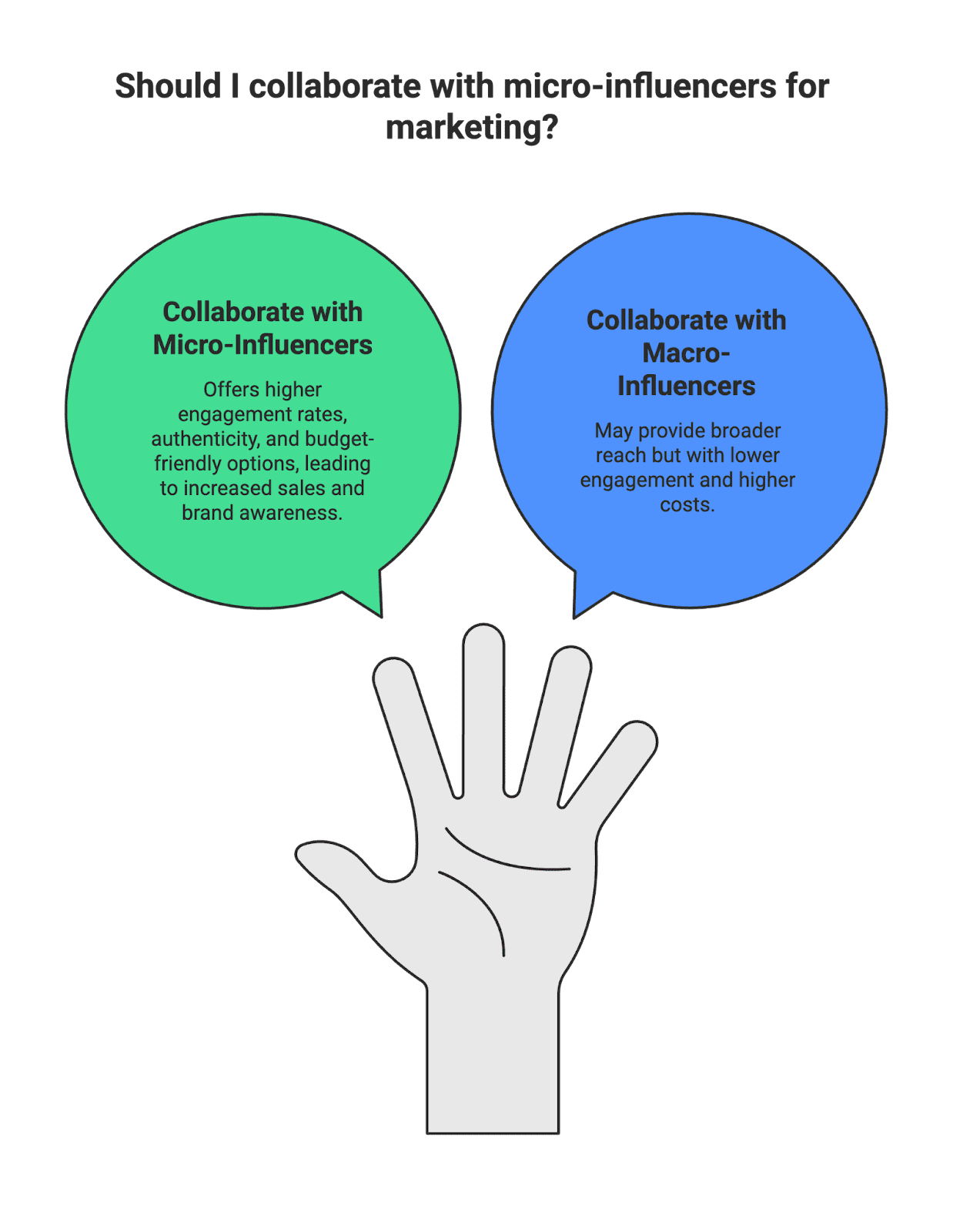
If you’re not tapping into influencers yet, especially micro-influencers, you could be missing out on a game-changing strategy for your e-commerce business. Micro-influencers are social media creators with a smaller but dedicated following (often in the 5k–50k range). They may not be celebrities, but that’s exactly their strength – their content feels more authentic, and their audiences are typically highly engaged. For Amazon sellers, partnering with micro-influencers can directly boost product sales and brand awareness through word-of-mouth style marketing.
Why micro-influencers? For one, they tend to have significantly higher engagement rates than big-name “macro” influencers. Social media studies consistently show that as follower counts increase, engagement rate drops. A micro-influencer’s audience is smaller, but those followers are genuinely interested and interact more. In fact, micro-influencers can drive 60% more engagement than macro-influencers on their posts. This means if a micro-influencer with 10k followers raves about your product, it could spark more conversation and conversions than a post from someone with 1 million followers who barely replies to comments.
Collaborating with micro-influencers is also usually budget-friendly. Many micros are happy to promote products in exchange for free samples or a modest fee – a far cry from the big bucks you’d pay a celebrity. To get started, look for content creators in your niche: a tech gadget Amazon seller might reach out to a YouTuber who reviews cool gadgets, while a handmade jewelry shop might find an Instagrammer who loves featuring indie fashion accessories. Reach out with a friendly, personalized message and offer to send them your product for free in return for their honest review or a post.
There are even platforms and tools to help connect brands with micro-influencers. (For instance, Stack Influence is one such tool that specializes in micro-influencer campaigns for e-commerce brands.) These services can streamline the process of finding suitable influencers, managing communications, and tracking results. Whether you use a platform or DIY, the key is to choose influencers whose personal brand aligns with yours – authenticity is everything. When a micro-influencer genuinely loves your product, their followers will sense it and trust their recommendation, driving traffic and potential sales to your store.
Pro Tip: Treat influencer collaborations as relationships, not one-off transactions. If an influencer does a great job, thank them and consider a longer-term partnership or affiliate deal. Their followers could turn into your customers not just once, but repeatedly if they keep seeing your brand in a positive light.
In today’s digital age, social media is one of the most powerful tools for growing an e-commerce business. For Amazon sellers, it’s the not-so-secret hack to drive external traffic to your listings (boosting your product rank) and to build a brand that people recognize and trust. We’ve covered a lot of ground – from optimizing your profiles and choosing the right platforms, to running engaging contests, partnering with micro-influencers, leveraging UGC, and nurturing your online community. These strategies might seem overwhelming at first, but remember, you don’t have to implement everything at once.
Key takeaways: Start by ensuring your social profiles are customer-ready and post content consistently. Experiment with one or two tactics like a small giveaway or an influencer shout-out and see how your audience responds. Use those wins as building blocks. The common thread in all these tips is authenticity and adding value – whether it’s through genuine interactions, helpful content, or real customer stories, always aim to serve your audience, not just sell to them. If you do that, the “selling” part starts to happen naturally.
Now, it’s time to put these tips into action. Even the best strategy means nothing without execution, so pick a couple of ideas and get started today. Maybe reach out to that micro-influencer you’ve been eyeing, or schedule out next week’s posts with a new content theme. Social media success doesn’t happen overnight, but every post, comment, and story is a step toward building your brand’s presence. Before you know it, you’ll have an engaged follower base – and a growing customer base to match.
Remember, every big brand on social media started from zero followers. They grew by consistently engaging and providing value, one post at a time. You can do the same. So go on – start implementing these strategies and watch your e-commerce brand thrive. The sooner you start, the sooner you’ll see results. Happy posting, and here’s to your social media success! 🚀
The world of hair and beauty influencers is more dynamic than ever in 2026. Across Instagram, TikTok, and YouTube, hair-focused content creators are setting trends in real time – from viral styling hacks to must-have product recommendations. These influencers aren’t just following trends; they’re creating them. In fact, nearly half of shoppers say social media has led them to spend more on beauty products, and 42% of consumers would buy a product recommended by an influencer. This speaks to the persuasive power of hair influencers to drive not only trends but also product sales. Notably, it’s not just mega-celebrities making an impact; smaller micro influencers often cultivate highly engaged, loyal communities, proving that authenticity and niche expertise can beat sheer follower count in engagement.
Why are hair influencers so important in 2026? For one, they make expert techniques and product knowledge accessible to millions. A single viral video can spark a nationwide craze for curtain bangs or rainbow dye jobs. They cover every niche – from high-glam celebrity styling to easy DIY haircare for busy moms – ensuring that followers of all hair types and lifestyles can find relatable content. Brands have taken notice too. Hair influencers often collaborate with beauty companies, and even e-commerce brands and Amazon sellers leverage these content creators for authentic product demos and reviews. By sharing honest tutorials and real results, influencers produce user-generated content (UGC) that audiences trust, in ways traditional ads struggle to match.
Below we highlight 10 of the top hair influencers of 2026 – a mix of celebrity stylists, innovative YouTubers, and TikTok creators who are redefining hair trends worldwide. These are the creators dominating your feeds with stunning transformations, expert tips, and engaging personalities.
A post shared by Brad Mondo (@bradmondonyc)
1. Brad Mondo (@bradmondonyc) – The Entertaining Hair Guru: Brad Mondo is a celebrity hairstylist and charismatic YouTuber/TikToker known for his energetic hair transformation videos and humorous “hair fail” reaction clips. He’s amassed over 10 million followers across platforms by blending professional hair education with drama and humor. Brad’s content ranges from reacting to DIY hair disasters (while teaching viewers how to do it right) to giving step-by-step tutorials on achieving salon looks at home. He even launched his own haircare line, XMONDO Hair, reflecting his influence in the industry. Fun, knowledgeable, and unfiltered, Brad Mondo keeps fans hooked and has become one of 2026’s most influential hair content creators.
2. Negin Mirsalehi (@negin_mirsalehi) – The Luxe Haircare Entrepreneur: Negin Mirsalehi parlayed her social media fame into a full-fledged hair empire. This Dutch-Iranian influencer has about 7.2 million followers on Instagram and is the founder of the luxury haircare brand Gisou, known for its honey-infused products. Negin’s signature waist-length waves and glossy hairstyles have set aspirational goals for many. She often shares her personal hair routines, from oil treatments (inspired by her family’s beekeeping background) to effortless everyday styling. Blending elegance and authenticity, Negin’s content proves you can turn a passion for hair into a global brand. She remains a go-to source for modern, high-end hair inspiration.
3. Jen Atkin (@jenatkinhair) – The Celebrity Stylist Icon: Jen Atkin is one of the most influential hairstylists in the world, famed for creating looks for the Kardashians, Chrissy Teigen, Hailey Bieber and more. On Instagram (where she has ~5.3 million followers), Jen shares a mix of behind-the-scenes celebrity glam and doable tips for us at home. She founded OUAI haircare, so product recommendations feature heavily – but always with her trademark insider expertise. Whether it’s a red carpet updo or a quick tutorial on getting perfect beach waves, Jen bridges Hollywood and everyday hair routines. Her authority and trend-setting power have made her a true hair industry icon in 2026.
4. Maria Aiello (@mariaaiellohair) – The Salon Educator: Maria Aiello is a professional stylist (Vidal Sassoon trained) who has become an Instagram hair influencer through her crisp tutorials and salon-quality makeovers. With over 4.3 million followers on IG, Maria’s feed is a gallery of sleek bobs, flawless color jobs, and before-and-after transformations. Her videos break down techniques for the average person, translating her high-end salon skills into tips anyone can try. From mastering a classic blowout to executing the trendiest shag cut, she delivers it with calm, clear instruction. Maria’s ability to make technical skills feel approachable has earned her a dedicated following among both fellow stylists and everyday hair enthusiasts.
5. Sarah Angius (@sarahangius) – The Queen of Quick Tutorials: Sarah Angius is a Dutch hairstylist turned Instagram star known for her short, satisfying hair tutorial videos. She has about 3.7 million followers on IG, who tune in for her elegant yet easy-to-follow styles. Sarah’s specialties are heatless curls, chic updos, braids, and other hairstyles that look impressive but are actually achievable. Her dreamy visuals (often set to music) and clear step-by-step approach make her videos go viral across Pinterest and Reels alike. From a polished low bun perfect for work to soft wedding-worthy curls, Sarah Angius focuses on wearable glamour. She’s among the most trusted voices for learnable, everyday hairstyling in 2026.
6. Sophie Hannah (@sophiehannah) – The Creative Color Chameleon: Sophie Hannah is a UK-based TikTok influencer (with 2.6 million followers on TikTok) who is famous for her bold and colorful hair transformations. Think vibrant pastel bangs, split-dye hairstyles, and quirky updos – Sophie isn’t afraid to push the boundaries. Her content is a playful blend of hair, makeup, and fashion, often with seamless transitions that make you do a double-take. She’s made retro hairstyles cool again by giving them a modern, rainbow-hued twist. By sharing her creative process (and occasional hair mishaps) unfiltered, Sophie connects with a Gen Z audience that loves experimentation. She’s collaborated with major hair brands and is constantly ahead of the curve when it comes to viral hair trends.
7. Matt Newman (@mattloveshair) – The TikTok Hair Teacher: Matt Newman – known by his handle @mattloveshair – is a licensed hairstylist turned TikTok star who has garnered 2.6 million followers with his high-energy, informative videos. Matt’s specialty is breaking down salon techniques into bite-sized lessons. Whether he’s demonstrating how to get a volumized blowout or giving tips to tame frizz on a rainy day, his tutorials are both entertaining and deeply educational. He often uses humor and crisp editing to keep viewers engaged, and his own fabulous hair serves as proof that his tips work. Matt’s collaborations with brands (from Dyson hair tools to pro salons) and appearances at events like Fashion Week have solidified him as a major player in the online hair community. He’s the guy to follow if you want salon-worthy hair hacks at home.
8. Guy Tang (@guy_tang) – The Master of Color: Guy Tang is a veteran in the hair influencer world, best known for his artistic hair color transformations and the hashtag #MyIdentity (also the name of his product line). With over 2.3 million followers on Instagram and a huge YouTube presence, Guy has been making heads turn in every shade of the rainbow. His videos showcase intricate dye jobs – from oil-slick mermaid hair to metallic pastels – often with detailed explanations of the coloring process. Beyond the eye candy of bold colors, Guy Tang also shares personal stories and advocates for mental health, creating a deeper connection with his audience. His combination of technical skill, creativity, and authenticity has built a loyal fanbase and inspired stylists worldwide to up their color game.
9. Chris Appleton (@chrisappleton1) – The Celebrity Trendsetter: Chris Appleton is the go-to hairstylist for A-list stars like Kim Kardashian and Jennifer Lopez, and he’s translated that fame into influencer status. Boasting millions of fans across Instagram and TikTok, Chris often posts step-by-step reels of the exact styles you’ve seen on red carpets. He’s the originator of the “glass hair” trend (super sleek, glossy straight hair) and is known for snatched high ponytails and dramatic extensions. On his feed, you’ll find everything from behind-the-scenes looks at magazine shoots to quick how-tos using his favorite products. Chris’s content gives a luxurious, VIP look at hairstyling, yet he emphasizes techniques that followers can try at home for a taste of that celebrity glam. In 2026, if a hair look is going viral, chances are Chris Appleton had a hand in it.
A post shared by Nichole Ciotti (@nicholeciotti)
10. Nichole Ciotti (@nicholeciotti) – The Lifestyle Hair Influencer: Nichole Ciotti is a San Francisco-based lifestyle influencer who has made a name in the haircare space with her relatable and chic styling tips. She has about 2.2 million followers on Instagram. Unlike some others on this list, Nichole’s content blends daily life with beauty – you might see a quick hair tutorial for an “on-the-go mom bun” followed by fashion and family snippets. Her hair posts typically focus on attainable styles for busy women: think polished ponytails, five-minute waves, and tricks to extend a blowout. Nichole’s calm, friendly presentation and efficient hacks have earned her a dedicated following of women who want realistic hair inspiration. She shows that you can have glamorous hair without spending hours, making her a favorite for practical beauty tips.
Hair influencers do more than inspire new hairstyles – they have become a cornerstone of modern e-commerce marketing. Brands, including online retailers and Amazon sellers, are partnering with these creators to tap into their engaged audiences and authentic voice. Influencers often produce user-generated content (UGC) in the form of tutorials, product reviews, and before-and-after photos that feel genuine to consumers. This authenticity translates into trust: when a real person (especially one with expertise or relatable style) vouches for a shampoo or styling tool, followers are more likely to try it. Micro influencers in the hair niche can be especially valuable here – their smaller follower groups often see them as friends and take their recommendations to heart, leading to higher engagement and conversion rates per followerstackinfluence.com.
According to marketing experts, influencers and UGC are a powerful combo for driving online sales. Brands and retailers leverage platforms like Stack Influence to connect with micro-influencers and content creators, scaling up campaigns that get dozens of niche voices talking about a product at oncestackinfluence.com. The ROI can be impressive: many micro-influencers are cost-effective to work with yet deliver higher engagement than big celebs. For example, seeding a new hair serum with 50 micro influencers across Instagram and TikTok can create an explosion of credible reviews and how-to content, reaching diverse communities. All that content lives on as ongoing social proof (a happy customer’s post can influence shoppers long after it’s posted), something traditional ads can’t matchstackinfluence.comstackinfluence.com.
In short, the top hair influencers of 2026 – from household names like Brad Mondo to rising stars in niche communities – are not just entertainers; they’re key drivers of beauty culture and consumer behavior. They set trends that salons follow, and they humanize brands in a way that builds trust. For anyone obsessed with hair or building a beauty brand, keeping an eye on these influencers is a must. Whether you’re looking for your next hairstyle or a savvy way to boost your e-commerce outreach, the hair influencer community has something to offer. As the digital landscape evolves, one thing is clear: the influence of these hair content creators is only growing, strand by strand. stackinfluence.comstackinfluence.com
Setting up an Amazon storefront can feel like launching your own mini shop on the world’s largest marketplace. Whether you’re a content creator/influencer looking to monetize your product recommendations or an Amazon seller aiming to showcase your brand, an Amazon storefront is the gateway to greater visibility and sales. In this comprehensive guide, we’ll break down exactly how to get an Amazon storefront step by step, explain the benefits for both micro-influencers and brands, and share tips to optimize your store for success. By the end, you’ll know how to create an Amazon storefront that leverages the power of micro-influencers, UGC (user-generated content), and Amazon’s vast e-commerce reach to grow your income and audience.
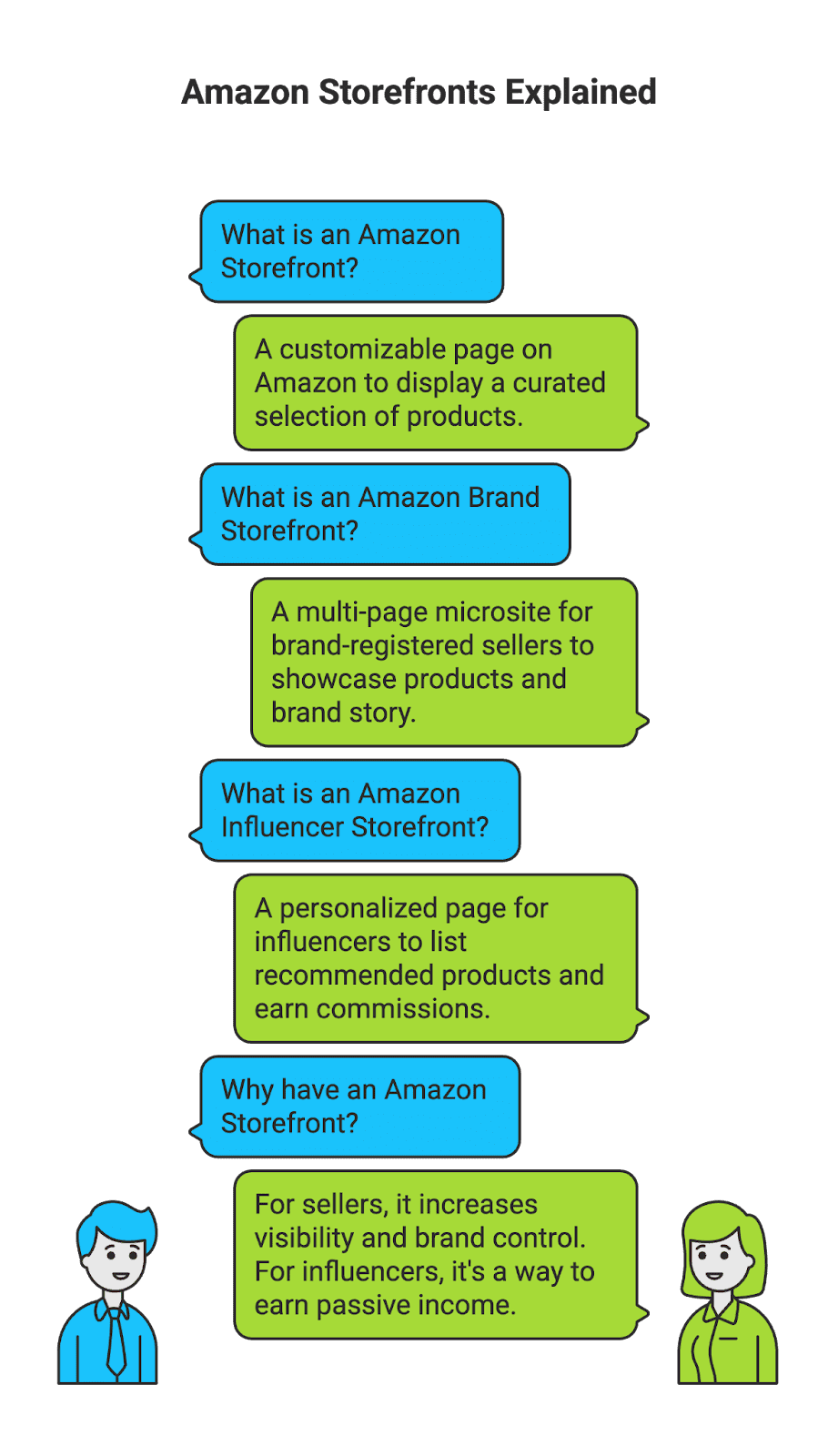
An Amazon Storefront is essentially a customizable page on Amazon where you can display a curated selection of products in one place. There are two main types of storefronts, depending on who you are:
A multi-page microsite on Amazon for brand-registered sellers to showcase all their products and tell their brand story. It’s like having your own branded shop on Amazon, complete with custom layouts, images, and even analytics to track traffic and sales. Shoppers can navigate your collections, read about your brand, and browse your catalog in a branded shopping experience. This boosts brand recognition and trust, since everything on that page is yours.
A personalized Amazon page for social media influencers (from micro-influencers to celebrities) to list products they recommend. Through the Amazon Influencer Program, approved creators get their own Amazon URL (such as amazon.com/shop/YourName) and earn commissions on any sales generated through their storefront. Essentially, it’s an affiliate shop where followers can easily find and buy the products an influencer showcases, making it a seamless way to monetize content.
Why have an Amazon storefront? For sellers, it’s a chance to increase visibility and control the brand narrative on a platform that captures about 38% of the U.S. online retail market. For influencers, it’s a way to earn passive income by curating products you love, without holding any inventory or building your own e-commerce site. In both cases, you tap into Amazon’s huge customer base – recall that nearly two-thirds of online shoppers start their product searches on Amazon. In short, having a storefront means your products or recommendations are front-and-center where customers are already shopping.
In the ultra-competitive world of e-commerce, micro-influencers (creators with a smaller but highly engaged following) have become a secret weapon for Amazon sellers. These everyday content creators produce authentic user-generated content (UGC) that resonates with consumers and can significantly boost trust and sales for products on Amazon. Let’s look at why leveraging micro-influencers (and the content they create) can elevate your Amazon storefront strategy:
Not only do micro-creators spark more interaction, they also deliver a better bang for your marketing buck. Studies show micro/nano-influencer campaigns can achieve roughly a 20:1 return on investment (i.e. $20 in revenue per $1 spent) versus only about 6:1 ROI for campaigns with big influencers. In practical terms, a dollar spent on a micro-influencer partnership might generate 3x or more sales compared to a dollar spent on a celebrity influencer. The chart above highlights this contrast in ROI. The combination of lower cost and highly receptive niche audiences means micro-influencers often “punch above their weight” when it comes to driving Amazon product sales.
Micro-influencers come across as real people and peers, so their product endorsements feel like genuine recommendations rather than ads. Consumers increasingly value authenticity – in one survey, 82% of people said they’re highly likely to follow a micro-influencer’s recommendation, and 84% trust peer recommendations more than traditional advertising. That trust is marketing gold. If an influencer features your product on their Amazon storefront and tells followers why they love it, it creates a seamless path to purchase with built-in credibility. The audience can click through to Amazon and buy with confidence, since the suggestion came from someone they trust.
When micro-influencers direct their followers to Amazon, it not only generates immediate sales, but also can improve your product’s ranking on Amazon itself. Amazon’s algorithm rewards listings that get a surge of outside traffic and sales. Thus, an influencer-driven spike can push your item higher in Amazon search results, creating a virtuous cycle of more visibility and organic sales. In essence, micro-influencers funnel new customers into Amazon’s ecosystem – something Amazon’s system notices and favors.
Micro-influencers often produce high-quality photos, videos, and reviews as they promote products. This content can be repurposed on Amazon. For instance, influencers’ video reviews or unboxing clips can be uploaded to your product listing or appear in the “Related videos” section on Amazon, acting as authentic testimonials for future shoppers. UGC like this is incredibly persuasive – 90% of consumers say authenticity is important when deciding which brands to support, and content created by real users is seen as the most authentic of all. In fact, 79% of people report that UGC highly impacts their purchase decisions, far more than polished brand ads. By leveraging influencer-generated content on your Amazon store and listings, you essentially showcase “word-of-mouth” proof that builds trust with customers who discover your brand.
Real Trend: According to a 2024 survey, 12% of Amazon third-party sellers were already hiring influencers to promote products, and 41% planned to grow their business via social media and influencer marketing. This shows that influencer collaborations are becoming mainstream for Amazon sellers. If you haven’t tried it yet, you might be missing out on a powerful growth lever.
Coordinating dozens of influencers can be time-consuming (finding them, sending products, tracking posts, etc.). This is where platforms like Stack Influence come in. Stack Influence (stackinfluence.com) is an example of a specialized micro-influencer marketing platform that automates product seeding campaigns and manages the whole process. It helps e-commerce brands connect with vetted micro-influencers and accumulate authentic UGC and reviews at scale. In fact, many such platforms operate on a pay-for-results model – you only pay when an influencer has delivered the agreed content, ensuring efficient use of your budget. For Amazon sellers looking to turbocharge their storefront’s success, leveraging a network of micro-influencers (manually or via a platform like Stack Influence) can be a game-changer.
Now that we’ve covered why Amazon storefronts (and influencer-driven content) are so powerful, let’s get into the step-by-step of actually setting up your own storefront.
If you’re a social media influencer or content creator, follow these steps to apply for the Amazon Influencer Program and build your storefront:
1. Ensure You Meet the Eligibility Requirements: Amazon doesn’t publish exact follower count requirements, but you should have an active, engaged presence on at least one major social platform. When you apply, Amazon will evaluate factors like your number of followers (no official minimum, but more is better), your content engagement rate, and the niche/topic of your content. It’s not just about having huge numbers – a smaller following with lots of genuine engagement can qualify. For example, an Instagram account with ~10,000 followers that consistently gets good likes/comments could be accepted because it shows loyal engagement. Focus on a specific niche and quality content to improve your chances. (If you don’t yet meet the criteria, spend time growing your follower engagement before applying.)
2. Sign Up for the Amazon Influencer Program: Visit the Amazon Influencer Program portal and click “Sign up.” You can use your existing Amazon account (or Amazon Associates account) to apply, or create a new Amazon account if you don’t have one. During the signup, you’ll be prompted to choose the social media account where you have the most influence – options include Instagram, YouTube, TikTok, or Facebook. Pick the platform where your follower count and engagement are highest, as this will give you the best shot at approval.
3. Connect Your Social Media for Review: Amazon will ask to connect to or review your chosen social account to assess your metrics. For YouTube or Facebook applicants, Amazon’s decision is often instantaneous (they use those platform APIs to check your stats). For Instagram or TikTok, it may take a few days (up to 5 business days) for Amazon to manually review your profile. Provide any required info like your account handle, follower count, and content category during this step. Once submitted, your application status may be “pending” while Amazon evaluates your social presence.
4. Complete Your Influencer Profile: As part of the application, you’ll create your Amazon influencer profile. This includes picking a Storefront name (typically your own name or brand name) and adding a brief tagline or description for your page. You’ll also upload a profile picture or logo for your storefront and can link your other social media accounts to your profile if you want. Think of this like setting up a new social media profile – you want it to be welcoming and on-brand. For instance, if your niche is home décor, you might name your store “JaneDoe Home Finds” and tag it as “My favorite picks for a cozy, stylish home.”
5. Submit Your Application and Wait for Approval: Double-check that you followed all the steps (including any verification like following Amazon’s official influencer account on Instagram, which Amazon requires you to do after applying). Then, simply wait for Amazon’s decision. If you applied with YouTube/Facebook, you might get instant feedback. With Instagram/TikTok, be patient for a few days. You’ll be notified via email or in the Influencer dashboard if you’re approved. Tip: Even while in “pending” status, you can actually start building out your storefront page (adding content like idea lists, etc.) – so feel free to get a head start on curating your recommendations.
6. Start Building Your Storefront Page: Once you’re in (congrats!), you can actually design your influencer storefront. Amazon will give you a URL (usually amazon.com/shop/YourHandle). Now you can add content in several ways:
Customize your page by adding a header banner image and a profile picture if you haven’t already. Organize your storefront thoughtfully so it’s easy for your followers to find things. For example, you might have separate sections for “Beauty Favorites,” “Kitchen Gadgets I Love,” etc. Influencer storefronts share some similarities with brand storefronts – you can even use a custom banner and featured content to give it a personal touch.
7. Promote Your Storefront: Your Amazon storefront won’t magically get traffic on its own – you need to share it with your audience. Promote your new storefront link on your social channels: put the link in your Instagram bio, add it to your Linktree, mention it in YouTube video descriptions, tweet it out, etc. Let your followers know they can shop all your finds in one spot. Create posts or Stories highlighting some of the best items on your storefront to drive curiosity and clicks. The more you integrate your Amazon shop into your content (in a natural, value-added way), the more traffic and sales you’ll likely generate.
8. Keep Creating Content (On and Off Amazon): To maximize earnings, continue making quality content. Encourage your followers to check out your Amazon shop when you talk about products. Additionally, work toward the “onsite influencer” perks: once approved, upload those honest product review videos and photos to Amazon. Over time, as you build up a catalog of shoppable content, you might start seeing passive commissions from random Amazon shoppers, not just your followers. It’s essentially building multiple income streams within your influencer business – one from direct affiliate sales to your audience, another from Amazon’s internal traffic viewing your content.
Note: If your application is not approved on the first try, don’t be discouraged. Take a few months to grow your following or engagement (perhaps focus on a niche, improve content quality), then try again. Amazon wants influencers who have an authentic connection with an audience, not just vanity metrics. So work on that community-building and you’ll increase your odds in the next application.
If you’re an Amazon seller (brand owner) who wants to set up a branded storefront on Amazon, follow these steps:
1. Enroll in Amazon Brand Registry: The Amazon storefront feature for sellers is only available to brand-registered sellers. This means you need to have a registered trademark for your brand and go through the Brand Registry signup. Brand Registry verifies that you own the brand and gives you access to special tools like storefronts, A+ content, and protection from listing hijackers. So, first ensure you have a trademark for your brand name or logo. Then go to Amazon’s Brand Registry portal and complete the enrollment process (you’ll need to provide your trademark info, brand logo, etc.) Once Amazon approves your Brand Registry application, you’re ready to create a store.
2. Log in to Amazon Seller Central: After brand approval, log in to your Seller Central account. On the main dashboard, find the top menu that has tabs like Inventory, Orders, etc. There will be a tab called “Stores.” Hover over or click on “Stores” and then select “Manage Stores.” This is the section where you’ll create and edit your storefront.
3. Create a New Store: In the Manage Stores page, you should see an option to create a store for your registered brand. Click “Create Store.” This opens up a store builder interface (a setup wizard). First, you’ll be prompted to enter your brand display name (how you want it to appear on the storefront) and to upload your brand logo. Treat this step like designing the sign in front of a physical shop – use a high-quality logo image and ensure the brand name is exactly how you want customers to see it. This is your chance to make a strong first impression, so keep the branding consistent and professional.
4. Choose a Store Template: Amazon provides a few pre-made layout templates for storefronts, which can make your life easier if you’re not sure how to design the pages. You might see templates for a single page store, a marquee (with a big header image), a product grid focus, etc. Browse the options and pick a template that best fits your product line. Don’t worry – these templates are flexible. You can rearrange sections, add or remove pages, and customize it heavily if you want. The template just gives a starting structure. For instance, if you have a lot of SKUs across categories, a template that supports multiple pages (like “Men”, “Women”, “New Arrivals”) might be useful. If you have a single hero product, a one-page design with big imagery might suffice.
5. Add Pages and Content: Now, build out the pages of your store. By default, you’ll at least have a homepage for your storefront. You can add sub-pages for different categories or themes (just like a mini website with menu navigation). On each page, you’ll be able to add content tiles: these include product listings, text sections, image banners, videos, and slideshows. At this stage:
Essentially, this step is about populating your storefront with engaging content and a complete product selection that will inform and attract shoppers. Use high-resolution images, write informative product descriptions or captions, and double-check that each product tile links correctly to the right item. Aim for a balance of visual appeal (images, videos) and useful info (product details, benefits) to appeal to both browsers and decisive buyers.
6. Review and Preview Your Store: Before hitting that publish button, take the time to thoroughly preview your storefront using Amazon’s preview function. Click through each page you created and check for:
Amazon provides a checklist of sorts – ensuring correct product listings, accurate pricing, proper navigation, etc., is important. You want the storefront to be error-free and polished. If something looks off, the store builder allows you to edit it before publishing.
7. Publish Your Storefront: Once you’re happy with how everything looks in preview, hit “Publish.” Note that after publishing, it may take a short time for Amazon to approve the content (they will review to make sure you didn’t violate any content guidelines, like including external links or unsuitable material). Typically, within a couple of hours, your store should go live at a URL like amazon.com/your-brand (it usually uses your brand name or a variation). Amazon will usually email the account owner when the storefront is live. Congratulations – your Amazon storefront is now up and running for the world to see!
Now you can link this storefront on your Amazon product detail pages (there’s often a link to “Visit the Store” under the product title on listings of brand-registered products). You can also drive external traffic to this store link via ads, social media, or influencer campaigns to boost your Amazon sales.

Simply having a storefront is a great start, but to really make it effective, you should optimize it continuously. Whether you’re an influencer or a seller, consider these best practices to maximize your storefront’s impact:
By implementing these optimization tips, you’ll ensure your Amazon storefront isn’t just set up correctly, but is truly primed to rank well and convert visitors into buyers – which is ultimately the key to climbing the ranks on both Google and Amazon’s own search.
An Amazon storefront unlocks a world of opportunities for micro-influencers, content creators, and e-commerce sellers alike. It’s your dedicated space to showcase products and leverage the full power of Amazon’s platform – from its massive shopper base to its trusted checkout and fast shipping. We’ve walked through how to get an Amazon storefront for both influencers and brand owners, step by step. Now it’s up to you to take action.
Remember, success on Amazon (or any platform) boils down to offering value and building trust. Use your storefront to tell a story: whether it’s the story of your brand’s quality and mission, or the story of why an influencer loves the products they recommend. User-generated content and micro-influencer authenticity are your allies in this effort. They humanize the online shopping experience and can dramatically impact purchasing decisions in your favor. In a time when 90% of consumers prioritize authenticity when choosing brands, leaning into genuine content and community-driven marketing is a smart move.
So go ahead – set up your Amazon storefront, optimize it, and don’t be afraid to get creative. If you’re a seller, consider partnering with micro-influencers to drive external traffic and stock your store with persuasive UGC. If you’re an influencer, curate your Amazon shop like a pro and keep engaging your followers with great content. With dedication, your storefront can become a significant revenue stream and a key asset in your online presence.
Happy selling and influencing! By following this guide, you’re well on your way to building an Amazon storefront that not only looks great but also leverages the latest trends in e-commerce marketing (from SEO to influencer partnerships) to stand out. Here’s to your success in the Amazon marketplace – may your storefront attract eager shoppers and rank high on every relevant search, whether on Google or within Amazon’s own ecosystem. Now, go make that storefront shine!
In the world of digital marketing and e-commerce, two content strategies dominate: user-generated content (UGC) and content created by influencers or dedicated creators. Both have transformed how brands engage with audiences – from Amazon sellers leveraging customer reviews to micro-influencers sharing authentic product videos on TikTok. Despite their overlap (both involve people other than the brand making content), UGC and creator content operate very differently. Understanding these differences is key for e-commerce brands, Amazon marketplace sellers, and marketers who want to build trust and drive sales. This blog will break down what UGC is versus content creator output, how each works, and why the distinction matters. Along the way, we’ll see how micro influencers bridge the gap and get practical tips to leverage both forms of content in your strategy.
A post shared by Stack Influence (@stackinfluence)
User-generated content (UGC) refers to any content related to a brand that is created organically by real users – typically customers or fans, not the brand itself. This can include social media posts showing off a product, customer reviews or star ratings on an e-commerce site, unboxing videos by buyers, or testimonials shared voluntarily on forums. The defining trait of UGC is its authenticity: it’s created by real people who genuinely want to share their experience, without being paid or instructed by the company. Because of this, UGC is often raw and unpolished, but that “rough around the edges” feel is exactly what makes it trustworthy social proof for others. When potential customers see everyday people (peers) talking about a product, it sends a powerful signal: “Real people like me use and love this.”
UGC emerges naturally as customers interact with products. Brands can encourage it (through hashtags, challenges, or by featuring customer posts), but the content is ultimately controlled by the users themselves. This means UGC is generally unpaid, unscripted, and can vary widely in quality and style. Still, its authenticity makes it marketing gold – 85% of consumers find UGC more authentic and influential than brand-created content. It’s no surprise that 79% of people say UGC significantly impacts their purchasing decisions by providing genuine social proof.
“Content creators” in a marketing context are individuals who professionally produce content, often in partnership with brands. This category includes social media influencers, YouTubers, bloggers, and also freelance creators who make content for brands without necessarily being famous. Unlike spontaneous UGC, creator content is usually commissioned or incentivized – the creator might be paid a fee, given free products, or otherwise compensated for making the content. They may publish the content on their own channels (like an influencer posting to their Instagram or YouTube audience), and/or create it for the brand to use on official channels or ads.
Because it’s part of a collaboration, creator content is typically more polished and strategic. Creators often work from a brief or guidelines provided by the brand, and they consider things like messaging hooks, calls-to-action (CTAs), and aligning with the brand’s aesthetic or goals. For example, a skincare company might hire a beauty YouTuber to film a tutorial using their product – the creator will plan the video to highlight key benefits, maybe follow a trend (for better engagement), and ensure the tone fits what the brand wants. The result is content that feels relatable yet refined: it might mimic the authentic style of UGC (many creators deliberately shoot on smartphones to give a “real” feel), but behind the scenes it’s designed for performance and often edited to be high-quality.
In all these cases, the content creator is actively collaborating with the brand. There’s an exchange of value (payment, free product, affiliate commission, etc.), and the brand typically has input or final approval. This means the brand can ensure certain messaging or quality standards, which is a big difference from truly uncontrolled customer UGC. Content creators, especially influencers, also bring their own audience; a key part of their value is that they can distribute the content to followers who trust them. In summary, creator content is a scalable, strategic asset – it’s content made for marketing purposes by people skilled in engaging an audience, often yielding more consistent quality and reach than organic UGC.
While both UGC and creator-driven content involve external voices talking about a product, they differ in important ways. Here are some of the key differences:
UGC comes directly from customers without prompting – it’s the organic voice of your community. This gives it a high trust factor: it feels genuine because it is genuine. By contrast, content from influencers or creators is sponsored or incentivized, so audiences know there’s a marketing intent behind it. Even when creators are honest and relatable, the content is perceived as part of a campaign. Authenticity is UGC’s superpower. In fact, consumers widely view UGC as more authentic than any brand-produced content. For example, 85% of consumers say UGC is more authentic and influential than content made by companies. And authenticity translates to trust – especially with younger audiences who value “real” voices over polished ads. Creator content can also build trust (many influencers have loyal followings who trust their recommendations), but it starts from a different place since the creator is being rewarded for their post.
UGC is often limited in initial reach – a customer’s post might only be seen by their own friends or a small circle, or a review sits on a product page until someone reads it. Its power grows when the brand amplifies it (for example, resharing a great customer photo on the brand’s Instagram or featuring testimonials on the website). Content creator campaigns, on the other hand, come with built-in distribution. Influencers can broadcast to thousands or millions of followers, giving instant exposure. A YouTuber’s sponsored video or an influencer’s post can introduce a product to a large audience overnight. However, bigger reach doesn’t always mean better engagement – many brands find that smaller “micro” influencers with niche communities drive higher interaction rates and trust per follower. UGC tends to be community-driven (friends influencing friends), whereas influencers operate like mini-media channels. The ideal scenario is to leverage both: let customers influence each other organically, and use creators to scale up the conversation to broader audiences.
Because UGC is created by users for their own purposes, brands have little control over it. The quality can range from blurry photos and typos to amazingly creative fan-made videos – you get the good with the bad. This unfiltered nature is part of UGC’s charm, but from a branding standpoint it’s unpredictable. Creator content offers far more control and consistency. When working with a content creator, a brand can provide guidelines (or even scripts), ensure the creator hits certain messaging points, and request edits or re-shoots if needed. The creator is likely experienced in content production, so the output is usually higher quality (better lighting, editing, sound, etc.). As a result, influencer/creator content is more polished and reliably on-brand. One marketing expert sums it up: UGC varies wildly in quality – some is great, some not – but with creator content you can shape the message and get multiple takes, making it scalable and consistent in a way true UGC isn’t. Brands often strike a balance: they embrace UGC’s authenticity but selectively choose the best pieces to repost, while using creators to fill any gaps with high-quality assets.
Customers create it because they want to, with no payment from the brand. The main “cost” to brands is maybe running a hashtag contest or the effort of curating and permissioning UGC for reuse. By contrast, content creators come at a cost (either monetary payment or product incentives). There’s a wide range: a top celebrity influencer might charge six figures for a single post, whereas a micro-influencer might accept just free product or a few hundred dollars. But overall, commissioning creator content requires budget that organic UGC does not. That said, you often get what you pay for – the investment yields more predictable, strategic content. As one article noted, brands shouldn’t be scared off by the price tag, because a well-planned creator campaign can deliver strong ROI in sales and brand lift. For perspective, even micro-influencers often charge around $100–$500 per sponsored post (versus tens of thousands for a macro influencer). Many small e-commerce sellers find that affordable, especially given a micro-influencer’s content might double as both an endorsement and reusable ad creative. UGC may be “free,” but it also requires finding and nurturing – whereas paying creators is a more direct content production method.
A post shared by Stack Influence (@stackinfluence)
In recent years, micro-influencers have emerged as a powerful middle ground between pure UGC and traditional big influencers. Micro-influencers are content creators on social media who have a modest follower count (often around 5,000 to 100,000) but a highly engaged niche audience. They are essentially everyday people who have built a community around a particular interest or lifestyle – be it fitness, beauty, tech gadgets, or home decor. For e-commerce brands, especially newer D2C companies or Amazon sellers, micro-influencers offer an attractive combination of authenticity and influence. Because they are more like “real people” than glitzy celebrities, their content comes off as authentic peer recommendation (much like UGC), yet they still have enough of an audience to significantly boost a product’s visibility.
Micro-influencers also tend to be far more cost-effective than macro influencers or celebrities. For example, many micro-influencers charge only about $100–$500 per social post, whereas a single post from a mega-influencer or star could run into the tens of thousands of dollars. This affordability is a huge plus for up-and-coming Amazon sellers or small e-commerce brands on a budget. A company can, for the cost of one celebrity endorsement, work with dozens of micro-influencers and generate a large volume of diverse content. Those dozens of genuine posts – each perhaps getting moderate reach in its own tight-knit community – can collectively have more impact than one flashy ad. In fact, Gen Z audiences are 3.2× more likely to trust a micro-influencer’s recommendation over a traditional celebrity’s, and campaigns leveraging a network of micros often see higher engagement rates. It’s a classic case of quality (engagement and trust) over quantity of followers.
For e-commerce, another benefit of micro-influencer collaborations is content multiplication. A single micro-influencer posting an unboxing video or a how-to demo of your product not only reaches their followers, but also produces a piece of content you can potentially reuse (with permission) on your own product pages, social media, or ads. Many micros will allow brands to repurpose their photos or clips as part of the deal, effectively serving as both influencer and content creator. For example, if you run an Amazon store, you might send freebies to 50 micro-influencers on Instagram and TikTok. In return, you could get 50 authentic posts/reviews creating buzz, and also a trove of images, short videos, and quotes that can be compiled into a video ad or used in your Amazon listing images. This strategy has been shown to boost social proof and even improve Amazon search rankings by driving more traffic and reviews.
Crucially, micro-influencer campaigns are scalable thanks to specialized platforms. For example, Stack Influence is a micro-influencer marketing platform that focuses on connecting e-commerce brands (including Amazon sellers) with everyday content creators for performance-based campaigns. Stack Influence is all-in on micro-influencer campaigns – essentially “product seeding” at scale, where a brand sends out free product to a large pool of small influencers in exchange for posts and feedback. By using a platform like this, a brand can quickly activate hundreds of micro-creators and accumulate a wave of authentic UGC-like content and buzz. This kind of managed approach ensures that while each micro-influencer’s impact is small, together they create a big ripple. One case study from Stack Influence’s campaigns showed a brand recruiting 200+ micro influencers to create content, which led to a 13× return on investment in sales and a major boost in Amazon search rank. The takeaway: UGC and influencer content need not be an either-or choice. Micro-influencers demonstrate how blending the two – leveraging relatable creators to spark UGC-style word-of-mouth – can pay off massively in e-commerce.
As UGC’s importance has grown, a new hybrid trend has emerged: “UGC creators.” These are individuals who may not have a big public following (unlike typical influencers) but are skilled at creating relatable content, and they offer their content creation services to brands. In other words, a UGC creator is someone a brand hires specifically to produce content that looks and feels like genuine UGC, even though it’s technically commissioned. This trend has taken off on platforms like TikTok and freelancer marketplaces – you’ll find people advertising themselves as UGC creators who will, for example, film a casual product demo or take lifestyle photos with your product for a fee.
What’s driving this trend is the constant need for authentic-feeling marketing material. Brands have realized that overly polished ads are getting tuned out, especially by younger consumers who crave authenticity (remember, 89% of Gen Z say authenticity matters more than slick advertising). So, companies are turning to regular folks or micro-influencers willing to make content that resembles a customer’s post. These UGC creators often shoot with their phone, speak in a natural, unscripted way, and produce content that could easily be mistaken for an organic TikTok or Instagram post. However, they don’t necessarily post it on their own profiles – instead, the brand buys the rights to the content and uses it in ads, on the website, or on the brand’s social feed. It’s essentially outsourcing the creation of UGC-style content.
From the brand’s perspective, this approach combines authenticity with control. They get content that is user-generated in style but can ensure it covers certain points and fits their marketing goals because they provide a brief to the creator. And since UGC creators are typically freelancers or small creators, the cost is relatively low – often just free product or a modest fee per piece of content – making it a fraction of the cost of a formal photo or video shoot. For the creators, it’s a gig opportunity: they enjoy creating content and get compensation without needing a large audience or to manage a sponsored post’s performance.
The rise of UGC creators does blur the lines between “real” UGC and paid content. Essentially, it’s creator-generated content made to look like UGC. It reinforces that the term UGC now encompasses not just purely organic customer posts, but also this new category of relatable, creator-made media. As one marketing publication put it, the term “UGC creator” is a bit confusing – these folks are producing ad-friendly content with a UGC aesthetic, but they are not unpaid customers spontaneously posting about the product. Nonetheless, this trend is booming because it addresses a pain point for brands: how to get lots of fresh, authentic-looking content to fuel social media and ads. There are even marketplaces connecting brands with UGC-style creators willing to make content without hefty rates. The end result is beneficial for all – brands get a library of authentic-feel content to use in campaigns, and audiences get ads that are more in the style of a friend’s recommendation than a sales pitch.
Both UGC and content creator campaigns can be incredibly effective for growing your brand – especially when used together. Here are some tips for e-commerce brands (including Amazon marketplace sellers) to make the most of both UGC and creator content:
UGC and content creator campaigns are both invaluable in modern marketing, but they serve different purposes and shine in different ways. UGC brings the voice of the customer – it’s spontaneous, credible, and community-building. Content creators (from micro-influencers to paid UGC freelancers) bring strategy and scale – they can craft messages that resonate and spread them to larger audiences. Rather than choosing one over the other, the most successful e-commerce brands and Amazon sellers blend both approaches. They harness the enthusiasm of real customers while also partnering with savvy creators to amplify that enthusiasm.
In the past, luxury brands relied on movie stars and elite personalities for endorsements. Today, a new breed of luxury lifestyle influencers has emerged on Instagram, YouTube, TikTok and beyond – content creators who captivate audiences with aspirational glimpses of high-end living. These influencers might not walk the Hollywood red carpet, but they wield immense influence online, blending opulence with relatability. In the luxury sector especially, social influencers aren’t just showcasing products; they’re reshaping how consumers perceive and interact with high-end brands. By sharing authentic stories and lavish experiences, they bridge the gap between extravagant luxury and everyday audiences. Crucially, it’s not just about follower count – many luxury influencers have cultivated tight-knit communities and unprecedented engagement rates, making them powerful brand ambassadors. Luxury labels, e-commerce brands, and even Amazon sellers are taking notice of this dynamic, turning to influencers (big and small) as genuine ambassadors who lend credibility and organic visibility to their products.
In this blog, we’ll explore who these luxury lifestyle influencers are and, importantly, how micro-influencers in the luxury niche are becoming a secret weapon for online brands. From micro influencers with niche yet devoted followings to mega-influencers jet-setting around Monaco and Dubai, we’ll compare their impact on engagement, UGC (user-generated content), and ROI. You’ll also find examples of top luxury influencers, and learn how e-commerce companies and Amazon sellers can collaborate with them (with actionable tips). By understanding the micro-influencer advantage and leveraging authentic content, even emerging brands can tap into the power of luxury lifestyle influence to boost trust and sales.
Luxury lifestyle influencers are social media creators who specialize in showcasing a high-end, aspirational way of life. Their content often features elements like designer fashion, exotic travel destinations, upscale beauty and wellness routines, luxury cars, fine dining, and exclusive events. In essence, they curate a digital persona of success and glamour that followers love to admire – and emulate. What sets them apart is their ability to make luxury feel personal and attainable. As one commentator noted, the rise of platforms like Instagram has created a new wave of “luxury digital influencers” who rival traditional celebrities in impact. They’re admired for their taste and access, yet remain relatable by sharing candid moments and personal stories along with the glamor. This relatability “bridges the gap between luxury and accessibility” for modern consumers, allowing followers to engage with luxury brands through a peer-like figure rather than a distant celebrity.
Not all luxury influencers have millions of followers. In fact, many effective ones operate on a micro scale – perhaps tens of thousands of followers – but focus on a specific niche or style within the luxury realm. For example, some may concentrate on sustainable luxury fashion, others on high-end travel hacks, or luxury tech gadgets. Micro-influencers in luxury often cultivate highly engaged communities of enthusiasts who share a particular passion (be it designer shoes or boutique hotels). Their audiences might be smaller, but they are deeply invested, often leading to greater influence per follower than top-tier influencers. For instance, a curated social marketplace found micro luxury creators like Yuliia Faist (≈15k followers) maintaining nearly a 10% engagement rate, an exceptionally high level of interaction for that follower size. Similarly, The Vxsionary™ (~20k followers) earns about 9.8% engagement on posts blending luxury style and art, and Muyiwa Awoniyi (~78k followers) sees around 7.8% engagement showcasing luxury lifestyle and music content. These figures are well above typical engagement benchmarks and illustrate how smaller luxury influencers can command outsized attention from their fans. By contrast, many mainstream influencers with huge followings see a much lower fraction of followers actively engaging on each post.
It’s also worth noting that there are of course macro-level luxury influencers with massive audiences who regularly collaborate with top luxury brands. Names like Renan Pacheco (@iamrenanpacheco) or Tara Whiteman (@taramilktea) are recognized for their globe-trotting, elegant content and partnerships with brands like L’Oréal, Chloe, or Louis Vuitton. These star influencers bring significant reach and prestige to campaigns. However, as we’ll explore next, the macro vs. micro dynamic in influencer marketing presents a quality-versus-quantity tradeoff. Smaller creators often deliver far more engagement and authenticity per follower, which can translate to better results for many brands despite their more modest reach.
When evaluating luxury influencers (or any influencers), it’s important to understand the difference between macro-influencers and micro-influencers in terms of reach and engagement. Macro-influencers typically have very large followings (hundreds of thousands to millions of followers) and can offer brands sheer scale – a single post can put a luxury product in front of a huge global audience. They often produce polished, magazine-quality content and carry a certain prestige by association. However, their broad appeal comes at a cost: engagement rate per follower tends to be relatively low, and their content can sometimes feel less personal (since they work with many sponsors).
Micro-influencers, on the other hand, have smaller follower counts (roughly in the 5,000 to 100,000 range) and usually cater to specific niches or communities. Rather than reaching everyone, they reach the right people – those who are genuinely interested in a particular aspect of the luxury lifestyle. Because of this tight focus and personal touch, micro-influencers often see much higher engagement relative to their audience size. It’s a well-observed trend in marketing that as follower counts go up, engagement proportionally goes down. Micros buck that trend by fostering closer relationships: their followers see them as relatable experts or friends, which leads to more likes, comments, and shares per post.
To put numbers on it, micro-influencers often enjoy engagement rates in the range of 5–20%, meaning a notable portion of their followers actively interact with their content. In contrast, macro influencers (with sprawling, diverse audiences) might only see around 1–3% engagement on average. In other words, a luxury micro-influencer with 20,000 followers might routinely get 1,500–2,000 people engaging with a post, whereas a luxury mega-influencer with 2 million followers might see 20,000–40,000 engagements on a post. The macro reaches more people overall, but each individual follower is less likely to be paying close attention. For brands, this distinction is crucial: engagement is what drives actions (clicks, shares, and purchases), not just eyeballs. A smaller audience that’s highly enthused can outperform a larger, passive audience in terms of actual influence.
Another factor is trust and authenticity. Micro-influencers tend to come across as genuine enthusiasts rather than paid promoters. Their recommendations feel like advice from a friend, whereas a celebrity or macro influencer’s endorsement can sometimes be viewed with skepticism (as “just another ad”). Surveys back this up: a remarkable 82% of consumers say they are highly likely to follow a micro-influencer’s product recommendation, far higher than the trust placed in traditional ads. Micro creators usually interact with their followers in comments and DMs, reinforcing a sense of community and credibility. This authentic connection gives them an edge in persuading their audience – whether it’s to try a new luxury skincare line or book a boutique hotel the influencer reviewed.
Finally, there’s the consideration of cost and ROI (return on investment). Macro-influencers, by virtue of their fame, command high fees for collaborations – often thousands or tens of thousands of dollars per sponsored post in the luxury space. Micro-influencers are typically much more affordable (some will collaborate in exchange for free products or a modest fee), yet they often deliver better results proportional to the investment. In fact, marketers have found that campaigns leveraging micro- or nano-influencers can yield significantly higher ROI than those using a few big names. One study cited a ~20:1 ROI (every $1 spent generated $20 in revenue) for micro/nano-influencer campaigns, versus roughly 6:1 ROI for campaigns with macro influencers. This is because micros combine lower upfront cost with higher engaged conversions – essentially more bang for your marketing buck. The brand might reach fewer total people with a micro-influencer, but those people are more likely to take action (and at a fraction of the cost, the efficiency is hard to beat).
The data above illustrates the point: micro-influencers punch above their weight in both quality of engagement and cost-effectiveness. Their posts spark conversation and interest, which lays the groundwork for sales. Meanwhile, macro-influencers still have a role – they’re fantastic for broad brand awareness and splashy campaigns that require reaching hundreds of thousands quickly. In luxury marketing, you might use a macro influencer to create buzz around a new product launch or flagship store opening, then activate dozens of micro-influencers to generate sustained engagement, reviews, and user-generated content around that product. The macro provides the “big splash,” and the micros provide the long-tail ripple of authentic chatter and community building. Many savvy brands are now blending both tiers in their influencer strategies, but increasingly putting emphasis on micro influencers for deeper engagement and ROI. As 56% of marketers report, working with smaller influencers yields better ROI than with larger influencers, largely due to the trust and focus they bring.

Why exactly are micro-influencers so valuable, especially in the context of luxury lifestyle marketing? Let’s summarize the key advantages that these micro creators offer to brands (including premium brands, direct-to-consumer businesses, and Amazon sellers alike):
In summary, micro-influencers may lack the raw reach of celebrities, but they excel at sparking genuine conversations and trust. Especially for luxury and lifestyle brands that depend on image and credibility, having real people sincerely vouch for your product is incredibly powerful. The combination of higher engagement, authenticity, precise targeting, and strong ROI is why micro-influencer marketing has exploded in recent years. For luxury marketers, it means you don’t always need a Hollywood star or a million-follower diva to make an impact – a handful of passionate micro-creators can often drive more meaningful results by speaking to audiences in an authentic, engaging way.
One big byproduct of influencer collaborations is User-Generated Content (UGC) – essentially, content about your brand that is created by actual users or customers (in this case, the influencers and sometimes their followers). In the context of luxury lifestyle influencers, UGC can take the form of Instagram posts, YouTube videos, TikToks, blog reviews, unboxing videos, and so on, all featuring your product or service in real-life use. This content is incredibly valuable for a few reasons:
First, UGC is seen as more authentic and trustworthy than traditional ads. By definition, it’s coming from real people rather than the brand’s internal marketing team. In today’s savvy consumer environment, authenticity is paramount – a whopping 90% of consumers say authenticity is important in deciding which brands they support. And globally, people view user-generated content as the most authentic form of marketing content. When a luxury influencer posts a genuine review or a day-in-the-life using a product, it carries more weight than a glossy magazine ad because it feels like an honest endorsement. It’s basically digital word-of-mouth, which is known to be one of the strongest drivers of sales. In fact, word-of-mouth marketing (which UGC essentially is) generates over twice the sales of paid advertising on average. That’s a huge indicator of how powerful these organic recommendations can be.
Second, UGC created by influencers can heavily influence purchase decisions among their followers and beyond. Studies have found that about 79% of people say UGC highly impacts their purchasing choices – far more than traditional branded content. It’s easy to see why: shoppers are more likely to trust a fellow consumer’s Instagram post showing a luxury handbag in use, or a YouTube video reviewing a new smartwatch, than they are to trust the brand’s own claims. When an influencer they follow (whom they consider knowledgeable and authentic) gives a thumbs up to a product, it provides social proof that reduces hesitation. For luxury products, which often have a higher price tag, this social proof and peer endorsement can be the nudge someone needs to convert from just admiring to actually buying.
Another advantage of influencer-driven UGC is that brands can repurpose it across their own marketing channels. When you collaborate with influencers, you don’t just get the exposure to their audience – you also obtain valuable content assets. Many brands will share influencer posts on their official Instagram or Facebook pages (with permission), feature influencer testimonials or photos on product pages, or even incorporate snippets of influencer videos into their digital ads. This is smart because the content has a relatable, authentic feel that audiences tend to respond to. In fact, ads that are built from UGC (like using an influencer’s real post) often perform significantly better – higher click-through rates and lower cost-per-click – than traditional ads that look like obvious commercials. People just find UGC-based ads more credible and interesting. For example, a luxury furniture brand might run a Facebook ad that’s literally a photo from a happy customer’s (or influencer’s) home, showcasing the furniture in a real setting, rather than the slick catalog photo. Such an ad is more likely to stop someone scrolling through their feed, because it looks like a post from a friend rather than an advertisement.
UGC also has longevity and organic reach. When a micro-influencer posts about your product, that content remains online and searchable. It can continue accumulating views, likes, comments, and shares long after the initial post, especially if it’s picked up by search or discovery algorithms. New potential customers might stumble upon that YouTube review or TikTok weeks or months later, giving you “free” impressions well beyond the campaign period. By contrast, a paid ad stops working the minute your budget is exhausted. Additionally, influencer content can spark further sharing – for example, followers might tag friends (“Hey, check this out!”) or duet/stitch an influencer’s video with their own reaction. This kind of secondary spread amplifies your brand message without any extra cost. It’s the digital equivalent of friends telling friends about a cool product, and it can snowball. A viral TikTok from a luxury influencer might inspire dozens of other users to create their own content about the product (a chain reaction that brands dream of).
In the luxury segment, where credibility and aspiration are everything, UGC serves as powerful social proof. Seeing real people – especially stylish influencers that others look up to – genuinely enjoying a product (be it a luxury watch or a high-end skincare line) makes that product far more enticing to the average consumer. It breaks down the psychological barrier of “is this brand actually good?” because you have evidence from a trusted source that it is. For e-commerce brands and Amazon sellers, leveraging influencer UGC is an excellent way to boost conversion rates on site. For instance, featuring influencer photos in your Amazon product listing or embedding an influencer’s YouTube review on your website can increase customers’ confidence and likelihood to purchase. The content not only drives immediate sales via the influencer’s audience, but also provides enduring assets that continue to build trust with future customers who encounter it.
In short, authentic content is king in modern marketing. Luxury lifestyle influencers provide a steady stream of it. By collaborating with them, brands not only tap into their engaged followings but also gain a library of real-world testimonials and visuals. This fusion of influencer marketing and UGC is a potent combination: you get the immediate impact of the influencer’s post plus the long-term benefits of credible content that can be used and reused. It’s a one-two punch that can significantly amplify a brand’s presence and persuasiveness online.
With the rise of influencer marketing, it’s not just traditional luxury brands that are benefiting – e-commerce companies and Amazon marketplace sellers are also leveraging luxury lifestyle influencers (including micro-influencers) to drive growth. This is a big deal because online sellers often face the challenge of building trust and visibility in a crowded digital marketplace. Influencers can help overcome those hurdles in a few clever ways:
1. The Amazon Influencer Program: Amazon itself has an official program that allows influencers to create their own Amazon storefronts. These are curated pages on Amazon where an influencer can list products they recommend (like their favorite makeup, gadgets, home décor, etc.), and they earn a commission on any sales that come through their links. Many micro and macro influencers have joined this program. When a luxury lifestyle influencer is part of the Amazon Influencer Program, they will often promote their Amazon storefront on social media – you might have seen YouTube videos or TikToks with hashtags like #AmazonFinds or #TikTokMadeMeBuyIt, where creators share cool products available on Amazon. For Amazon sellers, getting featured in an influencer’s storefront can be a huge win. If an influencer adds your product to their Amazon picks and tells their followers about it, it creates a seamless shopping path: the follower can click straight to Amazon and purchase the item with confidence, since it’s recommended by someone they trust. This blend of content and commerce is very potent. Not only can it generate an immediate spike in sales, but all that external traffic and sales velocity can actually boost your product’s ranking within Amazon’s own search results. Amazon’s algorithm rewards products that get sudden popularity and outside traffic, meaning your item might start appearing higher when anyone searches for related keywords on Amazon. It’s a virtuous cycle: influencer drives sales -> Amazon ranks the product higher -> more organic shoppers see and buy it -> even better ranking and sales, etc. In a competitive category, that extra boost can propel a product to bestseller status.
2. Product Reviews and Affiliate Links Outside the Program: Even without the official storefronts, influencers can drive Amazon sales by reviewing or featuring products and using affiliate links (Amazon Associates links) or promo codes. For example, an Amazon seller might send a luxury product to a micro-influencer for free in exchange for an honest review or demonstration on their platform. The influencer then posts a video or photo showing the product in use – say, a luxury kitchen gadget being used to cook a gourmet meal, or a designer accessory unboxed and styled with an outfit. In the caption or video description, they include a direct Amazon link (or a discount code) for their followers. This way, interested viewers can swipe up or click and be on the Amazon page to buy within seconds. The beauty of this approach is the influencer’s followers get to see the product in action, from a trusted voice, before buying. It’s much more convincing than just seeing a generic product photo. And when those followers do click through and purchase on Amazon, it can have secondary benefits: more sales (again boosting ranking) and potentially new customer reviews on the Amazon listing (because some of those buyers will leave feedback). Influencer-driven sales can thus lead to a better star rating and review count, which further improves conversion for future shoppers browsing Amazon. Some savvy brands even ask influencers to encourage buyers to review the product, thereby turbocharging the social proof on Amazon.
3. Cost-Effective Marketing vs. Paid Ads: For Amazon sellers in particular, advertising on Amazon (via Amazon PPC ads) has become increasingly expensive. Bidding on keywords can burn through a budget quickly, and there’s no guarantee those clicks convert to sales. Influencer marketing offers an alternative or complementary approach. Instead of paying, say, $1000 for Amazon Sponsored Product ads that many shoppers might scroll past, that same budget could provide free products to 10 or 15 micro-influencers who will create engaging content around the items. Each of those influencers will expose the product to a targeted audience (their followers), essentially yielding 10-15 mini ad campaigns running concurrently, but in a much more organic way. The content they produce (reviews, how-to videos, styled photos) not only reaches people, but can be reused by the brand in ads or on the Amazon listing itself (Amazon now allows short video uploads, for example, which can include influencer content). Importantly, micro-influencer content feels organic, not like an ad, which is crucial given that many consumers have developed “ad blindness” and will ignore obvious paid advertisements. Especially for lesser-known or new brands on Amazon, having an influencer vouch for the product is like a trust bridge – it makes shoppers comfortable taking a chance on a brand they haven’t heard of, in a way that an Amazon ad saying “Buy this!” simply can’t achieve. It’s telling that 72% of teenagers (a key up-and-coming consumer demographic) follow influencers and trust their recommendations, illustrating how powerful creator endorsements have become in shaping shopping habits.
4. “Many Small Voices” Strategy: A trend in e-commerce marketing is to work with a large number of micro-influencers simultaneously, rather than putting a big budget into one or two famous influencers. For instance, an Amazon fashion seller might collaborate with 50 micro-influencers who each have 5k–50k followers in the fashion/lifestyle niche, instead of paying one macro influencer with 500k followers. The reasoning is that a team of many micros can produce a steady stream of diverse content and reach multiple pockets of your target market at once. Each micro-influencer brings their own style and sub-audience, so collectively you cover a broad ground – maybe one focuses on luxury streetwear, another on couture dresses, another on handbags, etc., all pointing to your Amazon store. This “many small voices” approach often outperforms a single big voice in both total reach and richness of content generated. Plus, because micro-influencers are relatively affordable, even small brands can attempt this scale of campaign. We’ve seen companies seed products to hundreds of micro-creators, essentially saturating social media with their product in a niche community. The result can be a wave of awareness that seems to be coming organically from all directions. Consumers start noticing that a lot of people like them (not just one celebrity) are using this product, which creates a bandwagon effect. It’s a bit like going to a new city and suddenly hearing about the same restaurant from multiple locals – you become convinced it must be good. Many micro-influencers working in concert can create that effect for a brand or product online.
Of course, coordinating dozens or more influencer partnerships can be a challenge. Reaching out, sending products, tracking posts, and handling communication with many individuals is time-consuming. This is where specialized tools and agencies come in. Influencer marketing platforms like Stack Influence are designed to streamline this process. For example, Stack Influence (a micro-influencer marketing platform) helps brands automate product seeding campaigns and manage collaborations end-to-end, so you can scale up to working with a large network of micro-influencers without the headache. Such platforms typically handle finding and vetting influencers (ensuring they match your niche and quality standards), coordinating shipments of products to them, tracking that each influencer posts the agreed content, and collecting the results. They often also help accumulate all the UGC (photos, videos, testimonials) in one place for the brand to reuse. Some operate on a pay-for-performance model, meaning you only pay when an influencer has delivered content as promised. By using a service like this, even a small Amazon seller or a lean e-commerce startup can execute a robust influencer campaign that might otherwise require a dedicated team to manage. It essentially makes micro-influencer marketing scalable, turning what could be a logistical challenge into a streamlined, data-driven process. The net effect is that e-commerce and Amazon brands of any size can tap into the influencer trend – leveraging the relatable appeal of luxury lifestyle influencers to boost product sales, gather social proof, and build a brand presence, all without needing the big budgets that traditional celebrity endorsements would require.
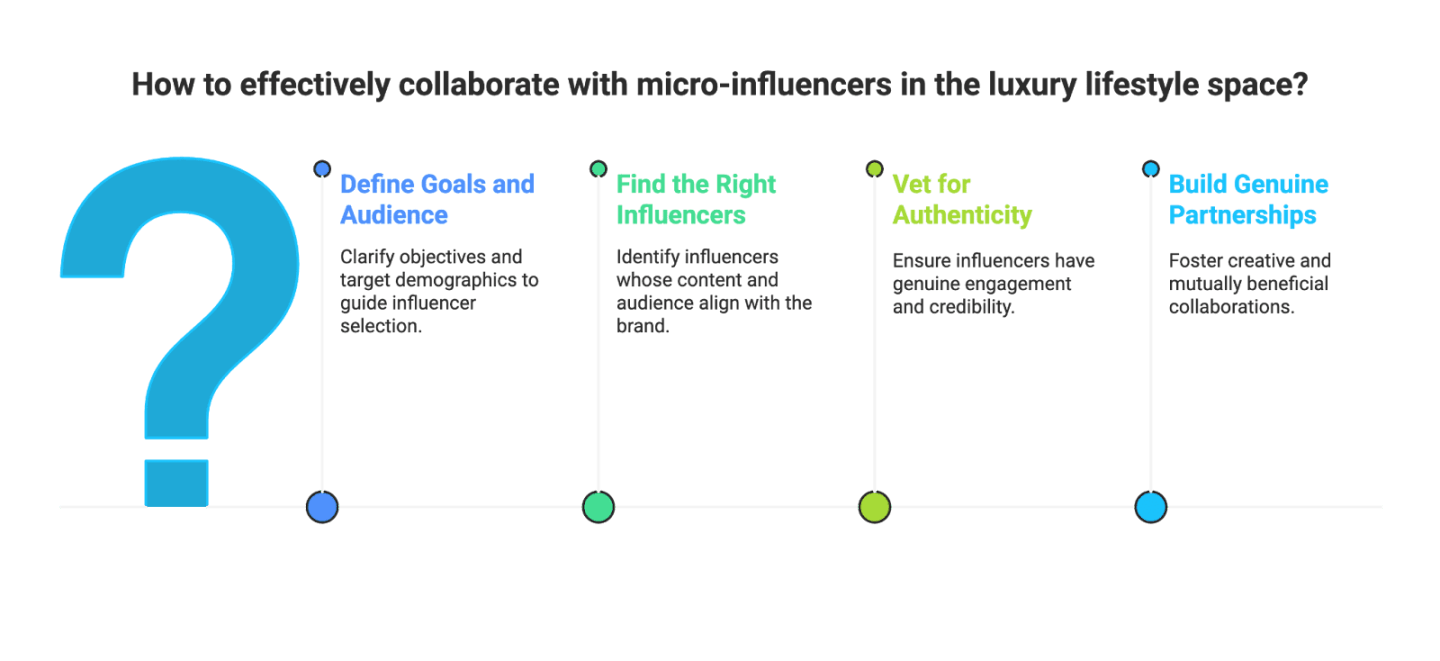
Ready to dive into an influencer campaign for your brand? Whether you’re a luxury boutique owner, an Amazon seller, or any e-commerce entrepreneur looking to leverage influencers, here are some best-practice tips to get the most out of working with micro-influencers in the luxury lifestyle space:
Start by clearly identifying what you want to achieve and who you want to reach. Are you trying to boost product sales on Amazon? Increase brand awareness on Instagram? Gather UGC for your website or ads? Different goals might affect the type of influencer you seek. Likewise, nail down your target customer profile – their demographics, interests, and which social platforms they frequent. For example, if you sell eco-friendly luxury candles targeted at millennials, your goal might be to generate sales and reviews among sustainability-minded home décor enthusiasts. Having a specific goal and audience in mind will guide all your decisions and help you choose the right kind of influencers to work with. It will also be how you measure success (e.g. X number of referral sales, Y pieces of UGC content created, Z% increase in Instagram followers, etc.).
Look for creators who align closely with your product’s niche and whose followers match your target market. In the luxury space, this means finding influencers whose personal brand and content style fit your brand image. If you’re marketing a tech-forward luxury watch, you might search for influencers who focus on men’s lifestyle or gadgets; if you have a high-end skincare line, seek out beauty influencers who emphasize luxury or clean beauty routines. Use social media and hashtags as discovery tools – for instance, browse popular hashtags like #luxurylifestyle, #luxurybeauty, #fiveluxury (for travel), or platform-specific tags like #FoundItOnAmazon (for Amazon product finds). Influencer marketplaces and databases (including platforms like Stack Influence or Social Cat) can also help by listing creators by category, follower count, and engagement metrics. Make a shortlist of influencers who: a) post content relevant to your product, b) have an audience that fits your target (check their follower demographics if available), and c) maintain a style/tone that complements your brand. Micro-influencers in the luxury realm can be very specific, so take advantage of that – for example, there are micro influencers specializing in luxury motherhood, luxury fitness gear, vegan luxury fashion, etc. The more closely their focus overlaps with your product’s story, the more authentic the collaboration will feel.
Before you reach out or send anything, do a quick quality check on each potential influencer. Don’t be seduced solely by follower count – an influencer with 5k followers and a 10% engagement rate (500 likes per post) is usually more valuable than one with 50k followers but a 1% engagement rate. Check a few of their recent posts: What’s the average number of likes and comments? Do people seem genuinely interested in their content (thoughtful comments) or are the comments generic? Also, look at the content mix – do they post a lot of sponsored content or is it mostly organic? An influencer who promotes something new every single day might have diminished credibility; ideally, you want someone who only partners with brands occasionally and truly seems to use and love those products. Authenticity is key: a smaller influencer who has a tight-knit, trusting relationship with their audience will drive better results than a bigger influencer who isn’t really trusted. Tools like engagement calculators or even a manual scroll can help spot any red flags (like an account with suspiciously high follower counts but very low engagement – could indicate fake followers). Essentially, pick influencers who truly influence – that is, their audience listens and reacts to them – not just ones who have flashy numbers.
When approaching micro-influencers, be personable and offer a collaboration that’s mutually beneficial. Micro-influencers (especially in luxury) put a lot of care into their content and personal brand, so give them creative freedom to integrate your product in a way that feels natural. You might compensate them with free product, a small fee, or commission via affiliate links – but also emphasize the value to them (perhaps you’ll feature them on your brand’s page or you’re giving them an exclusive discount for their followers, etc.). Provide any necessary info about your product, but don’t micromanage the message too much; content will come off more authentic if the creator is allowed to present it in their style. Encourage them to be honest and genuine – for instance, an honest review that points out a couple of pros and cons can actually be more credible than a glowing infomercial-style post. Also, think beyond just a one-off Instagram photo. Maybe they can do an unboxing video, a how-to-use demo on TikTok, a before-and-after comparison, or a mini vlog featuring your product in use. The more creative and real the content, the better it will resonate. Be sure to communicate any key points or disclaimers (especially for luxury products, you might want certain features highlighted), but overall let the influencer’s voice shine. When influencers feel trusted and respected in the partnership, they tend to produce better content. And as a bonus, you’ll get various pieces of UGC that you can later share or promote (with permission). Remember, the goal here is to get content that doesn’t feel like an ad – because that’s what their followers will respond best to, and ultimately what will drive engagement and sales.
By following these steps – knowing your goals, picking the right influencers, focusing on authenticity, and leveraging content intelligently – you’ll set yourself up for a successful collaboration that benefits both your brand and the influencer. Remember that at the heart of it, it’s about people connecting with people. Luxury lifestyle influencers offer a bridge between brands and consumers: they translate the allure of luxury into relatable stories and images. When you partner with the right ones in the right way, that bridge can lead a whole new audience straight to your (literal or virtual) doorstep.
Luxury lifestyle influencers have undoubtedly changed the marketing landscape, bringing a mix of aspiration and authenticity that resonates in today’s social-media-driven world. Whether they have 5,000 followers or 5 million, these creators wield the ability to shape consumer perceptions of high-end brands and products through the content they share. For businesses – from established luxury houses to indie Amazon sellers – influencers represent an opportunity to reach audiences in a more organic and trusted manner. In particular, micro-influencers in the luxury niche are proving that bigger isn’t always better; their engaged communities and credible voices can drive significant impact, often at a fraction of the cost of traditional advertising. By embracing influencer collaborations, encouraging the creation of user-generated content, and utilizing platforms (like Stack Influence) to manage campaigns efficiently, brands can tap into a powerful engine of growth. The key is to prioritize genuine engagement and long-term relationship building over one-off promotion. When done right, partnering with luxury lifestyle influencers can yield not just a spike in sales, but also enduring brand loyalty, a treasure trove of authentic content, and a vibrant online presence that stands out in the crowded e-commerce marketplace. In a world where social proof and storytelling matter more than ever, these influencers offer a pathway to connect with consumers in a way that feels both aspirational and attainable – a winning formula for any brand looking to thrive in the modern luxury economy.
User-Generated Content (UGC) has become marketing gold for brands, especially in the e-commerce world. Micro-influencers and everyday content creators are in high demand by online businesses and Amazon sellers because they produce authentic content that consumers trust. In fact, 90% of consumers say authenticity is important in deciding which brands to support, and UGC is seen as the most authentic form of content. It’s no surprise then that 79% of people say UGC highly influences their purchase decisions – far more than traditional brand content. Brands know that a relatable TikTok review or unboxing video can drive more sales than a glossy ad.
For you as a UGC creator or aspiring micro-influencer, this means huge opportunity – but only if you can show brands what you’re capable of. That’s where a UGC portfolio comes in. Think of it as your content creator resume or a digital portfolio showcasing your best user-generated content examples. In this blog, we’ll walk through how to create a compelling UGC portfolio (with an emphasis on video content) that will help you stand out to brands and kickstart your UGC career. We’ll cover what to include, how to organize it, and tips to optimize it for success. Let’s dive in!

A UGC portfolio is a curated collection of content you’ve created that highlights your style, expertise, and results. It’s like a personal lookbook or media kit filled with your best product photos, testimonial videos, unboxing clips, reviews, etc., that demonstrates your ability to create authentic, engaging content. For a UGC creator, this portfolio is your proof-of-work to show potential brand partners what you can do.
Why is this so important? In today’s influencer landscape, brands often insist on reviewing a creator’s portfolio before collaboration. Businesses want to see if your content aligns with their values and quality standards. A strong UGC portfolio can make the difference in landing a paid gig or free product collaboration. It shows you’re professional, creative, and capable of delivering the content they need. Without one, you’re relying on promises – with one, you’re showing actual proof.
Moreover, even if you’re a micro-influencer with a modest following, a great portfolio can highlight the strengths that make micro creators so effective. (Often, micro-influencers have significantly higher engagement rates – around 10% – compared to ~2% for macro influencers, meaning their audience is highly involved.) Brands know that partnering with niche micro-influencers provides authentic UGC and word-of-mouth credibility that big ads can’t match. In short, UGC portfolios build trust. They reassure brands that you can create the kind of relatable content that drives clicks, engagement, and sales.
What exactly should go into your UGC portfolio? While there’s room for personal flair, most effective portfolios share a set of core components. According to industry experts, a complete UGC portfolio typically includes a cover page, a unique selling proposition (USP) section, examples of your work, any testimonials or case studies, your content packages/rates, and your contact information. Let’s break those down:
This is the introduction to you and your services. It should include your name (or creator handle), a professional-looking photo of yourself, and a brief tagline or overview of what you do. In one glance, a brand should grasp who you are and the UGC services you offer (e.g. product reviews, unboxing videos, tutorials, etc.). Make sure to prominently display your social media handles here (and on every page) – you want it to be easy for brands to find and browse your TikTok, Instagram, YouTube, or other channels. Pro Tip: On your cover or in a visible header, consider adding a one-liner about how you help brands (for example, “Beauty content creator helping skincare brands drive sales with authentic demo videos”). This instantly tells clients what value you bring.
Dedicate a section to your Unique Selling Proposition (USP) – essentially, who you are as a creator and what niche or style you specialize in. It might be tempting to claim you can do it all, but focusing on a specific niche (or a few) is actually better. Whether it’s tech gadget demos, beauty and wellness tips, or fitness product reviews, define your realm. Highlight what sets you apart from other creators in that niche. Maybe you have a background in the industry, a particularly quirky sense of humor, or a signature storytelling approach – mention it! This section is like your “about me” but tailored to brands: it shows your expertise and personality. (Example: “As a certified yoga instructor turned content creator, I specialize in wellness and fitness products – I create calming, instructive videos that feel like a friend guiding you.”) Also, you can note your location here if relevant, since brands with physical products may need creators in certain regions.
This is the heart of your portfolio – the showcase of your content. Quality over quantity is key. Select your very best pieces of UGC that demonstrate your range and skill. Aim to include a mix of formats with an emphasis on video (since short-form video is especially powerful for UGC), but also a few great images or even text testimonials if you have them. For instance, you might include:
It helps to organize your examples by category or theme. You could have sub-sections like Product Reviews, Tutorials, Lifestyle Shots, etc., each containing a couple of pieces. This way, a brand interested in, say, tutorial videos can find those quickly. Add brief captions or notes on each example to give context – e.g., “60-sec Instagram Reel reviewing XYZ Serum – 10k views in 48 hours” or “Product photo for ABC Brand – used in their Amazon listing.” Highlighting any strong performance metrics on your content (views, engagement, conversion if known) will impress potential clients. And if you use voice-overs or speak in your videos, try to include at least one example that features your voice, so brands can get a sense of your on-camera persona and even your accent (which can matter for some brand audiences).
It’s often helpful to outline what services you offer and at least a ballpark of what you charge (if you’re comfortable sharing rates publicly). Many UGC creators include a “Rate Card” page listing packages – for example, $X for one 60-second video, $Y for 5 product photos, or bundle deals like “Combo: 1 video + 3 photos for $Z”. If you prefer, you can state “Rates available upon request” and discuss pricing individually, but showing packages can streamline negotiation with brands. Be clear about what they get: content length, number of revisions, whether usage rights are included, etc. Also, mention your typical delivery timeframes for each type of content (e.g., “I deliver video content within 7 days of receiving the product”). Emphasize the value – not just the cost – by briefly noting what benefit the brand gets with each package (for instance, mention if you include a content usage license, or that your videos are optimized for TikTok trends). Transparent pricing and deliverables help set proper expectations.
By including all the above elements, you’ll have a comprehensive portfolio that covers all the information a brand might look for when evaluating a UGC creator. Next, we’ll talk about how to present these components for maximum impact.
Now that you know what goes into a UGC portfolio, let’s go through how to actually create it step by step. The process is similar to organizing your experience with a best resume builder. Building a portfolio can feel daunting, but if you tackle it in pieces, you’ll have a polished showcase in no time.
Before you start designing pages and picking content, take a moment for strategy. Who are your ideal clients, and what niche do you serve? Defining this will guide everything else. If you try to appeal to everyone, you’ll dilute your impact. Instead, pick a focus that plays to your strengths and interests. For example, maybe you’re great at making funny gadget review videos – your niche could be consumer tech for Gen Z. Or you’re a mom who loves making baby product tutorials – then parenting/baby brands are your niche. List 2-3 niches or industries you specialize in and keep them in mind when selecting content. Also consider the audience: are you speaking to young adults into streetwear? Outdoorsy hikers? Beauty enthusiasts? Ensure the style of content in your portfolio would appeal to the audiences that your target brands want to reach. A clear niche makes you more memorable and hireable. Pro Tip: Mentioning your niche upfront (on your cover or USP page) will immediately signal to brands in that space that you’re their go-to creator.
UGC portfolios can be made in various formats – a one-page media kit PDF, a personal website, or even a Canva slideshow. The key is that it should be visually appealing, easy to navigate, and mobile-friendly. Some popular options:
There’s no “one-size-fits-all” – choose a format you’re comfortable updating. Just make sure it looks professional: clean layout, fast loading, and works on mobile devices (brands might be looking at it on their phone). If using a website, a simple menu or one-page scroll design works well so they can jump to sections. If using a PDF, keep file size reasonable and design cleanly. Pro Tip: Simplicity wins – a cluttered portfolio will turn viewers off. Sometimes less is more if it highlights your best work quickly.
When it comes to selecting work for your portfolio, be picky – only include your absolute best examples. It’s better to showcase 5 amazing pieces than 20 mediocre ones. As mentioned, UGC portfolios thrive on a mix of content types to show versatility, but with an emphasis on video content. Why mostly video? Because short videos (think TikTok, Reels, stories) tend to generate the most engagement and are highly sought after by brands. In fact, user-generated **video content receives 10× higher engagement than other types of content on social media. So you want to underline that strength. Select a variety of videos: maybe one talking-to-camera review, one voiceover montage, one unboxing, etc., to demonstrate you can do it all (within your niche). Complement those with a few great static images (like an Instagram-style product shot or a before/after collage you made) to show you can also deliver quality photos. If you have any written content (like a compelling product review you wrote or an example of a witty caption), you can include a snippet or stylized screenshot of it, but keep text content minimal in the portfolio – it’s mainly a visual showcase.
When adding your content examples, organize them logically. For instance, group videos by type or purpose. You might have a section for “Product Demonstration Videos”, another for “Lifestyle/Product in Use Clips”, another for “Reviews/Testimonials”. This way a brand can jump to the category most relevant to what they need. Use headings or labels for these sections for clarity. Beneath each, present the content with a brief description. If it’s a video, you might use a thumbnail or embed; if it’s a photo, just insert it at good resolution. Caption each piece with context and any metrics or results (e.g., “Instagram Reel – 15k views, 1.2k likes”, or “Photo used by Brand X on their website”). Metrics act as evidence of your effectiveness. Don’t worry if you don’t have huge numbers; even saying “Achieved 5% engagement rate” or “clients reported increased clicks” adds credibility. And as you grow, update these with bigger wins.
One more tip: maintain balance. Avoid the urge to throw in every content piece you ever made. Too much content can overwhelm and may dilute the impact of the really great stuff. You want the viewer to come away remembering a few standout examples, not feeling like they watched your entire TikTok archive. Aim for maybe 6-10 pieces total in your portfolio, depending on format. You can always rotate in fresher pieces over time.
Another idea is to include case studies: a paragraph describing a problem you helped solve. For instance, “Case Study: Boosting Amazon Sales for Brand Z – Brand Z was struggling with low social media presence. I created 3 UGC videos for them (tutorial, unboxing, testimonial), which they used in ads and on their Amazon page. As a result, their Amazon listing conversion rate improved and one video ad got a CTR 4x higher than their previous campaign.” Keep case studies concise and results-focused. They essentially answer a brand’s unspoken question: “What can this creator do for us?” by showing what you’ve done for others.
How you present your content is almost as important as the content itself. A well-designed portfolio makes you look professional and makes it easy for brands to evaluate you. Here are some design best practices:
If design isn’t your strong suit, consider using templates (Canva has nice ones) or platforms like Copyfolio or Clipara that are made for portfolio building. They often have drag-and-drop portfolio templates you can start from. Just remember to tailor it to your content and style so it doesn’t look cookie-cutter.
Finally, a crucial step that never really ends – updating your portfolio regularly. Treat it as a living document. Each time you create a new piece of content that outshines your previous work, or you get a cool new testimonial or stat, add it in and consider removing an older piece that’s not as strong. Nothing says “out of touch” like a portfolio that hasn’t been updated in two years. Regular updates also show that you’re an active creator. A good rule of thumb is to revisit your portfolio every few months (or whenever you have a notable new project) to keep it fresh. This way, if a brand calls tomorrow, you’re ready to send your portfolio without scrambling to update it last-minute. Pro Tip: Set a calendar reminder each quarter to review your portfolio – it’s a quick task that can pay off big when that next opportunity comes.
By following these steps, you’ll assemble a UGC portfolio that not only contains your best work but also presents it in the best light. Now, let’s discuss how to leverage that portfolio and actually start working with brands.

Once your UGC portfolio is ready, you’ll want to put it to work and start landing collaborations! Here are a few tips to get your portfolio in front of the right people and begin building your experience (which in turn lets you further refine your portfolio):
Proactively contact small brands (especially in your niche) that could benefit from UGC. Send a friendly email or DM introducing yourself as a UGC creator and include a link to your portfolio. Emphasize how you can help them with content – remember those stats about UGC boosting conversions and trust! Even Amazon sellers on Vendor or Seller Central might be looking for content for their product listings. Having a professional portfolio link ready to share will instantly set you apart from other newcomers who might just say “Hey I want to make UGC for you.” It shows you mean business.
Use your own social platforms to advertise that you’re a UGC creator available for collaborations. Pin a tweet or make an Instagram highlight that says “UGC Creator – Check out my portfolio .” Often, brands scout on social media; if they find your content appealing, the next thing they’ll do is look for a portfolio or examples – make it easy for them to find. On TikTok, there’s a whole community around #UGCcreator – engage with it, post some TikToks that showcase your UGC work, and direct people to your portfolio or how to contact you.
One of the easiest ways to get started is to join platforms or marketplaces that connect micro-influencers and UGC creators with brands. For example, Stack Influence is a platform focused on pairing micro-influencers with e-commerce brands (including Amazon sellers) for product seeding campaigns and UGC content creation. Platforms like this can be a great way for new creators to get gigs – you might receive free products or earn a bit of cash in exchange for creating content, and you can use that content to further build out your portfolio. Stack Influence, in particular, manages a lot of the campaign process for you, making it easier to collaborate at scale. Similarly, other marketplaces (like marketplace apps or influencer agencies) often have databases where you can create a profile (essentially a mini-portfolio) and brands can find you. Tip: When you do get a gig through such platforms, always save and organize the content you produce – with the brand’s permission, you can showcase it in your own portfolio as a real-world example of your work.
Don’t underestimate the power of community. Join Reddit communities (like r/UGCcreators), Facebook groups for influencer marketing, or Discord servers where UGC creators chat. You can learn a ton about which brands are looking for UGC, share portfolio tips, and sometimes even find collaboration opportunities. If you see someone in your niche landing deals, check if they’re open to sharing how they approached it. They might even refer you if they have too many opportunities.
Finally, remember that building a career (or side hustle) as a UGC creator is a journey. Your portfolio is the foundational tool that will evolve with you. Every collaboration you do can feed back into making your portfolio stronger, which then leads to bigger collaborations, and so on. Keep it up, stay authentic (because authenticity is your superpower in UGC), and keep networking.
Crafting a UGC portfolio might take some effort upfront, but it’s absolutely worth it. It’s your ticket to entering the booming world of user-generated content creation where micro-influencers, e-commerce brands, Amazon sellers, and content creators intersect for mutual benefit. A well-made portfolio showcases your authenticity, creativity, and professionalism in one package. It lets brands see at a glance how you can help them boost their social proof and sales with relatable content. By focusing on mostly video content (the current king of engagement), highlighting your niche expertise, and backing it up with examples and results, you position yourself as a valuable asset to any brand’s marketing efforts.
As UGC and micro-influencer campaigns continue to grow, having a strong portfolio will make you stand out in the crowd. Brands are actively looking for skilled creators who can produce TikToks, Reels, photos, and reviews that feel like a friend’s recommendation – now you know how to present yourself as exactly that person. So, follow the steps, use the tips, and don’t forget to update your portfolio regularly. In the ultra-competitive creator economy, a great portfolio is your secret weapon. It’s the key to unlocking collaborations by building instant trust and excitement with potential clients. So get out there and start creating! With your new UGC portfolio in hand, you’re well on your way to turning your creativity and influence into a thriving opportunity – good luck, and happy creating!
User-Generated Content (UGC) has become a buzzword in the social media and e-commerce world. But what exactly is it, and why should aspiring content creators and micro-influencers care? In simple terms, UGC refers to content like videos, photos, or reviews created by real users (customers or fans) rather than by the brands themselves. If you’ve scrolled TikTok or Instagram lately, you’ve probably seen everyday people (not just big celebrities) sharing product reviews, unboxing videos, or testimonials in a casual, relatable style. These UGC creators might not have millions of followers, but their content feels real – like advice from a friend – and that’s exactly why it’s so powerful. Brands of all sizes – from small Amazon sellers to major e-commerce companies – are eagerly tapping into UGC creators to produce genuine posts that build consumer trust. Unlike a traditional influencer who is hired to post on their own profile, a UGC creator is typically paid just to create content for the brand’s use, without necessarily posting it on their own social media. In other words, you can get paid to make great content without needing a huge online following of your own.
This is great news for beginners and aspiring influencers. In fact, the UGC creator field is booming in 2025 – it’s an ideal path for those who love creating content but don’t want the pressure of being a full-time influencer. You can earn money by making relatable product videos and photos without needing tens of thousands of followers. For an aspiring influencer or micro-influencer, doing UGC content can also be a smart way to break into the industry and build your portfolio (think of it like building an “influencer résumé” of content samples). Before we dive into how to start creating UGC, let’s clarify why UGC is such a big deal and how micro-influencers fit into the picture.

UGC has exploded in popularity because of one core thing: authenticity. We’ve all grown a bit tired of overly polished ads and celebrity endorsements that feel disconnected from reality. UGC content, by contrast, comes off as authentic, peer-to-peer advice. Studies back this up – for example, 82% of consumers say they’re more likely to purchase a product if a brand uses UGC in its marketing. In other words, seeing a real person genuinely enjoying a product can influence buying decisions more than a slick ad ever could. UGC feels like word-of-mouth, and that sense of realness builds trust with audiences.
Another reason brands love UGC is that it’s cost-effective and abundant. Traditionally, brands had to wait and hope customers might post content about their products on their own. Now, with dedicated UGC creators, brands can actively source authentic-looking content to use in ads, product pages, and social media. It’s a scalable way to get “real” content. As a result, the number of people working as UGC creators has skyrocketed – between 2024 and 2025 the number of UGC creators increased by 93% year-over-year, reflecting how much demand there is for this style of content. Companies have realized that investing in UGC (and the creators behind it) pays off in more engaging marketing.
Micro-influencers – generally defined as creators with roughly 10,000 to 100,000 followers – play a special role in the UGC landscape. These are the “everyday” influencers who have smaller audiences but very engaged communities. To put them in context, here’s a quick look at how different influencer tiers are defined:
As you can see, micro-influencers hit a sweet spot of authenticity and impact. They may not have the largest follower counts, but their audiences are highly tuned-in to their content. Micro-influencers often enjoy far higher engagement rates on their posts than big influencers do. It’s common to see around 5–15% of a micro-influencer’s followers actively liking, commenting, and clicking on their content, whereas a mega-influencer with millions of followers might only get ~1–2% engagement on average. In fact, data shows micro-creators tend to have roughly 10% engagement rates versus around 2% for macro influencers. This means a micro-influencer with 10k followers might get 1k genuine interactions on a post, while a celebrity with 1 million followers might only get 20k. That higher engagement isn’t just a vanity metric – it signifies a more loyal and responsive audience, which is gold for marketers.
Moreover, micro-influencers and UGC creators deliver a great bang for the buck. Because they are more affordable to work with than big-name stars, brands can partner with many micro-creators for the cost of one celebrity campaign. And thanks to the strong engagement and trust they generate, these campaigns tend to yield excellent returns. One study found that micro/nano-influencer campaigns can achieve around a 20:1 return on investment (ROI) (meaning $20 in revenue for every $1 spent), versus roughly 6:1 ROI for campaigns with macro influencers. The chart below illustrates how micro-influencers compare to macro influencers on two key metrics – average engagement rate and marketing ROI:
Average engagement rate (left) and ROI (right) for micro vs. macro influencers. Micro-influencers see a much higher share of their audience interacting (~10% vs ~2%), and their campaigns often achieve a significantly better ROI (~20:1 vs ~6:1).
Because of these advantages, micro-influencers punch above their weight – they offer authenticity and conversions at a fraction of the cost of a huge influencer. This is especially valuable in e-commerce. In the world of online retail (think Amazon sellers, Shopify brands, etc.), social proof and trust can make or break a sale. Shoppers are more likely to try a product if they see a relatable person vouching for it. UGC content generated by micro-influencers can directly boost product trust and sales for e-commerce brands. For instance, if you’re an Amazon seller, imagine having a short video on your Amazon product page where a real person enthusiastically unboxes and uses your product – that’s UGC gold. Many savvy Amazon sellers now include UGC videos and photos in their listings, because it makes the product feel more credible and hype-worthy. Similarly, brands often repurpose influencer UGC in their social media ads, knowing that an ad that looks like an honest review will get higher engagement than a typical polished commercial. In sum, micro-influencers + UGC = a powerful combo for authentic marketing, high engagement, and ultimately driving more e-commerce sales.
Now that we’ve covered the what and why, let’s get into the how. How can you, as a beginner or aspiring micro-influencer, start creating UGC content and monetizing your creativity? Below is a step-by-step guide to kickstart your UGC content creation journey.

Getting started as a UGC creator is relatively straightforward – you don’t need formal credentials or a huge following, just creativity, consistency, and a strategic approach. Here are the key steps to begin producing UGC content and growing this into a side hustle (or even full-time gig):
1. Find Your Niche and Style – Start by zeroing in on the type of products or industries you resonate with most. Ask yourself: What do I genuinely enjoy or have knowledge about? It could be anything from skincare, tech gadgets, home décor and DIY, fitness gear, books, or fashion – choose something you’re passionate about. Focusing on a niche helps you stand out and build credibility in that area. Brands are more likely to hire you if it’s clear you have a genuine interest or expertise in their category. For example, if you love skincare, you might create lots of mini reviews or how-to videos about skincare products; this would make you an attractive UGC creator for beauty brands. Also consider your personal content style: are you upbeat and humorous, or calm and informative? Lean into whatever feels natural to you. Remember, authenticity is your currency as a UGC creator, so picking a niche and style that truly excites you will show through in your content.
2. Set Up Your Social Media Presence – You don’t need a massive follower count, but you do need a place to showcase your work. Think of your social media profiles as your portfolio. It’s wise to create dedicated creator accounts on platforms like TikTok and Instagram (and possibly YouTube or others depending on your niche) to serve as your UGC showcase. Optimize your bios to clearly state that you are a “UGC Creator” or “Content Creator for Brands” and include contact info (email) so potential clients can reach you. Some UGC creators even include “UGC” in their usernames on TikTok to be easily found. Next, populate these accounts with sample content. Post content regularly – even if it’s just organic content featuring products you already own – to build out your feed. Treat this like your resume: a brand interested in you will want to scroll your TikTok or Instagram and see examples of your style. You can start by reviewing items around your house, demonstrating how you use them, or sharing quick testimonial clips. The key is to have an active, professional-looking presence that screams “I know how to create engaging content!” Don’t worry about getting tons of followers; even a modest following is fine. The goal is quality content on display. (Pro tip: If you already have a personal account with some following, you can use it, but make sure it looks clean and aligned with the image you want to present to brands.)
3. Create a Portfolio of UGC Content – Alongside your social profiles, consider putting together a more organized UGC portfolio. This could be a simple one-page website, a PDF media kit, or even just a pinned highlight on Instagram – basically a collection of your best sample work. Start by producing a variety of sample UGC pieces that you can show to potential clients. A good approach is to use products you already have and love, and create content as if you were paid to do it. For example, pick an item and make a 30-second testimonial video, then also take a nice photo of the product in use, and maybe write a short review caption. Try to cover the common formats brands look for in UGC: an unboxing video, a how-to or demo video, a before-and-after comparison (if relevant), a selfie video where you talk about your experience, etc. Variety is important – it demonstrates you can create content in different styles. You might even edit together a quick montage of your clips to make a UGC reel highlighting your skills. Keep the production values decent (good lighting, clear audio) but don’t make it overly polished – it should still feel like real user content, just the best possible version of it. Over time, as you start working with actual brands, ask if you can include the content you made for them in your portfolio as well. Many UGC creators also design a PDF or website listing their services and rates, with links to their example videos. The bottom line: have something shareable you can send when a brand says “Can we see your work?”
Types of UGC content to include in your portfolio:
4. Leverage TikTok and Instagram for Exposure – Now that you have some content and profiles set up, make sure you’re taking advantage of social media trends to get noticed. TikTok, in particular, is a hot platform for UGC creators in 2025. There’s a whole community around UGC on TikTok – check out hashtags like #ugcreator, #ugccommunity, or search for “UGC tips” and you’ll find tons of creators sharing advice and even trending video templates. Engaging with this community can both teach you a lot and get your name out there. Consider making a few TikToks where you talk about being a UGC creator – for example, “Come with me to film UGC content today” or “3 tips I learned as a new UGC creator.” These behind-the-scenes or tip videos can actually attract brands (who might see that you’re experienced) and fellow creators (who might shout you out or collaborate). On Instagram, use Reels to share your short videos since Reels can reach people who don’t follow you. Also, don’t be shy about engaging with brands you love: follow them, leave genuine comments on their posts, and even tag them if you create an unpaid post featuring their product. Often, brands notice their enthusiastic fans. Occasionally a brand might even repost your content (which is great exposure for you!). Essentially, make yourself visible on the platforms where brands spend time. If a company clicks on the UGC hashtag and sees your video, that could lead to a gig. Also, continue to grow your network: connect with other micro-influencers and UGC creators, join creator groups or forums, and share experiences. Collaboration and networking can open doors, and you might learn about paid opportunities through others.
Pitch and Partner with Brands – Once you’ve got a decent body of sample content, it’s time to land some paid gigs. As a beginner, you’ll likely start with small brands or startups, and that’s perfectly fine (they need UGC love too!). Research and make a list of brands in your niche, including e-commerce brands on Amazon or Shopify, and smaller companies that could use content. Make sure your style fits their vibe. Then, start sending out pitches. A pitch can be as simple as an Instagram DM or an email. Introduce yourself briefly as a UGC creator, say a nice thing about their product (show you actually know and like it if possible), and offer your content creation services. Highlight anything that makes you stand out – maybe mention if you have any relevant experience or even a small follower count that could be a bonus (“I also have 5k TikTok followers who love skincare content”). Most importantly, link to your portfolio or social media so they can quickly see examples of your work. Keep your tone friendly and offer value – for example, explain how you can create engaging videos that the brand can use on their socials or ads to help boost sales. Don’t be discouraged by no-responses; pitching is a numbers game and even big brands might reply if the pitch is good.
5. In addition to cold-pitching, you should also join UGC marketplaces and influencer platforms where brands are actively looking for creators. There are several websites and apps where companies post opportunities for UGC creators to apply to. Some popular ones include Insense, Coley, Trend, Billo, and others. It’s also worth mentioning Stack Influence – a platform that connects micro-influencers with brands for campaigns, often resulting in lots of UGC-style content. Signing up on these platforms can help you get matched with businesses seeking product photos or videos. Each platform works a bit differently (some are marketplace listings, others are managed campaigns), but as a new creator, they can be great for finding your first few gigs. When you do land an opportunity, make sure to clarify the scope: how many pieces of content, deadlines, and usage rights (e.g., can the brand use your video in ads?). And know your worth – even as a beginner, you deserve fair compensation. Many brands are used to paying anywhere from $50 to $200+ for a single UGC video depending on length and quality. Don’t undersell yourself, but at the start it might be okay to accept a lower rate or free product in exchange for experience and a testimonial. As you build a resume of happy brand partners, you can increase your rates.
6. Maintain Professionalism and Build Relationships – Treat every UGC project professionally – you are essentially running your own freelance business now. This means delivering quality work on time, being responsive and communicative with the brand, and making the process smooth. If you impress a client (even a small one), there’s a good chance they will come back to you for future content needs or refer you to other brands. Many successful UGC creators build long-term relationships with a handful of brands that regularly send them new products to create content for. Also, even though you’re not posting on your own channel in these collaborations, carry yourself like a professional influencer partner – be polite, incorporate feedback, and respect the brand’s guidelines. Over time, as you get repeat collaborations, you might even become something like an official content partner for a brand. Additionally, always clarify and respect usage rights: know what rights you are giving the brand to your content. For example, can they use your video in advertisements or on their website, and if so, for how long? Make sure any agreement on content usage (and extra payment for extended usage, if applicable) is clear. When a project is done, don’t forget to ask for a testimonial or permission to mention that brand as a client – social proof works both ways, and having a “happy clients” quote or a successful project to point to will help you land more gigs. Finally, keep sharpening your skills and staying on top of trends. Social media moves fast; new features or meme formats can emerge, and a great UGC creator is aware of what’s trending. Whether it’s a new TikTok editing trick, a popular sound, or a style of Instagram Reel that’s blowing up, pay attention and incorporate relevant trends into your content (as long as they fit your niche). Brands will love that you bring fresh, up-to-date ideas. Combine that with consistency and reliability, and you’ll develop a solid reputation in the space.
Becoming a UGC content creator is an exciting and accessible path for anyone with creativity and drive. You don’t need to be Insta-famous to succeed at this – brands (including big Amazon sellers and small start-ups alike) care more about your skills and authenticity than your follower count. By carving out a niche, showcasing your style on social media, and proactively reaching out to companies, you can start landing gigs and turn your content creation hobby into a revenue stream. Many people begin doing UGC as a side hustle and end up growing it into a full-time career – all while having fun being creative and working on products they genuinely enjoy. Plus, as you create content for brands, you might naturally grow your own audience too – it’s not uncommon for a UGC creator to become a micro-influencer in the process, since you’re consistently producing great content. In fact, the line between UGC creators and micro-influencers is blurring: both thrive on relatable content and niche communities, and both are in huge demand in the marketing world today.
The bottom line is that UGC is on the rise because it delivers what audiences crave – real, trustworthy voices. Brands are actively seeking fresh creators who can humanize their marketing with user-generated style posts. If you’re an aspiring influencer or just someone who loves creating content, now is the perfect time to jump in. Follow the steps above, stay authentic, and you could be on your way to a rewarding gig as a UGC content creator. Stack your skills, start creating, and turn your influence into income – the opportunity is yours for the taking!
Getting invited to exclusive influencer events – from beauty brand launch parties to fashion networking mixers – is an exciting milestone for any content creator. These events offer a chance to connect with brands, meet fellow creators, and often enjoy free products or experiences in exchange for social media coverage. If you’re a beginner micro influencer in the beauty or fashion space (whether you have a few thousand or tens of thousands of followers), you might wonder how to land those coveted invites. The good news is you don’t need to be a celebrity influencer to attend; many brands love working with micro influencers for their authenticity and engaged audiences. This casual but informative guide will walk you through step-by-step tips on getting invited to influencer events, with a focus on U.S. creators in beauty/fashion. Let’s dive in!
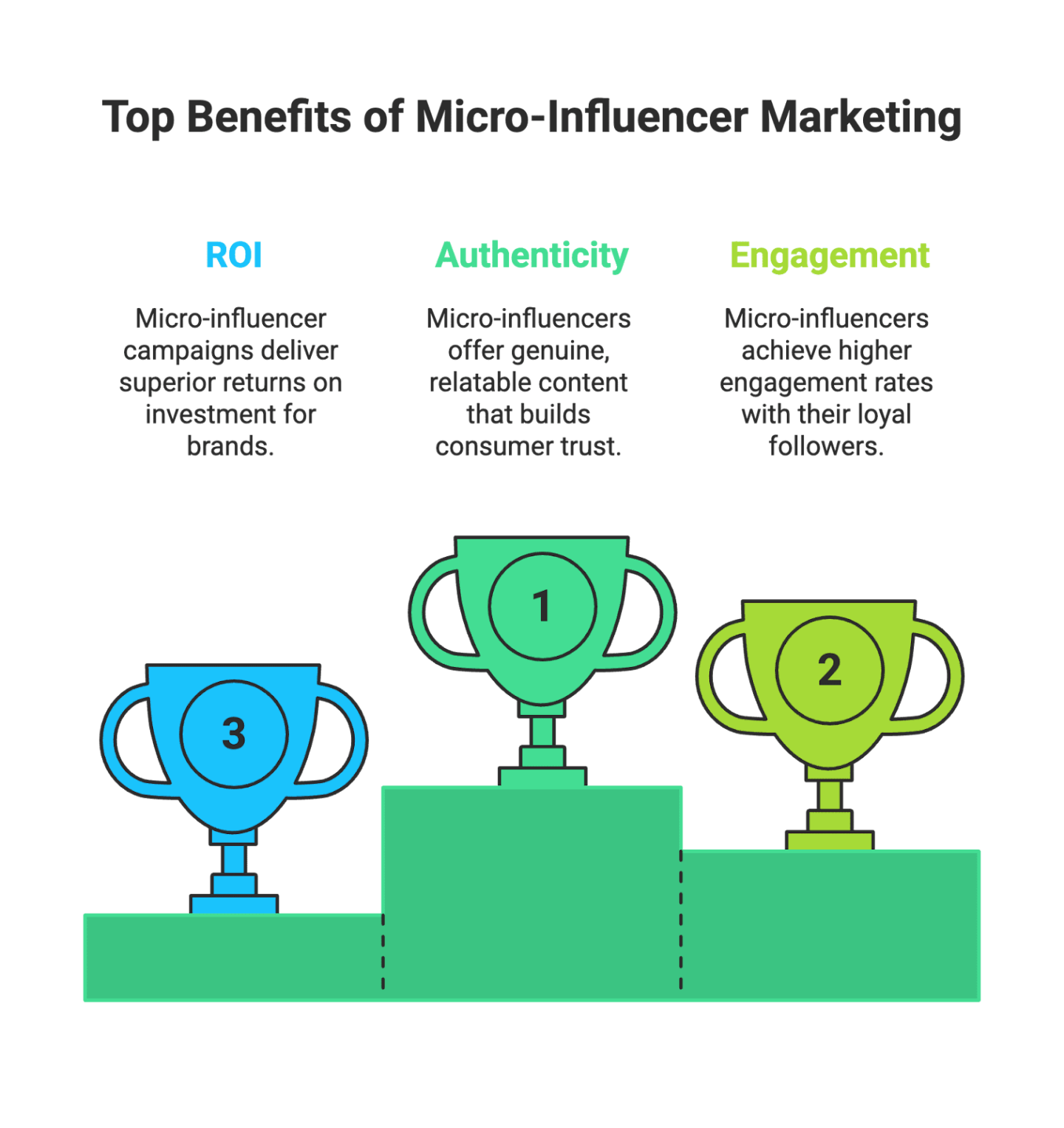
Don’t be discouraged if you’re a micro influencer with a modest follower count – brands recognize that bigger isn’t always better when it comes to influence. In fact, 86% of marketers prefer to work with influencers who have under 100,000 followers (micro influencers), versus only 17% who favor mega-influencers over a million. Why? Because micro influencers punch above their weight in terms of audience engagement and trust. It’s common for a micro creator’s posts to get ~5–10% of followers engaging (liking, commenting, sharing), whereas a huge influencer might only get ~1–2% engagement. That means a beauty blogger with 5k followers could easily get 250–500 likes per post, indicating a passionate community – while a celeb with 1 million followers might get 10k likes, which is proportionally lower. Moreover, brands see phenomenal returns working with micros: campaigns with micro influencers can deliver around a 20:1 ROI (each $1 spent generates $20 in revenue) compared to roughly 6:1 ROI for macro-influencer campaigns. All this data shows that micro influencers offer authenticity and bang-for-buck – your smaller audience is often more loyal and responsive, making you just as valuable to a brand’s outreach efforts as any big name.
It’s no surprise then that even e-commerce brands and Amazon sellers are turning to micro influencers and content creators to boost their marketing. These niche creators (often everyday people with a passion for beauty or fashion) help generate authentic user-generated content (UGC) and word-of-mouth buzz that traditional ads struggle to match. In the competitive online marketplace, a few enthusiastic micro influencers posting about a product can build serious consumer trust and drive sales. Brands know that inviting micro influencers to PR events or product launches will likely result in genuine, relatable posts that followers perceive as recommendations from a friend. So remember, your voice as a micro influencer is powerful – and brands are listening!
First impressions matter, and often your social media bio is your handshake with PR teams and brands. Optimize your profile so that anyone scouting for influencers can instantly tell who you are, where you are, and how to reach you. Here are a few must-dos:
Make sure your city/region is clearly stated in your Instagram/TikTok bio (or other main platform). Brands often search for local creators to invite, so you want to show up in location-based searches. For example, if a beauty company is hosting an event in Los Angeles, they might literally search Instagram for “Los Angeles influencers.” If your profile lists you in L.A., you’re more likely to pop up. A content creator pointed out that having her location in bio meant brands could easily see she was nearby for events. If you live outside a major city, consider adding the nearest big city you’re willing to travel to (e.g. “NYC area” or “Greater Dallas”) to broaden your opportunities.
Ensure your profile has an email address or DM option for business inquiries. Many event invitations come via email from PR agencies. If your email isn’t in your bio or linked, you might be passed over. Something like “📩: [email protected]” in your bio works, or use the dedicated email field on Instagram. Make it easy for PR folks to invite you.
In a few words, your bio should hint at what you do (e.g. “Beauty content creator 💄 | Skincare enthusiast | NYC”). This isn’t directly about getting event invites, but it helps brands instantly see that you align with their event theme. If you’re a cruelty-free makeup blogger and a vegan cosmetics brand is scanning for influencers, they’ll notice that. Clarity in your niche can put you on the shortlist when brands compile invite lists.
A well-optimized profile acts like your business card. It signals professionalism and makes it effortless for brands to decide to reach out. (Bonus tip: also switch to a Business/Creator account on platforms like Instagram, so you get access to insights and appear more official to anyone checking out your profile.)
To get noticed by event organizers, you need to showcase content that brands want to be a part of. This means consistently posting high-quality, engaging content in your focus area (beauty, fashion, etc.), so that when a brand or PR person checks you out, they see a creator who can deliver value. Here’s how to make your content shine:
Treat each post as a portfolio piece. Clear, well-lit photos, nicely edited videos, and cohesive aesthetics go a long way. Show off your personality and unique style, whether it’s your bold fashion sense or your candid humor in makeup reviews. Companies seek influencers who create good-looking, on-brand content and engage their followers. PR experts have noted that when scouting influencers for events, they look for those whose content aligns with their brand vibe and who actively interact with their audience (e.g. responding to comments). This indicates you’d be a good partner who can generate buzz at their event.
One clever way to get on a brand’s radar is to tag them in organic content when appropriate. For instance, if you visit a new local boutique or try a trendy cafe, post about it! Share an Instagram Reel of your outfit at that boutique or a TikTok of your cafe brunch and tag the business. Maybe you do a mini-review of a new Sephora product on your story – tag the brand and use their branded hashtag. You might also geo-tag the location (more on geo-tags soon) so local businesses see it. This not only builds goodwill (brands love seeing people organically enjoying their products/locations), but it can lead to connections. As one blogger shared, posting high-quality photos of a local restaurant meal and tagging the restaurant, then DM’ing them about how much she loved it, helped her build relationships that led to event invites down the line. Essentially, you’re giving brands a preview of the kind of coverage and enthusiasm you’d bring if they invited you to an event.
While curated content is great, keep it real. Micro influencers are valued for authenticity, so be honest in your captions, share your personality in stories, and don’t be afraid to show behind-the-scenes or your personal connection to what you post. If you’re a skincare micro-influencer, for example, talk about your actual skincare routine and why you love certain ingredients – this authenticity is what makes followers trust you, and brands know that authentic content from micro influencers resonates more than overly polished ads. Showing passion and knowledge in your niche signals to PR teams that you’re exactly the kind of genuine advocate they want at events.
Remember, your content is your currency. Brands will often scroll through your feed before deciding to invite you anywhere. By consistently putting out content that’s both high-quality and true to you, you make it easy for them to say “Yes, let’s add @YourHandle to our invite list – their posts would be perfect for our event.”
Now let’s talk about hashtags and geo-tags, two simple tools that can majorly increase your visibility to event organizers. While hashtags aren’t the virality cheat code they once were, they are still actively used by brands and PR agencies to scout local influencers. The key is to use them strategically:
Think about hashtags that describe you, your location, and your niche. For example, a fashion micro influencer in Dallas might use #DallasBlogger, #DallasFashion or #TexasInfluencer on their posts. A beauty creator in NYC might use #NYCbeauty or #NewYorkMakeupArtist. These tags might not have millions of followers, but that’s okay – you want the tags brands monitor, not necessarily what gets random public likes. In one case, a creator noted that the moment she started using her city + “influencer” hashtags (like #VancouverInfluencer and #VancouverBlogger), she “began to get invited to brand activations almost immediately”. Why? Because local PR people searched those tags and found her. Do a little research: see what hashtags other influencers in your city use (especially those who frequently attend events), and incorporate those in your posts. Also use niche tags relevant to your content (e.g. #CurlyHairCommunity if you do natural hair content, or #MakeupEnthusiast, etc.), since brands might search for niche + location combinations.
When posting on Instagram, always consider adding a location tag, especially if it’s relevant to your content. If you’re at a new pop-up event, tag the venue/city; if you’re just shooting content in your hometown, you could still tag the city. PR teams often browse location tags or location-based feeds to discover who’s active in that area. Influencer marketers have mentioned that getting to the top posts of your city’s geo-tagged posts or explore page can catch their eye. For example, a beauty PR firm planning an event in Miami might scroll through recent posts tagged “Miami” plus see who’s using #MiamiBlogger. By geo-tagging, you increase the odds of showing up in those local discovery feeds.
Keep an eye out for any brand-specific hashtags (like a campaign hashtag) or general event tags like #BeautyCon or #NYFW (New York Fashion Week). If you attend public events or trade shows, posting with those tags can demonstrate you’re already involved in the scene. Brands might notice your post under their official event hashtag and remember you for next time. Just be sure the content is high quality and relevant if you do this – you want to impress anyone who sees it.
In summary, smart hashtag and location tag usage is like SEO for your social posts – it helps the right people find you. Brands do snoop around these tags to fill their invite lists, so sprinkle a few strategic ones on your posts and stories. It’s a minor effort that could make a major difference in getting noticed.
If you want brands to invite you, it helps to be on their radar before the invite. A great way to do this (beyond your own posts) is to actively engage with brands and the PR professionals who represent them. In other words, be a familiar and friendly presence in their social sphere! Here’s how:
Make a list of the brands in your niche that frequently host events or that you dream of working with. Follow all their social accounts. Regularly like and comment on their posts (genuine comments, not spammy ones). This consistent engagement can get you noticed by the social media manager or PR team. For example, if a skincare brand sees you frequently commenting thoughtful things on their IG, they might click your profile out of curiosity – which could lead them to see you’re a great beauty micro influencer to invite next time they have a product launch. It’s about building familiarity.
Many PR agencies run influencer events on behalf of brands. Find out which PR firms or event companies in your city handle a lot of the beauty/fashion events. (You can often spot their name on event press releases or tags like “@AgencyName” on event posts.) Follow them on LinkedIn, Instagram, etc. and engage occasionally with their content. Some PR professionals share behind-the-scenes from events or even announce open invites on social media. If they see your name popping up and recognize you as a supportive local creator, you’ll be top of mind when they curate invite lists. One content creator’s tip: some PR agencies have sign-up forms on their website to join their influencer database. If you come across those, absolutely fill them out! It’s a direct line to be included in their outreach.
Keep an eye out for any brand in your area posting “We’re having a store opening/event next week!” Even if it’s not a personal invite to you, drop a comment like “Congrats! This sounds amazing 😍.” It shows you’re interested. I’ve seen cases where a brand later DMs a commenter to invite them – it does happen! Similarly, Twitter/X or LinkedIn can have calls for influencers (“Looking for local influencers in Chicago for an event…”). Being responsive and throwing your name in the hat can snag you a spot.
The goal here is to network online the same way you would in person – by showing up, being friendly, and adding value. Over time, brands and PR reps will start recognizing you. Then when your email or DM crosses their desk for an event, they’ll think, “Oh, I know her, she’s that beauty girl who always hypes our posts – let’s invite her.” It’s about planting seeds through engagement so opportunities can grow.
In the influencer world, it’s often who you know as much as what you know. Building genuine friendships with other creators in your area and niche can organically lead to event opportunities. Think of it as creating your own little influencer squad that looks out for each other. Here are some networking tips:
Before you get invited to the big brand-sponsored parties, start by attending any local influencer meet-ups, workshops, or community events. Platforms like Meetup or Facebook Groups sometimes have blogger/influencer gatherings. There might be free store events, product demo days at Sephora, or local fashion shows open to the public – go to these! You’ll meet other micro influencers and bloggers there. By showing up, you not only gain experience and confidence, but you might get looped into private event circles. Influencers you meet might later say, “Hey, I have an extra plus-one for this event, want to come?” or share insider tips about which PR agencies to email. In fact, many brand event invites include a plus-one, and creators often bring a friend from the community. If you’ve networked and made friends, you could be that lucky plus-one invitee for someone, which gets your foot in the door!
Networking isn’t just transactional – the best opportunities come naturally when you truly support your peers. Follow other micro influencers in your city, comment on their posts, maybe propose coffee dates or collaborations (like doing a joint live or photoshoot). As you build these relationships, you’ll start hearing about upcoming events. More established creators might mention a launch party they’re invited to; if you’re building a friendship, they might recommend you to the PR person or bring you along. One blogger shared that she’s been “really grateful to attend events as a plus-one” and whenever she gets a plus-one invite herself, she pays it forward by inviting another creator friend. It’s a pay-it-forward culture once you break in, and being friendly and supportive will make others want to share opportunities with you.
If you know a few influencers who often go to events, it’s okay to politely ask how they got on certain lists or if they know who organizes events for XYZ brand. Most will be flattered and happy to help a fellow creator (as long as you’re not just using them for invites). They might give you a contact or suggest you come along next time. Just remember to offer value back: maybe you can photograph each other at events, or give them a shoutout, etc. It’s a two-way street.
One important caveat – do not cold DM an influencer you barely know saying “Can you get me into XYZ event?” That can come off as rude or opportunistic. Instead, focus on real connection. Likewise, if you do get to attend an event (either on your own or as a plus-one), act professionally and graciously. Other influencers and brand reps will notice. Bring business cards to hand out, introduce yourself around the room, and basically be the kind of person people enjoy seeing at events. Fellow influencers might be impressed that you have your act together (many don’t carry cards, so you’ll stand out as a pro). This could lead them to include you in future invites or collaborations. And event organizers will remember you as well. If you prefer a more modern approach, you can also use a digital business card, making it easy to share your details instantly and leave a memorable, professional impression without the bulk of physical cards. After all, the key is making meaningful connections that leave a lasting impact.
In short, community is everything. When you support and uplift others, you’ll find doors opening for you as well. Many of today’s successful influencers credit the “kindness of fellow bloggers” for helping them get where they are. So build your tribe – you don’t have to navigate this journey alone, and together you can all rise up and get those invites!
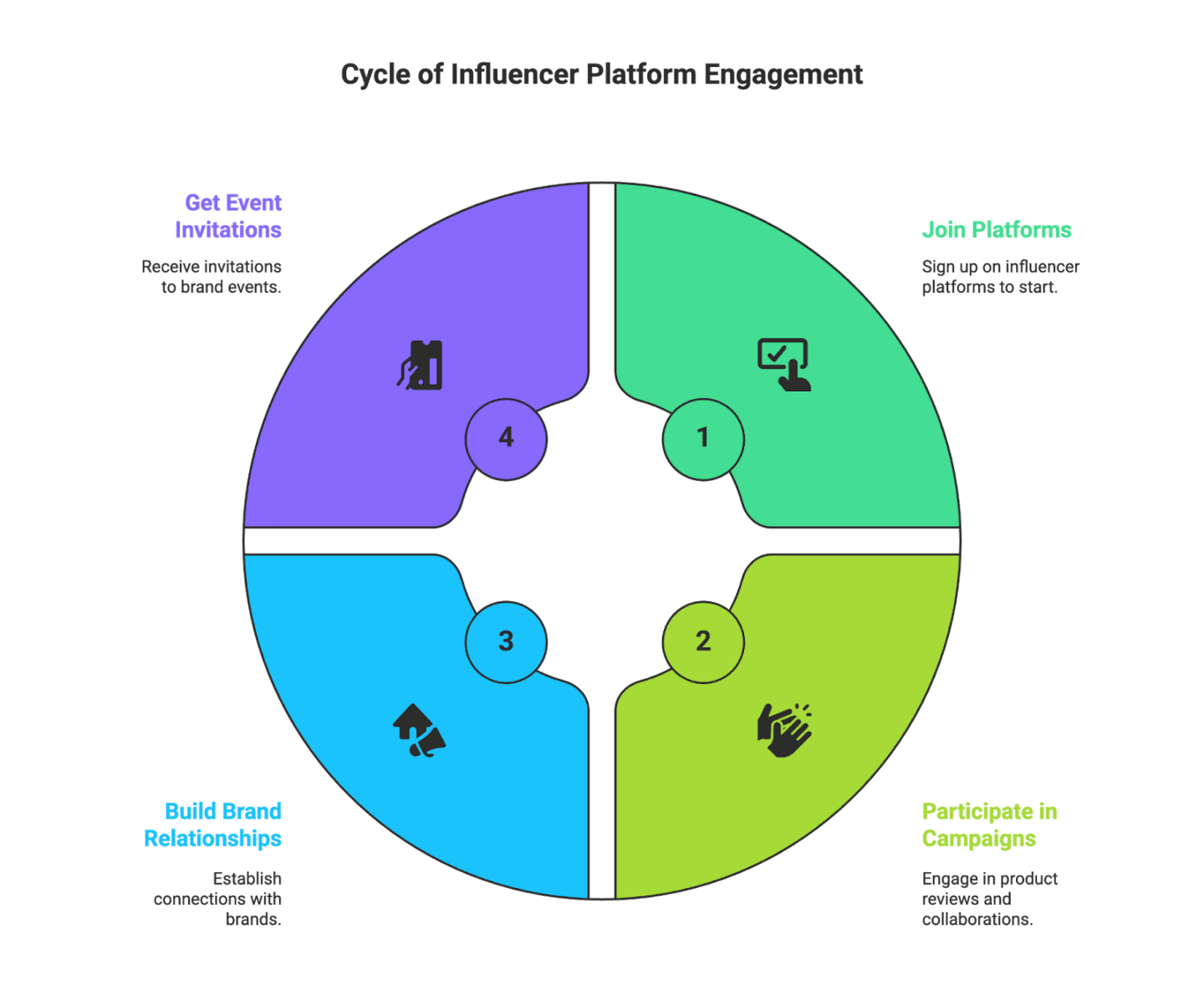
While you’re hustling on social media, don’t forget there are more formal channels to get noticed too. Many brands maintain PR lists or databases of influencers to invite for events and send PR packages. Similarly, there are influencer marketing platforms that connect creators with brands. Getting yourself onto these lists and platforms can significantly increase your chances of being invited to opportunities. Here’s what to do:
Lots of beauty and fashion brands (especially mid-size and indie brands) have signup forms for influencers. Sometimes it’s a Google form they post on Twitter, other times it’s a “PR List Signup” link in their bio, or a section on their website for creators. Keep an eye out for these and put your name in the hat. You’ll usually need to provide your contact info, social handles, niche, and maybe your follower count or media kit. This applies to PR agencies too – as mentioned, some agencies have submission forms on their sites to add yourself to their roster. By proactively joining these lists, you might get surprised with an invitation when an event pops up in your area. It saves the brand the trouble of finding you – you’re already in their contacts.
Consider joining a few influencer platforms/networks that focus on connecting micro influencers with brands. These platforms typically host campaigns for product seeding, reviews, and sometimes event collaborations. Being active on them can lead to invites or at least brand relationships that result in event opportunities. For example, Stack Influence is a micro-influencer marketing platform that helps brands (including e-commerce and Amazon sellers) connect with everyday creators for campaigns. By signing up on such platforms, you open yourself up to potential partnerships. While many campaigns on these platforms are about creating content for products, not necessarily in-person events, they can still get you on a brand’s radar. If you do a great job on a product collaboration, the brand might invite you to their next virtual or physical event as a trusted advocate. Aside from Stack Influence, other popular platforms include Aspire, Influenster, Fohr, and TikTok’s Creator Marketplace – explore those that fit your niche. (Tip: Make sure your profiles on these platforms are complete and showcase your best work, just like your social bio.)
Along similar lines, if a brand you love has an ambassador program or an affiliate scheme, join it! These programs often give you insider news and sometimes invites to special events or webinars. For example, some apparel companies have ambassador meet-ups; some beauty brands invite top referrers to VIP experiences. Even Amazon has the Amazon Influencer Program (for those who create Amazon product content) – while it’s more for monetization, being part of it could indirectly lead to connections with Amazon-focused brands. At the very least, it’s another point of credibility you can mention (“Amazon Influencer Program member”) which shows you’re serious and vetted.
This is a pro move – maintain a presence on LinkedIn as a content creator. Connect with brand partnership managers, influencer marketing coordinators, etc. Sometimes job postings or discussions there can clue you into which brands are ramping up influencer outreach. There are also private Facebook groups or Slack communities for influencers where PR folks occasionally share opportunities. Being plugged into these networks can mean you hear about invite opportunities early and can raise your hand.
By casting a wide net with formal lists and platforms, you essentially let the opportunities come to you. It complements your individual efforts by embedding you in systems where brands go looking for influencers. Just remember to keep profiles updated (follower counts, recent work) and be responsive if someone from a list or platform reaches out to you. Your professionalism here could lead them to not only invite you once, but keep you on the shortlist for future events and campaigns.
Sometimes, the direct approach works wonders. If you want to get invited and you haven’t been noticed yet, don’t be shy about asking! Many micro influencers have successfully gotten on event lists by simply reaching out to brands and introducing themselves. It can feel intimidating, but it can pay off big time, especially if you have a genuine passion for the brand. Here’s how to go about it:
Make a list of local businesses, boutiques, or brands you love and that align with your content. Include big names and smaller ones. For each, find a contact – this could be an influencer relations email, a PR contact (often listed in press releases or on their website), or even just a general contact email if that’s all you can find. Sometimes a friendly DM to their official account asking who to contact for PR inquiries works too.
Write a brief, polite message expressing your interest in collaborating or being considered for any upcoming events. Key points to include: who you are (“I’m Jane Doe, a micro fashion influencer based in Chicago with ~4,000 followers on Instagram…”), why you love them (“I’ve been a fan of ’s designs for years – I featured your summer dress in a recent post that my followers loved.”), what value you offer (“I create high-engagement Reels and have a local follower base that loves discovering new boutiques.”), and then the ask – how to get involved. You can say something like, “I’d be thrilled to be considered for any influencer events, product launches, or collaborations you have in the works. Do you have a PR list I could join, or an upcoming event that might have space for a micro-influencer like me?” – in your own words, of course. Keep the tone warm and appreciative. The goal is to show enthusiasm and openness.
If you have a media kit (a PDF or link with your stats, demographics, past collaborations), attach it or link it. If not, at least link your social profiles or any relevant blog post. Even if you haven’t worked with brands before, you can share an example of content where you featured a product on your own. This gives proof of what you’re capable of. For instance: “Here’s a link to a blog review I did of ’s skincare line, to give you a sense of my content style.”
Send your pitches out and don’t fret if you don’t hear back immediately. Give it a couple of weeks, then consider a gentle follow-up (“Hi, just checking if you saw my last message – I’m still very excited about the possibility of working together, even if just to be on your radar for future events.”). Keep it polite and understanding (marketing folks are busy). You might not get a response from every message, but even a few positive replies can get you on those all-important lists.
One influencer recounts that this method was exactly how she “got on the scene” – she sent out a bunch of emails to local businesses she adored, expressed her love of their brand, and asked how to join their influencer list. Several brands replied, even though she only had ~2,000 followers at the time! Her first ever event invite happened when she was at 2k – proving you don’t need a huge following, just the initiative and the right approach. The lesson: if you want an invite, sometimes you just have to ask! The worst that can happen is you get no reply or a polite “we’ll keep you in mind.” The best that can happen? You score an invitation to an upcoming event or get added to a PR mailing list for future opportunities.
Being proactive shows confidence and professionalism. Brands appreciate go-getters (as long as you’re respectful). Even if you face some rejection or silence, don’t be discouraged. Persistence can pay off. And once you do land that first invite, others often follow – success breeds success in this game.
Landing your first few influencer event invites might take time, but with these strategies you’re setting yourself up for success. To recap, you’ll want to present yourself professionally (optimized profile, great content), make yourself visible (hashtags, engaging with brands), build relationships (with PR folks and fellow creators), and take initiative (join platforms, pitch yourself). It’s a mix of passive and active tactics, all aimed at getting your name out there in the right circles.
Remember that consistency is key – you might not see results from using a new hashtag or sending one email overnight. But each post you make and each interaction you have is planting a seed. Over weeks and months, those seeds sprout into real opportunities. One day you’ll open your inbox to find an invitation to a product launch or influencer brunch, and you’ll realize it was a combination of all your efforts that made it happen.
In the dynamic world of influencer marketing, micro influencers have a special power – you are relatable, trusted, and influential in your own corner of the internet. Brands know this, and they want you at their events to bring that authenticity. So apply these tips, stay true to yourself, and put yourself out there. Before you know it, you’ll be RSVPing to exciting beauty and fashion events, mingling with brand reps and fellow creators, and wondering why you ever doubted if you could get in.
Good luck, and enjoy every minute of the journey – you’ve got this! 🎉
The world of social media “petfluencers” is booming, and cats are leading the charge. Pet content captivates audiences – in one survey, 40% of people preferred seeing pets (not humans) in their social feeds, and 1 in 4 pet owners is trying to build a social media brand for their pet. With such demand, turning your feline friend into a cat influencer is a real opportunity. Not only can this be fun, but it can even become a way to earn income by partnering with pet brands. In today’s e-commerce era, brands (including many Amazon sellers) are eagerly working with micro-influencers – everyday content creators with niche followings – because their authentic posts (user-generated content, or UGC) build trust and drive sales more effectively than traditional ads. In fact, the pet industry is pouring resources into influencer marketing as annual pet spending climbs (projected to double from 2019 to 2030). So, how do you ride this trend and make your cat a social media star? Below is a comprehensive guide.
Every famous cat influencer has a distinct persona or theme. Before you start posting, think about what makes your cat special and how that can shape your content niche. Is your cat extremely cute and photogenic? Go the adorable route with cute outfits and cozy poses. Does your cat have a quirky look (grumpy face, unique markings) or a rare breed? An unusual angle can help you stand out. Maybe your cat is very smart or trainable – then showcasing impressive tricks or challenges could be your hook. Or perhaps your kitty has a huge attitude or funny behavior – lean into that big personality for entertaining skits or “voice-over” posts. Identifying your cat’s niche will guide your content style and attract a like-minded audience.
Keep in mind that you don’t need a million followers to succeed. Cat influencers often start as micro-influencers with a small but loyal fan base. What matters is engagement and authenticity. In fact, micro-influencers on social media often see around 5–20% of their followers engaging (liking, commenting) on posts, whereas huge celebrity accounts might only get ~1–3% engagement. In other words, a cat page with 5,000 followers could get 500+ likes per post (10% engagement), while an account with 500,000 followers might get 10k likes (2%). A smaller, highly engaged community can actually have more impact than a large, passive one.
Once you have a clear angle, it’s time to create your cat’s social media presence. Pick a handle (username) that is catchy, easy to remember, and reflects your cat or theme (for example, @grumpy_fluffy_cat). Choose 1–2 platforms to focus on at first. Many pet influencers start on Instagram, which remains the most popular platform for pet content due to its visual nature and huge pet-loving community. Instagram is user-friendly (you’re probably already snapping tons of cat photos!) and has features like Stories and Reels to boost discovery. You can also easily share Instagram posts to Facebook to reach an older audience without extra work.
Another excellent platform is TikTok, known for its viral potential. TikTok’s short-form videos can achieve higher engagement in a shorter time than IG because the algorithm might catapult a single funny cat video to millions of viewers. If your cat is playful or does amusing antics, TikTok can quickly grow your following. (TikTok now even has a Shop feature, which some pet content creators use to sell products directly.) Consider YouTube or Pinterest if you plan longer videos or how-to content, but for most new cat influencers, Instagram and TikTok are prime starting points.
Optimize your profiles: Use a cute profile picture of your cat, and write a bio that highlights your cat’s personality or niche (e.g. “Fluffy the Adventure Cat 🐾 – NYC rooftop explorer”). Include relevant keywords and a hint of what content people can expect. If you have multiple accounts (say, TikTok and IG), cross-link them in your bios. That way, a fan on one platform can easily follow your cat elsewhere too. Setting this foundation will make your cat’s brand look professional and cohesive from the start.
Before you dive into content creation, spend time studying the pet influencer scene. This research phase will save you time by revealing what audiences enjoy most. Follow popular pet (especially cat) influencer accounts on your chosen platform(s) and observe their most successful posts. Ask yourself key questions as you scroll through pet content:
Also, check if certain hashtags are commonly used for cats (such as #catsofinstagram, #catsoftiktok, #meowdel, etc.) – using these can boost discoverability. The idea isn’t to copy others exactly, but to learn the landscape. You might even find gaps in the content out there that your unique cat could fill. By doing your homework, you’ll gather inspiration and tactical ideas to apply in your own posts.
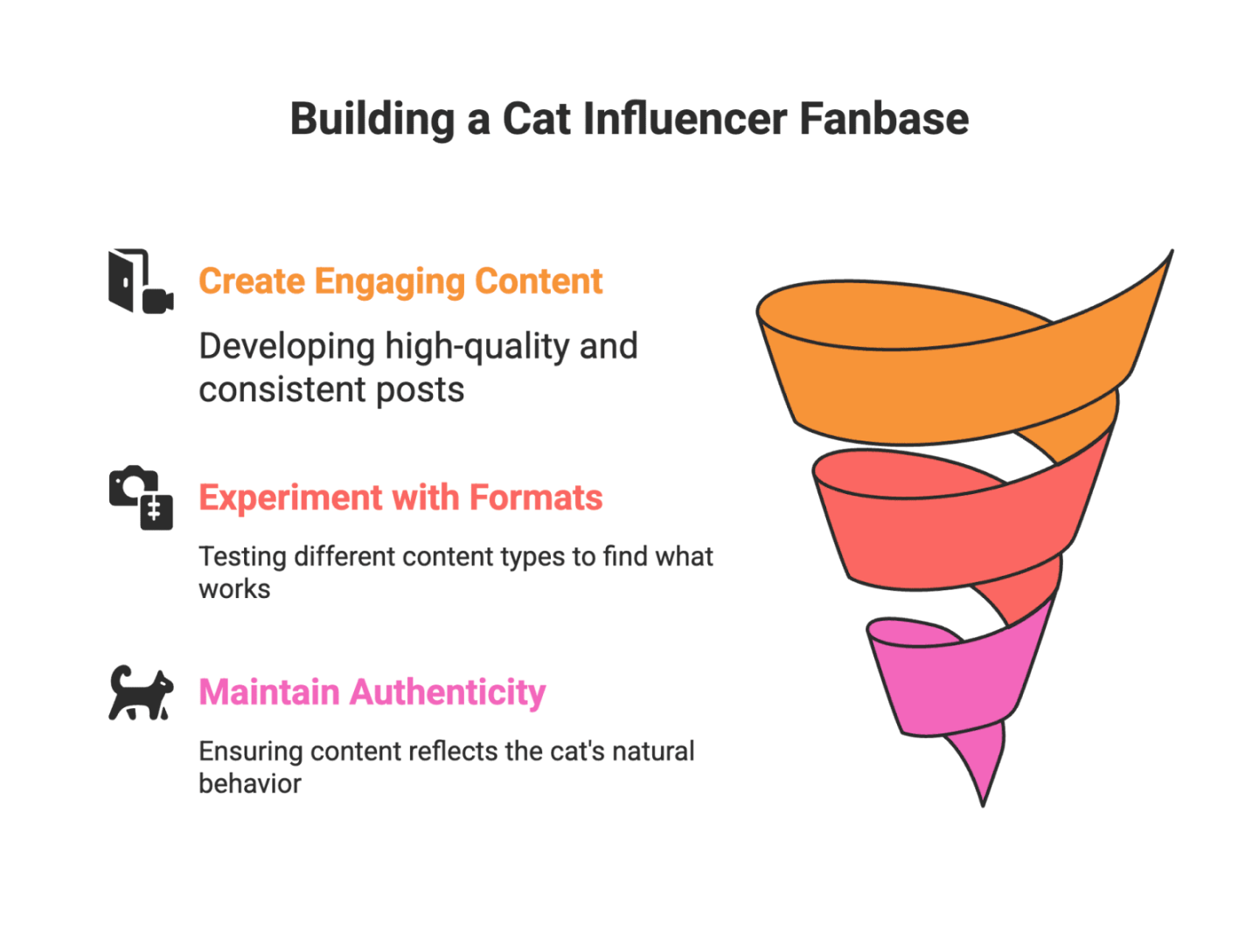
Now for the most important part – creating and posting great content. Consistency and quality are key to growing your cat’s fanbase. Aim to post regularly so that followers know they can count on fresh cat content from you (for example, you might start with 3–4 posts per week on Instagram, or a couple of TikToks per week). You don’t have to flood your feed, but stick to a schedule you can maintain. Many algorithms favor accounts that post consistently.
Make sure your content highlights what makes your cat special. This is where your chosen niche comes into play. If you’re going for adorable/funny, share those heart-melting sleepy kitten photos or comedic skits of your cat “ordering” pizza. If your cat is all about adventure, post those harnessed outdoor explorations. Keep your photo and video quality high: shoot in good lighting, try different angles, and show your cat in action. You don’t need a professional camera – a modern smartphone and some natural light can do wonders – but avoid blurry or too-dark shots.
Experiment with content formats to see what resonates best with your audience. For example, on Instagram you can mix photos, short videos, and Reels. On TikTok you’ll focus on short videos with engaging audio. Try a variety: a cute photo might go viral on IG if your cat’s just that adorable, while a 15-second funny video might explode on TikTok. Different formats may suit different cat personalities: one guide notes that photos often work great for simply adorable pets, short clips excel for showing off quirky behavior or humor, and longer videos shine if your cat can do elaborate tricks or needs a storyline. Test and learn – maybe your audience loves your cat’s reaction videos or 360° spins for treats. Pay attention to which posts get the most love, and consider focusing more on those types.
Above all, let your cat’s personality shine. Authenticity is crucial. Don’t force your cat into situations they hate (uncomfortable costumes or poses) just for content – unhappy pets won’t create engaging posts. Instead, capture what your cat naturally enjoys, whether it’s lounging in a silly position, chasing a feather toy, or peering curiously from a box. Candid moments and bloopers can be just as endearing as posed shots. As you post, include fun captions or even give your cat a humorous “voice” in the captions – this helps people connect with your kitty’s character. Over time, your followers will feel like they know your cat, which is exactly what builds a loyal fan community.
Growing an influencer account is not just about pushing out content; it’s also about pulling in your audience and fostering a community. The more you interact with followers, the more connected and invested they become. Here are some effective ways to engage your fans (and keep them coming back for more):
Also, engage beyond your own posts: follow other pet accounts, like and comment on their content, maybe even collaborate. When you support others, they often support you back. Shout-out a fellow cat influencer for #FollowFriday or participate in community hashtag events (like #Caturday). This not only increases your visibility, but also reinforces that sense of belonging to the pet lover community online.
Remember, the strength of a micro-influencer lies in being approachable and authentic. Thank people for their support, respond kindly to messages, and even share some fan-submitted content (if a follower draws art of your cat, for example, repost it in your Story with a thank-you – that’s great UGC too!). Treat your followers like friends, and they’ll stick around and help spread the word about your famous feline.
Once you’ve built up a decent following and consistent engagement, you can start turning your cat’s internet fame into earnings or perks. Brands are actively looking to collaborate with pet influencers – even micro-influencers – to promote their products in an authentic way. Here’s how you can capitalize on that:
Finally, remember that as a cat influencer you provide real marketing value to brands – especially as a micro-influencer. Your followers see you (and your cat) as a friend recommending something useful, which often translates to higher conversion rates for companies. Brands have noticed this; in fact, studies show micro/nano-influencer campaigns can deliver around a 20:1 return on investment, compared to roughly 6:1 ROI for macro influencers. (In plain terms, a company might earn $20 per $1 spent working with small influencers, versus $6 per $1 with a mega-celebrity – an impressive difference!) This high ROI is why even Amazon marketplace sellers are eagerly turning to micro influencers to boost sales. What does this mean for you? There is demand for cat influencers like you, and as you grow, you can command more value.
When partnering with any brand, always disclose sponsored content (use hashtags like #ad or #sponsored according to the platform’s rules) to keep everything transparent. Focus on long-term relationships: if a company loves what you did, you could become a regular ambassador for them. And don’t forget to save and repost any great content you produce – those authentic photos and videos of your cat using a product are valuable UGC that even the brand might want to re-share (which can further boost your exposure).
Becoming a cat influencer takes dedication, creativity, and a bit of business savvy – but it should ultimately be fun! You get to celebrate your cat’s quirks with the world. To recap, start by building your cat’s brand around what makes them special, post quality content consistently, and engage with fellow pet lovers to grow a genuine community. Then, leverage that following to collaborate with brands in a way that benefits you, your audience, and the brand. Micro-influencers (like your cat) play a powerful role in today’s social commerce landscape by blending authenticity with marketing, so don’t underestimate your value in those collaborations.
With patience and passion, your feline friend could be the next Paw McCartney or Cat Kardashian of the internet – minus the paparazzi, plus a whole lot of adorable content. Now grab that camera, entice your kitty with a feather toy, and start creating the content that will launch your cat on the path to influencer stardom. Good luck, and happy cat influencing!
User-generated content (UGC) videos have become a game changer for e-commerce brands and Amazon sellers. These are videos created by real customers or content creators – not the brand itself – showcasing genuine experiences with a product. From unfiltered testimonials to creative unboxing clips, UGC videos offer authentic social proof that builds trust and drives engagement. In this blog, we’ll explore what UGC videos are, why they matter for micro-influencer marketing, and highlight examples of effective UGC video formats. We’ll also discuss how micro-influencers (everyday content creators with niche followings) can help your brand generate impactful UGC, with tips to encourage more customer-created videos. Let’s dive in!
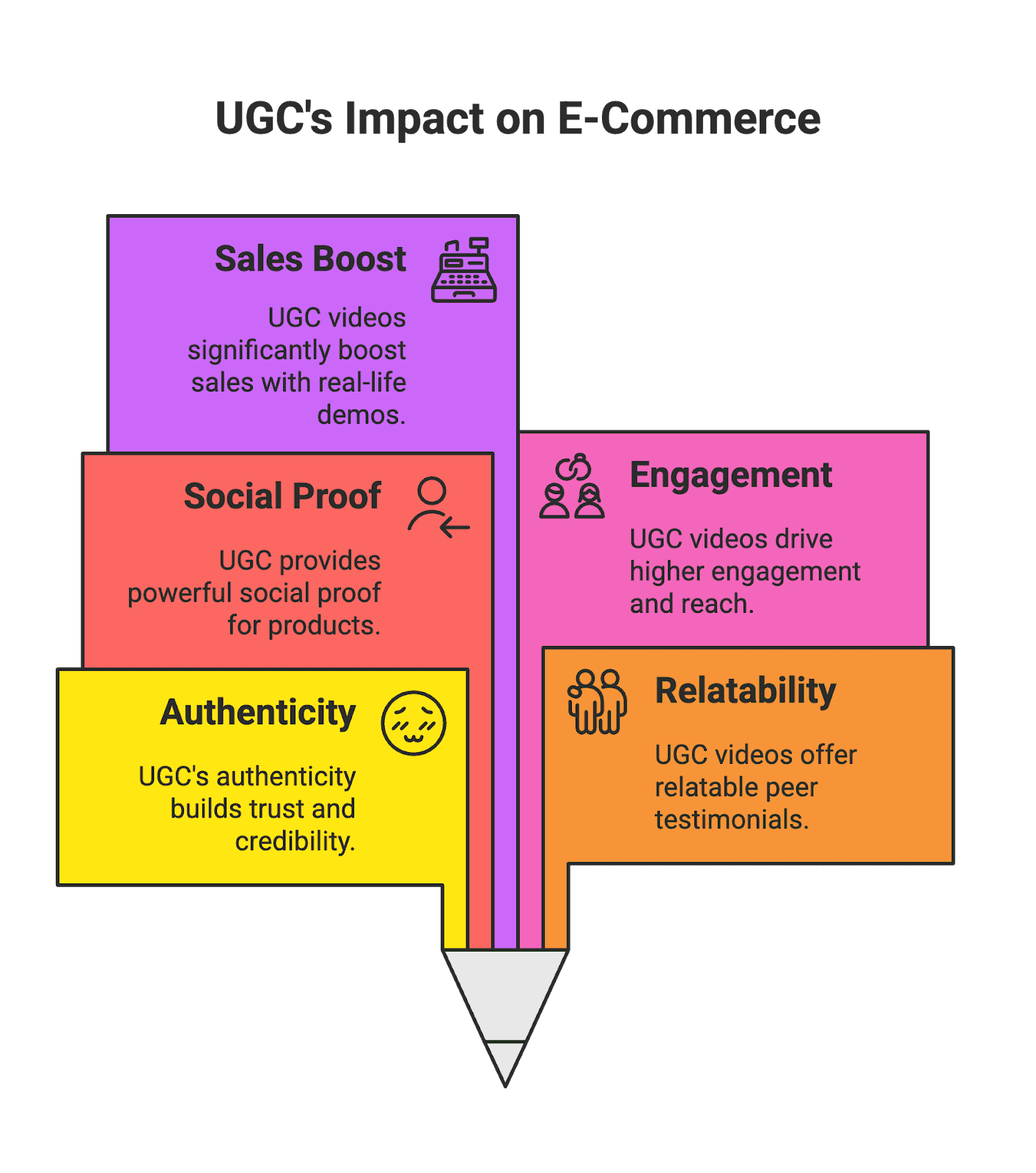
User-generated content (UGC) is any content – text, images, or videos – created by real users or customers rather than by the brand’s own marketers. It’s essentially the stories and posts that actual consumers share about their experiences. The power of UGC comes from its authenticity. Unlike polished ad campaigns, UGC thrives on “raw and unfiltered stories of real people,” capturing genuine experiences and emotions. In other words, it feels real – and that realness is marketing gold for brands.
For online sellers (whether you run your own store or sell on Amazon), UGC videos serve as modern word-of-mouth. They act as relatable testimonials from peers, which is far more convincing than traditional ads. Why does this matter so much for e-commerce? Here are a few key benefits of UGC videos:
Shoppers naturally trust content from other customers more than content from brands. UGC shows potential buyers that “people like them” are already using and loving a product, reducing uncertainty and adding trust (In fact, classic research by Nielsen found 92% of consumers trust peer recommendations over brand messaging – UGC taps into that trust factor.)
Seeing real users post about a product creates a bandwagon effect: “If others are buying this, maybe I should too.” This social proof nudges hesitant shoppers toward purchase. Featuring UGC on your site can even boost conversion rates – brands that showcase UGC on their website see 29% higher conversion rates than those that don’t.
UGC videos tend to blend in naturally on social feeds, so platforms like TikTok and Instagram often favor them. Studies show UGC video ads receive 10× more views than traditional branded content. In other words, authentic customer videos get more eyeballs and interactions than slick corporate ads, as algorithms push “native”-looking content.
Especially for e-commerce (where customers can’t handle products in person), UGC videos act as virtual hands-on demos. Whether it’s a makeup tutorial or a before-and-after fitness result, these real-life examples show the product “in action,” making shoppers more confident that it works. This often translates directly into higher sales and fewer returns, since buyers know what to expect.
In short, UGC videos make your brand more credible, relatable, and visible – all essential ingredients for success in the online marketplace. Next, let’s look at some of the top types of UGC video content and real examples of how they work.
UGC videos come in many flavors. Below are some of the most popular and effective formats that e-commerce brands are leveraging today, along with examples of what makes each type shine:
1. Customer Testimonials & Product Reviews
Nothing beats a sincere customer review on video. Testimonial UGC videos feature real customers giving an honest opinion about a product – what they love, what could be improved, and how it helped them. These videos are essentially word-of-mouth in visual form, delivering exactly what shoppers crave: proof from fellow consumers. A short, unscripted clip of a happy customer excitedly talking about your product can outperform a high-budget promo because it comes off as genuine peer advice.
For example, a skincare brand might share a customer’s testimonial about how a face serum improved their routine, or an Amazon seller might highlight a buyer’s video review from the product’s review section. These endorsements build instant trust. Prospective buyers see and hear a relatable person sharing real results, which eases doubts and answers questions better than any product description could. Brands can repurpose testimonial videos on product pages (many companies use widgets to stream UGC reviews next to product info) or in social media ads as compelling social proof. The key is that real customers are vouching for you – and that authenticity makes others feel confident purchasing.
UGC unboxing videos tap into the excitement of opening up a new purchase. In an unboxing video, a customer or influencer films themselves opening the product’s package for the first time, sharing their first impressions in real-time. Viewers get to experience the “wow moment” vicariously – seeing the packaging, the product, and the user’s genuine reaction. This format is hugely popular for gadgets, beauty products, subscription boxes, and collectibles.
Why do unboxing videos work so well? They showcase your product up close in a casual, authentic way. Potential buyers can see the quality, size, and features as if they were unboxing it themselves. It also highlights your packaging and branding, which can reinforce a premium feel. Most importantly, the enthusiasm of a real customer is contagious – their “OMG, look at this!” feeling can spark viewers to want that same experience. Many e-commerce brands actively encourage unboxing UGC (for instance, including a note in the package asking customers to film their unboxing and tag the brand). When new customers share those clips, brands often repost them because “a real reaction from a real buyer” makes future customers more confident to click “Buy Now.” In short, unboxing videos generate buzz and help others visualize owning the product.
Vlogs (video blogs) are one of the oldest and most popular types of UGC videos. In a “day in my life” vlog, for example, a content creator takes viewers through their daily routine, casually featuring products they use. For brands, this is a goldmine when your product is naturally integrated into someone’s lifestyle. The product isn’t the sole focus of the video, but it appears organically in a relatable context – which subtly builds credibility and interest.
Why are lifestyle vlogs effective as UGC? They feel like a friendly recommendation from a peer. The tone is casual and candid, and viewers get to imagine how the product might fit into their own lives. A fitness apparel brand, for instance, might leverage a vlogger’s “morning workout routine” video where the person happens to be wearing that brand’s leggings and mentions how comfy they are. Or a coffee machine company might love a customer’s YouTube vlog about their work-from-home day that starts with brewing coffee using that machine. Because the endorsement isn’t overtly scripted, it comes across as genuine. People trust the product more when they see it being used naturally and hear an unscripted remark about it. These videos build brand authority by association with real-life use, and they often attract engaged niche audiences (e.g. viewers who follow a parenting vlogger will pay attention to baby products shown in her daily life). For e-commerce brands looking to build trust, getting into your customers’ lifestyle content is an excellent strategy.
Partnering with influencers – especially micro-influencers – is another way to generate UGC-style videos that come with a built-in audience. Micro-influencers are creators on social media with a modest follower count (often ~5K–50K) who focus on specific niches. Brands will send them products or sponsor content, and in return the influencer creates a review, demo, or lifestyle video featuring the product. Unlike hiring a big celebrity for a glossy ad, collaborating with micro or mid-tier influencers typically produces content that feels more like genuine UGC: it’s usually self-filmed, in the influencer’s own voice, and resonates with their tight-knit community. In fact, you often don’t need mega influencers with 1 million followers to make an impact – a few enthusiastic micro-influencers with real, engaged followers can drive more engagement and conversions per dollar spent.
For example, say you sell eco-friendly kitchenware. Instead of a costly campaign with a TV star, you might work with 10 sustainable living micro-influencers on Instagram, each with ~20k followers. They each post a video trying out your reusable food storage bags in their daily cooking routine. Their audiences trust their opinions and see the product in a context that matters (meal prepping, packing lunches, etc.). Those followers are far more likely to be interested and to ask “Where can I get those bags?” than if they saw a generic ad. Influencer collaborations like this expand your reach to relevant communities and produce authentic content you can reuse. Just remember: let the creator’s personality shine and don’t script it too much – the beauty of this content is that it feels like a friend’s recommendation. (We’ll delve more into why micro-influencers are so effective for UGC in the next section.)
A post shared by Stack Influence (@stackinfluence)
One recurring theme in UGC is that bigger isn’t always better when it comes to creators. In fact, micro-influencers (those with tens of thousands of followers or less) often outperform macro-influencers (hundreds of thousands) and mega-celebrities (millions of followers) in driving engagement and trust. It might sound counterintuitive – shouldn’t a huge influencer have more impact? – but the data tells a compelling story about the power of going small.
Average Instagram engagement rate by influencer size: micro-influencers far outperform macro and mega influencers in the percentage of their audience that interacts with posts.
As the chart above illustrates, a creator with, say, 50K followers might routinely get 4% of their audience engaging with their posts, whereas a celebrity with 5 million followers might only see about 1% engagement. Industry analyses confirm this inverse relationship between audience size and engagement rate: as follower count goes up, the engagement rate tends to drop. For example, one study found Instagram micro-influencers (~10K–100K followers) average ~3.9% engagement, compared to only about 1.2% for much larger influencers. That means a micro-influencer’s smaller audience is proportionally far more active and connected. Their followers actually like, comment, and share at higher rates, indicating a highly engaged community. In essence, micro-influencers trade scale for intimacy – and it pays off in authenticity and impact.
There are a few reasons why micro-influencers excel at producing impactful UGC and recommendations:
Micro-influencers typically cultivate tight-knit niche communities. They often focus on specific interests (vegan baking, tech gadgets, fashion for petite sizes, etc.), and they actively engage with their followers. As a result, their audience sees them as trusted peers or experts in that niche. When they recommend a product, it comes across as advice from a friend, not an ad from a distant celeb. This niche focus and personal touch lead to followers who are deeply invested, which drives more likes and comments on their content.
Because micro-influencers are “everyday” people, their content feels more relatable and credible. Their videos might not be professionally edited – and that’s a good thing. The lo-fi, candid style is exactly what makes their posts feel like genuine UGC. Followers know these creators genuinely use and care about the products they feature, unlike some macro influencers who promote almost anything. This perceived authenticity means audiences pay closer attention to micro-influencer content and trust it more. As Stack Influence (a micro-influencer marketing platform) notes, an influencer with 50K followers and a 5% engagement rate can be far more impactful than one with 500K followers but near-zero engagement, because “an active community beats a big but silent audience any day.”
Micro-influencers are generally more budget-friendly to work with than big influencers, yet they often deliver better ROI through higher engagement. Many brands are catching on to this; in fact 57% of marketers now prioritize working with micro-influencers over bigger names on Instagram. For the cost of one superstar influencer post, a company could collaborate with a dozen micro-creators and get a diverse library of UGC videos plus reach multiple niche groups. Especially for small businesses and Amazon sellers, micro-influencers offer “more bang for your buck” – you spend less per creator, and their content comes off as authentic reviews rather than ads.
The ultimate goal of all this engagement is driving sales, and micro-influencers often shine here too. Their followers are not just passively scrolling; they’re listening and ready to act on recommendations. From an e-commerce perspective, partnering with a bunch of micro-influencers can yield more conversions than putting the entire budget into one celebrity endorsement. For example, an Amazon seller launching a new kitchen gadget might get better results working with 10 micro influencers (each with ~25K very engaged followers) than spending it all on one cooking celebrity with 1M followers who only sparks lukewarm engagement. The smaller influencers’ audiences are more likely to click, comment, and actually try the product, leading to real sales rather than just impressions.
In summary, micro-influencers are UGC powerhouses. They produce content with the authenticity of true customer UGC, and they bring along a devoted audience that trusts them. No wonder brands big and small are eagerly embracing micro-creators as a cornerstone of their UGC and social media strategies. (Platforms like Stack Influence even specialize in connecting e-commerce brands with networks of micro-influencers and content creators, making it easier to scale up your UGC video production with the right creators.) The micro-influencer approach allows you to tap into “everyday influencer” voices at scale – giving your marketing a grassroots, community-driven flavor that today’s shoppers love.
Knowing the value of UGC is one thing – but how do you actually get your customers and followers to create and share videos about your products? Here are some practical strategies for e-commerce brands (and sellers on platforms like Amazon) to spark more UGC video content:
Sometimes, getting great UGC is as simple as asking for it. Encourage your buyers to share their experience on video. This can be done via a post-purchase email (“Show us how you use your new gear!”), social media posts, or inserts in product packaging. Sweeten the deal by offering a small incentive or reward: for example, entry into a giveaway, a discount on their next purchase, or even just the chance to be featured on your official channels. People love to be recognized; a shout-out or regram from a brand can be very motivating for a fan. Make sure to create a unique hashtag for your brand or campaign, so you can easily find and track submissions (and so participants feel part of a bigger movement).
Launch a contest where customers submit videos for a chance to win a prize. For instance, a fitness brand might host a 30-day challenge where participants post weekly video updates of their progress using the brand’s supplements or equipment. Or a beauty brand could run a #GlowUpWith_ _ challenge asking users to post before-and-after makeup transformation videos. Promote the contest across your socials and make the rules clear (e.g. use the hashtag, tag the brand, video length, deadline, etc.). Contests create urgency and a goal to work toward, which can spur many customers to finally create that video they’ve been thinking about. Plus, you’ll likely end up with a trove of diverse UGC videos. Just be sure to obtain permission to reuse entries in your marketing (a brief contest terms blurb works) and announce the winners publicly to close the loop.
When people do share unsolicited UGC videos about your product, amplify them! Nothing encourages others to contribute more than seeing you value existing UGC. Develop a routine of monitoring social tags and mentions for new content. When you find a great customer video – say someone happily unboxing your product or a TikTok of their daily routine featuring your item – request permission to repost it on your official channels (most users will be thrilled). When you repost, give credit to the creator in the caption or video (tag their handle, mention their name, etc.) – this recognition goes a long way. You can even compile multiple UGC clips into a montage or monthly “fan favorites” reel. By featuring customer videos in your Instagram Stories, product pages, or even in ads, you not only add authentic content to your marketing, but you signal to your audience that you appreciate their contributions. This positive feedback loop motivates more people to share their own videos, knowing there’s a chance to be showcased.
If organic UGC is slow, consider jump-starting it by collaborating with micro-influencers, brand ambassadors, or even a handful of super-fans. Identify a few people who already love your products (they could be bloggers, YouTubers, or enthusiastic customers with a following) and reach out with a proposal: you’ll send a free product or give early access in exchange for an honest video review or demo. Emphasize that you’re looking for their genuine opinions and creative style – not a scripted ad. This approach often yields fantastic UGC because these creators have the skills to make engaging videos, yet the content still feels peer-to-peer. It’s a bit of a hybrid between pure UGC and influencer content, sometimes called “influencer-style UGC”. The advantage is you can guide it a little (maybe suggest they highlight a certain feature) while still getting authentic-feeling videos. And since micro-influencers charge relatively modest fees (or sometimes just free product), you can do this with multiple creators without breaking your budget. Stack Influence (as mentioned earlier) is one example of a platform that helps brands coordinate campaigns with many micro-influencers at once to generate UGC at scale. Whether you use a platform or DIY, leveraging a team of small creators can quickly populate your content library with quality UGC videos for marketing.
Remember, building up a robust UGC pipeline takes time and active community management. But with these steps, you’ll start to see more and more of your customers becoming content creators – boosting your brand with each video they share.
In today’s social-media-driven world, UGC videos are a potent tool for any e-commerce brand or Amazon seller looking to stand out. They bring authenticity to your marketing that you simply can’t fabricate in a studio. We’ve seen how various UGC video examples – from heartfelt testimonials and how-to demos to exciting unboxings and viral challenges – can each play a role in building trust, educating consumers, and ultimately driving more sales. Importantly, tapping into micro-influencers and everyday content creators can amplify these effects, providing a steady stream of relatable, high-engagement content that resonates with niche audiences.
By encouraging and embracing user-generated videos, you essentially turn your happy customers into your best marketers. Their voices add credibility to your brand story and create a community that new shoppers want to join. So, start implementing the strategies to spark more UGC: ask your customers to share, run that hashtag challenge, collaborate with micro-influencer fans, and highlight the amazing content they create. Over time, you’ll cultivate a vibrant ecosystem of user content around your products.
The result? Marketing that doesn’t feel like marketing – it feels like real people celebrating your brand. And that is exactly the kind of content that not only ranks well in algorithms, but also wins the hearts (and dollars) of today’s savvy consumers. UGC videos are here to stay, so now is the time to make them a core part of your e-commerce growth strategy. Your future customers are waiting to see authentic proof of why your product is great… and who better to show them than the people already loving it? Start empowering your customers and micro-influencers to tell your story, and watch how genuine content can take your brand to new heights.