
The latest info on influencer marketing trends, micro influencer news, and the world of social media

Instagram Story ads have become a powerhouse for e-commerce brands – especially when paired with influencers and authentic content. These full-screen vertical ads offer a dynamic way to showcase products and drive quick actions from viewers. In fact, recent case studies show that Instagram Story ad campaigns can achieve 73% higher click-through rates, an 18% boost in sales, and a 41% increase in product page views for businesses. And it’s not just about numbers – consumers genuinely respond to this format. Every second Instagram user reports feeling greater interest in a brand or product after seeing an Instagram Story Ad.
In this article, we’ll explore why Instagram Story ads are so effective for e-commerce, how influencers (especially micro-influencers and content creators) and user-generated content (UGC) can supercharge these ads, and we’ll look at real examples of brands knocking it out of the park. We’ll also cover what brands should ask of influencers when collaborating on Story ad campaigns. Whether you’re an Amazon seller, a DTC e-commerce brand, or a marketer looking to boost engagement, read on for tips to optimize your Story ads for maximum impact.
Instagram Stories offer a unique blend of engagement and urgency that other formats struggle to match. They appear at the top of the app and take up the entire screen, which means a viewer’s full attention is on your content. Story ads leverage the “tap-through” behavior users love – delivering quick, immersive snippets that can lead directly to a swipe-up (or click) action. A few key reasons Story ads work so well for online brands include:
In short, Instagram Story ads combine attention-grabbing visuals with an immediate call-to-action, which is ideal for e-commerce conversion. But the real magic happens when you add influencers and UGC into the mix.
One reason influencer-powered Story ads perform so well is trust. Influencers – particularly micro-influencers (those with smaller, highly engaged followings) – come across as authentic and relatable. Their content feels like a friend’s recommendation rather than a traditional ad, and that authenticity pays off. Nearly 90% of consumers say authenticity is important when deciding which brands to support, and user-generated content (UGC) is viewed as the most authentic form of media by consumers. An Instagram Story featuring a real person (like a content creator or happy customer) using a product can instantly build credibility in a way studio-shot ads often can’t.
Moreover, micro-influencers tend to have hyper-engaged audiences in specific niches – which is perfect for targeting. While a celebrity might reach millions with a broad message, a micro-influencer (say a fitness enthusiast with 20k followers) can sway a tight-knit community of true believers. This translates into measurable performance benefits:
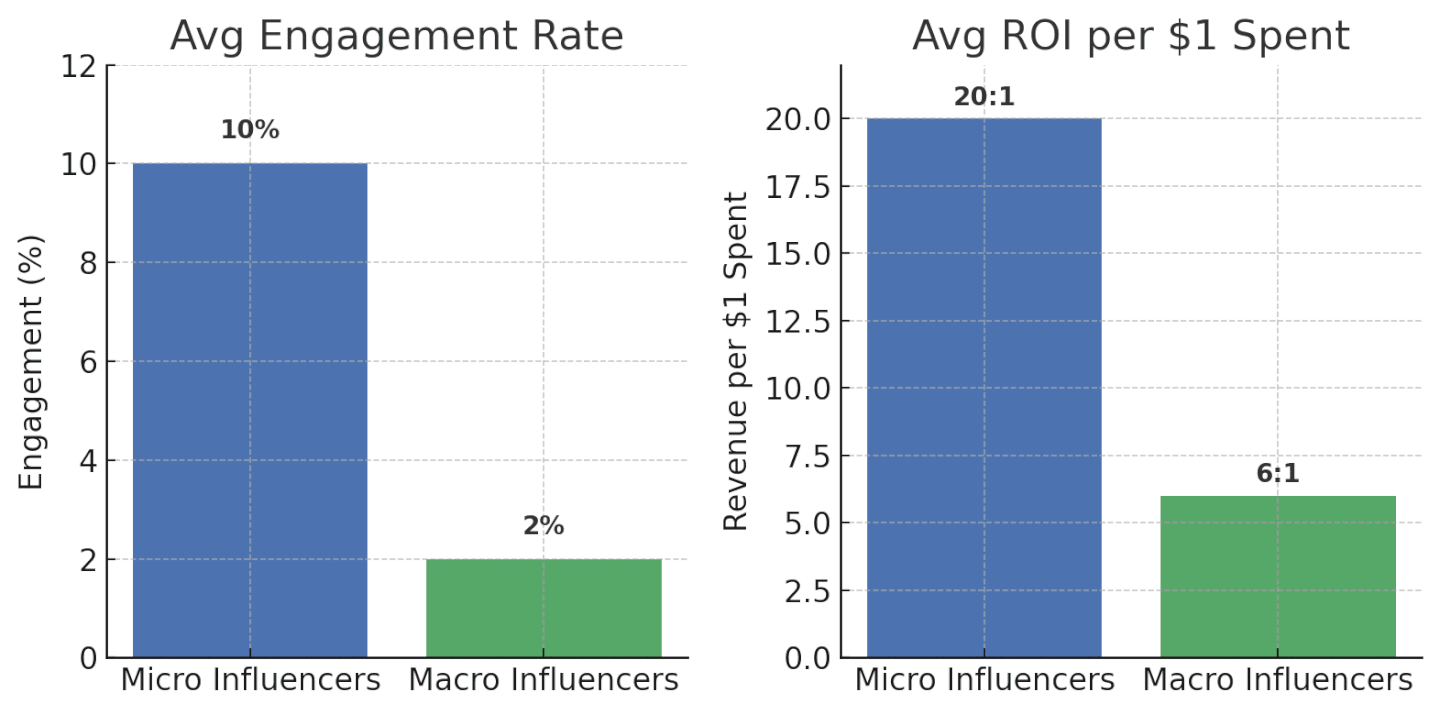
Chart: Comparison of average engagement rates and ROI for micro-influencers vs. macro-influencers. According to data from Stack Influence (a micro-influencer marketing platform), micro-influencers see roughly a 10% engagement rate on their content, versus only about 2% for macro influencers. They also deliver a far higher bang for the buck – campaigns with micro-influencers can yield around a 20:1 return on investment, compared to ~6:1 ROI for campaigns using big-name influencers. In practical terms, that means $1 spent on a micro-influencer campaign can generate ~3× more sales than $1 spent on a celebrity influencer. This higher ROI is partly because micro-influencers are more cost-effective to work with, and partly because their followers are highly responsive to their content (a recommendation feels like it’s coming from a trusted peer).
Micro-influencers and content creators also excel at producing UGC-style content that doesn’t look like a slick corporate ad. That’s a huge plus for Story ads. Blending in with the native Story feed – while still delivering a marketing message – is a balancing act. Content that looks too polished might be skipped as “just another ad.” But an influencer’s Story, shot on a phone camera, speaking in their natural voice, feels real. Viewers are more likely to pay attention, and even click through at higher rates – UGC-based ads often see significantly higher CTR and lower CPC than traditional ads.
Authentic influencer content can be leveraged in two ways on Stories:
A combination of these approaches can yield the best results: for instance, an influencer posts a series of Stories about your product to their audience, and you also run a few of those Story slides as targeted ads to reach new customers. You get both the immediate promotion to the influencer’s fans and ongoing value by repurposing that content in ads and on your own channels. This one-two punch is powerful, especially for small brands trying to build social proof.
It’s worth mentioning that Amazon sellers have also caught onto the influencer + Story ads trend. Amazon’s Influencer Program enables creators to have their own Amazon storefronts with recommended products. Influencers often promote these via Instagram Stories using swipe-up links to Amazon. This means if an Amazon seller’s product is featured in an influencer’s Story, viewers can go directly to Amazon to buy it – a seamless path that leverages the trust of the influencer and the convenience of Amazon. The kicker: all that external traffic and sales can boost the product’s ranking on Amazon itself. As one analysis noted, when influencers drive their followers to Amazon for a product, it creates a virtuous cycle – the influx of purchases can improve the item’s search rank on Amazon, leading to even more organic sales. For Amazon-focused e-commerce brands, integrating Instagram Story promos by content creators is an effective way to stand out in a competitive marketplace and drive sustained growth.
To summarize, micro-influencers and UGC content are the secret sauce for many high-performing Story ads. They bring authenticity, trust, and better ROI. E-commerce brands (from Shopify entrepreneurs to Amazon marketplace sellers) can greatly benefit by incorporating influencer-driven content in their Instagram Story advertising strategy. Next, let’s look at some real-world examples of how brands are doing this successfully.
Nothing beats real examples to spark inspiration. Below are a few standout Instagram Story ad campaigns by e-commerce brands and how they leveraged influencers or creative storytelling to get results. These examples show different approaches – from using familiar influencer faces to slick design – and the kind of outcomes possible:
(Other honorable mentions: Many other brands have seen success with Story ads. Music streamer Deezer adapted their video ads into Story format and cut acquisition cost by 52% while doubling conversion rate. Beauty start-up Memebox used sequential Story ads (including a tutorial-style clip with a model using the product) to boost brand awareness and prompt swipes to their site, demonstrating that showing a product in action via Stories can nudge curious viewers into customers. And big names like Maybelline have leveraged influencer takeovers on Stories – letting an influencer demo products on the brand’s Story – to humanize their marketing and drive product interest. The pattern across these examples is clear: Instagram Stories + engaging content (often with a human touch) = a recipe for growth.)*
If you’re an e-commerce brand teaming up with an influencer (or multiple micro-influencers) for a Story ad campaign, it’s crucial to set clear expectations. Influencer collaborations can fall flat if details are misunderstood. Here’s a handy checklist of what brands should ask for and communicate to influencers when planning Instagram Story ads:
By covering these bases, brands can ensure their influencer partnerships for Story ads run smoothly and deliver results. Essentially, you want to arm the influencer with the right tools and information to tell a compelling story (pun intended) that also meets your marketing goals. It’s all about collaboration – you bring the campaign goals and product knowledge, they bring the creativity and audience connection.
Instagram Story ads represent a unique meeting point between engagement and conversion – and when you add influencers and micro-influencers to the mix, they become even more potent. We’ve seen how e-commerce brands can leverage the authenticity of content creators and UGC to create Story ads that not only catch eyeballs but also drive action. Whether it’s a micro-influencer’s casual demo that lends credibility to a new gadget, or a bold Story ad announcing a flash sale, the formula is similar: keep it real, keep it relevant, and make it easy for the viewer to act.
For brands big and small (from independent Shopify stores to global Amazon sellers), the takeaway is clear: don’t sleep on Instagram Stories as an ad channel. They’re perfect for the mobile shopper era – quick, engaging, and actionable. By collaborating with the right influencers (and using platforms like Stack Influence to find and manage micro-influencers at scale), you can tap into personal, trusted storytelling at scale. The result, as evidenced by the examples like Tokopedia, Gymshark, and Revolve, can be a significant boost in traffic, sales, and ROI.
As you craft your next campaign, remember to measure what works, be willing to test different creative approaches, and let the human side of your brand shine through. Instagram is a place for connections and inspiration – if your Story ads can deliver both, they’ll not only stop the scroll but also spark the sales. Here’s to creating thumb-stopping, story-selling content that resonates in 2025 and beyond!
Live shopping is booming, and Amazon Live – Amazon’s own livestream shopping platform – is at the forefront of this trend. In the United States alone, livestream commerce sales reached about $50 billion in 2023 and are projected to grow by 36% by 2026 (to roughly $68 billion). This explosive growth is turning live commerce into a significant segment of online retail (over 5% of all e-commerce by 2026) and a huge opportunity for brands. Even more telling, consumers are tuning in en masse: studies found that a majority of online shoppers (nearly 79%) have watched a live shopping stream, and 39% have made purchases during one. In other words, shoppers love live, interactive product videos – and they’re ready to buy. For e-commerce brands and Amazon sellers, the message is clear: it’s time to leverage Amazon Live influencers to boost visibility and sales.
If you’re feeling the urge to tap into this momentum, you’re in the right place. This comprehensive guide will walk you through exactly how to find Amazon Live influencers – the content creators who host live shopping streams on Amazon. We’ll cover what Amazon Live is, why these influencers are so powerful for marketing, and a step-by-step process (with multiple methods) to discover the perfect influencers for your brand. Along the way, we’ll also highlight tools and tips (from using social media to leveraging influencer platforms like Stack Influence) to make your search easier and more effective. Let’s dive in!
Amazon Live is a live-streaming platform built into Amazon’s e-commerce site. Think of it as Amazon’s answer to QVC or home shopping networks, but in an interactive, social media-style format. During an Amazon Live session, influencers or brands broadcast live video in which they showcase products in real time, demo or unbox items, answer viewer questions via chat, and often share special limited-time deals. Shoppers can watch these streams on Amazon’s website or app and purchase the featured products instantly as they’re being shown.
It’s a win-win for everyone. Viewers get an engaging, informative shopping experience from their favorite personalities (far more dynamic than reading product descriptions), and brands get a powerful new way to connect with customers. Live streams bring a human element to online shopping that can build trust and excitement around products. In fact, live shopping events have been shown to significantly boost sales – forecasts estimate live commerce will generate over $57 billion in U.S. sales by 2025. That represents a massive audience and opportunity for brands to tap into.
With Amazon Live, brands can:
In short, Amazon Live blends entertainment with shopping in a way that can supercharge product discovery and conversions. But who exactly are the people on the other side of the camera? That brings us to Amazon Live influencers.
Amazon Live influencers are the content creators, streamers, and niche experts who host live shopping shows on Amazon’s platform. They can range from everyday folks who love sharing products with their followers, to well-known bloggers or YouTubers, and even the occasional celebrity. What they all have in common is a passion for products and an ability to engage an audience on camera. These influencers are like a bridge between your brand and shoppers – they bring products to life with demos, provide social proof through their own use or reviews, and create a sense of excitement around buying.
No matter their size or fame, Amazon Live influencers share an ability to educate and entertain. They build trust with viewers by being genuine and interactive, which in turn drives product sales. As a brand, partnering with the right influencer means your product is presented in an engaging story rather than a static ad. The key is finding an influencer who aligns with your niche, brand values, and target audience. So, how do you find the perfect Amazon Live influencer for your needs? Let’s walk through the step-by-step process.
(Before we dive into the search methods, a quick note: Not just anyone can host on Amazon Live. To go live on Amazon, an individual must be in the Amazon Influencer Program (with an active Influencer storefront), or a brand must have an Amazon Seller/Vendor account with a registered brand on Amazon. In other words, Amazon Live streaming is limited to approved influencers and sellers. The good news is there are thousands of approved Amazon influencers out there – you just need to know where to look for them!*)
Finding Amazon Live influencers may require a bit of detective work across Amazon’s platform and external channels. Below are several strategies to locate and evaluate Amazon Live creators. Use as many of these steps as needed to build a list of potential influencers for your brand. Each method will help you discover influencers from a different angle, giving you a comprehensive pool to choose from.
1. Explore Amazon Live on Amazon.com (Web) and the Amazon Live App.
Your first stop should be Amazon itself, which offers built-in ways to discover live streamers. On the Amazon website, navigate to the Amazon Live section: go to Amazon’s homepage, click the menu (☰) and scroll to “Programs & Features,” then select “Amazon Live”. This takes you to the Amazon Live homepage, where you can:
Also consider the Amazon Live Creator mobile app (available on iOS/Android). The app is primarily for influencers to stream from their phone, but as a brand you can use it to watch live streams on the go and get notifications. Download the app and sign in with your Amazon account to browse live content. The interface is similar, and you can follow influencers within the app so you’re notified when they go live. Just like on desktop, explore categories and featured streamers. Watching a few live streams (even for research) can give you a feel for different influencers’ personalities and audience interactions, which is valuable when narrowing down candidates.
2. Browse “Amazon Finds” and #FoundItOnAmazon Influencer Storefronts.
Amazon has a feature called Amazon Finds (also associated with the hashtag #FoundItOnAmazon). This is essentially a curated collection of products handpicked by Amazon influencers – think of it as a showcase of trending items recommended by creators. It’s a great way to discover active influencers and popular content:
Browsing Amazon Finds is like window-shopping through the eyes of influencers. It’s an easy way to see who’s actively curating products on Amazon. Make note of any influencer whose style or niche looks like a fit for your brand, then you can dig deeper into their profile or external channels.
3. Leverage Social Media Hashtags (Instagram, TikTok, X/Twitter).
Many Amazon Live influencers don’t rely solely on Amazon for discovery – they actively promote their Amazon streams and storefronts on social media. In fact, social platforms are a goldmine for finding Amazon-related influencers, especially Instagram and TikTok. By searching the right hashtags and keywords, you can uncover countless micro-influencers who have Amazon storefronts or run Amazon Live sessions.
Start with Instagram: Use Instagram’s search and try hashtags like #AmazonFinds, #AmazonHaul, #AmazonLive, #AmazonMustHaves, #FoundItOnAmazon, #AmazonFashion, etc. These are commonly used by creators showcasing their favorite Amazon products. For example, searching #AmazonMustHaves on Instagram reveals over 50k posts and even shows that 53,000+ people follow that hashtag – meaning a lot of users are interested in Amazon product recommendations. Scroll through the hashtag feed and look for posts that resemble product highlights or mini-reviews. Influencers often post a carousel of product images or a reel video of an item, with captions mentioning “find it on my Amazon storefront” or “link in bio”.
When you find a promising post, click the user’s profile. Check if they mention an Amazon storefront in their bio (many will have a Linktree or direct Amazon shop link). Also note their follower count and engagement on posts:
Over on TikTok, the vibe is similar, if not bigger. TikTok has been known for viral Amazon gadgets (hello, “TikTok made me buy it”). Search TikTok for hashtags like #AmazonFinds, #TikTokMadeMeBuyIt, #AmazonHaul, #FoundItOnAmazon. You’ll discover short video clips of influencers showing off cool Amazon products. TikTok’s algorithm might lead you from one such video to another. Again, check profiles for an Amazon link in bio. Many TikTokers in the Amazon Influencer program will put their Amazon storefront URL in their profile description. Jot down any TikTok creators who match your niche.
Don’t forget Twitter/X and Facebook as well:
Compile a list of all the creators you find on social media who appear to be Amazon influencers. For each, note their handle, follower count, what category they’re in (beauty, tech, home, etc.), and whether they explicitly have an Amazon storefront link. This manual social media scouting is time-consuming but incredibly rich – you’re finding real, active micro-influencers who have already shown interest in promoting Amazon products. Plus, by watching their content, you can gauge their style and audience engagement before you ever reach out.
Example: While searching Instagram, you find a post under #AmazonMustHaves from a user showing off home décor items they “found on Amazon.” The post caption says “All links are in my Amazon shop (link in bio)!” You click their profile – let’s call her @HomeDecorLori – she has 85k followers and her bio link goes to an Amazon storefront page. She likely qualifies as a micro-influencer on Amazon Live (under 100k followers). Her engagement looks good (lots of comments discussing the products). This is an influencer you’d mark down to investigate further. You’d also note to check her Amazon Live presence (perhaps by searching her name on Amazon or Google to find if she hosts live streams) and evaluate her content quality. Micro-influencers like her are often ideal for brands wanting to target a specific niche without the hefty price tag of a macro influencer – they tend to be cost-effective and have loyal audiences.
4. Search YouTube for “Amazon Favorites” and Product Review Videos.
Don’t overlook YouTube as a channel for finding Amazon influencers. Many creators who are part of Amazon’s program also run YouTube channels where they post longer product review videos or monthly “Amazon favorites” hauls. They might not explicitly stream on Amazon Live (some do), but if they have an Amazon storefront and audience, they could be great partners for live campaigns or shoppable videos.
To find relevant YouTubers, search on YouTube for terms like “Amazon favorites ”, “Amazon must haves ”, “Amazon haul ”, or “ review Amazon”. For example, if you sell kitchen gadgets, search “Amazon kitchen gadgets haul” or if you’re in fashion, “Amazon clothing try-on 2025”. You will likely discover a trove of videos by creators showcasing items they bought on Amazon.
When you find a video, look at a few things:
For any promising YouTube influencers you find, add them to your list. Even if their main platform is YouTube, if they have an Amazon storefront, they likely have the ability to go Live on Amazon (or at least produce Amazon Live-style content). Many YouTubers cross-promote their Amazon Live sessions or do live streaming on YouTube about Amazon deals, which can be just as useful.
5. Use an Influencer Marketing Platform or Database.
If the manual hunting across Amazon and social media feels overwhelming, consider using an influencer marketing platform to streamline the process. There are specialized platforms (marketplaces and databases) designed to connect brands with influencers – including Amazon influencers – by providing searchable profiles, filters, and campaign management tools. For example, Stack Influence – an influencer marketing platform focused on micro-influencers for e-commerce brands – can be a huge time-saver. These platforms often have thousands (even millions) of influencer profiles indexed, and you can filter by criteria like niche/category, audience demographics, follower count range, engagement rate, keywords, and more.
Here’s how leveraging a platform can help you find Amazon Live influencers more efficiently:
Using a platform does usually involve a fee or commission, but it can save you significant time and help scale your influencer marketing efficiently. Instead of manually emailing 50 people and hoping 10 work out, you could use a platform to secure 50 micro-influencers who will each create content and post as part of an organized campaign. Especially for Amazon sellers looking to seed products with many influencers at once, this is a game-changer. (For instance, Stack Influence’s network connects brands with over 700k micro-influencers and automates product seeding campaigns, making it easier to manage dozens of collaborations simultaneously.)
Finally, whichever method(s) you use, remember to vet your potential influencers thoroughly. Once you have a list of candidates, go through a checklist for each:
By carefully selecting the right Amazon Live influencer, you set the stage for a successful collaboration where the influencer’s genuine enthusiasm for your product shines through to an interactive audience of shoppers.
Amazon Live influencers aren’t a monolith – they come from various backgrounds and operate at different scales. As you search, it’s useful to understand a few key categories of influencers you’ll encounter on Amazon Live. (Many influencers might fit into more than one category, but these distinctions help when formulating your outreach strategy.)
Most Amazon Live influencers you’ll outreach will fall into the first four categories (ambassadors, experts, rising micro-influencers, or passionate everyday creators). Decide which type aligns best with your campaign goals. For a broad brand awareness push, a well-known ambassador or expert might be ideal. For driving niche product sales and getting lots of UGC content, collaborating with numerous micro-influencers or everyday enthusiasts could be more effective and budget-friendly. Often, a mix works well – e.g., one or two larger hosts to anchor a campaign and a fleet of micro-influencers to amplify reach across social media.
Q1: How do I find influencers on Amazon Live?
A: Start by exploring the Amazon Live section on Amazon’s website or app to see current live streamers and categories. Browse the #FoundItOnAmazon (Amazon Finds) page for influencer-curated products. Then, expand your search to social media – search Instagram, TikTok, and other platforms for hashtags like #AmazonLive, #AmazonFinds, etc., to discover creators who promote Amazon products. You can also use influencer marketing platforms (e.g. Stack Influence) with filters to specifically find Amazon storefront influencers. Combine these methods to compile a list of potential influencers in your niche.
Q2: How can I evaluate an Amazon Live influencer’s effectiveness?
A: Since Amazon Live profiles don’t show follower counts or engagement stats, you should check the influencer’s presence on other platforms. Look at their Instagram, YouTube, TikTok, etc. for follower count and how much engagement (likes, comments, views) they get – this serves as a proxy for their reach and audience interest. Also consider the quality of their content: watch snippets of their live streams or videos. Do they communicate well? Is their audience asking questions or excited during lives? Additionally, if using an influencer platform, leverage any provided metrics like engagement rate, audience demographics, or past campaign performance. And of course, ensure their niche and style align with your product. An influencer who authentically loves your product category will be far more effective than one who’s just doing it for a paycheck.
Q3: How do I contact an Amazon Live influencer to collaborate?
A: Many Amazon influencers list contact info on their social profiles or personal websites. Commonly, they’ll have an email in their Instagram bio or a “Contact” link. Some are also open to direct messages on Instagram or LinkedIn. If they’re part of an influencer platform/agency, you might contact them through that platform. When reaching out, personalize your message: mention that you saw their Amazon Live stream or posts, and explain why you think your product would be a great fit for their audience. Keep it friendly and highlight what’s in it for them (exclusive access, commission, payment, free product, etc.). Influencers often receive many offers, so standing out with a genuine, tailored approach helps.
Q4: Do I need to pay Amazon Live influencers, and how much?
A: Compensation can vary widely. Some micro-influencers might be happy to receive free products (especially if they are Amazon affiliates earning commission on any sales). Others will have a fee for a dedicated live stream or a sponsored post. The range depends on their follower size and experience – a nano-influencer might do it for $50 or just product, whereas a larger influencer could charge hundreds or thousands of dollars for a live session. Some work on a commission basis through Amazon’s affiliate program (earning a percentage of sales they generate). It’s often negotiable: be prepared to discuss a mix of product freebies, flat fee, and performance bonuses. If using an influencer platform, the platform might have set rates or credit system per influencer. Always clarify deliverables (e.g., a 30-minute live stream plus 2 social posts) when negotiating price. Remember that micro-influencers tend to be more cost-effective and can have strong ROI due to their engaged audiences.
Q5: Why use Amazon Live influencers instead of just doing my own brand live stream?
A: Collaborating with influencers offers distinct advantages. Influencers come with a built-in audience that trusts them – when they feature your product, it’s an implied endorsement that carries weight. They also excel at creating entertaining content, keeping viewers engaged (they’re experts at this format). Brand-run streams can certainly work, but they may not draw as many viewers unless your brand already has a huge following. Influencers add credibility and reach you might not get on your own. Moreover, influencer streams often live on as recorded videos that keep driving sales on Amazon (their storefronts will show past streams). It’s like having personable sales reps for your product, available 24/7 in video form. That said, if you are an Amazon seller with the ability to go Live, you can use both strategies: do some of your own streams (perhaps with your team or brand ambassador), and also sponsor influencer streams for broader exposure.
Q6: How do I track results from an Amazon Live influencer campaign?
A: Tracking can be done in a few ways. During the live stream, Amazon provides real-time metrics like viewer count and a chat feed. Post-stream, you can see how many units sold (if you gave the influencer a unique promo code or affiliate link, track usage of that). If the influencer is in the Amazon Influencer Program, any sales through their storefront or affiliate links will be recorded in Amazon’s affiliate reports. To tie sales to a specific campaign, you might provide them with a special URL parameter or have them feature only your product in that stream and measure the sales lift during and after the event. Additionally, monitor your product’s Amazon page traffic and sales rank in the days following – a good live event can bump up your product’s ranking. If working through a platform, the platform may offer a dashboard showing clicks and conversions per influencer. Lastly, don’t forget intangible results: check for an increase in reviews (influencer-driven buyers often leave reviews), and social media buzz (did the influencer’s audience share or discuss your product outside Amazon?).
Finding the right Amazon Live influencer is a crucial first step to tapping into the power of live commerce – but the real magic happens when you collaborate on engaging content that resonates with your target audience. By now, you should have a clear roadmap: start on Amazon’s own Live platform and #FoundItOnAmazon pages, branch out to social media hashtag sleuthing, consider YouTube and other channels, and use advanced tools or platforms to refine your search. It may take some effort and multi-channel research, but it’s well worth it for e-commerce sellers. The influencers you find can become compelling ambassadors for your brand, creating authentic content that drives high-intent shoppers straight to your Amazon product listings.
In the age of social shopping, micro-influencers and UGC are invaluable assets for Amazon sellers. These content creators bring trust, relatability, and word-of-mouth appeal to your marketing that traditional ads struggle to match. As an Amazon seller or brand, partnering with the right influencers can boost your visibility on Amazon and beyond, ultimately increasing sales and even improving your product’s organic ranking through increased traffic and conversions. Just remember to choose your influencers carefully, nurture the relationship (treat it as a partnership, not just a transaction), and aim for a win-win collaboration. When an influencer genuinely loves your product and shares it enthusiastically, their audience will feel that authenticity and be more inclined to trust your brand.
By following this step-by-step guide, you’re well on your way to finding your ideal Amazon Live influencers and turning live streams into a formidable marketing channel. Whether you discover them via a hashtag on TikTok or with the help of a platform like Stack Influence, the key is to start building those connections. With the right micro-influencers on your side, you can transform casual product browsing into an interactive shopping experience – one that not only showcases your brand in the best light but also converts viewers into happy customers. Good luck, and happy streaming!
When you launch an influencer marketing campaign as an e-commerce brand or Amazon seller, it’s crucial to track key metrics to ensure you’re getting a solid return on investment. One of the most important metrics is Cost Per Mille (CPM) – the cost to reach one thousand impressions. Understanding CPM helps you gauge how cost-effective your influencer collaborations are compared to other marketing channels. In this guide, we’ll explain what CPM means in influencer marketing, how to calculate it, and what a “good” CPM looks like. We’ll also explore how micro-influencers, content creators, and user-generated content (UGC) can help improve your CPM and overall ROI.
CPM, meaning “cost per mille” (mille is Latin for thousand), is a standard advertising metric that tells you how much you’re paying for every 1,000 impressions (views) of your content. In influencer marketing, CPM measures the cost to have an influencer’s post seen one thousand times. This metric allows brands to compare the cost-efficiency of influencer campaigns to other forms of advertising on an apples-to-apples basis. For instance, if your influencer campaign has a CPM of $5, that means you spent $5 for every thousand people who saw the content. By contrast, traditional digital ads on platforms like Facebook often have higher CPMs (Facebook’s median CPM is around $7.40 in the U.S.).
CPM is popular because it standardizes your spend per impression. A lower CPM indicates you’re reaching more people for your money, which is usually good. However, not all impressions are equal – an influencer’s authentic post might resonate more with viewers than a generic ad impression. Still, tracking CPM gives you a baseline for cost-effectiveness. It’s one of several metrics (alongside engagement, clicks, and conversions) that e-commerce marketers use to evaluate influencer campaigns.
Several factors can influence your CPM in influencer marketing. Keep in mind that CPM can vary greatly depending on these variables:
Remember that CPM is just one KPI. A high CPM isn’t necessarily bad if those impressions lead to conversions or if the content can be repurposed for additional value. Likewise, a low CPM campaign that delivers tons of cheap impressions is not a win if those impressions don’t engage anyone. Next, let’s look at how to actually calculate your CPM.
Calculating CPM for an influencer campaign is straightforward math. You need two pieces of data: total cost and total impressions. Once you have those, you plug them into the formula:
CPM = (Total Campaign Cost / Total Impressions) × 1,000
This formula will give you the cost per 1,000 impressions of the influencer content. Let’s break down the steps to calculate it:
For a quick example, imagine you paid a micro-influencer $100 and their sponsored post received 10,000 impressions. The CPM would be (100 / 10,000) × 1,000 = $10 CPM. If another campaign cost $500 and got 100,000 impressions, that CPM would be (500 / 100,000) × 1,000 = $5 CPM. In general, a lower CPM means you got more reach for each dollar spent.
However, CPM alone doesn’t tell the whole story of a campaign’s success. It’s possible to have a low CPM but minimal engagement or zero sales. Conversely, you might have a relatively high CPM but still be happy if that campaign generated a lot of revenue or valuable content. This is why marketers also consider other metrics like engagement rate, click-through rate, cost per click, conversions, and ROI alongside CPM. For example, if an influencer’s audience is highly engaged and trusting, a higher CPM may be justified because each impression carries more weight. Always evaluate CPM in context – it’s a piece of the puzzle, not the entire picture.
After calculating your campaign’s CPM, you’re probably wondering: is this number “good”? The truth is, a “good” CPM in influencer marketing depends on your campaign goals, the type of content, and the targeting. There isn’t a single benchmark that fits every situation, but we can discuss general ranges and when a certain CPM might be acceptable.
If your goal is broad brand awareness, you’ll want to keep CPM as low as possible without sacrificing quality. These campaigns cast a wide net, so efficiency is key. A good CPM for awareness-driven campaigns might be in the single digits to mid-teens (roughly $5–$15). In fact, industry analyses show brand awareness efforts often strive for CPM around $5–$20. If you’re getting thousands of eyes on your product for, say, $5 per thousand impressions, that’s quite cost-effective.
On the other hand, for highly targeted campaigns – say, a campaign aimed at driving conversions for a niche product – a higher CPM can still be acceptable. Niche or conversion-focused campaigns often see higher CPMs, in the $30–$70+ range, because you’re paying for more focused access to the right people. For example, a CPM of $50 might be reasonable if you’re reaching a very specific audience (like premium B2B buyers or specialized hobbyists) and those impressions are more likely to turn into sales. The key is that the higher cost per impression is offset by higher conversion rates or larger sales per customer.
Most campaigns will fall somewhere in between. A “middle of the road” CPM for general influencer marketing across industries tends to range from a few dollars up to around $10. One report in 2024 found the average influencer marketing CPM was about $4.63 across platforms, which was a drop from the previous year and even lower than many Facebook Ads CPMs. Many brands today find that well-run influencer campaigns can match or beat the CPM of traditional ads in cost-efficiency, especially when working with many micro-influencers. As a rule of thumb, if your CPM is hovering in the single-digit dollars (let’s say $2–$10), you’re within a pretty normal range. If it’s significantly higher, you should ask why – are you in a super-targeted niche? Did you pay extra for content rights or exclusivity? Or is there a way to optimize costs?
Figure: Example CPM ranges by campaign objective. Broad brand awareness campaigns emphasize a low CPM (often in the $5–$15 range) to maximize reach. Engagement-driven campaigns might accept a slightly higher CPM ($10–$30) if those impressions lead to more likes, comments, and shares from a highly involved audience. Niche/targeted campaigns and conversion-focused campaigns often have higher CPMs (ranging $30 up to $50–$70+ in some cases) because they aim to reach a specific, valuable audience or drive actual sales. In those cases, a higher cost per impression is justified by the greater expected impact per viewer. The optimal CPM for your campaign will balance cost with quality of impressions – a “good” CPM is one that helps meet your objectives without overspending.
It’s also useful to consider how platform choice affects what a good CPM looks like. Influencer marketing costs can differ between Instagram, TikTok, YouTube, etc. For example, a $10 CPM on Instagram might be quite standard, but that same $10 CPM on TikTok could be on the higher side (since TikTok often yields very cheap impressions), while on YouTube $10 would be considered low. To illustrate, here are approximate average CPMs by platform for influencer content:
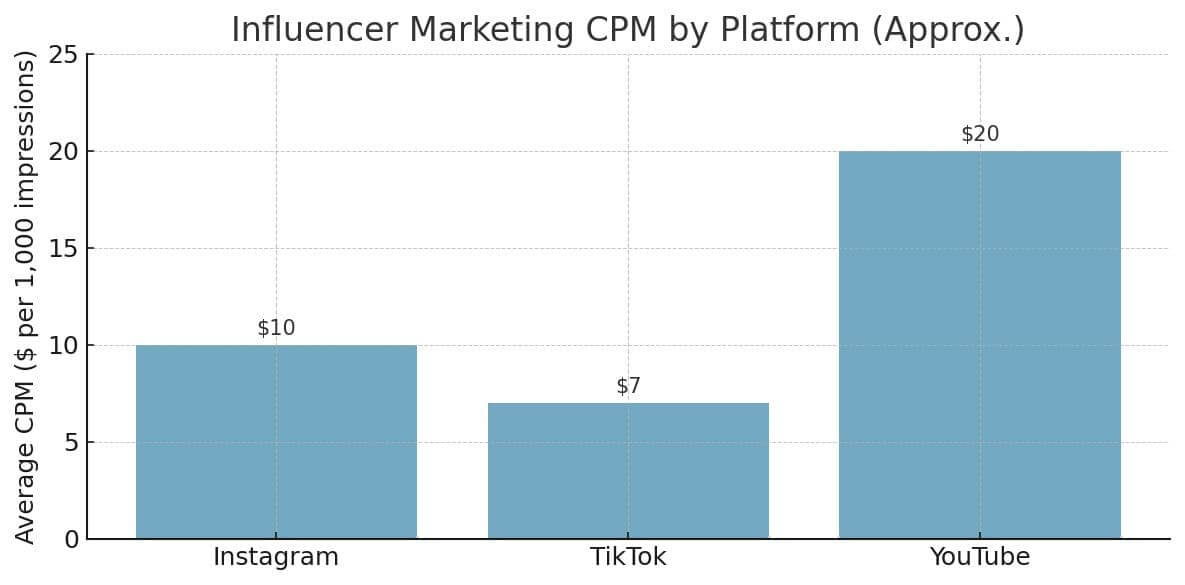
Figure: Approximate average CPMs for influencer content on different social platforms. Instagram content often sees around a $5–$15 CPM (roughly $10 on average, similar to Instagram’s own ad rates). TikTok posts tend to be highly cost-efficient, with many campaigns averaging around a $3–$10 CPM (TikTok’s algorithmic reach can drive lots of views, keeping CPM low). YouTube influencer videos usually command higher CPMs about $10–$30+, reflecting the greater effort to produce videos and the longer engagement time per impression. When evaluating your CPM, consider the platform norms – a “good” CPM on one platform might differ on another.
Ultimately, a good CPM is one that aligns with your goals. If you’re just trying to spread awareness widely, you want that number as low as possible. If you’re targeting a niche or aiming for conversions, you might tolerate a higher CPM in exchange for quality impressions. Always compare your CPM to campaign outcomes: are those impressions translating into engagement or sales? Also compare to industry benchmarks when available – for instance, if your industry’s average CPM is $8 and you’re getting $5, you’re doing well. If you’re paying $25 when others average $5, it’s time to dig deeper and optimize.
For e-commerce brands and especially scrappy Amazon sellers, working with micro-influencers (or even nano-influencers) can be a game-changer for CPM and overall ROI. Micro-influencers are creators with smaller followings (typically in the 5,000 to 100,000 range) who often charge much less per post than big “macro” influencers. Interestingly, campaigns that leverage many micro-influencers often achieve a very competitive CPM – sometimes even lower than what a single big influencer or paid ads would cost. Here’s why micro-influencers and content creators can lead to better cost-efficiency:
It’s worth noting that working with many micro-influencers does require coordination – you have to recruit the creators, ship products, track their posts, and measure results across the board. Using an influencer marketing platform or agency (such as Stack Influence or others) can streamline this process by vetting influencers, handling outreach, and ensuring each creator delivers content, all while you monitor the combined impact. The end result can be a very low blended CPM for the campaign and a trove of UGC and testimonials to boost your marketing materials.
Finally, keep an eye on overall ROI. CPM is a piece of that, and micro-influencer campaigns have shown impressive ROI in many cases. Some studies report micro/nano-influencer campaigns yielding around a 20:1 return on investment (every $1 spent brings $20 in revenue), far outperforming the ~6:1 ROI seen with macro-influencers. That higher ROI comes from the combination of relatively low costs, highly trusted recommendations, and the extra value of content and social proof. So, while managing dozens of smaller influencers might seem like more work than hiring one big name, the numbers often speak for themselves.
Tip: Whether you work with micro-influencers or celebrities, always negotiate and use data. If an influencer’s initial rate would lead to an unreasonably high CPM, don’t be afraid to discuss a lower fee or added deliverables. Sometimes offering a longer-term partnership or swapping cash for free products can improve your CPM significantly. For example, instead of paying $1,000 for one post, a brand might pay $1,200 for three posts over three months – getting more impressions for only a bit more cost, thus reducing CPM. Or by sending product gifts in lieu of some payment, you can reduce monetary cost. Be creative with your influencer collaborations to keep CPM in check while maintaining authenticity and results.
In summary, CPM is a powerful metric for influencer marketing, especially for e-commerce brands looking to maximize every dollar. By understanding what drives CPM up or down, calculating it accurately, and benchmarking what “good” looks like, you can make smarter decisions about which influencers to partner with and how to structure those deals. Combine that with the strategic use of micro-influencers and the rich UGC they create, and you have a recipe for influencer campaigns that not only reach a lot of people cost-efficiently, but also resonate with consumers and drive action. Happy collaborating, and may your CPMs be ever in your favor!
When it comes to growing an online brand, having the right social media content creators on your side can make all the difference. In the ultra-competitive world of e-commerce, brands (including Amazon sellers) are increasingly turning to micro-influencers and content creators to gain an edge. These niche creators – often everyday people with dedicated followings – provide authentic user-generated content (UGC) and a level of consumer trust that traditional ads simply can’t match. But how do you actually find and hire the perfect content creators who align with your brand’s values and goals? (One useful avenue is leveraging an influencer marketing platform such as Stack Influence, which specializes in connecting e-commerce brands with vetted micro-influencers.) In this guide, we’ll walk through a step-by-step approach to discovering talented social media content creators, evaluating their fit for your brand, and effectively reaching out to form a successful collaboration.
Example: A micro-influencer campaign driving engagement and sales. In this illustration, a niche content creator’s Instagram post helps promote a product through relatable storytelling and genuine enthusiasm. Collaborating with micro-influencers—often everyday consumers with niche followings—can give e-commerce brands an edge by generating authentic UGC that builds trust and boosts sales. Such posts feel like recommendations from a friend rather than advertisements, which greatly increases their credibility. In fact, peer-created content is highly influential – globally, 79% of people say user-generated content significantly impacts their purchase decisions, far more than traditional brand-directed content. By tapping into this kind of creator, brands not only gain exposure to an engaged audience but also acquire valuable content assets (reviews, unboxing videos, lifestyle photos) that can be repurposed across marketing channels for continued impact.
A post shared by Stack Influence (@stackinfluence)
Before diving into your search, start by clearly defining what you’re looking for in a social media content creator. Having a solid set of criteria will help you filter out mismatches and zero in on creators who are the best fit. Key factors to consider include:
Budget is a major consideration when planning to hire content creators. Influencer rates can vary dramatically based on a creator’s follower count, engagement level, platform, and the scope of work you’re asking for. It’s important to establish what you can afford early on.
Keep in mind that bigger isn’t always better in terms of ROI. In fact, 86% of marketers prefer working with influencers who have under 100,000 followers (micro-influencers) over celebrity influencers with millions. It’s not hard to see why – smaller creators tend to charge far less and often have more loyal, engaged audiences. Many micro-influencers will promote a product in exchange for just a free sample or a few hundred dollars, whereas a single post from a mega-influencer could cost tens of thousands of dollars. For the price of one celebrity endorsement, you might hire dozens of micro-creators, multiplying your reach and content output.
Not only are micro-creators cost-effective, but they also frequently deliver better results for the spend. One marketing study found that micro/nano-influencer campaigns can deliver roughly a 20:1 return on investment, compared to about 6:1 ROI for macro-influencer campaigns. In practical terms, that means a dollar spent on the right smaller influencers can generate as much as 3× more revenue than a dollar spent on a single big-name influencer. When setting your budget, consider these dynamics. You may decide to allocate funds toward a larger number of micro-influencers rather than blowing the whole budget on one or two “big fish.” It’s all about balancing reach with engagement and authenticity to maximize ROI for your brand.
To put this into perspective, let’s look at how micro and macro influencers stack up on key metrics:
Once you know what you’re looking for and how much you can spend, the next challenge is actually finding content creators who fit the bill. Fortunately, there are several effective ways to discover talented influencers and creators:
Using a combination of the above methods will cast a wide net and ensure you discover a range of potential creators. Jot down or save profiles of any promising candidates—you’ll vet them more closely in the next step.
Not every content creator who looks good at first glance will turn out to be the right partner. Once you’ve found a pool of potential influencers, you need to evaluate them carefully to make sure they’re a smart match for your brand. Here are the key areas to examine when vetting a creator:
Take a deep dive into the creator’s actual content. Is it well-made and engaging? Look at the visuals (photography, video editing, graphic design) to see if they meet the standard you’d want representing your brand. For example, if you run a home decor e-commerce store, a creator whose photos are dimly lit or poorly composed might not showcase your products in the best light – whereas someone with bright, high-resolution images and a good eye for styling could make your items shine.Beyond visuals, read or listen to the substance of their content. Do they tell stories or provide captions that spark interest and conversation? A good social media creator should be able to captivate their audience, not just post product photos with one-word captions. Consistency is important too. Check how regularly they post and whether they’ve built a coherent personal brand. Posting frequency can indicate how dedicated and professional a creator is – someone who posts once a day or a few times a week reliably is more likely to take a partnership seriously than someone who goes silent for weeks at a time. Also, look at whether their style or message stays on track. If an influencer usually shares fitness tips but suddenly one week is promoting a random tech gadget and the next week a clothing brand, their audience might be confused or less trusting. You want a creator whose content themes align closely with your niche, so when they feature your product it feels like a natural fit.Lastly, originality and creativity matter. The social media space is crowded; creators who have a unique angle or creative presentation stand out. Maybe they incorporate humor into their TikToks, or they have a signature aesthetic on Instagram. Novel and creative content tends to be more memorable and shareable, which can only benefit your campaign.
A content creator’s value lies not just in the content they produce, but in the audience they can reach. To gauge this, scrutinize their engagement metrics and the authenticity of their followers. High follower counts are meaningless if those followers aren’t genuinely interested or even real. Here’s what to look for:
Bottom line: prioritize creators who foster genuine engagement. A smaller follower count with an active, real community is far more valuable than a huge following that’s mostly ghosts.
When you invite a content creator to represent your brand, in a way they become an extension of your brand’s image. That’s why it’s crucial that they’re a good philosophical fit, not just hitting the numbers. Check the vibe and values they project through their content.Ask yourself: does this creator uphold principles or causes that align with our brand? For example, a company selling eco-friendly products would want to see that a potential influencer also cares about sustainability (maybe they frequently talk about recycling, or they avoid promoting brands that conflict with that ethos). If there’s a mismatch – say the creator has made statements or content that run contrary to your brand’s stance on something important (body positivity, family-friendly language, etc.) – think twice. Any past controversies or red flags in their content should be considered. A quick Google search of the creator’s name plus keywords like “scandal” or “controversy” can be enlightening. You want someone who will enhance your brand reputation, not accidentally damage it.Also evaluate the other brands or products the creator has promoted in the past. If they’ve worked with a direct competitor of yours very recently, you might steer away (or at least be aware of it and how they’d differentiate your offering). Or if they promote so many different products that their feed looks like an endless string of ads, their followers might be fatigued – whereas a creator who is more selective and genuinely uses the things they promote will carry more credibility.In short, the best content creator partnerships feel truly authentic: the creator’s personal brand and your company brand share a lot of common ground, so the collaboration comes across as natural and believable to the audience.
Finally, don’t overlook the legal and ethical side of working with content creators. Influencer marketing is subject to advertising laws and platform guidelines. Ensure any creator you hire is someone who follows the rules – this protects both your brand and the creator from potential trouble.One important aspect is sponsorship disclosure. Reputable creators should already be transparently disclosing paid partnerships or gifted products, typically using hashtags like #ad, #sponsored, or platform-specific tools (for example, Instagram’s “Paid Partnership” label). Check if the creator clearly marks past sponsored posts. In many countries (including the US, per the Federal Trade Commission’s guidelines), it’s legally required that influencers make it obvious when content is an advertisement or sponsored. If you see an influencer failing to do this, that’s a bad sign (and could put your brand at risk if you start working with them and they continue the practice).Also consider any ethical issues in the creator’s past. Do a bit of due diligence: have they been involved in any scandals, lawsuits, or notorious online spats? A quick background check on news articles or their social feed history can save you a headache later. You want to avoid partnering with someone who has a history of offensive behavior, fraudulent practices, or anything that could reflect poorly on your brand by association.When you do proceed to hiring (as we’ll cover next), you’ll want a clear contract that addresses legal points like content ownership and compliance with disclosure laws. But during the vetting stage, simply confirming that your potential partner is a responsible and honest actor in the social media space is an important final filter.
A post shared by Stack Influence (@stackinfluence)
You’ve identified some great prospective content creators – now it’s time to initiate contact and bring them on board for a collaboration. Reaching out can be a bit nerve-wracking, but if you approach it thoughtfully, you’ll maximize your chances of a positive response. Here’s a step-by-step game plan:
When contacting a creator (whether by email, DM, or through a platform), make it personal. Introduce yourself and express genuine interest in their content. Mention specific things you liked about their recent posts or explain why you think they’d be a great fit for your brand. Creators can tell when a brand has sent a generic copy-paste message to dozens of people. A friendly, tailored note shows respect and grabs their attention. For example, instead of saying "Hi, we love your content, want to collab?" you might say "Hi , I loved your recent unboxing video of – your authenticity and humor really stood out. I’m from , and we have a line of eco-friendly kitchen gadgets that I think your foodie followers would enjoy…".
Once you’ve got a dialogue going and interest from the creator, lay all the cards on the table regarding what you’re looking for. Explain your campaign idea or content needs: for example, “We are launching our summer collection and would love a 60-second Instagram Reel from you highlighting how you’d style our product in daily life, plus a couple of Instagram story frames.” Discuss timelines (when would you need the content to go live?), any key messages or hashtags to include, and so on. At this stage you’re not giving them a full brief yet, but you are making sure they have a solid understanding of the scope. This is also the time to ask if they have any ideas – creators are creatives, after all, and they might propose a unique angle that you hadn’t thought of.
Talk openly about compensation once the creator shows interest. Some may have a rate card or package; others might ask you for your offer. Refer back to your budget and be fair. If you’re compensating with product only (for very small influencers or customer-advocates), be upfront about it and don’t expect extensive deliverables in return. If it’s a paid deal, negotiate whether payment is per post, per content piece, or perhaps an affiliate commission structure. Also clarify any important terms: Will you need usage rights to their content (to repost on your channels or use in ads)? How long will the partnership last? It often helps to suggest a trial collaboration (one post or one month) with the potential to extend if it goes well.
After the paperwork, you’ll want to share a campaign brief or guidelines to set the creator up for success. This might include your brand’s background, key product points to mention, preferred hashtags or tags, and any do’s/don’ts for the content (for example, visual style guidelines, or “don’t show competitor products in the same post”). However, don’t micromanage the creator’s style. They know their audience best and what content resonates. It’s important to give them creative freedom to integrate your product in a way that feels organic to their channel. The best influencer content often doesn’t look like a scripted ad – it looks like the creator’s usual content, just featuring a brand they genuinely like. So collaborate on ideas, but respect their creative process.
By following these steps, you’ll approach hiring a content creator in a respectful and effective manner. Remember that influencers are people, not just media channels – treat them with professionalism and empathy, and you’re more likely to form lasting, mutually beneficial relationships.
As you may have gathered, finding and coordinating with social media content creators can involve a lot of moving parts. This is where influencer marketing platforms come in handy. These are third-party tools or services designed to streamline the entire influencer discovery and collaboration process. If you’re managing multiple creator partnerships or just want to save time, using a platform can be a game-changer.
What do influencer marketing platforms offer? For starters, they typically provide a vast database of influencers that you can search through with fine-tuned filters. Instead of manually scouring social media, you can enter your criteria (e.g., “beauty creators in USA with 5k–50k followers and engagement above 3%”) and get a list of matching candidates instantly. This can dramatically cut down the research phase when looking for content creators. Platforms also often include analytics dashboards so you can assess a creator’s audience demographics, past campaign performance, engagement rates, and even detect fake follower activity – all in one place.
Beyond discovery, many platforms handle the campaign management aspects as well. You can use them to organize your list of chosen influencers, send out batch campaign briefs or proposals, and track who has accepted. Some platforms have integrated messaging or email systems, so you can keep all communication in one hub rather than juggling DMs and emails. This can be especially useful if you’re working with a large number of micro-influencers at once.
Another huge benefit is the ability to manage payments and contracts through the platform. Instead of cutting 20 individual PayPal payments and remembering who sent an invoice, an influencer platform might let you load funds or use their escrow system to pay creators securely. Likewise, digital contracts and compliance documents can be issued and signed within the software. By automating these administrative tasks, you minimize errors and save yourself a ton of hassle.
For e-commerce brands, certain influencer platforms even specialize in things like product seeding campaigns – where you send out free product to a curated list of micro-influencers and manage the content they create in return. For example, some services (including Stack Influence’s platform) allow Amazon sellers and online brands to connect with hundreds of micro-influencers who will try a product and post about it, with the platform coordinating shipments, tracking posts, and gathering all that UGC for you. This kind of end-to-end solution means you can scale up your influencer marketing without needing a huge team to do it manually.
In summary, an influencer marketing platform can act as a centralized hub that simplifies every stage of working with social media content creators – from discovery and outreach to campaign execution and analytics. Particularly as your influencer program grows, investing in such a tool can yield efficiency and insight that’s hard to achieve with spreadsheets and ad-hoc communications alone.
By defining clear criteria, leveraging the right search tactics (and tools), and building genuine relationships with creators, your e-commerce brand can harness the power of social media content creators to drive authentic engagement and growth. The world of micro-influencers and UGC is booming, and brands that master the art of finding and hiring the right creators will enjoy a competitive advantage. Here’s to connecting with creators who will champion your brand and take your marketing to the next level!
Sending PR packages to influencers has become a popular way for brands to generate buzz and authentic word-of-mouth promotion. If you're a brand (big or small) looking to get your products into the hands of beauty gurus, lifestyle vloggers, fashionistas, tech reviewers, or any other influencer, this guide is for you. In this post, we'll cover everything from why PR packages are useful, to finding the right influencers (whether nano or mega stars), how to reach out, what to include in your package, packaging/shipping tips, and how to follow up to build lasting relationships. Let's dive in!

PR packages (short for public relations packages) are essentially gift boxes of products sent to influencers without a formal paid contract. Why do brands invest in sending freebies? There are several good reasons:
In short, PR packages are a useful tool to boost brand awareness, drive word-of-mouth, and foster authentic endorsements in a cost-effective manner. But success largely depends on choosing the right influencers to send those packages to – so let’s talk about that next.
Not all influencers are created equal, and a successful PR outreach starts with identifying the right influencers to send your goodies to. This means looking beyond just follower counts and considering factors like niche alignment, engagement, and content style.
As you can see, there’s no one “best” tier – it depends on your goals. Smaller influencers (nano/micro) have more intimate communities and often higher engagement rates, which can be great for driving genuine conversations about your product. They’re also usually thrilled about gifts and may post enthusiastically even without payment. Mid-tier influencers offer a balance of decent reach and still reasonable costs, and many in this range are up-and-coming creators very savvy with content creation. Macro and mega influencers give you sheer reach and star power – if your goal is to boost brand awareness quickly to a massive audience, a mega-influencer can do that. Just remember, with the big guys you’ll often get lower engagement per follower and less personal storytelling, since their following is so broad.
Fit and Quality: Regardless of tier, evaluate the quality of each influencer's content and how well their style aligns with your brand image. Are their photos/videos well-made? Do they have a positive reputation and no conflicting partnerships? For example, sending a PR package of sugary snacks to a fitness influencer who advocates strict health eating is probably a miss. Do some research: watch their content, read comments to gauge audience sentiment, and ensure they match your brand’s vibe and values.
Interest and Past Collaborations: Ideally, target influencers who have shown interest in similar products or who are already fans of your brand. An influencer who’s already organically mentioned your product (or a competitor’s) is a prime candidate for a PR package. Also check if they’ve worked with similar brands; this can signal how they might showcase your item. If an influencer only ever features luxury high-end products, and you’re a budget-friendly brand, they might not be as receptive unless you position it correctly.
In summary, choose influencers whose audience, content, and engagement signal a strong potential for genuine appreciation of your product. That sets the stage for a warm reception when you reach out.
Once you have a shortlist of ideal influencers, it's time to reach out and make contact. First impressions matter here, just like dating – you want to be polite, personable, and clear about your intentions. Here are some tips for effective influencer outreach:
In summary, treat your outreach like you’re crafting a friendly, personalized invitation to something exciting – because you are! This approach will greatly increase your chances of an influencer saying “Yes, I’d love to check it out.”

So your influencer said "Yes" – fantastic! Now it’s time to assemble a PR package that will wow them. The contents of your box should be thoughtfully curated to make a great impression and make it easy (and enticing) for the influencer to share with their followers. Here are the essentials and some extras to consider:
In essence, you want the influencer to open the package and be delighted by the contents – both the products themselves and the thoughtfulness in how it’s curated. A well-stocked and well-presented PR box makes them excited to try everything and naturally inclined to share that excitement with their followers.
Now that you've got the contents sorted, let's talk about packaging – both the art of presentation and the nitty-gritty of shipping logistics. How you package your PR kit can greatly impact the influencer’s unboxing experience (and whether they decide to film it!). Here are some best practices:
In essence, pack your PR box like it’s a gift for a VIP friend – secure, stylish, and full of anticipation. When the influencer cracks it open, they should be saying “wow, look at this package!” on camera because you’ve made it that delightful.
Your carefully curated package is now in your influencer’s hands – hooray! But your job isn’t done when the box is delivered. The follow-through is just as important, because it can turn a one-time mailing into a long-term partnership. Here’s how to handle the post-send phase:
The key to long-term success in influencer relationships is respect and reciprocity. You respected their creative freedom and showed appreciation; in return, they gave your brand exposure and authentic content. By following up graciously and keeping the conversation going, you set the stage for ongoing partnerships. A personal follow-up and thank you can strengthen the professional relationship and keep the conversation open for future collaborations. Many influencers have “favorite” brands they consistently work with – and by doing PR outreach right, your brand could become one of them.
Sending PR packages to influencers involves a lot more than just dropping products in a box and mailing them out. It’s about finding the right people, making a genuine connection, presenting your brand in the best light, and nurturing the relationship. When done thoughtfully, the payoff can be huge: authentic endorsements, lots of social media love, and lasting influencer advocates for your brand.
By choosing your influencers wisely, contacting them personably, packing a stellar PR kit, and following up with respect and gratitude, you’ll greatly increase your chances of not only getting featured in their content but also earning their loyalty. Happy PR mailing, and may your packages bring unboxing joy to many influencers (and their followers) across the U.S.! 🚀📦
Instagram Reels have quickly become a powerhouse for engagement on the platform, leaving many content creators wondering: should you hide your Reels from your feed, or always share them to your main profile? This question is especially important for micro-influencers, e-commerce brands, Amazon sellers, and anyone leveraging user-generated content (UGC) in their Instagram strategy. In this comprehensive guide, we’ll explore what it means to hide a Reel from your feed, the pros and cons of doing so, and best practices to help you make the most of Reels without compromising your profile’s aesthetic or engagement.
When you post an Instagram Reel, you have the option to also share it to your main feed (profile grid) or not. “Hiding” a Reel from your feed simply means choosing not to share it on your profile grid or in your followers’ home feed. The Reel will only be visible in the Reels tab of your profile and in the Reels Explore section of Instagram – not in the curated grid that visitors see on your profile. Creators often consider this option for aesthetic reasons, such as maintaining a consistent look on their profile or a specific pattern in the grid.
However, hiding a Reel from your feed has a significant drawback: your existing followers won’t see the Reel in their normal scrolling feed. This can dramatically reduce the Reel’s initial engagement and reach since it relies solely on the Explore algorithm or someone manually visiting your Reels tab. In other words, if you don’t share to feed, you’re essentially skipping the audience that knows you best. Instagram itself notes that without sharing to the feed, “followers won’t see your reel while scrolling their feeds”, which naturally “reduces potential engagement.”
So why would anyone hide a Reel? The main reason is to preserve the profile’s visual aesthetic. Top Instagram creators and brands work hard to curate their Instagram grids – for example, a photographer’s feed might be filled with carefully edited images that follow a color scheme, or a brand might have a clean layout that Reels (with their 9:16 aspect ratio cropping to 4:5 on the grid) could disrupt. If a particular Reel doesn’t match the vibe of the grid, some creators choose not to post it to the main feed. It’s a trade-off between aesthetics and reach.
Key Takeaways
The steps differ slightly depending on whether you are posting a new Reel or removing an existing one from your grid. Here is the exact process for both scenarios.
To hide a Reel before you post it:
To remove an existing Reel from your profile grid after posting:
Note that once you remove a Reel from your profile grid, you cannot re-add it to the feed. This is why many creators use the post-then-remove approach: share to the feed first while the Reel is new, then tidy up the grid after the initial engagement window closes.

To make an informed decision, it’s important to understand how Reels differ from traditional feed posts (photos or carousel images) in terms of distribution and engagement. Instagram’s algorithm treats these content types differently. Reels are heavily promoted by Instagram’s algorithms for discovery – they can appear in the dedicated Reels feed, on the Explore page, and even be recommended to users who don’t follow you. In contrast, standard feed posts primarily get shown to your existing followers (plus some exposure through hashtags or the Explore page if they perform well).
Instagram itself has hinted at these differences in ranking factors. Reels tend to be served to users largely based on engagement and popularity signals, whereas feed post visibility leans more on personalization and relationship (who the viewer interacts with regularly, etc.). In practice, this means a highly engaging Reel can go viral to millions of users beyond your follower list, while even a great photo post usually stays within a smaller circle of viewers.
Another key difference is how popular Instagram Reels have become in user behavior. Meta’s Q1 2024 report revealed that Instagram users now spend around 50% of their time on the app watching Reels – a testament to how central short-form video has become on the platform. Just a couple of years ago, Reels were a small fraction of Instagram content (around 20% of all activity), and now they’re taking up half of users’ attention on Instagram. This surge indicates that if you’re not leveraging Reels, you could be missing where half of your audience’s attention is going.
Average reach rate by Instagram content type. A Socialinsider study found that Reels reach about 30.8% of an account’s followers on average – roughly double the reach rate of carousel posts (14.5%) or image posts (13.1%).
Not only are people watching Reels more, but the algorithm actively favors them for reach. Studies have shown that Reels are “the most engaging form of Instagram content” on average, often outperforming static posts in both reach and interactions. As illustrated above, the average Reel can organically reach a far larger percentage of your audience (and beyond) compared to a regular photo post. For a content creator or brand, that means Reels represent a big opportunity to gain visibility and new followers. Micro-influencers, in particular, can punch above their weight with a viral Reel, reaching audiences that dwarf their own follower count.
With those differences in mind, let’s break down the advantages and disadvantages of hiding a Reel from your feed. There isn’t a one-size-fits-all answer – it comes down to your priorities (aesthetic vs. reach) and your audience.
Pros of NOT sharing Reels to your feed (hiding them):
Cons of hiding Reels from your feed:
In summary, the only strong reason to hide a Reel is to protect your profile’s look and branding. In fact, social media experts argue there’s “no compelling argument to not post Reels to Feed unless you’re set on maintaining a very specific aesthetic for your Instagram feed.” In most cases, the benefits of sharing a Reel to your feed far outweigh the visual tweaks of your grid.
Pro Tip: If you are concerned about aesthetics but don’t want to sacrifice reach, there’s a clever compromise. Post the Reel to your feed normally, let it live on your grid for the first 48–72 hours while it’s garnering views and engagement, and then remove it from your profile grid (you can do this by tapping the ... menu on the Reel and selecting “Remove from profile grid”). The Reel will still be available in the Reels tab of your profile and reachable through Explore, but it will disappear from your main grid. This way you get the best of both worlds – initial follower engagement and a clean feed aesthetic. Many creators use this tactic: essentially, share now, curate later. Keep in mind, though, that removing a Reel from your grid is generally permanent (you can’t re-add it to the feed later), so make the decision within a few days of posting.
If you decide to embrace Reels (and most content creators should, given their current performance), here are some best practices to ensure you’re getting the most out of them while still managing your overall Instagram presence:
By following these practices, you can enjoy the engagement boost of Reels while still keeping your overall content strategy balanced.
Instagram quietly rolled out Trial Reels in late 2024, and it changes the hiding-versus-sharing calculation significantly. Trial Reels lets you publish a Reel exclusively to non-followers first, so you can see how it performs with a cold audience before deciding whether to share it to your feed and your existing followers.
This is particularly useful for creators testing a new content style or posting about a topic outside their usual niche. If the Trial Reel performs well with strangers, that is a strong signal it will also resonate with your audience, and you can then choose to share it to the feed with confidence. If it flops, you have protected your engagement rate without your followers ever seeing the post.
Trial Reels expire after 24 hours if you take no action, at which point Instagram can suggest sharing it to the broader feed based on performance data. Think of it as a low-stakes sandbox before making the feed commitment.
Understanding what not to do is just as useful as knowing best practices. These are the most common errors we see creators make when navigating the feed-vs-hide decision.

You might be thinking, “This is great general Instagram advice, but what about for micro-influencers, Amazon sellers, and e-commerce brands specifically?” The answer is simple: Reels can be a game-changer for you, and handling them wisely is crucial.
For micro-influencers, who often have smaller follower counts, every bit of reach counts. Reels are an opportunity to punch above your weight class. A single viral Reel can bring a flood of new followers or impressions that would take months to accumulate via regular posts. If you’re collaborating with brands, they love to see those big numbers on reach and engagement – it’s proof their partnership is getting exposure. Hiding your Reels from the feed could mean you’re leaving that exposure on the table. Instead, micro-influencers should use Reels to showcase authentic moments, reviews, or demonstrations of products (classic UGC content) because that authenticity often resonates in the Reels format. Plus, brands often repurpose influencer Reels as testimonials or ads, multiplying the value of that content.
For Amazon sellers and e-commerce brands, Instagram Reels represent a modern-day word-of-mouth. Think of a Reel as a quick infomercial or customer testimonial for your product. User-generated content like unboxing videos, quick product demos, or before-and-after comparisons make for excellent Reels that feel organic rather than ad-like. By sharing these Reels to your feed, you not only engage your existing followers but also tap into Instagram’s powerful discovery engine to reach potential buyers. And because Reels can be discovered by anyone, a small online shop has a chance to get in front of thousands of viewers without a huge ad budget – all through creative short videos.
UGC and Reels go hand-in-hand. Shoppers trust real users more than polished brand ads. If you encourage your customers or micro-influencers to create Reels featuring your products, don’t hide those gems! Share them to your feed for maximum impact. They serve as social proof and often drive viewers to check the product (many creators cleverly use captions like “Product link in bio” or Instagram’s shopping tags).
Finally, consider that Instagram is continually updating features. Today Reels are hot; tomorrow there might be a new format. The best strategy is to stay flexible and focus on content that engages. Whether you’re a fashion micro-influencer showing off a thrift haul or an Amazon gadget seller demonstrating a product in 30 seconds, embracing Reels can boost your growth. And if you’re worried about your profile looking messy, remember the earlier tip – you can always archive or remove a post from your grid later, after it’s had its moment.
(On a related note, platforms like Stack Influence specialize in connecting e-commerce brands with micro-influencers to generate authentic UGC, often in the form of Reels and Stories. These collaborations highlight how short-form videos can drive product discovery and sales by leveraging the creative power of content creators. The success of such campaigns underscores why you shouldn’t shy away from sharing Reels to your feed – the more people that see your content, the better your chances of building a community and customer base.)
At Stack Influence, we have managed micro-influencer campaigns across thousands of product launches for Amazon, Walmart, and Shopify brands. One of the most consistent patterns we observe is that creators who share their Reels to the feed generate meaningfully higher UGC performance for the brands they work with.
When a creator hides a Reel from the feed, the brand loses the social proof signal that appears on the creator's public profile grid. Brands frequently use influencer posts as creative assets for user-generated content syndication and paid ad creative. A Reel buried in the Reels tab is harder to discover, screenshot, and amplify compared to one that lives on the creator's main grid.
Across the campaigns we run, Reels shared to the feed consistently reach around 40 to 50 percent more accounts than equivalent Reels that bypass the feed entirely.That gap is not random: the feed share triggers the early follower engagement loop that signals relevance to Instagram's algorithm, unlocking broader distribution to non-followers. When a creator hides a Reel, they skip that ignition step, and the content enters cold discovery with no initial engagement momentum to build on.For brands tracking total impressions and earned reach as campaign KPIs, that difference shows up clearly in post-campaign reporting.
We also see a consistent pattern among creators who scale their brand partnerships: they treat every sponsored Reel as a feed post by default. The reasoning is straightforward. Brands are paying (or gifting product) for visibility, and a Reel that bypasses the feed cuts that visibility short. Creators who understand this dynamic tend to get re-booked at higher rates because the brand's campaign metrics hold up.
So, should you hide your Reels from your feed? For most creators and brands, the answer is no. Unless you have a very compelling aesthetic reason or a strategic niche case, the upside of sharing your Reels to your feed far exceeds the downside. Instagram is heavily pushing Reels, and both the data and anecdotal evidence show that Reels can supercharge your reach and engagement. Hiding them means handicapping your content’s performance right out of the gate.
That said, every account is unique. If your entire brand is built on a carefully crafted visual feed (say, a wedding photographer or a minimalist lifestyle blogger), you can still utilize Reels – just maybe keep the less “on-brand” ones off the main grid or use the post-then-remove trick. Always keep your long-term goals in mind. If growing your follower count, increasing engagement, or driving sales is a priority (and for most micro-influencers and e-commerce sellers, it is), then visibility is king. It’s better to have a slightly imperfect grid but reach thousands more people, than a perfect grid seen by only a few.
In the fast-moving world of social media, experimentation is key. Try sharing your Reels to the feed and monitor the results. See how your audience reacts. You might find that your followers love the extra content and don’t mind the change in your feed’s look at all. Or you might find a balance that works for you, such as only sharing higher-quality Reels to the feed and keeping experimental ones in the Reels tab. Use Instagram’s analytics and listen to feedback.
Bottom line: Don’t be afraid to let your Reels shine on your main feed. Instagram created that option for a reason – because they know a lot of people will engage with video content. Take advantage of it! For micro-influencers, content creators, and Amazon sellers alike, Reels can be a powerful tool for growth. By thoughtfully integrating Reels into your content strategy (and using tips like those above), you can enjoy the algorithmic boost of Reels without sacrificing the identity of your brand’s profile. In the end, the question of hiding Reels comes down to a simple idea: if you’ve made a piece of content you’re proud of, why hide it? Share it, promote it, and let it help you connect with more people – that’s what social media is all about.
If you're an e-commerce brand or Amazon seller looking to amplify your marketing, partnering with micro-influencers as brand ambassadors can be a game-changer. Brand ambassadors are content creators who genuinely love your product and promote it to their audience in an authentic way. Their posts come off as peer recommendations (a form of user-generated content, or UGC) rather than ads, which builds trust with consumers. In fact, micro-influencers (creators with ~10K–100K followers) often see much higher engagement rates on their posts than bigger influencers – roughly 3.9% engagement vs. about 1.2% for macro-influencers. This means an ambassador with a smaller following can spark more interaction and conversation per post, driving more social proof for your brand.
Micro-influencers (~10K–100K followers) average ~3.9% engagement, significantly higher than macro-influencers (~1.2%) or mega influencers (~0.8%) on Instagram. This higher engagement means brand ambassadors with smaller followings can generate more likes, comments, and shares relative to their audience size, making their content especially impactful.
Because audiences see ambassadors as genuine fans, they tend to trust their recommendations more. Over half of marketers have reported getting better ROI from micro/nano-influencers compared to larger. And 64% of consumers say genuine reviews from influencers are the most effective content for driving purchases (followed by posts with discount codes at 55%). Clearly, having passionate ambassadors create content for your brand can boost both engagement and sales.
Below, we break down 10 popular brand ambassador post ideas – from creative Instagram posts to TikTok videos – that influencers (especially micro-influencers) commonly use to promote products. These ideas will help your brand tap into authentic UGC content and build a loyal community around your products. Let’s dive in!

One classic ambassador post idea is the product showcase, where the influencer highlights your product’s features or benefits in action. Rather than a generic product shot, brand ambassadors add a personal, creative twist. They might demonstrate the product in use or incorporate it into their lifestyle so it feels relatable. The key is to show multiple angles of value: what problems does the product solve, and how does it fit into everyday life?
For example, a beauty micro-influencer might post two different looks using the same eyeshadow palette – one emphasizing its vibrant color payoff and another its all-day staying power. Each post highlights a different benefit. Ambassadors can brainstorm ways to present your product from various perspectives, such as:
By rotating through different benefits in their content, ambassadors keep things fresh and speak to various interests of their followers. The result is a richer picture of your product’s value. Tip: Give your ambassadors some product facts or features, then let them run with their own ideas – their authentic take on what’s cool about your product will resonate most with their audience.
Nothing builds trust quite like an honest review post from a real user. When a brand ambassador shares their personal experience or testimonial with your product, it comes off as a recommendation from a friend. This could be a detailed caption reviewing the product or a video where the influencer speaks candidly about what they love (or even what could be improved). Authenticity is key – audiences can tell if a post is overly scripted, so encouraging ambassadors to be genuine will pay off.
These testimonial-style posts work especially well for micro-influencers, whose followers see them as authentic peers. Surveys show 50% of Millennials trust product recommendations from influencers (versus only 38% who trust celebrity endorsements). That trust means a positive review from a relatable creator can carry significant weight. Ambassadors might describe how the product solved a problem for them, share before-and-after results (great for fitness or skincare products), or simply express why they’re excited about the brand.
For example, an ambassador for a new coffee brand might post, “🌟 Review: I’ve been switching out my morning brew for @YourCoffeeCo’s blend this week, and I’m honestly impressed. The flavor is so smooth and it gives me a perfect energy boost without the jitters. As a mom and a content creator, I need that reliable pick-me-up! 😊☕️ #NotAnAd just a fan”. Posts like this feel organic and build credibility. Brands can later repurpose these reviews as testimonials on their websites or product pages – a bonus source of social proof coming straight from UGC.
Everyone loves the excitement of an unboxing! Unboxing videos or haul posts are hugely popular, especially in e-commerce and Amazon product communities. In these posts, a brand ambassador reveals products on camera – showing the packaging, their first impressions, and genuine reactions. The appeal is in the anticipation and authenticity; viewers feel like they’re unwrapping a surprise alongside the influencer.
For a brand, having an ambassador film an unboxing is a great way to showcase product quality and the “wow” factor of presentation. Micro-influencers often add personal commentary (“Look at this cute thank-you note from the seller!” or “The bottle is glass, feels high-end!”) which can highlight details you might not fit in traditional ads. These posts tend to perform well on YouTube, Instagram Stories, and TikTok. A popular variant is the haul post, where an influencer shows a batch of items (e.g. “Huge fall clothing haul 🛍️✨”). This works brilliantly if you send your ambassador a few products or a full collection to try.
Unboxing content is especially effective for Amazon sellers and online brands because it drives curiosity and trust. For instance, an Amazon micro-influencer might do an “Amazon Finds” haul video featuring your product, and link to your Amazon listing. Viewers get to see the item live before buying. Moreover, the video can double as visual feedback – some Amazon influencers even add their unboxing videos to Amazon’s product pages through the Amazon Influencer Program, influencing shoppers right at the point of purchase. Overall, unboxing posts are a fun, engaging way for ambassadors to introduce your product to their followers in a genuine manner.
Educational content can also be a compelling ambassador post – think how-to guides, tutorials, or demos featuring your product. This works best when your product benefits from a bit of explanation or technique. For example, a makeup ambassador might film a tutorial for a full glam look using a particular eyeshadow palette step-by-step, or a home chef influencer might do a recipe video using your specialty ingredient. By teaching something useful, the ambassador provides value to the audience and subtly promotes the product at the same time.
Tutorial posts position the influencer as a helpful expert, which reflects positively on your brand. They also encourage viewers to save and share the content (because it’s informative), extending the post’s reach. A few ideas: a DIY craft influencer could show “How to style 3 looks with one scarf (featuring scarf)”, or a tech influencer might do “Setup guide for the Smart Home Kit”. The ambassador walks through the process, giving tips and showing the product’s ease-of-use or performance in real situations.
Keep in mind that authenticity and entertainment matter even in how-to content – a report found that while 29% of consumers appreciate educational influencer content, a larger share respond to content that’s honest and entertaining. So the most effective tutorials are those delivered in a fun, engaging way rather than a dry demo. Ambassadors can inject their personality (a bit of humor, personal anecdotes) while showing your product in action. The end result is a piece of content that educates viewers on how to use your product and inspires them to try it
When it comes to boosting buzz, few things beat a giveaway or contest run by your brand ambassadors. Influencers love hosting giveaways because it excites their followers – after all, who doesn’t love a chance to win free stuff? From a brand perspective, contests are gold for generating engagement and expanding reach. An ambassador-led giveaway can introduce your product to a ton of new potential customers through tagging and sharing.
Typically, the ambassador will announce that they’ve partnered with your brand to give away a prize (often the product itself or a bundle). They’ll post a photo or reel of the product and outline the contest rules in the caption. Common entry requirements include:
Such rules not only boost the ambassador’s engagement, but also drive traffic to your brand’s profile and grow your follower count. For example, an ambassador might write: “🎉 Giveaway time! I’ve teamed up with @YourBrand to give one lucky follower a free starter kit! To enter: 1️⃣ Follow me @Influencer and @YourBrand, 2️⃣ Like this post, 3️⃣ Tag two friends in the comments who would love this. Bonus: share to your story for an extra entry. 🤞 Good luck!”
During the contest period, you’ll likely see a surge of new eyes on your product. The ambassador can amplify this by hyping the giveaway on their Stories or doing a reminder post. When it’s over, either the ambassador or your brand can announce the winner (which is another opportunity for a celebratory post). Pro tip: Make sure the giveaway complies with platform rules and that either you or the influencer promptly deliver the prize to keep the experience positive. With a bit of planning, ambassador-run giveaways are a win-win: the influencer delights their fans, and your brand enjoys viral exposure.
Another engaging post idea is content that gives followers a behind-the-scenes look at the ambassador’s life with your product. These posts are more lifestyle-oriented and less formal – the goal is to illustrate how your brand fits naturally into everyday life or special moments. This could be a day-in-the-life vlog that features your product, a “get ready with me” video using the product, or candid snaps of the influencer using the item in real time.
For example, a fitness brand ambassador might do an Instagram Story series of their morning routine: they mix the brand’s protein powder into a smoothie, show their workout, then snap a post-workout selfie with a caption about how the protein shake helps their recovery. Or a tech gadget ambassador might film a short reel of their home office setup tour, casually highlighting how your smart lamp or device makes their workflow better. The idea is to embed the product seamlessly into content that feels personal and unscripted.
Behind-the-scenes content works well in formats like Instagram Stories, TikTok clips, or even longer YouTube vlogs. It makes followers feel like they’re getting an authentic peek into the influencer’s world. By seeing the brand through the ambassador’s daily life, consumers can imagine themselves using it too. This style of content also strengthens the parasocial relationship (friendly connection) between the ambassador and their audience – it doesn’t come off as advertising, but rather as sharing a part of their life. For brands, this means your product is being shown in a trustworthy, relatable context, which can be incredibly persuasive. Don’t underestimate the power of a simple, casual post like “Sunday baking session with my favorite @YourBrand mixer – it’s banana bread time! 🍌👩🍳” accompanied by cozy, real-life photos. These little glimpses make your brand feel like a natural part of the community.
Great ambassador content doesn’t always have to be a one-way broadcast; it can invite the audience to participate. Interactive posts such as polls, Q&A sessions, and challenges get followers directly involved and talking about your brand. This boosts engagement and can even generate more UGC from the community.
On Instagram Stories, ambassadors can use features like polls or question stickers related to your product. For instance, a travel ambassador partnering with a luggage brand might post a poll: “What’s your travel style – carry-on only or big suitcase? 🧳✨” with a photo of the sleek carry-on bag. They could follow up with a few quick videos sharing results and casually mentioning how the @YourBrand bag fits in overhead bins if many vote “carry-on”. Similarly, using the Q&A feature, an influencer can say “Ask me anything about my skincare routine!” and naturally plug your skincare product in some of their answers, addressing follower questions about it.
Hashtag challenges are another fun idea, especially on TikTok. An ambassador can kick off a simple challenge involving your product – for example, a dance or a transformation trend – and encourage followers to join in with the campaign hashtag. Even something as straightforward as a before-and-after post (like a messy room to clean room using a cleaning product, tagged with #CleanWithBrandChallenge) can prompt others to try and share. The ambassador’s role is to start the momentum and show enthusiasm. If followers participate and create their own posts, your brand gets a wave of UGC and extra exposure.
Finally, ambassadors can do interactive live sessions (Instagram Live, TikTok Live, etc.) where they might demo the product and take viewer questions in real time. Live videos are fantastic for building trust because viewers can see the ambassador unfiltered and ask spontaneous questions (“Does that jacket come in other colors? Is it true to size?”). It’s a bit like a casual infomercial combined with a hangout session. Just having an ambassador mention “I’ll be going live tomorrow to chat about how I use daily – come hang out!” can drive curious fans to tune in. Overall, adding interactive elements makes ambassador content feel more like a conversation than a promotion, deepening engagement and interest in your brand.
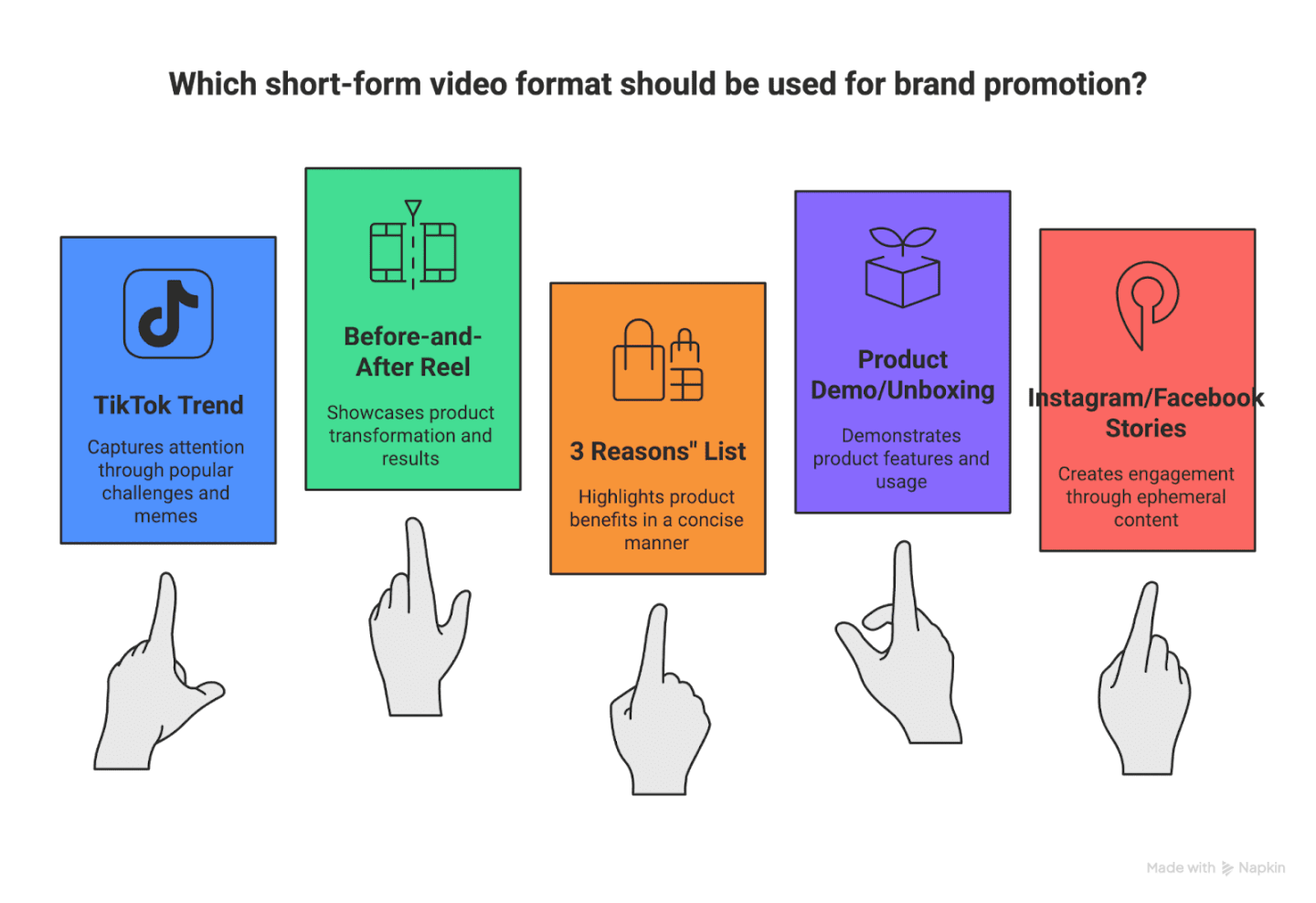
In 2025, short-form video content reigns supreme on social media – and brand ambassadors are leaning into it. If your influencers aren’t already making Instagram Reels, TikTok clips, or Facebook/IG Stories for your brand, encourage them to start. These quick, snappy videos can capture attention far better than static images in many cases. In fact, more than half of influencers (53%) prefer creating 15–30 second short-form videos for brand collaborations, as these formats often get priority in algorithms and are highly shareable.
There are countless ways an ambassador can showcase your product in a short video:
The beauty of short-form videos is that they’re casual and entertaining by nature – perfect for the “casual and informative” vibe you want. Ambassadors can experiment with fun editing, music, voiceovers, and trending hashtags to boost reach. For instance, an ambassador for a cooking gadget might do a 30-second recipe hack video using the gadget, with upbeat music and captions, making it both useful and eye-catching. Or a fashion micro-influencer might film a Reel styling one jacket in 5 different outfits, highlighting its versatility.
Stories (on Instagram or Facebook) are also key: they’re ephemeral but highly engaging. An ambassador can post a series of story clips throughout the day featuring your product (with text overlays, stickers, etc.), which keeps the product in followers’ minds without feeling like a hard sell. The FOMO of Stories (available for 24 hours) can prompt quick action, especially if paired with a swipe-up link or product tag for instant shopping. For e-commerce brands, this is a direct pipeline from inspiration to purchase.
In short, encourage your brand ambassadors to leverage these bite-sized video formats. The algorithmic boost and viral nature of short-form videos can amplify your brand message well beyond the ambassador’s follower list, bringing in new fans and potential customers.
Keeping content timely and relevant is another smart strategy. Brand ambassadors often create seasonal or themed posts that tie your product into whatever everyone’s talking about at the moment – holidays, cultural events, or viral trends. This approach helps your brand ride the wave of public interest and shows that you’re in tune with what’s happening now.
Holiday-themed posts are a prime example. Influencers might feature your product as part of their holiday content: a Halloween makeup ambassador does a spooky look using your cosmetics, or a home decor influencer includes your scented candles in a Christmas cozy-home tour. They’ll use seasonal hashtags like #HolidayGiftGuide or #HalloweenLooks which can attract viewers who are searching for inspiration. For instance, an ambassador could post, “Gift idea alert 🎁: @YourBrand’s eco-friendly journals make awesome stocking stuffers! I’m including them in my Holiday Gift Guide this year because who doesn’t love a personalized notebook? #GiftGuide #EcoFriendly”. Such a post plugs the product in a way that feels helpful and timely.
Similarly, ambassadors can tap into annual events or themes: back-to-school season, summer beach vibes, New Year “new you” resolutions, etc. A fitness micro-influencer around New Year’s might talk about their favorite protein powder (your brand) as part of getting back on a healthy routine. Or during wedding season, a beauty guru could showcase your makeup in a “wedding guest look” post. By aligning with seasons or life events, the content becomes instantly relatable.
Don’t forget about trending topics and memes on social media. If there’s a viral trend that can be organically connected to your product, an ambassador jumping on it can yield huge visibility. This could be a trending challenge, a popular sound on TikTok, or even a meme format. The ambassador just needs to be creative in weaving your brand into it. The benefit here is tapping into a larger conversation – people might discover your product simply because they found the trend funny or interesting.
In all cases, ensure the seasonal or trend tie-in makes sense and doesn’t feel forced. When done right, themed posts show your brand’s personality and timeliness, which can endear both the ambassador’s followers and new audiences to your product.
Last but definitely not least, one of the most popular ambassador post formats involves sharing a special promo code or referral link with their followers. This is a direct way to drive sales and track results from your brand ambassador program. Influencers will often say something like, “Use my code JANE20 for 20% off your order at @YourBrand!” in their caption or video, encouraging their audience to take advantage of the deal.
These posts work well because they create a sense of exclusivity and urgency. Followers feel like they’re getting insider access to a discount via the ambassador. It also adds to the ambassador’s credibility – they’re partnering closely enough with the brand to offer perks to their fans. From the brand side, discount code campaigns are easy to measure (you can see how many sales or redemptions come through each influencer’s code) and can yield an excellent ROI. In fact, as noted earlier, 55% of consumers say posts with discount codes are among the most effective influencer content for prompting them to buy.
To maximize impact, ambassadors often pair the code with a personal endorsement or review (tying back to idea #2). For example, an Instagram caption might read: “I’ve been obsessed with @YourBrand’s skincare line 😍 – my skin has never felt softer. They gave me a code MARIA15 so you guys get 15% off to try it too! Trust me, the Aloe Night Cream is a game changer. #selfcare”. In a TikTok, the influencer might mention the code verbally and also overlay it as text while showing the product results.
It’s important to ensure the code is easy to remember (usually a short version of their name or channel) and to clarify any terms (e.g. “valid through end of the month!” if it’s time-limited). Some ambassadors also share trackable referral links in their bio or swipe-up that auto-apply the discount – this is great for platforms like YouTube or blogs where a hyperlink is easier to use than a code. For Amazon sellers, influencers might use Amazon Associates referral links or the Amazon Influencer storefront to direct followers to your product with a special link, earning a small commission on each sale.
Overall, exclusive discount posts are a win-win strategy: followers get a deal, the influencer gets the kudos for hooking them up (and sometimes a commission), and your brand gets new customers driven by a trusted recommendation. Just be ready – if the ambassador has a strong influence, you might see a surge in orders when the post goes live!
By incorporating these post ideas into your brand ambassador program, you’ll generate a wealth of authentic content that resonates with consumers. Whether it’s a creative product demo on TikTok or a heartfelt testimonial on Instagram, the common thread is authenticity and engagement. Micro-influencer ambassadors, in particular, excel at this – their high engagement rates and niche communities translate into content that feels genuine and drives trust. This trust ultimately leads to real results, from increased brand awareness to higher sales conversions.
As you work with content creators on campaigns, encourage them to mix and match these content types. Long-term partnerships can also amplify success; many influencers will even offer discounted rates for longer collaborations, knowing that authenticity grows over time. In the long run, a strong stable of brand ambassadors can become an extension of your marketing team, constantly creating buzz and UGC for your products.
Finally, don’t hesitate to leverage tools and communities to streamline your ambassador marketing. For instance, influencer marketing platforms like Stack Influence make it easier for brands (even small e-commerce businesses and Amazon sellers) to connect with vetted micro-influencers and manage campaigns from start to finish. Using the right platform can save you time on finding influencers and coordinating content, so you can focus on crafting great products and watching the creative content roll in.
Armed with these post ideas and the right partners, your brand is ready to shine on social media. Encourage your ambassadors to be themselves, have fun, and share their passion for your products. That genuine enthusiasm is something no traditional ad can replicate. With each creative post, your brand ambassadors will be building not just content, but a community of loyal fans around your brand – and that is marketing gold. Good luck, and happy collaborating!
Instagram’s content landscape has evolved dramatically, and influencers in 2025 are often asking: Should I focus on traditional posts or lean into Reels? Both formats have their strengths and serve different purposes. In this article, we’ll break down how feed posts and Reels differ – from how they work and how audiences engage with them, to how Instagram’s algorithm treats each format. We’ll also look at up-to-date 2025 stats on reach, engagement, and growth to figure out which format might perform better for today’s influencer.
Let’s dive into the Posts vs. Reels showdown, with a casual but data-driven look at what’s trending now.
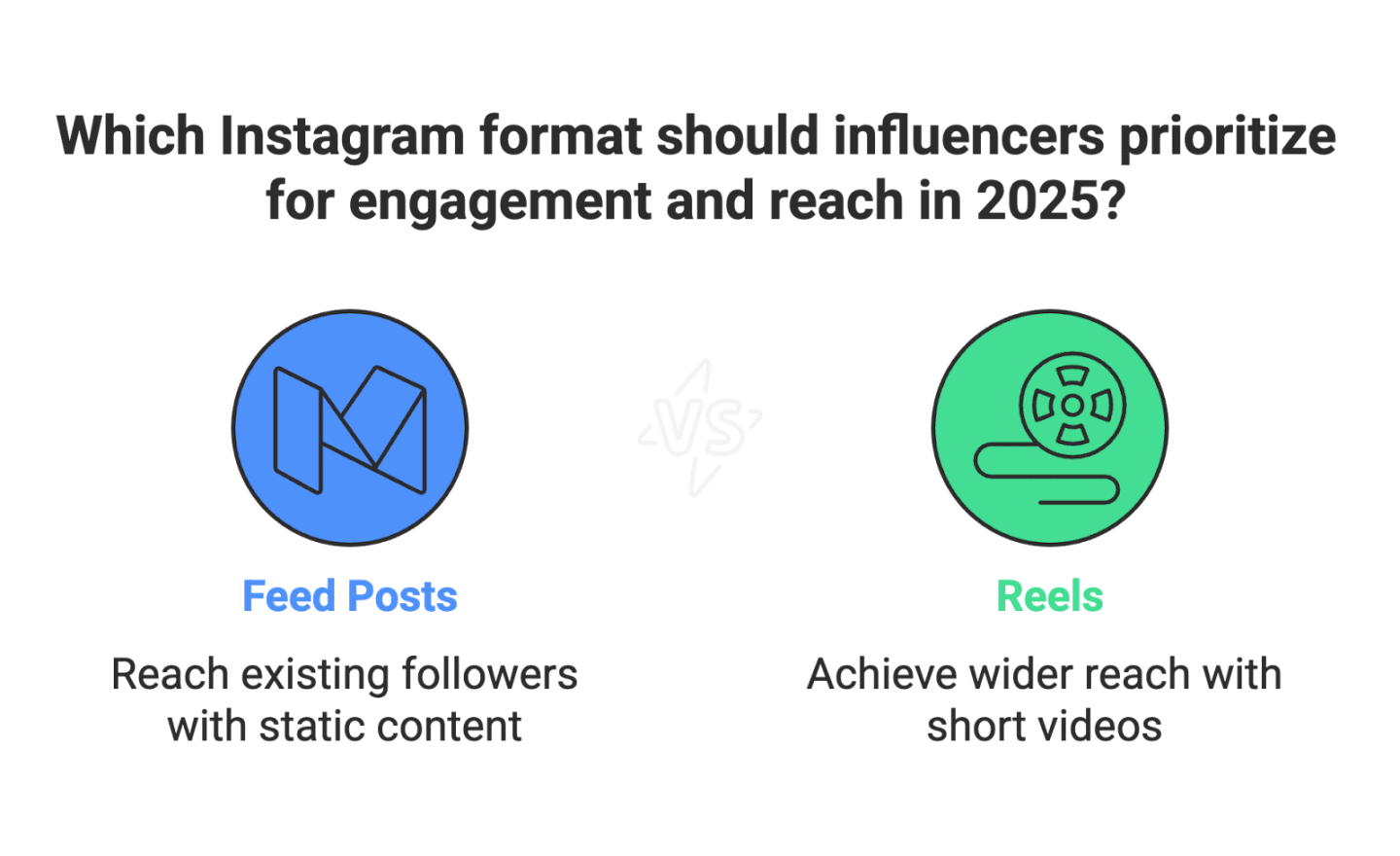
Feed Posts on Instagram include the classic images or carousel albums (multiple images/swipes) that appear on your profile grid and followers’ main feeds. Posts can be photos or graphics (and sometimes videos, though most video content is now funneled into Reels). Influencers often use posts for curated, high-quality images, meaningful captions, or informational carousels. This format is great for storytelling or sharing static visuals – for example, a carousel might showcase multiple angles of an outfit or a step-by-step recipe. Users browsing the feed typically see posts from accounts they follow, and occasionally suggested posts. Discovery for feed posts often relies on hashtags, Explore page, or sharing, but reach beyond your followers can be limited unless a post performs exceptionally well (e.g. lands on Explore).
Reels, on the other hand, are Instagram’s short-form vertical videos (up to 90 seconds, usually) that mirror the TikTok style. Reels are discoverable in a dedicated Reels feed (accessible via the Reels tab) and are heavily pushed to users – even those who don’t follow you – via Instagram’s algorithm. They often include music or trending audio, quick cuts, captions or stickers, and an attention-grabbing hook in the first seconds (since viewers tend to swipe quickly if not engaged). Reels are meant for entertainment, virality, and quick storytelling. Features like remixing (duets) and the ability to share Reels to Stories or direct messages make them highly shareable. In 2025, Reels have become central to Instagram’s experience – by some reports, over 90% of Instagram users now interact with Reels content regularly. Instagram has effectively integrated Reels into the main feed as well, so you’ll see Reels mixed in with photos when scrolling your home feed. For influencers, Reels offer a chance to reach a much broader audience through the app’s recommendations.
In short: Posts are the traditional “static” content that primarily reach your existing followers (plus a bit of Explore visibility), whereas Reels are short videos designed for discovery and wider reach. Next, let’s look at how people consume these formats differently.
Audience habits on Instagram have shifted towards video in a big way. Scrolling the feed to see friends’ and creators’ latest photo posts is still common, but users increasingly treat Instagram like a video platform. In fact, as of early 2024 Instagram’s own data showed users now spend 50% of their time on Instagram watching Reels. That’s a huge share of attention going to short-form videos. Many users fall into the endless scroll of the Reels feed for entertainment, much like TikTok’s feed. By contrast, static posts (photos/carousels) don’t command that same time spent metric – they’re viewed more quickly as users scroll by in the feed.
Engagement pattern differences are notable. On a typical photo post, a follower might stop to read the caption, tap like, or leave a comment, especially if the caption asks a question or the content resonates. Carousels often encourage longer attention per post (as people swipe through 5-10 images) and can prompt saves or shares for later reference (for example, a carousel with tips or infographic gets saved a lot). In fact, carousel posts have been known to drive more saves and dwell time, which is a positive signal to the algorithm. Reels, however, often prompt quick reactions – a double-tap if it’s funny or impressive, maybe a quick comment or tagging a friend, or frequently a share via DM/Story. Because Reels are highly shareable and remixable, a funny or relatable Reel can spread fast through private shares. Instagram even noted that remix and share features on Reels amplify their reach beyond the original audience as users repost Reels to their Stories or send them to friends. The viral nature of Reels means audiences use them not just to consume content, but to discover new creators and trends (think dance challenges, memes, or product reviews going viral).
Another behavioral difference is audio: Reels are often watched with sound (or at least with music captions on), and trending audios can attract viewers. Many users will scroll Reels with the sound on or use the closed-caption text, whereas feed posts are silent and rely solely on visuals and text. This means Reels can hook viewers with music or voice – adding to engagement if done right.
It’s also worth noting audience demographics: younger users (Gen Z, young Millennials) are especially drawn to short-form video. Surveys have found that short videos (under 15 seconds) are a top content preference when interacting with brands, with static images still holding their own as well. This suggests audiences enjoy a mix: the quick hit of a video and the clarity of a good photo. For influencers, balancing both can cater to different viewer preferences – videos for entertainment and broad reach, and images for depth and context.
One of the biggest differences between posts and Reels is how Instagram’s algorithm treats them. Instagram in 2025 actually runs multiple algorithms for different sections (Feed, Stories, Explore, Reels). Reels have a separate ranking algorithm focused on maximizing engagement and watch time, whereas feed posts (photos/carousels) use another that emphasizes relevance to the user.
That said, Instagram has very clearly been pushing Reels content in recent years. The platform openly admitted in 2023 that it adjusted its recommendation system to boost Reels – a move that paid off by increasing time spent on Instagram by 24% once the Reels algorithm improvements rolled out. In practice, this means if you post a Reel, Instagram is more likely to show it to people who don’t follow you yet if the Reel seems to be resonating (high engagement, watch time, etc.). Reels get priority placement in the Explore grid and, of course, in the Reels tab – so they have multiple surfaces to be seen. Instagram’s algorithm explicitly favors Reels: the app will serve Reels “more frequently than it would for photos,” even to users who aren’t following the creator. Essentially, Instagram rewards creators for posting Reels by granting extra exposure. They even made it easy to cross-post Reels to Facebook for additional reach.
Feed posts, by comparison, are mostly shown to your followers and a smaller pool of suggested viewers. The feed algorithm looks at a user’s past interactions and interests to recommend some posts (including carousels and photos) that they might like. But these suggestions are typically from similar accounts or topics the user has shown interest in – it’s a bit more conservative than the wide viral push Reels can get. For a feed photo to reach a non-follower, it likely needs a strong engagement signal (getting a lot of likes/comments quickly) so that it might appear on Explore or as a suggestion because it’s “going viral” in its own right. Reels, on the other hand, are designed to go viral more easily; Instagram looks at indicators like how quickly people are interacting with a Reel and will ramp up its distribution if it’s performing well.
In 2025, Instagram’s head Adam Mosseri even hinted that “views” might become a key metric – indicating that content which gets more eyes (not just likes) will be rewarded. Reels naturally accumulate tons of views if they catch on, so this shift again aligns with favoring short-form video. The bottom line: Algorithmically, Reels have an edge in reach. Instagram’s tech is literally built to push engaging Reels to as many people as possible (to keep users scrolling). Posts can certainly still travel (especially carousels with high save rates, or posts from accounts you often interact with), but they don’t have the same built-in boost to strangers’ feeds that Reels do.
If your goal is to reach as many people as possible, Reels are generally the star of the show. The data backs this up: A recent Socialinsider study found that Instagram Reels have an average reach rate around 30.8%, which is roughly double the reach of carousel posts (~14.5%) and more than double that of static images (~13.1%). In plain English, a typical Reel is shown to nearly one-third of your followers (and often many non-followers too), whereas a photo post might only hit about one-seventh of your follower list. Instagram even reported in 2024 that short-form videos are the fastest way to grow an audience on the platform – precisely because of their superior reach and discovery potential.
Why do Reels reach more people? It’s partly the algorithmic favoritism we discussed, and partly the multiple discovery channels. Reels can appear in the Reels tab feed of endless videos, on the Explore page, via hashtag searches, and get shared between users extensively. A photo post mostly sits in the feed of your followers unless it’s picked up by the Explore page. Instagram’s design makes Reels inherently more discoverable – they even show Reels to users who don’t follow the creator far more frequently than they show random photos. Consider that by 2025, Instagram reports over 2 billion users engage with Reels monthly, with 140 billion+ Reels views each day. Those numbers indicate a massive pool of viewers that you can tap into with a single great Reel.
It’s also interesting to see how reach scales with your account size. For smaller influencers or brands, Instagram seems to level the playing field a bit with Reels. Micro-influencers often get a higher relative reach than huge accounts. For example, one study showed that accounts with under 5K followers got about a 20% reach rate on their Reels (i.e. views equal to 20% of their follower count on average), whereas accounts with over 100K followers got only around 4% reach in proportion. In other words, a small creator might more easily hit a big chunk of their niche audience (and beyond), while big creators don’t automatically get all their millions of followers seeing every Reel. Instagram is likely doing this to help newer or smaller creators break through.
Feed posts, comparatively, tend to have lower reach rates across the board. Many influencers notice that a standard photo post might “die” pretty quickly — it goes out to your followers, maybe picks up some hashtag views, and then plateaus. In fact, organic reach on Instagram has been challenging in general. There was about a 28% drop in overall Instagram engagement from 2023 to 2024 (people interacting less with posts), which means the average post in 2024 just doesn’t go as far as it did before. Instagram is crowded and competitive. But Reels are the exception to some extent, because Instagram is actively surfacing them to keep users hooked.
For content discovery, especially important in influencer marketing (finding new followers or shoppers), Reels are king. Roughly 70% of Instagram users use the platform for product discovery now, often via influencers and trending content – and Reels play a big role in that journey. Think of how many times you’ve discovered a new recipe, a fashion item, or a travel destination because a Reel for it went viral. The audio trends and hashtags on Reels make them easy to stumble upon. A beauty influencer’s Reel using a new makeup palette can blow up and reach people who follow similar beauty hashtags or who watch other makeup videos, even if they’ve never heard of that influencer before. In contrast, an image of the same makeup look might primarily reach that influencer’s existing followers unless it’s somehow featured on Explore.
To sum up, if reach and visibility are what you’re after, Reels provide a bigger fishing net in 2025. They are the discovery engine of Instagram right now. But reach is only part of the story – what about engagement and the depth of interaction each format gets? Let’s compare that next.
Engagement can be measured in many ways (likes, comments, shares, saves, etc.), and both posts and Reels have their own engagement dynamics. Overall, short-form video content tends to spark a lot of interaction. By certain measures, Reels are the most engaging content type on Instagram as of 2024. For example, Sprout Social’s data shows that among influencer posts, Reels earn the highest engagement rate – about 2.08% on average – compared to 1.17% for photo posts. Carousels came in around 1.7% in that study, which is also strong but still a bit lower than Reels. These numbers indicate that audiences tend to interact more (proportionally) with Reels. People might be double-tapping, commenting, and sharing videos more readily than static images. It aligns with the idea that short videos are capturing audience attention and interest – viewers find them more immersive or compelling, hence the extra engagement.
Interestingly, other analyses that include brand accounts found carousels slightly overtaking Reels in pure engagement rate (likely due to those extra saves and swipe interactions on carousels). For instance, one report noted carousels averaged about a 0.55% engagement rate vs. 0.50% for Reels in 2024 – a tiny difference, essentially showing both formats do well. Static single images lagged behind at ~0.45%. The key insight here is that Reels and carousel posts are your best bet for strong engagement, while single photos have become the lowest-engaging format on average. Reels’ edge in engagement often comes from their entertainment value – a captivating Reel can rack up not just likes, but also a ton of comments (some studies found Reels generate more comments than other post types). Viewers might tag friends in the comments of a funny Reel or ask a question about something shown in the video. With images, comments still happen (especially if you prompt with a question in the caption), but the viral/comment culture is stronger on Reels.
Let’s not discount what carousel posts can do, though. Carousels often pack informative or storytelling content that encourages people to spend time and engage. A well-crafted carousel can actually outperform a mediocre Reel. In fact, in a Buffer study, carousels slightly edged out Reels in total interactions on average (possibly because each swipe and the time spent count as positive signals). Carousels get saved a lot – think of infographic carousels or step-by-step guides that people bookmark. So, while Reels might win in broad engagement and virality, carousels can drive deeper engagement from your core followers (saves, long comments, etc.). It’s notable that carousels also remain a favorite for many brands in certain niches (e.g. food blogs might post recipe carousels more than Reels, as their audience likes to bookmark the steps).
Another aspect of engagement is how authentic or connected the interaction is. Some influencers feel that while Reels get more volume of engagement, the interactions on static posts can be more meaningful (e.g. a thoughtful comment on a life update photo vs. a bunch of laughing emojis on a comedic Reel). Depending on your goals, that might matter. But from a pure metrics standpoint, in 2025 short-form videos are proving to drive hefty engagement numbers. Instagram themselves have observed that Reels and Stories are the video formats people engage with most, and they encourage creators to prioritize those for better results.
One more thing to consider: consistency and burnout. Because Reels reward high engagement, some influencers churn out lots of Reels to maintain that momentum. But making quality video content can be more time-intensive than snapping a photo. Audience engagement will drop if your Reels feel repetitive or low-effort, so finding a sustainable content process is key. Some influencers mix it up – e.g. use Reels to hook new followers and entertain, and posts (images/carousels) to build connection, share personal stories or detailed info. This diversified approach can keep your overall engagement healthy without relying solely on one format.
From the perspective of going viral and gaining followers, Reels have a clear advantage in 2025. The virality mechanics of Instagram heavily favor Reels – their content is easily shareable and remixable, meaning one good idea can snowball into thousands of new eyes on your account. For example, an influencer could have a Reel blow up to 1 million views thanks to the Reels algorithm showing it on countless Explore pages and Reels feeds. It’s common to hear stories like “I gained 5,000 followers overnight because one of my Reels went viral.” This kind of explosive growth is much less common with a standard photo post in the current Instagram environment.
There are a few reasons Reels convert to follower growth well. First, when a Reel is shown to a non-follower, your username is right there and they can easily tap through to your profile. If your profile has an appealing vibe and more good content, that view can turn into a follow. Second, Reels often showcase personality – through video, viewers get a sense of you (your voice, humor, expertise, etc.) which can create a stronger connection than a static image might. That connection can motivate someone to hit the follow button for more. Instagram has explicitly noted that it wants to use Reels as a way to help creators gain exposure; they’ve called short-form video the fastest-growing content for audience building.
Follower conversion from Reels can depend on content type, of course. A quick meme Reel might get tons of laughs and shares but not necessarily targeted followers for your niche. Meanwhile, a Reel where you, say, give a valuable travel tip could attract people interested in travel who then follow you for more. The good news is that the algorithm tends to show your content to users who have shown interest in similar topics (it’s looking at “information about the reel and the person who posted” to find relevant viewers). So a viral Reel often finds a relevant audience who is more likely to convert.
With feed posts, virality is tougher. It’s not impossible – for instance, a breathtaking photo might go viral on the Explore page or a carousel of useful info might get shared widely. But those are exceptions rather than the norm on Instagram now. The typical path to growth via posts is slower and steadier: you post consistently quality content, use hashtags, maybe get shouted out by larger accounts or collaborate, and gradually accumulate followers. Reels can accelerate that process dramatically by throwing your content into many more feeds in a short time.
In terms of raw statistics for growth, smaller accounts (nano-influencers) have seen some of the highest growth rates on Instagram recently – partly by leveraging Reels. One study found that the smallest Instagram accounts (under 5k followers) could grow their follower count by up to 38% year-over-year (a reflection that there’s opportunity to climb when you’re starting from a low base). Those who strategically used Reels as part of their content mix likely contributed to that stat. Also, over 53% of marketers in the U.S. said they used Instagram Reels in their influencer marketing campaigns in the past year, indicating that brands want the viral reach of Reels when partnering with influencers. It often means if you’re an influencer, being adept at Reels makes you more attractive for collaborations (because brands see the potential for bigger reach and impact).
Virality isn’t just about follower numbers, though. It also translates to influence and sometimes revenue. A viral Reel can drive traffic to a link (say you mention “link in bio”) or boost product sales if it’s a product highlight. The short-form format can create trends (how many products have sold out because they went viral in a Reel/TikTok?). So for influencers concerned with being effective marketers, Reels offer that upside of trend-making virality, whereas a static post is less likely to have that immediate “explosive” impact.
However, with virality comes volatility. Not every Reel will perform, and relying on viral hits can be a rollercoaster. Some Reels might flop or only reach your core followers. Instagram’s saturation of Reels means there’s also fierce competition – there are so many videos out there now. In fact, by late 2024 the influx of Reels led to a bit of saturation: Reels engagement plateaued slightly as more creators flooded the format. This suggests that while Reels are still a top growth tool, influencers need to keep their quality high and perhaps find a niche or creative twist to stand out.
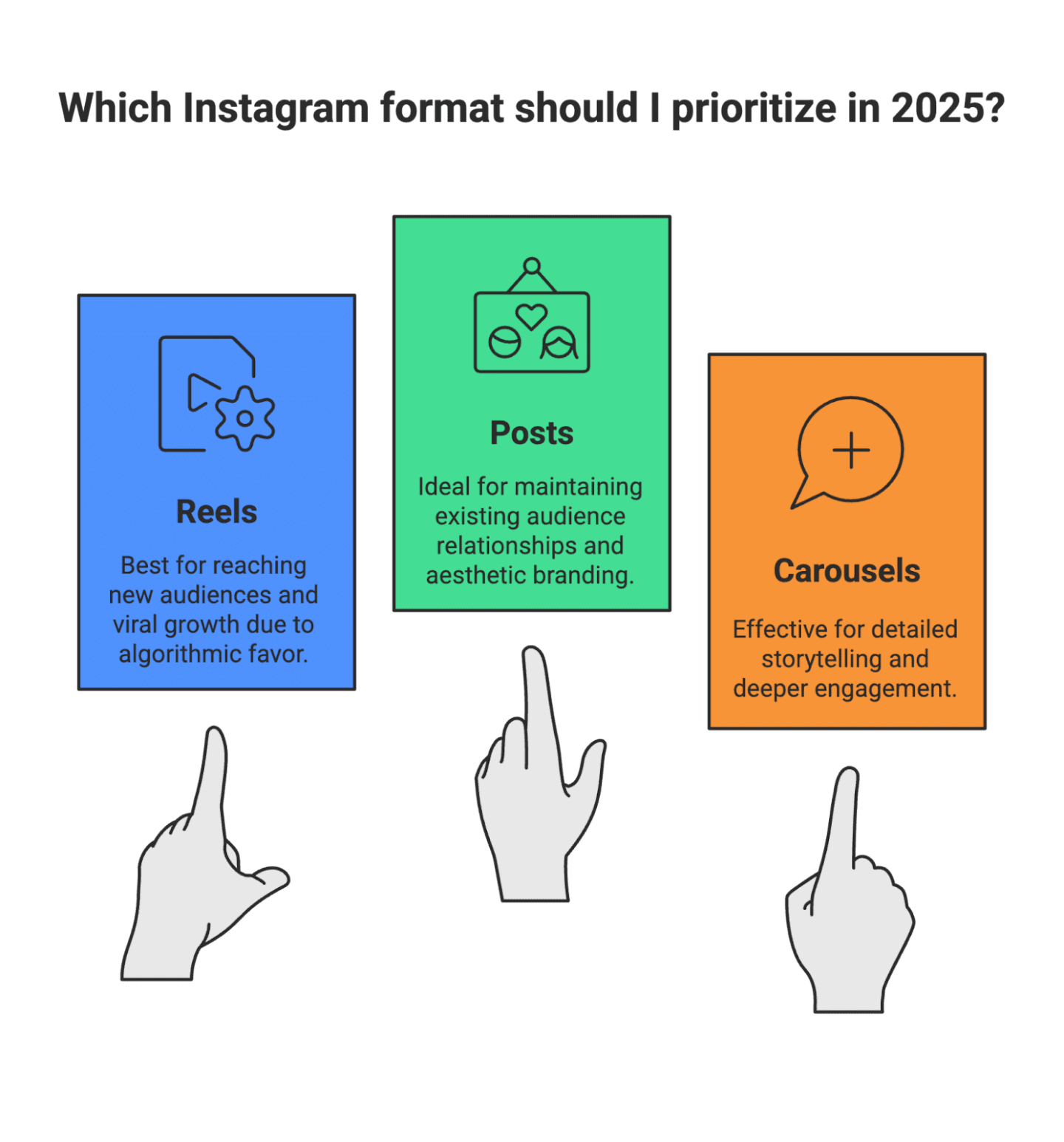
Both posts and Reels have a place in a well-rounded Instagram strategy, but their roles are different. Here’s a quick comparison and some guidance for influencers trying to decide where to put their effort:
Trends to watch: Content discovery via short video isn’t slowing down. Features like in-app shopping and product tagging on Reels mean they’re not just for laughs – they can drive commerce too. Also, Instagram’s continued competition with TikTok means we might see even more features to boost Reels (or maybe monetize them better for creators). Staying on top of Reels trends (like new editing tools, popular sounds, challenges) will help maintain that high performance. Meanwhile, traditional posts might continue to see modest engagement declines, so those who innovate (e.g. creating mini-infographics, leveraging carousel swipes creatively) will keep that format alive and well.
For influencers in 2025, short-form video is a must-have in your toolkit. Instagram is clearly favoring Reels in how content is distributed and consumed. Reels offer superior reach, strong engagement, and the chance to go viral and boost your growth. However, this doesn’t mean you should abandon traditional posts entirely. Photos and carousels still play a crucial role in storytelling, branding, and connecting with your core audience. The best strategy is often a balanced mix: use Reels to reel people in (pun intended) and use posts to cement your relationship and provide value that might not be as easily delivered via a quick video.
By understanding the strengths of each format, you can tailor your content strategy to get the best of both worlds. In 2025, an influencer who masters both engaging Reels and compelling posts will likely see the greatest payoff – growing their audience while keeping it genuinely engaged. Good luck, and happy ‘gramming with your posts and Reels!
TikTok has quickly become a powerhouse for product discovery and marketing, especially for e-commerce brands. In the ultra-competitive online market, brands and Amazon sellers are turning to micro-influencers and content creators on TikTok to gain an edge. These creators can generate authentic user-generated content (UGC) and build consumer trust in ways traditional ads struggle to match. If you’re looking to promote a product (whether it’s beauty, fashion, tech, or more), collaborating with TikTok influencers could be a game-changer. This guide will show you how to find and contact TikTok influencers – especially micro-influencers – to boost your e-commerce growth.
TikTok isn’t just for dancing teens – it’s now a major platform for e-commerce marketing. Over 61% of marketers use TikTok for influencer marketing, making it the third most popular social app for influencer campaigns (after Instagram and YouTube). The hashtag #TikTokMadeMeBuyIt has become notorious for showcasing products that went viral on TikTok and drove huge sales. Beauty and personal care items, for example, were TikTok Shop’s top sellers in 2024, with 370 million units sold globally. In short, TikTok influencers can spark massive demand for products overnight.
Another reason TikTok matters: engagement and authenticity. TikTok boasts the highest engagement rates among social platforms, and consumers love its raw, authentic content style. Micro-influencers on TikTok, in particular, feel like peers to their followers and often create UGC-style videos (think honest reviews, demos, unboxings) that audiences trust. In fact, 82% of consumers in one survey said they are highly likely to follow a micro-influencer’s recommendation. For e-commerce brands, this means partnering with the right TikTok creators can directly translate into traffic and sales for your product.
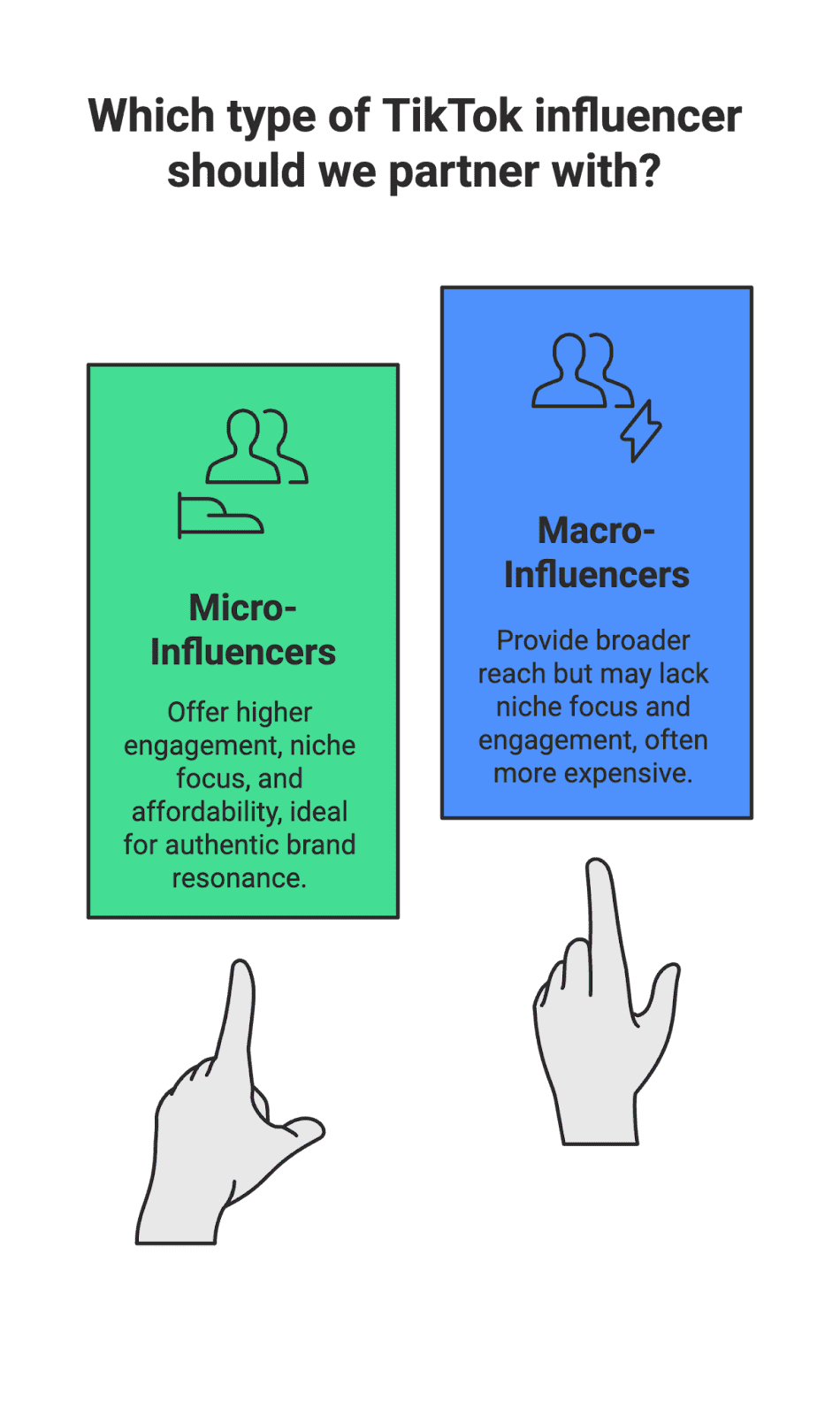
Before diving into outreach methods, it helps to understand why micro-influencers (those with a few thousand up to ~100K followers) are often ideal for e-commerce. Unlike celebrity “macro” influencers, micro-influencers operate in specific niches and have highly engaged communities. Their smaller audience sizes actually work to their advantage when it comes to engagement and trust.
In summary, micro-influencers punch above their weight: they have closer-knit followers, higher engagement, and often a more affordable rate. For an e-commerce brand (from small Amazon sellers to DTC startups), micro-creators on TikTok can offer an authentic voice that resonates strongly with potential customers. Now, let’s explore how you actually go about finding and contacting these TikTok influencers.
Before reaching out to any influencer, do a bit of homework to identify the right creators for your niche. The success of your outreach depends on contacting influencers who align with your product and audience. Here are some tips to find suitable TikTok creators:
Once you have a list of potential influencers that fit your brand, it’s time to reach out. But how? TikTok’s app doesn’t make direct messaging easy unless you follow each other. Don’t worry – there are several alternative ways to contact TikTok influencers. Below, we outline the most effective methods.
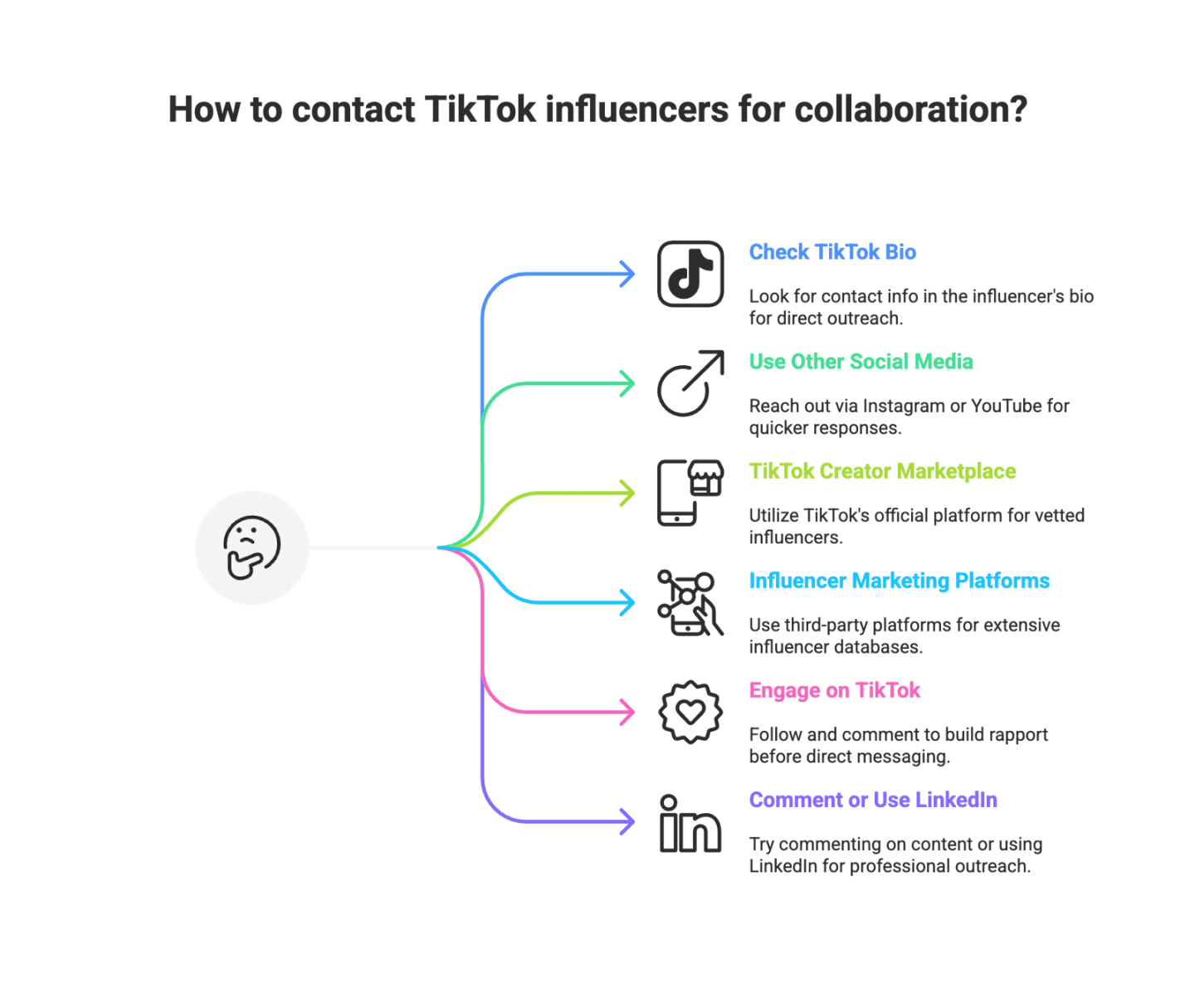
Reaching out to TikTok creators requires a bit of creativity since you can’t always just DM them on the app. Here are six tried-and-true methods for contacting TikTok influencers (including micro-influencers), along with steps for each:
Using one or a combination of the methods above, you should be able to get in touch with most TikTok creators. Remember to be patient – not everyone will reply immediately. Influencers are often busy creating content, so give them a little time. If you don’t hear back, you can try a gentle follow-up email or message after about a week (more on follow-ups below).
Getting a response from an influencer isn’t just about how you contact them, but also what you say. Influencers (even micro-ones) receive tons of collaboration requests, so you need to make your outreach message stand out in a positive way. Here are some tips for writing a compelling pitch once you have their contact:
Here’s a quick example of a personalized outreach email putting it all together:
Subject: Loved your TikTok review of ! – collab idea 😃
Hi ,
I’m from , a . I came across your TikTok where you and loved your honest style.
We have a new that we think your followers would enjoy. We’d love to send it to you as a gift and, if you’re open to it, partner on a TikTok video featuring your genuine review. No script – just your creativity! In return, we can .
If this sounds interesting, let me know and I’d be happy to chat details or send more info. Thank you for your time – we’re big fans of your content!
Best,
|
Feel free to adapt the tone to what suits your brand and the influencer, but notice the elements: it’s personal, respectful, clear on ask and compensation, and not too long. Once you send your outreach message, it’s time to wait for a reply and be ready to follow up if needed.
So you’ve sent your carefully crafted outreach – what if you hear nothing back? It happens! Influencers might miss your email or take time to consider. A lack of immediate response isn’t necessarily a rejection. Here’s how to follow up gracefully:
When an influencer does respond positively and you move forward, make the most of that relationship. Ensure you deliver on your promises – send the product promptly, pay them on time, and provide any necessary info (discount codes, tracking links, campaign hashtags, etc.). Encourage them to be creative and authentic in how they present your product; after all, their authentic voice is what you wanted in the first place.
If they create a great TikTok for you, don’t forget to repost or share it (with permission) on your own social media, website, or Amazon storefront – that’s valuable UGC you can leverage. Many brands even run TikTok Spark Ads or other social ads using influencer-created content because it often performs better than traditional ads. Always credit the creator and maybe send them a thank-you or a small extra gift for their work – these gestures can turn a one-off collab into a longer-term ambassador relationship.
Finally, track the results. If you gave the influencer a promo code or affiliate link, see how many sales or clicks came through. Note any spikes in traffic after their TikTok went live. This helps you measure ROI and refine future influencer outreach (e.g., you might find that micro-influencers in a certain niche drive especially strong sales, guiding you to focus there).
Reaching out to TikTok influencers – whether micro-influencers with a few thousand followers or bigger TikTok stars – is a powerful strategy for e-commerce brands and Amazon sellers looking to promote their products. By finding creators who genuinely align with your niche and crafting a thoughtful, personalized outreach, you increase your chances of collaboration success. Remember that authenticity and respect are the name of the game: influencers are content creators, not just advertising channels, so building a real relationship with them will go a long way.
TikTok continues to grow as a hub for product discovery and user-generated content, so influencer marketing on this platform is only becoming more important. With the tips and methods outlined above, you can confidently contact TikTok influencers and tap into the vibrant community of creators to boost your brand. From beauty gurus demonstrating a makeup product, to tech reviewers unboxing your gadget, to lifestyle vloggers trying out your kitchen tool – the possibilities are endless. Good luck with your TikTok influencer outreach, and may your e-commerce sales soar with each new collab!
Instagram offers a variety of features to help posts gain visibility – and one underrated tool is the geotag, or location tag. If you’ve ever seen a clickable place name above an Instagram photo or Story, that’s a geotag. In this comprehensive guide, we’ll break down what Instagram geotags are, how to use them, and why they matter for micro-influencers, content creators, e-commerce businesses (yes, even Amazon sellers), and anyone looking to boost their reach. By the end, you’ll understand how a simple location tag can translate to greater engagement, authentic user-generated content (UGC), and even real-world results for your brand. Let’s dive in!
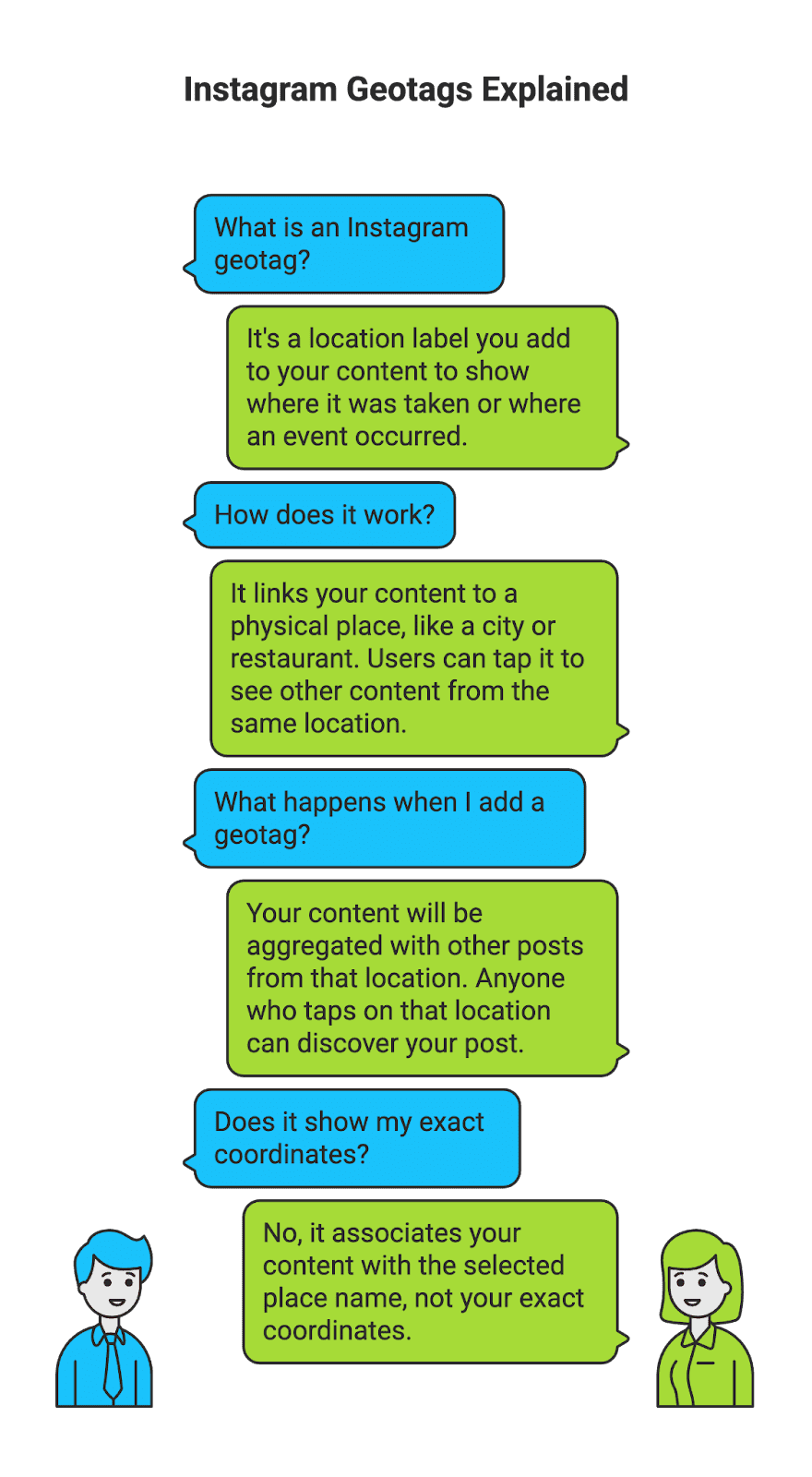
An Instagram geotag (also called a location tag) is a specific location label you can add to your Instagram content – such as a post or Story – to show where the photo or video was taken or where an event occurred. Essentially, it links your content to a physical place, like a city, a restaurant, a store, a landmark, or any specific venue. On Instagram, the geotag appears just below your username (on posts) or as a sticker in Stories, and users can tap it to see other content posted from the same location.
In practical terms, adding a geotag means that your content will be aggregated with other posts from that location. For example, if you tag a post with “Eiffel Tower – Paris, France,” anyone who taps on that location or searches for it can discover your post in the location’s feed. This feature is similar to “checking in” on other platforms – it’s Instagram’s way of saying “this photo was taken here.” Importantly, you can choose both very specific locations (like a particular cafe or park) or broader ones (like a city or country), and even create custom location tags for unique places or events. The geotag does not automatically pinpoint your exact coordinates to the public, but rather associates your content with the selected place name. It’s a simple addition, but as we’ll see, it can have a powerful impact on how your content is discovered and engaged with.
Adding a geotag to your Instagram content is straightforward and only takes a few taps. You can geotag both feed posts and Stories (note: as of now, Instagram does not allow adding a location tag on Reels or live videos). Below is a quick step-by-step guide for each:
Adding a Geotag to a Feed Post:
Adding a Geotag to an Instagram Story:
Tip: If your business or event doesn’t yet exist as an Instagram location, you can create a custom location tag. This involves using Facebook’s check-in feature to set up a new place – once created on Facebook, it becomes available on Instagram as well. Many brands do this for pop-up shops or special events so that attendees can tag the new location in their posts.
Why bother adding a location tag to your posts? It turns out geotagging isn’t just for fun – it offers tangible benefits for reach and engagement. Here are some key advantages of using geotags on Instagram:
What key points must the influencer communicate about your product or brand? This section of the brief outlines the essential messages you want woven into the content. Think about the top 2–5 things you want an audience member to remember after seeing the post. These could be product features, benefits, or your brand’s story elements. For example, if you sell a skincare serum, your key messages might be: “100% vegan ingredients,” “visible results in 2 weeks,” and “dermatologist-tested.” List these talking points clearly for the creator.
It’s helpful to differentiate between “must-say” points and “nice-to-say” points. You don’t want the content to feel like a scripted ad, but you also don’t want the influencer to miss a crucial detail. Phrasing this section as a bullet list can be useful. For instance:
Impact of geotagging on engagement: Posts tagged with a location have been found to get around 79% higher engagement on Instagram compared to those without location tags. This chart illustrates the relative boost in engagement (likes, comments, etc.) for geotagged posts.
To make all these benefits more concrete, let’s look at a few real-world examples of how influencers and brands use Instagram geotags effectively:
Instagram geotag usage by region (global breakdown). A majority of Instagram geotagged posts occur in the Americas (57%), followed by Europe (30%). Asia accounts for about 7%, with the rest split among Oceania and Africa. This highlights how geotagging is popular worldwide, especially in Western regions, which is useful to know when targeting audiences.

Like any tool, using geotags strategically will yield the best results. Here are some tips and best practices to get the most out of Instagram geotagging:
By following these tips, you’ll ensure that your geotagging efforts actually move the needle – bringing the right eyes to your content and fostering genuine interest.
TikTok isn’t just for dance challenges anymore – it’s now a serious player in e-commerce and influencer marketing. The platform’s blend of user-generated content (UGC) and viral trends has created a new kind of marketplace where brands, content creators, and even Amazon sellers converge. In fact, TikTok’s social commerce growth has been explosive. US social commerce users by platform in 2024 (millions). TikTok’s shopper base (35.8M) is growing fast, though still behind Facebook (67.8M) and Instagram (45.3M). TikTok added 11.6 million new U.S. social shoppers in 2024, more than Facebook, Instagram, and Pinterest combined. This surge underscores why brands – from indie e-commerce sellers to major retailers – are increasingly eyeing TikTok as a channel to drive sales.
At the same time, TikTok’s creator community has become a goldmine for influencer marketing. Companies can tap into TikTok’s vast network of creators to promote products through authentic content. Many of these creators are micro-influencers (with relatively modest followings) whose genuine style resonates with niche audiences. TikTok’s algorithm often levels the playing field, allowing everyday users to generate millions of views – meaning a well-executed campaign with micro-influencers and UGC can punch well above its weight in impact.
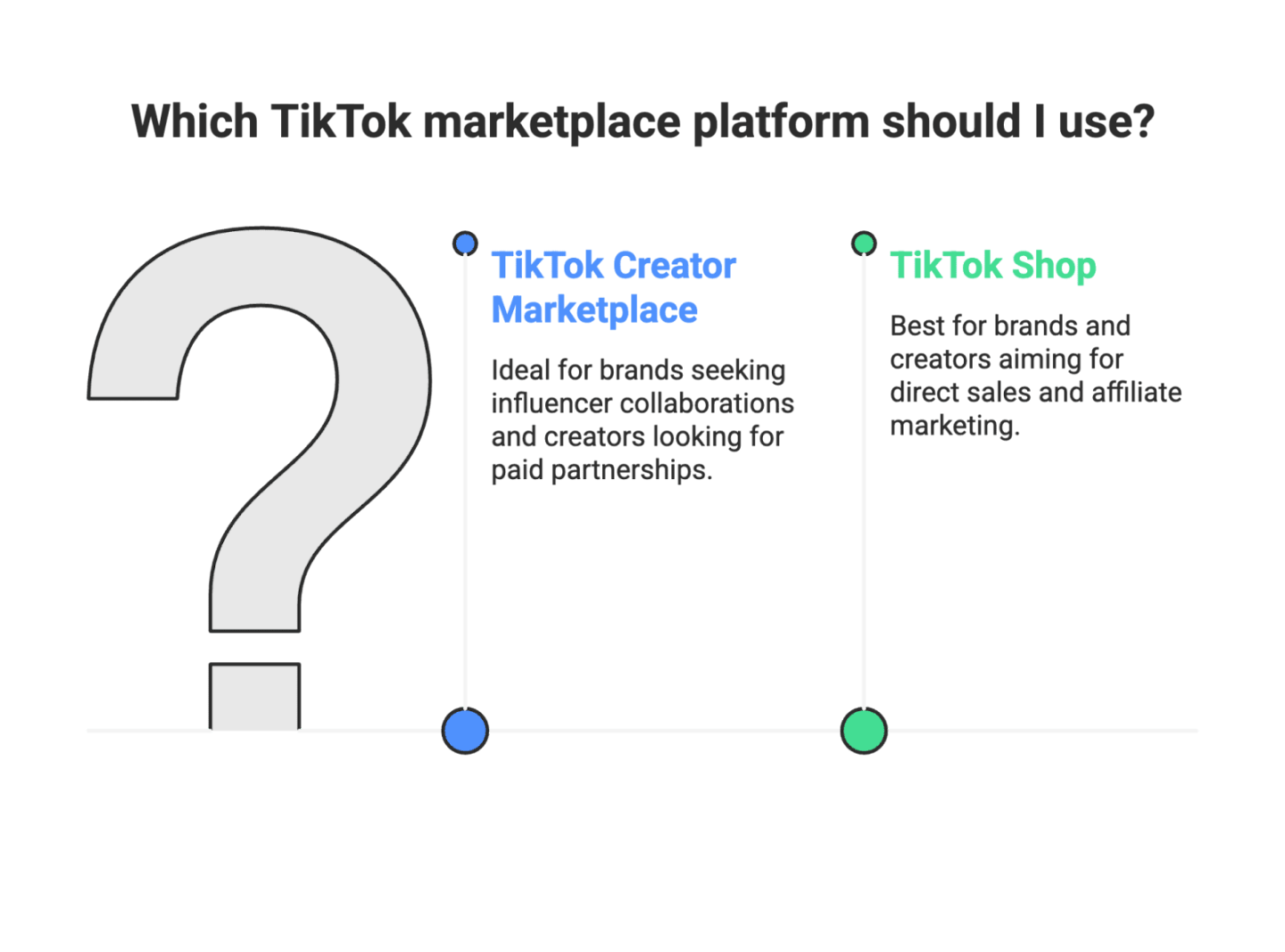
When we talk about the “TikTok marketplace,” it actually spans two interconnected platforms:
Both of these avenues have specific requirements and opportunities. Below, we break down what you need to know to get started on each – whether you’re a brand, a content creator, or an e-commerce seller (Amazon seller or otherwise) – and highlight the latest updates as of 2026.
What is the Creator Marketplace? It’s an invitation-only section of TikTok (now integrated into the TikTok For Business suite) where brands and vetted creators connect for paid partnerships. If you’re a brand looking to run influencer campaigns, or a creator hoping to monetize your TikTok presence through sponsorships, meeting the requirements for this marketplace is the first step.
The good news for brands is that joining the Creator Marketplace is straightforward. Any legitimate business can apply through TikTok’s website (the TikTok One platform) and create a marketplace account. You’ll need to:
Tip: Once approved, brands get access to TikTok’s creator search tool and analytics. Be ready to complete your brand profile with a logo and description – this helps creators see who you are when you reach out for collaborations.
For creators, TikTok sets a higher bar to ensure the marketplace offers influencers who are active and influential. Key TikTok Creator Marketplace requirements for creators include:
Once you meet these criteria, you can apply in-app via the Creator Tools section. TikTok reviews applications and will notify you if accepted. (If you don’t get in, you’re allowed to reapply after 30 days.)
Keep in mind: The high follower and engagement requirements mean many micro-influencers won’t yet qualify for TCM. TikTok is somewhat selective – it favors creators who are already hitting big numbers. That said, if you’re a smaller creator, don’t be discouraged; you can still collaborate with brands outside the official marketplace (more on that below). And TikTok’s criteria may evolve – as of 2026 there are hints that thresholds are becoming more accessible (hence the 10K follower minimum noted above). Always check TikTok’s latest eligibility policy, since the platform might adjust requirements to onboard more creators.
For brands using the Marketplace: once you’re in, you can post campaign briefs and search for creators. The marketplace provides tools to filter creators by location, niche, audience demographics, follower count, etc., and even an AI-powered matching system that suggests ideal creator partners for your campaign. This can save you time in finding the right influencer match.
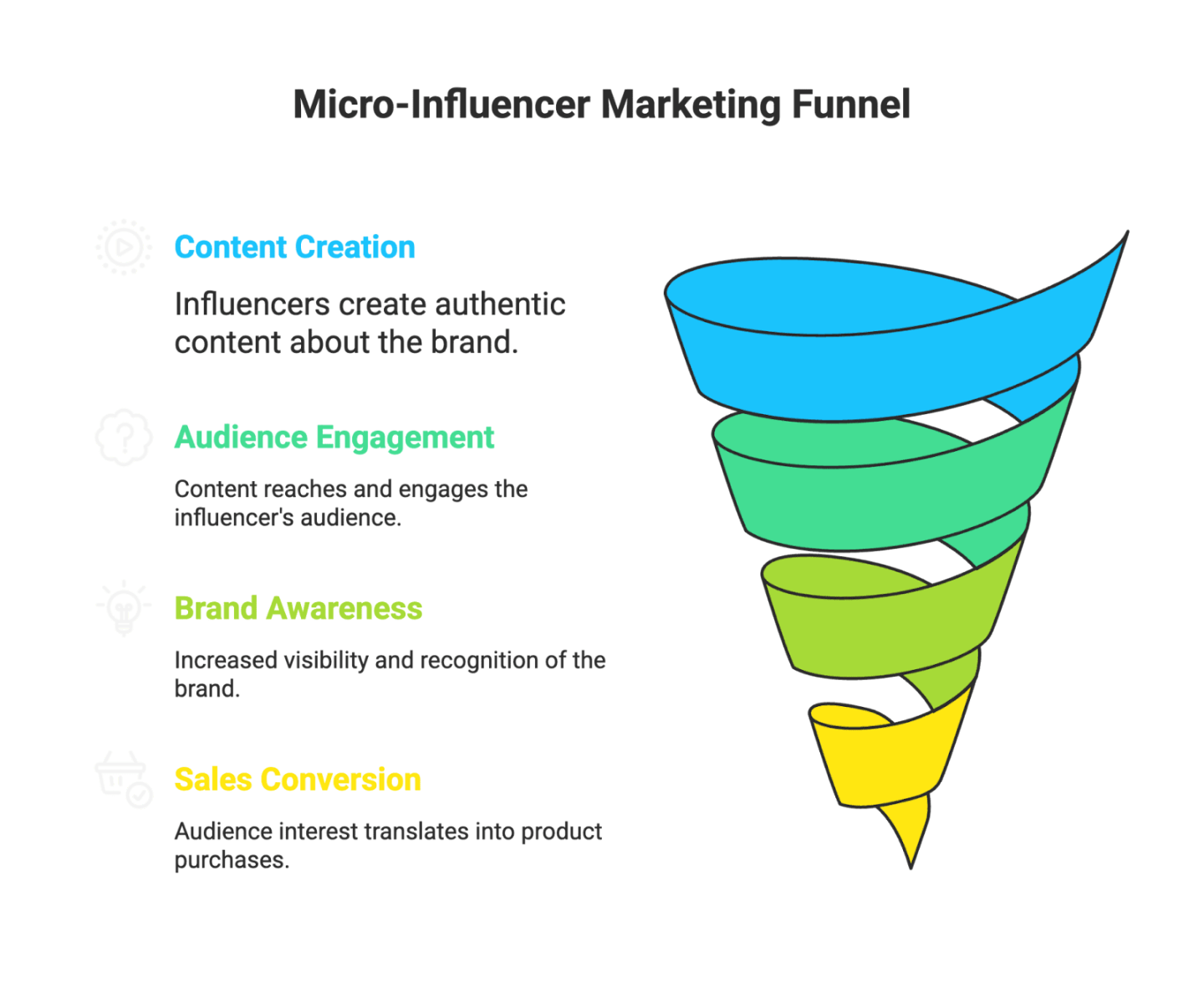
Not every brand or creator will use TikTok’s official marketplace. Many brands, including Amazon sellers and small e-commerce businesses, find success working with micro- or nano-influencers directly or through third-party platforms. These are creators with anywhere from a few thousand to ~50,000 followers – below TikTok’s marketplace threshold but often highly effective in marketing. Why? Micro-influencers tend to have very engaged audiences and can produce authentic content for a fraction of the cost of a top-tier influencer.
Most TikTok creators are micro- or nano-influencers with under 50,000 followers. TikTok’s creator community is largely made up of these smaller influencers. In fact, over 90% of TikTok influencers have below 50k followers. Micro influencers (those in the 10k–50k range) and nano influencers (<10k) are the norm, not the exception. Crucially, they often boast higher engagement rates – a nano influencer’s audience might be far more responsive than a mega-celebrity’s. For example, TikTok nano-influencers (1k–10k followers) see an average engagement rate around 12%, outperforming larger creators by a wide margin. This means if they recommend a product, their followers are likely to listen and interact.
Brands are capitalizing on this by partnering with many micro-influencers to spread their message broadly and authentically. It’s a strategy often called “scaled word-of-mouth”. Instead of one big endorsement, you have dozens of real people sharing content about your product. User-generated content like unboxing videos, reviews, and how-tos created by micro-influencers can be repurposed in ads and social media, giving you a steady stream of relatable marketing material.
Example: Stack Influence is one platform that helps brands run micro-influencer campaigns at scale. It connects companies with everyday creators and often compensates them with free products rather than hefty fees, in exchange for honest posts. The result is genuine endorsements – social posts that feel like recommendations from a friend, not ads – which drives real conversations about the product. This kind of UGC-focused approach is especially popular with Amazon sellers looking to boost product reviews and sales. For instance, a skincare brand selling on Amazon might send samples to 50 micro-influencers on TikTok; those creators try the product and make TikToks about their experience. Each video might only get a few thousand views, but collectively they build buzz and trust. Meanwhile, the brand can often reuse the best clips in their own TikTok ads or Amazon storefront videos.
Bottom line: Even if you’re not in TikTok’s official Creator Marketplace, you can leverage TikTok for marketing. Whether through informal outreach, influencer agencies, or platforms like Stack Influence, engaging a network of micro-creators to produce UGC can be a game-changer for brand awareness and sales.
TikTok Shop is the platform’s e-commerce arm – a full-fledged marketplace within the app. It allows brands, retailers, and individual sellers to list products, and users to purchase on TikTok seamlessly. If you’re an e-commerce brand or Amazon seller, TikTok Shop is an opportunity to capture the attention of TikTok’s young, trend-driven consumer base right where they spend their time.
TikTok Shop officially launched in the U.S. in late 2023 and expanded in 2024, and as of 2026 it’s available in about 10 countries (including the US, UK, and several in Southeast Asia). To register as a TikTok Shop seller in the U.S., you need to meet some basic criteria and provide documentation:
TikTok Shop offers two types of seller accounts: Individual and Business. If you’re a solo entrepreneur or side-hustler without a registered company, you can sign up as an individual seller. If you have an LLC or corporation, you can register as a business seller. The main difference lies in the documentation and features:
TikTok typically reviews new seller applications within 1–2 days, and some get approved in under 24 hours. Once approved, you gain access to the TikTok Seller Center dashboard, where you can upload product listings, manage orders, set shipping options, and view analytics.
Importantly, TikTok has product policies to note. Certain product categories may be restricted or require approval (for example, alcohol, supplements, or electronics might have specific rules). Make sure to check TikTok’s prohibited items list – generally, anything that violates community guidelines or e-commerce laws (counterfeits, dangerous goods, etc.) is not allowed. As a seller, you’re responsible for fulfilling orders promptly and providing customer support just like on any e-commerce platform.
One attractive aspect for existing e-commerce sellers: TikTok Shop can integrate with your other selling channels. There are integrations to sync inventory with Shopify, and as of 2024 TikTok even partnered with Amazon. TikTok’s Seller Center allows linking to your Shopify store for inventory and order management. The Amazon partnership goes a step further – TikTok users can discover and buy Amazon products directly inside TikTok, thanks to a deal between the companies. This means if you’re an Amazon FBA seller, you can potentially advertise your Amazon listings on TikTok and users can check out without leaving the app, with Amazon fulfilling the order. It’s a best-of-both-worlds scenario: you tap into TikTok’s audience and Amazon’s logistics. For sellers, this integration can drive new traffic to your Amazon products and increase conversions by reducing friction in the purchase process.
TikTok Shop isn’t just for traditional sellers – it also has an affiliate component for content creators (often called “TikTok Shop Creator” or affiliate program). This lets TikTok creators earn commissions by promoting products sold on TikTok Shop. In practice, creators can browse products available for affiliate marketing, feature those products in their videos or live streams (with special product links or tags), and get a percentage of any sales generated through their content.
To join as a creator in TikTok’s affiliate marketplace, the requirements are a bit lighter than the Creator Marketplace for sponsorships. TikTok Shop affiliate eligibility (U.S.) generally requires:
Once you meet these criteria, you can apply or simply join via the TikTok app (often found under the “Creator Tools” or TikTok Shop section). After joining, creators gain access to a catalog of products from various sellers/brands that have affiliate programs. You can request to promote products that fit your niche – sometimes even requesting a free sample from the brand to create content with. Many brands are eager to have TikTok creators showcase their items, so they will approve affiliate requests and sometimes send out products. Creators then make videos or go Live featuring the product; a small shopping cart or link will appear on the video, and viewers can directly purchase. The creator earns a commission (set by the seller, often anywhere from 5% to 20% of the sale price) on each successful sale.
For example, imagine you’re a TikTok creator in the beauty niche with 10k followers. You could join the affiliate program, then pick a trending skincare product listed in TikTok Shop’s affiliate marketplace. You receive the product, create a tutorial or review video about it, and add the product link to your post. If followers buy the product through your video link, you get a cut of those sales. It’s a win-win: the brand gets sales and exposure, you earn money without carrying any inventory, and your audience discovers a product in an entertaining way. This model has drawn comparisons to the home shopping channel of the social media age, except micro-influencers drive the sales with creative short-form videos and live demos.
From a brand/seller perspective, enabling affiliates on TikTok Shop can massively amplify your reach. Dozens of creators might pick up your product to promote, generating a flood of UGC and sales without upfront ad spend – you only pay commissions on actual sales, making it a low-risk marketing tactic. Many Amazon sellers in 2026 are using this strategy on TikTok: instead of (or in addition to) Amazon’s affiliate program, they leverage TikTok’s native affiliate tool to get TikTokers showcasing their Amazon products (especially now that, via the TikTok-Amazon integration, those Amazon products can be bought inside TikTok).
TikTok is evolving rapidly, with new features and policies rolling out to enhance both the creator marketplace and the shopping experience. Here are some of the notable 2026 updates and trends to keep on your radar:
Each of these updates makes TikTok’s commerce ecosystem more robust. The integration with established e-commerce players (like Amazon), the use of AI for better matching, the push for live and interactive shopping, and the support for creators all indicate that TikTok is doubling down on being a premier shopping and influence platform.
In 2026, TikTok stands at the intersection of social media and shopping. Its marketplace is not one single thing, but an integrated web of creators, consumers, and commerce. Brands can boost their e-commerce sales by tapping into TikTok’s viral power, whether through the formal Creator Marketplace or through scrappy micro-influencer campaigns. Content creators of all sizes have paths to monetize – from big influencers scoring sponsorship deals, to everyday users earning affiliate commissions on product recommendations. And consumers get to enjoy the thrill of discovering cool new products through content, then buying instantly with a few taps.
For brands and sellers: If you haven’t yet, consider getting your products onto TikTok Shop or partnering with TikTok creators. Even Amazon sellers who traditionally focus on Amazon SEO are finding that TikTok videos can drive meaningful traffic and reviews to their listings. The key is authenticity – TikTok’s audience responds to content that is fun, genuine, and engaging, not overtly polished ads. Encourage UGC, work with micro-influencers who truly like your product, and let them creative freedom to present it in their own style. The payoff can be huge in brand buzz and conversion lift.
For content creators: TikTok’s marketplace evolution means there are more ways than ever to earn income doing what you love. Focus on growing an engaged community first. Even with a few thousand followers, you can join TikTok’s affiliate programs or find brand deals off-platform. As you grow, aim for that Creator Marketplace eligibility – it can open doors to bigger collaborations. But never underestimate the value of your unique voice and niche; brands are often more interested in how connected you are with your audience than sheer follower size. Keep content quality high, stay updated on TikTok’s new features (like live shopping), and take advantage of resources like the Creator Academy to polish your approach to brand partnerships.
TikTok’s rise in the social commerce ranks is a reminder that the future of shopping is social, interactive, and creator-driven. The platform that once was doubted as a fad is now setting trends in how products are discovered and sold online. Whether you’re a marketer, an entrepreneur, or a creator, aligning with this trend can be incredibly rewarding. Stay agile – TikTok’s rules and algorithms can change – but build on the fundamentals: creative content, community engagement, and authentic storytelling. With those, you can ride TikTok’s marketplace wave and potentially go viral in more ways than one.
Amazon sellers, get ready – Amazon’s fall Prime Big Deal Days (often nicknamed “October Prime Day”) is around the corner. This two-day shopping bonanza has quickly become a huge opportunity for e-commerce brands to kickstart the holiday season. In this comprehensive guide, we’ll cover everything sellers need to know about the October 2026 Prime Day event: projected dates and format, expected deal trends, and – most importantly – actionable strategies to maximize your success. We’ll also dive into how micro influencers, content creators, and authentic UGC (user-generated content) can amplify your October 2026 Prime Day performance. Let’s jump in!
Amazon has confirmed that its fall October 2026 Prime Day–style event will take place in early October 2026, mirroring last year’s schedule. Prime Big Deal Days 2026 is slated for Tuesday, October 7 and Wednesday, October 8, running a full 48 hours of deals. This timing aligns with 2024’s event (held on Oct 7–8, 2024) and continues Amazon’s trend of offering a second Prime-exclusive sale each fall. In fact, Amazon first introduced this October sale in 2022 and has returned with it every year since.
Format & Access: October’s Prime Big Deal Days is essentially a “fall Prime Day” – exclusive to Prime members and packed with limited-time deals across virtually all categories. Unlike the massive four-day October 2026 Prime Day Amazon ran in July 2026, the October event sticks to a tighter two-day format. Prime members worldwide will see deals go live over the 48-hour span, and as usual, many early promotions may pop up in the days leading up to the official start. It’s a global affair too – Amazon typically extends Prime Big Deal Days to around 18 countries, including the US, UK, Canada, Australia, major EU markets, and more. For sellers, this concentrated timeframe means intense traffic and competition – so preparation is key.
Looking at past trends, October Prime Day has become a major early holiday shopping event, with deal themes and shopper behavior to match. Here’s what Amazon sellers can expect for 2026 based on 2024’s data and broader e-commerce trends:
Because Prime Big Deal Days fall in October, the event tends to highlight hot-ticket holiday gift items. Shoppers use it to check off their holiday lists early and score top gifts at a discount. In 2024, for example, toys, tech gadgets, electronics, and beauty gift sets were heavily promoted, giving buyers a Black Friday head start. You can anticipate strong demand in categories like electronics (think laptops, headphones, gaming gear), smart home devices, toys and games, kitchen appliances, fall/winter fashion, and beauty products.
Amazon and sellers have been increasing the depth of discounts each year. During October 2024’s Prime event, global average deal discounts grew to about 18% off (around 21% off in the U.S.) – roughly a 9–14% increase in discount depth compared to the prior year. Categories that saw the biggest sales surges also had some of the juiciest markdowns. For instance, electronics and apparel sales each jumped ~36% globally during Prime Big Deal Days 2024, correlating with average discounts of 20–27% off. We can expect similarly aggressive deals in 2026 as Amazon pushes to attract deal-hungry shoppers. Don’t be surprised to see site-wide competitive discounts (20–40% off popular items) and special Prime Member coupons to entice early holiday spending.
Each year, more Prime members join the October event. Amazon reported that 2024’s Prime Big Deal Days was its biggest October shopping event ever, with more Prime members shopping than in 2023. In fact, Amazon said Prime members worldwide saved over $1 billion during the 2024 sale – a sign of just how many purchases were made. For 2026, sellers should brace for record-breaking traffic. This event has firmly established itself as the kickoff to holiday e-commerce. Shoppers will be primed (pun intended) to spend, especially with economic incentives like early deals and avoiding last-minute holiday shipping crunches. As one retail expert noted, waiting until Black Friday now “feels foolish” when October offers so many deals and avoids the inventory risks of peak season.
Customers approach Prime Big Deal Days expecting October 2026 Prime Day-caliber bargains. The fall event is essentially a mirror of the summer Prime Day in terms of deal quality. That means shoppers will be hunting lightning deals, big coupons, and “lowest price of the year” offers. Items that had strong discounts in July’s Prime Day (like Amazon devices, Apple AirPods, etc.) will likely see repeat deals in October. Amazon’s own devices, electronics, home appliances, and branded products typically feature some of the steepest cuts. As a seller, be prepared: the deal competition is fierce, and buyers will compare October 2026 Prime Day prices to make sure they’re truly getting a bargain.
Overall, October 2026 Prime Big Deal Days is poised to be huge. Some sellers saw over 40% year-over-year sales growth during the 2024 event, and Amazon itself called it a “record-breaking” start to the holiday season. With that context in mind, let’s explore how you can capture as much of this opportunity as possible.
To make October 2026 Prime Day a sales triumph for your Amazon business, you’ll need a solid game plan. Below are specific, actionable strategies – from marketing prep to deal optimization – that Amazon sellers can implement. These tips will help you stand out during the Prime Day rush, drive more traffic, and convert eager Prime shoppers into buyers.
In the ultra-competitive world of e-commerce, brands and Amazon sellers are turning to micro influencers and content creators to gain an edge. These niche creators help generate authentic user-generated content (UGC) and build consumer trust in ways traditional ads struggle to match.
One of the most powerful marketing weapons you can deploy before October 2026 Prime Day is word-of-mouth buzz. In 2026, that means tapping into micro-influencers, nano-influencers, and content creators who can hype up your product to targeted audiences. Micro-influencers (generally creators with tens of thousands of followers or less) have highly engaged niche followings. Their recommendations feel like advice from a friend, so their followers are more likely to trust and act on them. In fact, smaller creators often boast engagement rates far higher than big celebs – for example, nano-influencers with under 10k followers can see ~2.5% engagement, significantly above macro-influencer averages. This means partnering with a squad of micro-influencers can drive meaningful traffic and sales for your Amazon listings through authentic social media content.
How to execute an influencer campaign for Prime Day:
Reach out to micro-influencers several weeks before the event. Offer to send a free product sample (or an early discount code) in exchange for their honest review, unboxing, or demo on platforms like Instagram, TikTok, or YouTube. The goal is to have a wave of genuine posts go live in the days leading up to October 7, building excitement and social proof for your product. These posts – whether it’s a TikTok of an influencer trying your kitchen gadget or an Instagram story featuring your fashion item – serve as trust signals to other shoppers that your product is October 2026 Prime Day-worthy.
With permission, reuse the best user-generated content in your own channels. You can embed influencer photos or testimonials on your Amazon listing (in the image gallery or via Video Shorts on your listing) to give shoppers extra confidence. Influencer UGC can also be added to your Amazon Storefront or even repackaged as social media ads. This strategy provides powerful social proof during October 2026 Prime Day – new customers landing on your page will see real people vouching for your product, which can significantly boost conversion rates. Many brands even find that influencer-generated ads outperform their typical polished ads, thanks to the higher trust factor of “real” content.
To streamline working with lots of micro-influencers, consider using an influencer marketing platform or agency. For example, Stack Influence is a platform that automates micro-influencer “product seeding” campaigns – you provide your product and campaign goals, and they handle recruiting dozens of small creators, shipping out products, and tracking their posts for you. Leveraging such services can save time and ensure you have a swarm of influencer content buzzing about your product leading into October 2026 Prime Day.
Overall, micro-influencer marketing is a cost-effective way for Amazon sellers to generate buzz. Many micro or nano influencers will create content for just a free product or a modest fee, making it accessible even for smaller brands. The combination of targeted reach, high engagement, and authentic UGC can give your product a huge boost in visibility and trust right when October 2026 Prime Day hits.
During Prime Big Deal Days, millions of shoppers will be browsing Amazon – so you want your product detail pages to grab attention and convert quickly. Before the event, polish your listings from top to bottom:
Infuse your titles, bullets, and backend keywords with relevant search terms for October 2026 Prime Day. Think about what Prime members might search when hunting deals in your category. For example, include phrases like “Prime Day deal ” or “Prime Day sale” alongside your regular keywords. Tools like keyword research apps can help identify high-volume terms. The key is to boost your visibility in Amazon’s search when the traffic surge comes. (Just be sure any added keywords read naturally; avoid awkward keyword stuffing that hurts readability.)
Make your product title clear and benefit-driven, highlighting both the product and the deal. For instance, instead of a bland title like “Wireless Earbuds Bluetooth 5.0”, use something like “Wireless Earbuds Bluetooth 5.0 – Immersive Sound, 30-Hr Battery (October 2026 Prime Day 30% Off Deal!)”. This showcases the value prop and the limited-time offer. In bullet points, emphasize unique selling points and solve customer pain points. Keep bullets scannable and front-load the most important info. You might even mention the Prime Day sale in one bullet (e.g. “Limited-Time October 2026 Prime Day Savings – Save 25% on our newest model”). Creating a sense of urgency can nudge shoppers to hit “Add to Cart” faster.
Refresh your product images so they are top-notch. Use all available image slots with a mix of clean product photos, lifestyle images (showing the product in use), and infographics/text overlays highlighting key features or holiday gift appeal. Make sure images are high-resolution (enable that zoom) and optimized for both desktop and mobile viewing. If your brand is registered, update your A+ Content beneath the fold: incorporate comparison charts, rich lifestyle imagery, and even a “why choose us” narrative. This enhanced content can help answer buyer questions and reinforce your brand’s quality, which is crucial when shoppers are quickly comparing multiple deals.
Remember, during October 2026 Prime Day, buyers are often making quick decisions – they might have 10 tabs of deals open. A well-optimized listing (with a catchy title, attractive images, clear benefits, and solid reviews) will stand out and convert that surge of traffic into sales.
The core of Prime Big Deal Days is, of course, the deals. Shoppers come expecting significant savings, so you need a competitive pricing and promotion strategy. Here’s how to plan your deals:
Amazon offers several ways to run promotions. The major ones to consider are:
Look at your margins and decide what discount will both entice buyers and still be profitable at volume. Remember, during 2024’s event, similar products were often 20–30% off on average. To compete, aim to meet or beat the typical category discount if you can. If you have older inventory to liquidate, October 2026 Prime Day is a great time to clear it out with a steep markdown – you’ll make room for newer stock and get some return rather than paying long-term storage fees. Conversely, for your hot sellers, even a modest 15% off exclusive for October 2026 Prime Day could drive a huge volume uptick and boost their sales rank. Find the sweet spot that attracts buyers and supports your goals (whether that’s profit, rank boost, or sell-through).
Check if you can stack a coupon on top of a deal, or offer an extra incentive like “$5 off when you buy 2” to increase basket size. Some sellers even run social media giveaways or bonus offers (“buy on Prime Day, get a free gift”) to sweeten the pot. Just ensure any extra promos comply with Amazon’s policies.
In summary, make your deals compelling. Prime shoppers will compare multiple options – if your product is only 5% off and others are 25% off, expect an uphill battle. It’s often worth sacrificing a bit of margin for the volume and momentum this event can create. A successful Prime Day deal can shoot your product up the rankings and yield long-term sales even after the event.

Don’t wait until October 7th to start promoting – in the weeks leading up to Prime Big Deal Days, build momentum so that shoppers know to find your product when the sale starts. A multi-channel marketing push can significantly amplify your Prime Day success:
Use your brand’s social channels (Instagram, Facebook, TikTok, X/Twitter, etc.) to tease your Prime Day deals. In the days prior, post countdowns or sneak peeks (“We can’t spill all the beans yet, but expect something big on Oct 7-8 for Prime members!”). If you have influencer content (from the micro-influencer campaign mentioned earlier), share or repost that as well. The idea is to generate interest and get your followers (and their friends) excited about your upcoming discounts. Consider creating a unique hashtag for your brand’s Prime Day sale and encourage followers to share it.
If you have an email list of past customers or subscribers, send out a Prime Day preview email. Highlight a few top products that will be on sale and the kind of discounts you’ll offer. Personalize it if possible (e.g., “Since you bought our blender last year, you should check out our new mixer – it’ll be 30% off on Prime Day!”). Make sure to remind them of the dates and that it’s exclusive to Prime members (include a Prime sign-up link for those who aren’t members – you might earn affiliate credit for new sign-ups). A well-timed reminder email on the morning of the event can also drive last-minute traffic.
Running paid ads outside Amazon can boost your visibility. Leading up to October 2026 Prime Day, you might run Facebook/Instagram ads or Google Ads promoting your product’s October 2026 Prime Day deal, targeting relevant audiences (e.g., “Don’t miss 25% off on Amazon Prime Day!”). This can bring in deal-savvy shoppers who might not have discovered you on Amazon otherwise. Also, consider working with deal bloggers or affiliate sites – many of them compile “best Prime Day October 2026 deals” lists. If you can get your product featured on a few of those, it can funnel a wave of traffic to your listing. Just be sure your deal is strong enough to catch their interest.
The goal of all this pre-event marketing is simple: drive as much qualified traffic to your product as possible when the deals are live. The more people are aware of your sale, the more will show up ready to buy on Oct 7-8. And that can create a snowball effect (higher sales = better ranking = even more visibility during the event).
Prime Day October 2026 is not the time to skimp on advertising. Amazon’s marketplace will be more competitive than ever, so a smart pay-per-click (PPC) advertising strategy is essential to stay visible:
Anticipate a surge in traffic and competition on keywords. Well before the event, increase your daily budgets for Sponsored Products, Sponsored Brands, and Sponsored Display campaigns. You don’t want your ads to go dark at 3 PM because the budget got exhausted by lunchtime. Similarly, consider raising your bids on high-converting keywords for the Prime Day period to ensure you win the auction and appear in top-of-search results. Amazon often suggests using a budget multiplier for Prime Day October 2026 – those recommendations can be a helpful starting point. Monitor your campaigns closely and be prepared to add funds if needed; the spike in conversions often more than offsets the higher ad spend, if managed well.
If you’re running deals, make sure to enable Prime Day October 2026 messaging in your ads. For example, Sponsored Brand headlines could say “Prime Day Deal: 25% off !” to attract attention. Sponsored Product ads will automatically show the sale price and badge if your deal is active. You might want to create separate campaigns for your deal ASINs with higher bids just for the event, so they get maximum exposure. Also, consider targeting competitor ASINs with Sponsored Display or Product targeting ads – if shoppers click a similar product, your ad could draw them back with a “hey, this one’s 25% off for Prime Day!” appeal.
If you planned ahead and got a Lightning Deal or Best Deal approved, those will generate their own traffic. But you can still use ads to supplement them. Drive Sponsored Product ads to your deal ASIN to capture anyone searching generically. Also, Amazon sometimes provides special widgets or placements for Prime Day October 2026 (like high-visibility carousels). Ensure your best offers are in campaigns eligible for those placements – often Amazon auto-includes Prime deals in various ads, but check any communication from Amazon’s ad team about Prime Day October 2026 opportunities.
A well-executed PPC strategy will amplify all your other efforts. It ensures that when eager shoppers search for deals or products in your category, your brand is front and center, increasing the likelihood of capturing the sale.
All your marketing and deal prep will be wasted if you run out of stock or can’t fulfill orders promptly. October 2026 Prime Day puts your operations to the test, so get your inventory and fulfillment ducks in a row:
By now (mid/late September), you should have sent ample inventory to Amazon FBA warehouses for your key products. Amazon typically sets cut-off dates for FBA stock arrivals before October 2026 Prime Day – hopefully you’ve met those, or else rush any last shipments ASAP. Aim to have enough units to cover at least 2–3x your normal two-day sales, or more if you’re running big promotions. It’s better to slightly overstock for October 2026 Prime Day (excess can continue selling through Q4) than to sell out by noon on Day 1. If you fulfill orders yourself (FBM or SFP), ensure your own warehouse or storage has the inventory on hand and organized for fast picking.
Prime members expect fast shipping. If you use FBA, this is handled for you (just make sure your listings show that Prime badge). If you’re doing FBM, consider upgrading your shipping methods during October 2026 Prime Day – even if it eats into margin – to offer 2-day or similar speeds. Check that your shipping settings and promises are realistic given the order volume spike. Nothing kills a Prime Day conversion like seeing “Delivery: 5-7 days”; many customers will simply move to a competitor with faster shipping.
During the event, keep an eye on your stock counts. Fast sellers can surprise you by moving 10x the usual volume. Use Amazon’s inventory dashboards or alerts to see if anything is running low. If a top seller is about to stock out, you might take action like: raising its price slightly to slow sales, removing ad spend from it to divert traffic elsewhere, or, if possible, arranging a quick Merchant Fulfilled option as backup. Conversely, if a product isn’t selling as expected and you have plenty of stock, you could double down on promotion (e.g., share on social or even lower the price further mid-event) to try to boost its sales – just do so carefully within Amazon’s pricing rules.
In short, reliability is everything during October 2026 Prime Day. Sellers who keep their products in stock and deliver on time will not only book more sales, but also win customers’ trust (and positive reviews) for the long run. On the flip side, stockouts or shipping mishaps can lead to cancelled orders and account health nightmares. So double-check your inventory and fulfillment plan now to ensure a smooth ride through the October 2026 Prime Day rush.
October 2026 Prime Day is a hyper-competitive environment. Hundreds of sellers may be vying for the same eyeballs in any given category. To succeed, you must stay agile and competitive:
In the lead-up and during the event, regularly search your main keywords on Amazon and see what comes up. Who are your top competitors in search results? What deals are they offering? If a rival product similar to yours suddenly drops to a 50% off flash deal, you may need to respond (if possible) so you’re not overpriced by comparison. Consider using repricing tools or manually adjusting if you find your price is notably higher than the market during October 2026 Prime Day. Also watch the “Amazon’s Choice” or “Best Seller” tags in your category – those items will draw extra attention, and if it’s not you, how can you differentiate (better reviews? bigger coupon? bundle bonus?) to steal some thunder?
If you are the brand owner and sole seller for your product, you generally control the Buy Box (the “Add to Cart” button). But if you have other sellers on your listing (resellers, hijackers, etc.), monitor your Buy Box ownership like a hawk. The Buy Box can shift if someone undercuts your price or if you go out of stock. Losing the Buy Box means losing almost all sales, and your ads will stop running (Amazon won’t show Sponsored ads for sellers who don’t have the Buy Box). Leading up to October 2026 Prime Day, ensure your price is competitive and your seller metrics are strong to win the Buy Box. During the event, if you see a drop in sales, quickly investigate if a competitor snagged the Buy Box. You might need to match their price or address any listing issues immediately to regain it. Using an automated repricer set to maintain the Buy Box can be helpful in these high-speed scenarios.
October 2026 Prime Day is just two days, but market conditions can change rapidly. Have a plan for different scenarios. What will you do if by the end of Day 1 your sales are slower than expected? Perhaps you could up your discounts or pour more ad budget into Day 2. What if a particular SKU is absolutely blowing up? Be ready to allocate more inventory or even raise the price on the second day if needed (though do so carefully; Amazon has pricing fair market value rules – avoid exceeding your pre-Prime prices too much, or your listing might get suppressed). Some advanced sellers even do time-zone based pricing, adjusting deals overnight if they notice, say, that 2 AM sales slow down and they can preserve some margin then. While that level of micro-management isn’t necessary for everyone, the takeaway is to stay vigilant. Keep an eye on your sales dashboards, pricing alerts, and competitor movements throughout the 48 hours, and don’t be afraid to make informed tweaks to maximize your results.

Amidst all the excitement of selling, don’t forget the human side of e-commerce: customer service. A flood of October 2026 Prime Day orders can also mean more customer questions and potential issues to handle. How you support shoppers can impact your feedback and ratings, which are vital for long-term success.
Prime shoppers often ask pre-purchase questions in the Q&A section on your listing or via buyer messages (“Does this come in red?” “Can it arrive before my kid’s birthday?” etc.). Stay on top of these inquiries, especially during the event when purchase decisions are time-sensitive. If you have a team, assign someone to monitor customer messages closely on Oct 7-8. Fast, helpful answers can secure a sale that might otherwise be lost to uncertainty. It may help to pre-write answers to common questions so you can copy-paste and personalize quickly.
With high order volume, there’s a chance of a mishap – maybe an item gets delayed or a customer wants to change an address. Plan for how to efficiently solve these. If a customer contacts you about a problem, respond with empathy and offer a solution (replacement, refund, etc.) promptly. Excellent service can turn a potential 1-star review into a 5-star “the seller fixed my issue immediately!”
After the event, consider following up with customers. Amazon’s rules are strict about external communications, but you can use the “Request a Review” button in Seller Central to politely ask for a review on their purchase. Many new customers will try your brand on October 2026 Prime Day – capitalize on this by encouraging reviews and even repeat business. For instance, you might include a small insert in your product packaging that thanks them for shopping your brand and provides a support email or social media handle for any questions. Just don’t explicitly ask for a positive review or incentive (that’s against policy). The goal is to show great customer care so they become a long-term customer.
By delivering attentive, friendly customer service around Prime Day, you not only avoid negative feedback, but you can actually turn this surge of shoppers into loyal fans. Positive ratings and reviews gained from this event will pay dividends well into the future holiday season and beyond.
October 2026 Prime Big Deal Days promises to be a blockbuster event for Amazon sellers who come prepared. The projected dates (Oct 7–8, 2026) give you a prime opportunity – pun intended – to capture early holiday shoppers with enticing deals. We’ve seen that shoppers will be out in force, chasing big discounts on hot gift items, and that trend will only continue. By following the strategies outlined above, you’ll be well-equipped to thrive during the October Prime Day event. Whether you’re a seasoned seller or it’s your first time participating in Prime Big Deal Days, remember that preparation is everything. Amazon’s ecosystem rewards those who plan and adapt – and the payoff can be huge in terms of sales volume, new customer acquisition, and brand exposure. So get ready, Amazon sellers: polish up those product listings, line up your promotions, rally your micro-influencer allies, and stock those shelves. October 7–8, 2026 is just around the corner, and with the right strategy, it could be your biggest sales event of the year. Here’s to a successful Prime Day and a strong finish to your Q4 holiday season!