
The latest info on influencer marketing trends, micro influencer news, and the world of social media

DIY (Do-It-Yourself) home improvement and crafting have exploded in popularity, with creators across social media inspiring millions to pick up tools and get creative. These content creators – from micro influencers on Instagram to YouTube DIY stars – share projects, tutorials, and user-generated content (UGC) that empower everyday people to transform their homes and make beautiful crafts. Many even leverage e-commerce by selling their own product lines or curating Amazon storefronts, blending content creation with entrepreneurship. Below we highlight 10 top DIY influencers (in the U.S.) who are actively posting and leading the home improvement and crafts space in 2025. Each has their own niche – be it interior design hacks, woodworking, upcycled crafts, or bold renovation projects – proving that DIY content is as diverse as it is inspiring.
A post shared by Mr. Kate | DIY and Design (@mrkate)
DIY Interior Design Power Duo: Mr. Kate is a husband-and-wife team famous for stunning budget-friendly room makeovers and creative decor hacks. With a mantra of “Creative Weirdo,” they’ve built a DIY empire across YouTube and Instagram. Mr. Kate’s YouTube channel boasts over 4 million subscribers (and their Instagram has around 700K followers) – evidence of their massive reach. They even launched their own Mr. Kate Home product line and have a book on home decor, blending content with e-commerce. From thrift-flip furniture transformations to renter-friendly upgrades, Kate and Joey deliver equal parts inspiration and instruction with upbeat humor. Their influence has made them one of the most recognizable DIY content creator brands online.
A post shared by Lindsay Dean | DIY 👑 (@frills_and_drills)
From Stay-at-Home Mom to DIY Home Reno Star: Lindsay Dean is a self-taught DIYer who started by documenting how she turned her cookie-cutter Florida house into a custom dream home. Now she’s a DIY influencer royalty, with well over a million followers on Instagram (estimated 1.4M+ by 2023 and rapidly growing – currently around 2M). Lindsay’s content focuses on approachable home improvement projects: think accent walls, built-in storage, and IKEA hacks that elevate a space on a budget. As a mother of two, she also sprinkles in relatable family life. Her blog Frills and Drills and viral before-and-after posts prove you don’t need professional training to renovate – just determination and a dose of creativity. Big brands have taken note too, with Lindsay partnering on product lines and sponsored projects, solidifying her status in the DIY home niche.
A post shared by Kelsey + Ryan Mansingh | DIY & Renovation (@newbuild_newlyweds)
TikTok DIY Couple Renovating an Entire House: This husband-and-wife team shot to fame on TikTok with their engaging home renovation clips. After being laid off during the pandemic, Kelsey and Ryan moved to Ohio and began fixing up a 1970s fixer-upper – filming every triumph and misstep along the way. Their down-to-earth approach and fun “DIY couple” dynamic have earned them over 1.5 million TikTok followers (and 27+ million likes), plus a strong following on Instagram. From building a hidden cat room that went mega-viral (24M views!) to appearing on HGTV’s Battle on the Beach, the Mansinghs turn renovation into relatable entertainment. They prove that with teamwork (and some YouTube how-to searches), even novices can tackle ambitious DIY projects. Expect budget DIY tips, tool reviews, and plenty of witty banter as they transform their home room by room.
A post shared by Elsie + Emma A Beautiful Mess (@abeautifulmess)
Crafting & Lifestyle Sisters: Elsie and Emma are the creative sister duo behind A Beautiful Mess, a long-running DIY lifestyle blog and brand. Pioneers in the DIY blogging space, they’ve cultivated a massive audience over the past decade. On Instagram (with a dedicated brand account @abeautifulmess around 600K+ followers), they share a colorful mix of home decor tutorials, easy crafts, recipes, and personal style. Their content ranges from sewing and jewelry-making to interior styling and quirky holiday projects. Each sister also runs her own IG account for personal projects. They’ve authored books, launched apps, and even host a podcast – expanding their DIY empire. Still, crafting and home projects remain at the heart of their influence. With their mantra that life is “a beautiful mess,” Elsie and Emma inspire followers to embrace creativity in every corner of their lives.
A post shared by Ben Uyeda (@benjaminuyeda)
DIY Designer & Sustainability Advocate: Ben Uyeda is a former architect who became a leading voice in modern DIY design. He founded HomeMade Modern, a platform and YouTube channel focused on building stylish furniture and home solutions using accessible materials. Ben’s specialty is melding form and function – he’ll turn plywood, concrete, or copper pipe into chic high-end-looking pieces. From LED-lit outdoor decks to geometric plywood chairs, his projects emphasize durability and eco-friendly design. Ben backs up his tutorials with substance: he even authored a book “HomeMade Modern: Smart DIY Designs for a Stylish Home.” With over 300K Instagram followers and a large YouTube following, Ben’s inventive ideas (like building a cabin from shipping containers) push the boundaries of DIY. He’s also given a TEDx talk, spreading the message that with the right plans and tools, anyone can craft pro-quality furniture. His work exemplifies how DIY intersects with sustainability and smart design.
A post shared by Ashley Basnight | DIY & Design (@smashingdiy)
Empowering Women in Woodworking: Ashley Basnight has made a name for herself by breaking stereotypes in the male-dominated woodworking arena. Hailing from Oklahoma, this self-described “power tool nerd” shares her woodworking and DIY furniture projects on her blog Handmade Haven and Instagram (@smashingdiy). From custom desks and shelving to a leather-upholstered headboard, Ashley’s projects are both functional and beautiful. She’s passionate about encouraging other women to pick up drills and saws – showing that DIY isn’t just for the guys. Ashley’s following (about 250K on IG) is drawn to her detailed tutorials and her positive, can-do attitude. In fact, her craftsmanship even landed her a win on NBC’s making competition show Making It. As an engineer by training, Ashley brings precision to her builds, but she keeps it beginner-friendly. She’s an inspiration for anyone looking to turn a lackluster room into a personalized haven using tools and a little elbow grease.
A post shared by Armen Adamjan (@creative_explained)
Viral DIY Hacks & Home Tricks: Armen Adamjan – better known as Creative Explained – has become the go-to creator for quick and clever DIY hacks. He has amassed a staggering following (over 9.7 million on Instagram, 7.1M on TikTok, plus millions on YouTube/Facebook) with his fast-paced videos that deliver “aha!” moments. Armen’s content is a bit of everything: gardening tips, home cleaning tricks, upcycling ideas, and science-based hacks to make life easier. One day he’s showing how to regrow vegetables from kitchen scraps; the next he’s demonstrating an unexpected use for baking soda in cleaning. His high-energy presentation and constant stream of ideas have broad appeal. Importantly, Armen’s tips often involve common household items – reinforcing the DIY ethic of using what you have. He even sells a book of his plant hacks and runs a website for deeper dives. Armen exemplifies how relatable micro-content can explode into macro influence, and his work blurs the line between DIY, lifestyle, and life-hack influencer.
Colorful Craft Queen: Brittany Jepsen is an OG craft blogger turned multimedia influencer known for infusing vibrant color and whimsy into everything she does. Her blog The House That Lars Built and Instagram showcase a stunning array of crafts and home décor projects – from DIY party decorations to seasonal home makeovers. Brittany’s signature style involves lots of color, florals, and artful details; it’s no surprise she authored the book “Craft the Rainbow” featuring 40 paper projects. With a background in design, she often shares printables and templates so followers can recreate her projects at home. Brittany has around 150K+ followers across platforms and even appears on the Magnolia Network’s show “In With The Old,” demonstrating her design chops. Beyond interiors, she dabbles in DIY fashion and accessories, making her feed a treasure trove for all things creative. If your idea of DIY is “do it yourself, but make it art,” Brittany is the influencer to follow.
A post shared by P.S.- I made this... (@psimadethis)
DIY Fashion & Lifestyle Pioneer: Erica Domesek is a pioneer of the DIY movement, launching her brand “P.S. – I Made This…” back in 2009 to share fashion and decor DIY projects. She has since become a crafting celebrity – authoring two books (P.S. – I Made This… and P.S. – You’re Invited…) and appearing on shows like Rachael Ray and The Martha Stewart Show. Erica’s specialty lies in turning everyday materials into chic, trendy items: think statement necklaces from hardware store supplies, or tie-dyed home accents. Her Instagram and website feature a mix of quick video tutorials and step-by-step project guides, often themed around seasons or pop culture. With features in magazines like Elle and Vogue, Erica proved that DIY could be fashion-forward and glossy. She continues to inspire a new generation of makers by sharing projects that are fun, attainable, and photograph-ready. In the era of UGC, Erica’s brand shows how a personal passion for crafting can scale into a multimedia business – and she’s often cited as an inspiration by younger DIY influencers.
YouTube’s DIY Builder & “Tool Girl”: April Wilkerson is a YouTube DIY icon known for her down-to-earth teaching style in woodworking, metalworking, and general home improvement. A Texas native, April started in 2013 with zero building experience; by documenting her projects, she quickly gained a massive following of DIY enthusiasts. She now has 1.5+ million YouTube subscribers and even co-hosts a TV show (More Power on History Channel alongside Tim Allen) – a testament to her expertise. April tackles big builds like patio makeovers, shop organization, and furniture from scratch, all while emphasizing that if she can do it, so can you. Her content is rich with detailed how-to guidance, tool tips, and a fearless attitude toward heavy-duty projects. April’s rise from novice to pro (now running her own maker business and staff) shows the power of perseverance. She often says her only special skill is “being stubborn enough to figure it out”. For those looking to graduate from small crafts to using power tools and building major projects, April’s channels are a goldmine of information and inspiration.
The rise of these DIY influencers underscores how powerful UGC (user-generated content) can be for brands, especially in e-commerce. Audiences trust real people’s experiences – whether it’s a crafty mom demonstrating a product in a project or a home DIYer giving an honest tool review. Amazon sellers and home improvement brands have taken note, often partnering with micro influencers to generate buzz and authentic content around their productss. This strategy not only drives sales through influencer recommendations, but also produces a library of photos, videos, and testimonials that can be repurposed in marketing.
Managing dozens or even hundreds of influencer collaborations can be challenging, which is where platforms like Stack Influence come in. Stack Influence is a leading micro-influencer marketing platform that automates product seeding campaigns and handles the end-to-end process of working with large numbers of creators. Such platforms help brands connect with micro influencers, coordinate content briefs, send out products, and track posts – making it easier to tap into the DIY community at scale. The result is a win-win: influencers get to try new tools or materials (often for free) and share creative content, while brands accumulate genuine UGC, reviews, and social media buzz that builds trust with consumers
In summary, whether you’re a homeowner seeking inspiration or a brand looking to engage an audience, these top DIY influencers are essential viewing. They demonstrate the huge impact that passionate content creators can have – turning everyday home projects into viral content and fostering online communities centered on creativity. From big-name DIY stars to up-and-coming micro influencers, the home improvement and crafting niche on social media is full of innovation, authenticity, and entrepreneurial spirit. Follow these creators, get inspired to tackle your own DIY, and watch how their insider tips and ideas can help you save money, personalize your space, and maybe even launch your own creative venture. As the saying goes, “If you can dream it, DIY it!” – and these influencers are here to show you how.
Instagram remains a powerhouse platform for businesses, with over 2 billion monthly active users scrolling their feeds. If your company has a presence on Instagram, a significant portion of your customers is already there expecting engaging, high-quality content But how can your brand stand out and keep followers interested? The key is to post a variety of content that mixes casual and informative posts – showcasing your brand’s human side while also delivering value. From micro-influencer collaborations to user-generated content (UGC) campaigns, businesses (including e-commerce brands and Amazon sellers) are finding creative ways to reach audiences. In fact, Stack Influence notes that in today’s competitive e-commerce world, brands and Amazon sellers are turning to micro-influencers and content creators to gain an edge. These niche creators – often everyday people with dedicated followings – help generate authentic UGC and build consumer trust in ways traditional ads struggle to match. In this blog, we’ll explore a range of Instagram content ideas – both casual and informative – to help your business boost engagement, build trust, and ultimately drive sales.
To develop a loyal following, aim for a healthy mix of light-hearted, authentic posts and valuable, educational content. Instagram offers brands the opportunity to form deeper relationships with customers through a combination of curated and casual content. In other words, don’t be afraid to show the human, unpolished side of your business alongside more polished marketing posts. Studies show that people actually like casual, everyday content and don’t love over-produced posts – Instagram Stories, for example, thrive on spontaneous, intimate updates. By alternating between fun behind-the-scenes snippets and informative or promotional posts, you keep your feed dynamic and relatable.
One guideline many marketers follow is the 80/20 rule: roughly 80% of your posts should entertain, educate, or inspire, and only 20% should be direct promotions. This ensures you’re providing value most of the time, so that when you do promote a product or sale, your audience doesn’t feel like they’re being spammed. (After all, about 45% of social media users will unfollow a brand whose content is overly promotional.) In the end, balancing casual and informative content builds trust while still driving results.
Here is a quick “cheat sheet” chart of content ideas, split between a casual approach and an informative approach:
Mixing these two content types keeps your feed fresh. The casual posts humanize your business and spark conversations, while the informative posts position your brand as a helpful resource. Next, let’s dive into some specific Instagram content ideas that leverage this balance and incorporate trends like micro-influencers, UGC, and interactive features.
Invite your followers backstage with behind-the-scenes (BTS) content. This could be a quick video of your product being made, a glimpse of everyday office life, or a “meet the team” post. Followers love seeing the real, unfiltered side of brands – it makes your business more relatable and trustworthy. BTS posts humanize your brand and build trust with your audience, showing that there are real people and authentic stories behind your polished marketing. For example, you might share a Story of your team packing orders for the day, a blooper reel from a product photoshoot, or a snapshot of a creative brainstorming session at your startup.
Tips: Use Instagram Stories for quick, casual BTS snippets (they disappear in 24 hours, so you can post more freely). You can also make Reels or carousels for “A day in the life” or “Making of our product” narratives. Don’t worry about everything looking perfect – the rawness is the whole point. (As one social media guide put it, people often engage more with casual content than with over-produced posts on Instagram.) By peeling back the curtain, you foster a sense of authenticity that today’s audiences (especially Gen Z and Millennials) crave.
Leverage the content your own customers create! User-generated content – like a happy customer’s photo using your product, an unboxing video, or a testimonial post – is marketing gold on Instagram. Why? It’s seen as more authentic and trustworthy than brand-produced ads. In fact, a whopping 90% of consumers say authenticity is important when deciding which brands to support, and UGC is viewed as the most authentic form of content by consumers globally. When you repost a customer’s photo or share their review in your Stories, you’re basically letting real users vouch for your business. This builds powerful social proof.
UGC often even outperforms traditional paid content because it feels casual, not ad-driven, and it fosters community. For example, Starbucks routinely reposts customers’ cozy cafe photos, which makes those followers feel seen and appreciated while also showing off Starbucks products in an organic way. You can encourage more UGC by running campaigns or contests (ask customers to post with a certain hashtag, feature the best content on your profile, or offer a prize). Always give credit (tag the original creator) and add a personable caption when you re-share UGC. By incorporating UGC into your content mix, you not only get free quality content, but you also build a community of engaged fans who love seeing real people just like them on your feed.
Establish your brand as a helpful expert by posting informative content. Educational posts can range from quick how-to tips to longer tutorial videos or even infographics. Think about pain points or questions your target audience has related to your product or industry, and create content to address those. For example, a skincare brand might share “5 Tips to Fight Winter Dry Skin,” or a coffee equipment store might post a Reel tutorial on how to brew the perfect espresso. These posts provide genuine value, which boosts your credibility.
Not only do tutorials and tips help your customers get more out of your products, they also position your company as a thought leader in your space. If you consistently share useful knowledge (say, a “Tuesday Tip” series), followers will come to trust and rely on your expertise – and trust is a key step toward sales. Use Instagram’s various formats to deliver educational content: Reels are fantastic for step-by-step demonstrations or quick hacks, while carousel posts work well for lists and explainers. (Interesting note: Instagram Reels currently have the highest reach of any post type – a SocialInsider study found Reels can achieve an impression rate around 30% for small accounts. So a valuable how-to Reel has potential to go viral and pull in new eyes). Remember to keep it engaging: add captions or text overlays to videos, use visually appealing graphics for data or “myth vs fact” posts, and invite questions in the comments. By educating your audience, you’re investing in a relationship that can turn casual scrollers into loyal customers.
Partnering with influencers is a tried-and-true way to expand your reach on Instagram. In particular, micro-influencers (creators with a modest but highly engaged follower count, often in the thousands or low tens of thousands) have become a secret weapon for brands. Don’t shy away from micro-influencers – having more followers doesn’t necessarily equal more trust or engagement. In fact, micro-influencers often “punch above their weight” in terms of results. They tend to have a closer-knit community, meaning their posts feel more authentic and see higher interaction rates than big celebrity accounts. Collaborating with a bunch of micro-influencers can often outperform a single larger influencer campaign, both in engagement and in cost-effectiveness.
Micro vs. Macro Influencers – Micro-influencers average ~10% engagement (percentage of followers interacting) versus ~2% for macro-influencers, and deliver roughly 20:1 ROI compared to ~6:1 for macro influencers In essence, smaller creators often yield far more engagement and sales per dollar for brands. These figures highlight the value of incorporating micro-influencers into an Instagram content strategy.
There are many ways to weave influencers into your Instagram content plan. You could do an “Instagram Takeover,” where an influencer logs into your account and posts Stories for a day, sharing their perspective using your product or showing behind-the-scenes at an event. This injects fresh personality into your feed and draws the influencer’s fans to your page. Or, collaborate on content for their channel – for example, have a micro-influencer create a post or Reel featuring your product (often styled in their own authentic way). The key is to give influencers creative freedom so the content feels authentic and not overly scripted. As one marketing agency advises, you have to trust the influencer’s style – it’s their relatability that their followers love, so allow them to present your brand in a way that resonates with their audience.
When choosing influencers, look beyond follower count: prioritize those whose audience demographics and interests align with your target market, and who consistently get good engagement (comments, likes) on their posts. A handful of micro-influencers speaking earnestly about your product can drive both brand awareness and direct sales. Pro tip: If you’re an e-commerce brand (like an Amazon seller), consider using a platform like Stack Influence (a micro-influencer marketing platform) to automate product seeding campaigns with micro-creators at scale. Influencer collaborations, big or small, will give you a library of vibrant content – including photos, videos, reviews – that you can also repost as UGC on your own page. It’s a win-win for content creation and trust building.
Remember that Instagram is a social platform – engaging your audience in two-way interactions can dramatically boost loyalty and visibility. One great content idea is to use Interactive Instagram Stories (and now also interactive Reels) to get your followers involved. For instance, use the built-in poll sticker, quiz sticker, or question sticker in Stories. You might create a poll asking “Which new product color should we launch next?” or run a quiz like “How much do you know about ?” This not only makes followers feel heard and invested, but also gives you free market research insights. As a bonus, interactive Stories often get higher engagement, which can bump you up in followers’ feeds. Brands like Nike have successfully used Stories polls to gather feedback on designs, making their community feel part of the creative process. The takeaway: when people get to participate, they’re more likely to keep watching your content and feel a connection with your brand.
Consider hosting a Q&A session as well – for example, “Ask Me Anything about our new product” – using the Questions sticker in Stories. Then publicly share some of the questions and your answers (you can do this in Stories or even as a Reel by recording yourself answering the top questions). This kind of content directly addresses your audience’s curiosities or concerns and builds trust. It shows that your brand is transparent and cares about its customers’ voices. Answering questions and engaging your followers in this way can build excitement and credibility around your brand.
Finally, don’t forget fun challenges: jumping on a trending Instagram challenge or hashtag (when it’s appropriate for your brand) can spur tons of interaction. For example, a fitness gear company might do a “#30DayChallenge” and encourage followers to tag them in Stories completing a daily workout, or a food brand could start a recipe challenge. These interactive campaigns blur the line between content and community, turning your audience into active participants rather than passive viewers.
Everyone loves a chance to win or get a special deal. Running an occasional contest or giveaway post is an excellent way to spike engagement and reach new potential followers via word-of-mouth. For instance, you could post a giveaway of a product bundle and ask people to enter by liking the post, following your account, and tagging a friend in the comments. Those tags will bring new eyes to your profile, and if the prize is enticing, engagement can skyrocket. Make sure the rules are clear and the prize is relevant to your target audience (attract people who might actually become customers, not just freebie-hunters).
In addition to classic giveaways, consider flash sales or limited-time offers announced via Instagram Stories. The ephemeral nature of Stories (24-hour lifespan) creates a FOMO-driven urgency that can drive quick action. For example, you can use Stories to share a promo code that’s only valid for the next 12 hours, or announce a flash sale on your website for that day. This not only boosts short-term sales, but also trains your audience to pay attention to your Stories so they don’t miss future deals. Brands have found that these time-sensitive Story promotions increase audience anticipation for future content. You can enhance such posts with countdown stickers or “swipe up” (link) stickers to directly drive traffic to the offer.
While contests and promotions are effective, use them sparingly and strategically (remember the 80/20 rule!). If every post is trying to sell something, followers may tune out. But a well-placed giveaway or sale can energize your base and reward your loyal fans. Bonus tip: Encourage user-generated content as part of contest entries (e.g., “Post a photo of you using our product and tag us to win”) to combine the power of UGC with the excitement of a contest.

Of course, you’ll want to show off your products or services on Instagram – but the trick is to do it in a way that’s engaging and not overly salesy. Simply posting catalogue-style product photos every day can bore or alienate your audience. Instead, turn your product posts into stories. For example:
By giving context and focusing on how your offering fits into people’s lives, you make product posts more relatable. Another idea is to incorporate user-generated content in product showcases – for instance, a carousel of the best customer Instagram photos of a product, effectively turning a sales post into a community spotlight.
Also take advantage of Instagram’s shopping tools if you’re in e-commerce: tag products in your photos or Reels so users can easily tap to learn more or purchase. You can even create a Reel series like “Product Hack of the Week” or “One Product, Three Ways” to continually showcase items in a fresh way. The goal is to highlight your offerings while inspiring the viewer or telling a mini-narrative, rather than just saying “buy this.” Keep these posts visually appealing (high-quality images or video), and consider using captions to tell a compelling story or ask a question that encourages comments (e.g., “Which color do you like best? Tell us below!”). With a storytelling approach, your product features will feel like valuable content in their own right, not just ads.
Don’t forget to celebrate and share your brand’s journey. Posting about milestones and behind-the-brand moments can foster a sense of community and give your audience something to cheer for. Examples of milestones to share:
When you bring your followers into these joyful moments, it makes them feel part of your story. Visually, such posts could be a photo of your team celebrating, a special graphic, or even a short thank-you video from the founder. These posts tend to get lots of positive comments and goodwill, strengthening the bond between you and your audience.
Similarly, you can highlight company culture and values: share an Instagram post about your team volunteering in the community, or a reel of your employees at work, to showcase what your brand stands for beyond just making profit. Content about community involvement or causes your business supports can make your brand more relatable and trustworthy. For instance, if you donate a portion of sales to charity, show the impact or tell that story. Modern consumers, especially younger ones, appreciate brands that are transparent and socially conscious – and Instagram is an ideal place to communicate those values through authentic content.
Lastly, spice up your content calendar with a mix of nostalgia and trends. A popular strategy on social media is to use hashtags like #ThrowbackThursday or #FlashbackFriday to share a “blast from the past.” You might post a throwback to your company’s early days or a previous version of your product, along with a caption reflecting on how far you’ve come. Throwbacks tap into nostalgia and can humanize your brand story (and they’re easy content to create from your archives). They also tend to get good engagement since they invite longtime followers to reminisce and new followers to learn some history.
On the flip side, stay tuned to current trends and challenges on Instagram (and TikTok) that you can adapt. Is there a viral hashtag or meme format everyone is doing? If it fits your brand voice, join in! For example, participate in fun viral challenges (dance, glow-up challenge, etc.) or trending audio clips for Reels. A brand that sells kitchen gadgets might do the latest cooking challenge; a fashion brand might hop on a trending “outfit transition” Reel meme. By doing so, you show that your brand is engaged with the culture and not afraid to have a little fun. Trend participation can also expose your content to a broader audience following that hashtag or trend.
Important: Only jump on trends that make sense for your brand and audience. Relevance matters – a forced trend can fall flat. But when done right, these timely posts can generate exceptional reach (thanks to hashtag virality) and make your brand feel current and approachable. And if you can add a unique twist or humor that ties the trend back to your niche, even better – that’s the kind of content people love to share.
Crafting a winning Instagram strategy is all about variety and authenticity. By combining casual, humanizing posts with informative, value-packed content (and sprinkling in interactive and promotional content at the right moments), you cater to the many interests of your audience. The overarching theme across all these content ideas is authentic engagement: modern consumers want to connect with real people and real stories more than with faceless brands. Whether it’s a micro-influencer singing your product’s praises in a short video, a customer’s candid photo you repost, or a behind-the-scenes look at your small business journey, the content that feels genuine is what will resonate the most.
As you experiment with these Instagram content ideas, pay attention to what your followers respond to. Every niche and community is a bit different – maybe your audience loves quick hacks and polls, or perhaps they engage most when you tell personal stories or share user-generated pics. Use Instagram Insights (analytics) to see which posts get the highest engagement, and let that inform your content mix going forward.
Above all, stay consistent and have fun with it. Instagram is a creative platform, so unleash your brand’s personality. By leveraging micro-influencers, encouraging UGC, educating your followers, and showing the humans behind the brand, you’ll build a vibrant Instagram presence that not only boosts engagement but also builds a loyal community (and customer base) over time. Happy posting!
Instagram Reels have become a powerhouse for reach and engagement, but cracking the Reels algorithm can feel like a mystery. In 2026, Instagram has shed more light on how Reels get ranked and recommended – and the findings are game-changing for creators. If you’re a micro-influencer, content creator, or an e-commerce entrepreneur (looking at you, Amazon sellers!), understanding how the Reels algorithm works is key to getting your videos seen. The biggest takeaway from recent updates? Average watch time, likes per reach, and sends per reach are the three most important metrics for boosting your Reel’s visibility. In other words, to have your Reels surface to more people (including those who don’t follow you yet), you need to keep viewers watching, engaging, and sharing. Let’s break down exactly how the Instagram Reels algorithm works and how you can make it work for you.

Instagram’s Reels algorithm is essentially the platform’s way of deciding which short videos are worth showing to users – often beyond just a creator’s own followers. Reels are Instagram’s answer to TikTok, and their algorithm is designed to maximize entertainment value. Instead of one monolithic “Instagram algorithm,” there are multiple algorithms for different content types (Feed, Stories, Reels, etc.), each with its own signals. The Reels algorithm specifically looks at several key factors:
How viewers interact with Reels – likes, shares, comments, and general engagement on Reels content. If a user frequently likes or comments on fitness videos, for example, Instagram’s AI takes note and will show them more of that.
Your past interactions with the creator. If you’ve engaged with a creator’s content before, you’re more likely to see their new Reels.
The content of the Reel itself – things like the audio track used, any visual effects or filters, and the Reel’s popularity (views, likes) so far. Using trending sounds or cool effects can help the algorithm identify your Reel as entertaining.
The overall engagement level of the account posting the Reel. Creators with a history of high engagement might see a boost in reach for new posts. (Don’t worry, even new or “micro” creators can go viral if their content hooks people – more on this later!)
Instagram’s goal is to serve Reels that each user will enjoy and engage with. This means the algorithm doesn’t just consider what a Reel contains, but also who is watching and how they behave. It operates on two levels of reach: Connected Reach (your followers) and Unconnected Reach (recommendations to people who don’t follow you). Interestingly, watch time is the top signal in both cases, but likes carry more weight for your followers’ feeds, while shares (“sends”) carry more weight for reaching new audiences in the Explore/Reels tab. In short, Reels that keep people watching and encourage them to like or share are the ones the algorithm loves to boost.
It turns out that not all engagement is equal on Reels. Instagram has confirmed that the three metrics creators should watch closely are Average Watch Time, Likes Per Reach, and Sends Per Reach (i.e. how often people share your Reel). These signals tell Instagram that people not only enjoyed your video enough to watch it fully, but also found it appealing (likes) and valuable enough to share with others. This is a shift from the old days when raw likes or view counts were king – now it’s about quality of engagement. For example, a Reel with fewer total views but a high watch-through rate and lots of shares can outrank a Reel with tons of views that people skim and ignore.
Why are these three factors so crucial? Let’s briefly explain each:
This measures how long, on average, viewers watch your Reel. It’s perhaps the most important factor. If people watch your 30-second Reel all the way through (or even replay it), that’s a strong positive signal. A high average watch time tells the algorithm your content is captivating from start to finish. In fact, Instagram’s AI now heavily prioritizes retention – it predicts how likely a viewer is to stick for at least 3 seconds or more. Creators have mere seconds to hook viewers, so content that immediately grabs attention and holds it will be rewarded with more reach. On the flip side, if viewers consistently swipe away after 2 seconds, the algorithm will bury that Reel, even if the creator has a big follower count.
Instead of total likes alone, Instagram looks at how many people liked your Reel out of the people who saw it. This essentially gauges content quality and relevance. If 100 people viewed your Reel and 30 of them tapped the heart, that 30% like-rate signals that your Reel resonated well. A high likes-per-reach ratio (which is like an engagement rate) shows your content appeals strongly to those who see it. This is especially important for content shown to your followers – if your followers are consistently liking your Reels, Instagram knows you’re delivering content they enjoy, and it will keep showing your posts to them (and possibly promote it further out).
“Sends” refers to shares via direct message (the paper plane icon on Instagram). This metric tracks how often people share your Reel with others, relative to how many viewed it. If a large portion of viewers felt compelled to DM your video to a friend, that’s a huge thumbs-up. It indicates your Reel is shareable and provides value (humor, inspiration, information, etc.) that people want others to see. Instagram’s algorithm views shares as a “value-driven engagement” – content that people deemed worth personally recommending to someone else. This is super important for unconnected reach: a high shares-per-view rate suggests your Reel has broader appeal, so Instagram will be more confident showing it to users who don’t follow you yet.

Understanding the algorithm’s priorities is half the battle – now, how do you create Reels that hit those signals? Here are some practical tips to optimize your Reels so they delight viewers and the algorithm:
Grab attention immediately with a strong hook. Instagram’s data shows you have about 1–3 seconds before a viewer decides to keep scrolling. Use eye-catching visuals or text and get to the point fast. For example, start with a bold statement or an intriguing question (“You won’t believe this recipe hack…”) instead of a slow intro. Keeping the pace snappy (quick cuts, no dead air) will help ensure viewers stick around, which improves your average watch time. Remember, if you can get people to watch your Reel all the way through, or even replay it, Instagram will notice and give your content a ranking boost.
Don’t underestimate the power of sound and visuals. Using a trending audio track or popular effect can give your Reel an edge. Instagram has hinted that Reels using popular songs or AR effects often get a leg up in reach. Why? Trending audio is already proven to engage users (think of all those viral dances tied to one song). By hopping on a trend – as long as it fits your content – you increase the chance of your Reel being deemed entertaining. For a content creator or micro-influencer, this could mean using the latest catchy sound that’s blowing up, or a funny filter that’s making rounds, to ride that wave of popularity. It’s a quick way to signal to the algorithm, “Hey, this Reel is fresh and fun!”
Reels that strike a chord with viewers are the ones that get shared like crazy. Think about content that people want to tag their friends in or send via DM. Often, humor and relatability are winners here. For example, a micro-influencer might poke fun at a common everyday struggle (“POV: When your online order arrives two sizes too small… 😅”). This kind of relatable snippet can prompt viewers to tag a friend with “This is so us!” in the comments or share the Reel with someone who would laugh at it. Calls-to-action can help too – e.g., “Tag a friend who needs to see this” or “Share this with a fellow coffee lover!”. The more your audience shares or tags others, the more sends per reach you’ll earn – which, as we know, is gold for the algorithm. Bottom line: create Reels that are either useful, inspiring, or entertaining enough that people feel compelled to pass them along.
In addition to these tips, Instagram itself has given guidance on what kind of Reels are most likely to succeed. Instagram’s head, Adam Mosseri, shared a checklist of best practices for Reels to maximize their reach in recommendations. According to Mosseri, your Reels should strive to meet these five criteria:
By following the above tips and official guidelines, you’re aligning your content with what the algorithm wants to see. Now, let’s talk about how different kinds of creators and brands can leverage this – particularly micro-influencers, Amazon sellers, and the power of UGC.
The Instagram Reels algorithm in 2026 ultimately rewards one thing above all: content that people find genuinely interesting. If you focus on delivering value – whether that’s entertainment, education, or inspiration – the key metrics (watch time, likes, shares) will follow naturally. Remember that quality of engagement beats quantity. Ten people re-watching and sharing your video can have more impact than a hundred people who half-watch it and scroll on. So as a creator or brand, aim to create Reels that make viewers stop, watch, and react. By applying the tips above – hooking viewers early, using trending audio, encouraging interactions, and staying original – you’re essentially aligning your strategy with how the algorithm works. This means the algorithm isn’t your enemy or some random hurdle; it’s a reflection of real audience behavior and preferences.
In summary, the Reels algorithm works by trying to serve great content to the right people. To “hack” it, you don’t need any shady tactics – just focus on creating engaging, shareable videos that delight your audience. Micro-influencers and small brands have more opportunity than ever to explode their reach by understanding these principles. Keep an eye on your analytics (watch time, like rate, share rate) to see what’s resonating, and double down on what works. With consistency and creativity, you can turn Instagram’s algorithm changes into an advantage. Now get out there and start making some awesome Reels – the world (and the algorithm) is waiting! 🚀
Influencer marketing on Instagram is booming, and ecommerce brands of all sizes are eager to get in on the action. But finding the right Instagram influencers for your brand can feel like searching for a needle in a haystack. This is where an Instagram influencer finder comes in handy. In this post, we’ll explain what an influencer finder is, why it’s so useful for ecommerce teams, and how it streamlines your influencer marketing efforts. We’ll also highlight Stack Influence as the best way for ecommerce brands to find Instagram influencers – covering how it works, its key features, and what makes it ideal for your needs. Let’s dive in!
An Instagram influencer finder is essentially a tool or platform that helps brands discover and connect with relevant influencers (creators) on Instagram. Instead of manually scrolling through social media and guessing who might be a good fit, these tools let you search and filter through huge databases of influencer profiles based on specific criteria. In other words, an influencer finder tool is designed to identify the right influencers for your marketing campaigns, offering search and filter options by factors like audience demographics, engagement metrics, niche interests, etc., to streamline the discovery process. By entering your desired criteria – say you want beauty influencers in California with an audience of millennial women – the tool will surface matching influencers in seconds.
For ecommerce brands, an influencer finder is incredibly useful. It takes what could be a tedious, time-consuming task and makes it efficient and data-driven. Instead of spending hours (or days) sifting through countless Instagram profiles manually, a good influencer finder simplifies the hunt by doing the heavy lifting for you. These platforms typically provide valuable insights on each influencer – like who their audience is (age, gender, location), their engagement rate, follower count, and more – so you can quickly assess if they align with your target market. The result is efficient influencer discovery that saves time and resources, while helping you focus on creators who can effectively promote your products to the right audience.

Influencer finder tools are game-changers for anyone looking to run influencer campaigns, especially in the fast-paced ecommerce world. Here are some of the key ways these tools streamline your influencer marketing:
All in all, using an influencer finder tool lets ecommerce brands run influencer marketing in a smarter way. You find better-aligned influencers faster, weed out the bad fits, and keep campaigns organized. It’s like having an influencer-savvy assistant on your team who tirelessly combs through data to serve up the best candidates. No wonder so many brands are adopting these tools to supercharge their social media marketing!

Now that we’ve covered the basics, let’s talk about the go-to solution for ecommerce companies looking to find Instagram influencers: Stack Influence. Stack Influence is a micro-influencer marketing platform built specifically for online brands (think Shopify and DTC businesses). It stands out as a cost-effective, efficient solution for ecommerce brands – connecting companies with everyday creators and automating product seeding campaigns to scale up brand awareness and drive online growth. In other words, Stack Influence is like an all-in-one influencer finder and campaign manager, tailored to the needs of ecommerce marketers.
So what makes Stack Influence the best way for ecommerce brands to find Instagram influencers? Here are some key features and benefits that set it apart:
With these features, it’s clear why Stack Influence is such a popular solution for brands looking to amplify their presence on Instagram. It combines the discovery power of an influencer finder with end-to-end campaign execution, all tailored to maximize ROI for online businesses. Whether you’re launching a new product and need a quick buzz, or you want to establish an ongoing ambassador program, Stack Influence provides the tools and network to make it happen efficiently.
In summary, an Instagram influencer finder is a must-have tool for modern ecommerce brands. It simplifies the process of finding the right creators, saves you time, and lets you run data-driven, highly targeted influencer campaigns. Rather than manually hunting for influencers and rolling the dice, brands can leverage these platforms to get smarter recommendations and better results. And when it comes to choosing an influencer finder, Stack Influence stands out as an ideal choice for ecommerce teams. It streamlines everything from influencer discovery to campaign management, focuses on high-engagement micro-influencers, and operates on a results-only payment model – all of which makes influencer marketing easier and more effective for you.
If you’re an online brand looking to grow through Instagram, consider giving Stack Influence a try. By using a dedicated influencer finder platform, you can spend less time worrying about how to find influencers and more time reaping the benefits of creative, authentic collaborations. In the ever-competitive ecommerce space, having the right influencers talking about your products can be the edge that sets you apart – and now you know exactly how to find them! 🚀
Think about the last time you shopped online. Did you check the reviews before clicking “Buy”? If you’re like roughly 90% of consumers, the answer is yes – and nearly as many people trust online reviews as much as personal recommendations. Having plenty of genuine customer reviews isn’t just nice-to-have; it’s crucial for e-commerce brands to build trust. In fact, over half of shoppers read 2–6 reviews before feeling confident in a business or product (only ~3% will trust just a single review). Shoppers are far more likely to choose an item with many positive reviews over one with only one or two, even if that lone review is 5 stars. In other words, a lack of reviews can be a red flag that makes your product seem untested or “sketchy”. So how can brands (especially Amazon sellers and small businesses) gather more authentic feedback?
One of our competitors, Aspire, recently shared “9 creative ways to get customer reviews.” We’ve taken inspiration from their ideas but put our own spin on it. Below are 7 effective strategies to encourage more customers to leave reviews – from leveraging micro-influencers to simply asking nicely. (And don’t worry, none of these involve buying fake reviews!)

In today’s competitive e-commerce world, brands (from boutique sellers to big Amazon vendors) are turning to micro‑influencers and content creators to help generate authentic buzz. Micro-influencers are niche creators with dedicated followings; their shout-outs feel like friendly recommendations and often lead to user-generated content (UGC) such as testimonials, social posts, and credible product reviews. This content can be a goldmine – you can repurpose an influencer’s post or Instagram caption mentioning your product as a customer story on your site, or quote their feedback in your emails, adding third-party validation to your marketing. The beauty is that these reviews come off as organic and genuine, since they’re voiced by real people who genuinely tried the product.
Collaborating with micro-influencers can also directly drive new customer reviews. For example, you might send a free product to a group of micro-influencers or content creators in your niche and have them share their honest experience on social media. Their followers may then try the product and leave their own reviews as well, creating a ripple effect of fresh feedback. For Amazon sellers in particular, this strategy can be powerful – an influencer’s followers who buy your item often end up leaving reviews on your Amazon listing, boosting your review count (and even your search ranking) in the process. In essence, micro-influencer campaigns not only produce great UGC, but also funnel in new customers who contribute more reviews and ratings for your brand. Using a specialized platform like Stack Influence can streamline this process by connecting you with an AI-vetted network of micro- and nano-influencers in your target market. It’s a cost-effective way to scale up word-of-mouth: you get authentic reviews and content, they get free products or small fees – and everyone wins with more trust all around.
Don’t just wait and hope for reviews to appear – sometimes you need to kickstart the process with a campaign. This could be a one-off initiative focused on generating reviews in a short time frame. For example, run a campaign where you send free product samples to a select group of customers, brand ambassadors, or even employees and follow up after a week or two asking for their honest review. The idea is to actively solicit feedback when the product experience is fresh. You can frame it as an exclusive trial or a thank-you program for loyal community members so it feels special. Make sure to emphasize that any feedback is welcome – positive or negative – since authentic and balanced reviews build credibility. (In fact, a mix of five-star and a few moderate reviews looks more trustworthy to shoppers than a page of all 5-star raves.) By creating a dedicated “review generation” campaign like this, you can quickly accumulate testimonials. Just remember to keep it ethical: you’re asking for reviews, not outright paying for positive ones.
Another approach is to incorporate review requests into your regular marketing campaigns. For instance, an email campaign after product delivery can double as both a thank-you and a gentle nudge for a review. You might design a fun challenge (e.g. “30 Reviews in 30 Days” drive) on social media, encouraging customers to share a quick review for a chance to be featured. The key is to make participants feel like insiders helping out a brand they love. By organizing a campaign around reviews, you set a clear goal and generate excitement around giving feedback, rather than leaving it as an afterthought.
Let’s face it: people are busy and sometimes need a little push to take the time to write a review. Offering a small incentive can be a great motivator – as long as you do it the right way. There’s a big difference between buying reviews (unethical and often against policy) and rewarding customers for sharing their honest feedback. The goal is not to bribe for five-star reviews, but to show appreciation for those who take the time to help your community with their input. For example, you might send an email to recent buyers letting them know that if they leave an online review, they’ll earn a perk like a discount on their next purchase or entry into a giveaway contest. Be sure to make it easy – include a direct link to your preferred review platform or product page in the email so they can quickly click and submit feedback.
Note: Always check the rules on platforms you care about (Amazon, Google, etc.) – some strictly prohibit incentivized reviews or have specific guidelines. The incentive should never hinge on the review being positive. When done ethically, rewarding reviewers shows that you value customer feedback and can dramatically increase review volume.
Sometimes the biggest barrier to getting reviews is simply customer effort. The easier and more convenient you make the review process, the more likely you’ll collect feedback. One effective tactic is implementing a post-purchase review prompt – strike while the iron is hot! This could take the form of a quick post-checkout survey or automated email asking “How was your experience?” right after the customer receives the product. In many industries, especially consumer goods, this type of feedback collection is also used for market research surveys and product validation through platforms like Attest, and is closely linked to how to test food and beverage products, where structured consumer feedback helps brands refine taste, quality, and product experience before scaling. Timing is everything: customers are most inclined to respond when the interaction is fresh in their mind. For example, an e-commerce store might email a buyer 3–5 days after delivery (once they’ve had a chance to use the product) with a friendly request to rate and review their purchase. Include a direct link to the product review page or a built-in review form in the email. By removing friction (no need for the user to hunt down your product on a review site), you’ll get far more submissions.
Another easy-win is to embed review requests into your website/app. After an online purchase, redirect customers to a “Thank You” page that asks them to rate their shopping experience with a few stars or a short comment. If you have a mobile app, send a push notification asking for feedback shortly after purchase or delivery. You can also use QR codes on product packaging or receipts that take customers straight to a review form with one scan. Many e-commerce brands now rely on a Dynamic QR code generator to create scannable links that can be updated or tracked over time, helping them analyze how customers interact with post-purchase prompts. Even a one-sentence review or a star rating is valuable. By integrating effortless review opportunities into the customer journey (and maybe reminding them once or twice, as needed), you’ll significantly increase your review count without annoying users. It’s all about meeting customers where they are and saying “Got 30 seconds? We’d love your feedback!”
Another easy-win is to embed review requests into your website/app. After an online purchase, redirect customers to a “Thank You” page that asks them to rate their shopping experience with a few stars or a short comment. If you have a mobile app, send a push notification asking for feedback shortly after purchase or delivery. You can also use QR codes on product packaging or receipts that take customers straight to a review form with one scan. The key is to keep it short and simple – nobody wants to fill out a lengthy questionnaire just to leave a basic review. Even a one-sentence review or a star rating is valuable. By integrating effortless review opportunities into the customer journey (and maybe reminding them once or twice, as needed), you’ll significantly increase your review count without annoying users. It’s all about meeting customers where they are and saying “Got 30 seconds? We’d love your feedback!”
Sounds obvious, but it works: If you want a review, ask for it. Many shoppers will gladly share their opinion if you give them a polite nudge. Don’t be shy about reaching out to customers who’ve had a positive experience and personally asking for a quick review. For instance, if you have a customer that has made multiple purchases or someone who emailed your support with praise, that’s a great person to approach. Send a personal email or message thanking them for being a loyal customer (make it sincere and specific) and mention that you’d love to hear their feedback as a review. Loyal fans often feel flattered that you value their opinion enough to ask. By communicating one-to-one, you show that you truly care about their experience, which increases their brand loyalty and willingness to help out.
This strategy isn’t about spamming every buyer – it’s about identifying your brand advocates (the “superfans”) and engaging them. You might be surprised how many will respond with a glowing review just because you took the time to reach out personally. A few tips: keep your request short and heartfelt. For example: “Hi , just wanted to personally thank you for being such an awesome customer. It makes our day to see you enjoying our products! If you have a moment, would you mind sharing a short review of your experience? It would help a lot of other shoppers. 🙂 Thanks again – we appreciate you!” A friendly note like that can go a long way. People love to feel heard and appreciated, so when they do leave a review, be sure to follow up with gratitude – a simple reply or email saying “Thanks for your feedback!” can make them feel great and reinforce that their review wasn’t just swallowed by a void. The easier and warmer you make the ask, the more success you’ll have turning happy customers into vocal advocates.
Not all customer reviews will come through the official channels. There may be people out there already talking about your product on social media, forums, or niche review sites – you just have to find them. Taking a more proactive listening approach can uncover these organic reviews and even turn them into marketing assets. Start by setting up Google Alerts for your brand name and product names, as well as using social listening tools to catch mentions on Twitter, Instagram, TikTok, etc. Whenever someone mentions your brand or reviews your product in an unofficial capacity, engage with them. For example, if a customer tweets a compliment about your product, retweet it or thank them publicly. If someone writes a detailed blog post or Reddit comment reviewing your product, reach out to say you appreciate their insights. This shows that you’re paying attention beyond just the big platforms.
You can also repurpose these existing mentions to bolster your review content. Got a great tweet saying your service is amazing? With the author’s permission, screenshot it and add it to your website’s testimonials. Did a YouTuber casually review your product in a video? Ask if you can quote them or share the video on your site. Many content creators are happy to grant usage rights if you just ask. Don’t forget about niche review sites and forums in your industry – oftentimes enthusiastic users post reviews on these platforms that fly under the radar. Whether it’s a specialized site like an independent makeup review blog, a homebrew forum, or an Amazon product discussion, keep an eye out for talk about your brand. You can set alerts for those sites or do periodic searches. When you find positive feedback in these corners of the internet, show it off (again, grab a snippet or quote and display it on your product page or socials, giving credit to the source). By tapping into existing organic reviews and amplifying them, you not only get more mileage out of them but also encourage those authors – and others in their communities – to continue spreading the word. Plus, new customers will see that people everywhere (not just on your site) are saying good things about you, which hugely boosts trust.

Getting customer reviews is step one; step two is showing up and engaging with those reviews. Believe it or not, how you handle existing reviews can influence future customers to leave their own. Shoppers pay attention to whether a brand is responsive and attentive. When people see that you reply to reviews – be it thanking someone for a glowing 5-star review or addressing a complaint with empathy – it humanizes your brand and builds trust. Importantly, it creates a two-way conversation that makes customers feel heard. In fact, responding to customer reviews (even bad ones) actually encourages more customers to write reviews, because they know you’ll read and value their input. No one wants to feel like their review vanishes into a black hole. Acknowledging feedback – good and bad – signals that you’re listening and care about customer satisfaction.
Make it a habit to respond promptly to new reviews. For negative or critical reviews, respond in a professional, understanding tone and offer to make things right if possible. This can turn an unhappy customer into a loyal one, and it shows onlookers that you take issues seriously. For positive reviews, a simple thank-you or a personalized comment about their experience goes a long way. Don’t only chime in when feedback is bad – celebrate the good reviews too! For example, if a customer raves that your product “changed their life,” respond with gratitude and maybe highlight a specific detail they mentioned (“We’re thrilled that our protein shake is part of your morning routine – thanks for the love!”). This level of engagement demonstrates that you’re not just doing damage control, but genuinely interested in all customer opinions. Some brands even go a step further: sharing or reposting excellent reviews on social media (with permission) to publicly appreciate their customers’ voices. By actively managing your reviews and interacting with reviewers, you create an environment where feedback is valued. Future customers will be more inclined to share their thoughts because they see it’s a conversation, not a one-sided rant. In short, be responsive – it builds loyalty with existing customers and motivates new ones to join the dialogue.
Building up a robust base of customer reviews won’t happen overnight, but with these strategies you can steadily turn more buyers into vocal fans. Micro-influencers, loyal repeat shoppers, casual buyers – they all have a story to tell about your product. Encourage those stories through campaigns, incentives, and simple outreach, and always reward the effort by listening and engaging. Over time, you’ll cultivate a rich collection of testimonials that serve as social proof for your brand. This kind of user-generated content doesn’t just sit idly on your product page – it actively drives sales. Studies show that featuring customer reviews can dramatically boost conversion rates (one report found that adding reviews to product pages increased conversions by up to 3.5X!). More importantly, reviews build trust and community. Shoppers feel more confident purchasing when they see real people – people like them – vouching for a product.
In the age of AI search and savvy consumers, authentic reviews and UGC are becoming key differentiators for e-commerce success. By applying the tips above, you’ll not only gather more customer reviews, but also strengthen your brand’s credibility in the eyes of both search algorithms and everyday customers. So start that review campaign, reach out to your influencers and superfans, and watch the social proof snowball. Before you know it, your brand will be bursting with great customer reviews – and with happier customers, too, thanks to feeling heard.
Bluesky has been making headlines as the hottest new social media app, often touted as the next big Twitter alternative. This decentralized platform, backed by Twitter’s co-founder Jack Dorsey, promises a more user-centric experience—one that’s attracting micro influencers, content creators, and curious users alike. But what exactly is Bluesky, how does it work, and why are people flocking to it? Let’s break it down in a casual, informative way so e-commerce brands, Amazon sellers, and creators can understand its potential.
Bluesky’s user base has grown explosively since its public launch, reflecting surging interest in this new social network. In late 2024, the platform surpassed 20 million users amid waves of people departing Elon Musk’s X (formerly Twitter). By early 2025, Bluesky crossed the 30 million user milestone and continued climbing to over 38 million registered users as of mid-2025.
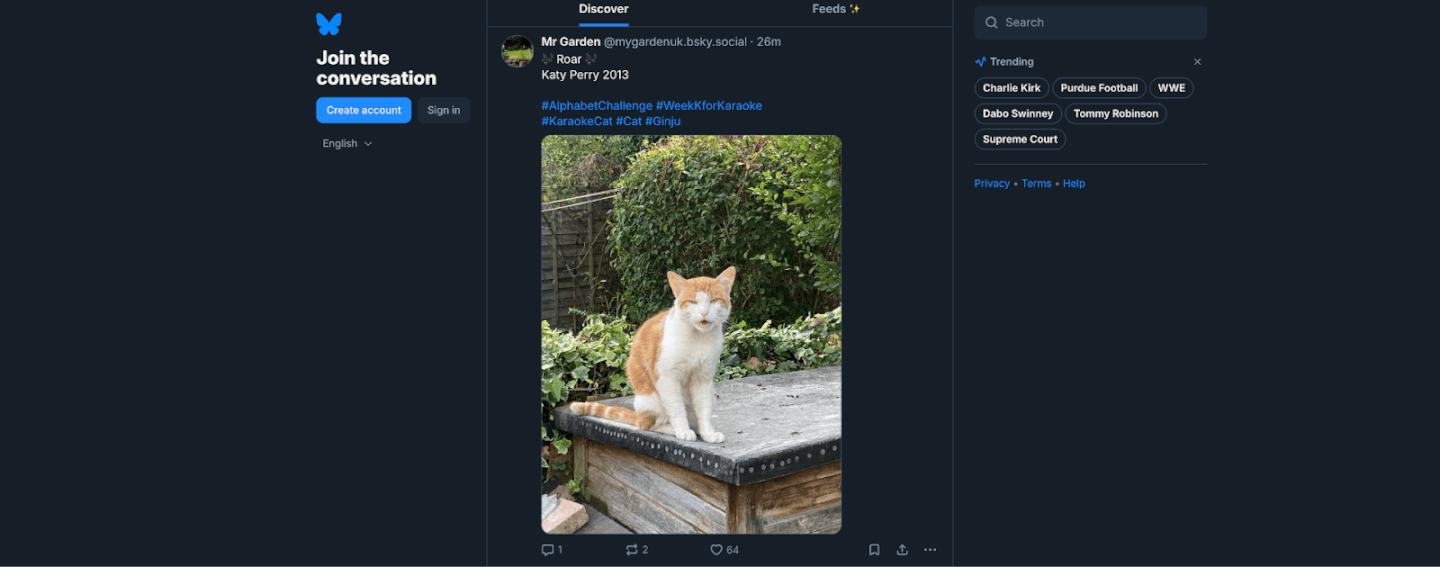
Bluesky is a decentralized, text-centric social media platform built on an open-source framework called the AT Protocol. In plain English, this means Bluesky isn’t owned and operated by a single company like traditional social networks. Instead, its underlying protocol is open for developers and communities to contribute to or even create their own interconnected social apps. Bluesky was originally conceived in 2019 as a project within Twitter, but it evolved into an independent entity (led by CEO Jay Graber) that launched publicly in early 2024. It’s widely seen as a fresh start for social networking, especially for those disillusioned with the direction of Twitter under Musk’s leadership.
At its core, Bluesky functions a lot like Twitter (now X) or Instagram Threads in terms of user experience. It’s a microblogging service where users share short posts, follow each other, and engage in conversations. However, what makes Bluesky stand out is its emphasis on decentralization and user control. Because it operates via the AT Protocol, anyone can run a Bluesky server or build compatible apps, giving users the potential to port their data and identity across different platforms that speak the same language. In other words, you’re not locked into one corporation’s ecosystem—a big deal for creators who worry about losing followers or content if a platform goes sour.
Bluesky’s interface and features will feel familiar to anyone who’s used Twitter, making it easy for newcomers to get started. Here’s a quick rundown of how it works and what you can do on Bluesky:
It seems like everyone from tech enthusiasts to influencers is suddenly talking about Bluesky. The platform’s rapid growth (at one point Bluesky was reportedly adding over 6 new users per second during its surge) didn’t happen by accident. Several factors have been driving its popularity:
1. Transparency and User Control: Many users were drawn to Bluesky for its open-source, decentralized ethos. After years of opaque algorithms and policy flip-flops on mainstream networks, people crave a platform where they have more control. Bluesky’s commitment to transparency—by open-sourcing its code and letting the public see how it’s built—instills trust. Notably, when Elon Musk announced changes like weakening Twitter’s block feature, users started seeking a safer, more transparent alternative. Bluesky’s philosophy of letting users shape their experience (through custom feeds and community input) has been a breath of fresh air.
2. Backlash to Twitter (X) Policies: The turmoil at Twitter (now X) under Elon Musk has indirectly fueled Bluesky’s rise. In late 2023 and 2024, Twitter introduced a string of controversial policy changes and faced public scandals – from sudden paywalling of APIs to Musk’s political endorsements. In the wake of the heated 2024 U.S. election season, a significant number of users grew dissatisfied with X’s direction. Some high-profile figures and communities left or reduced their Twitter usage. Bluesky, with its similar feel but promise of a cleaner slate, became the new home for many of these disillusioned users. Essentially, Twitter’s loss became Bluesky’s gain.
3. Global Events Driving Adoption: Bluesky’s growth got an extra boost from some external events. For instance, when Twitter was temporarily banned in Brazil, a huge wave of Brazilian users flocked to Bluesky as an alternative. (Brazil now accounts for one of the largest chunks of Bluesky traffic by country – proof that people will quickly jump ship when their favorite platform falters.) Similarly, other communities around the world have used Bluesky as a refuge when Twitter faced outages or unpopular changes. These spikes in sign-ups created network effects, where each new influx of users made Bluesky more lively and attractive for the next.
4. Early Hype and Exclusivity: Let’s not underestimate the power of FOMO. Bluesky launched as an invite-only app in mid-2023, which immediately gave it an aura of exclusivity. Getting a Bluesky invite code became a hot ticket for a while. Early adopters (including many content creators and tech influencers) were eager to snag their username and explore the new space. This buzz created a virtuous cycle — the more people talked about “hey, who has a Bluesky invite?” on other socials, the more others wanted in. By the time Bluesky opened to the public in February 2024, it already had a waiting list of enthusiastic users and a certain cachet as the new place to be. Riding on that momentum, Bluesky quickly climbed app store charts (even hitting the #1 social app spot on iOS during its surge), which in turn attracted yet more users. In short, being new (and a bit hard to get into at first) was a marketing win for Bluesky.
Despite all this growth, let’s keep perspective: Bluesky is still smaller than the giants. It has tens of millions of users, whereas Meta’s Threads amassed around 100+ million at launch and Twitter/X claims hundreds of millions. But Bluesky’s rapid trajectory and passionate community suggest it’s carving out a meaningful niche. Its appeal lies in being the cool new hangout that isn’t flooded with ads or dictated by a big corporate algorithm – a place where user-generated content feels genuinely user-generated, not strategically amplified. For micro influencers and creators, that environment is attractive because you’re engaging with an audience that’s truly listening, not just doom-scrolling through noise.

If you’re a micro-influencer, content creator, or a brand (like an e-commerce or Amazon seller), you might be wondering: “Is Bluesky worth my time?” The honest answer: It depends on your goals, but it’s definitely worth grabbing your spot and keeping an eye on. Here are a few considerations:
Bluesky is definitely a platform to watch. It’s not the place for hard selling or polished ad campaigns today – and that’s okay. Its strength lies in community and conversation, aligning perfectly with the direction of modern micro-influencer marketing (which prizes authenticity over mass advertising). At Stack Influence, we’ve seen that authentic engagement often trumps flashy promotion, and Bluesky is an emerging testament to that trend. Whether you’re a curious content creator or an e-commerce entrepreneur, it’s worth exploring Bluesky, if only to stay ahead of the curve. Secure your spot, join the conversation, and who knows – you might just find a refreshing new outlet for your creativity.
Building a loyal brand community is more important than ever in today’s marketplace. With consumers increasingly tuning out traditional ads and trusting peer recommendations, brands must foster genuine relationships to thrive. A strong community not only gives you valuable feedback on products but also turns customers into enthusiastic advocates for your brand. Below, we’ll explore seven effective strategies for community building – tailored for e-commerce brands, Amazon sellers, and any company looking to cultivate an engaged audience.

One of the fastest ways to build a community around your brand is by partnering with influencers, especially micro-influencers and niche content creators. These are individuals with smaller but highly engaged followings who can authentically champion your products. Collaborating with micro-influencers infuses credibility into your marketing – their recommendations feel like advice from a friend rather than an ad. In fact, Stack Influence reports that 82% of consumers are highly likely to follow a micro-influencer’s recommendation, and nearly 90% say authenticity is important when deciding which brands to support. It’s no surprise that 86% of marketers plan to partner with influencers in 2025, as this strategy has become mainstream for brand growth.
Micro-influencers offer unusually high engagement and community impact for the cost. Their posts generate engagement rates as high as 5–20%, far above the ~1–3% typical of big influencers. That means a more loyal, interactive audience seeing your brand. Additionally, micro-influencer campaigns can deliver an ROI of around 20:1 (each $1 yielding $20 in revenue), compared to roughly 6:1 for macro-influencers. In other words, brands get more bang for their buck collaborating with many niche creators than putting their whole budget into one celebrity. Given these advantages, it’s no wonder e-commerce companies and Amazon sellers are ramping up micro-influencer collaborations to build community and trust. To start, identify influencers who genuinely love your niche – for example, a tech gadget brand might partner with a YouTube reviewer known for honest gadget reviews, or an Amazon Marketplace seller in beauty might team up with a skincare micro-influencer. By co-creating content and engaging their audiences, you’ll tap into existing communities and bring those like-minded people into your brand’s circle.
Your potential community members are already out there connecting in social media groups and online communities – so go join the conversation. Rather than expecting customers to come to you, leverage the platforms and forums where your audience hangs out. This could mean participating in a popular subreddit related to your industry, engaging in Facebook Groups, or simply being highly responsive on your brand’s Instagram and TikTok accounts. People love to bond over shared interests and experiences: fitness enthusiasts swap workout tips on Instagram, Amazon sellers discuss tactics in online forums, and hobbyists gather in niche Facebook groups. By being active where your customers naturally congregate, you make your brand a part of those organic “tribes.”
Importantly, don’t use social channels just for one-way promotion – use them to listen and engage. For example, respond to comments on your posts, jump into discussions (when appropriate) with helpful insights, and show personality in your replies. If your brand is in e-commerce, consider creating a community hashtag or a user club. Outdoor gear retailers, for instance, might encourage fans to share hiking photos with a branded hashtag and then repost the best ones. Meeting your audience on their turf shows that your brand is approachable and tuned in to the community. Over time, these interactions build familiarity and trust. When people see your brand actively contributing value (not just selling), they’ll be more inclined to join your follower base and eventually become advocates.
User-generated content (UGC) – posts, photos, videos, and stories created by your customers – is like rocket fuel for community building. When customers create content featuring your brand, they become co-creators of your brand story. This not only provides you with a wealth of authentic content to share, but it also makes those customers feel more deeply connected to your brand. UGC is powerful social proof: seeing real people use and love a product builds trust among other potential buyers. In fact, user-generated content from genuine fans can be more persuasive than any ad campaign. It feels more genuine than polished ads, which helps build credibility with audiences.
Co-creating content with your community makes marketing feel more like a conversation. Brands like GoPro and Starbucks have mastered this – featuring customer photos or stories as central to their marketing. Even smaller e-commerce brands can do it: for instance, if you sell handmade candles online, encourage buyers to share photos of the cozy ambiance your candles create at home. Not only do you get free authentic content, you also make those contributors proud members of your community. Tip: Keep an eye on what content your users are making spontaneously. That feedback can guide your marketing (and even product development, as we’ll cover next).
In community building, the conversation is two-way. One place many brands falter is by ignoring customer reviews. Don’t let that happen – pay close attention to product reviews and actively engage with them. Reviews, whether on your website, on Amazon, or on social media, are gold for understanding your community’s sentiment. Responding to reviews (both positive and negative) shows that there are real people behind the brand who care. In fact, 52% of consumers expect to hear back from brands within a week of leaving an online review, yet many brands still neglect to reply. Simply acknowledging a customer’s review can turn a passive customer into an active community member because they feel heard.
Positive reviews are opportunities to reinforce advocacy. A quick “Thank you, we’re so glad you love the product!” on a 5-star review goes a long way. Better yet, share or highlight great reviews in your community – for example, feature a “review of the week” in your newsletter or social posts. This not only flatters the reviewer, drawing them closer to your brand, but also provides social proof to others. Remember, 88% of consumers trust online reviews as much as personal recommendations, and 72% will take action after reading a positive review.
Negative reviews are even more critical to engage. Rather than deleting or ignoring criticism, address it head-on and swiftly. Apologize for any issues and offer to make it right. This responsiveness can actually benefit your community reputation: potential customers see that you care and existing customers get their problems resolved. 83% of customers say they feel more loyal to brands that respond and resolve their complaints so tackling a bad review constructively can turn a dissatisfied customer into a loyal advocate. Every review is a chance to have a dialogue. By actively participating in review conversations, you show the whole community that their opinions matter – which encourages more people to join the discussion around your brand.
Your community isn’t just there to cheer you on – they’re also an invaluable source of ideas and critiques to help you improve. Incorporating customer feedback into your products and services closes the loop of community building. When people see their suggestions implemented, it creates a deep sense of ownership and loyalty. So, move beyond just collecting feedback and show customers you’re listening by acting on it. For example, if multiple customers request a new feature or flavor, or report an issue, consider those insights in your next product iteration. Even e-commerce giants use this strategy: Amazon famously uses customer feedback data to inform product tweaks and new offerings. As a smaller brand or Amazon seller, you can be even more agile – perhaps launching a limited-edition product based on a fan suggestion or adjusting a policy due to community input.
A practical approach is to set up feedback channels that make customers feel heard. This could be a dedicated feedback form, a beta tester group drawn from your community, or live Q&A sessions where customers can directly share ideas. Invite your community into the product development process. For instance, a software-as-a-service company might have a public roadmap where users can vote on upcoming features. Or a cosmetics brand could send samples of a new formula to loyal community members for early feedback before a full rollout. By co-creating solutions with your audience, you demonstrate respect for their opinions. This not only leads to better products, but customers will often reward you with long-term loyalty (since they see their fingerprints on what you offer!). In short, build with your community, not just for them. When customers feel like partners in your brand’s journey, your community becomes much stronger and more invested.

Nothing solidifies a community quite like real-time interactions. Hosting events – whether in-person or virtual – is a powerful community-building strategy that allows your brand and customers to connect on a more personal level. In the age of online everything, meeting your customers “in real life” (or live via video) can humanize your brand immensely. This could range from small local meetups and workshops to larger webinars or live-streamed conferences. The format isn’t as important as the experience of coming together. In-person activations are especially impactful: there’s just something memorable about shaking someone’s hand, sharing a laugh face-to-face, or letting customers touch and feel your product in an event setting. It forges friendships among community members and builds emotional ties to your brand. It’s also great for business – nearly 47% of event marketers say in-person events deliver the highest ROI of all marketing channels, and 83% include live events in their strategy.
Think about what kind of event makes sense for your brand and community.
When planning events, offer value and fun, not just a sales pitch. The goal is to reward your community with an experience. For example, a fitness apparel brand might host a free group workout in the park for customers, or an online craft marketplace might run a virtual craft-along session. These gatherings give your fans a story to tell and a memory associated with your brand. Post-event, you’ll likely see a surge in community energy – attendees might post about it (more UGC!), tell friends, or just feel a closer connection to your company. Over time, periodic events can become cornerstone moments for your community, sustaining enthusiasm year after year.
Your happiest customers are already spreading the word about you – why not formalize that relationship and reward them for it? Turning engaged community members into affiliates or brand ambassadors can supercharge your community building. An affiliate program typically means offering community members a commission or perk for any sales they drive via special links or codes. This gives your advocates a financial incentive to keep promoting your brand to their friends, followers, or network. It’s a win-win: they earn rewards, and you gain new customers through trusted recommendations. It’s also extremely cost-effective – no wonder 81% of brands use some form of affiliate marketing as part of their strateg.
Alternatively or additionally, you can establish a brand ambassador program. Ambassadors are often long-term partners who may not be compensated per sale like affiliates, but instead get perks such as free products, exclusive access, or social recognition in exchange for promoting the brand. These could be influencers, loyal customers, or even employees who love your mission. The key is that they become the voices consumers trust – relatable people talking about your brand in an authentic way, rather than the brand talking about itself. For example, many e-commerce apparel brands have ambassador teams that regularly post wearing their clothing, and in return get early access to new lines and feature spots on the brand’s Instagram. Amazon sellers might offer their best reviewers a chance to join an insider club that gets early samples or discount codes to share.
When setting up an affiliate/ambassador program, be sure to give clear guidelines and support. Provide your advocates with shareable content, tracking tools, and plenty of appreciation. Celebrate their successes publicly (like “Affiliate of the Month” shout-outs). By investing in your advocates, you make them feel like an integral part of the brand’s success – which they are! As they spread the word, your community grows with new like-minded customers coming in through a trusted introduction. Over time, this network of affiliates and ambassadors becomes a self-propelling engine of community growth, loyalty, and user-generated content. It takes your most passionate community members and elevates them into true partners.
In conclusion, building a vibrant community is about nurturing genuine relationships with and among your customers. From influencer collaborations and social media engagement to UGC, feedback loops, events, and affiliate programs, the common thread is authenticity and two-way value. You’re inviting people into something bigger than a transaction – a sense of belonging. By implementing these strategies, micro-influencers, content creators, e-commerce shoppers, Amazon sellers, and everyday users will feel more connected to your brand and to each other. The result is a community that not only boosts your brand’s growth and trust, but also becomes a lasting competitive advantage. Start with the strategy that resonates most with your audience, and build from there. With consistency and care, you’ll turn customers into loyal fans and casual buyers into a thriving, engaged community.
Choosing between TikTok and Instagram for marketing can feel like picking between a chocolate chip cookie and a brownie – both are great, but which one satisfies your needs more? 🧐 For any brand, content creator, or Amazon seller delving into social media, this question is crucial. TikTok and Instagram are two powerhouse platforms for influencer marketing and UGC (user-generated content), but they aren’t identical. Each has unique strengths in content style, audience, and e-commerce features that can make or break a campaign’s success.
In this comprehensive comparison, we’ll break down how Instagram differs from TikTok in 2025, especially from the perspective of micro-influencers, brands, and e-commerce businesses. We’ll look at content formats, algorithms, demographics, shopping tools, and more. By the end, you’ll know which platform might be better for your influencer or UGC campaign (or if a mix of both is the winning recipe). Let’s dive in! 🚀
Before we get granular, here’s a quick rundown of the main differences between TikTok and Instagram for organic content and marketing:
TikTok focuses solely on short-form videos with a raw, unpolished vibe, whereas Instagram offers multiple content types (photos, Stories, Reels, carousels) and tends to feature more polished, aesthetically curated posts. In short, TikTok is all about authentic video storytelling, while Instagram lets you build a glossy visual portfolio of your brand or lifestyle.
TikTok is a discovery-driven platform with an algorithm that can catapult new creators (even those with zero followers) to viral fame if their content resonates. Its For You Page shows videos based on user interests and engagement, giving small accounts a big chance at organic reach. Instagram, on the other hand, is more social graph–driven – content from accounts you follow is prioritized, and reach often correlates with your existing follower count and past engagement. In essence, TikTok’s algorithm is content-first, while Instagram’s is relationship-first.
Instagram has a mature shopping ecosystem (product tagging, Shop tabs, affiliate links) that seamlessly supports e-commerce brands and even allows in-app checkout. TikTok is newer to social commerce but is catching up fast – introducing features like TikTok Shop and live shopping, and of course the trend-driven phenomenon “TikTok made me buy it” that reflects its power to drive impulse purchases. For now, Instagram offers more direct tools for selling products, whereas TikTok offers unparalleled organic virality that can translate to sales if harnessed well.
Influencers on Instagram tend to emphasize high-quality content production – think beautifully edited photos or well-produced Reels – and often have a carefully curated persona. TikTok influencers, including many micro-influencers, thrive on authenticity and creativity over polish Collaboration styles differ too: TikTok is home to duets, stitches, and hashtag challenges (great for viral UGC campaigns), whereas Instagram influencers leverage diverse formats (Stories, posts, IGTV, Reels) and usually have a more established follower community. As a brand, you might find TikTok influencers offer higher engagement at lower cost, while Instagram influencers offer broader reach within a loyal follower base (often at a higher price point).
With the rise of TikTok Shop, the platform has become a powerful direct-sales channel. Brands can sell products through shoppable videos, live streams, and creator affiliates making it ideal for performance-focused eCommerce campaigns. Before launching, review your margins, fees, commissions, and ad costs. Use a TikTok Shop profit calculator to estimate earnings and plan your pricing and affiliate strategy.
These are just the highlights. Next, we’ll explore each of these areas in depth and provide charts and examples to illustrate the TikTok vs Instagram showdown. 🥊
When it comes to content, TikTok and Instagram have distinct ecosystems:
TikTok is purely a video platform (15 seconds up to 10 minutes per video). Everything is about that vertical video content, usually set to music or trending sounds. The vibe on TikTok is intentionally unpolished – authenticity over aesthetics. Creators film themselves dancing, doing comedic skits, participating in hashtag challenges, or giving bite-sized tips. Most TikToks are shot and edited on the phone, using TikTok’s robust in-app editing suite and effects (think filters, stickers, green screens, voiceovers). The result is a feed full of content that feels spontaneous and real, almost like talking to a friend. As a brand or creator, you don’t need a professional film crew for TikTok; lo-fi, relatable content actually performs better. This is one reason many micro-influencers flock to TikTok – you can go viral with just a clever idea and a smartphone, no huge budget or perfect production needed.
Instagram started as a photo-sharing app and, while it’s expanded to video, it still embraces multiple content formats: images, photo carousels, 15-60 second Reels, 24-hour Stories, longer IGTV videos (now in a tab on some profiles), and Live streams. An Instagram profile is essentially a visual portfolio – it showcases a grid of photos or videos that reflect a certain style or branding. Users and influencers put considerable effort into editing and filtering their posts to look just right. Colors coordinate, lighting is flattering, and even candid shots are often pre-planned. The typical Instagram creator (or brand) might take dozens of shots to pick one perfect image for the feed. For Reels (Instagram’s TikTok-like feature), content can be more raw than static photos, but there’s still an Instagram aesthetic at play – many creators will edit in external apps to add subtitles, transitions, etc., ensuring the final video aligns with their profile’s style. All of this means Instagram content generally has a higher production value and a more “curated” feel compared to TikTok.
What does this difference mean for you? If your brand prides itself on visual quality and consistency (for example, a luxury fashion store or a design-oriented product), Instagram’s format lets you showcase that polish. You’ll want to invest time in good photography, graphic design, or professional-looking video edits for Instagram. To speed up that workflow, a photo editing app can streamline color correction, retouching, and on-brand presets, reducing turnaround before publishing. On TikTok, overly polished content can sometimes seem out of place. Users there often prefer candid, humorous, or emotionally genuine videos that align with TikTok’s trend-driven culture. UGC-style content (content that feels like a real user made it) performs exceptionally well on TikTok – even ads on TikTok tend to mimic organic videos, because anything that feels too much like a commercial might be skipped. In fact, TikTok provides tools like the “Spark Ads” format which allow brands to promote organic-looking content, blurring the line between ads and user content.
To illustrate, think of how an e-commerce brand might promote a new product on each platform:
Neither approach is “better” universally; they simply align with different audience expectations. Many brands actually repurpose content across both: for example, sharing TikTok videos on Reels and vice versa. But it’s important to optimize content for each platform’s style. Instagram rewards style and consistency; TikTok rewards storytelling, humor, and timeliness (being early to a trend).
One of the biggest differences between Instagram and TikTok lies in how content is distributed and discovered. This comes down to their algorithms and core design philosophies:
If Instagram is a curated gallery, TikTok is an open stage with an algorithmic director deciding what the audience sees next. TikTok’s famed For You Page (FYP) is essentially endless content chosen for each user by machine learning models. What’s special is that TikTok’s algorithm prioritizes content relevance and quality over who the creator is. It looks at what viewers seem to enjoy – the videos they watch, like, share, re-watch, the hashtags and sounds trending, etc. – and feeds them more of that. This means even a new creator with zero followers can wind up on millions of screens if their video strikes a chord with TikTok’s algorithm. In TikTok’s “entertainment-first” model, anyone can become an overnight sensation. TikTok basically acts as a massive discovery engine, where users often see content from strangers that the app thinks they’ll enjoy. For brands and influencers, this translates to huge organic reach potential – you don’t necessarily need followers; great content can find an audience on its own. It’s why we see stories of random products going viral on TikTok and selling out overnight due to a single viral video (the #TikTokMadeMeBuyIt effect).
Instagram has evolved over the years from a purely chronological feed to a more algorithmic one, but it’s still deeply rooted in your social network. The feed primarily shows posts from accounts you follow, especially those you interact with the most (friends, favorite influencers, brands you like). The algorithm considers engagement metrics too – if a particular post is getting lots of likes/comments quickly, it’s more likely to show up higher for more followers. Instagram does have discovery surfaces (Explore page, and lately the Reels tab) where content from outside your network can appear, but these are secondary to the main feed. Essentially, popularity and relationships matter more on Instagram: big influencers with established followings have an advantage because the platform tends to amplify content that’s already getting attention from their followers. Small accounts can grow on Instagram, of course, but it often requires consistent effort, networking (shoutouts, hashtags, collaborations), and time to build a following. It’s typically a slower burn compared to TikTok’s rocketship potential for new faces.
One more thing to note is content longevity: TikTok videos usually have a short shelf-life in the feed (trending today, gone tomorrow, as the crowd moves to the next trend), whereas an Instagram post might circulate in feeds for a couple of days and remain visible on your profile forever in a nicely organized way. In other words, TikTok is like a viral news ticker, Instagram is like a magazine of your brand. Keep this in mind when planning content – TikTok requires agility and trend awareness; Instagram rewards planning and consistency.
Both Instagram and TikTok boast global user bases, but who those users are and how they behave on each app can differ significantly. This is key for influencers and brands to understand – you want to make sure you’re fishing where the fish are (and that you know what makes them bite!).
TikTok is often associated with Gen Z, and for good reason. A large chunk of TikTok’s users are young. Globally, the most common age group on TikTok is roughly 18-24 (about 38% of users), followed by 25-34 (around 33%. That means about 70%+ of TikTok’s audience is under 35. The remaining are older, but usage drops off in higher age brackets (TikTok usage among 45+ is relatively low, likely under 15% of users). This youthful skew is part of TikTok’s identity – it’s the epicenter of youth culture, pop culture, and the latest memes and challenges.
Instagram, by contrast, started with Millennials and broadened over time. Its largest age segment is also young adults (18-24 are ~32%, 25-34 ~30% of users), but it has meaningful representation in older groups too – users aged 35-44 make up around 15% (and growing), and a decent share of users are 45 and up. In fact, Instagram is commonly used by everyone from teenagers to people in their 40s and 50s, whereas TikTok currently is dominated by teens and 20-somethings. To put it simply: TikTok = younger audience, Instagram = broader age diversity. If your target market is teenagers or college students, TikTok is almost a must. If you target professionals in their 30s or even parents, Instagram might have more of those eyeballs.
Another dimension is geography and culture. Both platforms are global, but TikTok’s growth has been tremendous in the U.S., Asia (it’s originally from China, where the domestic version Douyin has hundreds of millions of users), and increasingly Europe. Instagram is strong globally as well and has the backing of Meta’s ecosystem. In some countries, one platform may be more dominant than the other. For instance, in the U.S. both are popular, but in certain developing markets Instagram (or alternatives) might be used more due to accessibility or familiarity. Always consider where your audience is located and which platform they favor.
TikTok Behavior: TikTok’s user experience is like channel surfing through videos tailored to your tastes. People open TikTok when they want to relax, laugh, or learn something quick – it’s primarily entertainment. The app immediately drops you into the For You feed, where you’ll see an unrelated mix of content from dance trends to life hacks, often from creators you don’t know. The culture on TikTok encourages users to scroll endlessly (hence that high average usage time) and to interact impulsively – a quick double-tap to like a video, a quick comment or follow if something was really good, then on to the next. Many TikTok users don’t post at all; they just consume content ravenously. And when they do post, it’s often participating in a broader trend (like using a trending sound or challenge that many others are doing).
One interesting quirk: TikTok can make content famous without making the creator famous. You might have a video get a million views, but people watch it, enjoy it, and then move on without necessarily following you. Your content spread, but your follower count may not skyrocket proportionally (unless you consistently go viral or have a distinct persona that hooks people). This is a crucial difference – viral reach vs. loyal following. TikTok leans toward the former.
Instagram Behavior: Instagram is more intentional and social in how people use it. Users often open Instagram with a purpose: check what friends posted today, see Stories from people they follow, browse a specific profile or hashtag, or message someone. The feed, while algorithmic, is still bounded by who you follow. There’s more two-way interaction with known contacts – e.g. replying to a friend’s Story with an emoji, leaving a comment on your favorite influencer’s post, or clicking through a brand’s Story poll. Instagram also serves as a bit of a search and research platform: people might visit a brand’s Instagram page to gauge its products and vibe (almost like a mini-website) or scroll a influencer’s feed to see if they align with their interests before following or buying something. The profile page on Instagram is a hub – everything that account has shared is there to explore, which encourages users to not just consume the latest post, but to delve into past content and get a feel for the person/brand.
To sum up: TikTok = passive discovery and entertainment; Instagram = active social browsing and networking. For content creators and marketers, understanding this is vital. Your TikTok content should aim to grab attention instantly (within seconds) and not require prior knowledge of who you are – assume the viewer is a cold audience and entertain or intrigue them. On Instagram, you can rely a bit more on context – your followers might recognize your brand logo or face, and you can engage them with a question in your caption or a conversation in comments, knowing they’re invested in you.
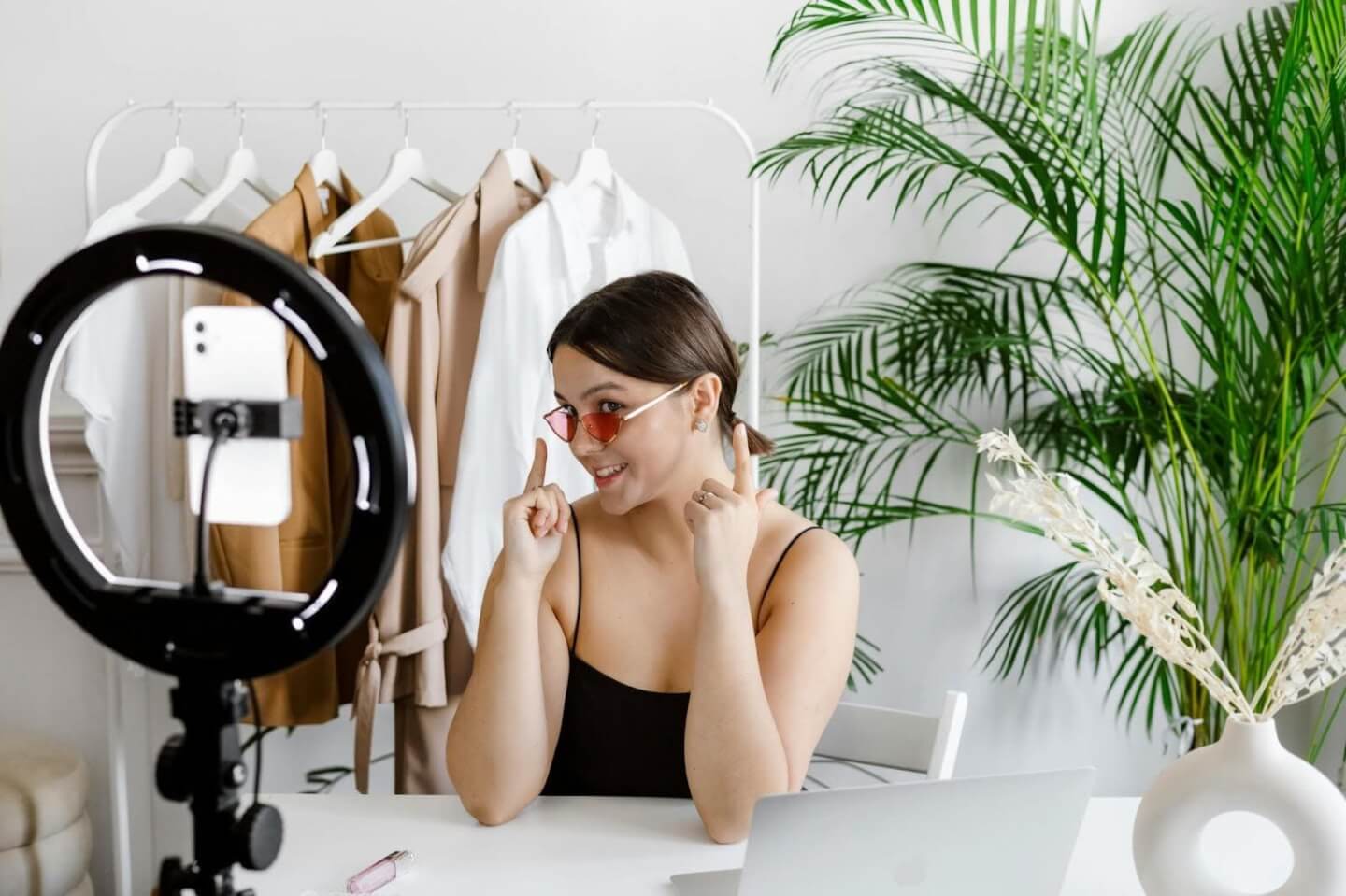
Both TikTok and Instagram have been rolling out features to help businesses, e-commerce sellers, and creators monetize and sell directly on the platforms. If you’re an Amazon seller or online store owner looking to leverage social media, it’s important to know what each app offers in terms of storefronts, ads, and shoppable content.
Instagram has a robust set of shopping features that have been around for a while. Business accounts can create an Instagram Shop, where you showcase products directly on your profile. You can tag products in posts, Reels, and Stories – so a viewer can tap and see the product name and price, and even checkout without leaving Instagram in some regions. This makes Instagram a powerful platform for product discovery and purchase. Many direct-to-consumer brands use Instagram as a primary catalog – users often browse Instagram like they would a window shopping experience. Features like Swipe Up links (for Stories, now link stickers) and the “View Shop” button facilitate traffic to product pages. Instagram also has the advantage of the broader Facebook advertising ecosystem; you can run sophisticated ad campaigns targeting specific audiences, and use Facebook/Meta Ads Manager to run ads on Instagram with various formats (photo ads, video ads, carousel ads, Story ads, etc.).
For Amazon sellers, while you can’t directly integrate your Amazon listings into Instagram’s native Shop (Instagram prefers you to link your own website or use their checkout), you can still use Instagram to drive awareness and traffic to Amazon. For example, some Amazon sellers create brand accounts that post lifestyle images and short videos of their products, then in the bio or Swipe Up they’ll link to their Amazon product page or “Link in bio” that leads to Amazon. Since Instagram is great for building a brand aesthetic, it complements Amazon’s more utilitarian product listings. Also, many Amazon sellers partner with micro-influencers on Instagram to review or feature their products, tapping into those influencers’ followings and the trust they’ve built (this is something Stack Influence specializes in – more on that soon).
TikTok is newer to direct commerce but is quickly ramping up. It introduced the TikTok Shop feature, allowing businesses in some regions to list products and have in-app shopping experiences. TikTok also supports product links in videos and profiles, and has experimented with live-stream shopping events (very popular in Asian markets). A big strength for TikTok is influencer-driven shopping – TikTok’s content often organically drives purchases (again, #TikTokMadeMeBuyIt trend). Recognizing this, TikTok has made it easier for creators to partner with brands: they have a Creator Marketplace to find influencers, and features like the shopping cart icon on videos where a product is featured so viewers can directly see details.
One notable difference: TikTok’s vibe for ads and commerce is to blend with organic content. For instance, TikTok offers Spark Ads, which let you take a post from a creator (with their permission) and promote it as an ad – it looks and feels like a TikTok, not a banner ad. These perform well because TikTok users engage with ads that feel native. TikTok also leverages its influencers in commerce; an influencer might add a link to a product in their bio or use TikTok’s integration to directly showcase an item. TikTok’s Live streaming is another commerce avenue – going Live, an influencer or brand can sell products in real time, interacting with viewers (akin to QVC but on a phone).
Advertising on TikTok vs Instagram has some differences in cost structure too. TikTok’s ad platform requires a higher minimum spend (historically, campaigns starting around $50 daily minimum) which can be a hurdle for very small businesses. Instagram (via Meta ads) allows for as little as a few dollars a day to boost posts or run ads. However, TikTok ads often boast high engagement and have driven massive brand awareness when done right (think of those viral TikTok ads that spawn trends themselves). It’s worth noting that some research found Instagram Reels ads can slightly outperform TikTok ads in terms of reach and cost-effectiveness, but the landscape is continuously evolving as TikTok improves its ad targeting.
Since our focus is on influencers, creators, and brands, let’s talk about how influencer marketing plays out on each platform. Both TikTok and Instagram are top channels for influencer campaigns, but the style and ROI of those campaigns can differ.

On Instagram, influencers have been around longer. There are well-established tiers (nano, micro, macro, celebrity influencers) often defined by follower count. Instagram influencers typically maintain a certain image; many started as bloggers or photographers or experts in a niche. They are skilled at crafting a personal brand. For example, an Instagram fashion influencer’s feed will be filled with well-composed outfit shots, consistent filters, and thoughtful captions about style tips or life updates. Their followers often feel a personal connection and trust, built over years of content. Because of this, Instagram is powerful for campaigns that require aspirational branding – beauty, travel, fitness, etc. – where seeing a polished promo from a beloved influencer can drive fans to want the same lifestyle or product.
On TikTok, the influencer scene is newer and perhaps more democratized. TikTok’s algorithm can create overnight stars, so you get a lot of rising micro-influencers who might not even label themselves “influencers” – they’re just regular people who made cool content and gained a following. TikTok influencers often specialize in a content format or vibe (funny skits, dance, educational tips, storytelling) rather than the perfectly curated life. They might not have the millions of followers that top Instagrammers have, but they can have millions of views on individual videos. TikTok also blurs the lines between influencers and everyday users; someone with relatively few followers can still influence trends if their content is on-point. In terms of culture, TikTok values authenticity and creativity. Many TikTok creators interact closely with their followers (replying to comments with new videos, doing Q&As, etc.), which forges a strong community feeling. Their influence comes from relatability and constant presence on the FYP, rather than prestige.
If you partner with influencers on Instagram, common collaboration formats include: a sponsored post (the influencer posts a photo or Reel using your product, often tagged as paid partnership), Stories takeover or shoutout (short-lived but can include links and interactive polls), or longer-form IGTV videos/reviews. Instagram content for ads might involve the influencer producing beautiful content that you then whitelist for promotion. The focus is on showcasing the product in a lifestyle context that matches the influencer’s personal brand.
On TikTok, collaborations often look like: the influencer making a TikTok video using or discussing your product in their natural content style. It could be a challenge, a before-and-after transformation, a comedic skit featuring the product, etc. Challenges and trends are big – some brands start a hashtag challenge and have influencers kick it off. TikTok also enables things like Duets and Stitches where an influencer might react to or build upon content (imagine an influencer duets a video of someone using your product, adding their own funny commentary). This native interactivity is unique to TikTok and can make campaigns feel very organic and engaging.
TikTok influencers often drive huge engagement numbers – likes and comments galore – and can be fantastic for awareness. If a TikTok influencer with 200k followers posts about your product and it catches on, you might get millions of impressions and a flood of traffic. However, converting that to sales or long-term followers is the next challenge. Sometimes TikTok campaigns see a big spike in Google searches or Amazon orders for a product in the short term (people are compelled by the TikTok to try it out), which is great for quick ROI. For example, a snack brand might see their product go viral on TikTok and sell out a week’s stock in a day due to a craze. The concern is often longevity – will those customers come back? Are they loyal or just trend-chasers? That depends on the product and follow-up marketing.
Instagram influencers typically yield steady conversions and brand building. Their audiences, while smaller in view count per post, are often more invested. Seeing an influencer repeatedly use a skincare product in her routine on Instagram Stories, for instance, can gradually convince followers to trust and buy it. Also, Instagram’s features allow direct linking to product pages, which simplifies conversion tracking (TikTok still has less link-out capability, though you can put one link in the bio or use newer shopping links). A stat from one comparison: TikTok is great for boosting engagement and sales via viral content, while Instagram’s varied formats and affiliate tools drive more polished campaigns that can convert over time. In practice, brands often report TikTok is awesome for top-of-funnel (getting known), and Instagram shines for middle-to-bottom-funnel (nurturing interest and driving purchase).
Compensation for influencers varies by platform popularity. On average, Instagram influencers charge higher fees for sponsored content than TikTokers with equivalent following, as Instagram is a more mature market for influencer deals. For example, one data point showed TikTok nano/micro-influencers might charge anywhere from $5 to a few hundred dollars per post, whereas Instagram influencers of similar size might charge $10 up to a couple thousand in some cases. This isn’t a strict rule, but it highlights that Instagram placements have traditionally been valued more highly by advertisers – partly due to perceived higher production effort and older benchmarks. TikTok being newer means brands and creators are still figuring out pricing; you might snag great value collaborating with an up-and-coming TikTok creator who gets big views but hasn’t ramped up their rates yet.
From an influencer marketing strategy perspective, the ideal scenario could be to use both: engage TikTok influencers to generate buzz and content (which you can repurpose), and engage Instagram influencers (maybe even the same people, if they have presence on both) to build credibility and drive sustained messaging. Many influencers cross-post anyway – an influencer might film a TikTok, then also share it as an Instagram Reel. Coordinating multi-platform campaigns can amplify results.
To crystallize the comparison, let’s summarize the pros and cons of TikTok vs Instagram for brands and influencers:
Knowing these pros and cons, consider your brand’s strengths and goals. Are you looking to explode in awareness among young consumers quickly? TikTok’s probably your playground. Is your product more visual and shopping-friendly, needing a bit of storytelling and relationship-building? Instagram might serve better. Many successful campaigns use both – for example, tease a new product on TikTok to generate buzz, then do a formal launch post on Instagram for your loyal followers with all the details and a shop link.
TikTok isn’t just for dance challenges and lip-syncing teens – it’s become a goldmine for brands and e-commerce sellers. With its algorithm capable of catapulting any video to millions of viewers, TikTok has spawned the “TikTok made me buy it” phenomenon where micro influencers and everyday content creators drive insane sales for products through authentic, catchy videos. From Amazon sellers to legacy companies, everyone has a shot at going viral with the right content and a bit of luck. Below, we highlight five brands that went viral on TikTok and break down how they did it, why it worked, and what e-commerce entrepreneurs (like Amazon sellers) can learn. (Hint: leveraging user-generated content (UGC) and micro influencers is often key.) Let’s dive in!
When e.l.f. (short for eyes lips face) set out to resonate with Gen Z, they went all-in on TikTok with a bold strategy: create a catchy original song and hashtag challenge. The result was #EyesLipsFace, a campaign that became the most viral TikTok challenge in U.S. history. The brand’s 15-second original song (with an infectious beat) inspired users to film quick makeup looks and fun dances. The campaign attracted over 5 million UGC videos from users and totaled around 7 billion views – yes, billion with a “B.” Even celebrities like Lizzo and Reese Witherspoon jumped in for free, amplifying the trend. This explosion of content propelled e.l.f. from being a smaller drugstore makeup name to a favorite among teens, moving it from #8 to #2 in teen beauty brand rankings and driving eight consecutive quarters of sales growth during a tough period for the industry.
e.l.f. nailed the formula of TikTok virality – music + challenge + UGC. By using an original, on-brand song (“Eyes Lips Face”) and a simple challenge, they empowered content creators to participate en masse. The content didn’t feel like an ad; it felt like a fun trend anyone could hop on. Micro influencers and everyday users alike made videos, providing social proof and authentic enthusiasm. Essentially, e.l.f. handed the creative reins to TikTok users, and that user-driven creativity made the campaign explode. The huge view count (see chart below) underscores how a well-executed TikTok campaign can eclipse traditional media reach by orders of magnitude.
TikTok views generated by viral content for each featured brand. e.l.f.’s #EyesLipsFace challenge led with an astonishing ~7 billion views, dwarfing other virals like Stanley’s tumbler (~900M views) or CeraVe’s skincare hype (~825M). Even a 13M-view TikTok (Ocean Spray) can have outsized impact when it captures media attention.
Sometimes, the most viral brand moment is one money can’t buy. Ocean Spray, the classic cranberry juice company, struck TikTok gold in 2020 thanks to a single, authentic video – not produced by the brand, but by a regular guy on a longboard. In the famous clip, TikToker Nathan Apodaca (aka @Doggface208) skateboards peacefully while swigging Ocean Spray cranberry juice straight from the bottle, all to the tune of Fleetwood Mac’s “Dreams.” The vibe was so pure and chill that the 23-second video blew up during the height of pandemic stress. It racked up over 13 million views on TikTok, and when news outlets picked it up, the exposure went through the roof – Ocean Spray garnered over 2 billion media impressions off this viral moment. The song “Dreams” reentered music charts (streams jumped 374% after the video) and Ocean Spray found itself suddenly trending with Gen Z.
What’s impressive is how Ocean Spray responded. Rather than launch an overly polished ad campaign, the company leaned into authenticity. They thanked Nathan by gifting him a new cranberry-red truck (filled with juice), a gesture that felt humble and human. Later, they even featured him in a casual TikTok-style commercial at fans’ request. By joining the conversation naturally (and not stealing the spotlight from the creator), Ocean Spray endeared themselves to young audiences. The TikTok team itself was so impressed that they created a TV ad compiling Ocean Spray fan videos, highlighting the power of UGC – “It starts with TikTok,” the ad concludes.
This was lightning in a bottle – a completely unplanned, genuine moment that resonated widely. The video wasn’t an ad; it was just real. TikTok’s algorithm loves authentic content, and viewers do too. The carefree skateboarding and nostalgic music created a mood that people craved, and they shared it millions of times. In essence, an ordinary user became a micro influencer overnight, turning a bottle of Ocean Spray into a cultural icon without a single marketing dollar. Ocean Spray’s smart, light-touch engagement with the trend (amplifying it rather than trying to control it) kept the positive vibes rolling.
Who would’ve thought an unassuming drugstore skincare brand would become a TikTok superstar? CeraVe, known for its plain packaging and affordable moisturizers, saw its fortunes flip thanks to TikTok skincare influencers (or “skinfluencers”). In 2020, skincare guru Hyram Yarbro (then a micro influencer turned mega influencer) raved about CeraVe’s products in videos, sparking a frenzy. His TikTok followers (in the millions) heaped on praise for CeraVe, and soon the hashtag #CeraVe exploded with views. To date, TikTok posts tagged #CeraVe have amassed roughly 825 million views – far more than many glossier, high-end beauty brands. This surge of peer recommendations and reviews translated into real-world impact: during the summer of 2020, CeraVe products were selling out at stores as teens and young adults snapped them up, and the brand’s parent company reported record growth. In fact, online search interest for CeraVe spiked +359% in June 2020 at the peak of the TikTok hype (versus ~+38% for other skincare brands)kantar.com, signaling a massive wave of new customers discovering the brand.
Crucially, CeraVe didn’t manufacture a TikTok campaign – the community did it for them. The brand benefited from what was essentially free marketing via countless reviews, “skincare routine” videos, and before-and-after skin transformation posts. In a one-year period, CeraVe saw a 70% jump in “earned media value” (a metric for influencer-driven buzz) and doubled the number of content creators talking about itInstead of flashy ads, CeraVe leaned into this organic love by engaging with influencers long-term. They built relationships with dermatologists and content creators who genuinely loved the brand’s no-frills effectiveness, ensuring that the buzz sustained beyond the initial viral moment.
CeraVe’s rise shows the power of trust and community on TikTok. Gen Z viewers are hungry for honest recommendations, and CeraVe hit the sweet spot: effective, affordable, dermatologist-approved. When micro influencers and popular creators (like Hyram) vouched for it, it didn’t feel like an ad – it felt like advice from a friend. The TikTok format of short, relatable video reviews made skincare advice accessible and hype-able. The brand’s authenticity (being cheap and not glitzy actually worked in its favor) made it “cool to be basic” in the eyes of young skincare enthusiasts. Essentially, TikTok word-of-mouth turned CeraVe into a cult favorite without the brand having to spend millions on marketing.
Not every TikTok success story belongs to a big brand – TikTok is also a boon for small businesses. Little Moons, a family-run mochi ice cream brand from the UK, is proof that even a tiny company can shoot to stardom with the right viral moment. In early 2021, some TikTok users posted videos of themselves hunting down Little Moons mochi bites in local supermarkets (using the hashtag #LittleMoons). These were casual, even mundane videos – people going to “big Tesco” (a supermarket) and excitedly trying the mochi. But their genuine enthusiasm for the chewy, colorful ice cream bites struck a chord. Within weeks, the trend snowballed to 300 million+ views on TikTok. Little Moons became the must-try snack, and demand went through the roof. Supermarkets across the UK sold out of the product, and in one major chain (Tesco), sales shot up by 1,300% (13×!) thanks to the TikTok craze.
For a small business, this kind of viral surge could be chaotic, but Little Moons was savvy. They already had a TikTok account and had been posting fun content (so they understood the platform’s tone). When the trend took off, they engaged by responding to videos and fanning the flames of excitement. The co-founder noted it was a “perfect storm” – pandemic lockdowns meant people were looking for novelty at the grocery store, and the product itself is visually fun (squishy mochi balls beg to be filmed). By not interfering with the organic trend and instead encouraging fans, Little Moons turned a short-term viral moment into lasting brand awareness. They expanded production to meet demand, and even launched in new countries (riding on the global TikTok buzz). To this day, they credit TikTok for putting them on the map in a way traditional marketing never could.
Little Moons’ virality shows how random discovery and relatability can ignite a brand. The TikTok videos weren’t ads; they were real people sharing a tasty find. The content was simple: “I went to buy this hyped snack, here’s my reaction.” That authenticity, combined with the satisfying visuals of the product (mini ice cream balls that you can stretch and squish), made it perfect TikTok fodder. Importantly, because the product delivered on taste, the hype kept building as more people tried it and posted their own reviews. It was a virtuous cycle of UGC. And unlike a planned campaign, this had the charm of spontaneity – viewers felt like they were in on a secret trend early. Little Moons also benefited from scarcity FOMO (empty shelves made it even more desirable).
Perhaps one of the most astounding TikTok success stories is that of Stanley, a heritage brand (founded 1913) known for rugged thermoses and lunchbox gear. For decades, Stanley’s insulated bottles were marketed to campers, hikers, and workers – pretty niche. But in the past couple of years, Stanley became a pop culture phenomenon thanks to an unlikely hero product: the Stanley Quencher tumbler, a large 40oz drink cup with a handle. How did a utilitarian tumbler become a trendy must-have? TikTok. A community of lifestyle and mom micro influencers discovered that the Stanley cup was perfect for iced coffees, workouts, and moms-on-the-go. These women (not affiliated with Stanley initially) raved about the tumbler’s huge capacity and convenience. Their passion spread on TikTok like wildfire, snowballing into a craze. The hashtag #StanleyTumbler now has around 900 million views on TikTok, and the cups became so popular they were constantly selling out online.
The numbers behind Stanley’s comeback are staggering: the company’s annual revenue soared from about $70 million in 2019 to $750 million in 2023, largely on the back of Quencher tumbler sales. At one point, sales of the Quencher line were up 275% year-over-year – an almost unheard-of growth rate for a century-old brand. Stanley embraced this new audience by pivoting its marketing to focus on the lifestyle angle (bright colored tumblers, targeting the Instagram/TikTok aesthetic crowd). They even collaborated with influencers and launched limited-edition colors to stoke excitement. But notably, the core of their viral growth was entirely user-driven content – everyday folks posting “Check out my Stanley cup!” videos. It was the modern word-of-mouth. By leveraging that, Stanley transformed from a dusty outdoor brand to a trendy accessory for the younger demographic.
Stanley’s virality came from listening to its new fans. The product itself was a sleeper hit – it solved a practical need (staying hydrated) but in a stylish way that TikTok’s lifestyle community adored. Once a few micro influencers in the homemaking/fitness niches gave it their stamp of approval, a chain reaction ensued. TikTok’s algorithm boosted videos of people decorating their cups, taking them in the car, and comparing colors – turning the Stanley into an aspirational item. Because all this content was organic and peer-driven, it felt more trustworthy and desirable than any ad. It reached a point where seeing countless others praise the Stanley cup created a bandwagon effect: you had to have one to see what the hype was about. Stanley’s team smartly amplified this by engaging with creators and not being afraid to shift their brand image to align with what consumers were organically showing – that the product isn’t just for camping, it’s for everyday life (and it looks great on camera!).
As these stories show, TikTok can catapult brands to new heights – often unexpectedly. Whether you’re a budding e-commerce brand, an Amazon seller, or a legacy company, there are some common threads to viral success on TikTok and social media at large:
In the age of TikTok and the creator economy, the playing field is more level than ever. Smart brands – no matter their size – are those that engage genuinely with creators and communities. By learning from the examples of e.l.f., Ocean Spray, CeraVe, Little Moons, and Stanley, you can craft your own strategy to harness TikTok’s power. Keep it authentic, embrace the creativity of micro influencers and fans, and your brand might just be the next viral success story that everyone is talking about!
Not long ago, marketing was dominated by polished ads and celebrity endorsements. Today, a new breed of marketers – influencers – has turned that playbook on its head. From Instagram trendsetters to YouTube reviewers, these content creators have reshaped how brands connect with consumers. This is especially true for e-commerce brands and Amazon sellers, who are leveraging influencers (particularly micro influencers) to build trust, drive sales, and create authentic connections with audiences. In this blog post, we’ll explore how influencer marketing evolved from a niche tactic into a cornerstone of modern marketing. We’ll dive into the rise of micro influencers, the power of user-generated content (UGC), social commerce trends, and the data-driven, omnichannel future of influencer marketing – all in a casual, informative tone aimed at helping e-commerce entrepreneurs thrive in this new landscape.
One of the biggest changes influencers brought is a focus on authenticity. Surveys show that 90% of consumers prioritize authenticity when choosing brands, and many trust influencer recommendations over direct brand messages. Unlike a glossy magazine ad, an influencer’s content feels like advice from a friend. Whether it’s a mom on Instagram honestly reviewing a baby product or a tech YouTuber sharing an unfiltered gadget demo, these voices carry credibility that traditional ads struggle to match. For brands, this means marketing is no longer just about crafting the perfect slogan – it’s about partnering with personalities who align with your values and have earned their audience’s trust
Today, influencer marketing is a staple in most marketers’ toolkits. In fact, 86% of U.S. marketers will partner with influencers in 2025, and many brands are dedicating significant portions of their budget to influencer collaborations. As of early 2024, about 26% of agencies/brands allocate over 40% of their marketing budget to influencers – a remarkable figure that underscores how integral this channel has become. Social media itself has turned into a commerce and advertising powerhouse, with global social ad spend (fueled in part by influencer content) surpassing even search ad spend in 2024. Influencers are no longer a “nice to have” experiment; they’re front and center in marketing strategies for both up-and-coming ecommerce startups and established retail giants.

One of the most significant ways influencers have changed marketing is through the rise of micro influencers – those everyday content creators with smaller (but highly engaged) followings. Rather than chasing only mega-celebrities, smart brands are tapping into niche communities led by micro influencers, and it’s paying off in a big way.
Micro influencers often feel like “real people” to their followers. They might be a local foodie with 10k Instagram followers or a tech reviewer with a small YouTube channel – in any case, their content comes off as genuine personal recommendations rather than ads. Followers see micro influencers as peers, so a shout-out from them carries weight and credibility that a brand’s self-promotion can’t match. This intimacy translates into higher trust and engagement from audiences.
Despite having fewer followers, micro influencers often boast far higher engagement rates than macro influencers. For example, a micro influencer might see around 10% of their followers engaging (liking, commenting, sharing) on posts, whereas a macro influencer with millions of followers might only get ~2% engagement. More of the audience is actively tuned in to a micro influencer’s content, which is gold for marketers – it means the message isn’t just seen by many people, but actually noticed and acted upon by a large portion of a tight-knit community.
Micro influencers are also budget-friendly. Partnering with a big celebrity can cost hundreds of thousands for a single post, while many micro influencers will promote a product for a free sample or a few hundred dollars. This means a brand can hire dozens of micro influencers for the price of one celebrity, multiplying reach across diverse communities. The return on investment is often better too – studies have found micro/nano-influencer campaigns can deliver around a 20:1 ROI, versus roughly 6:1 for macro-influencer campaigns. In short, micro influencers punch above their weight, delivering authentic reach and conversions at a fraction of the cost.
Because micro influencers typically focus on specific interests or demographics, brands can pinpoint very specific audiences. There are micro influencers for virtually every niche – from vegan home chefs to DIY craft moms to outdoor gear enthusiasts. For marketers, this means you can find a creator whose followers perfectly match your target customer profile. For example, a U.S. supplement brand expanding to Germany could work with a German fitness micro influencer to reach local gym-goers. A baby products seller could team up with a parenting blogger popular among Brazilian moms, ensuring outreach runs as smoothly as Metrobi courier scheduling. This kind of precise alignment ensures that the people seeing the promotion are exactly those most likely to care about the product – boosting relevancy and conversion rates.
Given these advantages, it’s no surprise that micro influencers have become the go-to strategy for savvy e-commerce marketers. Instead of one-size-fits-all campaigns, brands now run numerous micro-targeted campaigns that feel organic to each community. For Amazon sellers and smaller online brands, micro influencers level the playing field – you don’t need a Super Bowl ad budget to generate buzz; a scrappy campaign with the right micro influencers can drive significant sales on a modest budget. In fact, platforms such as Stack Influence have emerged to make this even easier: Stack Influence (with a network of over 11 million creators) helps brands automate product seeding campaigns and scale up outreach, UGC, and online growth. These kinds of platforms use technology to connect e-commerce brands with thousands of micro influencers (often called content creators) at once, handling the logistics so that even a small Amazon seller can run a large-scale influencer campaign. The result is a marketing landscape where “smaller” influencers play a big role – and brands that embrace this community-driven approach can see remarkable results.
Influencers haven’t just changed who delivers marketing messages – they’ve changed what those messages look like. Enter user-generated content (UGC). In the age of social media, UGC has become marketing gold, and influencers are arguably the ultimate UGC creators. The photos, videos, reviews, and posts that influencers produce are seen as authentic, “real” content by consumers, as opposed to slick brand-crafted ads. This shift has huge implications for marketing.
UGC refers to any content created by real users or customers, rather than the brand itself. It could be an unboxing video, a makeup tutorial, a home workout demo – anything showing a genuine experience with a product. Consumers love this stuff: seeing a product in a real-life context, presented by someone they relate to, is far more convincing than seeing it in a polished commercial. Influencers excel at creating this kind of content. Their posts often feel like casual recommendations or personal stories, not advertisements, which dramatically lowers audience skepticism and builds trust. When an influencer genuinely enjoys a product and shares it, followers are inclined to believe it – and to check out the brand for themselves.

From a brand perspective, influencer-generated content can be a powerful asset. Many companies have found that influencer content actually outperforms their own branded content in terms of engagement and persuasiveness. For example, 36% of brands say that influencer-created content is better received by audiences than content produced in-house. It’s easy to see why: an influencer’s Instagram photo using your product in a real setting or a YouTube review sharing honest pros and cons comes across as unbiased social proof. People tend to trust a fellow customer’s post or an influencer’s testimonial more than a slick ad copy from the brand itself. This is essentially the digital word-of-mouth effect – and it’s incredibly valuable. Studies show word-of-mouth style marketing generates more than twice the sales of paid advertising on average.
Another way influencers have changed marketing is by supplying a steady stream of UGC that brands can repurpose across their channels. A single collaboration might yield dozens of photos, videos, and reviews that the brand can share (with permission) on its own social media, website, or even in ads. For instance, an influencer’s high-quality photo showing your product in use can be featured on your product page, adding social proof for every shopper who visits. Positive comments or testimonials from an influencer’s post can be quoted in your marketing emails. Some brands even turn influencer videos into paid social ads – which often perform better and cost less per click than traditional ads, because they feel more genuine. Essentially, influencer partnerships often create a content snowball effect: one post leads to ongoing impressions as followers share or tag friends, and the content lives on as a searchable post or video indefinitely. Unlike a paid ad that disappears when the budget runs out, a great piece of influencer content can keep generating “free” impressions and engagement over time. This long tail of UGC means that influencer marketing isn’t just a one-time boost – it builds a library of real-life endorsements that continue to work for the brand.
By incorporating UGC and influencer content, brands are cultivating communities rather than just customers. When potential buyers see real people (especially people they admire or identify with) genuinely enjoying a product, it diminishes skepticism and encourages trust. Over time, this fosters a community of loyal customers who were won over by authenticity. E-commerce brands, in particular, benefit from this trust multiplier – it can significantly boost conversion rates and customer loyalty. For Amazon sellers, this can translate to more reviews, higher star ratings, and a virtuous cycle where strong social proof drives more sales, which in turn generates more authentic reviews and UGC.
In summary, influencers have changed marketing by flooding it with authentic content. The age of perfectly staged, one-way brand messaging is fading; the age of interactive, user-driven storytelling is here. Brands that lean into this – encouraging and leveraging UGC, and giving influencers creative freedom to be genuine – are finding that their marketing resonates more and converts better. Content creators have essentially become the new word-of-mouth engines for brands, amplifying customer voices at scale.
In the early days of influencer marketing, picking an influencer was sometimes a shot in the dark – you might go by follower counts or gut feeling about “fit.” Not anymore. Data and AI have entered the chat, transforming influencer marketing into a highly strategic, data-driven practice. This is another key way influencers (and the industry around them) have changed marketing: campaigns are now planned and optimized with the same rigor as other digital marketing channels.
Brands today are increasingly relying on analytics to guide their influencer strategies. Instead of just tracking vanity metrics like likes, marketers are measuring reach, engagement, click-through rates, conversions, and even long-term customer value from influencer campaigns. Sophisticated tools can attribute sales to specific influencer posts (using unique links or discount codes), so brands know exactly which creators and content are driving ROI. Audience segmentation data helps identify influencers whose followers align with the brand’s target demographics and interests. For instance, an e-commerce fashion brand can analyze an influencer’s audience to see age, location, and style interests and pick the one with the closest match. Real-time monitoring is now common, allowing brands to watch how an influencer campaign performs as it unfolds and tweak things on the fly. If one post isn’t doing well, they might adjust the messaging or ask the influencer to share more Stories. This agility makes influencer marketing more performance-driven than ever.
A great example of data-driven influencer strategy is L’Oréal’s approach: the beauty brand used social media data and engagement metrics to discover niche beauty influencers who perfectly fit its audience, rather than just going for famous names. By analyzing who had influence in specific beauty conversations, L’Oréal identified the right partners for campaigns like their #WorthSaying initiative, resulting in more targeted messaging and enhanced customer engagement. The takeaway is that influencer marketing is now grounded in data, helping brands spend smarter and get better results.
The rise of AI-powered platforms is arguably the next frontier. AI is being used in multiple ways to streamline and enhance influencer marketing. For example, AI algorithms can sift through mountains of social data to pinpoint the most relevant influencers for a given campaign. Instead of manual searching, a brand can use an AI-driven tool to find, say, “micro influencers in California who talk about sustainable fashion and have engagement rates above 5%.” AI can also evaluate content authenticity, spot fake followers or detect fraudulent engagement, ensuring brands partner with genuine creators.
On the content side, AI tools are helping with content creation and optimization. Some platforms analyze past campaign data to recommend the ideal posting times for each influencer (to maximize when their followers are online). AI might suggest content themes or popular hashtags to improve reach. In some cases, AI can even generate draft captions or imagery concepts tailored to the influencer’s style. While influencers still create the actual content in their voice, these AI suggestions can help refine the approach for better performance. Additionally, AI-driven analytics dashboards provide in-depth insights into which influencer content is performing best, so brands can double down on what works in real time. The end result is an influencer campaign that’s part art, part science – creative human storytelling guided by machine intelligence for maximum impact.
As influencer programs grow (some brands work with hundreds or thousands of micro influencers at once), automation becomes crucial. Influencer relationship management platforms allow automated outreach, contracting, product shipment tracking, and payment, making it feasible to manage large-scale campaigns without a huge manual effort. This too has changed marketing: it’s now possible for a relatively small e-commerce company to run an influencer campaign involving 50+ creators in a month, something that would have been logistically daunting a few years ago. Platforms like Stack Influence (mentioned earlier) use proprietary AI technology to source quality influencers and manage campaigns from A to Z, essentially handling the heavy lifting so brands can focus on strategy. The fact that over 6,900 influencer-focused companies exist in 2025 means brands have a plethora of tools to choose from to automate and optimize their efforts.
Ultimately, the infusion of data and AI means influencer marketing is more accountable and targeted. Marketers can set clear objectives (e.g., X number of referral sales, Y% increase in traffic) and track progress, much as they would with a Google Ads or email campaign. They can experiment (A/B test different influencer content or compare influencer vs. influencer performance) and allocate budget to the best performers. This level of control and insight was rare in the early influencer era. Now, with real-time dashboards and AI predictions (like forecasting which influencer partnership would yield the best ROI), influencer marketing has matured into a metrics-driven discipline. It gives skeptics peace of mind – if a company’s leadership asks “what’s our return on this influencer spend?”, marketers can now answer with concrete numbers and analytics graphs to back it up.
In short, influencers changed marketing not just by adding authenticity, but by ushering in new tech-driven methods to manage that authenticity at scale. As a brand, you can now marry the human element of influencer storytelling with the precision of data science. The brands that do this effectively are seeing the benefits: more efficient campaigns, higher returns, and deeper insights into their consumers’ preferences (since influencer content often sparks direct feedback and conversations). Marketing has become as much about analyzing social data as it is about creative messaging – a true blend of art and science.
Influencers have fundamentally changed marketing by making it more human, interactive, and trust-driven. They’ve bridged the gap between brands and consumers, turning marketing into a two-way conversation rather than a one-way broadcast. For e-commerce brands and Amazon sellers, this shift presents incredible opportunities: you can build a loyal customer base through authentic storytelling, reach targeted audiences worldwide via micro influencers, and turn the content people love into the engine of your sales growth.
In this new era, marketing success isn’t just about the product you sell, but the community and narrative you build around that product. Influencers – whether mega-stars or niche micro creators – are the storytellers and community leaders who can shape that narrative on your behalf. By partnering with the right influencers, encouraging genuine content creation (UGC), and leveraging technology to amplify and measure your efforts, your brand can thrive in a marketplace that increasingly values connection over perfection.
As we look to the future, one thing is clear: influencer marketing is not a passing fad, but a lasting evolution in how people discover and decide on products. It will continue to grow and adapt with new platforms, new formats, and new technologies. Brands that place influence at the heart of their marketing strategy – embracing authenticity, community, and innovation – will be well-positioned to ride the next wave of changes, whatever they may be. Marketing has always been about reaching consumers, but thanks to influencers, it’s now about connecting with them in a more personal and meaningful way. And that is a game-changer for anyone looking to build a brand in the digital age.
Instagram’s fast-paced feed means timing your posts can be just as critical as the content itself. Whether you’re a content creator, a micro-influencer, an Amazon seller with a new product, or a brand leveraging UGC (user-generated content), knowing when your audience is most active on Instagram can make a huge difference. In this guide, we’ll explore why posting time matters, review data-backed best times to post on Instagram, and share tips to find the optimal schedule for your unique audience. We’ll also break down peak times by industry (from travel to e-commerce) and touch on tools (like Stack Influence) that can help you maximize your reach.
If you post when most of your followers are offline, even the best content might slip under the radar. Here’s why choosing the right time to post is so important:
In short, Instagram’s algorithm favors recency and engagement. A captivating post could get lost if it’s published when your followers aren’t around to see it. Timing your content strategically gives it the best chance to be seen and to spark conversations.
So when are people actually on Instagram and ready to engage? Several large-scale studies have been conducted, and while exact times vary, there’s a clear pattern: midweek days and mid-day hours tend to perform best for most accounts. Below, we summarize key findings from research by Sprout Social and SocialPilot, which analyzed tens of thousands of posts across industries.
Average Instagram engagement levels by day of week and time of day. Darker colors indicate higher engagement periods (peaking during weekday mid-mornings and afternoons) based on global user activity.
According to Sprout Social’s 2025 study, some of the best overall times to post (in local times) are roughly in the late morning through early afternoon on weekdays:
Relative average engagement by day of the week (higher bars = more engagement). Research shows Tuesdays, Wednesdays, and Thursdays tend to see the highest activity on Instagram, while Sunday typically has the least.
In terms of best days: multiple studies agree that midweek days (especially Tuesday, Wednesday, and Thursday) are optimal, with engagement peaking on those days. Worst day to post? Sunday is often cited as the lowest-engagement day on average. This makes sense—by Sunday, many people are out and about or prepping for the week ahead, not scrolling through Instagram as much.
Of course, these are global averages. Your optimal times might differ based on your audience. Still, this data is a helpful starting point. Generally, aim for weekday late mornings/early afternoons for important posts, and be more cautious with late-night or Sunday posts unless you have evidence your followers are active then.
While industry research provides general guidelines, the real key is to tailor posting times to your followers. Every influencer, brand, or content creator has a unique audience with their own habits. Here’s how you can zero in on the perfect posting schedule for your Instagram account:

If you have a Business or Creator account, Instagram’s built-in Insights tool is your best friend. It shows you exactly when your followers tend to be online and active.
To find this data in the Instagram app:
Instagram Insights will display a bar chart for each day, indicating peak hours when your followers are on the app. For example, you might discover that your followers are most active around 7 PM on weeknights, or that Saturdays around noon see a spike. Use these specifics to guide your posting schedule – if your audience is most active at 7 PM, that’s a strong candidate for when you should be posting.
Do you cater to a global audience or followers in different regions? If so, time zones become crucial. Posting at 9 AM New York time will miss your followers in London who are already well into their afternoon. Try to find a sweet spot that overlaps multiple major time zones where your audience lives. For instance, late morning EST can catch North America around coffee break and Europeans around early evening.
If you have a large international following, you might even schedule multiple posts timed for different regions. Another tactic is alternating posting times – e.g. one day post at 9 AM for one segment of followers, and the next day at 9 PM for another segment. Experiment and see which time draws more engagement.
Think about who your followers are and what their daily routines look like. Audience demographics like age, profession, and lifestyle influence when they’re scrolling Instagram.
The more you align your posting schedule with your audience’s daily life, the better. For example, a fitness brand might post motivational content at 7 AM when followers are gearing up for a workout, whereas a recipe blogger might post at 5 PM when people start thinking about dinner. Know your followers’ routines, and you’ll know when they’re likely to engage.
What you’re posting can be just as important as when. Different types of content tend to perform better at different times, so you’ll want to match your post type to your audience’s behavior:
The key takeaway: match your content format to when your audience is most receptive to that type of content. A casual meme might be fine late at night, but a detailed product demo video might perform better when people aren’t rushing and can turn the sound on.
Finding your optimal posting times is an ongoing process. Use Instagram Insights and your own analytics to track how posts perform at various times and days, then adjust accordingly:
Remember to account for content differences and external factors. A post’s success might be due to timing and how compelling it is. Seasonal changes, holidays, or world events can also shift online behavior (e.g. people might be offline on a sunny summer Saturday but very active on a cold winter Sunday). Stay observant and flexible.
If you’re working with influencers or content creators as part of your Instagram strategy, timing matters for them too. Coordinate with your micro-influencers so that when they post about your product or campaign, it aligns with peak times for their followers. (After all, an influencer post only delivers value if people actually see it!) For example, if a micro-influencer’s audience is known to be most active in the evenings, schedule your collaborative posts accordingly.
Tip: Consider using scheduling tools or influencer platforms to help with this coordination. For instance, a platform like Stack Influence – which connects brands with micro-influencers – can help manage campaign timing so that posts from your network of creators go live at the ideal moments. By syncing your strategy with influencers’ engagement data, you ensure both your brand’s content and influencer-generated content hit the sweet spot for maximum impact.
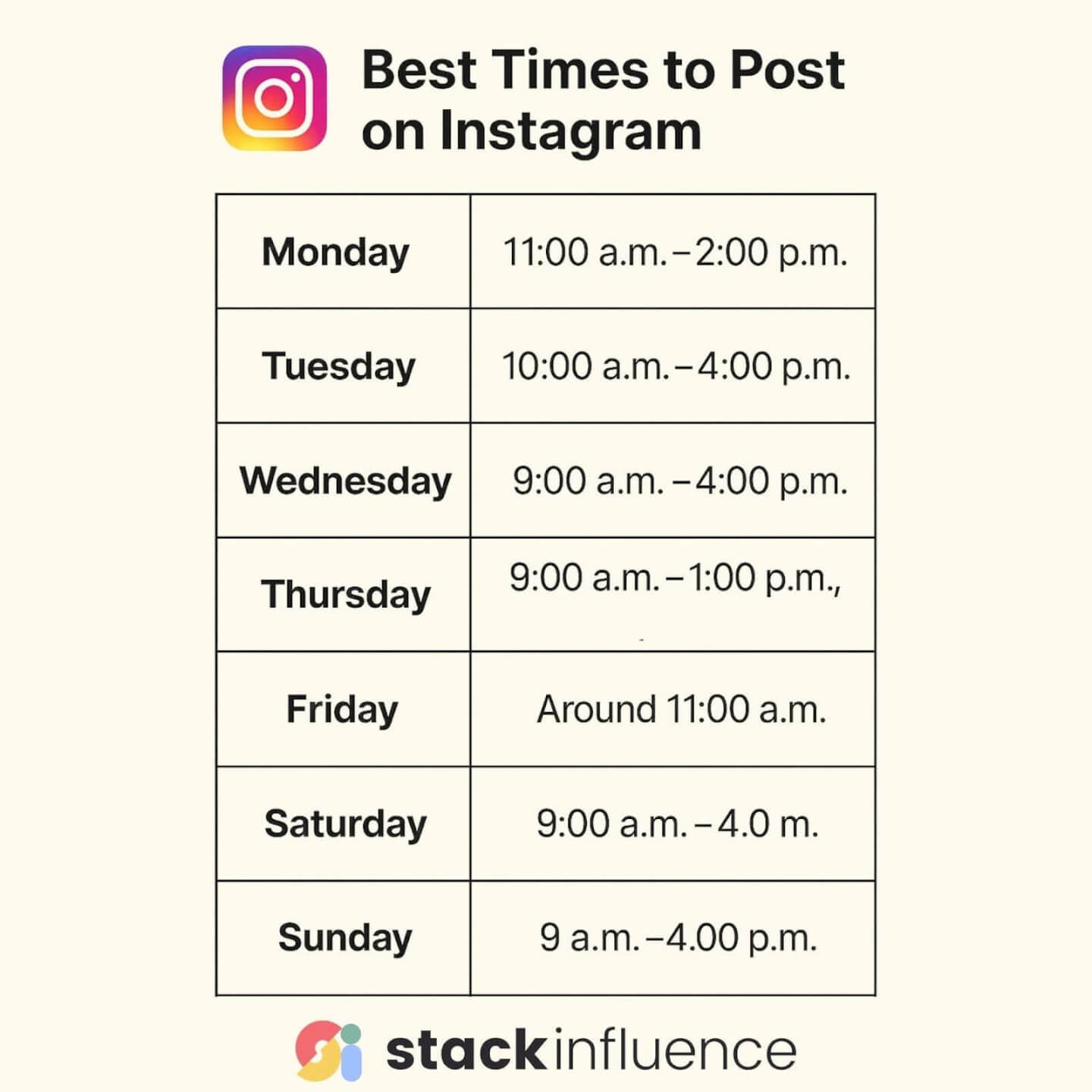
Another factor to consider is your industry or niche. Instagram usage patterns can vary between a fashionista audience and, say, a B2B software audience. Below we highlight some industry-specific trends based on an analysis of over 50,000 Instagram accounts. Use these as a starting point, but always pair with your own insights.
Tuesdays and Thursdays tend to drive high engagement for travel content – perhaps as people plan vacations midweek. Use these windows to show off stunning destinations, travel tips, or influencer takeovers from exotic locations.
In fact, weekends (especially Saturdays) are very effective for fashion content. Consider using Instagram’s shopping features on these days when people are in a buying mood.
Tip: Use Stories for quick polls or challenges in the morning (“Did you do your workout today? Yes/No”) and feed posts in the evening to celebrate community wins or transformations.
Use hashtags like #Foodie or #DinnerInspo and consider posting carousel recipes or short cooking Reels timed with these meal-related windows. And don’t forget late Sunday morning – many are having leisurely brunch and scrolling Instagram at the same time!
Don’t ignore Sunday nights either – people often prep for the week, doing things like grocery ordering or online shopping on Sunday evenings. If you have an e-commerce store, try scheduling a Sunday 7–9 PM post reminding customers of your product (or an expiring weekend promo code). Monitor your click-throughs and tweak from there.
Note: Always adjust for your specific vertical. For instance, a niche B2B e-commerce tool might behave more like the “Digital Marketing” schedule above, whereas a trendy D2C fashion accessory brand will behave more like general retail/fashion patterns.
Knowing the best times to post is half the battle – next comes implementing that knowledge consistently. This is where using the right tools and platforms can make your life easier and your strategy more effective:
pairing great content with the right timing can significantly boost your Instagram performance. Use data as your compass: start with the industry guidelines (midday midweeks are generally safe bets), then fine-tune based on your followers’ behavior. Keep your strategy flexible, because social media trends and user habits evolve. And leverage tools – from scheduling apps to influencer networks like Stack Influence – to execute your timing strategy flawlessly.
By posting when your audience is most receptive, you increase the chances of your content being seen, enjoyed, and acted upon. So go ahead and experiment with those time slots. With a bit of insight and the right timing, you’ll be well on your way to higher engagement, more growth, and possibly that next viral Instagram moment. Happy posting!
TikTok has quickly grown from a dance-video app into a powerful marketing platform for e-commerce. TikTok influencer marketing refers to brands partnering with TikTok content creators (influencers) to promote products in authentic, engaging short videos. It’s become especially valuable for online retailers and Amazon sellers, because TikTok drives discovery and impulse buying at an astonishing rate. With around 2 billion users worldwide, TikTok isn’t just for Gen Z dances – it’s a serious e-commerce engine. In fact, roughly 37% of U.S. TikTok users (about 55 million people) made a purchase through the app in 2023. That means TikTok influencer marketing is fast becoming a must-have strategy to boost product awareness and sales for e-commerce brands of all sizes.
For online sellers (including Amazon sellers), TikTok offers a perfect storm of huge reach, high engagement, and social commerce features. Here’s why TikTok influencer marketing is so impactful for e-commerce:
TikTok’s user base is enormous and highly active. Users open the app ~8 times a day on average and spend over an hour scrolling. TikTok’s algorithm can push content to millions of viewers overnight, giving brands viral exposure potential that’s hard to match elsewhere.
TikTok isn’t just entertainment – it’s a product discovery engine. About 78% of TikTok shoppers say they discover new products through influencer videos. The hashtag #TikTokMadeMeBuyIt (showcasing products people bought because of TikTok) has literally billions of views, driving countless Amazon and online store sales. TikTok even rivals Google for product search among young shoppers – nearly 16% of consumers now start searching for products on TikTok (vs 51% on Amazon).
TikTok content feels more real and unpolished than traditional ads. Influencer posts come off as user-generated content (UGC) – personal reviews, demos, stories – which builds trust. 83% of TikTok users say UGC-style videos make brands seem more authentic. People are more likely to believe “someone like me” on TikTok than a flashy ad.
TikTok boasts the highest social media engagement rates. The platform’s mix of short video, trends, and algorithmic targeting leads to viewers actually watching and interacting with content. For example, TikTok’s average engagement rate (2.5%) is five times higher than Instagram’s. When an influencer’s content resonates, it can get shares, comments, duets, and remixes – amplifying your brand message through viral loops.
In short, TikTok influencer marketing allows e-commerce brands to reach huge audiences through relatable content that inspires purchases. Next, let’s break down how to leverage TikTok influencers effectively, from choosing the right creators to crafting a campaign strategy.
You might think you need a celebrity TikToker with millions of followers to make an impact – but in 2025, micro-influencers (or even nano-influencers) are often the secret weapon for e-commerce brands. Micro-influencers are creators with relatively smaller followings (typically a few thousand to ~50,000 followers) who are deeply trusted by their niche audience. Here’s why “small can be mighty” on TikTok:
Average cost for a sponsored TikTok post by influencer tier Working with a handful of micro influencers can often be cheaper than one post from a single mega-influencer.
Bottom line: Don’t underestimate the power of micro and nano influencers on TikTok. They bring authentic word-of-mouth marketing at a fraction of the cost, which is perfect for e-commerce startups and Amazon sellers on a budget. By leveraging many small creators, you can flood TikTok with genuine chatter about your product and create a snowball effect of awareness.
One reason TikTok influencer campaigns work so well is that they produce user-generated content (UGC) – relatable videos that feel like real customer experiences. UGC is essentially any content about your brand that isn’t created by your brand’s official team (e.g. a customer’s unboxing video, a fan’s tutorial using your product, or an influencer’s “day in the life” featuring your item). In 2025, TikTok UGC has become marketing gold because it delivers what consumers crave: authenticity and trust.
Why is UGC so powerful on TikTok? It feels real, unpolished, and honest. TikTok users often scroll past obvious, polished ads, but they stop for raw, genuine moments. A video shot on an iPhone by a happy customer can often outperform a slick professional ad. In fact, 83% of TikTok users say UGC-style videos make brands seem more authentic, and brands using UGC content see much higher engagement – about 35% higher watch-through rates compared to glossy ads. People are more likely to watch (and trust) content that looks like it came from “people like me.” It’s no surprise that roughly 60% of TikTok’s brand engagement now comes from UGC content.
For e-commerce sellers, running UGC campaigns on TikTok is a no-brainer to build credibility and even spark virality. Influencer marketing on TikTok essentially creates UGC for your brand. Here are some ways to leverage UGC in your TikTok strategy:
Actively invite your buyers to post their experiences. For example, include a small insert in product packages saying “Share a TikTok of you using our product and tag us @YourBrand for a chance to be featured!” You can even suggest a hashtag. Many people love showing off cool finds or joining trends, so give them a nudge.
A post shared by Stack Influence (@stackinfluence)
Create a fun TikTok challenge related to your product and offer an incentive. For instance, a kitchen gadget brand could launch a #HolidayHacks challenge asking users to film a holiday cooking hack using the gadget, with a chance to win a gift card. TikTok’s own branded hashtag challenges have shown that a catchy challenge can generate a flood of UGC and new followers. Contests give users a reason to create content about your product, essentially crowdsourcing your marketing.
Partner with micro-influencers to produce content that looks and feels like organic UGC. In practice, this means giving a few creators your product and having them create TikToks as if they were regular happy customers. (This is exactly what Stack Influence campaigns specialize in – the influencers post content that feels authentic and UGC-like). With permission, you can then repost those videos on your own channels or even run them as TikTok Spark Ads to reach a wider audience. The beauty is that even though it’s a paid collaboration, the content retains that lo-fi, genuine TikTok vibe.
Make your customers and influencers the stars of your TikTok page. Regularly share the best UGC or influencer-created videos on your official account (always credit the creator!). This not only provides social proof to your followers but also encourages more fans to create content in hopes of being featured. You can repurpose TikTok UGC elsewhere too – e.g. share clips on your Instagram Stories, in your email newsletters, or even embed them on product pages as testimonials. Each piece of UGC becomes a mini advertisement that you didn’t have to produce yourself.
A huge example of UGC-driven commerce is the #TikTokMadeMeBuyIt phenomenon. This community hashtag – with billions of views – is full of everyday people showing off products they purchased because they saw them on TikTok. Smart e-commerce brands are hopping on this trend by tagging their own product videos with #TikTokMadeMeBuyIt to get discovered. If an item gains enough traction under this tag, it can snowball into a viral hit where everyone suddenly “needs” it because TikTok made them do it. Many Amazon sellers have seen their products sell out thanks to this kind of viral TikTok exposure. Similarly, the hashtag #AmazonFinds (showcasing cool products available on Amazon) has over 64 billion views on TikTok – a clear sign that TikTok can send hordes of shoppers to Amazon listings. By aligning your campaigns with these organic trends, you tap into a massive social proof engine.
Key takeaway: UGC content on TikTok builds trust and community around your brand. Modern consumers (especially Gen Z and Millennials) want to engage with real stories and peer recommendations, not faceless corporate ads. By integrating UGC and influencer content into your marketing, you make your brand feel like part of the TikTok community conversation. This authenticity translates into higher engagement, more loyalty, and ultimately more sales.
Ready to leverage TikTok influencers and UGC for your own e-commerce brand? Here’s a step-by-step strategy to get your campaign off the ground:
First, decide what you want to achieve. Is your aim to build brand awareness? Drive traffic to your online store or Amazon listing? Boost sales of a specific product? Having clear objectives will guide your campaign. Define key metrics like views, engagement (likes/comments/shares), click-throughs on your link, or use of a promo code. For example, an Amazon seller might track an increase in product page visits or a bump in sales rank during the campaign.
Understand who you want to reach and what content they enjoy. TikTok’s user base skews young (teens and 20s), but it’s broadening. If you sell beauty products for instance, look at what beauty content is trending on TikTok and which creators are leading those conversations. Identify relevant hashtags, trends, or communities (e.g. #CleanTok for cleaning hacks, #BookTok for book lovers, etc.) that align with your brand.
Discover creators who match your niche, have an engaged following, and align with your brand personality. You can use TikTok’s search and hashtag browsing to find creators organically, or leverage influencer marketing platforms/databases. For a deeper analysis, many brands use data scraping to programmatically track trends and identify relevant creators at scale. (Tip: Micro-influencers are often a great starting point – as discussed, they’re cost-effective and authentic. Ensure to vet each influencer’s content quality and audience (look at their comments, engagement rate) rather than just follower count.) Compile a shortlist of influencers who you believe can authentically represent your product.
Spark Ads” feature to turn the influencer’s post into a sponsored ad. Spark Ads allow you to promote an organic TikTok post (with the creator’s permission) as an ad, so it reaches a wider audience beyond the creator’s followers. This can be a powerful way to combine authentic content with paid boosting for more views and conversions.
By following these steps, you’ll develop a repeatable process for tapping into TikTok’s influencer ecosystem. Remember, successful TikTok marketing often involves some experimentation – trying different creators and content styles to see what clicks with your audience. Stay agile and keep a pulse on TikTok trends, and you’ll be able to ride the platform’s momentum to boost your brand’s visibility and sales.
TikTok influencer marketing is no longer an optional experiment for e-commerce brands – it’s a proven strategy to drive awareness, traffic, and sales. In the past few years we’ve seen countless examples of small businesses selling out products thanks to a single TikTok video, and major brands scaling new heights by collaborating with TikTok creators. The formula of authentic content + engaged audience is incredibly potent. By working with micro-influencers and encouraging UGC, even Amazon sellers and new e-commerce startups can generate big buzz without a big budget.
The key is to approach TikTok as a unique culture: be creative, be genuine, and be ready to adapt quickly to trends. Whether it’s a skincare guru giving an unscripted review of your serum, or a group of nano-influencers each showing your gadget in action, the content will feel like a recommendation from a friend – and that is marketing magic. With 61% of marketers now using TikTok for influencer campaigns, those who ignore the platform risk missing out on the next generation of consumers. So consider this your sign to grab a coffee, open up TikTok, and start brainstorming how your brand can collaborate with the vibrant community of TikTok creators. By implementing the strategies and tips outlined above, you’ll be well on your way to launching effective TikTok influencer campaigns that help your e-commerce brand stack influence (pun intended) and thrive in the new age of social commerce.