




A brand asks for your media kit. You have content worth showing, but your follower count does not explain your work, your strongest post is not a typical result, and you have never written down what a collaboration includes.
A useful micro influencer media kit solves those problems before the conversation becomes a negotiation. It gives content creators a concise way to present their audience, demonstrate their skills, and explain what a brand can commission. This guide includes a one-page template, reproducible metric examples, and a practical way to separate your public introduction from private pricing and permissions.
Key Takeaways
- Build a concise summary supported by relevant work samples and dated analytics, rather than putting every detail on one crowded page.
- Label performance numbers with their platform, reporting period, sample size, and calculation method.
- Separate content production, posting to your audience, and permission to reuse content when describing collaboration options.
- Use original sample work before your first brand deal, and identify it honestly rather than implying a paid partnership.
Build Your Micro Influencer Media Kit: The Forwardable Kit Method
A micro influencer media kit is a document or webpage presenting a creator's content focus, audience, performance evidence, collaboration options, and contact information. Shopify's influencer media kit guide identifies these core elements and notes that a kit can be a short PDF or a website page.
Use the Forwardable Kit approach: a concise summary that someone can pass to a colleague, linked evidence for closer evaluation, and a private scope note for commercial discussions. The three layers solve different problems:
- Summary: Put your name, niche, primary platform, relevant audience facts, representative performance, services, and business contact on the opening page.
- Evidence: Link to selected content and dated analytics that support the summary. Identify your role, the measurement window, and whether each example was commissioned, gifted, or self-initiated.
- Scope: Share a tailored proposal covering deliverables, compensation, revisions, timing, and usage permissions once the brand explains the assignment.
A user-generated content (UGC) portfolio is primarily your work collection. Your media kit explains why that work and your audience suit a collaboration; your rate card describes prices for defined services. They can connect without becoming the same document.
Copy-and-Adapt One-Page Template
Replace the bracketed fields with verified information. Delete anything you cannot support instead of filling the space with an estimate.
Creator: [Name or handle]. I create [specific content format] about [topic] for [audience need].
Channels and Region: My primary channel is [platform and profile]. I work in [country or broad service region] and create content in [language].
Audience: [Follower count, platform, and capture date]. Available audience insights show [relevant demographic statistic, exact population measured, and reporting period].
Performance: Across [number] comparable [format] posts published during [date range], the median [metric] was [value], measured [time after publication]. The mean was [value], using the same sample.
Selected Work: My examples include [demonstration], [tutorial], and [product-use story]. Each linked sample identifies my contribution and whether it was commissioned or self-initiated.
Collaboration Options: I offer [content-only production], [a defined social posting package], or [another service actually offered]. Posting and reuse permissions are specified separately.
Next Step: Contact [business email] with the product, requested deliverables, intended placements, deadline, and budget range. A scoped quote follows those details.
Keep the language specific. “I make captioned stationery demonstrations that show how a product works” communicates more than “I create authentic, engaging content for everyone.”
Completion belongs in the evidence layer, too. Stack Influence's creator campaign process connects product selection with social content and post approval through a gifted-first workflow. When showing work from product-seeding campaigns, explain what you completed and distinguish the product arrangement from any separately agreed cash fee.
Which Performance Numbers Should You Include?
Include numbers that help a brand evaluate the work it might buy: audience information for distribution, comparable post results for expected content performance, and verified campaign outcomes when available. Record the source and timeframe beside each number so the reader can understand what it measures.
Start with native reporting. TikTok's creator tools documentation describes analytics including total views, net followers, and likes. Preserve the report's terminology rather than turning every number into a generic “engagement” claim.
For your main platform, a compact performance section can include current followers, relevant audience geography, typical results for the format you offer, and meaningful interactions. Keep Instagram Reels, Stories, TikTok videos, and other formats separate rather than presenting one blended average.
Show Typical Performance Beside the Breakout Post
Use a consistent sample rather than selecting only your highest-performing content. One practical method is to review comparable organic posts from the preceding 90 days and record each post's performance seven days after publication. Those are suggested working windows, not platform requirements; use another documented window when it suits your posting frequency.
Keep paid amplification and materially different campaigns separate. A seven-day total should not be compared with another post's lifetime total, and a paid advertisement should not quietly become part of an organic baseline.
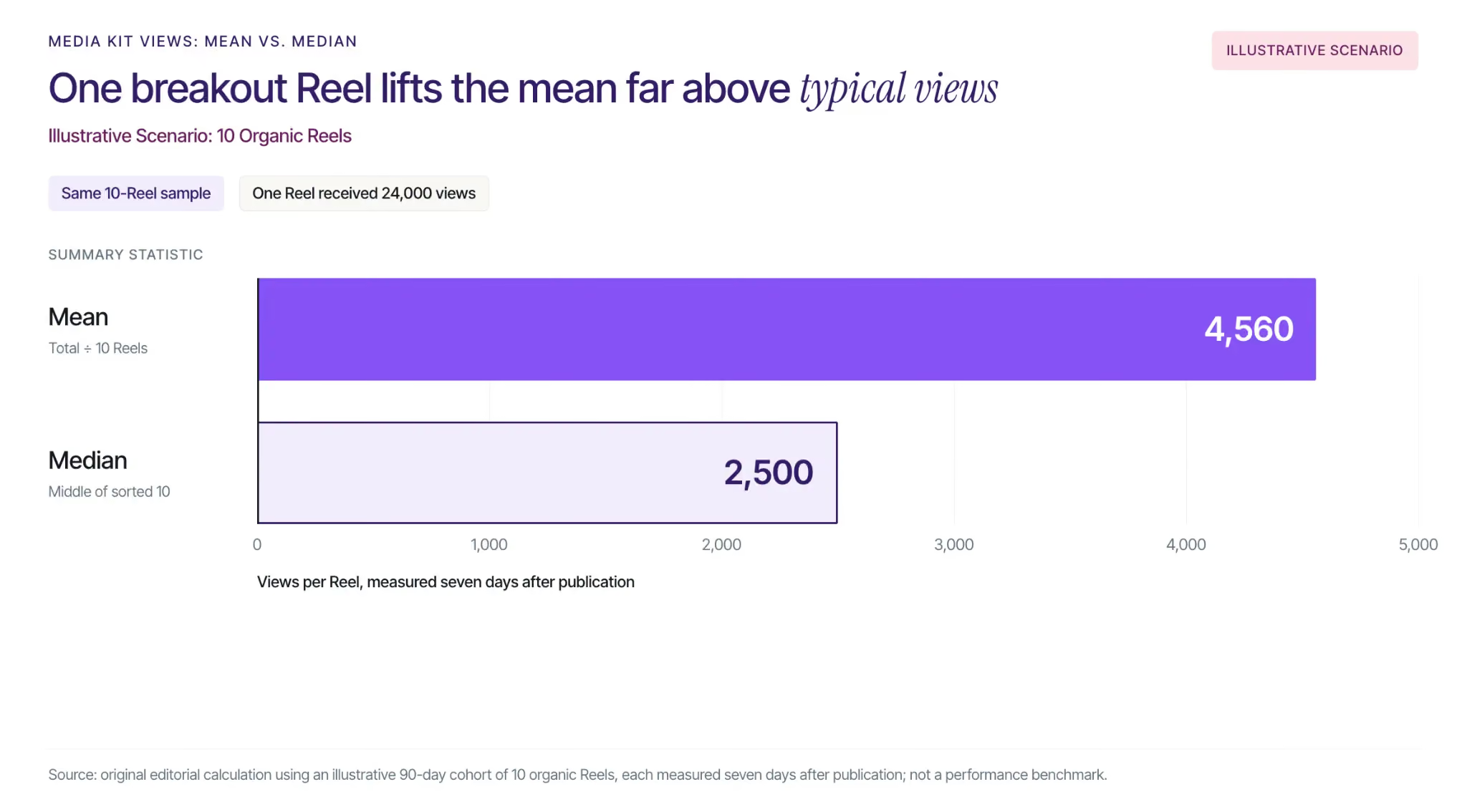
Consider an illustrative scenario with 10 comparable organic Reels published within one 90-day period, each measured seven days after publication. Their views are 1,600, 1,800, 2,000, 2,200, 2,400, 2,600, 2,800, 3,000, 3,200, and 24,000.
The total is 45,600 views, making the mean 4,560 per Reel. The median is 2,500, calculated from the two middle values, 2,400 and 2,600. One breakout Reel raises the mean substantially, even though nine of the ten posts received fewer than 4,560 views.
A transparent media-kit statement would report both the 2,500 median and the 4,560 mean, with the sample and measurement window. Feature the 24,000-view Reel separately as a successful example, not as a promise of normal delivery. These invented numbers demonstrate reporting choices, not an industry benchmark or a Stack Influence result.
Define the Engagement Formula
An engagement rate needs a named numerator and denominator. For a clearly labeled per-post calculation, you could divide likes, comments, saves, and shares by accounts reached, then multiply by 100.
In a separate illustrative example, 240 such interactions divided by 4,000 accounts reached equals 6%. Dividing those same interactions by 12,000 followers instead produces 2%, which answers a different question. Neither calculation measures the percentage of unique people who engaged because one person can generate multiple interactions.
State the formula rather than simply writing “6% engagement.” Do not compare rates across creators or platforms unless their formulas, formats, and reporting windows are comparable.
What Can You Show Before Your First Brand Deal?
Show self-initiated content that demonstrates the service you want a brand to commission. You do not need to invent clients, collect recognizable logos, or complete unpaid custom campaigns to make a useful starter kit.
Choose products you already own and understand. A stationery creator might show how a notebook handles different pens, explain a planner layout, or demonstrate a compact desk setup. Label the work “self-initiated sample, not commissioned by the brand,” and describe the filming, scripting, or editing you completed.
Choose examples for different reasons: one shows clear instruction, another demonstrates editing, and another answers a real product question. Three samples are a manageable starting point, not an eligibility threshold. The beginner UGC creation guide can help you develop those production skills before expanding your offer.
Turn Completed Work Into a Small Case Study
Once you have a collaboration to show, explain the assignment, your deliverable, the result, and the reporting limits. “Created a demonstration video and delivered the agreed revisions” is a different claim from “generated sales.” Use testimonials and client results only with permission, preserving their original context.
For eligible Amazon campaigns, Amazon Attribution provides reporting on activity from non-Amazon marketing, including product-detail-page views and purchases. Ask the brand for approved reporting and identify its measurement window before including a commercial result in your kit.
Do not claim the combined results of a multi-creator campaign as your individual performance. Similarly, a sales increase during a campaign does not establish that your content alone caused it. When conversion data is unavailable, report the work and engagement you can verify instead of estimating revenue.
Should Your Media Kit Include Rates and Usage Rights?
Include rates when the package is sufficiently defined to make the price meaningful; otherwise, describe your services and provide a tailored quote after reviewing the brief. In either case, explain that creating content, publishing it, and licensing additional uses are separate scope decisions.
For micro influencers and nano influencers offering both production and distribution, distinguish a UGC video delivered to a brand from a Reel published to your followers. A production-only buyer needs relevant creative examples. A buyer commissioning distribution also needs audience and post-performance evidence.
Describe the Package Before the Price
A scoped offer might specify one edited 30-second vertical demonstration, one revision round, and delivery after product receipt and brief approval. It should also state whether publication is included and which uses, channels, territories, and duration are covered. This is an example of a scope description, not a recommended price or standard contract.
Discuss paid advertising, raw footage, additional versions, exclusivity, and creator-account advertising permissions explicitly. Do not let “full usage” stand in for terms neither party has defined. A separate guide to pricing UGC content helps connect the quote to production work and rights.
When a brand plans to run UGC ads, clarify who handles advertising permissions and whether you may display the final work in your portfolio. Obtain qualified advice for agreements with broad or unfamiliar rights terms.
Product gifting does not remove disclosure responsibilities. The FTC's influencer disclosure guidance explains that free or discounted products can create a material connection and that disclosures should accompany the endorsement. A disclosure policy in your media kit does not replace disclosure in the actual content.
Keep Audience Claims Narrower Than the Data

Report the audience population the platform actually measured. Your location, your followers' locations, and the locations of people watching a particular video are not interchangeable.
For example, YouTube's audience documentation describes Top geographies in terms of watch time. A percentage taken from that report should not become a claim about the percentage of subscribers living in a country. The documentation also notes that some demographic information may be limited; unavailable data is not evidence of zero audience in that group.
Two Demographic Percentages Do Not Establish Their Overlap
Separate audience breakdowns cannot tell a brand exactly how many people meet both criteria. This matters when a media kit promises a specific combination, such as U.S.-based followers aged 25 to 34.
Suppose a fictional same-date report describes the same 10,000 followers: exactly 7,000 are U.S.-based, or 70%, and exactly 6,000 are aged 25 to 34, or 60%. Assume both breakdowns cover the complete follower population, without missing profiles or rounding.
The overlap could be as low as 3,000 followers, or 30%, because 7,000 + 6,000 minus 10,000 equals 3,000. It could be as high as 6,000, or 60%, because the overlap cannot exceed the smaller group. The two separate percentages do not identify where within that range the actual overlap falls.
Present the two breakdowns separately unless you have a report measuring the combined segment. Even a verified follower segment would not guarantee that everyone in it sees a sponsored post. This illustrative calculation describes a reporting limit, not a creator's observed audience or a reach forecast.
Send a Viewable Kit and Measure the Next Step
Build the summary in a format you can update easily. Canva's media kit maker provides customizable templates, but the design should serve the information rather than squeeze your evidence into decorative boxes.
Keep text selectable, labels readable on a phone, and sample links descriptive. Export a PDF for an attachment-friendly snapshot, and maintain a view-only web version when convenient. Test both outside your own logged-in account so a prospective partner does not encounter an unexpected access request.
Use a business email and broad service region in publicly shareable copies. Keep home addresses, private phone numbers, identification documents, and private schedules out of the kit. Creators under 18 should involve a parent or guardian in reviewing inquiries and agreements, while respecting each platform's age requirements.
Let the Pitch Explain the Match
Send the kit with one relevant idea instead of asking the recipient to invent a collaboration. For a stationery brand, you could propose a demonstration of its refillable notebook and point to a comparable sample that shows your filming style. Adapt the idea to a product you have actually researched, without promising sales or viral reach.
Keep the first message focused on the proposed deliverable and the next decision. The influencer outreach guide covers the wider process of contacting partners, clarifying the offer, and following up.
Track Qualified Conversations, Not Just Replies
Record which kit version you sent, the proposed assignment, the response, and whether the conversation produced a defined brief or agreement. A polite reply is an early indicator; a mutually understood brief is stronger evidence of fit; an agreed project is the commercial outcome.
For a simple monthly review, divide conversations that produced a defined brief by unique relevant brands contacted. Track agreed projects separately, and distinguish paid commissions from product-only arrangements. Compare groups with similar outreach timing and targeting, allowing time for responses.
Those figures evaluate your whole outreach process, not the document alone. A new design followed by more replies does not prove that the design caused the improvement. Review the kit monthly and before important pitches, updating dated metrics, availability, samples, and broken links.
Make Your Next Collaboration Easier to Evaluate
A strong micro influencer media kit makes your work understandable without inflating what you can deliver. The Forwardable Kit summary explains the fit, its evidence supports the claims, and its private scope note turns interest into a clearly defined assignment.
Start with the one-page template, add three relevant samples, and verify every performance statement against its original report. Then send it with one specific collaboration idea so the next conversation can focus on the work, not on reconstructing your credentials.