




Your filming window might be Saturday morning. A client’s revision request might arrive Tuesday afternoon. Building a UGC side business means making those two calendars work together without letting a small project take over your week.
Learning how to build a UGC creator income on the side starts with a repeatable service: make useful product content, agree on its price and permitted uses, deliver within a realistic schedule, and earn another booking. This guide explains how to choose that service, find paid opportunities, protect your time, and measure the money left after the work.
Key Takeaways
- Start with one clearly scoped content offer and a weekly time limit, rather than promising every format or unlimited availability.
- Separate production fees, affiliate commissions, and product compensation when planning spendable income.
- Price all project hours, including pitching, administration, and revisions, not just the time spent filming.
- Repeat bookings become more manageable when the brief, usage rights, feedback deadlines, and payment terms are agreed before production.
How to Build a UGC Creator Income on the Side: The Six-Hour Workweek

Build a UGC side income by selling a defined content deliverable, reserving time to find buyers, and completing projects within a schedule you can sustain. A large following is not the starting requirement for every content-production opportunity.
In this context, paid UGC means commissioned, creator-made product content. As Shopify’s explanation of user-generated content distinguishes, brands can commission assets for their own channels without buying distribution to the creator’s audience. Posting to your followers is a different deliverable, even when one agreement includes both.
That distinction matters when comparing cash work with product seeding. Stack Influence’s creator FAQ describes campaigns compensated with products, with additional monetary compensation available occasionally. Its gifted-first workflow can provide experience completing real brand briefs, but the value of a product or repayment of its purchase price is not an additional production fee.
For a practical starting structure, use the Six-Hour Workweek. This is an illustrative allocation, not a claim that every creator can finish a paid project in six hours:
- Sell, 60 minutes: Research suitable buyers, send specific pitches, and follow up on active conversations.
- Plan, 60 minutes: Confirm the brief, product facts, shot list, permissions, and next production slot.
- Produce, 180 minutes: Film and edit the work that fits your current capacity, leaving room within the block for corrections.
- Deliver, 60 minutes: Check files, submit the agreed versions, handle feedback, and update invoices and records.
During the first few weeks, production time may go toward portfolio samples rather than client work. When a project needs more time, reduce the number of projects or extend the agreed timeline. The framework is a capacity limit, not a reason to sacrifice sleep or other responsibilities.
How Much Can You Earn From Part-Time UGC?
Estimate side income from the projects you can actually book, complete, and collect payment for. A quoted video price does not tell you your monthly earnings or effective hourly return.
There is activity in the market: Collabstr’s 2026 influencer marketing report reports that UGC rose from 15% to 35% of collaborations on its marketplace in 2025. Those figures describe one marketplace’s campaign mix, not a beginner’s earnings or probability of securing work.
For pricing, multiply your chosen hourly floor by all expected project hours, then add direct expenses and an allowance for business overhead. Treat additional usage rights, extra versions, and posting obligations as separate scope decisions. This is a cost check, not a substitute for understanding the buyer’s needs and budget.
Consider an illustrative scenario, not a market rate: one fully paid project earns a $240 production fee and incurs $24 in direct cash costs. That leaves $216 before business overhead and taxes. Holding the fee, costs, deliverable, and rights constant, the return is $54 per hour at four total working hours, $36 at six hours, and $27 at eight hours.
Those hours include allocated outreach, briefing, filming, editing, administration, and revisions. Two unpaid hours can change the economics even when the finished video looks identical.
At the same hypothetical fee and cost, three fully paid projects would leave $648 before overhead and taxes. That is a way to translate a goal into required bookings, not a forecast that three bookings will arrive. A month with no paid projects can still contain substantial work.
Build a Portfolio Around One Repeatable Offer
Choose a product category you can demonstrate accurately with resources you already have. Stationery, everyday bags, or home organization products can support different creative approaches without requiring a new purchase for every sample.
For your first offer, make the buyer’s question specific. A backpack demonstration might show what fits inside, how a compartment opens, or how someone organizes an ordinary day’s essentials. “I make lifestyle content” gives a prospective client less information than a visible example of the problem your content solves.
Practice the fundamentals before expanding your services. Stack Influence’s guide to starting UGC content creation provides background for creators still developing their filming and editing workflow. Begin with a phone you already own, available light, clear audio, and a quiet recording space; identify an actual limitation before buying equipment.
Create three samples with different purposes: a product demonstration, an answer to a buying question, and a product-in-use sequence. Label uncommissioned work as a concept or portfolio sample. Do not suggest that a brand hired you, endorsed your work, or achieved sales results it never reported.
A useful UGC portfolio should make the work easy to assess and explain what the buyer can commission. Include your strongest samples, the deliverables you offer, realistic availability, and a professional contact method.
An example starter offer could cover one 25- to 40-second vertical video, one approved concept, a clean export, a captioned export, and one consolidated round of in-scope revisions. Specify the permitted uses separately. This is an example of a bounded offer, not a required industry package.
Find Buyers Without Turning Outreach Into a Second Job
Look for a content need you can explain before sending a pitch. Suitable prospects might include DTC brands, Shopify businesses, Amazon sellers, or agencies commissioning product content. Verify the actual project rather than assuming every brand partnership has a cash budget.
Research a small, manageable set of prospects during the selling block of your Six-Hour Workweek. Check their product pages and public social accounts, identify a question your content could answer, and contact a relevant person through a business channel. Stack Influence’s guide to finding UGC clients explores the client-acquisition stage in more detail.
A pitch could say:
I create hands-only product demonstrations for everyday bags. For your commuter backpack, I would propose a short packing demonstration that answers a specific question about usable space. My portfolio includes a comparable sample. Are you commissioning paid content, and which placements and usage period would the brief cover?
Send a relevant portfolio example, not a complete custom advertisement made for free. Record the contact, proposed idea, response, and next action. One considered follow-up is a reasonable starting policy; unanswered messages do not justify an endless outreach sequence.
UGC platforms can provide another route to briefs. Billo’s creator documentation explains that its standard content tasks do not require a creator to post on their own social account; posting can be an additional service. It also lists age and country requirements, so check eligibility and the specific task terms before applying.
For every opportunity, establish whether compensation is a fixed production fee, a posting fee, an affiliate commission, products, or a combination. Micro influencers and nano influencers may offer audience distribution alongside production, but those services should not become indistinguishable in your quote.
Verify unfamiliar offers through independently located company contacts. The FTC’s guidance on job scams warns about paying to obtain a job and fake-check arrangements that ask recipients to send money back. A documented product-purchase-and-reimbursement campaign is a different arrangement, but it still requires clear terms and a manageable upfront commitment.
Write the Scope Before You Record
Agree on what you will make, how the brand may use it, and what triggers payment before production begins. A friendly message saying “one quick video” leaves too many decisions unresolved.
Put the number and length of assets, aspect ratios, concept, required claims, deadline, approval contact, revision allowance, and delivery formats in writing. Define whether raw footage, extra openings, photographs, or additional edits are included. When a client requests a new concept after approving the original, agree on any additional fee and time before doing that work.
Separate ownership from permission to use the content. The U.S. Copyright Office’s copyright overview explains that creators generally own original work when it is fixed, while work-made-for-hire arrangements and transfers can change ownership. Do not assume that sending a file settles the rights question.
For licensing, specify the channels, duration, territory, permitted edits, and whether paid advertising is included. Using content on a brand’s social feed is different from running it as an advertisement or advertising through a creator’s account. Stack Influence’s UGC ads guide explains the distinction between producing assets and authorizing their advertising use.
Address exclusivity and any proposed AI-generated use of your voice or likeness explicitly. Keep account passwords private; any advertising permissions should use the platform’s approved authorization workflow.
For direct clients, agree on the invoice schedule, due date, and approval process. For marketplace work, follow its payment and dispute rules. A revision policy should distinguish correcting your failure to meet the agreed brief from accommodating a newly requested deliverable; consider qualified legal review for unfamiliar contracts or broad rights grants.
Make Your Revision Calendar Part of the Offer
Tell clients when you can record changes before they book. “Part-time” describes your availability, but a clear feedback cutoff and next filming slot give the buyer something they can plan around.
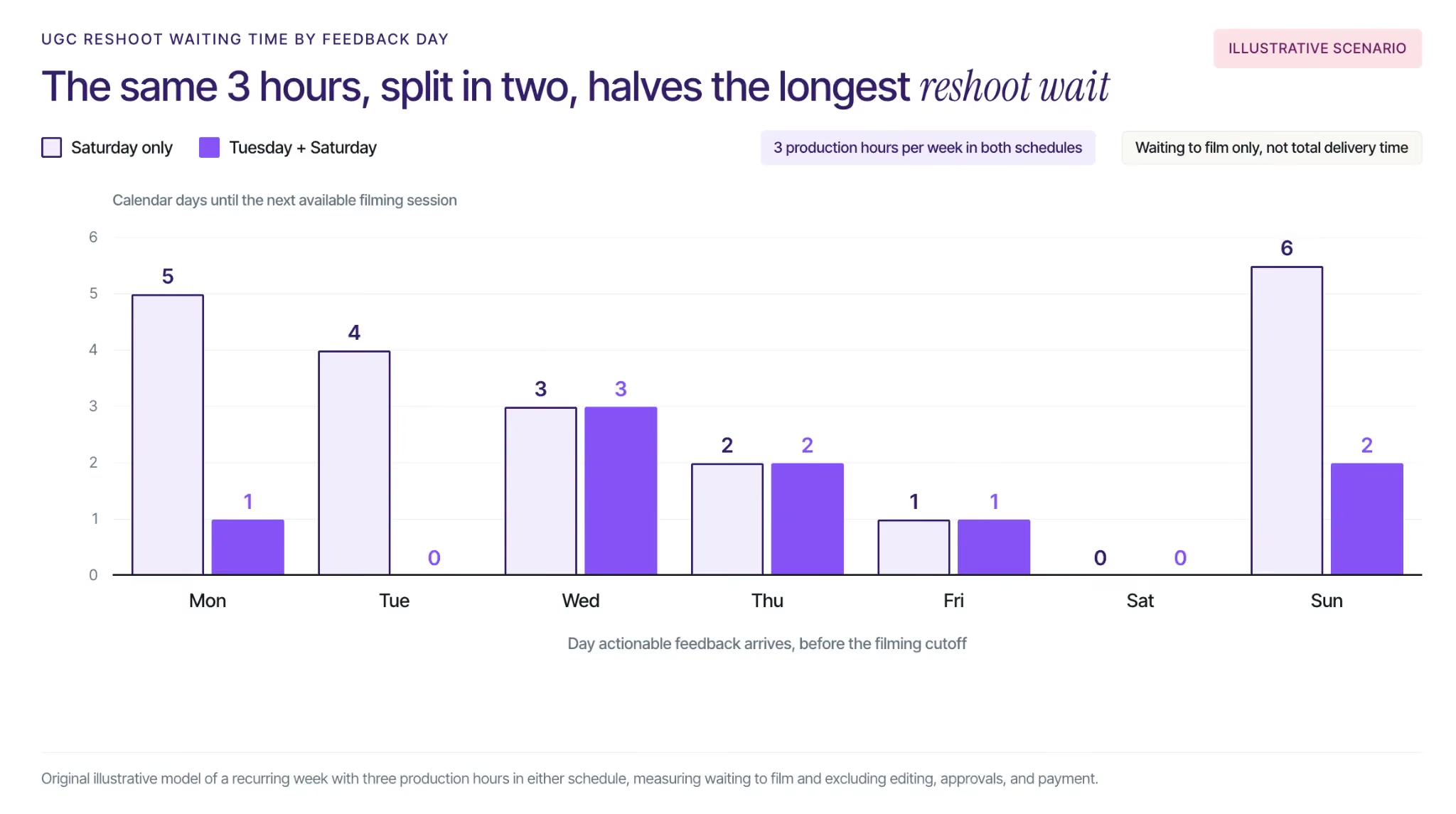
A scheduling illustration shows why the arrangement matters. Compare one three-hour Saturday production session with two 90-minute sessions on Tuesday and Saturday. Both reserve three production hours per week, although splitting sessions can add setup overhead.
Assume feedback arrives before that day’s filming cutoff, the product and other materials are ready, capacity is available, and the reshoot fits a 90-minute session. The model uses the next eligible session and excludes editing, later approvals, payment time, and holidays.
For feedback arriving Monday through Sunday, the Saturday-only schedule produces waits of five, four, three, two, one, zero, and six calendar days, respectively. The Tuesday-and-Saturday schedule produces waits of one, zero, three, two, one, zero, and two days.
The longest modeled wait falls from six days to three without increasing reserved production hours. That does not mean total delivery time is halved, and the split schedule may be impractical for longer shoots. It does show why a second short filming window can be worth more than a vague promise of “fast revisions.”
Put the actual arrangement in the brief: when consolidated feedback is due, when revisions enter your schedule, and how late product delivery or a changed concept affects the deadline. Reserve availability you can honor rather than promising same-day access.
Deliver Reusable Work and Propose a Specific Next Project
Make the handoff useful without silently expanding the license or deliverables. Submit the agreed files with clear names, version numbers, and a short note identifying each asset. Keep an organized copy of the approved brief and final delivery.
Separate technical flexibility from permission to publish. A clean master can make later editing easier, but it does not automatically authorize every destination. Stack Influence’s guide to repurposing UGC across platforms connects file adaptation with the permissions needed for each use.
Check music rights before exporting. TikTok’s Commercial Music Library guidance explains its commercial-use music resource and the need for appropriate rights when using other sounds. Do not assume permission for one platform covers a brand’s website or advertising elsewhere; provide a music-free master when that is part of the agreed handoff.
Keep demonstrations and endorsements truthful. The FTC’s endorsement guidance explains that material relationships, including payment or free products, may need clear disclosure. Do not claim an experience you have not had, and agree on appropriate disclosures for creator-posted promotional content rather than hiding the relationship in an unclear caption.
After delivery, suggest a concrete next need: an answer to another customer question, a seasonal use case, or a new product demonstration. Base a recurring package on the work you can reliably deliver. A monthly agreement should buy defined outputs and availability, not unlimited access to your evenings.
Track Collected Fees, Total Hours, and Repeat Demand
Measure whether the business is producing usable income within your available time. Views can help evaluate a published asset, but they do not replace a paid invoice or reveal your production costs.
During each weekly check-in, record qualified paid briefs, proposals, booked work, completed assets, revision hours, invoices due, and cash received. Separate leading indicators, such as a buyer requesting a quote, from outcomes, such as receiving payment or securing a repeat booking.
Maintain both a cash view and a project view. For completed, fully paid projects, divide the fee remaining after relevant costs by the hours associated with that work. Also track unsuccessful outreach and abandoned-project time so your business-level return does not hide unpaid labor.
Review patterns over several projects before changing the offer. Repeated scope expansion suggests a briefing or pricing problem; strong replies without paid briefs suggest a compensation mismatch. Bookings that cannot fit your calendar indicate a capacity problem, not a reason to keep accepting work.
When clients share performance results, record the asset, placement, reporting window, and limitations. Sales also depend on factors outside the creator’s control, so do not turn a brand’s reported outcome into a promise that your next video will cause the same result.
Keep production fees, commissions, product compensation, reimbursements, and expenses separately identifiable in your records. The IRS Gig Economy Tax Center explains that U.S. gig income can be reportable even without an information form and when compensation is received in goods rather than cash. A qualified tax professional can clarify your filing obligations and the treatment of particular payments; other countries have different rules.
Build a Side Income You Can Keep Delivering
Understanding how to build a UGC creator income on the side means connecting your offer, price, and calendar. Start with work you can demonstrate, confirm what earns cash, and protect the time that makes each project worthwhile.
Use the Six-Hour Workweek as a starting constraint, then adjust it using your actual results. Choose one offer, build the samples that prove it, and seek a clearly scoped paid project. The next milestone is a repeatable booking you can deliver reliably, not a larger promise on your profile.