




Beauty, home organization, everyday carry, kitchen routines, pet accessories, fashion, recreational fitness, and hands-on hobbies offer useful starting points for ecommerce creator partnerships. The strongest match is the creator who can demonstrate why your particular product belongs in a buyer's life, not whichever broad category attracts the most attention.
For ecommerce sellers researching the best niches for micro influencers to get brand deals in 2026, the practical question is where a credible creator, a useful product, and a commercially workable brief meet. This guide connects eight niches with specific campaign ideas, compensation choices, and a method for identifying partnerships worth renewing.
Key Takeaways
- Shortlist specific product-use communities rather than buying generic lifestyle reach.
- Evaluate each niche through buyer relevance, demonstrable product benefits, campaign economics, and a credible second brief.
- Separate product gifting, content-production fees, paid posting, and affiliate commissions when budgeting brand deals.
- Judge campaigns by completed work and independent shopper response, not follower counts or the retail value of gifts alone.
Eight Niches With a Clear Product Demonstration
Start with niches where creators can answer a real buying question using the product. These eight choices are an editorial shortlist for physical-product sellers, not a measured ranking of creator earnings.
A niche combines a recurring subject, a recognizable audience, and a reason that audience might buy. Niche micro influencers concentrate on particular interests; micro and nano describe approximate audience size, not the subject someone covers.
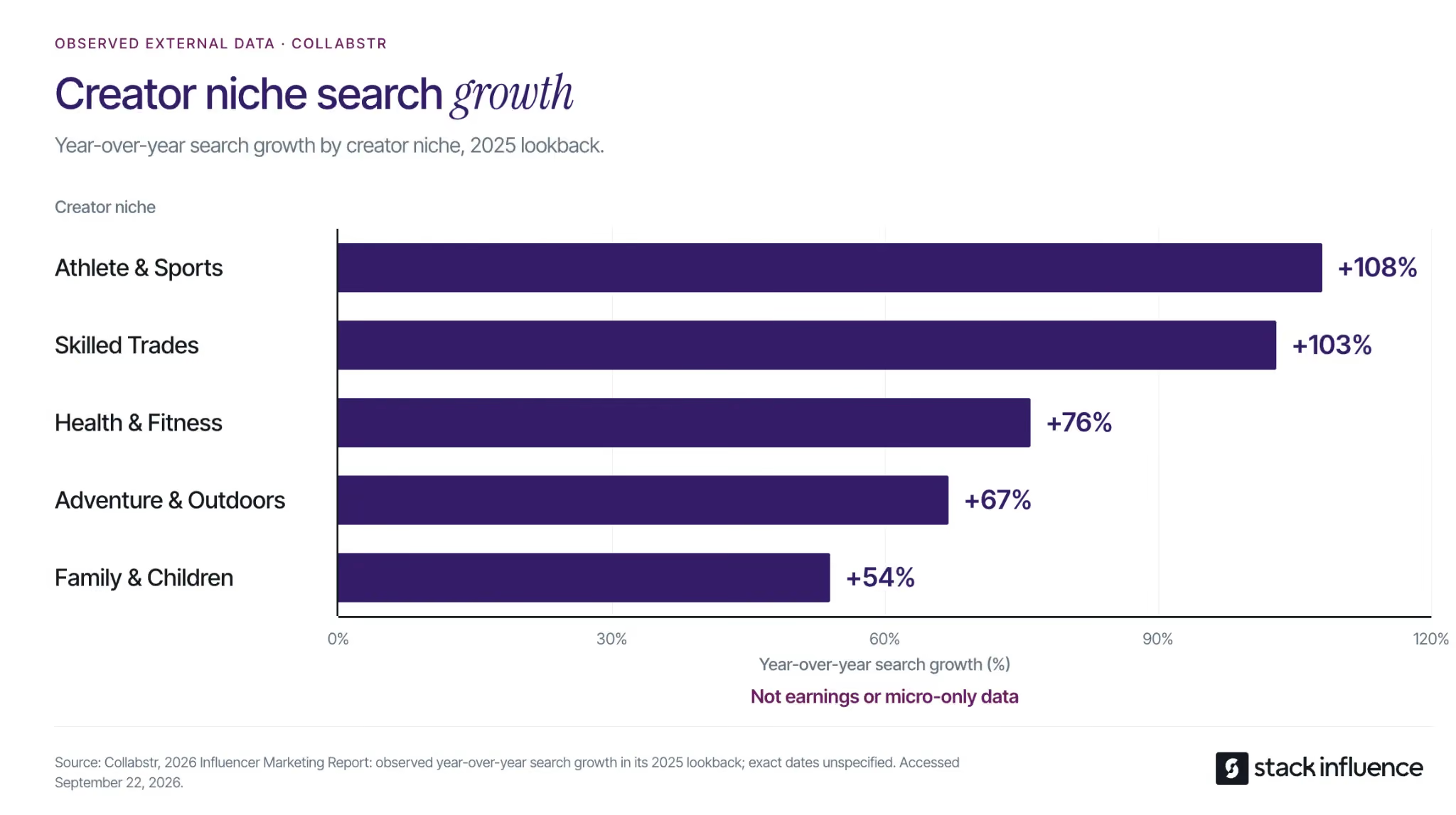
Collabstr's 2026 Influencer Marketing Report reports year-over-year niche-search growth of 108% for Athlete & Sports, 103% for Skilled Trades, 76% for Health & Fitness, 67% for Adventure & Outdoors, and 54% for Family & Children. These figures concern searches on one marketplace in its 2025 lookback, not micro-influencer earnings or completed-deal growth.
Use that distinction when prospecting: rising category interest is a reason to investigate, not a reason to ignore product fit.
1. Beauty and Hair Care
Choose beauty creators whose existing routines give your product a clear role. Useful subniches include hair-care organization, everyday personal-care routines, and travel-friendly beauty essentials.
A strong brief might ask a creator to demonstrate packaging, texture, application steps, or how a product fits into an established routine. That provides more decision-making information than a general endorsement delivered beside unopened packaging.
For sellers, product-based collaborations can introduce the item, while separately commissioned UGC video can answer recurring shopper questions. A follow-up assignment might address storage, refill instructions, or a different use occasion. Keep claims tied to substantiated product information and the creator's genuine experience, without appearance pressure or promises of treatment results.
2. Home Organization and Refillable Essentials
Home organization is worth considering when a product solves a visible space or storage problem. Narrow the brief to an actual setting, such as a compact pantry, shared bathroom, entryway, or small workspace.
Ask creators to show dimensions, capacity, setup, and what fits. A useful second brief can revisit the same product after regular use, rather than repeating the original unboxing.
Refillable essentials offer another concrete demonstration opportunity, but a refill mechanism does not substantiate every environmental claim. The FTC's Green Guides summary cautions against broad, unqualified environmental-benefit claims. Show the specific refill system and supported benefits instead of asking creators to call a product universally eco-friendly.
3. Everyday Carry and Workspace Accessories
Everyday carry connects bags, pouches, organizers, and compatible accessories with recognizable routines. Focus on a specific audience, such as commuters, students, or people moving between home and shared workspaces.
Stack Influence's three-month Targus new-product campaign included 120 creator promotions. That provides a concrete example of creator activation in a durable-goods category, not evidence of what individual creators earned.
A useful brief might show what fits inside a bag, how compartments separate items, or how an organizer handles a real daily setup. Confirm dimensions and device compatibility before sending products. For repeat work, change the buying question: daily packing, organization after regular use, or preparing the same bag for a different ordinary occasion.
4. Food and Kitchen Routines
Food and kitchen creators are useful prospects when your product can become part of a repeatable task. Consider lunch-packing routines, pantry organization, home baking, or practical kitchen storage rather than a broad food-and-lifestyle label.
Commission a demonstration with a clear purpose: show portion-container capacity, compare storage configurations, or incorporate an ingredient into a clearly explained recipe. A follow-up brief should add another useful application, not simply repeat the brand name.
For grocery sellers, resolve delivery conditions, shelf life, ingredient information, and the creator's willingness to use the product before committing. For kitchen accessories, show actual dimensions and ordinary use. Keep recipe enjoyment and convenience separate from unsupported nutritional or medical promises.
5. Pet Accessories and Household Routines
Pet partnerships should connect an owner's routine with an appropriate product, not rely on an animal's popularity alone. Possible subniches include pet-supply organization, everyday walking accessories, and washable household accessories for pet-owning homes.
The American Pet Products Association's industry statistics report 95 million U.S. pet-owning households from the 2025 National Pet Owners Survey cited in its 2026 industry report. That establishes a broad customer context, not the effectiveness of a particular creator campaign.
For your brief, specify the relevant animal size, product dimensions, and intended use. Show the product without manufacturing distress or forcing an interaction. Repeat collaborations should answer another owner question, such as cleaning, storage, or everyday convenience.
6. Fashion Styling and Accessories
Fashion partnerships become more specific when the creator serves a recurring occasion: repeat-wear work outfits, practical layering, functional accessories, or clothing care. That gives sellers a clearer brief than asking someone to make a product look desirable.
Ask for accurate garment measurements, fabric details, pocket demonstrations, care information, or several ways to use an accessory. Focus on comfort, self-expression, and usefulness rather than body comparisons.
Plan size confirmation and exchanges before shipping. A creator who cannot comfortably use the supplied item cannot demonstrate it credibly. Follow-up work might explore another occasion or styling combination, but exclusivity should be scoped carefully so a small assignment does not unnecessarily restrict the creator's wider work.
7. Recreational Fitness and Outdoor Basics
For physical-product sellers, narrow fitness and outdoor content to ordinary routines and useful gear. Walking communities, casual recreation, and community-sports organization can provide clear settings for bottles, towels, bags, and storage accessories.
A suitable brief might demonstrate how a bag organizes everyday equipment or how a bottle fits into an existing carrying setup. The commercial value lies in showing practical details, not promising changes to someone's body or athletic performance.
Choose creators who already participate in the relevant activity. Do not ask them to perform risky challenges or make health claims to dramatize an otherwise straightforward product. A second brief should solve another practical equipment or organization question.
8. Hobbies, Crafts, and Stationery
Hands-on hobbies are worth shortlisting when product knowledge improves the demonstration. Consider book journaling, paper crafts, crochet-project organization, or stationery reviews with a recognizable audience and repeatable content format.
A useful assignment can show what a kit contains, how materials are organized, or how an item supports an ongoing project. The creator's explanation should make the product easier to evaluate without turning the content into a scripted sales pitch.
Budget for preparation and production time, not just the value of the materials. An inexpensive craft product can still require substantial creative labor. Repeat briefs might cover project storage, replenishment, or another application, provided the new assignment adds information rather than reproducing the first tutorial.
Use the Second-Brief Test Before Choosing a Niche
Choose a niche you can brief twice without repeating yourself. The Second-Brief Test is an editorial decision tool for checking whether a partnership has substance beyond an initial product introduction.
Evaluate four components:
- Buyer Occasion: Name the person, situation, and purchase question the creator will address.
- Demonstration Access: Confirm that the creator can use the product credibly in the relevant setting and show its important details.
- Economic Room: Include product, fulfillment, coordination, compensation, and requested rights before deciding the campaign is affordable.
- Renewal Reason: Write a second useful assignment that addresses another question or use occasion.
For example, a desk-organizer seller could commission a compact-workspace setup first and an after-use organization update second. Those are different buying questions within one coherent niche.
Failure on a component tells you what to change. An unclear buyer occasion requires a narrower audience; weak demonstration access requires a different creator or brief; insufficient economic room requires a revised budget or scope. No credible renewal reason suggests a one-off asset rather than an ongoing ambassador relationship.
Which Brand-Deal Format Fits the Niche?
Choose the deal format according to what the seller is buying: a product experience, finished content, audience distribution, or qualifying sales. A promising niche does not make those deliverables interchangeable.
With product seeding, distinguish a no-obligation gift from an agreed product-for-content collaboration. State any posting requirements and compensation conditions before participation; product reimbursement is not an additional creative fee.
For paid posting, define the content and its publication on the creator's account. For creator-produced UGC, define the assets the brand receives and the permitted uses, whether or not the creator also publishes them. Production and audience distribution can be purchased together, but they remain separate parts of the scope.
Affiliate arrangements compensate qualifying sales under agreed terms. Shopify Collabs for merchants supports creator invitations, gifts or discount codes, affiliate-sales tracking, and creator payments. Treat an affiliate offer as a commission opportunity, not a guaranteed substitute for a content-production fee.
Product Costs Can Change Which Deals Are Viable
The niche with the most visually impressive product does not necessarily leave the most room for creator compensation. Compare the complete campaign budget before deciding which partnerships you can responsibly commission.
Consider an illustrative scenario, not market pricing or Stack Influence campaign data. Assume a $200 budget per partnership and $30 for coordination and editing, with no paid-media spend, affiliate commission, exclusivity, additional usage-rights charge, or tax included.
Assume product and fulfillment cost $20 for a kitchen accessory, $60 for a craft kit, and $120 for a bulky home organizer. The resulting cash available for the creator fee is $150, $110, and $50, respectively.
The calculation is total budget minus product and fulfillment costs minus coordination and editing. Those remaining amounts are budget ceilings, not recommended rates or evidence of fair compensation; additional expenses would reduce them further.
When a creator's quote exceeds the available budget, change the scope, increase the budget, or reconsider the proposed assignment. Do not present a product's retail value as cash payment. A clear approach to negotiating brand deals should separate the fee, expenses, deliverables, revision allowance, and usage permissions.
Turn a Niche Shortlist Into a Testable Campaign

Start with a focused comparison rather than a large, mixed-category launch. For example, an organizer seller could test compact-workspace creators against home-entryway creators using the same product, offer, deliverable requirements, and measurement period.
Request recent, relevant work and audience information through an influencer media kit. Review several comparable posts rather than one viral result, and ask for platform analytics where audience location or viewing patterns matter. A small pilot can identify execution problems, but it cannot establish a reliable niche-wide conversion benchmark.
Your invitation should explain why the creator's existing work matches the product, the buying question to address, the deliverable, the schedule, and the compensation. Agree on revisions and permissions before production; repurposing UGC across platforms requires a plan for the actual uses you intend to make.
For U.S.-facing campaigns, the FTC's endorsement guidance explains when gifts, payments, and other material connections require clear disclosure. Put required video disclosures in the video itself, using visual and audible disclosure when the endorsement is both visual and audible. The endorsement must reflect genuine experience rather than a required positive opinion.
Stack Influence's automated product-seeding workflow connects gifted-first campaigns with vetted creator participation, coordination, UGC generation, and completed-post accountability. For sellers, the practical use is turning a focused product brief into a managed campaign without treating every creator interaction as a separate project. Completed-post accountability concerns delivery, not guaranteed sales or creator earnings.
How Should Sellers Measure Niche Performance?
Compare niches using completed deliverables, qualified shopper response, and campaign economics within the same defined period. Views can indicate exposure, but they do not show whether the content was usable or the resulting orders were profitable.
Track three connected layers:
- Delivery: Agreed versus completed posts, usable assets, deadlines, and revision workload.
- Buyer Response: Relevant product questions, tracked visits, product-page activity, and purchases where attribution is available.
- Economics: Complete campaign costs, revenue from independent shoppers, returns, and the contribution remaining after product and selling costs.
For eligible Amazon sellers, Amazon Attribution measures non-Amazon marketing activity and reports metrics including clicks, detail-page views, purchases, and sales within a 14-day attribution window. Use distinct tags for the creator or tactic you need to compare, and allow the reporting window to mature before judging results.
For Shopify influencer marketing, assign creator-specific links or codes and reconcile affiliate reporting with store orders. Document the attribution rules rather than assuming different systems credit the same purchase in the same way. Avoid adding overlapping platform reports together as though every credited order were unique.
Keep creator purchases funded or reimbursed by the brand separate from independent audience purchases. The former are campaign participation, not evidence that unrelated shoppers were persuaded to buy. Include their net economic cost in a clearly defined customer acquisition cost calculation when evaluating the acquisition program.
Review delivery as content arrives, evaluate sales after the applicable attribution window, and revisit returns and repeat purchasing when those outcomes have had time to develop. Report product-seeding costs, content-production value, and shopper acquisition separately where they answer different questions. A before-and-after increase is not proof of causation, especially when pricing, promotions, inventory, or advertising changed at the same time.
Choose a Niche You Can Brief Again
The best niches for micro influencers to get brand deals in 2026 connect a recognizable buying situation with a creator who can demonstrate the product credibly. Broad popularity is useful context, but it cannot replace a relevant audience, workable compensation, or a second useful assignment.
Apply the Second-Brief Test to one product and two adjacent creator communities. Explore a focused Stack Influence product-seeding campaign to turn that shortlist into completed content, then use delivery quality and independent shopper response to decide where to expand.