



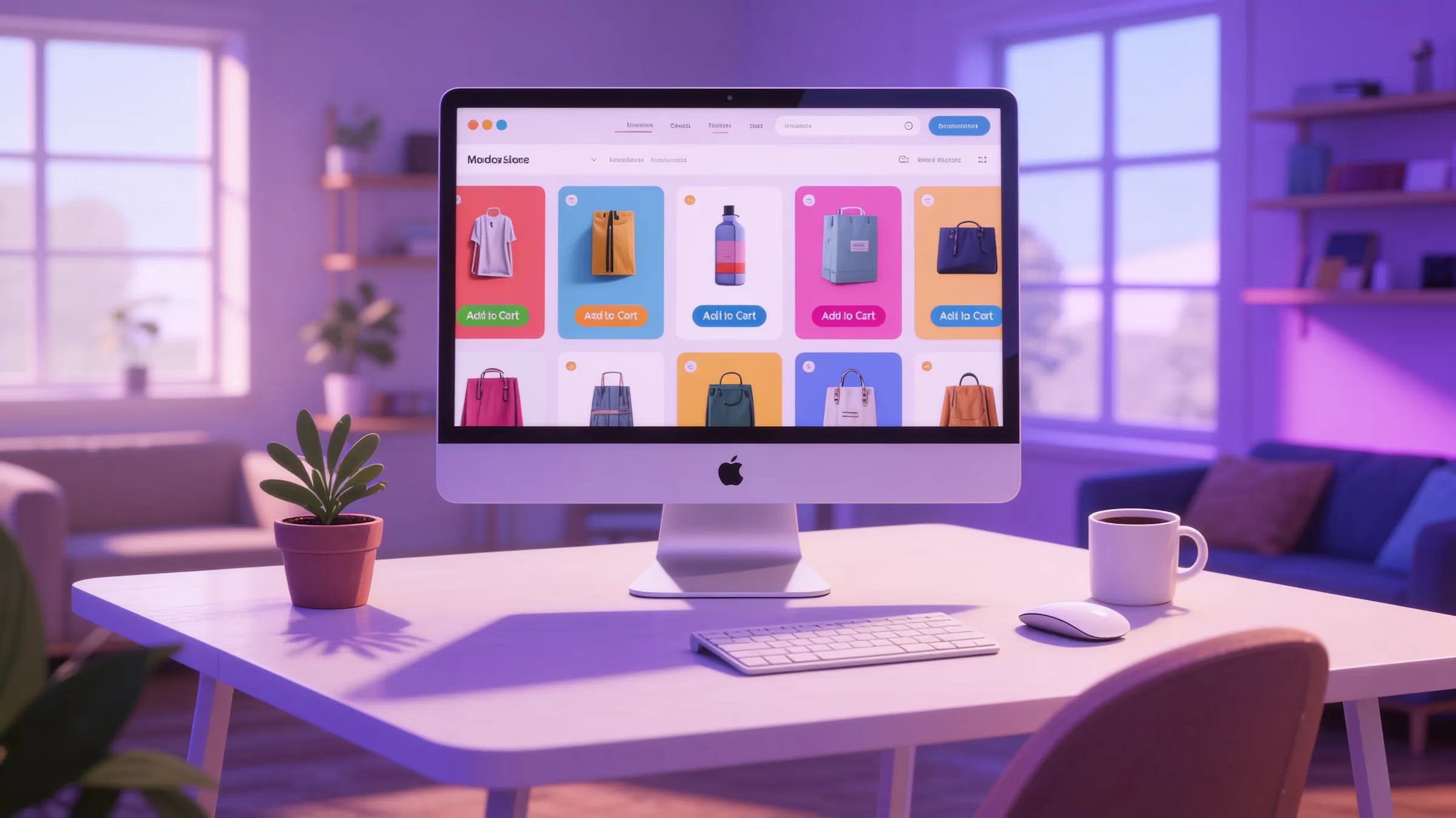
If you have spent any time on social media lately, you have almost certainly heard a creator say "everything is linked in my Amazon storefront." That phrase has become one of the most recognizable calls to action in the entire creator economy. But what is an Amazon storefront, exactly, and why does it matter so much to both eCommerce sellers and content creators? An Amazon storefront is a personalized, branded page on Amazon where approved influencers curate and showcase their favorite products for followers to browse and purchase directly.
Key Takeaways
- For creators: An Amazon storefront is a free, custom page within the Amazon Influencer Program that lets you organize product recommendations and earn affiliate commissions on qualifying purchases.
- For brands: Amazon storefronts are a performance-driven channel where influencer-curated content drives high-intent shoppers directly to your listings inside the world's largest e-commerce marketplace.
- For both: Storefronts function as always-on, shoppable content hubs that continue generating traffic and sales long after a single piece of sponsored content disappears from a feed.
- Scale opportunity: The Amazon Influencer Program now accepts creators at every tier, from nano influencers with a few thousand followers to macro brand ambassadors with millions.
What Is an Amazon Storefront?
An Amazon storefront, in the context of the Amazon Influencer Program, is a dedicated, branded page hosted at a custom URL (typically amazon.com/shop/yourname) where social media creators curate organized collections of products they personally recommend. It functions as a mini e-commerce destination inside Amazon's own ecosystem, complete with a creator's profile photo, bio, themed product lists, shoppable videos, and live-stream replays. According to Creator Hero's Amazon Influencer Storefront guide, over 94% of consumers who've made influencer-inspired purchases have done so through Amazon, emphasizing the platform's dominance as a trusted shopping destination.
Unlike the older Amazon Associates Program, which requires bloggers or publishers to generate individual product links for a website, the Amazon Influencer Program is designed specifically for social media creators. It trades scattered affiliate links for one clean, centralized destination. The result is a more cohesive shopping experience for followers and a more powerful conversion tool for both the creator and the Amazon sellers whose products appear in those curated lists.
How Does the Amazon Influencer Program Work?
What does a creator need to apply?
To create an Amazon storefront, a creator must first apply to and be accepted into the Amazon Influencer Program. Amazon evaluates applications based on social media presence across YouTube, Instagram, TikTok, or Facebook, looking at follower count, engagement quality, and content consistency rather than raw numbers alone. According to Neal Schaffer's Amazon influencer store guide, Amazon's program is built for creators with engaged audiences of just 1,000 to 10,000, meaning you don't need millions of followers to qualify.
This low barrier to entry is one of the most significant developments in the creator economy over the past few years. Micro influencers and nano influencers with highly engaged niche audiences are now regularly approved, shifting the Amazon storefront model away from celebrity exclusivity and toward authentic community-driven commerce. This trend directly aligns with what research on niche micro-influencers consistently shows: smaller creators often outperform larger ones in purchase intent and conversion because their audiences trust them more deeply.
Once approved, a creator receives their custom URL and gains access to Amazon's creator dashboard, where they can build curated product lists, upload shoppable videos, manage their Idea Lists, and monitor performance analytics. The storefront becomes a living, searchable asset inside Amazon's platform that drives passive income long after it is first built.
The Creator-Side Perspective: How Amazon Storefronts Generate Income
How do creators actually earn money from storefronts?
For content creators, an Amazon storefront is primarily a monetization vehicle operating on an affiliate commission model. When a follower clicks through to a creator's storefront and completes a qualifying purchase, Amazon pays the creator a commission that typically ranges from 1% to 20% depending on the product category. The commission window is tied to a 24-hour cookie, but purchases can still be attributed if a product is added to a shopper's cart within that window and purchased within 90 days.
Beyond standard affiliate commissions, storefronts open additional revenue streams. Creators can participate in Amazon Live, hosting real-time product demos that appear directly on Amazon's platform and on their storefront as replay videos. They can also join Creator Connections, Amazon's internal brand-collaboration marketplace, to partner directly with DTC brands and Amazon sellers on paid sponsored content campaigns. This expands the earning model from passive commission income into active brand partnerships and creator partnerships with full UGC deliverables.
For creators looking to diversify beyond a single income stream, the storefront model is a strategic foundation. Pairing it with off-platform content like Instagram Reels, TikTok videos, and YouTube reviews multiplies storefront traffic significantly. If you are exploring how to build those off-platform pipelines, understanding how to land an Instagram sponsorship is a useful next step for layering brand deal income on top of affiliate commissions.
The best-performing storefronts are organized into themed collections rather than flat product dumps. A creator who organizes products into lists like "My Morning Skincare Routine," "Home Office Essentials," or "Gym Bag Staples" provides a browsing experience that increases average order value because followers discover and add related items they might not have searched for independently.
Why Amazon Storefronts Matter for Brands
Should Amazon sellers care about influencer storefronts?
From a brand perspective, Amazon storefronts represent one of the highest-converting touchpoints available in the entire influencer marketing landscape. A shopper who arrives at a product listing through an influencer's storefront is already inside Amazon's purchase ecosystem, already has trust in the creator recommending the product, and faces none of the friction associated with clicking away from social media to an unfamiliar DTC website. According to Titan Network's case data, third-party affiliate networks average 2-4% conversion rates while Amazon storefronts hit 8-13% because buyers stay within the Amazon ecosystem they already trust.
For Amazon sellers and DTC brands expanding into marketplace channels, this conversion advantage is significant. Influencer storefronts also generate a form of always-on UGC because the product recommendations, review videos, and curated lists remain discoverable through Amazon's internal search long after the initial campaign ends. This means a single successful product seeding campaign can continue driving organic discovery and sales for months. Brands interested in understanding how product seeding connects to storefront performance should read about how influencer seeding works for eCommerce before designing their outreach strategy.
How Brands Can Leverage Amazon Storefronts
What is the best strategy for brands working with Amazon influencers?
The most effective brand approach combines product seeding at scale with a deliberate focus on micro influencers and nano influencers whose audiences align closely with the brand's ideal customer. Large follower counts are less important than niche credibility and genuine engagement. According to Sprout Social's 2026 creator storefront analysis, storefronts make it easier to activate micro-creators at scale and widen a brand's creator network.
Brands that want to run Amazon storefront campaigns at scale without managing hundreds of individual creator relationships individually often turn to dedicated platforms. Stack Influence is built specifically for this use case, giving Amazon sellers and DTC brands access to 11 million or more vetted micro-influencers, fully managed product seeding campaigns, performance-based pricing, and deep Amazon-specific expertise that general influencer marketing platforms do not provide. Their automated product seeding platform streamlines the fulfillment and tracking of creator campaigns so brands can run them at volume without drowning in logistics. Brands looking to understand what full-service Amazon-focused influencer marketing looks like in practice can explore their Amazon marketplace solutions.
Brands should also consider what happens after the storefront content goes live. Shoppable videos that appear on Amazon product detail pages, in Amazon Live replays, and within search results function as persistent social proof that influences buyers at the exact moment of purchase. This is a fundamentally different value proposition from a standard sponsored Instagram post, which disappears from algorithmic feeds within 24 to 48 hours.
How Amazon Storefronts Fit Into the Creator Economy
Where do Amazon storefronts sit in the broader influencer marketing landscape?
Amazon storefronts are becoming a cornerstone feature of the modern creator economy rather than a niche affiliate tool. According to Influencer Marketing Hub's Amazon Creator Hub guide, Amazon has invested heavily in creator ecosystems in response to rising competition from TikTok Shop and Walmart Creator, rolling out new analytics panels, upgraded brand-match tools, and storefront customization. This signals that storefronts will only become more feature-rich and more integral to both creator monetization and brand distribution strategies going forward.
For creators, this means the Amazon storefront is worth treating as a core content platform rather than a secondary link dump. Publishing consistent how-to videos, product comparison reviews, and niche-specific "favorites" lists directly on Amazon improves a creator's discoverability within Amazon search itself. Creators who publish natively on Amazon benefit from stronger internal distribution compared to those who only drive external traffic from social media. Understanding the broader micro-influencers and UGC landscape in e-commerce helps creators position their storefront content within a winning full-funnel strategy.
For brands, the expansion of Amazon's creator tools means that influencer marketing is no longer just a top-of-funnel awareness exercise. It is now a bottom-of-funnel conversion channel capable of delivering measurable ROI in clicks, add-to-carts, and completed purchases, all tracked within Amazon's own attribution system.
Best Practices for Building a High-Performing Amazon Storefront
Whether you are a content creator building your first storefront or a brand partnering with Amazon influencers, these practices separate high-performing storefronts from low-performing ones:
- Organize products into themed collections: Named lists like "Morning Routine" or "Home Gym Setup" increase browse depth and average order value.
- Prioritize shoppable video content: Video reviews and demos on product detail pages drive conversion by addressing buyer hesitation at the point of purchase.
- Stay niche-focused: Amazon's internal recommendation engine rewards consistent thematic signals; a focused storefront outperforms a catch-all product dump.
- Update regularly: Rotating product lists to reflect seasonal trends, new launches, and current promotions keeps the storefront discoverable in Amazon search.
- Pair storefront promotion with social content: Driving followers from Instagram Reels, TikTok videos, and YouTube reviews to the storefront URL compounds traffic and commission earnings.
If you are a brand ready to run influencer campaigns at scale, the most efficient path is a platform that manages creator discovery, product seeding fulfillment, and performance tracking in one place. You can book a demo to explore how that infrastructure works for Amazon sellers at any stage of growth.
Conclusion
Understanding what is an Amazon storefront is essential for any eCommerce brand or content creator competing in today's marketplace-driven economy. For creators, it is a powerful passive income engine and a central hub for authentic product recommendations that build long-term audience trust. For brands, it is a high-converting, always-on distribution channel that turns influencer relationships into measurable, attributable sales inside the world's largest e-commerce platform. Whether you are just entering the Amazon Influencer Program as a creator or building your first influencer marketing strategy as an Amazon seller, the storefront model offers a unique combination of social credibility and purchase-ready audiences that very few other channels can replicate.
Frequently Asked Questions
What is an Amazon storefront and who can create one?
An Amazon storefront is a personalized page on Amazon where approved influencers curate and showcase product recommendations under a custom URL, typically formatted as amazon.com/shop/yourname. Creators must apply to the Amazon Influencer Program and be accepted based on social media follower count, engagement rate, and content quality. The program is open to creators on YouTube, Instagram, TikTok, and Facebook, including micro and nano influencers with as few as 1,000 engaged followers.
How do Amazon influencers make money from their storefronts?
Amazon influencers earn affiliate commissions ranging from 1% to 20% on qualifying purchases made through their storefront links, with the exact rate depending on the product category. Commissions are tracked via a 24-hour cookie window, with purchases attributed if the item is added to a cart within that window and bought within 90 days. Creators can supplement commission income with direct brand deals through Amazon's Creator Connections marketplace or through off-platform sponsored content campaigns.
Why should Amazon sellers care about influencer storefronts?
Amazon storefronts drive high-intent traffic directly to product listings inside a marketplace where buyers are already ready to purchase, resulting in significantly higher conversion rates than typical social media referral traffic. Shoppable videos and curated lists on storefronts also appear on product detail pages and in Amazon search results, functioning as persistent social proof that influences buyers at the moment of decision. For brands, this creates a performance-driven influencer channel with measurable ROI in clicks, conversions, and revenue.
What is the difference between an Amazon storefront and an Amazon Associate link?
An Amazon Associate link is a single affiliate link pointing to one specific product, typically shared on blogs, websites, or newsletters. An Amazon storefront is an entire branded destination within Amazon's ecosystem where influencers organize themed product collections, upload shoppable videos, host Amazon Live sessions, and build a subscriber-style following. Storefronts provide a more immersive and discoverable experience that drives higher average order values than individual product links.
Can micro-influencers get approved for an Amazon storefront?
Yes, micro-influencers and even nano-influencers can qualify for the Amazon Influencer Program and create their own storefront. Amazon evaluates applications based on authentic community engagement, not just raw follower count, and creators with as few as 1,000 highly engaged followers have been accepted. The program's evolution toward smaller creators reflects the broader industry recognition that niche authenticity often outperforms celebrity reach in driving actual purchase decisions.