



Getting an Instagram sponsorship used to feel like waiting to be discovered. Brands would scroll through feeds, hand-pick mega-celebrities, and leave everyone else wondering how to get in the room. That dynamic has shifted dramatically. Brands now actively seek out smaller, highly engaged creators because authentic content converts better than polished celebrity posts ever did. Whether you have 2,000 followers or 200,000, this guide walks you through exactly how to position yourself, pitch confidently, and negotiate sponsorship deals that reflect your real value as a creator. We will cover the PITCH framework, what brands actually measure, and the mistakes that quietly kill deals before they even start.
Key Takeaways
- Engagement rate matters more than follower count when brands evaluate creators for sponsorship deals, with micro and nano influencers often outperforming larger accounts.
- A clear media kit, a defined niche, and a proactive outreach strategy are the three non-negotiables for landing consistent brand partnerships.
- Understanding how brands track ROI from influencer campaigns gives you a major negotiating edge because you can speak their language.
- Product seeding arrangements can be a legitimate pathway into paid sponsorships, but only when managed with clear expectations on both sides.
- Knowing what changed in creator economy contracts and disclosure requirements in 2026 protects you legally and professionally.
What the Instagram Sponsorship Market Looks Like Right Now

The influencer marketing industry is projected to reach $32.55 billion globally by 2025, according to Statista's influencer marketing forecast, and a significant share of that spend flows directly through Instagram. That number is not a ceiling; it signals continued momentum heading into 2026. Brands have moved away from the "spray and pray" approach of paying one massive account and hoping for results. They are now running always-on influencer campaigns with rotating rosters of creators across multiple tiers.
For creators, this shift means opportunity is more democratized than ever. The competition is also higher, which is exactly why showing up with a strategy rather than just a follower count separates working creators from those still waiting for a DM that never comes.
What brands are prioritizing right now in their sponsorship searches:
- Niche authority over broad lifestyle content
- Consistent posting cadence and predictable audience behavior
- High saves and shares, not just likes and comments
- Previous brand partnership examples, even unpaid ones
- Content that feels native to the platform rather than like a traditional advertisement
Understanding these priorities before you pitch is the difference between getting a yes and getting ghosted. Creators who build a personal brand strategy early tend to enter brand conversations already speaking the language that marketing managers want to hear.
The PITCH Framework: Your Step-by-Step Path to a Sponsorship Deal
Landing an Instagram sponsorship is not a single event. It is a sequential process, and treating each step as its own milestone keeps you from skipping foundations that brands quietly check before they say yes. The PITCH framework gives you five concrete steps to follow, and referencing it throughout your creator strategy keeps your effort focused and measurable.
P: Polish Your Profile for Brand Discovery
Before any outreach happens, your Instagram profile needs to function as a landing page. Brands or their teams at an influencer marketing agency will audit your grid, your bio, your story highlights, and your link before they read a single word of your pitch email. Your bio should communicate your niche, your location if relevant, and a hint of your personality, all in under 150 characters.
I: Identify the Right Brand Fit
Random outreach is wasted effort. The best Instagram sponsorship deals come from targeting brands that already exist at the intersection of your content and your audience's spending behavior. Look at what your followers tag, what products appear in your comments organically, and which brands are already investing in campaigns with micro influencers and nano influencers.
T: Build a Targeted Media Kit
A media kit is your professional handshake. It should include your follower count across platforms, your average engagement rate, your audience demographics, two or three past collaboration examples, and your content formats. Keep it to two pages and make it scannable because brand managers review dozens of these.
C: Craft a Cold Outreach Message That Earns a Reply
The subject line and first sentence of your pitch email do most of the work. Lead with a specific observation about the brand rather than a compliment. Mention a campaign they ran, a product you genuinely use, or a gap in their Instagram presence you could fill. This level of personalization signals that you did your homework.
H: Handle Negotiation with Confidence
Most first-time creators undercharge because they do not know market rates. A realistic starting point for a nano influencer with strong engagement is $100-$300 per sponsored post, while micro influencers in the 10,000-100,000 follower range typically command $300-$1,500 per post depending on niche and format. Knowing your floor before you reply to an offer is essential.
The PITCH framework is not a one-time checklist. You cycle back through it every time you level up your following, enter a new niche, or approach a new category of brand. Creators who treat their influencer marketing approach like a business consistently outperform those who rely on inbound interest alone.
How Brands Actually Measure Influencer Campaign ROI
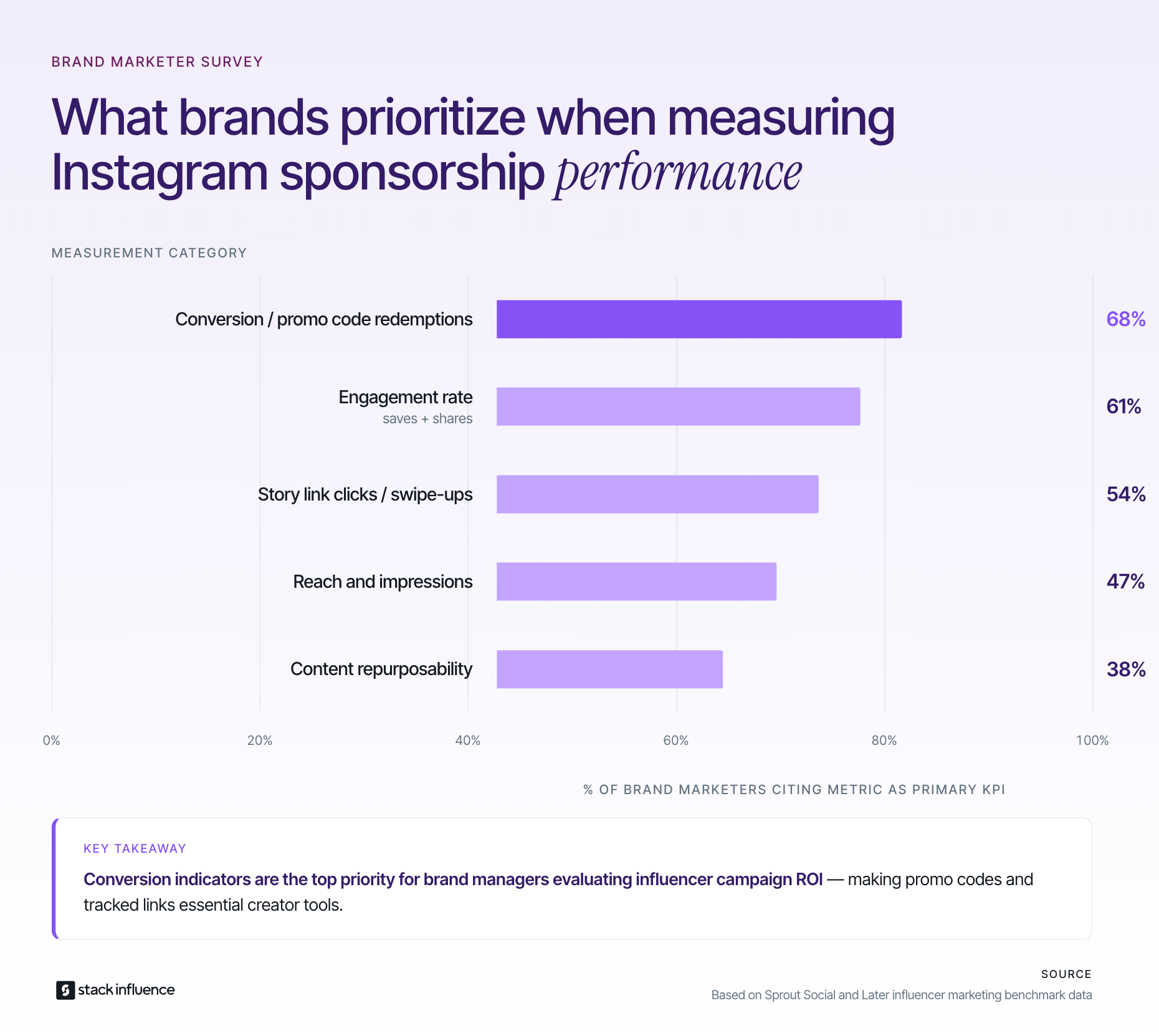
Here is what most sponsorship guides get wrong: they focus entirely on helping creators pitch, but never explain how brands evaluate performance after the deal is done. Understanding this gives you a significant edge in both negotiation and retention because you can set expectations upfront and deliver against them clearly.
The measurement model that smart brands use is built around three tiers: awareness metrics, engagement signals, and conversion indicators.
Awareness metrics include reach, impressions, and share of voice. These matter most for brands launching new products or entering new demographics. Engagement signals include saves, shares, story replies, and link clicks, all of which indicate content resonance rather than passive scrolling. Conversion indicators are where budgets get renewed or cut, and they include tracked link clicks, promo code redemptions, and direct traffic spikes.
A few smart practices to help you speak this language fluently:
- Include a performance summary in your post-campaign follow-up to brand contacts
- Offer to use UTM-tracked links or unique promo codes so you provide attributable data
- Track your own analytics consistently so you can cite trends over time, not just one-off stats
- Ask brands what their primary KPI is before you create the content, then optimize for it
According to Later's influencer marketing benchmark report, Reels consistently generate higher reach than static posts for creators in the lifestyle, fashion, and food niches. Knowing this means you can proactively pitch Reels as your primary deliverable rather than waiting for a brand to dictate format.
Stack Influence's internal campaign data shows that creators who share post-campaign performance reports with brand contacts are significantly more likely to be renewed for a second collaboration. This kind of proactive communication transforms a one-off Instagram sponsorship into an ongoing brand ambassador relationship, which is far more valuable on both sides.
Brands looking for influencers are increasingly factoring in creator communication quality, not just content quality. A creator who is easy to work with, delivers on time, and shares meaningful data becomes a preferred partner in ways that raw follower counts cannot replicate.
What Changed This Year: New Rules Every Creator Needs to Know
The creator economy is not standing still, and 2026 has brought a handful of meaningful shifts that directly affect how Instagram sponsorships are structured, disclosed, and paid.
First, the FTC's updated disclosure guidelines have tightened requirements around clear and conspicuous labeling of paid content. The old habit of burying "#ad" in a string of hashtags no longer meets compliance standards. Disclosures must now appear at the beginning of captions and be clearly visible in video content without requiring any viewer interaction to see them. Brands that work with micro influencers are increasingly including compliance language directly in their contracts, which means creators need to understand what they are agreeing to.
Second, UGC creator arrangements have become a distinct contract category separate from traditional sponsored posts. As a UGC creator, you may produce content that a brand uses in their own paid ads without it ever appearing on your personal profile. These deals are often more lucrative per deliverable than standard sponsorship posts, and demand for UGC video specifically has surged as brands scale their paid social strategies.
Third, product seeding has become a formalized entry point rather than an informal gift. Brands using product seeding as part of their influencer campaigns often expect content in return, even when no formal payment is involved. Creators should clarify usage rights, exclusivity windows, and posting expectations before accepting any product, regardless of dollar value.
Key contract terms you need to understand before signing any sponsorship deal:
- Usage rights: Can the brand repurpose your content in paid ads?
- Exclusivity clauses: Are you restricted from working with competitors, and for how long?
- Kill fees: What happens if the brand cancels after you have created content?
- Revision rounds: How many edits are included before additional fees apply?
- Payment terms: Net 30, Net 60, or upon delivery?
Across campaigns managed on the Stack Influence platform, creators who negotiate clear usage rights upfront earn an average of 30-40% more per piece of content than creators who accept default contract terms. UGC platforms and influencer marketing platforms that offer standardized contract templates can protect you from leaving value on the table.
Building Long-Term Brand Partnerships Beyond the First Deal
A single Instagram sponsorship is a transaction. A long-term brand partnership is a career asset. The difference between the two is almost entirely about what you do after the first post goes live.
The creators who become repeat brand partners and eventually full brand ambassadors are the ones who treat every collaboration like an audition for the next one. They over-deliver on the original deliverable, share results without being asked, and stay on the brand's radar between campaigns through genuine engagement with their content.
Tactics that turn one-off deals into ongoing creator partnerships:
- Send a performance recap email within 72 hours of your post going live
- Tag the brand in organic content that is not part of a paid deal to demonstrate authentic affinity
- Propose a follow-up activation when you notice a brand launching a new product line
- Ask for a testimonial or case study from your brand contact after a successful campaign
- Connect with the brand on LinkedIn to maintain a professional relationship beyond Instagram
From Stack Influence's experience running eCommerce influencer campaigns, the creators who maintain active communication between campaigns have a 3x higher chance of being invited back for the next activation. Brands want to build rosters of reliable creators rather than starting from scratch with every campaign cycle.
Long-term brand ambassador programs tend to offer better rates, more creative freedom, and first-access to new product launches. Getting into one of these programs starts with treating your very first collaboration like a relationship investment, not just a content assignment.
How to Use Influencer Marketing Platforms to Find Brand Deals Faster
Waiting for brands to discover you is a passive strategy that limits your earning potential. Proactively using influencer marketing platforms puts you in the same digital room as brands actively running campaigns and looking for creators to work with.
These platforms function as matchmaking infrastructure for the creator economy. Brands submit campaign briefs, and creators apply or get matched based on niche, audience demographics, and engagement benchmarks. For creators who struggle with cold outreach or do not yet have an established network of brand contacts, platforms dramatically lower the barrier to landing a first paid deal.
What to look for when choosing a platform to join:
- Transparent payment terms and clear deliverable expectations
- A brand catalog relevant to your niche and audience
- Contract templates that protect your rights
- Access to campaign data and performance benchmarking
- A track record of working with brands that align with your content values
According to Sprout Social's creator economy report, 72% of marketers say finding the right creators for their campaigns is their top operational challenge. Platforms that streamline this matching process are growing in adoption precisely because both brands and creators benefit from the efficiency.
For creators specifically in the micro and nano influencer tier, joining a micro influencer agency or platform like Stack Influence connects you directly to eCommerce brands running product seeding and paid campaign activations. This is particularly valuable when you are building your portfolio and need real brand deals to anchor your media kit before your follower count hits the thresholds that attract inbound interest.
Conclusion
An Instagram sponsorship is within reach for any creator who approaches it as a skill to develop rather than a lottery to win. By following the PITCH framework, understanding how brands measure ROI, and building relationships that extend beyond individual posts, you position yourself as the kind of creator that brands actively seek out and keep coming back to. The market in 2026 rewards preparation, professionalism, and niche authority. Start with one deal, deliver beyond expectations, and let your track record do the pitching for you. The creator economy has never had more room for smaller, focused voices, and the brands willing to invest in them have never been more numerous.