The latest info on influencer marketing trends, micro influencer news, and the world of social media

If you’re involved in influencer marketing – whether as a brand or a creator – you’ve likely heard the debate of allowlisting vs whitelisting. These terms are often used interchangeably, but what do they really mean and why is the industry shifting from one to the other? In this comprehensive guide, we’ll break down what influencer whitelisting (allowlisting) is, why the terminology is changing, and how this strategy can benefit brands and creators alike. We’ll also provide tips on implementing allowlisting and include a handy comparison chart. (Spoiler: “allowlisting” and “whitelisting” refer to the same practice – but words matter, as you’ll see.)
Whether you’re a micro-influencer creating content, an e-commerce brand or Amazon seller looking to boost your marketing, or a marketer tapping into user-generated content (UGC), understanding allowlisting vs whitelisting will help you stay ahead. Let’s dive in!

In the context of social media and influencer campaigns, whitelisting (also known as influencer allowlisting or even “creator licensing”) is the process of an influencer granting a brand permission to run paid ads through the influencer’s own social media account. In practice, this means the brand can promote content under the influencer’s handle – the ad looks like it’s coming from the influencer, not the brand. Essentially, the company is “allowed” to use the creator’s profile for advertising. For example, a clothing brand could pay to boost an Instagram post from a fashion micro-influencer’s account, reaching that influencer’s followers and new audiences, while the brand controls the targeting and budget behind the scenes.
How it works: The influencer typically approves the brand as an advertiser or shares certain access (via Facebook Business Manager, TikTok Spark Ads, or similar tools). Once allowlisted, the brand can create Sponsored posts or ads that appear in users’ feeds as if the influencer posted them. This is different from the brand simply reposting the influencer’s content on the brand’s page. In fact, influencer allowlisting is different from a standard influencer content usage (like posting influencer-generated content on your own feed) because with allowlisting, the ads run through the influencer’s account – preserving the influencer’s identity and voice in the promotion. The content can be the influencer’s existing post (now amplified to a wider audience) or a new “dark post” ad that doesn’t show on the influencer’s public profile but is shown as an ad to targeted users. Either way, it leverages the influencer’s credibility and style to make the advertisement feel more organic and authentic.
Synonyms and lingo: In influencer marketing you might hear whitelisting, allowlisting, partner or partnership ads, or creator licensing all used to describe this concept. Don’t get confused – they all refer to essentially the same tactic of brands running ads with creator content via the creator’s account. The industry is trending toward the term allowlisting, so we’ll primarily use that moving forward. (For clarity and SEO – and because many people still search for “whitelisting” – we’re using allowlisting vs whitelisting together in this article. More on that nuance shortly!)
The practice hasn’t changed – but the terminology is evolving for important reasons. Traditionally, tech and marketing used the terms ‘whitelist’ and ‘blacklist’ to designate what’s allowed vs. blocked, and many early systems even relied on basic tools like IP lookup to determine whether traffic should be permitted or denied. However, these terms have come under scrutiny because of the racial connotations associated with white=good and black=bad. While the intent behind whitelist/blacklist was never about race, the phrasing inherently carries a bias (white being equated with positive, black with negative) that many now recognize as problematic. Aspire, a leading influencer platform, noted that using such loaded terms – even unconsciously – can amount to a microaggression, reinforcing harmful stereotypes. In a push for more inclusive language, industries from cybersecurity to marketing have been retiring “whitelist” in favor of “allowlist” (and similarly “blacklist” is replaced by terms like “denylist” or “blocklist”) to describe approved vs. blocked lists.
This shift isn’t happening in a vacuum. Major organizations have led the charge in dropping the old terminology. For instance, tech giants like Microsoft, IBM, Google, and GitHub officially updated their documentation to use allowlist in place of whitelist. Even government agencies have made the change – the UK’s National Cyber Security Centre announced in 2020 it would use allowlist/denylist and found those terms “clearer and less ambiguous” than whitelist/blacklist. Influencer marketing, as a forward-thinking and inclusive industry, is embracing this change as well. Meta (Facebook/Instagram’s parent company) and other firms have even reached out to marketers to encourage adopting allowlist over whitelist in campaigns and materials.
Bottom line: Allowlisting vs whitelisting – there’s no difference in what you’re doing, only in what you call it. But words matter. Embracing the term allowlisting reflects a small yet meaningful step toward more inclusive language in marketing. Brands and platforms are increasingly adopting the new term to set a positive example (Aspire’s team, for example, publicly committed to switching to influencer allowlisting in all their materials). Don’t be surprised if “whitelisting” gradually fades out of industry vocabulary in favor of the more inclusive phrasing.
If allowlisting and whitelisting are the same thing, why are we even using both terms here? The reality is the transition is still in progress across the industry. Many marketers continue to say “whitelist” simply out of habit or because that’s the term they learned first. In fact, different companies have tried out various alternative terms (allowlist, safelist, grant list, etc.), so establishing one standard has taken time. This lack of instant alignment means you’ll encounter both words for now.
Another very practical reason: search engine optimization (SEO) and discoverability. The term whitelisting has been around for years, so a huge number of people still search for things like “influencer whitelisting” or “what is whitelisting?” online. Marketers worry that if they drop the word entirely, their content might not show up in those searches. It’s a valid concern – one study estimated about 85% of people searching for information on this topic are still using the old term “whitelisting,” versus only ~14% searching for “allowlisting” so far. Virtually no one wants to lose that search traffic or cause confusion by using a term their audience isn’t familiar with. As a result, many brands use both terms in their communications during this transition period. (Notice our title is Allowlisting vs Whitelisting – now you know why!)
SEO tip: Until allowlist becomes truly mainstream, it’s wise to include both terms in your content or explanations. As one marketing agency put it, articles and blogs should include both words to maximize chances of appearing in search results, since most people still query “whitelisting”. Over time, as allowlisting gains traction, this dual usage will become less necessary.
In short, expect to see allowlisting vs whitelisting used interchangeably for a while. Don’t let it confuse you – remember they mean the same thing in influencer marketing. Now, let’s explore why this practice (regardless of name) has become so important in the marketing playbook.
Beyond the terminology, influencer allowlisting itself is considered a game-changing strategy in digital marketing – particularly for social media advertising and influencer campaigns. In fact, running ads through influencer accounts has been called “one of the hottest growth hacks in eCommerce marketing today”. It’s a cornerstone tactic for many brands leveraging micro-influencers and creators to drive sales. Here’s a breakdown of why brands – from DTC e-commerce startups to major Amazon sellers – are using allowlisting to amplify their influencer marketing:

So, you’re convinced to give allowlisting a try – great! How do you actually do it? While specifics vary by platform, the overall process to whitelist (allowlist) an influencer’s content looks like this:
By following these steps, even first-timers can execute an influencer allowlisting campaign that drives results. The process might involve a bit of setup, but once you’ve done it, it becomes easier to rinse and repeat with other creators – and it’s extremely scalable. Some brands are running whitelisted ads with dozens of micro-influencers at once, essentially creating a micro-targeted UGC ad engine that runs 24/7. Platforms like Stack Influence (a micro-influencer marketing platform built by experienced Amazon sellers) even specialize in helping brands automate and scale these kinds of campaigns. The payoff – in more authentic marketing and better performance – is well worth it.
In the battle of allowlisting vs whitelisting, the winner is ultimately the marketer who understands and uses this powerful technique (and ideally uses the more inclusive term allowlisting moving forward). By allowlisting influencer content, brands large and small can supercharge their influencer marketing: you combine the authenticity and trust that creators have earned with the precision and scale of paid advertising. It’s a strategy that aligns perfectly with today’s consumer mindset – people crave real, relatable content (and authentic recommendations) even as they interact with ads. No wonder influencer allowlisting has become a staple in modern campaigns, contributing to the influencer marketing industry’s explosive growth (projected to reach over $16 billion annually by 2022).
As the marketing world continues to evolve, expect allowlisting to become even more commonplace – and likely the standard term – in discussions of influencer strategy. Forward-thinking brands are already swapping “whitelist” for “allowlist” in their playbooks, recognizing that inclusion and respect in language go hand-in-hand with innovative marketing. It’s a small change in wording that signals a larger awareness.
For now, savvy marketers will keep an eye on allowlisting vs whitelisting in their SEO and communications, ensuring they educate their teams and clients that it’s not a new tactic, just a better name. By staying ahead of the curve and embracing allowlisting (both the term and the technique), you’ll position your brand to build more genuine connections with audiences, all while driving superior results on your influencer campaigns.
TikTok has become a game-changer for brands, content creators, and even Amazon sellers. With its algorithm-driven For You Page (FYP), a single viral video can turn obscure products into must-haves overnight. We’ve all seen the phenomenon – TikTok made me buy it videos and viral trends causing items like Aerie’s crossover leggings, Maybelline’s Sky High mascara, and even a cleaning paste called The Pink Stuff to sell out online and in stores. In short, getting content onto TikTok’s FYP can translate into explosive brand awareness and e-commerce sales. But landing on the FYP isn’t just luck or throwing up a #fyp tag – it requires understanding how TikTok works and a savvy content strategy.
So, how do you get on TikTok’s For You Page? This comprehensive guide will walk through proven strategies – from leveraging hashtag challenges to tapping micro-influencers – all tailored to help micro influencers, content creators, e-commerce brands, and Amazon sellers crack the TikTok code. We’ll also cite recent research and examples (with sources from high-authority sites) to back up each tactic. Follow these steps to optimize your content for TikTok’s algorithm and maximize your chances of FYP stardom!
One of the fastest ways to boost your visibility on TikTok is by launching a Branded Hashtag Challenge. This is essentially a viral campaign in which you invite TikTok users to create content around a specific hashtag you create for your brand or product. Every video made under that hashtag becomes a piece of user-generated content (UGC) tied to your campaign, which can snowball your reach on the platform. Brands often invest in TikTok’s official Branded Hashtag Challenge ad format (which features your hashtag on TikTok’s Discover page for 3–6 days), but even an organic challenge can gain traction if it captures users’ imaginations.
According to a Mediakix analysis reported by Business of Apps, Branded Hashtag Challenges are wildly effective in driving engagement on TikTok:
For example, mattress company Simmons ran the viral #Snoozzzapalooza hashtag challenge when live music festivals were canceled in 2020. They encouraged TikTokers to “stage dive” into their beds and create a virtual bedroom music festival. The result? Over 1.1 million people participated, with more than 2 million videos contributing to the hashtag and 6.3 billion views generated. In just six days, the campaign drove a 107% week-over-week traffic spike to Simmons’ website – real business impact from FYP exposure.
Tips for a successful hashtag challenge: Make it fun and easy for anyone to join. Choose a catchy hashtag and theme that relates to your brand but leaves plenty of room for creative interpretation. Consider adding a reward or incentive (contest, feature in your official video, prizes) to motivate participation. And if budget allows, leverage TikTok’s Branded Hashtag Challenge ad placement for guaranteed visibility. Even without paid ads, you can partner with a few influencers or micro influencers to kickstart the trend (more on that next), seeding the challenge with high-quality examples that inspire others. Most importantly, engage with the UGC – comment on submissions, highlight your favorites, and keep the momentum rolling. A well-executed hashtag challenge creates a virtuous cycle of content and engagement that the TikTok algorithm loves, giving your campaign strong odds of hitting countless FYPs.
Influencer marketing on TikTok is a powerful shortcut to the FYP. TikTok’s algorithm doesn’t care if a video is an #ad or organic – it cares about content that engages viewers. By partnering with relevant content creators – especially micro influencers who have loyal niche followings – brands can produce authentic videos that resonate with target audiences and trigger the algorithm’s interest. In fact, 72% of consumers say they prefer to learn about products via video, so having influencers showcase your product in TikToks is an ideal way to educate and entertain potential customers.
Crucially, TikTok’s algorithm is a level playing field. It “does not take into account follower counts … or whether creators have had previous viral videos” when deciding what to show on the FYP. In other words, even a creator with a tiny following can go viral if their content clicks with viewers. This is great news for micro and nano influencers (and the brands that work with them): your sponsored TikTok can reach millions of FYP feeds, regardless of starting follower count, as long as it’s engaging. Research backs this up – smaller influencers often boast significantly higher engagement rates than large influencers, meaning their audiences are more attentive and interactive. For instance, nano-influencers on TikTok see engagement rates 3–5x higher than macro-influencers in categories like lifestyle, beauty, fashion, food, and fitness. High engagement boosts a video’s ranking in the algorithm.
When collaborating with TikTok creators, focus on authentic, story-driven content rather than overt ads. Encourage influencers to put their own creative spin on showcasing your product or brand. The content should feel like a natural TikTok, not a commercial. Some effective formats include: before-and-after demos (for skincare, cleaning products, etc.), “TikTok made me try it” review videos, unboxing or haul videos (for fashion and gadgets), quick tutorials or life hacks using the product, or fun skits that incorporate the item. The key is to entertain or educate first; the product promotion happens subtly through the creator’s use or mention of it. This aligns with what TikTok viewers want – authentic recommendations. In fact, user-generated content (UGC) from real customers is viewed as far more authentic and trustworthy than polished brand ads or even traditional influencer posts. In one survey, 72% of consumers said real customer videos are the content they most want to see on e-commerce sites, highlighting the power of genuine voices.
From a practical standpoint, brands can find TikTok influencers by searching the platform’s creator marketplace, using influencer marketing tools, or working with agencies. Micro-influencer platforms like Stack Influence specialize in connecting e-commerce brands with vetted micro creators to produce UGC and reviews at scale. This can be a great way for Amazon sellers and small businesses to run large-scale TikTok campaigns without breaking the bank. (Many micro influencers will create a TikTok in exchange for a free product or modest fee, making the ROI very attractive.) The authenticity of micro influencers combined with TikTok’s massive reach is a potent formula. As marketing experts note, micro influencers’ content feels like a friendly recommendation rather than an ad, which drives higher conversion rates and trust – exactly what you need to turn FYP views into traffic and sales.
On TikTok, trends are the currency of discoverability. The For You Page is often dominated by whatever trend, meme, or challenge is hot at the moment – whether it’s a viral dance, a comedy format, a sound bite, or a hashtag challenge. Jumping on relevant TikTok trends can dramatically raise your likelihood of FYP placement because you’re creating the kind of content the algorithm is currently favoring and users are actively seeking out. In fact, 90% of consumers say they use social media to keep up with the latest trends and cultural moments, and TikTok is arguably the epicenter of modern pop culture trends.
How do trends on TikTok work? Typically, a trend starts with a popular sound or music clip, a funny skit format, or a hashtag, and thousands of users then replicate or riff on that idea in their own way. TikTok’s system actually categorizes videos by details like the sound used, hashtags, and even caption keywords. So when you use a trending sound or hashtag, the algorithm is more likely to group your video with that trend and show it to users who have shown interest in similar content. It’s essentially a free boost. As TikTok’s own team explains, “the system recommends content by ranking videos based on a combination of factors”, including user interactions and content features like sounds and tags.
Stay plugged in: To leverage trends, you need to monitor TikTok daily. Check the Discover page for trending hashtags, notice what songs are being used in many videos, and follow creators in your niche to see what memes or challenges they’re doing. When you spot a trend that fits your brand voice or product, act fast (trends can go in and out of fashion within days!). Brainstorm a creative twist that incorporates your brand. The best brand executions of trends manage to feel like an organic part of the meme while subtly weaving in their product or message.
For example, when the nostalgic “Adult Swim” trend took TikTok by storm – where creators made short clips mimicking the old Adult Swim TV bumpers – fitness apparel brand Gymshark saw an opening. They shot their own version of an Adult Swim “bump,” cleverly using pre-workout powder to draw the logo on screen. The video blended perfectly with the trend’s aesthetic and humor, yet it was unmistakably Gymshark. Because it rode a massive trend, it got huge exposure on the FYP (and earned Gymshark lots of cred for being in on the joke).
Joining trends isn’t limited to big brands. Small businesses and creators can go viral by hopping on the same bandwagons. We’ve seen mom-and-pop shops doing trending dances in their store aisles, or Amazon sellers using popular TikTok sounds to showcase their gadget in a humorous way. This works because TikTok viewers appreciate creativity and relevance more than polish. By participating in a trend, you show you’re engaged in the community, which humanizes your brand and increases shareability.
A few tips: Use trending music clips in your videos whenever appropriate (even if your video is not about dancing – popular music can boost visibility, and you can always adjust volume low if it’s background). Add a couple of relevant trending hashtags – not just #fyp, but niche tags or challenge names currently buzzing (e.g., #SummerOutfitChallenge if you’re a fashion seller and that’s trending). Just don’t over-stuff hashtags; make sure they truly match your content. Finally, put your spin on the trend – originality within a trend is what makes people watch and share. As long as your content is entertaining and in tune with the trend’s spirit, you stand a solid chance of TikTok’s algorithm picking it up for widespread distribution.

TikTok is not a one-way broadcast platform – it’s an interactive community. The more you genuinely engage with other users, the more the algorithm will reward you. TikTok’s unique algorithm heavily “relies on interactions” like comments, duets, stitches, and shares when determining FYP recommendations. This means building a community around your content can greatly amplify your reach. Brands and creators who actively foster conversation and participate in the TikTok community are essentially feeding the algorithm the signals it wants to see.
Start by treating your followers and customers as collaborators. Encourage them to tag you or use your branded hashtag when they post about your product. Then respond and amplify their posts. Did a happy customer make an unboxing TikTok? Comment on it, or ask to duet/ stitch it and add your reaction. Did a micro-influencer review your item without being asked? Share their excitement on your own page (perhaps in a TikTok montage of customer shoutouts). When the algorithm sees your account constantly generating and engaging with UGC related to your brand, it reinforces the content graph around your niche – in plain terms, TikTok learns that people are talking about you, and it will surface more of that content.
Some brands have hit the TikTok jackpot purely thanks to community love. A famous example is Ocean Spray. The brand didn’t plan a campaign – instead, a TikTok user named Nathan Apodaca casually posted a video longboarding while drinking Ocean Spray cranberry juice (set to Fleetwood Mac’s song “Dreams”), and it struck a chord across TikTok. The video went ultra-viral on FYPs everywhere, leading to a trend of others recreating the vibe. Ocean Spray wisely embraced it: the CEO joined TikTok to thank Nathan and even gifted him a new truck in response to the positive buzz. Most importantly, store shelves were cleared of Ocean Spray products as the TikTok trend drove real-world demand. All from a single piece of user content! The lesson is that your fans’ content can become your best marketing. Pay attention to organic mentions of your brand on TikTok – engage and hype those creators, because their passion might trigger the next viral wave.
Even if you’re just starting out, you can nurture a TikTok community. Pose questions or challenges in your captions to invite comments. Reply to comments you get (show there’s a human behind the account). Follow other creators in your industry or niche and interact with their videos – your name popping up in discussions can pique curiosity. Consider running a contest or campaign that turns your audience into creators, e.g. “Share your best hack using our product and tag us for a chance to be featured.” This not only yields a library of authentic UGC for you, but also signals TikTok that your brand sparks engagement. Remember, TikTok’s algorithm values “social” signals more than sheer follower counts; an account with 500 followers can land on FYP if those followers are highly active and content resonates.
Finally, co-create with your community when possible. A brilliant case was when fast-food chain Arby’s noticed a TikToker, John Casterline, made a joke video about a “hidden menu” item at Arby’s. The brand jumped on it – they actually created the special menu item in real life and featured the TikTok on their menu screens. This kind of responsiveness turns customers into brand ambassadors overnight. Even if you’re a small brand, you can do scaled-down versions of this – shout-out a creative fan idea in your next TikTok, or let a passionate customer “take over” your account for a day of content. When people feel involved, they engage more, and that cycle of interaction is what lands content on the For You Page.
Getting on TikTok’s For You Page isn’t an exact science – TikTok’s algorithm evolves and even seasoned creators don’t hit a home run every time. But by implementing the strategies above, you’ll greatly increase your odds of FYP success. In the end, consistency is key. Not every TikTok will go viral, and that’s okay. Post regularly, learn from what works (check your TikTok Analytics for clues on your FYP reach, completion rates, etc.), and refine your approach. Even the biggest TikTok creators experiment constantly – the platform rewards creativity and authenticity above all else. Keep delivering that, and your content will find its way to the For You Page of your target audience.
Ready to amplify your TikTok presence? Whether you’re a creator looking to grow or a brand aiming to drive e-commerce sales through TikTok, applying these tips can set you on the path to viral success. TikTok’s FYP can be your ticket to massive exposure, and with the strategies outlined here – from harnessing micro-influencer magic to joining the latest hashtag craze – you have a proven roadmap to follow. Now it’s time to get out there and create your own TikTok moment!
Getting your influencer marketing budget approved can be a challenge – especially in 2026, when every dollar counts. Yet influencer collaborations have become essential for modern marketers, from e-commerce brands and Amazon sellers to B2B firms. In fact, influencer marketing is now a mainstream channel driving serious ROI and sales. This blog will show you how to get influencer marketing budget approval in 2026 by using data, strategy, and the latest trends. We’ll cover why influencer campaigns (including those with micro influencers, content creators and UGC) deserve a solid budget, and provide step-by-step tips to help you secure that all-important sign-off. Let’s dive in!
It’s no secret that brands are going all-in on influencers. Over three-quarters of marketers now dedicate part of their budget to influencer campaigns. In fact, 80% of companies have a dedicated influencer marketing budget for 2026, and 67% plan to increase that spend. Many firms are devoting sizeable portions of their marketing spend to creators – on average around 25% of total marketing budget goes to influencer marketing today. Influencers aren’t a niche experiment anymore; they’re a must-have in the marketing mix.
Why the confidence? Simply put, influencer marketing works. 86% of U.S. marketers will partner with influencers in 2026 and many brands now allocate significant resources to these collaborations. The payoff justifies the investment: studies show 83% of marketers find influencer marketing effective, and nearly 49% of consumers make a purchase each month because of an influencer’s post. Even more compelling, the average return on investment (ROI) is about $5.20 for every $1 spent, meaning well-executed campaigns can more than pay for themselves. Few other marketing channels can consistently boast that level of return.
Another reason influencers merit a budget boost is the multi-channel value they provide. An influencer post isn’t just a one-off ad – it creates user-generated content (UGC) that can be repurposed across your marketing. For example, 63% of brands reuse influencer-generated content on their own social media, 56% leverage it in paid ads, and 50% even use it on product pages and websites. In other words, investing in influencers also gives you a library of authentic content to fuel your e-commerce storefront, Amazon product listings, emails, and more. This amplifies the impact of your spend far beyond the influencer’s initial post. Decision-makers love to see budgets that stretch further, and influencer content is the gift that keeps on giving.

Not all influencers are Hollywood celebrities. In 2026, micro influencers (those with tens of thousands of followers or less) and even nano-influencers (a few thousand followers) are stealing the spotlight – and for good reason. These everyday content creators have highly engaged, niche audiences that trust them like a friend. That translates into higher engagement and conversion rates than many macro influencers with huge followings. For example, one analysis found nano-influencers on Instagram (under 5k followers) average ~2.5% engagement, compared to ~1% for influencers with over 10k followers. In plain terms, a smaller creator’s followers are more dialed-in – more of them actively like, comment, and click, which can mean more leads or sales per impression.
Crucially, micro influencers are cost-effective. Partnering with a mega-celebrity could run into six figures for a single post, whereas many micro influencers will promote a product for just a free sample or a few hundred dollars. This means for the cost of one big-name influencer, you could hire dozens of micro influencers, multiplying your reach across diverse communities. The result is often a better bang for your buck – one study found micro/nano-influencer campaigns can deliver around a 20:1 ROI ( $20 revenue per $1 spent), versus roughly 6:1 ROI for macro-influencer campaigns. That’s a huge difference in marketing efficiency. Smaller influencers may each reach fewer people, but collectively they can drive higher total engagement and sales for the same budget.
Micro-influencer campaigns are especially powerful for e-commerce brands and Amazon sellers. These creators excel at authentic reviews, unboxing videos, and how-to content that build consumer trust in your product. Even with a modest budget, an Amazon seller can leverage a network of micro influencers to generate buzz and sales without needing a Super Bowl–sized ad spend. And remember that content they create becomes valuable UGC – those real-life photos, videos, and testimonials can be recycled into ads, product page visuals, or social proof, driving further conversions.
To maximize ROI, tap into strategies that make influencer campaigns budget-friendly. For instance, Stack Influence – a popular micro-influencer marketing platform for small businesses – uses a product-only compensation model, allowing brands to pay creators in product instead of large fees. Approaches like this keep cash costs low while still generating plenty of influencer content and engagement. The bottom line: micro influencers and UGC can help you achieve big results on a small budget. Highlighting this in your proposal will show executives that you’re pursuing an efficient, modern strategy rather than just “throwing money” at famous influencers.
Securing approval for your influencer marketing budget comes down to making a compelling, data-backed case. Use the following steps to build confidence with your CMO or finance team and get that green light:
Learning how to get influencer marketing budget approval in 2026 ultimately comes down to preparation and persuasion. You need to combine a data-driven business case with a clear strategic vision. Show your higher-ups that influencer marketing is not a trendy splurge, but a proven channel that rivals (or outperforms) traditional marketing. By aligning your proposal with company goals, citing industry stats and ROI, leveraging the cost efficiencies of micro influencers and repurposed UGC content, and addressing any concerns proactively, you’ll position your request as a smart investment rather than an expense.
Remember, in 2026 influencer marketing is fueling growth for brands big and small – including e-commerce startups and Amazon sellers who’ve used it to level the playing field. With the right approach, you can convince your team that an influencer campaign budget is the missing piece to capitalize on this momentum. So gather your stats, craft your plan, and confidently ask for that budget approval. With influencers in your toolkit, you’re poised to drive meaningful results and keep your brand ahead of the curve. Good luck, and happy campaigning!
Using TikTok as a business can be exciting yet overwhelming. The platform’s unique culture and algorithm reward creativity, authenticity, and consistency – qualities that might feel unfamiliar if you’re used to polished Instagram posts or traditional ads. But TikTok’s explosive growth makes it impossible to ignore for brands of all sizes. Whether you’re an e-commerce startup, an Amazon seller, or a seasoned marketer, following these TikTok brand guidelines (the key dos and don'ts) will help you connect with content creators, ride viral trends, and turn viewers into customers. In this blog, we’ll break down TikTok Brand Guidelines: Dos and Don’ts in a casual, informative way so you can maximize your presence and influencer marketing results on TikTok.
TikTok isn’t just a platform for dance challenges – it’s quickly becoming a powerhouse for product discovery, influencer marketing, and e-commerce. Still on the fence? Consider these eye-opening facts:
The takeaway? TikTok’s audience is huge, highly engaged, and open to discovering new products through influencers and UGC (user-generated content). Instead of interrupting viewers with hard sells, successful brands provide entertainment and authentic content – ushering in the era of “shoppertainment.” The chart below illustrates one reason TikTok is so valuable for marketers: people simply spend far more time there than on competing platforms, meaning more chances for your brand to be seen and heard.
With the “why” covered, let’s move on to how you can thrive on TikTok. Below are the essential TikTok brand guidelines – the Dos and Don’ts for brands – that will help you build an authentic presence, leverage micro-influencers, and avoid common pitfalls.
TikTok is unlike any other social media platform, so brands need to adapt to its norms. Here are the top TikTok “Dos” – strategies that successful brands and content creators are using to win over TikTok audiences:

TikTok is all about people. From viral dances to product reviews, human faces and personalities drive the content. Brands should take a people-centric approach rather than just posting sterile product shots. In fact, the positive impact of focusing on real creators is well-documented – 78% of TikTok shoppers say they discover products through influencer videos. That means if you want to get noticed, you need creators talking about your product.
Tips for creator-focused content:
By keeping creators and everyday users front-and-center in your videos, your brand will blend into the TikTok community rather than feeling like an outsider. And that’s exactly what you want – TikTokers are more likely to trust and engage with content that feels native to the platform. (It also levels the playing field: remember that high production value is not mandatory. Many brand videos that go viral are shot on iPhones in a warehouse or living room. Lo-fi is the norm here, which is great news for your budget!)
Don’t box yourself in when it comes to content formats. TikTok offers a playground of video styles and trends – the more you experiment, the better chance you’ll hit on what resonates with your audience. Off the top of our heads, here are just a few types of TikTok videos brands (or their influencers) can create:
That barely scratches the surface. TikTok encourages experimentation for a few reasons: (1) the more content you post, the faster you learn what clicks with your audience; (2) more videos = more chances to get picked up by the algorithm; and (3) trends move fast on TikTok – there are always new formats or memes popping up, so hopping on different trends keeps your content fresh.
Another big rule: avoid posting the exact same type of video over and over. If every TikTok you post looks and feels the same, viewers may lose interest. Mix it up to keep followers guessing what’s next – maybe today it’s a funny skit with a creator, tomorrow a satisfying ASMR-style demo of your product in use. By diversifying your TikTok content, you’ll appeal to different segments of TikTok and increase your odds of one of those videos taking off.
Speaking of trends – TikTok is the most trend-driven social platform to date. What’s popular can change week to week (or even daily). New challenges, dances, viral sounds, and meme formats are constantly cycling through TikTok. Smart brands keep their finger on the pulse so they can ride relevant trends while they’re hot.
Here’s how to stay in the loop:
Being aware of trends allows your brand to tap into buzzworthy formats and conversations while they’re still relevant. This not only boosts your chances of virality but also signals to TikTok users that your brand “gets it” and is part of the community zeitgeist.
A quick note on music: One challenge for business accounts is music licensing. TikTok limits commercial accounts to a library of royalty-free music for their videos – meaning you might not be able to use the latest hit song in your brand’s TikTok due to copyright. This is another reason to work with creators. Individual creators (not posting as a business) often have access to mainstream trending sounds. By having influencers feature your product in their TikToks, you can ride popular audios that you couldn’t use on your own handle. Alternatively, consider obtaining commercial music licenses for key songs, or get creative with TikTok’s own sound editing tools to make original audio. Just remember: sound is huge on TikTok, so plan your audio strategy along with the visuals.
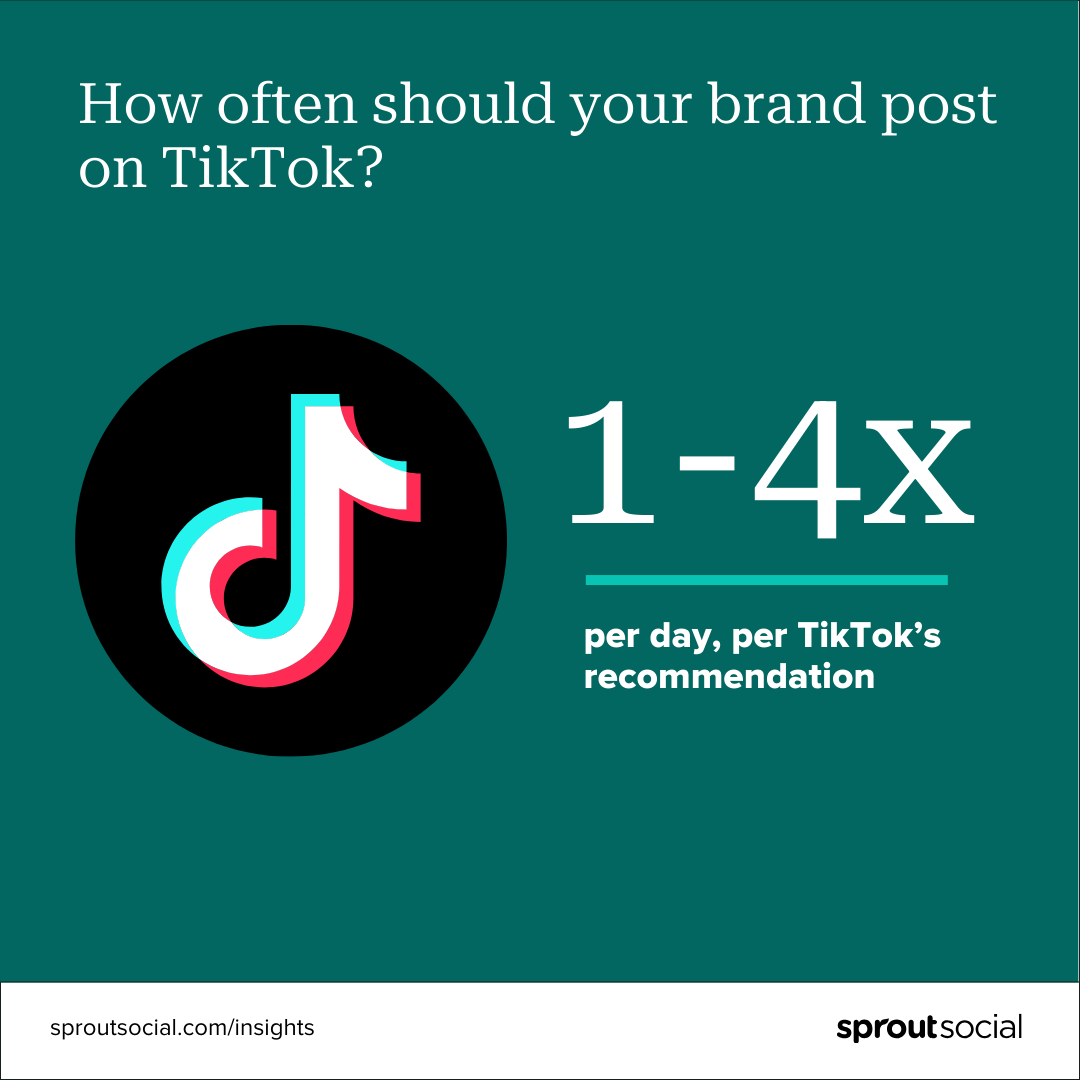
On TikTok, consistency is key. The fast-paced nature of the platform (and its algorithm) rewards regular participation. Unlike networks where posting too often might annoy followers, TikTok actually recommends that brands post at least once per day if possible – and many successful accounts post multiple times per day. In fact, TikTok’s own official guidance suggests posting 1 to 4 times daily for best results.
Now, not every business can realistically churn out 3 videos a day, and that’s okay. Quality matters more than sheer quantity. But the underlying point is: don’t let your TikTok account go dormant for weeks at a time. If you only post sporadically, you’re essentially resetting any momentum you had with the algorithm and your followers.
Some tips to stay consistent without burning out:
While “post every day” is a good goal, never sacrifice quality just to hit a quota. Five mediocre TikToks won’t beat one excellent, engaging TikTok. Try to find a balance that keeps content flowing without compromising what makes it interesting. If you ever feel stretched thin, lean on your community – duet a creator’s video about your product, answer a follower’s question with a video, or stitch a trending clip with your commentary. TikTok gives you plenty of ways to create content efficiently.
Finally, engage consistently too. Don’t just post and ghost – stick around to answer comments, thank people for feedback, and engage with other videos. The algorithm notices engagement on your content (and so do your followers). More on that in the “Don’ts” section, but it’s worth mentioning here: consistent posting plus consistent community interaction is the winning combo on TikTok.
Now that we’ve covered what you should do, let’s highlight a few major pitfalls or “Don’ts” that can trip up brands on TikTok. Avoiding these mistakes will save you time, trouble, and cringe-factor – and keep your TikTok marketing strategy on the right track:
It’s time to de-program ourselves from the old social media mindset that follower count is everything. On TikTok, follower count isn’t the be-all, end-all of success – reach and engagement matter more. Thanks to TikTok’s algorithmic For You Page, even accounts with zero followers can go viral if their content strikes a chord. Conversely, having 100k followers doesn’t guarantee views if you stop delivering engaging videos.
A few things to remember:
In short, don’t lose sleep if your follower count grows slowly. Keep your eyes on the real prize: engagement and conversions. If your videos are getting solid views, sparking comments, or driving clicks to your site – you’re succeeding, regardless of how many followers you have. The followers will grow over time as a result of good content. TikTok is even testing features to let brands run ads without needing an account presence, highlighting that content matters more than clout. So take a deep breath and spend your energy creating, not just counting fans.

One of the biggest mistakes is treating TikTok like it’s just a social feed and forgetting that it’s also a search engine. TikTok has famously become the go-to search platform for Gen Z – people use it to find everything from product reviews to restaurant recommendations. In fact, even Google acknowledged that nearly 40% of young people use TikTok (or Instagram) for search instead of Google. And TikTok itself reports that 57% of users utilize the app’s search bar, with 23% of users searching for something within 30 seconds of opening the app. Those numbers are huge!
What does that mean for your brand?
Ignoring TikTok search and hashtags is leaving a lot of potential reach on the table. Every day, users are actively searching for things like “makeup tutorial,” “how to style curly hair,” “best laptop bag” – why not make sure your content comes up? By treating TikTok as the powerful search/discovery engine it is, you’ll get in front of users who are already expressing interest in what you offer.
Remember, TikTok’s goal (even with the new Search Ads) is to become a one-stop shop for discovery. As a brand, you should aim to “be there” when someone looks up keywords related to your product. So don’t skip the SEO basics here just because it’s a fun video app – a little optimization goes a long way on TikTok.
TikTok is a place for storytelling and entertainment, not heavy-handed sales pitches. One surefire way to turn off TikTok viewers is to make your content feel like a traditional advertisement. The TikTok community tends to scroll past anything that screams “ad” or overly corporate. Brands that thrive on TikTok talk to people, not at them.
Avoid these “salesy” pitfalls:
TikTok’s own research with Nielsen found that users consider TikTok’s content – including ads – to be more “authentic, genuine, and fun” compared to other platforms. In practice, this means the ads and branded content that work on TikTok often don’t feel like ads at all. They blend into the content users are already watching. Think of the TikToks you’ve seen where you didn’t even realize it was sponsored until maybe a hashtag or disclaimer at the end – that’s the kind of natural integration you want.
A great example is the use of Spark Ads, where brands boost an existing creator’s video that features their product. The ad appears as if it’s coming from the creator’s account (because technically it is), making it feel organic. These ads tend to get higher engagement and completion rates than obvious ads. The lesson for organic content is similar: if you make a video feel like a TikTok first and an ad second, you’re on the right track.
Bottom line: Adopt a show, don’t tell philosophy. Show the lifestyle, the solution, the fun involving your brand; don’t just tell people to buy. And maintain a light touch – TikTok is a platform where being too serious or salesy can seem “cringe.” Infuse humor if appropriate, participate in culture, and let the selling be subtle. Your audience will appreciate you for it (and ironically, that drives more sales in the long run).
Finally, a common mistake brands make is failing to engage with their audience on TikTok. TikTok isn’t a “set it and forget it” channel where you can just upload a video and walk away. If people are commenting on or reacting to your content, don’t ghost them – that’s like a conversation starter and you just silently stare back. Not a good look!
Here’s what not to do – and what to do instead:
TikTok favors two-way engagement. Simply put, if you engage viewers and they engage back, your content gains momentum. If you ignore them, that momentum dies off. Think of your TikTok presence as building a community or fanbase around your brand. Communities thrive on interaction.
Also, an active comment section can boost credibility. New viewers stumbling on your TikTok may peek at the comments – if they see the brand answering questions and users excitedly sharing their experiences (“I bought this and it’s awesome!”), it reinforces a positive image. Social proof in action!
One more note: TikTok users can message you if you allow DMs or if you follow each other. If you do open that channel, be responsive there too (perhaps redirect to email if needed). However, many brands keep official communications to comments and their profile info (to avoid being flooded in DMs). Do what works for your bandwidth, but at minimum, stay on top of your comments.
In summary, don’t be a post-and-ghost brand. Show up, converse, and build relationships. It humanizes your brand and turns casual viewers into actual fans and customers. Remember, TikTok is a social network – emphasis on social.
TikTok might seem like the wild west of social media, but as you can see, there are some clear guidelines for brands that emerge from its culture. To recap the essentials: embrace creators and micro-influencers, diversify your content, hop on trends, maintain a steady flow of posts, optimize for search, be authentic (not salesy), and actively engage with your audience. These TikTok brand guidelines boil down to one thing – be a valuable member of the TikTok community, not just a marketer.
If you follow these dos and don’ts, you’ll be well on your way to TikTok success. Even better, you’ll have fun with it! Many brands find TikTok refreshingly creative compared to other platforms. It allows you to experiment and show a lighter side while driving real business results. From influencer marketing campaigns that flood your site with traffic, to viral moments that put your product on backorder, TikTok can deliver – but you have to play by its rules and ethos.
So dive in and start creating. Whether you’re an indie Amazon seller or a global brand, TikTok offers a level playing field where content creators, micro-influencers, and engaged communities can propel a business forward. And if you need a little boost connecting with those creators or formulating your strategy, don’t hesitate to leverage resources (for instance, tapping a platform like Stack Influence to coordinate influencer-driven TikTok campaigns).
Now it’s your turn to put these tips into practice. Stay authentic, keep experimenting, and most importantly – enjoy the process. TikTok is a place where brands can build culture, not just ads. With these guidelines in mind, you’re ready to make a splash on TikTok. Good luck, and we can’t wait to see your brand’s hashtag challenges and viral videos on our FYP soon!
Advertising comes in many forms, and understanding the different types of commercial advertising is key for any brand looking to grow. Over the years, advertising has evolved significantly – today’s most popular strategies are online-based, yet the fundamental need for advertising remains as strong as ever. From traditional media like radio and TV ads to modern approaches like influencer marketing and user-generated content (UGC), advertisers have more channels than ever to reach their audience. In fact, the rise of social media has created entirely new ad formats: micro-influencers and content creators now produce sponsored posts that often rival classic commercials in impact. A recent study even found that 77% of consumers prefer content from social media influencers over traditional scripted ads – a testament to the trust and authenticity these new channels provide. Below, we’ll explore all these different types of commercial advertising, highlighting how each works and why it matters in today’s e-commerce and digital marketing landscape.
The term “commercial advertising” covers a broad range of channels. Traditional examples include radio advertisements, TV commercials, and print ads, while digital-era methods include internet ads (banner, video, text formats) and even product placement in entertainment content. In recent years, influencer marketing – brands partnering with popular social media creators – has also become a powerful form of commercial advertising. Below, we break down the most common types of commercial advertising and how each one works.
Influencer marketing involves collaborating with individuals who have an engaged following on social media – from big-name celebrities to micro-influencers with niche audiences. These creators promote a brand’s product or service through authentic content, such as reviews, unboxing videos, or lifestyle posts. The appeal of this format is the perceived authenticity and peer recommendation; audiences tend to trust influencers’ opinions far more than traditional ads. Influencer campaigns often produce valuable user-generated content (UGC) that brands can repost and repurpose across their own channels. They can also be cost-effective – many micro-influencers are happy to be compensated with free products or modest fees, making this strategy accessible even to startups and Amazon sellers.
Some key advantages of influencer advertising include:
For example, Stack Influence is a micro-influencer marketing platform that helps brands (including Amazon marketplace sellers) run product-seeding campaigns with everyday content creators. Platforms like this make it easy to find vetted influencers and manage campaigns at scale, generating valuable UGC and driving high-quality traffic for e-commerce businesses. In today’s digital landscape, influencer marketing has become one of the fastest-growing and most impactful types of commercial advertising.
Online advertising (also known as internet or digital advertising) is one of the most prevalent forms of marketing today. It encompasses everything from search engine ads to banners and video ads on websites, social media promotions, and more, with many display and video campaigns delivered and managed through an ad placement, and it now makes up the majority of advertisers’ budgets (digital channels accounted for nearly 70% of total ad spend in 2024). Businesses of all sizes use online ads to reach targeted audiences across the globe with precision.
Common types of online advertising include:
One big advantage of online advertising is the ability to measure performance in real time – advertisers can track clicks, views, conversions, and adjust campaigns quickly. Online ads also support e-commerce directly by allowing instant click-through to product pages, which is why they’re indispensable for many modern businesses.
Radio advertising is one of the oldest forms of commercial advertising, dating back to the early 20th century. Radio ads are typically short audio commercials that air between songs or talk segments on broadcast radio. Companies can also sponsor segments or have radio hosts deliver live ad reads during their shows. This format is quite adaptable and often more affordable than producing video or TV ads, which makes it accessible for small businesses. Despite being traditional, radio can still reach audiences wherever they are – in the car, at work, or on the go.
In the digital age, audio advertising has expanded beyond AM/FM radio. Podcast advertising has become highly popular, with hosts weaving sponsored messages into their episodes for devoted listeners. Music streaming platforms (like Spotify’s free tier or Pandora) also play audio ads between songs. These modern audio ads work on a similar principle to radio commercials, but they allow more precise targeting (by genre, listener demographics, or listening behavior). Whether via classic radio or streaming audio, the key is that the message reaches listeners through sound. A catchy jingle, memorable slogan, or trusted host’s voice can stick in a listener’s mind even without visuals.
Television commercials – those 15 to 60-second spots that run during TV programming – have long been a flagship format for advertisers. TV advertising includes not only the traditional commercials we see between shows, but also subtler forms like product placement (where a brand’s product is featured within a show or movie scene). Television offers the ability to reach a massive audience, but it comes at a high price: airing a TV ad can be very costly depending on the network and viewership (prime-time slots or big events like the Super Bowl command premium prices).
Producing a TV commercial also typically requires a larger budget for filming, actors, and editing compared to other ad types. However, the impact can be big – a memorable TV ad can dramatically boost brand recognition. Even in the age of digital media, TV remains influential, especially for reaching older demographics and during live events (sports, award shows) that draw large simultaneous audiences. Moreover, with the rise of streaming television (OTT platforms), many brands are now running ads on streaming services to capture “cord-cutters.” These streaming TV ads are often targeted like digital ads but resemble traditional TV commercials in format. In summary, television advertising can deliver broad reach and strong storytelling opportunities, but it requires significant investment and isn’t always feasible for smaller brands.
Print advertising refers to ads in physical printed media, primarily newspapers, magazines, and other publications, as well as materials like brochures and flyers. Print ads can be text, images, or both – for example, a full-page color ad in a magazine or a small classified ad in a local newspaper. Costs for print advertising vary widely. Buying a glossy full-page in a national magazine or a prime spot in a high-circulation newspaper can be expensive, whereas printing a stack of flyers or a local newsletter ad is much cheaper. Prices often depend on the publication’s readership and the size/position of the ad.
One challenge with print media is declining circulation in the digital age, as many consumers now get news online. However, print ads can still be effective for reaching certain audiences (for instance, local newspaper readers or niche magazine subscribers) and for providing a tangible, lasting message. Many businesses use print ads to complement their digital marketing – such as a mailer or magazine ad that reinforces an online campaign. From coupon inserts to direct mail postcards to billboard posters (a form of print/out-of-home advertising), this traditional medium persists as a way to get a message in front of people in the physical world.

Aside from the delivery channels above, commercials can also be categorized by their creative approach or purpose. In the advertising world, there are three common types or styles of commercials:
One approach is the image commercial, sometimes called a topical commercial. This type of advertisement is designed to instill a positive image of the brand in the viewer’s mind rather than focus on specific product features. An image or topical commercial might highlight the company’s values, reputation, or mission – for example, emphasizing high product quality, exceptional customer service, or commitment to social causes. The idea is to associate the brand with certain favorable characteristics in the long run (health, happiness, safety, innovation, etc.) and build trust in the business. These ads often have a storytelling or inspirational tone and aim to boost overall brand confidence among the target audience.
Another effective format is the testimonial commercial, which provides proof of a product’s performance through real user experiences. These ads feature customers (or actors portraying customers) testifying about their satisfaction with the product – for instance, showing before-and-after results or enthusiastic endorsements. The best testimonial commercials feel unscripted and authentic, because people tend to believe genuine consumer feedback more than polished sales pitches. By showcasing happy customers and tangible results, these commercials demonstrate the brand’s effectiveness to viewers. The goal is to provide evidence (“proof”) that convinces potential buyers the product lives up to its claims, thereby increasing trust, improving sales, and raising brand credibility.
The third style is the comparison commercial. In a comparison ad, the brand explicitly or implicitly compares its product to a competitor’s product to highlight why the former is better. These advertisements often point out the advantages of the advertised product and the shortcomings of the competing option. A classic example might be a side-by-side test (e.g. one detergent vs. another) or a direct slogan like “Brand X beats Brand Y.” Comparison commercials frequently use a convincing tone – sometimes even featuring an influential spokesperson or an influencer figure to deliver the message persuasively. This approach works best when the differences can be clearly demonstrated and when the person presenting the comparison is trusted by the audience. When done well, comparison ads can sway consumers who are on the fence by directly showing why one brand outperforms another.
As we’ve seen, the different types of commercial advertising range from traditional formats like radio, TV, and print to modern digital and influencer-driven strategies. Each channel has its own strengths: a radio jingle might reach commuters on their drive to work, while a micro-influencer’s post on Instagram might inspire a niche audience to try a new product. Smart marketers often combine multiple advertising types to maximize their reach – for example, running online ads to complement a TV campaign, or using influencer-created UGC in their social media ads.
The key is to choose the advertising channels that best align with your target audience and marketing goals. In today’s world, a small e-commerce brand might find more value in a targeted influencer marketing campaign, whereas a large consumer goods company might still invest heavily in television commercials. Ultimately, all these different types of commercial advertising share the same aim: to get the right message in front of the right people. With a mix of creativity and the proper channel strategy, businesses can tap into each format’s potential to boost their brand and drive results.
In today’s digital landscape – where user-generated content (UGC) drives authentic engagement – a new world of opportunities has opened up for creative minds in the influencer marketing space. Brands of all sizes, from trendy e-commerce startups to major Amazon sellers, are eagerly partnering with micro influencers and everyday content creators to fuel their marketing with relatable content. In the ultra-competitive world of online retail, even Amazon sellers are turning to micro influencers and UGC creators to gain an edge; these niche creators produce authentic UGC (like real customer-style photos, videos, and reviews) that build consumer trust in ways traditional ads can’t match. After all, consumers overwhelmingly trust content from real people – a whopping 79% of people say UGC highly impacts their purchasing decisions. In fact, studies have found that consumers consider UGC nearly 10× more impactful than content produced directly by influencers or brands when it comes to influencing what they buy.
UGC creator jobs are roles or gigs where brands hire independent creators to produce content that looks and feels like genuine user-generated posts. In practice, companies post opportunities seeking creators who can make things like short-form videos, photos, or written posts featuring their products. The content is then used in a variety of ways – from paid advertisements and social media posts to product pages and testimonials on websites. UGC creators excel at engaging audiences through authentic, relatable content that feels “by the people, for the people,” which can strongly influence consumer choices.
UGC content itself comes in many forms. For example, some UGC creators specialize in crafting compelling video clips for paid ads, such as TikTok-style product demos or catchy Instagram Reels. Others focus on social media posts – developing engaging visuals and captions that encourage comments and shares on platforms like Instagram or LinkedIn. There are also creators who produce content for websites – think unboxing or review videos, candid product photos, or written testimonials that brands can display on their online stores. The common thread is that all this content is created by real people (not the brand itself), giving it an authenticity that today’s savvy audiences crave.
Brands are embracing UGC creator collaborations because they bring a level of authenticity and social proof that traditional content often lacks. Consumers scroll past obvious ads, but they pause for a TikTok video or Instagram post that feels genuine and unscripted. By working with micro influencers and content creators, brands tap into a goldmine of relatable content and word-of-mouth marketing. In fact, 90% of consumers say authenticity is important when deciding which brands to support, and user-generated content is viewed as the most authentic form of marketing content.
One reason micro-influencers (creators with modest followings) make such effective UGC creators is their strong engagement and trust with audiences. Micro-influencers typically see much higher engagement rates on their content than big-name influencers – often around 10% engagement, versus only ~2% for macro influencers. Their followers view them as friends or knowledgeable peers, so a product recommendation from a micro-influencer feels like advice from a trusted source. This translates into not only more likes and comments, but also better conversion rates when they promote products. Moreover, campaigns with micro-influencers can deliver a dramatically higher return on investment – roughly an average 20:1 ROI, compared to about 6:1 for campaigns using macro influencers. In practical terms, brands often get more sales “bang for the buck” collaborating with a squad of micro influencers than one celebrity endorser.
It’s clear that micro influencers and UGC creators have become a cornerstone of modern influencer marketing strategies. By leveraging UGC, brands get a steady stream of real-life content that can be repurposed across social media, ads, and product pages. And because this content comes from actual users or relatable creators, it builds trust with customers. (No slick studio shoot can match an enthusiastic TikTok review from a real person!) All of this has supercharged the demand for UGC creators – and created numerous platforms and marketplaces where brands and creators can connect.
Below, we’ll explore the top UGC creator job sites where you can showcase your creativity, connect with brands, and start monetizing your content creation skills. Whether you’re a budding micro-influencer or just someone who loves making content, these platforms offer a variety of ways to find UGC gigs and collaborations in 2026.
In 2026, a variety of online platforms and marketplaces serve as job sites for UGC creators, helping brands and content creators find each other. Here are the top options (in no particular order), along with what makes each one stand out:
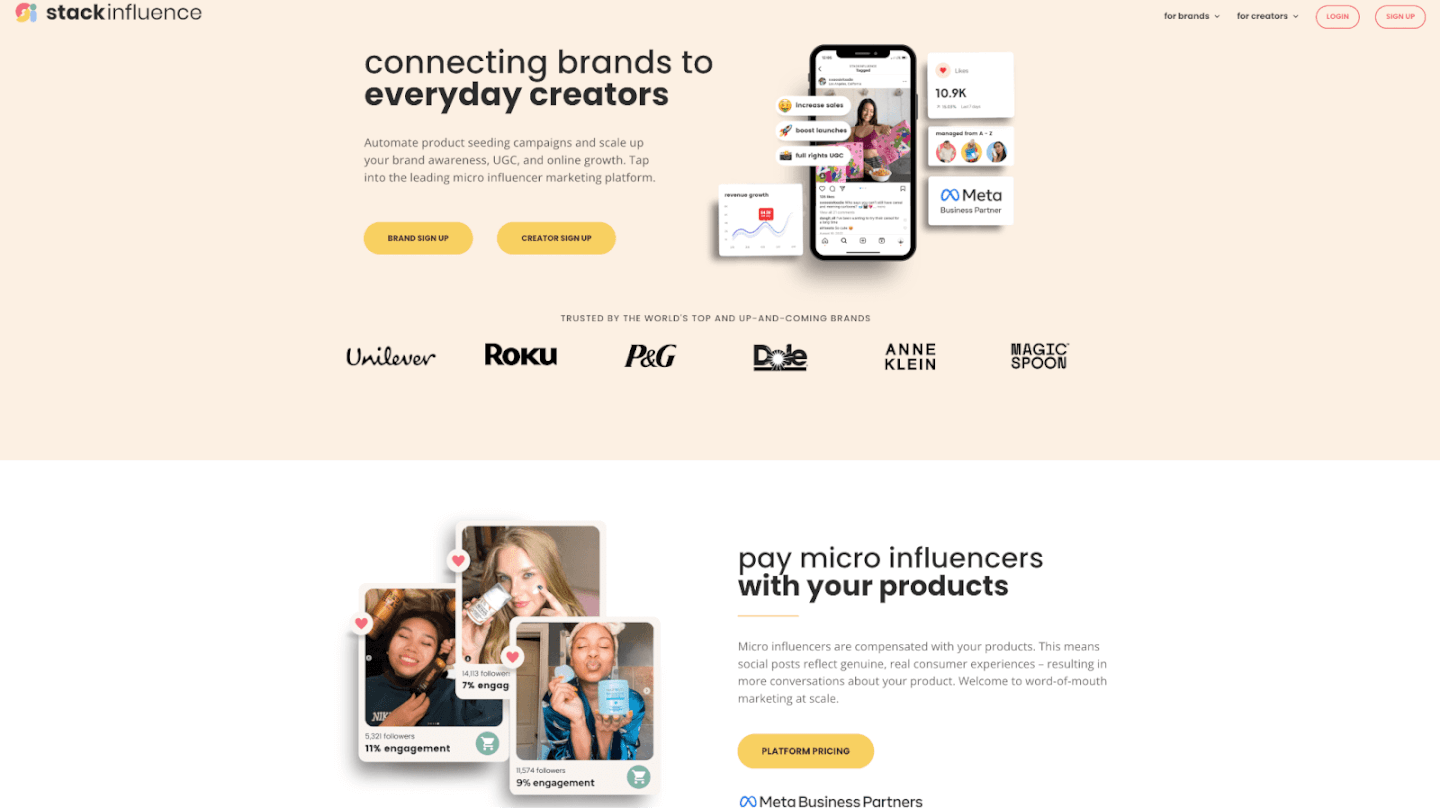
Stack Influence is a leading micro-influencer marketing platform that connects brands with everyday creators on a massive scale. It provides a streamlined, intuitive way to run product seeding campaigns and generate UGC at volume. Stack Influence boasts a network of over 10 million vetted micro-influencers and content creators spanning various niches – an unparalleled reach that makes it our top pick among UGC creator job sites. Brands (including many D2C e-commerce companies and Amazon sellers) use Stack Influence to send out products and spark authentic reviews, unboxing videos, social posts and more. The platform operates on a performance-based model (often product gifting or pay-per-post), which means creators often get free products (and/or payment) in exchange for content. For creators, Stack Influence offers the chance to participate in managed campaigns with clear briefs and target outcomes, so you can create content for brands without having to pitch them one by one. If you’re looking to get involved in UGC campaigns that scale up quickly and feel organic, Stack Influence’s automated campaign tools and huge creator network make it an ideal starting point. (Bonus: Because it’s focused on product-for-content exchanges, even nano and micro influencers can easily join campaigns, build up their portfolio, and get their name out there.)
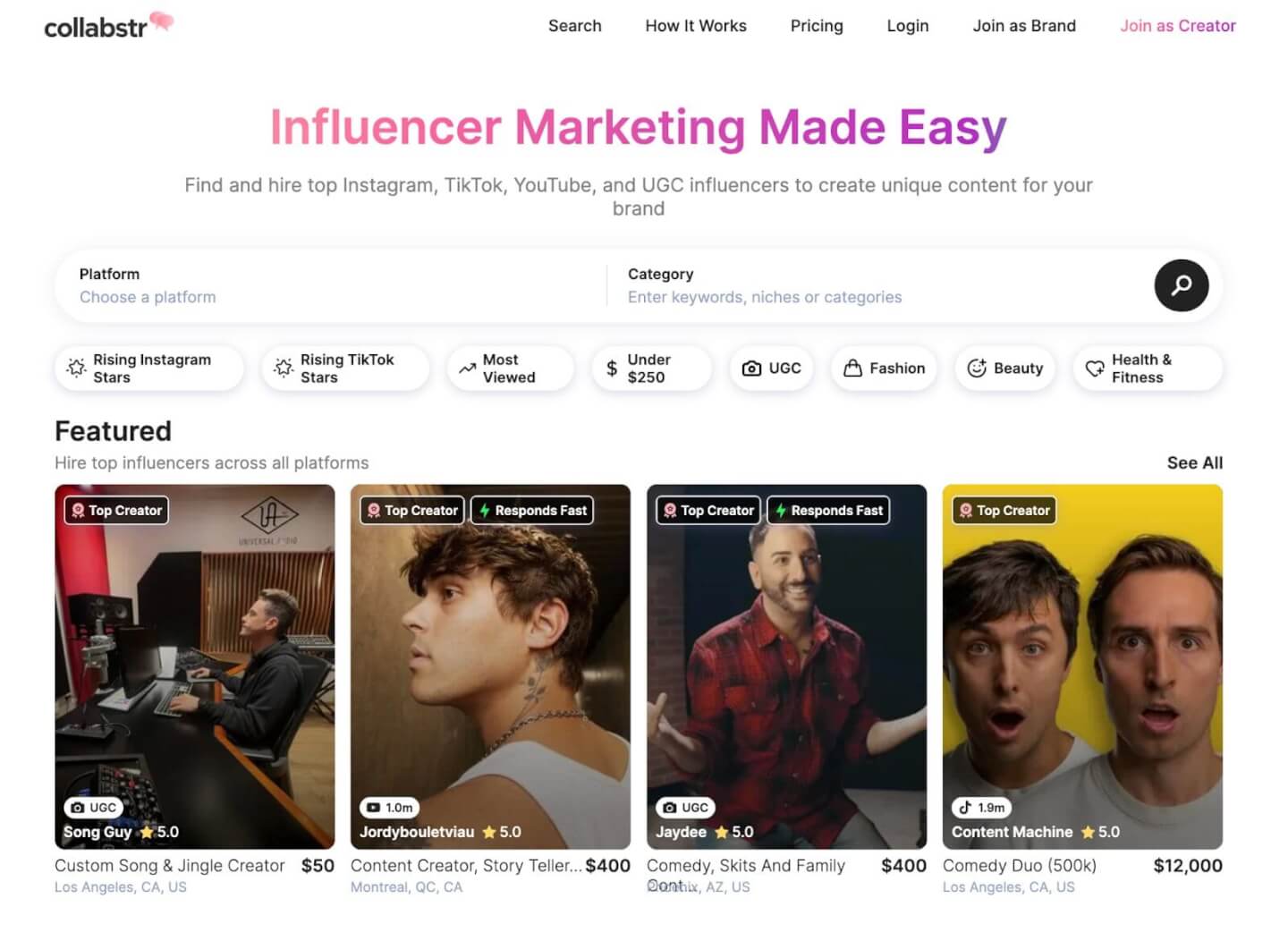
Collabstr is a popular influencer marketplace designed to connect brands with UGC creators and influencers. On Collabstr, you can create a public profile showcasing your content, set your rates, and get discovered by brands looking for collaborations. The platform allows robust filtering – brands can search for creators by niche, audience size, engagement rate, location, etc., making it easier to find the perfect match for campaigns. For creators, this means if you have a specific niche (say, vegan baking or tech gadgets), brands in that space can find and hire you for UGC content creation. Collabstr supports both one-off UGC gigs and longer-term partnerships, and it streamlines the whole process (from initial outreach to payment) in-platform. With over 170,000 influencers on Collabstr’s marketplace, it’s one of the largest open platforms of its kind. Creators have reported that Collabstr is beginner-friendly – no huge follower counts required – and there are opportunities ranging from sponsored Instagram posts to TikTok videos and product reviews. If you’re a content creator who wants an easy, transparent way to monetize your content and work with brands, Collabstr is a must-join platform. It’s free to create an account, so you can start browsing listed opportunities or wait for brands to approach you through the marketplace.
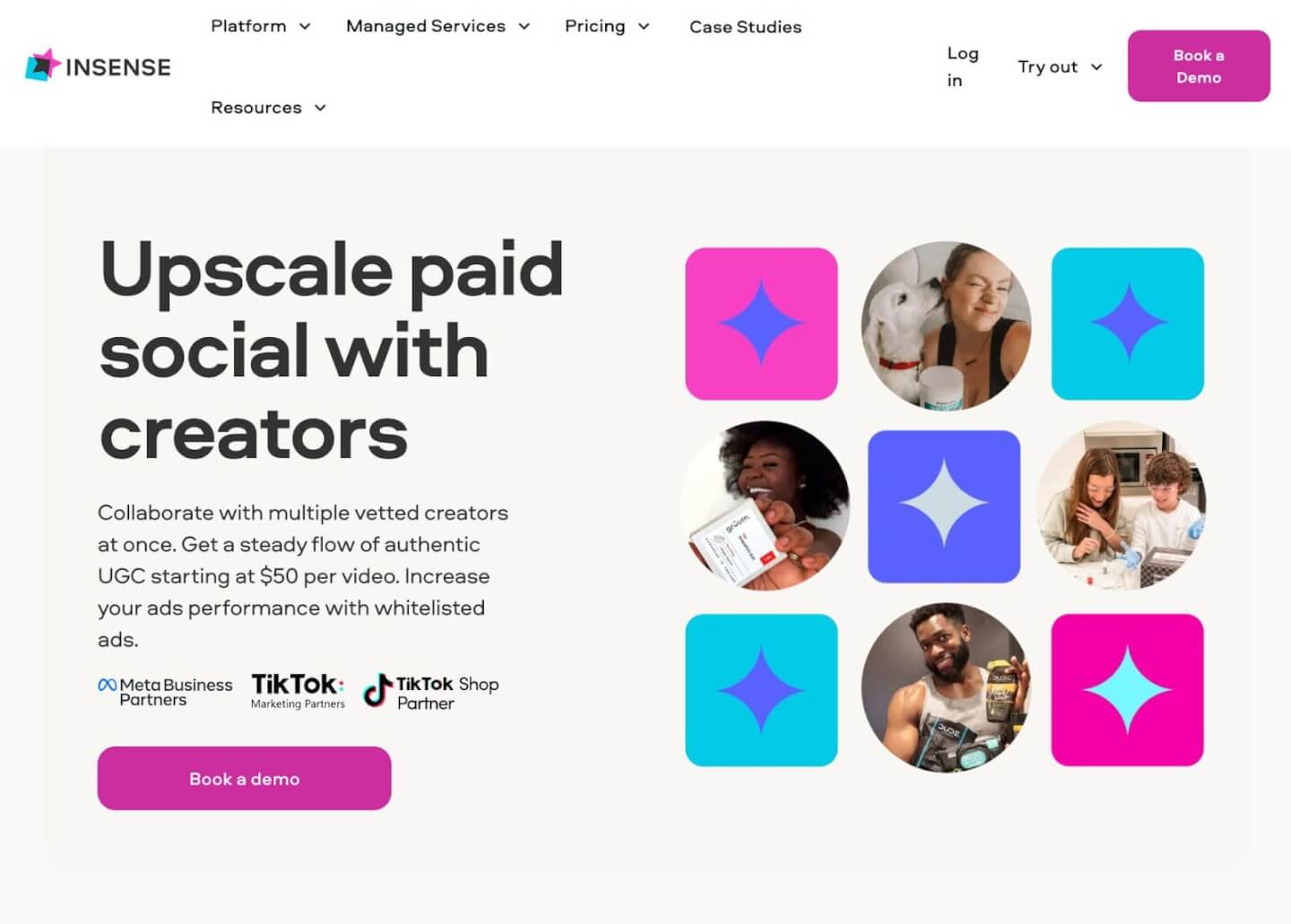
Insense is a specialized creator marketplace focused on producing high-quality UGC, particularly for paid social ads. This platform is known for being creator-friendly yet professional – bridging the gap between freelance content creation and full-fledged ad production. Brands on Insense post campaigns (often in niches like beauty, fashion, wellness, and lifestyle) with specific content briefs. As a creator, you can apply to the campaigns that interest you and match your style. Common deliverables include TikTok videos, Instagram Reels, unboxing videos, testimonial clips, or product photos that brands will use in their marketing. One big perk: you typically get to keep the product sent to you, and you get paid for your content. Insense handles the licensing and usage rights in the background, so you don’t have to haggle over content ownership – a relief for creators who just want to focus on creating. The platform also manages payments, ensuring you get paid on time without needing to chase invoices. Insense currently has a community of over 20,000 micro-influencers and creators worldwide, and they actively vet both creators and brands for quality. If you have solid content skills (especially video editing or storytelling chops) and want to work with cool DTC brands on paid ad content, Insense is one of the most legit UGC platforms to check out. It’s an excellent way to level up from casual UGC to more structured, higher-paying gigs – you’ll receive clear creative briefs, collaborate through the app, and even get insights on how your content performs in campaigns.
JoinBrands is an all-in-one UGC marketplace that’s all about volume, variety, and velocity for content creators. It has exploded in popularity, amassing over 250,000 creators and 20,000 brands on the platform. The premise is simple: brands post content creation jobs (for videos, photos, or even TikTok Shop affiliate promos), and creators on JoinBrands can browse and “book” the gigs that appeal to them. The types of opportunities on JoinBrands range from one-off UGC content tasks (like creating a single product demo video or a set of lifestyle photos) to full-blown brand ambassadorships. Many jobs involve product exchanges plus payment – e.g., a brand sends you a product to feature, you create the content, and you earn a fee (often $50-$100+ per video, depending on complexity). What creators love about JoinBrands is how fast and straightforward it is: you can literally pick a job that fits your vibe, create the required content, and get paid, without endless back-and-forth negotiation or waiting weeks for approval. The platform’s built-in communication and payment tools ensure everything runs smoothly. It’s also worth noting that JoinBrands has opportunities for very small creators – there are no strict follower minimums, as long as you can create quality content. This makes it a great platform for new UGC creators to earn money and reviews to build their portfolio. If you’re eager to dive into a steady stream of UGC gigs and don’t mind fast turnaround times, JoinBrands is definitely a top site to have on your radar.
Intellifluence is one of the largest influencer marketing networks that also doubles as a UGC marketplace. With over 250,000 influencers and creators in its community, Intellifluence offers a wide array of collaboration opportunities – from product reviews and unboxings to blog articles and social media posts. For creators, joining Intellifluence is free, and you get access to a marketplace of offers posted by brands. Many of these offers are open-to-apply, meaning you can browse and pitch yourself to campaigns that interest you (as opposed to waiting for invitations). Intellifluence is known as a “warm contact” network, emphasizing a friendly, direct collaboration ethos between brands and creators. One nice feature is that they don’t take a commission cut from creators – if you agree on $100 for a job, you get that full amount (the platform charges brands a fee instead). This approach, along with a built-in messaging and payment system, makes working through Intellifluence pretty straightforward and transparent. As a UGC creator, you’ll find lots of small and mid-sized brands here, often looking for content like sponsored Instagram posts, TikTok videos, YouTube reviews, or even testimonials for their website. The variety is big – one day you might see a skincare brand offering free product + payment for an honest review, and the next, a gadget company seeking a quick unboxing video. If you’re starting out, Intellifluence can be a great place to get your first few paid gigs and build relationships, since many campaigns are open to nano- and micro-influencers. And for more seasoned creators, the large pool of offers means you can find collabs that align with your niche and pricing. Overall, Intellifluence is a trusted platform in the influencer/UGC space and a proven way to monetize your content creation skills.
Trend (Trend.io) is a curated marketplace app that connects creators with brands for paid UGC campaigns. Unlike some open marketplaces, Trend is invite/application-only – they vet creators to maintain a high quality network, which in turn means competition for gigs is a bit lower and pay tends to be solid. The platform is known for focusing on quality over quantity: each creator is hand-approved, and brands on Trend are often looking for top-notch content (they’re willing to send free products and pay for your work). As a creator on Trend, you’ll get access to a dashboard of available campaigns, which might include things like product photography, lifestyle shots, testimonial videos, unboxing videos, or short-form social clips to be used in ads. One standout feature of Trend is that every collaboration guarantees payment plus product – no purely “for exposure” deals. For example, a brand might offer a free box of gourmet snacks and $100 in exchange for a 30-second taste-test video and a few photos. Creators also appreciate that Trend handles all the licensing rights for the content: once you deliver it, the brand has full rights to use it in their marketing (and you don’t have to worry about usage negotiations). This platform is currently U.S.-only and runs via a mobile app (iPhone), making the process super streamlined: you apply to a campaign with a pitch, if selected you receive the product, you create & upload the content through the app, and you get paid – usually within 14 days of the content approval. If you’re a UGC creator who values exclusivity and higher-end brand partnerships, Trend is an excellent site to aim for. Its gigs can be competitive, but once you’re in, it’s like having a steady gig board of premium campaigns at your fingertips.
Creator.co is an all-in-one influencer marketing and UGC platform where creators can find collaborations ranging from gifted product campaigns to paid sponsorships. It’s essentially a community and marketplace of influencers/creators that brands can tap into for content. With over 250,000 creators onboard, Creator.co offers a large pool of opportunities, and it’s free to join for influencers (you can sign up and create a profile showcasing your stats and content). The platform often hosts “open campaigns” where any creator meeting the criteria can join – for instance, a coffee company might open a campaign for 100 creators to receive a free sample and payment in return for a product photo and Instagram post. There are also more selective campaigns that you can apply to, similar to other marketplaces. One thing creators like about Creator.co is the mix of opportunities: some are purely UGC content creation (e.g. you provide photos/video and no posting is even required on your own socials), while others are traditional influencer posts. This means you can use it whether or not you have a huge following – even if you’re more content creator than influencer, there are brands looking for content you create for them to use. The platform provides tools for managing collabs, tracking deliverables, and even affiliate programs. Another perk: Creator.co sends notifications about new campaigns, so you can be quick to apply. If you want a centralized hub to find paid collaborations, free product deals, and even long-term ambassador programs, Creator.co is a solid choice. It essentially acts as a “one-stop shop” collaboration hub – once you’re in the network, you can browse a variety of campaigns across industries. For 2026, Creator.co continues to expand and often features opportunities with cool indie brands in beauty, fitness, tech, and more.
Major social platforms themselves have gotten into the game with their own creator-brand matchmaking services. The TikTok Creator Marketplace (TCM) is one of the most powerful channels for UGC creators today. It’s TikTok’s official platform that streamlines partnerships between brands and TikTok content creators. If you meet TikTok’s eligibility requirements (these have varied, but generally a minimum follower count and consistent content quality are needed), you can join the marketplace to be discovered by brands for paid campaigns. Through TCM, brands can filter creators by topic, region, audience demographics, etc., and then invite you to collaborate on campaigns – often involving the creation of TikTok videos that the brand may use as ads or on their own TikTok channel. Deals through TikTok Creator Marketplace typically come with clear briefs and payment offers (sometimes fixed rate, sometimes product + payment). It’s a great route to get sponsored content opportunities on TikTok without having to pitch brands directly. Similarly, Instagram has its Brand Collabs Manager (and the newer Collab posts feature) which helps facilitate partnerships on Instagram and Facebook. Brands can use Facebook’s Brand Collabs interface to find Instagram creators for things like feed posts, Reels, or Stories. As a creator, if you have a professional account, you can set up a portfolio in the Collabs Manager and list yourself for potential deals. These official platforms (TikTok and Instagram) are worth being on if you qualify, because many big brands go straight to them to source UGC creators for influencer campaigns and whitelisted ads. Keep in mind, the competition on these marketplaces can be stiff (since many creators are listed), but landing even a few deals here can be lucrative and great for your resume. In summary, don’t overlook the social media native marketplaces – TikTok’s in particular – as they are directly connecting creators and brands at scale in 2026.
The UGC Club is a specialized platform and community dedicated to helping UGC creators find work. One of its standout features is the UGC Creator Jobs Directory – essentially a curated job board specifically for UGC gigs. It’s often touted as “the only job board for UGC creators” and is filled with listings of brands seeking content creators for various projects. The UGC Club’s job board aggregates opportunities from around the web and from partner brands: everything from one-off content requests (“Need a 15-second testimonial video of using X product”) to short-term contracts (like creating a batch of images and videos for a brand’s product launch). The job postings typically include the scope, content requirements, compensation, and how to apply. What creators love about The UGC Club’s board is that it’s built by UGC creators, for UGC creators – meaning the listings are legit and often very detailed about brand expectations (no vague “DM us for info” posts). It’s free to use, and you don’t even necessarily need to be a member of anything – it’s a public resource. Checking The UGC Club job directory regularly can pay off, as new opportunities get posted frequently. It’s also a great place for beginners to see the kind of work available and typical rates. Beyond the job board, The UGC Club offers free resources, guides, and a community (often active on Twitter and Reddit) focused on UGC creation tips. As a platform that curates UGC creator job listings, The UGC Club is an invaluable addition to your toolkit for finding gigs. It basically saves you time scouring random forums by putting a lot of UGC-centric opportunities in one place.
General freelancing platforms are also fertile ground for finding UGC creator work. Upwork and Fiverr are two of the biggest marketplaces where brands and individuals post jobs for content creation, and this often includes UGC-style projects. On Upwork, you can create a profile as a content creator or social media specialist and pitch on jobs like “Short TikTok Video Creation for Skincare Brand” or “Product Review Video for Amazon Listing.” Clients on Upwork post a wide variety of gigs, and you can filter searches with keywords like “UGC creator,” “TikTok content,” “Instagram content creation,” etc. One advantage of Upwork is the sheer volume of opportunities – new jobs are posted daily – and the ability to build long-term client relationships for recurring work. Fiverr, on the other hand, works by letting you list specific services (gigs) that clients can buy. For example, you might set up a gig offering “I will create a 60-second unboxing video with authentic reactions” or “I will shoot lifestyle photos featuring your product.” Fiverr can be great to get inbound orders if you craft your gig description and tags to match what brands are searching for. Many UGC creators have had success on Fiverr by showcasing a portfolio of example videos/photos and setting an enticing starting price, then upselling custom packages. Besides these, other freelance platforms like PeoplePerHour, Freelancer.com, and Indeed (as a job search engine) also list UGC creator opportunities. Even traditional job boards occasionally have contract roles for content creators (searching “UGC creator” on LinkedIn or Indeed can yield some results for agency positions or short-term contracts). The key with freelance marketplaces is to leverage them as one more channel: they might not be specialized communities like some platforms above, but they give you access to clients who are actively looking to pay for content creation. Just be mindful of each platform’s fees (Upwork and Fiverr take a percentage of your earnings), and make sure to build up a good rating by delivering quality work – it will help you stand out and get more gigs in the long run.
BeeRoll is a niche UGC platform geared towards short-form video creators, especially those who love making ads and creative video edits. BeeRoll’s focus is on helping brands scale up video ad content by tapping into a network of freelance UGC creators and an AI-assisted editing platform. As a creator on BeeRoll, you match with brands to film raw footage according to a brief – for example, capturing various clips using a product – and then the platform’s tools help turn those clips into polished ad variants. BeeRoll has a curated network of 10,000+ vetted creators on its platform. How it works: Brands post a campaign asking for certain footage (e.g., “shoot yourself making a recipe with our kitchen gadget, several angles”), you as a creator would get guidance via a storyboard of shots to capture, you submit your raw video clips, and BeeRoll (using AI) generates multiple edited videos from it. The brand gets a bunch of ready-to-run video ads, and you get paid for providing the footage. BeeRoll essentially streamlines the production process – no complex editing needed on your part, which is great if you’re more into shooting content than editing. For creators who enjoy filming and appearing in video ads, BeeRoll offers a cool way to work with brands without needing a big following (the emphasis is on content quality, not your personal social stats). It’s also a forward-thinking platform, as it leverages AI to automate editing, meaning there’s demand for lots of raw UGC clips that feel genuine and unscripted. BeeRoll campaigns typically pay per project and often allow you to work on multiple projects a month. If you’re interested in the intersection of UGC and advertising tech, BeeRoll is worth checking out – especially as video ad content remains in huge demand.
(Okay, this last one is not a “site” per se, but it’s crucial to mention!) Many UGC creators find gigs through networking and personal outreach on social media. Twitter (X) and LinkedIn, for instance, have active communities of marketers and founders often seeking content creators. By showcasing your work on platforms like Instagram, TikTok, or LinkedIn and literally posting “UGC Creator available for collaborations,” you can attract inbound inquiries. There are also Facebook groups and subreddit communities (like r/UGCcreators) where people share opportunities and tips. Building relationships with other creators can lead to referrals – sometimes one creator can’t take a gig and will pass it to you. Attending virtual events or webinars in the influencer marketing industry is another way to get noticed by brands. While this isn’t a single website to sign up for, treat your own social profiles as your resume and job site: regularly post examples of UGC you’ve made, use relevant hashtags (e.g., #UGCcreator), and engage with brand posts. You might be surprised – many creators report that after they publicly announce “I’m doing UGC content creation,” they start getting DMs from brands or agencies looking for help. In a sense, every social network is a potential UGC job site if you position yourself right. This approach, combined with the dedicated platforms listed above, will maximize your chances of landing great UGC creator jobs.
Optimizing Your Presence: No matter which of these top UGC creator job sites you use, remember to polish your profile/portfolio on each. Showcase a variety of content examples, highlight your niche or specialty (e.g. beauty, fitness, tech gadgets), and include metrics if you have them (such as engagement rates or past successes). Brands are looking for creators who can deliver quality content and real engagement, so put your best foot forward. And don’t be discouraged by rejection or slow starts – the UGC game can be competitive, but with consistency, your opportunities will snowball.
The rise of UGC creator platforms has truly lowered the barrier for micro-influencers, nano-influencers, and content enthusiasts to start working with brands. You don’t need a million followers or a Hollywood production studio – brands today are eager for authentic content, and they’re actively seeking it on these job sites and marketplaces. By tapping into the top UGC creator job sites above, you can turn your creativity into a side hustle or even a full-time income, all while helping brands boost their credibility with genuine user-generated content.
As influencer marketing continues to evolve, one thing is certain: UGC is here to stay. It’s impactful, cost-effective, and builds community in ways traditional advertising cannot. So whether you’re filming a testimonial with your smartphone, snapping lifestyle photos, or writing a heartfelt product review, know that your content is valuable. Brands big and small are ready to collaborate with creators who can tell stories that resonate.
In summary, now is the perfect time to dive in and explore these platforms. Experiment with a few, find the ones that fit your style, and start applying or listing your services. The more active you are, the more you learn what works – and the closer you get to landing that next awesome UGC gig. Here’s to turning scrolls and clicks into creative collaboration and cash – happy creating!
Consumer-to-consumer (C2C) marketing is rapidly emerging as a powerful strategy for modern brands. In this casual yet informative guide, we’ll break down the C2C marketing meaning, why it works so well (especially alongside micro influencers and user-generated content), and how e-commerce brands and Amazon sellers can leverage it. By the end, you’ll understand how consumer-to-consumer marketing uses real customers – not just ads – to build trust, boost engagement, and drive sales.

C2C marketing means your happy customers become your marketing channel. Instead of relying solely on branded ads or big influencer campaigns, companies encourage consumers to share their genuine experiences with products. In C2C marketing, everyday people – micro-influencers, loyal customers, or content creators – try products, create content about them, and introduce their friends, family, or followers to those products. It’s essentially word-of-mouth on steroids, often amplified by social media.
In a C2C strategy, brands still set the stage (by seeding products or prompting sharing), but the spotlight is on the consumer. Crucially, brands can often repurpose the resulting UGC – with permission – in their own marketing channels (social feeds, websites, ads) to enhance authenticity. The end result is a marketing approach that feels more organic and trustworthy, because it literally comes from people just like your target audience.
In today’s digital world, consumers are bombarded with ads and are increasingly skeptical of traditional marketing. This is where the true meaning of C2C marketing shines – it cuts through the noise by using voices that consumers trust the most: each other. The data tells a clear story:
Consumer Trust and Marketing Insights. Even though 81% of consumers say they need to trust a brand to buy from it, only 34% actually trust the brands they use. Moreover, 74% of people actively find ways to avoid advertising. How, then, do they decide what to purchase? By listening to their peers. An astounding 92% of consumers trust recommendations from other people over branded advertising. In short, customers trust people (even strangers in reviews or on social media) far more than they trust ads, which is exactly why consumer-to-consumer marketing is so effective.
Here’s a closer look at why C2C marketing is key in the age of micro-influencers and ubiquitous social media:
In essence, C2C marketing works because it doesn’t feel like marketing at all. It feels like advice, inspiration, or stories from friends – and that is exactly what today’s consumers tune into and trust.
Aside from being more trustworthy, consumer-to-consumer marketing offers a host of practical benefits for brands, especially those in e-commerce. Here are some of the major advantages of embracing C2C strategies:
In summary, C2C marketing doesn’t just get you noticed – it makes your marketing more believable, far-reaching, and self-sustaining. It’s a strategy that aligns perfectly with how modern consumers make decisions: based on trust, authenticity, and social proof.
How does consumer-to-consumer marketing differ from the classic business-to-consumer (B2C) marketing most of us grew up with? It comes down to who is doing the talking and how the message is delivered.
Another key difference is effectiveness and reception. B2C messaging, no matter how clever, carries the bias of “the brand trying to sell me something.” Meanwhile, C2C messaging comes from a fellow consumer with no obvious agenda – which instantly makes it more relatable and convincing. With B2C, the brand has to work hard to earn trust (and as we saw, only one-third of consumers truly trust the brands they buy). With C2C, the trust is almost built-in, because we naturally trust other people more than advertisements. To put it simply: B2C marketing speaks at consumers, while C2C marketing lets consumers speak to each other.
That said, C2C and B2C are not mutually exclusive. The best strategies often blend the two. For example, a brand might run a traditional ad campaign, but also encourage customers to share their own photos with a hashtag, thereby adding a C2C element. The future of marketing is likely a mix – but the more audiences resist B2C tactics, the more important C2C approaches become.

It’s worth distinguishing consumer-to-consumer marketing from the broader idea of influencer marketing. There’s overlap, but C2C has a unique flavor:
In short, C2C marketing uses influencer marketing tactics, but usually with smaller, more authentic influencers (or regular customers) rather than big-name “influencers”. Think of it as influencer marketing done right: on a micro scale, emphasizing sincerity and peer-level trust. By doing so, C2C avoids the pitfalls of influencer marketing’s past (like low engagement and authenticity issues) and keeps the social in social media marketing. As a result, brands still get the benefit of word-of-mouth at scale, but with content that audiences actually believe and act on.
Ready to leverage the power of your customers’ voices? Implementing a C2C marketing strategy involves some planning and effort, but it’s absolutely doable – even if you’re an Amazon seller or small e-commerce brand without an in-house army of marketers. Below is a step-by-step roadmap to kick off a consumer-to-consumer marketing campaign:
Tip for Amazon Sellers & E-Commerce Brands: If you sell on Amazon or other marketplaces, C2C marketing can give you a big edge. Encourage buyers to leave reviews (maybe via a follow-up email or insert card request – within Amazon’s guidelines). A product with plentiful positive reviews and customer photos will organically outsell one with none, because shoppers trust those peer opinions. Also, consider using Amazon’s Influencer Program or platforms like Stack Influence to get micro-influencers posting about your products. These services specialize in connecting brands with vetted micro-influencers and managing campaigns at scale. They can handle the heavy lifting – finding creators, shipping products, ensuring posts go live – which is especially helpful for small teams. The result is more UGC, more reviews, and ultimately more sales, as your product gains credibility through the voices of many happy customers.
The meaning of C2C marketing comes down to this: letting your customers do the marketing for you. In an era where consumers trust peers more than promotions, leveraging authentic voices is the smartest way to cut through the noise. Whether it’s a YouTube unboxing, an Instagram story “OMG you guys have to try this,” or a five-star review on your product page, these consumer-driven moments are marketing gold. They build trust, create community, and drive purchases in a way traditional ads simply can’t match.
For brands, especially those in e-commerce and on Amazon, embracing C2C marketing isn’t just a trendy idea – it’s becoming a necessity. The good news is that it’s very achievable: start small, focus on real relationships, and let the quality of your product shine through genuine recommendations. As we’ve discussed, even a handful of passionate micro-influencers or loyal customers can spark a chain reaction of engagement that leads to exponential reach and social proof for your brand.
So, take a step back from the hard sell, and let your biggest fans have the microphone. Not only is it effective, but it’s also incredibly rewarding to see a community of customers proudly championing your brand. That kind of advocacy is priceless. In the end, C2C marketing proves the old adage true: happy customers are indeed your best salespeople. And in today’s world, they might just be the key to your brand’s next level of growth.
In 2026, influencer marketing is more critical than ever for brands and creators alike. An astonishing 86% of U.S. marketers plan to partner with influencers in 2026, and the industry’s market size has exploded from a $1.7 billion niche in 2016 to $24 billion in 2024. This growth is driven by the power of social media influencers—ranging from celebrity figures to micro-influencers—to create authentic connections with audiences. Even small e-commerce entrepreneurs (including Amazon sellers) are leveraging influencers to boost product visibility through genuine user-generated content (UGC) and social proof. By compensating micro influencers with products, brands spark posts that reflect real consumer experiences, resulting in word-of-mouth buzz at scale. To tap into this opportunity, both marketing professionals and content creators need the right skills and strategies. The following top 10 influencer marketing courses (including free and paid options) will help you master influencer marketing – from crafting campaigns and measuring ROI to growing an audience as an influencer yourself.
Overview: Topping the list is Influencer Marketing 101, a comprehensive course from the team at Influencer Marketing Hub, one of the industry’s leading authorities. This beginner-friendly program covers all the fundamentals of influencer marketing in 10 modules – from understanding what influencer marketing is, to finding the right influencers, managing campaigns, and measuring success. Each module includes video lessons, PDF guides, and quizzes to reinforce learning. Students also get bonus materials like expert interviews (with pros from platforms like Upfluence and NeoReach) and an ROI measurement eBook. By the end of the course, you’ll have a solid blueprint for launching and optimizing influencer campaigns
Why It’s Great: This course is designed by practitioners for practical skills. It’s ideal for marketers or entrepreneurs who want a structured, step-by-step guide to build an influencer strategy from scratch. You’ll learn how to integrate influencer marketing into your overall marketing mix and leverage data to maximize ROI.
Pricing: $97 (one-time). Tip: Influencer Marketing Hub often runs promotions, so you may find discounts off the regular price.

Provider: Foundr (Online Webinar/Workshop) – Instructor: Nathan Chan
Overview: This is a free training by Foundr Magazine’s CEO, Nathan Chan, revealing the Instagram growth strategies that took Foundr’s account from zero to over 500,000 followers in just one year. A must-watch for those focusing on Instagram, the course dives into Chan’s “Instagram Domination” framework and real tactics that drove explosive follower growth. Key topics covered include: creating content that attracts your target audience, boosting engagement with smart content strategies, the optimal Instagram bio setup for driving traffic, and crafting high-converting posts (dubbed “Money Posts”) that turn followers into customers. It’s essentially a crash course in organic Instagram marketing powered by influencer principles.
Why It’s Great: If you’re a content creator or small business owner looking to build a massive social media following, this training offers a blueprint from someone who’s done it. You’ll gain insights on hacking Instagram’s growth mechanics without paid ads – knowledge that’s valuable for aspiring influencers and brands alike (including e-commerce sellers looking to grow their social media presence). Plus, it serves as a strong introduction to influencer marketing by focusing on content and community building.
Pricing: Free – simply sign up via Foundr to access the on-demand workshop.
Provider: Foundr (Online Course) – Instructor: Nathan Chan
Overview: For those ready to invest in a premium learning experience, Instagram Domination is Foundr’s flagship paid course that builds on the free webinar above. Nathan Chan goes in-depth across six modules and 50+ video lessons to teach the exact systems Foundr used to grow from 500K to over 1 million Instagram followers. The curriculum is hands-on and comes with downloadable workbooks and actionable steps, covering everything from finding and attracting your target audience and branding your profile, to turning followers into customers and collaborating with other influencers. Essentially, it’s a masterclass on becoming an Instagram influencer or running influencer campaigns on Instagram at a professional level.
Why It’s Great: This course is ideal for serious marketers and creators who want to dominate Instagram – whether to become a top influencer or to harness Instagram influencers to promote a brand. It offers advanced strategies and “insider” growth hacks that you won’t easily find in free tutorials. The inclusion of workbooks and five bonus resources ensures you can immediately apply what you learn to your own Instagram growth plan. It’s particularly useful if you aim to monetize Instagram or drive e-commerce sales through that platform.
Pricing: $1,997 (or 4 monthly payments of $597). Foundr often provides extra bonuses and an installment plan for this high-value course.

Provider: Skillshare (Online Class) – Instructor: Sean Dalton
Overview: Taught by travel photographer Sean Dalton, this popular Skillshare class focuses on the creative side of influencer marketing – specifically how to become an influencer on Instagram by crafting authentic content and then monetizing your following. Dalton breaks down the process of defining your niche, growing your Instagram audience, and partnering with brands effectively. The course covers the business aspects of being an influencer on Instagram, including maintaining engagement, understanding analytics, and various monetization strategies (sponsored posts, collaborations, etc.). It’s a well-rounded class for budding influencers who want to turn their passion into a profession.
Why It’s Great: If you identify as a content creator or aspiring influencer, this course is tailored for you. It emphasizes authenticity and storytelling – crucial elements for long-term success as an influencer – rather than just chasing follower count. Students get to see real examples and case studies from the instructor’s experience, making the lessons very actionable. By the end, you’ll know how to present yourself to attract both followers and brand partnerships, which is invaluable for micro-influencers carving out a space in competitive niches.
Pricing: Skillshare Premium subscription required (approximately $19/month). Skillshare offers free trial periods which you can use to take this class and others.

Provider: Boot Camp Digital (Online Course) – Instructor: Boot Camp Digital Team
Overview: Boot Camp Digital’s Influencer Marketing Master Class is a professional training program covering influencer marketing from a brand and agency perspective. It teaches you how businesses of all sizes can strategically use influencers – from planning an influencer campaign, finding and vetting influencers, to executing campaigns using best practices. The course includes 3+ hours of video content split into 50+ bite-sized training videos, along with downloadable resources and templates. Key topics include developing an influencer marketing plan, recruiting the right influencers (with a focus on validating their authenticity and fit), managing campaign workflow, and measuring campaign success.
Why It’s Great: This course is excellent for marketing professionals, agency teams, or business owners who want a structured approach to influencer marketing. It doesn’t just tell you what to do – it shows you how to do it, with concrete examples and actionable tips drawn from real-world campaigns. Importantly, it covers how to work with influencers at scale, which is useful if you plan to run campaigns involving multiple micro-influencers (for example, sending out products to dozens of creators to generate UGC and buzz). By learning through this program, even Amazon sellers and small brands can develop an influencer strategy akin to big brands.
Pricing: $197 (often sold as a one-time course purchase). Boot Camp Digital courses frequently come with certification and are updated to reflect current social media trends.

Provider: Coursera (Online, University-backed course) – Instructor: Rutgers Business School
Overview: Offered through Coursera by Rutgers University, this is a 6-week specialized course focusing on building and executing an effective influencer marketing strategy. It’s structured like an academic course with weekly modules and a final project, covering both the strategic and tactical aspects of influencer marketing. You’ll learn how to identify the right influencers (for B2C, B2B, or even nonprofit contexts), how to design an influencer campaign aligned with your brand goals, and important tactics for success in various scenarios. Since it’s a university course, expect a mix of video lectures, readings, and quizzes, culminating in a hands-on project where you develop an influencer marketing plan.
Why It’s Great: This course stands out for its strategic depth and credential – being a university-affiliated program, it provides research-based insights and a bit of theory alongside practical know-how. It’s perfect for marketers who want a thorough understanding of influencer marketing’s role in the broader marketing landscape (including ethical and legal considerations, budgeting, and performance measurement). The final project helps ensure you can actually apply what you learned to a real-world scenario, which is great preparation for running campaigns for your own brand or employer.
Pricing: Free to audit on Coursera (with full access via Coursera Plus or a paid certificate if desired). In other words, you can take the course content at no cost, and optionally pay if you want an official certificate upon completion.

Provider: Later (Online Course) – Instructor: Gretta van Riel
Overview: This is a free online course offered by Later (the popular social media scheduling platform) in collaboration with Gretta van Riel, who is a renowned serial entrepreneur and influencer marketing expert. Zero to Hero is designed to take you “from the basics to mastery” of influencer marketing. In a concise series of 14 lessons, Gretta shares how to design and launch a successful influencer campaign, including finding the right influencers, pitching them effectively, and tracking & measuring your campaign ROI. One highlight is that the course comes with an Influencer Campaign Planning Worksheet, which walks you through planning your own campaign step by step – a handy takeaway for implementation. Topics range from setting campaign goals and budgeting to crafting compelling offers for influencers and analyzing results.
Why It’s Great: Zero to Hero is an excellent starter course for small business owners, startup marketers, or anyone new to influencer marketing. In particular, e-commerce brand owners (even at the micro level) will appreciate the practical advice on outreach and building win-win relationships with influencers – Gretta herself used influencer marketing to grow multiple successful brands. The lessons are bite-sized yet packed with actionable tips, reflecting real-world scenarios (like how to convince an influencer to promote your product and how to measure if their post actually drove sales). As a bonus, since it’s hosted by Later, you also get exposure to using tools for scheduling and tracking social posts, which complements your influencer efforts.
Pricing: Free – you just need to register with an email to access the course.

Provider: Ubiquitous Influence – Program: Ubiquitous University (Online Course)
Overview: Ubiquitous, a leading influencer marketing agency/network, offers its own educational program dubbed Ubiquitous University. Their Influencer Marketing 101 course is a free online course aimed at transforming you into an influencer marketing expert. Despite being free, it’s quite comprehensive – delivered in 14 concise lessons that cover all the essentials of running influencer campaigns. You’ll learn how to set clear campaign goals, how to find and select the right influencers for your brand, crafting effective influencer pitches, writing creative briefs, maintaining good communication, and spotting potential campaign pitfalls. The course also emphasizes measuring and optimizing your results, ensuring you can calculate ROI and improve future campaigns. Ubiquitous sweetens the deal with templates and pre-scripted email examples to help you hit the ground running with your influencer outreach.
Why It’s Great: This course is a fantastic resource for budget-conscious marketers and small businesses. It distills the knowledge Ubiquitous has gained by running campaigns for many brands into an easily digestible format. Since Ubiquitous is a platform that heavily works with micro-influencers, the course naturally addresses how to scale campaigns with everyday content creators, which is perfect for those who want to generate lots of UGC and buzz without a massive budget. By registering (with just your name, company, and email), you gain access to a “treasure trove of influencer marketing knowledge” that can quickly get you up to speed.
Pricing: Free – simply sign up to get access to all lessons and downloadable resources.

Provider: Udemy (Online Course) – Instructors: Jason Miles & Kyle Hamar
Overview: This Udemy course is tailored specifically for e-commerce entrepreneurs – including Shopify store owners, Amazon sellers, and dropshippers – who want to drive more traffic and sales through influencer marketing. Created by digital marketing experts Jason Miles and Kyle Hamar, the masterclass delivers 7.5 hours of on-demand video content and comes with a certificate of completion. It teaches you how to formulate an influencer marketing strategy focused on scaling up e-commerce revenue, covering how to identify influencers that align with your product niche, how to negotiate and structure deals (like affiliate arrangements or product-for-post exchanges), and ways to track the sales impact of your influencer collaborations. The instructors also share case studies of e-commerce businesses that successfully used influencer partnerships to fuel growth.
Why It’s Great: This course hits the sweet spot for Amazon sellers and online store owners by addressing their core need – turning influencer marketing into tangible sales. It acknowledges that e-commerce brands often have to be scrappy; hence it includes tips on working with micro-influencers who can produce authentic reviews and UGC for your products without huge fees. The course content is practical (no fluff), and by the end you’ll know how to run campaigns that drive traffic to your product pages, build social proof for your brand, and ultimately boost conversions. If you sell physical products online, this masterclass bridges the gap between theory and real-world execution of influencer campaigns in the e-commerce context.
Pricing: $39.99 on Udemy (regular price). Udemy often offers discounts, so you might snag it for less during promotions. Once purchased, you have lifetime access to the course materials, which is great for referencing later.
Provider: GrowthDay platform – Instructor: Brendon Burchard
Overview: Brendon Burchard – a high-performance coach and one of the world’s highest-paid marketing trainers – runs the Influencer Business Program as part of his GrowthDay personal development platform. This is not a one-off course but an ongoing training and coaching program for those serious about building a business as an influencer or thought leader. The program provides a 7-day crash course on modern marketing to get you started, followed by weekly live trainings and an entire library of courses and materials on growing your personal brand, creating digital products, and monetizing content. Essentially, it teaches Brendon’s proven “modern thought leader business model” – you learn how to package your knowledge or passion into content, grow an audience, and turn that into revenue through courses, coaching, memberships, etc. A community aspect is also present: members get access to group coaching and even exclusive invite-only mastermind events with top influencers and industry leaders.
Why It’s Great: The Influencer Business Program is perfect for serious creators and entrepreneurs who view being an influencer not just as a side hobby, but as a business and career. Unlike other courses that might focus just on marketing tactics, this program covers the holistic journey of an influencer-entrepreneur – from personal branding and content strategy to product development and scaling a business. It’s like getting a blueprint from someone who has coached countless influencers to success. Additionally, the ongoing nature means you’re always updated on the latest strategies (including algorithm changes, platform trends, etc.) and you have support as you implement and grow. It’s a significant investment in time and money, but for many it pays off by accelerating their growth and income potential.
Pricing: Tiered subscription – Basic access is about $99/month, Brand Builder level ~$697/year, and Pro level ~$1,997/year. Each tier offers different levels of access to content and coaching. There’s usually a trial or a money-back period, and considering the breadth of resources, many find the value justifies the cost if you’re committed to becoming a top-tier influencer or marketer.
Investing in one or more of these influencer marketing courses can significantly sharpen your skills, whether you’re a marketer looking to amplify your brand’s reach or a content creator aiming to turn your influence into income. As you choose a course, consider your goals and focus area: Do you want to master a specific platform like Instagram or TikTok? Are you looking to drive e-commerce sales for a brand, or build your personal influencer business? There’s a course above to fit each of those goals.
Also, remember that theory alone isn’t enough – plan to put your learning into action. Start small if needed: for instance, after taking a course, launch a micro-influencer campaign for a product or a client to test the waters. (Many of the courses provide templates or project work to help you do exactly this.) To streamline execution, consider leveraging tools or platforms that connect brands with influencers. In summary, the influencer marketing landscape is booming and becoming more nuanced. By upskilling through these top courses, you’ll be equipped to navigate this dynamic field, whether that means running profitable influencer campaigns for your Amazon store or e-commerce brand, or growing into a successful influencer in your own right. Knowledge is power – and with the right course and tools in your arsenal, you’ll be well on your way to influencer marketing success in 2026 and beyond.
Instagram has become a cornerstone of influencer marketing for brands and e-commerce entrepreneurs. From micro-influencers sharing authentic product experiences to global content creators driving trends, Instagram offers immense marketing potential. However, not all follower counts and engagement rates are created equal. Fake followers, bot activity, and superficial engagement are rampant – an estimated 14.1% of all Instagram followers in 2025 are bots or inactive accounts. In fact, business accounts average 18.2% fake followers versus 10.3% for personal profiles. Even verified accounts aren’t immune, with around 8.6% of their followers being fake on average. For brands (like Amazon sellers and DTC e-commerce startups) that rely on influencer partnerships, these numbers are alarming. How do you ensure the influencers you work with have real, engaged audiences? This is where Instagram audit tools come in.
Influencer marketing is acclaimed as one of today’s most effective strategies for driving product awareness and building brand assets like user-generated content (UGC). But its effectiveness hinges on partnering with genuine creators whose followers are actually listening. Micro-influencers – those everyday creators with smaller followings – often deliver the highest engagement (averaging 3.2% engagement rate, higher than larger influencers). They produce valuable UGC and word-of-mouth buzz for brands. For Amazon sellers and online retailers, collaborating with micro-influencers can boost product credibility and sales. Yet, to truly capitalize on this, brands must audit influencer profiles to verify follower authenticity, engagement quality, and audience fit. Performing a thorough Instagram audit manually is time-consuming and sometimes impossible at scale. Thankfully, a variety of tools can automate this process, offering deep insights in seconds.
An Instagram audit tool is essentially a health scanner for Instagram accounts. It analyzes key metrics and flags issues so that marketers, content creators, and brands can make data-driven decisions. Regular profile audits help ensure:
In short, Instagram audit tools take a comprehensive look under the hood of an Instagram account. For marketers and influencers alike, they offer actionable insights and data-driven recommendations to improve profile performance. Given the prevalence of fake followers and the need to maximize marketing ROI, it’s no surprise that usage of follower audit tools has surged – rising 43% among brands vetting influencers recently. Instagram itself is cracking down on fraud (removing 490 million fake accounts last year), and savvy brands are following suit by auditing influencers before collaborating.
With the importance established, let’s dive into some of the best Instagram audit tools available. These tools will help you check any Instagram account’s legitimacy, engagement health, and overall performance. Whether you’re an influencer marketing agency, an e-commerce brand, an Amazon seller, or a content creator looking to audit your own profile, these solutions can save you time and give you confidence in your Instagram strategy.
Below we’ve rounded up the top Instagram audit tools (in no particular order). We highlight what each tool does best – from detecting fake followers to delivering in-depth analytics – so you can find the right fit. Each of these tools addresses the core need of vetting Instagram profiles for quality, and many go even further with extra features for influencer marketing and campaign management.
When it comes to vetting influencers and ensuring authentic engagement, Stack Influence leads the pack. Stack Influence is actually a full-scale micro‑influencer marketing platform, not just a standalone audit tool – and that’s a strength. It combines influencer discovery, vetting, campaign management, and analytics all in one. The platform boasts a network of over 11 million vetted micro-influencers across all niches. Crucially, Stack Influence extensively vets their influencer community by demographics and psychographics, which means brands can filter creators by audience characteristics and ensure a strong niche fit.
Stack Influence uses proprietary AI technology to source high-quality, authentic influencers and analyze their profiles. In practice, this means when you search for creators, you’ll see rich profile data: real engagement metrics, audience demographic breakdowns, and even “authenticity scores” that flag potential fake follower issues. Essentially, Stack Influence bakes an Instagram audit into the recruitment process – each creator’s profile is pre-screened for follower quality and engagement health. This is hugely valuable for brands and small businesses that don’t have time to manually vet every micro-influencer. As a full-service platform, Stack Influence also helps manage campaigns from start to finish (tracking deliverables, content, and results in one dashboard).
Key features of Stack Influence include:
Overall, Stack Influence is ideal for brands, e-commerce startups, and even Amazon sellers who want to scale up micro-influencer campaigns without sacrificing quality control. By combining an audit tool’s vetting capabilities with an end-to-end campaign platform, it ensures you get authentic word-of-mouth marketing at scale (micro-influencers are essentially a modern form of scalable word-of-mouth). If your goal is to generate genuine UGC and high engagement from a community of smaller influencers, Stack Influence should be at the top of your list.
Upfluence, known for its influencer marketing software, offers a free Instagram Audit Tool that has become one of the most popular quick-check auditing solutions online. True to Upfluence’s reputation, this tool is fast, accurate, and very easy to use. You don’t even need to sign up – just input any Instagram @handle and within seconds the tool will return a wealth of insights. Upfluence’s audit tool provides a quick, precise profile analysis with no signup required, making it a convenient choice for marketers and influencers alike.
Despite being free, the Upfluence audit is quite comprehensive. It analyzes various aspects of the Instagram profile, including:
What sets Upfluence’s tool apart is its speed and user-friendliness. In the fast-paced world of social media marketing, getting instant feedback is invaluable. Marketers have praised the tool’s ability to deliver results swiftly and reliably, without technical complexity. Even if you’re not deeply tech-savvy, the interface is intuitive – no technical skills needed at all. This makes it accessible to anyone, from a solo content creator auditing their own Instagram to a brand manager vetting dozens of influencers.
And did we mention it’s completely free? Upfluence doesn’t require a subscription or login for this audit, removing common barriers for users. This free tool is perfect for budget-conscious small businesses and emerging influencers who want to improve their Instagram presence. Overall, Upfluence’s Instagram Audit Tool is a fantastic starting point to “diagnose” an Instagram account’s health and identify areas of improvement quickly.
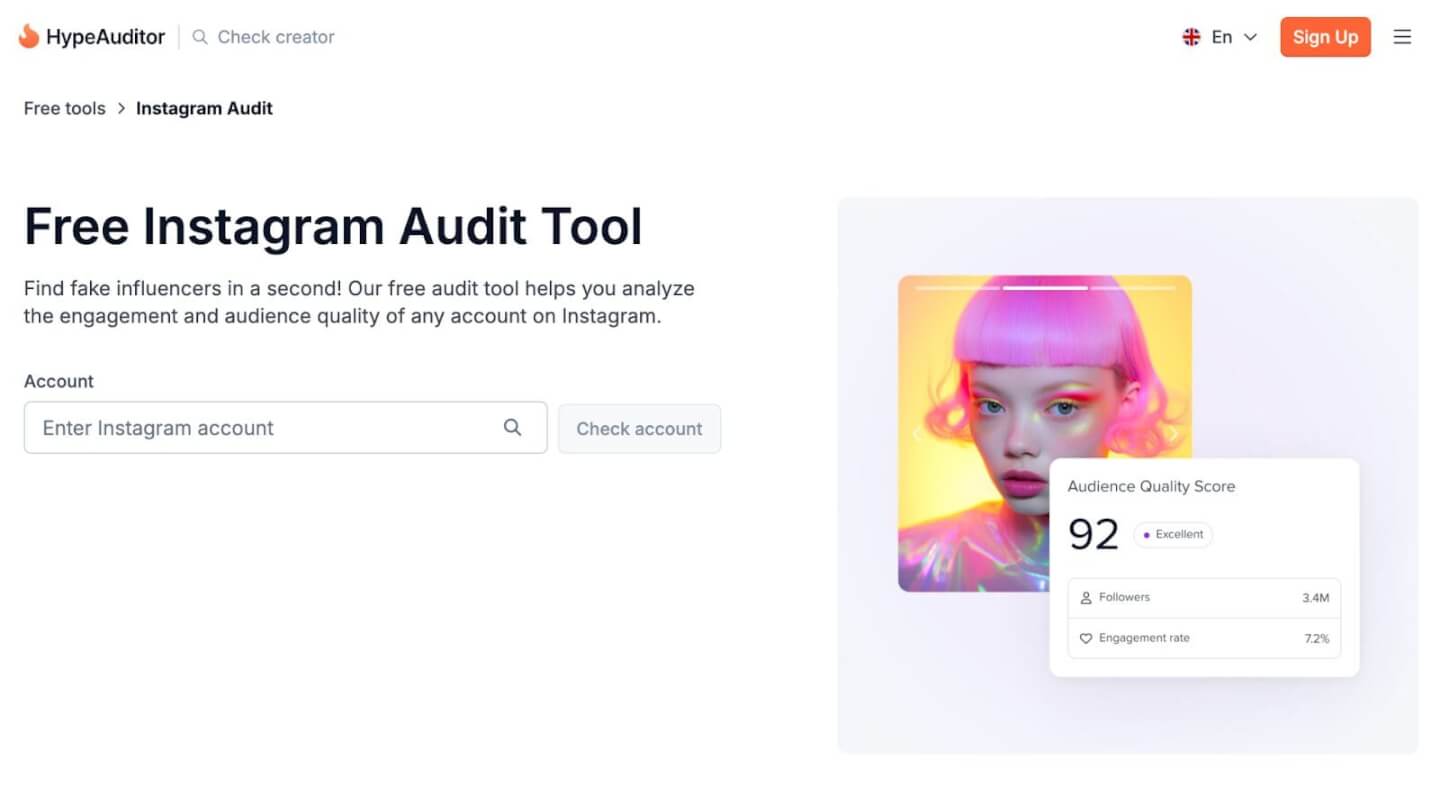
HypeAuditor is a well-known name in the influencer analytics space, and for good reason. It offers one of the most robust Instagram audit and fake follower detection tools on the market. HypeAuditor’s Free Instagram Audit feature lets you analyze any public Instagram account to assess its audience quality and engagement authenticity. In fact, the tagline on their site boldly promises: “Find fake influencers in a second!”. For brands worried about influencer fraud, HypeAuditor is a go-to solution.
When you run an Instagram handle through HypeAuditor’s audit, you receive a detailed report covering:
Many in the industry credit HypeAuditor for shining a light on the dark underbelly of fake followers. It has become a staple tool for influencer marketing agencies and brands doing due diligence. In fact, follower audit tools like HypeAuditor have seen usage jump 43% recently among brands vetting influencers – a testament to how critical this kind of auditing has become in the era of fake follower inflation.
HypeAuditor isn’t just a free tool; it also offers premium plans for deeper analysis and ongoing monitoring. But if you’re just looking to spot-check an influencer’s legitimacy, the free audit is extremely handy. Simply enter the Instagram username and you get a report without needing to install anything (they also offer a convenient web-based interface and even a Chrome extension).
For those who need to audit multiple accounts or want to integrate this into a workflow, HypeAuditor’s broader platform can manage YouTube, TikTok, and other channels too – but for Instagram specifically, it remains one of the best fake follower checkers available. If influencer fraud detection is your primary concern, HypeAuditor is tough to beat on accuracy. Many other tools (even free ones on sites like Influencer Marketing Hub) actually partner with HypeAuditor’s engine to power their fake follower checks, which speaks to the trust it’s earned in the industry.
Modash is another top-tier tool for auditing Instagram audiences, with a strong focus on e-commerce brands and Shopify merchants running influencer campaigns. Modash provides a free Instagram Fake Follower Checker that goes beyond just flagging fake followers. It’s positioned as a full influencer analysis tool: “Check fake followers (and so much more)”, as they put it.
Using Modash’s free audit tool, you can input an Instagram creator’s handle and instantly get a variety of metrics, including:
In essence, Modash’s free audit delivers a mini-report that feels very comprehensive for a free tool. If you need fresh, up-to-date data or to audit many accounts at once, they prompt you to sign up for their full platform – which is actually a powerful influencer marketing platform in its own right, similar to Stack Influence in that it offers influencer discovery, campaign management, etc. For the purposes of auditing, though, the free tool is usually enough to get a quick read on an influencer’s authenticity and performance.
One thing that stands out: Modash was specifically mentioned in industry reports for its growth – it’s become a popular choice for brands to vet influencers. Given the boom in influencer marketing for e-commerce, many Shopify brands use Modash to verify Instagram influencers’ accounts at scale. This focus shows in features like being able to bulk-check lots of influencer accounts for fake followers in seconds – a lifesaver if you have a long list of creators to screen.
For Amazon sellers or online brands that rely on influencer collaborations, Modash can streamline the vetting process and ensure you’re not engaging with influencers who have bought their popularity. It’s worth noting that Modash provides guidance on how to spot fake followers manually (like checking for profiles with no photos, generic comments, etc.) – but also rightly points out that doing this at scale manually is near impossible, which is why their automated tool is so helpful.
In summary, use Modash’s free audit to quickly check any Instagram account’s follower quality and engagement. If you need to go deeper or manage an entire influencer program, Modash’s paid platform can be a strong ally as well. It’s a user-friendly solution with an interface geared toward marketers, and it even encourages sharing (they’ve been known to support users who link to their tool, showing a pretty friendly approach to the community!).
Phlanx offers a popular Instagram Engagement Calculator and influencer audit feature that has been around for a few years, often used for quick checks. Phlanx’s platform includes various marketing tools (like influencer directories and collaboration boards), but a key feature relevant here is their Instagram Influencer Auditor. This tool is straightforward: you enter an Instagram account, and Phlanx will return metrics such as engagement rate, average likes/comments, and an assessment of how “effective” the account is.
Phlanx is especially known for its engagement rate analysis. If all you need is to gauge an influencer’s engagement at a glance, Phlanx’s calculator does the job with no frills. It calculates engagement by taking into account the number of followers and the average likes/comments on recent posts, giving you a percentage. It’s a quick indicator of how actively the audience interacts.
Beyond engagement, Phlanx’s Instagram auditor might show a basic authenticity check. It doesn’t dive as deeply into fake follower detection as HypeAuditor or Modash, but it’s useful for a fast, top-level audit. For instance, if an influencer has 100k followers but Phlanx shows an engagement rate of 0.5%, that’s a red flag you’d likely want to investigate further. In contrast, a solid micro-influencer might have an engagement rate of 5% or more, which Phlanx would highlight as above average.
One perk of Phlanx is that many of its features are free (with some requiring a free account sign-up). They do offer a paid subscription for expanded capabilities (their plans range roughly from $49 to $100/month for agencies using all features), but if you just need the engagement auditor, you can use the free version or free trial.
Phlanx also integrates other influencer marketing utilities (directories, contract templates, etc.), but those are outside the scope of a profile audit. If you’re focusing on Instagram audits: use Phlanx to compare multiple influencers’ engagement rates quickly. It’s handy when you have a list of candidates and want to shortlist those with healthy engagement. Think of it as a quick triage tool – it can tell you whose metrics look fishy and merit a deeper HypeAuditor-style analysis.
In summary, Phlanx is simple but effective for engagement auditing. It won’t give you a detailed breakdown of fake followers, but it will definitely let you know if an account is active or a zombie. Given how easy it is to use (just plug in an @username), it’s a nice addition to your toolkit when vetting influencers or even checking on your own Instagram performance over time.
Iconosquare is a well-respected social media analytics and management platform, and they offer a neat freebie: a free Instagram audit report. While Iconosquare’s main product is a paid tool for in-depth analytics and scheduling, their free Instagram audit is a great way to get a snapshot of your (or someone else’s) account performance. To use it, you connect your Instagram account and provide an email; Iconosquare then emails you a report that tells you “where you’re shining and where you’re falling flat”.
What does the Iconosquare audit report include? Users report that it provides insights such as:
Because Iconosquare is a broader social media tool, the audit feels more like a coaching report for Instagram. It may not emphasize fake follower detection like the specialized tools, but it’s excellent for a holistic review of an account’s health and content strategy. If you’re an influencer or brand that wants a free “consultation” style audit of your Instagram, this is perfect.
Also, for those managing multiple social profiles, Iconosquare’s paid platform might interest you – it supports not just Instagram but Facebook, TikTok, Twitter, LinkedIn, etc., and offers unified analytics. However, even if you don’t opt for the full platform, taking advantage of the free Instagram audit email is a no-brainer. It’s quick and can validate things you suspect about your profile or reveal blind spots you hadn’t considered.
To use it, visit Iconosquare’s website, find their “Free Instagram Audit” feature, and follow the prompts to connect your account. It’s a clever way Iconosquare showcases their capabilities, and for the user it’s a valuable report card on your Instagram presence – for free.
The Instagram ecosystem is rich with tools, and while the ones above are among the best and most popular, there are a few more worth mentioning briefly:
Each of these tools addresses a specific need – whether it’s a quick authenticity check, a deep analytics dive, or ongoing monitoring. The good news is many of them have free versions or trials, so you can test out a combination to cover all your bases.
In the fast-evolving world of influencer marketing, knowledge is power. Instagram audit tools provide that knowledge by peeling back the curtain on follower quality, engagement authenticity, and content performance. Whether you’re a brand ensuring your influencer partners are the real deal, an Amazon seller looking to maximize ROI on product seeding campaigns, or a content creator aiming to improve your own profile, these tools are indispensable. They help you separate real influence from fake hype.
To recap some key points: Micro-influencers can deliver outsized engagement and authentic content (UGC) for brands, but only if their followings are genuine. A thorough audit can confirm if that micro-influencer with 20k followers truly has an engaged community or if half of those followers are bots. Likewise, bigger influencers might offer huge reach, but an audit will reveal if 20%+ of their followers are fake (as is often the case for mega accounts). Having this data allows marketers to negotiate better, choose better partners, and ultimately run more effective campaigns.
The tools we discussed – Stack Influence, Upfluence, HypeAuditor, Modash, Phlanx, Iconosquare, and others – each contribute to this data-driven approach. In fact, savvy marketers often use a combination: for example, using HypeAuditor or Modash to vet for fakes, Iconosquare or Sprout Social to analyze content strategy, and Stack Influence or similar platforms to manage and track campaigns at scale. The end result is an influencer marketing strategy that’s rooted in transparency and accountability.
As a final takeaway, remember that an audit tool is a means to an end. The goal isn’t just to call out fake followers – it’s to find and foster authentic engagement. Influencer marketing works best when influencers have genuine connections with their audience. Use these tools to find those influencers (or become one yourself), and you’ll build more trust with your target customers. With Instagram continuing to grow and play a major role in social commerce, investing time in auditing and optimizing your Instagram presence is absolutely worth it.
Armed with these best Instagram audit tools, you can confidently navigate the influencer landscape, make informed decisions, and focus on partnerships that truly deliver value. Here’s to smarter (and more authentic) influencer marketing in 2025 and beyond!
Affiliate marketing is a powerful revenue driver for brands, accounting for roughly 16% of all online orders in the U.S. In fact, 80% of brands run an affiliate program to boost e-commerce sales. However, managing an extensive affiliate network manually can become time-consuming and inefficient as your program grows. This is where affiliate marketing automation comes into play. By leveraging the right tools and strategies, companies can streamline tedious processes, improve tracking accuracy, and scale their programs to drive more revenue with less overhead. In this blog, we’ll explore why automating your affiliate program is crucial, the top tools and tactics for automation, and how embracing micro-influencers and user-generated content (UGC) can supercharge your results. Let’s dive in!
Running an affiliate program involves tracking links, handling payouts, recruiting partners, and analyzing performance data. Doing all of this by hand is prone to error and limits your growth. Here are some key reasons automation is a game-changer for affiliate marketing:
In short, automating your affiliate program management means you can scale faster and more efficiently, while maintaining accuracy and partner satisfaction. Next, let’s look at the essential tools that make this possible.
Implementing the right tools is critical to streamlining your affiliate program. Modern affiliate marketing platforms and software can take care of everything from tracking to payouts. Here are the top categories of tools to consider:
By investing in these tool categories, you’ll set a strong foundation for automation. Many all-in-one influencer/affiliate marketing platforms encompass multiple functions above under one roof, simplifying your tech stack. The next step is implementing smart automation strategies in your workflow.
Having the tools is great, but you also need the right tactics to fully leverage automation. Here are some best practices and strategies for scaling your affiliate program efficiently:
By applying these strategies, managing a large affiliate program becomes far more feasible. Essentially, you create scalable workflows: whether you have 10 affiliates or 1,000+, the process to onboard, equip, and pay them runs smoothly with minimal manual oversight. This sets the stage for explosive program growth without the usual growing pains.

One of the most effective ways to scale an affiliate program today is by partnering with AI in eCommerce and content creators as your affiliates. These are individuals on social media (Instagram, TikTok, YouTube, blogs, etc.) who might have smaller follower counts (often in the thousands or tens of thousands), but their audiences are highly engaged and niche-specific. Collaborating with micro-influencers combines the strengths of influencer marketing with the performance-based model of affiliate marketing – a powerful combo for e-commerce brands and Amazon sellers alike.
Micro-influencers excel at producing authentic, relatable content that resonates with consumers. Their product recommendations often feel like advice from a friend, which builds trust. It’s no surprise that 88% of consumers have been inspired by an influencer to make a purchase. When these creators become affiliates, they not only drive sales through their referral links or codes, but they also generate user-generated content (UGC) in the form of reviews, unboxing videos, social posts, and more. UGC is marketing gold: 90% of consumers say authenticity is important in deciding which brands to support, and content created by real users is perceived as the most authentic of all. By leveraging micro-influencer affiliates, brands get both the immediate sales from conversions and a library of authentic UGC that can be repurposed across social media, product pages, or ads to boost credibility.
From a performance standpoint, micro-influencers often “punch above their weight.” As the chart above illustrated, they can have engagement rates around 10% (far higher than the few percent typical of bigger celebrities) and deliver a significantly higher ROI on marketing spend. This is partially because they are cost-effective to work with (many are happy to promote products for a free sample or modest fee) and partially because their audiences trust them deeply. For an affiliate program, this means a network of micro-influencers can generate a steady stream of sales without requiring large payouts upfront – you reward them via commissions on actual results. It’s a win-win scenario: the influencer earns as their followers buy, and you acquire customers with a minimal up-front marketing cost.
Even major marketplaces have acknowledged the power of influencer-driven affiliate marketing. For example, Amazon’s Influencer Program allows approved content creators – from micro-influencers to celebrities – to create their own curated Amazon storefronts and earn commissions on any sales they drive to Amazon. Amazon sellers benefit because influencers promote products to their followers, who can then purchase easily on Amazon via the affiliate link, boosting the product’s ranking and sales velocity. This illustrates how integrating influencers into your affiliate strategy can amplify reach on huge e-commerce platforms.
The key to success when scaling with micro-influencers is automation. Managing dozens or hundreds of individual creators manually can be overwhelming. This is where using the tools and strategies discussed earlier becomes critical – for instance, using a platform to discover and invite relevant micro-influencers in your niche, automatically providing them with tracking links or codes, and streamlining communication (perhaps even through an online portal or dashboard for influencers). By automating the logistics, you can effectively nurture a large community of micro-influencer affiliates who continuously produce content and sales for your brand.
Stack Influence is one platform that stands out in this realm, offering an all-in-one solution to help brands scale micro-influencer affiliate campaigns efficiently. It specializes in automating product seeding campaigns and managing a vast network of everyday creators for e-commerce brands. By tapping into such a platform, businesses (including Amazon sellers) can connect with thousands of niche content creators and turn them into affiliate partners, generating authentic UGC and steady sales growth without the heavy lifting. Stack Influence’s approach exemplifies how blending influencer marketing with affiliate automation can drive impressive results at scale.
Scaling an affiliate marketing program efficiently requires a combination of the right technology and strategic execution. By automating core processes – from tracking and link generation to outreach and payments – you eliminate bottlenecks that typically hold programs back. This lets you focus on building relationships and optimizing performance, rather than getting buried in administrative tasks. At the same time, embracing micro-influencers and content creators as affiliates infuses your program with authentic promotion and high-engagement content, which translates into higher conversion rates and stronger brand trust.
In today’s fast-paced digital commerce environment, an automated affiliate program can be a game-changer for growth. Whether you’re an emerging D2C brand or an established online retailer, leveraging affiliate marketing automation will help you scale your program efficiently and profitably. You’ll be able to handle more partners, more campaigns, and ultimately drive more revenue – all while keeping your workload under control. Now is the time to audit your affiliate setup, adopt some of the tools and tactics we discussed, and take your program to the next level. With a smart, automated approach, you can turn affiliate marketing into a self-sustaining engine of growth for your e-commerce business.
Influencer marketing has evolved from a buzzworthy experiment into a core strategy for many brands – especially in the e-commerce space. With global influencer marketing spend soaring from $9.7 billion in 2020 to over $32.5 billion in 2025, more than 75% of marketers now dedicate part of their budget to influencer campaigns. But with this growth comes pressure to prove the ROI and effectiveness of influencer partnerships. In other words, brands and Amazon sellers need to track the right Key Performance Indicators (KPIs) to ensure those collabs with content creators are actually moving the needle. KPIs for influencer marketing range from “soft” metrics like reach and engagement to “hard” metrics like clicks, conversions, and sales revenue. Tracking these KPIs is how you demonstrate tangible results (not just likes for vanity’s sake) and continually optimize your influencer marketing strategy.
In this article, we’ll break down the essential KPIs for influencer marketing and how to use them, with a special focus on micro-influencers, e-commerce brands, and Amazon sellers. Whether you’re partnering with a single Instagram star or running a large-scale micro-influencer campaign, understanding these metrics will help you gauge success and get the most out of your influencer budget. Let’s dive in!
Simply put, if you’re not measuring it, you can’t improve it. Having clear KPIs for influencer campaigns is crucial because it:
What exactly is a KPI? It stands for Key Performance Indicator – essentially, a measurable metric tied to your campaign goals. The key is alignment: if your goal is brand awareness, you’ll likely focus on reach and engagement KPIs; if your goal is e-commerce sales, you’ll emphasize clicks, conversions and ROI. According to a recent industry benchmark, the most common metrics for measuring influencer marketing success are views, reach, and impressions – highlighting how important those awareness indicators are. However, those aren’t the only numbers to watch. In the sections below, we’ll explore all the major KPIs you should track for influencer campaigns, from audience reach to return on investment.
Before we jump in, remember that data is your friend. A data-driven approach can transform your influencer marketing. In fact, 68% of marketers monitor their influencer campaigns on at least a weekly (if not daily) basis – because keeping a pulse on these metrics lets you react in real time and maximize results. Now, let’s break down the key influencer marketing KPIs and how to leverage them.

When running an influencer marketing campaign, you’ll want to track a mix of metrics that together tell the story of performance. Here are the core KPI categories and specific metrics under each:

Not all influencers are created equal. In recent years, micro-influencers (usually defined as having roughly 5,000–100,000 followers) and even nano-influencers (<5k followers) have emerged as powerhouse partners for brands – often outperforming bigger “celebrity” influencers on key metrics. If you’re debating partnering with one mega-influencer versus a team of smaller creators, consider these points backed by data:
In summary, bigger isn’t always better in influencer marketing. If your goal is to maximize meaningful engagement and sales on a limited budget, collaborating with a network of micro-influencers can often yield better KPI outcomes than one big-name influencer. This is especially true for brands targeting specific niches or communities – the micro approach lets you penetrate those niches authentically. No wonder many marketers are shifting strategy to build “armies” of smaller creators rather than putting all their spend behind a single celebrity endorsement.
To see how tracking influencer KPIs works in practice, let’s look at a real case study. Stack Influence (a micro-influencer platform) ran a campaign for Blueland, an eco-friendly cleaning products brand, focused on driving sales on Amazon. The campaign enlisted 211 micro-influencers to create content and promote Blueland’s Amazon product listings. By meticulously tracking both awareness and sales metrics, they demonstrated the power of micro-influencer marketing. Here are the highlights:
This Blueland case study is a powerful proof-point: by using the right KPIs and tracking methods, an e-commerce brand could clearly see the value of investing in micro-influencers. It turned influencer marketing from something of a faith-based initiative (“we think this helps sales”) into a data-demonstrated growth driver. Every brand’s numbers will differ, but the formula of clear goals + multiple KPIs tracked + micro-influencer strategy can yield similar magic.
Knowing which KPIs to track is half the battle – the other half is executing a plan to measure and improve those metrics. Here are some tips and best practices to help you get the most out of your influencer marketing KPIs:
By implementing the above practices, you’ll create a cycle of improvement for your influencer marketing. The key is to be intentional and data-driven: plan your tracking, measure what happens, and feed those learnings back into your strategy. Platforms like Stack Influence can assist in this process by helping validate micro-influencers and manage campaigns at scale, but even if you’re doing it manually, the principles remain the same. When you treat influencer campaigns with the same rigor as other marketing channels (with clear KPIs and optimization), you’ll find they can drive serious results for your e-commerce brand.
Influencer marketing isn’t just about finding people with big followings – it’s about achieving your business goals through creative partnerships. And to know if you’ve succeeded, you must track the right KPIs. From reach and engagement rates that show brand buzz, to clicks and conversion rates that show real customer action, each metric gives you a piece of the puzzle. The magic happens when you put it all together to see the full picture of your campaign’s impact.
For e-commerce brand owners and marketers, the takeaway is clear: start treating influencer campaigns like you would any performance marketing effort. Set goals, track diligently, and be ready to pivot based on what the data tells you. When you do, you can turn influencer marketing from a leap of faith into a reliable, scalable growth channel. And as we saw, micro-influencers in particular offer a sweet spot of authenticity, engagement, and ROI that shouldn’t be overlooked – sometimes smaller really is mightier!
In the fast-paced world of social media, trends and algorithms will always change, but a focus on measurable results never goes out of style. So use these KPIs as your compass. With each campaign, you’ll get smarter about what drives success for your brand. Over time, you’ll not only build great relationships with influencers and customers, but also a playbook of data-driven insights to keep improving. Here’s to making every influencer collaboration count – and watching those KPIs climb. Happy tracking and may your influencer marketing efforts yield high returns!
Building a loyal brand community has become essential in modern marketing. In fact, over 70% of brands already have an active community, and another 26% plan to build one soon. Why? Because people trust peers and community content far more than ads. A Nielsen survey found 92% of consumers trust recommendations from friends and family above all forms of advertising. When customers feel connected — sharing stories, creating content, or giving feedback — it creates powerful social proof that drives engagement and sales.
In this post, we’ll explore the top 10 best examples of brands active in their communities. These real-world examples (inspired by some all-time favorites) show how companies large and small are engaging fans on social media and beyond. From micro-influencer collaborations to user-generated content (UGC) campaigns, each example illustrates a clever way to activate a community. Let’s dive in!
View this post on Instagram A post shared by Sephora (@sephora)
Sephora has built one of the most vibrant brand communities in retail. The cosmetics retailer created an online platform called Sephora Beauty Insider Community where customers, employees, and even professional makeup artists converge to talk all things beauty. Members upload photos of their makeup looks, ask product questions, swap tips, and join interest-based groups – essentially becoming brand ambassadors themselves in an organically growing community. The brilliant part? Sephora doesn’t have to lead every conversation. Users enthusiastically help each other, so the community largely runs on peer-to-peer interaction. Sephora simply keeps the space running and chimes in where needed, fostering a positive environment for beauty lovers.
On top of this, Sephora launched the Sephora Squad, a program that hand-picks influencers and loyal fans to share personal beauty stories as brand ambassadors. This initiative inserts Sephora into intimate, authentic conversations online and on social media. By passing the mic to their community, Sephora earns trust and buzz without relying on traditional ads. It’s a stellar example of a brand being active in its community – listening, facilitating, and celebrating members’ voices.
View this post on Instagram A post shared by LEGO (@lego)
The LEGO Ideas community is a textbook example of turning passionate customers into an active creative force. On the LEGO Ideas platform, fans submit their own original LEGO set ideas and designs. Community members can participate in contests, vote on their favorite fan-created projects, and even collaborate on ideas. If an idea gains enough support, LEGO might turn it into an official product (with credit to the fan designer).
This community-driven approach makes fans feel heard and valued. Whether someone spends a weekend building a fun scene or years perfecting a new model concept, everyone’s input is welcome. Every voice is heard – from casual hobbyists to die-hard builders. LEGO’s role is mainly to provide the platform and occasional guidance, while the enthusiasts fuel the content. By encouraging user creativity and interaction, LEGO keeps its brand relevant and beloved across generations. It’s not just a toy company selling bricks; it’s a community where imagination and shared passion take center stage.
View this post on Instagram A post shared by Lay's (@lays)
Potato chip brand Lay’s turned a community engagement campaign into product innovation gold. Their famous “Do Us A Flavor” contest invited fans to dream up new potato chip flavors and submit their ideas. The best suggestions were actually produced and sold, with the ultimate winner earning a $1 million prize! This crowdsourced approach not only generated tons of buzz on social media, but also gave Lay’s direct insight into what their customers craved.
Each round of the contest sparked massive conversation among snack fans – people debating crazy flavor ideas (wasabi ginger? chicken & waffles?), campaigning for their favorites, and sharing posts to rally votes. By listening to their fan base in such a public way, Lay’s showed it truly values customer input. The result: new hit flavors born from the community, free PR from excited fan engagement, and a sense of ownership for participants. Lay’s effectively activated its community by letting fans co-create the product line, strengthening loyalty through a fun, interactive challenge.
View this post on Instagram A post shared by Starbucks (@starbucks)
When it comes to community-building via loyalty, Starbucks is king. The Starbucks Rewards mobile app isn’t just a way to pay for coffee – it’s a community portal for millions of caffeine lovers. The app lets members order ahead, earn stars (points) for free drinks and perks, celebrate birthdays with treats, and more. It has become the most popular restaurant loyalty app (one study even found it’s responsible for 39% of Starbucks’ total sales in certain markets). The genius of Starbucks’ approach is how it makes customers feel part of an exclusive club. Users proudly share their Gold status, collect limited-edition app badges, and even discuss new reward features on social media.
Starbucks constantly updates its program based on feedback – recently adding tiered rewards (e.g. free espresso shots or alternative milks at lower point levels) and allowing points to redeem merchandise, not just drinks. They’ve turned a typical rewards scheme into a dynamic brand community experience. Every mobile order or points redemption reinforces a personal connection. And because the app integrates with social sharing (and occasionally fun games or challenges), it keeps customers actively engaging with the brand beyond just purchases. It’s a great example of rewarding community participation, which in turn drives more loyalty.
View this post on Instagram A post shared by apple (@apple)
Apple’s marketing is legendary, but one of its most community-driven moves was the “Shot on iPhone” campaign. Rather than rely solely on slick ads, Apple began curating photos and videos actually taken by everyday iPhone users and showcasing them in huge ways – from billboards and subway ads to TV spots. The content featured real moments: a concert crowd, a serene nature scene, a candid family snapshot. By elevating user-generated content to global ad campaigns, Apple tapped into an authentic storytelling vibe. Consumers saw the beauty in real life moments captured by people like them, which was far more relatable than any staged photoshoot.
This campaign made iPhone owners feel like part of an exclusive creative community. Users would tag their photos with #ShotOniPhone on socials for a chance to be featured, generating viral excitement. Essentially, Apple turned its users into creators and brand ambassadors without any formal program – just by curating and crediting their work. The result was not only stunning content, but a sense of community pride among iPhone users. It’s a brilliant example of how activating your community’s creativity (and giving them the spotlight) can humanize a brand while highlighting the product’s value.
View this post on Instagram A post shared by Glossier (@glossier)
Glossier is often cited as a brand that was born from its community. The beauty company started as Into The Gloss, a blog where real people shared makeup tips and product reviews. Listening to that community’s needs, founder Emily Weiss developed Glossier’s first products – essentially co-creating with her audience. Today, Glossier continues to treat its customers as collaborators and muses. The brand’s website and social channels regularly feature real customers and content creators (not just models), showcasing skin routines or styling tips in their own words. As Glossier states, “Our community is a constant source of inspiration.”
This approach has paid off tremendously. Glossier surpassed $100 million in revenue relatively quickly, fueled by word-of-mouth and organic hype from fans. They succeed by keeping a two-way dialogue: asking for feedback, incorporating fan ideas, and spotlighting community members in marketing campaigns. It feels less like a company pushing products, and more like a friend sharing something they love. For example, Glossier’s social media often reposts customers’ posts (UGC) proudly, and even its product development pipeline is influenced by what the community asks for. By building the brand with its community, Glossier has achieved cult status in the crowded beauty market – a testament to the power of listening and engaging authentically.
View this post on Instagram A post shared by Chewy (@chewy)
Chewy, the online pet supplies retailer, has earned a stellar reputation for customer-centric community engagement. One charming example: Chewy’s #ChewyBoxLove campaign. With every delivery, Chewy includes a little note encouraging pet parents to share a photo of their furry friend playing with the Chewy shipping box on social media. This simple call-to-action spawned a wave of adorable pet photos on Instagram, Twitter, and Facebook – all featuring Chewy boxes and happy customers. It’s basically free UGC advertising, powered by genuine pet-lover enthusiasm. One Facebook post inviting customers to join the fun racked up 1,500+ comments from excited fans sharing pet pics.
Chewy’s social media team also actively surprises and delights individual customers, which amplifies community goodwill. There are stories of Chewy sending hand-painted portraits of people’s pets after they posted about a loss, or quickly solving issues with personal replies. Pet owners often rave about these experiences on Reddit and forums. By treating customers like family and engaging with them one-on-one online, Chewy has turned shoppers into a loyal community that advocates for the brand. It’s a great lesson that little gestures (a friendly note, a thoughtful response) can spark huge waves of positive engagement.
View this post on Instagram A post shared by Domino's Pizza (@dominos)
Fast-food chain Domino’s is surprisingly innovative when it comes to activating its online community. They’ve launched several clever social campaigns that got people talking (and ordering pizza). One standout was the tweet-to-order system, where loyal customers could order a pizza by simply tweeting the 🍕 emoji to the Domino’s Twitter account. This fun stunt generated tons of retweets and made loyal fans feel like insiders with a direct line to the kitchen. Another campaign, #LetsDoLunch, offered a special discount that got bigger the more people tweeted about it – essentially a social media flash mob for cheaper pizza. The community had to work together (tweeting en masse) to unlock the best deal, making it a shared event.
Domino’s also created a Pizza Legends web platform allowing fans to design their own custom pizza, give it a name, and then share their creation on social media. People loved showing off their wacky pizza ideas, and it subtly turned them into brand content creators. All these campaigns encouraged Domino’s fans to engage online and spread the word in a playful way. By meeting customers where they already hang out (Twitter, Facebook, etc.) and gamifying the experience, Domino’s sparked two-way conversations. It’s a prime example of a brand being active in its social community, not just by posting content, but by creating interactive experiences that users can participate in together.
View this post on Instagram A post shared by Red Bull (@redbull)
Few brands have built a community around extreme experiences like Red Bull. The energy drink’s marketing famously focuses on adrenaline sports, but it goes beyond sponsoring events – Red Bull actively partners with its community of thrill-seekers to create jaw-dropping moments. The pinnacle of this was Red Bull Stratos, a multi-year project where Red Bull teamed up with skydiver Felix Baumgartner to attempt a world-record freefall from the stratosphere. This was insane community content: with Red Bull’s support, Felix ascended 24 miles up and then jumped, becoming the first person to break the sound barrier in freefall. Millions watched live online as a man literally “got wings.”
The Stratos project exemplifies Red Bull’s approach: give passionate individuals a platform to achieve the extraordinary, and in turn inspire the global community. Extreme sports enthusiasts worldwide feel a kinship with Red Bull because the brand isn’t just marketing to them – it’s creating content with them. Beyond Stratos, Red Bull constantly features athletes’ wild stunts, runs community competitions (Flugtag, anyone?), and produces videos that fans share like crazy. The brand’s social channels feel more like a community hub for adventure junkies than advertisements. By empowering community members (athletes, creators, fans) to push limits and share their stories, Red Bull has built an almost cult-like following. It’s a high-octane example of activating a community through shared passion.
View this post on Instagram A post shared by Rent the Runway (@renttherunway)
Fashion rental service Rent the Runway turbocharged its community growth with an ambassador program, especially on college campuses. The idea: recruit passionate customers (often college students interested in fashion) to act as brand ambassadors in their own circles. These ambassadors each get a unique referral code and resources to promote Rent the Runway via social media, word-of-mouth, and in-person events. For every new customer they bring in, ambassadors earn perks like free rentals, exclusive products, and even invites to company retreats. It’s a win-win – ambassadors gain experience and cool rewards, while Rent the Runway extends its reach into niche communities through authentic advocates.
This program essentially turns micro influencers into a driving force for the brand. A student with a few thousand engaged Instagram followers, for example, might have far more sway on her campus friends than any big celebrity could. In fact, micro influencers often see about 60% higher engagement (per follower) than mega-influencers. (According to an analysis by Stack Influence, micro-influencers on Instagram average ~3.8% engagement vs. ~1.2% for much larger accounts.) By leveraging these highly engaged community members, Rent the Runway created a grassroots marketing engine. The ambassadors host styling parties, share outfit photos, and act as relatable touchpoints for the brand. It feels less like advertising and more like friends sharing fashion tips, which is exactly the vibe that drives community-based growth in the social media era.
As these top 10 best examples of brands active in their communities show, there’s no one-size-fits-all method to community building – but there are some common themes. In summary, brands that successfully activate their communities do so by putting people first. They empower fans to share stories, they celebrate user contributions, and they create channels for genuine interaction. From influencer marketing initiatives to grassroots social campaigns, the common thread is authenticity. If you nurture your brand’s community with sincere engagement and mutual value, you won’t just gain customers – you’ll gain passionate advocates. And as the examples above prove, those community advocates can take your brand to heights that traditional marketing alone could never reach.