
The latest info on influencer marketing trends, micro influencer news, and the world of social media

Finding the right YouTube influencers can supercharge your marketing – especially for e-commerce brands and Amazon sellers looking to boost product visibility. YouTube is now an influencer marketing powerhouse, with more than half of U.S. marketers planning to leverage YouTube creators in 2025 and spending projected to hit $2.35 billion on YouTube influencer campaigns (the highest of any platform). These YouTube content creators produce engaging, authentic videos that drive product discovery and user-generated content (UGC) your audience trusts. In fact, UGC thrives on YouTube, as viewers actively seek out long-form videos by real people – giving brands evergreen exposure through influencer reviews, unboxings, and tutorials.
Collaborating with YouTube influencers (from mega-stars to niche micro influencers) lets you tap into their loyal communities and build credibility for your products. Smaller micro-influencers often have highly engaged, trust-driven audiences in specific niches – making them ideal for targeting niche e-commerce markets without the hefty price tag of celebrity influencers. Whether you’re launching a new product on your Shopify store or trying to improve your Amazon listing with social proof, partnering with the right YouTube creators can yield impressive ROI in terms of traffic, reviews, and sales. The big question is: how do you find these YouTube influencers who align with your brand and goals? Below, we outline seven proven ways (with SEO-friendly tips) to discover and connect with YouTube influencers who can help grow your business.
To find the perfect YouTube partners for your influencer marketing campaign, use a mix of the strategies below. These methods range from leveraging high-tech platforms to old-fashioned research. Let’s dive in:
One of the fastest ways to discover relevant YouTube influencers is by using a specialized influencer marketing platform or database. These tools (often powered by AI-driven search and filters) allow you to pinpoint creators by niche, audience demographics, location, subscriber count, engagement rate, and more. For example, some platforms let you filter YouTubers by topics or keywords (beauty, tech, gaming, etc.) and audience criteria, then instantly list thousands of matching creators. This beats manual searching and ensures you don’t miss hidden gems. Many influencer platforms focus on micro-influencers, who tend to have between a few thousand and ~100k followers. While they have smaller reach, micro influencers often deliver higher engagement and authenticity for niche products. Crucially for brands on a budget, micro-influencers are far more cost-effective than top YouTube celebrities. A YouTube micro-influencer (10K–100K subscribers) might charge only a few hundred to a few thousand dollars per sponsored video, whereas a creator with millions of subscribers can command tens of thousands for a single integration. Using a platform helps you find these affordable creators who still have strong influence in your niche.In addition to cost and filtering benefits, influencer platforms often provide contact info and analytics to vet creators. Some even handle outreach and campaign management for you. Stack Influence is one example of an end-to-end micro-influencer platform that makes finding and managing creators easier. Such platforms can be a game-changer for e-commerce and Amazon sellers – in fact, Stack Influence was among the first to cater services specifically to Amazon sellers, helping brands get product reviews, drive traffic, and boost Amazon rankings through micro-influencer campaigns. If efficiency is your priority, starting with an influencer marketplace or discovery tool can save you tons of time and quickly surface the right YouTube content creators for your brand.
Another straightforward (and free) way to find YouTube influencers is by using YouTube’s own search and discovery features. Start by searching relevant keywords related to your product, industry, or audience interests. For instance, a skincare e-commerce brand might search for “skincare routine” or “best moisturizers 2025” on YouTube – the top video results and channels for those queries are likely influencers in that space. Be specific: include niche terms or product types to find creators who cover exactly what you sell. You can also use hashtags on YouTube; many creators add hashtags like #skincare or #techreviews in their video descriptions to increase discoverability. Clicking on a hashtag shows you a list of videos and channels using that tag, which can uncover thousands of potential influencers in your niche.Don’t forget to explore YouTube’s Trending or “Explore” tab as well. YouTube often highlights “Creators on the Rise” and trending videos in various categories. If your niche is broader (e.g. fitness, gaming, beauty), browsing trending sections might reveal up-and-coming YouTubers gaining traction. Additionally, try searching for ad disclosure tags like #sponsored or #ad on YouTube. This is a pro-tip: creators who have “#ad” in their video titles or descriptions have done paid promotions before, meaning they’re open to brand partnerships. By searching those terms alongside your niche (e.g. “#ad tech review” or “#sponsored beauty haul”), you can find influencers who not only fit your market but also have experience collaborating with brands. Leverage YouTube’s filters as needed – you can filter by upload date (to find active creators), view count, or channel to refine your results. With some clever searching, YouTube itself can be a goldmine for identifying influencers who are already producing content in your product category.
Google is your friend when hunting for influencers beyond what you find on YouTube. A simple Google search can surface curated lists, articles, and rankings of top YouTube creators in different niches. Marketers and bloggers often publish listicles like “Top 10 YouTube Influencers in ” or “Best YouTubers for ”. Use specific queries to find these; for example: “top finance YouTube influencers 2025” or “best YouTube review channels for gadgets”. By including keywords like “YouTube influencers” plus your niche and perhaps a location or year, you’ll likely find pre-curated lists that align closely with your needs. This approach is simple and free, though it may yield some overlapping names (big influencers tend to appear on many lists). It’s especially useful for discovering well-known creators in your industry or region. When using Google, be as specific as possible to avoid generic results. For instance, searching “UK fitness YouTube influencers” or “eco-friendly beauty YouTubers 2025” will get you more targeted results than a broad search like “YouTube influencers”. Also, check the Video tab in Google’s results – sometimes popular YouTube videos by influencers will show up there if your query matches their content. Once you find an article or list, make note of the creators mentioned, then visit their YouTube channels to evaluate their content and audience. Google essentially helps you tap into others’ research: if someone has already compiled a list of great influencers in your space, leverage it!

Many YouTube influencers have a presence on other social networks like Instagram, TikTok, Twitter (X), or LinkedIn. You can discover YouTubers by searching on these platforms for clues about creators in your niche. For example, on Instagram try searching relevant hashtags (just like on YouTube) or keywords plus “YouTuber”. A search for #YouTuber or niche tags like #BookTuber (for book-related YouTube creators) or #BeautyYouTuber can reveal profiles of people who identify as YouTube content creators. Often, influencers will promote their YouTube videos on other social media; their bios might even say “YouTuber” or link to their channel. Twitter can also be useful: try searching for phrases like “new video up on my YouTube” along with a topic or hashtag. You might stumble on tweets from smaller creators sharing their latest YouTube content. Hashtag searches on platforms like Instagram/TikTok (e.g. #TechReview, #TravelVlog) not only show popular posts but also often lead to profiles of cross-platform influencers. If you find a candidate on another platform, you can then check if they have a YouTube channel (most will link it in bio). This cross-platform sleuthing helps you find micro-influencers who may not yet appear in top Google results or YouTube’s own discovery, but still have solid YouTube followings. Additionally, consider joining conversations on social media – for instance, ask on Twitter or LinkedIn communities if anyone knows good YouTube creators in your field. Sometimes a simple outreach or post can get you recommendations from your network.
A more grassroots way to find up-and-coming YouTube influencers is by participating in online communities where creators themselves hang out. Influencer forums and groups (on platforms like Reddit, Facebook, Discord, etc.) are places where especially newer or micro YouTubers gather to share tips, collaborate, or seek opportunities. For example, on Reddit there are subreddits like r/YouTubers, r/SmallYoutubers, and r/InfluencerMarketing dedicated to discussions among content creators. Browsing or posting in these communities can help you identify passionate micro-influencers in specific niches. Many small creators use forums to ask for advice and promote their channels, so you might discover someone whose content aligns with your brand. You can even create a post asking for YouTube creators in a certain niche to share their channel, effectively letting influencers come to you. Similarly, Facebook and LinkedIn have groups for content creators and influencers – search for “ influencer community” or “YouTube creators group” on those platforms. Join the groups and observe or engage with posts. Often, you’ll find people sharing their latest videos or collaboration requests. Just be transparent about your intentions and avoid coming off as spammy; genuinely connecting with the community can lead to great referrals. By tapping into these influencer communities, you gain access to a pool of creators who might not be easily found through simple searches, especially micro-influencers who are still growing their channels. It’s a bit more time-intensive, but it can unearth hidden talent and even build relationships for long-term partnerships.
Why start from scratch if you can learn from what others have done? If your competitors or similar brands have run influencer campaigns, take a close look at who they partnered with. Competitor analysis can reveal which YouTube influencers are already active in your industry. For example, if you sell organic snacks and notice a rival brand got a YouTuber to do a taste-test video, that creator could be a good candidate for you as well. Scan YouTube for reviews or unboxings of products similar to yours – the channels behind those videos are likely open to collaborations. Also, follow your competitors on social media; they might announce or share influencer partnerships there. This isn’t to copy everything your competitor does, but to gather intel and potentially work with proven influencers (perhaps positioning your product as a better alternative). As one guide puts it, there’s no need to reinvent the wheel – you can formulate a strong plan by seeing which influencers are effective for competing brands.In addition, leverage your own network and existing influencer relationships. If you’ve worked with influencers on other platforms (Instagram, TikTok) or have brand ambassadors, ask them if they also have a YouTube channel or can refer fellow creators. Influencers often know and collaborate with each other. A friendly referral can introduce you to another trustworthy YouTuber with similar audience demographics. Even within YouTube, many creators appear in each other’s videos or mention friends’ channels. Pay attention to these collaborations – if you’ve already had success with one influencer, check who they team up with and consider those folks as prospects. Finally, don’t overlook your customer base or email list: sometimes your enthusiastic customers might also be content creators. A quick survey or social media ask (“Are any of our followers also YouTubers? Let’s collaborate!”) can surface loyal fans who would love to promote your brand. By combining competitor insights and personal networks, you can build a shortlist of reliable YouTube influencers who are likely to deliver results.

If you’re short on time or want expert help, partnering with an influencer marketing agency can be a viable route. Agencies have dedicated experience in scouting and managing influencer campaigns. They often maintain their own roster of vetted YouTube talent and can match your brand with the right creators based on your campaign goals. For example, an agency can help define your target audience, find influencers that hit those specs, handle outreach and negotiation, coordinate content creation, and track campaign performance. This done-for-you approach is convenient, though it comes at a higher cost (agencies charge fees or take a percentage of campaign spend). For larger brands or those new to influencer marketing, an agency provides guidance to avoid pitfalls and maximize ROI. There are also influencer talent marketplaces and networks (somewhat like agencies, but more platform-driven) where creators are listed for hire. These can overlap with the “platforms” mentioned in point #1, but not always – some marketplaces are geared towards letting influencers apply to brand campaigns. Examples of well-known agencies and platforms include Influencer.co, Viral Nation, AspireIQ, and of course Stack Influence’s own managed platform. The downside is less hands-on control and potentially higher costs, but the upside is professional execution and scale. If you have the budget or need to quickly ramp an influencer program, agencies can quickly find quality YouTube influencers for you and ensure the campaign runs smoothly. Just make sure to research any agency’s track record and ensure their style aligns with your brand’s values before committing.
No matter which of the above methods you use (often the best approach is a combination of several), keep SEO and your campaign goals in mind. Define your target audience and campaign objectives first – know the niche, audience size, and engagement level you’re aiming for. This will help you filter out irrelevant creators. When evaluating potential influencers, look at their content relevancy (do they cover topics related to your product?), their credibility and engagement (do they have real followers and healthy interaction rates?), and their tone/style (does it match your brand voice?). Remember that bigger isn’t always better; a micro-influencer with 20k highly engaged subscribers can drive more e-commerce conversions than a mega influencer with a million disengaged followers. Also consider the type of UGC or content you want – some YouTubers excel at in-depth product reviews, while others might do viral challenges or creative storytelling. Aligning the influencer’s content format with your marketing goals (e.g. getting Amazon review videos vs. general brand awareness) will yield better results.
In summary, finding the right YouTube influencers involves both art and science. Leverage technology (platforms, search tools) for efficiency, but also do the human homework by researching manually, engaging with communities, and building relationships. The seven strategies above will help you compile a strong list of YouTube content creators suited to your brand. From there, focus on outreach and building a genuine partnership that encourages the creator’s authenticity – that’s what resonates most with audiences. With YouTube’s massive reach and engaged viewership, a well-chosen influencer can amplify your e-commerce brand to new heights. Happy hunting for your next YouTube star ambassador!
So you just joined Twitter and keep hearing about “Twitter handles”? It might sound technical, but it’s actually pretty simple. A Twitter handle (sometimes just called a username) is your unique identity on Twitter (now rebranded as “X”). It’s the name that comes after the @ symbol and identifies your account on the platform. For example, if your handle is @CoffeeKing, your profile’s URL would be twitter.com/CoffeeKing. No two people can have the same Twitter handle – once you claim one, it’s yours alone until you delete your account. (This is different from your Twitter display name, which is like a nickname or title on your profile – display names can be longer and don’t have to be unique.) In short, your handle is your personal @username that others use to mention or tag you on Twitter.
Figure: Twitter (X) is among the world’s top social networks by user count, with hundreds of millions of active users. This chart shows the most popular social platforms by monthly active users as of 2024. Even after rebranding to “X,” Twitter remains a key platform for influencers and brands to reach audiences worldwide.
Your Twitter handle isn’t just a formality – it’s a core part of your online identity. Here are a few reasons why having a good handle is important:
In short, a well-chosen Twitter handle makes you look credible, is easy to remember, and helps others discover and tag you – all of which are crucial for growing your presence on social media.
Before you pick out the perfect handle, it helps to know Twitter’s basic rules and requirements for usernames. Here are the key guidelines to keep in mind:
These rules mean you might need a bit of creativity if your first choice handle is taken or doesn’t meet the criteria. The good news is you can change your Twitter handle later via your account settings at any time – you’re not permanently locked in. Now, let’s look at how to pick a handle that works best for you.
Picking a Twitter handle is a big part of shaping your personal or brand identity online. Here are some handy tips (and a few do’s and don’ts) for choosing an effective handle:
1. Use Your Name or Brand: Start with something related to your real name or your business/brand name. Using your actual name makes it straightforward for people to find you. For example, if your name is Jane Doe and you’re known for baking, @JaneDoe or @JaneBakes would immediately tell people who you are.
2. Keep It Consistent: If you’re on other social media platforms, try to use the same username across all of them. Consistency helps greatly with recognition and discoverability – your fans on Instagram or YouTube will recognize you on Twitter if you use the same handle (and it makes cross-promotion easier).
3. Make It Short & Simple: Aim for a handle that’s short, easy to spell, and easy to say. You can use the full 15 characters, but shorter is usually better. A shorter handle is easier for others to remember and it also leaves more room in a tweet when someone mentions you. Likewise, avoid a messy string of random letters or numbers that doesn’t make sense. The goal is to be instantly identifiable.
4. Avoid Numbers and Underscores (If Possible): While they are allowed, a handle full of numbers or multiple underscores can look unprofessional or even “spammy.” In fact, many fake or bot accounts have names like @JohnSmith12345___ with lots of numbers/underscores, which can turn people off. If @JohnSmith is taken, something like @JohnSmithHQ or @TheJohnSmith might be better than @JohnSmith_99.
5. Steer Clear of Offensive or Confusing Terms: This might go without saying, but don’t include profanity, slurs, or overly controversial words in your handle. Not only could it violate Twitter’s policies, it can also alienate potential followers. You want a handle that reflects positively on you or your brand. Similarly, avoid stuffing your handle with generic keywords or salesy phrases – that can come across as spammy and impersonal.
6. Be Unique but Relevant: You want a handle that stands out, but still relates to you. If your brand or content has a specific niche, hint at it in the name in a clever way. For instance, a travel blogger named Alex could use @WanderWithAlex – it’s unique, on-brand, and memorable. Just don’t force too many keywords or gimmicks; clarity and authenticity win out in the long run.
Twitter might have started as a place to share random thoughts in 280 characters, but today it’s an important tool in influencer marketing and online business. If you’re a content creator, influencer, or running an e-commerce brand, your Twitter handle plays a role in shaping your digital brand.
In fact, in today’s competitive e-commerce arena, brands from Shopify startups to Amazon sellers are increasingly turning to micro-influencers to gain an edge. Micro-influencers are everyday content creators with dedicated niche followings, and their authentic style of promotion can build consumer trust in ways traditional ads often cannot. For these collaborations, having a clear and consistent social media identity (starting with your handle) is crucial. Influencer marketing campaigns often span multiple platforms, so using the same handle (or a very similar one) across Twitter, Instagram, TikTok, etc., makes it easy for followers and partner brands to find you. If you’re known as AwesomeTechGuy on YouTube, it helps to be @AwesomeTechGuy (or close to it) on Twitter as well – this consistency reinforces your personal brand.
From the business side, a good Twitter handle helps customers and fans talk about you. For example, if your company is Coffee King Cafe, having the handle @CoffeeKingCafe means that when customers tweet their love for your latte and tag you, all their followers see it. Every mention of your handle by a customer or influencer becomes visible user-generated content (UGC) for your brand. These genuine shout-outs are like digital word-of-mouth. A tweet from a happy customer mentioning your product is basically free promotion – and you can even retweet it or feature it elsewhere. (One influencer’s post can double as UGC that the brand later repurposes in marketing materials.) In short, your handle is how the online community references you, so it’s key to choose one that’s professional and representative of your brand.
Finally, remember that behind every great social media campaign is a network of connections. Platforms like Stack Influence specialize in linking up e-commerce brands with micro-influencers (everyday creators) to run authentic marketing campaigns. In these scenarios, a memorable Twitter handle helps an influencer stand out to both the platform and the brand. It signals consistency and professionalism – imagine a micro-influencer who has the same neat handle on Twitter, Instagram, and TikTok; it’s much easier for a brand to recognize and collaborate with them. Whether you’re an aspiring influencer or a business building an online presence, your handle is a small detail that can have a big impact on your credibility in the social media marketing world.
In summary, your Twitter handle is more than just an @name – it’s you on Twitter. Choosing a good one is worth the effort, especially if you’re looking to grow your audience or build a brand. Keep it simple, true to yourself (or your business), and consistent with your other platforms. With the tips above, even a Twitter beginner can create a handle that leaves a great impression. Now go ahead and claim that awesome handle – and happy tweeting!
In the world of social media marketing, keywords are king – not just on Google, but across Instagram, TikTok, YouTube, LinkedIn and more. Whether you’re an Amazon seller, an e-commerce brand owner, a marketer planning an influencer marketing campaign with micro influencers, or a strategist leveraging UGC (user-generated content) from content creators, using the right keywords can make or break your success. This casual yet comprehensive guide explains why keywords matter for social media, recommends topic-specific keywords (from influencer marketing to advertising), and shares best practices for keyword placement on each platform. Let’s dive in!
In 2025, social media platforms aren’t just for scrolling – they’ve become search engines in their own right. Think about it: when Gen Z wants product reviews or travel tips, they often go straight to TikTok or Instagram instead of Google. In fact, TikTok has become a primary search engine for Gen Z, and Instagram is a visual discovery hub for products and trends. YouTube is the world’s second-largest search engine, Pinterest functions as a visual search platform, and LinkedIn is where professionals search for industry info.
This shift in user behavior means that if your social content isn’t optimized with relevant keywords, you’re likely invisible to a huge chunk of your audience. As one social media SEO guide puts it, if your content isn’t optimized for internal search on social platforms, you’re missing out on massive opportunities for organic discovery. In other words, keywords help make sure your brand is found when users search for what you offer.
But keywords on social media go beyond SEO in the traditional sense. They influence everything from what posts show up on the Instagram Explore page to which TikTok videos land on someone’s For You Page. The right keywords (in captions, hashtags, profiles, etc.) help algorithms categorize your content and serve it to interested users. They also tap into user intent – those exact phrases your target audience types in when hunting for content.
Bottom line: Keywords matter on social media because they boost your discoverability. They bridge the gap between what people are searching for and the content (or products) you’re posting. By speaking the language of your audience – be it “micro influencer tips”, “TikTok made me buy it”, or “DIY skincare routine” – you ensure your posts, profiles, and videos appear in the right searches and trend feeds.
Not all keywords are created equal. The best keywords for an Amazon seller differ from those for a content creator or a brand running ads. Below, we break down keyword recommendations by topic, so you can tailor your strategy whether you’re focusing on influencer marketing, e-commerce, UGC, growth, or advertising. Use these as inspiration to brainstorm keywords that fit your specific niche and goals.
For anything related to influencer marketing, you’ll want to use keywords that highlight influencer campaigns, partnerships, and strategy. These keywords help attract an audience interested in influencer tips or help brands find relevant influencers.
Why these? They target people searching for how to do influencer marketing or connect with influencers. For example, “micro influencers” has become a buzzword as brands realize smaller creators often have high engagement. In fact, micro influencers’ authentic content can drive strong results – Stack Influence even notes that collaborating with micro influencers yields authentic UGC and social proof for brands. Using these keywords positions your content to be found by those looking to leverage influencer partnerships.

If you’re in e-commerce or online retail, your keywords should speak to online shopping and social commerce trends. Social media is a goldmine for product discovery, so use terms that resonate with shoppers browsing their feeds for the next cool product.
Why these? They align with how consumers use social platforms to find and evaluate products. For instance, TikTok’s “made me buy it” phenomenon has consumers actively looking up product recommendations on social. By using a mix of general terms (“social commerce”) and specific trends (#TikTokMadeMeBuyIt), you can catch both the broad interest and the viral waves. E-commerce sellers, especially on Amazon, have seen products go viral overnight thanks to these keywords – getting your product into a trending hashtag or keyword category can massively boost visibility and sales.
Amazon sellers should harness keywords that overlap between Amazon’s ecosystem and social media trends. Essentially, you want to surface your products in social searches and discussions that can drive traffic to your Amazon listings.
Why these? They connect your content to both Amazon’s brand and the social buzz around Amazon products. #AmazonFinds in particular is a trending tag where influencers and everyday shoppers share cool products from Amazon – getting featured in that category can lead curious viewers straight to your listing. Also, Amazon-specific terms like “FBA” or “Amazon seller tips” position you as a resource in the community of sellers. A pro tip for Amazon-focused campaigns: partner with influencers who use these keywords. Many TikTok creators include hashtags like #AmazonFinds and #TikTokMadeMeBuyIt to attract viewers in buying mode, so if your campaign uses them too, you ride the same wave.
When targeting content creators or discussing content creation, your keywords should revolve around the creator economy and creative process. These help you reach influencers, YouTubers, bloggers, and aspiring creators looking to grow their craft or connect with brands.
Why these? They resonate with individuals who identify as creators or those who work with them. For example, “UGC creator” has emerged as a keyword as brands seek out content creators to produce authentic content on their behalf. Including “YouTuber” or “vlogger” can attract that specific community interested in video creation and growth. Essentially, you’re speaking the language of creators – using terms they search for when looking to improve (like “tips”), monetize (the “creator economy”), or network (“collaborations”). This can position your content (or product/service) right in front of the people creating the next viral posts.
For UGC, focus on keywords that highlight authentic content from real users or customers. UGC is all about trust and community, so your keywords should reflect those themes.
Why these? Brands and consumers alike are interested in UGC because it’s seen as more genuine. A phrase like “user-generated content” will draw marketers looking for info or examples of UGC campaigns. Meanwhile, “customer photos” or “fan content” appeals to those wanting to see how real people are using products – or to brands seeking to encourage such posts. Remember, UGC often goes hand-in-hand with influencers: many successful viral moments (e.g., TikTok challenges) are essentially influencer-driven UGC that snowballs. By using these keywords, you align your content with authenticity and community-driven marketing. (As an aside, UGC is so powerful that campaigns built on UGC and micro influencers have propelled brands like e.l.f. Cosmetics to billions of views!)
If your goal is social media growth – more followers, engagement, and reach – use keywords that speak to growing an audience or “hacking” the algorithms. These terms catch the eye of fellow marketers and creators looking to boost their presence.
Why these? They directly address the aspiration of your audience: to grow and get noticed. A YouTuber or small business owner might search “how to grow Instagram followers” – by using that phrase in your content (blog title, video description, etc.), you become a potential answer to their query. Including terms like “hashtag strategy” or “engagement rate” signals that your content provides tactical advice. People love quick hacks and best practices for growth, so these keywords position your content as a growth guide. Just be sure you deliver on the promise with actual tips! (We’ll cover some platform-specific growth keyword placements in a bit.)
Finally, for social media advertising, use keywords that relate to paid campaigns and targeting on platforms like Facebook, Instagram, or LinkedIn. Advertisers often search for tips on optimizing ads or use certain jargon when talking about campaigns.
Why these? These terms cater to marketers and business owners investing in social media advertising. “Facebook Ads” remains a highly searched term given Facebook/Instagram’s dominance in social advertising. Including “ROI” or “paid social” attracts an audience concerned with results and budgets – likely decision-makers or analysts. By using advertising keywords, your content can rank for queries like “how to improve Facebook ad ROI” or “best social media advertising strategies.” Plus, if you pair these with the platform name (e.g., “Instagram ad targeting tips”), you increase relevance for platform-specific searches. The goal is to signal that your content will help readers get better results from their ad spend.
To summarize the recommendations above, here’s a handy chart that breaks down the keyword categories, some example keywords, and their purpose in your strategy:
Category
Example Keywords
Purpose
Influencer Marketing
micro influencers, influencer marketing strategy, brand ambassador
Reach content about influencer campaigns; attract brands and creators interested in influencer partnerships.
E-Commerce
social commerce, online shopping deals, #TikTokMadeMeBuyIt
Tap into social shopping trends; connect products with browsing shoppers and viral buying habits.
Amazon Sellers
Amazon FBA, #AmazonFinds, unboxing video
Engage the Amazon community and trend-followers; drive social traffic to Amazon listings with popular tags.
Content Creators
content creator tips, YouTuber, collaborations
Appeal to creators seeking growth or partnerships; use terminology of the creator community (YouTube, collabs, etc.).
UGC (User-Gen Content)
user-generated content, customer photos, product reviews
Emphasize authenticity and community; attract marketers looking for UGC campaigns and consumers seeking peer reviews.
Social Media Growth
grow Instagram followers, viral content, hashtag strategy
Target those seeking audience growth and algorithm insights; promise tactics to boost visibility and followers.
Advertising
social media ads, Facebook Ads, ROI
Reach marketers focused on paid campaigns; address needs for better targeting, performance, and return on ad spend.
Each category above requires a slightly different approach, but notice how all of them incorporate the idea of meeting the user’s intent. By choosing keywords that align with what your target audience cares about (be it making a sale, finding an influencer, or growing followers), you set the stage for social media success in that area.
Using the right keywords is only half the battle – you also need to place them where they’ll have the most impact. Each social platform has its own quirks for SEO and discovery. Here are the best practices for weaving keywords into your content on four key networks: Instagram, TikTok, YouTube, and LinkedIn.
Instagram may be visual, but text matters for discovery. Here’s how to optimize keyword placement on IG:
Instagram also now indexes on-screen text in Reels and even spoken words in videos. So if you say “Amazon finds haul” in your Reel, that phrase becomes a keyword for discovery too. The key on IG is to be clear and specific in all the text fields you have, while still sounding human.
TikTok’s algorithm is a beast of its own, and keywords can help you get on the right side of it. Here’s what to do on TikTok:
In short, treat your TikTok content like SEO mini-blogging: a snappy caption with keywords, a few strategic hashtags, and ensure any text or dialogue in the video reinforces the topic. This way, when users search TikTok for, say, “Amazon gadget reviews,” your clip with the hashtag #AmazonFinds and a spoken “Amazon review” line has a solid chance to appear.
YouTube is basically Google for videos, so apply classic SEO thinking here. Keywords on YouTube should be placed in:
One more tip: because YouTube results often show up in Google searches, think about keywords that people search on Google too. Your video description and title can be a bit more explanatory to rank on both YouTube and Google (double exposure!).

LinkedIn is all about professional content and networking. To optimize keywords on LinkedIn:
On LinkedIn, it pays to think like a recruiter or industry peer. What terms would they search to find someone like you or your business? Make sure those keywords are front and center in your profile and page. Over time, as you post about those topics, you’ll start “owning” those keywords in your network’s feeds.
So far we’ve talked about using keywords to get your owned content discovered. But what about when you’re running an influencer marketing or UGC campaign? Here, keywords can play a role in both finding the right creators and amplifying the campaign’s reach.
1. Discover Influencers via Keywords: Leverage social search to find influencers in your niche. For example, on Instagram or TikTok, search relevant hashtags and keywords to uncover creators who are already talking about your topic. If you sell eco-friendly yoga mats, you might search “#yogini” or “eco yoga” and see which micro influencers pop up. This beats casting a blind net. You’re essentially using keywords as a matchmaking tool to identify potential influencers or UGC creators who align with your brand.
2. Use Campaign-Specific Hashtags/Keywords: When designing an influencer or UGC campaign, choose a unique but easy-to-use campaign hashtag. This becomes the campaign’s keyword that everyone can search and follow. A famous example is e.l.f. Cosmetics’ #EyesLipsFace TikTok challenge, which invited thousands of content creators and fans to post videos and became the most viral TikTok challenge in US history. That one hashtag acted like a magnet, amassing over 5 million UGC videos and ~7 billion views for the campaign. Your brand might not hit billions, but a catchy campaign keyword (like #YourBrandChallenge or a phrase that fits your product) encourages participants to use it and makes it easy to track submissions. It also signals to the platform’s algorithm that all these posts are part of a larger trend, increasing the chance of trending.
3. Guide Influencer Content with Keywords: When working with influencers, give them a brief that includes a few key phrases or hashtags to mention. Not in a forced, ad-like way, but naturally. For instance, if the campaign goal is to promote a new protein bar for busy moms, you might ask the influencer to mention “healthy snack for busy moms” in their caption or video. That way, anyone searching those terms on social (or even on Google) can stumble upon the content. It also unifies the messaging across all influencers. By all means, let creators have their voice – just arm them with a couple of strategic keywords to sprinkle in. This can significantly boost the SEO of the campaign posts across platforms (and even contribute to SEO off-platform if those posts get indexed on search engines).
4. Leverage Data-Driven Matching: Finding the right influencers for your campaign can be accelerated by platforms that use data and keywords to do the heavy lifting. For example, Stack Influence helps brands connect with micro influencers and content creators using data-driven keyword matching and an AI-vetted network of millions of creators. Essentially, you can input your niche or product keywords (say, “vegan skincare”) and a service like this will suggest influencers whose content aligns with those terms. This ensures a highly relevant brand-influencer fit. Stack Influence’s platform even emphasizes targeting influencers by demographics and psychographics, which is another layer of keyword-driven filtering (e.g., you might look for “vegan” + “beauty” + “U.S. based” creators). By using such data-driven tools, you save time and get more precise matches – meaning the influencers you work with are more likely to produce UGC that resonates with your audience and contains the keywords important to your brand.
5. Encourage UGC and Listen: When you run a UGC campaign (with or without influencers), pay attention to the keywords your customers use when they post. They might describe your product in ways you didn’t anticipate. Those words can be gold for your marketing copy or future keyword strategy. For example, if many people call your gadget a “game-changer for work-from-home life” in their posts, consider incorporating “work from home gadget” in your messaging. Moreover, interacting with UGC – commenting, sharing, featuring it – can further amplify those posts and their keywords to more people, creating a virtuous cycle of discovery.
In summary, treat influencer and UGC campaigns as you would any content: optimize them. Use keywords to find ideal creators, unify the campaign under a findable theme, and make the content itself search-friendly. Done right, a campaign can have ripple effects beyond the influencer’s immediate audience – capturing searches and trending in wider circles. (And as a bonus, all that authentic content rich in keywords can often be repurposed on your own channels or even help your SEO on Amazon or Google by proxy!)
By now, you should be equipped to harness the power of keywords across social media – from finding the perfect micro influencer for an influencer marketing campaign, to optimizing your e-commerce posts for discovery, to rallying customers in a UGC initiative. Remember, effective keyword use on social isn’t about spam or gimmicks; it’s about connecting. It’s ensuring that the people who would love your content (or product) can actually find it amidst the noise. Use the tips and keyword ideas from this guide as a starting point, and you’ll be well on your way to social media marketing success. Here’s to skyrocketing reach, higher engagement, and hitting those campaign goals – all thanks to some smart keyword magic. ✨
Happy posting, and may the algorithms ever be in your favor! 🚀
Growing your Twitter (now X) following is a goal shared by beginners, micro-influencers, e-commerce brands, Amazon sellers, content creators, and UGC enthusiasts alike. A larger follower count not only boosts your social proof but can directly benefit your business or personal brand – in fact, 93% of people who follow small or medium businesses on Twitter plan to buy from them. Whether you’re a casual user or an aspiring influencer, the following strategies will help you gain more followers on Twitter in an organic, sustainable way.
Your profile is the first impression you make on potential followers. Think of it as your digital business card – it should immediately communicate who you are and why someone should follow you. Before clicking "Follow," users often scan your bio, picture, and recent tweets. Make that glance count:
Optimizing these profile elements helps convert profile visitors into followers. An incomplete or unprofessional profile might turn people away, so spend time making it inviting. A well-optimized profile signals that you’re active and worth following.
On Twitter, out of sight often means out of mind. Accounts that post regularly tend to gain followers faster because they stay visible. Aim for a consistent posting schedule so that your account appears active and engaging. How often is enough? Social media experts generally recommend posting at least once or twice per day on Twitter. In fact, the top 25% of high-performing Twitter accounts post roughly 12 times per week (about 2 tweets per day) on average. This frequency keeps you on your followers’ radar without overwhelming their feeds.
Just as important is when you tweet. Try to post when your target audience is most active – for many niches, mid-week days during mid-morning or early afternoon yield the best engagement. Timing your tweets to coincide with peak user activity increases the chances that people will see (and follow) you. Consider using a scheduling tool to queue tweets at optimal times, especially if your audience spans multiple time zones.
That said, don’t sacrifice quality for quantity. Posting 20 low-value tweets in a day can backfire – your content might get ignored (or worse, muted by annoyed followers). Studies show that tweeting too much can lead to diminishing engagement beyond a certain point. It’s all about finding a balance: stay regularly active, but avoid spammy over-posting. A good rule of thumb is the one NapoleonCat suggests: tweet consistently (aim for daily) but generally no more than 5 times a day to prevent burnout – both for you and your followers.
Finally, maintain a steady cadence. If you tweet often for a week and then go silent for a month, you’ll lose momentum (and likely some followers). Consistency builds expectation. Followers will know you’re reliable for updates, insights, or entertainment on a regular basis. By tweeting frequently and consistently, you appear active and worth following.
Content is king on Twitter. To attract followers, offer tweets that educate, entertain, or inspire your target audience. People hit "Follow" when they see content that resonates with them or provides value. As a creator or brand, think about what your niche audience cares about – then deliver that in your tweets.
Notice from the chart above that entertaining or inspiring posts get the most engagement. This means funny, relatable memes or uplifting insights often travel further on Twitter (via likes, retweets) than overt ads or boring announcements. More eyes on your content = more potential followers. The takeaway: don’t be boring. Mix up your content to keep it fresh:
Importantly, include visuals whenever you can. Tweets with images or videos consistently get more attention in the feed. In fact, content with visuals gets 94% more views than text-only posts. An eye-catching image, infographic, or short video clip can stop scrollers and entice them to read your tweet. More views and engagement can ultimately translate into more followers, as people discover your content. So, attach relevant photos, make simple charts, create GIFs, or even try short videos to amplify your tweets’ impact. For example, if you’re a micro-influencer in fitness, share a quick workout video or before-and-after photo; if you’re an e-commerce entrepreneur, post a product image or unboxing video.
Lastly, diversify your tweet formats. Mix regular tweets with polls, GIFs, or even Twitter’s newer features like audio Spaces or newsletters if they suit your strategy. A varied content mix keeps your feed interesting. One day you might post a poll ("What content do you want to see more of?"), another day a motivational quote image, another day a short thread (more on threads below). This variety caters to different segments of your audience and increases the chance that at least some of your tweets will hit the mark and get shared widely.

Twitter isn’t a one-way broadcast; it’s a social network. To gain followers, you should be actively engaging with others, not just talking at them. When people see that you’re responsive and genuine, they’re more likely to follow and stick around.
Start by interacting with those who interact with you. If someone replies to your tweet or mentions you, respond! A simple reply, thank you, or witty comeback can turn a one-time commenter into a loyal follower. Every interaction is an opportunity to show your personality and build rapport. Remember, not everyone who likes or replies to your tweet is already following you – but if you start a conversation, they’re much more likely to hit the follow button. Twitter users appreciate accounts (and brands) that acknowledge them. By liking, retweeting, or replying to others’ tweets, you give people a reason to engage with – and follow – you.
Moreover, Twitter’s algorithm takes note of your engagement habits. It tends to show users more content from accounts they’ve interacted with frequently. In other words, when you engage authentically with people in your niche, your future tweets are more likely to appear in their feeds. This “Top Tweets” boost means more visibility among potential followers. Engaging in genuine conversations can thus expand your reach organically.
Here are some smart ways to engage with the Twitter community:
Remember, engagement is a two-way street. Don’t just wait for others to talk to you – proactively jump into conversations relevant to your niche. By being social and supportive on Twitter, you’ll organically grow a network of followers who value your interactions.
Hashtags are a discovery tool on Twitter – they categorize your content and can put your tweets in front of people who don’t yet follow you. Using popular or industry-specific hashtags can indeed increase the visibility of your tweets. For example, an Amazon seller might use #ecommerce or #AmazonFinds on a post about selling tips, or a content creator might tag #DigitalArt on an artwork tweet to reach art-loving communities. When non-followers search or click that hashtag, they could come across your tweet and profile.
However, hashtag usage is about quality, not quantity. Overloading a tweet with too many hashtags can make it look spammy and desperate, which is a turn-off. As Sprout Social recommends, it’s best to stick to 1–2 relevant hashtags (three max) per tweet. Choose tags that are truly relevant to your content and audience. For instance, if you’re sharing influencer marketing tips, tagging #InfluencerMarketing will slot your tweet into that topic stream where interested users can find it. But avoid tagging every buzzword under the sun – a tweet littered with #Many #Hashtags #In #A #Row feels chaotic and is often ignored by serious users.
In addition to evergreen hashtags, pay attention to trending topics and trend tags. If there’s a trending hashtag that relates to your niche or content, consider jumping in on the conversation (as long as you have something meaningful to add). Trending topics can dramatically amplify your reach for a short period. For example, if #SmallBizTrends is trending and you run an e-commerce business, tweeting advice with that tag can expose you to everyone following or searching that trend. Timely participation in trends can net you a burst of visibility and new followers, so long as your contribution doesn’t feel forced or off-topic.
A few more hashtag tips:
In summary, hashtags can be a powerful tool to reach new audiences if used wisely. Do a bit of homework on which tags are active and relevant in your field, use them sparingly, and you’ll make your tweets more searchable and follow-worthy.
Sometimes one tweet isn’t enough to get your point across – that’s where Twitter threads come in. A Twitter thread is a series of connected tweets, and it’s one of the best ways to deliver extended value on the platform. Threads let you tell a story or share a detailed guide in snackable 280-character chunks, which often keeps readers hooked tweet after tweet.
Using threads can significantly boost your follower growth. Why? When you post a high-quality thread that resonates, people are likely to engage with it (likes, retweets, replies), which in turn makes Twitter’s algorithm show it to even more users. A well-performing thread can go viral in its own right. And as the thread gains traction, many readers will follow you to avoid missing future insights. If done well, threads can raise your visibility and bring in a surge of new followers. In fact, numerous Twitter users have reported growing from near zero to tens of thousands of followers largely by consistently posting valuable threads (often weekly) on topics they’re expert in.
To craft an effective thread:
Many brands and influencers have made threads a key part of their Twitter strategy because threads position you as a valuable resource. By consistently sharing deep knowledge or interesting stories via threads, you give people a strong reason to follow you (they won’t want to miss future threads). For example, a content creator might post a weekly thread on video editing tricks; a marketing expert might share case studies in thread form. These draw in professionals who find the information useful.
Don’t be afraid to experiment with threads – even a short 3-tweet thread can be more impactful than a single tweet if it’s packed with value. As your threads start gaining engagement, you’ll notice your follower count climbing as well, thanks to the expanded reach threads can achieve. In short, threads are a growth hack for Twitter: use them to dive deeper, showcase your expertise, and attract followers who are hungry for that knowledge.

No one grows in isolation on social media. Collaborating with others can be a powerful way to gain new followers by tapping into established audiences. In particular, micro-influencers (those with a smaller but highly engaged following) are invaluable in today’s social media landscape. If you’re a creator or small brand, partnering with micro-influencers in your niche can expose your profile to their loyal followers.
Why micro-influencers? Because bigger reach doesn’t always mean better engagement – many brands find that smaller micro-influencers with niche communities drive higher interaction rates and trust per follower. Their audiences, while modest in size, often have a strong sense of community and listen to their recommendations. This means that if a micro-influencer gives you a shoutout or collaborates with you, their followers are more likely to check you out (and potentially follow) compared to a mega-celebrity’s followers who see yet another promo. Quality of followers matters more than quantity, and micro-influencers excel at quality engagement.
Here are a few ways to leverage collaborations and influencer marketing for Twitter growth:
One efficient way to do this at scale is by using a micro-influencer platform. For example, Stack Influence is a micro-influencer marketing platform that focuses on connecting e-commerce brands (including Amazon sellers) with everyday content creators for performance-based campaigns. Stack Influence essentially facilitates “product seeding” at scale – a brand sends free product to a pool of vetted micro-influencers in exchange for posts, reviews, and social shares. The result is a wave of authentic buzz and UGC-like content around your product, exposing your brand to many tight-knit communities at once. This kind of collaboration can rapidly grow your follower count with real, interested people. One case study even showed a brand that recruited 200+ micro-influencers via Stack Influence saw a major boost in sales and a jump in online visibility, including followers, due to the campaign’s reach.
Even if you’re not a brand but an individual creator, think about the principle here: partnering with others creates a win-win. By aligning with micro-influencers or peers, you essentially trade audiences and endorsements. Just make sure any collaboration feels authentic – work with people whose content or values complement yours. A poorly matched collab can confuse audiences, but a well-matched one can earn you a lot of goodwill and new followers.
Lastly, don’t forget to funnel in followers from outside Twitter. People who already like your content elsewhere are prime candidates to follow you on Twitter – they just need to know about your profile. Increasing your Twitter following can be as simple as promoting your Twitter account on the platforms and channels you already use:
The key is to make it easy for people to find and follow your Twitter wherever they already engage with you. Many people might be interested in your tweets but simply haven’t thought to look you up on the platform. A gentle nudge from you can convert a blog reader or Instagram fan into a new Twitter follower.
When doing cross-promotion, frame the benefit of following you. Instead of just “follow me on X,” say what’s in it for them: e.g., “Follow @YourHandle on Twitter for daily discount codes” (for an e-commerce store) or “...for behind-the-scenes musings and quick updates” (for a creator). This sets the expectation and attracts the right kind of followers.
Growing your Twitter following won’t happen overnight, but by consistently applying the strategies above, you’ll build momentum. Remember that on Twitter (as in any community), providing value and being genuine are the ultimate growth hacks. Optimize your profile, share great content, engage sincerely, and network smartly – over time, the follower count will take care of itself. Whether you’re a beginner starting from zero or a micro-influencer aiming for the next milestone, these tactics will set you on the path to a thriving Twitter presence. Stay patient, keep experimenting, and watch your Twitter community grow!
Happy tweeting and good luck on your journey to Twitter growth! 😃
Content tracking is the process of monitoring and analyzing content performance across various channels – from social media posts to blog articles and videos – in order to understand how that content is engaging the audience and contributing to business goals. In the context of influencer marketing, content tracking specifically refers to gathering data on your brand’s influencer-generated content: Which posts have gone live? How are they performing? Do you have rights to reuse that content? By tracking these details, brands can see exactly what micro-influencers, content creators, and other partners are posting about their products, and how that user-generated content (UGC) resonates with consumers. For e-commerce brands and Amazon sellers in particular, content tracking is invaluable – it ensures that every influencer post or product review is accounted for, measured, and leveraged to drive online sales and brand growth.
At its core, content tracking in influencer marketing means keeping tabs on all the content that influencers create for your brand and analyzing its impact. This goes beyond just noticing when an influencer’s Instagram post goes live – it involves logging each piece of content and pulling performance metrics such as engagement (likes, comments, shares), reach, views, click-through rates, and conversion data (e.g. how many sales or sign-ups an influencer post generated). It also includes tracking qualitative elements, like whether the influencer followed your branding guidelines, and logistical elements, like confirming the content was actually posted as agreed.
Key elements that brands should track for each influencer collaboration include:
By systematically tracking these elements, brands create a “single source of truth” for their influencer campaigns. Instead of manually searching Instagram to see if an influencer mentioned you, or wondering which TikTok video drove a surge in web traffic, you’ll have all that information documented. In short, content tracking gives you visibility and data for every piece of influencer-driven content about your brand. This lays the foundation for measuring success and optimizing your marketing strategy.

In the fast-paced world of influencer marketing – especially when working with micro-influencers, nano-influencers, and content creators – content tracking isn’t just a nice-to-have, it’s a necessity. Here are several key reasons why diligent content tracking is so important for brands (and how it directly benefits e-commerce marketers and Amazon sellers):
In summary, content tracking matters because it turns influencer marketing into a data-informed, scalable, and results-oriented channel. Brands that track well can maximize the impact of micro-influencers and UGC, justify their marketing spend, and continuously sharpen their strategy for better outcomes.

When it comes to tracking influencer content, brands generally face a choice between two approaches: manual tracking or automated tracking. Early on, a small business or new influencer program might start with manual methods – think spreadsheets, screenshots, and lots of elbow grease. However, as your influencer efforts expand, the manual approach can quickly become overwhelming and inefficient. Let’s compare how manual and automated content tracking stack up:
As the comparison above illustrates, manual content tracking might work fine if you’re dealing with a handful of influencers, but it struggles as you try to scale up. Using a basic spreadsheet, you can log who posted and maybe note their likes and comments this week. But consider the upkeep: every day or week, you must manually update those figures, check each platform for new content, and ensure you didn’t miss anything. The moment you have dozens of pieces of content flying around, a spreadsheet becomes a fragile web of cells that’s all too easy to break or neglect. Indeed, even tracking just 10 posts can become a headache when metrics change daily. Real-time monitoring is nearly impossible with a purely manual system – by the time you’ve updated your sheet, the numbers might have already changed. And critical nuances like whether an influencer’s story mention actually went live (or was on the correct date) could slip through the cracks if someone forgets to check.
Automated content tracking, on the other hand, is a game-changer once your influencer program grows. With the right tool in place, much of the heavy lifting is handled for you: the platform will automatically fetch metrics (engagement, reach, clicks, etc.), aggregate them in one dashboard, and even send you alerts or generate reports. As one influencer marketing expert puts it, automation tools are a far more effective way of managing influencer tracking – they speed up and streamline the process while providing much more insight into your campaigns and the audiences they reach. In practical terms, that means you can monitor campaign KPIs in real time, identify top-performing influencers at a glance, and quickly spot if something is off (e.g., an influencer’s post under-delivering, or a piece of content missing). Automated platforms often also include workflow features: for instance, you might get a notification if an influencer hasn’t posted by the agreed date, or see an overview that 9 out of 10 influencers have delivered their content, with one pending review.
Crucially, automated tracking tools make scaling and multi-tasking much easier. Instead of your team spending hours updating spreadsheets, they can trust the system to capture data while they focus on engaging with creators or planning the next campaign. This is why more established brands graduate from manual methods to dedicated influencer marketing platforms. Spreadsheets and stop-gap solutions “only go so far and won’t save you significant time if you plan to scale your campaigns to 100s or 1000s of creators”. By contrast, using an influencer content management platform lets even a small team manage a large, always-on program efficiently, treating it with the same rigor as any other performance marketing channel.
Another benefit of automating content tracking is the centralization of data. All your campaign information – content pieces, influencer profiles, metrics, and timelines – lives in one place. This not only saves time, but also reduces miscommunication. If a colleague or client asks how the campaign is going, you can quickly pull up the dashboard and share up-to-date results, rather than scrambling to compile numbers from multiple sources. Moreover, an automated system can often be accessed by multiple team members, providing a single source of truth for everyone involved.
Avoiding pitfalls: One thing to keep in mind is that automation doesn’t mean you completely “set it and forget it.” You’ll still need to configure your tracking tool properly (e.g. input your list of influencers, connect social accounts or provide tracking links) and occasionally audit the data for any discrepancies. However, this upfront work pays off significantly by eliminating the bulk of repetitive tasks. Many modern platforms even have intelligent features – for example, automatically detecting content that tags your brand – further reducing the manual effort to collect UGC from the wild.
Given the clear advantages of automated tracking, the question for many marketers becomes how to implement it. The good news is that there are tools and platforms specifically designed for influencer content tracking and campaign management. Stack Influence is one example of a trusted platform in this space – it’s geared toward brands that work with large numbers of micro- and nano-influencers and want an easier way to manage it all. Stack Influence essentially automates micro-influencer campaigns from end to end, handling everything from recruiting suitable creators and shipping out product samples, to tracking each influencer’s posts and consolidating the results in one dashboard. In other words, instead of you personally emailing 50 influencers, reminding them to post, collecting their content, and then compiling engagement stats, a platform like Stack Influence does the heavy lifting. As the Stack Influence team describes it, such a tool “helps manage the recruitment process, tracking deliverables and results in one dashboard” – saving you countless hours and ensuring nothing is overlooked.
Importantly, using a specialized platform doesn’t just save time; it can also improve campaign outcomes. By having real-time visibility into every piece of influencer content and its performance, you can react faster – amplifying a post that’s going viral, or troubleshooting an underperforming one. You’re also less likely to lose track of content rights or miss out on collecting a great piece of UGC when the platform is literally built to track those details for you. Small wonder that services like Stack Influence exist: they allow even small brands to scale up influencer campaigns without scaling up headcount. The playing field is more level than ever – a lean e-commerce startup can coordinate dozens of influencer collaborations and harness the power of authentic micro-influencer content, just by leveraging the right tech and processes.
Finally, whichever solution you choose, keep the focus on clarity and consistency. Set clear KPIs for your influencer campaigns (e.g. target engagement rate, number of UGC pieces, or sales conversions) and ensure your content tracking method captures those. Educate your influencer partners too – when they know you’ll be tracking results and possibly re-sharing their content (with permission), they’re often more invested in creating quality posts. Regularly review your tracked data and share insights with your team: for instance, celebrate which influencer’s content performed best this month, or note which type of UGC led to the most sales, so you can replicate that success.
In conclusion, content tracking is the backbone of successful influencer marketing for modern brands. It provides the actionable insights needed to turn a handful of social media posts into a scalable, repeatable growth strategy. For e-commerce and Amazon sellers, in particular, who operate in highly competitive online markets, leveraging micro-influencers and UGC can be a game-changer – but only if you have the systems in place to track and optimize that content. By moving from manual tracking to automated solutions, marketers can unlock the full potential of influencer collaborations: more efficient campaigns, richer analytics, and ultimately, better ROI. Instead of guessing what your micro-influencer program is achieving, you’ll have the data at your fingertips. And with platforms like Stack Influence available to simplify the process, even resource-strapped teams can execute sophisticated influencer campaigns with confidence and clarity. Embrace content tracking as a core part of your influencer marketing strategy – your future self (and your sales figures) will thank you for it.
Influencer marketing has evolved from a niche tactic into a $30+ billion industry – and it’s still growing fast. With social media now a dominant marketing channel, brands of all sizes (from DTC e-commerce startups to major Amazon marketplace sellers) are investing in influencers to reach engaged audiences. Yet finding the right creators – those authentic content creators whose followers actually convert – can be a daunting task without the proper software. Modern marketers face an overwhelming pool of potential influencers and a clear gap in tools to manage them. It’s no surprise that 91% of experts say technology is the primary driver of change in influencer marketing today, including the rise of AI-powered discovery platforms, automated campaign management, and real-time analytics.
Why the emphasis on micro-influencers in 2025? Studies show that smaller creators (roughly 5K–100K followers) often deliver higher engagement rates and better ROI than mega influencers. In fact, one analysis found micro/nano influencers can drive ~20:1 return on investment, versus about 6:1 for macro influencers, due to their affordable costs and more trusted recommendations. These “everyday” creators cultivate niche, loyal communities and authentic user-generated content (UGC) that resonates with consumers. For brands, that means a smaller budget can go farther – more conversions per dollar spent – by partnering with an army of micro influencers rather than one celebrity. Modern discovery software is key to tapping this opportunity, helping identify high-value micro creators with the right niche audiences, strong engagement, and genuine affinity for your product.
Not all influencer discovery platforms are created equal. The best software goes beyond a basic social media search, offering data-driven insights and automation to streamline your influencer marketing. When evaluating tools, look for features such as:
In short, influencer discovery software in 2025 is all about working smarter. It harnesses technology (AI, big data, automation) to find the perfect content creators for your brand, weed out the fakes, and maximize performance – all while saving you countless hours. Now, let’s explore five of the best influencer discovery tools available and what makes each stand out.
In the current crowded martech landscape, a few platforms have distinguished themselves for finding and managing influencers effectively. Below are five of the best influencer discovery software tools you need to know. Each takes a slightly different approach – from specializing in micro-influencer campaigns for e-commerce brands, to providing enterprise-grade data and analytics.
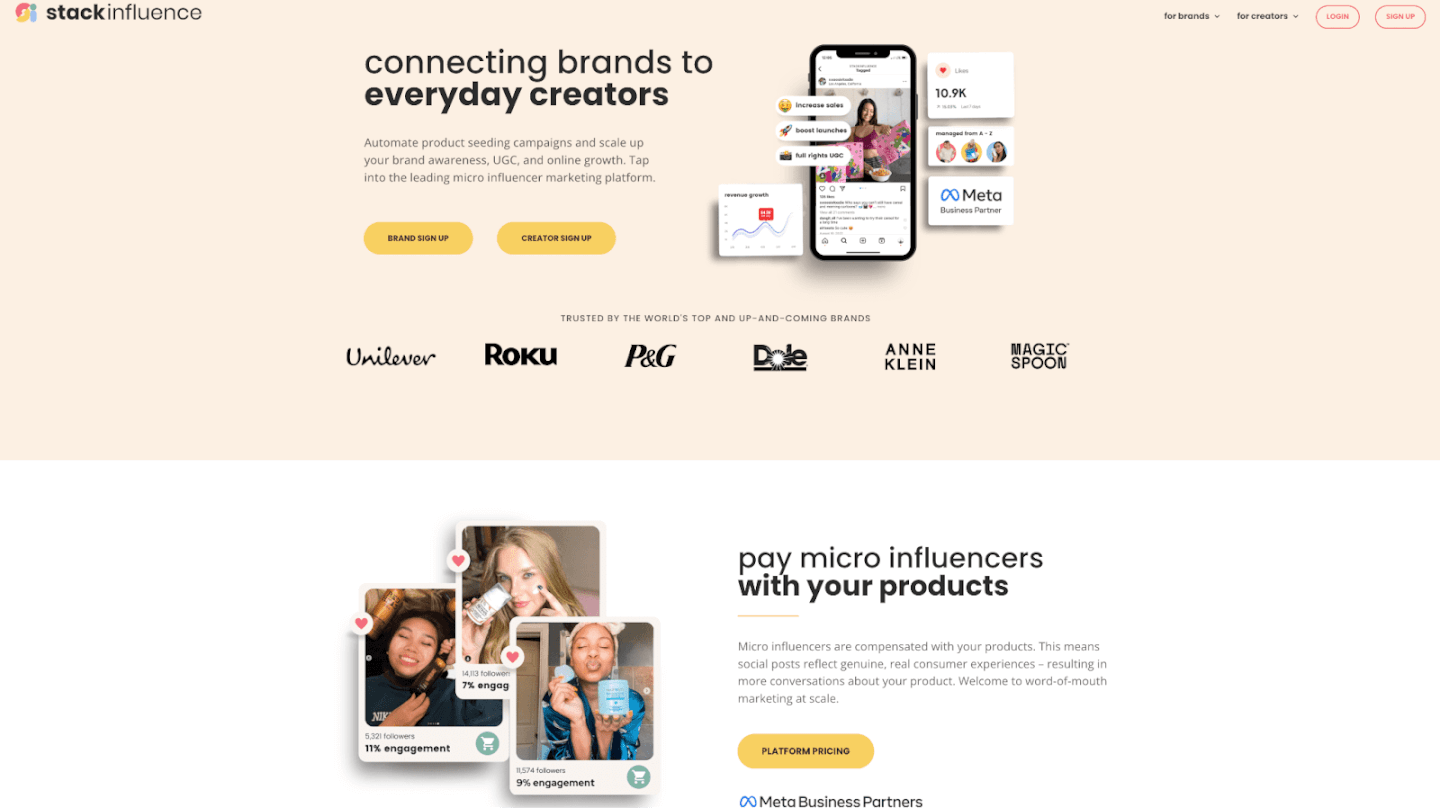
When it comes to mobilizing armies of micro influencers, Stack Influence leads the pack. This platform was built by experienced Amazon sellers with one goal in mind: help brands scale via authentic micro-influencer collaborations. Stack Influence provides a turnkey, end-to-end campaign management solution specifically tailored to e-commerce companies and Amazon marketplace sellers. Brands can easily seed products to a vast network of vetted creators and watch the buzz grow.
Key Highlights:
Ideal for: Small-to-mid sized e-commerce brands, DTC product companies, and Amazon sellers looking to boost product launch traction, accumulate reviews/UGC, and drive online sales through micro-influencer campaigns. Stack Influence’s focus on micro creators and pay-for-post model makes influencer marketing accessible even on a lean budget. It’s essentially a micro-influencer marketing engine that can help new products climb the Amazon ranks or help any online store tap into niche communities.
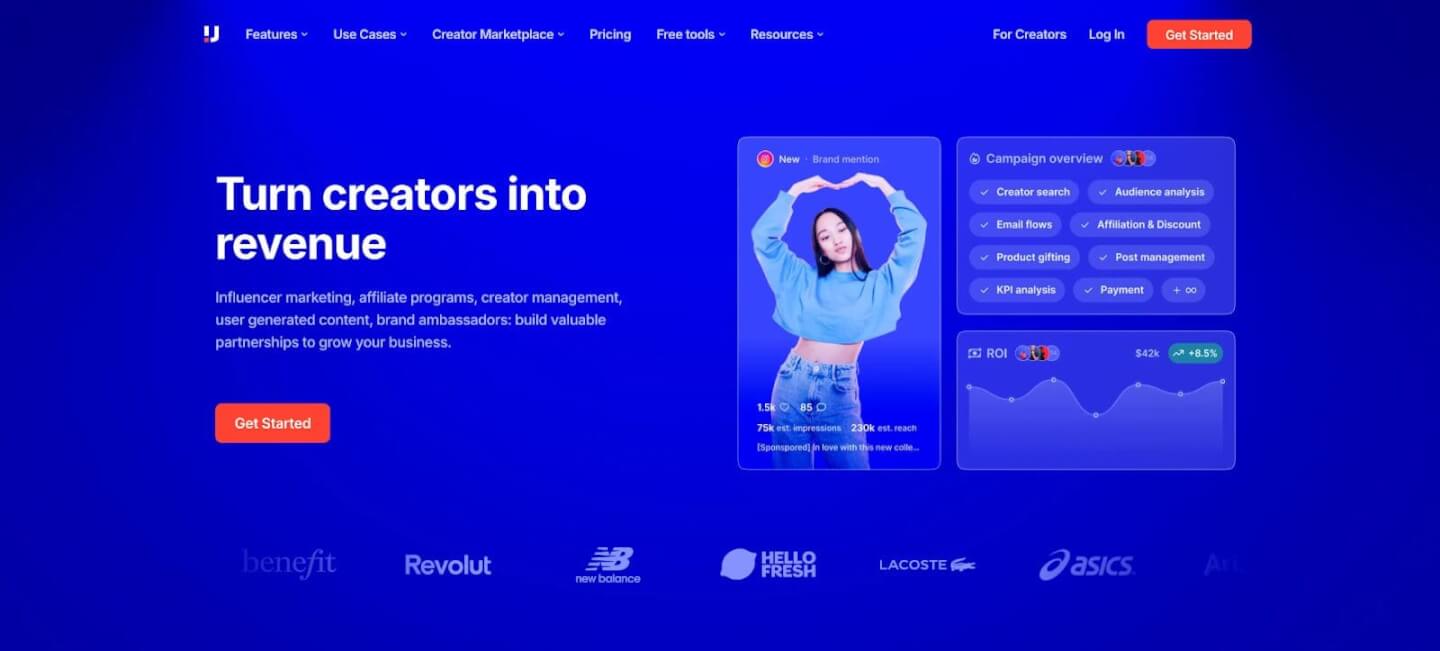
Upfluence is one of the most established names in influencer marketing software, known for its robust all-in-one platform. It combines a powerful influencer database (spanning Instagram, YouTube, TikTok, blogs and more) with tools for relationship management, outreach, and tracking. If you need a single solution to handle everything from discovery to reporting, Upfluence is a top contender.
Key Highlights:
Ideal for: Brands and agencies that want a one-stop platform to run sizable influencer programs. Upfluence is particularly useful for mid-to-large brands that need to scale campaigns across multiple social platforms and require a balance of powerful search plus end-to-end management tools. Its e-commerce integrations (for platforms like Shopify) and analytics also make it friendly for online retailers seeking to tie influencer activity directly to sales.
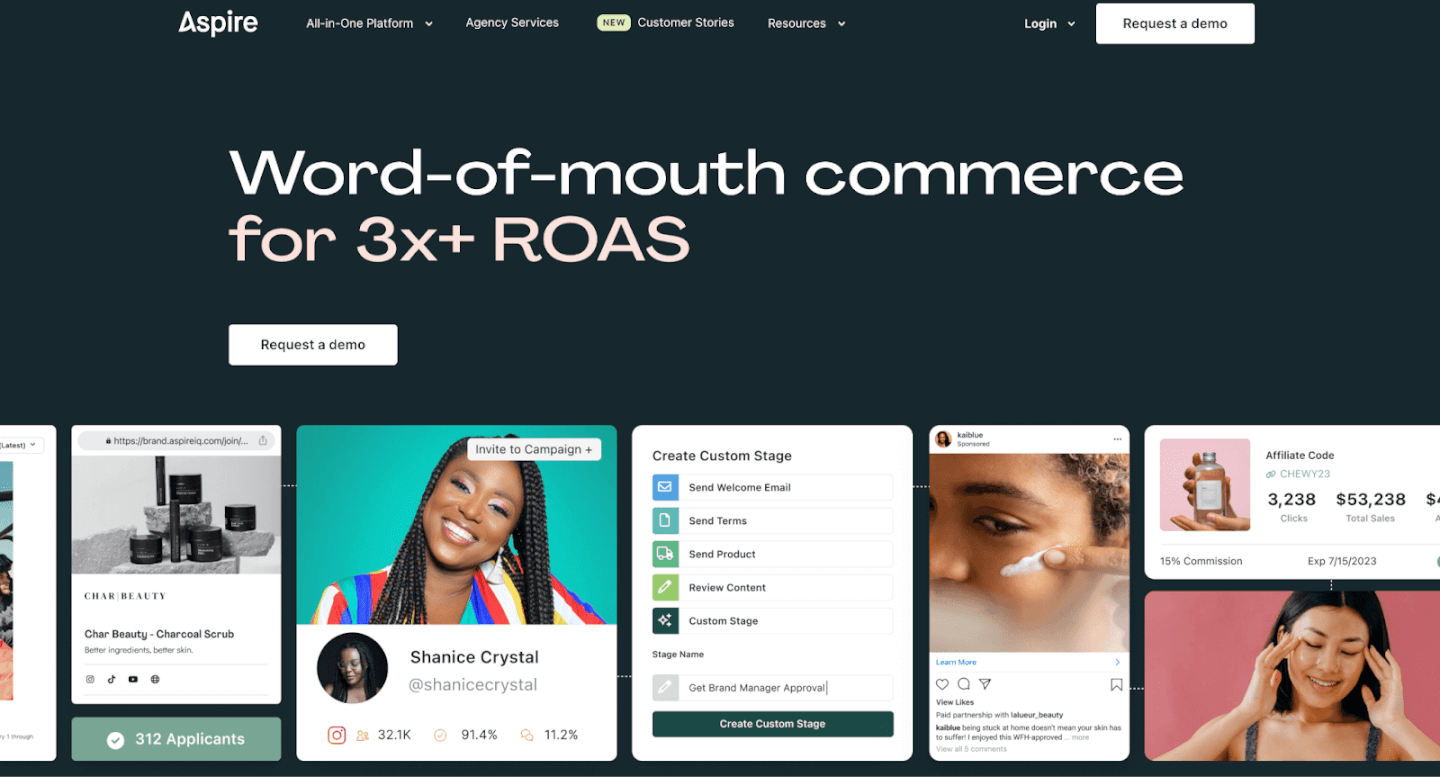
Formerly known as AspireIQ, Aspire has emerged as a leading influencer marketing software for brands that sell online. Aspire positions itself as a performance-driven platform, combining creator discovery with robust campaign management and sales tracking features. It’s especially popular among DTC and e-commerce brands that want to build ongoing ambassador programs and measure the ROI of influencer partnerships closely.
Key Highlights:
Ideal for: Online brands and retailers (especially in fashion, beauty, lifestyle, and other consumer goods) that want a performance-focused influencer solution. If you need to scale an influencer program and care about tracking revenue (or conversions) from those influencers, Aspire is a great choice. It’s also well-suited for companies aiming to build a community of brand ambassadors and affiliates, thanks to features like its creator marketplace and affiliate management tools. Essentially, Aspire shines for e-commerce influencer marketing where ROI accountability is key.
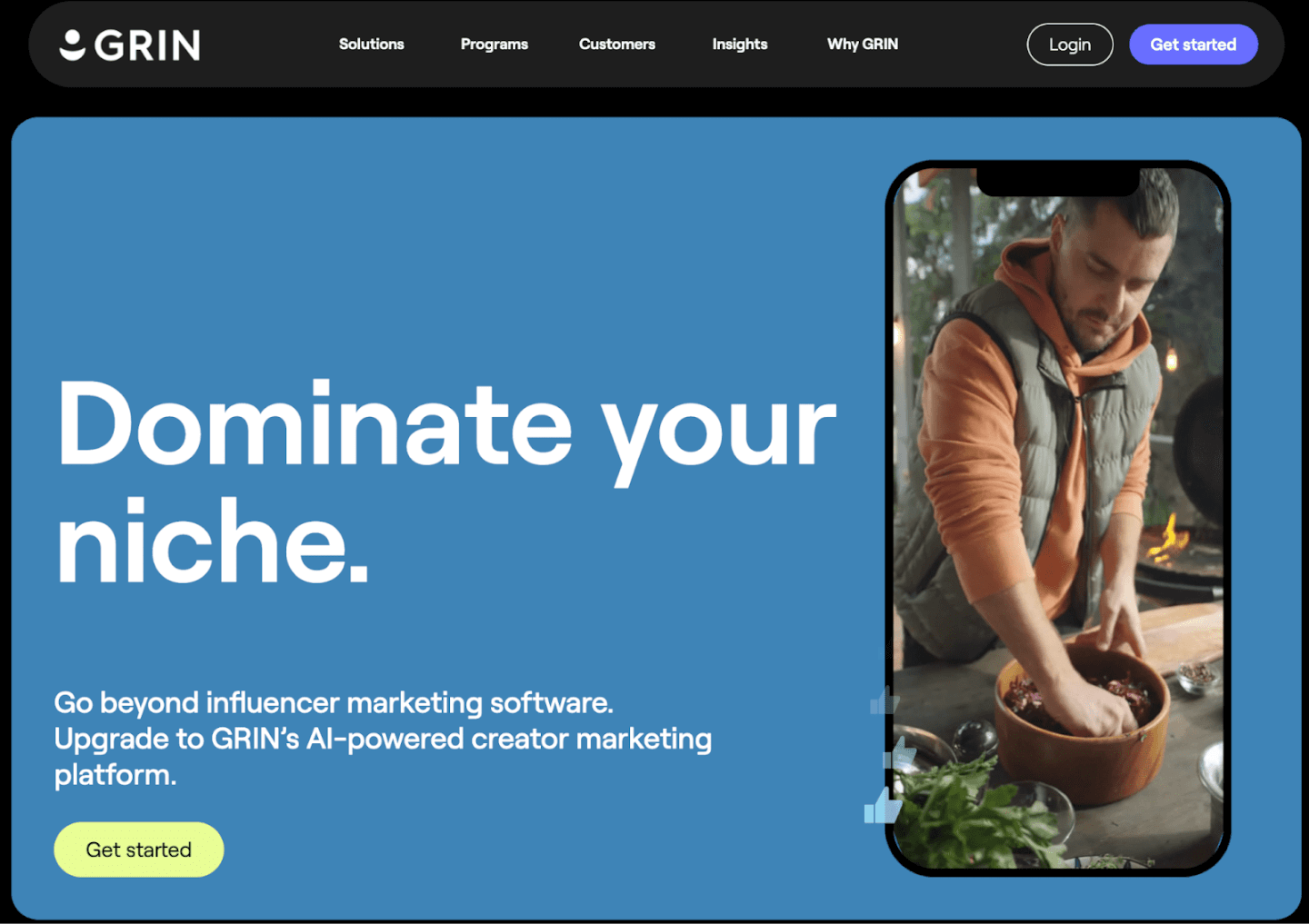
GRIN has quickly become a favorite tool for direct-to-consumer brands and marketing agencies that run large-scale influencer programs. Think of GRIN as a specialized CRM and workflow system, but for influencers. It covers everything from discovery and outreach to product seeding, content approvals, and sales tracking. GRIN’s philosophy is to treat influencers like an extension of your team – managing relationships for the long term.
Key Highlights:
Ideal for: DTC brands and consumer product companies that are heavily invested in influencer marketing and want to manage it in-house with maximum efficiency. If you’re working with dozens (or hundreds) of influencers on a continual basis – for example, a subscription box company seeding monthly boxes to influencers, or a fashion brand with an ongoing ambassador squad – GRIN provides the infrastructure to scale and stay organized. Its deep integration with e-commerce and fulfillment workflows also makes it attractive for brands that need to closely tie influencer activity to sales and inventory (avoiding oversending freebies, tracking ROI on gifting, etc.). In short, GRIN is like the mission control for influencer programs geared towards driving real commerce outcomes.
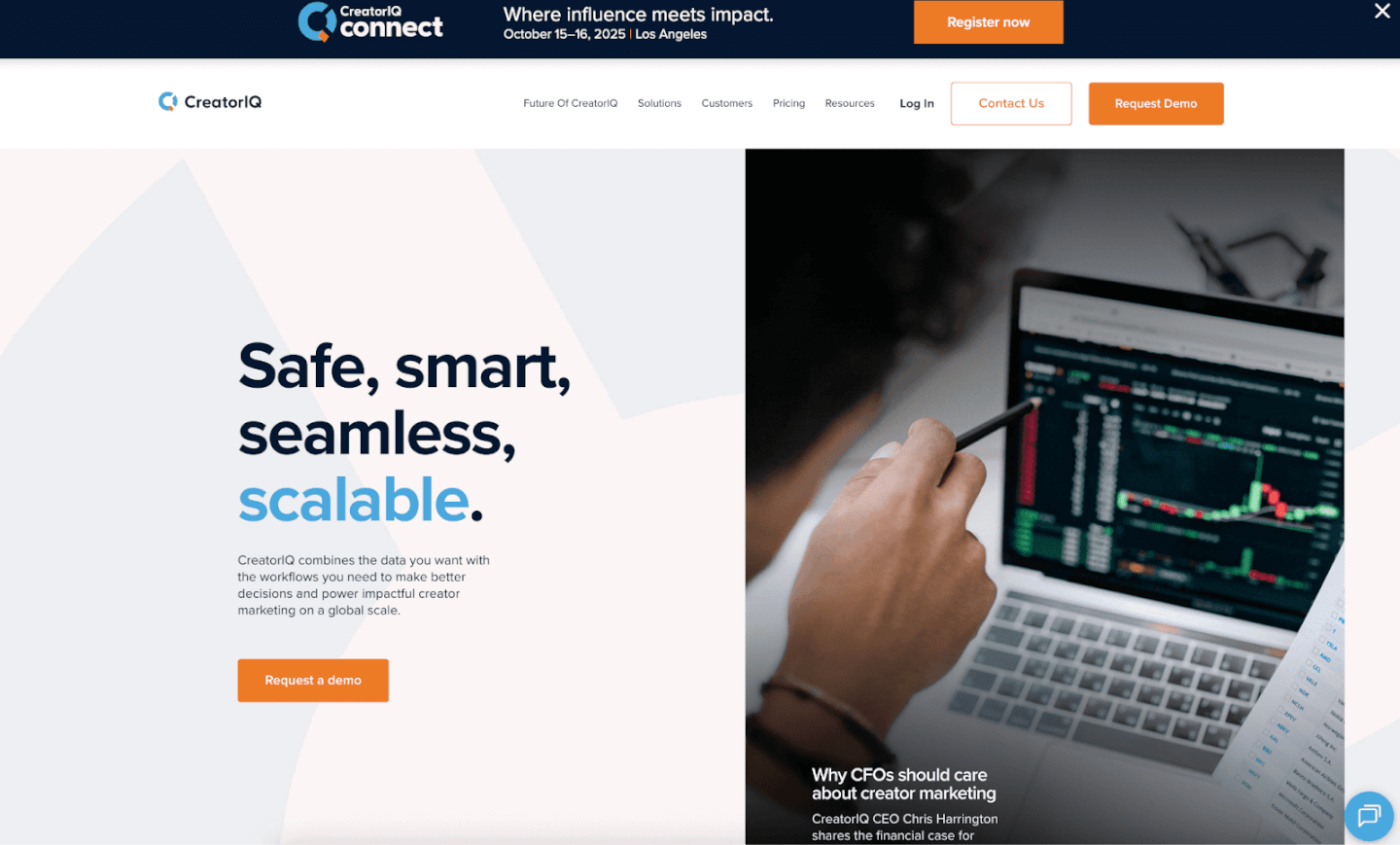
Rounding out our list is CreatorIQ, an influencer marketing software trusted by many Fortune 500 companies and large agencies. CreatorIQ is known for its data-driven approach and is often the choice of enterprises that require advanced analytics, big integrations, and top-notch fraud protection. If you have a sizable marketing team and need a powerful platform to manage complex influencer campaigns (potentially across multiple countries or brands), CreatorIQ has you covered.
Key Highlights:
Ideal for: Enterprise brands, global agencies, or any organization running high-volume influencer campaigns with a need for rigorous data and cross-team coordination. If you require best-in-class analytics, influencer vetting for fraud, and integration with other enterprise systems, CreatorIQ is a top choice. Companies in industries like beauty, gaming, and consumer tech (where influencer marketing is heavily data-driven and international) often gravitate to CreatorIQ for its ability to provide a single source of truth for all influencer activities.

Influencer Hero is an all-in-one influencer marketing platform built for brands that want to run the entire lifecycle of a campaign - discovery, outreach, relationship management, gifting, affiliate, and UGC collection - without stitching together separate tools. Its discovery engine draws from a database of 450M+ creators across Instagram, TikTok, and YouTube, letting marketers filter by niche, engagement rate, audience demographics, and past brand collaborations to move from search to a vetted shortlist quickly.
What sets it apart from single-purpose discovery tools is that the platform doesn't stop once a creator is found. Outreach, contracts, payments, product seeding, and affiliate tracking all run from the same dashboard, and native integrations pull sales data back into that same view.
Key Highlights:
Ideal for: DTC and eCommerce brands that want to run discovery, gifting, and affiliate programs without managing multiple platforms. It's particularly useful for teams on Shopify or WooCommerce that need influencer performance and sales data tied together automatically, rather than reconciling spreadsheets across separate tools.
Influencer marketing in 2025 is a sophisticated game – one that blends creativity with data. Whether you’re a scrappy Amazon seller looking to harness micro-influencers for product launches, or a global brand needing enterprise analytics, the right software can make all the difference. The five influencer discovery tools we’ve highlighted – Stack Influence, Upfluence, Aspire, GRIN, and CreatorIQ – represent the best of what the market has to offer, each excelling in different areas.
When deciding, consider your specific goals, team size, and campaign scope. Are you focused on accumulating authentic UGC and social proof through a network of micro influencers? Do you need to integrate with an e-commerce backend to track sales? Are advanced data insights and cross-platform reach your top priority? For instance, if your aim is to scale an influencer marketing program on a startup budget, a specialized platform like Stack Influence (with product-only compensation and guaranteed results) could be a game-changer. On the other hand, a large retail brand with a sizable budget might leverage CreatorIQ’s analytics to optimize a global campaign.
One thing is clear: as influencer marketing continues to grow, investing in a capable influencer discovery software is no longer optional – it’s essential for staying competitive and maximizing ROI. These tools take the heavy lifting out of finding and managing the right content creators, so you can focus on crafting great campaigns and building genuine relationships. In an era where consumers crave authenticity, the brands that efficiently connect with passionate micro and macro influencers alike will thrive. With the right platform in your toolkit, you’ll be well-equipped to navigate the ever-evolving influencer landscape, amplify your message, and convert social influence into tangible growth for your business.
Keep experimenting, keep measuring, and let data guide you – but also remember that at the heart of every successful influencer campaign is a real human connection. The software is there to empower you, but winning hearts on social media will always require a personal touch. Here’s to finding your perfect influencer partners and taking your brand to new heights in the coming year!
Imagine you’re shopping for a new gadget or trying a new online store. What’s the first thing you do before hitting “Buy”? If you thought “read reviews,” you’re in good company. Customer reviews have become a cornerstone of e-commerce and influencer marketing, shaping how we trust brands and decide what to purchase. In fact, 95% of consumers read online reviews before making a purchase. For Amazon sellers and e-commerce brands, a product with plenty of genuine, positive feedback can make all the difference in conversion rates and credibility. On the flip side, a lack of reviews (or only a single 5-star rating) can make shoppers skeptical and send them searching for alternatives.
Why do these star ratings and comments matter so much? Simply put, people trust peer opinions. Studies show 84% of people trust online reviews as much as personal recommendations. And it’s not just reading reviews that counts—brands also benefit from engaging with them. 90% of consumers are more likely to visit a business that responds to all reviews, positive or negative. In other words, demonstrating that you listen and care about feedback boosts customer confidence. The challenge, of course, is getting customers to actually write those reviews. On platforms like Amazon, only an estimated 1–2% of buyers leave a review without any prompting. That means for every hundred sales, you might get only one or two organic reviews. To build up a healthy volume of feedback, brands need to be proactive and creative in how they ask for and utilize customer reviews.
Below, we’ll explore 10 creative ways to get customer reviews. These tips blend proven influencer marketing tactics, user-generated content (UGC) strategies, and clever engagement ideas. Whether you’re an Amazon seller, run an e-commerce shop, or market a local service, these approaches can help you generate more reviews in an ethical and effective way. Let’s dive in!
One of the most innovative ways to garner customer reviews is by partnering with micro-influencers – those social media creators with a modest but dedicated following. Micro-influencers (think thousands, not millions, of followers) often have high engagement and trust with their audience. Their product experiences come off as recommendations from a friend, not ads, which is gold for brands seeking authentic reviews. Research shows 92% of consumers trust micro-influencer recommendations over traditional ads or celebrity endorsements. By tapping into this trust, you can generate valuable UGC and reviews for your products.
How do you work with micro or even nano-influencers to get reviews? One popular method is product seeding – sending free product samples or early releases to a group of influencers or loyal customers. In exchange, these influencers share their honest opinions and content featuring your product. They might post an unboxing video, an Instagram photo with a thoughtful caption, or even a detailed review on their blog or YouTube channel. This content serves as both a review and social proof, showing potential customers real-life usage and feedback. For example, Stack Influence is a platform that automates micro-influencer product seeding campaigns, handling everything from finding the right creators to shipping products and tracking posts. By using a service like Stack Influence, e-commerce brands and Amazon sellers can efficiently connect with dozens of micro-influencers who will try the product and share their experiences.
The beauty of this approach is twofold: you get reviews and UGC from the influencers themselves, and you also expose your product to their engaged followers who trust their opinions. Those followers see a peer recommending a product, which can drive them to purchase and possibly leave their own review later. It’s word-of-mouth in the digital age. Just remember to encourage influencers to be transparent and genuine – authenticity is key to building trust. When micro-influencers act as passionate content creators and brand fans, their reviews and testimonials come across as credible, not scripted, and that can ultimately boost your product’s reputation and sales.
Sometimes, the customer reviews you’re looking for are already out there in the wild – hiding in a Tweet, an Instagram caption, or a Facebook post from a happy customer. A creative way to get reviews is to repurpose these organic social media mentions and showcase them as testimonials. For instance, if an influencer or customer has shared a glowing story about your product in an Instagram post caption, why not leverage that? These captions often read like mini-reviews, telling a story or detailing an experience with your product in the customer’s own voice. By taking these social posts and repurposing them on your website, product pages, or email newsletters, you amplify genuine customer voices as reviews.
For example, let’s say a fitness micro-influencer writes on Instagram about how your protein blender bottle changed their morning routine for the better. You could screenshot or quote their caption (with permission and credit) and add it to your website’s testimonials section or even the product description page as a “customer story.” This provides third-party validation to shoppers who might not have seen the original post. It’s also a nice way to strengthen relationships with those who already love your brand – you’re shining a spotlight on them!
The key is to seek out these mentions. Monitor your brand’s tags and mentions on social platforms. You can set up alerts or use social listening tools to catch whenever someone talks about your product. 90% of consumers read a few reviews before deciding on a purchase, so adding more diverse, authentic voices to your roster of reviews helps future customers trust your brand. Plus, when new customers see you highlighting real user content, it encourages them to share their own experiences too (“Maybe my post will get featured!”). Always remember to ask for usage rights from the content creator before republishing their words or photos, and give credit where appropriate. By recycling heartfelt social media testimonials into your official review channels, you build credibility and a sense of community around your product.
If you search YouTube for your product or niche, you might be surprised at how many people have already posted unsponsored reviews or mentions of products like yours. From unboxing videos to candid “favorites” lists, YouTube hosts tons of product reviews – many created organically by content creators or customers who just love sharing their opinions. These videos are a treasure trove of authentic feedback and user-generated content. One creative strategy is to reach out and ask for permission to use snippets of these videos as reviews or promotional content for your brand.
For instance, suppose a tech reviewer happened to feature your gadget in a “Top 5 Gadgets I’m Loving” video, giving it a great endorsement without any sponsorship. You can contact that creator to thank them and ask, “Hey, would it be okay if we repurpose a clip of your awesome review on our website or in an ad? We’ll credit you, of course.” If they agree, you’ve just gained a powerful video testimonial. Video content can speak louder than text alone – viewers can see genuine excitement or hear the tone in a reviewer’s voice, which builds trust. In fact, 2 out of 3 consumers are more likely to purchase after watching a testimonial video. By featuring real customer videos on your product pages or social media ads, you provide dynamic social proof that’s often more engaging than a written paragraph.
When repurposing YouTube content, make sure to edit wisely. Pull out the key 15-30 second segment where the person is specifically praising or demonstrating your product effectively. You can create a montage of a few different reviewers for a broader impact (e.g., 3 different people all saying how your skincare product improved their routine). Add captions or on-screen text if needed to highlight the main points, since many people watch videos with the sound off. And always give a shoutout or link to the original creator, which is a win-win: it gives them exposure and maintains transparency. Not only does this approach turn existing content into credible “reviews” for your brand, it also fosters goodwill – those creators will remember your brand positively for valuing their opinion. It’s a modern spin on testimonials that can bolster your marketing while keeping it genuine.
Everyone loves a good incentive. Sometimes the easiest way to get a customer to do something is simply to offer a small reward or perk. Sending a friendly nudge like, “Review our product and get 10% off your next purchase,” can provide that extra motivation for a customer to share their feedback. In fact, about 65% of consumers will leave a review if a business just asks them (often even without a reward) – and that willingness goes up when there’s something in it for them. There are several creative (and ethical) ways to reward customers who write reviews, but you must tread carefully, especially on platforms like Amazon where incentivized reviews are against terms of service for product reviews.
For your own website or other review platforms, you could implement a system of future discounts, loyalty points, or contest entries for reviews. For example, a boutique might email recent buyers a note saying: “Leave a review of your purchase and we’ll email you a 15% off coupon for next time!” This makes the customer feel appreciated for their time and feedback. Another idea is running a monthly raffle: every customer who left a review this month (good or bad) gets entered to win a gift card or a free product. Make it clear that the review doesn’t have to be positive to qualify – you’re not buying praise, just encouraging honest feedback. The goal is to boost the quantity of reviews, since having a higher number of reviews can increase trust for new shoppers (after all, a product with 100 reviews looks more vetted than one with 2 reviews, even if the star ratings are similar).
For Amazon sellers, direct incentives like coupons or freebies in exchange for reviews violate Amazon’s policies. So if you sell on Amazon, focus on incentives that don’t explicitly tie to a review or that work through Amazon’s own programs. For instance, Amazon’s Vine program allows you to provide products to Amazon’s top reviewers (Vine Voices) in exchange for their honest review – it’s an official channel for “incentivized” reviews (the incentive being the free product) that won’t get you in trouble. Outside of Amazon, feel free to get creative with perks, but always emphasize honesty and transparency. You want authentic reviews – if a customer didn’t love the product, their feedback is still valuable for you and for other shoppers. Finally, when you do reward reviewers, even if it’s just a thank-you email with a small coupon, you build goodwill. A customer who feels appreciated for their feedback is more likely to become a repeat customer and brand advocate.
Catching customers at the right moment can dramatically increase the likelihood of getting a review. One effective tactic is to ask for a review immediately after the customer’s experience is fresh. For online businesses, this often means adding a post-checkout survey or follow-up email that invites customers to share their thoughts. Many customers are willing to give feedback when it’s quick and convenient. For example, you might implement a one-question survey on your website that pops up after an order is delivered, saying “How was your experience? Leave a quick review!”. The key is to keep it short and sweet – if customers don’t have to jump through hoops, they’re more likely to respond.
For Amazon sellers, Amazon provides a “Request a Review” button in Seller Central that will send an automated review request to the buyer a few days after delivery. This is a simple way to follow up that complies with Amazon’s rules. If you run your own e-commerce site, you can set up automated emails to go out a week after purchase, kindly asking customers to rate the product or write a brief review. Mention how much you value their feedback and provide a direct link to where they can post the review (the fewer clicks, the better!). According to consumer research, convenience is critical – 71% of satisfied customers will submit a review if the company makes it easy. So, include that direct link or a big obvious button saying “Write a Review” in your communications.
Another approach is the QR code on receipts or packaging (which we’ll touch more on in tip #10). A quick post-purchase text message (SMS) can also work wonders, as text messages have high open rates. A concise SMS like: “Thanks for buying ! Let us know what you think: ” can prompt feedback on the fly. The bottom line is to reach customers when their interaction with your brand is still top-of-mind. Right after they’ve unboxed and tried the item, or completed the service, they can accurately describe their experience. By building in these timely prompts, you’ll gather more reviews and also catch any issues early (if someone had a bad experience, you might get private feedback you can act on before they vent publicly). Keep the tone appreciative, not pushy – a genuine request for their opinion. Often, your happiest customers just need that gentle nudge to go from silently satisfied to publicly singing your praises.

Sometimes the simplest method is the most effective: just ask for the review. Happy customers are often quite willing to share their experience – they just might not think to do it on their own. If you have loyal fans or repeat buyers, reach out with a personal touch and ask them to write a review. A little appreciation goes a long way here. For example, identify customers who have made multiple purchases or who frequently engage with your brand on social media. Send them a personal email or direct message along the lines of, “Hi ! We just wanted to personally thank you for being a loyal customer. It makes our day to know you’re enjoying . If you have a minute, we’d love to hear your feedback in a review – it would really help our small business grow and help others in the community make informed decisions.” By acknowledging their support first, you make them feel valued, not used.
This strategy works especially well for brand “superfans” – those customers who are already vocal about loving your products. They might have sent you a thank-you note, left a nice comment on your Instagram, or just consistently order from you. Since they’re happy, they often just need a polite prompt to share that happiness publicly. And their reviews tend to be detailed and glowing, which are incredibly persuasive to prospective buyers. Personalized communication is key: customers can tell if they’re getting a templated blast versus a genuine one-on-one request. Whenever possible, mention specifics (e.g., “we saw you’ve purchased 3 of our coffee sampler packs – thank you!”). This shows it’s not a mass email, but a sincere outreach.
Data backs up this approach: as noted, 65% of consumers will leave a review when asked. It’s a huge missed opportunity that many businesses simply don’t ask. Of course, always remain compliant with platform rules (for instance, Amazon allows you to ask for a review in a neutral way, but you cannot ask exclusively for a positive review or offer an incentive in that direct ask). In a physical retail or service scenario, it could be as easy as your staff saying, “We’re really glad you enjoyed everything. If you feel up to it, a short review on [Google/Yelp/our site] would be greatly appreciated!” Many people are happy to help if you just ask kindly. Plus, this opens a two-way dialogue – even if a customer has some constructive criticism, reaching out might prompt them to share it with you privately or give you a chance to address it, instead of them quietly fading away. In sum, never underestimate the power of a straightforward, friendly request for a review.
Getting customer reviews isn’t always about being proactive – sometimes it’s about listening to what’s already being said. There may be customers discussing your brand in corners of the internet you’re not actively monitoring. By setting up Google Alerts and social media mention alerts for your brand name (and perhaps your key products), you can catch organic reviews and conversations happening on blogs, forums, Reddit, Twitter, etc. Once you find these, you can engage with them and even repurpose them as testimonials (similar to tip #2). This is a more reactive, but highly creative, approach to gathering reviews.
For example, imagine you sell a niche kitchen gadget. A customer might post a detailed review or comparison on a cooking forum or in a specialized Facebook group without ever notifying you. If you have alerts set up for “ + review” or “”, you could stumble upon this great feedback. When you do, consider reaching out to that person: thank them for the review, and ask if you can quote them or feature their comments on your site. People are often flattered that a brand noticed their post and cared enough to respond. As Aspire’s article suggests, you can also retweet or share positive quotes, follow those customers, and generally show love back. This not only amplifies the good review to a broader audience, but also encourages that customer (and others observing) to continue posting about your brand – knowing that you’re listening.
Don’t overlook niche review sites and forums either. The internet is full of specialized communities (think MakeupAlley for cosmetics, BoardGameGeek for board games, Reddit threads for every hobby under the sun). By keeping tabs on these, you essentially discover reviews that have already been written, without you even asking. You can then engage by commenting a thank you or addressing concerns if someone had an issue. This kind of responsiveness can turn a neutral or negative review into a positive impression (“The company actually replied to me!”). Plus, if you find a great review on a niche site, consider taking a screenshot and adding it to your “In the Media” or “What customers are saying” section on your own site. It adds variety to your review content and shows that people across the web, not just on your own platform, are talking about you. In summary, set those alerts, stay vigilant, and you might uncover hidden gems of customer feedback ready to be amplified.
Building on the idea of finding mentions in niche areas, another creative strategy is to actively engage with niche review sites or community platforms relevant to your industry. The goal here is twofold: encourage reviews where your enthusiast customers hang out, and repurpose content from those communities to enrich your brand’s testimonial pool. The internet has a plethora of niche review sites – from the example in the Aspire article like BladeReviews.com for knife aficionados, to forums for video game hardware, to sites reviewing pet supplies or beauty products. Whatever you sell, there’s likely a community of enthusiasts or a dedicated site for it.
To leverage this, first identify which niche platforms matter for your product. Are your customers likely to be on Reddit discussing products in your category? Are there popular bloggers or independent review sites that cover items like yours? Once you pinpoint these, become a participant. Encourage your happy customers who are part of those communities to share their experiences there. For example, if you run an indie skincare brand, you might invite loyal customers to post their reviews on a well-known skincare forum or subreddits like r/SkincareAddiction. You could say, “We love our r/SkincareAddiction community – if you’re active there and loving our product, feel free to share your experience!” This only works if done authentically (and be mindful not to break any community self-promotion rules). Often, the super-fans will do this naturally once they know you’re receptive to it.
Meanwhile, monitor those niche sites for organic mentions of your brand, as mentioned earlier. If someone posts a detailed review on a forum, that’s fantastic content you can highlight. Take a screenshot or quote the best part and add it to your own channels (again, with permission if needed). Shoppers often find niche community reviews more trustworthy since they know those are hardcore users or experts. By bringing those perspectives into your marketing, you tap into that trust. Also, don’t forget Q&A communities like Quora or Amazon’s own Q&A section – if people ask about your product, a well-crafted answer from you or from a fan can serve as a persuasive mini-review to anyone reading later.
One more thing: don’t ignore smaller platforms like Yelp or niche app stores if they apply, even if you’re mainly online. A local business might find Yelp or TripAdvisor crucial for reviews, whereas a software product should monitor Capterra or G2 Crowd. As a brand, claim your profiles on relevant sites and gently guide customers there. For example, an Amazon seller might also ask for feedback on their Facebook Page or Google Business listing if they have one – capturing reviews across ecosystems. The idea is to be wherever your customers are talking and make it easy (and appealing) for them to leave feedback. Those diverse sources of reviews can then feed into your overall brand credibility.
It might sound counterintuitive, but one of the best ways to encourage more people to leave reviews is to show that you’re actively reading and responding to the ones you already get. Customers feel motivated to voice their opinions when they see a responsive, human brand on the other end. Being responsive means replying to reviews—good and bad—on platforms where that’s possible (your website, Google, Amazon, Yelp, social media, etc.). This kind of engagement “personifies” the brand and builds trust and relatability. After all, if a customer knows you’ll actually read and acknowledge their feedback, they’re more likely to take the time to share it.
How does this encourage more reviews? Imagine a potential reviewer browsing through existing reviews. If they see that the company replies with a thank you to every positive comment, or politely and helpfully addresses negative ones, it signals that their review will be valued. People want to be heard. In fact, 90% of consumers say they are more likely to patronize a business that responds to all reviews—feedback engagement is that important. On Amazon, while you can’t directly respond to product reviews, you can comment on them as a brand (Amazon has a feature for brand owners to respond to customer reviews now) or you can respond to Q&A. On Google or Yelp, you should reply to every review. Thank the 5-star reviewers for their support, and to the occasional unhappy customer, apologize and offer to make it right. This not only potentially wins back that individual, but also shows everyone else that you care.
Additionally, by responding, you sometimes prompt a follow-up from the original reviewer (e.g., they might update a 3-star to a 4-star after you solved their problem). More broadly, responsiveness encourages a two-way conversation. It turns reviews into a dialogue rather than a one-and-done comment. Some customers may ask a question in a review or mention a feature they’d like – when you reply, it becomes an interaction. New customers reading this might be encouraged to leave their own review because they have a question or they see you take suggestions seriously. It creates a community vibe around your product.
Lastly, don’t underestimate how this plays into SEO and visibility. For local businesses, responding to Google reviews can improve your local search ranking slightly, and for all businesses, an active review section (with owner responses) can simply attract more eyeballs. Internally, treat review responses as part of your customer service. Set up notifications so you never miss a new review. Even a simple “Thanks for your feedback!” on a positive review can delight a customer. And when prospective buyers see dozens of reviews with company replies, it signals a level of professionalism and care that builds confidence. The more confident they are, the more likely they’ll convert and perhaps leave a great review of their own.
Don’t forget that the journey to getting a review can start inside the box – literally. One often overlooked but creative tactic is including a friendly review request in your product packaging. When a customer opens their package, a well-designed insert or a cleverly placed QR code can prompt them to share their experience. The idea is to catch them at the moment of unboxing, when excitement is high, and guide them to your review page before that excitement fades. For example, you might include a small thank-you card that says, “We’d ❤️ to hear your feedback! Scan this QR code to leave a review or find us online.” This makes it super easy: the customer can just point their phone camera or a web-based QR code scanner to be taken directly to the review form or site. Making the review process convenient is key – it’s a nudge at the right time.
There are plenty of creative ways to implement QR codes or inserts. If you sell a product that has any sort of packaging, slip in a printed card. If you’re a service business, you can include a little card with the invoice or receipt. Some fun examples: a dental clinic tying a QR code request around a free toothbrush giveaway, or a boutique adding a review QR code created with a QR code circle generator on a cute postcard in the shopping bag. Amazon sellers often include a note in the package (just be sure your language abides by Amazon’s policy: don’t explicitly ask for a positive review or offer a reward in that insert). Keep it thank-you focused and say something like, “Your opinions help us grow; we appreciate your honest review!”"
Another twist: print a short URL or use a memorable link if QR isn’t feasible. For instance, YourSite.com/review could redirect to your product review page. That’s easier to type if needed. Some brands also use packaging inserts to explain how to leave a review if it’s not obvious, e.g., “Visit our product page on Amazon and click ‘Write a customer review.’” A quick tip – avoid too much text. One eye-catching line or a gentle call-to-action with a cute design works better than a paragraph of instructions that customers might skip.
This approach not only helps garner more reviews, but also leaves a positive impression. A customer unboxing a product and finding a thoughtful thank-you note feels that the brand cares. That positivity can translate into a willingness to support the brand through a review. Also, by physically linking the product experience to the act of reviewing (via the insert or QR code), you bridge the gap between offline and online. It serves as a reminder at just the right time. Given that almost 70% of consumers form an opinion after reading 1-6 reviews, each new review you gain through these inserts can significantly strengthen your product’s appeal to the next shopper. So go ahead and design that little card – it’s like sending a personal invite for feedback, and customers often respond in kind.
Optimizing for Reviews = Building Trust and Boosting Sales. By now, it’s clear that customer reviews are more than just a vanity metric – they’re a vital asset for any brand operating in the modern e-commerce landscape. From collaborating with content creators and micro-influencers to simply reaching out and asking, there are many creative avenues to get those review stars rolling in. Remember, quantity and quality both matter when it comes to reviews. Shoppers do read multiple reviews (most read at least 2-6 of them) to form an opinion, so having a good volume of authentic feedback is crucial. Equally important is the richness of those reviews – stories, photos, and videos shared by real customers can paint a vivid picture of why your product or service is great.
In the process of implementing these 10 strategies, you’ll likely find an added benefit: you’re building stronger relationships with your customers. Engaging with them for reviews (whether through an influencer campaign, a personal email, or a thank-you coupon) shows that you value their voice. Customers who feel valued turn into repeat buyers and even evangelists for your brand. It creates a virtuous cycle – more engagement leads to more reviews, which leads to more trust from new customers, which leads to more sales, and then more happy customers to draw reviews from.
Finally, always keep things ethical and customer-centric. Never fake reviews or twist arms for positive feedback – today’s consumers are savvy and can smell inauthenticity a mile away. Encourage honest reviews and take even the negative ones as learning opportunities to improve your product or service.
By using these creative techniques and emphasizing authenticity, you’ll boost your influencer marketing efforts, generate tons of UGC, and cultivate a community of customers who proudly share their experiences. And when potential new buyers see that vibrant community and real, diverse reviews, you’ve already won half the battle in earning their trust (and their business). Here’s to stacking up those reviews – and with them, more success for your brand!
If you’re scrolling through Instagram and see a post labeled “Paid Partnership with ,” you’ve encountered Instagram branded content. This feature is Instagram’s way of disclosing influencer marketing collaborations – content co-created by a business and a creator (influencer) in exchange for payment or product value. In simple terms, branded content is a social media post (image, video, Story, Reel, etc.) where an influencer or content creator showcases a product or service, and the post is officially tagged to highlight the business partnership.
Why does this matter? Because consumers trust people more than ads. In fact, 63% of 18–34-year-olds trust what an influencer says about a brand far more than what the brand says about itself in ads. We’re constantly discovering new products on Instagram – from the latest fashion trends to gadget recommendations – but we tend to listen to micro-influencers and creators we follow rather than to direct brand promotions. Authentic content from real people resonates as more genuine, which is exactly why Instagram’s branded content tool has become so important for modern marketing.
Instagram boasts over 2 billion monthly active users worldwide as of 2023. It’s a huge playground for brands, including e-commerce businesses and Amazon sellers, to reach potential customers. But with so many ads and posts competing for attention, authenticity is key. That’s where branded content shines. By partnering with influencers – from celebrities to micro-influencers – brands inject a trusted human voice into their marketing.
Remember, people value authenticity: 79% of consumers say that user-generated content (UGC) from real users significantly impacts their purchase decisions, far more than traditional brand content. In the ultra-competitive world of e-commerce, brands (and especially Amazon sellers) are turning to micro-influencers and content creators to gain an edge. These niche creators – often everyday people with dedicated followings – help generate authentic UGC and build consumer trust in ways traditional ads struggle to match. In other words, Instagram branded content allows businesses to leverage that trust and authenticity at scale.
Branded content is a win-win for both parties. Brands get to tap into an influencer’s creativity, audience, and credibility. When an influencer genuinely loves a product and shares it, their followers are more likely to trust the recommendation (if my favorite tech blogger swears by a gadget, I’m inclined to check it out!). This trust rubs off on the brand, lending it credibility by association. Brands also gain a library of influencer-generated visuals and videos – effectively high-quality marketing content they didn’t have to produce in-house. On the other side, creators benefit by monetizing their content and building relationships with brands. A Paid Partnership tag not only discloses the sponsorship (transparency is good for trust and complies with guidelines) but also enhances the creator’s reputation as a professional who partners with brands. Done right, branded content collaborations feel authentic and engaging, rather than like intrusive ads.

To facilitate these collaborations, Instagram provides a suite of branded content tools (available to business and creator accounts that meet Instagram’s guidelines). Here are the key features that make branded content on Instagram work:
In short, Instagram’s branded content tools make it easy to label partnerships clearly, share analytics, and amplify influencer posts beyond the influencer’s own followers. This turns Instagram into a powerful channel for influencer marketing campaigns, blending organic and paid strategies.
So, how can brands and influencers actually implement a branded content campaign on Instagram? Here’s a step-by-step guide:
By following these steps, brands can seamlessly integrate influencer partnerships into their Instagram marketing, ensuring all content is properly disclosed and maximally effective.
One of the biggest reasons to use Instagram’s branded content feature is the performance. Marketers have found that ads created from influencer content often significantly outperform regular brand ads. Meta (Instagram’s parent company) ran a study in 2022 comparing campaigns that used a mix of branded content ads and business-as-usual ads versus those that only used standard ads. The results were eye-opening: campaigns with Branded Content Ads saw 53% higher click-through rates (CTR) and a 19% lower cost-per-action (CPA) on average, with a 99% probability that the mixed campaign would outperform running regular ads alone. In another internal analysis of 300 brands, Meta found that Instagram Partnership Ads (another name for branded content ads) had an 82% probability of driving a purchase outcome, a 3.9% lower cost per purchase, and a 2.4× conversion lift compared to similar ads run without the paid partnership label. In plain English, influencer-powered ads drive more clicks and sales for less money.
These numbers aren’t just theory – brands are seeing the difference in practice. For example, activewear brand Vuori tested different Instagram ad strategies: allowlisting (ads via influencer handles but without official partnership tags), regular posts, and branded content ads. The branded content ads were the clear winner, delivering a 25% lower cost per purchase compared to the other methods (and even 20% lower CPA than the ads run from Vuori’s own account). Similarly, travel brand Viator ran a campaign using branded content from multiple travel micro-influencers and achieved a 59.7% lower cost per acquisition for customers. Results like these illustrate how marrying an influencer’s relatable voice with the power of Instagram’s ad platform can dramatically improve marketing efficiency.
Why do branded content ads perform so well? Authenticity and relevance. Content that looks and feels like a real user’s post (because it is!) tends to stop the scroll more than obvious ads. People are more likely to trust and click on a skincare tip from their favorite beauty creator than a polished ad from the brand itself. As a result, user-generated content used in ads often outperforms traditional advertising creatives – studies show UGC-based ads get significantly higher CTRs and lower costs than typical brand ads. By leveraging the influencer’s creative and voice, branded content ads come across as native content in the feed, which leads to better engagement and conversion. The data backs it up, and brands are taking notice.

Ready to dive into branded content? To maximize your success, keep these best practices in mind when planning an Instagram branded content campaign:
By following these tips – choosing the right influencers, amplifying what works, and creating content that’s authentic and optimized for the platform – you’ll set your Instagram branded content campaigns up for success.
In a digital landscape crowded with ads, Instagram branded content offers a refreshing way to connect with consumers through authenticity and trust. When brands partner with influencers and creators to tell their story, the message comes from a relatable voice, making it more likely to resonate with the audience. Whether you’re a global brand or an Amazon seller building your e-commerce presence, leveraging branded content can be a game-changer for building brand awareness, engagement, and sales.
Keep in mind that success with branded content is an ongoing journey – it involves testing different creators and content styles, learning from the data, and refining your approach. But the payoff is worth it: a community of customers who discovered you through someone they already trust and who see your brand as authentic and credible.
Influencer product seeding – also known as influencer gifting – is the strategy of sending free products to content creators (usually with no strings attached) in hopes that they’ll share an authentic shoutout or review on social media. It’s a powerful influencer marketing tactic popular on platforms like Instagram and TikTok. For e-commerce brands, including Amazon marketplace sellers and DTC (direct-to-consumer) startups, a well-run seeding program can generate valuable word-of-mouth, user-generated content (UGC), and even increased product reviews and sales. The idea is simple: if creators genuinely love your product, they’ll be excited to post about it – giving your brand organic exposure to their followers.
That said, “send it and forget it” is not a winning approach. You need a strategy to get real results. Below, we’ll cover 8 influencer product seeding strategies that actually work, complete with examples and tips. From leveraging micro-influencer platforms like Stack Influence to crafting memorable unboxing experiences, these tips will help Amazon sellers and DTC brands run effective, scalable seeding campaigns. Let’s dive in!

One of the best ways to kickstart an influencer seeding program is to tap into micro-influencers – everyday creators with smaller followings (often 5K–100K) who have highly engaged audiences. In fact, micro-influencers often see 3–8% engagement rates on their posts, far higher than the ~1–2% typical for macro-influencers. Their tight-knit communities trust their recommendations, making micro and even nano influencers a goldmine for authentic marketing. Many brands are realizing that a bunch of “smaller” voices can outperform a single big celebrity when it comes to engagement and conversions.
To maximize this, smart brands use influencer platforms and communities (like Stack Influence) to scale up micro-influencer seeding. Rather than manually recruiting influencers one by one, these platforms connect you with large networks of vetted creators. For example, Stack Influence’s platform links brands to a network of over 11 million micro and nano influencers across all niches – making it feasible to send your product to hundreds of targeted creators at once. This kind of reach would be impossible to manage alone, but with an automated platform you can distribute samples en masse and still hit the right audience for your niche.
Why go to so many micro-influencers? Because the ROI can be tremendous. Micro-influencer campaigns often deliver higher returns for each dollar spent. It’s common to see 5×–8× ROI with micro influencers, whereas macro-influencer partnerships average more like 3×–5× ROI. In one real campaign, a DTC e-commerce brand used 211 micro-influencers in a seeding program and drove $129,000+ in Amazon sales – a staggering 13:1 ROI (every $1 invested returned $13 in revenue). The brand’s product was showcased to many small, engaged audiences and the collective impact was huge. In contrast, paying the same budget to one or two big influencers might not have come close to that result. This example shows how Amazon sellers can even boost their product rankings and sales by flooding their niche with lots of micro-influencer content. In fact, some Amazon marketplace sellers have collaborated with 100+ micro influencers at once to ramp up product reviews and visibility.
Key Takeaway: Consider using a micro-influencer platform (such as Stack Influence) to automate and scale your seeding campaigns. By sending products to a large pool of relevant micro-influencers, you’ll generate authentic buzz and UGC at scale. The high engagement and trust that micro creators enjoy often translate into higher conversion rates and ROI for your brand. Plus, you’ll quickly gather a library of grassroots content – real customer-like posts – that you can later repurpose in ads or on your own social channels.
Once you’ve lined up the right influencers, make sure your product shipment stands out. Anything you can do to create a memorable unboxing experience is a plus. Remember, influencers (especially popular ones) might receive dozens of packages from brands. If yours feels impersonal or “cookie-cutter,” it may not leave a lasting impression. The goal is to delight the creator when they open your package, increasing the chances they’ll share that excitement with their followers.
How to personalize? Get creative and thoughtful with your packaging and its contents:
Also, ensure your package is aesthetically pleasing and on-brand – many influencers love posting unboxing videos or Stories, so a beautiful presentation increases the chance of being featured. By personalizing each kit, you signal that this isn’t just mass product spam; it’s a gift curated just for them. Influencers are then more inclined to reciprocate the goodwill with an appreciative post.
Finally, don’t forget practical details: provide instructions if needed (e.g. how to use the product), and make sure the package is well-protected for shipping. A damaged item or a leaking bottle can ruin the moment. With a bit of planning, your seeded products can deliver a delightful surprise that influencers can’t wait to share with their followers.
It might sound obvious, but a common mistake in product seeding is treating it like a pure numbers game – blasting freebies to as many influencers as possible without careful targeting. Relevance matters. You’ll get much better results by sending products to influencers who are a natural fit for your brand and who will actually use (and enjoy) what you send. In a nutshell, the influencers you seed should mirror your target customer and align with your niche.
When selecting creators for your seeding list, look for those who check these boxes:
It also pays to do a bit of homework: if possible, identify influencers who have expressed interest in products like yours or who follow your brand already. Some of the best seeding targets are existing fans or customers of your brand – they’re likely to be thrilled to receive your product unexpectedly.
Data doesn’t lie: One recent study found that when brands matched influencer niche to the product niche, they saw a 13.6% boost in engagement on those posts. In contrast, many brands miss this opportunity – only about 37% of brands consistently choose influencers in the same niche as their product. This is a huge gap you can exploit by being selective and strategic with your seeding list. In short, quality beats quantity. Ten well-chosen micro-influencers who truly love your product will outperform 100 random ones who don’t care about it.
Finally, don’t be afraid to be “picky” about who gets your free product. Your seeding budget (and inventory) is finite, so treat it as an investment – send products where they have the highest chance of converting into great content and goodwill for your brand. It’s perfectly fine to politely decline ill-fitting influencers who ask for freebies, and instead focus on those who align with your brand values and audience.
When running a seeding campaign, it’s tempting to send cheaper items or samples to minimize cost. However, remember why you’re doing this: you want influencers to be excited about your product and motivated to share it. If the freebie is underwhelming, it may end up forgotten in a drawer – or posted without enthusiasm. On the other hand, a generous, high-value gift can grab an influencer’s attention and make them want to showcase it.
In practice, this means prioritize your hero products or new, exciting releases for seeding (even if they cost more), rather than offloading clearance stock that isn’t as appealing. For example, some brands go big: skincare companies might send full-size luxury serums instead of tiny sachet samples. Or consider the approach of Joovv, a wellness tech brand – they gifted influencers a high-end red light therapy mask retailing for ~$600 as part of their seeding efforts. That’s obviously a pricey item, but it certainly got creators talking! The point is not that you must spend $600 on every seeding kit, but that you shouldn’t cut corners on value if you expect creators to invest their time and creative energy in featuring your product.
If your brand’s catalog mostly consists of low-cost items, you can still impress by bundling multiple products into a nice gift set. A curated package with a variety of goodies can feel bountiful and exciting, even if each item is inexpensive. For instance, rather than mailing a single $5 item, send a themed bundle of 5–6 items in a gift box. Receiving a big package with “lots of stuff” has an inherent thrill factor (picture an influencer unboxing a whole haul on camera). As one example, the household cleaning brand The Pink Stuff often seeds influencers with entire sets of their cleaners and pastes, which makes for a more substantial and photographable gift. The influencer can test a range of your products, and you increase the odds that at least one or two really resonate with them.
A final note: include anything that can add value or context to the product. If you’re sending a gadget, throw in a carrying case or an accessory. If it’s a food item, maybe include a recipe card. These extras show thoughtfulness and help the influencer experience the product in the best possible way.
In summary, don’t be stingy with your seeding campaign. Think of it as investing in marketing: the cost of giving away a higher-value product pales in comparison to the potential exposure and credibility you gain from an authentic influencer post. Give them something worth raving about, and they just might do exactly that.
While you want each influencer to fit your brand, that doesn’t mean they all need to look the same or come from one niche. In fact, a savvy strategy is to seed across a diverse range of influencer types – as long as each segment aligns with your product in some way. By doing so, you can reach different audiences and learn which communities respond best. You might be surprised; sometimes an unexpected niche ends up loving your product the most!
For example, say you sell a plant-based protein cookie. Your obvious targets might be fitness influencers and vegan food bloggers. But you could also send samples to “mommy bloggers” who focus on healthy family snacks, or to lifestyle creators who do lunchbox ideas for kids. This is exactly what the brand Woah Dough did – they sent their plant-based cookie dough to both mom influencers and foodie influencers, effectively reaching two distinct audiences with the same campaign. Both groups appreciated the product (for different reasons), expanding Woah Dough’s exposure. The takeaway: brainstorm all the adjacent niches that might be interested in your product, not just the core obvious niche.
Another reason to diversify is to leverage the power of micro-influencers and nano-influencers, as discussed earlier. Don’t just chase one or two big names and call it a day. In our experience, micro-influencers often produce better content and higher engagement than creators with bigger accounts. Their audiences are more tuned-in, and the creators themselves often put extra effort into content creation (since they’re building their own personal brand). By involving many smaller influencers, you also get a volume of unique content pieces – which can fill your social proof bucket nicely.
However, managing a broad seeding initiative (with lots of influencers) can become time-consuming if done manually. Keeping track of 50 or 100 influencer conversations, addresses, shipments, etc., is a challenge for any small team. This is where using a platform or an agency (as mentioned in Strategy #1) really helps, because they can automate the logistics and let you scale up without losing your mind in spreadsheets. If you’re doing it in-house, you might start smaller and build up gradually as you develop processes for outreach and follow-up.
Overall, don’t limit yourself to one “type” of influencer. As long as each creator you choose is genuinely relevant to your brand in some way, having variety in your seeding roster will amplify your campaign’s reach. Different voices will speak to different potential customers. Plus, you’ll gather insights – maybe you’ll discover that micro fashion influencers, for instance, generate more buzz for your beauty product than pure beauty gurus do. Those learnings can inform your future influencer marketing plans beyond seeding.

One often-overlooked aspect of influencer product seeding is communication. Many brands treat seeding as a one-way transaction: send product -> hope for the best. But by proactively engaging with influencers before and after they receive your product, you can significantly improve your success rate and lay the groundwork for longer-term partnerships.
Before the product arrives: It’s a great idea to reach out to the influencer once you’ve shipped the package, giving them a heads-up that something special is on the way. This can be a quick, friendly email or DM saying, “Hey {Name}! Just wanted to let you know we popped a package in the mail for you – keep an eye out for it early next week. Can’t wait for you to try our product!” This small gesture builds anticipation and shows professionalism. It also ensures they won’t be caught off guard by a delivery (and if you have tracking info, you might share the tracking number too). Brands that take this step often find influencers more appreciative and responsive. It’s a simple courtesy that says “we care that you get this gift.” And on a practical note, if there’s any shipping issue or delay, you’ve opened a line of communication to sort it out.
After the product is delivered: Follow up with a thank-you and an invitation for feedback. For instance, a few days after delivery, you might message them, “Hope the package arrived safely! We’d love to hear what you think of the {product}. Let us know if you have any questions or need anything at all.” This isn’t a direct ask for a post (remember, seeding is no-strings-attached), but it encourages the influencer to share their experience or even post about it if inclined. It keeps the dialogue open. Sometimes, this nudge is all it takes for an influencer who loved the gift to say, “Yes! I’m planning to post a story about it tomorrow.”
If an influencer ends up creating content featuring your product, don’t ghost them – engage! Which brings us to relationship-building: once posts start going live, show love on those posts from your brand’s account. Like the post, leave a genuine comment, and answer any questions their followers ask in the comments. This not only strengthens your connection with the influencer (they see that you value their content), but it also makes your brand more visible to their audience. For example, a beauty brand named Pallure made a point to comment with a personal thank-you on an influencer’s Instagram post about their product, sparking positive vibes all around. Many micro-influencers truly appreciate when brands acknowledge them publicly – it’s a form of recognition for their hard work.
In summary, treat influencers like the partners and brand advocates that they are. Good communication can turn a one-time seeding interaction into a long-term relationship. Even if an influencer doesn’t post immediately, the friendly follow-ups and engagement can keep them in your orbit for future campaigns or collaborations. The bottom line: be human, responsive, and appreciative – it will set you apart from other brands and build goodwill that money can’t buy.
Congrats – some of your seeded influencers have posted about your product! Now, squeeze all the value you can from that content. Don’t just silently rejoice; engage and amplify those posts to extend their reach and lifespan.
First, as mentioned, start by engaging directly on the influencer’s post (liking, commenting, sharing to your Stories if it’s on Instagram, etc.). Show the love publicly. A quick “We’re so happy you enjoyed it! 😊 Thanks for sharing!” in the comments can delight the creator and shows other viewers that you have an active, friendly brand. This kind of interaction can encourage more UGC – other micro-creators see that you interact with influencers, which might motivate them to post about you too in hopes of a brand shoutout.
Second, consider repurposing the best influencer posts on your own channels – but always ask permission first if it wasn’t contractually agreed. Most creators are happy to let brands repost their content if you ask and credit them. Whether it’s resharing an Instagram Story, re-posting a great photo on your feed, or featuring a TikTok video on your website, this UGC can be marketing gold. It provides social proof to your audience (“look, real people love our product!”) and also gives the influencer additional exposure. For example, eyewear brand Moody Lenses often reposts influencer content to their Instagram Story, effectively saying “check out how great our product looks!” while giving the influencer a shoutout. It’s a win-win.
You can even go beyond organic sharing. If you obtain explicit usage rights, you might incorporate the influencer’s content into ads, emails, or product pages. Imagine running a Facebook Ad using a real TikTok review from an influencer – it can feel more genuine than a polished brand commercial. Some brands have taken top-performing seeding content and turned them into paid social ads (e.g. whitelisting or Spark ads) to reach a broader audience. Just be mindful: you need permission for any content reuse beyond a simple reshare. If your initial outreach or platform agreement didn’t cover content rights, shoot a message like, “We LOVE your video – it came out amazing! Would you be okay with us reposting it on our social media (with credit to you)?” Most will say yes. For paid usage (like in ads), you might offer a small additional incentive or sign a brief agreement.
Lastly, don’t forget to say thank you! A genuine thank-you note or message to the influencer for posting will end things on a positive note and increases the likelihood they’ll want to work with you again. If certain influencers really knocked it out of the park, you might even consider sending a follow-up gift or exclusive discount as appreciation.
By engaging with and amplifying influencer content, you maximize the impact of each post that comes out of your seeding campaign. One piece of content can be echoed across multiple channels, multiplying the eyeballs on it. Plus, this strategy reinforces to your audience that real people are loving your products – building trust and credibility for your brand.
As with any marketing effort, you must measure the results of your influencer seeding campaign. The goal is to understand what worked, what didn’t, and how it impacted your business, so you can refine your strategy going forward. Here are some key metrics and questions to evaluate:
Make sure to compile all these results in a report or spreadsheet. It might take some elbow grease (unless you’re using an influencer platform that aggregates the metrics for you), but it’s worth it. By analyzing the data, you might discover, for instance, that Instagram yielded more content than TikTok, or that nano-influencers drove higher engagement but micro-influencers drove more sales. These insights will help you optimize future campaigns – maybe next time you’ll send out more products, or focus on a different tier of creator, or refine your messaging.
Set clear goals upfront and compare against them. If your goal was to generate 100k impressions and you got 250k – fantastic! If you fell short, examine why: perhaps you need to seed more people or improve how you entice creators to post.
Lastly, don’t be discouraged by less-than-stellar results from some influencers. Product seeding can be a bit of a numbers game and learning process. The beauty is that even when a particular influencer doesn’t post, you’ve still given someone a positive experience with your brand (which may pay off later in word-of-mouth). And the ones who do post can have outsized impact. Over time, you’ll get better at predicting which influencers are home runs for your brand.
In summary: track everything and learn from it. Influencer seeding is both an art and a science – by measuring outcomes, you continuously turn more of it into science. Then double down on what works (and politely cut what doesn’t). Each campaign sets the stage for a more effective next campaign.
Influencer product seeding, when done right, is a cost-effective, scalable way to build buzz for your brand and gather tons of authentic content. It’s an especially powerful approach for micro-influencer marketing, where genuine enthusiasm trumps flashy paid endorsements. By personalizing your outreach, targeting the right creators, providing real value in your gifts, and engaging sincerely, you can turn a simple free product into a cascade of brand awareness, UGC, and even sales. This strategy is ideal for Amazon sellers looking to ramp up reviews and search rankings, and for DTC e-commerce brands aiming to foster a community of brand advocates.
Remember, at its core product seeding is about building relationships. When you treat influencers as trusted partners and wow them with your product, you plant the “seeds” for organic growth. Some of those seeds will sprout into amazing social media moments and loyal brand fans. So, take these strategies and start seeding your way to a thriving garden of influencer-driven success!
Happy seeding and may your influencer marketing efforts yield plentiful fruit (and posts)! 🌱🤳
How did a 70-year-old donut chain become a brand that Gen Z lines up to promote on TikTok? When Dunkin’ (formerly Dunkin’ Donuts) dropped “Donuts” from its name in 2018, few could have predicted that within two years teenagers would be rushing to stores for a drink named after a TikTok star. Yet that’s exactly what happened with “The Charli” – a signature Dunkin’ cold brew named after influencer Charli D’Amelio – which caused a frenzy of pink-and-orange cups flooding social feeds. This remarkable transformation wasn’t a fluke. It was the result of a calculated influencer marketing strategy that turned a classic coffee-and-donut stop into a cultural phenomenon.
In this blog, we’ll dissect Dunkin’s influencer campaign strategies and highlight key lessons brands, e-commerce businesses, and even Amazon sellers can learn. From partnering with micro influencers and content creators to leveraging user-generated content (UGC), Dunkin’ provides a masterclass in how to brew buzz online. Grab your coffee (perhaps in a pink-orange Dunkin’ cup) and let’s dive in.
View this post on Instagram A post shared by Urban Outfitters (@urbanoutfitters)
Many brands treat influencer marketing like traditional advertising – a one-off sponsored post and done. Dunkin’ takes a different approach: they cultivate relationships. The most famous example is Charli D’Amelio, who in 2020 casually mentioned her favorite Dunkin’ order (a cold brew with whole milk and caramel swirl) on TikTok. Instead of just thanking her or treating it as a fleeting mention, Dunkin’ leaned in and made it official. They launched “The Charli” – a Dunkin’ cold brew named after the then-16-year-old TikTok star’s go-to drink.
The results were explosive. On launch day of “The Charli,” Dunkin’ saw a record-breaking surge – a 57% increase in daily app downloads – as fans rushed to order through the apptmz.comstatsocial.com. Within just five days, Dunkin’ sold hundreds of thousands of Charli’s signature drink, contributing to a 20% jump in cold brew sales on day one and a 45% jump by day two. In other words, a single influencer partnership drove tens of thousands of young consumers to try Dunkin’s products virtually overnight. Dunkin’ didn’t stop there: they followed up with Charli-branded merchandise, multiple follow-up campaigns, and made Charli a centerpiece of their TikTok content. By turning a fan into a long-term partner, Dunkin’ effectively “co-created” a piece of their brand identity with an influencer.
Key lesson: Instead of one-off influencer posts, consider building ongoing relationships. An influencer who genuinely loves your product (like Charli did) can evolve into a brand ambassador who brings their audience along for the ride. This strategy isn’t just for big brands – even micro influencers can become powerful long-term advocates if they authentically adore your offerings.
None of Dunkin’s influencer wins happened by accident. A critical reason The Charli took off is that Charli D’Amelio was already a true fan. She had been posting about Dunkin’ on her own – without any sponsorship – simply because she loved it. Dunkin’s team astutely spotted this organic enthusiasm and decided to amplify it rather than manufacture something from scratch. By formalizing what her followers already knew (“Charli runs on Dunkin’”), the campaign felt natural and genuine.
Just as importantly, Dunkin’ gave Charli creative freedom. Rather than forcing stiff scripts or awkward hashtag challenges upfront, they let the collaboration unfold organically. Charli got her own menu item and Dunkin’ let the internet do the rest. The result was viral content that didn’t feel like an ad – it felt like a cultural moment. Fans posted TikToks trying “The Charli,” sharing their experiences, and essentially doing grassroots promotion for the brand.
Key lesson: Today’s audiences (especially Gen Z) crave authenticity. Partner with influencers who already use and love your product, then empower them to share in their voice. When an endorsement is genuine, followers can tell. In 2025 and beyond, marketing that doesn’t feel like marketing is the gold standard.
Another ingredient in Dunkin’s success is platform-specific content. Unlike brands that push the exact same polished ad across every social channel, Dunkin’ embraces each platform’s culture. Scroll through Dunkin’s TikTok and you’ll find lo-fi clips of Dunkin’ baristas attempting viral dances during their breaks, filmed on smartphones. The vibe is casual, fun, and a bit chaotic – perfectly in tune with TikTok’s spontaneous energy. Hop over to Instagram, and Dunkin’s content transforms into well-lit, aesthetically pleasing photos of drinks and donuts, often with creative product layouts that would make any design student jealous. Meanwhile on Twitter, the brand’s tone is witty and irreverent, joking with fans and playfully roasting competitors like a snarky caffeine-fueled friend.
This cross-platform fluidity is deliberate. Dunkin’ recognizes that what works on TikTok (silly skits, trending sounds) isn’t what works on Instagram or Twitter. Instead of insisting on a rigid “one voice to rule them all” across social media, they let each channel be what it is. A meme on TikTok, a gorgeous donut flatlay on IG, a humorous quip on Twitter – it all still feels on-brand, just adapted to each audience. By respecting the unwritten rules of each social network, Dunkin’ makes their followers feel like the brand truly “gets” them on that platform. Fans don’t feel marketed at; they feel like the brand is hanging out in the same online communities they are.
Key lesson: Meet your audience where they are, on their terms. In practice, that means embracing the unique content styles of each platform. Your brand can have a consistent ethos, but the expression should fit the medium. TikTok might call for raw, playful content, whereas Instagram might need a more curated look. Dunkin’s ability to shape-shift while staying recognizable is a big reason their social media presence doesn’t wear out its welcome.
Dunkin’ has learned that if you want thumb-stopping social content, it’s best to let influencers lead. They don’t micromanage every word or frame; instead, they give creators the freedom to be themselves. Whether it’s a comedic skit, a taste-test reaction, or a morning routine featuring Dunkin’ coffee, the content feels like the creator’s authentic story – not a corporate ad. This freedom to play is exactly what makes the posts engaging.
A great example is TikTok creator @cringecarter (real name Carter Kench). Carter is a Dunkin’ superfan known for hilarious videos where he often features Dunkin’ drinks in comedic scenarios. Dunkin’ partnered with him to promote new menu items, essentially turning a genuine fan into an ambassador. The campaign was a hit: Carter’s Dunkin’-themed videos racked up over 10 million views and 3.5 million likes combined. Even with those impressive numbers, Carter’s signature goofy style and authenticity never wavered – his audience could tell he wasn’t just shilling, he was truly enjoying the collaboration. In fact, Dunkin’ even sent him custom Dunkin’ merch as a thank-you, which he unboxed in a TikTok to the delight of his fans.
By letting creators like Carter do what they do best, Dunkin’ benefits from content that is entertaining and native to the influencer’s own following. The influencer’s community appreciates the genuineness (and often rewards it with high engagement), while the brand still gets its product woven into the narrative in a natural way. Audiences can sniff out when an influencer post is overly scripted or forced – Dunkin’ avoids that pitfall by trusting the creators.
Key lesson: When working with content creators or micro influencers, resist the urge to dictate every detail. Provide guidelines and highlight what’s important about your product, but let the influencer retain their voice and style. The result will be content that resonates much more with viewers, because it feels like a story or recommendation from a friend rather than a canned advertisement.
If there’s one thing Dunkin’ stays on top of, it’s trends. The marketing team doesn’t sit back and run generic ads for seasonal products – they hop into the conversation of the moment. For instance, when fall rolls around and the annual Pumpkin Spice Latte craze hits social media, Dunkin’ doesn’t just announce their pumpkin drinks; they engage with the trend. They’ll use the popular sounds on TikTok, make tongue-in-cheek posts about pumpkin obsession, and encourage fans to share their own #PSL stories. Dunkin’ often reposts the best fan-created content (a form of user-generated content, or UGC) on their official channels, effectively shining a spotlight on real customers enjoying Dunkin’. This not only flatters the fans who get featured, but it also shows everyone else that real people love Dunkin’s seasonal treats.
By tapping into existing trends – whether it’s a meme, a hashtag challenge, or just the collective excitement around a time of year – Dunkin’ ensures its content is part of what people are already talking about. Even without a mega-influencer driving the conversation, this strategy generates engagement because it aligns with the audience’s current interests. In short, Dunkin’ knows when to lead (as with creating the Charli drink) but also when to follow the crowd and amplify organic buzz.
Key lesson: Be timely and ride the wave of conversation. If a topic related to your brand is trending, join in authentically. And make the most of UGC – today’s consumers trust peer recommendations and real-life content. If your customers post about your product, reshare it (with permission or via the platform’s sharing features). Not only is it free content, it’s social proof that can inspire others to check you out. This is especially crucial for e-commerce brands and Amazon sellers, where authentic reviews and posts can significantly influence purchase decisions.
Another hallmark of Dunkin’s social strategy is real-time interaction. They don’t “post and ghost.” Scroll through Dunkin’s mentions and you’ll see the brand replying to comments, cracking jokes with fans, and even dropping into viral threads about Dunkin’. For example, if a tweet about Dunkin’ starts gaining attention, you can bet Dunkin’s Twitter account will chime in with a witty remark or a heartfelt thank-you, depending on the context. When a TikTok of someone taste-testing a Dunkin’ drink blows up, Dunkin’ might respond or feature it. This kind of active engagement signals to audiences that there are real people behind the brand who are listening and part of the community.
The payoff is a sense of connection. Fans feel seen by the brand, and this builds loyalty and goodwill. Dunkin’s social accounts often end up as entertainment in themselves – people follow not just for product news, but because the brand’s interactions are fun to watch. Essentially, Dunkin’ has humanized itself on social media.
Key lesson: Don’t treat social media as a one-way broadcast channel. If you want to build a community, you have to be in the mix with your followers. Reply to comments, answer questions, banter (appropriately) with other brands or users, and acknowledge user posts about you. This real-time responsiveness can turn casual customers into passionate fans. Even small brands can do this – in fact, it’s often easier for a small e-commerce business or new Amazon seller to personally engage with a growing community and make a memorable impression.
View this post on Instagram A post shared by Dunkin’ (@dunkin)
By studying Dunkin’s playbook, we can extract several principles that any brand – big or small – can apply to their influencer marketing and social media strategy. Here are the top lessons to remember:
It’s no longer enough to pay someone just to hold up your product for a photo. Today’s consumers (especially Gen Z and Millennials) value authenticity above all. They can tell when an influencer is only in it for a paycheck and when they actually like the product. Dunkin’s most successful influencer campaigns tend to involve people who were already genuine fans (Charli D’Amelio was drinking Dunkin’ on her own, long before a contract was in place). The content that came from this partnership didn’t feel like an ad, and that’s exactly why it worked so well.
Your move: Seek out influencers or micro-influencers who truly enjoy your product or operate in a niche related to your brand. If you’re a beauty e-commerce brand, that might mean a content creator who already raves about similar products. If you’re an Amazon seller of gaming accessories, find a small Twitch or TikTok creator who’s into gaming and likes trying new gear. Then, collaborate in a way that lets them speak honestly and in their own style. A trustworthy recommendation from a real fan will beat a scripted promo every time.
Dunkin’ doesn’t just drop new products – they turn their launches into cultural events, often turbocharged by influencers. The Charli drink was one example, but Dunkin’ has repeated this formula with other limited-time items, seasonal flavors, and even merchandise drops. By pairing a product launch with an influencer’s involvement or an exclusive angle, they give people a reason to rush out and participate. There’s a sense of urgency and FOMO – get this special thing now before it’s gone. When Charli’s drink launched, fans knew it was a moment; if they ordered it through the app, they even got bonus loyalty points, which further gamified the experience.
Your move: Even if you’re a smaller brand, you can create mini “events” around your products with a little creativity. Some ideas: collaborate with an influencer to curate a limited-edition bundle of your products; do a 24-hour promo code tied to an influencer’s name; or release a product in a unique co-branded package with a creator’s input. The key is to make it feel special and not permanent. Scarcity + influencer buzz = motivation for fans to act now. This works in e-commerce just as well as in retail – for instance, an Amazon seller might do a one-week collab where a niche influencer’s followers get an exclusive discount on a product, framed as a “limited collab” sale.
Dunkin’ has a well-balanced strategy of working with macro influencers (or celebrities) for massive reach and micro influencers for deeper community engagement. On the one hand, they’ve scored huge visibility with names like Charli D’Amelio on TikTok and even movie star Ben Affleck – a genuine Dunkin’ superfan who starred in a buzzworthy Dunkin’ Super Bowl ad alongside other celebs. Big influencers and celebrities can certainly put your brand on the map quickly. However, Dunkin’ doesn’t stop at the A-listers. They also invest heavily in micro-influencer campaigns – often local or niche creators with a few thousand to tens of thousands of followers – to keep the brand authentic at the grassroots level.
In fact, Dunkin’ ran a hyper-local campaign in 2018 to promote its new espresso drinks in Philadelphia by partnering with micro influencers (each under 50k followers) in that region. The result? Those posts achieved about a 5.2% engagement rate on Instagram, well above the platform average, showing that a tight-knit local audience can be incredibly responsive. Micro influencers often have more personal relationships with their followers, so their recommendations feel very genuine – which translates into higher engagement and conversion.
Your move: Don’t put all your eggs in one basket. If you can afford a big influencer and it makes sense – great, but also cultivate a squad of micro influencers. For the cost of one celebrity post, you could likely fund dozens of micro-influencer posts. Those smaller voices can collectively reach diverse pockets of your target market with messages that feel more trustworthy and focused. This is especially actionable for Amazon sellers and small e-commerce brands: micro-influencers are accessible on smaller budgets and often willing to collaborate in exchange for free product or modest fees. In fact, micro-influencer campaigns have been found to deliver higher ROI on average than campaigns with macro stars, thanks to lower costs and higher engagement rates.
One often overlooked benefit of influencer campaigns is the content itself. Dunkin’ doesn’t just enjoy the immediate buzz from an influencer partnership; they also repurpose and highlight the content that creators produce. Influencer posts – whether it’s a TikTok video review or an Instagram photo – are essentially authentic testimonials. Dunkin’ has re-shared influencer TikToks on their official channels and even used the momentum to inform other marketing (for example, referencing viral moments in email campaigns or in-store signage). This extends the life of the influencer collaboration and turns it into long-tail UGC that keeps working for the brand.
Your move: When you work with influencers or when customers post about you, always think how you can amplify that content further. Could that YouTube unboxing video be embedded on your product page as social proof? Can you create an Instagram Story highlight of influencer shout-outs? If you accumulate a lot of UGC, it might even be worth turning into an ad – UGC-based ads often outperform polished brand-created ads because they appear more real to viewers. Many platforms (like Stack Influence, mentioned below) help brands gather and leverage influencer UGC at scale. The goal is to build a virtuous cycle: influencers create content → fans trust it more than traditional ads → that content convinces more people to try the product, who then might create their own content.
By now, you might be thinking: “All this sounds great, but managing dozens or hundreds of micro influencers and tracking UGC sounds like a lot of work.” It’s true that coordinating large influencer campaigns – sending products, tracking posts, handling payments or rewards – can become complex. That’s where specialized platforms come in. Stack Influence, for example, is a platform that automates product seeding campaigns and manages the end-to-end process of working with a large number of micro-influencers. It helps brands (including lean e-commerce teams and Amazon marketplace sellers) run campaigns with hundreds of creators at once, accumulating authentic UGC, reviews, and social buzz without needing a huge internal marketing team. Essentially, such platforms handle the heavy lifting – finding and vetting influencers, coordinating shipments, ensuring each influencer posts as agreed – and often you only pay for actual results (e.g. you pay when a post is successfully published).
Your move: Consider leveraging an influencer marketing platform or agency if you plan to scale up your campaigns. These tools can save you time and ensure consistency. Stack Influence (our company’s platform) is one such solution that has helped many brands – it’s particularly tailored to micro-influencer campaigns for e-commerce, ensuring that even small sellers can efficiently generate a large amount of influencer content and social proof. The bottom line is that with the right systems in place, any brand can execute an influencer strategy like Dunkin’s – you don’t need a million followers yourself or a Madison Avenue budget to do it.
Dunkin’ may be a standout case, but it’s far from the only brand riding the influencer marketing wave. In the quick-service restaurant (QSR) and retail space, many companies have embraced influencers, micro-influencers, and bold social media strategies to capture the attention of younger audiences. Here are a few noteworthy examples of brands and the influencers or tactics they used – and what we can learn from them:
Each of these examples underscores a common theme: brands that thrive on social media treat marketing as a conversation and an experience, not a one-way sales pitch. Whether it’s Chipotle crowdsourcing dance videos, Taco Bell enlisting music stars for playful content, or an Amazon seller reposting customer unboxing photos, the goal is to blur the line between advertising and genuine community interaction.
Dunkin’s journey from a legacy donut chain to a Gen Z-loved content machine is a testament to the power of influencer marketing done right. By focusing on authenticity, creative collaboration, and community engagement, they turned customers into fans and fans into unofficial ambassadors. The good news is that these strategies are not limited to billion-dollar corporations or global brands. In the era of social media, any business – from a local coffee shop to a boutique e-commerce store.
By implementing these lessons, you can start to build an influencer marketing strategy that not only reaches people but resonates with them. Who knows – with a bit of creativity and the right partnerships, your brand’s campaign might just become the next case study everyone talks about. In the meantime, keep an eye on what Dunkin’ does next (rumor has it they’re always brewing up something new), and above all, keep your marketing genuine and customer-centric. That’s the real recipe for long-term success in the age of influencers.
Holistic marketing is all about creating a unified, consistent message across every channel a brand uses. It brings together online and offline strategies, influencer marketing, social media, and other tactics to create a smooth, engaging experience for customers. In today’s ultra-competitive world of e-commerce, brands and Amazon sellers are increasingly turning to micro‑influencers and content creators to gain an edge. These niche creators – often everyday people with dedicated followings – help generate authentic user-generated content (UGC) and build consumer trust in ways traditional ads can’t match. The following success stories from 2024 and 2025 show how integrating micro-influencers into a holistic marketing strategy can boost brand visibility, trust, and sales.
A small skincare brand on Amazon learned first-hand the power of micro-influencers. In 2025, the brand partnered with a beauty micro-influencer – a skincare enthusiast with only about 10–12K followers – to showcase their product in a casual unboxing video. No fancy studio lights or big-budget production, just a relatable creator showing how the “Amazon find” looked on real skin. This peer-style content spoke the language of the customer, coming across as a genuine recommendation rather than an ad.
The campaign’s strength was its authenticity and strategic targeting. By choosing a micro-influencer whose followers aligned with the product’s niche, the brand leveraged trust and community rather than broad reach. The influencer’s close-knit audience saw the product demo from someone they interact with regularly, making the promotion feel like advice from a friend. This approach created instant social proof on social media and funneled interested viewers directly to Amazon to purchase – a seamless path from content to commerce.
Within three days of the influencer’s post, the skincare product went from quietly listed to completely sold out. The once little-known brand suddenly found itself scrambling to set up restock alerts to meet demand. This quick sell-out success came without any celebrity endorsements or expensive ad campaigns – just a well-matched micro-influencer whose personal touch converted viewers into buyers almost instantly. The case illustrates how Amazon sellers can break through a crowded niche by using micro-influencers to build real trust and drive rapid sales, turning UGC into revenue. As one marketing expert noted, an influencer’s genuine “I use this every morning and it works” carries more weight than any crafted ad copy.
A post shared by BÉIS (@beis)
Travel accessories brand Beis earned buzz in 2024 with a clever Father’s Day influencer campaign centered on the “airport dad” trope. Tapping into a universally relatable bit of humor, Beis – co-founded by influencer Shay Mitchell – decided to playfully celebrate (and redefine) the “airport dad”, that over-prepared parent we see at every family trip. The idea, originally sparked by TikTok creator Robyn Delmonte (known as @girlbosstown), was brought to life through influencer marketing. Beis partnered with a mix of personalities – from an NFL player (Isaac Rochell) to a fitness vlogger and a foodie entrepreneur – to embody the overly efficient, gadget-loving dad at the airport. Each influencer created content riffing on travel routines and dad jokes, showcasing Beis products in a fun, story-driven way.
The campaign blended relatable storytelling with multi-channel execution. Influencers shared short videos and posts on Instagram and TikTok, turning a common concept into viral content that resonated with audiences everywhere. Meanwhile, Beis’s own social channels amplified the theme, and fans engaged by sharing their own “airport parent” anecdotes, adding to the UGC. What made this effort especially holistic was how Beis involved an influencer not just in promotion but in creative direction – Robyn Delmonte didn’t just post ads; she collaborated on the campaign idea and even gave followers a behind-the-scenes look at how it came together. By blurring the line between creator and creative strategist, Beis ensured the campaign felt authentic and community-driven.
The “Every Airport Dad” campaign took off ✈️. Beis racked up an estimated 2.3 million in reach, along with 59,000+ likes and over 3,000 shares across social media. Those impressive engagement metrics translated to both expanded brand awareness and a relatable image boost for Beis. More importantly, the campaign humanized the brand – letting an outside creator shape their narrative made Beis feel less like a company and more like a friend sharing a funny story. The viral success reinforced the power of influencer marketing to connect in meaningful ways. By tapping into a lighthearted cultural moment and empowering content creators, Beis showed that even mid-sized e-commerce brands can punch above their weight in reach and resonance. We’re taking notes for 2025!
Niche brands can go big with the right strategy. In 2024, Deeper Sonar, a company selling smart fishing equipment, launched an ambitious global ambassador program that became the core of its marketing. Rather than a typical one-off campaign, Deeper built a multi-tiered influencer community: an entry-level Deeper Squad for fishing enthusiasts, Deeper Heroes for elite anglers, and even long-term paid partnerships for top creators. This inclusive structure appealed to anglers of all levels and turned customers into advocates. Managed by a lean team of five, Deeper’s program recruited over 7,000 ambassadors across 30+ countries, dedicating 70% of the company’s marketing budget to this effort. Most of these partners were micro-influencers in the fishing niche – everyday fishing bloggers, YouTubers, and TikTok creators who love the sport.
Deeper Sonar’s strategy exemplified holistic marketing by blending organic community-building with paid influencer outreach. On social media, the brand coordinated content with its army of micro-influencers on Instagram, TikTok, and YouTube, sparking genuine conversations among fishing hobbyists. The ambassadors weren’t just posting ads; they were sharing personal fishing stories, tips using Deeper’s gear, and proud catches – creating a steady stream of authentic UGC that doubled as marketing material. Meanwhile, Deeper provided structure and incentives (like exclusive perks for Heroes and paid contracts for top partners) to keep engagement high. By aligning all channels – ambassadors’ social content, the brand’s pages, email newsletters, and even fishing trade events – around the same message of community and adventure, Deeper ensured every touchpoint reinforced its leadership in the fishing tech space.
The results were nothing short of phenomenal. Deeper’s ambassador army generated massive global visibility for the brand along with tons of UGC and buzz within the fishing community. Anglers worldwide were posting photos and videos with Deeper’s products, effectively acting as a volunteer sales force. This mix of passionate unpaid advocacy and strategic paid partnerships kept engagement high without overburdening the small marketing team. The campaign solidified Deeper Sonar’s position as a leader in its market, proving that even a modest-sized company can scale internationally by building a loyal community of micro-influencers. It’s a case study in how investing in people’s genuine passion for your product can yield far greater returns than any standalone ad. As the key takeaway: a structured ambassador program can transform customers into an enthusiastic marketing engine for your brand.
A post shared by Coca-Cola (@cocacola)
Even one of the world’s biggest brands turned to micro-influencers and UGC-driven buzz to make a splash. On February 17, 2024 – Random Acts of Kindness Day – Coca-Cola debuted a limited-edition drink called Happy Tears Zero Sugar. This special cola had a pinch of salty minerals to mimic the taste of joyful tears, tying into an emotional, feel-good theme. Crucially, Coca-Cola produced only 15,500 cans, sold exclusively as kits on TikTok Shop for $9.99 each (the kits included “kindness” goodies like stickers, a t-shirt, and tissues). By leveraging TikTok’s e-commerce features and making the product scarce, Coca-Cola created instant urgency and FOMO around the campaign.
The Happy Tears campaign masterfully combined emotional storytelling, influencer marketing, and social commerce. Coca-Cola focused on a heartfelt narrative – celebrating acts of kindness that bring happy tears – and let that story spread across both digital and real-world channels. They enlisted 14 TikTok creators, including popular voices and relatable micro-influencers, to promote the product to their Gen Z followers. Each influencer shared genuine reactions and uplifting messages about kindness, effectively turning social feeds into a cascade of positivity tied to the Coca-Cola brand. Meanwhile, the company’s own accounts amplified user posts and encouraged fans to share stories of kindness, turning the audience into co-creators. This cross-channel buzz (TikTok challenges, Instagram reposts, media coverage, etc.) all reinforced a single uplifting message. Importantly, every piece of content pointed viewers to the TikTok Shop where they could instantly buy the exclusive product, seamlessly linking the emotional appeal to a conversion opportunity.
The campaign was a huge success by any measure. All 15,500 limited-edition kits sold out in less than 24 hours, and the hashtag buzz generated over 2 billion impressions on social media. Coca-Cola managed to create a viral moment where the product itself became a social media event. By blending exclusivity (a one-day drop), storytelling that pulled on heartstrings, and influencer-driven hype, Coca-Cola did more than just sell some cola – they strengthened their brand’s emotional connection with young consumers. The campaign demonstrated how even a corporate giant can execute holistic marketing that feels genuine and community-driven. As one analysis noted, Happy Tears was a “viral sensation, not just a product,” proving that campaigns built around authentic emotions can translate into real engagement, loyalty, and sales.
Each of these success stories shows a slightly different approach, but they all share common threads that any brand – big or small – can learn from. Here are a few lessons for crafting a holistic, influencer-powered marketing strategy:
Holistic marketing that integrates micro-influencers and UGC is proving to be a game-changer for e-commerce brands and Amazon sellers. By weaving together influencers, authentic content, and multi-channel storytelling, brands can achieve far greater impact than any siloed marketing effort. The success stories of 2024–2025 illustrate that authenticity + consistency = trust and growth. When a campaign feels genuine and resonates across platforms, customers don’t just buy – they believe in the brand and want to be a part of its story.
In the end, holistic marketing with micro-influencers is about seeing the big picture. It’s about recognizing that every Instagram post, TikTok video, customer review, and real-world interaction is part of one narrative. When all those pieces work in concert, the result is marketing magic – increased brand awareness, stronger customer loyalty, and measurable boosts in sales. As these success stories show, the brands that tell a cohesive, authentic story everywhere are the ones that win hearts, minds, and market share.
Influencer brand trips – those envy-inducing, all-expenses-paid getaways for content creators – have become a staple of modern influencer marketing. These trips involve flying influencers (often with a plus-one) to exotic destinations for days of curated experiences, product launches, and Instagram-worthy moments. They first rose to prominence in the mid-2010s, pioneered by fashion e-commerce brands like Revolve, and have evolved into a powerful (if sometimes controversial) marketing tool. In fact, Revolve’s Chief Brand Officer Raissa Gerona credited influencer activations (exclusive events and extravagant trips) as a major growth driver – 70% of the brand’s sales were driven by influencers at one point. As the world recovered from the pandemic, influencer trips have roared back, with brands across beauty, fashion, and e-commerce investing in immersive getaways to boost brand awareness and create waves on social media.
But which trips have stood out as the most iconic of all time? Below, we spotlight some of the top influencer trips – the lavish retreats that set industry standards – and examine what made them so impactful. From mega-brand extravaganzas to recent niche experiences, these examples offer inspiration (and lessons) for both influencers dreaming of a spot on the next plane and brands planning their own trips. We’ll also delve into why brands host these trips, how they’re changing in 2025 (hint: micro-influencers and even customers are joining the fun), and tips to make such campaigns successful.
Below is our curated list of some of the top influencer trips of all time, blending legendary early trips with recent headline-grabbing getaways. Each illustrates a unique approach to influencer marketing, from massive luxury blowouts to innovative new twists.
View this post on Instagram A post shared by REVOLVE (@revolve)
When it comes to influencer trips, Revolve is the undisputed trailblazer. The Los Angeles-based fashion e-tailer built its brand on influencer marketing and was among the first to turn brand trips into a buzzworthy art form. Since the mid-2010s, Revolve has been flying packs of fashion influencers to dream destinations under the banner #RevolveAroundTheWorld, not to mention its annual star-studded Revolve Festival at Coachella. These trips have included tropical beaches, European hotspots, ski chalets – all meticulously documented by influencers in Revolve’s latest outfits.
Revolve’s strategy was wildly successful: by 2019, influencer-driven content was responsible for roughly 70% of Revolve’s sales. The brand’s IPO that year (valuing it at $1.8 billion) further proved the payoff of investing in creators. A typical Revolve trip features Instagram-perfect moments at every turn – poolside fashion shows, yacht parties, and curated excursions – which generate a flood of posts and stories tagging @Revolve. The reach is enormous, as Revolve’s trips often involve dozens of top-tier influencers whose combined follower counts reach into the hundreds of millions.
However, even the trailblazer has had to adapt. Revolve’s constant stream of luxe getaways eventually led to some audience fatigue – by 2022, social media was saturated with nearly identical influencer vacation content. (One example was the Revolve Festival 2022, which went viral for logistical snafus, drawing “Fyre Festival 2.0” comparisons on TikTok, even as it kept Revolve trending.) Revolve’s team took note: “Trips will always be part of what we do, but we’re not going to do them as frequently… that content is over-served to the consumer on social media”, Gerona said, acknowledging the need to keep brand content feeling fresh. Despite scaling back frequency, Revolve’s early trips remain legendary – they wrote the playbook that many other brands would follow.
View this post on Instagram A post shared by Tarte Cosmetics (@tartecosmetics)
If Revolve showed what influencer trips could achieve in fashion, Tarte Cosmetics proved it could work just as spectacularly in beauty. Tarte’s ongoing #TrippinWithTarte series, which launched in 2015, has become the stuff of influencer lore. The makeup brand has now hosted 20+ lavish trips since 2015 as part of its strategy – eschewing traditional ads in favor of building a community of influencers through shared experiences. As Tarte’s CEO, Maureen Kelly, explains: instead of spending on a Super Bowl ad or a celebrity spokesperson, Tarte invests its marketing budget in “building relationships and communities”.
Early #TrippinWithTarte destinations set a high bar: think Bora Bora, Maldives, or a luxe ski lodge – always paired with a new product launch or theme. These trips give selected beauty gurus and content creators an immersive brand experience complete with over-the-top welcome gifts (often a hotel room filled with Tarte products and swag) and itinerary highlights like spa days, tropical excursions, and glamorous themed parties. Tarte covers everything – first-class flights, five-star resorts, fine dining – and in return, the influencers organically flood social feeds with content. It’s dubbed a “free” trip, but influencers typically must create content during the getaway, often with designated hashtags.
One iconic example was Tarte’s trip to Turks and Caicos that went viral on TikTok. Tarte invited TikTok’s newly crowned “it-girl,” Alix Earle (over 5 million followers), among dozens of others, to a private island villa retreat. Rather than paying Alix Earle her steep posting fees, Tarte effectively traded a free vacation for huge volumes of content: Earle and friends posted nonstop about the trip. In a standard sponsorship, Tarte might have paid her hundreds of thousands of dollars for the amount of content she created – instead, the trip got her enthusiastic unpaid posts and built buzz across TikTok. Indeed, Alix posted 15 separate TikToks from the island, whereas someone of her stature charges an estimated $40k–$70k per sponsored post. That trip’s custom hashtags (like #trippinwithtarte and #tarteisland) racked up tens of millions of views.
Tarte’s biggest splash came in January 2023, when the brand exchanged its usual tropical locale for the ultra-luxurious Dubai. For the launch of Tarte’s new foundation, the company flew 50 beauty influencers (plus their plus-ones) from 8 countries to the Ritz-Carlton Ras Al Khaimah in the UAE. The internet was mesmerized – and a bit aghast – at the sheer extravagance: influencers documented their business-class flights, private villas (each stocked with gifts and new products), camel rides in the desert, and glamorous parties. TikTok exploded with curiosity about how much the trip cost and debates about whether it was “tone-deaf” during a shaky economy. But all that chatter only amplified Tarte’s reach.
The trip’s main hashtag #TrippinWithTarte amassed over 140 million views on TikTok, with a secondary tag #TarteDubaiTrip adding another 20 million – an astronomical level of exposure. Importantly, Tarte confirmed it did not pay these creators any extra cash beyond the trip itself, yet the influencers still eagerly posted content featuring Tarte (often alongside other brands’ products, adding a sense of authenticity). This Dubai getaway became one of the most talked-about influencer trips ever, cementing Tarte’s reputation for over-the-top experiences.
Of course, not all feedback was positive. Tarte’s trips (and others like it) have faced controversy around diversity and optics. In early 2023, a Tarte trip to the F1 Grand Prix in Miami drew criticism when a Black influencer spoke out about feeling like she received “second-tier” treatment compared to others – sparking conversations about how brands treat influencers of color. More broadly, some social media users have called lavish brand trips “out of touch” or oversaturated – seeing their favorite influencers constantly sipping coconuts in paradise can create distance and envy among fans, especially in tough economic times.
Tarte has responded by tweaking its approach (for example, ensuring a more diverse invite list on subsequent trips, and even inviting some followers/customers to join events). Nonetheless, Tarte’s commitment to influencer trips as a long-term strategy shows they believe the benefits outweigh the backlash. The brand continues to innovate its trips – blending creators and fans, incorporating charity or educational elements, and always focusing on relationship-building. As Maureen Kelly puts it, these experiences “pay off to build long-lasting relationships” with influencers who become genuine brand ambassadors.
View this post on Instagram A post shared by Benefit Cosmetics US (@benefitcosmetics)
Influencers attending Benefit Cosmetics’ 2022 Hawaii brand trip enjoy a themed pool party (mermaids included!) during the four-day “It’s a Wanderful World” experience. Benefit, a beauty brand known for its playful style, went all-out for this global influencer trip in May 2022 to launch its new Box O’ Powder blush collection. The brand flew nearly 60 top “Benebabes” (influencers) from 18 countries to the Four Seasons Resort in Lanai, Hawaii, treating them to a whirlwind of curated activities across four days. Upon arrival via private jet, guests were greeted with leis, bubbly, and a personal welcome from Benefit’s team – setting the tone that this would be no ordinary press event.
Over the next few days, Benefit delivered one-of-a-kind experiences: hula lessons and luau dinners under the stars, horseback riding and helicopter tours of the island, a NARS vs. Benefit beach volleyball showdown – you name it. There was even a Cirque du Soleil-style aerial performance where each acrobat represented a different blush shade, and a closing party awash in Benefit’s signature hot-pink decor. True to the brand’s DNA, fun personal touches were everywhere (the itinerary included one-on-one brow styling sessions and a “content creation studio” open 24/7 for influencers to film and shoot looks). They even incorporated a give-back element: on the final day, each influencer released a rescued Monarch butterfly into the wild, tying in a local sustainability project.
The results of Benefit’s Hawaiian escapade were massive. The trip generated over 1,400 pieces of influencer content in just those few days, which racked up 152 million impressions and reached 255 million people globally. In other words, hundreds of millions of potential customers saw Benefit’s blushes showcased in authentic, sun-drenched vacation photos and videos. Benefit's Head of Global PR, Sol Lee, noted that they saw more direct sales from this influencer activation than from any traditional big consumer event – proof that influencers can truly drive purchases when they’re genuinely excited about a brand. This trip is often cited as a blueprint for a successful beauty brand trip: it blended product education with unforgettable experiences, allowed plenty of organic content creation, and left influencers (and their audiences) with a positive, FOMO-inducing impression of the brand. It’s no wonder Benefit continues to host such trips and share tips for others looking to do the same.
View this post on Instagram A post shared by boohoo (@boohoo)
Even newer digital brands have hopped on the influencer trip trend. In 2022, fast-fashion retailer Boohoo (known for affordable, trendy apparel online) gave its own spin to the concept by organizing a spring break trip to Mexico. Boohoo jetted a group of brand ambassador influencers off to the beaches of Mexico to promote its new spring break collection, essentially creating a live lookbook in paradise. The trip was timed around college spring break season and featured Boohoo’s swimwear and festival outfits against a backdrop of palm trees and pool parties. Influencers on the trip documented everything in real-time on Instagram Stories and TikTok – from morning yoga in Boohoo activewear to nighttime celebrations in Boohoo club dresses.
This trip was smaller in scale than Revolve’s or Tarte’s, but still generated a notable buzz among the brand’s target Gen Z audience. By immersing its ambassadors in the spring break lifestyle, Boohoo effectively turned them into genuine fans of the product, leading to authentic content that didn’t feel like traditional ads. The message to followers was clear: pack Boohoo outfits for your next vacation if you want that fun, carefree vibe. The success of this Mexico getaway showed that you don’t have to be a luxury brand to leverage influencer trips – even cost-conscious e-commerce players can create shareable experiences that boost brand awareness (often for a fraction of the cost of a big ad campaign).
Another notable trip in recent years came from Shopbop, the online luxury fashion retailer (owned by Amazon). In late 2022, Shopbop orchestrated a dreamy European getaway for a select handful of fashion influencers, whisking them off to Lisbon, Portugal and Lake Como, Italy for a dual-destination adventure. This trip was part of Shopbop’s push to refresh its image and promote its seasonal collections. The influencers – known for elevated, chic style – strutted through historic European streets in Shopbop’s trendy pieces, essentially modeling the clothes in storybook settings. Instagram feeds were filled with flowing dresses against Lisbon’s colorful tiled walls and elegant swimwear by the shores of Lake Como.
Because it was a smaller group, the trip felt exclusive and intimate, giving the influencers ample time to bond (and to get those perfect outfit shots without rush). They documented the “euphoric vacation” in real time on social media, captioning posts with genuine excitement about the brand finds in their travel wardrobe. This trip struck a chord with followers who love travel and luxury fashion – it positioned Shopbop not just as an e-tailer, but as a curator of a stylish lifestyle. It’s also a prime example of how Amazon sellers and larger retail platforms can use influencer experiences to humanize their brand. (Shopbop, though owned by Amazon, leveraged the agility of influencer marketing to shed any corporate image and come across as a fashion-forward friend taking you along on vacation.) The buzz from the Lisbon/Como trip helped reinforce Shopbop’s status as a go-to destination for jetsetter style and showed that even in the age of mega influencers, a “handful of the right creators” can generate substantial organic engagement for high-end e-commerce.
Beyond the big five above, there have been many other influencer trip standouts worth noting:
Each of these trips, in its own way, was “well received” in that it generated significant positive engagement and creative content. Of course, not every trip goes perfectly – there have been logistical hiccups, social media backlash, or missed expectations along the way (as seen with some controversies). But as case studies, the popular trips above demonstrate the potential upsides of this marketing tactic when executed thoughtfully.
By now it’s clear that influencer trips require serious investment – from footing huge travel bills to dedicating months of planning. So why do brands do it? Simply put, when done right, brand trips can yield outsized rewards in marketing impact. Here are the key benefits, and why brands (from mega-corporations to indie Amazon sellers) are incorporating trips into their influencer marketing strategies:
In sum, influencer trips pack a one-two punch: immediate viral buzz and long-term relationship equity. They fuse experiential marketing with influencer endorsement, yielding benefits that transcend a single Instagram post or ad. Of course, these benefits only materialize if the trip is executed well and aligns with the brand’s goals – which leads us to the next point.
Not every brand trip automatically turns into a home run. Some have missed the mark due to poor planning or misreading the audience. Here are some best practices and tips, drawn from brands that nailed their influencer getaways (and a few cautionary tales):
By keeping these tips in mind, brands can maximize the chances that their influencer trip is not only Instagrammable but also strategic. The goal is to create an experience where everyone wins: the brand gets amazing exposure and content, and the influencers get an unforgettable trip and closer bond with the brand.
In the last couple of years, the influencer trip concept has started to evolve. We’re seeing a shift in who gets invited and how these experiences are framed. Brands are realizing that it’s not always necessary (or even effective) to only host mega-influencers on ultra-luxury trips. Two key trends have emerged: micro-influencer trips and community (customer) trips.
Micro-Influencers on the Move: Not every brand has the budget of a Revolve or Tarte – and not every campaign calls for big names. Many savvy brands are turning to micro influencers (creators with, say, 5k–50k followers) and nano influencers (<5k followers) to carry out smaller-scale trips or local events. These creators may not have millions of followers, but they often have highly engaged, niche audiences and come with a more relatable vibe. In fact, engagement rates tend to be inversely proportional to follower count – micros often outperform celebrities on that front. Recognizing this, some startups have piloted “micro influencer retreats”: for example, a new skincare brand might invite 5-10 skincare bloggers to a weekend cabin getaway where they do product workshops and spa activities. The cost could be just flights, Airbnb, and supplies – perhaps under $50k total – yet the impact can be significant if each micro-influencer posts a few times to their devoted followers. Aspire (a leading influencer platform) reported that brands are indeed spending well under $100k on trips by inviting smaller creators they already have relationships with and opting for closer, cost-effective destinations. The ROI can be great because these micros are excited for the opportunity (they aren’t jaded by constant lavish invites) and often over-deliver on content out of enthusiasm.
Platforms like Stack Influence specialize in connecting brands (including Amazon sellers and small e-commerce businesses) with networks of micro- and nano-influencers. Through such platforms, a modestly sized online seller can organize, say, a one-day local meetup or experience for a group of creators who already love their product. For instance, an indie fitness apparel brand on Amazon could host a micro-influencer hiking day – supplying new activewear outfits and a guided trek, with lunch at a scenic viewpoint. The cost might be minimal, but the content (hiking photos, try-on videos, group selfies in branded gear) and ensuing word-of-mouth in those micro-communities can meaningfully boost the brand. The key insight is that you don’t need a private jet to benefit from influencer experiences – authenticity and genuine connection can matter more. Moreover, micro-influencers often cherish the experience (since they get fewer perks than big influencers), which strengthens loyalty. As one marketing report put it, in 2025, more brands are backing micro and nano influencers in search of stronger engagement and authenticity, shifting some budget away from mega-influencers. We expect to see more “small but special” influencer trips in the future.
Inviting the Fans – Community Trips: Another refreshing trend is brands rebranding the traditional influencer trip as a “community trip” by inviting loyal customers or fans along with influencers. The idea is to reward your most passionate consumers and generate grassroots buzz, not just top-down influencer content. For example, skincare brand Topicals recently brought a mix of influencers and superfans on a relaxing weekend retreat, in a move to celebrate their customer community. Similarly, some fashion brands have run contests where followers can win a spot on the next brand trip, literally turning followers into friends. Even Tarte – after facing criticism for trips appearing exclusionary – announced more “customer x creator events” under its #TrippinWithTarte program, including giving away spots to followers for certain trips. By having real customers alongside influencers, the content often feels more relatable and viewers see “people like me” enjoying the brand experience, which can be a powerful endorsement.
This shift also addresses the issue of over-polished trip content. As noted by Vogue Business, consumers had grown a bit weary of the typical parade of the same influencers at luxurious resorts. In response, brands in 2025 are changing up the guest list – inviting people with unique perspectives (writers, artists, emerging creators) and “friends of the brand” who might not be traditional influencers but have cultural cachet. For example, J.Crew’s summer 2025 trip to Italy included not just fashion influencers, but also newsletter writers, stylists, and photographers with smaller followings but strong influence in style circles. The result was a trip that felt fresh and buzzworthy precisely because it wasn’t the usual influencer crowd. Attendees created content that had more storytelling and editorial flair, which audiences found more engaging than the standard “posed by the pool” shots. It generated significant chatter and was considered a splashy success for J.Crew’s rebrand.
Meanwhile, some brands are even pivoting away from influencers entirely in favor of customers. A report from Business of Fashion highlighted brands like Refy and Topicals experimenting with customer-only trips, effectively turning their most enthusiastic buyers into brand ambassadors during these experiences. The rationale is that everyday consumers can sometimes generate content that fellow consumers trust more than an influencer’s content (since there’s no sponsorship involved, just genuine excitement). Plus, those customers often continue to rave about the brand long after the trip, deepening word-of-mouth.
All these developments point to one thing: influencer trips are not fading away; they’re maturing. Brands are learning to tailor this strategy to fit their values and audience sentiment. Whether it’s a micro-influencer meetup at a local boutique or a hybrid creator-and-customer beach weekend, the core idea remains – bring people together in real life around your brand, and magic can happen. If you’re a brand (big or small) considering a trip, know that you can get creative with the format. And if you’re an influencer or aspiring content creator, note that opportunities to participate might arise even if you’re not a superstar – brands are on the lookout for genuine advocates and niche voices to include.
Influencer brand trips have come a long way from a niche marketing experiment to a mainstream strategy employed by brands of all sizes. Looking at the top trips of all time – from Revolve’s game-changing global jaunts to Tarte’s headline-grabbing island adventures – it’s clear why these experiences captivate marketers and audiences alike. They tap into a perfect storm of travel envy, social media virality, and human connection. For influencers, brand trips are a coveted perk (who wouldn’t want a free luxury vacation with friends?), but they’re also hard work in their own way – the constant content creation and socializing is essentially a work trip. For brands, the hefty expenses can translate into even heftier returns: massive exposure, authentic UGC content, strengthened influencer relationships, and yes, even measurable sales boosts.
However, as with any facet of influencer marketing, the landscape is always shifting. Audiences today value authenticity and relatability more than ever. This means the future of brand trips will likely be more inclusive, down-to-earth, and creative. We’ll see more micro influencers in the mix, more unique destinations beyond the typical resort, and more integration of real customers or brand fans into these experiences. The glitzy mega-trip isn’t going away, but it will be joined by a spectrum of smaller-scale events that can be just as impactful in their own way. Brands that want to stand out in 2025 and beyond will need to ensure their trips tell a story and build community, rather than just serve up eye candy.
For influencers dreaming to land an invite: focus on building your niche, engaging your community, and organically aligning with brands you love – your chance may come, even if it’s a local event or a partnership with a smaller company. Being authentic and professional in all your collaborations can put you on the radar for these opportunities (brands often scout trip participants from their existing advocate pool).
For brands weighing the investment: start by clarifying your goals. Do you want a burst of brand awareness, tons of content, deeper loyalty with creators, or all of the above? That will shape the kind of trip you plan. Remember that a successful influencer trip doesn’t have to be the most expensive; it has to be strategic and on-brand. If done thoughtfully, even a modest retreat can generate outsized buzz within your target community.
Finally, as these top trips have shown us, influencer marketing at its best is about experience. In a digital era, people still crave real connections and memorable moments. An influencer trip, essentially, is a vehicle to create those moments tied to a brand. When influencers and brands come together in an authentic way, the excitement is contagious – spilling out from a secluded villa or remote beach onto millions of screens, and into the minds of consumers worldwide. That is the enduring power of influencer trips, and why – albeit in evolving forms – they are here to stay in the influencer marketing playbook