
The latest info on influencer marketing trends, micro influencer news, and the world of social media

Most YouTube calendars fail for one simple reason: they confuse output with strategy. Influencers can post every week and still end up with videos that never attract search traffic, never turn into brand deals, and never become reusable UGC.
The real job of youtube content ideas is not to keep you busy. It is to build a channel that earns attention in public, trust in private, and leverage in the creator economy. This guide shows influencers how to choose ideas that travel across Shorts, long-form, affiliate content, and brand partnerships without turning their channel into a random content dump.

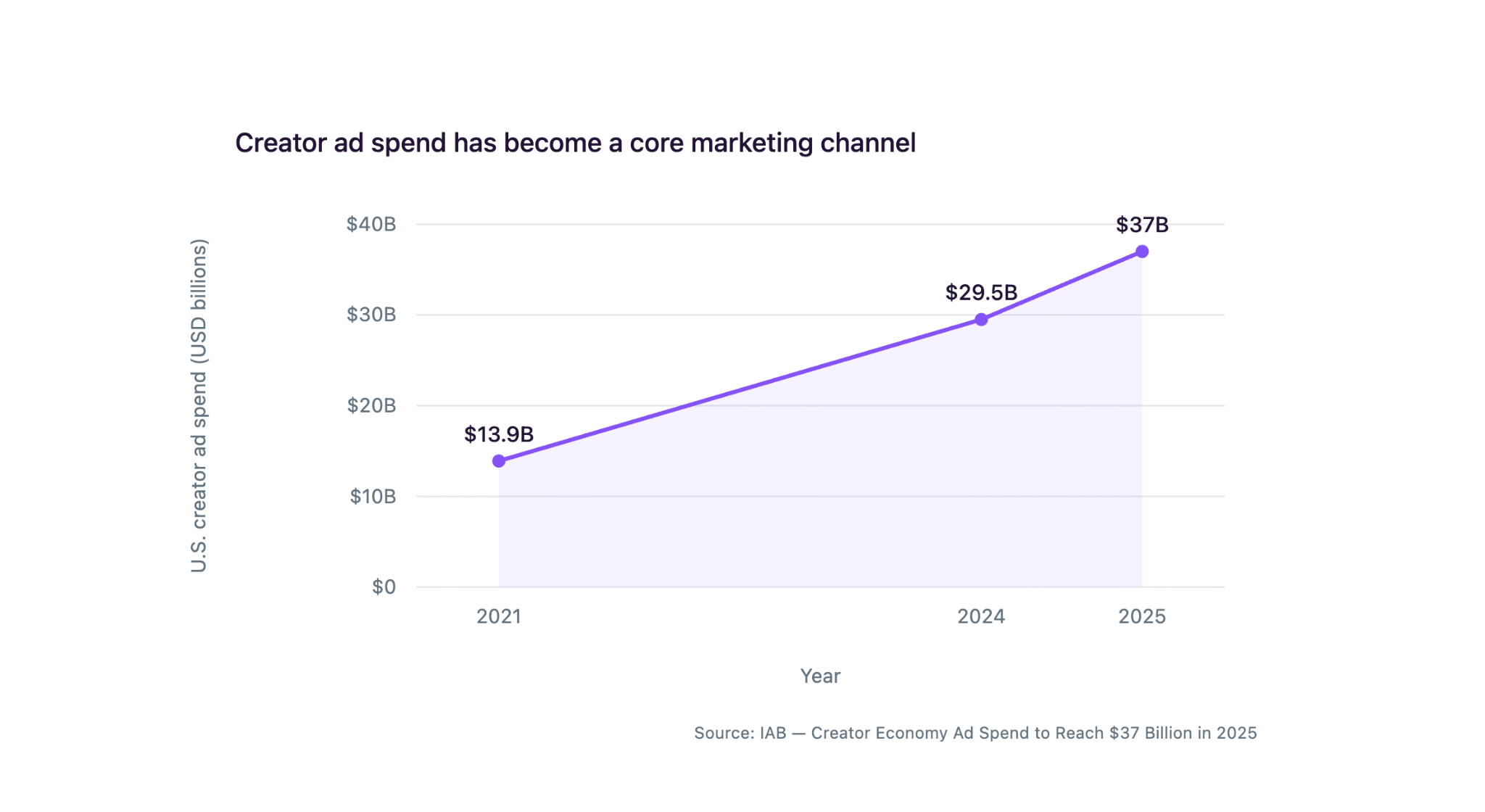
YouTube is no longer a side channel in influencer marketing. IAB’s 2025 creator economy data projects creator ad spend in the US at $37 billion in 2025, up 26% year over year, and YouTube’s 2026 Creator Partnerships update says 76% of US respondents rank access to both short-form and long-form content as a top reason it is their go-to platform.
That changes how influencers should think about ideation. A good idea now has to work in more than one viewing mode, because your audience may discover you on Shorts, binge long-form on mobile, and return for deeper trust-building content later. Wyzowl’s 2026 video marketing statistics reinforce that shift by naming YouTube the most widely used video marketing platform and showing that video marketers still balance reach, engagement, and click outcomes at the same time.
Use that market shift as your planning baseline.
When influencers ignore that context, they default to trend chasing. When they respect it, they start planning videos that can serve micro influencers, nano influencers, affiliate workflows, and future brand sponsorship at the same time.
A strong YouTube content ideas strategy is a repeatable system for choosing video concepts that match audience intent, creator personality, and business upside. It is different from a brainstorm list because every idea is selected for a measurable reason. If you cannot explain why a video should exist before you film it, the concept probably is not strong enough.
That matters even more for influencers who operate across UGC, affiliate links, creator partnerships, and owned products. If you create both community content and paid work, the difference between UGC and content creators matters, and so does understanding how micro influencers build trust before they sell attention.
You can usually tell whether your system is solid by checking for three signals.
This is where many influencers get stuck. They borrow broad creator advice, but their actual careers depend on more specific outcomes such as producing better sponsored content, becoming a stronger fit for UGC platforms, or building a portfolio that helps them win repeat brand deals. That is why idea generation has to start from an operating model, not from inspiration alone.
The Signal-to-Series Map is a practical way to organize youtube content ideas around how viewers move from curiosity to trust to action. Instead of asking, “What should I film next?” ask, “What signal am I creating, and what series can grow from it?” That shift keeps your content from becoming one-off entertainment with no compounding value.
The map has four lanes. You do not need equal volume in each lane, but you do need all of them if you want sustainable growth as an influencer, UGC creator, or future brand ambassador.
Search lane ideas work because they meet existing demand. In YouTube’s analytics guide, the platform tells creators to identify the videos bringing in new viewers and then build obvious follow-ups from those winners. That means tutorials, comparisons, beginner mistakes, setups, and “before you buy” formats still matter because they create clear entry points.
For influencers, searchable does not have to mean robotic. “What I would buy again as a nano influencer,” “how I plan creator shoots in two hours,” and “my honest desk setup for small apartments” can all win because they answer real questions while still sounding like a real person.
Story lane ideas are where your personality stops being generic and starts becoming memorable. These videos are not random life updates. They are structured expressions of taste, standards, trade-offs, and routines that make viewers understand how you think.
That matters commercially because brands do not only buy reach. They buy context. A skincare creator with a clear philosophy around sensitive skin, or a home creator with defined style rules, is easier to match with the right creator partnerships than someone posting disconnected trends.
Proof lane ideas are the bridge between creator trust and commerce. Bazaarvoice’s Video Commerce 2025 research found that more than 65% of shoppers consider videos from other consumers critical in their shopping experience, 62% gravitate toward videos during content consumption, and 23% actively seek product demo videos. If you build concepts around proof, you are not “selling out.” You are documenting evidence.
That is especially useful for influencers who also create user-generated content for eCommerce or participate in influencer product seeding strategies. Based on Stack Influence’s work with eCommerce brands, creators usually deliver stronger UGC video when the brief centers one use case and one proof moment instead of trying to compress every feature into one upload.
Series lane ideas are what keep a channel from resetting to zero every week. If one video can become episode one of a recurring format, you lower planning friction and train your audience to come back with better expectations.
This is the part most influencers underuse. The Signal-to-Series Map only compounds when you deliberately turn a winner into sequels, variations, and updates. One searchable upload should create the next comparison, the follow-up Q&A, the live test, and the Shorts recap, not just a spike in views and a blank content calendar.
Brands do not just want creators who can post. They want content creators who make audience-friendly assets that can also support commerce. Sprout Social’s influencer partnerships research says 32% of consumers bought a product or service through an influencer’s sponsored post in the past 12 months, rising to 53% among Gen Z and 48% among Millennials. That means your ideas become more valuable when they make purchase intent visible without turning the video into an ad.
The easiest way to stand out is to make your content useful to both viewers and brand teams.
That is why influencers who understand Amazon influencer marketing solutions and automated product seeding often pitch better than creators who only sell “exposure.” Across campaigns managed on the Stack Influence platform, creators who plan one long-form YouTube video plus two derivative Shorts usually produce a more reusable asset bank than creators who build around a single hero upload.
This is also why micro influencers and nano influencers often beat larger creators on idea efficiency. They may not have the broadest reach, but they are usually better positioned to create specific, trust-heavy content that works for UGC, brand partnerships, and ongoing product storytelling.
Most youtube content ideas advice focuses on “what gets views” and stops there. That sounds useful, but it leaves out the real operating question for influencers: which ideas create durable business value after the upload is over? Views help, but a creator business compounds through repeatability, asset reuse, and measurable action.
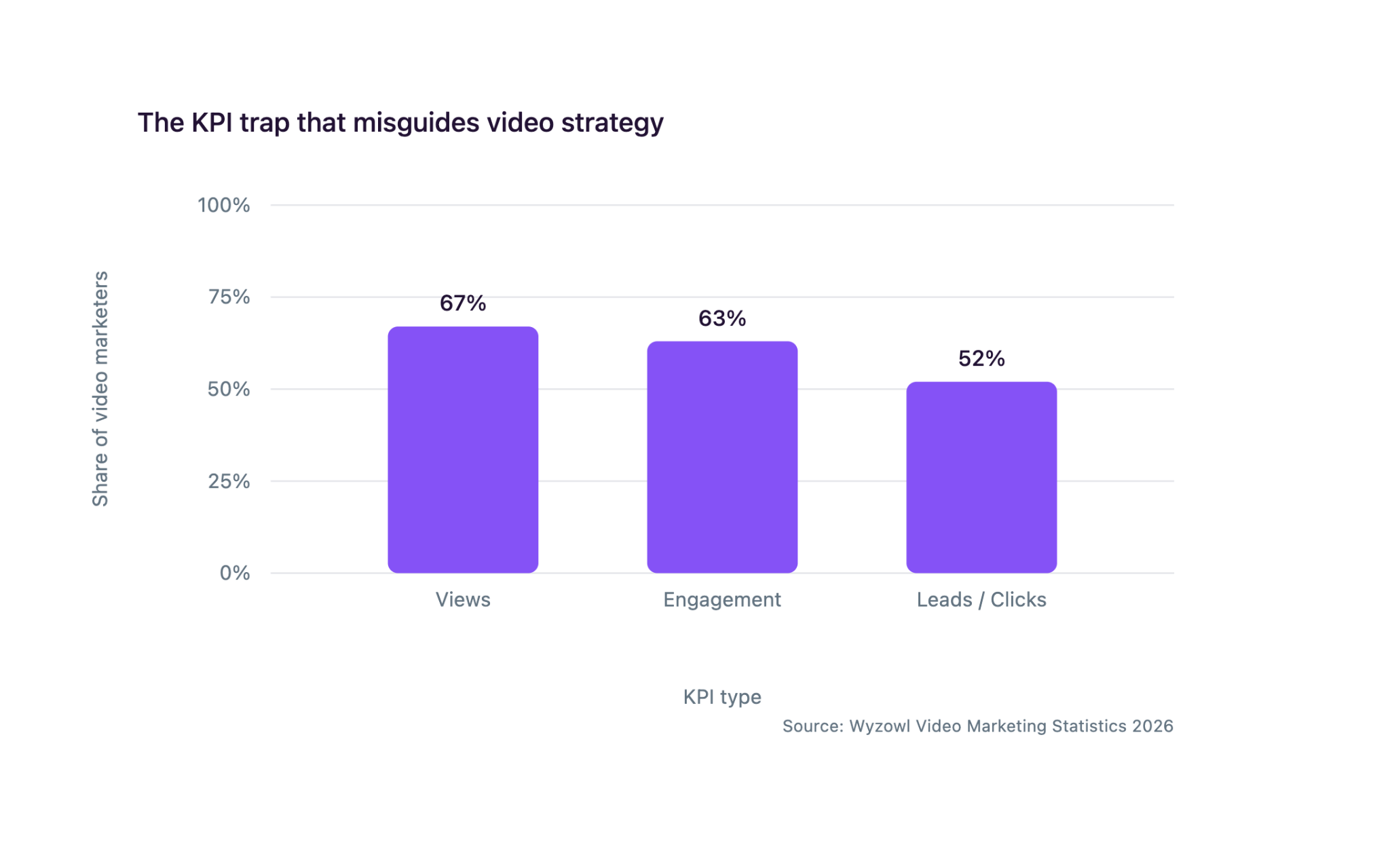
The gap becomes obvious when you compare mainstream advice with current shopping behavior. YouTube’s Shopping report found that 59% of Gen Z users aged 14 to 24 say online content has influenced their personal style, while Wyzowl reports that 67% of video marketers still rank views as their top KPI, ahead of engagement and leads or clicks. That mismatch is the blind spot. Too many guides optimize for visibility while ignoring whether a video creates proof.
Here is what many guides leave out.
The fix is not to stop caring about reach. It is to choose ideas that create evidence. Evidence helps viewers trust your recommendations, helps brands see you as more than media inventory, and helps you turn one good month on YouTube into a repeatable business.
A good idea is only as strong as the proof it leaves behind. IAB’s measurement guidance argues that creator marketing still suffers from fragmented metrics and weak accountability, which is exactly why influencers need a clearer way to judge video peformance. The answer is not one metric. It is a layered model.
The Three-Layer Proof Stack helps you evaluate whether an idea creates discovery, relationship depth, and commercial value. If one layer looks weak, you know what to improve next time instead of blaming the whole concept.
Discovery tells you whether the idea earned initial attention from the right people. YouTube recommends that creators track click-through rate, retention, traffic sources, and the videos that grow the audience, because those metrics reveal whether the title, thumbnail, and concept actually matched what viewers wanted.
Watch these signals first.
Relationship depth tells you whether the audience trusted the idea enough to keep moving with you. This is the layer most influencers skip, even though it usually predicts stronger community loyalty and stronger brand deals later.
Track signals such as comments that mention personal relevance, repeat viewers, saves to playlists, direct messages, email signups, or follow-up requests for related videos. From Stack Influence’s experience running product seeding for eCommerce brands, YouTube ideas built around one concrete use case often lead to clearer viewer questions and more reusable follow-up content than broad lifestyle montages, because the audience knows exactly what to react to
.
Revenue signals tell you whether the idea can support commerce without wrecking trust. On YouTube, that may mean affiliate clicks, shopping tag engagement, brand inquiry volume, coupon code use, storefront visits, and downstream sales. If you send traffic to Amazon, this is where clean setup matters.
Amazon’s Attribution guide explains that tagged links can measure non-Amazon traffic across clicks, detail page views, and sales, and that the Brand Referral Bonus averages 10% on qualifying sales while also crediting additional brand purchases up to 14 days after the click. YouTube Shopping help documentation adds that eligible creators can view tagged-product performance and product-page traffic inside YouTube Analytics, which makes it easier to compare product interest with downstream conversions.
Keep the setup simple if you want clearer reporting.
Data from Stack Influence’s micro influencer campaigns suggests that creators who publish within two weeks of product delivery usually make attribution cleaner than creators who wait a month, because codes, inventory status, and buyer intent stay aligned longer. That is a small operational detail, but it often decides whether a YouTube idea looks profitable or just interesting.
The final step is operational discipline. Once you know how to judge ideas, stop planning your channel video by video and start planning in clusters. One cluster should include a searchable entry video, one trust-building story, one proof asset, and at least one follow-up angle. That is how youtube content ideas stop feeling random and start compounding.
A lightweight publishing rhythm is enough.
If you also create sponsored work, UGC video, or affiliate reviews, this approach makes your channel easier to monetize because every upload leaves behind a better portfolio. It also makes you easier to brief, which matters when you study how influencer seeding works for eCommerce in 2026, build an influencer marketing strategy, or learn from broader examples of micro-influencers and UGC in eCommerce.
For influencers, the best youtube content ideas are rarely the loudest ones. They are the ideas that teach your audience what you are known for, show brands how you create proof, and give you a repeatable lane for growth. Use the Signal-to-Series Map and the Three-Layer Proof Stack on your next planning cycle, and you will build a stronger channel, a stronger pitch, and a better path to repeat brand deals.
Selling on a marketplace and running an owned store are not the same growth play. One gives you borrowed demand, faster validation, and tighter platform rules. The other gives you more control, more data, and more responsibility.
That is why Shopify vs Etsy is not really a beginner question. It is a margin, traffic, and asset-building decision for eCommerce sellers. This guide shows how to choose the right first channel, when to run both, and how DTC brands and Amazon sellers can measure what actually drives profit.
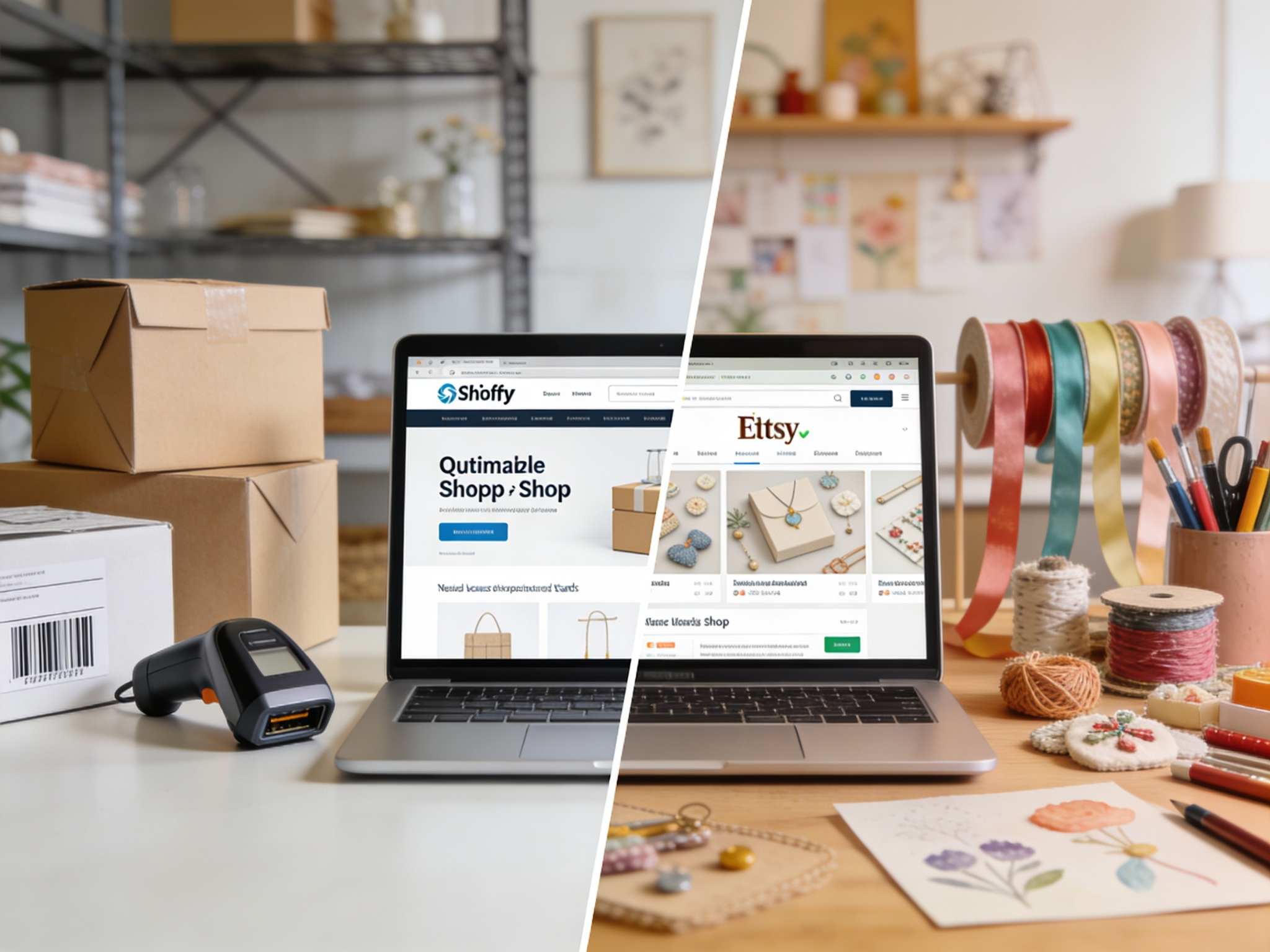
Most comparisons frame Shopify and Etsy as a simple platform choice. The more useful framing is economic. Etsy helps you access built-in marketplace demand, while Shopify asks you to create demand around a store you control.
That matters because channel cost behaves differently over time. Etsy's fee policy layers listing, transaction, processing, and sometimes Offsite Ads fees onto orders, while Shopify's pricing starts with a fixed software cost plus payment fees that decline by plan tier.
Before you pick a channel, pressure-test these four realities:
For a representative $40 order in the United States, Etsy's core fee stack is already material before ads are added. You pay the $0.20 listing fee, a 6.5% transaction fee, and a 3% plus $0.25 processing fee. On the same order, Shopify's Basic plan still carries a fixed subscription, but the variable payment cost is lower when you use Shopify Payments on Basic.
That simple math changes the question from "Which one is cheaper?" to "At what order volume do I want fixed cost instead of variable fee drag?" It also explains why sellers who care about bundles, subscriptions, merchandising, and retention often move toward owned-store economics even if they begin on a marketplace.
Shopify is commerce infrastructure. Etsy is a marketplace with rules, shared demand, and category-specific buyer intent. When sellers confuse those roles, they usually end up optimizing for the wrong outcome.
Etsy's seller page says the marketplace is built for items that are made, designed, handpicked, or sourced by a seller. Etsy also reported 86.5 million active buyers and 5.6 million active sellers in its fourth quarter 2025 results. Shopify, by contrast, positions itself as a store platform and multichannel operating system for merchants that want their own storefront and operating layer.
Use this distinction to simplify the decision:
The fee structure reinforces the role difference. Etsy publicly lists a $0.20 listing fee, a 6.5% transaction fee, and US payment processing of 3% plus $0.25, with Offsite Ads fees that can run 12% or 15% on attributed orders. Shopify's published entry plan starts at $29 a month when billed yearly, with 2.9% plus $0.30 online card rates on Basic.
A useful break-even shortcut comes from comparing variable fees only. On that same $40 US order, Shopify's payment cost is about $1.46, while Etsy's core fees total about $4.25 before Offsite Ads. At roughly 11 such orders a month, the yearly billed Basic subscription is effectively covered by the variable-fee gap alone, although apps, shipping, and category realities can still change the answer.
Most sellers answer Shopify vs Etsy too early. They compare setup screens, not business models. The Channel Fit Checklist is a better way to decide because it forces you to score the channel against how your business will actually grow.
Run every option through the Channel Fit Checklist before you move inventory, creative budget, or time. A channel can win on convenience and still lose on contribution margin, customer capture, or long-term reuse of the content and data you pay to create.
Score each item from 1 to 5, then compare your totals for Shopify, Etsy, or a hybrid setup:
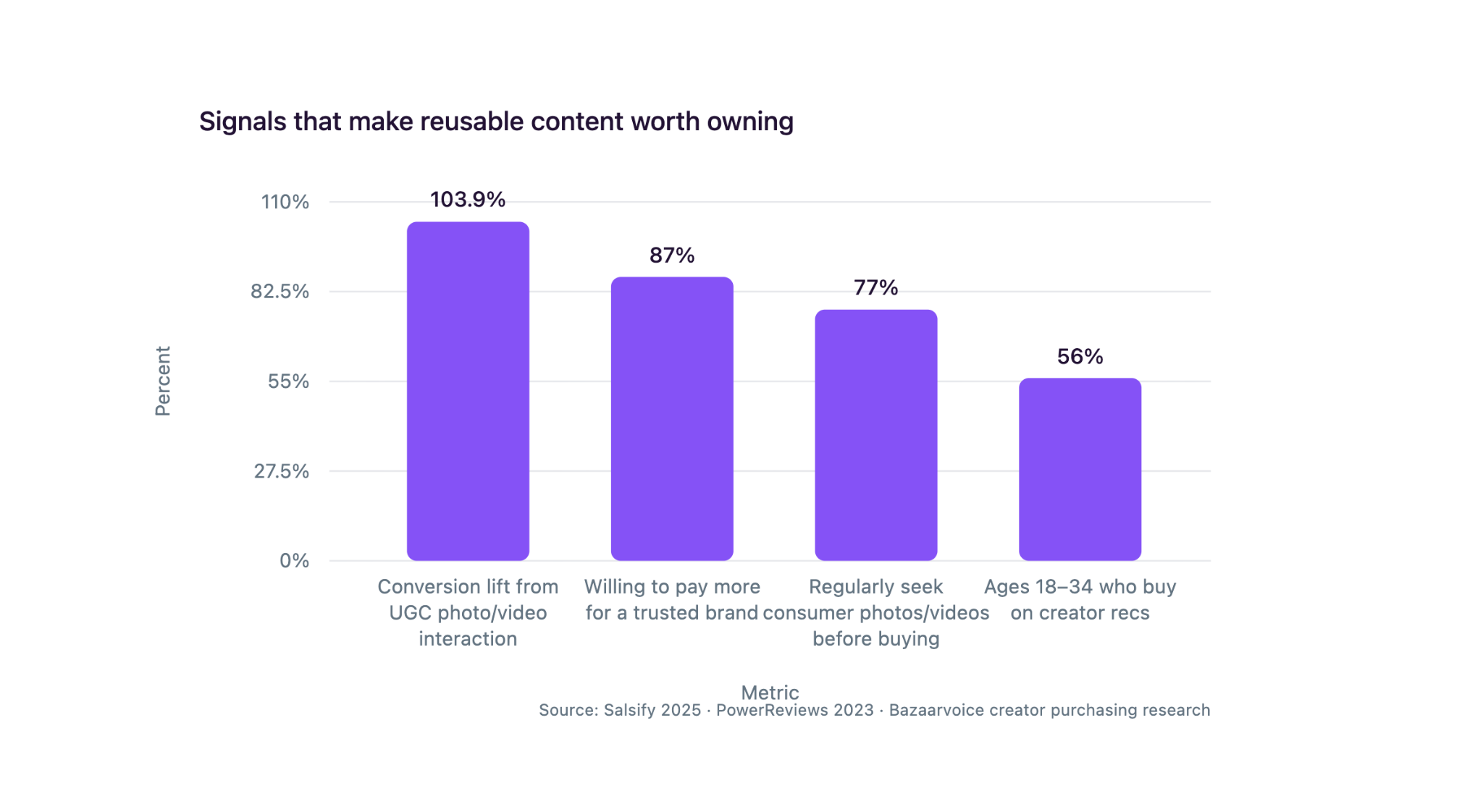
The Channel Fit Checklist gets especially valuable on the content line item. PowerReviews found that visitors who interacted with user-generated photos and videos saw a 103.9% lift in conversion, and Bazaarvoice reports that 56% of shoppers aged 18 to 34 have made purchases based on creator recommendations. If content influences the sale, it should influence the channel choice too.
That usually favors Shopify for sellers who want every photo, quote, review, and creator clip to strengthen a product page, an email flow, a paid ad, and an Amazon listing at the same time. It does not make Etsy wrong. It means Etsy is strongest when built-in marketplace demand outweighs the value of owning and recycling the asset library yourself.
Based on Stack Influence's work with eCommerce brands, lean teams often discover that creator logistics, not creator sourcing, becomes the real bottleneck once they try to scale product seeding and UGC. That is why pages such as Automated Product Seeding, User Generated Content for eCommerce, and Content Syndication emphasize throughput, reuse, and verified delivery. Stack Influence's published pricing benchmarks also highlight about 175 hours saved per month for active brands, which matters when Shopify growth depends on a steady flow of usable content instead of one-off posts.
Use the Channel Fit Checklist one more time before making your final call. If Shopify wins on customer capture, content reuse, and scale path, it is probably the platform that compounds. If Etsy wins on category fit, speed to demand, and low up-front risk, it is probably the platform that validates the offer first.
For many sellers, the smartest answer is not a winner-take-all choice. It is sequencing. You can keep Etsy live for discovery while Shopify becomes the place where your best customers buy again, join your list, or purchase higher-margin bundles.
That sequencing becomes even more useful if you also sell on Amazon. A multichannel stack lets one channel discover demand, another retain it, and a third capture high-intent marketplace shoppers. Shopify's own migration guidance notes that sellers can keep Etsy as a sales channel while expanding onto Shopify, and Shopify's multichannel management guidance argues for one operating model across channels instead of disconnected storefronts.
Use the Test-to-Own Ladder to plan the handoff:
The Test-to-Own Ladder helps prevent a common mistake. Sellers often stay too long in proof mode and keep paying variable marketplace costs after the brand has already earned the right to own more margin. That is especially true for DTC brands that now need consistent content output and post-purchase systems, not just more listings.
If you already sell through Amazon or use Amazon FBA, the Ladder still works. Shopify can become your DTC conversion and retention layer, Etsy can stay curated around its strongest intent, and an Amazon growth workflow or a guide like How to Build an Amazon Brand in 2026 can keep marketplace traffic aligned with the rest of your stack.
Channel comparisons fall apart when sellers track revenue without tracking contribution margin. A marketplace order, a Shopify order, and an Amazon order can all look identical in gross sales while producing very different profit, repeat rate, and data value.
That is why Shopify vs Etsy should be measured with a tiered framework, not a single top-line dashboard. Use the Demand-to-Margin Stack so each channel is judged on the role it plays, the traffic it captures, and the profit it leaves behind after all channel-specific costs.
Track these four layers every month:
For Shopify, this stack should connect landing pages, campaign links, checkout behavior, and post-purchase retention. For Etsy, it should isolate marketplace search demand from Offsite Ads and any sales you generated with your own social or creator traffic. For Amazon, the stack should include Amazon Attribution, because Amazon requires attribution tagging if you want to qualify for the Brand Referral Bonus, which Amazon says averages about 10% of qualifying sales.
Checkout quality still matters after the click. Baymard Institute reports a global average cart abandonment rate of 70.19%, and Baymard's checkout benchmarks note that large ecommerce sites can gain as much as a 35% increase in conversion rate through checkout improvements. That means Shopify's advantage is not just control. It is the ability to improve the full journey after the shopper arrives.
Across campaigns managed on the Stack Influence platform, teams get cleaner reporting when every creator brief names one primary conversion destination before outreach starts. That destination might be a Shopify product page, an Etsy listing, or an Amazon Attribution URL that points to an Amazon storefront. For a practical planning model, Stack Influence's ROI of Influencer Marketing Checklist and How to Budget Influencer Marketing for Amazon Brands 2026 are useful references because they keep creator traffic, off-platform demand, and downstream asset reuse inside the same measurement plan.
One more metric belongs in the stack: content efficiency. If a creator post drives a modest click count but also gives you reusable video, testimonials, and product imagery, the return should not be judged on one session window alone. Your measurement system should capture both immediate sales and the downstream value of the asset library.
The most expensive mistake in Shopify vs Etsy is not paying the wrong fee. It is underestimating the future value of assets that only compound well on owned channels. Marketplace demand can validate a product, but it rarely becomes a durable brand moat by itself.
That hidden economics layer gets stronger when competition rises and paid traffic gets more expensive. The more you spend to earn attention, the more valuable it becomes to keep the customer relationship, the merchandising freedom, and the content asset after the first sale. That logic gets even stronger for DTC brands that want product pages, retention flows, and creator content working together.
These four assets usually become more valuable over time on Shopify:
The trust data supports that long-view argument. Salsify's 2025 Consumer Research found that 87% of shoppers will pay more for a product from a brand they trust, while PowerReviews says 77% of shoppers regularly seek photos and videos from other consumers before buying. That makes customer trust and reusable proof part of the channel decision, not just part of the marketing plan.
Data from Stack Influence's micro influencer campaigns suggests that creator output becomes more valuable when it is treated as a reusable asset library instead of a one-post deliverable. That is why Stack Influence frames UGC Creator workflows, Micro-Influencers and UGC in eCommerce, and How Brands Manage UGC Licensing Rights in 2026 around downstream reuse, rights readiness, and marketplace-safe distribution. The platform also says syndicated creator assets can drive up to 4x ad conversions when they are pushed into paid media and listing support.
The best Shopify vs Etsy answer depends on what problem you are solving first. If you need fast product validation inside a marketplace that already has strong buyer intent, Etsy can be the right opening move. If you need a brand asset that compounds margin, customer data, and content reuse, Shopify is usually the stronger long-term home.
Use this short version when you make the call:
For eCommerce sellers, the real win is not picking a side. It is sequencing the channels so each one does the job it is best at. Make your next move around contribution margin, customer ownership, and content leverage, and Shopify vs Etsy becomes a growth system instead of a false choice.
Marketplace fees almost never damage margin through one obvious charge. They erode it through stacked percentages, fulfillment rules, return handling, software costs, and the rising cost of buying traffic on channels you do not control. For eCommerce sellers, that means learning how to evaluate marketplace fees is less about memorizing fee schedules and more about understanding true contribution margin by channel.
The pressure is real. Marketplace Pulse reports that 49% of Amazon sellers identify marketplace fees as their primary margin concern, nearly matched by 46% who cite advertising spend, which means sellers are being squeezed by both distribution cost and demand cost at the same time. This guide will show you how to compare headline platform fees, hidden operational costs, and recovery levers like Amazon Attribution and the Brand Referral Bonus so you can make better channel decisions for Amazon, Shopify, and other marketplaces.

Fee evaluation matters more in 2026 because marketplaces keep adding cost in layers, not in one clean line item. Amazon announced that U.S. FBA fees would rise by an average of $0.08 per unit in 2026, and its help documentation says a 3.5% fuel and logistics-related surcharge began applying to FBA fulfillment fees on April 17, 2026. That means even sellers who already understand referral fees can still miss margin compression when fulfillment math changes mid-year. Amazon’s 2026 fee update and the official FBA fulfillment fee page make clear that fee monitoring must be ongoing rather than annual.
Here is the practical implication for eCommerce teams managing multiple channels:
Most sellers already know they pay to access demand. What they miss is that each marketplace charges for demand differently. Amazon often blends referral, fulfillment, inventory, and ad dependence. Shopify shifts more of the burden into merchant-controlled software, payment, and acquisition costs. Walmart, eBay, and Etsy each come with their own fee logic, which is why a fee evaluation method has to travel across channels instead of staying Amazon-only.
Marketplace fee evaluation is the process of turning every channel cost tied to one sale into a single contribution-margin view. It is not the same as checking a referral percentage, because a real fee decision includes platform take rate, order execution cost, payment cost, traffic cost, return exposure, and any recovery mechanism that gives margin back.
A useful fee evaluation model includes five inputs:
If your team is still mapping channel structure, Stack Influence’s How to Become an Amazon Seller in 2026 and How to Set Up a Shopify Store are useful internal primers because they frame Amazon and Shopify as operating models, not just storefront choices. That distinction matters because the fee line belongs to the operating model, not just the sales channel.
Margin usually disappears in the gaps between fee categories. Sellers who price from a headline referral rate often miss the impact of return handling, aged inventory, dimensional changes, or the operational labor it takes to keep listings, shipments, and marketing synced. Amazon’s own fee pages and seller-focused breakdowns both show that the risk is cumulative, especially when a product looks healthy on revenue but carries too many cost touchpoints underneath it. Amazon’s selling fee schedule is essential, but it should be read alongside broader cost categories such as storage, adjustment, inbound, and refund-related charges.
The most common blind spots are operational, not financial-theory errors:
That last point is where many DTC brands and Amazon sellers undercount cost. A marketplace may look cheaper on paper, but if your team is manually coordinating UGC, storefront updates, coupon stacks, and creator logistics, labor becomes a shadow fee. Stack Influence has observed that operational overhead is often the hidden variable in these programs, which is why sellers evaluating new campaigns should treat workflow effort as part of channel cost rather than free internal capacity.
For teams trying to avoid that gap, Stack Influence’s Automated Product Seeding workflow and its Micro-Influencers & UGC in E-Commerce guide are relevant because they frame creator logistics and content reuse as cost controls, not just marketing extras. That is a smarter lens for fee evaluation than looking at platform percentages alone.
The best way to compare channels is to stop asking, “What is the fee?” and start asking, “Which layer of cost am I looking at?” The Margin Ladder is a four-tier model for doing exactly that. It helps eCommerce sellers move from shallow platform math to full contribution-margin math without getting lost in one giant spreadsheet.
Use the Margin Ladder in this order:
The Margin Ladder is useful because it explains why a lower-fee channel can still produce worse economics. A $25 item on Amazon may face category-specific referral costs and FBA handling, but it also sits inside a marketplace with enormous purchase intent. A Shopify order may avoid referral fees, yet still absorb payment costs, app costs, and paid acquisition. Walmart, eBay, and Etsy can be attractive for certain SKUs, but only if the traffic and operational requirements justify the listed fee advantages.
To make the Margin Ladder executable, use this secondary tool before you approve any new SKU or campaign:
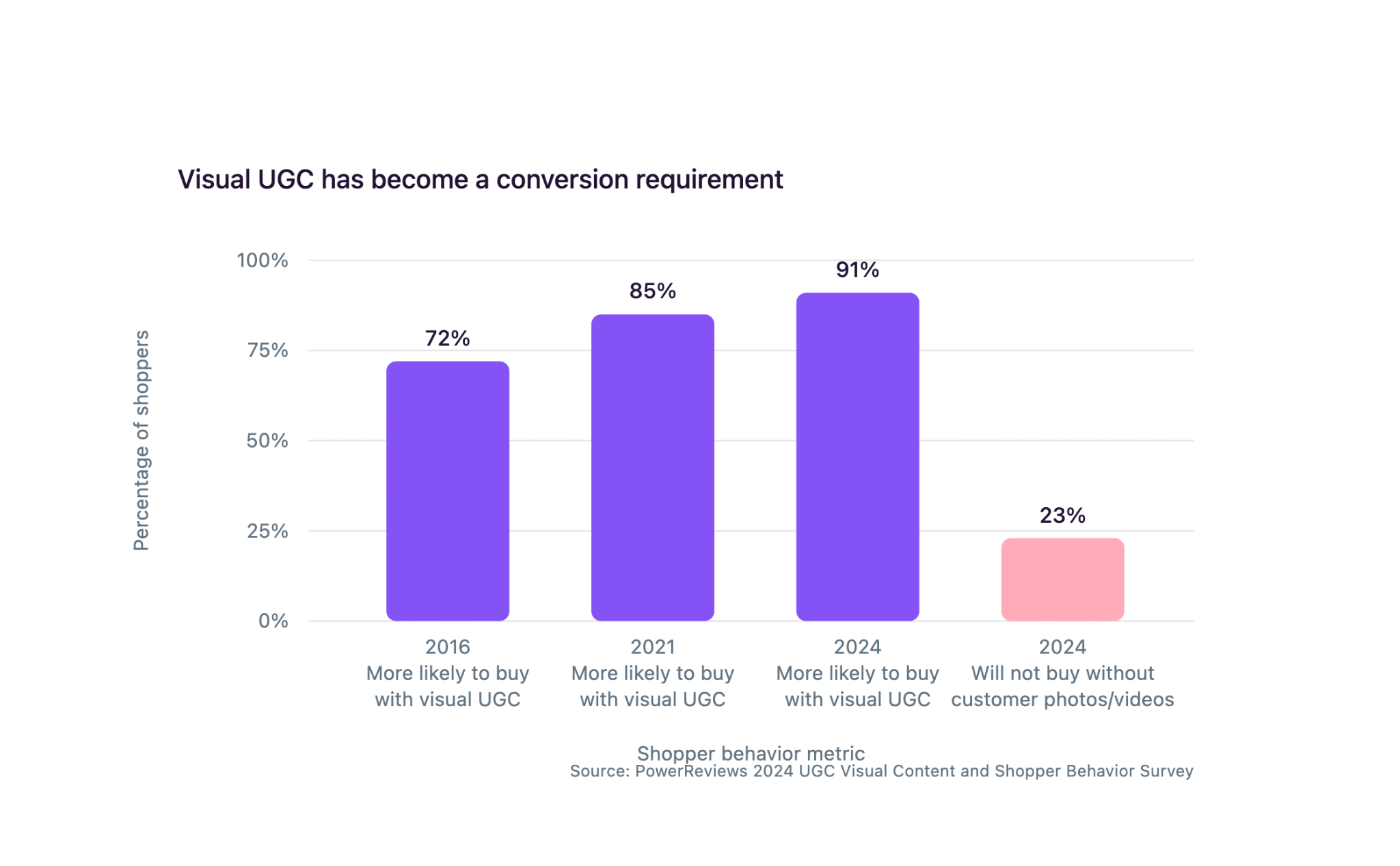
Based on Stack Influence’s work with eCommerce brands, the biggest modeling mistake is treating content as a one-time traffic expense. In practice, one creator asset can support Amazon PDPs, an Amazon storefront, Shopify product pages, and retargeting ads, which means its cost should be amortized across multiple uses, not assigned to one click source. That matters because PowerReviews found that 91% of consumers are more likely to buy when reviews include photos and videos, which turns content quality into a conversion lever, not just a branding bonus.
A strong fee model tells you what you paid. A strong measurement model tells you what you got back. For Amazon sellers, the cleanest practical framework is the Signal-to-Sale Stack, which tracks non-Amazon traffic from source click to retail conversion and then to recovered margin. Amazon says Amazon Attribution is a free measurement solution for eligible sellers, vendors, and agencies, and its documentation states that Attribution uses a 14-day last-touch model for conversion credit.
The Signal-to-Sale Stack works best in four layers:
This section is also where Stack Influence fits naturally. Data from Stack Influence’s micro influencer campaigns suggests that campaigns tagged before product ships produce cleaner reporting than campaigns that add tracking after content is already live. That observation aligns with Amazon Attribution’s structure because the tool only helps if the source link exists before traffic starts moving. Teams that want a setup reference can use Stack Influence’s internal Amazon Attribution Guide, its explainer on Amazon Attribution links and the Amazon Brand Referral Program, and its guide on How to Get an Amazon Storefront to connect creator traffic, storefront merchandising, and fee recovery into one reporting workflow.
The off-platform challenge is that not every source closes in the same window or with the same audience intent. Creator campaigns, especially for DTC brands and Amazon sellers, often deliver mixed value: some immediate tracked sales, some later halo demand, and some reusable UGC that lifts conversion on both Amazon and Shopify. That is why the Signal-to-Sale Stack should end with contribution margin, not ROAS alone.
Most marketplace fee guides miss the real cost because they stop at platform math and ignore the operating system around the sale. They are usually good at listing fee categories, but weak at connecting those fees to traffic quality, asset reuse, and the labor needed to keep the machine running. That gap matters because sellers do not experience fees in isolation. They experience them inside a workflow.
Three things other fee guides often leave out should change the way you evaluate marketplaces:
That last point is especially important for Amazon storefronts, Shopify PDPs, and social commerce campaigns. Stack Influence has observed that when sellers separate “traffic cost” from “content cost,” they often overstate the true burden of marketplace fees because the same creator post keeps working after the first campaign ends. Internal resources like Stack Influence’s Influencer Product Seeding Strategies and Amazon influencer marketing solutions are useful here because they frame product seeding and external traffic as margin tools when the resulting content can be reused across listings, ads, and storefronts.
The strategic takeaway is simple. Sellers should not ask which marketplace has the lowest fee. They should ask which channel gives the highest contribution margin after demand cost, workflow cost, and recovery are modeled honestly. That is the real standard for how to evaluate marketplace fees.
If you want a repeatable answer to how to evaluate marketplace fees, use a layered system instead of a single percentage. Start with the posted fee, move to landed cost, add your blended demand and operational costs, and then measure what the channel gives back through conversion quality, bonus recovery, and reusable content value.
For eCommerce sellers, the goal is not finding the marketplace with the prettiest fee page. The goal is choosing the channel mix that protects contribution margin, supports scalable growth, and keeps your next inventory decision tied to profit rather than guesswork.
Most explanations of B2B influence stop at awareness. That misses what eCommerce sellers and creators actually need from the channel: lower buyer friction, reusable proof, and cleaner revenue math. If you sell to brands, Amazon sellers, Shopify merchants, agencies, or the software teams that serve them, that difference changes how you choose creators, briefs, and KPIs.
This guide answers what is b2b influencer marketing through five practical ideas. You will see how B2B creator programs differ from B2C campaigns, when micro influencers and nano influencers outperform bigger names, how to measure impact with Amazon Attribution, and why the smartest programs treat UGC as a business asset instead of a one-time post.

B2B creator programs work because buyers borrow judgment from people they already trust. TopRank Marketing's 2025 research says 85% of B2B marketers already use influencer marketing, while LinkedIn's 2025 buyer research found that 82% of buyers say creator content influences decisions, 87% prefer credible content from industry influencers, and 79% engage with it at least monthly.
In eCommerce, B2B influence is broader than SaaS. It includes creator partnerships for Amazon tools, logistics providers, agencies, analytics software, UGC platforms, influencer marketing platforms, and service brands that sell to merchants rather than end consumers. The common denominator is risk reduction: the buyer wants proof that a solution works in the real operating environment.
A useful way to frame the difference is this:
That is also why program maturity matters more than novelty. TopRank reports that 43% of marketers overall say their influencer programs deliver outstanding results, but that jumps to 79% for mature programs, and 99% of teams with always-on programs rate them as effective. In other words, B2B influence starts to pay off when it becomes operating muscle, not campaign garnish.
The spend side confirms the shift. IAB's 2025 creator economy report says U.S. creator ad spend is projected to reach $37 billion in 2025 after rising from $13.9 billion in 2021 to $29.5 billion in 2024, and 32% of brands already use creator campaigns to drive online sales or conversions. That is why B2B influencer marketing should be treated as a commercial channel with trust advantages, not as a soft awareness line item.
What is b2b influencer marketing? It is the practice of partnering with credible niche voices to influence business buyers through education, proof, and trust transfer rather than mass consumer persuasion. In practical terms, the creator is helping another business decide, shortlist, validate, or buy.
For eCommerce sellers and influencers, that influence can come from an operator who reviews software, a consultant who teaches retention, an Amazon educator who walks through catalog strategy, or a creator who earns through the Amazon Influencer Program by curating a storefront and vanity URL. The audience is smaller than B2C, but the decision value per viewer is often much higher.
In this market, most B2B creators fall into a few repeatable buckets:
That also explains why influencer marketing, UGC creator, and Amazon influencers are related but not identical ideas. Influencer marketing is the partnership system, UGC is the asset, and Amazon influencers sit closer to commerce because they can connect content directly to an Amazon storefront. For DTC brands and Amazon sellers, strong B2B programs usually blend all three.
Creators themselves should think about this as a B2B sale. Visa's 2025 creator report says 68% of creators consider themselves small business owners and 88% expect their business to grow, which is a useful reminder that brand deals, brand sponsorship, and creator partnerships are not side hobbies anymore. They are part of a professional services economy inside the broader creator economy.
The Credibility-to-Conversion Flywheel is a simple way to evaluate whether a B2B influencer program will compound or stall. Unlike a straight funnel, the flywheel assumes one strong creator asset can keep paying back through trust, content reuse, and attributed demand long after the first post is published.
It has four moving parts:
The first job in the Credibility-to-Conversion Flywheel is selecting a voice people already use as a filter. LinkedIn data shows 59% of B2B buyers discover new brands through creator content, 67% say it helps them assess solutions, 47% visit a vendor site after engaging with it, and 38% say it prompts contact with sales. Those numbers only work when the creator is trusted for the topic at hand.
Relevance beats celebrity in B2B because the audience needs precision. A nano influencer explaining Amazon FBA prep for private-label brands, or a micro influencer known for Shopify CRO audits, can outperform a larger creator whose audience is broad but commercially mismatched. This is why many brands that work with micro influencers in B2B care more about problem fit than pure follower count.
The third stage is where eCommerce teams often unlock the most value. Based on Stack Influence's work with eCommerce brands, creator economics look far better when one delivered asset can live on social, on a PDP, inside email, and inside paid media. That logic is built into the Stack Influence pricing page, which frames campaigns around about $30 per completed creator post, and the Stack Influence Amazon influencer seeding workflow, which is designed to turn product seeding into repeatable UGC output.
The fourth stage is measurement. If the campaign cannot connect to attributed traffic, assisted conversions, or sales conversations, the flywheel still spins creatively but not commercially. That is why mature teams increasingly pair creator output with a repeatable operating model, whether they manage it internally or through a workflow like how to create an influencer marketing strategy in 2026.
When the flywheel breaks, it usually breaks at stage two or four. TopRank found that identifying the right influencers and measuring results remain two of the biggest challenges in B2B influencer marketing, which is exactly why the Credibility-to-Conversion Flywheel should be used before you approve a brief or a budget.
Measurement is where many B2B influencer campaigns lose credibility internally. TopRank reports that 47% of B2B marketers struggle to measure and report results, and 93% say pressure to prove marketing ROI has increased. A useful response is to build one metric system that covers trust signals, traffic quality, and commercial outcome.
Use a four-layer Proof Stack:
Off-platform conversion tracking is still imperfect, especially when creators influence branded search, repeat visits, or a later Amazon purchase. That is why Shopify influencer marketing and Amazon programs should both reconcile direct attribution with softer signals like branded search lift, reply quality, content reuse, and sales-team feedback. Amazon sellers need that wider view because a creator often changes purchase confidence before the tracked click arrives.
Data from Stack Influence's micro influencer campaigns suggests that campaigns tagged before product ships produce cleaner reporting than campaigns that add tracking after content is already live. If your team needs a practical template for that setup, the Stack Influence budgeting guide for Amazon brands is a useful example of how to connect creator cost, traffic data, and Amazon Brand Referral Bonus into one P&L view.
The biggest mistake in B2B influencer marketing is treating the creator like rented media. Reach matters, but it rarely explains the full return in eCommerce, where the buyer may watch a demo, read peer comments, visit an Amazon listing later, and convert only after seeing proof placed in the right commerce environment. Reach fills the first quarter of the Credibility-to-Conversion Flywheel. Assets and trust finish the job.
Bazaarvoice's trust data says 47% of consumers trust customer testimonials and peer reviews when shopping on social media, and its broader Bazaarvoice shopper research shows one in three shoppers buy from creator recommendations. That should change how B2B sellers think about creator output. The best deliverable is often not a one-off mention. It is a reusable tutorial, testimonial, product comparison, or founder explanation that keeps converting after distribution ends.
If you want more durable ROI, build for these outcomes:
Stack Influence has observed that creator content becomes more valuable after the original placement when it is reused in ads and marketplace creative. Its public Stack Influence Amazon influencer platform page highlights up to 4x ad conversions in Amazon-focused workflows, which is why a micro influencer agency or influencer marketing platform serving DTC brands should be evaluated partly on content syndication and reuse, not just creator discovery.
This is also why a pure influencer marketing agency model is not always enough for lean teams. If your workflow includes product seeding, approvals, Amazon Attribution tags, and UGC rights, you may need a system that behaves more like creator operations infrastructure than just a campaign broker. For many eCommerce teams, that is the difference between a nice creator post and a repeatable creator engine.
B2B influencer marketing works best where the purchase is complex, the audience is niche, and the content can educate. That makes it a strong fit for Amazon sellers, Amazon FBA service businesses, Shopify app partners, DTC brands selling to retailers, agencies, analytics tools, UGC platforms, and service brands whose buyers want a working example before they buy. It is weaker when the offer is purely commoditized and the creator has nothing meaningful to explain.
Use the Partner-Fit Screen before you launch:
For marketplace-heavy teams, the implementation often looks different by channel. Shopify influencer marketing usually prioritizes sessions, conversion rate, and content reuse on site, while Amazon programs lean harder on PDP quality, external traffic, and attribution recovery. That is why Amazon sellers often combine influencer campaigns with product seeding, Amazon storefront traffic, and listing asset refreshes instead of treating creators as a separate channel.
For influencers, the best B2B opportunities are often quieter but stickier than consumer brand sponsorship. Software brands, service providers, and brands looking for influencers often need explainers, tutorials, case-style posts, or partner education rather than a flashy one-time endorsement. That gives micro influencers, nano influencers, and UGC creators more room to win recurring brand partnerships if they can teach, demonstrate, and stay reliable.
What is b2b influencer marketing in 2026? For eCommerce sellers and influencers, it is a trust-transfer system that turns the right creator relationship into education, proof, reusable assets, and attributed demand. The brands that win are not the ones buying the biggest voice. They are the ones designing a repeatable way to turn credible creator output into business evidence.
If you want the channel to pay back faster, start here:
Do that, and B2B influencer marketing stops feeling abstract. It becomes a practical growth lever for Amazon sellers, Shopify merchants, DTC brands, and creators who want smarter brand deals instead of noisier ones.
Amazon dropshipping still attracts eCommerce sellers because it lowers upfront inventory exposure. The catch is that platform policy, review-sensitive conversion, and customer service pressure still demand control, even when a supplier is shipping the box.
For Amazon sellers, the real question is not whether amazon dropshipping is possible. It is whether the model can survive policy rules, rising operating costs, and the need for traffic that actually converts once it lands on your listing.
This guide explains what amazon dropshipping is, when it fits, how to measure it properly, and when to move a winning SKU into a stronger fulfillment model.
Most sellers evaluate dropshipping backward. They start with supplier catalogs and only later ask whether the product can survive Amazon fees, delivery expectations, and the trust gap on a cold product page.
The 5-Step Margin-First Sequence flips that order. It gives eCommerce sellers a cleaner way to test demand, especially when they want validation before committing to inventory or moving deeper into Amazon FBA.

Start with this sequence:
The 5-Step Margin-First Sequence works because it forces you to solve for fragility before scale. If you want a Stack Influence refresher on creator-led Amazon growth, the brand's Amazon solutions for influencers and automated product seeding pages show the operational side of sourcing creators, coordinating product sends, and collecting reusable content.
Step four is where creator traffic becomes strategic instead of random. For sellers who run influencer campaigns, Stack Influence is relevant here because its Amazon workflow is positioned around micro creator activation and reusable content, not just one-off sponsorships. From Stack Influence's experience running product seeding for eCommerce brands, launches built around one hero SKU and one tagged destination tend to produce cleaner click-to-sale reporting than campaigns split across multiple pages.
At its core, amazon dropshipping is a seller-fulfilled model where you list the product in Amazon's marketplace while a third-party supplier stores inventory and ships the order. As Amazon's 2026 dropshipping guide explains, the model can lower upfront overhead, but it also transfers a large part of fulfillment risk into your supplier relationship.
The critical nuance is policy. Under Amazon's Drop Shipping Policy, you still have to remain the seller of record, remove third-party identifiers from the package, and take responsibility for accepting and processing returns. That means amazon dropshipping is less passive than many beginner guides make it sound.
Before you test a dropshipped SKU, run it through this short audit.
If a SKU fails two or three checks in the Ship-or-Skip Checklist, it is usually the wrong product for Amazon dropshipping. If you are still deciding whether the channel fits your broader business model, Stack Influence's guide on how to become an Amazon seller in 2026 is a helpful internal starting point for evaluating fit beyond a single SKU test.
The biggest mistake in amazon dropshipping is assuming that lower inventory risk means lower business risk. On Amazon, the bigger threat is usually operating on a narrow margin while the marketplace still expects fast delivery, responsive support, and a product page that looks trustworthy.
That pressure shows up in current seller data. In Jungle Scout's 2025 seller report, 38% of businesses cite higher shipping costs as a top challenge, 34% cite rising cost of goods, and 32% point to growing advertising expense. A low inventory model helps with one line of the P&L, but it does not solve the other three.
Amazon also gives sellers alternatives once a product looks promising. Its ecommerce fulfillment guide says FBA lets sellers outsource fulfillment, customer service, and returns, which is why many winning dropshipped SKUs eventually move toward more controlled fulfillment. That is also why Stack Influence's post on how much it costs to sell on Amazon in 2026 is worth reviewing before you scale a product that only looks profitable on the surface.
The cost leaks sellers miss most often are straightforward:
That is why the 5-Step Margin-First Sequence should be treated as a validation system, not a permanent operating philosophy. If a product earns repeat demand and the unit economics still hold, the next question is usually how to take back more control, not how to stay invisible forever.
Pure dropshipping is best for learning. Once a product starts generating repeat orders, conversion data, and customer questions, you usually know enough to decide whether the SKU deserves tighter operational control.
At that point, the decision becomes strategic. You are no longer just testing whether the market wants the product. You are deciding how much of the customer experience, margin structure, and brand presentation you want to own as volume rises.
Use these signals to decide what happens next:
This is where brand building and traffic planning start to matter more than sourcing alone. If you need frameworks for that next stage, Stack Influence's posts on how to build an Amazon brand in 2026 and how to drive traffic to your Amazon listing in 2026 are useful internal follow-ups once a test SKU starts behaving like a real business line.
Most sellers measure amazon dropshipping too narrowly. They look at orders and ad spend, then miss the difference between weak traffic, weak conversion, and weak economics. The Signal-to-Sale Stack fixes that by separating traffic quality from business quality.
Amazon provides the measurement foundation. Amazon Attribution is a free tool for measuring non-Amazon traffic into Amazon, and Brand Referral Bonus can return an average bonus of 10% on qualifying external traffic sales for eligible sellers when that traffic is measured correctly.
Start with the traffic and intent signals that tell you whether a channel deserves more budget. Amazon Attribution reports within a 14-day window and includes metrics such as clicks, detail page views, add-to-carts, purchases, units sold, product sales, and new-to-brand activity.
The next layers move from campaign math to commercial reality. This is where seller economics, Amazon referral fees, and the financial effect of Brand Referral Bonus credits have to sit in the same dashboard as media results.
Treat the Signal-to-Sale Stack as a weekly operating habit, not a one-time dashboard. If your team needs a setup refresher, Stack Influence's Amazon Attribution Guide and explainer on what the Amazon Brand Referral Bonus is are useful internal references. Data from Stack Influence's micro influencer campaigns suggests that campaigns tagged before product ships produce cleaner reporting than campaigns that add tracking after content is already live.
There is also a hard limit sellers need to respect. Amazon Attribution uses a 14-day last-touch model, so it is powerful for tagged click measurement but incomplete for long-latency demand, content that lifts conversion later, or upper-funnel influence that does not win the final click. That is why the fourth layer exists.
The most overrated idea in amazon dropshipping is that low inventory means low marketing requirements. In reality, the marketplace is more proof-driven than it was a few years ago, and the creator economy keeps pulling more budget toward content formats that build trust before the click. IAB's 2025 Creator Economy report says U.S. creator ad spend is projected to reach $37 billion in 2025, up 26% year over year.
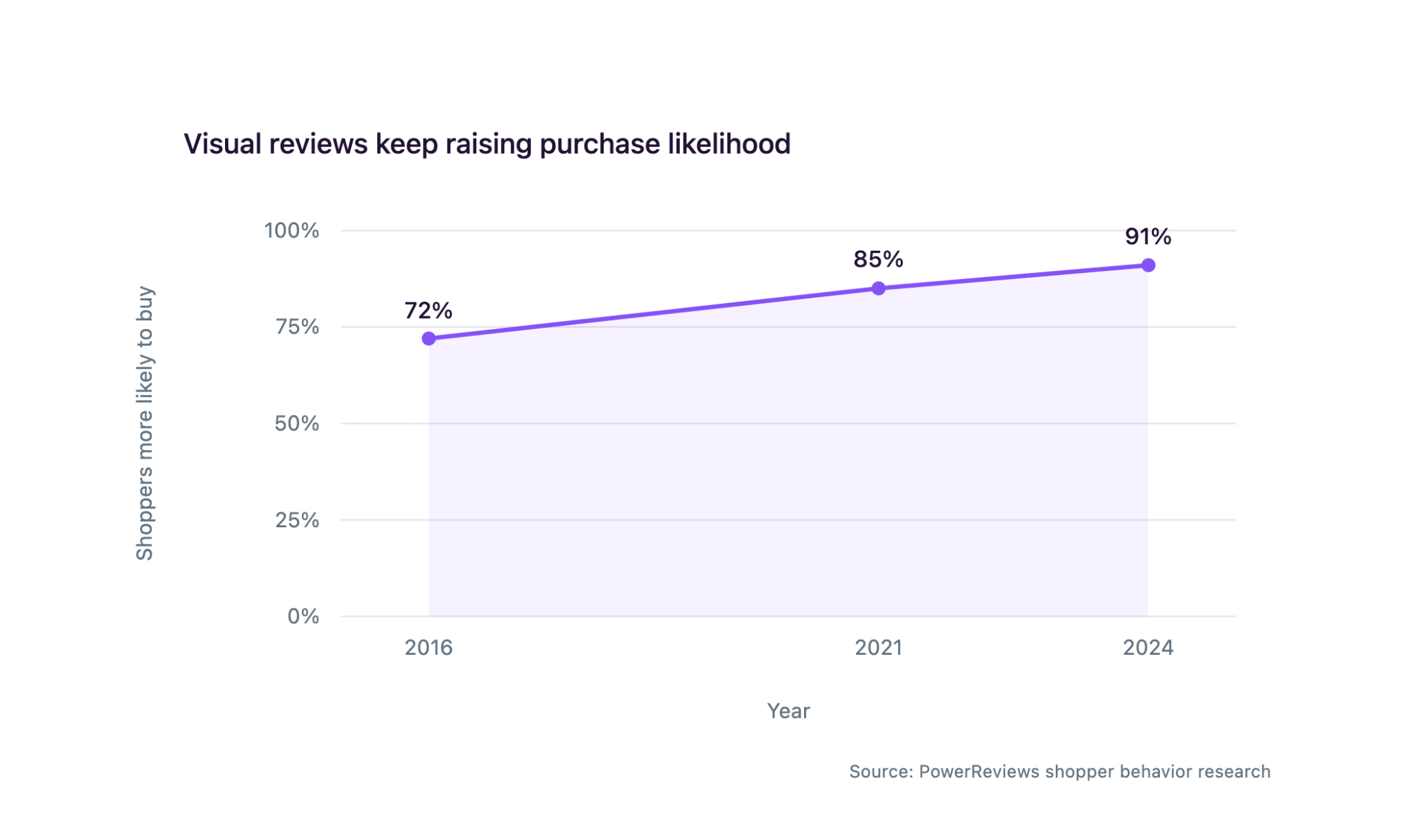
The practical implication is simple. If your listing looks like generic supplier inventory, then outside traffic gets expensive fast. PowerReviews research on visual UGC found that 91% of consumers are more likely to buy when reviews include photos and videos, while its guide to ratings and reviews reports that even one review on a zero-review page can lift conversion by 52.2%. Bazaarvoice's UGC research adds that 86% of brands and retailers believe more authentic UGC would improve the performance of their ads and content.
What zero-marketing amazon dropshipping misses is not abstract branding. It is concrete conversion support.
This is why creator content matters even for lean teams. Stack Influence's article on Micro-Influencers and UGC in E-Commerce and its guide on how to build a brand seeding strategy for Amazon in 2026 both point toward the same operational reality: content supply is part of marketplace performance, not a side project. Based on Stack Influence's work with eCommerce brands, sellers who repurpose creator photos and short demos into storefront modules and paid social within two weeks usually shorten their creative testing cycle compared with teams that let assets sit unused after the first post.
For DTC brands entering Amazon, that lesson is even sharper. The product page, the Amazon storefront, and the external click path now need to work together. If all three are generic, then low inventory simply leaves you with less control and no meaningful differentiation.
Amazon dropshipping still has a place for eCommerce sellers, but it works best as a disciplined test model, not a magical shortcut. The sellers who win treat compliance, margin structure, content quality, attribution, and fulfillment evolution as one connected operating system.
If you are evaluating amazon dropshipping now, focus on three moves first:
Approached this way, the 5-Step Margin-First Sequence, the Ship-or-Skip Checklist, and the Signal-to-Sale Stack turn amazon dropshipping into a smarter validation lane. For eCommerce sellers who want better demand signals, clearer ROI, and a more durable path to scale, that is the version of the model worth testing.
If you are an influencer, the hardest part of Amazon monetization is not getting a link. It is choosing a model that can keep paying after one post. That is why amazon affiliate vs influencer is a practical decision, not a branding debate. You need to know which path supports your audience, your content style, and your long-term leverage.
This guide breaks down how each program works, where creators usually leave money on the table, and how to turn one-off recommendations into repeatable creator revenue. It also shows where UGC, product seeding, and creator partnerships fit if you want to grow beyond simple affiliate income.

The fastest way to choose is to match the program to the behavior your audience already shows. If followers ask for a direct product link after every review, affiliate usually fits. If they want your full routine, your kitchen list, or your monthly favorites in one place, influencer usually wins because a storefront reduces friction and gives you a better destination.
That decision matters more now because discovery is shifting. Sprout Social’s Q2 2025 research found that 37% of consumers go to social first for product reviews and recommendations, while 76% said social content influenced a purchase in the prior six months. For influencers, that means the content path and the shopping path need to feel connected.
Use this three-tier model to pressure-test your fit before you apply, publish, or rebuild your monetization system.
Creators in beauty, kitchen, home, and wellness often climb this ladder quickly because category curation matters. If you want a cleaner definition of how brands think about Amazon influencers, or how seller teams structure partnerships through a micro influencer agency, it helps to think like both a publisher and a merchandiser in modern influencer marketing.
The Amazon Influencer Program is not a separate universe from affiliate marketing. Amazon says the Amazon Influencer Program gives qualifying creators an Amazon presence they can customize with recommended products plus a vanity URL such as amazon.com/shop/handle. In plain terms, it lets you sell a shelf, not just a single item.
That sounds close to classic affiliate marketing because it runs on the same basic commission logic. The difference is operational. Traditional affiliates usually send shoppers to one product page at a time, while influencers build a reusable storefront, organize categories, and create a shopping identity that can support repeat visits.
The easiest way to compare the two is to look at what each model optimizes for.
There is also a brand-side reason this distinction matters. Bazaarvoice found that 86% of shoppers engage with creator content before buying, and 65% rely on UGC such as ratings, reviews, photos, and videos in their buying decisions. If you create recommendations and reusable assets, you are no longer acting like a basic affiliate. You are part of a seller’s content and conversion system.
That is why many content creators compare simple affiliate links with structured creator communities before they commit. A flow like Stack Influence’s creator program shows the other side of the market, where brands care about deliverables, posting reliability, and reusable content almost as much as immediate commission. That is also why influencer marketing platforms, UGC platforms, and agencies often evaluate creators on workflow discipline, not just reach.
The best answer to amazon affiliate vs influencer is usually a sequence, not a side. The 5-Step Creator Revenue Sequence helps you choose the right revenue layer first, then add the second layer only when it improves leverage. If you skip that order, you end up with scattered links, weak category focus, and content that earns once instead of compounding.
Use the 5-Step Creator Revenue Sequence in order.
The 5-Step Creator Revenue Sequence works because it treats your content like commercial inventory. Sprout Social’s 2026 influencer statistics page says 64% of consumers believe genuine reviews are the most effective influencer content type. Honest demos convert better when they are easy to find, easy to revisit, and organized around clear intent.
Based on Stack Influence’s work with eCommerce brands, briefs capped at three required talking points average about 68% on-time creator submission, versus roughly 55% when creators receive six or more required talking points. Leaner briefs look less impressive on paper, but they usually produce more usable UGC video on time.
That is one reason product seeding keeps gaining ground with micro influencers and nano influencers. When you look at how influencer seeding works for eCommerce, the same creator post can drive affiliate clicks, enrich a storefront, and expand a brand’s UGC library for future listings and ads. The 5-Step Creator Revenue Sequence keeps all three outcomes aligned.
Most creators still measure Amazon income too late and too loosely. If you only check end-of-month commissions, you miss where the content worked, where shoppers dropped off, and where a seller can prove your value. The better approach is to separate content performance from marketplace performance, then tie both back to one asset.
This metric stack keeps Amazon creator work from turning into guesswork.
The Signal-to-Sale Stack matters because Amazon now gives serious sellers a cleaner way to value off-platform traffic. Amazon’s Attribution guide says US seller brand owners can earn a Brand Referral Bonus averaging 10% of product sales driven by non-Amazon marketing efforts that are measured through Amazon Attribution. When your content can produce both creator income and seller bonus value, you become much easier to rebook.
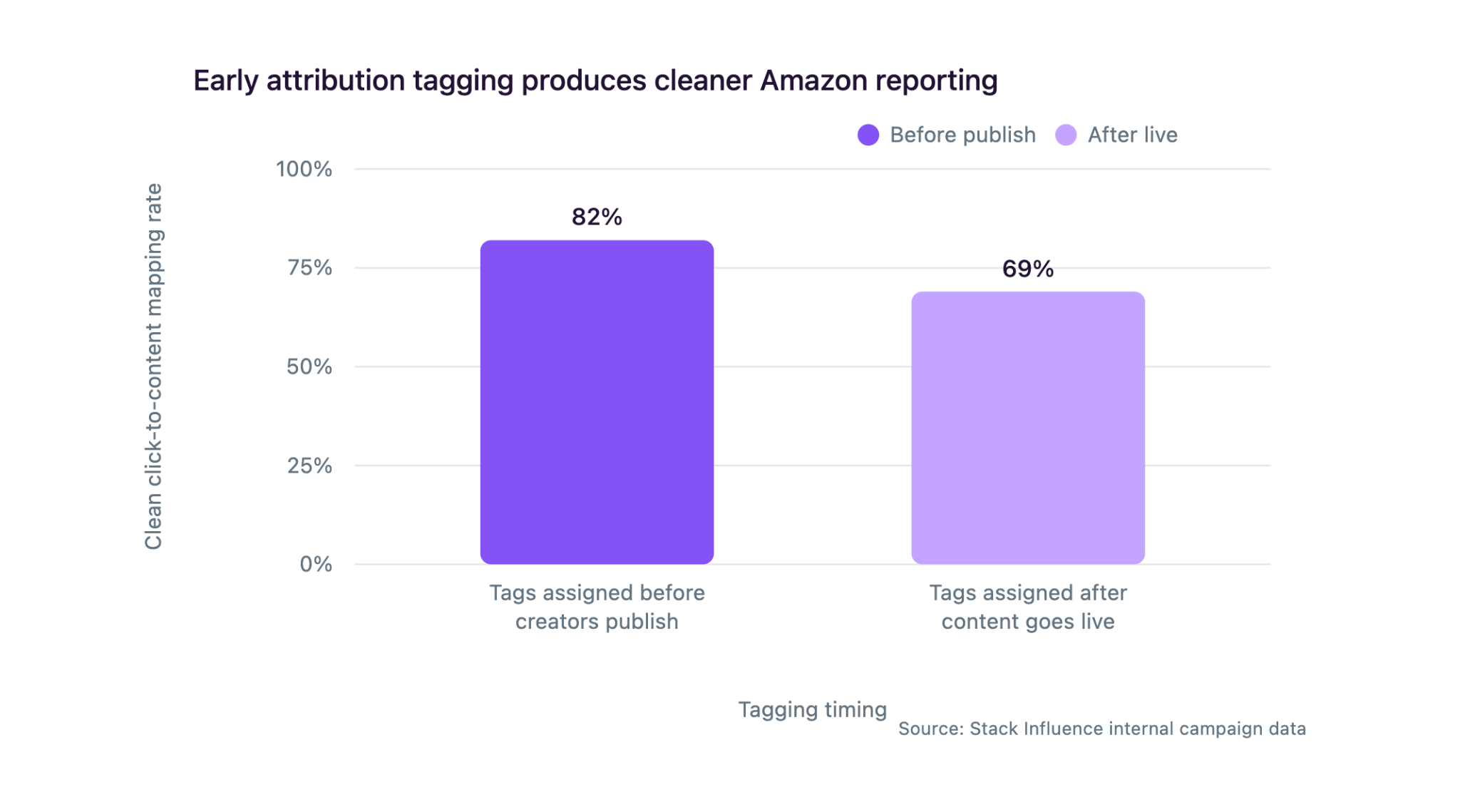
This is also where most campaigns break. Links get added late, tags are inconsistent, and sellers evaluate performance from screenshots instead of data. Across campaigns managed on the Stack Influence platform, Amazon brands that assign Attribution tags before creators publish capture about 82% clean click-to-content mapping, compared with roughly 69% when tags are added after content goes live. A managed Amazon growth workflow makes that timing problem easier to solve because the brief, posting schedule, and measurement setup live in the same system.
There is a second reason to care. impact.com’s 2025 State of Affiliate Marketing report says 94% of brands are experimenting with or planning to adopt alternative attribution models within the next year. If last-click is losing ground, creators who can explain discovery, consideration, and sale will beat creators who only report the final payout number.
The advice that worked for Amazon creators two years ago is already aging out. In April 2026, Amazon’s latest Associates operating agreement update added a 180-day limit for products to be shipped, streamed, downloaded, and paid for to qualify for commission. It also tightened the definition of original content by requiring commentary, analysis, or transformation for added value.
Amazon also changed part of the reporting environment. Its January 2026 notice on attribution updates for Amazon Store ads introduced a shopping-signal enhanced last-touch attribution model that gives more credit to discovery moments and applies a shorter attribution window in standard reporting. For creators and sellers, that makes top-of-funnel content easier to defend when it actually starts the journey.
For influencers, three shifts matter most.
That last shift is visible across the market. IAB’s creator economy research says creator ad spend reached $37 billion in 2025 and nearly half of ad spenders now consider creators a must-buy channel. In the same direction, impact.com says 59% of brands plan to allocate at least 25% of affiliate budgets to creator partnerships. Creator demand is up, but so is scrutiny.
Data from Stack Influence’s micro influencer campaigns suggests that category-specific creator cohorts clear content approval at roughly 72%, versus about 54% for broad lifestyle cohorts. Relevance is becoming the safer bet. In 2026, creators who explain better, categorize better, and measure better have a clearer edge than creators who simply post more links.
Amazon affiliate vs influencer is really a question about how you want your content to earn. Affiliate is excellent when intent is already high and the audience wants a direct path to purchase. Influencer is stronger when your recommendations deserve a home, a system, and a repeatable shopping identity.
The smartest move for most influencers is to choose the model that fits the content you already make, then layer in the second model only when it improves leverage.
If you treat every review, roundup, and UGC video like an asset instead of a one-time post, amazon affiliate vs influencer stops being a debate and becomes a system. Build the version that gives your audience less friction, gives your future influencer campaigns more proof, and gives you more ways to earn from the same content.
If your feed feels active but not memorable, you do not need more random prompts. You need social media post ideas that make people stop, save, reply, and remember what kind of creator you are. For influencers, the gap between content that gets seen and content that leads to brand deals usually comes down to structure.
This guide turns social media post ideas into a practical system. You will learn how to choose post formats by goal, build repeatable series instead of one-off experiments, and measure what actually moves your audience and your income.
Creator demand is still rising, but so is competition. IAB estimated that U.S. creator ad spend would reach $37 billion in 2025, and EMARKETER forecast that U.S. sponsored content spending would surpass $10 billion in the same year. More money is flowing into creator work, but it is flowing toward formats brands can measure and reuse.
What changed is not only budget size. HubSpot’s 2025 social media marketing research found that marketers are seeing more success with small influencers under 100,000 followers, while Deloitte’s creator economy analysis found that high-ROI brands put 42% of their social media budgets into creator partnerships. Micro influencers and nano influencers are no longer the budget backup plan. They are often the operating model.
Platform behavior reinforces the same shift. Instagram said its recommendation changes were designed to give smaller creators a more equal chance to break through and to link copied content back to the original creator, while TikTok’s creative insight tools say entertaining ads hold attention 1.3x longer than ads without entertainment value. Originality and native storytelling are not creative extras anymore. They are distribution advantages.
Use that context to reset your expectations:
A useful post idea is not just something to publish when your content calendar is empty. It is a format that helps you achieve a specific outcome with a specific audience. The best ideas attract followers while also showing brands, UGC creators, and influencer marketing platforms exactly how you think.
For influencers, most post ideas fall into four jobs. The goal is to know which job a post is doing before you start scripting, filming, or editing. If you want cleaner definitions for creator roles, Stack Influence’s guides to the creator economy, UGC creators, and micro influencers make the distinction much easier to explain to both brands and collaborators.
Think about your next idea through these four lenses:
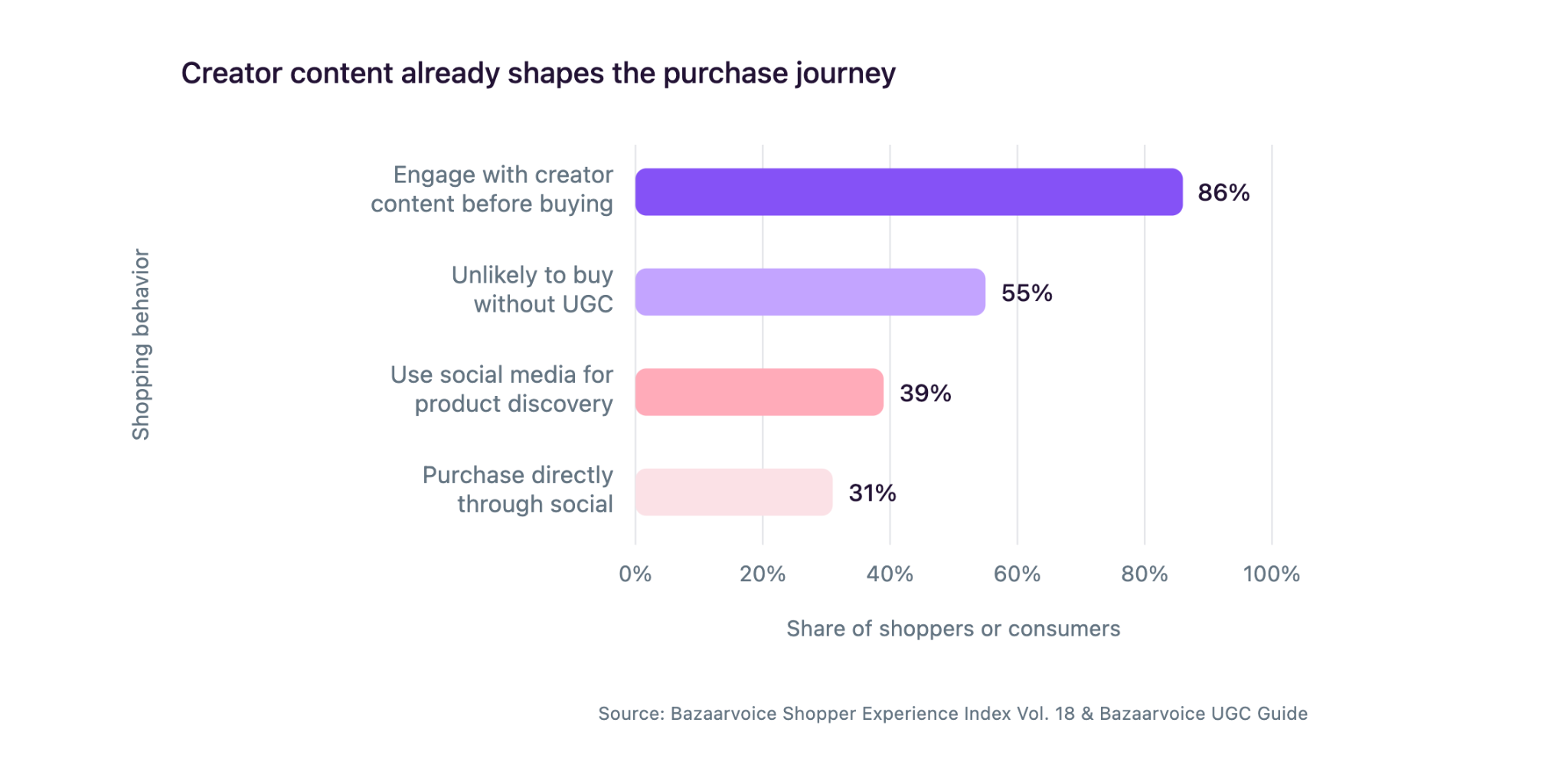
This distinction matters because shoppers are already using creator content to decide what to buy. Bazaarvoice reports that 39% of consumers use social media for product discovery, 31% purchase directly through social platforms, and 86% engage with creator content before making a buying decision. If your post idea does not help a viewer feel, decide, or act, it is probably weaker than it looks.
Before you publish, run every concept through the Scroll-Stop Post Checklist. This is a simple creator filter for deciding whether an idea is worth producing, whether it deserves a full video, and whether it has brand partnership potential beyond one upload.
Here is the checklist:
The checklist matters because shopper behavior is moving toward proof-rich content. In its UGC research, Bazaarvoice found that 55% of shoppers are unlikely to buy without user-generated content, 77% are more likely to buy a product they discover through UGC, and 84% trust campaigns featuring it. Posts that combine attention with proof can play well in-feed and in later creator partnerships.
Based on Stack Influence’s work with eCommerce brands, creators who keep a brief centered on one clear use case and three to five required shots usually deliver about 20% more on-time approvals than creators who try to cover multiple unrelated storylines in one post. That observation lines up with the platform direction: native, focused content usually beats overbuilt creative. The Scroll-Stop Post Checklist exists to protect that focus.
Use the Scroll-Stop Post Checklist before you script, not after you film. It will save you time, raise your hit rate, and help you turn spontaneous ideas into repeatable formats that brands can trust.
You do not need seven totally different ideas. You need one angle that can branch into multiple formats. If you want a stronger creator business, think in series and spinoffs, not isolated uploads. That is also the mindset behind Stack Influence’s guide on how to become a content creator in 2026, which treats growth as a system instead of a streak.
A single product, topic, or opinion can become a full week of content when you change the audience need each post serves. Start with one core theme, then rebuild it for discovery, proof, conversation, and conversion.
Try these social media post ideas:
These ideas work because they feel native to platform behavior. TikTok’s Creative Insight tools are built around recurring patterns from high-performing ads, which is exactly why routine clips, comparison videos, and honest recaps keep showing up in brand briefs. When content feels built for the feed instead of imported into it, viewers stay with it longer and brands can picture it in paid or owned channels more easily.
The smartest variation strategy is to rotate depth, not personality. One post gets reach, the next gives proof, the next answers objections, and the next closes the loop with an affiliate link, storefront visit, or brand sponsorship angle. That rhythm helps content creators stay recognizable without feeling repetitive.

Most social media post ideas guides confuse variety with strategy. They hand you a pile of formats, but they do not tell you which ones create trust, which ones attract brand deals, and which ones can be syndicated into ads, product pages, email, or marketplace assets later. For influencers, that missing layer is expensive.
The blind spot is reuse. A lot of guides optimize for this week’s engagement spike, but brands are often looking for creators who can produce assets that travel across channels. That includes social ads, landing pages, product pages, email, and marketplace content. If your idea only works as a trend reference in one feed, it may perform socially but still fail commercially.
Most guides leave out three screening questions:
That is why “be more creative” is weak advice. Better advice is to make your creativity legible: name the problem, show the product in context, reveal the outcome, and leave a trail of audience response. Deloitte’s creator economy research shows that successful brands build networks of creators across niches, and Bazaarvoice’s UGC data shows that shoppers respond strongly to visual proof and authentic recommendation formats. The formats that travel are usually the ones that explain, compare, or demonstrate, not just decorate.
Data from Stack Influence’s micro influencer campaigns suggests that routine-based demos, side-by-side comparisons, and comment-driven follow-ups generate about 1.5x as many brand requests for usage rights as aesthetic quote posts or trend-only edits. That makes sense when you remember what brands are buying. They are not paying only for reach. They are paying for believable creative that can keep working after the original upload.
If you want better creator partnerships, stop asking, “What should I post today?” Start asking, “What repeatable format helps my audience decide something and helps a brand imagine reuse?” That question leads to better posts and a better business.
Views matter, but they are not enough. A post idea is only proven when it performs across awareness, relationship, and commercial signals. That is why influencers need a metric stack, not a vanity metric.
Use the Creator ROI Stack to evaluate what your best ideas are really doing:
This structure matters because measurement remains a weak spot for many social teams. HubSpot lists measuring ROI among the core challenges marketers still face on social media, which means creators who can explain performance clearly have an advantage. You become easier to hire when you can say, “This format drove saves and DMs,” instead of only, “This one got 42,000 views.”
If a campaign sends traffic to Amazon, measurement gets even more important. Amazon Attribution is a free analytics solution for eligible brands to track how non-Amazon channels affect on-Amazon shopping activity, and Amazon’s basics guide to Amazon Attribution says the Brand Referral Bonus averages 10% of qualifying sales and can credit additional brand purchases for up to 14 days after a click. Creators do not usually build that infrastructure themselves, but they should know it exists and ask how the brand is tracking the campaign.
From Stack Influence’s experience running product seeding campaigns, campaigns tend to produce roughly 25% cleaner reporting when attribution links and codes are assigned before product ships rather than after captions are drafted. Off-platform conversion tracking gets messy fast when links change late, coupon codes are reused, or a brand tries to reconstruct the path after content has already gone live. Creators who ask measurement questions early look more professional and make better long-term partners.
Measurement should also shape your creative decisions. If a format earns average reach but strong saves, replies, or code redemptions, keep it. If a format spikes views but never attracts community response or partnership interest, treat it as entertainment inventory, not a business asset.
Product seeding can turn a single post into recurring UGC, repeat creator partnerships, and long-term brand ambassador opportunities when the process is structured instead of run through scattered DMs.
That is the practical role of Stack Influence. The platform’s creator community is built for creators with 200-plus followers, its creator benefits page explains the free-product and paid-collaboration model, and its creator FAQ clarifies how campaign participation works. For influencers who want brand deals but do not want to spend all day prospecting, that kind of system can shorten the path from content creator to paid collaborator.
A structured seeding workflow usually gives creators four practical advantages:
The workflow matters on the brand side too. Stack Influence’s automated product seeding page says creators buy the product and the brand pays only after posts go live, while its content syndication page is built around reusing creator assets across ads, websites, marketplaces, and social channels. That makes Stack Influence especially relevant for micro influencer agency style campaigns, UGC platforms, and brands that want creator partnerships without building a large in-house operation.
The tradeoff is fit. If your only goal is large one-off cash sponsorships with heavy personal-brand requirements, a structured seeding workflow may not be your first choice. But if you want to build a portfolio that attracts brands looking for influencers, produces reusable UGC, and opens the door to repeat brand partnerships, the model is practical.
The case studies show why. In Stack Influence’s Aunt Fannie’s case study, the brand reported 528,000 social impressions and 14,000 engagements across 189 promotions, while average monthly unit sales rose from 98 to 789-plus during the three-month campaign. For influencers, the lesson is simple: repeatable creator workflows are often what turns one decent post into a content engine.
The best social media post ideas are not the loudest or the trendiest. They are the ones that make your audience care, make your expertise visible, and make it easy for brands to understand how you create value. That makes posting simpler and more commercially useful.
Start with three moves this week:
If you want more consistent growth, stronger brand deals, and a feed that works harder for your creator business, audit your next month of content with the Scroll-Stop Post Checklist. One repeatable format can do more for an influencer than ten random prompts ever will.
The cheapest marketplace is often the one that charges more. For eCommerce sellers, the wrong comparison is fee versus fee, and the right comparison is contribution margin after fulfillment, support, returns, and demand generation. That is why the question is it cheaper to sell on amazon or ebay never has a one-line answer. In this guide, you will learn how to compare both channels like an operator, not just like a fee shopper, so you can choose the marketplace that protects margin and scales with less waste.

Simple marketplace comparisons usually stop at published fee schedules. Sellers do not stop there in real life. They still have to pick, pack, answer messages, handle returns, replenish inventory, and fix weak listings that leak conversion after traffic arrives.
That is the blind spot in most marketplace comparison posts. Marketplace Pulse estimates Amazon generated about $440 billion in US ecommerce sales in 2025, while eBay still reports 136 million active buyers and about 2.5 billion live listings. A larger marketplace can justify a higher take rate when it lowers the cost of finding the next order.
The hidden cost layer usually includes these items.
Proof changes this math fast. PowerReviews' 2023 UGC analysis found that shoppers who interact with ratings and reviews convert at a rate 108.6% higher than average, and those who interact with user-generated visual content convert at a rate 103.9% higher than average. Better proof means every click on Amazon or eBay has a better chance to pay back.
That matters more on Amazon because demand concentration is part of the equation. If you can convert inside a marketplace that large, a higher fee stack may still be the cheaper operating choice overall. Sellers who only compare platform percentages are usually undercounting how expensive weak conversion really is.
The clean answer is that cheaper means lower total cost per profitable order, not lower headline fees. Amazon's pricing page splits seller economics into selling plans and referral fees, while eBay seller fees start with insertion fees and then add a final value fee when the item sells. Those structures reward very different seller behaviors.
For Amazon sellers, the first break point comes quickly. The Individual plan costs $0.99 per item sold, while the Professional plan costs $39.99 per month, so the monthly plan starts making cleaner sense at roughly 41 units before you even model referral fees. Referral fees then vary by category, often landing in the 8% to 15% range, though some categories move higher or lower.
eBay starts from a lighter entry point for many casual sellers. The company says most casual sellers can list up to 250 items per month for free before paying a $0.35 insertion fee per listing. Once an item sells, eBay adds a category-specific final value fee plus a per-order fee of $0.30 on orders of $10 and under or $0.40 on orders above $10.
You can pressure test the answer with three simple scenarios.
eBay's fee structure also varies more by category than many sellers expect. eBay's detailed fee schedule shows most categories at 13.6% up to $7,500, books and media at 15.3%, select collectibles at 13.25%, guitars at 6.7%, and some heavy equipment categories at 3%. That flexibility is one reason eBay can outperform Amazon for niche or high-ticket inventory even without Amazon-scale traffic.
If you only remember one framework from this article, make it the Three Margin Truths. The framework gives eCommerce sellers a repeatable way to compare marketplaces without getting trapped by one attractive fee number. It also works well with Stack Influence's guide on how much it costs to sell on Amazon, which treats channel choice as layered cost management instead of a yes or no question.
Use the Three Margin Truths in this order.
Fee Truth says the first goal is not finding the lowest percentage. It is finding the fee structure your catalog can survive. Amazon asks you to commit earlier with a monthly plan if you want to operate at scale, while eBay lets many sellers test inventory with less fixed cost.
That makes eBay attractive for part-time resellers, vintage dealers, and sellers with uneven inventory flow. It also explains why Amazon works better once you have repeatable volume. More than 60% of sales in Amazon's store now come from independent sellers, and US independent sellers averaged more than $290,000 in annual sales in 2024, so the platform clearly rewards operators who can sustain velocity.
Fulfillment Truth says self-fulfillment is never free just because you already do it. Amazon's seller report says shipping with FBA costs 70% less per unit than comparable premium options from major US carriers, and sellers have shipped more than 80 billion items with FBA since 2006. If your team is small, those savings can erase a surprising amount of Amazon's extra fee burden.
The opposite is also true. If you sell fragile, oversized, custom, or one-off items, eBay can be cheaper because you keep control over packaging and cadence without paying FBA storage or prep costs. Sellers comparing Amazon against eBay should model labor as if they had to hire it tomorrow, not as if their own time were free.
Demand Truth is where most marketplace comparisons break down. A marketplace fee is visible. Weak demand quality is not. If Amazon converts better because shoppers arrive with stronger intent, denser review ecosystems, and faster fulfillment expectations, the platform can beat eBay even with a higher fee stack.
Demand Truth also explains why creators belong in the cost model. EMARKETER reported creator spending reached $37.1 billion in 2025, up 26% year over year, and Sprout Social's 2024 influencer study found 49% of consumers make daily, weekly, or monthly purchases because of influencer posts. Based on Stack Influence's work with eCommerce brands, creator economics become easier to defend when the same campaign drives traffic and produces reusable proof assets. Its public pricing page centers campaigns around about $30 per completed creator post, while its automated product seeding workflow is built to reduce negotiation drag and gifting waste.

Cost without measurement becomes opinion fast. For Amazon sellers, the best answer is to build a three-level metric model called the Margin Signal Stack. It is a simple tiered system for deciding whether a channel only creates activity or actually creates profit.
The Margin Signal Stack works like this.
Amazon gives sellers a strong native advantage here. Amazon says Amazon Attribution is a free measurement solution for eligible sellers and brand owners that tracks the on-Amazon impact of non-Amazon channels including search, social, display, video, email, and influencer campaigns. That means your creator test, your email push, and your paid social ad can all be judged on retail outcomes instead of vanity traffic alone.
Brand Referral Bonus is the second layer most sellers underuse. Amazon says Brand Referral Bonus returns a bonus averaging 10% of qualifying sales when brands drive traffic from non-Amazon channels, and the credits offset future referral fees. In Amazon's own example, a $100 backpack with a 14% referral fee can move from $86 to $93 in net proceeds when a 7% credit is applied.
Across campaigns managed on the Stack Influence platform, the workflow lesson is that measurement has to be set before creator outreach begins. Stack Influence's Amazon Attribution guide and its guide to Amazon seller marketing tools both frame attribution as part of campaign setup, not cleanup after launch. That operational point matters because off-platform traffic is easy to overspend on when tags, storefront destinations, and reporting windows are decided too late.
eBay is harder to measure in the same way. By comparison, Amazon openly markets native tools for cross-channel purchase attribution and referral-fee recovery, while eBay's public seller fee and payout documentation focuses on listing, selling, and payment economics rather than a native equivalent for off-platform attribution. If your growth plan depends on proving what creator traffic did, Amazon usually has the cleaner measurement edge.
Marketplace fees are only one part of channel economics for modern brands. The other part is whether a channel helps you compound proof and demand. That is why creator programs, Amazon storefront strategy, and Shopify influencer marketing can change the answer more than a one-point fee difference.
This is where the strongest creator-led marketplace playbooks usually win.
They can, when the campaign is built to do more than create awareness. The official Amazon Influencer Program gives qualifying creators a storefront and a vanity URL for product recommendations, which makes the program useful for both discovery and purchase capture. If the creator is already trusted in your niche, that storefront can turn social interest into Amazon-native conversion instead of forcing the shopper through a separate checkout path.
That setup gets stronger when sellers pair it with better content and faster fulfillment. To see the discovery side, Stack Influence's guide on How to Find Amazon Influencers and Their Storefronts complements its playbooks for driving traffic to your Amazon listing and building an Amazon brand. Stack Influence has observed that operational overhead is often the hidden variable in these programs. Its public Amazon-focused materials say brands can save 175 hours per month and see 4x ad conversions, which helps explain why lean teams sometimes get better economics from structured creator batches than from manual outreach.
Sometimes yes, and sometimes absolutely not. If your brand needs first-party customer data, bundles, subscriptions, or strong post-purchase cross-sell, a Shopify landing page is usually the better destination. If you need faster conversion, denser reviews, and a marketplace that can absorb a sudden spike, Amazon can be the smarter place to send traffic for selected products.
A split model is often best. Marketplace Pulse estimates Shopify reached a 14% share of US ecommerce in 2025, which means many brands now operate both a DTC store and an Amazon presence at meaningful scale. In practice, that means you can send discovery-stage creator traffic to content-rich Shopify pages for hero launches and send high-intent traffic to Amazon when reviews, delivery speed, or an existing storefront make conversion easier. If you are building the discovery side from scratch, Stack Influence's article on How to Find Shopify Influencers is a useful planning companion.
Amazon usually wins despite higher cost when your product has repeat demand, healthy contribution margin, and a fulfillment profile that benefits from speed. That includes replenishable products, brand-registered catalogs, and items where stronger review density or faster delivery lifts conversion enough to repay the fees. Sellers trying to sharpen that retail side can borrow practical listing ideas from Stack Influence's Amazon SEO Tips for Brands.
eBay still wins clear cases. It is often the better home for one-off inventory, used goods, auctions, collectibles, and certain high-ticket niches where category-specific fees are favorable and your own fulfillment process is an advantage instead of a burden. If the product does not need Amazon-scale velocity or Amazon-native trust to move, the leaner structure can be the smarter choice.
Use this quick filter before you decide.
If you are still asking is it cheaper to sell on amazon or ebay, the honest answer is that the cheaper channel is the one that leaves more contribution margin after fees, fulfillment, support, and demand costs are counted together. Amazon often wins when scale, FBA, attribution, and conversion quality matter more than lean entry fees. eBay often wins when inventory is irregular, niche, or operationally better handled in-house.
Run one high-conviction SKU through the Three Margin Truths, score it with the Margin Signal Stack, and then put your next month of growth behind the channel that produces better profit, not just lower fees. That is the decision model eCommerce sellers can keep using long after this comparison is over.
Amazon margin rarely breaks because a seller picked the wrong country. It usually breaks because the product looked cheap on a quote sheet but turned expensive after freight, content gaps, returns, and inventory timing. In Jungle Scout’s 2025 seller research, 38% of businesses cited higher shipping costs as a top challenge and 34% cited rising cost of goods. That is why eCommerce sellers asking where to source products to sell on Amazon need a margin-first answer, not just a list of supplier directories.
This guide shows how to match your sourcing route to your stage, how to screen suppliers before a serious PO, and how to measure whether a sourced SKU can support Amazon FBA economics, creator content, and repeatable growth. The goal is not just to buy inventory. It is to source products that can survive fees, win trust, and scale.

The cheapest supplier usually becomes the most expensive source after launch. Jungle Scout’s State of the Amazon Seller 2025 shows shipping, cost of goods, and ad expenses all rising together, which means small sourcing mistakes are amplified once the SKU is live. Add weak packaging or inconsistent quality and the product starts paying an ad tax just to stay competitive.
Amazon’s own Sell on Amazon materials say shipping with FBA can cost 70% less per unit than comparable premium carrier options. That saving only matters when the product arrives consistently, avoids damage, and converts efficiently after the click. If the supplier forces rush freight, poor prep, or fragile packaging, the cheaper quote stops being cheap.
Before you compare sourcing channels, narrow your thinking to the variables that actually move profit.
A source is only cheap if it protects margin after the click. That idea sets up the framework for the rest of this article.
Amazon product sourcing is the process of choosing a business model and supply path that can deliver inventory, documentation, and margin at a repeatable pace. It is not just a search for vendors. Amazon itself makes clear that sellers can source wholesale products or list branded products under their own brand or resell other brands, which means sourcing starts with choosing the right model before choosing the supplier.
That distinction matters because each model creates a different risk profile. Some routes give you speed and low commitment, while others give you control and brand equity. If you are still dialing in account setup, fees, and fulfillment choices, Stack Influence’s guide on how to become an Amazon seller in 2026 is a useful internal companion because it connects sourcing decisions to the larger Amazon operating model.
A strong sourcing process should answer a short list of strategic questions before money goes out the door.
When sellers miss one of those questions, they often end up with a supplier but not a scalable business. Product sourcing only works when the supplier decision supports the listing, the economics, and the reorder cycle at the same time.
The Source-to-Moat Map answers the real sourcing question by organizing options around two variables: how much control you need and how much money you can risk today. It is not a ladder and it is not a rigid sequence. It is a route map that helps you choose the path that matches your current bottleneck instead of chasing the most glamorous model.
Here are the four routes on the Source-to-Moat Map.
Most new Amazon sellers should resist the urge to jump straight to the Brand Ownership Route. The moat looks attractive, but the risk rises just as fast as the upside. The Source-to-Moat Map is most useful when you earn the right to move toward deeper control by proving that your product, packaging, and message already convert.
That is also why hybrid brands often have an edge. When a product already has customer language, repeat-purchase evidence, or creator feedback from a DTC site, the Amazon launch begins with better proof. In a market where IAB projects U.S. creator ad spend at $37 billion in 2025, products increasingly need to perform across search, social proof, and creator recommendations. If your team is already thinking that way, Stack Influence’s article on how influencer seeding works for eCommerce in 2026 is a useful model for turning one product send into both validation and listing-ready assets.
Most Amazon sellers do not need every path. They need the path that fits the constraint they have right now. If your bottleneck is cash, the right starting point looks very different from the one you should choose if your bottleneck is differentiation or authorization.
Use the Source-to-Moat Map this way.
There is also a timing issue that many sourcing guides ignore. If you already have off-Amazon momentum, use it. Stack Influence’s post on how to use Amazon Marketing Services in 2026 is a good internal refresher because it connects external traffic and marketplace conversion, which means a proven SKU with existing demand often deserves priority over a totally new idea.
A simple default rule works well. If you need cash flow soon, start left on the Source-to-Moat Map. If you need defensibility, move right. If you already have DTC proof, let that proof do the expensive work before you commit to larger Amazon inventory bets.
Before you place a serious order, run a named audit. I call it the Sample-First Supplier Screen because suppliers should be approved by evidence, not by sales calls. The purpose is to test whether a sourced SKU is actually ready for Amazon economics and Amazon content before you tie up real capital.
Run the Sample-First Supplier Screen against every serious supplier.
Content readiness is the check most sourcing guides leave out. Shoppers do not just buy the product. They buy the explanation. When Bazaarvoice’s report shows that real customer reviews, detailed descriptions, and real-life photos or videos shape final purchase decisions, it becomes obvious that hard-to-demonstrate products often turn into expensive advertising problems even when the supplier quote looked fine.
This is also where creator seeding becomes part of the sourcing method instead of a separate marketing tactic. A workflow like Stack Influence’s automated product seeding lets brands test whether a product actually earns believable content before wider reorders. Based on Stack Influence’s work with eCommerce brands, its creator community now includes 340,837 creators and 1.1 billion total social reach, which gives sellers a practical way to test whether a sourced SKU can earn believable proof at useful scale before they increase inventory exposure.
If you want that workflow mapped out, Stack Influence’s guides on how to build a brand seeding strategy for Amazon in 2026 are useful internal references. For DTC brands running Shopify influencer marketing, this is often the fastest bridge between product validation and stronger Amazon-focused content.

The old sourcing playbook assumed that low-value imports would stay frictionless and that fulfillment math would remain mostly stable. That assumption is weaker in 2026. The biggest changes are not cosmetic. They affect landed cost, replenishment strategy, and the amount of proof a product now needs to convert.
Three shifts matter most right now.
These shifts change the sourcing conversation in a practical way. Sellers can no longer afford to buy products that only work if freight stays cheap, inventory stays perfect, and shoppers take the time to decode weak listings. The better question is whether a source gives you enough cost stability, speed, and content support to survive a messier operating environment.
Across campaigns managed on the Stack Influence platform, published customer stories show how sensitive Amazon growth can be to timing and proof. The Aunt Fannie’s customer story reports 8x monthly sales growth in 90 days, 528,000 impressions, and a 3.5x rank boost from 189 influencer promotions. That is a reminder that when demand finally moves, weak sourcing decisions become very visible very quickly.
Sourcing ROI is easy to misread after launch. Sellers often stop at gross margin and forget that a truly good source should improve conversion quality, external traffic efficiency, and reorder confidence. The Signal Stack is a better way to measure it because it separates what happened in your spreadsheet from what happened in the market.
Track the Signal Stack in three layers.
Amazon Attribution matters because it closes part of the gap between creator activity and Amazon sales. Amazon describes it as a free measurement solution for non-Amazon channels including search, social, display, video, email, and influencer campaigns. Amazon also explains that the Amazon Influencer Program gives creators a customizable Amazon presence and a storefront-style vanity URL, which is useful for assortment storytelling and creator-led recommendations.
Not every seller can use the full stack on day one. Amazon says U.S. sellers typically need a Professional selling plan and Brand Registry to be eligible for the Brand Referral Bonus, so attribution planning should start before creator traffic goes live. That matters because attribution only measures tagged clicks, not every delayed branded search, forwarded message, or shopper who buys later after seeing creator content.
That is why the Signal Stack should always pair attribution with marketplace outcomes such as rank movement, review quality, and reorder velocity. From Stack Influence’s experience running eCommerce creator programs, cost per usable asset is usually a more useful benchmark than CPM when sourced SKUs are still being validated. Stack Influence’s pricing page, Amazon Attribution Guide, and Amazon attribution links and Brand Referral Bonus explainer are useful internal references if your team wants to tie creator seeding, Amazon storefront traffic, and post-click sales back to one SKU decision.
If the sourced product needs more explanation, more discounting, and more ad support than expected, the source is not working even if the gross-margin spreadsheet still looks acceptable. Measurement should tell you whether to reorder, repackage, or replace the supplier.
The best answer to where to source products to sell on Amazon is not a single country, directory, or factory list. It is the sourcing route that matches your cash position, your need for control, and your ability to turn inventory into proof. Start with the Source-to-Moat Map, run the Sample-First Supplier Screen, and evaluate every supplier on total economics instead of unit quote alone.
For eCommerce sellers, better sourcing does more than protect margin. It leads to cleaner launches, stronger product pages, and fewer painful reorders when demand finally shows up. Make your next sourcing decision like an operator, and your Amazon growth engine will get much easier to scale.
Build an influencer contract template that protects eCommerce sellers and influencers with clear rights, payment, disclosure, and ROI terms.
eCommerce sellers and influencers rarely struggle because contracts exist. They struggle because vague brand deals turn one shipment, one post, or one UGC video into confusion about deadlines, approvals, payment, disclosure, and content ownership.
A strong influencer contract template removes that confusion before product ships or content goes live. This guide shows both sides how to build a reusable template that protects creator trust, supports Amazon and Shopify workflows, and keeps valuable content usable long after the original post.
Creator partnerships now sit much closer to revenue than old awareness-only sponsorships. Sprout Social's 2024 influencer marketing research found that 49% of consumers make daily, weekly, or monthly purchases because of influencer posts, while HubSpot's 2025 influencer marketing data says 85% of marketers view influencer marketing as effective and 76% say it delivers better ROI than other channels.
That shift changes what a contract has to do. A creator deal might cover the sponsored post itself, but it can also govern product seeding, content reuse in ads, on-site UGC, Amazon storefront traffic, affiliate commissions, and creator partnerships that extend across multiple campaigns. For brands looking for influencers, the agreement is no longer paperwork after the strategy. It is part of the operating system.
Three realities drive that change:
The operational burden also rises when a program shifts from one influencer to dozens of micro influencers or nano influencers. That is why guides like Stack Influence's micro influencer agency guide and its UGC for eCommerce page frame creator execution as a workflow problem, not only a sourcing problem. A better template helps both DTC brands and content creators keep that workflow clean.
An influencer contract template is a reusable agreement structure that defines the legal and commercial terms of a creator collaboration. It is not a one-size-fits-all final contract. It is a base document that both sides adapt for each campaign, product, channel, and compensation model.
For eCommerce teams, that matters because repeat work is common. Amazon sellers, Shopify brands, and creator-led UGC programs often run recurring influencer campaigns with similar rules but different products, dates, and fee structures. A template keeps the fundamentals stable while letting the campaign brief change.
At minimum, the template should lock in these basics:
Two legal realities make the template non-negotiable. First, FTC's endorsement guidance says material connections must be disclosed clearly and conspicuously, and the agency warns that disclosures hidden in comments, at the end of long captions, or only in platform tools may be inadequate. Second, the U.S. Copyright Office states that copyright initially vests in the author and that transfers of copyright ownership must be in writing and signed.
That means gifted product does not automatically transfer content rights. Owning the sample, the Amazon FBA inventory, or the shipped PR box is different from owning the photo, video, or caption created around it. For teams running how influencer seeding works for eCommerce, that distinction matters every time a brand wants to reuse creator proof in paid ads or on a product page.

The most reliable way to build a reusable influencer contract template is to follow the 4 Rules of a Reusable Influencer Contract Template. This principle set keeps the document short enough to use, but specific enough to protect both the seller and the influencer.
Use the 4 Rules of a Reusable Influencer Contract Template as a filter before the agreement goes out for signature:
The first rule is operational clarity. The contract should name the platform, format, minimum asset count, due date, caption or talking-point requirements, revision allowance, and the consequence if product arrives late or a creator misses the posting window.
From Stack Influence's experience running Amazon-focused creator programs, operational drag shows up before fee inflation. Its Amazon influencer seeding workflow is positioned around saving 175 hours per month, which is why a scope section should nail down shipping dates, content due dates, review windows, and replacement rules before creator volume scales.
The second rule is the revenue rule. If the content might be reused in Meta ads, TikTok Spark Ads, Amazon storefront modules, listing images, or email campaigns, the agreement must say so in plain language.
That matters because the U.S. Copyright Office treats copyright ownership as distinct from ownership of the physical object, and PowerReviews' UGC conversion data shows that shoppers who interact with UGC convert at rates 102.4% higher than average. In other words, rights are not administrative filler. They govern whether the most commercially valuable part of the collaboration can keep working after the sponsored post ends.
The third rule is collaboration discipline. Approval language should separate non-negotiables, such as legal claims, prohibited statements, and required product facts, from preferences, such as hook style or background music.
That distinction protects authenticity. Later's creator autonomy data says only 10% of creators feel they have true creative control and 53% want more freedom, while HubSpot's 2025 social media report notes that the best-performing UGC tends to come from creators who have creative freedom while aligning with brand goals. A contract should preserve that balance by capping revision rounds and focusing feedback on strategy, not micromanagement.
The fourth rule is economic clarity. Payment language should say what the creator receives, when payment is due, whether gifted product is part of compensation, whether affiliate or performance bonuses apply, and what documentation is needed for payout.
This is also where compliance and commerce meet. FTC guidance makes clear that free product can still create a material connection that needs disclosure, and Amazon explains through Amazon's Brand Referral Bonus that qualifying off-Amazon traffic can earn credits averaging 10% of qualifying sales when tracked correctly. Simple payment logic keeps disputes down and bonus math defensible.
The 4 Rules of a Reusable Influencer Contract Template work because they force the contract to answer the questions that create friction later. If the scope is clear, rights are written, approvals are limited, and economics are simple, both sides can spend more time making content and less time renegotiating.
A contract should not only protect legal exposure. It should also make performance easier to measure. That matters now because Later's ROI measurement research says 57% of marketers still struggle to track ROI accurately, even as 82% plan to increase influencer budgets.
Use the Contract-to-Commerce Metric Stack:
Amazon sellers need extra contract discipline because measurement is harder off-platform. Amazon Attribution uses a 14-day, last-touch model and reports metrics such as clicks, detail page views, add-to-carts, purchases, units sold, product sales, and new-to-brand. Amazon's Brand Referral Bonus adds credits averaging 10% of qualifying sales, but only when traffic is tagged and eligible. A contract should require one trackable link or code structure per creator so reporting does not collapse into guesswork.
Measurement also has blind spots. A creator video can trigger an Amazon search later, a storefront visit from another device, or a conversion outside the attribution window. That is why the contract should name what proof the creator must provide after posting, such as a live URL, timestamp, screen capture, or link ID, and what metrics the brand will actually judge. Otherwise one side thinks the campaign was about reach while the other thinks it was about sales.
Stack Influence has observed that contracts become measurement tools when they force clean identifiers before launch. In its Aunt Fannie's customer story and companion Amazon influencer marketing budget guide, 189 creator promotions generated 528,000 impressions and an estimated 62 organic product testimonials in 90 days, which is exactly the kind of second-order value a good agreement should make trackable instead of accidental.

Most contract advice overemphasizes the number of posts and underemphasizes the value of proof. That is backward for eCommerce. A polished list of required deliverables does not help much if the brand cannot reuse the content, the creator feels over-scripted, or the final asset looks too promotional to earn trust.
Trust signals matter because Bazaarvoice's shopper trust research says 47% of consumers trust customer testimonials and peer reviews when shopping on social media, while 41% begin on brand websites to verify details. At the same time, Later's creator autonomy data shows only 8% of creators maintain recurring brand relationships in the measured period. Over-controlling the work may protect a script, but it can weaken authenticity and repeatability.
Define these before you add one more deliverable line item:
Across campaigns managed on the Stack Influence platform, the agreements that scale best are the ones that standardize rights and outcomes without scripting every sentence. In the Naked Sunday case study, 252 influencers drove 1.4 million impressions, 57 organic product testimonials, and monthly unit sales growth from 131 to 1,300+ in four months. Those results support a simple point: the brand should control the business terms, but the creator still needs room to sound like a real person.
That same logic helps Amazon influencers, UGC creators, and brands that work with micro influencers build repeat brand sponsorships. If you want a broader system for doing that, Stack Influence's influencer marketing strategy guide is a useful companion because it connects rights, channel choice, creator fit, and revenue tracking in one workflow.
If you are turning this article into a working influencer contract template, keep these clauses in the document every time. The exact wording can change by campaign, but the headings should remain stable.
Use this clause set as your baseline:
Then run the Red-Flag Clause Checklist before either side signs:
Creators need protection here too. A solid template should also cover payment timing, request limits, expense reimbursement if travel or props are required, and whether the brand can materially edit the creator's likeness or voice. Those details keep the agreement fair enough to sign again, which matters because HubSpot's 2025 influencer marketing data shows the channel is already delivering strong perceived ROI for marketers using it at scale.
The best influencer contract template is not the longest one. It is the one both sides can understand quickly, sign confidently, and use without arguing once the campaign is live.
If you are an eCommerce seller, build the next version around scope, rights, disclosure, and measurement before you send product. If you are an influencer, ask for those same protections before you post. That is how better brand deals become repeat creator partnerships, cleaner UGC pipelines, and stronger commerce results.
Most creator programs stall for the same reason: the team buys posts before it designs a system. For eCommerce sellers and influencers alike, an influencer marketing strategy has to connect creator fit, content rights, channel choice, and revenue tracking.
When those pieces line up, creator partnerships stop looking like scattered brand sponsorships and start acting like a repeatable growth engine. This guide explains how to build that engine around micro influencers, nano influencers, product seeding, UGC, and measurable commerce outcomes.

An influencer marketing strategy is the operating plan behind your creator program. It decides which creators you recruit, how you compensate them, what assets they produce, where those assets get reused, and how you connect activity to sales.
For sellers that depend on Amazon or Shopify, that definition matters more now because, according to EMARKETER, US influencer marketing spend is forecast to reach $10.52 billion in 2025, and the 2026 benchmark report from Influencer Marketing Hub found that 87.49% of respondents expect influencer budgets to increase in 2026 while 66.33% manage the function in-house. Growth is not the hard part anymore. Operational discipline is.
Before you launch influencer campaigns, define these four pieces:
If gifting is your starting point, a practical product seeding guide helps turn strategy into shipment rules, creator expectations, and follow-up steps. That matters because brands looking for influencers usually fail long before outreach. They fail when the offer, brief, and measurement model are still fuzzy.
A strong strategy also helps creators. When the brand knows the content angle, turnaround, and usage plan, influencers can assess the fit faster, protect their workflow, and choose brand partnerships that actually build long-term value.
Micro influencers and nano influencers are winning more budgets because modern commerce rewards proof over prestige. A smaller creator who demonstrates a product clearly can create more revenue value than a larger creator who delivers a polished but forgettable mention.
That shift is visible in shopper behavior. In PowerReviews’ UGC research, 99.5% of consumers say they seek photos and videos from other shoppers before making a purchase, 68% say user-generated imagery feels more authentic than brand-created imagery, and interaction with user-generated visual content lifts conversion by 163.6%. That is why brands that work with micro influencers often treat them as both recommendation channels and content suppliers.
Smaller creators usually outperform on four practical dimensions:
This does not mean large creators are obsolete. It means the best creator mix depends on the job. If the goal is a faster-growing library of rights-cleared user-generated content, smaller creators usually win because they produce believable demonstrations that can keep working long after the original post is gone.
For influencers, that is good news. The creator economy increasingly rewards strong product storytelling, native UGC video, clean communication, and niche credibility, not just raw follower count.
The primary framework for this article is a named principle set called The Four Laws of Compounding Influence. Use it to judge every brief, creator shortlist, and budget request before you commit spend.
The reason this framework matters is simple: not every creator post compounds. Some generate a short spike and disappear. Others keep paying back through reusable proof, better ads, stronger listings, and repeatable creator relationships.
The Four Laws of Compounding Influence also explain why rising spend does not automatically make programs performance-first. In the same 2026 benchmark report, Influencer Marketing Hub found that among brands increasing budgets, 89% select brand awareness as a KPI, while only 35% select conversions and 25% select attributable revenue or sales. More money alone does not solve attribution.
That is the strategic gap most teams have to close. The Four Laws of Compounding Influence push the program toward a better mix of trust, content utility, and measurable return, which is exactly what eCommerce sellers and creators need if they want repeatable results.
Channel choice should be based on two variables: how much exposure the content can create and how useful the content remains after the initial post. That is where the secondary decision tool in this article helps. I call it the Exposure-to-Utility Matrix.
The Exposure-to-Utility Matrix sorts creator activity into four zones so you stop overpaying for content that cannot be reused:
For products with higher consideration or stronger education needs, YouTube often sits in the best quadrant. In YouTube’s 2025 shopping report, 61% of 14- to 24-year-olds said YouTube helped them discover brands or products they did not know about, which is why reviews, routines, product-roundups, and comparison content frequently outperform polished hype clips when buyers need more context.
For marketplace growth, add an affiliate layer. Amazon’s help documentation explains that creators in the Influencer Program can publish storefront content and earn onsite commissions when Amazon surfaces that content to shoppers, which makes an Amazon storefront discovery workflow useful for both Amazon sellers and Amazon influencers who want repeatable earnings paths.
The channel order for many sellers is simpler than it looks. Start with short-form creator assets that can feed ads and listings, add longer-form review content where the product needs explanation, and then set content syndication rules so successful assets can move into email, paid social, PDP media, and Shopify influencer marketing workflows without being recreated from scratch.
Revenue is not one number, so measurement should not be one number either. The cleanest way to manage ROI is with a tiered metric stack called The Four-Layer ROI Stack.
The Four-Layer ROI Stack prevents common attribution mistakes by separating creator influence into four jobs:
For Amazon sellers, Amazon Attribution is the core measurement rail because Amazon describes it as a free, self-service analytics tool for non-Amazon traffic, available to professional sellers in Brand Registry, vendors, and agencies. The same guide says it exposes full-funnel metrics such as detail page views, add-to-carts, sales, and new-to-brand results, that it uses a 14-day last-touch model, and that the Amazon Brand Referral Bonus averages 10% of product sales driven by measured non-Amazon campaigns. Amazon also says advertisers who optimized non-Amazon media using Attribution insights saw an average 18% increase in new-to-brand sales. If you want a practical implementation reference, Stack Influence’s Amazon attribution guide is a useful pre-launch checklist.
Measurement still has edge cases, especially for Amazon FBA teams. On January 1, 2026, Amazon introduced a shopping-signal enhanced last-touch attribution model for some view-attributed Store ad reporting while leaving click-based attribution unchanged, which means teams need to read platform data carefully and avoid mixing old and new logic inside one dashboard.
This is where off-platform conversion tracking gets messy. A shopper may discover the product through a creator on one app, search for it later on Amazon, and buy days afterward through a different touchpoint. That is why The Four-Layer ROI Stack matters. It lets you prove value with both commerce metrics and asset value instead of forcing one number to explain the whole buying journey.
Creators should care about this section too. The best brand deals now start with a simple question: what exactly will be measured after the post goes live? If the brand cannot answer that, the partnership may still create exposure, but it will struggle to become repeat business.

Most guides spend too much time on discovery and not enough on failure prevention. In practice, weak influencer programs break because the product page is not ready, the rights are unclear, the brief is vague, or the program cannot tie creator output to business outcomes.
The harsh truth is that clout alone has limits. GWI reports in its influencer marketing analysis that only 29% of consumers say they trust product and brand recommendations made by social media influencers. If trust is that fragile, operational quality matters more than ever.
The most common mistakes look like this:
Disclosure is another spot where brands still overthink and underperform. TikTok says in its business help center that labeling commercial content as a paid partnership did not reduce performance in an internal study of nearly 2 million videos, and that undisclosed commercial content may lose eligibility for distribution in the For You feed. Clear disclosure does not kill performance. Weak credibility does.
That standard is not optional in the United States. The Federal Trade Commission says in its endorsements and influencers guidance that creators who work with brands must make good disclosure of that relationship, which means disclosure language, approval flow, and content rights should be settled before production begins, not after a good post appears.
Stack Influence fits best when a team needs volume from everyday creators, not a one-time celebrity moment. Its main site and Amazon solution pages position the platform around automated micro influencer workflows, Amazon-focused external traffic, full-rights UGC, and product seeding operations that help brands turn creator output into reusable commerce assets.
If your bottleneck is execution rather than theory, the most relevant pages to review are Stack Influence’s Amazon solutions, automated product seeding, and pricing page. Together, they frame the offer around repeatable creator batches and published pricing instead of bespoke talent buying, which is often the faster fit for Amazon sellers, DTC brands, and teams that need ongoing UGC creators rather than one premium brand sponsorship.
The clearest fit cases look like this:
That distinction matters because not every platform solves the same problem. Many influencer marketing platforms help with discovery. Fewer help turn creator activity into stable monthly output. If your program needs that second job, Stack Influence is naturally more relevant.
A high-performing influencer marketing strategy is not a list of creators. It is a system that turns creator fit, UGC production, channel choice, and layered measurement into repeatable growth. The Four Laws of Compounding Influence only work when they shape the way you brief, track, and reuse every asset.
Use these next steps to make the strategy real:
If you are an eCommerce seller, this approach gives you a better content library and more defensible ROI. If you are a creator, it gives you stronger briefs, better repeat business, and brand partnerships that are easier to scale.
If you are an influencer searching how to become an Amazon product tester, the first thing to know is that most people use the phrase incorrectly. The bigger opportunity is not a secret Amazon job board. It is the expanding creator economy, where Goldman Sachs estimates the market could reach $480 billion by 2027 and says brand deals account for about 70% of creator revenue.
For influencers, an “Amazon product tester” is usually a creator who gets product samples, makes useful content, and drives trust back to Amazon listings or storefronts. Done well, that can lead to free products, UGC, Amazon storefront commissions, affiliate income, and repeat brand partnerships. This guide shows you how the system really works, how to pitch it professionally, and how to measure whether samples are turning into revenue.

When creators say they want to enter Amazon product testing, they usually mean one of three paths: joining the Amazon Influencer Program, getting picked for product seeding by brands that sell on Amazon, or trying to get into Amazon Vine. Amazon frames the Influencer Program as a storefront and recommendation system for qualifying social media creators, while Vine is an invitation-only reviewer program.
That distinction matters because it changes your strategy. If you spend months trying to “apply” for a broad public tester role, you waste time. If you build creator proof instead, you give brands something they actually buy: trusted content and traffic.
The hidden upside is that the creator route scales better than the reviewer route. A review can help one product page once. A creator asset can support influencer campaigns, Amazon storefront traffic, social proof, and future brand partnerships across multiple products and categories.
How to become an Amazon product tester gets easier when you stop treating it like a lottery and start treating it like a progression model. The Creator Access Ladder exists because creator spend is becoming a real budget line. Goldman Sachs projects major creator-economy growth, and IAB's 2025 Creator Economy Ad Spend & Strategy Report says U.S. creator ad spend is projected to reach $37 billion, with nearly half of buyers now calling creators a must-buy channel.
The Creator Access Ladder gives influencers a clean path from free samples to paid creator partnerships. Move up one tier at a time, and every asset you make should help you qualify for the next tier.
Proof is the stage where you build evidence before asking for product. Pick one buying context such as dorm essentials, curly hair care, home gym gear, or dog enrichment. Then make a small library of honest demo content with products you already own so brands can see your style, framing, and category knowledge.
This is where many creators skip too far ahead. If you need a broader positioning system, Stack Influence’s guide on how to become a content creator in 2026 is a helpful companion because it shows how consistency, positioning, and monetization fit together.
Placement is the moment you create actual commerce surfaces. Apply for Amazon’s creator tools, clean up your bio links, and make it obvious what types of products belong on your page. A creator with a clear storefront and category buckets looks much more useful to an Amazon seller than a creator with random links.
You do not need to look famous here. You need to look organized. Sellers and influencer marketing platforms care about clarity because clear positioning makes it easier to match you with the right SKU, the right brief, and the right audience.
Performance is where content starts generating proof beyond aesthetics. Track clicks, saves, comments with purchase intent, coupon redemptions, and affiliate actions. Even a small creator can sound more credible than a larger creator if they can explain what the content made a shopper do next.
This is also where micro influencers start to separate from casual content creators. They stop saying “my audience loved it” and start saying “this demo kept viewers watching, generated clicks, and produced reusable UGC.”
Partnership is where one sample turns into a system. At this stage, the creator has enough evidence to ask for recurring product seeding, monthly UGC deliverables, affiliate-linked brand deals, or brand ambassador roles. This is the point where free products stop being the goal and start being the entry offer.
The Creator Access Ladder works because it matches how brands de-risk creator partnerships. They rarely jump from zero proof to a six-month brand sponsorship. They start with a sample, then a test batch, then recurring creator partnerships once a creator proves they can influence purchase decisions.
Brands send products to creators who shorten the path to trust. Deloitte Digital's 2025 State of Social Research found that 61% of consumers discovered a new brand or product on social media in the past 12 months, while PowerReviews research found that 91% of consumers are more likely to buy when reviews include photos and videos from real shoppers. For Amazon sellers, that makes influencer marketing less about reach theater and more about proof that looks native to how people shop.
This is why nano influencers and micro influencers can outperform larger creators in seeding campaigns. A smaller audience with strong category credibility often produces better UGC, cleaner comment sentiment, and more believable demos than a broad lifestyle page.
If you want to stand out, build niche evidence before you ask for product. A creator who can point a brand to relevant clips, a clean storefront, and examples of category-specific posts is much easier to approve than someone who only says they are “open to collabs.” Stack Influence’s guides to micro influencers and UGC in e-commerce and finding Amazon influencers and their storefronts are useful references for seeing how brands structure that search.
Your portfolio should answer one question in under a minute: why should a brand trust you with product? Amazon’s storefront video guidance says approved videos can appear on an influencer storefront and, once eligibility requirements are met, on relevant product detail pages. That makes your portfolio more than a pitch deck. It is also a commerce surface.
The strongest product tester portfolios are practical, not flashy. Brands want to see whether you can explain a product clearly, film it in real use, and move a viewer from curiosity to confidence.
An Amazon storefront matters because it lets you collect recommendations in one place instead of scattering product opinions across posts. It also helps brands understand how you think like a shopper. If your storefront feels random, your positioning feels random too.
If you are early, build this portfolio with products you already own. You do not need a giant studio. You need clarity, decent sound, and repeatable formats. Stack Influence’s creator community and its explainer on how influencer seeding works for eCommerce in 2026 show the kind of creator workflow Amazon-focused brands increasingly expect.
Your pitch should sound like a business offer, not a freebie request. The best outreach shows category fit, names the content format you will create, and explains how the brand can use it across Amazon and social channels.
Keep the first message short. You are trying to earn a reply, not close the deal in one paragraph.
Do not promise a positive review, inflate your audience, or use vague “I can help with exposure” language. If the product is good, your content will show it. If it is not, your credibility matters more than one sample.
Once a brand replies, move quickly into logistics. Ask about shipping, usage rights, timing, paid usage, and whether the goal is Amazon storefront traffic, social proof, or reusable UGC. Stack Influence’s guide to influencer product seeding strategies is a useful way to understand how brands think about test batches and content reuse.

Before you accept any gifted product, run it through the Sample-Ready Checklist. This keeps random freebies from filling your week while doing nothing for your creator business.
If a product fails two or more items on the Sample-Ready Checklist, pass. The fastest way to burn out is making content that cannot strengthen your niche, portfolio, or earnings path.
If you want fewer cold pitches and more structured opportunities, Stack Influence fits at the test-and-prove stage. Its Amazon influencer marketing solutions page is built around Amazon growth, while its automated product seeding page focuses on recurring seeding workflows and UGC generation for eCommerce brands. That can be useful for creators who want more structured creator campaigns instead of one-off DMs.
It is not a shortcut that replaces your portfolio. You still need niche fit, reliable delivery, and content quality. But for nano influencers and micro influencers who want more consistent creator partnerships, a platform that already sits in front of brands looking for influencers can reduce the time spent hunting for every deal.
Most creators stop at views and comments, which is why they struggle to defend their value. IAB says identifying the right creators and measuring business outcomes are among the biggest challenges in creator marketing, so influencers who can speak in commerce metrics immediately stand out.
The Proof-to-Purchase Metric Stack helps you report results in a way brands can actually use. Instead of dumping vanity numbers into a recap, you show movement from attention to action.
For Amazon-focused work, ask the seller to measure your traffic with Amazon Attribution. Amazon says the tool uses attribution tags, a 14-day last-touch model, and can qualify enrolled U.S. seller brand owners for a Brand Referral Bonus averaging 10% of product sales driven by non-Amazon marketing. Amazon also notes that teams may see a 10% to 20% discrepancy versus publisher data and that Brand Referral Bonus payouts take about two months to process.
Not every sale shows up cleanly because shopping journeys are messy. A viewer may discover a product in your TikTok, click later from Instagram, and finally buy in the Amazon app days later. The better move is to report in layers: prove attention, prove traffic, then prove sales where tagging is possible.
Once you can show this stack across several campaigns, your position changes. You stop sounding like a UGC creator asking for samples and start sounding like a creator partner who understands revenue.
Most guides get the core rule wrong: brands do not want guaranteed praise, and Amazon does not want manipulated reviews. Amazon said in its update on customer reviews that incentivized reviews are prohibited unless they are facilitated through Vine, and the FTC's disclosure guidance says creators must clearly disclose material connections such as free or discounted products.
This is where many aspiring Amazon influencers sabotage themselves. They pitch like reviewers when they should operate like transparent content creators.
Another missed angle is that Amazon product testing is rarely the endgame. The best creators use one seeding win to unlock a storefront asset, a piece of UGC, a campaign result, and a stronger pitch for the next brand. That is how free products turn into brand sponsorships, brand ambassador offers, and repeatable creator partnerships.
Learning how to become an Amazon product tester is really about learning how to become a trusted commerce creator. Build proof, organize it with the Creator Access Ladder, qualify opportunities with the Sample-Ready Checklist, and report results with the Proof-to-Purchase Metric Stack.
Use this three-part next move to start now:
Do that consistently, and free samples stop being random perks and start becoming the front door to real brand deals, Amazon influencers income, and a more durable creator business.