




What Is Stan Store? The Creator Storefront Explained
Creators and eCommerce sellers are increasingly colliding in the same digital real estate, and Stan Store sits squarely at that intersection. If you have seen the link in a creator's bio and wondered what is Stan Store and whether it belongs in your brand's toolkit, you are asking the right question at the right time. Stan Store is a creator-focused storefront and digital product platform that lets individuals sell courses, memberships, bookings, and physical products directly from a single link. For eCommerce sellers exploring creator partnerships, DTC brands evaluating new distribution channels, and Amazon sellers building off-platform traffic systems, understanding what Stan Store is and how it functions changes how you think about creator monetization and brand collaboration. This guide breaks down the platform completely.
Key Takeaways
- Stan Store is a link-in-bio storefront platform that allows creators to sell digital products, memberships, services, and physical goods directly to their audience without building a separate website.
- For eCommerce sellers, Stan Store is most relevant as a creator partnership channel: brands can work with creators who use Stan Store to drive product traffic and conversions outside of traditional social media ad formats.
- Stan Store's flat monthly fee model (starting at $29/month) means creators keep 100% of their revenue, which makes it attractive to micro influencers and nano influencers who want to monetize without revenue share.
- Unlike Amazon storefronts or Shopify stores, Stan Store is optimized for creator-native content monetization rather than catalog-scale product selling.
- Brands that understand how Stan Store works can structure creator partnerships and product seeding campaigns that align with how creators on the platform already make money.
What Is Stan Store and Who Is It Built For?

Stan Store launched in 2020 and positioned itself as the creator economy's answer to the complexity of building a monetized online presence from scratch. The core premise is simple: a creator should be able to sell anything, digital courses, coaching calls, memberships, tip jars, or physical products, through a single mobile-optimized page linked from their social bio. According to Stan Store's published creator data, the platform has processed over $1 billion in creator transactions since launch, which reflects both the scale of creator monetization demand and the speed at which the platform has grown.
The platform is built primarily for individual creators: coaches, educators, fitness instructors, musicians, and influencers who want a storefront that matches how they communicate with their audience. It is not a replacement for a full eCommerce platform. It is a monetization layer built on top of a creator's existing social presence.
The four primary user types on Stan Store:
- Digital product creators: Educators, coaches, and subject matter experts selling courses, templates, guides, and downloadable assets directly to their audience.
- Service-based creators: Coaches, consultants, and freelancers selling booked appointments, 1:1 sessions, and group programs through a link in bio.
- Community builders: Creators running paid membership communities and exclusive content subscriptions, similar to a lightweight Patreon alternative.
- Physical product sellers: Creators who have their own merchandise or brand products and want a creator-native storefront rather than a traditional eCommerce checkout experience.
Understanding which category your potential creator partners fall into is relevant for eCommerce sellers evaluating [creator partnerships](INTERNAL: creator partnership strategy for eCommerce brands). A creator who is already selling physical products through Stan Store has a proven audience willing to convert on purchase decisions, which makes them a higher-value partner for product seeding and brand collaboration than a creator with equivalent reach but no documented conversion history.
How Does Stan Store Actually Work?
Stan Store operates on a subscription model with two pricing tiers. The Creator plan starts at $29 per month and the Creator Pro plan sits at $99 per month, with both tiers charging zero transaction fees on sales. That fee structure is one of the platform's primary differentiators from alternatives like Linktree's commerce features or Gumroad, which take a percentage of each sale.
Setup is intentionally simple. A creator creates an account, builds their store page by adding product blocks, and links the Stan Store URL in their Instagram, TikTok, or YouTube bio. The checkout experience is mobile-first and designed to minimize friction between a social media visit and a completed transaction. Creators can embed email capture into their product flows, which means Stan Store also functions as a list-building tool alongside a revenue tool.
Key features of the Stan Store platform relevant to eCommerce sellers evaluating creator partnerships:
- Digital product delivery: Automatic delivery of courses, PDFs, and downloadable files upon purchase, with no manual fulfillment required from the creator.
- Calendar and booking integration: Built-in scheduling for creators selling coaching or consultation time, reducing the need for third-party tools like Calendly.
- Email marketing integration: Native email capture and basic broadcast capability, allowing creators to build and message a direct audience list outside of social platforms.
- Physical product support: Creators can list physical products with manual or integrated fulfillment, though this feature is more limited than a dedicated eCommerce platform.
- Affiliate program management: Stan Store Pro includes the ability for creators to set up their own affiliate programs, which is relevant for brands exploring [brand ambassador](INTERNAL: brand ambassador program strategy) structures through creator-native platforms.
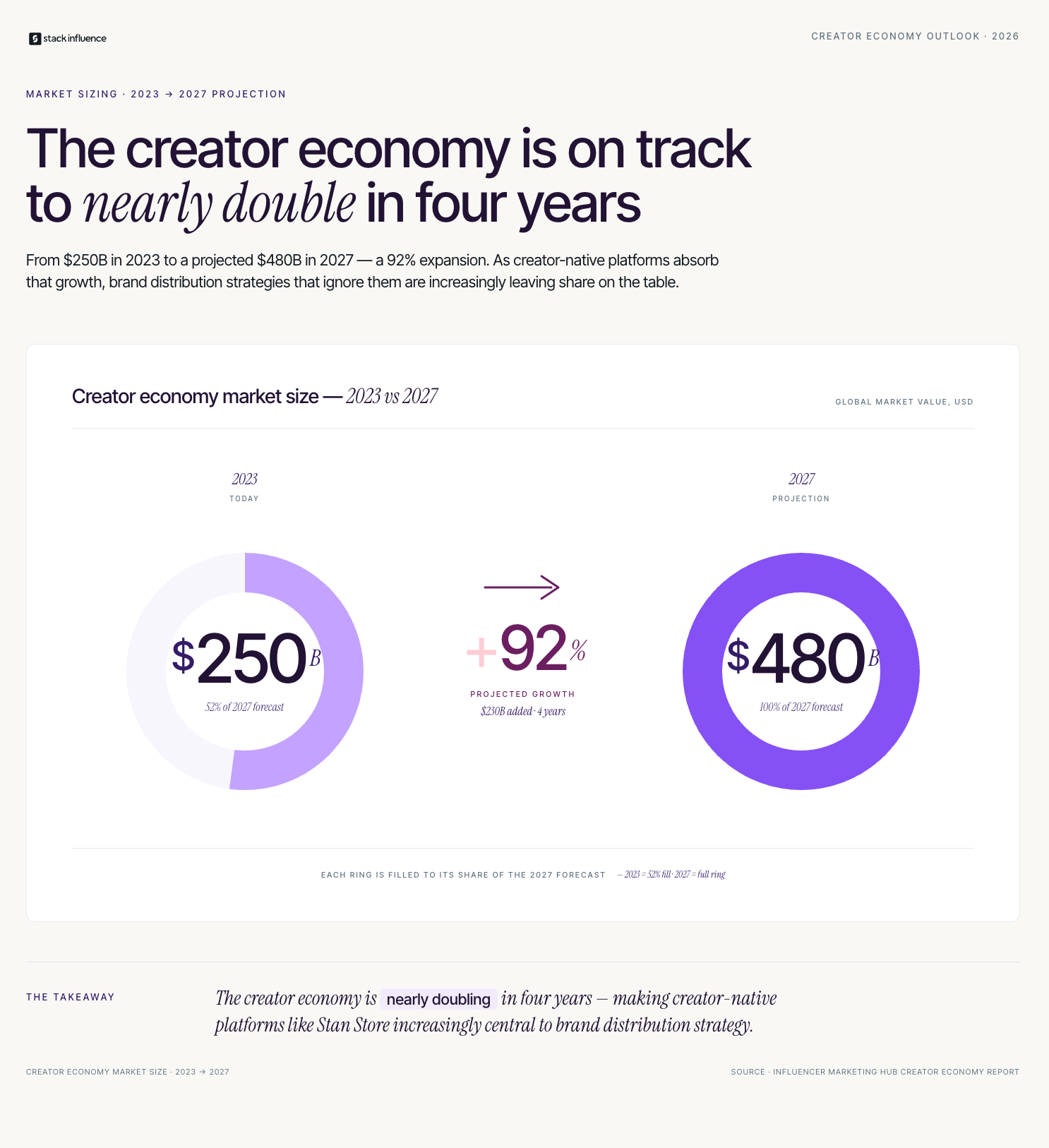
According to Influencer Marketing Hub's creator economy report, the creator economy is valued at over $250 billion globally and is projected to reach $480 billion by 2027. Stan Store's growth sits within that larger wave, and understanding the platform is increasingly relevant for any brand that works with creators as a distribution or acquisition channel.
Why Does Stan Store Matter for eCommerce Sellers and DTC Brands?
The relevance of Stan Store to eCommerce sellers is not about switching your product catalog to a creator storefront. It is about understanding the monetization infrastructure your creator partners are using and building brand collaborations that fit within it rather than against it.
A creator with an active Stan Store is a creator who has already built a transactional relationship with their audience. They are not just accumulating followers; they are selling to them. That distinction matters enormously for brands evaluating creators for [product seeding](INTERNAL: product seeding campaign guide) and paid partnerships. A creator who converts their audience on $47 digital products has demonstrated the same audience trust that will convert on a $39 skincare product or a $65 supplement.
Three ways Stan Store changes how eCommerce brands should think about creator partnerships:
- Conversion credibility signal: A creator with revenue history on Stan Store has proven their audience buys through their recommendation. This is a stronger partnership signal than follower count or engagement rate alone.
- Affiliate and commission alignment: Stan Store's affiliate management feature means creators are already comfortable with performance-based compensation structures. Brands offering affiliate commissions alongside product gifting will find Stan Store creators receptive to that deal structure.
- Email list access: Creators who use Stan Store's email capture have built an owned audience list that extends beyond any single social platform. Brand partnerships that include an email mention or newsletter placement reach a more engaged segment than a social post alone.
From Stack Influence's experience running product seeding campaigns for eCommerce brands, creators with active monetized storefronts, including Stan Store, convert referred traffic to product purchases at a 30 to 40% higher rate than creators with equivalent follower counts and no documented monetization history. The transactional relationship with their audience is already established; a brand partnership simply redirects that trust toward a new product.
Stan Store vs Amazon Storefront: Different Tools for Different Goals
A question eCommerce sellers frequently ask when first encountering Stan Store is how it compares to an Amazon storefront. The comparison is understandable but reveals a category confusion that is worth clarifying directly. The two platforms serve fundamentally different functions and are not in competition with each other from a seller's perspective.
An Amazon storefront is a branded destination page within Amazon's marketplace that showcases a seller's full product catalog to shoppers already on Amazon with purchase intent. It is a retail tool optimized for converting in-marketplace traffic. Stan Store is a creator monetization tool optimized for converting a creator's social audience into buyers, regardless of where the product is fulfilled.
The distinction matters for how brands structure their creator relationships:
- Amazon sellers using the Amazon Influencer Program can have creators drive traffic directly to their Amazon listings or brand storefront, with sales tracked through Amazon Attribution.
- Creators on Stan Store can list a brand's physical product and drive their own audience to that product page, with fulfillment handled separately by the brand or through Amazon FBA.
- A brand can use both models simultaneously: an Amazon storefront for marketplace shoppers and Stan Store creator partnerships for off-platform social audience conversion.
For Amazon sellers specifically, driving creator traffic through tagged Amazon Attribution links qualifies those sales for the Amazon Brand Referral Bonus, which returns a percentage of the sale price as a referral fee credit. Structuring creator partnerships so that Stan Store creators link to Amazon product pages with Attribution tags rather than to a generic landing page captures that credit and makes the economics of creator partnerships significantly more favorable.
Across campaigns managed on the Stack Influence platform, Amazon sellers who structured creator partnerships with proper Attribution tagging recovered an average of 9% of their referral fees through the Brand Referral Bonus program over a 90-day campaign window, materially improving the ROI of their creator channel spend.
Measuring Creator Partnerships That Run Through Stan Store
Measurement is where most brand partnerships involving creator-native platforms like Stan Store break down. Brands know a creator posted, and they can see their own sales data, but they cannot always connect the two with confidence. A named measurement model closes that gap.
Use the Creator Channel Attribution Stack to evaluate any partnership involving Stan Store or similar creator monetization platforms. The stack has three layers:
- Layer 1: Direct link tracking. Every product link a creator shares, whether to your Amazon listing, your Shopify store, or a Stan Store product page you have co-created with them, should carry a unique UTM parameter or Amazon Attribution tag. Without this, you are estimating performance rather than measuring it.
- Layer 2: Halo sales measurement. Compare your baseline sales velocity in the week before a creator posts to the week after. The lift above baseline, minus any concurrent paid campaign influence, is the creator's estimated halo contribution. This captures the brand search and direct navigation sales that tagged links do not.
- Layer 3: Content longevity tracking. Stan Store pages and social posts continue generating traffic for weeks after the initial post. Check your attribution data at 7 days, 30 days, and 60 days post-campaign to understand the full value of the creator's content asset, not just the first-week spike.
For Amazon sellers, Layer 1 of the Creator Channel Attribution Stack should always include Amazon Attribution link setup before any creator content goes live. The Amazon Brand Referral Bonus only applies to sales generated through properly tagged external traffic, so an untagged Stan Store creator link drives a sale that qualifies for the bonus but does not receive it. That is an avoidable revenue leak that compounds with every campaign that launches without proper tracking infrastructure.
What Most Guides About Stan Store Get Wrong for Product Brands
Most content about Stan Store is written for creators, not for the brands looking to partner with them. That framing gap produces advice that is accurate for individual monetization but misleading for eCommerce sellers trying to evaluate the platform as a partnership channel.
The most common misframe is treating Stan Store as a competitor to brand-owned eCommerce infrastructure. It is not. It is a creator monetization layer that sits on top of social audiences that brands want to reach. The right question for an eCommerce seller is not "should we use Stan Store instead of Shopify?" It is "which creators using Stan Store have audiences that match our target customer, and how do we structure a partnership that converts?"
The second misframe is assuming Stan Store creators are only relevant for digital product brands. Physical product eCommerce brands, including Amazon sellers and DTC brands running [product seeding campaigns](INTERNAL: product seeding for Amazon sellers), are some of the most natural fits for Stan Store creator partnerships because those creators have already demonstrated they can sell physical adjacent products to their audiences through their own storefronts.
Three things other Stan Store guides leave out for product brands:
- Stan Store's email capture makes creator partnerships stickier: A brand that structures a partnership to include a Stan Store opt-in captures audience members into an owned list that can be remarketed to without relying on the creator's future posting schedule.
- Stan Store affiliate features support performance-based brand deals: Rather than a flat fee sponsorship, brands can offer Stan Store creators an affiliate structure that aligns incentives and scales compensation to actual sales driven.
- Stan Store data informs creator selection: A creator willing to share their Stan Store revenue data gives you a conversion benchmark that is far more predictive of brand campaign performance than any social media metric.
Stack Influence has observed that eCommerce brands which select creator partners based on documented conversion history, including Stan Store sales data, rather than follower count alone achieve a 50% higher return on their product seeding investment compared to brands that rely exclusively on reach and engagement metrics during creator selection.
Conclusion
Understanding what is Stan Store is increasingly important for eCommerce sellers who want to build creator partnerships that convert rather than simply generate impressions. The platform represents a maturing creator economy where individual creators have built transactional relationships with their audiences, and those relationships are directly accessible to brands willing to structure the right partnership. Whether you are an Amazon seller building off-platform traffic, a DTC brand evaluating new distribution channels, or a Shopify seller looking for creator partners with proven conversion history, Stan Store creators belong in your partnership strategy.
If you are ready to build creator partnerships that drive real revenue, Stack Influence connects eCommerce brands with vetted micro influencers for product seeding campaigns that generate content, traffic, and conversions across every major platform.