




Most YouTube calendars fail for one simple reason: they confuse output with strategy. Influencers can post every week and still end up with videos that never attract search traffic, never turn into brand deals, and never become reusable UGC.
The real job of youtube content ideas is not to keep you busy. It is to build a channel that earns attention in public, trust in private, and leverage in the creator economy. This guide shows influencers how to choose ideas that travel across Shorts, long-form, affiliate content, and brand partnerships without turning their channel into a random content dump.
Key Takeaways
- Strong YouTube ideas do three jobs at once: they attract discovery, deepen trust, and create commercial proof for future brand deals.
- The best content plan for influencers mixes searchable videos, personality-led stories, and product-proof videos instead of relying on one format.
- Views matter, but idea quality is easier to judge through a layered model that tracks discovery, relationship depth, and revenue signals together.
- If a video concept cannot produce follow-up episodes, clip variations, or reusable UGC, it is usually too weak to anchor a serious creator business.
The 2026 YouTube Discovery Landscape for Influencers

YouTube is no longer a side channel in influencer marketing. IAB’s 2025 creator economy data projects creator ad spend in the US at $37 billion in 2025, up 26% year over year, and YouTube’s 2026 Creator Partnerships update says 76% of US respondents rank access to both short-form and long-form content as a top reason it is their go-to platform.
That changes how influencers should think about ideation. A good idea now has to work in more than one viewing mode, because your audience may discover you on Shorts, binge long-form on mobile, and return for deeper trust-building content later. Wyzowl’s 2026 video marketing statistics reinforce that shift by naming YouTube the most widely used video marketing platform and showing that video marketers still balance reach, engagement, and click outcomes at the same time.
Use that market shift as your planning baseline.
- Discovery matters more than vanity posting. If creators are a core media channel, every upload needs a clear job in your growth plan.
- Format versatility matters. The strongest concepts can live as a Short hook, a long-form video, and a clipped UGC asset.
- Commercial intent matters. Brand teams increasingly want creator partnerships that can support both awareness and sales.
When influencers ignore that context, they default to trend chasing. When they respect it, they start planning videos that can serve micro influencers, nano influencers, affiliate workflows, and future brand sponsorship at the same time.
What Is a YouTube Content Ideas Strategy for Influencers?
A strong YouTube content ideas strategy is a repeatable system for choosing video concepts that match audience intent, creator personality, and business upside. It is different from a brainstorm list because every idea is selected for a measurable reason. If you cannot explain why a video should exist before you film it, the concept probably is not strong enough.
That matters even more for influencers who operate across UGC, affiliate links, creator partnerships, and owned products. If you create both community content and paid work, the difference between UGC and content creators matters, and so does understanding how micro influencers build trust before they sell attention.
You can usually tell whether your system is solid by checking for three signals.
- Audience fit: The topic solves a real question, frustration, or aspiration your viewers already have.
- Format fit: The concept suits the way YouTube distributes content through search, browse, suggested video, Shorts, and shopping surfaces.
- Business fit: The video can support future brand deals, product tagging, or reusable UGC without feeling forced.
This is where many influencers get stuck. They borrow broad creator advice, but their actual careers depend on more specific outcomes such as producing better sponsored content, becoming a stronger fit for UGC platforms, or building a portfolio that helps them win repeat brand deals. That is why idea generation has to start from an operating model, not from inspiration alone.
Build Ideas With The Signal-to-Series Map
The Signal-to-Series Map is a practical way to organize youtube content ideas around how viewers move from curiosity to trust to action. Instead of asking, “What should I film next?” ask, “What signal am I creating, and what series can grow from it?” That shift keeps your content from becoming one-off entertainment with no compounding value.
The map has four lanes. You do not need equal volume in each lane, but you do need all of them if you want sustainable growth as an influencer, UGC creator, or future brand ambassador.
- Search lane: Videos that answer explicit questions and attract new viewers.
- Story lane: Videos that reveal your taste, standards, routines, and point of view.
- Proof lane: Videos that demonstrate a result, comparison, test, or product use case.
- Series lane: Videos built to create obvious follow-up episodes and recurring audience habits.
What Problems Are Fans Already Trying To Solve?
Search lane ideas work because they meet existing demand. In YouTube’s analytics guide, the platform tells creators to identify the videos bringing in new viewers and then build obvious follow-ups from those winners. That means tutorials, comparisons, beginner mistakes, setups, and “before you buy” formats still matter because they create clear entry points.
For influencers, searchable does not have to mean robotic. “What I would buy again as a nano influencer,” “how I plan creator shoots in two hours,” and “my honest desk setup for small apartments” can all win because they answer real questions while still sounding like a real person.
Where Does Your Point Of View Create Tension?
Story lane ideas are where your personality stops being generic and starts becoming memorable. These videos are not random life updates. They are structured expressions of taste, standards, trade-offs, and routines that make viewers understand how you think.
That matters commercially because brands do not only buy reach. They buy context. A skincare creator with a clear philosophy around sensitive skin, or a home creator with defined style rules, is easier to match with the right creator partnerships than someone posting disconnected trends.
Which Product Proof Belongs On Camera?
Proof lane ideas are the bridge between creator trust and commerce. Bazaarvoice’s Video Commerce 2025 research found that more than 65% of shoppers consider videos from other consumers critical in their shopping experience, 62% gravitate toward videos during content consumption, and 23% actively seek product demo videos. If you build concepts around proof, you are not “selling out.” You are documenting evidence.
That is especially useful for influencers who also create user-generated content for eCommerce or participate in influencer product seeding strategies. Based on Stack Influence’s work with eCommerce brands, creators usually deliver stronger UGC video when the brief centers one use case and one proof moment instead of trying to compress every feature into one upload.
How Can One Idea Stretch Into A Series?
Series lane ideas are what keep a channel from resetting to zero every week. If one video can become episode one of a recurring format, you lower planning friction and train your audience to come back with better expectations.
This is the part most influencers underuse. The Signal-to-Series Map only compounds when you deliberately turn a winner into sequels, variations, and updates. One searchable upload should create the next comparison, the follow-up Q&A, the live test, and the Shorts recap, not just a spike in views and a blank content calendar.
Why Do Some Videos Pull Brand Interest While Others Stay Invisible?
Brands do not just want creators who can post. They want content creators who make audience-friendly assets that can also support commerce. Sprout Social’s influencer partnerships research says 32% of consumers bought a product or service through an influencer’s sponsored post in the past 12 months, rising to 53% among Gen Z and 48% among Millennials. That means your ideas become more valuable when they make purchase intent visible without turning the video into an ad.
The easiest way to stand out is to make your content useful to both viewers and brand teams.
- Lead with a clear premise: Brands can spot whether your idea has a real hook in the first sentence.
- Show believable proof: Demos, comparisons, and routines beat vague praise.
- Build derivative cuts: One strong YouTube concept should also create Shorts, vertical clips, and still frames.
- Keep your message native: The audience should feel your standards before they feel the sponsorship.
- Think about reuse: If a clip could also live on a product page, paid ad, or retailer listing, it is more valuable.
That is why influencers who understand Amazon influencer marketing solutions and automated product seeding often pitch better than creators who only sell “exposure.” Across campaigns managed on the Stack Influence platform, creators who plan one long-form YouTube video plus two derivative Shorts usually produce a more reusable asset bank than creators who build around a single hero upload.
This is also why micro influencers and nano influencers often beat larger creators on idea efficiency. They may not have the broadest reach, but they are usually better positioned to create specific, trust-heavy content that works for UGC, brand partnerships, and ongoing product storytelling.
Where Does Most YouTube Content Ideas Advice Fall Short?
Most youtube content ideas advice focuses on “what gets views” and stops there. That sounds useful, but it leaves out the real operating question for influencers: which ideas create durable business value after the upload is over? Views help, but a creator business compounds through repeatability, asset reuse, and measurable action.
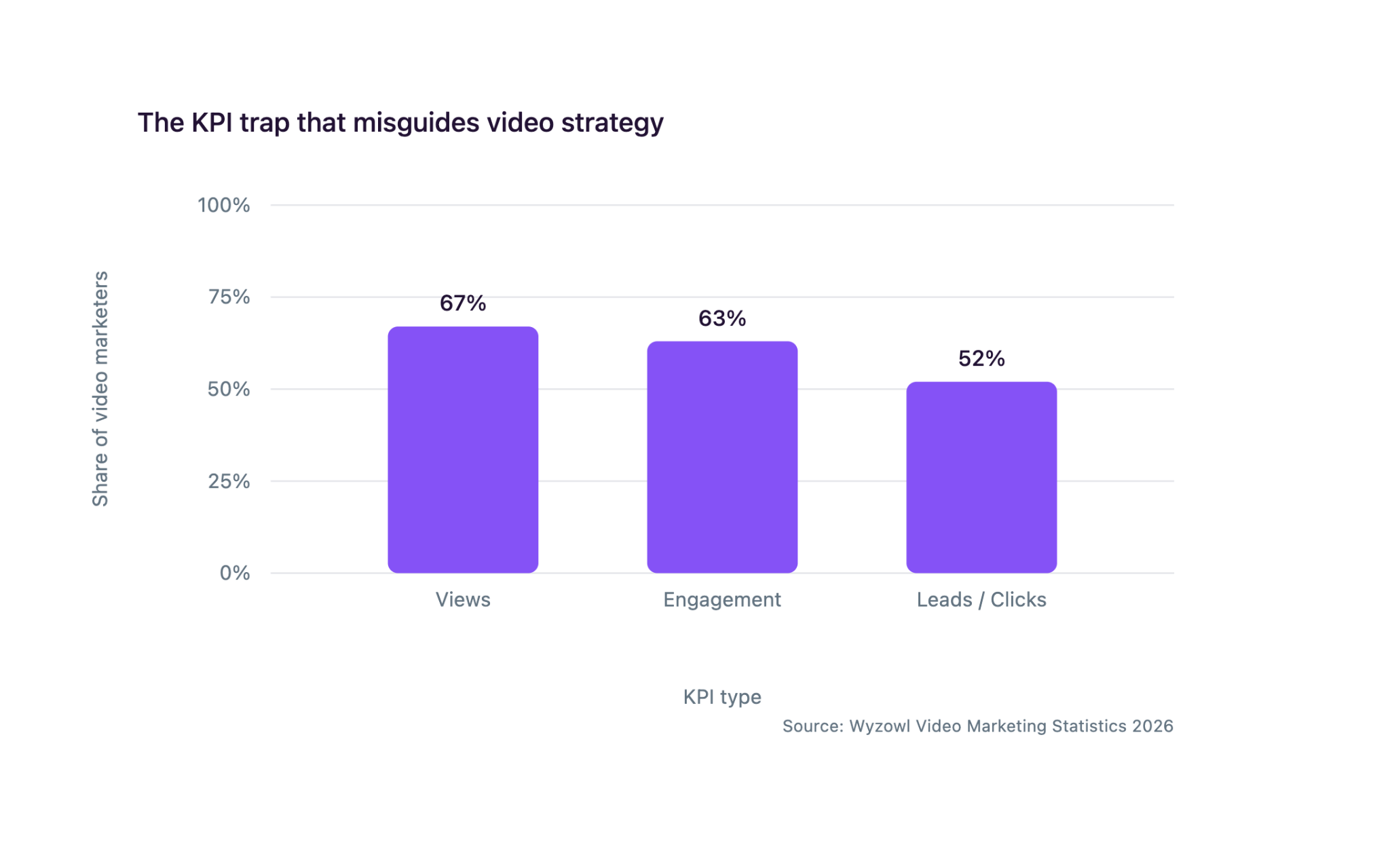
The gap becomes obvious when you compare mainstream advice with current shopping behavior. YouTube’s Shopping report found that 59% of Gen Z users aged 14 to 24 say online content has influenced their personal style, while Wyzowl reports that 67% of video marketers still rank views as their top KPI, ahead of engagement and leads or clicks. That mismatch is the blind spot. Too many guides optimize for visibility while ignoring whether a video creates proof.
Here is what many guides leave out.
- Content inventory: A video is more valuable when it also creates clips, screenshots, talking points, and proof assets.
- Commerce behavior: Viewers often use creator content to narrow taste and buying decisions long before they click a link.
- Repeatability: A winning video should trigger obvious sequels, not remain an isolated hit.
The fix is not to stop caring about reach. It is to choose ideas that create evidence. Evidence helps viewers trust your recommendations, helps brands see you as more than media inventory, and helps you turn one good month on YouTube into a repeatable business.
How Should Influencers Measure Idea ROI On YouTube?
A good idea is only as strong as the proof it leaves behind. IAB’s measurement guidance argues that creator marketing still suffers from fragmented metrics and weak accountability, which is exactly why influencers need a clearer way to judge video peformance. The answer is not one metric. It is a layered model.
The Three-Layer Proof Stack helps you evaluate whether an idea creates discovery, relationship depth, and commercial value. If one layer looks weak, you know what to improve next time instead of blaming the whole concept.
Discovery Signals
Discovery tells you whether the idea earned initial attention from the right people. YouTube recommends that creators track click-through rate, retention, traffic sources, and the videos that grow the audience, because those metrics reveal whether the title, thumbnail, and concept actually matched what viewers wanted.
Watch these signals first.
- CTR: Shows whether the packaging earned the click.
- Early retention: Shows whether the first promise matched the actual video.
- Traffic source mix: Shows whether the idea is search-led, browse-led, suggested-led, or dependent on external traffic.
- New-viewer contribution: Shows whether the topic can open the channel to fresh audiences.
Relationship Signals
Relationship depth tells you whether the audience trusted the idea enough to keep moving with you. This is the layer most influencers skip, even though it usually predicts stronger community loyalty and stronger brand deals later.
Track signals such as comments that mention personal relevance, repeat viewers, saves to playlists, direct messages, email signups, or follow-up requests for related videos. From Stack Influence’s experience running product seeding for eCommerce brands, YouTube ideas built around one concrete use case often lead to clearer viewer questions and more reusable follow-up content than broad lifestyle montages, because the audience knows exactly what to react to
.
Revenue Signals
Revenue signals tell you whether the idea can support commerce without wrecking trust. On YouTube, that may mean affiliate clicks, shopping tag engagement, brand inquiry volume, coupon code use, storefront visits, and downstream sales. If you send traffic to Amazon, this is where clean setup matters.
Amazon’s Attribution guide explains that tagged links can measure non-Amazon traffic across clicks, detail page views, and sales, and that the Brand Referral Bonus averages 10% on qualifying sales while also crediting additional brand purchases up to 14 days after the click. YouTube Shopping help documentation adds that eligible creators can view tagged-product performance and product-page traffic inside YouTube Analytics, which makes it easier to compare product interest with downstream conversions.
Keep the setup simple if you want clearer reporting.
- Use one destination per campaign: Do not split a single video across five competing links if you want clean attribution.
- Tag every creator link before launch: Late tagging creates messy reporting and avoidable blind spots.
- Pair links with a creator-specific code or landing page: This gives you a second source of truth when platform numbers disagree.
- Log timing details: Track product arrival, publish date, discount window, and stock status.
Data from Stack Influence’s micro influencer campaigns suggests that creators who publish within two weeks of product delivery usually make attribution cleaner than creators who wait a month, because codes, inventory status, and buyer intent stay aligned longer. That is a small operational detail, but it often decides whether a YouTube idea looks profitable or just interesting.
Turn Winning Concepts Into A Repeatable Publishing System
The final step is operational discipline. Once you know how to judge ideas, stop planning your channel video by video and start planning in clusters. One cluster should include a searchable entry video, one trust-building story, one proof asset, and at least one follow-up angle. That is how youtube content ideas stop feeling random and start compounding.
A lightweight publishing rhythm is enough.
- Start with audience questions: Pull from comments, search suggestions, DMs, and prior high-retention videos.
- Group similar questions into clusters: Build a topic family instead of producing isolated uploads.
- Film the long-form version first: Then cut Shorts and proof clips from the same session.
- Review the winning traffic source after 7 and 30 days: That tells you whether the idea belongs in search, browse, or commercial rotation.
- Only greenlight the next episode when the concept proves itself in at least two layers of the Proof Stack: That keeps the system disciplined.
If you also create sponsored work, UGC video, or affiliate reviews, this approach makes your channel easier to monetize because every upload leaves behind a better portfolio. It also makes you easier to brief, which matters when you study how influencer seeding works for eCommerce in 2026, build an influencer marketing strategy, or learn from broader examples of micro-influencers and UGC in eCommerce.
For influencers, the best youtube content ideas are rarely the loudest ones. They are the ideas that teach your audience what you are known for, show brands how you create proof, and give you a repeatable lane for growth. Use the Signal-to-Series Map and the Three-Layer Proof Stack on your next planning cycle, and you will build a stronger channel, a stronger pitch, and a better path to repeat brand deals.