



The gap between a viewer watching your video and a viewer buying what you are showing has never been smaller. Shoppable video, content that embeds a direct purchase path inside the viewing experience itself, has moved from an experimental retail feature to a mainstream creator income channel in the span of three years. For content creators who have built audiences around product recommendations, lifestyle content, or niche reviews, the shoppable video ecosystem now offers multiple simultaneous monetization paths across TikTok Shop, Instagram, Amazon, and DTC brand platforms. This guide explains how shoppable video works across each major platform, how to structure your content to maximize both conversion and brand partnership income, and how to measure your performance in a way that builds your long-term negotiating leverage with brands.
Key Takeaways
- Shoppable video allows viewers to purchase products directly within or immediately adjacent to a video without leaving the platform, reducing purchase friction and increasing conversion rates compared to link-in-bio models.
- TikTok Shop, Instagram Shopping, and the Amazon Influencer Program are the three primary shoppable video ecosystems available to creators in 2026, each with distinct commission structures, audience behaviors, and content requirements.
- Creators who combine shoppable video commission income with flat-fee brand deals and UGC production contracts build more stable monthly income than those relying on commissions alone.
- Shoppable video content repurposes efficiently: a single product demonstration video can earn commission income on TikTok Shop, serve as a UGC asset for a brand's paid Instagram ads, and drive traffic to an Amazon storefront simultaneously.
- Engagement rate and video completion rate are the two metrics brands weight most heavily when selecting creators for shoppable video campaigns, both of which creators control through content quality rather than follower count.
What Is Shoppable Video and Why Has It Taken Over Creator Commerce?
Shoppable video is any video content that includes embedded or adjacent product links allowing viewers to complete a purchase without navigating away from their current viewing context. The format eliminates the traditional friction point of social commerce: the moment when a viewer who wants to buy something has to stop watching, go to a bio link, navigate to a product page, and complete a checkout that feels disconnected from the content that created the desire to buy in the first place.
The technology has existed in various forms since the early 2010s, but the combination of mobile-first shopping behavior, algorithm-driven short-form video, and platform-native checkout infrastructure has produced genuine scale only recently. According to Insider Intelligence research, social commerce sales in the United States reached $67 billion in 2023 and are projected to exceed $145 billion by 2027, with shoppable video representing a growing share of that total as TikTok Shop and Instagram Shopping mature.
Three reasons shoppable video has become central to the creator economy in 2026:
- Platform infrastructure caught up to consumer behavior: TikTok Shop's native checkout, Instagram's Shopping tags, and the Amazon Influencer Program's video storefront all allow purchases to be completed with minimal steps from the point of discovery, which is the moment creators have always been strongest at creating.
- Creator-native content outperforms brand-produced ads: Brands have discovered that authentic product demonstration videos from real creators generate higher click-through and conversion rates than studio-produced advertising creative. This has created a direct financial incentive for brands to invest in creator-produced shoppable content rather than traditional video ads.
- Commission structures now reward creators at scale: TikTok Shop affiliate commissions of 5 to 20%, Amazon Influencer Program commissions of 1 to 10% by category, and Instagram's affiliate tools have created a compensation model where creators earn ongoing income from content they produce once, compounding over the life of the video.
How Does Shoppable Video Work Across the Major Platforms?
Each major shoppable video platform operates differently in terms of creator eligibility, commission structure, content format requirements, and audience purchase behavior. Understanding these differences is the prerequisite for building a platform-prioritized strategy rather than spreading effort equally across tools that produce unequal returns for your specific niche and audience.
TikTok Shop
TikTok Shop is currently the most accessible and highest-volume shoppable video platform for most creators. Creators with 1,000 or more followers can access the affiliate portal, browse products, request samples, and add product links directly to videos and LIVE streams. Commission rates range from 5% to 20% depending on category, with beauty and wellness consistently offering the highest rates. According to TikTok for Business, TikTok users are 1.5 times more likely to purchase something they discovered on TikTok compared to other platforms, which reflects the platform's unique intent-to-purchase dynamic. The LIVE selling format consistently drives higher conversion rates than standard video for impulse-purchase categories.
Instagram Shopping
Instagram's shoppable video tools allow creators to tag products directly in Reels, Stories, and feed posts. Creators can tag brand products through Instagram's affiliate program or tag products from their own Instagram Shop. The affiliate commission structure is less standardized than TikTok Shop, with rates varying by brand and often requiring direct negotiation or an existing brand partnership. The primary advantage of Instagram shoppable video is its integration with the broader brand deal ecosystem: a creator who tags products in organic content demonstrates conversion capability that brands use to evaluate sponsored content partnerships.
Amazon Influencer Program
The Amazon Influencer Program allows approved creators to build a shoppable storefront on Amazon featuring their recommended products, with commissions earned on qualifying purchases. Creators can upload shoppable video content directly to their Amazon storefront, which appears on product detail pages as "videos from the community." This placement puts creator content directly in the path of shoppers who are already in a purchase mindset, producing higher conversion rates per view than discovery-stage social platforms. Amazon's commission rates range from 1% to 10% depending on product category, with the Amazon Brand Referral Bonus providing additional credits for brands who drive external traffic to their listings through creator-tagged Amazon Attribution links.
The Shoppable Video Content System
Producing shoppable video content that converts requires more than adding a product link to a video you were already planning to make. The most consistently high-converting shoppable content follows a repeatable structure that balances authentic creator voice with the specific triggers that move a viewer from watching to purchasing.
The Shoppable Video Content System is a five-step production framework for every shoppable video you create:
- Hook with a problem or result: Open within the first two seconds with either the problem the product solves or the visible result the product produces. Avoid product name mentions in the opening; lead with the viewer's experience, not the brand's identity.
- Demonstration before explanation: Show the product in use before explaining what it is or how it works. Viewers process visual demonstration faster than verbal explanation, and algorithms reward content that holds attention in the first five seconds.
- Authentic reaction or observation: Include a genuine moment of personal response to the product, whether that is a texture observation, a scent reaction, or a visible before-and-after. This is the element that differentiates creator shoppable content from a product ad and is the primary trust signal that drives purchase decisions.
- Specific outcome statement: Name one concrete, specific result the product produced for you. Vague claims like "I love this" convert at a fraction of the rate of specific observations like "this completely cleared the dry patches I have had for two winters."
- Low-friction call to action: End with a single, direct action prompt. "Linked below" or "tap the product tag" is more effective than elaborate explanations of how to find the product. Every additional step between the viewer's intention to buy and the completed purchase reduces conversion rate measurably.
The Shoppable Video Content System works across TikTok Shop, Instagram, and Amazon storefront video formats because it is structured around purchase psychology rather than any single platform's interface. Creators who apply the system consistently to their product content see materially higher click-through and conversion rates than creators who approach shoppable content as standard sponsored post production.
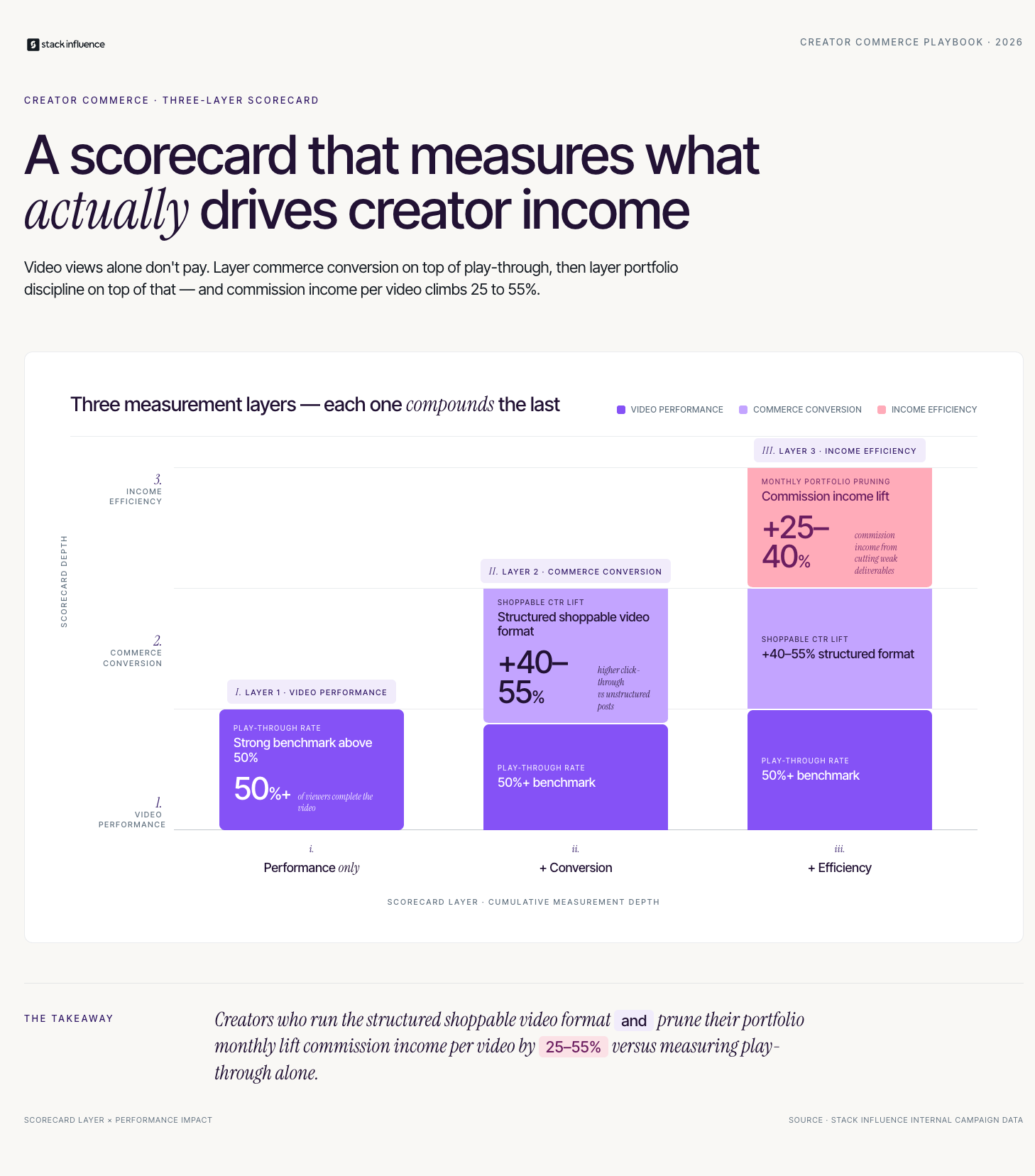
Stack Influence's internal campaign data shows that creators who follow a structured shoppable video format, including a visible product demonstration and a specific outcome statement, generate 40 to 55% higher click-through rates on embedded product links compared to creators who produce unstructured product mention content with the same link placement.
Should You Prioritize Shoppable Video Commission or Brand Deals?
The choice between chasing shoppable video commissions and building direct brand deal income is a false binary that most creator economy guides present as a real strategic decision. The most durable income structures combine both, because they serve different financial functions in a creator's income portfolio.
Commission income from shoppable video is variable and performance-dependent. A single high-converting video can generate hundreds or thousands of dollars in commissions over weeks or months, but the income is unpredictable and algorithm-dependent. [Brand deals](INTERNAL: brand deal negotiation guide for shoppable video creators) and [brand sponsorships](INTERNAL: brand sponsorship strategy for content creators) provide predictable flat-fee income that does not depend on any individual video performing above its baseline.
Three ways to structure shoppable video commission and brand deal income together:
- Use commission history as deal evidence: Track your click-through rate and conversion data from shoppable video content, then present that data when pitching brands for paid partnerships. A creator who has driven $3,000 in attributable sales from organic shoppable content has a stronger negotiating position for a sponsored deal than a creator presenting only follower and engagement metrics.
- Stack platform income streams: Run TikTok Shop affiliate links and Amazon Influencer storefront content simultaneously for overlapping product categories. A viewer who discovers a product through your TikTok content and later searches on Amazon may encounter your storefront video as the final purchase trigger, earning you commission on the same customer journey through two separate attribution windows.
- Negotiate shoppable rights into flat-fee deals: When accepting a flat-fee brand sponsorship, include a clause permitting you to add shoppable tags to the sponsored content. The brand gets their sponsored content exposure; you get the ongoing commission income from conversions the content generates after the post goes live. Many [brands that work with micro influencers](INTERNAL: micro influencer shoppable video partnership guide) are receptive to this structure because it aligns the creator's incentive with the brand's conversion objective.
Based on Stack Influence's work with eCommerce brands, creators who negotiate shoppable tagging rights into sponsored post agreements earn an average of 20 to 35% more total income per brand relationship over a 90-day period compared to creators who accept flat-fee deals without any commission component.
Measuring Shoppable Video Performance: The Creator Commerce Scorecard

Most creators measure shoppable video success by checking their commission dashboard after a video goes live. That is a result, not a measurement system. A named framework that connects content decisions to financial outcomes gives you the ability to improve your results intentionally rather than hoping the next video outperforms the last.
Use the Creator Commerce Scorecard to evaluate every shoppable video campaign you run. The scorecard has three layers:
- Layer 1: Video performance metrics. Track play-through rate (percentage of viewers who watch beyond the 50% mark), shares per view, and saves per view. These signals tell you whether your content is resonating before it generates any purchase data. A shoppable video with strong play-through and save rates but low click-through indicates a product-audience fit issue, not a content quality issue.
- Layer 2: Commerce conversion metrics. Track click-through rate on product links (clicks divided by views), add-to-cart rate where platform data is available, and completed purchase rate. For Amazon Influencer storefront content, Amazon Attribution links provide detailed conversion data from video view to purchase. Sellers using Attribution-tagged creator links also qualify for the Amazon Brand Referral Bonus, which returns a percentage of the sale price as a referral fee credit.
- Layer 3: Income efficiency metrics. Divide total commission and deal income earned from each video by the hours spent producing it. This reveals your effective hourly rate by content type and platform, which is the most useful number for deciding where to concentrate your production effort as you scale.
Across campaigns managed on the Stack Influence platform, creators who review their Creator Commerce Scorecard monthly and eliminate the bottom 20% of their active product promotions from their content rotation increase their average commission income per video by 25 to 40% within two production cycles, because they concentrate output on product-audience fits that their data has already validated.
The Shoppable Video Opportunity Most Creators Are Not Using Yet
Every guide to shoppable video covers TikTok Shop and Instagram Shopping. Very few cover the opportunity that sits at the intersection of both: producing shoppable video content as a standalone paid service for brands, entirely independent of your own channel performance.
This is [UGC video](INTERNAL: UGC video production guide for shoppable content) production for shoppable ad placements. DTC brands running Instagram Shopping ads, TikTok Shop campaigns, and [Shopify influencer marketing](INTERNAL: Shopify shoppable video creator guide) programs need a constant supply of authentic, mobile-shot, creator-produced video content to fuel their paid distribution. They are paying creators $150 to $500 per video deliverable to produce that content, with no posting requirement and no follower minimum.
Three specific shoppable video UGC formats brands are actively hiring creators to produce in 2026:
- TikTok Shop product demos for paid amplification: Brands run their best organic creator content as paid TikTok ads, which means they need creator-produced videos that feel native to TikTok's feed. Creators who produce demo videos following the Shoppable Video Content System are producing exactly the asset brands need for this purpose. Creators who need to produce multiple demo variations quickly across different products can use Gemini Omni Flash on invideo Agent to generate platform-native product videos from a brief, keeping up with brand demand for A/B creative volume without a separate filming session for each SKU.
- Instagram Reels for Shopping ad placements: Meta's ad delivery system favors creator-produced Reels for Instagram Shopping ads over polished brand creative. Brands pay creators to produce multiple variations of product Reels for A/B testing in their paid campaigns, creating a recurring content production relationship that pays independently of the creator's organic content performance.
- Amazon storefront video for product detail pages: The Amazon Influencer Program's storefront video feature places creator content on product detail pages where shoppers are in active purchase mode. Brands increasingly commission creators to produce optimized storefront videos as a content asset separate from standard influencer campaign deliverables.
Stack Influence has observed that eCommerce brands that incorporate creator-produced shoppable video content into their paid ad creative see an average 30% improvement in click-through rate compared to brand-produced studio creative, reflecting both the platform algorithm's preference for native-feeling content and consumers' higher trust response to creator voices over polished advertising.
Conclusion
Shoppable video is not a single platform feature or a trend to monitor. It is a structural shift in how product discovery and purchase decisions connect, and for content creators, it represents the most direct path yet from content production to income generation. The Shoppable Video Content System gives you the production framework to create content that converts. The Creator Commerce Scorecard gives you the measurement discipline to improve those conversions over time. And the combination of commission income, brand deals, and UGC production work gives you the diversified income structure that makes shoppable video a real business rather than a variable side income.
If you are ready to connect with brands running active shoppable video and product seeding campaigns, Stack Influence matches content creators with eCommerce brands looking for authentic creator content, with no minimum follower requirement to get started.