




Most product launches fail in the first 90 days. Not because the product is bad, but because the promotion strategy treats content creators as a last-minute distribution channel rather than a strategic asset. If you are a micro influencer, nano influencer, or UGC creator, you are sitting on more launch power than most brands realize. The creator economy has fundamentally shifted how products reach buyers, and a smart product launch strategy can turn your content, your audience, and your creative voice into genuine commercial results for you and the brands you partner with.
Key Takeaways
- A creator-led product launch strategy runs in three phases: sourcing, pre-launch activation, and post-launch amplification, each requiring different creator actions.
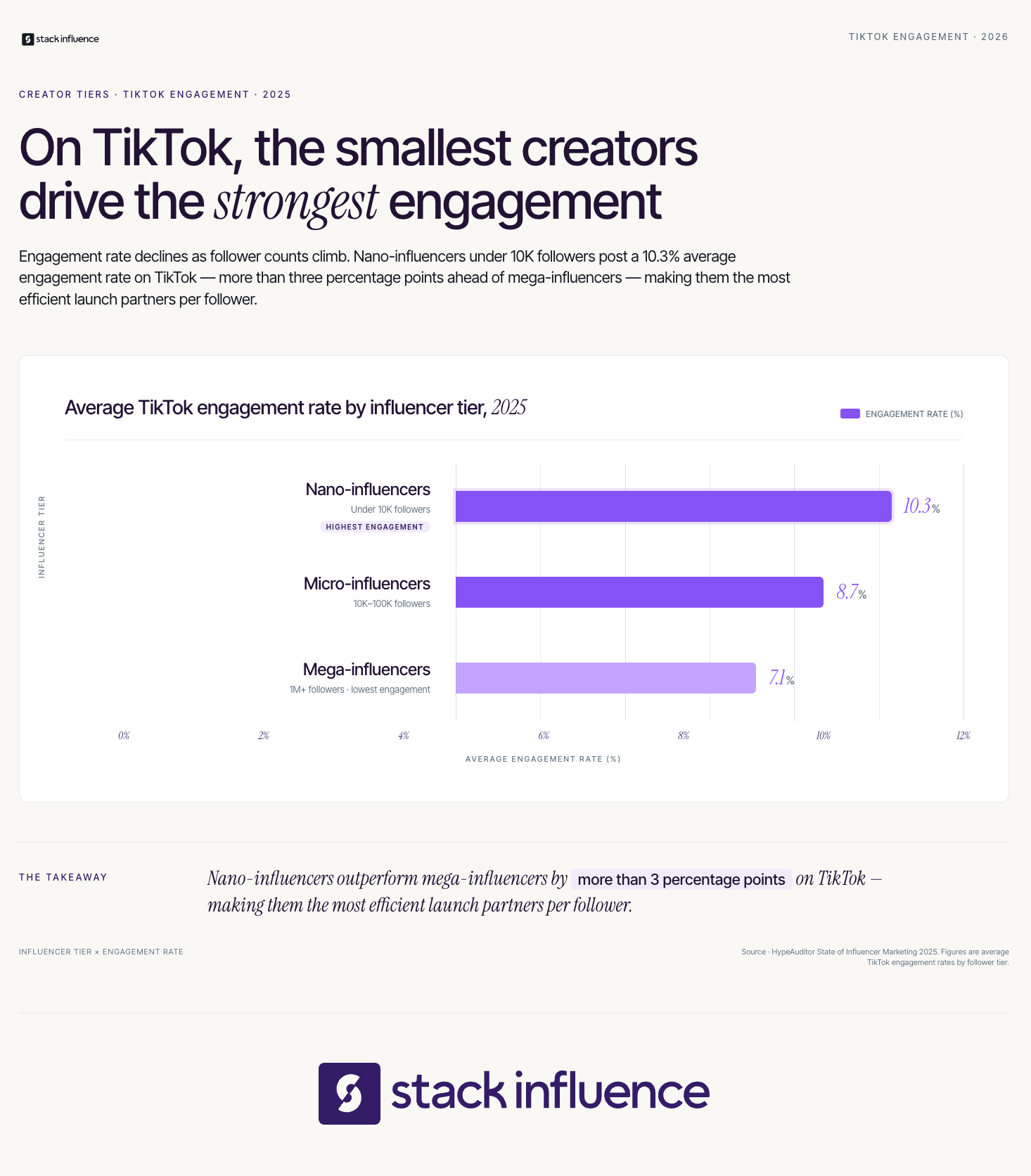
- Nano influencers and micro influencers consistently outperform larger accounts on engagement, making them the most cost-effective launch partners for brands.
- UGC video content drives conversion rates more than 10x higher than non-UGC posts, making your content library a direct revenue driver.
- Long-term brand ambassador relationships deliver higher ROI than one-off campaigns, benefiting creators with more stable income and brands with compounding trust signals.
- Measuring launch performance requires a named metric model, not just vanity metrics, so creators can demonstrate concrete ROI to brand partners.
What the Creator Economy Has Changed About Product Launches
Product launches used to follow a linear path: PR, paid media, retailer placement. That playbook is broken in 2026. The influencer marketing industry reached $32.55 billion globally in 2025, according to Influencer Marketing Hub's data cited by Statista, and brands are no longer asking whether influencer marketing works. They are asking how to structure it around a launch window.
The core shift is this: consumers now discover and evaluate products through creator content before they ever interact with a brand directly. HypeAuditor's State of Influencer Marketing 2025 report found that nano-influencers achieve 10.3% engagement on TikTok, compared to 7.1% for mega-influencers, confirming that smaller, more targeted audiences consistently outperform larger ones on the platform. That discovery advantage is what makes the creator community so valuable to a product launch.
What this means for you as a creator is that brands are actively looking for niche micro influencers who can deliver authentic reach within a defined community. The question is whether you have a strategy to position yourself inside a launch window, or whether you are waiting for brand deals to find you.
The data signals are clear:
- Nano and micro creator dominance: Smaller-follower creators generate disproportionate engagement relative to their audience size, making them the preferred launch partners for brands working within real budgets.
- Trust over reach: According to Sprout Social's 2025 Influencer Marketing Report, 86% of consumers make at least one influencer-inspired purchase per year, driven by authenticity rather than follower count.
- Content reuse at scale: Brands increasingly run influencer campaigns specifically to generate UGC assets they can repurpose, meaning your content lives far beyond the original post.
- Platform diversification: Instagram, TikTok, and YouTube each serve different purchase intents within a launch window, and creators who can activate across formats add outsized value.
What Is a Creator-Led Product Launch Strategy?
A creator-led product launch strategy is a structured approach in which content creators and influencers are embedded into a product's go-to-market plan across three distinct phases: creator sourcing, pre-launch activation, and post-launch amplification. It is not a single sponsored post. It is not a PR gifting blast. It is a coordinated sequence of creator actions that builds audience awareness, generates social proof, and extends the revenue window of a product launch.
According to Sprout Social's 2025 Influencer Marketing Report, 65% of influencers would rather be involved in creative or product development conversations with brands early on than follow a rigid brief. That preference is not just about creator satisfaction. It produces better content because the creator has context, belief in the product, and the freedom to speak to their audience in their own voice.
The creator-led model matters especially for influencer marketing platforms, brand ambassadors, and UGC creators who want to build sustainable revenue streams from brand partnerships. When you understand the strategic logic behind a launch, you can pitch yourself as a launch partner rather than a content vendor. That positioning changes the type and duration of brand deals available to you.
The Creator Sourcing Phase: Laying the Strategic Foundation
Introducing the Launch-Fit Checklist Framework
The primary framework for this strategy is the Launch-Fit Checklist, a five-point audit that creators and brands both use to evaluate whether a partnership is structurally positioned to succeed before a launch brief is written. The Launch-Fit Checklist runs before any content is created and prevents the most common failure mode in influencer campaigns: launching with misaligned creators.
Here are the five items in the Launch-Fit Checklist:
- Audience-Product Alignment: Does the creator's core audience genuinely use or need this product category? A beauty nano influencer promoting a software tool is a content mismatch that audiences will sense immediately.
- Content Format Capability: Can the creator produce the specific format the launch requires? UGC video for product pages, Reels for awareness, and long-form reviews for YouTube each require different creative skills.
- Posting Timing Flexibility: Is the creator available and willing to post within the launch window, including pre-launch teaser dates? Timing gaps kill launch momentum.
- Usage Rights Agreement: Has the creator confirmed in writing that their content can be repurposed for paid ads, product pages, and email campaigns? Content syndication is a major downstream value driver for brands.
- Performance Baseline: Does the creator have engagement rate data, audience demographics, and past campaign results they can share? Brands need this to project launch outcomes.
A 2025 survey by influee found that 83% of creators will work for gifting alone if the brand fit is right, making micro and nano seeding campaigns viable even on tight budgets. This means the Launch-Fit Checklist works in both directions. Creators who can articulate why they pass all five criteria are more likely to receive product seeding deals and paid partnerships. Brands running automated product seeding campaigns can use the same checklist to qualify creators at volume without manual review for every profile.
Stack Influence has observed that product launch campaigns where creators and brand managers align on usage rights and posting windows before the campaign brief is written produce significantly fewer revision cycles and higher on-time submission rates than campaigns where these details are handled after outreach.
Once a creator passes the Launch-Fit Checklist, the sourcing phase is complete. The strategy moves to activation.
The Pre-Launch Activation Phase
The pre-launch window, typically the two to four weeks before a product goes live, is where the real strategic work happens. Most brands waste this window by keeping creators silent until launch day. That is a structural mistake. The pre-launch phase is where audience priming, content production, and early social proof are built.
According to Shopify's 2025 UGC analysis, shoppers who engage with UGC reviews convert 144% more often and generate 162% higher revenue per visitor. That conversion premium does not materialize on launch day without content that already exists and has already been seen. Pre-launch content is what creates that lift.
According to Emplifi's Q3 2025 Social Media Benchmarks report, social media posts featuring user-generated content drove 10.38x higher conversion rates compared to non-UGC posts. This means every piece of pre-launch UGC video a creator posts is not just awareness. It is a conversion asset that carries economic weight into and past launch day.
Here is how the pre-launch phase should be structured for creators:
- Tease without revealing: Post curiosity content in the one to two weeks before launch. Unboxing previews, behind-the-scenes product testing, and "something is coming" Reels build anticipation without giving away the full product.
- Collect authentic reactions: Document your genuine first use of the product. These raw reaction moments are the most credible form of UGC and perform better in brand ads than polished brand-directed content.
- Seed niche communities: Share early content in comment sections, DMs, and community spaces where your audience congregates. Word-of-mouth within a tight community travels faster than algorithm-driven reach.
- Coordinate posting windows with brand timelines: Confirm with the brand exactly when embargo lifts, what hashtags or links to include, and which platform should receive the primary post.
- Build a content asset library: Produce more content than you plan to post organically. Unused clips from your pre-launch testing sessions are valuable UGC platforms assets the brand can license for paid campaigns.
From Stack Influence's experience running product seeding campaigns at scale, brands that engage creators in the pre-launch window rather than on launch day generate three to four times more organic content volume because creators have more time to test, iterate, and post authentically.
The Post-Launch Amplification Phase

Using the Momentum Tier Model
The secondary framework for this strategy is the Momentum Tier Model, a three-tier maturity structure that categorizes where creators sit in the amplification phase and what actions are appropriate at each tier. Unlike the Launch-Fit Checklist, which runs once before the campaign, the Momentum Tier Model is a continuous evaluation tool used during and after launch.
- Tier 1 (First 72 Hours): This is the highest-urgency window. Creators at this tier are posting primary launch content, responding to audience comments, sharing brand-provided discount codes, and monitoring engagement metrics in real time. Content should be native to the platform and feature genuine personal reactions to the product.
- Tier 2 (Day 4 Through Day 21): Creators at this tier shift from announcement to social proof building. This includes review content, comparison posts, follow-up videos showing product use over time, and engagement with other creators posting about the same product. Multiple creators posting across this window creates the compounding trust effect that drives purchase decisions.
- Tier 3 (Day 22 Through Day 90): Long-term brand ambassador content lives here. This tier is where repeat posts, community Q&A sessions, and seasonal content extensions deepen brand association and justify ambassador-level partnership structures.
According to Aspire's 2025 influencer marketing research, brand ambassador programs delivered the highest ROI for brands in 2024, underscoring the power of long-term creator relationships. Creators who structure their campaign activity across all three tiers of the Momentum Tier Model are the ones brands want to retain as ambassador partners because they are demonstrating consistent, compounding value rather than a single traffic spike.
For creators actively building brand ambassador relationships, Tier 3 behavior is the evidence base for negotiating retainer arrangements. It shows brands that your audience does not simply move on after launch day.
What Does a Real Launch Metric Model Look Like?
Most creators and brands track the wrong things. Follower counts and impressions feel significant but they do not tell a brand whether your content drove revenue. The metric model that actually demonstrates launch impact is the Creator Launch ROI Stack, a four-component measurement framework that creators can use to report campaign results and negotiate future partnerships.
- Engagement-to-Purchase Rate: The ratio of post engagements (likes, comments, saves, shares) to tracked clicks on an affiliate or UTM link. This metric shows how effectively your content converts audience attention into buying intent.
- UGC Asset Value: The number of content pieces produced during the launch, estimated at market rate for UGC creation. If you produced eight clips across pre-launch and launch windows, and the going rate for UGC video is $198 per asset (the 2025 median per Whop's UGC research), your deliverable value is calculable.
- Social Proof Volume: The number of comments, shares, and saves generated by your launch content. Brands use this to estimate Earned Media Value when they repurpose your content in paid ads.
- Audience Sentiment Score: A qualitative review of comment tone during the launch window. Positive sentiment comments are direct evidence of purchase intent and community trust that brands can screenshot and reference in their own marketing.
The Sprout Social 2025 Influencer Marketing Report found that 92% of marketers report better reach, 90% see better engagement, and 83% report higher conversions when using sponsored influencer content versus organic brand posts. When you can map your content's performance against those benchmarks using the Creator Launch ROI Stack, you are speaking the language that brands actually use to evaluate their influencer marketing spend.
Across campaigns managed on the Stack Influence platform, creators who submit post-campaign performance summaries using a structured metric report are significantly more likely to be invited back for follow-on campaigns and offered ambassador contracts than those who deliver content without performance context.
For creators looking to understand how to position their metrics within a broader influencer marketing platform context, the Creator Launch ROI Stack connects your individual post performance to the business outcomes brands care about.
The Angle Most Launch Strategies Miss
Here is the genuinely novel angle that most product launch strategy content ignores: creators are being used for distribution when their highest value is actually in validation sequencing.
Validation sequencing means structuring the order in which different creator types post within a launch window to maximize social proof accumulation. The standard approach sends launch content to all creators simultaneously. That creates a brief spike of noise followed by silence. A sequenced approach is architecturally different and produces measurably better results.
The sequencing works like this. Nano influencers post first, in the pre-launch window, to niche communities where they have deep trust. Their content generates authentic early engagement and comment threads that serve as social proof for what comes next. Micro influencers post on launch day, referencing a product they have already seen discussed by smaller community accounts. Their audiences encounter the product with pre-existing social context, which lowers purchase friction. Macro or mid-tier creators post in the week following launch, when UGC from nano and micro creators already exists on platform. Their audiences do not encounter a cold product. They encounter a product with a visible history of peer endorsement.
This sequenced activation structure is how brands that work with micro influencers consistently outperform brands that run simultaneous, untimed influencer blasts. It is also why influencer campaigns built around tiered creator rosters using the Momentum Tier Model generate more sustained sales velocity than single-creator or single-day launches.
The Launch-Fit Checklist ensures you have the right creators in the right sequence. The Momentum Tier Model tells you what each tier should be doing and when. Together, they make validation sequencing executable rather than theoretical.
The practical action this week: if you are a creator building a launch pitch for a brand partnership, map your audience to a specific position in the sequencing structure. A nano influencer should be pitching themselves as the pre-launch trust builder, not the launch-day megaphone. That reframing changes the conversation from "here is my follower count" to "here is where I fit in your launch architecture."
Brands looking for creators who understand launch sequencing can find influencer marketing agency level strategy from individual creators by checking whether they can articulate their role within a phased campaign rather than just quoting a rate per post.
How to Turn a Launch Into a Long-Term Creator Business
A single product launch is a moment. A career in the creator economy is built on turning those moments into recurring relationships. The structural shift from launch partner to brand ambassador happens when creators demonstrate three specific behaviors during and after a launch window.
First, creators who proactively share performance data with brand partners after a campaign close build an evidence base for renegotiation. Second, creators who generate more content than their brief requires demonstrate production reliability that brands cannot easily find at scale. Third, creators who engage their audience around a product beyond the sponsored post window, by responding to comments, creating organic follow-ups, and referencing the product in future content, extend the revenue lifetime of the campaign for the brand.
Influencer marketing platforms are increasingly designed to track all three of these behaviors. Creators who are aware of what platforms capture can align their campaign behavior accordingly. Understanding how influencer seeding works from the brand's operational perspective gives creators insight into how their post-campaign behavior is evaluated.
The creator economy is projected to reach $528.39 billion by 2030, growing at a 22.5% CAGR from 2023, according to Collabstr's 2024 Influencer Marketing Report cited by industry analysts. That growth belongs to creators who build strategic competency around launches, not just content production volume.
Conclusion
A product launch strategy built around creators is not a social media tactic. It is a revenue architecture. The creators who treat it as such, using structured frameworks like the Launch-Fit Checklist and the Momentum Tier Model, measuring their impact with the Creator Launch ROI Stack, and positioning themselves within a validation sequencing structure, are the ones who build lasting brand partnerships. The product launch strategy you execute today is the portfolio that earns your next brand deal, and the one after that. Structure it deliberately.