




The online fashion market is projected to hit $1.6 trillion by 2030, and new clothing brands are entering it every week. But knowing how to open an online clothing store and knowing how to build one that generates sustainable revenue are two very different problems. The first challenge is mechanical — platform, products, payment processor. The second is strategic — traffic, trust, conversion, and repeat purchase. This guide covers both, with a specific focus on the marketing infrastructure that most launch guides skip entirely.
Key Takeaways
- Choosing the right business model before you launch — print-on-demand, dropshipping, or private label — determines your margin structure, fulfillment risk, and brand flexibility from day one.
- The online clothing market rewards niche specificity over broad appeal: a tightly defined category and audience converts better and costs less to market than a general store.
- Micro influencer partnerships and UGC-driven content are the primary customer acquisition channels for new DTC clothing brands in 2026, outperforming paid ads in cost per acquisition for early-stage stores.
- Attribution setup — including Amazon Attribution tags if you sell on both Amazon and your own store — must be built before you launch your first campaign, not retrofitted afterward.
- The Clothing Store Launch Ladder is a four-tier model that maps your marketing investment to your current revenue stage, preventing the most common mistake of overspending on traffic before your store can convert it.
The 2026 Online Fashion Landscape for New Sellers
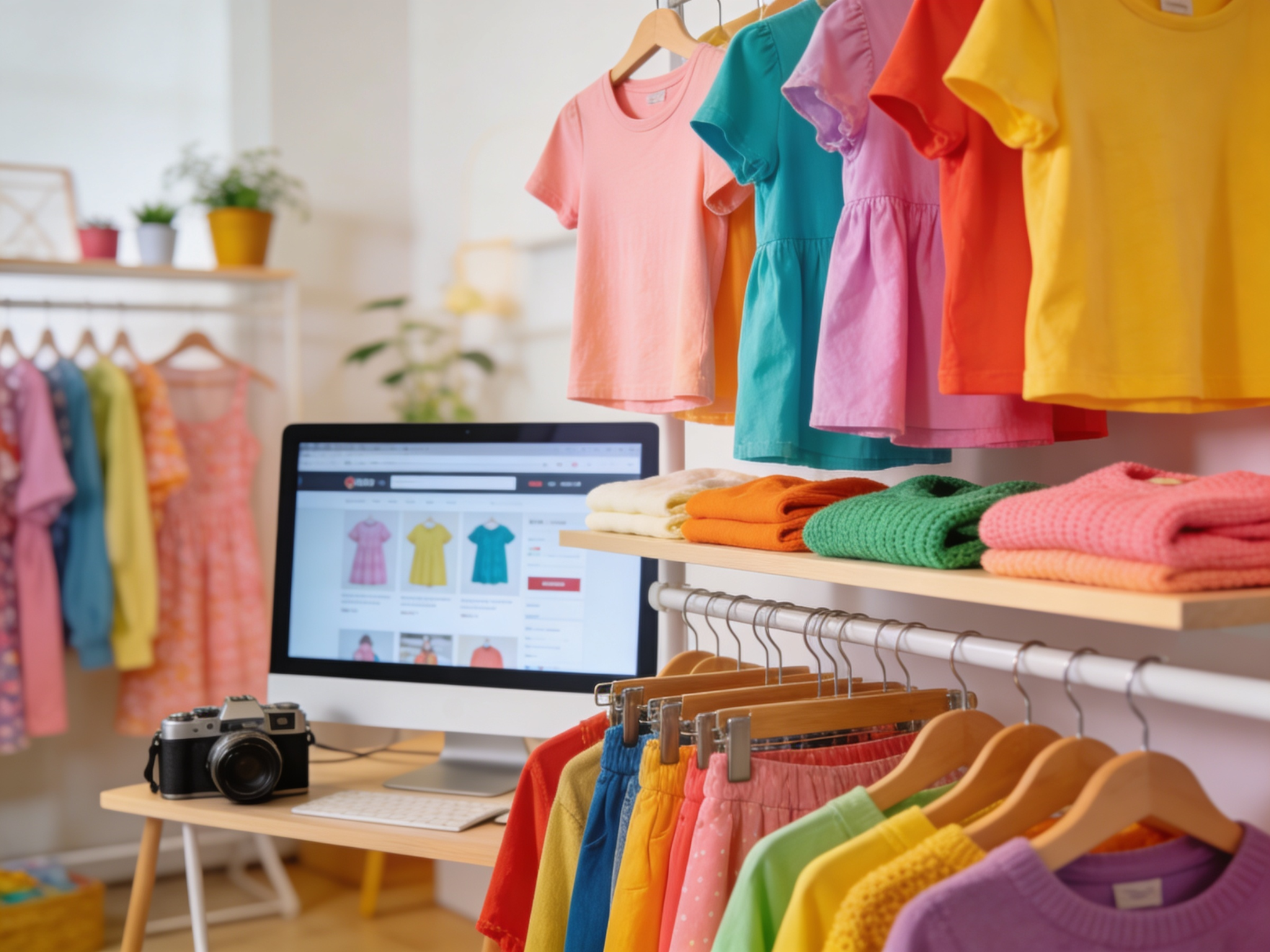
Fashion eCommerce is no longer a growth story — it is a maturity story. With the global fashion eCommerce industry set to reach $1.6 trillion by 2030, the opportunity for new entrants exists at multiple price points and across multiple business models. But the maturity of the market means the low-friction launch strategies that worked in 2018 — run some Facebook ads, build a Shopify store, watch orders come in — have been replaced by something more demanding.
The good news is that the same maturity has created better infrastructure. By late 2026, 70% of DTC brands and agencies predict social media influencers will be their top conversion driver, overtaking paid advertising during peak shopping seasons. For a new clothing store with a limited paid media budget, that shift is structural good news. Creator-driven traffic has a lower cost floor than paid ads and compounds in ways that ad spend does not.
Understanding this landscape shapes every decision that follows: which platform you build on, which business model you choose, how you allocate your first marketing dollars, and how you measure what is working. Start with context, then move to execution.
What Is an Online Clothing Store and Which Business Model Fits Your Goals?
An online clothing store is a direct-to-consumer eCommerce operation that sells apparel products through a web storefront, typically on a platform like Shopify, BigCommerce, or WooCommerce. The business model you choose determines your inventory risk, margin structure, and brand flexibility before a single product is sold.
The three primary models available to new sellers are:
- Print-on-demand (POD). You upload custom designs and a supplier produces and ships each item when a customer orders. Zero inventory, zero upfront production cost. The tradeoff is lower margins (typically 20 to 40%) and less control over product quality. Best for creators and designers entering eCommerce for the first time.
- Dropshipping. You list products from a supplier and they fulfill each order directly. No inventory required and faster product catalog expansion, but margins are thin and differentiation is difficult because competitors may sell the same items.
- Private label / wholesale. You source or manufacture products under your own brand, hold inventory, and control the full product experience. Higher margins (often 50 to 70%), stronger brand equity, and better UGC potential — but requires upfront capital and inventory management.
The online fashion market projects 34% growth in North American fashion eCommerce to $244.29 billion by 2028, with the secondhand clothing market alone reaching $367 billion by 2029. That breadth means each model has a viable lane. Private label and wholesale are better fits for sellers who want to build a brand asset and leverage influencer marketing effectively, because the product is unique and the economics can absorb creator seeding costs. POD and dropshipping work well for testing demand before committing capital.
The Clothing Store Launch Ladder
The Clothing Store Launch Ladder is a four-tier framework that maps your marketing investment to your current revenue and conversion stage. Most guides treat launch as a single event. The Ladder treats it as a sequential build that prevents the most costly mistake new sellers make: spending on traffic before the store can convert it. Reference the Clothing Store Launch Ladder when prioritizing where to put your next dollar.
The four tiers:
- Tier 1: Foundation (pre-launch, $0 to first sale). Define your niche with specificity. Rather than "women's activewear," target something like "eco-friendly activewear for millennial moms" — specificity sells better than breadth. Get your platform live, payment processing configured, and product photography completed before spending anything on traffic.
- Tier 2: Proof (first sale to $5K monthly revenue). At this tier, your goal is conversion rate validation, not scale. Run micro influencer product seeding campaigns to generate initial UGC, get reviews on your product pages, and confirm that traffic converts before increasing spend. Platforms like Stack Influence coordinate product seeding at scale, which reduces the operational burden on lean teams getting their first creator content.
- Tier 3: Traction ($5K to $25K monthly revenue). With conversion rate above 2%, begin scaling creator partnerships and building your email list. Add Amazon if your product is catalog-compatible and set up Amazon Attribution to track off-platform traffic. Activate the Amazon Brand Referral Bonus to earn back an average 10% credit on sales driven by external marketing.
- Tier 4: Scale (above $25K monthly revenue). Systematize your creator program with ongoing ambassador partnerships, repurpose UGC into paid social ads, and invest in SEO-driven content. At this tier, the brand asset you built in Tiers 1 through 3 compounds.
The Clothing Store Launch Ladder keeps you from skipping to paid scale before your economics can support it. Return to it whenever growth stalls and audit which tier your current metrics actually reflect.
How to Choose a Platform and Set Up Your Store
Platform selection is a practical decision, not a brand statement. The right platform for an early-stage clothing store is the one that gets you to your first sale fastest with the lowest technical overhead.
Shopify dominates the DTC clothing market because its app ecosystem and payment infrastructure are purpose-built for exactly this use case. It connects natively with Amazon through Shopify Marketplace Connect for sellers running both channels simultaneously. BigCommerce offers more built-in features at lower transaction cost, which matters more at higher revenue volumes. WooCommerce gives developers maximum flexibility but requires more technical setup than most new sellers need.
The key setup decisions for your store launch include:
- Product photography. Fashion converts on visuals. Multiple angles, model shots, and lifestyle context are non-negotiable for clothing. Raw product images on white backgrounds underperform lifestyle photography by a significant margin.
- Size guides and fit information. Returns are the margin killer in clothing eCommerce. Detailed sizing and material information reduces return rates measurably.
- Page speed. According to Portent, an eCommerce site should load within two seconds to achieve optimal conversion rates — a slow store sends potential customers to competitors before they see your products.
- Mobile-first design. Over 70% of fashion eCommerce traffic originates on mobile devices. Build and test every page on mobile before desktop.
Why Paid Ads Alone Will Not Build a Clothing Brand in 2026

This is the contrarian take that most how-to guides skip because they are written by platforms with an interest in you spending on ads. Paid advertising is an amplification tool, not a discovery tool — and for a new clothing store with no brand recognition and no UGC, paid ads are expensive guesses.
Micro-influencers can generate up to 60% more engagement than macro influencers, and 84% of people trust a brand more when it uses UGC in its marketing. For a clothing brand, that trust differential is the difference between a 1% conversion rate and a 3% conversion rate on the same traffic. Getting there requires building a creator and UGC program before you scale paid spend, not after.
The practical sequence is: launch micro influencer product seeding campaigns first to generate authentic content, then use that UGC in paid social ads once you have it. Ads featuring real customers outperform polished brand content by 30 to 50% in click-through rate. The brands that build UGC pipelines before ad budgets grow faster with lower CAC than those who run ads against blank product pages.
From Stack Influence's experience running product seeding campaigns for early-stage clothing brands, stores that launch with creator-generated content on their product pages see meaningfully higher add-to-cart rates than comparable stores that launch with brand-produced photography alone. The authenticity signal matters at the moment of purchase, not just at the moment of discovery.
Should You Also Sell on Amazon When You Open an Online Clothing Store?
Adding Amazon as a sales channel alongside your DTC store is a question of timing and product fit. Amazon converts at roughly 4x the rate of standalone DTC stores because buyers arrive with purchase intent, not browsing intent. For private label clothing brands, this conversion advantage is real and worth capturing.
The key is channel coordination, not channel replacement. Your DTC store builds brand equity, email lists, and customer relationships that Amazon cannot replicate. Amazon generates sales volume and reviews that your DTC store cannot match early on. Running both channels with deliberate traffic routing produces better outcomes than choosing one over the other.
The Amazon Brand Referral Bonus makes this coordination financially attractive. When you drive external traffic — from creator content, email campaigns, or paid social — to your Amazon listings using Amazon Attribution tags, Amazon credits back an average of 10% of the referral fee on qualifying sales. For a clothing brand driving traffic from micro influencer campaigns, that credit directly offsets your campaign cost.
The setup requirement is non-negotiable: Attribution tags must be configured before any campaign goes live, not added retroactively. Every link in every creator brief, every email send, and every paid ad pointing to Amazon must carry a tagged URL from day one. Brands that miss this step in their first weeks lose bonus credits they cannot recover.
How Do You Measure Whether Your Clothing Store Is Growing?
Measurement for a clothing store requires three distinct metric layers that serve different decision-making purposes. Use the Revenue Signal Stack to separate operational metrics from growth signals and avoid optimizing the wrong layer.
The Revenue Signal Stack works as follows:
- Layer 1: Conversion health metrics. Track conversion rate by traffic source, add-to-cart rate, and checkout abandonment rate. These tell you whether your store is working, not whether your marketing is working. A conversion rate below 1.5% on warmed traffic means the store has a product, photography, or trust problem — and adding more traffic will not fix it.
- Layer 2: Acquisition metrics. Track cost per acquisition by channel, customer acquisition cost, and UGC-to-sale attribution for creator campaigns. This is where you evaluate whether your Clothing Store Launch Ladder tier is calibrated correctly.
- Layer 3: Retention metrics. Track repeat purchase rate, email list growth rate, and customer lifetime value by acquisition source. Clothing brands with strong repeat purchase rates can afford higher first-order CAC because the economics work over time.
Across campaigns managed on the Stack Influence platform, clothing brands that measure UGC performance at the SKU level — tracking which specific products generate the highest engagement in creator content — consistently reallocate their seeding inventory toward those SKUs within the first 60 days and see measurably better sell-through rates as a result.
The Amazon Attribution dashboard provides campaign-level conversion data for any external traffic you route to Amazon listings. The Amazon Brand Referral Bonus reporting inside Seller Central shows you which campaign types are generating the highest bonus credit, which is a proxy for which external channels are driving the highest purchase intent on Amazon.
Conclusion
Knowing how to open an online clothing store in 2026 is table stakes — the platforms are accessible, the business models are documented, and the tools are affordable. The differentiation is in the sequencing. Brands that validate their store conversion rate before scaling traffic, build creator and UGC infrastructure before running paid ads, and coordinate their DTC store with Amazon using proper attribution setup will outperform those who follow the standard launch playbook by a wide margin. Work through the Clothing Store Launch Ladder stage by stage, measure with the Revenue Signal Stack, and treat your first creator partnerships as the foundation of your brand rather than an afterthought. If you are ready to build the creator seeding program that sits at the heart of this strategy, Stack Influence automates the product seeding workflow so you can activate micro influencers at scale without managing each creator relationship manually.