



If your feed feels active but not memorable, you do not need more random prompts. You need social media post ideas that make people stop, save, reply, and remember what kind of creator you are. For influencers, the gap between content that gets seen and content that leads to brand deals usually comes down to structure.
This guide turns social media post ideas into a practical system. You will learn how to choose post formats by goal, build repeatable series instead of one-off experiments, and measure what actually moves your audience and your income.
Key Takeaways
- Social media post ideas work best when each post has one clear job: discovery, trust, conversation, or conversion.
- Original, relatable, creator-led formats outperform polished but generic content because platforms and shoppers both reward authenticity.
- The strongest influencers build reusable post series, not isolated creative bursts, which makes them easier for brands to hire again.
- Measurement should stack audience signals, partnership signals, and revenue signals so you can pitch your value with more than views.
The 2026 Posting Reality for Influencers
Creator demand is still rising, but so is competition. IAB estimated that U.S. creator ad spend would reach $37 billion in 2025, and EMARKETER forecast that U.S. sponsored content spending would surpass $10 billion in the same year. More money is flowing into creator work, but it is flowing toward formats brands can measure and reuse.
What changed is not only budget size. HubSpot’s 2025 social media marketing research found that marketers are seeing more success with small influencers under 100,000 followers, while Deloitte’s creator economy analysis found that high-ROI brands put 42% of their social media budgets into creator partnerships. Micro influencers and nano influencers are no longer the budget backup plan. They are often the operating model.
Platform behavior reinforces the same shift. Instagram said its recommendation changes were designed to give smaller creators a more equal chance to break through and to link copied content back to the original creator, while TikTok’s creative insight tools say entertaining ads hold attention 1.3x longer than ads without entertainment value. Originality and native storytelling are not creative extras anymore. They are distribution advantages.
Use that context to reset your expectations:
- You are not competing only on aesthetics. You are competing on clarity, originality, and repeatability.
- You do not need celebrity scale to win. Smaller creators often fit influencer campaigns, product seeding, and UGC video workflows better than broad-reach talent.
- You should treat every post as a portfolio sample. Brands looking for influencers often scan for format discipline before they ask for rates.
- You should build content families. Repeating a strong angle in different ways is usually more valuable than inventing a new persona every week.
What Is a Social Media Post Idea for Influencers?
A useful post idea is not just something to publish when your content calendar is empty. It is a format that helps you achieve a specific outcome with a specific audience. The best ideas attract followers while also showing brands, UGC creators, and influencer marketing platforms exactly how you think.
For influencers, most post ideas fall into four jobs. The goal is to know which job a post is doing before you start scripting, filming, or editing. If you want cleaner definitions for creator roles, Stack Influence’s guides to the creator economy, UGC creators, and micro influencers make the distinction much easier to explain to both brands and collaborators.
Think about your next idea through these four lenses:
- Discovery Posts: Hooks, comparisons, reactions, and fresh takes that get shown to people who do not know you yet.
- Trust Posts: Demos, routines, tutorials, reviews, or “here is what happened when I tried it” content.
- Conversation Posts: Polls, comment replies, hot takes, and follow-ups that give people a reason to talk back.
- Conversion Posts: Content that drives affiliate clicks, storefront visits, waitlist sign-ups, Amazon traffic, or inbound interest from brands that work with micro influencers.
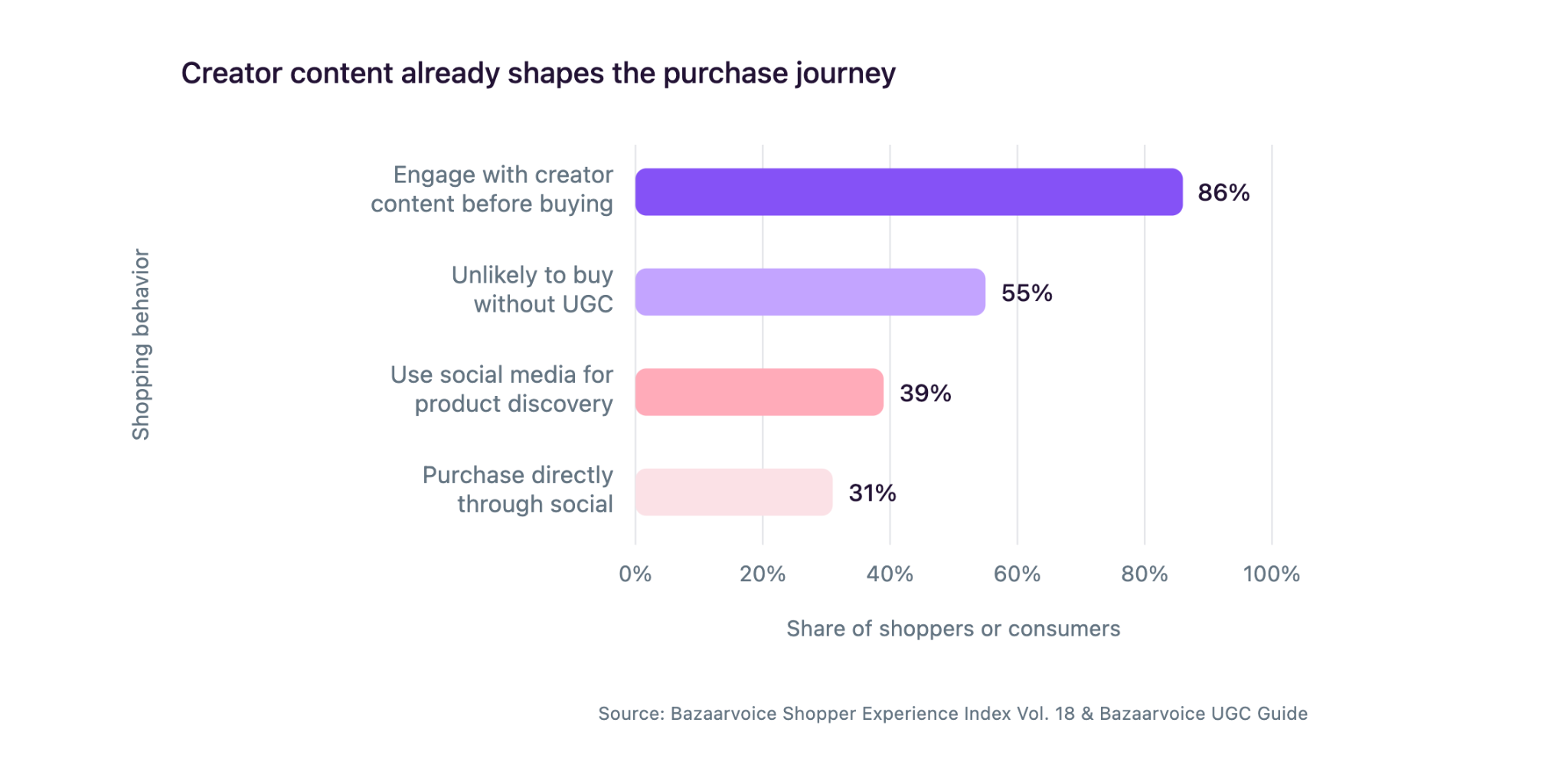
This distinction matters because shoppers are already using creator content to decide what to buy. Bazaarvoice reports that 39% of consumers use social media for product discovery, 31% purchase directly through social platforms, and 86% engage with creator content before making a buying decision. If your post idea does not help a viewer feel, decide, or act, it is probably weaker than it looks.
Use the Scroll-Stop Post Checklist
Before you publish, run every concept through the Scroll-Stop Post Checklist. This is a simple creator filter for deciding whether an idea is worth producing, whether it deserves a full video, and whether it has brand partnership potential beyond one upload.
Here is the checklist:
- Hook First: Can the first line or first frame create curiosity in under two seconds?
- Real Proof: Does the post show lived experience, not just opinion?
- Saveable Value: Will someone want to reference this later?
- Conversation Trigger: Is there a natural reason for someone to comment, vote, or reply?
- Brand Fit: Could a brand imagine this format featuring a product without feeling forced?
- Reuse Path: Could this become UGC for ads, landing pages, or email later?
The checklist matters because shopper behavior is moving toward proof-rich content. In its UGC research, Bazaarvoice found that 55% of shoppers are unlikely to buy without user-generated content, 77% are more likely to buy a product they discover through UGC, and 84% trust campaigns featuring it. Posts that combine attention with proof can play well in-feed and in later creator partnerships.
Based on Stack Influence’s work with eCommerce brands, creators who keep a brief centered on one clear use case and three to five required shots usually deliver about 20% more on-time approvals than creators who try to cover multiple unrelated storylines in one post. That observation lines up with the platform direction: native, focused content usually beats overbuilt creative. The Scroll-Stop Post Checklist exists to protect that focus.
Use the Scroll-Stop Post Checklist before you script, not after you film. It will save you time, raise your hit rate, and help you turn spontaneous ideas into repeatable formats that brands can trust.
How Can Influencers Turn One Product Into a Week of Posts?
You do not need seven totally different ideas. You need one angle that can branch into multiple formats. If you want a stronger creator business, think in series and spinoffs, not isolated uploads. That is also the mindset behind Stack Influence’s guide on how to become a content creator in 2026, which treats growth as a system instead of a streak.
A single product, topic, or opinion can become a full week of content when you change the audience need each post serves. Start with one core theme, then rebuild it for discovery, proof, conversation, and conversion.
Try these social media post ideas:
- The First-Impression Clip: Show your honest first reaction, but anchor it to one specific promise such as taste, texture, fit, convenience, or ease of use.
- The Three-Day Update: Return after real use and share what changed, what surprised you, and whether your first impression held up.
- The Before-You-Buy Breakdown: Answer the question your audience would ask before spending money or time.
- The Side-By-Side Test: Compare two versions, two methods, or two products so the audience has a clear decision point.
- The Mistake Post: Show what went wrong, what you fixed, and what you would do differently now.
- The Comment-Reply Follow-Up: Pull one audience question from the comments and make it the next piece of content.
- The Routine Slot-In: Show exactly where the product or idea fits in your day, not just what it looks like on camera.
- The Would-I-Repurchase Recap: Skip polished promotion and tell people whether you would use it again with your own money.
- The Creator Toolkit Post: Share the setup, app, framing, or shot sequence you used so the post becomes saveable.
- The UGC Outtake Reel: Show the clips that did not make the final cut and explain what they taught you about better storytelling.
These ideas work because they feel native to platform behavior. TikTok’s Creative Insight tools are built around recurring patterns from high-performing ads, which is exactly why routine clips, comparison videos, and honest recaps keep showing up in brand briefs. When content feels built for the feed instead of imported into it, viewers stay with it longer and brands can picture it in paid or owned channels more easily.
The smartest variation strategy is to rotate depth, not personality. One post gets reach, the next gives proof, the next answers objections, and the next closes the loop with an affiliate link, storefront visit, or brand sponsorship angle. That rhythm helps content creators stay recognizable without feeling repetitive.
Why Do Most Social Media Post Ideas Guides Miss the Point?
Most social media post ideas guides confuse variety with strategy. They hand you a pile of formats, but they do not tell you which ones create trust, which ones attract brand deals, and which ones can be syndicated into ads, product pages, email, or marketplace assets later. For influencers, that missing layer is expensive.
The blind spot is reuse. A lot of guides optimize for this week’s engagement spike, but brands are often looking for creators who can produce assets that travel across channels. That includes social ads, landing pages, product pages, email, and marketplace content. If your idea only works as a trend reference in one feed, it may perform socially but still fail commercially.
Most guides leave out three screening questions:
- Decision Value: Does the post help someone choose, compare, or understand something?
- Shelf Life: Will the format still make sense after the trend cycle moves on?
- Reuse Logic: Could a brand explain the value of this asset to an eCommerce manager, paid media buyer, or influencer marketing agency?
That is why “be more creative” is weak advice. Better advice is to make your creativity legible: name the problem, show the product in context, reveal the outcome, and leave a trail of audience response. Deloitte’s creator economy research shows that successful brands build networks of creators across niches, and Bazaarvoice’s UGC data shows that shoppers respond strongly to visual proof and authentic recommendation formats. The formats that travel are usually the ones that explain, compare, or demonstrate, not just decorate.
Data from Stack Influence’s micro influencer campaigns suggests that routine-based demos, side-by-side comparisons, and comment-driven follow-ups generate about 1.5x as many brand requests for usage rights as aesthetic quote posts or trend-only edits. That makes sense when you remember what brands are buying. They are not paying only for reach. They are paying for believable creative that can keep working after the original upload.
If you want better creator partnerships, stop asking, “What should I post today?” Start asking, “What repeatable format helps my audience decide something and helps a brand imagine reuse?” That question leads to better posts and a better business.
Should Influencers Measure Reach or Revenue First?
Views matter, but they are not enough. A post idea is only proven when it performs across awareness, relationship, and commercial signals. That is why influencers need a metric stack, not a vanity metric.
Use the Creator ROI Stack to evaluate what your best ideas are really doing:
- Attention Signals: Reach, watch time, hold rate, saves, shares, profile visits, and follow conversion.
- Relationship Signals: Comments with intent, DMs, story replies, repeat viewers, and inbound requests from brands or followers.
- Revenue Signals: Affiliate clicks, code redemptions, email sign-ups, storefront traffic, paid usage-rights requests, and closed brand deals.
This structure matters because measurement remains a weak spot for many social teams. HubSpot lists measuring ROI among the core challenges marketers still face on social media, which means creators who can explain performance clearly have an advantage. You become easier to hire when you can say, “This format drove saves and DMs,” instead of only, “This one got 42,000 views.”
If a campaign sends traffic to Amazon, measurement gets even more important. Amazon Attribution is a free analytics solution for eligible brands to track how non-Amazon channels affect on-Amazon shopping activity, and Amazon’s basics guide to Amazon Attribution says the Brand Referral Bonus averages 10% of qualifying sales and can credit additional brand purchases for up to 14 days after a click. Creators do not usually build that infrastructure themselves, but they should know it exists and ask how the brand is tracking the campaign.
From Stack Influence’s experience running product seeding campaigns, campaigns tend to produce roughly 25% cleaner reporting when attribution links and codes are assigned before product ships rather than after captions are drafted. Off-platform conversion tracking gets messy fast when links change late, coupon codes are reused, or a brand tries to reconstruct the path after content has already gone live. Creators who ask measurement questions early look more professional and make better long-term partners.
Measurement should also shape your creative decisions. If a format earns average reach but strong saves, replies, or code redemptions, keep it. If a format spikes views but never attracts community response or partnership interest, treat it as entertainment inventory, not a business asset.
Can Product Seeding Turn One Good Post Into a Pipeline?
Product seeding can turn a single post into recurring UGC, repeat creator partnerships, and long-term brand ambassador opportunities when the process is structured instead of run through scattered DMs.
That is the practical role of Stack Influence. The platform’s creator community is built for creators with 200-plus followers, its creator benefits page explains the free-product and paid-collaboration model, and its creator FAQ clarifies how campaign participation works. For influencers who want brand deals but do not want to spend all day prospecting, that kind of system can shorten the path from content creator to paid collaborator.
A structured seeding workflow usually gives creators four practical advantages:
- Clearer Deliverables: You know what to shoot, what to say, and when it is due.
- Better Portfolio Proof: Finished posts and approved assets are easier to show in future outreach.
- Faster Repeat Opportunities: Good performance can lead to more creator partnerships, affiliate roles, or ambassador invites.
- Higher Asset Value: A post that can be reused in ads or product pages often creates more long-term value than a single sponsored mention.
The workflow matters on the brand side too. Stack Influence’s automated product seeding page says creators buy the product and the brand pays only after posts go live, while its content syndication page is built around reusing creator assets across ads, websites, marketplaces, and social channels. That makes Stack Influence especially relevant for micro influencer agency style campaigns, UGC platforms, and brands that want creator partnerships without building a large in-house operation.
The tradeoff is fit. If your only goal is large one-off cash sponsorships with heavy personal-brand requirements, a structured seeding workflow may not be your first choice. But if you want to build a portfolio that attracts brands looking for influencers, produces reusable UGC, and opens the door to repeat brand partnerships, the model is practical.
The case studies show why. In Stack Influence’s Aunt Fannie’s case study, the brand reported 528,000 social impressions and 14,000 engagements across 189 promotions, while average monthly unit sales rose from 98 to 789-plus during the three-month campaign. For influencers, the lesson is simple: repeatable creator workflows are often what turns one decent post into a content engine.
Build a Creator Feed That Brands Can Reuse
The best social media post ideas are not the loudest or the trendiest. They are the ones that make your audience care, make your expertise visible, and make it easy for brands to understand how you create value. That makes posting simpler and more commercially useful.
Start with three moves this week:
- Pick One Repeatable Format: Choose a hook and proof structure you can use more than once.
- Film Three Variations: Test the same angle as a first impression, a follow-up, and a comment reply.
- Measure What Matters: Use the Creator ROI Stack so you know whether the format drove attention, relationship, or revenue.
If you want more consistent growth, stronger brand deals, and a feed that works harder for your creator business, audit your next month of content with the Scroll-Stop Post Checklist. One repeatable format can do more for an influencer than ten random prompts ever will.