




One of the costliest mistakes in the creator economy is waiting until you look bigger to act like a business. Many influencers assume serious brand deals begin at 10,000 followers, so they delay outreach, pricing, and portfolio building until some future milestone arrives.
Nano influencer marketing rewards a different skill set. It favors niche trust, credible product experience, and useful content brands can reuse across product pages, ads, and social campaigns. This guide shows influencers how to package a small audience into a stronger offer, measure value beyond likes, and build creator partnerships that repeat.
Key Takeaways
- Nano influencer marketing works because brands increasingly need trusted recommendations and reusable UGC, not just borrowed reach.
- The strongest nano creator pitches combine niche relevance, content proof, a simple offer, and a clean recap process.
- The Trust-to-Proof Matrix helps influencers see whether they need stronger community trust or stronger commercial evidence.
- The Four-Layer Proof Stack gives brands a clearer ROI story by combining attention, action, asset value, and repeat business signals.
What Is Nano Influencer Marketing?
Nano influencer marketing centers on creators with very small but very responsive communities, usually under 10,000 followers. In HubSpot's 2024 Consumer Trends Report, 62% of influencers who inspired a purchase had fewer than 10,000 followers, while HypeAuditor's 2025 industry report found nano influencers make up 87.7% of TikTok creators and post the tier's highest engagement at 10.3%; on Instagram, HypeAuditor's engagement benchmarks place nano creators around 4% to 5%, above larger tiers.
For influencers, that matters because the business value of a small audience is different from the value of a big one. Micro influencers often sell reach within a niche. Nano influencers more often sell closeness, comment quality, honest product context, and faster community feedback. If you want to see how brands already frame opportunities for smaller creators, browsing a structured creator community makes that reality easier to spot.
Nano influencer marketing usually shows up in a few repeatable formats:
- Product Seeding: Brands send product in exchange for a post, testimonial, or UGC video that feels native to your feed.
- Affiliate Or Hybrid Deals: Creators earn a commission, a small flat fee, or both when they drive action.
- Brand Ambassador Work: Smaller creators become recurring faces for niche brands that care more about consistency than celebrity.
- UGC-First Campaigns: Brands hire content creators for reusable assets even when follower count is not the main buying factor.
- Feedback-Driven Campaigns: Nano influencers help brands learn what hooks, objections, and product angles resonate fastest.
That shift is happening inside a larger market change. IAB's 2025 Creator Economy report says U.S. creator ad spend is projected to reach $37 billion in 2025, with nearly half of buyers calling creators a must-buy channel. For influencers, that means smaller accounts are not competing for scraps anymore. They are competing in a market that increasingly rewards usable creator output and measurable results.
How Can Influencers Turn Nano Influencer Marketing Into Brand Deals?
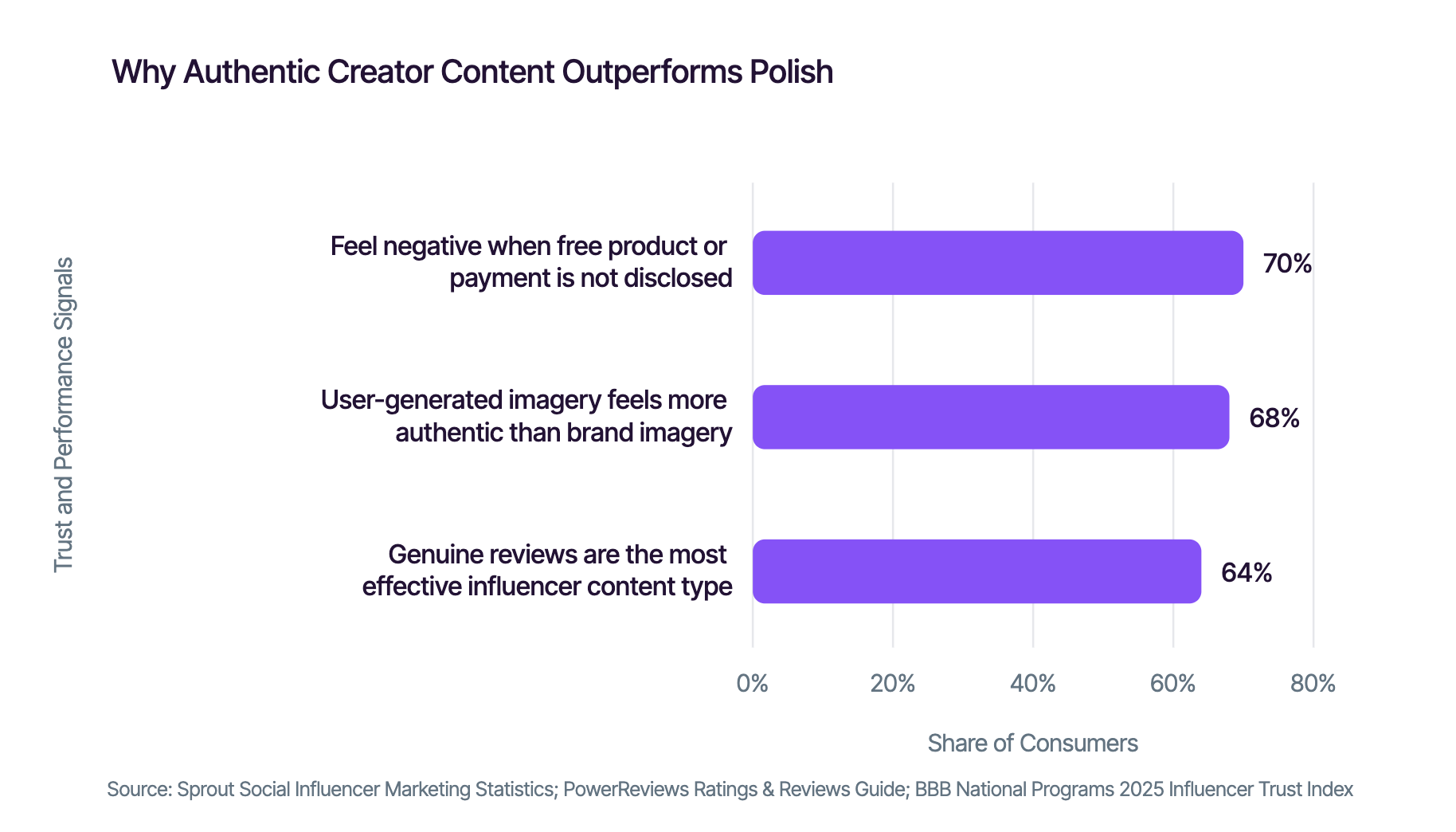
Brands do not buy follower count alone. They buy fit, low-friction collaboration, believable product use, and content that can influence someone to click, comment, save, or purchase. That is why Sprout Social's latest influencer marketing data shows 64% of consumers say genuine reviews are the most effective influencer content type, while PowerReviews reports 68% of shoppers view user-generated imagery as more authentic than brand-created imagery.
The fastest way to act on that is to focus on five practical moves:
- Pick A Buyer-Ready Niche: A small audience converts better when people instantly understand what you cover, who you help, and what products fit naturally in your content.
- Build A Proof Pack: Save screenshots of comments, prior collaborations, top-performing posts, and a short creator bio so your pitch looks like a business asset, not a casual DM.
- Offer UGC Plus Distribution: Tell brands whether they are buying a Reel, a TikTok, a Story sequence, still images, or a full package that includes posting and raw files.
- Choose The Right Compensation Model: Early deals can start with gifting, affiliate, hybrid, or flat-fee packages, especially when you can explain the upside of your content clearly.
- Send A Recap Every Time: A short follow-up email with screenshots, metrics, and learnings makes you easier to rebook than creators who disappear after posting.
That is where a simple secondary tool helps. Use The Brand-Ready Five before every pitch: niche signal, audience snapshot, three best content samples, one clear offer, and one reporting promise. If your message includes all five, you already look more useful than most beginner creators who lead with vanity metrics and hope the brand fills in the blanks.
Based on Stack Influence's work with eCommerce brands, creators who deliver one in-use product shot and one honest verdict clip tend to earn about 18% more repeat invitations than creators who submit only a single polished hero image. That fits the broader market logic: shoppers trust realism, and brands need enough variation to reuse creator output across different placements. If you want to sharpen that offer, Stack Influence's guides on how to get PR as a micro influencer, the difference between UGC creators and content creators, and influencer compensation models are useful ways to tighten your pitch.
The key is to sell a workflow, not a wish. A nano influencer who can explain what they make, how fast they deliver, and what the brand receives will outperform a larger creator who only says their audience is engaged. That is true whether you source deals through direct outreach, influencer marketing platforms, a micro influencer agency, or recurring brand ambassador programs. If you are still refining your monetization mix, Stack Influence's breakdown of how influencers make money is a helpful reality check.
The Trust-to-Proof Matrix For Nano Influencer Marketing
The primary framework for this article is The Trust-to-Proof Matrix. It maps your creator business on two axes: audience trust and commercial proof. Audience trust means comment quality, repeat viewers, DMs, and whether followers treat you like a credible peer. Commercial proof means usable assets, clean deliverables, link clicks, coupon use, past partnerships, and evidence that brands got something valuable back.
Most nano influencers get stuck because they overinvest in one axis and ignore the other. Some creators build a warm, highly engaged community but never package that trust into a strong offer. Others assemble beautiful portfolios but feel interchangeable because their audience connection is shallow. The Trust-to-Proof Matrix helps you see which problem you actually need to solve next.
Use The Trust-to-Proof Matrix like this:
- High Trust, Low Proof: You have a real community, but your portfolio, rate card, and reporting need work.
- Low Trust, High Proof: Your content looks polished, but your audience signals feel weak or transactional.
- Low Trust, Low Proof: You are still early, and the next move is consistency, niche clarity, and reps.
- High Trust, High Proof: You are a rebookable partner, which is where retainer work, affiliate hybrids, and ambassador deals become more realistic.
Across campaigns managed on the Stack Influence platform, briefs that ask for three to five must-have shots instead of paragraph-long scripts generate roughly 21% more on-time creator submissions. For influencers, that is an important signal. Brands do not always want more control. Often, they want a creator who can take a simple brief, keep it authentic, and still deliver files that fit a real campaign. Exploring a managed creator campaign process or reviewing the kinds of outcomes highlighted on Stack Influence's creator benefits page can help smaller creators understand what brands expect from that balance.
If your position in The Trust-to-Proof Matrix is trust-heavy, focus on packaging. If it is proof-heavy, focus on community habits like replying,Story context, and recurring content series. If it is low on both axes, pitch less and publish more. The creators who move fastest through the matrix are usually the ones who treat every small collaboration like the start of a case study, not a one-off freebie.
Where Does ROI Actually Come From In Nano Influencer Marketing?
If you want repeat brand deals, stop sending brands only likes and views. The creator economy is growing faster, but measurement is still one of its biggest weak spots, which is why IAB highlights better measurement and tools as one of the category's biggest opportunity areas. Nano influencers who can explain ROI clearly become easier to justify, easier to rebook, and easier to scale.
Use this named measurement model after every campaign: The Four-Layer Proof Stack. It prevents you from overreporting vanity metrics and underreporting the things a brand actually values.
Layer One: Attention
Start with the top-of-funnel signals that show whether the creative earned interest. That includes reach, views, watch time, saves, shares, profile visits, and comment quality. Attention is not the finish line, but it tells a brand whether the hook and format worked.
Layer Two: Action
Next, report what people actually did. That means link taps, code redemptions, DM replies, email captures, affiliate clicks, or landing-page visits. If a brand gave you a coupon or tagged URL, Layer Two is where your post starts turning into business evidence.
Layer Three: Asset
This is the layer most creators underreport. Count approved deliverables, raw files, edit options, testimonial clips, stills, hooks that held attention, and whether the brand reused the content later. That matters because PowerReviews found a 163.6% lift in conversion when shoppers interact with user-generated images or video on a product page, while Dash Social says creator partnerships generate 6x more engagement than branded content.
Layer Four: Afterlife
Afterlife is what happens after the post goes live. Did the brand ask for more content, whitelist your asset, renew the deal, or pull you into a larger ambassador program? If you work with marketplace sellers, ask whether they use Amazon Attribution and whether your traffic qualifies for the Brand Referral Bonus workflow described by Amazon Ads. Those tools help sellers measure what your off-platform content did on Amazon, and the bonus averages 10% of eligible product sales driven by non-Amazon marketing.
When you send a recap, include a few things every time:
- One paragraph of context: What was the goal, the product angle, and the audience fit?
- One clean metric summary: Highlight attention, action, asset delivery, and any afterlife signal.
- One screenshot set: Show comments, saves, Story responses, or click snapshots that reveal buyer intent.
- One lesson learned: Tell the brand what hook, objection, or creative style performed best.
- One next step: Suggest a follow-up asset pack, a second product, or a recurring creator partnership.
Stack Influence has observed that creators who deliver approved assets within seven days of receiving product see repeat bookings about 27% higher than slower-turn creators, largely because brands can reuse the content while launch windows are still active. That is especially relevant in product seeding environments where timing, logistics, and content collection all affect campaign value. If you want to understand how that workflow looks from the brand side, Stack Influence's page on automated product seeding and its creator FAQ make the operational expectations easier to understand.
Why Reach-First Advice Is Overrated For Nano Influencer Marketing

The old creator advice says grow first, monetize later. That made more sense when influencer campaigns were mostly sponsored posts bought for broad visibility. It makes less sense in a market where creator spend is rising fast, measurement matters more, and shoppers respond best to believable reviews and real visual proof. In other words, reach still matters, but reach without trust or asset value is weaker than many influencers think.
What brands are often buying now is more specific than many creators realize:
- Credible Product Experience: A creator who can explain what changed after using the item.
- Reusable UGC Video: Assets that work on product pages, paid social, email, and landing pages.
- Clear Buyer Signals: Saves, replies, comment themes, and clicks that show intent.
- Fast Iteration: More than one content angle, hook, or format from the same collaboration.
- Safer Trust Economics: Honest disclosure and believable storytelling that do not trigger audience skepticism.
That logic is reinforced by the data. Sprout Social says 64% of consumers find genuine reviews the most effective influencer content type, and PowerReviews reports 68% of shoppers see user-generated imagery as more authentic than brand visuals. On top of that, Dash Social found creator partnerships drive 6x more engagement than branded content, which is a strong reminder that creators are not just distribution channels. They are performance assets.
Trust also breaks faster than many nano creators realize. In the BBB National Programs 2025 Influencer Trust Index, 70% of consumers said they would feel negative toward an influencer who got paid or received free product and did not disclose it. For nano influencers, that should feel empowering, not limiting. You do not need to play bigger than you are. You need to be clearer, more honest, and more useful than the average pitch in a brand's inbox.
So stop waiting to look larger before you act like a partner. The better move is to become easier to trust, easier to brief, easier to measure, and easier to reuse. That is how nano influencer marketing turns a small audience into a serious commercial advantage.
Small Audiences, Serious Leverage
Nano influencer marketing works best when influencers stop apologizing for size and start packaging trust, proof, and reporting. Brands are spending more in the creator economy, but they still need creators who can translate a small audience into clear action, strong UGC, and repeatable outcomes. The influencers who build that system early usually outgrow the creators who chase vanity milestones first.
Keep your next move simple:
- Audit Your Position: Place yourself inside The Trust-to-Proof Matrix honestly.
- Build Your Pitch Assets: Create The Brand-Ready Five before your next outreach cycle.
- Report Like A Partner: Use The Four-Layer Proof Stack after every campaign.
Do that consistently, and nano influencer marketing stops feeling like a starter phase. It becomes the operating system that helps influencers win better brand deals, stronger UGC opportunities, and longer creator partnerships.