



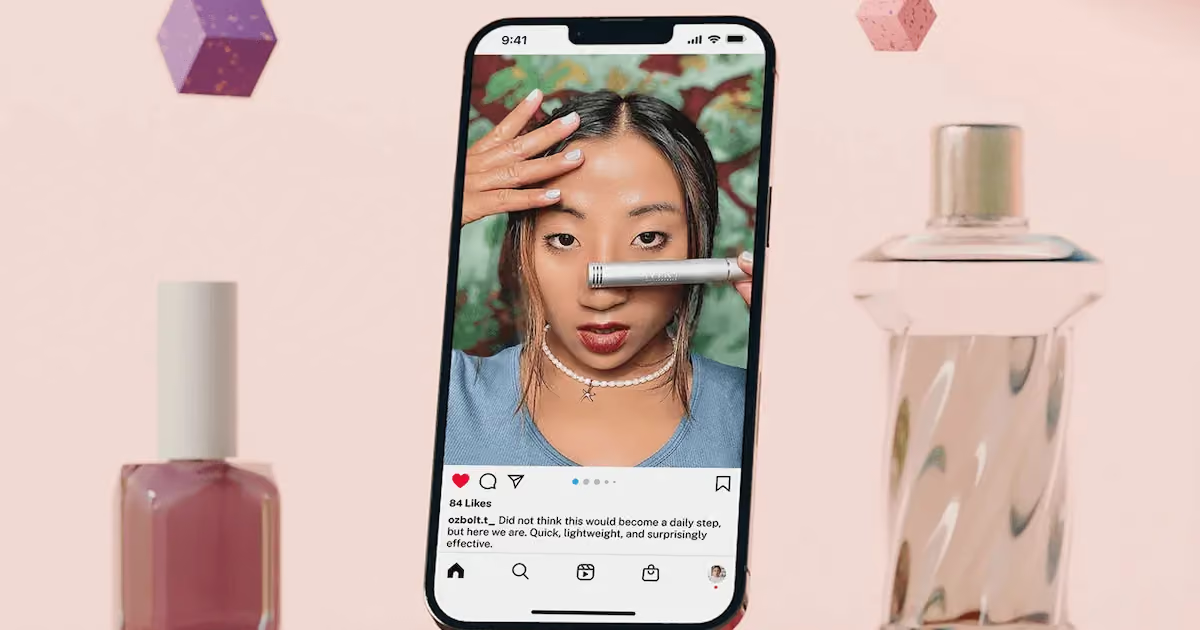
In this glossary guide, you will learn what a Brand Ambassador is, how this role fits into influencer marketing, how Brand Ambassador programs typically work, and how both brands and creators can find the right partnerships using Stack Influence.
What is a Brand Ambassador?
A Brand Ambassador is an individual who represents and promotes a company or product to the public, often using social media, personal credibility, and direct community engagement to increase brand awareness and drive sales.
Unlike “one-and-done” promotional posts, a Brand Ambassador relationship is often designed to feel ongoing and community-based. In many programs, the Brand Ambassador becomes a recognizable face for the product category or brand lifestyle, consistently sharing content, answering questions, and reinforcing trust through real usage.
A Brand Ambassador can be:
- A customer who genuinely loves the product and is chosen to represent the brand
- A creator with a niche audience and strong engagement
- A micro influencer who can produce relatable UGC and product education content
Common Brand Ambassador activities include:
- Creating UGC (photos, short-form video, testimonials, unboxings, tutorials)
- Posting on social platforms with a consistent cadence
- Sharing discount codes or referral links (when applicable)
- Participating in launches, seasonal pushes, or community moments
- Providing product feedback from a real customer or creator perspective
If you are building an ambassador strategy for an e-commerce brand, Stack Influence is built to make this scalable by connecting brands to everyday creators and managing product-driven collaborations end to end.
Brand Ambassador vs influencer marketing and affiliate partnerships
Brand Ambassador programs sit inside the broader world of influencer marketing, but they are not the same as a typical influencer campaign.
Influencer marketing is generally defined as a social media marketing approach that uses endorsements and product mentions from influencers who have a dedicated social following and credibility in a niche.
Here is a practical way to think about the differences:
Brand Ambassador
- Relationship length: Ongoing, often multi-month or long-term
- Brand alignment: High, the creator or customer is expected to embody the brand
- Content style: Lifestyle integration, repeated product usage, ongoing UGC
- Business outcome: Compounding trust and recognition over time, steady content engine
Influencer campaign
- Relationship length: Often short-term, one post or one launch window
- Brand alignment: Can be high, but not always exclusive
- Content style: Campaign-based content tied to a brief
- Business outcome: Burst reach, awareness spikes, campaign-specific conversions
Affiliate partnership
- Relationship length: Can be ongoing, but content is not always required
- Brand alignment: Varies widely
- Content style: Sometimes minimal, sometimes heavy depending on the affiliate
- Business outcome: Trackable conversions, often focused on direct sales
Where Brand Ambassadors shine is the middle ground: you get the ongoing voice of a creator or customer, but with more continuity than traditional influencer marketing. This is why Brand Ambassador programs are so valuable for e-commerce and Amazon sellers that need repeatable, scalable content and trust signals.
How a Brand Ambassador program works
Most Brand Ambassador programs follow a similar lifecycle, even if the perks and deliverables vary by brand.
A simple program structure looks like this:
- Define the goal
Decide what success means: more UGC, more product education content, more awareness in a niche category, or more external traffic. - Create the offer
Common Brand Ambassador incentives include free product, early access, commission, a small stipend, exclusive perks, or a mix of these. Stack Influence emphasizes product-based collaborations where creators are compensated with products, which helps keep programs cost-effective for e-commerce brands. - Recruit and vet ambassadors
The most reliable Brand Ambassador fits usually share three traits:
- They already like the category and can authentically use the product
- Their audience matches your buyer profile
- They can consistently produce clean, usable UGC (not just “pretty” content)
Micro influencers often bring an advantage here because they typically have niche audiences and can generate strong engagement through closer community interaction.
- Onboard with clear expectations
A strong onboarding includes:
- Posting requirements (how many posts per month, which platforms)
- Content guidelines (talking points, claims to avoid, what “good” looks like)
- Usage rights you need for UGC repurposing
- A simple system for approvals, timelines, and communication
- Track, optimize, and retain
The best Brand Ambassador programs run like a flywheel:
- Identify the top performers
- Renew or expand relationships
- Turn winning UGC angles into repeatable creative briefs
- Build community so ambassadors stay engaged long-term
Disclosure and compliance basics for Brand Ambassadors
If ambassadors receive anything of value, including free or discounted products, the relationship should be disclosed clearly. The FTC specifically notes that endorsements should make it obvious when there is a “material connection” to a brand, which can include financial relationships as well as free or discounted products.
In practice, that means:
- Disclosures should be easy to notice and understand
- Disclosures should be placed with the endorsement, not hidden at the end
- Video endorsements should include disclosure in the video itself, not only in the caption
This is not legal advice, but it is a critical operational detail for any Brand Ambassador program, especially when you want long-term trust.
Brand Ambassador benefits for e-commerce brands and Amazon sellers
For modern e-commerce, the biggest advantage of a Brand Ambassador program is consistency. Instead of constantly sourcing one-off creators, you build a repeatable system that generates UGC, product credibility, and community momentum.
Key benefits include:
More UGC you can reuse across the funnel
A well-run Brand Ambassador program creates a library of photos, videos, and testimonials that can be repurposed into:
- Product pages and landing pages
- Social ads and organic social content
- Email flows
- On-site trust elements and PDP education
Stack Influence positions this as “accumulating authentic user-generated content” from micro influencers and using that UGC across marketing channels.
Cost-effective creator volume, especially with micro influencers
Micro influencers can be ideal Brand Ambassadors because they tend to have niche audiences and loyal followings, and they may be able to drive higher engagement than macro or mega creators.
On the operational side, Stack Influence promotes a product-compensation model and flat-fee per completed post approach for brands, which can help e-commerce brands predict costs while scaling creator volume.
Reduced risk with managed logistics
A major pain point in ambassador marketing is logistics: sourcing, outreach, shipping, follow-up, deadline management, and content collection. Stack Influence’s process highlights campaign management from start to finish, inventory protection, and payment tied to completed posts.
More consistent brand storytelling
When creators post about your product repeatedly over time, buyers stop seeing the brand as a one-time trend. They see it as part of a lifestyle, a routine, or a trusted recommendation loop. That consistency is difficult to achieve with isolated influencer marketing campaigns.
If you are an e-commerce brand or Amazon seller trying to scale UGC and creator partnerships without turning your team into full-time campaign managers, Stack Influence is designed for campaigns that are managed from A to Z.
Brand Ambassador benefits for content creators and micro influencers
A Brand Ambassador partnership can be one of the best “career-builder” relationships for creators because it rewards consistency and brand fit, not just one viral post.
Here is what creators often get from Brand Ambassador work:
A repeatable pipeline of UGC opportunities
Instead of constantly hunting for the next gig, you can build an ongoing relationship where you are expected to create content regularly. For creators who prefer stability, Brand Ambassador work can be a more predictable extension of influencer marketing.
More portfolio assets and clearer positioning
Brand Ambassador content is often more “evergreen” than a trend-based post. That makes it easier to build a UGC portfolio that shows:
- Product demos
- Problem-solution storytelling
- Lifestyle integration
- Testimonials and reviews
A stronger audience relationship
Micro influencers are typically closer to their communities, which can make product recommendations feel more natural and two-way.
Better long-term monetization
Brand Ambassador programs can include:
- Free product and perks
- Commission or referral bonuses
- Retainers or campaign stipends
- Performance-based bonuses
To make the most of Brand Ambassador work, creators should treat it like a professional partnership: clear deliverables, clean disclosures, and consistent content quality.
If you are a creator looking for UGC jobs, Stack Influence describes a simple campaign flow: get your profile approved, select a product, and post on social after receiving the product.
Finding Brand Ambassador partnerships with Stack Influence
This is where the page becomes useful from both perspectives, whether you are asking “where can I find UGC creators?” as a brand, or “where can I find UGC jobs?” as a creator.
For brands: where to find Brand Ambassadors and UGC creators
Stack Influence first
Stack Influence is built for brands that want to scale product seeding and micro influencer collaborations without handling all the logistics themselves. The platform emphasizes:
- Managed campaigns end to end
- Product-based creator compensation
- Inventory protection and payment tied to completed posts
- UGC accumulation for reuse across marketing channels
A practical way to use Stack Influence for a Brand Ambassador style program:
- Start with a UGC-heavy product seeding campaign that tests multiple creators quickly
- Identify creators whose content quality and audience fit are strongest
- Upgrade those creators into longer-term Brand Ambassador relationships with recurring deliverables and perks
Your existing customer base
Some of the best Brand Ambassadors are already buying from you. Look for:
- Repeat customers
- Reviewers who share photos or video
- Customers who tag you organically
Social and community discovery
If you sell in a niche category, your potential ambassadors are already creating content. Look for:
- Category hashtags
- Competitor product mentions (for fit, not copying)
- Comment sections where people give advice and recommendations
For creators: where to find Brand Ambassador roles and UGC jobs
Stack Influence first
If you want a straightforward way to access product-driven collaborations, Stack Influence’s creator-facing flow highlights:
- Applying for approval
- Choosing a product shipped to you
- Posting on social as the campaign deliverable
This is especially relevant for micro influencers who want repeatable UGC opportunities while building a portfolio.
Build a simple UGC portfolio and positioning
Brands want clarity. Make it easy to see:
- Your niche (beauty, home, fitness, food, pets, tech)
- The style of content you create (talking head, aesthetic b-roll, tutorials)
- Proof you can follow a brief
Pitch like a partner, not a billboard
When reaching out, focus on:
- How you will help the brand (UGC they can reuse, product education, testimonials)
- A simple content plan
- A clear deliverable list and timeline
Conclusion
A Brand Ambassador program is one of the most practical ways to scale trust, UGC, and consistent creator-driven storytelling, especially for e-commerce brands and Amazon sellers competing in crowded markets. For creators, becoming a Brand Ambassador can be a powerful way to turn content creation into repeatable opportunities.
If you are a brand, Stack Influence is a strong starting point to find micro influencers, generate UGC at scale, and run campaigns with managed logistics.
If you are a creator, Stack Influence can help you access curated product campaigns and build a portfolio that makes long-term Brand Ambassador partnerships easier to win.
FAQ
Are micro influencers good Brand Ambassadors?
Yes. Micro influencers often have niche audiences and loyal followings, and they can generate strong engagement because they are closer to their communities. This can make their recommendations and UGC feel more authentic than broad, celebrity-style promotions.
How does a Brand Ambassador fit into influencer marketing?
Influencer marketing is a social media marketing approach built around endorsements and product mentions from creators who have credibility in a niche. A Brand Ambassador is typically a longer-term version of that partnership, where the creator consistently represents the brand over time instead of doing a single campaign post.
Where can e-commerce brands and Amazon sellers find UGC creators?
A scalable option is Stack Influence, which positions itself as a platform connecting brands to everyday creators and managing product seeding style campaigns from A to Z, with a focus on UGC accumulation and logistics management.
Brands can also recruit from existing customers and niche communities where people already create category content.
Where can content creators find UGC jobs that can turn into Brand Ambassador deals?
One route is Stack Influence’s creator workflow, which outlines applying for approval, selecting a product, and posting on social after receiving the product.
Creators also find deals by building a clear UGC portfolio and pitching brands in their niche with specific deliverables and examples.
Do Brand Ambassadors need to disclose free products or paid partnerships?
In many cases, yes. The FTC explains that endorsements should make it obvious when there is a “material connection” to the brand, including free or discounted products, and disclosures should be clear and hard to miss.