
The latest info on influencer marketing trends, micro influencer news, and the world of social media

Throughout the pandemic, Walmart aggressively grew it’s third-party marketplace. What they launched in 2009 is now home to more than 100,000 third-party sellers. And each year, we see more than 5,000 third-party sellers kickstarting their journey on Walmart.
Just like Amazon, we’re seeing a spike in the number of third-party sellers on Walmart.
Amidst this fierce competition, how can you get your product listings noticed? Also, how can you get people to purchase from you on Walmart?
To help you increase your sales and revenue, we’ve put together this blog post – where we’ll be shedding light on four tips that you should seriously consider to create an optimized Walmart Product Listing.
Ready?
Let’s dive right into it.
Following are the tips for creating an optimized Walmart Product Listing:
Let’s dive in.
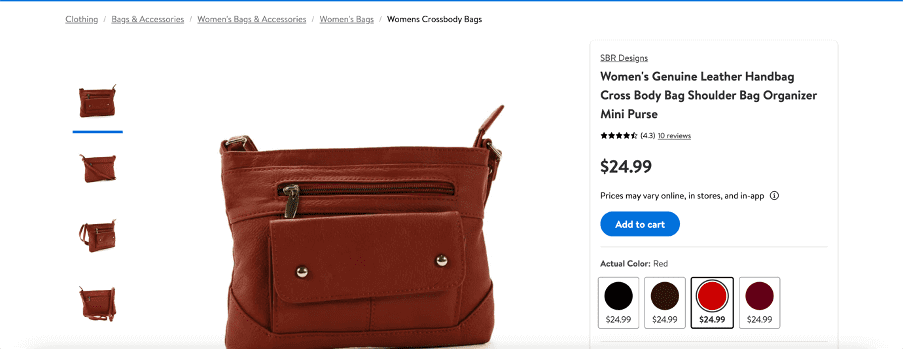
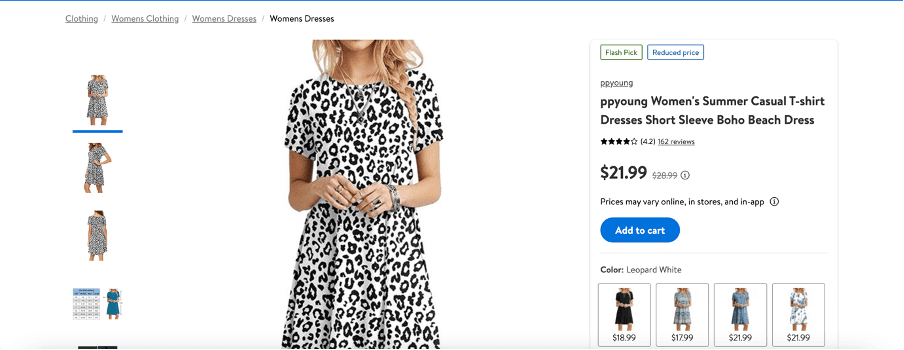
We hopped onto Walmart and looked up product listing titles of a few products.
Women Leather Handbag:
Women’s Casual T-Shirt:
Leather Bag:

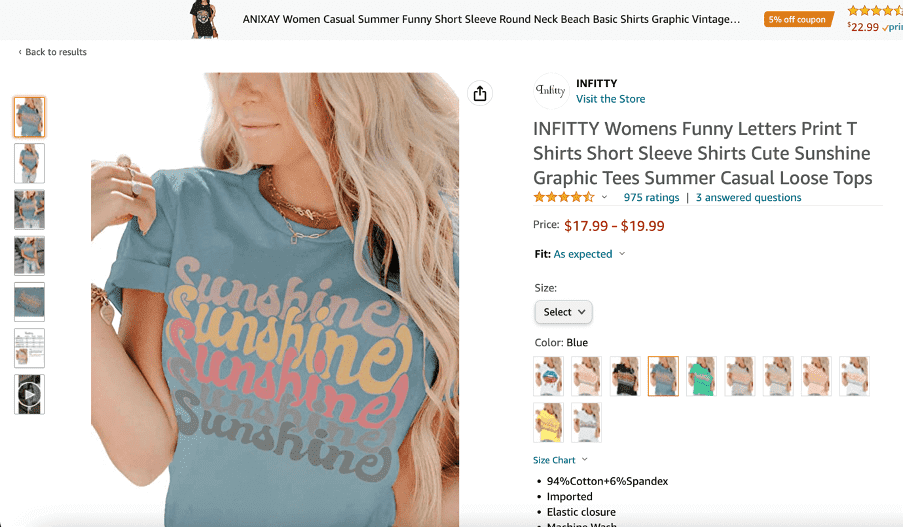
Parallelly, we hopped onto Amazon and looked up product listing titles.
Women T-Shirt:
Can you notice the difference?
If you look closely, you’ll find that product listings titles on Amazon are lengthy and stuffed with keywords. Whereas that’s not the case with Walmart product listings.
While creating product listing on Walmart, make sure that your product titles are not lengthy – anywhere around 50-75 characters in length should be fine.
To create Walmart-optimized product listings, we’d recommend using the formula shared by Walmart themselves:

Walmart is extremely particular about product listing titles. They don’t want sellers to stuff their product listing titles with keywords – so it’s really important to create titles that are precise yet at the same time creative.
A few other important points to consider while crafting product titles:
And most importantly, add the element of creativity.
Product title and description can only get you so far. There’s no point in knocking other sections of your product listing out of the park – if you aren’t focusing on uploading high-quality images.
Without professional and attractive product photos that help your audience gain deeper insight into your product, chances of maximum number of people hitting the “Buy Now” button is slim.
Following are the two kinds of images:
Your primary image should display the product clearly with a white background.
Here’s an example:

Don’t just focus on your product’s primary image. Also make sure that the secondary images of your product look professional and get your buyers to take the desired action.
You can’t use images containing illustrations, logos, additional graphics, overlays and text – so it’s important to keep this in mind.
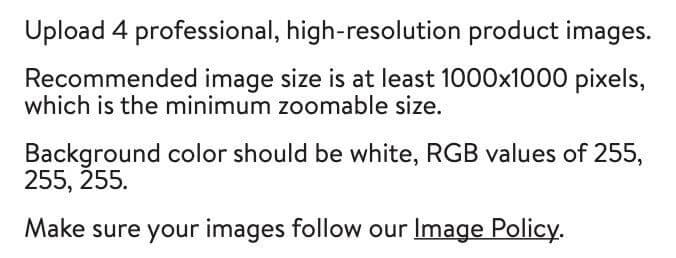
Click HERE to read their Product Listing Images Policy.
Whether you sell clothes or tech products, you can collaborate with influencers to not only reach out to a world full of people but also use influencers’ credibility to position yourself as a reliable and lovable brand.
By getting a influencer to promote your products, you’re transferring their credibility to your brand. When you work with influencers, you’ll both be creating high-quality content – where influencer(s) endorses your products via images, stories, long-form videos or anything else.
But once you’re done with these campaigns, that doesn’t mean that you put this content in your “Memories” folder. You can repurpose this content and add them to your product listings. For example, if you sell leather bags, then you can use the image where influencer you collaborated with is holding your bag – add a white background and upload it on your Walmart product listings.
But we’d advise – communicating this with influencers ahead of time.
This will help you add credibility to your Walmart listing and brand.
At Stack Influence, we help brands collaborate with micro-influencers and deliver actual results. You can use influencer-generated content from your Stack Influence Campaigns and add them to your Walmart product listings.
Wondering what Walmart influencer marketing is?
We’d recommend reading our “What is Walmart’s Creator Program?” guide.
If you’re a new Walmart third-party seller, you can’t just randomly rank at the top for a generic keyword like television, smartphone, clothes, etc. These keywords are already being targeted by gazillions of other sellers selling the same category of products.
It’s important to find the right keywords – that your product listings can actually rank for. The process of finding keyword gaps and opportunities of keywords research. And to identify the best keywords with high-growth potential, you can use tools like Sellergr8, Wally Smarter & more.
While researching keywords, make sure you’re laser-focused on:
And that’s how you can create an optimized product listing. Alongside equipping these strategies, we’d also advise you to write clear and engaging Walmart-SEO focused product descriptions, not overlook product attributes, focus on competitive pricing and more.
At Stack Influence, we’ve been helping Walmart sellers increase their sales and revenue with strategic micro-influencer-marketing.
And we’d love nothing more than to help you out.
Other Posts You May Like:
Did you know that more than 700k Amazon sellers have enrolled their brands in Amazon Brand Registry? These brands are enjoying several perks – which are unavailable for brands or resellers who haven’t yet registered and got accepted. A few of these perks include:
If you’re an Amazon seller and have not yet registered, you’re missing out on these perks. But if it’s the first or second time you have heard about Amazon Brand Registry and are wondering whether you should apply or not, allow us to help.
Throughout this blog post, we’ll focus on:
We’re so excited to share this information with you.
Let’s dive in.
Here’s what Amazon mentioned on their official Brand Registry page:
“Amazon Brand Registry helps brands manage their listings, protect their intellectual property, and grow their business with access to advanced tools – for free.”
That’s right.
You don’t need to worry about paying some kind of hidden membership fee. It’s completely free.
Amazon Brand Registry is company’s official program where the brand owners (who get accepted) get access to advanced tools and that can help them secure their brand, detect + report intellectual property infringement, track the impact of infringement notices submitted by them, run creative ads, improve customer engagement and more.
Amazon Brand Registry doesn’t just help you protect and secure your brand and its assets. By getting accepted into this program, you:
To learn more about the perks of getting accepted into Amazon’s Brand Registry, we’d strongly recommend hop onto the program’s official page.
That being said, let’s learn why you should get accepted into the program.
“Your brand or name is simply your reputation. You have to fight in life to protect that as it means everything. Nothing’s more important." - Richard Branson
Protecting your brand on Amazon should be your #1 priority.
And that’s one of the big benefits of getting accepted into Amazon’s Brand Registry Program.
When you get accepted, you’ll have access to several tools that will not just help you protect your brand but also build a rock-solid presence on Amazon.
What if a third-party seller changes or modifies the product listing? If that happens, you’ll have to go through the trouble of reaching out to Amazon Support to get this issue fixed.
Worse – imagine another seller using your brand name to sell their low-quality products. That’s something that can really harm your brand image.
With Amazon Brand Registry, you’ll have enhanced control over how your product listings appear – as you’ll be subject to advanced protection. At the same time, you can quickly identify and report sellers using your brand name.
Next, Amazon Brand Registry provides sellers with much-needed tools that they can use to find opportunities and gaps as well as increase their conversion rate. You can use Amazon’s Brand Registry program alongside Amazon software like Helium to build a fool-proof strategy.
And that’s not all.
When you get accepted, you’ll have access to a new ad type – Sponsored Brands. With Sponsored Brands, you can run ads featuring three of your brand's products alongside your brand’s name and logo.
Feeling excited and want to register?
The bad news is – not every brand gets accepted.
You need to be eligible to get accepted into Amazon’s Brand Registry Program.
To be eligible to get accepted into Amazon’s Brand Registry Program, brands should have a registered or at least pending and active image-based or text-based trademark in each country that they wish to enroll.
This means – if you want to sell in the United States, then you will have to file for a registered or pending trademark in the United States. As stated by Amazon on their Amazon Brand Registry Eligibility Page:

At the same time, you should be able to verify yourself as the rights owner or authorized agent. To verify, Amazon will send a verification code to the rights owner of the trademark. Lastly, the last and most important requirement is to have an active Amazon Seller or Vendor Central Account.
Prior to applying, we’d advise you to thoroughly go through Amazon’s Brand Registry Eligibility Requirements page.
If you meet these requirements, the next step is to apply.
Want to get accepted into Amazon’s Brand Registry? We’d advise you to follow these steps:
As mentioned before, you need to have a Seller or Vendor Central account. If you do, just head over to Amazon’s Brand Registry Portal and sign in using your Vendor or Seller Central credentials.
Once logged in, the next step is to provide the required information like country of origin, GTIN (Global Trade Item Number), trademark registration number, manufacturing details, product category, EAN (European Article Number), UPC (Universal Product Code) and more.
Once you enter the required information, just submit your application. Amazon will then send a verification code to the Rights Owner of the trademark. You need to send this code to Amazon to get verified and accepted.
Getting into Amazon Brand Registry Program is definitely worth it. The program isn’t just about protecting your brand and its assets but also leveling up your branding efforts.
So what are you waiting for?
Other Posts You May Like:
Just like Amazon and Walmart, Target.com allows third-party sellers to sell on their marketplace via Target+. The products that are listed on Target+ will appear on Target.com.
However, if you’d like to sell on Target.com, you can’t just register an account and start selling directly. For third-party sellers, it’s an invite-only marketplace.
Since you’re reading this article, we’re assuming that you are an active Target.com third-party seller and are looking forward to increasing your sales.
Influencer marketing is one of the marketing strategies that have helped numerous third-party sellers across different marketplaces increase their brand awareness and grow their sales. And even though Target.com is an invite-only marketplace and not crowded as Amazon, by running a strategic Target.com influencer marketing campaign, you can achieve your goals the smart way.
Wondering what Target.com influencer marketing is. We understand that you may have a lot of questions.
Allow us to cover the following points:
We’re genuinely excited to share this information with you.
Let’s dive in.
The Influencer marketing global industry has been predicted to cross the $16.4 billion mark in 2022. More and more businesses are investing their top dollars in influencer marketing – and with the eCommerce industry crossing unbelievable heights, if you are a Target.com third-party seller, running strategic influencer marketing campaigns will help you:
Unlike Amazon, Target.com doesn’t have a dedicated influencer marketing program (as of this writing). However, what you can do is connect with influencers in your niche and collaborate with them to direct traffic to your Target.com listings.
Here’s what the process will look like:
And that’s how Target.com influencer marketing works. That being said, let’s try to understand how driving traffic to your Traffic.com listings can help you generate more sales and position yourself as a valuable brand in the marketplace’s eyes.
As we mentioned already, Target.com limits the number of third-party sellers who can sell on their marketplace. They conduct strict quality checks before letting a brand sell on their platform – unlike Amazon or Walmart.
Target wants its third-party sellers to not only sell the highest quality products but also deliver exceptional customer service and experience. In fact, when you sell on Target+, you will be required to ship the products within 24 hours.
With Target.com being one of the most popular online marketplaces, they already attract millions of people to their website. However, they want their sellers to drive traffic to their website as well – by promoting their listings across different platforms.
And if you drive quality traffic to your listings via influencer marketing, you’ll see a spike in sales. And as you start generating more sales, Target.com will start considering you a valuable brand, move you up in their rankings, and also may even include you in-store and give you high visibility on their shelves.
By collaborating with influencers in your niche, you’ll not only be driving traffic but the probability of converting them into paying customers is quite high – as they will be landing on your Target.com listings upon their favorite influencer’s recommendation.
But if you want to achieve the best possible results, it’s really important to ensure that you’re collaborating with the right influencers. Otherwise, you’ll be wasting your top dollars.
Also, it’s important to note that you don’t really need to have a gigantic-sized budget to run Target.com influencer marketing campaigns. Macro or celebrity influencers charge highly. But you don’t necessarily need to work with them, especially if they have a low engagement rate.
Instead, working with micro-influencers is a brilliant idea. Even though they have a limited audience, their followers are more engaged, and they’d love nothing more than to allocate more time to your campaign – as they aren’t as overloaded and jam-packed as mid-tier, macro, or mega influencers.
Learn more about why you should work with micro-influencers.
At Stack Influence, we strategically help eCommerce sellers collaborate with micro-influencers. And we’d love nothing more than to help you out.
Other Posts You May Like:
We are here to make things so much easier for you. At Stack Influence, we believe in helping Amazon store owners skyrocket their sales and grow their online store by collaborating with the right micro-influencers. Our mission is to facilitate growth in marketplace rankings, asset development, and increasing brand trust.
We allow eCommerce store owners to tap into our rich micro-influencer database, allowing them to reach out to the right set of audience efficiently.
Also, you can tap into the power of our platform to raise brand awareness, boost online traffic, build long-lasting relationships, and establish a strong online presence. We will help you find the right Amazon micro-influencer fit and build a highly converting influencer marketing campaign.
Click HERE to enter the realm of Stack Influence.
Whether you want to launch or scale your Amazon store, you can take your business to heights by collaborating with the right micro-influencers and setting influencer marketing campaigns the smart way.
And we’d love nothing more than helping you align your campaigns with your business goals.
It’s that time of year already.
The “Add to Cart” day is right around the corner.
Last year’s Prime day broke all records.
More than 250 million products were sold, with customers, on average, spending $47 per order.
Prime Day is no different than the holiday season.
We know – inflation is growing this year at an exponential pace. However, over 88% of the 1,000 consumers surveyed by Tinuiti reported that they’re looking forward to shopping on Prime Day. While consumers are looking forward to saving money by reducing their spending, 58% of the 1,000 consumers surveyed have reported that they plan to spend at least $100 this year.
And with Amazon Prime Day 2024 right around the corner (July 12th-13th), you may want to ensure that you’re ready, taking into consideration the ongoing inflation and supply chain issues.
To help you prepare for Amazon Prime Day 2024, we’ve put together this blog post – where we’ll be looking at the four brilliant strategies that you should implement to skyrocket your sales and avoid any hassles.
We’re so excited to share this with you.
So, without further ado, let’s dive into these strategies straight away.
Following are the strategies we’d advise you to implement this Prime Day:
As you may already know, inflation in the US is rising at an exponential pace. Almost everything you can think of – the prices are soaring. And with the current inflation rate highest since 1981, we’re seeing more and more people struggling daily.And with people planning on saving their money, if you want to catch their attention and purchase your product, you need to help them save their money.Offer them discounts that they can’t resist. But at the same time, make sure that you’re earning a decent profit. Don’t just create a promotion. Instead, create Amazon coupons or run lightning deals to attract your buyers.It’s a 2-day event and there isn’t much time for trying and testing. So, we’d advise you to offer your customers numerous ways to save their money. You can do this by:
According to the “The State of Influencer Marketing 2024” report, global influencer marketing will reportedly reach $16.4 billion by the end of this year. 89% of influencer marketers have reported that their influencer marketing ROI is way better than any other marketing channel they’ve ever used.
For every $1 brands invest in influencer marketing, they can expect an average return of $6.5.
Collaborating with Amazon influencers is one of the best ways to skyrocket your sales during Prime Day. And if you’re looking forward to selling more during this year’s Prime Day, we’d advise you to tap into the power of Amazon influencer marketing.
We’ve created numerous posts revolving around the same:
Another great Amazon Prime Day 2024 strategy is to optimize your Amazon product listings ahead of Prime Day.
Yes – discounted price, running lightning deals, and influencer marketing help. But it’s equally important to make sure that your product listings are attractive for the best possible clicks and conversions.
And here, we’re not just talking about your Product Listing Title, but also the content inside it. At the same time, we’d advise you to use attractive pictures – if the quality of your listing pictures hasn’t been up to the mark lately.
Read Amazon’s “Prepare product images” article to gain more information on Product image standards.
When we say optimize your Amazon listings, we mean:
Amazon is a high-intent retail platform with enormous traffic and reach yet compares favorably with other advertising platforms. Its average CPC -> 0.75% internationally and $0.87 for Sponsored Products (US) is lower than other platforms.
Running strategic Amazon ads is a great way to skyrocket your sales during Prime Day. While you may expect the CPC to rise during Prime Day, when done right, it’ll help you generate outstanding returns.
At the same time, if your budget is pretty limited, then you can start running deals and advertisements two days prior or two days after the event concludes. During these times, the CPC will be comparatively lower.
But don’t rule out Amazon advertising – as it’s one of the best ways to increase your sales and generate revenue during Prime Day.
Gear up! Amazon Prime Day 2024 is just around the corner. While growing inflation is a major concern, a majority of consumers have reported that they are genuinely excited for July 12th & 13th.
Implementing the strategies that we’ve mentioned in this blog post will not only help you prepare for Prime Day but also skyrocket your revenue.
And if you want to run strategic Amazon influencer marketing campaigns, allow our experts to help you out. We are one of the leading influencer platforms catered to Amazon merchants.
Allow our experts to help you out.
Other Posts You May Like:
If you’re an email marketer or a business that consistently rolls out strategic emails or newsletters, our guess is – you can’t imagine your life without email marketing software like MailChimp, ActiveCampaign, or Drip.
If you’re a project manager in an IT firm, imagine how hard it’d be for you if you didn’t have project management tools like Jira in your arsenal.
No matter which industry you belong to, there’s always a platform, tool, or software you rely on that makes your life a whole lot easier.
Now imagine – running an influencer marketing campaign without a reliable influencer marketing software.
You’d have to go through:
Without an influencer marketing platform in your arsenal, it’s hard.
Whether you’re looking forward to equipping your in-house influencer marketing team with a dedicated influencer marketing platform or want to tap into managed influencer marketing software, look no further.
In this blog post, we’ve put together the four best micro-influencer software that you should seriously consider in 2022.
We’re so excited to share our input.
Without further ado, let’s dive into it straight away.
Following are the four micro-influencer marketing software we love:
Let’s touch down on each of these platforms one by one.
Grin is a SaaS influencer marketing platform and promotes itself as an all-in-one creator management platform. One of the BIG plus points of using Grin is its 100 million influencer database – which includes influencers from YouTube, TikTok, and Instagram. And of these about 37 million have email addresses – so you can directly reach out to them.
It's an easy-to-use platform that encourages businesses to discover and recruit creators, nurture relationships, and finally, analyze individual as well as campaign-level metrics – right from within the platform itself.
And while Grin simplifies the end-to-end process for businesses, we’d advise you to use it only if you have a dedicated marketing team in place. If you are looking forward to outsourcing your operations, our advice would be to tap into A-Z managed micro-influencer marketing platforms like Stack Influence or Product Wind.
#paid is just like any other influencer marketing software. But – it offers a bit more. One of the highlights of using #paid is its handshake feature. This feature allows businesses to review proposals from influencers – where they state why they are a perfect fit and what their prices are.
Alongside this, the platform makes it a whole lot easier for businesses to launch their micro-influencer marketing campaigns within a few clicks, chat directly with creators, approve or disapprove things before they go live, and purchase paid social through creator handles, and lastly track their campaigns.
Its paid social through creator handles feature is another one of its major plus points. With this feature, you can whitelist different creators and the content they use for paid ads. With Facebook Ads Manager, you can push these ads under the creator’s handle – which helps offer a much more authentic feel.
And while #paid is a really good platform, its downside is that it’s a self-serve platform rather than a managed one. This means – you need to have someone from your team behind the desk handling the strategic and implementation part – someone who calls the shots.
Having been used by more than 1,600 brands globally, you can use Upfluence to find creators, nurture relationships manage your affiliate network, and increase your revenue.
It’s a self-serve influencer marketing platform that offers different features:
Just like Grin and #paid, it’s a SaaS influencer marketing platform. This means – you or your team members will have to sit behind the desk and be in charge of the planning and implementation part. Upfluence will act as your secret weapon that simplifies the end-to-end process for you and your team, all thanks to its wide range of features.
Rather than acting as a SaaS platform that you and your team members can use to handle and manage your influencer marketing campaigns, Stack Influence is an automated micro-influencer marketing platform. With Stack Influence you won’t have to lift a finger to achieve micro-influencer promotions at scale - no expensive platform subscription fees, no need to build out an inhouse team, and no stress of hitting your influencer marketing goals.
The Starter Plan includes 50-100 micro-influencer posts with per post price standing at a mere $39. And that’s not all. You’ll also be subject to the following features:
Stack Influence is a micro-influencer marketplace platform connecting online brands to social media micro-influencers and automating 100% of their collaborations at scale.
We are the leading Influencer platform catered to eCommerce merchants, especially Amazon sellers.
And we’d love nothing more than to help you out.
Depending on your requirements and whether you have a marketing team in place or not, you may either opt for a SaaS-based or managed micro-influencer marketing platform.
At Stack Influence, our mission is to facilitate growth in marketplace rankings, brand trust, and asset development for eCommerce sellers.
And if you are looking forward to tapping into influencer marketing, we’d love nothing more than to help you build and implement conversion-focused and results-driven campaigns.
Don’t wait around, sign up today!
Every passing day, we’re witnessing an ever-increasing number of businesses collaborating with influencers to promote their products and services.
Brands have been projected to spend a staggering $15 billion on influencer marketing this year. And we’re still in the initial stages - the influencer marketing industry has been predicted to boom in the coming years.
And while influencer marketing works wonders for businesses, we’re witnessing the space slowly become crowded.
The demand for macro or mega influencers is at an all-time high. It’s so high that businesses are willing to pay them thousands of dollars per post and even more for videos. While collaborating with macro or mega influencers can work wonders for your business, the two big problems are:
If you have a limited budget yet still want to run a conversion-focused creative influencer marketing campaign, a better alternative is to collaborate with micro-influencers.
Mega influencers on Instagram have an engagement rate of 1.21%. Whereas in the case of micro-influencers, it’s 3.86% on average – this means micro-influencers or influencers with limited following have a much higher engagement rate than the ones with an ocean full of followers.
And if you have been looking forward to collaborating with one or multiple mega-influencer(s) yet don’t really have the bandwidth and expertise required to run a conversion-focused and results-driven influencer marketing campaign, we’d advise you to tap into a managed micro-influencer platform like Stack Influence.
Wondering what a Managed Micro-Influencer Platform is?
Allow us to explain.
Throughout this blog post, we’ll not only be understanding the meaning of a managed micro-influencer platform but also looking at the top three platforms that you can tap into to level up your micro-influencer marketing campaigns.
Rather than building an in-house influencer marketing team and relying on an influencer software, tapping into a managed micro-influencer marketing platform can help businesses like Stack Influence who have access to all the resources, expertise, systems, and processes that you’ll need to build and implement results-driven micro-influencer marketing campaigns. You’ll be working with micro-influencers with much higher engagement rates than macro or mega influencers.
Let’s say you run a small eCommerce business with 5 employees who are responsible for different activities. Now, if you are planning to run an influencer marketing campaign and have a limited budget, you may end up asking them to handle and manage the end-to-end process – which involves finding the right micro-influencers to work with, working closely with them to build creative assets, running a strategic campaign, monitoring progress and more.
The thing about influencer marketing – it’s not simple. Your staff members may not have the bandwidth and resources to manage micro-influencer marketing campaigns. And even if you ask them to do so, without any systems and processes, you may end up wasting your money.
With a managed micro-influencer marketing platform, you can tap into a team of experts who will handle the end-to-end process for you – from planning to execution to help you level up your influencer marketing efforts. Some other features may include:
A managed micro-influencer marketing platform is not really a SaaS platform that you or your team members can use to run and launch influencer marketing campaigns. And it’s so much more than an influencer marketing agency – with access to dedicated dashboards, reporting analytics, and more.
That being said, let’s look at the top three managed micro-influencer marketing platforms to help you get your journey started.
Following are the three platforms you can tap into for the best possible results:
The reason why we have our very own managed micro-influencer marketing platform at the top of this list is that we offer the highest quality service at an affordable price. This means – whether you’re looking forward to promoting your recently launched product or want to skyrocket your business, you can tap into the power of Stack Influence without having to spend thousands of dollars.
Our Starter Plan includes 50-100 micro-influencer posts with per post price standing at a mere $39. Not only will you be working with our highly experienced influencer marketing experts who will be responsible for A-Z managed campaigns but you’ll also be subject to:
Experts at Stack Influence will be working with micro-influencers – who will promote your products on their social media handles. And in return, we offer them free products, exclusive social growth resources, our dedicated affiliate program for making recurring income, and opportunities to work with top-tier brands.
Statusphere is another well-established managed micro-influencer marketing platform. With Statusphere, you can get thousands of creators posting about your products or services within 30 days.
From data-driven matchmaking to guaranteed posting by creators to several other benefits, many businesses use Statusphere to level up their influencer marketing efforts.
The platform’s Starter Price Per Promotion stands at $150 with no added software fees.
One of the big downsides of working with Statusphere is that you’ll have to pay extra fees for Full Rights License U.G.C. At the same time, there’s no guarantee for product loss, a dedicated cashback rebate system for influencers, a custom landing page, and analytics reporting features.
Overall, it’s a good platform. But at Stack Influence, we believe that offer more features for limited pricing.
SwapPay management model is a bit different. SwayPay encourages customers to post TikTok videos to promote a brand’s products or services that the customer already owns and only pays them based on the quality of their content. And while it’s a good model for UGC, we’re not sure whether it’s reliable or not for brands with a limited presence or onlines businesses who are trying to drive sales.
SwapPay vets based on the quality of the posts rather than the number of followers. According to SwapPay, “The average SwayPayer has about 2k followers and makes around $9 per post.”
SwayPay works with well-established brands like Nike, McDonald’s, and more. As a brand looking forward to attracting more traffic, we don’t believe that working with SwayPay is a good idea. However, if you are a well-established brand looking for some micro-influencer UGC, SwapPay may just be the platform for you.
Influencer marketing is the talk of the virtual world. All brands are talking and posting about how working with a certain micro-influencer helped them generate 1,000% ROI.
But if you want your campaigns to be successful, you need to plan and implement them right. And what’s a managed micro-influencer marketing platform will help you with.
We are here to make things so much easier for you. At Stack Influence, we believe in helping Amazon store owners skyrocket their sales and grow their online store by collaborating with the right micro-influencers. Our mission is to facilitate growth in marketplace rankings, asset development, and increasing brand trust.
We allow eCommerce store owners to tap into our rich micro-influencer database, allowing them to reach out to the right set of audience efficiently.
Also, you can tap into the power of our platform to raise brand awareness, boost online traffic, build long-lasting relationships, and establish a strong online presence. We will help you find the right Amazon micro-influencer fit and build a highly converting influencer marketing campaign.
Click HERE to enter the realm of Stack Influence.
Whether you want to launch or scale your Amazon store, you can take your business to heights by collaborating with the right micro-influencers and setting influencer marketing campaigns the smart way.
And we’d love nothing more than helping you align your campaigns with your business goals.
“Because they’re personally invested in their crafts, micro-influencers are trusted sources of recommendations for their followers. The game isn’t just getting eyeballs. Instead, it’s getting eyeballs that actually care.”“True influence drives action, and not just awareness.”
- Sidney Pierucci, Founder of ESPLMedia
Data fetched from Statista indicates that the global influencer marketing industry has been growing at an exponential rate, from $1.7 billion in 2016 to a staggering $13.8 billion in 2021.
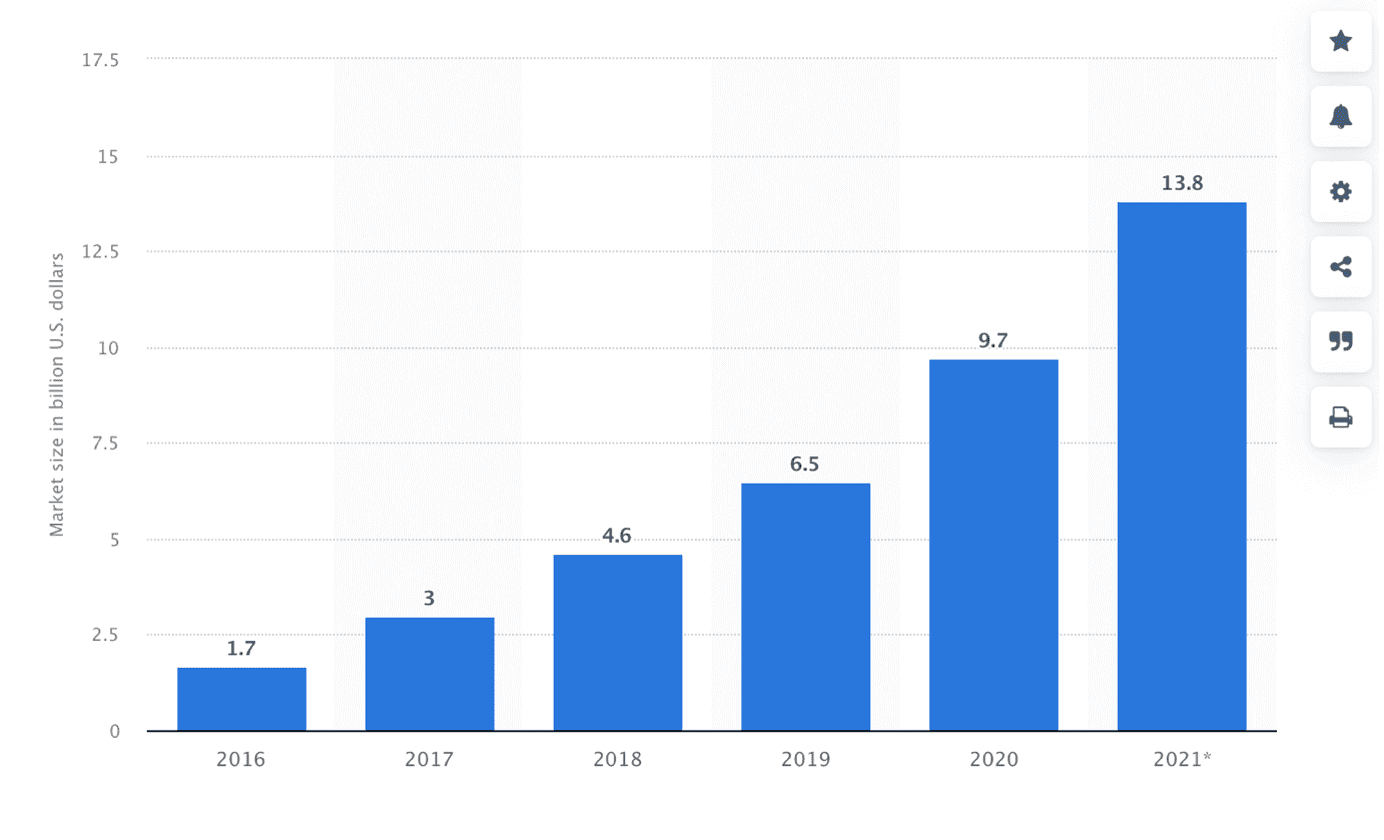
And with an ever-increasing number of businesses investing their top dollars in influencer marketing, we’re witnessing influencers, especially ones with millions of followers, charging budget-draining rates.
And while the charge per post depends on different factors, we’ve put together the standard market rates to give you a rough idea:
- Instagram: $0 - $250 per post
- YouTube: $0 - $500 per video
- TikTok: $0 - $125 per post
- Instagram: $250 - $1,000 per post
- YouTube: $500 - $2,000 per video
- TikTok: $125 - $500 per post
- Instagram: $1,000 - $10,000 per post
- YouTube: $2,000 - $20,000 per video
- TikTok: $500 - $5,000 per post
- Instagram: $10,000+ per post
- YouTube: $20,000+ per video
- TikTok: $5,000+ per post
While large corporations can easily allocate thousands of dollars towards influencer marketing, the same can’t be said for small or medium-sized businesses.
Despite mid-tier, macro, and mega-influencers charging thousands of dollars per post/video, brands all across the globe would love nothing more than to collaborate with them. However many brands have yet to see the value of working with small creators or micro-influencers – social media users with less than 25,000 followers/subscribers.
Some businesses out there are under the assumption that going bigger is better. Either they’ll collaborate with influencers with more than 25,000 followers, or they’ll ditch the idea of running influencer marketing campaigns at all.
And while going bigger is basic human nature, the thing is – going bigger is not always better. While some brands believe larger follower counts to be the only criteria – when it comes to choosing influencers, what if the mega or celebrity influencer you want to collaborate with has an extremely disappointing engagement rate?
Let’s say a micro-influencer with 20,000 followers ($100 per post) has an impressive 20% engagement rate, whereas a macro influencer with 600,000 followers ($7,000 per post) has a disappointing 1% engagement rate.
Now, if you collaborate with a micro-influencer with 20,000 followers and a 30% engagement rate, you’ll be engaging about 6,000 people for $100. On the other hand, if you collaborate with a macro influencer with 600,000 followers and a 1% engagement rate, you’ll be engaging with the same amount of people (6,000 followers) but instead of paying $100 you’ll be paying $7,000.
This right here is a perfect example of why bigger isn’t always better. While choosing the influencers to work with, you should seriously take different factors into consideration, including engagement rate, niche, type of content, and more.
And while some brands have shown their disinterest in running micro-influencer promotions, it’s important to note that influencers with a limited following can help you generate an ROI that macro or mega-influencer campaigns may fail to.
To help you navigate the realm of mega-influencer promotions, we’ve put together this blog post, where we’ll explain:
Without further ado, let’s dive straight into the realm of micro-influencer marketing.
Micro-influencers are social media with a tight-knit following who are willing to promote or represent a product or service. Their follower or subscriber count is less than 25,000.
And while these influencers do not have a gigantic-sized following, they’re well known for their area of interest/expertise as well as high-engagement rates.
Unlike some mid-tier, macro, or mega-influencers, micro-influencers will personally work with you on your campaigns and help you achieve the desired results.
And as a result of their high engagement rate, you may achieve great results at a pretty limited budget.
Here, we’re not saying that you shouldn’t collaborate with influencers with a massive following.
If you have the budget and if the engagement rate of these influencers is impressive, then you should obviously go for it.
However, if you are just ditching the idea of running micro-influencer promotions just because you don’t want to collaborate with an influencer with a pretty limited following, then we’ve put together the three BIG benefits of collaborating with micro-influencers over mega-influencers in the next section.
Following are the three reasons running micro-influencer promotions are more beneficial than mega-influencer marketing campaigns:
- Budget-Friendly
- Can Dedicate More Time
- High Engagement Rate
Budget-Friendly
As we mentioned in the introduction section, the global influencer marketing industry stands at a staggering $13.8 billion. And with more and more brands wanting to tap into influencer marketing, you’ll obviously find influencers charging a budget-draining amount per post.
Should you choose to collaborate with a mid-tier, macro, or mega influencer, you’d end up spending thousands of dollars each month. On the other hand, micro-influencers don’t charge as much and sometimes you can even just give influencers your products without any monetary compensation (like we do at Stack Influnece). On average brands most commonly pay anywhere around $43 - $721 per Instagram post. And you will never be able to collaborate with a mega-influencer at this budget.
While money is a crucial factor, micro-influencers are in it to establish long-lasting relationships and grow their following. So, if you collaborate with a micro-influencer with a high engagement rate, not only will you be subject to higher returns, but you’ll also see them overdelivering, resulting in a successful influencer marketing campaign.
Can Dedicate More Time
Mega-influencers are already collaborating with dozens of brands at any given point in time. You’ll find their schedule to be jam-packed. At the same time, they already have dozens, if not hundreds, of brands reaching out to them for collaboration.
And with such high demand, if you’re able to close a deal with a megaThe -influencer, chances are that he/she would not be able to dedicate a huge chunk of their time to your campaign. And while such influencers already have their dedicated teams in place, the follow-up and creative process will be impacted if you aren’t able to work with the influencer directly.
On the other hand, micro-influencers don’t have dozens or hundreds of brands contacting them. When compared with mega-influencers, they have fewer long-term relationships and contracts in place. This means – they’ll better be able to allocate their time towards your campaign and work with you directly to help you generate a great ROI.
High Engagement Rate
As stated by Social Bakers, micro-influencers boast up to about 60% increased engagement when compared with macro-influencers or nano-influencers. While it’s important to work with influencers in your niche, if you work with a micro-influencer in your niche, you’ll not only be subject to a higher engagement rate, but your conversion rate may skyrocket by an impressive 20%.
But that doesn’t mean you should go on a micro-influencer-hunting-spree. While micro-influencers have a limited yet engaged following, not every micro-influencer is subject to high engagement rates. While filtering the influencers you’d like to work with, make sure that you are taking into consideration the engagement rate of their followers and subscribers.
Running strategic micro-influencer promotions will not only help you generate an impressive ROI, but you’ll also be on your way to increasing brand awareness.

According to the Later x Fohr Influencer Marketing report, the lower the follower base, the higher the engagement rate. Many brands don’t know this yet but smaller is better.
In today’s crowded market, brands should prioritize engagement over follower count. So, if you haven’t yet tapped into micro-influencer promotions, you’re missing out on a lot.
With influencer marketing now a multi-billion-dollar industry and thousands of influencers engaging with their followers across different social media platforms, as a business owner – you may be looking forward to engaging with like-minded influencers in your niche. Over the course of the last few years, we’ve witnessed a staggering spike in brands showing their interest in hiring influencers to promote their products and services.
This ever-increasing demand has resulted in brands, especially the ones with a low-to-medium-sized budget, finding it harder to engage with influencers in their niche and getting them to promote their products or services.
But – what if we told you that you don’t need a gigantic-sized budget – one similar to the size of Eiffel Tower – to run highly-strategic influencer marketing campaigns?
At Stack Influence, we’ve helped thousands of brands generate more high-ticket sales and increase their revenue by planning and implementing scalable influencer marketing campaigns.
And the best part is – these brands didn’t pay thousands of dollars to influencers they wanted to collaborate with.
Technically, there are two common influencer marketing paying models:
When it comes to paid influencer campaigns, here’s what an unnamed influencer with around 100,000 – 250,000 followers claimed that she charges:
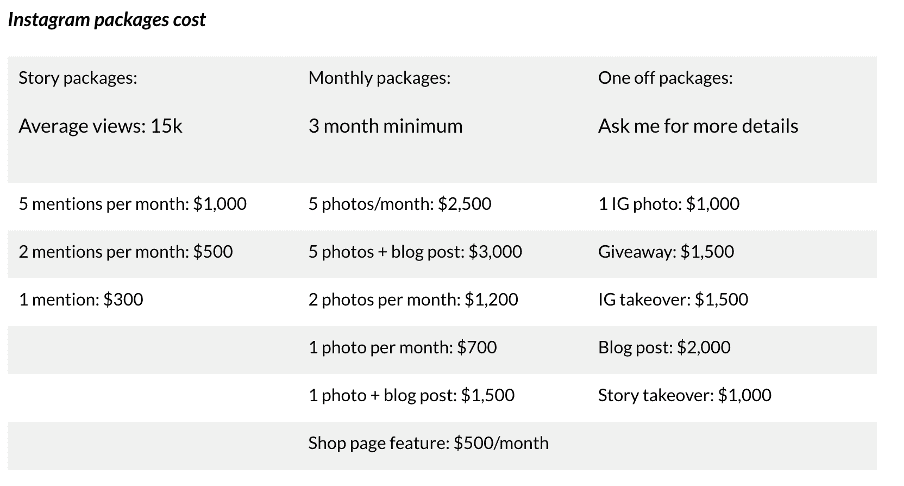
On the other hand, another unnamed influencer with slightly lower followers said that they charge:
Even though there is no standardization in terms of what the influencers charge a common metric is brand pay $10 for every 1000 followers an influencer has which can add up quick if you’re really trying to raise brand awareness at an effective scale. Sometimes, you may end up paying $10,000 or $50,000 or even more to really get a good ROI from your influencer promotions.
That’s the reason, at Stack Influence, we prefer sticking to Micro Influencer Product Seeding Promotions.
Also called influencer gifting, influencer product seeding promotions is the strategic process – where you, as a brand, can prepare a list of influencers you’d like to promote your products or services – and based on that, send out free gifts to them.
For example, if you run a leather bag eCommerce store in the US, then you can ship free, high-quality leather bags to like-minded lifestyle influencers. And when they receive them, they would probably love nothing more than to share photos and their experience with their followers.
36% of brands have reported that they prefer the influencer product seeding promotions model over paying cash to influencers. The reason why this method works as well as it does is – when you send free products to influencers and they post about it across their social media handles, their followers will know that it’s not a money-driven promotion.
They’ll find it to be much more authentic – which will result in more engagement and higher conversions. At the same time, it’ll help you save your top dollars, which you can invest in other portions of your business.
But – as good as influencer product seeding promotions model sound and look – it has its fair share of problems.
Very often after sending influencers your product to promote, they will never post about it across their social media profiles. Imagine sending a $400 item – only to know that they never posted about it losing your precious time and money.Brands have informed us that they experience this issue of “influencer fraud” 10% - 20% of the time they send influencer free products. When there is no money on the table, influencers can feel like there’s not a big obligation to promote a product after a brand sends it to them (even if they agreed to post). Since the name of the game with product seeding campaigns is scale, this issue of no show influencer promotions can really take a toll on your wallet. Also with influencers having more colalborations opportunities than ever these days, it can add fuel to the fire of people forgetting which products they promised to promote.So, let’s say you send a high-ticket item that costs $200 to 300 micro influencers you’d like to collaborate with. Out of the 300 influencers 20% of them never share their experience with their social media followers or get back to your emails reminding them to post.That’d be a $200 x 60 = $12,000 loss. Not very good for your marketing budget.
Problem #1 is a big one. To tackle it, you may attempt to only collaborate with influencers that you see posting about their experiences with other brands who you know are also running free product gifting campaigns. However, another big problem is scale. Most influencers who are willing to promote products without getting paid will have less than 20K followers so in order to run an effective influencer campaign you need to work with hundreds if not thousands of social media users. You’ll also want to make sure that they’re a part of your niche and have a high engagement rate.And when you try to find that many influencers with so many filters, you may run into some issues. Not only does it involve you having to spend a huge amount of your time, but the results may turn out to be disappointing, unfortunately.
Throughout the years, we’ve helped thousands of brands generate more high-ticket sales and increase their revenue by planning and implementing scalable micro influencer marketing campaigns. Over the years we’ve fine tuned our platform to solve all the issues with influencer product seeding.So – how do we tackle the two biggest problems?First – we have a database of 11M influencers and an A-Z management platform, which makes it extremely easy for us to find highly-targeted influencers – ones that would love nothing more than sharing their experience with their followers in exchange for only free products without getting paid.Goodbye Problem #2!Now how do we solve Problem #1 and prevent all the inventory loss from product seeding campaigns? Our solution is simple:
And that’s how the end-to-end process works. No inventory loss, no loss of time, and no stress ☺Also if an influencer doesnt complete their social promotion after purchasing your product, we don’t charge you anything for that influencer so you just get a free sale! We’re the only influencer marketing agency across the globe to have this unique process in place.And we’d love to do it for you.So, what are you waiting for? Level up your influencer marketing campaigns with our influencer product seeding based approach today.
Read More Awesome Content:
Ecommerce Sellers

“Influencers are people. People, maybe personas, with a well-established brand and an audience. What makes them attractive to advertisers and beneficial for eCommerce businesses is their ability to speak to and interact with a very defined group of fans. The way this ecosystem is evolving and maturing – it looks just like the internet in the early days.”
- Mike Schmidt, founder of Dovetale
Influencer marketing has been at the forefront of the digital revolution for years. And despite thousands of eCommerce brands generating incredible returns after incorporating influencer marketing into their existing marketing strategy, we’re just getting started.
Data fetched from a report indicates that close to 24 million eCommerce stores exist on the internet at any given point in time. And with hundreds of eCommerce entrepreneurs launching their online stores each day, all thanks to eCommerce builders like Shopify, BigCommerce, and more - the global eCommerce retail sales have been projected to cross the $5.4 trillion by the end of this year (2022).
Such a meteoric growth has resulted in increased competition – which has made it harder for eCommerce store owners to put their products in front of their audience and convert them into paying customers. At the same time, they’re finding it extremely difficult to build genuine connections with their consumers.
In this ever-competitive world, we’re witnessing more and more eCommerce brands generating top dollars and getting incredible results by incorporating influencer marketing into their marketing strategy.
For every $1 you spend on influencer marketing, you can expect an average ROI of $6.5. And while influencer marketing is extremely powerful, there are a few common misconceptions about the strategy floating across the internet – which we’ll be listing down in this blog post. At the same time, we’ll be looking at why it’s important for eCommerce store owners to tap into the power of influencer marketing in 2022.
Following are the most common myths revolving around eCommerce influencer marketing:
Influencer marketing is only expensive if you don’t build a fool-proof strategy prior to execution. If your budget is $1,000, then you might not be able to afford to collaborate with mega or celebrity influencers. However, you can conduct some research and find nano or micro-influencers in your niche with high engagement to run results-driven influencer marketing campaigns – with your budget in check.At the same time, rather than paying influencers with cash, you can switch to influencer product seeding promotions – which has genuinely helped thousands of eCommerce stores generate more sales and higher revenue without breaking the bank. Read our “How Has Influencer Product Seeding Promotions Helped Thousands of Businesses Generate More Sales & Higher Revenue?” post to learn more.
Did you know that nano and micro-influencers are subject to higher engagement rates than other types of influencers? If you think – nano or micro-influencers can’t help you achieve the desired results, allow us to share some campaign social metrics from one of our recent campaigns:
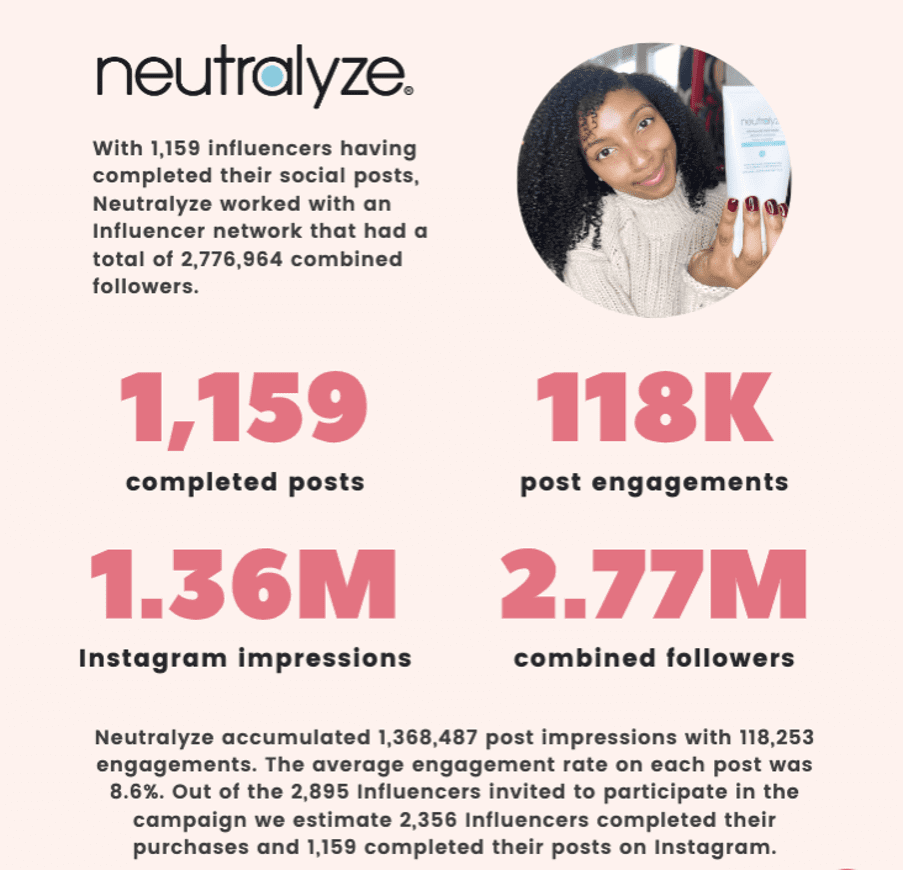
Businesses that have failed to achieve the desired results by collaborating with nano and micro-influencers – maybe they did it wrong. Maybe, they didn’t work with influencers in their niche. Or maybe they reached out to the ones with lower engagement.
To achieve the best possible results, it’s extremely important to work with influencers with higher engagement rates. We’ll always prefer working with influencers with 1,000 followers yet 200 likes on their posts over influencers with 10,000 followers yet only 100 likes on their posts.
Engagement matters. It matters because engagement is closely correlated with conversion. If someone engages with content it means they are paying attention and more likely to follow through with a purchase. And if your campaigns are not working, maybe you are working with the wrong influencers. At Stack Influence, we have a database of 11M influencers and an A-Z campaign management platform, which makes it extremely easy for us to find highly-targeted influencers – ones that would love nothing more than sharing their experience with their followers.
We won’t say that there aren’t fake influencers with fake followers bragging about themselves across different social media platforms. There are.
If you just head over to Black Hat World, you’ll see numerous postings revolving around the same:
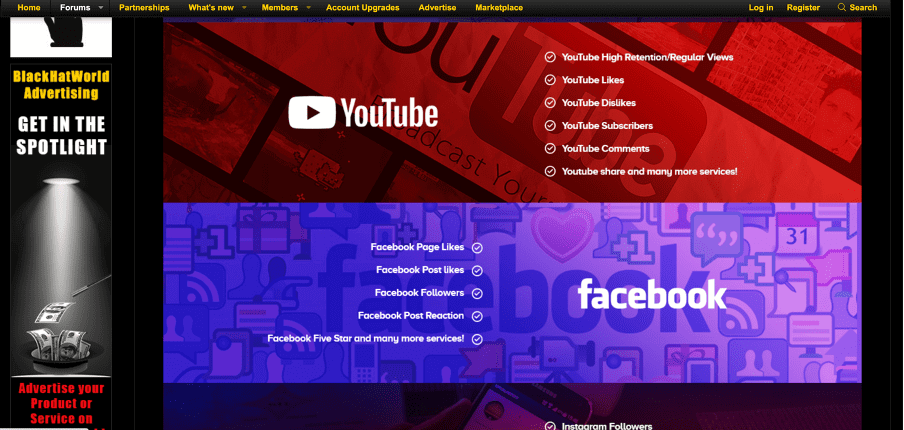
That’s disappointing.
But – not all influencers are the same. Not every influencer buys followers, likes, comments.
When you prepare a list of the influencers you’d like to work with, we’d advise you to follow their profiles for a day or two. Look at their engagement rate – comments across different posts – who likes their posts and more.
After a day or more of observation, you’ll know whether their followers, likes, comments are fake or not. And based on that, you can choose to proceed further. At Stack Influence we implement automated A.I. analysis on all our influencer profiles to flag any fake followers or engagements and exclude those profiles from our community.
Influencer marketing is a $13.8 billion global industry. And all thanks to its rising popularity and potential, businesses are not afraid of investing their precious marketing dollars into it. But – if you are still skeptical, then let us share a few reasons why you, as an eCommerce entrepreneur, must invest in influencer marketing in 2022.
Let’s have a look.
Following are the three big reasons influencer marketing is the real deal in 2022:
When you connect with the right influencers, you’ll be building genuine connections. Genuine influencers with organic following – are people who already have an emotional connection with their audience. Their followers look up to them and love interacting with them. And when their followers see them recommending a brand’s product(s) or service(s), they think of it as a personal recommendation.
Over 49% of consumers heavily depend on influencer recommendations, of which over 40% have bought something after witnessing their favorite influencers recommending it across Instagram, Facebook, YouTube.
They act as a bridge between the brand and the consumers – and when they recommend the brand’s products or services, they are saying to their followers that they trust this brand – which will help trigger an emotional connection.
When influencers recommend a brand’s product(s) or service(s), their followers, if the campaign is strategic and results-driven, may want to try that product or service out themselves.
And when they head over to the brand’s website or landing page, based on influencers’ recommendations, if the rest of your funnel is conversion-focused, you’ll see a staggering growth in sales.
People think of influencer recommendations as personal recommendations. So – when they head over to the brand’s website, they’ll already have a good impression of the brand’s product or service in their minds.
So – the chances of you converting them into paying customers will be higher. We think of it as word-of-mouth marketing at scale and there’s never been a more powerful and trusted marketing tactic than word of mouth.
Online advertising delivers outstanding results when implemented right. And so is the case with influencer marketing. But, when compared with online advertising, influencer marketing helps brands generate much better results and a bigger package of benefits.
For every dollar you spend on Google Ads, you can expect an average return of $2. On the other hand, as we mentioned before - for every $1 you spend on influencer marketing, you can expect an average ROI of $6.5.
That’s because online advertising is highly competitive and doesn’t help brands generate an emotional connection with their audience – in most cases. However, on the other hand, that’s not the case with influencer marketing. To help you attract a world full of traffic to your website and allow you to build emotional connections, influencer marketing is a brilliant marketing strategy – a must-implement in today’s competitive digital world. On top of all that, you’re going to be accumulating a war chest of User-Generated Content or images, video, and testimonials from influencers which you can use for other marketing initiatives and even help you get higher ROAS in your online ad campaigns. UGC has been shown to lead to 5X higher conversions when implemented into online ads compared to using professional photography.
Influencer marketing is promising. But – it’s no piece of cake. From finding the right influencers to work with, to setting up campaigns and providing support, to building the rest of your funnel, influencer marketing is time consuming and a strategic process.
At the same time, if you reach out to an influencer marketing agency, they’ll cost you thousands of dollars. Worse – if they’re all-talk, no-action, just like 90% of agencies on the internet, you may end up losing your precious dollars.
We wanted to solve this problem.
That’s the reason we’ve built our self-serving platform – Stack Influence – where you can run scalable micro influencer marketing campaigns totally hands off at a budget-friendly price. With Stack Influence you won’t have to spend hours planning and launching micro influencer campaigns, dealing with negotiating different fees for influencers, or losing inventory from fraudulent influencers stealing your products. Additionally, we’ve built a database of 11M active micro influencers – which will enable you to scale your campaigns within target niches at any given time.
We love influencer marketing. And we do it with all our heart. We’d love to work with you and will even give you a free trial of 20 managed influencers for your first campaign :)
Sell your Amazon business and run off into the sunset with all the money in the world. Too good to be true?
We’re witnessing a spike in the number of Amazon aggregators raising millions or maybe billions of dollars in venture capital. Some of the well-recognized examples include (subject to change):
- Capital Raised: $3.4B
- Capital Raised: $1.3B
- Capital Raised: $908M
- Capital Raised: $800M
- Capital Raised: $572M
- Capital Raised: $267M
With an ever-increasing number of Amazon sellers kickstarting their Amazon venture – and with them representing $300B in gross merchandise value, venture capital and investors all across the globe are looking forward to getting onboard.
Rather than purchasing these Amazon storefronts directly, VCs and investors are funding Amazon aggregators – who then purchase and grow dozens of eCommerce storefronts. And that’s not just the Amazon storefronts we’re talking about. If you sell your Amazon storefront to them, they’d probably be interested in purchasing your brand – as a whole – from you.
But that’s subject to negotiation.
For example, Thrasio, an Amazon aggregator that has raised $3.4B up until now, has purchased countless both on and off Amazon businesses since their inception – 2018.
Similarly, we’re witnessing brands like Perch, SellerX, Razor Group, Heyday gaining traction and closing a series of deals, helping VCs and investors boost their profitability and earn top dollars.
And while selling your Amazon storefront to an Amazon aggregator is one of the hottest trends in the eCommerce sector, third-party sellers are often left wondering, “Should We Be Selling Our Amazon Storefronts to Amazon Aggregators?”
To clear your doubts and help you make a mindful decision, we’ve prepared this blog post – where we’ll be diving deep into Amazon Aggregators.
To get started, let’s learn what are Amazon aggregators and who the top Amazon Aggregators are.
In a nutshell, Amazon aggregators are nothing but acquirers or consolidators. The top Amazon aggregators like Thrasio, Berlin Brands Group, Razor Group, and more are backed by VCs and investors.
Their business model is simple. Let’s head over to Thrasio’s website to gain a much better understanding. Upon visiting their “Contact Us” section, you’ll see their Contact Us form pop right in front of your screen.
Influencer marketing has predominantly been used by online eCommerce sellers to promote products or services, but recently Amazon sellers have started to use influencer marketing to boost their product listing rankings and to accumulate user-generated content for their brands. If you are an Amazon seller looking to increase your brand presence online, get a stream of initial sales or get user-generated content to utilize in advertising, social media or other marketing initiatives, then you should definitely consider flirting with the idea of an influencer marketing campaign.
Influencers don’t have to be users who have massive followings, either. There have now become different terms for various influencers (i.e. micro-influencers, mega-influencers, etc.). As an Amazon seller, I would personally recommend working with “micro-influencers” – social media users with 1,000 – 10,000 followers who are willing to promote your brand in exchange for a free product instead of getting paid. You could hire a macro-influencer (10k - 100K followers) or a mega-influencer (100K+ followers), but you will end up shelling out hundreds or thousands of dollars for a single post that will most likely be taken down after a day. There are numerous benefits to working with micro-influencers as an Amazon seller which include higher engagement rates, lower expenses and more reusable branded content to name a few.
And if we just look at the options in their “Total Annual Revenue” part, you can see:
Influencer marketing has predominantly been used by online eCommerce sellers to promote products or services, but recently Amazon sellers have started to use influencer marketing to boost their product listing rankings and to accumulate user-generated content for their brands. If you are an Amazon seller looking to increase your brand presence online, get a stream of initial sales or get user-generated content to utilize in advertising, social media or other marketing initiatives, then you should definitely consider flirting with the idea of an influencer marketing campaign.
Influencers don’t have to be users who have massive followings, either. There have now become different terms for various influencers (i.e. micro-influencers, mega-influencers, etc.). As an Amazon seller, I would personally recommend working with “micro-influencers” – social media users with 1,000 – 10,000 followers who are willing to promote your brand in exchange for a free product instead of getting paid. You could hire a macro-influencer (10k - 100K followers) or a mega-influencer (100K+ followers), but you will end up shelling out hundreds or thousands of dollars for a single post that will most likely be taken down after a day. There are numerous benefits to working with micro-influencers as an Amazon seller which include higher engagement rates, lower expenses and more reusable branded content to name a few.
And that’s huge.
This means – Thrasio doesn’t acquire all Amazon storefronts. Instead, they purchase storefronts with a decent-huge profit margin. The higher the margin, the better will be the offer you get.
NOTE – Thrasio doesn’t just acquire Amazon businesses. In their “What is your business section,” you can see the following options:
Influencer marketing has predominantly been used by online eCommerce sellers to promote products or services, but recently Amazon sellers have started to use influencer marketing to boost their product listing rankings and to accumulate user-generated content for their brands. If you are an Amazon seller looking to increase your brand presence online, get a stream of initial sales or get user-generated content to utilize in advertising, social media or other marketing initiatives, then you should definitely consider flirting with the idea of an influencer marketing campaign.
Influencers don’t have to be users who have massive followings, either. There have now become different terms for various influencers (i.e. micro-influencers, mega-influencers, etc.). As an Amazon seller, I would personally recommend working with “micro-influencers” – social media users with 1,000 – 10,000 followers who are willing to promote your brand in exchange for a free product instead of getting paid. You could hire a macro-influencer (10k - 100K followers) or a mega-influencer (100K+ followers), but you will end up shelling out hundreds or thousands of dollars for a single post that will most likely be taken down after a day. There are numerous benefits to working with micro-influencers as an Amazon seller which include higher engagement rates, lower expenses and more reusable branded content to name a few.
On the other hand, there are also Amazon aggregators like SellerX that are laser-focused on purchasing Amazon storefronts.
Influencer marketing has predominantly been used by online eCommerce sellers to promote products or services, but recently Amazon sellers have started to use influencer marketing to boost their product listing rankings and to accumulate user-generated content for their brands. If you are an Amazon seller looking to increase your brand presence online, get a stream of initial sales or get user-generated content to utilize in advertising, social media or other marketing initiatives, then you should definitely consider flirting with the idea of an influencer marketing campaign.
Influencers don’t have to be users who have massive followings, either. There have now become different terms for various influencers (i.e. micro-influencers, mega-influencers, etc.). As an Amazon seller, I would personally recommend working with “micro-influencers” – social media users with 1,000 – 10,000 followers who are willing to promote your brand in exchange for a free product instead of getting paid. You could hire a macro-influencer (10k - 100K followers) or a mega-influencer (100K+ followers), but you will end up shelling out hundreds or thousands of dollars for a single post that will most likely be taken down after a day. There are numerous benefits to working with micro-influencers as an Amazon seller which include higher engagement rates, lower expenses and more reusable branded content to name a few.
Now, you may be left wondering – what’s in it for these companies, right? Why are they paying such hefty dollars to Amazon storefront owners for their stores?
Answering this question, these aggregators have their own marketing and sales departments. When we say – they’ll be buying your Amazon storefront, they won’t just be buying your Amazon storefront. They’ll be buying your entire operations – from Amazon account to manufacturing to your off-Amazon stores – everything.
However, that’s subject to discussion. Amazon aggregators are becoming a huge part of the Amazon ecosystem. And when they buy your Amazon storefront, they’ll be using their resources to scale your brand and boost their profit margins.
These aggregators hold the potential to turn these Amazon storefronts into global businesses with a steady cash flow. From their marketing finance departments, Amazon aggregators have all the resources they need to build a profitable business – and by selling your Amazon storefront to them, you’ll be giving them a boost.
Amazon aggregators are looking for:
As a third-party seller, you may not really want to sell your baby (Amazon venture) for a lump-sum amount. And while that amount may be huge, you may want yourself to be a part of it. So – you can negotiate with the Amazon aggregators yourselves to reach the middle ground and maybe operate on a shared revenue model.
All of it depends on the terms.
We understand that your Amazon storefront may be your baby. Amazon is a $1.7 trillion company – and in the near future, we’ll be witnessing it reach the moon (not practically.)
Maybe when Elon Musk takes us to the moon (pun intended), we’ll have an Amazon storefront there – who knows what the future holds?
As we mentioned before, Amazon aggregators have all the resources and experts in the world who’d love nothing more than to scale your Amazon business and operations upon acquisition.
From their marketing department to their logistics, they’ll build a streamlined process to turn your business into a global company. However, Amazon aggregators like Thrasio & SellerX, before they buy your Amazon business would love to understand whether your business is the right fit for them.
After all, if they are purchasing your business for millions of dollars, they need to make sure that your business is the right fit for them. At the same time, upon acquisition, they’ll take care of your business like it’s their own baby.
Upon acquisition, Amazon aggregators focus on increasing the inventory to expand their operations and hit the global market. With their knowledge and logistics experience, they can make the necessary adjustments and at the same time promote your business to boost the profit margins.
Here’s a diagram perfectly representing the End-to-End ecosystem:
Influencer marketing has predominantly been used by online eCommerce sellers to promote products or services, but recently Amazon sellers have started to use influencer marketing to boost their product listing rankings and to accumulate user-generated content for their brands. If you are an Amazon seller looking to increase your brand presence online, get a stream of initial sales or get user-generated content to utilize in advertising, social media or other marketing initiatives, then you should definitely consider flirting with the idea of an influencer marketing campaign.
Influencers don’t have to be users who have massive followings, either. There have now become different terms for various influencers (i.e. micro-influencers, mega-influencers, etc.). As an Amazon seller, I would personally recommend working with “micro-influencers” – social media users with 1,000 – 10,000 followers who are willing to promote your brand in exchange for a free product instead of getting paid. You could hire a macro-influencer (10k - 100K followers) or a mega-influencer (100K+ followers), but you will end up shelling out hundreds or thousands of dollars for a single post that will most likely be taken down after a day. There are numerous benefits to working with micro-influencers as an Amazon seller which include higher engagement rates, lower expenses and more reusable branded content to name a few.
Amazon aggregators have the funds, market access, marketing experts, and expertise needed to scale your operations globally.
Amidst this, you may not really want a lump-sum amount – as a part of your acquisition process. Maybe, a 10% profit margin seems reasonable. And while most Amazon aggregators offer lump-sum amount as a part of the acquisition process, it’s subject to discussion.
Amazon Aggregators like Thrasio, Berlin Brands Group, SellerX would love nothing more than to discuss this further with you. Feel free to submit your contact details with one of them to connect with one of their representatives.
We are here to make things so much easier for you. At Stack Influence, we believe in helping Amazon store owners skyrocket their sales and grow their online store by collaborating with the right micro-influencers. Our mission is to facilitate growth in marketplace rankings, asset development, and increasing brand trust.
We allow eCommerce store owners to tap into our rich micro-influencer database, allowing them to reach out to the right set of audience efficiently.
Also, you can tap into the power of our platform to raise brand awareness, boost online traffic, build long-lasting relationships, and establish a strong online presence. We will help you find the right Amazon micro-influencer fit and build a highly converting influencer marketing campaign.
Click HERE to enter the realm of Stack Influence.
Whether you want to launch or scale your Amazon store, you can take your business to heights by collaborating with the right micro-influencers and setting influencer marketing campaigns the smart way.
And we’d love nothing more than helping you align your campaigns with your business goals.
Amazon conference's are the best place to learn about seller strategies and new tools, while making connections with the top sellers in the world.
So – here’s our top three list.
Drumroll….
- The Prosper Show
- 7-Figure Seller Summit
- NRF
Let’s touch down on every single one of these one by one.
Date – March 14th to March 16th, 2022
Location – Mandalay Bay, Las Vegas
The reason why we’ve “The Prosper Show” at the top of our list is that it’s a dedicated Amazon seller conference and it’s really informative. Also, it’s important to note that the content shared during these conferences is targeted towards intermediate-advanced sellers. As we mentioned in our previous blog post, Amazon is laser-focused on attracting people to their website which is why they are rewarding third-party sellers to drive traffic to their listings from different non-Amazon (external) sources.
That’s the kind of content you may expect during the Prosper show. Throughout this conference, you:
The amount of knowledge, valuable insights, and hacks shared during conferences is insane – and if you are an Amazon third-party seller looking forward to expanding his/her operations, The Prosper Show is the place to be this March.
Date – Anytime (Structured as a course)
Location – Online
In their own words, “7-Figure Seller Summit has helped thousands of eCommerce entrepreneurs strategically level up their venture.” While this is not exactly a conference, it’s one of the most popular and rewarding summits – which has been structured as an online course. This course has been divided into different phases – which sellers can tune in on different days:
Some of the big benefits of visiting the 7-Figure Seller Summit are:
While this conference doesn’t specifically target Amazon sellers, it shares valuable insights and knowledge, helping third-party Amazon sellers learn how they can grow and expand their Amazon business in a strategic manner.
Date – January 16th – January 18th, 2022 (January 15th – Opening Party)
Location – Jacob K. Convention Center | NYC
Before we share what makes this conference a must-visit, let me share a few features speakers who’ll be attending this conference.
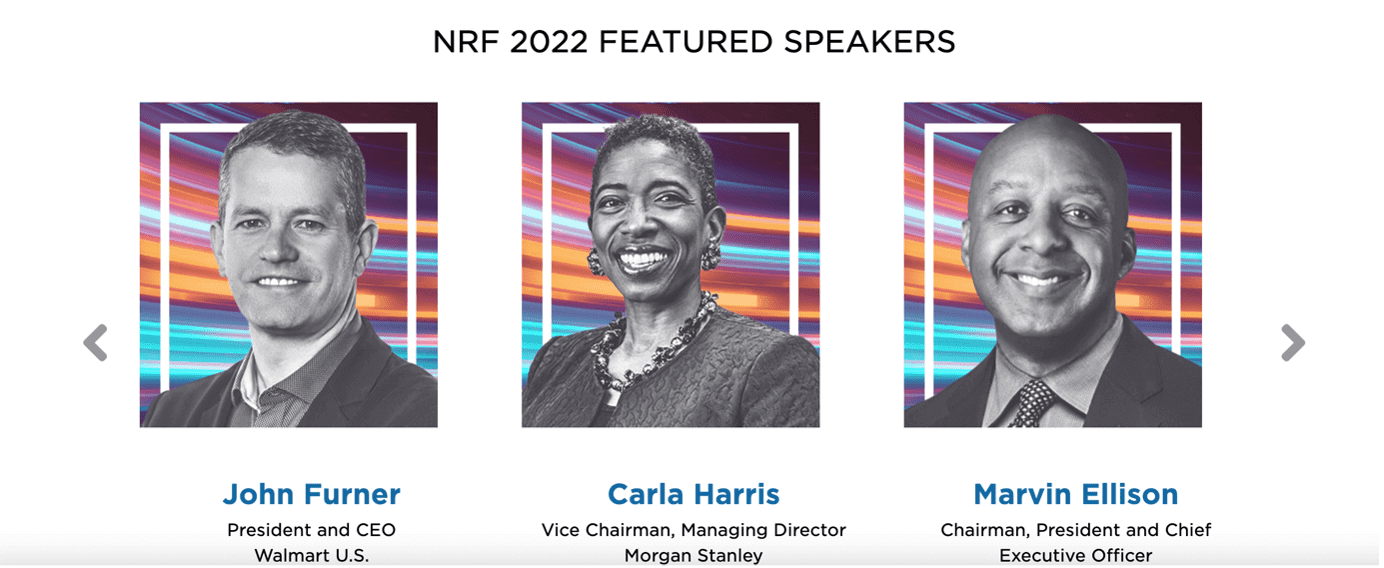

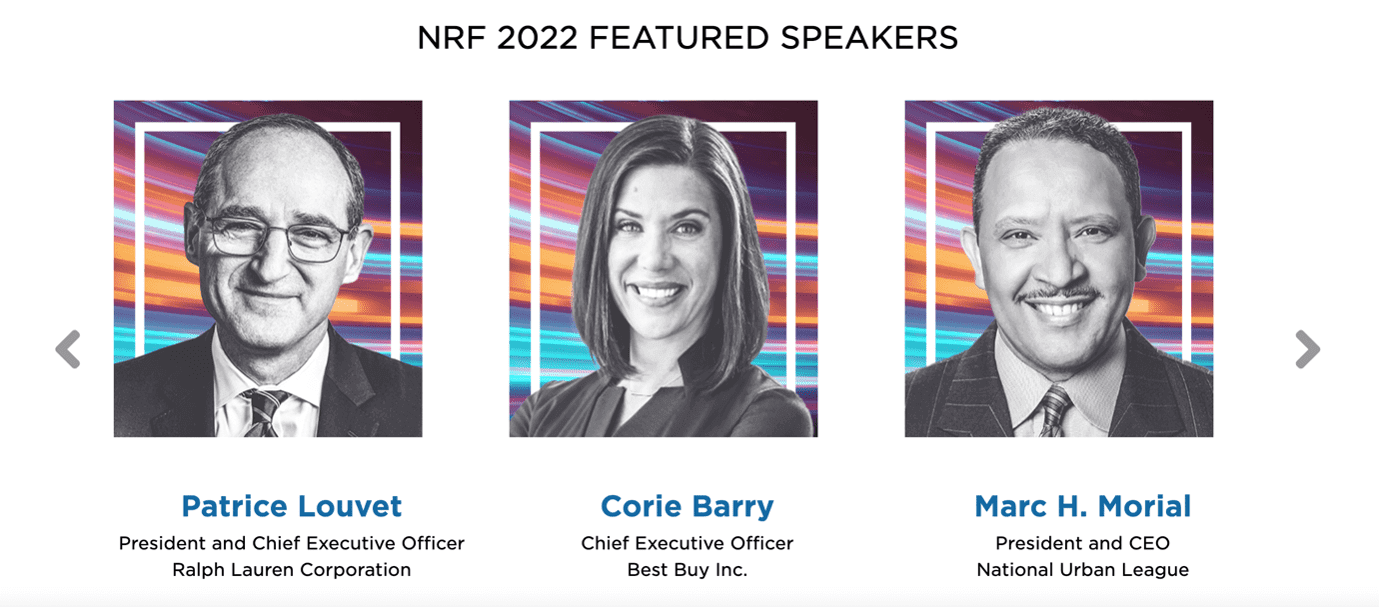

This means – NRF’s 2022 roster is jam-packed, and you can expect to hear from each one of these experts – as they will be sharing their thoughts and sharing some personal tips and strategies to grow your online store. NRF, in my opinion, is hands-down one of the best eCommerce conferences. Again – it’s not a dedicated Amazon seller conference.
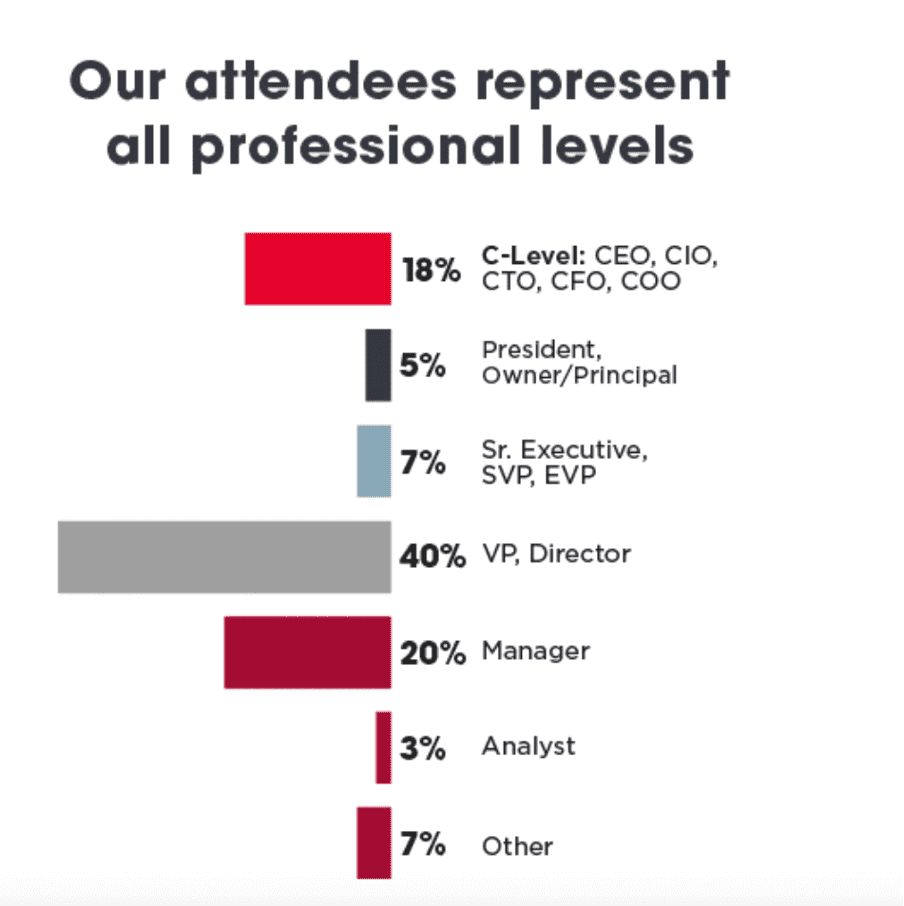
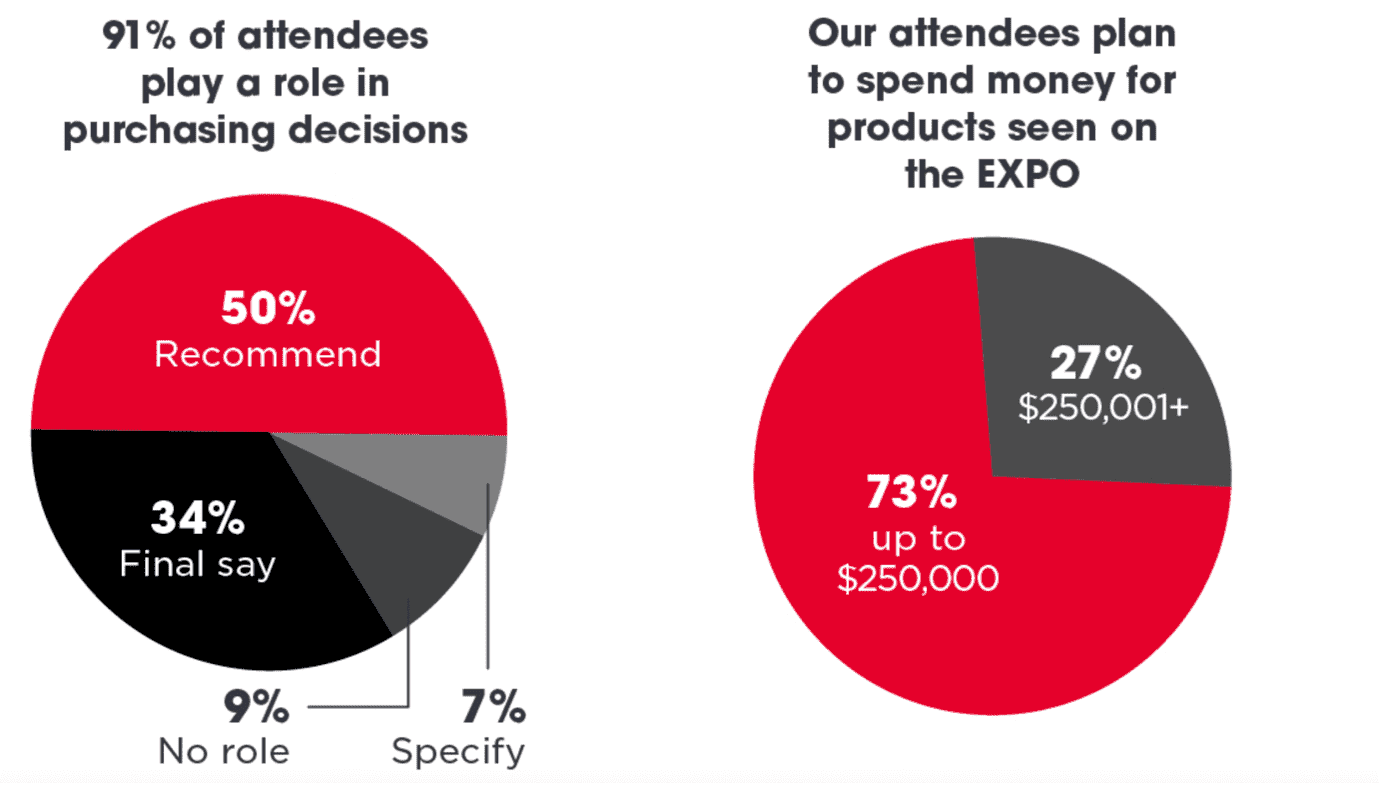
NRF has about 30,000 to 40,000 vendors, suppliers, and industry experts in attendance annually. Let’s look at who attended NRF 2020 – to help you gain a better understanding of the people to expect:

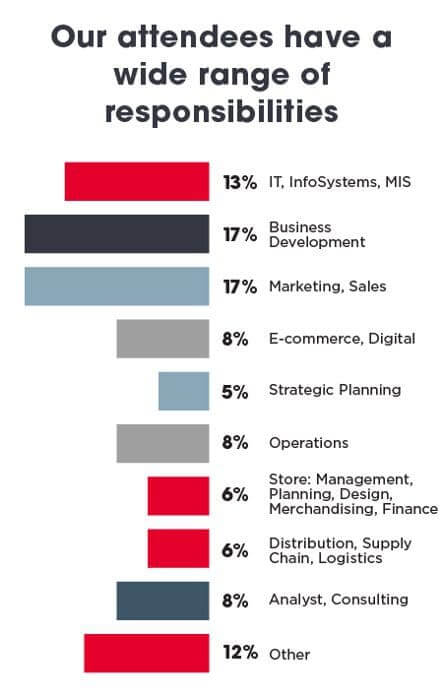
Apart from these, there’re various other conferences we love visiting. Our team was at PowWow Miami & AMZ Innovate in NYC over the past two weeks (at the time of writing), where the newest strategies were discussed by industry leaders, namely Thrasio & Canopy Management.
If there’s a really insightful Amazon conference, you’ll see our whole team there. That’s how much we love Amazon. That’s how much we love eCommerce.
And if you want to expand your knowledge base, find like-minded individuals in your space, connect with veteran sellers – Amazon seller conferences and meetups are the places to be.
We’ve booked our passes – have you?
See you there!
Amazon generated over $110.8 billion in sales in Q3 2021.
And in the near future, this number has been predicted to keep crossing its all-time highs, all thanks to Amazon’s ever-increasing popularity and more and more third-party sellers kickstarting their venture on the platform.
However, it’s crucial to note that not all these sales are driven by Amazon’s organic or paid search. Instead, you’ll be shocked to learn that third-party sellers attract a huge chunk of traffic to their Amazon listings via numerous off-platform sources like organic search, paid ads, referral, social media, etc.
While we don’t have concrete data for the same, we hopped onto SimilarWeb to gain insights into the different traffic sources. And here’s what we found out:
Results:
NOTE – Not all search or social traffic are driven by sellers advertising their Amazon product listings. But this will help you get an idea.
However, until recently, one of the big problems Amazon sellers faced was tracking and measuring the impact of off-Amazon advertising channels on their sales. This means – they find it really hard to distinguish direct Amazon traffic from off-platform ones.
If you have been facing the same problem, we’ve some good news for you. Now, you can not only track off-platform data with Amazon Attribution links but also tap into Amazon’s Brand Referral Bonus program – which is a brilliant opportunity for brands to earn a bonus by focusing on off-platform Amazon advertising.
In this blog post, we’d love nothing more than to share more information about:
Despite Amazon encouraging third-party sellers to drive traffic to their Amazon listings, not many sellers are fully aware of it. That’s the reason we wanted to craft and roll out this blog post.
Let’s dive deeper into both one by one.
Let’s say you made 500 sales last month. Out of these 500 let’s assume that about 100 were Amazon-PPC driven. But now, you have 400 sales in your bucket, which will make you think – what percentage of these sales occurred from Amazon search, Google Ads, Social Ads, influencer marketing referral, or other sources.
And until recently, there was no concrete way of determining this. Literally, if you had developed a platform to help us track this data a few months back, we’d have gladly paid you $1,000 for it.
Luckily, Amazon acknowledged this problem and rolled out Amazon Attribution Links – which is Amazon’s in-house, cutting-edge tool that can help businesses (third-party Amazon sellers) gain insights into how off-Amazon channels like social media, search, PPC, referrals, email marketing are impacting their sales on Amazon. And that’s not all.
This tool can even track traffic that was sent to a different website which ultimately converted on Amazon. And the best part is – you don’t have to pay even a single dime to access the tool. It’s completely free.
You can access Amazon Attribution via Amazon’s self-service console or with tools that integrate with Amazon Advertising API. While that’s good news for Amazon sellers, there’s some temporary bad news as well.
This tool is available to:
But that’s subject to change. So, we’d advise you to hold tight.
This tool can help you track various metrics, including total sales, add to cart, purchase rate, detailed page views, impressions, and click-through.
That being said, Amazon itself is encouraging third-party sellers to focus on their off-platform advertising and drive traffic to their Amazon listings from different sources. When I used the word “encouraging,” I really mean it – that’s because Amazon is offering sellers incentives to drive traffic to their Amazon listings from off-platform channels, all thanks to its Amazon Brand Referral program.
Introducing the most aggressive incentive program rolled out by Amazon to date – Brand Referral Program. This program encourages sellers to drive traffic to their Amazon listings from non-Amazon marketing efforts by giving them a bonus of 10%, on average, for every sale made via an off-Amazon source.
This 10% (on average) bonus is credited on the seller’s referral fee. And right now, Amazon is laser-focused on encouraging sellers to drive traffic to their listings from non-Amazon sources. Maybe, the retail giant has already realized the importance of this move and its long-term benefits.
That’s the reason Amazon Brand Referral Program gives bonuses to sellers even if the customer purchases the same product again for up to 14 days – starting from the day when the buyer was redirected to the listing.
For different products and categories, the Bonus Rate varies, which is why we’re about to present a table that includes different categories with their estimated bonus rates alongside them:
Influencer marketing has predominantly been used by online eCommerce sellers to promote products or services, but recently Amazon sellers have started to use influencer marketing to boost their product listing rankings and to accumulate user-generated content for their brands. If you are an Amazon seller looking to increase your brand presence online, get a stream of initial sales or get user-generated content to utilize in advertising, social media or other marketing initiatives, then you should definitely consider flirting with the idea of an influencer marketing campaign.
Influencers don’t have to be users who have massive followings, either. There have now become different terms for various influencers (i.e. micro-influencers, mega-influencers, etc.). As an Amazon seller, I would personally recommend working with “micro-influencers” – social media users with 1,000 – 10,000 followers who are willing to promote your brand in exchange for a free product instead of getting paid. You could hire a macro-influencer (10k - 100K followers) or a mega-influencer (100K+ followers), but you will end up shelling out hundreds or thousands of dollars for a single post that will most likely be taken down after a day. There are numerous benefits to working with micro-influencers as an Amazon seller which include higher engagement rates, lower expenses and more reusable branded content to name a few.
Influencer marketing has predominantly been used by online eCommerce sellers to promote products or services, but recently Amazon sellers have started to use influencer marketing to boost their product listing rankings and to accumulate user-generated content for their brands. If you are an Amazon seller looking to increase your brand presence online, get a stream of initial sales or get user-generated content to utilize in advertising, social media or other marketing initiatives, then you should definitely consider flirting with the idea of an influencer marketing campaign.
Influencers don’t have to be users who have massive followings, either. There have now become different terms for various influencers (i.e. micro-influencers, mega-influencers, etc.). As an Amazon seller, I would personally recommend working with “micro-influencers” – social media users with 1,000 – 10,000 followers who are willing to promote your brand in exchange for a free product instead of getting paid. You could hire a macro-influencer (10k - 100K followers) or a mega-influencer (100K+ followers), but you will end up shelling out hundreds or thousands of dollars for a single post that will most likely be taken down after a day. There are numerous benefits to working with micro-influencers as an Amazon seller which include higher engagement rates, lower expenses and more reusable branded content to name a few.
Influencer marketing has predominantly been used by online eCommerce sellers to promote products or services, but recently Amazon sellers have started to use influencer marketing to boost their product listing rankings and to accumulate user-generated content for their brands. If you are an Amazon seller looking to increase your brand presence online, get a stream of initial sales or get user-generated content to utilize in advertising, social media or other marketing initiatives, then you should definitely consider flirting with the idea of an influencer marketing campaign.
Influencers don’t have to be users who have massive followings, either. There have now become different terms for various influencers (i.e. micro-influencers, mega-influencers, etc.). As an Amazon seller, I would personally recommend working with “micro-influencers” – social media users with 1,000 – 10,000 followers who are willing to promote your brand in exchange for a free product instead of getting paid. You could hire a macro-influencer (10k - 100K followers) or a mega-influencer (100K+ followers), but you will end up shelling out hundreds or thousands of dollars for a single post that will most likely be taken down after a day. There are numerous benefits to working with micro-influencers as an Amazon seller which include higher engagement rates, lower expenses and more reusable branded content to name a few.
Influencer marketing has predominantly been used by online eCommerce sellers to promote products or services, but recently Amazon sellers have started to use influencer marketing to boost their product listing rankings and to accumulate user-generated content for their brands. If you are an Amazon seller looking to increase your brand presence online, get a stream of initial sales or get user-generated content to utilize in advertising, social media or other marketing initiatives, then you should definitely consider flirting with the idea of an influencer marketing campaign.
Influencers don’t have to be users who have massive followings, either. There have now become different terms for various influencers (i.e. micro-influencers, mega-influencers, etc.). As an Amazon seller, I would personally recommend working with “micro-influencers” – social media users with 1,000 – 10,000 followers who are willing to promote your brand in exchange for a free product instead of getting paid. You could hire a macro-influencer (10k - 100K followers) or a mega-influencer (100K+ followers), but you will end up shelling out hundreds or thousands of dollars for a single post that will most likely be taken down after a day. There are numerous benefits to working with micro-influencers as an Amazon seller which include higher engagement rates, lower expenses and more reusable branded content to name a few.
However, it’s important to note that this program is only applicable for Brand registered sellers. And if you haven’t already registered your brand yet, you can click HERE to do so.
Amazon has finally realized the long-term value of allowing sellers to attract traffic to their listings from non-Amazon marketing channels. And rolling out its brand referral program and launching their Attribution Links is no coincidence.
It’s a match made in heaven. With Amazon’s Attribution Links, you can track the exact number of people you drove to your listing via non-Amazon marketing channels – this means you don’t have to worry about the tech giant not giving you the credits you deserve.
No technical glitches! Nothing! It’s a fair game for Amazon third-party sellers and now Amazon wants you to leverage it.
Amazon Attribution Links also work perfectly with Stack Influence campaigns which drive traffic from social sources to Amazon listings. Now you can get a kick back from Amazon for running marketing campaigns with the Stack Influence platform. Don’t miss out on this incredible opportunity to track Amazon sales with influencer promotions and save money while doing so!
Sign up for a Stack Influence campaign today.