The latest info on influencer marketing trends, micro influencer news, and the world of social media

Getting more traffic is a top priority for every e-commerce entrepreneur, whether you’re new to Shopify or an experienced Amazon seller expanding to your own store. With over 2.5 million Shopify stores competing for attention and an average conversion rate of only about 1.4%, you need a steady stream of visitors to make sales. The challenge is driving qualified traffic in a sustainable way. This guide will walk through the main strategies – from leveraging micro-influencers to optimizing SEO – that new and experienced store owners can use to boost their Shopify traffic.
On average, only about 22% of website visitors come directly to an online store, while the remaining 78% find stores via channels like search engines, social media, email, and referrals. In other words, you can’t just build a site and hope people show up – you need proactive methods to attract shoppers. Below is a breakdown of typical e-commerce traffic sources by channel:
Typical e-commerce traffic sources breakdown by channel. Only ~22% of visitors arrive by typing your URL directly, while ~78% come through organic or paid channels (search, social, email, referrals, etc.). This underscores the importance of diversifying how you drive traffic to your Shopify store.
In the sections that follow, we’ll cover the most effective strategies to get traffic flowing, with influencer marketing as the top recommendation. We’ll also dive into SEO, content/UGC, social media, email, paid ads, and referral programs. Let’s get started!

Influencer marketing – partnering with popular social media content creators – is one of the fastest ways to boost your Shopify traffic. Why? Because consumers trust influencers. In fact, 69% of consumers trust influencer recommendations more than information directly from brands. When a creator authentically showcases your product, their followers listen. Instagram is a prime example: as many as 70% of shoppers use Instagram to inform their purchasing decisions, so a single post or story from the right influencer can send a wave of traffic to your store.
Crucially, you don’t need to hire mega-celebrities. Micro-influencers (those with around 5,000–100,000 followers) often offer the best bang for your buck. They have niche, highly-engaged audiences and are seen as relatable content creators rather than distant celebrities. Collaborating with a group of micro-influencers can outperform a single big name in both engagement and cost-effectiveness. For example, micro-influencers typically see much higher audience interaction on their posts than macro-influencers do. Research shows a micro-influencer with ~10k–100k followers might get around a 3.8% engagement rate on Instagram, versus roughly 1.2% for a macro-influencer with hundreds of thousands of followers. That means their followers are liking, commenting, and clicking at a higher rate, which translates to more traffic and sales opportunities (see chart below).
Micro vs. Macro Influencer Engagement. Micro-influencers (smaller, niche followings) achieve far higher average engagement (~3–8% of followers interact) than macro-influencers (~1–2% engagement). This deeper engagement leads to more trust and traffic per viewer, giving micros an edge in driving ROI.*
Because of this high engagement and trust, partnering with multiple micro-influencers can “multiply” your reach and credibility. Micro-influencers often convert at higher rates while costing significantly less than a single celebrity endorsement. Many are willing to promote your product in exchange for a free sample or a small fee – influencer product seeding is a popular approach. You send a free product to relevant influencers and in return they share an honest review, unboxing, or demonstration to their audience. This tactic not only drives traffic from curious followers, it also produces user-generated content (UGC) you can reuse. Shopify’s own marketing guide notes that sending free samples to Instagram influencers is an effective way to boost brand visibility and traffic.
Tip: When using micro-influencers, focus on authenticity and fit. Look for creators whose niche aligns with your product and whose audience demographics match your target customers. A micro-influencer who genuinely loves your product will create content that resonates as a personal recommendation rather than an ad. Also, give them creative freedom – influencers know what content engages their followers best.
Some common ways to collaborate with influencers include:
Gift your product to influencers (often no monetary payment) for them to try and post about authentically. This often yields genuine reviews and word-of-mouth buzz.
Pay influencers to create content featuring your product, with agreed-upon deliverables (e.g. one Instagram reel and two stories).
Give influencers a unique discount code or referral link so they earn a commission on any sales they drive. This incentivizes them to actively promote your store.
Form longer-term partnerships where an influencer regularly represents your brand in content over months in exchange for products or a stipend.
When evaluating influencers, remember that quality beats quantity. An influencer with 10,000 highly engaged followers in your niche will likely send more converting traffic than one with 100,000 disengaged or off-target followers. Prioritize engagement rates, audience relevance, and authenticity over just follower count.
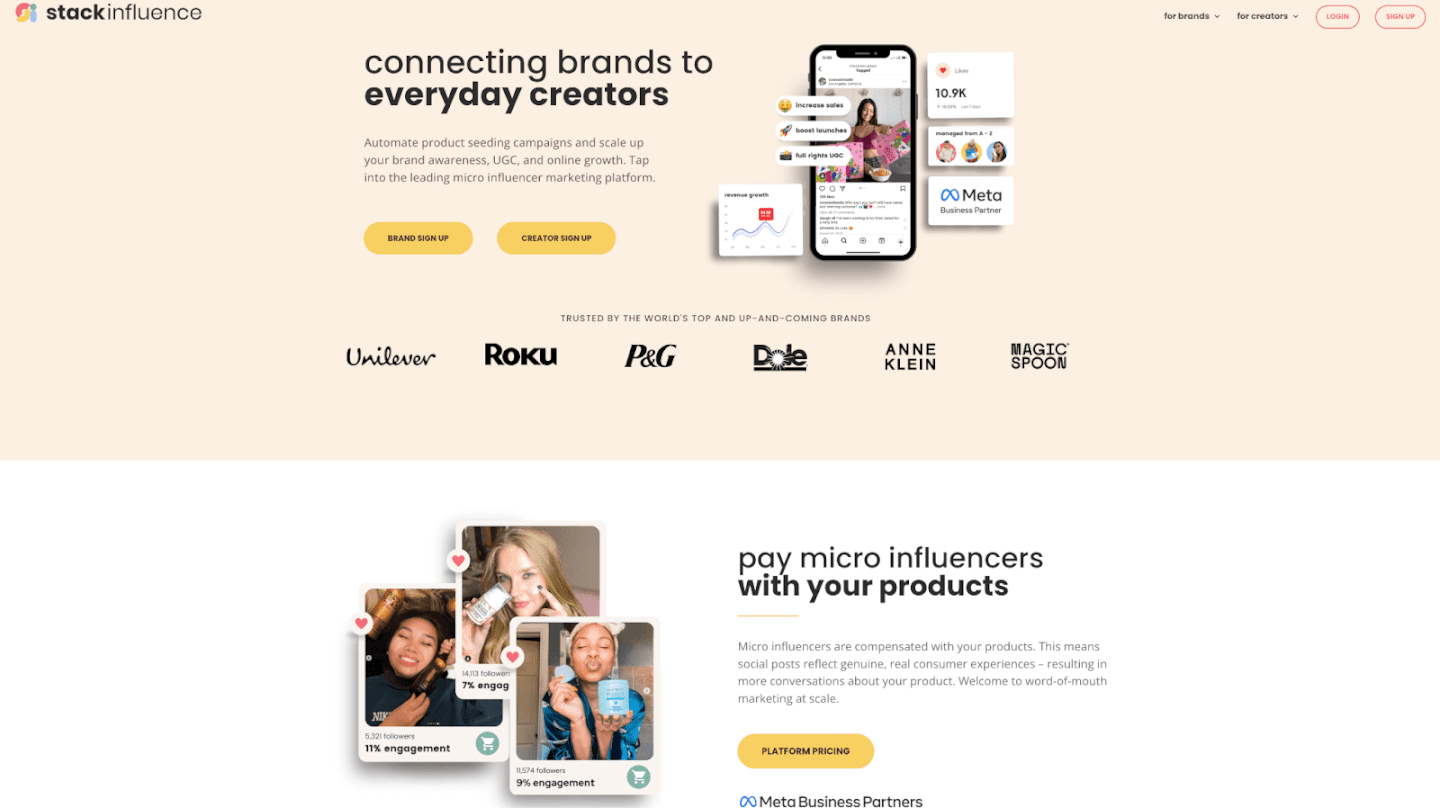
Finally, leverage tools and platforms to streamline your campaigns. For example, Stack Influence is a leading micro-influencer marketing platform that connects brands with everyday creators and automates product-seeding campaigns. It allows you to pay micro-influencers with your product, resulting in genuine posts reflecting real customer experiences – essentially word-of-mouth marketing at scale. Using a platform like this, you can scale up your brand awareness, UGC, and online growth by running many micro-influencer collaborations at once. The result is a flood of authentic content about your products and a steady stream of interested traffic clicking through to your Shopify store.
While social media hype is great, organic search remains arguably the most important long-term traffic source for e-commerce. In 2025, organic search is still the largest driver of website traffic overall – accounting for about 53% of visits on average. Ranking well on Google can funnel a constant stream of high-intent shoppers to your Shopify store for free. SEO is a must for sustained growth.
Start by making sure your Shopify site is optimized for the keywords your potential customers are searching. Think about what someone would type into Google when looking for products like yours (e.g. “waterproof hiking backpack” rather than just “backpack”). These specific phrases are called long-tail keywords, and targeting them can be very rewarding. Long-tail searches are more detailed (and often indicate a ready-to-buy intent) – they also face less competition in the search rankings. Optimizing your product pages or blog posts for long-tail terms can pay off with higher click-through rates and easier rankings. For example, a boutique running shoe store might write a blog post targeting “best running shoes for flat feet” to capture searchers with that specific need, rather than trying to rank simply for “running shoes”. By serving niche queries, you attract highly targeted visitors who are more likely to convert.
Here are some key SEO elements to focus on for your Shopify store:
Research relevant search terms and incorporate them naturally into your page titles, product descriptions, and headings. Each product page should target a primary keyword (like “men’s organic cotton t-shirt”) and possibly a couple of variations or long-tail phrases. Craft unique meta titles and meta descriptions for each page that include these keywords and entice users to click.
Ensure your store loads quickly. Compress images, use fast hosting, and minimize unnecessary scripts/apps. Not only do faster sites rank higher on Google, they also keep shoppers from bouncing. Even a one-second delay in page load time can reduce conversions by up to 7%, so speed is critical for both SEO and sales.
Choose a responsive Shopify theme and test your site on mobile devices. Google uses mobile-first indexing, meaning the mobile version of your site is what gets evaluated for rankings. A smooth mobile experience (easy navigation, readable text, fast load) will help your SEO – and since most searches now happen on phones, it keeps visitors around.
Consider adding a blog or resource section to attract organic traffic beyond just product searches. Publishing helpful, keyword-rich content (how-to guides, style tips, product comparisons, gift guides, etc.) can rank in search results and funnel readers to your products. Aim to answer common customer questions through content. Not only does this establish your expertise, it naturally includes relevant keywords and creates more pages that can be indexed by search engines.
Optimizing for search is not an overnight effort – SEO is a long game, but it pays dividends. Over time, as your site climbs up the Google results for more keywords, you’ll enjoy a consistent, high-intent traffic flow without having to pay for each click. And unlike social media posts that have a short lifespan, a well-ranked page can keep pulling in visitors for months or years. Invest the time in SEO early: it’s like laying a foundation that all your other marketing efforts can build upon.
User-Generated Content -Things like customer reviews, photos, videos, or social media posts created by your users – can be a goldmine for both traffic and conversions. Shoppers trust content that comes from real customers more than polished brand advertising. By actively encouraging your customers to create and share content related to your products, you boost your credibility and expand your reach.
Think about reviews and ratings: when potential buyers see lots of positive reviews on your product pages, they’re more likely to purchase (and also more likely to even find your site, since Google favors sites with fresh, relevant content like reviews). If you’re an Amazon seller, you already know how powerful reviews and customer photos are on that platform. Bringing that same strategy to your Shopify store is crucial. Enable product reviews (Shopify has apps for this) and actively ask customers for feedback after purchase – a simple email requesting a review in exchange for a small coupon can work wonders. Each review adds new content (keywords, photos, testimonials) to your pages, which can improve SEO and conversion rates.
Beyond reviews, get creative in prompting UGC on social media. For example, you could create a branded hashtag and encourage customers to share pictures of themselves using your product. Fashion and beauty brands do this effectively – customers post selfies with the clothing or makeup, tag the brand, and suddenly you have authentic word-of-mouth happening publicly. You can then repost that UGC on your own social feed (with permission) or even embed a gallery of real customer photos on your site. This not only provides social proof but also incentivizes those featured customers to share even more (they feel like a mini-influencer when a brand features them).
According to marketing studies, UGC promotes your brand through authentic voices, increasing engagement and reach among other consumers. People naturally trust the experiences of fellow shoppers more than polished brand copy – it’s perceived as more genuine. By reposting and highlighting UGC, you also encourage more people to contribute their stories and photos, creating a virtuous cycle. For example, if you run a home décor store, you might start a weekly “Customer Spotlight” blog post or Instagram story featuring a customer’s photo of your furniture in their living room. This not only makes that customer feel valued (building loyalty), but it shows new visitors real-life proof of your product in use, and might inspire them to submit their own content.
UGC can also come in the form of video content. Unboxing videos, customer testimonial videos, or how-to clips created by users are incredibly persuasive. You could run a contest for the best video review of your product, or simply encourage customers to share their unboxing on TikTok or YouTube. These platforms can generate traffic back to your store if you’re tagged or if you put your store link in the video description. Plus, you can embed the best videos on your product pages to enrich the shopping experience.
In summary, make it easy and rewarding for customers to create content about your brand. Feature their photos, highlight their stories, respond to their posts – show that you value their voice. This kind of community-building not only drives organic traffic (as the content spreads on social networks and search engines pick up on the buzz) but also significantly increases trust for anyone who lands on your site. A new visitor who sees genuine reviews, customer photos, and real-life testimonials will feel more comfortable buying from you versus a store with none of that social proof. UGC truly turns your happy customers into a marketing engine for your Shopify business.
Being active on social media is another major traffic driver for Shopify stores. Platforms like Instagram, TikTok, Facebook, Pinterest, and YouTube are essentially today’s shopping malls – they’re where people discover new brands and products during their daily scrolling. An engaging social media presence can attract followers and funnel them directly to your product pages.
Start by identifying which platforms your target audience frequents the most, and focus your energy there. For visually appealing consumer products (food, fashion, beauty, home decor, etc.), Instagram is a must-have. Over 62% of Instagram’s billion-plus users follow brand accounts to some degree, which means they are open to discovering and engaging with businesses on that platform. By regularly posting high-quality photos, Reels, and stories showcasing your products, you can convert your Instagram followers into website visitors. Use features like the link in bio, swipe-up links in Stories (if you have that enabled), and Instagram Shopping tags that let users click directly to your product pages. Engage with your community by responding to comments and DMs; this builds loyalty and keeps your brand top-of-mind.
TikTok is another game-changer for e-commerce. The app’s viral nature can catapult brand awareness overnight. Posting short, entertaining videos related to your niche – whether it’s demonstrating a product, sharing behind-the-scenes manufacturing clips, or jumping on trending sounds in a way that fits your brand – can expose you to thousands of potential customers. TikTok’s audience skews younger (Gen Z and young Millennials) who are highly influenced by what they see on social. In fact, for Gen Z, social influencers are now a primary channel for product discovery. If your target demo includes teens or 20-somethings, investing time in TikTok content and challenges could directly translate to traffic and sales (e.g. the viral hashtag “#TikTokMadeMeBuyIt” has driven many sell-outs of products).
Facebook is still relevant too, especially for reaching slightly older demographics and niche interest groups. Creating a Facebook Page for your business and updating it with content (and product links) can capture traffic from Facebook users who prefer that platform. Moreover, Facebook Groups related to your niche are great places to participate (genuinely) in discussions and softly promote your brand when appropriate. For example, if you sell eco-friendly pet products, being active in a “sustainable living” or “dog lovers” community group – by sharing tips or answering questions, not just dropping links – can establish your expertise and indirectly lead people to check out your store via your profile or mentions.
Pinterest is a powerful but sometimes overlooked traffic source for certain categories like fashion, DIY, home, wedding, and food. Users on Pinterest are often actively looking for inspiration and products to purchase. By creating Pinterest pins for your product images and blog content (with descriptive titles and your store URL attached), you can gain steady referral traffic. A pin showing “10 Ways to Style ” or a beautiful lifestyle shot of your product can circulate on Pinterest for months, continuously bringing in visitors. Make sure to link the pins directly to your Shopify product or a relevant landing page for seamless conversion.
Don’t forget YouTube if video content fits your product. Tutorial videos, product reviews, unboxings, or behind-the-brand stories on a YouTube channel can attract subscribers and drive traffic via video descriptions and YouTube’s clickable cards/end screens. YouTube content also often appears in Google search results (bonus SEO traffic!). For example, a small electronics store might post how-to videos for using or installing their products – viewers find those on Google or YouTube and then click the link to purchase the item from the store.
To maximize your social media impact, keep these best practices in mind:
Post regularly so that you stay visible in your followers’ feeds. Use a content calendar to plan posts around holidays, product launches, or seasons. Consistency builds momentum.
Ensure your Instagram bio, Twitter profile, etc., clearly state what you sell and include a link to your Shopify store (or Linktree if you want to link multiple things). This makes it easy for interested viewers to click through.
Research popular hashtags in your niche and use them strategically to expand your reach. Participate in trending challenges or memes if they suit your brand voice – this can expose you to a wider audience.
Tieing back to the UGC point – share customer posts or testimonials on your social channels (with permission). It shows you appreciate your customers and provides social proof to your followers that real people love your products.
Social media can drive both immediate traffic (a single post can spike a bunch of clicks right away) and persistent traffic (as you grow an audience, you have a pool to market to continuously). Treat your social channels as extensions of your brand experience – not only will they bring visitors, but they’ll also often be the first impression of your brand for people (who may then decide to visit your store). In short, a strong social media game can significantly amplify all your other efforts to get Shopify traffic.
Building an email list is one of the best investments for driving repeat traffic and sales. While many of the methods we’ve discussed (SEO, social, influencers) focus on bringing new visitors, email marketing shines at bringing past visitors and customers back to your site. Given that not everyone buys on their first visit, staying in touch via email can dramatically increase a customer’s lifetime value and keep that traffic pipeline flowing.
Email has incredible ROI – studies show businesses earn on average $36 for every $1 spent on email marketing. That’s a 3600% return, higher than practically any other channel. Why? Because the people on your email list are those who have already engaged with your brand (they may be past customers or at least interested enough to sign up), so they’re warm leads. A well-crafted email can directly prompt a flurry of revisits and purchases from that group. In fact, shoppers coming from email tend to spend more than those from other channels – one analysis found consumers spend 128% more when shopping via email than via other methods. It makes sense: if someone joined your newsletter or gave their email during checkout, they likely have a positive impression of your brand and are receptive to your messaging.
To get started, you’ll want to capture emails on your Shopify site. Use a signup form or pop-up (with a tempting incentive) to grow your list. Common tactics include offering a discount (e.g. “Join our newsletter for 10% off your first order!”), a free downloadable guide relevant to your products, or entry into a giveaway. Make sure whatever you offer appeals to your target audience so you get qualified subscribers (people who’d actually buy later). Also, assure visitors you won’t spam them – highlight the value they’ll get, like exclusive deals or useful content.
Once you have subscribers, plan out a mix of email campaigns to send regularly. A welcome email or series for new subscribers is crucial – it can introduce your brand story, highlight best-selling products, and perhaps give that discount code you promised. Beyond that, consider sending a content-rich newsletter monthly or bi-weekly, with product tips, new arrivals, or blog highlights. During promotions or holidays, send dedicated campaign emails (e.g. “Summer Sale – 20% off all swimwear!” with direct links). Be sure to also set up automated emails that trigger based on behavior: for instance, abandoned cart emails (to nudge those who added to cart but didn’t checkout – these often convert very well), post-purchase follow-ups (asking for a review or suggesting related products), and win-back emails (to re-engage customers who haven’t purchased in a while with a special offer).
Personalization can significantly boost email effectiveness. Use the customer’s name in the email, segment your list into groups (by past purchase behavior, preferences, location, etc.), and send targeted content. For example, you might have one email variant for customers who bought women’s shoes and another for those who bought men’s, featuring complementary products for each. Many email marketing tools (including Shopify Email or apps like Klaviyo, Omnisend, etc.) make segmentation and automation straightforward.
The beauty of email marketing is that it’s your owned audience – unlike social media followers, you’re not at the mercy of an algorithm deciding who sees your message. Nearly everyone checks their email daily, and your message lands directly in their inbox. Even if only a fraction of subscribers open and click, that’s recurring traffic you can reliably drive by simply hitting “send.” To maximize those clicks, spend time on writing compelling subject lines (to improve open rates) and include clear call-to-action buttons in the email that link to relevant pages on your store. For instance, a fashion boutique’s newsletter might include beautiful images of new dresses with a “Shop New Arrivals” button that brings people straight to the site.
One more tip: don’t spam or oversell. Make sure your emails provide value, whether that’s a promotion, useful information, or entertainment. If every email is just “Buy this now!”, people will tune out or unsubscribe. A good rule is the 80/20 rule – 80% of your emails should be content or value-focused, and 20% can be direct sales pitches. And always give an easy way for people to opt out or adjust their preferences.
In summary, email marketing turns one-time visitors into loyal repeat visitors. By nurturing your audience’s interest and regularly inviting them back (with compelling reasons), you create a cycle where each new customer potentially yields multiple sessions and purchases over time. It’s like having a direct line to your customer’s attention – use it wisely, and you’ll see your traffic (and revenue) grow steadily.

Sometimes you need to pour a little fuel on the fire – that’s where paid advertising comes in. While organic methods (SEO, social, referrals) are crucial, they often take time to build up. Paid ads, on the other hand, can deliver immediate traffic to your Shopify store by putting your brand in front of targeted audiences within hours. The trade-off is cost, but when done right, paid ads can be a profitable engine of growth and a way to scale your traffic quickly.
The two primary avenues for e-commerce ads are search engine advertising and social media advertising:
These are ads on platforms like Google Ads (and Bing Ads) that appear when users search for specific keywords. For example, a search for “ergonomic office chair” might show sponsored text ads or shopping ads at the top of Google’s results. With search ads, you’re capturing people who are actively looking for products or solutions you offer – often these clicks have strong purchase intent. You bid on keywords relevant to your products so that your ad shows up in those searches. The great advantage here is you’re getting in front of customers exactly at the moment they’re searching for something you sell. Google Ads offers formats like Search text ads (simple text results labeled as “Ad”), Shopping ads (product images with price, very effective for retail), and Display ads (banner ads that appear on websites in Google’s network). If you have the budget, consider starting with Google Shopping ads, which showcase your product photo, price, and rating right in the search results – these tend to attract clicks from shoppers who are ready to buy. Keep an eye on your cost-per-click and conversion rate – you want to ensure the sales generated exceed the ad spend. The nice thing is you can set daily budgets and adjust bids anytime, making it flexible to scale up or down.
Platforms like Facebook, Instagram, TikTok, and Pinterest offer powerful advertising tools to reach users based on their interests and demographics – even if those people aren’t actively searching for products. Social ads are great for discovery and building awareness among potential customers who fit your target profile. Facebook is the giant here, with over 3 billion monthly active users spanning all age groups – and its Ads Manager lets you target people by age, location, interests, behavior, etc. For instance, you could run a Facebook/Instagram ad campaign targeting “women ages 25-45 who are interested in yoga and sustainable living” if you sell eco-friendly yoga apparel. Instagram (which is managed via Facebook’s ad platform) is equally valuable, especially for visually appealing products; it has over 2 billion users itself and strong engagement. TikTok ads can help you reach the younger demographic with short video ads (and TikTok’s ad platform is rapidly evolving, with options for targeting interests and even creating “Spark” ads from existing organic TikTok content). Pinterest Ads (Promoted Pins) are fantastic for product-based businesses, as Pinterest users are often planning projects or shopping – a promoted pin of your product can look very native in their feed and draw in quality traffic. One advantage of social ads is that you can showcase your product in a lifestyle context (through images or videos) to generate demand, even when the viewer wasn’t actively looking for it. This can expand your market by finding new customers who didn’t know about you before.
Whichever platform you choose, start with a clear objective: do you want to drive traffic specifically (to increase brand awareness or retarget previous visitors), or drive conversions/sales right away? Platforms allow you to optimize for different objectives. For example, Facebook can optimize your campaign either for link clicks (traffic) or for conversions (it will show ads to people most likely to purchase, if you have the Meta Pixel set up on your site to track that). If you’re just starting out and need traffic, you might optimize for clicks to get people in the door, then later shift to conversion optimization as you gather data.
Your existing community can reveal micro-influencers who are organically interested in your brand. These people will likely create very authentic UGC if they partner with you, since they already have enthusiasm. As Meltwater’s marketing experts note, a follower-turned-influencer is valuable because they’re already familiar with your brand and can represent you authentically.
Never underestimate the power of word-of-mouth when it comes to driving traffic and sales. Customers who come via referrals from friends or family often convert more readily and have a higher lifetime value, because trust is built in. You can encourage this by setting up a formal referral program for your Shopify store, and by working with affiliates who promote your products to their audiences. These programs essentially turn your existing customers and partners into a marketing force, incentivizing them to send new shoppers your way.
A classic referral program offers a reward to customers who refer a friend and to the friend who was referred. For example, you might give a referrer a $10 store credit for each friend who makes a purchase, and that friend might get a 10% discount on their first order as a welcome bonus. This “double-sided reward” structure is popular because everyone wins – your loyal customer gets a perk, the new customer gets an incentive to try your store, and you get a new sale and subscriber. Shopify has apps that can automate referral tracking and reward distribution (such as ReferralCandy, Smile.io, etc.), making it easy to manage. Promote your referral program visibly: mention it in post-purchase emails (“Loved your purchase? Refer a friend and you both get $10 off your next order!”), add a banner on your site, and periodically remind your social media followers.
Why go to the trouble? Because referred customers tend to be high-quality. People trust recommendations from someone they know far more than any ad or marketing you could do. In fact, a Nielsen study found 92% of consumers trust recommendations from friends and family over any form of advertising. When a friend raves about a product and sends you a referral link or code, you’re likely to check it out – that’s instant, warm traffic to your store that is primed to buy if the product fits their needs. Moreover, research indicates that e-commerce businesses see a 68% higher conversion rate from referral traffic compared to other channels. In other words, visitors who land on your site via a friend’s referral are much more likely to actually purchase something, making referral traffic extremely valuable.
In addition to customer referrals, consider an affiliate program to leverage bloggers, influencers, and industry partners. Affiliates are like commission-based ambassadors – they’ll promote your store or products using a special link, and for every sale that comes through their link, they earn a commission (percentage of the sale or a flat fee). This is a pay-for-performance model that can rapidly expand your reach. For instance, if you sell skincare products, you could partner with beauty bloggers or YouTubers who will review or mention your products, and give them a cut of any resulting sales. There are affiliate networks you can join, or you can run a program in-house with Shopify apps (or manually assigning coupon codes/links to partners). The key is to recruit affiliates whose audience aligns with yours – their recommendations will send targeted traffic your way. Affiliates essentially act as marketing extensions of your brand, and you only pay a commission when they successfully drive a sale, so it’s cost-effective.
When launching an affiliate or referral program, keep these tips in mind:
The incentive has to be meaningful enough for people to bother. For referrals, a coupon, discount, or cash credit works well. For affiliates, ensure the commission rate is competitive in your industry (many offer 5-20% of sales, depending on margins).
Dedicate a page on your website to explain how your referral program works or how affiliates can join. Remove friction – it should be easy to refer a friend (one-click sharing links, etc.) or for an affiliate to get their link and start promoting.
With referral discounts or affiliate payouts, occasionally someone might try to game the system (self-referrals, fraudulent activity). Use the tools available (or manual checks) to ensure referrals are genuine new customers and that affiliates are following your guidelines (e.g., not spamming their links).
Publicly or privately acknowledge your top referrers or affiliates. You might create a tiered system where super-referrers get extra perks. A little recognition can motivate them to keep spreading the word.
Word-of-mouth marketing is often called the oldest growth hack in the book, and it’s now supercharged by the internet – one happy customer’s recommendation on social media can send dozens of new shoppers to your site. By formalizing and rewarding these referrals, you amplify the effect. Many huge brands (Dropbox, Uber, etc.) owe a large part of their growth to referral programs that turned users into evangelists. As a Shopify store owner, even a modest referral program can steadily bring in new traffic every month as your customer base grows. And the best part: those referred customers might refer others in turn, creating a virtuous cycle of organic growth.
Driving significant traffic to your Shopify store requires a combination of strategies working in harmony. Influencer marketing stands out as a powerful way to quickly build brand awareness and trust, especially through micro-influencers who generate authentic buzz and UGC. But it shouldn’t be your only tactic. The stores that win in the long run are those that diversify their traffic sources – mastering SEO to capture searchers, cultivating a social media following, nurturing an email list of repeat visitors, leveraging paid ads for scale, and encouraging referrals to tap into word-of-mouth. Each channel complements the others: for example, your social media content can feed your email campaigns; your influencer collaborations can produce UGC that improves your site’s conversion rate; your SEO-driven blog posts can be shared on social media for extra reach, and so on.
Remember, growing traffic is not an overnight game. It builds over time with consistent effort. Stay patient and keep experimenting. Whether you’re a new Shopify entrepreneur or a seasoned Amazon seller, the methods in this guide – from collaborating with micro-influencers via platforms like Stack Influence to optimizing for Google and beyond – will set you on the path to sustainable traffic growth. With more of the right visitors coming in, you’ve set the stage for increasing those sales and taking your e-commerce business to new heights. Good luck, and happy selling!
In the ultra-competitive world of e-commerce, brands and Amazon sellers are turning to micro influencers and content creators to gain an edge. These niche creators – often everyday people with dedicated followings – help generate authentic user-generated content (UGC) and build consumer trust in ways traditional ads struggle to match. From engaging social media posts to credible product reviews, micro-influencers are proving to be a powerful resource for driving online sales and brand growth.

Micro-influencers are social media personalities with relatively small but highly engaged audiences (typically in the few thousand up to ~100,000 follower range). Unlike celebrity “macro” influencers, micro-influencers operate in specific niches and feel like peers to their followers. They might be passionate hobbyists, bloggers, or experts in a particular domain, and their recommendations come off as genuine advice rather than paid advertisements. This authenticity and relatability give micro-influencers outsized influence over purchasing decisions.
Some key advantages of micro-influencers include:
In sum, micro-influencers may lack giant follower counts, but they excel at sparking genuine conversations and trust. Their recommendations feel like advice from a friend, leading audiences to engage and buy in ways they wouldn’t from a generic ad. Next, we’ll look more closely at how micro-influencers stack up against macro influencers on key metrics.
Comparison of micro vs. macro influencer performance. The chart above compares micro-influencers and macro-influencers on two crucial metrics: average engagement rate and marketing ROI. As shown, micro-influencers tend to have significantly higher engagement on their content – roughly around 10% of their followers engage on average, compared to only about 2% for macro influencers. This means a far greater portion of a micro-influencer’s audience is actively liking, commenting, and clicking, which is invaluable for spreading a brand’s message. Moreover, micro-influencer campaigns often yield a much better return on investment – on the order of 20:1 ROI versus ~6:1 ROI for campaigns with big influencers. In practical terms, that means a dollar spent on a micro-influencer campaign can generate roughly 3× or more the sales of a dollar spent on a celebrity influencer campaign. The higher ROI is driven by the combination of lower costs and more engaged, receptive audiences.
Why do micro-influencers outperform larger influencers so dramatically? It comes down to trust and relevance. Followers view micro-influencers as authentic peers, so their recommendations carry weight – their engagement isn’t just vanity metrics, it reflects genuine interest. By contrast, macro influencers, despite their huge reach, often see diminishing returns: their audiences are so broad and inundated with sponsorships that any given post feels less personal and persuasive. In fact, research found that nano- and micro-influencers achieved roughly double the sales conversion rate of macro influencers in one analysis (about 7% of engagements converting to sales for small influencers vs. 3% for large influencers). The personal touch of smaller creators clearly translates into action from their followers. And because micro-influencers are far less expensive to work with, the ROI per marketing dollar can be startlingly high. Instead of paying $20,000+ for one macro influencer post, a brand could sponsor 50 micro-influencer posts at $400 each and likely generate far more total engagement and sales. This efficiency is exactly why micro-influencer marketing has exploded in popularity among savvy e-commerce brands.
Micro-influencers don’t just drive sales directly – they also produce user-generated content (UGC) that can amplify your brand’s credibility and reach. UGC refers to any content created by real users or customers, such as social media posts, reviews, photos, videos, or testimonials, rather than by the brand itself. In the age of social media, UGC has become marketing gold. Consumers trust content from real people far more than polished brand advertisements. In fact, a whopping 90% of consumers say authenticity is important when deciding which brands to support, and user-generated content is viewed as the most authentic form of content by consumers globally. By showcasing real-life product experiences and honest opinions, UGC serves as digital word-of-mouth – the modern “friend’s recommendation.”
It’s no surprise, then, that UGC heavily influences purchasing decisions. 79% of people say UGC highly impacts their purchase decisions, far more than traditional brand content. Shoppers are more likely to trust a fellow customer’s Instagram post or an unboxing video than a slick ad copy from the brand. Micro-influencers play a pivotal role here: the content they create (product reviews, demo videos, before-and-after photos, etc.) is essentially UGC from a semi-peer. Their posts are often unfiltered and relatable, showing products in real-life use. This kind of content not only builds trust with the influencer’s followers, but can also be repurposed by the brand across other channels. For example, an influencer’s photo or testimonial can be shared on the brand’s own social media or featured on product pages, adding social proof. Many brands even turn influencer UGC into ads – which tends to outperform traditional ads. (Studies show UGC-based ads get significantly higher click-through rates and lower cost-per-click than typical branded ads.)
Another benefit is the longevity and virality of influencer content. When a micro-influencer posts about your product, that content stays online and can continue to garner views, likes, and comments for days, weeks, or even longer. Essentially, you keep getting “free” impressions after the initial post, as new people discover it. In contrast, a paid ad stops working the moment your budget runs out. Good UGC can also snowball: people tag friends or share the post, leading to secondary reach that you didn’t even pay for. This kind of organic word-of-mouth effect is incredibly valuable – word-of-mouth marketing generates more than twice the sales of paid advertising on average. By sparking conversations and sharing, micro-influencer content can produce a ripple effect of brand awareness that far exceeds the initial audience.
In summary, UGC is a trust multiplier for e-commerce. Micro-influencers supply a steady stream of authentic content that humanizes your brand and builds credibility with customers. When potential buyers see real people (especially people they admire or relate to) genuinely enjoying your product, it diminishes skepticism and encourages them to buy. This fusion of influencer marketing and UGC is a one-two punch: you get both immediate promotion to the influencer’s followers and enduring social proof in the form of content that lives on. For Amazon sellers and online brands, leveraging UGC through micro-influencers can significantly boost conversion rates and customer loyalty.

Amazon’s dominance in online retail makes it a critical battleground for sellers – the platform accounts for about 38% of the U.S. online retail market, and nearly two-thirds of online shoppers start their product searches on Amazon. This means success on Amazon often determines overall e-commerce success. Micro-influencers offer Amazon sellers a powerful way to stand out and drive sales within this ecosystem, by merging social media influence with Amazon’s built-in shopper base.
One way Amazon sellers tap into influencer marketing is via Amazon’s own Influencer Program. This program lets approved content creators (from micro-influencers to celebrities) set up their own Amazon storefronts – basically, curated pages on Amazon where influencers list products they recommend, and earn commissions on any sales they drive. These Amazon influencers will often promote their storefronts and product picks on social media (you’ve probably seen hashtags like #AmazonFinds or #TikTokMadeMeBuyIt). When an influencer features your product on their Amazon storefront and tells their followers about it, it creates a seamless path: the audience can click through directly to Amazon and purchase with trust, since it’s a recommendation from someone they follow. This blend of content and commerce is incredibly potent. It not only generates immediate sales, but the external traffic and sales can boost your product’s ranking within Amazon’s search results, helping your item show up higher when people search on Amazon. In essence, micro-influencers can funnel outside interest into Amazon, which Amazon’s algorithm rewards, creating a virtuous cycle of more visibility and sales (a win-win for the seller).
Even outside of the official Amazon Influencer storefront program, micro-influencer partnerships benefit Amazon sellers in numerous ways. For instance, an Amazon seller can provide a micro-influencer with a free product (or discount code) in exchange for the influencer sharing their honest review or usage of the item on Instagram, TikTok, YouTube, etc. The influencer’s followers get to see the product in action from a trusted voice, and the post can include a direct Amazon product link or affiliate link. When those followers click through to Amazon and buy, the seller gains new customers and often new reviews on their product listing (as the buyers may leave feedback). Those authentic positive reviews and increased sales velocity will further improve the product’s ranking and conversion rate on Amazon. Additionally, the influencer’s content (photos, videos) can be used in the Amazon listing itself if applicable – for example, short video reviews or unboxing videos can be uploaded to the listing page or used in Amazon Posts/Live. This user-generated content enhances the Amazon listing, making it more convincing to future shoppers.
Crucially, micro-influencer marketing is a cost-effective strategy for Amazon sellers, especially compared to Amazon’s internal advertising costs. Amazon Pay-Per-Click (PPC) ad bids have been rising steeply, squeezing sellers’ profit margins. Rather than spending hundreds or thousands on PPC clicks that shoppers might ignore, sellers can often work with micro-influencers for the cost of a free product or a modest fee. For example, instead of paying $1000 for Amazon Sponsored Product ads, that budget could seed 10 micro-influencers with your product. Each of those influencers might create a review video or social post that not only reaches a targeted audience but also produces reusable content and lasting social proof. The content feels organic (not an ad), which is important given many consumers are “ad-blind” on platforms. Especially for new or unknown brands on Amazon, micro-influencers serve as trust bridges to skeptical customers in a way PPC ads cannot. A favorite influencer’s recommendation makes your Amazon product feel vetted and popular. It’s telling that 72% of teenagers (a key demographic of new consumers) follow influencers and trust their product recommendations – illustrating how powerful creator endorsements have become in shaping shopping habits.
To maximize impact, Amazon sellers often work with multiple micro-influencers simultaneously to broaden reach while keeping authenticity high. Rather than one celebrity who might generate a spike of traffic, a team of many micro-influencers can produce a steady stream of diverse content and referrals. In fact, marketing experts note that brands sometimes collaborate with dozens or even hundreds of micro-influencers in a single campaign to scale up exposure while still maintaining that personal touch. Each micro-influencer brings their own niche audience to the table, so by casting a wide net, you capture a variety of customer segments. This “many small voices” approach can outperform a single big voice, both in total reach and in the richness of UGC produced. And thanks to the relatively low cost of micro-influencers, this strategy is accessible even to small Amazon sellers with limited budgets.
Of course, coordinating such campaigns can be challenging – reaching out to many individuals, sending products, tracking posts, etc. This is where specialized influencer marketing platforms like Stack Influence come in. Stack Influence, for example, is a platform that automates product seeding campaigns and manages the end-to-end process of working with a large number of micro-influencers. It helps brands accumulate authentic UGC, testimonials, and traffic at scale, with campaigns 100% managed from A to Z. By using a platform or agency experienced in influencer marketing, Amazon sellers can save time on finding and vetting creators, ensure each influencer delivers the agreed content, and only pay for results. (Many platforms guarantee performance – e.g. you pay only when an influencer has posted as required.) Leveraging such tools allows even one-person businesses to execute large-scale micro-influencer campaigns efficiently, turning what could be a logistical headache into a streamlined process.
If you’re an e-commerce brand or Amazon seller ready to dive into micro-influencer marketing, here are some best practices to ensure your campaign is effective:
By following these steps, even small sellers can gradually develop a robust micro-influencer marketing strategy that complements their other sales tactics. It does require effort up front – researching and coordinating with multiple people – but the payoff in authentic exposure and customer trust can be game-changing.
In today’s social media-driven commerce landscape, micro-influencers and UGC have become indispensable assets for e-commerce success. They inject authenticity, trust, and community engagement into your marketing efforts – qualities that are hard to achieve with traditional advertising alone. For Amazon sellers, in particular, partnering with micro-influencers and content creators can be the differentiator that propels your product to the top of search results and into countless shopping carts. The data is clear: smaller creators often deliver higher engagement and better ROI than their larger counterparts, all while creating a wealth of content that can be repurposed to further amplify your brand message. And with consumers increasingly skeptical of ads but receptive to peer influence, this approach aligns perfectly with what modern shoppers trust.
In summary, micro-influencers, content creators, and UGC represent a powerful combination for any e-commerce brand or Amazon seller looking to thrive. By embracing the authentic connection these creators foster with consumers, you can supercharge your marketing strategy – boosting credibility, expanding reach, and ultimately driving more conversions. In a market where trust is the new currency, tapping into the “small but mighty” influence of everyday creators can yield outsized rewards for your business. So, start small and scale up: your future customers are waiting to hear about you from the voices they trust. By investing in micro-influencers now, you’ll build a foundation of genuine advocacy that can keep your brand growing for years to come.
Twitter – now rebranded as X – remains a bustling social hub where trends spark and conversations flow in real time. For e-commerce brands, Amazon sellers, and marketers, finding the right influencers (content creators active on X) can amplify your brand promotion and generate valuable user-generated content (UGC). This guide will walk you through why micro-influencers on Twitter are a game-changer for online businesses and how to find influencers on Twitter/X to boost your brand’s awareness and sales. We’ll also highlight tools and tips (including how platforms like Stack Influence can help) to make your influencer hunt easier.
Twitter may have a smaller user base than some networks, but with about 335 million monthly active users – many of them educated and high-earning – it offers access to engaged, niche communities. Its fast-paced, conversational format is ideal for industries like tech, finance, retail, and e-commerce to engage customers quickly. Brands often use Twitter for customer service, feedback, and community building, so partnering with reliable voices (influencers) on the platform can enhance credibility and spark conversations around your products.
Importantly, Twitter influencers (whether big or small) have built-in audiences that trust them. When an influencer shares a product recommendation or unboxing on X, their followers take notice – this can drive traffic to your online store or Amazon listing and even improve your product’s visibility. Influencers skilled in concise, witty posts can distill your brand message into viral tweets. In short, teaming up with Twitter influencers lets you tap into ready-made communities and inject your brand into the daily discussions of your target audience.

Not all influencers are mega-celebrities. In fact, micro-influencers (those with roughly 1,000 to 50,000 or up to 100,000 followers) often punch above their weight in marketing impact. Why? They tend to have higher engagement rates, closer relationships with their followers, and niche expertise. Research shows micro-influencers’ posts can achieve engagement rates up to 3X higher than macro or mega influencers, and brands see 60–80% higher ROI compared to some traditional ads. Their audiences are more tight-knit and trust their opinions, which leads to authentic interactions and content.
Micro vs. Mega influencer engagement rates on social media (Instagram example). Micro-influencers (fewer followers) see significantly higher average engagement (~3.86%) than mega-influencers (~1.21%). Greater engagement means more comments, shares, and genuine conversations around your brand.
Micro-influencers are also fantastic for generating user-generated content. Videos shared on platforms like Twitter can be downloaded using a Twitter video downloader to preserve and reuse valuable UGC across marketing campaigns. Because they typically collaborate in exchange for product samples or modest fees, their social posts often feel like genuine consumer experiences rather than polished ads. For example, micro-influencers might post candid reviews, unboxing videos, or testimonials that resonate as honest UGC. These posts reflect real customer experiences, sparking word-of-mouth marketing at scale. As an e-commerce marketer, you can often repurpose this UGC – using influencer photos, tweets, or videos in your own social media, product pages, or ads (with permission) to build trust with a wider audience.
Lastly, micro-influencers are more budget-friendly and accessible. Many brands prefer working with a team of smaller influencers than a single celebrity: in fact, 64% of marketers have worked with micro-influencers, and nearly half reported the most success with them. For growing Amazon sellers or niche e-commerce brands, micro-influencers provide an affordable way to get your product in front of targeted buyers while creating a buzz of authenticity around it.
So how do you actually find the right influencers on Twitter/X for your brand? Below are seven proven methods – from using Twitter’s own features to leveraging external tools – to discover and connect with influencers who can champion your product. Use a combination of these strategies to build a list of potential influencers, then vet them for fit (audience demographics, engagement, content quality) before reaching out.
Hashtags are one of the easiest ways to find relevant voices on X. Users tag tweets with hashtags to categorize content, which makes hashtags essentially keywords for Twitter. Start by searching for popular hashtags in your industry or related to your product. For example, a skincare brand might search #skincareRoutine, #BeautyTwitter, or an Amazon gadget seller might try #TechTwitter or #AmazonFinds.
By scanning who is active in conversations around your target hashtags, you’ll quickly compile a list of potential influencers leading those conversations. For each promising profile, you can dig deeper into their recent tweets and engagement levels to gauge influence.
Twitter’s Explore tab (often represented by a magnifying glass or compass icon) is a handy built-in tool for discovery. The Explore page shows trending topics, popular posts, and recommended accounts, often tailored to your region or interests. How can this help find influencers?
The Explore tab essentially curates what’s hot on Twitter at the moment. It’s a great way to discover influencers who are actively participating in popular conversations and might have momentum with their audience.
Twitter Lists are an underrated treasure for finding influencers. A Twitter List is a curated group of Twitter accounts, often centered around a theme or industry. Many savvy users create and share lists like “Top Ecommerce Experts” or “Favorite Tech Reviewers”. By tapping into lists, you can find clusters of influencers in one place:
By exploring Twitter Lists, you essentially leverage the curation work already done by others. It’s an efficient shortcut to identify multiple influencers in a category without hunting them one by one. Once you find a relevant list, consider following or engaging with those creators.
Twitter Communities (a feature introduced to group discussions by topic) can also be fertile ground for finding influencers, especially micro-influencers passionate about a subject. Communities are like interest-based groups where members tweet to the group’s feed.
For example, an Amazon seller of kitchen gadgets might join a “Home Cooking” community and soon notice a few cooking experts or home chefs who frequently share tips. Those could be great micro-influencers to partner with for showcasing your gadget in their next recipe tweet. Using Communities helps you find influencers who might not be super famous, but have strong clout in a dedicated group of potential customers.
Sometimes, the ideal Twitter influencer for your brand is someone who’s already in your orbit. Make sure to examine your brand’s current followers and interactions:
Your existing community can reveal micro-influencers who are organically interested in your brand. These people will likely create very authentic UGC if they partner with you, since they already have enthusiasm. As Meltwater’s marketing experts note, a follower-turned-influencer is valuable because they’re already familiar with your brand and can represent you authentically.
Beyond Twitter’s native features, consider using social listening tools or Twitter analytics to uncover influential voices:
By leveraging these tools, you essentially let data guide you to influencers. If a particular user consistently appears in conversations getting strong engagement around your topics, that’s a signal they are an influencer or thought leader in that space.
Also, keep an eye on competitors: social listening can alert you when another brand in your niche is mentioned alongside an influencer (e.g., “Thanks @TechGuru for reviewing our product!”). If your competitors are working with an influencer, you might consider approaching them as well – or find a similar profile who can champion your brand.

For a more automated approach, influencer marketing platforms can save time by aggregating and filtering creators across social media. There are many tools where you can search for Twitter/X influencers by keywords, follower count, engagement rate, location, etc. A few strategies here:
Using an influencer platform can streamline outreach and even handle parts of the collaboration process. Some platforms (like Stack Influence) will automate product seeding campaigns – meaning they help send your product to selected micro-influencers and coordinate the posting schedule. This automation scales up your brand awareness and UGC generation significantly. It’s essentially a one-stop solution: you provide campaign goals and product info, and the platform manages finding influencers, shipping products, and ensuring posts go live.
Pro Tip: When using influencer platforms or databases, don’t just rely on the numbers the tool provides. After getting a list of potential Twitter influencers, manually review their recent tweets. Make sure their content style and tone match your brand, and check that they engage positively with their followers. A smaller influencer who truly aligns with your brand values can be more valuable than one with a slightly bigger follower count but an irrelevant audience.
If all else fails, good old Google can help surface influencers. Try search queries like “top influencers on Twitter” or “best Twitter accounts to follow.” Often, marketing blogs or news sites have round-up articles (e.g., “15 Twitter Influencers Every Marketer Should Follow”). While these lists might feature more well-known personalities, they can still be useful for inspiration. You might find a few niche experts listed that are perfect for your campaign. Additionally, look at ranking sites like Feedspot or Influencer directories that list influencers by category. Just remember to vet any names you gather – ensure they are active on X and have genuine engagement.
Finding the right influencers on Twitter/X requires a mix of research, tools, and personal outreach, but it’s well worth the effort. The real-time nature of Twitter means that a single retweet or mention from an influencer can drive a surge of interest in your brand overnight. By leveraging hashtags, trending topics, lists, and influencer platforms, you can identify the voices that matter in your niche and turn them into brand advocates.
Remember to keep the relationship mutually beneficial: when reaching out to Twitter influencers, personalize your message, highlight why you admire their content, and explain how collaborating could provide value to their followers. Whether you send a free product for them to try, offer an affiliate commission, or simply build a friendly rapport first, authenticity is key. Influencer marketing on X works best when the content doesn’t feel forced – let your micro-influencers’ creativity shine through in genuine tweets about your product.
By following this guide, e-commerce marketers and Amazon sellers can develop a robust Twitter influencer strategy that boosts brand awareness, drives user engagement, and generates plenty of organic UGC to fuel your marketing engine. Now it’s your turn: start that hashtag search, join a community, or reach out to a potential influencer today – your next brand champion might just be a tweet away!
TikTok has exploded as a platform for micro-influencers, content creators, and e-commerce brands alike – from Amazon sellers showcasing products to everyday creators sharing UGC (user-generated content). Partnering with niche creators on TikTok can drive authentic content and boost sales. However, not all that glitters is gold in the influencer world. A growing number of individuals inflate their follower counts, likes, or views through artificial means – a phenomenon known as fake engagement. In fact, one analysis found that one in four influencers has bought fake followers, a sobering statistic for any marketer.
In this comprehensive guide, we’ll explain what fake engagement on TikTok is, why fake influencers are problematic for brands, and how to spot the telltale signs of phony influence. We’ll also share tips for e-commerce companies and creators to ensure you engage with real audiences. Let’s dive in!

Fake engagement refers to any artificially inflated metrics on TikTok – such as fake followers, likes, views, or comments – that give the illusion of popularity without real audience interaction. In other words, an account might look influential at a glance, but much of its engagement is generated by bots or coordinated schemes rather than genuine fans. Fake influencers often resort to tactics like:
Purchasing followers in bulk (often bot or inactive accounts) to boost follower count. These fake followers do not engage authentically, but they make the creator appear more popular.
Joining groups where members agree to like and comment on each other’s videos to inflate engagement metrics artificially. This creates mutual fake engagement that tricks the TikTok algorithm and onlookers.
Using software or bots to auto-like, follow, or comment on content. For example, comment bots might spam generic phrases (“Nice vid!” “Great content!”) on posts, and view bots can raise view counts. These bots create an illusion of high engagement.
Some fake influencers even steal or repost content just to keep their profile active, or they participate in follow-for-follow and like-for-like schemes (e.g. using hashtags like #follow4follow) to superficially grow numbers. An account following nearly as many people as follow them is one red flag of such schemes.
All these tactics artificially inflate an influencer’s metrics to appear more influential than they truly are. The motivation is clear: bigger numbers can attract unwary brands looking for reach, and even unlock TikTok’s monetization features or Creator Fund payouts. With the intense competition to grow and secure brand deals, some creators see fake engagement as a tempting shortcut. But as we’ll see, this deception carries major risks for everyone involved.
For e-commerce brands, Amazon sellers, and marketers leveraging TikTok, fake engagement isn’t just a minor annoyance – it can directly undermine your marketing success. Here are the key issues that fake influencers and inflated metrics create:
Perhaps the biggest issue is financial. Paying an “influencer” who has a large following of bots or inactive accounts is like throwing money away. At least 15% of advertisers’ influencer marketing spend is lost to fraud, amounting to over $1.3 billion in wasted budget. Those fake followers and likes will never convert into customers, so any free products or fees you pay are a sunk cost. In short, fake engagement yields zero real sales – no traffic, no conversions – leaving your investment with no return.
Fake engagement can mislead your analytics and decision-making. An influencer might appear to have 50,000 followers, but if 40,000 of those are bots, your cost-per-engagement and conversion metrics will be distorted. Brands might allocate budget to the wrong people based on inflated follower counts – a classic garbage-in, garbage-out scenario. Basing campaign decisions on phony data yields poor results and could mean overlooking authentic micro-influencers in favor of frauds.
An influencer’s true value comes from their ability to genuinely inspire actions – clicks, likes, shares, and purchases – from real people. Fake influencers lack real influence. Their posts may get likes or generic comments, but often from bot accounts or pods, not actual fans. As a result, collaborating with such profiles leads to poor campaign performance and no uptick in sales, because the “audience” isn’t real or paying attention. For example, an Amazon seller who sends free products to a fake TikTok influencer will likely see no increase in traffic or reviews, since the followers were never true buyers.
Association with influencer fraud can hurt a brand’s reputation. Today’s consumers value authenticity – 71% of people will unfollow influencers who are caught with fake followers, considering it a breach of trust. If a brand partners with a fake influencer and the truth comes out, it can make the brand appear complicit or at least careless in vetting. This can undermine customer trust in the brand itself. Moreover, genuine creators might be hesitant to work with a brand that previously boosted a fraud.
In short, fake engagement drains budgets, skews data, and delivers none of the upside that draws brands to influencer marketing in the first place. The good news is that with a bit of diligence, most fakes can be spotted before you sign a contract or send out a product. The next section covers exactly how to identify those red flags.
Not sure if a TikTok creator is the real deal? There are several red flags and patterns that often give away fake engagement. Below are some of the most common signs that an influencer’s popularity might be more illusion than reality:
Follower-to-engagement ratio is one of the clearest tells of fake followers. For example, if someone has 100,000 followers but their videos only get a few hundred views or likes, that’s a major red flag. A genuine TikTok account typically sees engagement numbers that make sense for its follower count (e.g. a creator with 50k followers should regularly get thousands of views, not dozens). If the likes and comments are only a tiny fraction of followers, the bulk of those followers may be fake or inactive. In contrast, micro-influencers often have higher engagement rates proportionally because their real followers are very invested in their niche content.
Take a look at the comment section on their TikToks. Do you see a lot of one-word compliments or repetitive phrases like “Cool video!” “Nice!” followed by random emojis? Comments that are generic, irrelevant, or in odd languages unrelated to the creator’s audience are often generated by bots or comment pods. Real fans tend to leave more thoughtful or specific comments (or at least varied ones). If most comments feel like copy-paste hype with no substance, the engagement is likely fake. Excessive identical emoji comments or “Promote it on XYZ” spam are a big red flag of bot activity.
Authentic growth on TikTok is usually steady or tied to a genuine viral moment. If an account’s follower count jumps overnight by thousands without an obvious viral video to explain it, be suspicious. A graph of a fake influencer’s followers often shows a sharp jump (when they bought a batch of followers), sometimes followed by a drop if TikTok purged those fake accounts. In contrast, real creators build their following gradually, with growth spikes only when content truly pops off. You can use tools like Social Blade to check an influencer’s follower history – unnatural jumps or big drops will stand out clearly.
Look at the mix of likes, comments, shares, and views on their videos. If you notice something like tons of likes but almost no comments or shares, that imbalance suggests the likes might be paid for. Similarly, if every video has an identical number of comments (e.g. exactly 50 comments each, mostly generic), it could be a sign of an engagement pod coordinating comments. Real engagement tends to vary by post – one video might spark lots of comments, another might get more shares – but fake engagement often floods one metric in a way that looks unnatural when compared side by side. On TikTok, also consider video completion rate: if an account shows very high view counts but extremely low average watch time or very few likes, the views could have been bought (since real viewers who watch tend to also engage or at least watch for more than a split-second)
By keeping an eye out for these signs, you can filter out fake influencers before they waste your time and money. It often just takes a few minutes of sleuthing per profile – a glance at their engagement ratio, scanning comments, checking recent growth and a few followers – to gauge if an influencer’s audience is legit.

Detecting fake engagement is only half the battle – the other half is vetting and choosing the right influencers to work with. Here are some strategies and tools to ensure your brand connects with authentic TikTok creators:
Full-service influencer marketing platforms like Stack Influence have databases of vetted micro-influencers across social networks. These platforms often provide rich profiles for each creator – including engagement metrics, audience demographics, and even “authenticity scores” that flag potential fake follower or bot issues. For example, Stack Influence’s system can analyze an influencer’s followers and engagement to give a score indicating how “real” their audience is. Using such tools can save you time by automatically filtering out creators with lots of fake engagement.
A legitimate content creator will often have a media kit or past campaign examples to demonstrate their impact. Look for concrete metrics like click-through rates, conversion rates, or growth achieved for past brand partners. If all they tout are vanity metrics (followers, likes) without real-case results, probe deeper. When you request this info, watch how the influencer responds – authentic influencers will be proud to share their true stats (and will likely acknowledge platform fluctuations honestly), whereas fake influencers might get defensive or provide only vague answers.
Remember that bigger isn’t always better. Micro-influencers (those with smaller, niche followings) often have more engaged and loyal audiences. Studies have shown that micro-creators typically enjoy higher engagement rates than mega influencers, and as noted, about 90% of their followers tend to be real. Many brands are shifting focus to these smaller creators for precisely this reason – their influence might reach fewer people overall, but those people genuinely trust and listen. When evaluating micro-influencers, quality of engagement beats sheer quantity. A TikTok micro-influencer with 5,000 true fans can drive more actual sales than an account with 500,000 fake followers. Look for indicators of community – do people ask the creator questions, do they reply to comments, do viewers seem to return video after video? These are signs of real influence that no number of bots can replicate.
Finally, never underestimate a manual check and good judgment. If an influencer’s profile feels off, or something just doesn’t add up when you review their content and engagement, walk away or dig deeper. Simple steps like watching a few of their videos (are the view counts consistent? is the content quality aligned with their follower count?), reading through comments, and looking at how they interact with their audience can be very telling. Genuine creators engage back – they reply to comments, they have personalities that shine through, and their follower counts grow in tandem with real community interaction. If instead you see robotic behavior or vanity metrics with no substance behind them, it’s probably not a partnership worth pursuing. When in doubt, err on the side of working with authentic micro-creators who might have smaller numbers but real passion, as opposed to flashy accounts that set off alarm bells.
Fake engagement on TikTok is an unfortunate byproduct of the platform’s meteoric rise and the rush to monetize social influence. For brands, marketers, and even other creators, understanding this phenomenon is crucial. The stakes are high – fake influencers can drain marketing budgets, distort campaign results, and erode the trust that is so essential in influencer marketing. On the flip side, authentic engagement drives real connections and ROI.
The good news is that by staying informed and vigilant, you can steer clear of frauds and focus on genuine partnerships. Always vet potential influencers carefully: look beyond vanity metrics, use tools and platforms to verify follower authenticity, and trust the qualitative signals of real community interaction. By doing so, e-commerce brands and content creators can build collaborations that are rooted in trust and mutual benefit – delivering creative TikTok content to truly engaged audiences.
In the end, there’s no substitute for real influence. TikTok success isn’t about tricking algorithms with bots; it’s about honest engagement – creators inspiring audiences with content, and brands connecting with consumers through relatable voices. By avoiding the trap of fake engagement and embracing transparency, you’ll not only protect your investment but also contribute to a healthier, more authentic social media ecosystem. Keep it real, do your homework, and you’ll reap the rewards of genuine TikTok influence in the long run.
The beauty community on YouTube is thriving in 2026, driving trends and product sales across social media. Beauty content – from makeup tutorials to honest product reviews – has massive influence on consumer behavior. In fact, nearly half of U.S. shoppers say social media has led them to spend more on cosmetics, and 42% of consumers would buy a product recommended by an influencer. This speaks to the persuasive power of beauty content creators. Below, we spotlight the top 10 beauty vloggers on YouTube in 2026 (mostly U.S.-based and focused on makeup) – the influential content creators setting trends with casual yet informative style. We’ll also highlight two rising stars to watch.

Figure: Top beauty YouTube influencers and their approximate subscriber counts. Leading channels like Jeffree Star (~15.7M subscribers) and NikkieTutorials (~14.7M) reach massive audiences. Such scale gives these creators major sway over beauty trends and product sales. Even mid-tier influencers with 3–8 million subscribers can regularly drive makeup items to sell out after a single video. (Data sourced from Feedspot)
A post shared by NikkieTutorials (@nikkietutorials)
Subscribers: ~14.7 million on YouTube – one of the largest beauty channels worldwide.
Content & Style: Nikkie is a veteran beauty guru who started her channel in 2008 as a teenager. She delivers everything from everyday glam looks to avant-garde artistry, always with flawless technique and an upbeat, personable style. Her famous “Power of Makeup” video – where she applied makeup to only half her face – went viral for its empowering message embracing natural beauty alongside makeup magic. Nikkie is beloved for her honest product reviews and skilled tutorials that feel like learning from a talented friend. In 2020, Nikkie came out as transgender to millions of viewers, and she now also uses her platform to champion inclusivity and self-love. She collaborates frequently with top brands and even celebrity guests (she famously did Adele’s makeup on her channel). Why Follow: For professional-quality makeup tips delivered in a fun, relatable way – NikkieTutorials is an absolute must-follow beauty icon of 2026.
A post shared by Jeffree Star (@jeffreestar)
Subscribers: ~15.7 million on YouTube (plus 13M+ on Instagram).
Content & Style: Jeffree Star is a controversial beauty mogul who has undeniably shaped the online makeup world. Known for his striking hot-pink hair and unfiltered opinions, Jeffree’s videos are equal parts entertaining and brutally honest. He built a cosmetics empire (Jeffree Star Cosmetics) and often features lavish visuals – from his pink mansions to fleets of luxury cars – but it’s his product reviews and tutorials that keep millions watching. Jeffree’s review videos are almost legendary for their candor; if a product is sub-par, he will not hold back, and a single Jeffree Star review can make or break a product’s reputation. Fans love this tell-it-like-it-is approach and high-glam style. He has collaborated on mega-hyped collections (like the record-breaking “Conspiracy” palette collab with Shane Dawson), and his own brand’s launches often sell out instantly. Why Follow: Jeffree brings drama and extravagance to beauty content – but also deep product knowledge. Love him or hate him, his tutorials and reviews are hugely informative, and his influence on makeup trends (from liquid lipstick crazes to highlighting techniques) remains significant in 2026.
A post shared by Bretman Rock (@bretmanrock)
Subscribers: ~8.8 million on YouTube (plus 18M+ each on Instagram and TikTok).
Content & Style: Bretman Rock is as much an entertainer as he is a beauty influencer. This Filipino-American creator started with comedic Vines and Instagram skits and parlayed his bold, flamboyant personality into a thriving beauty career. His channel features an addictive mix of fabulous makeup looks and humor – one minute he’s doing a genuinely skilled eyeshadow tutorial, the next he’s making you laugh with an off-the-cuff joke. Bretman’s unfiltered realness and catchphrases (“da baddest”) make his videos feel like hanging out with a hilarious, glam friend. He breaks stereotypes as a proud member of the LGBTQ+ community, showing that makeup is for everyone. Bretman has also crossed into mainstream entertainment – he’s appeared on red carpets, had its own MTV reality show, and written a memoir – all while staying true to his beauty roots. He’s collaborated on makeup lines (his Wet n Wild “Jungle Rock” collection famously sold out) and continues to rank among the top influencers year after year. Why Follow: For a guaranteed good time and great makeup tips. Bretman’s content will make you laugh, boost your confidence, and inspire you to play with makeup in bold new ways.
Subscribers: ~4.2 million on YouTube (and a beauty empire with 57M on Instagram).
Content & Style: Huda Kattan is a makeup artist-turned-entrepreneur who built one of the world’s top beauty brands. Based in Dubai but born in the U.S., Huda started by posting beauty tutorials and hacks online, which gained her a loyal following for their engaging and down-to-earth tone. She famously shared DIY beauty tricks and honest opinions on products. In 2013, she launched her own cosmetics line, Huda Beauty, which skyrocketed – today Huda Beauty is among the top makeup brands globally. On YouTube, Huda’s channel features makeup tutorials, product reviews, and behind-the-scenes looks at her business. Fans love that she combines professional artistry with an approachable vibe, often bringing her sisters or employees into fun challenge videos. Why Follow: Huda offers the perspective of a successful beauty CEO who still genuinely loves the art of makeup. You’ll learn pro techniques (like flawless contouring and bold Middle Eastern-inspired eye looks) and get first dibs on Huda Beauty product demos. She’s both a trend-setter and a mentor figure in the beauty community.
A post shared by Tati Westbrook (@glamlifeguru)
Subscribers: ~8 million on YouTube (long known by her channel name GlamLifeGuru).
Content & Style: Tati is an OG beauty YouTuber revered for her thorough, no-nonsense reviews. An American influencer and makeup artist, she’s been on YouTube for over a decade and built a reputation as a trusted voice. Tati’s videos often focus on testing new makeup (from drugstore bargains to luxury brands) and giving in-depth critiques. Viewers appreciate her detailed, honest assessments – she’s not afraid to spend weeks testing a foundation or to frankly say when a hyped product disappoints. This commitment to unbiased reviews has earned her a very loyal following. Tati also does tutorials ranging from everyday looks to full-glam transformations, always emphasizing technique and product quality. After some hiatus in recent years, she made a comeback and continues to maintain an engaged fanbase. Why Follow: If you want trustworthy advice on what makeup is worth your money, Tati is your go-to. She brings a mature, informative style (imagine a beauty-obsessed big sister who’s tried everything) and still keeps content fun with occasional challenges and personal vlogs. In an era of quick TikTok reviews, Tati’s long-form videos remain a gold standard for beauty enthusiasts seeking depth and credibility.
A post shared by JACLYN TORREY💍 (@jaclynhill)
Subscribers: ~5.5 million on YouTube.
Content & Style: Jaclyn Hill is a professional makeup artist turned YouTube star known for her glamorous makeup looks and vibrant personality. She began posting tutorials in 2011 and quickly became one of the platform’s brightest stars, thanks to her high-energy “You guys!” on-camera presence and undeniable makeup skills. Jaclyn’s tutorials often feature dramatic smokey eyes, blinding highlights, and techniques to achieve a flawless Instagram-worthy look. She’s a master at breaking down complex looks into doable steps, making viewers feel capable of achieving full glam at home. Over the years, Jaclyn also became an entrepreneur – she launched her own makeup line (Jaclyn Cosmetics) and collaborations, including a famed highlighter palette with BECCA Cosmetics. While she’s faced some ups and downs (including product launch controversies), her core fanbase remains passionate. Why Follow: Jaclyn brings makeup artist expertise with a fun, chatty delivery. You’ll get tons of product recommendations, behind-the-scenes stories from the beauty industry, and inspiration for both everyday and special occasion makeup. If you love a bit of sparkle and drama in your makeup style, Jaclyn’s channel is a must.
A post shared by 🌙Manny Gutierrez (@mannymua733)
Subscribers: ~4.8 million on YouTube.
Content & Style: Manny MUA is one of the top male beauty gurus who helped pave the way for guys in makeup. His channel is a mix of makeup tutorials, product “favorites” videos, and humorous vlogs about his life in the beauty world. Manny’s personality is warm, witty, and approachable – he often chats with viewers as if they’re his close friends, sharing both beauty tips and personal anecdotes. As a makeup artist, Manny can serve up dramatic colorful looks one day and easy “no-makeup” makeup the next. He’s also known for fun challenges and collabs, including videos with his BFF (and fellow beauty boy) Patrick Starrr. Importantly, Manny has been an advocate for inclusivity, famously stating “I believe men can wear makeup and vlog about it just as much as girls can!”. He even became the first male ambassador for Maybelline. Now the founder of his own makeup brand (Lunar Beauty), Manny balances running a business with creating content. Why Follow: For a dose of laughter and learning. Manny’s videos will teach you how to blend eyeshadow like a pro, but also keep you smiling. He’s great at reviewing products in an honest yet upbeat way, and he makes the beauty community feel welcoming to all.
A post shared by Jackie Asamoah (@jackieaina)
Subscribers: ~3.5 million on YouTube.
Content & Style: Jackie Aina is a trailblazer for diversity in beauty and a veteran influencer known for her sophisticated makeup looks and sharp commentary. An Army veteran-turned-YouTuber, Jackie rose to fame with her stunning tutorials and willingness to call out industry shortcomings. She has been vocal about the lack of inclusive shade ranges – using her platform to push brands toward greater diversity (notably, she partnered with Too Faced to expand their foundation shades). Jackie’s videos mix flawless makeup application with a fun, sassy sense of humor and catchphrases (her intros “Hello hello hello, beautiful people” make you feel instantly welcome). Whether she’s reviewing the latest launches or doing a themed tutorial, she’ll drop honest opinions and often hilarious asides. Viewers also enjoy peeks into her lifestyle and fashion. In recent years, Jackie launched her own business too – an indulgent candle line called FORVR Mood. Why Follow: Jackie is a must-follow for anyone who values inclusivity and keeping it real. She’ll help you find the best products for deeper skin tones (or any skin tone), all while making you laugh. Her influence has pushed the beauty industry to be more accountable and representative, and in 2026 she remains a respected voice whose recommendations carry weight.
A post shared by Meredith Duxbury (@meredithduxbury)
Followers: ~1.4M YouTube subscribers (plus 18M on TikTok).
Claim to Fame: Meredith Duxbury exploded onto the scene with her one-of-a-kind foundation technique – in a viral TikTok, she applied an entire handful (yes, 10 pumps!) of foundation to her face at once, sparking the #FoundationChallenge online. That bold experiment put her on the map, and she’s since become one of TikTok’s biggest beauty stars, now expanding her content on YouTube. Meredith’s style is all about fun, fast-paced makeup transformations. She’ll do short-form videos applying 100 layers of product or creating a dramatic before-and-after look set to music, which keeps younger audiences hooked. Under the playful antics, she does share genuine makeup tips and favorite products, especially through YouTube Shorts and tutorials. At just 24, Meredith’s influence is already leading to brand deals (she’s done a Morphe collaboration) and likely her own product line soon. Why Follow: To stay on top of every viral makeup trend. Meredith brings the creative, trendy side of beauty – following her means you’ll never miss the latest TikTok craze, and you’ll gain a fearless attitude toward trying quirky techniques. Her bubbly personality makes even wild makeup challenges feel approachable and entertaining.
A post shared by Mikayla Nogueira Hawken (@mikaylajmakeup)
Followers: 0.8M on her new YouTube (16M on TikTok; 3M on Instagram).
Claim to Fame: Mikayla Nogueira is a 25-year-old makeup artist from Boston who became a TikTok sensation virtually overnight. While she’s relatively new to YouTube, her impact on the beauty community has been profound, so she’s a rising star to watch on all platforms. Mikayla’s authenticity and strong Boston accent make her instantly memorable – when she loves a product, you know she means it, and her enthusiastic, unpolished style feels like chatting with a friend. She started by posting short, frank product reviews and tutorials on TikTok in 2020, and by 2023 she had amassed over 15.9 million TikTok followers thanks to her candid reactions and incredible makeup skills. Fans love her catchphrases and genuine emotion – if a foundation or mascara wows her, her excited happy tears might sell it out by next day! She often spotlights both high-end and affordable makeup, giving pros and cons in a thick Boston brogue. Mikayla has already won a Beauty Influencer of the Year award and launched her own beauty brand (POV Beauty). Why Follow: As Mikayla begins focusing on longer YouTube content, expect the same brutal honesty and passion she’s known for. Following her will keep you in the loop on trending products (many of which she’s responsible for making viral) and give you refreshingly authentic reviews in an age of overhyped ads. She represents the next generation of beauty influencers – relatable, influential, and business-savvy – making her an exciting one to watch on YouTube in 2026.
The mega-influencers above command huge followings, but it’s worth noting the growing power of micro-influencers in beauty. Smaller creators (with, say, 5k–100k followers) often have extremely high engagement rates – studies show they drive ~60% more engagement than macro influencers – and their close-knit audiences trust their recommendations. Brands, including major e-commerce players and Amazon sellers, are increasingly partnering with these micro creators to generate authentic buzz. The content these influencers produce is essentially user-generated content (UGC) that feels organic; an unboxing or tutorial by a micro-influencer can come across as advice from a friend, which is marketing gold for brands. Platforms like Stack Influence (a micro-influencer marketing platform for e-commerce) facilitate these collaborations at scale, making it easier for companies to tap into the power of niche creators.
In summary, the top beauty vloggers of 2026 are not only entertaining millions with makeup knowledge and personality – they’re also shaping purchasing habits and redefining how brands reach consumers. Whether it’s a superstar like NikkieTutorials demonstrating the latest look, or a micro-influencer on Instagram raving about a hidden gem product, beauty content creators drive trends in a way traditional ads simply can’t. If you’re passionate about makeup (or marketing it!), these influencers are your guiding lights. Follow them for daily inspiration, honest reviews, and a front-row seat to where beauty is headed next. 💄✨
Collaborating with a lifestyle influencer can be a powerful way to expand your brand’s reach, connect with targeted audiences, and drive authentic engagement. But what exactly is a lifestyle influencer, and why are they so valuable to e-commerce brands and marketers today? In this post, we’ll break down what lifestyle influencers are, the different tiers (from nano to mega influencers), and the key benefits of working with them. We’ll also explore how lifestyle content creators can boost results for e-commerce companies (including Amazon sellers) by generating trusted recommendations and user-generated content (UGC). Let’s dive in and see why lifestyle influencers have become a must-have partnership in modern marketing.
A lifestyle influencer often shares relatable content about everyday life – from fashion and beauty tips to home decor hacks – engaging followers with their personal style and recommendations.
Lifestyle influencers are captivating online personalities who share and promote aspects of their daily life, interests, and values on social media. They build a following by creating content around niche lifestyle topics such as fashion, beauty, travel, fitness, food, home décor, or personal development. Essentially, their posts reflect their own lifestyle choices and passions – offering tips, tutorials, product reviews, and personal stories to connect with their audience. For example, a travel-loving influencer might chronicle their adventures and favorite gear, while a home décor enthusiast posts room makeovers and DIY ideas. Followers tune in for inspiration on how to elevate their own lives in those areas.
Lifestyle Influencer Categories: Like other influencers, lifestyle creators are often grouped by their follower count. Each tier has unique strengths depending on your goals:
These are everyday creators with a small but highly engaged audience. Nanos typically focus on a very specific interest or community, allowing for intimate, personal interactions with followers. They may only reach a few thousand people, but those fans are often very loyal and responsive.
Micro influencers have a bit wider reach while still maintaining strong community engagement. They are known for their authenticity and relatable content, often sharing personal stories or daily life hacks that resonate deeply with their niche audience. Micros hit a sweet spot – large enough to influence many people, but small enough to feel like a trusted friend rather than a celebrity.
Macro influencers boast a broad reach and a more diverse audience. They’ve typically developed a recognizable personal brand or persona that many people know. A macro lifestyle influencer might be a prominent blogger or YouTuber whose style or expertise has mass appeal across demographics. They can introduce your brand to hundreds of thousands of people, though their content may be less niche-focused than nanos/micros.
The mega tier includes the true internet celebrities – often famous figures or top industry experts with immense followings. They wield significant influence due to their sheer reach. A mega lifestyle influencer’s post can make a huge splash, but these influencers are generally less personally interactive with fans compared to smaller creators. (Many mega influencers are household-name celebrities whose lifestyles set trends globally.)
Each type of lifestyle influencer can play a role in your marketing strategy. If you want niche credibility and community engagement, nanos and micros shine. For massive brand exposure, macros and megas can broadcast your message far and wide. Next, let’s look at why brands – especially e-commerce brands – are eager to work with lifestyle influencers at all levels.
Lifestyle influencers aren’t just popular for fun – they offer real value to brands. By partnering with an influencer whose life and audience align with your product, you tap into a built-in fanbase that trusts that person’s recommendations. Here are some of the top benefits of working with lifestyle influencers in marketing:
Lifestyle creators can introduce your brand to audiences you might not reach otherwise. Macro and mega influencers in particular have large, geographically dispersed followings, giving your brand exposure to new potential customers on a broad scale. For instance, a fashion influencer with 500K followers can instantly put your boutique in front of style enthusiasts worldwide. This expanded reach helps grow brand awareness beyond your current circle.
When an influencer features your product as part of their lifestyle, it boosts your brand visibility and credibility by association. Their followers learn about your brand in a context that feels natural, not like an ad. Over time, seeing your name pop up in an influencer’s content builds recognition. Importantly, audiences tend to trust influencers like they trust friends – their personal vouch carries weight. In fact, 84% of consumers trust peer recommendations (like those from influencers) over traditional advertising. This trust can make your brand seem more authentic and credible. Lifestyle influencers essentially lend you social proof, saying “this product is part of my life and it’s great,” which resonates more than a corporate message.
Partnering with influencers can boost your own social media engagement and following. When a lifestyle influencer tags your brand or creates content around it, you’ll likely see an influx of likes, comments, and shares from their audience. Their stamp of approval makes people more inclined to interact with your brand. Your social posts might get more saves and comments, and your follower count can climb from the added exposure. Influencer collaborations also give you fresh content to repost on your channels (with permission), which further drives engagement. Overall, an active influencer campaign can be a catalyst that livens up your social media presence, creating a buzz that spills over to your profiles.
Another big perk is that lifestyle influencers double as content creators for your brand. The photos, videos, and stories they produce showcasing your product are essentially high-quality user-generated content. You can often repurpose this content in your own marketing – share their Instagram Reel on your feed, feature their YouTube review on your website, etc. This saves your team the time and cost of producing all content in-house. Micro and nano influencers, in particular, are known for creating authentic, relatable posts (sometimes with just a gifted product as compensation). Collaborating with a few lifestyle influencers can net you a library of real-life product images and testimonials to fuel your ads, emails, and product pages. It’s a cost-effective way to build a gallery of lifestyle-centric content around your brand.
As you can see, lifestyle influencers can impact every stage of the marketing funnel – from awareness and engagement to trust and conversion. No wonder 69% of consumers say they trust influencer recommendations over information directly from brands. By working with the right influencers, you essentially borrow that earned trust and goodwill to enhance your own brand marketing.
While all types of lifestyle influencers have their place, many e-commerce brands and Amazon sellers are finding that smaller influencers (nano and micro) deliver outsized results for the investment. In the world of online retail, trust and authenticity are everything – especially when customers can’t touch or try your product in person. This is where micro lifestyle influencers shine. They may not have millions of followers, but their audience relationships are often tighter-knit and more persuasive. Let’s explore why micro influencers are a sweet spot for e-commerce, and how even large marketplaces like Amazon benefit from these partnerships.

One major advantage of nano/micro influencers is their high engagement rates. Their audiences are small communities of genuinely interested followers, so a much larger percentage of people actively like, comment, and click on their posts compared to huge celebrity accounts. For example, Instagram posts by nano-influencers (under ~5k followers) see about a 2.5% engagement rate on average, versus around 1% for micro-influencers with 10k+ followers. By contrast, mega influencers with millions of followers often see well under 1% engagement on posts.
Chart: Smaller lifestyle influencers tend to have significantly higher average engagement rates on Instagram than bigger influencers. Nano influencers (<10k followers) see around 2–3% engagement, versus under 1% for macro/mega influencers. This means nano/micro audiences are highly tuned-in – a recommendation from a small influencer can feel more genuine and spur more action from followers.
What does this higher engagement mean for e-commerce sellers? In short, greater trust and influence. When an influencer’s followers are frequently interacting and paying attention, they’re more likely to notice and trust that influencer’s product recommendations. It’s akin to a close friend suggesting something versus a distant celebrity hawking a product. In fact, one survey found 84% of consumers are “highly likely” to follow a micro-influencer’s product recommendation – an incredibly strong conversion potential. For Amazon sellers trying to earn customer trust (and reviews) on a crowded marketplace, that kind of influence is gold. A micro lifestyle influencer’s enthusiastic review of your kitchen gadget or skincare line can quickly translate into a bump in Amazon sales, as their loyal fans go check out the product themselves.
Micro and nano influencers are also budget-friendly, which is crucial for many small businesses. Partnering with a big-name influencer or running traditional ad campaigns can cost tens of thousands of dollars. In contrast, micro influencers often charge only a few hundred dollars per post – and many nanos will collaborate in exchange for free product or affiliate commissions. This low cost, combined with the higher engagement we discussed, means you often get more sales per dollar spent with micros. One study found that nano/micro influencer campaigns can deliver about a 20:1 return on investment, whereas campaigns with macro influencers yielded roughly 6:1 ROI. That’s a huge difference in marketing efficiency. Essentially, micro influencers “punch above their weight,” delivering outsized results for less cost.
For example, instead of paying $20,000 for a single Instagram post by a mega influencer (which might get lost in a feed), that same budget could sponsor dozens of micro influencer posts. Those dozens of smaller posts would generate multiple pieces of content, reach several niche audiences, and likely produce more total engagement and conversions than the one celebrity post. It’s a classic case of quantity and quality (engagement) beating pure size. This is why savvy D2C and Amazon brands are scaling up micro-influencer programs – they see a better cost-per-conversion. And as a bonus, all the content those micros create becomes valuable UGC for the brand to repurpose.
It’s no coincidence that over half of brands using influencer marketing are e-commerce businesses. Online sellers find influencer partnerships especially effective because social media drives shoppers directly to their digital storefronts. A lifestyle influencer’s post can seamlessly include a swipe-up link or bio link to your product page, making it easy for interested followers to shop immediately. With Amazon in particular, influencers often use affiliate links or Amazon storefronts to showcase products they love, turning their social feed into a direct sales funnel for Amazon listings.
In the ultra-competitive online market, lifestyle influencers also give e-commerce brands something that’s hard to buy – authentic social proof. Shoppers are skeptical of polished ads, but seeing a real person incorporate a product into their daily life is persuasive. Influencers basically generate word-of-mouth buzz at scale, which is marketing magic. (In fact, word-of-mouth drives more than twice the sales of paid advertising in general.) By partnering with a cluster of micro lifestyle influencers, an e-commerce brand can ignite many small “word-of-mouth” fires – through makeup tutorials, unboxing videos, stylish Instagram photos, blog mentions, you name it – creating a ripple effect of awareness and interest that traditional ads struggle to achieve.

To maximize success, it’s important to choose lifestyle influencers who closely match your target customer profile and brand values. Bigger isn’t always better – relevance and authenticity are key. Look for influencers whose content style and interests align with your product. For example, if you sell eco-friendly home goods, a sustainability-minded micro influencer who shares zero-waste living tips would likely outperform a random mega celeb with no connection to that niche. Examine an influencer’s engagement (do people reply to them?), the tone of their content, and how they present sponsored products. The best lifestyle influencers weave promotions into their storytelling in a genuine way. As a brand, you want to collaborate with creators who naturally resonate with your mission and aesthetic – this ensures the partnership comes off as credible to the audience.
It can be helpful to start with a few micro or nano influencers as a test, then scale up what works. Many e-commerce marketers use influencer discovery platforms or agencies to find good matches. Platforms like Stack Influence, for example, specialize in connecting brands with vetted micro-influencers and managing campaigns at scale. (Stack Influence is a leading micro-influencer marketing platform focused on the Amazon marketplace, helping sellers generate authentic UGC and traffic for their listings.) Leveraging such services or tools can simplify the process of recruiting influencers, shipping out products for review, and tracking results, especially if you’re coordinating dozens or hundreds of micro collaborations.
In a time when consumers crave authenticity, lifestyle influencers have emerged as invaluable partners for brands. They bridge the gap between brands and real people’s everyday lives. By sharing products they genuinely enjoy as part of their own lifestyle, these influencers create a trusted link to audiences that traditional advertising simply can’t replicate. Whether it’s a nano influencer on Instagram giving an unfiltered review of a kitchen gadget, or a famous lifestyle YouTuber vlogging about their daily wellness routine (featuring your supplement), the impact is similar – followers feel like they’re getting a recommendation from a friend, not a salesperson.
For marketers and e-commerce entrepreneurs, working with lifestyle content creators is an opportunity to humanize your brand and tap into enthusiastic communities. You can boost your brand awareness, gain new customers, and gather a wealth of social proof and content along the way. The data speaks for itself: most consumers trust influencers’ recommendations, and nearly every shopper has been influenced to purchase by social media at some point. By incorporating lifestyle influencers into your strategy, you meet your customers where they already are – scrolling Instagram, watching TikToks, reading blogs – and you do so with a message delivered by someone they already trust. That’s a recipe for marketing success in 2025 and beyond.
In summary, what are lifestyle influencers? They are relatable content creators who built communities around living life in a certain way – and in doing so, they’ve become powerful voices that can amplify your brand message. Whether you engage a dozen micro influencers to promote your new Amazon product, or partner with a single macro influencer for a big campaign, remember that authenticity and relevance are the north stars. Choose influencers who genuinely love what you offer and let them creatively share that love. The results can be trend-setting and profit-boosting. So, embrace these digital trendsetters and let lifestyle influencers help take your brand’s story to the next level in a truly authentic fashion. Your future customers are out there, following and listening – make sure your brand is part of the lifestyle conversation!
Amazon is a highly competitive e-commerce marketplace where prices can change multiple times a day. Amazon sellers need smart strategies to stay competitive, including marketing tactics and pricing optimization. One powerful pricing strategy is using an Amazon repricer tool. In this blog, we’ll explain what an Amazon repricer tool is, how it works, how to use one, and why it’s beneficial. We’ll also touch on tips, best practices, and how repricing fits into a broader success strategy for sellers (including leveraging micro influencers, content creators, and UGC). This comprehensive guide is written in a casual, informative tone – whether you’re a new seller or an advanced seller, you’ll find valuable insights here.
Pricing competitively on Amazon is crucial. If your prices are too high, shoppers will choose a cheaper option; if too low, you might hurt your profits or devalue your product. Most buyers on Amazon purchase through the Buy Box (approximately 82% of sales go through the Buy Box), meaning that if you’re not offering a competitive price, you’re likely missing out on the majority of potential sales.
At the same time, maintaining a good price is a balancing act – you need to stay competitive and profitable. This is where repricing tools come in. Repricers can adjust your prices in real-time to respond to market changes, helping you win the Buy Box while protecting your profit margins. Before diving into details, let’s clarify what exactly an Amazon repricer tool is.

An Amazon repricer tool is software that automatically adjusts the prices of your Amazon products based on rules and parameters you set. In other words, a repricer continuously monitors the market (such as your competitors’ prices on the same product listing) and changes your price up or down to keep you competitive. The primary goal is usually to win the Buy Box and increase sales, without you having to manually update prices all day.
A simple way to think of a repricer: it’s like an autopilot for your Amazon pricing. You input the guidelines (for example, your minimum price, maximum price, and strategy for undercutting or matching competitors), and the repricer will take care of the rest 24/7. This is especially useful on Amazon because many sellers might be offering the same product; the one with the optimal price and seller performance wins the sale most of the time.
Manual pricing vs. automatic repricing: To appreciate a repricer, consider how sellers often adjust prices manually. Manual repricing means you (or your team) regularly check competitor prices and update your listings by hand. While this can work for a very small catalog or for fine-tuned strategies, it’s incredibly time-consuming and hard to scale. As the competitor Jungle Scout notes, manually repricing many listings “can become tedious and time-consuming”, and it “lacks the speed and responsiveness needed in a fast-paced marketplace like Amazon”. Automatic repricers solve this by handling the repetitive work instantly.
In summary, Amazon repricer tools do the heavy lifting of price adjustment for you. Sellers use them to save time, avoid missing out on sales due to slow price changes, and to maintain optimal pricing around the clock. Next, let’s see how these tools actually work in practice.
While each repricing software may have its own interface and features, most Amazon repricers work in a similar fundamental way. Here’s a breakdown of how a typical repricer operates:
It’s worth noting that there are different types of repricing strategies available:
Amazon’s own Automate Pricing tool vs. third-party repricers: Amazon provides a free built-in tool called Automate Pricing in Seller Central. It allows you to create rules to adjust prices against the Buy Box or lowest price, within min/max bounds. The Amazon tool is easy to use and costs nothing, making it a good starting point. However, it has limited features compared to many third-party repricers. For instance, Amazon’s tool is rule-based and offers basic rules (match or beat Buy Box/lowest price by X amount), whereas external repricing software can offer more sophisticated strategies, richer analytics, and support for multiple marketplaces. Third-party tools often use algorithmic repricing and provide better reporting and customization, though they come with subscription fees. Here’s a quick comparison:
In short, Amazon’s Automate Pricing tool is a great free way to dip your toes into repricing, but many serious Amazon sellers opt for third-party Amazon repricing software for more powerful features as their business grows. (Note: If you’re just starting out, you might try Amazon’s tool first; if you need more sophistication, explore popular third-party repricers like Informed.co, BQool, Seller Snap, Aura, and others.)
Now that we know what repricers do, let’s talk about why you might want to use one. Here are the main benefits of using an Amazon repricer tool for Amazon sellers:
To illustrate the difference a repricer can make, consider a simple scenario visualized below. Suppose you and a competitor are both selling the same product which initially is priced at $20. Over a few days, the competitor changes their price, and if you don’t respond quickly, you lose the Buy Box.
Example chart: A competitor drops their price, and the seller with a repricer immediately matches/undercuts and later raises price when competitor goes out of stock, whereas the manual seller reacts late or not at all. This leads to the repricer user winning more sales and even earning higher profits once competition is gone.
In the chart above, the green line shows your price with an automated repricer, and the blue line shows your price if you were manually pricing (in this example, the manual seller kept the price at $20 the whole time). The red line is a competitor’s price. Here’s what happens:
This example shows how a repricer helps win sales when competition is present, and maximize profit when competition is absent – all automatically. Manual pricing often cannot keep up with these rapid changes.

Using an Amazon repricer is generally straightforward. Here’s a step-by-step guide on how you would typically set up and use a repricer:
Using a repricer effectively is about finding the right balance – you let the tool handle the minute-by-minute changes, but you still guide the overall strategy and adjust as needed. It’s also important to coordinate your repricing with your overall business strategy. For example, if you have marketing campaigns or seasonal promotions, you might adjust pricing rules during those periods. Some sellers even use higher prices when their product is trending due to social media buzz (often created by micro influencers or holiday seasons) to capitalize on increased demand, and lower prices during slower periods to stay competitive.
To get the most out of an Amazon repricer tool, keep in mind these best practices:
Speaking of marketing, let’s touch on that in relation to repricing.
While using an Amazon repricer tool can give you a competitive edge on price, it’s important to remember that price isn’t everything in e-commerce. Shoppers consider value, which includes your product reviews, descriptions, images, and overall brand trust. This is where content and marketing come in:
In essence, think of repricing as one tool in your toolkit. To truly optimize your Amazon business, blend pricing strategy with great content, influencer-driven marketing, and stellar customer experience. Each complements the other: a strong brand and marketing can allow higher pricing power, and a repricer ensures you don’t lose competitive edge on price when it matters.
For completeness, let’s quickly summarize the advantages and potential downsides of using an Amazon repricer tool:
Despite these cons, the e-commerce marketplace climate (especially on Amazon) has made repricers almost a must-have for many sellers. The pros usually far outweigh the cons when used correctly, as evidenced by the popularity of repricing tools among Amazon sellers – after all, “using a tool that saves you a lot of time and helps update thousands of prices in seconds improves your workflow”.
An Amazon repricer tool is a powerful asset for any serious Amazon seller looking to stay competitive in pricing. It automates the tedious task of price adjustment, helps win the Buy Box (which is critical given around 82% of sales come from that Buy Box), and frees you up to focus on other aspects of your business. Whether you use Amazon’s free Automate Pricing tool or invest in a more advanced third-party repricer, the goal is the same: optimal pricing at all times to maximize sales and profits.
However, success on Amazon comes from excelling on multiple fronts. Competitive pricing will get customers in the door (or rather, into your Amazon listing), but great content and marketing will close the deal and bring them back for more. Consider complementing your repricing strategy with efforts to build your brand – for example, engaging micro influencers to create buzz and generate UGC, improving your product listings, and providing excellent customer service. By doing so, you’re not only competing on price but also creating value that justifies your price.
In the ever-evolving world of e-commerce, tools like repricers and platforms like Stack Influence can both play a role in your success – one handles the numbers side of things (price optimization), and the other handles the people side (building trust and desire through influencers and content creators). Utilizing both will stack the odds in your favor (pun intended). Happy selling, and may your prices (and profits) always be optimized!
Instagram remains one of the most powerful platforms for influencers, micro influencers, content creators, e-commerce entrepreneurs, and Amazon sellers alike. With over 1.64 billion people in its potential advertising audience, Instagram has evolved into not just a social app but a mainstream retail channel for product discovery and shopping. Standing out on this massive platform takes more than pretty pictures—it requires strategy, creativity, and consistency.
In this comprehensive guide, we’ll explore a variety of Instagram post ideas and content strategies (grouped into easy categories) to help you boost engagement, grow your following, and ultimately drive your goals—whether that’s building a personal brand or increasing sales. We’ve included practical examples, charts, and best practices to make this guide both casual and informational. Let’s dive in!
One proven way to provide value to your audience is through educational content. Posts that teach or inform can position you as an expert in your niche and keep followers coming back for more. Educational content is always in demand and often earns saves and shares, which boosts your visibility on Instagram.
Show your followers how to do something step-by-step. For example, a beauty micro influencer might post a makeup tutorial, a foodie might share a recipe, and an Amazon seller could demonstrate how to use their product. These posts not only help your audience but also subtly highlight your product or skill. Benefit: They establish you (or your brand) as a knowledgeable resource and encourage followers to save the post for later reference (great for the algorithm!).
Quick tips or hack posts (e.g. “5 Tips for Better Product Photos” or “3 Life Hacks using ”) provide bite-sized value. Use carousel posts to break tips into multiple cards for easy reading. This encourages swipe interactions and can increase time spent on your post. Including keywords or text overlays in the images (for example, “Amazon Seller Hack #1” or “Content Creator Tip”) can also make the content more discoverable and shareable.
If applicable, show a process or transformation. Fitness and DIY influencers use this effectively (e.g. before vs. after workout results, a room makeover, etc.). An e-commerce brand could show a before/after using their product (like a cleaning solution’s effect). These visuals are eye-catching and prove the value of a product or idea.
Share a surprising fact, common myth vs. truth, or an insight about your niche. For instance, “Myth: You need a huge following to be an influencer – Fact: Micro influencers often have higher engagement and impact!” Back it up with a stat or your experience. This positions you as a thought leader and sparks conversation.
Why this works: By focusing 80% of your content on educating, inspiring, or entertaining (and only 20% on direct promotion), you follow the popular 80/20 rule for social media. Followers get real value without feeling “sold to,” making them more receptive when you do promote something. (We’ll illustrate the 80/20 content mix later in the guide.

Social media is meant to be interactive, so posts that prompt your audience to take action tend to perform very well. Engagement not only builds community, but it also signals the Instagram algorithm to show your content to more people. Here are ideas to get your followers tapping, swiping, and commenting:
Instagram Stories offer interactive stickers (polls, quizzes, question boxes) that are excellent for quick engagement. For example, do a “This or That” poll related to your niche (e.g., fashion influencers can ask “Floral or Stripes? Vote now!”). Using Stories’ interactive features like polls and question stickers not only engages your audience but also provides valuable feedback and insights. It keeps your followers eagerly coming back for more interactive content. Consider hosting an “Ask Me Anything” (AMA) in Stories – it makes your audience feel heard and personally connected.
Post a funny or interesting photo and ask followers to caption it in the comments. This is a lighthearted way to spur comments. You can even promise to feature the best response in your Stories, encouraging more participation. Tip: This works well with a quirky behind-the-scenes shot or a meme-worthy image related to your brand.
Everyone loves a chance to win something. Run a giveaway where entrants have to like the post, follow your account, and tag a friend or two in the comments. This can dramatically boost your visibility as it brings new eyes to your page (friends of those tagged will see the activity). Giveaways also create excitement and goodwill with your existing followers. If you’re an e-commerce or Amazon seller, consider giving away a free product or a gift card. Make sure to clearly state the rules and include an enticing image of the prize to grab attention.
Participate in or start a challenge. Trending hashtag challenges (like a popular dance or a #ThrowbackThursday post) can increase your reach. For example, a content creator might do the latest viral Reel challenge but put their own creative spin on it. If you create your own challenge, craft a unique hashtag and encourage UGC (user-generated content) submissions from followers. This not only boosts engagement but also generates more content for you to share. Hashtag challenges drive participation and can expand your reach through the shared hashtag.
Why this works: Interactive content makes your audience an active part of your page rather than passive scrollers. For instance, simply using a poll or quiz in Stories can increase your engagement rate and keep your audience coming back. More engagement not only builds loyalty, but also improves your content’s visibility in both your followers’ feeds and Explore pages. It’s a virtuous cycle: engagement breeds more engagement!
In a world of polished feeds, showing authenticity can be a superpower – especially for micro influencers who thrive on closer connections with their audience. Personal, “human” content helps build trust and lets followers get to know the real you (or the real people behind a brand). Here are ways to pull back the curtain:
Take your followers behind the curtain of your life or business. It could be a day-in-the-life vlog style Reel, a series of Stories from an event you’re attending, or photos of your workspace. BTS posts build transparency and trust, humanize your brand, and make followers feel included in your journey. For example, an Amazon seller could share the process of packing orders or developing a new product, while a fashion influencer might show the unglamorous side of a photoshoot. This content makes people feel like insiders.
Don’t be afraid to get a bit personal (within your comfort level). Share a story about why you started your venture, an obstacle you overcame, or a milestone you’re proud of. Authentic storytelling – like discussing your challenges or growth – can deeply resonate. Influencers often find that posts where they open up (“I was nervous about launching this product, but here’s what happened…”) receive heartfelt responses. It reminds everyone there’s a real person behind the account, fostering a stronger connection.
If you have causes or values you care about, share them. Whether it’s sustainability, social justice, or community initiatives, highlighting these shows your audience what you and your brand stand for. For instance, posting about a charity you support or an eco-friendly move your business is taking can inspire your followers and invite them to engage (or even participate). It also attracts like-minded followers and adds depth to your content beyond just “business as usual.”
Not every post has to be perfectly curated. Many micro influencers excel by occasionally sharing the “real life” moments – maybe a funny parenting fail, a messy desk, or a candid unfiltered photo – to balance out the highlight reel. These posts often get a lot of engagement because they’re highly relatable and show you’re not always picture-perfect. As one report noted, when influencers share content that feels like real personal recommendations rather than ads, it resonates better with consumers. In fact, micro and nano influencers often cultivate a personal rapport with followers that mega-celebrities can’t match.
Why this works: Authentic content builds trust and loyalty. Modern consumers are “ad-blind” and crave authenticity. Micro-influencers in particular often see higher engagement (frequently 5%–20% per post) compared to macro influencers’ ~1%–3% because their audience feels a genuine connection. By sharing your honest stories, quirks, or behind-the-scenes moments, you’re essentially strengthening the bond with your community. And trust translates into influence – people are much more likely to take recommendations from someone they feel they know and trust. (Remember: 82% of consumers say they’re highly likely to follow a micro-influencer’s recommendation, precisely because it feels like advice from a friend.)
Average engagement rates tend to be much higher for micro influencers (those with smaller, loyal followings) than for big “macro” influencers. Focusing on genuine connection and niche communities can actually yield greater engagement per post.
If you’re a content creator working with brands, an influencer who sells merchandise, or an e-commerce entrepreneur (like an Amazon seller), you’ll want to incorporate product-focused posts. The key is to do this in a way that still provides value or entertainment, so it doesn’t feel like just an advertisement. Instagram’s evolution into a shopping platform means users are open to product content – as long as it’s engaging. Here are some ideas:
Showcase your product (or a sponsor’s product) with beautiful photos or short videos. Think of these posts as digital storefronts. Use good lighting, and show the product in use or styled in a lifestyle context. For example, instead of just a product-on-a-table shot, show a person using the product in a real setting. Visually appealing images immediately grab attention on the feed, especially in niches like home décor, food, or fashion. If you’re an Amazon seller, you can repurpose these for your Amazon listing too. Pro tip: Carousels work great here – first image grabs attention, subsequent images can show different angles or variations.
Don’t just show the product—demonstrate it. Create a Reel showing how your gadget solves a problem, or a before-and-after using your beauty product. An influencer might do a try-on haul video for a clothing line or a tech reviewer might show a device in action. Demonstrations are essentially product tutorials that educate viewers on the benefits and features, which can drive interest and conversions. (This doubles as educational content – notice how content categories can overlap!)
Launching something new? Build buzz by teasing it on Instagram. Post a mysterious close-up, a coming-soon graphic, or a short clip of you unboxing the new item. Ask your followers to guess what it is, or countdown to the launch date. Sharing teaser images or details before an official launch creates excitement and a sense of exclusivity. This works whether you’re an influencer collaborating on a product line or a small brand releasing a new item.
Take advantage of Instagram Shopping features if available in your region. You can tag products in your photos or videos so users can tap and see details or purchase links. For instance, a micro influencer partnered with an Amazon seller can post a lifestyle shot using the product and tag it for easy buying. This reduces friction for interested customers. Make sure the post itself is appealing and not just a sales pitch: show the benefit or experience of the product. Remember, Instagram users love to discover products on the platform – it’s common now for people to shop directly via Instagram posts.
Influencers often use creative setups, like ring lights and lifestyle backgrounds, to craft engaging product demo posts. High-quality visuals and authentic use-cases make product posts feel genuine rather than promotional, which is especially effective for e-commerce brands and Amazon sellers looking to showcase their offerings.
Best Practice – Balance is Key: While product-centric content is important for driving sales, don’t overdo the hard sell. Aim to follow the 80/20 rule mentioned earlier: about 80% of your content should be value-driven or story-driven, and 20% promotional. This keeps your feed engaging. The promotional posts will land stronger because your audience isn’t tired of being sold to. (See the chart below for a visual of this balance.)
The 80/20 Content Rule: Roughly 80% of your Instagram posts should focus on providing value (education, entertainment, inspiration), while only 20% are directly promoting a product or brand. Following this guideline keeps your feed audience-centric and builds trust before you make an ask.
Additionally, for those in e-commerce, consider that influencer partnerships can amplify your product content. Micro-influencers are often budget-friendly for small businesses and Amazon sellers, and they create authentic posts that feel more like recommendations than ads. Instead of pouring your whole budget into one glossy ad, working with multiple micro influencers can get you a variety of genuine product posts that followers trust. (A study even found nano/micro influencers can deliver about a 20:1 ROI, vs ~6:1 for macro influencers!) The takeaway: a creative network of smaller creators posting about your product can often outperform a single big sponsored post.

User-generated content (UGC) is like gold on Instagram. It refers to content related to your brand that is created by your followers or customers. This could be someone posting a photo with your product, a fan art, a testimonial video, or any content where your community shares their experience. Featuring UGC not only gives you a constant stream of ready-made content, but also makes your followers feel seen and valued. It’s a win-win for influencers, creators, and brands alike:
A simple way to start with UGC is to repost your followers’ content that showcases you or your product. Did a follower create a cool unboxing video of your item? Re-share it (with credit to them). Got tagged in a story where a customer uses your product? Ask for permission to feature it in your feed. Showing real people using and loving your product builds trust – it’s social proof in action. It also encourages more followers to post about you, since they see you might feature them. Pro tip: Create a branded hashtag and encourage customers to tag you and use the hashtag when they post about your brand; this makes finding UGC easier.
Actively solicit UGC by running a campaign. For example, “Share a photo of you wearing our merch and tag #MyBrandFan for a chance to be featured.” or “Submit your best recipe using our kitchen gadget and we’ll repost the top entries!” This gamifies content creation. You might reward top contributors with a shoutout, a feature on your page, or even a small prize. Gamifying UGC and rewarding contributors (like an in-feed spotlight) can significantly boost participation.
Dedicate some posts to highlighting members of your community. If you’re an influencer, you could spotlight a follower of the week who has been very engaged, or do a mini-interview with a fan. If you’re a brand, spotlight a loyal customer or a micro influencer who partnered with you. This not only provides content but fosters a deeper community feeling—people love recognition. It signals that your page isn’t just about you; it’s about everyone in your circle.
Partner up with fellow creators or micro influencers for collab posts. Co-create content—like a joint Live session, a Reel duet, or a takeover where you swap accounts for a day. When influencers collaborate, they often exchange audiences, which can grow your followers. Plus, each influencer usually brings their own style and ideas, resulting in fresh content that appeals to both fan bases. Announcing and then recapping an influencer collaboration (e.g., “Had a blast teaming up with @InfluencerA on this lookbook!”) generates buzz and credibility, tapping into the trust they’ve built with their followers.
Why UGC and community posts work: They turn your audience into an active part of your content strategy. People trust peer recommendations more than ads – in fact, 63% of marketers say influencer-generated content (a form of UGC) performs better than brand-created content. There’s authenticity in UGC that you just can’t fake. When your followers see others (just like them) featured on your page, it builds a sense of community and belonging. Brands leveraging micro-influencer UGC often get genuine, relatable posts that can be repurposed across marketing channels, extending far beyond Instagram.
For example, if you gather a library of UGC from influencers and customers – unboxing videos, testimonials, lifestyle photos – you can reuse that in your Instagram content, Stories, and even on your product pages. 84% of people are more likely to trust a brand that shares UGC in its marketing, because it shows real experiences.
And remember, you don’t have to do it all alone! There are platforms to help facilitate UGC collection and micro-influencer collaborations. Stack Influence, for instance, is a micro-influencer marketing platform that **connects brands with everyday content creators, helping to automate product seeding and generate tons of authentic UGC and testimonials at scale*. By partnering with passionate micro influencers, even small e-commerce brands can get a steady pipeline of content and word-of-mouth exposure without a huge budget or content team.
Now that we’ve covered what to post, let’s touch on how to maximize growth and reach with those posts. Great content is crucial, but optimizing how you deliver that content will ensure it actually finds your target audience. Here are some best practices and growth hacks to pair with your brilliant post ideas:
Post on a regular schedule so followers know you’re active. Consistency also helps appease the algorithm gods. Whether it’s three times a week or daily, pick a cadence you can sustain. Many successful influencers post nearly every day or use features like Stories daily to stay top-of-mind. A consistent flow of content keeps your audience engaged and encourages new followers to stick around (an inactive feed can deter potential followers). Use scheduling tools or content calendars to plan ahead, ensuring you maintain that rhythm.
Research relevant hashtags in your niche – a mix of popular ones and more niche ones. Hashtags make your content discoverable beyond your follower base. For example, a travel micro influencer might use #TravelHacks or #Wanderlust, but also niche tags like #BackpackingAsia to reach a specific community. Don’t overstuff (about 5–10 solid hashtags is usually enough). In captions, lead with an intriguing first line (to hook those who see it in feed) and consider asking a question at the end to prompt comments (e.g., “Which look did you like best? Let me know below!”). Emojis and line breaks can make longer captions more readable. Remember, captions are a chance to tell a story or add context – they can be as important as the image/video itself in connecting with your audience.
The Instagram algorithm favors users who use all its features. So mix it up: feed posts (images/carousels), Reels, Stories, IG Live, and even the newer features like Collabs (co-authoring a post) or Guides. Reels in particular have huge reach potential right now as Instagram competes with TikTok – many creators find Reels can attract non-followers if they hit explore. If you’re camera-shy or new to video, start with simple slideshow Reels (using photos and text overlays) set to trending music. Trends can be your friend: keep an eye on trending audios or formats and adapt them in your own niche style for a chance at virality.
Promote your Instagram content on other platforms and vice versa. For example, if you have a YouTube channel or TikTok, tease your IG content there (“Check out my IG for a full breakdown in pics!”). On Instagram itself, use Stories to reshare your recent feed posts or Reels with a “new post” sticker to make sure your current followers don’t miss them. If you run a newsletter or a blog, embed your Instagram posts or mention your profile. And don’t underestimate offline promotion – even something as simple as mentioning your IG handle at events or on packaging can funnel interested people to your page.
By implementing these strategies, you’ll amplify the impact of the great content ideas we covered earlier. It’s all about working smarter: producing quality content and making sure it reaches as many relevant eyeballs as possible.
Growing on Instagram as an influencer (or brand) in 2025 is a blend of consistent effort, creative content, and genuine community-building. We’ve covered a wide array of Instagram post ideas – from educational how-tos and entertaining challenges to authentic personal stories, product showcases, and community-driven UGC. The common thread through all these is providing value and connecting with your audience. When you focus on serving your followers – be it through teaching them something new, making them laugh, inspiring them, or involving them – you build a foundation of trust and engagement that is the true currency of influence. Now, it’s time to take action: pick one idea from this guide and plan your next post. You’ve got this! Happy ‘gramming!
Ever wonder what sets a great influencer apart from the rest? In today’s digital world, leveraging influencer marketing is a go-to growth strategy – especially for e-commerce brands and Amazon sellers. From mega-stars to micro-influencers, the right content creator can help your products reach new audiences and drive sales. But not all influencers are created equal. Brands need to know which qualities make an influencer truly effective (and worth partnering with). In this blog post, we’ll break down the top 10 characteristics of a good influencer that attract brand attention. Our focus is on traits that matter most for e-commerce success – think authenticity, content quality, engagement, and more – all explained in a casual, informative way.

Before diving into individual traits, let’s set the stage with a quick look at influencer marketing today. Social media platforms are the playgrounds where influencers thrive, and a few big players dominate. TikTok has recently surged ahead as the most-used channel for influencer campaigns (employed by 69% of brands), surpassing long-time leader Instagram (47%) and YouTube (33%). This shift reflects where audiences (especially Gen Z and young millennials) are spending their time – short-form video platforms like TikTok are booming, though Instagram and YouTube remain hugely important for visuals and long-form content.
Most popular social platforms for influencer marketing in 2024. TikTok’s rapid rise (used by 69% of brands) has put it ahead of Instagram and YouTube as the go-to channel for influencer campaigns. Influencers who master these platforms – whether it’s engaging TikTok videos, Instagram Reels, or YouTube vlogs – can offer brands massive reach and creative content opportunities. It’s no surprise that marketers prioritize influencers on these top platforms when planning campaigns.
Meanwhile, e-commerce brands have embraced influencer marketing more than any other sector. Over 57% of brands working with influencers run online retail or e-commerce stores. Why the strong participation? Online sellers can directly link influencer content to their product pages, making it easier for followers to “shop now” on sites like Amazon or Shopify. Influencers effectively become digital brand ambassadors, driving traffic to e-commerce listings and boosting conversion rates.
Share of influencer-active brands that have e-commerce stores. More than half (57.6%) of brands engaging in influencer marketing are e-commerce businesses. This highlights how online brands – from boutique Shopify retailers to large Amazon sellers – rely on influencers to generate awareness, create UGC (user-generated content), and ultimately drive sales. An influencer who understands the e-commerce world (and how to seamlessly integrate product links or discount codes) is especially valuable to partner with.
With these trends in mind, let’s explore the 10 key characteristics that make an influencer stand out as a great partner for your brand.
Authenticity is the foundation of a good influencer. In a space flooded with polished ads and paid posts, the influencers who feel real and genuine rise above the noise. An authentic influencer is transparent about their opinions and only promotes products they truly like or find relevant. Crucially, their audience is made up of real followers – not bots or purchased likes. (No brand wants to pay for an “influencer” whose 100k followers turn out to be fake accounts!) In fact, authenticity is so important that 90% of consumers say it influences which brands they support. People are far more likely to trust recommendations from a relatable creator than a glossy ad. No wonder one survey found 82% of consumers are highly likely to follow a micro-influencer’s recommendation – micro influencers often come across as peers giving genuine advice, which carries huge weight.
So how do you spot authenticity? Look for consistency between an influencer’s content and their actual lifestyle or niche. Do they actually use the products they feature? Are they honest if something isn’t perfect? Authentic influencers also tend to have engaged communities that interact naturally (lots of genuine comments, not just generic praise or emoji spam). When an influencer is authentic, their endorsement feels like a friend’s suggestion, building trust with your potential customers. This kind of honesty and credibility is invaluable – an authentic influencer can lend your brand social proof that truly resonates.
Great influencers are content creation experts. At the end of the day, an influencer is only as good as the content they produce – be it stunning photos, engaging videos, catchy captions, or informative how-tos. For e-commerce and Amazon sellers, this content often doubles as user-generated content (UGC) that can be repurposed in your own marketing. You want influencers whose style and quality match your brand’s vibe. Review their feed: Are their photos/videos well-composed, clear, and scroll-stopping? Do they experiment with formats like Reels, Stories, Lives, or YouTube vlogs? Top influencers know how to showcase a product in an appealing way without it feeling like a traditional ad.
Brands are increasingly realizing the power of influencer-created content. In fact, 36% of marketers say that influencer content outperforms content produced by the brands themselves. This makes sense – influencers know how to speak the social media language authentically. Additionally, consumers tend to trust peer content more: in one study, 85% of people found UGC more influential than brand-created photos or videos. A good influencer provides a steady stream of authentic creatives for your brand. For example, an influencer might shoot a fun unboxing video of your product or post a tutorial using it; you can then (with permission) reuse that UGC on your own Instagram, website, or Amazon page. The ability to produce high-quality, relatable content that resonates with your target audience – and to do it consistently – is a hallmark of a top-tier influencer. When vetting influencers, look at their past posts and ask yourself: Would I be proud to have this content associated with my brand? If the answer is yes, you’ve likely found a strong content creator.
Scrolling through an influencer’s feed should give you a sense of their passion – both for their niche and for creating content. Passion is contagious; when an influencer genuinely loves what they do (and the products or lifestyle they showcase), their audience can feel it. This enthusiasm translates into higher excitement for your brand’s offerings. A good influencer will get truly excited about a collaboration if your product aligns with their interests. They’ll pour energy into the campaign, which in turn inspires followers to share that excitement. As Influencity notes, “Passion is what will fuel your campaigns, and it’s something that cannot be faked.”. If an influencer seems bored or just going through the motions, their content will reflect that – and viewers will tune out.
When researching influencers, look for those who light up when talking about topics related to your product. For example, if you sell fitness gear, an influencer who lives and breathes workouts (and excitedly shares new routines, personal progress, and tips) is likely to bring authentic passion to promoting your equipment. Their eyes sparkle when they unbox a new item; they can’t wait to demo it on camera. That enthusiasm creates an emotional connection with the audience. In short, choose someone who would use your product even if they weren’t paid – their genuine love for the niche will make the promotion feel natural and compelling. Passionate influencers go the extra mile, and that can make all the difference in a campaign’s impact.
When you partner with an influencer, you’re essentially putting your brand’s reputation in their hands. That’s why trustworthiness is a critical characteristic to seek out. A trustworthy influencer is honest with their audience and with the brands they work with. They disclose sponsorships transparently (followers appreciate honesty about paid partnerships), and they don’t promote things they don’t believe in just for a quick payday. Their recommendations carry weight precisely because they’ve built a reputation for sincerity. As a brand, you need an influencer whose audience trusts what they say. If followers suspect an influencer will shill any product for a buck, those endorsements won’t be effective. On the flip side, an influencer who has earned credibility can seriously boost your brand’s authority. Consider that 84% of consumers trust peer recommendations over traditional advertising – an influencer is essentially a peer voice. You want that voice to be seen as reliable.
How do you gauge credibility? Look at the influencer’s history. Have they been involved in any scandals or spread misinformation? (Red flag!) Do they give balanced, fair opinions in reviews? Influencers who occasionally turn down sponsorships or provide measured critiques come off as more authentic and principled. Also, check if they maintain a consistent personal brand – no wild, out-of-character promotions. Trustworthy influencers often have loyal, long-term followers who stick around because they value the influencer’s judgment. Additionally, consider professionalism: Do they communicate well and set clear expectations with brands? An influencer who is organized and reliable in business dealings is more likely to handle your collaboration responsibly. Remember, a credible influencer not only keeps your brand’s image safe but can actively enhance your credibility by association.
Relatability is that special something that makes followers think “This person is just like me!” or “I could totally be friends with them.” Good influencers tend to be relatable in how they present themselves and their lives. They share everyday moments, admit imperfections, and speak in a conversational tone rather than sounding like a corporate press release. This down-to-earth vibe helps audiences form a personal connection. For brands, partnering with a relatable influencer means your product is being showcased by someone who feels like a friend to their followers. That dynamic can significantly warm up an otherwise skeptical audience. People are more open to hearing about a new snack, gadget, or fashion item if it’s coming from “someone like me” whose lifestyle or challenges mirror their own.
To identify a relatable influencer, look at how they engage and what they share. Do they only post picture-perfect, heavily edited shots, or do they also show behind-the-scenes bloopers and real-life struggles? The ones who aren’t afraid to be a bit vulnerable or goofy often come across as more genuine. Maybe they joke about Monday morning coffee dependence, share no-makeup selfies, or talk about balancing influencer life with kids or school – these touches make them human. When followers relate to an influencer, they trust their recommendations more because it feels like advice from a peer rather than a sales pitch. For example, an influencer who is a busy mom sharing quick healthy recipes can be highly relatable to other parents – if she then recommends a kitchen appliance, her followers are inclined to listen. In summary, relatability breeds trust and loyalty, which makes an influencer’s advocacy on behalf of your brand much more persuasive.
A great influencer doesn’t just broadcast content; they actively engage with their community. Being responsive – replying to comments, answering followers’ questions, and generally showing up for their audience – sets top influencers apart. This kind of engagement creates a sense of community and loyalty. When followers feel seen and heard by an influencer, they become more invested. For brands, an influencer who nurtures their audience like this is gold: their followers are not passive viewers, but an interactive community excited about what that influencer posts (including your sponsored content). Check an influencer’s posts – do you see them replying to a decent number of comments? Do they acknowledge feedback or thank fans? An influencer who comments “OMG yes 🔥” on a fan’s remark or addresses user questions in their next video is demonstrating responsiveness.
Beyond audience interaction, responsiveness also extends to how the influencer works with brands. You want a partner who is communicative, open to feedback, and timely in their responses during a campaign. If an influencer answers your emails promptly and is willing to discuss ideas or adjustments, it bodes well for a smooth collaboration. Influencity combines “relatable & responsive” as a key trait – essentially highlighting that a pleasant, sociable influencer who interacts regularly with followers is ideal. These influencers often foster higher engagement rates on their content because they’ve trained their audience to expect a conversation, not a one-way feed. In practical terms, a responsive influencer might host Q&A sessions about your product, respond to DMs asking for details, or promptly address any negative comments with grace. This not only boosts the content’s performance (thanks to more comments and shares) but also reflects well on your brand by extension. An engaged community can even provide user feedback or testimonials that enrich the campaign. Overall, when an influencer is responsive, they create a lively, interactive environment that your brand can positively be a part of.
One size does not fit all in influencer marketing. A good influencer for one brand might be a terrible fit for another. That’s why niche alignment is key. You should look for an influencer who operates in a niche relevant to your product or brand – ideally, someone who is seen as an expert or at least a trusted enthusiast in that area. For example, if you sell organic skincare, an influencer who regularly posts skincare routines, product reviews, and has followers who care about beauty and wellness would be a strong match. Conversely, a travel vlogger or a tech gadget reviewer wouldn’t make much sense, no matter how large their following, because their audience isn’t primed for skincare content. An influencer’s expertise (or genuine interest) in your field lends credibility to your product. They can speak the lingo, anticipate what their followers might want to know, and integrate your product into their content more naturally.
When evaluating niche alignment, consider both content and audience demographics. Check the influencer’s topics and see if your product could logically be part of that narrative. Also, look at any available data on their audience (some influencers share stats about follower age, location, interests). Does it overlap with your target customer profile? For instance, a micro-influencer who focuses on outdoor gear and has a fan base of hiking enthusiasts would be perfect for an eco-friendly water bottle brand, but perhaps not for a high-fashion jewelry line. Collaborating within the right niche ensures the influencer’s audience will actually care about your message. It’s the difference between a lukewarm “okay, cool” reception and an excited “this is exactly what we need!” reaction. Remember, influence is contextual – even a smaller creator (nano or micro) can have outsized influence if they’re deeply embedded in a niche community that aligns with your market. In short, find influencers who “get” your space, and you’ll tap into an audience that’s primed to listen.
Not all social platforms are equal, and a good influencer understands how to leverage the platforms that matter for your brand. When scouting influencers, consider where they have a strong presence and whether that aligns with where your customers hang out. The most popular platforms for influencers today are Instagram, TikTok, and YouTube, as we saw earlier, but within those, content format is key. Is the influencer a master of short-form video (TikTok/Reels)? Long-form storytelling (YouTube vlogs)? High-quality photos and carousel posts (Instagram feed)? Ideally, the influencer’s strengths should match the kind of content that best showcases your product. For example, an influencer known for engaging unboxing videos on YouTube might be perfect if you want a detailed demo of your gadget, whereas a TikTok comedian with quick sketches might be great for a snappy, viral take on your fashion item.
Platform fit also means ensuring the influencer’s audience on that platform is the one you want to reach. TikTok skews younger (teens and 20s), Instagram covers a broad range but is strong for 18-34, and YouTube can vary widely by content type. If you’re marketing an upcoming video game, a Twitch streamer or YouTuber might have more sway than an Instagrammer. On the other hand, lifestyle and beauty brands often still find Instagram influencers effective for shopping-oriented posts, and TikTokers for trend-driven products. A good influencer often diversifies across platforms too – many have a primary channel and secondary ones (e.g., an Instagram influencer who also runs a TikTok). This multi-platform presence can be a bonus, as it gives your brand multiple touchpoints. However, make sure they maintain quality across channels (repurposing content smartly rather than copy-pasting). Ultimately, you want an influencer who is fluent in the platform(s) your target audience uses, including knowing the latest features (like IG Reels, Stories stickers, TikTok sounds) to maximize engagement. An influencer with the right platform and format fit will deliver your message in the medium that has the most impact, whether it's a viral dance challenge or a heartfelt vlog testimonial.
When a brand commits to an influencer partnership, there’s often a schedule or campaign plan involved – and nothing derails a campaign faster than an inconsistent partner. That’s why consistency and reliability are prized characteristics of a good influencer. Consistency means the influencer posts regularly and maintains a steady voice/style. If they suddenly go radio silent for weeks or their content quality swings wildly, it’s a red flag. You want someone who has shown that week in, week out, they can deliver engaging content. Consistency builds audience trust too: followers learn to expect that every Tuesday there’s a new tutorial, or every morning there’s a relatable anecdote on Stories. This habit formation means when your sponsored post comes along, the audience is there and attentive.
Reliability extends to how the influencer manages commitments. Do they deliver content to you for review on time? Do they stick to the agreed posting schedule? A reliable influencer treats their collaborations professionally – they’ll read the brief, adhere to FTC guidelines for disclosures, and execute the campaign as agreed. Look for signs of professionalism: perhaps other brands have tagged them or left positive comments like “Loved working with you!” which hint at a good experience. Some influencers even have media kits or managers, which can indicate they take their business seriously. Don’t be afraid to ask an influencer about their process and how they handle sponsored partnerships – the pros will have clear answers. In short, a good influencer is dependable. When they promise to do something, you can count on them to follow through (or communicate proactively if issues arise). This reliability not only makes your life easier but also ensures your campaign runs smoothly and on schedule. It’s the difference between a post that goes live promoting your holiday sale on the correct date versus an “oops, I forgot to post!” fiasco. Consistent, reliable influencers help your marketing stay on track and maintain a positive brand image.

Last but certainly not least, a top influencer should be able to deliver measurable results – or at least have the hallmarks of someone who can drive results. Two key metrics to examine are their engagement rate and any evidence of past successful collaborations. Engagement rate (the ratio of likes, comments, shares to follower count) is often a better indicator of influence than follower number alone. A creator with 50k followers and a 5% engagement rate is likely more impactful than one with 500k followers and a 0.5% engagement rate. In fact, smaller influencers often shine here: nano-influencers (<5k followers) have the highest engagement rates (~2.5% on average) while mega-influencers (>1M) only around 0.9%. This means micro and mid-tier influencers can sometimes offer the best of both worlds: a sizable reach and an actively engaged audience. When vetting an influencer, check if their followers actually interact – do they ask questions, give feedback, appear influenced by the content? High engagement suggests the influencer has a true community that pays attention, which increases the likelihood that a shoutout or recommendation will lead to clicks and conversions.
Beyond engagement, look for signs of influence on outcomes. Some influencers may share case studies or testimonials (e.g., “I used @InfluencerX for promo and saw a 20% sales lift”). While not always available, you can infer impact from things like referral codes usage, comments (“Just ordered this!”), or if the influencer is frequently re-hired by brands (implying they delivered good ROI). You might also ask for media kit stats like story views, link click rates, or audience demographics to ensure they match your goals (for example, if you want to drive Amazon sales, an influencer with above-average link clicks in Stories could be valuable). Stack Influence, for instance, specializes in micro-influencer campaigns that generate high engagement and authentic UGC, focusing on measurable outcomes for e-commerce brands. The bottom line: a good influencer’s value can be quantified. Whether it’s traffic, conversions, or content creation, they should bring tangible benefits to your brand. By prioritizing influencers with strong engagement and a track record (or clear potential) of results, you set your campaign up for success.
In the rapidly evolving world of influencer marketing, e-commerce brands and Amazon sellers can gain a serious competitive edge by choosing the right influencers to work with. The top 10 characteristics we’ve outlined – from authenticity and passion to reliability and results – serve as a checklist for evaluating potential influencer partners. Keep these traits in mind during your influencer research: an influencer who ticks most (or better yet, all) of these boxes is likely to deliver not just eyeballs, but genuine engagement and trust that translate into sales.
Finding such well-rounded influencers may seem daunting, but the good news is that resources exist to help. Ultimately, successful influencer marketing comes down to forming authentic, value-driven partnerships. When you collaborate with influencers who are trustworthy, relatable, and truly engaged with their followers, your brand naturally becomes part of a story that audiences believe in. In turn, those audiences become your customers and advocates. So use this list as your guide, choose your influencers wisely, and watch your next campaign thrive! Good luck, and happy influencer hunting.
Ever watched a favorite content creator unbox a surprise package from a brand on YouTube or Instagram? That exciting gift box – filled with products, samples, and swag – is what’s known as a PR package. In the influencer and e-commerce world, PR packages have become a popular way for brands to get their products into the hands of content creators (from micro-influencers to celebrities) in hopes of generating buzz. This blog will demystify what PR packages are, why they matter for both creators and brands (including Amazon sellers and other e-commerce businesses), and how you as a content creator can start receiving them. We’ll also cover tips for brands on sending PR packages that stand out and lead to valuable user-generated content (UGC). Let’s dive in!
A PR package (short for “public relations package”) is a branded box of goodies that a company sends as a gift to influencers, journalists, or celebrities. It’s carefully curated with products or samples, often in creative packaging, with the hope that the recipient will share an authentic review or unboxing with their audience. In essence, a PR package is like a VIP invite into the brand’s world – a tangible experience of their products meant to excite the receiver and encourage social media sharing. These packages typically live at the top of the marketing funnel, focusing on awareness and buzz rather than immediate sales.
No Strings Attached: Unlike a paid sponsorship or ad, PR packages are usually no-obligation gifts. The brand covers the cost of the products and shipping, but there’s no contract requiring the influencer to post or say anything specific in return. The influencer has full creative freedom – they might choose to feature the products in a video or Instagram story, but it’s voluntary. This lack of obligation can be a double-edged sword: many influencers will share genuinely if they love the products, but there’s also a chance the package gets no coverage at all. Brands accept this risk because a genuine, unsolicited endorsement often carries more credibility than a paid post.
Why Brands Send Them: PR packages are part of a broader PR or influencer marketing strategy centered on building relationships and earning media (exposure you don’t directly pay for). It’s about planting seeds – if the influencer likes the product and shares it, the brand gets exposure to a new audience via a trusted voice. Even if not, the brand has started a relationship by gifting their product. As we’ll discuss, when done right, PR boxes can generate valuable word-of-mouth marketing, user-generated content, and credibility for the brand.
For Brands – Awareness, Trust, and UGC: In an age of banner ad fatigue, PR packages offer a more authentic way to reach consumers. When an influencer enthusiastically unboxes a product and shares it, it feels like a recommendation from a friend rather than an ad. In fact, 92% of people say they trust a recommended brand – even if the recommendation comes from a stranger online. This is exactly why unboxing videos and “PR haul” posts are so popular; they harness the power of word-of-mouth recommendations to raise brand awareness. The influencer’s genuine reaction and review serve as social proof that the brand is worth paying attention to.
Figure: PR packages often arrive in creative, eye-catching boxes filled with curated products and a personal note. The goal is to create a memorable unboxing experience for the content creator, which in turn can lead to an exciting reveal for their audience.
When a brand’s PR box delights an influencer, it can spark immediate social media content – think Instagram stories, TikTok unboxings, YouTube reviews – essentially free publicity that feels organic. These posts are a form of user-generated content (UGC) which brands love to repurpose. By sending out PR packages, companies can accumulate a library of real-life product photos, unboxing videos, and authentic testimonials created by the influencers themselves. This UGC can be re-shared on the brand’s own social channels, used in ads, or even featured on e-commerce sites (for example, brands often integrate influencer photos into their Amazon product listings to build trust with shoppers). It’s like outsourcing a portion of your content creation to passionate fans.
Another big benefit is credibility and trust. When people see someone they follow (and trust) using a product, it validates the brand. A good PR package tells a story about the brand – who they are and what they offer – in a way that doesn’t feel like a sales pitch. As one PR expert notes, a well-crafted PR box can elevate a brand’s image and build credibility when shared by the right people. This kind of third-party endorsement is gold. Research backs it up: 82% of consumers in one survey said they are “highly likely” to follow a micro-influencer’s recommendation. In other words, if a micro influencer raves about your product, their audience is much more inclined to check it out. This trust-by-association can even translate into increased sales – not necessarily immediately, but as a downstream effect of the positive buzz. Partnering with the right influencers lets brands tap into that small percentage of followers who are ready to buy, potentially giving sales a boost.
For Influencers – Free Products and Opportunities: From the content creator’s side, PR packages are exciting because who doesn’t love free products? 🎁 Getting on a brand’s PR list means you’ll receive new goodies (often before they’re released to the public). This not only saves you money (no need to buy those makeup palettes or gadgets to review) but also gives you fresh content for your channels. Free product gifts can spice up your content and keep your followers engaged with new reviews and unboxings. It’s a chance to try the latest trends without straining your wallet – and if you genuinely like the products, it could lead to a longer-term partnership or even paid sponsorship down the line.
Perhaps even more valuable is the relationship aspect. When a brand starts sending you PR packages, it’s opening the door to a mutually beneficial relationship. You get cool products and validation (being on a PR list signals you’re an influencer worth noticing), and the brand gets potential exposure. If you consistently deliver great content and engagement with those PR products, you’ll stay on their radar for bigger things. Brands often use PR gifting as a way to test the waters with influencers – if you impress them with an unpaid unboxing, you might be first in line for future paid campaigns. As an influencer, being gracious, honest, and creative with PR gifts can convert those one-off mailers into ongoing collaborations.
Finally, PR packages add to your credibility as a creator. When your followers see brands sending you products, it reinforces that you’re seen as an authority or trendsetter in your niche. (Just be sure to follow FTC guidelines by disclosing gifted products in your content – transparency keeps the trust with your audience strong).
Bottom Line: PR packages, when aligned correctly, are a win-win. Brands get affordable outreach and grassroots buzz; influencers get free products and content material. It’s marketing fueled by genuine enthusiasm rather than traditional ads. As one report put it, influencer recommendations feel like advice from a friend, and modern consumers value that authenticity highly. Next, let’s look at how you as a creator can start receiving PR packages, and how brands can level-up their PR package game to maximize results.

If you’re an aspiring influencer or micro-influencer dreaming of free PR mailers showing up at your door, here are some tips to help make it happen. Spoiler: You don’t need millions of followers, but you do need to put in some work to get noticed and added to those coveted PR lists.
1. Build an Engaging Online Presence in Your Niche: Brands usually look for influencers who have an audience that matches their target customers. Focus on a niche or theme you’re passionate about – whether it’s beauty, tech gadgets, fashion, fitness, or home decor – and start creating quality content around it. The key is to grow an authentic and engaged following. You might be a micro-influencer (typically defined as having anywhere from ~1,000 up to 50,000 followers), but that’s okay. In fact, many brands prefer micros because of their tight-knit communities and higher engagement rates. For example, on Instagram, micro-influencers often boast ~4-5% engagement per post, whereas mega influencers (think 1M+ followers) might only get ~1% engagement. Brands care about those likes, comments, and shares – it shows your followers actually pay attention to what you share. So focus on quality over quantity: better to have 5k followers who care about your content than 50k who scroll past it. Post consistently, hone your photography/video skills, and be authentic. A strong content portfolio and engaged audience will make brands more likely to send you free products.
2. Interact with Brands in Your Content: An effective way to get on a brand’s radar is to show love to their products organically. Create posts or videos featuring things you genuinely use and tag the brand’s official account. For instance, if you bought a new skincare item and love it, post a review or a tutorial and tag the brand. Brands often notice when creators mention them – especially smaller brands or those actively seeking UGC. Sometimes a simple tag can lead to a brand reaching out to you. Also, use relevant hashtags (e.g., #PRHaul, #Gifted, or niche tags like #beautycommunity) which brands or PR agencies might monitor. Engaging with a brand’s own posts (thoughtful comments, participating in their chats or live streams) can also put you on their radar as a loyal fan. Essentially, make sure your name comes up in the communities around products you’d love to receive. Just remember to keep it genuine – brands can tell the difference between a real fan and someone begging for freebies.
3. Join Influencer Platforms and Marketplaces: Take advantage of influencer marketing platforms that connect creators with brands and campaigns. There are websites and apps where you can create a profile, showcase your social stats and content style, and apply to campaigns looking to send out free products for promotion. For example, platforms like Stack Influence, Collabstr, and others maintain large networks of micro-influencers and let brands filter by niche, follower count, engagement rate, etc., to find a good match. Often you can discover brands actively seeking creators to send PR packages or product samples to. Being on these platforms increases your visibility – it’s like putting your hand up and saying “Hey, I’m here and open to collaborations!” Some platforms even list campaigns specifically offering free product in exchange for content (filterable by “gifted” or “product only” collaborations). Sign up for a few that cater to your niche and keep an eye out for opportunities. This approach can be especially fruitful for micro-influencers; it bridges the gap so you don’t have to solely rely on brands finding you – you can find them.
4. Pitch to Brands Directly: Don’t be shy about reaching out. If there are particular companies you adore and align with, send them a friendly pitch email or direct message. Introduce yourself, express what you love about their products (be genuine – flattery only works if it’s believable), and let them know you’d be thrilled to be considered for any influencer opportunities or PR lists. Highlight your engagement and what you can offer: for example, mention that you create high-quality review videos or stylish photos, and explain how your audience fits their target market. Essentially, answer the “what’s in it for them” – maybe you have a niche audience that would love their product, or you specialize in detailed reviews that help drive purchase decisions. Include links to your best content and your media kit (a short document or page with your stats, audience demographics, past collaborations, etc., if you have it). Keep the tone polite and enthusiastic. Even if your following is small, demonstrating professionalism and a clear value proposition can catch a brand’s attention. The worst that can happen is they say not now – the best is, you land on their next PR send-out list!
5. Stay Authentic and Follow Through: Once you start receiving the occasional PR package, handle it like a pro. Treat the free product as you would a business collaboration: thank the brand (a quick email or tag them in a “Thank you @Brand for this package!” post), and if you do like the product, share your honest thoughts in a timely manner. Always disclose that the item was gifted (#gifted or #PR in your caption or video description) to be transparent with your audience. You’re not obligated to post just because something was free, but if it fits your content, featuring it can strengthen your relationship with the brand. They’ll appreciate the love and will be more likely to keep you on the list or even consider you for future paid campaigns. On the flip side, if something really doesn’t work for you, it’s okay not to post; you’re not under contract. Perhaps provide the brand private feedback in that case. The key is to maintain your credibility with your followers – never hype a product you don’t actually believe in, just because it’s free. Authenticity is your currency as a creator. If you keep your audience’s trust first, you’ll also become a more valuable partner to brands in the long run.

For brands (including small businesses, Amazon sellers, and e-commerce startups) looking to leverage PR packages as a marketing strategy, here are some best practices to ensure your efforts pay off. Sending out free product isn’t cheap – between the product cost, packaging, and shipping – so you want to maximize the chances that your PR package makes a splash and generates ROI.
Figure: Micro vs. Macro Influencers – Engagement Rates. Micro-influencers (with smaller followings) often see much higher engagement on their posts compared to macro-influencers. For example, a micro influencer’s post might get ~10% of their followers interacting, while a mega influencer might only get ~2%. This higher engagement, combined with the lower cost (many micros will collaborate for product samples or low fees), means brands can achieve a better ROI by partnering with several micro-influencers instead of spending the same budget on one celebrity endorsement. It’s a quality-over-quantity approach to reach an audience that truly listens.
PR packages have become a staple of modern influencer marketing – from indie skincare brands sending care packages to TikTok creators, to big tech companies gifting gadgets to YouTubers. They operate on a simple but powerful principle: gift someone something awesome, and they just might share it with the world. For content creators and micro-influencers, receiving your first PR package is a thrilling milestone that can open doors to bigger opportunities. And for brands, especially e-commerce businesses and Amazon sellers navigating a competitive market, PR packages offer a cost-effective way to generate authentic hype and a trove of user-generated content.
The beauty of PR packages is in their authenticity. When done right, they don’t feel like advertising – they feel like friend-to-friend recommendations playing out on social media. That kind of trust and organic buzz is invaluable in today’s landscape. So whether you’re a creator looking to get on PR lists, or a brand planning your next influencer outreach, remember that it’s all about building genuine relationships. Keep it real, keep it fun, and you might just find your products popping up all over Instagram feeds or your doorstep filled with surprise boxes.
In the end, successful PR packages come down to finding the right partners (brands ↔️ influencers), adding value to each other, and creating shareable moments. Here’s to unboxing many happy collaborations! 📦✨
Affiliate marketing has become a powerhouse in digital commerce – as of 2025, the industry is worth around $37.3 billion globally and on track to hit $48 billion by 2027. In the U.S. alone, affiliate programs drive 16% of all online orders, making them a key revenue channel for e-commerce brands. Now, artificial intelligence (AI) is reshaping how this revenue is generated. In fact, experts estimate that over 50% of digital marketing strategies will leverage AI by 2025 – meaning affiliate marketers must adapt to these innovations or risk falling behind.
Chart: Global affiliate marketing industry market size (USD billions) from 2016 to 2027 (projected). The affiliate industry has seen rapid growth in recent years and is expected to reach $48 billion by 2027.
With affiliate marketing already widely adopted by over 80% of brands and publishers and offering an average $12 return for every $1 spent, adding AI into the mix opens up new frontiers. AI tools can automate tedious tasks, pinpoint the perfect audience, and even generate content – all of which can supercharge your affiliate program’s performance. In this guide, we’ll break down what AI affiliate marketing is, how it’s transforming the industry, which AI-powered tools you can use (featuring Stack Influence and more), the benefits for both newcomers and veteran marketers, and how e-commerce brands and content creators can get started. Let’s dive in!

AI affiliate marketing is the use of artificial intelligence to improve and automate the process of affiliate marketing. In traditional affiliate marketing, individuals (bloggers, influencers, content creators, etc.) earn commissions by promoting a product or service and driving sales through a unique link or code. AI enhances this model by analyzing huge amounts of data and performing tasks that normally take marketers hours – in seconds. This means smarter decisions and less manual grunt work. For example, AI can sift through consumer data to understand buying behavior, help choose the best products to promote, create personalized ads or content, and even continuously track and optimize campaign performance.
Think of it this way: an affiliate marketer (maybe a micro-influencer on Instagram or a YouTube content creator) typically has to guess which products their audience might like, test different content, and monitor results. With AI, much of this becomes automated and data-driven. AI might reveal that your audience clicks more on tech gadget links in the evenings, or that one type of post generates 3x more sales than another – insights you can immediately act on. Essentially, AI transforms affiliate marketing into a more predictive, personalized, and efficient system. By leveraging AI, affiliate marketers – from solo Amazon sellers to large e-commerce brands – can save time, increase profits, and make smarter decisions based on real data. For marketers looking to deepen their AI knowledge, AI Certification Courses provide structured learning to understand and implement these advanced strategies effectively.
Here’s how AI affiliate marketing works in practice:
AI tools analyze market trends, consumer behavior, and past performance to identify the most profitable products to promote. This data-driven approach helps affiliates (and the brands they work with) focus on winners instead of guesswork.
AI can segment audiences by analyzing user data (browsing habits, purchase history, demographics, etc.), enabling highly personalized campaigns. This ensures the right product reaches the right customer (or micro-influencer’s follower) at the right time, dramatically improving conversion rates.
AI-powered platforms automatically monitor campaign performance in real time and adjust on the fly. They might tweak an ad placement, reallocate budget to a better-performing product, or suggest new content if conversions dip. By eliminating underperforming strategies and doubling down on what works, AI continually maximizes your ROI.
So, how exactly is AI changing the game for affiliate marketers? In a nutshell, AI is bringing automation, personalization, and smarter decision-making to every facet of affiliate marketing. Tasks that used to be manual or time-consuming are now handled by intelligent algorithms. This transformation is having a profound impact on both marketers and consumers:
One huge change is the automation of routine tasks. Tracking clicks, updating links, calculating payouts, scheduling posts – AI can handle all of this behind the scenes. For marketers, that means less spreadsheet juggling and more time focusing on strategy. Imagine an AI tool automatically identifying which affiliate links aren’t getting clicks and replacing them with better options – all while you sleep. This level of automation lets affiliate programs scale up easily (you could manage hundreds or thousands of affiliate partners or pieces of content) without a linear increase in workload. In fact, automation tools now handle these chores so efficiently that marketers can scale their efforts without being overwhelmed.
AI enables a shift from one-size-fits-all marketing to tailored experiences for each user. Traditional affiliate marketing might show all visitors the same product recommendation; AI-powered affiliate marketing can show each visitor (or each social media follower) a product that fits their interests based on data. This hyper-personalization leads to higher engagement and conversion. Companies using AI-driven personalization have seen conversion rates literally doubling in some cases. For instance, an AI might learn that a segment of your audience consists of young content creators who respond best to casual, behind-the-scenes style content – so it suggests affiliate content that feels like a personal recommendation rather than an ad. By delivering the right message to the right audience, AI significantly boosts the effectiveness of affiliate campaigns. In the world of influencer marketing, this means AI can help match brands with micro-influencers whose followers are most likely to value the product, ensuring promotions come off as authentic and hit the mark.
AI isn’t just reacting in real time – it’s also looking forward. Predictive analytics powered by AI can forecast trends and product performance, helping affiliate marketers stay ahead of the curve. For example, AI might analyze seasonal shopping data and predict which product category will spike next month, so you can start promoting the right items now. These data-driven insights take a lot of the guesswork out of affiliate marketing. Instead of relying on hunches, marketers can make informed decisions backed by hard data. This leads to more confident strategies and often a higher return on investment. As one expert aptly put it, “AI is not just changing the game; it’s rewriting the rulebook.” Marketers who embrace AI find themselves able to adapt quickly to market changes, optimize campaigns on the fly, and capture opportunities that others might miss.
Another exciting transformation is how AI bridges affiliate marketing and influencer marketing. Influencer marketing has traditionally been somewhat separate (focused on brand awareness and engagement), but now influencers can be affiliates too – earning commissions on sales they drive. AI-driven platforms can identify the right influencers for affiliate campaigns by analyzing tons of data (engagement rates, audience demographics, content style) to predict who will generate the best results. This is especially useful for e-commerce brands and Amazon sellers looking to amplify their reach. By finding micro- and nano-influencers whose followers perfectly match a product niche, AI helps create partnerships that feel organic and yield real sales. And because AI can handle the logistics (tracking each influencer’s sales, providing them personalized affiliate links, etc.), managing an army of micro-influencer affiliates becomes feasible. The result is a powerful combo of trust and technology: authentic content from influencers paired with the precision targeting of AI.
In short, AI is transforming affiliate marketing into a more efficient, personalized, and scalable operation. Marketers who leverage AI can reach the right customers more effectively and automate their way to better results, while customers benefit from seeing content and offers that truly match their interests. It’s a win-win scenario that is rapidly becoming the new norm – by 2025, over half of marketing teams are expected to be using AI just to keep up.

What tools and technologies make all this possible? AI is a broad field, but in affiliate marketing a few key categories of AI tools have emerged. Below is a breakdown of essential AI-driven tools (and platforms) that e-commerce brands, affiliate marketers, and content creators should know about:
Examples: Stack Influence, Upfluence, Influencity. These platforms use AI to connect brands with the right influencers (often micro-influencers) and to automate campaign management. For instance, Stack Influence leverages AI to identify and manage micro-influencers at scale, analyzing factors like engagement rates and audience demographics to find perfect matches. By automating the entire collaboration process (from outreach to tracking sales), such platforms help brands quickly generate lots of authentic content and UGC through influencer affiliates. The AI can even predict which influencers are likely to generate higher conversions for your niche, so you focus your budget on partnerships that yield the best ROI. In short, AI-driven influencer platforms take the legwork out of finding creators who align with your brand and make it easier to run large, scalable affiliate campaigns through social media personalities. (For an e-commerce example, imagine launching a new gadget and having an AI platform recruit 100 tech micro-influencers on Instagram to promote it with affiliate links – and handling all the tracking and payments automatically!)
Examples: Google Analytics (with AI insights), HubSpot’s AI tools, Adobe Analytics. Data is the heart of affiliate marketing, and AI-powered analytics tools help you make sense of it fast. These tools can quickly crunch large datasets to spot patterns and trends that humans might miss. For affiliate marketing, AI analytics can identify which products are surging in popularity, which blog content is driving the most referrals, or how different traffic sources convert. They often include features like predictive analytics (forecasting future performance) and anomaly detection (flagging when something in your campaign spikes or dips unexpectedly). By using AI to continuously analyze your clicks, conversions, and audience behavior, you get actionable insights in real time. This means even if you’re an Amazon seller with thousands of SKUs or a content creator with millions of monthly readers, you’ll know exactly where to focus your efforts for maximum revenue. In essence, AI analytics tools turn raw data into strategic decisions for your affiliate business.
Examples: Examples: Jasper, ChatGPT (yes, like the AI writing this article!), Copy.ai, Weshop.ai. Content is king in affiliate marketing – think product reviews, blog posts, social media updates, video ads. AI content generators use natural language processing (NLP) to create high-quality, relevant content for you in a fraction of the time it would take to write manually. Need a product description for your Shopify store? An AI writer can draft it in seconds. Want to A/B test two different blog intros? Tools like Jasper or ChatGPT can whip up variations on demand. This is a game-changer for affiliate marketers who need a lot of content to succeed (e.g., Amazon Associates niche site owners or Pinterest affiliates). By outsourcing the first draft to AI, you save hours and can scale up content production without burning out. Of course, you’ll want to fact-check and add a human touch to AI-written content, but these tools dramatically speed up the content creation process. The result: more content, optimized with keywords and tailored to your audience’s interests, helping drive organic traffic and engage readers so they click those affiliate links.
Examples: Amazon’s recommendation algorithm, AI-driven product recommendation apps for Shopify, Dynamic Yield. One of the most profitable applications of AI in affiliate marketing is showing people exactly the products they’re likely to buy. Recommendation engines use AI to analyze user behavior (browsing history, past purchases, items in cart, etc.) and then automatically suggest relevant products or content. You’ve seen this in action if you’ve ever gotten the “Customers who viewed this also viewed…” on Amazon – that’s an AI recommendation engine at work. For affiliates, you can deploy similar AI tools on your own e-commerce site or blog. For example, an AI plugin can display related products under your blog post based on each visitor’s reading history or profile. These recommendations feel personalized and often increase conversion rates, because the AI is essentially upselling or cross-selling items the user is predisposed to want. Amazon’s affiliate program (Amazon Associates), the largest in the world, heavily utilizes these AI suggestions to drive more sales. By integrating AI recommendation engines, you ensure that your audience always has more relevant products to discover – which boosts affiliate revenue and creates a more engaging user experience.
By now, it’s clear that AI can shake up how you run affiliate marketing. But what tangible benefits can you expect? Let’s highlight the biggest advantages of embracing AI in your affiliate strategy – whether you’re a newcomer just starting an e-commerce venture or an experienced marketer managing large affiliate campaigns:
If you’re newer to affiliate marketing (or launching an influencer affiliate program for the first time), AI can act as a friendly guide. It simplifies complex tasks like researching your target audience, finding profitable products, and even creating content. For example, instead of spending weeks figuring out which niche to target or which keywords to use, a smart AI tool can analyze the market and give you data-driven recommendations in minutes. AI-driven platforms also automate time-consuming chores like keyword research, link tracking, and performance reporting. This means you don’t need to be a marketing guru to get started – AI provides insights and handles grunt work, so you can focus on strategy and learning the ropes. The result is a shorter learning curve and a campaign that’s optimized from the get-go, allowing beginners to see results faster and with less trial-and-error.
Already a pro? AI will take your efficiency and results to the next level. Seasoned affiliate marketers benefit from fine-tuned campaign optimization at scale. AI tools can crunch massive datasets in real time – far beyond what any human could – to spot trends and opportunities. They might identify micro-segments of your audience and tailor offers specifically to them, or adjust your PPC bids dynamically throughout the day to capitalize on when conversions are highest. This level of granularity can increase conversion rates and profits with minimal manual intervention. In other words, you can run bigger campaigns (think thousands of ads or dozens of simultaneous promotions across different channels) without needing a huge team, because the AI is doing a lot of the monitoring and adjusting for you. It’s like having a tireless assistant who never sleeps. Additionally, AI makes tasks like product seeding (sending samples to influencers or loyal customers) more strategic by predicting which influencers or communities will generate the most organic buzz. For an experienced marketer, that means higher ROI on each initiative and the ability to manage more campaigns at once while maintaining peak performance.
One of the most immediate benefits of AI is how much time it frees up. Automation is a big theme here – AI can handle repetitive tasks and run analyses in seconds that might take you hours. For example, tracking hundreds of affiliate links to see which have converted, and then paying out commissions, can be a full-time job on its own. AI can instantly generate performance reports and even trigger payments, effectively acting as an autopilot for back-end operations. This efficiency gain means you (or your team) can focus on high-level strategy, creative collaboration with influencers, or expanding into new channels, rather than getting bogged down in mundane tasks. Many marketers find that with AI handling the busywork, they can run a robust affiliate program in the margins of their day – making affiliate marketing a more scalable and passive income stream than ever before. In summary, you’re working smarter, not harder, when AI is involved.
When your marketing is data-driven, you naturally end up targeting more precisely, and AI is the ultimate data analyst. By leveraging AI, affiliates and brands can ensure their offers are highly relevant to the audience seeing them. Personalized product recommendations, custom content for different audience segments, AI-tailored email subject lines – these all lead to a more engaging user experience and higher trust. And when followers or customers feel like an offer “speaks” to them, they’re far more likely to click and convert. AI enables this level of personalization at scale, which used to be impossible. The benefit is clear: better targeting translates to higher click-through rates and conversion rates, meaning more commission in an affiliate’s pocket. Marketers have observed that campaigns with AI-driven personalization significantly outperform generic campaigns, often achieving notably higher engagement and sales. In affiliate marketing, where commission margins can be thin, boosting conversion rates even a few percentage points can make a big difference in revenue.
Bottom line: Embracing AI in affiliate marketing can streamline your workflow, improve accuracy, and unlock growth. It’s like adding a turbocharger to your affiliate engine – you’ll get where you want to go faster and more efficiently, whether that’s increasing sales for your e-commerce store, growing passive income as a content creator, or scaling an influencer program to new heights.
Now that we’ve covered the what and why, you might be wondering how to actually put AI into action for your affiliate marketing. Don’t worry – you don’t need to be a data scientist or have a huge budget. Many AI tools are accessible to solopreneurs and small brands. Here’s a simple step-by-step roadmap to start integrating AI into your affiliate campaigns:
Start by tapping into AI-powered analytics to understand your audience and traffic. Platforms like Google Analytics (with GA4’s AI insights) or HubSpot can sift through your website or social media data to identify patterns. Look for insights on who your audience is (demographics, interests) and how they behave (which pages they visit, what time of day they’re most active, etc.). AI can highlight, for example, that mobile users from social media spend longer on your site, or that a particular blog post is a conversion hot spot. Armed with these insights, you can tailor your affiliate content and ads to better match your audience’s preferences. In essence, let AI do the heavy lifting in market research – you’ll get a clearer picture of where to focus your efforts. For instance, if you’re an Amazon seller using affiliates, AI analytics might reveal that most referral traffic comes from YouTube unboxing videos, suggesting you invest more in that channel.
Consistent, quality content is key to affiliate success – and AI can help you produce it at scale. Use AI writing tools like ChatGPT or Jasper to generate drafts for your blogs, product descriptions, social media captions, or even outreach emails. For example, you can prompt ChatGPT to “Write a 200-word review of highlighting its benefits for ” and watch a solid draft appear in seconds. While you’ll want to edit for tone and accuracy, this can drastically reduce the time you spend writing from scratch. AI can also repurpose content: turn a long blog post into a quick Facebook post or a series of tweets, for example. By automating parts of content creation, you ensure you always have fresh material to promote your affiliate links. This is especially useful for content creators and UGC influencers who need to churn out posts frequently – with AI, keeping up with the content demand becomes much easier.
If you’re running paid advertising (on Facebook, Google, Instagram, etc.) to drive affiliate sales or to promote your brand’s affiliate program, make use of the AI features available on these platforms. For instance, Facebook Ads’ algorithm learns from your campaign’s performance and will automatically show your ads to people it predicts are most likely to convert (if you use objectives like conversions or landing page views). Enable options like automated targeting and dynamic creative where the platform mixes and matches your ad assets to find the best combination. On Google Ads, try Smart Bidding strategies (like Target CPA or Target ROAS) – the AI will adjust your bids for each auction to hit your goals, factoring in signals like device, location, time of day, etc. By trusting the AI to manage the nitty-gritty of ad optimization, you’ll likely see better results. Keep an eye on performance, but resist the urge to micromanage – give the algorithms time to learn and they’ll optimize to outrank your competitors in efficiency. In practical terms, this means lower cost per click and higher conversion rates, so each dollar you spend on ads brings in more affiliate revenue.
Affiliate marketing often overlaps with influencer marketing, especially for micro-influencer campaigns on Instagram, TikTok, or YouTube. To scale this, use AI-powered influencer platforms (like Stack Influence) to find and manage influencers suited to your brand. These platforms analyze data such as an influencer’s engagement rate, audience demographics, and past performance to recommend the best matches for your campaign. Instead of manually searching social media and guessing, you can let AI suggest (for example) the top 50 micro-influencers in the fitness niche whose followers overlap with your target customer profile. Stack Influence’s AI, for instance, automates the entire collaboration process, from initial outreach to shipping products to tracking each influencer’s sales via affiliate links. By using such a platform, an e-commerce brand could easily run an ambassador or affiliate program with hundreds of influencers at once – something that would be nearly impossible to coordinate manually. The AI will ensure you partner with creators who are likely to convert well, and it will flag any who underperform so you can continuously optimize your influencer roster. The outcome is a data-driven influencer affiliate strategy that can massively boost your reach, provide tons of UGC content, and of course drive sales, all with relatively light effort on your part.
By following these steps and integrating AI tools into your strategy, you’ll be well on your way to automating and supercharging your affiliate marketing. Remember, you don’t have to implement everything at once. You can start small – maybe begin by using an AI copywriter for a few weeks, then gradually experiment with an AI analytics tool or an influencer platform like Stack Influence. Monitor your results, iterate, and expand your AI toolkit as you become more comfortable.
AI affiliate marketing isn’t about replacing the human touch – it’s about augmenting it. The best results come from pairing your own creativity and understanding of your niche with the incredible speed and intelligence of AI systems. E-commerce brands, Amazon sellers, content creators, and influencers who embrace AI will find they can do more with less, scaling their earnings and growth faster than ever. The future of affiliate marketing is here, and it’s intelligent. So go ahead – leverage those algorithms, work with those micro-influencers, and let AI help turn your affiliate efforts into a powerhouse of automated revenue. The brands and creators who adapt now are the ones who will thrive in the evolving digital landscape. 🚀
In today’s digital age, social media marketing has become an indispensable tool for businesses of all sizes – especially for e-commerce brands, Amazon sellers, and content creators. Platforms like Instagram, TikTok, Facebook, and YouTube offer unprecedented opportunities to reach consumers, build communities, and drive sales. Consider this: over 5.3 billion people worldwide use social media as of 2025 – more than 64% of the global population. This massive user base represents a goldmine for brands looking to increase their visibility and influence online.
Global growth of social media users from 2015 to 2025. The number of active social media users worldwide more than doubled from about 2.08 billion in 2015 to 5.24 billion in 2025, illustrating the expansive reach available through social platforms.
In this blog, we’ll explore the top 10 benefits of social media marketing and why leveraging platforms (and strategies like micro-influencer partnerships and user-generated content) is crucial for modern e-commerce success. Whether you’re a startup Amazon seller or an established retail brand, these benefits highlight how a savvy social media strategy can boost your business. Let’s dive in!

One of the biggest benefits of social media marketing is the sheer boost in brand visibility it provides. Social platforms host billions of daily active users, which means your brand’s content has the potential to be seen by far more people than traditional channels. By regularly posting and engaging on social media, even small e-commerce businesses can reach audiences around the globe without a massive advertising budget.
The statistics speak volumes: Over 96% of small businesses already use social media as part of their marketing strategy, and about 73% of marketers find social media effective for increasing brand awareness. Simply put, if your brand isn’t active on social media, you’re missing out on exposure to countless potential customers. Every like, share, or comment can introduce your business to new eyes, helping to build recognition. Especially for new e-commerce brands or Amazon sellers looking to make a name, an active social presence can rapidly accelerate brand awareness in a way that traditional word-of-mouth or print ads never could.
Pro Tip: Consistency is key. Use your brand’s logo, colors, and messaging style uniformly across profiles to reinforce recognition. Encourage satisfied customers to tag your brand or share unboxing experiences – this kind of user-generated content (UGC) from real people can further amplify your reach organically and lend authenticity to your brand.
Social media isn’t a one-way broadcast channel – it’s a two-way conversation. This interactive nature is a huge benefit: it allows for real-time engagement with your audience. Through posts, comments, stories, polls, and DMs, brands can actually talk with customers, not just talk at them. This fosters a sense of community and belonging around your brand.
When you consistently post relevant, interesting content (think behind-the-scenes peeks, how-to videos, polls, or memes related to your niche), you invite followers to interact – and these interactions deepen their connection to your business. Answering questions in comments or thanking someone for a review can humanize your brand. Over time, engaged followers often turn into loyal customers and even advocates who eagerly promote your products to their own friends and followers.
Importantly, engagement drives further visibility: every time a follower likes or shares your post, it can appear to their network, extending your reach organically. And when customers feel heard and valued, they tend to stick around. In fact, 71% of consumers say that if a brand’s social media interactions are attentive and helpful, they’re more likely to recommend that company to others. Simply put, active engagement on social media creates a positive feedback loop – the more you engage your audience, the more your audience will boost your brand.
Quick Win: Try incorporating interactive elements into your content. Run a poll about which new product flavor to launch, host an Instagram Q&A, or encourage users to caption a photo. These tactics not only boost engagement rates but also make your followers feel like part of the brand’s journey.

In crowded markets, establishing trust is everything. Social media marketing offers a platform for brands to position themselves as authorities in their field and build credibility among consumers. By sharing valuable, insightful content and demonstrating expertise, you can become the go-to resource in your niche. For instance, an online health food store might regularly post nutrition tips or recipes, while a tech gadget brand might share how-to videos and industry news. Over time, this consistent helpful content makes your audience view you as knowledgeable and trustworthy.
Furthermore, social proof plays a huge role in credibility. When potential customers see others interacting positively with your brand online, leaving good reviews, or when they see influencers and micro-influencers endorsing your products, it bolsters trust. In one survey, 84% of consumers said they trust peer recommendations (like those from micro-influencers or other users) over traditional advertising. This is why influencer marketing has become so powerful – a shoutout or product review from a content creator that your target audience follows can significantly enhance your brand’s credibility in their eyes. (It feels less like an ad and more like advice from a friend.)
Speaking of influencers, partnering with micro-influencers (creators with smaller but highly engaged followings) is an especially effective strategy for e-commerce brands to build credibility. Micro-influencers tend to have very loyal audiences, and their recommendations come across as genuine. Studies show that people are highly likely to trust a micro-influencer’s recommendation – up to 82% of consumers reported being very likely to follow a micro-influencer’s suggestions in at least one survey. By collaborating with the right influencers, your brand gains instant social proof, as well as quality content (photos, videos, reviews) that you can share. Platforms like Stack Influence specialize in connecting brands with micro-influencers to generate authentic UGC and trust at scale, which can be a game-changer for credibility.
Lastly, showcasing customer testimonials or user-generated content on your social feed can further boost authority. For example, reposting a customer’s photo using your product (with permission) or sharing success stories demonstrates that real people love your brand. All of these tactics work together to make new customers feel confident choosing you over a competitor.
Turning one-time buyers into loyal, repeat customers is significantly easier with social media marketing. Why? Because social media enables ongoing relationship-building after the purchase. By engaging customers through interesting content and responsive communication, brands stay “top of mind” and develop an emotional connection with their audience. Over time, this can cultivate a loyal community of customers who not only come back for more purchases but also become brand advocates.
How does this play out? First, social media gives your brand a voice and personality (more on that later), which humanizes your business. Customers feel like they know the people or values behind the brand, which fosters a deeper loyalty. Second, you can use social channels to reward and appreciate customers – for example, by offering followers exclusive discount codes, running social-media-only contests/giveaways, or featuring customer spotlights. When people feel appreciated and part of an inner circle, their allegiance to your brand grows.
Crucially, social media is also a channel for customer service and support, which directly impacts loyalty. Many consumers now turn to Facebook, Twitter, or Instagram to ask questions or resolve issues – in fact, about 75% of Twitter users have used that platform to interact with brands, and roughly half of those interactions are customer service related. By responding quickly and helpfully to inquiries or complaints on social media, you demonstrate reliability and care. This can turn a frustrated customer into a grateful one – and a happy customer into a loyal fan. (Nothing earns loyalty quite like a company that listens and takes care of its customers publicly for all to see.)
The payoff for nurturing loyalty through social media is huge. Studies have found that companies which build emotional connections with customers via social platforms can triple the customer’s lifetime value to the brand, and such engaged customers tend to spend 20–40% more with the company. Plus, loyal followers often spread the word, bringing in new business via referrals. It’s a virtuous cycle: social media helps create loyal customers, and loyal customers help promote your social media presence.
If your goal is to generate leads or drive sales (and let’s be honest, for most businesses it is), then social media marketing is a powerful ally. Social platforms can funnel a steady stream of interested prospects into your sales pipeline, often at a lower cost than traditional lead-gen methods. By sharing compelling content and strategic calls-to-action (CTAs), you can entice followers to join your email list, visit your website, or directly shop your products.
Social media is incredibly effective at lead generation. Don’t just take our word for it – 68% of marketers say that social media marketing helped them generate more leads for their business. For example, an e-commerce brand might post a product demo video with a “Swipe Up to Shop” link, or offer a free downloadable guide (in exchange for an email sign-up) via a Facebook post. Many platforms (like Instagram, Facebook, and Pinterest) have added shopping features and lead form ads that make it seamless for users to go from browsing to joining or buying.
Not only can social bring in leads, those leads often convert better. One study from HubSpot found that brands see a 100% higher lead-to-close rate (i.e. double the conversion rate) when they are actively engaging prospects on social media. Why might that be? Likely because by the time someone becomes a lead via social media, they’ve already had multiple touchpoints with your brand’s content and community – they feel more familiar and trusting of your business, which makes them more inclined to become a customer.
For Amazon sellers or direct-to-consumer brands, social media can also drive website traffic that converts into sales. Each social profile is essentially a funnel directing people to your product pages or site. By optimizing your bio links, utilizing features like Instagram’s product tags or Pinterest’s Rich Pins, and regularly posting about new arrivals or promotions, you can generate spikes of traffic whenever you share something compelling. And those social referrals often come with warmer intent (someone clicked because they liked what they saw), meaning they’re more likely to make a purchase compared to a cold click from elsewhere.
In short, if you’re looking to boost sales or build a list of prospective customers, don’t overlook the lead-gen potential of social media. It’s an always-on channel for attracting interested buyers.
For budget-conscious brands (and who isn’t, really?), social media marketing is amazingly cost-effective. Setting up a business page on major platforms is free, and even paid advertising or influencer partnerships on social can deliver a much higher return on investment (ROI) than traditional advertising methods. This means you can achieve significant marketing results without breaking the bank.
Consider traditional channels: printing flyers, running TV or radio ads, or large-scale billboards. Those often come with hefty price tags for production and placement, yet offer no guarantee that your target audience will pay attention. In contrast, on social media you can spend $0 to post quality content that reaches people organically, or choose to spend a modest sum on highly targeted ads that reach exactly who you want, where you want. It’s marketing on your terms and within your budget. In fact, traditional marketing methods cost about 3.4 times more per 1000 impressions than social media marketing – a striking difference in cost efficiency.
Even when you do invest money in social media (for example, boosting a post or running a Facebook/Instagram ad campaign), you can start with very small budgets and scale up as you see results. You’re in complete control of the spend. And thanks to detailed analytics (more on that soon), you can optimize campaigns in real-time to improve performance, ensuring every dollar works harder.
Another angle to consider is the cost-effectiveness of influencer marketing on social media. Particularly for e-commerce brands, partnering with micro-influencers can often yield better results at a lower cost than other forms of advertising. For example, rather than paying tens of thousands for one celebrity endorsement, you could work with a team of micro-influencers for the same budget – potentially getting dozens of authentic posts and reaching multiple niche communities. This strategy can dramatically multiply your reach and content output. It’s no surprise that working with micro and nano influencers can deliver an astonishing ROI – one study found around a 20:1 return on investment for micro-influencer campaigns (versus roughly 6:1 ROI for traditional macro-influencer or celebrity campaigns). In other words, micro-influencers punch above their weight when it comes to cost-effectiveness, often due to their lower fees and higher engagement rates.
Additionally, content created for social media has a longer shelf-life than, say, a paid ad that disappears when the budget runs out. A creative TikTok or Instagram Reel can continue to attract views and engagement for days or weeks after it’s posted – essentially giving you free ongoing impressions beyond the initial effort. And if that content is particularly useful or entertaining, followers might share it on their own, giving you even more bang for your buck.
All told, social media lets you do more with less. Especially for new brands or entrepreneurs with limited funds, it levels the playing field – you don’t need a Super Bowl ad to make a splash; a clever Tweet or a well-targeted campaign can yield great results at a fraction of the cost.
While social media and search engine optimization (SEO) are distinct marketing channels, they complement each other in powerful ways. Having an active social media presence can indirectly boost your website’s SEO and drive more organic traffic to your site or Amazon product pages. Here’s how it works:
When you share content from your website (like blog articles, product pages, or press releases) on social media and it gets traction, more people visit your site – which can lead to more backlinks and brand mentions on the web. For example, imagine you publish a helpful “How to Use XYZ Product” guide on your e-commerce site and post a snippet of it on LinkedIn or Reddit. If it gains attention, bloggers or news outlets might notice and link to your guide in their own content. These inbound links signal to search engines that your site has valuable content, which can improve your search rankings. In essence, social media can be a catalyst for content discovery, helping your content reach the people who might amplify it further (journalists, bloggers, industry influencers).
Additionally, social media profiles themselves often rank on Google. If someone searches your brand name, your Facebook or Instagram page might appear alongside your website, occupying more real estate on the search results page and giving customers more info and avenues to connect. A well-optimized social profile (with relevant keywords in your bio and posts) can thus enhance your overall online presence.
It’s worth noting that social media signals (likes, shares) aren’t a direct ranking factor in Google’s algorithm – but the secondary effects (traffic, links, branded searches) certainly are. There’s a symbiotic relationship: strong social engagement can lead to higher visibility off social, and higher search visibility can lead more people to find and follow you on social media. One data point: content that is widely shared and enriched with visuals gets significantly more attention – for instance, posts with relevant images are found to get 94% more views than text-only posts, which can translate into more traffic and buzz around your brand.
Finally, don’t forget the simple fact that every social media profile is another pathway to your site. A savvy social strategy will use these pathways smartly – like including your website link in your profiles, using link-in-bio tools to direct Instagram followers to your latest content or products, and sharing links (where allowed) in your posts or stories. All of this can add up to a notable uptick in visitors coming to your site via social channels. And typically, traffic from social media has some level of pre-qualification (they clicked because they liked something they saw), which can mean lower bounce rates and higher on-site engagement – factors that can further help with SEO.
Social media isn’t just a marketing megaphone – it’s also an incredible listening tool. Through your brand’s social channels, you have a direct line to real customers’ thoughts, questions, praise, and complaints in real time. This immediate feedback loop is a major benefit of social media marketing, as it allows your business to learn and adapt quickly to meet customer needs.
Think about the pre-social media era: companies had to rely on surveys, focus groups, or customer service calls to understand customer sentiment – processes that took weeks or months. Now, you can simply look at the comments on your latest post or check your DMs to gauge reactions to a new product launch or campaign instantly. Customers often won’t hold back – if they love something, you’ll know; if they’re confused or unhappy, you’ll hear that too. This candor can be incredibly valuable. It’s like having a continuous focus group at your fingertips. You can uncover frequently asked questions, identify pain points, or gather ideas for improvements just by monitoring the conversations happening on your pages. For example, a fashion e-commerce brand might notice multiple followers asking if a certain shoe comes in larger sizes – that’s a signal to update your sizing range or provide better size information.
Not only can you gather feedback, but you can also respond in real time, showing customers that you’re listening. If someone tweets about a defect in your product, a swift public response apologizing and offering a solution can turn a negative into a positive – and demonstrates to others that you have great customer service. On the flip side, when customers share positive experiences or creative uses for your product, you can amplify those stories (with permission), which not only flatters the customer but also provides social proof to your audience.
Beyond qualitative feedback, social media platforms provide robust analytics and data insights about your followers and content performance. You can dive into metrics like reach, engagement, click-through rates, audience demographics (age, location, interests), and even the times of day your followers are most active. All this data helps you understand your audience better than ever before. In fact, 73% of social media marketers say social media is effective for gaining insights and a deeper understanding of their target audience. By knowing which posts resonate the most, or what products get the most buzz, you can refine your marketing strategies and even inform product development. For instance, if you find that your posts about eco-friendly materials get 2x the engagement of other posts, it might signal an opportunity to expand that aspect of your business.
In summary, social media offers a dual benefit here: it’s both a real-time feedback channel and a rich data source. Use it to listen actively and to make data-driven decisions. Brands that tap into these insights can stay one step ahead of customer expectations and continuously improve their offerings and messaging.
Brands that succeed on social media tend to have something in common: a strong, relatable brand personality. Social media marketing allows you to craft and showcase your brand’s unique voice in a way that traditional advertising doesn’t. Are you witty and humorous like Taco Bell or Wendy’s? Inspirational and empowering like Dove? Snarky and bold, or warm and friendly? However you define your persona, social media is the stage to perform it. This is a huge benefit because people connect with personalities, not faceless corporations. By humanizing your brand, you make it easier for consumers to relate to you and ultimately trust you.
A consistent tone and style in your posts can set you apart in a crowded marketplace. When your followers can recognize a post as quintessentially “you” even before seeing your name, you’ve achieved something powerful. It builds a cohesive brand image across all channels. Moreover, having a defined voice makes content creation easier – you have guiding “character traits” to embody in everything you do, from the captions you write to the way you respond in comments.
Cultivating a brand personality is especially important for e-commerce brands trying to stand out among larger competitors. It’s not just what you sell, but how you talk about it that can win hearts. Take the example of Wendy’s on Twitter: they adopted a playful, cheeky tone – even playfully roasting competitors or followers – which gained viral fame. That tone resonated with a younger audience and made people excited to engage with a fast-food chain (of all things!). While not every brand should be snarky on Twitter, the principle is to find a voice that aligns with your values and appeals to your target audience. Maybe your brand voice is all about expert guidance (establishing you as a helpful mentor), or maybe it’s all about celebrating a lifestyle (positioning your products as part of an aspirational identity).
The benefit of expressing your brand’s voice on social media is the emotional connection it builds. As you consistently convey personality and values, followers start to feel like they “know” your brand on a personal level, similar to knowing a friend. This fosters trust and loyalty. Consumers are more likely to support brands that share their values or make them feel understood. In one survey, an overwhelming 90% of consumers said authenticity (being true to your personality/values) is important in deciding which brands they like and support. So, using social media to be authentic and personable isn’t just a nice-to-have – it directly impacts buying decisions.
Finally, a defined brand personality opens up opportunities for creative campaigns and storytelling. You can create recurring content series (like “Motivation Monday” inspirational posts if you’re a fitness brand with a positive tone, or meme-of-the-week if humor is your angle) that further cement who you are. When done right, your brand’s social content becomes something people look forward to because it’s entertaining or meaningful, not just promotional. That’s the point at which your social media truly starts to build community and culture around your business – something competitors will have a hard time copying.
Last but certainly not least, social media marketing enables even the smallest business in one location to reach customers across the world. It levels geographic boundaries in a way that traditional brick-and-mortar marketing simply can’t. Running an online store from, say, Austin, Texas? Through social media you can attract followers (and buyers) from Sydney to London to São Paulo if your content resonates. This global connectivity is transformative for growth.
For e-commerce brands and Amazon sellers, this means you aren’t limited to your local market – your potential customer base is truly international. Social platforms are used universally, and many (like Instagram, Facebook, TikTok) have robust penetration in countries all over. In fact, the average social media user engages with around 6–7 different platforms and spends over 2 hours per day on social media, whether they’re in Asia, Europe, or the Americas. With smart use of hashtags, trends, and even a modest budget for targeted ads, you can get your content in front of specific demographics in specific regions that align with your business goals (e.g. targeting fashion enthusiasts in Europe, or tech gadget fans in India).
Beyond just reaching more people, social media allows for cultural tailoring of your marketing. You can learn what content appeals to different audiences through analytics and then adjust your messaging for various regions – all still managed from one account if you choose. This kind of agile market expansion was unheard of before social media. Now, a niche product that might have too small an audience in one city can find its perfect fans scattered across the globe, and social media is the meeting point.
Global reach isn’t only about sales either – it’s also about sourcing inspiration and building partnerships. Through social listening you might discover an emerging trend overseas and be one of the first to bring it to your local market. Or you could connect with influencers or partner brands in other countries to collaborate on campaigns, thereby tapping into their local follower base. The possibilities are endless when geography is no longer a barrier.
To put it simply, social media opens the door for borderless growth. Many e-commerce success stories – from beauty brands to tech gadgets – have been written by savvy social media use that turned a small business into a worldwide phenomenon. Your next “superfan” customer might live on the other side of the planet, and through social media, you can say hello and welcome them into your community just as easily as if they walked into your local shop.
It’s clear that social media marketing offers tremendous benefits for brands – from boosting awareness and engagement to driving leads, sales, and loyalty – all in a cost-effective, data-rich way. For e-commerce brands, Amazon sellers, and creators, these advantages are even more pronounced. Social media is where your customers spend their time, discover new products, and form opinions about brands. By actively and authentically engaging on these platforms, you’re meeting your audience where they are and building real relationships with them.
Whether you leverage micro-influencers to add credibility, encourage UGC to amplify your message, or use analytics to hone your strategy, the key is to be consistent and customer-centric in your approach. The brands that win on social media are those that provide value, listen and respond to their community, and stay true to their identity.
In short, social media marketing isn’t just an optional add-on for modern businesses – it’s a must-have channel for sustainable growth. Embrace these benefits in your marketing game plan, experiment with content and campaigns, and watch how your online community and business flourish.. Happy posting and good luck growing your brand in the social sphere!