
The latest info on influencer marketing trends, micro influencer news, and the world of social media

Pinterest is often the unsung hero of brand growth – a visual discovery engine where millions of users actively seek inspiration, products, and new ideas. Unlike other social platforms dominated by fleeting posts, content on Pinterest has a long shelf life and continues to drive traffic over time. In this guide, we’ll explore how Pinterest can grow your brand in 2025, covering its massive audience reach, high shopping intent, micro-influencer marketing opportunities, and strategic features you can leverage for sustained success. Let’s dive into why Pinterest is a game-changer for e-commerce businesses, Amazon sellers, content creators, and anyone looking to boost brand awareness through influencer marketing and UGC (user-generated content).
With over 460 million people using Pinterest each month, the platform offers vast reach for brands. In fact, roughly one-third of all U.S. adults use Pinterest regularly, making it the 4th most popular social network in the United States (just behind Instagram). What sets Pinterest apart is its focus on discovery: 80% of Pinners have discovered a new brand or product on Pinterest. Users often turn to Pinterest to find ideas and brands rather than following people they know. Critically, 96% of Pinterest searches are unbranded – users search for “home office setup” or “holiday gift ideas” instead of specific brands. This means new brands have a huge opportunity to be discovered through smart content and SEO, even if they’re not yet well-known. By consistently sharing valuable, inspiring content in your niche (for example, styling tips if you’re a fashion seller or recipe ideas if you’re a food brand), you can tap into this discovery mindset and grow your brand’s visibility among high-intent consumers.
Key benefits for brand awareness on Pinterest:
Pinterest isn’t just about pretty pictures – it’s a shopping powerhouse. Three in four weekly Pinterest users say they’re always shopping or actively planning purchases. In fact, a whopping 85% of weekly Pinners have made a purchase based on a brand’s Pin. Unlike on many social networks where users passively scroll, Pinterest users often have a buyer’s mindset – they’re searching for things to try or buy. Over half of Pinners literally view the platform as a place to shop and find products.
This high purchase intent translates into tangible results for businesses. 44% of millennial Pinners have bought a product after seeing it on Pinterest, and on average Pinterest shoppers spend significantly more per month than those on other platforms. For e-commerce brands and Amazon sellers, this is huge. It means Pinterest can drive warm traffic to your product pages or Amazon listings – traffic that is primed to convert.
Moreover, Pinterest has been doubling down on shopping features. It introduced Product Rich Pins (showing real-time price and stock info), “Shop the Look” Pins, and a native shopping tab, making it easier than ever for users to go from inspiration to checkout. In 2023, Pinterest even announced a multi-year ads partnership with Amazon to bring more brands and relevant products onto the platform. When a user clicks an Amazon ad Pin, they’re taken directly to Amazon to purchase, creating a seamless path from browsing to buying. This partnership underscores Pinterest’s evolution into a full-fledged e-commerce hub and is great news for Amazon sellers – your products can gain extra visibility on Pinterest and benefit from Pinterest’s recommendation engine. Pinterest itself emphasized that brands and products are a critical piece of the user journey, enabling Pinners to go “from inspiration to action,” and its Amazon deal will scale these efforts of connecting high-intent users with products they’ll love.
How Pinterest drives sales:
1. High-intent traffic: Pinterest users often search with purchase intent (e.g. “workout outfit ideas” or “best camera for vlogging”), so they’re further down the funnel. By appearing in those searches, your brand reaches people ready to buy.
2. Seamless shopping features: Features like Shop tabs, buyable Pins, and integration with e-commerce catalogs let shoppers move from seeing your Pin to checking out in just a click or two. Half of Pinterest users view it as a shopping destination, not just a social site.
3. Off-platform conversions: Even if you sell on Amazon or your own site, Pinterest can send a steady stream of external traffic. This not only drives sales but can improve your product’s ranking on marketplaces like Amazon (thanks to the boost in external visits and conversions). It’s a win-win for Amazon sellers looking to expand beyond the crowded Amazon search results.

Influencer marketing isn’t just for Instagram and TikTok – Pinterest has its own thriving community of content creators and micro-influencers who can help grow your brand. In fact, Pinterest operates more like a search engine, which means influencer-created content on Pinterest can continue to generate views and engagement long after it’s posted. When a micro-influencer creates a beautiful Pin featuring your product (for example, a home décor micro-influencer styling a living room with your furniture piece), that Pin can rank in Pinterest search results and keep driving traffic for months. Collaborating with these creators thus yields long-term benefits beyond the initial “campaign” window.
Micro-influencers – creators with smaller (often 5k–50k) but highly engaged followings – are especially powerful on Pinterest. Their audiences trust their recommendations and niche expertise more than they would a generic ad or a mega-celebrity endorsement. Partnering with multiple micro-influencers allows you to target very specific interests (e.g. vegan baking, DIY home office hacks, travel with kids) that align with your brand. This approach creates a broader yet still highly engaged reach across Pinterest, as each micro-influencer reaches a slightly different community. It’s also typically cost-effective, giving you more content and impressions for your budget compared to hiring one or two macro-influencers.
What might an influencer collaboration on Pinterest look like? Brands often sponsor creators to produce Idea Pins (multi-page story-like Pins) or standard Pins that showcase the brand in an organic, creative way. For instance, a beauty brand might team up with micro-influencers to create Idea Pins for “5 Nighttime Skincare Routines” featuring the brand’s products, or a recipe blogger might Pin a recipe using an Amazon seller’s spice blend. Influencers can embed product links or tags in these Pins, so viewers can shop the content instantly. Because Pins are shareable, a great piece of content from an influencer can be saved by thousands of users, multiplying its reach over time.
Another big advantage is the user-generated content (UGC) aspect. Influencer posts double as authentic UGC for your brand – content that doesn’t look or feel like a formal advertisement. Pinterest is a place where polished aesthetics and authenticity both matter; influencers excel at combining these by telling personal stories and showing real usage of products. Brands can reshare this UGC on their own Pinterest boards (with permission) to build social proof. For example, you might create a board titled “How real moms use ” and pin Idea Pins from various micro-influencers or customers – giving potential buyers proof of concept from people like them.
Tip: Encourage your customers and followers to share their own pins featuring your products (perhaps via a contest or hashtag). This kind of UGC can then be added to your brand’s boards, showing a community around your product. It also creates a feedback loop: Pinners love seeing ideas from real people, which in turn inspires more users to try your product and share their experiences.
And don’t forget, you can find and manage influencer collaborations more easily than ever. Agencies and platforms like Stack Influence specialize in connecting brands with micro-influencers to produce scalable UGC campaigns. By teaming up with the right micro-influencers (e.g., a group of nano and micro creators on Pinterest who align with your niche), your brand can tap into authentic storytelling that builds trust with Pinterest’s audience. According to industry experts, collaborating with micro-influencers yields targeted marketing and high engagement while maximizing your marketing budget – exactly what a growing e-commerce brand or Amazon seller needs.
Pinterest is often called a “visual search engine,” and for good reason. Success on Pinterest has a lot to do with Pinterest SEO – optimizing your content so that it appears in users’ searches and feeds over the long term. Unlike a tweet or an Instagram Story that disappears in 24 hours, a Pin can keep gaining traction weeks and months later. Patience is essential, as Pinterest content often gains traction over time rather than immediately. This means the effort you put into creating quality Pins today can pay off in sustained traffic and brand exposure down the line. It’s not uncommon for a Pin to suddenly go viral or see a resurgence months after it was first posted, as it gets discovered by a new wave of users searching that topic.
To harness this, focus on evergreen, searchable content. Think about the keywords your target customers might search on Pinterest. For example, a seller of kitchen gadgets should create Pins around terms like “easy cooking hacks” or “best kitchen tools 2025” – topics that people will search year-round. Use relevant keywords in your Pin titles and descriptions (just like you would optimize a blog post for Google). Pinterest’s algorithm will reward you by showing your Pins to users interested in those topics. The fact that nearly all Pinterest searches are unbranded means you don’t have to be a household name to show up; you just need the right keywords and compelling visuals.
Why Pinterest content keeps working for you:
To maximize this evergreen effect, ensure your pins are high-quality and actionable. Use attractive, vertical images (Pinterest favors the 2:3 aspect ratio), overlay text on images to highlight the topic or benefit, and make sure your branding is present but not intrusive. Rich Pins (which pull in extra metadata like price, ingredients, or ratings) are a great tool to provide context that can improve your SEO and click-through rate. Over time, as you build a library of content, Pinterest can become a passive traffic generator – consistently funneling new leads, email signups, and customers to your business with content you posted long ago.

One often overlooked aspect of Pinterest is its community features and positive user mindset. Pinterest users famously describe the platform as a “positive corner of the internet” – in one study nearly 78% of Pinners felt positive after using Pinterest, a stark contrast to some other social apps. This optimistic vibe is good news for brands: it means users are in a receptive mood, open to engaging with content that inspires them. Content from brands doesn’t interrupt on Pinterest – it inspires, as Pinterest likes to say. If your Pins spark creativity or solve a problem, users will welcome them rather than scroll past.
To deepen engagement, brands can utilize Pinterest’s community and collaboration features. For example, consider creating Group Boards around your niche. Group boards are shared boards that multiple users (invitees) can pin to. By inviting influencers, brand advocates, or even customers to contribute, you not only get fresh content but also tap into those collaborators’ followings. This can exponentially increase your exposure. Collaborative boards essentially turn your customers and partners into co-marketers. An artisanal bakery, for instance, could host a group board for “Holiday Baking Ideas” and invite micro-influencers or fans to pin their favorite recipes (including ones using the bakery’s ingredients). Not only does this generate UGC, but it fosters a sense of community around your brand.
Pinterest has also rolled out a Community tab/feature where users can connect with others in their interest areas. Brands can participate here to build direct relationships with creators and fans. In fact, joining or even creating a Pinterest community is a no-brainer for brands to engage their niche and connect with the industry’s influencers. By actively answering questions, offering tips, or highlighting follower contributions, you humanize your brand and turn followers into advocates.
Ideas to boost engagement on Pinterest:
Finally, remember that Pinterest’s tone is inspirational and aspirational. Aligning your brand with that positive ethos can pay dividends. For example, if you’re in the wellness space, pin motivational quotes or affirmations alongside your product images. If you’re an Amazon seller in home décor, create boards not just for your products but for “Dream Home Inspiration” that includes broader ideas. By becoming a source of inspiration, you’ll earn followers who associate your brand with positive feelings – and brand sentiment is a big part of long-term growth. Pinterest provides the perfect environment to nurture that through community and content.
Pinterest is no longer a “nice-to-have” in your social media mix – it’s a must-have for brands, especially in e-commerce, looking to drive sustainable growth. We’ve seen how Pinterest can grow your brand through wider awareness (thanks to its huge user base and discovery-focused design), increased sales (due to high-intent shoppers and new shopping integrations), and deeper engagement (via influencers, UGC, and community features). Whether you’re an Amazon seller trying to boost external traffic, a DTC e-commerce brand aiming to build buzz, or a content creator monetizing your influence, Pinterest offers unique advantages that few other platforms can match in 2025.
To recap, focus on creating valuable, visually appealing content that inspires Pinners. Optimize your Pins with keywords, and don’t be afraid to invest in Pinterest influencer marketing – those micro-influencers and content creators can authentically amplify your reach in ways traditional ads might not. As the data shows, Pinners are not just browsing; they’re buying and trying. All you need to do is meet them where their interests lie.
Influencer marketing has become a cornerstone of modern digital strategy – especially for e-commerce brands, Amazon sellers, and content creators leveraging micro-influencers and UGC. In 2026, influencer campaigns are bigger, more effective, and more integrated into social commerce than ever. This blog will dive into Influencer Marketing Stats 2026: Key Numbers to Know, highlighting the data that marketers need to drive strategy this year. By examining these key numbers – from industry growth figures to engagement rates and ROI – you’ll understand why brands (big and small) are doubling down on influencer partnerships in 2026.
It’s no exaggeration – influencer marketing is booming in 2026. Brands worldwide are pouring more budget into creator collaborations, and the industry’s growth numbers prove it. In 2016, influencer marketing was worth a modest $1.7 billion; by 2024 it had skyrocketed to around $24 billion, and projections peg it at $32.5+ billion in 2026. That’s roughly a 35% year-over-year growth – an almost unheard-of rate in advertising. This surge is driven by social media’s dominance (global social ad spend hit $247B in 2024) and the rising trust consumers place in creators over traditional ads. It’s no surprise, then, that over 80% of marketers now consider influencer marketing highly effective, and a growing majority are making it a permanent fixture in their budgets.
Adoption has never been higher. According to recent surveys, 86% of U.S. marketers (at larger firms) plan to work with influencers in 2026. Globally, about 63.8% of brands have concrete plans to partner with influencers this year. Crucially, many companies are not just maintaining their programs – they’re expanding them. 59% of marketers said they will partner with more influencers in 2026 than they did in 2024. (Only 37% are holding at the same level.) In other words, the trend is to scale up: more influencer collaborations, across more campaigns. Part of this is fueled by success stories – when influencer activations drive sales and ROI, marketing teams naturally double-down.
Budget allocation trends reflect this growth as well. A significant chunk of brands are investing heavily: 26% of marketing agencies/brands now devote over 40% of their marketing budget to influencer marketing, up from prior years. Even traditionally skeptical industries are coming around as they see competitors reap rewards from influencer-driven social commerce. The consensus is clear in 2026: influencer marketing has moved from experimental tactic to essential strategy, right alongside email and search. As Stack Influence often notes, brands that embrace this creator-driven approach (especially in e-commerce) are positioning themselves ahead of the curve.
In 2026, bigger isn’t always better when it comes to influencer audiences. A striking influencer marketing stat to know is that the vast majority of influencers are “micro” or “nano” size, and they often deliver outsized engagement. On Instagram, nano-influencers (1K–10K followers) make up 75.9% of all influencers, and micro-influencers (10K–50K) account for another ~13.6%. Together they represent nearly 90% of the creator pool – and for good reason. These smaller creators boast some of the highest engagement rates in the industry. In fact, Instagram nanos see about 1.7% engagement (likes/comments as a share of followers) on average, significantly higher than macros (500K–1M) at ~0.6%. Their audiences are small but highly connected, which means followers pay closer attention to their content. It’s often said that micro-influencers have the highest engagement rates of all influencer tiers, due to the personal trust they build with their communities.
This high engagement translates into real impact for brands. Many companies report that micro/nano partnerships drive more authentic word-of-mouth and better ROI per dollar than celebrity endorsements. Smaller influencers tend to be more cost-effective and niche-focused, allowing brands to run targeted campaigns that feel genuine. It’s no wonder brands are eagerly shifting toward this “long tail” of creators. In fact, brands are now working with 33% more micro-influencers each year on average, reflecting a strategic pivot to leverage many small voices rather than a single big megaphone. Additionally, a recent industry survey found 70% of brands prefer working with small-scale influencers (nano or micro) over mega-influencers – about 44% favor nano and 26% favor micro influencers, versus only ~30% choosing macro or celebrity talent. The message is clear: micro-influencers and nano-influencers are driving a lot of the influencer marketing success in 2026, thanks to their relatability and high engagement.
From an ROI perspective, micro-influencer campaigns can pack a punch despite smaller reach. Because of lower fees and higher engagement, they often yield an excellent return on investment. For example, some data shows micro influencers deliver the highest ROI for performance metrics like conversions and sales. Even in affiliate marketing, brands see a notable uptick in sales when using micro influencers to review or recommend products (a strategy many Amazon sellers use to boost their listings through influencer-generated reviews and unboxings). The focus on micro and nano creators is a defining feature of 2026’s influencer landscape – one that underscores the power of quality over quantity in audience size.
It’s impossible to talk about influencer marketing stats 2026 without looking at platform trends. Social media platforms dictate where and how influencer campaigns unfold, and each has its own strengths. Instagram remains the leading platform for influencer programs – in a recent survey, 57% of brands chose Instagram as their preferred channel for influencer campaigns. Instagram’s established ecosystem of creators, shopping features, and visual format keep it attractive for brands. However, TikTok is a very close second, with 52% of brands now preferring TikTok for influencer marketing. TikTok’s rapid rise is perhaps the biggest story in recent years – it’s become an engagement powerhouse that’s hard to ignore. By comparison, 37% of brands use YouTube, 28% Facebook, and 12% LinkedIn for influencer collaborations. Many marketers in 2026 adopt a multi-platform strategy, but Instagram and TikTok are clearly at the forefront.
Why is TikTok so popular? One look at the engagement metrics tells the story. TikTok boasts an average engagement rate of around 18% in the U.S., which dwarfs Instagram’s ~2.4% and YouTube’s 0.5% average engagement. In other words, content on TikTok (especially from micro influencers) generates an unprecedented level of likes, comments, and shares relative to follower count. This short-form video platform has hooked users to the point that going viral there can mean massive exposure and sales overnight. Furthermore, TikTok directly drives purchasing: about 78% of TikTok users have bought a product after seeing it in an influencer’s video – an astounding conversion influence. By 2024, 69% of brands were using TikTok for influencer efforts, and that number is only growing in 2026 as its ROI potential outshines many older channels.
That said, Instagram is far from yesterday’s news. It remains a staple for influencer marketing, with a mature shopping infrastructure (Instagram Shops, affiliate links, etc.) and a wide range of content formats (Stories, Reels, posts) for creators to engage audiences. Instagram’s reach and diverse user base still make it invaluable – 57% of brands say Instagram is still their go-to platform for influencer campaigns. The platform is adapting by emphasizing Reels (to compete with TikTok) and by rolling out new features to support creators and social commerce. We’re seeing brands use Instagram for more curated, aesthetic content and community building, while TikTok excels at viral product moments and quick conversions.
Beyond these two giants, other platforms play supporting roles. YouTube remains key for long-form content and detailed product reviews (especially in tech, beauty, gaming niches), even if its overall engagement percentage is lower. Facebook is used often for its older demographics and group/community influencers. Up-and-comers like Threads (Instagram’s Twitter-like app) and Bluesky are being watched closely – already 57% of marketers have a presence on Threads and 52% on Bluesky as they explore alternative networks for influencer content. And of course, platforms like Pinterest and Twitch continue to have specialized influencer ecosystems in 2026.
One specific platform in the mix for e-commerce sellers is Amazon. Amazon itself launched the Amazon Influencer Program and Amazon Live, integrating influencers into the shopping experience. Amazon sellers increasingly tap influencers on TikTok, IG, and YouTube to drive external traffic to their Amazon listings – because those recommendations can boost both immediate sales and search ranking on Amazon. In fact, Amazon’s own brand has become a fixture in influencer content; on Instagram, “@amazon” was among the top 5 most-mentioned brands by influencers in 2024, generating billions of impressions. This shows how deeply influencers are intertwined with e-commerce: even the world’s biggest marketplace leverages social creators for visibility. The bottom line: whether it’s showcasing a product haul in an Instagram Story or a viral TikTok dance with a product, influencers are driving commerce across platforms. Brands in 2026 need to know where their target audience spends time and tailor influencer campaigns to those platforms’ strengths.
Is influencer marketing worth it? The numbers from 2026 give a resounding yes – with some caveats. Return on investment (ROI) has been a hot topic, and multiple studies indicate that influencer campaigns deliver impressive bang for the buck. On average, businesses earn about $5.78 in earned media value or sales for every $1 spent on influencer marketing. This makes it more cost-effective than many traditional channels; for comparison, paid search ads return roughly $4-5 per $1 on average, and online display advertising only ~$2 per $1. Top-performing influencer campaigns can shoot well beyond the average – the top 13% of campaigns are seeing $18 or more in revenue per $1 invested. Even the lower performers often break even: over 70% of businesses generate at least $2 for every $1 spent, which means the vast majority of brands see a positive return.
Drilling down by platform, we do see some differences. Instagram influencer campaigns yield around $4.12 per $1 spent on average, according to industry benchmarks – a healthy ROI, though slightly below the cross-platform $5.78 average. Convince & Convert found similar results a few years back, with about $6.50 in revenue per $1 as a typical return for influencer marketing. The slight variations depend on campaign quality, industry, and how performance is measured (sales vs. impressions, etc.). What’s important is that influencer marketing as a whole has proven its worth financially. It’s gone from being seen as a risky experimental spend to a reliable revenue driver in many marketing mixes. This is especially true for direct-to-consumer and e-commerce companies that track sales via affiliate links or discount codes given to influencers – many can directly attribute spikes in sales to influencer posts.
Apart from direct sales ROI, consider longer-term value: influencers generate content and brand awareness that would cost significant budget to reproduce via in-house production or ads. Around 80% of brands now track sales or conversions from their influencer campaigns as a KPI, showing how accountability has increased. And brands aren’t just looking at last-click sales – they see value in metrics like engagement (likes, shares), web traffic uplift during a campaign, new social followers gained, and so on. It helps that influencer marketing budgets are at an all-time high heading into 2026, giving teams more room to experiment and optimize for ROI.
Effectiveness is also reflected in marketer sentiment. Surveys show that roughly four out of five marketing professionals believe influencer marketing is an effective strategy. For example, Influencer Marketing Hub’s 2024 report found 81.2% of marketers rated influencer marketing as “highly effective” for their brand, albeit slightly down from 90% two years prior (as measurement expectations get more refined). Similarly, 84–85% of brands in other studies say it directly helps with customer acquisition and engagement. This confidence is reinforced by the fact that many brands are expanding programs (as discussed earlier). Even traditionally skeptical executives have been swayed by seeing competitors achieve tangible outcomes via influencer collaborations, whether that’s boosting app downloads or improving brand sentiment among Gen Z.
Another angle to ROI is comparing influencer content to a brand’s own content. Interestingly, 63% of marketers say influencer-generated content outperforms the content produced in-house by the brand on key engagement metrics. When a creator posts about a product, it often comes across as more genuine and resonates better than a polished brand advertisement. This superior performance means the content from influencer campaigns can keep paying dividends – brands frequently repurpose top-performing influencer posts, turning them into ads or using them on their own channels. In essence, influencer marketing not only drives short-term sales but also supplies high-quality creative assets and strengthens brand credibility, improving the overall marketing ROI.

One of the big reasons influencer marketing has exploded is the desire for authentic content and social proof. In 2026, brands increasingly view influencers as content creators who can produce relatable, engaging media – essentially a form of outsourced creative that doubles as word-of-mouth advertising. The stats bear this out: the #1 goal of a majority (56%) of influencer campaigns is to generate user-generated content (UGC) that the brand can use. Sales conversions (23%) actually come in second to content creation as an objective, indicating how valuable brands consider influencer-created photos, videos, and reviews. This content often features real people (the influencers themselves) using products in everyday scenarios, which provides social proof that consumers trust.
Influencers excel at producing short-form video and other UGC that grabs attention on social feeds. Over the last year, 87% of content that brands requested from micro-influencers was short-form video (TikTok clips, Instagram Reels, YouTube Shorts). This aligns with the broader social media trend: snappy video content drives higher engagement and is favored by algorithms. Not only do these videos entertain, they often serve as demos or testimonials that can directly influence purchase decisions. It helps explain the earlier stat that 64% of consumers have made a purchase based on an influencer’s recommendation – seeing a product authentically endorsed in an influencer’s content is akin to a friend’s recommendation. In categories like beauty, fashion, home decor, and tech gadgets, millions of shoppers now look to TikTok, Instagram, or YouTube creators for inspiration on what to buy next.
For Gen Z and Millennials, in particular, influencers have become a primary source of product discovery. One 2026 study by Morning Consult found younger consumers are more likely to get shopping inspiration from social media influencers than from traditional channels like TV or print ads. This generational shift is pivotal for e-commerce and retail. To reach the new generation of shoppers, brands must have a presence in the content they consume – which means collaborating with content creators on platforms where these audiences spend their time. This is also why we see Amazon sellers and D2C brands sending products to micro-influencers or hiring them to create TikTok videos; it’s a way to generate buzz in the real “storefronts” of today (social feeds and YouTube) and drive traffic to their product pages.
Another trend in 2026 is the blending of affiliate marketing with influencer marketing. Many influencers share affiliate links or discount codes with their followers, earning a commission on any sales. This model effectively turns influencers into a distributed salesforce for e-commerce brands. It’s been very successful – brands report seeing clear increases in affiliate sales when using influencers to promote products (in some cases influencers have become a top-three channel for affiliate revenue). The tracking is straightforward and the arrangement incentivizes influencers to create compelling content that actually converts viewers into buyers. Moreover, influencers often provide ongoing product feedback and content that brands can use beyond a single campaign. Some forward-thinking companies even incorporate influencers into product development or brainstorming, recognizing them as power users who know what resonates with customers.
For Amazon sellers, the use of influencer marketing is now almost standard practice for those aiming to scale. They not only utilize Amazon’s own influencer platform (where creators can earn commissions by driving Amazon sales), but they also engage influencers on Instagram and TikTok to showcase Amazon finds, do “unboxing” videos of Amazon products, or share coupon codes. This has proven effective for boosting Amazon Marketplace visibility – external traffic can improve an item’s ranking on Amazon’s search results. The synergy between social media and e-commerce is so strong that ignoring it is a competitive disadvantage. The creator economy and the online shopping economy have effectively merged: content creators (influencers) are the new storefront display designers, the new word-of-mouth referrers, and often the new customer service/education reps (through tutorial content).
Crucially, influencer marketing also builds trust and community, which are priceless for retention. When an influencer authentically loves a product, their followers often feel like they discovered something special too, not “marketed to” by a faceless company. Brands leveraging this via influencer partnerships see higher customer loyalty in many cases. It’s telling that 55% of brands say influencer marketing boosts credibility, trust, and even revenue growth by humanizing their marketing. This effect is amplified when influencers are engaged in long-term ambassadorships rather than one-off posts – a trend we’re seeing more in 2026 where brands cultivate ongoing relationships with a roster of micro-influencers who consistently represent the brand.
To sum up the content and commerce connection: Influencers supply the engaging UGC that brands need to fuel social media algorithms and win consumers’ hearts. That content in turn drives e-commerce, whether on the brand’s own site or marketplaces like Amazon. As a result, influencer marketing sits at the center of many successful omni-channel marketing strategies in 2026, bridging social media buzz with real sales outcomes.
The influencer marketing stats 2026 make one thing abundantly clear: this marketing channel has matured and is delivering value across the board. In 2026, influencer marketing is no longer a trendy experiment – it’s a mainstream, multi-billion dollar channel that every marketer should understand. The key numbers we’ve discussed – from Influencer Marketing Stats 2026: Key Numbers to Know – underscore the massive opportunities in this space. By collaborating with the right content creators, leveraging micro influencers for authenticity, and aligning with how consumers now shop via social media, brands can reap significant rewards. Whether you’re a startup or a global brand, consider partnering with platforms and agencies (like Stack Influence) that specialize in micro-influencer campaigns to scale your efforts. Above all, stay creative and keep the human element front and center. Influencer marketing works so well because it connects people with people. And as these 2026 stats show, that connection is driving the future of marketing.
Creating a Facebook business page is one of the best ways to establish your brand’s presence on the world’s largest social network. A Facebook business page serves as your company’s “home” on Facebook – a public profile where you can post updates, share content, and connect with customers or fans. In fact, Facebook remains the top social platform, with around 90% of consumers having a profile on Facebook
Likewise, over 91% of businesses use Facebook for marketing and customer engagement. Whether you’re a micro influencer, an e-commerce entrepreneur, an Amazon seller, or any brand investing in influencer marketing, learning how to create a Facebook business page is essential to tap into this massive audience. It’s free, easy to set up, and unlocks features like messaging, analytics, and advertising to help you grow. Stack Influence – a leading micro-influencer platform – notes that brands with active social pages are better positioned to collaborate with content creators and showcase authentic user-generated content (UGC) that drives engagement. In this guide, we’ll walk you through exactly how to create a Facebook business page step by step, plus tips to optimize it in 2026.
A Facebook business page is a special Facebook profile for businesses, brands, public figures, and creators. Unlike a personal profile, a business page is public and comes with tools tailored for marketing. It’s essentially your brand’s digital storefront or “real estate” on Facebook – a place to share information about your business, build a following, and engage your audience. Many small businesses even use a Facebook page as their main online presence (sometimes instead of a website), because it’s easy to update and customers are already on Facebook.
Why have a Facebook business page? Here are some key benefits and features you gain by creating one:
In short, a Facebook business page is a powerful, free marketing tool. It allows you to engage customers on a platform they already use daily, share valuable content, and ultimately drive traffic or sales. Next, let’s dive into how to create a Facebook business page step by step.
Almost any brand or public figure can benefit from a Facebook page in 2026. Here are a few examples of who definitely needs one, and why:
Do I ever not need a Facebook page? The only real reason not to have one is if your target audience genuinely never uses Facebook. For instance, if you run an ultra-niche B2B enterprise targeting a handful of clients, or you exclusively operate on a different platform, you might put your effort elsewhere. However, those cases are rare in 2026. Facebook’s user base spans all ages (the average user is 40 years old, but younger and older demographics are well represented). Even if primary engagement happens on, say, TikTok or LinkedIn for you, having a basic Facebook page as a “digital business card” can’t hurt. In summary: for most brands, the answer is YES – you should create that Facebook page!
Ready to get set up? Follow these steps to create your Facebook business page. The process is straightforward and only takes a few minutes to publish the basics. We’ll also cover some optional steps (like adding images and a call-to-action) that you shouldn’t skip if you want a polished page.
That’s it – you’ve created and launched your Facebook business page! 🎉 You’ve gone from zero to having a fully functional page with a custom URL, branded visuals, all your business info, and some followers to boot. According to Facebook, there are over 60 million active business pages on the platform today, so welcome to the club of Facebook page owners. Next, we’ll go over a few tips to optimize and manage your page going forward.

Simply creating a page is a great first step. But to truly make your Facebook business page work for you, you’ll want to optimize it and keep it active. Here are some tips and best practices to help your page thrive in 2026 and beyond:
By following these tips, your Facebook business page can become a key asset in your marketing toolbox. It will support your efforts across the board, from influencer marketing campaigns to direct customer support. Remember, a Facebook page isn’t a set-it-and-forget-it thing – it’s more like a living platform for your brand’s community. Nurture it, and it can deliver great returns in brand awareness, traffic, and customer loyalty.
Setting up a Facebook business page is a must-do for brands and creators in 2026. We’ve walked through how to create a Facebook business page from scratch – from choosing a personal profile to build from, all the way to posting your first update. Now it’s your turn to apply these steps. With your new page, you can tap into Facebook’s enormous network to connect with customers, share valuable content, and even collaborate with micro-influencers and fans to feature compelling UGC that humanizes your brand. The process is simple but the impact can be significant: a well-managed Facebook page can increase your visibility, credibility, and ultimately your sales or influence.
Keep in mind that success won’t happen overnight. Building a following and engagement on your Facebook business page takes time and consistency. Don’t be discouraged by slow beginnings – keep at it. Post regularly, interact with your community, and try new strategies. Watch what works (use those Insights!) and do more of it. And if you need an extra boost, consider leveraging Stack Influence or similar platforms to run influencer campaigns that drive traffic to your page, or using Facebook’s advertising tools to reach more people.
In summary, you now know how to create a Facebook business page and set it up for success. This key phrase – which we’ve emphasized throughout – isn’t just good for Google SEO, but also a reminder that every business, from local shops to global brands, should take advantage of what Facebook offers. A Facebook page is often the first touchpoint for consumers discovering your brand on social media, so make it count. Good luck with your new page, and happy posting!
The Top 10 most liked videos on YouTube as of 2026 highlight the kind of content that resonates most with viewers and drives massive engagement. Likes on YouTube serve as a quick barometer of a video's popularity and positive reception. Over the years, this leaderboard has evolved from being dominated by professional music videos to featuring more content from influential creators and even short-form clips. In fact, YouTube Shorts have significantly shaken up the rankings – several of the most-liked videos today are under a minute long, reflecting the platform’s shifting trends. For content creators and brands (from major artists to micro influencers), these viral hits offer insights into what audiences worldwide find most engaging. Let’s count down the top 10 most liked YouTube videos of all time as we head into 2026, and see what makes them so special.
Below is an updated list of the top ten most-liked YouTube videos ever, along with their like counts (in millions). This Top 10 most liked YouTube videos 2026 list spans a mix of music mega-hits and record-breaking stunts by famous YouTubers:
View this post on Instagram A post shared by MrBeast (@mrbeast)
Topping the list is a YouTube Short by Jimmy Donaldson, better known as MrBeast. In this 2022 short video, MrBeast challenges someone to fly to Paris and bring him back a baguette – a characteristically over-the-top stunt. It amassed over 55 million likes, dethroning the long-reigning Despacito in January 2026 to become the most-liked YouTube video of all time. Notably, this is the first YouTube Shorts video to claim the #1 spot, illustrating the explosive virality of short-form content on YouTube. MrBeast’s knack for outrageous yet wholesome challenges clearly struck a chord globally, earning unprecedented appreciation (and proving that user engagement can skyrocket with the right kind of shareable content).
The Latin pop sensation Despacito held the title of most-liked video on YouTube for over 7 years. Released in January 2017, this music video became a cultural phenomenon, infusing reggaeton into mainstream global charts. It was the first YouTube video to reach 50 million likes (achieved in October 2022). Though now sitting at #2, Despacito remains the most-liked music video ever on the platform. Its upbeat rhythm and catchy chorus turned it into a universal earworm, contributing not only to billions of views but also over 54 million likes as of 2026. Despacito’s long-standing record epitomizes how a music video with worldwide appeal can dominate engagement metrics for years.
A children’s song-turned-internet phenomenon, Baby Shark is the most unexpected entry in the top 10. This colorful kids’ music video about a family of sharks is irresistibly simple and addictive – and it shows in the numbers. Baby Shark Dance has approximately 45–46 million likes, securing its place as the third most-liked video on YouTube. More impressively, it’s also the most-viewed YouTube video ever, having surpassed 16 billion views by 2026. Its sing-along appeal and viral dance challenge (remember the #BabySharkChallenge) turned it into a cultural icon that kids and parents across the globe embraced. Baby Shark demonstrates how user-generated content (UGC) trends (like families recording their kids dancing along) can propel a simple idea to record-breaking heights.
Tied closely with Baby Shark in likes, See You Again is a pop-rap ballad that gained massive popularity as a tribute to actor Paul Walker (featured in the Furious 7 movie soundtrack). This emotional music video has around 45 million likes, reflecting the song’s deep resonance with millions of fans. See You Again actually held the title of most-liked YouTube video for a time in 2016–2017, before Despacito overtook it. Its success comes from a combination of heartfelt lyrics, a poignant story, and the blending of hip-hop with pop sensibility. The video’s popularity underscores how emotional storytelling and relatable themes can drive engagement – a useful lesson for content creators and marketers aiming to forge a real connection with audiences.
This entry is a high-energy Short by the Australian YouTube channel How Ridiculous, known for wild trick shots and experiments. In the video, two creators compete to pop hundreds of balloons in a race format – a simple yet oddly satisfying concept. To the surprise of many, it garnered over 43 million likes, putting this non-music clip in the all-time top five. The balloon-popping race exemplifies the power of visual appeal and suspense in short-form content. Viewers around the world found it thrilling and fun, smashing the like button in droves. That a channel of hobbyist origin reached this rank shows how content creators (even those outside music/celebrity circles) can achieve record engagement with creativity and a bit of luck via YouTube’s recommendation engine.
MrBeast appears again (not for the last time) with one of his trademark generosity-driven videos. In this 2022 video, he surprised trick-or-treaters by handing out iPhones and other expensive gifts instead of candy. The feel-good stunt earned about 40 million likes, showing the appeal of positive surprises and charitable twists. This video is a full-length upload (not a Short), proving that longer content can still thrive in the age of short-form virality. MrBeast’s approach – grand gestures that make viewers smile – clearly taps into an emotional sweet spot. It’s a form of influencer marketing in itself: brands often partner with creators like him to showcase philanthropy and wow-factor challenges that drive engagement. The success of this video highlights how combining generosity, relatability, and a seasonal theme can lead to huge audience approval.
View this post on Instagram A post shared by Daniel LaBelle (@daniellabelle1)
Comedian Daniel LaBelle has carved out a niche with his short physical comedy sketches. In this video, framed as a part 2, he humorously imagines cleaning chores as an Olympic-style timed sport. The short resonated widely, picking up roughly 39 million likes. LaBelle’s content is virtually silent comedy, relying on visual gags and universality – which likely helped it transcend language barriers and rack up likes globally. This entry exemplifies how a creator with a relatively smaller following (a micro-influencer in the grand scheme) can still produce one of the most liked videos through creativity and understanding the platform. The rise of Daniel LaBelle’s video in this list aligns with YouTube’s shift toward promoting Shorts and the idea that any creator (not just huge artists) can go viral. It’s a case study in the power of niche content: even mundane activities like cleaning, if presented cleverly, can win the Internet’s heart.
Global K-pop superstars BTS hold the eighth spot with Dynamite, their 2020 English-language hit. The Dynamite music video – a vibrant, retro-themed visual feast – has about 38 million likes. BTS’s presence on this list underscores the formidable power of fandoms in driving engagement. The group’s devoted fanbase (the BTS ARMY) rallied behind this feel-good pop anthem, smashing like records especially in the video’s early release days. Dynamite also set YouTube records for premiere viewership and views in 24 hours in 2020, reflecting how anticipation and fan engagement can translate into likes. From an influencer marketing perspective, BTS demonstrates how building a passionate community (in their case, through music and social media) leads to high engagement metrics. Brands and content creators can take note: community building and catering to your audience’s desires (BTS crafted Dynamite to spread joy) can result in skyrocketing likes and shares.
In yet another appearance, MrBeast’s short Katana Vs Bullet secures the ninth spot with over 37 million likes. This quick video likely features a high-speed experiment (for example, slicing a bullet mid-air with a katana sword) – the exact kind of sensational, “don’t try this at home” content that hooks viewers. The concept combines curiosity and danger in a bite-sized format, which helped it go ultra-viral. MrBeast’s repeated presence in the top 10 (with three entries by most counts) highlights his unmatched influence on the platform. It’s also worth noting how short-form content is dominating – Katana Vs Bullet and several others here are YouTube Shorts, which tend to gather likes rapidly via the Shorts feed. For marketers, this underlines the importance of adapting to format trends: short, punchy videos can drive massive engagement if they deliver excitement immediately.
Rounding out the list is a collaboration between MrBeast and Dwayne “The Rock” Johnson. In this video, the mega-popular creator teamed up with a Hollywood superstar for challenges with a $100,000 prize on the line. The video has earned roughly 35–36 million likes. Interestingly, some sources show a different video (“OMG Best Teacher” by Dednahype, a comedy Short with ~34 million likes) hovering near this tenth spot. But MrBeast’s collab with The Rock edges it out, showcasing the draw of celebrity influencer collaborations. The star power combo and high stakes of the challenge made it immensely clickable and shareable. This example illustrates how pairing famous personalities with platform-native creators can create cross-audience appeal, amplifying engagement. It’s a strategy often used in influencer marketing – mix big names with viral content formats to supercharge reach. With this entry, MrBeast (the world’s richest YouTuber) remarkably holds four of the top 10 most liked videos, underlining a new era where individual creators rival or exceed traditional music stars in capturing audience love.
It’s clear that racking up tens of millions of likes isn’t just luck – these videos share some common ingredients that content creators, influencer marketers, and even brands (like Amazon sellers leveraging social media) can learn from:
From a marketing perspective, these most-liked videos reveal that audience engagement is about more than just view counts – it’s about inspiring viewers to actively show their appreciation. Whether you’re a content creator, a brand manager, or an e-commerce entrepreneur leveraging influencer marketing, focusing on genuine connection and shareable moments is key. Even Amazon sellers and small businesses can take a cue by using influencers to create relatable, fun content (product unboxings, challenges, etc.) that encourage viewers to hit that “Like” button, boosting algorithms and reach in the process.
The top 10 most liked YouTube videos in 2026 paint a picture of a platform where entertainment value and emotional impact drive people to engage. We’ve moved from an era dominated by professionally produced music videos to one where a guy handing out iPhones or popping balloons can capture as much love from the crowd. This democratization of virality means opportunity: even up-and-coming content creators (or micro influencers) have a shot at creating the next big hit by focusing on content that is creative, authentic, and attuned to audience trends. As Stack Influence – a leading micro-influencer platform – often points out, smaller creators with engaged followings can outperform on engagement metrics. In an age of influencer marketing and ubiquitous UGC, the stories behind these most-liked videos remind us that relatable storytelling and community-driven content are king. Creators and marketers who learn from these examples will be better poised to boost their own engagement – perhaps not to 50 million likes, but enough to make a real impact in their niche. After all, as these record-breaking videos show, capturing the hearts (and likes) of viewers is very much achievable when you deliver content worth loving.
In today's social media–driven world, having the right Instagram marketing agency on your side can skyrocket your brand’s visibility and sales. Instagram isn’t just for scrolling; it’s a powerhouse for e-commerce discovery and influencer-driven marketing. In fact, Instagram leads all social networks for shopping inspiration – 61% of social media users turn to Instagram to find their next purchase, beating every other platform.
Why is Instagram so impactful for businesses, especially Amazon sellers and online brands? For one, it boasts a massive active user base (over 2 billion monthly users) and seamlessly blends content and shopping. In 2024 alone, 46.8 million people in the U.S. made purchases directly on Instagram. From viral Reels to shoppable posts, consumers are constantly discovering new products via influencers and content creators. 54% of users have bought something after seeing it on Instagram – clear proof that a strong Instagram presence can translate into real sales. An experienced Instagram marketing agency will help you tap into this trend by crafting engaging content, managing your community, running targeted ad campaigns, and perhaps most powerfully, partnering with influencers to create buzz.
One of the biggest drivers of Instagram’s marketing power is influencer marketing – particularly collaborations with micro influencers. Micro influencers are creators with a smaller (but devoted) follower count, and they often deliver outsized engagement and authenticity. Partnering with these everyday content creators can yield a trove of user-generated content (UGC) and genuine word-of-mouth promotion for your brand. Research shows that influencer marketing is highly effective: 92% of marketers believe it’s a successful strategy. But why the focus on micro influencers? Here are a few key reasons:
For e-commerce brands, tapping into micro influencers on Instagram is a game-changer. You get a dual benefit: exposure to niche audiences and a library of organic content (photos, videos, testimonials) to repurpose in ads or on your website. An Instagram marketing agency can coordinate these campaigns from start to finish – finding the right influencers, managing product seeding, ensuring the content aligns with your brand, and tracking the ROI. Now, let’s look at some of the top agencies in this space that excel at Instagram and influencer marketing, especially for brands seeking micro-influencer and UGC strategies.
When choosing an Instagram marketing agency, you want a partner that understands social trends, knows how to engage audiences, and can deliver results (whether that’s followers, traffic, or sales). Below is a top 10 list of outstanding agencies (in no particular order) known for their Instagram marketing and influencer campaign expertise. Each offers a unique approach – from micro-influencer networks to full-service creative campaigns – so you can find the best fit for your brand.
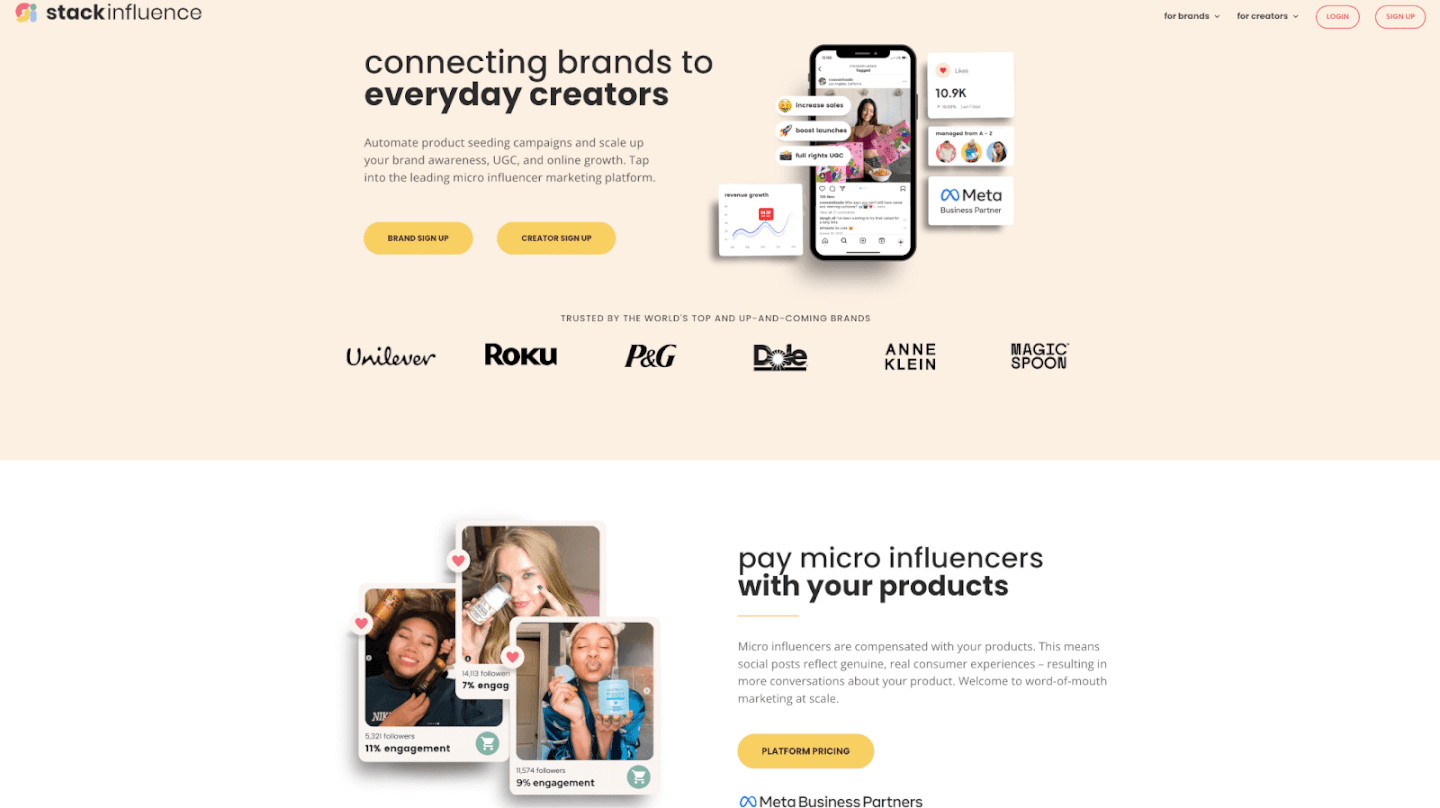
Stack Influence is a leading Instagram marketing agency specializing in micro-influencer campaigns for e-commerce brands. This agency connects brands to a vast community of everyday creators and UGC creators. What sets Stack Influence apart is its product seeding model: instead of costly paid posts, micro influencers are compensated with free products, which leads to authentic content and reviews in exchange. This approach generates genuine buzz (happy influencers share real experiences) and tons of social proof for your product. Stack Influence fully manages campaigns from A to Z – sourcing hundreds of nano- and micro influencers who match your niche, sending them your product, and ensuring they post quality content. It’s an ideal choice for Amazon sellers and D2C brands looking to scale word-of-mouth marketing on Instagram without breaking the bank. (Stack Influence has helped brands in beauty, fitness, home goods and more accumulate thousands of pieces of UGC and drive up engagement.)
The Shelf is an established influencer marketing agency known for its analytical approach. They use proprietary data tools (leveraging AI and shopping behavior analytics) to identify the perfect Instagram influencers for your campaign. The Shelf has run campaigns for major brands like Neutrogena, Hanes, Pepsi, and Walmart across verticals from fashion and beauty to parenting and food. Their strategy often involves guiding consumers through each stage of the buyer journey – for example, pairing Instagram posts and Stories that build awareness with influencer blog content or Reels that drive conversions. They handle everything end-to-end: creative concepting, influencer sourcing, campaign management, and optimization. If you want an Instagram marketing agency that’s heavy on strategy and metrics, The Shelf is a strong contender (they even highlight case studies like generating 1.5 million organic video views for a brand).
NeoReach is both a powerful influencer marketing software platform and a full-service agency. Launched by a young entrepreneur at 19, NeoReach was even tapped by ByteDance to help launch TikTok in the U.S. – a testament to their social savvy. For Instagram campaigns, NeoReach offers a massive database of over 5 million influencers and advanced search tools. Brands can either use their platform DIY or have NeoReach’s team handle campaigns at scale. They’ve worked with giants like Amazon, Airbnb, NBC, and The New York Times. NeoReach’s services include creative strategy, influencer outreach, campaign execution, plus options for UGC campaigns and social media management. They even provide API integrations for companies that want to pull influencer data into their own apps. If you’re looking for tech-enabled, scalable influencer marketing on Instagram, NeoReach brings both the software and expertise to the table.
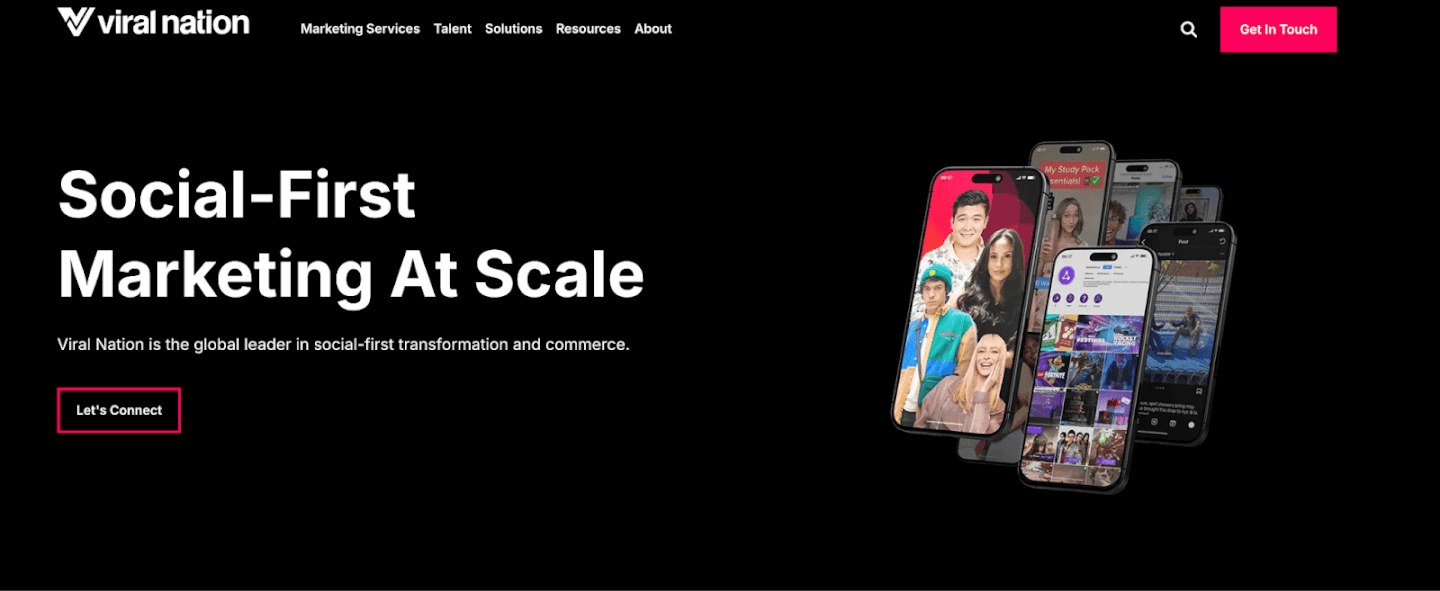
Viral Nation started as an influencer talent agency and evolved into a full-service Instagram marketing agency with a global footprint. They have offices in North America and beyond, and have managed campaigns for Coca-Cola, Disney, Microsoft, Uber, and other household names. Viral Nation stands out for its in-house technology – tools like CreatorOS that use AI to analyze creators’ content and brand mentions. For Instagram campaigns, Viral Nation can do it all: identify the right micro or macro influencers, negotiate contracts, produce creative content, and even handle paid amplification. They put a strong emphasis on brand safety and performance. Whether you need a squad of micro-influencers to flood Instagram with UGC or a big splash with celebrity influencers, Viral Nation has the resources. This agency is a great choice for companies seeking a high-end partner capable of large-scale campaigns (they also handle TikTok, YouTube, and other platforms in conjunction with Insta).
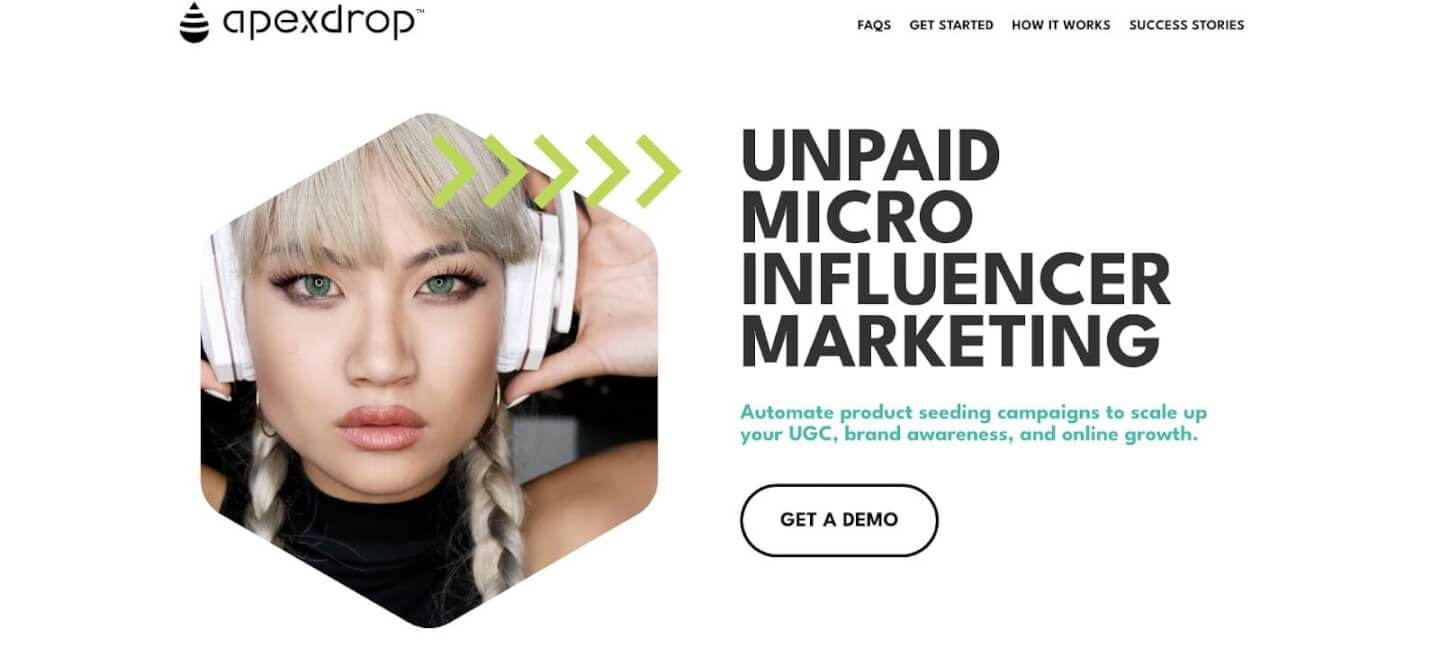
ApexDrop is unique among Instagram marketing agencies because they don’t pay influencers at all – they focus on gifting products to nano- and micro-influencers and getting authentic content in return. This “Drop” model is perfect for brands that want to generate a lot of organic posts and reviews without a huge budget. Here’s how it works: ApexDrop has its own network of vetted micro-influencers (often 1k–20k followers). They match your brand with influencers in your target demo, send out free product samples, and those influencers share posts/photos of the product on Instagram. Because no one’s being paid, the content tends to feel very genuine – like a friend showing off something they love. Brands end up with a trove of UGC and increased social buzz. ApexDrop has executed these campaigns for many D2C and Amazon brands, helping them get organic visibility and even content to use in ads. If you believe in the power of word-of-mouth marketing, ApexDrop’s model delivers it at scale. It’s an Instagram marketing agency that proves sometimes freebies for influencers can yield better ROI than expensive one-off sponsorships.
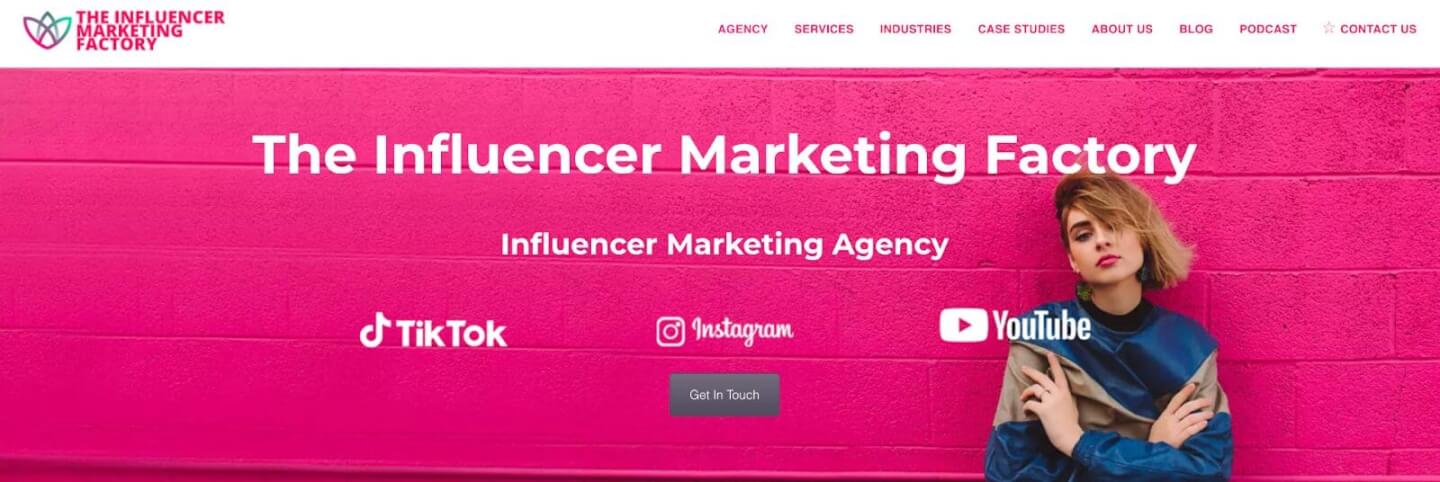
The Influencer Marketing Factory (IMF) is a globally recognized agency that runs influencer campaigns across Instagram, TikTok, YouTube, and more. Founded in 2018 and headquartered in Miami (with team members worldwide), IMF was one of the first agencies to specialize in TikTok marketing – riding the wave early and gaining expertise that now benefits their Instagram and cross-platform campaigns. They’ve delivered successful projects for huge brands like Google, Meta (Facebook), Unilever, Sony Music, Bumble, and Dunkin’. What’s impressive about IMF is their end-to-end approach: they help define your campaign objectives and KPIs, identify and vet ideal influencers, manage the collaboration and content creation process, and then provide in-depth analytics on the results. Beyond influencer campaigns, they also offer UGC content production, social media management, paid ad campaigns, and even market research into the creator economy. If you need an Instagram marketing agency that can also integrate TikTok or YouTube into your strategy (or just bring TikTok-level creativity to Instagram), The Influencer Marketing Factory has the experience and resources to make it happen.
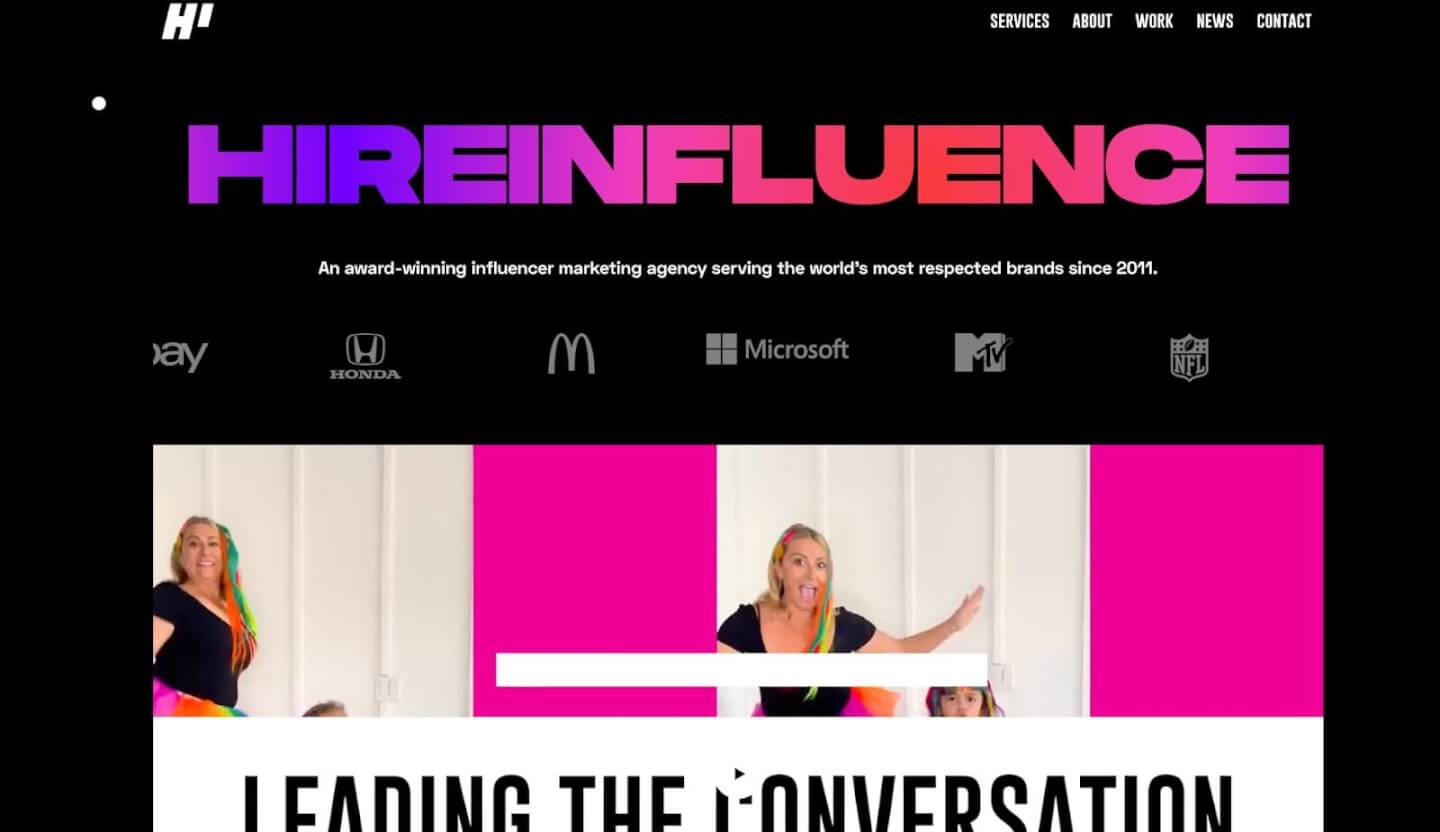
HireInfluence is an influencer marketing agency that’s been around since 2011, making it one of the pioneers in the space. With offices in Texas and Los Angeles, they’ve accumulated a client list that includes the NFL, MTV, Oreo, Warner Bros, Lexus, and more. HireInfluence provides a very comprehensive suite of services – not just standard influencer campaigns, but also experiential marketing (live events with influencers), on-site brand promotions, long-term ambassador programs, content creation and editing, and paid media management to boost influencer content. Essentially, they act as a one-stop Instagram marketing agency for large brands that want creative campaigns and professional execution. For example, HireInfluence might orchestrate an influencer takeover of your Instagram at a live event, or produce a series of slick Reels in partnership with creators, all while ensuring everything stays on-brand. They have been recognized with industry awards, which speaks to their track record. If you’re a brand seeking white-glove service and lots of creative campaign ideas to make a splash on Instagram, HireInfluence should be on your shortlist.
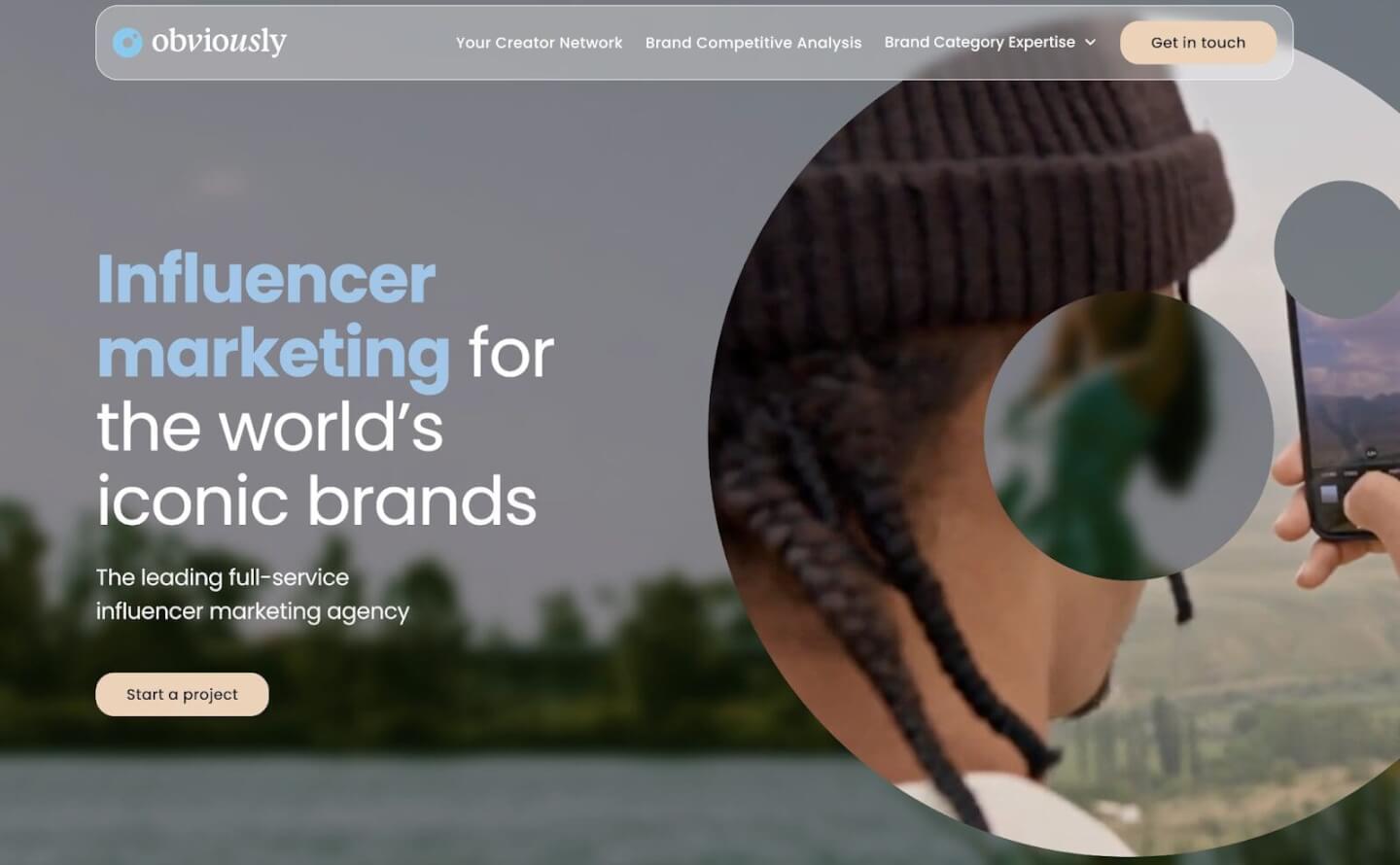
Obviously (yes, that’s the agency’s name) has made a name as a go-to Instagram marketing agency for scalable, data-driven campaigns. Headquartered in New York with offices in San Francisco and Paris, Obviously has run influencer initiatives for brands like Bumble, Ulta Beauty, Converse, Google, and T-Fal. They pride themselves on having a robust proprietary platform to manage influencer relationships and measure campaign performance in real time. An advantage of working with Obviously is their pool of vetted influencers: whether you need a handful of micro influencers for a niche product launch or thousands of creators for a global hashtag campaign, they have the network to deliver. Their services cover creative strategy, influencer casting and management, content production (they can even help with music licensing for Reels/TikTok), and detailed reporting. Brands often praise Obviously for its communication and ability to handle large-scale programs (for instance, seeding products to 100+ influencers at once). If your goal is to amplify your brand on Instagram quickly and efficiently, Obviously offers the infrastructure and experience to execute big ideas smoothly.
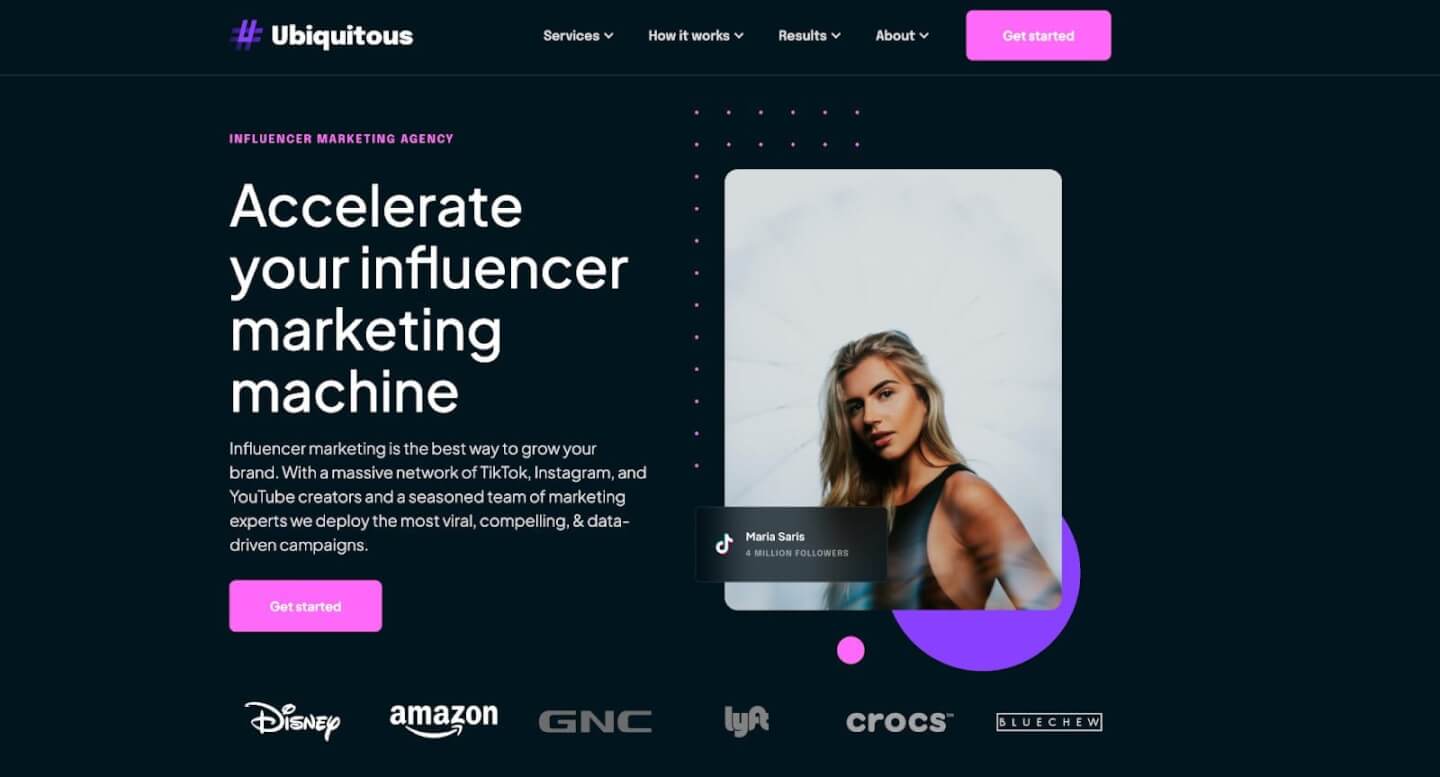
Obviously (yes, that’s the agency’s name) has made a name as a go-to Instagram marketing agency for scalable, data-driven campaigns. Headquartered in New York with offices in San Francisco and Paris, Obviously has run influencer initiatives for brands like Bumble, Ulta Beauty, Converse, Google, and T-Fal. They pride themselves on having a robust proprietary platform to manage influencer relationships and measure campaign performance in real time. An advantage of working with Obviously is their pool of vetted influencers: whether you need a handful of micro influencers for a niche product launch or thousands of creators for a global hashtag campaign, they have the network to deliver. Their services cover creative strategy, influencer casting and management, content production (they can even help with music licensing for Reels/TikTok), and detailed reporting. Brands often praise Obviously for its communication and ability to handle large-scale programs (for instance, seeding products to 100+ influencers at once). If your goal is to amplify your brand on Instagram quickly and efficiently, Obviously offers the infrastructure and experience to execute big ideas smoothly.
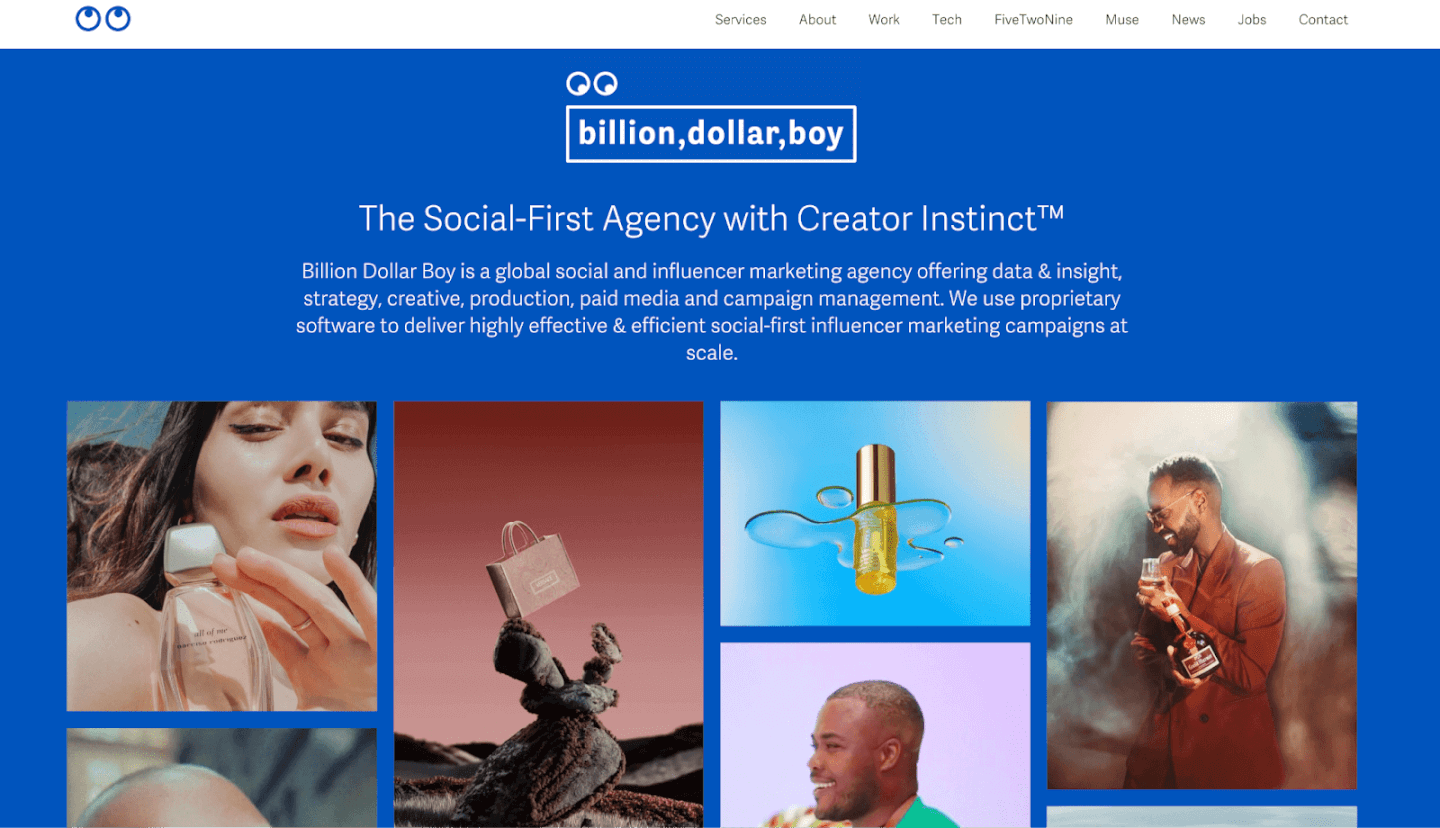
Billion Dollar Boy (BDB) is a global influencer marketing agency with a strong creative and production arm. Founded in London in 2014, BDB now has offices in New York, New Orleans, and across Europe. They’ve executed award-winning Instagram campaigns for major brands like PepsiCo, L’Oreal, Heineken, Ray-Ban, and Pepsi (and many fashion & beauty labels). What makes Billion Dollar Boy stand out is their emphasis on content production and strategy. They don’t just match brands with influencers; they often help conceive the whole campaign concept and produce high-quality visuals. BDB offers services such as end-to-end influencer campaign management, in-house studio production for photo and video shoots, data insights to inform strategy, and even a proprietary platform (Companion) that clients can use to track campaigns in real time. They excel at turning influencer collaborations into slick, integrated marketing pushes – for example, running an Instagram campaign where influencers create content that also gets used in ads, on the brand’s own feed, and beyond. If you want your influencer marketing to have a highly polished, creative edge (almost like an ad agency meets influencer agency), Billion Dollar Boy is a top choice. They understand how to tell a brand’s story through influencers in a way that feels authentic but also visually on-point.
Choosing the right Instagram marketing agency can make a world of difference for your brand’s social success. Whether you’re an Amazon seller looking for micro influencers to review your product or a global company planning a multi-platform campaign, there’s an agency above that fits your needs. Keep in mind your goals – do you need tons of UGC and engagement on a tight budget? A specialist like Stack Influence or ApexDrop might be ideal. Looking for big-picture strategy and creative storytelling? Agencies like The Shelf, Influencer Marketing Factory, or Billion Dollar Boy could be a great match. The common thread is that all these agencies know how to leverage Instagram’s strengths: visual storytelling, influencer authenticity, and community engagement.
As Instagram continues to drive product discovery and online shopping, an experienced agency helps ensure your brand isn’t just present on the platform, but truly thriving. From tapping into micro-influencer communities to producing scroll-stopping content, the expertise of a top Instagram marketing agency will save you time, amplify your message, and deliver real ROI. In the fast-paced world of social media, having expert partners means you can focus on what you do best (building great products and services) while they handle the ever-changing algorithms, trends, and tactics to keep your Instagram game strong. Here’s to elevating your brand with the power of Instagram marketing – and finding an agency that will take you to the next level!
The top podcasts on Spotify have exploded in popularity alongside the overall podcast boom. In fact, over half of Americans age 12 and up (around 158 million people) now listen to podcasts on a monthly basis. Globally, podcast listenership is soaring toward an estimated 650 million by 2027. Spotify itself is one of the leading podcast platforms – second only to YouTube – capturing about 21% of weekly U.S. podcast listeners as their go-to app. It’s no surprise, then, that Spotify is home to many of the world’s most popular and influential podcasts.
What exactly makes the top podcasts on Spotify stand out? These chart-topping shows attract millions of followers and listeners through compelling content, charismatic hosts, and loyal communities. Many are exclusive deals or breakout hits that have defined the podcasting landscape. From true crime tales that keep you up at night to daily news digests and no-holds-barred comedy chats, the variety is endless. And importantly, these podcasts aren’t just entertainment – they’re powerful channels for content creators and even brands. Podcasts represent a form of user-generated content where influencers, journalists, and everyday creators alike engage audiences through authentic, long-form storytelling. (It’s telling that nearly 45% of influencer marketers now work with podcast hosts as brand ambassadors – a nod to how impactful top podcasts have become in the marketing and micro-influencer world.)
Below, we highlight the top podcasts on Spotify as of 2026. This list spans genres from crime and news to sports and tech, reflecting what Spotify listeners are loving right now. Each of these podcasts has dominated the charts and cultivated a massive following. If you’re looking for something new to stream – or insight into what content is resonating in culture – start with these heavyweight hits.
View this post on Instagram A post shared by Joe Rogan (@joerogan)
It’s impossible to talk about top podcasts without mentioning Joe Rogan. The Joe Rogan Experience is a long-form interview show that has sat comfortably at #1 on Spotify’s charts ever since Rogan’s landmark exclusive deal in 2020. Rogan’s podcast attracts an enormous audience – as of 2024, it boasted about 14.5 million followers on Spotify, nearly three times more than the next most-followed show. Each week, millions tune in to hear Rogan’s freewheeling conversations with comedians, scientists, authors, and even controversial figures. Love him or not, Rogan’s influence is undeniable: he reaches a predominantly young male audience and has been Spotify’s top podcaster for several years running. With episodes often exceeding 2–3 hours, JRE exemplifies the pull of unfiltered, authentic content in podcast form. It’s a prime example of how a single creator’s user-generated content can rival traditional media – something that hasn’t gone unnoticed in the influencer marketing world.
View this post on Instagram A post shared by huda mustafa (@hudabubbaaa)
Hosted by Alex Cooper, Call Her Daddy rose from a raunchy dating show into a cultural phenomenon. It became Spotify’s second-biggest podcast for several years, consistently ranking right behind Joe Rogan since 2021. Known for its unfiltered discussions about relationships, sex, and mental health, Call Her Daddy resonates especially with young women (its self-proclaimed “Daddy Gang” of fans). In 2021, Spotify signed Cooper to an exclusive $60+ million deal, underlining how valuable this podcast’s audience is. Even after ending exclusivity in 2024, Call Her Daddy has maintained massive reach – over 5 million weekly listeners and around 3.7 million Spotify followers as of 2024. Alex Cooper’s ability to cut through the BS with candid celebrity interviews and personal monologues keeps this show perennially in the top charts. It’s frequently cited as the most-listened-to podcast by women and has proven that a bold content creator can parlay a personal brand into podcast stardom.
View this post on Instagram A post shared by Crime Junkie (@crimejunkiepodcast)
True crime continues to dominate podcast playlists, and Crime Junkie is leading the pack. Hosted by Ashley Flowers (with co-host Brit Prawat), this weekly show dives into chilling unsolved cases and serial killer stories – essentially catnip for “crime junkie” listeners. The podcast’s popularity is immense: it often ranks in the top 2–3 podcasts overall in the U.S. by audience reach. In fact, Crime Junkie is routinely cited among the most popular podcasts in America, not just in true crime but across all genres. Fans love the narrative style, thorough research, and the feeling of being part of a mystery-solving community. With its millions of downloads per month, Crime Junkie exemplifies how a niche topic (true crime) can break into the mainstream. It has spawned a network (audiochuck) and even a surge of copycat shows. If you enjoy gripping storytelling and don’t mind double-checking your door locks at night, Crime Junkie is a must-listen.
View this post on Instagram A post shared by The Daily Show (@thedailyshow)
From The New York Times, The Daily has become the go-to daily news podcast for millions seeking a quick, informative rundown of current events. Hosted by Michael Barbaro, each weekday episode is about 20–30 minutes, focusing on one or two big stories with NYT reporters and audio storytelling flair. Despite not being exclusive to Spotify, The Daily is so popular that it still ranks among the top podcasts on Spotify and Apple alike – in early 2026 it was the #3 podcast in the U.S. by weekly reach. Roughly 1.5 to 2 million listeners tune in to each episode on average, which is huge for a daily news show. The format’s success (deep-dive journalism in a short form) has influenced countless other news podcasts. For busy professionals, students, and news junkies, The Daily is part of the morning routine – as essential as a cup of coffee. Its prominence on Spotify underscores that even in the age of music streaming, tens of millions of people also use the platform to stay informed about the world.
View this post on Instagram A post shared by Pardon My Take (@pardonmytake)
Avid sports fans on Spotify are likely already in on the joke: Pardon My Take (PMT) is the podcast for sports commentary with a comedic twist. Hosted by Barstool Sports personalities Dan “Big Cat” Katz and PFT Commenter, PMT delivers loud, irreverent, and surprisingly insightful takes on the sports world. The chemistry between the hosts and their satirical segments have made PMT the most popular sports podcast on Spotify (and beyond). In fact, the show’s audience ranges from 750,000 to 1.5 million listeners per episode in recent years. That kind of reach puts it at the top of its genre; Apple Podcasts once named Pardon My Take among the best podcasts of the year, and by 2018 it was the 14th most downloaded podcast overall. Barstool Sports’ devoted fan base (the self-proclaimed “AWLs” or Award-Winning Listeners) helped propel PMT to #1 on the iTunes charts within days of its 2016 launch. Whether it’s comedic sports recaps, athlete interviews, or running gags like “Football Guy of the Week,” PMT has changed the game for sports talk. It’s both influential and hugely entertaining – even if you’re not a sports fanatic, you might find yourself hooked on the banter.
Another giant in the sports category is The Bill Simmons Podcast, which blends sports, pop culture, and interviews. Hosted by Bill Simmons (of HBO and The Ringer), this show is often introduced as “the most downloaded sports podcast of all time”. Simmons is a veteran sportswriter and media figure, and his podcast – typically running 1-2 hours – features rotating guests from athletes to celebrities (and regulars like Cousin Sal and Joe House) chatting about the latest in the NBA, NFL, movies, and more. The podcast’s longevity and Simmons’ dedicated following have kept it highly ranked on Spotify’s charts. It’s not uncommon to see The Bill Simmons Podcast near the top of Spotify’s sports and overall podcast listings. Fans appreciate Simmons’ deep knowledge and the casual, barbershop-style debates. This show has been a staple since the mid-2010s and helped prove that long-form sports talk could thrive in podcasting. Even with so much competition now, Bill Simmons’ name recognition and the show’s consistently strong content make it a top recommendation for sports and culture buffs.
View this post on Instagram A post shared by My Favorite Murder (@myfavoritemurder)
Bridging dark subject matter with humor, My Favorite Murder (MFM) pioneered the true-crime comedy genre – and its success is staggering. Hosted by comedians Karen Kilgariff and Georgia Hardstark, MFM has a legion of loyal fans who call themselves “Murderinos.” Each episode features the hosts recounting their “favorite” murder cases of the week, often with quirky asides and an empathetic touch. This unique format struck a chord: as of 2020 the podcast was getting 35 million downloads per month, placing it among the top downloaded podcasts in the world. It regularly appeared in the Top 10 on iTunes charts during its peak. Even today, My Favorite Murder remains one of the top podcasts on Spotify under true crime, and often lands in overall top ranks too. The show’s success spawned an entire podcast network (Exactly Right Media) and a wave of copycats, but MFM maintains a special place thanks to the chemistry of its hosts. By mixing comedic relief with respectful true-crime storytelling, Kilgariff and Hardstark created a safe space for fans to obsess over dark tales and laugh – a combination that clearly keeps millions downloading. If you want a lighter twist on true crime, this is the podcast to queue up (just remember: “Stay sexy and don’t get murdered!”).
View this post on Instagram A post shared by Dateline NBC (@datelinenbc)
Sometimes the top podcast is just a great TV show repackaged for your ears. NBC’s long-running newsmagazine Dateline has found a second life as Dateline NBC: the podcast, and it’s hugely popular. Essentially, these are audio versions of Dateline’s famous true-crime episodes, with correspondents like Keith Morrison narrating gripping murder mysteries and investigations. The format translates perfectly to podcast form – so much so that Dateline NBC often charts in the Top 5 podcasts on both Apple and Spotify. For example, in late 2022 it was sitting at #4 on Apple’s Top Shows (only behind The Daily, JRE, and Crime Junkie). Listeners can’t get enough of the suspenseful storytelling and high production value that Dateline provides. With a mix of current cases and classic episodes, this feed lets you binge hours of true crime content back-to-back (no need to wait for Friday night TV). Its success on Spotify’s platform underscores how much people love true crime – and familiar, trusted brands. If you enjoy TV documentaries or series like 48 Hours, the Dateline podcast is a perfect companion. It’s also a reminder that some of the top podcasts on Spotify come from traditional media adapting to new formats and finding even larger audiences online.
MIT researcher-turned-YouTuber Lex Fridman hosts one of Spotify’s most intellectually curious podcasts. The Lex Fridman Podcast is known for marathon conversations that explore science, technology, history, philosophy and beyond. Lex brings on big-name guests – everyone from Elon Musk and Sam Harris to athletes and authors – for in-depth interviews about AI, consciousness, love, and power. The podcast’s tagline could well be “life is hard, this podcast will help” (a nod to its mission of extracting wisdom from great thinkers). What started as a niche AI podcast has grown into a must-listen for tech enthusiasts and autodidacts, consistently appearing in Spotify’s top charts for science/tech. With a Twitter following in the millions and episodes often trending on YouTube, Lex Fridman has built a brand as a thoughtful, empathetic interviewer. His episodes can run 2–4 hours, catering to die-hard listeners who crave substance over sound bites. The show’s rise exemplifies how a content creator can leverage multiple platforms (YouTube, podcasts) to build an audience – and then sustain that success through authenticity and deep-dive content. If you’re looking for conversation that expands your mind (and you have a few hours to spare), Lex Fridman’s podcast is a top choice on Spotify.
View this post on Instagram A post shared by Pod Save America (@podsaveamerica)
Rounding out the list is a political powerhouse: Pod Save America. Hosted by four former Obama aides (Jon Favreau, Jon Lovett, Dan Pfeiffer, Tommy Vietor), this unabashedly progressive podcast delivers a twice-weekly dose of U.S. politics and current events – with a mix of humor and “no bulls**t” commentary. Since its 2017 debut, Pod Save America has become one of the most popular political podcasts ever, often charting near the top of Spotify and Apple’s rankings for news & politics. At its peak it was reaching about 1.5 million listeners per episode in the U.S., comparable to a decent cable news show audience. The hosts’ insider perspectives and conversational style have attracted a young, passionate fanbase (dubbed “Friends of the Pod”). It’s not unusual for Pod Save to hit #1 on the Apple podcast charts during big news weeks, and it frequently appears in Spotify’s trending lists. The show has even done live tours and interviewed major political figures (from Kamala Harris to Barack Obama himself). Beyond its political impact, Pod Save America illustrates the power of podcasts in mobilizing and engaging listeners – many fans credit it with keeping them informed (and sane) through chaotic news cycles. In the crowded arena of talk podcasts, Pod Save America stands out as a flagship show proving that politics can top the Spotify charts.
It’s worth noting that the top podcasts on Spotify aren’t just dominating entertainment – they’re also shaping trends in influencer marketing and e-commerce. Podcasts have emerged as a potent form of user-generated content (UGC) where creators build trust through authentic storytelling. Many micro influencers and content creators now host podcasts to deepen engagement with their audiences, leveraging the intimate, long-form nature of audio. Brands have caught on as well. From indie start-ups to Amazon sellers, companies are partnering with popular podcasters to reach niche communities via host-read ads and sponsorships. In fact, nearly half of today’s influencer marketing campaigns involve podcast hosts as brand ambassadors or collaborators. Why? Because podcast listeners develop a loyal bond with hosts – when a favorite creator chats about a product or service, it carries genuine weight.
For marketers and entrepreneurs, the influencer podcast boom opens new avenues. Imagine a tech gadget review on a top tech podcast, or a discussion of wellness products on a hit health show – these can drive sales more organically than traditional ads. Even social media stars (from YouTube, TikTok, Instagram) are launching podcasts, turning their followers into cross-platform devotees. The keyword here is authenticity: successful podcasts feel like conversations with friends, which is gold for influencer marketing. As a platform that hosts these voices, Spotify has become a crucial arena for branded content and community-building through audio.
Stack Influence – a leading micro-influencer marketing platform – is a prime example of how the best marketing tools for small businesses in 2025 are empowering brands. From connecting e-commerce sellers with everyday content creators to simplifying design and analytics, today’s tools help small businesses punch above their weight despite limited resources. In fact, digital presence is now key to small business growth, even on a tight budge. Many small firms operate with modest marketing spend (38% have under $2,500 per month) and often lack dedicated marketing staff. The right marketing tools—especially affordable or free ones—allow time- and budget-strapped entrepreneurs to compete effectively by automating tasks, amplifying reach, and turning data into insight.
Why leverage marketing tools? Simply put, without smart marketing, you’ll struggle to gain customers. Even a great product won’t sell if nobody knows about it. Small businesses need marketing tools to establish an online presence, generate leads, and build brand awareness efficiently. The good news is that many tools have free tiers or low-cost plans tailored for startups. By using the best marketing tools for small businesses, you can streamline your efforts across social media, email, SEO, and more to get the most results from the least investment. Below, we’ll explore top tool categories – from influencer marketing to analytics – that can drive growth for small businesses this year.
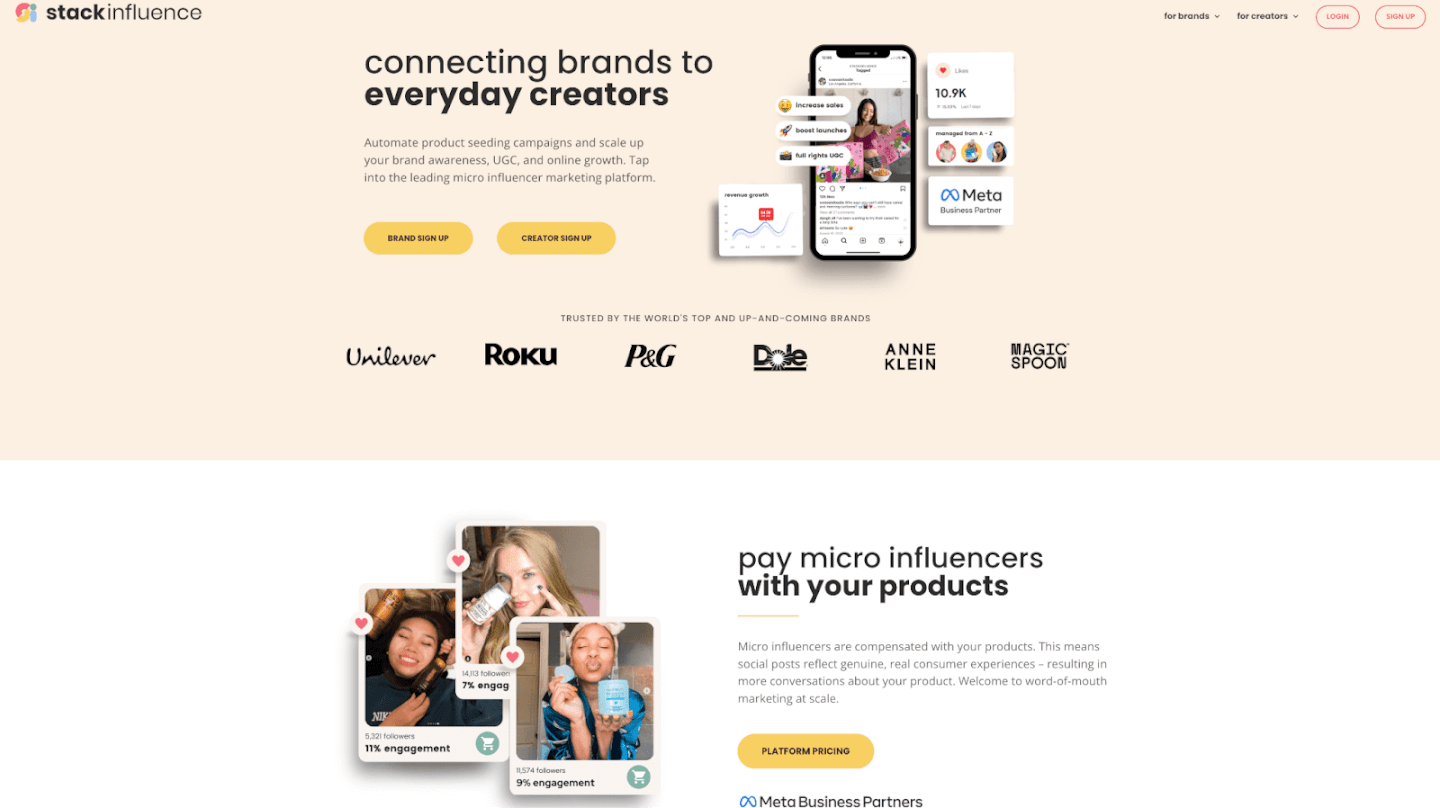
Micro and local influencers have become a major marketing trend for small businesses, with 33% of SMBs citing them as a top strategy (just behind AI and social commerce). These everyday content creators can generate authentic buzz and UGC, leveling the playing field for small brands.
One of the most powerful marketing tools for small businesses in 2025 is the micro-influencer. By collaborating with niche content creators on platforms like Instagram, TikTok, and YouTube, small businesses tap into genuine word-of-mouth promotion. In a recent survey, influencer endorsements ranked among the top three tactics (after reviews and referrals) driving growth for SMBs. Why? Because micro-influencers produce user-generated content (UGC) and reviews that build trust. People are more likely to try a product when they see real consumers – not just ads – vouching for it.
Influencer marketing platforms make it easy to find and manage these collaborations. For example, Stack Influence is a leading platform focused on Amazon Marketplace sellers, using AI to connect brands with vetted micro-influencers who create valuable UGC and drive high-quality traffic for e-commerce businesses. By sending free product samples to creators, a small brand can generate dozens of authentic posts and product reviews with minimal spend. On average, brands earn $5.78 for every $1 invested in influencer marketing (578% ROI), outperforming many traditional ads. Those kinds of returns are game-changing for a small business budget.
Other tools and marketplaces (like Upfluence, GRIN, or even simpler services such as Social Cat) help small businesses launch micro-influencer campaigns without needing a large team. The key is to focus on micro-influencers (typically 1k–50k followers) who have high engagement in your niche, rather than expensive celebrities. Their audiences trust their recommendations, leading to higher engagement and authentic UGC for your brand. If you sell on Amazon or run an online store, micro-influencer campaigns can also boost your product rankings and reviews – ultimately lifting sales. (Stack Influence notes that its influencer campaigns help increase Amazon listing rankings and drive traffic for marketplace sellers.) In short, an influencer marketing tool is one of the best marketing tools for small businesses looking to spark word-of-mouth growth with minimal ad spend.
Pro Tip: Start small by gifting products to a handful of local or micro-influencers. Use an influencer platform or even just Instagram/TikTok searches to find creators who align with your brand values. The content and exposure you gain can be repurposed across your social media, giving you a steady stream of marketing material created by real people.

Social media is the bread and butter of small business marketing. In fact, 96% of small businesses use social media as part of their marketing strategy, and over half rely on social ads or content to find customers. With consumers spending hours per day on platforms like Facebook, Instagram, TikTok, and YouTube, a strong social presence lets a small business reach new audiences for little to no cost. But managing multiple social networks can be time-consuming – which is where social media management tools come in. For small teams, having visibility across different communication channels reduces response delays and improves overall customer engagement.
Platforms such as Buffer, Hootsuite, and Sprout Social allow you to schedule posts across various accounts, engage followers, and track performance metrics in one place. For example, Buffer is popular for its easy scheduled posting to all major sites (Facebook, X/Twitter, LinkedIn, TikTok, Instagram, etc.). It provides a unified dashboard where you can plan your content calendar, get reminders to post at optimal times, and even respond to comments or messages from different platforms. Many social tools also include social listening features – Buffer lets you monitor what people are saying about your brand or industry so you can jump into conversations or spot trends. This is especially valuable for small businesses to engage local communities and build relationships.
Another essential is the Meta Business Suite (formerly Facebook Business Manager), a free tool that helps you manage your Facebook and Instagram business pages, messages, and ads together. Considering Facebook remains the most popular platform for SMB marketing – nearly 80% of small businesses active on social media use Facebook, followed by Instagram and LinkedIn – using Meta’s tools to organize your posts and ad campaigns is a no-brainer. (Globally, over 200 million small businesses use Facebook’s free business tools to maintain an online presence!)
For visual content, apps like Canva (more on that later) integrate with social schedulers so you can design a post and queue it in minutes. TikTok and Instagram Reels have their own scheduling and analytics tools now as well, acknowledging how vital short-form video is for marketing. Short-form videos under 90 seconds keep about 50% of viewers watching to the end, showing how effective a catchy clip can be. A small business could film product demos, behind-the-scenes snippets, or customer testimonials on a smartphone and use a tool like CapCut (a free TikTok-owned video editor) to add music and captions – then schedule it to go live at peak times.
Crucially, social media tools help you be consistent without constant manual effort. Consistency is key since about 55% of consumers learn about new brands via social media. By planning a week or month of posts in advance, you ensure your business stays visible. Many tools offer analytics that show which posts or times get the most engagement, so you can double down on what works. And if budget allows, they’ll manage your social media advertising too: boosting posts, creating targeted ads, and tracking results. (Less than half of SMBs currently invest in paid social ads, which means doing so can give you a leg up. Just note that if you’re not ready for ads yet, organic posting is still valuable – 52% of small businesses simply focus on unpaid social media marketing to reach customers.)
Pro Tip: Take advantage of free or freemium plans. Tools like Buffer and Hootsuite offer free plans that let you connect a few social accounts and schedule a limited number of posts. This is perfect for a busy owner who wants to set their Facebook and Instagram posts for the week all at once. Also experiment with built-in tools (Facebook’s scheduler, TweetDeck for X, etc.) before paying for a third-party platform. And remember to engage – scheduling is great, but make sure to respond to comments and messages. Social media is a two-way street, and prompt interaction can set you apart from bigger competitors.
When it comes to ROI, email marketing is a superstar – and it’s far from “old school.” Email lets you reach customers in a personalized way and build relationships over time. Consider this: marketers see an average return of $42 for every $1 spent on email marketing, and 59% of consumers say marketing emails influence their purchase decisions. For small businesses, email can be a low-cost lifeline for driving repeat business and converting prospects, especially in e-commerce. The key is to use the right tools to automate and optimize your email campaigns.
Email marketing platforms like Mailchimp, Constant Contact, SendinBlue (Brevo), and Klaviyo make it easy to design attractive emails, manage your contact lists, and track results. For instance, Mailchimp is an industry veteran known for its intuitive drag-and-drop email builder and templates that even non-designers can use. It also now offers extras like landing page builders, basic CRM features, and hundreds of integrations. Importantly for small businesses, Mailchimp has a free tier (for up to 500 contacts) – perfect to start building your newsletter without any cost. As your list grows, Mailchimp and other best alternatives to Mailchimp provide segmentation tools so you can target specific audiences (e.g. send a different message to past customers vs. new leads).
For e-commerce sellers, a tool like Klaviyo is incredibly powerful. Klaviyo has become the gold standard for email marketing in the e-commerce world because of its deep integration with online store platforms and its advanced segmentation. It pulls in data from your Shopify/Magento/WooCommerce store – like who bought what, who abandoned their cart, etc. – and lets you automate highly personalized emails (think: “We saw you looking at Product X – here’s 10% off if you complete your purchase!”). These kinds of tailored messages can dramatically boost conversion rates. Even if its full capabilities are more than you need at first, you can use tools similar to Klaviyo for simpler automation: for example, set up a welcome email for new subscribers, a follow-up offer for first-time buyers, or a re-engagement email to customers who haven’t purchased in a while. Automating these touches ensures you’re continuously nurturing your audience with minimal manual work.
Alongside email, consider a CRM (Customer Relationship Management) system to organize your contacts and leads. CRMs like HubSpot (which has a free plan), Zoho CRM, or Insightly store all your customer info, interactions, and deal status in one place. This helps even a one-person business keep track of who’s who – so when John Doe calls, you remember he’s the guy who inquired about pricing last month, and you can impress him by following up personally. Many CRMs also have built-in email marketing or integrate tightly with email platforms, so you can segment and target contacts based on their activity. For example, HubSpot’s free CRM lets you send up to 2,000 emails/month and set up basic drip campaigns, while keeping a timeline of each lead’s behavior.
SMS marketing is another channel to mention – some email tools (like Klaviyo or Omnisend) let you send text message campaigns as well. SMS can have extremely high open rates and is great for quick promotions (“Flash sale today only!”) or appointment reminders for service businesses. Just use it sparingly and always with permission, since it’s more intrusive than email.
Finally, one of the best marketing tools for small businesses is simply the email newsletter. It doesn’t require fancy software – just a consistent effort to send value to your subscribers. Share helpful tips, product updates, customer stories, or exclusive discounts. Over time, your email list can become a revenue engine you fully own (unlike social media followers, which you’re renting from the platforms). With billions of people using email worldwide and still growing, email isn’t going anywhere as a marketing staple.
Pro Tip: If you’re just starting, begin collecting emails from day one – add a signup form to your website and incentivize it (e.g. “Join our list for 10% off your first purchase” or “Get our free DIY marketing guide”). Use a simple tool like Mailchimp’s free plan to send a monthly newsletter. As you grow, segment your list (by customer vs. non-customer, by interests, etc.) and personalize content. And always preview-test your emails on mobile devices; a majority of people will read on their phone.
Eye-catching content is essential for marketing, but hiring professional designers or videographers is often beyond a small business’s budget. Luckily, today’s content creation tools make it easy for anyone to produce polished graphics, videos, and other media – a must when social feeds and websites are so visual. Whether it’s designing an Instagram flyer, editing a product photo, or putting together a short promo video, there’s likely a tool that can help you do it in-house.
Canva is a standout favorite in this category and absolutely one of the best marketing tools for small businesses with limited design skills. Canva is a free-to-use graphic design platform perfect for creating marketing visuals on a budget. It offers thousands of templates for everything: social media posts, posters, business cards, email banners, and more. With its drag-and-drop interface, you can start with a template and easily swap in your own text, colors, and images – resulting in professional-looking graphics in minutes. Need an Instagram Story for a new product launch? Canva has the layout ready. Want to print a flyer for a local event? Choose a template and you’re halfway done. For developers creating portfolios or marketing assets for freelance websites for developers, the time and money saved here are huge—especially when a freelance designer might charge $50+ for a single graphic that you can easily create yourself using Canva’s free elements. (They do have a paid Pro version with more assets and features, but many small businesses get by just fine on the free plan.)
For video content, which is increasingly important (short videos and Reels are driving high engagement these days), tools like CapCut, InShot, or Adobe Express Video enable quick editing on your phone or computer. You can trim clips, add captions and music, insert your logo, and optimize the format for each platform. This means you don’t need a full production team to join the video marketing trend – an owner or employee with a smartphone and a creative idea can produce TikToks or YouTube shorts that attract customers. Remember, authenticity often trumps polish in social media; even a simple behind-the-scenes clip or a how-to demonstration can perform well if it’s genuine. As long as you have clear visuals and sound (and maybe some fun text overlays courtesy of these apps), you’re good to go.
Another aspect of content is user-generated content (UGC) – getting your customers or fans to create content for you. We touched on this with influencer marketing, but you can also encourage UGC more directly. For example, run a photo contest asking customers to share how they use your product, or create a hashtag for your brand and feature the best posts. There are tools like Yotpo or Loox (for Shopify) that help collect and display customer photos and reviews on your site, essentially turning happy customers into your content creators. Featuring real users not only provides you with free content, it also builds social proof.
Don’t forget simpler content needs too: stock photos (sites like Unsplash or Pexels provide free high-quality images you can use in blogs or social posts), blog content (if writing isn’t your forte, tools like Grammarly help polish your copy, and AI writers like ChatGPT or Jasper can assist with generating drafts or ideas), and presentations or infographics (Canva, Visme, or Piktochart can help visualize data in an appealing way). Infographics in particular can be a great marketing asset – they’re highly shareable and can establish you as an authority in your niche. For logos and branded assets, LOGO.com offers an easy-to-use AI logo maker along with templates for social media and business materials.
In short, today’s content tools let small businesses produce nearly all the creative assets they need without hiring a big agency. The playing field between a home-based startup and a big corporation is more level than ever when you have Canva for design and TikTok for distribution!
Pro Tip: Batch your content creation to save time. Set aside one day a month to create a bunch of social media posts in Canva, rather than scrambling to make something daily. Likewise, shoot several short video clips in one session. Also, maintain a consistent brand style – use the same colors, fonts, and tone across your materials (Canva lets you set brand colors and fonts for consistency). This makes your brand look more professional and memorable, even if you’re a one-person show.
For any small business selling products online – whether through your own website or marketplaces like Amazon, Etsy, or eBay – there’s a unique set of marketing tools to help you stand out and increase sales. E-commerce is fiercely competitive, but by using the right platforms and data-driven tools, a small seller can drive more traffic and conversions without a massive ad budget.
Firstly, if you’re on Amazon, leveraging Amazon’s built-in marketing features is crucial. Amazon Advertising (Sponsored Products, Sponsored Brands, etc.) is basically pay-per-click ads within Amazon’s search results. It can put your product at the top of search pages, which is valuable given that Amazon is often the first place people search for items. These ads run on a bidding system, but even a modest budget can yield results because the people seeing the ads are already shopping (high intent). In fact, ads on Amazon have a strong chance of leading to a sale since they reach customers actively looking to buy. A small business can start with automatic targeting ads (letting Amazon decide where to show your item) to gather data, then refine with manual targeting on keywords that convert well. Amazon’s campaign manager tool will show you metrics like click-through-rate, cost per sale (ACoS), etc., helping you optimize over time. Keep in mind, about 40% of small businesses invest in search advertising (like Google or Amazon ads) – those who do often see it as the most satisfying channel in terms of results. If you’re among the 60% not yet using these ads, you might be missing a relatively efficient way to get in front of customers.
Outside of Amazon, small e-commerce brands should look at Google Ads as a tool for driving store traffic. Google Ads allows you to bid on keywords so your website appears in Google searches and Google Shopping results. With Google commanding about 90% of global search market share, it’s a pipeline to huge audiences. For example, a local bakery could bid on “fresh cupcakes in ” to appear atop search results when someone nearby looks for treats. You can set strict budgets and target local areas, making it doable even on a small scale. Additionally, retargeting tools like AdRoll (which was featured in Jimdo’s list) can display your product ads to people who visited your site but didn’t buy, as they browse other websites or social media. This helps recapture potentially lost sales by gently reminding shoppers of the item they viewed (“Oh right, I did want to buy that!”).
Another powerful category is marketplace optimization tools – software that helps you optimize your product listings and research what to sell. For Amazon sellers, tools like Helium 10, Jungle Scout, or AMZScout provide keyword research (so you can see what shoppers are searching for), competitive analysis, and even product trend insights. They can show you estimated sales for products, high-volume search terms to include in your title, and flag which of your listings need better images or descriptions. Using these insights, a small seller can tweak their listings to rank higher in Amazon’s organic results (essentially SEO for Amazon). The higher you rank, the more free traffic you get. These tools usually have subscription costs, but even using them for a couple of months to get your basics right can pay off.
For those running their own online store (Shopify, WooCommerce, etc.), there’s a wealth of apps and plugins that serve as marketing tools. Some key ones:
One cannot mention e-commerce marketing without highlighting the role of influencers and UGC again, especially for Amazon. Amazon’s algorithm favors listings with strong sales velocity and good reviews. By running micro-influencer campaigns (using platforms like Stack Influence or others), Amazon sellers can drive an influx of sales and receive fresh reviews, which in turn boosts organic rankings on Amazon. It’s a virtuous cycle: influencer posts lead to Amazon sales, which improve listing rank, which leads to more organic sales. Plus, the UGC (photos, videos) from those influencers can be repurposed in Amazon Posts or on your Amazon Storefront, further enriching your presence. Amazon even has its own Amazon Influencer Program now, where influencers create content around products – a trend to keep an eye on for 2025.
Pro Tip: If you sell on Amazon, make use of Amazon’s free tools like A+ Content (enhanced product descriptions with images), Brand Registry (if you have a trademark, this unlocks more marketing features), and Amazon Posts (a social-style feed of brand content within Amazon’s app). These are marketing tools in their own right and cost nothing except a bit of your time to set up. Off Amazon, if you run a Shopify store, explore the Shopify App Store for marketing apps – but don’t go overboard. Pick a few that address your biggest needs (e.g., one for reviews, one for email pop-ups, one for SEO), and always check reviews and impact on site speed. A lean, fast website with great content and a couple of well-chosen tools often beats a bloated site with too many bells and whistles.
Last but certainly not least, every small business needs tools to measure their marketing performance and improve their visibility on search engines. In the hustle of running campaigns and posting on social media, it’s easy to neglect the data – but tracking what works (and what doesn’t) is how you get better results over time. Fortunately, there are some excellent analytics and SEO tools available, including free options, that no small business should ignore.
At a minimum, set up Google Analytics on your website. This free tool from Google is like having a microscope on your site’s traffic. It tells you how many people visit, how they found you (Google search? Social media? Referral from another site?), which pages they look at, how long they stay, and much more. Google Analytics recently upgraded to GA4 (its latest version), which can track user journeys across websites and apps with even more detail. For a small business owner, Google Analytics answers critical questions: Is my website traffic growing? Which marketing channel is driving the most visitors or conversions? What blog content is most popular? By knowing these answers, you can double down on the marketing efforts that are working (and stop wasting time/money on those that aren’t). In addition, Google Search Console is another freebie you should enable – it shows how your site appears in Google search results, what queries you’re getting impressions and clicks for, and flags any technical SEO issues.
Speaking of SEO (Search Engine Optimization), if you rely on people finding you via Google or Bing, SEO tools can be a game changer. There are heavy-duty suites like Ahrefs, SEMrush, and Moz which are paid services offering keyword research, backlink analysis, rank tracking, and content optimization insights. Ahrefs, for example, is renowned for its huge backlink index and all-in-one SEO capabilities (keywords, site audits, competitor analysis). A small business might use Ahrefs to find out what keywords their competitors rank for, or to discover content ideas (e.g., find questions people ask in your niche that you can answer with a blog post). SEMrush similarly provides a broad digital marketing toolkit, including PPC analysis and social media monitoring in addition to SEO. These tools, while powerful, can be pricey for a very small operation – but many offer free trials or free limited versions (like Moz’s free keyword explorer or SEMrush’s free tier with limited queries per day). Even using a free trial for a couple of weeks could arm you with a solid keyword list and SEO to-dos.
For local businesses, local SEO is vital. Ensure you claim your Google Business Profile (formerly Google My Business) and fully populate it with correct info, photos, and updates. This helps you show up in local search and on Google Maps. Encourage customers to drop a Google review – 77% of consumers read online reviews for local businesses regularly, so a good rating can directly translate into new customers walking through your door. Tools like BrightLocal or Moz Local can help manage your listings across various directories and monitor reviews, but if budget is zero, you can handle a lot of this manually by just maintaining your Google, Yelp, and Facebook listings. The effort is worth it: review sites are one of the top three marketing channels for small business growth, alongside websites and Facebook.
On the analytics front, beyond Google’s suite, there are specialized tools depending on your needs. Social media analytics are often provided within the management tools we discussed (or natively by each platform’s business insights). Email marketing tools have their own dashboards (open rates, click rates, etc.), and e-commerce platforms have sales analytics. To avoid data overload, pick a few key metrics that matter for you – say, website monthly visitors, conversion rate (what % of visitors become leads or customers), cost per lead/customer (if you do paid ads), email open rate, and social engagement rate. Many small businesses find it helpful to compile these in a simple spreadsheet or dashboard monthly. By tracking over time, you’ll spot trends (e.g., “Every time I run a Facebook promotion, my web traffic spikes” or “My SEO traffic has doubled since I started that blog series”). This guides your future strategy.
One emerging area is AI analytics or tools that optimize for AI-driven search engines (like optimizing content for ChatGPT or other generative search). While still early, we’re seeing new tools (e.g., a platform called Ecomtent was noted as a first-mover in AI search optimization) that help businesses adapt content for AI chat results. Something to watch for the forward-looking marketers, though many core principles of SEO (high-quality, relevant content) remain the same even in an AI age.
Finally, marketing analytics tools like Google Data Studio (now Looker Studio) can pull data from multiple sources (GA, Facebook, Google Ads, etc.) into one report. If you’re a data geek or have someone on the team good with numbers, consolidating metrics in one dashboard can save time and provide a holistic view of your marketing funnel.
Pro Tip: Don’t let analytics intimidate you. Start simple: check your Google Analytics and social insights once a week. Note one thing that surprises you or one idea to try as a result. For example, if you see a blog post is getting lots of Google traffic, consider updating that post with a call-to-action or create more posts on related topics. If you notice hardly anyone clicks your email newsletter links, experiment with new subject lines or content formats. Use data as a feedback loop – a free optimization tool at your disposal. Also, set up goals in Google Analytics (like a goal for “submitted contact form” or “completed purchase”) so you can directly see which channels or campaigns drive those conversions. Measuring what matters will help you continuously refine your use of all the marketing tools above for maximum impact.
Remember, it’s not about adopting every tool out there, but choosing the ones that align with your business goals and mastering them. Start with a few core tools: perhaps a social media manager to maintain consistency, an email platform to stay in touch with customers, and Google Analytics to track progress. As you grow, layer on additional tools (maybe an influencer campaign here, a CRM there) to amplify what’s working. Keep the tone casual and authentic – today’s consumers value genuine connection over corporate polish, which plays to the strength of scrappy small businesses. Whether you’re an Amazon seller looking to boost your rankings with influencer-driven UGC, an e-commerce entrepreneur analyzing SEO keywords, or a local service provider scheduling Facebook posts and emails, the right marketing toolkit will save you time, stretch your dollars, and elevate your brand presence.
In summary, the best marketing tools for small businesses in 2025 help you connect with customers, create compelling content, and continually optimize your efforts. Marketing isn’t a one-time task but an ongoing conversation with your audience – and these tools make sure you’re part of that conversation daily, without it overwhelming your life. Embrace the technology, stay data-informed, and don’t be afraid to experiment. With a bit of creativity and the power of modern marketing platforms, even the smallest business can drive big results this year. Here’s to your marketing success!
Coffee isn’t just a beverage – it’s a vibrant online community and culture. Across social media platforms, creators have turned their passion for the perfect brew into engaging content that attracts millions. On TikTok, the hashtag #coffeetiktok alone has accumulated nearly 9 billion views, while on Instagram, tags like #coffeetime appear on over 32 million posts. From mesmerizing latte art videos to candid café vlogs and brewing tutorials, the Top Coffee Influencers are turning daily cups of joe into viral content. This surge of coffee content is not only entertaining fellow caffeine lovers – it’s also shaping trends in the coffee industry and creating new opportunities for brands through influencer marketing.
The exploding popularity of coffee-related content can be traced to its authenticity and visual appeal. Short-form videos of creative drinks and espresso tricks resonate with audiences worldwide. During the pandemic-born Dalgona coffee craze, for example, home baristas on TikTok showed how a simple whipped coffee could captivate millions. Likewise, latte art challenges and “a day in the life of a barista” vlogs have fostered a global appreciation for coffee craftsmanship. Influencers make specialized techniques – from perfecting a pour-over to dialing in espresso – feel accessible and fun. They also spark viral trends (think espresso-tonics or pumpkin spice hacks) that drive consumers to try new flavors and brewing gadgets.
Behind the mouthwatering photos and videos, influencer marketing is brewing strong. Coffee brands and e-commerce retailers have taken notice that partnering with popular coffee content creators can be a game-changer. The top creators command large, dedicated followings – but even beyond the mega-stars, many micro influencers in coffee boast highly engaged niche audiences. In fact, micro-influencers (those with tens of thousands of followers) often achieve significantly higher engagement rates than huge celebrities. Whether it’s a micro-influencer reviewing a new coffee gadget or a TikTok barista launching the next viral recipe, coffee influencers of all sizes are now at the heart of digital coffee culture.
To shine a light on this thriving community, we’ve rounded up ten of the Top Coffee Influencers making a splash on social media. These individuals range from world-champion baristas to home-brew gurus, and each brings a unique flavor to the coffee scene. Here are the top coffee content creators (with their notable stats and achievements) that every coffee enthusiast – and marketer – should know about:
View this post on Instagram A post shared by James Hoffmann (@jimseven)
A former World Barista Champion (2007) and co-founder of Square Mile Coffee Roasters, James is perhaps the most influential coffee expert on YouTube with over 2.3 million subscribers on his channel. He’s known for approachable yet science-driven videos about brewing techniques, equipment reviews, and coffee history, making specialty coffee knowledge accessible to a broad audience.
View this post on Instagram A post shared by Morgan Eckroth (@morgandrinkscoffee)
Morgan skyrocketed to fame on TikTok, teaching 6.2 million followers how to make the best coffee drinks. A professional barista turned content creator, she won the 2022 U.S. Barista Championship and even placed second globally that year. Morgan entertains viewers with relatable behind-the-counter skits and latte tutorials, perfectly balancing fun and expert insight for coffee lovers.
Touted as the world’s #1 coffee blogger, Dina has built an enormous following with 6 million fans on TikTok and 1.7 million on Instagram. Her content features aesthetically pleasing café videos, creative coffee recipes, and glimpses of coffee culture from around the world. Dina’s massive reach and engaging style have a huge influence on coffee trends – she can send a new recipe or product viral across continents.
View this post on Instagram A post shared by Tanner Colson (@tannercolsoncoffee)
Tanner is an Instagram and TikTok coffee guru known for helping you “make better coffee at home.” He’s garnered about 1.7 million followers on TikTok with his quick brewing tips and fun drink experiments. Tanner’s approachable videos – from espresso tonic tutorials to gadget reviews – inspire home baristas everywhere to up their coffee game with a smile (and often lead to spikes in sales of the gear he features).
View this post on Instagram A post shared by Alex Moe (@themacrobarista)
Alex, a former Starbucks barista, has amassed 1.2 million followers on Instagram by reimagining popular coffee drinks as healthier, low-calorie versions. Branded as “The Macro Barista,” he shares ingredient breakdowns and ordering hacks for each recipe. Alex’s content proves you can enjoy flavorful lattes and stick to your macros, which has earned him a loyal following of fitness-conscious coffee enthusiasts and even influenced menu hacks at major coffee chains.
View this post on Instagram A post shared by Dritan Alsela (@dritanalsela)
A legendary barista and latte art maestro from Germany, Dritan runs his own cafes, roastery, and a barista training school (often preaching “Respect the beans!”). He’s famous on Instagram for pouring exquisite latte art at lightning speed, and has around 1 million followers there. Dritan’s heartfelt hospitality and skill have made him a sought-after coffee trainer in Europe – when he features a tool or bean on his feed, it often sells out, thanks to his passionate fan base.
View this post on Instagram A post shared by Asaf Rauch - Barista Swag Latte Art (@latte_art_tutorials)
Asaf is a competition-level barista and entrepreneur known for intricate latte art and educational coffee content. A café owner and the inventor behind Barista Swag tools, he showcases stunning designs (flowers, swans, even dogs in foam) to his 315K+ Instagram followers. Asaf’s steady stream of reels and tutorials not only delight latte art fans, but also teach them techniques – empowering a new generation of baristas and driving interest in the specialty tools he uses.
View this post on Instagram A post shared by Vivian (@coffeebae97)
Vivian is a TikTok creator who has attracted about 967,000 followers with her whimsical and indulgent coffee recipes. From colorful iced lattes to dessert-inspired frappés, her videos are a treat for viewers who don’t mind a little extra sugar. Vivian’s creative concoctions have such a devoted following that she’s launched her own line of coffee flavors and merchandise – showing how a passionate content creator can turn viral drinks into a brand.
Junichi is a world-renowned latte artist from Japan, best known for winning the 2014 World Latte Art Championship. His Instagram is essentially an art gallery of coffee, featuring breathtaking pours that resemble paintings. Though more niche in following (around 91K Instagram followers), Junichi’s influence in the coffee art community is immense. Baristas across the globe look up to his craft, and he now runs his own popular coffee shop in Kyoto where fans come to see his latte art in person.
View this post on Instagram A post shared by Porto Coffee Week (@portocoffeeweek)
A coffee educator and competitor, Lance brings a mix of science and humor to the coffee content world. An educator at Onyx Coffee Lab, he often hops on Instagram and YouTube to demystify brewing variables (like grind size or water chemistry) in an entertaining way. Though his following (~100K on Instagram) is smaller than others on this list, Lance’s expertise and “coffee nerd” personality have made him a key influencer among serious home brewers. He even coaches other champion baristas and frequently collaborates in the community, amplifying his impact beyond his follower count.
The enthusiasm these Top Coffee Influencers generate isn’t just for show – it translates into real marketing power for coffee brands, equipment makers, and even local cafés. Here’s why partnering with coffee influencers (both big and small) can be a smart move:
By tapping into influencer marketing, coffee businesses from boutique roasters to global machine manufacturers can humanize their marketing and engage the passionate coffee community. Stack Influence, for instance, specializes in connecting brands with relevant creators – helping even emerging coffee brands run micro-influencer campaigns that yield impactful, targeted exposure. The key is to align with influencers who genuinely love your product and whose audience trusts their taste.
In summary, the rise of coffee influencers represents a fusion of community, creativity, and commerce. The Top Coffee Influencers listed here have mastered the art of engaging content – and in the process, they’ve become taste-makers for an entire industry. Whether you’re a coffee enthusiast looking for inspiration or a brand brewing up a marketing strategy, these creators are worth following. They remind us that coffee is more than a drink; it’s a lifestyle and culture continually shaped by the people who love it, one post (or pour) at a time.
Top 10 tennis influencers are not only Grand Slam champions but also powerful content creators shaping trends beyond the court. In this Stack Influence blog, we spotlight the most impactful tennis figures on social media – from legendary pros to rising micro influencers – and how they leverage their platforms. These influencers drive conversations around sports, fashion, and even ecommerce, proving that tennis and influencer marketing now go hand in hand. Brands big and small (including Amazon sellers) are tapping into this trend, partnering with both celebrity athletes and micro influencers to generate authentic user-generated content (UGC) and reach engaged audiences. Below, we break down the top 10 tennis influencers, complete with their social followings and unique impact on and off the court.
View this post on Instagram A post shared by Serena Williams (@serenawilliams)
Serena Williams is widely regarded as one of the greatest tennis players of all time, and her influence extends far beyond tennis. With 23 Grand Slam titles and a massive global fanbase, Serena has amassed 18.1 million Instagram followers as of 2025. Even after retiring in 2022, she remains a cultural icon and top tennis influencer. Williams uses her platform to champion social issues and promote businesses – sometimes plugging products or her own ventures to those millions of followers. Her endorsement portfolio has included Nike, Gatorade, JPMorgan Chase, Lincoln, and more, earning her up to $20 million annually from sponsorships at her peak. Beyond brand deals, Serena launched Serena Ventures, investing in 85+ startups (mostly founded by women or people of color) and built her own fashion line, demonstrating an entrepreneurial influence unrivaled in sports. From inspiring young athletes to redefining influencer marketing for female sports stars, Serena Williams has transformed herself into a brand and business mogul in addition to being a tennis legend.
View this post on Instagram A post shared by Roger Federer (@rogerfederer)
Roger Federer, even in retirement, remains one of the top 10 tennis influencers due to his universal popularity and gracious persona. The Swiss legend has 11.5 million Instagram followers and is known for carefully curated posts about his globe-trotting lifestyle, philanthropic endeavors, and occasional family moments. Federer’s influence is built on elegance and trust – qualities that made him a brand ambassador for Rolex, Uniqlo, Mercedes-Benz and other luxury names for years. He joined Instagram relatively late (2014), but quickly grew a massive following by sharing behind-the-scenes peeks into life on tour and beyond. Since retiring in 2022 with 20 Grand Slam titles, Federer has stayed in the public eye through tennis promotion (like the Laver Cup) and charitable projects. He exemplifies how a sports icon can become a global ambassador, using social media to maintain a warm connection with fans. Federer’s posts often highlight his travel, business ventures, and charity events, reinforcing the image of a worldly role model that brands and followers adore.
View this post on Instagram A post shared by Rafa Nadal (@rafaelnadal)
Spain’s Rafael “Rafa” Nadal is not only a 22-time Grand Slam champion but also the most-followed tennis player on Instagram with 18.4 million followers. He edges out even Serena in that metric and stands as a tennis influencer icon. Nadal’s social media showcases a mix of intense training clips, tournament celebrations, and heartfelt moments, reflecting his humility and passion. His content often features updates from the Rafa Nadal Academy in Mallorca, where he mentors the next generation – extending his influence into youth development. Nadal’s huge following underscores his global fan appeal, especially after dominating Roland Garros 14 times. Brands have taken notice too: Nadal has endorsed Nike, Kia Motors, Babolat, and luxury watchmaker Richard Mille among others. Despite being a private person, Rafa connects with fans by sharing philanthropic initiatives (like his foundation’s work) and personal milestones (like marriage and fatherhood, albeit sparingly). This combination of athletic greatness and authenticity makes Nadal a marketing dream and a top influencer in sports.
View this post on Instagram A post shared by Novak Djokovic (@djokernole)
Novak Djokovic has parlayed his on-court dominance into a powerful social media presence and personal brand. The Serbian star holds a men’s record 24 Grand Slam titles and has 12.6 million Instagram followers tuning in to his updates. Djokovic often uses social media to share glimpses of his life off-court – from wellness routines (he’s known for yoga and a gluten-free diet) to family moments with his wife Jelena and their children. This openness humanizes him and engages fans. He’s also not shy about voicing opinions on health and sports issues, which, while sometimes controversial, underscore his authenticity. As a top tennis influencer, Djokovic’s endorsements range from sports brands (Lacoste, HEAD) to tech and nutrition products. His posts frequently highlight sponsor events, trophy celebrations, and charity work through the Novak Djokovic Foundation. Despite past image challenges, Djokovic’s social following continues to grow as he cements his legacy. His ability to spark conversation – whether about records, diet, or player rights – shows the clout he wields beyond just tennis matches.
View this post on Instagram A post shared by 大坂なおみ🇭🇹🇯🇵 (@naomiosaka)
At just 26, Naomi Osaka has become a crossover superstar and one of the top tennis influencers bridging sports, culture, and commerce. The Japanese-Haitian player has 2.91 million Instagram followers and is widely admired for using her voice on issues like mental health and racial equality. Osaka’s breakthrough Grand Slam wins (four majors so far) and candid personal essays endeared her to millions, making her an endorsement powerhouse. In fact, she was the highest-paid female athlete in the world in 2020, earning about $37.4 million in 12 months from endorsements and prize money. Major brands like Nike, Nissan, Louis Vuitton, and TAG Heuer have partnered with Osaka, drawn by her massive youth following and authentic image. On social media, she mixes light-hearted posts (fashion, anime, gaming) with meaningful messages – such as speaking up about anxiety or supporting Black Lives Matter – showing that an influencer can be both fun and impactful. After becoming a new mom in 2023, Osaka has been easing back into competition, but her marketing appeal hasn’t dimmed. She continues to transcend tennis, using content creation and brand collaborations to connect with audiences far beyond the court.
View this post on Instagram A post shared by Maria Sharapova (@mariasharapova)
Before “influencer” was a buzzword, Maria Sharapova was setting trends as one of tennis’s most marketable stars. The Russian five-time Grand Slam champion, now retired, still boasts over 4 million Instagram followers and a persona synonymous with style and success. Sharapova spent 11 straight years as the world’s highest-paid female athlete during her career, thanks to both her on-court prowess and off-court appeal. She partnered with elite brands like Nike, Evian, Porsche, Tag Heuer, and Avon, pulling in nearly $30 million in 2015 alone. On social media, Sharapova’s content often highlights her business ventures and lifestyle: she’s the founder of the premium candy brand Sugarpova and an investor in wellness startups. Fans still follow her for fitness tips, fashion shots, and entrepreneurial updates. As a tennis influencer, Sharapova represents the fusion of athletics and luxury branding – her endorsements in the 2000s set the stage for today’s influencer marketing in sports. Even in retirement, she remains a go-to celebrity for campaigns and continues to inspire with her journey from tennis stardom to boardroom success.
View this post on Instagram A post shared by Coco Gauff (@cocogauff)
American sensation Coco Gauff has rapidly become one of the top tennis influencers while still early in her career. Fresh off two Grand Slam titles by age 21, Gauff has 2.28 million Instagram followers and was recently named one of the most marketable figures in sport. Her vibrant personality and maturity beyond her years shine on social media – whether she’s posting celebratory dance reels after big wins, sharing training playlists, or using her platform to advocate for social causes. Gauff famously spoke out for racial justice as a teen and often engages fans with Q&A sessions, making her audience feel like part of her journey. Brands have flocked to her: Coco has deals with New Balance, Head, Barilla, Rolex, and more. She also collaborates on TikTok trends, appealing to Gen Z fans in a relatable way. On Instagram, Gauff’s following has grown alongside her achievements, indicating that her on-court success translates to digital influence. Her content strikes a balance between competitive grit and youthful fun, which is exactly what makes her so engaging for young tennis fans and sponsors alike.
View this post on Instagram A post shared by Nick Kyrgios (@k1ngkyrg1os)
Nick Kyrgios brings an edgy flair to tennis and social media, making him a standout influencer in the sport. The Australian showman has over 4 million Instagram followers who tune in not just for tennis highlights but for Nick’s unfiltered personality. Kyrgios is famously candid online: he’ll roast other players, interact with fans in comments, and post about his love for basketball and gaming. This bold approach has made him a polarizing figure and a social media magnet. As one outlet described, Kyrgios “is as controversial on Instagram as he is on court,” freely criticizing anyone and sharing slices of his life from holidays to pickup basketball games. Importantly, he engages followers through regular Q&As and heartfelt messages (he’s opened up about mental health struggles, garnering support). Brands have partnered with Kyrgios too – Nike, Beats, and even gaming sponsors – leveraging his appeal to younger, non-traditional tennis audiences. While injuries have limited his play recently, Kyrgios stays relevant via platforms like Instagram, TikTok, and Twitch (where he streams video games). By embracing a content creator role on his own terms, he’s redefined what it means to be a tennis influencer.
View this post on Instagram A post shared by @emmaraducanu
Emma Raducanu rocketed from obscurity to superstardom after her fairytale U.S. Open win as an 18-year-old qualifier in 2021. Since then, she’s become a bona fide tennis influencer with 2.93 million Instagram followers and a sponsorship portfolio most veterans would envy. Raducanu’s on-court struggles due to injuries haven’t stopped brands from flocking to her: Dior, Porsche, Tiffany & Co., British Airways, Vodafone, Evian – all signed her as an ambassador within months of her breakthrough. Her social media showcases these high-profile partnerships alongside glimpses of her training rehab, fashion shoots, and world travel. According to Tennis365, Raducanu “secured a raft of big-money deals” after her win, and despite ranking dips, she “continues to attract interest from leading brands.” She even filmed a glossy commercial for a new sponsor (a sustainable care brand) during the 2025 US Open, demonstrating how active she is in content creation for endorsements. On Instagram, Emma balances polished sponsor posts with personal touches, like wishing fans Merry Christmas or reflecting on her lessons learned. This strategy maintains her relatability while fulfilling influencer obligations. At just 22, Raducanu exemplifies the modern sports influencer whose star power endures beyond competitive results, thanks to savvy branding and media skills.
View this post on Instagram A post shared by Heineken US (@heineken_us)
Not all top tennis influencers are pro players. Morgan Riddle has made a name as a tennis lifestyle influencer, bringing a fresh audience to the sport. Riddle, who is the girlfriend of ATP star Taylor Fritz, has over 450,000 Instagram followers and 600,000 on TikTok – a following she built by branding tennis as “the chicest sport in the world.” Through vlogs, TikToks, and stylish Instagram posts, Morgan gives fans a behind-the-scenes look at tournaments and adds fashion flair to tennis. For example, during Wimbledon 2025 she hosted the official “Wimbledon Threads” series interviewing players about style. She’s been featured in Vogue and Harper’s Bazaar for her courtside style, and her witty commentaries on TikTok (sometimes poking fun at tennis traditions) frequently go viral. Brands have taken notice: Riddle collaborates with both luxury designers and tennis apparel companies, embodying the role of content creator and micro influencer in one. Her ability to engage Gen Z fans – many of whom might not have followed tennis otherwise – demonstrates the power of micro-influencers in sports marketing. Morgan Riddle shows that you don’t need a Grand Slam trophy to be one of the top 10 tennis influencers; a unique voice and relatable content can serve an even broader marketing niche.
The top 10 tennis influencers above illustrate how social media has become central to tennis culture and commerce. From global icons like Serena to niche creators like Morgan Riddle, each drives value for brands in unique ways. In fact, a recent analysis found over 336 brands partnered with tennis players during the 2024–2025 Wimbledon period alone, spanning luxury fashion, automotive, tech, and more. This highlights that influencer marketing in tennis isn’t limited to sports gear – it’s a broad ecosystem.
For e-commerce companies and Amazon sellers, partnering with tennis influencers (both big and small) can be a game changer. Mega influencers bring massive reach, but micro influencers often offer higher engagement and trust. According to Stack Influence’s research, micro-influencer posts can see 5–20% engagement rates, far above the ~2% typical for mega-celebs. Their authentic, peer-like recommendations translate into stronger credibility and conversion. A tennis micro-influencer – for example, a coach on YouTube or a grassroots player on Instagram – might review products like rackets or sportswear, generating user-generated content (UGC) that shoppers find more believable than ads. In one survey, 82% of consumers said they are highly likely to follow a micro-influencer’s recommendation. For Amazon sellers, this means a well-placed mention by a tennis content creator can boost product discovery and trust among passionate tennis fans.
Influencer marketing in tennis also creates a community effect. Fans engage in conversations, share their own UGC (like hitting sessions inspired by a pro’s video), and become more invested in the sport. This fan-driven content further amplifies a brand’s message at no extra cost. In the age of TikTok and Instagram Reels, even short clips of a player using a certain tennis bag or nutrition shake can go viral and lead to spikes in sales. Brands like Nike and Wilson routinely leverage star players for this reason, but now smaller businesses can do the same by collaborating with micro influencers through platforms like Stack Influence. The result is a win-win: influencers monetize their passion, audiences get genuine recommendations, and brands see increased engagement and sales.
In summary, the top 10 tennis influencers showcase the spectrum of influence – from legendary champions to modern content creators. They all underscore an important point: influencer marketing and tennis are now intertwined. Whether you’re a global sportswear giant or an Amazon seller with a new training gadget, tapping into the tennis influencer network can serve up grand-slam results for your marketing strategy. By focusing on authenticity, community, and the right mix of macro and micro influencers, brands can ace their outreach in the world of tennis and beyond.
Male beauty gurus are taking the social media world by storm. From Instagram to TikTok, the top 10 male makeup influencers are redefining who gets to shape beauty trends. These talented men – ranging from micro-influencers to celebrity makeup artists – use bold artistry and engaging content to captivate audiences. In this blog, we spotlight the top 10 male makeup influencers and explore how their creative work is influencing the beauty industry and helping brands (including e-commerce and Amazon sellers) through influencer marketing and authentic content creation.
Below, we count down the top 10 male makeup influencers you should know, along with their unique styles, achievements, and why they stand out in the influencer marketing landscape:
View this post on Instagram A post shared by Christian Perez (@indigotohell)
Christian Perez, known online as “Indigo,” is a Los Angeles-based self-taught makeup artist famed for his elaborate, otherworldly transformations. He shot to fame after competing on James Charles’ beauty competition show Instant Influencer, which catapulted his online career. Now with over 600,000 Instagram followers, this LGBTQ+ content creator treats makeup as a limitless tool for creativity – one day turning himself into a sea creature, the next into a video game character. Perez’s fantastical looks (often taking up to 6 hours to complete) and his vibrant personality have earned him industry-wide recognition as a rising beauty star.
View this post on Instagram A post shared by KEVIN LUONG (@kvn.luong)
Kevin Luong is a professional makeup artist based in Los Angeles who has amassed around 210,000 followers on Instagram. Known for his ultra-glam makeovers and educational approach, Kevin often shares before-and-after client transformations, product recommendations, and tutorial clips. He has even collaborated with high-profile beauty influencers – for example, he’s glammed YouTuber Desi Perkins for a campaign – showcasing his skill to a wider audience. In addition to freelance work, Kevin offers online makeup workshops, positioning himself as both a content creator and mentor. His mix of professional expertise and approachable teaching style makes him a valuable micro-influencer in the beauty and influencer marketing space.
View this post on Instagram A post shared by Dashawn Moon (@dashawnmoon)
Dashawn Moon is a special effects makeup whiz who first blew up on TikTok with his horror-themed looks and skits. In fact, his spooky SFX tutorials, storytimes, and even oddly satisfying makeup-removal videos have earned him over 6 million TikTok followers. On Instagram, he has a more modest (~142k) following, but his impact across platforms is huge. Moon’s content ranges from zombie transformations to pop-culture inspired creature makeup, often presented with a fun narrative twist. His viral success (some videos garnering millions of views) shows how a creative content creator can cross over from TikTok to IG, engaging audiences through both fright and fun. Brands looking for Halloween campaigns or edgy UGC love the authenticity and entertainment value Dashawn brings to the table.
Raju Nag is an Indian celebrity makeup artist with over 126,000 Instagram followers, celebrated for his work in Bollywood. He has been megastar Salman Khan’s personal makeup artist for nearly two decades, a testament to his skill and trustworthiness. Raju’s Instagram features glamorous bridal makeovers, red-carpet looks, and snapshots with film stars (he’s worked with actors like Sohail Khan and Nawazuddin Siddiqui). By bringing pro-level makeup artistry to social media, Raju bridges old-school industry prestige with new-age influencer appeal. His long career in high-profile makeup artistry – combined with a growing online presence – exemplifies how traditional experts can transform into influential content creators in the era of influencer marketing.
View this post on Instagram A post shared by Harry Makeovers (@harry.makeovers)
“Harry Makeovers,” run by Harvinder (Harry) in India, is a popular bridal makeup specialist who has gained about 117,000 followers on Instagram. Harry is a micro-influencer whose niche is evident: his feed is filled with stunning Indian bridal transformations – from intricate wedding day makeup to elegant reception looks. As a professional makeup studio and academy owner, Harry not only services brides but also teaches aspiring artists, frequently posting student work and masterclass snippets. His content (often in the form of quick before-and-after reels or bridal makeup trend tips) resonates with brides-to-be and makeup enthusiasts alike. By focusing on the lucrative wedding market, Harry has positioned himself as a go-to influencer for bridal beauty trends, proving that even a relatively small influencer in a specific niche can command a highly engaged audience.
View this post on Instagram A post shared by niclas joshua ☽𓁿⭒ ꙳ (@styledbyniclas)
Niclas Joshua is a Master Hairdresser and makeup artist based in Cologne, Germany, with roughly 104k Instagram followers. He combines hair and makeup artistry on his feed – one day showcasing a dramatic hair transformation, the next a creative editorial makeup look. Niclas’s professional background (a certified Friseurmeister, or master stylist) adds credibility to his content, and he often shares pro tips with his audience. His style is chic and modern, often featuring European fashion flair alongside the beauty content. Notably, Niclas has collaborated with major beauty brands like Dyson and Redken in his posts, highlighting how brands value his expertise and trendy aesthetic. By blending hair and makeup content, Niclas stands out among male makeup influencers – he offers a 360° beauty influence that appeals to followers interested in a full glam experience.
View this post on Instagram A post shared by Michael Chezzi (@mchezzi)
Michael Chezzi is an avant-garde makeup influencer whose Instagram account is brimming with fantastical looks and horror-inspired transformations. LGBTQ Nation dubbed Chezzi the “master of mascara – and monsters,” noting how his feed of incredible video tutorials has lately become “horrific” (in the best way) with spooky glam reels. From Frankenstein’s bride to monstrous twists on pop culture figures, Michael’s Halloween-ready creations showcase amazing artistry that’s equal parts beauty and fright. His most viral reels (like a “Frankenglam” monster makeover) have earned thousands of likes and cemented his reputation for special effects makeup. With around 96k followers, this European makeup guru demonstrates the power of niche content – his commitment to creepy-cool makeup looks attracts not only everyday beauty fans but also media attention for his unique niche. Brands have taken note too, as he’s partnered with cosmetics companies for Halloween promotions, leveraging his expertise in the spooky makeup arena.
Sujal Thacker is a 21-year-old male beauty influencer from India who infuses his makeup content with upbeat humor and bold style. His Instagram bio literally says, “Makeup laga ke reels pe nachta hu!” (Hindi for “I put on makeup and dance on reels”), and that playful vibe carries through his posts. Sujal’s content is a vibrant mix of colorful makeup looks, gender-fluid fashion, and light-hearted reels often set to trending music or memes. By blending makeup artistry with comedy and dance, he’s amassed roughly 96k followers and become a relatable voice for young, queer-friendly beauty enthusiasts in India. Sujal is managed by a creator agency and has started landing brand partnerships for cosmetics and apparel – a sign that even as a micro-influencer, his engagement and fresh content style are valuable. In a market where authenticity is key, Sujal’s unfiltered personality and creative expression help brands connect with Gen Z audiences through enjoyable, authentic user-generated content (UGC).
Scott Osbourne Jr. is a Los Angeles-based celebrity makeup artist best known for crafting the fierce looks of punk-rap queen Rico Nasty. With just about 95k Instagram followers, Scott might not seem “huge,” but his influence runs deep in the industry. He’s the makeup pro responsible for Rico Nasty’s signature bold aesthetic – think razor-thin eyebrows, rhinestones, and neon-draped eyeshadow. His experimental glam has even inspired the makeup artists on HBO’s Euphoria (they told Scott that his Instagram looks were on their mood boards). Beyond Rico, Scott has worked with other big names (Doja Cat, Slick Woods, etc.), all while advocating for greater visibility of Black men in the beauty world. He proves that influencer marketing isn’t just about follower count – it’s also about expertise and cultural impact. Scott’s content often features behind-the-scenes snaps from fashion shows, music videos, and creative shoots, giving his followers a taste of high-fashion makeup artistry. For brands, collaborating with someone like Scott means tapping into cutting-edge trends and a professional level of artistry that can elevate any campaign.
Sharath is an Indian makeup artist who has built a unique niche (and ~94k following) focusing on groom makeovers for weddings. On a platform dominated by bridal content, Sharath turned the tables by showcasing transformations of grooms on their big day – and it paid off big time. His dramatic before-and-after reels (covering acne, discoloration, or simply enhancing the groom’s features while keeping a “natural” look) frequently go viral, racking up millions of views. In fact, some of his Instagram videos showing male bridal makeovers have exceeded 20+ million views each! Sharath’s success underscores the demand for inclusive beauty services – men want to look their best at weddings too – and he’s become the go-to influencer for this service in South India. Moreover, Sharath exemplifies the e-commerce savvy influencer: he even markets his own hair-thickening product (“Thick Fiber”) on Amazon, demonstrating how content creation and commerce intersect. By addressing an underserved market (grooms) and leveraging viral video content, Sharath has become a case study in micro-influencer success and entrepreneurial drive.
Male makeup influencers – from mega-stars to up-and-coming micros – offer fresh opportunities for brands. Here are a few key takeaways for leveraging these creators in your marketing strategy:
In summary, the rise of coffee influencers represents a fusion of community, creativity, and commerce. The Top Coffee Influencers listed here have mastered the art of engaging content – and in the process, they’ve become taste-makers for an entire industry. Whether you’re a coffee enthusiast looking for inspiration or a brand brewing up a marketing strategy, these creators are worth following. They remind us that coffee is more than a drink; it’s a lifestyle and culture continually shaped by the people who love it, one post (or pour) at a time.
Have you ever poured hours into a great blog post or product video, only to see it barely get any views? In today’s crowded digital world, simply hitting “publish” isn’t enough. This is where content amplification comes in. So, what is content amplification? It’s essentially a multi-channel marketing approach to boost your content’s reach across platforms – using a mix of paid, owned, and earned media to promote and distribute your content. In other words, content amplification means leveraging various online channels and strategies to get your content in front of a larger or more targeted audience. This can include anything from social media and email blasts to influencer partnerships and guest blogging. The goal is simple: make sure your hard-earned content is actually seen by the people who matter.
Why has content amplification become so important? Because of the sheer volume of content being released every day, brands and creators are facing declining organic reach for their posts. It’s no longer enough to rely on “if you build it, they will come.” Even high-quality content can get lost in the noise if it’s not actively promoted. Effective content amplification ensures your articles, videos, and posts don’t end up like a billboard in the desert. Instead, amplification puts a spotlight on your content, helping it cut through the noise and reach potential readers or customers. This is especially crucial for businesses like e-commerce brands and Amazon sellers who need to stand out and drive traffic in a competitive marketplace. In the sections below, we’ll break down why content amplification matters, and how you can amplify your content using various strategies (with a focus on tactics like micro-influencer marketing, social media, and UGC) to maximize your results.

Content amplification isn’t just a buzzword – it’s a make-or-break element of modern content strategy. Let’s explore why amplifying your content is so important in today’s marketing landscape:
In short, content amplification matters because it allows you to get more eyes on your content, drive more traffic and sales, build a loyal audience, and stay relevant in a fast-paced digital world. Even the best content won’t deliver results if people don’t see it – amplification fixes that problem.
Now that we know why it’s important, let’s dive into how to amplify your content. Content amplification isn’t a single technique, but a mix of tactics across multiple channels. Here are some effective content amplification strategies you can use (the best approach is often to combine several of these):
Each of these strategies on its own can help amplify your content. But the real magic happens when you combine them. For example, you might publish a new how-to article on your site, then share it on social media, promote it via an email blast, run a small LinkedIn ad campaign for it, and have a few micro-influencers post their take on it. Such a coordinated amplification approach ensures that your target audience encounters your content in multiple places. Remember, content amplification isn’t a one-time task – it’s an ongoing part of content marketing. As one guide put it, amplification is about making your paid, owned, and earned media efforts work together to drive the best results. The more consistently and strategically you amplify, the more you squeeze value from every piece of content you create.
Content amplification can be especially game-changing for e-commerce businesses and Amazon sellers. Why? Because these businesses often operate in hyper-competitive online marketplaces where visibility equals sales. Amplifying content in this context means driving more external traffic and attention to your product listings or online store, which can directly boost your sales velocity and even improve your ranking on marketplaces like Amazon.
For Amazon sellers, external content amplification is a powerful lever. Amazon’s algorithm rewards listings that get high-quality traffic and sales from outside sources. In practice, this means if you drive shoppers to Amazon through channels like social media, influencer posts, or blogs, and those people buy your product, Amazon will likely bump your product higher in search results. According to one 2025 report, sellers who leverage outside traffic (such as TikTok videos, Google searches, or influencer shout-outs) saw up to 25% higher conversion rates compared to those relying only on Amazon’s internal traffic. Some influencer-driven campaigns even achieved conversion rates above 50% – meaning more than half of the people coming from an influencer’s content ended up purchasing. That’s huge! It clearly shows how amplifying your product content beyond the Amazon ecosystem can translate into real sales and a better Amazon rank (which leads to even more organic sales).
Even if you’re running your own e-commerce site (Shopify store or otherwise), content amplification is just as critical. An online store on its own is like a single island – you need to send “boats” of visitors to it. By using the strategies we discussed (social media, influencers, SEO, email, etc.), you drive traffic to your product pages. For instance, an e-commerce brand might publish a blog post about a problem that their product solves, then amplify that blog through Pinterest pins, Facebook ads, and an email newsletter. Each channel brings in new potential buyers. Micro-influencers are also a perfect fit for e-commerce amplification: imagine you sell a beauty product – having dozens of micro-influencers post makeup tutorials or unboxing videos featuring it can create a ripple effect of awareness, leading their followers straight to your store or Amazon listing. This kind of authentic buzz not only increases immediate traffic, but also builds long-term brand trust and a library of UGC (reviews, photos, videos) that you can reuse in marketing.
The takeaway for Amazon sellers and e-commerce entrepreneurs is clear: don’t just rely on one channel (like Amazon search or your website’s SEO) to do all the work. By actively amplifying your content – be it product videos, customer testimonials, or how-to guides – across external channels, you can drive more qualified traffic and accelerate your growth. In the ultra-competitive online retail space, content amplification might be the edge you need to outperform competitors, get more reviews, and build a loyal customer base.
In a nutshell, content amplification is the secret sauce that turns a piece of content from a hidden gem into a widespread success. It’s all about working smarter with the content you already have – making sure that every blog post, video, or social post reaches as many interested people as possible. By now, we’ve seen that content amplification is a multi-faceted process, involving everything from micro-influencer collaborations and social media hustling to savvy email campaigns and strategic ad placements. When you weave these tactics into your marketing plan, you’re not just promoting content – you’re building brand awareness, engaging your community, and driving tangible results (like traffic, leads, and sales).
Remember that content amplification is not a one-time task but an ongoing mindset. The digital landscape changes fast, and audiences have more content at their fingertips than ever. To keep up, make amplification a routine part of your content workflow. Plan your distribution just as carefully as you plan your content creation. For example, if you’re launching a new piece of content, decide upfront which channels you’ll push it on – maybe line up a few influencers to share it, schedule some social posts, and prep an email blast. Consistency is key: the more regularly you amplify, the more momentum you build. Over time, you’ll notice your brand presence growing stronger and your content delivering compounding returns.
In today’s marketing world, content amplification isn’t just nice to have – it’s a must-have. So go ahead and put your amplification plans into action. Revisit the strategies we discussed, figure out which mix works best for your brand, and start amplifying! Whether you’re a content creator, a micro-influencer, an e-commerce brand, or an Amazon seller, embracing content amplification will help ensure your message doesn’t just sit quietly on your site – it reaches far and wide, attracting the audience it deserves. Your content is awesome; with the right amplification, the world will know it.
In today’s B2B marketing landscape, businesses are increasingly turning to affiliate-based partnerships to drive growth. These partnerships involve another party – which could be an individual content creator, a customer advocate, or another company – promoting your product in exchange for a performance-based reward. Unlike traditional channel partnerships (like resellers or distributors), B2B affiliate-based partnerships let you maintain control of your brand and only pay for results. In other words, you’re leveraging partners to extend your reach and credibility without handing over the entire sales process. The result is a low-risk, high-reward approach that is simpler to manage and more cost-effective than channel sales programs.
As you can see, affiliate-based partnerships pack a punch – delivering greater brand exposure, trusted referrals, and efficient growth. It’s no surprise that companies are investing more into these programs. In the U.S. alone, affiliate marketing spend climbed from $6.2 billion in 2018 to about $10.7 billion in 2024, a huge increase that reflects its effectiveness. Now, let’s explore the types of B2B affiliate-based partnerships and how each model works.
Affiliate marketing is the classic form of performance-based partnership. In a B2B affiliate program, you partner with independent marketers – often content creators, bloggers, consultants, or even influencers – who promote your product to their audience. When their promotion leads to a conversion (such as a sale or lead), they earn a commission. This “win-win” model motivates affiliates to drive results, and you only pay for actual success.
Think of affiliate partners as an external salesforce or network of connectors for your brand. They might feature your product in a well-read industry blog, review it on a YouTube channel, share it on social media, or include it in an email newsletter. Because these affiliates have built up trust and rapport with a niche audience that overlaps with your target market, their endorsements can carry significant influence. You maintain control over your branding and can set the commission structure and goals – whether that’s paying per sale, per qualified lead, free-trial signup, etc. This makes affiliate marketing highly customizable and low-risk: you compensate partners only when they deliver the desired outcome.
Example: One notable B2B affiliate program is HubSpot’s affiliate partnership. By leveraging a robust affiliate network, HubSpot was able to increase affiliate-driven signups and revenue by over 50%. Affiliates earned commissions (up to 30% recurring for software subscriptions) for referring new paying customers. This performance-based approach helped HubSpot expand its reach efficiently. More broadly, affiliate marketing investment reached $9.1 billion in 2021 (up 47% from 2018) and drove an estimated $71 billion in e-commerce sales that year, underscoring how powerful this channel has become for driving revenue.
Affiliate partnerships are especially popular in e-commerce and tech. For instance, Amazon’s massive affiliate program (including the Amazon Influencer Program) enables countless creators and publishers to earn commissions by recommending products. Amazon sellers benefit from these affiliates who send traffic to Amazon product pages in exchange for a cut of the sales. This has created an entire ecosystem of product review sites, micro-influencers, and content creators who act as affiliates, effectively outsourcing a portion of Amazon’s marketing. The scalability of affiliate marketing is huge – it’s possible to have dozens, hundreds, or even thousands of affiliate partners promoting your B2B product across the web.
Overall, affiliate marketing partnerships put your brand in front of more of your target audience and drive low-cost acquisitions on a pay-for-performance basis. It’s an ideal program to start with if your goal is increasing sales and lead volume while closely tracking ROI. Just be sure to recruit affiliates whose content and audience align with your brand, and provide them the tools (unique links, promo codes, creative assets) to promote you effectively.

Influencer marketing isn’t just a B2C game – it’s very much alive in B2B as well. An influencer partnership means collaborating with individuals who have expertise and a following in your industry niche (or in adjacent niches) to promote your brand. These could be content creators, industry thought leaders, niche bloggers, YouTubers, or LinkedIn personalities. The idea is that these influencers have established credibility and an audience that pays attention to their content. When they endorse or feature your product, it acts as a powerful third-party validation, lending your brand credibility by association.
Influencer partnerships in B2B often take the form of sponsored content, guest webinars, product reviews, case studies, or social media shout-outs. For instance, you might sponsor a LinkedIn post by a popular industry expert who integrates your product into their narrative, or have a micro-influencer on YouTube create a tutorial that shows your SaaS tool in action. Because followers view influencers as trusted sources of information, these promotions feel more organic and authentic than a traditional ad. In fact, 69% of consumers say they trust influencer recommendations (and friends/family) over info directly from brands. In a B2B context, that trust translates to higher willingness among prospects to consider your solution after hearing about it from a respected peer or expert.
One big trend is partnering with micro-influencers – influencers with smaller, highly engaged followings (say 5K to 100K followers). Especially in B2B, a micro-influencer who is deeply knowledgeable in a specific domain (e.g. a cybersecurity blogger, or a manufacturing process vlogger) can have an outsized impact. Micro-influencers often boast higher engagement rates than mega-influencers. For example, on Instagram, micro-influencers (10–100K followers) see about 0.99% engagement, the highest across all influencer tiers including celebrities. Their audiences might be smaller, but they are niche and attentive, which is perfect for targeting B2B buyers. Additionally, micro-influencers are typically more cost-effective to work with and are viewed as more relatable and authentic. They often produce content that feels like user-generated content (UGC) – casual, genuine posts that followers trust. This is a big plus, since user-generated content can boost conversion rates by roughly 28% due to the authenticity factor.
Example: To illustrate B2B influencer marketing, consider Hootsuite’s partnership with a LinkedIn micro-influencer. Hootsuite teamed up with the founder of “Pretty Little Marketer,” a community of social media professionals, to promote its Social Media Career Report on LinkedIn. The influencer, Sophie, had a focused audience of marketers and freelancers. Her authentic post highlighting Hootsuite’s report garnered over 5,000 likes and nearly 300 shares– massively amplifying Hootsuite’s reach among relevant prospects. This kind of engagement is hard to achieve with direct brand posts, but an influencer’s voice made the content more compelling. It ultimately drove a wave of inbound interest in Hootsuite’s report (and by extension, its brand).
B2B influencer partnerships can also include things like podcast sponsorships (where a host with an industry podcast gives a personal testimonial for your product), expert roundups (featuring quotes from influencers in your content), or inviting influencers to co-create content (like e-books, research reports, or events). The key is to choose influencers whose audience aligns with your target customers and whose personal brand complements yours. For instance, a software startup targeting developers might partner with respected developers who have a YouTube channel or a Twitter following in that space. A company selling to finance executives might work with a well-known FinTech blogger or a LinkedIn Top Voice in finance.
One special case of influencer partnership is when you engage your customers as influencers. Satisfied customers can be thought leaders too – they might speak at conferences on your behalf or share testimonials on social media. Turning your best customers into micro-influencers for your brand is a powerful strategy that blends referral and influencer marketing.
From an ROI standpoint, influencer partnerships can yield excellent results when done right. Many companies track metrics like impressions, engagement, traffic, and lead generation from influencer campaigns. Globally, influencer marketing (across B2C and B2B) has grown into a $32+ billion industry by 2025, and B2B brands are increasingly carving out budget for it. In 2025, about 67% of B2B brands used influencer marketing primarily to increase brand awareness, and 54% to build credibility – which shows these partnerships are seen as key for top-of-funnel impact. Additionally, one study found companies are getting on average $5+ in earned media value for every $1 spent on influencer marketing, underlining a solid ROI.
To maximize success with B2B influencer partnerships, approach them as long-term relationships rather than one-off transactions. It’s often beneficial to nurture an “always-on” influencer program where you continuously engage a group of relevant influencers, as opposed to a single sponsored post and done. Research by TopRank Marketing found that 99% of B2B marketers who run always-on influencer programs consider them effective, indicating the value of consistency. Over time, influencers can essentially become ambassadors for your brand. And remember to give influencers creative freedom – their value lies in their authentic voice, so while you can provide guidelines, allow their personality and honest perspective to shine through. That authenticity is what resonates with audiences and makes influencer partnerships such a powerful form of affiliate-based marketing.
In summary, influencer partnerships bring credibility, broaden your reach, and supply you with persuasive content (like reviews, demos, testimonials) that you can’t easily create on your own. They are especially potent for increasing awareness and trust in early stages of the buyer’s journey. By partnering with the right content creators and micro-influencers, B2B brands can humanize their marketing and build stronger connections with potential customers.

Not all partnerships involve individuals – some of the most impactful B2B affiliate-based partnerships are brand-to-brand collaborations, especially among technology companies. In a technology partnership, two companies join forces to promote each other’s complementary products or even integrate them for a better combined solution. These partnerships often involve software or tech services that share a similar customer base. By working together, the companies aim to enhance the user experience, gain access to each other’s audience, and ultimately drive sales for both parties.
There are a couple of common forms this can take:
A classic example of a high-level technology partnership is the Microsoft and Adobe alliance. These two enterprise giants formed a strategic partnership to integrate their cloud platforms, so that Adobe’s marketing software (Adobe Experience Cloud) works hand-in-glove with Microsoft’s cloud and CRM platforms (Azure and Dynamics 365). The rationale was that many big-business customers used both Microsoft and Adobe products; by aligning their systems, they delivered a more unified experience. They also engaged in joint go-to-market efforts. The result was a win for customers (who gained efficiency and new capabilities from the integration) and for the companies (who could co-sell and tap into each other’s client bases). In fact, Microsoft’s CEO and Adobe’s CEO shared stages at events to promote their partnership, emphasizing how it improved outcomes for mutual customers. This kind of deep collaboration is essentially a form of affiliate partnership at the enterprise level – each company “promotes” the other’s services because together they create additional value.
Another everyday example: Many SaaS companies run app marketplaces or directories of “partners” – these are often integration partners who have built add-ons or connectors to the core product. For instance, e-commerce platforms like Shopify or BigCommerce have numerous app partners (for email marketing, loyalty programs, etc.). By partnering with these apps, the platforms can advertise “we integrate with all these other tools you might need,” attracting more merchants to their ecosystem, while the app partners gain distribution to the platform’s customer base. It’s a symbiotic relationship. They may also do co-marketing like featuring each other in blog posts, case studies, or events.
From a customer perspective, technology partnerships are great because they offer a more complete solution. As a business customer, if two of your vendors team up to ensure their products work well together, you’re more likely to stick with both rather than seek alternatives. It reduces friction. For the partner companies, these alliances can accelerate market penetration – e.g., a smaller tech firm partnering with a larger one might get introduced to enterprise clients it couldn’t reach alone, and the larger firm fills a feature gap via the smaller partner’s tech.
It’s worth noting that tech partnerships sometimes involve referral or revenue-share components too. For example, a company might refer a client to a partner’s product to fill a need, and receive a finder’s fee (referral partnership), or they might act as a reseller for the partner’s solution as part of a bundle. The lines can blur between pure integration partnerships and channel sales. What makes it “affiliate-based” in our context is that it’s often performance-tied or co-promotional rather than a formal reseller arrangement. Each partner benefits by gaining users or revenue when the other’s product is adopted.
To ensure a tech partnership succeeds, alignment is key. The two parties should have complementary (not competitive) offerings and a shared vision of how working together creates mutual value. It also helps to have support from both sides’ leadership and dedicated partner managers who will push the joint initiatives forward. Many companies sign a partnership agreement outlining co-marketing plans, integration responsibilities, data sharing (if any), and referral commissions (if applicable).
Example: Stack Influence (our company) often serves as a technology and service partner for brands looking to activate micro-influencer campaigns. We integrate with e-commerce platforms and marketing tools to track influencer-driven sales and user-generated content. By plugging into a brand’s existing tech stack and collaborating on campaign strategy, Stack Influence and the brand form a partnership that amplifies the brand’s reach (through our micro-influencer network) while enhancing the brand’s ability to track ROI on those collaborations. It’s a modern spin on a B2B partnership: our platform’s technology complements the brand’s marketing toolkit, and together we achieve results (like higher engagement and conversion from influencer content) that neither could alone.
In summary, technology partnerships provide a pathway for co-innovation and co-marketing. They allow B2B companies to offer more holistic solutions, improve their product by integration, and tap into new customer pools via a partner’s market presence. Whether you’re a startup teaming up with a bigger player or two mid-sized firms collaborating, these partnerships can significantly boost growth and customer satisfaction. As a bonus, when you delight customers with a seamless combined offering, you’re likely to see stronger retention – because switching away would mean losing the integrated benefits. It’s all about creating a scenario where 1 + 1 = 3 for the customer and the partner businesses.
In the evolving B2B landscape, affiliate-based partnerships have become a cornerstone of smart growth strategies. Whether through affiliate marketers, referral advocates, influencers, or tech alliances, these partnerships enable you to reach new audiences, build trust, and drive performance in ways that traditional marketing channels struggle to match. The types of B2B affiliate-based partnerships we covered often overlap and can work in tandem – for instance, an influencer can act as an affiliate, or a technology partner might also send referrals. The most successful companies mix and match these partnership types to create an ecosystem fueling their business (indeed, running multiple partner programs can multiply your results).
As you consider your partnership strategy, keep the focus on mutual value: choose partners who benefit as you benefit, and empower them with the support and incentives to succeed. With the right approach, your partners essentially become an extension of your growth team – bringing in quality leads, sales, content, and integrations that accelerate your success.
Finally, remember that building partnerships is as much about relationships as it is about transactions. Nurture your partners, communicate openly, and recognize their contributions. A little goodwill goes a long way in sustaining productive, long-term collaborations.