
The latest info on influencer marketing trends, micro influencer news, and the world of social media

As an e-commerce brand or Amazon seller, leveraging the right affiliate marketing platforms can be a game-changer for your growth. In fact, affiliate partnerships now drive roughly 16% of all online orders in the U.S., with brands seeing about $12 in revenue for every $1 spent – one reason over 80% of advertisers use affiliate programs today. The takeaway? Affiliate marketing is a high-ROI channel for reaching new customers. But choosing the wrong platform can lead to wasted time, unsatisfactory results, and missed opportunities. The right choice, on the other hand, will connect you with motivated affiliates (including micro influencers who create authentic UGC) and provide the tools to track performance and sales surges.
In this guide, we’ll explain what affiliate marketing platforms are and why they matter for e-commerce. Then, we’ll highlight 7 top affiliate marketing platforms in 2025 – including our own Stack Influence – and how to choose the best one for your business needs. Let’s dive in!
Affiliate marketing platforms are online systems that connect businesses (merchants) with affiliates (publishers, influencers, or partners who promote products for a commission). These platforms provide the infrastructure to manage affiliate programs – tracking referrals, managing unique links or codes, and automating commission payouts. In essence, they act as an intermediary and technology hub that makes it easy to recruit affiliates, monitor their performance, and reward them for driving sales.
Typical features of a quality affiliate platform include:
In short, affiliate marketing platforms streamline the process of running an affiliate program. Instead of manually tracking coupon codes or sales from partners, the platform automates these tasks so you can scale your affiliate marketing without losing oversight.
Affiliate marketing isn’t just another buzzword – it’s a proven strategy to boost revenue and brand reach for online sellers. Here are some key benefits, especially for e-commerce brands and Amazon marketplace sellers:
In summary, affiliate marketing platforms allow e-commerce companies to tap into a salesforce of happy customers, influencers, and publishers who promote your brand on commission. You get increased sales, broader exposure, and tons of authentic content – all with a controlled, ROI-positive spend.
Now, let’s look at the top affiliate marketing platforms available and see which might align best with your business.
Choosing the right platform comes down to your specific needs – whether you’re an Amazon-focused seller looking to amplify via micro influencers, a DTC brand building an in-house program, or an established retailer seeking a large network. Below we break down seven of the best affiliate marketing platforms in 2025, each with its own strengths.

Stack Influence is a leading micro-influencer marketing platform that doubles as an affiliate engine for e-commerce brands (especially Amazon sellers). It automates influencer-driven promotions at scale, connecting businesses with a vetted network of over 700,000 social media micro influencers who can act as affiliates. These creators promote your product to their engaged followers, driving traffic and sales to your listings in exchange for product samples or commission.
What makes Stack Influence stand out is its focus on Amazon growth – it helps sellers generate a surge of external traffic and genuine reviews on Amazon, which can boost product ranking. Campaigns are fully managed: Stack Influence handles recruiting influencers, shipping out products, ensuring posts go live, and tracking all affiliate link conversions. The platform essentially creates long-term “Amazon affiliate” relationships between brands and micro influencers.
The Amazon Associates Program is the world’s biggest affiliate marketing platform by reach, and a familiar starting point for many content creators. This program allows bloggers, YouTubers, and influencers to earn commissions by linking to products sold on Amazon. For brands (especially Amazon sellers), Amazon Associates represents a massive pool of potential affiliates who can promote your products. In fact, Amazon’s affiliate program is the largest in the world by participants, with millions of products available for promotion.
How it works: Amazon handles the tracking and payouts – affiliates simply use special Amazon links, and when a customer purchases (within the cookie window, usually 24 hours), the affiliate earns a small percentage of that sale. As a brand, you don’t pay affiliates directly; Amazon pays them out of the fees it collects. Your benefit is increased exposure and sales velocity on Amazon’s marketplace. For example, a tech blogger might write a gift guide that features your product with an Amazon affiliate link – every reader that clicks and buys boosts your Amazon sales (and ranking), while the blogger gets a commission from Amazon.
CJ Affiliate – formerly Commission Junction – is one of the oldest and most established affiliate marketing networks, dating back to the late ‘90s. It’s a powerhouse platform known for hosting thousands of affiliate programs, including many enterprise brands and Fortune 500 companies. If you’re a mid-sized or larger e-commerce business looking for a robust network with experienced affiliates, CJ is a top choice.
Why CJ stands out: It offers a huge base of vetted affiliates across virtually every consumer category. Major retailers (fashion, electronics, home goods, etc.) and service providers run their programs through CJ, so affiliates have come to trust it as a source of reputable partnerships. CJ provides advanced tracking, a relatively intuitive interface, and useful features like deep linking (affiliates can link to any page on your site easily) and granular reporting on performance.
ShareASale is a popular affiliate network particularly among small-to-mid size e-commerce businesses and niche brands. Now under the umbrella of Awin (a large global affiliate network), ShareASale offers a user-friendly platform with over 5,000 merchant programs spanning countless niches (from boutique fashion to handmade crafts to SaaS tools). It’s known for having many indie brands and unique products that affiliates can discover – essentially a “hidden gem” network for interesting offers.
Why ShareASale is great: It has a relatively low cost and easy setup for merchants, making it accessible if you’re new to affiliate marketing. The interface, while a bit dated in design, is straightforward to use. You can list your program in the ShareASale marketplace where affiliates can find you, or reach out to recruit specific partners. The network provides standard tracking and payment processing (with options like pay-per-sale, lead, or even pay-per-click). One feature affiliates appreciate is the PowerRank – a metric that highlights top-performing programs, giving even more visibility to rising brands that deliver good earnings.
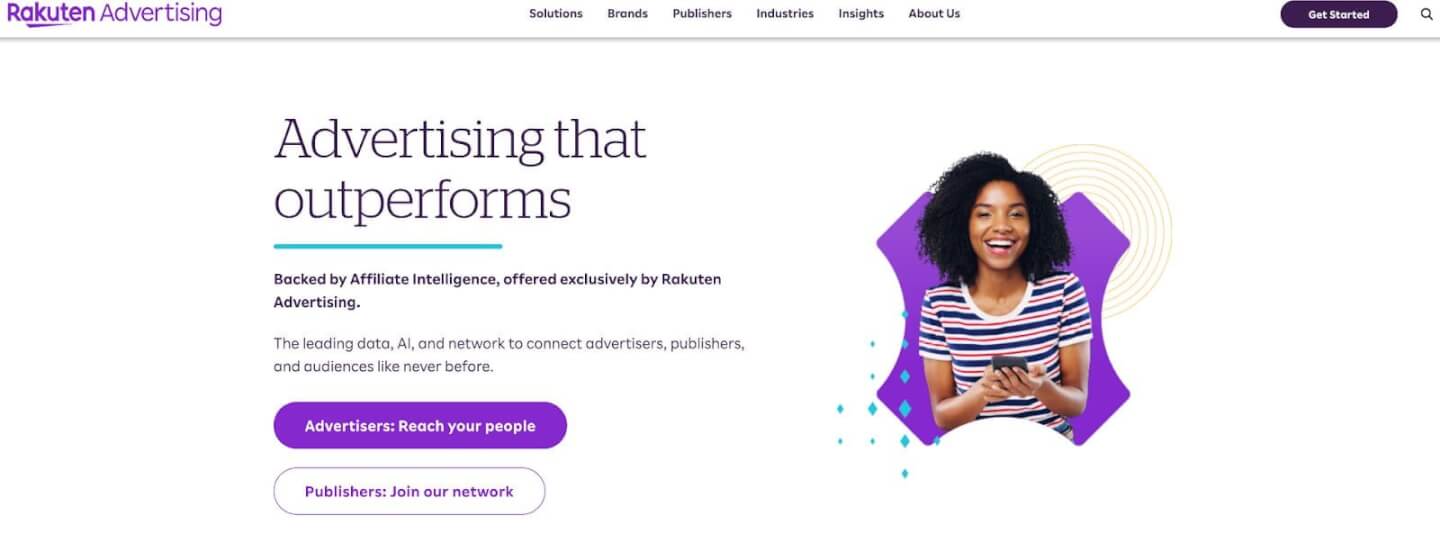
Formerly known as LinkShare, Rakuten Advertising is another long-running affiliate marketing network that consistently ranks among the top networks worldwide. Rakuten is a bit more selective and focused on quality over quantity; it manages affiliate programs for over a thousand well-established brands, especially in retail categories like apparel, beauty, electronics, and subscription services. If you prioritize a highly reputable network with strong fraud prevention and a global footprint, Rakuten is a compelling choice.
Key strengths of Rakuten: This platform is known for its robust technology and partner support. Rakuten offers advanced linking tools, a comprehensive reporting suite, and even multi-touch attribution capabilities (helping you credit affiliates who assist earlier in the customer journey, not just the last click). For brands, Rakuten’s account management can be very hands-on, ensuring your program is optimized. They also host regular affiliate events and have an extensive knowledge base to educate program managers. Another advantage is Rakuten’s international reach – they have a presence in numerous countries, which is great if you want to recruit affiliates in, say, Europe or Asia to expand your market.
Impact (formerly Impact Radius) is a modern affiliate marketing platform that has quickly risen in popularity due to its innovative technology and flexible approach to partnerships. Unlike traditional networks, Impact is a SaaS-style platform that gives brands more direct control to discover and manage all types of partners – from traditional affiliates to influencers, media publishers, and even B2B partners – in one place. Many digitally savvy DTC brands and large retailers alike have adopted Impact for its ease of use and advanced features.
What sets Impact apart: The platform emphasizes automation and efficiency. It offers a clean, intuitive interface and tools like dynamic commissioning (e.g., set higher commissions for new customer sales vs. repeat customer sales), automated partner onboarding flows, and rule-based fraud protection. Impact also has a feature called “Partnership Cloud” that allows you to manage not just affiliate links but also promo codes and influencer collaborations seamlessly. Big-name advertisers like Adidas, Airbnb, and Lenovo have run programs on Impact, which speaks to its scalability. For affiliates/partners, Impact provides a consolidated dashboard where they can manage multiple brands in one login, and it often facilitates faster partner approvals (some programs on Impact let you join instantly if you meet criteria).
Refersion is an affiliate and referral tracking software designed for e-commerce brands that want to run their own affiliate program in-house. It’s particularly well-known in the Shopify ecosystem – available as a Shopify app – making it a go-to for many online store owners who prefer a plug-and-play affiliate solution without joining a larger network. With Refersion, you manage every aspect of your program (recruiting affiliates, setting commissions, tracking sales) and you own the direct relationships with your affiliates.
Key features of Refersion: It integrates seamlessly with e-commerce platforms like Shopify, BigCommerce, and WooCommerce, automatically tracking referral orders with no complicated coding. You can create a custom affiliate signup page for your brand, approve or deny applicants, and even generate unique coupon codes for affiliates (useful for influencers on Instagram or TikTok who share discount codes). Refersion provides a dashboard where both you and your affiliates can see real-time performance data. One standout aspect is its scalability – Refersion claims to handle very large programs with ease. In fact, it processes over 600,000 orders per day for 60,000+ merchants using its system, which speaks to its reliability and wide adoption among online retailers.
Affiliate marketing remains one of the most cost-effective and scalable marketing strategies for e-commerce brands and Amazon sellers. By now, you’ve learned how these platforms work and explored some of the top affiliate marketing platforms available – from massive networks to influencer-centric solutions. The key is to choose a platform that aligns with your goals and audience. Maybe you’ll start small with a handful of micro influencer affiliates to generate authentic buzz, or perhaps you’re ready to list your program on a big network and tap into thousands of publishers.
Whatever path you choose, remember that success comes from actively managing your program: communicate with your affiliates, provide them great creative assets or product education, and offer competitive incentives. Over time, a well-run affiliate program can drive a steady stream of new customers, higher sales, and a community of brand advocates promoting you daily.
For e-commerce entrepreneurs and Amazon sellers, affiliate marketing isn’t just about extra sales – it’s about building partnerships that amplify your brand’s reach. The platforms we discussed are simply tools to facilitate those partnerships. Pick the right tool, invest the effort to nurture your affiliate relationships, and you’ll unlock a marketing channel that grows with you and continually rewards performance. Here’s to driving more traffic, more trust, and more sales through smart affiliate strategy in 2025 and beyond!
Ready to take the next step? Consider your product niche and business stage, then try out one of the platforms above. Whether it’s launching an ambassador program on your own site or tapping into a vast influencer network via Stack Influence, the sooner you begin, the faster you’ll harness the power of affiliates to fuel your brand’s growth.
Home decor is more than just aesthetics – it’s a booming online community that deeply influences consumer buying. In fact, about 4 in 5 people say social media has shaped their “dream home” style, and those who follow decor trends online spend nearly double on furnishings. For e-commerce brands and Amazon sellers, this presents a huge opportunity. By partnering with the top home decor influencers, brands can put their products in front of avid home enthusiasts, generate authentic user-generated content (UGC), and ultimately boost sales. This article explores why influencer marketing is a game-changer in the home decor niche and highlights some of the best Instagram and TikTok content creators to watch in 2025.
Social media inspiration drives purchases: Home decor is a visual domain, and consumers often turn to Instagram, TikTok, and Pinterest for ideas. Stylish room makeovers, DIY hacks, and cozy UGC posts can directly influence shopping behavior. A recent survey found social media influenced the decor buying decisions of a vast majority of homeowners, who then spent 62% more on decor than those not influenced. Clearly, an inspiring post from a decor creator can send followers running to buy that same rug or lamp.
High engagement and trust: Influencers feel like relatable friends sharing genuine advice. This trust translates into measurable results – micro influencers (creators with tens of thousands of followers) often see 2–3× higher engagement rates than big celebrities. And higher engagement isn’t just likes; it means followers commenting, saving ideas, clicking product links, and ultimately purchasing. It’s no wonder 47% of marketers say micro-influencers deliver the best results for campaigns. Unlike traditional ads, influencer content comes off as authentic recommendations, which builds credibility for your brand.
Influencer marketing is on the rise: Brands are investing more in influencer collaborations each year. In 2025, 59% of marketers plan to partner with more influencers than they did the year prior. The reason is simple – it works. Over half of brands say influencer campaigns boost customer engagement, trust, and even direct revenue growth. For home decor retailers, this means collaborating with creators who can make your throw pillows or wall art trend online, driving both traffic and sales to your e-commerce store.
Content that doubles as marketing material: Home decor influencers are talented content creators. They style products beautifully in real homes, producing photos and videos that resonate with target audiences. Brands can reshare this influencer-created content (with permission) as testimonials or lifestyle shots. These authentic visuals serve as powerful social proof. In fact, incorporating real customer or influencer photos on product pages can skyrocket conversions – one analysis found that featuring UGC on e-commerce pages boosted conversion rates by 161%. Rather than a glossy stock photo, seeing a stylish blogger actually use a vase or a chair in their living room makes new customers more confident about buying it.
Mix of macro and micro for maximum impact: “Bigger isn’t always better” holds true in influencer marketing. While top home decor accounts with millions of followers can deliver broad reach, smaller niche influencers often have hyper-engaged followers. Successful brands balance both. For example, IKEA’s recent “Do Try This at Home” campaign paired famous home decor personalities with local micro-influencers (like up-and-coming interior designers) to spread the message widely and authentically. They even launched the #DoTryThisAtHome hashtag to encourage everyday customers to share their own decor ideas, blending influencer content with organic UGC. The takeaway for brands: by working with a range of creators – from household-name decorators to relatable DIY moms – you can tap into different audiences and spur a tidal wave of engagement.
Now that we’ve covered why influencers are vital in this space, let’s look at some of the top home decor influencers leading the trends in 2025. These creators span Instagram and TikTok, and each brings a unique style that can elevate your brand’s content and reach.
Brands in the home niche should keep an eye on these influential creators. From Instagram interior design gurus to TikTok DIY stars, here are 10 of the top home decor influencers making waves this year:
View this post on Instagram A post shared by Farah Merhi (@farahjmerhi)
Founder of “Inspire Me! Home Decor,” Farah commands one of the largest decor communities on Instagram (over 8 million followers). She shares daily luxury-meets-affordable decorating inspiration. Known for chic glam interiors and Amazon finds, Farah has also launched her own product lines. Brands love her for her massive reach and ability to make any decor piece look Instagram-worthy.
View this post on Instagram A post shared by Becki Owens (@beckiowens)
Becki is a California-based interior designer with a modern, clean aesthetic. Her feed showcases real client makeovers as well as styled product features in dreamy, sunlit spaces. With 1M+ followers and a trusted reputation, Becki often partners with furniture and home goods brands. Her audience adores her polished taste – and they shop the looks she posts, from rugs to light fixtures.
View this post on Instagram A post shared by Emily Henderson (@em_henderson)
A stylist and former HGTV host, Emily is beloved for her approachable design tips and family-friendly styling. Her ~500k followers look to her for advice on everything from picking the right paint color to thrifting vintage decor. Emily’s blog and Instagram content often feature sponsored makeovers using retail brands (Target, anyone?). She delivers influence through education – showing how your products can fit into a real home with style and warmth.
View this post on Instagram A post shared by Studio McGee (@studiomcgee)
As co-founder of Studio McGee (and Netflix’s “Dream Home Makeover” star), Shea blends influencer charisma with major design clout. Her minimalist-modern style and airy, bright interiors have set Instagram trends nationwide. With about 500k followers on her personal account (and 3.4M on Studio McGee’s brand account), Shea has partnered with Target on a popular home decor line. A shoutout or collab from her instantly boosts brand credibility among design-savvy shoppers.
Rising to fame through satisfying cleaning and decor Reels, Anna has amassed over 4.3 million Instagram followers in just a couple years. Her calming “clean with me” videos and budget-friendly room transformations have made her a viral sensation. She frequently highlights clever Amazon and Walmart decor hacks. Brands can benefit from her knack for showcasing products in use – she turns mundane home chores and styling into engaging, aspirational content that drives viewers to try it themselves.
Julianna is the queen of Amazon home finds. Her short videos (on IG Reels and TikTok) of “must-have” decor from Amazon have garnered 2.9M followers who eagerly await her next discovery. From organizing gadgets to trendy throw pillows, if it’s stylish and shoppable online – Julianna will find it. She’s a perfect partner for Amazon sellers looking to boost visibility, as her recommendations can create a surge in product sales on Amazon storefronts.
Known as CatBen, Catherine brings a serene coastal vibe to home decor. Her content (followed by ~2.6M on IG) features DIY furniture flips, easy wall art projects, and small-space makeovers often done with earthy, boho flair. She’s skilled at integrating products into her DIYs – showing followers how a simple $30 item can be part of a high-end look. Brands with creative DIY-friendly products or materials can leverage Catherine’s imaginative tutorials and the trust she’s built with her craft-loving audience.
View this post on Instagram A post shared by Erin Vogelpohl (@mytexashouse)
Erin’s account “My Texas House” showcases cozy farmhouse-inspired decor in an attainable way. Her feed (nearly 600k followers) feels like stepping into a welcoming, beautifully curated home. Erin has collaborated with national retailers (she even launched a line of area rugs available at Walmart) – proving her influence translates to mainstream retail success. When she features a product like a bedding set or a wreath, it often sells out thanks to her engaged community of decor enthusiasts who emulate her signature Texas farmhouse style.
View this post on Instagram A post shared by Teresa Laura Caruso (@teresalaucar)
Teresa is a pro at home hacks, organization tips, and stylish decor on a budget. With ~1.9M Instagram followers (and many on TikTok), she’s frequently sharing clever ways to use everyday items to spruce up a space. Her “Amazon gadgets you didn’t know you needed” series and closet makeovers are especially popular. Partnering with Teresa means your product could be featured in one of her viral home hack videos – an excellent way to get in front of a young, gadget-loving home audience.
Macy combines faith, family, and home decor in a relatable, down-to-earth style. Her 2.1M followers enjoy her quick decorating Reels that often involve her kids and husband – from seasonal mantle decor ideas to DIY gallery walls. Macy’s content feels authentic and warm, and she often highlights affordable pieces from Target, Hobby Lobby, and other big retailers. Brands appreciate how she can take a simple product (like a set of wall decals or a lamp) and create a heartwarming scene around it. Her influence drives high engagement, as followers trust her taste and family-oriented recommendations.
Pro tip: While these top influencers have sizable followings, don’t overlook emerging micro influencers in the home niche as well. An Instagram creator with 15,000 loyal followers or a local interior designer on TikTok might have a tight-knit community eager to support your brand after an authentic recommendation. Micro influencers can be cost-effective partners who produce beautiful content and often focus on specific niches (e.g. Scandinavian décor, DIY rental apartment updates, indoor gardening decor) that align perfectly with your product. Many brands find that a team of smaller creators can outperform a single big name, especially when it comes to driving engagement and ROI.
Ready to incorporate influencer collaborations into your e-commerce marketing strategy? Keep these tips in mind:
By following these steps, even a small Amazon seller or new DTC decor brand can successfully tap into influencer marketing. In fact, many such brands owe their early growth to savvy micro-influencer campaigns that sparked viral trends (like a particular mirror or faux plant that everyone suddenly had to have).
In conclusion, partnering with the top home decor influencers – whether mega Instagram stars or niche micro creators – can elevate your brand from just another online store to a trusted source of inspiration. These influencers bring your products to life in real homes, build social proof through their enthusiastic communities, and create content that keeps working for you across social platforms. The result is a powerful mix of greater brand awareness, higher engagement, and increased sales.
For e-commerce brands and Amazon sellers, the message is clear: meet your customers where they get their inspiration. If shoppers are scrolling TikTok for DIY ideas or saving Instagram posts of perfectly styled living rooms, your products need to be part of those stories. By investing in influencer marketing, you’re not just renting an audience – you’re building relationships and joining a conversation that’s already happening in millions of living rooms and Pinterest boards.
Ready to get started? Outline your campaign goals and start researching creators in your niche. You can reach out directly to influencers or use an influencer marketing platform to streamline the process. (For example, Stack Influence is one platform specializing in matching brands with micro influencers for campaigns.) However you approach it, keep authenticity at the core. Choose partners who genuinely connect with your product and give them the freedom to create magic.
In 2025’s fast-moving social media landscape, home decor trends can explode overnight – and a well-placed influencer partnership can make your product the next must-have. Embrace these creative collaborations, and you’ll not only see a boost in clicks and conversions, but also gain a tribe of content creators and fans who are passionate about your brand’s place in their homes. That kind of genuine advocacy is the ultimate ROI, driving value long after an Instagram post goes live.
LinkedIn isn’t just for job hunters – it’s become a powerhouse for B2B marketing and brand building. With over one billion users on the platform, LinkedIn’s feed algorithm sifts through billions of posts per day to show each user relevant content. The latest LinkedIn algorithm news reveals big changes in 2026 that affect how content gets seen. Unlike viral-friendly platforms (TikTok, Instagram), LinkedIn “is not designed for virality”. Instead, it rewards professional, relevant content shared with the right audience.
For e-commerce brands, Amazon sellers, and DTC founders, these updates are crucial. Why? Because LinkedIn’s algorithm now emphasizes quality over quantity – meaning your carefully crafted post about an industry trend or new product line has a better chance to reach decision-makers if it’s truly valuable. In this post, we’ll break down what’s new with LinkedIn’s algorithm in 2026, how it works, and how you can optimize your LinkedIn content to maximize reach. You’ll learn practical tips (from using micro influencers to leveraging UGC) to ensure your brand’s posts don’t get lost in the feed. Let’s dive in and turn these algorithm changes into opportunities.
The LinkedIn algorithm is essentially a recommendation system that decides which posts appear in each user’s feed. Its goal is simple: keep users engaged on the platform by showing content they find interesting – which in turn keeps people scrolling longer (and seeing more ads). In other words, LinkedIn’s algorithm wants to entice users to spend more time on the site, so it favors content that sparks conversation and provides value.
Unlike a chronological feed, LinkedIn’s feed is sorted by relevance (“Top” posts). The algorithm analyzes things like your connections, your interests, and your past interactions to guess what you’d like to see. Ultimately, it prioritizes content that is likely to matter to you – whether that’s a connection’s take on e-commerce trends or a helpful how-to post about Amazon marketplace strategy.
For brands and content creators, this means you can’t just blast promotional posts and expect results. You need to understand the signals LinkedIn looks for. Before we get into the 2026 updates, let’s quickly outline how the LinkedIn feed algorithm works today.
LinkedIn has shared that its feed ranking follows a general three-step process:
Overall, LinkedIn’s feed algorithm acts as a gatekeeper to ensure users see content that is relevant, informative, and from credible sources. Mastering these three steps – avoid spam signals, spark engagement, stay relevant to your audience – is the key to getting seen.
Now for the part you came for – what are the latest LinkedIn algorithm updates in 2026, and why are marketers buzzing about them? In a nutshell, LinkedIn has doubled down on quality and relevance. Here are the key changes and “news” to know:
In short, the 2026 LinkedIn algorithm updates reward authentic expertise and engagement, while making it harder for bland or spammy content to slip through. For e-commerce and Amazon sellers, this is a signal to refine your LinkedIn strategy: share your unique knowledge (e.g. a lesson from scaling your Shopify store), aim for meaningful interactions (maybe discuss an industry news item and ask peers for input), and don’t rely on gimmicks. If you do this, LinkedIn’s changes can actually work in your favor by elevating your voice above the noise.

Not all content is equal in the eyes of LinkedIn’s algorithm. So what does the algorithm tend to favor? Based on both LinkedIn’s own guidance and what we’re seeing in 2026, here are the content types and tactics that get the best traction:
In summary, content that is helpful, engaging, and keeps users on LinkedIn is favored by the algorithm. As a brand or creator, focus on posts that either start conversations or deliver value (ideally both). A mix of formats – text, imagery, video, documents – can also keep your feed fresh and appeal to different segments of your audience. And always aim for authenticity; polished corporate-speak is less effective than a genuine voice. These content approaches, aligned with LinkedIn’s algorithm preferences, will set you up for stronger organic performance.
Now that you know what LinkedIn’s algorithm looks for, it’s time to put this knowledge into action. Here are five concrete strategies to optimize your LinkedIn content and get better organic reach, even as algorithm changes roll out:
1. Start with a Strong Hook (Grab Attention Fast) – First impressions matter on LinkedIn. Users often skim their feeds quickly (especially on mobile, where they may spend only ~7 seconds per post). To stop the scroll, lead with a compelling hook in the first two lines of your post. This could be a bold statement, a surprising statistic, or a thought-provoking question. For example: “Did you know only 1% of LinkedIn users post content weekly?” or “We doubled our e-commerce sales after a post went viral – here’s what happened.” A powerful hook piques curiosity and encourages people to click “see more,” which boosts your dwell time. Make sure your hook is relevant to your audience’s interests (e.g., Amazon sellers might open with “Amazon FBA fees are rising again – here’s how to stay profitable…”). Once you’ve got their attention, deliver the value promised.
2. Be Relevant and Know Your Audience – Relevance is king on LinkedIn. Take time to understand your target audience’s roles, challenges, and interests. If you’re a B2C e-commerce brand, your LinkedIn audience might actually be retail partners, investors, or other entrepreneurs – so tailor content accordingly (e.g., share industry trends or business lessons, not just product promos). Use the language and keywords that resonate with your niche. A good exercise is to list out the key topics that overlap between your expertise and your audience’s needs. Then make those topics the focus of your posts. LinkedIn’s algorithm will reward you for consistency here: posting regularly about a specific domain (say, “influencer marketing tips for retail brands”) helps establish you as a go-to voice in that area, and LinkedIn will more widely share content from users identified as topic experts. In short: pick a lane and provide value in it. Stack Influence, for example, often highlights authentic micro-influencer marketing strategies – aligning its content with what e-commerce marketers want to learn. By knowing what your community cares about, you can create informative posts that the algorithm recognizes as relevant to the right people.
3. Post at Active Times (Timing + Consistency) – Even with LinkedIn leaning into relevance over recency, timing still matters for that initial engagement boost. You want to post when a good chunk of your audience is online and likely to interact within the first hour. General research suggests that mid-week mornings (e.g. Tuesday 8–10am) or early evenings (e.g. Thursday after work) often work well, but every audience is different. Check your LinkedIn insights or experiment with posting times to see when you get the best response. Once you find a sweet spot, stick to it. Also, consistency is key: aim to post regularly (e.g. once or twice a week). Remember, only a tiny fraction of users post content weekly – by showing up consistently, you’re automatically ahead of 99% of folks. Regular activity keeps you on the algorithm’s radar (and in your followers’ feeds). Just avoid posting too frequently in a single day – spamming can trigger the content filters. Spacing out posts by at least a day (or at minimum 12-18 hours) is a good practice.
4. Encourage Genuine Engagement (Ask and Engage Back) – To crack the LinkedIn algorithm, you don’t just want impressions – you want interactions. Invite your audience to engage by ending posts with a question or a call-to-action that sparks discussion. For instance, after sharing your insights on a new trend, ask “What do you think about this change?” or “Has anyone else tried this strategy?” Questions prompt readers to comment rather than passively scroll by. And when they do comment, be sure to respond! Jump into the comments to keep the conversation going – this not only doubles the comment count (good for the algorithm) but also builds community. Authentic back-and-forth in the comments can significantly boost a post’s reach, as LinkedIn sees lots of relevant engagement happening. Also, consider tagging a few relevant people or companies in your post when appropriate – for example, tag a partner or a team member who is part of the story you’re telling. If they’re likely to respond or reshare, it can amplify your post’s visibility. (Just avoid spam-tagging people who aren’t truly connected to the content, which can hurt your post.) Another pro-tip: participate in others’ content. Engaging with posts in your industry (leaving thoughtful comments on a connection’s update) can increase your visibility and encourage them to return the favor on your posts. It’s called social networking for a reason – the more genuine interactions, the better your content will perform.
5. Leverage Employee and Micro-Influencer Amplification – If you have a team or network of advocates, get them involved. LinkedIn’s algorithm highly values content that multiple people engage with, especially if those people are in the poster’s network or industry. Employee advocacy is a powerful tactic: encourage your colleagues (or even friends in the industry) to share or comment on your brand’s posts. When employees reshare a company update with their own commentary, it not only spreads your reach to new networks, it also signals to the algorithm that the post is sparking interest beyond just the original audience. Similarly, consider collaborating with micro influencers or satisfied customers who can post about your brand or product – essentially a form of word-of-mouth UGC. A micro-influencer’s LinkedIn post reviewing your product or discussing your service (in an authentic, story-driven way) can generate credible buzz and engagement that the algorithm will pick up on. The key is that these partners speak genuinely; scripted corporate posts won’t get the same love as real, personal endorsements. By tapping into employees and micro influencers, you create a ripple effect: multiple voices talking about your brand or content, which boosts overall visibility. Just remember to reciprocate support and build a culture of sharing each other’s content. When done right, a chorus of engaged voices can dramatically extend your LinkedIn reach.
By implementing these tips – hooking the reader, staying relevant, timing it right, fostering engagement, and amplifying through your network – you’ll align your strategy with what LinkedIn’s algorithm rewards. Even as algorithms evolve, focusing on real value and real relationships tends to withstand the changes. In fact, these best practices mirror what good influencer marketing is all about: authentic content that engages a community. Keep that principle at the center of your LinkedIn efforts and you’ll be well-positioned to thrive.
The LinkedIn algorithm in 2026 is smarter and more selective – but it’s ultimately rewarding the right behaviors. For e-commerce founders, Amazon sellers, and marketers, this is a chance to shine by sharing your genuine expertise and stories. Instead of chasing viral gimmicks, focus on providing value and building real connections. A post that educates fellow Amazon sellers on optimizing listings or an inspiring founder’s story about overcoming a challenge can now go further, if it resonates with your professional community.
The recent algorithm news boils down to one thing: quality content and engagement drive results. If you adapt by creating posts that inform or spark dialogue, you’ll find the algorithm more friend than foe. Remember, even subtle moves like posting natively, using a strong hook, or encouraging your team to engage can markedly improve your reach.
In a platform where so many lurk and so few create, there’s a huge opportunity for those willing to consistently put out thoughtful content. So take these insights and make them your advantage. Adjust your LinkedIn strategy today – experiment with the tips above, monitor your results, and double down on what works. By staying agile and embracing LinkedIn’s focus on authenticity and relevance, your brand can build awareness, trust, and growth in the professional arena.
It’s time to work with the algorithm, not against it. Craft that post, share that insight, and start a conversation. Your next big opportunity – whether it’s a partnership, a client, or a career milestone – might just be one engaging LinkedIn post away. Now go forth and put these tips into action – your network (and the algorithm) will reward you for it.
Modern consumers expect to see diversity and inclusion reflected in the brands they support. For e-commerce companies and Amazon sellers, embracing inclusive influencer marketing isn’t just a nice-to-have – it’s a must in 2026. Brands that partner with influencers from diverse backgrounds can connect authentically with a broader customer base and demonstrate values that align with today’s social expectations. In fact, inclusive campaigns have proven business benefits. A global study by Unilever found that ads with authentic diversity are 62% more likely to become a consumer’s first choice, while driving 3.5% higher short-term sales and 16% higher long-term sales. These campaigns also boost loyalty by about 15%. The message is clear: representing different ages, races, genders, abilities, and cultures in your influencer marketing isn’t just about ethics – it drives ROI.
Inclusivity also supercharges engagement. When followers see themselves represented, they respond with enthusiasm. For example, a recent Nielsen analysis found that Instagram posts by creators with disabilities outperformed those by non-disabled creators – delivering 21% higher media value and 20.5% more interactions on average. Similarly, marketing agency case studies highlight success stories like Ergobaby, which partnered with a diverse set of parent influencers (varying family structures, ethnicities, lifestyles) to promote a baby carrier. The result was a significant boost in reach and engagement for the brand. These examples show how inclusive influencer marketing turns passive audiences into engaged communities. By amplifying diverse voices, brands can spark genuine conversations and loyalty that translate into sales.

To make your influencer campaigns more diverse and effective, use these key strategies. They will help e-commerce brands, Amazon sellers, and DTC startups create inclusive campaigns that resonate with wider audiences and drive growth:
In 2026, inclusive influencer marketing is one of the most powerful ways for e-commerce brands and Amazon sellers to drive growth. By weaving diversity into your influencer campaigns, you unlock authentic engagement that translates into sales. Brands that commit to representing many voices are reaping rewards in customer loyalty, brand sentiment, and market share. Meanwhile, those stuck in homogeneous marketing risk losing relevance. The good news is that by applying the strategies above – from partnering with diverse micro-influencers to leveraging UGC – you can create campaigns that genuinely connect with today’s consumers. It’s not only the right thing to do, but a savvy business move that improves your ROI.
Ready to future-proof your marketing? Start auditing your next influencer campaign for inclusivity. Identify which new voices could tell your brand’s story and invite them in. Whether you’re a niche Amazon seller or a growing DTC brand, an inclusive approach will help you tap into new customer communities and build trust at scale. Embrace diversity now to drive meaningful engagement and sustainable success. By doing so, you’ll not only make 2026 your best year yet – you’ll also set your brand up to serve a broader audience in the years to come. In a diverse digital world, inclusive influencer marketing is your key to stand out and succeed.
Influencer marketing is entering 2026 bigger and more integrated than ever. Brands are investing heavily – in fact, over 86% of U.S. marketers will work with influencers in 2025, and 80% of brands have maintained or raised their influencer budgets. For e-commerce brands and Amazon sellers, this means influencer collaborations are no longer experimental tactics – they’re a core strategy for driving ROI. In this post, we’ll explore 2026 influencer marketing predictions (backed by expert insights) and what they mean for your business. You’ll learn how emerging trends – from the dominance of TikTok and short-form video to the rise of micro influencers, user-generated content (UGC), and social commerce – will shape the way you connect with customers. Let’s dive into the top predictions so you can stay ahead of the curve and make the most of these trends this year.

One key 2026 prediction is the continued rise of micro-influencers (creators with roughly 10k or fewer followers) and even nano-influencers (under 1k) as marketing powerhouses. Why are smaller creators so impactful?
In short, micro and nano creators combine authentic voice with cost-effective reach. It’s no wonder brands are flocking to them – a recent industry report found that micro-influencers are nearly as popular with marketers as macro-influencers (74% vs 81% usage). If you haven’t already, 2026 is the year to incorporate micro-influencer marketing into your strategy. (Platforms like Stack Influence can help by connecting brands with vetted micro-creators at scale, making it easier to manage dozens of niche partnerships simultaneously.) By leveraging a network of smaller influencers, e-commerce brands can spark more authentic conversations about their products and drive higher engagement that ultimately boosts sales.
Closely tied to the micro-influencer trend is the growing importance of user-generated content (UGC) and content creators. Rather than relying solely on slick, polished ads, brands in 2026 will double down on real, relatable content made by customers and creators. Experts say UGC is now “one of the most effective formats in modern marketing,” bolstering credibility across short videos, influencer posts, and social commerce.
Several factors are behind this UGC boom:
For e-commerce and DTC brands, the takeaway is clear: embrace UGC in your marketing mix. Encourage customers to share their experiences, collaborate with micro-creators on content, and showcase those genuine stories in your campaigns. Not only does this approach humanize your brand, but it also produces a library of relatable visuals and videos to fuel your ads, emails, and product listings. In 2026, realness resonates – and UGC is the engine that can deliver it at scale.

It’s impossible to discuss influencer marketing trends without highlighting TikTok and the ongoing reign of short-form video. Going into 2026, TikTok remains the trendsetting platform that’s redefining how brands engage audiences – and it’s not slowing down. With around 1.7 billion users worldwide, TikTok is “the leading platform for creative short videos” and continues to grow rapidly. Its algorithm makes it easy for content (and products) to go viral, and it commands massive attention from Gen Z and Millennial consumers.
Key predictions for TikTok and short-form video in 2026 include:
For Amazon sellers and online brands, the dominance of short video is an opportunity. Platforms like TikTok allow you to showcase your products in creative ways and connect with shoppers through entertainment rather than traditional ads. For example, a brief TikTok showing a fun use-case of your product can generate huge interest – and even drive direct sales if paired with the right link or promo. In 2026, keep your content strategy video-first: think in 15–60 second clips that inform or delight viewers, and use influencers or creators adept at this format to help spread your message.
Another 2026 influencer marketing prediction is that social commerce will hit its stride as a standard way people shop online. Social commerce refers to buying products directly through social media platforms (or influenced by social content), and it’s been on a meteoric rise. In 2025, U.S. social commerce sales were projected to surpass $100 billion – a 22% jump from the year prior, and this growth is expected to continue in 2026. What does this mean for brands? Essentially, the gap between social media inspiration and e-commerce transaction is closing fast. Influencers are the bridge linking the two.
Here are the trends to watch on the social commerce front:
The bottom line: social media and e-commerce are converging, and influencers sit right in the middle. For e-commerce companies, embracing social commerce is no longer optional – it’s vital. Make it easy for customers to shop the content that inspires them. For example, if a TikTok creator raves about your gadget, ensure the post has a direct link or the creator has an affiliate code so interested viewers can buy in one click. Brands that master this seamless path from inspiration to purchase will reap the rewards in 2026’s social commerce landscape.
As influencer marketing matures in 2026, brands are getting more sophisticated about how they run campaigns. Gone are the days of throwing freebies at any influencer and hoping for the best – today it’s about strategic, data-driven programs that deliver real ROI. In practice, two big shifts are happening: a focus on measurable results and a move toward long-term influencer relationships over one-off sponsorships.
ROI and data focus: With larger budgets flowing into influencer marketing, companies are under pressure to prove that these collaborations drive business results. This means tracking metrics (clicks, conversions, revenue) and optimizing campaigns continually. Fortunately, tools and platforms are evolving to help with this. Many brands now use analytics dashboards to attribute sales to specific influencer posts, or employ unique discount codes to measure an influencer’s impact. The push for ROI also extends to campaign strategy – marketers are prioritizing partnerships that align with their target audience and niche. For example, campaigns that perfectly match an influencer’s niche to a product category see significantly higher engagement and views. Expect 2026 to bring even more integration of influencer data with overall marketing analytics, so that influencer ROI can be compared to other channels (email, search ads, etc.). The goal is to spend smarter, not just more. In fact, while the industry grew to over $32 billion in 2025, brands are shifting toward performance-driven strategies rather than vanity metrics.
Always-on, long-term partnerships: Another clear trend is the shift from one-off influencer posts to ongoing collaborations. Brands have realized that authenticity and audience trust build over time. By working with the same influencers over a longer period (or making them brand ambassadors), companies can deepen the influencer’s knowledge of the product and make promotions feel more organic. It also sends a signal to followers that the influencer truly uses or believes in the brand. A recent Snapchat study found 45% of mid-tier creators prefer long-term brand partnerships because it enables richer storytelling and better conversion rates. Moreover, 58% of B2B brands now use always-on influencer programs, finding them overwhelmingly effective compared to isolated campaigns – a lesson B2C brands are adopting as well. As one marketing expert put it, “The next wave will focus less on how often a brand posts, and more on how well it listens, engages and builds lasting relationships… deeper investment in creator collaborations… treating social as a long-term investment in trust, not just a content calendar to fill.” In 2026, winning brands will treat their influencers as true partners. For example, an Amazon seller might have a core group of micro-influencers who consistently review new products each quarter, rather than a random roster of one-timers. A DTC fashion brand might develop a year-long ambassador program with its top 5 creators, including regular content, feedback sessions, and perhaps even product co-creation with those influencers.
Key action: If you’re planning your influencer marketing for 2026, think in terms of sustainable, measurable programs. Set clear goals (e.g. drive 500 referral sales per quarter), choose influencers aligned to your niche who can grow with your brand, and track performance rigorously. Don’t hesitate to negotiate longer-term deals with your best creators – locking in a 6- or 12-month partnership can yield better results than sporadic posts, and often you can negotiate better rates or added value content. By focusing on data and doubling down on relationships, you’ll not only improve ROI but also build a network of genuine brand advocates.
Influencer marketing in 2026 is poised to be more impactful – and more integrated into e-commerce success – than ever. We’ve seen that micro-influencers, content creators, short-form videos, UGC, and social commerce are not just buzzwords but the pillars of a modern marketing strategy. For e-commerce brands and Amazon sellers, these trends offer exciting opportunities to reach customers in authentic, engaging ways that ultimately drive sales. The common thread is authenticity and human connection: brands that leverage real voices (whether it’s a niche influencer or a customer’s review) will build deeper trust and loyalty in an era of skeptical consumers.
Now is the time to act on these 2026 influencer marketing predictions. Evaluate your current strategy: Are you tapping into micro-influencer communities? Are you making it easy for shoppers to buy through social media? Are you gathering UGC and social proof to enrich your product pages? If not, consider this your roadmap to improvement. By embracing these trends early, you can secure a competitive advantage – positioning your brand as authentic, customer-centric, and ahead of the curve.
In the crowded world of e-commerce and Amazon marketplaces, every click matters. If you’ve ever run an online ad, email blast, or influencer campaign, you’ve likely heard the term click-through rate. So what is click through rate, exactly, and why does it matter for Amazon sellers and e-commerce brands? In simple terms, CTR measures the percentage of people who click on your link out of those who see it. It’s a vital metric for gauging the effectiveness of your marketing efforts – whether you’re optimizing an Amazon product listing, launching a micro influencer campaign on Instagram, or tweaking your latest email newsletter.
In this guide, we’ll break down what click-through rate (CTR) means, how to calculate it, and what counts as a “good” CTR in 2025 across different channels. We’ll also explore why CTR is especially important in influencer marketing, UGC content, and paid ads, and share actionable tips to improve CTR for e-commerce success. By the end, you’ll know how to leverage CTR insights to drive more traffic, higher engagement, and ultimately more sales for your brand.
Click-Through Rate (CTR) is a marketing metric that tells you how often people click on a link, advertisement, or call-to-action out of the number of times they see it. In formula form, CTR is typically calculated as:
∗∗CTR∗∗=(NumberofClicks/NumberofImpressions)×100**CTR** = (Number of Clicks / Number of Impressions) × 100%∗∗CTR∗∗=(NumberofClicks/NumberofImpressions)×100
For example, if 1,000 people see your online ad and 50 of them click it, your CTR is 50/1000 = 5%. A click-through rate essentially answers the question: “Out of everyone who saw this content, how many were interested enough to click?” It applies to many digital marketing areas:
CTR is usually expressed as a percentage. A higher percentage means a greater portion of your audience took action by clicking – a sign that your content or offer resonated with them.
CTR isn’t just a vanity statistic; it’s directly tied to performance and ROI in digital marketing. Here’s why click-through rate matters for businesses, especially in e-commerce:
In summary, CTR is a health check for your marketing. It reflects how compelling your content is and can directly impact your advertising costs and visibility. Especially in e-commerce, where every visitor has potential value, improving CTR means more opportunities to convert browsers into buyers.
One of the first questions marketers ask is: “What is a good click-through rate?” The truth is, “good” CTR is relative – it varies by channel, format, and industry. A percentage that’s excellent for one platform might be mediocre for another. Here are some 2025 benchmarks to put CTR in context:
Key takeaway: Always benchmark CTR against the relevant context. A “good” CTR is one that beats the average for that channel or meets your specific campaign goals. Even within the same channel, consider nuances – industry matters (a niche B2B software ad might never hit the CTR of a catchy consumer product ad) and intent matters (people click more when the content matches what they’re actively looking for). Don’t be disheartened by a 0.5% CTR on one channel if that’s actually normal. Instead, focus on improving your baseline and exceeding the norms where it counts.
Did you know? The very first banner ad on the web (an AT&T ad in 1994) reportedly had a 44% CTR – a number unheard of today. As internet users got inundated with ads, click-through rates plummeted. Nowadays, anything above a few percent is generally solid, and achieving double-digit CTRs is largely limited to highly targeted or branded content.
Whether your current CTR is lagging or you just want to push it higher, there are concrete steps you can take to boost that percentage. Improving CTR often means making your audience an offer they can’t ignore – refining everything from the messaging to the visuals and the targeting. Here are several strategies to increase click-through rate across your marketing efforts:
By implementing these strategies, you should see gradual (and sometimes dramatic) improvements in your click-through rates. Remember that CTR optimization is an ongoing process – as consumer preferences, algorithms, and competitive landscapes change, you’ll need to adjust your tactics. The payoff, however, is well worth it: higher CTR means more engaged visitors and a better return on your marketing spend.
In the digital marketing arena of 2025, understanding what click-through rate is and how to improve it can give your brand a decisive edge. CTR is more than just a number in a report – it’s a window into how well you’re capturing your audience’s interest. Whether you’re an Amazon seller optimizing product listings, a DTC brand running ads, or a marketer leveraging influencer marketing, a strong CTR is the first step in the journey from impression to conversion. By applying the strategies outlined above – from refining your targeting and creative elements to harnessing the authenticity of micro influencers and UGC – you can boost your CTR and funnel more high-intent traffic to your pages.
Ultimately, a higher CTR means your marketing is resonating: people want to see what you’re offering. And when you pair an improved CTR with a great product and landing experience, those clicks turn into conversions and revenue. E-commerce brands and Amazon sellers who focus on CTR are really focusing on customer engagement – making sure every impression counts. So, take a fresh look at your campaigns with CTR in mind, run those experiments, and don’t be afraid to get creative. The clicks (and customers) you gain will be the reward.
Ready to elevate your marketing? Start implementing these tips today. Every tweak that boosts your CTR is essentially free traffic added to your pipeline. Over time, those incremental gains compound into significant growth for your online store. In the competitive e-commerce landscape, improving click-through rate is one of those small hinges that can swing big doors – more visitors, more trust, and more sales.
Is TikTok actually getting banned in the United States – and if so, when is TikTok getting banned? This question looms large for e-commerce brands, Amazon sellers, and content creators who rely on TikTok’s huge audience for influencer marketing and product discovery. TikTok has exploded in popularity (now reaching roughly 150 million U.S. users – nearly half the country) and become a major channel for micro influencers, UGC (user-generated content), and social commerce. Naturally, any potential TikTok ban could disrupt marketing plans. In this post, we’ll break down why the U.S. is considering a TikTok ban, the latest timeline of ban efforts (through 2026), and – most importantly – what e-commerce brands and Amazon sellers can do to safeguard their influencer marketing strategies.
What you’ll learn: By the end, you’ll understand the current status of the TikTok ban debate, how a ban (if it happens) might impact micro-influencers and businesses, and actionable steps to keep your brand’s social media and influencer campaigns thriving across platforms. Let’s dive in.
The push to ban TikTok largely stems from national security and data privacy concerns. TikTok is owned by ByteDance, a Chinese company, raising fears that the Chinese government could access U.S. user data or influence what Americans see on the app. U.S. officials – across both the Trump and Biden administrations – have voiced that TikTok “screams out with national security concerns”. In March 2023, FBI Director Christopher Wray warned that China’s government could use TikTok to control data on millions of American users or even manipulate the app’s content algorithm to “divide Americans” on sensitive issues.
In response, the U.S. government has taken several steps short of a full ban:
ByteDance and TikTok deny any wrongdoing – noting that they have never handed data to the Chinese government and have undertaken “Project Texas” (a plan to localize U.S. user data storage). Nonetheless, American lawmakers remain concerned that TikTok’s massive U.S. user base (over 100–150 million users) could be leveraged for spying or propaganda. These security worries are the driving force behind talk of a ban.
So, when is TikTok getting banned in the U.S.? The honest answer: It’s complicated. As of now, TikTok is still available nationwide, but there have been significant moves toward a ban – including an actual law with a 2026 deadline. Below is a quick timeline of key developments and what could happen next:
Current status (end of 2026): TikTok remains operational in the U.S., but under the shadow of that 2024 law. The ban hasn’t been enforced thanks to executive extensions and the possibility of a sale or security deal. In short, there is no definitive answer to “when is TikTok getting banned” – it could happen if negotiations fail, but it could also be averted by a sale or new legislation. The timeline has shifted multiple times and may shift again. For now, brands and creators should stay aware that late 2026 is a key horizon for the TikTok saga.
A full TikTok ban would send shockwaves through the creator community – especially for micro-influencers and emerging content creators who have built their audience on the platform. TikTok has been a game-changer for smaller creators due to its viral algorithm and high engagement rates. In fact, micro-influencers see exceptionally strong engagement on TikTok – averaging around 17.9% engagement (likes, comments, etc.) on their TikTok content, compared to only about 4.6% for mega-influencers. These tight-knit communities and authentic content styles are something TikTok excels at fostering.
If TikTok were banned, here are key ways it could affect influencers and creators:
In summary, a TikTok ban would force content creators – especially micro-influencers – to adapt quickly. Those who can pivot to other platforms and leverage their creativity elsewhere will survive, while some purely TikTok-native influencers could struggle. For brands, this underscores why it’s risky to rely on a single platform’s influencer ecosystem.
For brands, e-commerce entrepreneurs, and Amazon sellers, the prospect of TikTok disappearing is equally concerning. TikTok has rapidly become a powerhouse for product discovery and social commerce, often through influencer-driven trends. Consider that by late 2022, the U.S. social commerce market (shopping via social platforms) was valued at over $45 billion, driven largely by TikTok’s meteoric rise and heavy investment in influencer marketing across social media. The viral hashtag #TikTokMadeMeBuyIt exemplifies how TikTok videos have directly spurred product sales, from skincare gadgets to kitchen gadgets, many sold by small e-commerce brands or Amazon Marketplace sellers. If TikTok were banned, here’s what it could mean for businesses:
Overall, a TikTok ban would be a shake-up, but it’s survivable. Remember, marketers navigated the loss of Vine in 2016 and adapted to Instagram changes, etc. The key is to not have all your eggs in one basket, and to be agile in moving your marketing where the audience goes. Next, we’ll outline concrete steps to future-proof your influencer marketing strategy in light of the TikTok uncertainty.
No matter what ultimately happens with TikTok, brands should plan ahead. Here are practical steps for e-commerce brands, DTC businesses, and Amazon sellers to safeguard their marketing in this volatile environment:
In essence, the goal is to future-proof your influencer marketing. The brightest brands treat TikTok as just one piece of a broader social marketing puzzle. By diversifying and focusing on authentic content and community (not just on one app’s algorithm), you’ll ensure a TikTok ban – or any platform shake-up – doesn’t derail your growth. Marketers who adapted from radio to TV to internet to social media know the medium can change, but the core principle stays the same: meet your customers where they are, with content that resonates.
While the question of when TikTok is getting banned in the US remains unsettled, savvy e-commerce brands and Amazon sellers aren’t waiting around. The key takeaway is to hope for the best (TikTok sticking around) but plan for the worst (a potential ban). TikTok’s massive reach and cultural influence have proven immensely valuable for influencer marketing and social commerce – from skyrocketing micro-influencer campaigns to driving impulse buys that fuel Amazon sales. But even if the platform were to vanish, your brand’s ability to connect with consumers shouldn’t vanish with it.
By implementing a multi-platform influencer strategy and cultivating genuine customer relationships, you can weather any TikTok turbulence. Many brands are already doing this: diversifying campaigns, recycling TikTok content into ads, and leaning on micro-influencers to produce engaging content across Instagram, YouTube, and more. Such strategies ensure that a single app’s fate won’t dictate your marketing success.
In the end, whether TikTok gets banned or not, the power of influencer marketing and UGC isn’t going away. People will continue to seek authentic recommendations on social media for what to buy and which brands to trust. Your job is to make sure you’re part of that conversation on every platform that matters. If you stay agile and creative – and keep your focus on where your customers spend their time – your brand can thrive in 2026 and beyond, TikTok or no TikTok.
For e-commerce brands and Amazon sellers, staying competitive often means finding innovative, cost-effective ways to create content and solutions. One strategy gaining traction is crowdsourcing. But what is crowdsourcing, exactly, and how can it help your business thrive? In simple terms, crowdsourcing means tapping into the power of a crowd – often your customers, fans, or an online community – to contribute ideas, content, or expertise. This article breaks down what crowdsourcing is and explores how brands in 2025 are using it to gather user-generated content (UGC), collaborate with micro influencers, and boost engagement and sales.
Crowdsourcing is the practice of collecting services, ideas, or content from a large group of people (the “crowd”), typically via the internet. Unlike outsourcing a task to a single vendor, crowdsourcing broadcasts an open call to the public or a community to help solve a problem or complete a project. The contributors are usually third parties outside your organization – for example, your customers or freelance creators – rather than your employees. The term itself is a portmanteau of “crowd” and “outsourcing,” coined in 2006 to describe businesses leveraging the internet to outsource work to the crowd.
It’s important to note that crowdsourcing is not the same as crowdfunding. While crowdsourcing seeks ideas, information or labor from a group of people, crowdfunding solicits money or financial contributions from the crowd. In other words, if you’re asking the public for creative input or micro-tasks, you’re crowdsourcing – if you’re asking them to back your product with donations or investments, you’re crowdfunding.
How does crowdsourcing work? In practice, a company sets out an open call or challenge, and interested individuals contribute their entries or efforts. Thanks to digital platforms and social media, reaching a large distributed crowd is easier than ever. For example, a business might invite its followers to submit designs for a new logo, then reward and adopt the best submission. Major brands have embraced this approach. Starbucks famously asked customers to create artwork on their coffee cups and vote for their favorite design, resulting in a fan-designed limited-edition cup sold in stores. Similarly, Lay’s “Do Us a Flavor” campaign invited the public to invent new potato chip flavors; the winning fan-created flavors were produced and sold nationally, generating both innovative product ideas and massive consumer buzz. In each case, the brand leveraged its crowd of fans and consumers to generate fresh ideas and content, effectively letting the community co-create the product or marketing content.

Why are businesses – from lean Amazon sellers to big-name retailers – turning to crowdsourcing? The appeal lies in its ability to deliver results that are efficient, creative, and community-driven. Here are some key benefits of crowdsourcing for brands in 2025:
In short, crowdsourcing lets you accomplish more with less by leveraging the crowd’s collective talent and passion. You gain fresh content and solutions, while participants gain a sense of community and recognition. It’s a win-win that particularly suits today’s fast-moving e-commerce environment, where creativity and authenticity drive success.

Knowing the benefits, how can your brand actually put crowdsourcing into action? Below are several ways e-commerce brands and Amazon sellers can leverage crowdsourcing in marketing and product development. These approaches will help you gather valuable user-generated content, amplify your reach through influencers, and make customers active partners in your growth.
One of the easiest ways to start crowdsourcing is by encouraging your customers to create content related to your brand. User-generated content (UGC) includes things like customer reviews, photos, unboxing videos, social media posts, or testimonials – essentially, any content created by users rather than by your company. UGC is like digital word-of-mouth, and it carries a lot of weight. In fact, 92% of consumers trust the authenticity of UGC (real customer stories and images) more than traditional advertising. Campaigns that incorporate UGC have seen conversion rates increase by roughly 29% on average, showing that real customer content isn’t just fluff – it drives sales.
To crowdsource UGC, invite your customers to share their experiences. For example, you might create a branded hashtag challenge on Instagram or TikTok asking customers to post photos or videos using your product. Many e-commerce brands run contests or giveaways to incentivize UGC: “Share a photo of you using our product for a chance to be featured or win a prize!” Not only do you get a stream of authentic content to repost (with permission) on your own channels, but participants feel more connected to your brand.
Reviews and customer Q&A are another vital form of UGC. Encourage buyers to leave reviews on product pages and respond to their feedback. Glowing reviews, as well as constructive ones, provide social proof to new shoppers. Amazon sellers, for instance, rely heavily on review content – and even the customer questions & answers section on Amazon is essentially crowdsourced customer support. Future customers often trust these peer responses to make purchase decisions. By actively engaging and maybe gently prompting customers for reviews (e.g., via follow-up emails or insert cards), you can crowdsource a wealth of content that builds trust for your store. Featuring UGC on your website or in ads (such as real customer photos in your emails or product pages) further reinforces authenticity. The goal is to let your happy customers do the talking – their content and opinions will carry more credibility than any polished sales copy you could write.
Another way to crowdsource your marketing is through micro-influencer partnerships. Micro-influencers are social media content creators who typically have between ~5,000 and 100,000 followers. They may not be celebrities, but they’ve built highly engaged niche communities around specific interests – and that makes their recommendations powerful. In influencer marketing, bigger isn’t always better: micro-influencers often boast higher engagement rates and trust with their audience than macro-influencers with millions of followers. For example, on Instagram, micro-influencers (10k–100k followers) average about a 3.8% engagement rate, whereas mega-influencers with huge followings see only around 1.2% engagement. That closer connection means a micro-influencer’s post about your product can feel as genuine as a friend’s recommendation, driving more action.
Working with micro-influencers at scale is essentially crowdsourcing your brand’s social media content and word-of-mouth. Instead of commissioning one big ad agency or paying one superstar influencer, you collaborate with dozens of smaller creators who each produce content and spread the word to their respective micro-communities. This approach is not only cost-effective (micro-influencers typically charge far less than big influencers), but it also yields a volume of diverse content – photos, videos, reviews, how-to posts – that you can reuse in your marketing. It’s like having a crowd of brand ambassadors creating and sharing stories about your products simultaneously.
To implement this, identify micro-influencers in your niche whose audiences overlap with your target customers. You can find them by researching relevant hashtags, using influencer discovery tools, or even through platforms designed for micro-influencer campaigns. (For example, Stack Influence helps brands connect with vetted micro-influencers at scale, essentially acting as a platform to crowdsource authentic product shout-outs from dozens of creators.) Reach out to these creators with a collaboration offer – often gifting a product or offering a small fee or commission in exchange for content posts. Ensure you give them creative freedom so the content remains authentic; you want their personal voice to shine through, as that’s what resonates with their followers.
By running a micro-influencer campaign, an e-commerce brand can generate a wave of UGC-like influencer content across social channels. Each micro-influencer’s post exposes your product to a trusted community and also provides you with ready-made content to share. The combined reach of 50 micro-influencers can sometimes outperform a single celebrity endorsement, and it comes with the benefit of feeling more grassroots and genuine. This crowdsourced marketing approach builds both brand awareness and credibility simultaneously.
Crowdsourcing isn’t just about content; it can also drive product innovation. Many brands – big and small – have discovered the value of running idea contests to let their community co-create the next big thing. If you’re an Amazon seller or product creator, consider engaging your customer base in the product development process. For example, you might run a contest asking customers for new product ideas, feature suggestions, or even design submissions.
Some practical ways to do this include:
These co-creation initiatives not only yield innovative ideas straight from your target market, but they also generate excitement. Participants are likely to share the campaign with friends (“I entered this contest!” or “I voted for this idea!”), giving you extra viral marketing. Importantly, when the crowd’s idea comes to life – say you produce the winning product – those who participated feel a sense of ownership and are more inclined to support it. It’s market research, product development, and marketing all rolled into one. Just be sure to clearly define the rules (especially how you’ll use the ideas) and offer a worthwhile incentive or recognition to motivate high-quality contributions.
In e-commerce, social proof can make or break a sale. Prospective buyers want evidence that a product will meet their needs, and the most credible evidence often comes from other customers. That’s why leveraging reviews, ratings, and even customer Q&A effectively is so crucial – it’s a form of crowdsourced reassurance for new shoppers.
Reviews are essentially crowdsourced testimonials. Each review is a piece of content created by a customer, and collectively they paint a picture of your product’s quality. Encourage satisfied customers to leave reviews on your website or marketplace listings. You might send follow-up emails after purchase with a polite request for a review, possibly offering a small incentive like a discount on a future purchase (if platform policies allow). Highlighting snippets of positive reviews in your product descriptions or ads can also be powerful, as it shows real people endorse your product. Even negative feedback is useful if you handle it well – responding to and addressing issues publicly demonstrates transparency and responsiveness, which builds trust.
For Amazon sellers, the platform’s features inherently use crowdsourcing: the star rating summary, the written reviews, and the Customer Q&A section (where shoppers’ questions about a product are answered by other owners) all leverage the crowd’s input. Make sure to monitor your Amazon product pages’ Q&A and jump in with official answers if needed, but often you’ll find past customers answer questions accurately. This is free, authentic information that helps convince on-the-fence buyers. It’s essentially your customer base helping you sell, by sharing their experiences and knowledge.
To further leverage this, you can repurpose review content in your marketing. For example, pull user quotes for social media posts (“This gadget saved me 2 hours a day – John D.”), or create a highlight reel of customer testimonials on your website. Some brands even invite customers to submit video reviews or unboxing clips (perhaps via a contest or reward), which serve as compelling UGC for ads. Remember, content that might seem mundane to you – a quick photo of a customer using your product – can be gold for peers who want proof that the product works as advertised. By actively cultivating and showcasing these kinds of crowdsourced endorsements, you build a feedback loop: new customers are swayed by existing customers’ voices, they make a purchase, then they ideally contribute their own review or content, and the cycle continues.
In conclusion, what is crowdsourcing for a modern e-commerce brand? It’s far more than a buzzword – it’s a strategy to harness the creativity, knowledge, and enthusiasm of the crowd to propel your business forward. From product innovation to authentic marketing content, crowdsourcing allows you to turn your customers and communities into collaborators. This approach can help even small Amazon sellers punch above their weight, by generating fresh ideas and social proof that build trust with a wider audience.
The beauty of crowdsourcing in 2025 is that digital connectivity makes it easier than ever to engage people outside your company. Whether it’s rallying micro-influencers to produce a flurry of genuine content, or inviting your own customers to shape your next product launch, you’re essentially co-creating value with your audience. The result is often richer and more resonant than anything created in isolation. Your brand benefits from lower content costs, faster feedback loops, and a community that feels invested in your success.
For e-commerce entrepreneurs and Amazon sellers, the takeaway is clear: don’t do everything alone. Tap into the crowd. Let your customers, fans, and creator partners share the load – and the spotlight. Crowdsourcing can drive innovation, amplify your marketing, and deepen customer loyalty all at once. It’s a powerful reminder that in the digital age, the best growth strategy is one that includes your crowd. So start thinking about areas of your business where an open call could spark the next big win. By embracing crowdsourcing, you invite your most passionate stakeholders to help shape your brand’s story – and that collective effort can translate into stronger sales and sustainable growth. Now’s the time to put the power of the crowd to work for you!
Virtual influencers are AI-crafted digital personas – think CGI avatars with human-like traits – that exist solely on social media. They post photos, share opinions, reply to comments, and even collaborate with brands just like human influencers, except they’re not real people. Behind each virtual influencer is typically a team (or sophisticated AI) controlling everything from their appearance to their witty captions. For example, Lil Miquela (one of the first virtual influencers) boasts ~2.5 million Instagram followers as a fashion-forward, fictional “it girl.” Likewise, Lu do Magalu – a virtual avatar created by Brazilian retailer Magazine Luiza – has become one of the most popular, with over 8 million followers and the ability to earn £32,000+ for a single Instagram post promoting tech products. In short, these characters are content creators engineered by brands or agencies to engage audiences without the unpredictability of a human personality.

Why are marketers experimenting with virtual influencers? Simply put, these virtual personas offer some unique advantages over their human counterparts:
Real-World Success Stories: Far from being science fiction, virtual influencers have already notched some wins. Aside from the Prada example, Riot Games created a virtual pop group (K/DA) to promote a video game, amassing millions of fans and massive online buzz in the process. Luxury brands like Louis Vuitton have featured virtual characters (e.g. Lightning from Final Fantasy) in ad campaigns, reporting boosts in social media followers and engagement. And of course, Lu do Magalu in Brazil is practically a case study herself – as a virtual influencer tied to an e-commerce retailer, she blends entertainment with direct product promotion (unboxing videos, tech reviews) and has become the world’s top-followed AI influencer, illustrating how a brand can build a huge audience around a virtual personal. These cases suggest that, under the right conditions, virtual influencers can be more than a gimmick – they can drive real conversations and even sales.

Despite the hype, many marketers are tapping the brakes on virtual influencers. It turns out there are some serious concerns and challenges that make this trend feel gimmicky or high-risk to skeptics:
In light of these challenges, it’s clear why many e-commerce brands are taking a wait-and-see approach. A World Federation of Advertisers study of multinational brands found most have no plans to work with virtual influencers in the next year, preferring to focus on proven strategies. The last thing a growing Amazon seller needs is to invest heavily in a flashy AI gimmick that doesn’t move the needle – or worse, alienates shoppers. For now, virtual influencers remain a polarizing idea: exciting and innovative to some, but a potential flop to others.
It’s helpful to compare virtual influencers with their polar opposite: micro-influencers (real human creators with modest followings). For many e-commerce brands, micro-influencers have been the go-to because they offer authentic word-of-mouth marketing on a smaller scale. Here’s how the two stack up:
Bottom line: Micro-influencers bring authenticity, trust, and relatable storytelling through real-life content, which often translates into higher consumer trust and direct sales. Virtual influencers offer innovation, creative freedom, and potentially massive reach, which can generate buzz and brand awareness. It’s not necessarily an either/or choice – a savvy brand could use both in different ways. But if your goal is to build trust and gather user-generated content (reviews, testimonials, social buzz from real customers), micro-influencers are hard to beat. On the flip side, if you want to position your brand as ahead-of-the-curve or captivate a younger audience with something novel, a virtual influencer campaign might be worth a test.
So, virtual influencers in 2026 – passing fad or game-changing trend? The truth lies somewhere in the middle. Right now, they’re part opportunity, part gimmick. The concept is still evolving, and many brands are wisely cautious. But looking forward, a few things hint that virtual influencers (or broader AI-generated content creators) could become a regular fixture:
For e-commerce brands and Amazon sellers, the prudent approach is to stay informed and maybe experiment in small doses. If you’re curious about virtual influencers, you could start by partnering with an existing one on a limited campaign to gauge reaction. Monitor engagement quality, traffic, and feedback closely. At the same time, doubling down on authentic influencer marketing – via micro-influencers or loyal customers – is a safe bet that continues to drive results. (After all, a happy customer posting about your product is the ultimate influencer, virtual or not!)
Virtual Influencers in 2026 represent both an exciting opportunity and a cautionary tale. They embody the cutting-edge of influencer marketing, offering creative possibilities and always-on brand messaging that can drive buzz. Yet, they also exemplify the importance of authenticity – a reminder that audiences ultimately crave real connection and trust, which has long been the currency of successful marketing.
The verdict: Virtual influencers are not a magic bullet. They’re a tool – one that should be used strategically and authentically (yes, even a virtual persona can have an authentic brand-aligned voice). E-commerce marketers should weigh whether an AI avatar aligns with their brand values and customer base. It might be the next big thing for your target demographic, or it might fall flat as a gimmick if your audience values human touch and credibility more.
One thing is certain: the influencer marketing landscape is evolving quickly. Staying agile is key. Whether it’s leveraging a network of micro-influencers to generate trustworthy UGC, or cautiously dipping a toe into AI-driven avatars, brands that keep the focus on genuine engagement and customer trust will reap the rewards. Virtual or not, influencer marketing in 2026 and beyond will continue to be about storytelling, community, and influence – make sure your strategy, whatever form it takes, delivers on those fundamentals.
Ready to boost your brand’s presence? It could be through a hundred real voices on social media or a single virtual character turning heads – the key is to choose a path that truly connects with your customers and drives results. Don’t be afraid to innovate, but never lose sight of the authenticity that turns an audience into loyal customers.
In the crowded digital marketplace, content creators have become a driving force behind product discovery and customer trust. For e-commerce brands and Amazon sellers, collaborating with the right types of content creators can amplify brand awareness and boost sales. But with over 207 million people worldwide now identifying as content creators, it’s crucial to understand which creator niches align with your marketing goals. In this post, we’ll break down the major content creator types – from micro influencers on Instagram to UGC (user-generated content) creators – and how each can help grow your business. You’ll learn what makes each creator type unique, how they fit into an influencer marketing strategy, and tips to maximize their impact in 2025. Let’s dive in!
Micro-influencers are social media creators with roughly 5,000 to 100,000 followers who focus on a specific niche. They may not be celebrities, but their influence is powerful, especially for e-commerce brands. Micro-influencers often feel like a trusted friend recommending a product rather than a formal advertisement. Their smaller audience size means they interact closely with followers, leading to higher engagement and authenticity in their content. In fact, 64% of marketers have worked with micro-influencers, and 47% say these collaborations were their most successful. Data backs up why: on Instagram, micro-influencers achieve an average 0.99% engagement rate – the highest of any influencer tier (engagement typically drops as follower counts rise). This means their posts spark more likes, comments, and genuine conversations relative to their audience size.
For brands, micro-influencers are cost-effective and highly targeted. A micro-influencer might charge a modest fee or even accept free product in exchange for a post, making it feasible to hire dozens of them for the price of one macro influencer. This lets you spread your message through multiple voices and generate a variety of user-generated content. Their niche focus (e.g. organic skincare or tech gadgets) ensures you reach exactly the kind of consumers interested in your product. Platforms like Stack Influence specialize in connecting brands with vetted micro-influencers, making it easy to find creators in your niche and scale campaigns. By partnering with micro-influencers, e-commerce and Amazon sellers can tap into tight-knit communities, building trust through authentic word-of-mouth. It’s no wonder micro-influencers have become “marketing gold” for brands looking to boost engagement and conversions.
Macro influencers (100k+ followers) and mega influencers (often 1M+ followers, including celebrities) are the big names of the influencer world. These creators offer massive reach – a single post can put your product in front of hundreds of thousands or even millions of people. For campaigns aimed at widespread brand awareness or a broad demographic, macro influencers can deliver sheer exposure that smaller creators can’t match. Fashion brands, for example, often use celebrity mega-influencers to launch new lines or reach global audiences quickly.
However, broad reach comes at a price. Macro/mega influencers typically charge high fees (sometimes tens of thousands of dollars per post), and their engagement rates tend to be lower than those of micro-influencers. As a creator’s follower count goes up, the percentage of followers who actively engage usually goes down. Many macro influencers might see only ~1–2% of their followers interact with a given post. This is partly because their audience is so large and diverse – not every follower is deeply invested in every topic or product a macro influencer promotes. Content from mega influencers can also feel more like traditional advertising, so it may not spark the same personal connection as a smaller creator’s endorsement.
Despite these challenges, macro influencers still play a valuable role. They are ideal for big-brand campaigns or product launches where you need to generate buzz across a broad audience. Their endorsements can quickly build name recognition for new products. The key is to weigh cost vs. benefit: macro influencers bring eyeballs and prestige, whereas micro influencers bring higher engagement and niche targeting. Many savvy brands use a mix of both – for example, a macro influencer to create initial awareness, supported by many micro-influencers to drive deeper engagement and trust.

Not all content creators live on social media. Bloggers and written content creators are another influential group, especially for driving organic traffic and educating consumers. Bloggers typically run their own websites or contribute to publications, creating in-depth articles, product reviews, tutorials, and gift guides. For e-commerce brands, collaborating with bloggers can yield valuable SEO benefits – a well-ranked blog post about your product can bring a steady stream of visitors to your site for months or years. According to research, 56% of marketers who leverage blogging say it’s their most effective content strategy for boosting brand recognition. This highlights how impactful written content can be in building awareness.
Blog content allows for long-form storytelling and detail that you can’t always fit into an Instagram caption or 15-second video. A tech gadget brand, for instance, might work with a blogger to write a comprehensive review or a “Top 10 Gadgets of 2025” article featuring their product. These posts not only inform readers but also improve your search engine rankings through keywords and backlinks. Bloggers often have loyal readerships who trust their opinions, much like an influencer’s followers. When a respected blogger in your niche praises your product or shares a case study, it adds credibility that can influence purchasing decisions.
To leverage bloggers, e-commerce companies can offer free product samples or affiliate partnerships (where the blogger earns a commission on sales generated). Many Amazon sellers use this strategy by sending products to niche bloggers or review sites that cover their category. Additionally, don’t overlook emerging written content formats: newsletters and online publications (e.g. on Medium or Substack) have “blogger-style” creators with substantial influence. Overall, bloggers remain a powerful type of content creator for delivering deep information and improving your brand’s online visibility.

YouTube creators are the kings and queens of long-form video content. They produce everything from product unboxings and how-to tutorials to vlogs and comparison reviews. For brands, partnering with YouTubers can be incredibly rewarding because video allows products to be demonstrated in a way text or images cannot. Viewers can see the product in action and hear an honest opinion from a creator they trust. This often shortens the buyer’s research process — an engaging video review can answer questions and build excitement, leading viewers straight to the “Buy Now” button. It’s no surprise that YouTube is one of the top platforms driving ROI for brands in influencer campaigns alongside Instagram and TikTok.
YouTube content creators often have highly loyal subscriber bases. People subscribe to channels for the personality and expertise of the creator, be it a beauty guru, a tech reviewer, or a DIY crafts instructor. When such a creator features a product, it comes off as a friendly recommendation from someone who has already earned the audience’s trust. For example, an e-commerce company selling kitchen gadgets could partner with a popular cooking YouTuber to showcase a new appliance in a recipe video. That video can continue gaining views for years, influencing viewers well beyond the initial post date.
Working with YouTubers typically involves sponsoring a segment of a video or sending free products for them to review. Keep in mind that production quality on YouTube is often high – established YouTubers put significant effort into filming and editing – so their fees may be higher than an Instagram post but usually lower than a celebrity TikTok. One advantage of YouTube is the content’s longevity: unlike the fleeting nature of a 24-hour story, a YouTube video remains searchable and accessible, accumulating views over time. Many YouTubers also repurpose their content into short clips for social media, giving your product extra exposure. To maximize results, look for YouTube creators whose channel topics align closely with your product niche, and ensure they disclose sponsorships transparently to maintain authenticity. A well-matched YouTuber collaboration can yield not just sales, but also valuable video assets for your own marketing (you might feature the video on your product page for customers to see). In summary, YouTubers are prime content creators for building in-depth product awareness and influencing purchase decisions through engaging video content.
In recent years, short-form video creators on platforms like TikTok (and its counterparts Instagram Reels and YouTube Shorts) have taken the marketing world by storm. These creators specialize in bite-sized, highly engaging videos – often 15 to 60 seconds – that captivate viewers and can go viral quickly. For e-commerce brands, TikTok creators present an opportunity to reach large audiences fast and with relatively low production cost. Short-form videos tend to feel more casual and authentic than polished ads, which resonates with today’s consumers. It’s no wonder that brands are heavily leaning into this format: a recent analysis found that 87% of micro-influencer content requested by brands was short-form video (TikToks and Reels), reflecting the huge demand for this style of content.
TikTok creators often excel at trends and storytelling within seconds. They might do a quick product demo, a before-and-after transformation, a comedic skit, or a catchy unboxing clip with music – all tailored to grab attention immediately. The TikTok algorithm can amplify good content rapidly, showing it to millions on the For You Page if it strikes a chord. This means even a small creator can create a viral moment that drives a surge of traffic to your product. For example, a single TikTok video of a kitchen tool in action, if it goes viral, can sell out that item overnight (as many Amazon sellers have experienced when their product becomes a TikTok trend!).
Instagram Reels and YouTube Shorts offer similar reach using short videos, often with overlap in the creator community. Many influencers cross-post their short videos across platforms for maximum exposure. E-commerce brands should leverage short-form video creators to showcase products in a fun, digestible way. These videos are perfect for highlighting a product’s key benefit in seconds (e.g. a skincare brand showing a quick routine with their product). They also generate excellent UGC-style content that can be repurposed in ads – TikTok-style clips often perform well as social media ads because they feel native to the platform.
When working with short-form creators, give them creative freedom to interpret your product in a way that fits trending formats or their personal style. Native content performs better than overly scripted spots. Also, be prepared to move fast – trends on TikTok come and go, so timely collaboration is key. The bottom line: short-form video creators are a type of content creator you can’t ignore in 2025. Their ability to drive explosive engagement and brand virality makes them invaluable for boosting awareness and even causing direct sales spikes.
Not all impactful content comes from influencers with big followings. User-generated content (UGC) creators are individuals (often everyday customers or freelance content creators) who produce authentic photos, videos, or testimonials featuring your product, without necessarily having a large personal audience. The value here is in the content itself, which brands can repost and use in their marketing channels. UGC feels genuine because it usually comes from real users’ perspectives. In fact, 84% of consumers are more likely to trust a brand’s marketing campaign if it features UGC, and 77% of shoppers say they’re more likely to buy a product after seeing it through UGC. These stats underscore how powerful UGC is in building trust and influencing purchase decisions.
UGC creators might be your own customers who snap photos or videos of your product in everyday use, or they could be hired creators who make content that looks like organic customer posts. For e-commerce brands, encouraging UGC is crucial: it provides social proof. Shoppers want to see real-life usage – how a dress looks on a regular person, how a gadget works in a home setting, or how a skincare product looks on real skin. That’s why you’ll notice product pages on Amazon and brand websites featuring customer photos and reviews prominently. Consumers consider UGC more authentic than brand-created content, which makes them trust your product more.
To leverage UGC creators, brands can run campaigns or challenges asking customers to share content (for example, a hashtag challenge on Instagram or TikTok). Some brands send free samples to micro-influencers or loyal customers specifically in exchange for content and testimonials, even if those individuals don’t have huge follower counts. There are also platforms where you can commission UGC-style content from creators who specialize in making relatable, informal product videos or images. The resulting content can be used in your social media, ads, or product pages. Amazon sellers often use UGC in the form of video reviews on their listings or photos in review sections, which significantly enhance credibility.
One effective strategy is to repurpose UGC in paid ads – these often perform better than polished studio commercials. For example, an ad on Facebook or TikTok that looks like a user’s post (someone excitedly unboxing or demoing a product in their own home) tends to get higher click-through rates and lower cost per click than a formal ad. When incorporating UGC, always get permission or rights from the creator, and give credit if posting on your channels. In summary, UGC creators supply the authentic content that today’s shoppers crave. Integrating this content in your marketing not only boosts trust but can directly lift conversion rates (on-site conversions have been shown to increase when UGC is present). It’s a win-win: customers get to see real experiences, and brands get a pipeline of convincing content that drives sales.
Podcasters are content creators who produce audio shows, often building dedicated communities of listeners around specific topics (business, lifestyle, true crime, etc.). While podcasts are a different medium than visual social media, they offer unique marketing value for e-commerce and DTC brands. Podcast creators serve as trusted voices in their niche – listeners often develop a strong personal connection with their favorite podcast hosts, tuning in regularly for insights or entertainment. This loyalty means that when a host recommends a product or features a sponsored message, it can carry significant weight. In fact, research shows 88% of podcast listeners have taken action after hearing a podcast ad, and 80% will consider purchasing a product recommended by their favorite host. Such high engagement and conversion rates highlight the influence of podcasters on consumer behavior.
For brands, working with podcast creators usually means sponsoring an episode or a segment. The host might read a 30-60 second ad script (often in their own conversational style) or even integrate the product discussion into their content. Because podcast ads are typically read by the host, they come across as a personal endorsement rather than a random commercial break – this native integration is why podcast sponsorships are so effective at driving trust. For example, an Amazon seller of a fitness supplement could sponsor a health podcast; the host might chat about how they used the supplement in their routine and encourage listeners to try it with a discount code. Listeners who trust that host are likely to check out the product.
Podcasts can reach niche audiences that align with specific product categories, and they often deliver an attentive audience (people listen to most of an episode, versus scrolling quickly past an ad on social media). This makes podcast creators ideal for products that benefit from some explanation or storytelling. Additionally, podcast content is long-form and evergreen; an episode with your sponsor message might be downloaded and heard by new people weeks or months later. If you operate in a niche market (say, eco-friendly pet products), finding a podcast in that space and partnering with its creator can directly target your ideal customers.
To succeed with podcast content creators, choose shows that match your brand’s target audience and values. Negotiate an arrangement where the host can genuinely try your product if possible – authenticity is key. Provide talking points but allow the creator to speak in their own voice. And consider offering a unique promo code for listeners to track results. While podcast sponsorship can be pricier than a single Instagram post, the depth of engagement often yields great ROI. Many brands report increased web traffic and sales directly tied to podcast campaigns, and a lift in brand recognition among core consumer groups. In short, podcasters are a type of content creator worth considering, especially as part of a diverse influencer marketing strategy that covers text, visual, video, and audio channels.
In the digital landscape of 2025, brands have an array of types of content creators at their fingertips – each with distinct strengths. From the hyper-engaged communities of micro-influencers to the viral potential of TikTok stars, from insightful bloggers to authentic UGC creators, every creator type can play a role in growing your business. The key for e-commerce brands and Amazon sellers is to align the creator with your specific goals: want trust and targeted engagement? Turn to micro-influencers or UGC. Need massive reach fast? A macro influencer or trending TikTok creator could deliver. Looking to educate or tell a deeper story? Bloggers, YouTubers, or podcasters may be your best bet.
By leveraging a strategic mix of these creators, you can build brand awareness, social proof, and customer loyalty in ways traditional advertising can’t match. Remember that modern consumers value authenticity and community. A smaller creator who genuinely loves your product can often drive more conversions than a superstar who posts a generic ad. The good news is influencer marketing and content collaborations are more accessible than ever – there are countless creators eager to partner with brands that resonate with their personal brand and audience.
As you plan your marketing campaigns for the year ahead, consider which content creator partnerships will drive ROI and amplify your brand’s story. You might start by engaging a handful of micro-influencers on Instagram, sponsoring a niche podcast, or encouraging your customers to share UGC. Track the results, learn what resonates, and scale up your efforts with the creator types that work best for you. By doing so, you’ll tap into the true power of the creator economy – reaching customers through content they trust and enjoy. In an era where a single relatable TikTok or a heartfelt blog post can spark a sales surge, embracing these diverse content creators is a smart move to elevate your e-commerce marketing. Now’s the time to connect with the creators who can help tell your brand’s story and turn audiences into loyal customers.
Influencer marketing is no longer about one-off posts from a single celebrity. Today’s successful e-commerce brands and Amazon sellers harness networks of micro influencers and content creators to drive sustained growth. What is influence mapping? It’s the strategy behind visualizing those networks – a data-driven way to see who truly influences your target customers and how they’re connected. In this guide, we’ll break down what influence mapping is, why it matters for modern influencer marketing, and how you can use it to amplify UGC (user-generated content) and ROI. By the end, you’ll know how to chart your brand’s own “influence map” to fuel more sales and community trust in 2025.

Influence mapping (also called influencer mapping) is the process of identifying and visualizing how key people in a community influence each other and the decisions of your target audience. In other words, it’s a map of influence relationships: who the important influencers are, how they connect, and how their recommendations ripple through an audience. Instead of looking at influencers in isolation, influence mapping treats them as a network or “ecosystem.”
Originally a concept used in B2B sales and project management to map stakeholder influence (think org charts and decision-makers), influence mapping in marketing focuses on social media creators and their communities. Imagine plotting out your niche: you might discover clusters of micro influencers who all know each other, follow similar trends, or share audiences. This influencer map gives a clear visual of “who influences who” in your space. For example, if you sell fitness apparel, an influence map might reveal a tight-knit group of local fitness coaches on Instagram who frequently interact – each of them can impact the same followers with their recommendations.
How Influence Mapping Works: Brands gather data on potential influencers – follower demographics, engagement rates, topics, and even which influencers interact with each other. Using that data, you can chart a network graph of nodes (influencers) and lines (relationships or overlapping audience). Bigger nodes might represent more influential creators, and thicker lines might mean a stronger connection or shared audience. The resulting “map” highlights clusters of influencers that are closely connected and influential. Those clusters are gold mines for marketing: by activating several voices in the same cluster, you create a multiplier effect as their influence reinforces each other’s messages.
Why should e-commerce brands and Amazon sellers care about influence mapping? The short answer: it makes your influencer marketing far more strategic and effective. Instead of guessing which individual influencer might work, you base decisions on a holistic view of your influencer ecosystem. Here are some key benefits of influence mapping:
In essence, influence mapping flips influencer marketing from a hit-or-miss game into a strategy. You’re not just paying for one-off exposure; you’re building a web of influence that continually amplifies your brand message. For an Amazon seller, this could mean the difference between a product that gets mentioned once and forgotten, and a product that seems to be everywhere in your niche community, driving shoppers to search it on Amazon en masse.
Ready to get practical? Here’s a step-by-step approach to start influence mapping for your brand:
By following these steps, even a small e-commerce brand can approach influence mapping systematically. It might start on paper or a simple spreadsheet, but it gives structure to your influencer efforts. And as your program grows, this mapping process can be scaled and automated with the right tools.
(Side note: Platforms like Stack Influence can streamline much of this process – using algorithms and AI to hyper-target the right micro influencers and even map out their networks. This kind of solution can save time for brands by handling the heavy lifting of discovery and analysis, especially useful if you’re an Amazon seller with limited bandwidth to manually vet hundreds of profiles.)

Influence mapping is powerful, but to get the most out of it, keep these best practices in mind:
By following these best practices, brands can avoid common pitfalls like chasing only follower count, or sticking with an outdated list of influencers. Influence mapping is not a one-time task; it’s an ongoing strategy. When done right, it becomes a competitive advantage – you’ll have insider knowledge of the social structure of your market that competitors may not. In 2025 and beyond, as social platforms evolve and niches splinter off, having a finger on the pulse of who influences your customers (and how) will be invaluable for sustained e-commerce success.
Influence mapping is more than a buzzword – it’s a 2025 playbook for smarter influencer marketing. By answering “what is influence mapping,” we’ve seen that it’s about charting the relationships and communities that drive consumer decisions. For e-commerce brands and Amazon sellers, this approach turns influencer marketing into a science: you identify real influence networks, tap into the trust of micro influencers, and amplify your message through interconnected voices. The result is authentic brand exposure that leads to higher engagement and ROI, not just vanity metrics.
As you plan your next marketing campaigns, consider taking a mapping mindset. Instead of asking “Which single influencer should we hire?”, ask “Which group of voices moves our niche?” Then map it out and build a strategy around that insight. Whether you use DIY research or partner with a platform like Stack Influence to guide you, the effort will pay off in more efficient and impactful campaigns. In an era where consumers crave genuine connections and social proof, influence mapping helps your brand show up in the right conversations, at the right frequency, via people audiences already trust.

Beauty influencers play a significant role in influencing consumer purchasing decisions and shaping trends in the beauty industry.
From makeup tutorials to skincare routines, beauty influencers create authentic and relatable content that resonates with their followers.
If you're looking to collaborate with beauty influencers to promote your beauty products or services, this step-by-step guide outlines how you can discover and connect with the right influencers, including leveraging influencer marketing platforms like Stack Influence to streamline your search and enhance your influencer marketing strategy.
How to define your target audience to find beauty influencers:
When it comes to finding beauty influencers, the first crucial step is to define your target audience within the beauty niche. Understanding who your ideal customers are can help you narrow down your search for influencers who resonate with that specific demographic.
Did you know that the global beauty industry is estimated to be worth 736.80 billion in 2028 according to Statista? This massive industry caters to a diverse range of consumers, each with unique preferences and needs when it comes to beauty products and services.
To kick things off, consider the demographics of your target audience. Are they predominantly Gen Z consumers who are into bold makeup looks and skincare routines, or are they millennial professionals seeking quick and practical beauty solutions? Understanding the age, gender, location, and interests of your target audience is key to identifying the type of beauty influencers who can effectively reach and engage with them.
Moreover, take a deep dive into the psychographics of your audience. What values and beliefs do they hold dear? Are they eco-conscious consumers who prioritize sustainability in their beauty choices, or are they trend-driven individuals who are always on the lookout for the latest beauty innovations? By considering the psychographic traits of your audience, you can pinpoint influencers whose personal branding and content align with your brand values.
Remember, finding the right beauty influencers starts with a clear understanding of who your target audience is and what they are looking for in the beauty space. By defining your audience demographics and psychographics, you can set the foundation for a successful influencer marketing campaign that resonates with your ideal customers.
How to conduct social media research to find beauty influencers:
Now that you have defined your target audience for your beauty influencer marketing campaign, the next step is to conduct social media research to identify suitable influencers. With over 3.8 billion social media users worldwide, it's no surprise that beauty influencers have taken social media by storm, with some boasting millions of followers across various platforms.
Did you know that 69% of consumers aged 18-34 trust influencer opinions more than traditional advertisements according to The Marketing Dive? The power of influencer marketing lies in the genuine and authentic connections that influencers build with their followers, making them valuable partners for brands seeking to reach new and engaged audiences.
To conduct social media research effectively, start by identifying the platforms where your target audience is most active. For example, if your audience skews towards younger generations, platforms like TikTok and Instagram would be a great place to start your search. Next, use relevant hashtags, keywords, and phrases related to the beauty niche to discover influencers who create content that resonates with your target audience.
Once you have a list of potential influencers, analyze their profiles in-depth to ensure they are a suitable fit for your brand. Check their engagement rates, follower demographics, and content quality to assess their authenticity and potential reach. Keep in mind that quality trumps quantity when it comes to influencer marketing, so prioritize influencers who have a highly engaged and loyal follower base, even if they have a smaller reach.
Overall, conducting social media research is a crucial step in identifying the right beauty influencers for your brand's marketing goals. By leveraging the power of social media and understanding your target audience's preferences, you can efficiently identify influencers who can help amplify your brand message and drive real business results.
How to utilize influencer marketing platforms to find Beauty Influencers:
In today's digital landscape, influencer marketing platforms have become valuable tools for brands seeking to connect with beauty influencers. These platforms act as a bridge between brands and influencers, making it easier to identify and collaborate with the right influencers for your marketing campaign.
According to Charle.co.uk, 78% of marketers find influencer marketing effective in achieving their marketing goals. This indicates the growing importance and effectiveness of influencer marketing in reaching and engaging with target audiences.
One of the key benefits of using influencer marketing platforms is the ability to access a vast network of influencers, all in one place. One such platform that has gained popularity in recent years is Stack Influence. Stack Influence offers a robust set of features that allow brands to connect with influencers through personalized matchmaking, campaign management tools, and real-time data tracking. With Stack Influence, you can track the performance of your campaign, monitor engagement rates, and analyze post metrics to optimize your influencer partnerships.
Additionally, influencer marketing platforms often offer features that facilitate smooth collaboration between brands and influencers. From negotiation tools and contract management to performance tracking and analytics, these platforms streamline the influencer marketing process and provide valuable insights into the success of your campaigns.
In conclusion, utilizing influencer marketing platforms can greatly assist in connecting with suitable beauty influencers for your marketing campaign. The convenience and features offered by these platforms streamline the process, allowing you to focus more on building authentic and impactful collaborations with influencers.

Once you've identified potential beauty influencers through social media research and influencer marketing platforms, the next crucial step is to thoroughly analyze their profiles to ensure they are the right fit for your brand. This process is essential in evaluating an influencer's authenticity, engagement, and overall suitability for your influencer marketing campaign.
When analyzing influencer profiles, there are key factors to consider. First, pay attention to their follower demographics and engagement rate. A high number of followers does not always guarantee a successful campaign, especially if the followers are not genuinely engaged with the influencer's content. Look for influencers whose followers match your target audience and demonstrate active engagement through likes, comments, and shares.
Another important aspect to scrutinize is the influencer's content quality and brand alignment. Review their previous posts and assess whether their content style and messaging align with your brand's values and aesthetic. Authenticity is paramount in influencer marketing, so it's crucial to ensure that the influencer's content feels genuine and resonates with their audience.
It's also beneficial to delve into the influencer's past collaborations and partnerships.
Understanding their history with other brands can provide insights into their professionalism, work ethic, and the potential for a successful collaboration with your brand.
Furthermore, utilize social listening tools to gain a deeper understanding of how the influencer's audience interacts with their content and how the influencer responds to their followers. This can provide valuable insights into the influencer's relationship with their audience and their ability to drive meaningful conversations about topics related to your brand.
In conclusion, analyzing influencer profiles is a critical step in selecting the right beauty influencers for your marketing campaign. By thoroughly evaluating their authenticity, engagement, content quality, and past partnerships, you can make informed decisions that lead to successful and impactful collaborations.
How to reach out to potential Beauty Influencers:
After you've analyzed potential beauty influencers' profiles, the next step is to reach out to those who align best with your brand and campaign objectives. Influencer outreach is a delicate process and requires a strategic approach to ensure that you establish a positive relationship with the influencer and create an impactful campaign.
According to Buzzstream, influencers receive hundreds of pitch emails a day. This highlights the significance of creating a compelling and personalized pitch that can capture their attention and spark a genuine interest in your brand.
When crafting your outreach message, it's essential to take a personalized and authentic approach.
Avoid using templates or generic pitches and tailor your message to the specific influencer and their interests. For instance, cite specific posts they have shared that align with your campaign objectives or mention personalized details from their profile that demonstrate that you have done your research and are genuinely interested in collaborating with them.
Another critical factor to consider is the value proposition you offer to the influencer. Showcase how your campaign can benefit their audience and provide them with value beyond material compensation. By highlighting how your brand and campaign align with their vision and goals, you can establish a collaborative relationship that benefits both parties.
Additionally, be transparent about your expectations and deliverables from the outset. This includes discussing the timeline, scope, compensation, and any other relevant details that may affect the campaign's success. Providing clarity and transparency can help build trust and set the tone for a positive and successful partnership.
Lastly, keep in mind that influencers receive numerous pitches and may take time to respond. Be patient, respectful, and polite in your outreach, and follow up promptly if you do not receive a response.
In conclusion, reaching out to potential beauty influencers is a critical aspect of influencer marketing. By taking a personalized, authentic, and transparent approach, you can establish valuable collaborations that lead to successful campaigns and meaningful relationships with influencers.
How to negotiate and collaborate with Beauty Influencers:
Once you've successfully reached out to potential beauty influencers and have established a positive connection, the next step is to negotiate the terms of collaboration. This stage involves discussing key aspects such as compensation, deliverables, and timelines to ensure a mutually beneficial partnership.
It's important to consider that influencers value different forms of compensation. While some may prefer monetary payment, others might be interested in receiving free products or services.
When negotiating with influencers, it's crucial to be transparent and clear about the expectations and deliverables of the collaboration. Clearly outline the scope of work, timelines, and any specific requirements to avoid misunderstandings and ensure that both parties are on the same page. Additionally, discussing key performance indicators (KPIs) and measurement metrics can help set goals and track the success of the campaign effectively.
Collaboration is a two-way street, and fostering open communication is essential for a successful partnership. Be open to feedback and suggestions from influencers, as they have valuable insights into their audience and can provide creative ideas to enhance the campaign's impact. Encouraging a collaborative and respectful environment can lead to more authentic content creation and stronger engagement with their followers.
Lastly, it's essential to formalize the agreement through a contract or written agreement that outlines all the negotiated terms, including compensation, deliverables, usage rights, and any other relevant details. Having a clear and documented agreement can protect both parties and ensure that the collaboration runs smoothly and professionally.
In conclusion, negotiating and collaborating with beauty influencers involves understanding their preferences, setting clear expectations, fostering open communication, and formalizing agreements to create successful and impactful campaigns together.
How to monitor and measure beauty influencer results:
Once your beauty influencer campaign is live, it's crucial to actively monitor and measure the results to gauge its success and make informed decisions for future campaigns. Effective monitoring and measurement provide valuable insights into the impact of the collaboration and helps to optimize strategies for maximum return on investment.
According to Charle.co.uk 89% of marketers believe that measuring ROI from influencer marketing is crucial for its success. This statistic underscores the significance of tracking and analyzing the outcomes of influencer campaigns to determine their effectiveness and improve future initiatives.
Monitoring can involve real-time tracking of engagement metrics, including likes, comments, and shares across the influencer's social media platforms. Keeping a close eye on these indicators can provide immediate feedback on the campaign's performance, allowing for timely adjustments and optimizations if necessary.
Measuring the long-term impact of the influencer campaign is equally important. Tracking key performance indicators (KPIs) such as website traffic, conversion rates, and sales attributed to the influencer collaboration can provide valuable insights into its overall impact on your brand's bottom line.
It's also essential to gather feedback from the influencer regarding their experience with the campaign and its reception among their audience. Their firsthand insights and observations can offer a unique perspective on the campaign's success and areas for improvement.
Taking a diverse perspective, it's important to consider the cultural and demographic diversity of the influencer's audience when analyzing the results. Understanding the nuances of different audience segments can help tailor future campaigns to resonate more effectively with varied demographics.
In conclusion, monitoring and measuring the results of your beauty influencer campaign are integral to understanding its impact and optimizing future strategies. By actively tracking engagement, analyzing KPIs, gathering influencer feedback, and considering diverse audience perspectives, you can gain valuable insights that drive the success of your influencer marketing initiatives.
In conclusion, discovering and collaborating with beauty influencers can be a valuable component of your brand's marketing strategy.
By defining your target audience, conducting social media research, utilizing influencer marketing platforms like Stack Influence, analyzing influencer profiles, and negotiating and measuring campaign results, you can effectively find and partner with beauty influencers to promote your products or services.
Remember to prioritize building authentic and long-lasting relationships with influencers, as this can lead to increased brand awareness, customer engagement, and ultimately, sales. With the right approach and tools, you can navigate the world of beauty influencer marketing and leverage it to achieve your business goals.