




U.S. creator ad spend is projected to reach $37 billion in 2025, while shoppers increasingly expect free and fast delivery. That combination is brutal for eCommerce sellers because demand can rise faster than operations can absorb it. Top ecommerce fulfillment companies now influence conversion, repeat purchase behavior, and how efficiently a brand can scale Amazon and DTC traffic. This guide shows eCommerce sellers how to choose the right partner, which providers stand out, and how to measure fulfillment as a growth system instead of a back-office cost.
Key Takeaways
- The best fulfillment company is not the one with the most warehouses. It is the one whose network, handling rules, and pricing fit your SKU profile and channel mix.
- Amazon sellers need a different lens from pure DTC brands, because Amazon FBA, Multi-Channel Fulfillment, Amazon Attribution, and Brand Referral Bonus change the economics.
- Creator-led demand from product seeding, Shopify influencer marketing, and Amazon storefront traffic can break weak fulfillment setups faster than paid ads do.
- Use the SHIFT Framework to score providers on service levels, handling complexity, integrations, financial model, and tracking.
- Measure fulfillment with a Revenue Signal Stack that connects warehouse metrics to conversion and off-platform demand.
2026 Fulfillment Economics For eCommerce Sellers
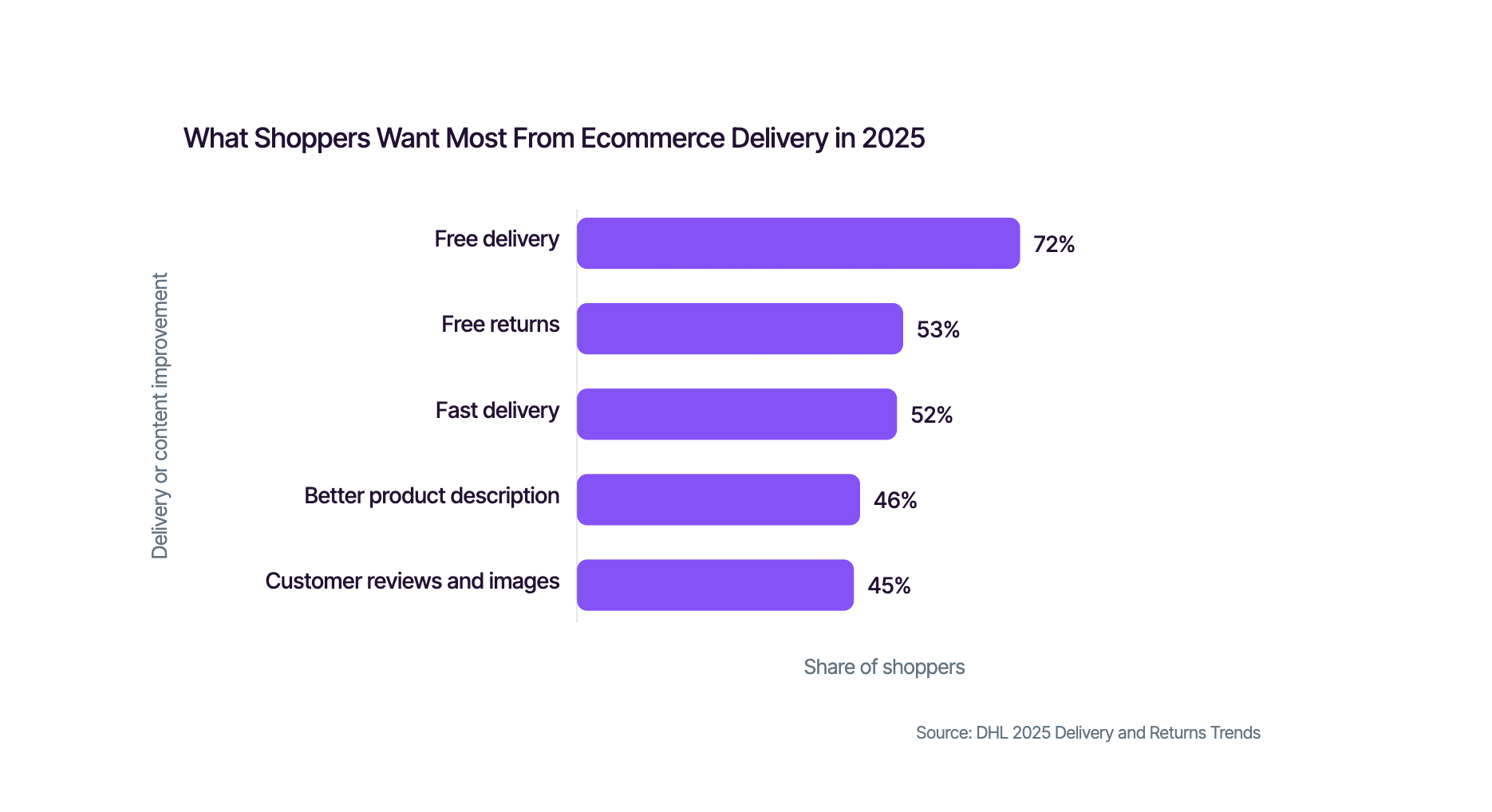
In the IAB 2025 Creator Economy Ad Spend & Strategy Report, creator ad spend is projected to hit $37 billion in 2025, and DHL's 2025 Delivery and Returns Trends shows that 72% of shoppers want free delivery, 53% want free returns, and 52% want fast delivery. Fulfillment now shapes both margin and conversion before a package leaves the dock.
The pressure is growing because demand no longer comes from one place. A brand might sell through Shopify, Amazon FBA, retail marketplaces, and creator campaigns in the same month. When those programs spike at different times, a weak warehouse setup creates stockouts, split shipments, and expensive manual work, and younger shoppers are especially unforgiving when delivery breaks down.
- Rising Expectations: Delivery promises are now tied directly to conversion and repeat purchase behavior.
- Returns Pressure: Slow reverse logistics can trap capital in unsellable inventory and inflate support tickets.
- Channel Sprawl: More sales channels mean deeper integration requirements and more complex routing rules.
- Demand Volatility: Brands already using influencer product seeding strategies feel operational gaps sooner because creator-driven spikes rarely behave like steady ad traffic.
Why Does Delivery Now Shape Revenue?
If customers expect low-friction shipping, tighter delivery windows, and strong product page trust signals, fulfillment affects profitability before the item is even packed. That is why sophisticated operators now treat logistics, merchandising, and content publishing as one connected system.
Where Do Returns And Delivery Promises Break Trust?
Returns are where hidden margin often disappears. If a provider misses restock windows or cannot give customers clear updates, you lose sellable inventory, extend refund cycles, and make every future launch harder to forecast.
What Is An Ecommerce Fulfillment Company?
An ecommerce fulfillment company is a third party that receives inventory, stores it, syncs orders from your selling channels, picks and packs items, ships them, manages tracking, and often handles returns. Official provider pages from ShipBob and Ryder both frame fulfillment as an ongoing execution system rather than simple storage space.
That distinction matters because many sellers still confuse warehousing with fulfillment. A warehouse stores product. A fulfillment partner stores product and then executes the customer promise that follows checkout, which becomes more important when you are planning a brand seeding strategy for Amazon or working from an Amazon product launch playbook that can create uneven demand.
- Receiving And Storage: Product arrives, gets checked in, and stays available to sell.
- Order Orchestration: Orders from Shopify, Amazon, and other channels flow into one system.
- Pick, Pack, And Ship: Execution quality determines speed, cost, accuracy, and packaging consistency.
- Returns And Reporting: Reverse logistics and visibility determine how much margin you keep after the sale.
How Is Fulfillment Different From Warehousing?
Warehousing is about static storage. Fulfillment is about flow. Once orders move every day, scanning accuracy, routing logic, packing quality, carrier selection, and exception handling matter more than the monthly storage line on a quote.
When Should A Seller Outsource?
Outsourcing usually makes sense when founder-led fulfillment starts distracting from merchandising and growth. It also makes sense when you need multi-node shipping, retail prep, subscription kitting, or stronger returns handling than an in-house team can manage consistently.
Why Most Fulfillment Company Guides Miss The Point
Most roundups overrate network size and underrate operational fit. That is a real problem because PowerReviews data on user-generated visuals shows 91% of consumers are more likely to buy when reviews include customer photos and videos, while the Amazon Influencer Program gives creators storefronts and vanity URLs that can turn content into a direct sales path. Fulfillment has to be built for the demand pattern you create, not just the average day on your order history.
Most guides also skip the reality of creator operations. If you run product seeding, Shopify influencer marketing, or off-Amazon traffic to a Storefront, your warehouse has to support replacement requests, tight shipping windows, and bursts of attention from creators your team found through guides like how to get an Amazon storefront and find Amazon influencers and their storefronts. Shoppers do not separate content quality from operational quality, and product page trust rises or falls on both.
- Order Profile Matters: Lightweight repeat-purchase SKUs need a different setup from bulky, fragile, or seasonal goods.
- Channel Mix Matters: Amazon, DTC, wholesale, and social commerce create very different operational constraints.
- Returns Rules Matter: Restock speed and inspection quality change both margin and cash flow.
- Creator Programs Matter: Content-driven spikes expose weak routing and inventory placement faster than ordinary paid traffic.
- Reporting Matters: Bad attribution can make a good channel look unprofitable.
Why Rankings Without Order Profile Fail
A lightweight skincare brand with high purchase frequency should optimize for branded packaging, distributed inventory, and refill-friendly economics. A seller moving home fitness equipment should optimize for damage prevention, dimensional handling, and guarantees that protect margin when one bad shipment can erase the profit from several good ones.
Based on Stack Influence's work with eCommerce brands, creator gifting programs that lock the SKU list, shipping window, and brief before launch tend to reduce reship and exception handling by about 15% compared with ad hoc gifting. That is one reason automated product seeding is operationally different from one-off gifting.
Do Creator-Driven Spikes Belong In The Brief?
They do if you sell on Amazon or DTC and expect creators to drive traffic right away. A creator who posts to an Amazon storefront or points followers to a seeded launch can compress demand into a short window, and the resulting spike will expose weak inventory placement quickly.
That is why product seeding belongs in the same planning conversation as replenishment, safety stock, and order routing. Brands using structured workflows like Amazon influencer seeding have a better chance of matching outbound volume to a real operational plan instead of reacting after posts go live.
Inside The SHIFT Framework For Selecting A Partner
To compare providers consistently, use the SHIFT Framework. Score each category from 1 to 5, then total the result out of 25.
- Service-Level Fit: Can the provider hit the shipping promise your best-selling SKUs need in your top zones?
- Handling Complexity: Can it manage fragile, bulky, kitted, lot-tracked, FBA-prep, or subscription workflows without constant exceptions?
- Integration Depth: Does it sync cleanly with Shopify, Amazon, marketplaces, returns tools, and your reporting stack?
- Financial Model: Are fees, minimums, and surcharges compatible with your actual margin profile and order volume?
- Tracking And Trust: Can it provide accurate delivery dates, branded tracking, reimbursement discipline, and usable reporting?
A score of 22 or higher in the SHIFT Framework usually means a provider deserves a serious pilot. A score in the middle teens often means the provider is solid in general but wrong for your current stage.
Use the SHIFT Framework before demos and again after pricing comes in. Sellers often overweight a low pick fee and underweight what poor routing, inaccurate returns processing, or slow support will do to lifetime value, especially when demand is tied to programs like Amazon influencer marketing solutions.
Top Ecommerce Fulfillment Companies By Seller Fit
There is no universal winner, which is why seller fit matters more than brand recognition. The seven companies below stand out because each solves a different fulfillment problem well. Use your SHIFT score, not a generic popularity contest, to decide which one belongs on your shortlist.
ShipBob
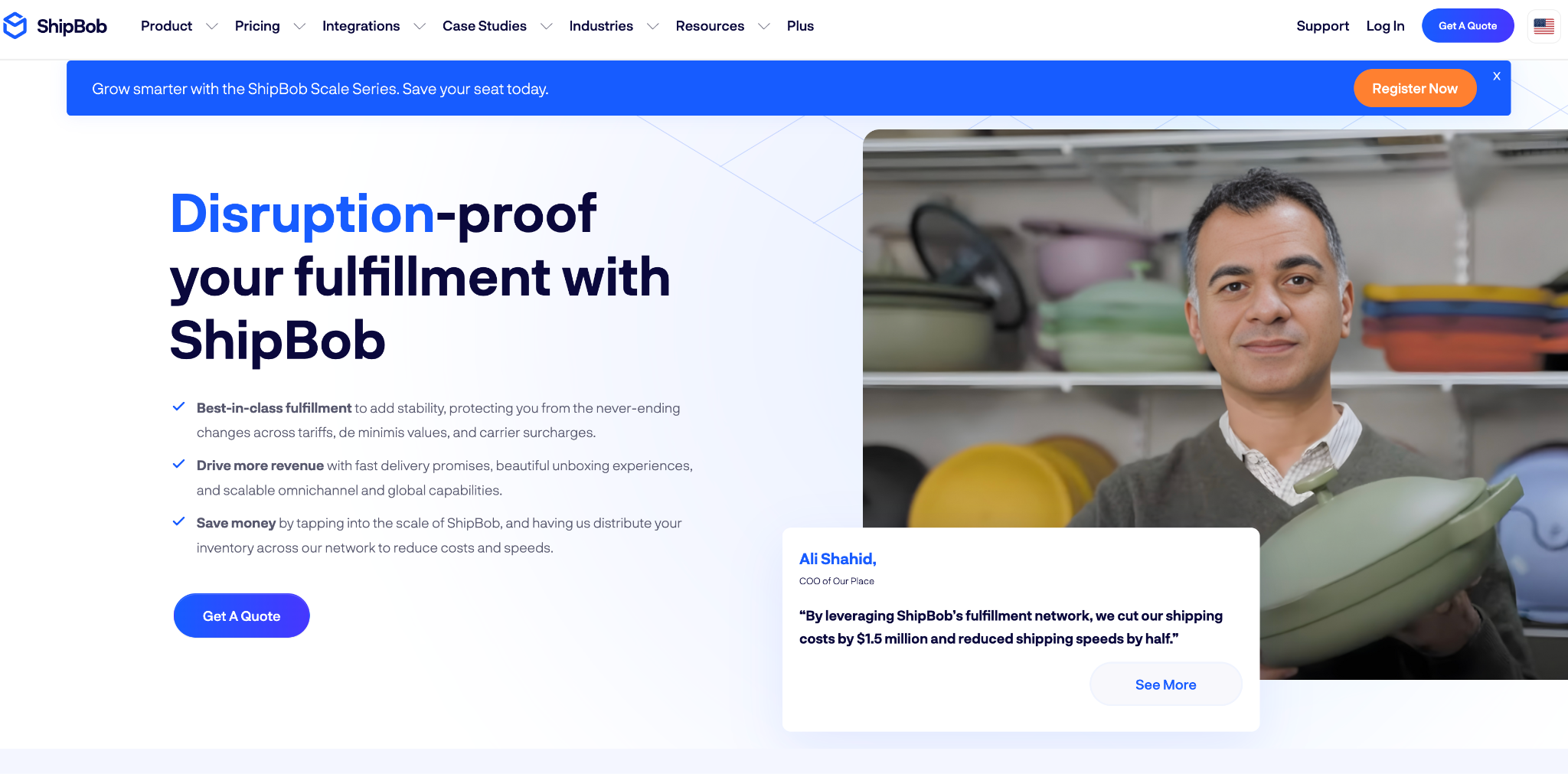
ShipBob is an end-to-end fulfillment provider built for DTC and omnichannel brands that need distributed inventory and strong software support. Its network spans more than 60 fulfillment centers, and it reports 99.97% order accuracy with 99.6% of orders shipping on time within SLA.
ShipBob is best for brands with national demand that want two-day shipping, branded unboxing, and inventory distribution across multiple nodes. It is a less natural fit for very low-volume sellers or operators with unusual handling requirements, because its value comes from steady volume, network design, and a fee model that includes implementation, receiving, storage, and per-order execution.
Amazon Multi-Channel Fulfillment
Amazon Multi-Channel Fulfillment is Amazon’s service for off-marketplace orders. It lets sellers use Amazon’s connected network across 11 countries, offers two- and three-business-day delivery options, and supports more than 100 integrations with ecommerce and back-end systems.
It is the strongest fit for Amazon sellers who already hold inventory in FBA and want to fulfill Shopify, TikTok Shop, Walmart, or other off-Amazon orders from the same pool of stock. The tradeoff is flexibility: MCF is excellent for speed and predictable pricing, but less ideal when a brand wants highly customized kitting, branded packaging control, or a service-heavy exception workflow.
ShipMonk
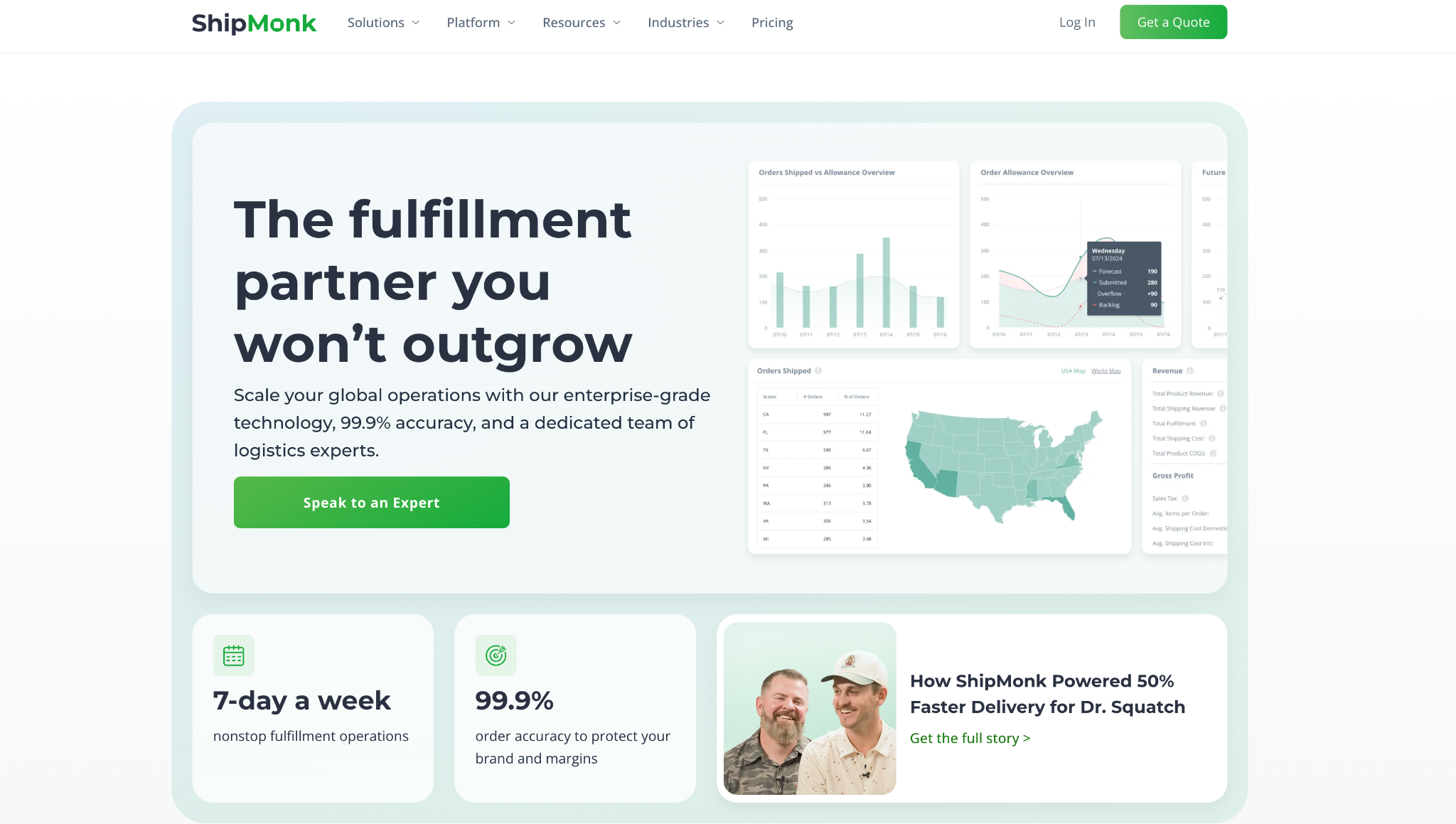
ShipMonk is a global fulfillment provider that combines proprietary software with an owned operational network. It has 12 owned and operated fulfillment centers, and in 2026 it opened a 406,000-square-foot Louisville facility designed specifically for apparel brands.
ShipMonk is a strong choice for apparel, wellness, and subscription-heavy brands that need returns discipline, SKU complexity handling, and operational visibility. Its limitation is that it can be more platform-heavy than a seller with a very simple parcel-only workflow needs, so the real payoff comes when complexity is high enough to justify that depth.
Red Stag Fulfillment
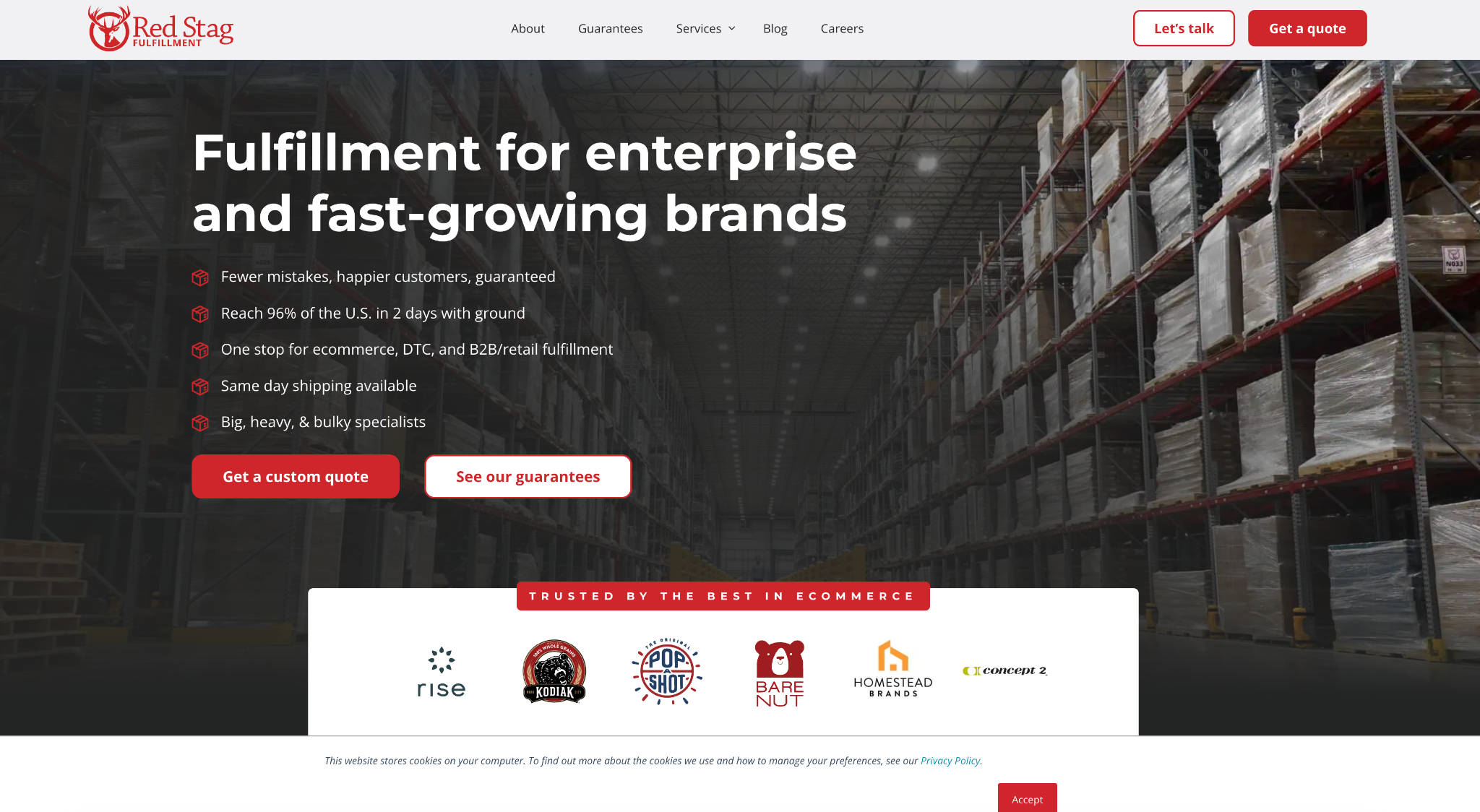
Red Stag Fulfillment is a specialized 3PL known for handling big, heavy, bulky, or high-value products. Its differentiator is a guarantee structure built around shrinkage, pick accuracy, and dock-to-stock speed, plus a two-node network positioned to reach 96% of U.S. addresses in two days by ground.
Red Stag is the best fit for brands shipping awkward, expensive, or damage-prone items where one error can erase the profit on several good orders. It is not the first place to look if your catalog is lightweight and built around ultra-low-cost small parcel economics, because the company’s advantage is specialized handling rather than generalized low-cost fulfillment.
Ryder
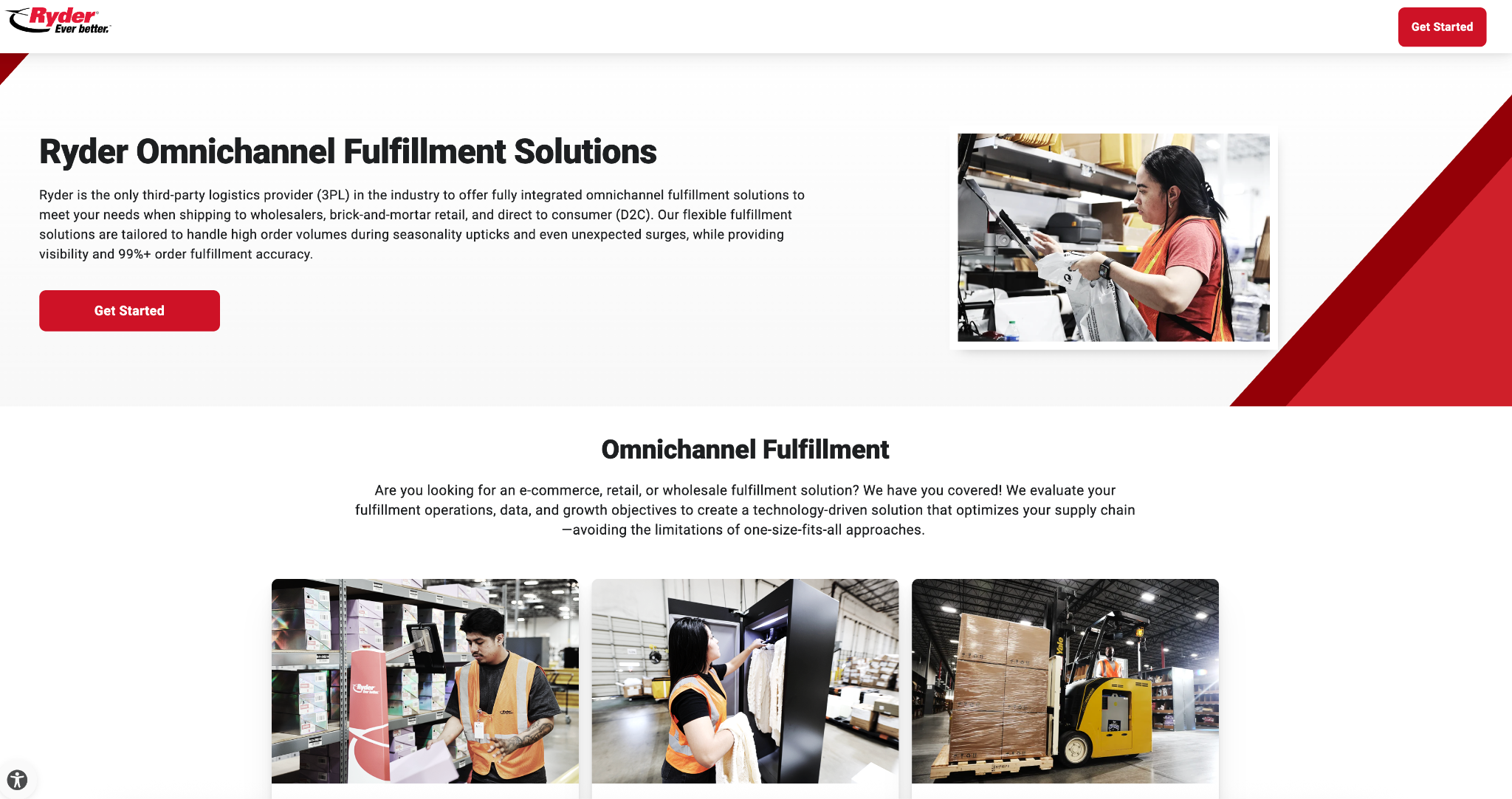
Ryder brings a broader logistics footprint than a typical ecommerce 3PL. For ecommerce specifically, it operates more than 20 omnichannel facilities across seven gateway markets with over 10 million square feet, and its RyderShip platform acts as a control tower for orders, inventory, and shipping.
Ryder is best for brands that need DTC plus B2B retail compliance, transportation coordination, or port-to-door orchestration in one relationship. Smaller brands may find Ryder more sophisticated than they need, while larger sellers will value the ability to combine fulfillment with transportation and omnichannel execution.
Stord
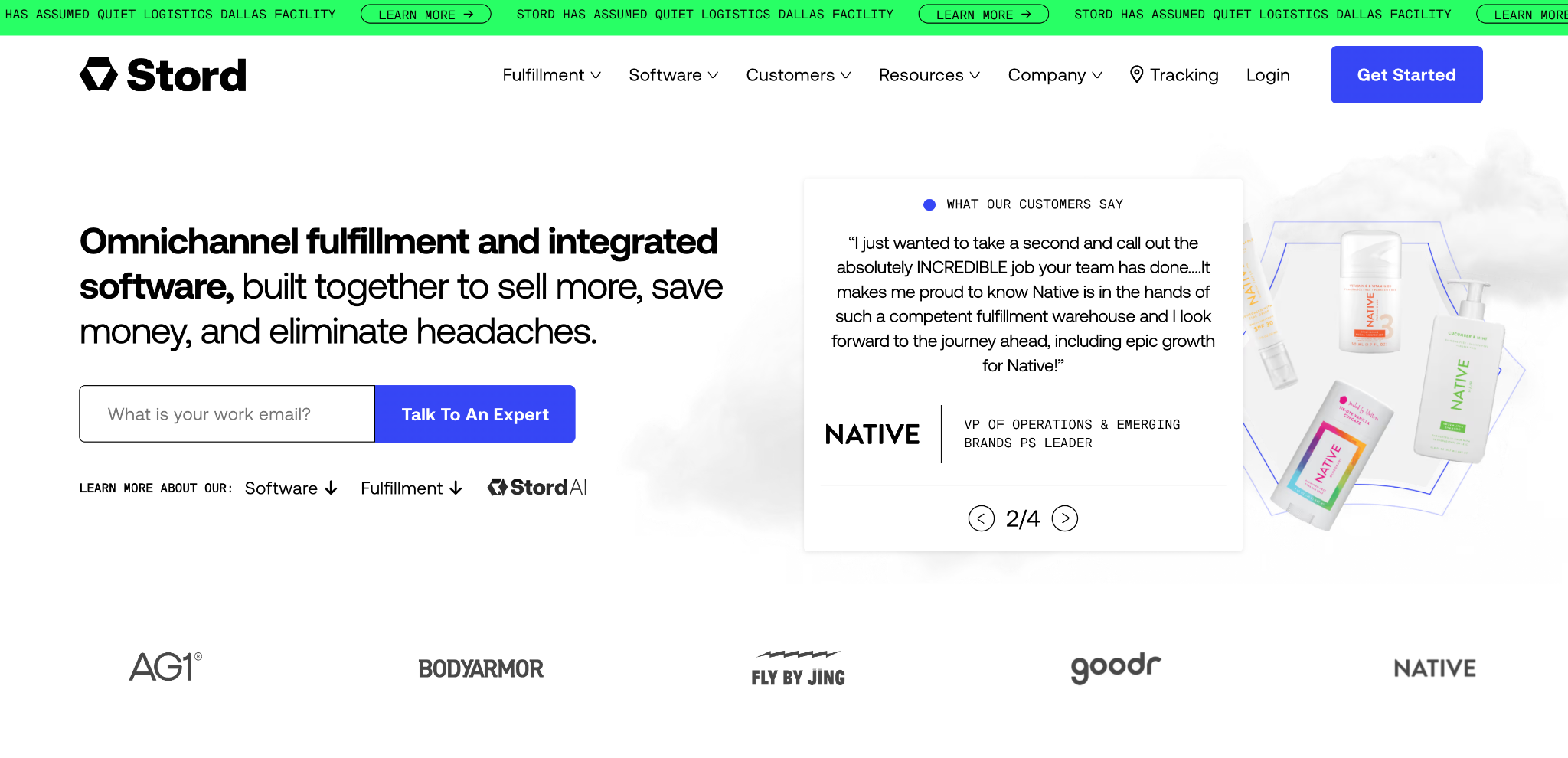
Stord sits at the software-and-operations end of the market rather than the quote-and-warehouse end. It reports 99.9% fulfillment order accuracy, supports 11 key nodes with 99% U.S. coverage in under two days, and layers a broader integrated partner network on top for specialized needs.
Stord is a strong fit for high-volume omnichannel brands that want network design, order management logic, and more visibility than a standard 3PL relationship provides. It can be overbuilt for sellers that only need a simple one-warehouse setup, because its real strength is orchestration across many moving parts.
eFulfillment Service
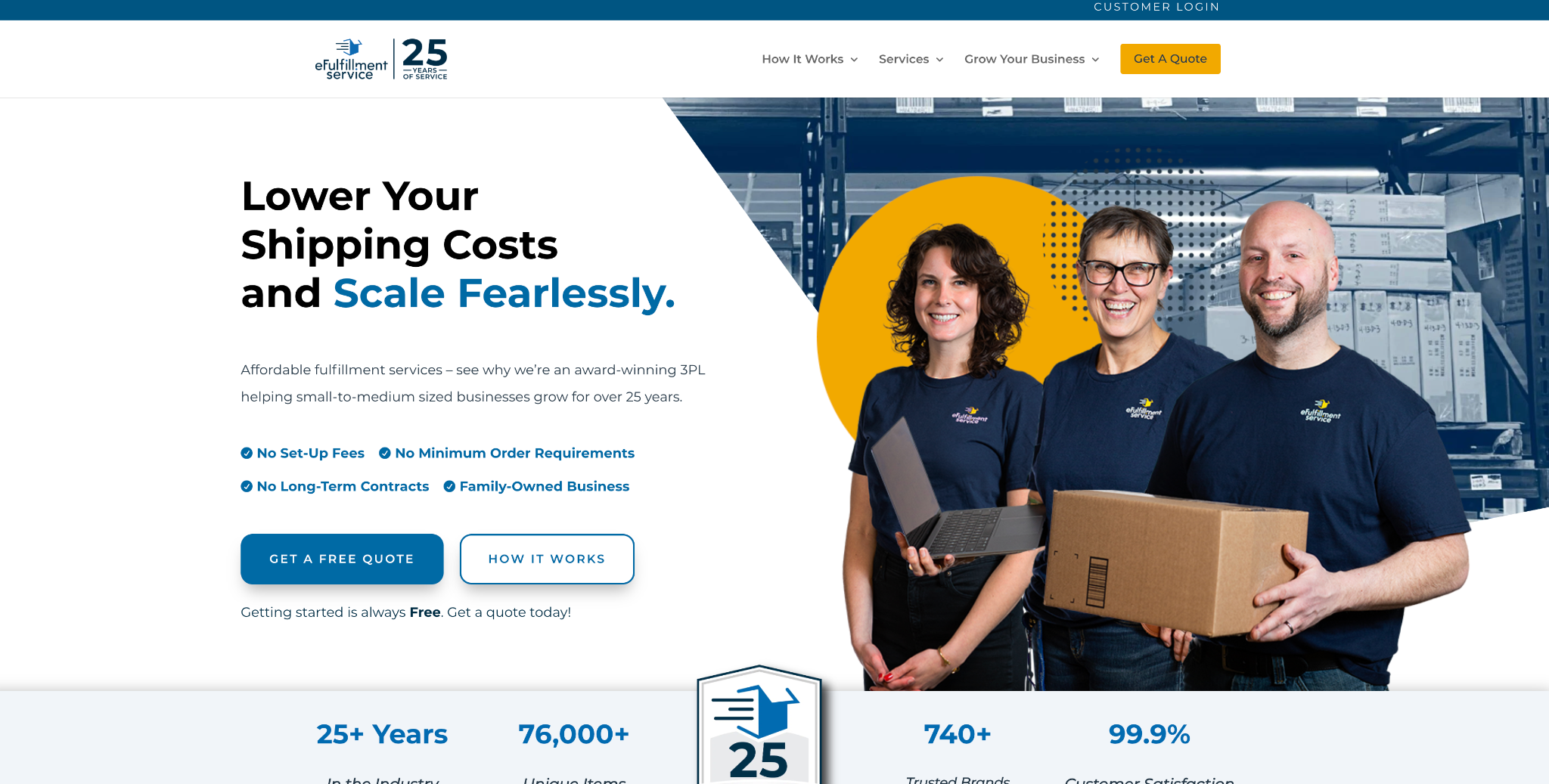
eFulfillment Service is a long-running 3PL aimed at sellers who need affordability and flexibility more than a giant network. The company positions itself as a pay-as-you-go option with no setup fees, no minimum order requirements, no long-term contracts, and real-time access to inventory and order reporting.
This makes eFulfillment Service a smart choice for startups, emerging DTC brands, or subscription businesses that want to outsource without committing to high monthly minimums. The limitation is scale sophistication: early-stage sellers will like the flexibility, but enterprise operators may need more advanced network depth or automation than eFS is built to provide.
If you want a faster shortlist, use these matches.
- ShipBob: Best for mid-market DTC brands. Strength: distributed inventory and branded experience. Watch-out: custom fee structure works best once volume is predictable.
- Amazon MCF: Best for Amazon-native multichannel sellers. Strength: shared inventory and fast shipping. Watch-out: less customization than service-heavy 3PLs.
- ShipMonk: Best for apparel, wellness, and subscription complexity. Strength: owned network and category-specific operations. Watch-out: more system depth than basic sellers may need.
- Red Stag Fulfillment: Best for heavy, fragile, or high-value items. Strength: guarantees and ground reach. Watch-out: not optimized for every lightweight catalog.
- Ryder: Best for omnichannel brands with B2B plus DTC needs. Strength: transportation and fulfillment in one system. Watch-out: strongest at larger scale.
- Stord: Best for enterprise-growth brands that need software plus network design. Strength: orchestration and visibility. Watch-out: can be too much for simple setups.
- eFulfillment Service: Best for smaller brands watching fixed costs. Strength: no minimums and flexible onboarding. Watch-out: lighter network depth than larger operators.
How Should Sellers Measure Fulfillment ROI?
Most sellers stop at cost per order, which leaves too much money unaccounted for. Fulfillment ROI should connect operating metrics to conversion, margin, and attributable revenue, especially for Amazon sellers using outside traffic and programs tied to Amazon Attribution and the Amazon Brand Referral Bonus.
A better model is the Revenue Signal Stack. It gives you three layers of measurement so you do not mistake cheap fulfillment for profitable fulfillment.
- Tier 1, Operational Truth: Dock-to-stock time, order accuracy, on-time ship rate, inventory shrinkage, returns processing time, and support ticket rate.
- Tier 2, Commerce Truth: Conversion rate by shipping promise, stockout rate, split shipment rate, refund rate, repeat purchase rate, and margin after fulfillment.
- Tier 3, Demand Truth: Attributable orders from creator links, Amazon Attribution sales, Brand Referral Bonus recovery, store page conversion, and content reuse impact.
Which Metrics Belong In The Revenue Signal Stack?
Tier 1 tells you whether the warehouse is doing the job it was hired to do. Tier 2 tells you whether those warehouse outcomes improve shopper behavior and margin. Tier 3 tells you whether fulfillment is helping you capture demand you created elsewhere, including creator campaigns.
Across campaigns managed on the Stack Influence platform, brands that assign attribution tags before creator briefs go live tend to capture about 21% more attributable orders than teams that add tracking after content starts publishing. That result matters because measurement discipline is often decided upstream, before the first creator post, not downstream in a dashboard.
How Do Amazon Attribution And Brand Referral Bonus Fit In?
Amazon Attribution gives brands a free way to measure how non-Amazon media drives on-Amazon actions, including traffic from creators, affiliates, search, social, email, and other channels. Brand Referral Bonus adds a second layer by returning an average bonus of about 10% on qualifying sales, but the traffic must carry valid Amazon Attribution tags to qualify.
Data from Stack Influence's micro influencer campaigns suggests that brands that deploy approved creator assets to Amazon product pages or Storefront destinations within 14 days of approval tend to see first attributable orders about 19% sooner than teams that leave the content in a backlog. That speed matters because Salsify's 2025 consumer research found that 70% of shoppers have returned an item due to incorrect product content, which means fulfillment, content reuse, and workflows like Amazon influencer marketing solutions need to be planned together.
Choosing Top Ecommerce Fulfillment Companies For Growth
Choosing from the top ecommerce fulfillment companies is not about chasing the biggest network. It is about finding the provider that protects your margin, supports your channel mix, and can absorb the kind of demand your brand is actually creating.
Start with the SHIFT Framework, shortlist providers based on your real SKU and channel complexity, and then pressure-test each one against the Revenue Signal Stack. eCommerce sellers that do that work upfront will make better decisions, avoid expensive migrations, and build a fulfillment system that supports growth instead of chasing it.