




Creator budgets are climbing fast, and forecasts put U.S. creator ad spend at $37 billion in 2025.
For eCommerce sellers, that pressure creates a practical need: an influencer insights tool free that helps you qualify micro influencers, protect your product seeding budget, and generate UGC you can reuse across ads and product pages.
Key Takeaways
- Screening Layer: Free insights reduce uncertainty, but they are not final answers.
- UGC Leverage: Reusable visual proof often drives more revenue than “reach.”
- Framework: The Five Proof Points of Free Influencer Insights keeps creator selection consistent.
- Measurement Stack: The Commerce Attribution Stack links metrics to decisions, not vanity.
What Counts as Influencer Insights for eCommerce Sellers?

Influencer insights are signals that change a decision about who you partner with and what you ask them to create. For sellers, the highest-value insights fall into three buckets: audience fit, content fit, and commercial fit.
The mistake is letting a tool define “insight” by whatever it can measure. A creator can look strong on engagement rate and still produce UGC that is unusable for ads, off-brand for your listing, or non-reusable because rights were never agreed.
Here is a seller-friendly definition you can reuse internally:
- Audience Fit: Does the creator reach people who resemble your buyers by geography, age range, and interests?
- Content Fit: Does the creator repeatedly produce the format you need, such as short demos, comparisons, or routines?
- Commercial Fit: Can the partnership drive an action you can track, like clicks, code redemptions, or attributed orders?
If you want a shared definition for onboarding, Stack Influence’s micro influencers glossary is a helpful reference.
Which Metrics Should You Stop Using as Decision Criteria?
Follower count alone is the most common trap. Treat it as a rough filter, then score creators on format consistency, audience relevance, and trackable actions.
Why Do Free Insight Tools Matter More in 2026?
Free tools matter because the channel is growing faster than most seller teams can staff. The IAB 2025 Creator Economy report points to measurement and operational tooling as major opportunity areas as creator investment grows.
Free insights also matter because shoppers demand visual proof. In a PowerReviews study, 91% of consumers say they’re more likely to buy when reviews include photos and videos, which is why UGC can become a conversion lever.
Here are three ways “free” becomes strategic:
- More Samples: You can test more creators with smaller batches before you commit to paid placements.
- Faster Iteration: You can learn which hooks and formats produce usable UGC without a long procurement cycle.
- Earlier Red Flags: You can spot obvious misalignment before you ship product.
What Does “Good Enough” Look Like in Free Data?
Good enough means the tool helps you say “no” faster than it helps you say “yes,” so your next step is controlled testing, not endless analysis.
How to Choose an influencer insights tool free That Actually Helps Sales?
Before you choose any influencer insights tool free, decide which decision it must improve. Screening creators, flagging fraud, forecasting content performance, and attributing orders are different jobs, and no free tool does all four well.
Use this short pre-selection checklist:
- Decision First: Name the single decision you want to improve, such as “who gets a seeding slot this month.”
- Validation Path: Define how you will confirm the signal, such as a test batch of 10 creators with the same brief.
- Workflow Fit: Confirm you can capture deliverables, rights, and tracking links without manual chaos.
- Upgrade Trigger: Decide what would justify paid software, such as creator volume, reporting depth, or team seats.
If you want a workflow primer for deliverables and results, Stack Influence’s content tracking guide is a useful internal reference.
What Is the Signal vs. Effort Grid?
The secondary tool in this guide is the Signal vs. Effort Grid, a decision matrix that helps you avoid “busy work analytics.” The variables are signal reliability and workflow effort.
Use the grid as a quick read:
- High Signal, Low Effort: Verified data or clear proxies, plus exports or workflows you can reuse.
- High Signal, High Effort: Strong insights, but you must request screenshots or reconcile data manually.
- Low Signal, Low Effort: Fine for early screening, but not for final decisions.
- Low Signal, High Effort: The trap zone, where weak data creates extra work.
The Five Proof Points of Free Influencer Insights
The primary framework in this article is a named principle set called the Five Proof Points of Free Influencer Insights. It is designed for sellers who need decision-grade signals even when the tooling is free, limited, or based on estimates.
Use the Five Proof Points of Free Influencer Insights any time you screen creators, approve seeding, or decide who to scale.
Here are the five proof points:
- Proof Point 1, Audience Reality: Prefer signals tied to real viewers and buyers, not follower counts alone.
- Proof Point 2, Content Predictability: Look for repeatable formats, not one lucky spike.
- Proof Point 3, Conversion Intent: Favor creators who can drive an action you can track, even with smaller audiences.
- Proof Point 4, Reuse Rights: Treat usage rights as a performance lever, because reuse compounds value.
- Proof Point 5, Operational Friction: Choose workflows that reduce chasing, manual reporting, and ghosting risk.
How Do You Apply the Five Proof Points in a Weekly Workflow?
Use the framework as a loop: screen creators, run a small seeding batch, score the output, and re-invest in the creators whose content is both reusable and measurable.
How Do You Validate Micro Influencers Before You Send Product?
Micro influencers can be a high-ROI channel, but only if you control the operational overhead. Validation is where free insights should do most of the work, because every weak creator adds hidden labor to your program.
Use this validation sequence before you send product:
- Niche Match: Confirm recent posts show your category context, not just generic lifestyle content.
- Format Fit: Check whether the creator repeatedly produces the format you want, such as demos, unboxings, or comparisons.
- Consistency Check: Scan posting cadence and comment quality to avoid hollow engagement.
- Deliverable Clarity: Confirm the creator understands the brief and agrees to a specific output.
If you want a structured seeding workflow, Stack Influence’s influencer seeding kit guide is a practical internal reference.
How Do You Measure Influencer ROI When Insights Are Free?
Measurement fails when you try to force every creator into a single KPI. Sellers need a stack that maps metrics to decisions.
Use this tiered model, the Commerce Attribution Stack:
- Layer 1, Attention Signals: Views, reach, and watch-time proxies that confirm the hook is working.
- Layer 2, Engagement Signals: Saves, shares, comments, and profile actions that indicate consideration.
- Layer 3, Action Signals: Clicks on tracked links, code redemptions, add-to-carts, and email sign-ups.
- Layer 4, Revenue Signals: Attributed orders, blended lift, and payback period based on total program cost.
Amazon sellers need extra discipline because off-platform tracking is harder. The Amazon Attribution overview describes a Brand Referral Bonus that averages 10% of product sales driven by non-Amazon marketing measured via attribution tags, and it uses a 14-day last-touch model for attribution credit.
Which KPIs Should You Review After Each Seeding Batch?
Review the minimum set that drives decisions: one attention signal, one engagement signal, one action signal, and one revenue signal.
If you sell on Amazon, Stack Influence’s Amazon influencer marketing solutions page provides a marketplace-oriented framing for traffic, UGC, and listing visibility.
Free and Freemium Influencer Insight Platforms Compared
Most sellers do not need one “all-in-one” platform on day one. They need a stack that supports screening, operations, and measurement without turning influencer marketing into a second full-time job.
Use these categories to orient your selection:
- Discovery and Profile Analytics: Tools that screen creators and estimate audience fit.
- Program Operations: Platforms that manage seeding logistics, deliverables, and UGC collection.
- Commerce Tracking: Systems that tie creator activity to orders through links, codes, or attribution tags.
Stack Influence
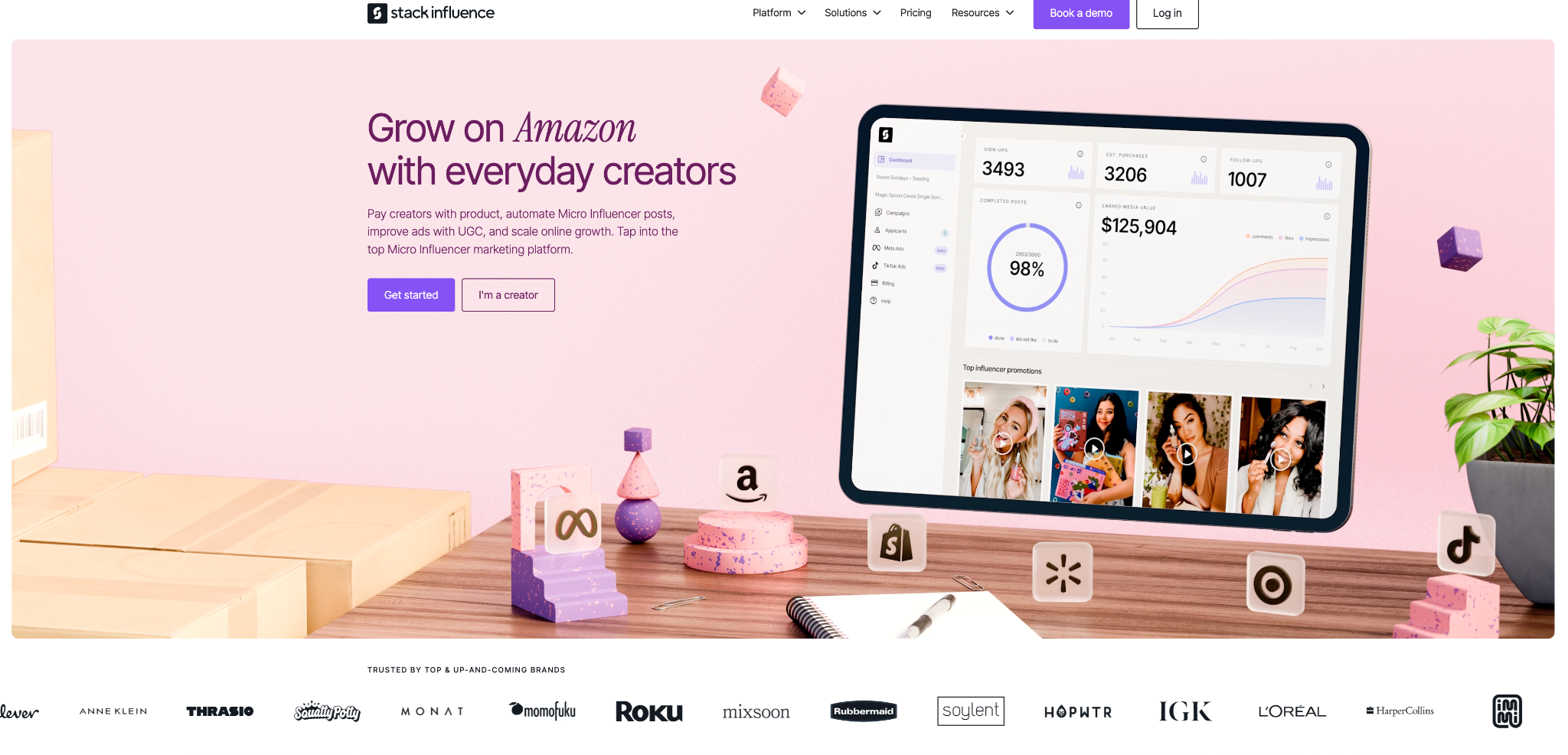
Stack Influence is a micro influencer marketing platform built to automate product seeding and UGC production for eCommerce sellers. Its differentiator is an operational model positioned as reducing inventory risk: the automated product seeding page describes creators buying the product and the brand paying only after social posts go live.
Choose it when you need UGC volume with low operational overhead. A tradeoff is that if you only need occasional creator audits, a standalone analytics tool may be faster than a managed execution platform.
Modash
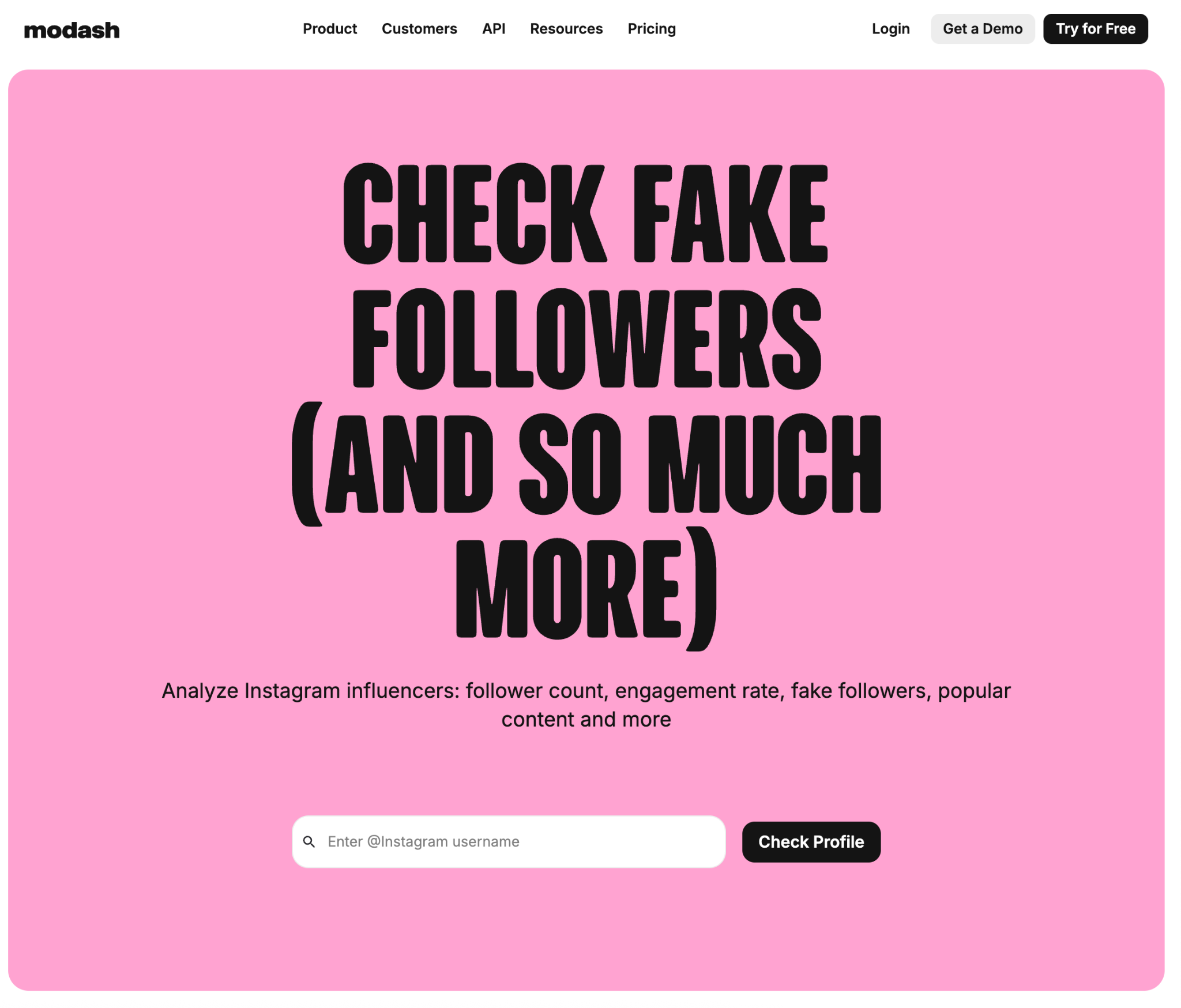
Modash is a self-serve influencer marketing platform that combines discovery and analytics across major social platforms. Its free influencer analytics tool lets you enter an @handle without signing up and see profile data like engagement rate and average views.
A concrete differentiator is scale plus transparent pricing: Modash says it includes every public Instagram, TikTok, and YouTube profile over 1K followers, totaling 350M+ creators, and lists pricing starting at $199 per month. The tradeoff is that deeper, first-party insights may still require creator consent or shared screenshots.
HypeAuditor
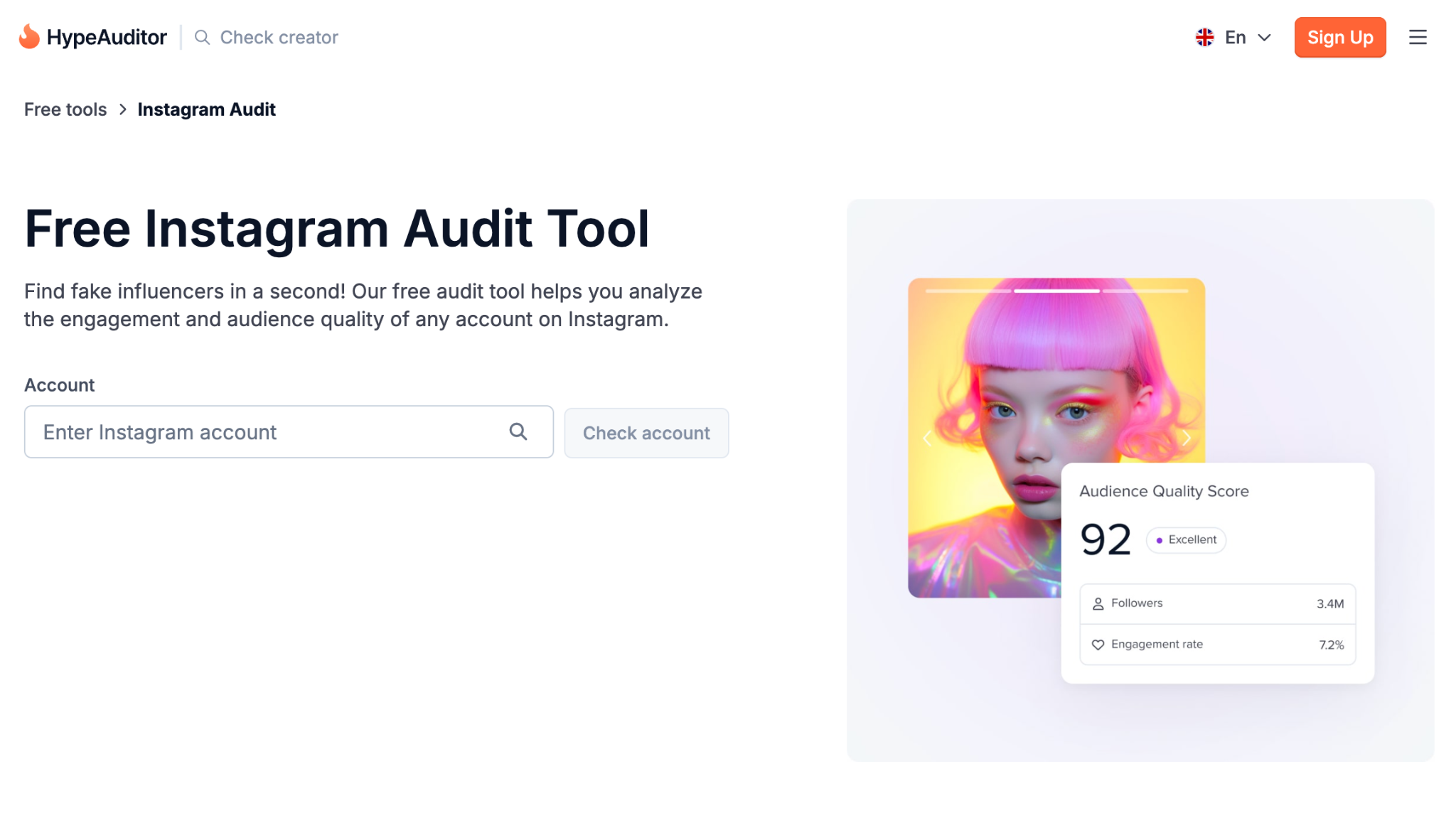
HypeAuditor is an influencer discovery and analytics platform with a strong emphasis on audience quality. Its Influencer Discovery page highlights a 223.6M+ account database and positions fraud detection and Audience Quality Score as core filters.
Pick HypeAuditor when you sell higher-priced products or operate in categories where fake signals and incentive abuse are common. The limitation is that depth can come with cost and complexity, and many sellers still need separate workflows for gifting logistics and rights.
Influencer Hero
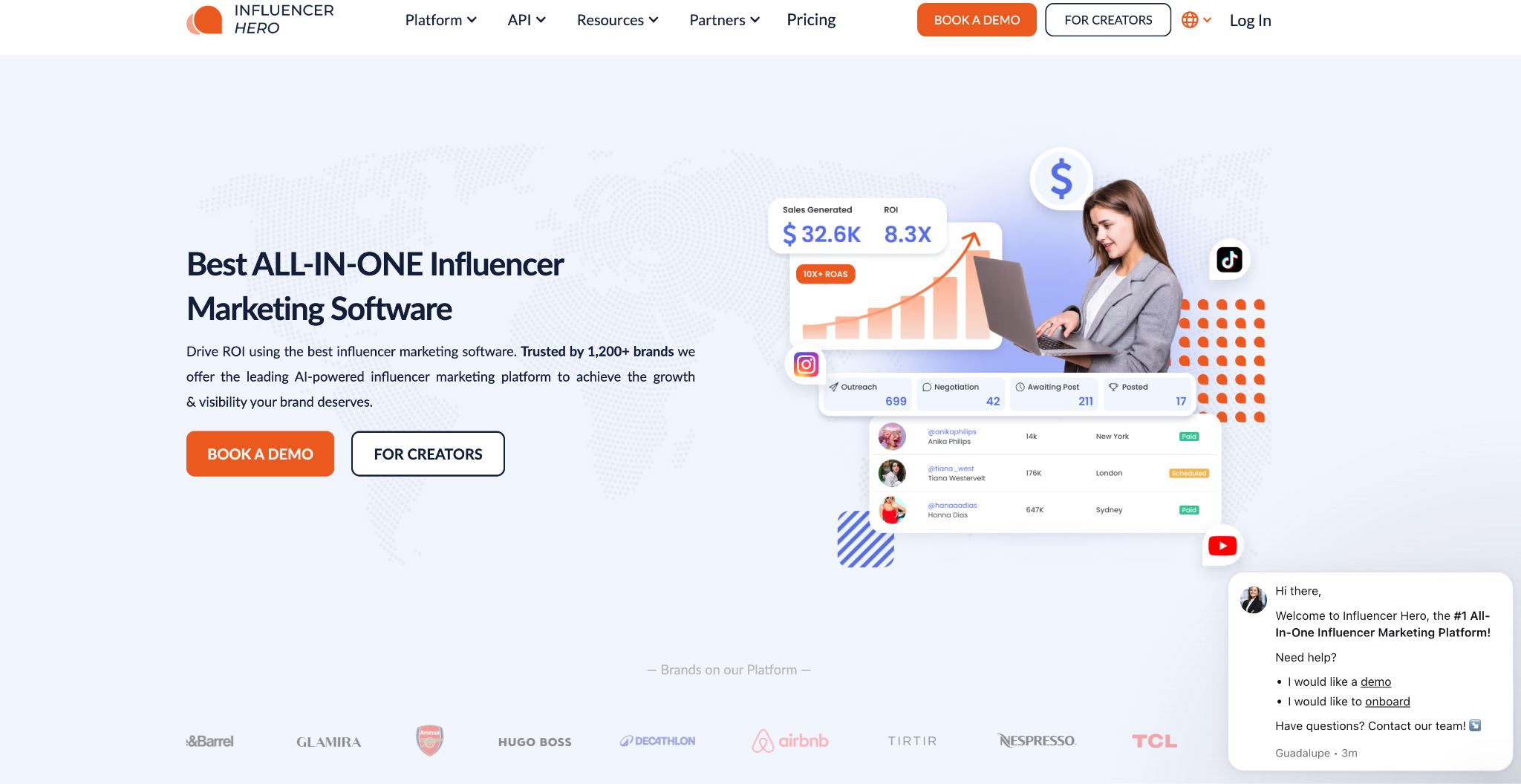
Influencer Hero is an influencer marketing platform that combines selection, outreach, and reporting, with a free-tool top-of-funnel. Its pricing page lists plans, including a Standard Plan shown at $519 per month with quarterly billing.
This is a fit for small teams that want selection tied to outreach volume and a single place to manage campaign operations. The tradeoff is that you should confirm how content rights, approvals, and asset storage work.
GRIN
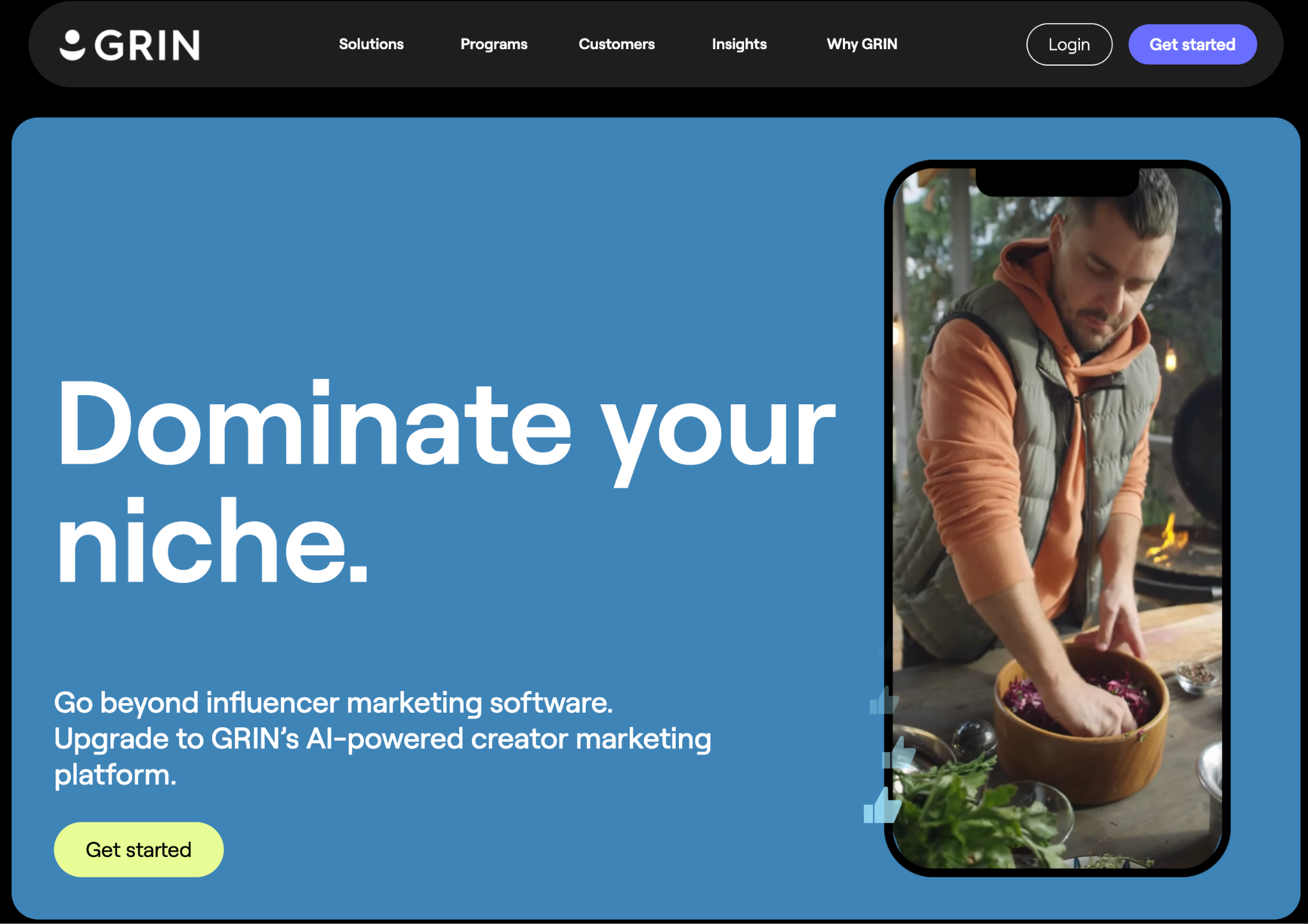
GRIN is a creator marketing platform aimed at brands building a structured, repeatable creator program. The GRIN pricing page lists a 30-day free trial and a Lite plan at $399 per month, with month-to-month cancellation.
GRIN is best for sellers who want CRM-style relationship management and plan to turn top creators into affiliates or ambassadors. The limitation is that the payoff comes from running a consistent pipeline, so very low creator volume programs may not use enough of the system to justify the overhead.
Upfluence
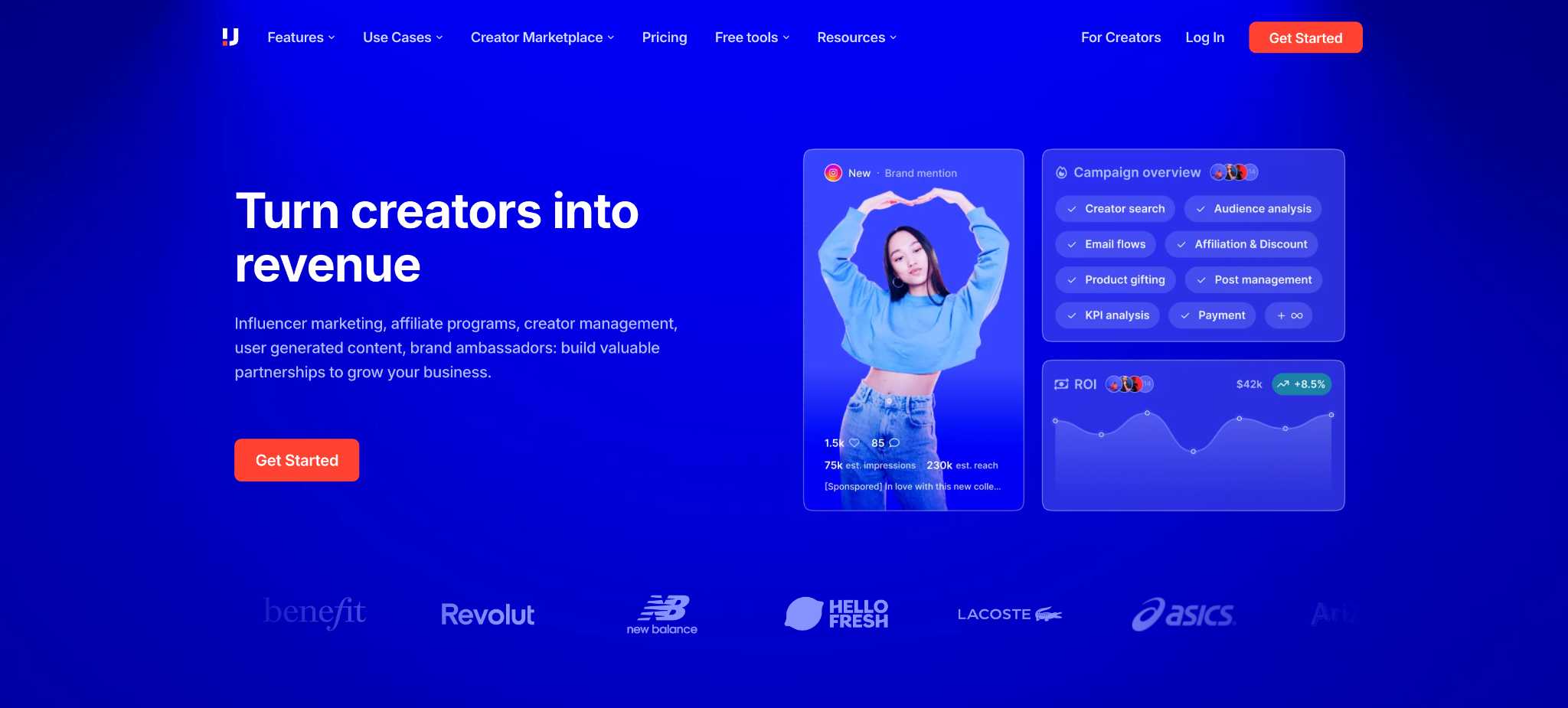
Upfluence is an influencer and affiliate marketing platform designed to connect creators to commerce workflows. On the Upfluence platform site, it highlights generating unique promo codes compatible with WooCommerce, Magento, BigCommerce, or Amazon.
Choose Upfluence when your program is performance-driven and you prefer affiliate-style incentives, payouts, and dashboards. The tradeoff is that it is not positioned as a lightweight “free insights” layer, so implementation discipline matters.
Shopify Collabs
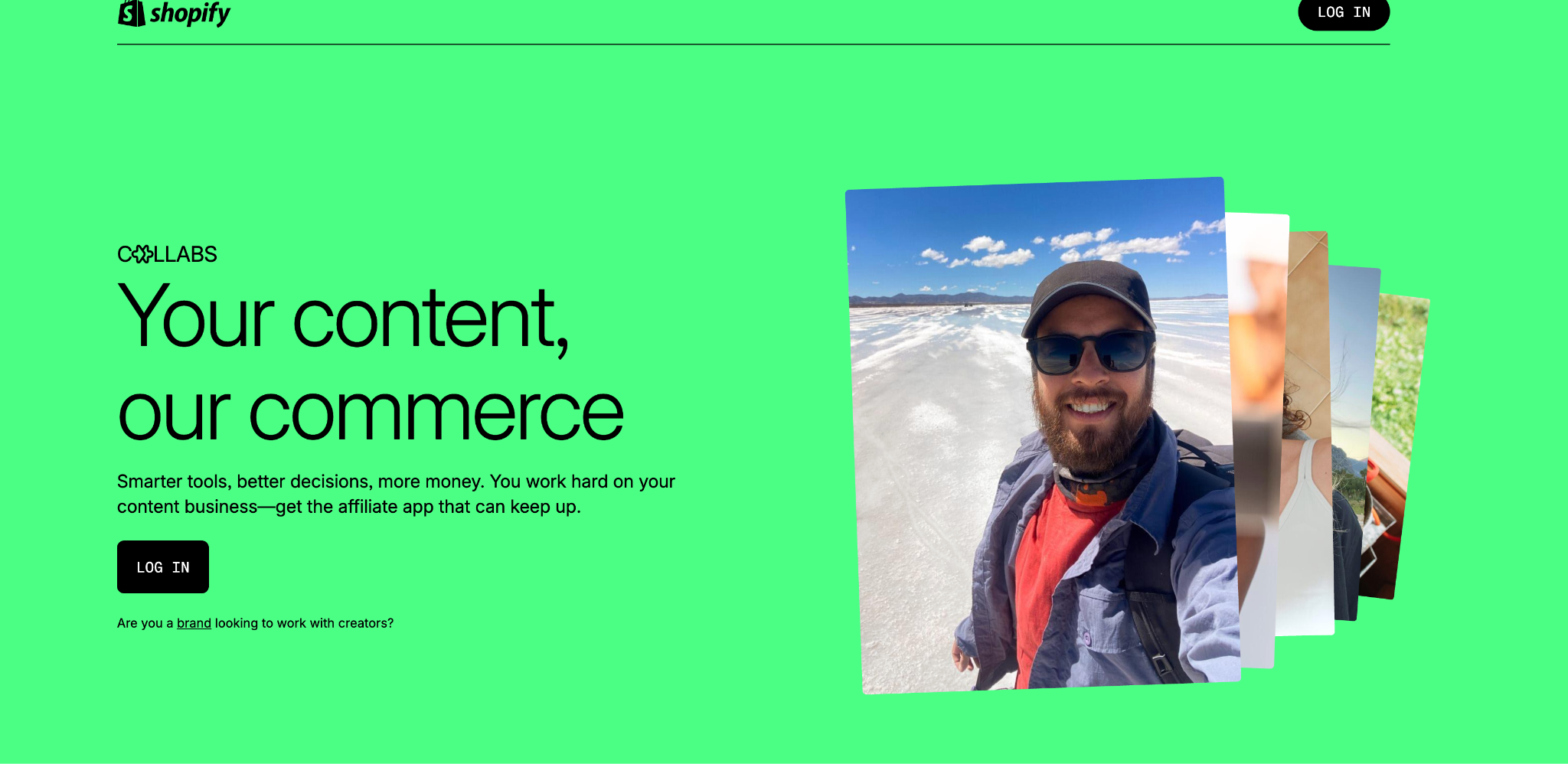
Shopify Collabs is Shopify’s creator and affiliate app that helps merchants recruit creators, send gifts, and track commissions inside Shopify. The Shopify App Store listing shows it as free to install, with a note that a 2.9% commission processing fee on automatic payments may apply.
It is a strong match for Shopify sellers who want native attribution and automated payouts without custom integrations. The tradeoff is quality control, so you need strict partner vetting.
CreatorIQ
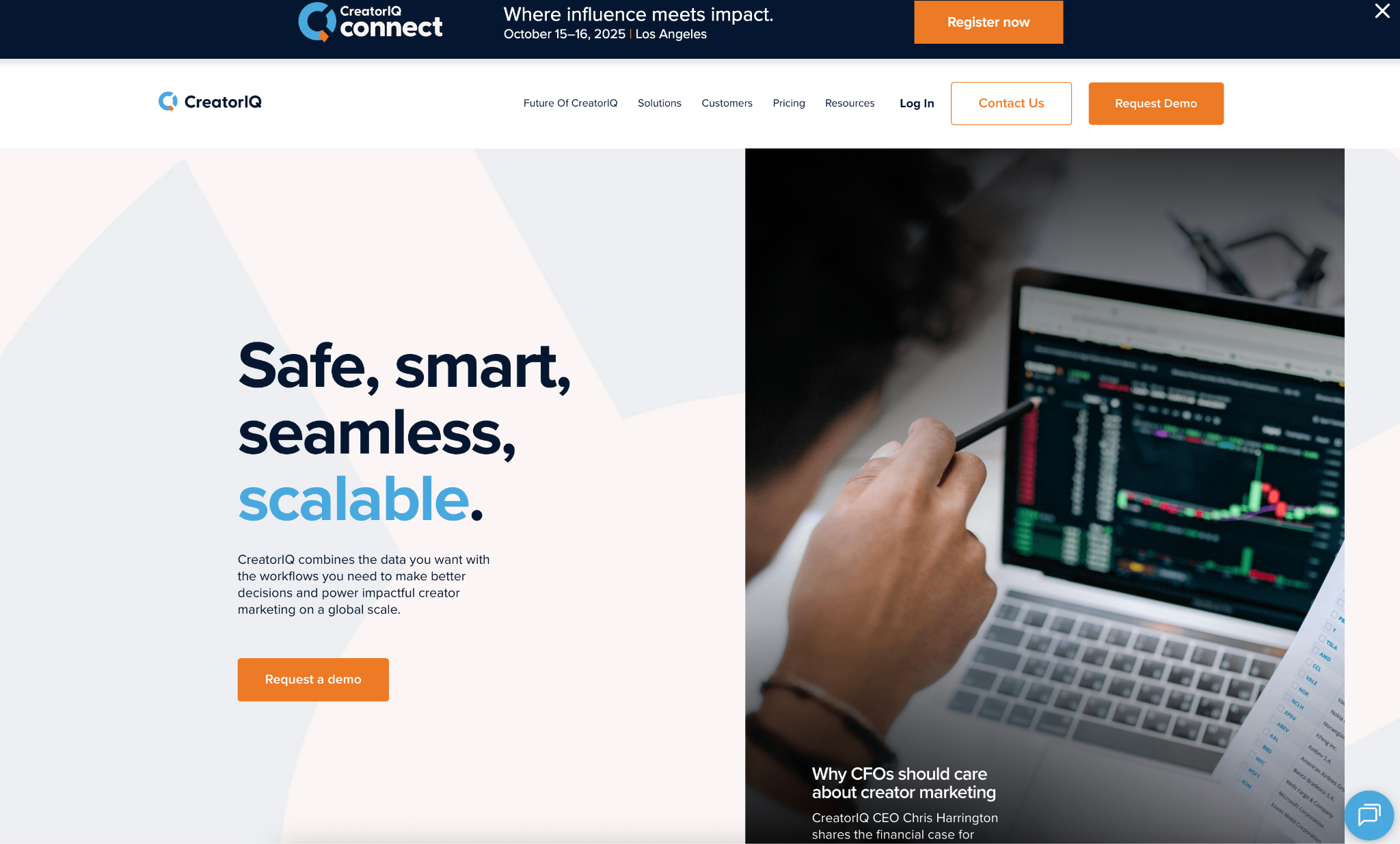
CreatorIQ is an enterprise creator marketing platform built for governance, measurement, and large-scale creator portfolios. A March 2026 CreatorIQ release describes integrating YouTube’s Creator Partnership API so brands can evaluate creators using first-party viewership data inside CreatorIQ’s discovery workflow.
CreatorIQ is best for larger teams that need compliance and deeper platform integrations across regions and business units. The limitation is that it is typically overbuilt for early-stage sellers who are still proving the offer, the creative format, and the measurement stack.
After the reviews, use this constraint-based summary to choose quickly:
- Stack Influence: Constraint: ops time. Best For: seeding at scale and reusable UGC. Tradeoff: not a pure analytics tool.
- Modash: Constraint: discovery speed. Best For: fast screening and monitoring. Tradeoff: deeper data may require creator consent.
- HypeAuditor: Constraint: fraud risk. Best For: authentic audiences and strict filtering. Tradeoff: complexity for small teams.
- Influencer Hero: Constraint: outreach workflow. Best For: selection plus outreach and reporting. Tradeoff: confirm rights and asset workflows.
- GRIN: Constraint: relationship management. Best For: CRM-driven creator programs. Tradeoff: overhead at low volume.
- Upfluence: Constraint: commerce automation. Best For: promo codes and affiliate-style tracking. Tradeoff: heavier setup.
- Shopify Collabs: Constraint: Shopify-native tracking. Best For: attribution and payouts tied to orders. Tradeoff: vet partners aggressively.
- CreatorIQ: Constraint: governance at scale. Best For: enterprise-grade measurement. Tradeoff: too heavy for most SMBs.
What Most Free Influencer Analytics Guides Get Wrong?
Most guides treat creator selection as a one-time decision. For eCommerce, selection is a feedback loop, and your first batch is supposed to teach you which hooks, formats, and creators generate reusable UGC and measurable actions.
The second miss is ignoring rights and reuse. Free dashboards rarely tell you whether you can repurpose a video in ads or on product pages, yet PowerReviews’ study shows visual content influences purchase behavior, which makes rights a revenue lever.
Use these “silent leak” checks to protect ROI:
- Rights Are a KPI: Track usage rights as part of creator performance, because reuse creates compounding value.
- Ops Is Part of CAC: Include fulfillment and management time in your ROI math.
- Creative Beats Audience: Smaller creators with strong demos can outperform larger creators with shallow content.
- Free Data Has Blind Spots: Treat demographics and authenticity scores as estimates unless they are first-party.
If you want a foundational explanation for internal alignment, Stack Influence’s UGC vs content creators guide can help teams agree on what “UGC” means.
Where Does Free Data Create Hidden ROAS Risk?
Free tools often hide their biggest cost in labor, because you spend time reconciling inconsistent metrics and chasing deliverables. If your workflow does not include rights, tracking links, and a measurable goal, “free data” can inflate confidence while lowering real ROAS.
If your goal is to turn creator output into reusable assets, Stack Influence’s UGC for eCommerce page is a helpful internal overview.
Conclusion
An influencer insights tool free is only valuable when it improves a decision you will repeat. Apply the Five Proof Points of Free Influencer Insights, measure with the Commerce Attribution Stack, and focus on micro influencers who can produce UGC you can deploy across ads and product pages.
Use this short next-step plan:
- Run a 10-Creator Test Batch: One brief, one offer, and one tracking method.
- Score Output and Reuse: Decide which assets can be used on product pages or in ads.
- Scale the Winners: Reinvest in creators and formats that produce measurable actions and reusable UGC.