



To hire UGC creators, define the content and permissions you need, find creators whose portfolios show the right product skills, and send each candidate the same brief. Compare complete quotes, agree on delivery and usage terms, then commission a paid first project before expanding.
For ecommerce sellers, the useful starting point is a customer question the content should answer. A drawer-organizer demonstration might show how the product fits, installs, and changes the available space. That gives you something concrete to commission, evaluate, and publish.
This guide focuses on hiring creators to produce usable content for your brand, with separate decisions for creator posting and advertising permissions.
Key Takeaways
- Define original videos, exported versions, creator posts, and advertising permissions separately in the brief.
- Compare the total price for identical deliverables and rights, including product costs and applicable fees.
- Evaluate relevant demonstrations, communication, and delivery requirements before committing to a larger order.
- Use a paid pilot to review the working relationship while keeping later orders optional.
- Approve content against the agreed brief and keep each asset's permissions with its files.
Define the Content You Need Before Looking for Creators
Start by naming the placement: a product page, a brand social account, a paid advertisement, or a creator's own account. Then identify what the viewer needs to see or understand before taking the next step.
For an ecommerce product demonstration, specify the action that answers the buyer's question. A creator showing a drawer divider being measured and installed gives you a concrete demonstration to evaluate. A general request to make the product look appealing leaves the expected work unclear.
Separate three purchases in your brief:
- Content production: The agreed original videos, photographs, edits, and exported files.
- Creator distribution: A post to the creator's account, including the channel and agreed live period.
- Advertising permissions: The rights and any platform authorization needed for your intended advertising use.
For an asset-only assignment, prioritize production skill and product fit. When the job also includes audience distribution, assess audience relevance and posting obligations using the broader guidance on hiring influencers for ecommerce campaigns.
Define the counting unit, too. Two original videos delivered with and without captions produce four files. They still represent two original creative executions. For this brief, a clean export means a finished edit without captions or platform watermarks; raw footage consists of the underlying source recordings and should be specified separately.
Make sure the versions you publish retain any required disclosures, including when you edit a clean export.
Where to Find UGC Creators
Choose a sourcing route according to the work you need and how much coordination your team can handle. Stack Influence publishes this guide and is one of the workflow examples below.
Direct Portfolio Outreach
Search social platforms for your product category alongside terms such as “UGC creator” or “product demo.” Review portfolio links, full sample videos, and relevant customer-created posts where available. Ask who handled filming and editing so you understand what the creator can personally deliver.
Direct outreach lets you investigate a specific style or product-use setting. Your team will need to arrange the brief, commercial terms, shipping, feedback, and file handoff. Contact creators through their stated business channels and keep the first inquiry specific enough to quote.
Billo and Insense
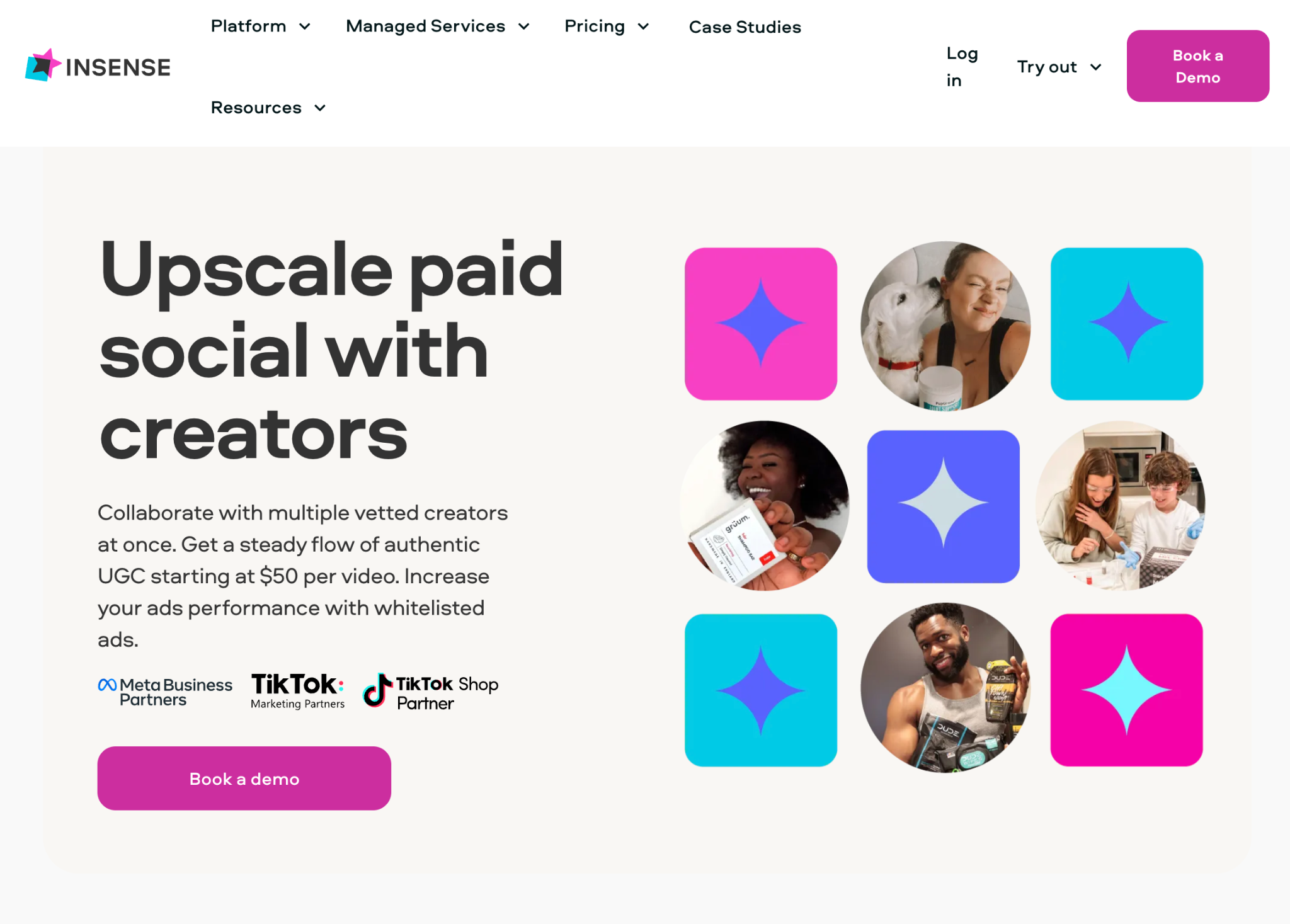
Billo's documented workflow lets brands create a brief, select applicants, send products, and review submitted videos. Standard video orders do not require a post to the creator's personal account; posting and partnership advertising are additional services.
Insense's campaign workflow supports creator applications and invitations, with separate campaign types for content, organic posting, creator ads, and product seeding. Its process includes discussing prices and deadlines and reviewing submitted content.
For either route, check the specific order's fees, deliverables, revision terms, and permissions. Use the platform's current agreement to confirm what your purchase includes.
Stack Influence
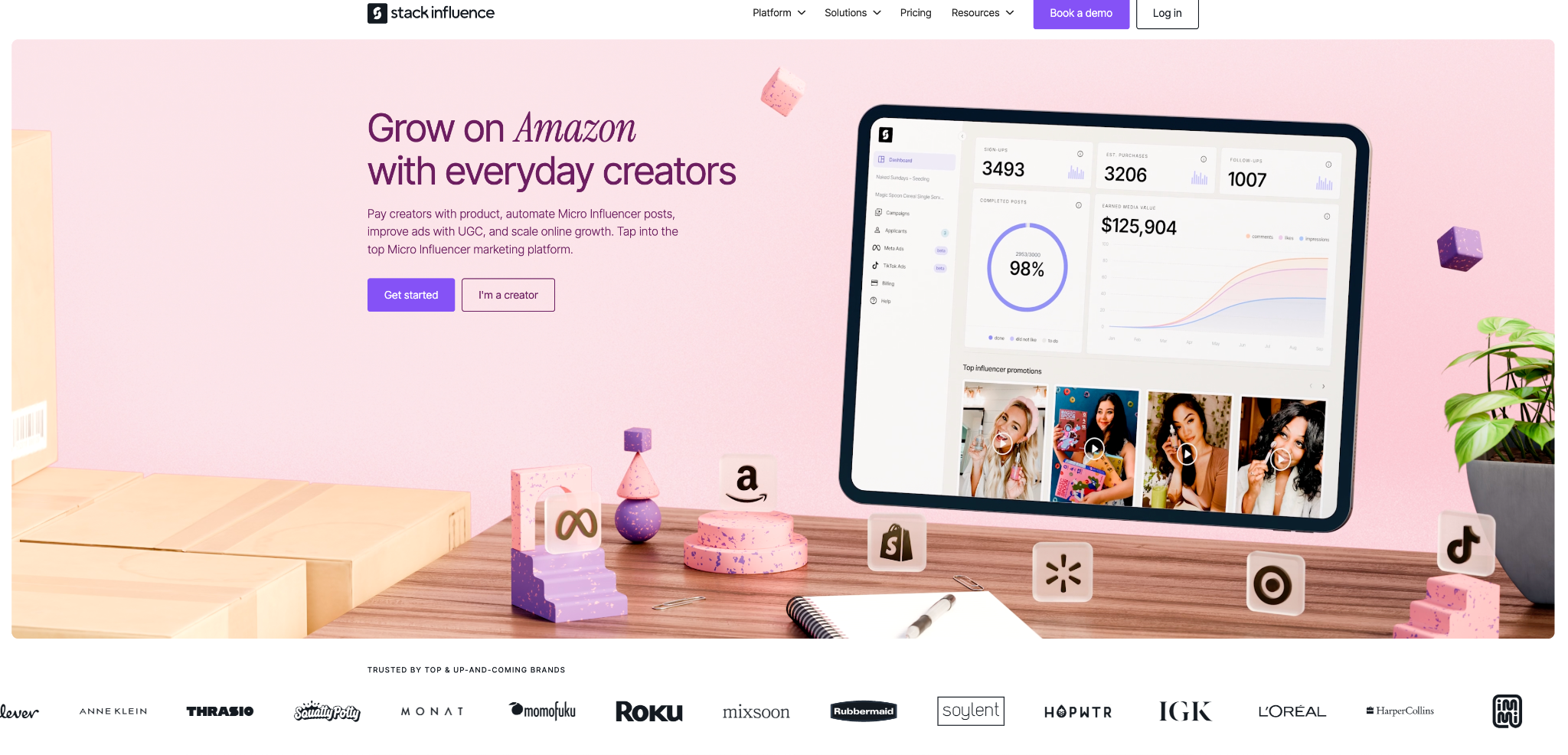
Stack Influence's managed micro-influencer campaigns support ecommerce brands through product seeding and campaign coordination, with content collection and progress tracking.
Consider this route when creator product experiences and campaign participation are part of your brief. Before committing, confirm the campaign's content format, product or reimbursement process, usage period, and advertising permissions. Product-based compensation and a cash production commission should each be evaluated against their actual scope.
Compare Quotes for the Same Finished Work
Send every candidate the same deliverables and usage requirements. Ask for the complete payable amount, including applicable platform charges, processing fees, product expenses, shipping, and taxes. Identify internal coordination separately if it affects your budget.
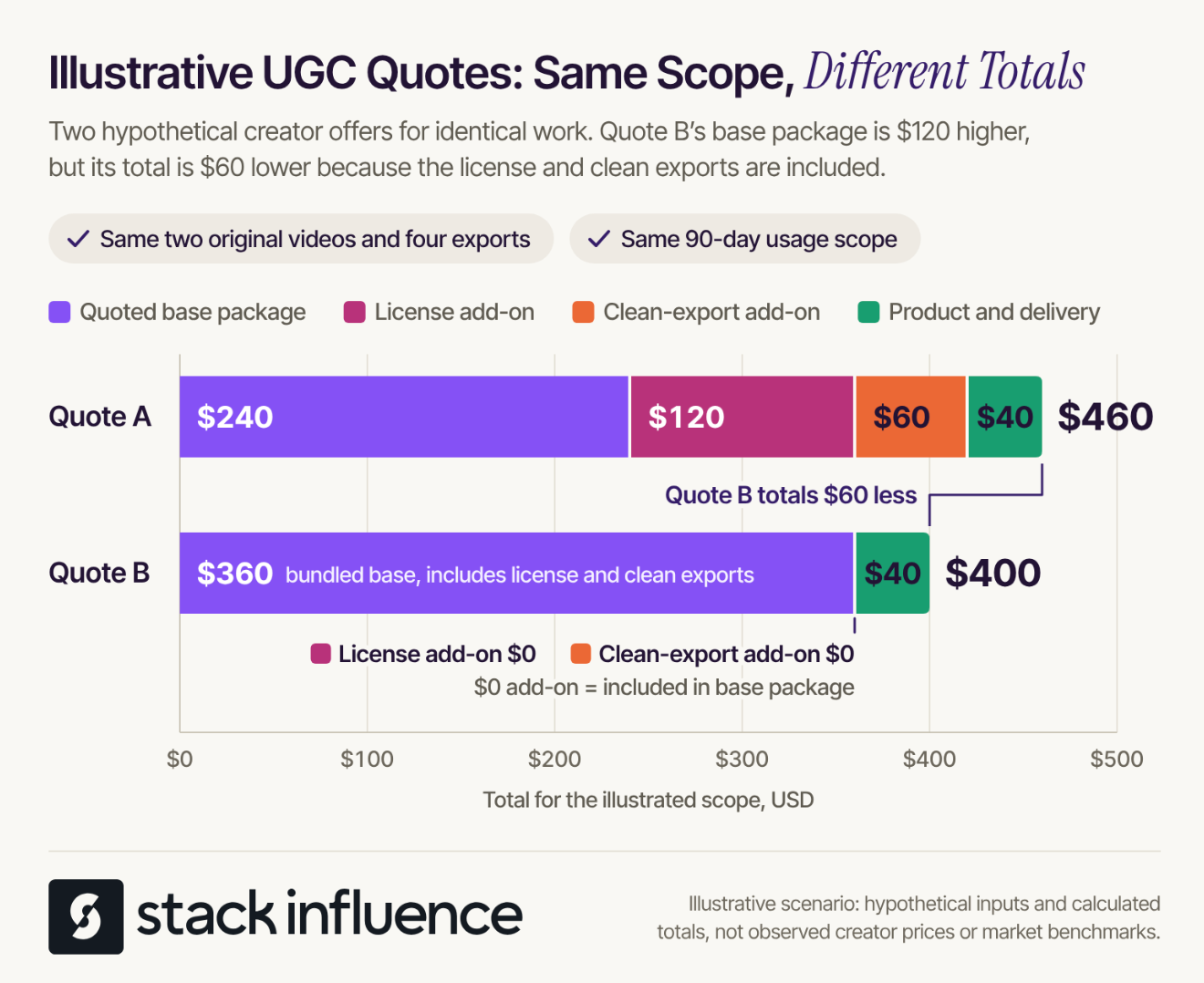
Consider two fictional quotes for an identical assignment: two original 20–30-second vertical product demonstrations, each delivered as a captioned file and a clean file. Both include one correction round and 90 days of use on the brand's own social accounts and in paid Meta ads, starting on delivery.
The example excludes raw footage, creator-account posting, advertising through the creator's identity, and exclusivity. Product and delivery cost $40 in either case, and no other fees or taxes are assumed. These are editorial assumptions, not market rates or Stack Influence prices.
- Quote A: $240 for the base package, plus $120 for the specified usage license, $60 for clean exports, and $40 for product and delivery. Total: $460.
- Quote B: $360 for a package that includes the same license and clean exports, plus $40 for product and delivery. Additional license and clean-export charges are each $0 because they are included. Total: $400.
Quote B's base package is $120 higher, but its total for the same illustrated scope is $60 lower. An included permission has a defined scope; a zero add-on charge does not make it unlimited.
When lowering the budget, change the scope explicitly. Request fewer original concepts, a shorter initial license, or fewer exported versions, then ask for a revised quote. If the proposed cost is still too high, narrow the assignment before agreeing to it.
Vet Creators Against the Product Demonstration
Watch complete examples that resemble your assignment. For a physical product, evaluate how clearly the creator handles it, shows important details, and explains its use. For a spoken demonstration, check whether the voice is understandable and the delivery fits the intended customer.
Use a short set of questions:
- Relevant execution: Can they show a comparable demonstration, tutorial, or explanation?
- Practical fit: Do they have the setting, equipment, and product compatibility the shoot requires?
- Production responsibility: Which parts will they film, edit, or subcontract?
- Availability: Can they allow for product arrival, genuine use, feedback, and final delivery?
- Communication: Do they identify missing information and confirm what they will deliver?
For the drawer-divider example, ask whether the creator has a suitable drawer and can film the installation clearly. A polished portfolio from an unrelated format does not answer those practical questions.
Ask for existing examples and a short proposed approach during selection. Pay for any requested original production. Reserve the full script and filming assignment for the agreed project so both sides understand when commissioned work begins.
Send a Brief That Can Become the Work Order
Give creators enough information to propose and deliver the work without guessing. Keep product facts and mandatory shots precise while leaving room for the creator's natural presentation.
The following is an illustrative brief for a fictional drawer-divider assignment, with commercial details to finalize. Adapt its specifications, dates, and permissions to your actual product and placements.
- Objective: Help shoppers understand how the divider fits and installs.
- Viewer question: Will it fit my drawer, and what does setup involve?
- Product information: The brand supplies the correct item, installation instructions, supported dimensions, and approved factual claims.
- Demonstration: Show measuring the drawer, fitting the divider according to the instructions, organizing utensils, and opening and closing the drawer.
- Original content: Two distinct 20–30-second vertical videos: one installation demonstration and one organization-use demonstration.
- Files: Four finished MP4 files at an agreed 1080 × 1920 resolution: a captioned and a clean version of each original video. Raw footage is outside this example's scope.
- Claims: Describe actual use. Avoid unsupported durability claims, invented long-term experience, or promises about every drawer.
- Usage: Brand-owned social posts and paid Meta ads for 90 days from delivery. Define the territory, permitted edits, and required name or likeness permissions in the agreement. Creator posting and creator-identity advertising are outside this assignment.
- Schedule: Confirm product receipt, outline approval, first delivery, feedback, and final delivery dates before filming.
- Corrections: One consolidated round addressing the agreed requirements. Price a new concept or additional shoot separately when it changes the scope.
- Commercial terms: Confirm the complete fee, included expenses, payment dates, cancellation terms, and responsibility for a delayed or unusable shipment before work starts.
The resolution and duration above are sample production choices. Confirm your actual placements' requirements before commissioning files.
You can adapt this first message:
Hi [Creator Name], your [specific demonstration] is relevant to a project for [Brand]. We need two original vertical videos showing [product use], each supplied with and without captions. The intended use is [placements] for [term], with [revision allowance]. Please confirm availability, your complete quote for that scope, any exclusions, and a relevant portfolio example. We will send the product and agree on the filming schedule after delivery is confirmed.
Ask the creator to flag anything in the brief they cannot deliver or would price separately. Resolve those differences in the work order before approving production.
Agree on Rights, Payment, and Corrections Before Filming
A useful agreement connects the deliverables to the permissions and payment schedule. The U.S. Copyright Office's copyright overview explains that copyright includes rights to reproduce and adapt a work and to authorize others to use it. Document whether the deal grants a defined license or transfers ownership, and what that arrangement permits.
Specify channels, territory, duration, the start of the usage period, allowed edits, and treatment of the creator's name and likeness. Ask for renewal terms when extended use is a realistic possibility. Request a music-free master and identify any third-party elements that need permission for your placements.
Creator-account advertising also needs the relevant platform authorization. For example, TikTok's Spark Ads documentation says advertisers can use another creator's organic posts with authorization. Check that the platform permission and contractual usage period both cover the planned campaign.
Set a Clear Correction Boundary
Describe what counts as correcting the agreed work and what changes the assignment. If the approved brief requires an installation shot and it is missing, identify the missing requirement. If your team later wants an outdoor setting or a third concept, request a change quote before the creator performs that work.
Agree when feedback is due, who consolidates it, and how an unresolved defect will be handled. Define payment milestones and any deposits explicitly. Keep the creator's payment for compliant delivered work separate from your later judgment about advertising results.
Preserve Honest Experience and Clear Disclosure
The FTC's endorsement guidance requires endorsements to reflect honest experience and supported claims. A creator who has only just tried the product should not imply months of use. Give the creator time to use it and provide the factual boundaries for the demonstration.
The FTC's social media disclosure guidance explains that payments and free products can create a material connection requiring disclosure. For video endorsements, the disclosure belongs in the video, where viewers can notice it. Agree on clear wording and placement during briefing and check it before publication.
Keep marketplace customer reviews outside this content assignment. Commission the agreed creative work and preserve the creator's ability to describe their actual experience honestly.
Run a Paid Pilot Before Expanding the Order
Choose an initial order small enough to review carefully and large enough to assess the working relationship and required formats. A pilot can reveal whether the brief is clear, the creator can demonstrate the product, and your approval process works. It does not establish a universally optimal creator count.
Consider a separate illustrative scenario with a $3,000 content budget. Each independently orderable package costs $500, includes one original video and its agreed product, delivery, correction, and usage costs, and goes to a different creator. Assume no minimum order, setup fee, volume discount, or obligation to purchase later packages.
- Commission six packages immediately: $3,000 committed and $0 uncommitted.
- Start with two paid packages: $1,000 committed and $2,000 uncommitted.
- Start with three paid packages: $1,500 committed and $1,500 uncommitted.
Committed budget means a contractual obligation, regardless of the payment date. A two-package pilot leaves $2,000 available for a later commissioning decision while initially buying two packages. Those uncommitted funds are not savings or a refund.
If all six packages are eventually ordered at the assumed $500 price, the total is still $3,000. Future rates and availability need confirmation. The decision is how much work to commission before reviewing the first delivery, without assuming a conversion lift or a successful advertisement.
Approve the Delivery and Decide Who to Rehire
Review each original video against the agreed requirements. Confirm that the product demonstration is complete, statements match the approved facts, sound is understandable, and the required files open correctly. Check captions, disclosures, third-party elements, and the permissions needed for publication.
Send one consolidated set of notes with timestamps and the relevant requirement. “At 0:12, please include the agreed installation close-up” gives the creator a specific correction. “Make it more engaging” needs a clearer explanation or a discussion about a changed concept.
After approval, store the files with the agreement, usage start and end dates, permitted channels, and any creator-account authorization. Pay according to the agreed milestones and record which work has been accepted.
Track cost per accepted original video by dividing the project's actual commissioning spend by its accepted original videos. Keep captioned exports and clean exports identified as versions. Record missed requirements, additional work, and coordination time separately so the next quote reflects what you learned.
Evaluate advertising results in the context of the offer, audience, placement, spend, and measurement period. Stack Influence's guide to planning and measuring UGC ads develops that next step. Rehire based on reliable delivery and useful creative work, alongside appropriately interpreted results where available.
Make the First Hire Specific
Start with one product, a clear customer question, and a defined set of usable files. Send the same brief to suitable creators, compare complete quotes, and agree on rights and approval before filming. A well-scoped paid first project gives you a concrete basis for the next commission.