



Every creator has refreshed their notifications hoping to see that one post blow up overnight. Learning how to go viral on Instagram is no longer a matter of luck or celebrity status — it is a craft built on timing, content structure, and community psychology. Whether you are a nano influencer just finding your voice or an experienced creator looking to scale your brand partnerships, the path to virality follows repeatable patterns that this article breaks down completely. You will walk away with a named framework, a measurement model, and the underrated tactics most growth guides never mention.
Key Takeaways
- Virality on Instagram is driven by share triggers, not just follower count — optimizing for shares is more powerful than optimizing for likes
- Reels remain the highest-reach format in 2026, but the comment section strategy is an underrated lever most creators ignore
- Nano and micro influencers consistently outperform larger accounts in engagement rate, making them powerful candidates for organic virality
- Posting time, caption structure, and hook length all influence whether the algorithm surfaces your content to new audiences
- Measuring viral performance requires tracking beyond vanity metrics — reach-to-follower ratio, share velocity, and save rate tell the real story
What Does "Going Viral" Actually Look Like on Instagram Today?
Before chasing virality, it helps to define what the term means in 2026. A post going viral does not always mean millions of views. For a micro influencer with 20,000 followers, a Reel reaching 500,000 accounts is viral. Context is everything, and the benchmark shifts based on your starting audience size.
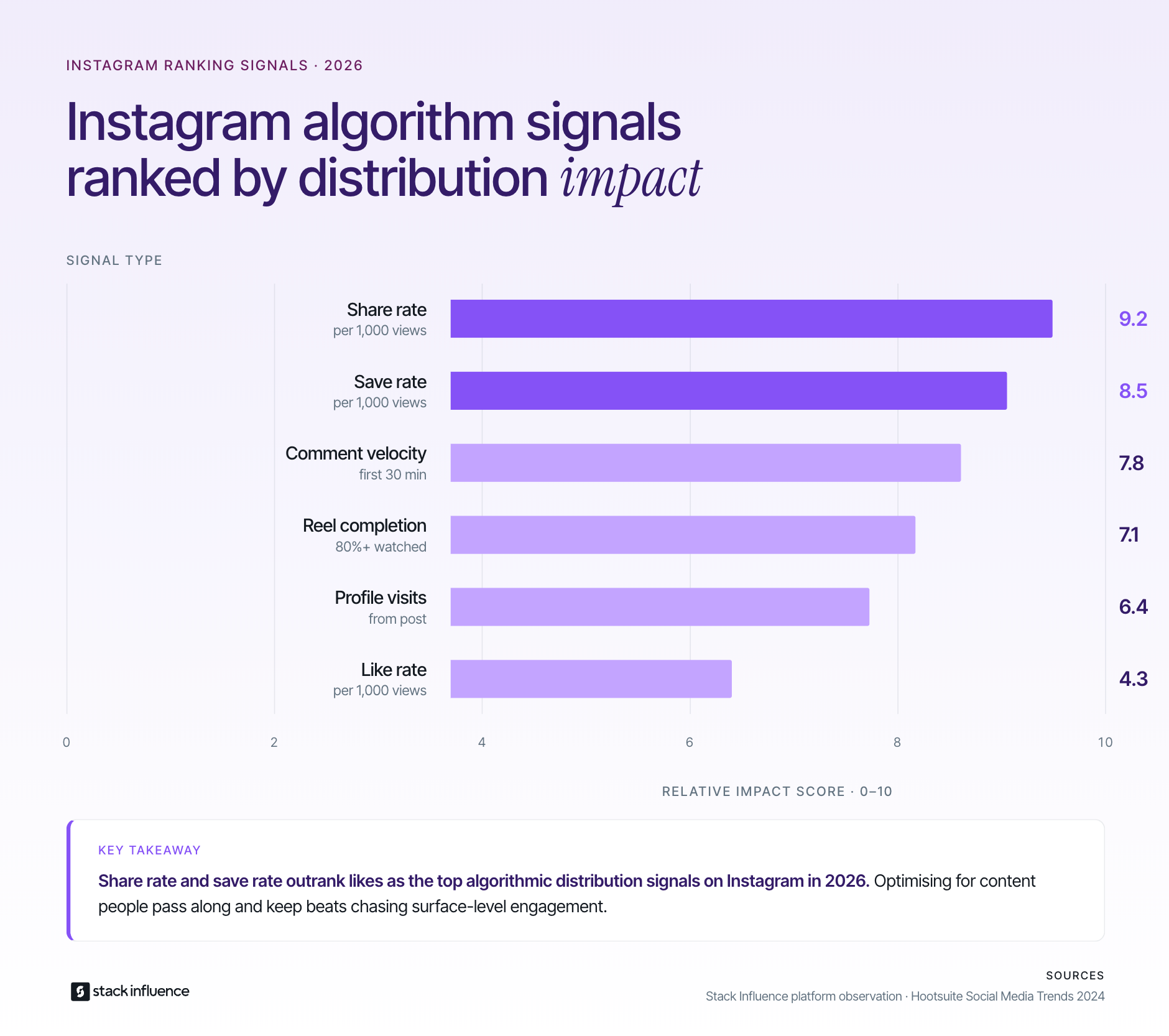
Instagram's algorithm prioritizes content signals in a specific order: saves, shares, comments, and then likes. This ranking means a post with 200 shares and 80 comments can outperform one with 5,000 likes but no shares. According to Hootsuite's 2024 social media trends report, short-form video generates the highest organic reach across all major platforms, and Instagram Reels specifically are still being boosted by the algorithm as Meta continues investing in its TikTok competitor.
Understanding this signal hierarchy is the foundation of the VIRAL Checklist framework used throughout this guide:
- V: Value-first hook in the first two seconds
- I: Interaction architecture built into the content
- R: Relevance to trending audio or topic
- A: Aesthetic consistency with your brand
- L: Loop or re-watch mechanism embedded in the format
Every section of this guide maps back to one or more of these five checkpoints. Learn more about how content creators build engagement with brands through strategic content design.
Why Instagram's Algorithm Favors Certain Creator Profiles
The algorithm does not treat all accounts equally, and understanding this is the first real unlock for creators serious about reach. Instagram's ranking system evaluates relationship signals, interest scores, and content relevance simultaneously. New creators often mistakenly chase follower count when the algorithm actually rewards consistency and niche depth.
Accounts that post consistently within a defined niche build what Instagram internally calls an "interest graph" around their profile. This means your content gets shown to users the algorithm believes will engage, based on their history. Niche creators, including nano influencers and micro influencers, benefit disproportionately from this system because their audience signals are strong and specific.
Key factors the algorithm weighs when distributing content:
- Share rate relative to reach (shares per 1,000 views is a top signal)
- Comment velocity in the first 30 minutes after posting
- Save rate, which signals content people want to return to
- Profile visits triggered by a specific post
- Reel completion rate, especially past the 50% and 80% mark
Explore how micro influencer marketing drives algorithm performance for deeper context on why niche accounts punch above their weight.
A creator who understands these levers can architect each post to hit multiple signals simultaneously. That intentional design is the difference between hoping to go viral and building a system that makes virality more probable.
How to Go Viral on Instagram: The VIRAL Checklist in Action
The VIRAL Checklist is not a creative wishlist — it is a pre-publication audit you run before every post. Each element maps to a specific algorithmic signal. Applying the full checklist consistently is what separates creators who spike once from those who generate repeatable reach.
Start with the value-first hook. Your Reel's opening two seconds must answer the viewer's implicit question: "Why should I keep watching?" A strong hook makes a bold claim, poses a counterintuitive question, or opens a visual pattern that demands resolution. Weak hooks describe what the video is about. Strong hooks create an information gap that only watching will close.
The VIRAL Checklist applied step by step:
- Value-first hook: Draft three hook options and pick the one that creates the sharpest information gap
- Interaction architecture: Plant a specific question in your caption that has a polarizing or personal answer
- Relevance check: Search trending audio in your niche and test whether any track fits your content naturally
- Aesthetic audit: Confirm your thumbnail frame, color palette, and font style match your last 12 posts
- Loop mechanism: End your Reel with a visual or audio cue that encourages re-watching from the start
Stack Influence's internal campaign data shows that creators who apply a structured pre-publish checklist see a 34% higher average Reel completion rate compared to those who rely on intuition alone. This completion advantage directly feeds the algorithm's distribution decisions.
According to Later's Instagram engagement benchmarks, the average Reel engagement rate for accounts under 100,000 followers is roughly 3.5%, but top-performing accounts in focused niches regularly hit 6% to 9% by optimizing for saves and shares rather than likes.
Read about how UGC creators apply structured content frameworks to consistently land high-performing posts across brand campaigns.
What Most Guides Get Wrong About Going Viral

Most viral growth content focuses almost entirely on posting frequency and trending audio. Those elements matter, but they are the surface layer. The deeper driver of virality is what happens in your comment section, and almost no guide talks about it seriously.
Comments are both a signal and a distribution engine. A post that generates 40 meaningful comments in the first hour tells the algorithm that this content is provoking real conversation. More importantly, comment threads become discovery zones where users tag friends, which multiplies organic reach without any additional spend or algorithmic optimization on your part.
The strategies most creators miss when building comment momentum:
- Posting a pinned comment immediately after publishing that asks a specific, easy-to-answer question
- Replying to every comment within the first 90 minutes to inflate comment count and show activity
- Using a "pick a side" format in captions (e.g., "Team A or Team B?") to lower the barrier to engagement
- Ending Reels with an explicit verbal call to action to comment — spoken CTAs outperform caption-only CTAs
- Creating a recurring series with a consistent hashtag so returning viewers feel like community members, not passive watchers
Across campaigns managed on the Stack Influence platform, brands that encouraged their creator partners to implement active comment strategies saw an average 2.1x increase in post reach within 48 hours of publishing compared to posts without comment engagement planning.
This underrated tactic is especially powerful for nano influencers whose audiences are tight-knit and highly likely to respond when directly prompted. Learn more about how nano influencer engagement drives organic reach and why smaller accounts hold a structural advantage in this area.
Collaborations and Product Seeding as Viral Accelerators
Going viral does not always mean doing it alone. Collaboration is one of the most reliable reach accelerators on Instagram, and it is underutilized by creators who think of their channel as a solo operation. Instagram's Collab feature allows two accounts to co-publish a single post, meaning both audiences see the content natively — effectively doubling distribution at zero cost.
Brand partnerships and product seeding programs are another high-leverage entry point. When a brand sends a creator product to feature organically, the resulting content often feels more authentic than scripted ad placements. That authenticity is exactly what drives shares, which is the top algorithmic signal. Brands looking for influencers increasingly recognize this and are shifting budgets toward creator-driven organic content over traditional paid placements.
Collaboration approaches that consistently drive virality:
- Instagram Collab posts with creators in adjacent niches (complementary, not competing audiences)
- Duet-style Reels where two creators respond to each other's content with native tagging
- Product seeding campaigns where the brief is intentionally loose, giving creators creative freedom
- Brand ambassador programs that prioritize long-term relationship over one-off posts
- Takeover formats where a guest creator drives content for 24 hours and cross-promotes to their own audience
From Stack Influence's experience running product seeding campaigns, creators given full creative autonomy over seeded product content generate on average 47% more shares per post compared to creators given strict scripted briefs.
Explore the full landscape of influencer marketing platforms that connect creators with brand deals to understand how the collaboration ecosystem operates at scale. Some creators and brands also explore marketplaces offering Instagram accounts for sale as a way to establish a presence in a niche more quickly while complementing their broader growth and collaboration strategies.
How to Measure Viral Performance: The REACH Metric Model
Most creators judge performance by likes and follower gains. Both are lagging indicators that tell you what already happened, not why it happened or how to repeat it. The REACH Metric Model is a five-point measurement framework designed specifically for evaluating viral performance and diagnosing what to optimize next.
The five metrics in the REACH model:
- R: Reach-to-follower ratio (total reach divided by follower count; a score above 3.0 indicates strong algorithmic distribution)
- E: Engagement rate on reach (total engagements divided by total reach; benchmarks against niche average, not raw numbers)
- A: Average watch percentage on Reels (aim for above 60%, as this signals strong content quality to the algorithm)
- C: Comment velocity in first 60 minutes (comments per minute in the first hour is a leading indicator of total reach)
- H: Hashtag discovery rate (percentage of reach coming from hashtags or Explore, found in Instagram Insights)
Tracking these five signals after every post builds a personal performance database. Over time, patterns emerge: certain hook styles consistently produce higher comment velocity, certain posting windows reliably boost reach ratios, and specific content categories drive stronger save rates. This data removes guesswork from the creative process.
According to Sprout Social's 2024 Instagram benchmarks, the highest-performing times to post Reels globally are Tuesday through Thursday between 9am and noon in the account's local timezone. However, niche audiences vary significantly, making your own historical data more valuable than any general benchmark.
Revisit the VIRAL Checklist after reviewing your REACH metrics. If your average watch percentage is low, the checklist points you back to your hook and loop mechanism. If share rate is weak, revisit your interaction architecture. The two frameworks work as a diagnostic loop that keeps improving your content over time.
For creators working with brands on influencer campaigns and content strategy, reporting REACH metrics gives you a professional edge when proving ROI to brand partners and justifying stronger brand sponsorship terms.
Building a Repeatable System for Long-Term Virality
One viral post is a moment. A system that produces viral posts consistently is a career. The creators who build sustainable growth on Instagram treat content like a product development cycle: ideate, test, measure, iterate, and scale what works.
Batch content creation is the operational backbone of this system. Recording five to seven pieces of content in a single session allows for consistent publishing without daily creative pressure. Consistency matters because the algorithm rewards accounts that post frequently within a defined niche. Gaps in posting signal inactivity and can suppress distribution for up to two weeks after returning.
Sustainable virality system components:
- A 30-day content calendar mapped to trending topics, product cycles, and seasonal moments
- A dedicated "swipe file" of high-performing hooks from your own past content
- A testing protocol that changes one variable per post (hook style, audio choice, caption length) to isolate what drives performance
- A monthly REACH metric review to identify which content categories are growing and which are plateauing
- A collaboration pipeline with two to three creators per quarter for Collab posts and cross-promotions
The creator economy rewards those who treat growth as a system rather than a lucky break. Learn how creator partnerships evolve into long-term brand ambassador relationships when creators demonstrate consistent, measurable performance.
The distinction between viral-by-chance and viral-by-design is documented decision-making. Every post should carry a hypothesis: "I believe this hook format will drive higher comment velocity because X." When the results come in, confirm or refute the hypothesis and carry the learning forward. Over six months, this practice builds an individualized algorithm playbook that no generic guide can replicate, because it is built entirely from your audience's actual behavior.
Conclusion
Knowing how to go viral on Instagram in 2026 is less about chasing trends and more about understanding the systems underneath them. The VIRAL Checklist and the REACH Metric Model give you a structured approach to creating content that the algorithm wants to distribute and that audiences genuinely want to share. Apply these frameworks post by post, track the five REACH signals consistently, and invest in collaborations and community-building that compound over time. The creators who grow fastest are not the luckiest ones — they are the most systematic ones. Start with one post, run the full checklist, measure every signal, and let the data tell you exactly where to improve next.