




Creator marketing is no longer a side experiment for eCommerce sellers and content creators. According to IAB, U.S. creator ad spend is projected to reach $37 billion in 2025, which raises the cost of guessing and the value of repeatable selection processes.
If you are trying to figure out how to find the best influencer for your brand, the hard part is not finding creators. The hard part is selecting the right creator for the right job, with the right measurement plan, before you spend time, product, and budget.
This guide gives you a repeatable way to qualify micro influencers, evaluate UGC potential, and choose platforms that match your workflow. You will also learn where most influencer marketing programs silently lose ROI.
Key Takeaways
- Treat influencer selection like a funnel: Start wide, qualify for fit, then narrow using proof of performance and reuse rights.
- Separate audience fit from content fit: A creator can have the right followers but still produce UGC that does not convert or cannot be reused.
- Use a tiered workflow: The Creator Fit Ladder keeps your process consistent from seeding to scaling.
- Measure in layers: Track content signals, shopping signals, and profit signals so you do not confuse visibility with sales.
What Is Influencer Fit For eCommerce Brands?
Influencer fit is the match between a creator’s audience, content style, and conversion path and your brand’s specific growth goal. Fit is not a vibe check, it is a performance hypothesis you can test quickly.
The stakes are higher than many teams assume. U.S. influencer marketing spending is expected to reach $10.52 billion in 2025, according to eMarketer’s estimate.
Why Does UGC Change The Definition Of Best?
For eCommerce, the “best influencer” is often the creator who produces believable proof that reduces buyer uncertainty. That is especially true when 85% of consumers say they turn to visual UGC over branded content during purchase decisions, as shown in Bazaarvoice research.
Define fit before you search so you do not waste cycles on creators who cannot drive the outcome you need.
- Goal Fit: Awareness, sales, reviews, UGC library, or retail lift.
- Product Fit: Natural, credible usage on camera.
- Channel Fit: Where discovery happens versus where checkout happens.
- Operational Fit: Shipping, approvals, usage rights, and turnaround speed.
How To Find The Best Influencer For Your Brand In 2026?
Most influencer searches fail because teams start with “who is popular” instead of “what proof do we need.” A better approach starts with the proof asset you want, then works backward to the creator profile that can produce it.
Trust is the real constraint for many categories. For example, Nielsen highlights that 88% of global respondents trust recommendations from people they know in its trust analysis.
What Should You Define Before You Search?
Define your “proof target” in one sentence and align the team on what will count as success.
- Proof Asset: Review-style video, demo, unboxing, comparison, or lifestyle integration.
- Offer: Paid fee, affiliate commission, gifted product, or a hybrid.
- Usage Plan: Organic-only, paid usage, whitelisting, or on-site reuse.
- Timeline: Posting window and revision window.
The Creator Fit Ladder
The Creator Fit Ladder is a four-tier model that matches creator types to the maturity of your program so you can scale without losing signal quality.
- Seed Tier: Run low-risk tests with many micro influencers to identify angles that earn attention.
- Validate Tier: Reinvest in the creators and themes that produced measurable traffic or cart intent.
- Scale Tier: Expand winners through affiliates, paid amplification, or batched product seeding.
- Compound Tier: Convert top performers into longer-term partners and reuse their UGC everywhere.
The Creator Fit Ladder works because it puts learning before scaling. Graduating creators from Seed to Validate is the main lever that improves ROI over time.
How Do You Build A Shortlist Without Overthinking It?
Start with volume, then narrow with clear gates.
- Source 20 to 50 Candidates: Patterns show up in batches, not in single creator bets.
- Apply Two Hard Filters: Category relevance and consistent content quality.
- Run A Fast Outreach Wave: Use one standardized offer to compare outcomes.
- Pick Winners By Workflow Fit: Choose creators who deliver on time and produce usable assets.
If you want a practical outreach baseline, the Stack Influence outreach email guide can help you standardize what you ask for without sounding scripted.
What Data Should You Use To Vet Micro Influencers?
You are not just buying reach. You are buying trust transfer and content production, and both show up in the data if you look beyond follower count.
What Engagement Signals Suggest Purchase Intent?
Prioritize signals that correlate with consideration, not entertainment.
- Saves And Shares: Often indicate “I want this later” behavior.
- Comments With Questions: Size, ingredients, price, fit, and alternatives.
- Repeat View Patterns: Creators whose audiences return to similar formats.
- Link Behavior: Evidence they can move people to a next step.
Visual proof also matters at the decision point. PowerReviews reports that 91% of consumers are more likely to buy a product when reviews include photos and videos in its shopper behavior survey.
How Can You Validate Authenticity Quickly?
Use a lightweight audit that catches obvious risk quickly.
- Audience Geography Checks: Does the audience match where you sell and ship?
- Engagement Consistency: Look for stable engagement across posts, not spikes only.
- Brand Saturation: Too many sponsored posts can reduce credibility.
- Content Safety Scan: Past content, tone, and controversial topics.
The output of this step should be a ranked list with a reason for each creator. That clarity speeds negotiation and improves creator retention.
What Influencer Brief Details Prevent Costly Re Shoots?
The biggest hidden cost in influencer marketing is unusable content. A strong brief is a constraint system that protects both your brand and the creator’s time.
What Rights And Compliance Rules Belong In Every Brief?
Rights and compliance are operational decisions, not legal afterthoughts.
- Objective And KPI: What must this content accomplish?
- Non Negotiable Claims: What you can and cannot say in your category.
- Shot List: Proof moments, product close-ups, and required B-roll.
- Usage Rights: Organic-only versus paid usage, plus duration.
- Approval Process: Draft deadline, revision rounds, and final delivery date.
If your work includes Amazon listings, link the brief to tracking and profitability. Amazon states its Brand Referral Bonus averages about 10% of qualifying sales driven from off-Amazon marketing in its program overview.
If your goal is to drive ranking and sales for marketplace listings, the Stack Influence Amazon solutions page is a useful reference for how micro influencers are often positioned within an external traffic strategy.
If you want to reduce pricing friction, aligning expectations with a rate card is often easier than negotiating one-off deals. The Stack Influence influencer rate card guide is a useful reference for structuring deliverables and usage rights.
How Should eCommerce Teams Measure Influencer ROI?
Creator work creates multiple assets at once, and those assets impact sales at different time delays. If you force everything into one KPI, you either kill good programs early or scale bad programs too long.
What Should You Measure Before You Have Attributed Sales?
Early measurement is about learning which creative angles and creators deserve more budget.
- Hook And Hold Metrics: Average watch time and drop-off points.
- Creative Angle Tags: Problem-solution, unboxing, demo, comparison, or testimonial.
- Site Behavior: PDP views, add-to-cart, and bounce rate from creator traffic.
- Content Reuse Performance: How the same asset performs in ads versus organic.
The Attribution First Metric Stack
The Attribution First Metric Stack is a three-layer measurement model that separates attention signals, shopping signals, and profit signals so you do not confuse engagement with business impact.
- Layer 1, Content Signals: View-through rate, saves, shares, and comment quality.
- Layer 2, Shopping Signals: Clicks, PDP views, and add-to-cart rate.
- Layer 3, Profit Signals: Contribution margin, new customer rate, and CAC payback.
For Amazon sellers, clean tracking is non-negotiable. Amazon Ads describes Amazon Attribution as a free measurement solution that shows the on-Amazon impact of non-Amazon channels like search, social, email, and influencer campaigns on its product page.
The Brand Referral Bonus can shift the economics of external traffic by offsetting fees on qualifying sales, which is why it should be part of your attribution plan.
If you need a plain-language refresher on cost drivers, the Stack Influence guide to influencer costs can help you separate production value, usage rights, and audience value when you set budgets.
Influencer Platforms That Speed Up Creator Matching
Software does not replace judgment, but it can compress the time between “we need creators” and “we have usable assets.” Because the primary key phrase includes “best,” this section reviews specific platforms relevant to eCommerce sellers and creators.
Stack Influence
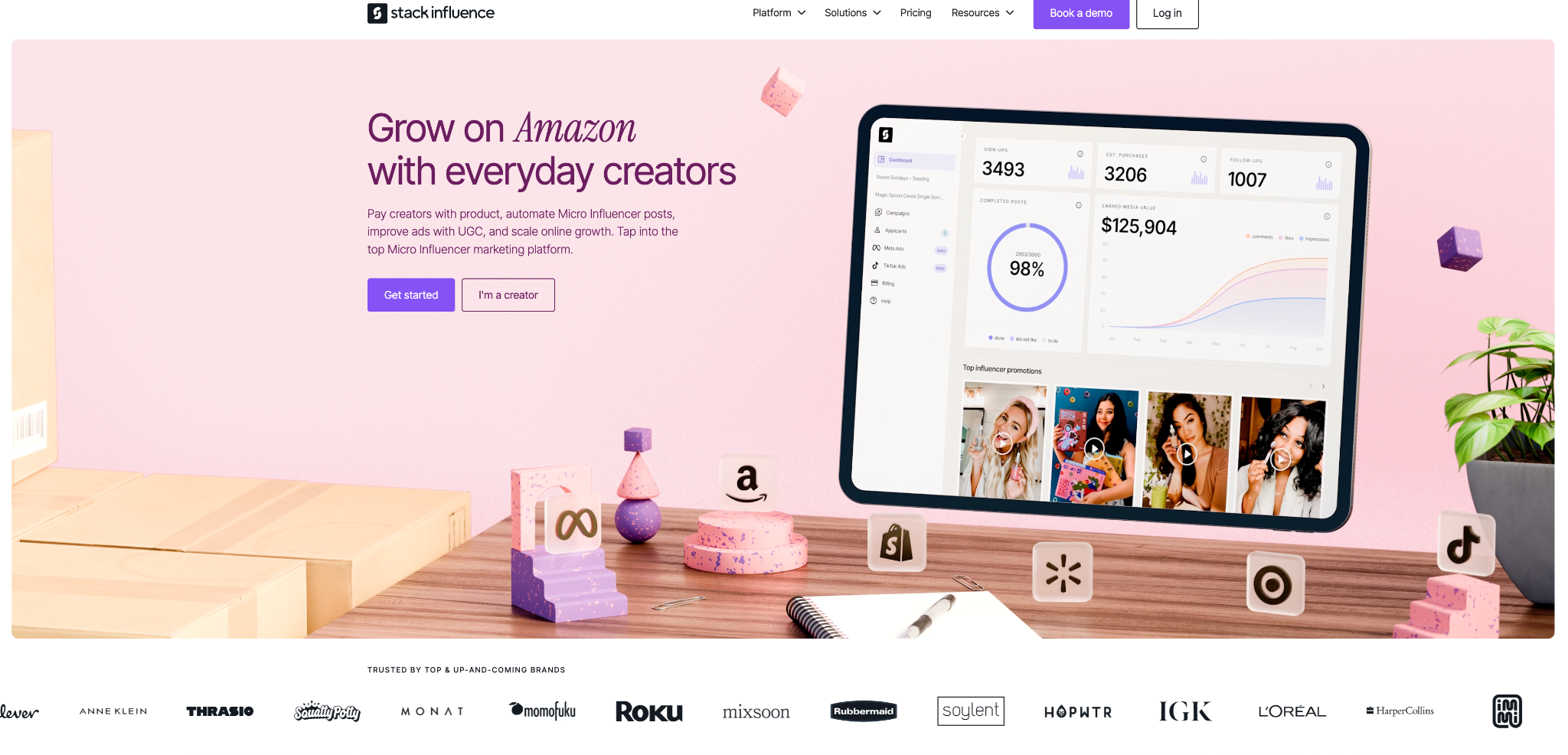
Stack Influence is a managed micro-influencer marketing platform designed to help brands run creator campaigns with low operational lift. It centers on UGC generation and creator coordination through structured workflows.
A concrete differentiator is its pricing model and scale positioning. Stack Influence lists an average price per creator of $30 as a flat fee on its pricing page, and it markets a creator network measured in the hundreds of thousands.
Choose Stack Influence when you want batch-style seeding to many micro influencers, especially if your team is lean and you care about UGC volume. The workflow behind Automated Product Seeding is built for sellers who want predictable output without heavy manual coordination.
A tradeoff is reduced flexibility for highly bespoke casting or complex enterprise approval chains. If you need a single hero partnership with tight creative direction, discovery-first platforms may fit better.
TikTok One
TikTok presents TikTok One as a suite that includes tools like Creator Marketplace to support brand and creator collaborations. The official TikTok One documentation is a helpful reference for what is included in the suite.
TikTok also surfaces commerce-forward data on its TikTok One pages, including a claim that 64% of TikTok users said they would buy a product after watching creator advertising.
Choose TikTok One when your campaign is TikTok-first and you want trend insights tied to creator search and performance optimization. It fits teams running iterative creative testing and creator-driven ads.
The limitation is cross-channel depth. TikTok One is not a complete multi-platform CRM, so brands running omnichannel creator programs may need other tooling for unified reporting.
Shopify Collabs
Shopify Collabs is an affiliate and creator collaboration tool built for Shopify merchants. Shopify describes Collabs as free to use for eligible merchants, with commission payments subject to a 2.9% payment processing fee in its cost FAQ.
Choose Shopify Collabs when your main success metric is trackable sales inside Shopify and you want an affiliate-style program with links and codes. It is also useful for brands that want to combine gifting with commissionable partnerships.
The tradeoff is partner quality risk if you accept everyone. You need strong approval gates and clear creative requirements so coupon-first affiliates do not dilute your brand.
CreatorIQ
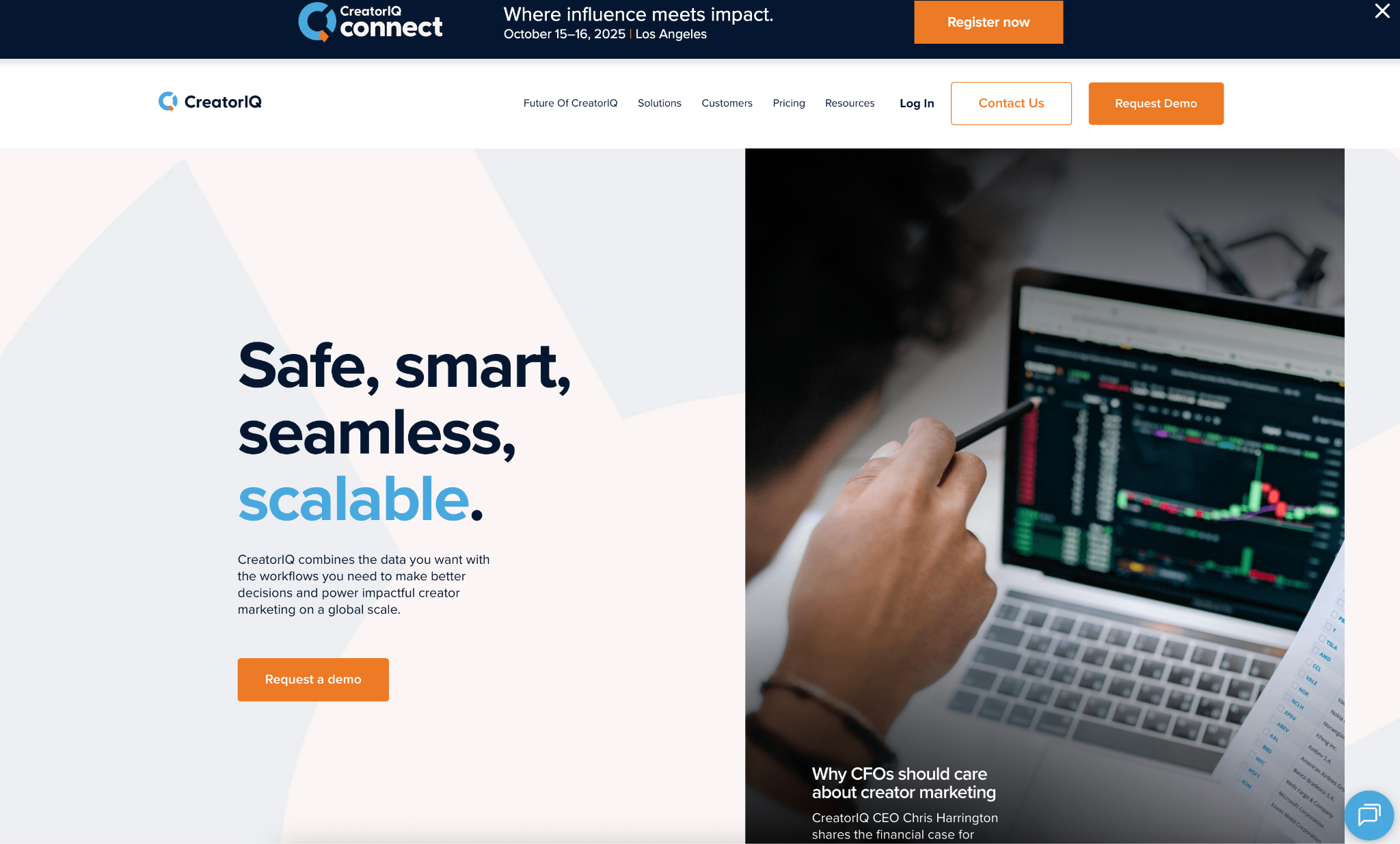
CreatorIQ is an enterprise influencer marketing platform focused on discovery, campaign operations, and measurement. It highlights global coverage with 20 million creator profiles across social networks, which supports large-scale discovery and governance.
Choose CreatorIQ when you need enterprise-grade process control, integrations, and stakeholder reporting across teams or regions. It fits organizations that treat influencer marketing as a core media channel.
The limitation is cost and operational overhead. Smaller teams without a dedicated owner can struggle to extract value from enterprise complexity.
Upfluence
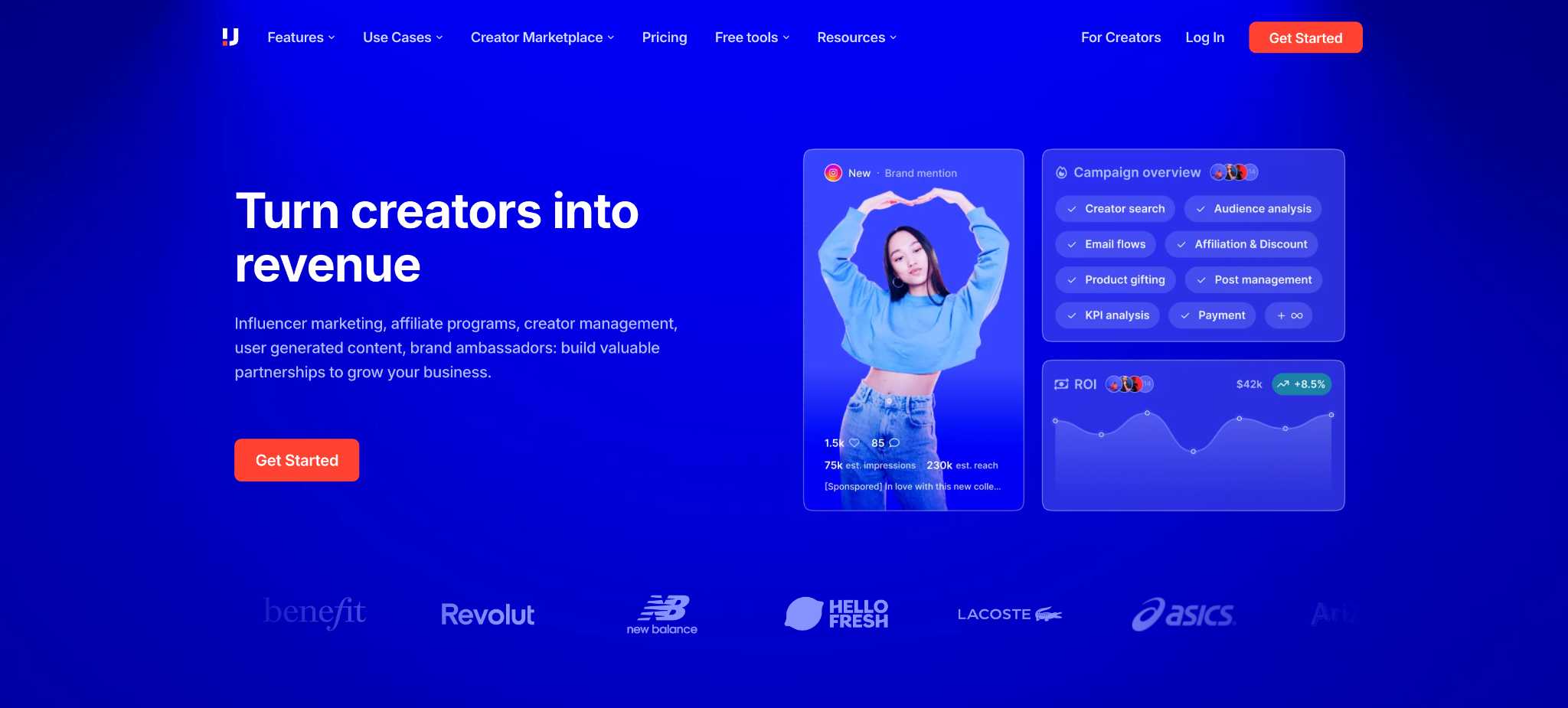
Upfluence combines influencer discovery, gifting, and tracking with a positioning that emphasizes commerce integrations. It also publishes performance-style customer outcomes, such as 10x ROI in highlighted stories, which can be useful for calibration.
Choose Upfluence when your workflow blends influencer marketing and affiliate marketing and you want tracking tied to codes, links, and storefront behavior. It is also a fit when you want gifting and payments inside one system.
A tradeoff is that case metrics are not guarantees. Plan for a scoped pilot and use your own Attribution First Metric Stack before scaling.
Aspire
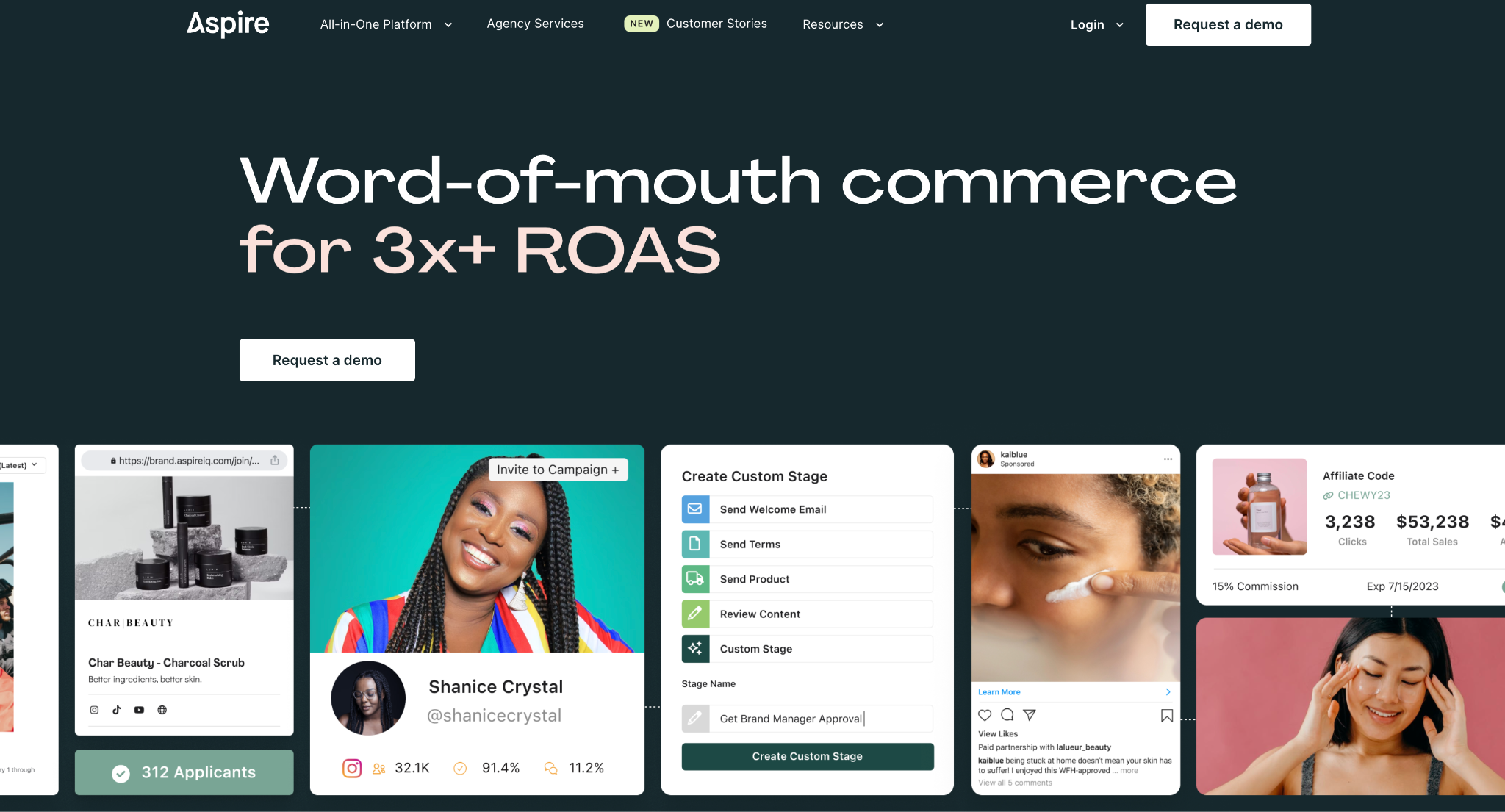
Aspire is a creator marketing platform that supports programs like product seeding, affiliates, and UGC for paid ads. It differentiates with word-of-mouth commerce positioning and publishes a claim of $5.78 earned for every $1 spent on influencer marketing on its homepage.
Choose Aspire when you want breadth, including inbound and outbound discovery and workflows that support multiple creator program types. It can also fit teams that want the option of managed services.
The limitation is that a feature-rich platform can outpace a team’s process maturity. If you do not have solid briefs, approvals, and creative tagging, the system can become a messy database.
HypeAuditor
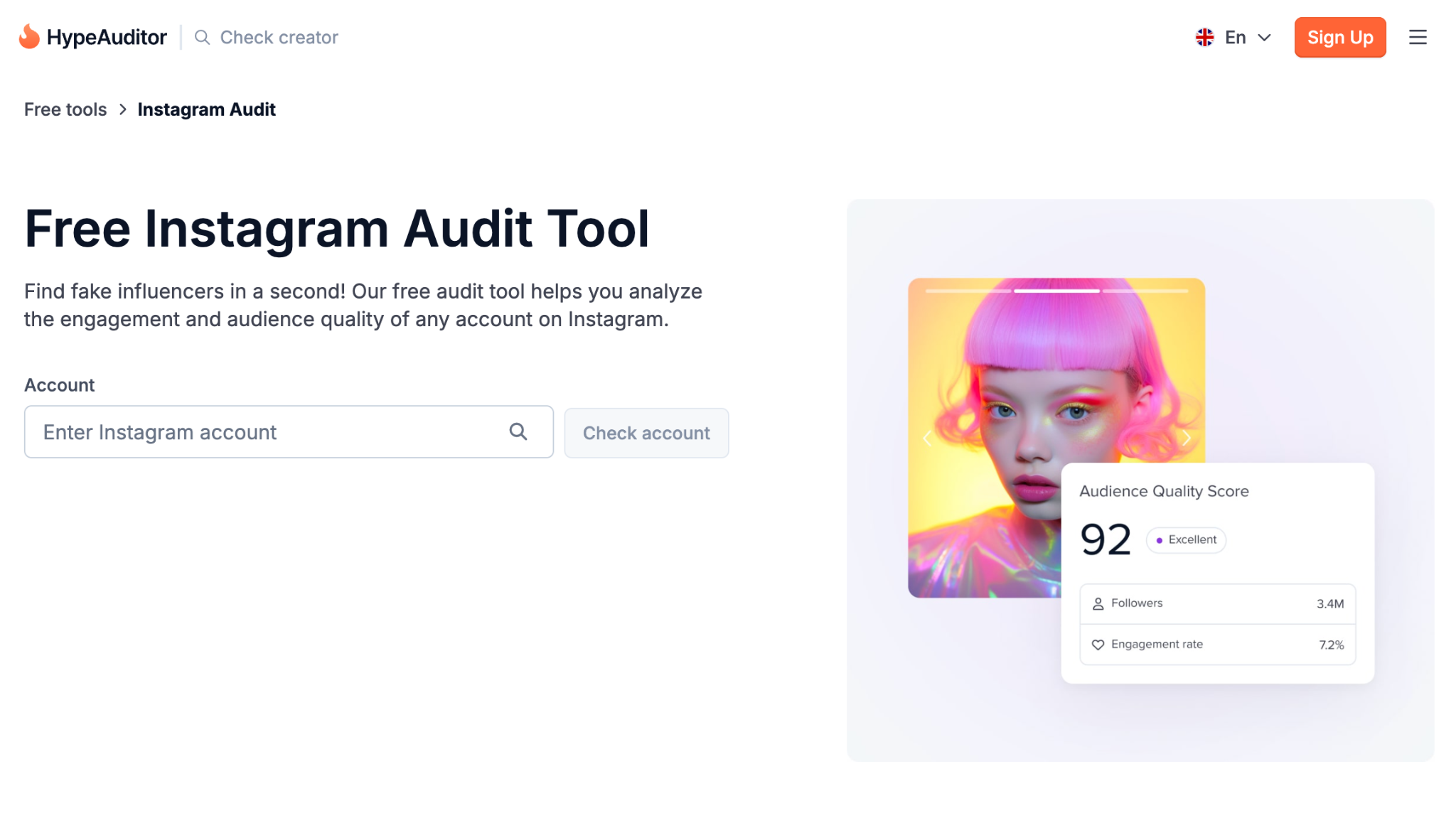
HypeAuditor is an influencer discovery and analytics platform designed for evaluating creators, audience quality, and potential fraud risk. It claims 223.6M+ creator accounts across major platforms for its discovery database.
Choose HypeAuditor when your biggest risk is fake followers, poor audience fit, or brand safety surprises. It fits teams that already have outreach processes but need higher confidence before they spend.
The tradeoff is that analytics does not handle everything else. You still need outreach, contracting, product logistics, and rights management systems.
How Do You Choose Between Platforms Without Getting Stuck?
Do a constraint-first pick instead of searching for a universal winner.
- If you need lowest operational lift: Stack Influence.
- If you need a TikTok-native workflow: TikTok One.
- If you need Shopify-native affiliate tracking: Shopify Collabs.
- If you need enterprise governance: CreatorIQ.
- If you need commerce integrations and tracking: Upfluence.
- If you need multi-program breadth plus optional services: Aspire.
- If you need authenticity and audience quality data: HypeAuditor.
The Reach Vs Reuse Matrix For UGC Value
Choosing the “best influencer” depends on whether you are buying reach or buying reusable assets. The Reach Vs Reuse Matrix maps partnerships on two variables: audience reach and content reusability.
- High Reach, Low Reuse: One-off awareness posts that spike impressions but do not become evergreen assets.
- High Reach, High Reuse: Partnerships that can be amplified through paid usage and used across PDPs and ads.
- Low Reach, High Reuse: UGC-first creators who may not drive huge reach but produce high-performing ad creative.
- Low Reach, Low Reuse: Content that neither scales distribution nor meets quality standards for reuse.
When Should You Pay For Reach Instead Of Reuse?
Pay for reach when your goal is distribution that your brand cannot buy efficiently through ads alone, such as credible category leadership or retail launch visibility. Pay for reuse when you want an asset library that fuels ads, product pages, and email for months.
If you are building a content library for performance marketing, bias toward High Reuse. Shopper preference data from Bazaarvoice helps explain why reusable visual proof can matter at the decision point.
One practical way to execute High Reuse is to standardize asset storage and reuse planning. The Stack Influence customer stories page is a useful reference point for thinking about repeatable workflows and documented outcomes.
Conclusion: Turn Creator Match Into Repeatable Growth
How to find the best influencer for your brand is ultimately a systems question. When you define fit, ladder your program through testing and scaling, and measure in layers, influencer marketing becomes a controllable growth lever instead of a gamble.
To turn this into action without boiling the ocean, commit to a short execution window.
- Pick One Proof Asset: Choose the single UGC format you want most this month.
- Test In Batches: Run Seed Tier outreach to 20 to 50 creators with one standardized offer.
- Promote Winners: Move the best performers into Validate Tier using clear measurement gates.
Use the Creator Fit Ladder to start wide, promote winners, and turn micro influencers and content creators into a compounding UGC engine.