




eCommerce sellers feel the squeeze inside Amazon: ad costs rise, rankings react faster, and competitors can copy your positioning in a weekend.
If your marketing stack is just “run ads and hope,” you are paying to relearn the same lessons every launch.
This guide breaks down amazon seller marketing tools into the jobs they must do, then shows how to connect them into one measurable workflow.
You will leave with a repeatable sequence, a measurement model for attribution, and tool reviews that call out real tradeoffs.
Key Takeaways
Keep these takeaways in front of your team while you evaluate tools.
- Pick tools based on the outcome they produce, not the number of features they list.
- Start with conversion readiness, then add traffic you can measure and improve.
- Use Amazon Attribution and Brand Referral Bonus to make external traffic measurable.
- Treat creator content as an asset library you reuse across ads, listing pages, and storefronts.
What Are Amazon Seller Marketing Tools?

Amazon seller marketing tools are systems that help you create demand, improve conversion, and attribute results to the channels you control. The best tools do not just “show data.” They reduce wasted spend and turn insights into actions faster.
Commerce ad budgets are rising, which raises the penalty for guessing. Interactive Advertising Bureau reports in its digital ad revenue release that retail media reached $53.7 billion in 2024, up 23% year over year, which is a signal that commerce placements are more crowded and more performance-driven.
A useful way to choose tools is to tie them to one of these jobs.
- Demand: Bring qualified shoppers who match your category and price point.
- Conversion: Fix the product detail page so paid clicks do not leak.
- Efficiency: Automate repeatable testing and budget shifts without losing control.
- Attribution: Connect off-Amazon clicks to on-Amazon actions so scaling is rational.
- Reuse: Capture UGC and proof assets you can deploy everywhere.
Trust is the “hidden variable” sellers often ignore. Nielsen notes in its trust in advertising summary that 88% of global respondents trust recommendations from people they know more than any other channel, which is why UGC and creator-led proof can lift conversion when your category is saturated.
Which Marketing Outputs Actually Matter on Amazon?
The output you want is not “more traffic.” It is traffic that improves profitable conversion and stabilizes discoverability.
Track a short list that maps to real decisions.
- Profit: Contribution margin after ads and your TACoS trend.
- Conversion: Detail page conversion rate and add-to-cart rate.
- Discoverability: Branded search lift and rank stability on priority keywords.
The Amazon Demand Loop Sequence
Tool lists fail when they do not give an execution order. Because “amazon seller marketing tools” begins with A, this guide uses Option 1, a numbered step sequence called the Amazon Demand Loop Sequence.
The Amazon Demand Loop Sequence forces discipline: convert first, measure second, scale third. Run it monthly and your marketing becomes a system instead of a pile of disconnected tactics.
Run these steps in order.
- Lock Conversion Basics: Align images, copy, A+ content, and reviews to win cold traffic.
- Name One Bottleneck: Pick one constraint to fix this month.
- Define a Trackable Offer: Use one tag, code, or landing flow per campaign.
- Generate Proof Assets: Produce reusable UGC using this product seeding strategies guide.
- Launch Measured Traffic: Start small, then scale only after intent signals hold.
- Scale and Recycle Winners: Reinvest in what is profitable, then repeat.
The Amazon Demand Loop Sequence also prevents random tool buying. When you know which step is breaking, you can buy only what fixes that step.
What Should You Build Before You Buy Tools?
Tools amplify your foundation, so weak fundamentals turn software into an expensive mirror.
Before you invest, confirm these basics.
- Economics: Margin and cash flow can support testing without panic.
- Inventory: You can stay in stock while increasing traffic.
- Workflow: You can capture and reuse creative assets every month.
If one of these is missing, fix it inside the Amazon Demand Loop Sequence first. Your tool choices will become clearer because you will be buying constraints, not features.
How Do You Measure ROI and Attribution on Amazon?
Attribution is where most Amazon growth plans quietly break. Off-Amazon channels look like “expenses” unless you create a measurement bridge that connects clicks to on-Amazon actions.
Use a measurement stack that validates signal quality before you scale spend. This prevents you from buying vanity traffic that inflates sessions but does not translate to orders.
- Signal: Engagement that shows whether creative resonates.
- Visit: Clicks and detail page views as early proxies for intent.
- Conversion: Add-to-cart, purchases, units sold, and new-to-brand where available.
- Profit: Contribution margin after ads, plus lift versus baseline.
Amazon Attribution is the clean bridge most sellers can start with, because Amazon Ads’ Amazon Attribution documentation describes it as a free measurement solution for non-Amazon channels like search, social, email, and influencer campaigns. The same documentation notes a 14-day attribution window and reports metrics such as detail page views, add-to-cart, and purchases.
Brand Referral Bonus changes the math of external traffic. Amazon’s Brand Referral Bonus overview says eligible brands can earn a bonus averaging 10% of qualifying sales from off-Amazon traffic, and it ties the program to Amazon Attribution tags.
What Breaks Attribution for External Traffic?
External traffic can help, but only if it is qualified and measured. If you drive the wrong audience, you can create noisy data that makes both ads and SEO decisions harder.
Avoid these common attribution breakers.
- Untracked Links: No tags means you guess which creator or channel worked.
- Mixed Messages: Multiple offers under one tag blur interpretation.
- Low Intent: Viral reach can inflate visits without conversion.
- Lag Blindness: Same-day comparisons hide the delay to purchase.
Use a secondary decision tool when choosing channels so you do not optimize the wrong thing. The Intent vs Attribution Grid maps channels by buyer intent (low to high) and attribution visibility (opaque to clear).
- High Intent, Clear Attribution: Tagged partner or search traffic you can scale once profit holds.
- High Intent, Opaque Attribution: Warm audiences without clean tags, requiring controlled tests.
- Low Intent, Clear Attribution: Top-of-funnel campaigns used for learning more than ROI.
- Low Intent, Opaque Attribution: Vanity distribution where business impact is unprovable.
What Most Guides Get Wrong About Tool ROI?
Most tool roundups treat all categories as equally valuable. In reality, sellers waste money when they buy tools that solve yesterday’s problem or duplicate reporting they already have.
The goal is leverage, not activity. A tool that changes conversion or makes external traffic measurable is worth more than a tool that saves a few clicks inside a dashboard.
Common failure modes show up repeatedly.
- Buying Before Diagnosis: Purchasing a suite before you know the constraint.
- Stacking Dashboards: Paying for overlapping analytics instead of one system of record.
- Ignoring Content Rights: Generating creator content but lacking reuse permissions.
- Automating Too Early: Automating PPC without a clear hypothesis.
Are You Paying for Reports Instead of Revenue?
If your tools cannot produce a decision you will act on weekly, they are not marketing tools. They are reporting tools.
Pricing models reveal incentives, so it helps to understand how influencer marketing platform pricing differs across models before you commit to long contracts.
Map every purchase to a step in the Amazon Demand Loop Sequence and set a deadline for proving lift. If the tool cannot show a measurable impact inside that window, change the workflow or cut the subscription.
Which Tools Drive External Demand and UGC?
External demand is often the fastest way to reduce PPC dependence. It is also where sellers waste time, because creator outreach is manual, deliverables are inconsistent, and measurement is weak.
The right tools reduce friction across sourcing, delivery, and reuse. If you want a structured workflow, Stack Influence publishes an overview of influencer product seeding, which fits Amazon when you need both traffic and reusable assets.
Use these criteria when comparing demand and UGC tools.
- Supply: Enough creators to run batches, not one-offs.
- Delivery: Payment tied to completed posts, not promises.
- Asset Capture: Content is collected and organized for reuse.
- Measurement: Tagged links or dashboards connect posts to outcomes.
Stack Influence

Stack Influence is a micro-influencer marketing platform designed to automate product seeding and creator promotions so brands can generate UGC and external traffic without manual outreach. Its differentiator is pricing and scale: the company says on its pricing page it charges about $30 on average when an influencer completes a social post, and it highlights a creator community of 340k vetted creators.
Choose Stack Influence when you need volume, such as monthly creator batches that produce both traffic and a content library you can reuse in ads and listings. A tradeoff is that seeding still requires product cost and operational readiness, so it is weaker for very high-AOV items or thin-margin SKUs. The automated product seeding workflow emphasizes paying only after posts go live, but it does not eliminate the need to plan margin, inventory, and fulfillment capacity.
Amazon Attribution
Amazon Attribution is Amazon’s measurement tool that helps eligible sellers connect off-Amazon marketing activity to on-Amazon shopping actions. The differentiator is standardization: it provides a defined set of on-Amazon metrics like detail page views, add-to-cart, and purchases with a 14-day attribution window, making channel comparison cleaner than relying on each ad network’s reporting.
Choose Amazon Attribution when you want to scale creators, affiliates, email, or paid social and you need a consistent way to evaluate which channels drive orders. The limitation is that eligibility and reporting constraints apply, so disciplined campaign structure still matters, including one tag per message and controlled tests tied to the Amazon Demand Loop Sequence.
Which Amazon Seller Marketing Tools Win PPC and Optimization at Scale?
Once you can convert and measure, the next lever is efficiency. The best amazon seller marketing tools at this stage shorten the learning cycle, automate repeatable work, and keep you focused on profit.
Use these evaluation points before you commit.
- Scaling Cost: Model how price changes with users, ASINs, or ad spend.
- Coverage: Reduce tool switching and manual exports.
- Control: Prefer rules and constraints over black-box automation.
Jungle Scout
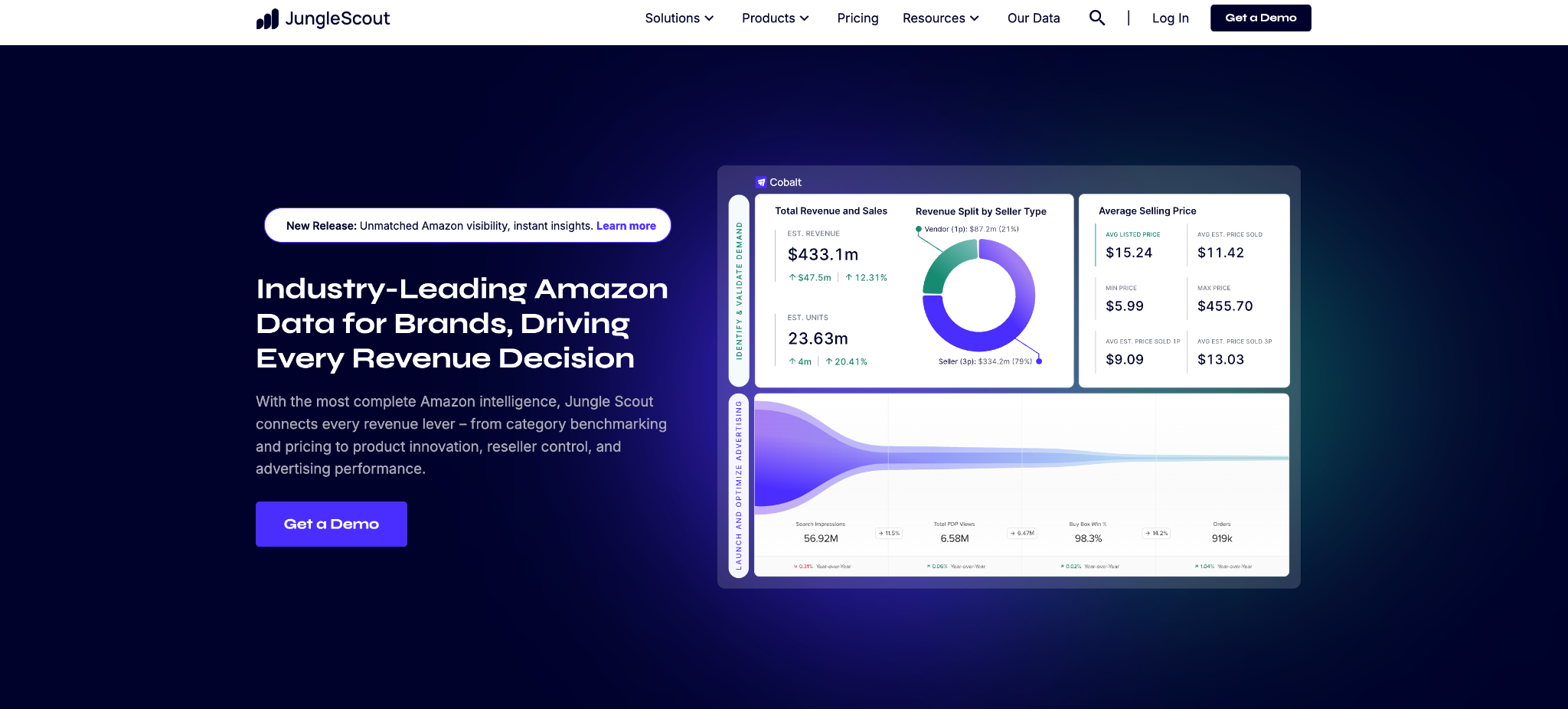
Jungle Scout is an Amazon intelligence platform that helps sellers research demand, understand competition, and plan growth decisions. On its plans and pricing page it highlights a seat-based model with additional users at $49 per month on some plans and a claim of over 1 million sellers and brands using the platform.
Choose Jungle Scout when your workflow needs structured research and benchmarking across a portfolio, not just a single launch. The tradeoff is analysis drift, so you get the most value when every insight becomes a time-boxed test inside the Amazon Demand Loop Sequence.
Helium 10
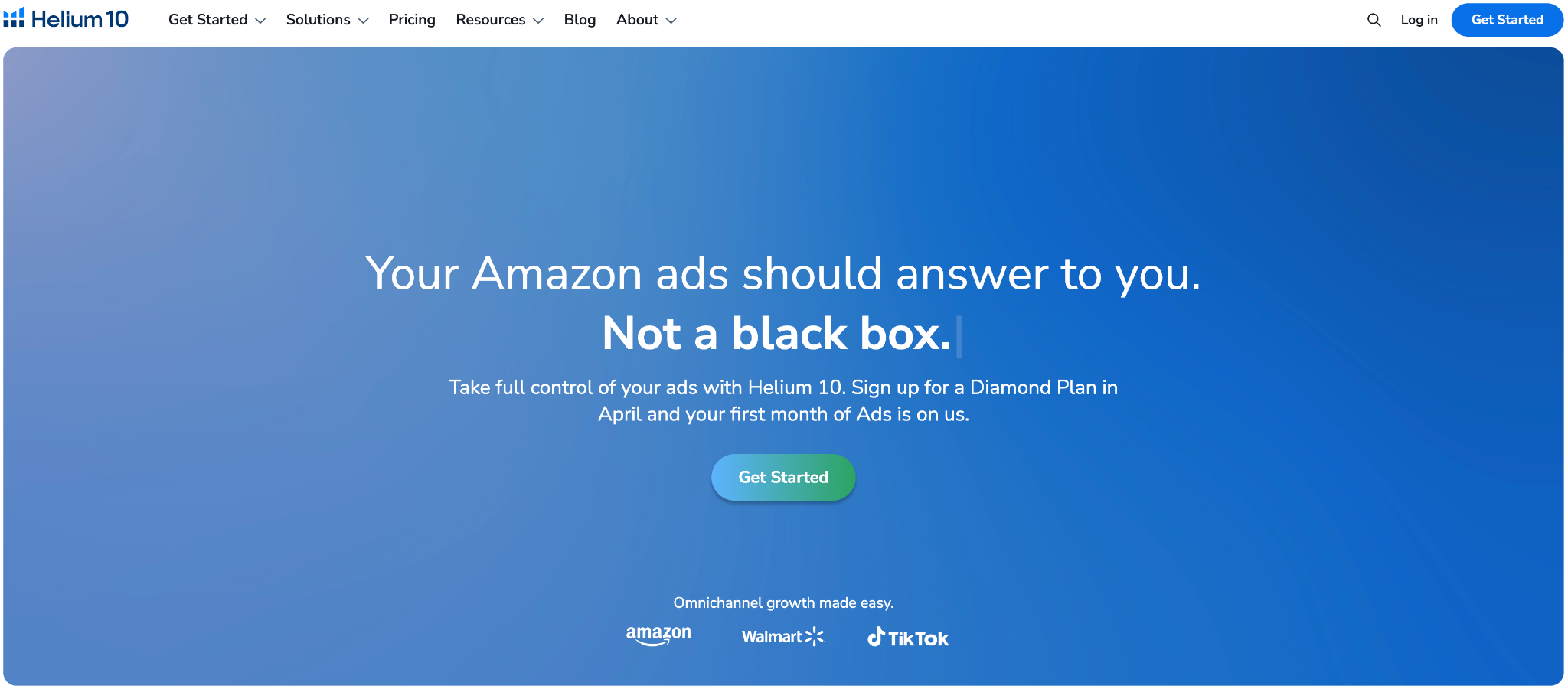
Helium 10 is an all-in-one eCommerce suite covering research, listing optimization, and operational tooling with advertising features layered in. Its plans and pricing page lists a Platinum plan at $129 per month (or $99 per month billed yearly) and a Diamond plan at $359 per month (or $279 billed yearly), and it notes a 2% management fee on PPC spend managed through its ads tooling.
Choose Helium 10 if you want one subscription that covers multiple jobs and you have a small team that benefits from fewer logins. The tradeoff is cost for unused breadth, and that ad management fee means you should confirm net profit lift, not just workflow convenience.
Pacvue

Pacvue is a commerce and retail media platform designed to optimize campaigns and workflows across multiple retailers. On its platform overview it states that teams can plan, execute, and analyze campaigns with a 360 view across 100+ retailers and it highlights case studies citing sizable lifts in ROAS and sales from automation.
Choose Pacvue when you are moving beyond an Amazon-only approach and need an enterprise-grade system for retail media operations and reporting. The tradeoff is onboarding and process change, so it usually fits best once spend and complexity justify centralization.
Teikametrics
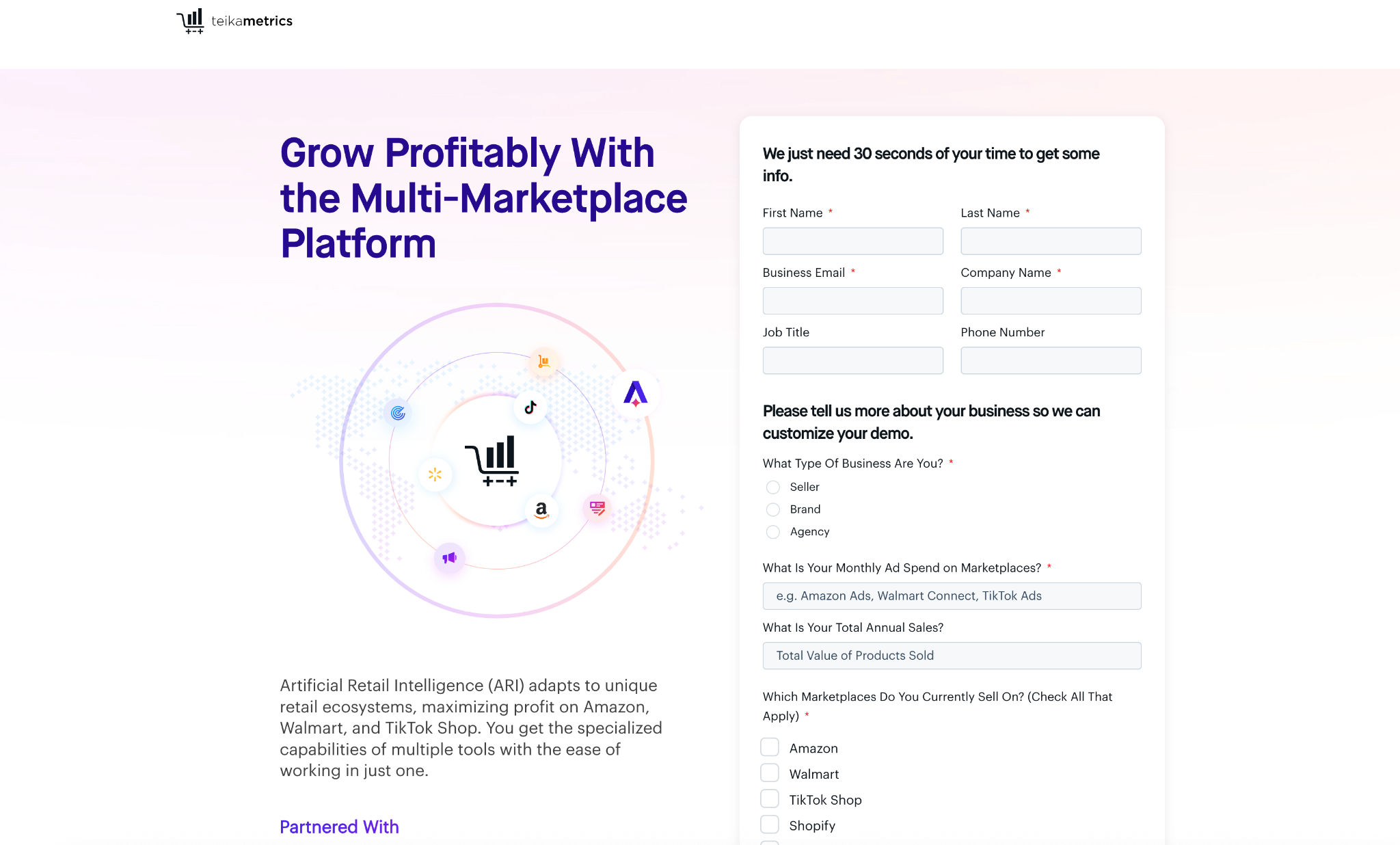
Teikametrics is a marketplace optimization platform that uses its ARI system to automate advertising and performance management. Its pricing page lists an Essentials tier at $149 per month billed annually (or $179 monthly) up to $10K per month in ad spend, plus higher tiers that add both fixed fees and a percent of spend over a threshold.
Choose Teikametrics when ad spend is high enough that automation and profitability dashboards can produce measurable savings. The tradeoff is that percent-of-spend pricing can scale quickly, so benchmark lift against fees and keep budget room for creative and external-demand tests.
SellerApp
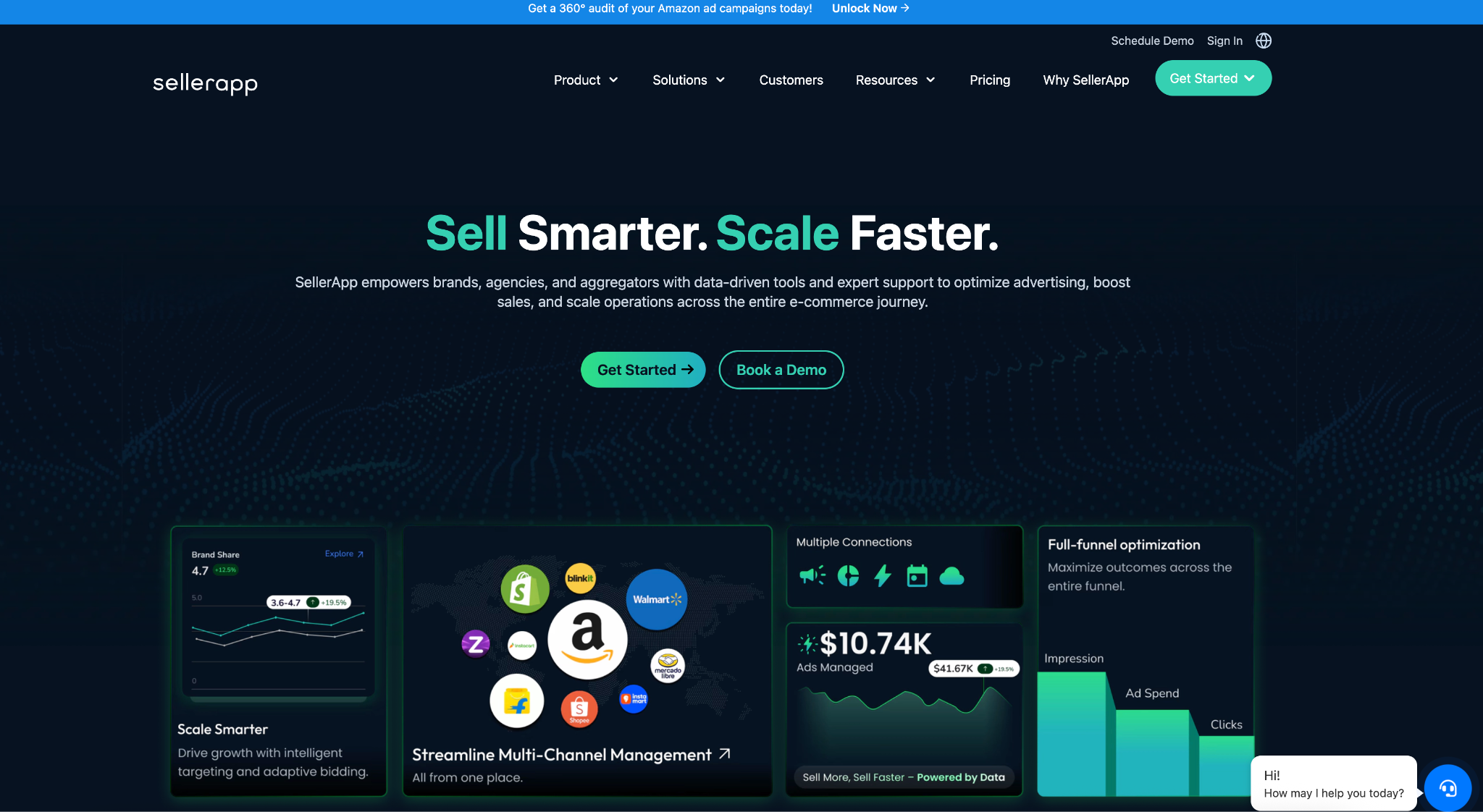
SellerApp is an Amazon-focused suite with PPC, listing optimization, and research features for sellers who want improvements without assembling a large stack. The SellerApp pricing page advertises a freemium plan at $0 with no credit card, plus paid tiers like a Pro plan starting at $99 per month and an automation-focused plan starting at $149 per month.
Choose SellerApp when you want practical PPC and listing improvements on a budget, especially if you prefer a single platform over multiple subscriptions. The tradeoff is feature depth versus enterprise tools, so confirm reporting and automation controls before standardizing your workflow.
How Do You Choose Between These Tools?
The wrong choice is misalignment between pricing, workflow, and the step you are trying to fix.
Use this quick comparative summary to match tools to constraints.
- Stack Influence: Fit: UGC batches; Price: per post; Limit: needs product margin.
- Amazon Attribution: Fit: off-Amazon measurement; Price: free; Limit: eligibility and window.
- Jungle Scout: Fit: research; Price: plan and seat; Limit: research drift.
- Helium 10: Fit: all-in-one; Price: tiers plus fee; Limit: pay for breadth.
- Pacvue: Fit: enterprise retail media; Price: custom; Limit: onboarding overhead.
- Teikametrics: Fit: ad automation; Price: tier plus % spend; Limit: scales with spend.
- SellerApp: Fit: budget suite; Price: freemium plus tiers; Limit: depth.
If you want a lightweight way to source creators outside managed tools, this guide to finding Amazon influencers and storefronts can help you build an initial outreach list to test alongside your attribution setup.
Conclusion
Amazon seller marketing tools only work when they plug into a strategy you can repeat. Your advantage comes from a system that produces proof, measures impact, and compounds what works.
Start by running the Amazon Demand Loop Sequence with one clear bottleneck and one measurable channel, then add tools that shorten your learning cycle.
Here is a simple next-step checklist you can execute this week.
- Pick One SKU: Choose a product with stable inventory and enough margin to test.
- Set Up Measurement: Create Attribution tags and map them to one hypothesis.
- Run One Creator Batch: Generate new UGC, deploy it, and measure lift before scaling.
Your goal is to turn amazon seller marketing tools into predictable demand.