




Amazon dropshipping still attracts eCommerce sellers because it lowers upfront inventory exposure. The catch is that platform policy, review-sensitive conversion, and customer service pressure still demand control, even when a supplier is shipping the box.
For Amazon sellers, the real question is not whether amazon dropshipping is possible. It is whether the model can survive policy rules, rising operating costs, and the need for traffic that actually converts once it lands on your listing.
This guide explains what amazon dropshipping is, when it fits, how to measure it properly, and when to move a winning SKU into a stronger fulfillment model.
Key Takeaways
- Compliance comes first. Amazon allows dropshipping only when you remain the seller of record, remove third-party branding, and handle returns and customer experience yourself.
- Margins fail before inventory does. Rising shipping, product, and advertising costs can erase the cash-flow advantage of dropshipping faster than most new sellers expect.
- Measurement changes the economics. Amazon Attribution is free, and the Amazon Brand Referral Bonus can return an average bonus of 10% on qualifying external traffic sales for eligible sellers.
- Proof assets matter. Visual UGC and reviews can materially improve purchase likelihood, which makes creator content more important than generic supplier photos.
How Amazon Sellers Can Run the 5-Step Margin-First Sequence
Most sellers evaluate dropshipping backward. They start with supplier catalogs and only later ask whether the product can survive Amazon fees, delivery expectations, and the trust gap on a cold product page.
The 5-Step Margin-First Sequence flips that order. It gives eCommerce sellers a cleaner way to test demand, especially when they want validation before committing to inventory or moving deeper into Amazon FBA.

Start with this sequence:
- Screen the niche for margin first. Choose categories where shipping cost, return risk, and defect exposure are manageable before you worry about trendiness.
- Pressure-test supplier control. Confirm packaging, lead times, tracking, and return handling before you publish a listing.
- Build the page before you buy traffic. Your PDP and Amazon storefront need credible visuals, clear value communication, and a delivery promise you can keep.
- Launch one clean traffic path. Send traffic to one hero ASIN or one curated storefront path so performance stays readable.
- Graduate winners into a hybrid model. Once a SKU proves demand, improve fulfillment control instead of staying purely reactive.
The 5-Step Margin-First Sequence works because it forces you to solve for fragility before scale. If you want a Stack Influence refresher on creator-led Amazon growth, the brand's Amazon solutions for influencers and automated product seeding pages show the operational side of sourcing creators, coordinating product sends, and collecting reusable content.
Step four is where creator traffic becomes strategic instead of random. For sellers who run influencer campaigns, Stack Influence is relevant here because its Amazon workflow is positioned around micro creator activation and reusable content, not just one-off sponsorships. From Stack Influence's experience running product seeding for eCommerce brands, launches built around one hero SKU and one tagged destination tend to produce cleaner click-to-sale reporting than campaigns split across multiple pages.
What Is Amazon Dropshipping?
At its core, amazon dropshipping is a seller-fulfilled model where you list the product in Amazon's marketplace while a third-party supplier stores inventory and ships the order. As Amazon's 2026 dropshipping guide explains, the model can lower upfront overhead, but it also transfers a large part of fulfillment risk into your supplier relationship.
The critical nuance is policy. Under Amazon's Drop Shipping Policy, you still have to remain the seller of record, remove third-party identifiers from the package, and take responsibility for accepting and processing returns. That means amazon dropshipping is less passive than many beginner guides make it sound.
The Ship-or-Skip Checklist
Before you test a dropshipped SKU, run it through this short audit.
- Packaging Control: Can the supplier ship without their own branding, invoices, or inserts that confuse the customer?
- Transit Realism: Can the delivery promise stay competitive without creating late shipment risk?
- Return Tolerance: Can you afford replacements, defects, and refunds without wiping out contribution margin?
- Content Readiness: Do you have visuals and proof strong enough to convert cold traffic?
- Margin Buffer: Is there enough room after fees, shipping, and promotions to survive volatility?
- Graduation Path: If the product works, can you move it into a more controlled fulfillment model?
If a SKU fails two or three checks in the Ship-or-Skip Checklist, it is usually the wrong product for Amazon dropshipping. If you are still deciding whether the channel fits your broader business model, Stack Influence's guide on how to become an Amazon seller in 2026 is a helpful internal starting point for evaluating fit beyond a single SKU test.
Why Do Thin Margins Break Amazon Dropshipping Faster Than Most Sellers Expect?
The biggest mistake in amazon dropshipping is assuming that lower inventory risk means lower business risk. On Amazon, the bigger threat is usually operating on a narrow margin while the marketplace still expects fast delivery, responsive support, and a product page that looks trustworthy.
That pressure shows up in current seller data. In Jungle Scout's 2025 seller report, 38% of businesses cite higher shipping costs as a top challenge, 34% cite rising cost of goods, and 32% point to growing advertising expense. A low inventory model helps with one line of the P&L, but it does not solve the other three.
Amazon also gives sellers alternatives once a product looks promising. Its ecommerce fulfillment guide says FBA lets sellers outsource fulfillment, customer service, and returns, which is why many winning dropshipped SKUs eventually move toward more controlled fulfillment. That is also why Stack Influence's post on how much it costs to sell on Amazon in 2026 is worth reviewing before you scale a product that only looks profitable on the surface.
The cost leaks sellers miss most often are straightforward:
- Shipping Variability: A supplier delay still lands on your seller metrics and customer messages.
- Return Friction: You may never touch the item, but you still own the resolution path.
- Creative Weakness: Generic supplier images force you to buy more traffic to earn the same sales.
- Price Pressure: Commodity SKUs invite side-by-side comparison and margin-killing discounting.
- Delayed Insight: Weak tracking makes it hard to tell whether the product failed or the traffic failed.
That is why the 5-Step Margin-First Sequence should be treated as a validation system, not a permanent operating philosophy. If a product earns repeat demand and the unit economics still hold, the next question is usually how to take back more control, not how to stay invisible forever.
Should You Keep Using Pure Dropshipping After a SKU Starts Moving?
Pure dropshipping is best for learning. Once a product starts generating repeat orders, conversion data, and customer questions, you usually know enough to decide whether the SKU deserves tighter operational control.
At that point, the decision becomes strategic. You are no longer just testing whether the market wants the product. You are deciding how much of the customer experience, margin structure, and brand presentation you want to own as volume rises.
Use these signals to decide what happens next:
- Move toward FBA when the SKU has steady demand, decent storage economics, and a strong case for faster delivery and easier returns.
- Move toward a hybrid model when the item is bulky, slow-moving, fragile, or better managed with selective seller control.
- Stay in test mode when demand is inconsistent, the listing still lacks proof, or the product cannot support more controlled fulfillment economics.
This is where brand building and traffic planning start to matter more than sourcing alone. If you need frameworks for that next stage, Stack Influence's posts on how to build an Amazon brand in 2026 and how to drive traffic to your Amazon listing in 2026 are useful internal follow-ups once a test SKU starts behaving like a real business line.
The Signal-to-Sale Stack for Attribution and ROI
Most sellers measure amazon dropshipping too narrowly. They look at orders and ad spend, then miss the difference between weak traffic, weak conversion, and weak economics. The Signal-to-Sale Stack fixes that by separating traffic quality from business quality.
Amazon provides the measurement foundation. Amazon Attribution is a free tool for measuring non-Amazon traffic into Amazon, and Brand Referral Bonus can return an average bonus of 10% on qualifying external traffic sales for eligible sellers when that traffic is measured correctly.
What Belongs in Layer 1 and Layer 2?
Start with the traffic and intent signals that tell you whether a channel deserves more budget. Amazon Attribution reports within a 14-day window and includes metrics such as clicks, detail page views, add-to-carts, purchases, units sold, product sales, and new-to-brand activity.
- Traffic Quality: Clicks, detail page views, and detail page view rate tell you whether the message and destination match.
- Buying Intent: Add-to-cart rate and purchase rate tell you whether the listing can convert the visitors you earned.
- Channel Clarity: One tag per tactic, creator batch, or publisher keeps reporting readable enough to optimize.
What Belongs in Layer 3 and Layer 4?
The next layers move from campaign math to commercial reality. This is where seller economics, Amazon referral fees, and the financial effect of Brand Referral Bonus credits have to sit in the same dashboard as media results.
- Economic Truth: Product sales, fees, fulfillment cost, return cost, and Brand Referral Bonus credits determine whether the campaign was worth running.
- Halo Effects: Branded search lift, reusable UGC, stronger storefront engagement, and post-campaign conversion improvements often matter even when one report does not capture the whole effect.
Treat the Signal-to-Sale Stack as a weekly operating habit, not a one-time dashboard. If your team needs a setup refresher, Stack Influence's Amazon Attribution Guide and explainer on what the Amazon Brand Referral Bonus is are useful internal references. Data from Stack Influence's micro influencer campaigns suggests that campaigns tagged before product ships produce cleaner reporting than campaigns that add tracking after content is already live.
There is also a hard limit sellers need to respect. Amazon Attribution uses a 14-day last-touch model, so it is powerful for tagged click measurement but incomplete for long-latency demand, content that lifts conversion later, or upper-funnel influence that does not win the final click. That is why the fourth layer exists.
Stop Treating Amazon Dropshipping Like a Zero-Marketing Model
The most overrated idea in amazon dropshipping is that low inventory means low marketing requirements. In reality, the marketplace is more proof-driven than it was a few years ago, and the creator economy keeps pulling more budget toward content formats that build trust before the click. IAB's 2025 Creator Economy report says U.S. creator ad spend is projected to reach $37 billion in 2025, up 26% year over year.
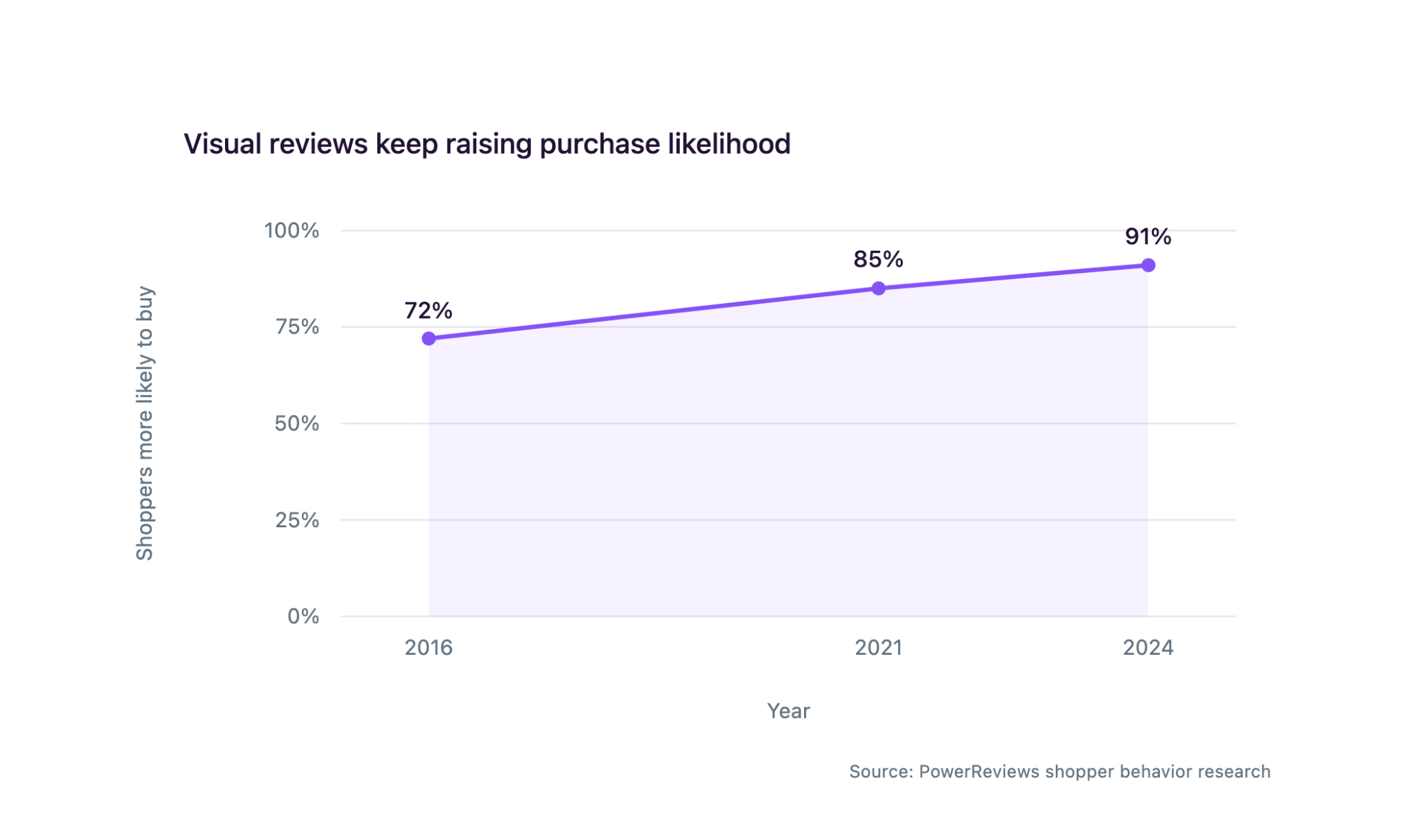
The practical implication is simple. If your listing looks like generic supplier inventory, then outside traffic gets expensive fast. PowerReviews research on visual UGC found that 91% of consumers are more likely to buy when reviews include photos and videos, while its guide to ratings and reviews reports that even one review on a zero-review page can lift conversion by 52.2%. Bazaarvoice's UGC research adds that 86% of brands and retailers believe more authentic UGC would improve the performance of their ads and content.
What zero-marketing amazon dropshipping misses is not abstract branding. It is concrete conversion support.
- Trust Assets: Real photos, demos, and reviews help close the credibility gap created by generic listings.
- Reusable Content: One creator post can become storefront creative, ad creative, and PDP proof.
- Measurable Demand: Tagged creator traffic can tell you whether the product itself works before you commit deeper inventory.
This is why creator content matters even for lean teams. Stack Influence's article on Micro-Influencers and UGC in E-Commerce and its guide on how to build a brand seeding strategy for Amazon in 2026 both point toward the same operational reality: content supply is part of marketplace performance, not a side project. Based on Stack Influence's work with eCommerce brands, sellers who repurpose creator photos and short demos into storefront modules and paid social within two weeks usually shorten their creative testing cycle compared with teams that let assets sit unused after the first post.
For DTC brands entering Amazon, that lesson is even sharper. The product page, the Amazon storefront, and the external click path now need to work together. If all three are generic, then low inventory simply leaves you with less control and no meaningful differentiation.
A Smarter Path to Amazon Dropshipping in 2026
Amazon dropshipping still has a place for eCommerce sellers, but it works best as a disciplined test model, not a magical shortcut. The sellers who win treat compliance, margin structure, content quality, attribution, and fulfillment evolution as one connected operating system.
If you are evaluating amazon dropshipping now, focus on three moves first:
- Audit compliance before launch. Make sure the supplier can support seller-of-record standards and clean packaging.
- Protect margin before scale. Model fees, returns, shipping, and traffic cost before assuming the SKU is viable.
- Build proof before volume. Use real content and clean tracking so you know whether the product deserves deeper investment.
Approached this way, the 5-Step Margin-First Sequence, the Ship-or-Skip Checklist, and the Signal-to-Sale Stack turn amazon dropshipping into a smarter validation lane. For eCommerce sellers who want better demand signals, clearer ROI, and a more durable path to scale, that is the version of the model worth testing.