



Finding creator names is easy. Finding creators who reach the right buyers, can be contacted, accept the offer, deliver usable content, and support measurable business outcomes is much harder.
For ecommerce sellers and content creators, the best influencer search tools now include public-profile databases, opt-in marketplaces, native social-network tools, end-to-end software suites, and managed activation platforms. This guide compares ten current options using a practical standard: how far each workflow carries a partnership from a campaign brief to completed content and commerce evidence.
Key Takeaways
- Influencer databases, creator marketplaces, native social tools, and managed campaign platforms solve different parts of the partnership workflow.
- Database size is less useful than qualified-profile rate, creator contactability, activation support, and completed-content accountability.
- The Five-Handoff Test reveals whether a tool stops at discovery or supports outreach, activation, delivery, and measurement.
- Pricing access varies widely: some tools publish self-serve subscriptions, while others require a demo, custom quote, native-platform account, or managed campaign plan.
- Content creators become easier for brands to find when their profiles clearly communicate niche, audience, content formats, partnership readiness, and contact information.
What Is an Influencer Search Tool?
An influencer search tool is software or a managed service that helps brands identify, evaluate, contact, and sometimes activate content creators. Depending on the product, it may index public profiles, host an opt-in creator marketplace, analyze audience quality, automate outreach, coordinate product seeding, track content, or attribute ecommerce results.
The category includes five distinct operating models:
- Public-profile databases: Index social accounts and let users filter creators by niche, location, audience, engagement, content, or authenticity signals.
- Opt-in creator marketplaces: Let creators build profiles, declare interests, browse opportunities, or receive campaign invitations.
- End-to-end influencer platforms: Combine discovery with relationship management, outreach, product gifting, content tracking, payments, affiliate links, or reporting.
- Native network tools: Use first-party data inside TikTok, Instagram, or another social platform to connect brands and creators.
- Managed activation platforms: Coordinate creator participation, product seeding, communication, content completion, and campaign reporting as a service-supported workflow.
These models are not interchangeable. A database can produce a list while leaving recruitment and fulfillment to the brand. A marketplace may improve creator intent but cover only opted-in members. A managed platform can replace manual tasks after discovery, while a native tool may offer strong first-party network data but limited cross-channel coverage.
Brands that still need a repeatable manual research process can use the practical system for finding micro influencers alongside any database. The goal is to define the evidence a creator must show before outreach, not merely to produce more profiles.
The Five-Handoff Test for Choosing an Influencer Search Tool
The best tool is the one that owns the handoffs your team cannot execute reliably. The Five-Handoff Test evaluates a platform by following one creator partnership through five points where campaigns commonly slow down or fail.
- Brief to qualified shortlist: Can the tool translate a product, buyer, market, channel, and content requirement into relevant creator candidates?
- Shortlist to reachable creator: Does it provide valid contact paths, opt-in applications, native invitations, or managed communication?
- Contact to accepted collaboration: Can the workflow support offers, product selection, contracts, compensation, affiliate terms, or campaign enrollment?
- Acceptance to completed content: Does it handle product logistics, briefs, reminders, approvals, disclosure checks, post verification, and asset collection?
- Content to commerce evidence: Can the team connect creator activity with clicks, sales, marketplace actions, affiliate revenue, or reusable UGC value?
A discovery-only tool can perform the first handoff extremely well and still leave four operational problems unresolved. Conversely, a team with an established creator network may care less about database breadth and more about activation, content management, permissions, or reporting.
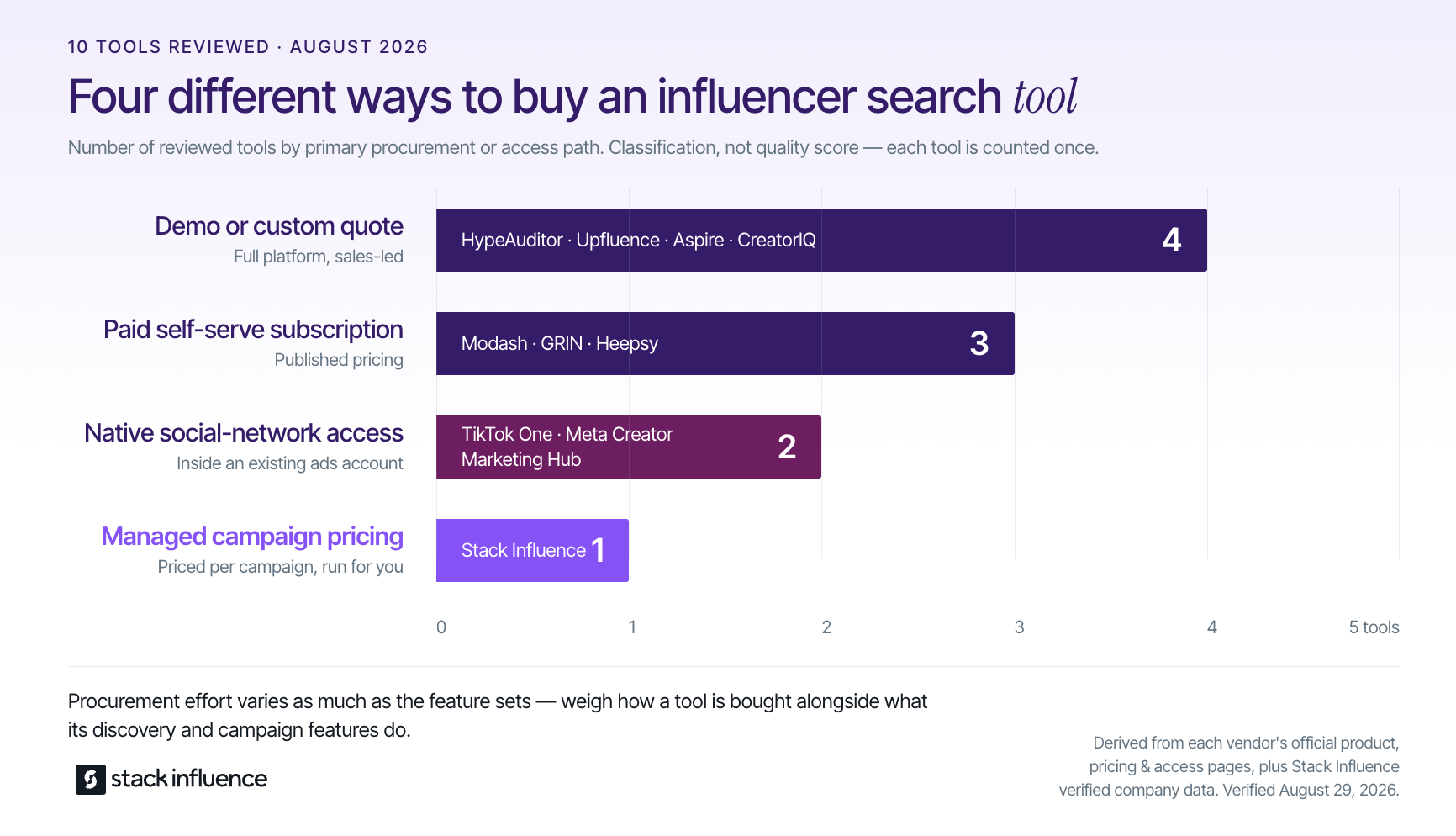
Procurement also differs across the ten options reviewed here. Three publish paid self-serve subscription pricing: Modash, GRIN, and Heepsy. Four route full-platform buyers through a demo or custom quote: HypeAuditor, Upfluence, Aspire, and CreatorIQ.
TikTok One and Meta Creator Marketing Hub are native network tools rather than conventional cross-platform subscriptions. Stack Influence uses a managed campaign model built around creator activation and completed-post accountability. These four procurement categories describe how buyers enter the workflow, not which product is universally superior.
The 10 Best Influencer Search Tools
These ten tools were selected because they are active, relevant to ecommerce creator partnerships, and represent meaningfully different approaches to discovery and execution. The order is not based on a fabricated composite score.
Each review considers:
- Search coverage and relevance signals
- Audience, content, and authenticity data
- Creator contact or application pathways
- Product seeding and campaign execution
- Content tracking and commerce measurement
- Current pricing or access model
- Value for ecommerce brands and content creators
Stack Influence
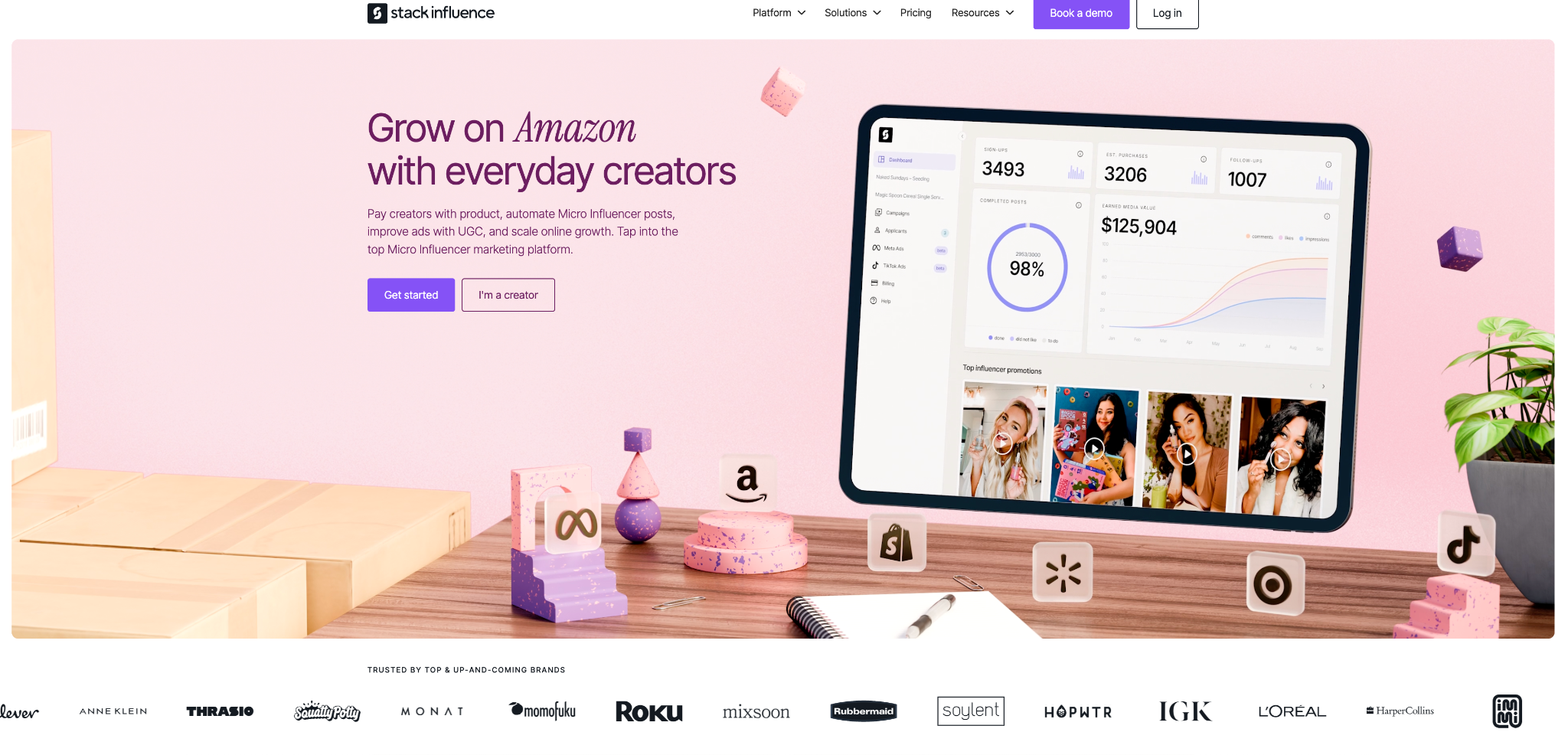
Stack Influence is a micro-influencer marketing platform built around gifted-first product seeding and managed campaign execution. Its micro-influencer promotions workflow supports creator sourcing, vetting, campaign coordination, communication, completed-post tracking, and UGC generation rather than stopping at a profile shortlist. The supplied company data reports a network of roughly 600,000 vetted creators.
The platform’s automated product-seeding process connects participation with completion accountability. Creators receive or purchase a product, complete the agreed campaign requirements, and receive gifting or reimbursement according to the campaign structure. Brands pay for completed creator posts, a model sometimes described as influencer insurance because campaign budget is tied to completed deliverables rather than unverified outreach or creator drop-off.
Stack Influence also organizes ecommerce UGC collection and campaign assets within the operating workflow. This is particularly practical for Amazon sellers, Shopify brands, and DTC teams that want product seeding, creator content, and execution handled together instead of transferring a search export into spreadsheets, inboxes, shipping tools, and asset folders.
- Best-Fit Workflow: Brands that want vetted creator activation, product seeding, campaign coordination, UGC generation, and completed-post accountability in one connected process.
- What to Know: Stack Influence is designed around activating creators and managing campaigns through completion, including Amazon-focused influencer campaigns, rather than functioning only as a standalone creator directory.
Modash
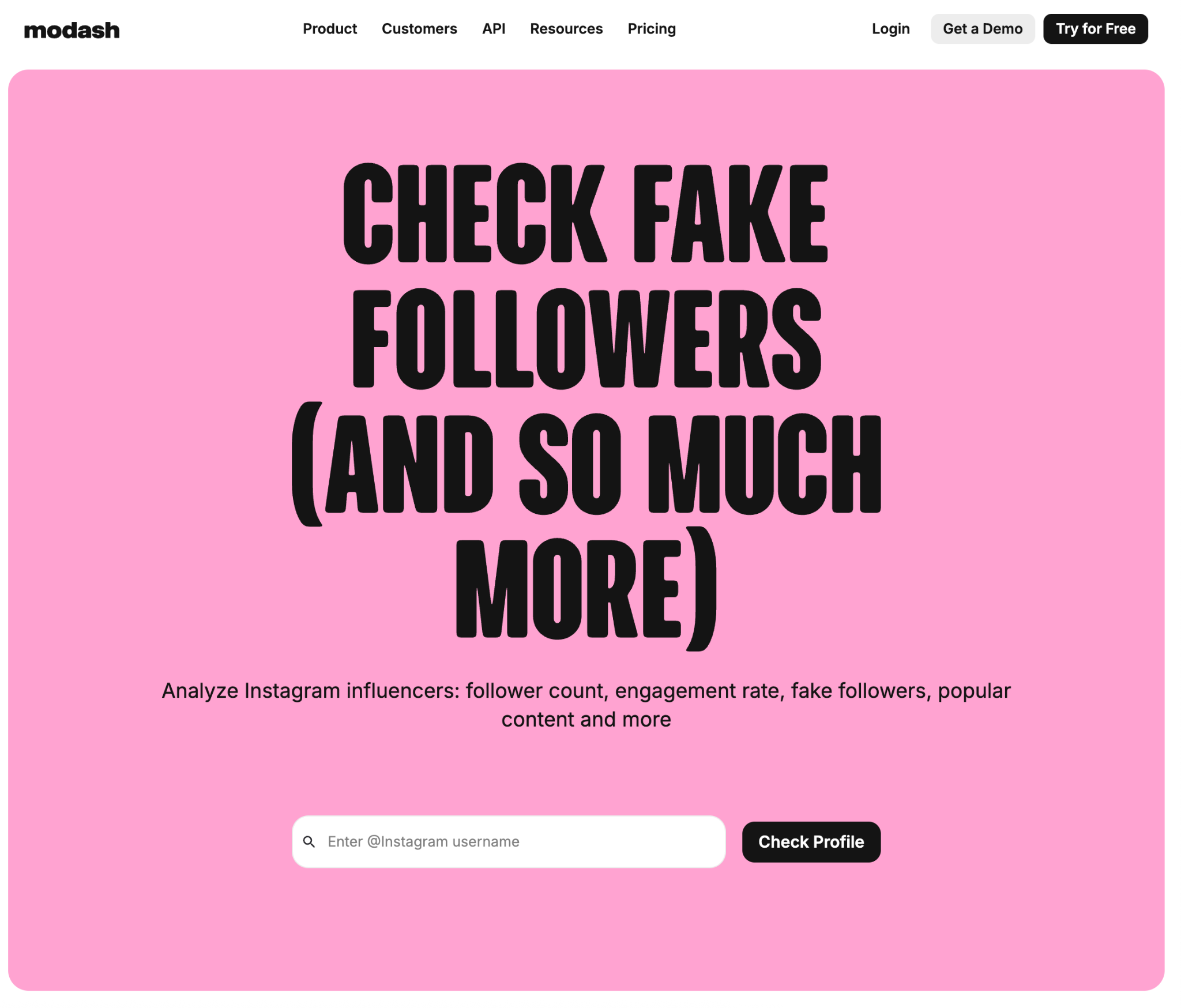
Modash is a self-serve influencer discovery and management platform for Instagram, TikTok, and YouTube. Its influencer discovery product says it covers more than 380 million public profiles with at least 1,000 followers and supports natural-language search, visual search, lookalikes, audience demographics, past brand-partnership review, and fake-follower analysis.
The workflow extends into CRM, inbox integration, content tracking, payments, Shopify gifting, and affiliate management. As of August 29, 2026, Modash pricing lists Essentials at $299 month to month or a $199 monthly equivalent when paid yearly, with usage limits for opened profiles, unlocked public emails, and tracked creators. Creators do not need to opt into the database, and contact visibility depends on information they have made public, so brands still need an effective recruitment offer and follow-up process.
HypeAuditor
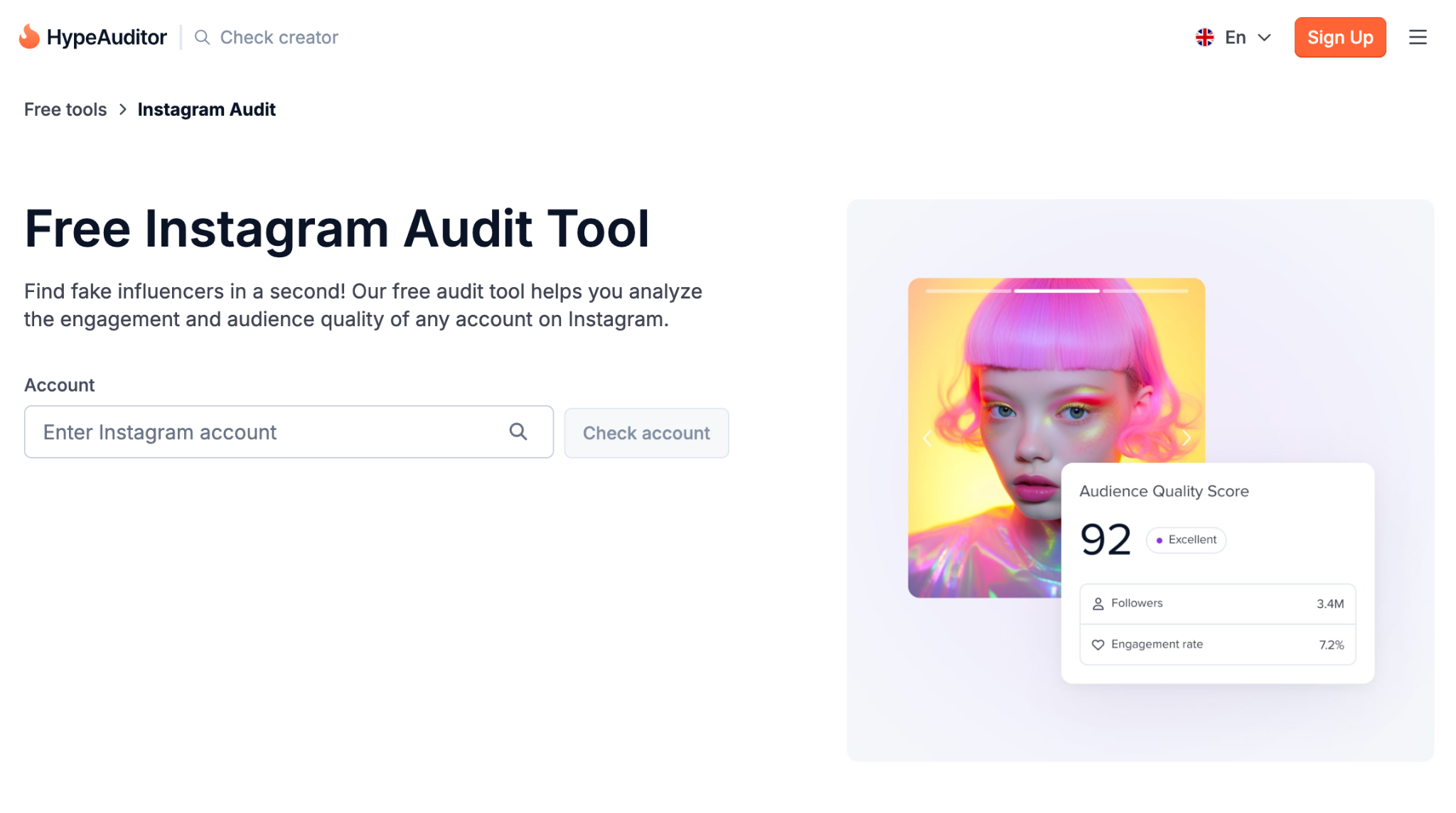
HypeAuditor places deep creator and audience analysis at the center of discovery. Its Influencer Discovery database reports more than 227.2 million profiles and supports Instagram, YouTube, TikTok, X, and Twitch, with filters for creator attributes, audience demographics, growth, niche keywords, and brand mentions. It is especially useful when audience authenticity and fraud screening are major selection risks.
The wider product includes recruitment, campaign management, market analysis, ecommerce monitoring, and payments. HypeAuditor’s pricing page offers free media plans and demo versions, but it does not publish a standard full-platform subscription price. Smaller teams should therefore define which reports, filters, recruitment functions, and usage volumes they need before a sales conversation so they can compare the quote with narrower self-serve tools.
Upfluence
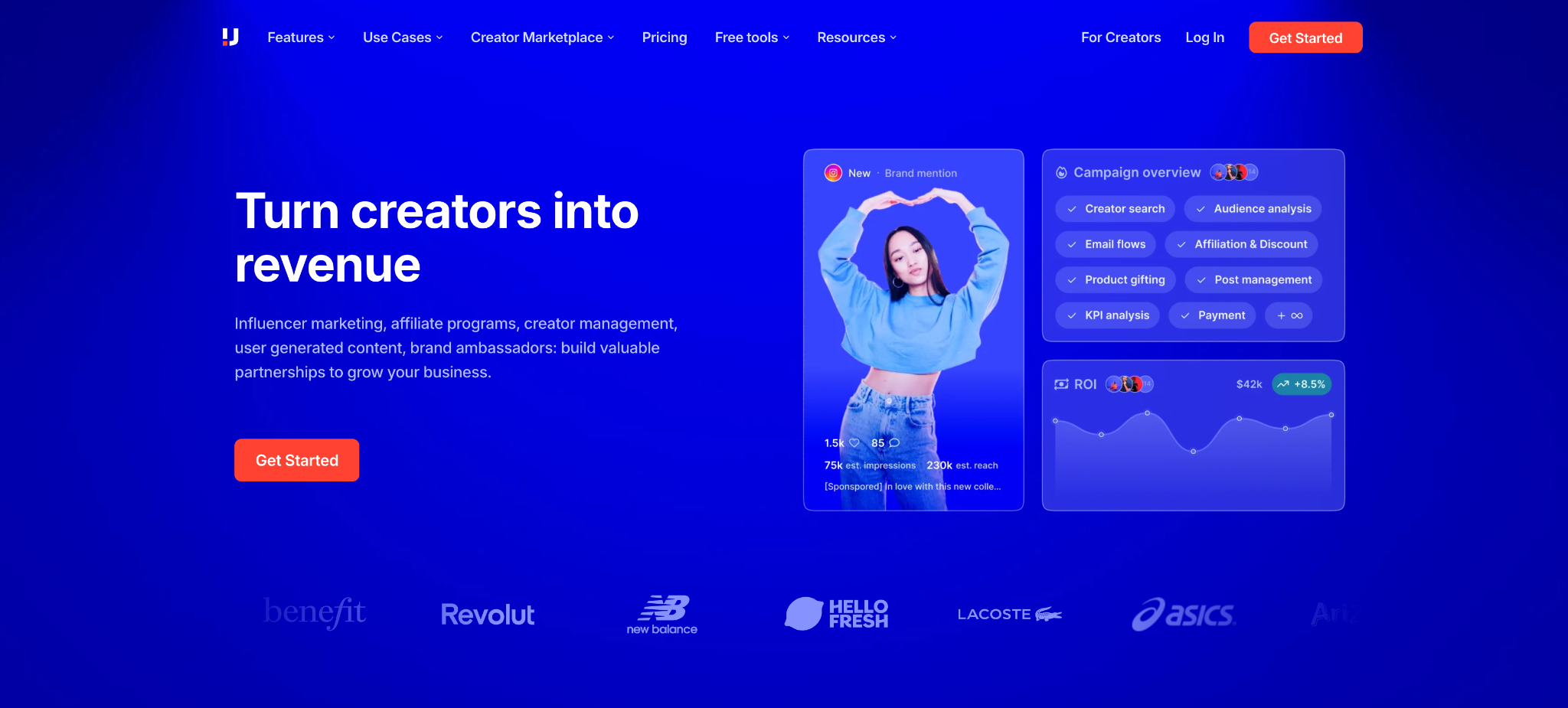
Upfluence combines a creator database with outreach, campaign management, payments, affiliate tracking, and ecommerce integrations. Its influencer search product says users can search more than 14 million creators across Instagram, TikTok, and YouTube, while its broader index also covers Twitch, Pinterest, and X. Filters include niche, engagement, location, keywords, and audience characteristics.
The platform is relevant to DTC and Shopify influencer marketing because discovery can feed product gifting, affiliate programs, creator relationship management, and sales reporting. Upfluence pricing is modular and custom quoted across Find, Scale, and Autopilot, based on selected modules, team size, and program volume. The current page also states a fixed platform fee and a 12-month minimum contract, so buyers should model expected program volume before comparing it with month-to-month products.
GRIN
GRIN now combines a creator marketing workspace with Gia, an AI operator that can assist with creator discovery, scoring, outreach, gifting workflows, campaign setup, and reporting. The current platform says brands can start free, access a network of more than 700,000 creators, and move to paid plans starting at $200 per month. This makes the 2026 product materially different from older descriptions of GRIN as an annual-contract-only platform.
GRIN pricing is month to month and self-serve, with no required sales call. Gia’s work is metered through credits: browsing and manual actions may be free, while creator finding, scoring, outreach, gifting, and analysis consume credits according to effort. Buyers should estimate recurring AI workload, not only the headline subscription, because credit usage becomes part of the operating cost.
Aspire
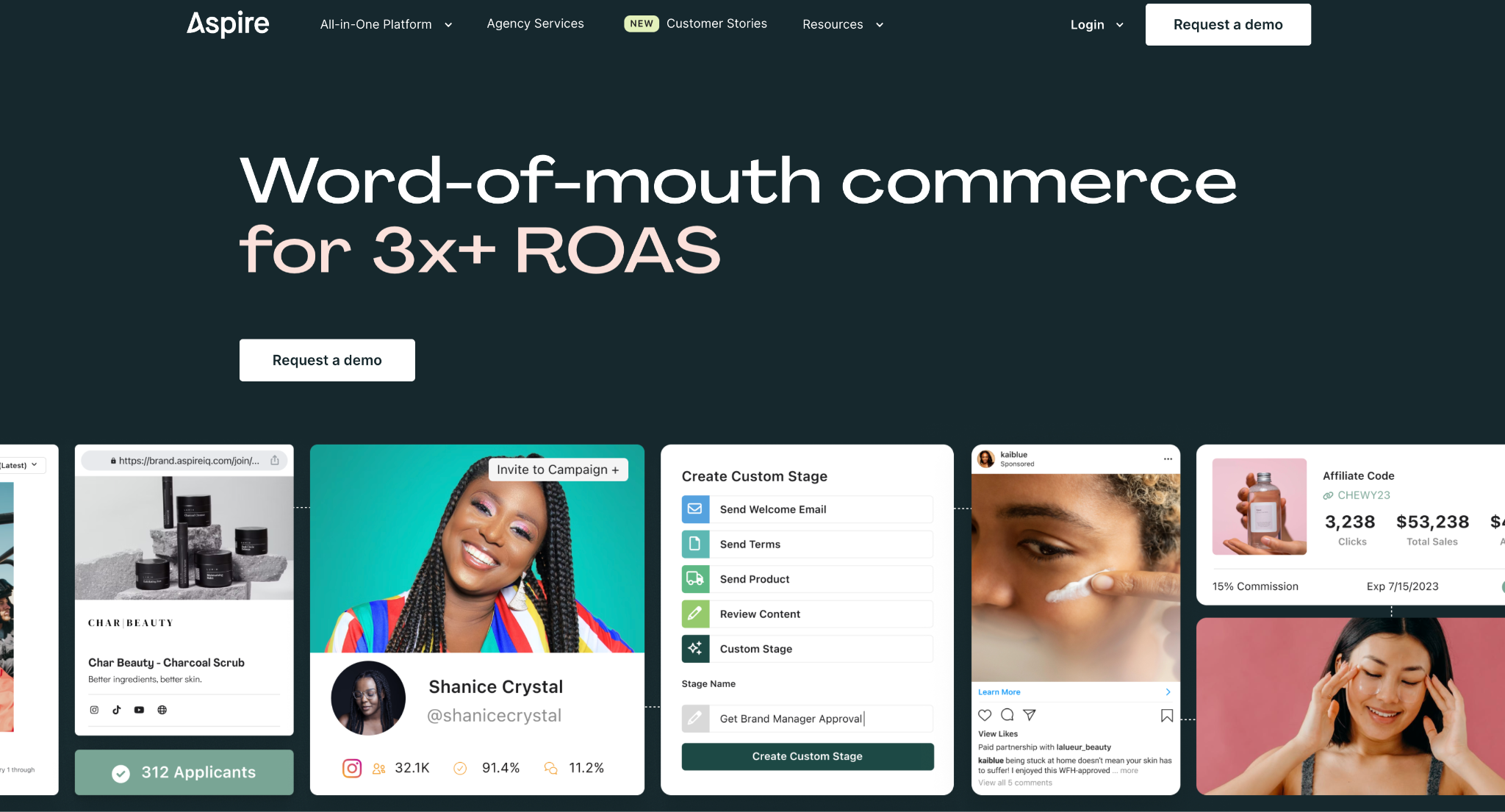
Aspire connects influencer discovery with a creator marketplace, customizable relationship workflows, product seeding, affiliate programs, content production, and ROI reporting. Its platform overview is designed for brands that want to manage several creator-program types in one system rather than purchase a search database alone. The Shopify integration also makes it relevant to ecommerce teams handling gifting and affiliate activity.
Aspire also maintains a substantial creator-facing marketplace workflow. Its creator marketplace lets creators connect social accounts, set categories, rates, and content types, browse campaigns by network or compensation, and manage product selection and deliverables through a portal. Brand pricing is sales led and requires a demo, so prospective buyers need to evaluate implementation scope and contract terms directly.
CreatorIQ
CreatorIQ is an enterprise creator-marketing platform focused on global discovery, governance, data integration, brand safety, campaign management, payments, and measurement. Its creator search product uses direct social-platform integrations and supports filters such as location, age, gender, engagement, and audience authenticity across major networks.
The product is designed for organizations that need a centralized system of record across brands, regions, agencies, and large creator communities. CreatorIQ’s pricing request page describes global coverage with 20 million profiles, creator onboarding, campaign operations, revenue measurement, and ecommerce or affiliate integrations, but does not publish standard prices. Lean teams should decide whether enterprise governance and integration depth justify a longer procurement and implementation process.
Heepsy
Heepsy offers self-serve discovery using AI search, text matching, lookalikes, direct handle search, audience filters, authenticity checks, lists, outreach, projects, and campaign tracking. Its influencer search tool covers Instagram, TikTok, YouTube, and LinkedIn, while the pricing comparison currently shows search access for Instagram, TikTok, and YouTube. Buyers should confirm channel-specific availability for the exact plan they are considering.
Heepsy pricing includes a free plan and lists Starter at $69 per month when billed annually, with defined monthly allowances for results, advanced profiles, outreach emails, tracked creators, and projects. The limits make the product easy to budget, but teams should calculate how quickly they will consume advanced profile, contact, tracking, and outreach allowances during a real campaign.
TikTok One
TikTok One is TikTok’s native creator-discovery and collaboration environment. Brands can search by creator name or content keyword, then filter by creator location, follower count, language, audience demographics, audience personas, median video views, and engagement. Native first-party signals make the tool useful for TikTok-specific campaigns where recent platform performance matters.
TikTok’s Creator AI Search announcement added natural-language discovery in 2026. Brands can describe a brief, receive a curated list of up to 200 creators, refine recommendations, and invite creators into a campaign, although the official help documentation says AI search is available only to select customers. TikTok One is therefore a specialized option for TikTok creator partnerships, not a cross-network search layer for Instagram, YouTube, Amazon storefronts, or broader ecommerce programs.
Meta Creator Marketing Hub
Meta Creator Marketing Hub is Meta’s native workflow for discovering and evaluating creators for branded content and partnership ads. Brands can use creator search, recommendations, performance information, campaign tools, and content permissions within Meta’s environment. For Instagram-first partnerships, first-party profile and campaign signals can reduce the data gap associated with third-party estimates.
Eligible creators can use the Meta creator-marketplace setup to become discoverable, communicate interests, build a partnership profile, and browse or respond to brand projects through Meta’s creator-marketplace experience. The main constraint is scope: Meta Creator Marketing Hub is built around Meta properties, branded content, and partnership ads rather than cross-platform discovery, product-seeding logistics, or marketplace sales attribution.
Which Influencer Search Tool Should You Choose?
Choose the tool that solves the first handoff your team repeatedly fails to complete, then confirm that the remaining handoffs have an owner. A sophisticated database is wasteful when the bottleneck is creator follow-up or product fulfillment. A managed workflow is most valuable when the team needs completed creator activation, not another export.
Use this comparison as a decision shortcut:
- Stack Influence: Best for managed micro-influencer activation, gifted-first product seeding, ecommerce UGC, and completed-post accountability.
- Modash: Best for broad self-serve public-profile discovery with modern search modes and connected creator management.
- HypeAuditor: Best for deep audience analysis, authenticity screening, and research-intensive creator vetting.
- Upfluence: Best for modular ecommerce creator programs combining discovery, gifting, affiliates, payments, and sales tracking.
- GRIN: Best for teams that want self-serve creator-program software with AI-operated workflow support and usage-based automation.
- Aspire: Best for marketplace recruitment, customizable relationship workflows, seeding, affiliate programs, and creator-facing opportunities.
- CreatorIQ: Best for enterprise governance, global creator data, integrations, and multi-team program control.
- Heepsy: Best for accessible self-serve search, outreach, and campaign organization with visible usage allowances.
- TikTok One: Best for TikTok-native creator discovery, invitations, and first-party performance signals.
- Meta Creator Marketing Hub: Best for Meta-native creator discovery, branded-content collaboration, and partnership-ad workflows.
A brand may also combine tools. For example, a public-profile database can support research, while Stack Influence supports managed creator activation and campaign execution. The Five-Handoff Test makes that division explicit so two tools complement each other instead of duplicating cost.
How Can Content Creators Become Easier to Find?
Content creators become easier for brands to find when their public profiles and marketplace listings clearly describe what they create, who they reach, and how a collaboration can begin. Search systems can only retrieve the evidence available to them, so niche clarity, recent work, audience proof, and contactability matter more than stuffing a bio with generic influencer keywords.
Build a partnership-ready creator profile with five signals:
- Specific positioning: Name the category, audience, problem, or routine you consistently cover, such as budget meal preparation for busy parents rather than lifestyle content.
- Representative work: Pin or feature recent posts that demonstrate products, explain benefits, compare options, tell stories, or produce the UGC video formats brands commonly request.
- Audience evidence: Keep current first-party analytics available for serious inquiries, including audience geography, age ranges, reach, median views, and relevant engagement.
- Contact and terms: Maintain a working business email or marketplace inbox, then state preferred deliverables, channels, compensation models, and usage-rights expectations.
- Commercial readiness: Disclose prior partnerships clearly, respond professionally, follow briefs accurately, and make product, affiliate, sponsorship, or ambassador experience easy to verify.
Creators should also distinguish where opportunities originate. Public databases may index an account without creator enrollment, while marketplaces such as Aspire require a profile and applications. Native tools such as TikTok One or Meta Creator Marketing Hub depend on account eligibility and in-platform setup. The creator-focused micro-influencer platform guide explains how opportunity flow, compensation, rights, and deliverables differ across these systems.
The Real Cost Starts After Search
A tool’s subscription price is only one part of creator acquisition cost. The larger expense often appears after the shortlist, when a team verifies contacts, writes messages, follows up, negotiates terms, ships products, answers questions, checks disclosures, gathers content, and connects results with revenue.
Consider a clearly illustrative scenario, not an industry benchmark. Assume one month of search software costs $300 and the team spends 10 hours on research and coordination at an internal value of $50 per hour. The pre-fulfillment search and labor cost is $800 before creator compensation, product cost, shipping, paid media, or licensing.
That fixed $800 equals $80 per completed creator at 10 completions, $40 at 20 completions, $20 at 40 completions, and $10 at 80 completions. The calculation shows why utilization and completion change tool economics. A cheaper database can become expensive when the team cannot move profiles through outreach and delivery, while a higher-cost workflow can create value when it replaces enough manual work and produces more completed assets.
Operational cost also includes compliance. The FTC’s endorsement guidance states that free or reimbursed products create a material connection that should be disclosed, and brands should train and monitor people acting on their behalf. Search software does not remove that responsibility.
How Do You Test an Influencer Search Tool Before Buying?
Test an influencer search tool by running the same narrow campaign brief in every product and auditing the first 20 results. Record qualification, evidence quality, contactability, activation support, and measurement options. A controlled test reveals workflow fit more reliably than a polished demo or a headline database count.
The 20-Profile Stress Test
Start with one brief that contains enough constraints to expose weak data. For example: U.S. skincare creators with 10,000 to 75,000 followers, a primarily adult female audience, recent demonstration content, no direct competitor promotion in the previous 90 days, and availability for a product-seeding video.
Review the first 20 results and record:
- Qualified profiles: How many satisfy every non-negotiable requirement?
- Visible evidence: Can the platform show why each result matched, including audience, content, and performance signals?
- Contactability: Is there a working public email, marketplace application, native invite, or managed communication path?
- Activation path: Can the tool support the offer, product, brief, agreement, follow-up, and deliverable?
- Measurement path: Can activity be connected to content, links, codes, sales, or a reporting export?
Do not change the brief between tools. Keep a separate note for missing or estimated data, and verify final candidates through first-party creator analytics before committing meaningful budget. The Instagram influencer qualification guide provides a deeper evidence screen for audience, content, engagement, commercial behavior, operational readiness, and brand safety.
How Should You Measure an Influencer Search Tool?
Measure an influencer search tool from qualified discovery through completed business outcomes, not by profiles viewed or names exported. The Search-to-Commerce Metric Stack follows five layers: retrieval quality, recruitment, delivery, content value, and commerce. Each layer explains whether the previous one produced usable progress rather than dashboard activity.
Use these metric groups:
- Retrieval quality: Qualified-profile rate, duplicate rate, missing-data rate, first-party verification rate, and time per qualified creator.
- Recruitment: Deliverability, reply rate, qualified-positive rate, acceptance rate, and time from first contact to agreement.
- Delivery: Activated creators, products received, on-time completion rate, approval rate, disclosure compliance, and completed posts.
- Content value: Usable assets, format mix, rights-cleared assets, cost per usable asset, and content reuse performance.
- Commerce: Tracked sessions, product-detail views, add-to-cart actions, purchases, units, net revenue, new-customer orders, returns, and contribution profit.
For Shopify and DTC campaigns, creator-specific links should use consistent campaign parameters. Google’s Analytics URL-builder guidance explains that UTM parameters identify referring campaigns and appear in Traffic acquisition reports. Codes can supplement links, but shared codes and cross-device shopping can distort creator-level attribution.
Amazon sellers can use Amazon Attribution to measure non-Amazon channels such as social, video, search, display, and email. Amazon’s current page lists a 14-day attribution window and reports clicks, product-detail views, add-to-cart activity, purchases, units sold, product sales, and new-to-brand metrics. Separate tags by creator, creative, audience, or tactic when the reporting question requires that detail.
Attribution still has limits. A viewer may see creator content, search the brand later, switch devices, share a code, buy through another marketplace, or convert outside the reporting window. Treat tracked sales as evidence of attributable activity, not a complete measure of causation, and review marketplace movement or branded demand as supporting context rather than proof that one post produced every change.
Choosing a Search Workflow That Reaches Completion
The best influencer search tools do more than surface popular accounts. They help ecommerce sellers and creators move toward a workable partnership with clear evidence, communication, delivery, compliance, and measurement.
Start with the Five-Handoff Test. Identify the first stage your current process cannot execute consistently, then trial the relevant tools with one fixed brief and 20 profiles. For teams whose bottleneck is activation rather than list building, evaluating a managed product-seeding workflow can connect creator participation with completed content and reduce the manual work between discovery and campaign reporting.