
The latest info on influencer marketing trends, micro influencer news, and the world of social media

Live commerce is exploding in popularity as consumers flock to interactive, shoppable videos. In fact, US livestream e-commerce sales grew nearly 50% in 2025 to reach $14.6 billion. Platforms from TikTok to Amazon are doubling down on live shopping features, giving brands new ways to engage audiences and boost online sales. This post explores the top live shopping platforms of 2026 and how e-commerce brands (including Amazon sellers and DTC founders) can use them to connect with customers in real time. You’ll learn what live shopping is, why it’s so powerful for modern influencer marketing, and which platforms are leading the charge. By the end, you’ll see how even micro influencers and everyday content creators can turn live streams into sales engines – and how your brand can get in on the action.
Live shopping (also known as live selling or livestream commerce) is the practice of showcasing products through live video streams on social platforms or shopping apps, allowing viewers to buy products in real time. In a live shopping event, a host (often an influencer or brand rep) demonstrates products live, interacts with the audience via chat or Q&A, and provides purchase links or in-stream checkout. It’s essentially a digital-age QVC: blending entertainment, education, and instant shopping.
This format merges content and commerce. Viewers get an interactive demo – they can see how a product works, ask questions, and get answers on the spot. Meanwhile, one-click purchasing is usually integrated right into the stream, so excited shoppers don’t have to leave the video to buy. The result is a seamless, engaging experience that drives urgency (limited-time offers or exclusive deals are common) and capitalizes on social proof (seeing other viewers’ questions or purchases).
Live shopping has transformed retail in markets like China, where it now accounts for roughly 60% of all e-commerce. In the US, it’s still emerging (about 5% of online sales), but growing fast – revenue from live shopping is forecast to grow 36% this year. Notably, younger consumers are embracing it: only 34% of Gen Z shoppers were interested in live shoppable streams in 2020, but that jumped to 61% by 2023. In short, live shopping is quickly becoming a mainstream way to shop online, especially as social media and e-commerce converge.
How Live Shopping Differs from Traditional E-Commerce: The key distinction is real-time interactivity. Traditional e-commerce is static – customers read descriptions and reviews on a product page. Live shopping, on the other hand, is dynamic and social. A few ways it stands out:
Why should e-commerce brands and Amazon sellers care about live shopping? Here are some key benefits of this rising trend:
For brands, these benefits boil down to one thing: more engaged customers who are ready to buy. It’s a powerful channel for product launches, seasonal promotions, or just energizing slow-moving inventory. And thanks to modern tools, you don’t need a TV studio or massive budget to get started – just a smartphone, the right platform, and a savvy host.
Dozens of platforms now offer live shopping capabilities, but a handful stand out as the leaders in 2026. Below we cover the top live shopping platforms – from social media giants to specialized apps – that e-commerce entrepreneurs and Amazon sellers should know about. Each platform has its own strengths, audience, and use cases, so you can choose the ones that best fit your brand’s goals.
View this post on Instagram A post shared by TikTok Shop US (@tiktokshop)
TikTok isn’t just for viral dances – it’s become arguably the hottest live shopping platform today. TikTok Shop enables brands and creators to sell products directly through live streams and in-feed videos on TikTok. Given TikTok’s massive reach among young consumers, it’s a goldmine for product discovery and impulse buys driven by trends. Nearly half of TikTok’s users (48.9%) have made purchases via TikTok Shop, showing how quickly the app’s commerce features have caught on.
Key features: During a TikTok live stream, the host can showcase products with on-screen pins and links. Viewers tap to see item details and purchase without leaving the app. The algorithm is a big advantage – TikTok’s For You page will surface live shopping streams to relevant viewers even if they don’t follow your brand, creating discovery opportunities no other platform matches. TikTok also heavily promotes trending live events and limited-time deals, drawing in large crowds.
Why use it: TikTok Live is ideal for product discovery and trend-driven sales. If you have a visually appealing product or something that can demo well in a short video, TikTok can drive huge spikes in demand (sometimes overnight). Beauty, fashion, gadgets, and home goods do particularly well. Collaboration with creators is key here – trends often take off when popular TikTok creators host live shopping events for your brand. (Stack Influence, as a micro-influencer marketing platform, has helped many brands partner with TikTok creators to amplify their live shopping campaigns, connecting products with the right niche audiences in an authentic way.) The downside is TikTok’s audience skews younger, and you might not get as much customer data from sales. But for sheer reach and virality, TikTok Shop is hard to beat.
Notable trend: Major retailers have jumped on TikTok Shop. Even QVC, the old TV shopping giant, gained 100,000+ new customers through TikTok Shop in one quarter of 2025, proving that live social selling isn’t just for upstarts – it’s transforming mainstream retail too.
For Amazon sellers, Amazon Live is a must-know platform. It’s Amazon’s built-in live streaming hub where brands and influencers stream interactive shopping shows on Amazon’s website and app. Think of it as Amazon’s own version of HSN or QVC, but integrated with Amazon product listings. Amazon Live has been growing steadily from 2023 to 2025 as the company invests in creator-driven commerce. It’s not a traditional “social network,” but it behaves like one by pairing live video with Amazon’s enormous marketplace audience.
Key features: Through the Amazon Live Creator app, sellers or approved influencers can go live to demo products. The stream appears on your product pages and on a public Amazon Live page. Customers watching can see product details beneath the video and purchase with one click (since it’s all tied into Amazon’s cart). They can also follow your Amazon Live channel and get notified of future streams. The chat allows for real-time Q&A. A big plus: Amazon Live videos, once recorded, often stay accessible on your listings, continuing to inform future shoppers.
Why use it: If you already sell on Amazon, this platform offers built-in credibility and reach. Your live stream can attract any Amazon shopper browsing your category, not just your followers. It’s especially powerful for showcasing product features or answering FAQs live (which can then live on as a video FAQ on your listing). For example, a kitchen gadget seller can do a live cooking demo using their product – those replays become persuasive content on the product page later. Amazon Live is also great for driving reviews and engagement; viewers can leave comments that boost your product’s visibility. The trade-off is you’re limited to Amazon’s ecosystem (you won’t get viewer emails or detailed analytics like on your own site). Still, for Amazon-centric brands, it’s a no-brainer to test. Amazon has even created a tiered Influencer Program to recruit creators for live streaming, seeing huge success with existing YouTube/TikTok streamers joining in.
Tip: Promote your Amazon Live events on social media and to your email list ahead of time. Amazon’s organic discovery is decent, but a pre-promotion can significantly increase live viewership – which in turn boosts your ranking on the Amazon Live page during the stream. And consider partnering with an influencer marketing agency or platform to find micro-influencers who can host live streams for your brand; their personality and following can draw in viewers who trust their recommendations.
YouTube has long been the home of product reviews and unboxings, so adding live shopping is a natural fit. With YouTube Live, brands and creators can stream live video and utilize YouTube Shopping features to tag products. YouTube’s advantage is deep content and an algorithm that favors longer engagement – perfect for more complex or premium products that benefit from detailed demos.
Key features: YouTube lets you add shopping cards to live videos, linking to products on your own website or approved merchants. In 2022-2023, YouTube partnered with Shopify to make it easy for merchants to integrate their product catalog and enable in-stream checkout. During a live stream or even in regular videos, viewers might see a pop-up panel with featured products and click to buy. Live chat on YouTube is robust, and streams can be scheduled with waiting room pages to build anticipation. Importantly, live videos on YouTube can remain as regular videos after the stream, often continuing to rack up views (and sales) for months or years. This evergreen aspect sets YouTube apart: a live product tutorial today becomes a searchable product review tomorrow.
Why use it: YouTube Live is ideal for high-consideration products and storytelling. If your audience needs education (tech gadgets, appliances, B2B products, etc.), a YouTube live session allows for in-depth walkthroughs. It’s also great for creative demos – e.g., a makeup brand doing a full makeover, or a fitness brand hosting a live workout with shoppable gear. The platform’s searchability means your content has lasting value. Another plus: YouTube’s demographics are broad (everyone from Gen Z to Gen X uses it), so you can reach a wide range of customers. The production quality can be higher here – some brands invest in multi-camera streams or professional hosts – but even a solo creator with a ring light can succeed if the content is engaging. Keep in mind that to really leverage YouTube Shopping, you’ll want to have your own online store or Shopify setup for integration. That way, you capture the customer data and manage the checkout.
Fun fact: YouTube reports that live streams and short-form videos tend to have higher engagement than standard uploads. For instance, engagement rates on YouTube for micro-influencers’ live/short videos can exceed 5%, significantly above typical long-form video posts. This higher engagement is a strong indicator that live content resonates and keeps viewers interacting – exactly what you need to warm up a customer before purchase.
View this post on Instagram A post shared by Whatnot (@whatnot)
Whatnot is a fast-growing dedicated live shopping app that started with collectibles (think comic books, trading cards, sneakers) and has expanded into many categories. If TikTok is like an “everything bazaar,” Whatnot is a more niche, community-driven marketplace for live selling. It’s often compared to a mix of eBay and Twitch – hosts go live to auction or sell products to an audience of enthusiast buyers. Whatnot’s rise has been impressive: the platform was expected to exceed $6 billion in gross sales in 2025, indicating how popular it’s become among hobbyists and collectors.
Key features: Sellers (or influencers) on Whatnot schedule live show “rooms” where they auction items or sell at set prices. The platform handles payments and even shipping logistics in some cases. It’s heavily community-oriented – users can follow sellers, get notifications of live shows, and even chat and build relationships with sellers. Categories range from sports cards and anime figurines to vintage fashion and electronics, each with passionate sub-communities. Whatnot often features flash sales and auctions where starting prices are low and items can bid up in real time, adding excitement. The urgency and gameified nature (countdown timers, bid wars) drive a lot of engagement and spending in short bursts.
Why use it: If your brand deals in collectibles, limited-edition items, or has a strong niche appeal, Whatnot is a fantastic platform to tap into high-intent communities. For example, an indie streetwear brand could drop a limited run of sneakers via Whatnot and attract sneakerheads looking for the next exclusive item. Or a trading card shop could break open rare card packs live and auction them. Whatnot’s user base is there specifically to shop and bid, so conversion can be very high. Even outside of collectibles, some DTC brands are experimenting with Whatnot to move inventory in a fun, interactive way (often with steep discounts or one-off items). The drawback is that it’s a standalone app – you have to build your following on there, which can take time. However, success stories abound: many small sellers have grown loyal customer bases on Whatnot, turning live streaming into a full-time business. Brands can also partner with popular Whatnot streamers to host events featuring their products, leveraging those streamers’ followings.
Stat: On Black Friday 2025, shoppers spent over $75 million on Whatnot in a single day (3× the previous year’s total), showing that dedicated live shopping platforms like this can mobilize serious buying power during peak seasons.
eBay Live brings live commerce to one of the world’s original online marketplaces. Launched in beta for collectibles, eBay Live allows top eBay sellers (and eBay itself) to host live video auctions and sales events on the eBay platform. It’s an attempt to modernize the auction experience and engage younger shoppers who are used to live video. So far, eBay Live has focused on categories like trading cards, coins, collectibles, luxury items, and sneakers – areas where real-time bidding and showcasing can add value.
Key features: eBay Live sessions are typically scheduled events where a host will present items up for auction. Viewers can participate in the live chat and place bids in real time. The interface integrates the bidding process seamlessly with the video, and you see bids updating live. Some events are auction-style (bidding starts at a price and highest bidder wins when time’s up), while others are fixed-price drops or “Buy it now” with limited quantity (first come, first serve). eBay often does live events from interesting locations (like hobby shops or conventions) to tie into the community vibe. Sellers benefit from eBay’s infrastructure for payments and its large existing user base of buyers.
Why use it: If you’re an Amazon seller or e-commerce brand expanding into collectibles or unique products, eBay Live could be a channel to consider. It’s still relatively new, so getting in early could help your brand stand out. The built-in trust of eBay (with its buyer protection and huge audience) is a plus. For now, this platform is a bit more niche and not all sellers will have access or need it – but it’s indicative of a larger trend: even traditional marketplaces see live shopping as the future. As eBay Live expands categories (reports indicate it’s adding more product verticals), brands selling on eBay may find live sessions a great way to drive excitement, especially for limited stock items, collectibles, or seasonal promotions. Keep an eye on this if your target market overlaps with eBay’s core categories.
Popshop Live is a mobile-first live commerce app that has gained buzz for its boutique, pop-up shop vibe. It enables small businesses and creators to host live shows selling products, often with a fun, casual feel – almost like running your own live TV channel from your phone. Popshop Live focuses on creativity and community; many sellers are artists, crafters, or niche curators (vintage clothing sellers, K-beauty retailers, etc.). It’s currently invite-only for sellers (to maintain quality), but it’s expanding steadily.
Key features: Sellers on Popshop can set up a virtual “pop-up store” and schedule live events. During a live stream, you can easily add new products on the fly, showcase items, and chat with viewers. It integrates with Shopify, which is great for inventory sync and checkout. The app also allows scheduling of shows in advance and promoting them to followers. One distinguishing feature: Popshop encourages a show format – hosts often give their streams a theme or make it like a mini show with segments (for example, a comic shop might have a “New Arrivals Friday” live show each week). This creates anticipation and habit among viewers. Because it’s a standalone community, users often browse the app for interesting live shows even if they don’t know the seller, which can bring new eyeballs if you’re featured or trending.
Why use it: Popshop Live is all about engagement and niche communities. If your brand has a strong story or aesthetic and you enjoy interacting directly with customers, this platform makes it easy to build a loyal following. It’s particularly useful for indie brands or retailers that want a more controlled environment than the wild-west of big social media. On Popshop, you’re not competing with as much noise – the audience there is specifically looking for cool products and interactions. The downside: scale is smaller (it’s not billions of users like Facebook). But that can be an upside for building tight-knit customer relationships. Brands have reported very high repeat purchase rates from Popshop shoppers because of the personal connections formed in live shows. If you get an invite or early access, it’s worth experimenting, especially if your product demos well and you love the idea of a “talk show” style selling experience.
NTWRK is a curated live shopping app that’s like a hypebeast’s dream. It focuses on limited-edition drops, streetwear, sneakers, collectibles, and pop culture items – often in collaboration with celebrities or artists. NTWRK streams feel exclusive and event-based; users tune in at specific times for big product drops, often hosted by a notable figure. The app has been described as “QVC for Gen Z,” with a heavy emphasis on culture and cool factor.
Key features: NTWRK runs on scheduled episodes – for example, a famous designer might host a live episode to release a new limited-run sneaker, or an artist might drop exclusive merch. The platform handles the drop mechanics (limited quantity, countdowns) and checkout. It’s not an open platform where anyone can sell; NTWRK curates who and what gets featured, ensuring a consistent brand aesthetic. Viewers can chat and sometimes even interact with the host (some shows have Q&A segments). Because everything is limited availability, there’s always a rush – items frequently sell out during the live stream. NTWRK also archives content, so if you miss a drop you can watch the video (though you might miss the product).
Why use it: For brands in the streetwear, art toy, or trendy merchandise space, NTWRK offers access to a highly targeted audience of collectors and trendsetters. Being featured on NTWRK can significantly boost brand cachet. The app’s users expect cutting-edge and exclusive items, so it’s not for every brand. But if you have something special (or can create a limited collab product), pitching it to NTWRK’s team could be worthwhile. The platform handles a lot of the heavy lifting and marketing for the event if you’re selected. As a viewer or buyer, NTWRK is a fun way to engage with your favorite brands or personalities – it turns shopping into something like attending a virtual hype event. The scarcity model means it’s great for selling out a new product quickly, though perhaps not the platform for evergreen, in-stock items (since the audience is primed for new-new-new).
Beyond the consumer-facing apps above, there’s also a category of live shopping solutions that brands can integrate into their own websites or use for specific campaigns. Companies like Bambuser, TalkShopLive, Channelize, ShopShops, Spin Live, and Livescale provide tools for hosting live streams either on your site or on their networks. Many of these started as B2B solutions – for example, Bambuser allows an e-commerce site to embed a live video with shopping features, so customers can watch a live demo on the brand’s own webpage and purchase in one spot. TalkShopLive, on the other hand, functions more like a network (it’s popular for authors and media personalities doing live book talks and selling signed copies, for instance).
Key features: These platforms vary, but common offerings include: in-stream checkout integration (often with Shopify or other carts), multi-platform streaming (simulcast to social media), and analytics on viewer behavior. Some like Bambuser focus on a seamless white-label experience – the customer might not even know Bambuser is powering the video on your site – while others like TalkShopLive have a destination site where consumers can discover live shows. Livescale and Spin have features like real-time gamification (quizzes, spin-the-wheel for discounts) to keep viewers engaged. Buywith (another platform) even offers co-browsing, where an influencer can host a live shopping session by sharing a brand’s website screen with viewers – kind of like a group shopping tour of the site.
Why use them: If you want full control over the customer experience and data, hosting live shopping on your own site via a service like Bambuser can be ideal. You drive traffic to your site, you keep the customer data, and you’re not constrained by another platform’s rules or revenue share. This is great for established brands with significant web traffic or those that can bring an audience from email/social to their own live events. On the other hand, using a network like TalkShopLive or ShopShops can expose you to new audiences if the platform promotes your events. These solutions are often tailored for influencers and small businesses too – for example, ShopShops started by helping U.S. influencers sell Chinese luxury goods via live streams to global audiences. They often have commission models, so consider cost vs. benefit.
Many large retailers (e.g., in fashion and beauty) have used such platforms to run their own live shopping shows embedded on their sites, especially during the pandemic era. If you’re a tech-savvy brand or have a unique story to tell, exploring a dedicated live shopping tool might give you the best of both worlds: live engagement plus direct ownership of the sales channel.
Example: Beauty brand Clarins used Livescale to host live skincare tutorials with shopping integration on their website, seeing thousands of viewers and strong sales uptake during the streams. These kinds of proprietary events work well for brands with an existing fanbase.
You might be wondering, what about Instagram Live or Facebook Live? After all, these were huge social media platforms that did experiment with live shopping features. The reality is that Meta (the parent of Facebook and Instagram) phased out its native live shopping features in 2023. Businesses can still go live on IG or Facebook and talk about products, but viewers no longer have an in-app checkout for live video. Purchases have to happen through linked product tags, Instagram Shop, or by directing people to a website.
Why did this happen? Simply put, Meta saw stronger traction in other commerce areas (like static Shops and Reels) and decided to pull back on fully interactive live commerce in the West. They likely found that user adoption wasn’t as high as expected on their platforms for live buying, at least compared to the engagement on TikTok or dedicated apps. However, you can still leverage Instagram or Facebook in your live strategy – just in a slightly different way. Many brands use Instagram Live to build hype or do product reveals, then direct viewers to click the link in bio or the shopping tag afterward. It’s more manual but can still be effective for engagement, if not seamless conversion.
Bottom line: Instagram and Facebook Live today are best used for brand engagement and content, not direct sales. You might host a live Q&A, a product showcase, or an influencer takeover on Instagram Live to get the audience excited – then have them purchase via your IG Shop or site link. So while they aren’t “top live shopping platforms” in the sense of direct purchasing, they remain important as part of a holistic social commerce strategy. Just remember that true live shopping (with checkout in-stream) is currently better done elsewhere.
(Pro tip: If you have a strong Facebook or IG following, don’t abandon live content there – use it to funnel viewers to your TikTok Shop or website live events. For example, start a live on Instagram telling fans to join your actual shopping live on your site or
Selecting a platform is only half the battle – execution is key to live commerce success. Here are some quick tips for e-commerce brands and Amazon sellers to maximize results from live shopping initiatives:
By keeping these best practices in mind and choosing the right platform, your brand can tap into the live shopping wave effectively. Remember, successful live commerce is a blend of the right technology (platform) and the right human touch (authentic hosting and engagement). Brands that master both are seeing real payoffs – not just in immediate sales, but in long-term customer loyalty and content that can be repurposed across marketing channels.
Live shopping is no longer just a trend – it’s becoming a cornerstone of the e-commerce and influencer marketing landscape in 2026. Brands that embrace this interactive format can create richer shopping experiences that today’s consumers (fed up with static product pages) are craving. We’ve covered the top live shopping platforms of 2026 – from TikTok’s viral streams to Amazon’s built-in channel and specialized apps – each offering unique ways to connect with shoppers. The common thread is engagement: these platforms let you meet customers where they are and turn shopping into an event.
For e-commerce entrepreneurs and Amazon sellers, there’s huge upside to getting involved early. Even if only around one-fifth of US shoppers have tried live commerce so far, that means there’s plenty of room to grow – and those who innovate now can capture a loyal audience before the space gets crowded. The key is to choose the platform(s) that align with your audience and products, and approach live shopping not just as a sales channel but as a community-building strategy.
Whether you team up with micro-influencers to add authenticity, encourage UGC and real customer interaction, or host your own weekly show, live shopping can humanize your brand and dramatically boost conversion rates. Remember, success comes from delivering value – be it entertainment, education, or exclusive deals – not just pushing products. Do that, and sales will follow.
Ready to dive in? Pick a platform from our list and experiment with a small live event showcasing one of your best products. Use the tips we outlined to plan it out. You might be surprised at the excitement (and sales) a 30-minute live stream can generate. Live commerce offers a fresh way to drive ROI while delighting your customers – it’s the next best thing to shopping in person, and in 2026 it’s poised to be bigger than ever. Don’t let your brand miss out on this interactive e-commerce revolution.
Instagram Stories have become a powerful channel for brands – over 500 million users view Stories daily, and 58% of people say their interest in a brand increases after seeing it in Stories. For e-commerce brands and Amazon sellers, that’s a huge opportunity. But consistently churning out polished, engaging Story content can be challenging and time-consuming. This is where Instagram story templates come in. In this guide, we’ll explain what Instagram story templates are, how to use them, and why they’re a game-changer for influencer marketing and micro influencers. You’ll learn how templates save time, ensure a professional look, and even help leverage UGC (user-generated content) to boost engagement and sales. By the end, you’ll be ready to elevate your Instagram strategy in 2026 using story templates to drive real results.
Instagram story templates are pre-designed layouts you can edit and reuse to create stylish Instagram Stories without starting from scratch. Think of them as editable graphics or slides that already have a cohesive design – all you need to do is add your own text, images, or video clips. These templates often incorporate placeholders for captions, photos, stickers, and other elements, following Instagram’s recommended dimensions (1080×1920 pixels, 9:16 ratio). You can find customizable story templates in popular design apps like Canva, Adobe Spark (now Adobe Express), or Unfold. Once you choose or create a template, you simply update it with your content and brand elements, then upload it to your Instagram Stories. The result: a professional-looking Story frame that maintains a consistent look every time you post.
In short, an Instagram story template gives you a ready-made design blueprint for your Stories. Instead of designing each Story from the ground up, you load your template, swap in new text or images, and you’re done. You can still use all of Instagram’s in-app features (stickers, GIFs, music, etc.) on your template after uploading. The template just ensures the core design – colors, fonts, layout – stays on-brand. This consistency and efficiency is exactly why so many brands and content creators use story templates today.
Wondering if story templates are worth the effort? Let’s break down the key benefits for influencer marketing and brand growth:
One big advantage of using Instagram story templates is time savings. As a brand or content creator, you likely post frequent Story updates – from product showcases to Q&As – and creating a beautiful design for each post can eat up hours. Templates provide a shortcut. You design a template (or use a free premade one) once, then reuse it for recurring content. This means you’re not starting from a blank canvas every time you have an announcement or a new product to feature. By planning a few go-to template styles for your common Story themes, you streamline your workflow.
For example, you might have one template for “New Product” announcements, another for sharing customer reviews, and another for behind-the-scenes peeks. Each template has a preset layout with your brand’s look. Now every time you need to post that type of content, you simply update the text or photo in the template. No need to hire a designer for every Story or spend an hour fiddling with fonts and stickers – your template does the heavy lifting. This efficiency is crucial for busy e-commerce entrepreneurs and Amazon sellers who have to juggle marketing with many other tasks.
In short, templates let you “work smart” on Instagram. They cut down production time for Stories from maybe 30 minutes each to just a few minutes of editing. That saved time can be reinvested into engaging with your audience or optimizing your campaigns. (After all, marketing teams cite lack of time as a major challenge – templates help solve that.) Plus, if you’re collaborating with a team or multiple micro influencers, templates ensure everyone can produce content quickly while following the same style guidelines.
Beyond saving time, story templates are fantastic for brand consistency. In a crowded social media landscape, you want your brand’s Stories to be instantly recognizable and polished. Templates make it easy to maintain a cohesive aesthetic across all your Story posts. You can incorporate your brand’s logo, color palette, and fonts into the template design so that every Story frame reinforces your visual identity.
Brands often use Instagram Story templates to create a consistent look and feel that aligns with their larger brand voice. The subtle inclusion of branded colors, fonts, and logos in each Story helps build familiarity and trust with your audience. When followers see those same signature elements repeatedly, it strengthens brand recognition. In fact, companies that improved their brand consistency saw an average 23% increase in revenue – a testament to the power of a unified look.
Think about your favorite brands on Instagram: chances are their Stories all share a similar style, whether it’s a specific color scheme or layout. This isn’t by accident – it’s the template effect. Using templates, even small businesses can look “big” and professional on Instagram. Your Stories will have that clean, well-designed appearance that users expect from top brands. This is especially helpful if you have limited design skills or resources. A template ensures your DIY designs “look pro” every time, avoiding the inconsistent or overly casual look that can come from doing everything on the fly.
Consistency isn’t just about looks – it’s also about messaging. With templates, you can develop a repeatable format for certain content (e.g. a template for weekly tips or product features). Your audience learns to recognize and anticipate these Story segments, which can improve engagement and brand loyalty. And if you work with multiple people on your social media team (or multiple influencers), templates serve as a brand guideline. Everyone can use the same templates to ensure the style stays uniform, no matter who is creating the Story. The end result is a powerful, cohesive brand image across your Instagram Stories that impresses viewers and reinforces your brand identity at every touchpoint.
The ultimate goal of Instagram marketing is to engage your audience and expand your reach – and here too, story templates can help. First, great design matters: eye-catching, well-crafted Story templates will make your content stand out in a sea of Stories. As users rapidly tap through Story after Story, a striking template with on-brand visuals can grab their attention for those extra few seconds. That could be the difference between someone swiping away versus stopping to read your message or click your link. In a competitive e-commerce space, anything that helps your content shine brighter than the rest is a win.
Templates also allow you to easily integrate interactive elements that boost engagement. By designing your template with space for Instagram’s stickers (polls, quizzes, questions, emoji sliders, etc.), you encourage followers to interact. Why is this important? Interactive content generates 2× more conversions than static, passive content. In other words, if you get users tapping on a poll or swiping up on your Story, they’re far more likely to take meaningful actions (like visiting your site or making a purchase). With templates, you can plan ahead to include a call-to-action area or an empty spot for a poll sticker on every Story. This foresight makes it second nature to add interactive stickers whenever you post, turning more of your Stories into two-way experiences rather than just broadcasts.
Another huge benefit is how templates can facilitate user-generated content (UGC) campaigns. Brands often share templated Stories that followers can screenshot, fill out themselves, and repost – think of those “This or That” or “Tag a Friend” Story challenges. By providing a fun, on-brand template for your audience to use, you make it easy for them to create UGC that in turn promotes your brand to new viewers. For example, a beauty brand might share a gorgeous template titled “My 5 Favorite Skincare Products” with blanks that followers fill in and share on their own Stories, tagging the brand. Each time a follower uses that template, your brand gets exposure to all of their friends – a viral effect powered by templates. It’s a creative way to drive engagement and reach through UGC, with minimal effort on your part (since the users are doing the content creation using your template).
Finally, consider the role of micro influencers and content creators in your Story strategy. Micro influencers (generally creators with tens of thousands of followers or fewer) often have highly engaged audiences – in fact, they can inspire up to 60% more engagement than larger influencers. If you’re partnering with influencers to promote your product, providing them with an Instagram story template can be a smart move. The template ensures that the influencer’s Story about your product stays on-brand (same fonts/colors you use) while still allowing the influencer’s personality to shine through. This way, you get the best of both worlds: authentic word-of-mouth style content from the influencer and a consistent look that ties into your brand’s identity. Influencers appreciate templates too, because it makes it easier for them to produce content that meets your brand’s guidelines (less back-and-forth on editing). The result is a more seamless influencer marketing campaign where all the Stories from different creators still feel like part of one cohesive campaign. And when those micro influencers’ followers see a polished Story (thanks to your template) combined with a genuine recommendation, they’re more likely to trust your brand and take action.
In summary, using story templates can amplify your engagement by making your Stories more visually appealing, interactive, and shareable. Whether it’s running a creative UGC challenge or giving your influencer partners a template to use, the consistency and creativity templates offer will help your brand connect with more people. It’s about working smarter on the content and making that content work harder for you in terms of engagement and reach.
Pro Tip: Don’t be afraid to encourage your audience’s creativity. For instance, if you sell custom apparel, provide a blank Story template (like an outline of a t-shirt) and ask followers to draw their own design on it, then share and tag your brand. It’s a low-effort, high-engagement UGC idea that can generate buzz around your product – and all you needed was a simple template!
Ready to get started with Instagram story templates? Follow these steps to create templates and seamlessly incorporate them into your content strategy:
1. Plan Your Story Content Themes – Begin by identifying the types of Stories you post most often. Common examples include product announcements, sales/promotions, customer testimonials, tutorials/how-tos, behind-the-scenes peeks, polls or Q&As, and so on. For each content type that you plan to share regularly, decide on a clear purpose. (Are you trying to drive swipe-up traffic to a product page? Increase engagement with a poll? Educate your audience on a topic?) Jot these down. This planning ensures you’ll create different templates for different purposes, each optimized for its goal. For instance, an online boutique might decide on templates for “New Arrival Alert”, “Outfit of the Day”, and “Customer Review Spotlight” as three recurring Story themes.
2. Choose a Design Tool or Template Source – Next, decide how you’ll actually design or obtain your templates. If you have design skills (or budget for a designer), you can create templates from scratch using tools like Adobe Photoshop or Illustrator. However, you don’t need to be a pro – there are many user-friendly apps that offer free Instagram story templates you can customize. Canva is a popular choice, providing drag-and-drop templates for Instagram Stories that you can edit on web or mobile. Adobe Spark/Adobe Express is another excellent tool with thousands of templates and stock assets (and it’s built for non-designers). Mobile apps like Unfold (known for chic, minimalist story layouts) or StoryArt and Over (which offer tons of pre-made templates and easy editing) are also great options. Browse these tools and pick one that you find comfortable. Many e-commerce marketers love Canva for its simplicity, while a lot of influencers swear by Unfold for a more curated look. You might even use a combination (e.g., use Canva on desktop for heavy design work and Unfold on your phone for quick edits). The key is: find a template library or design platform that suits your style and skill level.
3. Design or Select Your Template – Now for the fun part: create your template! If you’re designing from scratch, start with Instagram’s Story dimensions (1080px by 1920px). Add your background, shapes, and decide where text and images will go. Use your brand’s color palette and fonts. Simplicity is usually best – you want the template to highlight your content, not overpower it. If you’re using a premade template from an app, select one that aligns with your brand’s vibe and the content purpose you identified. For example, if you’re making a template for flash sale announcements, choose a bold, attention-grabbing style. If it’s for sharing quotes or testimonials, maybe pick a cleaner, minimal design that puts focus on the text. Customize the template with your branding: insert your logo, change the colors to your brand colors, add decorative elements that match your identity. Ensure any placeholder text (like “Your Title Here”) is replaced with your chosen fonts and an example of how you’ll word things. Essentially, you’re tailoring the template so that when you use it later, it’s mostly a matter of swapping in fresh info and it will still look on-brand.
4. Optimize for Instagram Features – As you refine your template, keep practicality in mind. Make sure the design leaves room for critical Story elements. For instance, avoid placing important text right at the top or bottom where Instagram’s interface (profile name at top or the send message box at bottom) might cover it. If you often use the “Swipe Up” or link sticker (for accounts with links), ensure there’s a spot that won’t be obscured by the swipe-up call-to-action or link button. Additionally, consider where you might add interactive stickers like polls, questions, or quizzes when you post the Story. It’s smart to “design with interactivity in mind” – e.g., leaving a blank space in the middle of your template where a poll sticker could go without blocking other text or visuals. This way, every template not only looks good but is also functional and ready for engagement features. Double-check that your font sizes are readable on a mobile screen and that any imagery you include isn’t too cluttered. A clean, legible design will perform best.
5. Save and Reuse – Once you’re happy with your template, save it as a reusable file. In Canva or Spark, you can save the design and duplicate it each time you need a new Story, just updating the copy/images. In mobile apps, you might save it as a project or even as a PNG image to your camera roll that you can open and edit. The key is to have the template handy whenever you need to make a Story. When it’s time to actually post content, load up your template and swap in the new content. For example: you’ve designed a template for product announcements – when you have a new product, open that template, drop in a photo of the product, update the product name and price text, and you’re ready to post. Treat templates as living documents; you can tweak them over time if needed (maybe you refresh the design each season or adjust for a special campaign). And remember, you can create multiple slides in one template style if your Story will be a sequence. Many templates come in sets (cover page, content page, etc.), but you can create a series that all matches.
6. Upload to Instagram and Add Final Touches – With your completed, customized template ready, posting it is straightforward. Share it to Instagram Stories just like you would any photo from your phone or computer. (If you designed on desktop, you can send the image to your phone, or use an official scheduling tool that supports Story posting). Once the template is in Instagram’s Story editor, you can add any extra stickers or effects as desired. This is where you include interactive elements we planned for: insert that poll, quiz, question box, or tag relevant accounts. Also consider adding music or GIFs if it fits – these can increase viewing time and engagement. The template gives you the polished base, and Instagram’s features let you enhance it further. When everything looks good, publish your Story! Tip: If you have a Business or Creator account, you can use Instagram’s Insights later to see how your templated Story performed (views, clicks, etc.), which can inform any adjustments to your template strategy.
7. Iterate and Refresh – After using templates for a while, take stock of what’s working best. Perhaps you notice your audience always votes on your poll templates but skips past your text-heavy templates quickly – that’s a sign to maybe make the text ones more engaging (or use more visuals). Don’t be afraid to update your templates periodically. Keep them fresh, especially if your branding evolves or you have seasonal campaigns (e.g., a holiday-themed Story template during Q4 sales season). The beauty of templates is you can refine them continuously without reinventing the wheel each time. Also, create new templates as needed when you introduce new content types. For example, if you start a weekly “Tip Tuesday” Story series, design a template for that segment so it stays consistent week to week. Over time, you’ll build a library of templates covering all your needs. This library is an asset – it allows you to scale your Instagram content output without sacrificing quality or branding.
Keep these tips in mind to maximize the impact of your Instagram story templates:
By following these best practices, you’ll ensure your Instagram story templates aren’t just pretty, but also effective in achieving your marketing goals. Templates that reflect your brand, engage your audience, and convey your message clearly will help convert Story views into actions – whether that’s a website visit, a product purchase, or a new follower.
You don’t have to be a graphic designer to create stunning story templates. Plenty of tools and apps offer ready-made templates or easy design features tailored for Instagram Stories. Here are five of the best (with different strengths) to help you get started:
View this post on Instagram A post shared by Canva (@canva)
Canva is a go-to design platform for non-designers and professionals alike – and it shines when it comes to Instagram story templates. Canva offers hundreds of free Story templates right within its interface. You can search templates by theme (fashion, travel, sales, etc.) and simply click to customize. Everything is drag-and-drop: change the text, swap in your photos, add your logo, and adjust colors in seconds. Canva’s extensive library of fonts, graphics, and stock images means you can truly make the template your own. A major perk for brands is that Canva allows you to save brand color palettes and fonts (with a Pro account), so you can apply your brand kit to any template easily. Once you design your Story template on Canva’s web or mobile app, you can download it and post, or even use Canva’s content planner to schedule the Story. The interface is intuitive, so even if you’ve never designed anything before, you can achieve professional-looking Stories. Use case: E-commerce founders love Canva for quickly turning product photos into polished, branded Story slides (think product features, price tags, and swipe-up prompts all nicely laid out). It’s free to start, with optional paid plans for advanced features.
View this post on Instagram A post shared by Adobe Express (@adobeexpress)
Adobe Spark – now part of Adobe Express – is another excellent tool for creating Instagram story templates. As an Adobe product, it comes packed with beautifully designed templates and a robust set of editing tools, but it’s far more user-friendly than Photoshop. Spark’s Story templates often have trendy, modern aesthetics and you can find layouts for all sorts of purposes (announcements, listicles, how-to steps, etc.). You can customize templates with your text, adjust the typography (Spark has a great font selection and even curates font pairings for you), and apply filters or effects to your images. One standout feature of Adobe Spark is access to Adobe’s huge stock photo and icon libraries – giving you lots of high-quality visuals to include in your template if needed. Spark is available on web and mobile, and it syncs your projects, so you can start designing a template on your laptop and later edit or post from your phone. It’s free with basic features; premium gives you more assets and the ability to upload your own fonts and logos. Use case: If you want slightly more creative control (and have an eye for design), Spark allows for fine-tuning and offers more advanced design options like animation. For example, you can animate text or images on your Story template for extra flair, making your Stories even more eye-catching.
Unfold is a mobile app (available on iOS and Android) that specializes in chic Instagram Story templates. It became popular among influencers, particularly in fashion, travel, and lifestyle niches, for its minimalist and elegant template designs. Unfold’s templates often mimic scrapbook or magazine styles – think clean frames, stylish fonts, and lots of white space. They offer collections of templates (free and premium packs) that ensure a consistent look across multiple Story slides. Using Unfold is simple: choose a template layout for a page, add your photos/videos in the designated spots, and type in your text. There aren’t a ton of crazy colors or stickers here; the focus is on aesthetic storytelling. One great feature is you can preview exactly how your Story will look once posted, right in the app. Unfold is free to download, with in-app purchases for additional template packs and features (like animated templates or the ability to add your brand fonts). Use case: Content creators and DTC brands that want to maintain a premium, editorial look often turn to Unfold. For instance, a boutique clothing brand could use Unfold to create a series of Stories for a lookbook – each slide with a different outfit photo laid out on a consistent, elegant template that feels like a page from a fashion catalog.
Over, which is now part of GoDaddy Studio, is an app known for its extensive library of stylish, customizable templates for both images and videos in Stories. Over provides thousands of professionally designed templates; you can search by keywords like “sale”, “new post”, “testimonial” to find a design that fits your needs. What sets Over apart is the level of editing control it gives on mobile – it’s like a mini-Photoshop in your pocket. You can add graphics, layer text, use blending modes, and even edit video clips within templates. Despite its power, it’s user-friendly with a touch interface. Brands can use Over to ensure every Story fits their identity: you can apply your brand colors, add your own fonts or logos, and save template projects for reuse. Over’s templates cover both static Stories and animated ones (e.g., motion graphics that you can edit with your content). Use case: If you want templates that include video or motion, Over is a fantastic choice. For example, an Amazon seller could take a template with a pre-animated layout (like images sliding in or text appearing with effects), insert their product photos, and instantly have a dynamic Story ad. Over is free for basic features and has a subscription for full access to all templates and advanced tools.
StoryArt is a highly-rated mobile app dedicated to Instagram Story editing and templates. It offers over 200+ ready-made Story templates (with new ones added often), making it easy to find a design that matches your content theme. StoryArt’s templates range from simple and modern to fun and colorful, so there’s something for every brand style. Using StoryArt, you can pick a template, add your photos/videos, edit the preset text, and apply additional filters or effects. It also provides options to add design elements like icons, shapes, and even custom fonts. Many templates are free, and there are premium template packs for subscribers. One handy aspect: StoryArt templates are often grouped in matching sets, which is great if you want to post a multi-page Story – you can maintain consistency from the first to last Story frame. Use case: StoryArt is perfect for entrepreneurs and influencers who want quick, polished results on the go. Suppose you’re a small business owner about to announce a flash sale – you could open StoryArt, choose a bold sale template, insert your product photo and “50% OFF” text, and have a beautiful Story ready to post in a minute. The app does a lot of the heavy lifting design-wise, so you can focus on crafting the right message.
Tip: No matter which app or template source you use, try to stick with one or two tools consistently. This allows you to become efficient with them and also ensures your templates remain stylistically aligned. It’s often a good idea to start with one template tool (say Canva or Unfold) and create a “set” of branded templates there, rather than downloading random templates from everywhere – this way, your Stories won’t look piecemeal. All the tools above are capable of producing top-notch designs; the “best” one is the one that you find easiest to integrate into your workflow.
Instagram story templates don’t just benefit your brand’s own posts – they can also play a strategic role in influencer marketing campaigns and UGC initiatives. Here’s how:
In all these ways, story templates are more than just a design shortcut – they’re a strategic tool. They help maintain quality and branding across many creators and participants. They encourage others to share content about your brand by making it easy and appealing to do so. And they amplify the reach of your campaigns by ensuring that when content is shared, it carries your brand identity with it. Whether you are coordinating a large influencer campaign or trying to get your customers excited to post about you, think about how an Instagram story template might simplify the process and boost the results.
(And if coordinating all this sounds daunting, remember that agencies like Stack Influence specialize in managing micro-influencer campaigns – including all the content logistics – so brands can focus on strategy while ensuring every Story looks on-point.)
Instagram story templates have emerged as a must-have tool for e-commerce marketers and Amazon sellers looking to step up their Instagram game. In 2026’s competitive social media landscape, it’s not enough to post the occasional Story and hope for the best. Brands that drive real ROI are those consistently delivering engaging, branded content – and templates make that consistency achievable. By now, you should understand how Instagram story templates can save you time, reinforce your brand identity, and turbocharge your engagement (all while making your life easier). From plugging into your influencer marketing efforts to spurring creative UGC from customers, templates help streamline it all.
The best part is that you don’t need a big budget or design team to implement templates. With the apps and tips we’ve covered, even a one-person business can create Stories that look like they were crafted by a pro. So as you plan your Instagram strategy for this year, ask yourself: How can I incorporate Instagram story templates to tell my brand’s story more effectively? The sooner you start using them, the faster you’ll develop a cohesive, recognizable presence that sets you apart from competitors.
Ready to transform your Instagram Stories into a powerful sales and engagement engine? It’s time to put these tips into action. Start by creating one template for your next Story-worthy update – perhaps a new product launch or a customer review – and see the difference it makes in quality and response. And if you’re looking to amplify your reach, consider partnering with micro influencers who can use your templates to spread the word (Stack Influence can help connect you with the perfect creators for your niche). By combining great content, engaged creators, and the consistency of templates, you’ll build an Instagram presence that not only looks amazing but also drives real results for your brand. Here’s to higher engagement, stronger branding, and more sales – all fueled by those handy story templates!
In today’s crowded online marketplace, e-commerce brands and Amazon sellers need more than great products – they need great stories. Brand storytelling is the art of weaving your mission, values, and customer experiences into a compelling narrative. It’s a powerful way to stand out and build trust. In fact, 92% of consumers want advertising to feel like a story with memorable imagery and emotion. By engaging audiences on a personal level, storytelling helps convert casual shoppers into loyal fans. Companies that embrace emotional brand narratives can see dramatic results – even a 96% higher conversion rate in one case.
This post will highlight the top 10 brand storytelling agencies (2026 edition) that are leading the charge in this narrative-driven marketing era. Each of these agencies specializes in helping brands craft and share stories that resonate. Whether through social media content, video storytelling, or immersive brand experiences, these firms know how to captivate an audience. Many leverage micro influencers, content creators, and UGC (user-generated content) as part of their strategies to add authenticity to brand narratives. If you’re looking to elevate your brand’s message – and drive real ROI from your marketing – the agencies below are experts worth knowing. Let’s dive into how each agency brings brand stories to life.
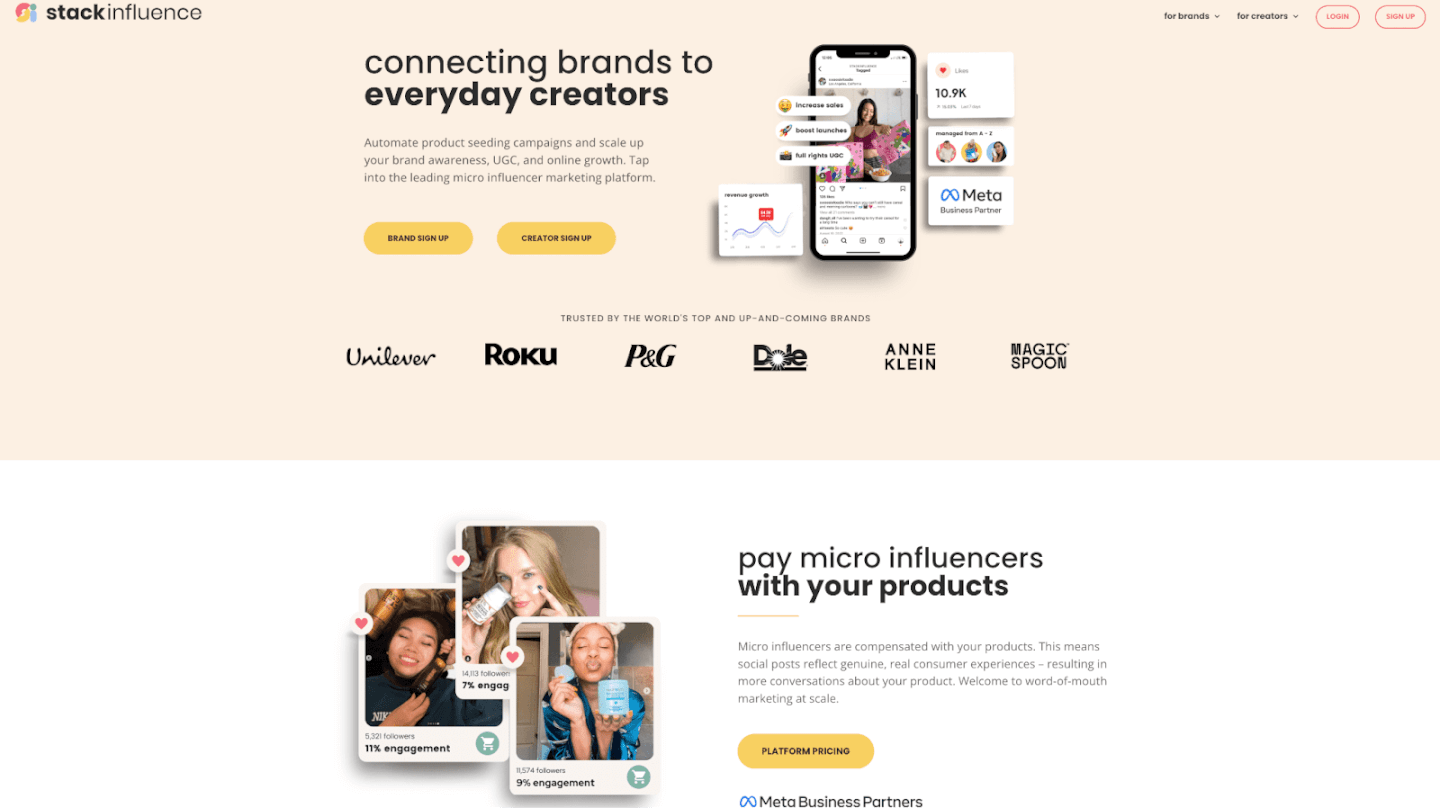
For modern e-commerce brands and Amazon sellers, telling an authentic brand story is crucial. That’s where a platform like Stack Influence comes in. Stack Influence connects brands with everyday micro-influencers (content creators with small but dedicated audiences) to create genuine, user-generated content rather than polished ads. Think unboxing videos, candid product photos, and personal testimonials – all shared by real people who actually love the product. This approach gives marketing a word-of-mouth feel at scale, making brand stories more relatable and trustworthy.
The beauty of micro-influencer storytelling is that it’s both personal and scalable. Dozens of niche creators can each share their own honest experiences, helping an e-commerce brand reach lots of little communities without losing that friendly, authentic vibe. It’s influencer marketing done in a casual, down-to-earth way that resonates with shoppers. And importantly, these relatable stories drive conversions, since customers see people like them enjoying the product. For Amazon sellers and online brands, tapping into this network of micro creators is an efficient way to build a strong brand narrative across social media and beyond.
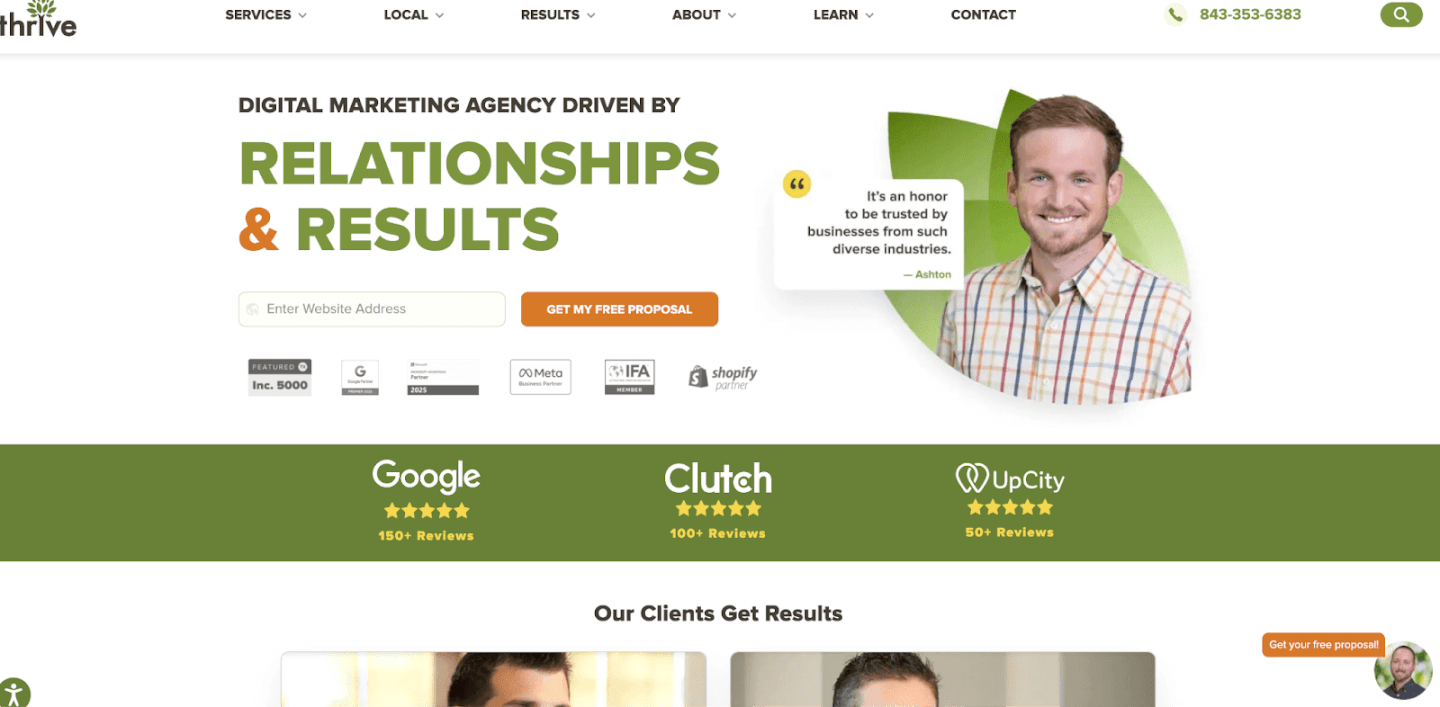
Thrive is a full-service digital marketing agency with a knack for brand storytelling. They don’t just market products – they uncover the compelling chapters of a brand’s history and purpose, then turn those insights into narratives that hook audiences. Thrive’s team emphasizes authenticity and credibility in storytelling, positioning the brand as a hero in its communications. They have delivered impressive results for clients (including reported 500% organic traffic growth in some cases) by humanizing brands online.
Untold Agency is a multi award-winning brand storytelling and content marketing agency known for its unique Story Method™ framework. They “build worlds around brands” through the power of narrative. Untold begins every engagement with in-depth discovery workshops, aiming to uncover the soul of your brand – the values, history, and purpose that make it unique. Their team includes not just marketers but actual storytellers (journalists, authors, filmmakers) who can spin those insights into compelling content.
Dimensional Innovations (DI) blends storytelling with cutting-edge design and technology to create immersive brand experiences. They are not a traditional ad agency; DI is an experience design firm that believes “storytelling meets design thinking” in modern marketing. This agency often works on experiential projects – think interactive installations, branded environments, museum-like experiences – as well as digital content. The goal is to give every company a memorable “face” and voice, turning brand values into tangible experiences.
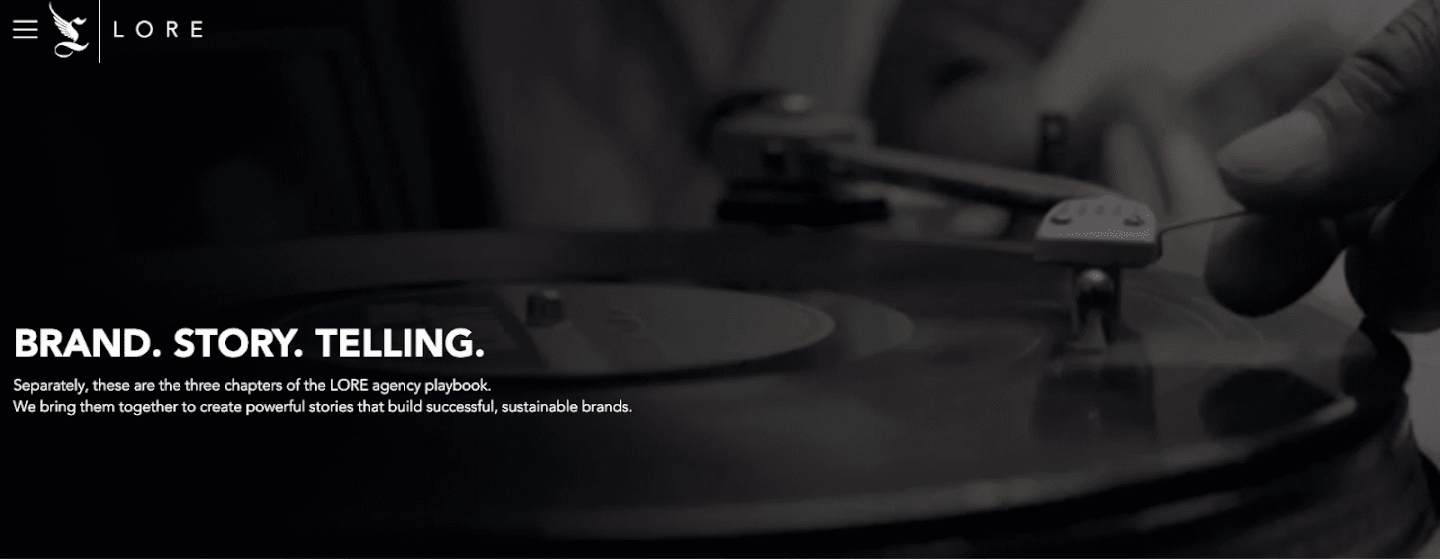
LORE is a boutique storytelling agency built on a clear process: Brand. Story. Telling. These three “chapters” guide everything LORE does. They start with thorough project discovery meetings to gather context – essentially listening to the brand’s history, culture, and goals in detail. Next, they conduct research and strategy development to craft the narrative (“story”) and decide how best to tell it. LORE is very data-friendly; they’ll use analytics to test which messages resonate and refine the story accordingly. Finally comes “telling” – executing the content across print, digital, video, and social channels to make believers out of the audience.
Tiger Creative is an imaginative agency catering to purpose-driven, active lifestyle brands. They understand that in sectors like outdoor apparel, fitness, and sports, authentic brand purpose is key to building customer loyalty. Tiger Creative’s mission is to communicate that purpose through emotionally charged visual storytelling. They act as a full-service creative partner – from defining your brand positioning and values, to designing your website and visual identity, to producing stunning photo and video content that conveys your story.
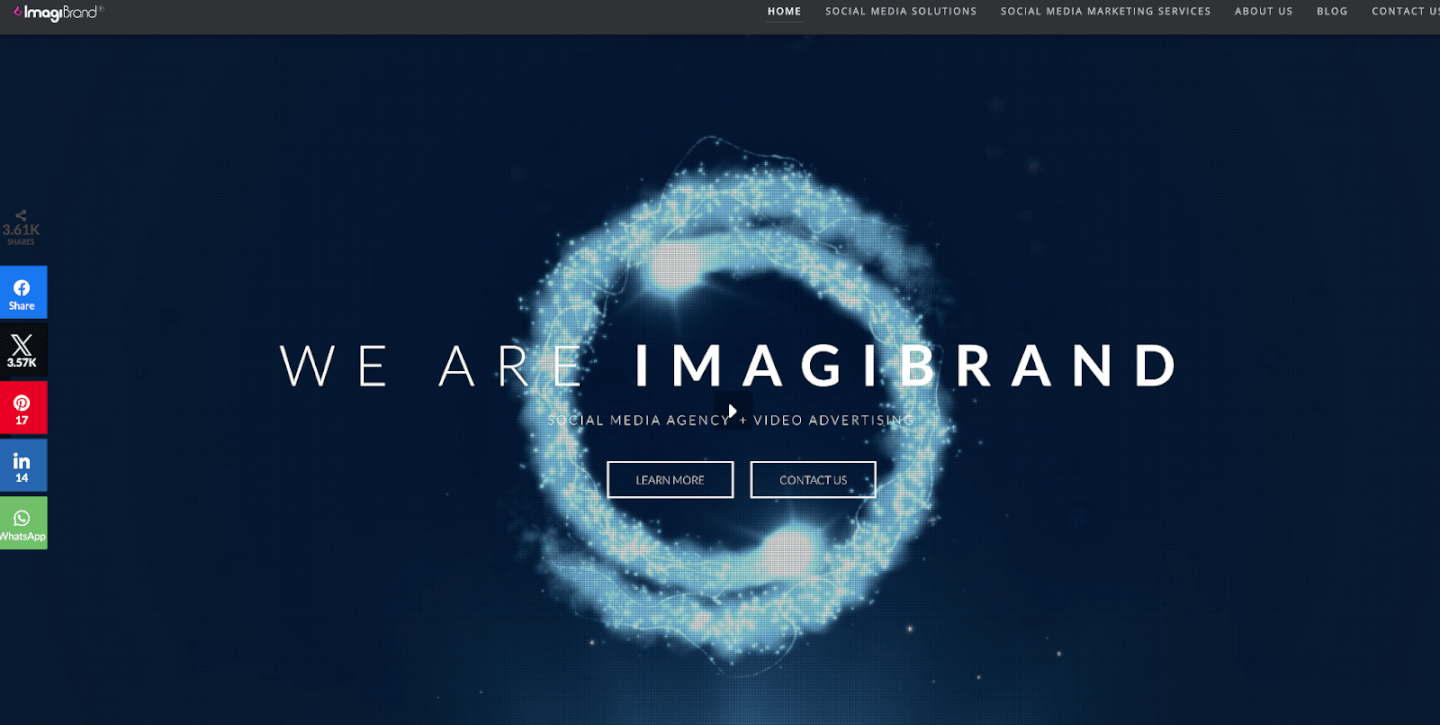
ImagiBrand bills itself as a “brand storytelling social media agency.” In essence, they transform brands into always-on content publishers across platforms like Instagram, YouTube, TikTok, and more. ImagiBrand’s approach is perfect for companies that want to outsource their social media storytelling to experts. Their team becomes an extension of your business, managing your online presence and consistently pushing out creative content that aligns with your brand voice. The focus is on visual storytelling – lots of videos, graphics, and photography that engage social audiences.
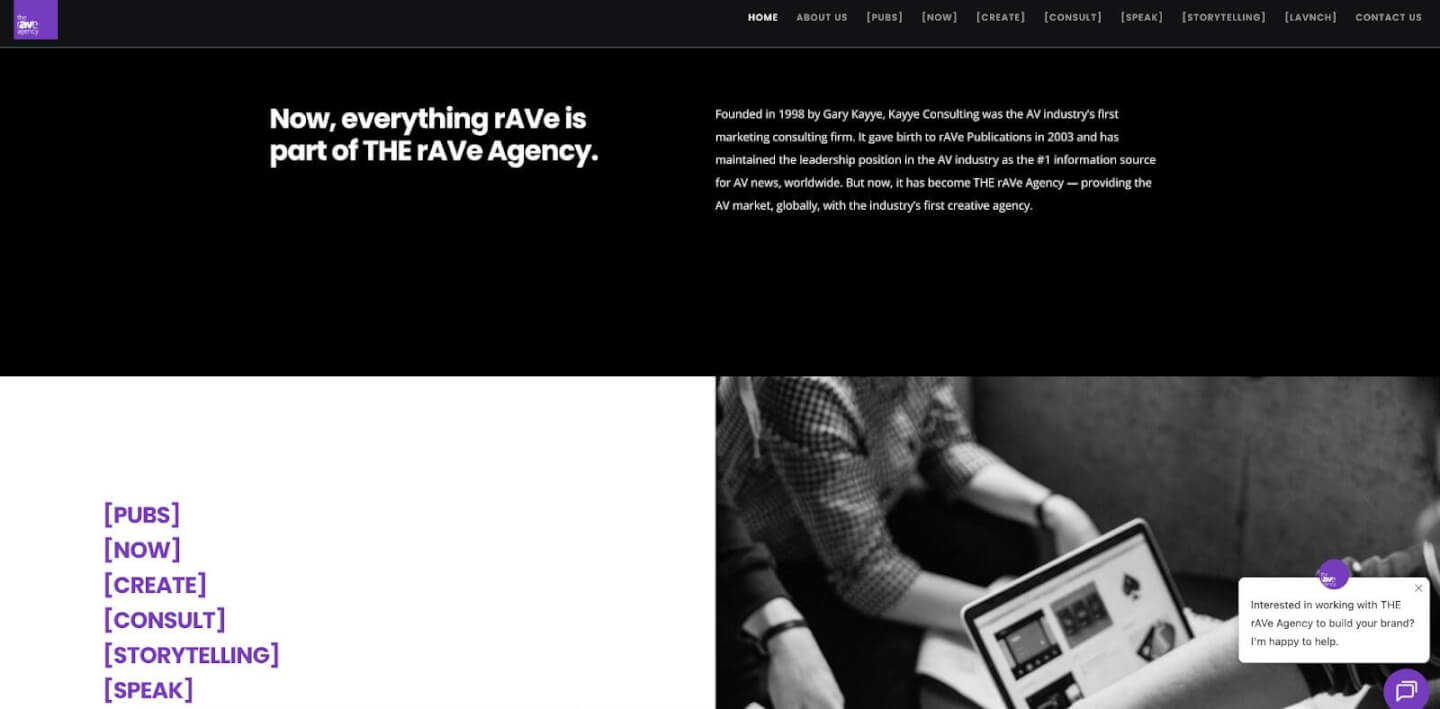
The Rave Agency (stylized as THE rAVe Agency) is a unique firm specializing in strategic communications and PR, particularly in the B2B tech and audiovisual (AV) industry. They are experts at shaping a brand’s narrative to build credibility and relationships within an industry community. For brands, especially startups or B2B companies, that need to elevate their profile, Rave provides storytelling through thought leadership, press coverage, and events rather than traditional consumer ads. Their mantra: elevate the brand through compelling narratives and authentic engagement.
Different Story lives up to its name by taking a novel approach to brand storytelling. This agency believes that in a world saturated with ads, brands must move from one-off messages to ongoing story arcs. Different Story emphasizes creating season-based campaigns rather than isolated ad “spots.” In practice, this means they help brands develop narrative campaigns that evolve over time (much like a TV series with seasons) to keep consumers engaged at a deeper level. Their team includes diverse creative talent – from investigative journalists to Hollywood-style showrunners – all working to unearth and script a brand’s unique narrative.

Chase Creative is a storytelling agency that excels at multi-channel content marketing, especially for social media and audio formats. Their mission is to help brands genuinely connect with audiences through stories – whether it’s via engaging social posts or an in-depth branded podcast. Chase Creative is known for having a small, nimble team that’s big on expertise: they’ve been active in the podcasting space for over a decade, for example, and know how to use audio storytelling to strengthen a brand.
Great stories are powerful – they give your brand a heartbeat that customers can connect with. The top 10 brand storytelling agencies above specialize in turning brands into storytellers, helping companies of all sizes forge deeper relationships with their audience. By using narrative frameworks, creative content, and often the voices of micro influencers or real customers, these agencies craft marketing that feels meaningful rather than promotional. The end result isn’t just warm-and-fuzzy feelings; it’s measurable growth – from higher engagement rates to increased conversion and loyalty. Remember, consumers today trust personal, authentic content much more than direct ads. In fact, 61% of people trust recommendations and stories from individuals (friends, family, influencers) over brand-produced content (only 38%). This trust translates into tangible sales and retention benefits.
In 2026 and beyond, brands that tell their story effectively will drive more engagement, trust, and sales. So, take a page from the agencies above: find the story that only your brand can tell, and share it widely. Your customers are ready to listen – and if you captivate them, they’ll not only buy, they’ll become loyal chapters in your brand’s ongoing story. It’s time to turn your brand into a story that sells.
Top 10 Patreon Earners in 2026 and Lessons for Brands
Imagine having thousands of fans who pay you every month for exclusive content. That’s the reality for the top 10 Patreon earners in 2026. These creators – ranging from podcast hosts to game developers – have turned their loyal followings into serious monthly income. In this post, we’ll countdown the biggest Patreon success stories of the year and explain what e-commerce brands and Amazon sellers can learn from their influencer marketing savvy. You’ll see how micro influencers and content creators build engaged communities, deliver valuable content (often user-generated or behind-the-scenes), and monetize their audiences in the creator economy. By the end, you’ll understand how these Patreon creators’ tactics can inspire your own marketing strategy.
Patreon is a platform where fans subscribe to creators for perks and content. It boasts millions of active patrons globally, providing a viable income stream beyond ads or merchandise sales. Notably, eight out of the top ten Patreon creators host podcasts, showing that consistent, niche content and community engagement are a winning combination.
Let’s dive into the list of top Patreon earners and see what makes each of them so successful – and what lessons their success holds for brands.
Below we profile ten of the highest-earning creators on Patreon as of 2026. These creators span true crime, politics, comedy, gaming, and more – but all have one thing in common: they’ve rallied a passionate community willing to pay for insider access. (Fun fact: podcasts dominate – most names here built their fame through podcasting, proving how powerful audio content and community can be.)
View this post on Instagram A post shared by TrueCrimeObsessed (@truecrimeobsessedpodcast)
True Crime Comedy Podcast – This hit podcast turns true-crime documentaries into hilarious commentary, and fans can’t get enough. True Crime Obsessed has over 49,000 paying patrons, contributing an estimated $140k–$350k per month. How did they do it? By offering tons of bonus episodes, live show videos, and other exclusive content that regular listeners crave. With multiple membership tiers (from $5 up to $20/month), TCO converts casual true-crime fans into superfans who happily pay for extra “non-garbage” content. The takeaway: niche content + consistency = a loyal community. True Crime Obsessed proves that if you deliver unique value (in their case, deeper dives into crime series with humor), supporters will financially back you.
Political Comedy Podcast – Chapo Trap House is an irreverent left-wing politics podcast that has built a massive audience through its uncensored, take-no-prisoners commentary. It boasts about 45,000 patrons as of late 2026, translating to roughly $190k in monthly revenue. Fans subscribe to get weekly bonus episodes and the full back-catalog of the show’s content. Chapo’s success shows the power of strong community identity: their patrons feel like part of an in-group, supporting a show that skewers mainstream politics from a niche point of view. For brands, this highlights how tapping into a specific worldview or community (in a genuine way) can inspire intense loyalty. Chapo Trap House turned an underground comedy vibe into a top Patreon earner by serving content their audience can’t find elsewhere.
Indie Game Developer (Adult Content) – Patreon isn’t just for podcasts. DarkCookie, the creator of the adult visual novel game Summertime Saga, leads the gaming category on Patreon with tens of thousands of patrons. He has around 33,000 paying supporters who fund the game’s development and get early access to new releases. In fact, DarkCookie is the top adult-game creator on the platform, with over 25,000 patrons even back in 2021 (and even more now). Fans pledge at tiers from $1 to $20 per month to see sneak peeks, vote on story developments, join private Discord communities, and essentially become part of the game’s creation process. This demonstrates how even NSFW or niche game content can thrive with a devoted audience. Lesson: If you offer your super-fans VIP access (like beta versions, direct interaction, or a say in development), they’ll happily support your project financially. It’s a model e-commerce brands can note – think early access programs or premium fan clubs for your most passionate customers.
View this post on Instagram A post shared by Jeff Wittek (@jeff)
YouTuber & Comedian Jeff Wittek leveraged his YouTube fame to rapidly monetize on Patreon. Known for his comedy talk show Jeff’s Barbershop and part of the Vlog Squad, Jeff pivoted to Patreon to share unfiltered content (including a raw docuseries about a stunt-gone-wrong accident). The result was astounding: his Patreon gained 37,000+ subscribers in just 10 days after launch, generating at least $2.2 million in annualized revenue. Fans were eager to pay $5+ for uncensored videos and early access to episodes that couldn’t be shown on YouTube. Although patron numbers may fluctuate over time, Jeff’s case shows the explosive potential of migrating an existing audience to a paid platform. By offering something exclusive (in his case, behind-the-scenes injury footage and bonus content), he became one of Patreon’s top earners virtually overnight. Takeaway for brands: If you have a loyal following on free platforms, don’t underestimate their willingness to support premium content. Creating a VIP subscription or paid community (even for a limited campaign) can unlock significant revenue if the perceived value is high.
View this post on Instagram A post shared by You’re Wrong About (@yourewrongaboutpod)
Educational History Podcast – Who says educational content can’t be wildly popular? You’re Wrong About is a journalist-driven podcast that reexamines misunderstood events and figures, and it has turned nerdy fascination into big Patreon bucks. The show has about 23,000 patrons funding it, with estimated earnings in the mid five-figures per month. Listeners subscribe to get bonus episodes and to support the hosts’ in-depth research that debunks myths and “wrong” public perceptions. The success of You’re Wrong About underlines that quality content and trust are key: the hosts established themselves as credible and engaging, so fans feel their patronage is like supporting good journalism. For e-commerce marketers, this illustrates that educational or informative content can build a dedicated following. Brands that provide real value (think how-to guides, insights, or meaningful stories) can similarly foster loyalty – an audience that learns from you is an audience that will stick around and even invest in your offerings.
Comedy Podcast – Comedian Tim Dillon’s Patreon-only show is often cited as one of the highest-earning comedy podcasts. The Tim Dillon Show attracts over 42,000 patrons, with an estimated $220,000 in monthly income. What drives this success? Tim delivers a weekly bonus episode to subscribers – essentially an entire extra show – plus additional content like behind-the-scenes sketches for higher tiers. His brand of absurd, unapologetic humor about “the end of the world” has a cult following, and Patreon lets him monetize that following directly. Notably, Tim Dillon was once reported as Patreon’s top-paid creator, earning around $216k per month. Marketing insight: Consistency and personality are crucial. Tim’s patrons pay because they know they’ll get fresh content every week that they can’t hear elsewhere. Brands working with influencers or creators should similarly prioritize regular content cadence and a distinct voice – it keeps the audience engaged and coming back (or in this case, continually subscribing).
Comedy Podcast – This duo might just be the biggest Patreon success story yet. Matt and Shane’s Secret Podcast has become the #1 creator on Patreon by subscriber count, boasting roughly 124,000 paying members (yes, six figures!) as of 2026. That subscriber base translates to an estimated few hundred thousand dollars per month in earnings. Matt McCusker and Shane Gillis grew a massive fanbase with their no-holds-barred comedic commentary, and after a burst of mainstream exposure (Shane’s Netflix special and SNL controversy), they funneled that attention into Patreon sign-ups. They offer multiple tiers (from $1 “poor” fans to $50 “G.O.D. Level” superfans) with perks like weekly bonus episodes, archived shows, and even secret podcast techniques (in true tongue-in-cheek fashion). The key to their success is community – they’ve fostered a sense of belonging among fans (even giving their community a nickname: the “Guillotine Gang” or the “D.A.W.G.Z.” in their lingo). Patrons feel like they’re part of an exclusive club, supporting creators who aren’t beholden to any corporate sponsor. For brands, Matt & Shane illustrate the power of authentic branding and inside jokes that make supporters feel like insiders. They also prove that audience loyalty can snowball – once you hit critical mass, growth can become exponential through word-of-mouth. (Imagine 100k people each telling a friend about your product – that’s the kind of viral loyalty we see here.)
Comedy Podcast – Flagrant 2 (now often just called “Flagrant”) is another edgy comedy podcast that has turned free laughs into serious income. Known for being “unfiltered and unapologetic”, hosts Andrew Schulz and Akaash Singh use Patreon to give fans an extra dose of their raunchy humor. Their Patreon shows over 25,000 members and around $57,000 in monthly revenue. What are these fans paying for? Subscribers get a second weekly episode that’s only on Patreon, access to the entire back catalog of shows, and even perks like merch discounts or having their name shouted out as a producer at higher tiers. Schulz, a savvy digital marketer in his own right, famously turned down network deals to stay independent – Patreon is one way he monetizes that independence by connecting directly with his audience. The lesson here is that going direct-to-consumer works for content just as it does for products. By cutting out middlemen and delivering content straight to fans, Flagrant 2 retains creative control and reaps nearly all the financial rewards. For e-commerce and Amazon sellers, think of this as analogous to building a direct customer list or community: you’re not just relying on the “algorithm” to reach people, you have them subscribed (literally) to your brand. Bottom line: a bold brand voice combined with exclusive perks can convert casual viewers into paying superfans.
ASMR Audio Creator – Yagami Yato is a voice actor and ASMR artist who demonstrates that even very niche creators can find patronage. She produces anime-inspired ASMR roleplay audios (including romantic and 18+ content) that have earned her a devoted following. At one point, Yagami Yato was among Patreon’s top creators in the Audio category, reportedly earning up to $20–30K per month from a few thousand patrons. Her Patreon offers a range of tiers (five levels from $1 to $100) that grant access to exclusive audio libraries, early listening, the ability to vote on character scenarios, and even the chance to co-create a custom audio for top-tier supporters. This tiered approach – offering everything from basic community access to high-touch personal experiences – shows how monetizing fandom can scale. While her patron count (~3–4k active paying members) is smaller than the giant podcasts above, the intensity of her fans’ support is huge. Yagami Yato’s success highlights the power of niche: she serves an underserved content niche (anime audio roleplays), and fans reward her authenticity and engagement with their support. For brands, the takeaway is find your niche and super-serve it. A smaller, passionate audience often beats a large, passive one. In fact, micro influencers often drive higher engagement rates than mega-celebrities – sometimes up to 60% more, thanks to their personal touch. Yagami Yato treats her supporters like friends contributing to a creative journey, a model any brand community can learn from.
View this post on Instagram A post shared by Not Another D&D Podcast (@naddpod)
Comedy Adventure Podcast – Rounding out our list is Not Another D&D Podcast, an actual-play tabletop RPG show that has transformed geeky fun into a Patreon powerhouse. NADDPOD – featuring comedians playing through a wild Dungeons & Dragons campaign – has over 38,000 patrons subscribing for bonus content. By 2023 it was estimated to earn around $80k–$200k per month, and its growth has only continued as the popularity of D&D surged. What do patrons get? “Short Rest” behind-the-scenes podcasts, exclusive side adventures, live show recordings, special merch, and more. Essentially, NADDPOD turned their fictional universe into a club that fans want to join. This underscores a key principle of user-generated content and community: people love to feel involved in a story. NADDPOD patrons proudly sport their community names (the “Two Crew” at $2 tier, etc.) and even receive physical rewards like quarterly merch boxes at higher tiers – blending digital and tangible perks. The success here is a blueprint for how storytelling and interactivity can drive engagement. Brands can emulate this by creating a narrative around their products or by gamifying the customer experience. If a D&D comedy show can make six figures a month by rewarding its audience’s enthusiasm, imagine what a creative e-commerce brand could do with a loyalty program that rewards its biggest fans with special experiences or swag.
Wrapping up this list, it’s clear that each of these creators delivers something extra – whether it’s extra content, extra access, or an extra personal connection. Their fans aren’t just consuming content; they feel like part of a movement or community.
The top Patreon earners of 2026 illustrate how the creator economy is driven by passion, authenticity, and community. They’ve cracked the code on monetizing content and audience engagement, in ways that traditional advertising can only envy. In summary, the success of these Patreon creators boils down to engagement and value – two things every e-commerce brand or Amazon seller should prioritize. They’ve proven that if you engage your audience authentically and offer real value, revenue will follow. The same principles that make a Patreon campaign thrive can supercharge your influencer marketing or customer retention strategy.
As you strategize for growth, think about how you can apply these lessons. Maybe it’s starting a VIP Facebook group for your brand’s best customers, launching a subscription box, or partnering with content creators to generate buzz. If you’re looking for a way to get started, consider collaborating with micro influencers who align with your niche – they often have tightly-knit audiences just like the Patreon stars above. (For example, Stack Influence helps brands connect with vetted micro influencers to create authentic UGC at scale – a strategy that drives engagement and trust.) The creator economy is booming, and brands that embrace this collaborative, community-driven approach will be the ones to win in 2026 and beyond. Now is the time to turn your customers into fans and your fans into a source of sustainable growth.
Top 10 Fashion Blogs 2026 – Must-Reads for Online Retailers
Staying ahead of fashion trends isn’t just for magazines—it's crucial for e-commerce brands and Amazon sellers looking to connect with style-conscious shoppers. One way to do that is by following the top 10 fashion blogs of 2026. These blogs are run by influential content creators (many who started as micro influencers) and are goldmines of style inspiration, user-generated content, and influencer marketing opportunities. In this post, we’ll highlight ten must-read fashion blogs and explore how partnering with such content creators can drive authentic engagement and sales for your brand.
Whether you’re a DTC founder plotting your next product line or an Amazon seller seeking UGC for your storefront, these blogs offer a window into what’s trending. Let’s dive into the top fashion blogs to follow this year and see how their success can fuel your influencer marketing strategy.
Below are ten of the most influential fashion blogs you should have on your radar. Each combines unique style with a loyal audience — and valuable lessons for brands in the e-commerce space.
Atlantic-Pacific is helmed by Blair Eadie, a former corporate fashion merchandiser turned full-time influencer. Known for her bold “East-Coast-meets-West-Coast” outfits, Blair’s blog and Instagram showcase vibrant, impeccably styled looks. With around 2 million Instagram followers, Atlantic-Pacific has become a trend barometer in the fashion world. Eadie frequently interacts with her community through blog posts and even FAQ sessions, making her audience feel deeply involved in her brand.
What makes Atlantic-Pacific particularly relevant for online retailers is Blair’s track record of brand collaborations. She has partnered with major fashion retailers (from Nordstrom to Gucci) and even teamed up with Amazon Fashion to curate a seasonal collection for the platform. This collaboration not only sold out fast, but also showed how influential a top blogger can be in driving e-commerce trends. For brands, Atlantic-Pacific exemplifies the power of an influencer who can merge editorial-quality content with retail — inspiring shoppers to buy with just a blog post or Instagram photo.
The Daileigh is a blog by Ashleigh Hutchinson that proves style has no age limit. Ashleigh’s mission is to help women — including those in their 40s, 50s, and beyond — build a wardrobe they love and feel confident in. Her mantra, “age is only a number,” shines through in practical style guides and “How To” posts that resonate with a demographic often overlooked by trendier outlets. From “How to Wear Shorts in Your 50s” to tips on starting a capsule wardrobe, Ashleigh creates content that educates and empowers. She even offers digital products like style e-books and webinars, extending her influence beyond the blog.
For e-commerce brands, The Daileigh highlights the value of niche focus. By catering to an underserved audience, Ashleigh has built a loyal community that trusts her advice. If your brand targets a specific demographic, partnering with micro influencers who speak directly to that group (the way The Daileigh does) can yield high engagement. It’s a reminder that influencer marketing isn’t one-size-fits-all — sometimes a smaller, dedicated audience is far more valuable than a general one.
Egg Canvas is the brainchild of Erica Choi, a New York-based design director and photographer. This visually stunning blog serves as Erica’s “digital journal,” featuring minimalist text and maximalist imagery. (Fun fact: the name comes from Erica’s childhood nickname “Egg” and her creative canvas of daily life.) From the latest New York Fashion Week snapshots to curated city guides, Egg Canvas is all about visual storytelling. Each post feels like a gallery exhibit — making it catnip for Pinterest and Instagram users.
The takeaway for brands and sellers is clear: high-quality visuals and authentic storytelling can set you apart. Erica’s background in design and her discerning eye show how content creators who value aesthetics can elevate a brand’s image. If you’re an Amazon seller, for example, consider how you might collaborate with influencers like Erica to produce beautiful lifestyle photos of your products. Not only does this kind of user-generated content catch customers’ attention, but 79% of people say UGC highly impacts their purchase decisions, and brands that incorporate UGC are seen as twice as authentic as those that don’t. Egg Canvas underscores the impact of creative visuals in driving engagement and authenticity.
The Fashion Guitar, run by Dutch-born Charlotte Groeneveld, blends personal style blogging with real-life relatability. Charlotte started The Fashion Guitar after working with other fashion blogs, and over time it evolved into a full-time endeavor where she shares her daily outfits, high-fashion favorites, and even her journey through motherhood (think chic maternity looks and “Mommy and me” fashion moments). Her site features categories ranging from high-end brand collaborations and runway coverage to accessible everyday outfit ideas. This mix of editorial and personal content has attracted a devoted readership who see Charlotte not just as a style icon, but as a friend sharing tips.
For e-commerce marketers, The Fashion Guitar demonstrates the importance of authenticity. Charlotte often collaborates with her favorite designers and labels, but she does so in a way that stays true to her aesthetic. The result? Her audience trusts her recommendations, knowing they’re not random paid placements but genuine endorsements. Brands looking to partner with influencers should seek out this kind of fit. When an influencer genuinely loves your product, their followers can sense it — and that trust can translate into higher conversion rates. It’s the classic win-win: the influencer maintains integrity, and the brand gains customers who were inspired by authentic content.
View this post on Instagram A post shared by TANESHA AWASTHI (@taneshaawasthi)
Girl With Curves is a pioneering fashion blog in the body-positivity movement. Founded by Tanesha Awasthi in 2011, the blog set out to shatter the narrow standards of beauty in fashion. Tanesha creates content for the majority of women who don’t fit the size-0 model mold — offering style tips, trend guides, and beauty advice for every body type. The site proudly states “Style Has No Size,” a message that has fostered a loyal community (often sharing their own outfits under the hashtag #StyleHasNoSize). By consistently championing inclusive fashion, Tanesha not only grew her audience but also caught the eye of retailers. In 2021, she even launched a Girl With Curves clothing collection on QVC, featuring genuinely size-inclusive designs.
For brands, Girl With Curves is a case study in aligning with consumer values. Today’s shoppers crave authenticity and inclusivity; when they see a brand partnering with a body-positive influencer, it boosts brand goodwill. Moreover, Tanesha’s journey shows the power of influencers turning into brand owners. An e-commerce brand could similarly collaborate with an influencer on a capsule collection or co-branded product line to tap into their community’s enthusiasm. The key is to ensure the partnership feels true to the influencer’s ethos. When done right, it can generate buzz, media coverage, and significant sales — all while making your brand look more inclusive and relatable.
View this post on Instagram A post shared by SARA CRAMPTON (@harperandharley)
If your brand’s aesthetic leans minimalist, Sara Crampton is a name to know. Sara became famous through her blog Harper & Harley, where her “less is more” approach to fashion struck a chord globally (she was even featured on the Australian reality TV show Fashion Bloggers). Now, she channels that same minimalist ethos into The UNDONE, her own curated online boutique for timeless fashion pieces. Sara’s content (on her blog and social channels) is a masterclass in consistency: you’ll see neutral tones, classic silhouettes, and a focus on quality over quantity in every post. She has also collaborated with luxury brands from Estée Lauder to YSL, affirming that even a pared-down style can have mass appeal.
Sara Crampton’s evolution from blogger to e-commerce entrepreneur illustrates a powerful point: influencers truly understand what their audience wants. Harper & Harley’s success directly informed The UNDONE store’s product selection — a smart play for any Amazon seller or DTC founder considering launching new products. By following influencers like Sara, you gain insight into niche trends (e.g., sustainable fabrics, capsule wardrobes) that can inform your inventory decisions. Additionally, Sara’s collaboration history shows that micro influencers can go macro – attracting big-name partnerships without losing their signature style. It’s a reminder that when you cultivate a strong brand voice, opportunities with larger brands (and bigger audiences) tend to follow.
Hello Fashion is a popular blog that seamlessly fuses personal lifestyle content with high-fashion inspiration. Created by Christine Andrew in 2011, the blog initially started as a way to promote pieces from her own newly launched clothing line, ILY Couture. (That’s right – Christine was using content marketing before it was cool, sharing outfit ideas to help customers style her products.) Over time, Hello Fashion blossomed into a full-fledged style and lifestyle destination covering everything from trend alerts and beauty tips to glimpses of her family life. Christine’s knack for mixing affordable finds with luxury items has made her a style icon — she even earned a spot on Vanity Fair’s Best-Dressed List, a rare honor for a blogger.
For e-commerce brands, Christine Andrew’s story is packed with insights. First, it underscores the symbiotic relationship between content and commerce: her blog drove sales for her brand, and her products gave her authentic content to blog about. Second, it shows how being approachable can amplify influence. Christine’s readers admire her chic outfits, but they also appreciate her real-life posts (like casual mom-on-the-go looks) that humanize her. If you’re a brand or Amazon seller, consider working with influencers who are relatable and trusted by their followers. When an influencer’s audience aspires to be like them, recommendations can directly fuel purchase decisions. And as Hello Fashion demonstrates, a savvy influencer partnership can turn even a small online boutique into a recognized name in the industry.
For a truly global perspective on style, My Fash Diary is a must-follow blog. Founded by Tala Samman, who has roots in the Middle East (born in Chicago, based in Dubai with Syrian heritage), this blog covers fashion through an international lens. Tala shares her personal outfits and shopping picks, often highlighting trends in Dubai and cities she travels to. Beauty, travel, and even food make appearances on the blog, giving it a well-rounded lifestyle vibe. What sets My Fash Diary apart is its cross-cultural appeal: one day you might read about haute couture shows in Paris, and the next, street style in Dubai. Tala’s influence has not gone unnoticed — she’s been named one of Dubai’s “Hot 100” people and featured in magazines like Harper’s Bazaar Arabia and Marie Claire.
The lesson here for brands is the importance of geographic and cultural relevance. If you sell globally (or plan to), collaborating with influencers like Tala can help you reach local markets with credibility. For instance, an Amazon seller expanding into the Middle East might partner with My Fash Diary to showcase products in a way that resonates with regional tastes. Moreover, Tala’s multi-niche content strategy (mixing fashion with lifestyle topics) is a blueprint for keeping an audience engaged on multiple levels. Brands can emulate this by not only pushing products but also contributing value through content — be it styling tips, travel inspiration, or insider looks at fashion events. It positions your brand as part of a larger lifestyle, which can deepen customer loyalty.
Fashion blogging isn’t just for women. One Dapper Street, created by Marcel Floruss, is a leading men’s fashion blog proving that men are hungry for style inspiration too. Marcel, a former model from Germany, moved to NYC for fashion school and started the blog to document outfits that blend dapper menswear with urban street style. Think tailored suits paired with sneakers, or denim jackets over dress shirts — his looks strike the perfect balance between polished and approachable. One Dapper Street’s success (hundreds of thousands of followers and counting) has led Marcel to broader ventures; he co-founded a men’s shoe line called Ankari Floruss, turning his influence into a business of its own. He’s even been recognized by major media (his Instagram bio notes a Forbes 30 Under 30 mention), cementing his status as a top menswear influencer.
For e-commerce brands, Marcel’s journey highlights two key points. First, don’t overlook the menswear or male influencer market. There’s a huge opportunity for brands in niches like men’s grooming, apparel, and accessories to partner with influencers who speak to the modern man’s style sensibility. Second, influencers can be innovators. Marcel leveraged his audience insight to design products he knew his followers would love. If you sell on Amazon or run an online store, consider polling or observing influencer communities for product gaps — it might spark your next best-seller. And remember, influencers like those behind One Dapper Street can lend credibility to your men’s line; a shout-out or collaboration can encourage men who might not normally trust a brand’s ad, but will trust a style expert’s recommendation.
Rounding out our list is Grasie Mercedes, a multi-hyphenate talent who brings a creative twist to fashion blogging. Grasie isn’t just a style blogger; she’s also an actress, filmmaker, and podcast host, which means her online presence is brimming with personality and storytelling. Her self-titled blog, Grasie Mercedes, covers fashion, beauty, travel, and lifestyle, all interwoven with her day-to-day work in the entertainment industry. Visitors might find a glamorous red carpet outfit post next to a casual “what I wore on set” entry, giving the blog a dynamic range. High-quality photography and candid writing make readers feel like they’re getting an inside look at a Hollywood-meets-real-life wardrobe.
For brands, Grasie exemplifies the rising trend of content creators who wear many hats. Partnering with someone like her can extend your reach beyond just fashion circles — tapping into her podcast listeners or film fans as well. This is especially useful for lifestyle and multi-category e-commerce brands. Additionally, working with multi-talented influencers can yield diverse forms of content: a styled photo shoot, a vlog, maybe even a short-form video or behind-the-scenes Instagram Story mentioning your product. Grasie’s platform shows that fashion influencers can be powerful storytellers for your brand. When evaluating influencers, don’t just look at their outfit posts; consider the breadth of their influence (e.g. other media projects, audience demographics) and how that might amplify your message in a fresh way.
Reading about these top fashion blogs, one thing is clear: influencer-driven content can have a tangible impact on brand growth. In fact, influencer recommendations carry so much weight that 92% of consumers trust influencer content over traditional advertisements. For e-commerce entrepreneurs, the question isn’t if you should engage with influencers, but how. Here are a few strategies to consider:
Fashion blogs are much more than just style diaries; they’re hubs of influence, trendsetting, and consumer trust. E-commerce brands and Amazon sellers can gain huge value from the top fashion blogs of 2026 by not only absorbing their trend insights but also by engaging with the creators behind them. The influencers highlighted above have built passionate communities by being authentic, consistent, and audience-focused — qualities that any brand would be wise to mirror. Start by following these blogs and their social channels to stay inspired. Reach out to a few influencers who resonate with your brand’s ethos, and brainstorm collaboration ideas. In a digital landscape where a single post can send a product flying off the shelves, forging the right influencer partnership can be a game-changer for your business. Embrace the power of content creators and UGC in your marketing strategy — your brand’s next big growth story might just be a collaboration away.
New Social Media Apps Coming in 2026
Social media never stands still. For e-commerce brands and Amazon sellers, staying ahead means keeping an eye on the new social media apps coming in 2026. These emerging platforms – from Threads to Lemon8 – are changing how content creators and micro influencers engage audiences. In this post, we’ll explore which new apps are on the rise, why they matter for influencer marketing, and how user-generated content (UGC) on these platforms can drive real ROI for online businesses. You’ll learn what each app is about and how e-commerce marketers can tap into them to reach customers in authentic, effective ways.
New platforms might not all become the next TikTok, but they reveal where social media is headed. Niche networks often foster tight-knit communities and higher authenticity – fertile ground for micro influencers to shine. Early adopters (both creators and brands) can gain a first-mover advantage with less competition. Critically, many up-and-coming apps emphasize authentic content and community, aligning with 2026’s trend toward genuine connection over polished promos. In fact, research shows that authenticity is a key focus across major social platforms going into 2026. For brands, this means new opportunities to build trust, encourage UGC, and engage customers where competitors might not be present yet.
Below we break down some of the top new social media apps to watch in 2026. For each platform, we’ll cover what it is, who’s using it, and how it can fit into an influencer marketing or content strategy for your business.
Meta’s Threads burst onto the scene as a direct answer to Twitter (now X). Launched in mid-2023 and tied to Instagram accounts, Threads quickly became one of the fastest-growing social platforms ever – gaining 5 million users in its first hour. By late 2025 it was even on track to surpass X (Twitter) in daily active users. This text-based app thrives on real-time conversations and has a friendly, conversational vibe compared to its rivals.
Why it matters for marketers: Threads’ rapid adoption means a critical mass of users are active, and Meta has integrated advertising tools (as of 2025) that make it familiar territory for brands. For e-commerce brands, Threads offers a fresh channel to humanize your voice – think quick product tips, behind-the-scenes updates, or engaging polls. Because it’s connected to Instagram’s social graph, you can tap into your Instagram followers on Threads seamlessly. Early case studies show brands using Threads for customer service Q&As and community-building chats. With its algorithm favoring authentic conversations, micro influencers can also amplify your message here through genuine discussions rather than polished ads.
Bluesky is a new social network championing decentralization and user control. Initially incubated by Twitter’s founders, Bluesky opened to the public in 2024 as a invite-only beta and grew rapidly amid the Twitter upheavals. It’s essentially a Twitter-like microblogging feed but built on the AT Protocol, allowing independent servers and algorithm choice. In terms of growth, Bluesky has seen tens of millions of sign-ups as of late 2025 – a testament to users’ appetite for alternative platforms – though active user counts are more modest (~1.5 million daily active by Sep 2025). The user base skews tech-savvy and community-minded, often organizing into niche interest “feeds.”
Why it matters for marketers: Bluesky’s appeal lies in its highly engaged niche communities. It may not have Facebook-level scale, but for certain audiences (tech enthusiasts, creators, activists), it’s a hotspot of conversation. Brands can use Bluesky to join relevant community dialogues or share timely updates without fighting an algorithm – the chronological feed means your posts are seen by followers in real time. Importantly, Bluesky and similar federated networks (like Mastodon) reward transparency and interaction. A small DTC brand or Amazon seller could build credibility here by actively participating (not just broadcasting ads). For example, a tech gadget seller might share product development snippets or respond to user feedback on Bluesky, earning trust within a tight-knit tech community. Keep in mind that overt advertising won’t fly; instead, focus on thought leadership and genuine engagement. In a decentralized social world, influencer marketing might mean partnering with passionate community leaders on the platform to subtly highlight your product in discussions.
View this post on Instagram A post shared by Lemon8 United States (@lemon8us)
If Instagram and Pinterest had a Gen Z cousin, it would be Lemon8. Owned by ByteDance (the creators of TikTok), Lemon8 is a visually-rich social app centered on lifestyle content, shopping inspiration, and bite-sized blogging. Users post photo carousels and vertical videos accompanied by long text captions – from product hauls and how-tos to wellness tips. The platform encourages product discovery: posts often read like personal recommendations or reviews, making Lemon8 a goldmine for e-commerce marketing. It’s already popular in beauty, fashion, travel, and home décor niches. In fact, Lemon8 has amassed over 77 million global downloads with around 8.6 million active iOS users, and about 33.9% of U.S. influencer marketing penetration – meaning a good chunk of influencers have tried it.
Why it matters for marketers: Lemon8 was practically built for showcasing products via content creators. Brands can leverage it by sharing detailed product guides, before-and-after visuals, or user-generated content that feels authentic. Micro influencers shine on Lemon8: a makeup micro influencer might post a tutorial featuring a new cosmetic product, effectively creating a shoppable story that doesn’t feel like an ad. Because the app allows external links and has a longer content lifespan (thanks to search-friendly posts), it’s ideal for driving traffic to product pages or Amazon listings. The emphasis on UGC and authenticity means glossy brand campaigns give way to relatable, influencer-driven content. Early adopting brands are already testing Lemon8 to crowdsource content – for example, sending products to creators in exchange for honest reviews or how-to posts. If your target audience is millennials or Gen Z interested in lifestyle trends, Lemon8 is a platform to watch and experiment with in 2026.
View this post on Instagram A post shared by BeReal. (@bereal)
BeReal took social media by storm in 2022 with its no-filters, no-fakes approach, and it continues to have a loyal user base into 2026. The concept is simple: once a day, at a random time, the app simultaneously prompts all users to snap and share a photo using both front and back cameras – capturing a “real” unedited glimpse of life. There are no meticulous edits or curated feeds, just candid moments (think: your desk at 2 PM or the coffee you’re drinking). While the initial hype has cooled from its peak, BeReal still boasts over 21 million monthly active users globally, especially among Gen Z. Some clever brands and content creators have stayed active on BeReal, using it to connect with fans on a more personal level.
Why it matters for marketers: In an age of polished Instagram ads, BeReal offers a refreshing avenue for authentic marketing. Brands targeting younger consumers – fashion, food, entertainment, etc. – can use BeReal to humanize themselves. For example, a streetwear e-commerce brand might have employees share a BeReal of the warehouse or design studio when the daily alert hits, giving followers a candid behind-the-scenes peek. This kind of content resonates as UGC and can build trust and relatability. Micro influencers on BeReal can also be valuable partners: since their friend lists are limited and engaged, a popular college micro influencer posting about your snack brand in their daily BeReal can spark word-of-mouth among a tight community. The key is subtlety and authenticity – overt promotions won’t work here. Instead, think of BeReal as a way to join your audience’s everyday life in a low-key, genuine manner. In 2026, BeReal remains a niche but meaningful platform for brands that value authenticity over reach.
Noplace is an emerging app that brings social networking back to basics – no photos, no videos, just text updates and customizable profiles in a vibrant, throwback style. Often described as “if MySpace and a group chat had a Gen Z baby”, Noplace lets users post short status updates, tag interests, and connect in topic-based feeds. The interface is playful and nostalgic, with colorful profile pages that users can decorate. Noplace is all about community and conversation without the pressure of perfect visuals. Its growth hit a milestone in mid-2024 when the app opened to the public and quickly reached #1 on the U.S. App Store charts. The user base skews young (teens and early 20s) and is ideal for brands or creators looking to build engaged fan communities.
Why it matters for marketers: For brands, Noplace offers a chance to cultivate a community space rather than just broadcast. Since it’s text-focused, businesses can host AMA (Ask Me Anything) threads, share quick tips, or start discussions related to their niche. For instance, an indie fitness apparel brand could start a Noplace group for workout motivation, where a company rep or a sponsored micro influencer moderates daily fitness prompts. The chronological, conversation-driven feed means that when you post a question or prompt, it can spark immediate interactions. Noplace’s users appreciate brands that participate as authentic community members. This platform is also a fertile ground for UGC in text form – e.g., posing questions like “What’s your go-to healthy snack?” can generate crowdsourced ideas and indirectly highlight your product (if a fan mentions your brand). While Noplace is still new, its surge in popularity signals that younger audiences crave more genuine, less algorithmic ways to connect. E-commerce founders should keep an eye on it as a potential community-building channel where early engagement can translate into brand loyalty.
RedNote – known as Xiaohongshu or “Little Red Book” in China – is part social media, part shopping mall. This app blends short videos, photos, and product reviews into a highly addictive discovery feed. Imagine TikTok’s snackable videos mixed with Pinterest’s product search and you get RedNote. Notably, when rumors of a TikTok ban circulated in early 2025, many users flocked to RedNote as an alternative, driving its downloads in the U.S. to over 3.7 million in Q1 2025 alone. Even without an English-language version initially, it spiked in popularity thanks to its rich e-commerce features and word-of-mouth among Gen Z shoppers. On RedNote, users (and influencers) create posts that double as product pages – viewers can see a skincare routine video and directly find the listed products, complete with links to purchase. Communities on RedNote revolve around beauty, fashion, travel, and lifestyle, with a strong ethos of sharing honest product experiences.
Why it matters for marketers: RedNote is a dream platform for influencer marketing and social commerce. It’s built around the idea that authentic content drives sales. Brands can leverage RedNote by collaborating with content creators to showcase products in use – for example, an Amazon seller in the beauty category might partner with a skincare blogger on RedNote to post a morning routine using the seller’s products. Because content on RedNote often functions as a review or recommendation, a good creator post can produce direct traffic to your product page (and conversions). The app’s user base trusts peer recommendations, so UGC-style videos and testimonials work well. Also, RedNote’s algorithm rewards niche content; a small brand with a unique product can gain traction if the product fulfills a trending need or hashtag (similar to how TikTok’s algorithm can surface niche products). If you’re selling physical goods, especially in categories like cosmetics or apparel, exploring RedNote in 2026 could give you a first-mover advantage in social shopping. Just remember to approach it as a community member – prioritize education or inspiration in your content, with soft sells, rather than hard sales pitches.
View this post on Instagram A post shared by Fanbase (@fanbase)
Fanbase is a newer social app with a creator-first monetization model. In a nutshell, it’s a hybrid of Instagram and Patreon: users can post photos, videos, Stories, even go live – and they can earn money directly from followers. Fanbase’s key differentiator is the “Love” button: when a follower Loves a piece of content, they’re actually paying (through a micro-transaction) to show extra appreciation. This means creators can start monetizing their content without needing external brand deals or a huge follower count. As of late 2025, Fanbase is still relatively small (around 600,000 monthly active users), but it’s growing steadily, especially among independent musicians, artists, and niche community leaders who want a more intimate, paying audience. The platform prides itself on inclusivity and algorithm transparency, giving every post a chance to be discovered by new fans.
Why it matters for marketers: For content creators and micro influencers, Fanbase is an opportunity to generate income from day one – which in turn can foster more loyal communities. Brands can approach Fanbase in a couple of ways. One is by identifying rising creators on the app whose audience aligns with your target and sponsoring content (for example, a small tech gadget brand might sponsor a tech reviewer’s exclusive live Q&A for subscribers on Fanbase). Another angle is for brands themselves to become creators on Fanbase, offering premium content. For instance, an e-commerce nutrition store could share free daily recipes but reserve detailed meal plan videos for subscribers who pay a small fee – effectively turning loyal customers into a community that financially supports the brand. The scale is niche, but those who engage are highly invested. Fanbase also signals a broader trend valuable to marketers: community monetization. As social networks fragment, even Amazon sellers could benefit by cultivating a core fanbase willing to subscribe for perks (exclusive product previews, insider tips, etc.). Keep an eye on Fanbase as a model for how future social apps might empower creators (and the brands that partner with them) to earn directly from engagement, not just impressions.
The social media landscape in 2026 is full of opportunity for those willing to experiment. From Threads and Bluesky to Lemon8 and beyond, new social media apps coming in 2026 offer fresh ways to connect with consumers through authentic content and community-driven UGC. For e-commerce brands and Amazon sellers, the key is to approach these platforms strategically: pick the channels that align with your audience and brand voice, engage genuinely (learn from the micro influencers who thrive on intimacy), and provide value before promotion. The payoff can be big – whether it’s gaining early followers on the next big network or driving sales through a new content format, you’ll be ahead of competitors stuck on the same old platforms.
Remember, it’s not necessary to jump on every trend. Focus on where you can consistently show up and foster real engagement. As an example, Stack Influence has seen success pairing brands with micro influencers on emerging apps to generate impactful, authentic UGC that resonates with niche audiences. In 2026, being open to new social platforms can help your brand stay relevant and reach customers in novel ways.
Metaverse Platforms to Watch in 2026
In the e-commerce world, marketing channels evolve at breakneck speed. Just a few years ago, brands were focused on Instagram and TikTok; now, the next frontier is the metaverse. Imagine hosting a virtual pop-up shop where customers roam a 3D store as avatars, or teaming up with a gamer who streams your product launch in a virtual concert venue. These scenarios are no longer sci-fi – they’re happening on metaverse platforms. Metaverse platforms are immersive online worlds where people socialize, play games, shop, and create content in real time. And for Amazon sellers, DTC founders, and brands large or small, they present a fresh opportunity to engage consumers in more interactive ways than traditional social media. In this blog, we’ll break down what the metaverse is, highlight the top metaverse platforms in 2025, and show how micro influencers, content creators, and businesses are using these spaces to drive marketing results. By the end, you’ll understand why influencer marketing in the metaverse is poised to be a game-changer for forward-thinking e-commerce brands.
What is the metaverse, really? In simple terms, it’s a network of virtual worlds you can enter as a digital avatar – think of it as the next evolution of the internet, where experiences are 3D and persistent. Today, over 600 million people actively use metaverse platforms worldwide, and that number is climbing fast. In fact, analysts predict that by 2026, one in four people will spend at least an hour each day in the metaverse. For brands, this means a growing audience that you can’t afford to ignore. Here are a few key reasons e-commerce companies are paying attention:
In short, the metaverse is becoming too big to ignore. It’s not “just for gamers” anymore – it’s a convergence of social media, gaming, and retail into one immersive experience. Below, we’ll explore five of the leading metaverse platforms that brands should have on their radar in 2025, and examine how each can fit into a savvy marketing strategy.
As more companies race to build the “next big” metaverse platform, a few frontrunners have emerged. Here are five of the most prominent platforms – spanning virtual game worlds, blockchain-based universes, and social avatar apps – that e-commerce brands and marketers should be watching in 2025:
View this post on Instagram A post shared by Roblox (@roblox)
When it comes to mainstream metaverse platforms, Roblox leads the pack. Roblox is a user-generated gaming and social platform where over 111 million people log in daily to play and create experiences. (Yes, you read that right – that’s daily active users, not monthly!) It skews toward a younger audience (about 60% of Roblox players are under 16), making it a hotbed for reaching Gen Z and Gen Alpha consumers.
On Roblox, brands have a chance to embed themselves into the fun. The platform consists of millions of 3D “experiences” (games and virtual hangouts) made by independent creators. Brands can sponsor their own experiences or partner with popular Roblox developers to create something engaging. For example, Nike built Nikeland within Roblox – a virtual world featuring mini-games and digital showrooms where players can outfit their avatars in Nike gear. Over the past couple of years, Roblox has hosted branded events and worlds for Gucci, Vans, Ralph Lauren, Forever 21, and many others. These virtual activations drive massive buzz: Gucci’s limited-edition virtual bags in Roblox sold out and even resold for higher prices, mirroring real sneakerhead culture.
Why is Roblox so effective for marketing? User-generated content is the norm here, so if your activation is creative, players will spread it organically. Influencers on Roblox aren’t just streamers; they’re also the young developers and micro influencers who build popular games. Brands like Stack Influence have noted that collaborating with these creators can yield authentic integrations – essentially letting the community market for you through gameplay. Given Roblox’s sheer scale and vibrant economy (players spent ~$780 million on Roblox virtual goods in Q4 2024 alone), it’s a prime playground for innovative brand campaigns.
View this post on Instagram A post shared by Fortnite (@fortnite)
Fortnite started as a hit battle-royale video game, but it has evolved into a full-fledged metaverse platform known as the “Fortnite Creative” universe. Millions of players (Fortnite boasts over 70 million monthly active users) not only fight each other in-game, but also attend live events, build their own island maps, and socialize. Fortnite’s parent company Epic Games has a clear vision of the game as a social space – and brands have been quick to leverage it.
One of Fortnite’s biggest draws for marketers is its spectacle and cultural reach. The platform has hosted virtual concerts with global superstars like Travis Scott and Ariana Grande, drawing tens of millions of viewers. It has also collaborated with fashion and retail brands: for instance, Balenciaga released digital outfits (“skins”) in Fortnite that players’ avatars could wear, and Nike’s Jordan brand created virtual sneakers and an in-game sneaker hunt event. These collaborations blur the line between advertising and entertainment. Gamers feel like they’re part of something cool rather than watching an ad.
Fortnite’s cartoony art style and island locales also lend themselves to creative storytelling. A shining example was Wendy’s campaign (mentioned earlier), where instead of a typical commercial, the fast-food chain became a character in the Fortnite world – literally playing the game to promote a brand message. The genius move earned 250,000+ live views and proved that even a non-tech brand can go viral in the metaverse.
For e-commerce and DTC brands, Fortnite offers a chance to inject products into pop culture moments. You could sponsor a popular Fortnite streamer to use your branded avatar skin, or create a custom Fortnite Creative map that subtly features your products. Given Fortnite’s young, global audience and Epic’s push toward fashion and commerce integrations, expect even more opportunities to sell both virtual and physical goods via this platform in the coming year.
On the more decentralized side of the metaverse spectrum is Decentraland, one of the pioneers of blockchain-based virtual worlds. Decentraland is essentially a virtual real estate universe: it’s built on Ethereum blockchain and divided into 90,000+ land parcels that users and companies can buy, develop, and even rent out. If Roblox and Fortnite are like theme parks owned by a single company, Decentraland is more like a digital city where the users collectively own the land and govern the world’s rules via a DAO (decentralized autonomous organization).
For brands, Decentraland offers unprecedented creative freedom. You’re not constrained by a game developer’s vision – if you own or lease a plot of land, you can build anything from an art gallery to a conference center. Big names have already jumped in. Notably, Samsung opened a virtual replica of its flagship 837 store in Decentraland, and within months it had over 120,000 visitors exploring the digital Samsung products and events. Decentraland has also hosted Metaverse Fashion Week, where luxury houses like Dolce & Gabbana and Tommy Hilfiger showcased virtual collections on avatar models. Another example: Coca-Cola launched NFT collectibles via a rooftop Decentraland party, blending a product drop with an immersive experience.
The platform’s native currency (MANA) and NFT-based items make it easy to monetize engagement. A clothing brand can sell digital wearables for avatars; an e-commerce retailer can set up a virtual showroom that links to its real online store. Because Decentraland is open and persistent, these brand spaces can be permanent fixtures – not just one-off campaigns. Visitors might wander into your virtual store at any time as they explore. It’s akin to having a storefront in a busy city, except this city is global and open 24/7.
Keep in mind, Decentraland’s user base is smaller than the likes of Roblox, and it’s accessed via web or VR headset (no console or mobile app). The crowd tends to be crypto-savvy early adopters. But as metaverse adoption grows, Decentraland provides an invaluable sandbox for brands to experiment with virtual commerce and collect early learnings about customer behavior in a 3D shopping environment.
The Sandbox is another leading metaverse platform that, like Decentraland, is built on blockchain and centers around virtual land ownership. Think of The Sandbox as a voxel-style (Minecraft-like) universe where brands, creators, and players can build interactive 3D worlds and games. It has its own cryptocurrency (SAND) and a bustling marketplace for user-made NFTs and game items.
What sets The Sandbox apart is its strong emphasis on empowering creators with tools. Companies can use The Sandbox’s Game Maker to design custom experiences without needing to code from scratch. This has attracted a who’s who of brand partners. For example, Adidas, Atari, Gucci, Warner Music Group, and even Snoop Dogg have all acquired land or collaborated within The Sandbox. One iconic collaboration was Snoop Dogg’s “Snoopverse”: the rapper built a digital mansion and released Snoop-avatar NFTs, and fans could attend virtual concerts there. For brands, these kinds of partnerships generate huge PR value and community buzz, as The Sandbox’s community is highly tuned into new drops.
From a marketing perspective, The Sandbox is great for gamified brand storytelling. Because it’s game-centric, you can create an experience where customers engage with your products in a playful way. A toy brand, for instance, could design a scavenger hunt game across its Sandbox land, rewarding players with exclusive NFT collectibles or discount codes for use in real life. User-generated content amplifies reach here too – players in The Sandbox often livestream or share TikToks of cool places they visit in-world, so a creative brand build can gain viral exposure.
It’s worth noting The Sandbox is still in an evolving stage (it’s been in alpha/beta phases), but its potential is reflected in its valuation and partnerships. For e-commerce and retail brands exploring NFTs, The Sandbox offers a two-for-one: you get a place to sell your digital assets and a built-in community event space to promote them. As this platform continues to grow, brand activations in The Sandbox could become as commonplace as social media campaigns are today – a new way to reach consumers, especially those interested in the intersection of gaming, crypto, and pop culture.
View this post on Instagram A post shared by ZEPETO USA Official (@zepeto.usa)
Rounding out our list is Zepeto, a metaverse platform particularly popular in Asian markets (though it’s expanding globally). Zepeto is a mobile-first app where users create 3D avatars (often anime-style) and explore virtual “rooms” and worlds. With over 20 million monthly active users – predominantly Gen Z females – Zepeto has caught the attention of fashion and beauty brands in a big way.
Zepeto’s core appeal is digital self-expression. Users customize their avatars with hairstyles, outfits, makeup, and accessories – much of which are created by other users or brands and sold for real money. For fashion labels, it’s a natural playground: you can drop virtual clothing lines that fans buy to dress their avatars. Luxury brands like Gucci, Dior, Ralph Lauren, and Nike have launched virtual items on Zepeto that often sell out within hours to style-hungry teens. It’s the direct metaverse equivalent of influencer-driven fashion on Instagram. In Zepeto, everyday users become micro influencers by curating stylish avatars and sharing photos of their looks, generating organic hype around the items.
Beyond individual fashion pieces, brands have also created immersive Zepeto environments. For instance, Samsung built a virtual playground inside Zepeto to coincide with a product launch, and Ralph Lauren designed a winter-themed world where users could play mini-games and shop the brand’s digital clothing. These spaces often integrate with real-world campaigns – a kind of phygital strategy. You might see a famous K-pop group’s avatars in Zepeto wearing brand-sponsored outfits, blending celebrity influencer marketing with metaverse engagement.
For brands in the beauty, fashion, and lifestyle sectors, Zepeto is a must-watch platform. It’s a glimpse into how tomorrow’s consumers blend UGC and commerce: users are effectively your marketers, if they love your virtual products enough to show them off. Even if you’re not a luxury label, there’s opportunity here – indie and DTC brands can create virtual merch or sponsor popular Zepeto “influencers” (yes, avatar influencers are a thing now) to gain exposure. As an e-commerce business, you could also use Zepeto to test product concepts with a young audience. If a digital item blows up in popularity, it might inform your real-world product development. The barrier to entry is relatively low since Zepeto’s content creation tools are accessible and the platform is mobile-based (no fancy VR rig needed).
Honorable mentions: There are other metaverse-style platforms out there – such as Meta’s Horizon Worlds (focused on VR social meetups), Somnium Space (another crypto VR world), and new entrants emerging from tech giants (rumors suggest Apple’s spatial computing platform could become a metaverse hub). However, the five platforms above are currently the most relevant and proven for brand marketing opportunities as of 2025.
By now, you might be thinking, “This sounds exciting, but how do we actually get started?” Here are some practical ways e-commerce brands and Amazon sellers can dip their toes into metaverse marketing:
The key takeaway for e-commerce brands and Amazon sellers is that metaverse platforms aren’t just hype – they’re practical marketing channels that can drive brand awareness, community building, and even direct sales. Yes, the metaverse is still early in its evolution, and it’s normal to be unsure about investing in virtual real estate or digital swag. But consider how quickly social media became non-negotiable for businesses. We’re at a similar inflection point: those who experiment with metaverse marketing now will be poised to reap big rewards as mainstream adoption accelerates.
Whether it’s launching a creative micro-influencer campaign in Roblox or setting up a virtual storefront in Decentraland, you have a chance to stand out from competitors and connect with young, tech-savvy audiences on their home turf. The cost of entry can be modest, and the potential upside – in buzz, learning, and brand loyalty – is significant. In a world where customer engagement is moving beyond 2D screens into immersive 3D spaces, brands that adapt will drive ROI in new ways.
So, why not take the leap? Brainstorm an idea for a small metaverse test, assemble a team (or reach out to experts like Stack Influence for guidance), and give it a go. The experience might surprise you – and it will certainly position your brand as an innovator. In 2025 and beyond, metaverse platforms may well become as important to your marketing mix as Facebook or Google. By acting now, you’ll ensure you’re not playing catch-up later. The virtual doors are open – step inside and start building your brand’s future in the metaverse.
Ready to dive in? Remember, the most important step is the first one. Claim that avatar name, explore these platforms yourself, and envision what your brand’s presence could look like. The companies that embrace these new digital frontiers today will be the ones shaping commerce tomorrow.
How Top Brands that Sponsor Podcasts Drive ROI in 2026
Podcast sponsorship has exploded as a must-try marketing channel for brands. With over 3 million podcasts on platforms like Spotify and Apple, and U.S. podcast ad revenue surging past $4 billion by the end of 2024, even e-commerce brands and Amazon sellers are taking notice. Why? Because podcast audiences are deeply engaged and trust their favorite hosts. In fact, studies show 88% of podcast listeners have acted on ads they heard during a show – an astonishing conversion rate driven by the personal, influencer-style connection between host and listener.
If you’re an e-commerce founder or Amazon seller, this is huge. It means top brands aren’t the only ones who can benefit; micro influencers with niche podcasts can deliver authentic, user-generated content style endorsements for your product. In this post, we’ll explore top brands that sponsor podcasts (and why they do), and how influencer marketing via podcasts can work for businesses of all sizes. You’ll learn which companies are leading the way in 2026, what makes podcast ads so effective, and practical tips to leverage this trend for your own brand. Let’s dive in!
High Trust and Engagement: Podcast listeners often view hosts as genuine content creators, not just media figures. Compared to polished social media posts, podcasts feel unscripted and authentic – audiences consider podcasts 2.5× more trustworthy than social media content. This trust means when a host enthusiastically recommends a product, listeners listen. Many podcast ads are host-read, coming across like friendly advice rather than an ad. The result: listeners are more receptive, leading to higher engagement and conversion. For example, 80% of listeners say they consider buying a product recommended by their favorite host, which is influencer marketing at its finest.
Growing Audiences: Podcast reach is now mainstream. There are roughly 460+ million podcast listeners worldwide tuning in across genres. In the U.S. alone, about 135 million people listen monthly (almost half the population). This growth has turned podcasts from a niche to a marketing powerhouse, with brands pouring in ad dollars to reach these ears. Top brands see podcasts as a way to find customers in a captive environment – people often listen during commutes, chores, or workouts, giving their full attention. Notably, podcast ads have far higher recall than traditional ads, with an average 53% unaided recall rate in studies. For brands, that means their message sticks.
Proven ROI: Importantly, podcast sponsorships are delivering results across the marketing funnel. They build awareness and drive sales. Research by Kantar found podcast ads can increase purchase intent nearly 2× on average. Major brands report positive lifts in website traffic and sales when adding podcasts to their campaigns. The costs are reasonable too: many podcasts charge on a CPM (cost per 1,000 listeners) basis, around $18 CPM for a 30-second ad or $25 CPM for 60 seconds. That means a niche show with 10,000 listeners might only cost ~$180-$250 for a spot – often a good deal for the return, especially if that audience is highly targeted.
With this combination of trust, scale, and ROI, it’s no surprise that influencer marketing and podcast sponsorships are converging. Brands large and small are treating podcast hosts like influencers, leveraging their loyal followings much like they do with micro influencer campaigns on Instagram or TikTok. Next, let’s look at who the biggest podcast sponsors are in 2026 and what we can learn from them.
Which companies are dominating podcast advertising in 2026? According to industry data, here are some top brands that sponsor podcasts and their estimated monthly ad spends (showing how much they invest in this channel):
View this post on Instagram A post shared by BetterHelp (@betterhelp)
View this post on Instagram A post shared by T-Mobile (@tmobile)
It’s clear that a wide range of industries see value in podcast sponsorship. From mental health apps to e-commerce platforms, automakers to insurance firms, brands are finding podcasts that align with their target demographics. Notably, these top sponsors align with content that matches their product: BetterHelp ads on self-improvement shows, Shopify on business podcasts, DraftKings on sports talk, etc. This alignment ensures the message resonates with listeners’ interests.
Another trend is the mix of direct-to-consumer (DTC) brands and traditional big companies. In the early days, DTC brands like Casper mattresses and Blue Apron meal kits famously built their names via podcast ads, leveraging host-read endorsements to drive web traffic. Now in 2026, we still see DTC players (e.g. Quince, BetterHelp) spending big, but also legacy brands (Toyota, State Farm) and tech giants like Amazon jumping in. This indicates podcasts have matured into a mainstream advertising channel – if Amazon and Unilever are investing millions monthly, it validates that podcast marketing works on a large scale.
For e-commerce founders reading this, the takeaway is twofold: podcast sponsorship isn’t just for Fortune 500 companies, and it works best when you choose shows that fit your niche. In fact, the diversity of top sponsors shows that any category – be it fashion, finance, or food – can find an audience in podcast land. And you don’t need a $5M budget; many brands start by sponsoring smaller podcasts relevant to their product category.
You might be thinking, “This sounds great for big brands, but what about smaller businesses, Amazon sellers, or DTC startups?” The good news is that podcast sponsorship can absolutely work for you – it just requires a strategic approach. Here are some tips tailored for e-commerce and growing brands:
1. Start Niche and Relevant: Rather than blowing your budget on the biggest podcast out there, look for podcasts in your niche. Often, a smaller show with a devoted listener base in your industry will drive better ROI than a huge general-audience podcast. For example, one DTC startup found that sponsoring a small, niche show yielded higher conversions than a popular show where their ad got lost among big sponsors. The key is to match your product to the podcast’s theme – if you sell organic snacks, try a health and wellness podcast; if you’re an Amazon seller of gaming accessories, look at gaming or tech podcasts. These focused audiences are more likely to be interested in your offering, much like how micro influencers attract a very specific follower profile.
2. Tap Micro-Influencer Hosts: Many podcasts are essentially influencers in the audio space – some hosts have modest but loyal followings. Collaborating with these “micro” podcasters can be cost-effective and impactful. Their ad rates are lower, and they often go the extra mile to authentically endorse products they believe in (sometimes even testing your product on air). This is analogous to partnering with social media micro influencers who create genuine UGC (user-generated content) around your brand. In both cases, the personal touch leads to trust. Stack Influence, for example, is a platform that connects brands with micro influencers for campaigns on Instagram and TikTok; a similar principle can apply to podcasts – finding niche creators who truly resonate with your brand’s story. By focusing on intimate communities, e-commerce sellers can get influencer-style promotion on podcasts without a Fortune 500 budget.
3. Use Networks or Marketplaces: If you’re not sure how to find or approach podcasts for sponsorship, you don’t have to do it all manually. There are agencies and marketplaces that link brands with podcasts (similar to influencer marketplaces). For instance, SXM Media (a SiriusXM company) helps businesses get ad spots on podcasts and counts Dunkin’, Toyota, Audible and FedEx among its clients. There are also self-serve platforms where you can browse podcasts by category, audience size, and price. Using these services can save time and ensure you’re choosing shows with verified listener stats. Just as Stack Influence streamlines finding vetted micro-influencers for social campaigns, podcast ad platforms help connect you with the right shows for your target market.
4. Craft Authentic, Host-Friendly Ad Content: When you do sponsor a podcast, remember that authenticity is king. Work with the host to create an ad read that feels like a natural recommendation. Provide talking points, but encourage the host to personalize it – perhaps by sharing their own experience with your product (send them a sample in advance!). This blurs the line between ad and content, making it more engaging. Also consider offering an exclusive promo code or discount for that podcast’s listeners (e.g., “Use code SAVE10 at checkout”). Promo codes not only entice listeners to try your product, but also help you track ROI from the campaign. You’ll be able to see how many sales or sign-ups came from the podcast by tracking code usage.
5. Test and Iterate: Just like any influencer marketing or advertising effort, you should treat podcast sponsorships as a test-and-learn process. Don’t be discouraged if the first one isn’t a home run. Run your ads for several episodes or weeks to give listeners time to take action – experts suggest running podcast ads for 7–10 weeks to see full results, as conversions can ramp up over multiple episodes. Try a few different podcasts and compare outcomes. You may find, for example, that one show’s audience engages much more than another’s. Over time, you can double-down on the shows that perform best (and drop the ones that don’t). This approach is similar to refining an influencer marketing campaign: identify which creators (or podcasts) truly move the needle for your brand and invest more there.
6. Integrate with Your Broader Marketing: Lastly, maximize your sponsorship by integrating it with other channels. Many podcast hosts have social media presence; some even record video versions of the podcast for YouTube or clips on TikTok. You could arrange for the host to post about your product on their Instagram, or have your brand mentioned in the podcast’s show notes and website. This cross-promotion yields extra value – essentially bonus UGC and content featuring your brand. For instance, a podcaster’s Instagram story showing them using your product provides social proof to complement the audio ad. As a brand, think of podcast sponsorship as part of your influencer marketing mix. A cohesive campaign might involve a podcast ad, plus an affiliate link in the show notes, plus the host sharing a personal review on Twitter. All of these reinforce the message and give interested consumers multiple touchpoints to engage with you.
It’s clear that top brands that sponsor podcasts in 2026 are reaping the rewards – from increased brand awareness to measurable sales lift. But you don’t have to be a Fortune 500 company to join this trend. Podcasts offer a unique playing field where even boutique e-commerce brands or Amazon sellers can compete, especially by targeting niche audiences with the right shows. The intimacy and trust inherent in podcasting make it a natural extension of influencer marketing. When a listener feels like they know the host, a product recommendation during that show carries far more weight than a random ad elsewhere.
As you plan your marketing strategy for this year, consider adding a podcast sponsorship or two to the mix. Start small and strategic: find a podcast that speaks to your customer’s passion, invest in a genuine host-read ad, and give it a few episodes to gauge impact. You might be surprised at the boost in engagement and sales.
What Is Cameo? How It Helps E‑Commerce Brands in 2026
Imagine getting a shout-out from a famous actor or athlete to promote your product – without paying a fortune or wrangling Hollywood agents. That’s exactly what Cameo makes possible. Cameo is an online marketplace that lets people hire celebrities and influencers to create personalized videos on demand. Thousands of actors, athletes, musicians, reality TV stars, and content creators are available on the platform, each setting their own price. The cost of a Cameo video can range widely – some lesser-known creators charge just a few dollars, while big-name stars may charge up to five figures. In other words, you might find a niche micro-influencer on Cameo for $10 or a household-name celebrity for $1,000+, depending on your budget and needs. This celebrity video message service launched in 2017 and surged in popularity as it gave fans (and brands) a new way to connect with talent virtually. During the pandemic, for example, many celebrities turned to Cameo to reach fans while live events were on hold – making the platform mainstream in the influencer marketing world.
At its core, Cameo is all about personal, shareable content. Originally, people used Cameo to buy video greetings for birthdays or special occasions. Now, however, businesses are tapping into Cameo as a marketing tool. E-commerce brands, Amazon sellers, and direct-to-consumer founders are experimenting with celebrity shoutouts as a form of influencer marketing. The appeal is obvious: Cameo lets even a small startup get a quick video endorsement from a well-known personality. In fact, in 2020 Cameo launched “Promotional Cameos” specifically to let companies hire celebrities for marketing content – offering average companies the chance to get endorsements from names like Barbara Corcoran or Lance Bass, minus the usual legal hurdles and enormous price tags of traditional celebrity deals. Even tiny brands have benefited; for example, a streetwear startup with only 57 followers managed to have 2000s pop star Christina Milian film a promo code shout-out for them via Cameo. In short, Cameo has evolved from a novelty app into a legitimate influencer marketing platform where brands can buy social proof and buzz in the form of personalized celebrity content.
Using Cameo is straightforward for both consumers and businesses. The process is designed to be a quick, self-serve way to request and receive custom videos from influencers or celebs. Here’s a simple rundown of how Cameo works for a brand looking to get a video made:
Overall, the user experience is very simple: find the right influencer, pay a set fee, and get a custom video in days – all without negotiating lengthy contracts. From a brand perspective, this is a huge convenience. You sidestep the traditional process of reaching out to celebrity agents, dealing with legal contracts, and waiting weeks or months for content. With Cameo, a direct channel to talent is at your fingertips. As Cameo’s own team puts it, you get direct access to celebrities with no middlemen or complicated negotiations – you could have a completed video in hand within a week. This on-demand model is transforming how influencer content can be sourced for marketing.

While anyone can buy a personal Cameo, the platform also offers a dedicated service for brands called Cameo for Business (sometimes referred to as “Business Cameos” or Cameo Enterprise). This is tailored to e-commerce companies, marketers, and Amazon sellers who want to use celebrity content commercially – for example, in advertisements, on product pages, or as part of a campaign. The key difference with a Business Cameo is that it comes with a usage license for marketing, whereas normal Cameo videos are intended only for personal use or social sharing. Here are some important things to know about using Cameo for Business:
– Social Media Marketing: After receiving a Cameo video, brands will post it on their own social channels (Instagram, TikTok, Facebook, LinkedIn, etc.) to grab attention. A celebrity shoutout or endorsement can stop scrollers in their tracks and generate buzz in the comments. It serves as user-generated content (UGC) created by a public figure, which can elevate your brand’s credibility. For instance, an Amazon seller might share a Cameo video of a TV personality enthusiastically talking about their new product, as a social proof element to intrigue potential buyers
– Paid Ads and Product Pages: With the proper license, a Cameo video can be used in advertisements or on e-commerce sites. Imagine running a Facebook/Instagram ad featuring a well-known athlete using your product, or embedding a short celebrity endorsement video on your product landing page or Amazon listing. This kind of content can instantly draw interest and trust – viewers think “Wow, even this celeb knows about the product.” (One caveat: make sure to follow disclosure guidelines if it’s an ad. It should be clear it’s a paid endorsement.) Brands have to be mindful of the 30-day license window for ads, but strategically timing a campaign with a cameo clip can create a big splash.
– Virtual Events and Webinars: In the era of Zoom and virtual events, Cameo videos can spice up online meetings. Companies have used Cameo to have celebrities pop into a Zoom call to surprise their team or audience. For example, a DTC brand’s virtual conference could open with a quick greeting from a famous comedian, instantly boosting engagement. Or an Amazon seller could reward top customers or motivate their sales team with a personalized congratulations video from a popular athlete. These moments are memorable and shareable.
– Sales Prospecting and Corporate Culture: Some businesses even leverage Cameo for one-to-one impact. In B2B sales, a rep might send a tough prospect a video message from a known figure in the prospect’s industry – a novel way to get their attention. Internally, companies have ordered Cameos to recognize employees (imagine your CEO arranging a personalized shoutout from your favorite TV star to thank you for your hard work). These use cases show that Cameo content isn’t limited to just traditional marketing; it can enhance employee engagement and client relationships too.
In short, Cameo for Business provides a fast-track to what we might call “micro-endorsements” by celebrities and influencers. It lowers costs and complexity so that e-commerce brands of all sizes can incorporate celebrity influencer marketing in campaigns. That said, brands should use Cameo content smartly. Always choose celebrities or creators who fit your target audience and brand image for authenticity. And plan a distribution strategy – a great celebrity video won’t have any effect if you don’t promote it properly. Share it widely across social media, maybe amplify it with paid ads during the license period, and repurpose it in multiple ways (short clips, stories, etc.) to maximize its impact. When done right, a Cameo endorsement can act as social proof and a conversation starter that drives real business results.

Cameo presents a unique approach to influencer marketing – essentially buying one-off content from celebrities or notable figures. But how does this strategy compare to working with traditional influencers or micro-influencers who promote your brand over time? For e-commerce marketers, it’s important to understand the differences so you can allocate your budget effectively (and even combine both tactics). Let’s break down Cameo vs. micro-influencer marketing:
So, which strategy should you choose? The good news is it’s not either/or – Cameo and micro-influencer marketing can complement each other. For instance, an e-commerce fashion brand might partner with dozens of micro-influencers throughout the year to create buzz and steady social content, but then also splurge on a Cameo from a well-known TV star during its big holiday campaign for an extra splash. The micro-influencers provide ongoing authenticity and community engagement, while the Cameo delivers a moment of mass attention and credibility (“wow, a celebrity is talking about this brand!”). Many savvy Amazon sellers and DTC brands are finding that a mix of relatable influencers (for trust and targeted reach) and the occasional celebrity cameo (for broad awareness and PR-worthy moments) can yield the best results. The key is to track performance from both. Look at metrics like engagement, click-throughs, and sales from your micro-influencer posts, and also gauge the lift or buzz when you drop a Cameo video on your channels. Each has its role: micro-influencers are like grassroots brand ambassadors, and Cameo acts like a catalyst for attention. Used together, they can significantly amplify your overall influencer marketing strategy.
Stack Influence Tip: If you’re just starting out, building a foundation with micro and nano-influencers is often the best first step – it’s budget-friendly and creates authentic customer conversations. Once you have that base, consider adding a Cameo video during key campaigns or product launches to supercharge your reach. And whichever route you take, always repurpose the content. A micro-influencer’s testimonial or a celeb’s one-liner from Cameo can be turned into an ad banner, an email header, or a snippet in your next TikTok. Be creative and get as much mileage as possible from these influencer assets.
Influencer marketing continues to evolve, and what Cameo is doing represents the cutting edge of blending celebrity culture with brand content. In 2026 and beyond, e-commerce brands and Amazon sellers have more tools than ever to connect with customers – from armies of micro-influencers creating relatable UGC, to platforms like Cameo delivering on-demand celebrity endorsements. The true power comes from using these tools strategically. A well-timed Cameo video can inject star power into your campaign, while a squad of passionate micro-influencers can keep the drumbeat of your brand going every day. By leveraging both, even smaller brands can build enormous social proof and buzz that punch above their weight.
Remember, authenticity and creativity are your allies. Make sure any influencer or celebrity you work with aligns with your brand values and audience interests. A genuine recommendation from a content creator, big or small, will always resonate more with viewers than something that feels off-brand. If you get that match right, a simple shoutout – whether it’s a famous actor on Cameo saying your brand’s name or a niche Instagram creator raving about your product – can translate into real engagement and revenue.
2026 is the year to get creative with influencer marketing. Don’t be afraid to experiment with a Cameo video for a product launch or to double down on micro-influencer collaborations in your niche. These approaches can dramatically boost your engagement and sales when done thoughtfully. After all, marketing is about earning attention and trust – and what better way than through the voices of people other consumers already admire? So, go ahead and explore the Cameo marketplace, reach out to those rising micro-influencers, and weave their content into your e-commerce strategy. By tapping into both community influencers and celebrity cameos, your brand can captivate audiences across the spectrum. The playing field is more level than ever, and the brands that creatively utilize these influencer channels are poised to win. In the end, what is Cameo if not a shortcut to some star-powered storytelling? It might just be the secret ingredient that propels your marketing to a whole new level this year.
Top 10 Editing Tools for TikTok & IG Influencers in 2026
In 2026, short-form video content on platforms like TikTok, Instagram Reels, and YouTube Shorts dominates online engagement. Brands are leaning heavily into influencer marketing, especially with micro-influencers, to create authentic user-generated content (UGC) that resonates with audiences. Why? Micro-influencers often see up to 60% higher engagement rates than their mega-influencer counterparts, and consumers trust their recommendations. But while authenticity is key, quality matters too – even a candid TikTok or unboxing Reel benefits from sharp editing, clear audio, captions, and slick cuts. It’s no surprise that 91% of businesses used video in their 2024 marketing (with 90% reporting positive ROI). On top of that, including social media UGC on e-commerce pages can skyrocket conversions (one study found a 161% increase when product pages featured UGC videos).
For e-commerce brands and Amazon sellers, this means that pairing authentic influencer content with polished editing is a recipe for higher engagement and sales. Platforms like Stack Influence make it easy to partner with micro-influencers who produce genuine content, but it’s the editing software that helps turn those raw clips into scroll-stopping social proof. The good news is you don’t need a Hollywood budget or technical degree – today’s editing apps are user-friendly and often inexpensive (or even free), allowing content creators to produce professional-looking videos on the go.
In this blog, we’ll highlight the top 10 editing software for influencers in 2026. Whether you’re a TikTok creator, an Instagram content guru, or an Amazon seller making your own product videos, these tools can help you craft high-quality videos that captivate viewers. From mobile apps for quick edits to robust desktop programs for advanced production, here are the best editing tools that influencers and content creators are using this year to level up their video content.
View this post on Instagram A post shared by CapCut (@capcutapp)
CapCut is a must-have for TikTok and Instagram Reels creators. Developed by the makers of TikTok, this free mobile app offers surprisingly advanced video editing right from your phone. Creators love CapCut for its huge library of trending effects, filters, stickers, and music. It also provides one-tap templates that let you drop in your own clips and instantly sync with viral music or transitions – perfect for hopping on the latest trend. CapCut’s intuitive timeline makes it easy to cut, trim, and auto-caption videos in minutes. Despite being free, it doesn’t slap watermarks on your exports, and it even supports 4K resolution. The app’s popularity speaks for itself: by mid-2024 CapCut had over 300 million monthly active users globally, becoming one of the most widely adopted editing tools among influencers. Best for: TikTokers, Reels creators, and any content creator who wants fast, trendy edits without a steep learning curve.
Another favorite of micro-influencers and social media managers, InShot is a versatile editing app for both video and photo content. InShot’s straightforward interface is great for beginners, but it packs plenty of features: you can stitch together clips, add background music or voice-overs, adjust playback speed for slo-mo or hyperlapse effects, and include text or stickers to spice up your posts. It’s especially handy for formatting content – e.g. converting horizontal videos into the 9:16 vertical format with blurred borders (to fit Instagram Stories or Reels). InShot also offers a range of filters and color adjustments to give your footage a cohesive look. The base app is free (with ads and a small watermark), but upgrading to the inexpensive premium version removes watermarks and unlocks extra effects. Many Instagram and YouTube Shorts creators use InShot to do all their editing on a phone. Best for: Influencers who want a one-stop mobile editor for videos (and even images), and e-commerce creators needing to quickly edit product demo clips for social media.
View this post on Instagram A post shared by Canva (@canva)
Famous for democratizing graphic design, Canva has expanded into video editing – and it’s a boon for content creators with limited editing experience. Canva’s platform (available on web and mobile) provides thousands of templates for social media videos, stories, ads, and more. You can choose a template (say for a TikTok promo or an Instagram Story), drag and drop your own footage and images, and customize text and animations. With Canva’s huge stock library of videos, photos, and music, even Amazon sellers can create polished product highlight clips or unboxing videos without filming everything from scratch. The interface is simple: timeline trimming, one-click animations, and pre-made scenes you can rearrange. While it’s not meant for complex editing, Canva covers the basics and makes branding easy – you can apply your brand colors, fonts, and logos consistently. It also supports team collaboration, which is useful if you have multiple content creators or need approval from clients. Canva’s free tier is robust, and the Pro plan adds premium media and brand kit tools. Best for: E-commerce marketers, social media managers, or micro-influencers who want eye-catching videos (and graphics) quickly using drag-and-drop templates.
Biteable is an online video creation tool tailor-made for marketers and influencers who need to crank out content quickly. It’s a web-based editor that shines in making explainer videos, social media ads, and animated clips using a huge library of pre-made scenes. Biteable offers hundreds of templates geared toward different goals – from upbeat product promos and Instagram ads to YouTube intro videos. You can customize each scene’s text, colors, and music, and Biteable will stitch it together with smooth transitions. One of its biggest draws is the built-in stock content: over 1.8 million clips, photos, and animations are available to drop into your project, sparing you from separate stock subscriptions. For influencers and small brands, Biteable is a quick way to produce professional-looking videos (think animated product features or trendy listicles) without advanced skills. It even has an automated text-to-video feature – paste in a script and it generates a simple animated video. The free plan allows unlimited video exports (with a watermark), while paid plans unlock HD quality, commercial usage rights, and custom branding. Best for: Content creators who want ready-made animations and stock footage to create engaging videos for ads, explainers, or social posts in a few clicks.
For those in the Apple ecosystem, iMovie remains a reliable starting point for video editing. It comes free with every iPhone, iPad, and Mac, making it one of the most accessible tools for new content creators. Don’t be fooled by its simplicity – iMovie covers all the fundamentals: trimming and arranging clips on a timeline, adding titles and subtitles, filtering with preset color styles, and layering music or voiceover tracks. It also offers a range of fun trailers and theme templates, which automatically apply transitions and music in a Hollywood-style sequence (great for travel vlogs or product story videos). Many micro-influencers begin editing with iMovie to cut Instagram videos or YouTube vlogs, since the interface is very drag-and-drop. On iPhone/iPad, you can even shoot video and instantly open it in iMovie for editing. The limitations? It’s only for Apple devices and lacks advanced controls like multiple video layers or intricate effects. But for quick edits – trimming a product demo or splicing together a day-in-the-life reel – iMovie gets the job done with zero cost. Best for: Beginners and Apple users creating straightforward videos, such as Instagram Reels, TikTok skits, or basic YouTube content.
View this post on Instagram A post shared by Microsoft Clipchamp (@clipchamp)
Clipchamp is Microsoft’s built-in answer to iMovie, now bundled with Windows 11 and also available online. It’s a user-friendly editor that’s perfect for Amazon sellers or small brands who want to edit product videos without learning complicated software. Clipchamp uses a template-driven approach too: when you start a project, you can pick from templates like “Product Demo”, “Testimonial Video” or various social media formats. It features a simple timeline to cut or split clips, plus text overlays, filters, and transitions. One standout feature is its text-to-speech and screen recording capabilities – handy if you need a quick voiceover or to capture a screencast (for example, navigating your Amazon store or website). Clipchamp also includes a stock library (via partnerships with companies like Storyblocks) for music and footage, though some premium assets require an upgrade. The free version allows unlimited video exports up to 1080p, which covers most needs. Overall, Clipchamp lowers the barrier for Windows users to produce quality videos, from Facebook ads to YouTube intros. Best for: PC-based creators, Amazon sellers, or anyone wanting a no-fuss video editor on Windows, with bonus tools for voiceovers and screen recording.
Filmora (by Wondershare) is a popular desktop editing software that hits a sweet spot between simplicity and advanced features. It’s often recommended to YouTubers and content creators who outgrow basic editors and want more creative control without the steep learning curve of Adobe Premiere. Filmora’s interface is friendly, but under the hood it offers tons of effects, transitions, and filters to stylize your videos. You can do picture-in-picture overlays, green screen (chroma key) effects, split-screen layouts, and even some motion tracking. It also provides a rich titles library with modern animations – great for making your video captions or calls-to-action stand out. Influencers appreciate Filmora’s built-in audio tools too, including royalty-free music and sound effects, plus an audio ducking feature that balances background music under dialogue. While not free, Filmora is relatively affordable (with a one-time license or annual plan), and it doesn’t require a high-end PC to run smoothly. For content like longer YouTube videos, product reviews, or Instagram TV episodes, Filmora gives a professional polish with minimal hassle. Best for: Content creators on PC or Mac who want more editing power (transitions, effects, advanced text) than mobile apps offer, but in a budget-friendly, easy-to-learn package.
No list of editing software would be complete without Adobe Premiere Pro – the go-to editing program for countless YouTubers, videographers, and even Hollywood studios. For influencers, Premiere Pro might be overkill for simple social clips, but if you’re aiming to produce top-tier video content (perhaps you’re a YouTuber with an extensive following, or a brand creating longer-form video ads), Premiere Pro delivers ultimate control. It supports multi-track editing (layering many video/audio tracks), precise keyframe animations, advanced color grading, and a vast ecosystem of plugins. Premiere integrates tightly with Adobe’s other tools like After Effects (for motion graphics) and Photoshop, which serious content creators appreciate. Imagine editing a complex tutorial video with cutaways, subtitles, music, and color-corrected footage – Premiere can handle it all. The downside is the learning curve: it’s not as intuitive for beginners, and it requires a subscription. However, Adobe has introduced Premiere Rush, a simplified mobile/desktop app for quick edits, which can sync with Premiere Pro for further refinement. Many creators record on the go with phones, do a quick cut in Rush, and later fine-tune in Premiere Pro for that final gloss. Best for: Advanced influencers, YouTubers, and content teams producing high-quality long-form video or those who want the flexibility to grow into pro-level editing. (If you’re just making 15-second Reels, you can skip this one for now!)
If you need power on par with Adobe but don’t have the budget, DaVinci Resolve is a remarkable option – it’s a free professional editing suite used in the film industry for color correction and post-production. The free version of Resolve offers a full non-linear editor (multi-track timeline, cutting, transitions, speed effects, etc.), plus a renowned color grading interface that lets you fine-tune the look of your videos with granular control. Many YouTubers have switched to Resolve to take advantage of its color tools and the fact that it handles high-resolution footage smoothly. In recent updates, Resolve has added more influencer-friendly features too, like automatic smart reframing (using AI to reformat horizontal videos into vertical smoothly) and powerful audio editing in its built-in Fairlight module. It is available on Windows, Mac, and even a robust iPad version. The catch: Resolve can be resource-intensive and a bit daunting for newcomers due to its extensive capabilities. But there are plenty of tutorials out there, and considering it costs nothing to use, it’s a fantastic skill to develop if you plan to grow your content production. Best for: Creators who want pro-level editing and color grading without a subscription – for example, an ambitious brand founder making product films, or an influencer who wants to elevate video quality and isn’t afraid to invest time learning a sophisticated tool.
Rounding out our list is LumaFusion, often hailed as “Premiere Pro for mobile.” LumaFusion is a paid app for iOS (available on iPad and iPhone) that offers 6 video tracks on a timeline, magnetic snapping for precise edits, and a host of advanced features like keyframing, speed ramping, and professional color LUT support. Essentially, it brings desktop-class editing to a tablet or phone – many mobile journalists, travel vloggers, and on-the-go content creators use LumaFusion to produce full videos entirely on an iPad. If you’re an influencer who prefers editing on your iPad Pro with an Apple Pencil, this app is a game-changer. You can layer multiple clips (great for picture-in-picture tutorials or multi-angle shots), mix audio tracks, and even do multicam editing (syncing footage from multiple cameras). The interface is more complex than InShot or CapCut, but far more capable for long-form or more intricate projects. Notably, LumaFusion doesn’t require a subscription – it’s a one-time purchase, which serious creators might prefer over accumulating monthly fees. Best for: iPhone/iPad users and mobile-first creators who want nearly all the capabilities of a desktop editor in the palm of their hand. Think travel influencers editing 4K vacation videos on an iPad, or any creator who is ready to graduate from simple apps to a fully-featured mobile studio.
In the era of TikTok and Instagram, the ability to produce polished, engaging video content is a superpower for brands and creators alike. Whether you’re a micro-influencer filming with your smartphone or an Amazon seller making how-to clips for your product listings, the editing software above can help transform raw footage into compelling stories. The common thread among these top 10 tools is their accessibility – most are either free or affordable and designed to be user-friendly, so anyone can enhance their content’s quality without a full production team.
By choosing the right editor (or combination of editors) for your needs, you can save time, maintain a consistent style, and captivate your audience with each post. Remember that great editing isn’t about flashy effects; it’s about clarity, pacing, and highlighting what matters – whether it’s the product features in a demo or the personality of a creator in a vlog. So explore these tools, experiment with their features, and start leveling up your video content today.
Ultimately, engaging video combined with authentic influencer messaging is a winning formula for e-commerce success. Micro-influencers armed with easy editing apps can turn unboxing clips or testimonials into high-converting marketing assets. Now it’s your turn: pick an editing tool, get creative, and watch your social media engagement (and business results) climb. Lights, camera, edit, action!
How DHL Supply Chain Helps E-Commerce Brands Win in 2026
Even the best marketing strategy – from micro influencers on TikTok to viral UGC – can fall flat if your orders don’t reach customers on time. In today’s e-commerce arena, fast and reliable delivery is just as crucial as savvy influencer marketing. That’s where DHL Supply Chain comes in. As a global logistics leader operating in 220+ countries, DHL has become the backbone of fulfillment for top online retailers. In this post, we’ll explore why leading e-commerce brands (and Amazon sellers) rely on DHL Supply Chain in 2026 to scale globally, cut shipping costs, and keep customers happy. You’ll learn how DHL’s end-to-end solutions – from international warehouses to doorstep delivery – help direct-to-consumer (DTC) companies and marketplace sellers alike boost sales and streamline operations.

One major reason e-commerce giants partner with DHL is its unparalleled global reach. DHL’s parcel division serves over 220 countries and territories, making it one of the world’s largest logistics networks. This means an online seller can ship almost anywhere, tapping new international markets without juggling multiple local couriers. Amazon, for example, uses DHL’s services to enhance its delivery quality worldwide and even leverages DHL for ground handling and sorting in its fulfillment centers. Walmart also names DHL as a preferred courier partner specifically because of DHL’s comprehensive global network and ability to handle a wide variety of international shipments. In practice, DHL’s global infrastructure allows even mid-sized DTC brands to offer reliable cross-border shipping – a huge competitive advantage as online consumer demand increasingly comes from overseas buyers.
Moreover, DHL’s worldwide footprint comes with on-ground expertise in each region’s customs and logistics. For an Amazon seller or boutique brand expanding abroad, partnering with DHL Supply Chain removes much of the complexity of international fulfillment. Products can be stored closer to customers in DHL-operated warehouses across continents, then shipped through DHL’s express or freight services to reach shoppers quickly. In short, DHL Supply Chain connects e-commerce businesses to a truly global customer base, handling the heavy lifting (literally) of international delivery.
Modern consumers might say they can wait for shipping, but speed still matters in e-commerce – especially when competitors offer fast turnaround. DHL excels in providing speedy and flexible delivery options that help brands meet high customer expectations. Many top online retailers use DHL to offer expedited shipping tiers: for instance, American Eagle gives its customers choices like overnight, 2-day, or standard shipping through DHL’s courier services. With DHL’s logistics muscle, even smaller brands can promise prime-like delivery speeds during peak sales seasons.
Importantly, DHL’s emphasis on fast delivery doesn’t sacrifice coverage. Whether it’s overnight domestic shipping or urgent international air freight, DHL Supply Chain has solutions tailored to the timeline. Hot Topic, a niche apparel retailer, chose DHL specifically for its ability to deliver packages quickly and cost-effectively to customers around the world. Likewise, electronics giant Samsung relies on DHL for rapid global deliveries at a reasonable cost. The takeaway for e-commerce businesses is clear: with DHL, you can combine speed and reach, offering quick shipping options to customers near and far. This flexibility can reduce cart abandonment for time-sensitive orders (think last-minute gifts) and enable better service guarantees (like same-day or two-day delivery) that set your brand apart.
It’s worth noting that consumers value on-time delivery as much as pure speed. According to a McKinsey survey, 90% of online shoppers are willing to wait 2–3 days for delivery – as long as it’s reliable and free of charge. DHL’s strength lies in consistently hitting promised delivery windows through efficient routing and tracking technology. You can confidently advertise fast and dependable shipping, knowing DHL’s network is designed to get packages to the right place at the right time.
Shipping isn’t just a logistical hurdle – it’s a major cost factor for both sellers and buyers. High delivery fees turn customers away, which is why free shipping has become a staple of e-commerce promotions. DHL Supply Chain helps make free or low-cost shipping feasible by driving cost efficiency at scale. In fact, 90% of consumers say they would abandon an online cart if faced with high shipping costs, so keeping delivery affordable is essential for conversion.
Many brands choose DHL because its rates and services can beat other carriers on price. For example, Best Buy reportedly favors DHL since it offers secure, quick deliveries at lower prices than many competitors – making DHL the retailer’s “favorite choice” for cost-effective shipping. These savings can be passed to customers. eBay is a prime case: by utilizing DHL, eBay can provide a variety of shipping options and even free delivery on many items, attracting more buyers. DHL’s economies of scale mean that even smaller Amazon marketplace sellers can negotiate competitive shipping fees, preserving their profit margins on each order.
DHL Supply Chain also adds value through optimization. Its advanced logistics tech can consolidate orders, optimize routes, and shorten transit times – all of which reduce operational costs. And because DHL operates its own fulfillment centers and transport fleet, there are fewer markups from middlemen. For an e-commerce entrepreneur, this can translate into offering free standard shipping above a certain cart value or flat-rate shipping that doesn’t eat into margins. It aligns perfectly with consumer preferences: over 95% of online shoppers prefer free standard shipping over paying for faster service. By partnering with DHL, you gain a cost-efficient delivery network that makes promos like “Free 2-Day Shipping” financially viable, enticing customers without eroding your bottom line.

Another game-changing benefit of DHL Supply Chain is its ability to serve as an end-to-end logistics partner – far beyond just delivering parcels. DHL’s Supply Chain division provides integrated fulfillment services, including warehousing, inventory management, order picking/packing, and even reverse logistics (returns). In practice, this means an e-commerce brand can outsource huge chunks of its supply chain to DHL’s team of experts and state-of-the-art facilities.
Consider Texas Instruments: this global electronics company entrusts DHL Supply Chain to manage its inventory storage and handling. DHL runs a dedicated inventory “store” for TI and provides secure warehousing, product handling, and fast transportation of orders. The arrangement ensures TI’s products are stored safely and shipped out quickly by a single partner. Similarly, Spring (Teespring) – a custom merchandise platform – uses DHL for fulfillment in the US and EU, meaning DHL actually holds the products and ships them to customers in those regions. By having DHL operate regional fulfillment centers, brands like Teespring can offer local shipping speeds without maintaining their own warehouses abroad.
Returns and reverse logistics are also critical in e-commerce, and DHL helps here too. Efficient returns processing can improve customer satisfaction and recapture revenue. DHL’s logistics network includes specialized services for product repairs and return handling – for instance, DHL manages all the return deliveries and even repair logistics for Walmart and Sam’s Club on certain specialty products. With DHL’s new ReTurn service network, they cover the entire returns process from pickup to refurbishment or restocking. For an online seller, partnering with DHL means returns can be as smooth as outgoing shipments: customers get convenient return labels and quick refunds, while you get items shipped back to a central facility for inspection or resale.
In short, DHL Supply Chain offers a one-stop shop for e-commerce logistics. You can store inventory in DHL’s warehouses (bypassing the need for your own storage), have DHL pack and ship orders as they come in, and trust DHL to handle any returns or exchanges. This end-to-end solution is especially attractive for direct-to-consumer brands looking to scale without building a massive internal logistics department. It allows you to focus on product development and marketing, while DHL optimizes the entire fulfillment pipeline from factory floor to customer’s door.
Logistics isn’t just about moving boxes – it’s about keeping promises to your customers. All the marketing in the world won’t salvage a customer relationship if orders arrive late or damaged. DHL’s reputation for reliability and care is a key reason so many e-commerce companies entrust it with their brand’s delivery experience. By delivering on time (and often faster than expected), DHL helps online retailers build trust and loyalty with shoppers.
Multiple top brands cite DHL’s secure and dependable service as a competitive edge. Philips, for example, partners with DHL for its logistics specifically to ensure efficient, damage-free deliveries of electronics – which in turn boosts customer loyalty to the Philips brand. Fashion retailer GAP similarly “places its trust in DHL” because the courier enables safer handling of packages and quick, cost-effective transit, giving GAP’s customers a consistent, hassle-free delivery experience. When customers know they can count on getting their order intact and on schedule, they feel more confident shopping with that retailer again.
Speed matters, but reliability matters even more. Surveys show shoppers actually prioritize on-time delivery and transparency over sheer speed. DHL excels here by offering end-to-end tracking and a high on-time delivery rate. For instance, Urban Outfitters uses DHL to ship worldwide with the ability for customers to track their package in real time and receive it without long waits. This level of visibility and consistency reduces customer anxiety (“Where’s my package?”) and cuts down support tickets.
Crucially, reliable delivery translates directly into business results. Fast, predictable shipping has been shown to increase conversion rates and repeat purchases. Fashion Nova, a wildly successful online apparel brand, credits its use of DHL for “on-time, hassle-free delivery” with helping boost sales conversions by earning customers’ trust. In other words, when buyers see that a brand can consistently get orders to their doorstep quickly and safely, they’re more likely to hit “Buy Now” – and to become repeat customers. Positive delivery experiences also lead to positive reviews and word-of-mouth, including organic user-generated content like unboxing videos or social media posts praising the fast shipping. All of this virtuous cycle starts with having a rock-solid logistics partner. By providing dependable service, DHL Supply Chain helps e-commerce companies turn fulfillment into a trust-building asset, rather than a source of complaints.
In the era of Instagram and TikTok, a single content creator can send a tidal wave of traffic to your online store. Brands today regularly leverage micro influencers and viral UGC campaigns to spike their sales – but those efforts can backfire if your supply chain isn’t prepared to deliver. That’s why smart e-commerce teams align their marketing strategies with logistics capacity. DHL Supply Chain plays a crucial role in this alignment, ensuring that when your marketing (and influencer collaborations) succeed, your operations can seamlessly fulfill the surge in orders.
Influencer marketing has become a mainstream growth engine for brands. In fact, the global influencer marketing industry is projected to reach nearly $33 billion by the end of 2026, underscoring how much brands are investing in creator partnerships. And it’s paying off – at least 86% of consumers say they make a purchase influenced by an influencer at least once a year. If your company teams up with popular YouTubers or a network of micro influencers, you could suddenly see hundreds or thousands of orders flood in after a campaign goes live. Preparation is key. Collaborating with a logistics partner like DHL means you can scale up fulfillment on short notice, avoiding stockouts or shipping delays that might disappoint the very customers your influencers convinced.
For example, imagine an Amazon seller launches a new kitchen gadget and runs a campaign with micro influencers on Instagram. Using a platform like Stack Influence to coordinate the influencer posts, they generate a buzz of orders over a week. With DHL Supply Chain handling fulfillment, that Amazon seller can confidently promise quick delivery to all the new customers without missing a beat. DHL can allocate more resources to pack and ship the spike in orders, whether they’re domestic or international, so that those influencer-driven customers receive their packages promptly. The result? Happy buyers who might post positive reviews or even share their own UGC of the unboxing – further amplifying the marketing cycle.
In essence, a strong supply chain multiplies the ROI of influencer marketing. Brands that invest in creator partnerships must also invest in the backend that supports it. By leveraging DHL’s scalable warehousing and fast shipping, you won’t fall into the trap of “viral success, logistical failure.” Instead, you’ll convert social media buzz into lasting sales and customer loyalty. As a bonus, creators themselves love working with brands that deliver great customer experiences – it reinforces their recommendation. Knowing that DHL Supply Chain is managing your fulfillment, influencers can confidently promote your product, trusting that their followers will get exactly what was promised, when it was promised.
As we move through 2026, it’s clear that winning in e-commerce isn’t just about having a great product or catchy ads – it’s about delivering on your promises to the customer. DHL Supply Chain has emerged as a critical partner for brands that want to check all those boxes. From global reach and speedy delivery options to cost-efficient fulfillment and reliable service, DHL provides the logistics backbone that today’s e-commerce and Amazon sellers need to scale and thrive. By entrusting everything from warehousing to last-mile delivery to DHL, even small brands can tap into world-class supply chain capabilities and compete with industry giants.
In summary, DHL Supply Chain helps e-commerce brands large and small drive growth: it enables you to expand into new markets, offer affordable (or free) fast shipping, keep customers happy with on-time orders, and seamlessly handle the ebbs and flows of demand – even when a viral micro influencer campaign sends your sales soaring. The result is a virtuous cycle where efficient fulfillment boosts customer satisfaction, leading to repeat business and positive buzz that fuel further sales.
For e-commerce entrepreneurs and retail executives alike, the takeaway is to treat your logistics strategy as an investment in customer experience. Partnering with a proven leader like DHL Supply Chain can turn fulfillment into a competitive advantage that drives ROI and strengthens your brand reputation. In an era where customer expectations are sky-high, aligning with DHL means you’re equipped to meet those demands this year and beyond. Now’s the time to evaluate your own supply chain – is it helping you win, or holding you back? Embracing a solution like DHL’s could be the key to delighting your customers and sustaining scalable growth in the fast-moving world of e-commerce.
What is Pragmatic Marketing? Amazon Sellers’ Guide for 2026
Pragmatic marketing is a market-driven framework for product development and marketing that flips the traditional script. Instead of building a product first and then trying to find buyers, pragmatic marketing starts with the customer – identifying real market needs, then creating a solution to match. In other words, you design and launch products that customers actually need and want to buy. This approach is highly customer-centric and iterative: teams continuously test prototypes with users and adapt the product based on feedback to ensure it meets customer expectations. The result is a product much more likely to succeed because it’s grounded in actual demand, not just a hunch.
For e-commerce brands and Amazon sellers, pragmatic marketing can be a game changer. By focusing on verified customer needs, you avoid the costly mistake of investing in products that end up sitting in inventory. Instead, you’ll build solutions that solve real problems for your target audience. Whether you’re launching a new kitchen gadget or a fashion item, pragmatic marketing ensures you’ve done the homework to know what customers want before you launch – increasing your chances of positive reviews, strong sales, and a longer product lifespan.
The term Pragmatic Marketing comes from an established methodology originally developed in the 1990s. In fact, Pragmatic Marketing began as an educational organization founded in 1993 (now known as the Pragmatic Institute) that has trained thousands of product professionals. They introduced the Pragmatic Marketing Framework as a formal blueprint for building market-driven products. Over the years, this framework has evolved and expanded (today it consists of 37 key activities across the product lifecycle), but the core idea remains the same: start with market needs and don’t build anything until you know the customer truly wants it.
This framework has been influential in product management and marketing circles. Even though it originated in the tech product world, its principles apply to any industry – including consumer goods, direct-to-consumer (DTC) brands, and Amazon retail. Pragmatic Institute continues to teach companies how to apply these concepts through training in product management, marketing, and data analysis. The popularity of the approach speaks to its effectiveness: businesses have seen that when they listen to the market first, they make far fewer mistakes later.

Why should busy e-commerce entrepreneurs care about pragmatic marketing? Simply put, it can save you time, money, and headaches by keeping your team laser-focused on what customers want. Here are some of the biggest benefits, especially relevant for Amazon sellers and online brands:
To illustrate the impact: Apple is often cited as a master of pragmatic marketing. When Apple launched the first iPhone, they didn’t stop there – they immediately started researching what customers liked and what they wanted next. Apple learned, for example, that users craved both larger screens and smaller wearable screens. Those insights drove the development of the iPad and the Apple Watch in response to real customer desires. Apple’s ability to continually adapt its products to customer feedback (while also generating tons of user-driven buzz) showcases pragmatic marketing in action. The takeaway for your brand: if you listen to your audience and iterate, you too can uncover opportunities for new features or even entirely new product lines that truly resonate.
Pragmatic marketing isn’t just an abstract idea – it’s supported by a well-known framework that breaks down the activities needed to create and launch a market-driven product. The framework is often visualized as a chart with categories covering the entire product life cycle, from strategy to execution. (The official Pragmatic Institute version contains 37 actionable steps grouped into 7 major categories!) While you don’t need to memorize every element, it’s useful to understand how companies structure their teams and process around this approach.
Cross-Functional Collaboration (The “Product Management Triad”): An interesting aspect of pragmatic marketing is how it encourages different departments to work together. Many organizations implement a product management triad model. This means responsibility is shared among three key roles:
These three roles work as a unified team, often reporting under the same product division, rather than being siloed in different departments. For a smaller e-commerce business or Amazon seller, you might not have three separate people for these jobs – and that’s okay. The key insight is to cover all three perspectives (business strategy, technical execution, and marketing) in your product development process. If you’re a solo founder, you’ll have to wear all these hats yourself! But using the framework ensures you don’t neglect any area. For instance, you might be naturally great at product design (technical), but pragmatic marketing reminds you to also nail down your distribution strategy and positioning (marketing) before you launch.
Another hallmark of the Pragmatic Marketing Framework is adaptability. The official framework gives a comprehensive checklist of activities (like “Conduct competitive landscape analysis” or “Define user personas”), but it emphasizes that you should adapt it to meet your customers’ needs and your context. It’s not about dogmatically following a rigid process; it’s about being pragmatic (practical) in using whatever parts of the framework add value to your situation.
For example, a large SaaS company might rigorously document 20 different market segments and create a binder of personas. A lean DTC startup, on the other hand, might identify two core customer personas and focus on those. Both are following the spirit of pragmatic marketing – deeply understanding the customer – just with different levels of detail. The framework provides guidance and best practices, but you retain flexibility in execution. This means pragmatic marketing can work for a two-person Amazon store or a Fortune 500 enterprise; you scale the depth of each step to fit your resources and goals.
So, how can your brand put pragmatic marketing into action? While every team will tailor the process, there is a general sequence of steps that pragmatic marketing teams follow. Below we outline the key steps, from initial research through launch. Use these as a blueprint for your own implementation:
1. Research Your Market and Identify Problems – Everything starts with understanding your customers’ pain points. Talk to your target audience directly: conduct surveys, interviews, or even informal chats to learn what they really need or what problems they face with existing products. Analyze any data you have (for example, Amazon sellers can mine competitor product reviews for common complaints or requests). This step may also include a win-loss analysis – looking at recent sales or lost sales to figure out why customers chose (or didn’t choose) a product. Additionally, study your competitive landscape: what alternatives are customers using today, and where do those products fall short? The goal is to pinpoint urgent market gaps and unmet needs that your new product could solve. Prioritize the problems that are most widespread or painful for customers. By the end of this step, you should have a clear definition of the problem worth solving.
2. Define Your Solution Concept – With a specific customer problem in mind, brainstorm a product or feature set that would address it. This is where you leverage your team’s knowledge and unique strengths to propose a solution. Outline the core features or value proposition that would solve the target problem better than competitors. Essentially, sketch out your product roadmap at a high level: what will you build, for whom, and why is it better? At this stage, keep the plan agile and buyer-centric – it’s understood that details may change once testing begins. Also consider feasibility (can you deliver on this solution realistically?) and business viability (will solving this problem support your business goals?). If you’re an Amazon seller, think about whether the market demand is large enough and if you can source or create the product cost-effectively. You might create a simple prototype or even a mock-up representation of the product concept at this point.
3. Build a Prototype (Sample Product) – Rather than going full production, pragmatic marketing advocates building a minimum viable product (MVP) or prototype first. Create a working model that incorporates as many of the key features your customers asked for as possible. The prototype could be a physical sample, a 3D-printed version, or a beta software app – whatever lets customers actually experience the product idea. Keep it simple: it just needs to be functional enough to test your concept. For instance, if you run a DTC fitness brand and your research shows customers want a more compact resistance band set, you might hand-make a small batch or use existing parts to assemble a prototype set. The goal is not to have a perfect product now, but something you can put in front of users to gather reactions.
4. Test with a Small Group of Target Users – Now, put that prototype into the hands of real users from your target market. This could be a beta group of customers who fit your ideal buyer profile. Many brands find it useful to involve micro influencers or loyal customers at this stage – they can act as honest testers and give you unfiltered feedback, often creating some early user-generated content in the process. For example, you might send sample units to 10 content creators in your niche, or invite a focus group of customers to try out the beta product. Observe how they use it and collect their feedback and suggestions. Ask specific questions: Does the product solve your problem? Which features do you love or find unnecessary? What improvements would you want before buying this? This qualitative feedback is gold. At the same time, if possible, gather some objective data (for instance, usage logs in a software beta, or videos of people using a physical product to spot usability issues).
5. Gather Feedback and Analyze Results – After the testing period, collect all the feedback from your beta users and analyze it. Look for patterns: maybe 8 out of 10 testers found the setup process confusing – that’s a clear sign something needs improvement. Or perhaps everyone loved one particular feature – that’s something to highlight in marketing. Incorporate both the positive feedback and the criticisms. If you gave prototypes to micro influencers, pay attention to what content they created or what comments their audience made; this is user-generated content that can reveal how appealing your product is and how people talk about it. At this stage, you might also do a win-loss style review: figure out what would make a tester not purchase the product in its current form, and what you’d need to change to convert that tester into a paying customer. This step is about learning – it’s essentially your reality check on the concept.
6. Refine the Product (Iterate) – Armed with real user insights, go back and improve your product. Address the issues uncovered in testing: maybe you add a feature that testers requested, remove or tweak something that caused confusion, or improve the quality based on feedback. This might require another small design sprint or working with your manufacturer to adjust specs. It’s an iterative loop – after refining, you may decide to test again with a new prototype version. In pragmatic marketing, this cycle of test → gather feedback → refine repeats until you reach a point where testers are genuinely happy with the product. In fact, experts recommend to “keep cycling through testing and development until all the feedback you receive is positive.” Only when your sample users are consistently saying, “Yes, this product meets my needs,” should you proceed to the big launch. This iterative approach dramatically increases your confidence that the broader market will also respond well. It might take multiple rounds (and yes, some patience), but it’s far better to iterate early than to release a flop and scramble to fix it later.
7. Plan Your Launch and Go-to-Market Strategy – While you’re refining the product, you should also be crafting your marketing and launch plan. After all, pragmatic marketing isn’t just about R&D – it’s about successfully marketing the product too. Leverage what you learned about your customers to shape your messaging and outreach. Define your product positioning: how will you communicate the product’s unique value and problem-solving ability? Decide on pricing and distribution: for example, will you launch exclusively on your own website first, or also list on Amazon from day one? Align your launch timing with when your customers are most receptive (one tip: product launches can perform well when timed around key moments like holidays, major events, or even aligned with an “innovation showcase” if you create one for your brand). Importantly, choose your marketing channels based on where your target audience pays attention. This is where you plan campaigns across social media, email, PR – and yes, influencer marketing. Engaging influencers or content creators in your niche can amplify your launch. For instance, you might coordinate with some micro influencers (perhaps the same ones who tested your product and are excited about it) to post UGC reviews or unboxing videos around launch day. Stack Influence, as an example, is a platform that helps brands connect with micro influencers and content creators for this kind of campaign – turning early adopters into authentic marketers for your product. By weaving influencer marketing and UGC into your launch, you not only spread awareness but also build trust through social proof. Once all the pieces are in place – the product is validated and improved, your marketing collateral is ready, and buzz is building – it’s time to officially launch your product to the public!
8. Iterate Post-Launch (Continuous Improvement) – Pragmatic marketing doesn’t stop on launch day. Once your product is out in the wild and real customers are buying it, continue the cycle of learning and adapting. Monitor reviews, customer support inquiries, and social media chatter. Gather post-launch data: what are customers loving, and what issues are emerging? Use tools like follow-up surveys or Net Promoter Score (NPS) to gauge satisfaction. You can even keep working with influencers or brand ambassadors to get qualitative insights at scale – for example, an influencer-led contest asking customers to share their experience (generating more UGC and feedback simultaneously). The idea is to treat the product life cycle as a continuum of feedback → improvement → feedback → improvement, and so on. Maybe version 2.0 of your product will have enhancements based on the first wave of customer reviews. Brands juggling multiple product iterations at once increasingly start relying on new product portfolio management software to keep each version’s development timeline, feedback, and resources from bleeding into one another and maintain product-market fit over time. By staying in tune with your market’s evolving needs, you’ll maintain product-market fit over time. This continuous improvement mindset is what makes pragmatic marketing a repeatable framework for long-term success, not just a one-time product launch tactic.
If you’ve heard of agile marketing or agile development, you might be wondering how it relates to pragmatic marketing. The two concepts share similarities – both emphasize being responsive to change and continuously learning – but they operate at different levels and timeframes.
Agile marketing (inspired by software development’s Agile methodology) is about executing marketing campaigns in quick, iterative cycles. Agile teams work in “sprints” to rapidly test marketing ideas, measure results, and adjust strategies on the fly. It values adaptability and responsiveness to real-time feedback in marketing execution.
Pragmatic marketing, on the other hand, is a broader product strategy framework that comes before and alongside execution. It’s about choosing the right product and features to build in the first place by understanding the market. You can think of pragmatic marketing as ensuring you’re “building the right thing,” whereas agile ensures you “build (or promote) the thing right (efficiently and adaptively).” They are quite complementary. In fact, many organizations use both: pragmatic marketing to define what to create and agile methods to continually refine how they create and market it.
One expert explained that pragmatic marketing involves a bit of upfront scorecarding and prioritization to decide which projects matter most, then pragmatic roadmapping to sequence those projects, and finally agile techniques to implement them quickly. In practice, this means once you’ve identified a promising product idea through pragmatic marketing, you might use agile sprints to develop the product features and to run marketing experiments for its launch. The core values align nicely – both approaches put customer needs at the center of decisions. Agile marketing, for example, values testing and data over opinions, and many small experiments over a few big bets. Pragmatic marketing inherently agrees with that, since it calls for constant testing and learning from the market. There’s no major conflict between the two; they operate in tandem.
One caution: agile without pragmatic insight can go astray. If a team is very agile but hasn’t done the work to figure out what customers actually want, they might rapidly iterate themselves into a corner – churning out product releases or campaigns that still miss the mark. As one source put it, agile teams can “deliver products more quickly, but they may not always be things that customers want to buy”. That’s where pragmatic marketing comes in: it addresses the gaps by ensuring the organization makes evidence-based decisions on what to build and which customer problems to prioritize. When you combine the two, you get the best of both worlds – a company that knows it’s solving the right problems and can adapt swiftly as new information comes in.
For your e-commerce brand, consider pragmatic marketing the strategic foundation (research, product-market fit, positioning) and agile marketing the tactical execution (quickly deploying campaigns, A/B testing messaging, iterating on ads or content). Both are valuable. Using pragmatic marketing principles will set you on a smart course (so you’re not just moving fast, but moving in the right direction), while agile methods will help you stay flexible and responsive during the journey.
In the fast-moving world of e-commerce, simply relying on intuition or copying competitors can be a risky gamble. Pragmatic marketing offers a clear, customer-centered roadmap to product success. By investing time in understanding your market’s true needs and iterating with real user feedback, you greatly improve your odds of launching products that connect with shoppers and drive ROI. This approach isn’t about abandoning creativity – it’s about channeling your creativity and resources into solutions that have been validated by the people who will ultimately buy from you.
For Amazon sellers and DTC brands, adopting pragmatic marketing can mean the difference between a product that quietly fizzles out and one that becomes a bestseller in your category. It reduces the guesswork. You’ll enter new product launches confident that there is genuine demand, because you shaped the product alongside your audience. The process also encourages building relationships with your customers (for instance, through engaging beta testers or micro influencers early on), turning them into partners in your product development journey. Those early advocates often reward you with loyalty and buzz – some of the best marketing money can’t buy.
As you plan your next product or marketing campaign, take a pragmatic approach: start by listening to your customers, involve them early (even via influencer collaborations or UGC trials), and let their input guide your decisions. In 2026 and beyond, the brands that consistently win will be those that are in tune with their market and agile in execution. Pragmatic marketing provides the framework to do exactly that. It’s time to upend the old “build it and they will come” mentality – instead, find out what “they” want, build it with them, and they will come back for more.