




The global influencer marketing platform market was valued at $20.24 billion in 2026 and is projected to grow to $70.86 billion by 2032, with 93% of brands using Instagram for influencer marketing. Yet most eCommerce sellers who open an Instagram influencer database for the first time walk away frustrated. They find enormous creator lists but no practical path from discovery to completed post. Choosing the right database is not about the biggest number on a pricing page. It is about finding the workflow that matches how your brand actually runs campaigns.
Key Takeaways
- An Instagram influencer database is only as useful as the filters, fraud detection, and workflow tools built around it. Raw size alone does not guarantee good creator matches.
- Database-only tools are best for research and shortlisting. Managed execution platforms go further by handling outreach, gifting, and post verification end to end.
- Micro-influencers deliver 3x higher engagement rates on Instagram and charge $100 to $1,000 per post versus $5,000+ for macro-influencers. For most eCommerce sellers, concentrating budget in this tier produces better ROI than chasing macro reach.
- Gifted partnerships deliver 2.19% engagement rates, 12.9% higher than paid collaborations at 1.94%, particularly effective with nano and micro-influencers who achieve 2.76% engagement through product-based compensation models.
- Matching platform type to operational need matters more in 2026 than ever. The 3 Laws of Database Fit framework below helps sellers decide quickly.
The State of Instagram Creator Discovery in 2026
Influencer marketing is entering 2026 with a contradiction that every marketer will recognize: budgets are set to expand quickly, while the operational realities of execution, creator costs, authenticity risk, and measurement friction, are not getting easier. That tension is most visible in creator discovery. Finding the right Instagram creator still feels manual, even when the database has millions of profiles.
Across one benchmark survey, 600+ respondents reported aggressive budget expansion and short payback expectations, paired with a continued shift toward nano and micro and UGC-driven production. The takeaway is that 2026 rewards teams that treat influencers as an operating system: clear platform roles, repeatable creative iteration, defensible measurement design, and quality controls that scale with volume.
For eCommerce sellers specifically, two bottlenecks dominate:
- Discovery accuracy: Large databases often surface creators with inflated follower counts or audiences that do not match a product category. Fraud checks and audience-side filters separate useful databases from oversized lists.
- Workflow continuity: The biggest split in how influencers get into your campaign is this: on most platforms, you search a database and chase people one by one. On a few, influencers apply to you. That one difference changes your workload, your fit rate, and your cost per result.
What Is an Instagram Influencer Database?
An Instagram influencer database is a searchable platform or software tool that indexes creator profiles from Instagram and other social channels, allowing brands to filter by follower count, engagement rate, audience demographics, niche, location, and fraud signals. These platforms contain analytics data including follower counts, engagement rates, audience demographics, content categories, and verified contact information. They help brands discover, evaluate, and connect with Instagram influencers for marketing campaigns.
The category spans a wide range of product types. Some tools function purely as discovery engines, giving brands a searchable index with no built-in outreach or campaign management. Others bundle discovery with CRM, gifting workflows, affiliate tracking, and post verification. A third category, the managed execution platform, removes discovery almost entirely and handles sourcing, vetting, shipping, and post confirmation on behalf of the brand.
Knowing which type matches your current stage prevents the most common mistake sellers make: paying for a large self-serve database when what they actually need is operational support.
The 3 Laws of Database Fit
The 3 Laws of Database Fit is a named principle set designed to help eCommerce sellers choose the right Instagram influencer database before they pay a subscription fee. Most comparison articles rank platforms by feature count. The 3 Laws of Database Fit cuts to the three decisions that actually determine whether a platform creates ROI.
Apply these three laws before committing to any Instagram influencer database:
- Law 1: Match the tool to your bottleneck, not the brochure. If your bottleneck is finding creators you have never heard of, prioritize database size and filter depth. If your bottleneck is getting creators to post reliably, prioritize managed execution and completion guarantees.
- Law 2: Audience quality beats creator count. A database of 380 million profiles is worthless if 30% are bot-inflated. Demand real audience authenticity scoring, not just follower count, before shortlisting any creator.
- Law 3: Workflow fit beats feature lists. A platform you use daily with a two-person team is worth more than an enterprise suite that takes four weeks to implement. Evaluate how quickly the tool gets you from search to shipped product to verified post.
The 3 Laws of Database Fit appear in the platform reviews below to help anchor each recommendation to a real operational decision.
The Database Size Myth: Why Bigger Is Not Always Better
The most counterintuitive truth in influencer discovery is that a larger database does not guarantee better creator matches. This is the contrarian position most sellers do not hear before they purchase the wrong tool.
Platforms compete aggressively on database size as a marketing metric. [Modash indexes 380M+ influencer profiles](https://www.modash.io/influencer-database) across Instagram, TikTok, and YouTube.
HypeAuditor's database contains 227.8M+ accounts across Instagram, YouTube, TikTok, X, and Twitch. These are genuinely large pools. But raw volume creates its own problem: without tight fraud detection and audience-side filters, a massive database simply multiplies the number of irrelevant or fraudulent results a brand has to sift through.
The smarter frame is not "how many creators are indexed?" but rather "how many qualified creators can I reach given my product, price point, and target audience?" A database of 30 million profiles with verified engagement data and four years of historical sponsorship history can outperform a database of 380 million profiles with no fraud layer.
Brands using three-layer verification, which combines AI fraud detection, manual audience audit, and performance-based payment structures, report 89% lower fraud exposure than brands relying on follower count alone. For Amazon FBA and Shopify sellers running product seeding campaigns, that fraud gap translates directly into wasted product and lost budget. The 3 Laws of Database Fit rewards the seller who tests quality signals before signing an annual contract.
Best Instagram Influencer Database Platforms for eCommerce Sellers
The platforms below are reviewed by type and use case. Each review covers definition, differentiator, use-case scenario, and limitation. Stack Influence is reviewed first as an eCommerce-first managed platform, followed by self-serve database tools organized by the problem they solve best.
Stack Influence
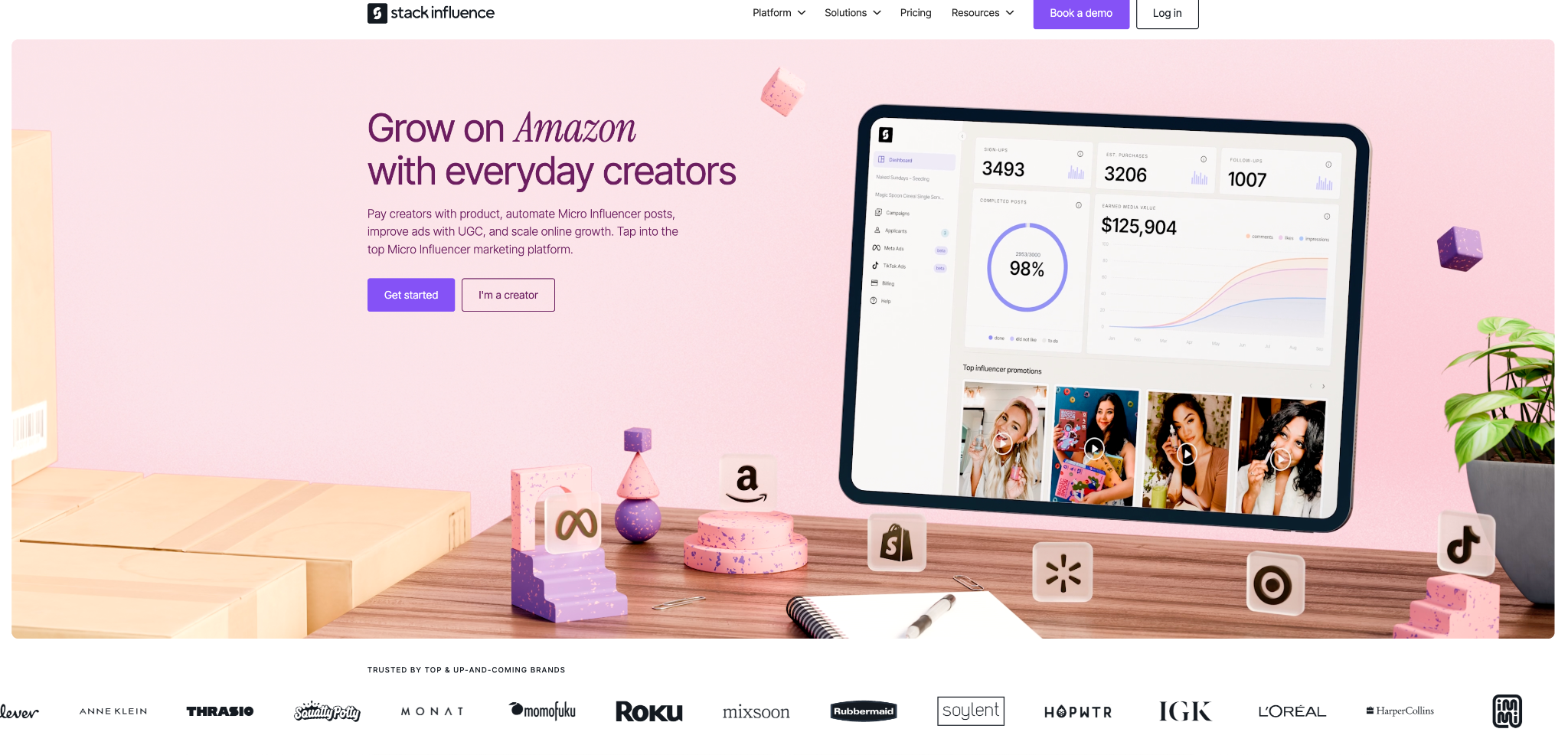
Stack Influence is a micro-influencer marketing platform built for eCommerce sellers who need completed posts, not just creator lists. Unlike traditional Instagram influencer databases, Stack Influence operates on a gifted-first, product-seeding model: creators receive the product, post to their audience, and the brand pays only after post completion. The platform's network consists of roughly 600,000 vetted creators, approximately 78% female, sourced and vetting through an AI-driven process that evaluates psychographic, demographic, and geographic fit before matching.
The key differentiator is the "influencer insurance" mechanism. Because creators buy the product directly through the platform workflow and payment is triggered only by a verified post, sellers face no inventory loss from creator drop-off. This makes Stack Influence structurally different from a discovery database: it functions as a managed execution layer. A verified Stack Influence case study for Blueland, a plastic-free home essentials brand, shows average monthly unit sales increasing 4.7x from 542 to 2,562 during a 3-month campaign, paired with 927 new keyword rankings and page-1 placement for "foaming hand soap," a keyword with 26K monthly searches. The campaign also delivered 13x ROI across 211 creator promotions. Sellers running Amazon FBA or Shopify stores who want micro-influencer UGC at volume without managing outreach, logistics, and completion follow-up themselves will find this model reduces operational overhead significantly compared to self-serve databases.
Modash
Modash is a self-serve influencer discovery and analytics platform that saves brands time by providing all the data needed upfront: fake follower checks, engagement rates, growth rates, audience demographics, and more. Its database covers every public Instagram, TikTok, and YouTube profile over 1,000 followers.
The differentiator is scale combined with transparent pricing. Modash indexes 380M+ influencer profiles across platforms. One multi-year user described it as one of the best tools for influencer discovery and analytics. For eCommerce teams that need to shortlist hundreds of creators across a niche category quickly, Modash's filter depth, which includes audience location, engagement quality, past sponsorships, and email-finder functionality, makes it one of the most efficient research tools available.
A Shopify seller or Amazon brand that has an internal team member handling outreach should use Modash as a discovery and pre-vetting layer. Modash also covers Shopify affiliate tracking at a lower price point than enterprise alternatives, making it practical for mid-market teams. The limitation is that discovery is where Modash stops. It does not handle gifting logistics, post confirmation, or managed outreach at scale. Sellers who need the full workflow covered will need to stack additional tools or a managed service alongside it.
HypeAuditor
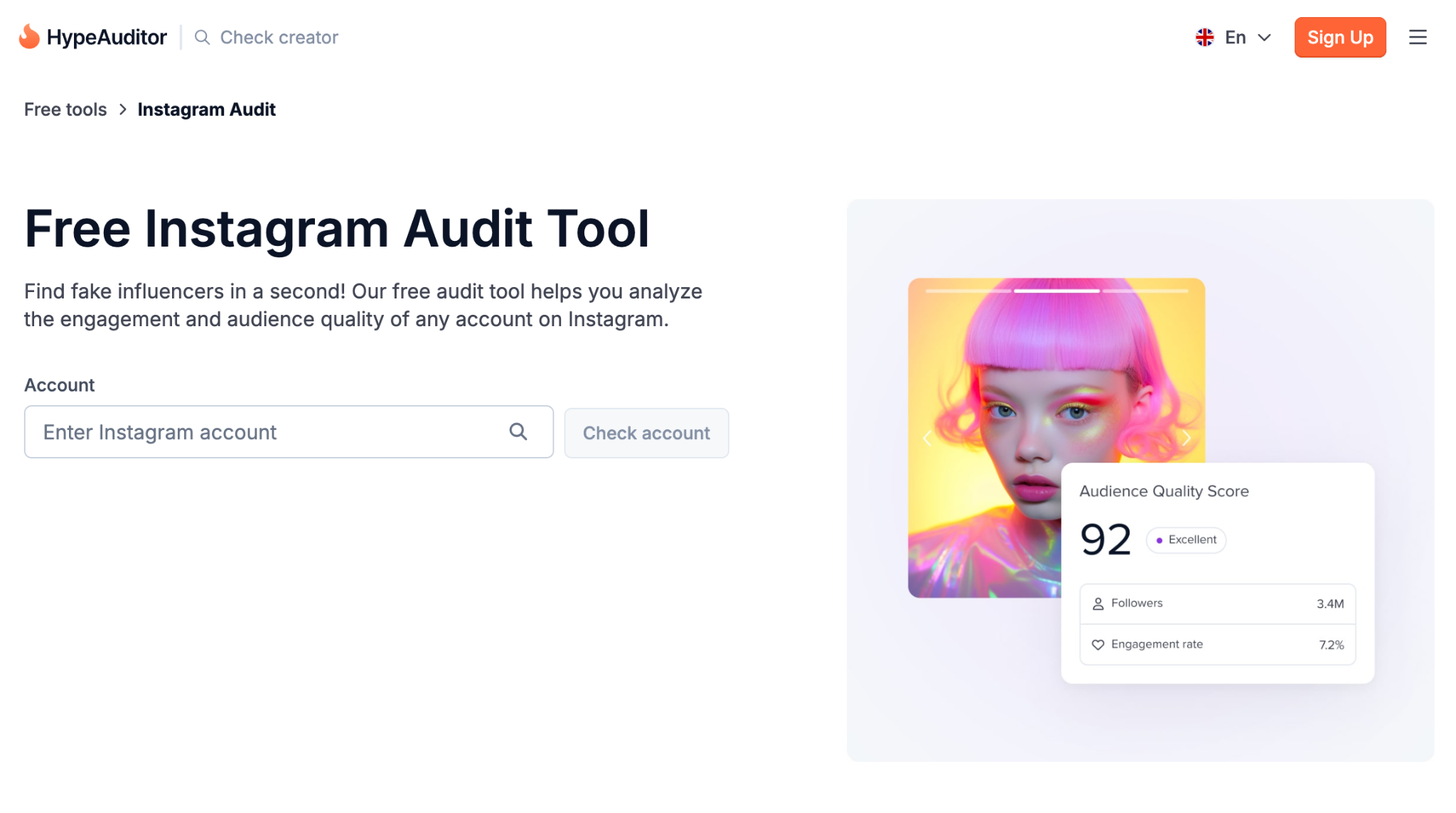
HypeAuditor offers a massive influencer database containing 227.8M+ accounts across Instagram, YouTube, TikTok, X, and Twitch. Brands apply filters to discover the perfect influencer match. Its defining capability is audience quality scoring, which is particularly valuable for sellers who have been burned by bot-inflated follower counts.
HypeAuditor's Audience Quality Score assigns a numerical rating to each creator based on follower authenticity, engagement legitimacy, and audience composition. HypeAuditor provides an Audience Quality Score that automatically flags suspicious activity so brands don't waste budget on inactive accounts. For beauty, health, or CPG sellers on Amazon where fake followers create real risk of wasted product seeding budget, HypeAuditor's fraud layer is one of the most rigorous available. The platform also supports brand-mention monitoring, so sellers can identify creators who already post about their product category without being approached.
The limitation is positioning: HypeAuditor is primarily a research and vetting tool. Campaign management, outreach automation, and gifting logistics require integration with separate systems. Teams that want a combined discovery-plus-execution environment will need to pair HypeAuditor with a CRM or managed service.
GRIN
Billed as the world's first influencer marketing platform, GRIN has features that automate a ton of workflows. From housing all communication under one roof to product seeding, payment, and contract management, GRIN simplifies a great deal of influencer marketing tasks. The platform integrates with all major ecommerce software, making it an ideal choice for large ecommerce brands in the beauty, fashion, and lifestyle niches.
GRIN's differentiator is its deep Shopify and Magento connection. It connects directly to Shopify, Magento, and other storefronts, allowing brands to track influencer-driven sales at the SKU level. For an established DTC brand already running high-volume ambassador and affiliate programs, GRIN provides the most comprehensive native eCommerce integration in the self-serve category, covering gifting, contracts, content approval, and sales attribution in one place.
The limitation is in discovery. GRIN relies on first-party authentication, so their creator pool is limited. Brands that need to work with a wider range of influencers or unlock new markets may struggle and will need to purchase a separate tool for recruitment purposes. GRIN also commands enterprise pricing, which makes it harder to justify for sellers still validating their influencer channel.
Aspire
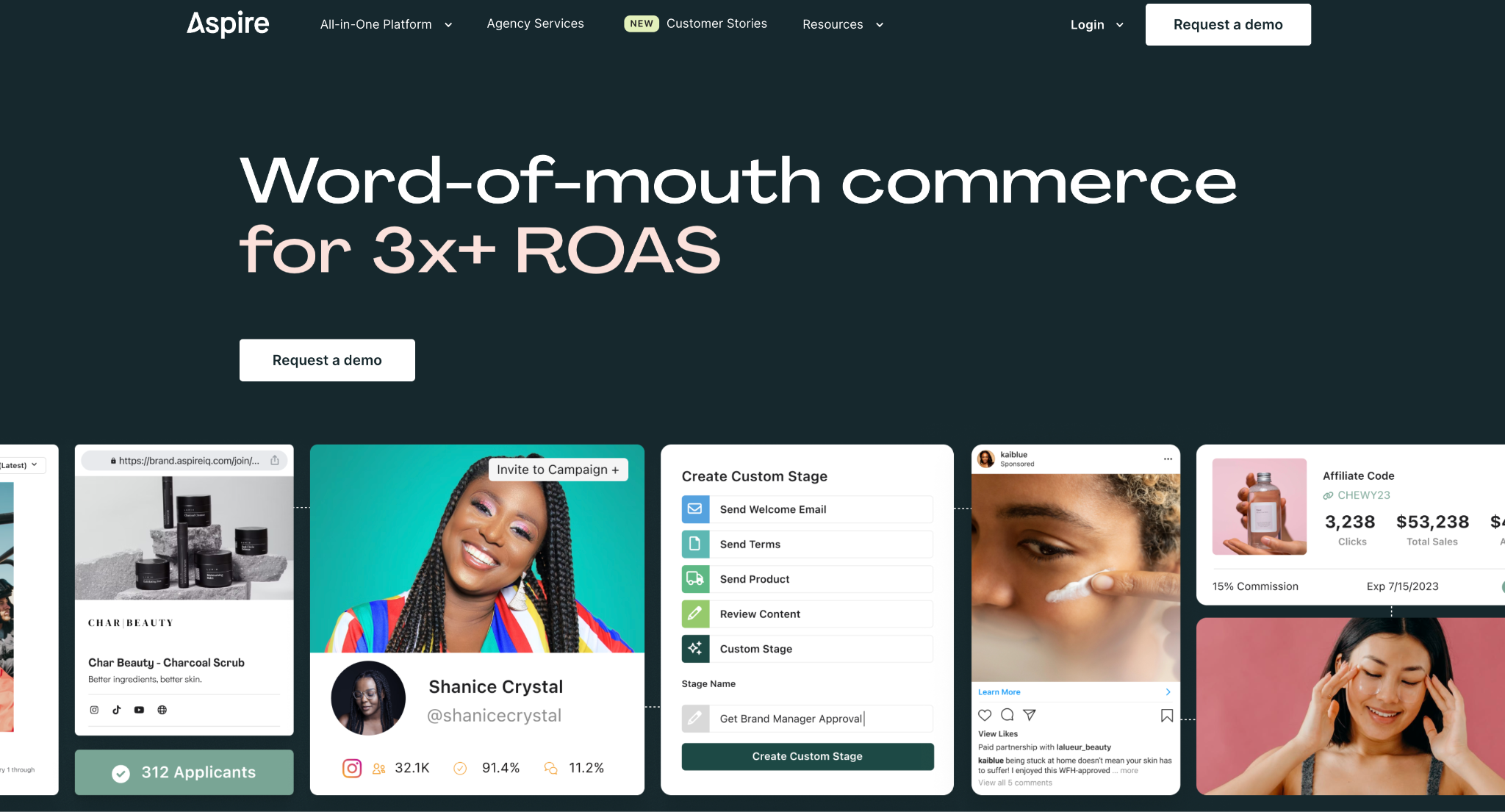
Aspire is an influencer marketing platform built for direct-to-consumer eCommerce brands that need more than a creator database. Founded in 2013, the platform covers the entire campaign lifecycle: discovering creators across Instagram, TikTok, YouTube, Pinterest, and Facebook; managing contracts and product gifting; reviewing and approving content; tracking affiliate sales; and repurposing creator content into paid social ads.
The differentiator is Aspire's inbound creator marketplace. Aspire maintains a database of over 500,000 creator profiles with image-recognition AI that lets brands search by visual content style rather than keywords alone. Creators managed through the platform generated $52 million in attributed affiliate sales in a recent reporting period, a 45% year-over-year growth, reflecting the platform's shift toward measurable social commerce performance. Aspire is best suited to mid-market and enterprise brands that want creators to apply inbound, reducing cold outreach fatigue.
The limitation is cost structure. Pricing starts around $2,299 to $2,499 per month with a mandatory 12-month contract and no free trial or self-serve option. For earlier-stage Amazon sellers or Shopify brands still testing whether influencer marketing works for their category, the annual commitment creates real financial risk before product-market fit is confirmed.
Upfluence
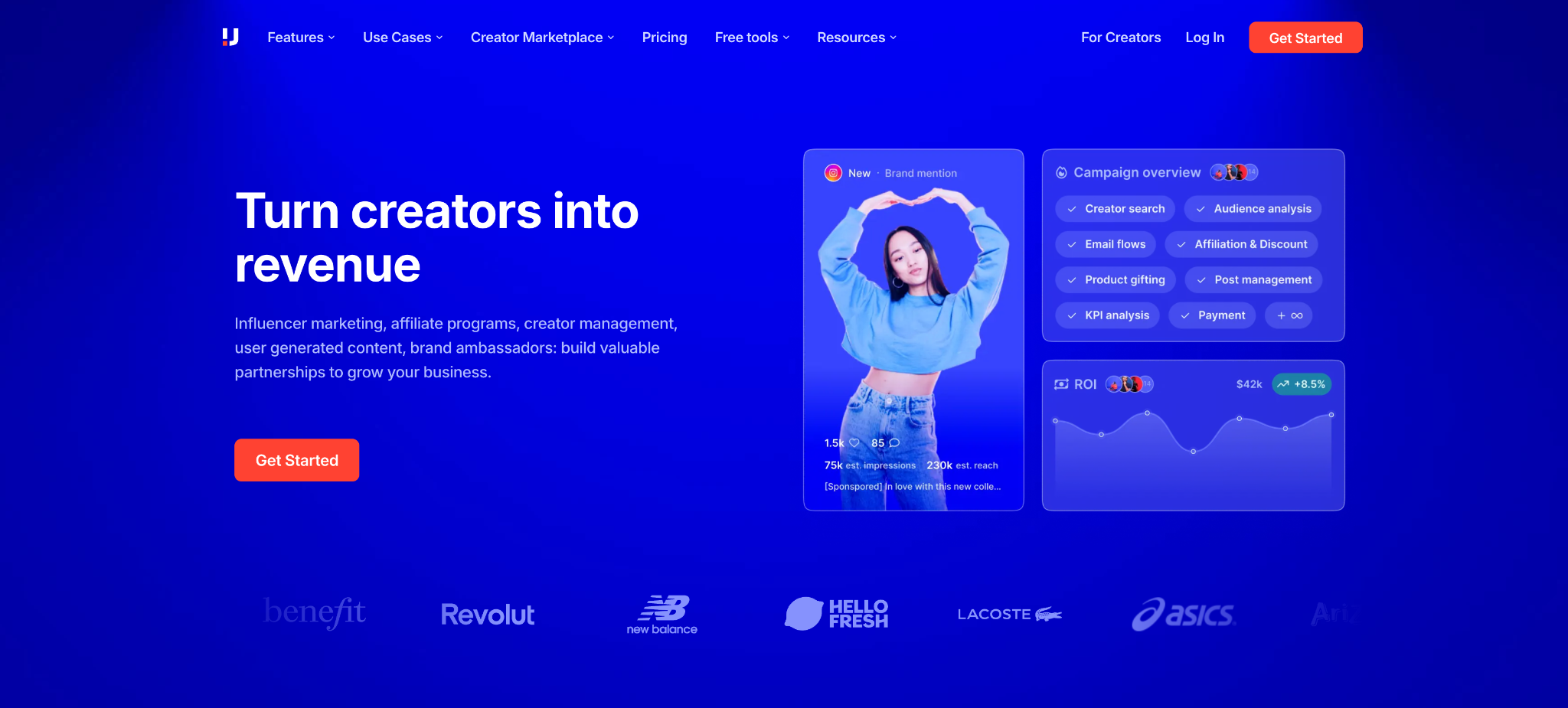
Upfluence's sharper edge is finding influencers who already buy from you. Upfluence pulls customer data from Shopify or WooCommerce and surfaces existing customers with a following, which often beats cold-sourcing strangers. This customer-to-creator capability is genuinely difficult for competitors to replicate at the same depth.
Upfluence reports that eCommerce-linked influencer campaigns produce 27% higher ROI than untracked campaigns, a stat that reflects the platform's performance-driven focus. For Shopify sellers with an existing email list or customer database large enough to surface creator-customers, Upfluence is a differentiated starting point because it uses first-party data you already own.
The limitation is pricing complexity. One user managing a couple hundred creators on Upfluence said the platform kept pushing toward the enterprise tier as soon as they started scaling. The module-based pricing on minimum 12-month contracts means you need to know exactly which features you need before signing, or you will pay for capabilities you never touch.
Traackr
Traackr is an influencer marketing software solution known for its data-led approach for the influencer lifecycle. It emphasizes building authentic relationships with influencers and has a large global database. Traackr has features for discovery, vetting, campaign management, and performance measurement. It offers end-to-end campaign management features, relationship management tools, and content tracking that includes social listening for brand mentions and industry trends.
The differentiator is enterprise-grade benchmarking. Traackr data shows brands using the platform see 40% better ROI visibility and reduce influencer fraud by 22%. For brands running influencer programs across multiple international markets where compliance, governance, and category benchmarking are non-negotiable, Traackr delivers the most rigorous analytical layer in the category. Traackr also integrates with the Amazon Brand Referral Bonus ecosystem, which makes attribution cleaner for sellers using Amazon Attribution links.
The limitation is that Traackr is built for planning and analysis more than fast execution. The tradeoff is that it is a planning and intelligence tool more than an execution engine. Teams that need to move from discovery to posted content within days rather than weeks will find its implementation and governance layers create friction.
CreatorIQ
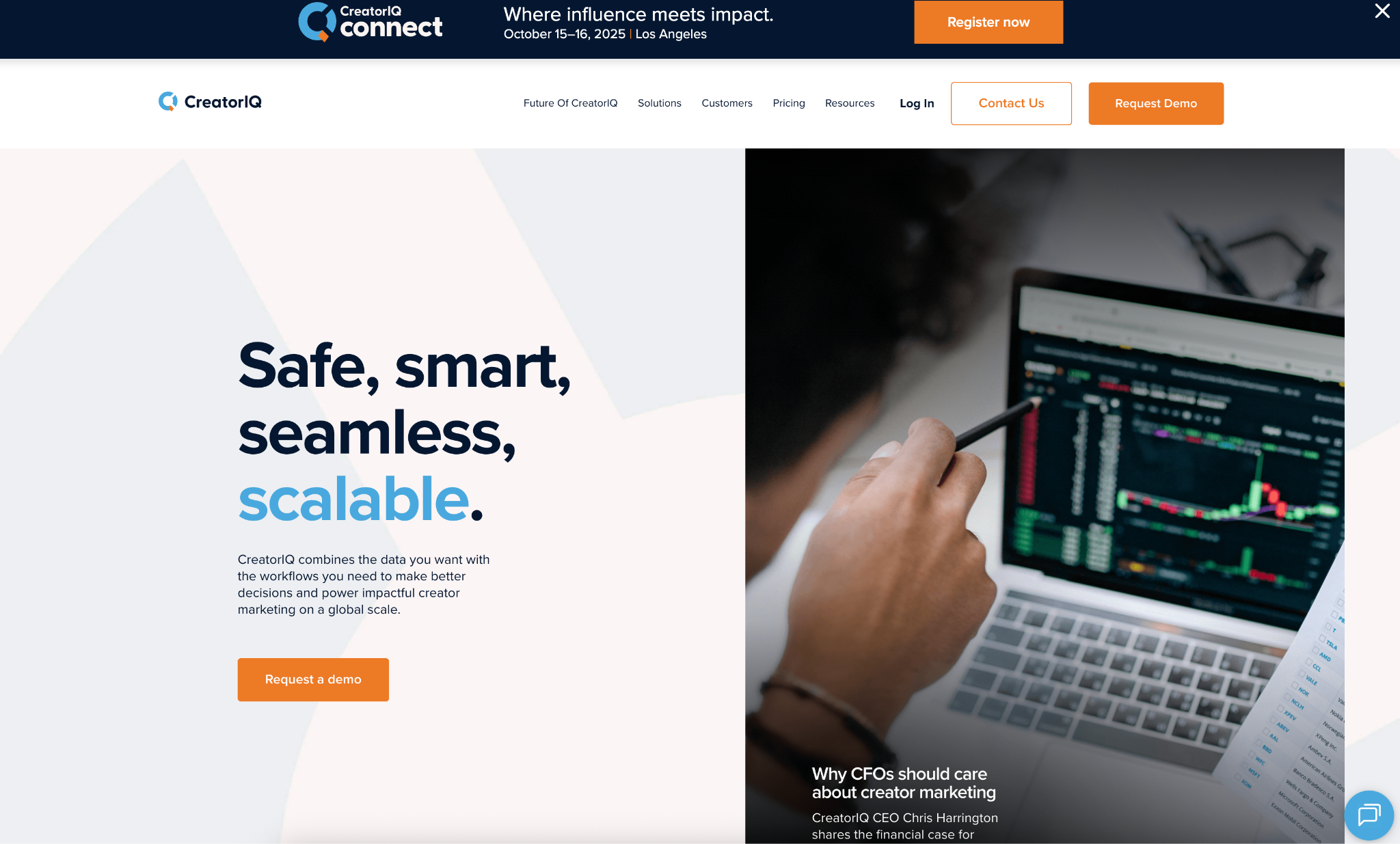
CreatorIQ is one of the most sophisticated influencer marketing platforms available. The platform has strong analytics and reporting tools, and its integrations with other marketing and ecommerce tools make it an ideal choice for brands that need an interconnected tech stack.
The differentiator is API-level data access. CreatorIQ is built for organizations where influencer partnerships go through legal review, procurement approval, and brand safety checks before anything goes live. Those steps happen inside the platform: contracts, content approvals, vetting. As an official TikTok Marketing Partner, CreatorIQ pulls data directly from TikTok's API, meaning more reliable numbers and access to metrics most platforms cannot pull at all.
The limitation is the price floor and complexity. Pricing is not listed on CreatorIQ's website. According to Capterra, it starts at $36,000 per year. This positions CreatorIQ firmly in the enterprise tier. Amazon sellers or DTC brands with fewer than $50,000 in monthly influencer-attributed revenue will rarely justify the investment.
Choosing the Right Platform: A Quick-Selection Guide
The right Instagram influencer database depends on one primary constraint. Use the 3 Laws of Database Fit as your filter and select based on what your operation actually needs:
- For product seeding at scale with managed execution and no inventory risk: Stack Influence is the best operational fit. Gifted-first model, completions-only payment, and managed campaign flow reduce overhead for Amazon FBA and Shopify sellers.
- For self-serve discovery across a large Instagram creator pool: Modash offers the most transparent pricing and the widest indexable database for teams running their own outreach.
- For audience fraud detection and creator vetting depth: HypeAuditor's Audience Quality Score is the most rigorous fraud layer available without enterprise pricing.
- For eCommerce brands with Shopify wanting SKU-level sales attribution: GRIN's native integrations tie creator content to revenue more precisely than most alternatives.
- For brands wanting inbound creator applications and paid social amplification: Aspire's marketplace model and content licensing tools are built for that workflow.
- For brands wanting to activate their existing customer database as creators: Upfluence's customer-to-creator capability is a genuine differentiator.
- For enterprise programs requiring multi-market governance and benchmarking: Traackr or CreatorIQ depending on whether the primary need is data rigor or API-level analytics.
How to Measure Instagram Influencer Database ROI
What Metrics Actually Track Creator Performance for eCommerce?
The right metrics for tracking Instagram influencer database performance depend on campaign stage and conversion goal. For eCommerce sellers, the most actionable metrics sit in three tiers: reach quality metrics (engagement rate, audience authenticity score), conversion proximity metrics (traffic to listing, promo code redemptions, affiliate link clicks), and business impact metrics (unit sales lift, Best Seller Rank movement, and new keyword rankings during the campaign window).
The Commerce Attribution Stack is the secondary decision tool for this article. It is a three-tier measurement model sellers can apply regardless of which Instagram influencer database they use:
- Tier 1: Creator Quality Signals. Track engagement rate, fake-follower percentage, and audience-category match before any product ships. These signals come from the database layer and protect budget before activation.
- Tier 2: Conversion Proximity Metrics. Track UTM-tagged traffic, promo code redemptions, and affiliate link clicks at the post level. Earned media value is a flawed proxy metric. Direct attribution through UTM links, promo codes, and sales data is the only reliable ROI measurement.
- Tier 3: Business Impact Metrics. Track unit sales velocity, Best Seller Rank movement, and new keyword rankings during and after the campaign. A verified Stack Influence case study for Magic Spoon, a low-carb cereal brand, shows monthly unit sales growing 4x from 1,937 to 7,867 during a 12-month hero product campaign, with Best Seller Rank improving 4.5x from #828 to #181 in Grocery and Gourmet Food. The campaign included 3,448 promotions and 5.82M social impressions.
Apply the Commerce Attribution Stack after every campaign wave and compare Tier 2 and Tier 3 results by creator to identify which audience segments and content formats drive actual purchases, not just views.
Running Gifted Instagram Campaigns from a Database to a Completed Post
The most common gap in Instagram influencer database guides is the operational one: they cover search and selection but stop before product ships. For eCommerce sellers, the journey from database shortlist to verified, reusable UGC involves several workflow steps that database tools alone do not handle.
A practical execution flow using any of the platforms above looks like this:
- Step 1: Shortlist with quality filters. Apply the 3 Laws of Database Fit. Filter by audience location, category match, engagement authenticity, and follower tier before outreach.
- Step 2: Vet before shipping. Confirm posting cadence, recent content quality, and audience comment authenticity. Do not ship product to creators with hollow comment sections or sudden follower spikes.
- Step 3: Brief with a completion standard. State the required post format, key message, disclosure language, and deadline in writing before product ships. Ambiguous briefs create content that cannot be repurposed.
- Step 4: Verify before payment. Confirm post is live, properly disclosed, and matches the brief before releasing compensation. Managed platforms like Stack Influence handle this verification automatically through the post-to-pay workflow.
- Step 5: Repurpose and measure. Collect UGC assets for reuse in ads, product pages, and email. Then run the Commerce Attribution Stack against actual sales data.
While cash compensation remains standard, Aspire's 2026 State of Influencer Marketing report reveals that 86% of creators are still willing to work exclusively for free products. For eCommerce sellers, the gifted-only model paired with structured completion verification is one of the highest-leverage combinations available in 2026. The influencer seeding workflow reduces negotiation overhead while producing authentic content that platform algorithms favor over paid-ad creative.
Turning Your Instagram Influencer Database Into a Product-Seeding Engine
The sellers who extract the most value from an Instagram influencer database are not the ones with the biggest campaign budgets. They are the ones who build a repeatable sourcing and activation system that feeds fresh UGC into every part of their marketing funnel.
Here is where Stack Influence's gifted-first product seeding model becomes operationally relevant. Rather than maintaining a self-serve database subscription and managing individual outreach, brands submit campaign goals, product details, and creator criteria. The platform sources from its vetted network, handles logistics, confirms posts, and delivers a dashboard with creator funnel status, verified social links, and downloadable UGC assets. The platform handles product seeding, conveying promotional guidelines, and purchase-to-post workflows so brands can sit back, track, and collect verified social post links with full-rights UGC assets in one simple dashboard.
For sellers who want to use a self-serve discovery database for some campaigns while delegating high-volume seeding waves to a managed platform, these two approaches are complementary. The database gives you creative research and one-off creator activations. The managed platform gives you scalable, brand-safe UGC without building an internal creator operations function.
The influencer marketing industry reached $32.55 billion in 2025 and is on track to pass $40 billion in 2026. The sellers who win in this environment are not the ones chasing the largest Instagram influencer database. They are the ones applying the 3 Laws of Database Fit to find the platform that removes their specific bottleneck, verifying creator quality before budget commits, and building a measurement stack that connects creator activity to real business outcomes.
Start by identifying your primary constraint: creator discovery, operational throughput, or sales attribution. Then match that constraint to the platform category that solves it. The right Instagram influencer database is the one that gets products in front of qualified creators and turns that activity into verifiable sales momentum, not just impressions.