
What Is Click-Through Rate? Amazon & E‑Commerce Guide 2025
4th
January, 2026
Influencer Marketing
Amazon Marketplace
Artificial Intelligence
TikTok Tips
In the crowded world of e-commerce and Amazon marketplaces, every click matters. If you’ve ever run an online ad, email blast, or influencer campaign, you’ve likely heard the term click-through rate. So what is click through rate, exactly, and why does it matter for Amazon sellers and e-commerce brands? In simple terms, CTR measures the percentage of people who click on your link out of those who see it. It’s a vital metric for gauging the effectiveness of your marketing efforts – whether you’re optimizing an Amazon product listing, launching a micro influencer campaign on Instagram, or tweaking your latest email newsletter.
In this guide, we’ll break down what click-through rate (CTR) means, how to calculate it, and what counts as a “good” CTR in 2025 across different channels. We’ll also explore why CTR is especially important in influencer marketing, UGC content, and paid ads, and share actionable tips to improve CTR for e-commerce success. By the end, you’ll know how to leverage CTR insights to drive more traffic, higher engagement, and ultimately more sales for your brand.
What Is Click-Through Rate (CTR)?

Click-Through Rate (CTR) is a marketing metric that tells you how often people click on a link, advertisement, or call-to-action out of the number of times they see it. In formula form, CTR is typically calculated as:
∗∗CTR∗∗=(NumberofClicks/NumberofImpressions)×100**CTR** = (Number of Clicks / Number of Impressions) × 100%∗∗CTR∗∗=(NumberofClicks/NumberofImpressions)×100
For example, if 1,000 people see your online ad and 50 of them click it, your CTR is 50/1000 = 5%. A click-through rate essentially answers the question: “Out of everyone who saw this content, how many were interested enough to click?” It applies to many digital marketing areas:
-
- Online Ads (PPC) – Each time your pay-per-click ad is shown counts as an impression. The percentage who click is your CTR. This is key in Google Ads, Facebook Ads, Amazon Sponsored Products, etc.
- Email Campaigns – If you send an email to your subscribers, CTR measures what portion clicked a link or button inside the email. (E.g., an email that’s opened by 500 people and gets 20 link clicks has a CTR of 4%.)
- Search Results – In SEO, CTR can refer to the share of searchers who click your link on the results page. For instance, if your product listing appears 100 times in Amazon search and 3 people click it, that’s a 3% CTR.
- Social and Influencer Posts – Whenever a social media post or content creator’s story includes a link (say “Swipe up to shop”), CTR tracks how many viewers actually tapped that link. Brands often provide influencers with trackable links to measure this.
- Online Ads (PPC) – Each time your pay-per-click ad is shown counts as an impression. The percentage who click is your CTR. This is key in Google Ads, Facebook Ads, Amazon Sponsored Products, etc.
CTR is usually expressed as a percentage. A higher percentage means a greater portion of your audience took action by clicking – a sign that your content or offer resonated with them.
Why Does CTR Matter?
CTR isn’t just a vanity statistic; it’s directly tied to performance and ROI in digital marketing. Here’s why click-through rate matters for businesses, especially in e-commerce:
-
- Traffic and Conversions: A higher CTR means more visitors are coming to your site or product page. More traffic often leads to more conversions (sales, sign-ups, etc.) assuming your website or listing is effective. For example, if two ads were shown to 10,000 people but one has a CTR of 2% and the other 0.5%, the first ad drove four times more visitors. Those extra clicks are potential customers you don’t want to miss.
- Relevance & Engagement: CTR is a signal of how relevant and engaging your content is to the audience. A low CTR can flag that your message isn’t enticing or targeted correctly. Maybe the headline or image didn’t grab attention, or you showed it to the wrong audience. On the other hand, a high CTR indicates your ad or link grabbed interest effectively.
- Ad Platform Algorithms: Many advertising platforms reward higher CTRs. Google Ads, for instance, uses expected CTR as a factor in your Quality Score and Ad Rank. If your ad is frequently clicked (relative to others), Google interprets it as highly relevant, which can lower your cost per click and improve your ad position. Similarly, on Amazon, a high CTR on your Sponsored Product ads can improve your ad’s performance and reduce costs over time. In fact, Amazon considers CTR as a key indicator of a product’s appeal; a strong CTR can boost your organic ranking in search results since Amazon’s algorithm sees that shoppers find your listing worth clicking.
- Benchmark for Success: CTR provides a quick gauge of success for campaigns. For example, in email marketing, you might aim for a CTR around or above the industry average (~3-4%). If your email CTR is, say, 1%, that’s a red flag that your content or offer needs improvement. For influencer campaigns, tracking the CTR of an influencer’s unique link helps you measure that influencer’s effectiveness in driving traffic to your site. It answers “did the audience just like the post, or did they actually act on it?”
- Traffic and Conversions: A higher CTR means more visitors are coming to your site or product page. More traffic often leads to more conversions (sales, sign-ups, etc.) assuming your website or listing is effective. For example, if two ads were shown to 10,000 people but one has a CTR of 2% and the other 0.5%, the first ad drove four times more visitors. Those extra clicks are potential customers you don’t want to miss.
In summary, CTR is a health check for your marketing. It reflects how compelling your content is and can directly impact your advertising costs and visibility. Especially in e-commerce, where every visitor has potential value, improving CTR means more opportunities to convert browsers into buyers.
Unlock the Power of Micro Influencers and Elevate your Brand Today!
What Is a “Good” Click-Through Rate in 2025?
One of the first questions marketers ask is: “What is a good click-through rate?” The truth is, “good” CTR is relative – it varies by channel, format, and industry. A percentage that’s excellent for one platform might be mediocre for another. Here are some 2025 benchmarks to put CTR in context:
-
- Search Ads (Google/Bing): Search ads generally see higher CTRs than other types because they target users actively looking for something. Across industries, the average CTR for search ads is around 6-7%. In the e-commerce sector, paid search campaigns average about 5.5% CTR. Top positions get the lion’s share of clicks – the #1 ad spot on Google has an average CTR above 7%, whereas an ad down at position 9 gets barely 0.5%. So, “good” in search might mean anything above your industry average or ideally hitting double-digit CTR if you can, especially for branded or very targeted keywords.
- Display Ads: Banner ads on websites (display network) naturally have much lower CTRs. Users often ignore banner ads, leading to averages like 0.5% or less. For instance, banner CTRs have declined over the years – from several percent in the 1990s down to roughly 0.2–0.3% today on average. If your display ad is getting 1% CTR, that’s actually considered very good in most cases (well above average). Rich media or interactive ads can help lift this a bit, but don’t be alarmed if your display campaign CTR is under 1% – that’s the norm.
- Email Marketing: In email campaigns, you’re typically messaging a warmer audience (subscribers), so CTRs tend to be a few percent. Recent data shows email click-through rates around 2-4% on average, across industries. One source pegs the average email ad CTR at about 3.4%. If your email blasts are seeing >5% CTR, you’re doing great. Also consider click-to-open rate (CTOR), which measures clicks as a percentage of emails opened – this helps isolate your content’s effectiveness after getting past the subject line.
- Social Media Ads: Paid social CTRs vary by platform and creative. Facebook Ads might hover in the 1-2% range for many businesses, whereas LinkedIn ads often see below 1% (more niche audience). Instagram Stories with a swipe-up link, or TikTok ads, could see CTRs in the 0.5-1.5% range depending on how engaging the content is. There’s a lot of variability, but in general, a few percent is a strong result on social. Organic social posts typically have low direct CTR (since many impressions are from people passively scrolling), which is why paid social and influencer links are key for driving clicks.
- Amazon & E-Commerce Platforms: For Amazon sellers, it’s useful to distinguish between two CTR metrics:
- Sponsored Ads CTR: Amazon Pay-Per-Click ads (Sponsored Products) tend to have low CTR. The average Amazon PPC CTR is roughly 0.3–0.4%. If your sponsored ad is getting above 0.5% CTR, that’s considered pretty good on Amazon, and above 1% is excellent. These numbers sound tiny, but remember on Amazon an ad impression can be simply a product appearing in a shopper’s search results. Shoppers scroll quickly, and many ads are shown, so a fraction of a percent is typical.
- Organic Listing CTR: This measures how many shoppers click your product listing in the organic (non-sponsored) search results on Amazon or other marketplaces. A “good” organic CTR on Amazon is higher – often 2-3% is typical, and truly optimized listings can achieve 5% or more. This makes sense: if someone searches a relevant keyword and your product is appealing, a few out of every 100 might click through to learn more. If only 1 out of 100 are clicking your listing (1%), it may indicate your product image or title isn’t attracting attention, or you’re appearing for less relevant searches.
- On your own e-commerce website, you might look at CTR for features like homepage banners or product recommendations. Those can vary widely, but the principle is the same – compare against past performance or industry benchmarks when available. For example, if a product recommendation widget usually has a CTR of 1%, trying UGC content in that widget might boost it (as we’ll discuss below).
- Sponsored Ads CTR: Amazon Pay-Per-Click ads (Sponsored Products) tend to have low CTR. The average Amazon PPC CTR is roughly 0.3–0.4%. If your sponsored ad is getting above 0.5% CTR, that’s considered pretty good on Amazon, and above 1% is excellent. These numbers sound tiny, but remember on Amazon an ad impression can be simply a product appearing in a shopper’s search results. Shoppers scroll quickly, and many ads are shown, so a fraction of a percent is typical.
- Search Ads (Google/Bing): Search ads generally see higher CTRs than other types because they target users actively looking for something. Across industries, the average CTR for search ads is around 6-7%. In the e-commerce sector, paid search campaigns average about 5.5% CTR. Top positions get the lion’s share of clicks – the #1 ad spot on Google has an average CTR above 7%, whereas an ad down at position 9 gets barely 0.5%. So, “good” in search might mean anything above your industry average or ideally hitting double-digit CTR if you can, especially for branded or very targeted keywords.
Key takeaway: Always benchmark CTR against the relevant context. A “good” CTR is one that beats the average for that channel or meets your specific campaign goals. Even within the same channel, consider nuances – industry matters (a niche B2B software ad might never hit the CTR of a catchy consumer product ad) and intent matters (people click more when the content matches what they’re actively looking for). Don’t be disheartened by a 0.5% CTR on one channel if that’s actually normal. Instead, focus on improving your baseline and exceeding the norms where it counts.
Did you know? The very first banner ad on the web (an AT&T ad in 1994) reportedly had a 44% CTR – a number unheard of today. As internet users got inundated with ads, click-through rates plummeted. Nowadays, anything above a few percent is generally solid, and achieving double-digit CTRs is largely limited to highly targeted or branded content.
How to Improve Your Click-Through Rate
Whether your current CTR is lagging or you just want to push it higher, there are concrete steps you can take to boost that percentage. Improving CTR often means making your audience an offer they can’t ignore – refining everything from the messaging to the visuals and the targeting. Here are several strategies to increase click-through rate across your marketing efforts:
-
- Know Your Audience & Refine Targeting: The foundation of a good CTR is showing your content to the right people. If your CTR is low, it might not be a creative issue at all – you could be aiming at the wrong audience. Use customer data and analytics to define your target demographics and interests. For paid ads, leverage targeting options (keywords, interests, lookalike audiences, etc.) to reach people more likely to care about your product. For instance, an ad for vegan protein snacks will get far more clicks from health-conscious viewers than from a general audience. Micro influencers can help here: by partnering with niche creators whose followers align perfectly with your product (e.g. a fitness micro-influencer’s audience for that vegan protein), you’re inherently targeting a relevant crowd. The more aligned the audience, the higher the CTR potential.
- Craft Compelling Titles & Copy: Your headlines, titles, and ad copy are what hook the viewer. Make them count. Clearly communicate value or a benefit that would make someone want to click. Use actionable language and strong call-to-action (CTA) phrases – but avoid generic CTAs like “Click here.” Instead, highlight what the reader gets by clicking, such as “Get your free guide,” “Shop the sale,” or “See it in action.” In a search ad or Amazon listing title, front-load the most relevant keywords and compelling details (for Amazon, that might include key specs or an attractive benefit). If your CTR is below par, experiment with new messaging. Sometimes posing a question in your headline (“Struggling with X? Here’s a Solution”) or adding urgency (“Limited-Time Offer”) can lift clicks. Always A/B test where possible: run two versions of an ad with different headlines, see which pulls a better CTR. Continuously iterate on your copy – even a small uptick in CTR from a better headline can mean dozens more visitors.
- Use Eye-Catching Visuals: In digital marketing, visuals often make the first impression. An attention-grabbing image or design can dramatically improve CTR. Bright colors, clear imagery, or an expressive face can draw the eye as someone scrolls a feed or webpage. Ensure your visual is relevant to what you’re promoting and high-quality. For ads, consider adding minimal text or a subtle graphical element that reinforces your message (while staying within platform ad policies). For Amazon listings, your main product image is critical for clicks – it should be high-resolution, on a clean background, and show the product clearly (additional infographics in secondary images can help conversion after the click, but the main image wins the click). If your current visuals aren’t performing, test out new ones. On social media, even formats like short video clips or GIFs can outperform static images by piquing curiosity – for example, a quick product demo video might entice more people to click “Learn More” than a static photo. Content creators can be great sources of compelling visuals; many brands repurpose influencer-generated photos or videos in their ads because they often appear more authentic and stop the scroll effectively.
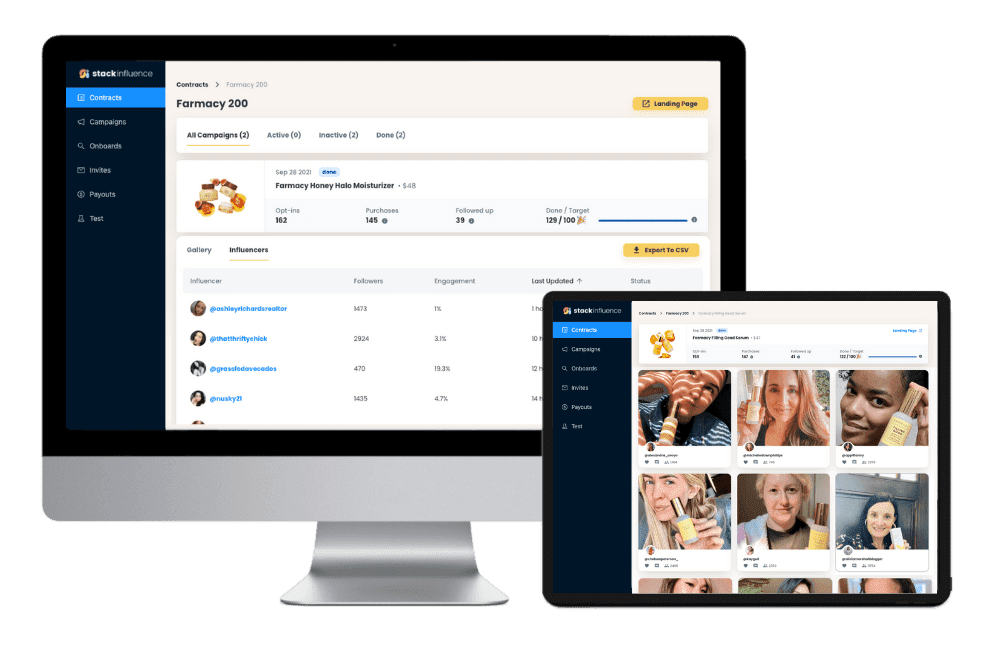
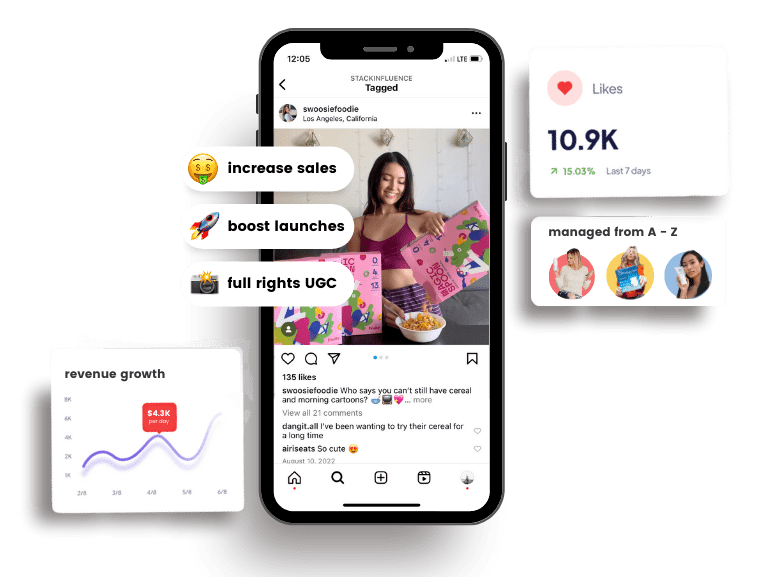
- Leverage Micro Influencers & UGC for Authenticity: One powerful way to boost CTR is to tap into the authenticity of real users and influencers. Influencer marketing isn’t just about likes and comments – it can drive clicks too. When a micro-influencer shares a genuine recommendation and includes a link (in bio, swipe-up, etc.), their followers are more likely to trust the recommendation and click through. Tracking the click-through rate of influencer posts helps you identify which creators generate the most traffic. Moreover, you can repurpose influencer content or UGC (user-generated content) in your own marketing channels. This is a big trend for 2025 because it works: people tend to click more on content that feels peer-recommended. For example, adding UGC images to an email or real customer photos to an ad can make it more relatable. One study found that emails containing user-generated content saw a 73% higher CTR on average. And in paid ads, incorporating UGC (like a customer testimonial video or an influencer’s post as an ad) can yield 5× higher click-through rates than typical brand-created ads. The likely reason? UGC and micro-influencer content come across as more genuine and interesting, not just another polished corporate message. Stack Influence, for example, is a platform that helps e-commerce brands run micro-influencer campaigns at scale, tapping everyday content creators for authentic posts. Brands using such platforms often end up with a library of organic-feeling images and videos, which can be used to enrich email newsletters, product pages, or social ads – all driving higher engagement and CTR. The trust and niche appeal that micro influencers cultivate can directly translate into more curious clicks and traffic to your store.
- Optimize the Call-to-Action & Placement: Make it as easy as possible for interested viewers to click. This might mean placing your link or button prominently and at a point where the user is most likely to want more information. In an email, don’t bury the CTA at the very bottom; consider a button after the first segment of text and again at the end. On a landing page, ensure your links look like buttons or are a contrasting color so they stand out. Wording matters too – button text like “Discover my size” (for a size guide) can outperform a generic “Learn more,” because it’s specific and intriguing. Also, check that your links are working and load quickly. Nothing kills CTR like a broken link or a slow website after the click (that also hurts your quality metrics). On Amazon, if you’re running ads, choose the right ad format and placement: for example, Product Display Ads that show up on competitor pages might have different CTR dynamics than Sponsored Brand ads at the top of search. Test various placements and formats if possible – and then invest more in the ones with strong CTR.
- Provide Context and Continuity: Users are more likely to click when the content around the link assures them it’s worth their time. This means aligning your link with relevant context. For instance, if you write a social post, the caption text should set up a clear reason to click the link (“Check out our latest case study showing 5 tips…”). If an influencer is posting, having them caption the image with a compelling intro or personal story will warm up their audience to click the link in bio. Continuity is key: the message on the landing page or site they arrive at should match what was promised in the ad/post. When people feel the payoff matches the click expectation, they are more likely to click in the first place and not bounce immediately. Thus, optimizing CTR also involves thinking one step ahead – what happens after the click – to ensure you’re genuinely enticing the right clicks that lead to engagement.
- Test and Tweak Continuously: Perhaps the most important strategy of all is ongoing testing. Small changes can yield big CTR improvements, but you won’t know until you experiment. Run A/B tests on subject lines, ad headlines, images, button colors, call-to-action text – one element at a time – to see what lifts your click rates. For example, you might find that an email with an emoji in the subject gets more opens and thus more clicks, or that a green “Shop Now” button outperforms a red one. On ad platforms, utilize their optimization tools: Facebook’s Dynamic Creative can auto-test multiple images and texts, Google Ads can optimize multiple headlines in responsive search ads for best CTR. Monitor your analytics closely and look for patterns. If one campaign has a noticeably higher CTR, dissect why – was it the audience targeting, the creative angle, the offer? Use those insights to inform other campaigns. Also, consider timing: posting or sending at times when your audience is most active can improve CTR (for instance, some studies show higher social media CTR in the evenings versus mornings for consumer products). In short, adopt a mindset of continuous improvement. Even if you’re already hitting your CTR goals, there’s always room to raise the bar and gain more traffic efficiently.
- Know Your Audience & Refine Targeting: The foundation of a good CTR is showing your content to the right people. If your CTR is low, it might not be a creative issue at all – you could be aiming at the wrong audience. Use customer data and analytics to define your target demographics and interests. For paid ads, leverage targeting options (keywords, interests, lookalike audiences, etc.) to reach people more likely to care about your product. For instance, an ad for vegan protein snacks will get far more clicks from health-conscious viewers than from a general audience. Micro influencers can help here: by partnering with niche creators whose followers align perfectly with your product (e.g. a fitness micro-influencer’s audience for that vegan protein), you’re inherently targeting a relevant crowd. The more aligned the audience, the higher the CTR potential.
By implementing these strategies, you should see gradual (and sometimes dramatic) improvements in your click-through rates. Remember that CTR optimization is an ongoing process – as consumer preferences, algorithms, and competitive landscapes change, you’ll need to adjust your tactics. The payoff, however, is well worth it: higher CTR means more engaged visitors and a better return on your marketing spend.
Unlock the Power of Micro Influencers and Elevate your Brand Today!
Conclusion to What Is Click-Through Rate?
In the digital marketing arena of 2025, understanding what click-through rate is and how to improve it can give your brand a decisive edge. CTR is more than just a number in a report – it’s a window into how well you’re capturing your audience’s interest. Whether you’re an Amazon seller optimizing product listings, a DTC brand running ads, or a marketer leveraging influencer marketing, a strong CTR is the first step in the journey from impression to conversion. By applying the strategies outlined above – from refining your targeting and creative elements to harnessing the authenticity of micro influencers and UGC – you can boost your CTR and funnel more high-intent traffic to your pages.
Ultimately, a higher CTR means your marketing is resonating: people want to see what you’re offering. And when you pair an improved CTR with a great product and landing experience, those clicks turn into conversions and revenue. E-commerce brands and Amazon sellers who focus on CTR are really focusing on customer engagement – making sure every impression counts. So, take a fresh look at your campaigns with CTR in mind, run those experiments, and don’t be afraid to get creative. The clicks (and customers) you gain will be the reward.
Ready to elevate your marketing? Start implementing these tips today. Every tweak that boosts your CTR is essentially free traffic added to your pipeline. Over time, those incremental gains compound into significant growth for your online store. In the competitive e-commerce landscape, improving click-through rate is one of those small hinges that can swing big doors – more visitors, more trust, and more sales.

By William Gasner
CMO at Stack Influence
William Gasner is the CMO of Stack Influence, he's a 6X founder, a 7-Figure eCommerce seller, and has been featured in leading publications like Forbes, Business Insider, and Wired for his thoughts on the influencer marketing and eCommerce industries.
Want new articles before they get published? Subscribe to our Awesome Newsletter.
stack up your influence
turning creativity into currency
our headquarters
111 NE 1st St, Miami, FL 33132
our contact info
[email protected]
stack up your influence
turning creativity into currency
our headquarters
111 NE 1st St, 8th Floor
Miami, FL 33132
our contact info



© 2025 Stack Influence Inc
© 2025 Stack Influence Inc